BOBBY CURRIE Editor-in-Chief
ERIN CASEY GRACE DONNELLY Co-Publishers
Creative Director ANISHA CHOPRA
Design Editors
AVERY WHITE
CAROLINE KEGG
Director of Photography
JOHANNES PARDI
Managing Editor
JEFF WAGNER
Communications Coordinators
ANA CANO
CYNTHIA QIAN
Print Fashion Editors
CERIDWEN ROBERTS EMILIO RODRIGUEZ
Marketing Director OLIVIA WIMPARI Operations Director TEMMIE YU Video Editor JASMIN RHYMES Fashion Film Editor AVA TUNG
Digital Content Editor HANIYA FAROOQ
Digital Fashion Editor ELENA SHAHEEN
COLLIVER
Photo Editor NIAH SEI
Digital Features Editor TESSA VALERA-CASTRO
Finance Coordinator KATIE BURGIN
Print Beauty Editor MILES HIONIS
Social Media Coordinators
CHRISTIAN HERNANDEZ
MACKENZIE RADLE
Events Coordinators ALIA GAMEZ SAM TANDY Digital Beauty Editor MARGUERITE SMITH
Beauty Team
Miles Hionis, Marguerite Smith, Ella Graeb, Margaret McKinney, Gretchen Brookes, Adrienne Feige, Camille Naves, Yun-Hsi Chiang, Sravya Davuluri, Chelsea Ohaka, Eddy Holcomb, Jiyu Moon, Ally Wang, Julie Tendo, Lexsie Nguyen, Lily An, Nneka Okoroafor, Ana Cano
Design Team
Avery White, Caroline Kegg, Story Triplett, Ashley Turner, Chloe Bratton, Jaycee Mitchell, Sasha French, Jasmine Barnes, Cornelia Ovren, Allen Hoover, Bailey Ellul, Maddox Howell, Charles Decoster
Fashion Team
Ceridwen Roberts, Emilio Rodriguez, Elena Shaheen, Sally Jang, Anika Lopes, Amelia Kocis, Ella Graeb, Hana Farooq, Kaavya Chavan, Christine Kim, Reagan Hakala, Emma Blair, Anjani Patel, Auburn Marriott, Rita Hajjar, Zachary Sebestyen, Madison Knowlton, Jillian Van Stee, Lucy Smith, Chelsea Ohaka, Yanira De Souza, Xochitl Santana Vega, Mya Weiss, Athena Lippman, Maryam Tobya, Ava Istamboulian, Laura Jhirad
Photography Team
Niah Sei, Chloe Kiriluk, Zhixian (Zoe) Xiong, Jaden Moxlow, Esther Tirat-Gefen, Hannah Ru n, Bridgette Bol, Shravya Ghantasala, Aria Zhou, Lilly Vydareny, Bee Whalen, Eva Chong, Tania Rodarte-Escobedo, Charles Decoster, Anwita Poluru
Features Team
Marxie Colliver, Tessa Valera-Castro, Amrita Arumugam, Avery White, Isidora Purrier, Elaina Tacey, Ella Carlson, Taylor Derey, Avalon Ring, Makayla Whitsell, Raymond Zou, Ana Sharshar, Bianca Done, Emma Blair, Mimi Vu, Lola Post, Abby Weinberg
Digital Content Team Haniya Farooq, Gigi Jones, Felicia Wang, Aelleyah Fysudeen, Ashley Xu, Jessica Yang, Sydney Emuakhagbon, Kiana Pandit, Irem Hatipoglu, Katie Lee, Hannah Hoang-Pham, Nethra Vijayakumar, Sydney Abam
Video Team
Johannes Pardi, Jasmin Rhymes, Sydney Seifert, Olga Brazhnikova, Chloe Kiriluk, Kaelin Park, Felicia Wang, Samridhi Sharma, Naimah Perez, Elsa Pasquariello, Zoë Sage Tracey, Eesha Gummaraju
Communications
Ana Cano, Cynthia Qian
Events Team
Alia Gamez, Sam Tandy, Alexis Bell, Colin Pfeifer, LeAnh Vong, Mallory Ensing, Megan Myrick, Renata Perez Rosillo, Sathvika Ravichandran
Social Media Team
Christian Hernandez, Mackenzie Radle, Mackenzie Jackson, Renee Bourcier, Jaden Johnson, Carolyn Lira, Reagan Hakala
Finance Team
Katie Burgin, Aubrey Heaton, Megan Dobie, Ryan Zimmel, Malini Fisher, Iliana Chevres
Icomefrom the hustle and bustle of a big city. Austin, Texas raised me with car honks, blaring sirens and drunk chatter till the wee hours of the morning.
With my move to Ann Arbor, came new feelings of longing for lost community, and nostalgia at my life left behind. I still yearned for the noise and chaos of my home, yet took comfort in the ease of life as a newly minted Ann Arbor local. I found relaxation in routine. The same coffee order, the same brunch spot, and the likelihood of running into everyone you know at any given time became a part of me. It became something familiar.
As I fnish out my senior year here at the University of Michigan, I’m prepared for the blues of abandonment as I leave behind my community I’ve foraged over the 4 years.
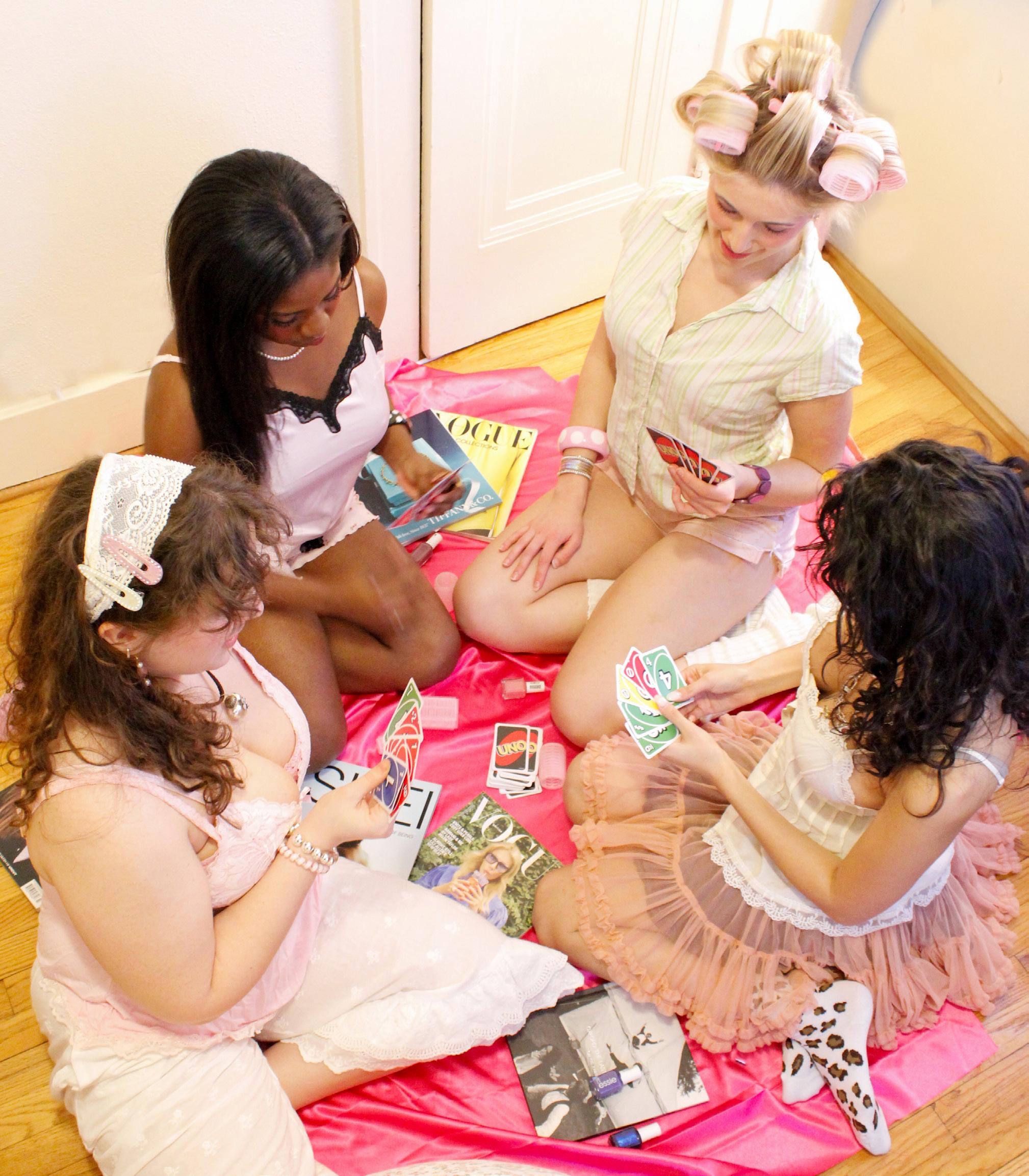
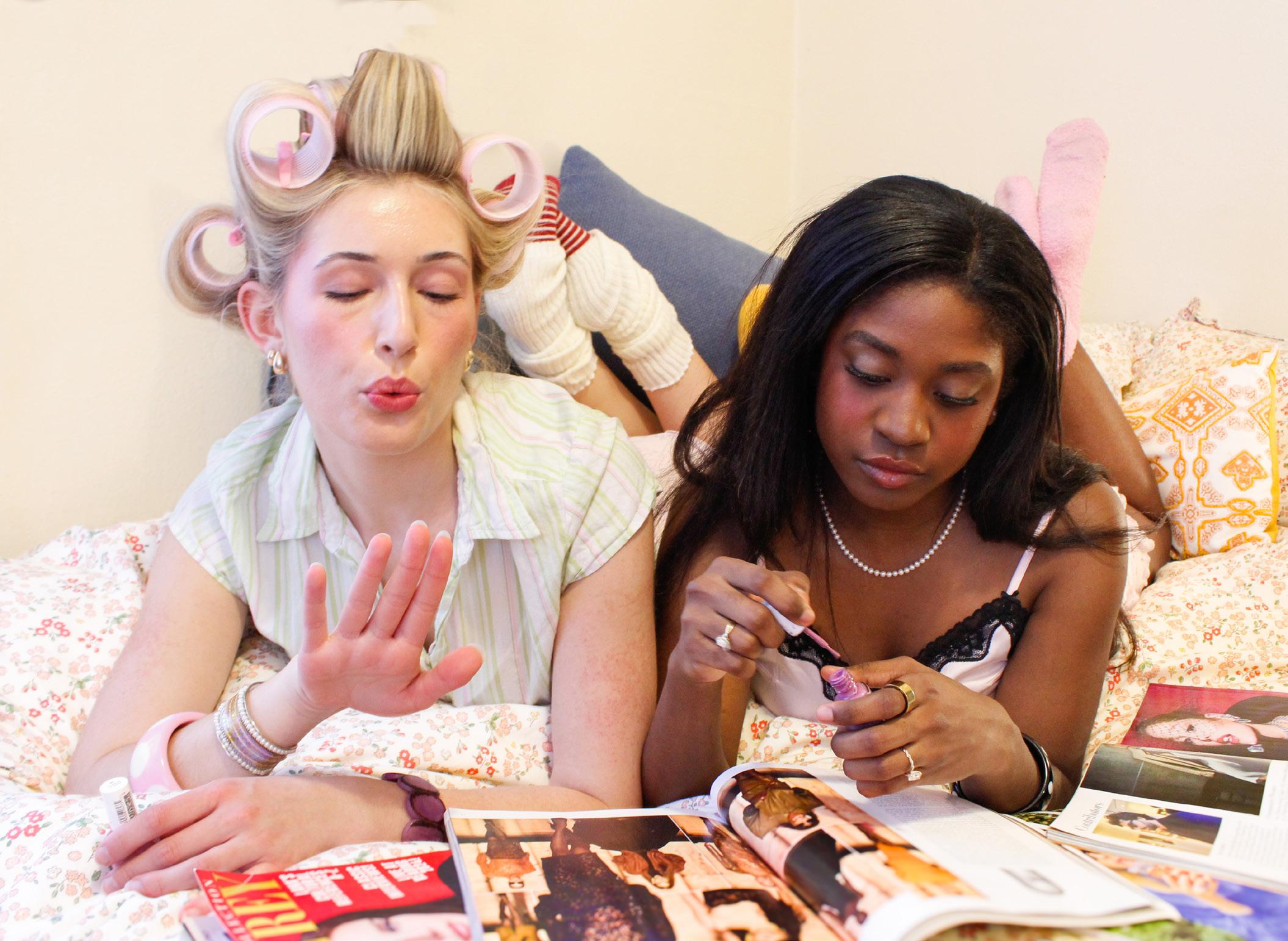
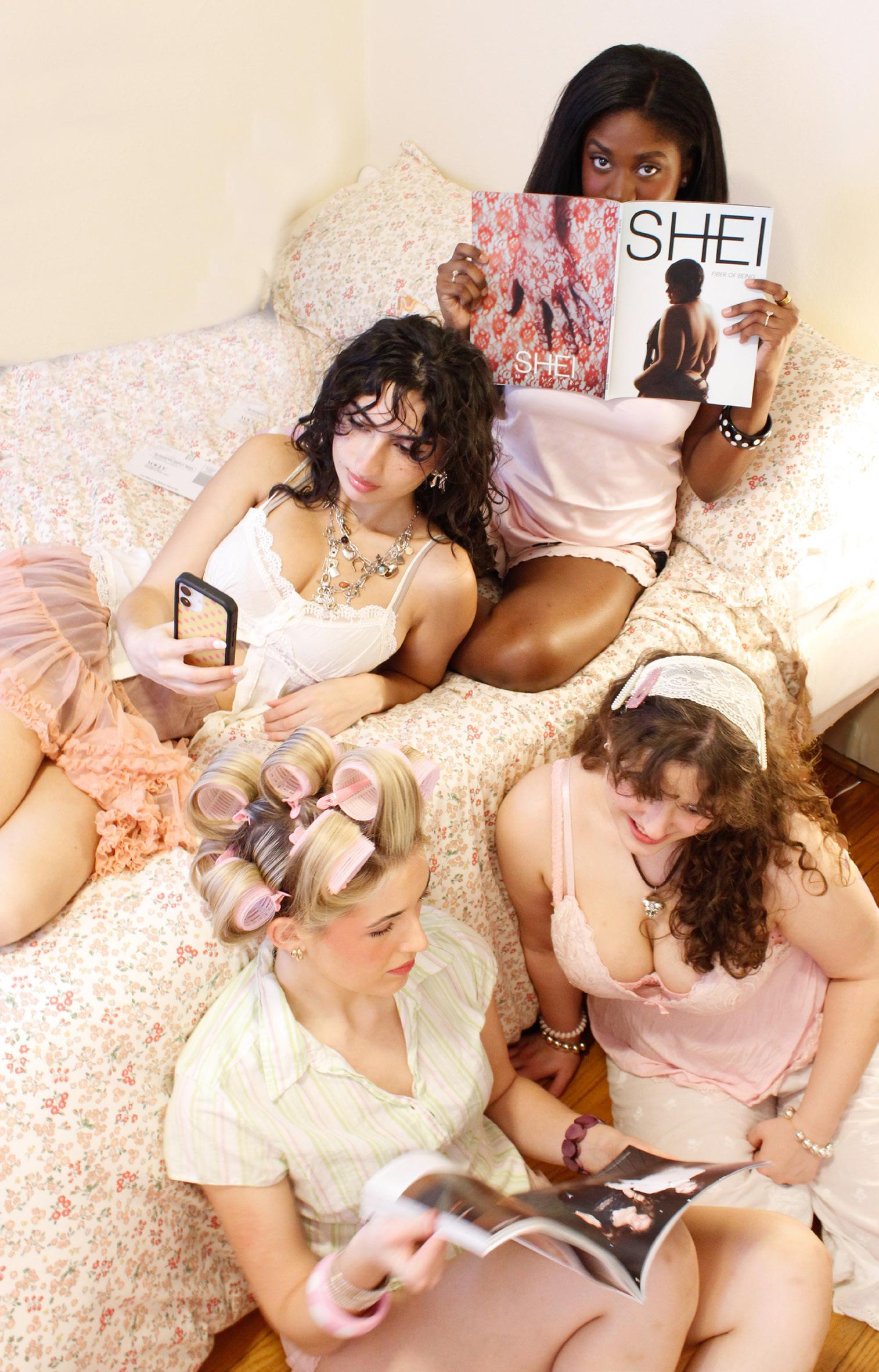
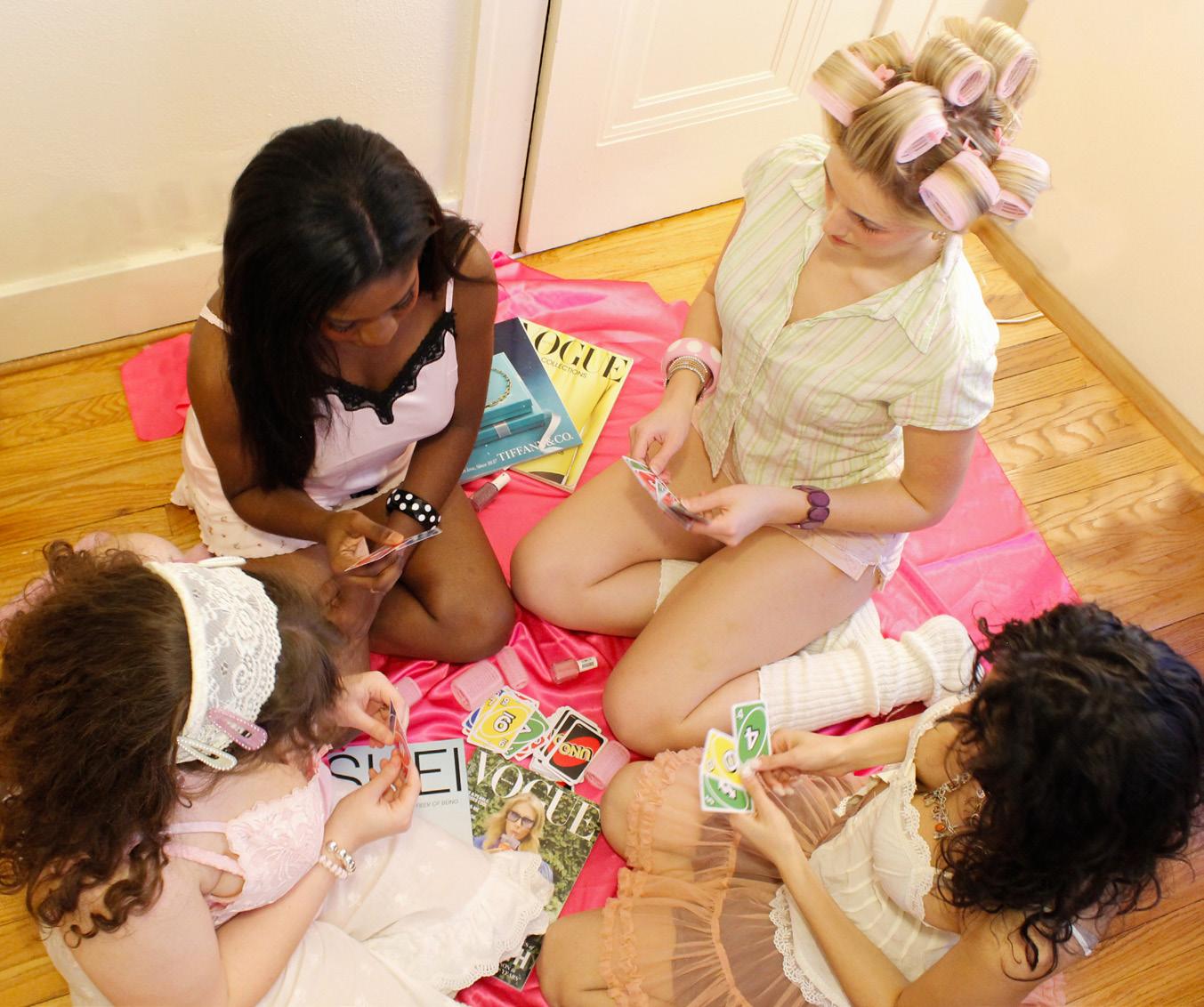
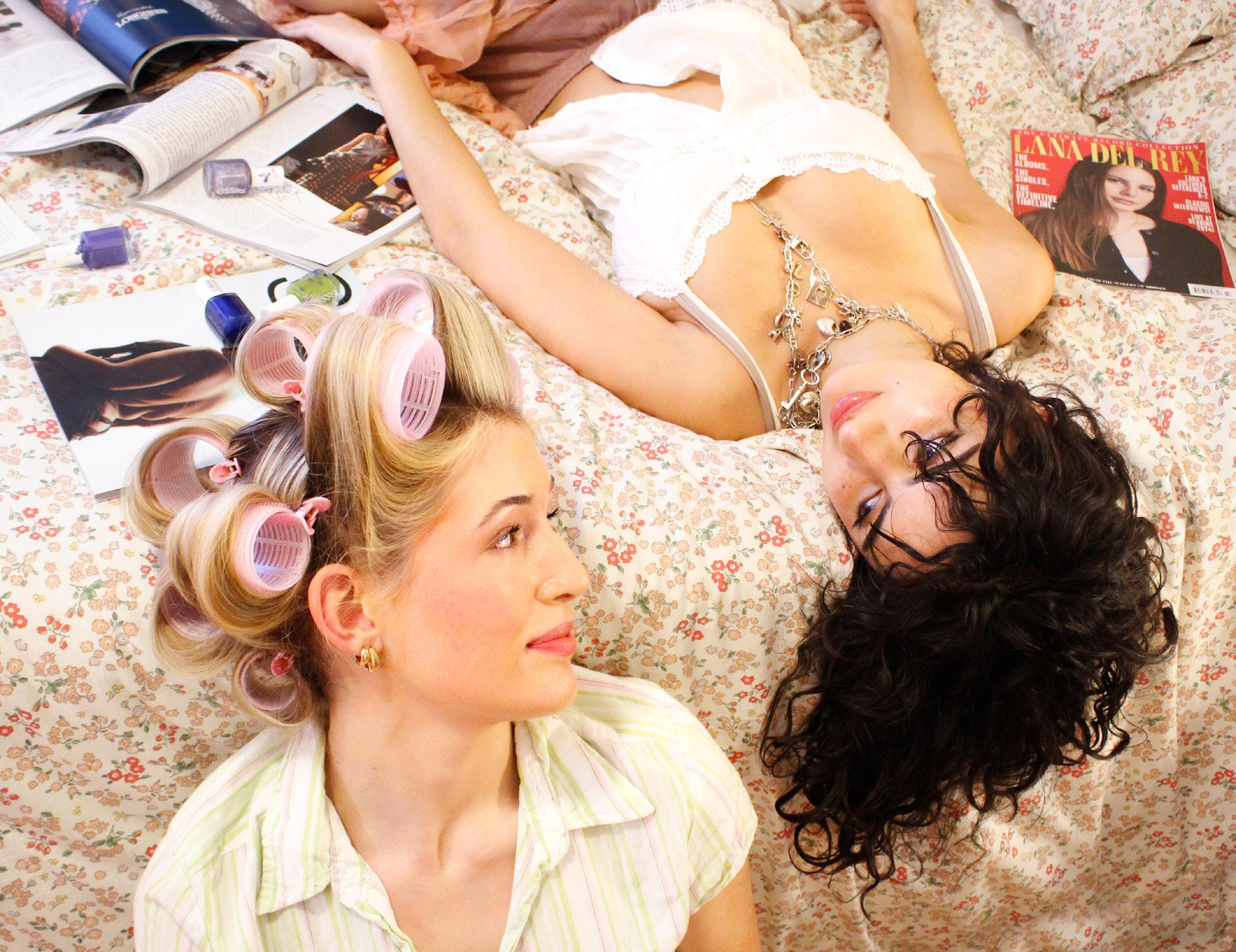
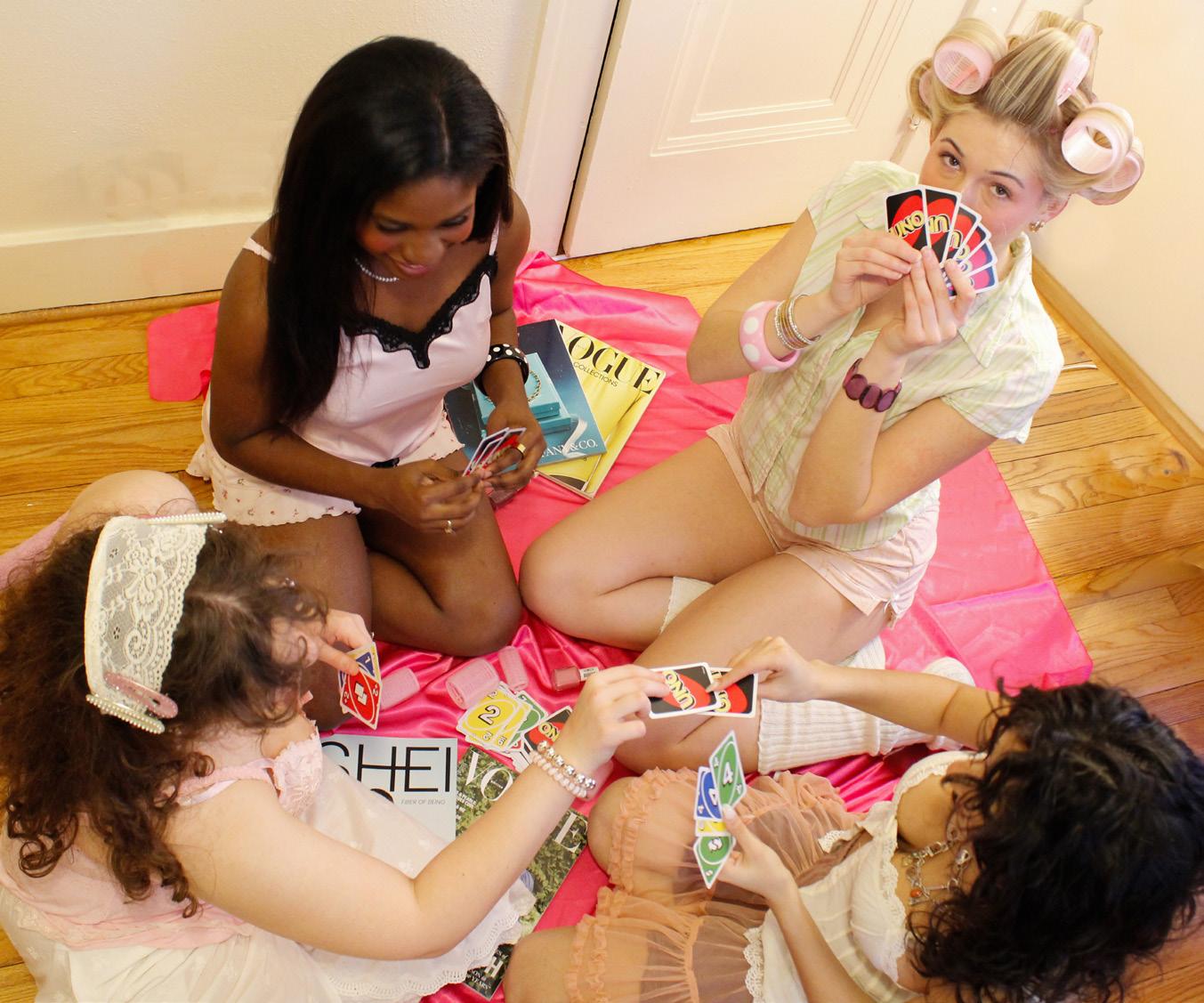
In the constant chaos and noise of the world around us, small town blues allow us to take a deep breath, sip on a latte from our local café, and reconnect with our nostalgic roots that make us who we are. The childhood laughter, middle school sleepovers, and nights flled with milkshakes and board games remind us of a time when life wasn’t so serious. A time when joy and connection were tucked away within us underneath the warm covers of our childhood bedrooms.
Without further ado, I invite you all to relax on the couch, press play on your favorite playlist of nostalgic tunes and enjoy SHEI Magazine’s February Digital Issue, “Small Town Blues.”
Every day I walk through the streets of Ann Arbor building a new life for myself. This new chapter I’m writing is one where I’m an independent college student, tied down only to the things I want to be tied down to. Yet, every time I encounter a dog that looks like mine, smell the scent of a fresh chai latte, or rush past a car identical to my dad’s 2009 Toyota Corolla, I fnd myself back in my hometown, surrounded by the family and friends that so closely watched me become the person I am today.
A dog breed, a coffee order, a type of car — these may be seemingly everyday things, but they are the ones that my college mind is often too busy to think about. These are the things that remind me that no matter how far away I go from the place I grew up, there will always be a part of me that can never stop thinking about it.
We’ve all planted roots somewhere; it’s truly impossible not to. Through the theme of SMALL TOWN BLUES, we at SHEI got the opportunity to return to these roots, even if it was just for a brief melancholy moment. This edition welcomed our features writers to examine long-lost childhood friend groups, revisit neighborhood ice cream shops, and even miss a forgotten sense of community. As people living in a fast-paced society, we’re told to let things from the past go and consistently strive to build something new for ourselves. However, I ask that you take this February edition as a moment to go back to the places you grew up in. Take it as a chance to smile at the simplicity of a time when things didn’t move as quickly. Keep building that new bigger and better life for yourself, expand your surroundings, but also allow yourself to carry some small part of the mundaneness that got you to where you are.
Bobby Currie Editor-In-Chief
Small Town, BIG DREAMS
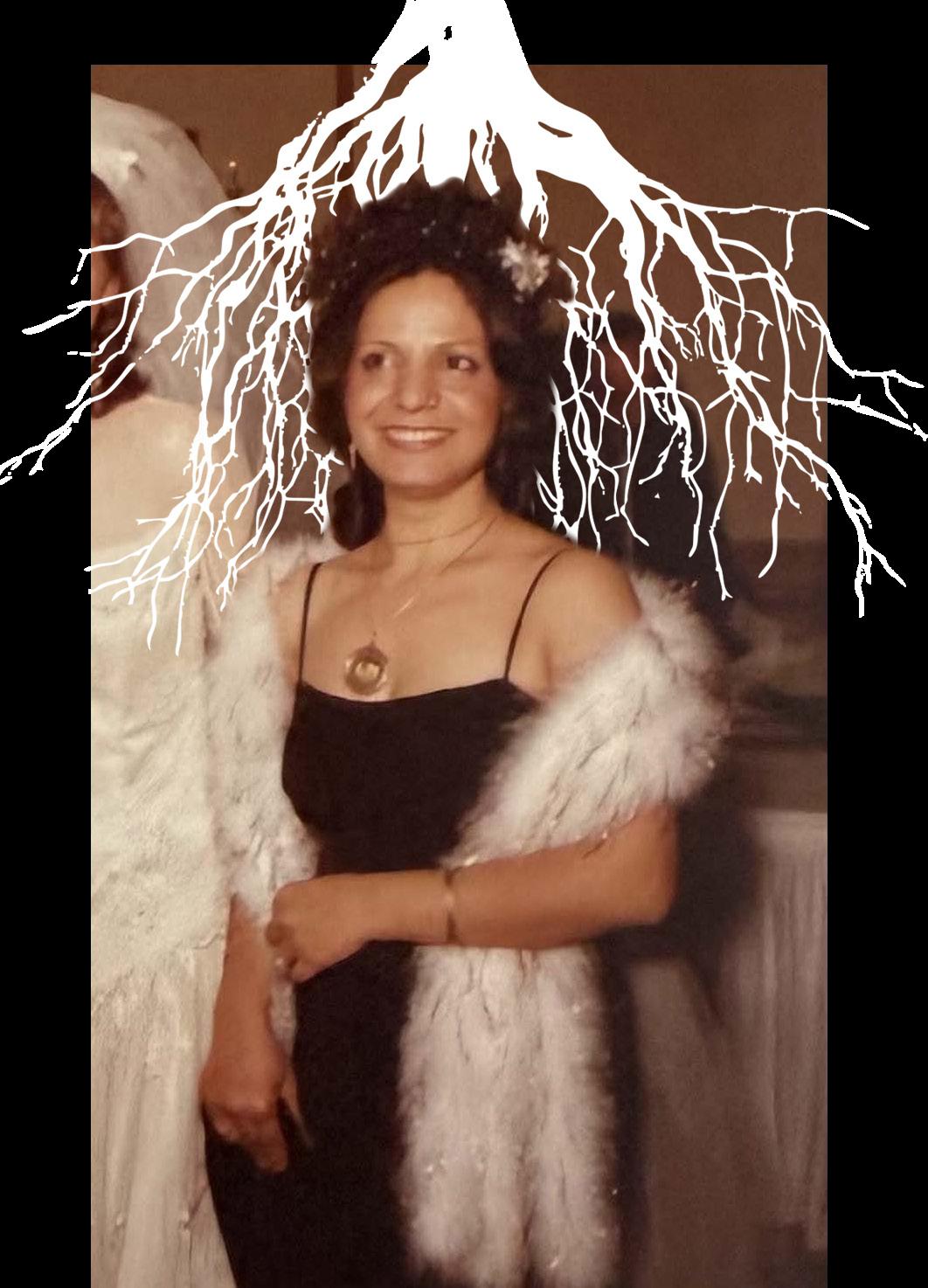
The concept of small town blues has run through the veins of my lineage for far too long. My identity has always been profound. I’ve always known that my favorite fruit was watermelon and that I wanted to slip on my pink tulle skirt everyday after school. I’ve rarely ever struggled to understand my emotions, needs, and wants. However, as I got older, kids started to become curious about my ethnicity, often guessing countries that I knew little about and I was forced to correct them with an answer I didn’t feel too confdent in.
WRITER
ANA SHARSHAR
GRAPHIC DESIGNER
MADDOX HOWELL
without
immigration. During the Nakba, over 700,000 Palestinians were displaced in an effort to make room for Jewish immigration, my grandmother and her family were one of many who were forced to up and leave their homes.
This sparked my curiosity in the history of my lineage, beginning with my grandmother. My grandmother was born in Haifa in 1948 - a year of great tragedy and displacement for many Palestinians. Haifa is the third largest town in Israel. It’s a beautiful city that faces the Mediterranean Sea and remains rooted in the rich culture and history of Christians, Muslims, and Jews who reside there side by side. My grandmother was born during the Nakba - the ethnic cleansing of Palestinians by Israelis following World War II and mass Jewish
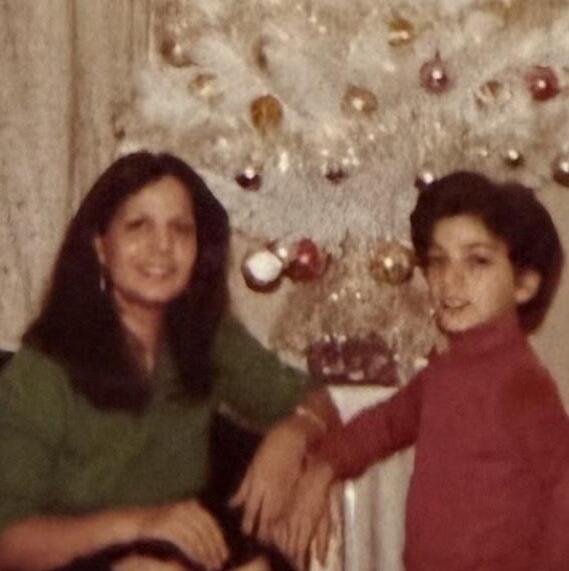
Haifa was supposed to be where my grandmother was raised, in a little house with her eleven brothers and sisters right on the Mediterranean ea. It was where her father had built a business, it was where they gathered for dinner and shopped at local fruit and vegetable stands. It was home. As violence increased, the Palestinian population in Haifa were forced to make tough decisions. Many opted to up and leave the one place they had resided in for the entirety of their lives in order to preserve integrity and existence.
My grandmother and her family settled into Tyre, Lebanon upon displacement and slowly rebuilt a life in a new country while grappling with the hope and possibility of returning to Haifa and the traditions left behind. As the Battle of Haifa resumed, my great grandfather followed it closely and became less hopeful as Zionist military forces expanded their cause and prevented Palestinian’s from returning to what they rightfully and legally owned.
As I get older my grandmother’s grave remains the same still stone and my questions stand unanswered about her place of origin. There are certain things I will never know about her, about Haifa and the street she was born in, the house her family owned will never return to its rightful owners and I more than likely won’t set foot in what is now Israel.
Amid the tragedies that continue in Palestine, I have discovered great satisfaction in knowing that the culture,
love, and hope for a better future resides within me and remains untouchable. While the subject’s weight grows heavier, and the sadness of a static cultural connection to the land of Haifa feels out of reach, my father’s optimism and love for both Palestine and Lebanon keeps me grounded in the thick of the unknown.
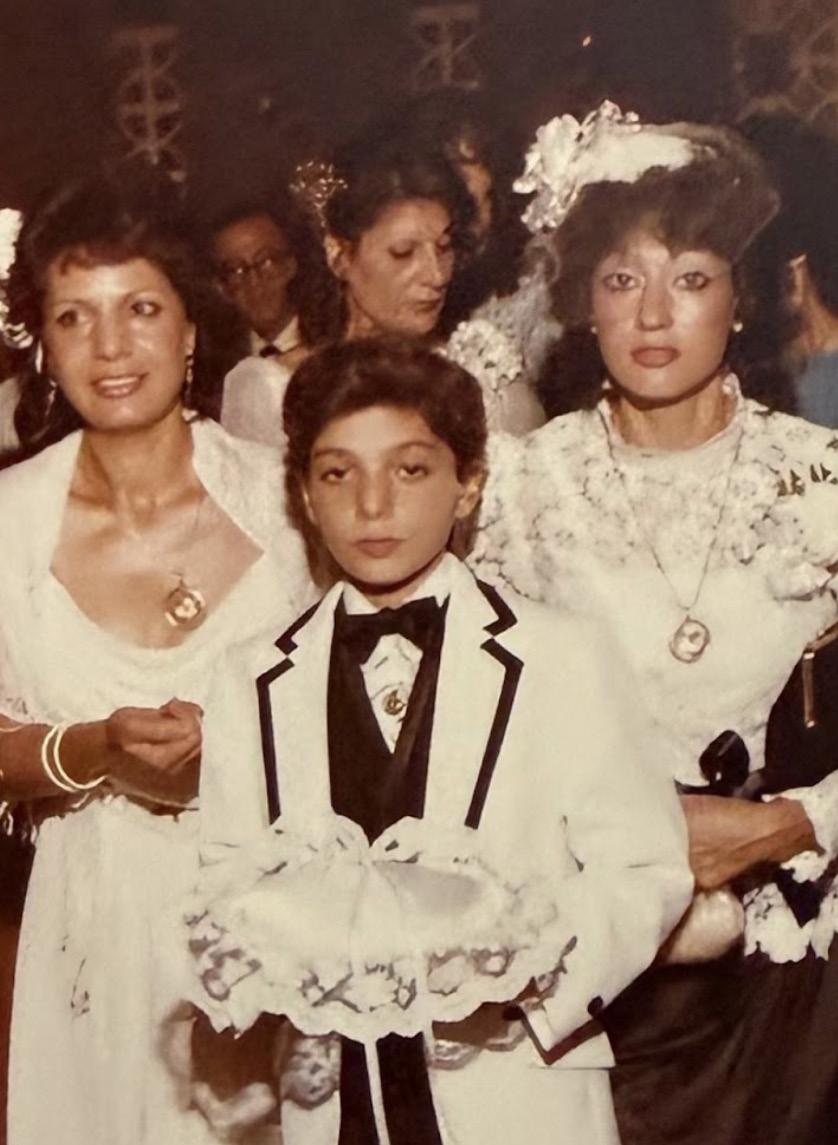
I never got to meet my grandmother, but that didn’t prevent me from knowing her. My dad made sure to raise my siblings and I surrounded in a blanket of stories accompanied by the most favorful food of all time. As I got older, he reiterated that my Lebanese and Palestinian roots ran through my blood even if the language barrier persevered and the chances of connecting to the land remained distant. He spoke of the time he was taken out into the Mediterranean sea on a raft with his father in Tyre, so far out from the land that he couldn’t make out the city anymore or the sharp slippery rocks that he tiptoed around with his brother. The weddings I attended when I was young were infused with Arabic music and a multitude of aunts, uncles, and cousins dancing the dabke and wearing the fez.
These stories and experiences, accompanied by grape leaves, olives, and delight reinforced my cultural identity and built me into the person I am today. There is nothing I am prouder of than the origins of my lineage and the perseverance of those that led me to endless opportunities and privileges I imagine was the hope amid despair. Although the overtaking of my grandmother’s home in Haifa deeply disturbs me; hope, culture, and love resides in the heart. Amidst tragedy and pain there is satisfaction in knowing something lives on in you, something that stands strong with the help of stories, photographs, and conversations.
I turned my head back and met eyes with a boy who I assumed was also in elementary school. He wore bright yellow Adidas soccer shoes, was tan with random scraps and scars on his arms and legs, and had a side part only he could pull off. To his right was a scrawny, bug-eyed boy who emitted an arcane energy. To his left was a stout, rosy-cheeked boy with freckles and a layer of snot over his face.
“Yes” I said, securing my spot as the group’s last member.
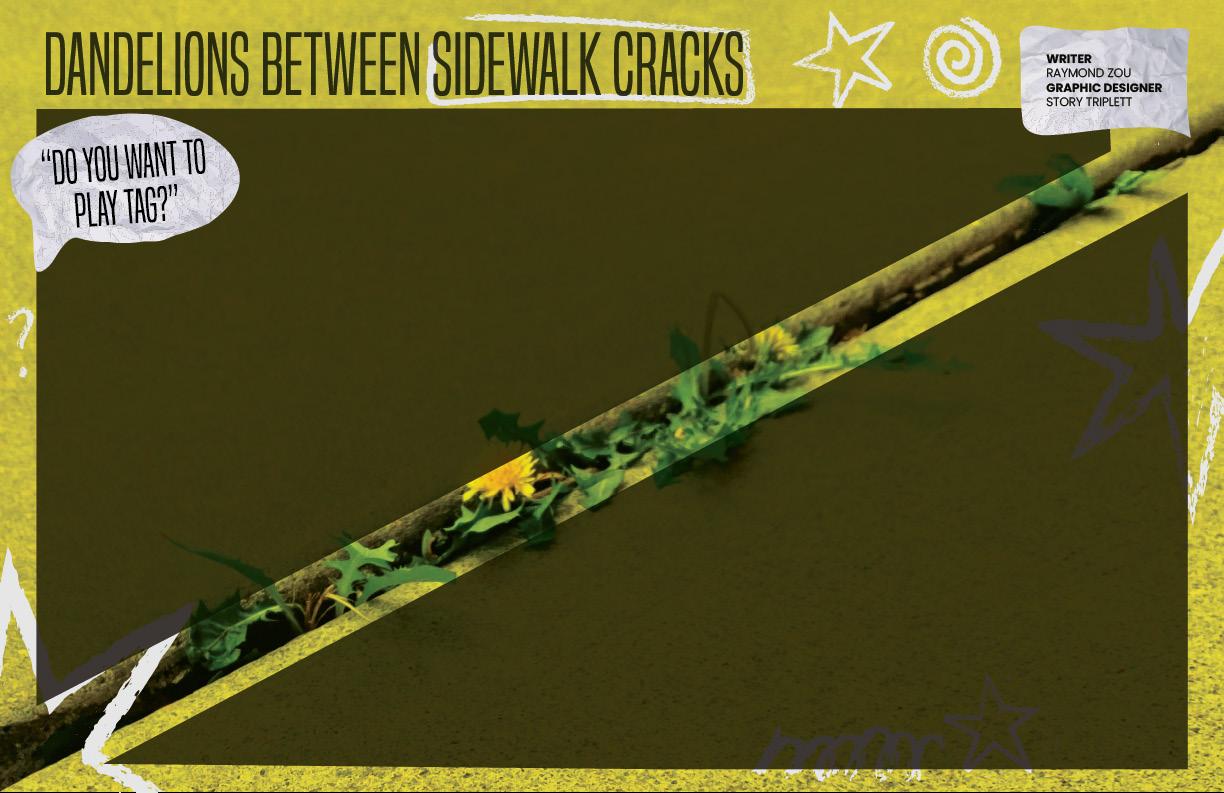
It’s easy to assume that growing up in a big city like New York meant that, even as children, we were taught to keep our heads down, ignore others, and fnd our community with the pigeons and rats. While somewhat true, living in a busy city also meant communities sprouted anywhere, like dandelions growing between sidewalk cracks.
The four of us played tag for hours. We didn’t know each other’s names and didn’t think to ask, so we’d yell “HEYYYYY” across the park, and immediately knew whom the other was referring to. As night approached, we all meekly waved goodbye to each other as we returned to our lives outside of being “it.”
The next day, I saw the same boy with bright yellow Adidas on the swings. I instinctively walked towards him. He slowed down as approached, pressing his shoes on the ground to a screeching halt. can t recall if we greeted each other or simply went to fnd the others like ants returning to their colony. We found the scrawny, bug-eyed boy near the blue slide that had levels: the “attic” where you could climb up to go down the slide, and the “basement” where the older kids played with their Yu-Gi-Oh! cards. The stout boy, whose name we discovered was Gerry after we overheard his mom calling for him to come put on more sunscreen, was found near the pink slide. We played tag again that day, deciding who was “it” with diggydiggy-diamond and bubblegum-bubblegum-in-a-dish. Around 7 PM, we said our goodbyes and knew we would see each other the next day.
Jose, the oy with the right yellow didas, was usually the frst to arrive at the lue slide, our unanimously and silently agreed upon meeting spot. It would either be me or Tony, the scrawny bug-eyed boy, next, and Gerry was always last. I don’t remember how I learned Jose and Tony’s names nor remember how they learned mine, but one day we knew. We never discussed trivial things like hobbies, families, schools, backgrounds, or anything personal. We focused on the important matters: what were we going to play?
Eventually, tag got too repetitive. We knew who was faster than who and what order we would get tagged in, so we began coming up with our own seasonal games.
In the fall, there was the Great
Acorn Wars where we split into teams of two. I was with Jose, and Gerry and Tony were a team. We’d collect acorns from the ground, competing with each other and the squirrels, to have the biggest collection. The blue slide was Jose and I’s base while the pink slide belonged to Gerry and Tony. The most strategic plan was to steal the opposing team’s stash, but that usually led to a catastrophic e change of acorns fying through the air. n desperate times, large stic s would get involved.
In the summer, we bought fart bombs, bang snaps, water balloons, and water guns. We would dance in the air as our feet jumped to avoid the sparks from the bang snaps, our shirts clinging to our s in and hair dripping from our earlier water gun fght. hen the big kids weren’t sitting on the basement of the blue slide, we would seek refuge there. In those moments of inactivity, we talked. Mostly about our games, Gerry being a klutz, and Jose knowing his way around a soccer ball. But occasionally, we’d talk about ourselves. I particularly remember Tony recounting how his home was haunted y shadow people, specifcally a man wearing a top hat. his sent shivers down my spine and is still the reason why finch at any slight movement in my periphery.
Our friendship ended as soon as it started. When graduated elementary school, my parents enrolled me in a middle school that was a 30 minute bus ride away. I ventured to the park much less frequently and eventually stopped going. Only in my freshman year of college did I visit and see that our meeting spot had now been replaced by a volleyball court. We didn’t have each others’ number or social media so, unless chance interfered, there was no way would see them again. Even if I did, would I recognize them? Would Jose still have his side part and exclusively wear soccer equipment? Would Tony still be bug-eyed with dark circles under his eyes? Would Gerry still be as clumsy but equally determined? Would they recognize me?
I’m sure I will never know. After all, we were bound to each other by nothing but the park. There was magic in showing up to the blue slide, knowing and not knowing that they were going to be there. Nowadays, I grimace at the thought of a social event where I don’t know at least one other person. But that day, almost a decade ago, I showed up knowing no one and left a part of a hyperactive, obnoxiously loud, and fart-smelling quartet. he sun setting, sweat dripping down my face, and frefies ooming past us, dodging the hot air from our pants hat image will never tarnish ut instead fade into warmer colors, fro en li e a pantomime.
Under the blazing sun on a summer’s day, I trudge along the sidewalk with my backpack that weighed almost half as much as I did. My shoulders were on the verge of falling off, and only the subtle winds from the passing cars were keeping me cool. Although the walk was hard, it was the destination in mind that made every step worth it.
chool had ust fnished for the year, and my friends and I had made it a yearly tradition to walk to our town’s local ice cream shop, Hawksies. A timeless shop that’s been standing since efore was even orn. ffering an endless amount of favors and toppings––milky way, oreo cookies, strawberry cheesecake, and mocha chip, to name a few – to choose from, it was nearly impossible to resist checking off another one on my checklist. Even among the changing of the leaves, Hawksies continued to bring out seasonal favors that truly tailored ice cream to ecome a year-long sweet treat.
Growing up, my years often felt as though they ended when I completed a grade level and only began when I started a new one. As with each passing year, there was a chance for change.
A change in my identity, and my values, while the one constant in my life growing up was Hawksies–still offering the same seats in complement with the same, sweet comforting favors. aw sies became a haven in my eyes, with open spaces for family, friends,
and even strangers to sit together and create memories
through a shared love of ice cream. However, as time passed, so did the quietness of this town.
Investments and commercialization made their way in, molding my small town into something else, something bigger, taking its own identity away. With tourist attractions and urbanization, the authenticity of a small town came to be hidden. Only by appreciating the quiet moments of our town would you fnd that the local usinesses were ept alive y the ids and generations that have lived here for decades.
We didn’t have much control over the expansion of our small town. After all, our environment is ever changing. However, despite the impermanence of our environment, the presence of community will always hold permanence in our stories, our smiles, and our memories.
ven whilst driving y aw sies, a sense of nostalgia foods through my windows as I remember the tables used to sit among with my friends as ice cream would drip down the sides of our cups and we would try a scoop of each other s favors mounted with colorful toppings. Tables where we would receive or offer advice to students older and younger than us who were also celebrating another end to a school year. At the other end of the shop would be an older couple together seeming to reminisce
about their own years growing up in the same town as a full circle moment.
Regardless of who the newest attractions of the town brought in, the one thing that keeps the spark of my hometown alive is the tradition of forming community in its most unexpected, yet sweetest moments. By sitting down at these open tables, we invite those who also appreciate and cherish the kinship of the charm of our original town. And while my years of spending my last day of school celebrating at Hawksies are over, every summer, I drive by and notice the younger generations carrying out the same traditions. With the same smiles, laughter, and messes being made, I know that while the community I had grown up with has drifted apart, the spirit of the town is kept alive as each generation makes sure to sit at the same tables, serving as an invitation to bring people together.
Our town may not be what it was 10 years ago, but I will always recognize it for the community and love it fosters in the heart of it all.
AMRITA ARUMUGAM GRAPHIC DESIGNER
JAYCEE MITCHELL
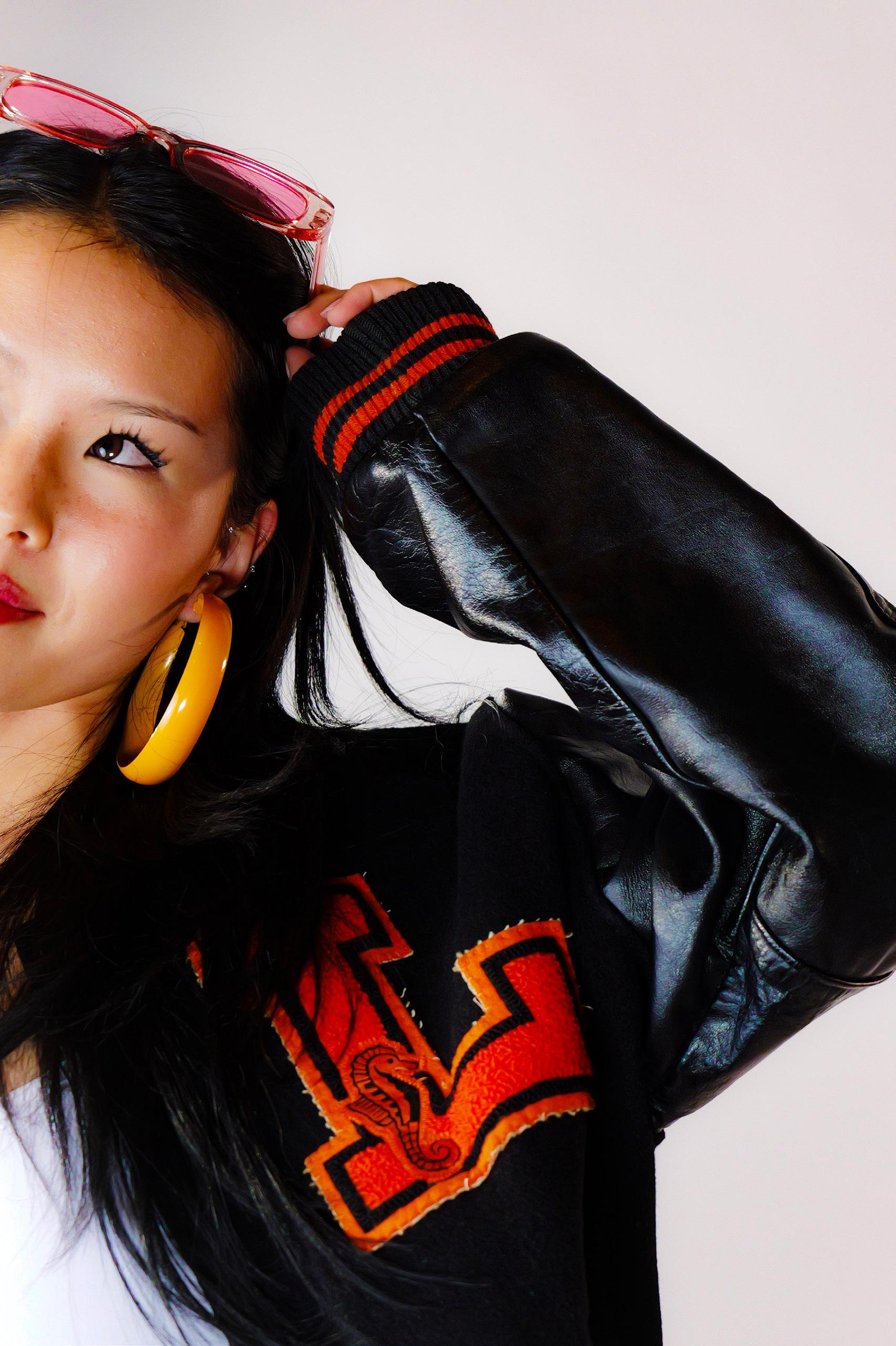
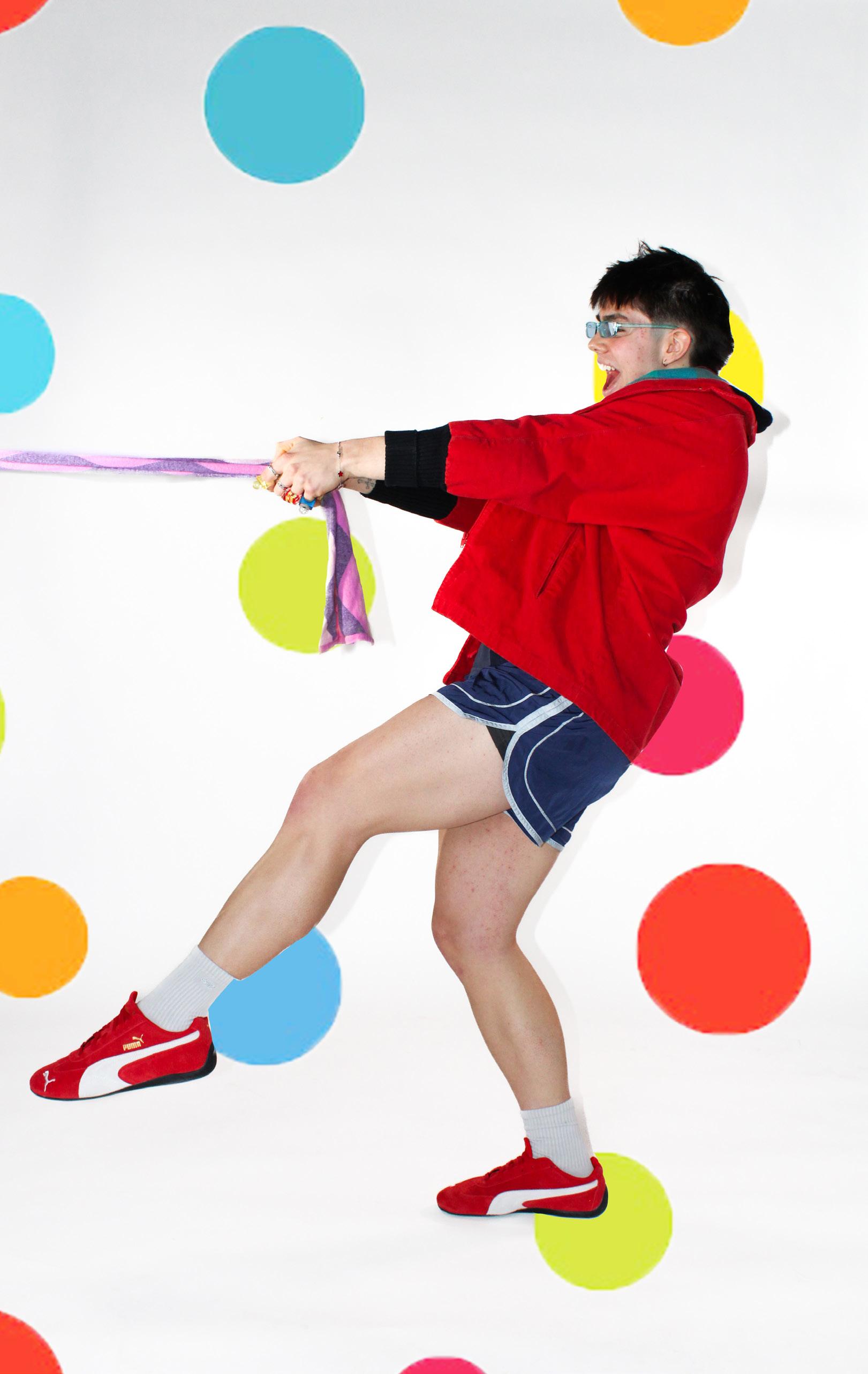
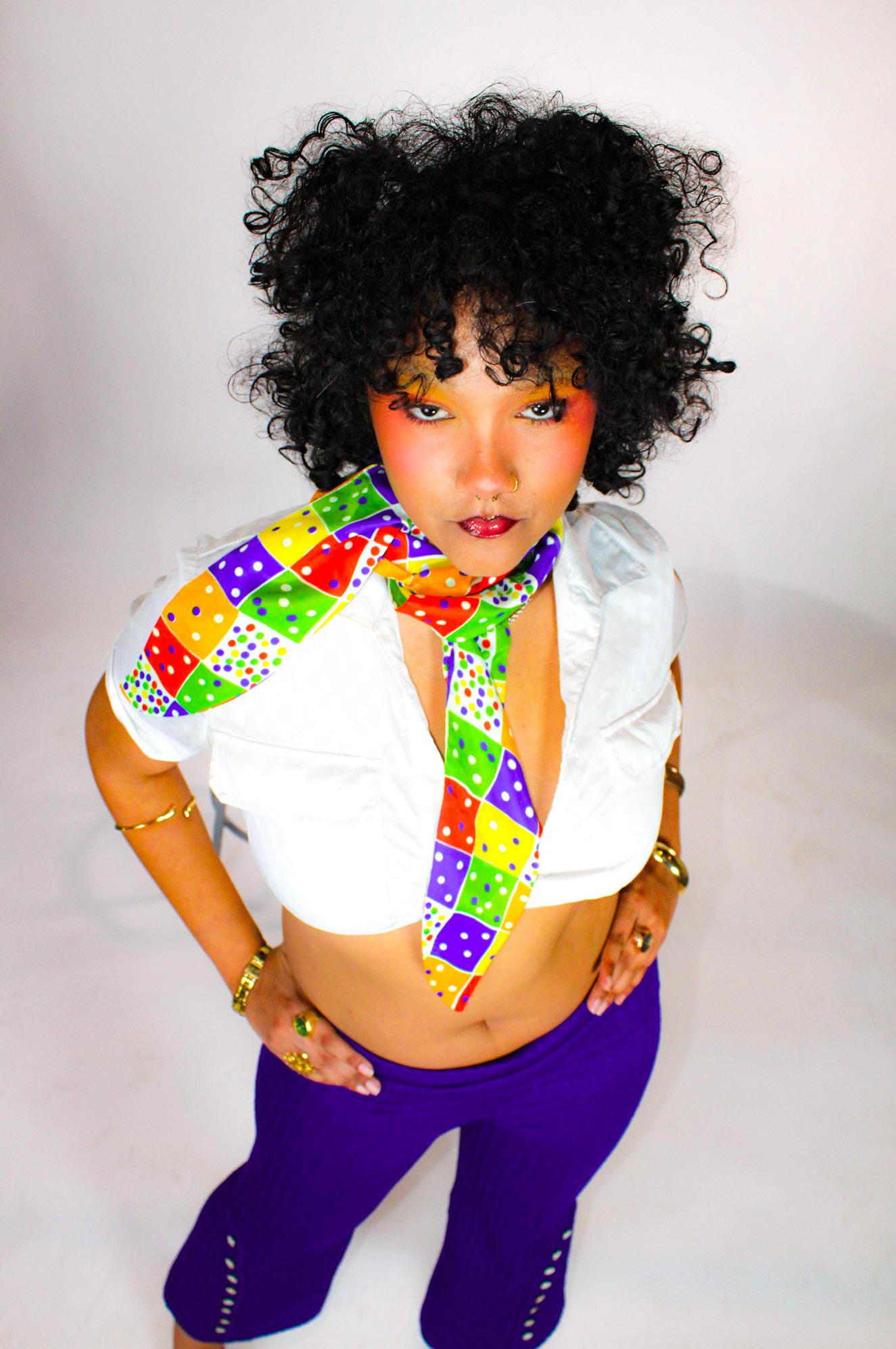
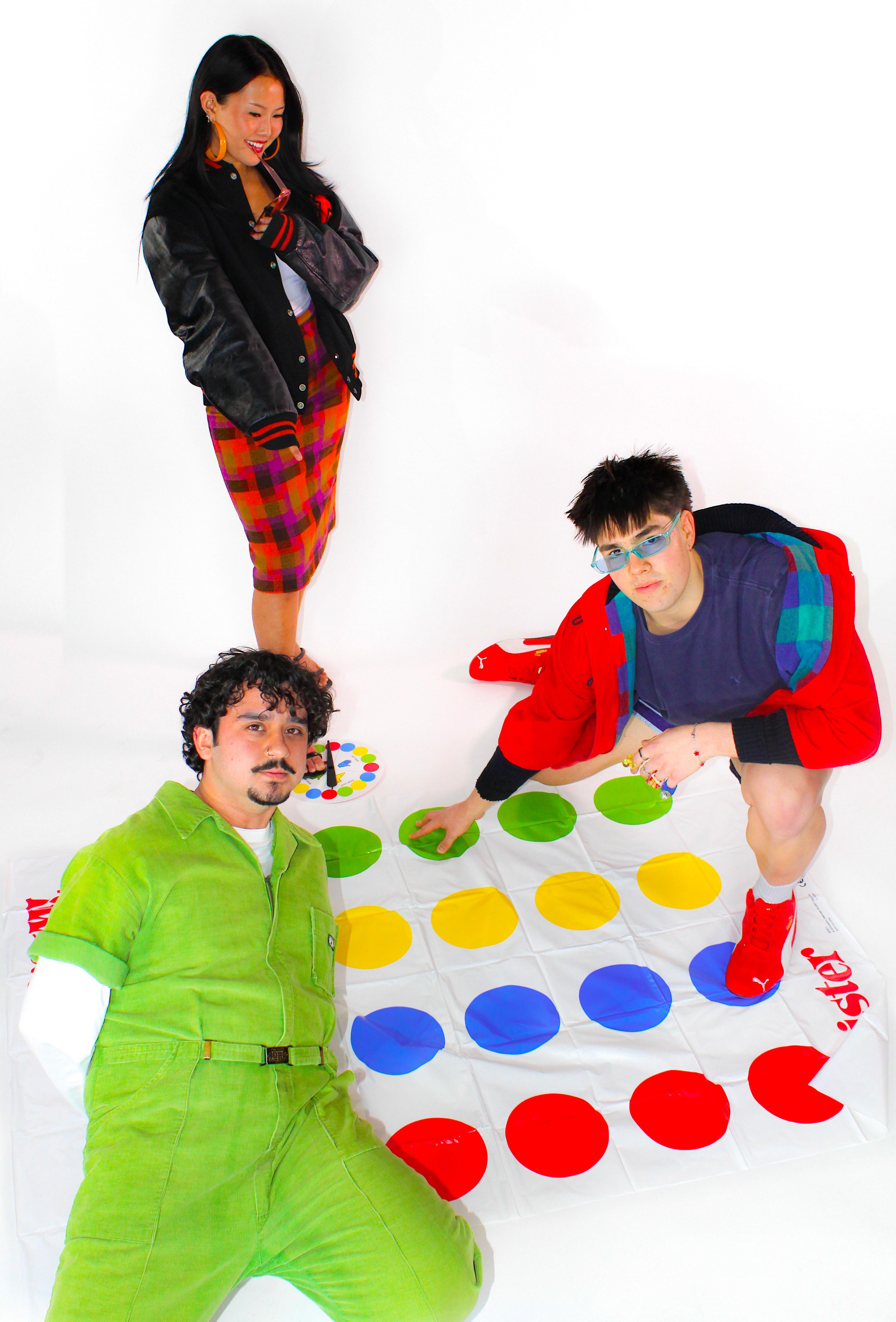
Sl pover Sma Town Sma Town Sl pover
SHOOT DIRECTOR
AUBURN MARRIOTT
PHOTOGRAPHER
LILLY VYDARENY FASHION
MYA WEISS
XOCHITL SANTANA VEGA
GRAPHIC DESIGNER
SASHA FRENCH
MODELS
KEIRA PENDER
HANIYA FAROOQ
DESTINY ADEDAYO
QUINN SACALIS