Guiding Innovation: The Leadership Role in Advancing Carbon-Free Technology by Shawn Rana

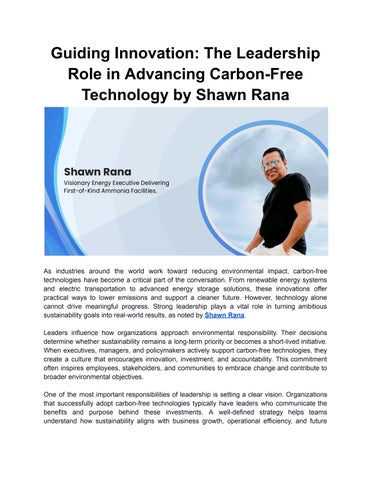
As industries around the world work toward reducing environmental impact, carbon-free technologies have become a critical part of the conversation From renewable energy systems and electric transportation to advanced energy storage solutions, these innovations offer practical ways to lower emissions and support a cleaner future However, technology alone cannot drive meaningful progress Strong leadership plays a vital role in turning ambitious sustainability goals into real-world results, as noted by Shawn Rana.
Leaders influence how organizations approach environmental responsibility Their decisions determine whether sustainability remains a long-term priority or becomes a short-lived initiative. When executives, managers, and policymakers actively support carbon-free technologies, they create a culture that encourages innovation, investment, and accountability. This commitment often inspires employees, stakeholders, and communities to embrace change and contribute to broader environmental objectives
One of the most important responsibilities of leadership is setting a clear vision Organizations that successfully adopt carbon-free technologies typically have leaders who communicate the benefits and purpose behind these investments. A well-defined strategy helps teams understand how sustainability aligns with business growth, operational efficiency, and future
competitiveness When people recognize the value of these efforts, they are more likely to support and participate in the transition.
Leadership also plays a key role in allocating resources. Implementing carbon-free technologies often requires significant investments in research, infrastructure, and workforce development. Forward-thinking leaders understand that these expenditures are not simply costs but strategic investments in long-term resilience. By prioritizing sustainable solutions, they position their organizations to adapt to changing regulations, market expectations, and environmental challenges
Another important aspect of leadership is fostering collaboration The shift toward carbon-free technologies involves multiple stakeholders, including governments, businesses, researchers, and consumers. Effective leaders build partnerships that accelerate innovation and create opportunities for knowledge sharing These collaborations help overcome barriers, reduce risks, and expand access to emerging technologies that support emission reduction goals.
Adaptability is equally important during this transition The landscape of clean technology continues to evolve rapidly, requiring organizations to remain flexible and open to new ideas. Leaders who encourage experimentation and continuous learning create environments where innovation can thrive Their willingness to embrace change helps organizations stay ahead of industry trends while contributing to broader sustainability efforts.
The transition to carbon-free technologies is not only a technological challenge but also a leadership challenge. Success depends on individuals who can inspire action, make informed decisions, and guide organizations through periods of transformation As demand for sustainable solutions continues to grow, effective leadership will remain one of the most powerful drivers of progress By championing innovation and supporting responsible practices, leaders can help create a future where economic growth and environmental stewardship work together to achieve lasting positive change.