JOYOUS VENUES
Repurposed churches now serve as a hub for the arts
PLACE OF ZEN
Join a meditation retreat at a Zen Buddhist temple
DINNER NOIR
Enjoy a meal with a notorious edge at 1920s gangsterthemed restaurants
Repurposed churches now serve as a hub for the arts
Join a meditation retreat at a Zen Buddhist temple
Enjoy a meal with a notorious edge at 1920s gangsterthemed restaurants
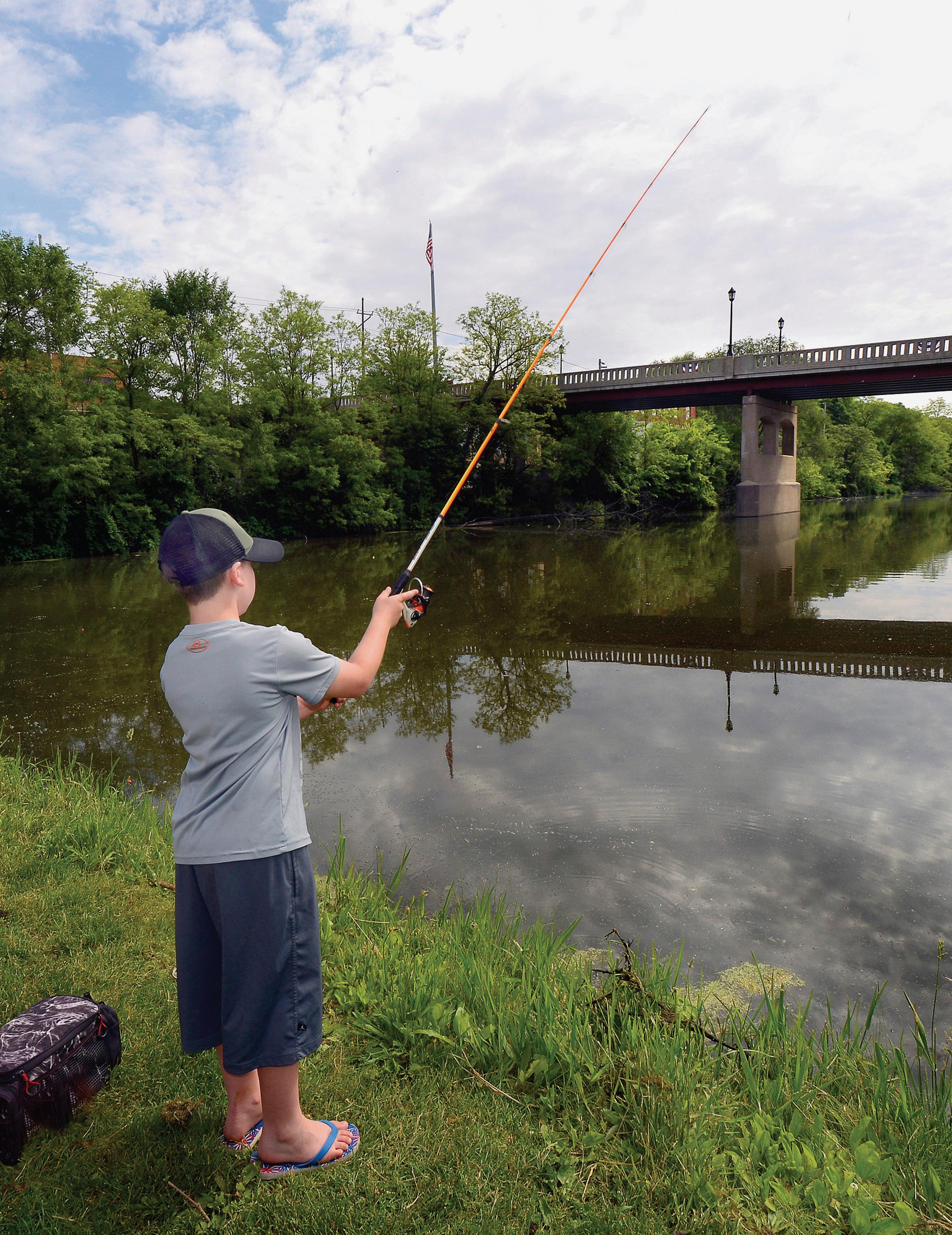
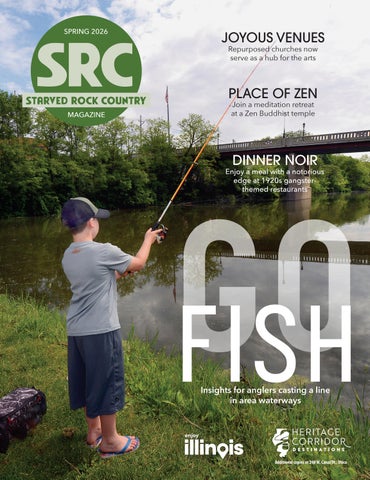
Insights for anglers casting a line in area waterways













Along the Illinois River in Ottawa, Heritage Harbor brings together marina life, resort-style amenities, waterfront dining, public events, vacation rentals, and the chance to call the harbor home.
Slips. Recreation rentals. Membership boating. Harbor Inn stays. Event spaces. Homes through Heritage Select Realty. There’s more here than most people realize.












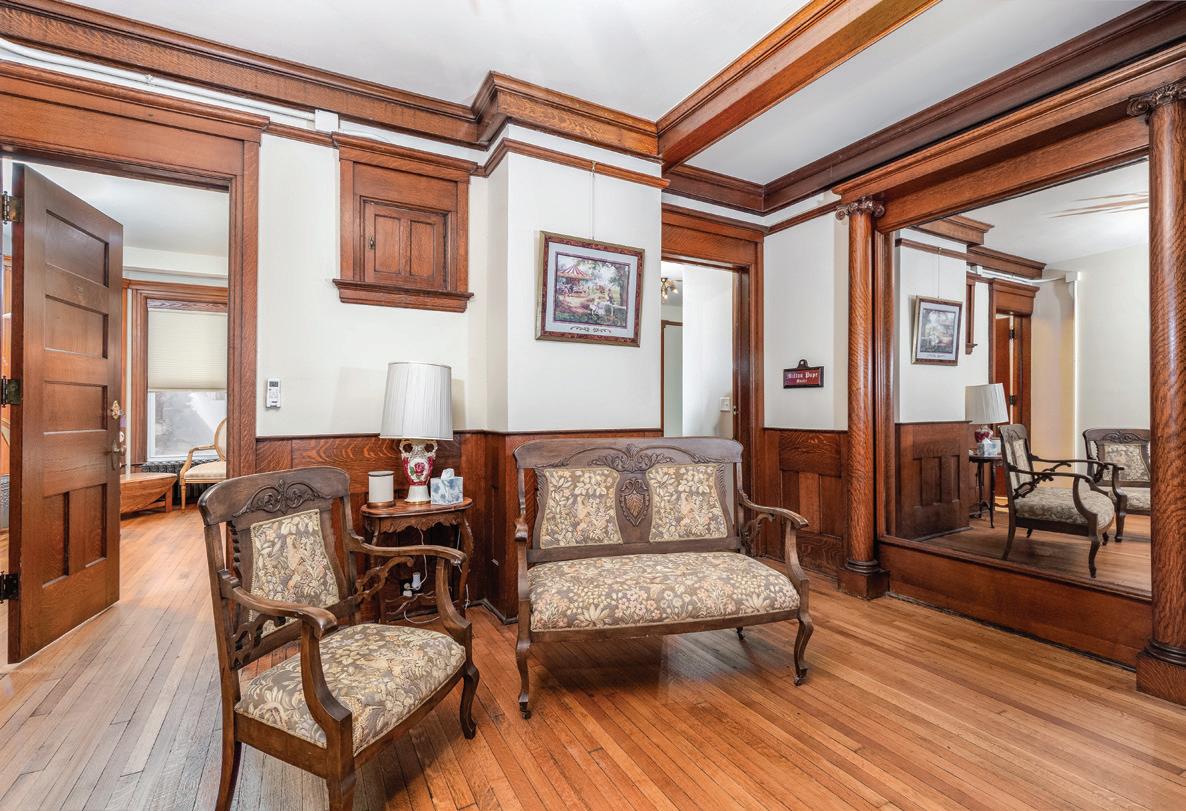
The Cora J Pope Home in Ottawa is steeped in history and scenery — guests can book a room at the mansion high above the Illinois River
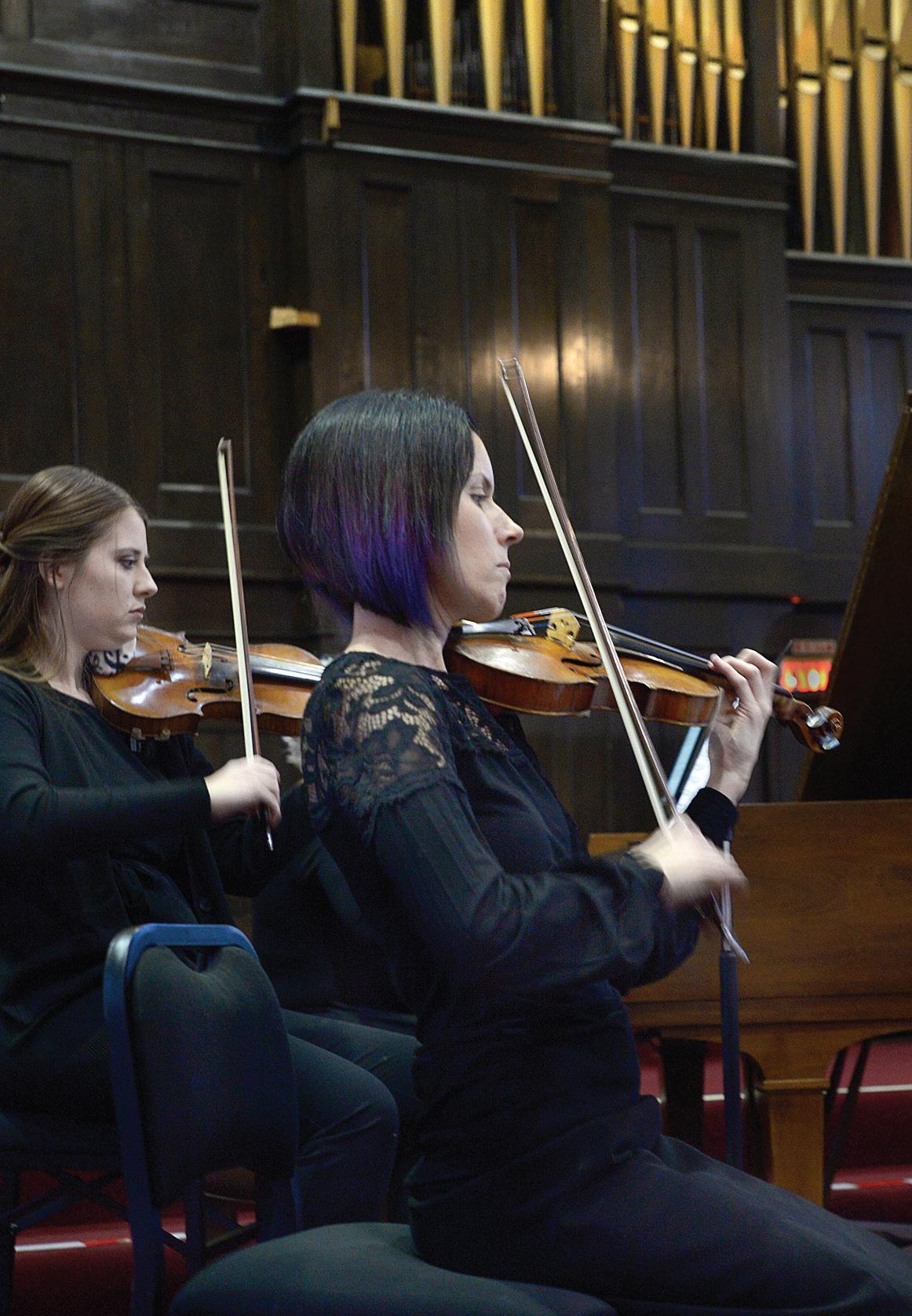
The Ottawa Center for the Arts hosts live music, dance, film, comedy, lectures and more in the vaulting space of two repurposed churches
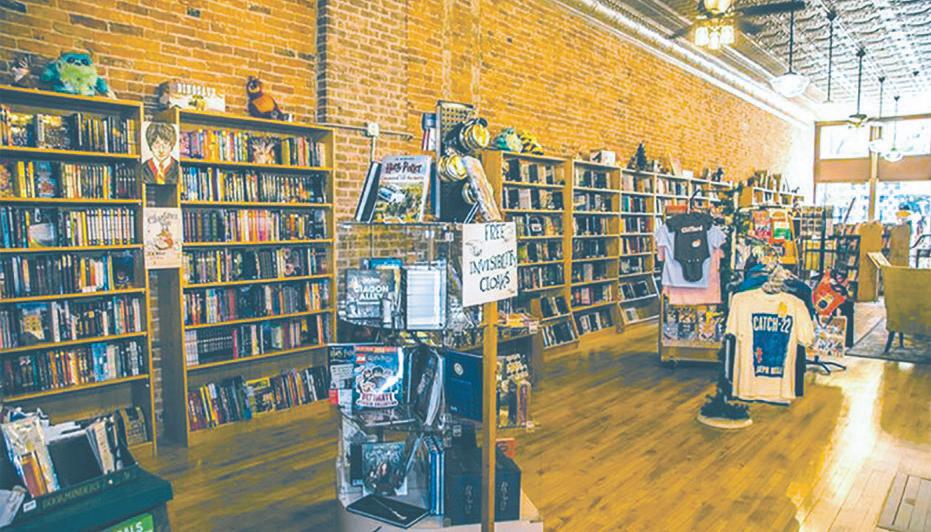
True Leaves Bookshop carries on the literary legacy of a former library building in a cozy, deeply bookish environment
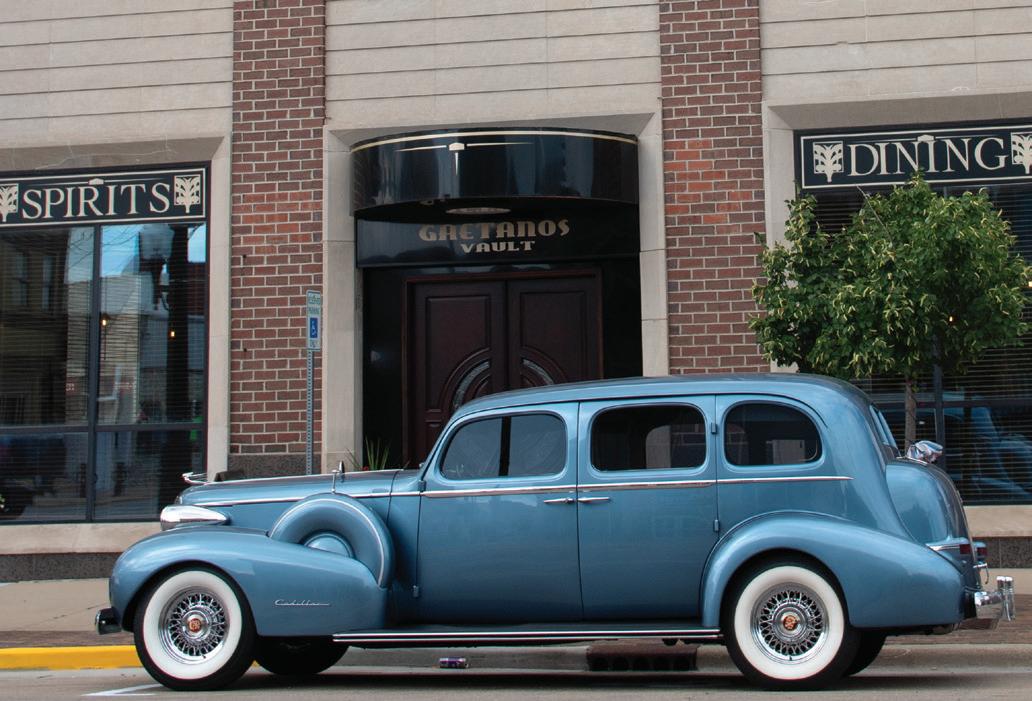
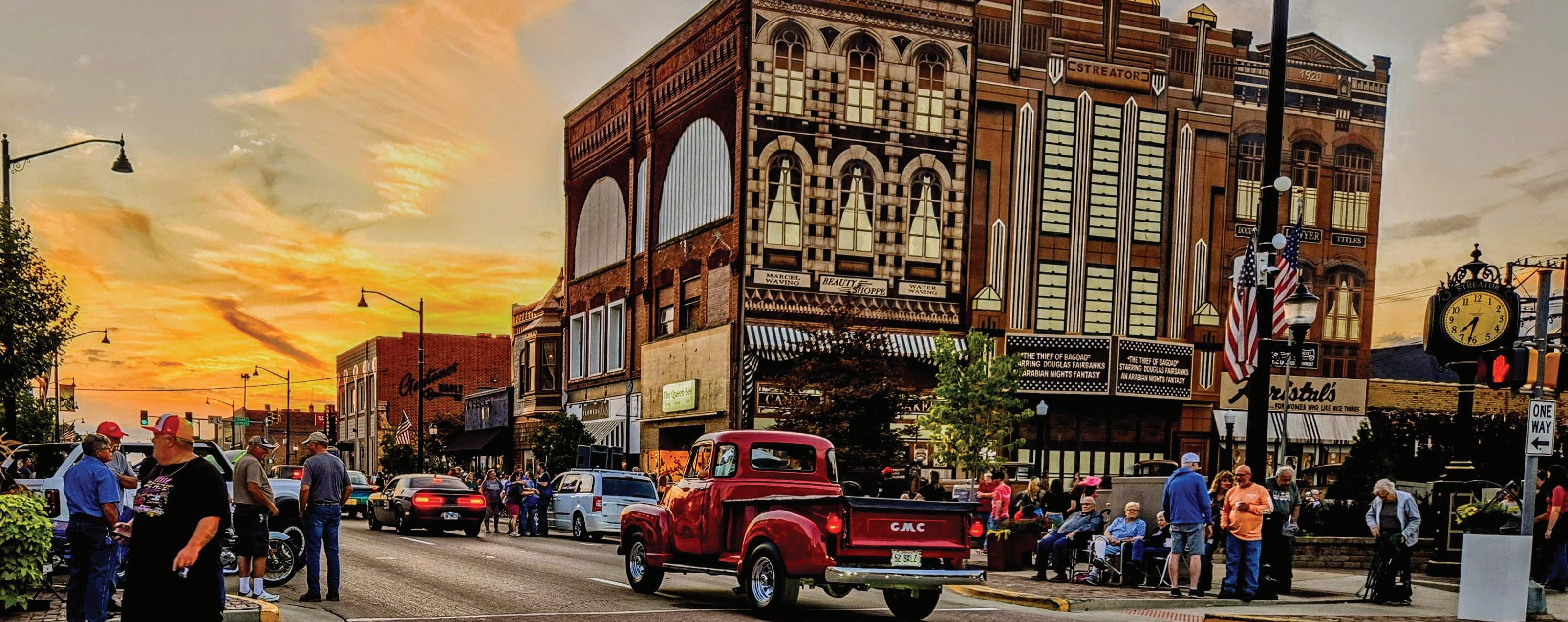
Two Streator restaurants mix food with a notorious slice of history — step into the height of the mob era at Gaetano's Vault and Goodfellas
Social media influencer Seth Ragusa — better known as Guse — samples and shares restaurants across the state
A local expert shares insight for anglers fishing the Illinois River in
Experience a meditation retreat at a Zen Buddhist temple and discover the wonder life has to offer
morels
How Confederate soldiers came to be buried alongside Union soldiers in an Ottawa






ertain places are hallowed. Although not necessarily consecrated or holy, they’re places of reverence and respect.
For me, those places include libraries and bookshops.
I have the privilege of living in Streator, which has Illinois’ most beautiful Carnegie library. I stake that claim in full awareness of my bias — I’m sure many of you reading this can, and will, argue that your library is the state’s most stunning, and I accept your statement without changing my mind.
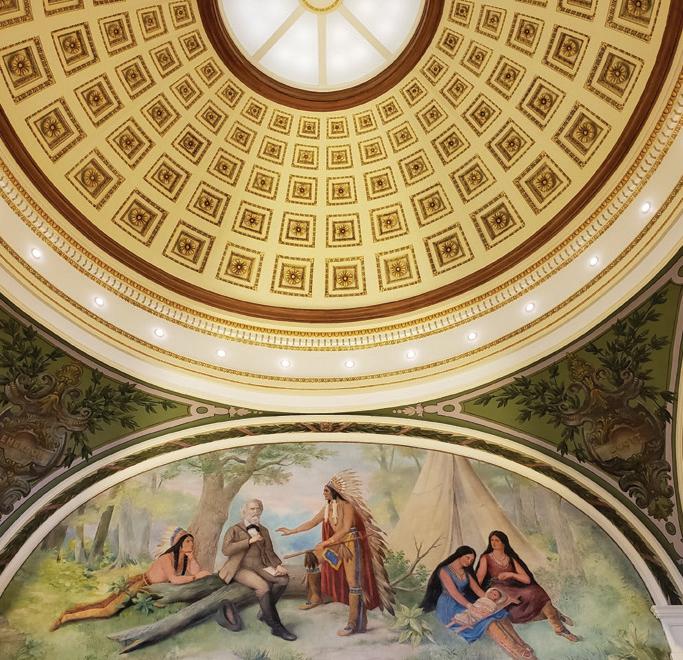
That said, if you find yourself in Streator (perhaps to dine at one of our 1920s gangster-themed restaurants featured on page 22), take time to visit Streator Public Library. Highlights of the building include the domed ceiling and the newly restored Gustav Fuchs murals. To view the murals at eye level, stroll up the stairs near the front desk and view the paintings from the second-floor gallery. The visit may not change your opinion about which library is the best, but I think you’ll appreciate it nonetheless.
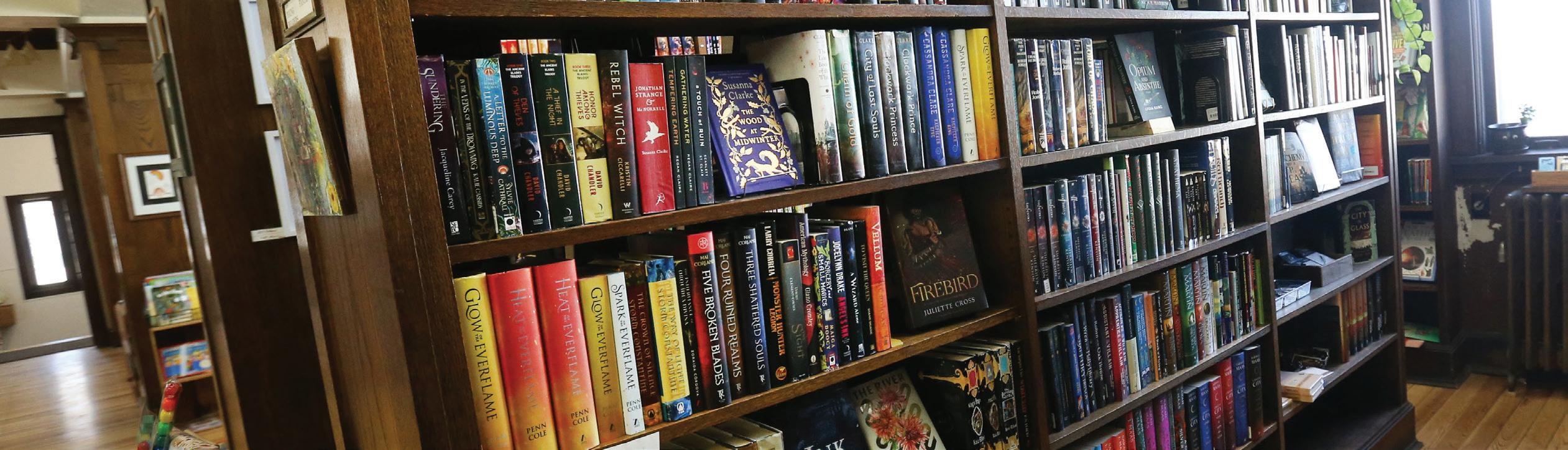
For literature lovers, another recommended stop is True Leaves Bookshop in Princeton (page 16). A trip to True Leaves is about the atmosphere as much as the reading material. Housed in a former library building, the store is a place that invites customers to linger at the chessboard, on a couch or among the shelves. Fittingly, it’s a shop that feels like it’s straight out of a storybook.
Another hallowed place in Starved Rock Country served as a holy space for decades before transforming into a haven for the arts. Two churches in downtown Ottawa have been repurposed as venues for the Ottawa Center for the Arts, which presents music, dance, photography, film, comedy, lectures, poetry readings and more (page 12). Within a one-block walk of each other, the churches have been renamed The Abbey and the Great Hall. Both venues host a full calendar of events open to the public.
For those seeking a quiet and reflective destination, consider registering for a weekend meditation retreat at One River Zen, a Zen Buddhist temple in Ottawa (page 30). The three-day retreats welcome both longtime and new practitioners of meditation.
Another relaxing activity this spring is fishing along one of the region’s many waterways. Local expert Adam Sandor, a board member of Spring Valley Walleye Club, provides an overview of angling along the region’s stretch of the Illinois River (page 28).
Come join us for a season of arts and leisure — you’ll find plenty of both in Starved Rock Country.
JULIE BARICHELLO Editor

Starved Rock Country Magazine is published quarterly or seasonally four times per year
Shaw Media
426 Second St�
La Salle, IL 61301
www�starvedrockcountry�com
Email photo or article submission queries to jbarichello@shawmedia�com�
Copyright 2026 Reproduction or use of editorial or graphic content in any manner, without permission, is prohibited Vol 14 No 1
Spring 2026 Edition
2026-03/25,000
GENERAL MANAGER
Jeanette Smith
EDITOR & DESIGN
Julie Barichello
PRODUCTION
Rhonda Dillon
CONTRIBUTING WRITERS
Derek Barichello
Julie Barichello
Jonathan Bilyk
Ali Braboy
Stephanie Jaquins
Ryan Searl
Charles Stanley
CONTRIBUTING PHOTOGRAPHERS
Scott Anderson
Ryan Searl
Tom Sistak












There were barriers to overcome to turn a mansion back to its former glory.
Many of those barriers were actual walls. Enough walls to house older women and the staff who cared for them.
For 71 years, the Cora J. Pope Home in Ottawa served as a residence for women ages 55 and older who were able to care for themselves with minimal support but who wanted the
companionship of other women and to live in a Christian family atmosphere.
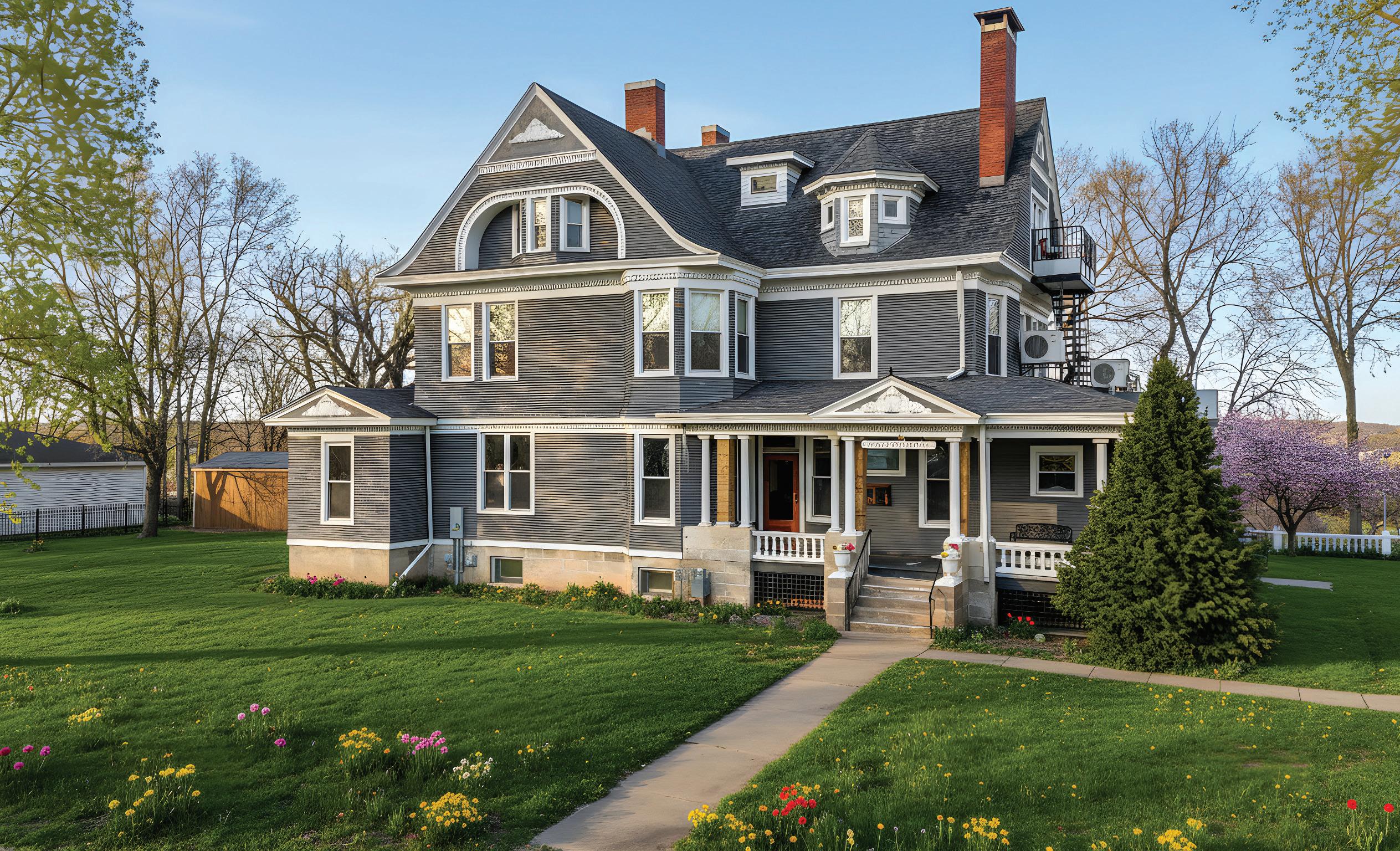
When Larry Mitchell and Ottawa Inn Properties LLC bought the home at 116 W. Prospect St. in 2018, they were tasked with making the mansion feel like a home again — like it was for the original owners.
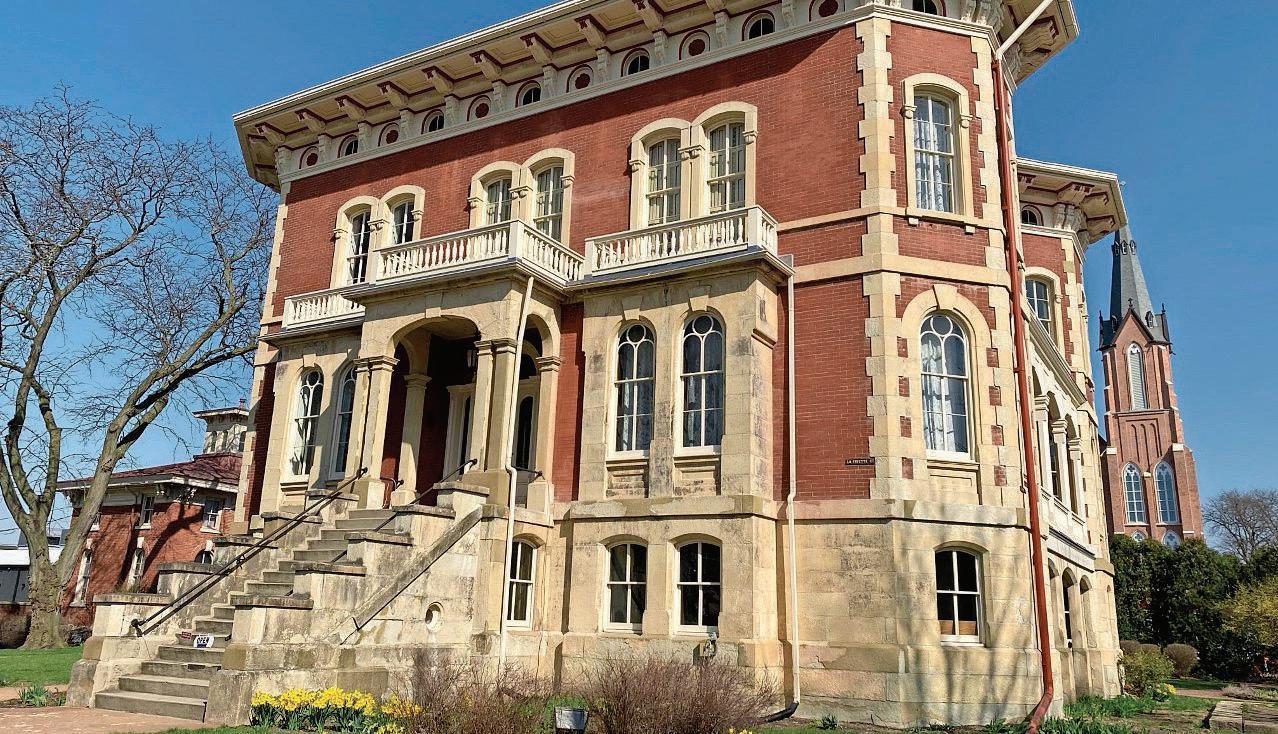
The Victorian mansion was built by Milton and Cora Pickens Pope in 1902, high on the
sandstone bluff overlooking the Illinois River. Pope, a director of the First National Bank of Ottawa, married Cora Pickens, a teacher, in 1897. They lived together until Milton died in 1920.
Cora Pope lived until 1942. She dictated that she wanted the house to be a home for elderly women.
“She wanted her home to be a place that was utilized and stayed a place for people to enjoy,” Mitchell said. “The two of them
By Stephanie Jaquins | Photos by DS Aerial Images
when they built the home were married, but they didn’t have any children, so this 5,600-squarefoot mansion was a place for two people and their staff to live. It was quite an opulent way to live for two people.”
In 1945, under the direction of Synod of Lincoln Trails of the Presbyterian Church, the home opened for its first three residents — long before assisted living facilities originated in the 1970s.


The building underwent many modifications over the years to fit the needs of the women.
After Mitchell assumed ownership, he began the process of converting the mansion into a vacation rental for visitors.
“We began what was supposed to be a simple renovation,” Mitchell said. “Our goal was to return it to a more home-like environment, because it had been institutionalized over the years it was a home for elderly women.”
The spaces had been divided into 23 stay rooms when it was a women’s home. The great room had been divided in half and used as two stay rooms, and many other spaces had taken on different purposes.
“We called it the home of the random sink when we first got there, because they … had added sinks in each of the stay rooms. There were antique sinks throughout,” Mitchell said.
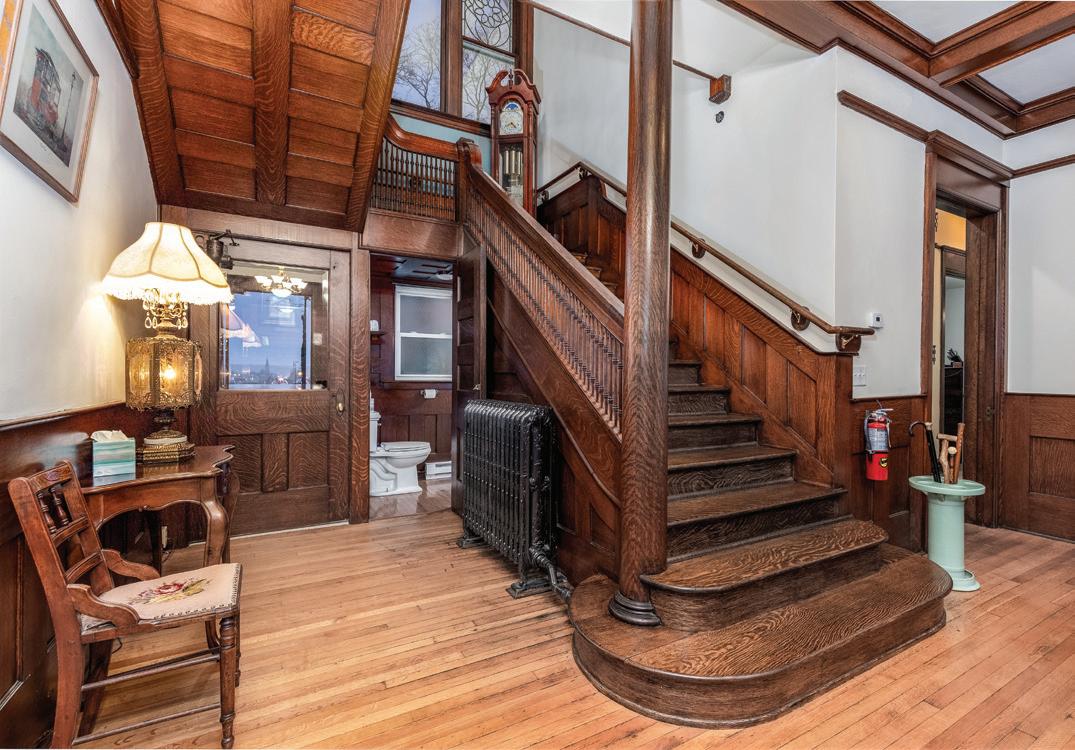
Over the years of renovations, there wasn’t any part of the home that went untouched, from the kitchen to the elevator.
The mansion has been available to rent on Airbnb and Vrbo for several years. It has five bedrooms and eight bathrooms.
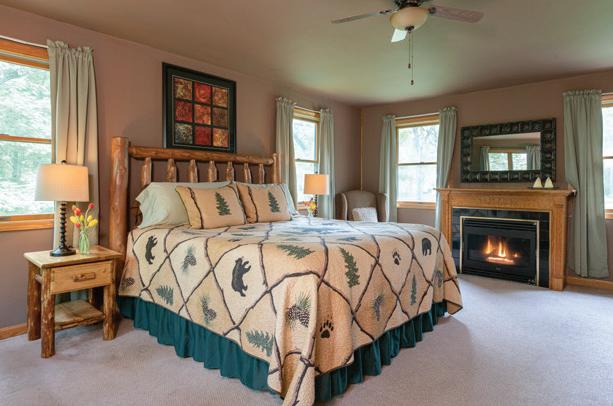
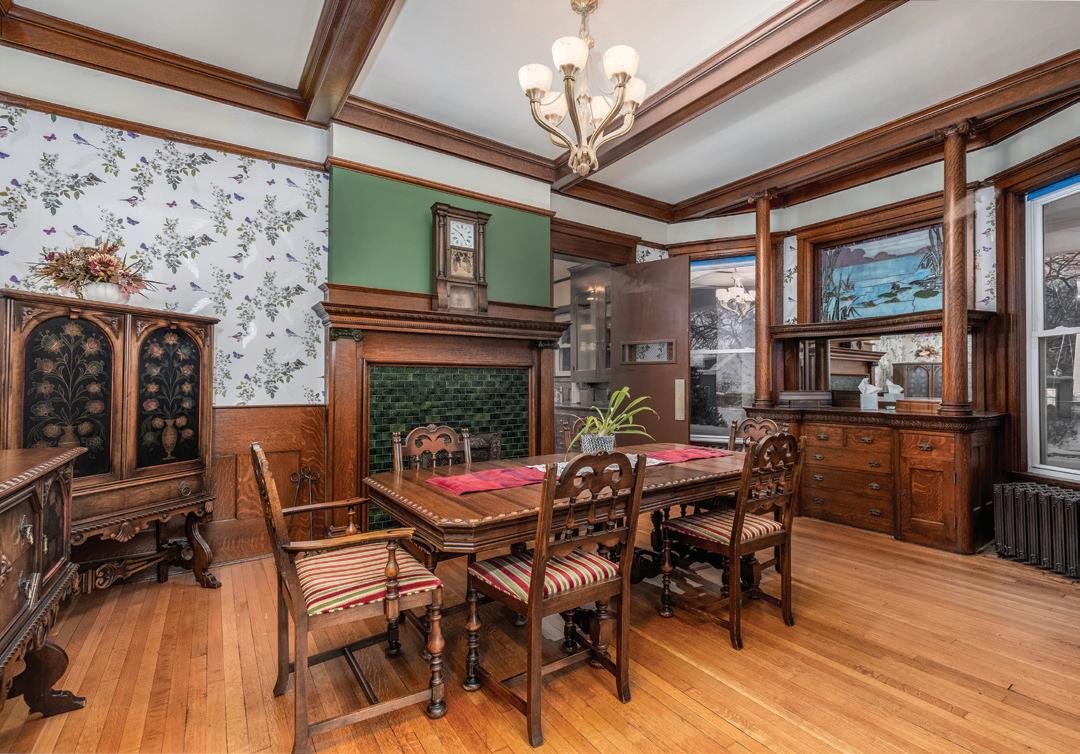
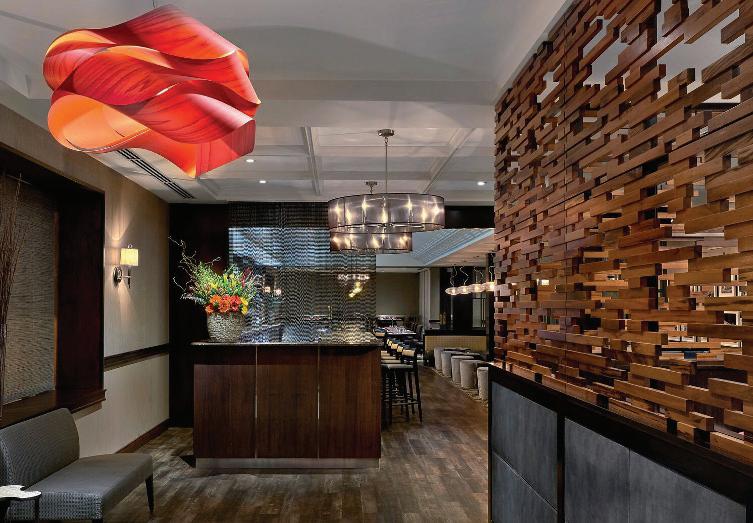
Cora's room features birdseye maple woodwork, a fireplace and an en suite bathroom with a soaking tub and water closet. Milton's room also includes an en suite bathroom and connects to an adjoining bedroom.
The Starved Rock room sits next to a historic full bathroom with original "wet-set" subway tile and soaking tub.
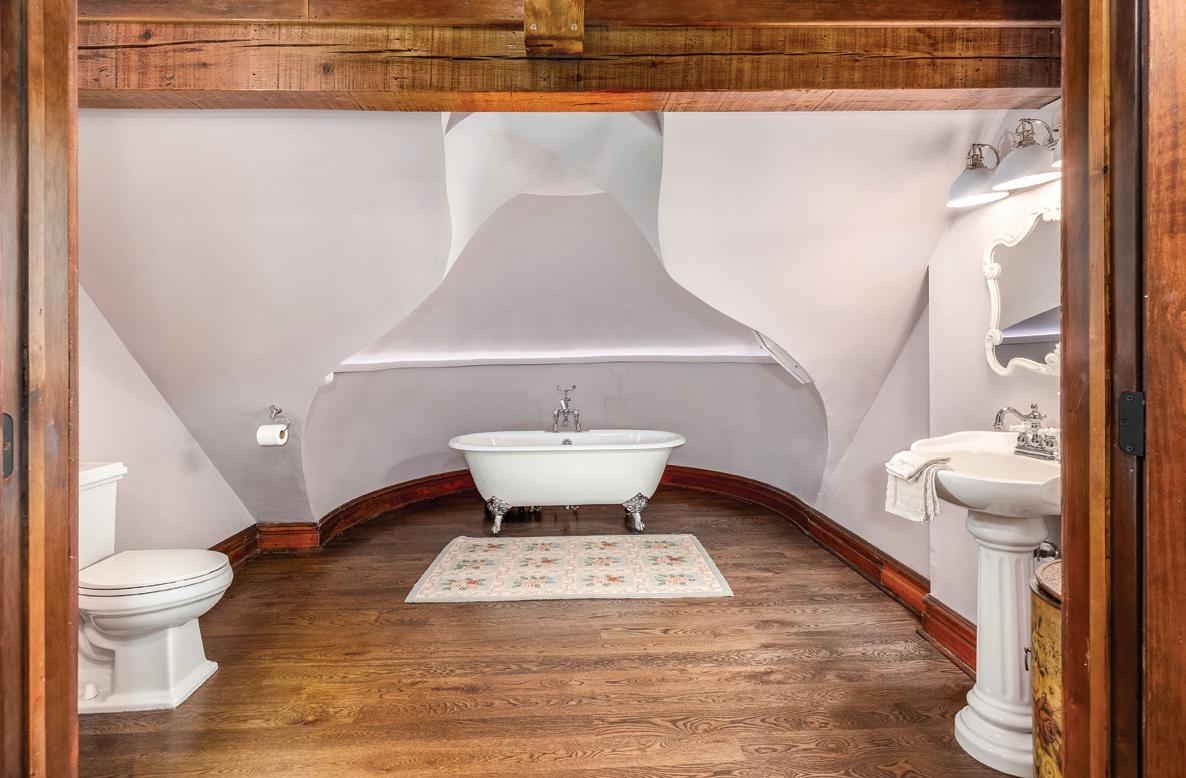
The third floor continues the home's rich character with the Riverview Suite, named for its stunning views, with French doors opening to a private balcony and an en suite full bathroom. The Bishop's Suite features beautiful exposed brick, a walk-in closet, a bath







with curved walls showcasing a soaking tub, and an attached secondary bedroom and kitchenette.
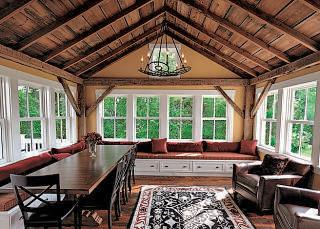
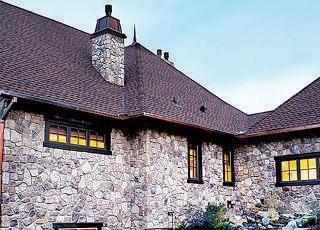
The interior looks substantially unchanged with tiger oak woodwork with dentil molding, builtin cabinetry, mosaic tile and fireplaces, all carefully preserved. The outside of the home boasts a welcoming porch, decks and balconies, and intricate architectural details.
There’s also plenty of reading materials about the history of the home for guests.
“It was interesting learning
about the history of the home. It was always well cared for and taken care of by the community. The legacy they left in the home was just amazing,” Mitchell said. Mitchell said he’s received guests from all over the globe. Many commented on feeling like they had stepped back in time but with modern amenities; they enjoyed the spacious rooms and the convenient location. It is within walking distance of downtown Ottawa and a short drive to other attractions such as Starved Rock State Park and Skydive Chicago.
















Cheap Trick’s “Surrender” has been performed thousands of times around the world, from barrooms to sports arenas.
Perhaps one of the most unique renditions occurred at The Abbey in Ottawa.
With a nod to the acoustics of the historic church, singer/songwriter Miles Nielsen, son
of Cheap Trick’s Rick Nielsen, and his band the Rusted Hearts sang the 1970s rock hit a cappella.
That moment spoke volumes to the impact the Ottawa Center for the Arts’ two venues, The Abbey and the Great Hall, will have on experiencing the arts.
“They were doing a proper rock concert
By Derek Barichello | Photos by Tom Sistak
with lights and amplification,” said Anne Badger, executive director of the Ottawa Center for the Arts. “And they were also experimenting just how supportive the acoustics are here, and they chose to end their concert a cappella, because they realized it will sound great in this space.”
Both of the Ottawa Center’s buildings are
repurposed churches, each rich in history, and now invigorated with activity.
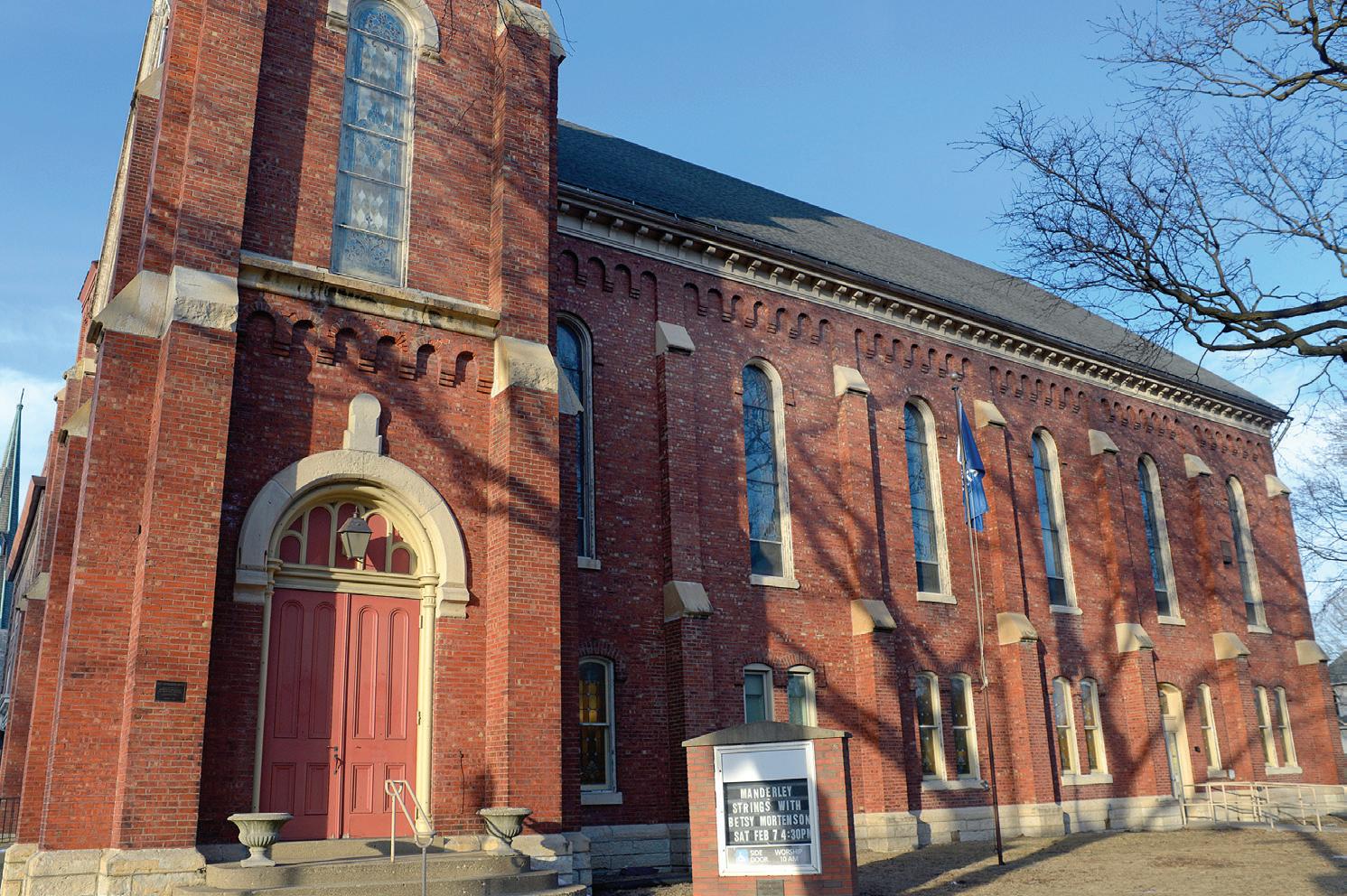
The Abbey is located at 113 E. Lafayette St., across the street from Washington Square, the site of the first 1858 Lincoln and Douglas debate. Designed in gothic style and built with Joliet limestone, it’s listed on the National Register of Historic Places and is adorned by stained-glass windows, including the Wallace Window, which depicts the Resurrection.
Within walking distance, the Great Hall is located at 910 Columbus St., at the south end of the block from The Abbey. Also listed on the National Register of Historic Places, it’s characterized by its steeple on the outside and its towering pipe organ inside.
“Both buildings have superb acoustics,” said Badger, who is a musician.
The rock concert scratches the surface of what’s offered or possible at the venues. They are a hub for arts and activities of all kinds, including music, dance, photography, film, comedy, lectures, poetry readings and meditation, and even events that haven’t been thought of yet.
“We have an open mind and open heart,” said Christine Benson, chairperson of the Ottawa Center’s programming.
Not much has been altered on the churches; engineers were brought in to ensure the acoustics were not compromised. Long pews in rows offer bench-like seating for spectators.

The Ottawa Center for the Arts is always adding events. Go to www.ottawacenter.org/event-list to catch all the latest. Upcoming shows include:
• March 28: The Steve Sharp Band, The Abbey, 7 p.m. Tickets are $25.
• March 29: Dr. Tom Jobst, A View From The Abbey Series, 2 p.m.
• April 11: Dueling Pianos with Kate & Justin, The Abbey, 7 p.m. Tickets are $20.
• April 18: DuffleBelle, The Abbey, 7 p.m. Tickets are $20.
• April 21: The Northern Illinois University Steelband, The Great Hall, 7 p.m. Tickets are $20.
• April 26: John Williams, A View From The Abbey Series, 2 p.m.
• May 8: Lost Pyramids, The Abbey, 7 p.m. Tickets are $25.
• May 15: Trio de Chats Noirs, The Great Hall, 7 p.m. Tickets are $25.

by Starved Rock Country Community Foundation, visit www.srccf.org/fund/ ottawa-center-for-the-arts.
Ornamental lighting hangs from the ceilings. The reredos and wooden furniture remain intact at The Abbey, which boasts of an Austin organ, as well as a bell that may be used to alert patrons of showtime. The Great Hall features a carpeted lobby that leads upstairs to a vast open hall with stained glass windows, along with a balcony that may be opened for spectators.
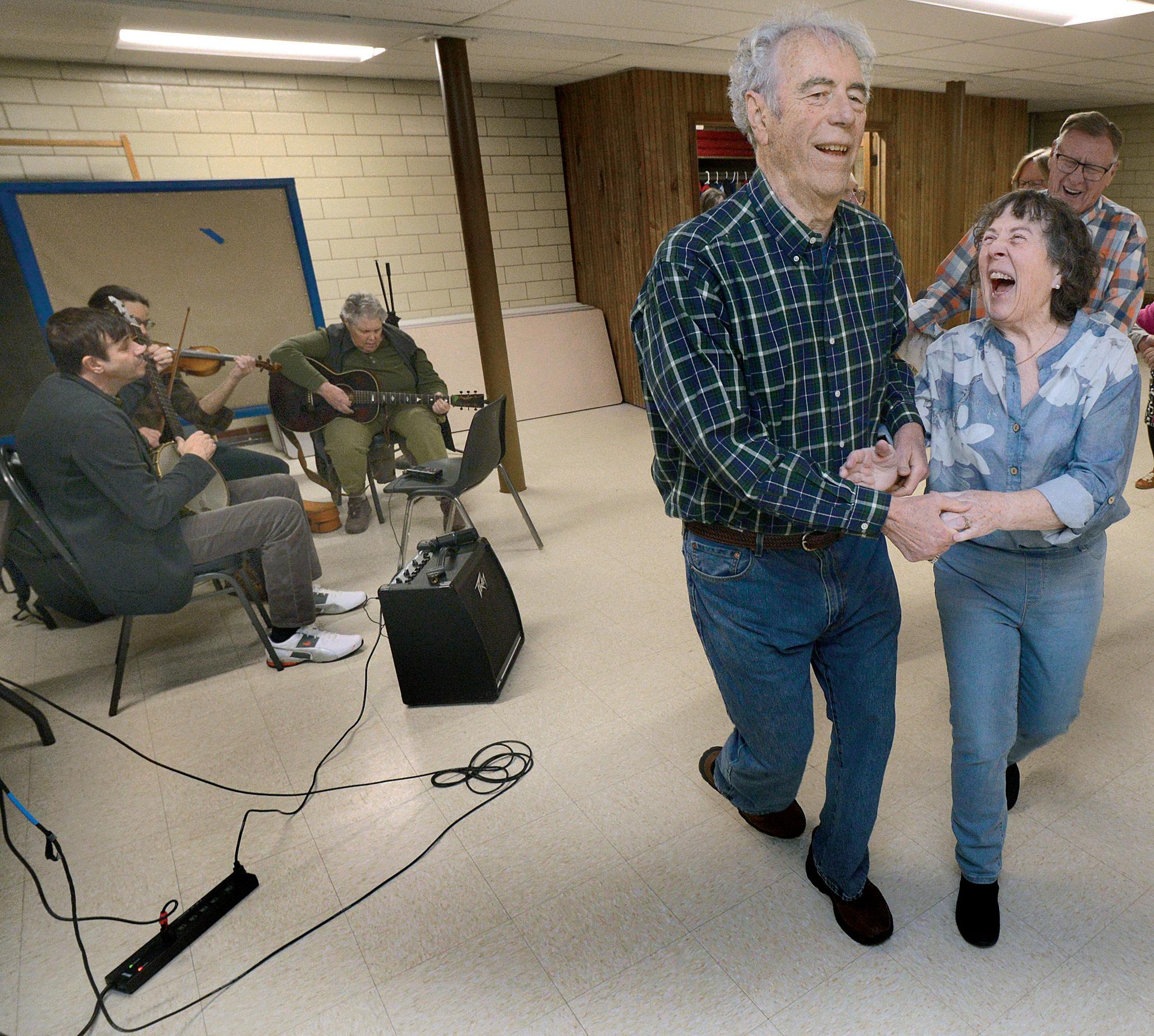
Unless noted, events don’t require admission fees. Instead, the Ottawa Center requests $10 donations. The proceeds support the volunteer effort to keep the buildings maintained and attract talent. The shows are family-friendly and children are welcome.
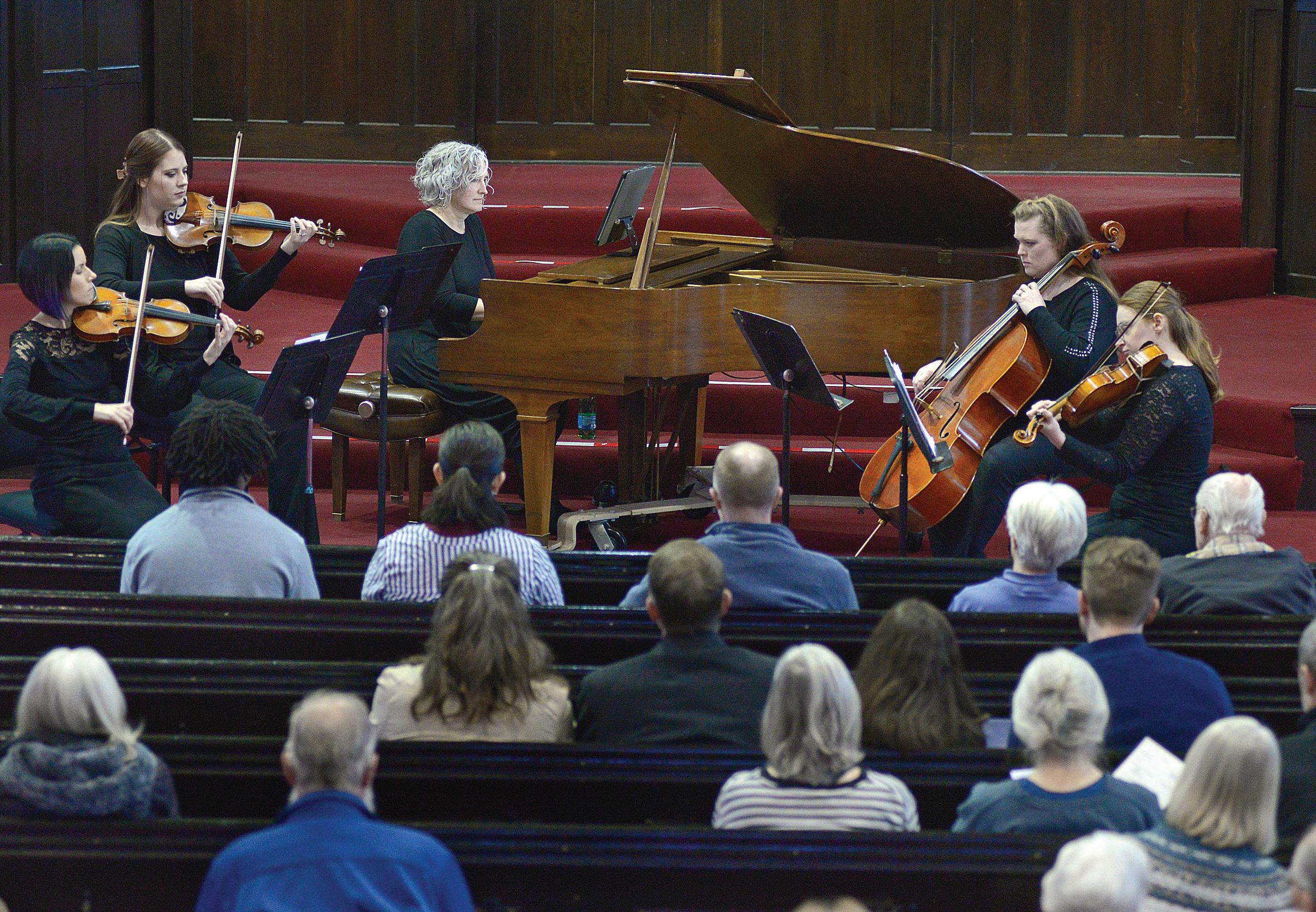
In early 2026, Manderley Strings, a quintet with violins, a viola, cello and piano, performed at the Great Hall. Along with the popular “Bridgerton” theme and some folk and chamber music, the group performed the score from Christopher Nolan’s film “Interstellar,” accompanied by the pipe organ that reverberated throughout the hall.
“That’s our gem,” Badger said.
When the Ottawa Center’s committee attended initial meetings, they were asked to come up with one-word descriptions of the venues.
“Joyous,” was one memorable response.
“It really speaks to the history of these buildings as churches,” Badger said. “And the continued joy they will bring.”




































































adfasdf







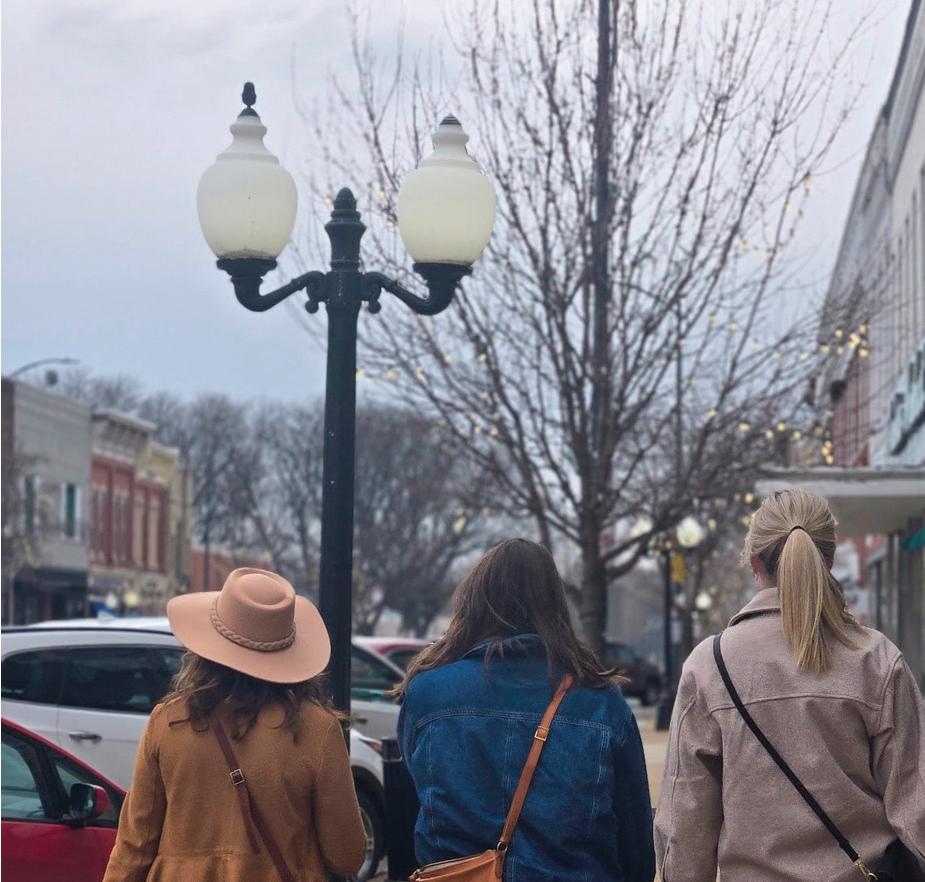
Stroll Princeton’s Historic Main Street, where fasdfbeautifully decorated storefronts and unique boutiques create the perfect shopping destination. Savor a meal at a family-
owned restaurant, cozy up with a craft brew at our local brewery, and relax with a stay in a welcoming Airbnb or hotel.
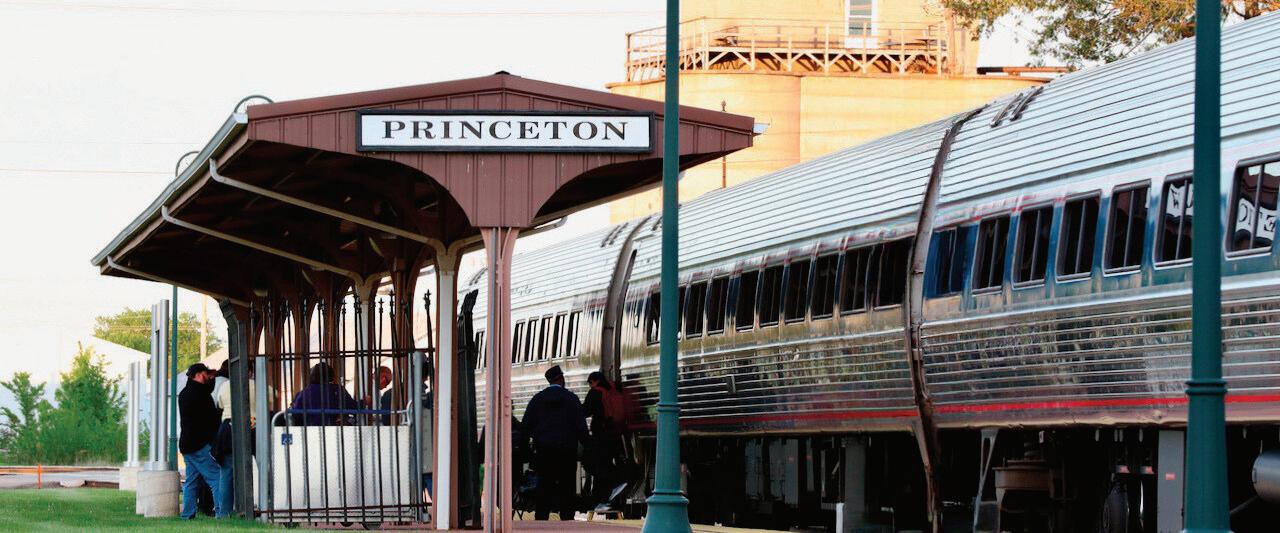
Explore our landmarks and museums, catch a seasonal event, and enjoy a memorable spring getaway filled with small-town charm, comfort, and connection. For an easy and relaxing trip, hop aboard the Amtrak and arrive right in the heart of town
Meet me in Princeton, IL.
SHRIMPFEST & PRINCETON MILE
june 6
HORNBAKER GARDENS OPEN HOUSE AND HOSTA WALK june 12 - 14
DOWN ON MAIN STREET CONCERT SERIES june 19, july 17, august 14, september 11
250 CELEBRATION PARADE & CEREMONY th july 4
Z TOUR BIKE RIDE july 18
BUREAU COUNTY FAIR august 26 - 30
BUREAU COUNTY HOMESTEAD FESTIVAL september 10 - 13








By Derek Barichello
Photos by Scott Anderson
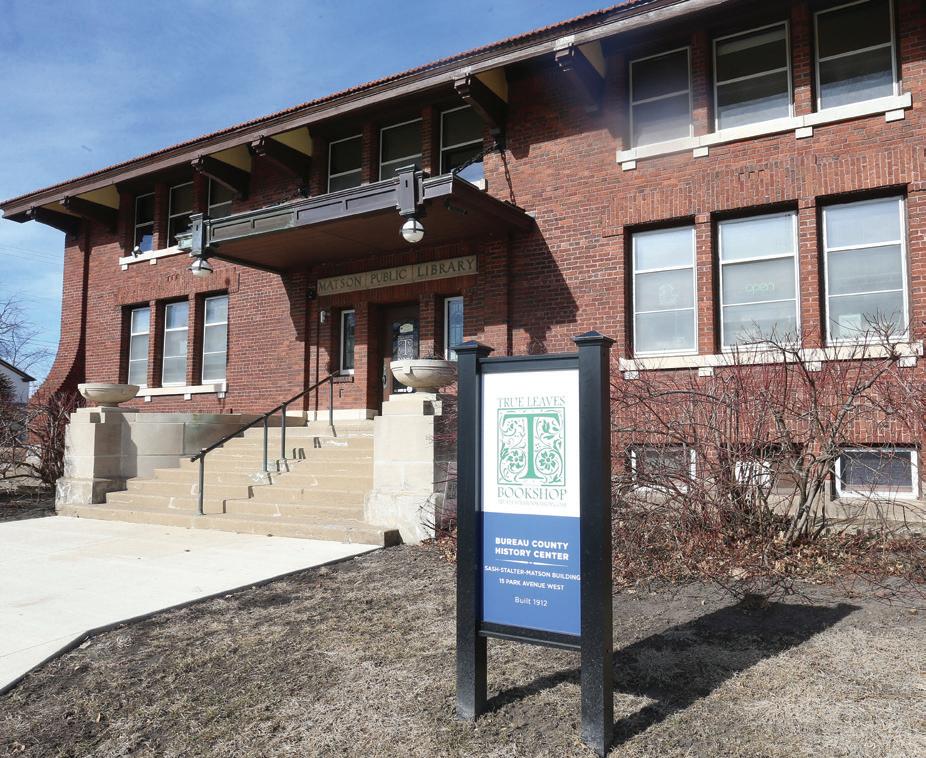
The Sash Stalter Matson building in Princeton was meant for books. And booklovers.
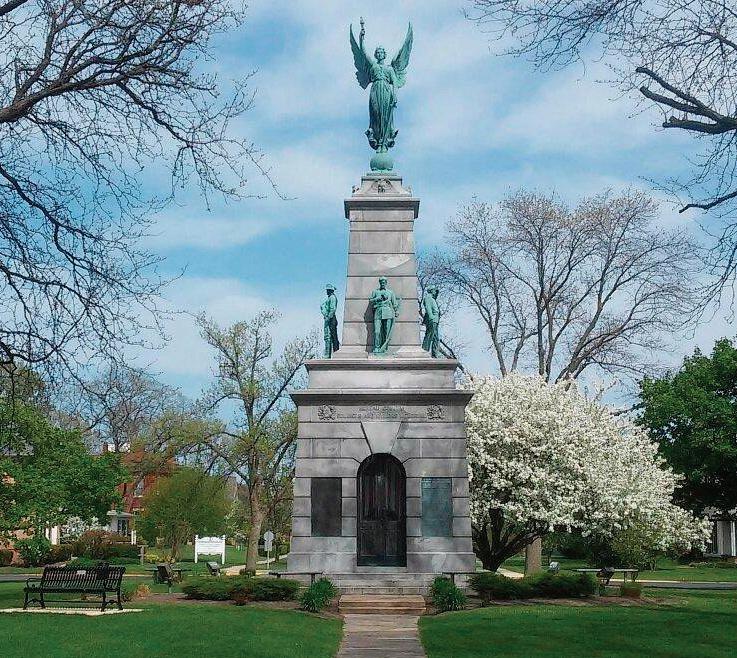
Across Park Avenue West from the Bureau County Courthouse, near Soldiers and Sailors Park, the former library now is home to True Leaves, an independent bookstore owned by Angela and Matthew Adams.
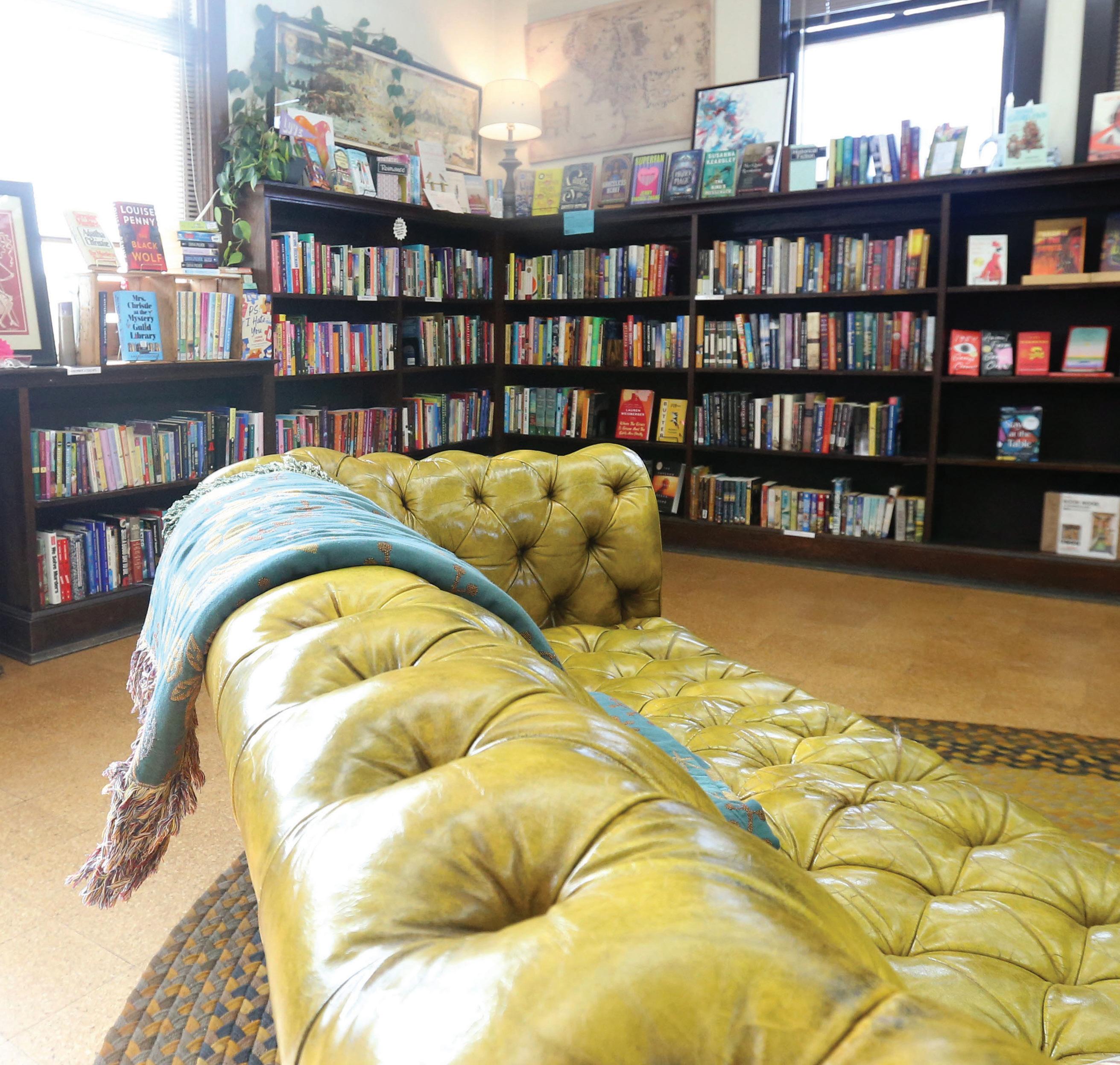
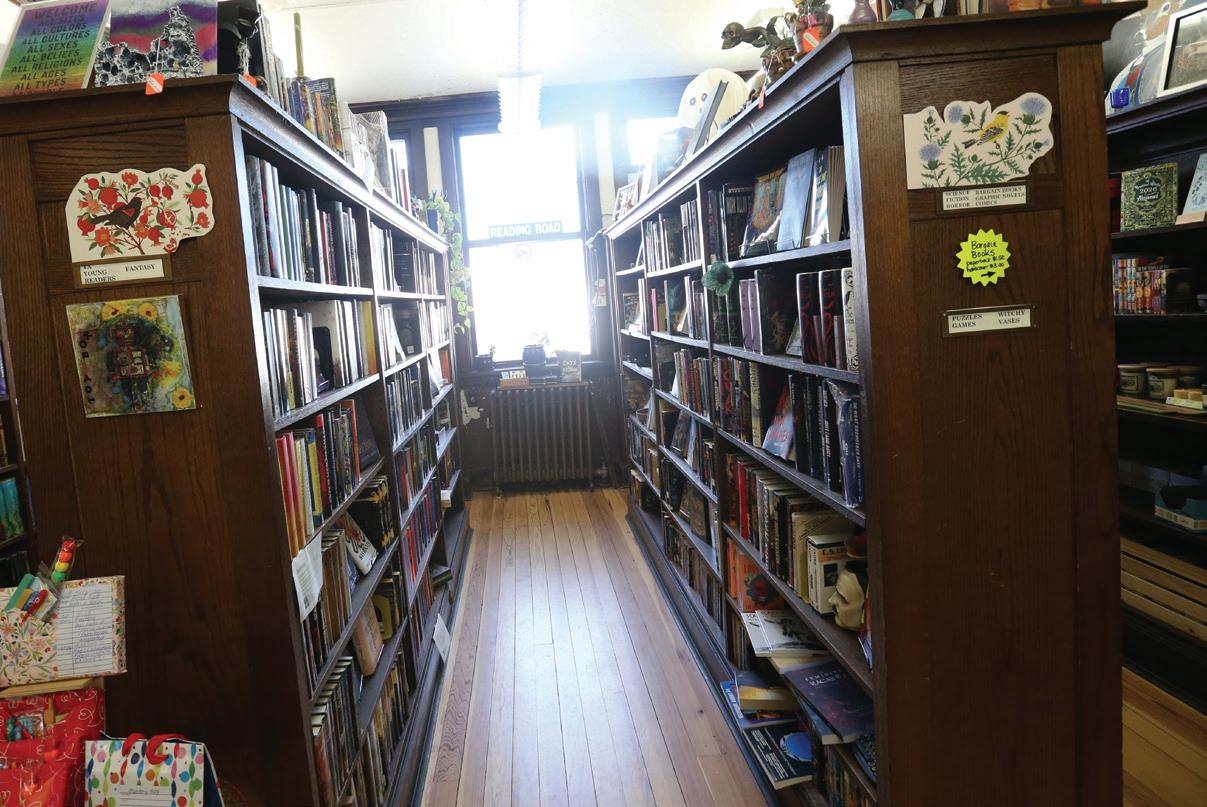
A set of stairs lead customers through the main entrance doors where they are met with display cases of historic and vintage texts. The next steps reveal a wide open room of books on old wooden shelving. The room features archways, vintage counter spaces, office-style lighting, water radiator heating, and wooden floors and trim.
An experience similar to browsing through a library is kept, along with personal touches from the Adamses, who are booklovers themselves.
“We have so many people come in and tell us they are happy to see the building full of books,” Matthew said. “They

remember when it was the Princeton library and have fond memories.”
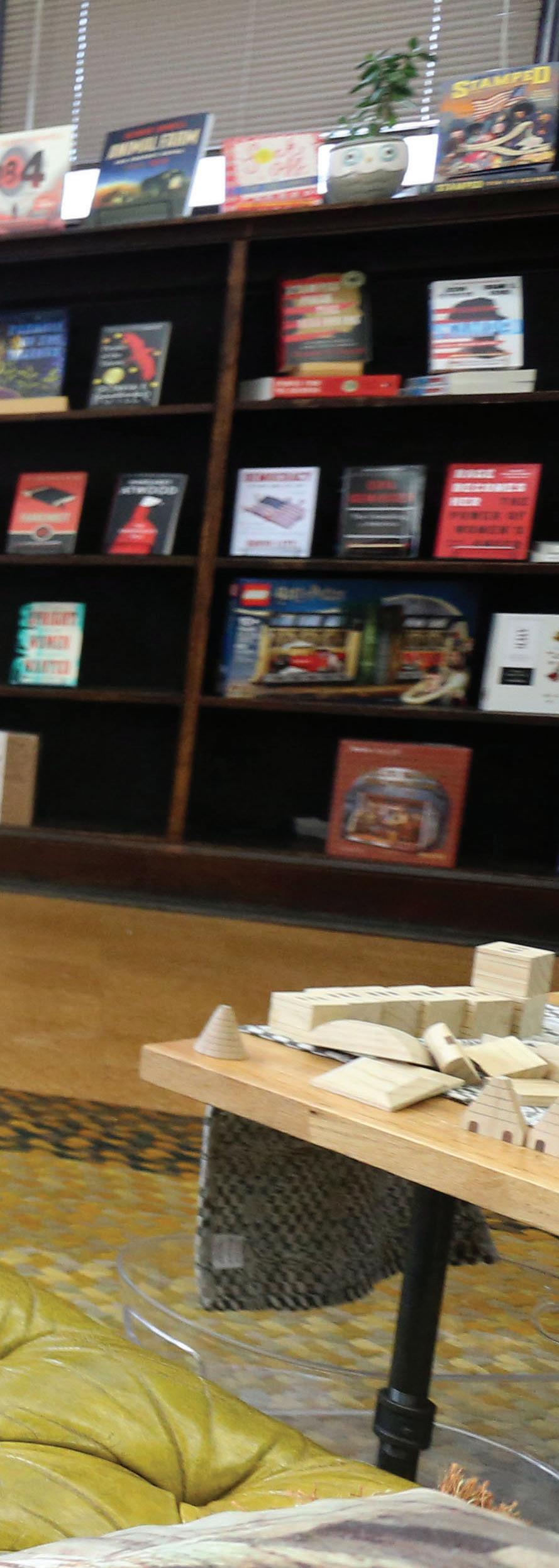
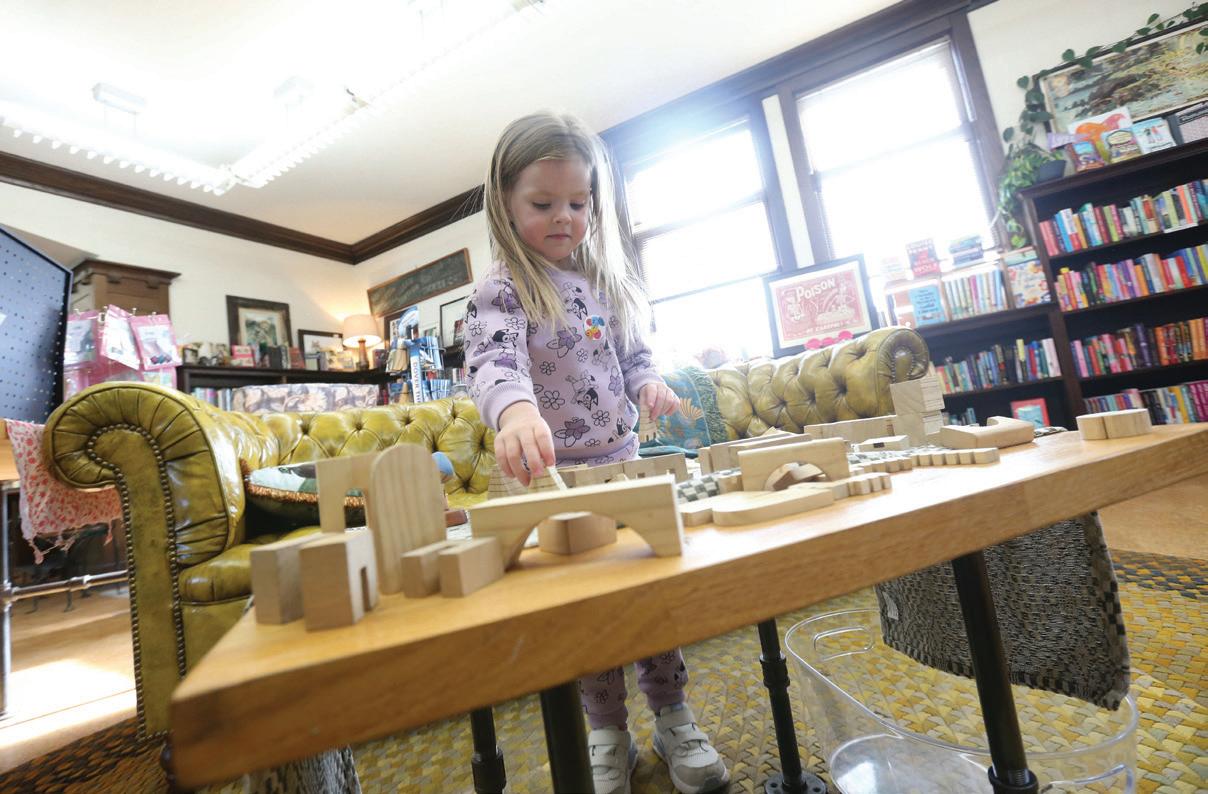
A couch and sitting chair are set up for patrons to relax and read through some of their finds. A chessboard is set up for anyone wishing to partake in a game, and a children’s area presents an option of toys to keep young people entertained while families browse the shelves.
The inventory is curated to a number of tastes. Local authors and local history have their place, as well as fantasy, young adult, children’s, classics, history, mystery, romance, cooking and self-help, among other genres. Patrons can learn about the Cherry Mine Disaster or Princeton’s founding, among many other topics. There are new and used books. Colorful notes stand out on the shelves with recommendations from the shop owners.
“There’s something special about an independent bookstore,” the Adamses said, noting they are on a map of independent bookstores throughout the state designed to attract booklovers. That






map includes Prairie Fox Books in Ottawa, also in Starved Rock Country.
The Princeton shop is not limited to books. There are handmade postcards, candles, unique gifts, chocolate, coffee and tea, among other items. Paintings, sculptures and other art are on display around the room from local artists.
The former library opened in 1913. Architectural firm Patton and Miller, which worked on the Matson building, also worked on some Carnegie libraries. The Princeton Public Library moved out of the building in 2007, and in December 2013, Robert Sash donated the building to the Bureau County Historical Society. The building is named for Sash and Stalter to honor Robert Sash’s grandparents. The historical society has plans to expand offerings on the second floor of the building, where an auditorium and community space reside. The building also will continue to undergo updates to its accessibility.
“We want this to be a gathering space for the community,” Angela said. The store has hosted banned books and children’s clubs, among other activities.
The Adamses moved to Bureau County more than a decade ago. Matt grew up in Texas and Angela in Florida. They moved to Tiskilwa in 2008 and then Malden in 2017, all within range of Princeton. They are booklovers and intellectuals; Matt nurtures a love of history and Angela fosters love for literary fiction, poetry, psychology and spirituality.
They started their bookstore at the former Flour House in Princeton’s Art District. The small space had limitations, and when the Sash Stalter Matson building became available through the Bureau County History Center, it was a perfect fit.
“We love that we get to keep the history here,” Matt said. And booklovers remain delighted. C S R


On March 28, hike, dine and drink your way through Camp Aramoni’s historic 96-acre property during Hike and Dine Experience. This enhanced culinary tour includes delicious food, upscale drink pairings, hiking trails and live music. For details and tickets: www.camparamoni.com/occasion/hike-and-dine
Read more about flavors found on the grounds of Camp Aramoni on page 34.
Want to see the Easter Bunny jump out of a plane? Bring the kids to the Easter Egg Hunt and Bunny Jump! 11 a.m.-noon at Skydive Chicago in Ottawa
Play Tuesday Night Pub
Trivia in teams up to six members at Shakers Sports Bar and Grill in Ottawa. Six rounds of trivia run 7-9:30 p.m.
Interested in roller derby? Meet and skate with the Illinois Valley Vixens during Beginner Roller Derby Night, 6:30 p.m. at Paramount Skating Arena in Ottawa.
Enjoy crafts and craft beer during Brew and Sculpt at Keg Grove Brewing in Morris. Create a decorative bowl during an art class at the brewery. Registration required: www.bit.ly/brewandsculpt
CeCe Teneal's Divas of Soul program celebrates artists like Aretha Franklin, Gladys Knight, Chaka Khan, Tina Turner, Whitney Houston and more. Details: www.ottawa concertassociation.com
The NIU Steelband brings the sounds of the steelpan — the national instrument of Trinidad & Tobago — to The Great Hall at the Ottawa Center for the Arts, 7 p.m.
Get to know Illinois' native reptiles during a live animal show at the Starved Rock Visitor Center, 1 p.m.
The Neverly Brothers play hits by Jerry Lee Lewis, Chuck Berry, Buddy Holly, Rolling Stones and more at Starved Rock Lodge, 11:30 a.m.-3 p.m.
For tickets: starvedrocklodge.com
The Prairie Arts Center will host its First Friday Gallery Opening, 6-7:30 p.m. The art gallery also is open Saturdays and Sundays, 1-3 p.m.
If you love bingo, try Wild Wild West Black Light Bingo at Princeton Moose Lodge. Dinner served 5:30-7 p.m., followed by bingo.
Take a leisurely 1-mile hike with local guide Joe Jakupcak, who highlights geology, wildlife and history at Nell's Woodland. To register: nellswoodland.com/ guided-woodland-tours
Catch one of six shows of "The Play That Goes Wrong," a comedy at Stage 212 in La Salle. Performances run April 17-19 and 24-26. For details and tickets: www.stage212.org
Join the Migratory Birdwatching Hike at Lake Kakusha in Mendota, 8-10 a.m. The walk is for all ages and observes a variety of bird species. Register at go.illinois. edu/BirdMendota
Shop antique and vintage vendors at Antiquin' Weekend in Utica. Play in a Streator euchre tournament and win cash prizes. Details and registration: streatorchamber.com

Follow the story of Starved Rock State Park's first 100 years in a program at the La Salle County Historical Society Museum in Utica, 1 p.m.
Celebrate Mom and treat her to the Mother's Day Buffet at Starved Rock Lodge. Reservations required.
For details and tickets: starvedrocklodge.com/ event/mothers-day-buffet
Catch two days of large, colorful kites soaring overhead in professional displays at Kites in Flight, 11 a.m.-3 p.m. at Peck Park in Ottawa.
SUN MON TUE WED THU FRI SAT 1 2 3 4 5 6 7 8 9 10 11 12 13 14 15 16 17 18 19 20 21 22 23 24 25 26 27 28 29 30
Join the guided Sunset Hike at Starved Rock State Park as the day fades to dusk.
For details and tickets: www.starvedrocklodge. com/event/sunset-hike
Acrobats, jugglers, clowns and the Globe of Death come to the Bureau County Fairgrounds during the Great Pages Circus.
Park naturalists will lead a morning hike through Starved Rock State Park during the Nature's Tribute holiday hike on Memorial Day.
TBM Avenger Reunion and Airshow in Peru
May is Get Caught Reading Month, a national campaign to promote the joy of reading. It's the perfect month to visit True Leaves Bookshop in Princeton! Read more on page 16.
A classic comedy of misunderstandings takes the stage at Engle Lane Theatre with "How the Other Half Lives." Shows run May 7-10.
For details and tickets: www.englelane.org
Check out acrobatic airshows, warbird rides, plane displays, twilight/night airshows and more at the TBM Avenger Reunion in Peru.
"Leaving Iowa," a comedy about a father-son road trip, runs May 15-17 and 22-24 at Morris Theatre Guild.
For details and tickets: morristheatreguild.org
Bring friends and lawn chairs for live music, local art, cold drinks and food during the La Salle Music & Art Festival at Pulaski Park. Free admission
Shop or hunt for morels during the Midwest Morel Fest, 8 a.m.12:30 p.m., then enjoy burgers at the Burger Bash, noon4:30 p.m. in Ottawa. For details: www.bit.ly/ morels_burgers
Whether you're a runner or a spectator, come out for the Starved Rock Country Marathon and HalfMarathon! For details: www.run starvedrockcountry.net
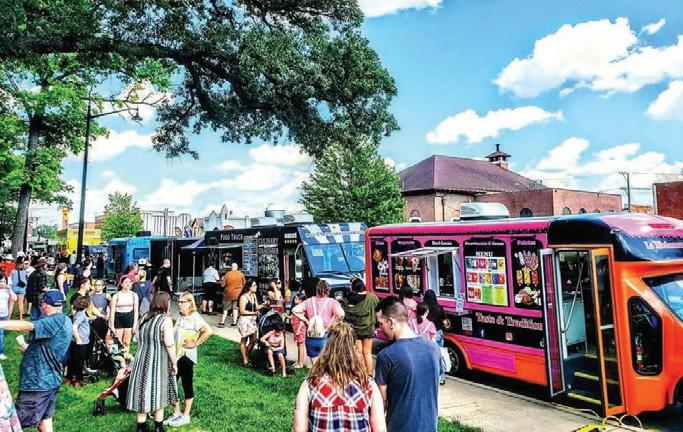
Treat yourself to lunch, dinner or both at the Streator Food Truck Festival, noon-7 p.m. at Streator City Park.
Experience the nostalgia of watching a movie at a drive-in theater with a visit to the Route 34 Drive-In in Earlville. Learn the next double feature to be screened at www.34drivein.com
Old West reenactments and a live arena show are highlights of Wild Bill Days, celebrating Wild Bill Hickok and the Wild West in Utica.









GAETANO'S VAULT
200 E. Main St., Streator 815-822-9000 www.gaetanosvault.com

Two Streator restaurants mix food with a notorious slice of history
Article and photos by Ryan Searl
Hard-boiled detectives and crime bosses. Trenchcoats and shadows. Femme fatales and outcasts.
Since its heyday in the 1940s and ’50s, the gritty noir genre has continued to capture the American imagination. Film and literature have built a cult-classic fascination with the criminal underworld.
In Streator, that aesthetic extends to a pair of impeccably themed restaurants that pay tribute to one of the most infamous and entertaining alleyways of 20th century history: the golden age of the American mob. Gaetano’s Vault and Goodfellas Pizzeria are two date-night destinations that pair delicious food with a mood of Prohibition-era mischief and the notoriety of organized crime.

Anchored on the west end of Main Street, Gaetano’s Vault is one of Starved Rock Country’s premiere destination dining experiences. This approachable upscale restaurant, housed in a turnof-the-century bank building, garners rave reviews with its menu, Roaring Twenties decor and the building’s historic ties to organized crime.
The theme of Gaetano’s harkens to the building’s past life as The Union Bank of Streator, which was infamously robbed by “Machine Gun” Jack McGurn in 1932. After stealing $52,000 in a hold-up, Machine Gun’s gang was apprehended by law enforcement and brought to the La Salle County Jail in Ottawa. Less than a month later, while awaiting trial, five armed men sprung Machine Gun and his associates from jail — a story featured in newspapers all across the nation.
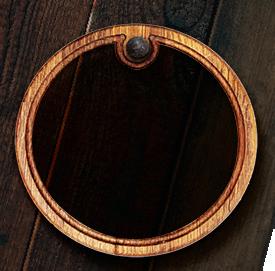
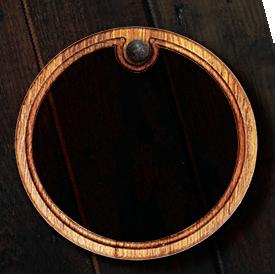
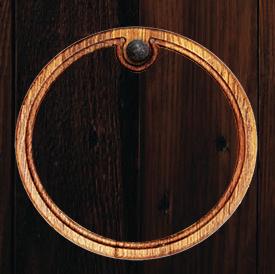
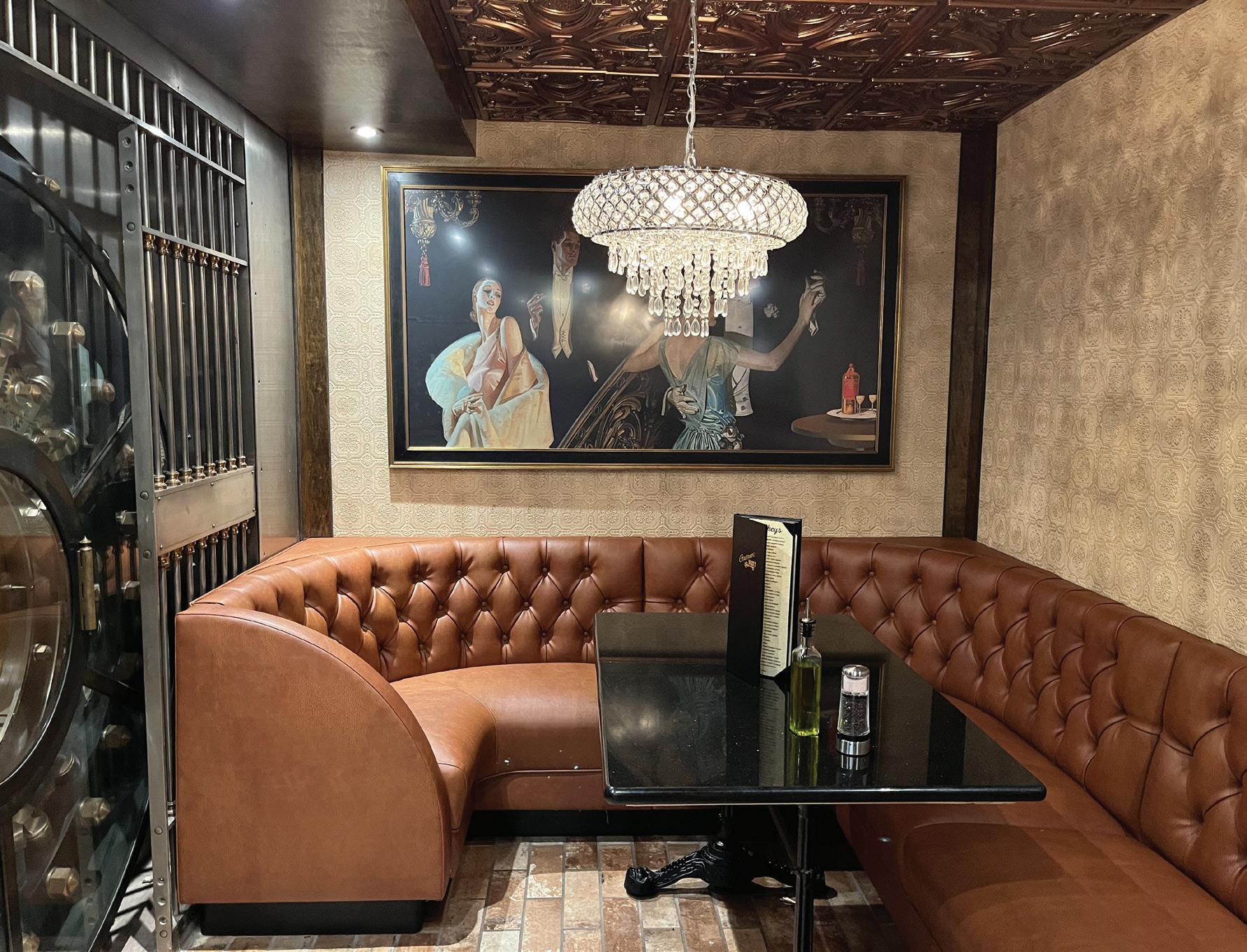
Glimpses into this piece of local history are all around Gaetano’s Vault — including the vault doors that lend the restaurant its name and house two of the region’s most unique dining spaces. Beyond the towering circular vault are
two leather-clad booths that give guests a private space and a close-up look at the inner workings of the bank’s original vault door.
The main dining area’s decor features many nods to art deco design, the Roaring Twenties and the legacy of American organized crime. Guests will spot barrels above the bar, nodding to Prohibition, while a sprawling hand-painted mural depicts scenes from Machine Gun’s robbery.
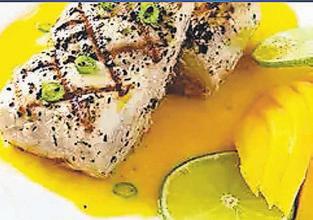
Gaetano’s crafts an immersive throwback atmosphere that pairs with its menu, filled with innovative takes on hearty Americana favorites. The restaurant melds classic American and Italian fare with more farflung influences. Offerings include a signature handtrimmed 20-ounce ribeye, house-made loaded pub chips, citrus glazed mahi-mahi, pan seared Chilean sea bass and fresh baked mostaccioli smothered in a house-made bolognese sauce. The menu also includes a selection of themed handhelds such as The Untouchable, a 1/3-pound premium burger built your way with cheese, roasted garlic aioli, lettuce, tomato, onion and pickles.


Whether




“Spots to Stop” along the Byway help in your travels!





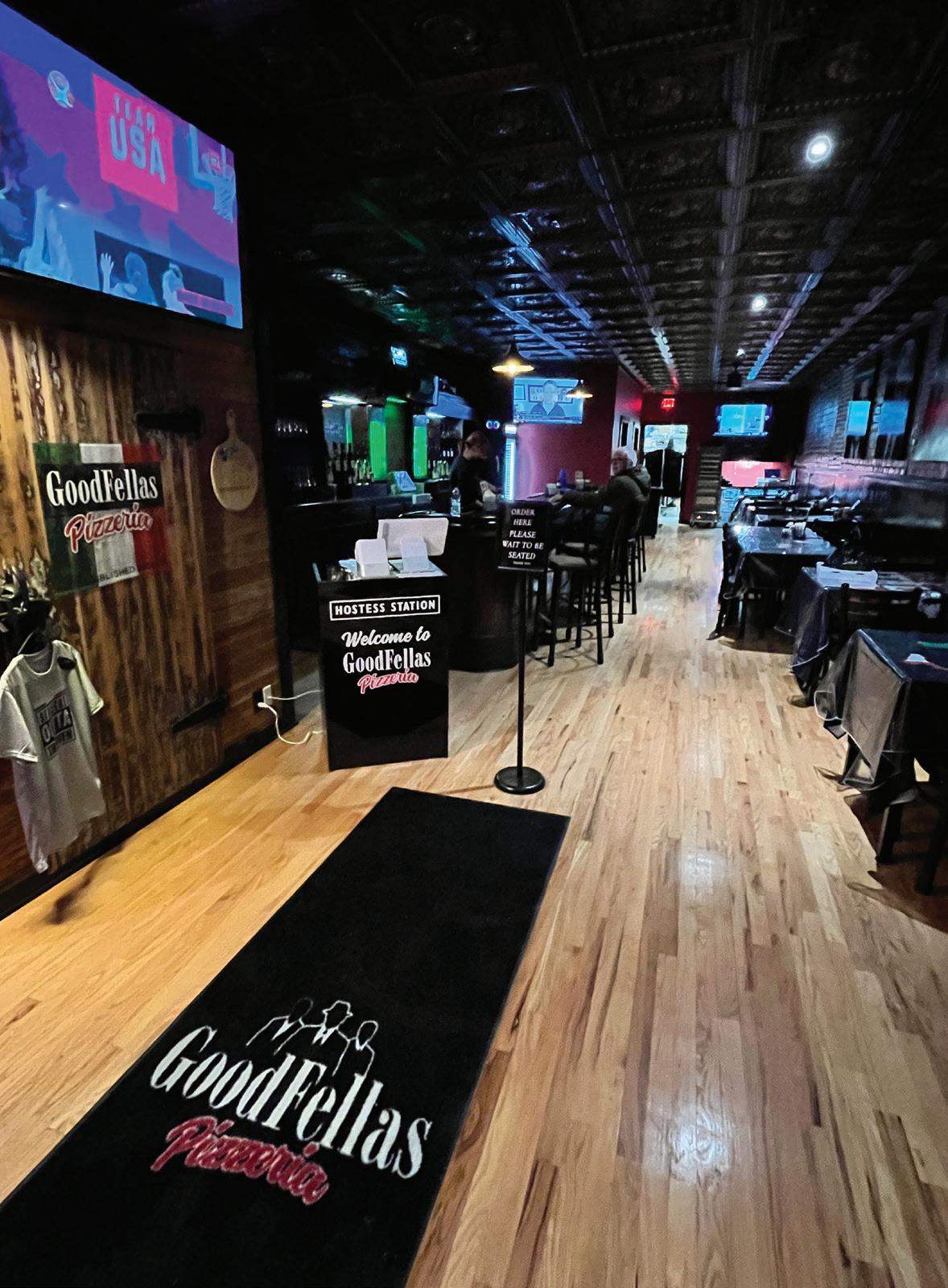
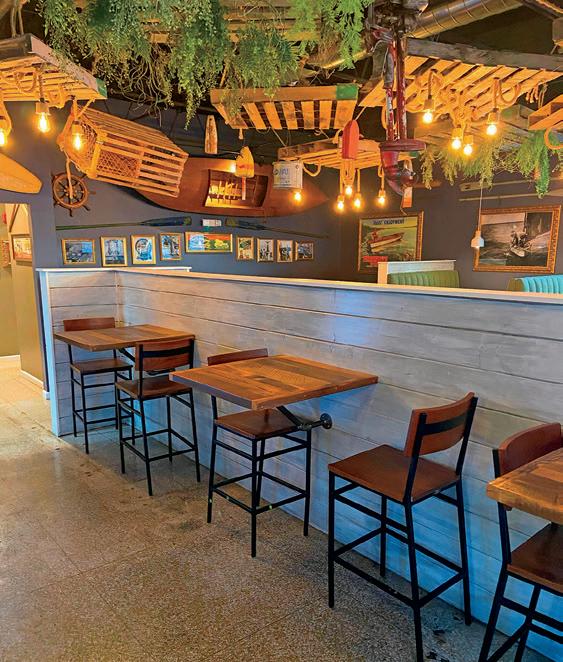
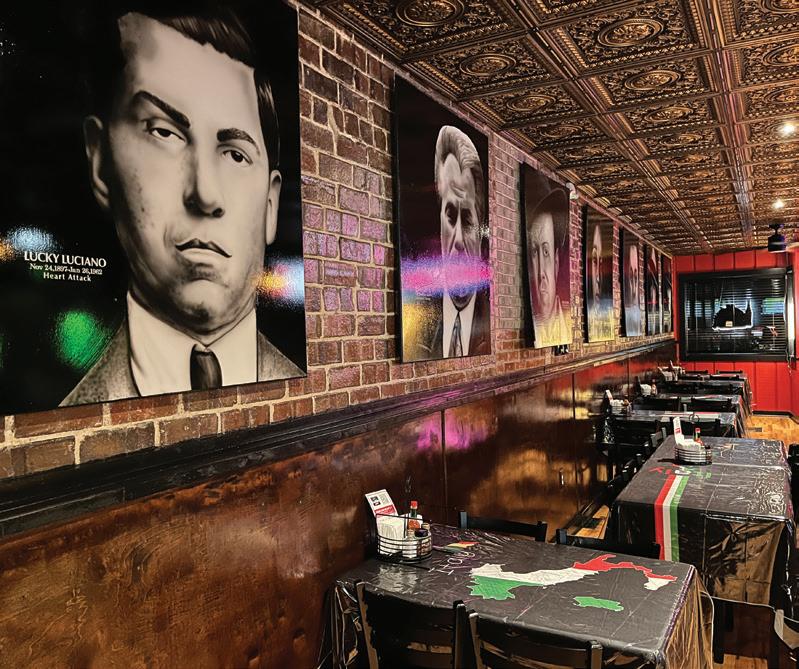
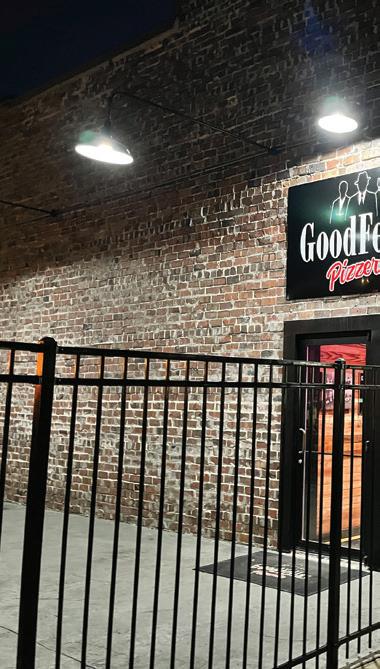
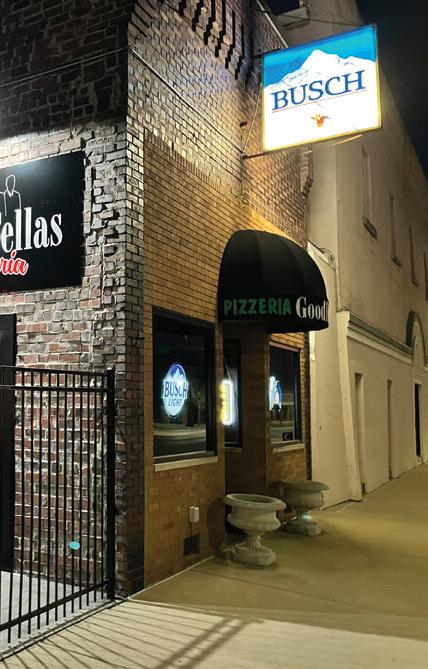
Gaetano’s isn’t the only gangster noir scene in town. One block west, a favorite local bar reopened in 2025 with a timeless look and an exciting new business plan. Goodfellas Pizzeria is a Chicago tavernstyle pie shop offering a curated menu of Italian-inspired regional favorites, served with a side of classic gangster decor. Along the exposed brick walls of the restaurant hang a series of hand-painted, larger-thanlife black-and-white portraits of bygone mobsters. Familiar faces like Al Capone and John Gotti are interspersed with some deeper cuts like Chicago hitmanturned-boss of the Chicago Outfit, Tony “Big Tuna” Accardo. Other gangland decor dots the walls, including a replica tommy gun and sawed off shotgun. This family-friendly sit-down shop, which once served the area as a popular watering hole,
expanded its offerings to feature a full menu of customizable thincrust pizzas, signature Italian beef and hand-breaded cheese curds. Guests can also find other favorites like chicken wings and breaded pickle chips on this wellhoned menu.
During the warmer months, the patio and outdoor dining area at Goodfellas Pizzeria sports a pair of cornhole boards with paintings that match the ones inside. On their way out, guests can snag a picture at Goodfella’s fun photo-op station, which gives guests a chance to take a “mugshot” to remember their trip.
With a commitment to highquality fare, top-notch themed decor and a passion for local history, these restaurants offer unique experiences in the heart of Starved Rock Country. Whether you’re looking for a date night spot or a family-friendly outing, consider visiting these noir-tinged dining destinations.






By Julie Barichello
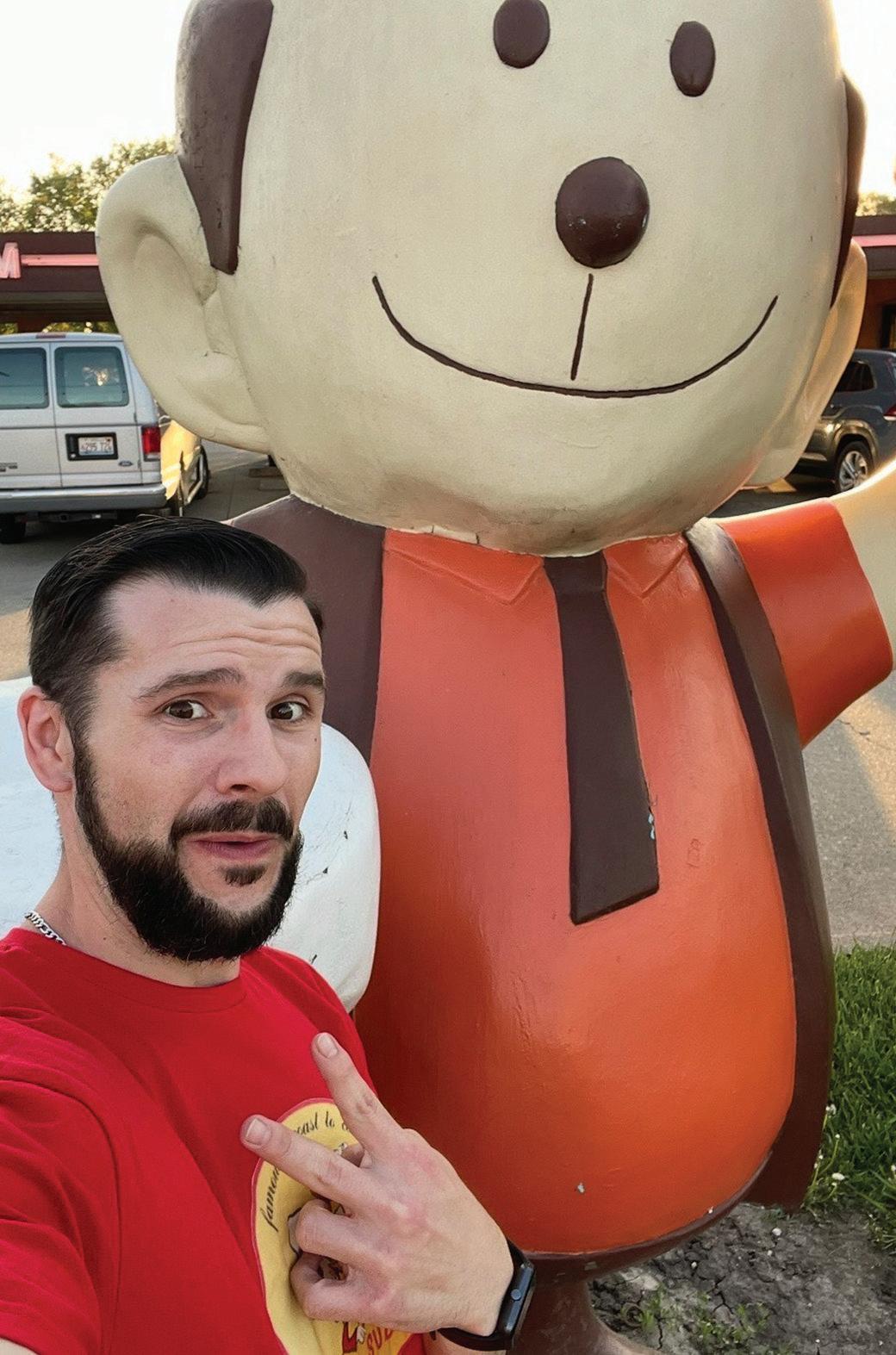
His name is Seth Ragusa, but you can call him Guse.
Guse – pronounced “goose” – is a familiar face on his corner of social media and an increasingly recognizable presence at restaurants around Illinois. He’s the personality behind Grazing Guse, a restaurant review channel on Facebook, Instagram and TikTok.
Born and raised in Starved Rock Country, Guse now lives in Springfield. He dedicates Monday through Friday to his full-time job, but the weekends are devoted to his passion: exploring the state and its eateries, one community at a time.
New reviews are posted daily, each featuring a different destination. That means visiting seven restaurants each weekend so Guse can post fresh content seven days a week.
It also means eating a lot of food.
“I eat very healthy Monday through Friday so I can do this on the weekend,” Guse said during a January dining tour of the La Salle-Peru area. “I went through a huge weight loss. I’m not trying to put it all back on.”
Guse’s channel originally launched under the name Cook and Crop, where he featured cooking and gardening videos documenting his healthier eating
Some of Seth “Guse” Ragusa’s favorite dining destinations in Starved Rock Country include:
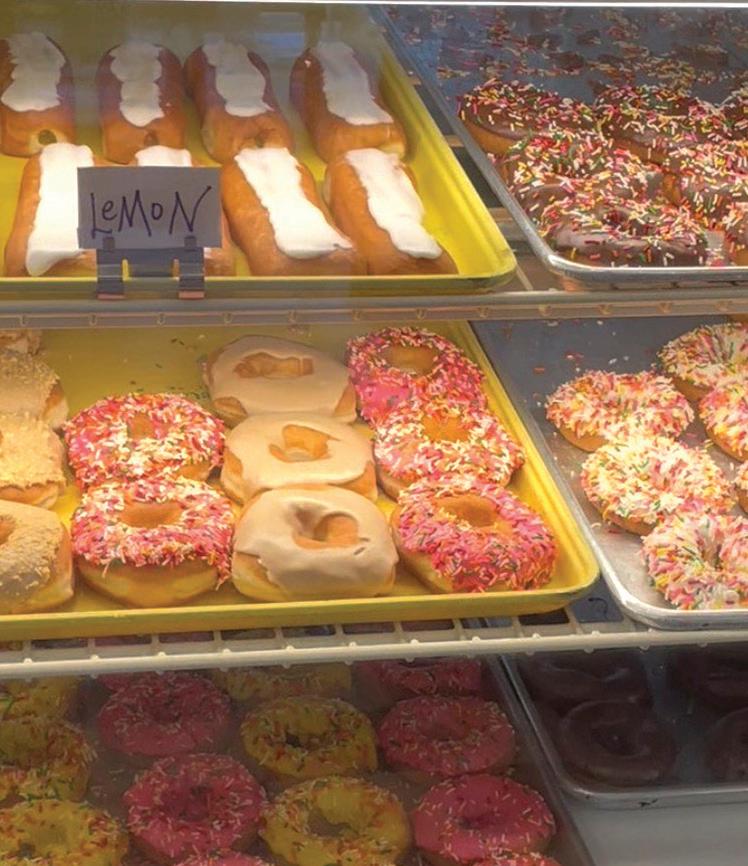
u STEVE’S BAKERY
302 E. Main St., Streator & 102 E. Norris Drive, Ottawa www.stevesbakery.org
Both locations sell a variety of doughnuts and cookies. “I’ve eaten a lot of bakeries and a lot of doughnuts, and I still think they’re one of the best in the state,” Guse said.
u COZY CORNER
720 E. Main St., Streator Cozy Corner Restaurant on Facebook
Tucked in a small building beside the railroad tracks, this Google-described “unfussy American eatery” is Guse’s favorite in the region for breakfast.
u THE ROOTBEER STAND
225 N. Columbia Ave., Oglesby www.therootbeerstandil.com
At this classic drive-in where guests can have food delivered by a carhop or dine inside, Guse highly rates the dining atmosphere and the prices. (Note: Cash only)
u JOHN’S PLACE
1802 Fifth St., Peru www.johnsplace506.com
True to his love of classic diners, John’s Place ranks on Guse’s list of local favorites.
u THE IGLOO 2819 Fourth St., Peru www.facebook.com/theigloodiner
Another destination with “cool old diner vibes,” The Igloo boasts Guse’s favorite homemade root beer in the region and “possibly in the whole state,” he said.
u RIP’S TAVERN
311 N. Main St., Ladd www.ripschicken.com
Regionally famous for fried chicken, they’re also known for serving pickles and crunchy bits of fried batter as an appetizer. (Note: Cash only)

habits after losing more than 100 pounds. His restaurant reviews began as “cheat day” videos, in which he would treat himself to dining out once a week.
When the cheat day videos gained more traction, he pivoted the direction of the channel to restaurant reviews and rebranded as Grazing Guse.
“Initially it started out that I would pick the old-school spots,” Guse said. His grandparents operated Streator’s Dog ’n Suds drive-in for 20 years, which made him fond of 1950s and ’60s diners. “Then I went to the most recommended spots.”
Recommendations now guide his journey. Guse regularly posts a map showing a region of Illinois on his Facebook page, and he tells people to vote for a town within that region. Whichever community receives the most votes determines where he’ll travel next. In February, his hometown rallied to bring him back to Streator.
Guse has two rules when he travels to a new area. One: He needs seven eateries to visit. Two: At least one bakery is required to sate his sweet tooth. As a general guideline, he also tries to avoid expensive restaurants so his destinations are accessible to the widest variety of incomes.
Each Grazing Guse review includes the background and story behind the restaurant, plus a glimpse of several menu items with Guse’s rating of each one. Videos are never sponsored, and he rarely alerts a destination in advance of his arrival.
“I want to keep it as authentic as possible,” he said. “I don’t want them to prepare in any type of way. I don’t want them to roll out the red carpet. I just want the normal experience.”
Many of the restaurants Guse visits
are highly recommended by followers, but occasionally he encounters a meal that receives a low score. When posting a negative review about food or service, he makes an effort to be respectful.
“I’m never going to bash a place. I try to keep it positive,” he said. “I’m honest, so I’m not going to tell people it’s good if it’s not, but I also do say everybody’s taste is different, so it doesn’t mean if I don’t like it, you won’t like it. Or if I like it, it doesn’t mean you’re going to. Everybody’s taste and opinions are different. That’s the great thing about food. Everybody has a different experience with it.”
He also noted there’s more than one reason people choose to dine out. Just because one aspect of a restaurant receives a low grade, the location can still attract visitors.
“Sometimes there are different aspects to why you go to places,” Guse said. “Some places you go for the aesthetic. Sometimes you go for the service. Sometimes you go for the food. It’s great when all three are there, but each place has its own niche that you’re going for.”
As his viewership grows, so does restaurant patronage. He said a small burger spot in Springfield witnessed a surge of hundreds of new diners days after appearing on the Grazing Guse channel. When Grazing Guse featured a barbecue restaurant, it tallied its best January sales in what is typically its slowest month.
“That’s what it’s all about,” Guse said. “Getting new faces in the door.”
If the channel garners enough demand, Guse would consider transitioning his reviews and travels to a full-time job and expand to cover the entire Midwest.
For now, there are still plenty of Illinois destinations on the menu.



By Jonathan Bilyk | Photos by Scott Anderson

Historically speaking, it’s always been about the sauger.
But, as Adam Sandor tells it, the chance to reel in some walleye always makes for a great day on the water in the spring.
“On the Illinois River? The spring is always my favorite time of the year,” said Sandor, tournament director and board member of the Spring Valley Walleye Club. “It can be a challenge, but for anglers, it's also really exciting.”
As an avid sport fisherman, Sandor has spent nearly a
lifetime angling on his home turf of the Illinois River, in the pools and channels it creates as it winds its way through Starved Rock Country.
His love of sport fishing has led him to other prime freshwater fishing destinations, including the Great Lakes and Mississippi and Missouri river systems, but he said the Illinois River stacks up well as a fishing destination. And it is never better than in the rapidly warming weeks after seasonal snows end, when the river abounds with some of the best — and tastiest — sport fish species in the world.
For generations, anglers have pushed off onto the Illinois River, seeking to turn a few hours on the water into a nice catch. And the main draws have consistently been the river's crop of sauger and walleye.
Essentially biological cousins, walleye and sauger are members of the perch family. Both are rated among the most highly prized freshwater fish catches in the country, particularly for how they taste when cleaned and dressed for supper.
In the spring, their numbers in the region surge as they swim upstream through warming
waters to spawn in tributary streams.
Sandor noted the size of sauger and other native species have dropped from the record catches more than a quarter century ago, with the blame placed largely at the fins of the invasive Asian carp.
“They changed the entire river ecosystem,” Sandor said, noting the carp's voracious nature depletes the river ecology of some of the food that had previously fueled the native fish populations. The prized species remain abundant along the length of the Illinois River, though, thanks in part to
Adam Sandor displays his catches during the 2025 Masters Walleye Circuit tournament at Spring Valley Boat Club. Sandor has spent his life fishing the waterways of Starved Rock Country.
continued stocking efforts from the La Salle Fish Hatchery.
Sandor and others say the river’s best fishing spots are almost certainly along a stretch close to home for those who live in Starved Rock Country. Sandor noted his personal favorite stretch of the river to fish is the length following a southward bend from Spring Valley to Henry.
Others note great fishing opportunities await a bit farther upstream, in the pool around Starved Rock.
The Illinois Department of Natural Resources, for instance, in its official discussion of the Illinois River as a fishery, describes the stretch of river from Starved Rock past La Salle and Peru to Henry as “one of the best fishing stretches” on the river's entire 273-mile course.
That bounty of fish plays a major factor in making the region a hotspot for walleye tournament fishing, including the Masters Walleye Circuit, which launches its competition every spring in Spring Valley. The official Masters Walleye Circuit describes its kickoff in Spring Valley as an “annual rite of passage” in the walleye tournament world, offering “quality saugers for all

anglers on the river,” as well as the walleye.
“Historically, this river does grow them big enough to add some serious weight to the scales and change the tides of the event,” the Masters Walleye Circuit stated in its announcement heralding the arrival of the 2026 tournament installment.
But even for anglers with less of a competitive intent, the Illinois River offers an abundance of great fishing, Sandor said. He noted any longtime angler will have their favorite fishing spots — including some they may be willing to share and others they’d prefer to keep secret.
Sandor advised people looking to land catches should consider prime spots such as the area around the sandy beaches near St. Bede Academy in Peru, the Starved Rock Lock and Dam pool, near Lover's Leap at Starved Rock State Park and around Plum Island.
He said another top spot



would include the natural clam bed area, about five miles downstream of Spring Valley.
Beyond that, Sandor had some simple advice for those looking to land a prized catch this spring.
First, fish from a boat, not from the shore.
Second, “do your research.”
In the spring, especially, the river can and will flood. And when it does, it can overspill its banks, upsetting the fishery.
“It can put it out of commission for a month at a time,” Sandor said. “So people should keep an eye on it and not have their plans ruined.”
Finally, for those looking for the perfect fishing spot, Sandor advised to keep an eye out for others already bobbing on the river.
“You can see them as you're driving in and around,” Sandor said with a laugh. “You're not going to outsmart everyone. There's typically enough people out there that you can figure out where they're biting.”

LA SALLE LAKE STATE FISH AND WILDLIFE AREA
This manmade lake serves as the cooling pond for a nuclear generating station and is a popular location for bass fishing.
ILLINOIS & MICHIGAN CANAL
Anglers commonly fish for bass, crappie, bluegill, carp, catfish and bullhead in the watered portions of the canal. (Note: Not all sections of the canal bed have water.) Popular fishing locations along the canal are Morris and La Salle. Pond fishing also is available at Gebhard Woods State Park in Morris.
HENNEPIN CANAL
Bluegill, crappie, walleye and bass are regular catches in the Hennepin Canal. On the first Saturday in April, the lagoon behind the Hennepin Canal Visitor Center opens for one day of trout fishing. A fishing license and Inland Trout Stamp are required to participate in the annual trout program.
MAZONIA-BRAIDWOOD STATE FISH AND WILDLIFE AREA
This former strip mine site is now a destination known for sport fishing and waterfowl.

ONE RIVER ZEN
121 E. Prospect Ave., Ottawa 815-324-0020
www.oneriverzen.org
By Ali Braboy | Photos provided by One River Zen
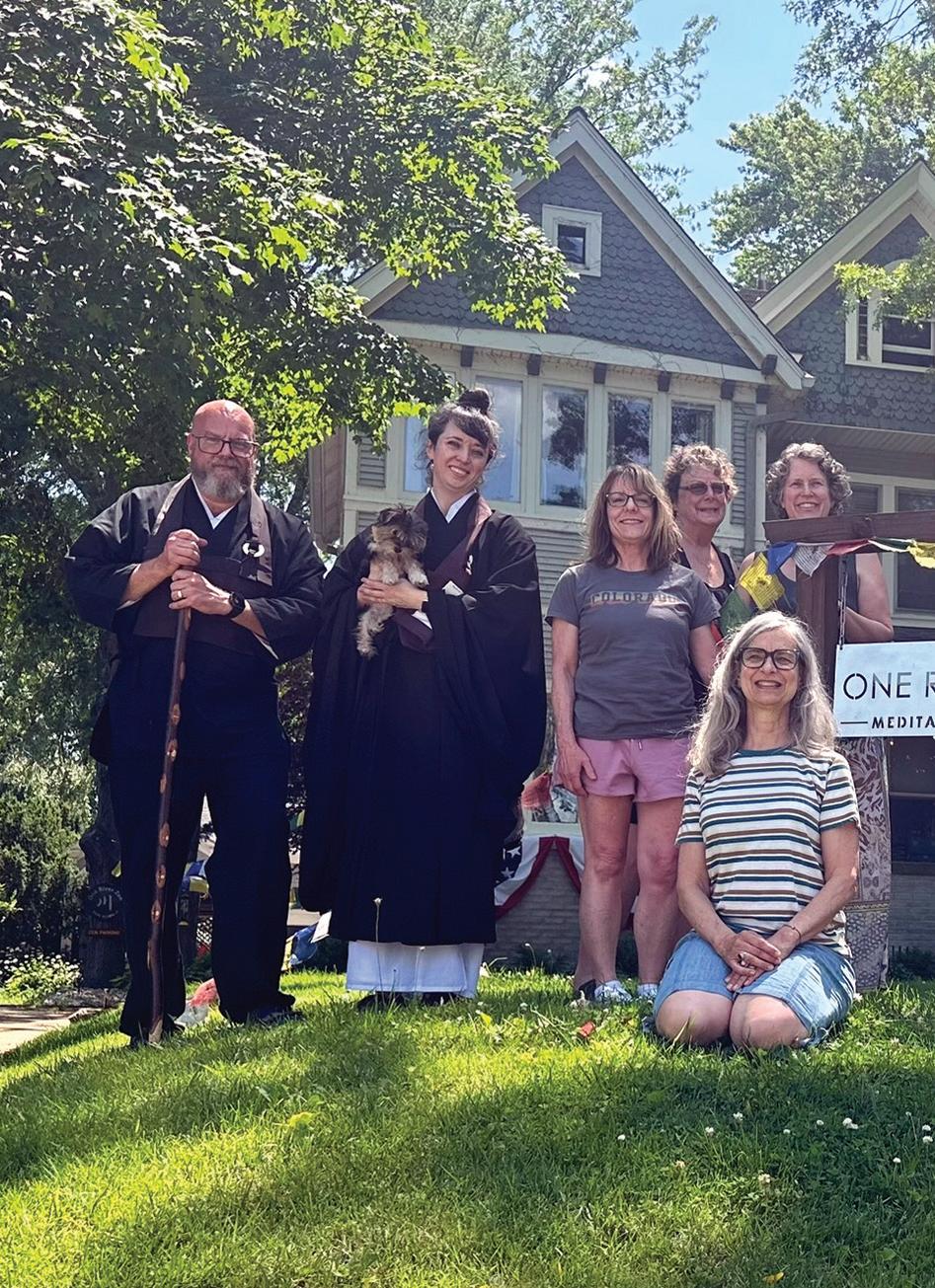
When visitors arrive at One River Zen, they are met with a charming Queen Anne Victorian residence where life-changing experiences happen.
The Soto Zen Buddhist temple stands in a quiet Ottawa neighborhood perched above the Illinois River. Founded in 2021 by Sensei Michael Brunner and his wife, Rev. Vanessa Roddam, One River Zen offers meditation instruction, koan study, community service programs and inclusive outreach designed to support individuals and families. The temple also offers weekend meditation retreats in which people arrive Friday evening
and leave Sunday afternoon.
“Zen practice ultimately is really about showing up for your life. But not showing up for your life as you wish it were — showing up for your life as it really is and cultivating a sense of wonder and newness about this very moment because, ultimately, this moment is very wondrous and new,” said Brunner, founding teacher and abbot. “It takes practice, and it takes a community of folks all wanting practice.”
The purpose of One River Zen’s retreats is to help people move past their life’s habitual patterns and embrace their nature and potential, Brunner said.
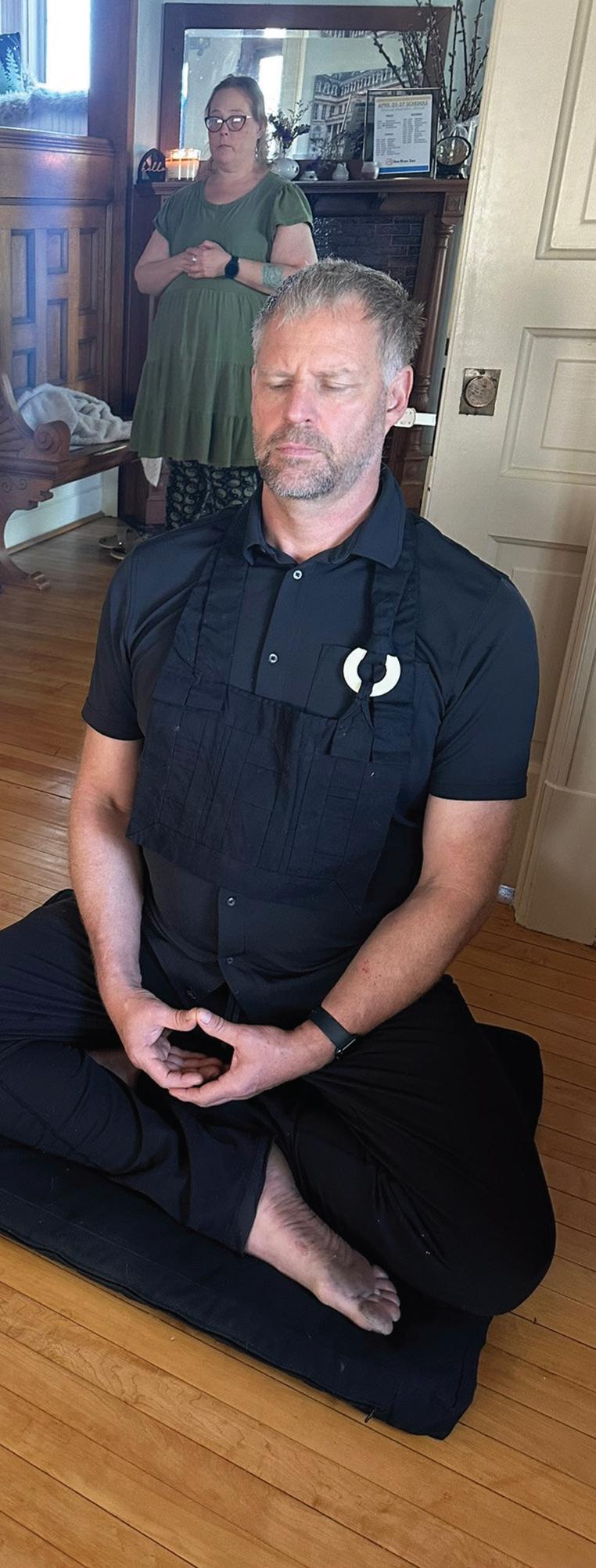
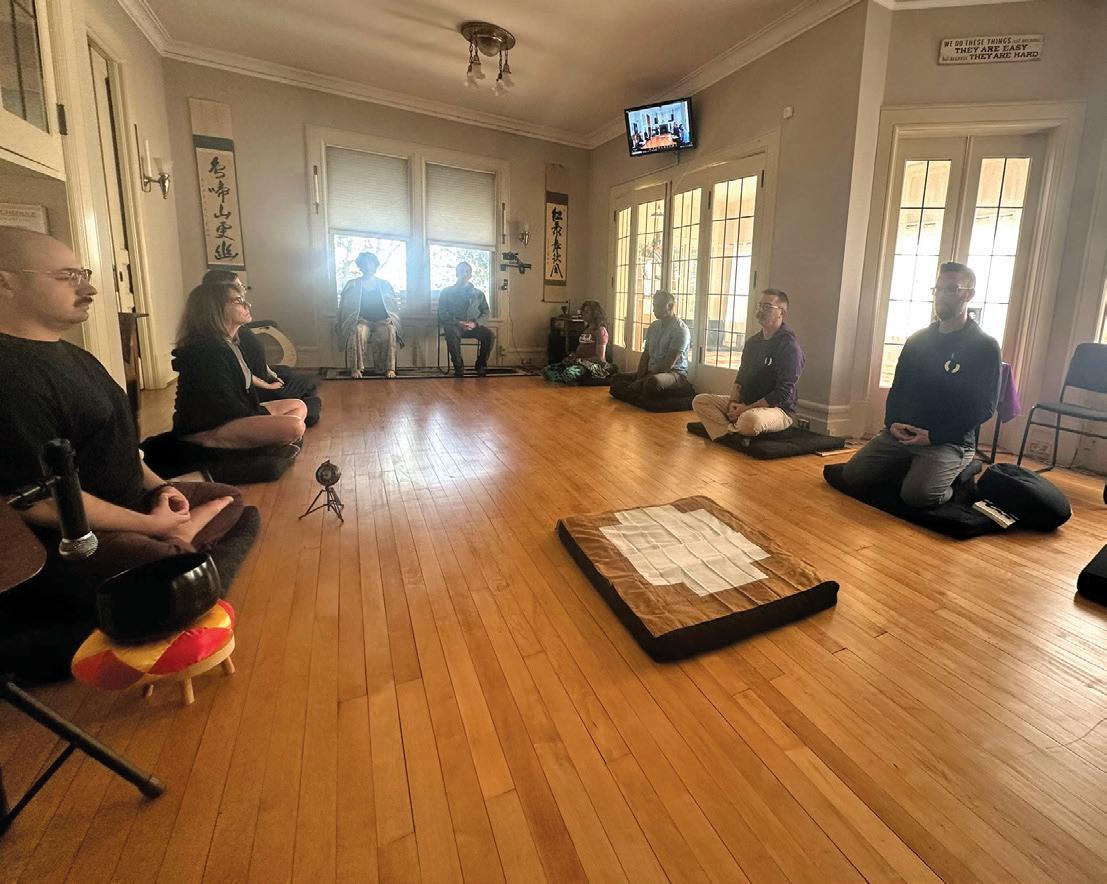
During meditation retreats, participants peacefully sit, walk and share moments of presence. The temple allows people to step out of the rush of daily life and into a steadier rhythm. Because weekend retreats allot several hours a day to seated meditation, previous meditation experience is beneficial, but not required. Lodging is available on-site, with two to four participants sharing a room.
“People walk out of those weekends refreshed and renewed. We often hear people talking about a halo effect, and how it continues to impact them for a substantial amount of time into the future. It's kind of a lifechanging or transformational event — face to face with your true self,” Brunner said.
In addition to meditation, retreat participants share
meals, attend community lectures and meet one-on-one with teachers to talk about what's holding them back and finding a path forward. Guests often find a creative outlet during retreats, such as choosing to journal, draw, paint or dance.
One River Zen also offers Zen Buddhist classes and series, available both in person and online.
Brunner said Zen meditation is not about following a dogma or bowing down to a statue. Instead, the goal of meditation is to tap into the vast potential of life, which a person might miss if encumbered by moral emotions or habitual patterns of living.
The practice inspires a sense of wonder that is missing from a lot of people’s lives, he said.











“We have a tendency to push away things that we don't want to experience and try to conjure up or pull in things that we do. We’re often engaged with how we think life should be,” he said. “We wind up being very clumsy about this, and we sometimes cling to what we want to push away. We sometimes push away what we want to actually experience.
“So, Zen is a way of seeing rightly, and we see rightly by including everything — actually looking at joy and sorrow, confusion and understanding.”
He said when those opposites are in alignment, people can begin to transform the everyday challenges of their lives through conscious practice because they show up and embody what's here right now.
How has the practice changed Brunner’s life?
“I actually began showing up for my life. Recognizing where it was, the inconvenient truths that I'd rather not acknowledge.
And in really becoming skillful at working with my life as it is rather than as I wished it would be. Over time, I found a path that was much more abundant than I could have ever hoped for,” he said.
One River Zen recently




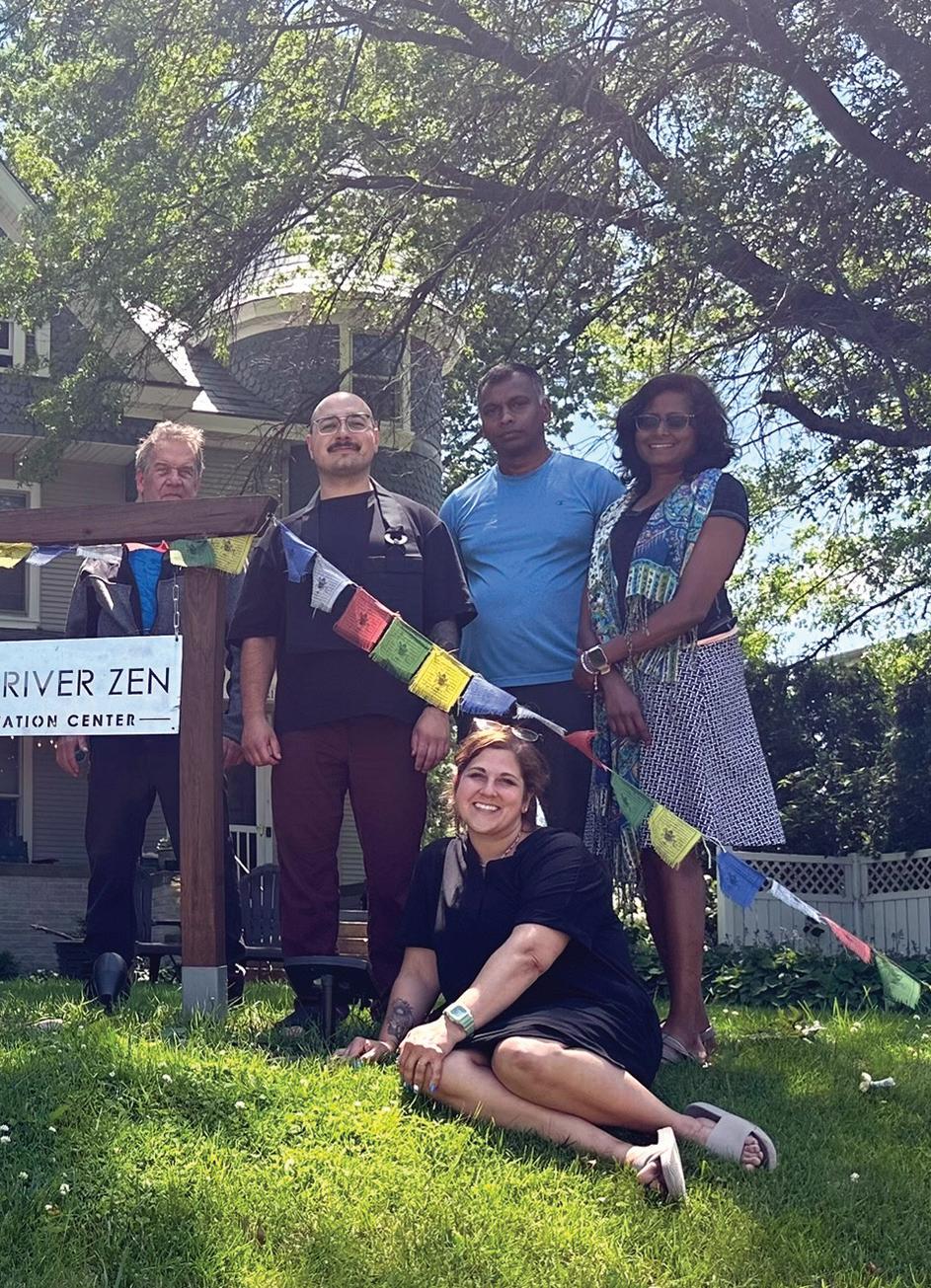
bought a larger space in downtown Ottawa, which marks a major step forward in the temple’s efforts to expand meditation programs, service initiatives and inclusive support for the community.
This new chapter includes
starting David’s Clubhouse, an organization providing inclusive play, learning and community programs for children of all abilities.
Outreach includes adaptive, sensory-friendly and autismaffirming spaces where every child can play, belong and grow.
Brunner and Roddam have a 5-year-old son, David, who is autistic.
In addition, the new location will allow for the expansion of the temple’s Karuna Food Pantry, which aims to help those in need of food.
Brunner is gathering community support and donations to transform the new temple, which will accommodate 100 to 150 people, in addition to expanding retreat space to about 20 people.
For upcoming retreat opportunities at One River Zen, visit www.oneriverzen.org/ retreats. To sign up for other classes and series, visit www.oneriverzen.org/class.





Nature offers a seasonal bounty in edible greens and prized morels
By Julie Barichello
For Chef Carson Barger, some ingredients can’t be bought. They’re foraged.
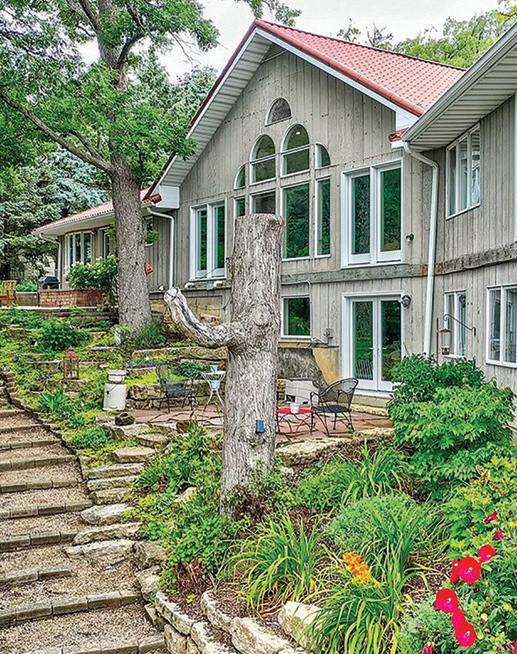
Barger is the executive chef at Camp Aramoni, a boutique campground in rural Tonica. The grounds of the glamping destination include a restored prairie and woods, from which Barger draws inspiration and flavor.
“It’s really amazing to be able to put a plate of food in front of someone with foraged foods,” she said. “They think you purchased this really exquisite herb that they’ve never seen before, and it grows right in your backyard.”
In recent years, Barger has witnessed a renaissance of chefs returning to nature as a source of ingredients. Her own culinary team uses a variety of herbs and flowers as garnishes. Among her favorite spring garnishes is sweet William, an edible woodland flower in a variety of bright colors that blooms May through June. The flower is known for a clove-like, slightly spicy flavor.
One of the campground’s signature foraged flavors is its black raspberries, which grow in abundance on the 96-acre property.
“We definitely utilize a lot of the black raspberries,” Barger said. “We’ll do a cheesecake with a black raspberry and lemon curd.”
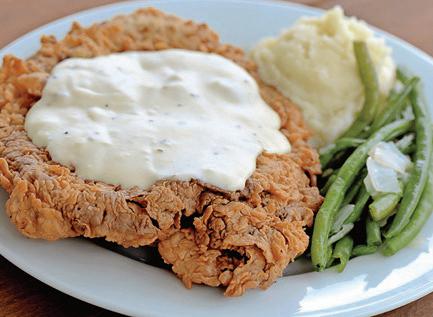
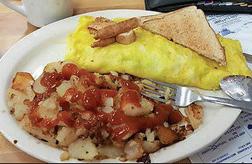
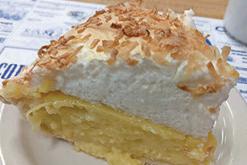



Meals by Chef Carson Barger are
Next door to the campground is Camp Aramoni’s event venue, Bricks & Stones, which stands among the remnants of a former brickyard. The site regularly hosts events open to the public where guests can sample some of Barger’s creations. It’s also a place where visitors encounter another foraged ingredient — but they’ll likely smell it before they see it.
“We get chocolate mint that grows around the kilns,” Barger said. “When you walk past, it’s the most fragrant smell.”
Another strong-scented herb is nodding onion, a chive-like plant that Barger soaks in vinegar and uses in bloody Marys.
One of the stars of spring is morels, with a three- to six-week growing season in April and May. Morels are a prized delicacy among professional chefs and home cooks. Known for its difficulty to cultivate, the mushroom is traditionally foraged.
“We’re lucky that we live in an area where morels are so popular,” Barger said. “The flesh of a morel is so delicate and spongy. A lot of the herbs and vegetables that grow in the spring are going to be more fragile.”
Harvesting morels is a spring tradition in Starved Rock Country, which is home to the Tom Nauman Memorial Midwest Morel Fest, scheduled Saturday, May 2, in Ottawa. This year’s event includes Morel University, in which registered participants can learn to identify morels before embarking on a guided hunt. Awards are given for exceptional finds during the hunt. A morel market runs 9 a.m. to 3 p.m., and a vendor market will be open 8 a.m. to 3 p.m.
Registration is required to participate in Morel University and the guided hunt. For fees and signup information, visit the Ottawa Visitors Center website at www.visitottawail.com/event/midwestmorel-festival-2.
For those unable to attend Morel Fest, a destination where morel hunting is permitted is Catlin Park in Ottawa. However, Director of La Salle County Parks Ken Henze cautions foragers against collecting other edibles, especially spring greens, at Catlin Park.
“A few things to remember if someone does forage at Catlin Park, it is an active restoration site. We do cut, pull and herbicide non-native or invasive plants,” Henze said. “So, in some areas, [plants] may have had herbicide applied in spring.”
Henze requests that groups visiting Catlin Park for foraging or foraging education contact him in advance at parks@lasallecountyil.gov or 815-434-0518.
Opportunities to forage for other spring edibles can be challenging. Most public lands in Illinois prohibit removal of plants, flowers and other wildlife, with fines starting at $195. Foraging at state parks is allowed only for nuts, berries and mushrooms, according to the University of Illinois Extension; however, access to those may be limited because visitors are required to stay on trails. This is especially enforced at parks like Starved Rock State Park, where venturing off-trail can put visitors at risk of injury or deadly falls.
Restrictions on where visitors can explore also helps preserve the parks.
“When foraging, people should always stay on the trails,” said Emily Hansen, the commercial agriculture educator for the region's University of Illinois Extension.
“While most foraging activities will typically have little impact on woodlands, we still want to limit human disturbance
as much as possible, especially in the spring as there are some sensitive plants like spring ephemeral wildflowers.”
Hansen emphasized any public land labeled a preserve is off limits to foraging.
Despite limitations for foraging on public land, survival skill instructors Jason Thompson and Heather Arbet advise foraging novices and enthusiasts to look in an unexpected location with no travel required.
“The best place, honestly, would be to start in your backyard, on your property,” Thompson said. “I live in an apartment, and there’s over two dozen wild edibles here I can easily harvest and use.”
Thompson and Arbet lead an annual six-week course at Illinois Valley Community College titled Survival Skills: Wild Plants for Food, Tools and Medicine. They teach participants to identify and harvest a variety of edible plants.
Three of the main spring edibles





Learn more about the Survival Skills class by visiting www.bit.ly/ survival_skills.













































































































































Survival skills instructors Jason Thompson and Heather Arbet offer the following advice for beginning foragers:
n Invest in at least two reputable field guides and cross-reference between the guides when identifying a plant. Thompson and Arbet recommend Peterson Field Guides and Newcomb's Wildflower Guide. Apps can be supplementary resources to help ID plants, but field guides tend to be more thorough and reliable.
n Get comfortable with a plant and follow its life cycle through a full year. Observe it through all four seasons to be able to identify it year-round.
n Look at plants everywhere you go and begin identifying them. "Look around your neighborhood, look around as you’re getting out of your car to go work, what do you notice in the grass? What do you notice on the field edges? Just being more aware of what you can see and broaden your vision," Arbet said.
n Be aware and cautious of chemicals or pollutants applied on or around the plants. "Are they spraying the lawn? Are they fertilizing? Are you downstream of something you don’t want to mess with?" Thompson said. He noted roadsides and low spots are common places to find asparagus, but they are also common locations of pollution.
n When harvesting a plant, only take up to one-third of the plant or patch. When harvesting from a patch, start from the inside out. This allows the patch to continue to spread and grow. "The rule of thirds for harvesting assures the plant or patch is there forever and for other people," Thompson said.
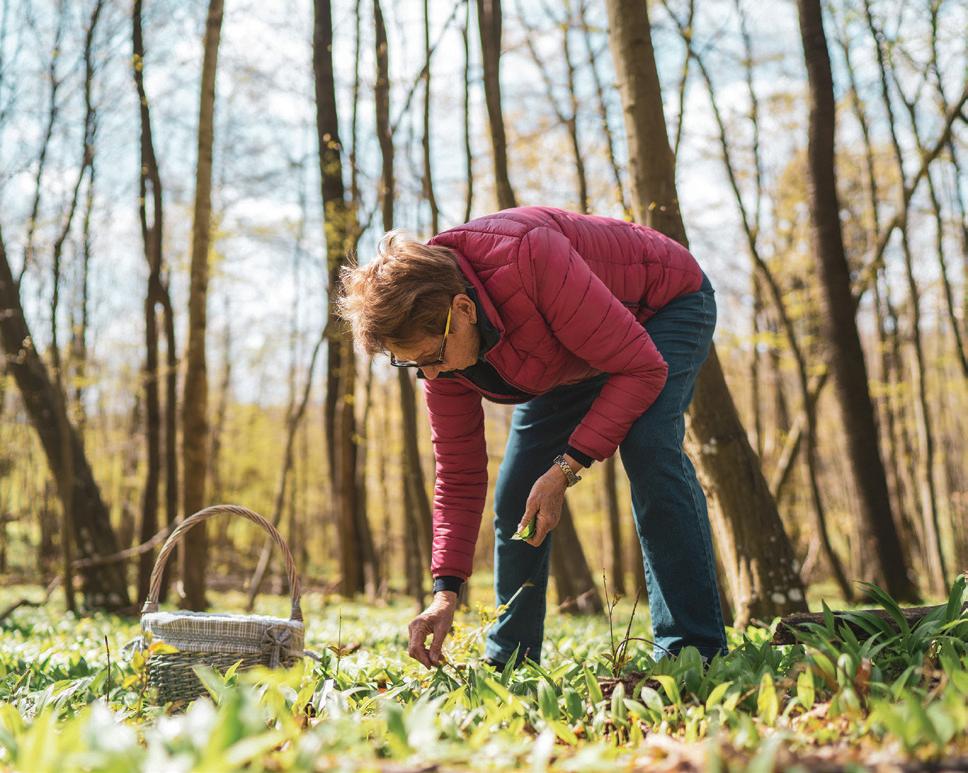
Thompson gathers in April and May are spring beauties, wild leeks (also known as ramps) and wild nodding onion. All three have grass-like leaves and flowers. He recommends collecting spring beauties as the flower is dying away and gathering wild leeks before they bloom; that ensures the plant’s nutrients are diverted to the edible part and not the bloom.
Wild leeks carry a flavor profile mixed between onion and garlic. Meanwhile, Thompson prizes spring beauties for their tuber-style roots.
“They have little round roots called corms,” he said. “They’re small, so you’d have to harvest quite a bit. Just put them in enough water to cover them, 15 to 20 minutes at a boil. They’re just a delicious tiny potato.”
Another spring favorite for both Thompson and Arbet is young stinging nettle, which can be served as a cooked green similar to spinach or dried to be used as tea. Stinging nettle is high in iron and vitamin A when eaten and has anti-inflammatory properties when consumed as tea.
“Everything you’re going to get in the woods is going to be smaller than the store, but it’s going to be packed with way more flavor and nutrients because that plant had to struggle to survive, and it’s pulling up all those minerals from the natural environment that’s just flush with them,” Thompson said. “Those spring greens are kind of like a tonic to energize you. Like they say, protein keeps you alive, and plants keep you healthy.”


C S R Check out OUR














How Confederate soldiers came to be buried among Union soldiers: 'They are our brothers'
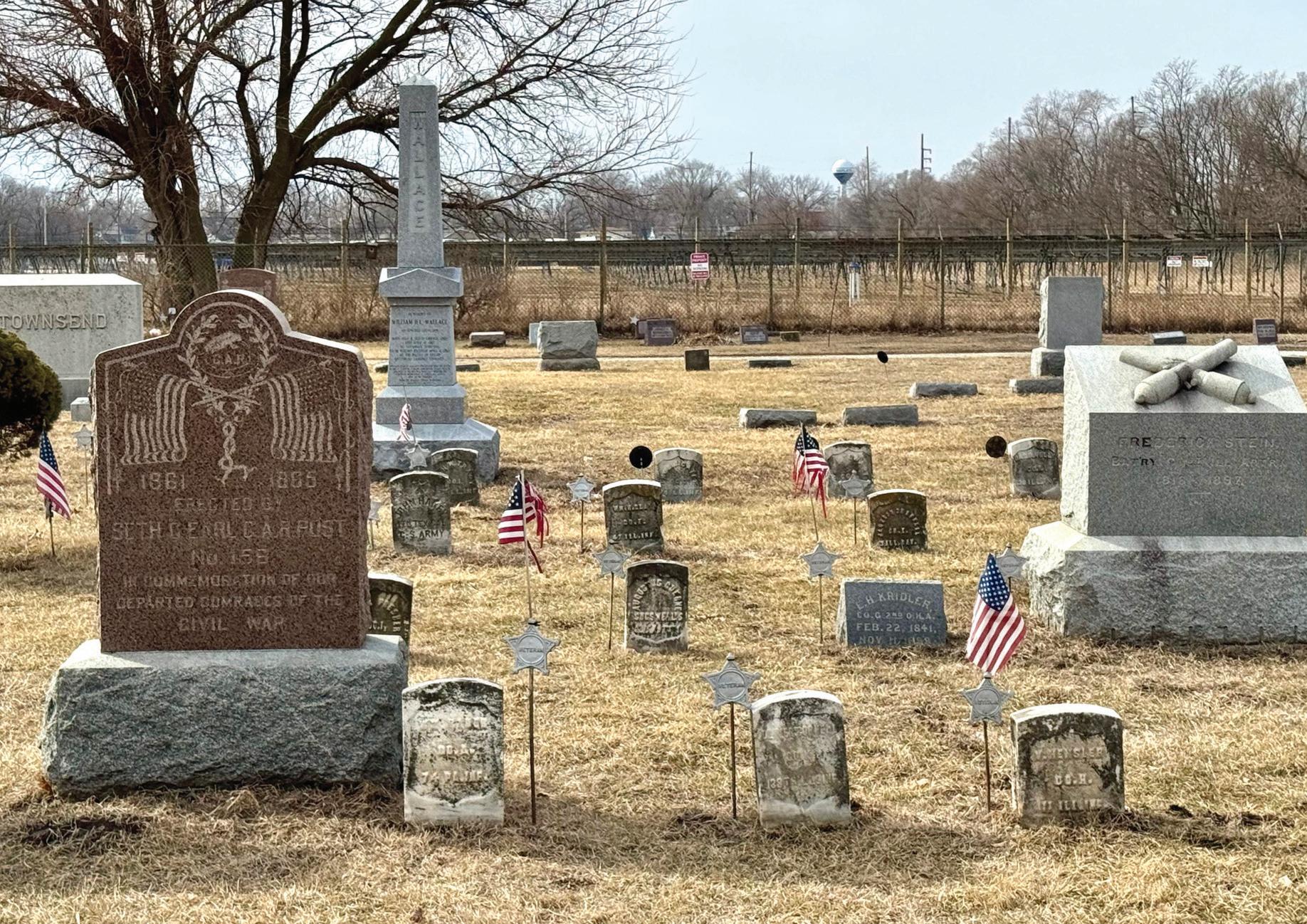
There are scores of Civil War veterans buried in the Ottawa Avenue Cemetery in Ottawa. But unusual among them are two who served the Confederate States of America.
And even more unusual is that those two rest nearly side-by-side in the northwest corner of the cemetery in an area reserved for Union veterans.
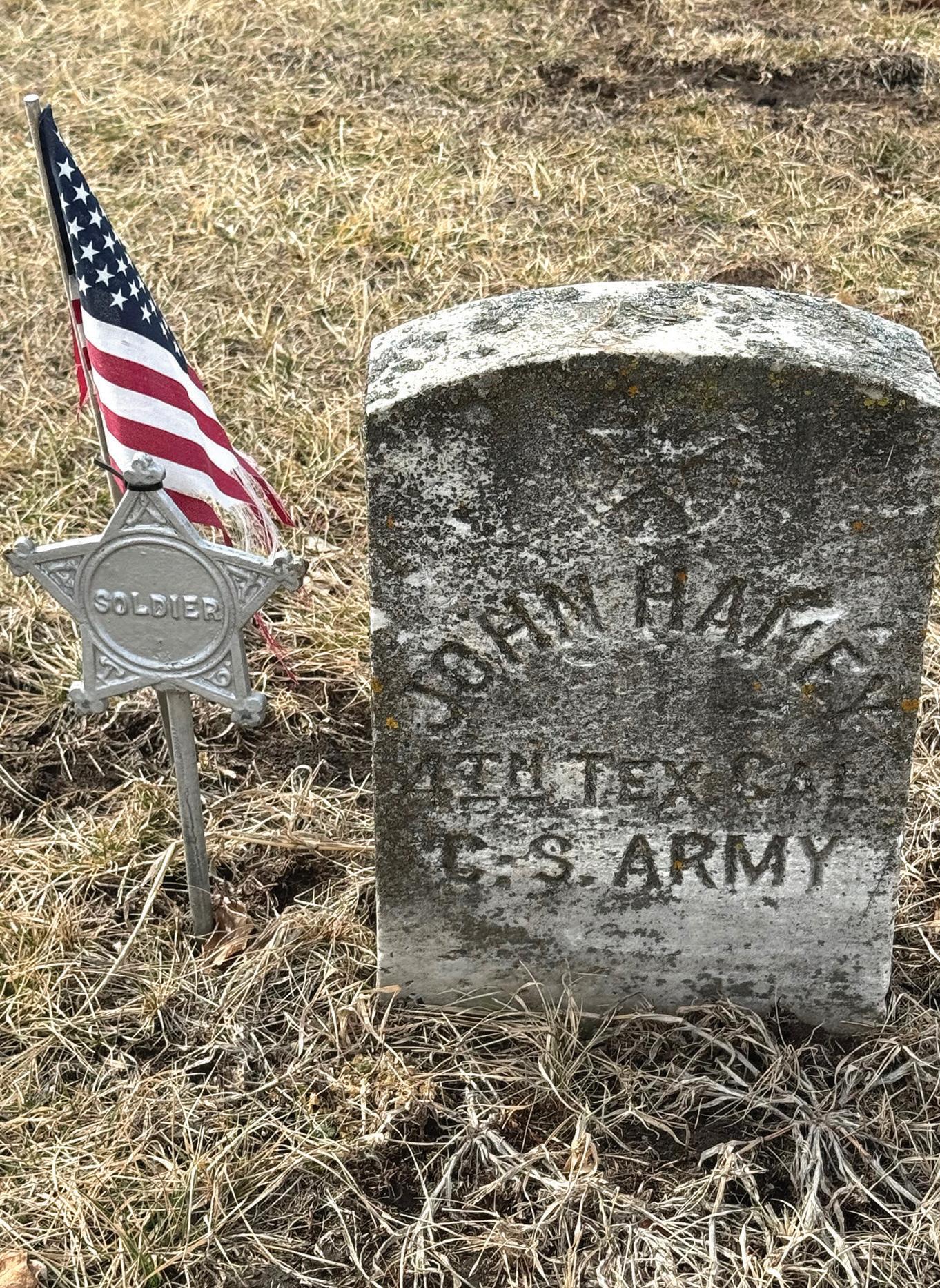
Their names are John Haney and James Heath. And for each there is a touching story of why they are there.
Just after midnight on May 8 of 1906, a man crossing the railroad tracks on the east side of Ottawa was hit by a westbound train, killing him. He was not a local man and appeared to be a vagrant, according to a newspaper account of the accident. His legs were broken and his body bruised, but not badly mangled. The body was taken to Gladfelter undertakers, where an inquest was held in the afternoon. He was described as appearing to be
“about 60 or 65 years old, heavy set, about five feet ten inches tall, smooth in face — and was poorly dressed.”
In the dead man’s pocket was a certificate from the mayor of La Grange, Texas, dated Feb. 12, 1906, which identified the bearer as John Haney, a former member of the 4th Texas Cavalry, and requesting “all charitably disposed persons” assist him in his travels.
“They are our brothers, born under the same flag and schooled in the same tongue,” said Conant. “The god of peace is their god as well as our god. It takes the South as well as the North to make this great nation complete. For that reason we should have a brotherly love for North and South alike. We give our benediction, and bury him under the shadow of our flag.”

It was later discovered that the muster rolls of the 4th Texas Cavalry do not list a John Haney. But that was not the concern at the time.





“The fact that he had been a soldier, although fighting against the Union, stirred the sympathies of the old soldiers of this city and they took up the question of giving his body a Christian and soldier’s burial,” said the newspaper story.
The decision was to have Haney buried in the cemetery section owned by the local post of the Grand Army of the Republic, an organization for union veterans.
“Thus again showing in a small way that the blue and the gray have forever laid aside the rancor which resulted from the breaking out of the rebellion,” said the newspaper story.
A few days later, standing in front of Haney’s flowercovered casket, Horace G. Conant, commandant of the local G.A.R. Post, laid a small American flag on the casket.
He addressed those who had gathered at the cemetery with a message of reconciliation for their former enemies.
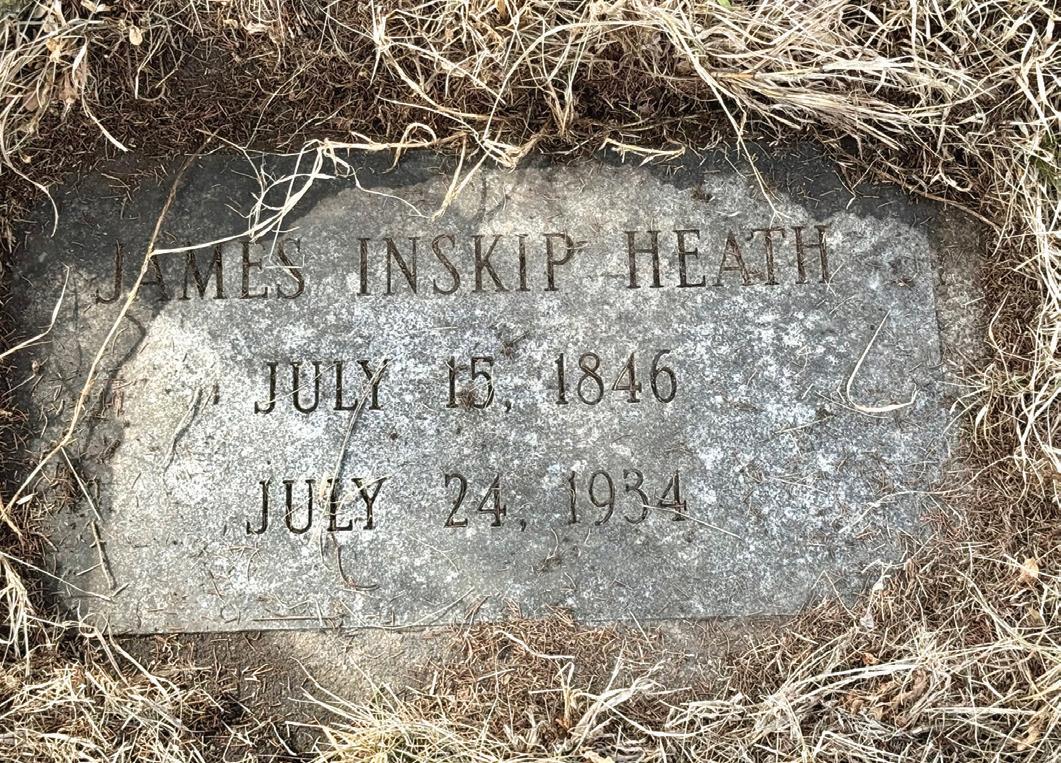
During the Civil War, James Heath, who was born in Covington, Kentucky, on July 16, 1846, served in two Kentucky cavalry units, reaching the rank of sergeant.
During the war, he was captured by soldiers of the 104th Illinois Infantry, which had organized in Ottawa.
After the war, Heath moved to Ottawa and worked as a contractor. He also became close with Ottawa’s Union army veterans. Often he marched with them in parades.
When Heath died on June 24, 1934, he was buried in the G.A.R. section of Ottawa Avenue Cemetery with just one grave between his and John Haney’s.
Heath’s flat grave marker does not list his military affiliation. In 1977, a regulation headstone was sought. However, the application was returned for better identity information.
S R
n HIDDEN HISTORY takes a closer look at interesting but lesser known moments in Starved Rock Country’s past.