






















Effective money management can help men and women achieve their short- and long-term goals. Wise investment strategies and a commitment to saving for retirement are great ways to manage money over the long haul, but it’s important to seek ways to do so in the short-term as well. Monitoring financial health is a short-term strategy that can keep individuals on a path toward long-term security. While various metrics can be looked to as indicators of financial health, adults can keep these three variables in mind as they look to utilize short-term strategies to ensure their long-term success.
Debt-to-income ratio can be a good indicator of financial health. The Consumer Financial Protection Bureau defines debt-
to-income ratio (DTI) as all your monthly debt payments divided by your monthly gross income. Lenders utilize DTI to determine the creditworthiness of loan applicants, but individuals also can use it as a metric to gauge their financial health. Monthly debt payments include mortgages, auto loans, student loans, and other debt payments, including credit cards. Individuals whose debt payments total $2,000 per month and who earn a gross monthly income of $6,000 have a 33 percent DTI. The credit experts at Experian suggest a DTI of 35 percent or less is indicative that debt is being handled well, so that’s a figure to keep in mind.
Savings accounts don’t generate as much interest as they did


throughout the 1980s and 1990s. According to Nasdaq, savings interest rates climbed as high as 8 percent in the 1980s, but have fallen below 0.25 percent since the financial crisis of 2008. That’s led some to devalue savings, but savings balances can be a good indicator of financial health. A substantial savings account can help individuals avoid taking on debt when costly emergencies and expenses arise unexpectedly, thus helping them keep their DTI in a financially advantageous range.
Credit score is another strong, and easily accessible, indicator of personal financial health. Individuals can now access their credit scores for free each month through their banks and credit card providers. Experian notes
that credit scores range from 300 to 850, and where a score falls in that range can indicate if a person is managing credit in a healthy or unhealthy way. Experian reports scores 740 and above are very good, while scores between 670 and 739 are considered good. Scores between 300 and 579 are considered poor, while a score between 580 and 669 is considered fair. Scores below 669 indicate there’s room to use credit more wisely, which involve reducing reliance on consumer credit, making payments on time and ensuring payments are more than the monthly minimum.
These three metrics and others can be utilized by individuals looking to gauge their financial health in an effort to realize their short- and long-term goals. MM25C385


A helping hand every now and again is vital as people pursue a wide range of goals. Financial assistance can be particularly helpful in modern life thanks to the significant increase in traditionally high-priced items like vehicles and homes.
A recent analysis from Kelley Blue Book (KBB) found that the average sale price of a new car in September 2025 exceeded $50,000, marking the first time that threshold had ever been crossed. Home prices also have soared over the last half decade, and the analysts at Cotality anticipate an average home price increase of 3.9 percent between July 2025 and July 2026.
As the cost of automobiles and homes rise, older individuals who are comfortable financially may be asked by their grown children or adult relatives to cosign loans for these big-ticket items. While co-signing a loan is a selfless gesture, it’s important that adults recognize the stakes of such decisions.
A person who co-signs a loan is agreeing to be responsible for the primary borrower’s debt should that individual prove incapable of repaying the loan on their own. The Federal Trade Commission notes that co-signers are responsible for making payments the primary borrower misses. A co-signer also is responsible for the balance if the loan defaults because the primary borrower stops making payments.
The FTC notes just about any type of loan can be co-signed. But co-signers tend to be necessary when younger borrowers with limited or nonexistent credit his-

tories attempt to borrow money. Creditors who issue student loans, auto loans and mortgage loans may require young borrowers or applicants with checkered credit histories to find a cosigner before they will loan such individuals any money. The cost of higher education, automobiles and real estate is higher than ever, which underscores the gravity of the
decision to co-sign a loan.
The FTC urges prospective co-signers to read a document known as the Notice to Cosigner, which lenders must provide to anyone co-signing a loan. This simple notice spells out exactly what it means to co-sign a loan and urges co-signers to be certain they can afford to pay the loan if the primary borrower defaults. Vetting the borrower is another vital step for co-signers. If asked to co-sign a loan, even if the request is made by a relative, it’s best to ask for documentation detailing the prospective bor -
rower’s finances. An income statement, bank statements, an up-to-date credit report, and a list of existing financial obligations can give potential co-signers an idea of how capable the prospective borrower will be in regard to making each monthly payment on time and doing so without jeopardizing their cosigner’s finances.
Does co-signing affect my credit?
The FTC notes creditors can report the loan to credit bureaus as the co-signer’s debt. Should that occur and the borrower misses payments, that could be a black mark on co-signer’s financial reputation.
Co-signing a loan can be a selfless but risky venture. Anyone asked to co-sign a loan is encouraged to speak with a financial advisor to determine if doing so is in their best interest. TF263700
Benjamin F. Edwards
1701 4th St. #101
Peru, IL 61354 (815) 220-0588
benjaminfedwards.com
Central Bank Illinois
Peru, IL
815-220-1788
Princeton, IL
815-875-3333
Central-bank.com
Edward Jones - Kelly Campbell
425 1st St. Suite 2
La Salle, IL 61301 (815)446-1947
First State Bank
Mendota (815) 538-2265
McNabb (815) 882-2146
Peru (815) 224-4484
Ottawa (815) 433-3727
Princeton (815) 872-0002
LaMoille (815) 638-2398
www.firststatebank.biz
First State Insurance
715 Washington St. Mendota, IL 61342 (815) 539-5651
114 W Railroad St. Earlville, IL 60518 (815) 246-8261


Life insurance is an important component of wealth management and financial planning. Life insurance is designed to lessen the financial burden on loved ones in the event of a policy holder’s death. Life insurance typically is cheaper to purchase when someone is young and gets more expensive as a person ages. Health history, life choices (like smoking) and additional factors play key roles in determining the cost of a policy, according to the Office of the Insurance Commissioner of Washington State. Life insurance policies are not all the same, and generally are categorized as term life insurance and permanent life insurance. With term life insurance, a person gets coverage for a defined length of time. If the insured dies during that time, money is paid to the person’s beneficiaries. When the term expires, no money is paid out and the person must get new coverage or go without life insurance. With a permanent life insurance policy, the coverage is lifelong and also includes a “cash value” component that can help with other financial objectives, such as saving for retirement. A deep dive into life insurance can help consumers determine which policy is best for them.
This type of policy is sold in

periods of one, five, 10, 15, 20, 25, or 30 years. Coverage amounts vary and people buy term life insurance for a length long enough to cover their prime working years, according to NerdWallet. This is often the least expensive life insurance product, but if a person outlives the policy, beneficiaries won’t receive a payout.
Permanent life insurance is designed to cover a person’s entire life. The cash value component grows over time and can be borrowed against to pay for various needs. There are specific types of permanent life insurance.
• Whole life insurance: Whole life insurance will last a person’s entire life if premiums are maintained. In general, premiums stay the same and the insured gets the guaranteed rate of return on the policy’s cash value. The death benefit also will not change. Premiums are more expensive than term life, so this
is best for people who want a basic permanent policy who can afford the higher premiums.
• Universal life insurance: This coverage is cheaper than whole life insurance, but still more expensive than term life. With this type of policy, the insured can raise or lower the amount they pay within the limits of the policy. However, premiums typically increase over time, and individuals may subtract these increased costs against their cash value account component or death benefit. That cash value component grows based on market interest rates, says NerdWallet, and is not guaranteed.
• Variable universal life insurance: This type of insurance allows the cash value component to be invested in stocks, bonds and other investment products. Premiums are flexible, but a higher risk tolerance is necessary. While there is potential for greater growth, there also is the risk that comes with investing these funds, says Guardian.
• Indexed universal life insurance: Balancing risk with
reward, an indexed universal life insurance policy can have the cash value growth linked to the performance of a stock market index like the S&P 500. Guardian says these policies use downside protection and upside caps. This means that during a bad market year, the insured’s cash value will not decline, but in a good year, the cash value won’t grow as much as the index itself. This policy is good for people who want to invest their money but risk little.
• Burial/final expense insurance: This is a very small policy designed to cover the costs of final expenses, but may not qualify for other life insurance. The death benefit is guaranteed but is often limited to between $5,000 and $25,000. Since a medical exam is not needed, it is an option for seniors and those with preexisting conditions.
Individuals can explore various life insurance policy options to provide peace of mind that beneficiaries are provided for in the event of their death.
MM25C411






State Farm – Cody Burroughs
313 S. Spalding St. Spring Valley, IL 61362 (815) 664-5302
362 3rd St. La Salle, IL 61301 (815) 223-1059
State Farm – Kurt Bruno 1103 Main St. Mendota, IL 61342 (815) 539-3878
State Farm – Lori Janko-Wilke 2025 Rock St. Peru, IL 61354 (815) 223-2118

State Farm – Jessica Strauch 1631 4th St. Peru, IL 61354 (815) 223-1900
Weber Accounting & Investment Services 4110 Progress Boulevard 1B Peru, IL 61354 (815) 223-5606
Witek Wealth Management 613 1st St. La Salle, IL 61301 (815) 223-3332 witekwealthmanagement.com
David Claggett Senior Vice President
Scott Shirley Senior Vice President –
Chad Steinbach, AAMS® Associate Vice President – Investments
Financial firms and other organizations routinely conduct surveys in the hopes of gaining insight into adults’ habits regarding retirement savings. Such surveys rarely paint a rosy picture and typically indicate many working adults are concerned that they aren’t saving nearly enough to retire comfortably, if at all.
A recent survey from AARP is among the latest examples to indicate the fear some have regarding a potential savings shortfall during retirement. That survey, released in April 2024, found that 20 percent of adults age 50 and over have no retirement savings, while roughly three in five fear they will not have enough money to keep them afloat once they call it a career.
Saving for retirement is vital to long-term financial health and can ensure retired adults have enough money to meet both their needs and wants. Insufficient retirement savings can compromise retirees’ ability to pay medical expenses and make it hard for them to realize dreams often associated with retirement, such as travel and additional leisure activities. The good news about saving for retirement is there are many ways for those who have fallen behind to catch up.
• Find ways to cut back on spending. One of the more direct yet still challenging ways to begin catching up on retirement savings is to cut back on spending in other areas so funds can be redirected to retirement accounts and additional investments. Start by documenting daily, weekly and monthly expenses in a spending journal. After enough data on spending has been documented, examine your spending habits to identify areas where cutbacks can be made so funds can be redirected to retirement contributions. Din-
ing out, entertainment, streaming subscriptions, and travel expenditures may stand out as superfluous luxuries that can be trimmed in the hopes of saving more for retirement.
• Take advantage of alternative income streams. Another direct way to begin saving more for retirement is to begin earning more. That’s easier said than done, but it’s not necessarily impossible to find a side hustle to generate sufficient funds for retirement. Earnings from a second job like a freelancing gig can be set aside exclusively for retirement contributions.
• Contribute the maximum to retirement investment vehicles. Retirement investment vehicles like an individual retirement account (IRA) have annual contribution limits, and those trying to catch up on retirement savings are urged to contribute the maximum allowable amount under the law. Certified financial planners can help adults navigate these waters, as some people may be eligible to contribute an extra $1,000 per year. Adults also can increase their contributions to employer-sponsored retirement plans like a 401(k). One of the notable benefits to increasing 401(k) contributions is the funds are withdrawn prior to taxes, meaning a 2 to 3 percent contribution increase won’t have a dramatic effect on workers’ takehome pay.
• Downsize and redirect funds into retirement investment vehicles. Downsizing a home can be a great way for empty nesters to save money, but there are additional ways to downsize. Adults paying for more streaming subscriptions than they can name can trim the fat by canceling little-used services and redirecting monthly fees into retirement investment vehicles. Adults can downsize their social lives, resolving to dine in more often

and even host less frequently or shift toward styles of hosting like potluck affairs that encourage hosts and guests to share the costs of throwing a get-together.
These are just some of the unique ways working adults can catch up with their retirement savings. MM25C388


“A fool and his money are soon parted” is an adage that notes the ease with which money can be lost if not managed responsibly. Monitoring expenses and understanding the nuances of personal finance can help people grow their wealth. Budgeting helps people take control of their money. Individuals have to track their expenses to avoid overspending and stay on budget. Only by monitoring where money is going and how much one has left can a person avoid spending beyond their means. People hoping to manage money more effectively can monitor their spending in various ways.
• Categorize your spending. Place expenses into categories so you can see exactly where money is going. Categories may include utilities, dining out, education, home improvements, etc.
• Choose a method to track


spending. Keeping a ledger is the easiest way to write down monthly (or daily) expenditures. Certain expense tracking apps and software are designed to automate and optimize tracking and managing expenses.
Financfy, an online accounting software, says credit cards and bank accounts can be linked to these types of software to easily record every transaction.
• Set up spending alerts. Transaction limit capabilities and alerts are features of expense-tracking and credit card apps. Users set a defined amount beyond which you don’t want to spend. When you get close to that amount, an alert is issued and you can take the necessary steps to curtail spending.
• Monitor your credit. There are many different credit moni-


toring services that send a text or an email when credit scores change or new credit inquiries are made. This helps you understand if your identity has been compromised and if unauthorized payments have been made. Taking prompt action to reconcile unauthorized credit usage can help consumers avoid credit score drops and other pitfalls.
• Monitor statements regularly. It’s important to periodically review bank statements. This helps ensure that everything is correct. Some banks and credit cards even offer their own, free expense tracking services that can be integrated with your financial tracking method of choice.
Tracking expenses is an important component of money management, and a step everyone should take as they seek to secure their financial futures.
MM25C393





















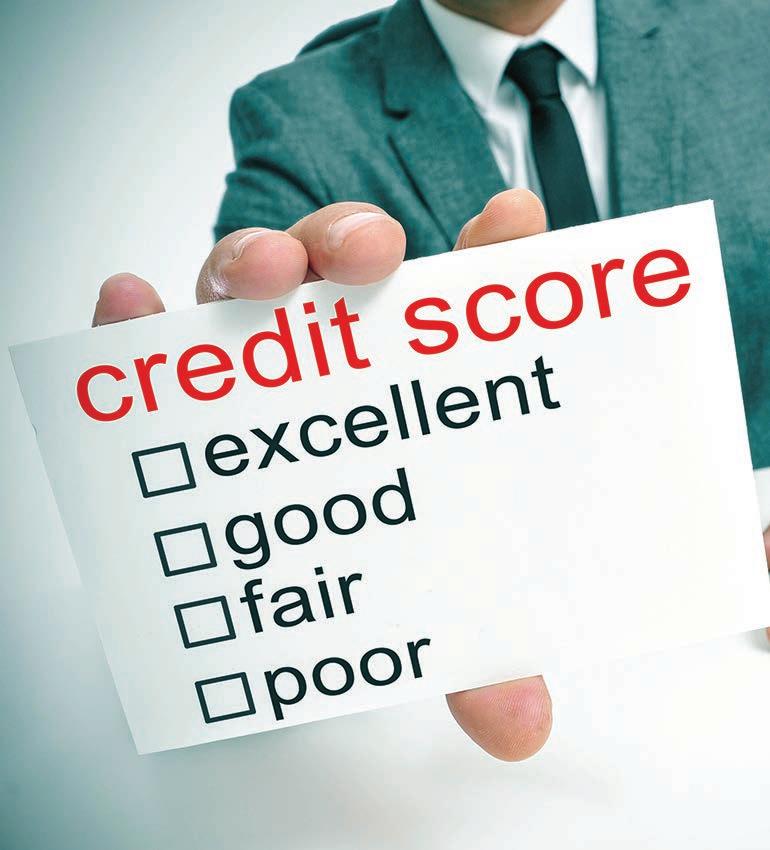
The importance of a good credit score cannot be overstated. Adults who handle credit responsibly may save tens of thousands of dollars in interest charges over the course of their lives, as a strong credit history helps to elevate credit scores. The higher an applicant’s credit score, the more favorable loan terms for big-ticket items like vehicles and homes will be.
Though the significance of a strong credit history is a lesson in financial literacy emphasized to many people as early as adolescence, it’s still easy to make some mistakes along the way. Many people’s first encounter with credit comes around the age of 18, a point in time when young men and women may not recognize the gravity of their financial decisions. That makes it easy to fall into some bad habits that can unfortunately have a long-term, negative impact on individuals’ financial futures. The following are some common credit missteps that consumers can look to avoid as they seek to build strong credit histories.
• Missed payments:
The credit reporting agency Equifax® notes that even a single late or missed payment can lower a person’s credit score. Though it’s always best to set up automatic payments so no payment is ever missed, those who haven’t taken advantage of that
capability who miss a payment should know that it generally takes 30 days for a missed payment to affect a credit score. If you simply forget to make a payment, Equifax® indicates that some lenders and creditors may not even report a missed payment if a full payment is made within 30 days of the initial due date. If you missed a payment because you can’t afford to pay off the balance, then chances are you’re committing another common misstep.
• Overreliance on credit:
Utilizing credit too much is another common mistake that can quickly land consumers in debt. Resist using credit to finance unnecessary expenditures, like dining out or a night of entertainment. Only use credit to make purchases you know you can afford to pay off in full come your monthly due date. Credit utilization ratio is another metric used to determine credit score, and it refers to the percentage of your overall credit availability you use each month. The financial experts at Chase suggest a good credit utilization ratio is 30 percent or less. If you’re routinely maxing out your credit card(s) and can’t afford to pay the balance in full each month, then your utilization ratio might be around 100 percent and might even be higher once interest charges are fac -
tored in. A high balance on an existing card too often compels young consumers to make another costly misstep.
• Opening too many credit accounts:
It’s hard to turn down what feels like “free” money, and many consumers new to credit might open new credit cards, particularly if a current account has a high balance. Too many credit cards can land consumers in considerable amounts of debt.
Equifax® notes it’s generally recommended that consumers have no more than three credit cards, but some consumers who struggle to make payments each month might be better off with just one card.
Some common missteps can make it easy to fall into credit card debt, which can adversely affect consumers’ credit scores.
Avoiding those missteps can set borrowers up for a lifetime of financial freedom. TF263695