


On behalf of Shaw Media and the Illinois Valley Sports Hall of Fame, it is our honor to welcome you to the Class of 2026 Induction Ceremony. We are proud to celebrate and recognize the remarkable achievements of this year’s inductees, true legends of Illinois Valley athletics.
This event and the commemorative magazine you hold are the result of months of thoughtful planning, collaboration and dedication. Tonight is a celebration, an opportunity to reflect on historic accomplishments, honor lasting legacies and share the stories that have shaped our local sports tradition.
We extend our sincere thanks to the Illinois Valley Sports Hall of Fame Committee. Your leadership, insight and countless hours of commitment made this event possible. To our generous sponsors, thank you for your continued support and your investment in honoring excellence in local athletics.
A special thank you goes to our Shaw Media teams; advertising, marketing, design and editorial, whose creativity and hard work brought this vision to life. Your dedication plays an essential role in preserving and sharing these stories.
Finally, thank you to everyone who supports the Hall of Fame. Whether you are a sponsor, reader, social media follower or someone who proudly shares these stories with friends and family, your enthusiasm keeps this tradition strong.
Inside this magazine, you’ll find inspiring stories, memorable photographs and reflections celebrating the Class of 2026, alongside the businesses and communities that proudly support them. We hope you enjoy the evening and look forward to honoring many more legends in the years to come.
Thank you,

Jeanette Smith Regional Market Leader Shaw Media
426 Second Street La Salle, Illinois 61301
(815) 223-3200 (800) 892-6452 www.newstrib.com
Regional Market Leader
Jeanette Smith jmsmith@shawmedia.com
Account Executives
Jared Bell
Shannon Eldridge
Ashley Oliver
Writers
Derek Barichello
Bobby
Melissa Rubalcaba
Andy
Jared Bell, Kurt Bruno, Kevin Chlum, Bea Coates, Tom Dobrich, Dan Eilts, Kevin Hieronymus, Carol Pratt, Rick Sipovic, Lanny Slevin, Jeanette Smith, Ed Swingle and Ken Wilcoxen. They took on the task of choosing these inductees from hundreds of nominations. We currently have an extensive list of deserving athletes that will be used to select future
classes, but we are always looking for more.
IF YOU KNOW SOMEONE WHO YOU WOULD LIKE TO NOMINATE FOR THE SHAW MEDIA ILLINOIS VALLEY SPORTS HALL OF FAME:
To be considered, the nominee must have lived locally during their sports accomplishment and/or graduated from IVCC or one of the following high schools: La Salle-Peru, St. Bede, Hall, Putnam County, DePue, Mendota, Ottawa, Marquette, Streator, Princeton, Bureau Valley, LaMoille, Ohio, Earlville, Henry, Fieldcrest or their predecessors. The athlete must be out of high school for at least five years. Visit IllinoisValleySportsHOF.com and click on Nominate an Athlete.





Mayor: Ken Kolowski
City Clerk: Jamey Mertel
Treasurer: Jackson Powell
1ST WARD ALDERMEN: Jeff Ballard • Bob Tieman
2ND WARD ALDERMEN: Tom Payton • Jason Edgcomb
3RD WARD ALDERMEN: Mike Sapienza • Rick O’Sadnick
4TH WARD ALDERMEN: Jim Lukosus • Andy Moreno





SUBMITTED PHOTOS
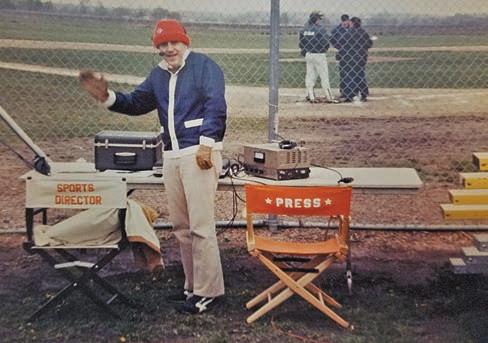
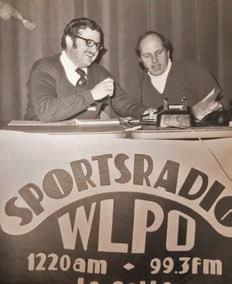
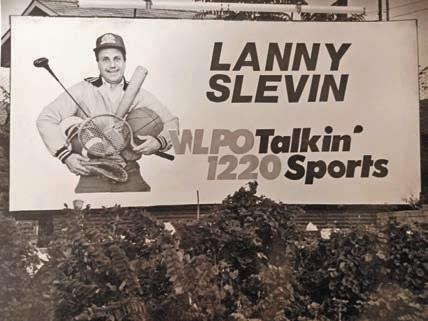
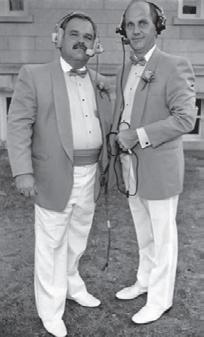
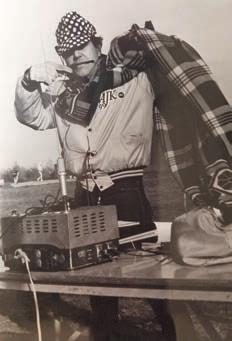
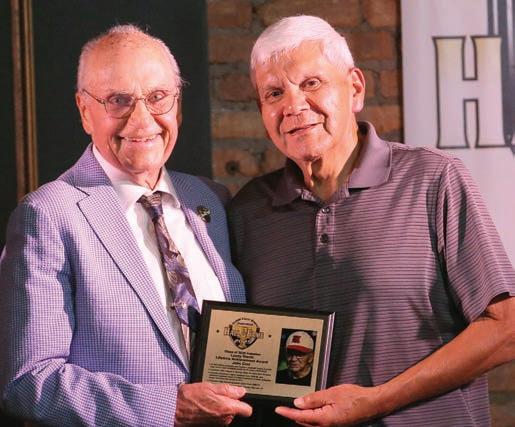
The Voice of the Valley for four decades, Slevin broadcasted numerous sporting events in the Illinois Valley and positively impacted the lives of many during his broadcast career. The true definition of dedication, Slevin has given so much of his time and passion to area athletics and has brought joy to many. For all he has given to our area — both on air and behind the scenes — the Lifetime Achievement Award is named in his honor.
• A legendary broadcaster, Slevin enjoyed a 40-year career at WLPO where he broadcast games, provided sports updates and more
• Estimated he broadcast somewhere between 3,5004,000 events in his career
• Hosted the state-wide IHSA Sports Report for nearly six years and broadcast the IHSA boys basketball state tournaments for nearly 30 years, starting in 1972
• Hosted Chalk Talk on WLPO every Saturday morning during the school year for nearly three decades
• Member of the IBCA Hall of Fame, St. Bede Hall of Fame, IVCC Hall of Fame and National Junior College Association Hall of Fame; Inaugural recipient of the IHSA Distinguished Media Service Award
Thursday, June 4, 2026
The Auditorium Ballroom, La Salle
Emcee: Lanny Slevin
Doors Open ......................................................................... 5 p.m.
Dinner ................................................................................... 6 p.m.
Induction Ceremony ....................................... following Dinner
Order of Inductees
• Karla (Walgenbach) Goskusky, Tonica/IVCC
• 1956-57 Ottawa Boys Basketball Team
• Lanny Slevin Lifetime Achievement Award: Frank Colmone
• Legacy Award, Individual: Herb “Fritz” Crisler, Earlville/Mendota
• Ron Marroquin, DePue
• John Bailey, Streator
• Jim Morel, La Salle-Peru
• Garrett Barnas, Bureau Valley
• Joe Massino, Putnam County
• George “Ted” Lewis, Mendota
• Distinguished Media Award: Merk Metzinger, La Salle NewsTribune
• 1979 La Salle-Peru Football Team
• June Gross, Ottawa
• John Bellino, St. Bede
• Kristian Wahlgren, Princeton
• Todd Hopkins, Putnam County/Marquette
• 2001 Hall Football Team
Conclusion & Thank You
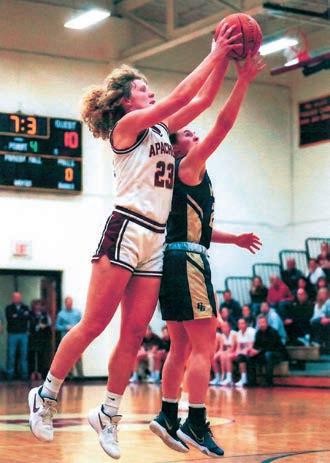
By Melissa Rubalcaba Riske
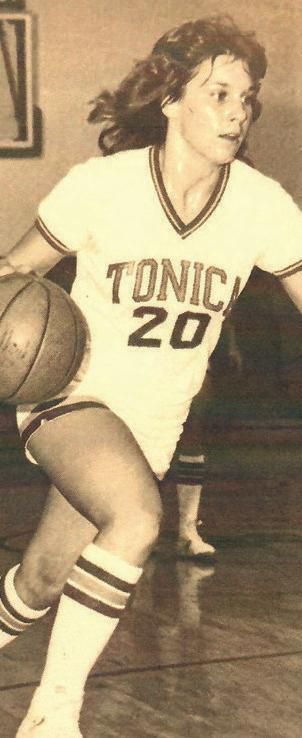
Karla (Walgenbach) Goskusky grew up in an era when kids didn’t sit inside. She spent her days outdoors — playing sports, making up games with friends and riding horses.
As the youngest of six, she didn’t have the luxury of being driven to activities. She shared a bicycle with her siblings, which often meant waiting her turn — or not going at all.
But when she wanted to ride a horse, she found a way.
Whenever her mom allowed it, Goskusky walked two miles to a friend’s house, rode a horse another two miles into town, then walked it back before making the two-mile trip home herself.
“I was walking six miles or more every day at age 9,” she said.
That routine helped build the stamina, strength and determination that would define her as an athlete, and help make her a Class of 2026 inductee into the Shaw Media Illinois Valley Sports Hall of Fame. In grade school, she played baseball and joined track and field at a time when there were no separate teams for girls.
• Standout athlete at Tonica and IVCC as well as coach at IVCC and Peru Washington
• Was team MVP & first-team all-conference for volleyball, basketball and softball at Tonica HS and IVCC
• Signed to play volleyball and basketball at Loyola before an injury ended her career
• At Tonica Grade School, she played baseball and ran track because there were no girls teams
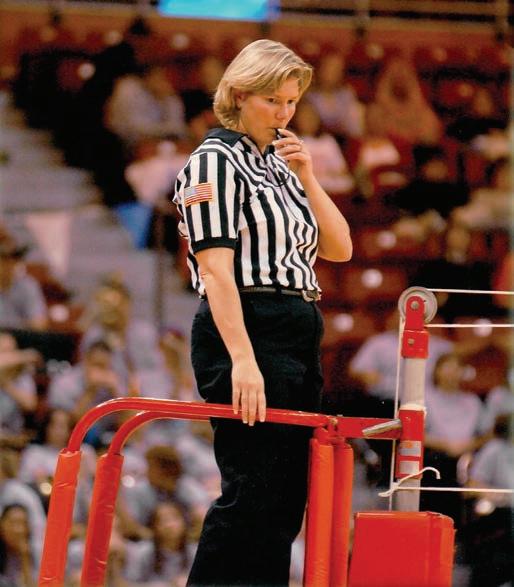
• Volleyball official for more than three decades, officiated an IHSA state title match
“I competed against the boys in grade school track,” she said. “I rarely saw girls in sports.”
At Tonica Grade School, she excelled — high jumping 5 feet, 2 inches, pole vaulting 9 feet and running the 120-yard hurdles in 16.6 seconds.
By the time she reached Tonica High School in the 1980s, she was a three-sport athlete in softball, basketball and volleyball. With track and softball seasons overlapping, she chose softball and earned MVP and all-conference honors.
At the time, she didn’t think of herself as a pioneer. Years later, through three decades as a volleyball official, she saw how much opportunities for female athletes had grown.
“The athletes today are so amazing,” Goskusky said.
After high school, she attended IVCC, where she played softball, volleyball and basketball. At 5-foot7, she played center on the
basketball team, relying on a 25-inch vertical jump to compete. She also was part of the school’s first women’s volleyball team.
“That was a fun time in my life,” she said. “Those friends — I still talk to them to this day. They’re all over the country, but we still text and see each other.”
That volleyball team existed because an instructor stepped in to lead it.
“He offered to take the team so we could have one,” Goskusky said. “That’s all we asked — just an opportunity. We took it and ran with it.”
But in the spring of her freshman year, everything changed. While sliding into second base during a softball game, she collided with a player and broke both her tibia and fibula.
“It was devastating. I was told I’d never be able to compete again,” she said.
She spent the summer in a cast, leading to significant muscle atrophy — something


she knows today would have been treated differently.
“It’s unfortunate, but that’s how it was treated. We didn’t know what we didn’t know. Now I do,” she said.
The injury cost her a scholarship opportunity at Loyola Chicago.
Still, Goskusky didn’t step away from athletics. She returned to IVCC, shifting from player to coach. She graduated in 1981 and coached from 1981-89, taking a year off in 1987 when she had twins.
During her tenure, she compiled a 149-94 record and was named N4C Conference Coach of the Year in 1986.
“It’s gratifying knowing I left an impression on people,” she said. “It makes me humble that I was able to pass my passion on to someone else.”
She began officiating volleyball at 18 and, after her coaching career, continued as a referee for 32 years.
In 2021, she completed IVCC’s therapeutic massage
program and now serves as an instructor for Rock Steady Boxing, a program for people with Parkinson’s disease, at the Illinois Valley YMCA in Peru.
“It’s really rewarding, but also very humbling to help them smile and sweat,” she said.
Goskusky raised four boys, staying involved in their sports and helping coach along the way. Now a grandmother of five, she still jumps at every chance to get outside and play with them.
“It’s so enjoyable to watch them,” she said. “It’s hard for me not to want to coach.”
And the girl who once walked miles just for the chance to ride a horse still holds onto that passion.
“When we moved, the first thing I did was buy a horse,” Goskusky said.
Today, she cares for a 34-year-old Palomino and a 23-year-old Belgian — and still takes the reins from time to time.


By Derek Barichello
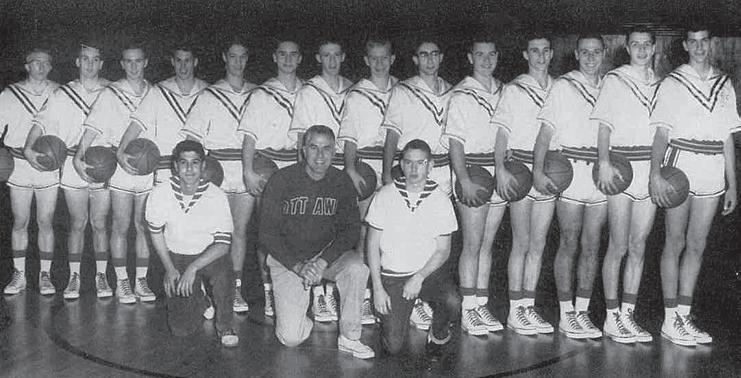
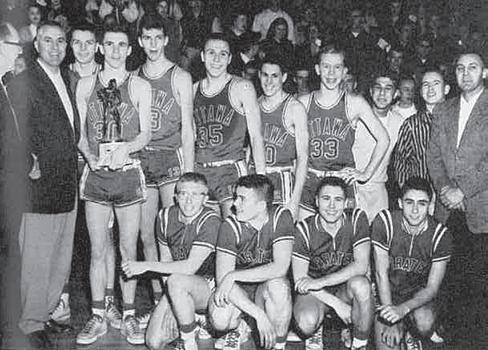
Nearly seven decades have passed, but Fran Clements still vividly remembers the key plays that carried the 1956-57 Ottawa High School boys basketball team past Pekin in a double-overtime thriller at the Peoria Super sectional.
The Pirates claimed a 58-56 victory when Jerry Varland buried the final two free throws, but simply reaching that moment required an unforgettable comeback.
Clements recalls Ottawa trailing by three points with just three seconds left in regulation — long before the 3-point line existed. The Pirates made the first free throw, then intentionally missed the second. Ralph Lindemann grabbed the rebound and tossed in the game-tying basket to force overtime.
“We were not a tall team, but we were a good rebounding team,” said Clements, who was voted IHSA First-Team AllTournament and led the Pirates in scoring. “We needed a rebound to force overtime, and Jerry sank the final two free throws in double overtime to win it for us and send us to state.”
That dramatic win propelled Ottawa into the state quarterfinals, where the Pirates defeated Champaign 54-51 at the University of Illinois’ Huff Gymnasium before falling 69-61 to
• Under longtime coach Gil Love, team placed third in one-class system and finished 29-6
• Beat Pekin 58-56 in 2OT in super sectional, beat Champaign 54-51 in state quarterfinal, lost to Collinsville 69-61 in state semifinal & beat Quincy Notre Dame 65-64 in OT to finish third
• Fran Clements was named to the All-Tournament Team
Collinsville in the state semifinals. Ottawa secured third place with a 65-64 overtime victory over Quincy Notre Dame, back when Illinois high school basketball was played in a one-class system.
For everything it accomplished, the team is a Class of 2026 inductee into the Shaw Media Illinois Valley Sports Hall of Fame.
“You played everyone in the state — small schools, big schools,” Clements said. “You had to earn it. That’s what made that team so much more special.”
Ottawa’s postseason run also included sectional wins over Woodland and La SallePeru, along with regional victories against Sandwich, Marquette and Earlville in the Marseilles Regional.
The Pirates were led by Hall of Fame coach Gil Love, who spent 27 years guiding the program and is also an Illinois Valley Sports Hall
of Fame inductee. Ottawa started Bob Chalus, Bob Parkins, Lindemann and Varland and Clements.
The Pirates finished 29-6, with those six losses coming by a combined 25 points.
Depth also played a major role. Dale Larson, Phil Black, Scott Benson, Joe Olle and Gordon Meyer came off the bench. Bill Tonione, Bill Springer, George Small, John Rensch and Dick Martin rounded out the roster, while Jerry Owens and Peter Dorris served as managers.
“Our second team was pretty good, too,” Clements said. “They pushed the first team in practice, and that’s what made us better.”
Love’s impact remains visible in Ottawa today. The auxiliary gym at the high school is named after him, and the scoreboard in Kingman Gym is dedicated in his memory.
“He was our coach,” Clements said of Love. “He was

a good coach, knew the game well and was well respected. He worked us hard and taught us the game.”
Clements also credited assistant coach June Gross — another Class of 2026 Shaw Media Illinois Valley Sports Hall of Fame inductee — for helping shape the Pirates.
“That was the only year he coached basketball at Ottawa,” Clements said. “He was a very good pole vault coach. He worked with us on rebounding in every practice, and that helped us get as far as we did without being a very big team.”
Several players continued their careers in college. Clements earned a scholarship to Valparaiso, where he played three seasons and helped lead Valpo to its first NCAA Tournament berth in 1962. Parkins earned a scholarship to Montana State University, and Varland played at Tulane. Clements said the Pirates
believed they had a talented team capable of making a run, but reaching that stage still came sooner than expected.
“To have that many juniors in the starting five, it was unexpected,” Clements said. “We thought we would be better in our senior year, but we got beat in the Sweet 16 in Peoria. It was a really good group, but back then it was all one class, so you played everybody and had to go through everybody to get to state and win it. It was a true state championship.”
Clements said he wishes the team had gathered more often for reunions, though 10 of the 15 players returned when the group was inducted into Ottawa’s Hall of Fame in 2007.
“It was nice to see everyone,” Clements said. “It’s nice to bring everyone together, because that was a special group.”




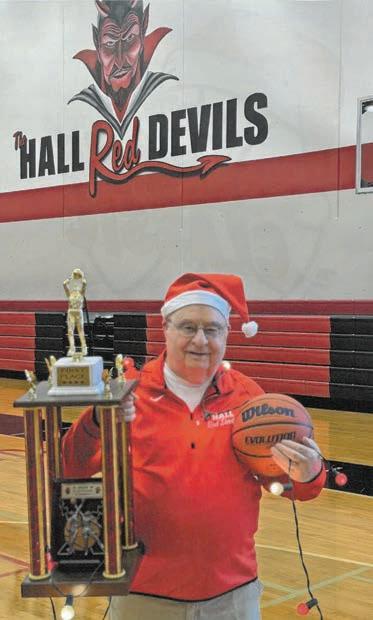
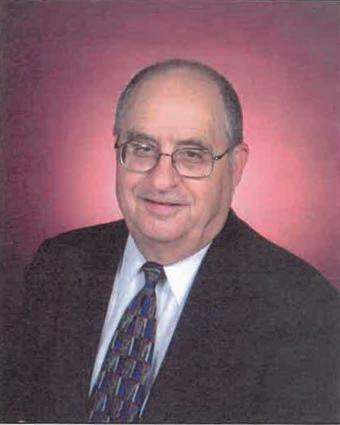
• After starting his career as a coach at Tiskilwa, spent 30 years as coach, teacher and AD at Hall
• Was Hall Athletic Director for 24 years from 1970-94, during which a new gymnasium was built & a holiday basketball tournament was begun that was later renamed the Colmone Classic
• In his tenure as AD, Hall’s first track (cinder) was built and later the current allweather track was built
• Instituted female athletics at Hall in 1975
• Originated the famous Hall Shootout (1992-98), which featured some of the state’s best basketball teams; several individuals played D-I basketball & a few went to the pro ranks
By Andy Tavegia
Being an athletic director at a small school isn’t always easy or always rewarding. Resources are limited. Opportunities can be harder to create. And often, the job demands more creativity than budget.
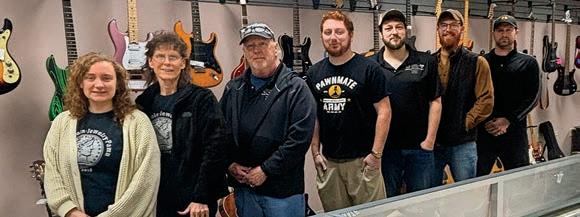
But don’t tell that to Frank Colmone or anyone connected to Hall High School.
For Colmone, the challenge wasn’t a burden. It was an opportunity.
Few have done more to elevate a small-school athletic program than Colmone, whose vision and persistence helped transform Hall into a hub of competition and pride. When he took over as athletic director in 1970, he didn’t just fill a role, he started building something.
A visionary by nature, Colmone had a knack for generating both excitement and revenue, something he always believed was simply part of the job.
“The thing about it is, I always saw it as part of my job,” he said. “I should be doing that.”
That mindset quickly turned into action, and for everything he accomplished, Colmone is a Class of 2026 inductee into the Shaw Media Illinois Valley Sports Hall of Fame.
His first major breakthrough came in the mid-1970s, when timing and circumstance created an opening. During the 1973-74 season, Hall’s boys basketball team captured its first sectional championship, energizing the community. At nearly the same time, the school unveiled a new gymnasium, finally giving it the ability to host events.
Then came a national gas crisis.
With fuel being rationed, travel became difficult for schools, threatening schedules and attendance. Where others saw a setback, Colmone saw possibility. He created a local tournament that brought nearby teams together, minimizing travel while maximizing competition.
The idea worked immediately. Schools got multiple games without long trips. Fans filled the gym. And Hall established itself as a destination. The event’s success endured, becoming what is now known as the Colmone Classic.
That early success set the tone. Rather than settling, Colmone continued to push forward, always looking for new ways to raise the level of competition in the Illinois Valley. In 1992, he launched another ambitious idea: the Hall Shootout.
From the start, it stood out.
The shootout brought in elite programs and top-tier talent, including Chicago King and its “Twin Towers,” Rashard Griffith and Thomas Hamilton. That team went on to finish undefeated and win the Class AA state championship, and defeated Mt. Carmel and future NBA All-Star Antoine Walker in the Hall Shootout.
And the momentum kept building.
In the years that followed, the shootout attracted standout players and powerhouse teams from across the state. Future NFL quarterback Donovan McNabb competed, along with top programs like Peoria Manual, Proviso East and Chicago Westinghouse.
“We had some outstanding Division I ballplayers come down,” Colmone said. “It ran all day on a Saturday. But when Chicago King and Mount Carmel played, you couldn’t fit another person in there with a shoehorn. If the fire marshal had been there, he would have shut us down.”
Events like the Colmone Classic and Hall Shootout didn’t just create excitement — they gave Hall an identity.
They generated revenue, elevated the school’s reputation and created lasting experiences for
athletes and fans alike. More importantly, they showed what was possible with vision and effort.
Still, Colmone’s impact extended well beyond basketball.
He worked to expand opportunities across the board, helping introduce girls athletics at Hall High School and adding programs such as wrestling, cross country and bowling. He also oversaw the development of the school’s first track facility, later upgraded to an all-weather surface in the early 1990s.
That track became home to another of his ideas: the Rollie Morris Invitational, an event that continues to support the program.
Colmone also found ways to connect Hall to the broader sports world. He organized exhibition opportunities involving the Chicago Bears, forming relationships with players like Doug Buffone and Gary Fencik. He even spent time fishing with Hall of Famer Walter Payton — just another example of how far his connections reached.
Even in retirement, Colmone hasn’t stepped away.
He helped play a role in passing the referendum for Hall’s new school and remains a steady presence, continuing to support the programs he helped build.
“I’m always there, helping out and doing what I have to do,” he said. “The tournament isn’t mine, but I’m there helping however I can. I enjoy doing that, too.”
That approach — show up, do the work, find a way — defined his career.
Frank Colmone didn’t just manage an athletic department.
He built it, shaped it and left it stronger than he found it.
And at a small school, that kind of impact doesn’t fade. It lasts.












By Andy Tavegia
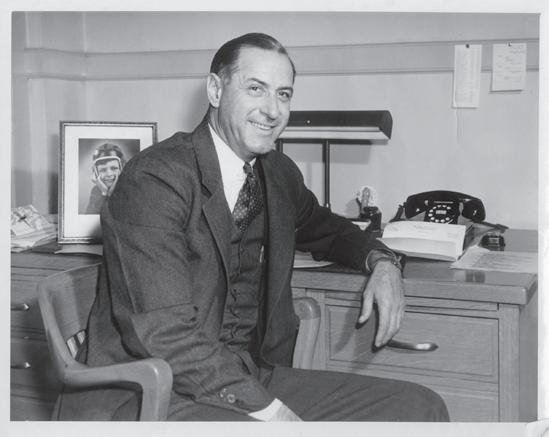
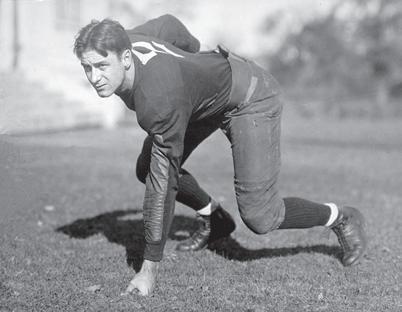
Before there was Bo Schembechler at the University of Michigan, there was Herb “Fritz” Crisler.
Born Jan. 12, 1899, in Earlville, Crisler left his imprint — almost literally — on one of the most iconic brands in college sports. From small-town beginnings in the Illinois Valley to the biggest stages in the game, his influence stretched far beyond wins and losses, helping shape the very way football is played.
A graduate of Mendota High School, Crisler’s rise began as a standout athlete at the University of Chicago. Playing under legendary coach Amos Alonzo Stagg from 1919-21, Crisler earned All-American honors and collected nine varsity letters across football, basketball and baseball.
More importantly, he absorbed the lessons that would define his future. Under Stagg, Crisler developed a deep understanding of preparation, discipline and innovation, traits that would carry him through early coaching stops at the University of Minnesota, Princeton University and eventually to the national stage.
By the time he arrived at the University of Michigan in 1938, Crisler was ready.
And that’s when everything changed.
• Born in Earlville and a Mendota alum, was legendary figure in University of Michigan athletics
• Michigan football coach from 1938-47, going 71-16-3; introduced Michigan winged football helmet still used today
• Served as University of Michigan’s athletic director from 1941-68.
• Member of the NCAA football rules committee for 41 years & chairman for nine years; inducted into the College Football Hall of Fame in 1954
• Crisler Arena, home of the Michigan men’s and women’s basketball teams, was named in his honor in 1970
NOW WHERE are they
At Michigan, Crisler quickly built a powerhouse. Using a precise and deceptive single-wing offense, his teams combined execution with creativity, compiling a 71-16-3 record over 10 seasons.
But his impact went far beyond the scoreboard.
Crisler is widely credited as the father of two-platoon football, a revolutionary concept that separated offensive and defensive units. What began as a necessity during World War II when rosters were depleted became one of the most important strategic developments in the sport’s history.
He was also responsible for one of football’s most recognizable traditions. In 1938, Crisler introduced the now-famous winged helmet design at Michigan, a look that remains unchanged and instantly identifiable decades later.
His crowning achievement came in 1947.
That season, Crisler’s Wolverines — nicknamed the “Mad Magicians” — went a perfect 9-0 in the regular season before dismantling
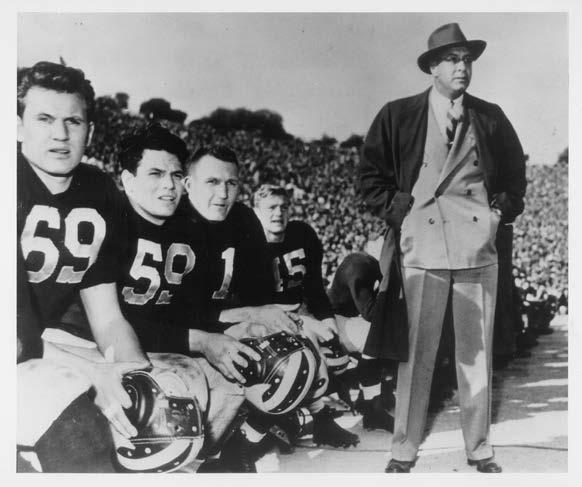
Southern California 49-0 in the Rose Bowl. The dominant performance earned Michigan a national championship and Crisler National Coach of the Year honors.
It was the perfect ending to his coaching career.
But for Crisler, it wasn’t the end of his impact.
He stepped away from the





sidelines and into the role of athletic director, a position he held from 1941-68. In that role, he oversaw one of the most successful eras in Michigan athletics, helping guide multiple programs to national prominence and championships.
His vision extended to facilities as well. Crisler played a key
role in expanding Michigan Stadium beyond 100,000 seats, cementing its place as one of the largest venues in sports. He also oversaw the construction of the university’s basketball arena — now known as Crisler Center — further embedding his name into the fabric of Michigan athletics.
Even beyond Ann Arbor, Crisler’s influence shaped the sport at a national level. He served on the NCAA football rules committee for 41 years, including nine as chairman, helping guide the evolution of the game through decades of change.
In recognition of his contributions, Crisler was inducted into the College Football Hall of Fame in 1954.
Yet for all the honors, innovations and championships, his legacy is perhaps best understood in the way his ideas endured.
Modern football — with its specialized units, strategic substitutions and emphasis on precision — still carries Crisler’s fingerprints.
See CRISLER, page 16












From a small-town athlete in the Illinois Valley to a pioneer of the college game, his journey reflects not just success but transformation. He didn’t simply coach teams, he changed the sport itself.
Crisler died on Aug. 19, 1982, but his legacy continues to live on. It lives in the winged helmets racing out of the tunnel in Ann
Arbor. It lives in the packed stadiums and the systems every team now uses. And it lives in the generations of players and coaches shaped by the game he helped redefine.
Now, that legacy returns to where it all began.
Herb “Fritz” Crisler, the Earlville native who helped transform college football, is a member of the Class of 2026 in the Shaw Media Illinois Valley Sports Hall of Fame — an honor that brings one of the game’s most influential figures back home.



























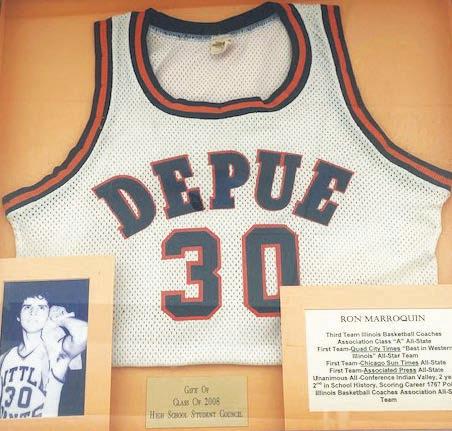
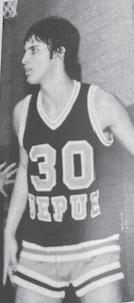
• A 1983 DePue alum, was four-year starter in basketball and part of the 1980 super sectional team
• Finished with 1,767 career points, averaged 18 points per game & scored in double figures in 57 straight games
• Named first team all-state by AP, Chicago Sun-Times, QC Times & member of IBCA AllState Team
• Second-most points scored in school history and 14thmost in Bureau County history
By Melissa Rubalcaba Riske
Ron Marroquin remembers it didn’t take long for coaches to notice his skills on the basketball court — and once they did, there was no sending him back.
The 6-foot freshman at DePue started the season on the freshman team, but within a few months, his role had grown dramatically. He was playing two quarters on the sophomore team and logging full games for the DePue varsity squad.
“It was an honor — a nice honor,” recalled the point guard, who quickly became a steady presence on the floor for the Little Giants.
Marroquin was part of DePue’s memorable 1980 run to the super sectional, where the Little Giants ran into a powerful Chicago Luther South team loaded with future Division I talent, including one eventual Olympian.
But long before the bright lights of postseason basketball, Marroquin’s love for the game was shaped in much simpler settings.
The youngest of three, he spent countless hours trying to keep up with his older brother, Steve, and his friends on neighborhood courts. He often waited on the sidelines, hoping a team would be short a player so he could jump in.
“I learned a lot,” Marroquin said.
At home, his father helped fuel that passion, fastening an old basketball hoop to a piece of wood in the alley behind their house. It wasn’t fancy, but it didn’t need to be. For Marroquin, it was everything.
Those hours — playing against older competition and working on his game alone — paid off quickly once he arrived at DePue High School.
A four-year starter for the Little Giants, Marroquin developed into one of the most prolific scorers in school history. By the time he graduated, he had scored 1,767 career points, still ranking second all-time in school history, and averaged 18 points per game. He also put together an impressive 57-game streak of scoring in double figures, a testament to his consistency and reliability as a go-to player.
He was basketball.
“It was my passion. There wasn’t much else I wanted to do,” he said.
That passion and production have now earned him a place among the area’s all-time greats as a Class of 2026 inductee into the Shaw Media Illinois Valley Sports Hall of Fame.
Still, when Marroquin looks back, it’s the 1980 season that stands out most.
The Little Giants finished with a 27-3 record and carried the momentum of a tight-knit team that believed in each other. In the postseason, DePue edged Kewanee Wethersfield 68-67.
In the sectional, the Little Giants defeated Ottawa Marquette before squaring off with rival Tiskilwa in the finals. With the stakes at their highest, DePue rose to the moment, knocking off its rival to claim the sectional title and continue its run.
The super sectional, played in Streator, brought a packed gym and an electric atmosphere. Luther South came out strong, but DePue refused to back down. As the final minutes ticked away, the crowd rallied behind the Little Giants, chanting “We are DePue,” embracing both the moment and the remarkable journey.
Luther South would go on to win the Class A state championship, but the Little Giants had already secured something lasting — a season that remains etched in school history.
Marroquin continued his
career at DePue for three more seasons, eventually finishing second in school history for career points while leading from the guard position. After graduation, he played one year of college basketball before returning home to the Illinois Valley.
He later built a 31-year career for UPS, a job that required the same kind of work ethic and dependability he showed on the court. Off the job, he stayed connected to the game by coaching his son’s youth basketball team, passing along the lessons he learned years earlier.
Much of that foundation, he said, came from his high school coach, Eric Bryant — a 2023 inductee into the Shaw Media Illinois Valley Sports Hall of Fame. A former DePue player himself, Bryant brought discipline and structure to the program.
“He kept us straight,” Marroquin said. “You had to have your hair cut and wear a suit, tie and jacket on game day.”
It was a standard that demanded accountability — and helped shape a player who would leave a lasting mark on DePue basketball.























By Derek Barichello
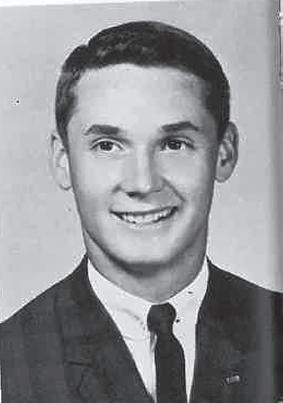
• A standout athlete at Streator, the 1964 alum became well known in basketball and golf
• At SHS, placed fifth at state golf meet in 1964, remains highest finish in school history
• Played basketball and golfed at Michigan St, three-year starter for both programs
• Coached golf & basketball at Rochester High School in Michigan from 1971-99, team won state golf title in 1992 and was state-runner up in 1996
• Member of the Streator High Hall of Fame, the Rochester High Hall of Fame, the Michigan High School Golf Coaches Hall of Fame & the Streator Golf Association Hall of Fame
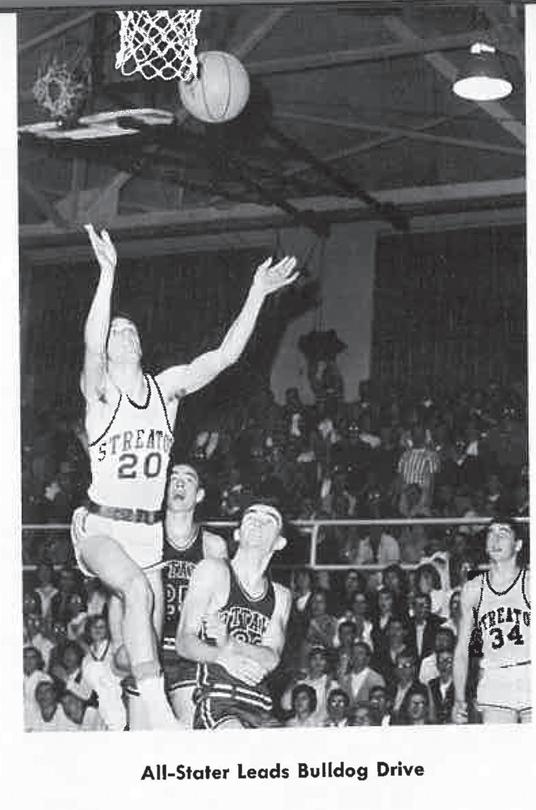
ohn Bailey recalls missing a free throw during his time at Streator High School and catching grief from a fan.
Bailey quickly silenced him, however, making his next 19 attempts. Coincidentally, his mother was seated near the fan and got the last word.
“Every time I made a free throw, she turned around and said, ‘How do you like that?’” Bailey said, laughing alongside his wife, Bonnie, of nearly 58 years.
The story is just one of many anecdotes Bailey shares from his days as a standout guard at Streator High School.
Bailey graduated in 1964 as a two-sport athlete, also excelling in golf. He went on to Michigan State University, where he played both basketball and golf, starting for three years in each sport from 1964-68.
Because of his outstanding career, which began in Streator, Bailey is a Class of 2026 inductee into the Shaw Media Illinois Valley Sports Hall of Fame.
NOW WHERE are they
Earning letters in two sports in the Big Ten is almost unheard of today. Even in the 1960s, it was rare and required a unique kind of athlete.
“It was an amazing opportunity,” Bailey said. “Now they’d make you choose — basketball or golf. The guys from New York played basketball 12 months a year. I played from October to March, then picked up the clubs and played golf.”
At Streator High School, Bailey helped lead his basketball team to the Sweet 16 under coach Bill Davies, whom he credits with preparing him for success at the collegiate level.
“There were many players at Michigan State with natural ability,” Bailey said. “Coach Davies taught me the fundamentals. I was able to get ahead of my teammates because I learned how to play the game at Streator.”
Bailey, who stands 6 feet tall, jokes that he’d be considered small for a guard today. That didn’t stop him from earning the Chester Brewer Leadership Award as a senior while averaging 10.2 points per game.
“We had some good teams,” Bailey said. “We finished second in the Big Ten my sophomore year and first my junior year. I made relationships there that have lasted a lifetime. I
“There were many players at Michigan State with natural ability. Coach Davies taught me the fundamentals. I was able to get ahead of my teammates because I learned how to play the game at Streator.”
John Bailey
bleed green and white. I’m really proud of the basketball program and what it’s become.”
As accomplished as he was on the basketball court, Bailey also excelled on the golf course.
He finished fifth in the state as a senior at Streator, which remains the highest finish in school history.
At Michigan State, Bailey served as team captain his senior year, helping the Spartans finish runner-up in the conference. The team also placed third his sophomore year and second his junior year.
“Golf has always been a big part of my life, and still is,” Bailey said.
Growing up in Streator, he remembers playing at the local country club, often logging 63-72 holes on Mondays when the course had no leagues.
“My dad was a good golfer,” Bailey said. “I took lessons in high school from Ralph Ganzer, and then my dad started taking me to a Chicagoland course to learn from Errie Ball, a prestigious golf pro at Oak Park Country Club. He was a great teacher and was known
as the last living person to have competed in the first Masters.”
After college, Bailey coached both golf and basketball at Rochester High School in Michigan from 1971-99. His golf team won a state title in 1992 and finished as runner-up in 1996.
He and Bonnie now live in Crossville, Tenn., where they still golf regularly. Bailey jokes that he no longer plays basketball, focusing instead on the course. Bonnie said she’s impressed by how healthy he remains as he enters his 80s.
“All the other athletes he played with have had surgeries or injuries,” she said. “He’s stayed healthy all this time.”
John and Bonnie met on a blind date arranged by the manager of the Michigan State basketball team, and they’ve been together ever since.
She remains one of his biggest admirers and occasionally encourages him to share more about his athletic career.
“He’s too humble to tell everything,” Bonnie Bailey said. “There’s a lot more he could share. He’s very athletic.”

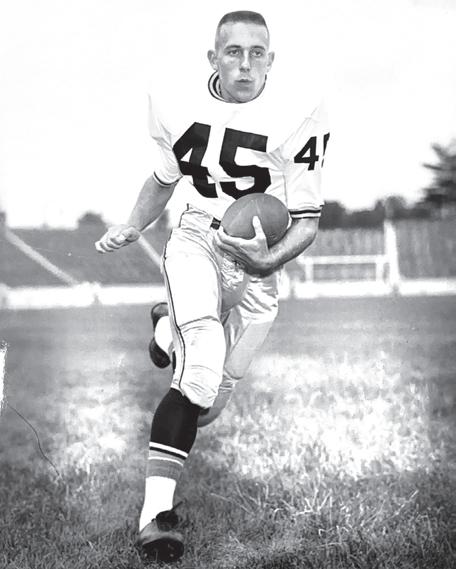
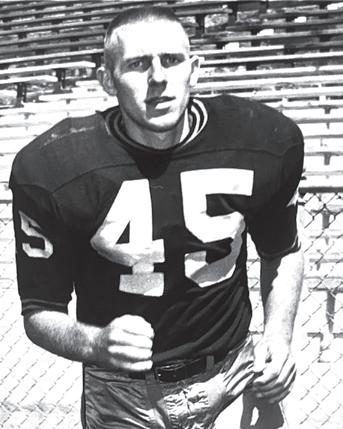
• A 1961 grad at L-P, threesport star in football, basketball and track & field
• Led the state in yards per carry in football in 1960, three-time state qualifier in track
• In football, named all-area, all-conference, Chicago Daily News All-State & Chicago Sun-Times All-State
• Played football & ran track & field at Purdue
• Two-way starter and 1964 team captain for Purdue football; sprinter and ran relays for Purdue track and field
By Derek Barichello
Jim Morel averaged a first down every time he touched the football his senior year at La Salle-Peru High School.
During the 1960 season, he averaged 11.2 yards per carry to lead the state. He also topped the state with six runs of more than 40 yards, earning all-conference and all-state honors, along with honorable mention All-American recognition.
“I would get out there and nobody could catch me,” Morel said. “Away I’d go.”
His running ability led to standout careers at L-P in both football and track, and he went on to letter in both sports at Purdue University.
Competing in the Big Ten in two sports was a dream come true for Morel and brings back memories from what he calls a golden era of athletics.
For all he accomplished, Morel is a Class of 2026 inductee into the Shaw Media Illinois Valley Sports Hall of Fame.
“Receiving this honor has really taken me back to that time,” Morel said. “I’ve enjoyed revisiting those stories.”
At Purdue, Morel played offense, defense and special teams. He was one of four Big Ten players he recalls playing both ways, including Dick Butkus at Illinois. Morel lined up at running back/wide receiver on offense and cornerback/safety on defense, often tasked with covering the opposing team’s top receiver.
As a senior, he was named honorary captain at Purdue and selected to the Blue-Gray AllStar team.
“I remember the coaches coming to me and saying, ‘We’re going to start a freshman at quarterback, and we’ll need you to get the guys to buy in,’” Morel said. “I thought, ‘Ahh, coach,’ but they had seen him over the summer. I told the guys to accept him and be patient. He ended up throwing two touchdowns in his first game and even kicked two extra points. I got to say, ‘See guys, I told you.’ That quarterback was Bob Griese (who went on to win two Super Bowls for the Miami Dolphins).”
One of Morel’s fondest memories is a 21-20 upset of thenundefeated Michigan in 1964. He played 92 snaps in that game, contributing a 66-yard touchdown reception from Griese and making a key defensive stop on a two-point conversion that would have given the Wolverines the lead. Michigan went on to win the Big Ten that season, with its only loss
coming to Purdue. The Boilermakers finished third in the conference under coach Jack Mollenkopf.
“That was probably the highlight of our season,” Morel said. “The game was televised, and they named me MVP.”
Morel was undersized compared to other running backs in the conference and entered Purdue seventh on the depth chart.
“There was no way I was going to run the wing-T at 168 pounds,” he said.
A coaching change helped shift his opportunity. Purdue moved from the wing-T to a pro-style I-formation featuring a tailback.
“When that happened, I said, ‘OK, I can play now,’” he said.
Early on, Morel spent time on the scout team, often volunteering to run plays against the varsity. He simulated opposing offenses, running at least 20 plays per scrimmage, and took the role seriously by studying schemes with graduate assistants.
“That’s where I really learned how to play — how to run the
ball, understand the offense and scout,” Morel said. “It was a Godsend because the coaches got to know me, too. I learned a lot from that experience.”
He eventually became a key contributor, earning a captain’s role and all-star recognition.
At the Blue-Gray Classic in Alabama, Morel recalled traveling with Gale Sayers and other Black athletes, only for them to be sent home due to segregation.
“It was a historic time to be playing college football in the Big Ten,” Morel said.
Morel hadn’t planned to compete in track at Purdue, but his football coaches encouraged it to help him stay in shape during the offseason. He competed in the low hurdles and trained alongside Nate Adams, one of the top sprinters in the country.
At L-P, Morel set school records in the low hurdles and long jump. The 4 x 200 relay team also set a district record and remained unbeaten until the state finals.
“That was an excellent relay team,” Morel said. “One of the best in the state.”
After college, Morel signed as a free agent with the San Diego Chargers of the AFL in 1965. He later became head coach of the Chicago Fire in the American Football Association, earning Coach of the Year honors in 1981. He also advocated for Title IX and women’s equality in sports in 1979.
Morel went on to start a financial consulting company that has operated for more than 30 years. He raised his family in St. Charles before moving to Mount Carroll along the Mississippi River, where he resides today.
He credits several mentors along the way, including L-P football coach Joe Skibinski, position coach Walt Taylor and track coach Tony Enis. He also cites L-P basketball coach Don Sullivan, Purdue position coach Bob DeMoss and Mollenkopf as major influences.
“All of them were great, great guys,” he said. “This has been a tremendous journey for me, and I’m honored to have played for so many stand-up coaches and with so many teammates.”










































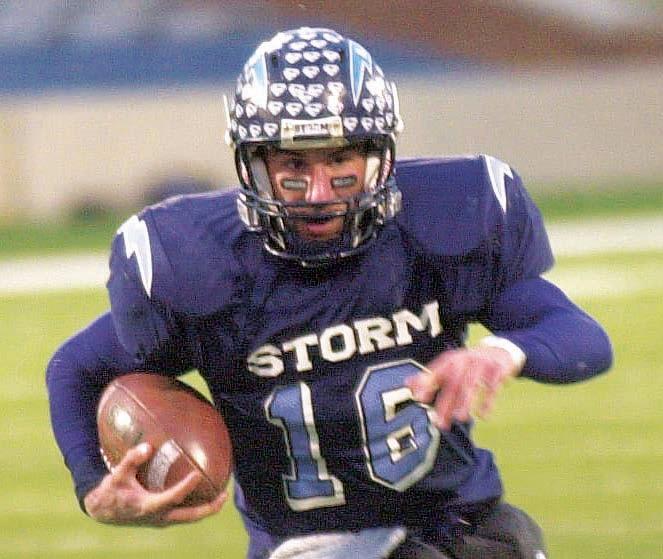
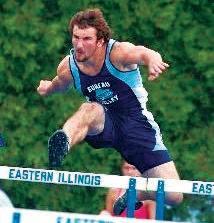
• A 2007 grad, was a star athlete for the Storm in football and track and field
• QB & catalyst for BV’s 2005 state champion football team under his step-father Dave Moore
• In track, won five state medals in 110HH, 300H & shot put, including placing second in Class 1A 110-meter high hurdles in 2007
• Played college football at Harper College, which he led to an NJCAA national title, and Northern Illinois University
• Member of the Bureau Valley Hall of Fame, member of the 2005 BV team inducted into the IV Sports Hall of Fame; his grandfather Ken Bourquin was a 2025 HOF inductee
By Andy Tavegia
Upon learning he would be a Class of 2026 inductee into the Shaw Media Illinois Valley Sports Hall of Fame, Garrett Barnas spent the night before his interview doing something simple, yet meaningful — reminiscing with his wife about the journey that brought him there.
There was no shortage of memories to revisit.
From leading a state championship football team to winning a national title at the junior college level, and even earning multiple state track medals, the 2007 Bureau Valley High School graduate developed into one of the premier athletes of his era in the Illinois Valley.
But for Barnas, the reflection wasn’t just about the accolades.
“I didn’t really reflect a lot on the individual memories. It was more about the whole high school experience and where we were in life,” Barnas said. “That was more what it was about on a deeper level. But the memories? The ones that obviously stand out are the championship we won, going to state my sophomore year as a running back and then coming back and winning the next year. That’s always a great memory and fun to think back on.”
While his natural talent and athleticism were undeniable, what truly set Barnas apart may have been his leadership. As a quarterback, a position that demands both composure and
BARNAS, Page 26
command, he became the driving force behind Bureau Valley’s success — most notably the Storm’s 2005 Class 3A state championship run.
“I think leaders, first and foremost, are able to step up when times are tough and still find a way to win,” Barnas said. “That’s kind of what I define as a leader. Some people would define it differently, but that’s how I view it.
“I tried to lead by example on the field, being someone you could rely on. Someone who knows that if there’s a moment that calls for it, I’m going to be the one who wants the ball.”
That mindset translated directly into results.
With Barnas under center in 2005, Bureau Valley averaged an impressive 35.8 points per game against a challenging schedule. But it was in the postseason where the Storm truly separated themselves, dominating opponents by an average margin of 21.4 points per game.
The run culminated in a commanding 34-7 victory over previously undefeated Tolono Unity in the Class 3A state championship game — an emphatic finish that solidified the team’s place in Illinois Valley sports history and also earned the squad a 2024 induction into the Shaw Media IV Sports Hall of Fame.
That success, however, didn’t come without lessons learned. The year prior, Bureau Valley had gone undefeated in the regular season, only to fall short in the state title game against Addison Driscoll.
“I think we were all on the same page,” Barnas said. “We
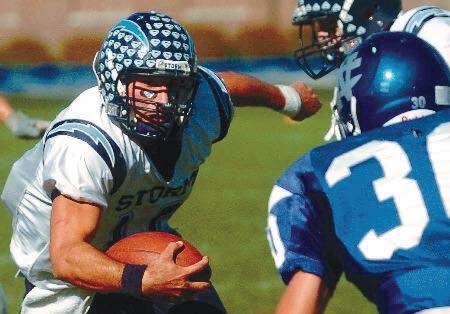
had more cohesiveness, and that can really be characterized as leadership. We understood what it took and what we needed to do differently.”
Barnas carried that winning mentality with him beyond high school.
At Harper College, he quickly established himself as a standout, earning team MVP honors during his two seasons. In 2008, he helped lead Harper to the NJCAA non-scholarship national championship, adding another major accomplishment to his resume.
During his time at Harper, Barnas showcased his dualthreat ability, passing for 47 touchdowns while also rushing for 17 more, demonstrating the
versatility that made him so dangerous on the field.
He later continued his career at Northern Illinois University, where he made the transition to safety, further highlighting his athleticism and football IQ.
But Barnas’ success wasn’t limited to the football field.
A multi-sport athlete, he also excelled in track and field, earning five state medals during his high school career. His top finish came as a senior, when he placed second in the Class 1A 110-meter high hurdles — another testament to his speed, discipline and competitive drive.
Looking back, it’s clear Barnas’ career was defined by more than just statistics or championships. It was about leadership,
resilience and the ability to rise to the moment — qualities that made him not only a standout athlete, but also a cornerstone of one of the Illinois Valley’s most memorable teams.
Today, Barnas lives in Utah, where he and his wife have taken on a new kind of challenge — working together on house renovations. It’s a different pace from Friday night lights and championship runs, but the same work ethic and teamwork remain.
Now, with his induction into the Shaw Media Illinois Valley Sports Hall of Fame, Barnas has one more milestone to reflect on, adding yet another chapter to a story already filled with unforgettable moments.






“I tried to lead by example on the field, being someone you could rely on. Someone who knows that if there’s a moment that calls for it, I’m going to be the one who wants the ball.”
Garrett Barnas
By Bobby Narang
• A 1955 Toluca graduate, was a star basketball player (averaged 22.8 points per game) & held TCC singlegame scoring record for nearly four decades
• Was responsible for starting baseball and basketball programs and the consolidation of Putnam County sports
• Most well known as baseball coach at Hennepin and PC, compiled a 421-103 record (.803 winning percentage); Won seven Tri-County Conference titles, six districts titles, three regionals, one sectional & led 1972 PC team to state in oneclass system
• Hennepin baseball field named in his honor, member of Illinois Baseball Coaches Hall of Fame & inaugural member of PC Hall of Fame
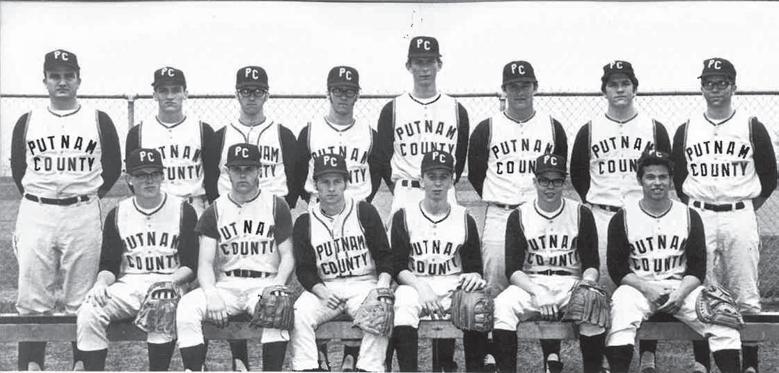
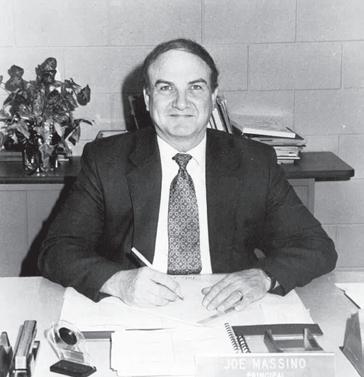
o this day, Tom Pomatto points to one person who deserves much of the credit for his success in baseball. Pomatto, a standout left-handed pitcher for Putnam County in the early 1970s who went on to a two-year career at Northern Illinois University, credits former PC coach Joe Massino for shaping him into a high school standout.
“Joe was more than a coach to me,” Pomatto said. “He wasn’t a rah-rah guy, but when he did raise his voice, we listened. Joe taught us to play the game the right way. He got the most out of his players. He was a stickler for fundamentals. Our teams were always well prepared, and we feared no one. Even though we were from Putnam County, we mostly played larger schools. We took advantage of what we did well. We always had a lot of speed.
“I still take things from him 50 years later. I play in a men’s senior baseball league in Arizona. I back up bases, run on and off the field, respect the game and play it the right way.”
Before becoming a legendary baseball coach, Massino, a 1955 Toluca graduate, first made his mark on the hardwood. He averaged 22.8 points per game during his senior basketball season.
But it was on the baseball diamond where Massino built his legacy.
A member of the Illinois Baseball Coaches Hall of Fame and an inaugural inductee into the Putnam County Hall of Fame, he compiled a remarkable 421-103 record, an .803 winning percentage.
Over his career at Hennepin and Putnam County, Massino won seven Tri-County Conference championships, six district titles, three regional crowns and one sectional title. His 1972 team reached the state tournament in the oneclass system, marking a historic moment for the program.
See MASSINO, Page 28
In addition to baseball, Massino also coached basketball for three seasons at Putnam County.
A true legend in the community, Massino died in November 2020 at the age of 83. His legacy continues to live on through his family and former players, and he will be honored as a Class of 2026 inductee into the Shaw Media Illinois Valley Sports Hall of Fame.
His son, Greg Massino, said sports were a constant in the household.
“I still talk to some of his old players,” Greg said. “My earliest memory is being a batboy. My dad was the coach. It was so exciting for me. I was proud to be there. I was always at the field or gym with him. I was very lucky. He had great respect from his players and was all business. The kids were taught fundamentals.
“My dad was very competitive in his own right. He never
backed down from a challenge and always wanted to play the best. He wasn’t afraid to play Peoria or Ottawa schools. He always gave credit to his players. He was very humble and always praised them. I learned the game properly through him. He instilled hard work in me and the idea that nothing is given.”
Massino made history in 1972 by leading the Panthers to the program’s first-ever state baseball tournament appearance. Pomatto was at the center of that run, pitching a gem in a 6-3 win over DundeeCrown in the Elgin Sectional championship game.
Pomatto, who was inducted into the Putnam County High School Hall of Fame in 2019, said Massino prepared the team for that run with a demanding schedule and tough practices.
“The main thing he instilled was confidence in ourselves,” Pomatto said. “We beat two teams from Chicago on the way to state. We were never intimidated and never afraid of any opponent.”
Greg Massino also vividly

remembers that historic season and the trip to Peoria.
“It was unheard of back then for a Class A school to go to state,” he said. “I was probably 9 years old. I think I got out of school early. It brought so much excitement to the community. It was a great run. Even in basketball, the gyms were packed — just good times. I remember so many great moments winning regionals, sectionals and conference championships. We had so many good families.
Everyone worked hard for him.”
Putnam County baseball coach and athletic director Chris Newsome said Massino’s impact is still felt today.
“He certainly paved the way for PC baseball by setting the bar high,” Newsome said. “He expected hustle and hard work. He would tell you when you made a mistake, then coach you so you didn’t repeat it. His legacy and those same team characteristics still carry on in current PC baseball teams.”




By Melissa Rubalcaba Riske
Connie Western didn’t play for one of her father’s teams, but George “Ted” Lewis made sure she and her younger brother, TJ, still learned his coaching lessons.
“He’d say, ‘Work hard and do your best. Anticipate ahead and set goals,’” Western said. “And one of his biggest was, ‘You never quit. You always finish what you started.’”
Those same messages defined Lewis’ 19 years as head football coach at Mendota High School — lessons his players carried long after their playing days ended.
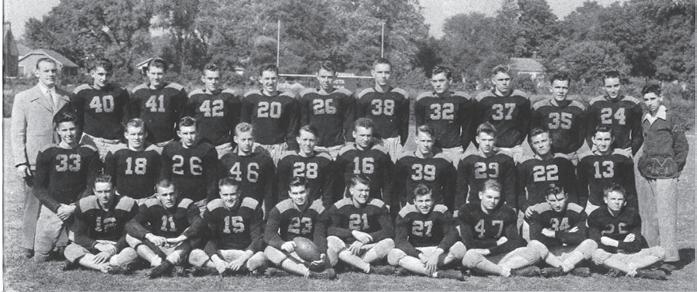
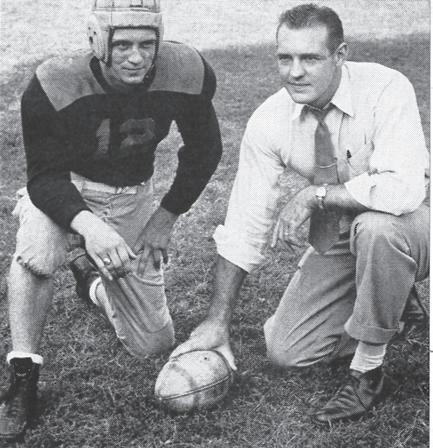
From 1947-66, Lewis built a program rooted in discipline, effort and trust. He coached 18 players who played college football, including six in the Big Ten, and one who reached the professional level.
His influence didn’t stop there. Several former players followed his path into coaching, including two at the professional level and four in high school programs.
“He had a lot of kids who became friends for life,” said his son, T.J. Lewis.
• Legendary football coach during the heyday of Mendota football in the mid-1950s, coached from 1947-66
• A WWII vet originally from Iowa, Lewis led the Trojan football team to a 92-67-10 record, nine conference titles
• Coached 18 players who played in college, six in the Big Ten, two professionally, one who became a pro coach and four HS coaches
• Member of the Illinois High School Football Coaches Association Hall of Fame
That lasting impact earned Lewis induction into the Illinois High School Football Coaches Hall of Fame in 1978.
A native of Iowa, Lewis starred at Iowa City High School, earning All-State honors in 1939. He attended the University of Iowa before pausing his education to serve in the Army during World War II.
After returning from service, he resumed his studies in Iowa City, where he met his future wife, Lotta May.
“One of the things I always admired was how he loved and respected my mom,” Western said. “They were a team.”
Lewis began his coaching career in McCook, Neb., before moving to the Illinois Valley to join the staff at Mendota — the place he and his family would ultimately call home.
“He had a personality people believed in. You would literally run through walls for him.”
T.J. Lewis, son of Ted Lewis
Education was central to their lives. Lewis taught science and physical education while coaching, and Lotta May was an elementary school teacher who would later teach many of his future players. Their example inspired Western to pursue a career in education.
On the field, Lewis compiled a 92-67-10 record and led Mendota to nine conference championships.
But he never focused on the numbers.
“He’d say, ‘It’s the kids,’” T.J. Lewis said. “They believed in him, and he believed in them. He was always humble. He’d be humbled by this recognition.”
Lewis had opportunities to coach elsewhere — even at the college level — but chose to stay in Mendota so his children could grow up in a small-town community.
After his coaching career, he remained at the school as athletic director until retiring.
“Mendota became his home,” T.J. Lewis said.
Even so, he never lost his connection to Iowa, especially Hawkeyes football. Trips back often included game days.
“He’d take me to Hawkeyes home games, and we’d sit in the ‘knothole,’” T.J. Lewis said, noting his father also stayed in touch with a high school friend who followed a similar path in Iowa City.
To those who knew him, Lewis commanded respect in a quiet but powerful way.
“He had a personality people believed in,” T.J. Lewis said. “You would literally run through walls for him.”
Western remembers a lighter side, too. During games, her father would suck on mint Life Savers, always keeping a roll in his pocket.
“He used them for stress relief,” she said. “When I was little, I loved collecting the ones he had left after games.”






























By Andy Tavegia
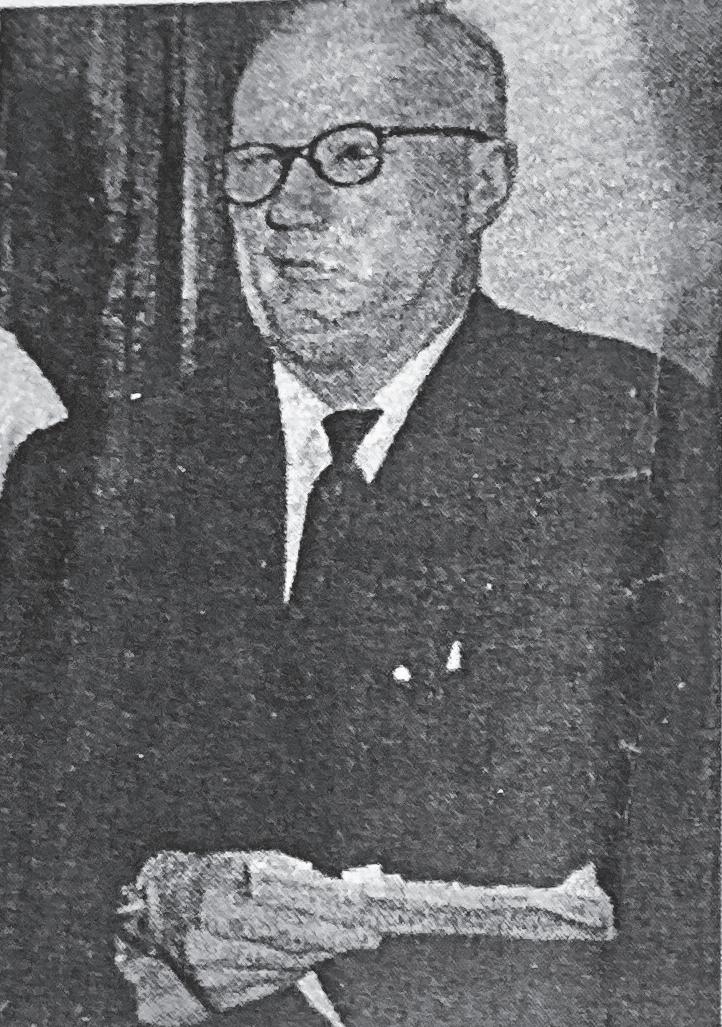
Everybody loves heartwarming stories of athletes and individuals overcoming the odds to become memorable figures, including in the Illinois Valley. Stories of perseverance, resilience, and passion tend to stand the test of time, and few local figures embody those traits more than Frank “Merk” Metzinger.
One of the earliest and most inspiring such stories in the Illinois Valley, Metzinger’s life and career serve as a powerful example of determination in the face of adversity.
Born with physical and speech impediments caused by partial paralysis, Metzinger faced challenges from the very beginning. Yet those obstacles never defined or limited him. Instead, they helped shape the work ethic and commitment that would turn him into a pioneer of sports journalism in the Illinois Valley.
Metzinger spent 40 years covering local sports, first with the Peru News Herald and later with the La Salle NewsTribune. Over the decades, he became a trusted and familiar voice, documenting generations of athletes, teams and unforgettable
• A L-P graduate, reported on area athletics from 1931-1971
• Started at the Peru News Herald in 1931 & became editor in 1935
• Was NewsTribune sports editor from 1947-1965, then contributed until his retirement in 1971
• Member of the St. Bede Academy Hall of Fame & IBCA Hall of Fame
moments. His dedication to the craft and to the community earned him deep respect from readers and colleagues alike.
Because of his many contributions and long-standing presence in local sports coverage, Metzinger has been named the Class of 2026 recipient of the Distinguished Media Award from the Shaw Media Illinois Valley Sports Hall of Fame. The honor reflects not only his longevity, but also the lasting impact he had on the profession at the local level.
“What people don’t know is that he was dedicated beyond belief,” said Lanny Slevin, former sports director at WLPO. “He had taglines that were really great. He was an old-school sportswriter, but he still had his sense of humor.”
After graduating from La Salle-Peru High School, Metzinger began his career with the Peru News Herald in 1931. At a time when opportunities were
limited — especially for someone facing the physical challenges he did — his entry into the newsroom was an achievement in itself.
Within four years, he had worked his way up to editor, a testament to both his ability and determination. In 1947, he became sports editor at the NewsTribune, where he would leave his greatest mark.
Known simply as “Merk,” Metzinger became a recognizable and beloved figure throughout the Illinois Valley and beyond. His reputation extended well past the local area.
According to Slevin, Metzinger was known throughout northern Illinois, and even in the Chicago Cubs clubhouse where he was recognized by legends such as Ron Santo.
“Everybody knew Merk, and they bent over backwards to be nice to him,” Slevin said. “He was one of a kind. He was just unique. And that’s why he should be in the Hall of Fame posthumously.”
What made Metzinger so effective as a journalist was his understanding of his own limi-

tations and his ability to work within them. His writing style was straightforward and unembellished, shaped in part by a limited vocabulary. But rather than detract from his work, that simplicity became a strength.
He focused on the fundamentals: getting the facts right, reporting scores accurately, and making sure every name was correct. In an era long before digital tools and instant updates, that level of consistency and reliability was invaluable.
“He didn’t make many mistakes, and he always included little anecdotes that made people laugh,” Slevin said.
“You think about writers out of Chicago or national writers, but he was who he was, and I never heard anybody say anything bad about him. He was very popular in all circles.”
Rick Sipovic, Slevin’s longtime sports radio partner, echoed those sentiments. He said one of Metzinger’s most remarkable traits was his ability to recall even the smallest details — an ability that brought depth and personality to his stories.
“For him to accomplish what he did, beating the odds from infancy, he was amazing,” Sipovic said. “To achieve what he did with the mind he had — his recall was outstanding. That was as impressive as anything about him.”
In many ways, Metzinger represented the heart of community journalism. He wasn’t just reporting scores — he was telling the stories of local athletes, capturing moments that mattered to families, schools, and fans across the Illinois Valley. His legacy is not only found in the archives of the newspapers he served, but also in the memories of those who read his work and those who knew him personally.
Decades after his career began, Frank “Merk” Metzinger remains a symbol of perseverance, dedication, and the power of simply showing up and doing the job right. His induction into the Shaw Media Illinois Valley Sports Hall of Fame is not just a recognition of his career — it is a celebration of a life that proved limitations don’t define success.



Distinguished Media Award Recipient & all the 2026 IV Sports Hall of Fame Inductees!




Do you have someone you feel should be included in the future classes of the Illinois Valley Sports Hall of Fame?










By Bobby Narang
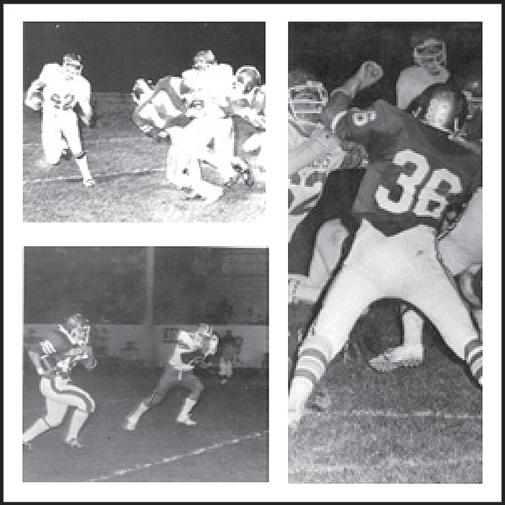
Pete Bray could sense early on that La Salle-Peru’s 1979 football team was different.
A standout linebacker and running back, Bray had been part of successful teams before, but this group stood apart because of its chemistry, competitiveness and unselfishness.
“In all four of my years, the team did very well,” Bray said. “We rarely lost in my first two years, but that 1979 team was different. We got along really well, had no drama and blended really well.
“We also always had fun. It’s easy to have fun when you are winning with a good group of guys. We all got along. In our time away from sports, we spent a lot of time together. Everybody on that team was very competitive, even in intramurals during the offseason. We all tried to give it our all.”
That combination helped produce one of the most memorable seasons in program history.
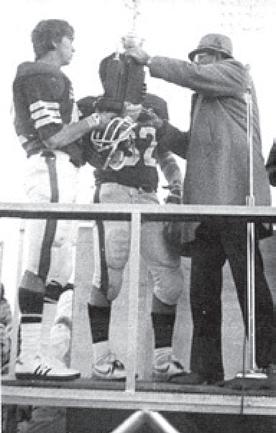
The 1979 Cavaliers won their first 12 games and advanced to the Class 4A state championship game, where they fell 14-6 to Wheaton North. It marked the third consecutive runner-up finish for the program under legendary coach Joe Marini, a remarkable run that cemented La SallePeru as one of the state’s premier programs.
Wheaton North, led by Iowa-bound, future NFL quarterback Chuck Long, leaned on a powerful rushing attack and stingy defense to secure the title. The Cavaliers’ lone touchdown came on a 1-yard run by fullback Camillo Valle in the third quarter.
• Coached by legendary Joe Marini, went 12-1 to finish as Class 4A State Runner-up, third straight runner-up finish
• Squad was ranked No. 1 in the state during the season
• Lost to Wheaton North 14-6 in 4A state title game
• Outscored opponents 376114 (28.9 ppg vs. 8.7 ppg)
• Led by all-state players Mike Knoblauch and Jeff Ostrowski
In the championship game, Bray played tailback and also handled punting duties.
“Wheaton North had a really good team,” Bray said.
Even with the loss, the Cavaliers’ season remains one of the finest in school history. For its accomplishments, the 1979 team is a Class of 2026 inductee into the Shaw Media Illinois Valley Sports Hall of Fame.
La Salle-Peru overwhelmed opponents with a balanced formula of explosive offense and physical defense. The Cavaliers outscored opponents 376-114, averaging 28.9 points per game while allowing only 8.7.
Linebacker Rich Weber said the defense thrived because every player embraced his role.
“We had a great bunch of guys,” Weber said. “Every one
of them knew their job on the field. From my point of view, what made us successful was everybody did their job. We were able to stop the run and the pass.
“The guys on defense were good guys and were very dedicated and loyal. When we started winning, the defense helped us get victories. The guys were very strong, worked very hard together and we gelled extremely well. The defense did a very good job stopping the run and keeping our opponents from scoring.”
The Cavaliers were especially strong up front, anchored by all-state tackle Jeff Ostrowski and all-state end Mike Knoblauch. Strength at linebacker and in the secondary completed a defense that was difficult to move the ball against.
“Our front four was very good,” Weber said. “We were very strong there. Of course, we had Jeff Ostrowski and Mike Knoblauch. We also had a strong set of linebackers,

and our secondary was really strong.
“Looking back, we had a lot of different personalities. We had huge community support. Playing at L-P, a lot of teams were intimidated coming there. We had a lot of talent on that team.”
Then-defensive coordinator Jerry Panizzi said the Cavaliers’ dominance also reflected the work of an 11-member coaching staff that pushed players to maximize their potential.
“We did not give up any points in conference that season,” Panizzi said. “We had a pretty good system, and middle linebacker Herb Reese led the team in tackles. We had an experienced defense. Most of the guys were on their third year in a row going to the finals.
“We took a lot of pride in holding teams to a minimum. We worked really hard to dominate our opponents.”
Several coaches and players still point to the semifinal win over Belleville Althoff as the
defining moment of the season. The Cavaliers defeated an undefeated opponent by excelling in all three phases and earning another trip to the state finals.
“We won the battle but lost the war,” Panizzi said. “It was a battle. They were really good. We came out of that game very injured and didn’t really practice the next week because the guys were hurt. Wheaton North was very good. We were not 100 percent because we got beat up pretty good against Belleville Althoff.
“They were undefeated and played very hard. It was the best game by the defense. Just a special group of guys who were a pleasure to work with.”
For Bray, one moment from that game still stands above the rest.
“The one thing everybody talked about in the Althoff game was Herbie Reese tackling a guy, and you could hear it even on the radio,” Bray said.
















By Andy Tavegia
You’d be hard-pressed to find a sport in Ottawa that June Gross didn’t touch.
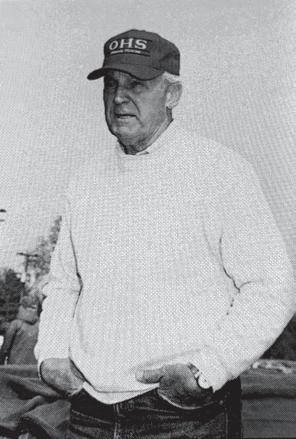
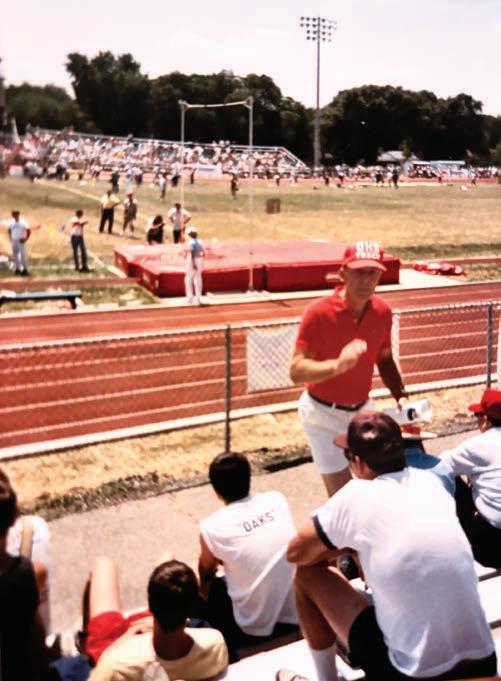
From the moment he arrived in 1956 to the day he finally hung up the whistle in 2008, Gross poured himself into the city’s athletic fabric. He coached just about everything, impacting generations of athletes along the way. While many will remember him as the architect of one of the state’s premier pole vaulting programs or as a driving force behind the creation of city rec softball, those who knew him best point to something less tangible, yet far more lasting.
June Gross cared.
He cared about the programs he built, the standards he set and, most of all, the kids who came through them. That care showed itself in discipline, in structure and in an attention to detail that left little room for shortcuts — but plenty of room for growth.
“He didn’t care what your name was,” said his son, Terry Gross. “He’d say, ‘I’ll take you, and we’ll do whatever we have to do.’”
It wasn’t just talk. It was a philosophy he lived out every day
• The WWII vet coached multiple sports at Ottawa from 1956-2008, best known for being a track assistant & specializing in the pole vault
• Coached four IHSA Pole Vault State championsDenny Brue in 1970, Rusty Wells in 1971, Jay Hearn in 1983 & Greg Fenza in 1988
• Had a string of 31 consecutive years of vaulters qualifying for the IHSA State Tournament
• Member of Ottawa HS Hall of Fame & Northern Illinois Track Association Hall of Fame
• Involved with the creation of the Ottawa City Rec softball and basketball programs in the 1950s, softball field at Lincoln-Douglas Park was renamed in his honor, a baseball and softball umpire and a basketball referee for many years


– and it made him a Class of 2026 inductee into the Illinois Valley Sports Hall of Fame.
Terry recalls one athlete in particular — a talented kid with no background in pole vaulting and a past that might have easily defined him elsewhere.
“He had this mark on the back of his leg, so we asked him what happened,” Terry said. “He told us, ‘I got shot.’ He had spent some time in a detention home and was a little rough around the edges. But he came to my dad, and things started to change.”
What changed wasn’t just performance. It was direction.
Under June’s guidance, the athlete found structure, discipline and a sense of purpose. He developed into a strong competitor, but more importantly, he found footing in something bigger than himself.
“It wasn’t just because of my dad,” Terry said. “But he needed that discipline. He needed someone to show him the right way.”
That ability — to meet athletes where they were and push them toward where they could be — became a defining trait of Gross’ coaching career.
He was, by nature, a perfectionist. Not in a rigid or unattainable sense, but in a way that demanded effort, repetition and belief in the process. It wasn’t uncommon for him to take athletes with little to no experience in an event and develop them into standouts.
“I think his approach was, we’re not going to stop until we get it perfected,” Terry said.
And more often than not, they did.
Nowhere was that more evident than in the pole vault.
For 31 consecutive years, Ottawa was represented in the pole vault competition at the state track and field meet, a remarkable run of consistency built on expectation and example. Within that stretch came four state champions: Denny Brue, Rusty Wells, Jay Hearn and Greg Fenza.
But the success wasn’t just measured in medals. It was in the culture.
“If you ask any of the pole
vaulters or jumpers, it was like a magnet,” Terry said. “They were always there. There was no fooling around. They had fun — everybody had fun — but there was also a standard.”
That standard was sustained not just by coaching, but by continuity. Older athletes set the tone. Younger athletes followed.
“The seniors and juniors would do things the right way, and the freshmen and sophomores watched and emulated them,” Terry said. “That’s how he built it.”
The result was something that felt bigger than a single team or season. It became an expectation, passed down year after year.
And it didn’t stop with track.
Gross had a way of drawing athletes in, even from other sports. His reputation and the way he connected with kids made him someone athletes wanted to play for.
Take Bob Burns, the standout quarterback from Ottawa’s 1966 football team.
“In the summer, he was high jumping 6-4 or 6-5,” Terry said. “My dad would ask him, ‘Are you coming out for track?’ and he’d say, ‘No, I’m going to play tennis.’ He had played tennis for two years.”
That answer didn’t last.
“One day, Bob comes walking across the field from tennis,” Terry said. “Now he’s going out for track. I don’t think the tennis coach was too happy, but Bob said he wanted to be coached by my dad.”
That, more than any statistic, may say the most about June Gross.
Athletes didn’t just perform for him — they chose him because they knew, underneath it all, he cared.
And in the end, that’s the legacy that lasts.
Long after the meets, the medals and the championships fade into memory, what remains is the impact on athletes who learned not just how to compete, but how to carry themselves, how to commit to something and how to be part of something bigger.
June Gross didn’t just build programs.
He built people.
And in doing so, he left a mark on Ottawa that won’t fade with time.
By Bobby Narang
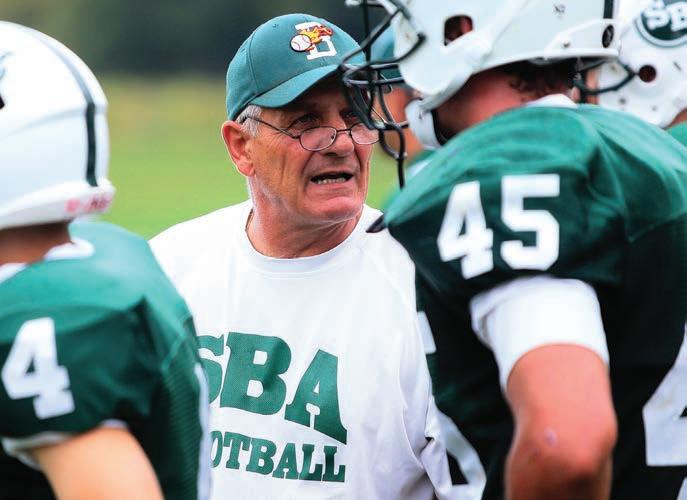
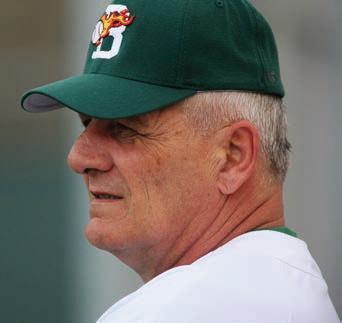
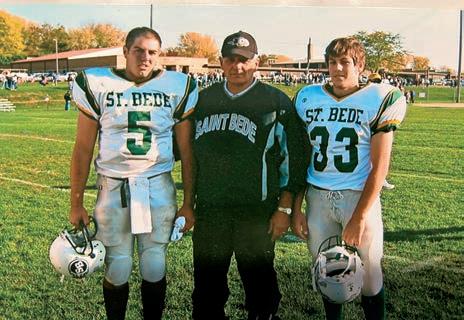
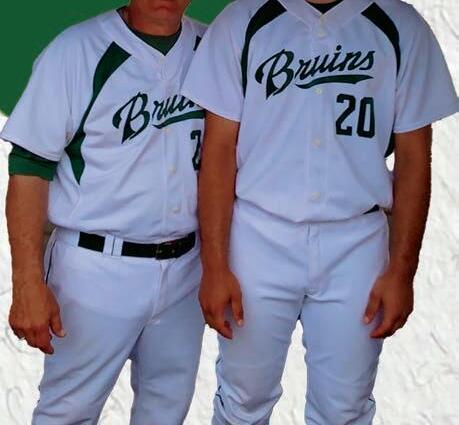
Former St. Bede coach John Bellino was meant to be a Bruin for life.
After graduating from St. Bede in 1968 following an accomplished athletic career, Bellino initially ventured outside the area.
“I was working in the city, but I knew I had to get out of the city,” Bellino said. “I wasn’t thinking about coaching at the time, though. I had some good mentors and coaches, and I always liked sports. I wanted to get back into it. I eventually returned to St. Bede after Father Kevin asked me a few years after I graduated.”
The rest, for Bellino, became coaching history, mentoring thousands of young men and leading the Bruins to decades of success and championships.
It also turned into a legendary career.
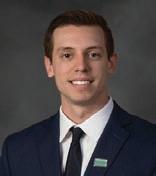
For all he accomplished over his distinguished career, Bellino is a Class of 2026 inductee into the Shaw Media Illinois Valley Sports Hall of Fame.
A legendary baseball and football coach at St. Bede for more than three decades, Bellino made his greatest mark on the diamond. He compiled a 625-346-3 record in baseball, winning 12 regional championships and two sectional titles
See BELLINO, Page 40
• A 1968 SBA alum, was legendary baseball and football coach for the Bruins for more than three decades
• In baseball, retired with a 625-346-3 record, 12 regional titles and two sectional titles in 34 seasons
• Led two teams to the state tournament (1988 & 1992); 1988 team won Class A state championship
• In football, his teams went 176-161 with 15 playoff appearances in 35 seasons, led 2001 team to semifinals
over 34 seasons. His 1988 squad captured the Class 1A state championship.
But Bellino also found success on the football field, guiding St. Bede to 15 playoff appearances and a 176-161 record over 35 seasons. His top football achievement came in 2001, when the Bruins advanced to the state semifinals.
While the wins and championships remain special, Bellino said the relationships he built with players over three decades mean even more.
“The kids still come back and see me,” Bellino said. “That’s very important, and they’re always very happy to see me. I have great relationships with kids from all different eras. I was tough on them — they’ll be the first to say that — but they always responded.”
“Coaching styles had to
“Coaching styles had to change from the ’70s, ’80s, ’90s and 2000s. I made adjustments and found different ways to motivate kids. You have to adapt because times change and people change.”
John Bellino
change from the ’70s, ’80s, ’90s and 2000s. I made adjustments and found different ways to motivate kids. You have to adapt because times change and people change.”
Without question, Bellino considers the 1988 baseball championship his greatest season. That team, built on talent, discipline and leadership, surged through the year and finished 25-4, defeating
Alton Marquette 6-3 in the state title game.
For Bellino, it was a fullcircle moment. A multi-sport athlete at St. Bede himself, he earned nine varsity letters and helped lead the Bruins to a Class 1A second-place finish in baseball in 1965.
“Making the finals was the highlight of my life as a player, but winning the state title as a coach was the big -
gest thing to happen to me,” he said.
Looking back, Bellino calls that championship team a group of destiny. On just three days’ rest, pitcher Brad Koster struck out three and allowed eight hits in the title game and was named tournament MVP.
“That was a special group of kids,” Bellino said. “They were very well-behaved and had great leadership. I could send three or four guys out and they would practice on their own. They were driven to play well for us. Once we got to state, we knew we were playing well. We wanted to win.”
Bellino, the St. Bede Athlete of the Year in 1968, said he never liked singling out individual teams or players, preferring instead to value the full body of his coaching career. Still, he acknowledged coaching standout players like former major league pitcher J.A. Happ, the Athlete of the Year in 2001.
“Over the years, I never re -






















ally had problems with the kids,” Bellino said. “They were trustworthy, they accepted coaching, and they played hard. It’s difficult to compare teams or players.
J.A. Happ made it to the major leagues, and we had a lot of very good players in both baseball and football.” Even now, Bellino reflects
on how unexpected his lifelong connection to St. Bede became.
“For me, St. Bede became an important community in my life,” he said. “The players kept coming back. It was special. I never expected things to go that way. I never thought I’d come back after I graduated. I did — and I stayed forever.”




























By Bobby Narang
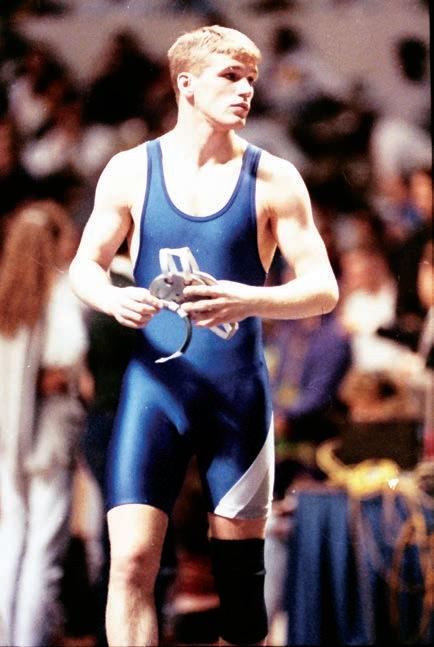
Kristian Wahlgren had an early introduction to competitive athletics.
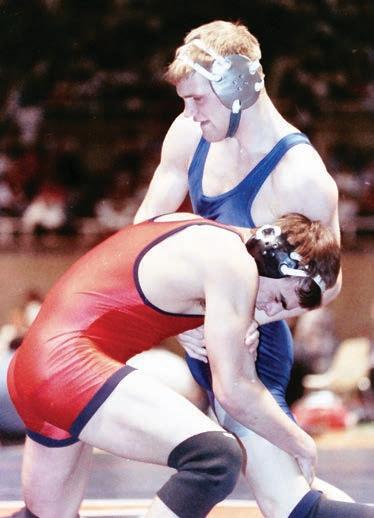
Throughout his storied wrestling career, the 1994 Princeton High School graduate faced some of the best athletes in the state, later competing in wrestling and football at the United States Naval Academy.
Yet Wahlgren credits his three older brothers — Erick, Kai and Kipp — for instilling in him toughness, a never-say-die competitive drive and a deep desire to win.
As the youngest of four brothers, Wahlgren grew up with a significant age gap. His oldest brother, Erick, is eight years older, while Kai is five years older and Kipp is four years older.
“It was a lot of fun growing up,” Wahlgren said. “I came from a family of four athletic boys, so we were always doing something. We had tough competition at home all the time because all four of us wrestled and played basketball up through eighth grade.
“There were some legendary battles in the backyard, especially in basketball. We built our own outdoor hoop out of wood, maybe eight or nine feet high so we could dunk. All four of us had friends over, so it wasn’t uncommon to have 10-15 kids playing tournaments. We were always coming up with something.”
• The youngest of four brothers, the 1994 alum was a wrestling star for PHS
• Won the 1993 Class A 152pound state title & the 1994 Class A 160-pound state title, also placed fourth at 145 pounds in 1992
• Remains area’s only two-time state wrestling champion, only Princeton wrestler to earn three career medals
• Wrestled in college at the U.S. Naval Academy, member of Bureau County Sports Hall of Fame
are they
Those early battles with his brothers helped shape the traits that would define Wahlgren’s athletic and personal success.
In total, the Wahlgren brothers combined for four state championships, eight individual state medals and 32 varsity letters at Princeton during an 11-year span from 1983-1994.
“My three older brothers set the tone and made me elevate my performance because of the age gap,” he said. “I had to step up my game for sure. They all worked hard and instilled that in me. We were all ultracompetitive. If I wanted to play, I had to perform well.”
Wahlgren has added another honor to his accomplished career, being named a Class of 2026 inductee into the Shaw Media Illinois Valley Sports Hall of Fame.
His primary sport was wrestling, but Wahlgren also competed in football at both Princeton and the Naval Academy. At Princeton, he played football for four years, competed in the long jump, triple jump and relays in track, and advanced to the Class 1A state meet in the triple jump as a
“I liked to stay active, and it was important to me — and still is — to stay active. I realized the benefits of sports: teamwork, camaraderie and being part of something bigger.”
Kristian Wahlgren
junior. He also played tennis during his freshman and sophomore years.
“I liked to stay active, and it was important to me — and still is — to stay active,” Wahlgren said. “I realized the benefits of sports: teamwork, camaraderie and being part of something bigger.”
Despite his busy athletic schedule, wrestling became his calling.
He captured the 1993 Class A 152-pound state title and followed it up with the 1994 Class A 160-pound championship in

his senior year. He qualified for the state meet three straight seasons, finishing fourth at 152 pounds as a sophomore in 1992.
To this day, Wahlgren remains Princeton’s only twotime state wrestling champion, and the only wrestler in school history to earn three consecutive state medals in wrestling.
His passion for the sport began early.
“It was amazing,” Wahlgren said. “The community supported me in an unbelievable way. Growing up in Princeton was so much fun. I had great coaches who helped develop me into the wrestler I became. I was able to focus on wrestling and build confidence, which carried over into success on the mat.”
At the Naval Academy, Wahlgren continued his athletic success. He competed at the Naval Academy Prep School for a year before earning three varsity letters with the Division I wrestling program. He also played safety for the football team.
Wahlgren has also been recognized by the Bureau County Sports Hall of Fame.

“My dad started a youth wrestling program, so he got all of us involved,” he said. “I started when I was four years old. I went to youth tournaments all over the area. Every year, I just kept getting more matches.
“I liked wrestling because there’s a clear winner and loser. You get to challenge yourself. There’s no one else to blame, and there’s always something to improve on.”
He is quick to credit those who helped him along the way, including former Princeton wrestling and football coach Randy Swinford and youth coach Jason Bird, who helped shape his early development in the Tiger Town Tanglers program. He also credits his wife for her support throughout his career and for helping raise their three athletic children, who have competed in a variety of sports in the San Diego area. Looking back, Wahlgren said sports laid the foundation not only for his career, but for his family life as well.

One of his fondest memories from his high school career was the overwhelming community support during his three-year state medal run.
“I’ve had a lot of great teammates through the years,” he said. “We all supported each other and pushed each other. I have so many great memories. We grew up in a great community and had so many great people around us. It was just a lot of fun.”




















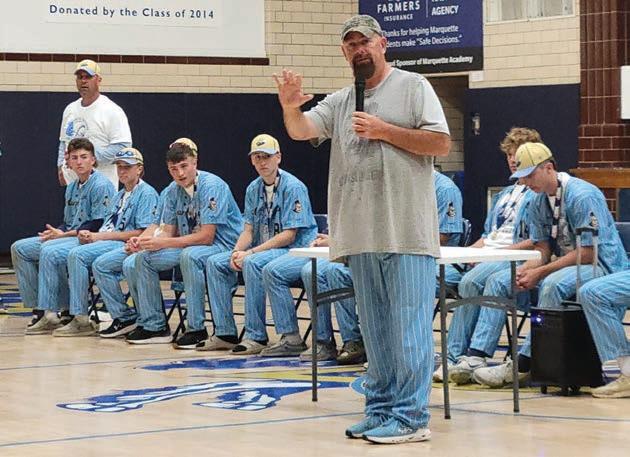
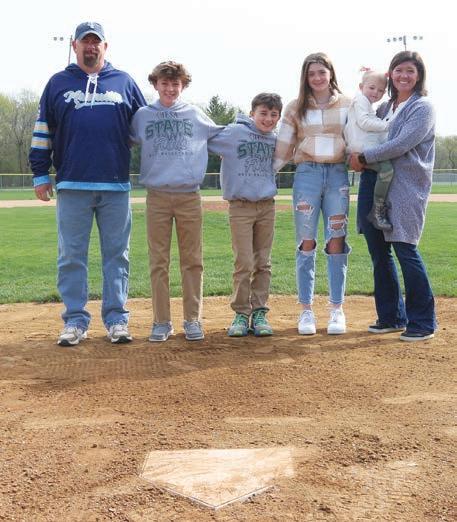
By Derek Barichello
Marquette coach Todd Hopkins builds winning cultures. There’s no greater evidence than his record: in 55 seasons coaching baseball, girls basketball and boys basketball, he’s had just one losing season.
He led the Marquette baseball team to three state titles — 2019, 2024 and 2025 — the most of any program in the Illinois Valley.
Over the years, Hopkins has been around a number of great coaches, taking aspects of their styles and blending them into his own winning formula.
As a result of his success, Hopkins is a Class of 2026 inductee into the Shaw Media Illinois Valley Hall of Fame.
“In my younger days, I may have been too intense,” Hopkins said. “I’ve learned everyone is not built the same. Everybody is motivated differently.”
His philosophy is centered on getting players to live in the moment.
• A 1990 PC grad, legendary basketball and baseball coach at Marquette
• Led the Marquette baseball team to three state titles (2019, 2024 & 2025) and six state trophies
• Only coach in area history to win three state titles, won 16 regionals & 10 sectionals, career record of 685-186
• Was 371-118 as MA girls basketball coach in 17 seasons, won five regionals & two sectionals; has more than 200 career wins as MA boys basketball coach
• In 55 seasons (baseball, boys basketball & girls basketball), has one losing season
“I’ve never been one to set a big goal at the beginning of the year for the team because it sets it up for a possible letdown,”
Hopkins said. “I try to focus the team on one game, one inning, one at-bat, one pitch at a time. Things aren’t always going to go right. There’s going to be frustration. It’s a process. We want to be playing our best at the end.”
Hopkins played three years of varsity baseball at Putnam County under fellow Shaw Media Illinois Valley Hall of Famer Ken Jenkins. As a Panther, he was an all–Tri-County Conference shortstop.
He went on to play college baseball at Aurora University before transferring to Eureka College, where he was named team MVP in 1995.
With baseball playing such a significant role in his life, Hopkins decided to pursue teaching and coaching after college. He served as an assistant at Putnam County before moving to Marquette.
Entering the 2026 season, Hopkins had compiled a record of 685-186, with 16 regional
titles, 10 sectionals and six state appearances. With the Spring 2026 season included, he has now surpassed 700 career victories.
He credits many influences throughout his career, starting with his father, Phil Hopkins.
“It probably started when I was a little kid with him,” Hopkins said. “He played four years at St. Bede and then four years in college in Florida.”
Hopkins said he learned fundamentals in McNabb Little League under Ted Morgansen. He was later coached by George Bacchio and Ed Swingle before reaching the varsity level under Jenkins, who led one of the area’s most consistent programs.
In college, Hopkins said Aurora coach Jim Schmidt was the best in-game manager he’d been around, while Eureka’s John Tully was among the most intense, running hourslong 5 a.m. practices six days a week. He also played summer baseball under Ernie Steinz of Spring Valley.
On the basketball side, Hopkins served as an assis-
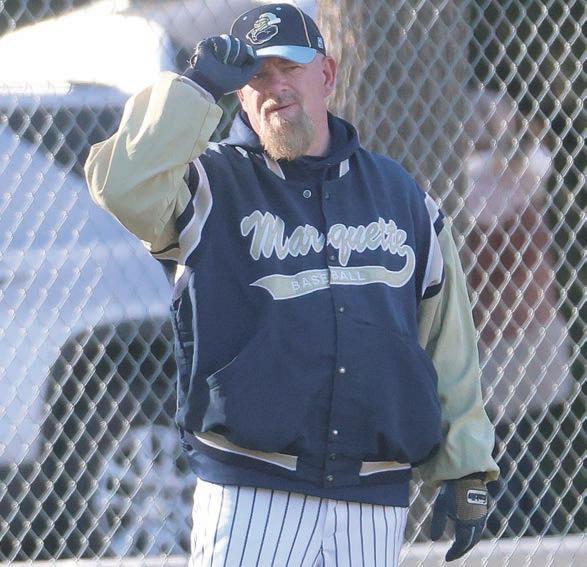
tant under Illinois Basketball Coaches Association Hall of Famer Jerry Krieg at Marquette.
He also credits his assistant coaches for strengthening the Marquette programs, including pitching coach Brad Waldron, along with Jimmy DeAngelo and Steve “Pizza” Scherer.
When asked about the secret to winning three state titles, Hopkins points to how close his teams have come to even more.
“We’ve had so many heartbreaks,” Hopkins said. “Evan Snyder’s no-hitter — we’re ahead 2-0 and up 0-2 in the count, and a catcher’s interference starts a rally.”
Balancing multiple sports, Hopkins has seamlessly transitioned from basketball season



into baseball.
He coached girls basketball for 17 seasons, compiling a 371118 record with five regional and two sectional championships. As the boys basketball coach, he has recorded more than 200 wins, including a regional title this past season.
“I have trust in assistant coaches to start programs, and the athletes themselves do a lot of their own workouts leading into the season,” Hopkins said. For Hopkins, the greatest reward is seeing his players succeed beyond high school.
“It’s also gratifying the times you see a team come back and beat someone they lost to maybe once or twice earlier that season,” Hopkins said. “It’s really cool to see.”
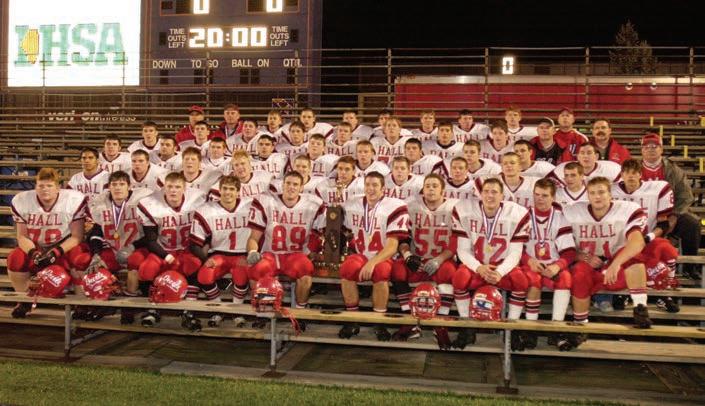
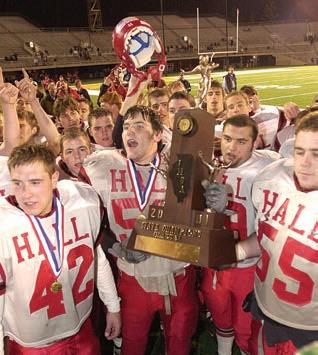
By Melissa Rubalcaba Riske
The 2001 Hall football team had seen it done before — and it made them determined to do it again.
After watching the 1995 Hall football team capture the program’s first-ever state championship, the Red Devils grew up with a clear vision of what was possible. By the time they reached the varsity level, that vision had turned into a shared mission.
And in 2001, they delivered.
Hall’s state championship team was built on years of development, continuity, and a collective commitment to the program. Now, that group will be honored as a Class of 2026 inductee into the Shaw Media Illinois Valley Sports Hall of Fame.
“They played together and were a really tight-knit group,” said legendary Hall football coach Gary Vicini, a 2022 Hall of Fame inductee. “That chemistry showed every Friday night.”
That bond didn’t start in high school. Many of the players had been teammates since their youth football days learning the fundamentals of the game and, just as importantly, how to play alongside one another. With Vicini’s influence even extending to the youth level, the foundation of Hall football was consistent from the earliest stages.
• Under legendary coach Gary Vicini, team went 13-1 and won Class 3A state championship
• Defeated LeRoy 21-0 in state title game
• Outscored opponents 464121 (33.1 ppg vs. 8.6 ppg)
•Shut out three opponents, allowed just 28 points in five postseason games (5.6 ppg), only loss was to Rochelle
By the time the group reached varsity, the pieces were already in place.
Senior quarterback and team captain Brant Baltikauski was a central figure, but he was far from alone. The 2001 team featured a deep and talented roster filled with players who understood their roles and executed them at a high level.
Standouts who earned allarea recognition included Doug DeSerf, Nick Slover, Levi Derber, Chaise Thomas, Aaron Bogacz, Dan Fusinato, Steve Coutts, Cody Gualandi, Phil Villarreal, Jake Koch, Erik Golden, Jason Haskell, and Ryan Ferrari, along with Baltikauski and his younger brother Reid, a sophomore who played up that season.
Together, they formed a team that excelled in all phases of the game.
“We knew we had a good offense,” Baltikauski said, “but the defense was really the
heart of our team.”
That defense proved dominant throughout the season.
The Red Devils finished 13-1, recording multiple shutouts and consistently controlling games. Hall outscored its opponents 464-121, averaging more than 33 points per game while allowing just 8.6. In the postseason, the defense elevated its play even further, surrendering only 28 points across five games.
“We had some really intelligent players, in football and in the classroom,” Vicini said.
“They took pride in preparation — studying opponents, understanding formations, and knowing what to expect.”
The team’s only setback came in Week 7, a 21-0 loss to Rochelle — a moment that ultimately helped define their season.
“We played really well, but we fell short,” Vicini said. “That loss stayed with us. It
helped sharpen our focus the rest of the way.”
From that point on, the Red Devils were locked in.
Hall rolled through the playoffs with authority, defeating Rockford Lutheran 46-6, Riverdale 46-15 and Bloomington Central Catholic 27-0 before edging Stillman Valley 13-7 in a hard-fought semifinal.
Each week presented a new challenge, but the team’s balance, discipline, and unity never wavered.
The journey culminated at the University of Illinois, where Hall faced LeRoy in the Class 3A state championship game.
The Red Devils set the tone early with a 70-yard touchdown run by Derber. Moments later, adversity struck when Baltikauski, serving as the holder on the extra point, took a late hit that forced him out of the game.
But if the moment tested
Hall, it also revealed exactly what defined the team.
Junior backup quarterback William Chiado stepped in without hesitation, and the Red Devils didn’t miss a beat. The defense dominated, the offense continued to execute, and Hall shut out LeRoy 21-0 to secure the state title.
“I told Brant, ‘You got us there,’” Vicini said. “But it took everyone to finish it.”
That was the defining trait of the 2001 team — not just talent, but togetherness.
From youth football fields to the state championship stage, this group grew up side by side, pushing each other and sharing a common goal. Their success was not built on one player or one moment, but on years of trust, preparation, and belief in one another.
More than two decades later, that bond remains.
And so does a championship built the right way.








































































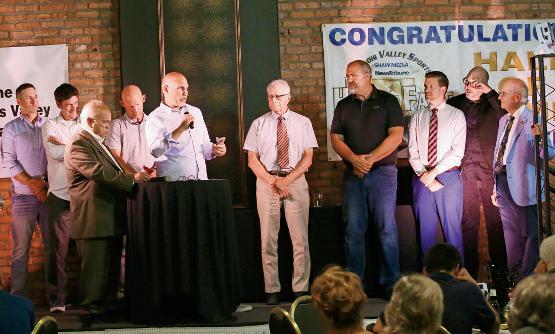












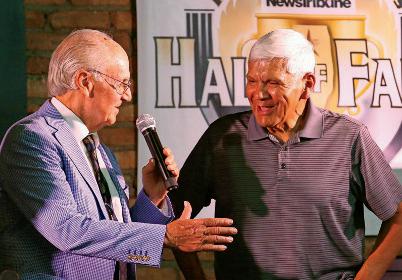


















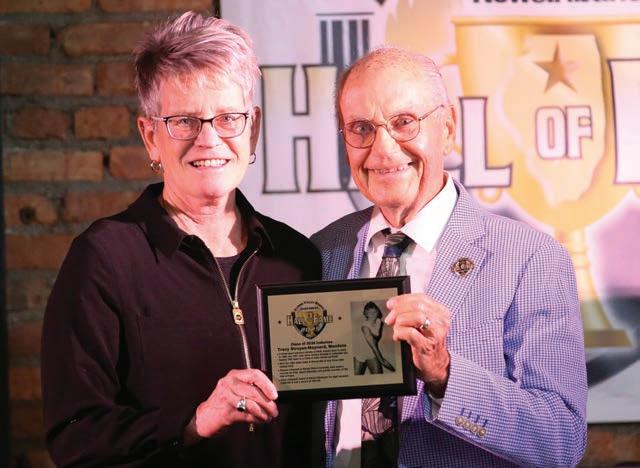











Joe Rutgens, La Salle-Peru
Eric Siebert, La Salle-Peru
J.A. Happ, St. Bede
Shawn Jeppson, Hall
Kailey Klein, Hall
Steve Safranski, Putnam County
Bill Brown, Mendota
Nicole (Coates) Schaefbauer, Princeton
Gil Love, Ottawa
Bill Novak, Ottawa
Bob Guyette, Marquette
Doug Dieken, Streator
Chuck Rolinski, Toluca
1979 IVCC Football Team
1995 Hall Football Team
Louis Rios, Lanny Slevin Lifetime Achievement Award
1925 La Salle-Peru Football Team, Legacy Team
CLASS OF 2020-2021
Mike Goff, La Salle-Peru
Gary Novak, La Salle-Peru
Ken Gorgal, St. Bede
D.J. Glynn, Hall
Jerry Zielinski, Putnam County
Ron Zagar, DePue
Ray Jauch, Mendota
Joe Ruklick, Princeton
Dean Riley, Ottawa/IVCC
Zami (Mogill) Hay, Streator
1985-86 Ohio Boys Basketball Team
Mary Dagraedt, Lanny Slevin Lifetime Achievement Award
Art Kimball, Distinguished Media Award
Lowell “Pops” Dale, Legacy AwardIndividual
1945 Walnut Football Team, Legacy Award - Team
Leo Cahill, La Salle-Peru
John Skibinski, La Salle-Peru
Jim Mini, St. Bede
Gary Vicini, Hall
Carol Pratt, Fieldcrest/Putnam County
Willie Hanson, Mendota
Donald “Rusty” Wells, Ottawa
Lew Flinn, Princeton
Vince McMahon, IVCC
Gerald “Chips” Giovanine, Bureau, Western, La Salle-Peru
1988 St. Bede Baseball Team
1983 Streator Softball Team
Robert “Bo” Windy, Lanny Slevin Lifetime Achievement Award
Howard Fellows, La Salle-Peru, Legacy Award - Individual
Richard Nesti, Hall, Legacy AwardIndividual
Legacy Award, Team: 1953 Hall Football Team
Bob Prusator, Tiskilwa
Legacy Award, Team:
1951-52 DePue Boys Basketball Team
Torie (Bunzell) Kueker, La Salle-Peru
Brad Bickett, Ohio/Bureau Valley
Legacy Award, Individual: Bron Bacevich, St. Bede/Marquette
Larry Corrigan, Mendota
1966 Ottawa Football Team
Distinguished Media Award: Kevin Hieronymus, Shaw Media
Carlton Fay, Putnam County
Tom Henderson, Ottawa
Don Hamel, Mendota
Mark Haberkorn, La Salle-Peru
Lanny Slevin Lifetime Achievement Award: John Pocivasek, Marquette
1990 Princeton Volleyball Team
Eric Bryant, DePue/IVCC/Hall
Dale Pienta, Hall
Lanny Slevin Lifetime Achievement Award: Tony Causa
Ted Schmitz, Streator
Legacy Individual: Russ Meyer, L-P/IVCC
Amy Johnson DeVerteuil, Ottawa
Distinguished Media Award: Tom McGinnis, St. Bede
Mike Kilmartin, Mendota
Legacy Team: 1954-55 Princeton Boys Basketball
Rhonda Morel, La Salle-Peru/IVCC
Ken Jenkins, Putnam County
1987-88 IVCC Men’s Basketball Team
Guy Hoffman, Marquette
Hollis Vickery, La Salle-Peru/IVCC
Craig McCormick, Ottawa
Bob Beals, Mendota/IVCC
2005 Bureau Valley Football Team
CLASS OF 2025
Tracy Stroyan-Maynard, Mendota
Lanny Slevin Lifetime Achievement Award –John Cruz
Ken Bourquin, Walnut/Manlius/Bureau Valley
Glen Mudge, La Salle-Peru/IVCC
Legacy Individual – Fran Cahill, La Salle-Peru
Roger Essmann, Earlville
Legacy Individual – George Meagher, DePue
1973-74 Marquette Boys Basketball Team
Bob Newell, Henry-Senachwine
Lonnie Hewitt, Western
Gary Vancil, Ottawa
Distinguished Media Award –Charlie Ellerbrock, Shaw Media
Rita Placek, Princeton
Joe Perona, St. Bede
Jaci Bice, Mendota/IVCC
1997-98 Hall Boys Basketball Team