









A special thanks to our local veterans for their courage, sacrifice and service.





erside honors the ed members of our es who made the ultimate sacrifice to protec t the freedoms we enjoy today.
Their service is deeply appreciated and inspires us all. Riverside extends our deepest thanks to our fallen heroes.









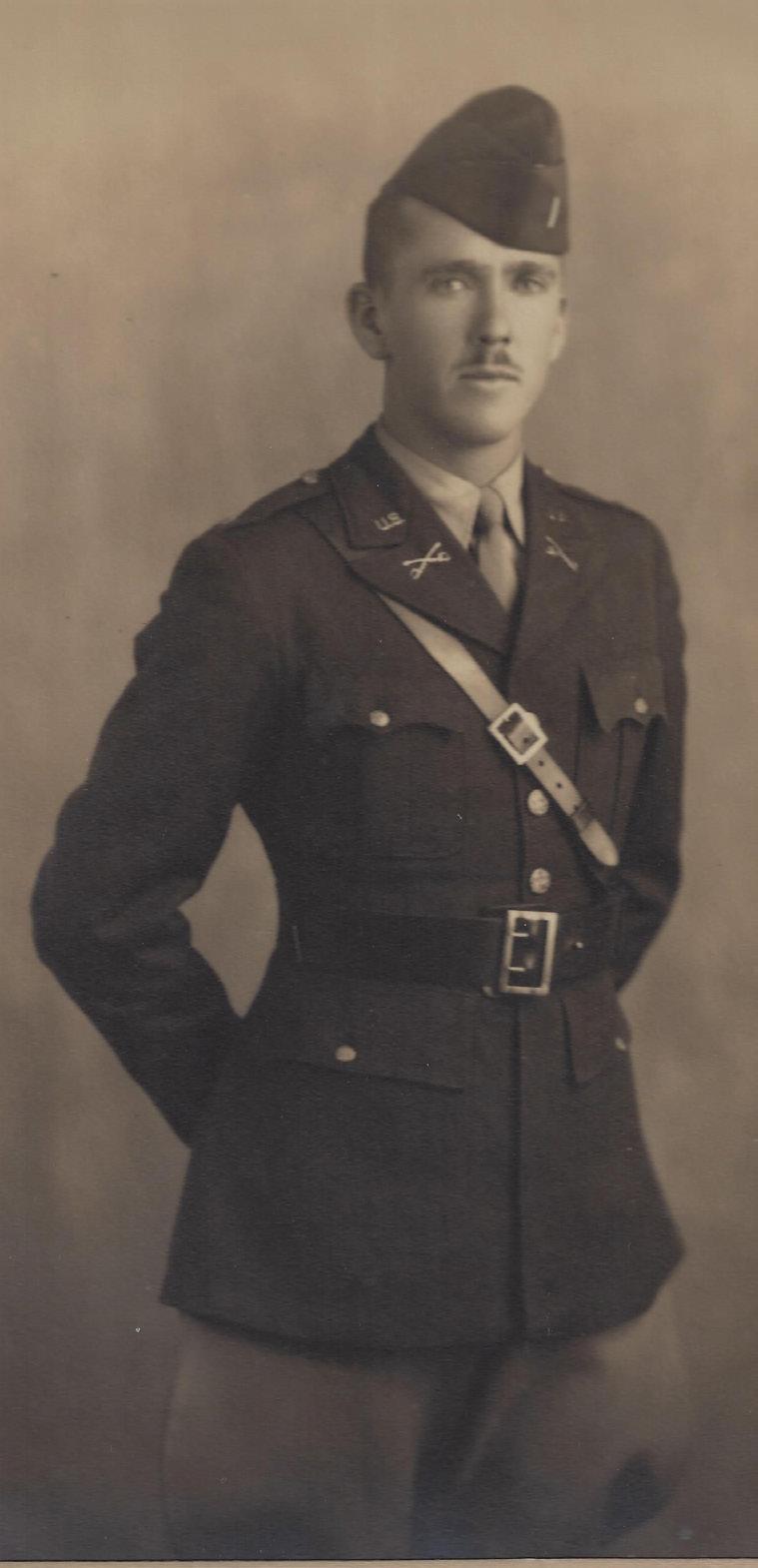
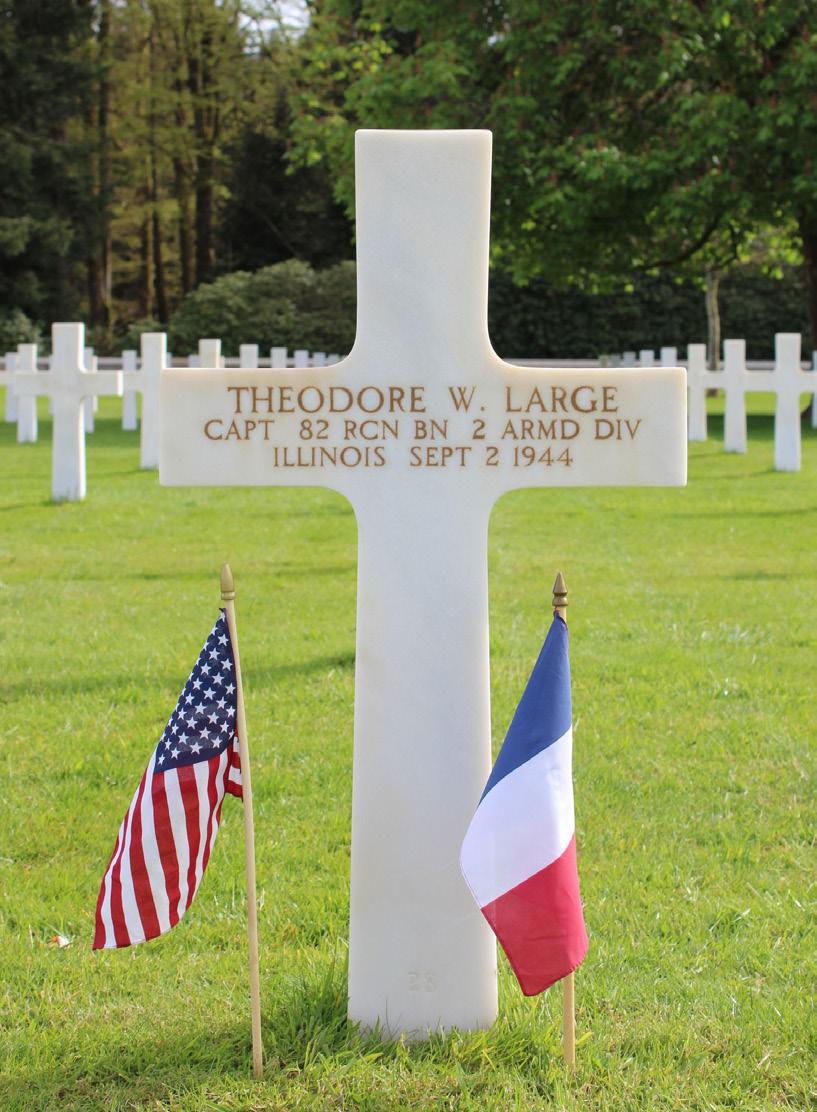
Theodore
grave in
American Military Cemetery in Epinal,
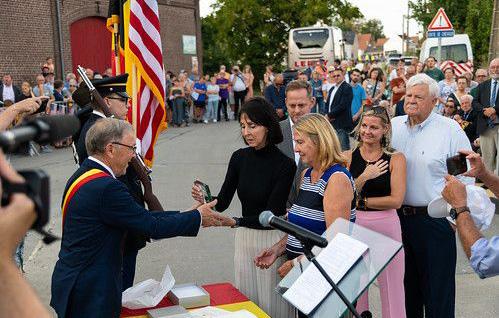
Rumes, Belgium Mayor Michel Casterman presented honorary medallions to members of the family of Captain Theodore Wilcox Large. Large led the unit that liberated the town from the Germans 80 years ago. His nieces, Donna Douglas and Janet Roglis are in front. The town also made Large an honorary citizen..
By PHIL ANGELO
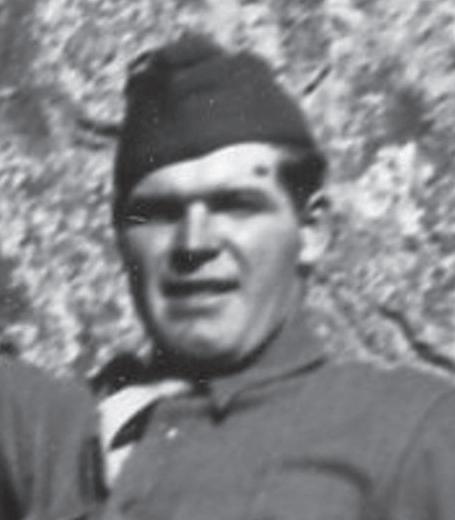
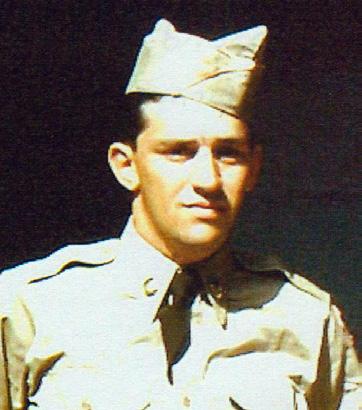
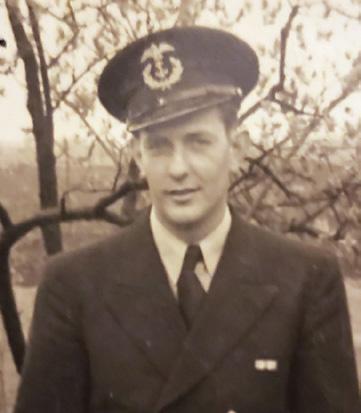
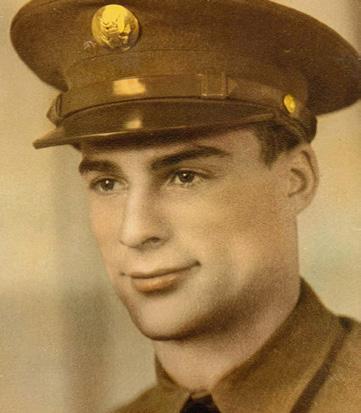
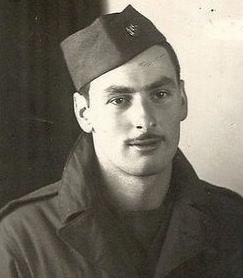
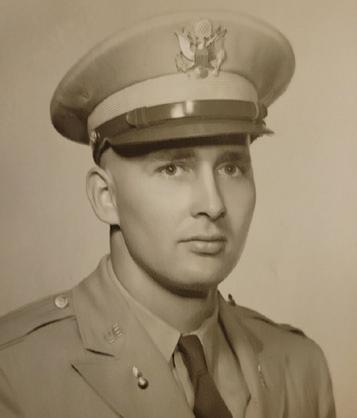
Eighty years after he gave his life to help liberate France and Belgium, Captain Theodore Wilcox Large, a University of Illinois graduate, was honored in Rumes, Belgium.
Large, then 25, was commander of Company B, 82nd Armored Reconnaissance Battalion in 1944. The job of the 82nd was to act as the “Eyes and Ears” of the Second Armored. The unit’s shoulder patch was a tricolored triangle, filled with a lightning bolt with the legend “Hell on Wheels” underneath.
The 82nd used drab green Harley-Davidson motorcycles, Jeeps and M-8 armored cars. The armored car looked like a tank but was much more lightly armored. Built by Ford, it rode on six wheels. It was fast for a combat vehicle and could reach up to 55 miles an hour.
It is hard to imagine a more dangerous mission than one that puts you riding in front in combat.
On Sept. 2, 1944, Large and Company B had just finished a firefight in Landas, France, a small town of 2,000 residents in northern France. The Germans had locked civilian hostages in the town’s school, planning to execute them at 9 a.m.
Answering the emergency, Large and Company B outfought the Germans and freed the hostages. Large stood up in his Jeep, announcing the victory. It was at that moment that he was shot and killed by German sniper who was hiding in a nearby hayloft.
Large is buried today in the military cemetery in Epinal, France, Plot A, Row 13, Grave 26, one of 5,252 soldiers interred there in graves tended by the American Battle Monuments Commission. When an American soldier, sailor or airman dies in combat, his or her family has the choice of burying them in a military cemetery or returning them home. Either way, the government bears the cost.
Two years ago, on Sept. 2, 2024, Rumes, Belgium, a village of 5,000 on the border with France, remembered Large and the 82nd for their heroism and sacrifice with a parade, fireworks, a film and a monument in the town square.
Donna Douglas, a retired administrator from Bishop McNamara High School, and a former longtime volleyball coach at the school, attended the ceremony. Ted Large was her uncle.
Donna was accompanied by her husband Rich, their daughter Erin; their son, Matt; Douglas’ sister Janet Roglis and her husband, Ron Roglis, of Chatham, Ill., were there also.
During the ceremony, Donna Douglas glanced over at her children and saw tears in both of their eyes.
“It was an eye-opener,” Donna said of the event. Speaking of the liberated Belgians, she said that “every year they teach their children that the Americans came to their country to set them free.”
There was a parade including World
War II-era tanks, trucks, jeeps and halftracks over a small stone bridge, “Liberation Bridge,” in Rumes. People lined the streets waving miniature American flags.
“Every place we went,” Donna Douglas said, “the motto was ‘We will never forget.’”
“We realized,” she said, “that the happiest day in these people’s lives was the saddest day of our dad’s and grandparents’ life.”
The extended family of Ted Large, she said, was stunned by the incredible experience and to learn what a “hero our uncle was.”
A memorial to Captain Large was unveiled in Landas. A plaque near the scene of his death explains the story of his life, complete with photos of Large and a picture of his military grave. The stele is topped with a replica of a World War II soldier’s helmet.
In Rumes there is a new monument, which shows an American soldier riding
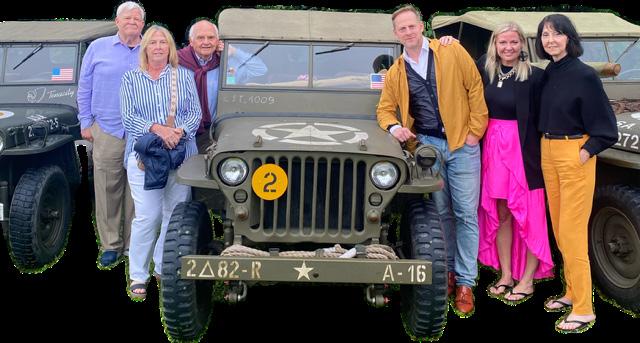
a motorcycle. Ted Large was made an honorary citizen of Rumes. Each member of the Large family was given a commemorative medallion, with the city symbol on one side and Captain Large’s name on the other.
“We all felt a deep connection to the people of Rumes and Landas and to the uncle we never got a chance to meet,”
Douglas said.
Rumes’ mayor Michael Casterman gave an inspirational speech. A video of Belgium’s liberation was shown, a mix of modern film and World War II newsreels. There was a trip to a second Rumes location, where a monument remembers citizens who were killed resisting the Nazi occupation.


“Eighty years later, the people in France and Belgium are still honoring American soldiers, the battles they fought, the sacrifices they made, and the lives that they gave for people that they didn’t even know. All for a greater cause — freedom,” Donna Douglas said.
Ceremonies featured a military flyover. Dignitaries in attendance included a representative of the King of Belgium, the Belgian Minister of Defense, the American Ambassador to Belgium, and an American Air Force general.
There was an official party with food trucks, singers and a military band. A video followed, highlighting Ted Large. The evening concluded with a 30-minute fireworks display.
“Uncle Ted,” Donna said, “was an American hero — he was a brave and accomplished leader.”
Ted Large grew up on the family farm in Owaneco and was a member of the Buckeye Methodist Church. A graduate of Taylorville High School, where he played sports, he also showed Jersey cattle.
He joined ROTC at the University of Illinois. Graduating, he was commissioned a second lieutenant in 1941.
He led his unit in North Africa and in
Sicily. Large was promoted to captain in 1943. With Large’s leadership, his soldiers landed in Normandy only days after D-Day and fought their way across France.
“We have been told that he was an outgoing man and a strong personality,” Donna Douglas said, speaking of her uncle. “He was a natural leader and came from a close-knit family.” Another brother Joe, also served in the war. Brother Donald, Douglas’ father, was told to stay home and keep the family farm going.
Large’s many decorations included the Silver and Bronze stars for bravery; the Purple Heart; American Campaign Medal; World War II Victory Medal; European-African-Middle Eastern Campaign; Commendations for Meritorious Service; and Army Good Conduct Medal.
“As Americans we must embrace and perpetuate our value to the world and make sure that our youth understands freedom is not free,” Donna Douglas said.
Donna Douglas presented the story of her uncle as a program before the 20th Century Club in Kankakee recently. This story is based on her excellent presentation.



















By PHIL ANGELO
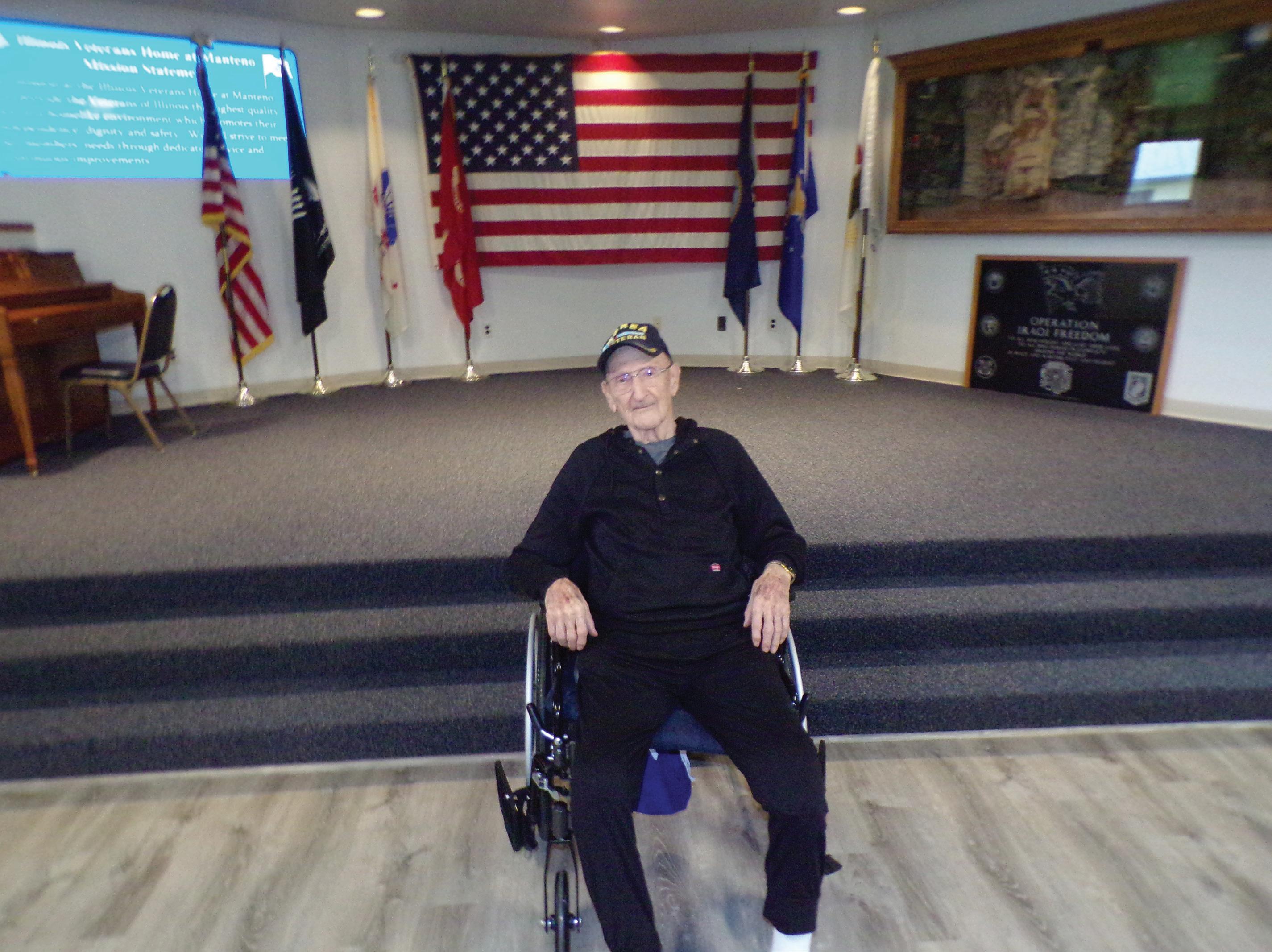
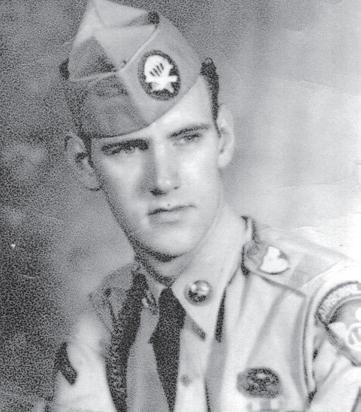
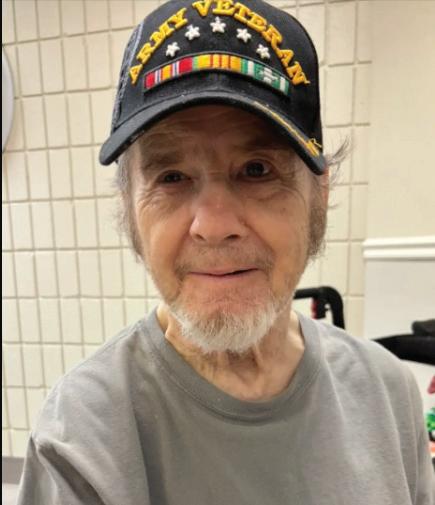
For Robert O’Malley, serving in the Army was the first big positive in his life.
O’Malley, 95, is a new resident of the Illinois Veterans Home at Manteno.
After a rough childhood, he joined the Army at age 18. He was then posted to Korea, coming under fire during some of the war’s bloodiest battles. He served in the “Punch Bowl” and along “Heartbreak Ridge.”
O’Malley, promoted to sergeant, was in charge of a headquarters unit. A
headquarters unit makes sure that the division’s organization has proper supplies and equipment is well-maintained.
O’Malley’s specific job was to repair and refit damaged radios.
In Korea, the headquarters was close enough to the front that it was shelled regularly by North Korean and Chinese mortar and artillery fire. O’Malley says his best friend was killed in Korea.
“I am absolutely proud of my service,” he says. At the time, he was newly married, but when the call came, he went to the front with no regrets.
“God took care of me,” he says. “I made no excuses.”
Waiting back for him in Illinois was his wife Etta. Together they would celebrate 60 years of marriage before her death at age 78. They had seven children: Gary, Christine, Janice, Patricia, Kathy, Scott and Patrick. Today, O’Malley says, all seven are still alive and all are in good health.
The second big positive in his life was his wife, he said. “She was a wonderful woman.”
O’Malley’s life before the Army and
before marriage was not so bright, though.
His family placed him in an orphanage at age 5 and he lived in institutional care until the eighth grade, he says. It was not a pleasant experience. For discipline, he was made to stand in a corner all night — until he collapsed. He was made to chew soap as a punishment. He once had pneumonia as a child so severe they he was given the Last Rites of the Catholic Church.
“It was miserable,” he says. When his family did take him back,
they insisted he work to pay “room and board” at age 13. So he was repairing lawnmowers, pumping gas, and working at a bakery and pottery during his early and mid-teen years. He was encouraged to drop out of school to work.
Little wonder that he went into the service when he was eligible. After undergoing basic training, he was sent to Fort Belvoir and stationed with an anti-aircraft battalion. He earned his stripes as a sergeant. Amateur comedians in his unit pranked him by dumping him out of his cot, an action that was misinterpreted by others as being disrespectful. O’Malley, though, held on to his well-earned sergeant’s stripes.
A fellow soldier invited him to go out on a double-date. O’Malley accepted, even though he had been told that the young lady he would accompany already had a beau.
But, he says, she broke up with the other fellow and told O’Malley she was in love with him. Ordered by the Army to be sent to Korea, he asked her if she would wait for him. Instead of waiting, they got married.
Once in Korea, he was posted to the front lines in a mountainous area as part of the 25th Infantry Division. The 25th had been part of the post-war occupa-
tion of Japan before being deployed to Korea. Their division patch was “Tropic Lightning,” a gold lightning bolt against a red background.
Although proud of his service, he came home to his wife when his tour was up. He even enjoyed the trip home back across the Pacific. The troopship got caught in a storm and he thought the rolling of the boat was “kind of fun.”
Back home he went to work as the manager of a thrift shop for Tip Top Bread and Cakes in Aurora. A thrift shop sells day-old, but still good-to-eat baked goods. He worked there for 27 years, also managing 10 drivers.
For 13 years, he was a distributor for Archway Cookies in Belvidere, Ill. Then he delivered paint to body shops parttime for 10 years.
He retired early, at age 62. Until just months ago, he was still living in his own home.
These days he keeps busy watching the Cubs and the Bears and putting together jigsaw puzzles. He is a member of both the American Legion and the Veterans of Foreign Wars.
He’s thankful for the care at the veterans home. “They treat me well,” he says. The Army has meant a lot to him.


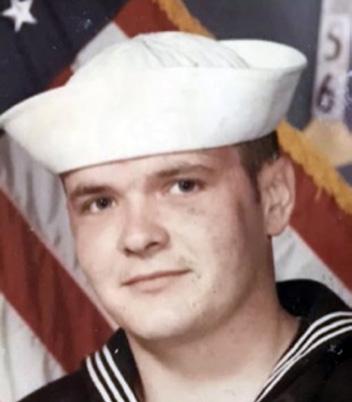
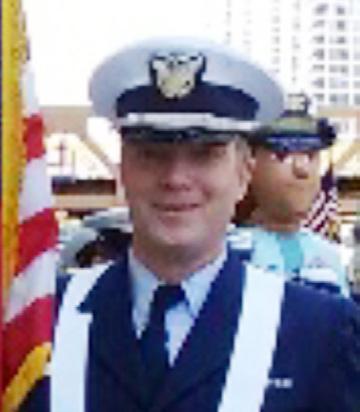
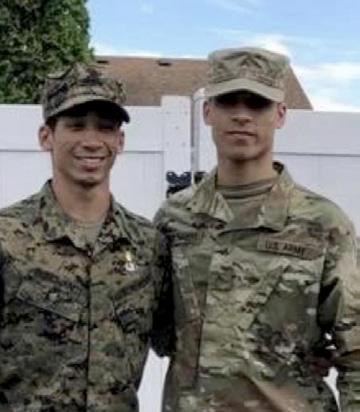
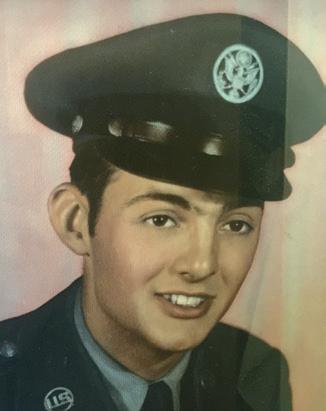
A special thanks to these local veterans for their courage, sacrifice and service.
























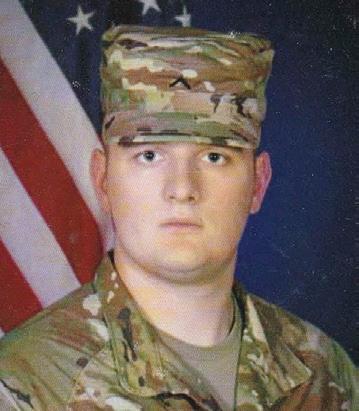
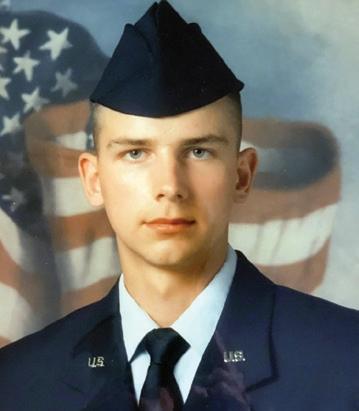
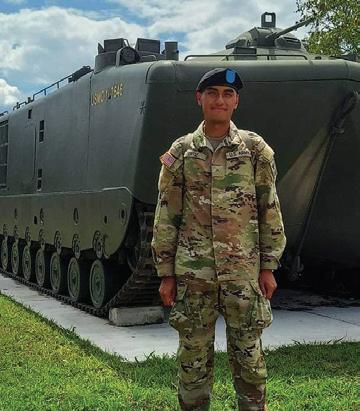
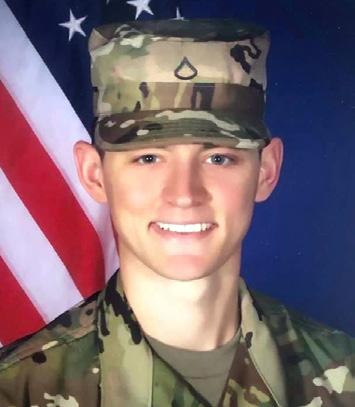
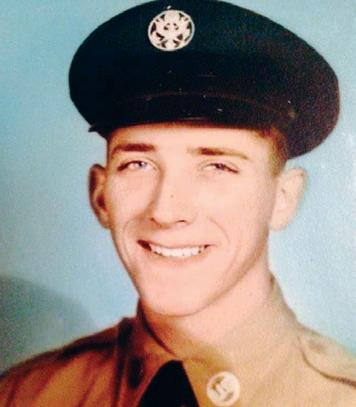
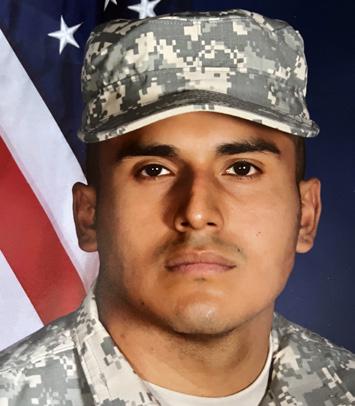





















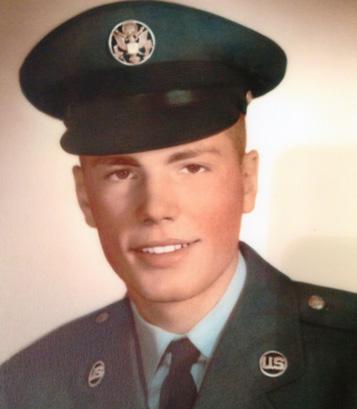
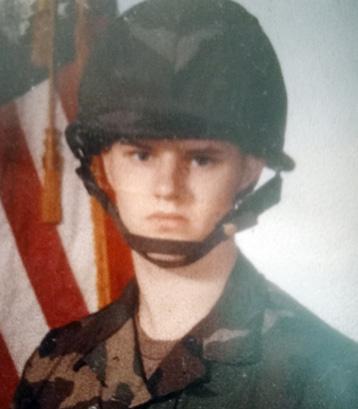
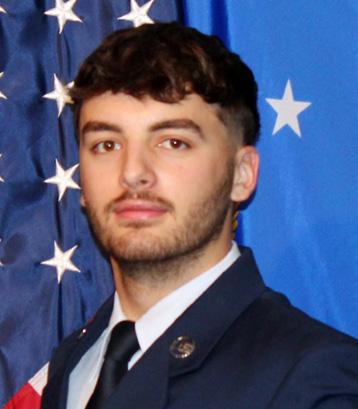
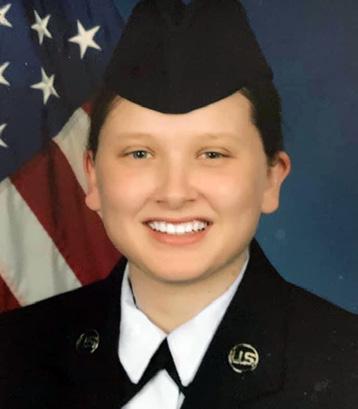
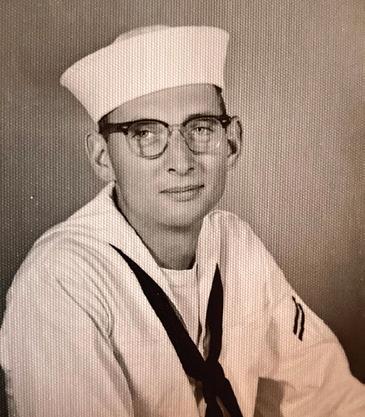
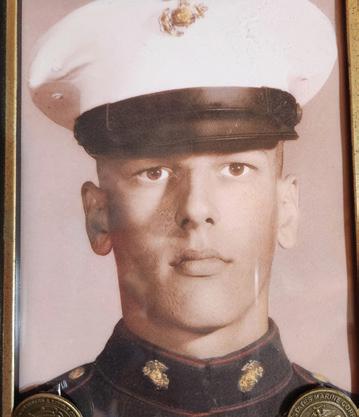
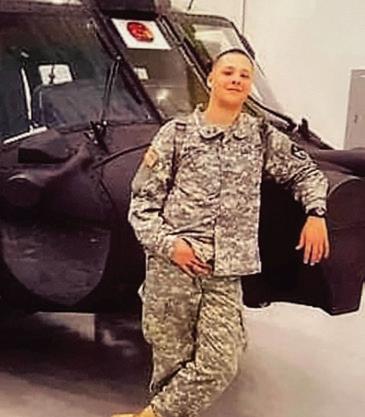
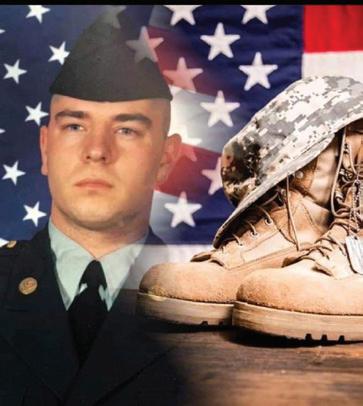
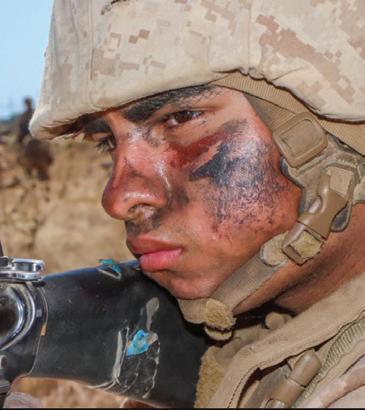
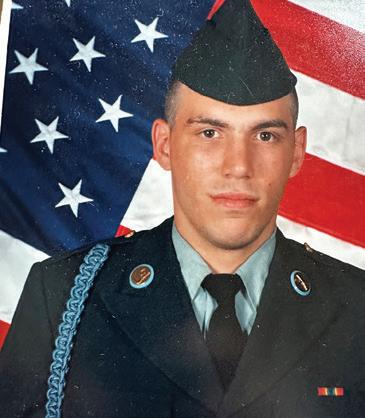
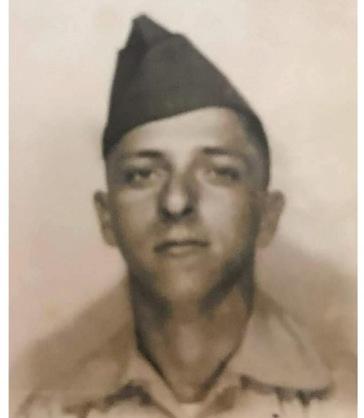
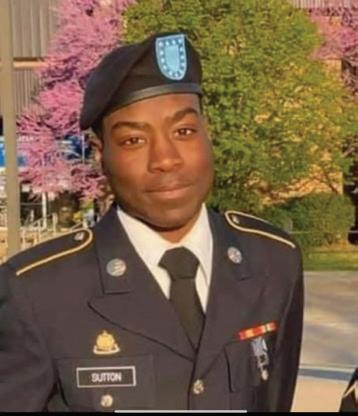
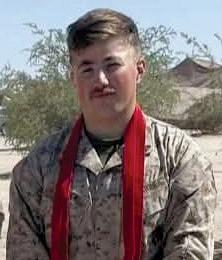
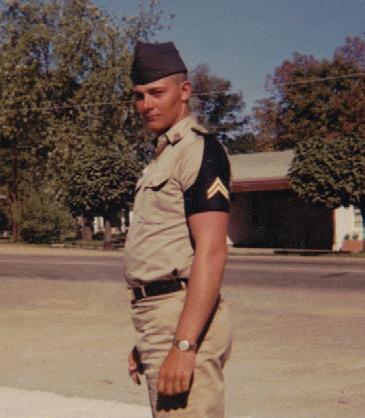
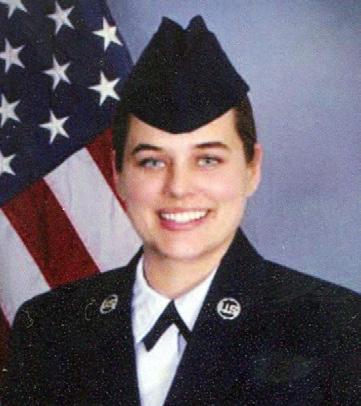
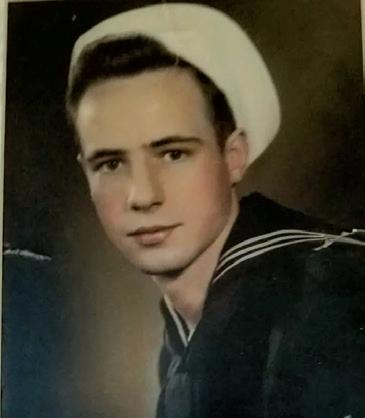
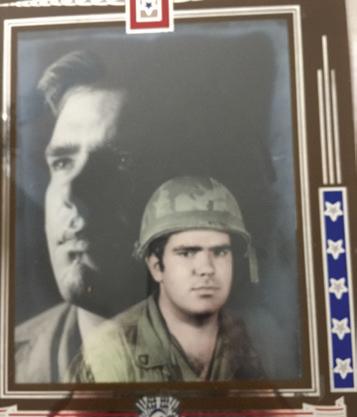
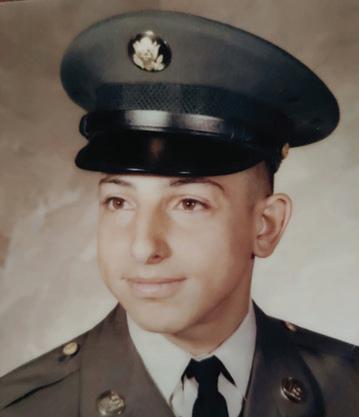
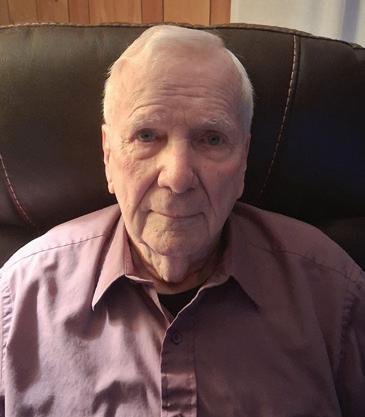



















Riverside honors the dedicated members of our armed orces ho made the ultimate sacri ice to protect the reedoms we enjoy toda . heir sacri ice is deepl appreciated and inspires us all.
Riverside honors the dedicated members our armed forces who made the ultimate sacrifice to protect the freedoms we enjoy today. Their sacrifice is deeply appreciated and inspires us all.















Riverside e tends our deepest thanks to our fallen heroes.
Riverside extends our deepest thanks to our fallen heroes.