Organizing Your HOME





Homeowners do not need to get hung up on room labels as they explore ways to reinvent their spaces. Just because a floor plan labels a space as a formal dining room doesn’t mean the area has to remain that way.
Repurposing rooms in a home comes down to aligning the space a person has with their lifestyle needs. Here are a few ways to rethink interior spaces and make a switch to improve utility.
• Identify unused or under-used rooms. Take note of spaces that are cleaned but rarely used. For many people, this is a dining room or a guest suite. Either of these rooms can be transformed into something new.
• Invest in multipurpose furniture. Even people short on space can transform their homes. Replacing a traditional bed with a murphy bed or a daybed can make a room more suitable for a home office or yoga studio, but still provide a space for the occasional houseguest to sleep.
A pull-down shelf desk in a bedroom or even a walk-in closet can turn an area into a compact home workstation.
• Claim dead space. The area under the stairs or another small spot often is used to collect junk. Instead, it can be turned into a built-in wine rack, a reading nook for kids or even a pet sanctuary with just a few modifications. Analyze areas around the home that seem like they don’t serve a purpose, and then figure out a way to make them more functional.
• Establish room zones. Some people simply cannot transform an entire room into something else. Visual partitioning makes it possible to create rooms within rooms. An area rug can be used to define a border of a space. Open bookshelves can serve as a wall to separate a sleeping area from a lounging spot. Lighting can add dimension to areas in a space. A pendant light over a crafting or work table can be used define the space.
• Look at utility areas. Unless you are a do-ityourselfer or have a hobby that takes up much of the garage or basement, utility areas are major spots in a home to consider repurposing. A garage can be turned into a home gym, kids’ play area or even a hobby shop. Modular flooring and insulated walls can make the room comfortable. Attic lofts are the ultimate quiet zones, and can be serene spots for reading, meditating or doing homework. An unfinished basement can be converted into a finished space to serve many different purposes. From media rooms to a teen lounge to a hobby cave, the opportunities are endless.
A good rule of thumb before converting any room is to give it a test run. Move in a piece of furniture and test how it works with its intended function. Assess lighting, noise and foot traffic for a week, and then move ahead with changes if the result is positive.

There’s no shortage of ways to utilize interior spaces in a home. Interior spaces have grown considerably in recent decades. According to the U.S. Census Bureau, the median size of a new home in 1980 was 1,595 square feet. By 2018, the median size of a newly constructed home was 2,386 square feet. Though Realtor.com data indicates the median home size started to shrink between 2015 and 2025, modern homes continue to provide lots of room to maneuver.
When confronted with ample interior space, homeowners may wonder what to do with all that extra room. Playrooms can be a great way to utilize extra space to the fullest, particularly in homes with children. Parents planning a playroom in their homes can consider these tips to ensure the space becomes a fun room everyone can enjoy.
• Measure the space. Measuring the dimensions in a prospective playroom can erase any doubts homeowners may have regarding how much space they have to work with. Taking measurements also makes it easier to identify which furnishings, including couches and storage units,
will fit comfortably into the space. Homeowners who plan to install new flooring or carpeting also will need to know the dimensions to get an accurate idea of how much that portion of the conversion project will cost.
• Keep in mind young children’s preferences to stay close. A basement playroom may work as children enter their tweens and early adolescence, but such separation from the rest of the home may compel young children to avoid the space. Elementary school children and younger kids generally like to stay close to Mom and Dad, so a basement playroom may not be ideal for such youngsters. In such instances, converting a seldom-used formal dining room into a temporary playroom may be a better option. As children age, the basement can be utilized as a playroom with greater frequency until it becomes the lone play space in the home.
• Emphasize organization. Playrooms can quickly be overrun by toys. Though no two children are exactly the same, the professionals at Brain Balance Achievement Centers note the expected attention span of a two-year-old is four to six minutes. A four-year-old’s expected attention
span may peak at 12 minutes, while an eightyear-old’s expected attention span is between 16 and 24 minutes. That means kids will pivot from one toy to another with frequency, which underscores the need for ample storage. Storage should be built into the design of the space after measuring its dimensions. Avoid storage solutions that extend too high up the wall, as that’s hard for children to reach and might lead to accidents. Creative storage solutions abound online, and parents are urged to exercise due diligence to find the safest, most effective units for their children and their space.
• Make it multi-generational. Free play is important for youngsters, but kids will want Mom or Dad and even older siblings nearby even when they’re playing on their own. So it makes sense to equip the space with areas that accommodate everyone in the household. A reading chair for adults and a ping pong table and arcade game for older kids can ensure everyone gets to have fun in the playroom.
A playroom can make for a fun way to utilize extra space inside a home.
Etta James sang the song “At Last” in reference to finding love. But “at last” is a sentiment parents may express when their adult children are finally ready to move from their childhood homes and enter the “real world.”
But just when moms and dads think the nest is empty for good, those fledglings may return to the roost. In the tumultuous economic climate of the day, it’s not uncommon for adult children to return home even after moving out.
It’s financially challenging to be a young adult right now. Intuit’s 2026 Prosperity Index found cost of living is the biggest money stressor for young people. A recent 10-country survey of roughly 10,000 young people between the ages of 18 and 34 conducted by the global professional services network EY found 60 percent still live with their parents. Forty-six percent of parents in Thrivent’s Boomerang Kids Survey indicated their adult children have moved back home.
Adult children who move back home often do so with their parents’ support, but that generosity can come at a cost. According to Alex Gonzalez, a Thrivent Financial Advisor, parents providing short-term support to adult children often find this support affects their long-term savings goals, particularly in regard to retirement, and may make short-term expenses like vacations more difficult to manage. Adapting to kids moving back home requires rules and boundaries for all involved. Here are some ways to handle such a transition.
• Talk about expectations. Moving back home doesn’t mean everything will be a free ride. Parents may have expectations that adult kids help cook, shop, do their own laundry, and participate around the house in various ways.
• Establish respectful boundaries. Both adult children and parents deserve privacy and respect. Each should agree on ground rules for living in the same house. While flexibility is necessary, adult children may need to give way on more issues as they are the ones in need of the support.
• Separate finances. According to Quorum, a financial services provider, adult children should keep their finances separate from their parents or other caregivers. They should have their own bank accounts and pay for discretionary items like gas and entertainment. Parents may consider charging their children some

form of rent and insist on a monthly contribution toward utilities, should the adult child’s financial situation allow it.
• You might need to censor advice. Parents may want to squelch the impulse to give advice unless it is sought. It’s best for parents to avoid sounding like a broken record and offer a long list of “should have done this” regarding the need for a child to move back home
• Establish weekly check-ins and frequent communication. Small annoyances can be-
come big blowups if all parties do not come to the table regularly to discuss things calmly. It’s reasonable for parents to set goals and timelines regarding when the temporary room and board will end. This way adult children will be motivated to move on again.
Inflation, lagging job markets, rising cost of living, and student loan debt may result in adult children moving back home for a time. The transition can be made easier with open dialogue and rules.
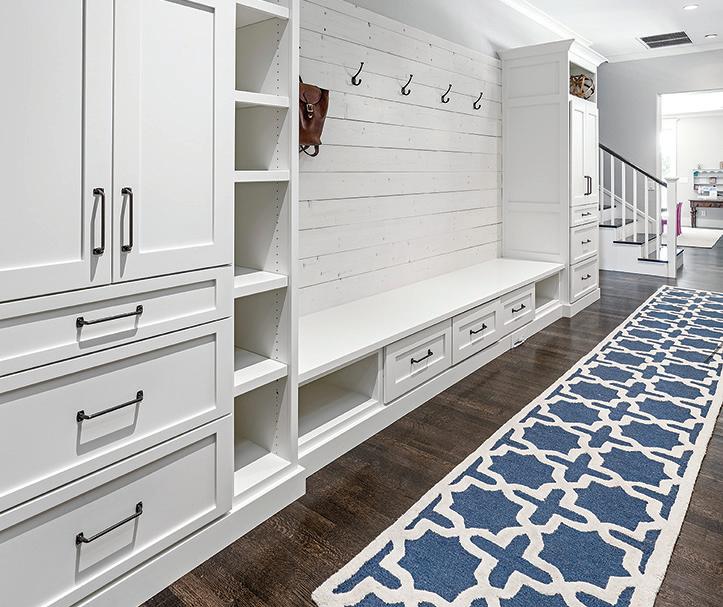
Many people will admit that home ownership tops their lists of long-term goals. Finding a home that is affordable may require moving into what many real estate agents bill as a “starter home.” But the arrival of a child, and then more children thereafter, could make a home that was perfectly functional for two or three feel too close for comfort.
Anyone who would like to raise a family in the future might want to consider certain factors when choosing a residence or designing living spaces. A home that can grow with life changes can truly be a forever home. The following strategies can expand space when a family grows.
• Declutter. It is important to go through belongings regularly and remove anything that is no longer needed. This can be the first step to free up physical space in a room or the home in general. Donate any items that still have utility.
• Reassess your existing storage. Look at different ways to maximize existing storage. Utilizing vertical space is one way to do so, so an investment in shelves, hooks and storage systems that maximize space in an upward direction
can get items off the floor. Make use of storage under the stairs or in eaves. Loft beds with open space underneath are great for children’s rooms because they maximize floor area.
• Think about toy storage. Children love to play with toys, and once kids are in a home, toys will accumulate quite quickly. Have a plan for keeping toys neat and stowed away when not in use. Under-the-bed storage, toy armoires (that are secured to the wall) and furniture that can double as storage, such as storage ottomans, are ideal.
• Revamp a closet. Although closet space may be at a premium, particularly in older homes, a closet can be turned into a nook to hold a desk for a homework station or remote office space. Compact and organized, it’s easy to hide away when not in use by closing the door.
• Utilize room dividers. Open floor plans have been the norm for some time. But at some point as a family grows, privacy and multi-functional spaces may be needed. It can be costly to put up permanent walls, but bookcases or pieces of tall furniture can be used as room dividers to cordon off areas as specific spaces, like
a child’s play area.
• Convert a basement or garage. Garages and basements have a reputation for being catch-alls for storage boxes and holiday decorations. However, such rooms have plenty of potential as functional living spaces. Invest in transforming a garage or basement into a room that can grow with the family. At first it may be a play area for young kids. Afterwards, it can be a gaming or homework hangout. As children grow older, spaces can be converted to a family media room. Having this extra space can free up room in the rest of the house so people can enjoy alone time when they need it.
• Maximize outdoor space. A yard or another outdoor space can add valuable square footage to a home. A covered patio or deck can make the outdoor areas more usable throughout the year and zones can be created for family meals, play and relaxation.
A family home will need more space as the years go on, and homeowners should keep that in mind when making renovations or choosing a property.

Spring is the season of nature’s rebirth. Trees and flowers begin to bloom anew each spring, and young animals can be seen frolicking with their parents. During a time when it seems like the entire planet gets a refresh, many homeowners turn their thoughts to refreshing their homes as well.
As the days lengthen and the weather warms, spring cleaning takes center stage. Spring cleaning is more extensive than simply washing away grime, as cleaning a home often offers a psychological reset for the coming months. A clear strategy can make the task of spring cleaning feel less daunting, and these tips can help cut down on clutter and other interior annoyances that have arisen after months spent indoors.
The rule of thumb when starting on spring cleaning is to combat clutter before cleaning. Trying to clean around clutter is inefficient and may result in throwing in the towel prematurely. It is important to remove as much as possible from each room before you begin cleaning. As
homeowners move through each room, they can assess whether they’ve used items in the last year or whether they serve any functional or aesthetic purposes. If not, they can be trashed or donated.
It’s important to follow the rules of science when spring cleaning. That means that dust and debris will be affected by gravity. Engaging in a top-down approach will help make cleaning more efficient. Beginning at the ceiling and working down towards the floors will help people avoid having to clean the same surface twice.
Using a duster or a microfiber cloth, individuals can clear cobwebs from corners and dust from crown molding. Fingerprints will accumulate near light switches and door handles, so those areas should be wiped down, too.
Homeowners can conduct a thorough cleaning of heating and cooling output and intake vents as they likely have gathered dust over the winter. A down of floor moldings can get to any area near the floor or under furniture that doesn’t get
frequent cleaning.
Focusing attention on the kitchen, which tends to be the busiest room in the house, is a wise idea for spring cleaning plans. This is the time for individuals to pull everything out of the refrigerator and pantry and check for expiration dates. Wiping down the shelves means cleaning away any accumulated food drips or spills. Additional areas to consider include behind the refrigerator, inside the dishwasher filter and inside the microwave.
It’s key to replace the HVAC system filters come springtime, as well as any air purifiers in the home. This will help reduce allergens and ensure that the cooling system will run efficiently when it’s time to turn it on.
Spring cleaning takes place each year. Prioritizing decluttering and following a systematic path through the home helps people eliminate stress and mess at the same time.

Aspiring to save money in retirement makes perfect sense. Once professionals call it a career and are no longer drawing a paycheck, cutting back on expenses can be a sound decision that ensures seniors won’t outlive their money. And housing remains a significant expense, even for retirees who own their homes and no longer have monthly mortgage payments to make.
Many retirees seeking ways to save money consider downsizing their homes. According to the National Association of Retailers, 12 percent of people between the ages of 60 and 69 who move indicated their home was too large, and that percentage grows among movers between the ages of 70 and 78 (16 percent) and those who move after turning 79 (18 percent). Downsizing a home in retirement can seem like an ideal means to saving money after calling it a career, but individuals pondering such a move should consider a number of variables before putting their homes up for sale.
Downsizing may help retirees lower their property tax obligations, reduce their utility bills and lower their monthly mortgage payments (for those who are still paying off a mortgage
on their current homes), but that does not mean moving will not incur new expenses that render such savings moot. Expenditures like closing costs, real estate commissions, moving-related expenses, and capital gains taxes can quickly add up. In addition, retirees who currently do not pay homeowner’s association fees may be subjected to such fees when moving into a new home, and those fees can be substantial and hard to avoid. Indeed, recent data from the U.S. Census Bureau indicated that 71 percent of new constructions in the western and southern United States were built in communities with homeowner’s associations. Prior to downsizing, current homeowners should calculate all of the costs related to relocating, including anticipated HOA fees, to see if downsizing is to their financial benefit.
Another variable that merits consideration is the impact that moving can have on seniors’ social lives. The World Health Organization reports that more than one in 10 seniors experiences loneliness, which can adversely affect their physical and mental health and potentially reduce their life expectancy. Retirees currently living in communities in which they are socially
active should weigh the effects of leaving that social network behind. Retirees also can weigh the benefits of moving to 55 and over communities where they will be surrounded by people at a similar stage in life, and how living in such developments may improve their social lives.
Downsizing will require an adjustment period and a willingness to adapt. Retirees may have an emotional attachment to their current homes, and leaving that behind can be a difficult adjustment. Adapting to life in a new community also can be challenging, particularly if retirees are moving from areas where there are no restrictions regarding their properties to communities where homeowners’ associations must approve of any changes to properties. Moving also may require finding new health care professionals, which can be a particularly difficult adjustment for retirees who have spent years building a strong rapport with their current health care team.
Downsizing a home might be a pathway to more financial freedom for many retirees. Seniors considering such a move can consider a number of variables to determine if moving is in their best interest.