NL Morton Buildings 203 N 4099th Rd Mendota, IL 61342 (815) 539-9325 www.nlmortonbuildings.com
TRUCKS
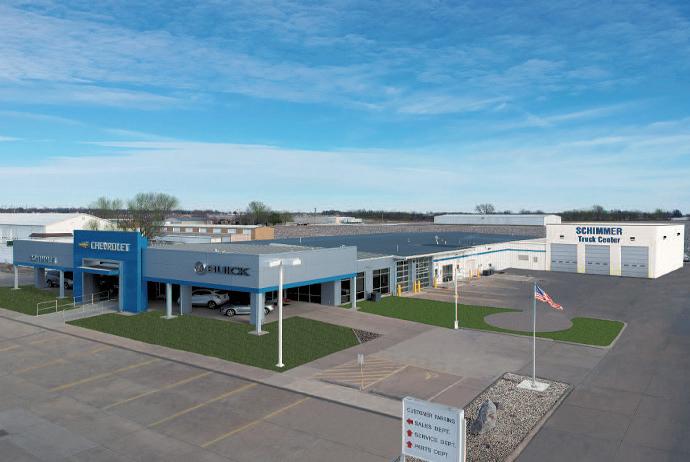
Schimmer GM 1501 S 13th Ave. Mendota, IL 61342 (815) 539-9343 www.schimmergm.com
Vaessen Bros. Chevrolet
505 N Pennsylvania Ave. Sublette, IL 61367 (877) 244-2457 www.vaessenbrothers.com
TRUCK REPAIR
CIT Trucks
2650 May Rd. Peru, IL 61354 (815) 224-4410
Untz Truck Repair
3460 Brennen Dr. Peru, IL 61354 (815) 224-2675 www.untztruck.com
WINDOWS
Maze Lumber
1100 Water St. Peru, IL 61354 815-223-1742 www.mazelumber.com
WORK BOOTS
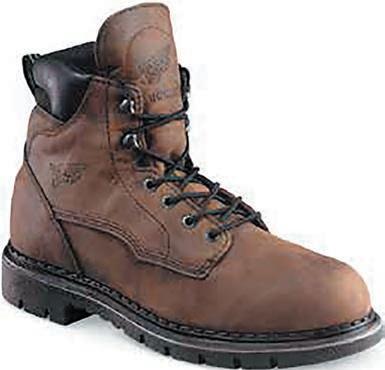
Vlastnik’s Menswear
1809 4th St. Peru, IL 61354 815-223-0695 www.vlastniksmenswear.com
AI is transforming agriculture
Technology has revolutionized global agriculture. Automation has changed the agricultural sector, and those changes might have arrived in the nick of time.
The global population is projected to reach nearly 10 billion by 2050, and the Food and Agriculture Organization of the United Nations estimates that food production has to increase by at least 70 percent to keep up with demand. In order to address the deficit without exhausting the Earth’s finite resources, many farmers are seeking help from artificial intelligence (AI). AI offers farmers additional perks as well.
PRECISION AGRICULTURE
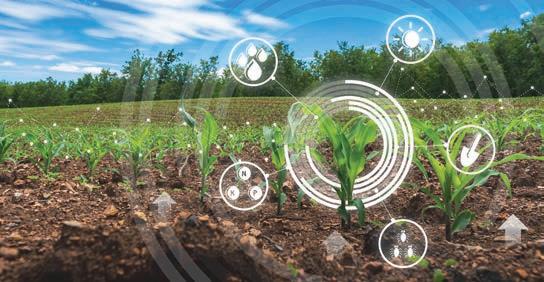
Precision is a notable benefit of utilizing AI within the agricultural sector. By using AI-powered sensors and satellite imagery, farmers can monitor crop health by looking at each and every plant instead of inspecting by the acre. According to a report by MarketsandMarkets, a revenue impact and marketing consulting firm, the market for AI in agriculture is expected to grow from $1.7 billion (the figure in 2023) to $4.7 billion by 2028.
Precision helps to keep plants strong and weed-free. AI-driven “see-and-spray” technology utilizes computers to identify weeds among crops and apply herbicides only to those weeds. This reduces blanket-spraying an entire field, which is a waste of resources. Research published
in the Journal of Agriculture and Food Chemistry indicates that this AI-guided tool can reduce herbicide use by up to 90 percent. This reduces costs to farmers and benefits local ecosystems.
RISK MANAGEMENT
Weather across the planet has featured an uptick in volatile, unanticipated conditions. This can make planting even more challenging for farmers. AI models can process decades of historical weather data, soil conditions and atmospheric changes to offer predictive analytics that help the agriculture industry. By using predictive AI tools, farmers can determine optimal planting windows to maximize yield, according to the International Food Policy Research Institute. In addition, AI algorithms can predict outbreaks of pests and diseases before farmers notice them on their own. Multispectral imagery from drones can detect crop stress caused by nutritional deficiencies or fungus days before a human might recognize such indicators. By catching things early, farmers can reduce risk of a poor crop and financial losses.
AUTOMATION
Agricultural labor shortages are forcing farming operations to seek alternatives to get the job done. The American Farm Bureau Federation notes that farm labor has become more expensive and it’s harder to find workers who want to do the arduous tasks
often required of them. AIdriven robotics and autonomous tractors guided by GPS can help fill the void. These devices can work through the night, preparing soil, harvesting crops and performing other vital tasks.
AI continues to be integrated into the agricultural sector. In order to maintain food security and mitigate labor shortages, farming operations are using technological tools to bridge gaps and improve efficiency. AG263680
Cultivating agricultural innovation
The agricultural sector is evolving thanks to new technology necessitated by a growing global population and the pressures of climate change. The United Nations predicts a global population of 9.7 billion by 2050. The agricultural sector must figure out a way to meet the demands of that expanding population. These challenges are being offset by advancing technologies that are helping farmers increase productivity while also reducing their ecological impact.
• The internet of things (IoT): IoT is a vast network of objects embedded with sensors, software and connectivity. Farm operations can use lowcost, high-durability sensors deployed across fields to monitor soil moisture, temperature and nutrient levels in real time. These sensors allow for “variable rate application” of water and fertilizers, ensuring resources are directed only where they are needed. A report by Grand View Research
says the smart agriculture market is expected to grow at a compounded annual growth rate of 10.8 percent through 2030.
• Robotics and automation:
Labor shortages have led to a growing reliance on robotics and autonomous machinery to handle farm work. Modern tractors can be equipped with GPS and LiDAR (light detection and ranging) systems to operate autonomously. Optimized pathfinding helps to reduce soil compaction and more. Specialized robots are
capable of selective harvesting, says the Journal of Field Robotics. Fruit pickers can evaluate the ripeness of produce before picking it, minimizing waste. Unmanned aerial vehicles or drones can offer multispectral imagery that enables farmers to identify crop stress before it is visible to people.
• Biotechnology: Farming increasingly is being developed in the lab before crops even sprout in the fields. Biotechnology is a pillar of agricultural evolution. Gene-editing
tools like CRISPR-Cas9 can develop crop varieties that are more resilient to saline soil conditions and drought. Research published in Nature Communications says that bio-engineered crops have the potential to increase yields by up to 20 percent, even in suboptimal environments. This cuts down the time required to create traits that help plants thrive.
• Vertical farming: Vertical farming enables facilities to produce more food per square foot than traditional farming, according to the Association for Vertical Farming. When coupling this with Controlled Environment Agriculture, which employs hydroponic or aeroponic systems, facilities have greater control over conditions that can affect food sources.
The utilization of different technologies across the agricultural sector is driving innovation and production. AG263681
Securing vintages with regenerative farming
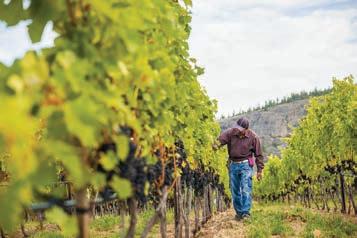
The global wine industry is not immune to the effects of climate change and soil degradation. Through a process of regenerative farming, soil health is protected and vintages can be produced with great success.
WHAT IS REGENERATIVE VITICULTURE?
Regenerative viticulture, also known as regenerative agriculture, is farming that emphasizes the regeneration of soil health, says Eco Terreno Wines & Vineyards. These farming practices are organic and ecologically-driven to enhance the ecosystem through a partnership with nature. Regenerative viticulture focuses heavily on soil health, carbon sequestration and biodiversity.
COMPONENTS OF REGENERATIVE VITICULTURE
Five primary principles drive regenerative viticulture: minimizing soil disturbance, keeping the soil covered, maintaining living roots year-round, increasing plant diversity, and integrating livestock. The Regenerative Viticulture Foundation says the goal is to create a
“closed-loop” system where the vineyard provides its own nutrients instead of having to use synthetic ones.
COVER CROPS
The use of cover crops can increase soil organic carbon (SOC), which is vital for mitigating the wine industry’s carbon footprint. According to research published in the Journal of Cleaner Production, use of cover cropping in vineyards can increase SOC by up to 1.5 tons per hectare annually, making processes much more eco-friendly.
ANIMAL INTEGRATION
The primary role of animals in regenerative agriculture is “prescriptive grazing.” By allowing livestock to graze between rows during the dormant season, vintners can eliminate much of the need for mechanical mowing and herbicide application. Data from the Regenerative Viticulture Foundation found sheep can reduce the need for tractor passes by up to 80 percent, significantly lowering the vineyard’s carbon footprint while preventing soil compaction. Animals also
convert plant matter into high-quality manure and urine, providing bioavailable sources of nitrogen, phosphorous and potassium.
Chickens and ducks also may be deployed to manage pest populations like mealybugs or snails near vines without the need for synthetic insecticides. Animals also naturally aerate the soil through their beaks, feet and hooves, allowing organic matter to get into the earth more readily.
The future of healthy vineyards may rely on regenerative viticulture, which safeguards the land and ensures successful production cycles. AG263682
4 careers in modern ag
Farming and ranching may be the first roles people think of when they envision jobs in agriculture. But the modern agricultural sector offers a much wider range of career paths as well. As technology, sustainability and consumer demand impacts the industry, a greater number of unique and innovative career paths have emerged and opened doors for people with a wide range of skills.
According to the United States government and industry projections, the agricultural and food sectors supported about 22.1 million jobs in 2022, and growth is expected. Those exploring agriculture as a possible career field can look to these unique roles.
PRECISION AGRICULTURE SPECIALIST
A precision agriculture specialist is an emerging and dynamic role in the field.
These professionals apply data analytics, GPS, sensor technology, and drone usage to optimize crop yields and input use. According to data reported by Zipdo, use of digital devices, AI and other tools in farming has surged. Digital tool use has risen by roughly 50 percent in the last five years, and drone technology adoption grew by 48 percent between 2019 and 2023. Estimates suggest that precision agriculture will expand robustly through the latter half of the decade, and individuals guiding this expansion will be in demand.
SUSTAINABILITY CONSULTANTS
Agriculture sustainability consultants also are important to modern farming. These professionals are responsible for advising farms and agribusinesses on ecofriendly practices. These may
Illinois’ longest operating lumberyard continues to thrive along Peru’s historic riverfront. Maze Lumber has been providing top quality building materials to Illinois Valley contractors and homeowners for over 178 years, still owned by the founding fathers (Maze).
Located in a 15,000-square foot showroom and office, we offer building materials for the modern home as well as a full line of the traditional lumber items used in home building, commercial construction, and industrial applications. Our experienced sales staff takes pride in their ability to provide knowledgeable assistance along with prompt delivery at reasonable prices.
include soil conservation, water management, carbon sequestration, and regenerative agriculture. In addition, animal welfare and livestock technology specialists improve animal health and support ethical and sustainable farming practices. The Bureau of Labor Statistics says agriculture and food scientists working in science and sustainability are projected to see employment opportunities grow by about 6 percent between 2024 and 2034, which is faster than the average for all U.S. occupations.
DIGITAL MARKETING
Careers in digital marketing and agricultural communications also are gaining traction, with consumers increasingly being interested in where their food comes from. Agricultural businesses need storytellers, social media managers and content cre -
ators to share engaging and transparent narratives about the innovative efforts taking place on their farms.
AGRICULTURAL ENTREPRENEURS
Entrepreneurs, known as “agripreneurs” within the industry, are the go-getters who are helping to redefine the agricultural sector. These people develop plant-based products or ag-tech startups, combining creativity with agricultural knowledge and business development. The U.S. Chamber of Commerce says the agriculture and food industries contributed $1.53 trillion to the U.S. economy in 2023, and agripreneurs are a rising part of that equation who are fueling innovation. Careers in agriculture are diverse and profitable. There are many paths individuals can take to contribute to this vital industry. AG263684
WINDOWS STONE, SIDING&
Follow farm safety guidelines
Agriculture is routinely ranked among the most dangerous professions around the world. Both the National Safety Council and the National Institute for Occupational Safety and Health say agriculture is one of the most hazardous industries in the United States. Farming operations continue to push forward with more mechanized and high-tech equipment that requires routine reviews of safety protocols.
According to the Bureau of Labor Statistics and NIOSH, the agricultural sector recorded a fatal injury rate of approximately 18.6 deaths per 100,000 workers in 2023. Transportation incidents, notably tractor rollovers, remain the leading cause of death. Furthermore, recent reports from the National Children’s Center for Rural and Agricultural Health and Safety indicate that a child dies in an agriculture-related incident in the United States approximately every three days, which underscores the need to prioritize farm safety
across all age groups. Ensuring safe working conditions is vital within the agricultural sector. These guidelines can set the course for safer farming work.
• Rollover Protective Structure (ROPS): The most effective lifesaver on a farm is ROPS. When combined with seatbelt use, ROPS is 99 percent effective in preventing death during a tractor overturn. ROPS are roll bars or roll cages fitted for wheel- and track-type tractors, says Penn State Extension. Modern guidelines indicate that all machinery should be fitted with updated guarding to prevent entanglement accidents, which are often caused by Power Take-Off shafts.
• Respiratory protection: Grain bins and silos can pose significant risks on a farm. This includes toxic air exposure as well as the risk for engulfment. High-profile incidents in 2023 illustrated the threat that oxygen-limiting silos can pose after deadly carbon dioxide concentrations form. Risk of
suffocation also is great in a grain bin if a person is engulfed by grain. Workers should never work in a bin alone and should utilize a lockout/tagout system to ensure that all augers are off before entry.
• Chemicals and biological hazards: High-potency pesticides and fertilizers create their own hazards on the farm. Personal protective equipment (PPE) is a must when working with chemicals. Most modern standards require proper ventilation, chemical-resistant gloves and dedicated eye protection to prevent acute poisoning and long-term health issues.
• Hearing protection: Exposure to the sounds of farm machinery and other equipment can result in tinnitus (ringing in the ears) and eventual hearing loss unless hearing protection is worn regularly.
• Fatigue and mental health: Mental and physical fatigue of farm workers can result in injury as well. A critical trend uncovered in recent
agricultural safety research ultimately led researchers to conclude that “fatigue management” needs to be prioritized, according to the United States Department of Agriculture. Tired operators can be vulnerable to lapse-of-attention errors, so farmers are encouraged to implement scheduled breaks. The Rural Health Information Hub says that stress also is a big factor for farmers. Environmental factors such as drought, floods, wildfires, pests, and diseases, as well as long hours and financial concerns, can result in feelings of isolation and frustration. Stress is a known precursor to physical accidents on the farm. These are just some of the risk factors on farms that can lead to accident or injury. Falls from ladders, injuries from livestock, exposure to UV rays, and exposure to high levels of dust, mold and bacteria also can affect modern farmers. Agricultural safety needs to evolve as quickly as the changing operations on farms. AG263687
How STEM powers modern agriculture
The image of farmers clad in flannel shirts while livestock pull plows through the fields may still be foremost on the minds of individuals asked to imagine farm life. But such images may no longer reflect an industry increasingly governed by advanced technology.
Even small-scale family farms have recognized the advantages of embracing technology to help make their operations more efficient and successful. Manual plows and tractors largely have been replaced by fleets of autonomous machines and precision farming technology.
Experts agree that the evolution of modern farming is a case study in the application of Science, Technology, Engineering, and Mathematics. STEM is helping to address the problem of global food security and widespread climate change. U.S. News & World Report says 27 percent of new high-skills jobs in agriculture will require a STEM educa-
tion. There are many ways STEM is utilized within the agricultural sector.
• Genomics and biotechnology: Scientists can now identify specific traits in plant DNA that will allow for more drought-resistant crops or those better equipped to tolerate problems like downy mildew. Other traits may make plants more capable of thriving in saline soils. Soil science also enables farmers to learn more about the complex microbiome of the soil, which
Here to Help You Grow
ultimately can help to maximize nutrient uptake.
• Precision agriculture: STEM is a force behind precision agriculture, which the United States Department of Agriculture says is a term to describe farming based on observing, measuring and responding to within-field variability through crop management. Precision farming utilizes remote sensing from satellites and drones, sensors embedded in the soil or devices worn by livestock
to provide real-time data. AI tools also are used to predict harvest yields and optimize fertilization and irrigation.
• Robotics: Automation and robotics fills a void created by human worker shortages. Agricultural engineers help design machinery or focus on the physical infrastructure of the farm. Engineers also are the minds behind innovative farming practices like vertical farming and controlled environment agriculture, which encompasses hydroponic and aeroponic systems.
• Mathematical analysis: Math is vital in the agricultural sector. Statistics, predictive modeling, accounting, and risk management, are types of mathematical analysis employed to forecast global food supplies and profits.
The link between STEM and agriculture is undeniable. STEM is an important driver of the industry and only stands to gain influence in the years to come. AG263686
The foundations of sustainable farming
The agricultural sector is built on plants and animal life, but the industry can still affect the environment in ways that contribute to the ill effects of climate change. According to data published in a 2022 report from McKinsey & Company, agriculture accounts for nearly one-quarter of global emissions, and was identified as the industry that contributes the most to exceeding planetary boundaries. Sustainable farming practices can help reduce that impact.
Even though there is growing consumer demand for more environmentally friendly products, farmers in the United States are lagging behind when it comes to adopting sustainable practices, even though they are aware of them. McKinsey reports that 90 percent of U.S. farmers have an understanding of sustainable farming, but adoption of these practices remains low. Here’s a look at some of the sustainable farm-
ing practices and what the agricultural sector can do to foster a better planet.
Regenerative techniques
Healthy soil often equates to a healthy planet. The cornerstone of sustainability lies in the soil. The soil serves as a carbon sink and a water filtration system. By avoiding traditional “tilling” farming, farmers can maintain the soil structure. This will reduce erosion and keep carbon sequestered in the ground. Farmers can plant cover crops like rye or clover in the offseason to prevent soil erosion, suppress weeds and increase the organic matter of the soil. Di-
versifying species planted in fields will break pest cycles and naturally replenish soil nutrients over time. This can reduce the need for chemical fertilizers and pesticides.
Efficient irrigation
Global water scarcity continues to be a concern, and sustainable farms will prioritize water stewardship. In utilizing drip irrigation, which delivers water directly to a plant’s roots, farmers can reduce evaporation and runoff when compared to overhead sprinklers. Collecting and storing rainwater runoff for use during drought can minimize the strain on local aquifers.
Biological pest controls
Farmers can rely on the use of integrated pest management strategies to offset chemical pesticide use. By introducing natural predators, farmers can control certain pest populations. For example, ladybugs
can reduce aphids on plants. Relying on traps to collect pests also can slow pest outbreaks and reduce reliance on chemicals.
Creating fertilizers
Farmers can use the waste produced on their farms by turning it into valuable fertilizer. According to the USDA, biochar is a black carbon produced from biomass sources like wood chips, plant residues, manure, and other agricultural waste in a low-oxygen environment through a process known was pyrolysis. This material can be used as a soil amendment to improve water retention, nutrient uptake and fertility. Chicken litter, bone meal, blood meal, and compost tea are examples of farm waste-derived products that can be used as fertilizers.
Sustainable farming is a step toward the future that protects the land without compromising output. AG263688