
Prato, Madonna della Consolazione - in the light of Renaissance architectural theory
HISTORY OF THEORY OF ARCHITECTURE 1. - BMEEPET0407
Lecturer: János Krähling
Student: Shanay Mammadova – YKIYOH
18.01.2025
ABSTRACT
This essay will explore the Madonna della Consolazione in Prato's architectural and theoretical significance, highlighting how it adheres to Renaissance principles. The study investigates how philosophers such as Vitruvius andLeonBattista Alberticodified proportional harmony, symmetry, and human proportions. It looks at how these principles are reflected in the Madonna della Consolazione's design, especially in its centralised layout, ornamental features, and spatial arrangement, all of which together represent the Renaissance's quest for divine order and perfection.
Key questions:
How does the design of Madonna della Consolazione reflect the Renaissance principles of proportion, harmony, and the revival of classical architecture?
INTRODUCTION
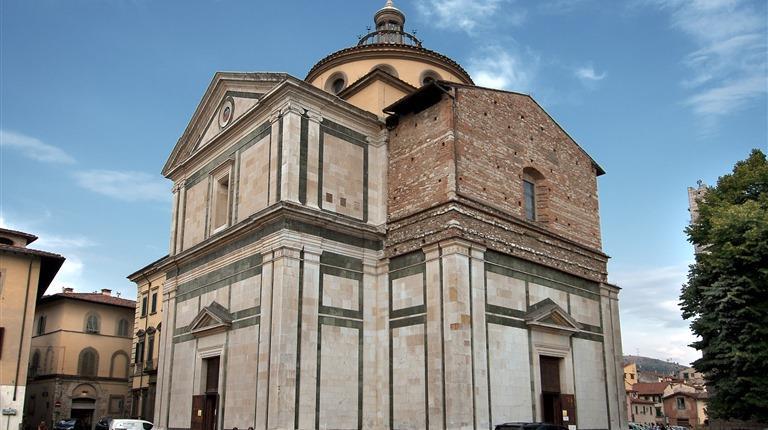
The Renaissance was a period of great intellectual and artistic revival, which sought to bring back the classical ideals of balance, proportion, and symmetry. The Madonna della Consolazione (Madonna della Carceri), located in Prato, Italy, is an exemplary manifestation of these Renaissance ideals. Designed by the architect Giuliano da Sangallo and completed in the late 15th century, this church is a direct reflection of Renaissance architectural theory. By examining the building through the lens of Renaissance thought, including principles of classical antiquity, proportion, and the ideals set forth by influential thinkers such as Vitruvius, one can gain deeper insight into how the design of the Madonna della Consolazione exemplifies the period's architectural values.
HISTORICAL CONTEXT OF THE MADONNA DELLA CONSOLAZIONE
The church of Madonna della Consolazione (Madonna della Carceri) by Giuliano da Sangallo was constructed between 1476 and 1496 as a response to a miraculous event believed to have saved the city of Prato from an outbreakof plague. The church’scommission was driven bya desire to honor the Virgin Mary, whose intercession was thought to have brought divine protection to the town. This theological underpinning made the architecture of the church a direct vehicle for reflecting Renaissance ideals, which sought to merge the spiritual with the rational. Renaissance architects, influenced by the works of Vitruvius and others, emphasized a connection between humanist philosophy and architectural design. The Madonna della Consolazione, with its classical symmetry and use of proportions, serves as an ideal expression of this fusion of rationalism and spiritualism.
ARCHITECTURAL THEORY AND ROLE OF VITRUVIUS
According to Vitruvius, mathematical ratios should be used in architecture to create a sense of balance and order, just as they are in nature. These guidelines were followed by the architects of Madonna della Consolazione, who included a centralised design based on the symmetry and proportional principles of Vitruvianism.
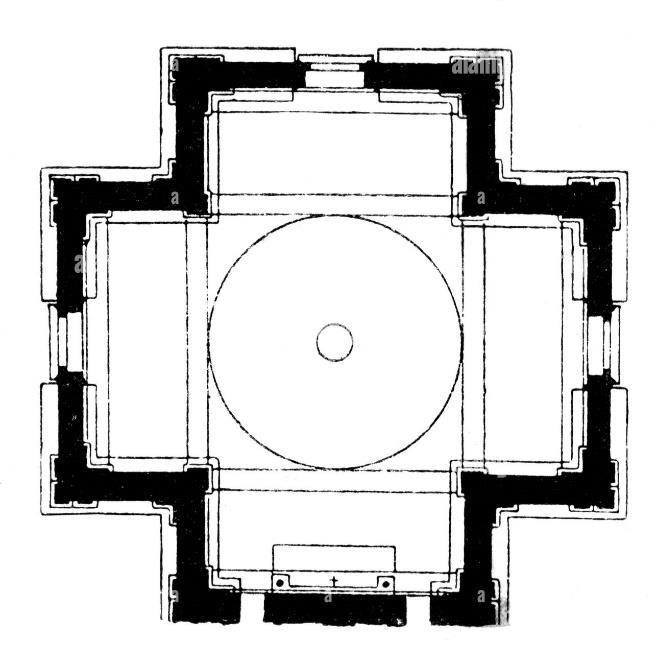
The significance of proportional systems in architectural design was further strengthened by the close adherence of architects such as Alberti and Bramante to Vitruvian principles. The structure of Madonna della Carceri is designed in the shape of a Greek cross, with each of the cross's four arms being the same length to provide symmetry and visual balance. This proportionality is also emphasised in the precise alignment of the central dome, which acts as the focal point of the church, bringing the viewer’s attention upward and highlighting the verticality of the structure.
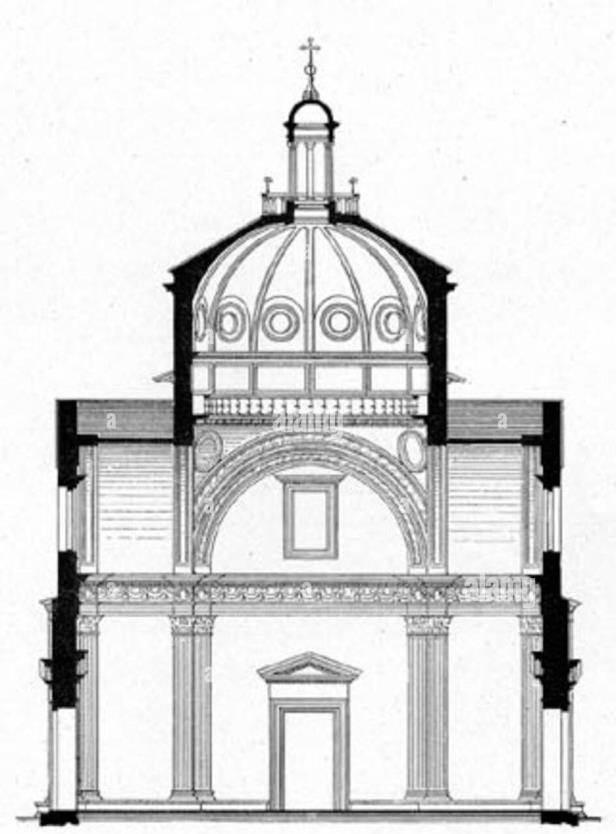
The proportions in Madonna della Consolazione follow strict geometrical guidelines,suchas thegoldenratio,whichRenaissancearchitects considered to produce visually harmonious structures. The central dome of the church, which is the focal point of the space, is proportionally balanced with the length of the arms of the cross. These dimensions create a harmonious relationship between the building’s vertical and horizontal elements. This proportional analysis reflects the Renaissance ideal that the built environment should mirror the cosmic order, achieving a balance between human scale and divine perfection.
ANALYSIS OF PROPORTIONS
In terms of the golden ratio, the building’s proportions are calculated to reflect the mathematical principles believed to result in a sense of universal harmony. The use of such ratios is in line with Vitruvius’ insistence on harmony and order, which were seen as the key to achieving architectural beauty. This proportional balance not only serves aesthetic purposes but also imbues the church with a sense of divine order, drawing the observer closer to a transcendental experience.
The structure's height, width, and depth all have proportional relationships that provide a composition that is both balanced and aesthetically beautiful. This conforms to the Vitruvian ideal of beauty, which is based on mathematical harmony.
The proportional analysis of the church shows a constant use of modular systems, with each architectural component contributing to the overall design. This precise adjustment guarantees that the church's shape speaks to viewers and inspires feelings of peace and harmony.
COMPARATIVE ANALYSIS
GEOMETRIC PRINCIPLES
The Madonna della Consolazione’s symmetrical plan and the spatial arrangement are guided by geometric principles, creating a sense of unity and coherence. The church’s dome,a central feature, exemplifies the use of circular geometry to create a focal point that draws the eye upward, symbolizing the heavens and the divine.
The Madonna delle Consolazione (Carceri) in Prato and Bramante’s Tempietto di San Pietro in Montorio both embody Renaissance architectural principles, yet they illustrate differentapproaches toclassicalrevival.TheMadonna delleCarceri, with its Greek-cross plan, emphasizes the harmonious integration of proportion and symmetry, while the Tempietto’s circular plan exemplifies Bramante’s precise use of Vitruvian geometry, symbolizing cosmic order. Both structures utilize geometric forms to achieve balance and aesthetic coherence, but the Tempietto’s compact design is a pure expression of High Renaissance ideals. The Madonna delle Carceri focuses on creating a spatial experience that fosters communal worship, whereas the Tempietto serves as a martyrium, highlighting its symbolic and sacred function. These comparisons reveal the diversity in the application of Renaissance architectural theory in different contexts.
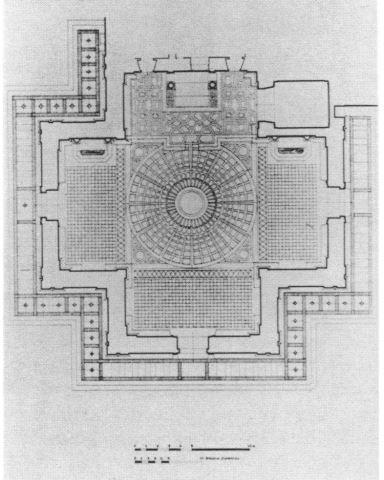
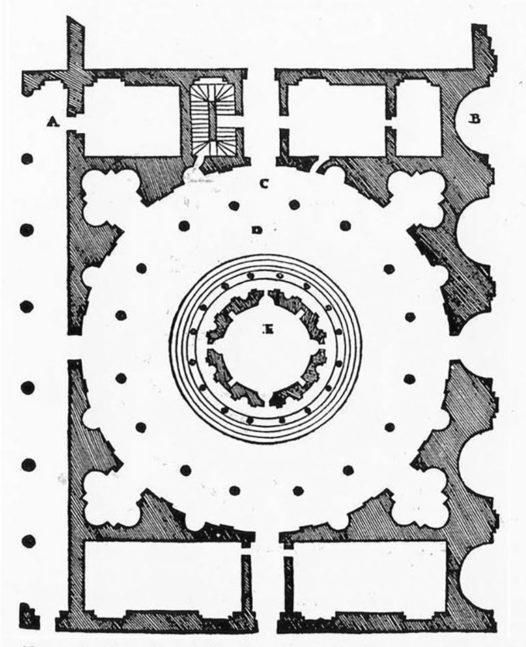
Figure 3. Plan of the Madonna delle Figure 4. Plan of the Madonna delle Consolazione (Carceri) taken from Bramante’s Tempietto di San Pietro Bardazzi
CONCLUSION
In conclusion, the Madonna della Consolazione in Prato stands as a significant embodiment of Renaissance architectural theory, showcasing the era’s emphasis on proportion, symmetry, and the revival of classical forms. The church’s design, guided by the principles outlined by Vitruvius and further developed by Renaissance thinkers like Alberti, reflects a harmonious balance between aesthetic beauty and functional space. Its centralized layout and geometric precision highlight the Renaissance belief in architecture as a means to express cosmic order and divine perfection. This study reaffirms the Madonna della Consolazione’s place as a pivotal example of Renaissance architectural achievement.
Resources:
1. Paul Davies, The Madonna delle Carceri in Prato and Italian Renaissance pilgrimage architecture
2. Thoenes, C., & Evers, B. (2003).ArchitecturalTheory from the Renaissance to the Present. Taschen
3. Mallgrave, H. F. (2006) Architectural Theory I: An Anthology from Vitruvius to 1870. Blackwell Publishing.
4. Vitruvius, De Architectura