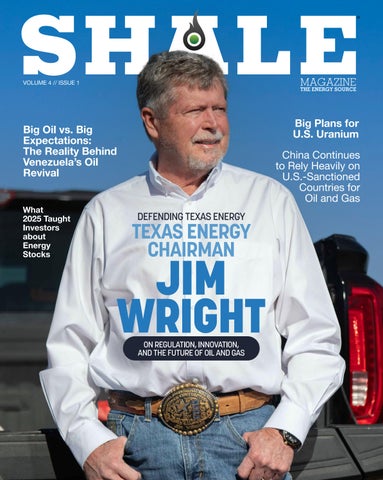
Big Oil vs. Big Expectations: The Reality Behind Venezuela’s Oil Revival

Big Plans for U.S. Uranium
China Continues to Rely Heavily on U.S.-Sanctioned Countries for Oil and Gas What 2025 Taught Investors about Energy Stocks
![]()

Big Oil vs. Big Expectations: The Reality Behind Venezuela’s Oil Revival

Big Plans for U.S. Uranium
China Continues to Rely Heavily on U.S.-Sanctioned Countries for Oil and Gas What 2025 Taught Investors about Energy Stocks
ON REGULATION, INNOVATION, AND THE FUTURE OF OIL AND GAS
We have moved to a new bigger station in San Antonio!
Sundays 2pm-3pm 930AM San Antonio

THE ONLY OIL AND GAS SYNDICATED NATIONAL RADIO SHOW

MOST listened to show on Sunday nights! Thank you HOUSTON!


Saturdays 7am KEYS 1440AM / 98.7FM Corpus Christi
Sundays 8pm-9pm KFXR 1190AM / simulcast on the iHeartRadio app Dallas / Fort Worth Worldwide
Saturdays 1pm-2pm KWEL 1070AM / 107.1FM Midland Odessa Permian Basin
Sundays 2pm-3pm The Answer 930AM San Antonio / New Braunfels / San Marcos / Austin
Sundays 8pm-9pm KTRH 740AM / Simulcast on the iHeartRadio app Houston / Worldwide
Saturdays 6am-7am, 11am-12 noon
Sundays 6am-7am, 5pm-6pm AM 1440
To listen to the show: Visit shalemag.com or download iHeart mobile app to listen live!


Finding and producing the oil and natural gas the world needs is what we do. And our commitment to our SPIRIT Values—Safety, People, Integrity, Responsibility, Innovation and Teamwork— is how we do it. That includes caring about the environment and the communities where we live and work – now and into the future.


EDITOR-IN-CHIEF
Robert Rapier
CHIEF FINANCIAL OFFICER
Suzel Diego
CHIEF REVENUE & DIGITAL STRATEGY OFFICER
Fernando Guerra
VICE PRESIDENT OF OPERATIONS
Amanda Jenkins
PUBLICATION EDITOR Tyler Reed
ASSOCIATE EDITOR David Porter
VIDEO CONTENT EDITOR
Barry Basse
STAFF WRITERS
Felicity Bradstock, Tyler Reed
DESIGN DIRECTOR
Elisa Giordano
SALES & MARKETING Gargi Bhowal / gargi@shalemag.com
ACCOUNT EXECUTIVES
John Collins, Ashley Grimes, Doug Humphreys, Matt Reed
CONTRIBUTING WRITERS
Felicity Bradstock, Jess Henley, Praveen Shiveswara Sridharamurthy, Robert Rapier
STAFF PHOTOGRAPHER
Malcolm Perez
EDITORIAL INTERN
LeAnna Castro


The Port of Corpus Christi’s Foreign Trade Zone 122 program helps increase global competitiveness of U.S.-based companies. Foreign Trade Zone 122 can defer or reduce duty payments, streamline supply chain costs and help companies thrive in competitive domestic and foreign markets.


The first quarter of 2026 finds the energy markets recalibrating after a volatile 2025. Geopolitical tensions remain elevated, and policymakers around the world continue to send mixed signals about their beliefs in the future of hydrocarbons. In this issue of SHALE Magazine, we lean directly into those realities.
Our cover story profiles Texas Railroad Commissioner Jim Wright, a regulator operating at the center of some of the most consequential debates in American energy. Texas remains the backbone of U.S. oil and gas production, and the Texas Railroad Commission plays a pivotal role in balancing development, environmental stewardship, and operational integrity. In telling Commissioner Wright’s story, we explore not just the man, but the mission: maintaining regulatory certainty in a sector that depends on long investment cycles and disciplined oversight.
Beyond Texas, one theme dominates this issue: Venezuela.
Few countries illustrate the gap between geological potential and economic reality as starkly as Venezuela. With the world’s largest proven oil reserves, it should be an energy superpower. Instead, it has become a case study in how politics, policy, and mismanagement can undermine even the most extraordinary resource base.
We examine Venezuela’s situation from multiple angles. What is the truth behind its oil reserves? Why did vast heavy oil deposits never translate into broad prosperity? What lessons can be drawn from Guyana’s dramatically different trajectory? Is the country facing an outright energy crisis, or a prolonged structural decline?
The point is not simply to revisit familiar headlines. It is to understand how resource wealth, governance, infrastructure, and global demand intersect—and what that intersection means for producers, investors, and policymakers worldwide.
Technology and innovation also feature prominently in this issue. We explore how artificial intelligence is being applied to unlock incremental gas throughput and improve reliability in midstream operations. AI is no longer theoretical; it is being deployed in the field to optimize performance and reduce downtime. We
also look at federal funding for small modular reactors, big plans for U.S. uranium development, and the long road ahead for rare earth supply chains. These are long-cycle stories, but they will shape the energy landscape for decades.
At the policy level, we examine developments ranging from potential shifts back toward gasoline vehicles to evolving industrial policy and the long-term progress of the Paris Agreement a decade after its launch. Energy remains inseparable from politics, but the fundamentals still matter: supply, demand, capital allocation, and infrastructure.
Finally, this issue marks an important addition to SHALE Magazine. For the first time, we are including a finance-focused article drawn from my work with Investing Daily. The new “Finance” section will become a regular feature going forward. Energy professionals and investors alike operate in a world where capital discipline, cash flow, and portfolio strategy are just as important as drilling results and production volumes. In this debut installment, we explore why time in the market consistently outperforms attempts to time the market—an especially relevant lesson after the turbulence of the past year.
Energy is never static. It evolves with technology, policy, capital, and geopolitics. This issue reflects that dynamism: from Texas regulation to Venezuelan heavy oil, from AIdriven midstream optimization to nuclear funding and rare earth development.
As always, our goal is straightforward—to provide clarity where possible, context where necessary, and perspective grounded in experience.
Thank you for reading.
ROBERT RAPIER Editor-in-Chief SHALE Magazine


CHAIRMAN JIM WRIGHT ON REGULATION, INNOVATION, AND THE FUTURE OF OIL AND GAS
By: Robert Rapier
he decisions made inside a regulatory hearing room in Austin rarely make national headlines. They should.
Texas produces more crude oil than most countries. Its natural gas output rivals that of global energy powers. When international supply tightens, when OPEC adjusts production, or when geopolitical disruptions threaten energy flows, production from Texas often serves as the stabilizing force.
Overseeing the regulatory framework for that system is the Texas Railroad Commission (RRC).
Despite its name, the agency regulates the most prolific oil and gas producing state in America. Its authority spans drilling permits, well integrity standards, underground injection wells, pipeline safety, flaring approvals, environmental enforcement, and orphaned well remediation. The Commission does not set commodity prices. It does not dictate production quotas. But it determines the conditions under which production occurs.
At the center of that responsibility is RRC Chairman Jim Wright.
Commissioner Wright does not present himself as a career politician. He describes himself as someone who has spent decades in environmental services and oilfield operations, working on the practical mechanics of compliance and remediation.
“I know what I know,” he says. “And I try to stay in my lane.”
That lane now includes stewardship of an industry that supports hundreds of thousands of Texas jobs and generates billions in public revenue each year.
activity, and community impact intersected. Financial pressures mounted. Despite earning three college scholarship offers, he made the decision to enter the workforce immediately.
So right after high school graduation, he walked into the landfill and got a job.
He eventually became involved in designing leachate collection systems to prevent contaminants from migrating into groundwater. It was technical, handson environmental work that required understanding geology, fluid movement, and regulatory standards.
That experience laid the foundation for a career in environmental services. By 1991, Wright had launched his own companies, providing environmental compliance and remediation services across the United States. His clients included oil and gas operators, refineries, utilities, and government agencies.
As shale drilling accelerated in the late 2000s, Wright’s work increasingly centered on oilfield operations. He dealt frequently with permitting challenges and regulatory interpretation disputes. What frustrated him was not enforcement itself, but inconsistency.
Different interpretations of the same rule could yield different outcomes depending on the reviewer. That unpredictability slowed projects and created uncertainty.
Rather than criticize from the sidelines, Wright assembled engineers, attorneys, and operators to draft guidance documents aimed at standardizing rule interpretation. When those efforts stalled internally, colleagues urged him to seek election to the Railroad Commission.
Three days before the filing deadline in 2019, he entered the race. He won.
Wright’s path to the Commission was unconventional.
Raised on a fifth-generation ranch in Orange Grove, Texas, he grew up in a family rooted in agriculture. His grandfather operated one of the largest longhorn herds in the state. Ranching was not simply an occupation; it was an identity.
But early adulthood brought disruption. After a fire destroyed the family home, they relocated near Robstown. Soon afterward, a hazardous waste landfill was permitted roughly a quarter mile from their property.
The experience was formative. Wright witnessed firsthand how environmental regulation, industrial
The Railroad Commission’s name reflects its origins in 1891, when it was created to regulate railroad rates and curb monopolistic practices. After the 1901 Spindletop discovery ignited the Texas oil boom, its jurisdiction expanded to encompass pipelines and energy transportation.
By the early twentieth century, the Commission had become one of the most influential oil regulators in the world. It once set production limits to prevent oversupply and stabilize prices. Observers later noted


that OPEC’s quota system drew inspiration from the Commission’s framework.
Over time, its direct role in price stabilization diminished, particularly as federal regulation and global markets evolved. In 2005, its remaining rail functions were transferred to other agencies, leaving it focused exclusively on oil and gas.
Today, its responsibilities include:
• Reviewing and approving drilling permits
• Enforcing well casing and cementing standards to protect groundwater
• Regulating underground injection wells
• Overseeing intrastate pipeline safety
• Monitoring flaring activity
• Administering environmental compliance programs
• Identifying and plugging orphaned wells
Few state agencies combine such economic weight with environmental responsibility.
The oil and gas sector contributes tens of billions annually in taxes and royalties. Public education funding, infrastructure development, and local economies are deeply intertwined with energy production.
The Commission’s mission statement reflects a three-part mandate: protect public safety, safeguard natural resources, and ensure economic vitality.
Balancing those objectives requires constant calibration.
Among the most complex issues facing the Commission is produced water.
Modern horizontal drilling and hydraulic fracturing have unlocked vast hydrocarbon reserves in tight formations. But those wells also produce substantial volumes of water. In many Permian Basin operations, approximately five barrels of water accompany every barrel of oil.
At Texas production levels of roughly five and a half million barrels of oil per day, daily water volumes can exceed 25 million barrels. Historically, most produced water has been injected into deep disposal wells. These formations are intended to isolate fluids from freshwater aquifers. For years, the system functioned with limited public attention. But increased injection volumes in certain regions correlated with rising seismic activity. Studies linked deep injection to pressure changes along fault lines. Oklahoma experienced significant seismic events under similar circumstances.
Regulators responded by adjusting injection practices, limiting volumes, and shifting disposal zones. Yet geology imposes limits. Pressure accumulation and limited diffusion capacity present ongoing concerns.
Wright often summarizes the challenge in practical terms: geological formations are not infinitely expandable.
Rather than treat produced water solely as a waste management problem, he encouraged exploration of beneficial reuse.
Four years ago, the Commission launched pilot programs permitting treated produced water to be used for irrigation and other nonpotable applications.
West Texas faces severe and prolonged drought conditions. Agricultural producers and municipalities are investing in costly desalination projects and deeper groundwater wells. Treated produced water presents an alternative source.
Treatment technologies have advanced significantly. Filtration systems, reverse osmosis, and emerging methods can reduce total dissolved solids and contaminants to levels suitable for specific uses.
Importantly, not all applications require drinking-water standards. Irrigation water may tolerate higher salinity levels depending on soil conditions. Industrial cooling and certain construction applications have different thresholds.
Economics are also shifting. Disposal costs have risen due to transportation distances and injection capacity constraints. Treatment costs have declined as technologies scale. In some areas, operators report near parity between disposal and treatment costs.
If reuse scales successfully, it could fundamentally alter water management across shale regions.
Natural gas flaring became a focal point of public debate during the early years of the Permian production surge. Rapid oil growth outpaced pipeline infrastructure, leaving associated gas without immediate markets.
When Wright entered office, approximately 2.5% of Texas natural gas production was flared.
Today, despite a 25% increase in natural gas production since 2020, flaring rates have fallen below 1%.
The decline resulted not from blanket prohibitions, but from infrastructure expansion.
Pipeline networks expanded. Processing facilities increased capacity. LNG export terminals created new demand centers. As markets developed, gas previously flared became economically valuable.
Wright emphasizes that environmental improvements often depend on economic viability. Mandates alone cannot replace missing infrastructure.
The lesson from flaring reduction is that regulatory oversight must work in tandem with market development.
Texas’ long drilling history means legacy wells remain scattered across the state. While most are properly maintained, some become orphaned when operators dissolve or declare bankruptcy.
Orphaned wells pose environmental risks if not properly plugged. They can allow fluid migration and methane emissions.
The Commission maintains an active plugging program, funded through state resources and federal allocations. The Bipartisan Infrastructure Law provided additional funding, accelerating remediation efforts.
But plugging existing wells addresses only part of the issue. Preventing future orphaned wells requires adequate financial assurance mechanisms.
Bonding requirements must balance operator viability with taxpayer protection. Insufficient bonding risks shifting cleanup costs to the public. Excessive bonding could discourage small operators.
Wright views lifecycle accountability as central to maintaining public trust.
Energy regulation operates within a complex federal framework. States traditionally maintain primary authority over many oil and gas operations, including Class II injection wells.
At one point, federal regulators considered revoking Texas’ primacy over certain injection programs. Such a move would have transferred authority to Washington.
Wright supported updating environmental rules to reinforce the state’s regulatory position. Modernized standards strengthen Texas’ case for maintaining oversight authority. He argues that local geological knowledge and operational familiarity enable more nuanced regulation than centralized federal management.
Maintaining state primacy is not only a jurisdictional matter; it affects permitting timelines, regulatory certainty, and investment flows.
For Wright, one of the most urgent — and least publicly understood — threats to Texas energy production is organized oilfield theft.
Unlike shoplifting or small-scale vandalism, oilfield theft in Texas has evolved into a sophisticated criminal enterprise. Remote well sites, tank batteries, and gathering systems stretch across vast, sparsely populated areas. The scale of Texas production means thousands of facilities operate far from population centers, creating opportunities for coordinated theft.
Estimates presented to lawmakers suggest losses approaching $1 billion annually. That figure includes stolen crude oil siphoned directly from tanks and pipelines, condensate diverted from gathering systems, and even stolen equipment such as copper wiring, valves, and specialized components.
But the damage extends beyond just lost product.
Tampering with tank batteries and pipeline connections introduces significant safety risks. Improperly resealed valves or damaged fittings can result in spills, leaks, or pressure imbalances. A theft operation that nets a few thousand dollars in crude can leave behind environmental damage costing multiples of that to remediate.
Wright has made combating this issue a central priority of his tenure. Under recently enacted legislation, Texas established a dedicated Oilfield Theft Task Force designed to bring together regulators, industry representatives, and law enforcement agencies. The objective is twofold: quantify the full scope of the problem and create a coordinated enforcement strategy.
Historically, oilfield theft cases were often handled piecemeal by local sheriffs’ departments with limited resources and little specialized training in petroleum infrastructure. Prosecution could be difficult. Stolen crude is fungible. Once transported and blended, tracing origin becomes complex. Jurisdictional lines

further complicate investigations when theft networks operate across multiple counties.
The task force approach recognizes that the problem has outgrown isolated local enforcement.
Wright has emphasized that energy infrastructure should be treated with the same seriousness as other critical infrastructure sectors. In an era where pipeline cybersecurity and grid resilience receive national attention, physical oilfield security warrants similar focus.
Technology will likely play a major role in the response. Operators are exploring enhanced metering systems, tamperdetection sensors, remote surveillance, and real-time monitoring of production volumes to flag anomalies. Data analytics can identify irregular flow patterns that may indicate diversion.
Yet Wright acknowledges that technology alone cannot eliminate the problem. Criminal enterprises adapt quickly. Effective deterrence requires

stronger penalties, improved interagency communication, and visible enforcement actions that signal consequences.
There is also a broader economic dimension.
Oilfield theft does not only harm operators. Royalty owners — including private landowners and the State of Texas — lose revenue when production is siphoned. Tax collections decline. Public school funding and infrastructure accounts that rely on energy taxes feel the impact.
In that sense, Wright frames oilfield theft not as an industry complaint, but as a publicinterest issue.
When theft reaches into the hundreds of millions — or potentially a billion — dollars annually, it becomes a systemic drag on one of the state’s most important economic engines.
Addressing it reinforces a principle that runs throughout Wright’s regulatory philosophy: the integrity of the system matters. Production must be safe,
accountable, and transparent. That applies not only to environmental compliance, but to ensuring that lawful production is not undermined by organized criminal activity.
For Wright, safeguarding Texas energy includes protecting it from those who seek to exploit its scale.
Texas production influences more than state revenues. It shapes global energy dynamics.
U.S. shale output has altered OPEC’s leverage. During supply disruptions, American production can respond more rapidly than many conventional sources.
Texas natural gas supports LNG exports that strengthen alliances and provide alternatives for countries seeking supply diversification.
While the Commission does not set global prices, its regulatory framework underpins the operational reliability that enables Texas producers to compete internationally.
Energy security remains a recurring theme in national policy discussions. Domestic production reduces exposure to geopolitical volatility. Texas sits at the center of that equation.
The next decade will test the adaptability of both industry and regulators.
Water management challenges will intensify as production volumes remain high. Infrastructure must continue expanding to support exports and domestic demand.
Technological advances will improve efficiency and recovery rates. Environmental expectations will evolve.
The Commission’s mandate, however, remains consistent: protect groundwater, enforce safety standards, ensure environmental compliance, and sustain economic vitality.
Wright does not claim to be transforming the industry. He focuses instead on maintaining equilibrium within a system that supports the state’s prosperity and national energy security.
He often returns to the same point.
“I’m not a politician,” he says. “I know what I know.”
In Texas energy, that pragmatic mindset may be precisely what stewardship requires.

By: Felicity Bradstock
As the United States pursues a new nuclear era, one thing is standing in the way of accelerated deployment –uranium. At present, the U.S. continues to rely heavily on Russia for its enriched uranium, despite having introduced strict sanctions on most other Russian energy following the 2022 invasion of Ukraine.
The development of the United States’ domestic uranium industry is expected to help the country become more self-sufficient, as well as accelerate the rollout of new nuclear capacity.
The United States imports between 20% and 25% of its enriched uranium from Russia, due to the lack of alternative suppliers and little domestic production capacity. Overall, roughly 73% of the United States’ enriched uranium was imported in 2023, showing the heavy reliance of the U.S. on foreign uranium supply chains.
Alongside its other sanctions on Russian energy, the United States issued a ban on low-enriched uranium (LEU) imports from Russia from August 2024 to 2040, under a waiver program until 2028, allowing Washington some time to find alternative suppliers. This is expected to create a scarcity in the fuel supply unless the U.S. can increase its domestic LEU production.
With increased pressure to find alternative uranium suppliers within the next two years, the U.S. is investing heavily in domestic uranium production.
On 5th January, the U.S. Department of Energy (DoE) announced plans to invest $2.7 billion to strengthen domestic enrichment services over the next ten years. The move aims to reduce reliance on foreign suppliers.
In addition to expanding the domestic LEU industry, the funding will contribute towards the development of a high-assay lowenriched uranium (HALEU) industry. Russia is currently the only country that produces HALEU – uranium enriched to between 5% and 20%.
Energy Secretary Chris Wright stated, “President Trump is catalyzing a resurgence in the nation’s nuclear energy sector to strengthen American security and prosperity.” He added, “Today’s awards show that this Administration is committed to restoring a secure domestic nuclear fuel supply chain
capable of producing the nuclear fuels needed to power the reactors of today and the advanced reactors of tomorrow.”
In 2025, the DoE signed contracts with six firms for LEU and HALEU enrichment, which allowed them to bid on future work. Three companies were awarded task orders as part of the financing announcement:
• American Centrifuge Operating ($900 million) to create domestic HALEU enrichment capacity
• General Matter ($900 million) to create domestic HALEU enrichment capacity
• Orano Federal Services ($900 million) to expand U.S. domestic LEU enrichment capacity
The DoE also awarded an additional $28 million to Global Laser Enrichment to support the advancement of next-generation uranium enrichment technology for the nuclear fuel cycle.
Most of the advanced reactors currently being developed in the United States are powered by HALEU fuel to achieve smaller designs, longer operating cycles, and increased efficiencies, compared with current technologies, according to the DoE.
At present, commercial nuclear fuel suppliers cannot produce HALEU, mainly due to market uncertainties and infrastructure gaps. However, the DoE estimates that domestic demand for HALEU could reach 50 metric tons per year by 2035, a figure that will keep growing, so long as the U.S. continues to invest in new nuclear capacity.
It is vital, therefore, that the U.S. develops its HALEU production at an accelerated pace to support the deployment of new conventional reactors and small modular reactors (SMRs) in the coming years.
Bill Gates’ nuclear firm, Terrapower, announced in November that it had achieved a milestone in uranium metallization for advanced reactor fuel commercialization in collaboration with Framatome. The two companies produced successful elements of uranium metal, known as pucks, which are a critical component in advancing the fuel supply chain for TerraPower’s Natrium reactor. The metal is produced from depleted uranium.
With increased pressure to find alternative uranium suppliers within the next two years, the U.S. is investing heavily in domestic uranium production.
Lionel Gaiffe, Senior Executive Vice President, Fuel Business Unit at Framatome, stated, “This milestone underscores the critical progress being made in developing a reliable advanced reactor fuel supply chain and in propelling TerraPower’s Natrium technology… Through this strategic collaboration, we are delivering the next generation of nuclear technology that will define the future of clean energy.”
Meanwhile, TerraPower’s President and CEO, Chris Levesque, explained, “TerraPower has been committed to supporting the development of a robust, domestic HALEU fuel supply chain. The successful production of these metallic uranium pucks proves that we can manufacture the metallization component of HALEU fuel here in Washington and support our plans to rapidly deploy Natrium plants across the United States.”
The DoE is working closely with the private sector to accelerate the development of the United States’ enriched uranium production to reduce reliance on foreign suppliers, cut energy ties with Russia, and support the deployment of a new generation of nuclear reactors. Greater funding in this sector is expected to support the acceleration of U.S. nuclear energy development.

Felicity Bradstock is a freelance writer specializing in Energy and Industry. She has a Master’s in International Development from the University of Birmingham, UK, and is now based in Mexico City.
By: Robert Rapier

Venezuela is often described as sitting atop the largest oil reserves on Earth. Officially, the country reports more than 300 billion barrels of proven oil—more than Saudi Arabia. To many readers, that figure implies vast, untapped wealth waiting only for political change to unlock it.
But Venezuela did not become the world’s reserve leader through a wave of new oil discoveries. Its rise to the top was largely the result of reclassification—driven by oil prices, evolving reserve definitions, Western technology, and political incentives. Understanding how Venezuela’s reserve number came to be—and what it actually represents—requires a closer look at the nature of its crude and the assumptions embedded in the term “proven reserves.”
The foundation of Venezuela’s reserve claim lies in the Orinoco Oil Belt, a vast region containing extra-heavy crude and bitumen-like hydrocarbons. The oil is unquestionably real and enormous in scale. U.S. Geological Survey estimates suggest more than one trillion barrels of oil in place.
But oil in place is not the same thing as oil that can be economically produced, transported, refined, and sold. It bears little resemblance to the light, free-flowing crude produced in places like Saudi Arabia or West Texas. In practical terms, it is far closer to Canada’s oil sands.
Orinoco crude must first be mined or thermally produced, then upgraded before it can reach global markets. That makes
production capital-intensive, technologically complex, and highly sensitive to oil prices. For decades, most of this oil was classified not as reserves, but as resources— hydrocarbons known to exist but not considered economically recoverable.
In the early 2000s, Venezuela’s proven oil reserves were far more modest by global standards. Around 2005, official estimates placed the country’s reserves at roughly 80 billion barrels, consisting primarily of conventional crude. That figure put Venezuela well behind Saudi Arabia and several other major producers. For context, today an 80-billion-barrel reserve base would rank eighth in the world among countries.
Under OPEC guidelines and U.S. SEC reporting rules, a barrel of oil only qualifies as a proven reserve if it can be economically recovered at prevailing oil prices using existing technology. That definition is more economic than geological—and it is central to what happened next.
In the early 2000s, oil prices averaged around $25 per barrel. At those levels, the cost of extracting and upgrading Orinoco crude exceeded the value of the finished product. The oil was physically present, but economically stranded.
That changed as oil prices surged. By 2008, crude prices were approaching $140 per barrel. As oil prices rose, projects that had once been marginal suddenly appeared economic—at least on paper.
With higher prices and improving extraction technology, Venezuela’s national oil company, PDVSA, was able to reclassify large portions of the Orinoco from “resources” into “proven reserves” under prevailing reserve definitions. This process was formalized through a government initiative known as the Magna Reserva Project, launched under Hugo Chávez to certify oil “in place” across the Orinoco Belt.
Between 2005 and 2011, Venezuela’s reported reserves nearly quadrupled—from under 80 billion barrels to nearly 300 billion— without a corresponding surge in discoveries or production. The transformation was largely statistical, not physical.
But independent estimates highlight the gap between headline reserve numbers and economic reality. Rystad Energy, for example, estimates Venezuela’s economically recoverable oil at roughly 29 billion barrels— about one-tenth of the official total. That estimate reflects realistic assumptions about production costs, infrastructure requirements, and oil prices.
Even when prices are high enough to justify production on paper, Orinoco crude faces another hard constraint: infrastructure.
To make the oil marketable, Venezuela relies on large upgrading facilities originally built and operated by international oil companies such as ExxonMobil and ConocoPhillips. These upgraders convert extra-heavy crude into synthetic oil suitable for export and refining.
Following the 2007 expropriations under Chávez, many of these facilities were nationalized, and then undermaintained and allowed to deteriorate. Over time, the loss of technical expertise, spare parts, and capital
When oil prices collapsed in 2014 and again in 2020—falling below $60 per barrel—much of the Orinoco no longer met the economic threshold required for classification as proven reserves. Under a strict application of reserve definitions, those barrels should have been reclassified back into the resource category.
investment sharply reduced their reliability and throughput.
As a result, large portions of the oil Venezuela counts as “proven” are effectively stranded—existing on balance sheets, but unable to be processed or sold at scale.
Unlike Saudi Arabia’s conventional fields, which remain profitable even at very low oil prices, Venezuela’s heavy oil is extremely price sensitive.
When oil prices collapsed in 2014 and again in 2020—falling below $60 per barrel—much of the Orinoco no longer met the economic threshold required for classification as proven reserves. Under a strict application of reserve definitions, those barrels should have been reclassified back into the resource category.
They were not.
That disconnect highlights a fundamental weakness in Venezuela’s reserve claim: the headline number assumes sustained high prices, fully functioning infrastructure, and massive ongoing investment—conditions that have rarely existed simultaneously.
Venezuela’s oil wealth is real, but it is often misunderstood. Its reserves are not directly comparable to those of countries like Saudi Arabia, where oil is easier, cheaper, and more reliable to produce.
Venezuela’s rise to the top of global reserve rankings reflects price assumptions, accounting definitions, and political incentives—not production inevitability. For
investors, the distinction that matters is between oil in the ground and oil that can be produced profitably and consistently.
Venezuela has enormous quantities of the former. The latter remains constrained by economics, infrastructure, and governance. Until those constraints change, Venezuela’s status as the world’s largest holder of “proven” oil reserves should be viewed as a cautionary example of how reserve numbers can mislead unless viewed in the proper context.

About the author: Robert Rapier is a chemical engineer in the energy industry and Editor-inChief of Shale Magazine. Robert has over 30 years of international engineering experience in the chemicals, oil and gas, and renewable energy industries and holds several patents related to his work. He has worked in the areas of oil refining, oil production, synthetic fuels, biomass to energy, and alcohol production. He is author of multiple newsletters for Investing Daily and of the book Power Plays. Robert has appeared on 60 Minutes, The History Channel, CNBC, Business News Network, CBC, and PBS. His energy-themed articles have appeared in numerous media outlets, including the Wall Street Journal, Washington Post, Christian Science Monitor, and The Economist.
By: Felicity Bradstock
Venezuela has faced increasingly frequent power outages in recent years, due to decades of underinvestment in the country’s energy infrastructure, much of which has fallen into a state of disrepair. As oil production has decreased and the country’s economy has faltered, residents across Venezuela have been experiencing blackouts on a more regular basis.
The United States intervention in Venezuela on January 3, which brought an end to President Nicolás Maduro’s 13-year dictatorship, has not, unfortunately, brought about greater energy or economic security, as Venezuela faces years of recovery.
So, what can be expected for Venezuela’s energy sector in the post-Maduro era?
Background on Venezuela’s Energy Crisis
Venezuela has faced more frequent power outages in recent years, which have left people without power for extended periods of time, as well as further restricted the country’s waning oil production.
The energy crisis began under former president Hugo Chavez, following the nationalization of several utilities and the passing of the 2010 Electricity Law. Before this time, multiple private-sector and state utilities were delivering power, making for greater competition.
In 2010, Chavez declared that Venezuela was experiencing a nationwide “electrical emergency,” a situation that has continued to this day.
Meanwhile, long-standing U.S. sanctions on the export of Venezuelan crude have driven down output, from 3.5 million barrels per day (bpd) in the 1990s to less than 1 million bpd at its lowest point. This has reduced Venezuela’s oil revenues dramatically, leaving little money to invest in the country’s failing energy infrastructure.
In March 2025, the government responded to the ongoing energy crisis by cutting working hours to reduce power demand.
U.S. Intervention Hit the Caracas Electric Grid Hard
As part of the United States intervention in Venezuela at the beginning of January, U.S. forces targeted the country’s electric grid. This left southwestern and southeastern Caracas without access to basic power.
In the days following Maduro’s capture, Venezuela’s Energy Minister, Jorge Marquez, said that the U.S. had inflicted significant damage to transmission infrastructure near Caracas and workers at the National Electric Corporation (Corpoelec) were trying to restore power. Marquez also shared a video on social media showing the extent of the damage to power transmission facilities.
“I want once again to condemn the terrorist attack on the national electrical system, this time on our country’s power transmission system,” said Marquez.
In addition, Sky News reported that Caracas residents were living in a “total blackout”, without access to electricity or internet services, following the intervention.
Following the U.S. intervention, Venezuela’s interim President Delcy Rodriguez announced on January 7 that she planned to propose changes to several laws, including the
country’s electricity policy. “We want to update the national electrical service law,” said Rodriguez. “The Venezuela we dream of is a Venezuela that demands an electricity service that is in better conditions.”
Meanwhile, the U.S. Department of Energy said it aimed to “improve the electricity grid, which is essential to increasing oil production, economic opportunity, and the daily quality of life for the Venezuelan people.”
Venezuela is home to the largest oil reserves in the world, meaning that the South American country should have no shortage of energy. However, years of underinvestment in the sector, due to falling production levels and low oil revenues, mean that rebuilding the industry to its former glory would take several years and billions of dollars in investment.
While U.S. President Trump is hopeful about the U.S. role in rebuilding Venezuela’s oil industry, the country will likely face several more years of energy crisis before any significant improvement is seen.
Cuba’s Reliance on Venezuelan Oil and the Era of Blackouts
It is not only Venezuela that is facing an energy crisis following the U.S. intervention. Cuba, which has experienced more frequent, widespread power outages in recent months, is expected to suffer due to the blockade on Venezuelan crude.
Cuba has come to rely heavily on Venezuela in recent years for its fuel supplies, despite still facing an energy deficit. Venezuela shipped an average of 26,500 bpd of crude to Cuba last year, according to ship tracking data from Venezuela’s state-run oil firm PDVSA. This covered roughly 50% of Cuba’s oil deficit.
Cuban residents already face almost daily blackouts, which could become more frequent and prolonged if Cuba cannot find an alternative fuel supplier. In recent months,

The energy crisis began under former president Hugo Chavez, following the nationalization of several utilities and the passing of the 2010 Electricity Law. Before this time, multiple private-sector and state utilities were delivering power, making for greater competition.
Mexico has increased the quantity of oil it is sending to Cuba to help fill the gap. Mexico sent a daily average of 12,284 bpd of oil to Cuba last year, accounting for around 44% of its crude imports.
However, Mexico is at risk of worsening its relations with the Trump administration if it continues to ship fuel to Cuba, as the White House seeks to finalize an agreement with the Caribbean island.
To this end, Trump posted on his Truth Social platform, “THERE WILL BE NO MORE OIL OR MONEY GOING TO CUBA – ZERO!” He added, “I strongly suggest they make a deal, BEFORE IT IS TOO LATE.”
Both Venezuela and Cuba could, therefore, face worsening energy crises in the wake of the United States intervention in Venezuela unless rapid action is taken to improve energy infrastructure and restore vital fuel supplies.

About the author: Felicity Bradstock is a freelance writer specializing in Energy and Industry. She has a Master’s in International Development from the University of Birmingham, UK, and is now based in Mexico City.
By: Praveen Shiveswara Sridharamurthy
Midstream gas compression systems sit at the center of natural gas transportation, enabling volumes to move from wellheads through gathering systems, processing plants, and interstate pipelines. When these assets perform reliably, they protect throughput, margins, contractual commitments, and environmental performance. When they do not, the consequences ripple quickly across operations and commercial outcomes.
Despite decades of engineering advances, compressor reliability remains a persistent challenge across the midstream sector. Operators routinely contend with unplanned downtime driven by valve failures, cylinder wear, lubrication issues, and engine instability. These events interrupt gas flow, constrain system capacity, and force difficult operational tradeoffs. Reactive repairs and emergency mobilizations inflate operating costs, while overly conservative preventive maintenance programs add labor and expense without proportionate gains in reliability.
The business impact is rarely confined to maintenance budgets alone. Compressor outages can create bottlenecks across gathering and pipeline networks, resulting in curtailed production, flaring, or lost revenue. At the same time, regulatory scrutiny around emissions continues to intensify. Equipment failures that trigger blowdowns or venting expose operators to compliance risk
and reputational damage, elevating reliability from a maintenance concern to a strategic priority. Compounding these challenges is a persistent gap in data visibility. Many compression assets still operate with limited condition monitoring, fragmented telemetry, and siloed maintenance records. Without a unified view of asset health, operators are forced to rely on lagging indicators and human judgment to detect emerging problems before they escalate.
Historically, compressor reliability programs have relied on manual monitoring supported by SCADA and DCS systems. While these platforms provide essential operational control, they were not designed to deliver predictive insight. Data is often sampled at coarse intervals, stored in isolated systems, and reviewed only after an issue has already affected performance.
Maintenance teams, operating without reliable early-warning signals, are left to react once alarms trip or failures occur. The result is slower response times, higher repair costs, and avoidable downtime. Even wellintentioned preventive maintenance schedules can miss early signs of degradation or lead to unnecessary interventions that strain resources without meaningfully reducing risk. What has changed in recent years is not the importance of reliability, but the tools available to address it. Advances in artificial intelligence,
combined with cloud-native data architectures, now make it possible to integrate real-time operational telemetry with historical maintenance intelligence at scale. This shift enables operators to move beyond reactive detection toward predictive reliability.

Addressing persistent reliability challenges in midstream compression requires a predictive AI approach that unifies operational and maintenance data into a coherent reliability framework. Deployed on secure, scalable cloud infrastructure, an enterprise AI platform can integrate disparate data streams, apply machine learning models, and translate insights directly into operational action.
At its core, this approach begins with breaking down data silos. Compressor sensor telemetry — including pressures, temperatures, vibration, engine load, and lubrication metrics — is ingested alongside maintenance records, event logs, and parts replacement histories. These data sources are harmonized into a unified asset model that links operating conditions to reliability outcomes over time.
With this foundation in place, machine learning models can be trained on historical failure events and degradation patterns. Subtle precursors — such as rising discharge temperatures, emerging vibration anomalies, or deviations in lubrication pressure — become detectable well before they trigger alarms or cause shutdowns. As real-time telemetry flows into the system, these models continuously evaluate asset health and generate
dynamic failure probability scores for each compressor.
Rather than overwhelming operators with raw analytics, predictive outputs are elevated into a broader surveillance intelligence layer. At the fleet level, compressors are ranked by risk tier and weighted against business criticality factors such as throughput dependency, location, redundancy, and downstream impact. This allows operations and maintenance teams to align intervention priorities with the assets that pose the greatest operational or commercial risk.
Generative AI further bridges the gap between analytics and execution by translating model outputs into clear, human-expert–level guidance. When risk thresholds are crossed, the system can route alerts to the appropriate teams while recommending targeted inspection or maintenance actions based on asset behavior, historical outcomes, and operating context. This shifts decision-making from reactive interpretation toward confident, proactive action.
Crucially, predictive insight must connect directly to execution. Integration with enterprise maintenance systems such as SAP or IBM Maximo allows risk signals to trigger work orders, schedule inspections, or recommend corrective actions within existing workflows. Over time, this approach replaces rigid maintenance schedules with flexible, risk-based decision-making that adapts to real operating conditions.
When predictive reliability is embedded into daily operations, the impact extends well beyond maintenance efficiency. Improved compressor availability translates directly into higher throughput and greater system resilience. By

reducing unplanned outages and emergency interventions, operators can lower operating costs while extending asset life.
Environmental performance improves as well. Fewer unexpected failures mean fewer blowdowns, less flaring, and reduced emissions exposure. Safety outcomes benefit from the avoidance of high-risk emergency repairs that often involve hot work, confined spaces, or highpressure systems.
In practice, operators deploying predictive reliability programs across compressor fleets have observed measurable results within the first year. Reduced downtime can recover significant incremental gas throughput, on the order of millions of dollars per hundred compressors annually. Earlywarning alerts reduce the volume of reactive work orders, easing labor strain and lowering corrective maintenance costs. Unplanned shutdown hours can be reduced by 15 to 20 percent, while overall corrective maintenance volume declines without increasing mean time to repair.
Beyond individual maintenance events, predictive reliability changes how midstream organizations allocate resources across their asset base. Facility-level risk ranking allows operators to distinguish between compressors that are merely underperforming and those that pose a material threat to throughput, safety, or contractual delivery. By tying health scores to business criticality, maintenance planning becomes a strategic exercise rather than a reactive response.
Just as importantly, these gains are achieved through better decision-making rather than increased workload. Maintenance efforts become more targeted, safety risks are reduced, and operational confidence improves across teams.
A defining advantage of AI-driven reliability systems is their ability to improve over time. As new telemetry, maintenance actions, and outcomes are continuously ingested, model performance adapts to evolving operating conditions and equipment wear patterns. Corrective actions and inspection results feed back into the system, refining failure signatures and reducing false positives. This feedback loop ensures predictive accuracy does not degrade as assets age or operating regimes change.
The integration of enterprise AI platforms with cloud-native infrastructure allows midstream operators to transform compressor reliability from a recurring operational challenge into a predictive, data-driven advantage. By unifying real-time telemetry, historical maintenance records, and advanced analytics, operators gain early insight into emerging failures, clarity around asset risk, and the ability to act before problems escalate.

Predictive reliability enables operators to recover lost capacity, manage costs, and reduce operational risk by making better use of the data their compression assets already generate, rather than relying on additional equipment or more aggressive maintenance schedules.
As incremental gains become increasingly important in a competitive and regulated energy landscape, reliability can no longer be treated as a back-office function. Predictive reliability programs allow compressors to operate closer to their optimal performance envelope, protecting throughput, safeguarding personnel, and delivering measurable financial and environmental value.
For midstream operators, the shift from reactive maintenance to predictive insight is not merely a technology upgrade; it is a redefinition of how reliability is managed. Intelligence-driven compression operations elevate reliability to a strategic discipline— one that directly influences throughput, safety, emissions performance, and capital efficiency. In a market where incremental gains matter, predictive reliability enables operators to run closer to optimal conditions while maintaining control over risk, cost, and long-term asset performance.
About the author: Praveen Shiveswara Sridharamurthy is a Principal Solution Architect for Industrial IoT at LTIMindtree, where he designs and leads enterprise-scale real-time data and analytics platforms for oil and gas and industrial operators. With more than 21 years of experience across energy, utilities, and chemicals, his work focuses on integrating operational telemetry, cloud-native architectures, and advanced analytics to improve asset reliability, throughput, and operational decision-making. Praveen has held senior leadership in technical and architectural roles at Amazon Web Services, ChampionX and Accenture, and has led largescale cloud migration, predictive reliability, and industrial data initiatives for global energy clients.


By: Felicity Bradstock
The Trump administration has announced changes to fuel efficiency requirements on a wide range of new vehicles, which is expected to hit the electric vehicle (EV) industry hard. With less strict regulations on internal combustion engine (ICE) vehicles, many consumers will likely continue to use gasguzzling models for longer rather than shift to EV alternatives, as had previously been expected.
President Trump announced that the U.S. Department of Transportation would be weakening fuel efficiency requirements for tens of millions of new cars and light trucks. According to Trump, the move will save U.S. consumers $109 billion over five years and reduce the cost of the average new car by $1,000.
“We’re officially terminating Joe Biden’s ridiculously burdensome, horrible, actually, CAFE (Corporate Average Fuel Economy) standards that impose expensive restrictions and all sorts of problems -- gave all sorts of problems to automakers,” said Trump.
The stricter efficiency standards had been adopted under the Biden administration as part of the former president’s aim to encourage consumers to switch to EVs to help decarbonize the economy.
Transportation continues to be one of the country’s biggest emitters of
greenhouse gases (GHG), contributing between 28% and 30% of total U.S. GHG emissions.
However, President Trump said that the restrictions “forced automakers to build cars using expensive technologies that drove up costs, drove up prices, and made the car much worse. This is a green new scam, and people were paying too much for a car that didn’t work as well.”
The watered-down standards, which are still subject to a formal rule-making process, would require automakers to achieve an average of 34.5 miles a gallon for cars and light trucks by 2031, a significant reduction from the previous standard aim of 50.4 miles a gallon that was established by the Biden administration in 2024. Biden’s rule was expected to decrease fuel costs by $23 billion as well as prevent over 710 million metric tons of carbon dioxide from being released into the atmosphere by 2050.
In recent months, President Trump has introduced multiple tariffs on imports from several countries around the world. His high tariffs on steel and imported car parts have already disrupted supply chains and have made it more expensive for U.S. automakers to produce vehicles. Inflation has further exacerbated the situation.

The average price of a new car in the United States has now exceeded $50,000 for the first time, owing largely to the increased tariffs, according to the automotive research company Kelley Blue Book.
While several automakers publicly applauded the move by Trump to weaken efficiency requirements, some have shown concern in recent months due to the uncertainty the sector is facing in the face of conflicting federal policies.
The CEO of Ford, Jim Farley, said the new rules were “aligned with customer demand” and called the change “the right move for a lot of reasons.”
Farley added, “As America’s largest auto producer, we appreciate President Trump’s leadership in aligning fuel economy standards with market realities. We can make real progress on carbon emissions and energy
efficiency while still giving customers choice and affordability. This is a win for customers and common sense.”
Meanwhile, Sierra Club Clean Transportation for All director Katherine Garcia said the move would drive up GHG emissions and increase fuel costs.
“This rollback would move the auto industry backwards, keeping polluting cars on our roads for years to come and threatening the health of millions of Americans, particularly children and the elderly,” Garcia said in a statement.
The recent move is expected to make it more difficult for the U.S. to achieve its climate pledges. In addition, critics suggest that lowering efficiency standards could drive up consumer costs, as automakers were previously encouraged to produce vehicles that used less gas, which reduced consumer spending on gasoline.
While several automakers publicly applauded the move by Trump to weaken efficiency requirements, some have shown concern in recent months due to the uncertainty the sector is facing in the face of conflicting federal policies.
Electric Vehicles are on the Chopping Block President Trump already scrapped tax credits for EVs earlier this year, driving several automakers to reduce their investments in EV production, and the recent move is expected to slow EV uptake even further.
In January, Trump revoked the Biden administration’s mandate for EVs to contribute at least 50% all new vehicle sales by 2030.
The government also announced the halt of charging infrastructure expenditure via the $5 billion National Electric Vehicle Infrastructure (NEVI) program.
On June 12, Trump also blocked California’s EV sales mandates, which banned the sale of new ICE-only vehicles from 2035 and required that at least 80% of all new vehicle sales be battery electric by that date.
The weakening of the fuel efficiency requirements could slow the pace of EV uptake, which could force automakers to change their production strategies to focus on ICE vehicles for longer.

About the author: Felicity Bradstock is a freelance writer specializing in Energy and Industry. She has a Master’s in International Development from the University of Birmingham, UK, and is now based in Mexico City.

By: Felicity Bradstock
The United States government has shown significant interest in expanding the country’s nuclear energy industry in recent months, and this does not just mean the enlargement of conventional power plants. President Trump has signed several executive orders aimed at developing the U.S. nuclear power capacity through both traditional and innovative methods. In addition to building new nuclear reactors, the U.S. will also develop its small modular reactor (SMR) technology to help accelerate the rollout of nuclear power.
According to the International Atomic Energy Agency (IAEA), SMRs are advanced nuclear reactors that have a power capacity of up to 300 MW(e) per unit, which is about onethird of the generating capacity of traditional nuclear power reactors. SMRs, which can produce a large amount of low-carbon electricity, are:
• Small – physically a fraction of the size of a conventional nuclear power reactor.
• Modular – making it possible for systems and components to be factory-assembled and transported as a unit to a location for installation.
• Reactors – harnessing nuclear fission to generate heat to produce energy.
SMRs have grown in popularity in recent years as companies worldwide have invested in the development of small reactors that can be manufactured in factories before being shipped to the site to be assembled. Their innovative, streamlined design makes them more affordable and easier to produce than conventional reactors, many of which are custom-made.

In addition, SMRs can be deployed incrementally, so the more reactors there are on site, the more power they can produce. This allows companies to expand operations as needed. SMRs can be installed into an existing grid or remotely off-grid, helping to avoid the complicated task of developing new power infrastructure.
Several U.S. companies have invested heavily in the development of SMR technology, which has garnered significant interest from the federal government and various industries looking to power operations.
GE Hitachi Nuclear Energy and Bill Gates’ nuclear innovation startup TerraPower have been developing their SMR technology for several years, and, after several delays, in December, it was given the green light from the Nuclear Regulatory Commission (NRC) to build a reactor in Wyoming.
TerraPower’s Natrium design combines an SMR with an integrated thermal battery, with the potential to generate 345 MW of continuous electrical power. The thermal battery lets the system increase its output to 500 MW for over five hours, producing enough energy to power 400,000 homes at maximum capacity.
This followed news from earlier this year that NuScale Power’s 77 megawatt-electric (MWe) SMR design had been approved. This was the company’s second SMR design to gain approval. In September, NuScale announced a collaboration with the Tennessee Valley Authority and ENTRA1 Energy to deploy up to 6 GW of its SMR technology.
Several tech companies have invested in SMR companies in recent months to establish long-term clean energy strategies to power their data centers. Amazon, Microsoft, Google, and Alphabet are some of the companies to have invested in SMR projects.
In addition to private investment, the SMR sector is also attracting federal funding and support from President Trump. In December, the Department of Energy (DoE) announced the selection of the Tennessee Valley Authority (TVA) and Holtec Government Services to support early deployments of advanced lightwater small modular reactors (SMRs) in the United States.
Project teams will be given up to $800 million in federal cost-shared funding to advance initial projects in Tennessee and Michigan. This is expected to help accelerate the rollout of new nuclear power by the early 2030s.
U.S. Secretary of Energy Chris Wright stated of the funding, “President Trump has made clear that America is going to build more energy, not less, and nuclear is central to that mission… Advanced light-water SMRs will give our nation the reliable, round-the-clock power we need to fuel the President’s manufacturing boom, support data centers and AI growth, and reinforce a stronger, more secure electric grid. These awards ensure we can deploy these reactors as soon as possible.”
SMRs have grown in popularity in recent years as companies worldwide have invested in the development of small reactors that can be manufactured in factories before being shipped to the site to be assembled.
While there are high hopes around the potential for SMRs to provide abundant clean power in the coming years, no such reactors are currently under construction in the United States, and there are still uncertainties around whether the technology can provide power as cheaply as larger conventional reactors.
In 2024, the Institute for Energy Economics and Financial Analysis (IEEFA) assessed the data available from the four SMRs that were in operation or under construction at that point. The IEEFA research showed that SMRs were still too expensive, too slow to build, and too risky to play a significant role in transitioning from fossil fuels in the coming 10 to 15 years.
However, with significant funding coming from both the public and private sectors in various countries around the globe, the SMR industry is expected to expand at an accelerated pace in the coming years.

About the author: Felicity Bradstock is a freelance writer specializing in Energy and Industry. She has a Master’s in International Development from the University of Birmingham, UK, and is now based in Mexico City.
By: Felicity Bradstock
The Trump administration has emphasized the need to develop the United States’ critical mineral and rare earths production capacity to decrease dependence on China and boost national security.
In August, the Trump administration announced plans to issue notices of funding opportunities totaling nearly $1 billion to advance and scale mining, processing, and manufacturing technologies across key stages of the critical minerals and materials supply chains, in line with President Trump’s Executive Order Unleashing American Energy.
“For too long, the United States has relied on foreign actors to supply and process the critical materials that are essential to modern life and our national security,” said U.S. Secretary of Energy Chris Wright. “Thanks to President Trump’s leadership, the Energy Department will play a leading role in reshoring the processing of critical materials and expanding our domestic supply of these indispensable resources.”
The Office of Manufacturing and Energy Supply Chains will provide up to $135 million of funding to enhance domestic supply chains for rare earth elements (REEs), aimed at reducing dependence on foreign sources of REEs by demonstrating the commercial viability of methods for domestically refining and recovering REEs.
Rare earths are a group of 17 elements, including 15 silvery-white metals called lanthanides, or lanthanoids, plus scandium and yttrium. They are a vital component of magnets, which are used in a range of technologies, from smartphones to military and medical equipment, and electric vehicles.
When rare earths shortages arise, supply chains quickly become disrupted, as seen earlier in the year when several automakers were forced to halt production due to stricter limits on Chinese exports of the REEs.
In Unleashing American Energy, a policy is introduced to “establish our position as the leading producer and processor of non-fuel minerals, including rare earth minerals, which will create jobs and prosperity at home, strengthen supply chains for the United States and its allies, and reduce the

global influence of malign and adversarial states.”
At present, China dominates the global REEs industry.
According to the International Energy Agency, “China dominates the mining (60%) and refining (90%) of rare earth elements used in magnets for large onshore and offshore wind turbines. In addition, around 90% of rare earth magnet production is also located in China.” For certain rare earths,
such as dysprosium, which is used in microchip production, and samarium, essential to military applications, Chinese refinement dominance increases to 99%.
“The US currently imports around 10,000 metric tons of rare earth magnets annually from China; Europe imports more than 25,000 metric tons,” stated Ryan Castilloux, the managing director of Adamas Intelligence. “In both regions, demand for magnets is growing strongly – these figures will grow by multiples over the next 10 years.”

Trump is battling to reduce U.S. dependence on China across a range of industries, particularly critical minerals and r are earths, which are viewed as key to national security. To access rare earth deposits, Trump has discussed the potential of taking over Greenland, which has vast reserves of the metals, as well as developing production in Brazil.
In the U.S., there are rare earth deposits in California, Wyoming, and Missouri, totaling an estimated 3.6 million tons. Meanwhile, China holds around 44 million tons of rare earths.
Currently, the largest operational mine is in Mountain Pass, California. However, the country’s rare earths production and refining
capacity is practically non-existent at present, suggesting the need to build the industry from the ground up.
However, even if the U.S. can develop its rare earths production and processing capacity, this will likely take years, during which time the country will continue to be heavily dependent on China.
In July, the Pentagon became the biggest shareholder in MP Materials, which operates the California mine. At the time, the government said it was necessary to establish new rules setting minimum U.S. market prices for certain metals and minerals to protect MP from Chinese competitors, who it said set their
In the U.S., there are rare earth deposits in California, Wyoming, and Missouri, totaling an estimated 3.6 million tons. Meanwhile, China holds around 44 million tons of rare earths.
goods at artificially low prices.
While rare earths are abundant, they can be extremely complicated to extract, separate, and refine on a commercial scale. It is also difficult to find large concentrations of them, particularly without the necessary infrastructure and technical know-how.
Even if the government supports the development of the rare earths sector, the U.S. will likely need to partner with other countries to develop its supply chains.
“The Trump administration is leaving no tool off the table to safeguard our national and economic security,” the White House told reporters.
Those in the industry believe that while the U.S. and allies could begin to reduce Chinese market control in the next five years, it will take at least a decade to fully eliminate the global dependence on China. In addition, the U.S. must gain the trust of partnering countries to assure them that it will commit to the project for the long haul to make headway.

About the author: Felicity Bradstock is a freelance writer specializing in Energy and Industry. She has a Master’s in International Development from the University of Birmingham, UK, and is now based in Mexico City.
By: Felicity Bradstock
It has been a decade since the establishment of the United Nations’ Paris Agreement, which legally binds its signatories to act to fight climate change. The world has come a long way in that time, by investing heavily in decarbonization efforts and significantly increasing global renewable energy capacity. However, international organizations and scientists worldwide warn that we are likely not on track to meet most Paris Agreement targets.
The United Nations Framework Convention on Climate Change (UNFCCC) is the main international agreement on climate action. It was during a meeting of the parties to the UNFCCC in 2015 that several countries adopted the Paris Agreement.
The Paris Agreement now has 195 signatories – 194 States plus the European Union. The United States was among the first countries to sign the agreement, but has since announced its withdrawal from the accord. In January 2025, President Trump signed an executive order titled Putting America First In International Environmental Agreements, to withdraw the United States from the agreement. The U.S. officially left the Paris Agreement in January 2026.
By signing the agreement, signatories agreed to strive towards limiting the global average temperature increase to 1.5°C by the end of the century. Parties are required to commit to climate action by submitting climate action plans to reduce their emissions, with governments communicating their action plans every five years.
A decade on from its formation, the Paris Agreement has spurred global change, as more countries than ever have committed to a wide range of climate targets. The transition from fossil fuels to renewable alternatives is underway, investment in cleantech has risen dramatically, and the uptake of electric vehicles (EVs) is growing year on year. This has resulted in a number of achievements in line with Paris Agreement targets.
However, despite the progress so far, most signatories are still falling short on their climate targets, as the world continues to heat up and many countries still rely heavily on fossil fuels for heating and power.
In 2015, the world was on track for a temperature rise of around 4°C by 2100.
The International Energy Agency has repeatedly warned that the world is not on track to limit global heating to 1.5°C, and it will be unable to reach this target if it continues to pursue new fossil fuel exploration.
Despite not slowing the temperature rise to the intended target, current projections for global warming stand at between 2.3°C and 2.8°C, demonstrating that global efforts to decarbonize and to shift to renewable energy have had a significant impact. Nevertheless, as warned by climate scientists, exceeding the 1.5°C global warming limit could trigger multiple climate tipping points.
The world’s renewable energy capacity has grown at an accelerated pace over the last

decade, particularly in certain areas of the world, such as China, Brazil, the United States, and the European Union.
In 2024, low-carbon sources –renewables and nuclear – contributed 40.9% of the world’s electricity generation, overtaking the 40% mark for the first time since the 1940s, according to data from global energy think tank Ember.
However, to stay on track to meet the 11.2 TW target established in the COP28 climate summit by 2030, the world would need to add 1,122 GW of capacity a year from 2025. This means that despite the significant growth seen in global renewable energy capacity in recent years, we are still falling behind on key targets.
In addition to country-level achievements, there has been a significant cultural shift in many parts of the world, with consumers increasingly transitioning from internal combustion engine (ICE) vehicles to electric vehicles (EVs). This has often been supported by national and local policies, with

The International Energy Agency has repeatedly warned that the world is not on track to limit global heating to 1.5°C, and it will be unable to reach this target if it continues to pursue new fossil fuel exploration.
several cities introducing bans on ICE vehicles and many governments providing financial incentives to support EV uptake.
In 2024, electric car sales exceeded 17 million worldwide, marking an increase of over 25% from the previous year. China dominates the market, recording over 11 million EV sales last year.
However, the scrapping of financial incentives for consumers in some countries, as well as an underinvestment in EV charging infrastructure in much of the world, means that EV uptake has been increasing at a slower rate than previously anticipated. Consumer concerns around range, charging time, and the cost of EVs have exacerbated this trend.
When signing the Paris Agreement, the intention that richer countries
would commit more to achieving global climate goals was made clear. Wealthy industrialized countries were expected to financially support developing countries to decarbonize and develop their renewable energy capacity.
In 2024, countries worldwide agreed that a total of $1.3 trillion would be required each year by 2035 to help developing countries address climate harms, including $300 billion a year in public financing from rich countries. However, this funding support has yet to be seen.
While significant progress has been made towards achieving several of the goals set out in the Paris Agreement, governments worldwide must act at a more accelerated pace to achieve their climate pledges and meet more of the targets set out in the agreement to help tackle climate change.

About the author: Felicity Bradstock is a freelance writer specializing in Energy and Industry. She has a Master’s in International Development from the University of Birmingham, UK, and is now based in Mexico City.
By: Felicity Bradstock

Following the takeover of U.S. Steel by the Japanese firm Nippon Steel earlier this year, there has been uncertainty around the future of the American steel company. Nippon has made significant funding promises, including the development of a major new plant. However, the continued weak performance of its U.S. Steel unit has led many to question whether Nippon can turn the trend around through wise investments.
In June, Japan’s Nippon Steel completed its takeover of U.S. Steel for $14.9 billion, after two years of discussions, to create one of the world’s largest steelmakers. The move allowed
Nippon to significantly expand operations in the United States.
U.S. Steel had been struggling to stay afloat for several decades, and the acquisition was viewed as a means of helping the company continue operations. However, there were concerns across both political sides about the takeover of one of the last major steel producers in the United States by a foreign company. President Trump eventually agreed to the acquisition after Nippon made concessions that alleviated concerns around national security.
Nippon told the U.S. government that it would invest $11 billion in U.S. Steel by 2028, including in the construction of a new facility, to open in 2029. It also agreed that the government would hold a “golden share” in the firm, allowing the White

House to have input on key decisions, such as the transfer of jobs or production outside of the country. Nippon expected the takeover to protect and create over 100,000 jobs.
In November, President Trump appointed two officials from the U.S. Department of Commerce to oversee U.S. Steel, using the golden share agreement to justify the move. Trump designated William Kimmitt, Under Secretary of Commerce for International Trade, to be his representative for matters associated with U.S. Steel, providing him with veto
In December, Nippon Steel announced plans to shortlist two to three U.S. states for the development of a major new steel plant, with its final decision expected to be made by early 2027.
powers. Trump also appointed David Shapiro, a chief counsel at Commerce, as a director on U.S. Steel’s board.
In December, Nippon Steel said that it viewed the weak performance of U.S. Steel as temporary, reaffirming its commitment to invest $11 billion in the unit. The investment is aimed at increasing the unit’s profit contribution to around $1.6 billion by 2028.
“Despite recent weak performance, our plans have not gone significantly off track since the acquisition,” stated Nippon’s Vice Chairman Takahiro Mori. “U.S. Steel had been underinvested for years, so the investment will definitely produce results,” added Mori.
Mori stressed that the ongoing uncertainty over U.S. tariffs and the interest rate policy had driven down U.S. steel prices. However, the Vice Chairman expects greater policy stability to spur market recovery over the next year.
In December, Nippon Steel announced plans to shortlist two to three U.S. states for the development of a major new steel plant, with its final decision expected to be made by early 2027.
Nippon plans to construct a plant capable of producing 3 million tons of steel a year, to be run by the firm’s U.S. Steel subsidiary. “What we are envisioning is something like Big River 2,” stated Mori, in reference to U.S. Steel’s existing facility in Osceola, Arkansas.
The company must secure a stable and lowcost electricity supply as the new facility will
run on power-intensive electric arc furnaces, which will help to make its steel production less damaging to the environment.
Electric arc furnaces have grown in popularity in recent years, as many steelmakers look for innovative ways to decarbonize operations. As well as Nippon, the Dutch firm Tata Steel and the United Kingdom’s British Steel have both invested in the technology.
Unlike the conventional blast furnaces used to power most steel operations, electric arc furnaces do not run off coal. They instead use electricity to heat and melt the raw materials for iron and steel production.
A 2023 analysis from the San Franciscobased think tank Global Energy Monitor showed that 43% of planned steelmaking capacity worldwide would use electric-arc furnaces, marking an increase from 33% in 2022.
In addition to developing a new facility, U.S. Steel announced this month that it will restart operations in one of two blast furnaces at its Granite City Works in Illinois due to growing consumer demand. The furnace has sat idle since 2023.
U.S. Steel’s CEO, David Burritt, stated, “After several months of carefully analyzing customer demand, we made the decision to restart a blast furnace… We are confident in our ability to safely and profitably operate the mill to meet 2026 demand.”
Around 400 additional employees will be needed to run Granite City, increasing the facility’s workforce to around 1,200 people.
As the U.S. foreign tariffs policy stabilizes and Nippon continues to invest in the expansion of U.S. Steel operations, the Japanese firm expects the performance of the unit to improve. Meanwhile, the development of a new facility incorporating methods to produce lower-carbon steel will make the company more internationally competitive.

About the author: Felicity Bradstock is a freelance writer specializing in Energy and Industry. She has a Master’s in International Development from the University of Birmingham, UK, and is now based in Mexico City.


By: Robert Rapier
As the geopolitical map of South American oil shifts in early 2026, the contrast between Guyana and Venezuela has never been starker.
In global energy markets, geology is often treated as destiny. If a country has oil, investment and prosperity are assumed to follow. But, in recent years, the contrast between Guyana and Venezuela—two neighbors sitting atop the same prolific basin— offers a powerful rebuttal to that assumption.
The two countries share some similarities, but they occupy completely different economic worlds. One is in the midst of one of the fastest oil-production ramp-ups ever recorded. The other is struggling to keep a once-dominant industry alive after years of political meddling, underinvestment, and capital flight.
Guyana’s Remarkable Sprint
A decade ago, Guyana produced zero barrels of oil. As of January 2026, production is running roughly between 840,000 and 900,000 barrels per day. With the recent ramp-up of the floating production, storage and offloading vessel ONE GUYANA FPSO—the largest and most technologically advanced vessel operating in the Stabroek Block—the country is on track to reach nearly 1.5 million barrels per day in 2027. That trajectory is extraordinary. Guyana went from a frontier exploration story to a globally relevant producer in less time
than it takes to permit a single major pipeline in parts of North America.
The explanation is not just the quality of Guyana’s light, sweet crude, although that is certainly a factor. It is the institutional framework the country put in place. By partnering early with an ExxonMobil-led consortium and maintaining a stable, predictable contractual environment, Guyana allowed capital and expertise to flow rapidly.
The economic results speak for themselves: GDP growth of nearly 20% in 2025 and a projected 16.2% in 2026, making Guyana the fastest-growing economy in the world.
Just across the border sits Venezuela, home to the world’s largest proven oil reserves—approximately 303 billion barrels. On paper, it should be one of the wealthiest energy producers on Earth. In practice, in recent years production has fallen below 1 million barrels per day—roughly on par with Guyana’s current production, despite Venezuela’s vastly larger resource base.
The turning point came in 2007, when President Hugo Chávez forced the expropriation of assets owned by ExxonMobil and ConocoPhillips. The belief at the time was that Venezuela could seize the physical infrastructure—wells, upgraders, and facilities—and operate them with state-appointed managers.


What could not be seized was technical expertise, access to global supply chains, or the capital required to sustain complex oil operations. Over time, infrastructure deteriorated, production collapsed, and facilities meant to anchor Venezuela’s oil future became symbols of chronic underinvestment and mismanagement. These factors led to a steep production decline, which was exacerbated later by economic sanctions.
Recent events have made the contrast even sharper. Following the January 3 detention of Nicolás Maduro and subsequent U.S. intervention, Venezuela’s interim government has moved quickly to reverse decades of policy.
Interim President Delcy Rodríguez has now signed legislation opening Venezuela’s oil sector to privatization. This marks a dramatic reversal of two decades of state-dominated energy policy and is a move that would have been politically unthinkable just months ago. U.S. sanctions are beginning to ease, and reports indicate that American oil executives are once again surveying Venezuelan assets for the first time in nearly twenty years. Still, reality imposes limits. Guyana’s success was built over two decades of trust and consistent policy. Venezuela’s decline was shaped by two decades of contract abrogation and capital destruction. According to a January 6, 2026 Rystad Energy report,

Venezuela would need $183 billion in investment to restore crude output to 3 million barrels per day, roughly the level it produced before the 2007 expropriation.
Guyana’s experience underscores a fundamental truth about the energy business: capital goes where it is welcome—and stays where it is treated well. ExxonMobil CEO Darren Woods recently noted that the company is now considering exploration closer to Venezuela’s border as geopolitical risks have eased. The irony is hard to miss. While Venezuela is attempting to lure back the very companies it once expelled to repair a broken industry, those same firms are setting production records just miles away in Guyanese waters. For energy investors, reserves alone are never the whole story. They are only numbers until paired with a stable legal framework, competent operators, and political restraint. Guyana lacked those elements twenty years ago and deliberately built them. Venezuela had them—and dismantled them.
As attention turns to Venezuela’s attempted reset, the smarter bet may not be on the vast barrels trapped in Orinoco heavy crude, but on the FPSOs steadily delivering Guyana’s oil to global markets. Guyana didn’t just discover oil. It learned how to manage it.
About the author: Robert Rapier is a chemical engineer in the energy industry and Editor-in-Chief of Shale Magazine. Robert has over 30 years of international engineering experience in the chemicals, oil and gas, and renewable energy industries and holds several patents related to his work. He has worked in the areas of oil refining, oil production, synthetic fuels, biomass to energy, and alcohol production. He is author of multiple newsletters for Investing Daily and of the book Power Plays. Robert has appeared on 60 Minutes, The History Channel, CNBC, Business News Network, CBC, and PBS. His energy-themed articles have appeared in numerous media outlets, including the Wall Street Journal, Washington Post, Christian Science Monitor, and The Economist.
By: Robert Rapier
This year’s dramatic events in Venezuela have renewed global attention on a country that, on paper, should be one of the world’s great energy powers. Venezuela holds the largest proven oil reserves on Earth, yet its oil industry has been in long-term decline for two decades. Understanding why requires looking past the headlines and into the technical, legal, and political decisions that steadily dismantled what was once a cornerstone of the global petroleum system. In early January, the United States confirmed that Venezuelan President Nicolás Maduro is in U.S. custody following a military operation inside Venezuela. President Trump announced the operation publicly, and Vice President JD Vance said the administration had offered “multiple off ramps,” but maintained two firm conditions: that drug trafficking must stop, and that what he described as “stolen oil” must be returned to the United States.
That final phrase—stolen oil—points to a long-running and deeply consequential dispute over Venezuela’s oil industry, one that helps explain why a country with the world’s largest crude reserves has spent more than a decade in economic collapse, and why energy remains central to its geopolitical importance.
According to the U.S. Energy Information Administration, Venezuela holds roughly 303 billion barrels of proven crude oil reserves, the largest total of any country in the world.
But that headline figure obscures a critical reality: most of Venezuela’s oil is ultra-heavy crude, concentrated in the Orinoco Belt. Unlike light, sweet crude produced in places like the Permian Basin, Orinoco crude is dense, viscous, and difficult to move. Producing it at scale requires heating, dilution with lighter hydrocarbons, and upgrading in specialized facilities before it can be refined. The extra level of processing also means it requires higher oil prices to be economical.
For decades, Venezuela relied on partnerships with U.S. and European oil companies to provide the technology, capital, and operational expertise required to make that system work. Those partnerships would not survive the first decade of the 2000s.
While Venezuela formally nationalized its oil industry in the 1970s, beginning in the early 2000s under
President Hugo Chávez, Venezuela moved beyond its earlier state ownership model and launched a wave of expropriations that fundamentally reshaped its oil sector. Foreign operators were forced into minority positions alongside Venezuela’s national oil company, PDVSA, or saw assets seized outright. Major U.S. firms, including ExxonMobil and ConocoPhillips, ultimately exited the country and pursued international arbitration over uncompensated takings. International tribunals later awarded billions of dollars in compensation to foreign companies—awards Venezuela has largely failed to satisfy. This period marks the origin of the “stolen oil” language now resurfacing in U.S. political messaging. The consequences for Venezuela’s oil industry were severe. PDVSA lost access to foreign capital and technical support. Skilled engineers left the country. Upgraders and pipelines fell into disrepair. Production declined steadily, falling from more than 3 million barrels per day before the expropriation to under 1 million bpd in recent years.

By the time Maduro assumed office in 2013, the industry was already in structural decline. Corruption, mismanagement, and U.S. sanctions under his tenure further constrained output and exports.
Maintaining production of heavy oil requires constant reinvestment, reliable power, and uninterrupted access to diluents—many of which historically came

from the U.S. Gulf Coast. Without these inputs, and high enough oil prices to support them, production systems fail quickly.
When foreign partners exited Venezuela, PDVSA lost the ability to sustain that complex ecosystem. Steam-assisted extraction stalled. Upgrading capacity deteriorated. Fields that required continuous maintenance were left idle. Even when oil prices recovered globally, Venezuela was unable to capitalize.
This is the paradox at the heart of Venezuela’s energy crisis: the country with the world’s largest oil reserves lacks the

operational capacity to turn those reserves into stable production without outside help.
U.S. officials have long argued that Venezuela’s oil sector became intertwined with sanctions evasion, illicit shipping networks, and criminal activity. In recent years, Venezuelan crude exports increasingly moved through intermediaries and foreign buyers operating under sanctions pressure.
Vice President Vance’s statement reflects the administration’s view that oil revenues
were central not only to Venezuela’s economy, but also to sustaining the Maduro government despite international isolation. Whether one agrees with that framing or not, it underscores why energy issues remain inseparable from broader U.S.–Venezuela relations.
With Maduro now in U.S. custody, Venezuela’s oil future enters a period of profound uncertainty. Several outcomes are possible.
A transitional government could seek to re-engage foreign operators, reopen arbitration discussions, and rebuild contractual frameworks to attract capital. U.S. companies with outstanding claims may pursue compensation or negotiated reentry. China and Russia, both of which hold significant oil-backed interests in Venezuela, will likely seek to protect their positions. What is unlikely is a rapid recovery. Even under favorable political conditions, restoring Venezuela’s oil production to its former levels would take years. Upgraders must be rebuilt, infrastructure modernized, and human capital restored. Heavy oil does not rebound quickly, especially when oil prices are depressed.
Maduro’s capture represents a major geopolitical escalation, but the underlying story is not new. Venezuela’s crisis did not begin with sanctions or military action. It began when a technically complex oil industry was stripped of the partnerships and investment required to function.
Venezuela’s vast oil reserves remain real, but reserves alone do not produce prosperity. Without technology, capital, expertise, and a sufficiently high oil price, the oil stays in the ground. That reality has shaped Venezuela’s economic collapse, its international disputes, and the central role oil continues to play in events unfolding today.
About the author: Robert Rapier is a chemical engineer in the energy industry and Editor-in-Chief of Shale Magazine. Robert has over 30 years of international engineering experience in the chemicals, oil and gas, and renewable energy industries and holds several patents related to his work. He has worked in the areas of oil refining, oil production, synthetic fuels, biomass to energy, and alcohol production. He is author of multiple newsletters for Investing Daily and of the book Power Plays. Robert has appeared on 60 Minutes, The History Channel, CNBC, Business News Network, CBC, and PBS. His energy-themed articles have appeared in numerous media outlets, including the Wall Street Journal, Washington Post, Christian Science Monitor, and The Economist.
By: Felicity Bradstock
In recent years, China has been ramping up its oil and gas imports from several U.S.-sanctioned countries, such as Venezuela, Iran, and Russia. This has helped the Asian giant to profit from the sanctioned countries’ discounted fuel while other powers are forced to pay standard market prices for adhering to the sanctions.
The United States lifted several longstanding sanctions on Iran in 2015 under the newly signed Joint Comprehensive Plan of Action. However, when President Trump withdrew the U.S. from the nuclear deal in 2018, the sanctions were reinstated. This led several countries around the globe to stop purchasing Iranian crude.
China is now the principal importer of Iranian crude, buying around 80% of the Middle Eastern state’s shipped oil in 2025, at around 1.38 million bpd. China has been purchasing Iranian oil since around 2018/2019, according to industry estimates. China managed to circumvent U.S. sanctions by using shadow fleets to deliver the oil to its independent refiners, which are known as teapots. To attract Chinese buyers,

Iran has traded its light crude at an average price of between $8 and $10 a barrel, less than the Brent benchmark. As China has ramped up its imports of Iranian crude, it has saved billions of dollars by avoiding higherpriced energy purchases from alternative non-sanctioned states, such as Oman.
Washington introduced penalties on three Chinese teapots in 2025, which encouraged several other independent refiners to reduce their reliance on Iranian energy for fear of repercussions. However, Beijing has rejected the unilateral sanctions on Iranian oil and continues to defend its trade with Tehran.
Before the United States intervention in Venezuela in January, China was importing significant levels of crude from the South American country, once again finding ways to circumvent U.S. sanctions. China imported an estimated 642,000 bpd of crude and fuel oil from Venezuela in 2025, or around 75% of the state-owned oil company’s (PDVSA) exports.
The U.S. introduced sanctions on Venezuela’s oil industry in 2019, aimed at harming the Maduro dictatorship, after which time its crude exports fell significantly.
China’s imports of Venezuelan crude are expected to fall significantly from February, as fewer ships have been able to leave Caracas since the U.S. claimed control of the OPEC producer. In December, President Trump imposed a blockade on sanctioned oil tankers leaving Venezuela, which drove down exports. Now, following the U.S. January intervention, the interim Venezuelan government has negotiated a 50-million-barrel oil supply deal with the Trump administration.
The current geopolitical situation is expected to spur China to look for alternative energy suppliers in the coming months, with the deliveries of crude and fuel oil from
China imported around 2 million bpd of Russian crude in the first 10 months of 2025, marking a 7.7% decrease from the previous year.

Venezuela to China in February estimated to reach just 166,000 bpd.
As well as Iran and Venezuela, China has come to rely heavily on Russia for its energy imports.
The United States and Europe introduced sanctions on numerous Russian energy products in 2022, following the Russian invasion of Ukraine. These sanctions have been tightened several times since 2022, in a bid to put greater financial pressure on Moscow.
As most countries hurried to find alternative oil and gas suppliers to adhere to the sanctions, some countries, including China and India, began to increase their Russian energy imports, benefitting from the significant discounts Putin was offering.
China imported around 2 million bpd of Russian crude in the first 10 months of 2025, marking a 7.7% decrease from the previous year. This shift was due to an increased reliance on Iran’s energy, which was viewed as
a more competitive and less risky option in terms of sanctions.
However, in September, China and Russia signed over 20 cooperation agreements covering energy, aerospace, artificial intelligence, and agriculture when Russian President Vladimir Putin visited Beijing. The two partners also agreed to the Power of Siberia 2 pipeline, which could eventually deliver an additional 50 billion cubic metres of Russian gas per year to China.
In November, Senior Russian energy officials met their Chinese counterparts in Beijing to deepen ties, thereby ignoring the Western sanctions. Following the meeting, Russia’s Deputy Prime Minister Alexander Novak said in a statement that Moscow was looking to expand its long-term hydrocarbon supply contracts.
“Russia is committed to the closest possible partnership with China in the energy sector across all areas of cooperation,” Novak said. “I am confident that integrating the efforts of the two countries in traditional and new energy sectors will ensure the sustainable
development of our economies and create a technologically balanced energy landscape for the long term.”
Despite repeated threats from the United States, as well as the introduction of high tariffs on a wide range of Chinese products, China continues to circumvent U.S. sanctions to continue importing energy from various countries. This has allowed China to make significant savings on its energy bill, while allowing it to economically support Iran, Venezuela, and Russia for several years.

About the author:
Felicity Bradstock is a freelance writer specializing in Energy and Industry. She has a Master’s in International Development from the University of Birmingham, UK, and is now based in Mexico City.
By: Jess Henley
In early 2026, the global energy world watched with stunned anticipation as United States’ troops captured Venezuelan President Nicholas Maduro. This event shifted from geopolitics to energy-market headlines with whiplashinducing velocity. Shortly after Maduro’s capture, President Donald Trump issued a call for American oil companies to invest over $100 billion into Venezuela’s oil industry, to restore it from decades of decline and production collapse. Despite the president’s confidence that Venezuela’s oil industry will once again become an energy powerhouse, a more sobering reality check looms over any hopes of rapid restoration.
The reality is that the journey to a thriving Venezuelan oil sector will require more time, investment, and far more political momentum than is currently in play. Major energy companies warned that Venezuela’s legal instability, unresolved expropriation claims, and unsettled infrastructure pose legitimate challenges to large-scale reinvestment.
Vast Potential with Operational Fragility
Venezuela’s Orinoco Belt is one of the world’s largest concentrations of extraheavy crude oil. Under the right conditions, these resources are commercially valuable, measurable, and a variable game changer in global energy. However, extra-heavy crude requires additional processing to reach viability and usable quality. While Venezuela’s oil resources are vast, the additional investment necessary to refine its resources would demand diluent supply chains, specialized facility upgrades, reliable transportation infrastructure, and maintenance and upkeep to ensure long-term sustainability.
Unfortunately, Venezuela has suffered decades of underinvestment, resulting in corroded pipelines, outdated processing equipment, and potentially dangerous storage facilities. Surface-level system failures have

contributed to production declines across Venezuela’s oil fields. Without appropriate upkeep and ongoing investment, the Venezuelan oil infrastructure has severely hampered its ability to realize its vast potential. Due to its lack of upkeep, international investors face a unique investment profile in Venezuela. Unlike Green Fields developments, drilling in Venezuela is anything but simple or immediately available without significant equipment upgrades, supply chain reconfiguration, and industry-wide restoration. Disinvestment differentiation significantly affects how oil giants view the prospects of Venezuelan oil. Rather than an “arrive and drill” situation, oil companies would need to rebuild an integrated oil system, a far more capital-intensive and time-consuming investment than simply drilling new wells in shale basins or offshore fields. Reality, not expectations, is often less idealistic than the headlines make it out to be. An investment of this magnitude would require long-term planning horizons, stable governance, and regional reliability, all of which currently pose significant risks for major oil companies.
While you might expect a rush to invest in the largest proven oil reserve in the world, major oil companies have demonstrated reasonable hesitation to jump back into the Venezuelan region. While executives acknowledge the South American country’s remarkable potential, both geologically and economically, many remain deeply cautious about the operational and legal realities that continue to shape the Venezuelan oil landscape.
Venezuela’s geological resources are largely untapped. Despite Venezuela’s oil-rich belt containing one of the largest concentrations of extra-heavy crude oil in the world, the disconnect between unlocking its potential and reality remains vast.
When American oil companies met with government officials in early 2026, they made their hesitancy apparent to leadership. While the tone remained respectful, they showed restrained enthusiasm for reinvesting in the Venezuelan oil sector. Naturally, no one disputes the opportunity, but corporate leaders emphasized that the situation in Venezuela remains high risk, to say the least.
Primarily, the concern is not ideological, but remains mathematical and economic. When calculating capital investments, oil companies weigh potential returns against investment costs and project-related risks. As it stands, Venezuelan oil ranks poorly on essential metrics, including:
• Contract enforceability
• Clarity on ownership
• Regulatory stability
• Transportation infrastructure reliability
• Political continuity and security
• Dispute resolution installations
On multi-billion-dollar projects, slight uncertainty on any of these fronts could cause hesitation among major investors. Find multiple uncertainty points, and that hesitancy magnifies tenfold.
In addition to infrastructure and geopolitical instability hesitancies from American oil executives, contract concerns, and a lack of workforce personnel, these factors provide additional reasons for a more calculated reinvestment in Venezuela. While the raw potential remains, oil projects are built on a foundation of long-term contracts and legal stability. Despite recent changes in Venezuela’s political landscape, the legal framework has yet to catch up and provide the certainty boards require. Even if the terms are favorable, oil companies will not act if the legal framework does not guarantee their enforceability.
Additionally, and perhaps the least discussed, workforce constraints play a major role in Venezuela’s oil profitability. Due to the diminishing workforce over the past few decades, Venezuela currently lacks the workers to execute the required updates and maintenance to bring the infrastructure up to snuff.
New drilling projects require a massive workforce on their own. When combined with the staggering amount of labor needed to update Venezuela’s oil infrastructure, it will require an unbelievable amount of workers. Unfortunately, the skilled workers required for such a project have been reduced over the past 20 years.
For this reason, oil companies would need an accelerated strategy to grow technical talent and skilled labor in Venezuela to avoid becoming dependent on foreign service companies for even basic operations.
What ExxonMobil Had to Say
ExxonMobil classified Venezuela as “uninvestable” in its current state, reflecting the sentiment of several American oil companies. Based on this calculus, the oil giant sees the monumental, costly obstacles to unlocking the potential of Venezuelan oil. Although this statement appears less politically motivated and more of a calculated assessment, it signals to shareholders that realism guides capital strategy more than optimism.
That said, ExxonMobil executives remain hopeful that working with the Trump Administration and the Venezuelan government will prove to be the cooperative effort needed to begin the long process and long-term investment for future returns in the Venezuelan oil market.
In a statement released in January of 2026, the Supermajor said,
“We’re confident that with this Administration and President Trump working hand-in-hand with the Venezuelan government that those changes can be put in place. And with respect to the Venezuelan government—that perspective—we don’t have a view on. We haven’t talked to the Venezuelan government, and obviously we have yet to assess the people’s perspective on ExxonMobil entering the country.
In the short term, there are things that can be done while these longer-term issues are being worked on. For us, we haven’t been in the country for almost 20 years. We think it’s absolutely critical in the short term that we get a technical team in place to assess the current state of the industry and the assets to understand what would be involved to help the people of Venezuela get production back on the market.
With the invitation of the Venezuelan government and with appropriate security guarantees, we are ready to put a team on the ground there. We also have an integrated set of capabilities—from production to refining to trading—and I think we can be of assistance to getting Venezuelan crude to market and realizing market price to help again with the financial situation in Venezuela.”
Meanwhile, Chevron remains the only major American oil company actively operating in Venezuela. This gives Chevron a strategic advantage in regards to boots on the ground, actionable intel, and mostly up-to-date operational capabilities.
With its inside scoop, Chevron Corporation could potentially unlock a significant increase in cash flow from Venezuela, with the potential upside reaching upwards of $700 million annually, according to NASDAQ.
Unlike ExxonMobil’s caution-based outlook, Chevron seems to be operating with moderate optimism, focusing on maximizing near-term cash flow from its existing operations. Naturally, this cash flow depends heavily on the potential easing of sanctions from the United States. While Chevron awaits greater regional stability to implement its long-term investment strategies, its current operations position it well for near-term profitability.
As U.S. oil companies begin to strategize about reinvesting in Venezuelan oil, we can expect a long-haul marathon, not a quick sprint to the finish line. For Venezuela to reemerge as a global energy powerhouse, long-term investments, regional stability, and massive infrastructure updates will all be required. Meanwhile, the geopolitical complexities are changing at breakneck speed, pressuring oil companies to strategize quickly while also considering the long-term realities that must be in place for profitable returns.
While the South American country holds vast potential, unlocking it will require patience, discipline, and strategy. One thing is sure: The events unfolding in the Venezuelan oil sector will have a farreaching impact on the global stage for decades to come.

About the author:
Jess Henley began his career in client relations for a large manufacturer in Huntsville, Alabama. With several years of leadership under his belt, Jess made the leap to brand communications with Bizwrite, LLC. As a senior copywriter, Jess crafts compelling marketing and PR content with a particular emphasis on global energy markets and professional services.
By: Robert Rapier
Introduction
As financial markets have soared over the past year—particularly in sectors like artificial intelligence—investors often find themselves caught in the age-old temptation to time the market. Fueled by fear, media hype, and human psychology, many investors try to sell before a crash or jump in during booms. But decades of historical data suggest that time in the market consistently beats timing the market. This article unpacks why market timing is so alluring, why it usually fails, and how investors can stay disciplined for the long haul.
The Rise of the AI Bubble: A Modern Déjà Vu
Artificial intelligence (AI) stocks have experienced explosive growth, reminiscent of the dot-com boom of the late 1990s. During that era, the Nasdaq Composite surged nearly sevenfold before peaking at 5,048 in March 2000. When the bubble burst, it crashed by 77%, erasing trillions in market value. Companies that had been hyped out of proportion either folded or struggled for decades to regain traction.
Today’s AI boom mirrors that frenzy. Corporations are racing to integrate AI terminology into their branding, and investors are piling in, fearing they will miss the next big thing. Behavioral economists describe this phenomenon as herd mentality—where crowd behavior drives irrational investment choices. Yet, as history shows, bubbles tend to burst, and markets eventually return to fundamentals.
Market timing—the act of trying to predict the perfect moment to buy or sell—is intuitively appealing but rarely effective. Empirical research paints a stark picture:
• Investors who remained fully invested in the S&P 500 over the past 30 years enjoyed an average annual return of 10.7%
• Missing just the 10 best-performing days during that period slashed returns nearly in half, to 5.6%
• Missing the top 30 days left investors with a paltry 1.5% average return.
Crucially, many of those top-performing days occurred during or immediately following market downturns—precisely when fear was highest. Emotional investors often sell at these lows, then re-enter during euphoric upswings, locking in losses and missing rebounds.
Staying the Course: Long-Term Investing Works
Historical crises illustrate the power of patience:
• Dot-Com Crash (2000): Even if one invested at the peak, portfolio values eventually recovered, and gains resumed within a few years.
• 2008 Financial Crisis: The S&P 500 dropped 57% during the recession. But from March 2009 through 2019, the index rose over 300%.
Despite wars, inflation, recessions, and political unrest, U.S. equities have delivered an average annualized return of approximately 7% since 1872. Market volatility may create short-term turbulence, but the long-term trend is upward.
If timing the market is so ineffective, why do people still try? Behavioral finance identifies several powerful psychological biases:
• Loss Aversion: Investors fear losses twice as much as they value equivalent gains.
• Overconfidence: Many believe they can outsmart the market, spotting inflection points that others miss.
• Recency Bias: Recent trends are mistakenly believed to represent future outcomes, causing investors to chase momentum or panic prematurely.
These tendencies often lead to underperformance. According to studies, the average equity investor underperforms benchmark indices by multiple percentage points annually, largely due to poor timing decisions and reactive behavior.
Long-term success in investing relies more on consistency than cleverness. Here are five strategies to maintain discipline:
1. Stay Invested: Avoid knee-jerk reactions to market noise.
2. Dollar-Cost Averaging: Regular, fixed-amount investments reduce the impact of volatility.
3. Diversify: Spread assets across sectors, regions, and classes to minimize risk.
4. Automate Decisions: Remove emotion by relying on scheduled contributions and rebalancing.
5. Create an Investment Policy Statement: Define your financial goals, rules, and risk tolerance—then stick to them.
Chasing trends or trying to dodge downturns is a losing game for most investors. The market will always experience bubbles, corrections, and cycles. But innovation, productivity, and economic expansion tend to push markets upward over time. Success belongs to those who stay the course. Instead of reacting to headlines, focus on what you can control: your mindset, your strategy, and your discipline. Time in the market beats timing the market—especially when the noise gets loudest.


About the author: Robert Rapier is a chemical engineer in the energy industry and Editor-in-Chief of Shale Magazine. Robert has over 30 years of international engineering experience in the chemicals, oil and gas, and renewable energy industries and holds several patents related to his work. He has worked in the areas of oil refining, oil production, synthetic fuels, biomass to energy, and alcohol production. He is author of multiple newsletters for Investing Daily and of the book Power Plays. Robert has appeared on 60 Minutes, The History Channel, CNBC, Business News Network, CBC, and PBS. His energy-themed articles have appeared in numerous media outlets, including the Wall Street Journal, Washington Post, Christian Science Monitor, and The Economist.
By: Robert Rapier
The S&P 500 closed out 2025 with a total return of 16.4%, marking its third consecutive year of double-digit gains. Despite a choppy finish, it was a strong year for equities, with every sector ending the year in positive territory. Growth-oriented sectors led the way, supported by a consumer that proved far more resilient than many expected. (All returns discussed are total returns and include dividends).

Technology once again topped the leaderboard, delivering a 24.6% return as investment in artificial intelligence, semiconductors, and cloud infrastructure continued at a rapid pace. Communication Services followed closely, up 23.1%, driven by strength in digital advertising, improved platform efficiency, and better-than-expected profitability across streaming businesses.
Industrials posted an impressive 19.3% gain, benefiting from reshoring trends, infrastructure spending, and solid order backlogs in transportation, aerospace, and manufacturing. Utilities surprised many investors with a 16.0% return for the year, a reminder that yield-sensitive sectors can perform well when expectations around interest rates shift meaningfully.
Against that backdrop, energy delivered a respectable but below-market return—and that relative underperformance may be more important for investors looking ahead to 2026 than the headline number suggests.
Energy Sector: Moderate Gains, Wide Dispersion
The energy sector finished 2025 up 7.9%. That result was solid given the late-year pullback in crude prices, but it masked significant differences across industry segments. Upstream producers struggled, while refiners, integrated majors, and midstream companies delivered far stronger results.
According to data provider FactSet, refiners led the energy sector, after being down in 2024. The “Big Three” refiners—Marathon Petroleum, Valero, and Phillips 66—posted an average return of 24.6%. Valero led with an impressive gain of 37.0%, followed by Marathon (19.2%) and Phillips 66 (17.5%).
Integrated oil companies also rebounded after a challenging prior year. The foreign supermajors led the group, with TotalEnergies gaining 28.3%, BP up 24.5%, and Shell rising 22.2%. U.S. supermajors posted double-digit gains as well, with ExxonMobil up 16.0% and Chevron gaining 10.1%. While diversified operations helped cushion the impact of weaker oil prices, upstream exposure still weighed on results relative to refiners.
Midstream companies followed up a strong 2024 with another excellent year. The average midstream stock gained 17.2% in 2025, again based on FactSet classifications. NGL Energy Partners led the group with a 100.4% gain. Only nine of the 39 companies classified as midstream finished the year lower, underscoring the sector’s appeal to income-oriented investors amid a volatile commodity backdrop.
Pure exploration and production companies lagged the rest of the energy sector in 2025. The average upstream stock declined 3.0% for the year, and more than half of the companies in the group finished in negative territory. ConocoPhillips, the largest pure-play producer in the segment, fell 2.3%. One notable exception was Canada, where several producers posted strong gains, led by Suncor, which rose 29.7% for the year.
The key takeaway from 2025 is not that energy underperformed, but why it did. Returns increasingly depended on business models rather than broad exposure to oil prices. Companies with stable cash flows, pricing power, and feebased revenue streams generally outperformed those tied directly to upstream production. That divergence reflects a broader shift in how energy capital is being allocated. Investors are rewarding durability, capital discipline, and downstream leverage over pure production

growth. That trend was visible throughout 2025 and is likely to remain a defining feature of the sector in 2026.
As the market turns its focus to 2026, the outlook for energy remains mixed but nuanced. Oil prices will still matter, but they are unlikely to be the sole driver of returns. Instead, dispersion within the sector is likely to persist. Refiners enter 2026 with healthy balance sheets and the ability to benefit rather than suffer from volatility. Integrated supermajors
continue to offer diversified exposure, but their performance will hinge on how effectively they balance shareholder returns with capital spending. Midstream companies remain well-positioned as long as volumes hold up and financing conditions remain stable. Energy may not lead the market in 2026, but it is no longer moving as a single trade. For investors, that creates both risk and opportunity. The winners are likely to be determined less by the direction of oil prices and more by execution, capital discipline, and where each company sits along the value chain.

About the author: Robert Rapier is a chemical engineer in the energy industry and Editor-in-Chief of Shale Magazine. Robert has over 30 years of international engineering experience in the chemicals, oil and gas, and renewable energy industries and holds several patents related to his work. He has worked in the areas of oil refining, oil production, synthetic fuels, biomass to energy, and alcohol production. He is author of multiple newsletters for Investing Daily and of the book Power Plays. Robert has appeared on 60 Minutes, The History Channel, CNBC, Business News Network, CBC, and PBS. His energy-themed articles have appeared in numerous media outlets, including the Wall Street Journal, Washington Post, Christian Science Monitor, and The Economist.


Our expanded Ranch Club complex is the perfect paradise for rest, relaxing and recreation. Just steps from Clubhouse Village, it now offers many additional resort-style amenities including four separate swimming pools, Jacuzzi, Ranch Club Grill featuring a wood burning pizza oven, a luxurious open-air pavilion for lounging and seating for up to 300, lighted hard-surface tennis and sport courts, and much more.
To learn more please contact Sean Gioffre at 830-990-7693 / sgioffre@bootranch.com or Andrew Ball at 830-997-6200 / aball@bootranch.com. bootranch.com


