Tourist Reviews about Uzbekistan in 2025: Pro and Cons
Tourist Reviews about Uzbekistan in 2025: Pro and Cons
Along-form synthesis of traveler feedback trends, recurring strengths, common complaints, and practical implications for future visitors.
In 2025, Uzbekistan sits in an interesting position in global tourism conversations. It is no longer an unknown destination, but it is still new enough for many travelers to feel that they are discovering something before the mainstream saturation phase. This combination often creates emotionally charged reviews: people are impressed by architecture, hospitality, and cultural depth, yet they also notice practical gaps that more mature tourism ecosystems solved years ago. If you read a broad range of traveler comments from 2025, one theme appears consistently: Uzbekistan delivers memorable highs, but smooth travel depends on realistic planning.
That duality is exactly why a ?pros and cons? review analysis matters. Short social posts tend to be polarized. One traveler says it is the best trip of the year; another highlights one frustrating logistical issue and leaves with mixed feelings. The truth, as usual, is in the pattern. Looking across review styles, budget tiers, and route types, you can map stable strengths and predictable friction points. This article does not focus on isolated complaints or one-off praise. It focuses on repeat signals: what many travelers celebrate, what many mention as difficult, and how those observations affect trip quality in real-world itineraries.
For readers planning travel in late 2025 and 2026, this review-based approach is practical. It helps you preserve the best parts of the Uzbekistan experience while reducing avoidable stress. In many cases, negative feedback does not mean the destination is weak; it means expectations and planning assumptions were mismatched. Likewise, positive feedback is often strongest when travelers balance iconic sites with
pacing, leave room for slower discovery, and treat transport days as part of the journey rather than empty intervals between highlights.
How Tourists Reviewed Uzbekistan in 2025
Tourist reviews in 2025 can be grouped into three broad categories. The first group is ? heritage awe? feedback.These reviews focus on Samarkand, Bukhara, and Khiva, and often use language about scale, craftsmanship, and atmosphere. The second group is ? experience blend? feedback.These travelers combine monuments with food, markets, walking culture, and modern city life, especially in Tashkent.The third group is ?logistics realism? feedback.These reviews are not anti-destination; they simply report friction around planning details, timing assumptions, language comfort, and service consistency.
When people rate Uzbekistan very highly, they usually mention one of two factors: emotional impact of historical places or warm human interaction in everyday settings. When they rate it lower, they often mention operational details: transfer timing, communication misunderstandings, uneven service standards, or insufficient pre-trip clarity about movement and weather This is important because it suggests that destination satisfaction is highly manageable. Visitors who prepare well tend to report very strong outcomes. Visitors who expect completely frictionless travel without local adaptation are more likely to post mixed reviews.
Another pattern in 2025 reviews is evolving comparison logic. Travelers now compare Uzbekistan not only with neighboring countries but with global city-break and heritage destinations where digital service layers are more standardized. That raises the expectation baseline. It also means Uzbekistan is being evaluated in a more competitive frame than before. In practice, this is positive for long-term quality, because it pushes both operators and travelers toward better information flow and more realistic planning habits.
Major Pros in 2025 Reviews
1.Architectural Impact Is Still the #1 Positive Driver
Across review platforms and travel communities, architecture remains Uzbekistan?s strongest advantage. Even travelers with high expectations say that seeing major Silk Road sites in person is different from photos and videos. Review language frequently includes words like ?monumental,? ?sacred,? ?cinematic,? and ?unforgettable.? This is not limited to one city. Samarkand leads in scale, Bukhara in atmosphere, and Khiva in visual coherence. For many reviewers, the trio creates a sense of progressive immersion rather than repetitive sightseeing.
Visitors also appreciate that architecture is not presented in isolation. In positive reviews, monuments are often described together with surrounding urban life: tea courtyards, local shops, evening walks, and artisan interactions. This blend helps avoid ?museum fatigue? and keeps the historical narrative connected to daily culture. It is one reason repeat visitors often report higher satisfaction than first-timers with rushed schedules.
2. Hospitality and Human WarmthAre Frequently
Mentioned
Another major positive trend in 2025 reviews is interpersonal experience. Travelers often report warm interactions with hosts, guides, drivers, restaurant staff, and local residents. Even in reviews that mention logistical annoyances, people still emphasize kindness and willingness to help. This matters because it can soften moments of uncertainty and increase overall trip confidence.
Many reviewers highlight the quality of small gestures: helping with directions, adapting meal preferences, recommending local places, or offering context beyond standard scripted commentary These moments are hard to quantify but strongly influence destination memory. In practical terms, hospitality is one of Uzbekistan?s most defensible tourism assets because it is experiential, not easily replicated by infrastructure alone.
3. Food Experience Gets Better Reviews Than Expected
Culinary feedback in 2025 is notably positive. Travelers frequently mention plov, fresh bread, soups, grilled dishes, dried fruit, and tea culture. Reviewers who entered with limited expectations often leave impressed by flavor depth and meal generosity. Food also functions as a cultural bridge. Market visits, local bakeries, and courtyard dining help travelers feel connected to place beyond formal sightseeing.
In longer reviews, food quality is often cited as a reason the trip felt ?complete.? Where some destinations rely almost entirely on visual landmarks, Uzbekistan receives praise for combining visual, historical, and culinary value in one itinerary.This broadens traveler satisfaction and supports higher recommendation rates.
4. Rail-Based Intercity Travel Is Viewed as a Strong Advantage
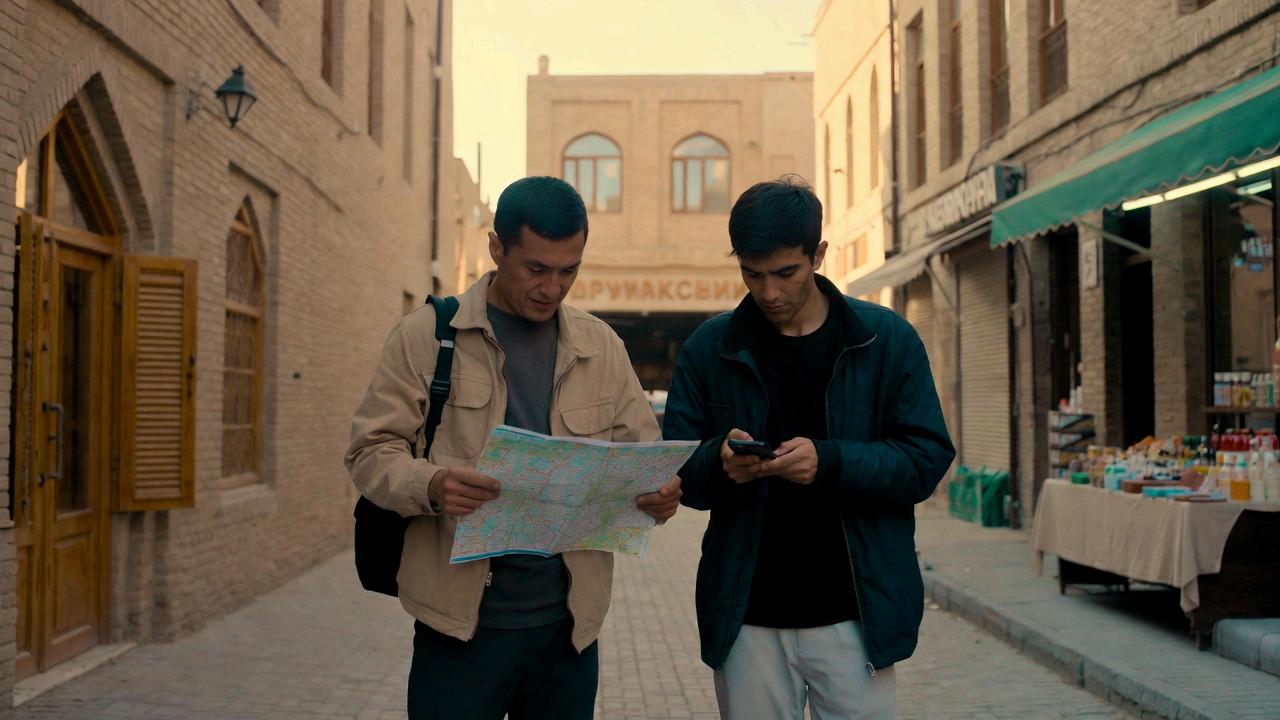
Traveler reactions to architecture and atmosphere in Uzbekistan.
When itineraries are designed around rail, reviews are typically more positive. Travelers appreciate reduced stress compared with long road transfers, especially on major tourist corridors. Predictable movement supports better pacing, and people often report feeling that they spent more time experiencing places and less time managing uncertainty. Review sentiment is especially strong among travelers who compare the route quality with assumptions they had before arrival.
That said, positive rail feedback is highest when people still build time buffers.Travelers who over-stack activities immediately after arrivals sometimes create avoidable pressure.The strongest reviews usually come from itineraries that treat transfer windows realistically and preserve one flexible block per city
5. Value-for-Experience Ratio Is Frequently Rated High
Many 2025 reviewers describe Uzbekistan as high value relative to experience intensity They feel they received substantial cultural depth, visual impact, and hospitality for their total trip cost.This does not mean everything is cheap or that premium services are low cost. Rather, it means travelers often perceive that what they experienced was worth more than what they expected to spend. That perception is powerful and contributes to strong recommendation behavior
Positive value reviews are particularly common among travelers who book a mix of structured services and independent exploration. They control core logistics while preserving space for local discovery, which improves both budget efficiency and emotional payoff.
Most Common Cons in 2025 Reviews
1. Service Consistency Can Vary by City and Price Tier
One of the most repeated criticisms in 2025 is uneven consistency.Travelers describe great service in one hotel and underwhelming clarity in another within the same city category. Similar variability appears in guiding quality, restaurant communication, and
check-in efficiency.This is less a sign of destination weakness and more a sign of fast growth under uneven standardization.
In reviews, this issue is often manageable with better provider selection. Travelers who choose services through detailed recent feedback tend to report fewer surprises. People relying on generic assumptions about star category or brand name alone are more likely to encounter mismatch between expectation and delivery
2. Language Gaps StillAffect Some Interactions
Language comfort has improved in major tourism corridors, but 2025 reviews still note communication gaps in specific contexts: transport details, special dietary requests, problem resolution, and nuanced historical explanation. Most travelers do not frame this as a major barrier. However, they do mention that small misunderstandings can accumulate and impact perceived smoothness.
Travelers who prepare offline translation tools, written destination notes, and key local phrases report fewer issues. Review patterns suggest this is a solvable friction point rather than a structural deterrent.
3. Overly Tight Itineraries Produce Negative Reviews
Asignificant share of mixed or negative reviews can be traced to pace overload. Visitors attempting too many cities in too few days often report fatigue, reduced enjoyment, and logistical stress.They may still praise sites but describe the overall trip as exhausting. This is one of the clearest examples where review sentiment reflects planning style as much as destination quality
In 2025, successful itineraries usually prioritize depth over coverage. Two nights in key cities, realistic transfer windows, and one rest-flex segment consistently correlate with stronger feedback. Reviews repeatedly indicate that Uzbekistan rewards slower sequencing.
4. Payment and Digital ExpectationsAre NotAlways
Another recurring issue in reviews is digital expectation mismatch. Travelers coming from highly app-integrated environments sometimes expect uniform payment and platform behavior across all service points. In practice, experience can vary by location and provider. While this is improving, comments in 2025 still mention moments where a backup payment method or cash option would have reduced stress.
This does not usually create trip-level failure, but it affects comfort perception. Reviews from experienced travelers often include practical advice: diversify payment options, confirm terms in advance, and keep a small contingency buffer for unplanned transactions.
5. Weather and SeasonalAssumptions Cause Surprise
Several reviews indicate that travelers underestimate seasonal intensity, especially when walking-heavy days are planned without midday adjustment. This affects mood, pacing, and sometimes health comfort. In regions where open-space sightseeing is central, weather strategy is not optional. High-performing itineraries in 2025 explicitly schedule morning and late-day blocks with midday recovery, hydration, and indoor components.
When visitors account for climate realities, review satisfaction rises sharply This is another case where practical planning converts potential negatives into manageable variables.
First-time heritage travelers usually rate visual impact very highly and may underprepare for pacing.Their best reviews mention emotional surprise and strong guiding quality.Their weaker reviews often mention trip compression. Independent travelers typically appreciate flexibility and authenticity, but they are more sensitive to communication and micro-logistics gaps. Family travelers value hospitality and city walkability, while highlighting the need for balanced activity intensity Photographyfocused travelers usually produce very positive reviews if they time visits around light and crowd flow
Higher-budget travelers praise customization and comfort when service selection is careful, but they also report stronger dissatisfaction when premium expectations are not met consistently Budget travelers often report excellent value and meaningful interactions, while noting occasional transport and convenience tradeoffs.Across segments, the same conclusion appears: Uzbekistan performs best when itinerary design is intentional and adaptive.
How to Convert Review Lessons into Better
Trips
Based on 2025 feedback patterns, five practical actions can materially improve outcomes. First, reduce destination count and increase overnight depth. Second, choose providers using recent review detail rather than star labels alone. Third, build time buffers around transfers and check-ins. Fourth, prepare for communication with translation tools and written destination notes. Fifth, align daily schedules with climate realities.These adjustments are simple, but they directly address the most repeated pain points in review ecosystems.
Travelers who apply these principles usually report a ?high reward, low friction? version of Uzbekistan.They still encounter occasional unpredictability, but they frame it as part of travel texture rather than failure. That framing difference often determines whether a review is enthusiastic or mixed. In other words, the destination already provides strong intrinsic value; planning quality determines how much of that value becomes visible during your actual trip.
Outlook: Will Reviews Improve in 2026?
If current trends continue, review quality in 2026 is likely to strengthen further, especially in service consistency and digital clarity.The demand profile is becoming more diverse, and destination stakeholders increasingly understand that growth now depends on reliability as much as attraction value. For travelers, this means the upside remains high, while predictable friction points may become easier to manage. The most realistic expectation is not ?perfect convenience,? but ?improving convenience with exceptional cultural payoff.?
That is a strong position for a destination. Uzbekistan in 2025 already demonstrates high memory value, repeat potential, and recommendation momentum.As practical systems improve, the ratio of positive to mixed reviews should continue to rise.
Travelers who arrive with informed expectations are likely to remain the most satisfied group, and their review narratives will continue to shape demand through 2026.
Conclusion
Tourist reviews about Uzbekistan in 2025 present a clear message: the country offers extraordinary cultural and emotional rewards, with manageable operational challenges. The pros are substantial and repeated across traveler types: architecture, atmosphere, hospitality, cuisine, and value-for-experience. The cons are real but mostly practical: service variability, communication gaps, pace overload, and expectation mismatches around convenience layers. None of these negatives negate destination quality They simply demand better preparation.
For prospective travelers, the implication is positive. You do not need a perfect system to have an exceptional trip. You need a realistic plan. If you build your route with depth, flexibility, and context, Uzbekistan is likely to exceed expectations. If you over-compress and assume fully standardized convenience, you may still love the sites but feel avoidable stress. Reviews in 2025 show both outcomes clearly.The good news is that the better outcome is highly achievable, and that is exactly why Uzbekistan remains one of the most compelling destinations in the region right now.
Relevant Links
https://aba.travel
Wikipedia:Tourism in Uzbekistan
Government of Uzbekistan: Useful Travel Information