Smarter Medicine for Every Patient: How Personalization is Changing
Pharmacy Care by
Shafaat Pirani
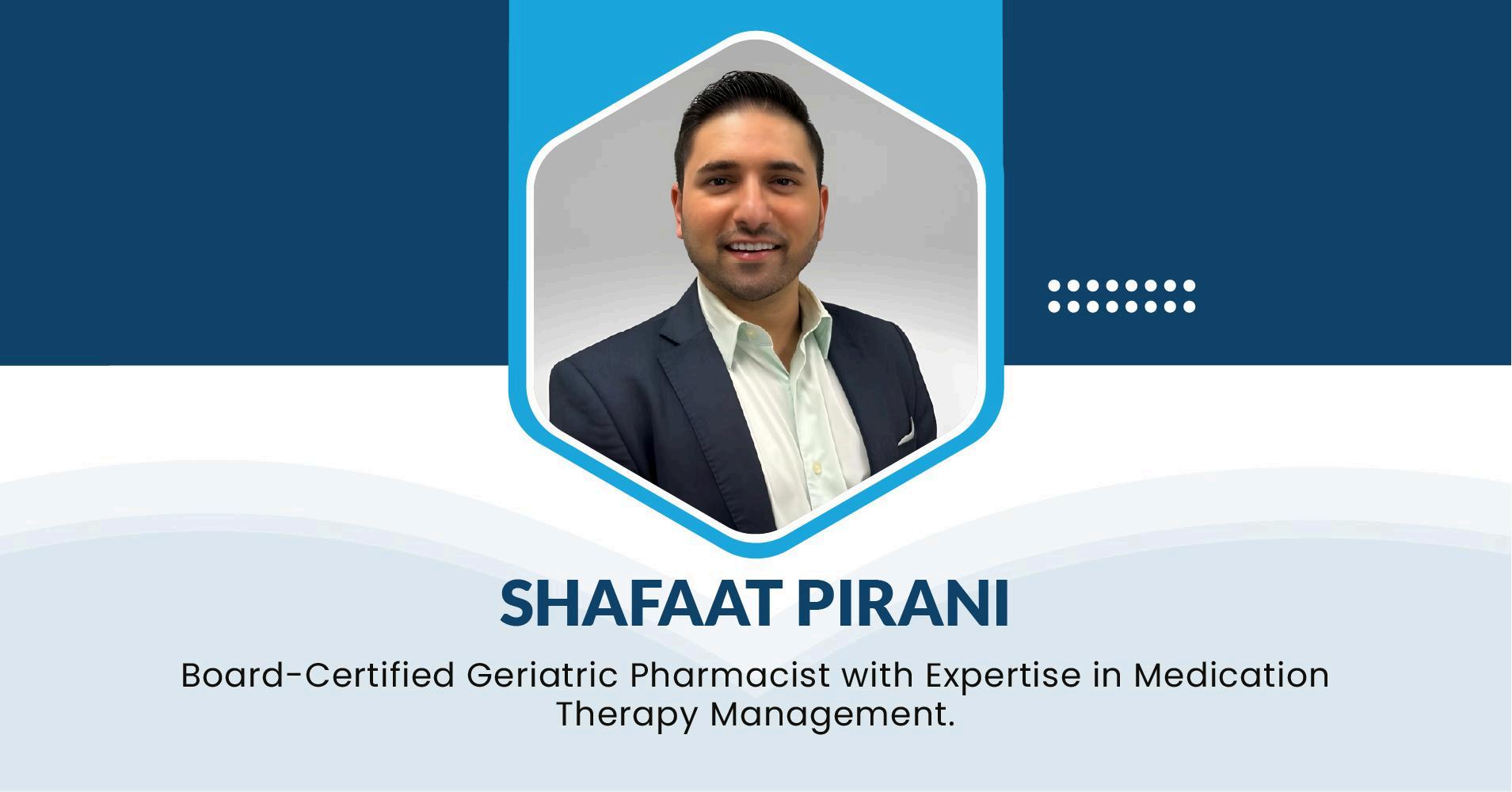
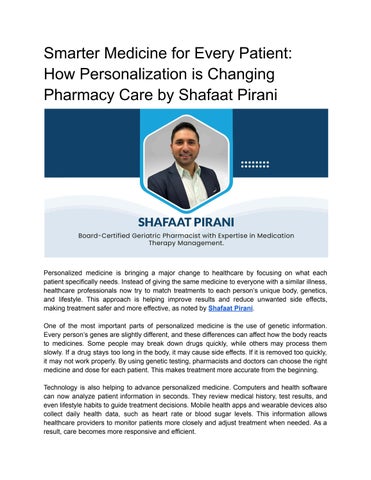
Personalized medicine is bringing a major change to healthcare by focusing on what each patient specifically needs Instead of giving the same medicine to everyone with a similar illness, healthcare professionals now try to match treatments to each person’s unique body, genetics, and lifestyle. This approach is helping improve results and reduce unwanted side effects, making treatment safer and more effective, as noted by Shafaat Pirani
One of the most important parts of personalized medicine is the use of genetic information Every person’s genes are slightly different, and these differences can affect how the body reacts to medicines. Some people may break down drugs quickly, while others may process them slowly If a drug stays too long in the body, it may cause side effects If it is removed too quickly, it may not work properly By using genetic testing, pharmacists and doctors can choose the right medicine and dose for each patient. This makes treatment more accurate from the beginning.
Technology is also helping to advance personalized medicine Computers and health software can now analyze patient information in seconds. They review medical history, test results, and even lifestyle habits to guide treatment decisions Mobile health apps and wearable devices also collect daily health data, such as heart rate or blood sugar levels. This information allows healthcare providers to monitor patients more closely and adjust treatment when needed As a result, care becomes more responsive and efficient
Pharmacists are playing a bigger role in this new system. They are no longer solely responsible for dispensing medications Today, they help doctors understand patient data and suggest better treatment options. They also explain to patients how their personalized treatments work and how to use their medicines correctly. This helps patients feel more confident and improves overall health outcomes
Education in pharmacy is also changing to support this shift Students are now learning about genetics, digital health tools, and data analysis These skills prepare them for a future where personalized medicine will be a normal part of healthcare. As a result, new pharmacists will be more involved in decision-making and patient care than ever before
Even though personalized medicine offers many benefits, it still faces challenges. Advanced testing can be expensive, and not all healthcare systems can easily provide it There are also concerns about the privacy and security of genetic data. However, as technology improves and becomes more affordable, more people are expected to benefit from this type of care
Personalized medicine is making healthcare more precise and patient-focused. It helps doctors and pharmacists choose better treatments, improves safety, and supports faster recovery This new approach is shaping the future of pharmacy and modern medicine in a very positive way