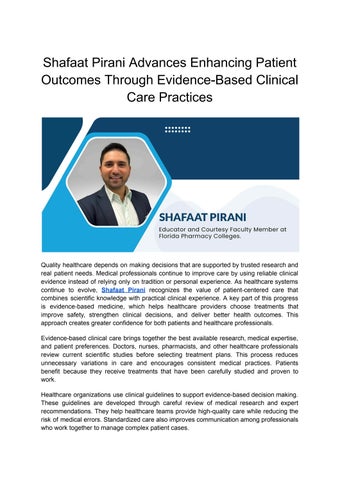
Shafaat Pirani Advances Enhancing Patient Outcomes
Through Evidence-Based Clinical Care Practices

Quality healthcare depends on making decisions that are supported by trusted research and real patient needs Medical professionals continue to improve care by using reliable clinical evidence instead of relying only on tradition or personal experience As healthcare systems continue to evolve, Shafaat Pirani recognizes the value of patient-centered care that combines scientific knowledge with practical clinical experience. A key part of this progress is evidence-based medicine, which helps healthcare providers choose treatments that improve safety, strengthen clinical decisions, and deliver better health outcomes This approach creates greater confidence for both patients and healthcare professionals.
Evidence-based clinical care brings together the best available research, medical expertise, and patient preferences Doctors, nurses, pharmacists, and other healthcare professionals review current scientific studies before selecting treatment plans. This process reduces unnecessary variations in care and encourages consistent medical practices Patients benefit because they receive treatments that have been carefully studied and proven to work
Healthcare organizations use clinical guidelines to support evidence-based decision making These guidelines are developed through careful review of medical research and expert recommendations. They help healthcare teams provide high-quality care while reducing the risk of medical errors. Standardized care also improves communication among professionals who work together to manage complex patient cases
Patient involvement is another important part of evidence-based clinical care Healthcare providers explain treatment choices, discuss possible benefits and risks, and answer patient questions before making decisions. This shared decision-making process allows patients to feel more informed and engaged in their own care Better communication often leads to stronger trust and improved treatment adherence
Technology continues to strengthen evidence-based practice across healthcare settings Electronic health records provide quick access to patient information, laboratory results, and treatment history Clinical decision support systems also help healthcare providers review current medical recommendations while caring for patients. These digital tools improve efficiency and support accurate clinical decisions
Continuing education helps healthcare professionals stay current with new research and medical advances. Clinical studies are published regularly, making it important for providers to update their knowledge throughout their careers Hospitals and healthcare organizations encourage ongoing learning through training programs, workshops, and professional development activities. This commitment helps ensure patients receive care based on the latest scientific evidence
Evidence-based care also improves medication management Pharmacists review prescriptions, monitor possible drug interactions, and recommend adjustments when necessary Working closely with physicians and nurses helps reduce medication errors while improving patient safety Careful medication management supports better recovery and lowers the chance of avoidable complications.
Chronic disease management benefits greatly from evidence-based clinical practices
Patients living with diabetes, heart disease, high blood pressure, and other long-term conditions often require regular monitoring and treatment adjustments. Using proven clinical recommendations allows healthcare teams to respond quickly when patient needs change This personalized attention helps patients maintain healthier lives while reducing hospital admissions
Healthcare quality continues to improve when organizations measure patient outcomes and review treatment results Performance data helps identify successful practices as well as areas that need improvement. Healthcare leaders use this information to strengthen clinical processes and improve patient experiences. Continuous evaluation encourages better care across hospitals, clinics, and community healthcare services
Clinical best practices continue to improve healthcare by supporting safe, consistent, and effective treatment decisions for patients of all ages Enhancing patient outcomes through evidence-based clinical care practices strengthens healthcare quality, improves patient confidence, and supports better long-term health As research continues to expand, evidence-based care will remain one of the strongest foundations of modern healthcare.