
Storytelling is a powerful tool to foster connection and deepen learning. It allows us to see one another more fully—and to better understand the community we are building together.
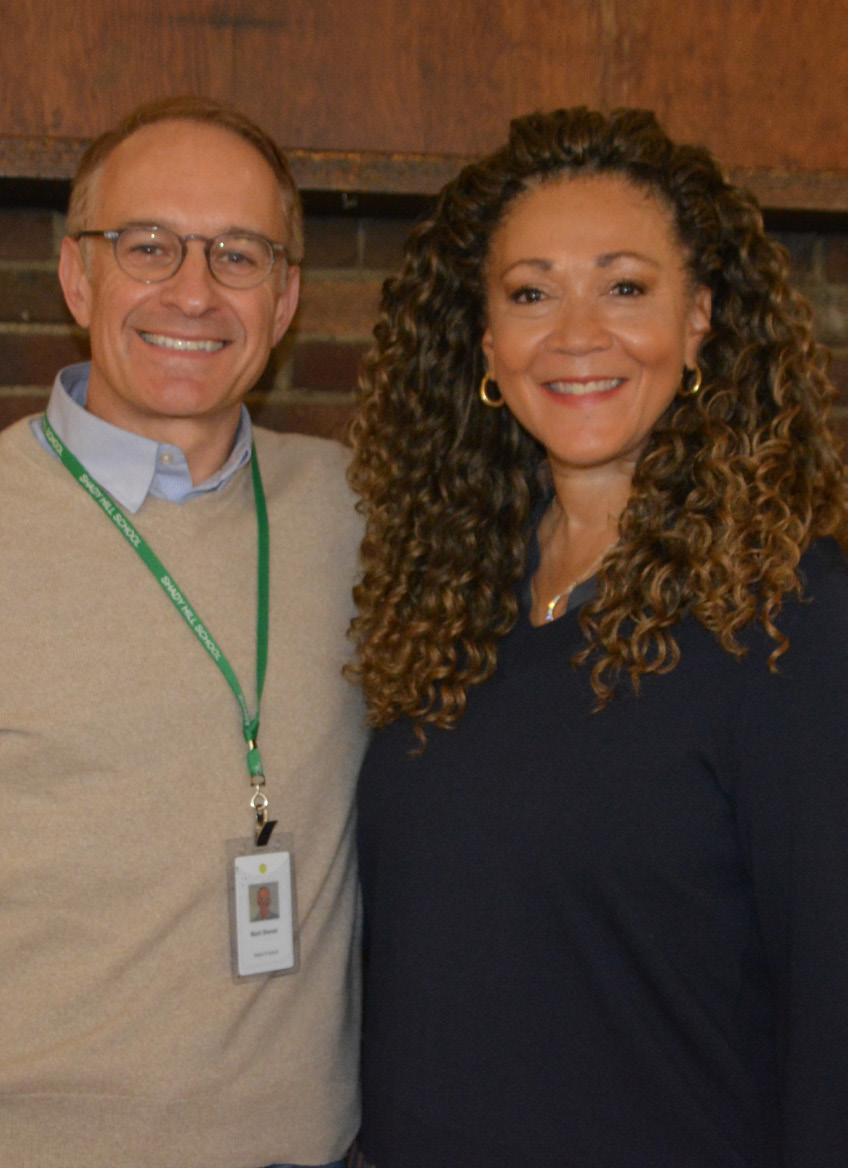
Last March, we invited Michele Norris and Melissa Beard to lead a professional development workshop for our employees, based on Norris’ recent book Our Hidden Conversations: What Americans Really Think About Race and Identity. Through six-word stories written by people across the country, we explored how even the briefest narratives can reveal identity, experience, and truth. That experience prompted us to reflect on our own stories and challenged us to consider how we might deepen our understanding of every adult in the Shady Hill community.
One result of that reflection was the launch of a shadowing project, where employees in different roles spent a day walking alongside one another to gain insight into the work that supports our students each day. At our April professional development day, colleagues shared their experiences—expressing new appreciation for the diverse roles and contributions that together create an extraordinary experience for our students.
As we continued to strengthen relationships and community, our summer reading, How to Know a Person by David Brooks, further shaped our thinking. We began the school year in professional learning groups, sharing reflections and building stronger working relationships. In collaboration with our Equity Team, Division Heads developed a storytelling project that invited employees to reflect on and share an identity story with the broader community during our December professional development day.
As David Brooks writes, “Perhaps to really know another person, you have to have a glimmer of how they experience the world. To really know someone, you have to know how they know you.” These moments of storytelling allowed us to glimpse one another’s worlds—and, in doing so, strengthened our sense of trust, belonging, and connection.
Why spend so much time on storytelling? Because when individuals feel seen, known, and valued for their lived experiences, they feel a sense of belonging— and with that comes a deeper commitment to contributing their best to the community. This belief guides not only how we work together as adults, but also how we teach and support our students each day.
I hope you will enjoy the updates that follow in this State of the School. They are part of Shady Hill School’s ongoing story—and reflect our shared commitment to fostering ethical citizens, critical thinkers, and creative changemakers for tomorrow.
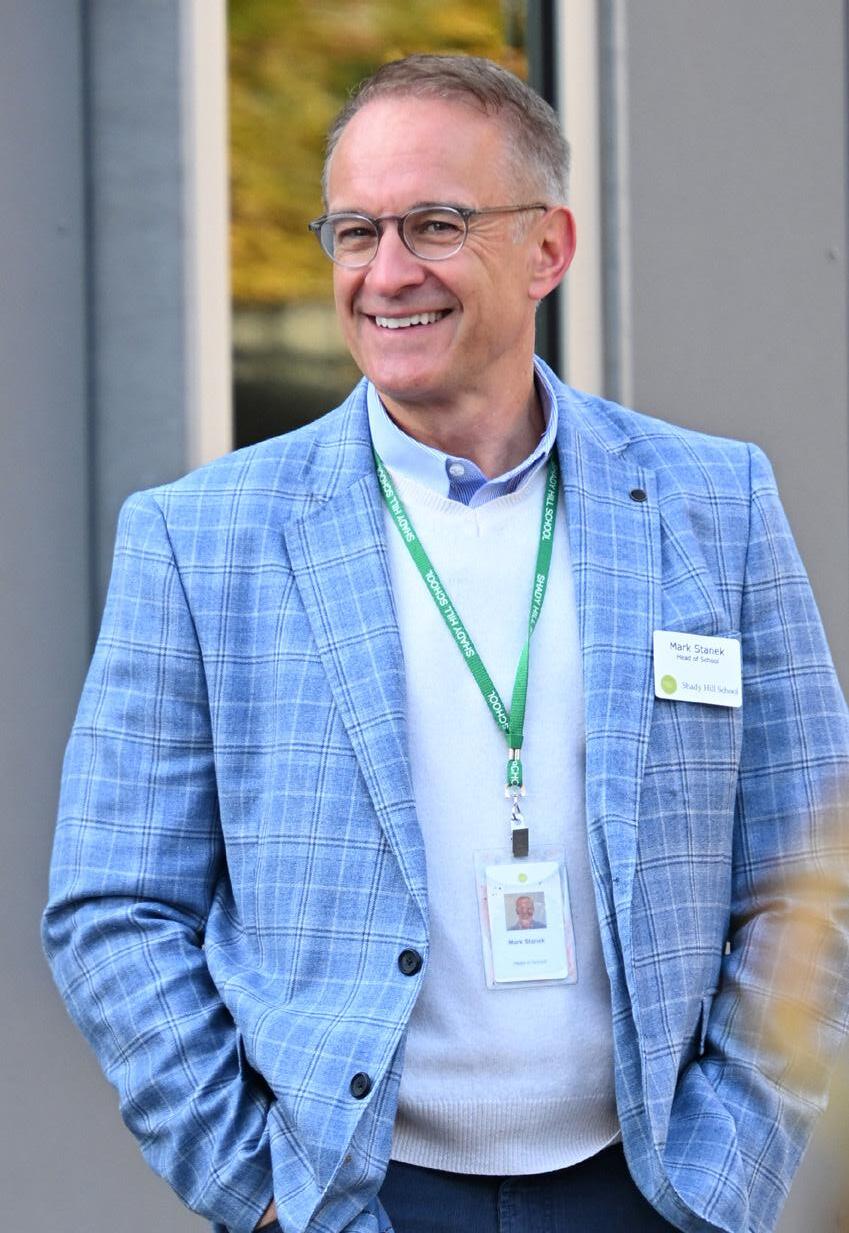
Warmly, Mark
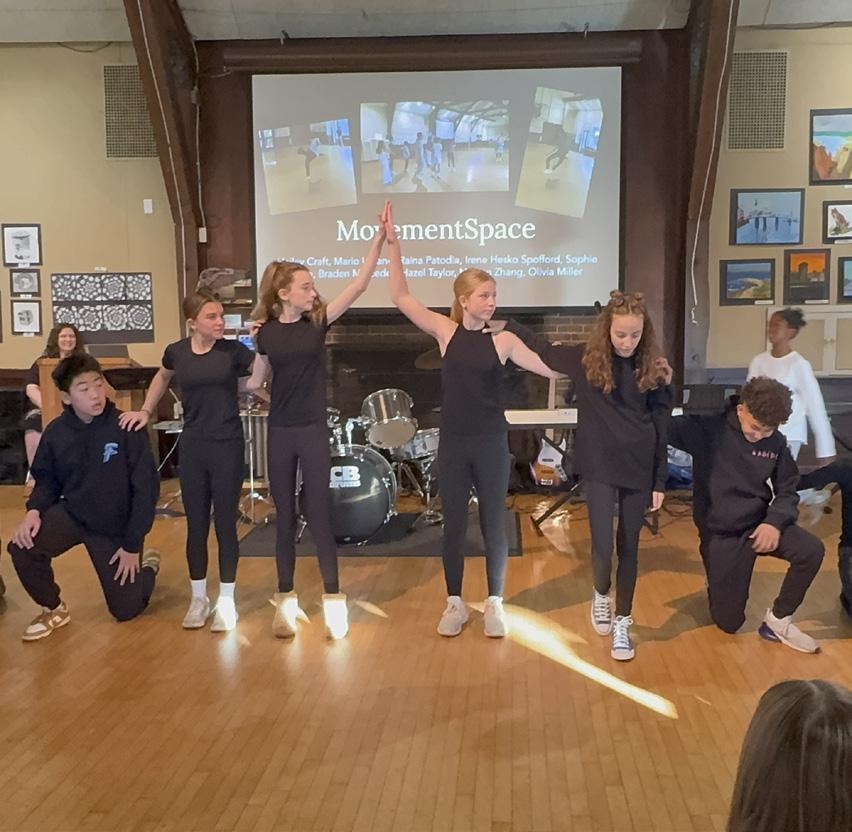
Assembly Hall buzzes with community, music, performances, and joyful, active learning. A fly on the wall has a front-row seat to it all—imagine the stories it could tell.

Mr. Nunez hugs Nile the whale, a lifesize inflatable humpback that takes Grade III’s Thematic Study to the next level.
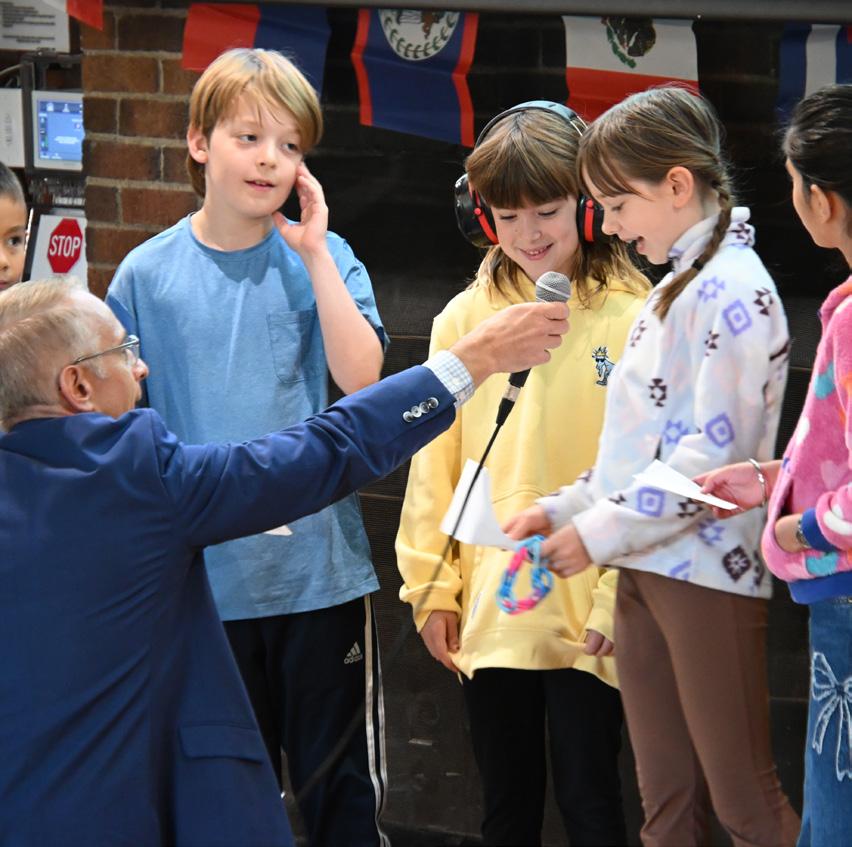
Visiting Artist Ada-Ari and Grade VI Gradehead Craig Morgan TTC ‘19 at Lower School Assembly. Ada-Ari is an author that promotes diversity and inclusion in children’s literature.
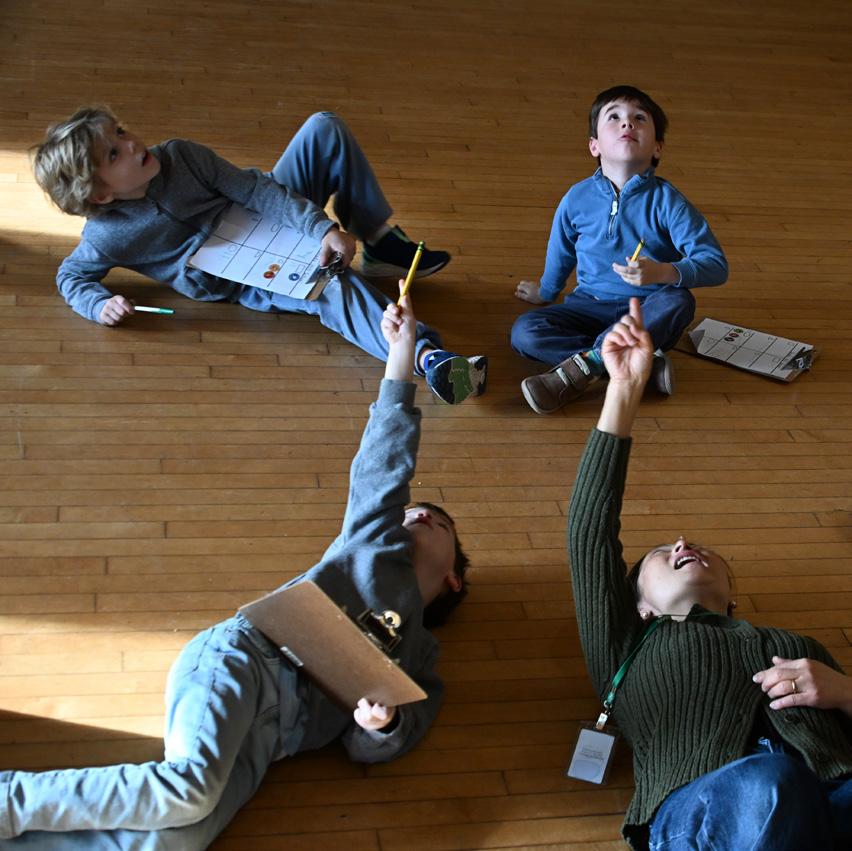
Kindergarteners search for shapes in Assembly Hall with the help of Kindergarten Gradehead, Ms. Choi ’22.

We welcomed several new administrators to the Shady Hill family this year and asked them what surprised them about their new position.
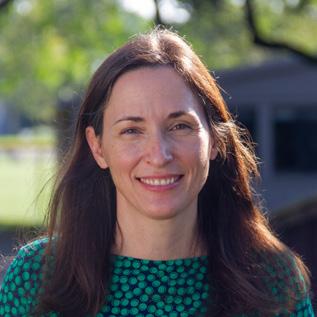
The first is new Lower School Head Katherine Hesko TTC ’08. Katherine has been an integral part of the Shady Hill community since 2010, as a parent, Grade VI Gradehead, and Dean of Faculty, before being named Lower School Head.
“The most surprising part about being the new Lower School head is how connected I feel to the students. I love stepping over fourth graders playing chess outside my office, to find third graders waiting for me inside to talk about clubs and surprise parties. Sometimes it takes me a long time to walk across campus because Beginners and Kindergarteners stop to give me hugs!”
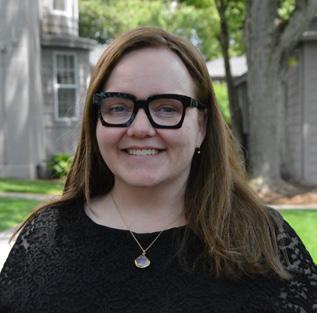
Lucy Pelham, our new Dean of Strategic Enrollment Management and Financial Aid came to Shady Hill after heading up the admission department at the International School of Boston (PreK12) where she recruited international and domestic families for the prior six years. She also worked for eleven years in the Admission Office at Wellesley College.
“Since joining Shady Hill, my understanding and appreciation for how SHS students gain a competitive high school academic advantage via the Central Subject curriculum has only deepened. SHS Students’ excitement and intellectual curiosity for their studies is inspiring!”
Shady Hill is financially well-positioned with a strong endowment and a solid show of annual fund support. At the end of the previous fiscal year, June 20, 2025, the Endowment was valued at $77.6M, of which supports 9% of the School’s annual operating budget, and Shady Hill Fund support contributed 7% of or nearly $2.09M to the operating budget. Strategic Investments from donors allow Shady Hill teachers and students to focus on the pace of childhood and the joy of learning.
This solid financial foundation allows Shady Hill to develop its philanthropic program and look to strategic opportunities. Steady annual fund support will always be a priority alongside directed gifts to the endowment, and mission-aligned capital projects.
Most independent schools embark on large scale campaigns every five years. Shady Hill is not alone in committing resources to improve the school’s infrastructure for students in transformational ways.
Over the past ten years, Shady Hill has completed fundraising campaigns, raising nearly $15M for The Hub, Grade VI
Heather Woodcock, TTC ’94, returned to Shady Hill to become Assistant Director of Lower School at the beginning of this school year. Heather graduated from the Teacher Training Center in 1994 before serving as a Grade VII Gradehead at Shady Hill for many years. Heather is also a parent of alums with two children who attended Shady Hill from Beginners through Grade VIII.
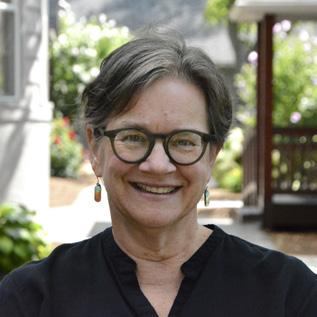
“I am surprised by how much this place continues to fill my bucket day after day. It’s the simple joys like conversations with our students about what they’re building, what they’re playing, what they’re thinking at any moment.”
Building and two Lower School Playgrounds. All these projects enhanced the academic and programmatic needs of Shady Hill’s mission.
As we think to the future, the evolution of Shady Hill’s fundraising program encourages building strong donor
During the 2022-23 school year, a steering committee of Board members, faculty, administration, alumni and parents led an engagement process with all constituents to hear their thoughts on Shady Hill’s priorities for the future. The result of this exercise became Shady Hill Strong - Shady Hill’s current strategic plan. The three priorities are listed below with an update on what action has been taken to support these goals.
Strengthen the Academic Program
• Continue to refine scope and sequence of skills and content
• Conducted an official review of Learning Resources
• Appointed a new Central Subject chair to work with Middle School Gradeheads to reflect upon writing
• Invested in Middle School clubs and a progression of Middle School trips
• Added visual arts and storytelling to Lower School
Reimagine the Employee Journey
• Established the Designing Solutions Working Group to look at the structure of SHS and build understanding and empathy for others jobs and responsibilities
• Created the Shadow Project where employees shadow each other for a day to learn the challenges and joys of their position
• Employee survey showed positive growth with employee moral, trust and connection
Reinvigorate our Community
• Hosted a Parents Arts Night where parents were invited to take classes with Shady Hill studio space teachers in woodshop, ceramics, Makerspace, and textiles
• Continuing to foster a sense of belonging
• Lunch offered as an option in Middle School and a pilot in Grades III and IV to help alleviate time and tasks off families’ plates
• Hosting a Town Hall to build connection and communication
In addition we have been reflecting on security measures for students, employees and parents. We also continue to explore options to support our students’ experience in Performing Arts and Central Subject with a vision for a flexible multipurpose space in the future. Stay tuned!
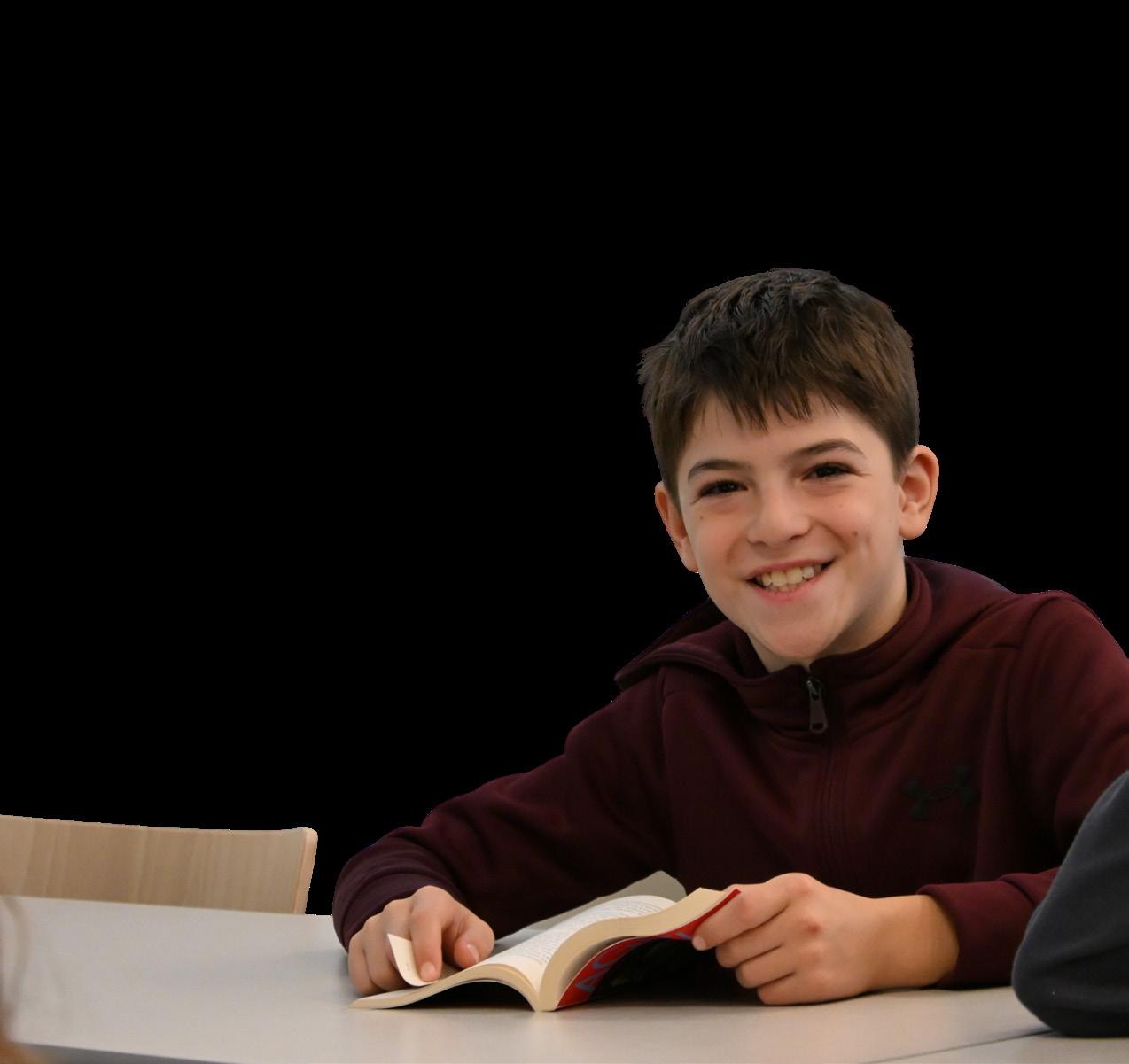
On a chilly Friday in November, there was a quiet kind of excitement as students and adults arrived in their coziest pajamas, slippers, and fuzzy socks for the newly revived and much-anticipated All-School Read and Pajama Day. Reading and storytelling have long been integral to life at Shady Hill, and for many years the entire school dropped everything for one hour to gather, settle, and sink into reading together. Unfortunately, COVID got in the way, but this year, with the library team’s leadership, we brought back this beloved school wide tradition.
In the Lower School, lights were dimmed in the Assembly Hall, pillows and blankets were spread and stuffed animals listened attentively. Ms. Woodcock TTC ’94 read the poem “I Opened a Book” by Juila Donaldson, which Ms.Hesko TTC ’08 followed with the cautionary poem “Television” by Roald Dahl. Teacher K shared the book “Billy Jean Peet, Athlete” by Andrea Beaty and Mr. Amoroso brought his incredible voice to “The Pink Refrigerator” by Tim Egan. At the end of this story, we opened up a pink fridge which was nearby to find lots of books hidden inside. Students then curled up to read to themselves or in small groups.
Meanwhile, in the Library and gym, the only sound you could hear was the crackle of a (digital) fireplace. Older lower and middle school students, along with adults from all over the school sunk into books and sustained silent reading. The Student Board Inclusion committee had provided a table of their favorite books that highlighted messages or themes of inclusion. Everyone left peacefully talking about what book they were reading and giving recommendations to peers and teachers.
This January, we dreamt up an idea alongside the Parent Council to host a Parents’ Arts Night, where our parent community was invited to attend one of six classes on a Thursday evening: Woodshop with Ms. Alexander or Ms. Sorblom, Textiles with Ms. Koerber TTC ’94, Ceramics with Mr. Geotchius ’76, TTC ’86, Music with Mr. Goulet, or Makerspace with Ms. Bratzel. The evening was a hit - and we were reminded that fostering an environment of lifelong learning through doing is the foundation of the work we do at Shady Hill.
This year, we decided to jump headfirst into this mindset. We have centered our Lower School and Middle School professional development on examining the story of a student at Shady Hill. We believe that the intentionality and design that our faculty put into each student project is not only beneficial for our students but also opens up our eyes as educators and learners. We are invited to become critical thinkers, problem solvers, and active participants as we dive into numerous hands-on activities.
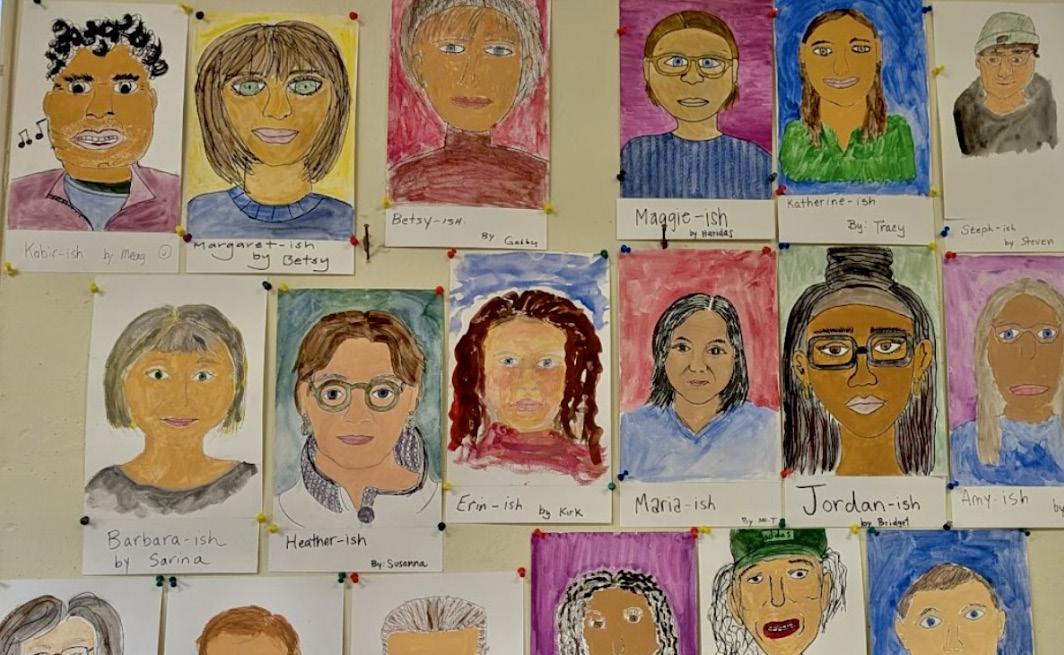
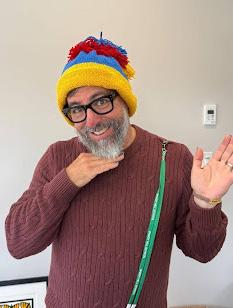
Like our youngest students, we have crafted puppets to explore three dimensional selfportraiture. We have played on the playground to examine what it feels like during recess, and to think about how it strengthens our oversight as teachers on recess duty. We have created wooden creatures out of found materials, exploring creativity and resourcefulness. We have learned to knit hats, mimicking the experience that each fifth grader goes through. Recently, we painted ish portraits, turning our lens outward to paint a portrait of a colleague that involved being in conversation around identity.
Our entire faculty and staff were invited to participate in an identity storytelling project as we explored Connection Through Storytelling - a collection of meaningful moments written by our adult community, which explored important parts of our identity. As our faculty and staff wrote about impactful moments from their childhood, past educational experiences, moments in other cities or countries, or close relationships with family members, we learned not only about them but also about ourselves. We explored the windows and mirrors that existed in the stories, as well as reflected on the process of writing a story. As we dove into this project, one that our middle schoolers also completed this fall, we went through the various stages of learning. What does it mean to feel hesitant to tell a story? What if you can’t come up with an idea? What does it feel like to write a hook? How do you narrow down a topic or expand on one that you haven’t thought of in a while? How do you quietly focus for 45 minutes? Why does it feel so vulnerable reading work aloud?
The experiences this year have underscored that the best teachers live through the curriculum with their students because we are learning alongside them. All of the curricula that we have participated in this year have been designed, refined, and taught by our faculty. Shady Hill faculty do not use textbooks; we create all of our own curriculum, and we work tirelessly to write our own story. Thus, it’s fun, important, and successful when we’re not just delivering it to the students, but we are living it ourselves.