































SHAWN
SHAWN
• You'll never have to worry about your teeth slipping or falling out
• No need for adhesive
• Eat and smile like you have had these teeth for your whole life

• Prevent bone loss and gum recession while preserving the jawbone and maintain a more youthful facial structure
• An investment that can last a lifetime
• Increased chewing capacity—eat foods like apples, steak, corn on the cob, and more
• Same day full-arch restoration with only four implants
• No more traditional dentures & no more denture sores
• Easy to clean and care for
TEETH-IN-A-DAY ALL-ON-4© Scan the QR code to schedule your appointment with us today!

















Istill have my old fly rod. A Fenwick. Nothing fancy. Not even close to the top of the line when I bought it and definitely not now. The cork is worn smooth from years of use, and the reel has a soft rattle if you shake it just right. If you lined it up next to the new gear you see today, it would get overlooked in about two seconds.
But that rod might be one of the best investments I ever made, because it taught me patience: not the kind you talk about but the kind you earn.
I picked up fly fishing in high school. Summers were spent working construction: long days in the heat, learning how to work with my hands and earn a paycheck. One of the guys I worked with introduced me to fly fishing, took me out a few times, showed me the basics, then let me figure the rest out.

This was before the internet. No quick videos. No step-by-step tutorials. If I wanted to learn, I had to go to the library, study diagrams, and then go make a mess of it on the water. And I did, over and over again.
I remember taking one full paycheck, plus some savings, and going all in: rod and reel, float tube, waders, boxes of flies, and tools I barely knew how to use. I even bought a fly-tying kit that I still have today, sitting in a drawer like a reminder of how little I knew and how all in I was anyway. I thought I was ready. I wasn’t.
Pine Valley is where things started to click. That’s where I learned how to move slowly, approach a stream without sending ripples across the water, and stretch out a long cast without snapping the line like a whip. Every mistake showed up immediately. Move too fast, and the fish disappeared. Get sloppy, and the line tangled. Rush it, and nothing happened. So I had to adjust, every single time.
Kolob was a different classroom: colder water, deeper water, less forgiving. That’s where I learned the art of fishing from a float tube, sitting low on the water, kicking slowly, working a wooly bugger with a prince nymph trailing behind.
Cast. Strip. Pause.
Cast. Strip. Pause.
That pause felt like forever. But that’s where everything happened.
Here’s what most people never realize: fly fishing is not about doing more. It’s about doing less but doing it better. It’s about slowing down enough to notice what’s working and trusting your setup, your technique, and your approach. Because the moment you try to force it, you lose it.
That lesson doesn’t stay on the water. It follows you into everything, because life works the same way. Whether you’re trying to improve your health, build strength, reduce stress, grow your business, or become a better version of yourself, the temptation is always the same: speed it up, push harder, get results now.
Real progress rarely works that way. It happens in the quiet, in the repetition, in the days when nothing seems to change but something is happening beneath the surface. Just like that line drifting through the water, results are often closer than you think. You just haven’t given yourself enough time.
If you’re feeling stuck, here are a few things worth remembering:
• Slow down enough to actually see what you’re doing.
• Focus on consistency instead of intensity.
• Give your efforts time before deciding they aren’t working
• Trust that small actions, repeated over time, add up.

As you read through this issue of Southern Utah Health and Wellness, you’ll find ideas, tools, and stories to help you improve your life. Some will challenge you. Some will resonate right away. Others may settle in quietly, revealing their value over time.
Take what you learn, apply it, and give it time to work. Because just like that line drifting through the water, the right habits, mindset, and decisions will eventually connect. You just have to stay with it long enough.
Brendan Dalley, Editor















Laci Wall - Life Integrated
Trish DeMarcus - Elemental DNA & Detox
Diane Del Toro - Southern Utah Health & Wellness Magazine
Shannon Mondry - Mondry Design
Tyson Koford - Found Local Marketing
Konner Taylor - Digital Intern
Brad Gillman, Media Manager, IHC Desert Region
Dr. Gavin Hall, Straight Up Health & Wellness
Lexi Hughs, Utah Tech University
Richard Preston, Preston Office Solutions
Dr. Taylor Hutchins, Southwest Vision
Sally White, American Family Insurance


For information on how to contribute or advertise with us, visit our website at www.SUHealthAndWellness.com, email connect@SUHealthAndWellness.com or call us at (435) 236-2966.




s we welcome the warmth of late spring and early summer, there is a palpable energy returning to St. George. It’s a time when our parks, trails, and historic streets come alive.
At the heart of this vibrancy is our theme for this season: Community Connections.
In the City of St. George, we believe that community gatherings are the lifeblood of a thriving city. They do more than just fill our calendars; they weave together the cultural, social, and economic threads that define our shared identity. Whether through fitness, the arts, or the celebration of our heritage, these events transform our city into a home where everyone feels a true sense of belonging.
The spirit of connection was recently on full display at the St. George Art Festival, which welcomed tens of thousands of people, residents and visitors alike, in a celebration of art and culture.
Looking ahead, we are already building excitement for our signature traditions. We are officially on the “Road to Fifty” for the St. George Marathon. This world-class event is celebrating five decades as the defining event of the fall season in St. George, and this year’s race promises to be bigger and better than ever before.
Add to that our thirty-seven-year sister-city partnership with Ibigawa, Japan, and it proves that our reach extends far beyond our borders, connecting us to friends across the globe.
Likewise, preparations are underway for Dixie Days in September, where we will honor our pioneer heritage through the Dixie Roundup Rodeo, Dinner on Main, the Dixie Days Festival, carnival, historical treks, golf tournament, and so much more!
I encourage you to step outside this summer and engage with your neighbors. Whether you are participating in a Mayor’s Walk, exploring a downtown gallery, or simply enjoying our stunning landscapes, remember that every interaction strengthens the fabric of our community.
To stay updated on all our summer festivities, please visit sgcityutah.gov. I look forward to seeing you all at an event real soon!
Mayor Jimmie Hughes
City of St. George





Dear Neighbors and Friends,
By Katie Walker
Throughout my first year serving as president at Utah Tech University, I have had the opportunity to listen, learn, and experience the heart behind this community. What has impressed me the most is the shared belief that Utah Tech is not only a place of higher education but also a catalyst for opportunity, innovation, and community strength.
In my time at Utah Tech, we have advanced our “active learning. active life.” approach to education in tangible ways. We reaffirmed our commitment to being Utah’s most affordable university while expanding meaningful, hands-on learning experiences that prepare students to graduate career-ready.
We have deepened partnerships with industry leaders to ensure our academic programs align with workforce needs and regional opportunities. In fact, we have reinforced our role as an economic engine for Southern Utah and continued to embed the university with local industry. We are also strengthening our partnerships with local school districts in Washington and Kane counties, reinforcing pathways for students through initiatives such as concurrent enrollment. Utah Tech is not just located in Southern Utah—we are part of it. Our students learn here, serve here, and build their futures here.
Specifically, we built new philanthropic partnerships in the past year, including a transformative seven million–dollar gift that is expanding educational opportunities, enhancing the student experience, and investing in the future of Southern Utah. Additionally, we opened the
General Classroom Building, which is full of collaborative spaces and serves as the cornerstone of a Utah Tech education.
While I am proud of what we have accomplished in one year, I am even more excited about what lies ahead. We are charting a meaningful path forward that prioritizes student success, academic excellence, and meaningful community impact.
I continue to marvel at what a special place Southern Utah is, and I know its strength and character come from the people who live here. Thank you for welcoming me so warmly and believing in the power of higher education to transform lives and strengthen communities. It is a privilege to serve as the president of Utah Tech University, and I look forward to continuing this important work together.
With gratitude and optimism,

Shane B. Smeed Utah Tech University President





























By Diane Del Toro
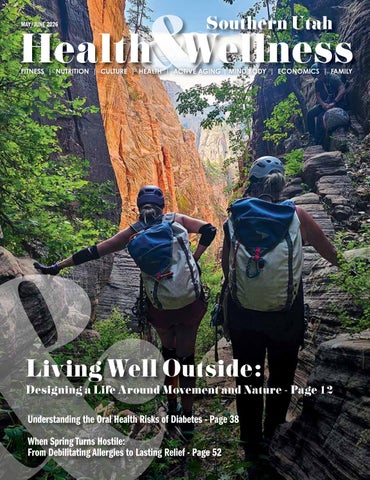
Some places invite you outdoors. Southern Utah insists on it.
rom the red rock cliffs that catch the first light of morning to the warm desert air that lingers long after sunset, this landscape calls people out of their homes and into something more expansive. And yet, for many of us, life still happens largely indoors—structured, scheduled, and often disconnected from the very environment that surrounds us.
One morning not long ago, I stepped outside before the day had fully begun. The air was still cool, and the world was hushed with that quiet that only seems to exist before sunrise. I stood there for a moment, looking at the red cliffs in front of my home as they slowly caught the light.
It struck me how rare that moment had become. Not the sunrise—it happens every day—but the act of noticing it: of being still long enough to feel the air and hear the silence. That morning, nothing dramatic happened, but something shifted. The day felt calmer. My thoughts felt clearer. And it made me wonder how many of us are missing something that simple just outside our doors.
What if wellness wasn’t something we pursued inside a gym, tracked on a device, or squeezed into a routine? What if it was something we lived, naturally and consistently, outside? That quiet morning was a reminder of something easy to overlook: we are meant to be

outside, not occasionally, but as part of the natural rhythm of our lives. It’s a way of living that doesn’t require dramatic change, only a shift in awareness.
This is the idea of living well outdoors—not as an extreme or an escape, but as an intentional return. A return to movement, sunlight, fresh air, and presence becoming part of our everyday rhythm. This doesn’t mean abandoning modern life or adding more to an already full schedule. Instead, it’s about rethinking what we already do: taking a walk instead of sitting, stepping outside for a few quiet minutes, or simply choosing to notice what’s around us. In a place like Southern Utah, the opportunity is always there. The question is whether we’re willing to step into it.
For years, health has been framed as something we “do”: we work out, we diet, we follow a plan. But outdoor living offers a subtle and powerful shift. Movement becomes less about discipline and more about participation. A walk through Snow Canyon isn’t just cardio; it’s connection. A morning stretch on the patio isn’t just mobility; it’s awareness. A weekend hike isn’t just exercise; it’s restoration. When you see movement as part of your life rather than separated from it, consistency follows naturally.
There is a reason people feel different outside, and it’s not just psychological. Natural light helps regulate circadian rhythms,
improving sleep and energy. Fresh air and open space reduce stress and support mental clarity. Uneven terrain—trails, rocks, sand—engages stabilizing muscles and improves balance in ways flat indoor surfaces cannot.
Beyond the physical benefits, there’s something harder to measure and easier to feel: perspective. Time outside quiets the noise. Problems soften and thoughts settle.
Designing an Outdoor Lifestyle
Living well outside starts with small, intentional shifts that reframe how and where you spend your time.
1. Start and End Your Day Outdoors
Morning light regulates your internal clock. Stepping outside within the first hour of waking can improve mood and focus. Evenings spent outdoors watching the sky change and feeling the temperature drop signal the body to slow down.
2. Make Movement Natural
Not every form of exercise needs to be structured. Walking, exploring a local trail, biking with family, or gardening provides meaningful activity. When movement feels enjoyable, it becomes something you return to again and again.
3. Create Outdoor Spaces at Home
Your environment shapes your habits. A chair on a porch, a shaded yard corner, or a small outdoor table can become an invitation to step outside. Morning coffee or tea, reading, or phone calls can move outdoors with just a bit of intention.
4. Embrace Seasonal Rhythms
Living in Southern Utah means learning to adapt. Early mornings and late evenings help with summer heat. Spring and fall invite longer adventures. Even winter offers quiet beauty. Working with the environment allows you to stay consistent year-round.
Physical benefits are significant, but many notice the greatest changes internally. Stress decreases. Patience increases. There is more space to think, process, and breathe.
Connection to Nature and Each Other
Two summers ago, my family camped for a few nights beneath the towering cliffs and starlit desert skies at Capitol Reef National Park. Because of a park-wide repaving project, all of the campgrounds within the park were closed except for the group site where we were staying. At night, after all of the daytime visitors had left the park, it felt as if the entire park had been set aside just for us. Quiet, expansive, and almost otherworldly, it was like stepping into our own private corner of some of the most beautiful scenery on earth.
My three oldest granddaughters were there. Two were preparing to return to college, and one was getting ready to leave for a two-year church mission. We all knew we would soon be separated for a long stretch of time, and there was a tenderness in that awareness.
One evening, just as the light began to fade, the four of us set out for a walk. The air had softened and the stillness around us felt
almost sacred. Not far along the trail, we came across deer grazing quietly, undisturbed by our presence.
Something about that place—the silence, the beauty, the sense that time had slowed—made it effortless for us to talk with each other and to listen more closely. For that stretch of trail, in that quiet and extraordinary setting, we felt deeply connected, held in a moment we all seemed to understand wouldn’t come again in quite the same way.
One of the most overlooked benefits of outdoor living is connection, not just to nature but to people. Walks become conversations. Hikes become shared experiences. Even sitting outside together without distraction creates space for presence.
Families who spend time outdoors often find that interaction feels easier and more natural. There is less pressure, fewer interruptions, and more opportunity to focus on relationship building. In a time when so much of life happens through screens, these moments matter more than ever.
Challenges of weather, time, or physical limitations are real, but living well outside doesn’t require perfection. Too hot? Shift timing. Too busy? Start small. Limited mobility? Fresh air alone helps. The goal isn’t to do everything; it’s to do something consistently.
In the end, outdoor living brings us back to ourselves: to slower mornings, to deeper breaths, to movement that feels good instead of forced, and to moments that are simple but somehow enough.
In Southern Utah, the opportunity is always there, just beyond the front door.










By Mark Wade
The thought of what lay ahead took the edge off the morning chill as I pulled on cold pants, a shirt, and shoes, then gathered some breakfast snacks for the road. My mind ran through a mental checklist of key items to bring: beanie, gloves, charged camera batteries, and an extra memory card—a sunrise photography preparation process I had gone through myriad times before. The heater in my trailer was just beginning to overcome the cold as I shut it down, fired up my truck, and departed my off-road campsite. Gravel crunched under the tires as I glanced toward sparse, low-lying clouds on the eastern horizon and the softening gray of the coming dawn. I raced down Highway 191 and turned toward the Island in the Sky plateau of Canyonlands National Park, which stretches southward in a vast erosional display shaped by the converging Green River on the west and the Colorado River on the east. Slowing for sharper turns, I kept an eye out for mule deer, which are more prone to dart in front of vehicles at this early hour.
Not far down the Island in the Sky main thoroughfare, a parking area appeared. While no other cars had been visible ahead or behind me, a few vehicles belonging to other intrepid dawn seekers already sat in some spaces. Fifty miles to the west, I could see the Henry Mountains, freshly lit by the sun, while closer, undulating hills were rapidly emerging from the shadows of the La Sal Mountains.
After a brisk seventy-five-yard walk up a slope and another two hundred yards around a bend, a scene unfolded: sunlight breaking over the rim of the La Sals illuminated the underbelly of Mesa Arch. A few onlookers spoke in reverent tones, quietly taking in the view through the arch to Washer Woman Tower, occasionally snapping pictures with smartphones and tripod-mounted advanced camera gear. A debate arose in my mind: take the picture or just enjoy the moment. I decided on both but found myself fighting the “enjoy the moment” side of the equation. How could I not capture what I was seeing? Fifty photographs later, many of the early onlookers had left, and I sat with a young couple from the Midwest who readily agreed to pose while looking out over the softly sunlit scene.
We talked about the Native Americans, ranchers, outlaws, and pioneers who were among the first to view what we now enjoyed. I imparted a few mostly-true yarns of the days of Utah yore. Not a breeze, bird, or other natural interruption brought any distraction. For a minute, our discussion of those historic human experiences added extra seasoning to our senses. Though other settings still awaited, this scene held us like a strong magnet, dissolving our will to walk away. The arch won the morning; our captivation was only released when the golden glow of sunrise eventually dissipated into the bright of day.




Mark





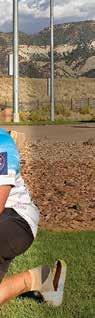


By Marianne Hamilton
They wear their identity proudly.
Emblazoned across T-shirts and tank tops at local sporting events are the words “Addict II Athlete.” Every single person wearing such apparel has a story. More specifically, a success story.
Addict II Athlete (AIIA) is a nonprofit organization founded by licensed mental health and substance use disorder counselor Blu Robinson, whose practice is in Orem. The organization offers free support group services for those dealing with mental illness, addiction, trauma, and loss. Weekly, forty-five-minute meetings feature a unique combination of lessons and discussions—based on positive psychology and sports metaphors for life—followed by a workout. Sweats are de rigueur in winter; in the warmer months, attendees come clad in shorts and singlets.
AIIA currently has six active chapters throughout Utah and one in Arizona. Here in Washington County, the group connects November through March at 6:00 p.m. on Wednesdays at the St. George Library Community Room. From April to October, members gather at 7:00 p.m. at Vernon Worthen Park. Chapter coach Judy Berrocal, who has spent the last seven years as a counselor at Lions Gate Recovery, makes sure the meetings happen and that every attendee is seen and heard. For her, the group has literally been a lifesaver. Growing up in Utah County, Judy watched as her father, who

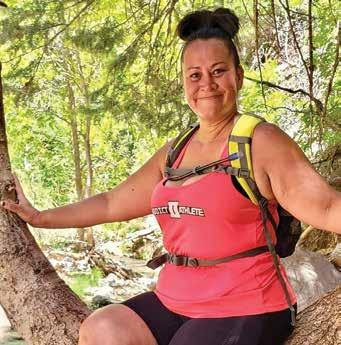


struggled with addiction, became incarcerated. Later, physical and sexual abuse became a part of her life. To blot out the pain, she turned to alcohol and marijuna at the age of ten; meth followed three years later. Pregnant at nineteen, she entered an abusive marriage with her baby’s father. She remained in the relationship for thirteen years and had three children, one born with physical disabilities. For more than two decades, drugs and alcohol were a daily part of her life.
She thought she’d hit bottom when, during a family outing—though she had not yet used that day—she accidentally backed her car over her two-year-old son, ending his life. She lost custody of her oldest daughter; her middle child remained in a care facility until her chromosomal-caused disabilities claimed her life as well. By 2011, Judy had accumulated a lengthy list of criminal violations and stints in jail. Fortunately, she found a judge willing to recommend that she receive probation pending completion of a comprehensive drug treatment program. But after twenty-three years of addiction, the process was rough going.
“I was so lost; I didn’t know what to do,” Judy recalls. “I had been using since I was ten, so I had no idea what was normal. In recovery, they tell you that you have to change everything about your lifestyle. But I didn’t know what that would look like; I was still hanging out with the wrong people.”
In another stroke of luck, Judy’s group counselor happened to be Blu Robinson. Watching her struggle to make smarter life choices, he suggested that she consider joining his support group, Addict II Athlete.
“That’s when my love-hate relationship with crepe paper began,” Judy says, laughing raucously. “Blu got me to a meeting, but more importantly, he got me into one of the community service projects Addict II Athlete does each month. At the time, they were making a float that would be in a parade. So every day after treatment, I spent hours poking crepe paper with a pencil. That was when I started making positive connections.”
Very slowly, those connections included Judy’s daughter, Tawni Quintanilla, from whom she had long been estranged. Tawni was initially hesitant to join her mother in any of AIIA’s group activities, but Judy was eager to repair the many bonds broken during her addiction. “Tawni was fourteen when I found this organization. For years prior, she’d said, ‘Nope, I’m not doing anything with you.’ But through this group, she started gaining trust in the people around me; then she started trusting in me,” Judy says.
Today, Judy and her co-coach, Ashley Sorensen, welcome as few as five people (during the winter months) to their weekly meetings and more than twenty when the weather turns warm. Ashley, a mother of seven who triumphed over her own battle with addiction, is also a proud graduate of the drug court program.

AIIA is now a familiar presence at many of the events presented by the City of St. George Race Department, where members staff aid stations and shout words of encouragement at athletes passing by. “I have so much love for the Addict to Athlete crew!” notes Jess Lindsay, race specialist and volunteer coordinator for St. George Races. “They are always the first to step up and volunteer for whatever we need them to do. They have this incredible way of making the toughest work look effortless, and they do it all with a genuine smile.”
In addition to their support at local races, AIIA is a mainstay at softball tournaments, and they field teams in the City of St. George–sponsored Red Rock Recovery League. They also host the Aaron Navarro Memorial Clean & Sober Tournament, which draws nearly eighty teams from throughout the United States to the Canyons Sports Complex for a three-day contest each year.
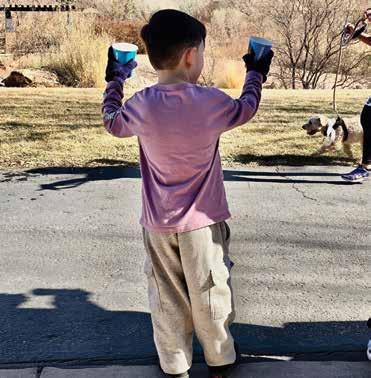
For Judy, AIIA provided a way back to sobriety and to her family: she and Tawni have run countless races together, and her sevenyear-old grandson, Isaac, has been passing out water and picking up trash at race aid stations since he was four.
Judy often shares stories about her life with those she counsels, drawing on crucial lessons learned. “I’m very open with my clients; I’m not afraid to say the things I need to,” she confirms. “I no longer have shame about who I was because it allowed me to be understanding and open and help my clients understand that it’s okay—that they’re okay.
“Sometimes,” she admits, “when I’m at an aid station at 5:00 a.m., I struggle. But what Addict II Athlete is doing there is much greater than us; it allows us to get outside of ourselves. We understand that it’s not just a physical battle; it’s a mental one as well.”
More information about Addict II Athlete can be found at addicttoathlete.com/supportgroup.


Marianne L. Hamilton is a veteran journalist and marketing writer whose work appears in regional and national publications. When not race walking on one of our local trails, she serves on the board of the Kayenta Arts Foundation and supports the City of St. George as a grants writer for arts and recreation programs. She and her husband, Doug, are also co-administrators of the Southern Utah Wine Club, founders and co-directors of the United State Power Walking Association, and race directors for the Huntsman World Senior Games. The former Ms. Senior Universe 2022-2023, Marianne is a proud breast cancer survivor and a member of the Intermountain Health Oncology Patient-Family Advisory Council.


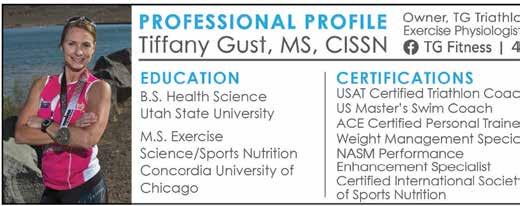
By Tiffany K. Gust, MS, Exercise Physiologist


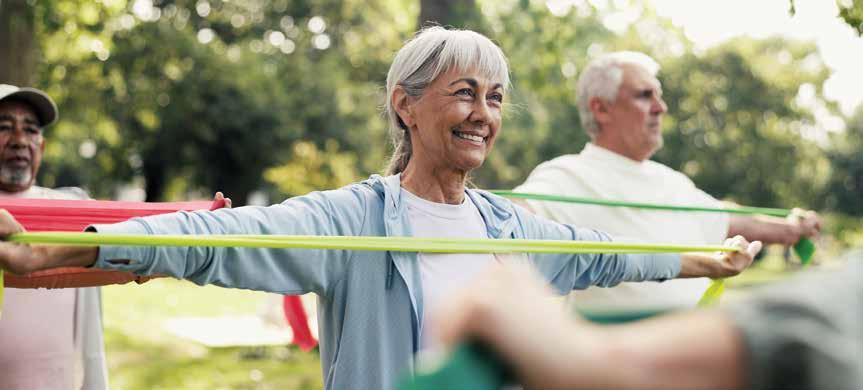
If you enjoy cycling along scenic trails, hiking local desert paths, playing pickleball with friends, or squeezing in a round of golf on the weekend, you already know how good movement feels.
Staying active is one of the best things we can do for our health as we age. But there is one form of exercise many active adults overlook, and that is strength training.
While endurance activities keep our heart and lungs healthy, resistance or weight training plays a unique role in maintaining muscle and bone health, helping us stay strong, independent, and injury-resistant well into later life.
Beginning in our thirties and forties, our bodies naturally start to lose muscle mass and bone density. This gradual process, called sarcopenia for muscle loss and osteopenia or osteoporosis for bone loss, can reduce strength, balance, and physical function.
The numbers are significant. The Bone Health and Osteoporosis Foundation reports that about ten million Americans have osteoporosis and more than forty-three million have low bone mass, meaning over half of adults over age fifty are affected.
Low bone density increases the risk of fractures, and falls are a major contributor to injury and loss of independence later in life. According to the National Health Council, maintaining physical function and mobility is one of the most important factors in preserving independence as we age.
The encouraging news is that exercise, especially strength training, is one of the most effective strategies to protect both muscle and bone health.
Evidence supports strength training for improving muscle mass,
physical function, and bone density in older adults. Guidelines from the American College of Sports Medicine (ACSM) recommend resistance training for major muscle groups at least two days per week.
Research in the field of exercise physiology has consistently shown that resistance training can increase muscle strength, preserve physical function, and help maintain bone mineral density in older adults, helping counter age-related muscle and bone loss, as summarized in clinical research published in the Journal of Bone and Mineral Research.
Bones respond to mechanical stress. When muscles pull against bone during resistance exercise, the body receives a signal to maintain or build bone tissue. In simple terms, strong muscles help stimulate stronger bones.
Benefits You’ll Notice in Everyday Life
Strength training does much more than improve muscle tone. For adults over age forty-five, regular resistance exercise can help:
• Maintain bone density and reduce osteoporosis risk
• Improve balance and coordination, lowering fall risk
• Increase muscle strength for everyday activities
• Support joint stability, which can help people with osteoarthritis
• Preserve independence and mobility with age
According to the ACSM, resistance training is one of the most effective tools for maintaining physical function as adults grow older.
For active adults, stronger muscles also translate into better performance in the activities they already love, whether that’s powering up a steep hiking trail, improving reaction time on the pickleball court, or generating a more powerful swing on the golf course.
Strength training does not require heavy barbells or hours in the gym. Many effective exercises use body weight, resistance bands, or light dumbbells. Examples that support both muscle and bone health include:
Lower Body (important for balance and fall prevention)
• Squats or sit-to-stand from a chair
• Step-ups
• Lunges
• Deadlifts with light weights
These exercises strengthen the hips and legs, which are critical for balance, walking, hiking, and climbing stairs.
Upper Body (important for posture and daily function)
• Push-ups (wall or floor)
• Resistance-band rows
• Dumbbell shoulder presses
• Chest presses
Upper-body strength helps maintain posture, improve stability during activities like cycling or golf, and makes everyday tasks easier.
Core and Stability
• Planks
• Bird-dogs
• Farmer carries
• Single-leg exercises
A strong core helps improve balance and fall prevention, which becomes increasingly important with age.
Performing eight to twelve repetitions of each exercise for two to three sets and training two to three days per week aligns well with recommendations from the American College of Sports Medicine.
Safety
If you are beginning strength training or returning after a break, it’s important to approach it thoughtfully. Consider these guidelines:
• Start gradually. Begin with lighter resistance and focus on good form.
• Avoid holding your breath, which can increase blood pressure.
• If you have osteoporosis, arthritis, joint replacements, or chronic

conditions, consult your healthcare provider before starting.
• Progress slowly. Strength improvements come with consistent training over time.
• If something causes sharp or unusual pain, stop and reassess.
Working with a qualified professional such as an exercise physiologist, physical therapist, or certified trainer can help ensure exercises are safe and effective.

Many people think of strength training as something for athletes or bodybuilders. In reality, it may be one of the most important health investments you can make after age fifty. Building and maintaining muscle and bone strength today helps ensure you can continue enjoying the activities you love tomorrow—whether that’s hiking with friends, traveling, playing sports, or simply keeping up with grandchildren.
Physical activity should be viewed as an essential component of healthcare. When it comes to healthy aging, lifting a little weight may carry some of the biggest benefits of all.
At Intermountain Health, we have qualified providers who can help you by first assessing your current fitness level and then creating a personalized plan for you based on your health history, your assessment results, and your goals. Call today to schedule your appointment at 435-251-2256, or email Tiffany.gust@imail.org.


By the Vista Healthcare Team

Living with neuropathy can be frustrating. Many patients deal with burning pain, tingling, or numbness in their feet and legs every day. When they seek help, they are often told there are very few treatment options beyond medications that help to manage the symptoms.
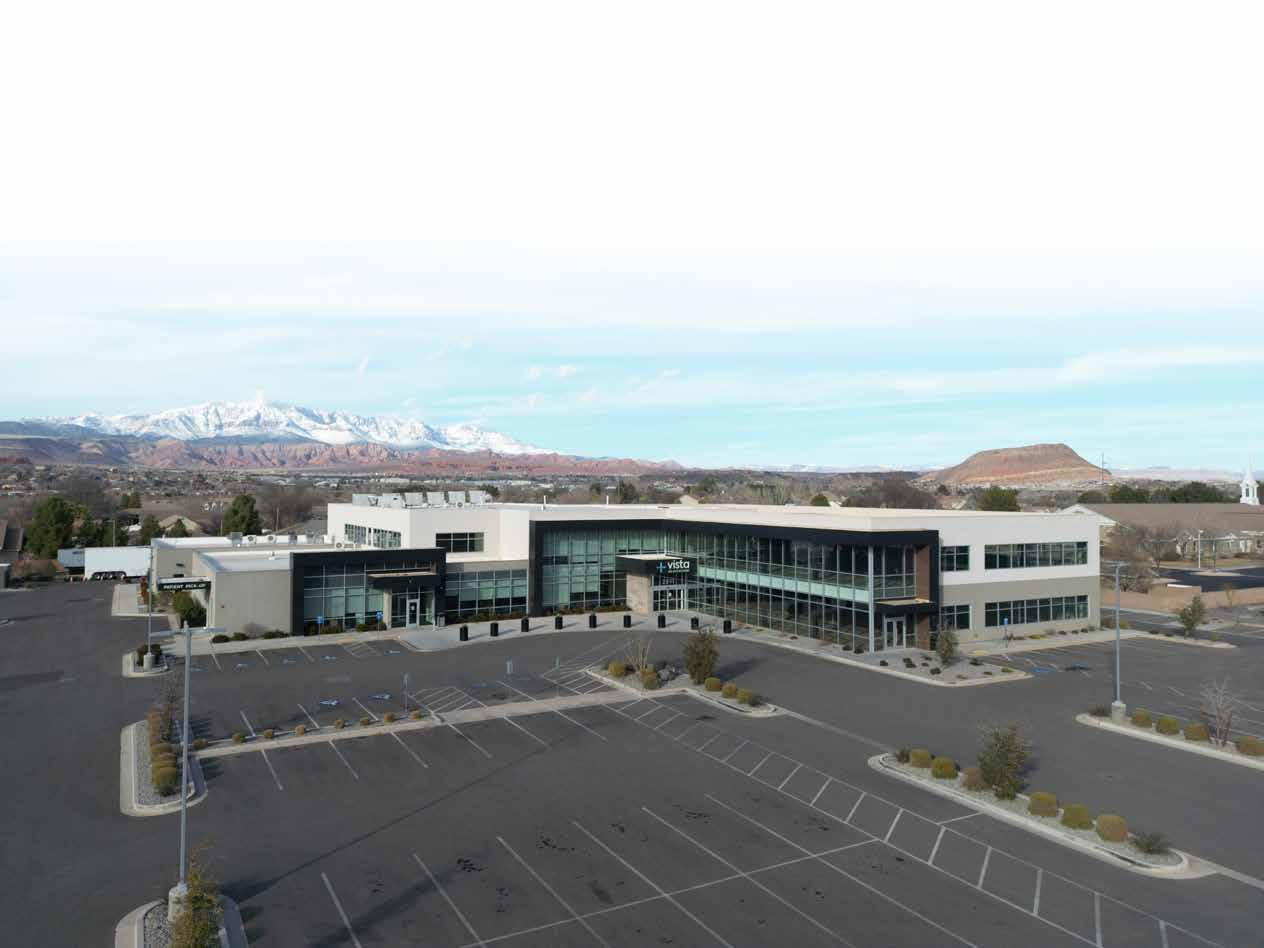
At Vista Healthcare in St. George, Utah, neurologist Dr. Shawn Allen sees this frustration regularly. When Axon Therapy became available, he and his team were excited to offer a treatment option that actually targets the nerves causing the pain. Instead of simply masking symptoms, this non-invasive therapy works to retrain the way nerves process pain signals.
Neuropathy affects the nerves that carry signals between your brain and the rest of your body. When those nerves become damaged or irritated, the signals can become disrupted. These nerves help you feel things like temperature, pressure, and pain. When they become damaged or irritated, those signals can get mixed up.
Many patients first notice tingling in the toes, numbness in the feet, or a burning sensation that worsens at night. Others describe sharp pain, pins and needles, or extreme sensitivity to touch. As the condition progresses, walking can become uncomfortable and balance may be affected.
Neuropathy can develop for several reasons. Diabetes is one of the most common causes, but it can also be linked to injuries, autoimmune conditions, infections, chemo treatments, or certain medications. Without treatment, symptoms often worsen over time.
When neuropathy symptoms make movement painful, many people assume the best option is to rest more. Gentle movement is often helpful for nerve health. Low-impact activities such as walking, swimming, or cycling can improve circulation, maintain muscle strength, and help preserve balance.
The key is finding a treatment plan that reduces nerve pain enough to help patients stay active and continue doing the things they enjoy. When neuropathy pain is managed effectively, many patients find they can return to activities they enjoy, from walking with family to staying active in their community.
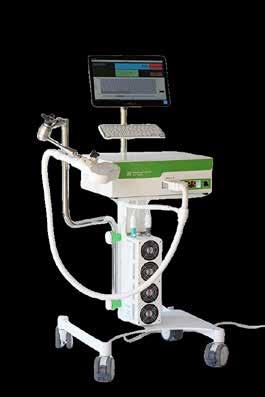
After working with many patients who struggled to control symptoms with medications alone, Dr. Shawn Allen began offering Axon Therapy as another treatment option at Vista Healthcare. Axon Therapy uses gentle pulses delivered through a specialized coil placed near the affected nerves to stimulate the nerve pathways and begin retraining how those nerves process pain signals.
“This new FDA approved treatment reconditions your nerves to
change the way they sense pain,” Dr. Allen explains. “We are finally seeing patients gain control over their pain without having to go up on medication dosing.”
Each Axon Therapy session typically takes about thirteen and a half minutes. For patients receiving treatment on both sides of the body, such as those with peripheral neuropathy in both feet, the total treatment time is usually around twenty-six minutes. During the session, patients lie comfortably while the device delivers light pulses every few seconds to stimulate the nerves. Axon sends electromagnetic impulses to your nerves to allow them to communicate to each other.

Because nerve reconditioning takes time, treatment occurs over several visits. Many patients begin with three treatments during the first week, followed by weekly visits for several weeks and occasional maintenance sessions afterward. Treatment plans are tailored to each patient’s individual needs.
Ken, a recently retired refinery worker from Salt Lake City, began experiencing worsening neuropathy. “I originally had a pain level of eight plus when I first talked to Kelsie Montgomery, DNP about this,” Ken says. “My pain level was increasing daily, and I thought I was going to have to go on opioids.”
After learning about Axon Therapy at Vista Healthcare, he decided to give the treatment a try. “After about two months, I noticed that my neuropathy was starting to improve,” he says. “It has literally brought my pain level from an eight plus down to a two.” Ken now drives from Mesquite for treatments and says the improvement has made a significant difference in his quality of life. “I just love Vista Healthcare for what they’ve done for me,” he says.
Neuropathy can be frustrating, but treatment options are improving. Your first Axon Therapy is free. To schedule an evaluation with Dr. Allen at Vista Healthcare, visit Vista-hc.com/axon or call (435) 222-0223.


By Lori Wright, CEO Family Healthcare

Summer in Southern Utah has a way of pulling families outdoors. The trails are calling, the evenings are long, and for a few months, schedules loosen just enough to make space for something that often gets crowded out during the rest of the year: real time together. This season is a natural opportunity to build habits around family health and fitness that can carry well beyond summer.
You don’t need a gym membership or a structured plan to get your family moving. Some of the best physical activity happens when it doesn’t feel like exercise at all. Evening walks through the neighborhood, weekend hikes at Snow Canyon, a trip to the pool, or a bike ride along the Virgin River—these are the kinds of memories families look back on, and they also support lifelong health and well-being.
The key is finding movement the whole family can participate in and enjoy. Let kids pick the activity sometimes. Mix in something competitive, something relaxing, and something new. When fitness feels fun and shared, it becomes a value the whole family carries into adulthood. And the benefits go beyond the physical. Shared activity reduces stress, lifts mood, and strengthens the connections that keep families resilient through harder seasons.
Family wellness isn’t just about the big weekend adventures. It’s built in the small, everyday choices, too.
• Walk or bike instead of drive when you can.
• Cook meals together using fresh summer produce.

• Limit screen time and replace it with something active.
• Prioritize consistent sleep, even when summer schedules shift. These habits don’t require a lot of time or money. They just require a little intention.
One of the most meaningful things you can do for your family’s health this summer is simple: schedule your annual physicals. For children, a summer checkup ensures immunizations are current, development is on track, and any concerns are addressed before the school year begins. It’s also the perfect time to take care of sports physicals for student athletes gearing up for fall tryouts and practices. For adults, an annual wellness visit is a chance to review preventive screenings, manage ongoing health needs, and get a clear picture of where you stand.
Making it a habit—every member of the family gets a checkup every year—sends a powerful message that health is a priority in your household. At Family Healthcare, we make it easy to be seen by a healthcare provider, with clinics in St. George, Cedar City, Hurricane, and Springdale offering primary care, behavioral health, dental, vision, and pharmacy services all in one place. We accept most insurance plans, offer pediatric and adult care, and new patients are seen within two weeks. Give us a call at 435986-2565 to schedule your family’s summer checkups today.
Summer is short and it goes fast. The families who feel best at the end of it are usually the ones who were intentional about how they spent it—not just checking off activities, but genuinely investing in each other’s wellbeing.

Integrated
Welcoming
Treatment of illness, injury, and chronic conditions
Women’s
Integrated medical, behavioral, dental & vision care
Walk-In
Sliding scale fees based on income and family size
Discount
Discount drive-thru pharmacy*
Sliding
Compassionate, experienced providers




•
•
• Mail your
• Volunteer by calling 435-986-2565


Eye injuries from pickleball can range from corneal abrasions and orbital fractures to hyphema (bleeding in the eye) and retinal detachment. Even mild trauma can cause lasting vision changes if not addressed quickly. If you ever experience redness, soreness, floaters, flashes of light, or blurred vision after being struck in the eye, it’s important to be evaluated right away.
The good news is that most pickleball-related eye injuries are completely preventable. Here’s how to keep your eyes safe while enjoying the sport you love:


By Dr. Taylor Hutchins


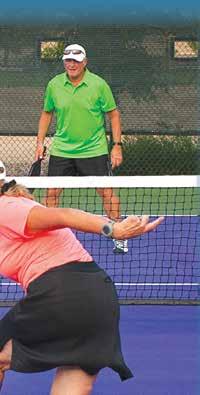
Pickleball has exploded in popularity across the country, especially among adults over fifty who enjoy its fun, social, and low-impact pace. However, with its rise in popularity has come a concerning trend: a surge in serious eye injuries related to the sport.
A recent Medscape report revealed that more than 3,100 pickleballrelated eye injuries were treated in U.S. emergency departments between 2005 and 2024, and nearly 70 percent occurred in players age fifty and older. The number of cases continues to climb, with over 1,200 eye injuries in 2024 alone.
While pickleball is generally considered a safe and social game, the combination of fast-moving plastic balls, compact courts, and close-range volleys can put eyes in harm’s way. Reflexes can slow slightly with age, depth perception can change, and conditions such as cataracts or glaucoma may subtly affect reaction times.
• Wear impact-resistant eyewear. Use polycarbonate sports goggles or glasses rated to ASTM F803 standards. Regular sunglasses are not designed to protect against impact. We often recommend Trivex, which is lighter and more scratch-resistant, with improved optical clarity compared to polycarbonate.
• Use single-vision lenses while playing. Progressive or bifocal lenses can distort depth perception and court awareness.
• Stay hydrated and keep your eyes lubricated. Dry or irritated eyes can affect focus and delay reaction time.
• Know the warning signs. Flashes, floaters, or sudden vision loss after impact may signal retinal damage. Seek prompt medical attention.
At SouthWest Vision, we’re passionate about helping our patients protect their most valuable piece of sports equipment: their eyes. Whether you’re a seasoned athlete or new to the pickleball craze, our doctors provide comprehensive eye exams, protective eyewear recommendations, and treatment for sports-related eye injuries to keep you seeing clearly and playing confidently.
Get clarity and confidence by protecting your eyes with sportsspecific eyewear from SouthWest Vision. Your doubles partner will thank you. Call 435-673-5577 or visit www.southwestvision.com to schedule your appointment today.


Dr. Hutchins recently joined SouthWest Vision and is now accepting new patients. His background includes specialization in sports vision, concussion rehabilitation, and neurovisual training. He has worked with professional and elite athletes, including MLB players, U.S. Air Force personnel, and the U.S. Olympic Ski Team.








By Gavin Hall, D.C., Straight Up Health & Wellness
Have you ever wondered why an injury never fully resolves— even after rest, stretching, chiropractic care, massage, or physical therapy? Why does the pain improve for a while, only to return? Or why does one knee, shoulder, or hip keep flaring up no matter what you do? One often-overlooked factor may be at play: body inhibition.
Inhibition is a protective response built into your nervous system. When you experience injury, stress, trauma, or overload, your brain makes a protective decision. It may temporarily “turn down” certain muscles, joints, or systems to prevent further damage. This response is intelligent and helpful in the short term. The problem arises when that protection never turns off.
When a muscle becomes inhibited, it does not shut off completely. Instead, it loses its ability to contract and stabilize properly. It may test weak, fatigue easily, or fail to support a joint the way it should. The joint then compensates. Other muscles overwork. Movement patterns change. Over time, instability develops, and pain follows.
Many people assume pain means something is torn or worn out. But often, pain is the result of instability caused by inhibited muscles and disrupted nerve communication.
Consider a few common situations:
• A sprained ankle from years ago that still feels stiff or unreliable
• A shoulder injury that never regained full strength
• Recurring low back pain despite normal imaging
• A knee replacement that “healed” yet still does not feel strong
In many of these cases, the structure may be intact, but the nervous system has never fully restored communication to the area. This is where understanding inhibition becomes powerful. The body heals best when it is stable. Muscles are meant to support joints. Nerves are meant to coordinate movement. When these systems function properly, adjustments hold longer, exercise becomes more effective, and recovery accelerates.
But when inhibition is present, you can stretch and strengthen endlessly without real progress because the muscle you are trying to strengthen is not fully “online.”

Inhibition is not just about muscles. Stress, past injuries, concussions, surgeries, and even long-standing inflammation can alter how the nervous system regulates balance, digestion, sleep, and pain sensitivity. The body is deeply interconnected. When communication breaks down in one area, it can influence the whole system.
As we age, it is easy to assume aches and stiffness are normal. While some change is expected over time, persistent weakness, instability, or recurring injury often signals something deeper than age alone.
Imagine your body like a circuit breaker in your home. When there is a surge, the breaker trips to protect the system. But if it never resets, the lights will not function properly, even though the wiring itself is not damaged. Inhibition works similarly. It is a protective shutdown that sometimes needs help turning back on.
The encouraging news is that inhibition can often be identified and corrected. When proper muscle activation and neurological communication are restored, people frequently notice improved strength, stability, balance, and reduced pain—often sooner than expected.
If you or someone you know has struggled with lingering pain, recurring injuries, or a body part that “just does not feel right,” it may be worth asking a different question: instead of “What is damaged?” ask “What is not functioning?”
In communities like ours, where many people stay active well into midlife and beyond, maintaining function is just as important as treating pain. Understanding inhibition provides another lens through which to view recovery, performance, and long-term wellness.
Healing is not always about doing more. Sometimes it is about restoring what is missing. When the body’s communication is clear and stable again, it often knows exactly how to heal itself.
For more information or to schedule an appointment, visit straightuphealthwellness.com or call (435) 429-1242.

Dr. Gavin Hall is a dedicated chiropractor with deep roots in Southern Utah. Raised on a ranch, he developed a strong work ethic and a passion for helping others from an early age. After earning his associate degree from Dixie State University, Dr. Hall moved to Dallas, Texas, where he completed his Doctor of Chiropractic at Parker University. In addition to his chiropractic degree, Dr. Hall holds a master’s degree in functional nutrition and dual bachelor’s degrees in anatomy and health and wellness. Beyond his academic achievements, Dr. Hall is certified in Advanced Muscle Integration Technique (AMIT) and Neural Pathway Integration (NPI). His



You Can Still Go for a Ride!
By Jay Bartlett
I don’t have time to go mountain biking. I have to get my riding gear on, air up the tires, lube my chain, load up the truck, and drive all the way to the trailhead. There’s barely time to ride by the time I get there!
I hear that sort of complaint every so often. Don’t get me wrong. I understand that it’s a busy world we live in, but when “bike greed” (the state of being where you just want to keep riding because it’s so fun) gets a hold of you and you really want to go soak in the splendor of some serpentine singletrack, the above statements should not stand in the way of the tension-clearing, body-working, endorphin-enhancing experience that is a mountain bike ride. Let me explain.
Getting your gear on is the same as changing your clothes. We all know how to do that quickly, right? Keep your gear together, and it’s pretty fast! Keep your floor pump handy, and you’re only a couple of minutes away from airing up your tires. Lubing your chain? Run it backward through a rag a couple of times to knock off built-up lube and dirt. Do a couple of rotations while applying lube, and wipe off the excess. It will take a couple of minutes—tops.
Here’s the big one: driving to the trailhead. Happily, it’s really not that bad, no matter where you live in Washington County! For most of us, it’s only about fifteen minutes or so to get to a trail. That’s pretty amazing. I have friends who have quit riding bikes because they live in places where it can take them an hour or more to even get to an area that’s considered mountain biking. Sure, our city is getting bigger, and it will get harder to get away from it all and escape for a good pedal. For now, we are quite fortunate to have sweet ribbons of dirt and rock in our backyards.
Do you live in Santa Clara or Ivins? Try the Cove Wash trail system, featuring Barrel Roll and Rim Runner. Bloomington? Navajo Drive leads to the Bear Claw Poppy area. Little Valley or Washington Fields? Try the Desert Canyons trails. Coral Canyon? Church Rocks.

Hurricane? J.E.M. The list goes on. Pick up a trail map from your friendly local bike shop, and you’ll see just how close you are to some great fun on the bike.
Still short on time? Change clothes, air up your tires, and lube your chain—but don’t load up the truck and drive. That’s right. Just play around in the driveway, practicing: tight turns, trackstands (holding still while your feet are on the pedals), bunny hops (imagine a bunny hopping—you get the picture), and maybe a wheelie or two. These are useful and fun skills that will help you once you get out on the real trails. You can also pretend the city is the singletrack. Find interesting paths or challenges around your home, and ride them as if you were in the dirt. The city is your oyster, and the key here is to get you into the habit of riding regularly. The fun expands exponentially once you have that habit.
Of course, when you have more time, you can play on the neighboring trails. I guarantee you will find more time once you get a good dose of bike greed! After you hit your hometown trail several times (don’t forget to run it backward to spice things up), you will be well versed in getting ready: gear, tires, lube, load, and go. Soon, trails farther away will be doable.
Every mountain bike ride starts with the first pedal stroke. Now get out and ride!























By Richard Preston, Preston Office Solutions


For many small to mid-sized businesses (SMBs), technology decisions have centered around buying and maintaining onpremise servers. It was the standard approach for decades: purchase the hardware, set it up, and store your company’s data internally. But in today’s fast-moving business world, that model has become outdated, costly, and risky.
That’s why Preston Office Solutions, a leading managed technology services provider (MTSP), has been helping organizations transition away from aging hardware and into the flexibility and security of Microsoft Azure. As products like Windows 7 and older Microsoft server versions reach end of life, many business owners face a crossroads: purchase another expensive server or move to a scalable cloud platform.
The biggest challenge with on-premise servers is their rapid path to obsolescence. Technology cycles continue to accelerate, and many systems were built for a different era. As these systems fall behind, companies face:
• Major security vulnerabilities
• Decreased performance
• Steep capital expenditures
• Limited mobility and remote access
Maintaining outdated servers puts businesses at a competitive disadvantage. While competitors move to cloud platforms with automatic updates and scalability, companies tied to aging hardware struggle to keep pace.
Today’s workforce is more mobile than ever. Employees expect secure access to data, whether they’re in the office, at home, or traveling. Cloud platforms, especially those backed by global providers like Microsoft, were built for this environment.
“On-premise servers simply don’t make financial or operational sense anymore,” says Richard Preston, president and CEO of


ABOUT THE AUTHOR
Preston Office Solutions. “Businesses need technology that scales with their growth, supports remote teams, and stays secure without the constant burden of updates. The cloud delivers all of that and more.”
Microsoft Azure is a leading choice for SMBs because it delivers enterprise-grade tools in a cost-efficient, pay-as-you-go model. Instead of large capital expenses, companies pay only for what they use, and the system scales as their needs grow.
Azure also:
• Provides regular updates without downtime
• Ensures reliability and data integrity
• Supports remote access and multi-location workflows
• Supplies strong cybersecurity protections
With Millennials and Gen Z making up more of the workforce, demand for flexible, cloud-ready operations will continue to rise.
As Preston explains, “Pretty soon, owning your own server will feel like having a coin-operated phone in the lobby. It’s not that it doesn’t work; it just no longer fits how modern businesses operate.” Like fax machines before them, on-premise servers are becoming relics. Businesses that cling to older equipment risk higher costs, slower processes, and increased cybersecurity threats.
By transitioning clients into Azure, Preston Office Solutions helps businesses stay efficient, productive, and secure, no matter how technology evolves. The cloud is no longer a luxury; it’s a foundational tool for organizations that want to thrive.
If you are ready to explore whether the cloud is right for your business or unsure where your infrastructure stands, Preston Office Solutions can guide you through the next steps. Call (435) 6282997 or visit www.prestonoffice.com
Richard Preston, owner and CEO of Preston Office Solutions in St. George, Utah, has been a trusted name in business technology for over forty years. Under his leadership, Preston Office Solutions has earned a solid reputation for exceptional sales, service, and support of office multifunction printers and large-format printing products across Southern Utah and southern Nevada. Preston Office Solutions is more than just a print solutions provider. As a dependable IT partner, the company delivers a comprehensive suite of technology products and services—all designed to support the success and growth of every client. To learn more, contact Preston Office Solutions at 435-628-2997 or visit www.prestonoffice.com.




By Branden DuCharme, CMT
As humans, we often default to compromise. We tend to think in terms of “or.” Yet problem solving and thriving are more commonly the result of implementing the “genius of and.” A former FBI hostage negotiator, Chris Voss, teaches that when negotiating a deal, you shouldn’t compromise and “split the difference,” because neither party gets what they want; thus, neither party is happy. Rather, negotiate and collaborate. Look for unique ways to solve problems and navigate the situation. This can mean you don’t have to choose between living in the present and living in retirement. There are likely ways to get creative so that you can live now and in retirement.
Of course, we still have to acknowledge some financial realities: the economic truths of life. No money? Probably no retirement. So where is the balance? How can you find it without just splitting the difference, as Chris Voss would say?
Let’s start by understanding the major variables of basic retirement planning: savings rate, spending rate, retirement date, rate of return on investments, and what I prefer to call “the end of your financial plan.”
In reality, you get to pick some; the math runs and solves for the others. We learn in Algebra 101 that if you change something on one side of the equation, you must change it on the other. So, here is how it works: if you want to retire earlier (changing the retirement date input), you have to make an offsetting change in the other variables. You can increase your returns or the amount you put away or decrease spending expectations.
Take any one of those four—you can change it by adjusting the other three. So where balance is struck is in being honest with yourself and exploring what adjustments you can make, rather than rigidly fitting a change you find unacceptable. Let me give you an example.
As some people struggle with living now versus socking every penny away for retirement, they need to evaluate what retirement really means to them. It’s not just a date on the calendar. It is a process and requires a plan.


If you are currently saving $2,500/month for retirement but want to live more in the present, see what adjustments can be made other than “just working longer.” Sure, working a part-time job during a transition period may be the answer. However, it may be getting comfortable with new or different investment options to increase return potential. Maybe it is spending more time optimizing your tax planning to increase net-of-tax returns. Maybe it is being real with yourself about the lifestyle you want to live once you are retired and slowing down. Most importantly, perhaps it’s a combination of all of those things that allows for minor changes to be made in all areas, but collectively you don’t feel like you have significantly sacrificed, and you can obtain your goal of having more cash flow to live in the present.
My simple word of caution, however, will tie back into my current opinions on the markets in the current macroeconomic environment. There is incredible recency bias in the markets and portfolios. We have experienced exceptionally high returns in the stock markets, broadly speaking, post-2009, and until 2022 we experienced meaningful returns in the bond market. However, I do believe the world has shifted and is writing a new playbook. Equity valuations are near all-time highs (Shiller P/E ratio of ~36.65*), bond yields are secularly on the rise (higher interest rates), and inflation is proving to remain stubbornly well above target. Navigating the next fifteen years will likely look much different than the last fifteen years. Do not fall victim to simply increasing your expected rate of return on investments or lowering your inflation expectations without having a meaningful and justifiable reason to do so. As always, focus on what matters most in life: family, relationships, experiences, and values. Money is just a way to maximize them. Happy retirement planning.

Branden DuCharme prides himself on being a husband, father and community member. Professionally, Branden is specialized in portfolio and investment management, helping clients balance risk and return as a Charted Market Technician. He is a managing partner at DuCharme Wealth Management and a graduate of Utah Tech, with a bachelor degree in finance. Additionally, Branden shares financial insights as the host of the Tall Oaks podcast.
*Source: https://www.multpl.com/shiller-pe (03/27/2026)
Disclosure: Information presented is for your educational purposes only and should not be regarded as a complete analysis of the subjects discussed. Discussions and answers to questions do not involve the rendering of personalized investment advice but are limited to the dissemination of general information. A professional advisor should be consulted before implementing any of the

By the Washington County Board of REALTORS®
Washington County continues to be a busy market and a magnet for movers. With new jobs, great schools, and growing neighborhoods, a steady stream of buyers is looking to find the right place for the right price. Unfortunately, scammers try to take advantage of the hustle and bustle of this thriving area, and in 2026, they’ve become more sophisticated than the obvious “Nigerian prince” emails of the past. Now, they’re mimicking title companies and cloning real estate listings. According to the FBI’s Internet Crime Complaint Center annual report, losses from internet crime reached over $16.6 billion. While this figure reflects national data and not every scam is local, it demonstrates that the volume, sophistication, and speed of scams continue to rise.
Below are some of the most common real estate traps, with practical tips to help you avoid them.
This scam targets the largest single payment most families ever make: earnest money, down payments, and closing funds. Scammers compromise (or mimic) an email thread involving the agent, lender, or title/escrow company. They then send updated wiring instructions right before closing. These Business Email Compromise (BEC) scams target wire transfers of both business and personal transactions.
Some red flags include language like “We changed banks” or “We’re closing early. Wire now.”

• Never trust wiring instructions sent by email or text.
• Verify by phone using a number you already know and have used (official paperwork, website, or a statement).
• Verify any information received via email by calling the title company or licensed agent.
These scams are gaining popularity with both rentals and home purchases. Scammers steal MLS photos, create copycat listings, change the contact information, and repost the listing on a new platform. Popular platforms for this scam include Facebook and Craigslist. The impersonating “property manager/agent” pressures prospective renters or buyers to pay an application or deposit fee before seeing the property or to “secure” it.
• Require an in-person tour before paying any deposit or down payment.
• Confirm the owner, listing agent or company, or property manager through a separate source (official company site, county records, or a reputable property management or real estate office).
• Only pay deposits through reputable platforms or verifiable, documented businesses.
Scammers don’t just steal money; they also steal paperwork. This includes IDs, pay stubs, loan documents, and bank letters.

They impersonate individuals to open accounts and reroute funds.
Tips:
• Use secure portals from lenders or title companies (avoid email attachments when possible).
• Include a verification phrase in your process: “We only confirm changes by phone at a known number.”
• Pause the transaction if anything feels off. Scammers often succeed by applying pressure and creating urgency.
In a bustling market like Washington County, the best safeguard is to rely on a trusted source. Local REALTORS® know the neighborhoods, title companies, lenders, and inspectors who live and operate in the area. They understand what a legitimate transaction looks like and can help spot suspicious instructions and listings. In this high-tech age, that trusted relationship may be the strongest layer of protection.


If you are like me, you miss the lower prices of 2019. Since almost everything costs more, replacing it also costs more. Car repairs? More. Medical bills? More. Rental cars? More. The tiny plastic clip that holds something important under your hood? Somehow, even that is also more.
Price increases—we’ve all seen them, and everyone feels the effects. It may take a few years for insurance companies to recover from the last handful of economic curveballs. Rates from 2019 are long gone, but we’re not helpless. If we know how auto coverage works and what discounts are available, we can actually “win.”
A lot of people think buying less coverage saves money. Sure, they may pat themselves on the back at first—until the better question shows up like an uninvited guest: “What if I’m in an accident?”
We gamble every day. Every step is a gamble. I could trip and break my arm, you could wake up in a hospital with no clue about what happened, and someone else could text their way into your bumper at 40 mph. The best thing we can do is be prepared. Insurance is all about “just in case.” And honestly, “just in case” is the unsung hero of adulthood. I put my keys in my pocket just in case. I carry snacks just in case. I pretend I understand everything about car repair just in case someone asks. Insurance works the same way.
Now let me back up, because I can’t count how many times I’ve heard, “Yeah, but I’m a careful driver. I’ve never been in an accident.” Let me say it loud and clear for the people in the back: it doesn’t matter how careful you are. You are sharing the road with thousands of other drivers, and the only thing separating you from a two-ton vehicle traveling the opposite direction is a painted line. A painted line. That’s not a safety feature; it’s optimism.
And what if the universe hiccups and you actually do cause an accident? Would your policy pay to fix the car you rear-ended… and the

By Sally White
car in front of that… and so on? Multi-car accidents are basically the insurance version of a domino setup you did not mean to touch.
Here’s where you get the advantage: look at the limits on your auto policy. Start with your bodily injury and property damage limits (BI/PD). If you see $30,000/$65,000/$25,000 (30/65/25) or less, you’re probably not getting the best bang for your buck. The recommended minimum is $100,000/$300,000/$100,000 (100/300/100), because it gives you far more protection for what’s usually a surprisingly reasonable cost.
Quick disclaimer: Your rate is tailored to YOU. Don’t expect the same price as your neighbor, your twin brother, or the guy who owns “the same kind of car.” It doesn’t work that way.
If you already have 100/300/100, congratulations. You are officially gold-star-on-the-forehead certified. If your limits are higher, you’re even more impressive. If you have a liability umbrella policy, you may be a genius (wink, wink)!
You can’t predict the future, but you can prepare for it. And when you do, you don’t just have insurance; you have peace of mind. That’s the real win.
If you would like more information about auto, home, business, or life insurance, call Sally White at 435-673-3459 or visit www.sallywhiteagency.com.







By Brad Gillman
Even before the summer sun tips thermometers into triple digits, there are several safety concerns people need to consider when it comes to keeping children and pets safe, particularly in the car.
“People need to realize that a child, because of their body surface area, will heat up three to five times faster than an adult, and their organs will start to shut down if their temperature reaches 104 degrees,” said Dr. Kerri Smith, pediatric hospitalist for Intermountain Health St. George Regional Hospital. “Within ten minutes, a car can heat up by twenty degrees. People need to realize how quickly things can happen, especially with young kids.”
The kind of danger Dr. Smith is referring to—leaving a child in a hot car, even for a few minutes—can result in serious harm or even death. Although national statistics show these cases are relatively rare, Dr. Smith said they do occur, and they are always tragic. Each year, nearly forty children across the country die after being left in a hot vehicle. In Utah, thirteen children died in hot vehicles between
1998 and 2022, and others have suffered heatstroke and related injuries in close calls.
Hot car tragedies can happen to anyone. They may occur when a caregiver forgets a child is in the car. This can be due to fatigue or a change in routine, common during summer break and vacations, which can push a person’s brain into autopilot, making it easier to forget.
Dr. Smith suggests keeping a diaper bag in the passenger seat as a visual reminder that a child is in the back, particularly when the driver is not accustomed to transporting the child. Another suggestion is to place something in the backseat near the child that you are likely to miss the moment you leave the car, such as a purse or a cell phone. “Anything that will remind the driver to look in the back before leaving the car,” Dr. Smith said.
In addition to these precautions, Dr. Smith emphasized the importance of teaching children about car safety, including never
playing in a vehicle, even when it is parked. According to the National Highway Traffic Safety Administration, one in four hot car deaths occurs when a child gains access to a vehicle.
“Keep vehicles locked so children do not have access to them,” Dr. Smith said. “And if you have children, check all the doors—and even the trunk—before you leave. Kids can find their way into those hiding places.”
When temperatures peak in Southern Utah, even routine travel can pose a risk for overheating. When possible, Dr. Smith recommends starting the car ahead of time and running the air conditioning to cool the interior before leaving.

While the number of deaths resulting from a child being left in a hot car is relatively low nationwide, many more children suffer from heatstroke and other heat-related injuries in these situations. The more precautions taken, the better.
“In general, keeping kids safe from heatstroke and overheating is similar to caring for adults,” Dr. Smith said. “Remove excess clothing and allow heat to dissipate if they are showing signs of becoming too hot.” Drinking cool liquids and applying a cold compress under the arms can also help.
“It’s important to never even consider leaving a child or a pet in the car while running an errand,” Dr. Smith said. “Even if you are leaving the car running and the air conditioning on, what if the air stops for some reason? You never know what might happen.” The reality is simple: no errand is worth the risk. When it comes to children and pets, the safest choice is always to take them with you—every time, no exceptions.


Brad Gillman is the Media Manager for the Intermountain Health Desert Region, where he leads the development and execution of media strategies to effectively communicate the organization’s mission and achievements. With a passion for storytelling and a sharp eye for detail, Brad works closely with the communications team to ensure impactful and engaging content across all platforms. His expertise in media relations and content creation helps elevate the profile of healthcare in the community.

Our skilled primar y care providers in Southwest Utah are now accepting new patients We’re here to make your healthcare experience ea sy and convenient Why Choose a Primar y Care Provider ?
Health Par tner: Your go -to for preventive care and mana ging health over time.
Comprehensive Care: Get exper t help for most health concerns close to home, avoiding unnecessar y ER visits
Convenient Access: Local providers make it ea sy to get care when you need it
New Patients Welcome E xplore and Schedule Today. It ’s ea sier than ever to find care.



By Dr. William Plumb, Plumb Dental
Recently, a patient came into my office with a severe infection from an abscessed tooth. We treated the situation aggressively because they were experiencing a great deal of pain. I was further concerned because the patient has diabetes.
Diabetes is a condition that affects how food is metabolized. Hormones in our bodies control how much glucose (or sugar) is present in our bloodstream for our cells to use for energy. When blood sugar goes up, the pancreas releases insulin, which allows the body to absorb the sugar into the cells. With diabetes, the pancreas does not release sufficient amounts of insulin, or the body doesn’t respond to insulin as it should. In either case, too much glucose remains in the blood, which can cause serious health problems, including heart disease, vision loss, kidney disease, and poor circulation.
It also has serious oral implications. High blood sugar weakens white blood cells, which are responsible for fighting bacterial infections. Gum (or periodontal) disease and tooth decay are both bacterial infections. In periodontal disease, the bacteria attack the bone and attachment apparatus between the tooth and the bone. Cavities are caused by the acids that bacteria secrete, which eat away at the tooth structure. Diabetics have the added complication of higher levels of sugar in their saliva, which

fuels the pathological bacteria in their mouths and causes disease processes to be more active.
Nine out of ten cases of diabetes are Type 2. While there is a genetic predisposition to developing Type 2 diabetes, onset of the disease can be attributed to five key factors: excess body fat, diet high in refined carbohydrates, physical inactivity, smoking, and alcohol consumption. Managing those aspects of your life can greatly reduce your risk of developing the disease. Studies show that about one in eight Americans have diabetes, and another concerning statistic is that one in four adults in the U.S. with diabetes do not know they have the disease.
Signs of diabetes that you should not ignore include: peeing more often than normal, feeling thirsty all the time, weakness and fatigue, blurry vision, increased hunger (even after just eating), and unexplained weight loss.
In the case of my patient above, we extracted the tooth, prescribed an antibiotic, and closely monitored their recovery. For all my patients with diabetes, I encourage great home care: brushing with an electric toothbrush, flossing, and using a water pik are all super important. I also recommend that they come in three to four times a year for a professional cleaning. Hygienists are able to remove hard bacterial plaques that
accumulate at the gum line and cannot be removed with brushing and flossing. The latest research shows that these plaques reach a pathological level after about ninety days, regardless of home care. More frequent visits are also helpful for detecting problems early on, which allows me to provide less invasive and longer-lasting treatments.
Diabetes weakens the body’s ability to fight infection, making oral diseases like gum infection and tooth decay more severe and harder to control. With proper lifestyle management, consistent home care, and more frequent dental visits, patients with diabetes can greatly reduce their risk of serious oral and systemic complications.


Dr William Plumb graduated from the State University of New York School of Dentistry in 2006. He opened Plumb Dental in St George in 2009. He has received extensive continuing education in cosmetic dentistry as well as oral surgery and implantology. He loves living in Southern Utah with his wife Kari and their four children.



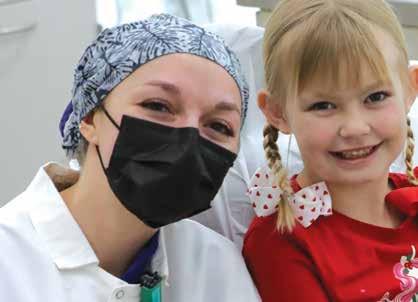
Access to dental care can change a child’s future.


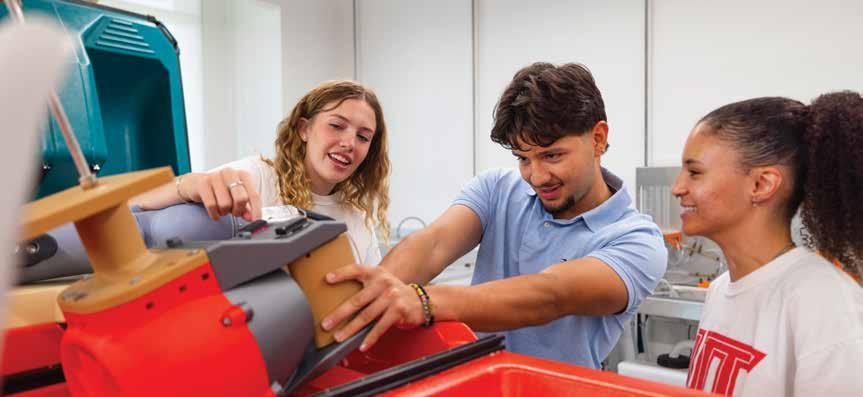
That impact was on full display at Utah Tech University, where the dental hygiene clinic buzzed with energy as student clinicians welcomed young patients for a day dedicated to prevention, education, and brighter smiles.
During its annual Children’s Dental Health Day on Jan. 31, Utah Tech’s Dental Hygiene program provided comprehensive oral health care services at no cost to local children. By the end of the day, forty-seven children had received essential preventive care, while dental hygiene students gained hands-on experience that will shape their careers.
Under faculty supervision, students delivered dental hygiene therapies, cleanings, radiographs, fluoride treatments, and sealants. For many children, it was more than a checkup—it was access to care they might not otherwise receive.
“This event gave students the opportunity to not only provide care to a population that often lacks access but also to gain valuable experience,” Senior Clinic Coordinator Jessica Atkinson said. “Experiences like this help students build confidence, apply what they are learning in a real-world setting, and ultimately become more career-ready practitioners.”
Throughout the clinic, small but meaningful moments unfolded: a student explaining each step before polishing a child’s teeth; a faculty member offering guidance; and a parent watching with relief as an appointment wrapped up successfully.
For dental hygiene student Jessica Hadlock, those interactions are what make the event memorable. “For me, the most rewarding part of providing care to children who might not otherwise have access is knowing that the care they receive now can impact the rest of their lives,” Hadlock said. “Early preventive care can help them grow up with healthier smiles.”
Beyond cleanings and fluoride treatments, the day emphasized education, such as teaching proper brushing techniques, healthy habits, and the importance of regular visits.



By Lexi Hughs
“It was so rewarding to see kids walk out with a smile,” Hadlock said. “Creating positive dental experiences early on will hopefully encourage them to continue seeking care as they get older.”
Children’s Dental Health Day reflects more than a single day of service. It highlights Utah Tech’s commitment to communityengaged learning, where students serve real people, respond to real needs, and see firsthand how their skills strengthen the community.

By the time the clinic doors closed, the impact lingered—in the confidence of student clinicians, the gratitude of families, and most visibly, forty-seven brighter smiles across Southern Utah.
Learn more about Utah Tech’s Dental Hygiene Clinic at health. utahtech.edu/dental-hygiene/clinic.






Lexi Hughs is a full-time student at Utah Tech University. Moving from Montana to St. George, she’s here to pursue a bachelor’s degree in media studies and work toward a career in public relations. She loves spending time outside in the sun with her friends and family here in sunny Southern Utah.








By Anita DeLelles, LMT




Pets have long been considered beloved members of the family, but research in fields such as psychology and human–animal interaction shows that the bond between people and companion animals can also play an important role in mental health. For many households, parenting a dog or cat offers daily emotional support, companionship, and a routine that benefits both adults and children. Importantly, these positive effects are reciprocal: when people feel happier and more emotionally balanced, they often become more attentive and responsible caregivers, improving the well-being of their pets.
For adults, one of the most noticeable mental health benefits of pet ownership is reduced stress. Petting a dog or cat can be calming and grounding, helping people shift their attention away from worries and toward the present moment. Interacting with animals is associated with the release of hormones connected to bonding and relaxation, including oxytocin, while lowering stress-related hormones such as cortisol. This physiological response can help people feel more relaxed after a demanding day at work or during periods of uncertainty.
Companion animals also help reduce feelings of loneliness. Adults who live alone, work remotely, or are adjusting to life changes often benefit from the consistent presence of a pet. A dog greeting its owner at the door or a cat curling up nearby can create a sense of connection and belonging. While pets do not replace human relationships, they can provide a steady form of companionship that encourages emotional stability and comfort.
Another mental health advantage comes from the sense of structure pets introduce into daily life. Dogs, in particular, require regular walks,
feeding times, and play sessions. This routine encourages owners to maintain consistent schedules and engage in physical activity. Even cats, though often more independent, rely on predictable care and interaction. These responsibilities can help adults stay active, maintain daily habits, and experience a sense of purpose. Caring for another living being reinforces feelings of competence and responsibility, which can support overall psychological well-being.
Children also gain meaningful mental health benefits from growing up with pets. A dog or cat can act as a nonjudgmental companion, allowing children to express emotions freely. Many children talk to their pets about school, friendships, or worries, using them as a safe outlet for feelings. This process can help children practice emotional expression and develop coping skills in a supportive environment.
Pets also contribute to children’s social and emotional development. By helping feed, groom, or play with a pet, children learn empathy and responsibility. They begin to recognize that animals have needs, feelings, and boundaries. These lessons can carry over into relationships with other people, strengthening compassion and emotional awareness. Additionally, the playful nature of many dogs and cats encourages laughter, imagination, and active play, which can improve mood and reduce stress in children.
The mental health benefits for humans naturally extend to the animals themselves. When owners experience emotional comfort and stability from their pets, they are often more motivated to invest time and care into the relationship. A relaxed and attentive owner is more likely to provide regular exercise, consistent feeding schedules, grooming, and veterinary care. Pets thrive when they receive reliable attention and affection.
Moreover, animals are sensitive to human emotions and environments. A calm household where people interact positively with their pets creates a more secure environment for the animal. Dogs and cats that receive regular interaction, play, and gentle affection often show fewer signs of stress and develop stronger bonds with their families. In this way, the emotional benefits experienced by humans reinforce a cycle of care that supports the pet’s physical and psychological well-being.
Ultimately, the relationship between people and their pets is mutually beneficial. Dogs and cats provide companionship, comfort, and emotional grounding for adults and children alike. In return, humans provide safety, care, and affection. This reciprocal bond highlights how simple daily interactions—walking a dog, stroking a cat, or sharing quiet moments together—can nurture mental health on both sides of the relationship.


For more information, stop by WOOF! Wellness Center & Training Academy in Santa Clara, visit woofcenter.com, or call 435-2754536. Email your pet-related questions or topics of interest to anita@woofcenter.com.

Anita DeLelles, LMT, is a certified equine and small animal acupressure practitioner with accreditation from the Tallgrass Animal Acupressure Institute and a member of IAAMB. Her Tallgrass training has included two consecutive summers in Bath, England, near where she lived as a child, as well as coursework in Colorado and northern California. Additionally, Anita is certified in animal massage from the Northwest School of Animal Massage as well as human massage in the state of Utah and is a graduate of UNLV. In 2013, Anita and her husband, Ron, opened WOOF! Wellness Center & Training Academy to serve pets and their health-conscious pet parents. WOOF! is dedicated to improving the quality of life for companion and competitive animals through fitness and conditioning, education, and proper nutrition. Anita shares her life with Ron and their overly-pampered cats in Santa Clara, Utah

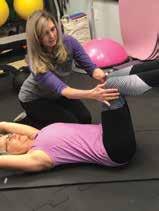
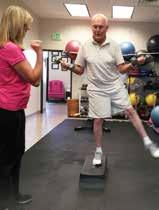

By Annelies Newman, RDN, CD


Our Founding Fathers left an incredible legacy that we are celebrating this year. Reading and listening to books about their lives has been enriching. I have to admit, small mentions of their diet often make me smile. I am also aware of the hunger many suffered during the years of war. I thought I would share a few small snippets from long ago with you.

First, let’s visit Thomas Jefferson, the primary author of the Declaration of Independence. He lived on a large plantation called Monticello. You can visit the museum’s website and learn that he had a 1,000-foot-long garden terrace. His scientific mind fueled experiments with more than 330 vegetable varieties. He also had a large fruit orchard with more than 170 varieties of fruit. He wrote, “I
have lived temperately, eating a little animal food, & that, not as an aliment so much as a condiment for the vegetables, which constitute my principal diet.” Others who knew him recorded similar accounts: meat was more of a seasoning and vegetables were his main dish. He called fruits a “precious refreshment.” Fruit on a summer day truly is exactly that.
Next, the famous writer, scientist, and statesman Benjamin Franklin. Did you know that as a teen, he read about vegetarianism and was impressed mainly by the ethical argument that “taking every fish was a kind of unprovoked murder”? So he adopted the practice. In his autobiography, he recalls that at first it was useful, as his simple diet allowed him extra funds for books and time for reading. However, later he happened to be on a voyage where the crew was catching cod, and he found himself torn. He wrote the following:
I had formerly been a great lover of fish, and when this came hot out of the frying-pan, it smelt admirably well. I balanced some time between principle and inclination, till I recollected that, when the fish were opened, I saw smaller fish taken out of their stomachs. Then thought I, ‘If you eat one another, I don’t see why we mayn’t eat you.’ So, I dined upon cod very heartily, and continued to eat with other people, returning only now and then occasionally to a vegetable diet. So convenient a thing it is to be a reasonable creature, since it enables one to find or make a reason for everything one has a mind to do.
My favorite line is Mr. Franklin’s reference to being a “reasonable creature.” Many of us can resonate with him. We strive to eat fresh, whole foods, but when caught between principle and convenience, we find it quite helpful to be “reasonable creatures” and choose fast food.
Third, we turn to George Washington, a man who loved his plantation and residence, Mount Vernon. Washington ate vegetables from his garden and enjoyed “hoecakes” (cornmeal cakes) for breakfast. His farm provided beef, mutton, and ham. The river waters, in season, added herring and cod to the table. “Agriculture is the most healthy, the most useful, and the most noble employment of man,” he wrote. After his presidency, it was rare for him to be alone, and he often entertained guests with multicourse dinners.
Lastly, we can’t reminisce about the men who helped us gain the freedoms we enjoy without remembering those who were fighting in the arena. During this time, 250 years ago, the soldiers had very little to eat. George Washington often recalled the sad scene of his hungry men. In a letter to Congress dated December 29, 1777, General Washington could not bring himself to describe the full extent of their suffering, stating that “2,898 men were unfit for duty, by reason of their being barefoot and otherwise naked.” Many others were in hospitals and farmers’ houses. It was a winter marked by death.
In the book 1776, by David McCullough, we learn that the years leading up to this difficult winter were much the same. The hardships endured and the immense challenges faced by the Continental Army required remarkable courage. But the “Hand of Providence” shone upon them, and in the end, they prevailed.
The gardens, farms, ranches, and orchards that sprang up from their triumph have fed millions since. The land we enjoy, the comforts we experience, and the plentiful food we eat are the result of the sacrifices of these good men and others like them. May we enjoy our meals—our wholesome food—with hearts full of gratitude and remember what it took to secure the blessings we enjoy today.



Annelies Newman, RDN, CD, received her bachelor’s degree from Brigham Young University with a major in nutrition and dietetics and a minor in music. She is a speaker and presenter on nutrition related topics. Currently, she owns a private practice guiding individuals to make changes for better health and wellness. On the side, she enjoys adventuring with her husband and three little boys outdoors. She believes that real food is good for the body and should be enjoyed!
















BY LYMAN HAFEN
ast September, it became necessary to move my ninety-threeyear-old parents to a new home. The house where they had lived for seventy years, and where they raised me, my sister, and my two brothers, was not designed for the mobility and accessibility they needed in their last years. It was a comfortable and wonderful home, but the doorways, hallways, kitchen, and bathrooms were hardly navigable by walker or wheelchair. It had become evident to everyone that if they were going to live at “home” for the rest of their lives, it could not be this home.
We were blessed to find a house in town that fit their needs perfectly. We made an offer, it was accepted, and we were able to sell our old family home in a timely manner.
Then came the reality of moving. I knew it wouldn’t be easy. But I didn’t have a clue how hard it would be. There was plenty of help with the physical part of it. It was the emotional part that took nearly everything out of me.
I was there alone the day I carried the last precious items out the door of that house. I walked back in for one last look. I was so exhausted that I collapsed on the kitchen floor. After a moment, my eyes focused on the old linoleum, and I realized I was sitting in the spot where the kitchen table had stood for seven decades. The four marks of its feet were distinctly impressed in the linoleum around me. That was when it rushed over me like a warm wave… I was sitting in one of the most sacred places of my life.

After seventy years, that house sat empty, and there I sat, empty, on the empty floor where the kitchen table had stood—where Mom served us morning, noon, and night, and where, on special mornings, we turned the backs of our chairs to the table and knelt on that hard floor, pressing our elbows on the hard seats of the chairs, clasping our hands reverently beneath our chins while Mom or Dad prayed with gratitude and petitioned heaven for our needs before we pulled ourselves up to waffles or oatmeal.
Later in the day, we came back to that table for bologna sandwiches and carrots, and at day’s end, venison steaks with green Jello speckled with cottage cheese. All of it was comfort food, served with words of comfort, words of caution. We left that table full, and every day we returned to it again, empty. To be filled again.
From where I sat on the floor that day, it was just three or four steps to the bedroom where, as a little boy, I lay on the top bunk with my transistor radio tucked under my pillow. Up through the feathers came the pure, honeyed tones of Vin Scully’s voice, streaming warm and smooth across my dozing dreams. Then the crack of the bat sounded across the airwaves in the dark of that very room, now alive with the roar from Chavez Ravine because Sandy Koufax had just struck out one more batter. And maybe then I could go to sleep.
All those nights, I lay in bed, covertly listening to Mom and Dad talking softly at the kitchen table. One time they talked of moving,
and I couldn’t bear the thought of it… moving from this house where I was safe and sheltered from any threat from the Russians, and just a hop, skip, and jump from my friends’ houses, where they too were safe and sheltered and ready to play at a knock on the door.
We never moved, and I always returned to that table. Empty. To be filled again with something to eat and with something to build my courage and confidence. I came home to that table from high school every day for lunch. I could see the TV from the kitchen table through the door into the front room. I was addicted to The Doctors, Mom’s favorite soap… and mine, too, though I never admitted it. Until now.
I would be back again after school, sometimes to the heavenly aroma—even before I opened the front door—of cinnamon rolls fresh from the oven. On the TV screen, the grainy face of Walter Cronkite flickered through the gray, buzzing haze as he delivered the week’s Vietnam death count.
After my first football game up the street at the Sun Bowl, I sat right here at the table across from Dad, my uniform grass-stained and reddened, and told him football was not for me—that if I was going to get busted up, I would rather ride broncs and bulls, because at least it was over in eight seconds, and you didn’t have to go back in again, play after play, and get pounded again and again. Right here at this table, I saw in his eyes he was proud of me, and he would go with me wherever I might dream of going.
There in the doorway to the front room is where Mom stood on a winter’s Sunday evening when I was eight years old. She could not step into the room but peered through the doorway, aghast. Dad was lying on the couch. My sister and I sat frozen on the floor in the middle of the room, stunned, spellbound by the fuzzy images of four mop-headed boys on the screen of our TV.
New, thrilling, and beguiling sounds filled that room and carried into this kitchen. The beat, the harmonies, and the enchanting words were completely and utterly fresh, as if those boys who needed a haircut had just landed from another planet. Mom, standing there in the doorway from the kitchen, could not allow herself to enter the room—could only gasp the words she often reverted to in these situations: “What is this world coming to?”
She could not come to terms with what was happening in that transformational moment: Oh, Ed Sullivan, what have you wrought upon this house? How could you unleash such as this into our
hallowed front room? She was beside herself, and when I saw her standing there quaking in her house slippers, I wanted to hold her hand to let her know I was a bit aghast myself—hough, in truth, I was fully captivated to the point that, in coming years, their records would turn on our console stereo beneath the big picture window of that front room, opening the floodgates for the likes of Creedence Clearwater and Led Zeppelin to rattle and hum the walls of this humble house.
Once, a few years later, as that music blared from our stereo, I peeked into this kitchen and saw Mom secretly dancing on this linoleum floor and knew in that moment that whatever this world was coming to, it would be okay.
Nothing exceeded the glory of Christmas morning in this house. Having slept hardly a wink the night before, I passed through the hallway from my room to Mom and Dad’s long before dawn, the haze of sugar plums dancing in my head, only to be sent straight back to bed. Then, minutes later, with my brother and sister in alliance, we stormed their room with such purpose we could not be denied.
We waited there as Dad slipped into the front room to prepare, and we were not allowed to enter until he flipped on the magical rack of Bell & Howell lights: that atomic burst of light that showered our front room in celestial glory; a light that began growing in those first Christmases of my memory; a light that is still growing and will continue to grow brighter and brighter until the perfect day.
Then there was the clickety-click of Dad’s eight-millimeter movie camera—the magnificent sound that meant Christmas had finally come. In one sweep of the eyes, I saw the red Schwinn bike and the gleaming blue wagon and the sleek silver train racing around the track, and all the wonderful array of bright and shiny objects that miraculously appeared on that little front room floor every year.
Now this house belongs to someone else. I have finished emptying it, and I am tired. It is empty, and I’m empty and need to be refilled—but the kitchen table is gone.
Now I can only hope for a future place where love and laughter will flow as they once did around that kitchen table, its marks still etched in the floor where I sit—a place even brighter than our front room on Christmas morning.
I lifted my tired body up from the kitchen floor and walked out that sacred door for the last time.


Lyman is the author of a dozen books intent on connecting landscape and story in the American Southwest. He was founding director of the Zion National Park Forever Project and president of the national Public Lands Alliance. He was founding editor of St. George Magazine in 1983, has been recognized with several literary awards from the Utah Arts Council, and won the Wrangler Award from the National Cowboy and Western Heritage Museum. He currently hosts the podcast Not Forgotten: Stories of Utah’s Dixie, found on Apple Podcasts and Spotify. His books are available at LymanHafen.com. He lives in Santa Clara, Utah, with his wife Debbie. They have six children and eighteen grandchildren.















By Dr. Yana Symonenko, L.Ac
Ihave treated hundreds of patients whose primary or secondary goal is weight loss. Among them, I haven’t met a single person who described the process as easy. For most, it is stressful and often accompanied by guilt, shame, low self-worth, and emotional swings ranging from anxiety to depression. We live in a time when the nervous system is constantly overwhelmed by endless diet options, exercise programs, an array of supplements and medications, retreat centers, electronic devices, and coaches all promising weight loss. And where there is weight loss, there is usually weight gain afterward, followed by more frustration and self-criticism. Then the cycle repeats.
As a Chinese medicine practitioner, I can tell you that it is difficult to achieve lasting weight loss unless the root cause is addressed. This is one of the main differences between Eastern and Western approaches: acupuncture and Chinese medicine view the person as a whole, rather than focusing only on the symptoms. These ancient practices make weight loss less stressful and more sustainable by regulating the nervous system and focusing on your foundation (improving your sleep and emotional state, addressing digestive imbalances, and curbing the appetite). I’ve seen patients lose weight slowly and steadily, in harmony with their natural cycles, without putting their physical bodies through the shock of starvation or other extreme measures. When eating habits are improved—eating without distractions (such as eliminating phones or background noise), timing meals according to when digestive fire is strongest (Chinese medicine clock theory), and eating according to seasons—the body’s metabolism readjusts to improved habits and works more efficiently.
Our bodies are born with an innate intelligence that supports the natural ability to heal. This self-healing capacity is powered by qi, the vital life-force energy that sustains balance and function. When qi is strong and well regulated, and when we care for



ourselves consistently, the body maintains its own equilibrium. Over time, however, prolonged stress, physical and emotional trauma, environmental factors, and lifestyle challenges can weaken this system. By midlife, many people begin to feel the cumulative effects of these imbalances as qi becomes depleted or disrupted. This is when people may notice that familiar eating habits suddenly lead to water retention or weight gain, or that, due to poor sleep schedule and quality, high stress, and overwhelm, the diet that was so easy in the past doesn’t work anymore. The more there are imbalances— weak or stuck qi—the more the body signals distress, and illness may manifest.
Let’s dive a little deeper into the practice of acupuncture, a primary branch of Chinese medicine. Nowadays, many people seek acupuncture for weight loss. In my practice, I have found that acupuncture is highly supportive when combined with lifestyle modifications. Numerous studies, available on PubMed and conducted in the U.S., Europe, and Asia, demonstrate the efficacy of acupuncture and Chinese herbs in supporting weight loss and appetite regulation. These studies describe mechanisms by which acupuncture affects gastric peristalsis, adrenal function, lipid profile, fasting blood glucose, noradrenaline, dopamine, adrenaline, and cortisol, all of which can catalyze the process of weight loss. In short, these studies indicate that acupuncture can be a helpful complementary approach for appetite control and weight management when combined with healthy lifestyle habits.
Acupuncture treatment begins with a comprehensive intake, where the practitioner asks detailed questions about lifestyle, past weight history, emotional state, sleep, and more. Patterns such as constipation, indigestion, or water retention inform individualized treatment plans. By addressing root causes, accompanying imbalances, and body signals for help, while providing educational tips and creating a safe space for the sympathetic nervous system
to calm and the parasympathetic nervous system to activate, weight loss is more likely to occur naturally. Patients often report reduced cravings for sweets, less desire for late-night snacks, and decreased rumination over food. Acupuncture treatments may involve points on the body, the ear, or both, with point selection tailored to each individual. In my practice, I often use small magnet-style ear seeds placed on the outer ear for patients to wear between sessions. This gentle, ongoing stimulation is intended to support appetite awareness. My favorite ear points are “Shen Men” (to activate the parasympathetic “rest and digest” system) along with “Mouth” and “Stomach” points to reduce cravings and help regulate metabolism.
From a Chinese medicine perspective, acupuncture is most effective when paired with supportive diet and lifestyle practices. Chinese nutrition therapy typically serves two main purposes: maintaining health and preventing illness and addressing existing health concerns. There is no one-size-fits-all diet, but moderate amounts of protein balanced by carbohydrates from whole grains, legumes, starchy vegetables, and fruits are generally recommended.
Rather than prescribing rigid meal plans or strict rules, practitioners emphasize nourishment, rhythm, and mindful awareness. I often guide my patients to eat regularly, choose warm and easily digestible foods, maintain a balanced diet with a full “rainbow of colors” on the plate, eat according to the season, eat what is available at your local farmers’ market, and minimize habits that negatively affect the flow of qi—such as late-night eating, excessive cold foods, icecold drinks in the winter, or eating while distracted or stressed. These recommendations are not about willpower but about creating conditions in which the digestive system can function more efficiently and cravings naturally subside.
In addition to mindful eating, certain traditional beverages can further support digestion and metabolism. One example is pu-erh tea, one of my absolute favorite teas, a highly oxidized and often aged black tea renowned in Chinese medicine for its medicinal qualities. Pu-erh tea is valued for supporting weight management, aiding digestion, regulating bowel movements, and promoting cardiovascular health. It has a deep, earthy flavor and contains caffeine. Incorporating a cup of pu-erh tea into your daily routine can be a gentle, supportive way to complement mindful eating and support your weight loss journey.
Lifestyle guidance is equally important. Chronic stress, poor sleep, and emotional overwhelm can easily disrupt hormonal balance and


appetite signaling. Acupuncture helps calm the nervous system, and patients are encouraged to reinforce this through gentle movement, mindful breathing, adequate rest, proper sleep hygiene, and stressreduction practices. Tai chi and qi gong, walking after meals, getting sunshine, and taking regular breaks during the workday are highly beneficial. As the body transitions out of survival mode and into a balanced state, weight loss often becomes a natural byproduct rather than a struggle. From a Chinese medicine perspective, sustainable weight loss is not forced; it unfolds as qi moves freely through channels and organs, digestion improves, cravings subside, and the body regains trust in its own capacity to heal.
Chinese herbs can also support patients during or in between acupuncture sessions. There are formulas that build qi, transform dampness, clear phlegm, expel excess water, relieve digestive discomfort, strengthen the constitution, and help with acid reflux, gas, bloating, and irregular bowel movements.

By working with a licensed Chinese medicine practitioner, you can safely benefit from the harmonious effects of acupuncture, herbal medicine, and other therapies. It is important to inform your primary healthcare provider when incorporating complementary therapies, as they might influence your overall treatment plan.
Achieving sustainable weight loss is rarely simple or easy, and it often involves more than diet or exercise alone. Chinese medicine offers a holistic approach that addresses root causes of imbalance while supporting the body’s natural ability to heal and regulate itself. When acupuncture, herbal medicine, mindful eating, lifestyle adjustments, and other gentle, supportive practices are combined, weight loss becomes a gradual, balanced process rather than a stressful struggle. Rather than relying on quick fixes or extreme measures, this integrative approach helps the body reclaim its innate ability to heal, thrive, and maintain long-term well-being.
Dr. Yana Symonenko is the founder of AcupunctureRocks in Santa Clara, Utah, and holds a doctoral degree in acupuncture and Chinese medicine from Pacific College of Health & Science. Guided by an “East meets West” approach, she combines the wisdom of ancient healing practices with a strong foundation in Western medicine to provide personalized, holistic care that addresses the physical, emotional, and spiritual dimensions of health. Using acupuncture, she helps patients restore balance, enhance well-being, and support overall awareness and connection to self.
Outside of her practice, Dr. Symonenko enjoys yoga and breathwork, hiking with her dogs, traveling, preparing nourishing meals, deepening her medical knowledge, and building a strong, supportive community centered on health and wellness. Visit www.acupuncturerocks.com to learn more.








YBy Dr. Coleen Andruss, Healthy Lifestyles
ou are destined to become the person you decide to be. Make yourself a priority.
Set a goal. Maybe it is an overall personal goal, a health goal, or perhaps a weight-loss goal. Focus on creating a nurturing mindset. Lasting change does not come from doing things more quickly. Rather, change comes from doing something consistently over a period of time until it becomes a habit.
Your identity shapes your habits, but most of the time, we act based on what we see in the mirror or what we see on the scale. Stop seeing and telling yourself that you are on a diet. Stop denying yourself the positive reinforcement you need by also looking at nonscale victories.
If you tell yourself you are on a diet, you will always be on a diet. See yourself as someone who honors your body, practices self-care, and leads a healthy lifestyle. Treat your body like a temple.
Ask yourself why and how you eat. Do you eat because you need to eat or because you want to eat? Monitor food noise. Food noise refers to persistent, intrusive, and often unwanted thoughts about food, cravings for certain types of food, and thoughts about when to eat next. This mental chatter is characterized by relentless mental preoccupation with eating, even when you are not physically hungry. It can lead to guilt, shame, obsessions, addictions, and emotional eating. It is like a tug-of-war in your brain.
Food noise can have many triggers, including boredom, sadness, low self-esteem, fatigue, food visuals (either real or in advertisements), food smells, stress, anxiety, hormone shifts, and more. Food noise is real and can convince someone to eat when they are not hungry. Work on how to monitor your inner voice. Pause and have a quick conversation with yourself. We live in a world of instant gratification, and thus we often eat before thinking about it logically. Learn to process your emotions and think realistically.
Think about what you feel like immediately after you have eaten and what you feel like later that evening or even the following day. It literally can take seconds to go through this process of evaluation. Have positive thoughts instead of negative ones. Give yourself a chance to feel empowered by making the right decision.
Don’t tell yourself you can’t have something; rather, tell yourself why your body deserves something healthy and why you want to provide good, nutritious food for yourself. Remember that our body is not a garbage can. Treat it like a temple. Get rid of the negative mentality. If you have a binge or a “cheat,” use it as a tool to get better and learn from it rather than throwing up your hands and giving up.
Assess whether you are craving food or whether you are actually hungry. Hunger has physical cues like stomach growling, low energy, or irritability, whereas food noise is constant intrusive food thoughts. There is a feedback loop between the stomach and the brain. Hunger is a physical sensation in the gut, whereas food noise starts in the

brain. When food noise dominates your daily life, it is a problem. It creates guilt and shame.
To help diminish food noise, eat balanced, regular meals; avoid overly processed food; avoid sugar, which triggers cravings; don’t restrict or skip high-protein meals; practice mindful eating; get enough sleep; move your body regularly; manage stress; and seek support and accountability.
If needed, explore natural supplements or prescription medications that work either on the appetite center in the brain or on the hunger hormones in the gut. Studies have proven that accountability and help from a professional are still the number-one success tools.
There are many natural supplements, vitamins, and minerals that help support glucose and insulin balance, aid in carbohydrate metabolism, boost energy levels, and lower cortisol:
• Magnesium, zinc, and B vitamins act on glucose and insulin balance and help with carbohydrate metabolism.
• Omega-3 fatty acids help improve insulin sensitivity and energy levels.
• Resveratrol is an antioxidant that helps lower cortisol, your stress hormone, which then decreases cravings.
• L-glutamine is an amino acid that balances blood sugar and cuts down cravings by increasing your serotonin level in your brain so that you feel more satisfied and happier.
• Natural yerba maté can stimulate GLP-1 hunger hormones from your gut to a higher level that stays around longer to control eating for up to four to five hours.
• GLP-1 agonists, such as semaglutide or tirzepatide (Ozempic, Wegovy, Mounjaro, Zepbound), are peptide prescription medications that work to mimic the body’s own GLP-1 to reduce preoccupation with food.
GLP-1 (glucagon-like peptide-1) is a hormone produced in the gut after you eat that regulates blood sugar and insulin, slows digestion,
and signals satisfaction to the brain. Because these medications regulate blood sugar and insulin levels, they are also used to treat type 2 diabetes, thus decreasing cardiovascular risk. Because of the slowing of gastric emptying, these medications create a feeling of fullness faster, but at the same time, they can lead to nausea, reflux, diarrhea, and constipation.
Ultimately, it is still about changing your ways. Medications are great tools but should never be used as a crutch and should be used safely. Regardless of the tools used, rapid weight loss and lack of high levels of protein can cause muscle loss. This becomes very critical in the dosing of medications and the instructions that go with them.
Remember to focus on a nurturing mindset and long-term goals. If you haven’t learned new habits because you lost the weight quickly by just “not eating,” the weight will come back when medications are stopped.
If you have formed new habits, created a healthy lifestyle, and changed how you think about food, then by keeping your focus on protein, high-fiber vegetables, water, and daily activity, you should be able to maintain success.
So, create a nurturing mindset. Create habits that are long-lasting. Provide self-care, honor your body, and live a happy, healthy life.


Dr. Coleen Andruss practiced as an internist for ten years and has specialized in weight management for twenty-nine years. She and her staff have personally experienced weight management issues and have a compassionate understanding of patients in the Healthy Lifestyles program. Dr. Andruss’s internal medicine background helps her to see underlying medical problems when formulating individual plans that work.



FBy Koby Taylor, PharmD

or most people, spring is a season of renewal, fresh air, blooming trees, and long-awaited time outdoors. For Aaron Reyonds, however, spring became something else entirely: a relentless, body-wide assault triggered by even the smallest trace of pollen.
What makes Aaron’s story especially striking is that he wasn’t always this way. Growing up in Salt Lake City, he watched his siblings struggle with hay fever while he remained completely unaffected. Through childhood and even into his teenage years, allergies simply weren’t part of his life.
That changed suddenly in early adulthood. While serving a mission in Germany, Aaron experienced his first allergic reaction after eating poppy seed cake, a common dessert there. His throat swelled, and the reaction was severe enough to be alarming. At the time, he brushed it off as a fluke. But when the exact same reaction happened again months later, it hinted that something in his immune system had shifted.
Still, nothing could have prepared him for what came next. At around age twenty-one, shortly after returning home, Aaron experienced his first full-blown seasonal allergy attack. What began as what he thought was a sinus infection quickly escalated into something far more intense. He was sneezing constantly, congested for weeks, and dealing with what would become his most unbearable symptom: severely itchy eyes.
“It was relentless,” he recalls. “The kind of itching where you feel like you could scratch your eyes out.” From that point forward, allergies became a permanent and escalating part of his life.


Over the years, Aaron tried nearly every conventional treatment available. Over-the-counter antihistamines like Zyrtec and Allegra became daily staples. He cycled through nasal steroid sprays and a wide range of eye drops. While some treatments dulled certain symptoms, nothing fully controlled the reactions, especially the intense eye irritation.
Then came a major move that would make everything worse. After relocating to St. George, Utah, Aaron found himself in what felt like an environmental minefield. The region’s unique combination of desert plants, wind, and extended pollen seasons triggered reactions unlike anything he had experienced before. Mulberry trees, in particular, proved devastating. “They’re everywhere,” he says. “And I’m extremely allergic to them.”
Even routine activities became high-risk. Visiting his parents’ home, surrounded by mulberry trees, meant gearing up with goggles and a mask just to mow the lawn. Outdoor hobbies he once loved, like golfing or mountain biking, became unpredictable and often miserable.
One of the most severe incidents occurred after a simple golf outing. While searching for a ball in sagebrush, Aaron unknowingly exposed himself to heavy pollen. “I came home looking like I’d been in a fight,” he says. “Both eyes were swollen completely shut.” These weren’t minor seasonal sniffles; they were full-body inflammatory responses that could sideline him for days.
When symptoms reached their peak, Aaron often had no choice but to seek emergency relief in the form of corticosteroid injections, known as Kenalog shots. These powerful shots, while effective, were
not a long-term solution and came with potential risks. Still, they were sometimes the only way to regain control. “I probably had five or six of those shots over the years,” he says. “That’s how bad it would get.”
What made his condition even more challenging was the extended allergy season in Southern Utah. Unlike other regions where spring is the primary concern, St. George brings a second wave of pollen in the fall. For Aaron, who spent years coaching football outdoors, this meant exposure nearly year-round. “There were years when fall was even worse than spring,” he explains.
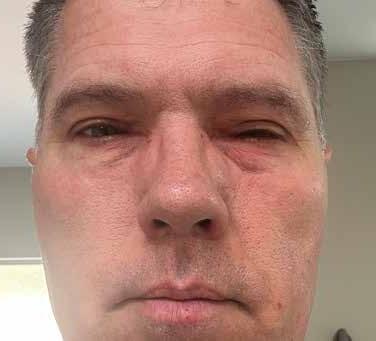
His sensitivity was so extreme that he could often detect pollen the moment he stepped outside. Within seconds, his body would begin reacting—itching, sneezing, and swelling signaling the start of another episode. At his worst, the discomfort was debilitating.
“I would literally have to go inside and stay there for days,” he says. “Ice packs on my eyes, just trying to get through it.”
After years of cycling through medications with limited success, an unexpected solution came from close to home. Aaron’s neighbor, Koby Taylor, owner of Fusion Pharmacy, introduced him to AllergyEasy®, a sublingual immunotherapy designed to gradually build the body’s tolerance to allergens rather than simply mask symptoms. Skeptical but desperate for relief, Aaron decided to try it.


He began the treatment in the summer, just ahead of Southern Utah’s intense fall allergy season. The timing turned out to be critical. By that first fall, something remarkable happened. “For the first time, I had no symptoms,” he says. “Nothing. I kept waiting for it to hit, and it never did.”
For someone accustomed to severe reactions, especially during long hours coaching football outdoors, this absence of symptoms was almost unsettling. He found himself questioning when the sneezing, itching, and swelling would begin.
They didn’t.
Encouraged, Aaron continued the treatment. When spring arrived, the season that had historically brought some of his worst reactions, he braced himself once again. “And again, nothing,” he says. “Maybe a sneeze here or there, but nothing like before.”
The difference wasn’t just noticeable; it was life-changing. In the past, even indirect exposure could trigger a cascade of symptoms. He recalls one instance where he picked up a towel that had been left outside and unknowingly covered in pollen. Previously, that level of exposure would have resulted in severely swollen eyes and an urgent trip for a steroid injection. This time, it caused only mild irritation. “That would have put me down for days before,” he says. “Now it was barely anything.”
Aaron followed the full treatment cycle for roughly nine months to a year, followed by a maintenance phase. The results have continued to last well beyond that initial period, allowing him to return to activities he once avoided: hiking, mountain biking, and simply being outdoors during peak seasons.
For the first time in years, spring and fall no longer feel like something to endure. “I can actually go outside and enjoy it again,” he says.
Aaron’s journey underscores both the severity that seasonal allergies can reach and the importance of addressing the root cause, not just the symptoms. His experience offers a broader perspective on allergies, showing that they can range from mild irritation to truly debilitating conditions.
No matter where you fall on the allergy spectrum—from subtle symptoms to severe reactions—AllergyEasy® provides a path toward lasting relief. Just ask Aaron
Koby Taylor, PharmD, is the owner and pharmacist of Fusion Pharmacy. Working as a retail pharmacist early in his career, Koby began to see that pharmacy patients needed to have access to available alternative medications. He realized that pharmacy in its truest form is compounding, and he wanted to be able to provide patients with customized medications. He also desired more personalized interactions with patients in order to truly help their health and well-being. To fulfill his passion for improving the health of patients and educating them about compounding, Koby opened the doors of Fusion Pharmacy in 2013. Today, Fusion is nationally accredited with PCAB. It is licensed in and ships to 27 states. Fusion is proud to have two locations to better serve the southern Utah community. Koby graduated from Brigham Young University with a degree in molecular biology in 1995 and from the University of Utah with his Doctorate of Pharmacy in 2000.
more information aboout Fusion Pharmacy visit: www.FusionSpecialtyPharmacy.com
By Matt Eschler, PhD, LMFT

In a world filled with constant conversation—at home, in the media, and online—it can be surprisingly difficult to tell the difference between facts and opinions. Yet understanding that difference is essential if we want healthier relationships and more meaningful communication. This article aims to unravel the confusion surrounding how we use opinions in our societal, marital, and individual conversations.
There are two types of information exchanged when people communicate: facts and opinions. Facts describe what actually happened, while opinions reflect our interpretation of those facts. The moment we begin explaining what the facts mean to us, we are sharing personal opinions, not facts.
When we listen to a news report in which a newscaster presents the details of an incident, we are hearing a news story. However, the moment the newscaster adds interpretation or judgment about those details, it becomes an opinion piece intended to influence what the audience believes is right or wrong.
Similarly, when a couple begins an argument about an incident, they often start by describing what happened. Conflict escalates when one or both individuals begin presenting their opinions as if they were facts. At that point, curiosity is replaced with a need to be right: “I am right, and you are wrong.” Using an opinion as a weapon to win an argument always makes you wrong.
Consider a couple standing outside their home one early afternoon in Southern Utah, enjoying the 96-degree weather. As they stand in
their yard, a man rides past on a mountain bike, wearing a green tank top, red shorts, flip-flops, and no helmet.
The husband looks at his spouse and says, “Look at that guy. Doesn’t he have a job he should be at? And it’s way too hot to be out riding a bike.”
His spouse replies, “I think he looks carefree. I envy that. The temperature feels just right for a ride, although I wish he were wearing a helmet.”
Everything the couple expressed to each other was opinion. The observable facts were simple: a man, a mountain bike, a green tank top, red shorts, flip-flops, and no helmet. These are measurable details. How often do we argue over opinions rather than first identifying facts and then thoughtfully exploring our interpretations?
Consider another example. Recent news reports described an incident in which an ICE agent and a nurse were involved in a physical altercation on a street during a protest, resulting in the nurse’s death. Beyond these core details, much of what is discussed publicly consists of interpretation. Some describe the agent as acting with unjust force, while others argue the situation involved self-defense. These differing narratives illustrate how quickly opinions form around limited facts.
Both of the examples I just described illustrate that none of us can know the heart of another person. We cannot fully know another person’s motives or intentions. That is why opinions, while

meaningful, must be handled with care. Their purpose is not to end conversations but to invite thoughtful dialogue and better questions. Imagine how unsafe it would be if opinions were presented as facts and disagreements were met with hostility or even violence. Now contrast that with a conversation in which both individuals acknowledge the facts and then explore their perspectives with curiosity and respect. That approach fosters understanding, safety, and connection.
I have two challenges for you this summer. First, remember the meaning of these four important terms:
• Fact: something that actually exists or occurs; an event or situation that is measurable.
• Opinion: a view, judgment, or appraisal formed in an individual’s mind about a particular matter.
• Belief: a state or habit of mind in which trust or confidence is placed in a person, idea, or thing; something accepted as true or proven.
• Principle: a comprehensive and/or fundamental law or guiding truth.
The second challenge is to be a Master Communicator by practicing these four skills when interacting with your spouse, friends, or even the media:

Challenge #1
Follow this rule: “Seek first to understand, not to be right.”
Challenge #2
Listen for the actual facts. What truly occurred and what can be measured?
Challenge #3
Separate your opinion from the facts. Seek ways to explore other opinions that are different from your own. Remember, listening to and validating another opinion is not the same as agreeing with it.
Challenge #4
Check your strongly held beliefs with principles given to us from the beginning of time. Principles are laws or rules that govern reality. Before you form a strongly held belief about a subject, be certain this belief aligns with a principle.
Ultimately, the quality of our conversations and our relationships depends on our ability to distinguish between what is true and what we believe about what is true. When we approach others with curiosity instead of certainty, we create space for understanding, respect, and growth. In a world full of differing perspectives, that ability may be one of the most important skills we can develop.

Matt lives in St. George, Utah, where he and his wife, Chris, are enjoying their life with each other. Since their children have grown up and moved out to pursue their dreams, Matt and Chris travel the world. They want to visit 200 countries before they are done. Matt and Chris are active in their community and enjoy working out, training for marathons, and spending time participating in numerous activities with their adult children. Matt received a PhD in psychology. He is focused on the arena of resolving personal conflicts and improving interpersonal relationships. In addition to his doctorate degree, Matt has earned a master’s degree in marriage and family therapy, studied criminal justice and received a category one license with Peace Officer Standards and Training, and received a degree in the Arts of Business Management. Matt is a professor at Dixie State University and hopes to be part of the positive growth of Southern Utah.
By Brigit Atkin

When I was in high school, we seemed to have many assemblies. On one such day, my friends and I thought it would be a good idea to leave campus during that morning’s assembly. Other kids were doing it, and it seemed like a good excuse to get out and go to the local convenience store for some treats. On our way down the street, a friend, who had a car, stopped and offered to take us. What fun! Now we were in someone’s car, filling it with teenagers and loving our small respite from school. What could go wrong? As it turns out, plenty.
We weren’t aware of this at the time, but a police officer watched us leave campus during school hours and then saw us get into the car. After following us a little ways, he pulled us over. Every one
of us was taken back to the principal’s office, where the principal proceeded to call our parents. We were in trouble.
When I got home later that day, I had to face my mother. She said something to me that bothered me far more than the encounter with the police officer and the principal—more than being in trouble at school and at home. She said she was disappointed, and more specifically, that she questioned my judgment. For whatever reason, it bothered me more than the punishment. It really made think about my ability to make good choices. Was I so dense that I couldn’t navigate simple decisions to keep myself out of trouble? Why didn’t I consider the possible consequences before making that decision? Needless to say, I had a lot to think about that week.
I ultimately decided that life flows smoother when you make the right decisions.
Using good judgment takes practice. It’s something that gets easier the more you do it. Life is so much easier when you figure out how to discern good from bad and better from good. Success in life comes when you master the skill of using your mind and your heart with integrity. Below are some suggestions to help when using good judgment feels cloudy:
Be present. This sounds simple enough, but ask yourself how many times you are distracted during a time that requires your input.
Delay your decision. Sometimes that small space of time between a thought and an action makes all the difference. For example, social media employs appealing advertisements that sometimes leave your wallet thinner, with little to nothing to show for it. By delaying a purchase for a day, you might find in that interim that you’re better off without the product.

Ask questions. Consider opinions and advice from those who are in a place to give you good insight. Research and gather information that will assist you in making a wise decision.
Ask for divine guidance. Appeal to a higher power when appropriate. Then listen.
Tune in to your own wisdom. Ask: Is this right? Does it feel right? If I choose this, will I feel good enough about it that I will be able to let go of the outcome? Will this decision keep me awake at night?
Apply your values. Does this go against your conscience? If your parent/child/spouse saw you do this, would you be ashamed?
Remember the old saying: “If your friends jumped off a cliff, would you do it, too?” Many parents seemed to use that one a lot when I was young. Or, as my mom might say, “If your friends were skipping school, would you do it, too?” Teens sometimes have a difficult time making the right decisions. Attentive parenting is essential in helping youth grow into responsible adults.
In adulthood, some choices are easy, and in maturity, you know exactly what to do. But sometimes you find yourself facing the dilemma of uncertainty—not knowing what is best or not feeling clarity about the right outcome. As you consider the suggestions listed above, add your own ideas that will help you make wise decisions. Practicing good judgment won’t just keep you out of trouble. It will help you succeed and thrive in big and small ways. It will attract quality relationships, keep you safe, and make everything in life more enjoyable. Here’s to your success.



Brigit Atkin–Brigit of Brightworks helps improve the lives of others facing challenges and difficulties.
She is certified in the SimplyALIGNTM method and was trained by founder Carolyn Cooper herself. For more information, visit www.brightworksbybrigit.com.

You’ve been working on it—perhaps lingering anxiety, a habit that keeps returning, or an automatic reaction in relationships or stressful moments. You’ve brought awareness, steady effort, and genuine sincerity. At times, the intensity eases. You manage it with more skill.
And yet, it’s still there. Not as overwhelming as before, perhaps, but not truly resolved.
For many of us, this brings a particular kind of frustration. We eventually move beyond asking, “What should I try next?” and begin asking a deeper question instead: “Why hasn’t this actually changed?”
Most approaches to personal change focus on the surface: adjusting behaviors, interrupting old routines, or trying to think more positively. These steps can bring relief, up to a point.
But they often fall short because they address only the visible part of the weeds, while the most significant part lies at a deeper level that willpower and logic alone rarely reach—down in the soil, where the seeds of the problem are still growing.
By Erin Del Toro, CCHt
By the time we reach adulthood, it’s estimated that 95 percent of our lives are run by automatic responses shaped by earlier patterns. We believe we are thinking and acting consciously, but neuroscience suggests that we step out of this automatic programming only about 5 percent of the time. What we call “habits” are no longer conscious choices. They have become automatic responses, wired into the mind and nervous system through lived experience.
So how do you access those deeper patterns and begin to change them?
Lasting change tends to occur in three key places, not just one:
1. The experience itself: moments that carried emotional weight, physical sensation, and meaning all at once.
2. The meaning your mind assigned to those moments: what they came to say about you, about others, or about what feels safe or threatening.
3. The emotional and physical response that became wired in: the feeling, pull, or reaction that arises before you have time to think.
Most change efforts focus on a fourth place: behavior. Behavior matters, but it is downstream. It flows from the first three. When those deeper layers remain unchanged, the old pattern tends to reassert itself, no matter how much surface effort we apply.
If you look back across your life, you may recall times when change felt exhausting and fragile and other moments when a shift occurred more completely, as if something inside had quietly reorganized. The difference was rarely greater effort. More often, a deeper understanding or emotional response had changed first. Once the inner landscape shifted, the outward behavior followed more naturally.
For generations, cultures around the world have used focused, guided states to support meaningful change. Today, research, including studies from Stanford University, is helping explain why these approaches can be so effective. The brain shows remarkable adaptability in certain relaxed yet aware states, with changes in activity and connectivity that support new ways of responding.
One especially receptive state is known as theta, a natural brainwave pattern we all experience as young children, roughly from birth to age six. In those early years, the mind is highly programmable. It absorbs experiences, forms beliefs, and builds patterns quickly, with less of the critical filtering that develops later.
In adulthood, returning to a similar theta-dominant state , as occurs in hypnotherapy, allows the mind to regain a version of that openness. At the same time, university studies show that hypnotherapy causes the brain to accelerate its production of white matter, the tissue that essentially helps the brain to learn and rewire in the rapid state we did in childhood. When a new understanding or response is experienced in this state, it can solidify into fresh neural pathways far more readily, creating lasting change at the level where patterns were originally formed.
Hypnotherapy gently guides the mind into this focused, aware theta state—not sleep, and not a loss of control, but a calm condition in which the usual mental filters soften. This makes it possible to work directly with the original experiences, the meanings assigned to them, and the emotional and physical responses that have been repeating.


Instead of trying to override old patterns with willpower, you begin to update them at their source. The result is often a more natural and sustainable reorganization of the system.
For those who have spent years applying effort without the lasting resolution they hoped for, this perspective can bring both relief and quiet hope. The challenge may not be a lack of discipline or sincerity. It may simply be that the effort has been directed at the wrong level. When you begin working where change actually takes root—at the level of lived experience, assigned meaning, and wired responses— the process can feel more precise, more respectful of your life’s journey, and more complete.
If this way of understanding your patterns resonates with you, you may wish to explore a method designed to work at that deeper level. You can learn more about how hypnotherapy sessions unfold and whether it might be a good fit at lumatheta.com, or call 435-4292560 for a consultation or an appointment. There is no pressure, only an open invitation to discover what becomes possible when you partner with your mind’s natural capacity for change. ABOUT THE AUTHOR















By Chris Eschler, Health and Well-Being Life Coach



ave you ever felt pulled in two directions at once, part of you wanting to move forward, and another part quietly holding you back? This inner conflict is at the heart of self-sabotage, and understanding it is the first step toward breaking free. Before we can break the habit of self-sabotage, we need to understand why it happens. .
We often believe that a lack of follow-through comes from a lack of motivation, focus, or drive, but there is often a deeper element quietly hiding in the background, causing the real trouble. It can mask itself in a variety of distractions and is often dismissed for what it really is: fear.
• Fear shows up in many disguises, such as:
• Fear of missing out (FOMO)
• Inadequacy
• Embarrassment
• Self-doubt
• Comparing ourselves to others
• Concern about disappointing others
For example, have you ever worried about not being successful, while at the same time worrying that you might be successful? You may be shaking your head, thinking, Why would anyone not want to be
successful? Yet, unconsciously, most of us live in this contrast more often than we realize. Have you ever worried you wouldn’t pursue a particular career path, while also wondering, What if I actually do? What would that mean? What expectations would follow? What if it’s more than I can handle? What if I’m not capable?
This worrisome “what if” tension builds up indecisiveness. Our brain interprets this as a lack of desire, and in a sense, it is correct. You cannot have true desire when there is a strong, opposing current pulling in the other direction. Without true desire, we will never stay fully focused. Our progress becomes stunted. In essence, we sabotage our progress because fear compromises desire.
This contradiction appears in many facets of life, including relationships. We may worry we won’t find true love, but what if we do find someone wonderful and they hurt us? Or vice versa? Or other destructive thoughts creep in, such as, If they really knew me, they couldn’t possibly love me. Do you see how quickly fear diminishes desire and how the unconscious brain stops scanning for further possibilities?
Often, unaware of how effective your inner scripts are, you build a case that something is wrong with you because everyone else seems

to find love. These negative inner scripts are constantly running in the background, sabotaging your happiness. This will continue until you consciously choose to interrupt and change them.
Imagine something different for yourself:
• What if you truly knew what you wanted?
• What if fear didn’t stand in your way?
• What if you stopped living life by placing all your energy into not being a disappointment to everyone around you, including yourself?
• What if you could create the life you genuinely want while still maintaining the trust and respect of those around you? Is that possible? And if it is, what would that look like?
For one, you would stop settling for the safe B- or C-level options that never fulfill you. You would begin choosing your “A” option more often. You would also begin to see that when you trust yourself, others will trust you, too.
1. Be absolutely clear with yourself. Breaking the habit of selfsabotage begins with clarity. Most people know more about what they don’t want than what they do want. While understanding

Chris Eschler earned a BS in marriage and family sciences at Brigham Young University-Idaho. As a life coach at Ascend Counseling and Wellness. Chris works with individuals to develop their skills and provides a safe, accepting environment for exploring a wide range of thoughts and feelings. Chris knows that you are the expert of your life and that she is simply a guide. She currently sees couples with her husband, licensed therapist Matt Eschler. Together they assist couples with all couples issues, specializing in high conflict couples work. To schedule an appointment with Chris for life coaching, call Ascend Counseling and Wellness at 435-688-1111 or visit https://ascendcw.com/
what to avoid can be a useful starting point, on its own it rarely drives meaningful personal growth. To truly move forward, you need to decide where you want to go. As Lewis Carroll famously wrote, “If you don’t know where you are going, any road will take you there.” Without a clear sense of your true north, your journey risks becoming chaotic and unfulfilling.
2. Cultivate passion. Carry excitement and enthusiasm every step of the way. Positive emotion is the springboard for turning dreams into reality. Your passion will likely draw others to support and participate in your vision.
3. Replace fear with faith. Self-doubt will always try to squirm its way in if you let it. Determine what is realistic versus just plain fear. Letting fear inch its way in can snowball into stifled dreams. Dismiss negative thoughts by saying, “Not today, fear.” Replace self-doubt with positivity, purpose, and passion. Allow excitement for your future wins rather than fear.
You are far more likely to see big dreams become reality when you focus on what you want, cultivate passion, and replace self-doubt with faith and enthusiasm. Your confidence will carry you forward— and draw others along with you.




















The Pizza Factory St. George, located in the historic Ancestor Square, has become one of the most well-known tourist stops in Southern Utah over the past forty-six years. “We have customers who say they plan much of their vacation around coming to the Pizza Factory when they come to town,” stated Bill Randall, founder and owner of the Pizza Factory in St. George.
The idea for the Pizza Factory originated during the early 70s when a group of friends traveled to Southern Utah for a ski vacation. Finding there wasn’t a pizza parlor in the area, they declared that “the need created an opportunity.” Subsequently, the first Pizza Factory opened its doors in Cedar City, Utah, in 1974. Through the years, the menu offerings have been refined to now include Chicago-style deep-dish pizzas, specialty pizzas, sandwiches, calzones, a fresh salad bar, and deluxe desserts, including custombuilt cookies, smoothies, and more.
After buying out some of the original owners, Bill Randall and Bill Kringlen opened up shop in St. George, Utah, on August 20, 1979. “We’re here because we love Southern Utah and the people,” Randall stated. “We have a personal involvement with the community and want to continue providing a great place and environment where people can come and enjoy lunch and dinner.”
The Pizza Factory provides its customers with an enjoyable dining experience by making its pizzas with only the finest ingredients and toppings possible. “Our emphasis has always been on quality,” Randall continued. “That’s what our customers like, and I guess that’s why we are still around after all these years.”
Menu choices are unlimited with a myriad of sauces and topping combinations from which to choose. The Pizza Factory offers nine made-to-order specialty pizzas in combination with the numerous sauces and toppings available. “Everything is made to order. You can have it your own way—custom-built. We also create our own sauces, and we make them fresh daily. The Pizza Factory provides the one-and-only Factory ambience while dining in our comfortable atmosphere,” Randall explained. In 1994, they
established the Pasta Factory, a restaurant that allows its customers to create their own signature pasta dishes or to pick one of the many freshly made entrees or salads on the menu. With eight made-to-order specialty entrees in addition to fourteen different types of pastas, seven varieties of sauces, and six selections of toppings, your meal will be the ultimate dining experience.
The Pasta Factory provides a comfortable, European-style atmosphere while dining inside, or you can opt to dine outside underneath the shade of a canopy.
Over the years, two more Pizza Factory locations have been added, one at Pineview Plaza and one on the corner of Dixie Drive and Sunset Boulevard. These locations offer a combination of the Pizza Factory’s signature, custom-built pizzas as well as their createyour-own pasta dishes. They provide dine-in, take out, and drive through services, while the Pineview and Sunset locations also provides door-to-door delivery service. All Pizza Factory and Pasta Factory locations offer catering, so give them a call when you are planning your next event. The Pizza Factory in Ancestor Square has a large room for parties of all sizes, and the Pasta Factory has a large banquet room for parties, receptions, business meetings, and more.












Somewhere along the way, a lot of us got used to feeling overwhelmed.
Busy schedules, constant stimulation, trying to keep up with everything… it all starts to feel normal. And as a mom, I felt that. I was doing all the things—taking care of my family, staying active, trying to eat well—but there was still this underlying stress and fatigue I couldn’t quite shake.
What I didn’t fully understand at the time was that so much of how we feel comes back to the nervous system. It controls how we respond to stress, how we sleep, how we focus, and how our bodies move and recover. And when it’s constantly in that “go” state, even healthy habits don’t always feel like enough.
About two years ago, a holistic practitioner introduced me to a small, ingredient-free patch designed to work with the nervous system through the skin.
I was curious, but also skeptical.
I have been in the health space for years, so I don’t jump into things easily. But after trying it, I was honestly surprised at how quickly I noticed a difference.
It didn’t feel like I was taking something or forcing a change. It felt like my body was simply responding better: calmer, more steady, more balanced.
What I love most is how simple it is.
There’s nothing to take—just a small patch placed on the skin. It uses a form of vibrotactile technology to send signals through sensory receptors, supporting how the nervous system communicates.
By Valerie Acevedo
In our family, we use them in different ways, depending on what we need.
Some days it’s for focus.
Some days it’s for sleep.
Sometimes it’s just to feel more calm in the middle of a busy day. It’s become one of those small, consistent tools that supports us without adding more to our routine.
After experiencing it myself, I started sharing it with friends, family, and people in my community. Since then, I’ve introduced this to well over 1,000 people through those connections.
The feedback has been incredible: people feeling more rested, more focused, more like themselves again. And that’s really what stood out to me.

If this is something you’re curious about, you can learn more or see how we use it in real life:
www.valerieacevedo.com @itsvalerieacevedo
If you decide to try it, you can use my link for 30 percent off: valor4jesus.superpatch.com
This technology is called SuperPatch, and I’ve been using it consistently for the past two years. I’m always happy to answer questions. Just message me on instagram.

Every year, you brace for allergy season. Every year, you spend hundreds of dollars masking symptoms, knowing it’s not a real solution, just temporary relief until the next attack hits.