Texas Society of Certified Public Accountants

Texas Society of Certified Public Accountants
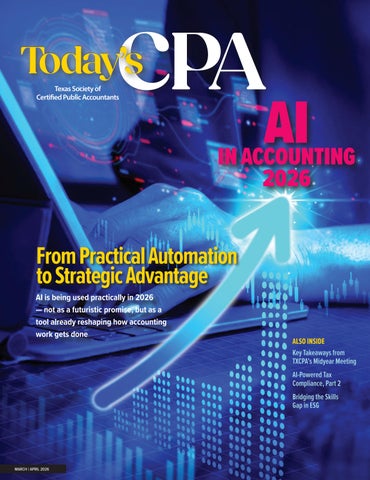
AI is being used practically in 2026 — not as a futuristic promise, but as a tool already reshaping how accounting work gets done
ALSO INSIDE
Key Takeaways from TXCPA’s Midyear Meeting
AI-Powered Tax Compliance, Part 2
Bridging the Skills Gap in ESG












Every busy season teaches us some thing new, but lately it feels like the les sons come faster than ever. As a CPA in public accounting, I see every day how rapidly technology is reshaping the way we serve clients and employers. That’s why I’m especially proud of this March/April issue of Today’s CPA. It’s packed with insights that help us not just keep pace with change, but lead it.
Our cover story explores AI in Ac counting 2026, taking us from today’s practical automation tools to the strategic advantages emerging right around the corner. We continue the conversation with features that look
CHAIR
William J. (Billy) Kelley, Jr., CPA, CGMA
PRESIDENT/CEO
Jodi Ann Ray, CAE, CCE, IOM
EDITORIAL BOARD CHAIR
Derrick Bonyuet-Lee, Ph.D., CPA, CFA, CFP
STAFF
MANAGING EDITOR
DeLynn Deakins, MBA ddeakins@tx.cpa
972-687-8550
800-428-0272, ext. 8550
“TXCPA remains strong because our members are engaged, generous with their time and expertise, and committed to advancing our profession together.
beyond compliance and dive into how CPAs can fully embrace an AI‑powered future, as well as corporate governance trends. These themes underscore the same commitment we’re driving across TXCPA: empowering members to lead and succeed!
You’ll also find updates from around the state as chapters highlight local events and member activities, plus a preview of Accounting Opportuni ties Month in April, which reflects our shared responsibility to strengthen the pipeline and inspire the next genera tion. And for those of you who, like me, never stop learning, this issue’s CPE article takes a deep dive into AI‑pow ered tax compliance – an increasingly important topic.
TXCPA remains strong because our members are engaged, generous with their time and expertise, and commit ted to advancing our profession togeth
MANAGER, MARKETING AND COMMUNICATIONS
Peggy Foley pfoley@tx.cpa
CHIEF OPERATING OFFICER
Melinda Bentley, CAE
CONTRIBUTORS
Melinda Bentley; Kenneth Besserman; Holly McCauley; Shicoyia Morgan; Craig Nauta; April Twaddle
CLASSIFIED
DeLynn Deakins
Texas Society of CPAs 14131 Midway Rd., Suite 850 Addison, TX 75001
972-687-8550
ddeakins@tx.cpa
EDITORIAL BOARD
Derrick Bonyuet-Lee, CPA-Austin; Adam Dimmick, CPA-Houston; Julia Frink, CPA-Fort Worth; Rhonda Fronk, CPA-Houston; Aaron Harris, CPADallas; Baria Jaroudi, CPA-Houston; Elle Johnson, CPA-Houston; Michael
er. I encourage you to stay involved: attend a chapter event, raise your hand for a volunteer role or share the value of this community with a colleague. Thank you for the impact you make. Together, we’re shaping a future where technology enhances the work only CPAs can do.

Send me a note with your suggestions for how TXCPA can help you this year. Email me at chair@tx.cpa
Kraten, CPA-Houston; Lucas LaChance, CPA-Dallas; Anne-Marie Lelkes, CPACorpus Christi; Bryan Morgan, CPA-San Antonio; Amber Rourke, CPA-Brazos Valley; Shilpa Boggram Sathyamurthy, CPA-Houston; Nikki Shoemaker, CPAEast Texas
DESIGN/PRODUCTION
Media By Design, LLC
Design: Sherry Gritch

As CPAs are called upon to assist companies with measuring, reporting and managing Environmental, Social and Governance (ESG) performance, the demand for professionals with education and training in this area is increasing. In response, public accounting firms are investing millions of dollars to develop the capability to provide ESG services, including analysis, reporting and assurance (Boudreau, 2022; Verschelden, 2025). In addition, advances in AI-augmented ESG monitoring and reporting tools are expected to reshape how companies measure and justify ESG spend, potentially increasing software and analytics budgets. (Forbes, 2025)
Working in this area requires specific skills and knowledge to serve in roles such as ESG auditors, analysts and controller positions. While many accounting academic programs are beginning to incorporate sustainability topics into existing or new courses, a skills gap remains for early-career professionals needed to serve in ESGrelated roles. Competency in this area is also essential for experienced accountants, as measuring and reporting nonfinancial ESG data is becoming increasingly expected of CPAs (Coffey, 2022; Poveda, 2024).
While several required competencies are those gained in accounting academic programs, others may require additional actions to optimize opportunities for ESG roles. This article outlines the key competencies required for these new roles and explains how CPAs can develop them to prepare for ESG-related careers.

To prepare for the opportunities in ESGrelated accounting roles, CPAs should have the following key competencies. Core accounting knowledge: Traditional accounting skills in measuring, reporting and managing financial data are essential in professional accounting. Applying these skills to ESG-related costs, such as climate-related supply chain disruptions, helps assess financial risk and understand impacts on revenue.
mandate – are also increasing demand for CPAs to provide ESG disclosure services.
Proficiency with data analytics and digital tools (including AI): Accountants increasingly assist in measuring and managing non-financial ESG data, such as emis-
As ESG reporting becomes a mainstream expectation, CPAs are increasingly responsible for measuring, analyzing and assuring nonfinancial data. This article breaks down the essential ESG competencies accountants need - from understanding reporting frameworks to using AI tools - and offers practical steps to close the skills gap. Reading it will help you prepare for one of the fastest-growing areas in the profession.
Navigating the language of ESG: Working in ESG requires familiarity with commonly used terms that are often misunderstood. Corporate Social Responsibility (CSR) and the triple bottom line (TBL) laid the groundwork by emphasizing environmental and social accountability alongside financial results. ESG goes further by elevating accountants’ role in providing sustainability metrics that help investors assess financial risks from non-financial factors. Clear understanding of these distinctions supports effective communication about reporting and disclosure needs.
Familiarity with ESG reporting frameworks and standards: Since the launch of Global Reporting Initiative standards in 2000, sustainability reporting has expanded and is increasingly subject to external assurance, requiring familiarity with reporting frameworks and standards. New ESG disclosure requirements – such as SEC climate rules, the EU’s CSRD and California’s climate
sions, resource use and workforce safety, to support strategic decisions. Proficiency with AI tools is also becoming essential, as AI enables more efficient collection and analysis of large, diverse ESG datasets.
Linking ESG risks with financial impact: Whereas accountants are trained to recognize traditional financial risks, the financial impacts of ESG factors such as climate change, supply chain disruption, human rights and reputation can be less clear. Scenario planning is therefore critical to ESG risk analysis and strategy.
Interdisciplinary collaboration and communication: Sustainability has long been an interdisciplinary concept, requiring collaboration among environmental scientists, technologists, HR professionals, and legal teams to measure, report and manage ESG performance. ESG roles demand the ability to navigate differing viewpoints and recognize that conflicting perspectives can

still lead to shared solutions. CPAs must be able to communicate and collaborate across disciplines to prevent miscommunication.
Global and cultural awareness: Sustainability issues such as climate change and human rights in supply chains are global risks that influence business strategy. CPAs should understand how cultural and regional differences affect ESG risk management, such as reputational challenges tied to limited sourcing options and child labor concerns.
Because most early-career professionals have limited opportunities for sustainability education while in college, the ESG skills gap must be addressed through employer development programs or self-directed learning. For CPAs interested in working in ESG roles, there are several ways to get prepared, even without prior academic training.
Learn key sustainability frameworks: Review sustainability reports and the frameworks behind them, including:
• Global Reporting Initiative (GRI)
• Sustainability Accounting Standards Board (SASB)
• International Sustainability Standards Board (ISSB)
• Corporate Sustainability Reporting Directive (CSRD)
Pursue relevant CPE and use professional association resources: Take courses in sustainability, environmental science, climate change literacy or accounting for nature
to better understand ESG metrics like emissions, water use and waste; see programs:
• TXCPA’s ESG-related programs available on the AcctoFi learning site at www.acctofi.com
• Climate and sustainability/ESG courses offered by AICPA at www. aicpa-cima.com
Monitor academic and workforce trends: Some accounting programs now offer sustainability accounting courses to prepare students for ESG roles.
Stay current on ESG developments: Follow sources such as Trellis (formerly GreenBiz), ESG News, AICPA and Big Four firm websites.
Consider ESG certifications: Credentials such as the AICPA Fundamentals of ESG Certificate, GRI Professional Certification or IFRS Fundamentals of Sustainability Accounting (FSA) can strengthen ESG career readiness.
Engage with ESG professionals: Connect with ESG and sustainability professionals through LinkedIn groups, webinars and trade associations to learn more about this service area and identify potential career paths. Sustainability Professionals and Sustainability Reporting & Communications are LinkedIn groups that offer a platform for connecting with ESG professionals and exploring job opportunities.
As demand for ESG services grows, CPAs can close the skills gap by building key competencies needed for providing these services in public accounting firms and private industry.
Similarly, engaging with sustainability professionals through LinkedIn groups, webinars and conferences can strengthen key competencies. By taking steps now, CPAs can position themselves for new roles in this exciting field of accounting.
References
AICPA-CIMA (2025). Climate & Sustainability/ESG Resources, CPE & Learning, available at https://www.aicpa-cima.com/topic/sustainability-esg
Boudreau, C. (2022) “The Big Four accounting firms need sustainability experts – and are investing big in training to get them,” Business Insider, June 2022, https://tinyurl. com/26sfsh2j
Coffey, S. (2022) “Building skills around ESG is essential,” AICPA & CIMA Insights Blog, Nov. 2022, Available at: https://www.aicpa-cima. com/professional-insights/article/buildingskills-around-esg-is-essential
Marr, B. (2025) “5 ESG Trends That Will Shape Business in 2026” Forbes, October 2025, available at https://www.forbes.com/sites/ bernardmarr/2025/10/17/5-esg-trendsthat-will-shape-business-in-2026/?utm_ source=chatgpt.com
MasterCPE (2025). “Course Information: Climate Change Accounting and Sustainability Reporting” Available at: https://www.mastercpe. com/product/climate-change-accountingand-sustainability-reporting/ Poveda, M. (2024). “The accounting profession’s role in ESG reporting,” Accounting Today, Sept 2024. Available at: https://www.accountingtoday.com/ opinion/the-accounting-professionsrole-in-esg-reporting
K. KOWALCZYK, PH.D., is Professor of Accounting at Appalachian State University. Contact her at kowalczykt@appstate.edu. 5 Actions for ESG Career Readiness
Verschelden, A. (2025) “Accelerating success in your ESG practice.”
Good.Lab, July 2025. https://tinyurl. com/37rxwumu
TAMARA


























BY KENNETH BESSERMAN, JD, LLM, DIRECTOR OF GOVERNMENT AFFAIRS & SPECIAL COUNSEL
The 2025 Texas legislative session was transformative for the CPA profession. TXCPA successfully advocated for two major bills addressing the CPA pipeline: SB 262, creating an additional pathway to licensure, and SB 522, modernizing practice mobility. With both bills passing in May 2025, Texas became one of the first states to enact both pathways and mobility legislation. More than 27 states have now passed pathways and mobility legislation, further advancing efforts to address the CPA pipeline.
Since the end of the session, TXCPA has worked with the Texas State Board of Public Accountancy (TSBPA) on rules implementation of the new pathways legislation that will become effective on August 1, 2026. The new bachelor’s pathway rules address the:
• Accounting and business courses needed for licensure.
• Ability for students to transition between the traditional 150-hour pathway to the new bachelor’s pathway.
• New two-year work requirement and other issues.

TXCPA created a task force to review and comment on the proposed rules and the group took an active role in providing suggested language.
During the interim between the 2025 and 2027 legislative sessions, a significant election will take place in Texas:
• All 150 Texas House seats will be on the ballot.
• 15 of the 31 Texas Senate seats will also be up for election.
• Nearly three dozen legislators are retiring or running for other offices, increasing expected turnover.
While it’s typical for 10-20 legislators not to return, the 2026 election is shaping up to bring a near-record number of firstyear lawmakers.
What does this mean for TXCPA and the CPA profession? TXCPA and our advocacy team will need to forge relationships with new members of the legislature and educate the new members on our issues. We will remain highly vigilant against
Beyond the deregulatory landscape, TXCPA is preparing its 2027 legislative agenda. In late 2026, the Legislative Advisory Committee will review new legislative ideas, assess any needed updates to pathways and mobility laws, and consider other issues that touch the CPA profession. Members are encouraged to share issues the Society should review and consider for the next session.
growing deregulatory threats, as Texas may become a target for national efforts. These threats include:
• Diminishing the role of state boards of accountancy.
• Reducing CPE requirements.
• Lowering or removing licensing and education standards.
TXCPA is engaging members, candidates and legislators to raise awareness and build support. As the election season progresses, TXCPA will be expanding our efforts to talk about the threats to the profession and seek out candidates and officeholders who support our issues and understand the importance of professional licensing and a uniform system of licensure and mobility.
The CPA profession has worked long and hard to achieve a model system and we need to work even harder to protect against threats to undo it.
Kenneth Besserman, JD, LLM, is TXCPA’s Director of Government Affairs and Special Counsel. Contact him at kbesserman@tx.cpa

The TXCPA PAC made its recommendations to support key candidates and officeholders, and we are working closely with all the chapters to get campaign contributions delivered. The PAC is your voice at the Capitol. Strong member participation ensures we can advance our legislative priorities and maintain trusted relationships with policymakers.
Plan your year with this snapshot of essential events, deadlines and learning opportunities for TXCPA members.
TXCPA Award Nominations Open Until Late April
Spring Accounting Opportunities Month April
Spring Virtual Cluster April 15-16 | Webcast
Texas Taxes 2026 Quarterly Update Q1 April 23 | Webcast
TXCPA Membership Renewal - Time to Renew Your Membership! Expires May 31, 2026
TXCPA Leadership Nominations Open in May
Technology Conference May 4-5 | Webcast
Professional Issues Update - May May 6 | Webcast
Energy Conference May 11-12 | Webcast
Single Audits and Government Accounting and Auditing Conference May 14-15 | Webcast
Nonprofit Organizations Conference May 18-19 | Dallas and Webcast
Professional Issues Update - May Replay May 21 | Webcast
TXCPA Leadership Day - Volunteers Invited to Attend June 2 | Dallas
Texas School Districts Accounting and Auditing Conference June 1-2 | San Antonio and Webcast
CPAs by the Bay June 15-17 | League City
Business Valuation, Forensics and Litigation Services Conference
June 16-17 | League City
San Antonio Cluster June 22-24 | San Antonio
TXCPA Annual Meeting of Members June 24-26 | San Antonio
JULY
Galveston Cluster July 6-8 | Galveston
Texas Taxes 2026 Quarterly Update Q2 July 16 | Webcast
Summer Education Conference July 19-24 | Gulf Shores, AL
AUGUST
Summit ‘26 August 23-25 | San Antonio and Webcast
SEPTEMBER
TXCPA Leadership Nominations Close Early September
Single Audits and Governmental Accounting and Auditing Conference September 24-25 | Austin and Webcast
Texas Taxes 2026 Quarterly Update Q3 October 8 | Webcast
Accounting Education Conference October 16-17 | Dallas and Webcast
Expo Dallas November 12-13 | Dallas OCTOBER

Fall Accounting Opportunities Month November
TXCPA Month of Service November
DECEMBER
Expo San Antonio
December 3-4 | San Antonio
Expo Houston
December 8-9 | Houston
Expo Virtual December 14-15 | Webcast
*Event dates and locations subject to change. Check www.tx.cpa for the most current details.
TXCPA TXCPA
In What’s Happening Around Texas, we give you highlights of events and activities happening around the state in the TXCPA chapters.
TXCPA Austin members stepped up to volunteer at the December Texas State Board of Public Accountancy (TSBPA) Swearing-In Ceremony, helping welcome Texas’ newest CPAs at a pivotal moment in their careers. Their warm presence helped make the occasion special for new licensees and their families, and their dedication to service and the profession truly stands out.
TXCPA Corpus Christi members helped make the Counting on Santa toy drive a true success. Thanks to their generosity, 85 gifts and more than $600 in donations were collected, bringing holiday joy to local families. Volunteers shared those gifts in December at Catholic Charities of Corpus Christi’s Heart of Giving event, seeing firsthand the impact of their support.
TXCPA Dallas stayed busy bringing members together through connection, celebration and service. Young Professionals enjoyed a festive evening at the Vitruvian Lights meetup, taking in the scenery while building meaningful relationships. The Chapter Holiday Event featured plenty of seasonal cheer. In January, volunteers put their hearts into action at the Feed the City event, coming together to make sandwiches for the area’s underserved.
TXCPA Fort Worth members made a big impact through generosity and fun. Their Santaccountant Toy Drive collected 2,100 gifts for 776 children across Tarrant County. Members also enjoyed the Dinos After Dark Scholarship Fundraiser at the Fort Worth Museum of Science and History, an energetic night of food and networking among prehistoric giants, all supporting future accounting professionals.
TXCPA Houston’s Mix and Mingle: White Elephant social event was buzzing with energy from start to finish. The room was alive with laughter and lively conversations as members connected with peers from across the profession. From friendly exchanges to the fun of the White Elephant activity, the event created a welcoming space for relationship building and engagement.
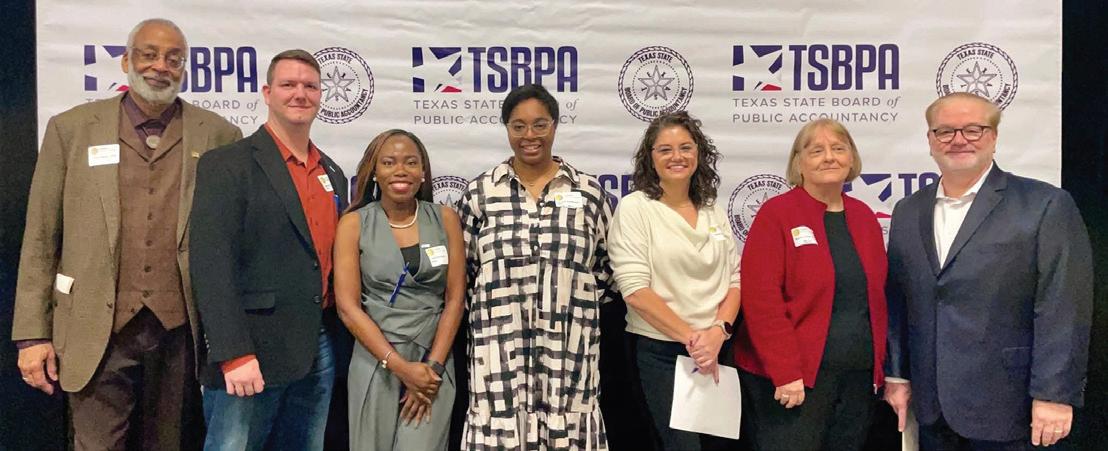




Whether you’re hosting a professional development event, organizing a community outreach project, have a leadership meeting, or celebrating a big chapter milestone, we want to hear about it! Share your chapter’s activities with us. Send your photos and event details to Managing Editor DeLynn Deakins at ddeakins@tx.cpa and help us showcase the great work your chapter is doing!

Do you need to hire talent? Or are you looking for a new job opportunity? Look no further than TXCPA’s Career Center! With job postings aimed specifically at accounting and finance professionals, TXCPA’s Career Center is an ideal resource for employers and job seekers alike.
TXCPA’s Career Center gives members deep discounts on job postings. Plus, internship postings are always free!
Members who are seeking jobs can review job postings and apply online, and they have free access to post a Job Seeker Profile to be reviewed by employers who are looking for superstars like you! Simply use your TXCPA log in credentials to get started.
For your best choice to meet your hiring and professional goals, visit careers.tx.cpa today!

Helping You Protect What Means Most: Associationendorsed insurance you can count on for value and dependability to help protect your family, property and career.
Career Talks
Financial Literacy Presentations
Community Outreach
What Happened During the Last Accounting Opportunities Month
3,053 Students Reached
68 TXCPA Volunteers
51 School Events
WHERE CURIOSITY MEETS CAREER
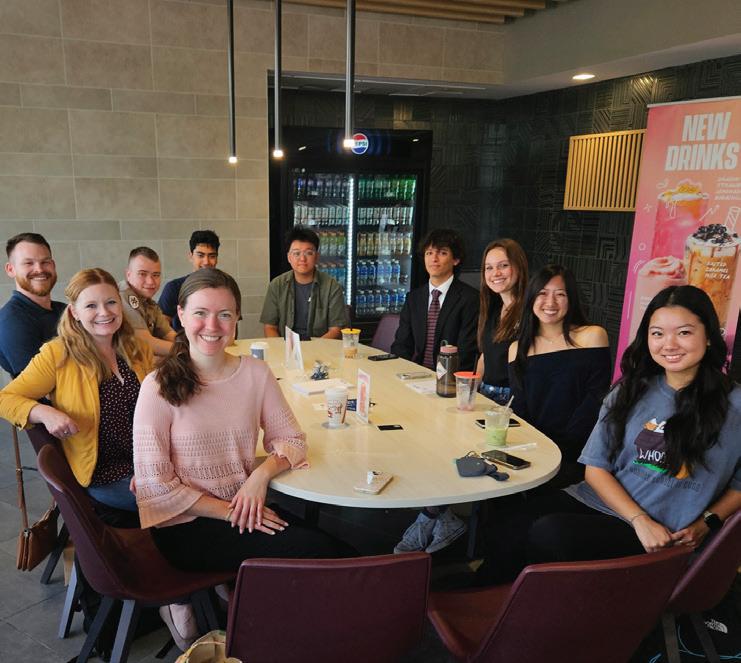
Each year, TXCPA’s Accounting Opportunities Months bring the accounting profession to life for thousands of Texas students. Through classroom visits, career conversations and financial literacy sessions, CPA volunteers help demystify accounting and show students that the profession is dynamic, impactful and filled with opportunity.
At its core, Accounting Opportunities Month is about connection. TXCPA members step into classrooms and community spaces to share real-world experiences, answer questions and provide mentorship. These conversations reveal accounting as a profession built on problemsolving, leadership and trust, with career paths that span business, technology, advisory services and public service.
Why It Matters: Inspiring Future CPAs
Building Financial Skills
Connecting with Communities

WHAT HAPPENS DURING ACCOUNTING OPPORTUNITIES MONTH
Set for Success! Goal This Year:
Reach 16,000 Students Statewide
FUTURE CPAS
Throughout the month, volunteers engage students in meaningful ways:
• Accounting career talks where CPAs share their professional journeys and the diverse paths the profession offers
• Financial literacy sessions that teach essential money management skills students can use immediately
• Community engagement activities that strengthen ties between CPAs, schools and local communities
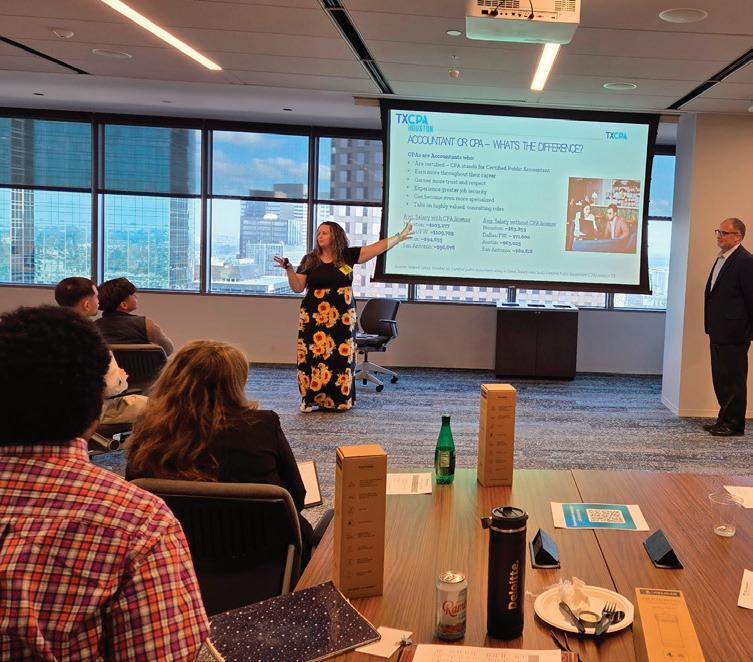
The impact is measurable. During last November’s Accounting Opportunities Month, 68 TXCPA volunteers reached more than 3,053 students across 51 school events. Building on that momentum, TXCPA is working toward an ambitious goal this year to reach 16,000 students statewide.
For students, Accounting Opportunities Month opens the door to a viable, growing and meaningful career – often one they may not have previously considered. For CPAs, it’s a chance to give back, mentor future professionals and help shape the future of the profession they care about.
The next Accounting Opportunities Month takes place in April and there are many ways to get involved. Whether you’re a seasoned CPA, a young professional or an educator committed to student success, your voice and experience can inspire the next generation.
To learn more about volunteering and upcoming opportunities, scan the QR code – and help shape the future of accounting in Texas.


Big career moments often start with simple conversations – asking a question, sharing an experience or gaining a new perspective. TXCPA’s new Mentor Match program is built to spark those connections. Designed for student and candidate members (mentees), the program is flexible, relationship focused and built to support learning, not job placement. Mentees gain perspective on exams and early career choices, while mentors have a simple, impactful way to give back and learn from the next generation. Why get involved?
• Offer perspective at pivotal moments.
• Support and strengthen the CPA pipeline.
• Build meaningful, mutually beneficial connections.
Visit Mentor Match in TXCPA Exchange in the Communities section of TXCPA’s website to enroll as a mentor or find your match. One conversation can make all the difference.
Looking to take your career to the next level? The Chartered Global Management Accountant (CGMA®) designation – developed by AICPA and CIMA – is a globally respected credential for management accountants. It signals that you bring more than technical skills to the table. Why the CGMA® matters:

• Global credibility recognized by employers worldwide.
• Strong focus on strategy, performance and decision-making.
• Emphasis on leadership, ethics and professional standards.
• Demonstrates you understand both the numbers and the story behind them.
To learn how the CGMA® designation can elevate your career, visit the CGMA website.
Accounting can be a deeply rewarding profession, but long hours, deadlines and high expectations can take a toll. When work or life feels overwhelming, the Accountants Confidential Assistance Network (ACAN) is here to help.
ACAN is a confidential, peer-to-peer support program for CPAs, CPA candidates and accounting students. Program highlights include:
• Free and protected by Texas law.
• Available anytime by call or text.
• One-on-one peer support.
• Referrals and interventions.
• Weekly Zoom group meetings. Austin meets Fridays at 12 p.m., Dallas meets Mondays at 6:15 p.m., and the Women’s Group meets on the first and third Tuesdays at 12 p.m.
If you or someone you know could benefit from a confidential, understanding conversation, reach out anytime at 866-766-ACAN or 214-566-2854, or visit tx.cpa/community/peer-assistance
Scholarships were awarded to the following outstanding students who are pursuing CPA licensure and preparing to make their mark on the accounting profession. These awards represent more than financial assistance – they are an investment in future leaders. Through these scholarships, students gain not only funding to support their educational journey, but also meaningful connections to a vibrant community of CPAs who are committed to mentoring, encouraging and championing their success.
Katie Adams - Texas Christian University - TXCPA Fort Worth, Mark Topel Memorial Scholarship from Whitley Penn*
Dulce Ayala - University of Texas
Rio Grande Valley
Marcus Castro - University of Texas at Austin
Ting Jui Chou - University of Texas at Austin
Caden Clark - University of Texas at Tyler - Kenneth W. Hurst*
Tabor Clifton - University of Texas at Austin
Ashley Clingman - Texas A&M University-College Station
Mirrissa Cruz - Dallas College
Deyvi Dominguez - University of Houston-Downtown
Amy Dossal - University of Texas at Dallas - Robert “Bob” Owen Scholarship Fund (Endowed)*
Thao Ly Duong - University of Texas at Dallas
Jennifer Englert - Tarleton State University Fort Worth - TXCPA Fort Worth, Weaver*
Jakob Erickson - University of North Texas - James A. and Charlotte Ann (Charlie) Smith Scholarship (Endowed)*
Laiba Faisal - University of Houston-Downtown
Ruston Farrington - Texas
Christian University - TXCPA Fort Worth, Somos Jubilados*
Giselle Fernandez - Texas
Woman’s University
Lynnson Fort - Texas A&M University-College Station - Paychex*
Yessika Guajardo - University of Texas Rio Grande Valley
Sarah Hammond - University of Texas at Austin
Samantha Hartman - University of Houston-Downtown
Alexis Hernandez - Texas
Christian University - TXCPA Fort Worth, TriQuest Technologies, Inc. Scholarship*
Hadassah Hethcoat - University of Texas Permian Basin - Stanley Voelkel*
Ella Holland - Texas A&M University-College Station
Yaena Hong - Texas A&M University-College Station
Sydney Horak - Texas A&M University-College Station
Karianne Hosch - University of Texas at Austin
Ashley Huang - University of Texas at Austin
Mohammad Rakibul IslamUniversity of Texas Rio Grande Valley
Kathryn Johnson - Abilene Christian University - Jerry and Rozelyn Love Endowed Scholarship*
Lauren Klotzman - Texas A&M University-College Station
Audrey Knoll - Texas A&M University-College Station - Ann
Michele King Memorial Scholarship*
Grace Larue - Angelo State University
Dorothy Laster - San Antonio College
Emma Lawson - Texas Christian University - TXCPA Fort Worth, The Walton Group Accounting Excellence Scholarship*
Thang Le - University of Texas at Arlington - TXCPA Fort Worth, Accrue Your Future Scholarship*
Kayla Lewis - University of the Incarnate Word
Guanyi (Grace) Li - Texas A&M University-College Station
Savannah Lindsey - Stephen F. Austin State University
Juan Lopez - University of Texas at Tyler
Mollie Maresh - Texas A&M University-College Station
Jessica Martinez-WilliamsTexas State University-San Marcos
Jazmine Mendoza - University of Texas at Austin
Ruza Milanko - Dallas College
Harini Narayanan - University of Texas at Dallas
Kristen Nguyen - University of Texas at Dallas - Gene Sumrall (Endowed)*
Claudia Olivares - San Antonio College
Jimena Parra - Trinity UniversitySteve Tillinger*
Shreya Patwardhan - Texas A&M University-College Station
Natalie Pesenko - University of Texas at Arlington - TXCPA Fort Worth, Endowed Scholarship*
Ashley Phillips - Texas A&M University-College Station
Jessenia Puente - University of Texas at Dallas
Maximillian Quevedo - University of North Texas
Caesar Reveles - University of Texas at Arlington - TXCPA Fort Worth, JTaylor & Associates Scholarship*
Melissa Reyes - University of Texas at Arlington - TXCPA Fort Worth, Virginia Hobbs Charitable Trust*
Lauren Shinneman - Lubbock
Christian University
Ruslan Shukurov - University of Texas at Austin - C. Jeff Gregg Memorial Scholarship*
Jenna Spackey - University of Texas at Austin - Bertha W. Fisher*
Jennie Swartwood - San Antonio College
Nguyen Tang - University of Texas at Austin
Adrian Thornton - University of North Texas - TXCPA Fort Worth, Sutton Frost Cary LLP*
Eduardo Torres - University of Texas at El Paso - Kym Anderson Scholarship (Endowed)*
Julie Tovar - University of St. Thomas - Kelly Hunter*
Jonathan Tripode - Texas A&M University-College Station - Erik and Felix Lopez Memorial Scholarship (Endowed)*
Sarah Turner - University of Texas at Austin
Isabella Vaught - Stephen F. Austin State University
Dylan Wolfe - University of Texas at Austin - Willie Hornberger (Endowed)*
* Named Scholarship
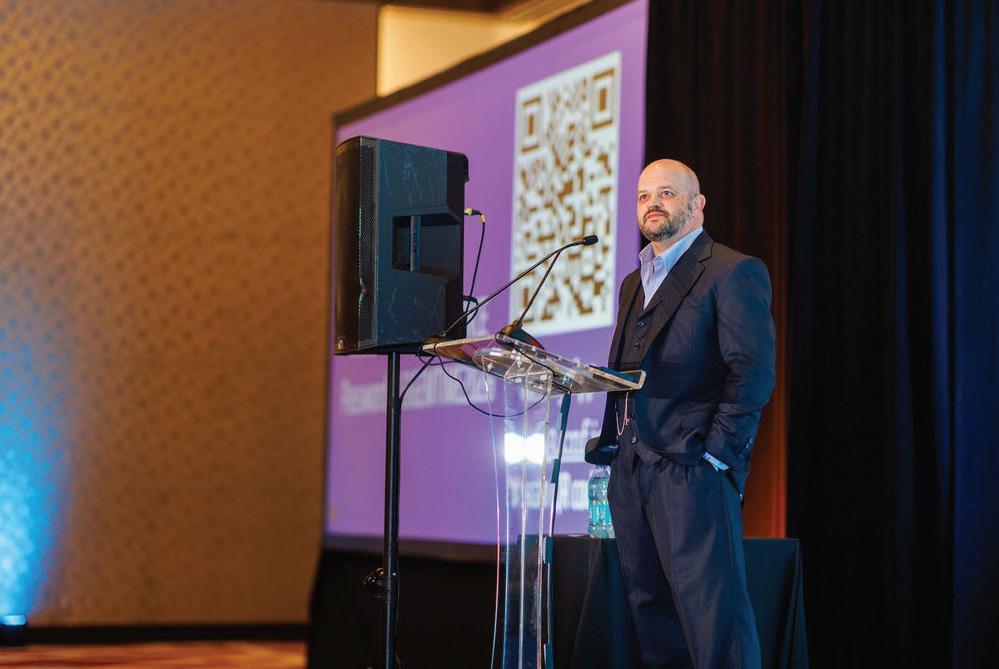



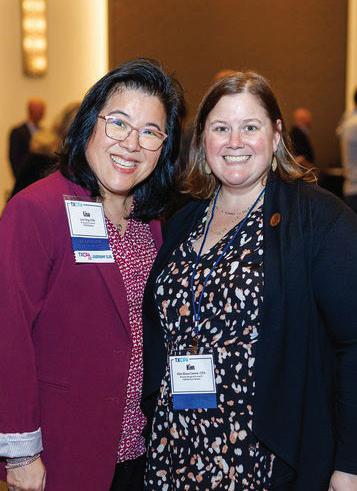
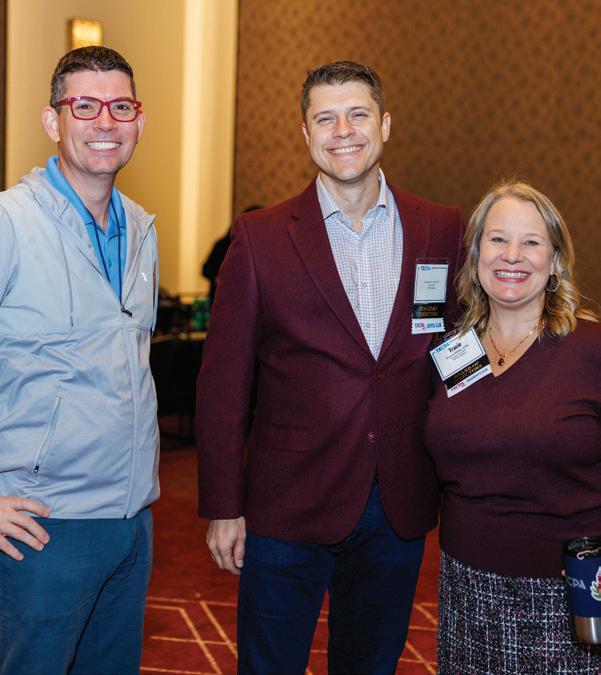
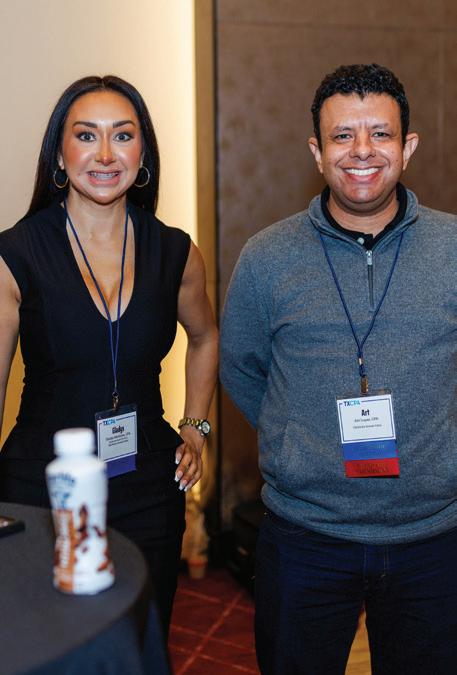
College Station set the stage on January 22-23 as TXCPA members engaged in an energizing 2026 Midyear Leadership Council and Members Meeting. Open to all members, the event delivered fresh insights on governance, advocacy and the evolving future of the accounting profession – along with plenty of lively conversations, new connections and idea sharing across the TXCPA community.
Financial and Governance Updates. TXCPA Treasurer Tram Le, CPA-Fort Worth, and Investments Committee Chair Chris Lucas, CPA-Fort Worth, ABV, shared the Treasurer’s Report and financial outlook.
Members also received an update on proposed changes to the TXCPA Bylaws from Governance Committee Chair Tim Pike, CPA-Dallas, and Nisha Thakker, JD, of the Tenenbaum Law Group. The TXCPA Board of Directors approved proposed changes to the Bylaws during their November 6, 2025 meeting. The proposed changes were presented to the TXCPA Leadership Council on January 22, 2026 during the Midyear Meeting and the Board of Directors approved moving forward with a members vote on the proposed changes on February 4, 2026.
In accordance with Article XX (2), proposals to amend the Bylaws must be approved by two-thirds of the members voting to be adopted. The electronic ballot will be open to all eligible members until March 10, 2026. If approved, the changes will be effective March 10, 2026.
AcctoFi: Expanding Impact and Opportunity. AcctoFi Treasurer Lucas LaChance, CPA-Dallas, CIA, provided updates on AcctoFi’s completed technology launch and public rebrand. Members now receive co-branded AcctoFi communications alongside TXCPA messages, helping strengthen awareness of the new brand.
AcctoFi continues to grow its scholarship and student engagement efforts, awarding scholarships to 66 students this year:
• 61 university students.
• 5 community college students.
(See page 13 in this Today’s CPA for the full list of recipients.)
Looking Ahead: Rise 2040. Lexi Weber, CPA, Senior Manager of Emerging Professionals Initiatives at AICPA, led an interactive workshop connected to the global Finance and Accounting 2040 initiative. Through roundtable discussions, participants:
• Explored key hard and soft trends impacting the profession.
• Envisioned what a thriving accounting and finance profession could look like in 2040.
• Identified new opportunities to stay future-ready. Their insights will help inform the AICPA-CIMA 2040 vision. The conversation continued with AICPA’s Barry Payne, who shared timely perspectives in “Future of Finance: Three Takeaways You Should Know Right Now,” highlighting evolving finance team capabilities and changing expectations for leaders.
...the event delivered fresh insights on governance, advocacy and the evolving future of the accounting profession...
Leadership, Member Benefits and Priorities. The Nominations and Elections Report introduced the 2026-27 slate of officers, directors and AICPA Council nominees, underscoring the strong leadership dedicated to advancing TXCPA’s mission across the state. Attendees were also introduced to TXCPA’s 2027-28 Chair, Dr. Tracie Miller, who shared her passion for a profession that “saves the world” and reaffirmed her commitment to TXCPA during her acceptance remarks.
Joe Barnard, CPA-Dallas, of Forrest T. Jones shared updates on TXCPA’s member insurance offerings. Visit txcpainsure.org or scan the QR code to learn more about TXCPA’s insurance products.

TXCPA Chair Billy Kelley, CPA-Permian Basin, and President and CEO Jodi Ann Ray, CAE, celebrated significant progress in the midyear Society update. They highlighted membership growth, major technology upgrades, including 22 redesigned websites, and a strengthened workforce pipeline. They also discussed critical advocacy wins, such as:
• Establishing an additional pathway to CPA licensure, now adopted by 27 states in just one year.
• Preserving PTET deductions and expanding 529 plan uses under H.R. 1.
• Advocating for the passage of the Filing Relief for Natural Disasters Act.
• Promoting accounting as a STEM profession through joint outreach to the Department of Homeland Security.
• Recruiting co-sponsors for H.R. 2911.
• Advocating for inclusion of accounting in federal student loan definitions tied to student loan relief.
The program concluded with an engaging Advocacy Panel featuring Marta Zanewski of Deloitte, Shelly Weir, President and CEO of the Florida Institute of CPAs, and TXCPA’s Jodi Ann Ray and Kenneth Besserman, JD. Panelists explored the evolving regulatory landscape, emerging risks and opportunities for collective action, leaving attendees informed, energized and ready to stay engaged.
TXCPA thanks all who attended the meeting and those who generously give their time, expertise and passion to support the profession. Your continued engagement and dedication play a vital role in strengthening the work being done every day on behalf of CPAs.
What’s Next. The momentum continues at the Annual Meeting of Members and Leadership Council Meeting, June 25-26, 2026, in San Antonio. Members are encouraged to join the conversation and help shape the next chapter of TXCPA and the profession.


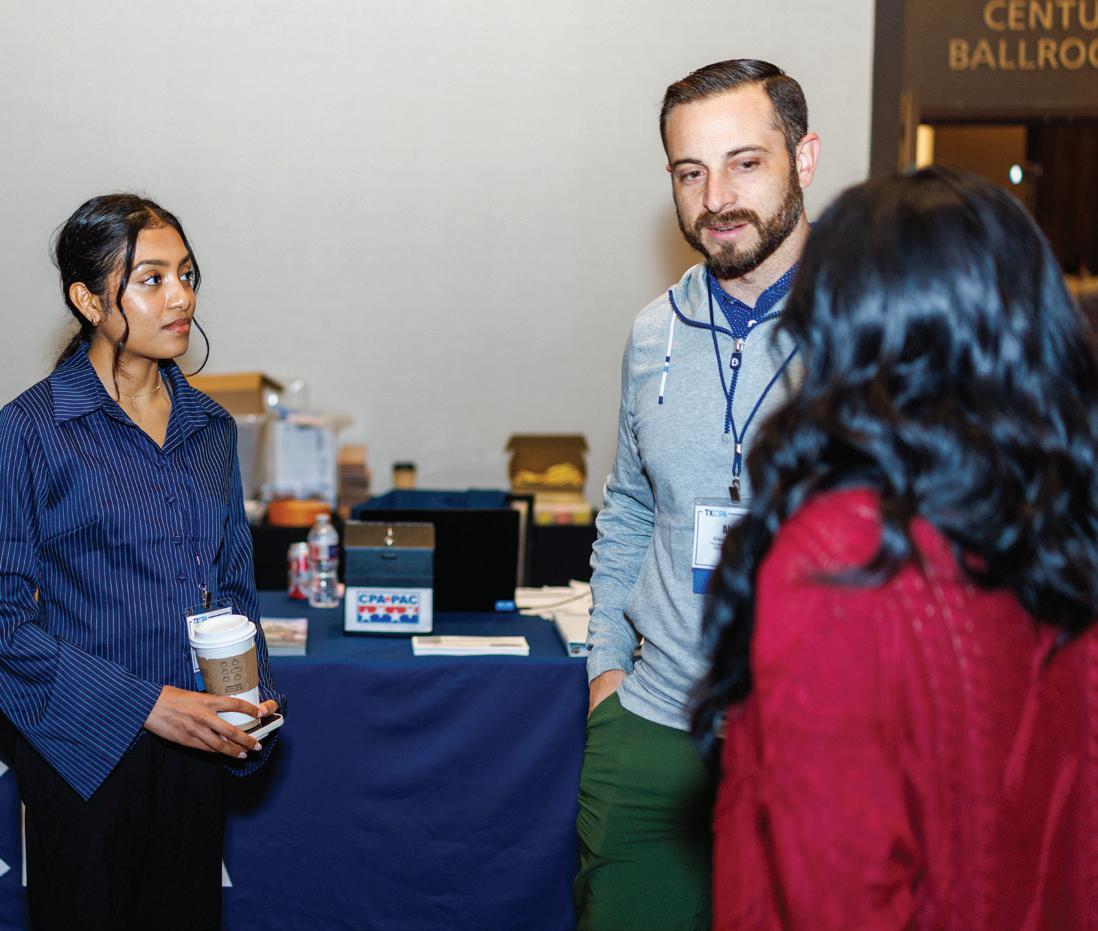
BY RANDY JOHNSTON

Artificial intelligence is no longer an emerging concept for the accounting profession. In 2026, AI will be embedded into the daily workflows of accounting firms, businesses, government entities, and nonprofit organizations. What has changed most dramatically is not the presence of AI, but the way it is being applied. CPAs are moving past experimentation and toward disciplined, real‑world use cases that improve efficiency, quality and professional judgment.
TXCPA’s virtual Technology Conference is May 4-5, 2026. To learn more and register, go to www. acctofi.com and search the 2026-2027 Conference Calendar.
4impactdata embeds AI at the center of its Business Guidance System, helping accounting and CAS teams move from static reporting to proactive advisory. Its Codified Wisdom™ Decision Intelligence engine captures proven advisory patterns and applies them to client data in real time.
The platform continuously monitors financial metrics, flagging early warning signs like liquidity declines, margin pressure or slowing payments. Predictive models highlight emerging risks and opportunities before they appear in traditional month end reports.
Instead of just summarizing results, the system delivers prioritized, tailored recommendations that guide advisors on the most impactful next steps. Automated data standardization ensures clean inputs, enabling reliable insights at scale. The outcome: greater advisory capacity, earlier intervention and more strategic, forward looking client conversations.
Source: 4impactdata
This article focuses on how AI is being used practically in 2026 — not as a futuristic promise, but as a tool already reshaping how accounting work gets done. The emphasis is on outcomes: fewer manual steps, clearer reviews, better insights, and more time spent on analysis and communication, not on manual processes. All the concepts discussed in this article will be covered in sessions at TXCPA’s 2026 Technology Conference.
Early AI adoption in accounting focused on assistance, such as drafting emails, summarizing research or interpreting standards. In 2026, the most impactful systems go further. They initiate actions, monitor conditions and advance work automatically within defined rules. This approach is often described as Agentic AI, but in practice, it simply means that systems no longer wait to be told what to do next. The best way to picture AI today is in three levels:
1. Large Language Models (LLMs) and Generative AI (GenAI) tools such as ChatGPT, Copilot365, Gemini, and Claude,
2. Supplemented by our standard AI-enabled technology stack, and
3. Workflows and tasks empowered by Agentic AI. Consider AI in accounting with the following diagram:
For CPAs, AI functions as workflows that automatically collect documents, extract relevant data, validate completeness, flag exceptions, and produce review‑ready work products. AI shifts the professional’s role toward judgment, interpretation and explanation.
In 2026 and beyond, AI governance will no longer be theoretical, despite the minimal regulation of AI in the U.S.
A
As artificial intelligence takes hold across the professional services landscape, Whitley Penn is steadily expanding its use of AI across audit, tax and advisory services, transforming traditional processes and improving client value. AI now allows auditors to analyze nearly all client data instead of relying on sampling, leading to faster anomaly detection, greater accuracy and deeper insight into risks such as errors or fraud.
AI‑based analytics have revealed patterns like recurring revenue declines and have sped up complex tasks such as benefit plan audits and unrecorded liability testing. Internally, the firm supports adoption through a trained “super champion” team that helps integrate new tools into daily work.
Beyond internal use, Whitley Penn’s Digital Services practice helps clients build AI strategies and implement automation. By embracing full‑population analytics and intelligent automation, the firm enables professionals to spend more time interpreting insights and advising clients in an increasingly data‑driven environment.
Source: Whitley Penn
DASG LLC, a Dallas based tax and accounting firm, is showing how small practices can fully integrate artificial intelligence into daily operations to boost accuracy, efficiency and client results. The firm uses AI throughout its federal tax preparation and compliance services to improve calculation accuracy, automatically identify deductions and credits, and monitor ongoing changes in federal tax rules. These tools also forecast quarterly liabilities and generate predictive insights to help clients plan ahead.
Beyond tax work, DASG applies AI to bookkeeping, financial reporting, payroll and cash‑flow management. Real time analytics uncover financial trends and provide clients with up‑to‑date insights through secure cloud systems.
DASG’s approach highlights a broader industry shift: using AI not just to automate tasks, but to elevate the quality and responsiveness of tax and accounting services.
Source: DASG LLC
Clients, regulators and insurers expect firms to demonstrate control over how AI is used. Practical governance includes knowing where data goes, how long it is retained, and how AI-generated outputs can be reviewed and explained.
Firms that treat governance as part of daily operations – rather than a policy document – are better positioned to manage risk and maintain trust.
AI is reshaping staffing models, particularly at junior levels. Routine tasks require fewer hours, while demand increases for professionals who can oversee workflows, supervise AI outputs and communicate insights. These “digital seniors” blend accounting expertise with process awareness and technology fluency.
Training is increasingly hands-on and scenario-based. Firms are discovering that buying technology without investing in applied learning limits returns.
Government agencies and nonprofit organizations face increasing reporting requirements with limited staffing. AI is being used to automate grant reporting, improve audit readiness and reduce dependence on institutional memory. Document understanding and workflow automation are especially valuable in environments with high turnover and compliance demands.
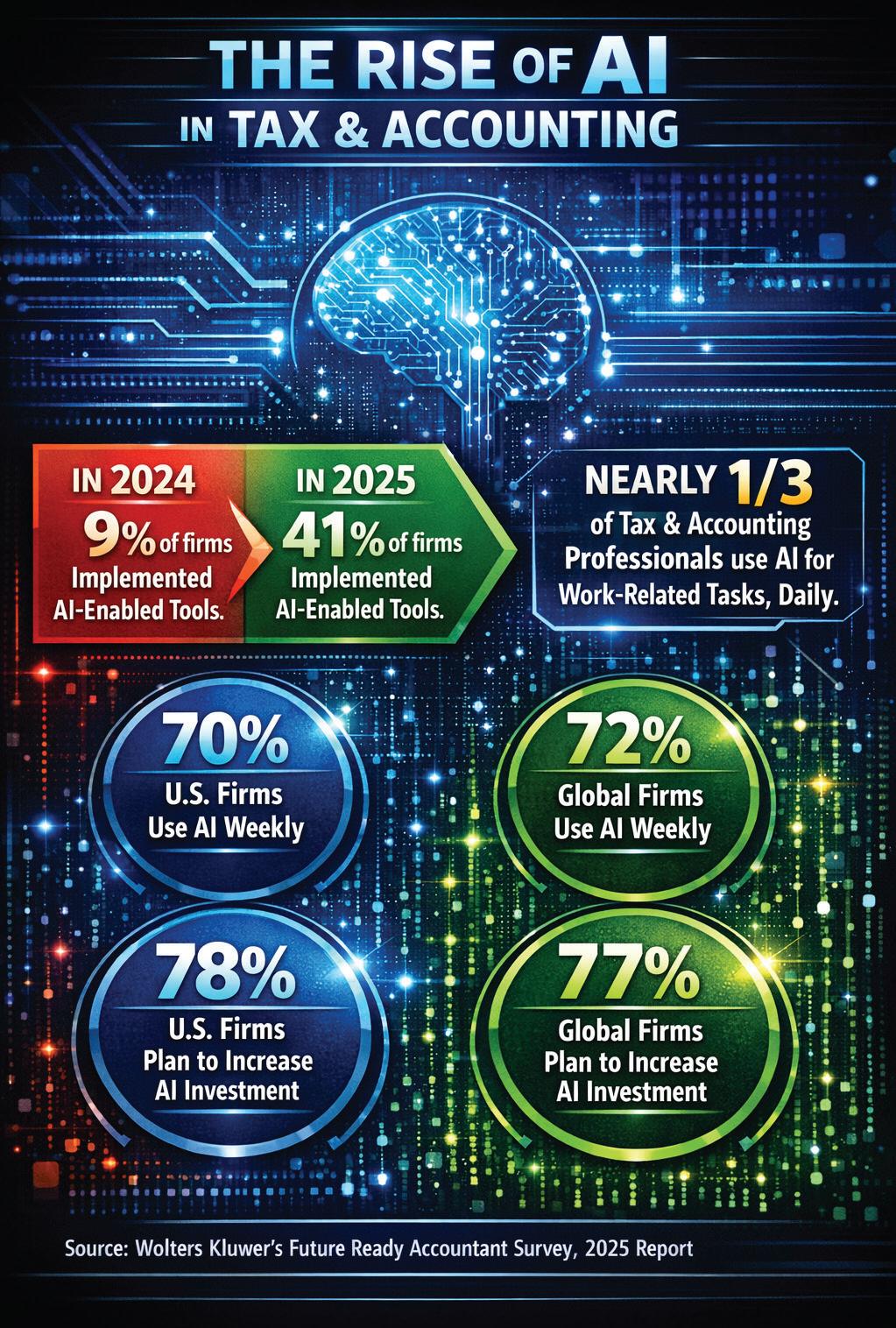
Tax preparation is one of the clearest examples of AI delivering measurable value. In 2026, leading firms must structure tax work as an end-to-end process rather than
a seasonal scramble. AI tools ingest source documents, apply prior-year context and prepare draft returns that are ready for professional review.
Examples of tools being used in practice include Black Ore’s Tax Autopilot (https:// blackore.ai), Filed (https://filed.com) and Magnetic (https://magnetic.com). These platforms focus on automating intake, classification and preparation, while leaving review and sign-off squarely in human hands.
Mainstream platforms are also embedding AI directly into familiar environments. Thomson Reuters’ Checkpoint Edge with CoCounsel (https://tax.thomsonreuters.com) supports research, drafting and document analysis inside established tax workflows.
The result is not “push-button” tax preparation. Instead, CPAs spend less time assembling information and more time evaluating unusual items, resolving ambiguity and advising clients on implications.
Audit adoption of AI has been more deliberate and for good reason. The most successful AI-based audit applications emphasize explainability, traceability and evidence quality.
AI is being used to extract key information from contracts, link source documents directly to workpapers and identify anomalies earlier in the audit cycle. Tools such as DataSnipper (https://www. datasnipper.com), Trullion (https://trullion. com/), TABS (https://www.tabs.com/), and Auditor Intelligence (https://www. assuranceprep.com/general-4) are widely used to support these objectives.
The practical benefit is earlier risk identification and more focused professional skepticism. Importantly, AI outputs are treated as inputs to the firm’s quality control system – not replacements for professional judgment.
Client Accounting Services continues to grow, but AI is amplifying the gap between scalable and fragile practices. In well-run CAS practices, AI automates routine reconciliation and categorization, flags exceptions, and generates dashboards and alerts rather than static monthly reports.
Common tools include MakersHub.ai (https://makershub.ai/), Vic.ai (https://vic. ai), Botkeeper (https://www.botkeeper.com), and Dext (https://dext.com). For financial reporting and forecasting, tools such as Fathom (https://www.fathomhq.com) and Syft Analytics (https://syftanalytics.com) are frequently layered on top.
The firms benefiting most from AI in CAS are those with clearly defined service tiers, standardized workflows and consistent review expectations. AI does not fix weak processes – it exposes them.
ADVISORY AND FORECASTING: PREPARING THE CONVERSATION
One of the most practical uses of AI is preparing advisory conversations before they happen. AI tools now routinely generate ratio analysis, variance explanations, draft forecasts, and scenario models ahead of client meetings.
Platforms such as 4ImpactData (https:// www.4impactdata.com), Aider (https:// www.aider.ai/) and SOBI Analytics (https:// www.sobicas.com/) support this shift by assembling insights that professionals can interpret and discuss. The CPA’s value lies in

How the Technology Platform Changing the Face of Finance Uses AI to Elevate Advisory Work
Founded by TXCPA Houston member Arthur Forbus, Changing the Face of Finance (CFOF) is a platform focused on finance leadership, strategy and outcomes, emphasizing the integration of people, process, technology, and data.
At CFOF, AI is used as a practical tool to enhance, not replace, professional judgment. Across advisory services, finance transformation and thought leadership, CFOF applies AI in three primary ways:
• Accelerating insight,
• Improving communication, and
• Elevating advisory conversations.
AI helps quickly synthesize large volumes of information – including research, account ing guidance, meeting notes and client inputs – into clear, structured perspectives. This allows more time to be spent on evaluating implications, identifying risks and applying professional judgment where it matters most.
framing the discussion, explaining tradeoffs and guiding decisions.
For CPAs evaluating AI in 2026, the practical steps are clear:
• Review workflows before buying new tools;
• Start with document-heavy processes where gains are measurable;
• Require review-ready outputs with citations;
• Reduce tool sprawl in favor of integrated platforms;
• Treat training time as a strategic investment.
Artificial intelligence does not replace professional judgment. It makes clear where judgment adds value – and where processes need improvement.
FROM EXPERIMENT TO EXECUTION: AI BECOMES AN OPERATIONAL IMPERATIVE AI in 2026 is no longer about novelty. It is about operations and execution. Firms and
AI is also used to refine communication across diverse finance audiences. By pressure testing explanations and improving clarity and tone, AI supports more effective messaging for CFOs, boards and cross functional leaders. All outputs are reviewed and finalized by a human, ensuring accuracy and accountability.
Most significantly, AI enables advisory conversations to begin at a higher level. AI does not make decisions, sign opinions or replace ethical responsibility. Central to the work is professional skepticism, context and accountability.
For the accounting profession, the opportunity with AI is not automation alone, but elevation – creating space for higher value advisory, leadership and strategic impact.
Source: Arthur Forbus, Changing the Face of Finance (CFOF)
organizations that apply AI deliberately deliver higher quality work with less friction and greater consistency. Those that do not may find that AI’s most significant impact is simply revealing inefficiencies they can no longer ignore.
About the Author: Randy
Johnston has been an entrepreneur, technologist and teacher for most of his career. He has helped start and run many businesses, founded Network Management Group, Inc. and owns half of K2 Enterprises. K2 has produced a multi-day technology conference for the Texas Society of CPAs for over 20 years. He is best known for his early and ongoing expertise in networks, accounting software, paperless processes, and CPA Firm technology. Subscribe to a weekly podcast on technologies from The Accounting Technology Lab sponsored by CPA Practice Advisor or from Apple Podcasts.

BY KIP HOLDERNESS, PH.D., CPA, CMA, CFE, CVA
hen I began my career, I entered the accounting field because I was told accounting was the language of business and those who could speak the language could solve problems. That message still holds true today, but the nature of those problems is changing. Over the years, something shifted.
Many of my students at West Virginia University, despite landing solid jobs, found themselves performing work that felt rigid and overly focused on compliance. Creativity and problem-solving – the things that once made accounting feel dynamic – took a back seat to documentation and regulatory interpretation. Students weren’t designing solutions; they were checking boxes. In many ways, they became translators of business and bureaucracy.
Now, however, the accounting profession is transforming, underpinned by generative artificial intelligence (GenAI). ChatGPT, Claude and Gemini are changing how accountants write, summarize and communicate information. These large language models (LLMs) can draft reports, translate regulatory language and assist in coding, making once-technical tasks accessible to non-technical professionals.
This transformation led me to develop and teach a university course on artificial intelligence applications in accounting. The insights I gained have shaped my perspective on how CPAs and CMAs can begin using GenAI in their work.
Automation of Routine Tasks. Data entry, bank reconciliation and expense classification can now be handled by bots or machine learning models with little oversight. GenAI adds even greater capabilities to these tools by increasing CPAs’ and CMAs’ abilities to work with unstructured data. Traditional automation requires highly structured and repeatable inputs, but GenAI can interpret varied formats, phrasing and context. Processes don’t have to look exactly the same for the system to be useful. This flexibility enables accountants to handle ambiguity more effectively and expand automation into areas that were previously too inconsistent for bots to manage.
Better Insights, Faster. Natural language processing and machine learning allow for rapid summarization of financial documents, anomaly detection and predictive forecasting. Leading audit firms now use AI to evaluate the risk of every transaction within a general ledger. Auditors can rely on AI to prioritize high-risk, high-impact items, dramatically improving audit efficiency and strengthening assurance quality.

This article:
• Shows how AI can automate routine tasks so CPAs and CMAs can focus on higher-value analysis and advisory work.
• Highlights AI-driven risk analysis, forecasting and summarization to improve decision-making.
In tax, professionals increasingly use firm-provided AI chatbots trained on current tax codes and regulatory guidance. AI tools are also being used to scan company documents to extract pertinent information and pre-fill tax forms, significantly reducing manual data entry and ensuring greater compliance with evolving regulations. CPAs and CMAs in industry or managerial roles are experiencing a shift from manual, backwardlooking processes to technology-augmented, forward-thinking decision-making. Cost analysis, budgeting, forecasting, performance evaluation, variance analysis, inventory control, and cost allocation are now supported by real-time data and predictive analytics.
• Demystifies AI, coding and automation with practical, low-barrier examples.
• Demonstrates how custom GPTs and low-code tools streamline onboarding, documentation and internal support as firms grow.
• Provides a practical, “start small” path to integrating AI without waiting for firmwide strategies.
Evolving Skillsets. Modern CPAs and CMAs must be tech-savvy advisors. GenAI is pushing the profession from compliance to consultation. Those who understand how to leverage data, communicate insights and apply technology thoughtfully will be best positioned to lead in this new landscape.
HOW TO GET STARTED WITH GENAI: LESSONS FROM THE CLASSROOM
My AI in Accounting course focused on demystifying GenAI and giving students hands-on experience with practical tools. You don’t need a tech background to follow the same path. Here are five ways CPAs and CMAs can start experimenting.
1. Understand the Basics. LLMs excel at generating and organizing text, drafting summaries, translating jargon and suggesting code. They can also hallucinate facts, misinterpret context and produce results that sound authoritative but are partially or completely incorrect. By experimenting with different prompts and evaluating outputs critically, accounting and finance professionals can develop intuition for using LLMs effectively and ethically.
My students quickly learned what LLMs cannot do well. We have seen several instances where AI confidently supplied quotations or references that turned out to be misattributed or entirely fabricated. By testing prompts and verifying all references, quotes and citations, CPAs and CMAs can build the discernment needed to use GenAI effectively and ethically. Understanding what the technology does well and where it fails most often is the first step in integrating it responsibly into professional practice.
2. Try AI-Assisted Coding. ChatGPT and GitHub Copilot can help generate code for Excel macros, SQL queries or Python scripts, even if you’ve never coded. I gave my students a dataset of sales transactions that included salesperson, products, prices, order and shipping dates, and customer satisfaction ratings. Their assignment required them to calculate sales commissions, identify top-selling products, evaluate average customer satisfaction, determine which orders were most frequently cancelled and compare in-person versus online purchasing methods. They also analyzed shipping times and trends across salespeople and regions.
ner’s specific needs and ensuring that human oversight remains part of the process.
4. Low-Code/No-Code Automation Tools. Make.com and Zapier allow users to build powerful automations without writing code. These platforms connect seamlessly with tools such as email, QuickBooks, Google Sheets, Slack, Microsoft Teams, Dropbox, and Salesforce.
The capstone project for my class required students to interview a business professional to understand their daily responsibilities and pain points. They then had to design, build and deliver an AI-driven tool to address those needs. This required them to conceptualize how AI could improve efficiency and implement a working solution that the professional could actually use.
1. Know strengths and limits: LLMs draft well but can hallucinate. Always verify.
2. Use AI for coding: Generate scripts to automate analysis and reporting.
3. Create custom GPTs: Train AI on organization’s data for tailored workflows.
4. Automate with low-code tools: Streamline tasks across apps without coding.
Using GenAI, the students generated Python scripts that automated these analyses and produced data visualizations such as bar charts of top performers, pie charts showing sales by product category and scatterplots linking customer satisfaction with delivery speed. Each group then built a concise report that summarized findings and presented them in a format suitable for management review.
5. Start small: Improve one process, then scale impact over time.
3. Build a Custom GPT. Beyond AI tools’ basic chat capabilities lies the power to build a custom GPT, a tailored AI assistant designed for a specific workflow or organization. In my own teaching, I discovered firsthand how valuable this can be. I built a simple chatbot trained on my course syllabus that could reduce repetitive student questions about due dates and grading policies.
I also encouraged students to explore the creative side of custom GPTs. One particularly inventive student built a custom GPT that gave personalized golf club recommendations based on a player’s handicap and budget. The avid golfers in the class were impressed with the quality of the recommendations.
For accounting professionals, the same principle applies. A custom GPT could be trained on a firm’s policies, templates and terminology to answer employee or client questions, draft engagement letters, summarize tax guidance or guide new clients through onboarding. It could also perform higher-value analytical tasks such as analyzing data sets for trends, preparing variance analyses or generating first drafts of budgets and management reports. The possibilities are broad. What matters most is tailoring the custom GPT to the practitio-
With just a bit of guidance, students created impressive solutions using low-code tools. Some of these projects were relatively simple. One student designed a system that automatically generated and emailed invoices for a local sewing shop. Some projects were more ambitious. Another student automated an HR workflow so that when a handwritten employee complaint was received, the program read and cataloged the report, emailed those involved for more details and drafted a plan of action aligned with company policy.
In each case, students could quickly see the value of these automations. One of my students working for a local tax firm built an automation that created secure client folders for new engagements and sent onboarding emails requesting required documents. This process had previously been handled manually. His boss was so impressed with the system that for the remainder of the semester, my student was allowed to bill the firm for the time he spent working on his homework.
These projects underscored a key lesson for students: Automation isn’t about replacing people; it’s about amplifying what accountants already do best, improving efficiency, ensuring accuracy and strengthening communication.
5. Start Small, Think Big. Don’t wait for your organization to announce an enterprise-wide AI strategy. Start by identifying one specific process that could benefit from greater efficiency, perhaps automating engagement letters, creating a custom dashboard or using AI to draft initial versions of management reports. Every small success builds your confidence and demonstrates the tangible value of AI integration. Over time, these incremental improvements can compound, positioning you as an innovator and a more strategic advisor within your organization.
KIP HOLDERNESS is an accounting professor at West Virginia University and a CMA instructor at UWorld, helping thousands of candidates pass these high-stakes accounting exams. He also coordinates WVU’s Master of Forensic and Fraud Examination (FFE) and serves as the Director of Research for the Association of Certified Fraud Examiners Research Institute. He received a B.S. in Accountancy and an M.S. from Brigham Young University and a Ph.D. from Bentley University.

ACTIVISM AMPLIFIED:
This regulatory update takes a deeper dive into the federal securities rules requiring universal proxy cards in contested board elections, exploring the background of shareholder activism and the corporate governance principles that shape today’s proxy battles.
BY JOSEF RASHTY

Key federal securities laws shaping share holder activism include the Securities Act of 1933, the Securities Ex change Act of 1934, Sarbanes–Oxley (2002) and Dodd‑Frank (2010). In 2016, the SEC proposed requiring universal proxy cards in contested director elections. After reopening the comment period in April 2021, the SEC finalized amendments mandating that both management and shareholders use universal proxy cards when soliciting votes – modern izing and standardizing the proxy contest process.
Before the new guidance, shareholders had to vote in person at the shareholder meetings in contested director elections. However, after the SEC’s new regulation, they can vote by proxy for a combination of director nominees from competing slates as if they had voted in person at the shareholder meetings.
The final rules require that management and shareholders use universal proxy cards to solicit proxy votes for their candidates in a contested director election. Under new Rule 14a 19, the universal proxy card must include all director nominees that management and shareholders present for election at the upcoming shareholder meeting. It also requires disclosure in the
proxy statements about the effect of all voting options provided.
A HIGH‑PROFILE PROXY CONTEST: TRIAN FUND MANAGEMENT AND DISNEY
In early 2023, investor Nelson Peltz initiated a proxy fight to gain a seat on Walt Disney’s board. Peltz disagreed with many of Disney’s strategic decisions in recent years, including the 2019 acquisition of Fox and the board’s succession planning. However, he dropped the proxy fight after the new CEO Bob Iger announced cost cutting measures.
Trian Fund Management launched a second campaign at The Walt Disney
Universal proxy rules have shifted power dynamics in contested board elections, lowering barriers for activists and increasing pressure on boards to perform, communicate clearly and govern transparently. Companies that fail to proactively engage shareholders, maintain strong internal controls and align strategy with investor expectations face greater risk of disruptive and costly proxy contests - even if activists do not ultimately win board seats.

environment. Conservative and liberal groups use activism to boycott or outbid companies that do not agree with their particular political, religious or social values. New proxy
• Universal proxy cards are mandatory, shifting power toward shareholders in contested board elections.
• SEC Rule 14a-19 reshapes proxy contests, requiring full nominee disclosure and clearer voting choices.
maintain adequate internal controls over financial reporting. This section mandates that management and external auditors assess the effectiveness of these controls. The goal is to enhance the reliability of financial disclosures and restore investor confidence. By ensuring strong internal controls, SOX 404 helps prevent financial fraud, promotes transparency, builds investor trust, and avoids proxy fights.
• Activist influence extends beyond board seats, as illustrated by the Disney–Trian campaign.
• Proxy advisors significantly affect outcomes, closely aligning with activist success.
• Strong governance, transparency and communication are the best defenses against proxy fights.
Company – the most expensive proxy contest in U.S. history. Amidst concerns that Disney failed to adapt to industry disruptions, endured chronic management succession failures and underperformed its peers, Trian nominated Nelson Peltz and former Disney CFO Jay Rasulo, seeking to “Restore the Magic” at the company.
Shareholders ultimately voted to re elect Disney’s proposed board members at the company’s annual meeting, albeit that Trian’s campaign remains a success. Victory in a proxy contest extends beyond the number of seats won; it encompasses whether the activist’s pressure results in meaningful change that a board would not have otherwise implemented.
While highlighting Disney’s operational and strategic shortcomings, Trian proposed several business initiatives to improve the company’s performance and enhance shareholders’ value, including establishing financial targets to improve its streaming services, streamlining content under production, introducing ESPN related (Entertainment and Sports Programming Network) initiatives, and committing to new investments and capital projects.
Shareholder activists use their economic power to change corporate policies and the
rules have encouraged activists to nominate new members and allow shareholders to vote for their preferred directors. Activists’ success rates closely track the frequency of the proxy advisors’ recommendations.
Shareholder activism can take many forms, including proxy battles, publicity campaigns, shareholder resolutions, litigation, and negotiations with management. Shareholder activists may have various goals, including increasing shareholder value, addressing governance practices, taking issue with a company’s products or business practices, and disinvesting from certain countries. Shareholders’ activists have targeted several companies in recent years, including Papa John’s Pizza, P&G, Whole Foods, Tiffany, Yahoo, AOL, Olive Garden, and Hugo Boss.
Companies should avoid proxy fights if possible. However, if they reach the point of proxy fights, a communication plan is the key. When activists take their campaigns to a shareholder vote, a company’s communication plan is critical to winning the battle. Companies and activists have opposing platforms and each side is campaigning to win shareholders’ votes. Thus, targeting key voters with a clear message and helping them understand how to vote is critical to winning.
Section 404 of the Sarbanes Oxley Act requires public companies to establish and
Shareholders often spur action when company performance subsides, something that is not always within management’s control. Thus, they usually initiate a proxy fight that may be avoidable. At the same time, boards and senior leadership can implement practices to avoid proxy fights and create a more constructive relationship between the corporation and its shareholders. It is important for company leadership to:
• Know their shareholders, investment objectives and goals;
• Communicate actively with share holders to detect their discontent and frustration signals;
• Monitor the company’s executive compensation and pay to ensure performance criteria is met;
• Implement a succession plan to reas sure shareholders about the com pany’s long term strategy and how it aligns with its investment goals; and
• Have transparent policies and effectively communicate them to shareholders.
Proxy fights are symptoms of a more significant problem within a corporation. They can occur when shareholders lack confidence in the corporation or its leadership and feel a proxy challenge is the only way to right the course. Institutional Shareholder Services Inc. (ISS) and Glass Lewis are proxy advisory services and they often help companies spot any proxy fights in the making ahead of the annual meeting.
JOSEF RASHTY, CPA, PH.D. (Candidate) is a Texas Society of CPAs member and provides consulting and academic services in Silicon Valley, California. His email address for comments and suggestions is j_rashty@yahoo.com.

CURRICULUM:
Accounting and Auditing, Tax
LEVEL:
Intermediate
DESIGNED FOR:
Tax practitioners, CPAs in public practice and business and industry
OBJECTIVES:
Explore how machine learning (ML) works in day-to-day operations and show how natural language processing over SKU and contract text, combined with supervised ML, improves classification accuracy
KEY TOPICS:
Taxability classification, return preparation and filing, benefits of machine learning for sales and use tax compliance, right-sizing and cost-benefit, reducing false negatives in tax ML systems
PREREQUISITES:
None
ADVANCED PREPARATION:
Read “AI-Powered Tax Compliance, Part 1: How Machine Learning is Revolutionizing Sales and Use Tax” in the January/February 2026 issue of Today’s CPA.
Today’s CPA offers the self-study exam for readers to earn one hour of continuing professional education credit. The questions are based on technical information from the following article. If you score 70 or better, you will receive a certificate verifying you have earned one hour of CPE credit in accordance with the rules of the Texas State Board of Public Accountancy (TSBPA).
Take the CPE quiz online. Go to the News & Publications section of TXCPA’s website and select Today’s CPA Magazine Then scroll down on the page and click on “AI-Powered Tax Compliance, Part 2.”
The State Board stipulates that the quiz is valid for one year from its publication in Today’s CPA. Quizzes submitted after this one-year period will not be accepted.


BY KARINA KASZTELNIK, PH.D.
In the first article of a two‑part series, we explored how machine learning (ML) works alongside rules to deliver greater consistency, speed and auditability in sales and use tax operations. We also described the data and governance prerequisites for adopting ML and shared a case study (Case Study 1) on auto mated nexus detection, demonstrating how a hybrid rules‑plus‑ML approach accelerates registrations, reduces manual review effort and provides stronger, audit‑ready evidence. Read the article online in the January/Febru ary 2026 issue of Today’s CPA
Building on Part 1’s foundation, this install ment turns to day to day operations: taxability classification and return preparation and filing. We show how natural language process ing over SKU and contract text, combined with supervised ML, improves classification accu racy while keeping false negatives (missed taxable items) within agreed risk tolerances. A confusion matrix and precision recall focus translate model quality into operational deci sions, with dual thresholds and human in the loop review for boundary cases.
We then outline filing workflows that use anomaly detection, checklist automation and auditable decision logs to shorten cycle time and strengthen defense. The article closes with deployment options (SaaS, private instance, on prem) and a right sizing checklist to bal ance cost, control and time to value.
With exposure detection in place, the next bottlenecks are classifying what’s taxable and filing consistently across states. Here, ambigu ity in product descriptions and jurisdictional differences can turn “95 percent accuracy” into operational risk if misses aren’t measured
and managed. This article operates ML for tax teams. We use confusion matrices and recall centric evaluation to set thresholds aligned to regulatory risk, keep humans in the loop where confidence is low and log every decision for auditability. A practical filing pipeline – data normalization, anomaly checks, workpapers, and approvals – translates model outputs into timely, defensible returns. We conclude with deployment and cost guidance so teams can adopt ML at the right size with out overbuilding.
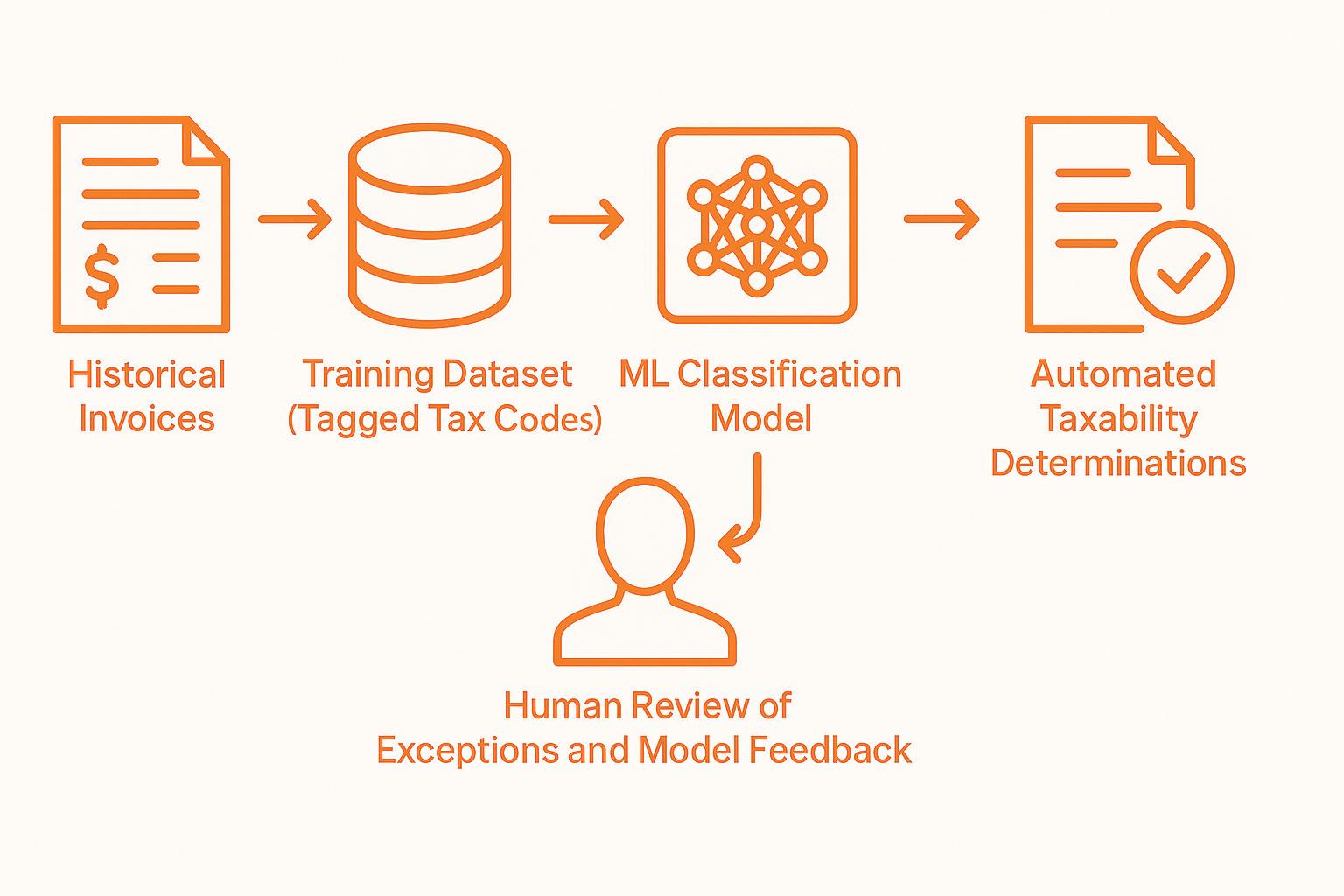
A technology company selling SaaS subscrip tions and support services faced challenges accurately classifying transactions given states’ varied treatment of cloud services (Ezeife, 2025). The company implemented an ML powered classification engine trained on historical invoices labeled by tax determina tions. Features included SKU and contract descriptors (NLP over descriptions), customer location and select contract language cues (Galvix, 2023).
Validation and metrics. Using a time based train/validation split (past periods → train; most recent periods → validate) to avoid leakage, the team optimized for recall on taxable items and monitored precision–recall (PR) curves. After iterative training with class weighted (cost sensitive) loss and probability calibration, classification accuracy rose to 95 percent while maintaining high recall on taxable classes. (See Table 1 for error balance and FN tolerance; Table 2 for per state breakdown.)
Operational controls. Thresholds were tuned to regulatory risk and implemented as dual thresholds: transactions with high confi

dence were auto coded; border line cases were routed to human review via a work queue. Guard rail rules (e.g., explicit nexus thresholds and always taxable SKUs) remained in place to catch obvious cases even if the model under fires.
Manual coding hours decreased by ~50 percent and decision/audit logs strengthened audit defense documentation. In a two cycle shadow audit, observed false negatives in variance samples decreased by ~30–40 per cent after threshold calibration and reviewer feedback were incorporated.
Deployment note. The solution launched as tenant isolated SaaS; guidance for private instance/VPC or on prem deployment (with key management, data residency and audit logging) is provided in Considerations and Challenges in Part 1 of this series.
Main point. ML improves consistency and speed of taxability determinations when trained on well labeled history and paired with governance, thresholds and human in the loop review. See Figure 1.
Whenever the model isn’t sure, it flags the transaction for a tax specialist to double check. This step ensures that a human expert makes the final call on tricky cases. As more transactions are reviewed and confirmed, the system keeps learning and gets better over time.
The goal is to make tax coding faster and more accurate. Instead of spending hours manually reading every invoice, tax teams can focus on the exceptions that truly need attention. This combination of automation and human review helps businesses keep up with complicated tax rules.
A global manufacturer faced challenges in reconciling transactional data prior to preparing its monthly sales tax returns (EY, 2023). Discrepancies between the ERP records and tax engines resulted in delays in filing. To address this issue, the company
implemented a machine learning based anomaly detection system (Aladebumoye, T. 2025). This model compared expected tax amounts with calculated figures, identifying any outliers. As a result, the time required for monthly reconciliation was reduced from 12 days to just four days and filing delays were decreased by 70 percent.
Main points from the case study: Machine learning powered anomaly detec tion enhances data integrity and accelerates the preparation of tax returns.
ANOMALY DETECTION IN RETURN PREPARATION
Figure 2 shows how machine learning helps catch mistakes before tax returns are filed. It begins by collecting transaction data from different sources, such as sales records and the company’s tax calculation system. All of this data is brought together and reconciled, which means any inconsistencies are identi fied and corrected so everything matches up.
When the model compares current data to expected results, it looks for anything unusual or suspicious. These unusual items are called
Source: Compiled by Author
anomalies. For example, if a transaction shows a much higher or lower tax amount than nor mal, the model will flag it.
Flagged anomalies are automatically sent to tax professionals on the team. The tax specialists then review each flagged item to determine whether it’s an error or an accept able exception. This process helps ensure all information on the tax return is correct and ready to be submitted.
By catching problems early, the company avoids filing inaccurate returns that could lead to penalties or audits. This system also reduces the time employees spend manually combing through records. In short, anomaly detection works like a safety net that makes tax filing more accurate, efficient and reliable.
After launch, the team instituted a monthly shadow audit on jurisdictions with recent rule changes. Combining cost sensitive thresh olding with a human review queue reduced observed false negatives in flagged variances by ~35 percent over two filing cycles, while maintaining manageable reviewer workload.
Machine learning for sales and use tax compliance begins with the collection of large volumes of transaction data from various sys tems throughout the organization (McKinsey, 2025). Rather than hiring additional person nel to manage this data influx, machine learn ing can scale automatically to process millions of records without increasing headcount. By employing supervised learning, the system examines past examples to understand what correct tax decisions entail (Dennis, A, 2024). As it ingests more data over time, its predic tions become progressively more accurate. Each transaction is evaluated according to consistent rules, ensuring that similar cases are handled uniformly.
This standardized approach minimizes the risk of human error and fosters consistency in decision making. Furthermore, the model continuously monitors incoming data for anomalies or irregularities. When it detects an outlier, it promptly flags the item for tax professionals to investigate (Aladebumoye, T. 2025). This early detection enables teams to rectify issues before tax returns are submit ted, helping to avoid penalties or audits. Every decision made by the machine learning
Data] [Tax Engine Data]
system is meticulously logged, creating a clear data trail that illustrates how each result was derived. This level of transparency is crucial should regulators or auditors require support ing documentation.
Tax professionals can swiftly review the data to clarify the rationale behind each clas sification or calculation. By automating repeti tive tasks, staff members are free to focus on strategic initiatives that enhance value. This streamlined workflow empowers compa nies to navigate complex and evolving tax regulations more effectively (Ezeife, E., 2025). Ultimately, machine learning evolves into an indispensable asset that bolsters accuracy, consistency and efficiency in tax compliance.
Not every organization needs a full ML plat form on day one. A pragmatic path is to begin with a thin NLP classifier plus human in the loop or a rules first + ML assist hybrid for high variance SKUs/states.
A simple decision frame is:
Expected savings = (manual hours avoided × fully loaded cost) + (penalties avoided + interest avoided)
Total cost = (subscription or infra) + (implementation + data prep) + (ongoing MLOps/governance).
If expected savings do not exceed total cost within 12–18 months, a lightweight or phased approach is preferred. Table 3 includes a short checklist to help teams esti mate both sides of the equation.
Metric focus. Report confusion matrices and recall/Precision Recall curves per state, product family and filing period, optimizing thresholds to prioritize recall where the cost of a miss is high.
Cost-sensitive learning. Weight FN is more heavily than FP in loss functions; consider focal loss or class weighting when taxable classes are rare.
Threshold and calibration. Calibrate probabilities (e.g., Platt/iso) and set dual thresholds: auto approve when confidence is high; route to human review when near the boundary.
Hybrid rules + ML. Keep guardrail rules (e.g., explicit nexus thresholds, certain taxable SKUs) to catch obvious cases even if the model under fires.
Active learning on misses. Continuously feed confirmed FN back into training; schedule error review sprints after each filing cycle.
Shadow audits and sampling. Before rely ing on automation, run parallel processing for 1–2 cycles, compare variances and oversample “at risk” segments (new jurisdictions, new products).
Production monitoring. Track FN proxies (late registrations, amended returns, auditor adjustments) and set alerts on unexpected drops in recall. Maintain a live Model Card documenting limits, known risks and the cur rent FN mitigation plan.
The future landscape of sales tax compliance is set to be transformed by AI driven solutions (Ezeife, E., 2025). While automation enhances precision, the role of CPAs remains crucial for the interpretation and validation of results.
Tax professionals will be essential in establish ing the frameworks and ethical standards that govern the deployment of machine learning technologies. As regulatory bodies grow more adept with sophisticated technologies, there will be heightened expectations for processes that are transparent and easily interpretable. However, reliance on technology alone will not suffice to address all compliance challenges. The foundational elements of human judgment, professional skepticism and a comprehensive understanding of tax legislation will continue to play a pivotal role in effective compliance strategies. Innovative firms will seek to syner gize AI capabilities with the expertise of their tax teams, while also committing to ongoing education, ensuring that personnel acquire the skills necessary to oversee, critically assess and refine machine learning outputs.
Organizations that adeptly combine auto mation with robust governance frameworks are likely to achieve a competitive edge in terms of accuracy, operational efficiency and stakeholder confidence. The upcoming years are poised for further advancements, with features like natural language processing and real time reporting becoming industry standards. As these tools progressively evolve, CPAs who maintain proactive engagement and continuous learning will find themselves in optimal positions to guide their firms through this evolution. By integrating machine learning, tax professionals can help cultivate a compliance landscape that is not only efficient but also transparent, accountable and resilient. Sales and tax compliance are becoming more complex as rules change rapidly and transaction volumes rise, especially for multi
jurisdiction businesses. Manual processes no longer scale, making machine learning—com bined with strong governance and profes sional oversight—essential. When supported by high quality data, disciplined validation, clear exception handling and appropriate deployment choices, ML improves accuracy, scalability and audit readiness while reducing strain on tax teams. Used thoughtfully, it does not replace expertise; it amplifies it, enabling tax professionals to shift from reconciliation work to higher value strategic advisory as tax laws continue to evolve.
References
Aladebumoye, T. (2025). The role of AI in enhanc ing tax transparency and reducing evasion. World Journal of Advanced Research and Reviews, 25(1), 206–212. https://doi.org/10.30574/ wjarr.2025.25.1.0023
Galvix. (2023, June 9). Embracing the future: The role of automation in sales tax compliance. Galvix Insights https://www.galvix.com/article/the role of automation in sales tax compliance/ KPMG. (2024). Tax Reimagined 2024: Perspec tives from the C suite. KPMG International. https:// kpmg.com/us/en/articles/2024/tax reimagined report 2024.html
McKinsey. (2025, March 12). The state of AI: Global survey. McKinsey & Company. https://www. mckinsey.com/capabilities/quantumblack/our insights/the state of ai
Dennis, A. (2024, February). What AI can do for auditors. Journal of Accountancy https://editions. journalofaccountancy.com/article/What+AI+can+ do+for+auditors/4705695/812308/article.html
Penalties/interest
Analyst redeployment
Subscription/infra
Data prep/labeling
ML Ops/monitoring
Governance
Security
Change management
truly
to map × minutes/record × rate Tax ops
+ engineer hours Eng. leads
time × rate
setup + reviews
hours × headcount × rate L&D
Human review operations Cases/month × minutes × rate Ops queue
Ezeife, E. (2025). AI driven tax technology in the United States: A business analytics framework for compliance and efficiency. Multidisciplinary Global Education Journal, 5(1), 426–435. https://www.allmultidisciplinaryjournal.com/ uploads/archives/20250219175220_MGE 2025 1 426.1.pdf
Hummel, P., Braun, M., Tretter, M., & Dab rock, P. (2021). AI Ethics by Design and Ethics of Use in Tax Fraud Detection: Survey Evidence on the Importance of Ethical Principles. arXiv preprint arXiv:2106.00326. https://arxiv.org/ pdf/2106.00326.pdf
KARINA KASZTELNIK, PH.D., is Professor at University of Maryland Global Campus University in Washington, DC. Contact her at karina.kasztelnik@faculty.umgc.edu.

ACCOUNTING BIZ BROKERS offers the following listings for sale:
El Paso area, gross $1.045M (NEW) South Ft. Worth area, gross $515k Ark-La-Tex, gross $1.2M Virtual EA firm, gross $500k
Contact Kathy Brents, CPA, CBI Office 866-260-2793 - Cell 501-514-4928
Kathy@AccountingBizBrokers.com Visit us at www.AccountingBizBrokers.com
Member of the Texas Society of CPAs Member of the Texas Association of Business Brokers
BUYING SELLING PRACTICES throughout Texas for over 40 years … Offering 90% financing to buyers, so our sellers can cash out at closing! We only get paid for producing results! Confidential, prompt, professional. Practices available nationwide... Contact Leon Faris, CPA ... PROFESSIONAL ACCOUNTING SALES ... 972-292-7172 … and visit our website: https://accountingpracticesales.com/ for the latest listings and information.
Poe Group Advisors Available Texas Accounting Firms.
Contact cpoe@poeroupadvisors.com if you have any questions about the listed firms.
Interested in selling your own firm? Contact bball@ poegroupadvisors.com
Virtual CAS Firm For Sale - listing ID CP2019 - Asking $2.5M This tech-forward, highly efficient virtual firm has been in business for more than 15 years, with a dedicated long-term staff and automated workflow systems. Serving a variety of industries nationwide, services include 66% bookkeeping, 23% tax and 11% other, serving diverse industries nationwide. Owner works only 1,800 hours per year with 20% additional staff capacity for growth. Cash flow to owner is 58% with premium pricing, bookkeeping fees average $17,932. Inquire at poegroupadvisors. com/practice/cp2019/
San Antonio CPA Firm Available Listing TX2010
- Asking $950,000 Located in a sought-after area, this well-established firm with great staff provides exceptional service for complex client needs across a wide range of industries. The practice continues to grow steadily through new engagements and long-standing relationships. The firm is fully paperless with clear, well-documented processes, ensuring a smooth transition for a new owner. Cash flow is 45%! Only about 25% of clients opt for in-person visits, offering strong remote-work capability. Inquire at poegroupadvisors.com/practice/tx2010/
Register as a buyer on our site and get alerted when new Texas listings go live. We have two new Texas firms coming on the market soon!
THROUGH ACCOUNTING PRACTICE SALES: North America’s Leader in Practice Sales Toll Free 1-800-397-0249
See full listing details and inquire/register for free at www.APS.net.
NEW $380,000 gross Harris County CPA practice. Strong service mix of tax (76%) and bookkeeping (24%), focused on small business clients. Exceptional cash flow with loyal clients, supported by remote staff. Prime opportunity that can be operated remotely or in the Houston metro area. TXS6229
TXCPA offers opportunities to advertise in the Classifieds section of Today’s CPA magazine. For more information and to place a classified ad, please contact DeLynn Deakins at ddeakins@ tx.cpa or 800-428-0272, ext. 250, 972-687-8550 in Dallas.
NEW $84,000 gross North Dallas CPA practice. The client base is made up entirely of loyal nonprofit organizations with recurring monthly bookkeeping and tax fees that generate steady year-round cash flow. Services are delivered almost entirely virtually, offering strong flexibility. This is a profitable expansion opportunity or an ideal entry into practice ownership with a niche-focused clientele. TXN6226
NEW $780,000 gross SW Houston CPA practice. The practice offers a balanced mix of tax (59%) and accounting (41%) services with limited payroll, generating steady year-round cash flow from loyal long-term clients. Ideal opportunity for a seasoned CPA seeking practice ownership or an existing firm looking to add revenue. TXS6218
NEW $302,000 gross Fort Bend County CPA practice. Tax practice focused on serving international clients, high-net-worth individuals and small businesses, delivering exceptional cash flow with strong growth potential. The buyer can operate remotely in Texas or remain in the Houston metro area, making it a turnkey opportunity with a solid book of business offering CFO-type services. TXS6211
NEW $243,000 gross West Houston CPA firm. Turn-key tax and bookkeeping practice with payroll services. Strong cash flow and steady client referrals offer great growth potential. Flexible location within greater Houston. Experienced staff ready to support new owner. TXS6158

$2,168,000 gross East Texas (near I-20) CPA practice. Reputable firm serving a premier, diverse client base. Boasts an excellent fee structure with revenues derived from a wellbalanced mix of tax work (55%), audits (20%), acctng/bkkpng (12%), payroll (4%). Equipped with the infrastructure, including a competent staff, it is primed for a new owner and continued growth. TXN5447
$341,000 gross downtown Dallas CPA practice. Profitable practice serving 400 individuals and 200+ small businesses in the same niche industry, benefiting from a steady stream of referrals. With strong cash flow, solid fee structure and excellent reputation, this is an ideal practice for an individual CPA or local firm seeking expansion. TXN5612
$935,000 gross. Bryan-College Station CPA firm. Owner looking to sell to focus on consulting business. The service mix includes tax (54%), accounting (44%) and other (2%). Solid reputation in the community with growth opportunities. Knowledgeable staff in place for smooth transition. Buyer can lease or buy building, if desired. TXS6231
$410,000 gross. Brownwood, Texas CPA practice. High-quality client base made up of large businesses that provide opportunities for growth. Balanced revenues include tax work (66%), accounting (14%) and other services (14%). TXN1638
$285,000 gross. Brazoria County CPA firm. Good reputation in the area with excellent growth possibilities. Service mix comprised of tax (94%) and accounting (6%). Knowledgeable staff in place and seller available for transitional assistance. Turn-key opportunity for an individual looking to start with a quality book of business. TXS1326
For more information, call toll free 1-800-397-0249
See full listing details and inquire/register for free at www.APS.net.
Selling Your Firm is Complex. Let us make it simple. With 34 years of combined experience, we know how to simplify the sale of a CPA firm using our proven, personalized and confidential processes to bring you the results you are seeking. As Certified Business Intermediaries, we’re dedicated to providing a seamless experience, combining professional wisdom with a personal touch. Our brokers are the only Certified Business Intermediaries (CBI) specializing in the sale of CPA firms in the country. When you are ready to sell, we have the buyers, financing contacts and the experience to assist you with the successful sale of your firm! Contact us TODAY to take the first step!
Kathy Brents, CPA, CBI Office 866-260-2793 Cell 501-514-4928
Kathy@AccountingBizBrokers.com
Visit us at www.AccountingBizBrokers.com
Member of the Texas Society of CPAs
Member of Texas Association of Business Brokers
BUYING OR SELLING? First talk with Texas CPAs who have the experience and knowledge to help with this big step. We know your concerns and what you are looking for. We can help with negotiations, details, financing, etc. Know your options. Visit www.APS.net for more information and current listings. Or call toll-free 800-397-0249. Confidential, no-obligation. We aren’t just a listing service. We work hard for you to obtain a professional and fair deal.
ACCOUNTING PRACTICE SALES, INC.
North America’s Leader in Practice Sales
CLARUS PARTNERS - NATIONAL SALES TAX COMPLIANCE AND ADVISORY FIRM
Do you have questions about sales tax? Need help with multistate compliance after Wayfair? Taxability issues? Audit defense? Refunds? Business registration and licensing compliance? Voluntary disclosure? Let us be a resource for your firm and your clients. Clarus Partners is a national sales tax compliance and advisory firm. With offices across the U.S., our four partners have a combined 100+ years of experience in this arena. Let us know any way we can help.
Steve Hanebutt, CPA
Clarus Partners
This firm is not a CPA firm 972-422-4530 claruspartners.com
stevehanebutt@claruspartners.com
Texas Sales and Mixed Beverage Tax Solutions
MICHAEL J. ROBERTSON, CPA
Sales Tax and Mixed Beverage Tax Compliance - Are Your Clients Prepared?
Your client collects and remits Texas sales tax and/or mixed beverage tax - but are they truly in compliance?
Texas law requires businesses to maintain complete and organized records for four years. Keep in mind: records sufficient for federal income tax purposes often do not meet state requirements for sales tax.
If your client’s records are incomplete or poorly maintained, the Comptroller may classify the business as having no internal controls, leading to an estimated audit - which often results in substantial tax liabilities.
Can your client afford that risk? Our team of former Texas Comptroller auditors and supervisors can help ensure your clients are prepared and protected.
Call 817-478-5788 or 214-415-4333
Texas Sales and Mixed Beverage Tax Solutions









Hand over the keys with confidence and enjoy the journey ahead. As the industry’s leading accounting practice intermediaries, our proven experience and resources help you find the best price and the best-fit buyer for you, your firm and your team’s future. Poe Group Advisors has a strong pool of qualified buyers and investment partners in all 50 states and all provinces of Canada.