• BroadBandLight ~ treatment for pigmentation spots
• CoolSculpting Elite ~ body sculpting at its best
• PRP ~ your own blood naturally rejuvenates face & scalp
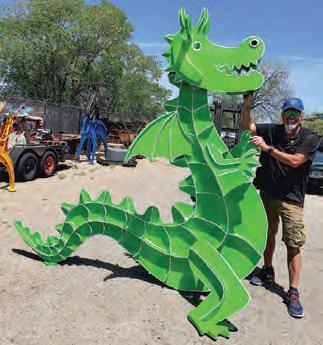
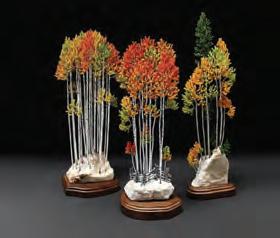
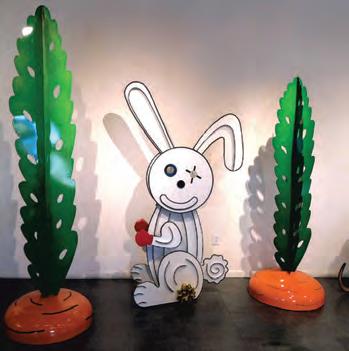
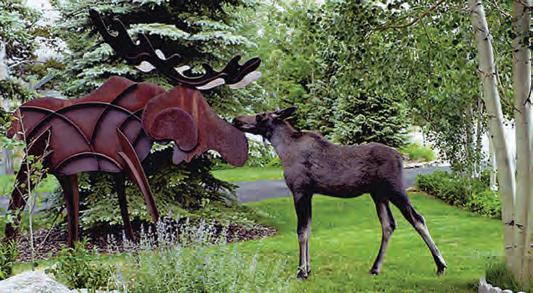
MagicDragon -MamaMooseon
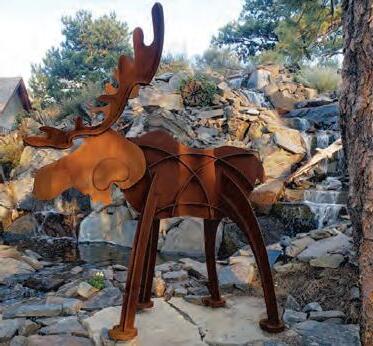
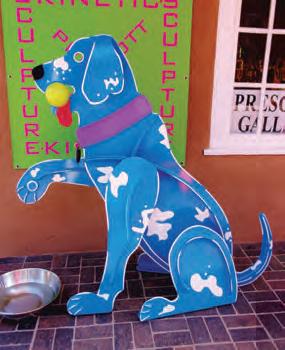
BigDog6’
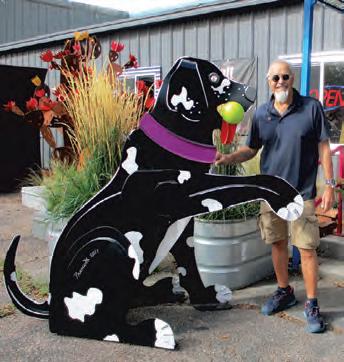
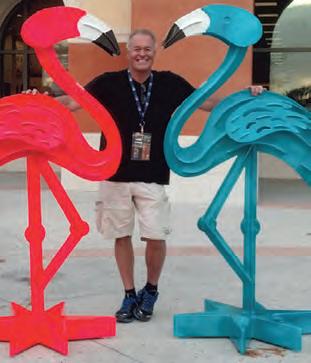
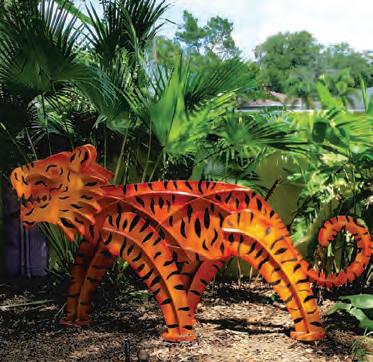
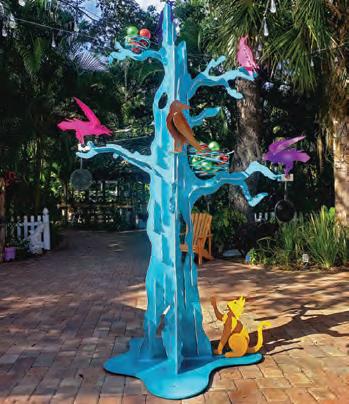
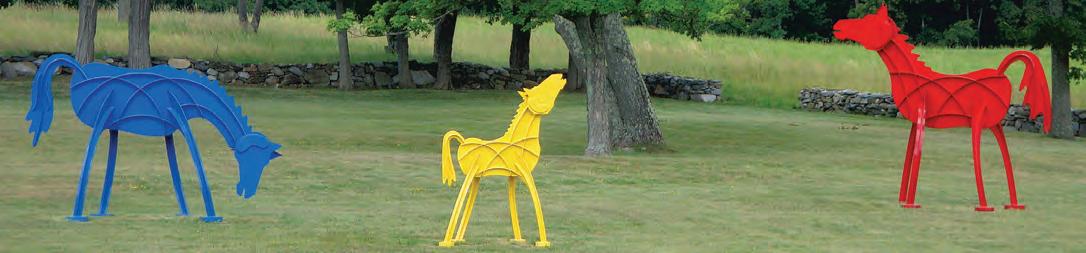
FlamingosTiger
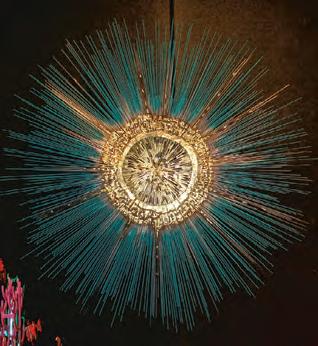
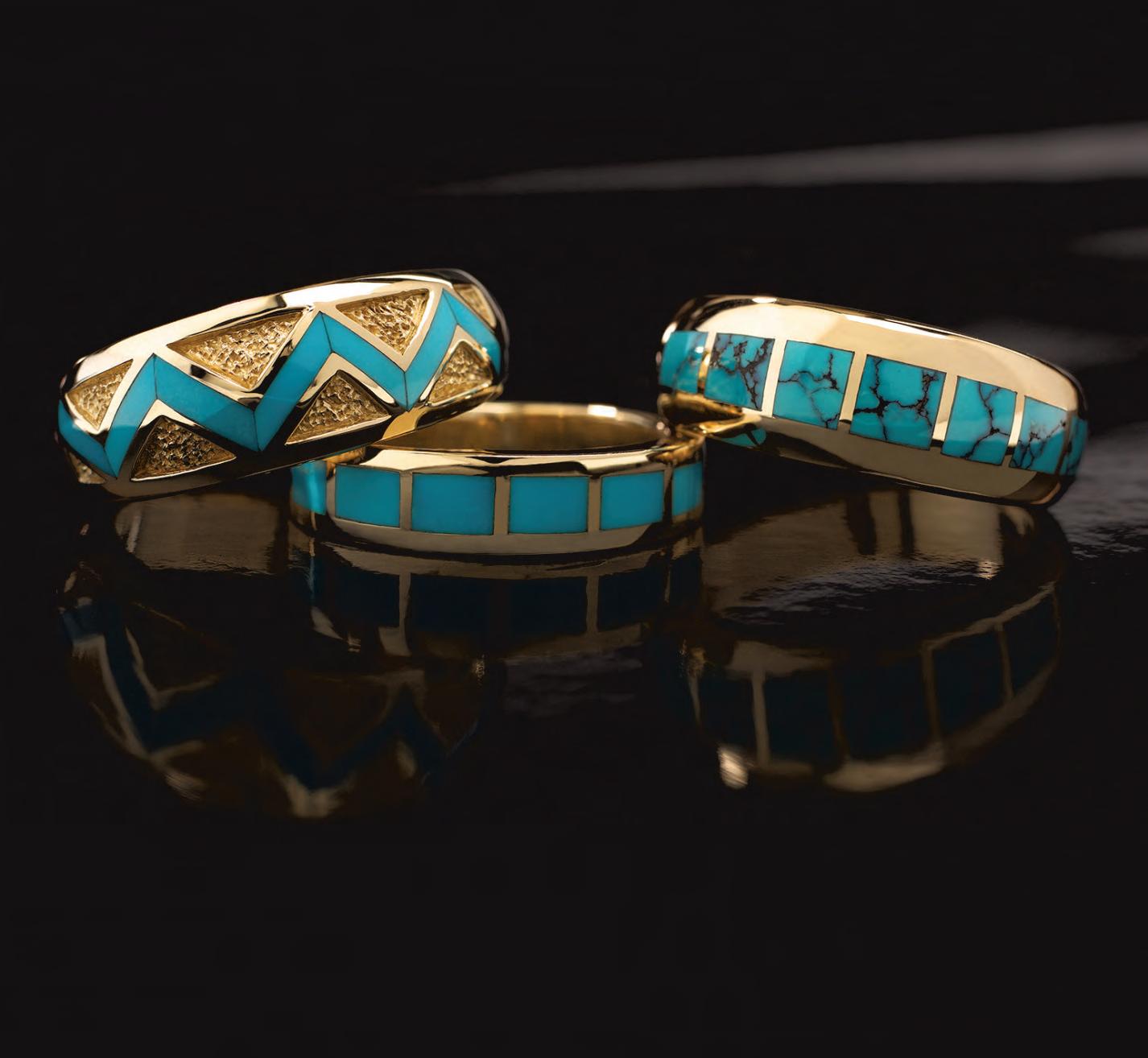
TurquoiseSunburst
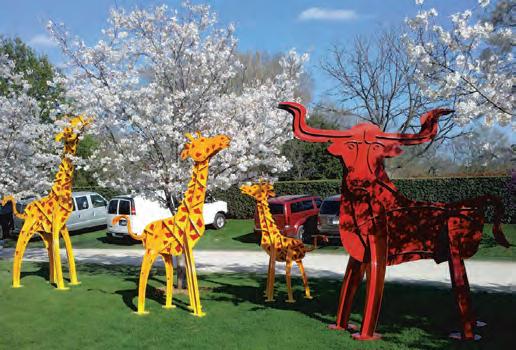
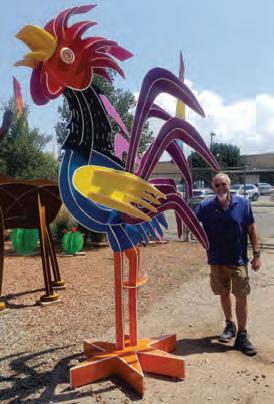
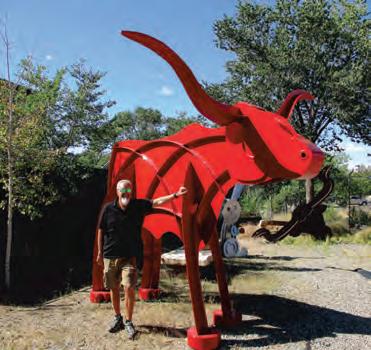
GiraffeFamily &RedBull
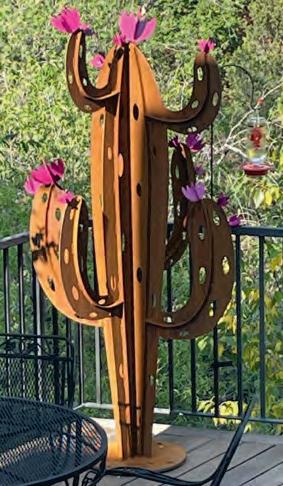
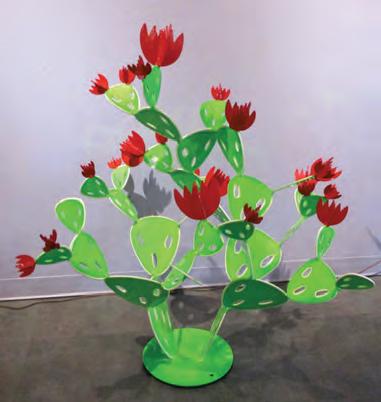
Saguaro6’
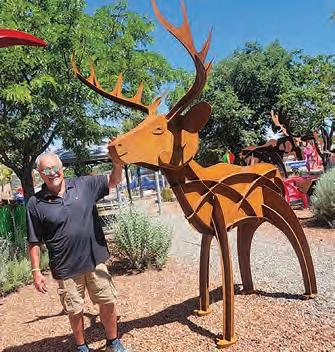
White Tail Deer
new mexico museum of space history
Alamogordo • 575-437-2840 nmspacemuseum.org
new mexico museum of natural history & science
Albuquerque • 505-841-2800 nmnaturalhistory.org
national hispanic cultural center
Albuquerque • 505-246-2261 nhccnm.org
new mexico farm & ranch heritage museum
Las Cruces • 575-522-4100 nmfarmandranchmuseum.org
museum of indian arts and culture
Santa Fe • 505-476-1269 indianartsandculture.org
museum of international folk art
Santa Fe • 505-476-1204 internationalfolkart.org
new mexico history museum
Santa Fe • 505-476-5200 nmhistorymuseum.org
new mexico museum of art
Santa Fe • 505-476-5063 nmartmuseum.org
new mexico historic sites
Statewide • 505-476-1130 nmhistoricsites.org
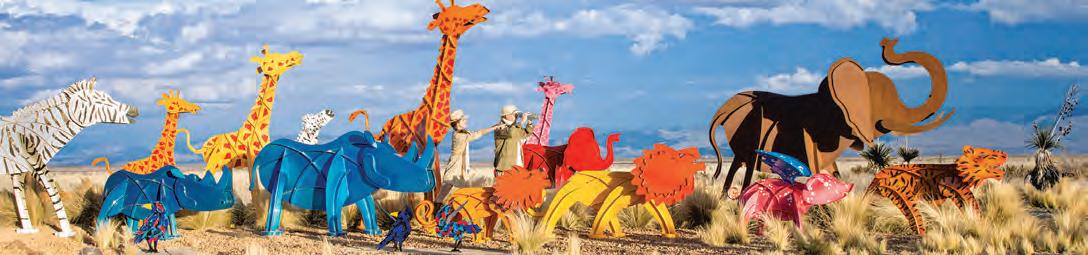
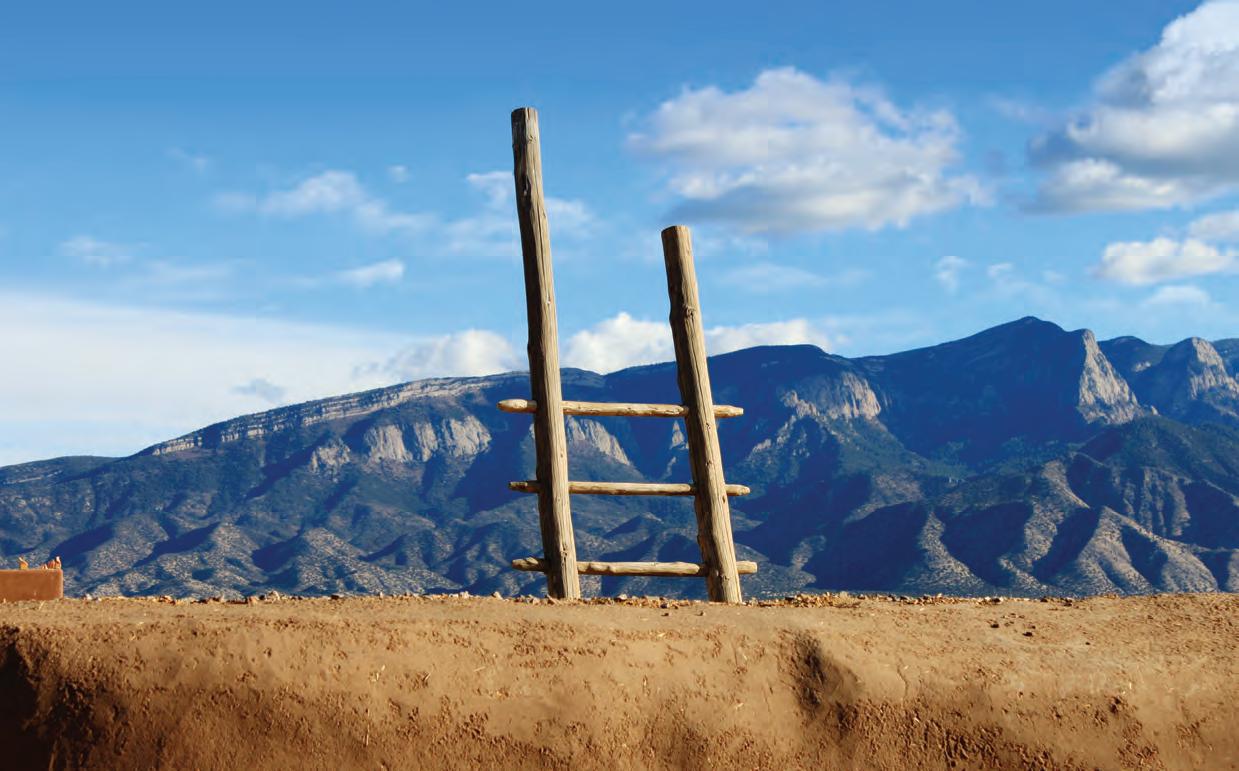
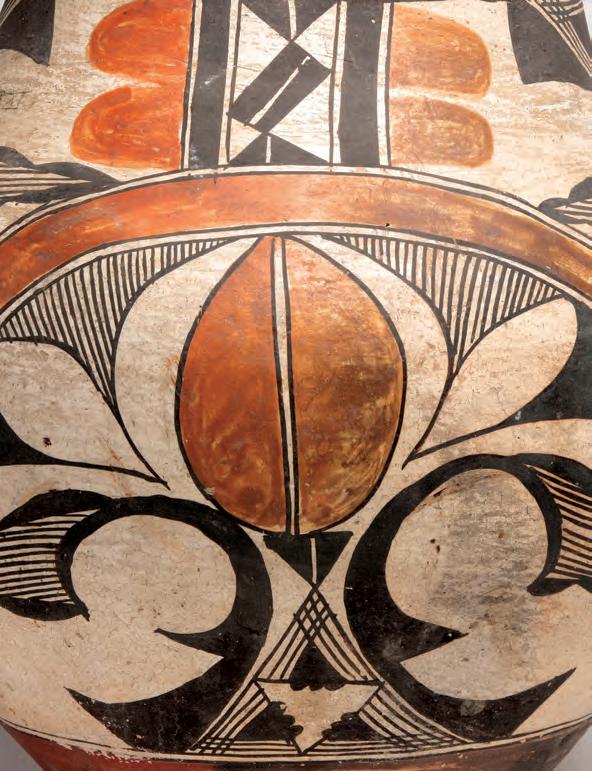
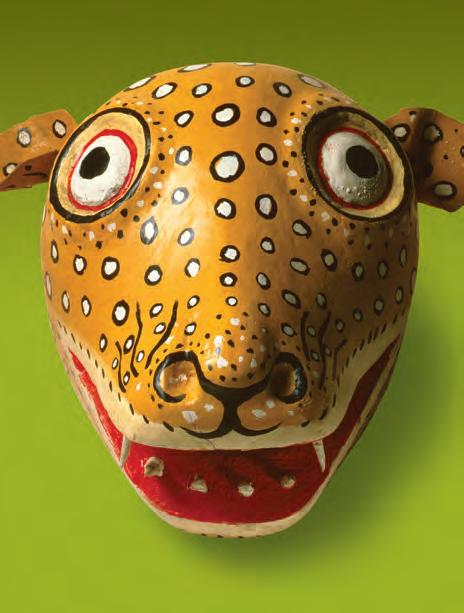
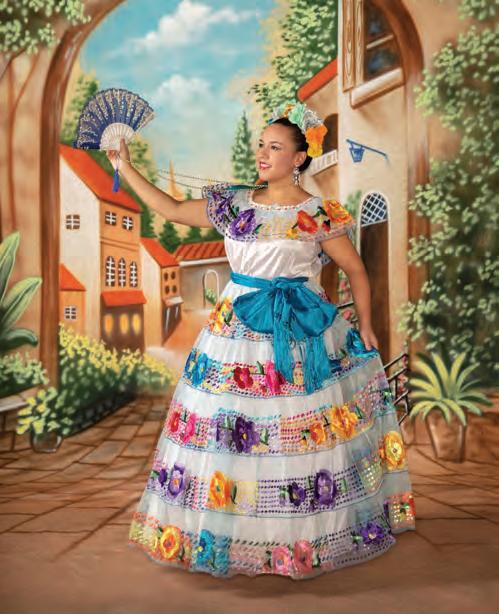
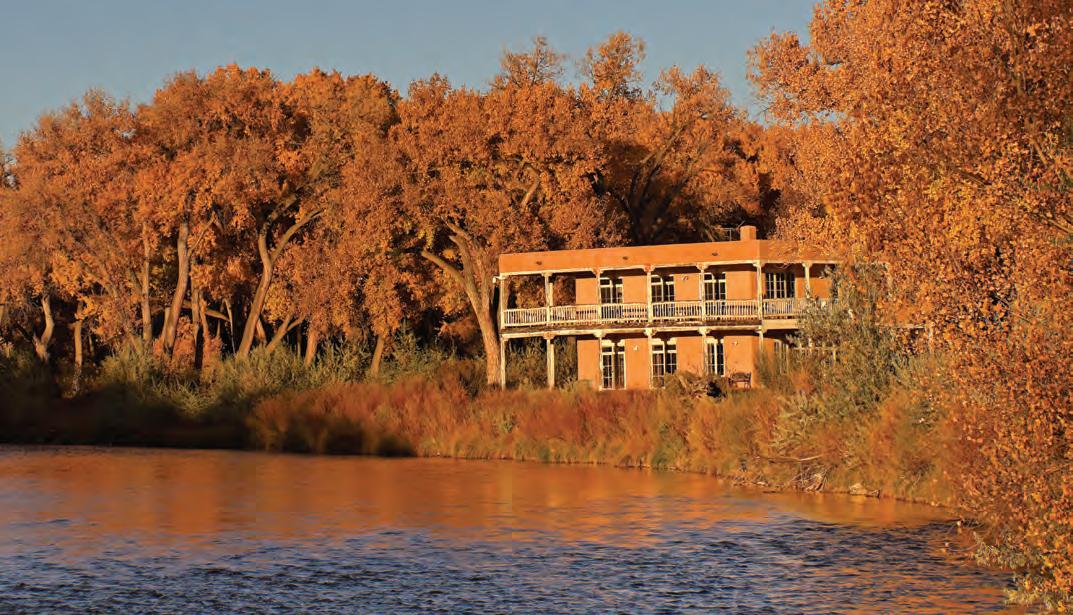
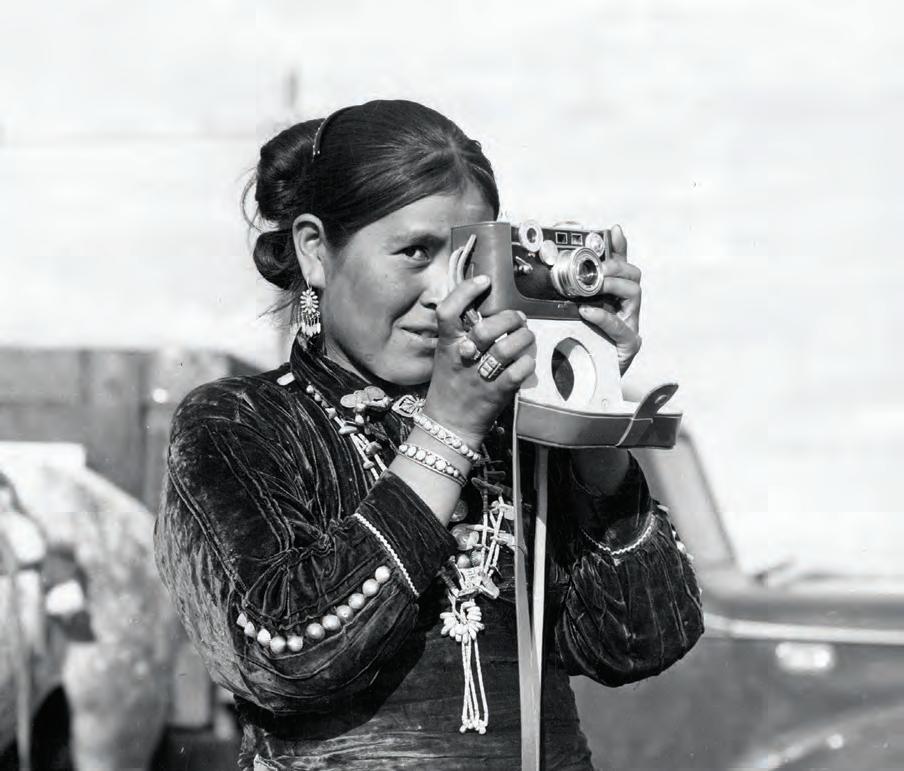
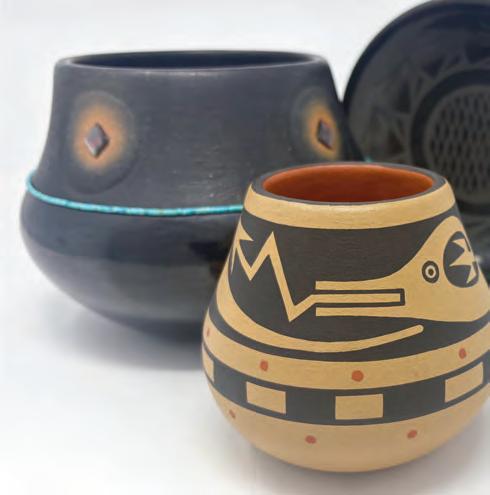
Clockwise from top left: Ladder leading into Coronado Historic Site’s painted kiva, photograph by Eric Moldonado. Jar, Acoma Pueblo or Laguna Pueblo, ca. 1910, gift of Juan Olivas, MIAC 12024/12, photograph by Addison Doty. Navajo woman taking photograph, New Mexico, ca. 1945, courtesy of Palace of the Governors Photo Archives (NMHM/DCA), neg. no. HP.2007.20.707. River House at Los Luceros Historic Site, photograph by Gene Peach Image courtesy of Baila! Baila! Dance Academy and Lozoya Studios Jaguar mask, ca. 1960, Mexico, gift of the Girard Foundation Collection (A.1979.17.768), Museum of International Folk Art. An astronaut on the John P. Stapp Air and Space Park, courtesy of New Mexico Museum of Space History.
A Prayer for Santa Fe
by Rev. Talitha Ar nold
O Dios, El Señor, Great Spirit, El Shaddai, Adonai, Creator God, creating still. By whatever name we know you, hear our prayers this day.
We thank you for the courage and the Santa Fe, the Holy Faith, of those who founded this city 400 years ago. And we thank you, too, for the native peoples who prayed in this land for centuries before and for all who have come in the centuries since. For all, be they native or newcomer, whose prayers continue to bless this city, we thank you this day.
With our prayers of thanks, hear too our prayers for guidance and wisdom. Help us to lear n from this good land and the beauty of creation all around us.
In this land of endless sky, teach us the boundlessness of your beauty and love. In this land of little rain, teach us to share and to bless what you have given us. In this land of brilliant sunrise and golden sunset, teach us to use each day to bless the lives of others. In this land of many cultures and colors, give us your infinite imagination and teach us to respect and value all your children.
O God, our help in ages past, be our hope and the hope of this City of Santa Fe in all the years to come.
Help us all to build on the foundation of faith, hope, and love that others have laid here, sothatall your peopleinthiscity mightdojustice,lovemercy and walk humbly with You, nowandalways.Amen.
BIENVENIDOS
OWNER
Robin Martin
PUBLISHER
Patrick Dorsey
EXECUTIVE EDITOR
Bill Church
EDITORIAL
Magazine
Editor
Ashley M. Biggers abiggers@sfnewmexican.com
Designer
Linda M. Peters
linda@swelldesign.net
Copy Editor
Peg Goldstein
CONTRIBUTORS
Nathan Burton, Gabriela Campos, Eli Ellison, Cheryl Alters Jamison, Kelly Koepke, Lanee Lee, Jennifer Levin, Gabriella Marks, Douglas Merriam, Elizabeth Miller, Adele Oliveira, Laurence Parent, and Jim Weber
ADVERTISING
Chief Advertising and Marketing Director
Wendy Ortega
Classified Advertising Manager
Laura Harding
ADVERTISING SALES
Mayra Aldaz
Maria Lopez Garcia
Deb Meyers
Veronica Rigales
Vanessa Ruedeman
Trina Thomas
ADVERTISING ART DEPARTMENT
Designers
Elspeth Hilbert, Rick Artiaga, Justin Bixler
PRODUCTION
Operations Director, Robert Bauwens
Prepress Manager, Anthony Welch
Assistant Production Director, Brenda Shaffer
DISTRIBUTION
Circulation Director
Michael Reichard
TECHNOLOGY
Technology Director
Michael Campbell
TH EU NITE DC HU RC HOFS AN TA FE 1804Ar royo Chamiso(atSt.MichaelsDrive)505-988-3295 “LoveGod.LoveNeighbor.LoveCreation.”
We invi t eyou t owor s hi pw i t hu s wh il ev i s i t in gS an t aFe! invite yo utoworshipwit husw hilevisitingSant Sunday Worship:8:30OutdoorCommunion& 10:00Sanctuar yServicewithspecialmusic (livestreamedatunitedchurchofsantafe.org) Ama a Dios. Ama al vecino. Ama la creación.
WEB santafenewmexican.com
ADDRESS
Office: 150 Washington Ave. #105
Hours: 8 a.m.-5 p.m. Monday-Friday
Advertising Information: 505-995-3852
Delivery: 505-986-3010, 800-873-3372
For copies of this magazine and to subscribe to The New Mexican, call 505-986-3010 or email circulation@sfnewmexican.com.
Wheelchairaccessible
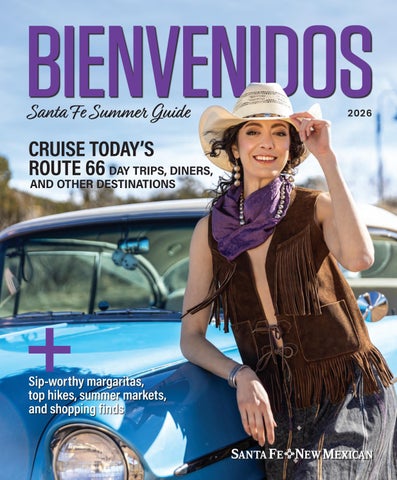
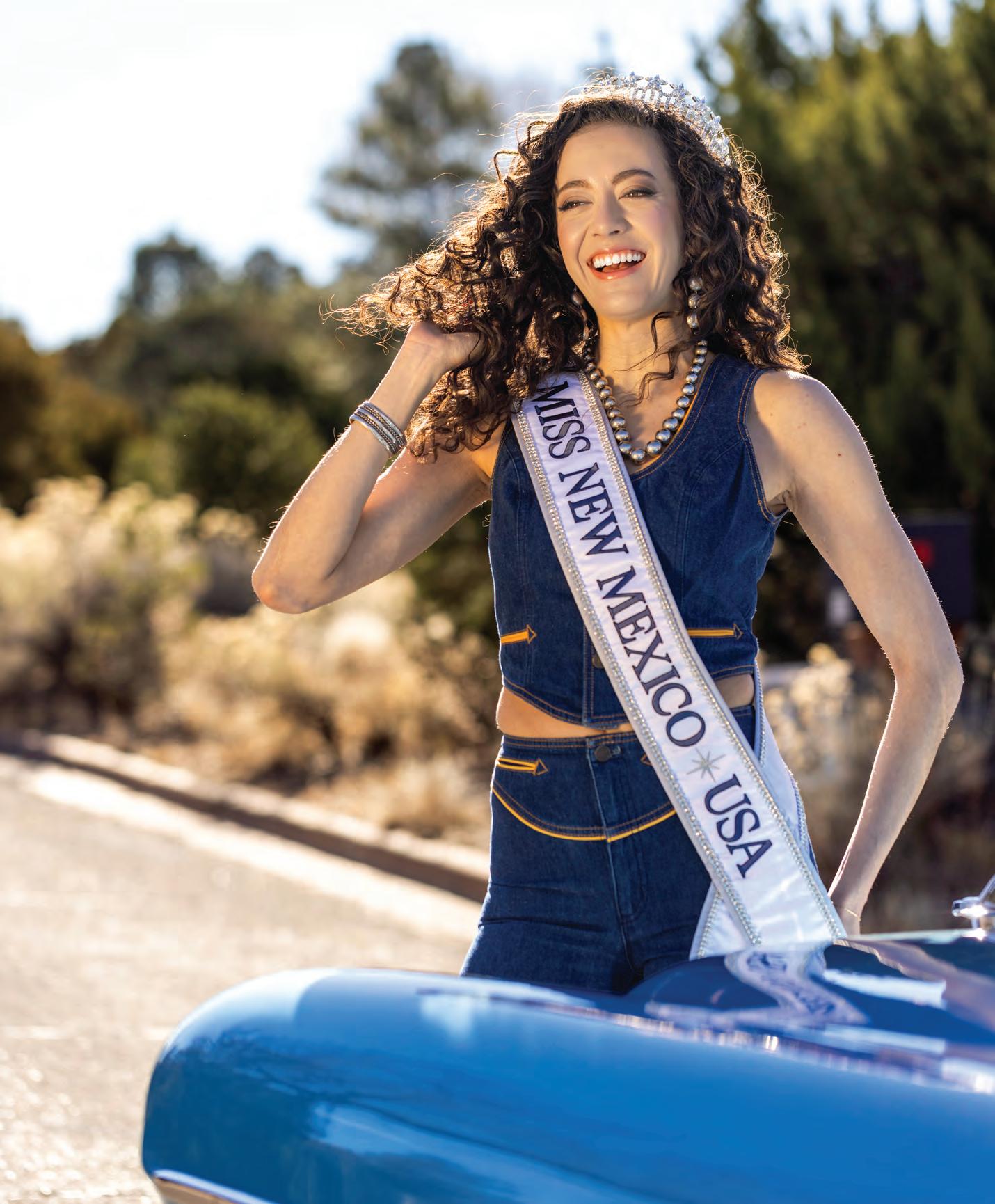
On the Cover
Miss New Mexico USA
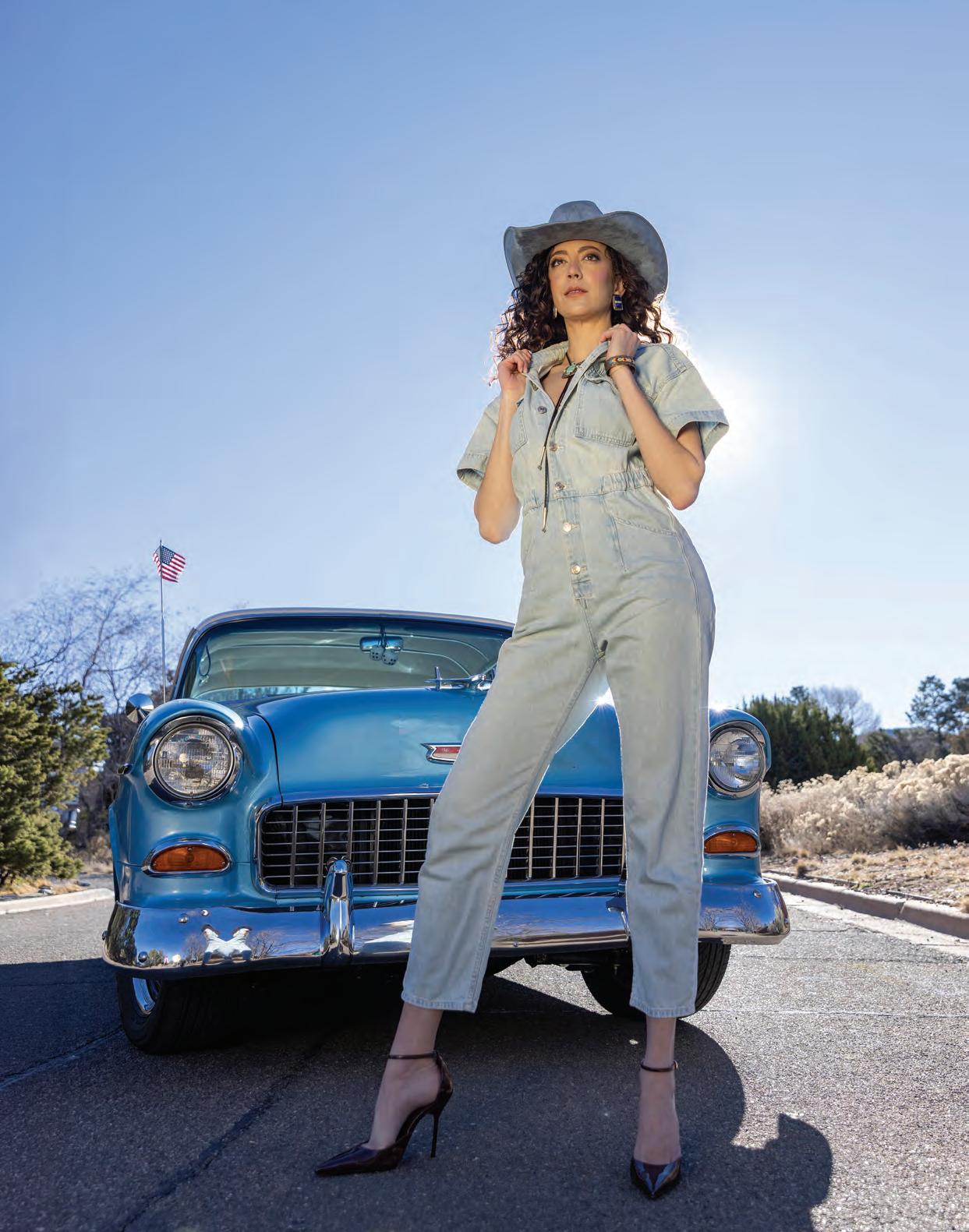
Dominique Ehrl poses with a 1955 Chevy Bel-Air owned by Dan and Melinda Stapleton, members of the Santa Fe Vintage Car Club.
Cover Photo By Gabriella Marks. Hair and makeup by Ambra Baca and Gina Montoya of Grace and Glow Studio. Clothing courtesy of Desert Moss Vintage.
CONNECTING PEOPLE THROUGH ARTISTIC TRADITIONS SPEND THE SUMMER WITH US AND ENJOY TWO NEW EXHIBITIONS!
I Am Clay
Opens June 7, 2026
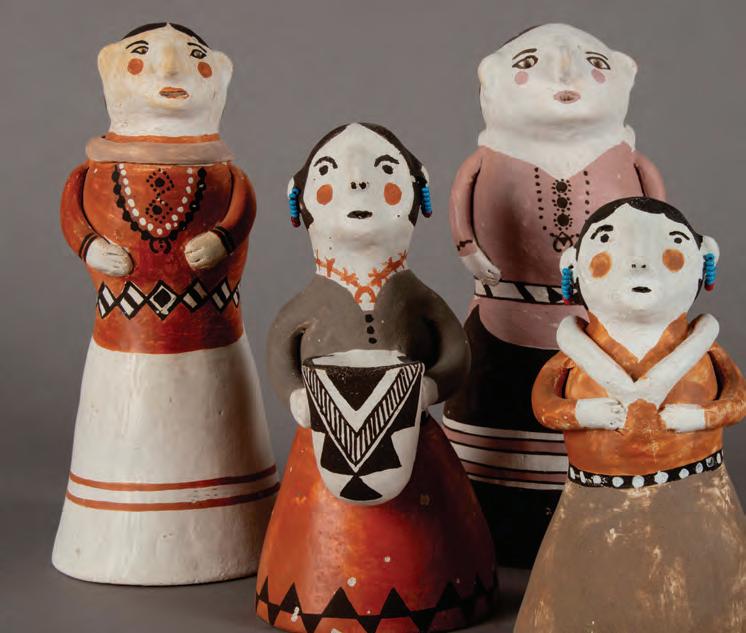
A community-curated exhibition of hand-built figurative pottery from Acoma Pueblo, IAmClay brings together 120 powerful works centered on the women artists who have shaped and sustained this tradition for generations. Tracing historic Puebloan roots and the influence of tourism during the first half of the 20th century, the exhibition reveals clay as culture, memory, and lived experience.
The Art Underground: Fantasy Coffins from Ghana
Opens July 19, 2026
Hand-carved “fantasy coffins”—abebuu adekai, “coffins that communicate”— turn remembrance into sculpture. Featuring Seth Kane Kwei, Paa Joe, Eric Adjetey Anang, Daniel Mensah (“Hello”), and Jacob Tetteh Ashong, these vibrant, symbolic coffins honor the dreams, status and lives of the departed, bridging traditions of Ga cosmology and the global art world.
BOTTOM: Lion “mini” coffin, Kane Kwei Carpentry Workshop. Photo by Yao Ladzekpo, 2025
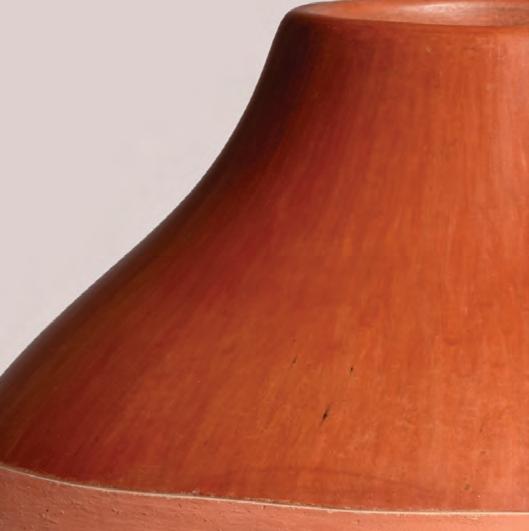
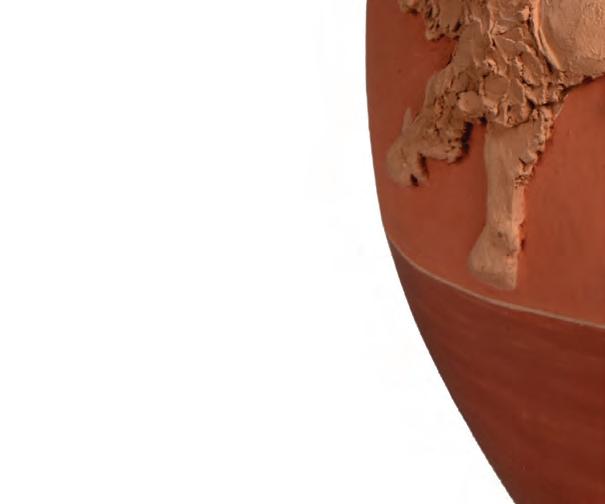
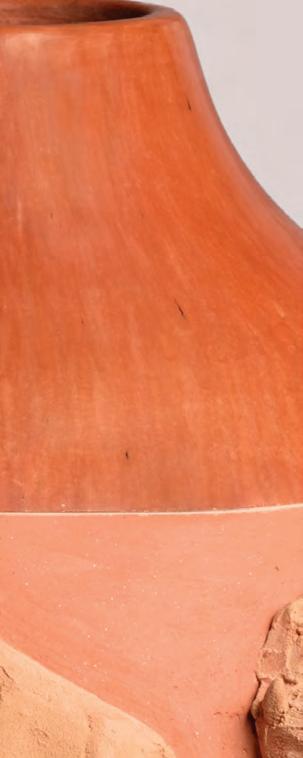
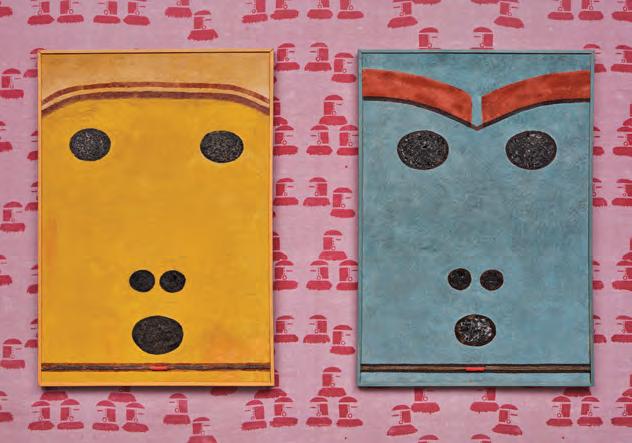
TOP: Frances Torivio (Acoma Pueblo), Standing figures, ca. 1960s, handbuilt Acoma clay with mineral paints, slip, turquoise, coral. Museum of International Folk Art, gift of the Girard Foundation Collection. Photo by Kate Macuen
Published May 15, 2026
Route 66 Hot List
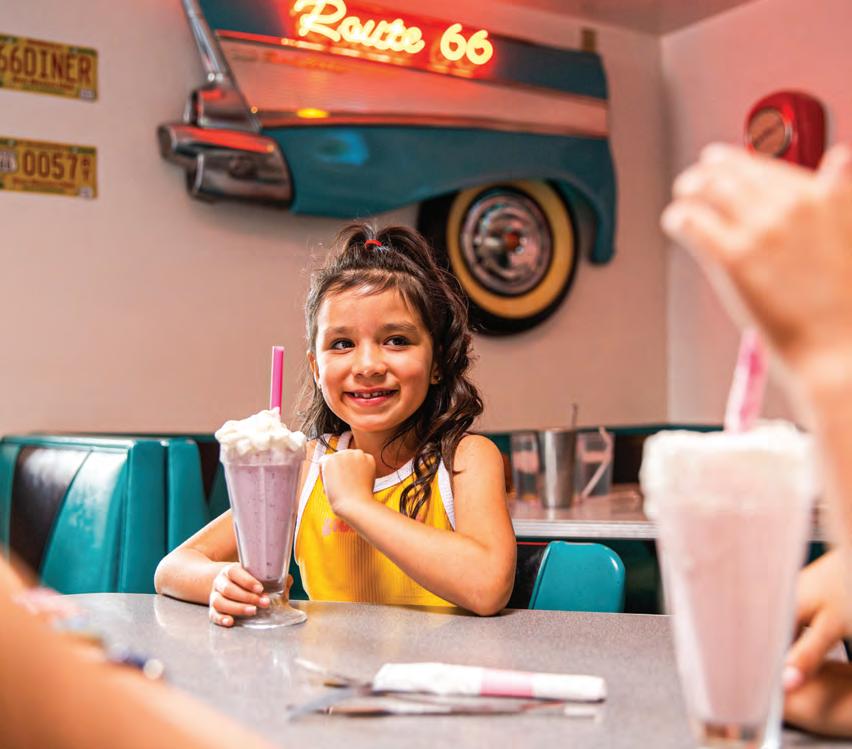
Route 66 celebrates its centennial in 2026. The spirit of the open road is still alive and well on the route, including on its original alignment through Santa Fe. (Re)discover places to stay, eat, and cruise on this historic stretch.
PLUS: Eat, sleep, and play along Central Avenue in Albuquerque.
By Ashley M. Biggers
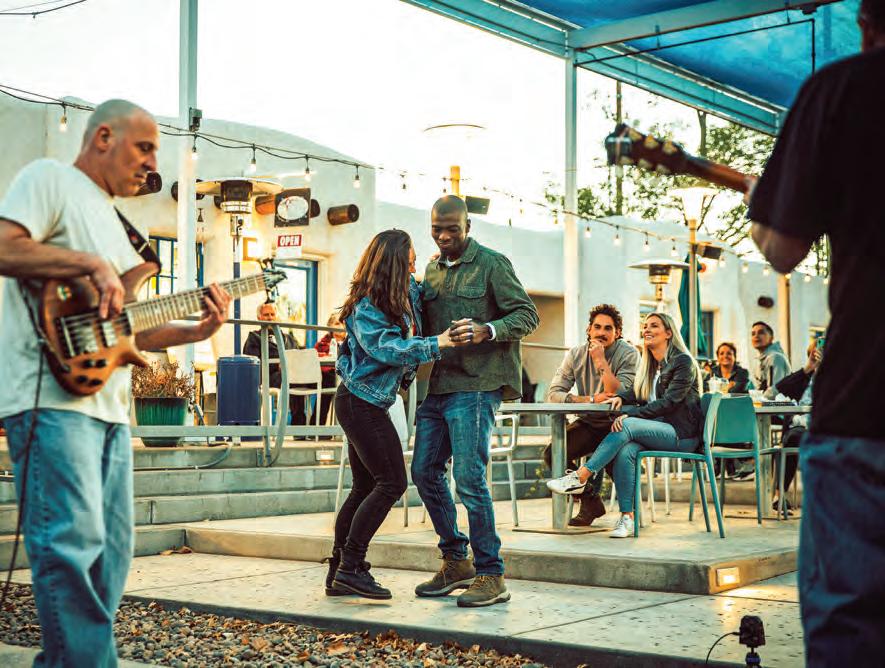
Art markets, museum exhibitions, and live music performances
a Local Dominique Ehrl shares her favorite places to eat, drink, and play
Take a drive to Eldorado for hiking, alpacas, and foodie finds.
History separated the city from the Santa Fe River, but now the waters are returning to its community.
Author and landscape photographer Laurence Parent reflects on the Land of Enchantment’s scenic beauty — and recommends five great hikes to see it at its best.
INSIDE THIS ISSUE
DEPARTMENTS
44 Art
Now open to the public, the Olive Rush Historic Artist Home and Garden preserves the artist’s living legacy.
49 Art
Meow Wolf’s House of Eternal Return marks a decade of immersive — and multidimensional — experiences.
71
Eat & Drink
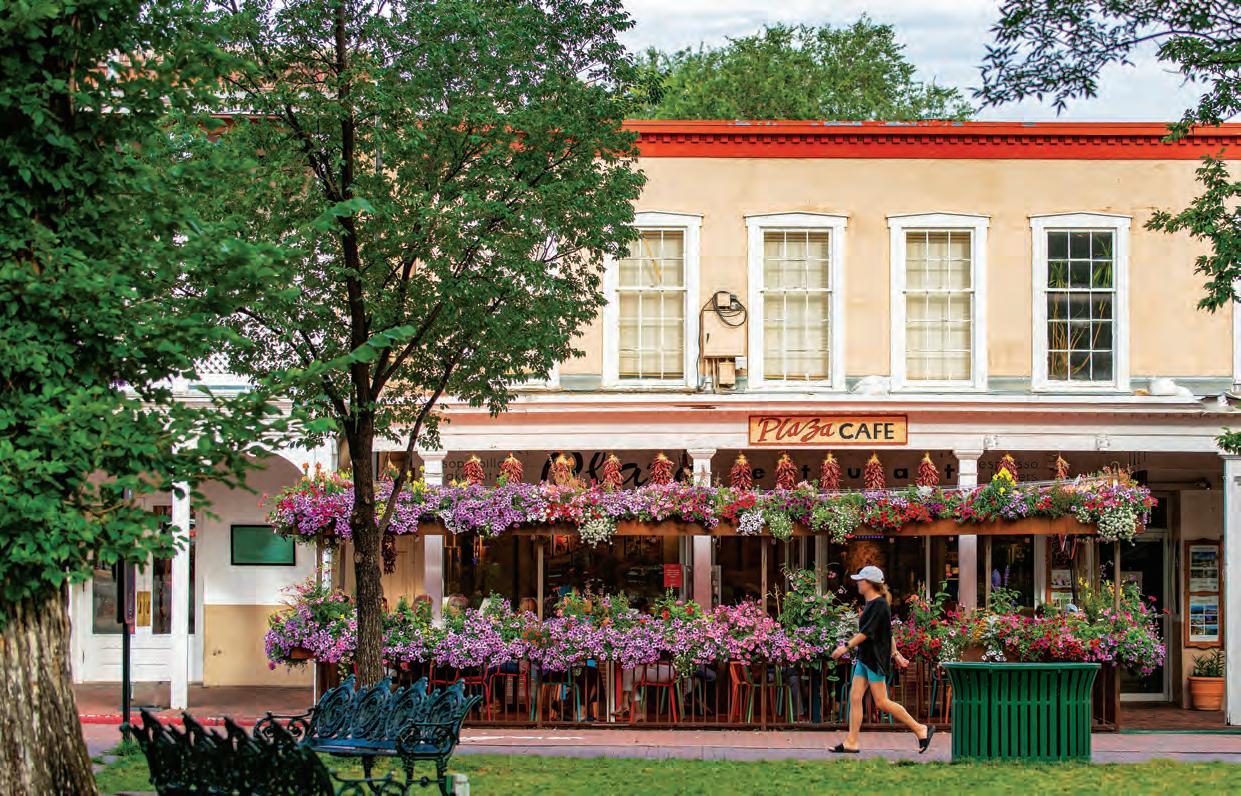
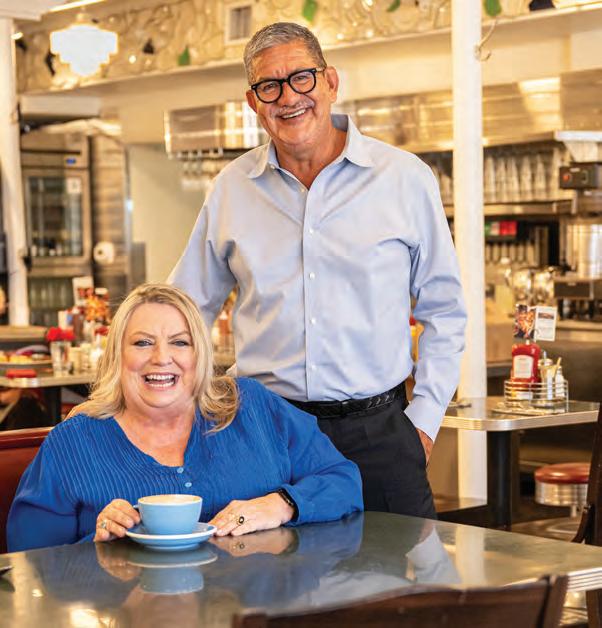
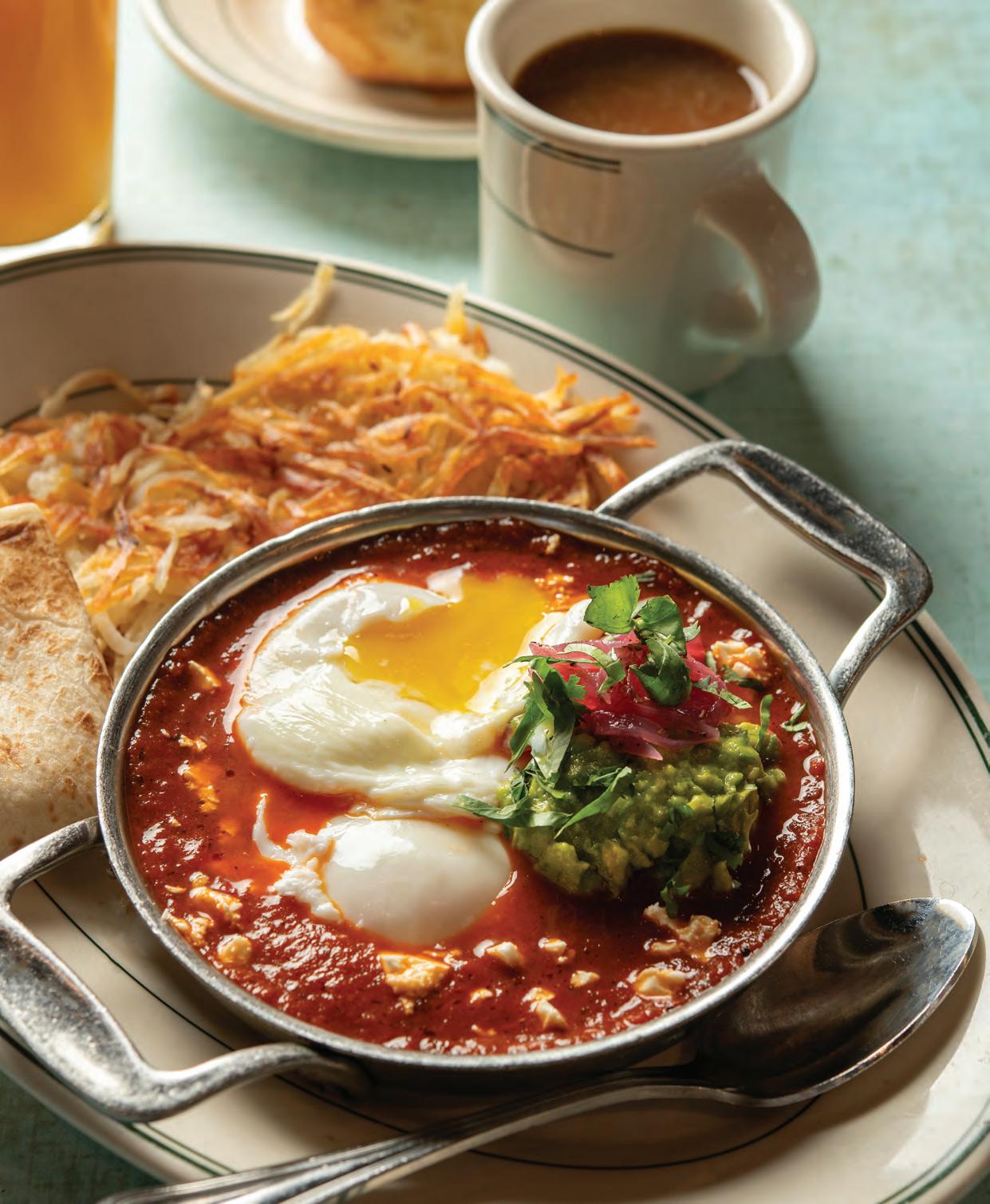
Santa Fe’s Plaza Café celebrates its 80th anniversary and the restaurant’s family legacy with a cookbook.
75
Eat & Drink
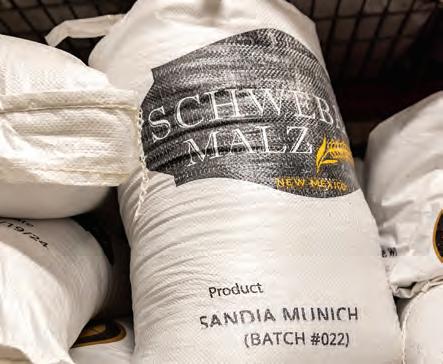
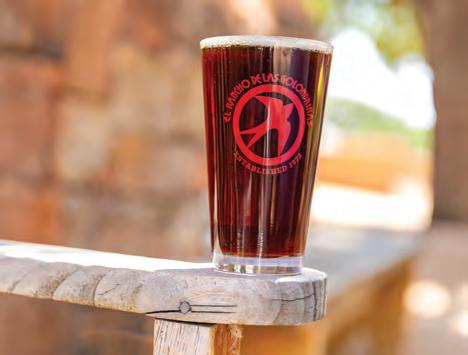
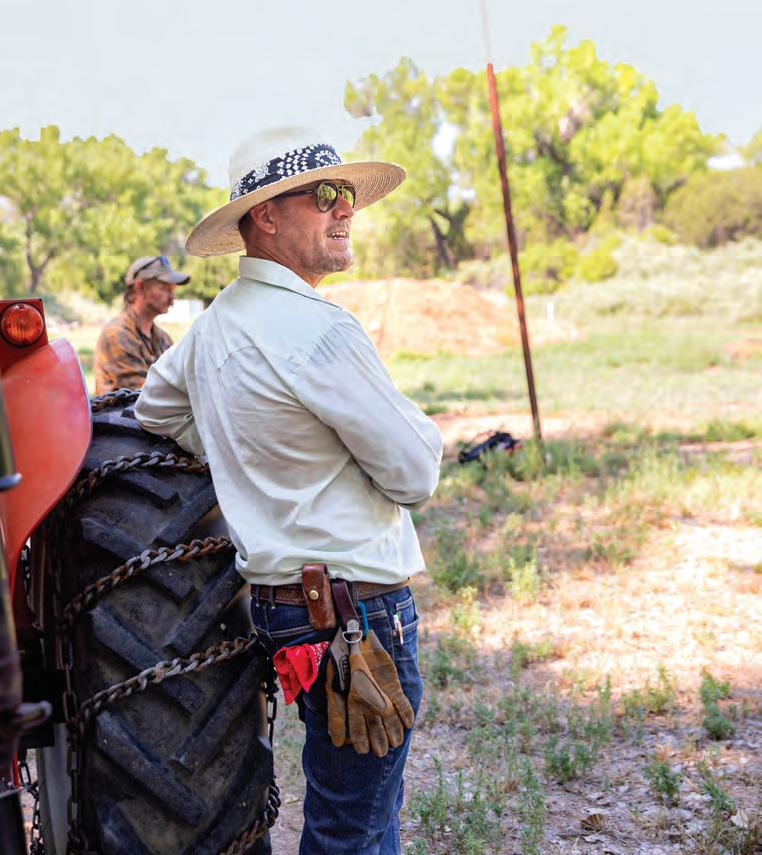
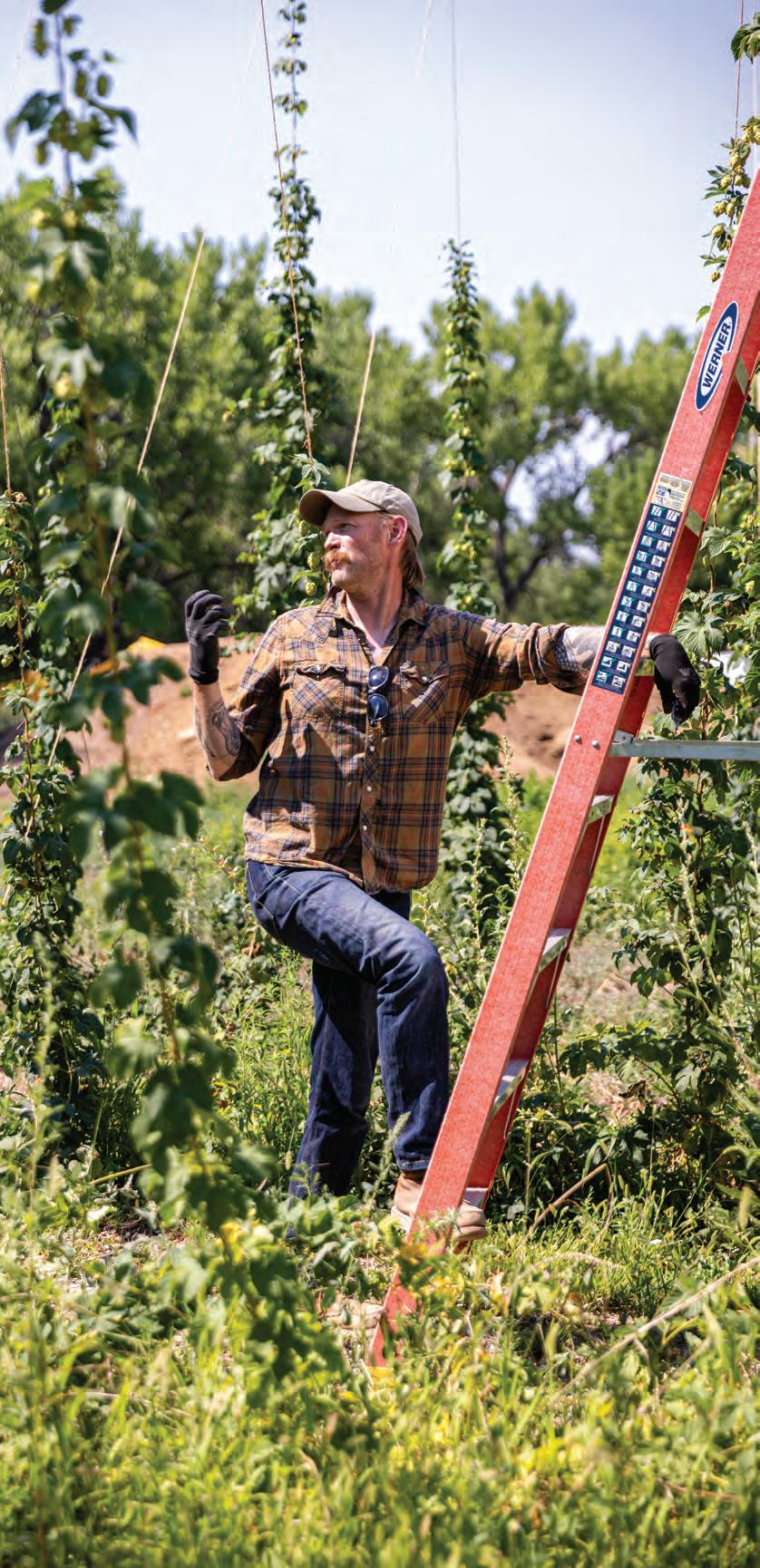
The making of a 100 percent made-in-New Mexico beer
83
Eat & Drink
Tradition meets innovation at the hands of three sets of chefs — pushing culinary boundaries from Taos to Albuquerque.
88
Eat & Drink
Santa Fe’s Margarita Trail is still the only one of its kind in the world, and it just keeps getting better.
93
Gallery Guide
Browse art destinations on Canyon Road, in the Railyard District, and on the Plaza.
96 Shop
Make the most of summer with these made-inNew Mexico items.
99
Makers
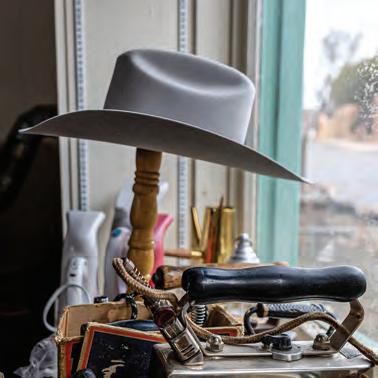
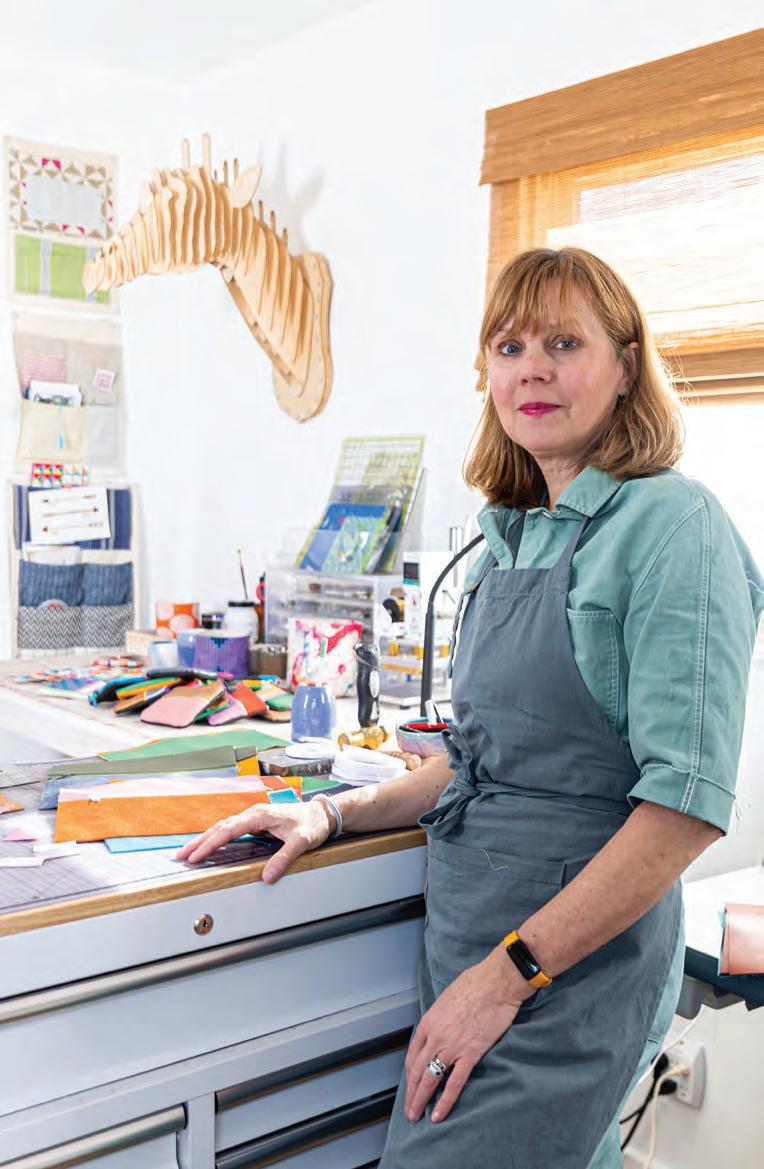
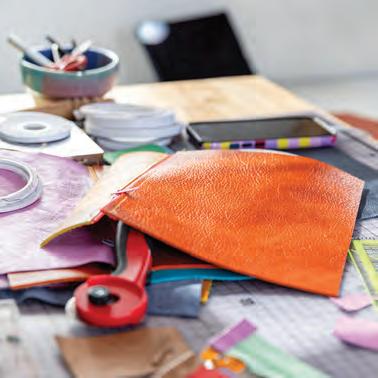
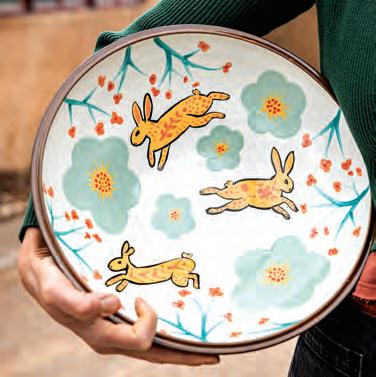
Meet artisans crafting leather goods, ceramics, and bespoke hats. 103
Last Look
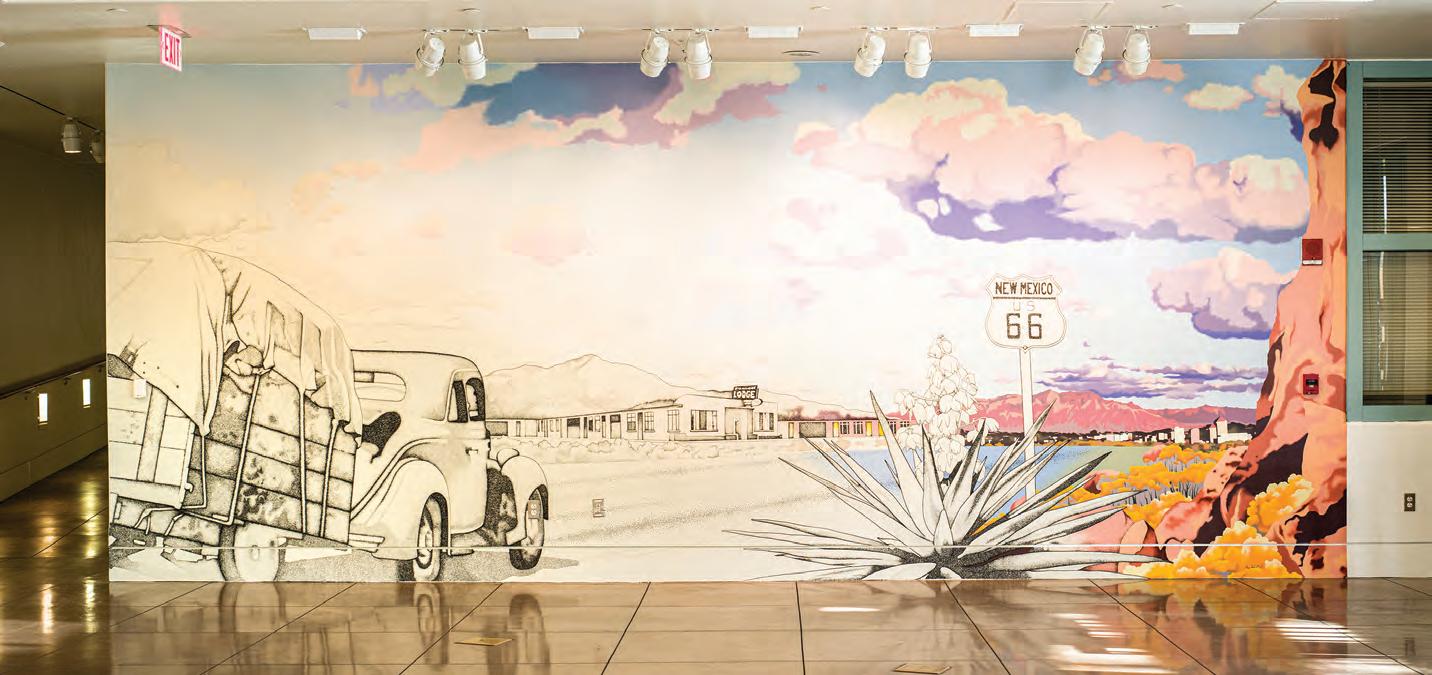
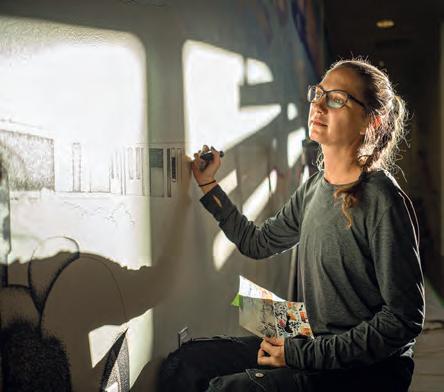
A New Mexico History Museum mural celebrates the Mother Road.
Photos (clockwise from top left): Courtesy Fable Studio, by Douglas Merriam, by Gabriella Marks, courtesy Olive Rush Historic A rtist Home & Garden
bagged household trash what about glass?
taken to DROP OFF SITES to recycle. Otherwise it must be placed in your trash. please donotplaceglass in yourrecyclebin!
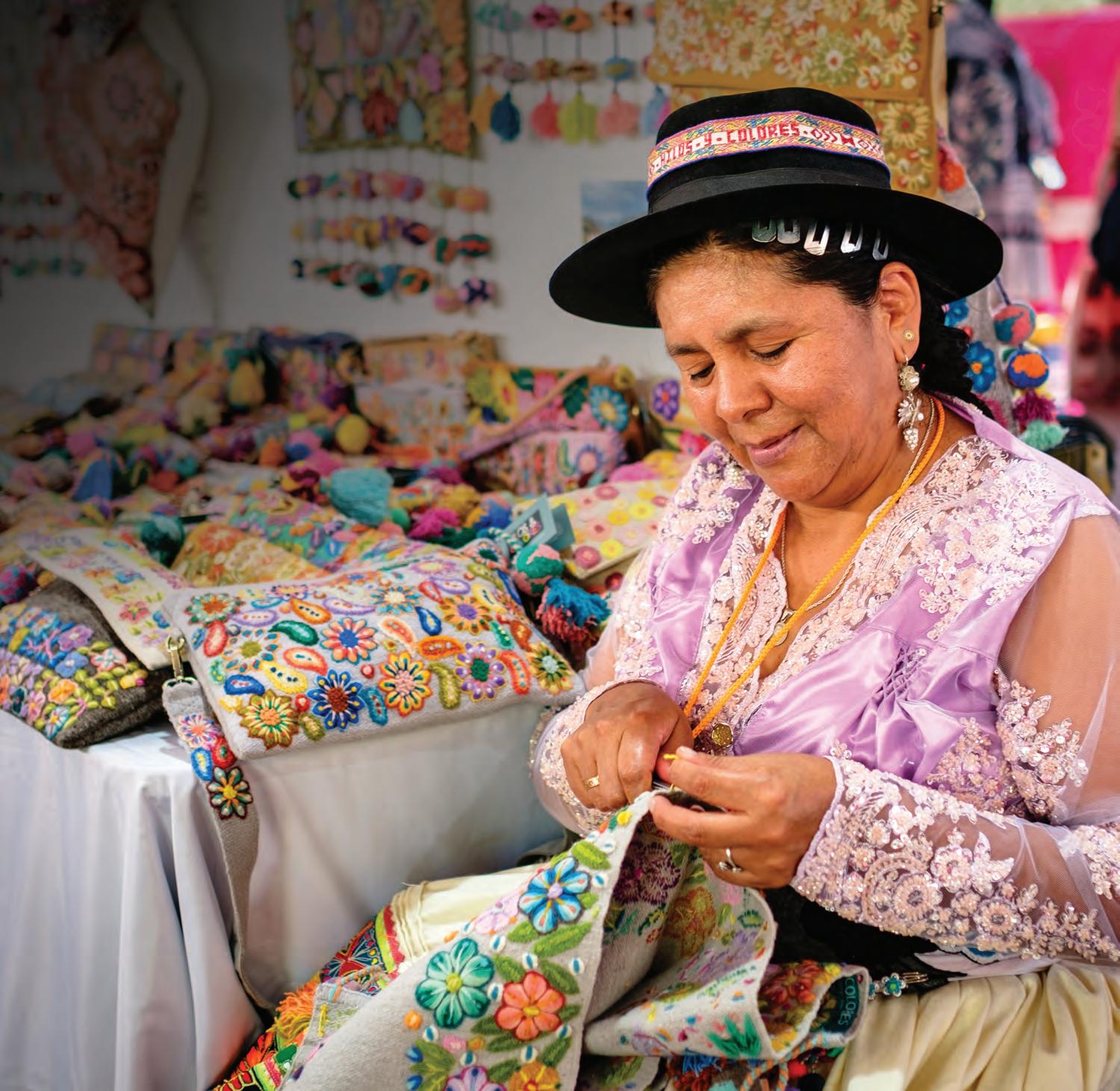
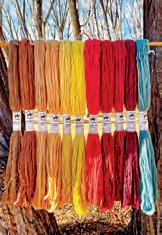
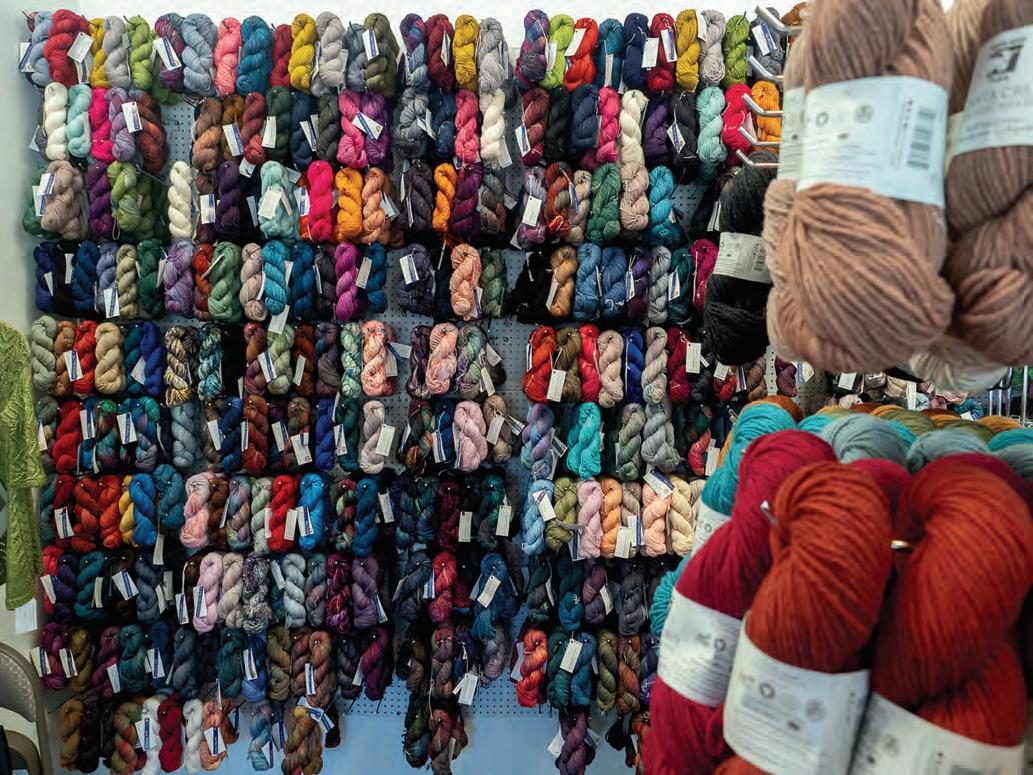
Hilos y Colores Peru
LET ’S GO!
CALENDAR • ASK A LOCAL • GO OUTDOORS • ART
Photo:
By Gabriella Marks
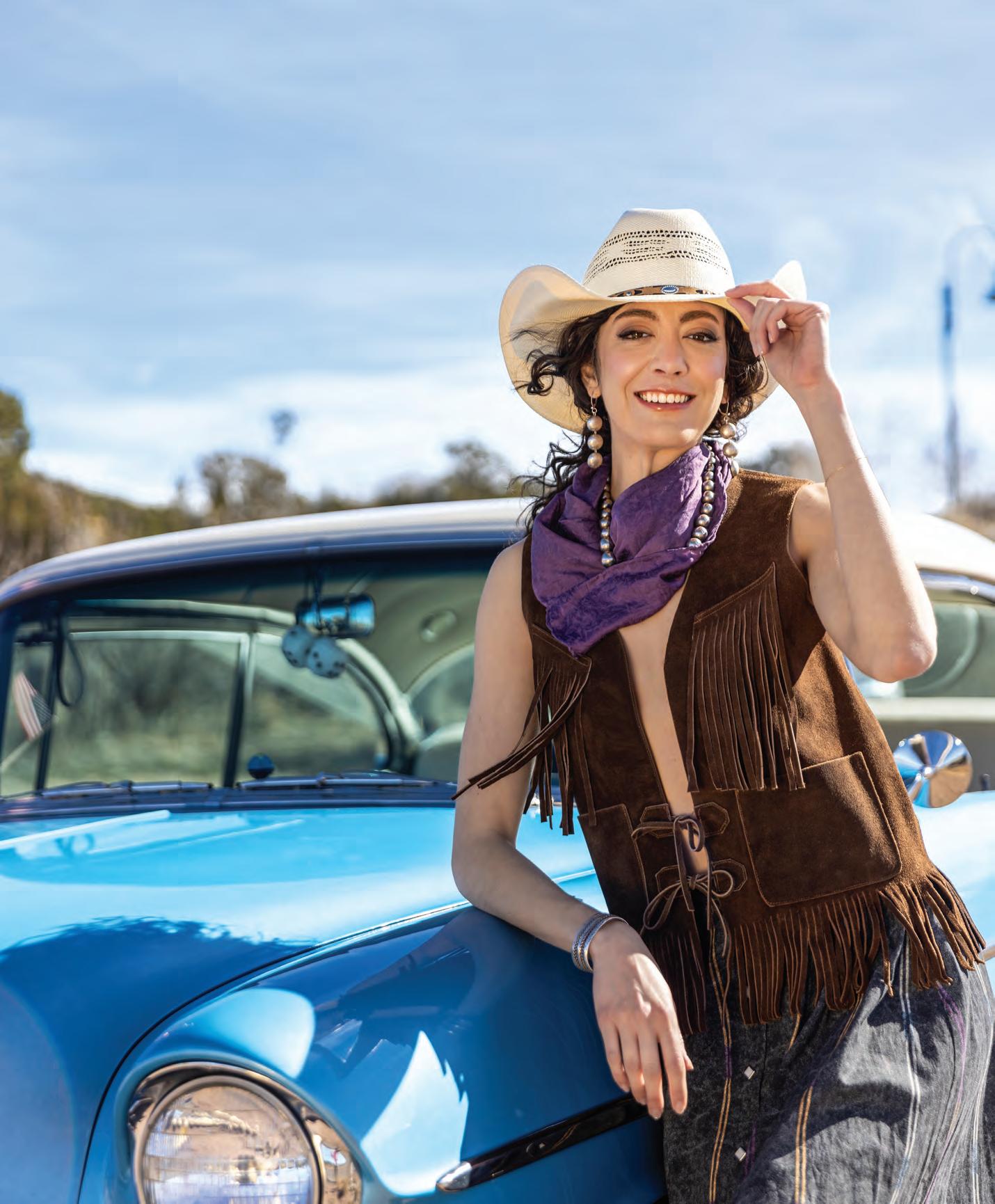
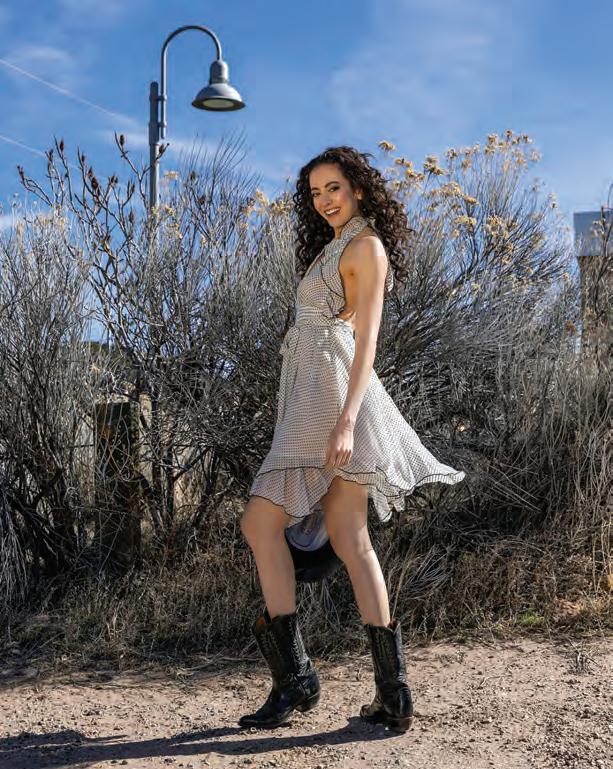
Dominique Ehrl poses with classic Southwest — and Route 66 — style. Read more about her favorite places in Santa Fe on page 30.
Summer Happenings
Seasonal festivals, markets, live music, and more to fill your calendar
Festivals and Special Events
MAY 15–17
Santa Fe International Literary Festival
Featuring big-stage presentations, keynote lectures, intimate conversations, and walking tours with renowned literary figures, including Pulitzer Prize–winning author Isabel Wilkerson, bestselling author Ocean Vuong, and legendary author Judy Blume. Tickets: from $25. Santa Fe Community Convention Center, 201 W. Marcy St. sfinternationallitfest.org
MAY 18, 10 A.M.–12:30 P.M.
A Book Talk in the Garden with Priyanka Kumal
In collaboration with the Santa Fe International Literary Festival, join the Santa Fe Botanical Garden
for an exclusive experience with nationally acclaimed author and naturalist Priyanka Kumar. The event brings together literature, nature, and conversation in one of Santa Fe’s most beautiful settings. Tickets include coffee and light bites, talk and a Q&A session with Kumar, a special tour, and all-day garden admission. Tickets: $52, with a copy of The Light Between Apple Trees $52. Santa Fe Botanical Garden, 715 Camino Lejo. visitsfbg.org
JUNE
Santa Fe Pride Month
An annual celebration of the local LGBTQ+ community. The monthlong celebration includes a disco, a Pride Ride on the Santa Fe Railway, drag bingo, and more. The Pride on the Plaza event, an annual highlight, unfolds 9 a.m.–4 p.m. June 27 with educational
and vendor booths and a day of entertainment. Also that day, the Pride Parade begins at 10 a.m. at the corner of Paseo de Peralta and Old Santa Fe Trail and travels to the Plaza. hrasantafe.org
JUNE 13–14, 10 A.M.–4 P.M. Santa Fe Spring Festival
Learn about New Mexico’s rich cultural heritage through demonstrations of sheep shearing and baking in a traditional horno; browse handmade goods at the fiber arts market; and check out craft activities for kids. Tickets: $10–$15. El Rancho de Las Golondrinas, 334 Los Pinos Road. golondrinas.org
JUNE 24, 9 A.M.–5 P.M.
Community Day
Discover the beauty and tranquility of the Santa Fe Botanical Garden during June’s Community
Day, when New Mexico residents and students with ID receive free admission to explore and enjoy all the garden has to offer. Free. Santa Fe Botanical Garden, 715 Camino Lejo. visitsfbg.org
JUNE 12–21
CURRENTS 2026: Art & Technology Festival
Indoor and outdoor installations, augmented mixed-reality environments, AI-generated/assisted 2D and 3D works, robotics, and multimedia performances. Tickets: day pass $10, all-festival pass $15, ages 20 or under no charge. El Museo Cultural de Santa Fe, 555 Camino de la Familia. currentsnewmedia.org
JUNE 26–28
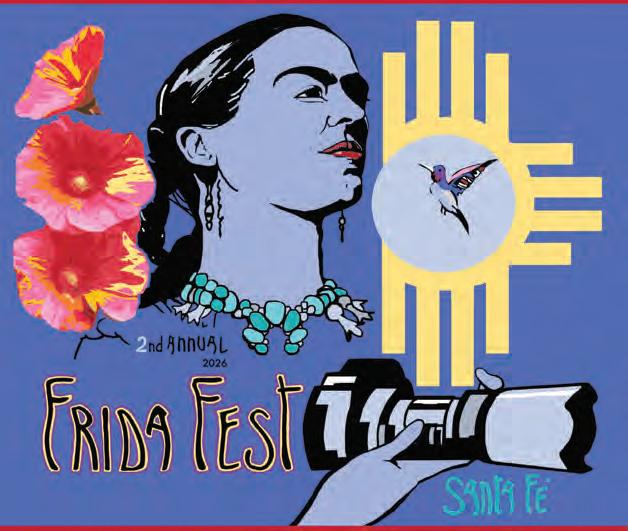
Frida Fest Santa Fe
The Frida Fest returns for a second year with lowriders, a mini-film fest,
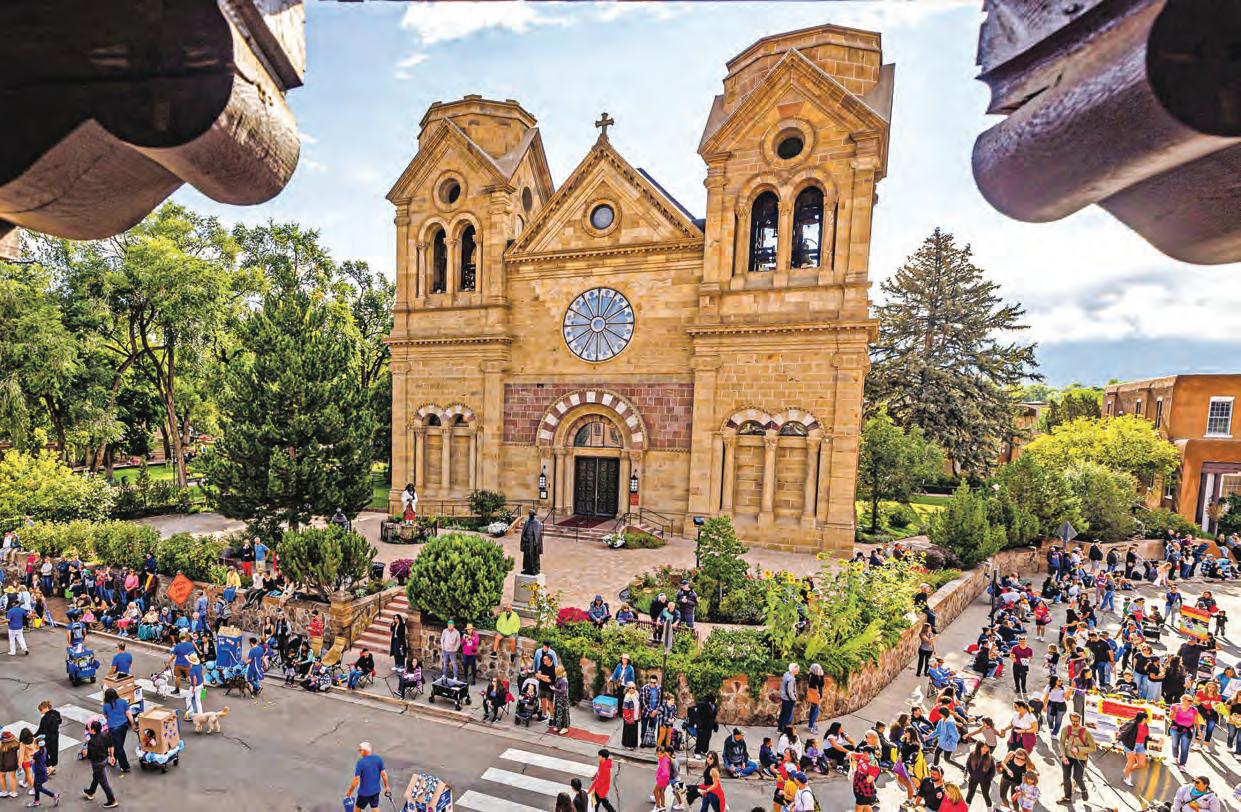
The annual Children's Pet Parade, or Desafile de Los Niños, a highlight of Fiesta de Santa Fe, marches past Cathedral Basilica of St. Francis of Assisi in September 2025.
Spanish tapas, a Frida drag show, and performances by the Nacha Mendez Band. Festival proceeds benefit the Nacha Mendez Music Scholarship for New Mexican Girls of Color. Tickets: see website. Various venues. nachamendezscholarship.com
JUNE 24–27
Rodeo de Santa Fe
Including ropers, youth mutton bustin’ and barrel racing, specialty acts, and the Exceptional Rodeo, open to children and adults with physical and mental exceptionalities. Tickets: general admission from $20, box seats in pairs for $45 each. Rodeo de Santa Fe Grounds, 3237 Rodeo Road. rodeodesantafe.org
JULY 4
Pancakes on the Plaza
Get there early for 7 a.m. breakfast under the shade trees, take a gander at the Santa Fe Vintage Car Club show, and shop the arts and crafts booths. Tickets: available on-site and online; details to be announced. Santa Fe Plaza. pancakesontheplaza.com
JULY 4, 4–10 P.M.
Fourth of July Spectacular Free family-friendly Independence Day celebration, complete with music, activities, fireworks, and a
drone show. Overlook Park, White Rock. losalamosnm.us
JULY 4–5, NOON–6 P.M.
Santa Fe Wine Festival
Sample New Mexico vintners’ wines, shop at arts and crafts booths, have a bite to eat, and dance to live music at one of the longest-running wine festivals in the state. Tickets: $20–$80. El Rancho de Las Golondrinas, 334 Los Pinos Road. golondrinas.org
JULY 14 AND 21, NOON–4:30 P.M. Behind Adobe Walls
The Santa Fe Garden Club’s annual event offers guided bus tours of four different gardens and private residences each week. Tickets: tour $130; optional brunch at 10:45 a.m. $45 (tour and buffet $75). Santa Fe area. santafegardenclub.org
AUGUST 7–9 AND 14–16
Haciendas –A Parade of Homes Designers, architects, and builders showcase local homes in this event honoring craftsmanship, innovation, and design excellence. Presented by the Santa Fe Area Home Builders Association, the parade offers VIP tours this year. Tickets: online. Various locations. sfahba.com
AUGUST 8–9
Los Alamos County Fair & Rodeo
Start the day with a parade and fair, and in the afternoon head over to North Mesa to watch the rodeo. Tickets: free for ages 2 and under; $5 for ages 3–17 and seniors; $10 adults; $25 family of four. Downtown Los Alamos and Brewer Arena, 750 North Mesa, Los Alamos. losalamosnm.us
AUGUST 8–9, NOON–6 P.M.
Santa Fe Beer Festival
Taste offerings from local breweries and food vendors, peruse arts and crafts booths, and enjoy live entertainment throughout both days. Tickets: $10–$40. El Rancho de Las Golondrinas, 334 Los Pinos Road. golondrinas.org
AUGUST 21–23
Zia Regional Rodeo
A charitable event held by the New Mexico Gay Rodeo Association. Tickets: $25 weekend pass. Rodeo de Santa Fe Grounds, 3237 Rodeo Road. nmgra.org
SEPTEMBER 4
Burning of Zozobra
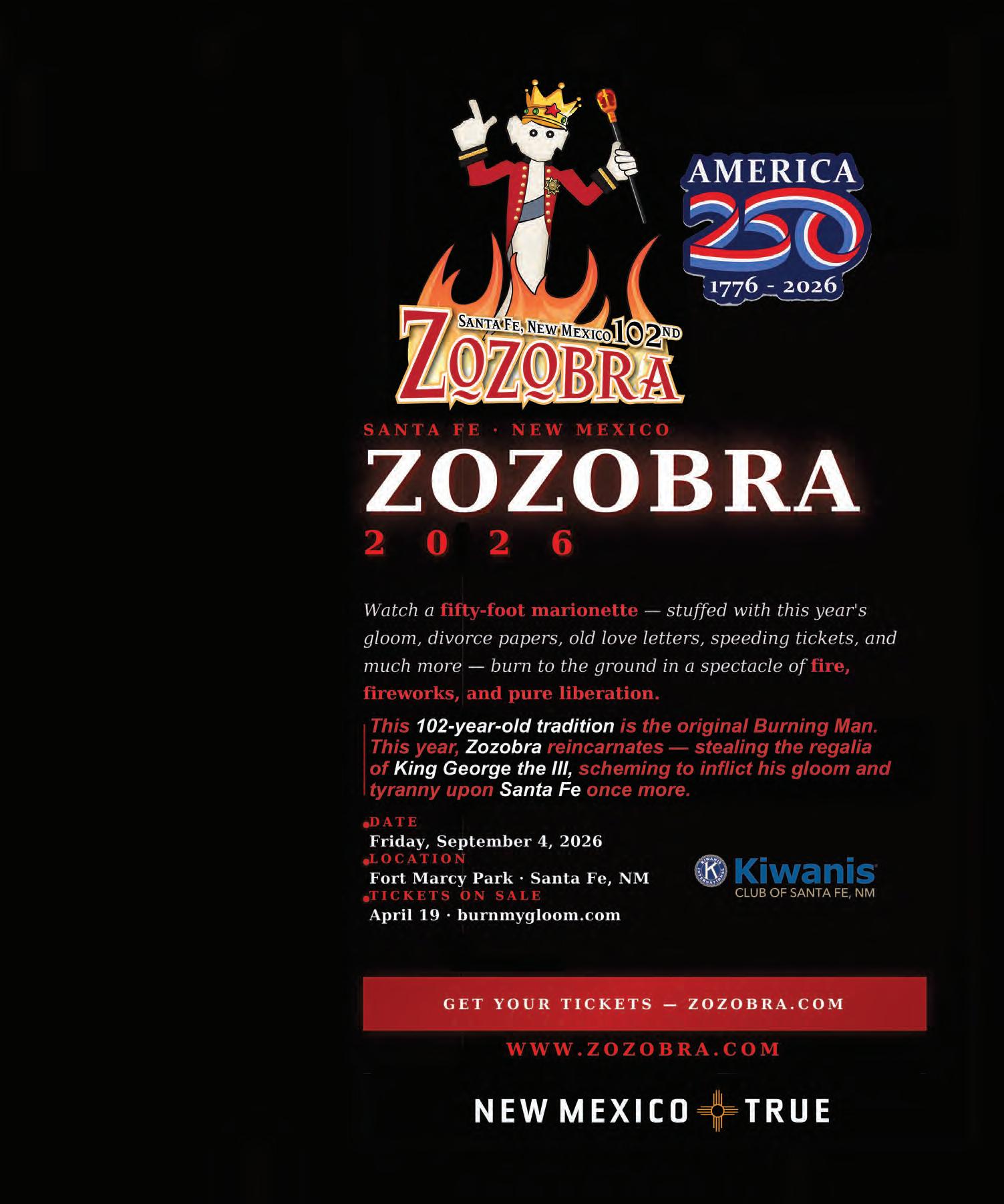
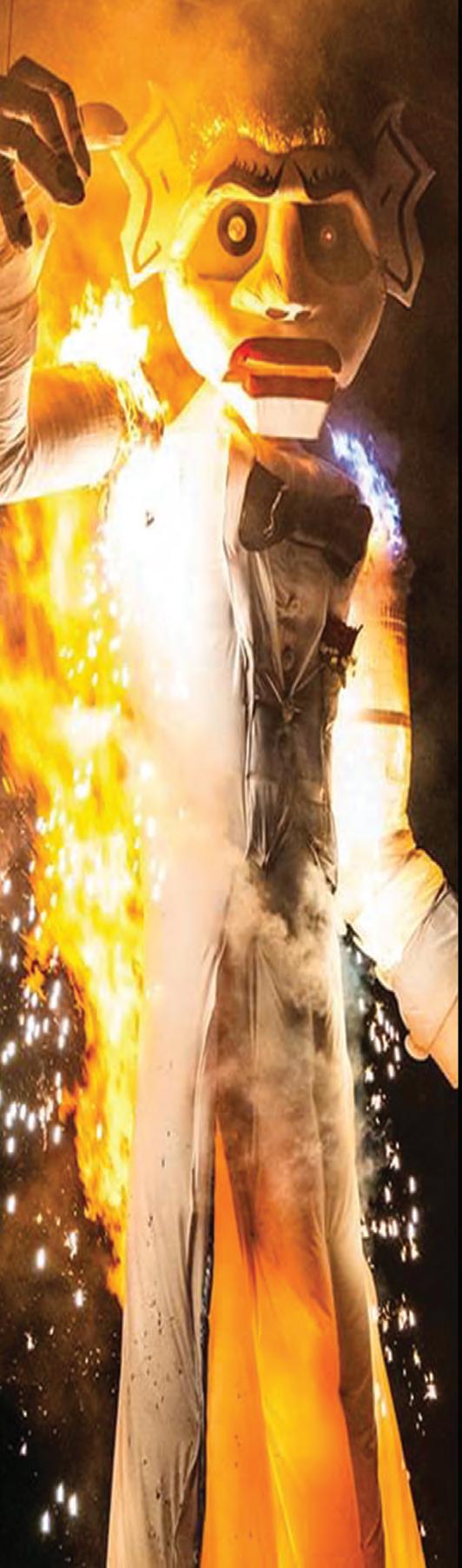
Old Man Gloom goes up in flames to burn onlookers’ worries away during the 102nd annual event. Gates open at 4 p.m. and close to entry at 8:30 p.m. Tickets: from $37.50. New Mexico residents receive a $5 discount on general admission. Fort Marcy Park. burnzozobra.com
SEPTEMBER 5–13
Fiesta de Santa Fe
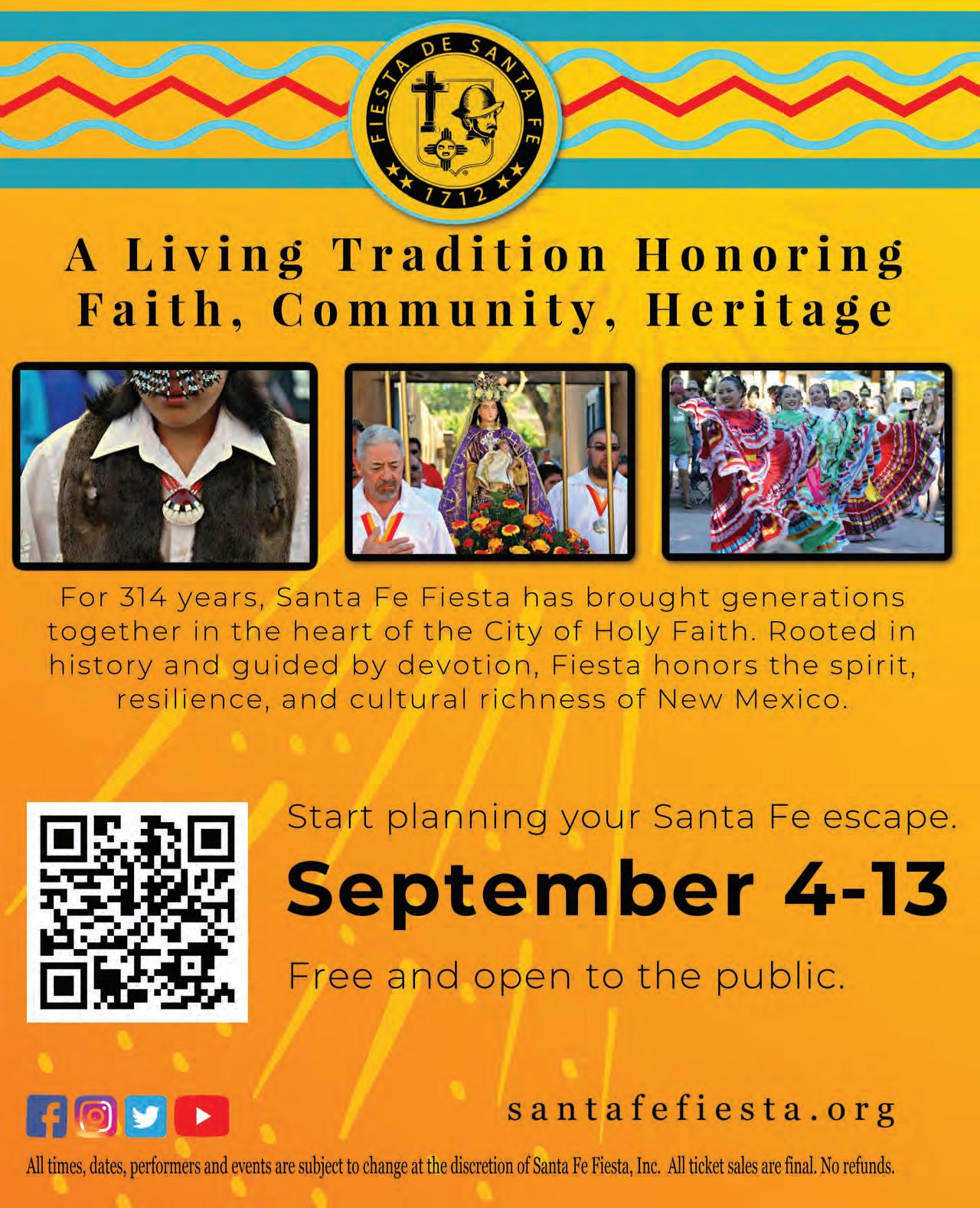
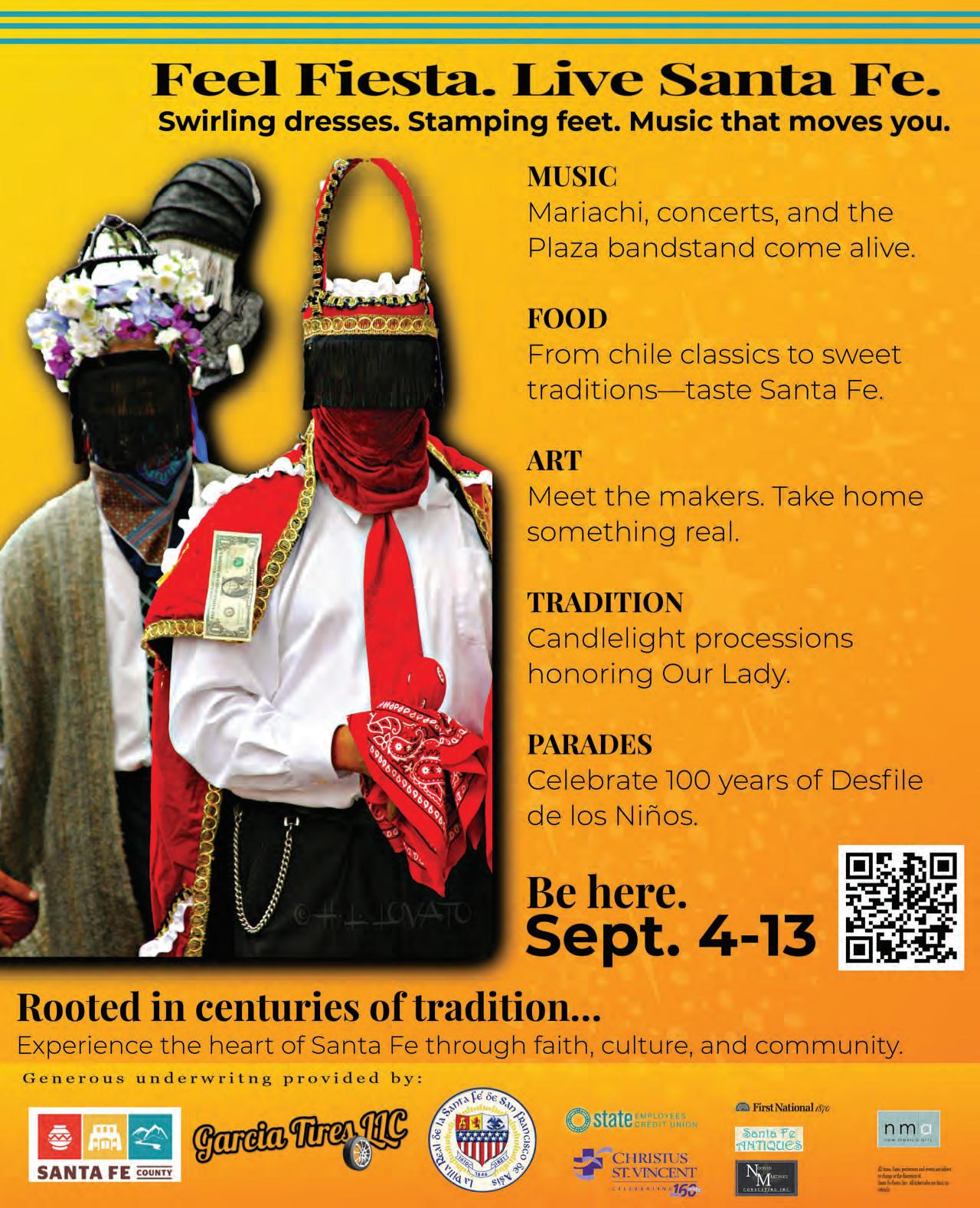
A long-running community tradition featuring a pre-Fiesta show, an arts and crafts market, Mariachi Extravaganza de Santa Fe, live music performances at the Santa Fe Plaza Bandstand, a pet parade (September 12), the Gran Baile (September 12), a procession and pontifical mass (September 13),
and the Desfile de la Gente Historical/Hysterical Parade (September 13). Santa Fe Plaza. santafefiesta.org
SEPTEMBER 18–20
Eldorado Studio Tour
Artists in Eldorado open their studios to visitors in this longrunning annual event organized by the Eldorado Arts and Crafts Association. Free. eldoradoarts.org
SEPTEMBER 18–26
Los Alamos ScienceFest Free community events, including concerts, markets, and a beer garden. Discovery Day is a highlight, with hands-on science activities organized by a variety of STEM partners. Free. Los Alamos downtown corridor. losalamossciencefest.com
SEPTEMBER 19–20, 26–27
High Road Art Tour
Artists along the High Road to Taos Scenic Byway open their studios and galleries to visitors. Free. highroadnewmexico.com
SEPTEMBER 23–27
Santa Fe Wine & Chile Fiesta Food and wine tastings, luncheons, seminars, and cooking demonstrations with local chefs and global wine brands. Tickets: on sale in June. Various venues. santafewineandchile.org
Markets
MAY 21–24
Native Elements Art Festival and Market
Kicking off a season of art markets, this one features a grand opening celebration, an art market with more than 160 vendors, artist panels and special programming, and an exclusive auction. Tickets: Thursday opening celebration, $80 for Santa Fe Botanical Garden members, $100 general public;
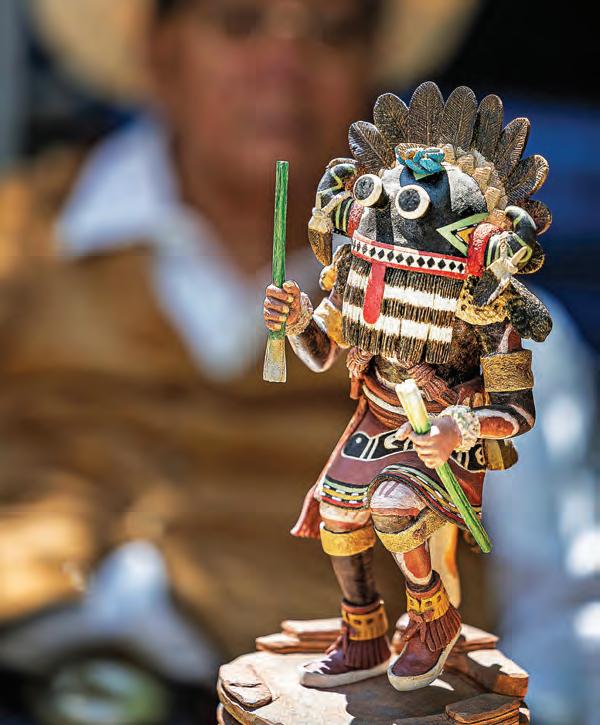
A katsina by carver Eli Taylor at Free Indian Market in August 2025
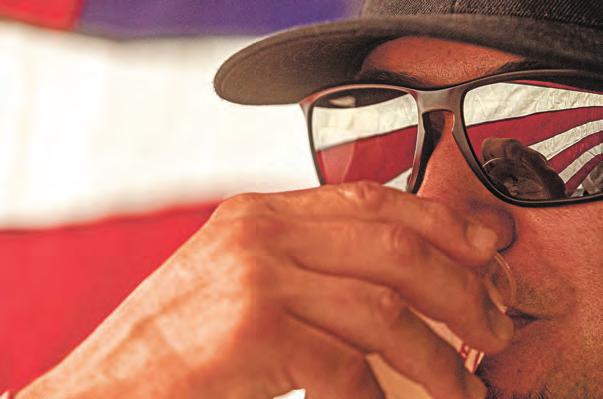
Andrew Padilla samples whiskey at the Wine and Chile Fiesta at Fort Marcy Park in September 2025.
CALENDAR
Friday night market and artist reception, $52 members, $65 general public; Saturday and Sunday market, $8 members, $10 general public. Santa Fe Botanical Garden and the Santa Fe Convention Center. native-elements.org
JULY 9–12
International Folk Art Market
Shop traditional crafts and folk art from more than 160 artists from some 50 countries during the annual market. Tickets: from $20. Santa Fe Railyard Park. folkartmarket.org
JULY 25–26
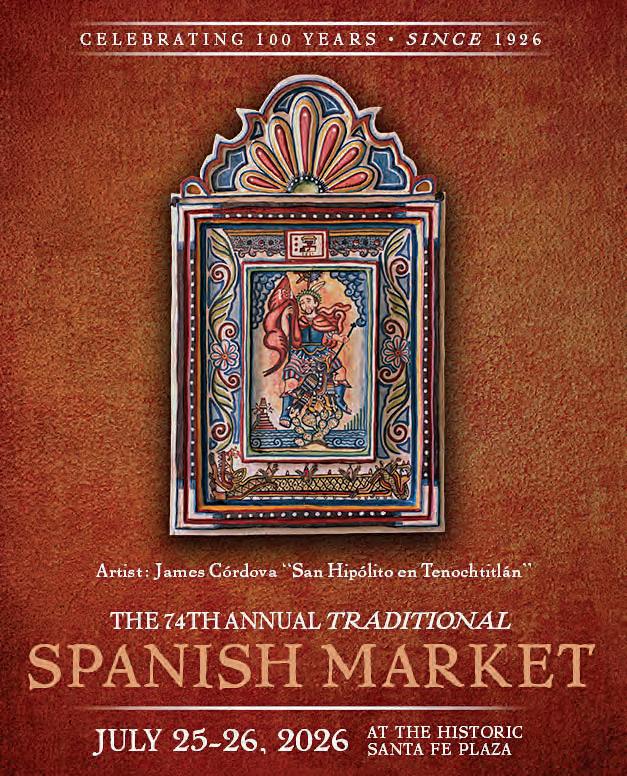
Traditional Spanish Market
Handcrafted Spanish colonial works by adult and youth artisans in the largest market of its kind in the nation. Free to attend. Santa Fe Plaza. traditionalspanishmarket.org
JULY 25–26, 8 A.M.–5 P.M.
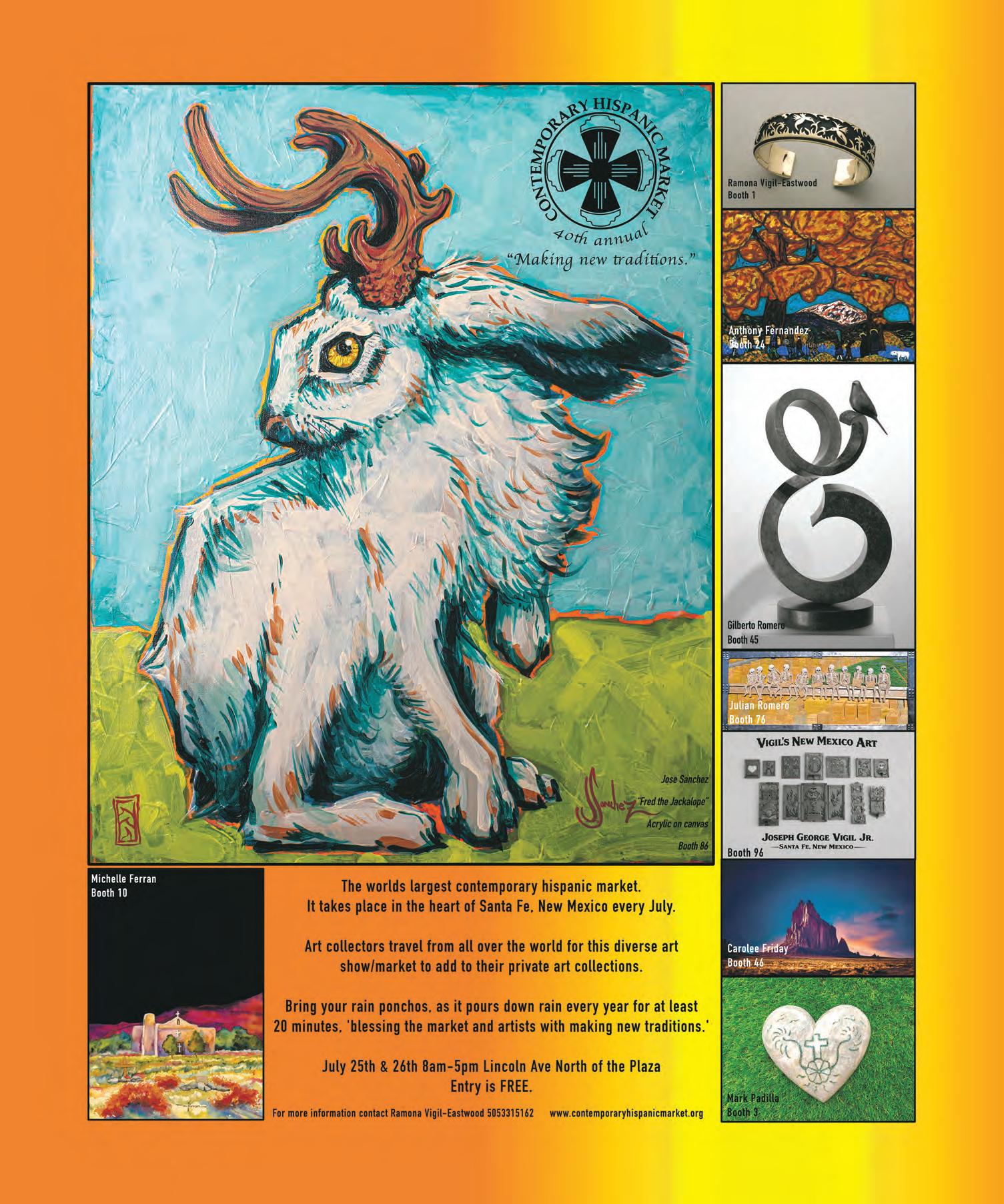
Contemporary Hispanic Market
Juried selection of contemporary works by established and emerging artists with Hispanic heritage. Lincoln Avenue. contemporaryhispanicmarket.org
AUGUST 6–9
Whitehawk Antique Indian & Ethnographic Art Show
International retailers display finds from around the world.
Santa Fe Community Convention Center, 201 W. Marcy St. whitehawkshows.com
AUGUST 14–16
Pathways Indigenous Arts Festival
A sprawling art market that includes a film showcase, live music and dance performances, fashion shows, and food trucks. Free. Buffalo Thunder Resort, 30 Buffalo Thunder Trail. poehcenter.org
AUGUST 15–16
Santa Fe Indian Market
Some 1,000 Native American artists from 200 tribes create the traditional and contemporary jewelry, pottery, textiles, paintings, and sculptures showcased in this 104-year-old market. Santa Fe Plaza and surrounding streets. swaia.org
AUGUST 15–16, 8 P.M.–5 P.M.
Free Indian Market
Hundreds of artists display their creations in this Native-owned and Native-operated event. Free. Federal Park, South Federal Place and Washington Ave. freeindianmarket.org
Santa Fe Farmers Market Market featuring more than 150 farmers and producers
from Northern New Mexico. Santa Fe Railyard. santafefarmersmarket.com
SATURDAYS (MARCH–DECEMBER)
9 A.M.–2 P.M.
Santa Fe Artists Market
Outdoor Saturday market featuring arts and crafts booths. Santa Fe Railyard. santafeartistsmarket.com
SATURDAYS 9 A.M.–4 P.M., SUNDAYS 10 A.M.–4 P.M.
El Museo Cultural de Santa Fe Mercado
Art, antiques, collectibles, jewelry, and other goods from 50 vendors; through June. 550 Camino de la Familia. elmuseocultural.org
SUNDAYS 10 A.M.–3 P.M. Railyard Artisan Market
Gifts, souvenirs, and mementos from local artisans and creative small businesses. Santa Fe Farmers Market Pavilion. santafefarmersmarket.com
Museums and Art Spaces
THROUGH MAY
Ephemeral Acts
Drawn from the Carl and Marilynn Thoma Foundation collection, this exhibition explores the transient nature of time-based art, where time serves as both medium and composer. Art Vault, 540 S. Guadalupe St. artvault.thomafoundation.org
THROUGH JUNE 1
A Circle That Nothing Can Break
This exhibition shows how Georgia O’Keeffe utilized shapes to explore emotional symbolism and abstract ideas throughout her career. Georgia O’Keeffe Museum, 217 Johnson St. okeeffemuseum.org
THROUGH JUNE 13 (PART I)
JUNE 18–OCTOBER 3 (PART II)
Emmi Whitehorse: Intimate Landscapes
This retrospective of the painter’s work unfolds in two parts: Part I: Light and Space (1980–2000s) and Part II: Line and Form 1990–2020s). The show invites viewers to follow the Diné artist’s evolution across her acclaimed career. Each part features 20 works. The first draws from the Wheelright’s permanent collection and private collections; the second features a new painting created for the show. Wheelwright Museum of the American Indian, 704 Camino Lejo. wheelwright.org
THROUGH JUNE 14
Stella Nall: Offerings from My Heart
This exhibition features new work by multimedia artist and poet Stella Nall, also known as Bisháakinnesh (Rode Buffalo), a first descendant of the Crow Tribe. Through her use of vibrant color, symbolism, and material innovation, Nall explores questions of Indigenous identity, visibility, and belonging shaped by her lived experience navigating the complexities of tribal enrollment, blood quantum, and inherited histories of assimilation. IAIA Museum of Contemporary Native Arts, 108 Cathedral Place. iaia.edu/mocna THROUGH JUNE 21
O’Powa O’Meng: The Art and Legacy of Jody Folwell
This focused retrospective revisits the career of contemporary Santa Clara Pueblo potter Jody Folwell. Through 25 works, the exhibition explores how she revolutionized Pueblo pottery by turning it into a forum for social justice advocacy and political commentary. New Mexico Museum of Art, Plaza Building, 107 W. Palace Ave. nmartmuseum.org
THROUGH JULY 12
Paper Trails: Unfolding Indigenous Narratives
This major exhibition showcases contemporary Indigenous artists from Canada and the United States whose work broadens the creative possibilities of paper beyond its traditional two-dimensional format. The artists explore themes of cultural preservation,
Ariella Medoro with the Cristus St. Vincent contingent waves a flag at the Pride Parade in June 2025.
hidden histories, and the consequences of broken treaties, which are especially resonant as the United States marks its 250th anniversary. IAIA Museum of Contemporary Native Arts, 108 Cathedral Place. iaia.edu/mocna
THROUGH JULY 26
Appearances Deceive: Embroideries by Policarpio Valencia
A retrospective of Nuevomexicano artist Policarpio Valencia (1853–1931), whose embroidery considered morality and mortality. Museum of International Folk Art, 706 Camino Lejo. moifa.org
THROUGH AUGUST 9
Lucy R. Lippard: Notes from the Radical Whirlwind Writer, activist, and curator Lucy R. Lippard has led a revolutionary career for more than 60 years.
Taken from the museum’s collection, this exhibition features a selection of artworks, art books, posters, political buttons, and activist ephemera that traces Lippard’s prolific career and honors her contributions to the art world.
New Mexico Museum of Art, Vladem Contemporary, 404 Montezuma Ave. nmartmuseum.org
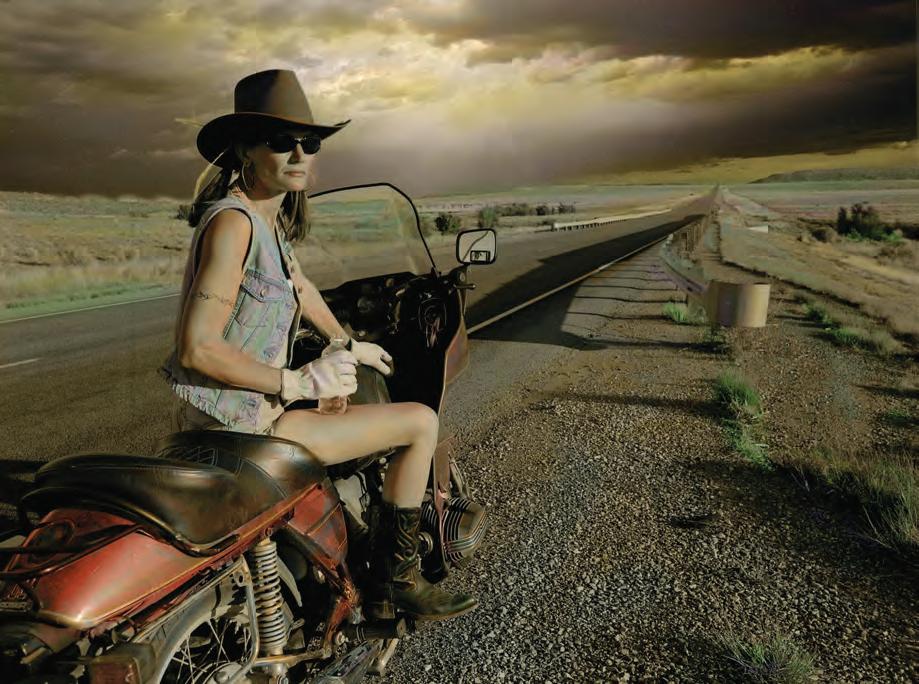
Greg Mac Gregorʼs Approaching Storm, Highway 41, New Mexico appears in Roadside Attractions at the New Mexico Museum of Art.
CALENDAR
THROUGH AUGUST 17
Makowa: The Worlds Above Us
This exhibition connects science, stories, and observations of the skies through artwork of Indigenous peoples of the Southwest. Museum of Indian Arts and Culture, 710 Camino Lejo. indianartsandculture.org
THROUGH SEPTEMBER 7
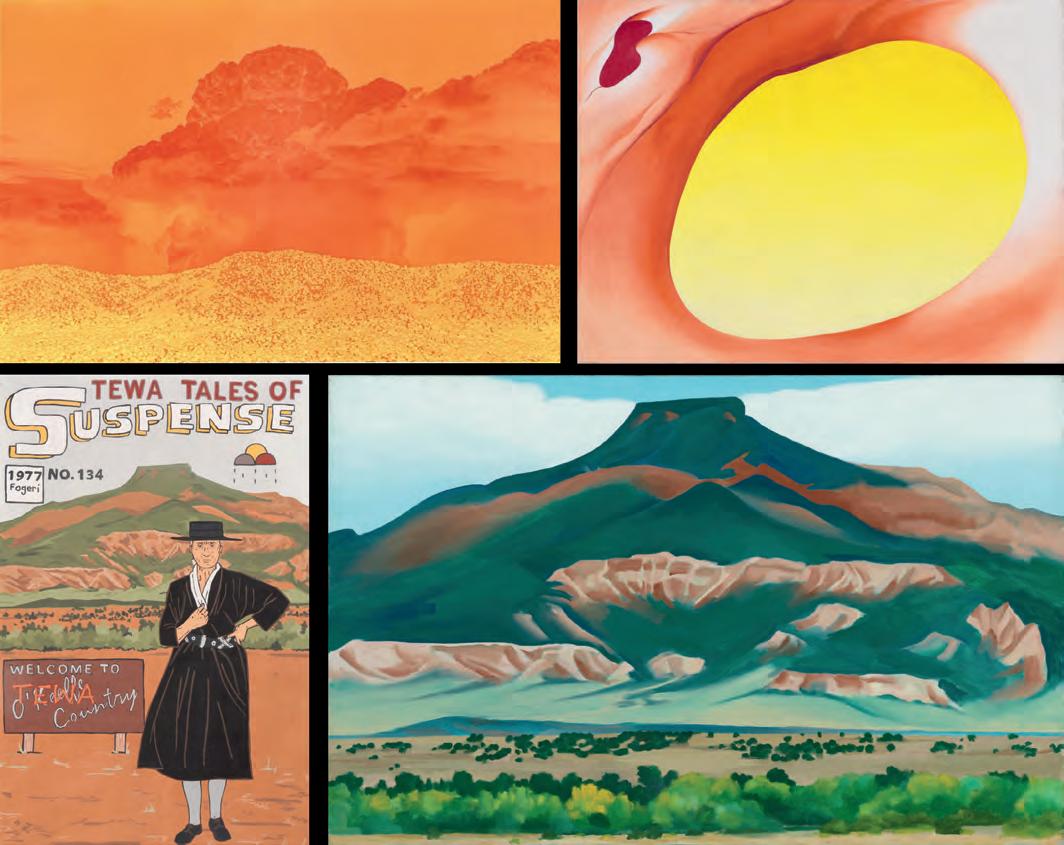
Tewa Nangeh/Tewa Country Co-curated by artist Jason Garcia (Santa Clara Pueblo) and Bess Murphy, Luce Curator of Art and Social Practice at the Georgia O’Keeffe Museum, this exhibition honors Tewa people, art, culture, and landscapes while drawing awareness to the erasure of the Tewa presence from the story of Georgia O’Keeffe in Northern New Mexico. Georgia O’Keeffe Museum, 217 Johnson St. okeeffemuseum.org
THROUGH OCTOBER 4
Roadside Attractions
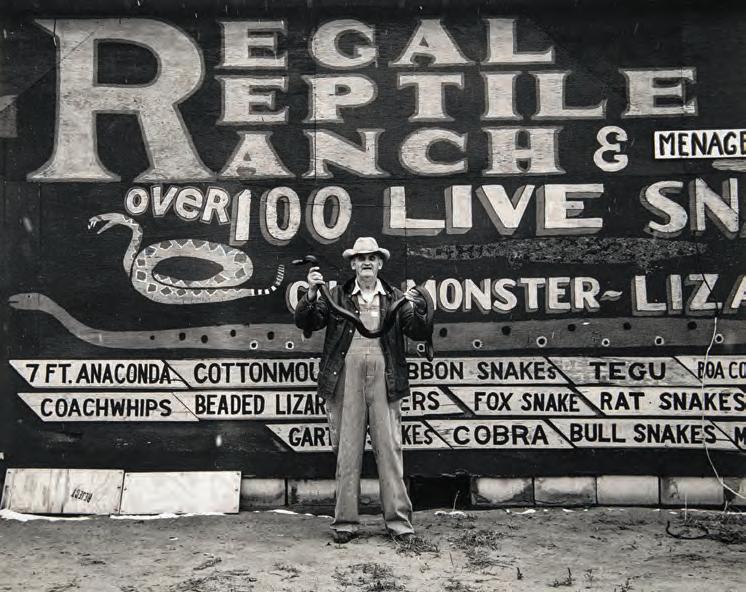
A celebration of the Route 66 centennial and the great American road trip, this exhibition explores whimsical, surreal, and always memorable roadside attractions — giant fiberglass animals, hand-painted signs, and unique architecture — through the lens of photographers such as Nathan Benn, Steve Fitch, Miguel Gandert, Phyllis Jennings, Joan Myers, Joel Meyerowitz, and others. New Mexico Museum of Art, Plaza Building, 107 W. Palace Ave. nmartmuseum.org
THROUGH OCTOBER 17
Silver Honors Stone: The Work of Julian Lovato
In the first solo show dedicated to Julian Lovato, the Wheelwright Museum of the American Indian features 80 works from the Santo Domingo jeweler’s career. In the process, the exhibition tracks how the creation of Native American jewelry evolved over the 20th century and the legacy of Lovato’s work today. Wheelwright Museum of the American Indian, 704 Camino Lejo. wheelwright.org
THROUGH OCTOBER 18
Paul Burlin: An American Modernist in the Southwest
This exhibition reintroduces audiences to Paul Burlin (1886–1969), a foundational yet long-overlooked figure in American modernism. Drawing from its collection, the New Mexico Museum of Art explores the artist’s deep and formative relationship with New Mexico. New Mexico Museum of Art, Plaza Building, 107 W. Palace Ave. nmartmuseum.org
THROUGH OCTOBER
The Carson “Scandal”:
A Colcha Cottage Industry
This exhibit explores colcha in the community of Carson, New Mexico, which produced vibrant pieces in a distinctive style that is still practiced today. Nuevo Mexicano Heritage Arts Museum, 750 Camino Lejo. nmheritagearts.org
THROUGH JANUARY 7, 2027
Truths Be Told: Artists Activate Traditions
This exhibit highlights the work of a dozen international artists who galvanize folk traditions to critique
G. Peter Jemisonʼs White Bead ’81 appears in Paper Trails: Unfolding Indigenous Narratives at the Museum of Contemporary Native Arts.
Photos (left to right): Courtesy Museum of Contemporary Native Arts and Wheelwright Museum of the American Indian
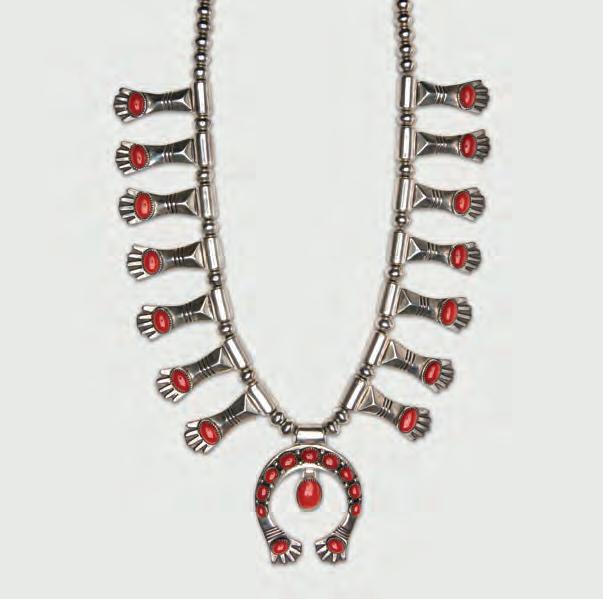
Jewelery such as this silver-and-coral necklace with hands and a naja symbol are on display in Silver Honors Stone: The Works of Julian Lovato at the Wheelwright Museum of the American Indian.
social inequities, reverse erasure, and be a catalyst for social change. Museum of International Folk Art, 706 Camino Lejo. internationalfolkart.org
THROUGH JANUARY 20, 2027
Americana at 250:
Eagles, Flags, and Uncle Sam
This exhibit showcases objects that evoke a sense of national identity and pride to mark the 250th anniversary of the signing of the Declaration of Independence. New Mexico History Museum, 113 Lincoln Ave. nmhistorymuseum.org
THROUGH SEPTEMBER 30, 2027
Zozobra: A Fire That Never Goes Out
Explore Zozobra’s evolution from a backyard bonfire to a centuryold community tradition via art, artifacts, and other memorabilia. New Mexico History Museum, 113 Lincoln Ave. nmhistorymuseum.org
THROUGH SEPTEMBER 20, 2030
Forks in the Road:
A Diner’s Guide to New Mexico
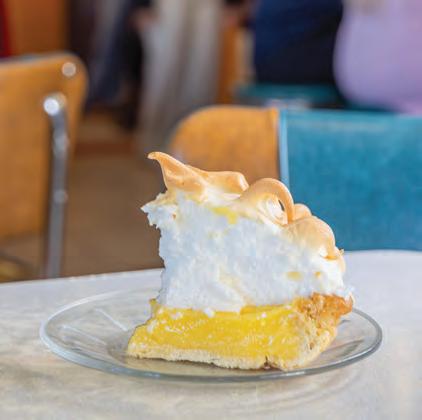
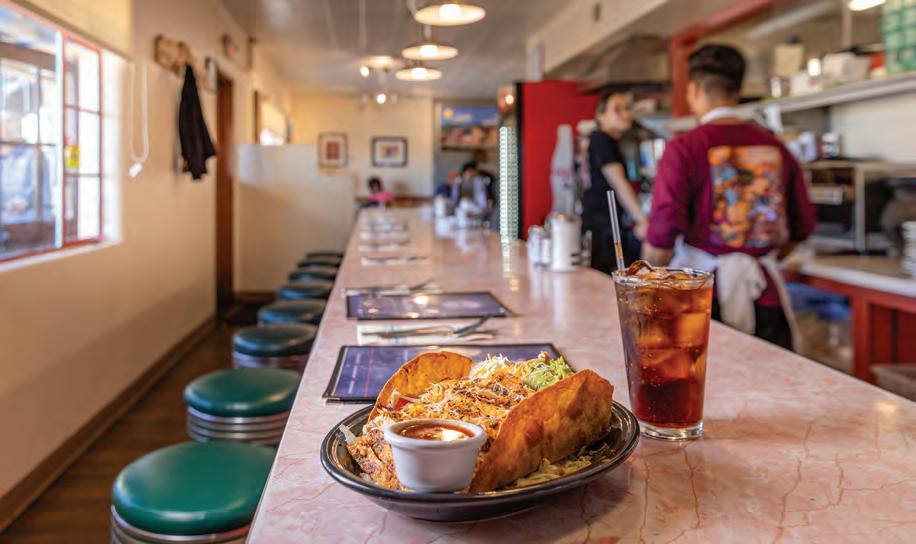
In this immersive exhibit, take a culinary journey through iconic, historic, and delicious eateries across the state to discover the stories — and dishes — behind the landmarks. New Mexico History Museum, 113 Lincoln Ave. nmhistorymuseum.org
APRIL 4–SEPTEMBER 7
Rooted Strong: Visions of America from New Mexico
Drawn from the New Mexico Museum of Art’s collections,
this exhibition honors the communities, voices, and cultures that have shaped the state — and thus its place within the American story. It features works from renowned New Mexican artists including Fritz Scholder, Emmi Whitehorse, Miguel Gandert, Janet Lippencott, and Luis Jimenez. New Mexico Museum of Art, Plaza Building, 107 W. Palace Ave. nmartmuseum.org
JUNE 5–SEPTEMBER 7
Indian Theater: Native Performance, Art, and Self-Determination
Since 1969
Curated by Candice Hopkins (citizen of Carcross/Tagish First Nation), this is the first major exhibition to center performance as an origin point for the development of contemporary art by Native artists. SITE Santa Fe, 1606 Paseo de Peralta. sitesantafe.org
JUNE 7–NOVEMBER 30
I Am Clay: Acoma Life in Figures
This community-curated project focuses on figurative pottery from Acoma. The exhibition is the Museum of International Folk Art’s contribution to the national Craft in America initiative marking the 250th anniversary of the founding of the United States. Museum of International Folk Art, 706 Camino Lejo. internationalfolkart.org
JULY 19–SEPTEMBER 15
The Art Underground: Fantasy Coffins of Ghana
Featuring the work of five renowned artists, this exhibition
The Summer Season Begins June 3 at El Rancho de Las Golondrinas
El Rancho de Las Golondrinas, “The Ranch of the Swallows,” is the premier living history museum of the Southwest with 500 acres to explore, 34 historic buildings, and hands-on experiences for all ages.
Wednesday–Sunday | 9 am–3 pm Scan or visit golondrinas.org for information about tours, tickets, and events.
2026 Festival Dates
Santa Fe Spring Festival June 13–14
Santa Fe Wine Festival July 4–5
Santa Fe Beer Festival August 8–9
Santa Fe Renaissance Faire September 12–13
Santa Fe Harvest Festival October 3-4
Spirits of New Mexico October 23-24
CALENDAR
explores handcrafted “fantasy” or “design” coffins, which have transformed a local funerary practice into a vital art form. Museum of International Folk Art, 706 Camino Lejo. internationalfolkart.org
Performing Arts
THROUGH MAY 31; FRIDAYS AND SATURDAYS 7:30 P.M.; SATURDAYS AND SUNDAYS 2 P.M. At the Wake of a Dead Drag Queen
Utilizing traditional storytelling and drag performances, this play explores the themes of Black identity, southern queerness, HIV/AIDS, and more as it alternates between scenes from the wake of a deceased drag queen and scenes from her life. Tickets: from $20. Santa Fe Playhouse, 142 E. De Vargas St. santafeplayhouse.org
MAY 17, 7:30 P.M.
Eric Johnson Texaphonic Tour
AMP Concerts presents a performance by the acclaimed rock guitarist. Tickets: from $43. Lensic Performing Arts Center, 211 W. San Francisco St. lensic.org
MAY 20, 7:30 P.M.
TOPS
Lensic 360 presents the Canadian indie rock band. Tickets: from $25. Tumbleroot Brewery and Distillery, 2791 Agua Fria St. lensic360.org
MAY 22–AUGUST 28, 6:30–9:30 P.M.
Los Alamos Summer Concert Series
Family-friendly concerts every Friday night. Free. Ashley Pond Park, Los Alamos. losalamosnm.us
MAY 27, 7 P.M.
Ghalia Volt
AMP Concerts presents a concert with the Belgian blues/rock singer. Tickets: from $33. Unit B by Chocolate Maven, 821 W. San Mateo Rd. ampconcerts.org
MAY 27, 7:30 P.M.
Kevin Morby with Liam Kazar Lensic 360 presents the American singer/songwriter. Tickets: from $43. The Bridge at Santa Fe Brewing, 37 Fire Place. lensic360.org
JUNE 4–SEPTEMBER 3
Santa Fe Summer Scene
The largest free music series in New Mexico takes the stage at the Plaza Bandstand, the Railyard water tower, and other locales. Free. lensic360.org
JUNE 10, 7:30 P.M.
Ásgeir
Lensic 360 presents the Icelandic singer-songwriter. Tickets: from $35. St. Francis Auditorium at the New Mexico Museum of Art, 107 W. Palace Ave. lensic360.org
JUNE 11–28;
THURSDAYS–SATURDAYS 7:30 P.M.; SUNDAYS 2 P.M.
Drowning Girls
Three women surface from the bathtubs they were drowned in to gather evidence against their
Icelandic singer-songwriter Ásgeir will perform at St. Francis Auditorium.
Photo:
murderous husband in this award-winning fantasia and social critique. Tickets: from $21.50. New Mexico Actors Lab, 1213 Parkway Dr., Suite B. nmactorslab.com
JUNE 18, 8:30 P.M.
Searows with Mori
Lensic 360 presents the indie/ folk guitarist. Tickets: from $22. Meow Wolf, 1352 Rufina Circle. lensic360.org
JUNE 30, 8:30 P.M.
Gia Margaret
Lensic 360 presents the American singer-songwriter. Tickets: from $25. Meow Wolf, 1352 Rufina Circle. lensic360.org
JULY 2–JULY 19; FRIDAYS 7:30 P.M.; SATURDAYS 2 AND 7:30 P.M.; SUNDAYS 1 AND 6:30 P.M.
Cabaret
This timeless musical, set in the final days of the Weimar Republic in 1930s Berlin, focuses on the decadent nightlife of the Kit Kat Klub as the Nazi Party rises to power. Tickets: from $20. Santa Fe Playhouse, 142 E. De Vargas St. santafeplayhouse.org
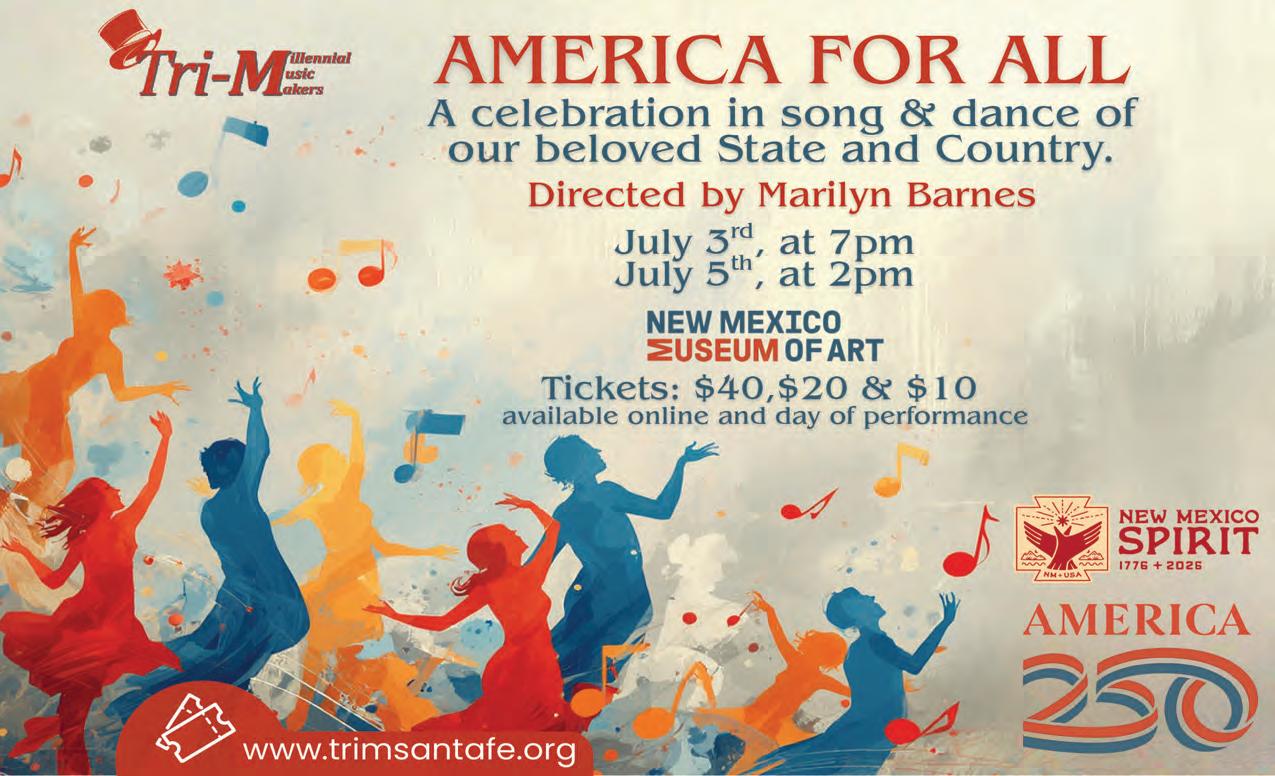
JULY 3, 7 P.M.; JULY 5, 2 P.M. America for All Tri-M Productions presents a celebration of song and dance in honor of the 250th anniversary of the United States. Tickets: $20–$60. New Mexico Museum of Art St. Francis Auditorium, 107 W. Palace. trimsantafe.org
JULY 3–AUGUST 27
Santa Fe Opera
The renowned Santa Fe Opera returns with a season of opera classics and contemporary pieces: Madama Butterfly (July 3–August 29), The Magic Flute (July 4–August 28), Eugene Onegin (July 18–August 19), Rodelinda (July 15–August 21), and the American premier of Lili Elbe (August 1–27). Tickets: from $49. Santa Fe Opera, 301 Opera Dr. santafeopera.org
JULY 17, 7:30 P.M.
Chris Botti
The Grammy Award–winning trumpeter and composer performs. Tickets: from $69. Lensic Performing Arts Center, 211 W. San Francisco St. lensic.org
AUGUST 6–20; FRIDAYS AND SATURDAYS 7:30 P.M.; SATURDAYS AND SUNDAYS 2 P.M.
Bad Medicine
Native American academics settle into their new home in Massachusetts but soon wonder if there might be something insidious beneath the sleepy
town. Tickets: from $20. Santa Fe Playhouse, 142 E. De Vargas St. santafeplayhouse.org
AUGUST 22, 6 P.M.
Thee Sacred Souls with LA LOM Presented by Lensic 360, the seven-piece San Diego–based band performs its version of SoCal “souldies.” Tickets: from $49.50. Red Willow Park (formerly Kit Carson Park), Taos. lensic360.org
AUGUST 27–SEPTEMBER 13; THURSDAYS–SATURDAYS
7:30 P.M.; SUNDAYS 2 P.M.
Three Tall Women
In this Pulitzer Prize–winning play, a young lawyer has been sent to the home of a 92-year-old client to sort out her finances with the help of the woman’s caretaker, cueing the elder to reflect on her life. Tickets: from $21.50. New Mexico Actors Lab, 1213 Parkway Dr., Suite B. nmactorslab.com
SEPTEMBER 10–12
Blossom & Bones Ghost Ranch
Music Festival
Presented by Lensic 360, the multi-day festival returns with a new lineup of folk, indie, and rock artists performing in the iconic landscape. Ghost Ranch, Abiquiu. ghostranchmusicfest.com
Sporting Events
THROUGH SEPTEMBER 20
Albuquerque Isotopes
AAA baseball affiliate of the Colorado Rockies. Tickets: from $17. Rio Grande Credit Union Field at Isotopes Park, 1601 S.E. Avenida Cesar Chavez. milb.com/albuquerque
THROUGH OCTOBER 25
New Mexico United
USL championship professional soccer team based in Albuquerque. Tickets: from $16. Rio Grande Credit Union Field at Isotopes Park, 1601 S.E. Avenida Cesar Chavez. newmexicoutd.com
MAY 16–17
Santa Fe Century
Round-trip rides of 20, 50, and 100 miles through the scenic, historic, and challenging landscapes around Santa Fe, with awards, a kids’ race, and food trucks. Santa Fe Railyard Park. santafecentury.com
MAY 28–JULY 26
Santa Fe Fuego
The Pecos League baseball team takes the field. Tickets: $10. Fort Marcy Park, 490 Bishops Lodge Road. pecosleague.com
HOME GOODS TEXTILES FOLK ART FURNITURE APPAREL JEWELRY GIFTS AND MORE
ES T. 1989
www.l es li ef ly nt .c om santa fe
APPAREL,JEWELRY, GIFTSANDMORE
ES T. 1989 HOMEGOODS,TEXTILES,FOLKART, FURNITURE, APPAREL,JEWELRY, GIFTSANDMORE
— Compiled by AMB 225 Canyon Road
HOMEGOODS,TEXTILES,FOLKART, FURNITURE, APPAREL,JEWELRY, GIFTSANDMORE MON-SAT 10-5, SUN 11-4 • PARKING AVAILABLE
Miss New Mexico USA’s favorite places to eat, drink, shop, and more
AS TOLD TO ASHLEY M. BIGGERS PHOTOGRAPHY BY GABRIELLA MARKS
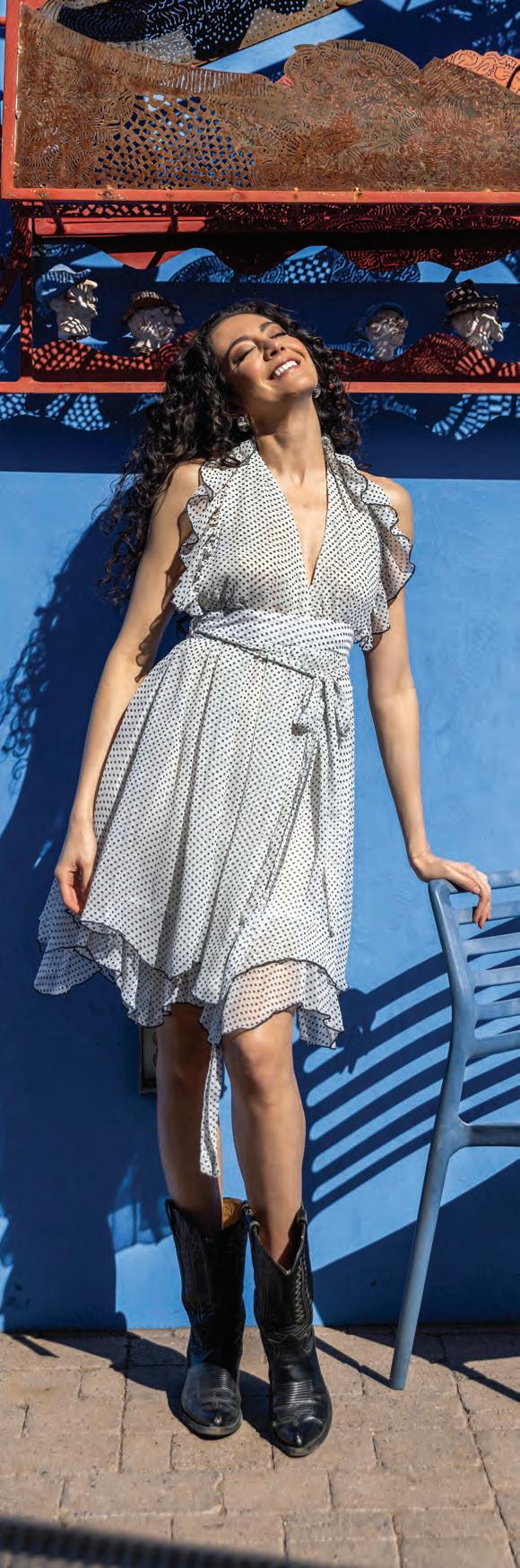
Dominique Ehrl wears many hats — and a crown. She’s a product marketing manager for YouTube TV, Miss New Mexico USA 2025, and a proud Santa Fean. “It’s really important to pay honor to where you’re from and the place that raised you and helped define and mold who you are today,” she says. Although she’d been away from the City Different for eight years for college and to start her career, Ehrl returned during the pandemic. “I didn’t realize how much I loved where I’m from. It took something like the pandemic to force me home to reconnect with that. And it’s not just family, which is such a critical part of New Mexican culture and identity, but also the land, our small businesses, our food, our beautiful mountains.”
In 2025 she also returned to her long-held interest in pageants. “What I really value about pageants is that you can bring all aspects of who you are into your title or your story,” she says. Thanks to expanded age and marriage rules (Ehrl is 32 and married, two qualities that would previously have disqualified her from the competition), the dream seemed possible. “I’ve always wanted to go back on the stage and see if I could win the title and represent my home,” she says. She was crowned in August 2025, and her reign extends through August of this year. Via her platform The Digital Blueprint, she offers workshops and consultations to help entrepreneurs build a strong online business presence.
A lthough she now splits her time between Santa Fe and New York for work, Ehrl never misses a chance to support her favorite small businesses around town. “I think that’s the best thing about Santa Fe — we’re not overrun by chains. The city does a great job of supporting local and small businesses and ensuring these staples can continue to thrive. Any time you play, have fun, and eat and drink, you’re most likely supporting a small business. That’s really special.”
Here Ehrl shares some of her favorite small businesses in the City Different.
Miss New Mexico USA Dominique Ehrl loves celebrating — and frequenting — Santa Fe's small businesses.
Facing page: Ehrl basks in the sun at Café Fina.
EAT Posa’s breakfast burritos are just a go-to because they’re ready in like two minutes. You can call ahead or just swing by. When we’re on the road or heading up to the ski basin for the day, it’s an easy drive-by for a handheld burrito.
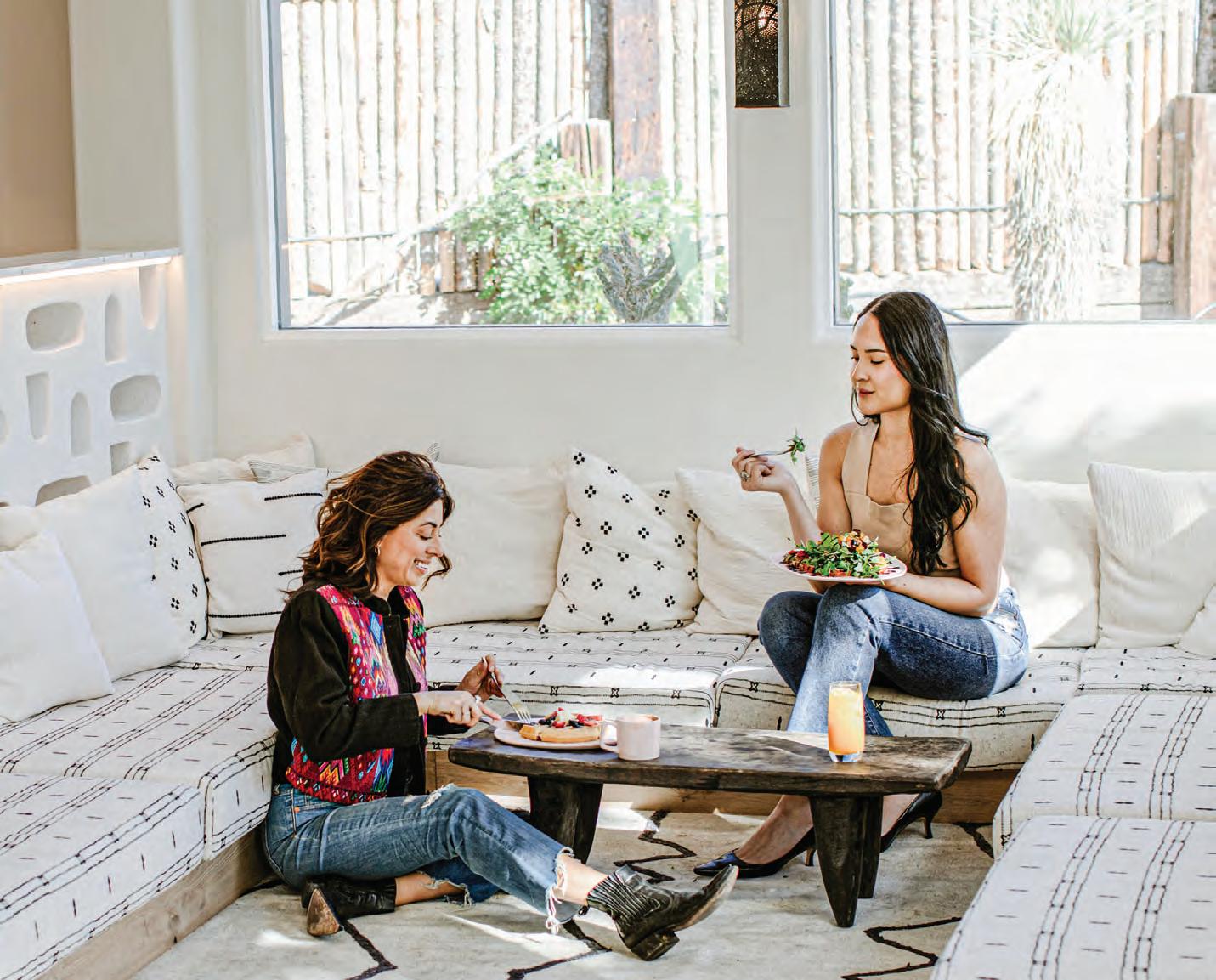
For a sit-down breakfast, I love Café Fina . It’s a little bit outside the city but worth the drive. They have beautiful pastries and New Mexican breakfasts.
For lunch, I love Counter Culture. There’s no better lunch place in Santa Fe. They have a salmon coconut soup. You can add that to a combo special with a half sandwich and a side salad. It’s so fresh and green. Second to that is Henry & The Fish downtown. They do a great job with bowls if you’re looking for a more health-conscious lunch.
A nytime I’m back at home, the first day or two I have to go La Choza for dinner. It’s probably my favorite New Mexican restaurant. I always get the red chile chicken enchiladas. It’s my go-to, and I can’t be convinced otherwise. It feels like home. It’s just so comforting being inside there.
Geronimo is my favorite romantic place for a special occasion. It’s so beautiful. I love going there with my husband. We get dressed up and have a night out. You could be in New York City with the level of cuisine and service they offer at Geronimo. It’s worth the splurge.
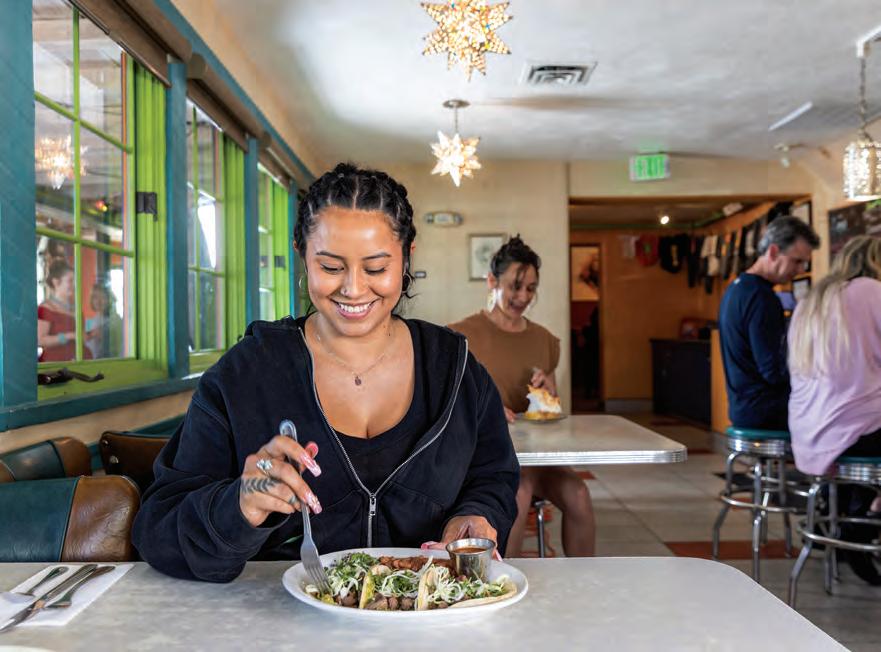
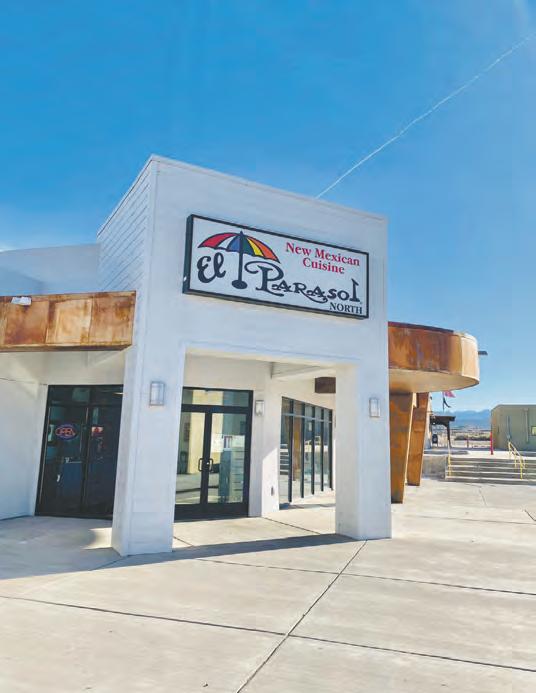
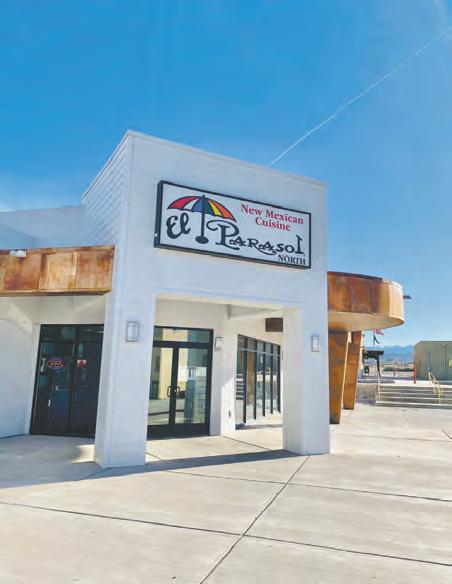
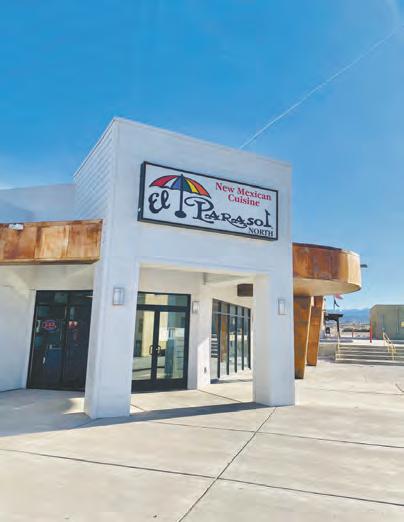
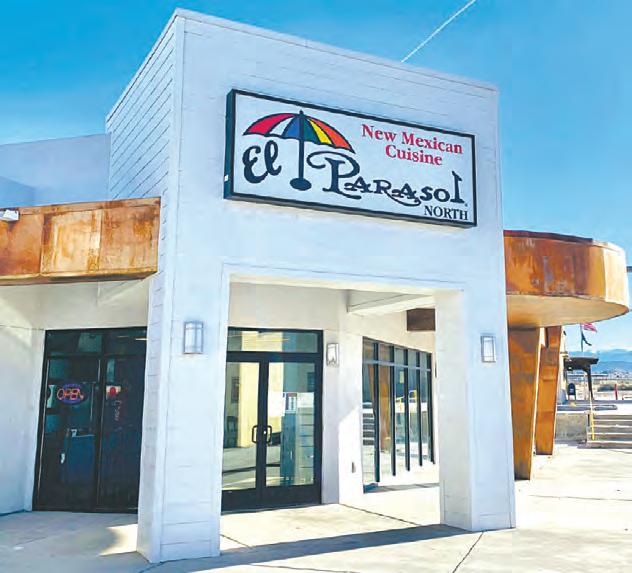
You can’t sleep on El Parasol . It’s a staple. The tacos there, listen, I get like eight of them. They’re so good, every single time. It’s one of those memories of growing up in Santa Fe. In high school, we’d get off-campus privileges as seniors and drive all the way across town to [the Cerrillos location] to pick up tacos at El Parasol. They haven’t changed. It’s such nostalgia. I really honor and admire Santa Fe [businesses] for sticking true to doing the things they do best and not changing them.
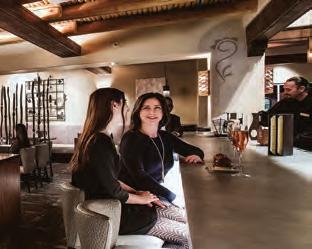
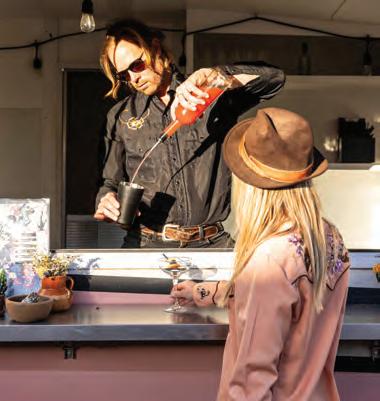
DRINK Tesuque Village Market has some of the best cocktails. They have a heavy pour, but it’s worth it. They have great mescal margaritas served in traditional Mexican clay pots with floral designs on them. It feels authentic and the vibe is great. I also love Coyote Cantina . It has the best frozen margarita in summer. Frozen margaritas that aren’t sweet are hard to find. I appreciate when they do passion fruit frozen margaritas because the passion fruit tends to be more sour. I have really great memories at the Dragon Room , which is part of The Pink Adobe. It was where my husband proposed to me because it was where we had our first date. I order the Habanerita — a pineapple-infused tequila margarita with habanero. It’s so good!
For coffee, Iconik Coffee has done a beautiful job. They have multiple locations across town, and they just keep expanding. The environment is always welcoming. The Guadalupe location is my favorite one.
SHOP For ladies, the Sign of the Pampered Maiden is a really beautiful women’s boutique. They’ve been around forever, and the recent owner, Antoinette Martinez, she’s made it a girl’s girl experience. It’s very curated, and they really help you select what looks good on you. You can kind of get a stylist experience there.
For gifts, I like FS2 Supply Co. Eric and Kelly, a husband-and-wife team, own the store. They have long-standing family ties to New Mexico. I love their story because they really want to ensure that New Mexicans have high-quality gear that represents home.
PLAY I love to ski, so Ski Santa Fe is a great mountain. And in the summer you can hike. The hike to Nambe Lake is amazing. It’s quite the incline on the way up there, but the payoff at the lake at the top is pretty extraordinary. It’s more difficult, but it’s not as crowded as the other trails. For a quick hike, I love Sun Mountain Trail. It’s my favorite accessible hike that doesn’t require a huge commitment. It’s great to catch the sunset up there.
EL PARASOL: 1833 Cerrillos Road, 505-995-8015, elparasol.com
TESUQUE VILLAGE MARKET: 138 Tesuque Village Road, 505-988-8848 tesuquevillagemarket.com
COYOTE CANTINA: 132 W. Water St., 505-983-1615, coyotecafe.com
DRAGON ROOM: 406 Old Santa Fe Trail, 505-983-2979, thepinkadobe.com
ICONIK COFFEE: 314 S. Guadalupe St., 505-428-0996, shop.iconikcoffee.com
SIGN OF THE PAMPERED MAIDEN: 209 Galisteo St., 505-982-5948 signofthepamperedmaiden.com
FS2 SUPPLY CO.: 500 Market Street, Suite 108, 505-920-4356, fs2supplyco.com
Four years ago, I moved from my native California to a cozy casita in the foothills above the Santa Fe–adjacent subdivision of Eldorado (“Eldo”). More than 2,500 stucco-adobe homes sit on roomy lots spread across a high desert landscape of piñon- and juniper-dotted grasslands backed by the soft-sunset silhouette of the Sangre de Cristo Mountains. It wasn’t always this way. Eldorado home construction launched in earnest in the early 1970s, first with just a handful of abodes and a communal aim to be totally solar-powered. The appealing setting soon attracted more residents, including myself.
Today the local creatures meet at a pair of Highway 285 shopping centers that act as community hubs. It seems that almost everyone I chat with at the market is a working or retiree transplant from someplace else. Ditto for the proprietor/chefs of the small-yet-scrumptious homegrown restaurant scene here. Speaking with them, I found that whatever circumstances or desires drew them here, they all share a community-minded bond and a drive to serve good food. But dining isn’t
DOWN THE ROAD A PIECE
Take an Eldorado day trip for hiking, alpacas, and drive-worthy foodie finds.
BY ELI ELLISON
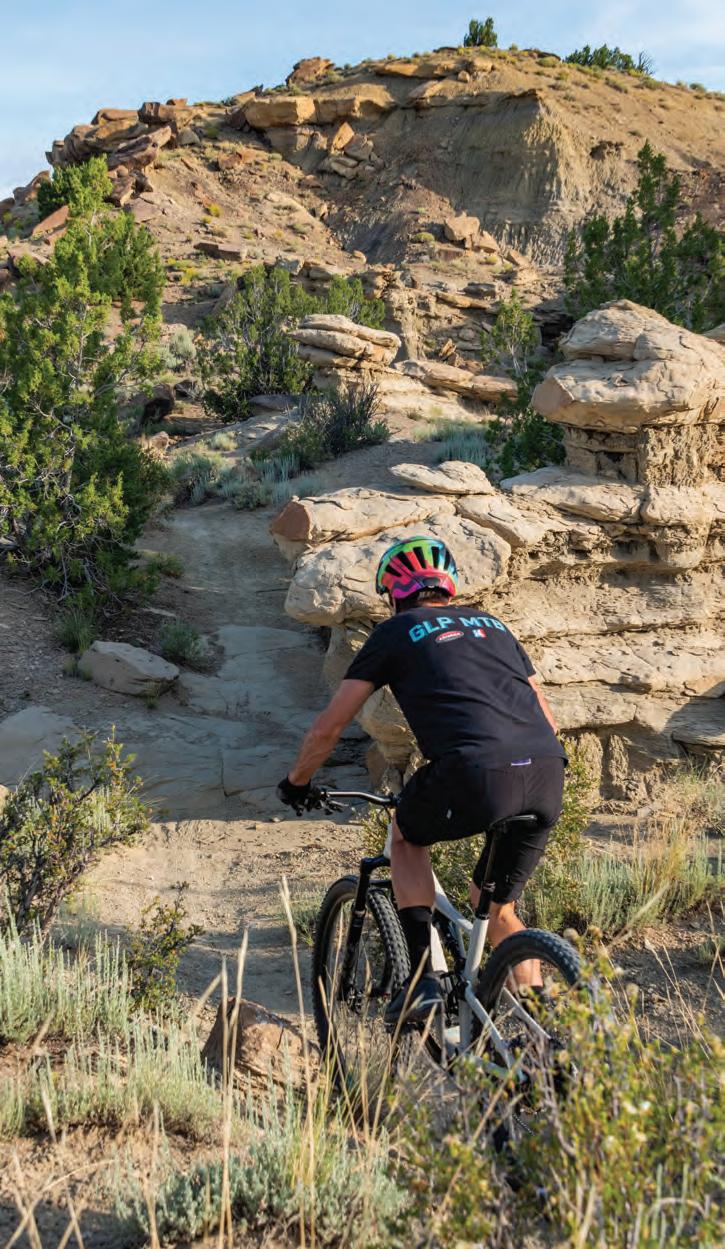
Eldo’s only draw. Down the road there are friendly alpacas to meet and superb hiking and mountain biking at the Galisteo Basin Preserve.
Eldorado can be reached from Santa Fe via a 15-minute drive on I-25. But prettier is the relaxed cruise along Old Las Vegas Highway, an original pre-1937 alignment of Route 66. A roadside turnout’s historic marker tells the tale of the old Mother Road. The truck- and SUVpacked parking lot at the junction with 285 signals that you’ve found Cafe Fina. A former Fina gas station, Eldorado’s go-to breakfast and lunch spot opened in 2012 under the deft hand of local owner/chef Murphy O’Brien.
The interior is a bright, contemporary affair, while warm days suit brunch al fresco on the back patio. Fresh bakery cases flank the ordering counter. The must-try breakfast burrito is a mega-tortilla-wrapped flavor bomb stuffed with impossibly fluffy eggs, crispy bacon, and hashbrowns — topped with a gloriously gooey blend of asadero and gouda cheeses. Also divine are the Cloud Cakes — fluffy ricotta pancakes dolled up with fresh berries and maple syrup.
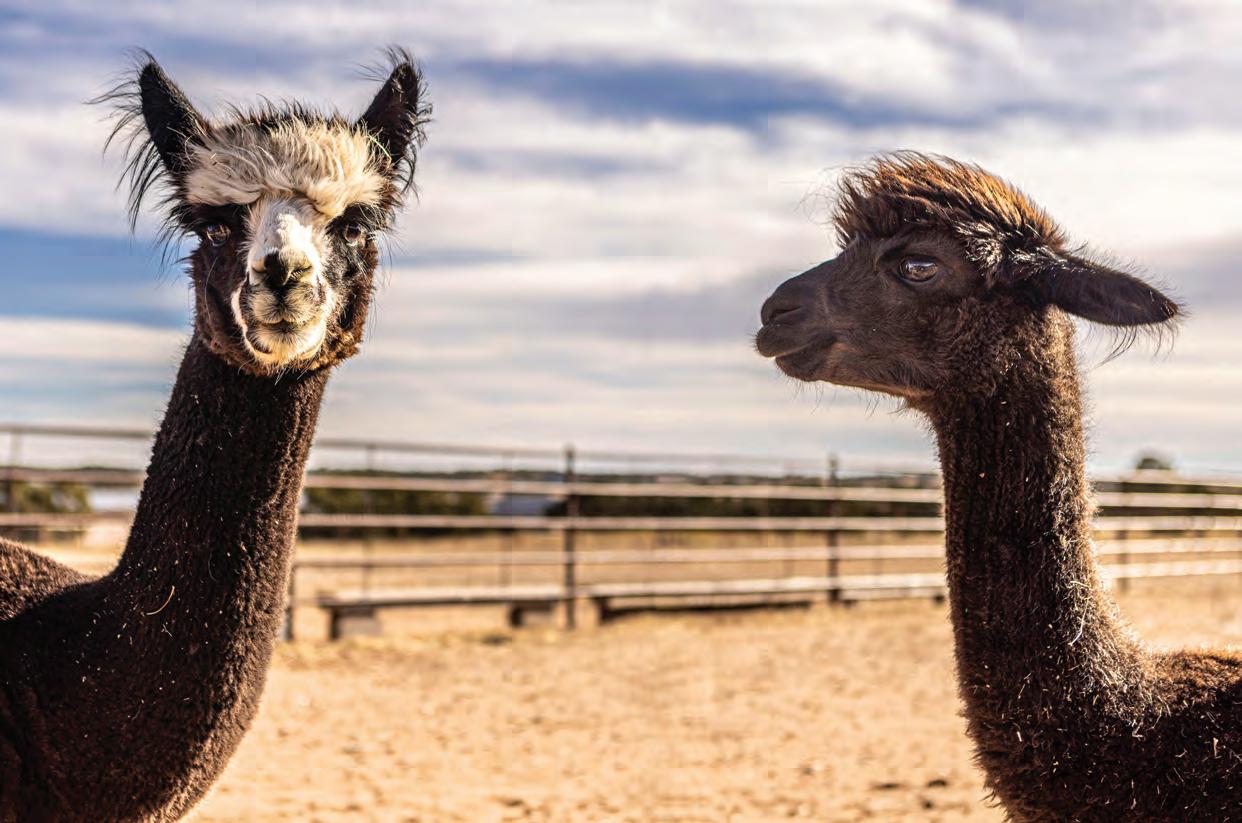
Left to right: Alpacas Flash Dancer and Evangeline enjoy the sun at Que Sera Alpacas ranch in Eldorado in November 2025.
While Fina is the tried and true, a new crop of Eldorado establishments are shaking up the food scene. Last year The Agora shopping center welcomed a pair of newcomers. The Deli Barn’s gourmet sandwiches have made it a lunchtime hit. A few doors down, Fable Restaurant & Market wins raves for what owner/chef Paul Wireman calls “elevated farm-to-table fare with a home base in southern cuisine” — stemming from his culinary roots growing up in Memphis.
In 2021 Wireman sold his two acclaimed restaurants in Jackson, Wyoming. His clan — his Fable co-owner wife, Jessica, and their young children — embarked on a nine-month cross-country road trip. “One of our first stops was Santa Fe. We rode our bikes at Galisteo Basin and my kids really liked the area. We returned, fell in love with a 25-acre property, pulled the trigger on it, and here we are,” he says.
Fable’s warm brick-walled space sets the supper scene for steaks, pasta dishes, and melt-in-your-mouth beef brisket with green chile cheddar grits. The weekday lunch menu features soups, salads, and sandwiches, including a juicy patty melt on rye with caramelized onions and silky Swiss cheese. Both menus offer a lump blue crab cake appetizer with a perfect crab-to-breading mixture beneath a crispy, lemon aioli–drizzled crust. On Fable’s gourmet market side, to-go items like house-made empanadas and focaccia fly out the door.
W ireman’s ever-changing menu features beef and seasonal produce from local ranchers and farmers because for him it’s all about flavor. “I pride myself on not disguising flavors in dishes. I want individual flavors to speak for themselves in simple but elegantly prepared cuisine,” he says. As for the name Fable, Wireman explains, “When people dine out, they like to eat, drink, be merry, and tell stories. And that’s Fable, where food and storytelling go hand in hand.”
While Fable creates edible art, The Agora’s Artistic License Gallery carries works by a co-op of 25 local artists. A decade ago, shop owner and artist Kim Crickard relocated from San Diego to Eldorado, attracted by “something in the air here that encourages art, a kind of magical valence,” she says. Her hand-painted cow skulls decorated with feathers are a whimsical ode to Eldorado’s ranching roots.
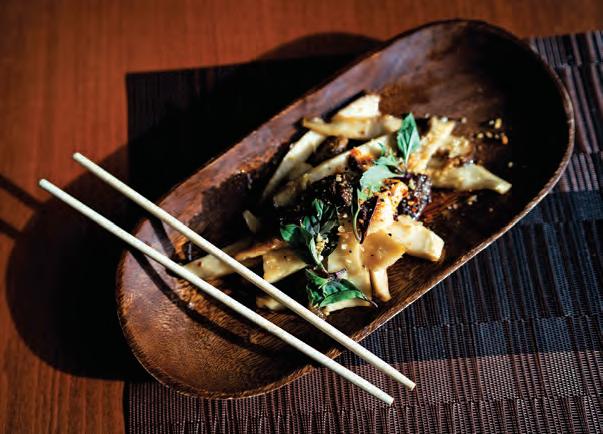
From left: Artists and gallery managers Teresa and Rob Reese, owner Kim Crickard, artist Julie Hill, and manager and artist Evie Gauthier stand outside of Artistic License Gallery. Below: Chai Yo has won fans with dishes such as its king oyster mushroom vegetarian appetizer.
Photos (clockwise): By Nathan Burton/ The New Mexican , by Matt Dahlseid/ The New Mexican , and by Gabriela Campos/ The New Mexican
O pposite The Agora is La Tienda, where local couple Tommy and Jang Fitzgerald opened the casual Thai eatery Chai Yo last year. A rare Eldorado native, Tommy was studying in Thailand when he met Jang, who grew up in Lamphun Province and learned to cook from her grandmothers. Tommy says the couple resettled in Eldorado “so our daughter could enjoy my same childhood experiences of dusty bike rides, walks with friends, and less of the stress of a big city.”
Tommy mans the front counter as Jang works wok miracles in the kitchen. Her take on classic pad thai shines with mounds of light-as-afeather rice noodles, eggs, bean sprouts, and green onions in a sweet-andspicy sauce with your choice of chicken, tofu, pork, or shrimp. On the appetizer menu, go for the slender, crispy veggie egg rolls.
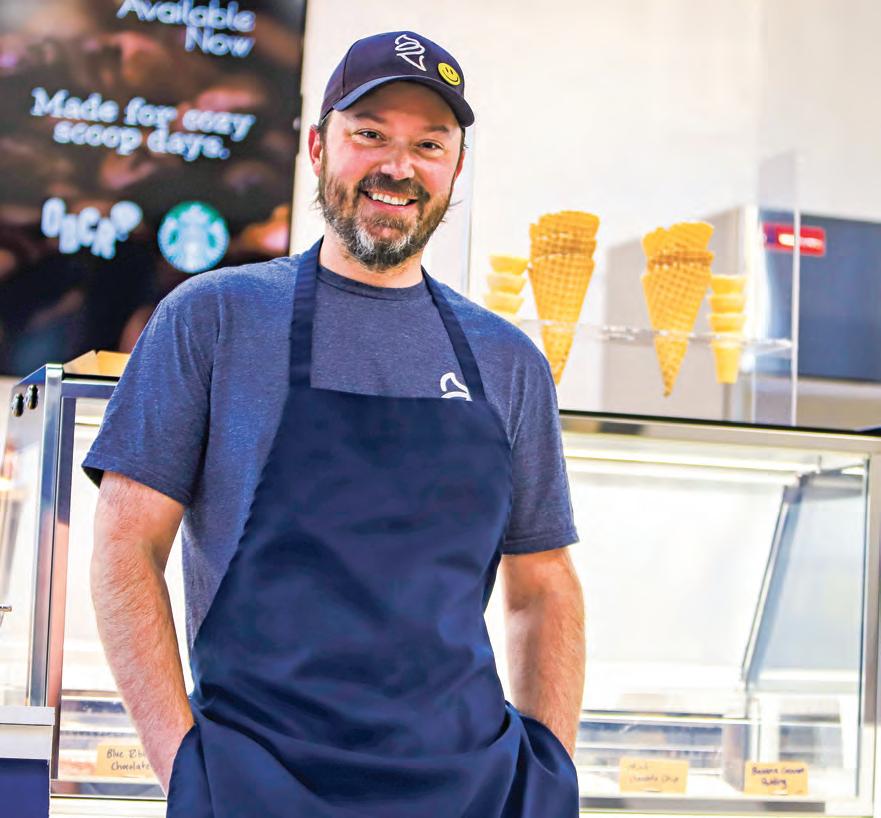
For dessert, one luxurious bite of Hello Sweet Cream’s rich, fudge-like chocolate ice cream catapults you into a magical frozen realm. “I feel like ice cream is in my DNA,” says Ryan VanderGiesen, who opened his tidy artisan scoop shop at La Tienda center in 2024.
VanderGiesen inherited the spirit of hospitality from his grandparents, who owned a Kansas café and made their own ice cream. Although the café closed before he was born, serving homemade ice cream became part of the family’s story. He briefly ran his own non-dairy ice cream business in Denver and then worked in the corporate world before moving to Eldorado. “Here, I decided to fully go for it and build the ice cream business I always wanted,” he says.
The secret behind ice cream supremacy? Mad scientist VanderGiesen explains, “We make our ice cream on a super-cold freezing table that drops to around –4°F. Instead of a traditional batch freezer that churns the base while incorporating air, we freeze ours quickly right on the surface and form it by hand. It helps keep the ice crystals smaller, which results in a smooth, dense mouthfeel.”
While the top-selling chocolate is a mainstay, the shop rotates other flavors seasonally. Among this spring’s planned offerings are toasted almond and dark cherry, basil berry cheesecake crumble, and non-dairy Moody Coconut (a coconut base with toasted coconut and swirls of vegan dark chocolate). Summer brings key lime pie and strawberry.
Down Highway 285, Louisiana native Anne Stallcup cares for some 35 alpacas at her 10-acre Que Sera Alpacas ranch. South American cousins of camels, alpacas are gentle, curious, and irresistibly cute with their dolllike faces and Beatles-esque mop tops. Ranch tours ($5 per person) include up-close mingling with the animals. Have phones at the ready for pics of your lips on the receiving end of an alpaca kiss.
The ranch’s Farm Shop carries alpaca fiber art supplies, as well as finished products such as scarves and socks and other fiber-based art pieces. “Labs have tested alpaca fur’s thermal quality and it’s the warmest. Guaranteed your feet will not be cold in alpaca socks,” says Stallcup. The herd gets its annual sheering in early June, when the hairless alpacas “look like something out of a Dr. Seuss book,” Stallcup jokes.
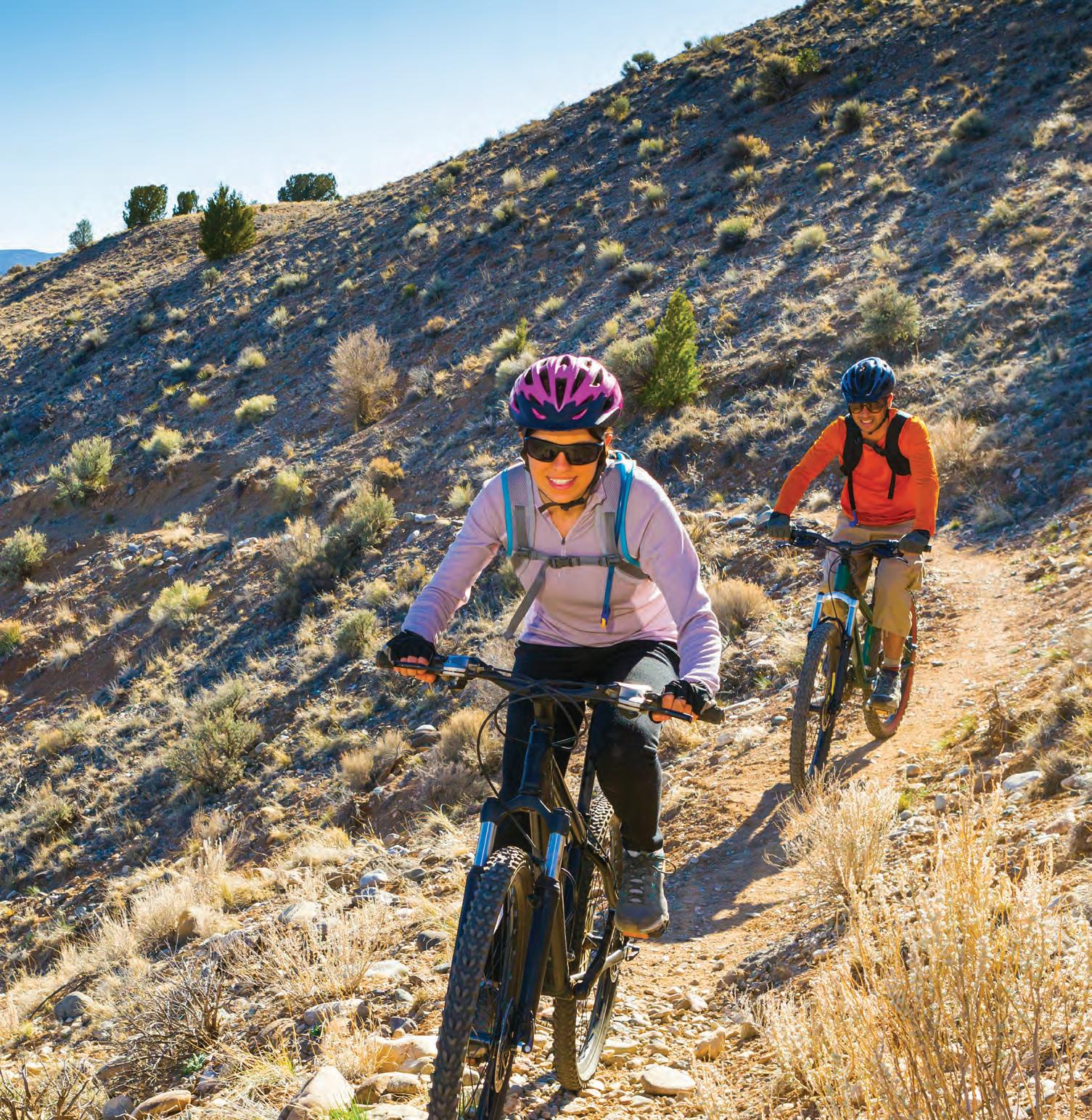
At Eldorado’s southern end, nearly 50 miles of hiking, mountain biking, and equestrian trails spread across the piñon- and juniper-studded Galisteo Basin Preserve. Rolling hills, sandy arroyos, jagged sandstone formations, twisted cottonwoods, and windswept grasslands set the stage for a network of paths that begin from four main trailheads/parking lots.
Local mountain biker Giancarla Calzetta moved to the area from Maryland two years ago and says Galisteo has some of her favorite Santa Fe–area trails. Among them is Eliza’s Ridge Trail, which she calls “a go-to for its buttery single track and sweeping vistas. After a few short, steep pitches to reach the ridge line, you’re rewarded with panoramic views stretching across the basin to the Ortiz and Sangre de Cristo Mountains.”
Eli Ellison is a Santa Fe hillbilly.
Ryan VanderGiesen owns artisanal ice cream shop Hello Sweet Cream.
RECLAIMING THE SANTA FE RIVER
History separated the city from the river, but now the river is returning to its community.
BY ELIZABETH MILLER
Summer reaching the Santa Fe River brings hummingbirds, which flit through streaks of sunlight over the water, green bodies turning white in the light. The river tells other stories that mark time and report unseen happenings. Some summer mornings, the willows all aim downstream after being pressed down by rainstorms that brought so much water the river leapt its banks and plowed down the plants alongside it. Racoon paw prints dimple the swept-over mud. The firm grip of winter appears in an edge of ice along the bank, sometimes as finely detailed as lace. Spring creeps in and then overnight, it seems, all the cottonwoods burst into leaf. Deep in the river corridor, some wildness endures while morning commuters drive by on Alameda Street, unaware.
Many people — tourists especially but some residents too — don’t recognize the river as a river or notice the path it carves through the city. The river’s water levels have run perilously low, impairing its ability to maintain habitat but also leaving people to forget that a river runs through the city. Often, views from street level are so obscured that people can easily overlook how the river drew the city into being in the first place and the opportunities that still exist along its banks. But for some, the river is a regular part of life, something they walk or bike alongside or visit for cool respite in the summer months.
Water likely brought Indigenous people to live and farm along the banks of the Santa Fe River and called to the colonists who followed. But as the city of Santa Fe grew around the river, some choices severed people from the waterway. The river was sealed off from community members either for its protection or theirs. For instance, the U.S. secretary of agriculture closed its headwaters to public access in 1932 to protect city drinking water from contamination by bathing, fishing, camping, and other human activities. Through reservoirs, it was managed as a nuisance, a threat that obstructed progress, its water sometimes turned off like a faucet, leaving a dry channel.
But the city’s management strategies are changing. Though history has transformed the river, its advocates are finding ways to restore the ecosystem and helping people reconnect with the waterway. “Something I ask myself all the time is: How to connect the community to the river,” says Zoe Isaacson, river and watershed manager for the city of Santa Fe, “because I do think it’s vital.”
The river starts in a high mountain basin just east of Tesuque Peak and Ski Santa Fe before curving down canyons to the city. From the top of Tesuque Peak, a hiker can look down onto the blue pool of Santa Fe Lake and the boggy ground around it that feeds the downstream flow. A few times a year, the city opens the watershed to hikes led by the Santa Fe Watershed Association that wend up past Two Mile Pond, the remnants of a former reservoir, now a wetland with a thicket of cattails. Hikers walk through dense willows and stately cottonwoods. Upstream, they glimpse a river resembling its precolonial state, running over a rock-bottomed bed through ponderosa pine forest, tucked neatly in the nook of its banks, mottled green and gold with grasses and popping with wildflowers and mushrooms in late summer.
The hike follows a dirt road between two reservoirs that supply about half of the city’s drinking water. For decades, beginning around the 1940s, the river was funneled from reservoir to drinking water supply, and the river channel often dried. That approach began to shift in 2012, when the Santa Fe City Council passed the Living River Ordinance, which dedicated 1,000 acre-feet of water (about 326 million gallons) to the river in wet or normal years and a minimum of 300 acre-feet in dry years. With that ordinance, Isaacson explained, “the government says: We’re going to acknowledge that the ecology has needs too, and we’re going to allocate water to the river itself.”
In morning walks along the river, almost every day for a decade, I watched that change unfold. During the first few years, I walked to the banks each day, wondering whether water would run within them. In more recent years, the wondering has turned to not if but how much water will flow there. City staffers and the Santa Fe River Commission, the elected committee that offers guidance on the river and watershed, have been learning by doing and experimenting with trade-offs, Isaacson explains, searching for signals of the most ecological benefits for the riparian corridor while balancing the demands of water users downstream and a city built up along the river. In general, they’ve learned that even small flows, released steadily over t ime, allow water to make it farther downstream, stretching toward the dream of a river with surface water that reconnects to the Rio Grande.
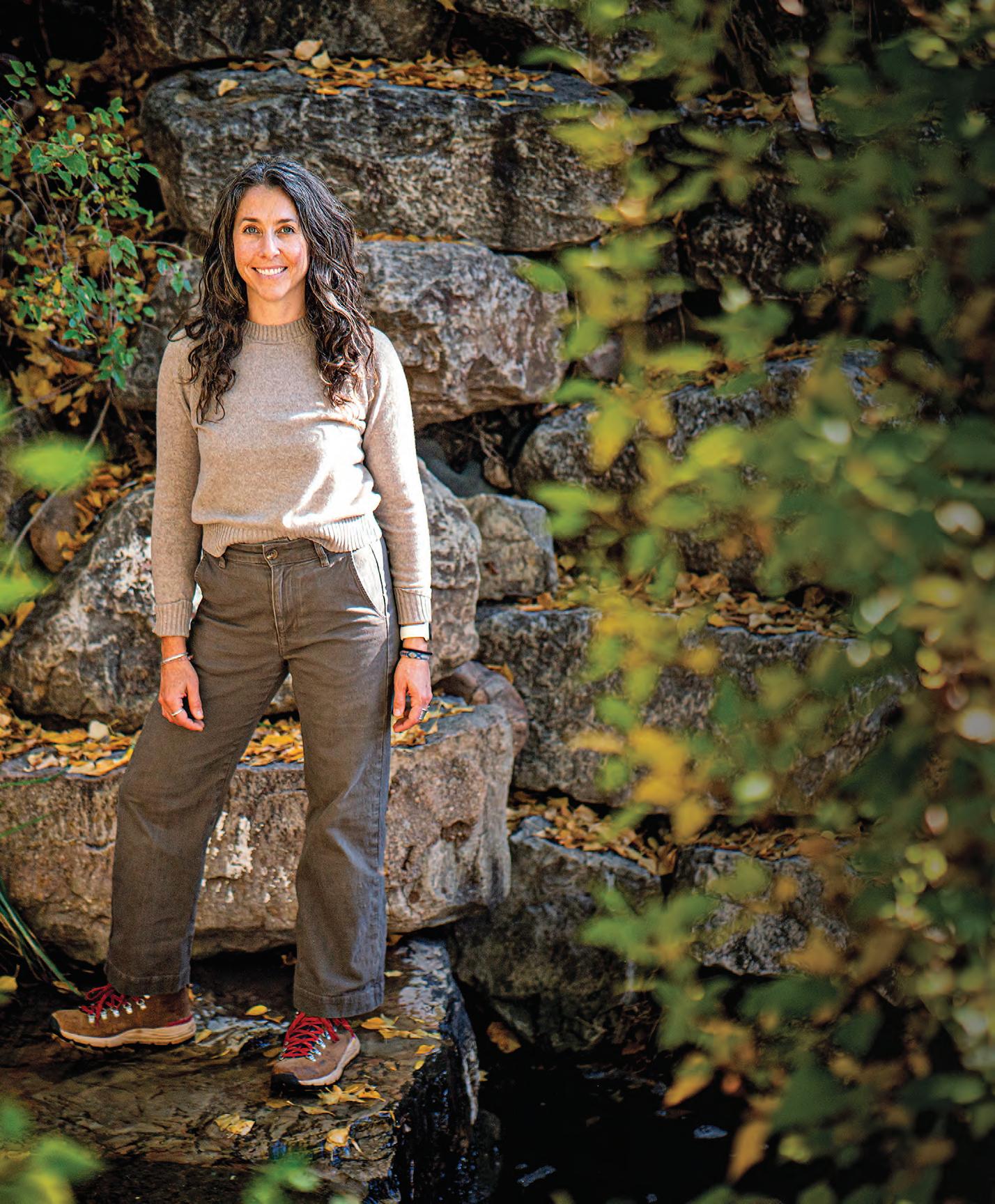
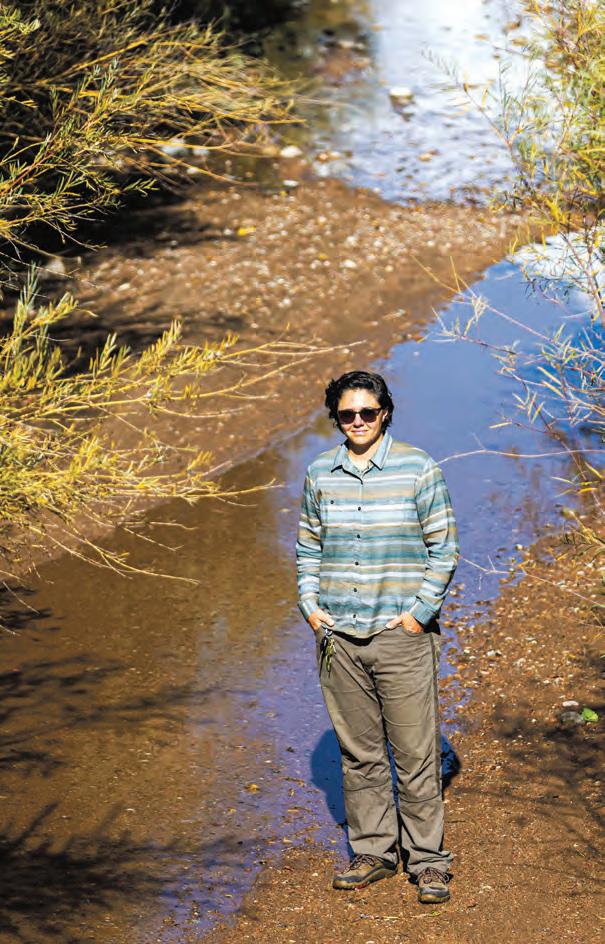
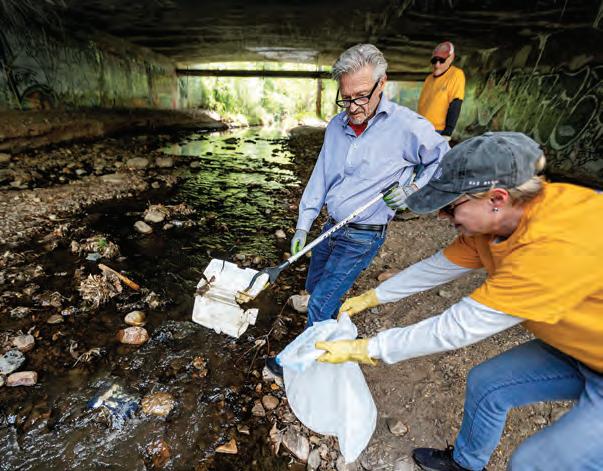
Mori Hensley, executive director of the Santa Fe Watershed association, along the Santa Fe River in October 2025. Carolyn Moore (right) and Mark Spencer from the Rotary Club pull trash from the river near DeVargas Park as part of the Love Your Watershed Day event in 2025. Opposite: Zoe Isaacson, city of Santa Fe river and watershed manager, along the Santa Fe River in October 2025.
OUTDOORS
But often the river flows at just 3 to 5 cubic feet per second, the equivalent of three to five basketballs of water coming downstream. At that rate, the river typically dries by around Camino Alire, about a mile west of St. Francis Drive. In some years, it’s challenging to get enough water to flow to the village of Agua Fria for the San Isidro Church’s annual Blessing of the River in May. The Santa Fe Watershed Association, which campaigned for the Living River Ordinance, runs the Leading Edge project, a citizen science effort that invites people to report where the water stops, trying to ground truth models and help assess the ecological gains.
“ The reason that the river doesn’t make it through town . . . just really hammers home how the river itself holds the history of this community,” says Mori Hensley, executive director of the association. “We can learn so much about our own history by looking at the river and asking those questions like, ‘Why doesn’t the river make it?’ or ‘Why does water flow the way it does?’ or ‘Why does it flow in this part of town and not this part of town?’”
The Tewa name for the place where Santa Fe is now, O’ga P’ogeh, references it as a source of water. Names like Agua Fria, La Cienega, and Water Street memorialize springs that once fed the river and lush wetlands. A sign near a small garden by the Cathedral Basilica of St. Francis of Assisi references a spring now lost under a parking lot. Even today, Hensley says, downtown buildings rely on sump pumps to keep basements from flooding with upwelling groundwater.
“ It’s hard to even imagine what our watershed used to look like,” Hensley says.
A s colonists built structures around the Santa Fe River, they ran afoul of its meandering ways, which swung over a broad floodplain. The Army Corps of Engineers and Civilian Conservation Corps shielded downtown from floods by dredging the river channel, digging it deeper, and building rock walls that still hem in the river to keep it to a single, hardened corridor.
“All of that tells the story of the American domination of our water, of the land, and just this very different mindset of: We cannot have this swampy, wet place. We need it to be dry and we need floodwaters to get out of our urban environments as quickly as possible,” Hensley says. “That was when rivers started to be seen as conveyance channels rather than hydrologically functional systems.”
The approach may have shielded downtown during seasonal peak flows with snowmelt running off the mountains, but it has helped fuel erosion downstream, a process that continued until so recently that roots still dangle over cut-through earth. Walkers on the river trail along Alameda just east of St. Francis Drive can see the formerly ramped riverbank now cut off abruptly, with the geologic cross section of dirt and polished river rock revealed and a new tier of willows at the waterline below. In the mid20th century, management choices designed to increase the river channel’s capacity to hold floodwaters exacerbated erosion; by the 1990s, the river was digging into the ground at a rate of 1 foot per year.
People alive today still remember being able to walk across the river to visit neighbors on the other side, Hensley says, but channelization has
since separated them. Now we also understand that as the river drops away from street level, it takes the water table with it, which deprives plants and can reduce how much water seeps back into the aquifer that also supplies drinking water to the city.
Lately, the river’s managers have tried to deploy different, more naturebased strategies that preserve more of the river’s flows, boost native plants, slow erosion, increase aquifer recharge, and, as Isaacson says, return the river to the community. They’re identifying places where people can walk along the river, find respite from the summer heat on its shadier banks, or see it from parks or the street. In 2022 the city completed work near the Ricardo Pedestrian Bridge, flanking the riverbanks with boulders to stabilize the river channel.
For a time that summer, part of the river pooled deeply among rocks, and people came to sit by the water, watching it like the evening show. Then a rainstorm washed sand downstream from the arroyo, as water managers knew it would, Isaacson says, and filled in around the boulders. It was the sought-after result, but people called the city outraged. Apparently, we are still learning to live with our river’s changeable ways. Now that section of the corridor has sprouted willows and, farther downstream and along the River Trail, braided into the shape southwestern rivers took for millennia.
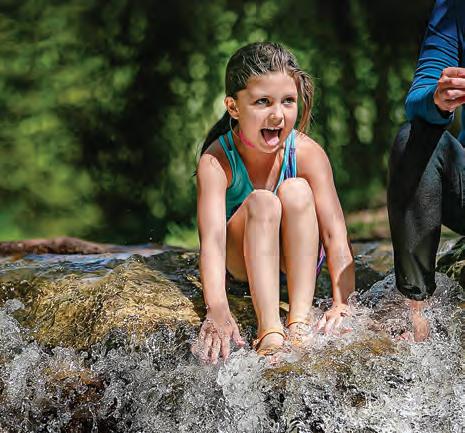
Downstream, in places like La Cienega, the goal is to keep farms connected with a water supply that’s fed their acequias for centuries. Historic records from centuries ago refer to the Santa Fe River as a place for trout fishing and robust cottonwoods, and even suggest people ice skated on the river. These days, people walk alongside it or sit viewing the gentle waters. Some summer months, kids come to splash in the pools. Hensley hopes new approaches to stormwater management will turn rainfall into a steadier, cleaner supply for the river, but changes take time, often decades.
“ It’s not only like, ‘Hey, there’s river here,’ but ‘Hey, this river is yours,’” Isaacson says. “It’s just so important to have a whole community that understands the value of having a functioning riparian greenway throughout your community and how unique that is within the Southwest.”
This spring isn’t shaping up to bring a promising summer for the river. With low snowpack as of press time, everything from the plants to the sky will likely face a thirsty summer. But I’ll still be out on the banks every day, hoping for damp ground and the pink bursts of blooming sweet peas.
To join the Santa Fe Watershed Association for a free, 5-mile round-trip hike into the municipal watershed, visit santafewatershed.org for dates and to register. The City of Santa Fe offers River Talks, a free series of public presentations and tours for community members to learn more about the river and watershed. Talks will be held July 9, September 10, and November 12, from 5:30 to 7 p.m., at Iconik Red. Visit santafenm.gov/ public-works/parks-and-open-space/river-and-watershed/river-talks for details.
Freelance journalist Elizabeth Miller has won awards from the Society of Professional Journalists and the Society of American Travel Writers. Her work has been anthologized in “Best American Travel Writing.”
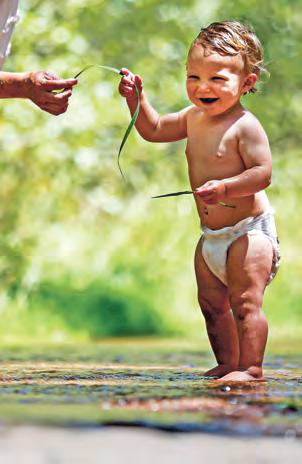
For locals, the river offers a welcome place to cool off, relax, and have fun.
Photos (left to right): Jim Weber/ The New Mexican , Luis Sánchez Saturno/ The New Mexican
THE ART AND LEGACY OF JODY FOLWELL
February 7 through September 13, 2026
Discover the visionary artistry of Jody Folwell (Santa Clara Pueblo) in and Legacy of Jody Folwell celebrating one of the most innovative and influential Indigenous potters of our time—and the first-ever solo exhibition at the New Mexico Museum of Art dedicated to an Indigenous female artist. Showcasing works that honor tradition while boldly expanding the possibilities of form, symbolism, and contemporary expression, the exhibition reveals Folwell’s enduring impact on Pueblo pottery and American art. Don’t miss this inspiring opportunity to experience a legacy defined by mastery, experimentation, and cultural strength.
Upon the release of the new edition of Hiking New Mexico, author and landscape photographer Laurence Parent reflects on the Land of Enchantment’s scenic beauty — and recommends five great hikes to see it at its best .
STORY AND PHOTOGRAPHY BY LAURENCE PARENT
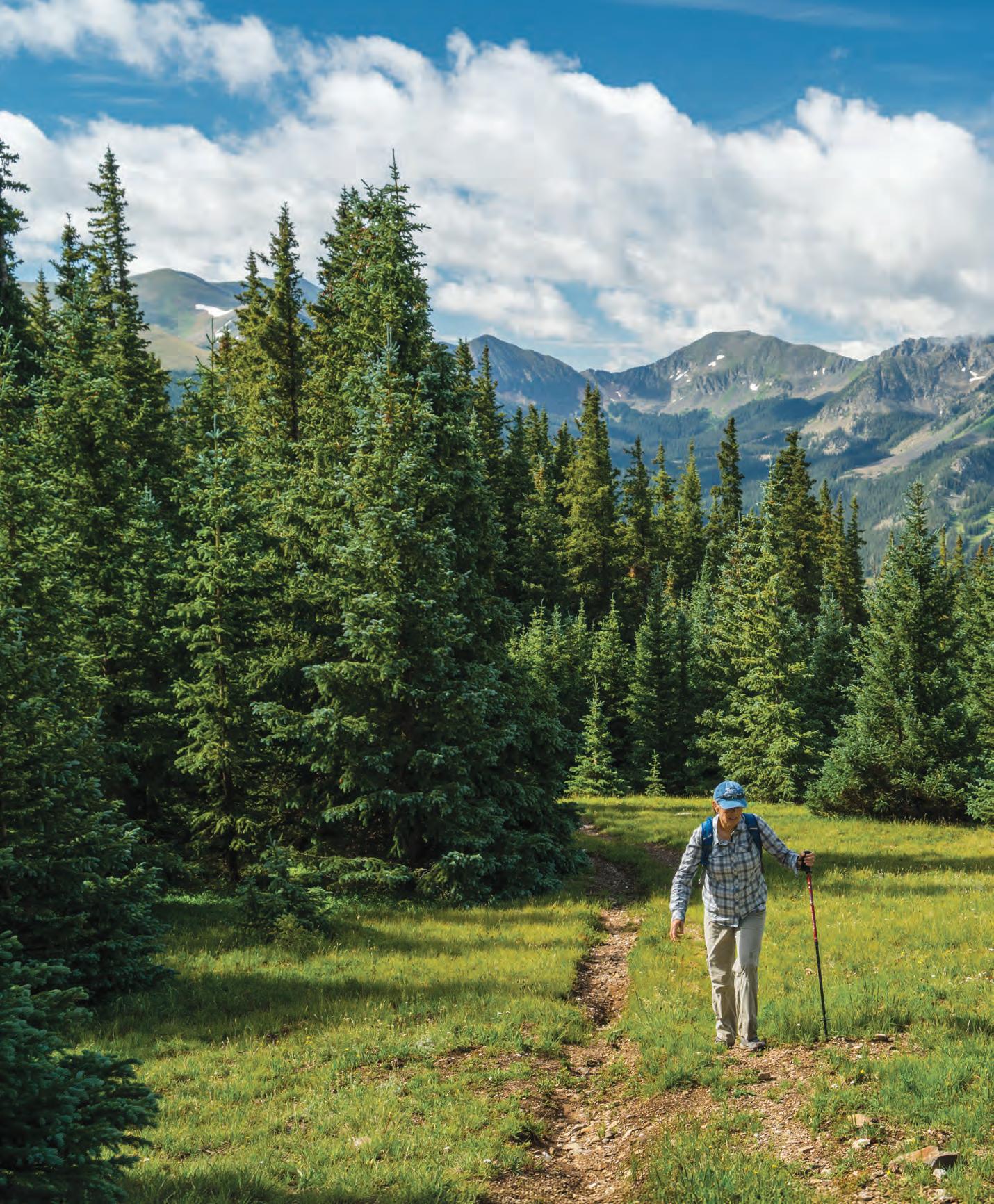
Melissa Forsythe hikes through the Columbine-Hondo Wilderness to Gold Hill.
OUTDOORS
I’ve been hiking since I was kid. My dad worked for the National Park Service, so we lived in a number of southwestern national parks and monuments when I was young. My parents, not surprisingly, loved the outdoors, and their favorite way of seeing it was to go hiking. Naturally they dragged my younger sister and me along with them. When we were really young, the hikes were short and we sometimes got carried on their backs — which we liked best! When I was 7 we moved to Carlsbad Caverns National Park. With nothing better to do in our free time, my friends and I would hike all over the park. Usually hiking itself wasn’t the main goal — we hunted for undiscovered caves, played army, and built forts, but you had to hike to do this. So over time, hiking became a big part of my life.
New Mexico was a great place to grow up and get into hiking. The state has a large amount of public land, much of it very scenic. With a massive range in elevation, from about 3,000 feet to more than 13,000 feet, it has a huge variety in climate and vegetation types. The state stretches across six life zones, from the Lower Sonoran, with cacti, mesquite, and creosote, to the Alpine, with tundra found above timberline on the high peaks of the Sangre de Cristo Mountains. In winter, you can go to lower elevations and hike in the desert in places like Carlsbad Caverns and the Organ Mountains. In summer you can climb high into the lush forests of the mountains, where it’s cool and moist, and lakes and rushing trout streams await you. One day you can be strolling through the bare, blinding-white gypsum dunes of White Sands National Park; the next you can be breathing hard as you climb above 11,000 feet in thick spruce forest on the nearby Sierra Blanca range.
Hiking trails are found all over the state, but the majority tend to be in mountains because of their scenic beauty and public land status. Near Santa Fe, the Pecos Wilderness draws lots of visitors because of a combination of scenic beauty and large population centers nearby. If you prefer quiet, uncrowded trails, the Gila National Forest and some of the isolated mountain ranges of the Cibola National Forest offer solitude, although some trails are faint and hard to follow.
If you’re new to hiking, start with easy hikes such as the trails to ruins in the bottom of Frijoles Canyon at Bandelier National Monument or the shady Osha Trail by Cloudcroft in the Sacramento Mountains. Not only are
they physically easy, but they are well marked and simple to follow. As you gain experience, move on to harder and more strenuous trails. If you get experienced enough, you might even graduate to difficult off-trail routes that lead to spectacular, little-known places. These are best explored with a GPS map app, topo maps, and other gear. A gentle reminder: Always take plenty of water, food, a hat, an extra jacket or two, and sunscreen.
The following five hikes boast outstanding scenic beauty, relatively easy access to trailheads, and, except for Gold Hill and Argentina Canyon, light or very light visitation.
Gold Hill
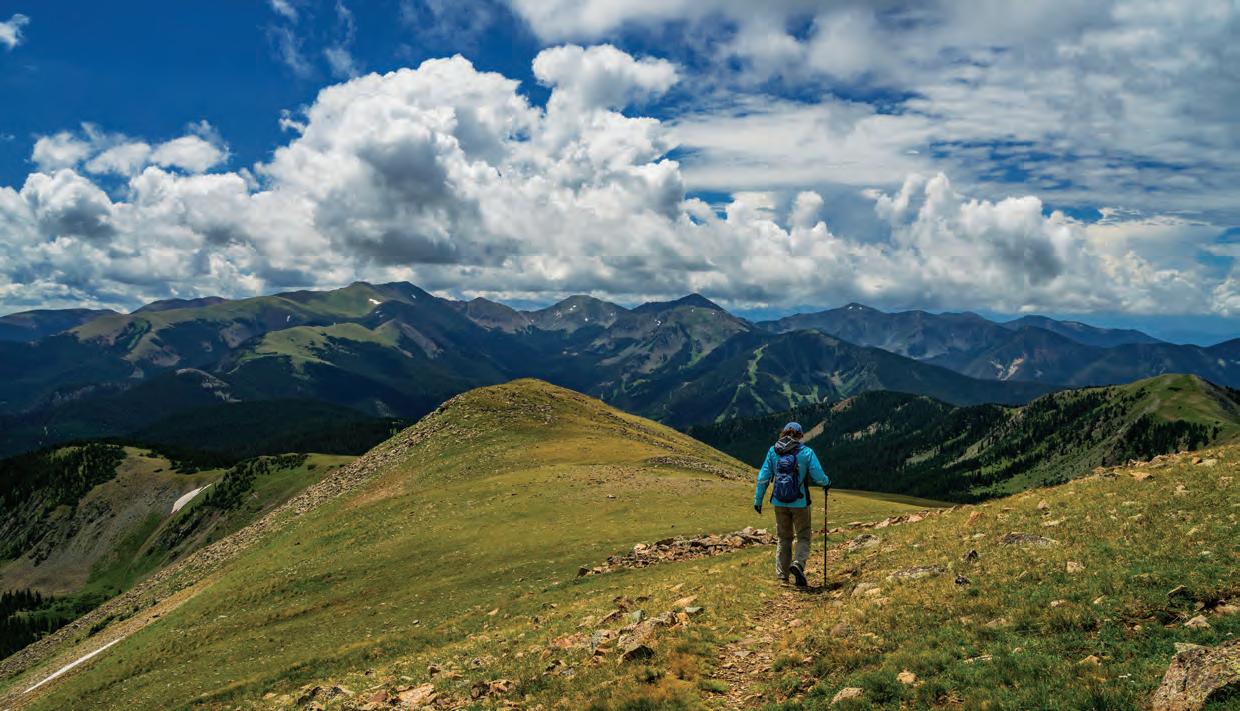
Okay, the name isn’t impressive, but the 12,711-foot peak towering over the north side of Taos Ski Valley most definitely is. Most people that come to this area looking for a big hike head for Wheeler Peak, the state’s highest point. Wheeler Peak is extraordinary, but it also gets lots of traffic. Gold Hill offers just as panoramic a view without the crowds and is only 400 feet lower than Wheeler. It’s not an easy hike. The trail climbs about 3,300 feet over a round-trip distance of just under 11 miles, but it has lush sprucefir forest, flower-dotted tundra, old mine ruins, and 360-degree views. Start early to avoid afternoon thunderstorms, and carry rain gear and a warm jacket. Because this climb is high in the mountains with heavy snow cover in the winter and spring, it is best done in summer and early fall.
Bisti/De-Na-Zin Wilderness
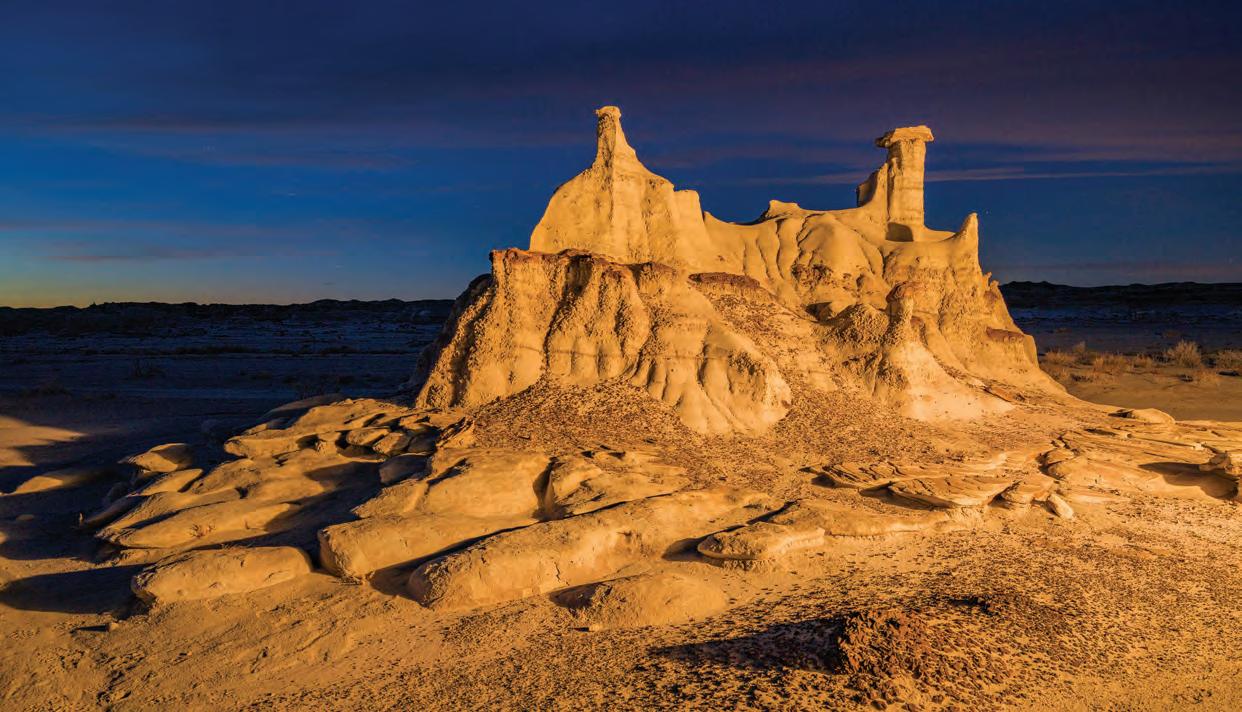
Colloquially known as the Bisti Badlands, this wilderness area is part of a huge swath of stark, eroded desert country south of Farmington. It’s noted for its geological features, such as towering hoodoos, mushroom rocks, and petrified logs. It offers an easy hike of about 4 miles round-trip across relatively flat ground. However, there is no formal trail, so be sure to take a map app such as Gaia or a compass and a topo map to keep track of your position. From the trailhead in the Bureau of Land Management parking area, the route heads east along a dry wash into the badlands. In a mile or so you will start seeing rock formations on the rims of the wash. Climb around
Expansive views unfold as Melissa Forsythe hikes through the Columbine-Hondo Wilderness to Gold Hill.
and explore at will. Although you can hike for miles, a good ending point for most people is an area with great hoodoos and a big petrified log at N 36° 16.080 ʼ / W 108° 13.203 ʼ . This hike offers no shade and can be very hot in summer, so cooler times of year are best.
San Mateo Peak
The remote San Mateo Mountains lie east of Truth or Consequences and rise above 10,000 feet. Few people visit the range’s two wilderness areas, the Apache Kid and the Withington. A fire lookout crowns the summit of San Mateo Peak, one of the highest peaks in the Apache Kid Wilderness. Strenuous Trail 43 climbs out of Springtime Campground at a steady rate, gaining 1,700 feet in about 2.5 miles to the mountain crest. If you can make it that far, the trail gets easier, gaining about 1,100 feet over the next 2 miles to San Mateo Peak. Plus, once you reach the crest, most of the rest of the trail is shaded by lush Douglas fir and aspen forest. A patchy fire burned some of the area through which the trail passes in 2020, so expect some deadfalls and brush. A U.S. Forest Service cabin and tall lookout tower mark the summit. The old tower is missing some boards on the landings, and the ladders are steep, so don’t try to climb it. The views are great even from its base. The hike is best from late spring through fall. Enjoy the quiet trailhead campground with its cool old wooden shelters before or after the hike. This trail is great for people seeking solitude.
Gila West Fork
If you’re seeking water in arid New Mexico, this is your hike. Take some water shoes or old boots for wading. The easy trail starts at Gila Cliff Dwellings National Monument and follows the west fork of the Gila River upstream. This is a popular entry point for the massive Gila Wilderness, but you won’t see many people once you get a little way past the cliff dwellings. You’ll hit the first river crossing in about 300 yards and another soon after. The trail mostly stays on partially wooded benches as it continues northwest through the broad river valley. After about 2 miles, the valley narrows into a rocky canyon and the wading gets more frequent. Poison
ivy grows here, so keep your eyes open. If you miss places where the trail climbs up onto benches, just stay in or by the river. At 3.1 miles, at a sharp bend in the river, the rocky canyon becomes a deep chasm with pinnacles, arches, and caves high above on the canyon walls. Look for a cliff dwelling in a small cave in the south wall above the river. Don’t try to climb up to it; the route is treacherous and the ruin is fragile. If you just want an easy day hike, the ruin makes a great turnaround point. Otherwise, continue upstream as far as desired. The canyon is spectacular, and the river goes for many miles into the wilderness. This hike can be done year-round, but it can be hot in summer and cold in winter due to the required wading.
Argentina Canyon
This moderate 6.3-mile loop hike with about 1,300 feet of elevation gain leads through thick forest in the White Mountain Wilderness up to the crest of the White Mountains in the Ruidoso area. Trail 39 follows Argentina Canyon upstream with its rushing creek, shaded by tall conifers and patches of maples and aspens. At the crest, the forest thins away, offering tremendous views in all directions. Follow Trail 25 south for about 1.3 miles to the junction with Trail 37. Take Trail 37 down to Little Bonito Creek and then Bonito Creek, where Trail 37 joins Trail 36. That trail takes you along the flowing creek back to the trailhead. This loop had little damage from recent forest fires in the area, so enjoy the lush forest and clearrunning streams. Late spring through fall is best for this loop. Start early in summer to avoid lightning storms on the crest.
For further information about these hikes and others, pick up Hiking New Mexico (Falcon Guides). The new edition was published in April 2026.
Laurence Parent is a veteran photographer specializing in landscape, ranch, outdoor sports, aerial, and architectural photography. His work has appeared in “Arizona Highways,” “National Geographic Traveler,” and “Texas Highways,” among other magazines. He has published more than 45 books. Learn more at laurenceparent.com.
The rock formations of Bisti/De-Na-Zin Wilderness at twilight
Studio Sessions
Now open to the public, the Olive Rush Historic Artist Home and Garden reflects on the artist’s living legacy.
BY JENNIFER LEVIN
Although less of a household name than other artists who helped establish Santa Fe as an art colony in the early 20th century, Olive Rush was an influential painter, art teacher, and Santa Fean.
She was one of the first Anglo artists to settle on Canyon Road and the first woman to have a solo show at the Museum of New Mexico.
A major figure in the modernist movement, which swept into Santa Fe in the 1920s, the Indiana-born Quaker was also integral to the history of the Santa Fe Indian School (SFIS), where she volunteered to paint murals with students and alumni in the 1930s.
When she died in 1966, at age 93, her home and studio became a Friends meetinghouse. The Society of Friends preserved and maintained the home until the meeting membership finally outgrew the space in 2023. Rush’s nieces, nephews, and cousins purchased the property to fulfill her wishes that it be maintained as a memorial to her art, family, and social beliefs. Although artist homes are common in the City Different, few are maintained in their original form for the public to see.
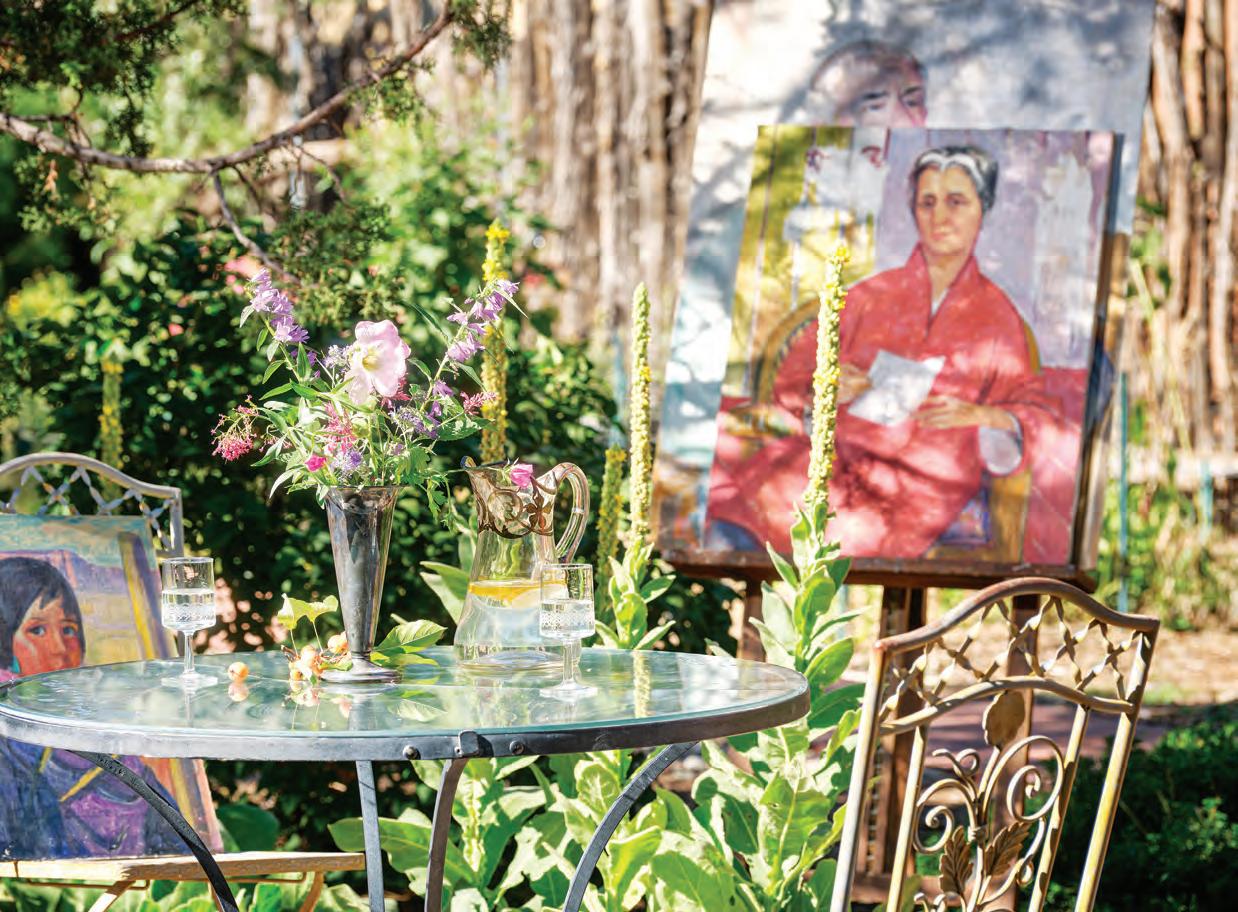
The Olive Rush Historic Artist Home and Garden is now open seasonally for weekly docent tours, and art classes are held in the front room, where Rush made her paintings — with good light and a view of the street. The home joins those of Georgia O’Keeffe in Abiquiu and Ernest L. Blumenschein in Taos as places that provide glimpses of an artist’s life and process, and perhaps even invite creativity in guests. Rush’s easel remains in the corner of one room with a selection of her pigments and brushes, as though paintings could begin at any moment — and they often do under the brushes of the workshop participants increasingly visiting the home today.
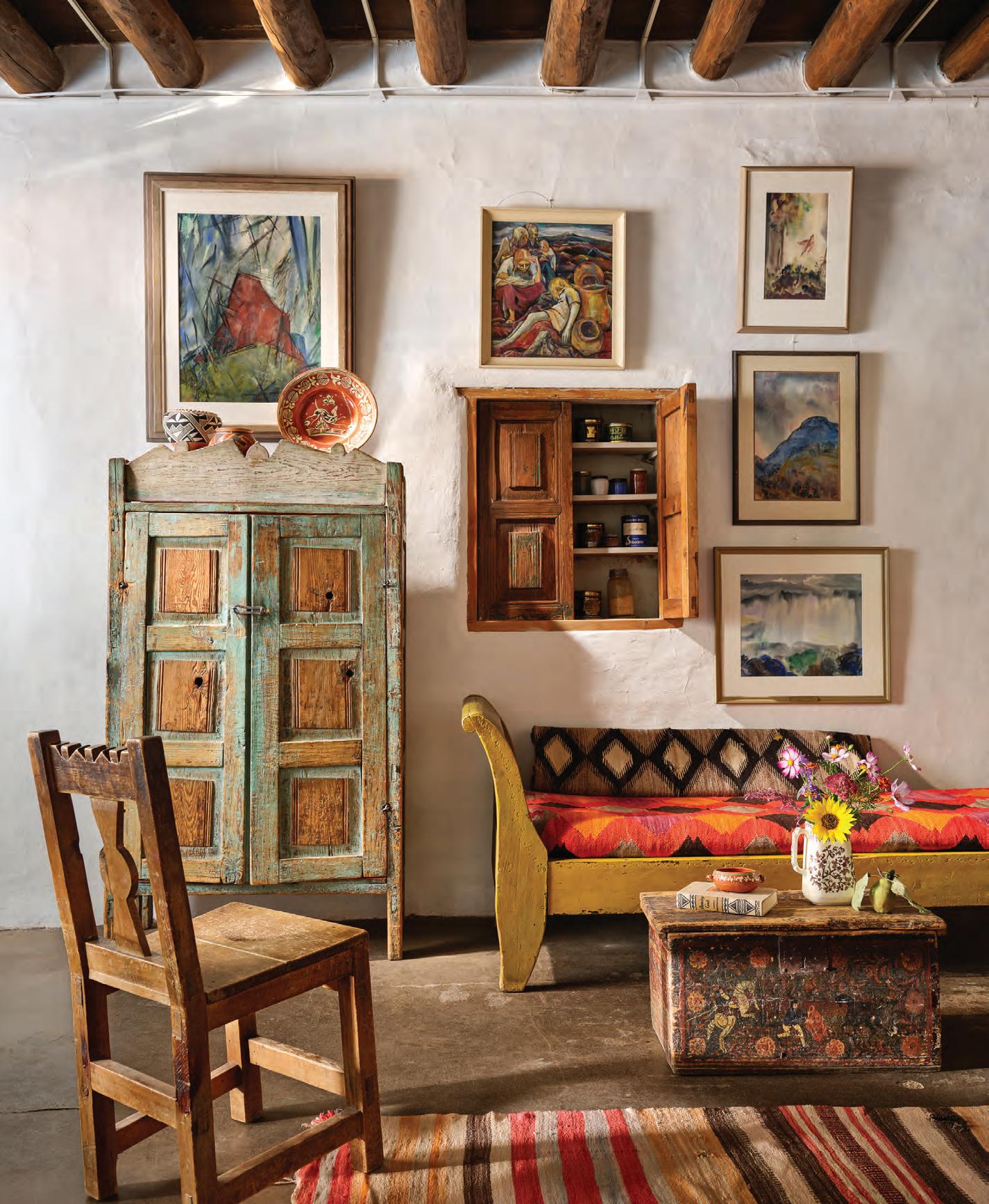
Left to right: The artist's belongings, including a daybed, paint cupboard, and several of her paintings, make a charming vignette at the Olive Rush Historic Artist Home and Garden. The artist's garden in bloom with her painting Woman with a Letter (1928) and a portrait of her contemporary Gustave Baumann.
Rush’s great-niece Liz Kohlenberg now chairs the board of directors of the Olive Rush Memorial Studio, the nonprofit that oversees the home and garden. “I met her once when I was 10, in 1957. I had no idea who I was meeting, but I knew my mother loved her,” Kohlenberg says. She remembers drifting away from the adults on that long-ago summer afternoon to explore the backyard garden. Today, numerous fruit trees from Rush’s era remain, as do rose bushes and a vegetable garden. Rush held many parties amid the lushness, where her good friend Gustave Baumann was known for spiking the punch.
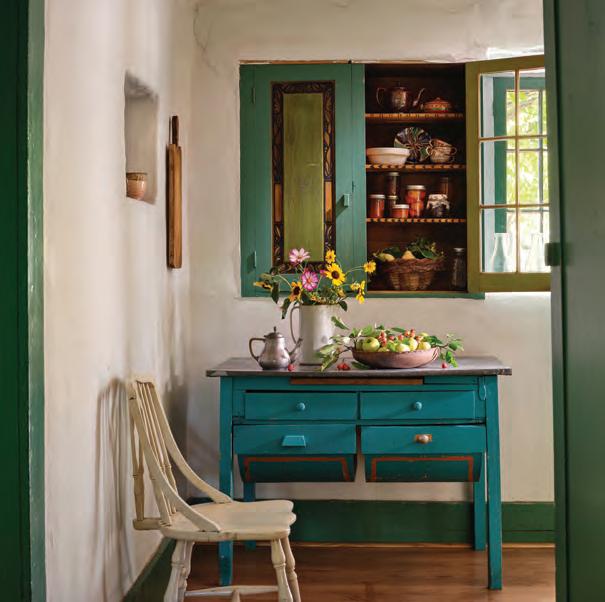
“ Olive grew a lot of food and fed herself and her friends and neighbors,” says property manager Mara Saxer, who specializes in historic preservation and previously worked for the Historic Santa Fe Foundation. After Rush’s home changed hands, Saxer spent months scraping window frames and refreshing limestone walls with milk paint. Rush's art and her collection of Native pots decorate the house, and her personal creative touches abound. They include the fresco on her kiva fireplace, with images of animals and flowers, and kitchen cabinetry painted an unusually saturated shade of blue-green.
“ We want people to experience what it would’ve felt like to be in this house, making art, in Olive’s time,” says Rush’s great-great-niece Leah Kohlenberg, who is also a painter. “It might sound kind of loopy, but we feel like she’s still here.”
“She
was a power”
Rush was the fourth of six children, born in 1873 and raised among pacifist Quakers, attending church twice a week. As a young woman, she left the Midwest to study at the Corcoran School of Art in Washington, D.C., and became a successful commercial illustrator for magazines and newspapers, all the while keeping up an easel practice and entering her paintings in juried exhibitions. She shared a studio with Georgia O’Keeffe at the New York Art Students League, and they later shared a cat that spent summers in Abiquiu with O’Keeffe and winters at Rush’s. (Their beloved Anselmo is buried in Rush’s garden.)
B ecause, according to family lore, she didn’t believe she could take care of a family and also be an artist, Rush never married. She moved to Santa Fe in 1920 after visiting New Mexico and the Southwest with her father in 1914 and spending significant time with Pueblo communities. Her growing reputation preceded her: The art establishment embraced her during her initial stay and gave her an exhibition at the Palace of the Governors three years before the New Mexico Museum of Art opened.
“ She was not just a sweet little Quaker lady,” says Liz Kohlenberg. “She was a power.”
Rush favored watercolor and gouache but painted in other mediums, including fresco. Her subject matter included expressive mountain landscapes, animal studies, and figurative paintings of Native people.
L eah Kohlenberg emphasizes that Rush is an important figure in modernism and played more than a background role in the Santa Fe art scene. She compares Rush to women in the male-dominated New York City art scene of the 1950s, who long remained critically and historically unacknowledged as important creators but who finally got their due in Mary Gabriel’s Ninth Street Women (2018). “The people Olive was connected to here, including the incredible Indigenous artists, are an important part of that story. But the story of Santa Fe isn’t just about Gus Baumann and Will Shuster. Olive was a key mover and shaker,” she says.
I n 1932 she was offered a commission to paint a mural in the dining hall at the SFIS, but she turned it down to teach mural painting to a group of students instead. That group — a dozen boys and men from various tribes — became known as the Fresco Guild, which soon included women.
Rush captured the process in journals — housed in the Archives of American Art at the Smithsonian Institution in Washington, D.C. — which Leah Kohlenberg consulted when writing a paper about this aspect of Rush’s legacy, which she shared with SFIS when the family started making connections in Santa Fe.
“After spending 30 years with the [Fresco Guild] murals, it was very exciting to receive this information,” says Alana McGrattan, who retired as the SFIS Library media coordinator and is now on the Olive Rush Memorial Studio board of directors.
I n its two years of operation, the Rush house has hosted concerts and literary events, private parties, and weddings. In spring 2025 it held a student art show and sale, Encouraging Santa Fe Indian School Art: Then & Now, and presented a second installment in early May of this year. The house hosts monthly workshops and salons led by such local artists as E. Klinger and Shelly Horton-Trippe. Recent offerings include nature painting and observational drawing.
A lbuquerque artist Allison Jones Hunt teaches a class in intuitive color theory, beginning June 14, with paints and other materials provided. On September 9, the house hosts ArtWalk Santa Fe in conjunction with Canyon Road Summer Walk; visitors are invited to stroll the garden in its late-summer glory.
In 2027 Tony Abeyta (Diné) curates an exhibition about another group of Native artists, painters of the Maisel’s Murals, who worked with Rush in 1939. Abeyta’s father, Narciso, was among them. His mother, Sylvia Ann, was a Quaker ceramicist with whom Tony attended meetings at Rush’s house when he was a child.
Liz and Leah Kohlenberg emphasize that the Olive Rush Historic Artist Home and Garden is still a fledgling museum, a true labor of love. The board of directors is currently focused on fundraising to support the creation of a museum director position. “We want to encourage people’s creativity as Olive did,” says Liz Kohlenberg. “We don’t just want it to be a museum of the past but to be active in the present.”
IF YOU GO
Weekly docent tours are available 11 a.m.–12:30 p.m., starting Friday, March 20; online reservations required. See website for class listings.
Olive Rush Historic Artist Home and Garden I 630 Canyon Road oliverush.org
By
Jennifer Levin is a freelance arts and culture writer in Santa Fe.
A table in the artist's kitchen hints at the creative life lived here.
Photo:
Wendy McEahern for Parasol Productions, courtesy Olive Rush Historic Artist Home and Garden
Enjoy a Santa Fe Summer to the Fullest with Better Hearing!
The Southwestern Hearing & Balance team not only monitors, maintains and improves your hearing but also identifies and treats any physical abnormalities or illnesses of your ear and auditory system. Our independent center is dedicated to the principle that hearing loss and balance issues are medical problems that require collaboration between ENT physicians and audiologists to provide patients with the best coordinated care. It’s our priority and our pleasure to ensure our patients are hearing their best and able to enjoy life to the fullest!
Southwestern Hearing & Balance Services Include:
•Diagnostic and hearing aid services performed by doctors of audiology (AuD)
•ENT physician partners for timely and comprehensive medical evaluation
•Clinical protocols that follow best practice guidelines
•Hearing aid dispensing and fitting using Real-Ear Verification
•Repair and maintenance of hearing aids from most manufacturers
•Comprehensive diagnostic hearing exams
•Follow-up care for rehabilitation of hearing loss
•Tinnitus evaluation and management strategies
•Vestibular diagnostic assessments
JUGGERNAUT HOMEGROWN
BY ADELE OLIVEIRA
By now the journey is familiar to many — to millions in fact: Inside an old bowling alley in Midtown Santa Fe, a curious Victorian house provides a world where it’s always a summer night, with soft, dreamy music playing from somewhere unseen. Step onto the porch and through the front door, where portals to other worlds and dimensions await — they’re just through the refrigerator, down a slide in a washing machine, and behind the brick fireplace. When Meow Wolf’s House of Eternal Return debuted in 2016, it made waves across the realms of art, business, and entertainment, often finding itself at the confluence of those three spheres. In the decade since, the company has opened four other immersive experiences in Denver, Las Vegas, Houston, and Grapevine, Texas, with new spaces in Los Angeles and New York currently under construction. Far from its roots as a collective, the company is now a juggernaut: a consideration in any conversation about art and tourism in Santa Fe and a major player in the experience economy.
The House of Eternal Return turned 10 in March, but Meow Wolf itself turns 18 this year. It began circa 2008 when a core group of seven young artists regularly convened in warehouse space off Second Street to make
Meow Wolf’s House of Eternal Return marks a decade of immersive — and multi-dimensional — experiences.
playful, offbeat art that catered to their whims and obsessions. The group was well-known for being antiestablishment — or “anti–Canyon Road.”
No oil paintings of western vistas or cast bronze horses here; worked produced by the collective was contemporary, irreverent, and approachable. One of the group’s best-known projects pre- House was 2011’s The Due Return, a 2,500-square-foot, two-level interactive ship constructed at the Center for Contemporary Arts.
“ I joined about six months in, so I’m around the 17 and a half year mark, which is absolutely crazy,” says co-founder Caity Kennedy, who’s from Kansas and moved to Santa Fe after college in Rhode Island, sight unseen. She found Meow Wolf soon after. “That simultaneously means I have a lot perspective and very little, because it’s the thing I’ve been doing with the majority of my life. Of course, it’s only been a job since the tail end of 2014.”
Visual development team member Luke Dorman says Santa Feʼs Meow Wolf remains his favorite after opening four other locations for the growing entertainment company.
Following a round of fundraising that netted $3 million from Santa Fe’s favorite Westeros writer, A Song of Ice and Fire author and Game of Thrones producer George R.R. Martin, plus public grants and additional private funding, the collective became a company, with no of sign of slowing down since or any time soon. When the House of Eternal Return opened, Meow Wolf aimed to net 100,000 visits in 12 months, a milestone it passed in two months. Today it’s among the most visited tourist attractions in Santa Fe, with national name recognition. It employs nearly 1,000 people and hosts some 3 million visitors annually across its locations. It also transformed attendees’ expectations for permanent immersive art experiences.
C urrently, Kennedy is working on the projects in New York and California, with trips home to Santa Fe in between. A typical day involves both a lot of meetings and hands-on work as part of the ensemble of artists.
“ It’s important to me to be part of the team that’s just trying to get the thing made,” she says. “I have my own projects, but I spend a decent chunk of my time doing whatever needs doing from an art-making point of view.”
“Santa Fe Meow Wolf is still my favorite after opening four other locations,” says Luke Dorman, who’s on the visual development team. “It’s a really special version of what we do, because it has so much heart and handmade work. It’s tangible. I still find it inspiring after visiting a billion times.” Dorman’s been at Meow Wolf since 2018, following a job at the nowdefunct Santa Fe University of Art and Design. Visual development work covers everything from concept art to graphic design and “is intended to make the world feel real, feel deep, and feel explorable,” he explains.
The House of Eternal Return is wildly popular among visitors of all ages but it’s a particular hit with kids and families. Kid favorites include the
missing gerbil’s empty cage and the musical mastodon skeleton in the Ice Age cavern. (Kids also love to play endless rounds of free Ms. Pac-Man in the arcade and strum floor-to-ceiling red laser strings in an otherwise pitch black silo.) On and on, rooms and corridors unfold, in a manner not unlike Meow Wolf itself: While a majority of the original exhibit remains intact, some of it is gone, and new rooms and nooks appear often, seemingly out of nowhere.
“One thing to keep in mind is that Meow Wolf has changed a lot, like every six months, pretty much the entirety of those 18 years,” Kennedy says. “We’ve been so different bit by bit; there is no single before and after. . . . There are ways that it would be nice to recapture some of our roots, and there are ways where I’m happy that we’re no longer in such and such situation anymore. It’s all very complex, which is just fine.”
Explosive growth hasn’t been without external criticism and internal friction. In Meow Wolf’s early days, the group built a reputation on its flexible, forwardthinking approach to the art world and being a positive, equitable workplace for creatives. But the business has since seen rounds of layoffs and pay cuts, plus lawsuits alleging discrimination, unfair labor practices, and intellectual property law violations. In November 2025, unionized workers at Meow Wolf’s Grapevine location went on strike for three days to protest what they described as violations of federal labor laws and stalled contract negotiations. According to the Communication Workers of America (CW), since 2021 the National Labor Relations Board has investigated at least 16 cases alleging unlawful working conditions at the company. (The Meow Wolf Workers Collective [MWWC], a Santa Fe–based union, was incorporated via CWA in 2022.)
Jerome Morrison was hired as a contractor at Meow Wolf in 2018 before going full-time in 2019. He worked on integrating technical programming into the exhibits and on the company’s app before losing his job in a 2024 round of layoffs that eliminated 165 positions. Morrison, the son of a Navy chaplain who grew up around the United States and abroad, says he’s fortunate he was able to remain in Santa Fe, where he’s part of several other artist and media collectives. But “most people who designed this million-dollar money engine cannot afford to live here in Santa Fe,” he says.
Morrison has an active lawsuit against Meow Wolf, alleging that unlawful labor practices led to his termination. He was the MWWC treasurer at the time of his layoff and often critical of the company in the local media. Morrison says his experience at the company deteriorated as time went on, in part because the company hired leadership from out of state. “People who are flown in from California and New York and Florida are not a part of the community,” he says. “You cannot hold people who are not part of your community accountable.”
A mid questions about whether Meow Wolf grew too fast, for some veteran employees like Dorman, the group’s future includes a reinvigoration of its original values. “I think everyone who has come through the company is trying to make it better,” says Dorman, who was an MWWC member until recently, when he was promoted to a position that disqualified him. “One of the things that keeps me at Meow is I believe in the people, that they’re dedicated to ensuring that it becomes the best version of the thing that we know it can become. It takes work to get there.”
1352 Rufina Circle I 866-636-9969 I meowwolf.com/visit/santa-fe
By
Adele Oliveira grew up in Santa Fe and lives there with her family.
Amanda Carroll from Fort Worth, Texas, wanders through the Temple of a Thousand Stories, an installation by artist Danaé Brissonnet at Meow Wolf's House of Eternal Return in August 2025.
Photo:
Jim Weber/ The New Mexican
The Route 66
HOT LIST
Where to stay, eat, play, shop, and cruise in honor of the Mother Road’s 100th anniversary
BY ASHLEY M. BIGGERS
oute 66 is as much an idea as it is a road. The sinuous route from Chicago, Illinois, to Santa Monica, California, inspired generations to set out on a journey that was just as important as the destination. As much as the route captured the American spirit of adventure, there was an air of necessity along what John Steinbeck coined the Mother Road when it became a lifeline for people fleeing the Dust Bowl and the impacts of the Great Depression. Whether in novels or in songs like “(Get Your Kicks on) Route 66,” New Mexico’s 535 miles of the road — from the neon of Tucumcari’s Blue Swallow Motel to that of El Rancho Hotel in Gallup — have been cemented in travelers’ imaginations.
In an oft-forgotten piece of Route 66 history, the Mother Road’s original path traced the Santa Fe Trail north from Santa Rosa through Romeroville and into Santa Fe. Until 1937, the road cruised toward the Plaza along what is now Old Pecos Trail, circled the historic square, and trekked down Cerrillos Road/Agua Fria Road and the old Camino Real through Santo Domingo Pueblo before dipping toward Albuquerque. In 1937 the road was realigned along a more east–west route, which took it from Santa Rosa through Albuquerque. Many accounts point to Democratic Governor Arthur Hannett, who blamed his failed 1926 reelection bid on Santa Fe politicians and advocated for the “Santa Fe Cut-Off,” as the cause. Whether driven by score settling or practicality, the new alignment trimmed 100 miles off travelers’ journeys — and Santa Fe from their itineraries.
Still, 100 years later, Route 66 lives on in Santa Fe — through historic motor lodges with new life, long-standing trading posts that proudly keep the kitsch, and a spirit of authentic travel that’s at once nostalgic and trendy. As the Mother Road marks a century, here’s where to get your kicks in the City Different.
HOT LIST
STAY
The Mystic Santa Fe
In 2024 husband-and-wife duo Amanda Tucker and Rick Goldberg reenvisioned the 1948 Silver Saddle Motel as The Mystic Santa Fe, with bohemian-chic guest rooms, a café, a bar, and two lounges. These gathering spaces invite motel guests — and the public — to linger a while. Grab a cocktail on the patio care of the Mystic Bar — try the Moon Maze, made with gin and amaro from the local As Above So Below distillery— and stay for a Mesa Burger at Mystic Mesa. Owned and led by chef Randy Tapia, formerly executive chef of El Nido and La Casa Sena, the restaurant serves happy hour bites and dinners Thursday to Saturday. Check the event calendar for live music from the likes of Nacha Mendez, Felix y Los Gatos, and Westin McDowell & the Cosmic Trio. 2810 Cerrillos Road 505-471-7663 themysticsantafe.com
The Mystic, a renovated Route 66 hotel, features a casita, the High Desert Hideaway complete with cocktail trailer, and modern Southwest guest rooms. Opposite: Guests gather in the ˝love pod.˝
HOT LIST
PLAY
New Mexico Museum of Art
Roadside culture — giant fiberglass figures, neon in every color of the rainbow, signs, and other unforgettable landmarks — still lives along Route 66 today, but it’s also captured in Roadside Attractions. The exhibition in honor of the Mother Road’s centennial features photographs from Nathan Benn, Steve Fitch, Miguel Gandert, Phyllis Jennings, Joan Myers, Joel Meyerowitz, and others that invite viewers to appreciate the quirky beauty and cultural phenomena that live on in the American imagination. Through October 4. 107 W. Palace Ave. 505-476-5063 nmartmuseum.org
EAT
Harry ʼs
Roadhouse
Old Route 66 cruises into Santa Fe via the Old Las Vegas Highway and past Harry’s Roadhouse, where “the standards” never go out of style. “Our lemon merengue pie is like sunshine on a plate,” says Kathleen O’Brien, who managed the restaurant for 23 years before purchasing it in 2023 with co-owner and the eatery’s chef, Mario Reyes Leon. Since taking the helm, she’s maintained the comfort-food menu and the restaurant’s warm hospitality for the legions of locals who frequent it. “We’re really honoring what Harry’s has been and what we are now. We do the best we can each service,” O’Brien observes. This locale has held many identities: It opened as a gas station, became a service garage with a lunch counter, and operated for many years as Nifty Café before Harry Shapiro and Peyton Young founded Harry’s Roadhouse in 1992. “[Harry] really wanted to keep the fun, funky feeling of the Nifty Café,” O’Brien remembers. “And we’ve never gone back.”
D ishes range from Diners, Drive-ins, and Dives host Guy Fieri’s favorite waffle (blue corn with bacon inside and topped with bananas and honey butter) to hearty meatloaf and Vietnamese caramelized catfish. Regulars return for changing weekly specials. However, nostalgia often guides diners’ choices. “If someone grew up on the chicken burrito, when they come, they have to have the chicken burrito,” O’Brien says. “We’ve been the cornerstone of this community. That’s where we operate from . . . It’s wonderful when I see kids whose parents brought them in a car seat come in with their own kids. Or people who are getting married and want to introduce their in-laws to the restaurant. It’s very touching that people include us in their lives. It’s an honor.”
96-B Old Las Vegas Highway 505-989-4629 harrysroadhousesf.com
Diners chow down on Harryʼs Roadhouse favorites, including the lemon merengue pie.
Steve Fitch: Snakepit Operator, Highway 66, Sayre, Oklahoma, 1972, gelatin silver print, 10 x 12 inches.
STAY
La Fonda on the Plaza
Built on the site of the city’s first inn and known as the inn at the end of the Santa Fe Trail, La Fonda on the Plaza has long been a waypoint, including for Route 66 travelers. Learn more about the hotel’s century of history and 800-piece art collection with a complimentary tour Wednesday to Saturday at 10:30 a.m. (Call 505-995-2333 to register.) This year, to celebrate Route 66’s centennial, the hotel offers a special package including guided walks with Discovery Walking Tours. Guests can also hop aboard a vintage Pinzgauer off-road vehicle with Santa Fe Mountain Adventures for a trip to one of the most treacherous segments of Route 66 at La Bajada Hill.
The hotel’s new lobby bar, The Bar at La Fonda, offers casual New Mexican cuisine and enticing cocktails. Another new arrival oversees this dining destination and others. Acclaimed chef Marc Quiñones, a 2024 James Beard Award semifinalist for Best Chef: Southwest and a former contestant on Food Network shows such as Chopped and Beat Bobby Flay, joined La Fonda as executive outlet chef in February. He enhances La Fonda’s dining outlets: La Plazuela, set in the hotel’s original 1920s glass-enclosed patio; the casual La Fiesta; and the seasonal Bell Tower rooftop bar, which offers incredible panoramas over downtown Santa Fe from its fifth-floor perch.
100 E. San Francisco St. 505-982-5511 lafondasantafe.com
PLAY
Santa Fe Plaza
From 1926 to 1937, Route 66 cruised right through downtown Santa Fe on a scenic detour from Old Santa Fe Trail to Cerrillos Road. This season during Santa Fe Summer Scene, from June 4 to September 3, groove to more than 50 free events, including blues, rock, and Latin concerts at the Plaza bandstand. Continue your drive past Railyard Park (also on old Route 66), where the performance lawn hosts free movie screenings.
lensic360.org/page/summer-scene
Fresh dishes and tableside guacamole are on the menu at La Plazuela at La Fonda on the Plaza.
HOT LIST SHOP
Tin–Nee–Ann Trading Co.
This throwback souvenir shop has been in the same location — and the same family — since 1973. Jo Christen’s family originally opened a Kirby vacuum cleaner store at the intersection of St. Francis and Cerrillos when a 1968 flood washed them out of their downtown business. The family slowly entered the trading post business as people bartered jewelry for appliance repairs. When Kirby threatened to send in a man to take over the top-selling, woman-led franchise, Christen’s mother turned the shop into a fulltime trading post. “I was initially too obnoxious to be much help, as kids are. After I went out and worked in other places in the country, I realized how much fun [the family business] was — and still is,” Christen says of the shop overflowing with everything from authentic Navajo weavings and natural turquoise jewelry to collectible shot glasses and thimbles.
Equal numbers of locals and travelers — especially from Texas, Colorado, and Missouri — frequent the store. Some remember coming as kids and return with their children and grandchildren. The rows of Pendleton blankets, postcards, and moccasins recall the curio shops once popular on the Mother Road. Although the shop makes serious efforts to educate customers on the differences between authentic Native-made goods and non, it also deals in oldfashioned tall tales. “I have a guy that works for me and carries a glass eye in his pocket. He tells stories about it. It’s all exaggeration, but you can see the wonder in [the children’s] eyes. It’s all the fun things we learned as children — the stories of Paul Bunyan and Johnny Appleseed. . . . We’re trying to hold on to tradition every way we can,” Christen says. Christen’s children — daughter and son Emilie and David Boggs and David’s “intended” Kiana Jahn — are taking over operations. “It’s a family-run store. It totally tears me up. Nobody’s doing that sort of thing anymore. Kids don’t follow in their parents’ footsteps — especially in our business. . . . I’m very honored that my children have chosen to do what they’re doing,” she says.
923 Cerrillos Road 505-988-1630 on Facebook
EAT
Baked and Brew
Founded as a catering business in 2017, Baked and Brew parked in a converted 1950s gas station on Cerrillos Road in July 2023. Proprietor and pastry chef Kate Holland says, “We kept as much charm of the old building as we could.” That includes the garage doors, now emblazoned with the company’s logo; the car lift, which now holds the coffee menu board; and the former gas pumps, now home to the bakery’s drive-up service for flaky croissants, Danishes, and Buenos Días Buns (croissant dough swirled with cinnamon sugar and orange zest). Inside, the menu has a hearty helping of southern items with a New Mexican twist, from the biscuits and gravy to the piled-high breakfast sandwiches. 1310 Cerrillos Road 505-954-1346 sfbakedandbrew.com
Jo Christen, longtime owner of Tin-Nee-Ann Trading Co., oversees the family business, which buys and sells Native American jewelery.
Baked and Brewʼs breakfast tacos
CRUISE
Santa Fe Vintage Car Club
This group of classic car aficionados may be best known for its Plaza car show and co-sponsorship of the annual Fourth of July Pancakes on the Plaza. But the 150 families involved in the restoration and enjoyment of collector vehicles also show their vintage beauties during Cruise Nights on the Plaza — May 15, June 19, July 10, August 21, and September 18 from 4 to 8 p.m. Proceeds (there’s a $25 entry fee for the 75 or so participants) support the Santa Fe Police Department’s Shop with a Cop program.
santafevintagecarclub.org
SHOP
Five & Dime General
Store
An F.W. Woolworth store opened on the Santa Fe Plaza in 1935, serving citizens with sundry goods at affordable (“five and dime”) prices. Following in the footsteps of his older brother, Mike Collins began working at the store at age 14, trading his time cleaning and stocking the store for 8-track tapes. The job turned into a 23-year career with the store, during which time he climbed the ladder to manager.
When the Woolworth store was shuttering in 1997, something about the handwritten scrawl “Please call me” on Earl Potter’s business card made Collins pick up the phone. The call led Collins and Potter — a real estate lawyer and now Five & Dime General Store chairman — to collaborate on a Plaza store to continue serving locals. Collins consolidated the bestselling items into a smaller footprint and, now as CEO, opened the Five & Dime in May 1998. Locals and visitors alike frequent the store for its vast assortment of souvenirs — including Route 66 memorabilia — and everyday items, from greeting cards and bottled water to candy and batteries. “We would not be successful without the local clientele,” Collins says. “We appeal to the masses. Anyone who walks by the store could find something they need here.” The model worked and there are now nine Five & Dime locations nationally.
The Santa Fe store’s notable snack bar has been serving its World Famous Frito Pie since its Woolworth days. The deliciously messy layers of Fritos topped with chili (the stew, not the sauce), cheese, and onions, served in a split chip bag, famously befuddled and entranced Anthony Bourdain on an episode of CNN’s Parts Unknown
58 E. San Francisco St. 505-992-1800 fiveanddimegs.com
Ed Baca, president of Santa Fe Vintage Car Club, looks out from the window of his 1957 Bel Air.
Clockwise: The Five & Dime General Store's famous Frito pie. A customer shops for a hat. Travelers and locals traipse past the store on the Plaza.
STAY
El Rey Court
This historic motor lodge dates to the days of the original Route 66 alignment; it has been welcoming travelers since 1936. Over the years, the motel expanded, enclosed its carports, added a pool, and integrated the neighboring Alamo Court motel, but the easygoing vibe of the Mother Road remains at today’s El Rey Court. Within its classic Northern New Mexico adobe buildings, a modern southwestern aesthetic prevails in the guest rooms. Overnight room rates are discounted 25 percent for Route 66 travelers this year.
G eorgia O’Keeffe would likely feel at home with the airy, white-walled ambience in La Reina, a watering hole for hotel guests and locals. The mescaland tequila-focused bar pours daily, but check out Monday’s Queer Night, which offers a welcoming and safe space, and live music on Wednesday and Sunday. From June through mid-October, non-guests can cool off in the hotel’s pool with Swim Club seasonal memberships or day passes ($15 on Community Mondays). Passes are available online.
1862 Cerrillos Road 505-982-1931 elreycourt.com
HOT LIST
The Pantry
This diner has been feeding hungry Santa Feans since George Myers founded the diner in 1948. The Singley family, including co-owner and manager Michael Singley, now steward this local institution (and its subsequent expansions to Pantry Dos and Pantry Rio). Come hungry for hearty breakfast burritos, tortilla burgers, and comfort foods. 1820 Cerrillos Road 505-986-0022 pantrysantafe.com
The Pantry serves hearty fare, like its taco salad.
CRUISE
Museum of International Folk Art
Organized by the Museum of International Folk Art, Driving Change: Route 66 in New Mexico cruises from downtown up Old Santa Fe Trail to Museum Hill on September 20. (The time had not been announced at press time.) Once the car crawl arrives at Milner Plaza, drivers display their classic cars while attendees enjoy the free event along with live music, other performances, art demonstrations, and food trucks. The museum hopes the event brings attention to the role Route 66 played in Santa Fe and the impact the road had on all communities in the state.
706 Camino Lejo 505-476-1204 moifa.org
Left to right: El Rey Courtʼs welcoming pool and a guest room
EAT Shake Foundation
The classic soda fountain may have faded into memory along many parts of Route 66, but this vintage-style stand keeps the classics alive with a local twist. “I wanted to get back to my Milwaukee, Wisconsin, roots,” says owner Brian Knox, a veteran of the Santa Fe restaurant scene on his choice to prioritize high-quality beef and dairy. The green chile cheeseburger, made with all-natural beef and unadulterated Hatch or Socorro green chile, is a must-have. “I wanted to show restraint and let the alchemy of those ingredients on the potato bun speak for themselves,” Knox says. Burgers with other proteins, from locally grown lamb to vegetarian-friendly portobello mushrooms, round out the menu. Save room for a side of hand-cut fries and a milkshake, made with premium high-butterfat ice cream and milk from Albuquerque’s Rasband Dairy in timeless flavors like strawberry, chocolate, and vanilla. Creating a place where locals could have an affordable meal was also paramount, Knox says. After diners order, locals and Route 66 travelers alike find respite at the picnic tables beneath the shade of the cottonwoods to enjoy their nostalgic meals — simple, local, and made with top-notch ingredients.
Billed as the oldest church in the United States, San Miguel Chapel dates to the early days of Santa Fe. It has held several forms since its 1610 founding. Today’s structure, with its bell tower standing tall over the Barrio de Analco Historic District (a National Historic Landmark), dates to around a century later. Visit daily ($7) or only for mass, which is performed in English on the first Sunday of the month at 3 p.m.
Now in its ninth season, Chamber Music at San Miguel Chapel has become a popular addition to the Santa Fe summer season thanks to its intimate, one-hour concerts held within the sanctuary. The 2026 season offers performances Saturdays and Sundays at 3 p.m. from July 18 through August 15 (with one Sunday night concert). The eclectic programming presents a variety of artists from around the country, including co-curators Grace Browning (harp) and Pat Zuber (flute), Greg Zuber (marimba), the Young-Tiranno Duo (violin and tenor), David Dash (trumpet), and Les Dala (conductor-pianist), along with a cello quartet and harp quintet with members of the Santa Fe Opera. This year, the group partners with The Pink Adobe (across the street at 406 Old Santa Fe Trail) for post-concert receptions and an annual gala.
401 Old Santa Fe Trail 505-988-3974 sanmiguelchapelsantafe.org chambermusicatsanmiguel.com
SHOP
Tumbleroot Brewery and Distillery
Tumbleroot’s Agua Fria headquarters hosts a lively music scene. Bands from Wilco to Public Enemy have played this venue — formerly the legendary Club Alegría, whose long-standing history dates to the Mother Road’s 1950s heyday. To honor this connection and its location, in October 2024 Tumbleroot launched its First Sunday Route 66 Market. The monthly market hosts as many as 40 artisans, sellers of vintage items, herbalists, and other vendors, alongside seasonal festivities like cider pressing in the fall. “Tumbleroot has always been about exploration — whether through craft beverages, music, or cultural programming. . . . Like Route 66 itself, we’re a place where people come together — locals, artists, musicians, and travelers — to connect, discover, and share experiences,” says Angela Smith Kirkman, director of business operations and co-owner of Tumbleroot with her husband, master brewer and distiller Jason Kirkman. Toast your purchases with Tumbleroot’s scratch-made brews and spirits created with locally grown and often wild-harvested ingredients.
2791 Agua Fria St. 505-303-3808 tumblerootbreweryanddistillery.com
Grace Browning, harpist and co-curator, performs with husband and cellist Benjamin Krug at a Chamber Music at San Miguel Chapel concert.
A classic milkshake, burger, and fries from Shake Foundation
Destination
DUKE CITY
Eat, sleep, and play along the Mother Road in Albuquerque.
or many, Route 66 is a piece of history that has faded into distant memory. For Albuquerqueans, it’s Central Avenue.
A s locals cruise this thoroughfare from the foothills to the Rio Grande, they also travel an 18-mile stretch of the Mother Road — the longest urban tract of the historic road in the country. Albuquerque also bears the distinction of being the only place in the country where Route 66 intersects itself, as alignments from pre- and post-1937 collide. The neon-lit route travels through some of the city’s most notable neighborhoods, including Nob Hill, the University of New Mexico, downtown, and Old Town. Take a drive to these nostalgic destinations.
EXPLORE
Roadside oddities are a Route 66 tradition, from Texas’s Cadillac Ranch to Arizona’s Wigwam Motel. Route 66 Remixed (visitalbuquerque.org/route-66-centennial/explore/route-66remixed/) offers a new take on such landmarks with 18 large-scale art installations and augmented reality experiences in honor of the road’s centennial. Created with Meow Wolf and Refract Studio, a Santa Fe–based design studio that develops emerging technology experiences, the project includes works that celebrate car culture, such as Nazario Sandoval’s The Mother Road , a billboard made out of New Mexico license plates, and Route 66 Throne , a classic car whose trunk has been converted into a picture-perfect seat for photo ops.
Just off the Mother Road, in Old Town, Albuquerque Museum (2000 Mountain Road N.W., cabq.gov/artsculture/albuquerque-museum) gives a hat tip to the route’s 100th with two exhibitions. Fred Harvey’s Route 66 (through December 6) features postcards, brochures, and other ephemera representing the Fred Harvey Company’s Mother Road tourism ventures. The Other Route 66: 100 Years of People, Identity, and Place in Albuquerque (through January 3, 2027) presents historic objects from the state’s 352 miles of the highway to represent New Mexicans who built, traveled, and lived along the route.
Route 66’s heyday is still alive and well at the Atomic Culture/Pop Culture exhibit at the Smithsonian-affiliated National Museum of Nuclear Science & History (601 Eubank Blvd. S.E., nuclearmuseum.org), which displays comics, movie posters, and more from the Atomic Age.
Set in Old Town, amid the restaurants and shops, American International Rattlesnake Museum (202 San Felipe St. N.W.) harkens the roadside zoos of the past, though this attraction carries a clear conservation message as it issues certificates of bravery to those who wander the artifact-, memorabilia-, and terrarium-lined paths of the largest collection of live rattlesnakes in the world.
The KiMo Theatre glows over Route 66 in downtown Albuquerque.
DAY TRIP
STAY
Three of the newest entries on Albuquerque’s hotel roster are also food and drink stops. Built in 1937, the original El Vado Auto Court Hotel was one of the first motels to welcome travelers to the Duke City along Route 66. In its new life, El Vado Motel (2500 Central Ave. S.W., elvadoabq.com) continues to host travelers in its retro-modern guest rooms. Some of the original Spanish Pueblo revival rooms have been repurposed into shopping and food pods — don’t miss James Beard Award–nominated chef Kattia Rojas’s Buen Provencho in one. The patio turns into a live music venue on many summer evenings.
O pened in 2025, ARRIVE Albuquerque (717 Central Ave. N.W., arrivehotels.com/hotels/Albuquerque) replaced the former 1965 Downtowner Motor Inn and later Hotel Blue. The 137-room boutique hotel on the west side of downtown features a courtyard pool, complete with guest passes, and the DWTNR Cocktail Bar & Lounge — a worthy brunch spot for its churro French toast.
Formerly a 1950s Sleepy Bear TravelLodge, the 48-room boutique Hotel Zazz (3711 Central Ave. N.E., hotelzazz.com) reopened in fall 2022. The colorful mid-century-inspired hotel features a hidden speakeasy for those who want to visit but can’t stay the night.
— AMB
EAT
Pull up a turquoise stool at the soda fountain and a 1950s hit on the vintage jukebox at The 66 Diner (1405 Central Ave. N.E., 66diner.com), a retro eatery with burgers, milkshakes, and more on the menu. Before you depart, don’t miss a selfie opportunity outside in front of the Instagram-worthy wall with vintage road signs. Get a bird’s-eye view of the Mother Road from Apothecary Lounge (806 Central Ave. S.E., hotelparq central.com/apothecary-lounge), which serves Prohibition-inspired cocktails on the rooftop of Hotel Parq Central, formerly the 1926 Santa Fe Railway Hospital W ith its eye-catching neon sign, The Dog House (1216 Central Ave. N.W., on Facebook) serves hot dogs with a side of nostalgia thanks to its carhop service. It’s been in this location since 1948 and famously made an appearance on Breaking Bad. The 505 Central Food Hall (505 Central Ave. N.W., 505central.com) dishes out modern-day favorites, from Detroit-style pizza and hot chicken to tacos and smashburgers, from its six locally owned vendor stalls. Inside, the Moonwalk keeps microbrews on tap and pours craft spirits.
Notable Neon
Cruise through the West Central Route 66 Gateway. Built in the 1990s, the neon arch displays Native American–inspired geometric designs. 6411 Central Ave. N.W.
Although an arch has welcomed visitors to Old Town at the corner of Route 66 and San Felipe Street for years, in 2025 it received a retro refresh that now lights it in neon. 117 San Felipe St. N.W.
The 1927 KiMo Theatre is a youthful 99 to the route’s 100. With its vibrant neon sign and Pueblo deco style, it remains an architectural landmark on this stretch. Its current sign is a 2011 re-creation of the original. 423 Central Ave. N.W.
From top: Diners sip milkshakes at The 66 Diner. Visitors dance at El Vado Motel.
Photos: Courtesy New Mexico Tourism Department
In Santa Fe County, your business and your passions don’t just coexist—they thrive in a landscape built for the bold. Whether you’re inspired by the region’s natural beauty, rich cultural heritage, or spirit of innovation, this is a place where you’ll find the resources, connections, and support to help your business grow—alongside a community that values sustainability, creativity, and quality of life.
Discover more at EncantadoNetwork.com Where Creative Businesses Thrive
JUNE 24 - 27 2026
GET YOUR TICKETS HERE
GATES OPEN AT 5PM • FOOD VENDORS, BOUTIQUES AND MORE...
• WEDNESDAY is FAMILY night
MUTTIN BUSTIN AT 6:30PM PRCA RODEO ACTION AT 7PM
ALL AGES ARE WELCOME!
THANK YOU TO ALL OUR SPONSORS!
• THURSDAY is MILITARY/1ST RESPONDERS night, any active ID gets in free with ID
• FRIDAY is PINK TOUGH ENOUGH cancer awareness night
• SATURDAY is Capitol Ford
STYLE
Photo:
By Gabriella Marks
Hop bines swirl on a trailer bed during the harvest at El Rancho de Las Golondrinas
Santa Fe’s Plaza Café celebrates its milestone anniversary and the restaurant’s family legacy with a cookbook.
BY CHERYL ALTERS JAMISON PHOTOGRAPHY BY DOUGLAS MERRIAM
Leonardo Razatos could not wait to leave the small sleepy town of Santa Fe, New Mexico, when he was growing up in the 1960s and ’70s. His parents, Dan and Beneranda “Bene” Razatos, owned and operated the bustling Plaza Café, right on the city’s Plaza, which has been a center of commerce for some four centuries. The adobe structure that houses the restaurant was one of the earliest buildings Spanish colonialists constructed upon their arrival in Santa Fe. It was built shortly after the Palace of Governors, the oldest settler-made public building in continuous use in the continental United States and a tortilla’s throw from the café.
A restaurant has been in that location for more than 100 years. Leonardo’s dad, an immigrant from Greece, worked his way up at the restaurant, starting as a busboy and becoming its owner in 1947. He served American diner classics of the day, including scrambled eggs with calves’ brains.
In the early 1960s, Dan married a local, Bene Saiz, and she joined Dan in running the café. They augmented the menu with a few New Mexican favorites from Bene’s family recipes, which were well received additions. Bene oversaw the front of the house in her trademark gregarious style, while Dan handled much of the cooking himself.
“ The importance of that history was lost on me growing up,” says Leonardo. “I was tired of being drafted to help at the café. From the time I was 8 years old, I had to help make the toast, standing on a crate to reach the counter. Watching movies on the big screen at the striking Spanish deco Lensic Theater around the corner from the family business, I was inspired to think that there was more for me in some other place. As soon as I graduated from high school, I left faster than you can say green chile cheeseburger.”
The Plaza Café spills out onto the Plaza sidewalk to offer open-air dining.
Mexican Shakshuka
Shakshuka, a piquant eye-opener, is one of the more recent additions to the Plaza Café’s morning menu. Leonardo Razatos explains, “We’ve always had basic fried and scrambled egg preparations on our menu, but I’ve made some of our offerings a bit more worldly. This developed from my desire to use our wonderful smoky Salsa Chipotle in more ways. I love the popular classic North African shakshuka, where eggs are cooked in a tomato-based sauce, so I switched it up to the more Mexican salsa for a sauce with real fire.” The jarred salsa can be purchased from Plaza Café or ordered online at plazacafesantafe.com, but here we include a version you can make for yourself.
A fter traveling the world, and working in a few notable restaurants of the day — including the Border Grill in Los Angeles and both Union Square Café and Gramercy Tavern in New York — Razatos made a decision that would have stunned his adolescent self. He returned to Santa Fe and in June 2021 became owner of the Plaza Café, proudly carrying on the family legacy behind one of the city’s most venerable and beloved restaurants. These days, the café regularly appears in media stories and on “best of Santa Fe” lists. Razatos and his Italian husband, Giuliano Marcheschi, operate the original Plaza, the Plaza Café Southside, and the newer Piazza Caffè.
R azatos explains, “We sell nostalgia. The Plaza menu mixes American comfort classics, chile-fueled New Mexican specialties, a scattering of Greek favorites, and sumptuous pies, cakes, and cookies. It’s all familiar, but elevated.”
This local gem bustles with efficiency but also with an outright feeling of joy. There’s a sense of community here, of being part of something bigger than just a place to stop in for a casual meal. That feeling comes from the top. As Razatos says, “We uphold a family tradition that spans two continents and eight decades, one customer at a time.”
Now anyone wishing to re-create some of that joy can make the café’s dishes at home, or simply enjoy reading about them and the family’s heritage, by snagging a copy of The Plaza Café Cookbook . The book debuts in September from University of New Mexico Press and is written by this author — Cheryl Alters Jamison — with Leonardo Razatos. Its publication kicks off yet-to-be-announced activities celebrating the Plaza’s 80 years. About half the café’s lifetime ago, in the early 1980s, I first stopped in for a meal — enchiladas if memory serves me. The chile, the warm atmosphere, and the sense of family and community all kept me coming back and ultimately led to chronicling the restaurant’s history and crave-able recipes.
A s the restaurant’s famous clock shouts, it’s “Time to Eat.”
Four-time James Beard Award winner Cheryl Alters Jamison is the author of “The Plaza Café Cookbook,” co-authored by Leonardo Razatos, published in September 2026 by University of New Mexico Press.
1. Fill a broad saucepan with about 2 inches of water. Pour in the vinegar and bring to a boil. Break as many eggs as will fit into your pan easily into cups or ramekins. Reduce heat to a bare simmer and slip the eggs into the water. Simmer the eggs gently for 30 seconds. Turn off the heat and cover for 2 to 3 minutes. Remove with a slotted spoon. Repeat as needed with additional eggs. Trim any ragged edges off the egg whites.
2. Spoon a pool of salsa onto each plate and top gently with a pair of eggs. Scatter with cheese, add spoonfuls of guacamole, add onions, and top with cilantro.
3. Serve immediately.
Salsa Chipotle
Makes about 2 cups
1 1/2 pounds red-ripe plum tomatoes
1/2 medium white onion
3 cloves garlic, peeled Corn oil or another neutral oil
7-ounce can chipotles in adobo
2 teaspoons kosher salt
1/2 teaspoon ground black pepper
1. Heat the broiler. Cover a small baking sheet with parchment paper or foil.
2. Coat the tomatoes, onion, and garlic with a very thin film of oil. Combine them on the baking sheet and broil for about 15 minutes total, turning the tomatoes every 3 to 5 minutes. You want them to be blackened on all sides. Remove the onion and garlic when they are colored lightly, after 5 to 8 minutes. Put them in a blender.
3. Add the tomatoes, including their darkened skins and cores, and the other ingredients to the blender and puree. Refrigerate for at least 30 minutes to 1 hour before serving.
Southwest Meatloaf
Upside-Down Frito Pie
Burrito (any variety, red or green)
Coconut Cream Pie
Quatro Leches Cupcakes
SEVEN MUST-HAVE DISHES AT THE PLAZA CAFÉ
Mexican Shakshuka
Blue Corn Pancakes
Mexican Shakshuka captures the Plaza Café's classic-with-a-twist take on recipes. Opposite: Cheryl Alters Jamison and Leonardo Razatos inked the Plaza Café's recipes into a forthcoming cookbook.
540 S Guadalupe St Railyard Arts District
Santa Fe, New Mexico, 87501
Open Tuesday–Saturday 10am–5pm artvault.thomafoundation.org
Judy Chicago, Women and Smoke, California
Photo by
Through the Flower Archives,
Judy Chicago and Artists Rights Society (ARS), courtesy of the artist and
A SWEET FINISH
The quest for made-in-New Mexico beer
BY ASHLEY M. BIGGERS
PHOTOGRAPHY BY GABRIELLA MARKS
On a lower field at El Rancho de Las Golondrinas, beyond the sorghum mill and the hide tanning area, hop bines reach into the cloudless summer sky. Triangular trellises rise and fall across the field like grand garlands. Since their spring 2025 planting, each bine (yes, bine, the climbing stem of the hop plant) has twisted around the trellis string in its clockwise reach for the sun. During high summer, the bines grew between 4 and 10 inches a day — a sprouting feat that ranks hops among the fastest-growing plants in the world. Now nearly 17 feet tall, the wide leaves of the Chinook, Zeus, and Sterling varieties are heavy with soft cone-shaped flowers and ready for harvest.
Cory Murchy, an indie rocker who doubles as the ranch’s assistant director of operations, holds a ladder while Sean Paloheimo, director of operations, cuts the strings from the top. After they drop, Murchy loops the bines over his arms like boughs and carries them to the tractor for transport. As they work, they chat about happenings around the fields — the bear that broke into the nearby beehives and retreated into a cottonwood to watch the goings-on for days — and the acequia irrigating the alfalfa and lavender that once grew here instead of the hops.
P aloheimo — whose grandfather Y. A. Paloheimo opened the ranch in 1972 as a 200-acre living history museum to carry on the lifeways of Spanish colonial New Mexico and whose father, George, served as director until his 2010 retirement — has many memories of these fields.
He oversaw the hops planting in 2021, when the pandemic’s forced quiet gave the Ranch of the Swallows time to analyze its operations and implement new ideas. Hops — specifically Humulus lupulus neomexicanus — have loped wild over New Mexico’s mountains for possibly a million years. The Land of Enchantment has also been in the brewery business since at least the 1850s. Although these historical connections held sway, Paloheimo says Golondrinas moved forward with the new crop thanks to a ready-made market: Beer Creek Brewing Company, which in its pursuit of purely made-in-New Mexico beer agreed to buy any hops the nonprofit organization grew.
Hops ready for harvest in summer 2025 at El Rancho de Las Golondrinas.
Break open a hop coneflower and you’ll immediately smell the floral, citrus aroma of the lupulin, the hop resin brewers seek for nearly every style of beer, from ambers to pale ales, to balance malt’s sweetness with bitterness. The craft beer industry has increased the demand for hops — particularly in New Mexico, which consistently ranks among the top 10 states for breweries per capita and is also among the most medalw inning states for craft beer. Even among leaders of the Land of Enchantment craft beer renaissance, such as Santa Fe Brewing, for many years the only New Mexican ingredient in their beers was the water. They relied on hops imported from the Pacific Northwest and malt from the Midwest.
“ People are understanding that terroir makes a difference in their wine, their beef, their vegetables,” says Rich Headley, one of several founders of Beer Creek Brewing. Terroir, the natural environment in which an agricultural product is produced, hasn’t always been discussed in beer. However, as a home brewer, Headley could taste the influence of place in each glass. “Everybody will tell you this: When you make beer at home . . . forget wherever you got the ingredients. That’s going to be the best beer you ever drink.” Soil, climate, and water influence how hops and malt — two of beer’s four key ingredients — taste, and to a brewer that unlocks sipping potential.
Headley, who is also cofounder of sustainable building company Amenergy, first bought hops plants at the Santa Fe Farmers Market because he thought they would look nice in his backyard. As he began incorporating his hops into his home brews and expanding his operation, he met other home brewers, including Matt Oler, Ryan McArdle, and Kelly McGuire. He picked up supplies from Jami Nordby, former proprietor of the now shuttered Santa Fe Homebrew Supply. Soon they were all brewing together.
W ith connections to the brewing industry via Amenergy, which did contracting work for several breweries, including Albuquerque’s Marble Brewery and Second Street Brewery, Headley saw the potential market not only for the friends’ own brewery but also for New Mexico–grown hops and malt. When a traumatic brain injury sidelined him in March 2017, Headley stepped back from his contracting business to focus on learning to speak and walk normally and creating a business plan for Beer Creek, which became a driving force in his recovery.
Uphill from the El Rancho de Las Golondrinas hops field, the open space near the main buildings is abuzz with the 2025 Santa Fe Beer & Food Festival. Near the 1916 Pino House are dozens of vendor tents, where local brewers pour craft beer. Beer Creek, which opened its doors in June 2018, is among them. It pours Golondrinas Gold, made exclusively with the ranch's hops; proceeds from sales benefit Las Golondrinas. The brew of the year, a medium India pale ale known as Hora Dorada, made from 2024’s hop harvest, shines ruby in the New Mexican sun. “[Las Golondrinas] makes some good money from us, and we make some great beer from them,” Headley observes of their relationship.
Nearby, a Hopster, a hops harvester that lets small hops farms turn their crops commercial, rumbles to life. Murchy feeds the hop boughs onto hooks, which chug conveyor belt style into the machine. The Hopster shimmies and shakes the flowers from the bines.
O ver the years, El Rancho de Las Golondrinas has become one of several hops operations in the state. Others are La Capilla Hops Farm, also in La Cienega; Sherrog Hops in the Pecos Valley; White Crow Hops in Ancones; and Santa Fe Brewing Company’s operation in Rinconada.
These burgeoning farms led the team behind Beer Creek Brewing to shutter their own operation, which they launched about a dozen years ago. They ran a 4-acre hop farm, under the name Crossed Sabers Hop Company, just south of the brewery’s headquarters on NM 14 south of Santa Fe. “Now we’ve got a fleet of people that are supplying us hops that in some cases are even better quality than we could grow,” Headley says of their decision to focus on the brewery.
A s locally grown hops wound their way into New Mexico agriculture, there was still a missing piece of the puzzle: malt.
A meeting of the minds at the Los Ranchos Agri-Nature Center connected Headley to Ryan Schwebach, who operates a forage production farm in Torrance County. “At heart, I’m a farmer. That’s where my heart lies,” he says. Facing the downturn of the dairies he supplied with feed, he sought an additional crop — one that used less groundwater (whose depletion is an ever-growing threat to New Mexico agriculture) and was in a different market — to diversify his operation and keep him in the family business. Barley checked all the boxes.
Clockwise: Beer Creek Brewing Company headquarters. Locally grown and malted barley from Ryan Schwebachʼs farm helped make made-in-New Mexico beer possible. Golondrinas Gold. Cory Murchy and Sean Paloheimo harvest hops in summer 2025 at El Rancho de Las Golondrinas.
EAT & DRINK
Schwebach began growing top-notch barley on his Estancia farm. And Beer Creek Brewing made the first all-local-ingredient beer using it in 2021. But the process fell apart when Schwebach shipped the barley out of state for malting. “You can have good grain and screw it up at the malt house,” he says. Schwebach set his sights on acquiring his own malting equipment to control quality. He found some in Pine Bluffs, Wyoming, but then had to get his multimillion-dollar investment home. Cue Headley, who traveled to Wyoming and figured out how to disassemble the equipment, ship it to New Mexico in four semis, and reassemble it.
Schwebach began malting barley in February 2024, making the dream of a farm-to-tap beer a reality. The operation has since supplied malt to Beer Creek, Bombs Away Beer Company, Rumor Brewing Company, Bathtub Row Brewing Co-op, and Second Street Brewery. Good brewers can cover for poor-quality malt with proper techniques, but Schwebach aims for a highquality, dependable product so they don’t have to. Local brewers give him feedback and make special requests to achieve their creative flavor ambitions. “The possibilities are unique,” Schwebach says. Even with “our variety, our growing field, the same malt, the conditions of the year will always be different.” With local malt, terroir in beer is within reach.
Purely made-in-New Mexico beers are now on tap — and in cans — at Beer Creek, where the labels for Get to Da Hoppa, an IPA with local Chinook hops; Lone Butte Lager; Bootlegger Blonde Ale; Turquoise Trail Cream Ale; and, of course, Hora Dorado all proudly display their New Mexico origins. The brewery evokes an Old West saloon — it’s just a tumbleweed’s roll from Bonanza Creek Ranch after all — with a stone fireplace, wood-paneled walls, and studded leather barstools. Kitschy decor abounds, from the bear with deer antlers — a “beer”— to the “Longmire for Sheriff” sign, a memento from a TV show filmed in the area. The patio is perfect for sipping on summer evenings. The regulars love it, and the managing partners do too. Founders Headley and Oler remain as hands-on operators. McGuire stepped away from the business, and McArdle, in a loss the friends feel deeply, passed away in 2023. Nordby has also moved on, passing the fermentation tanks to Isaac Preston. It’s still what the friends always envisioned Beer Creek to be: a local’s spot — from the patrons to the beer itself.
IF YOU GO
This year’s Golondrinas Gold will be available at the newly renamed Santa Fe Beer Festival, held August 8–9 at El Rancho de Las Golondrinas. Visit golondrinas.org for details and tickets. It and other local-ingredient beers are available while supplies last at Beer Creek Brewing Company (3810 NM 14, 505-471-9271, beercreekbrew.com).
Beer Creek Brewing Co. founder Rich Headley and his partners succeeded in creating truly local beer.
CHAMPION THE CAUSES YOU CARE ABOUT.
Since 1981, the Santa Fe Community Foundation has been a trusted philanthropic partner for New Mexicans like you. Reach out to us to start building your legacy, today.
Our Biologists have identified 7 types of fungi that will kill untreated Aspen.
Tastemakers
Tradition meets innovation at the hands of these chefs pushing culinary boundaries from Taos to Albuquerque.
AS TOLD TO LANEE LEE
PHOTOGRAPHY BY GABRIELLA MARKS
What do a former Spago chef, a kid who wore a chef’s coat like armor, and a renegade New Orleans couple have in common? They’re rewriting New Mexico’s dining playbook — one plate at a time. In Taos, Noah Pettus brings big-city rigor back home at Juliette, with roasted chicken that reads like a love letter, a burger that changes with the market, and even blue corn ferments bubbling in the kitchen for the cocktail program. In Santa Fe, 24-year-old Stella Achenbach turns a Thai/Malay fixation into “the Leo’s way” of eating: communal, no reservations, no spice dial — just endless combinations that snap into place on the table. And in Albuquerque, Wolf ‘n’ Swallow is pure “chaos cuisine,” where chef Ryan Houlihan’s pickles get weird (in the best way) and Jennifer Jane pours low-intervention wines like a dare. “You don’t recognize any of these wines?” she says to a customer encountering natural wines for the first time. “Good — then we get to play.”
Here are four trailblazers turning up the dial on New Mexico’s culinary scene.
SANTA FE
Smoked trout with cultured cream and black radishes from Juliette restaurant in Taos
Ryan Houlihan (aka Chef Houla) and Jennifer Jane
Owners, Wolf ‘n’ Swallow, Albuquerque
Born from popups that began in 2021, Wolf ‘n’ Swallow established its name with charcuterie boards and has elevated Duke City dining with its “chaos cuisine.” This husband-and-wife duo collaborates on the menu that’s made for pairing, including the specials for which it’s increasingly known. You describe Wolf ‘n’ Swallow as chaos cuisine — a choose-yourown-adventure of small plates. What does chaos mean to you?
Ryan Houlihan: Part of chaos cuisine to me reflects putting flavors from different corners of the world together with locally sourced food and making it taste shockingly amazing. Taking things that don’t on the surface make sense but once together and plated, it quickly becomes one of the more memorable things you’ve ever eaten.
What do you wish more guests understood about low-intervention wine? What’s been the reaction from the community to an allnatural wine bar?
Jennifer Jane: There are a few things about low-intervention wine that aren’t widely understood. One, it’s the original way wine was made. This isn’t a new thing at all, yet there’s a misconception it’s a new trend. Second, it doesn’t change the quality of wine in any way. And third, you can still have a very classic “traditional tasting” wine and not have any idea that it’s naturally produced.
Ryan, what got you interested in fermentation and pickling?
Ryan: My grandmother was an English immigrant during World War II, and she preserved everything. I initially learned the basics from her
and how to never let anything go to waste, whether it becomes a pickle, a ferment, spice, stock, or compost. I later worked with a great chef in New Orleans who had a unique pickling technique, which was really inspiring to run with. Then, during the pandemic, we would get CSA boxes from local farms and found ourselves with way too much produce than we could eat fresh. That’s when the real experimentation started. Pickled peanuts, cheese, Chinese sausage, and tropical fruit were some of the most surprising (and excellent) pickles I’ve played with.
Jennifer, how do you create pairings that feel surprising but still easy for guests unfamiliar with these wines?
Jennifer: In the beginning, it made me nervous to get too weird with the wine for the guests. However, I quickly realized that if the food and wine are well paired, it honestly doesn’t matter how funky or unfamiliar it is. If it tastes good together, it works. . . . Sometimes what the end result is surprises me even. Who knew a “natty” Sonoma rosé could be incredible with goat tacos? It’s fun to play the flavor game.
What’s next for Wolf ‘n’ Swallow?
Jennifer: We’re really looking forward to fully experiencing this first year open — observing and brainstorming as we go. Next, you can expect more wine pairing events with winemakers, importers, and distributors. We also have plans to expand into an Old Town–like courtyard, hopefully by fall 2026.
414 S.E. Central Ave. | wolfnswallow.com
Stella Achenbach
Executive chef, Leo‘s, Santa Fe
Leo’s arrived on the Santa Fe dining scene in late 2025 and just four months after opening landed on Esquire ’s Best New Restaurants in America list. The restaurant is a joint venture of Zakary Pelaccio (a James Beard Award–winning chef), Jonathan Boyd, and Ian Wolff, but its executive chef, Stella Achenbach, brings the vision to the plate. Where did your passion for food come from?
I started working in kitchens when I was 12, which I don’t know how legal that is to put in an article. I have this photo I show people — I’m literally like 5 years old in a chef outfit. And it wasn’t a costume. I would just wear it. I’ve always been obsessed with food. Why this cuisine — Thai/Malay — for you?
This style of cuisine has been a personal fixation for me. I’ve been traveling to Thailand and getting fixated on the food — how it’s made, the ingredients. What was exciting about Leo’s was learning from Zak Pelaccio [owner of Taos’s Corner Office wine bar and a partner at Leo’s and at Salt Lake City’s Cosmica Italian diner and wine bar], who has experience in this cuisine but hadn’t cooked it in a long time. It felt like he was rediscovering it while I was learning.
How has Santa Fe reacted to Leo’s?
People would be like, “What kind of Thai restaurant doesn’t have pad Thai?” And on top of that, we only have communal seating, no reservations, and we don’t change spice levels. I think it was a culture shock, and
people got upset, which is understandable. Now it’s like: The people who don’t want to get it don’t come. And the people who do get it are diehards. What’s the “Leo’s way” to eat?
Our food is meant to be eaten together and shared. That’s the biggest consideration when we add something or take something off: If we take this off, what hole does that leave in how people experience all this food together? I think about it like endless combinations — how two people could come in every night and eat totally differently. Ideally, you get something bright, something fatty, and something more complex that doesn’t fit neatly into either category — and then it all makes sense together on the table.
Is there a dish that feels especially you?
The pork belly bar steak was something I really pioneered — a not-soliteral version of pad kra pao. It’s nuanced and deep but also just flavor in your face — roasty, spicy, umami — with a runny egg that gets all messy. It’s kind of become a weird cult dish.
A nd then the rare steak salad — I was really adamant it got on the menu. . . . I wanted something super rare that’s really bright but also has warming spices and deeper roasted chile — like a break for your palate but not light. It fills a void: acidic and fresh but still substantial, and it pairs with everything.
1200 Hickox St. | leossantafe.com
Noah Pettus
Executive chef, Juliette at Hotel Willa, Taos
Hotel Willa debuted in May 2025, and the boutique hotel has quickly become known for its restaurant. Notable local chef Johnny Ortiz-Concha and Maida Branch played foundational roles in creating the concept and structure of the restaurant. Day-to-day operations now fall under the direction of Noah Pettus, who was the mastermind behind Taos’s ACEQ and The Wake and Take. You grew up in Taos and then left.
What pulled you back?
After high school, I left almost immediately for culinary school in New York, then worked in big [restaurants] like Spago in Beverly Hills. Working in big cities taught me discipline, precision, and scale. It was my family [that brought me back]. My first son, Luke, was born, and I wanted to raise him where I grew up. Professionally, Taos brought me back to purpose after years of cooking in high-pressure kitchens. I felt more connected to the place and people in Northern New Mexico. It has a rhythm you can’t replicate anywhere else, and I wanted my work to reflect that, to be part of my identity.
How does the kitchen connect to the bar program?
I’m not building cocktails, but the kitchen does a lot of prep for the bar — ferments like blue corn ferment and honey ferment, juicing, and even pecan milk for the espresso bar. It’s a fun collaboration.
If someone’s coming to Juliette for the first time, what should they order?
Our bread service is a must. It’s just so simple and delicious, and people love it. The roasted chicken is something guests really enjoy because it speaks to what the restaurant’s about: We give you something simple — two, three ingredients — and really just highlight quality. We start with organic Mary’s chicken thighs and roast them, then serve it with yellow corn grits, collard greens, and the drippings. It changes throughout the year. In the summer we were serving it with chanterelles and sweet corn.
A nd the burger is one of those dishes where the season really shows up. When there’s an abundance of something at the market, we’ll preserve it. In the summer, I’m making pickles with all the yellow squash I can get, and that ends up on the burger plate. It’s a simple thing, but it’s very “here.”
How do you make sure the menu honors Northern New Mexico?
We work with people who have been here long before us and let ingredients and technique carry the story. We avoid aesthetics without substance. If something doesn’t have a real connection to a grower, a tradition, or a reason, it’s hard to imagine it belonging on the menu. It’s also listening; if a rancher is bringing lamb and telling me why it tastes best and how to prepare it because of how he raises it, that matters.
233 Paseo del Pueblo Sur, Suite B (at Hotel Willa), Taos | 575-305-7711 | restaurantjuliette.com
Lanee Lee is a podcast producer and freelance travel and food writer. Her words have appeared in publications including “Wine Enthusiast,” “Bon Appétit,” and Fodor’s Travel.
Salt, Smoke, and 10 Glorious Years
Santa Fe’s Margarita Trail is still the only one of its kind in the world, and it just keeps getting better.
BY LANEE LEE PHOTOGRAPHY BY DOUGLAS MERRIAM
Walk into Secreto Lounge at Hotel St. Francis on a busy Saturday and you might stop dead in your tracks. The room is thick with smoke, and an herbaceous fragrance permeates your olfactory organs. But before you jump to conclusions, that’s just sage. “I get a lot of questions from firsttimers,” laughs Hector Sanchez, the lead bartender. You’re smelling the bar’s signature cocktail: the Smoked Sage Margarita. On a big day, Sanchez and his team make 300 to 500 of them.
Welcome to the Santa Fe Margarita Trail, where the drinks are as dramatic as the landscape and — as the Smoked Sage Margarita attests — draw inspiration from it and from local culture too.
Sa nta Fe’s love affair with the margarita runs deep. The city’s connections to Mexico made developing cocktails with tequila, the highalcohol spirit named after the Mexican town where it was born and the main ingredient in most margaritas, almost a foregone conclusion. By the time the late Al Lucero — Santa Fe native, former owner of Maria’s New Mexican Kitchen, and author of The Great Margarita Book — had built that restaurant’s menu to more than 200 varieties, nobody was arguing about who loved them most. The Seattle Times once called Maria’s “the motherlode of American margaritas.”
Locals just call it Tuesday. It’s no coincidence that when the Santa Fe Margarita Trail officially launched on Cinco de Mayo 2016, Maria’s was one of its founding stops.
Where can I get a good margarita? The trail, brainchild of Randy Randall, the city’s tourism director, was created to answer this very question. “The trail is a great way to highlight the variety of creative options found on cocktail menus around the city,” explains Joanne Hudson, public relations manager of Tourism Santa Fe. And it’s the world’s only permanent margarita trail.
The Greatest Drinking Trail You’ll Ever Take
If you haven’t done the trail yet, here’s the deal: Pick up a paper passport ($3) at the Santa Fe Visitor Information Center or download the app ($2.99) and start exploring. Flash the passport at any of the 50-plus participating bars and restaurants, order the business’s designated signature margarita, get your stamp, and enjoy $1 off your drink. Hit five stamps and you score a free Margarita Trail T-shirt. Reach 15 and you’re inducted into the Margarita Society, complete with invitations to private quarterly events, a lapel pin, and a subscription to The Margarita Insider newsletter Yes, the secret society is a real thing. Yes, you want in. However, this mission will require monk-like patience. The trail’s solitary rule (besides that you must be 21 or over) is only two stamps per 12 hours. The trail is meant to be sipped and savored over time.
Whether you’re a trail veteran or about to get your inaugural stamp, there’s never been a better time than the 10th “marga-versary” to raise a glass to Santa Fe’s most delicious obsession.
Bartender Zeph Gonzalez mixes a margarita at Secreto Lounge at Hotel St. Francis.
The Wild Card
At Secreto Lounge, lead bartender Hector Sanchez isn’t just conjuring a smoke-and-mirrors show — he’s making liquid art. The Smoked Sage Margarita starts with Espolòn Reposado Tequila, Brazilian orange liqueur, and fresh lime juice. Then comes the theatrical part: Sage leaves are set alight, the smoke is captured inside the shaker, and the ingredients are shaken in that smoke-filled chamber. A hickory-smoked salt rim seals the deal. It’s the kind of drink that makes you stop mid-sip and say, “What is happening right now?” in the best possible way. Pair it with Secreto’s green and red chile popcorn and bison taquitos.
210 Don Gaspar Ave. (at Hotel St. Francis) | 505-983-5700 | hotelstfrancis.com
Tried, True, and Rimmed with Magic
Some trail stops have been earning their stamps since day one. At stop 12, Cowgirl BBQ, the Cowgirl Cadillac Margarita has been a crowd favorite for years. Bartender Zuleyka Mariscal, who has been shaking them for 12 years and counting, knows the secret well. “That Chimayó chile salt we make in-house on the glass — that’s the magic ingredient.” The drink itself is a beauty: Dulce Vida tequila, Grand Marnier, fresh lime juice, fresh orange juice, and a house-made sweet-sour mix, served over rocks in that legendary chile-salted glass. It tastes like New Mexico in a glass.
319 S. Guadalupe St. | 505-982-2565 cowgirlsantafe.com
Cowgirl Cadillac Margarita
This recipe was created by the late Nick Ballas, original Cowgirl co-owner and a true mixologist, according to bartender Zuleyka Mariscal.
Makes 1 cocktail
1.5 ounces Dulce Vida tequila
0.75 ounce Grand Marnier
0.75 ounce sweet-sour mix
1/2 lime, squeezed
1/2 orange, squeezed
Shake all ingredients vigorously and serve over ice in a red chile–salted stem glass. Garnish with lime and orange wheels.
New Blood
New to the trail this year, Hotel Glorieta’s Lady Duff’s Lounge, named after British socialite Lady Duff Twysden, who spent time in Santa Fe in the 1930s, has reinvented itself from its former Hilltop persona. Think sleek art deco vibes, forest green and gold interiors, and a brandnew cocktail menu to match. Its trail entry, the Marigold Margarita, is a smoky floral stunner featuring Mexican marigold liqueur and garnished with fresh micro-marigold petals. “We utilize mescal, which offers bold, smoky, earthy flavors,” explains Emily Davidson, Hotel Glorieta’s beverage director. “It’s then combined with local distillery As Above So Below’s gorgeous dry curaçao, Ixchel, which brings in complexity and spiced herbal notes.” It’s one of the most inventive margarita riffs on the trail.
750 N. St. Francis St. (at Hotel Glorieta) | 505-992-5800 | hotelglorietasantafe.com
WildBird Tree
Rooster10’
PricklyPear
FOR ART’S SAKE
The City Different’s galleries are always awash in new works. This summer’s exhibitions reflect on historic anniversaries, global travels, seasonal rites, and everyday moments. From the Plaza to Canyon Road, here are a handful of can’t-miss seasonal shows.
Aurelia Gallery
414 Canyon Road I 505-501-2915 I aureliagallery.com
Founded by Romanian-born fine arts photographer Marius Muresanu, Aurelia Gallery features photography, paintings, prints, sculptures, digital art, and more in the heart of Canyon Road. This summer brings The Vortex Remembers Everything A Utopian Version of Earth by Mexican experimental composer, sonic architect, and performance and visual media artist Guillermo Galindo. In 2025 Galindo contributed to the 12th SITE Santa Fe International with a haunting site-responsive performance. Running July 16 through September 13, his 2026 show continues his work dissolving boundaries between music, visual art, and performance. Here, using double-exposure images, he extends his practice into the realm of speculative transformation, melting borders of all kinds — geographic, corporeal, and temporal. The artist writes in the show description, “In the vortex, everything that has ever been still is; everything that might be already exists in potential. The exhibition is not representation but portal. Welcome to the Earth as it could be, as it once was, as it is becoming. The vortex remembers. It has been expecting you.”
Kay Contemporary
600 Canyon Road I 505-365-3992 I kaycontemporaryart.com
Housed in one of the oldest buildings on historic Canyon Road and representing both local and national artists, Kay Contemporary offers two summer shows from Santa Fe artists. In a show opening May 15 (with a reception from 5 to 7 p.m.) and running through May 28, Kate Rivers explores the themes of permanency, value, and significance. The exhibition features work from her book series and from a new body of work, both of which examine connections between people. The book series started in 2010, when she began rescuing books from estate sales, disassembling and cutting them, and reassembling them into strips to enshrine hidden histories. Her new series is based on observations of strangers in public. These paintings incorporate pages from books and patterns to explore the relationship between individuals and their settings, and the artist’s thoughts on the narratives taking place. Natural landscapes inspire the work of painter Rick Stevens, who offers the gallery’s second summer show, The Way In. Opening July 17 (with a reception from 5 to 7 p.m.) and running through July 30, the exhibition offers new paintings ranging from representational to abstract. “Having an abstract painter’s eye when I’m painting landscapes helps in maintaining a freedom from stifling rules — those that you learn in order to break. Keeping a landscape painter’s eye when painting abstract imagery informs me how to manipulate space and evoke nature’s moods,” he says.
Rick Stevens: Path Through Forest in Spring, 12 x 12 inches, oil on canvas
Fabric, Threads, Books, Patterns, Notions, Cotton, Flannel, Silk, Linen, Rayon Batiks, Asian, Southwest fabrics, Quilt Kits, Southwest Fleece, Felted Wool for hand projects, Helpful Staff, Classes Available
3018ACieloCourt|SantaFeNM87507|505.473.3747
WHO TURNS OUT THE LIGHT
GRAMMY AWARD-WINNING CAROLINE SHAW & Sō PERCUSSION featuring RING DOWN June 21, 4PM A BAND-GENERATED THEATRICAL EXPERIENCE
GALLERY
Obscura Gallery
225 Delgado Street I 505-577-6708 I obscuragallery.net
Conceived in 2016 and named after the original camera obscura, Obscura Gallery was founded on a passion for photography and a respect for the medium’s history. Set on a side street off Canyon Road, the gallery presents two mind-expanding exhibitions in the coming months. Opening with an artist reception from 5 to 7 p.m. on July 17 and running through August 7, Nevada Wier: Veiled Reveries presents a collection of the acclaimed photographer’s recent infrared photographs taken around the world. Although based in Santa Fe, the award-winning photographer travels frequently on assignment with National Geographic, for which she also leads workshops. In this exhibition, she presents images of cultures from remote regions captured through the lens of her rigged infrared camera. Opening August 14 and running through September 26, In Light and Shadow presents a landmark collection of work by Indigenous photographers. The collection sheds new light on the understanding of Indigenous America.
Nevada Wier: Fire Priestess, Negros y Blancos Carnival, Pasto, Colombia, 2024
Monroe Gallery
112 Don Gaspar Ave. I 505-992-0800 I monroegallery.com
Highlighting 20th- and 21st-century photojournalism in a space just off the Plaza, Monroe Gallery marks the 250th anniversary of the signing of the Declaration of Independence with its summer show. Opening May 15 and running through August 15, America the Beautiful is a major group exhibition of compelling and provocative photographs illustrating the United States, American life, and the American people. Through more than 50 enthralling images capturing both major events and everyday life, the exhibition explores the rituals, celebrations, social changes, history, and memories of the United States. The images examine themes of patriotism, memory, conflict, and identity, as well as the complex and evolving relationship between Americans and their homeland.
San Francisco Street Gallery
50 E. San Francisco St. I 505-982-0689 I sfsgallery.com
Set just off the Plaza, San Francisco Street Gallery showcases traditional, modern, and contemporary work from a global roster of artists. Its devotion to honoring the southwestern art tradition is center stage with a show celebrating the summer solstice, with pieces that exemplify the beauty of summer in Santa Fe. The exhibition opens June 20, with an artist reception from 1 to 6 p.m., and includes work from Santa Fe artists Melda Klingler, Janet O’Neil, Paula Narbutovskih, and Marilyn McEvoy. Klinger is known for vibrant, colorful, impasto acrylic brushstrokes that bring a unique 3D quality to her work and convey energy and emotion. O’Neal works in various mediums, from watercolor to video, as she relentlessly pursues new ideas and emotions. Narbutovskih specializes in the vibrant desert landscapes of the American Southwest and uses a variety of mediums, including oils, pastels, and watercolors, as she explores the splendor and excitement of nature. McEvoy focuses on bold colors and dynamic composition in her striking abstract paintings.
Steve Schapiro: Boy on ground with flag, Selma March
Melda Klingler: Sunflower Field, 10 x 20 inches, acrylic on canvas
A SUMMER STATE OF MIND
MAKE THE MOST OF THE SEASON WITH THESE MADE-IN-NEW MEXICO
NO COAST GOODS
This flat-bill “gramps-style” hat from Rio Rancho–based apparel company No Coast Goods offers sun protection with retro style. The two-toned colorway is an ode to University of New Mexico football and basketball jerseys from the 1970s. The hat ($24) also features a rope detail, UPF 50+ sun protection, and a snap back closure. No Coast Goods opens a retail store this summer, so you’ll be able to browse its state-pride tees, accessories, and more in person. nocoastgoods.com
LOAM EARTH
Summer hikes and outdoor adventures may be enjoyable, but the insects that come with them usually aren’t. Loam Earth founder and herbalist Halley Strongwater taps plant power to create botanical skin care products, medicinals, and teas with bioregional ingredients. “As a parent of a very outdoor-focused family, I wanted to make a bug spray that was safe and effective for my kids. Our Be Easy Bugs botanical bug spray is a combination of gentle hydrosols and essential oils that smells great and is ideal for warding off no-see-ums and mosquitoes,” she says. Use the spray ($20) on socks, shoes, hats, and skin when you’re camping or outside. loam.earth
THE FABLE STUDIO
The bandanna is the perfect summer accessory. In Daisy Malchevsky’s hands, the classic western bandanna is a canvas. Based in the Taos foothills, Malchevsky takes inspiration from flora and fauna, folklore, and the magic of the Wild West for her hand-drawn designs. She uses botanical dyes — including marigold and eastern Brazilwood — to color 24 inch square bandannas ($32) and then prints them with a handcarved stamp. thefablestudio.com
SANTA FE FARMERS MARKET
Little else says summer in the City Different like browsing the overflowing stalls of the Santa Fe Farmers Market. Shop in style with this tote made by 100 Women Who Care and sold by the market’s gift shop. The local chapter of the global grassroots philanthropic organization donates funds to local nonprofits. The bag ($57) is made of burlap with vegan leather handles and a spill-proof lining. santa-fe-farmers-market-gift-shops.square.site
NEW MEXICO FERMENTS
Summer heat may have you reaching for a refreshing drink. If that’s the case, pop open the tab of a New Mexico Ferments prickly pear kombucha. The queer woman–owned, Albuquerque-based company aims to create beverages with health benefits as well as great flavor. It uses fresh ingredients sourced from farms with sustainable practices, New Mexico growers, and even its own farm in Peralta. The kombucha, made with juicy cactus fruit reminiscent of aloe and cucurbit, will sate your sweet tooth without excess sugar. Find it in Santa Fe at 30 different retailers, including Santa Fe Brewing, Sky Coffee, Sweetwater Harvest Kitchen, and Ikonic Coffee. newmexicoferments.com — Compiled by AMB
June 26-28, 2026
Join us for a three-day cultural celebration taking place in Santa Fe featuring guest of honor, photographer Cristina Kahlo. The weekend will include a traveling Frida Bed with lowrider escorts, opening reception at the new LA CASA SENA, ongoing Frida Films, scholarship awards ceremony, and a closing reception catered by La Boca’s Chef James Campbell Caruso, featuring a Frida Drag Show. Thanks to our festival sponsors: City of Santa Fe Economic Development Dept, Santa Fe County Economic Development Dept., Century Bank, Chihene Nde Nation of New Mexico, Art is Gallery, New Mexico School for the Arts, Museum of International Folk Art, La Casa Sena, La Boca, HRA Santa Fe, Jean Cocteau Cinema, High Garden Entertainment, Flying Tortilla, SF NM TRUE, SFCC, Joan Baker and Margeaux Klein, Dr. Sherry Dean, Carlos Rovelo, Jaramillo Vineyards.
BY TERRY GUEST
The Artisans Way
BY KELLY KOEPKE I PHOTOGRAPHY BY GABRIELLA MARKS
Meet three talented creatives leading New Mexico’s craft scene.
Often artists must choose between beauty and function. But these three artists create items by hand that are both eye-catching and utilitarian. Rachel Hosmer Reyes draws inspiration from modern art for her vibrant leather bags. Percy Stith, a renowned local hat maker, offers workshops where participants build their own stylish headwear, making his craft accessible. Anna Nelson, a passionate ceramics artist, creates whimsical hand-painted pottery that captures her love for color and nature.
Build A Hat Workshop
Percy Stith’s reputation as a hat maker takes him around the country delivering felted wool toppers to movie sets, fashion shows, and designer outlets. He recently created 12 custom hats for a marketing photo shoot in Aspen. But after seven years, last fall he closed Percy’s Hat Shop on Canyon Road to open a different kind of outlet this spring.
Taking a cue from the rising “granny core” trend — knitting, crocheting, baking, canning, and other traditional hobbies — Stith opened his Build A Hat Workshop to offer more affordable hats and to balance h is custom orders with travel and raising two kids. “I always wanted my hats to be reasonably priced. That was the impetus for my own first hat — I lost my favorite hat and got sticker shock trying to replace it,” he says of his self-taught hat-making origins in New York City.
“The workshop is a way to bring the cost down.”
Workshop participants circulate through a series of workstations, starting with a blank hat template. They choose their material — wool, a wool/cashmere blend, or beaver felt — available at three price points ranging from $280 to $900. They then cut and shape the hat’s brim and crown, adding customizations like bands or beading. Stith provides all the instruction and tools they need. At the end of the three- to four-hour workshop, the do-it-yourselfers walk away with a unique hat they’ve designed and created themselves.
“ Making a hat is magical. I hosted a few events where people made their own hats as a test. Once people start doing it themselves, they realize it’s not that hard,” he says. “I have a feeling it will definitely catch on, because when you get a compliment on a hat you made, it’s great.”
Stith still makes custom hats on commission under the banner The Stith Collection and anticipates dropping limited editions of 50 to 100 hats twice a year. He also founded Primary Hat, a nonprofit that supplies hats to those who can’t afford them. He likens the model to that of Toms Shoes, which donates a pair of shoes for every pair sold. “People can have the option to build a second hat to donate. That will improve their own learning curve by making two hats,” he says.
Website coming soon: buildahatworkshop.com
Percy Stith continues creating custom hats while bringing hat making to the masses.
MAKERS
Ami Bags
Albuquerque leather bag maker Rachel Hosmer-Reyes grew up in a creative family in Rochester, New York. “My mom was a painter, my brother is a woodworker, and my younger sister owns a jewelry business that I helped her run after college, learning the retail and wholesale side,” she says.
Interested in sewing, Hosmer-Reyes took a cotton bag making class while living in Los Angeles with her then boyfriend and now husband, painter and sculptor Bradley Reyes. “I discovered I had the aptitude for it, but I was always thinking, ‘How can I make and sell 10 of these?’ I would have trunk shows and my friends started buying them. That’s how I named my business Ami, which means friend in French,” she says. She’s been in New Mexico — first Santa Fe and now Albuquerque — since 2015.
To learn to design and create the one-of-a-kind colorful bags she herself wanted to carry, she began experimenting with leather and asking questions at her local leather supply store. When she first started, she drew designs and had Albert Ghazarian of Albert’s Handbags, a boutique Los Angeles leather and fabric bag manufacturer, create the pieces. As her skillset grew to match her design ideas, she took over making the items too. Modern artwork like Piet Mondrian’s geometric paintings and Hilma af Klint’s abstractions inspired her designs.
“ I wasn’t trying to make what other people are doing,” she says. “I have confidence to say, “This is what I like, and I’ve never seen this out there.’ And it started to resonate with other people, so that was cool,” she says of her crossbody bags, pencil cases, and other items in bright yellow, orange, silver, and magenta.
Hosmer-Reyes handcrafts around 1,000 bags per year, including vibrant striped pouches, perfect for cosmetics or charging cords. Those bags, and a newish hand-painted line of credit card–size leather wallets with geometric designs, which she calls Ink Pochettes, are available on her website and at retailers including Duran’s Central Pharmacy and Fly By Provisions in Albuquerque; Ojo Santa Fe, Array Home, and Cielo Handcrafted in Santa Fe; and Ojo Caliente Resort. Artist markets in Santa Fe and Albuquerque are another a favorite outlet for Hosmer-Reyes. She’s at the Railyard Artisan Market every Sunday and Tuesday through the summer. “I meet so many wonderful artists. We get to collaborate, share ideas about designs and business, and become a community,” she says. “The markets have also restored my faith in humanity because people come especially to see what artists are doing with their hands. I love working with my hands and figuring things out.” amibags.com
Rachel Hosmer-Reyes fashions colorful purses and pouches in her Albuquerque studio.
Anna Nelson Studio
Perhaps Anna Nelson was destined to become a ceramics artist. The child of an art history teacher, she has vivid memories of watching a wheel throwing pottery class at age 4 — and her mother having to drag her away. “When I was 11 and old enough to take that wheel class, that was it. I haven’t stopped!” she says. Today she crafts colorful bowls, plates, mugs, and tumblers with whimsical hand-painted floral and animal designs that sell out as quickly as she restocks.
D uring high school in Colorado Springs, Nelson continued ceramics classes at her local community art school — working both on the wheel and in handbuilding. She went on to a bachelor of fine arts degree in ceramics at Fort Lewis College. “I wasn’t sure what I’d do after, but I was obsessed and wanted to be in the studio all the time. I even took an extra semester to be in the studio,” she says. “The wheel is not easy and takes a long time to become proficient. I’m competitive with myself, always wanting to improve. I learned to make my own glazes, but I wasn’t doing the kind of decorative paint work I am now.”
A fter graduating, she traveled abroad and returned home, still unsure of her next move. Her mother suggested teaching. Earning a master’s degree in art education from Colorado College led to five years teaching middle and high school ceramics in her hometown. “I fell in love with teaching, and I continue to love it. And all along I was developing my own style and techniques,” she says.
Stints as a kiln technician and instructor at Berkeley’s The Potters’ Studio and as a teacher and program leader at two now-closed New Mexico ceramics concerns — Taos Clay and Santa Fe Clay — convinced her to become a full-time artisan. She’s had her maker space at Red Sky Studios for four years now, throwing and handpainting around 1,000 pieces each year. She sells them on her website and via outlets such as Cielo Handcrafted, Black Diamond Curio, and the Railyard Artisan Market in Santa Fe; Ojo Caliente; and tea.o.graphy in Taos. Her charming yucca and prickly pear mugs are her most popular products.
Teaching is still in her blood. She teaches art history online and offers private and group pottery workshops for up 20 people at her studio. “It’s nice to have another way to make money that doesn’t rely on just my hands. Plus, I’m sharing my passion with people — ceramics is so collaborative and community oriented. I’ll always need that piece of inspiring other people to love ceramics like I do,” she adds.
annanelsonstudio.com
Kelly Koepke is a Santa Fe–based freelance writer and hat person. She can’t wait to make her own hat.
Anna Nelson is known for her colorful pottery with Southwestinspired designs.
Experience a defi ning piece of Northern New Mexico rail history aboard the Cumbres & Toltec Scenic Railroad , a National Historic Landmark that carries you back to 1880. Ascend 10,015-foot Cumbres Pass and trace the dramatic rim of 800-foot Toltec Gorge. Depart from Antonito, Colorado or Chama, New Mexico — both just a scenic drive from Santa Fe — for an unforgettable steam-powered journey through the San Juan Mountains. Book your ride into living history today.
New Hues
The Mother Road Coming into Color, a new 11-by-26-foot mural celebrating Route 66’s centennial, greets visitors to the New Mexico History Museum this year. Visual artist Molly Mendenhall painted it from November 2025 through early January 2026 to capture the Mother Road’s past and present.
The Los Lunas–based artist says Route 66’s steady presence in the state makes it easy to take for granted. “Learning to appreciate that history has been a big part of my mural painting experience because the stretch of 66 that runs through Albuquerque continues to be an area rich in culture and one that has long nourished artists and creatives,” she says.
Mendenhall has painted close to 20 murals since she began the large-scale work in 2019. She appreciates the medium for its ability to get her outside her studio; her locations have ranged from hectic outdoor settings to the relatively peaceful museum, where visitors observed her working in hushed tones. The museum’s selection committee chose her from among 190 artists, citing the narrative quality of her work.
The mural transitions from a black-and-white scene to a vibrant one capturing the Sandia Mountains in their signature hue and chamisas ablaze in golden blooms. “I wanted the ‘old’ part of the mural to remind the viewer of a time when Route 66 had changed the realm of possibility in terms of mobility. Using a black and white/sepia combined with a stippling technique gives the ’30s model car and trailer a sort of aged or old feeling. The mural fades into color, not unlike the transition we saw in media happening at that time — into the vibrant New Mexico we live in today,” she observes.
She appreciates that museum-goers will have diverse interpretations of her work.
“One person might see the mural as a fairly literal interpretation tying old Route 66 to new. One might be more interested in the blending of techniques and applications, while others might be reminded of the many hardships that so many travelers faced at that time,” she observes. “For me, it’s a celebration of home and the history of Route 66, which was such a central catalyst in the development of Albuquerque and surrounding areas. So much of my community today exists along that same stretch of 66 — it’s in my bones!” — AMB
The Mother Road Coming into Color is on display through 2026 at the New Mexico History Museum (113 Lincoln Ave., 505-476-5200, nmhistorymuseum.org). See “Calendar” and “The Route 66 Hot List” for other Mother Road–related exhibitions and happenings.
From top: The Mother Road Coming into Color. Muralist Molly Mendenhall at work.
BIENVENIDOS
2026 ADVERTISERS INDEX
Allan Houser Inc. page 62
Aspen Santa Fe Ballet page 62
Atrisco Heritage Foundation page 98
Blake’s Lotaburger Inside Front Cover
Canyon Road Merchants Association page 32
Carl & Marilynn Thoma Foundation page 74
Chamber Music Albuquerque page 94
City of Gallup pages 52 and 53
City of Santa Fe page 10, 17, 82
Clemens & Associates page 28
Contemporary Hispanic Market inside back cover
Cumbres & Toltec Scenic Railroad page 102
Del Norte Credit Union page 14
DeVargas Center page 68
Doodlet’s page 79
El Parasol North page 62
El Rancho de Las Golondrinas page 27
Entreflamenco page 25
Fine Art Framers, Inc. page 97
Foster’s Hotel & Saloon page 66
Found on Water Street page 70
Fuel Medical Group page 48
Georgia O’Keeffe Museum back cover
Heritage Hotels & Resorts pages 2 and 5
International Folk Art Alliance page 20
Iron Rail Inn page 66
La Cocina New Mexican Restaurant page 66
Leslie Flynt page 29
Looking Glass Yarn page 82
Maria Borden page 97
Mi Casa Heating Cooling and Plumbing page 67
Museum of International Folk Art page 13
Nacha Mendez Music Scholarship page 97
Nathalie page 25
New Mexico Department of Cultural Affairs pages 8 and 9
New Mexico Energy Minerals and Natural Resources Department page 70
New Mexico Museum of Art page 39
New Mexico Wildlife Center page 95
North Central Regional Transit District page 26
Paul Duran........................................................................................................ page 102
Prescott Studio pages 7 and 92
Purple Adobe Lavender Farm page 98
Rio Metro Regional Transit District.....................................................page 40
Rodeo de Santa Fe page 68
Rudy’s Country Store and BBQ page 28
San Francisco St. Gallery...........................................................................page 18
Santa Fe Chamber Music ........................................................................page 80
Santa Fe Children’s Museum page 87
Santa Fe Community Foundation page 79
Santa Fe County Economic Development Department .............................................................. page 65
Santa Fe Fiesta pages 1 and 3
Santa Fe Goldworks page 19
Santa Fe Institute page 11
Santa Fe Jewelers Supply..............................................................cover u-fold
Santa Fe Kiwanis Club page 47
Santa Fe Opera page 4
Santa Fe Playhouse .....................................................................................page 98