








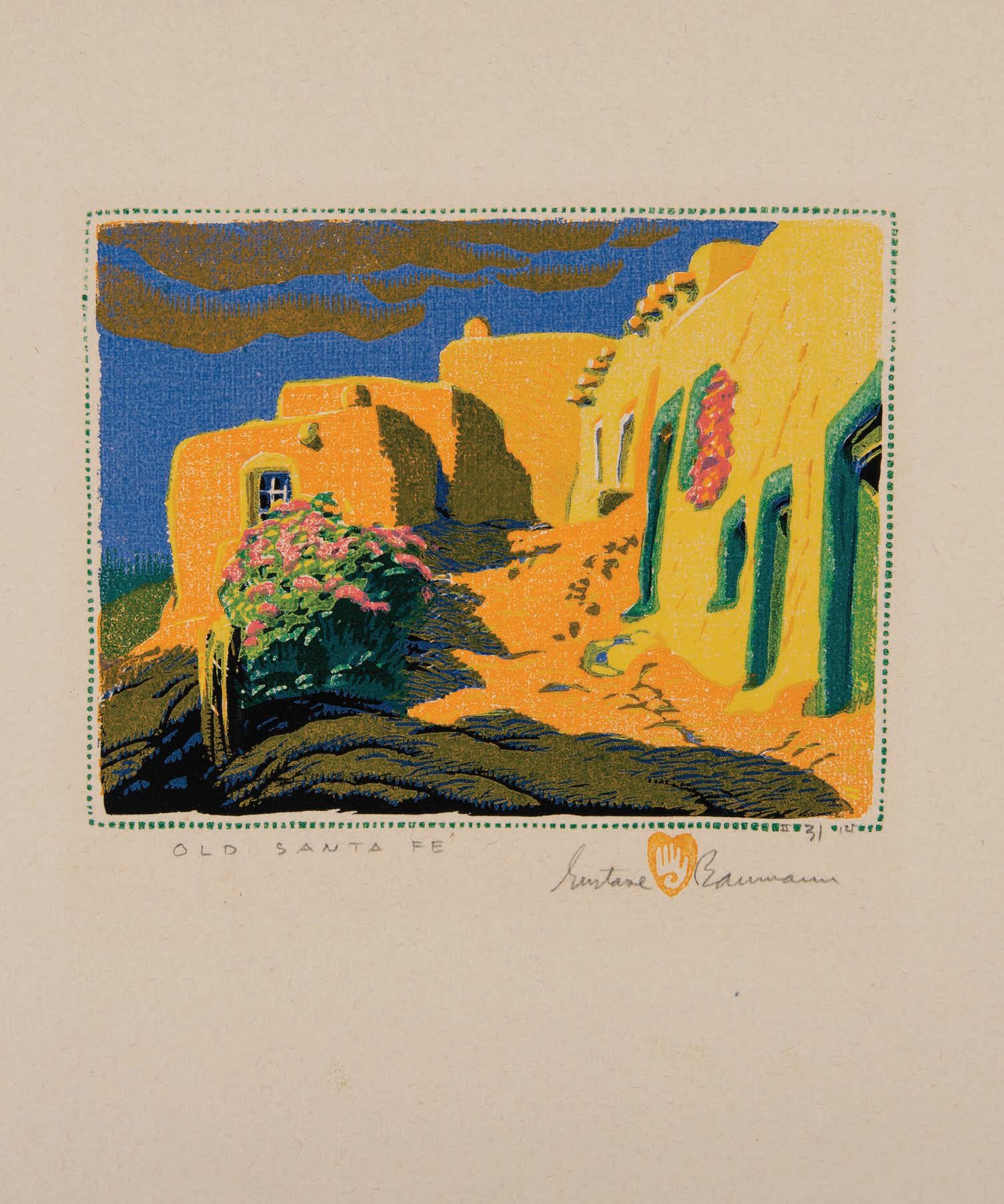
Explore Baumann’s diverse body of work, including his woodblock prints, paintings, sculptures, and more, within the cultural and historical context of northern New Mexico. Drawing from the museum’s collection, the exhibition examines the artist’s creative process, cross-cultural influences, and his pivotal role in shaping the region’s artistic identity.
JULY 18, 2025 – FEBRUARY 22, 2026


Choosing Nusenda Credit Union means getting cash back through Community Rewards and earning bonus dividends with Earn Your Return. By participating in Nusenda’s financial products, you support community initiatives and enhance your own financial well-being.
| Find the nearest branches, services, and more at nusenda.org




Giacomo Puccini
June 27
July 2, 5, 11, 18, 28
August 2, 6, 14, 19, 23



DINING
GREEN CHILE COUNTRY JAMBOREE
INDIGENOUS WAYS FESTVAL
INDIGENOUS FUTURES 4EVER MARKE T
LAST FRIDAY ART WALKS
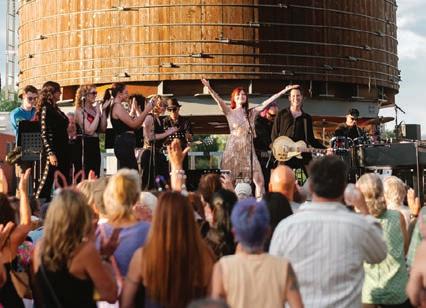
MUSIC COCKTAILS SHOPPING
INTERNATIONAL FOLK ART MARKET
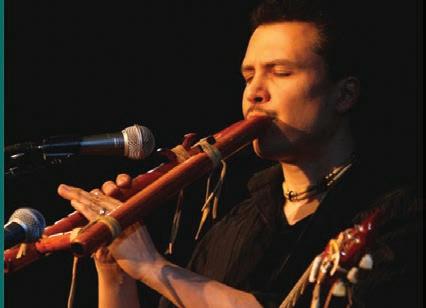


SITE SANTA FE INTERNATIONAL
ART MARKETS
FARMER’S MARKET

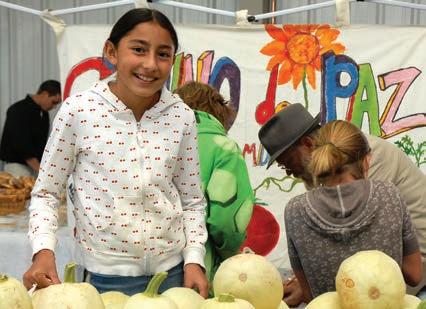

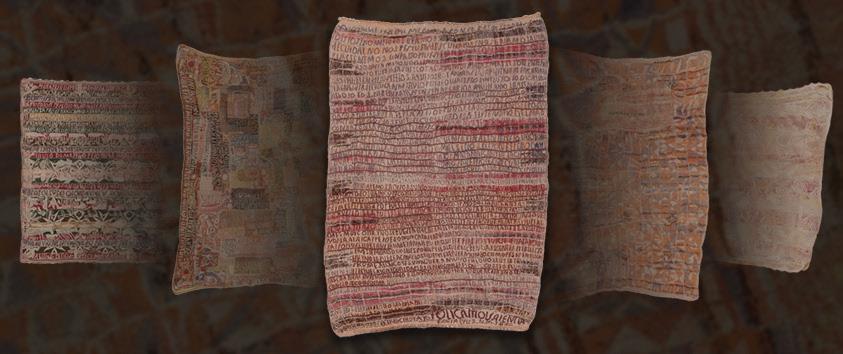
Appearances Deceive: Embroideries by Policarpio Valencia
Opens June 8, 2025
Appearances Deceive is the first retrospective of Nuevomexicano artist Policarpio Valencia, whose embroidered textiles contemplate the serious subjects of morality and mortality with wit and whimsy.
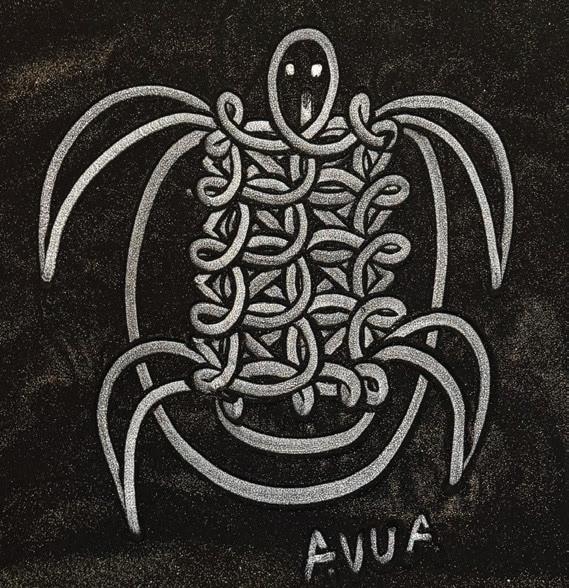
Sandroing: Tracing Kastom in Vanuatu
Opens June 29, 2025
More than an intricate and ephemeral artform, sand drawing in Vanuatu is a storytelling tradition, conveying folklore, history, genealogy, rituals and other forms of kastom (local, traditional knowledge). Sand drawing is a UNESCO-designated Masterpiece of the Oral and Intangible Heritage of Humanity. The exhibition features works created by Edgar Hinge, a sand drawing practitioner and museum educator from Port Vila, Vanuatu.
706 Camino Lejo, on Museum Hill • Santa Fe, NM 87505 (505)476-1204 • moifa.org
Call or visit our website to purchase tickets and learn more information


OWNER
Robin Martin
PUBLISHER
Patrick Dorsey
EXECUTIVE
EDITOR
Bill Church
EDITORIAL
Magazine Editor
Ashley M. Biggers abiggers@sfnewmexican.com
Designer
Linda M. Peters
linda@swelldesign.net
Copy Editor
Peg Goldstein
CONTRIBUTORS
Gabriela Campos, Iris Fitzpatrick, Eli Ellison, Tira Howard, Kelly Koepke, Lanee Lee, Jennifer Levin, Gabriella Marks, Elizabeth Miller, Adele Oliveira, Michael G. Seamans, Steven St. John, Jim Weber
ADVERTISING
Director of Display Advertising
Wendy Ortega
Classified Advertising Manager
Laura Harding
ADVERTISING SALES
Mayra Aldaz
Maria Lopez Garcia
Deb Meyers
Veronica Rigales
Vanessa Ruedeman
Trina Thomas
ADVERTISING ART DEPARTMENT
Designers
Elspeth Hilbert, Rick Artiaga, Justin Bixler
PRODUCTION
Operations Director, Tim Cramer
Prepress Manager, Anthony Welch
Assistant Production Director, Brenda Shaffer
Packaging Manager, Josh Harris
DISTRIBUTION
Circulation Director
Michael Reichard
TECHNOLOGY
Technology Director
Michael Campbell
WEB
santafenewmexican.com
ADDRESS
Office: 150 Washington Ave. #105
Hours: 8 a.m.-5 p.m. Monday-Friday
Advertising Information: 505-995-3852
Delivery: 505-986-3010, 800-873-3372
For copies of this magazine, call 505-986-3010 or email
circulation@sfnewmexican.com.
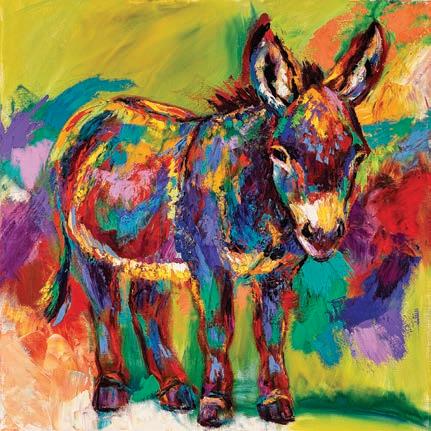
Kay Contemporary Art 600 Canyon Road (505) 365-3392
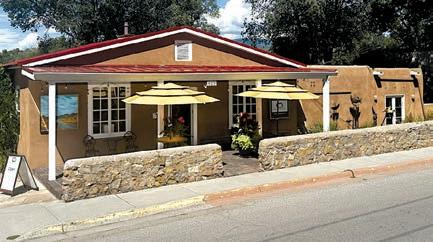
Canyon Road Contemporary Art 409 Canyon Road (505) 983-0433
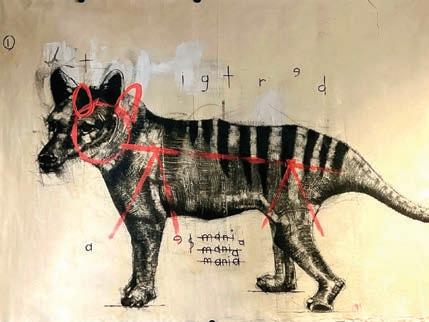
Barbara Meikle Fine Art 236 Delgado Street (505) 992-0400
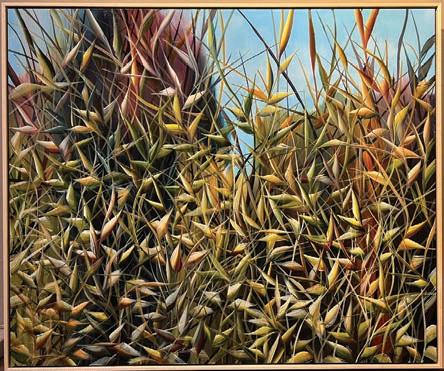
Aurelia Gallery 414 Canyon Road (505) 501-2915
(505) 922-8878
Opening June 1, 2025
36 Neighborhoods We Love
These four Santa Fe neighborhoods offer a wealth of shopping, dining, entertainment, and creative experiences — with plenty of tucked-away surprises for locals and visitors alike.
By Jennifer Levin
Photography by Tira Howard
45 Agua es Vida
In New Mexico, water is life. Meet six New Mexicans reflecting on their connections to the Rio Grande in their lives and work.
As told to Ashley M. Biggers
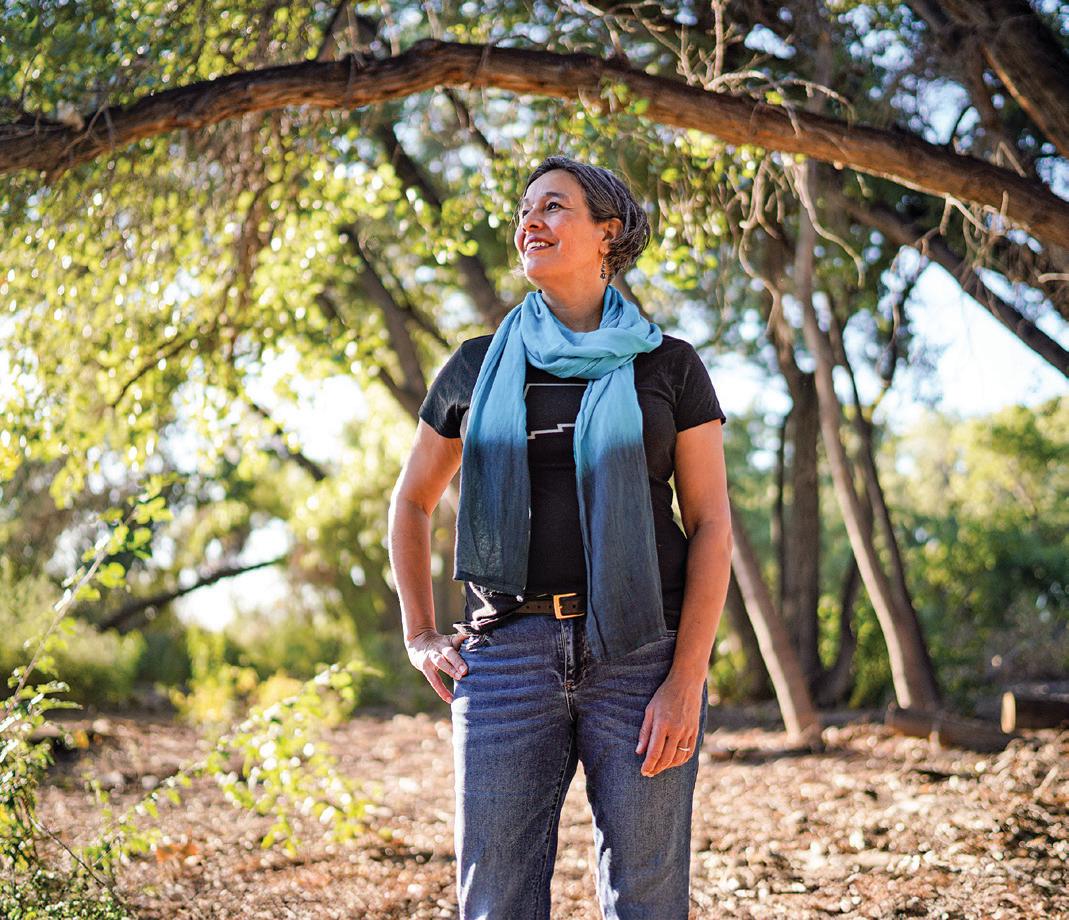
By Adele Oliveira
by Steven St. John
75 Drink
Sip cocktails at three Railyard bars.
79 Gallery Guide
Browse eight art destinations on Canyon Road, in the Railyard District, and on the Plaza.
85 DIY
Tap into Santa Fe’s creative well at Muses Santa Fe.
88 Shop
1 1 ways to show off your New Mexico pride
93 Makers
Meet artisans crafting leather goods, body products, and more.
103 Last Look
Learn more about the most eye-catching portals around the Santa Fe Plaza.






Trust your care to those you know. The results are extraordinary. The care is personal.


JUNE 7–8, 10 a.m.–4 p.m.
Santa Fe Spring Festival
Learn about New Mexico’s rich cultural heritage through demonstrations of sheep shearing and horno bread baking; browse handmade goods at the fiber arts market; and check out craft activities for kids. Tickets: See website for ticket information and purchases. El Rancho de Las Golondrinas, 334 Los Pinos Road. golondrinas.org
JUNE 13–22
CURRENTS 2025
Art & Technology Festival
Indoor and outdoor installations, augmented mixed-reality environments, AI-generated/assisted 2D and 3D works, robotics, and
multimedia performances. Tickets: day pass $10, all-festival pass $15, ages 20 or under no charge. El Museo Cultural de Santa Fe, 555 Camino de la Familia. currentsnewmedia.org
JUNE 18–21
Rodeo de Santa Fe
Including ropers, youth mutton bustin’ and barrel racing, specialty acts, and the Exceptional Rodeo, open to children and adults with physical and mental exceptionalities. Tickets: general admission from $20, box seats in pairs for $45 each. Rodeo Grounds, 3237 Rodeo Road. rodeodesantafe.org
JUNE 20–28
Los Alamos ScienceFest
Free community events, including concerts, markets, and a beer garden. Discovery Day is a
highlight, with hands-on science activities organized by a variety of STEM partners. Downtown corridor. losalamossciencefest.com
JUNE 28
Santa Fe Pride
An annual celebration of the local LGBTQ+ community. A parade begins at 10 a.m. at the corner of Paseo de Peralta and Old Santa Fe Trail and travels to the Plaza, which then hosts educational booths and a day of entertainment. Santa Fe Plaza. hrasantafe.org
JULY 4
Pancakes on the Plaza
Get there early for the 7 a.m. breakfast under the shade trees, take a gander at the Santa Fe Vintage Car Club show, and shop the arts and crafts booths. Tickets: available on-site and online; details to
be announced. Santa Fe Plaza. pancakesontheplaza.com
JULY 5–6, NOON–6 P.M.
Santa Fe Wine Festival
Sample New Mexico vintners’ wines, shop at arts and crafts booths, have a bite to eat, and dance to live music at one of the longest-running wine festivals in the state. Tickets: See website for ticket information and purchases. El Rancho de Las Golondrinas, 334 Los Pinos Road. golondrinas.org
JULY 15 AND 22 , 11:30 a.m.–4:30 p.m.
Behind Adobe Walls
The Santa Fe Garden Club’s annual event offering guided bus tours of four different gardens and private residences each week. Tickets: tour $130, optional lunch $45. Santa Fe area. santafegardenclub.org
JULY 19, 10 a.m.–4 p.m.
Fiesta de los Niños
Bring the whole family for a trip through New Mexico’s vibrant past via immersive activities, including tin stamping, rope making, tortilla making, and building adobe houses. Food trucks and local artisans are on-site. Tickets: See website for ticket information and purchases. El Rancho de Las Golondrinas, 334 Los Pinos Road. golondrinas.org
AUGUST 9–10, NOON–6 p.m.
Santa Fe Beer & Food Festival
Taste offerings from local breweries and food vendors, peruse arts and crafts booths, and enjoy live entertainment throughout both days. Tickets: See website for ticket information and purchases. El Rancho de Las Golondrinas, 334 Los Pinos Road. golondrinas.org
AUGUST 22–24
Zia Regional Rodeo
A charitable event held by the New Mexico Gay Rodeo Association. Tickets: details to be announced. Rodeo Grounds, 3237 Rodeo Road. nmgra.org
AUGUST 29
Burning of Zozobra
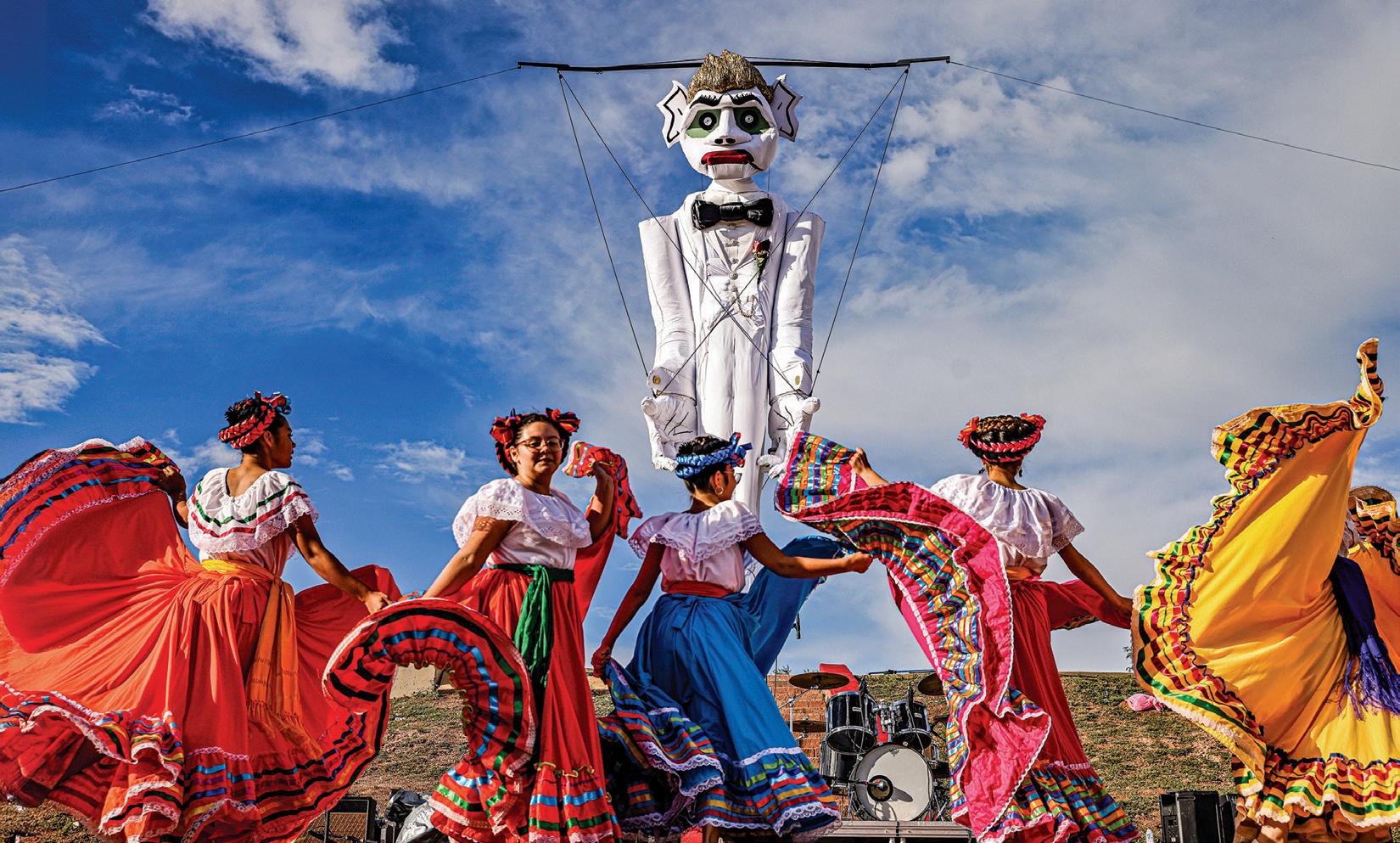
Old Man Gloom goes up in flames to burn onlookers’ worries away during the 101st annual event. Gates open at 4 p.m. Tickets: from $37.50. New Mexico residents receive a $5 discount on general admission. Fort Marcy Park. burnzozobra.com
AUGUST 30–SEPTEMBER 7
Fiesta de Santa Fe
A long-running community tradition featuring a pre-Fiesta show, an arts and crafts market, Mariachi Extravaganza de Santa Fe, live music performances at the Santa Fe Plaza Bandstand, a pet parade (September 6), and the Desfile de la Gente, Historical/ Hysterical Parade (September 7). Santa Fe Plaza. santafefiesta.org
SEPTEMBER 20–21
Eldorado Studio Tour
Artists in Eldorado open their studios to visitors in this long-running annual event organized by the Eldorado Arts and Crafts Association. Free. eldoradoarts.org
SEPTEMBER 20–21, 27–28
High Road Art Tour
Artists along the High Road to Taos Scenic Byway open their studios and galleries to visitors. Free. highroadnewmexico.co
SEPTEMBER 24–28
Santa Fe Wine & Chile Fiesta
Food and wine tastings, luncheons, seminars, and cooking demonstrations with local chefs and
global wine brands. Tickets: on sale in June. Various venues. santafewineandchile.org
MAY 16–18
Santa Fe International Literary Festival
Featuring big-stage presentations, keynote lectures, intimate conversations, and walking tours with renowned literary figures, including National Book Award winner
Percival Everett (opening night speaker), Amy Tan, Miranda July, Michael Pollan, and Heather Cox Richardson. Tickets: from $27.50.
Santa Fe Community Convention Center, 201 W. Marcy St. sfinternationallitfest.org
JULY 10–13
International Folk Art Market
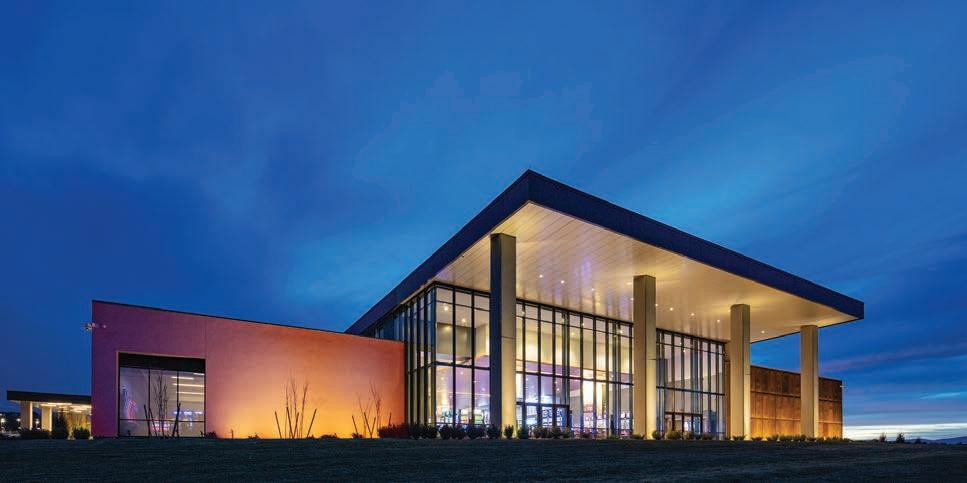
Shop traditional crafts and folk art from more than 160 artists from some 50 countries during the annual market. Tickets: from $20. Santa Fe Railyard Park. folkartmarket.org
JULY 26–27
Traditional Spanish Market
Handcrafted Spanish colonial works by adult and youth artisans in the largest market of its kind in the nation. Free to attend. Santa Fe Plaza. traditionalspanishmarket.org
JULY 26–27, 8 a.m.–5 p.m.
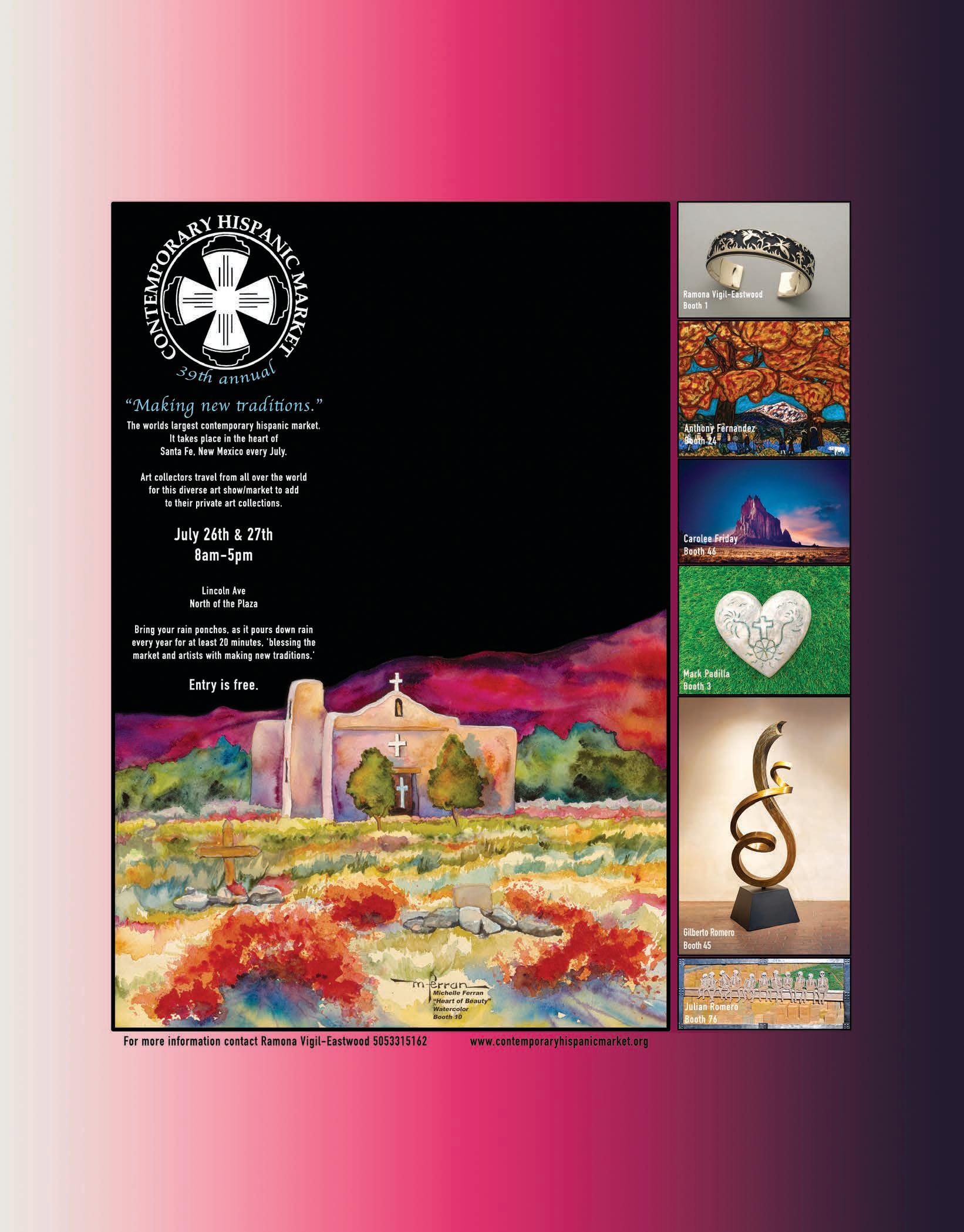
Contemporary Hispanic Market
Juried selection of contemporary works by established and emerging artists with Hispanic heritage. Lincoln Avenue. contemporaryhispanicmarket.org
AUGUST 16–17
Santa Fe Indian Market
Some 1,000 Native American artists from 200 tribes create the traditional and contemporary jewelry, pottery, textiles, paintings, and sculptures showcased in this 103-year-old market. Santa Fe Plaza and surrounding streets. swaia.org
ONGOING
SATURDAYS 8 a.m.–1 p.m., TUESDAYS (May–December)
8 a.m.–1 p.m.
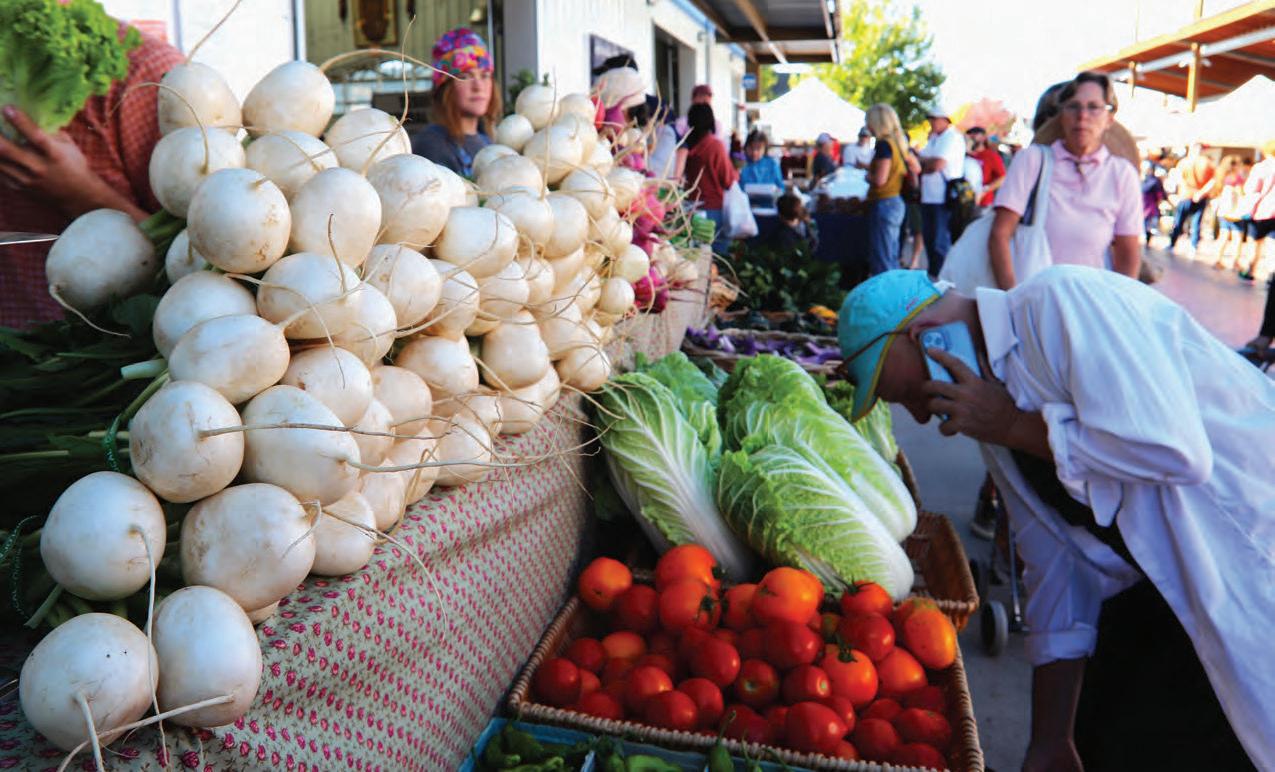
Santa Fe Farmers Market Market featuring more than 150 farmers and producers from Northern New Mexico. Santa Fe Railyard. santafefarmersmarket.com
SATURDAYS (March–December)
9 a.m.–2 p.m.
Santa Fe Artists Market
Outdoor Saturday market featuring arts and crafts booths. Santa Fe Railyard Plaza. santafeartistsmarket.com



LIVE ENTERTAINMENT
WINE & JAZZ WEDNESDAYS
6PM to 9PM Wine Specials 3PM to 10PM 3PM to 6PM Half Priced Drinks and Appetizers
DAILY HAPPY HOUR

FOOD & BEVERAGE SPECIALS
Featuring our Prime Rib Special on Wednesdays and Saturdays & our Crab and Shrimp Boil Special on Fridays

Santa Fe, NM







SATURDAYS 9 a.m.–4 p.m., SUNDAYS 10 a.m.–4 p.m.
El Museo Cultural de Santa Fe Mercado
Art, antiques, collectibles, jewelry, and other goods from 50 vendors; through June. 550 Camino de la Familia. elmuseocultural.org
SUNDAYS 10 a.m.–3 p.m.
Railyard Artisan Market Gifts, souvenirs, and mementos from local artisans and creative small businesses. Santa Fe Farmers Market Pavilion. santafefarmersmarket.com
THROUGH JUNE 8, 2025
Echoes: Selections from the Wheelwright Museum’s Permanent Collection
Established and emerging artists show works in diverse media, ranging from jewelry and fashion to sculpture, textiles, and ceramics. Wheelwright Museum of the American Indian, on Museum Hill, 704 Camino Lejo. wheelwright.org
THROUGH JUNE 29, 2025
My Way Home
Santa Fe–area artist Jordan Ann Craig’s bold, geometric paintings blend Indigenous traditions and modern techniques to explore her identity and memories. IAIA Museum of Contemporary Native Art, 108 Cathedral Place iaia.edu/mocna
THROUGH JULY 13, 2025
Kite and Wíha ble S’a Center: Dreaming with AI
This exhibition features recent installation, performance, and video works from Dr. Suzanne Kite (aka Kite; Oglála Lak óta), combining machine learning, artificial intelligence, and Indigenous knowledge. IAIA Museum of Contemporary Native Art, 108 Cathedral Place. iaia.edu/mocna
THROUGH JULY 25, 2025
Marsden Hartley: Adventurer in the Arts
Marsden Hartley (1877–1943), the self-proclaimed “painter of Maine,” traveled to New Mexico throughout his life and considered it an influential place in his work. This exhibition brings together more than 40 paintings and drawings spanning 36 years of the American modernist’s career. New Mexico Museum of Art, 107 W. Palace Ave. nmartmuseum.org

THROUGH AUGUST 24, 2025
Eugenie Shonnard:
Breaking the Mold
This is the first major posthumous exhibition of the acclaimed sculptor, who was a pivotal figure in the history of art and sculpture in the Southwest. New Mexico Museum of Art, 107 W. Palace Ave. nmartmuseum.org
THROUGH SEPTEMBER 2, 2025
Between the Lines:
Prison Art & Advocacy
This exhibition explores the effects of incarceration through artworks, interviews with returned citizens and their allies, and art-making demonstrations. Museum of International Folk Art, on Museum Hill, 706 Camino Lejo. moifa.org
THROUGH OCTOBER 2025
A Circle That Nothing Can Break
Georgia O’Keeffe depicted circles, a motif she returned to throughout her career, with emotional symbolism and abstraction. George O’Keeffe Museum, 217 Johnson St. okeeffemuseum.org
THROUGH NOVEMBER 2, 2025
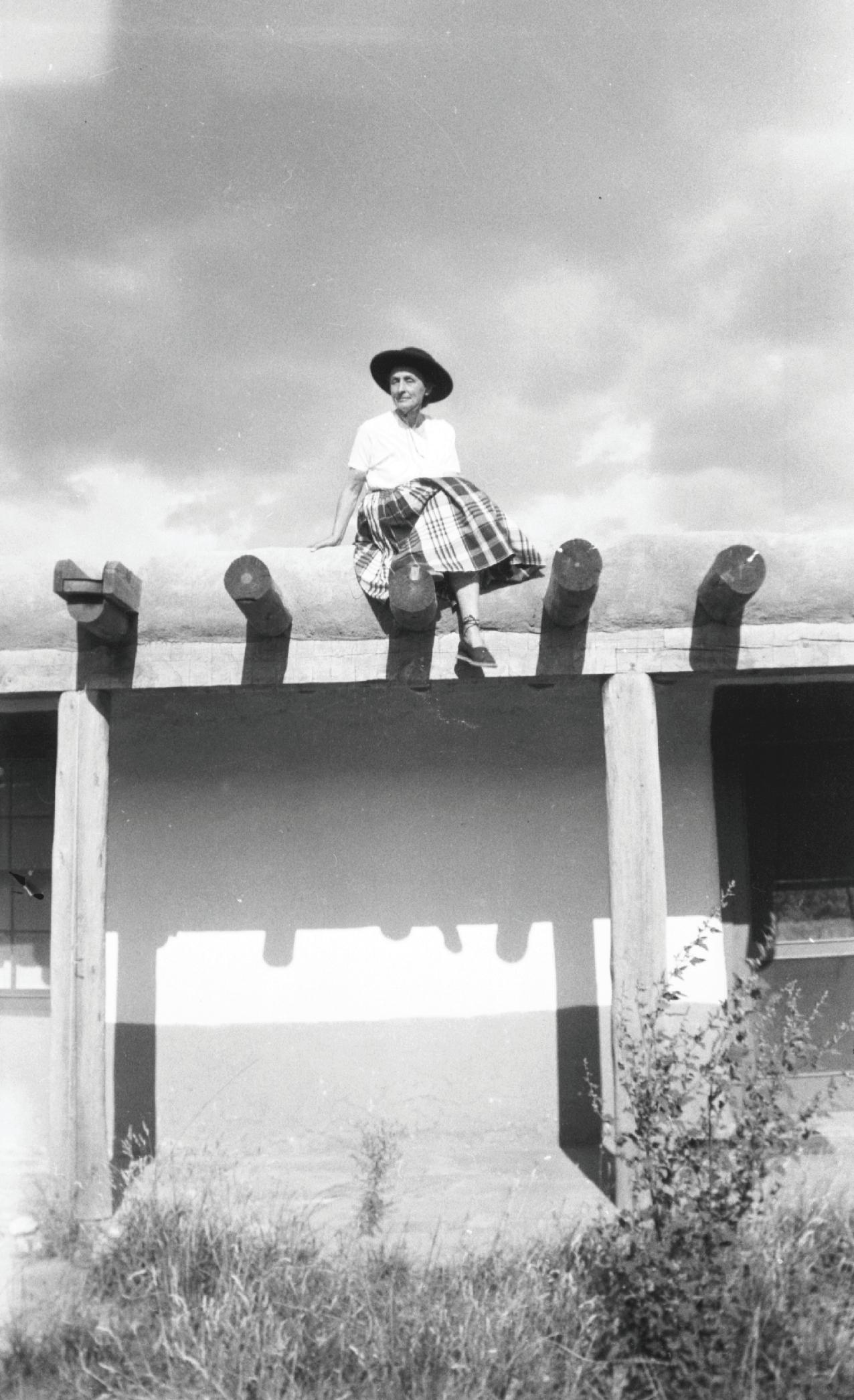
Georgia O’Keeffe: Making a Life
This exhibition explores the artist’s identity as a “maker” who carefully curated her clothing and surroundings. George O’Keeffe Museum, 217 Johnson St. okeeffemuseum.org
THROUGH DECEMBER 13, 2025
100 Years of Collecting | 100 Years of Connecting
This exhibition celebrates the centennial of the Spanish Colonial
THROUGH JULY 2, 2028
Here, Now and Always
This groundbreaking exhibition centers the voices and perspectives of the Indigenous people of the American Southwest and features more than 600 objects from the museum’s collection of ceramics, jewelry, and other creations. Museum of Indian Arts and Culture, on Museum Hill, 710 Camino Lejo. indianartsandculture.org
THROUGH SEPTEMBER 20, 2030
Forks in the Road: A Diner’s Guide to New Mexico
Take a culinary adventure through New Mexico’s restaurant scene to visit iconic, historic, and headline-making eateries across the state and explore how each one reflects the spirit of its community. New Mexico History Museum, 113 Lincoln Ave. nmhistorymuseum.org
JUNE 8–MARCH 30, 2026
Arts Society through the littleknown and at times surprisingly personal stories behind the organization and its collection. Nuevo Mexicano Heritage Arts Museum, on Museum Hill, 750 Camino Lejo. nmheritagearts.org
THROUGH JANUARY 10, 2026
Memo to the Mother: Bob Haozous’s Messages to Mother Earth
This exhibition brings together sculptures, monoprints, and wearable sculpture that represent Bob Haozous’s decades-long thinking about the environment. Wheelwright Museum of the American Indian, on Museum Hill, 704 Camino Lejo. wheelwright.org
THROUGH MARCH 6, 2026 iNgqikithi yokuPhica/Weaving Meanings: Telephone Wire Art from South Africa
Featuring historical and contemporary works, the exhibition includes beer pot lids, platters, vessels, and other sculptural assemblances that speak to the artistic tradition from KwaZuluNatal. Museum of International Folk Art, on Museum Hill, 706 Camino Lejo. moifa.org
THROUGH SEPTEMBER 30, 2026
Zozobra: A Fire That Never Goes Out
Explore Zozobra’s evolution from a backyard bonfire to a century-old community tradition via art, artifacts, and other memorabilia. New Mexico History Museum, 113 Lincoln Ave. nmhistorymuseum.org
Appearances Deceive: Embroideries by Policarpio Valencia
A retrospective of Nuevomexicano artist Policarpio Valencia (1853–1931), whose embroidery considered morality and mortality. Museum of International Folk Art, on Museum Hill, 706 Camino Lejo. moifa.org
JUNE 20–SEPTEMBER 21
Timeless Mucha: The Magic of Line
This exhibition explores the career of art nouveau pioneer Alphonse Mucha (1860–1939) and his impact on art since the 1960s. New Mexico Museum of Art, 107 W. Palace Ave. nmartmuseum.org
JUNE 27–JANUARY 13, 2026
Once within a Time: 12th International
Drawing on the film Once Within a Time by Santa Fe filmmaker Godfrey Reggio for inspiration, SITE Santa Fe’s 12th International brings figures both historical and current, real and imagined, into dialogue with works of contemporary art. SITE Santa Fe, 1606 Paseo De Peralta. sitesantafe.org
JUNE 29–APRIL 30, 2026
Sand Drawing: Tracing Kastom in Vanuatu
In the South Pacific nation of Vanuatu, sand drawing conveys folklore, histories, genealogy, and ritual. This exhibition spotlights the art form. Museum of International Folk Art, on Museum Hill, 706 Camino Lejo. moifa.org
JULY 18–FEBRUARY 1, 2026
Gustave Baumann: The Artist’s Environment
Known for his woodblock prints, Baumann was one of the most beloved artists and cultural figures in Santa Fe. This exhibition explores his artistic output and offers a close look at how he engaged the physical, cultural, and artistic environments in which he worked. New Mexico Museum of Art, 107 W. Palace Ave. nmartmuseum.org
THROUGH MAY 18, 2 and 7:30 p.m. Bike America
New Mexico Actors Lab presents award-winning playwright Mike Lew’s Bike America, a theatrical cross-country bike trip from Boston to California. Tickets: $40. The Lab Theater, 1213 Parkway Drive. nmactorslab.com
THROUGH MAY 25, 2 and 7:30 p.m.
Laughs in Spanish
A fast-paced, cafecíto-induced comedy from Santa Fe Playhouse about art and success — and mothers and daughters. Tickets: from $20. Santa Fe Playhouse, 142 E. De Vargas St. santafeplayhouse.org
MAY 17, 8 p.m.
Kenny Wayne Shepherd Band with Bobby Rush Blues and rock fusion. Tickets: from $49. Buffalo Thunder, 30 Buffalo Thunder Trail. hiltonbuffalothunder.com
MAY 17, 9 p.m.
Nightly
Presented by Lensic360, the electrifying alt-pop indie trio performs with Jonah Marais and STRUAN. Tickets: from $25. Meow Wolf, 1352 Rufina Circle. lensic360.org
MAY 18, 4 p.m.
Faust
The Santa Fe Symphony Orchestra and Chorus present one of Berlioz’s most striking works, La Damnation de Faust. Tickets: from $25. Lensic Performing Arts Center, 211 W. San Francisco St. lensic.org
May 21, NOON
Organ Recital III
Santa Fe Pro Musica and the New Mexico Museum of art present a 50-minute concert with David Felberg on violin and David Solem on organ. Free. New Mexico Museum of Art, St. Francis Auditorium, 107 W. Palace Ave. sfpromusica.org
MAY 21, 7:30 p.m.
Ryan Adams: Heartbreaker ’25 World Tour
The seven-time Grammynominated singer/songwriter performs. Tickets: from $65. Lensic Performing Arts Center, 211 W. San Francisco St. lensic.org
MAY 22 , 7 p.m.
We Remember Carmen Flórez-Mansi leads the Santa Fe Symphony Chorus in a spectacular — and free — community concert. Tickets: free. Cathedral Basilica of St. Francis of Assisi, 131 Cathedral Place. santafesymphony.org
MAY 22–JUNE 8, 2 and 7:30 p.m.
Action at a Distance
Theater Grottesco presents this bold theatrical experiment crafted in collaboration with the Lisa Fay/Jeff Glassman Duo. Tickets: from $22.50. Teatro Paraguas, 3205 Calle Marie. theatergrottesco.org
MAY 23–AUGUST 29, 7 p.m. (last Friday of each month)
The Long Con Improv Group
Join the local improve group, stand-up comedians, and other improvisers for 60 minutes of comedy fun May 23, June 27, July 25,
and August 29. Tickets: $10 at the door. Iconik Red, 1366 Cerrillos Road. Instagram @thelongconimprov
MAY 27, 7 p.m.
The Wrecks
Presented by Lensic360, the alternative pop rock band performs with guest acts
Quarters of Change and Benjamin Carter. Tickets: $35. Meow Wolf, 1352 Rufina Circle. meowwolf.com
MAY 28, 7:30 p.m.
Dope Lemon
Presented by Lensic360, acclaimed Australian artist Angus Stone performs laid-back grooves. Tickets: from $25. Lensic Performing Arts Center, 211 W. San Francisco St. lensic360.org
MAY 29, 7:30 p.m.
Tom Papa: Grateful Bread Tour
The celebrated comedian, actor, and author performs. Tickets: from $45. Lensic Performing Arts Center, 211 W. San Francisco St. lensic.org
MAY 31, 7 p.m.
Trampled by Turtles
The American bluegrass band performs. Tickets: from $46. The Bridge at Santa Fe Brewing, 37 Fire Place. santafebrewing.com

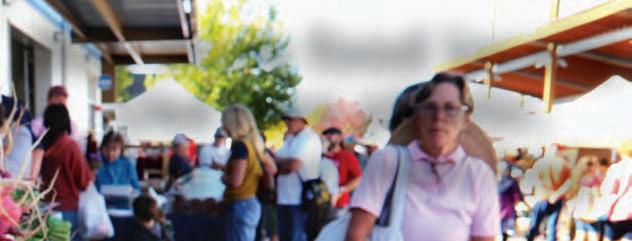

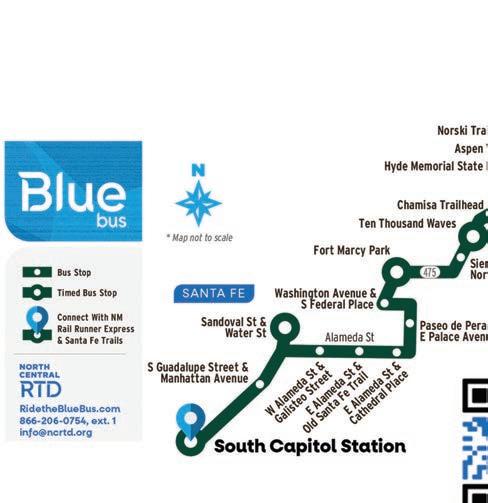
The Blue Bus 255 Mountain Trail route runs every day of the year with free rides to fresh mountain air and trailhead adventures. Pack a picnic, bring the kids or just enjoy the views. Ride the Blue Bus this summer.


MAY 31–AUGUST 28
Santa Fe Summer Scene
A series of free outdoor performances at Santa Fe Plaza, the Railyard, Reunity Resources Farm, and Swan Park. lensic360.org/ page/summer-scene
JUNE 3, 7:30 p.m.
Luciane Dom
Presented by AMP Concerts, the Brazilian singer/songwriter performs. Paradiso Santa Fe, 903 Early St. ampconcerts.org
JUNE 5–8, 12–15, and 19–22
A Subtle Kind of Murder
Centered on the novel In a Lonely Place by Dorothy Hughes, this play from the New Mexico Actors Lab examines what happens when the past collides with the present. Tickets: from $40. The Lab Theater, 1213 Parkway Drive. nmactorslab.com
JUNE 10, 8 p.m.
The Kiffness
Presented by Lensic360, The Kiffness is a significant figure in the global viral music scene and is celebrated for his innovation. Tickets: from $33. Meow Wolf, 1352 Rufina Circle. meowwolf.com
JUNE 12–22 , Thursday–Saturdays 7 p.m., Sunday 2 p.m.
Into the Woods
Presented by Tri-M Productions, the 1986 Broadway musical intertwines the plots of several Brothers Grimm fairy tales. Tickets: from $34. Santa Fe High School Performing Arts Center Theater, 2100 Yucca St. trimsantafe.org
JUNE 17, 7:30 P.M.
Punch Brothers
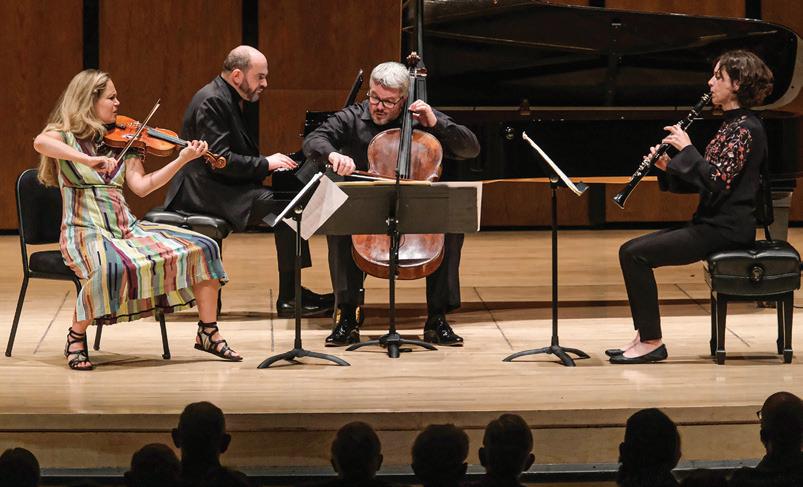
The virtuosic folk quintet features mandolinist Chris Thile, guitarist Chris Eldridge, bassist Paul Kowert, banjoist Noam Pikelny, and violinist Brittany Haas. Tickets: from $50. Lensic Performing Arts Center, 211 W. San Francisco St. lensic.org
JUNE 18, 7:30 p.m.
Kyle Harper: Climate Change & Contagion — Complex Crises Past & Present
Presented by the Santa Fe Institute, the University of Oklahoma professor discusses anthropogenic climate change and its association with “contagious” risks, from conflict to pandemic disease. Tickets: free. Lensic Performing Arts Center, 211 W. San Francisco St. lensic.org
JUNE 27–AUGUST 22
Santa Fe Opera
The 68th festival season features 38 performances encompassing
three new productions, a beloved Santa Fe Opera revival, and the remount of an award-winning international production. The presented works are La bohéme (June 27–August 3), The Marriage of Figaro (June 28–August 22), Rigoletto (July 12–August 20), The Turn of the Screw (July 19–August 5), and Die Walküre (July 26–August 21). Tickets: from $52. Santa Fe Opera, 301 Opera Drive. santafeopera.org
JULY 4–6, JULY 10–13, Thursday–Saturday 7:30 p.m., Sunday 2 p.m.
Othello
Incite Shakespeare Company
Santa Fe presents one of Shakespeare’s most complex, heartbreaking, and riveting tragedies, which examines race, love, and manipulation. The modern-dress production features original music and imaginative staging. Tickets: pay what you can; suggested price $35. New Mexico Actors Lab, 1213 Parkway Drive. iscsantafe.org
JULY 5, 7 p.m.
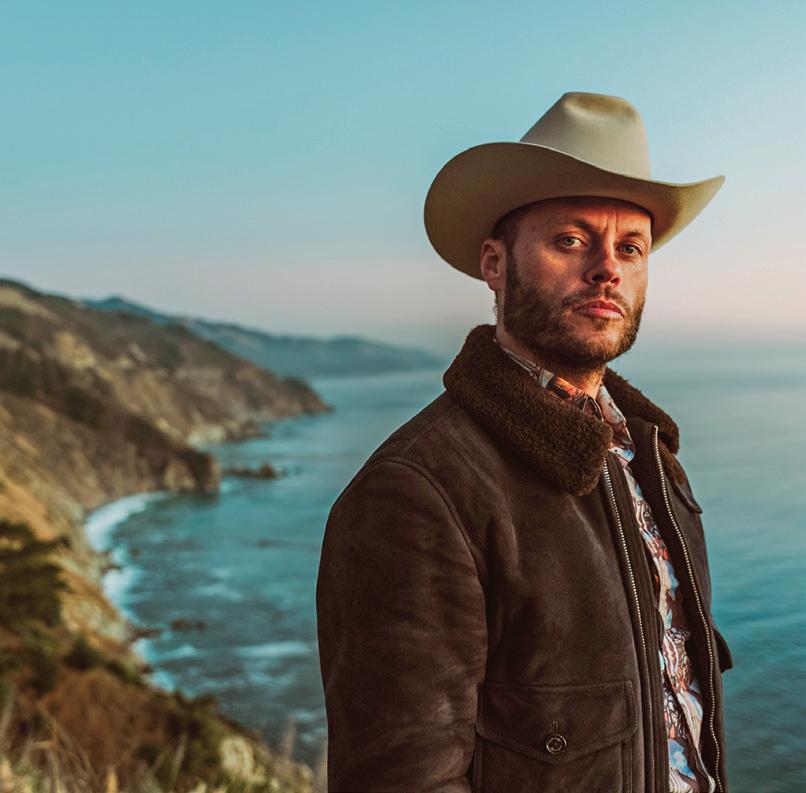
Charley Crockett
Lensic360 presents the Grammy Award–nominated Texas-born maverick playing his rebellious strain of country. Tickets: from $50 (Taos residents $35). Kit Carson Park, 211 Paseo Del Pueblo Norte, Taos. lensic360.org
JULY 5, 8 p.m.
Rodney Atkins
American country music. Tickets: details to be announced. Buffalo Thunder, 30 Buffalo Thunder Trail. hiltonbuffalothunder.com
JULY 10–AUGUST 2 , Thursday–Saturday 2 and 7:30 p.m.
Something Rotten!
Brothers Nick and Nigel Bottom set out to write the world’s first musical and grapple with what it means to reach the top in this Santa Fe Playhouse production, set in the 1590s. Tickets: from $20. Santa Fe Playhouse, 142 E. De Vargas St. santafeplayhouse.org
JULY 11, 8 p.m.
Oak Ridge Boys
Performance by the Grand Ole Opry and Country Music Hall of Fame members, known for hits like “Elvira.” Tickets: details to be announced. Buffalo Thunder, 30 Buffalo Thunder Trail. hiltonbuffalothunder.com
JULY 11–27, Thursday–Saturday 7:30 p.m., Sunday 2 p.m.
Waking Up
A young man with a paralyzing fear of death become infatuated with a mysterious woman he meets at his uncle’s wake in this Teatro Paraguas production. Tickets: $25 general admission,
$15 limited income. Teatro Paraguas, 3205 Calle Marie. teatroparaguasnm.org
JULY 13–AUGUST 18
Santa Fe Chamber Music Festival
Some 40 concerts unfold over six weeks. Highlights include pianist Orion Weiss playing Bach’s Goldberg Variations, percussion virtuoso Colin Currie giving the festival’s first-ever solo percussion recital, and the festival debut of the JACK Quartet Tickets: from $15. St. Francis Auditorium at the New Mexico Museum of Art, 107 W. Palace Ave. santafechambermusic.com
JULY 13–AUGUST 1, 4 and 7:30 p.m.
Santa Fe Desert Chorale Summer Festival
From the professional 24-voice choir, the summer season includes three concert programs: Cantos y Cuentos, songs and stories of today’s Latin America; Mass for the Endangered, journeys of compassion, protection, and hope; and Roots & Rivers, echoes of the past, voices of the future. Tickets: from $22. Cathedral Basilica of St. Francis of Assisi (unless otherwise noted online), 131 Cathedral Place. desertchorale.org
JULY 15, 7 p.m.
Mountain Grass Unit
Presented by Lensic360, the Alabama-based bluegrass quartet performs. Tickets: from $25. The Mothership at Taos Mesa Brewing, 20 ABC Mesa Road, El Prado. lensic360.org
JULY 18–19
Andrea Magee’s She Rises III
A celebration of women in music. Tickets: $63 per day. Daleee at KTAOS Solar Center, 9 NM 150, Taos. sherisesfest.holdmyticket.com
JULY 18–20, JULY 24–27
A Midsummer Night’s Dream
Incite Shakespeare Company Santa Fe journeys into the wild woods on the edges of Athens for a night of hilarity, confusion, and magic, with original music and physical storytelling. Tickets: pay what you can; suggested price $35. New Mexico Actors Lab, 1213 Parkway Drive. iscsantafe.org
JULY 19, 8 p.m.
Surprise Chef
Presented by Lensic360, Surprise Chef is recognized and respected for its emotive brand of cinematic soul. Tickets: from $29.75. Meow Wolf, 1352 Rufina Circle. meowwolf.com
JULY 19–AUGUST 17, Saturday 3 p.m., Sunday at noon
Chamber Music at San Miguel Chapel
The 10-performance season features the Fantastic Brass; the Young-Tirrano Duo; Archipelago, an Italian baroque ensemble; mezzo-soprano Meg Marino and friends; Duo Zuber, with flutist Patricia Zuber and marimbist Greg Zuber; a collaboration with Jamie Jordan and Daniel Druckman; and the Santa Fe Harp Quartet. Tickets: $35; students $15. San Miguel Chapel, 401 Old Santa Fe Trail. sanmiguelchapelsantafe.com
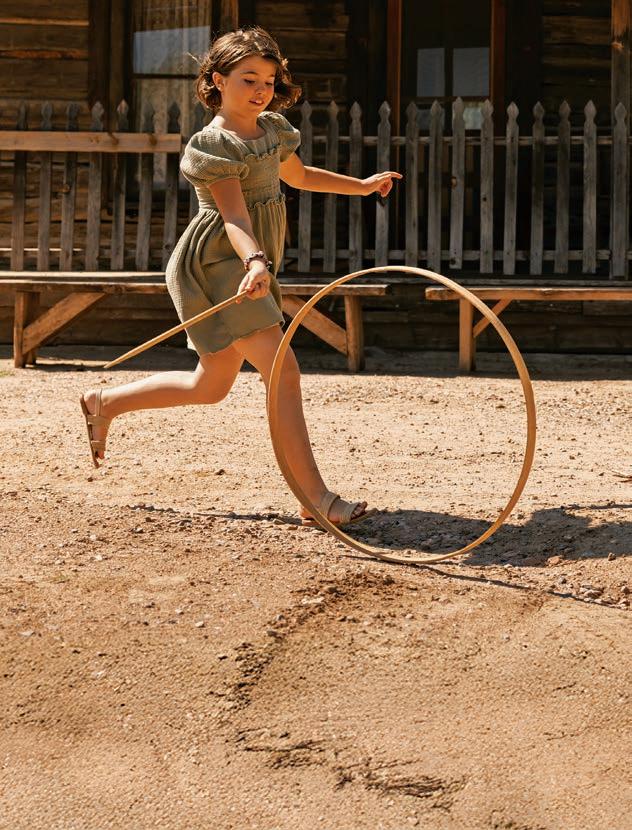
El Rancho de Las Golondrinas, “The Ranch of the Swallows,” is the premier living history museum of the Southwest with 500 acres to explore, 34 historic buildings, and hands-on experiences for all ages.

Open June–October
Seasonal Hours
Wednesday–Sunday 10 am–4 pm Hours
JULY 21, 7:30 p.m.
Father John Misty
Lensic360 presents Father John Misty performing selections from his sixth studio album, Mahashmashana. Tickets: from $49.50. The Bridge at Santa Fe Brewing, 37 Fire Place lensic360.org
July 22, 7:30 p.m.
Gillian Tett
Santa Fe Institute presents the columnist and Financial Times editorial board member. Tickets: free. Lensic Performing Arts Center, 211 W. San Francisco St. lensic.org
AUGUST 8–14, Thursday–Saturday 7:30 p.m., Sunday, 2 p.m.
Encantado: The Poetry of New Mexico
A fully staged, choreographed theatrical production celebrating the poetry of New Mexico. A cast of 10 to 12 actors performs poems in English by New Mexican poets. Tickets: $25 general admission; $15 limited income.


Teatro Paraguas, 3205 Calle Marie. teatroparaguasnm.org
AUGUST 14–31, Thursday–Saturday 7:30 p.m., Sunday 2 p.m.
Pueblo Revolt
A comedy about two Indigenous brothers living under colonial Spanish rule in New Mexico, staged by Santa Fe Playhouse. Tickets: from $20. Santa Fe Playhouse, 142 E. De Vargas St. santafeplayhouse.org
SEPTEMBER 11–13
Blossom & Bones Ghost Ranch Music Festival Indie, folk, and rock acts take the stage for a multi-day festival. Ghost Ranch, Abiquiú. ghostranchmusicfest.com
SEPTEMBER 15, 7:30 p.m.
The Swell Season
Glen Hansard and Markéta Irglová play selections from their new album, Forward. Tickets: from $89. Lensic Performing Arts Center, 211 W. San Francisco St. lensic.org
THROUGH SEPTEMBER 21
Albuquerque Isotopes
AAA baseball affiliate of the Colorado Rockies. Tickets: from $17. Rio Grande Credit Union Field at Isotopes Park, 1601 S.E. Avenida Cesar Chavez. milb.com/albuquerque
THROUGH OCTOBER 25
New Mexico United USL championship professional soccer team based in Albuquerque. Tickets: from $16. Rio Grande Credit Union Field at Isotopes Park, 1601 S.E. Avenida Cesar Chavez. newmexicoutd.com
MAY 16–18
Santa Fe Century Round-trip rides of 20, 50, and 100 miles through the scenic, historic, and challenging landscapes around Santa Fe, with awards, a kids’ race, and food trucks. Santa Fe Railyard Park. santafecentury.com
MAY 28–JULY 27
Santa Fe Fuego
Pecos League baseball. Tickets: $10. Fort Marcy Park, 490 Bishops Lodge Road. pecosleague.com — AMB

































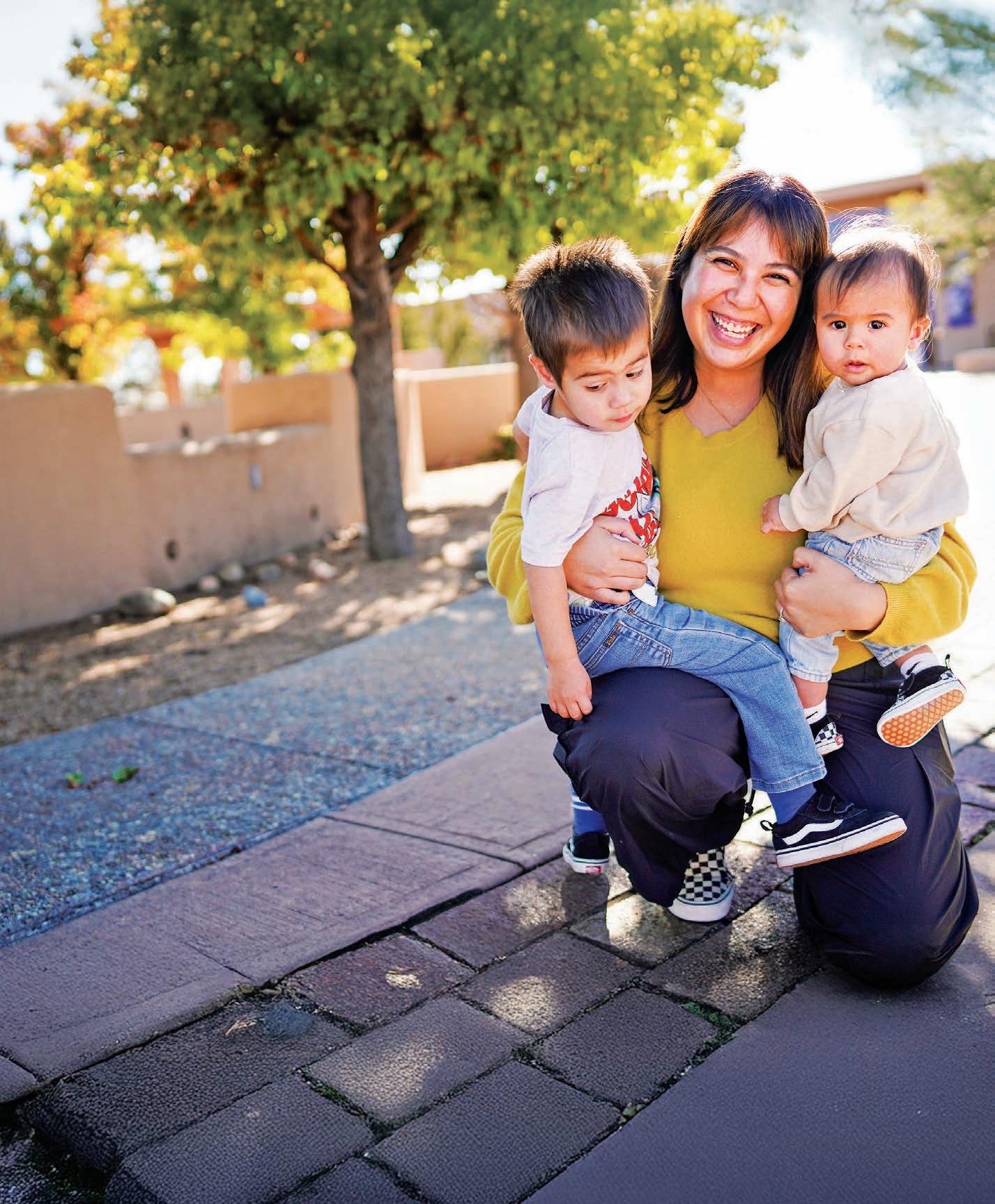
After Meghan Montelibano Gorman gave birth to her second son, in 2024, the California-born marketing professional launched another project: Santa Fam, a community resource sharing details on activities — often free and a ordable — for children. She’s built a following on social media (@_santafam_ on Instagram); on her website (santafam.com), where she shares a curated calendar; and in person via Co ee & Crying and Mom’s Night Out meetups. She observes that “family friendly” is in the eye of the beholder. Because her children, Charlie and Max, are 3 and 1, she focuses on developmentally appropriate activities for young children. Here she shares some of her favorite places to eat, drink, play, and shop with her husband and kids.
EAT We love going to the Plaza Café Southside. It has all the good food of the downtown location without the parking struggles and logistical issues. They have high chairs, easy-to-use bathrooms, and the sta is lovely. My son orders the pancakes, and I’ve been rotating between a Christmas bacon burrito and the Mexican shakshuka.
For lunch, Cowgirl is the go-to. It’s one of the only restaurants that has a play area. You can’t go wrong with the chicken tenders, and the ice cream baked potato is iconic.
For a date night, we love Midtown Bistro, especially in summer. The patio is great.
DRINK Turquoise Teapot and Cat Café is one of the best co ee and tea spots in town. It has creative seasonal drinks, and they do a kid’s cocoa there. You can also sip co ee while the kids are playing with the adoptable cats in the cat room.
We love going to Santa Fe Brewing ’s headquarters. In sunny weather, you can bring a picnic, spread out on the grass, and have a beer or a non-alcoholic beer. You can also bring bikes or scooters, and the kids can ride around on a path.
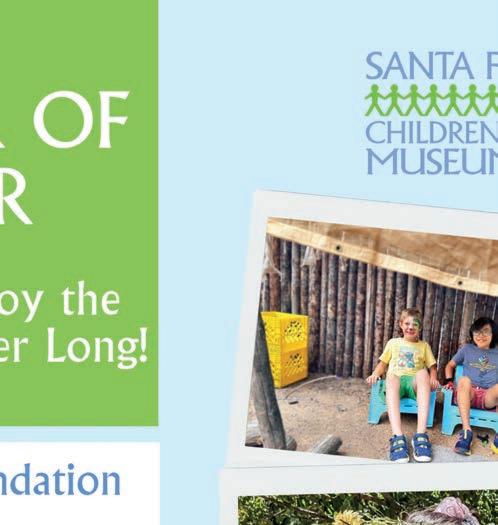
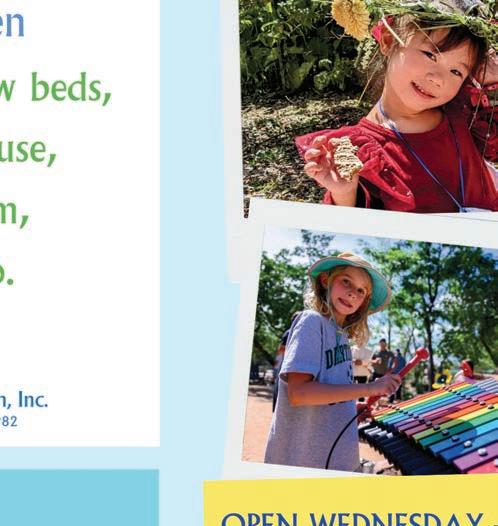
PLAY The Santa Fe Children’s Museum is the only place in the city just for children — and children of all ages. There’s a baby room, and I’ve seen teenagers having fun with the STEM activities. The new backyard is incredible. There’s a sandbox, a mud kitchen, a community garden, a sound garden, and a walking path. They’re continually adding to it.
LiggettVille Adventure Center at Santa Fe Place Mall has a huge ropes course for older kids.
The International Folk Art Museum has a play space right before you enter the main exhibit, with toys and books so kids can touch. Everything in the exhibits is behind glass.
For parks and outdoors, Pueblos del Sol , one of the city’s newly renovated parks, has two play structures, one for younger kids and one for older kids. The Dale Ball Trails have some easy walks and fun creatures to see.
SHOP There’s so much in Doodlet’s downtown. They have great things for kids — and for me! For gear, Santa Fe Trail Outfitters has a whole toddler section, so if you’ve forgotten baby sunglasses or a windbreaker, you can fi nd one there. At Indigo Baby almost everything is handmade and highly curated. — As told to AMB

LIVE LIKE A LOCAL FAMILY
PLAZA CAFÉ SOUTHSIDE: 3466 Zafarano Drive, 505-424-0755 plazacafesouth.com
COWGIRL: 319 S. Guadalupe St., 505-982-2565, cowgirlsantafe.com
MIDTOWN BISTRO: 901 W. San Mateo Road, 505-820-3121 midtownbistrosf.com
TURQUOISE TEAPOT AND CAT CAFÉ: 1221 Flagman Way, Suite B5 santafecatcafe.com
SANTA FE BREWING: 35 Fire Place, 505-424-3333, santafebrewing.com
SANTA FE CHILDREN’S MUSEUM: 1050 Old Pecos Trail, 505-989-8359 santafechildrensmuseum.org
LIGGETTVILLE ADVENTURE CENTER: 4250 Cerrillos Road, 505-355-1402 liggettville.com
INTERNATIONAL FOLK ART MUSEUM: On Museum Hill, 706 Camino Lejo 505-476-1204, internationalfolkart.org
PUEBLOS DEL SOL PARK: 3036 Governor Miles Road, santafenm.gov
DALE BALL TRAILS: Off Hyde Park Road, sfct.org/dale-ball-trails
DOODLET’S: 120 Don Gaspar Ave., 505-983-3771, doodlets.com
SANTA FE TRAIL OUTFITTERS: 110 W. San Francisco St., 505-470-3573, santafetrailoutfitters.com
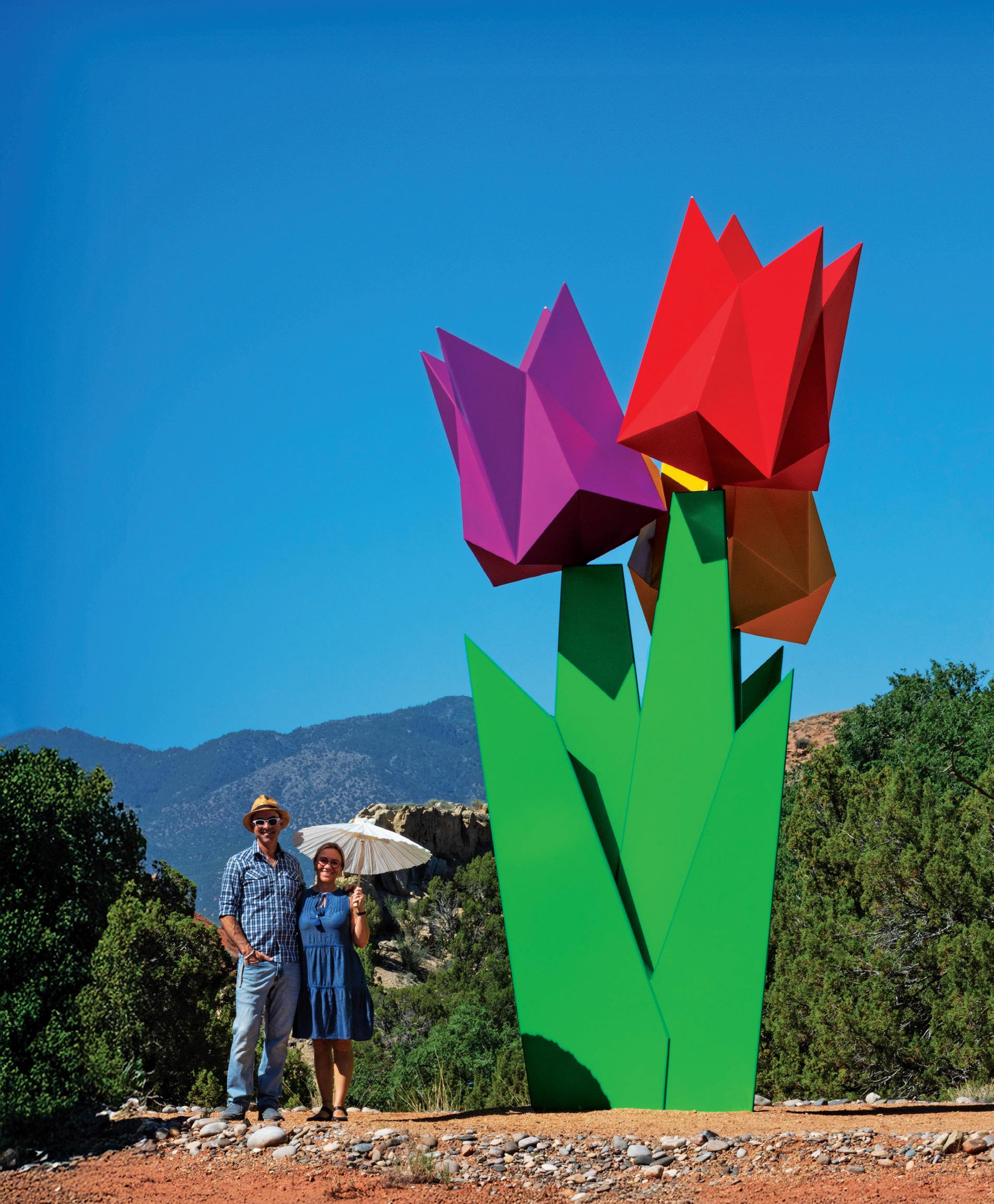
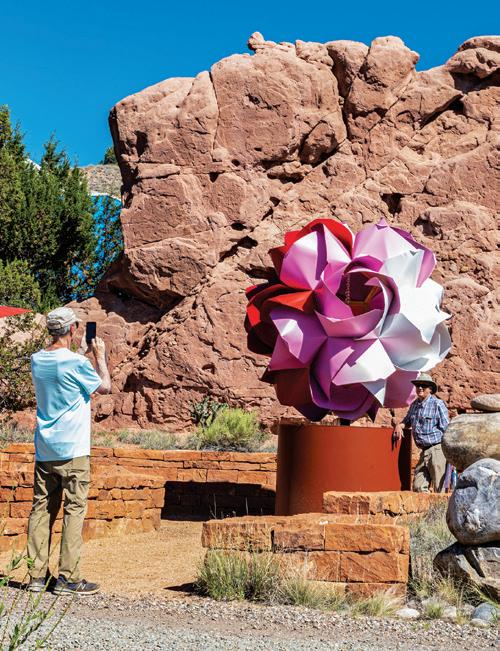
Origami in the Garden offers an artistic day trip.
As a winding gravel path arcs around a piñon, I spot a sunflower’s golden petals in the distance. Although a common summer sight in New Mexico, this flower draws my eye for its sheer size. It’s gathered with lilies, phlox, and daisies in the bouquet of Scents of Gratitude, a 32-foot-tall fabricated kinetic sculpture on the grounds of Box Studio & Sculpture Garden.
I admire the metal origami flowers while bud-like bells — additional creations made by artistic director and sculpture-gardener Kevin Box — chime through the piñons. The spiky points of a trio of tulips beckon me further into the Cerrillos hills, and I’m glad to oblige as the path dips and rises to reveal Perennial Peace, Tulips for Betty. I, like many visitors, could easily confuse these high desert grounds with a botanical garden; however, the metal sculptures rise in what is essentially artists Kevin and Jennifer Box’s front yard. “The property was too special to wall off,” Kevin observes.
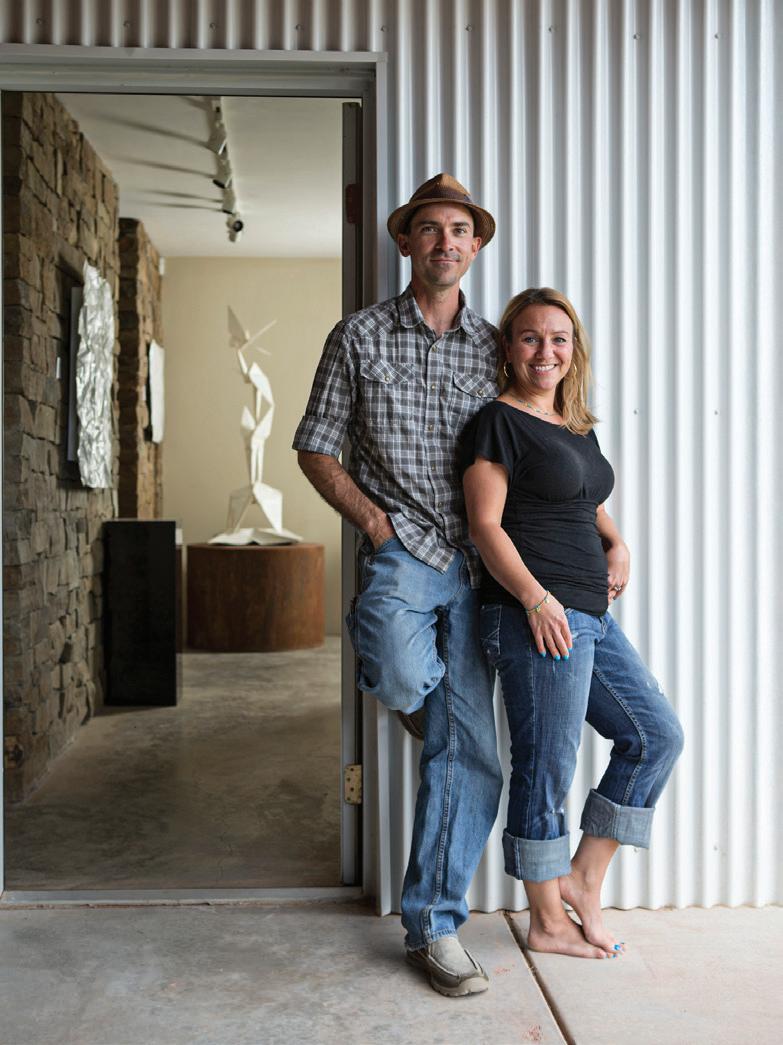
That the well-tended landscape feels like a botanical garden is no mistake, however. Together with a team of foundry and fabrication artists, the Boxes debuted Origami in the Garden at the Santa Fe Botanical Garden in 2014. The exhibition has since visited some two dozen gardens from Florida to Minnesota and many points between, including their property along the Turquoise Trail National Scenic Byway.
Box Studio welcomes the community to view the sculptures May to October. “We want abuelas visiting with their grandkids. We hope it brings inspiration and joy,” executive director Jennifer Box says.
The Boxes hope the whimsical outdoor display invites people into the on-site gallery for an “aha moment” involving the intricacy of Box’s work, his artistic vision, and his two-decade-long exploration of the materiality of paper and steel.
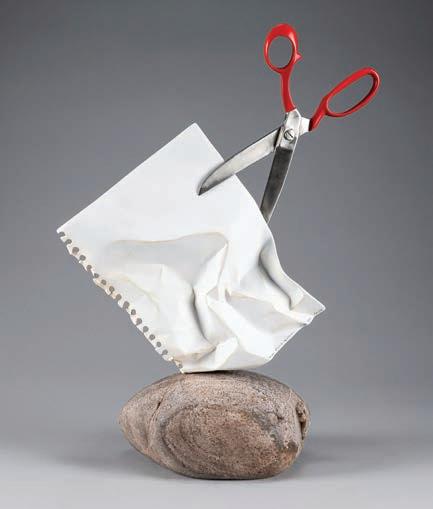
Box began his career as a paper maker, printmaker, and graphic designer, so when he transitioned to sculpture, he continued to evoke the textures of paper in metal. Starting in Austin and continuing in Thailand, Box spent nearly a decade perfecting his technique to capture the details of each crease. An early work in the series, 2002’s Just Unfolding, which is on view in the studio/gallery, drew comparisons to origami, though that wasn’t Box’s original intention.
Rather, the blank page inspired him. “It’s the architype of the creative challenge — creating something out of nothing,” he says. He started with a square — his name is Box, after all — which can be folded into anything, including into star patterns. “I see the soul as a white twinkling light. In a way, these are self-portraits,” he says. “I was making origami on the inside to describe the architecture of the soul.”
A Pegasus origami design — now sculpted into pieces such as Hero’s Horse — proved to him that origami has structural engineering qualities. Once he unfolded the paper to see the intricate creases the folding process left behind, he saw how the technique aligned with his artistic vision.
He began collaborating with celebrated origami artists, including physicist and mathematician Robert J. Lang, master folder Michael G. LaFosse, and next-generation folder Beth Johnson. “We have a mutual appreciation of what’s going on — taking a delicate thing and making it exist through time,” Box says.
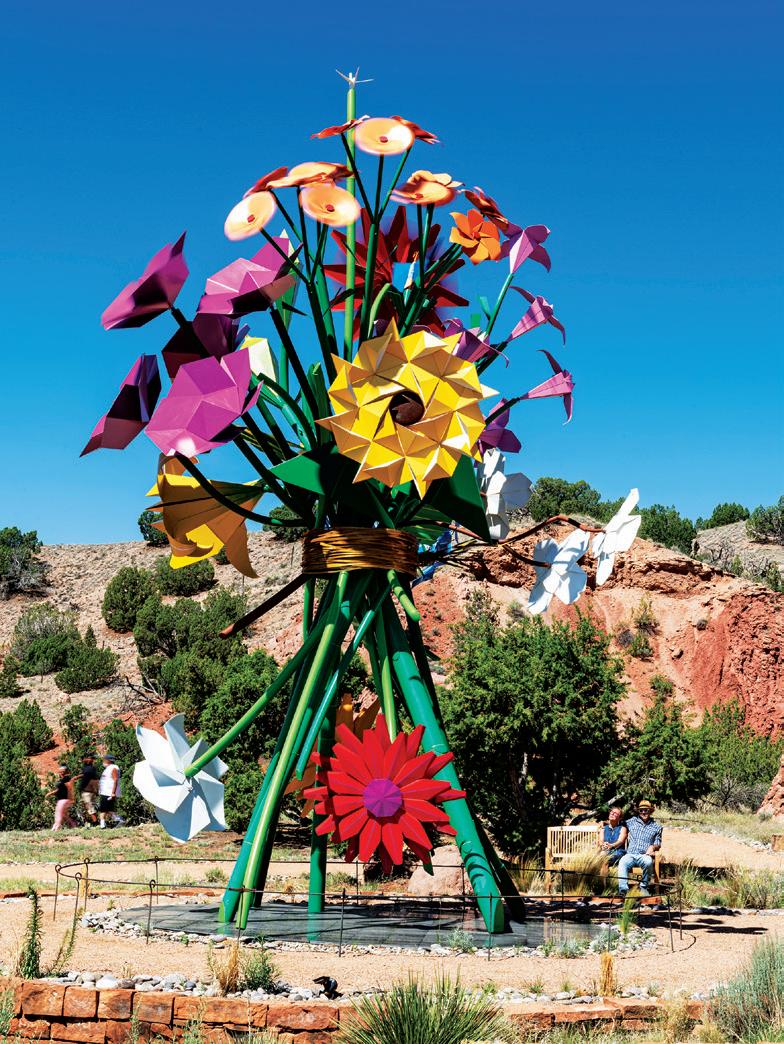
The gallery reveals the works’ duality via side-by-side displays of finished origami metalworks and lost-wax castings of the unfolded pieces of paper.
“People don’t think of origami as fine art. It is, but there isn’t that same resistance to it if we unfold it. If origami didn’t unfold into a star, there wouldn’t be any of this,” Box says. His works are also sold at around 10 galleries around the country; the top-selling gallery remains Kay Contemporary Art in Santa Fe (see Gallery Guide page 82).
Kevin Box’s New Mexico life took shape alongside his work. During a sea change visit in 2005 for an exhibition coinciding with Indian Market, he met both his future wife and the woman who sold the pair the Turquoise Trail land that became the nexus of Box Studios.
Jennifer, who has a background in nonprofit management, slipped into organizational roles. “For every creative action, there is an equal and opposite administrative reaction,” Kevin says of her work.
The duo has thoughtfully overseen their 35 acres by following a 2007 master plan for the site created by the Frank Lloyd Wright School of Architecture. The studio, gallery, and foundry buildings incorporate ecofriendly features, including solar power, a geothermal heat pump, and wastewater recycling. All these systems integrate seamlessly into the property, which also celebrates the intersection of human-made objects and nature throughout the sculpture garden.
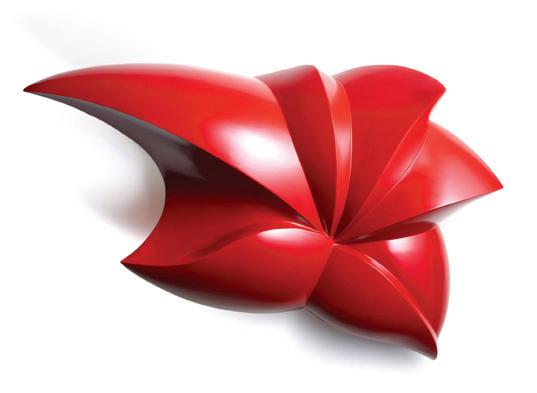
There, origami metal horses gallop alongside cars passing along NM 14, a folded boat floats along an arroyo raked into a Land of Enchantment Zen garden, and a twist in the trail reveals a monumental lily whose center looks just like a star. “I’ve been doing this for 23 years now, not because I wanted to be an origami artist but because I’m an artist who wanted to tell a story of something true,” Kevin says. — AMB
Origami in the Garden at Box Studio & Sculpture Garden, 3453 NM 14, Cerrillos; 505-471-4688; origamiinthegarden.com; open 9 a.m.–2 p.m. Monday–Friday, May 5 to October 31 (including Memorial Day, Juneteenth, Labor Day, Indigenous Peoples’ Day, and the last two weekends in September as part of the Turquoise Trail Studio Tour). Suggested donation $5 per person; children under 12 admitted free. Beginning in 2026, Scents of Gratitude travels for several years, so see it in 2025 before it leaves.
Tickets:
Bringing leading thinkers to Santa Fe to explore the most alluring questions in science, and to address the complex issues that face our species and our planet.
Blaise Agüera y Arcas Google, Princeton University
Tues, 20 May
6:30p • Book Signing 7:30p • Lecture
Who Do We Trust? How AI is (re)shaping our interactions today
Gillian Tett Clare College, Cambridge
Tues, 22 July 7:30p • Lecture
Climate Change and Contagion Complex Crises Past and Present
Kyle Harper
University of Oklahoma, SFI Fractal Faculty
Wed, 18 June
6:30p • Book Signing
7:30p • Lecture
Why We Die:
The New Science of Aging and the Quest for Immortality
Venki Ramakrishnan Cambridge, SFI Fractal Faculty
Tues, 26 August 6:30p • Book Signing 7:30p • Lecture
29th Annual Ulam Memorial Lecture Series
Tues-Wed, 16-17 September 7:30p • Lecture
Transmission Versus Truth: What Will it Take to Make an AI as Smart as a 4 Year Old?
Alison Gopnik
UC Berkeley, SFI External Faculty
Tues, 21 October 7:30p • Lecture
Sponsored
With support from:










































BY ELIZABETH MILLER
Oa Monday morning, when the wind and warm sun have begun to sing the songs of coming spring, a crew of citizen scientists heads to a place they know better than anyone else. The birders arrive first, as some of them have just about every week for a decade. They hike under a canopy of winter-crisped cottonwoods rattling in the breeze. Soon they’ve sighted a peregrine falcon. The raptor is added to a list of individual species of plants, birds, mammals, insects, and aquatic life found within the 35-acre Leonora Curtin Wetland Preserve. In September, the list topped 1,000 species.
Vanishingly scarce, deeply imperiled, and host to a marvelous complexity of life, ciénegas, or wetlands, cover only about 0.6 percent of the land in New Mexico. Leonora Curtin Wetland Preserve, where a natural spring spills into a dammed pool o the southern edge of the city of Santa Fe, shields a pocket of native plant and wildlife from the press of development and even the encroachment of invasive species.
“It’s incredibly rare, and so many people don’t know that we have this amazing treasure right here,” says Laura Griego, director of education and volunteers for El Rancho de Las Golondrinas, which owns and manages the preserve.
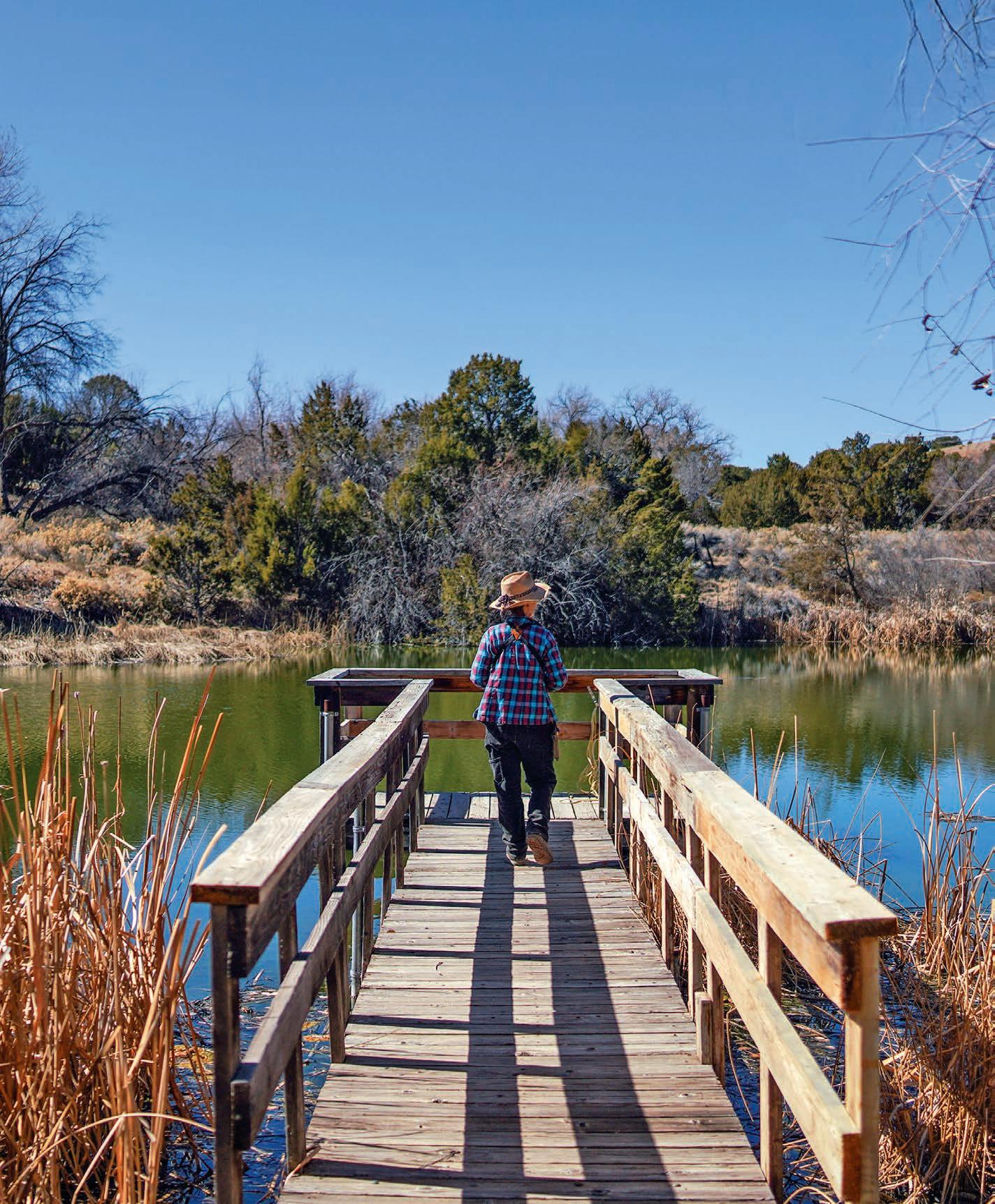
Walked at a steady pace, the trails looping through the preserve can be completed in less than half an hour. But picnic tables, benches, and a bird blind (a wall for viewing birds discretely) invite not just walking through but lingering and watching for further signs of the wild things that find their way through or reside within the preserve.
The ecosystem is a mosaic. Streamside riparian vegetation, such as cattails and willows, shifts to a transitional zone carpeted with yerba mansa, blooming white in spring, with long green leaves that turn red in fall, as well as three-leaf sumac and New Mexico olive, with the occasional Rio Grande cottonwood towering overhead. The highest slopes hold tawny bunch grasses, junipers, and living biocrust — a black, ridged growth on the soil that traps moisture.
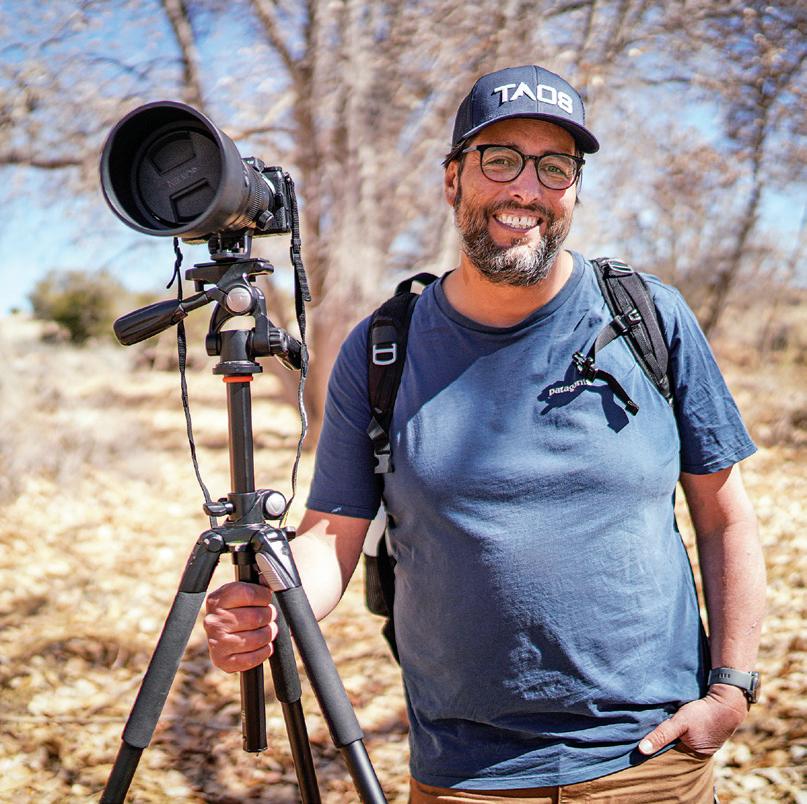
Citizen scientists skilled as birders and trackers, and patient enough to check bird boxes weekly, have been tallying and tracking these and other species for years. A line of volunteer e orts had already made headway at the preserve by the time Zac Carlson, a Santa Fe native, moved back to study sustainability and then to begin teaching hydroponics and aquaponics at Santa Fe Community College. Carlson joined the search for new
species at the preserve under a grant from the Dancing Star Foundation and the Santa Fe Botanical Garden for biodiversity research e orts nationwide.
When the grant ran out, he stayed on and did the work for free. He declares himself an amateur naturalist who runs a good spreadsheet. Resources like iNaturalist, a website where he can post a photo of an unfamiliar insect and have an expert entomologist identify it in a few hours, have accelerated the ability to add new species to the list.
On that warm Monday morning, Carlson and fellow citizen scientist and birder T. Jay Adams hike down the preserve’s path with a ladder, bound for one of the American kestrel boxes. These wooden squares in varying sizes and shapes are pinned to trees around the preserve and o er the birds lodging. Carlson props the ladder against a tree with a box wider than it is tall and a peaked roof over the round opening. In 2021 he photographed a young kestrel peering a fierce black eye out of that hole. Now the volunteers are clearing way for this season’s new occupants.
Ann Hunkins, a volunteer who remembers helping scatter mulch for the preserve’s first trails in the early 1990s, dons a mask, climbs up to the bird box, and pries o a side door.
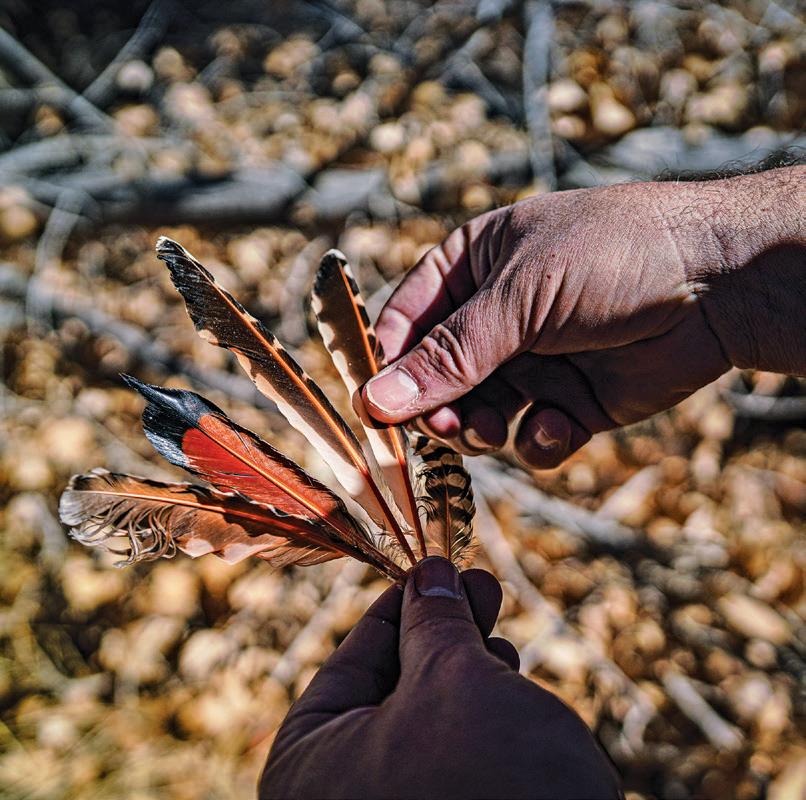
“There are a ton of flicker feathers,” she remarks, a few of the pale orange blades with white and black scallops in her hand. Northern flickers are a woodpecker species, recognized by the red their wings flash as they fly by.
Carlson passes her a brush and she sweeps out the debris of last year’s nest. Wood shavings and another handful of flicker feathers drift to the ground. Then she refills the box with fresh wood shavings. From the debris pile at the base of the tree, she picks apart dried scat glittery with the remains of ants, one of flickers’ favorite foods, and finds a section of a gray feathered head and spine, and bits of a wing. A flicker had apparently moved in and lived out its days there. They speculate on cause of death as they piece together bits of bone, wondering if the kestrel killed the invading flicker or if the flicker died of natural causes. No one seems much troubled: the wing bones are long enough to suggest an adult, and in nature these things happen.
But the finding does prompt some curiosity. If a flicker was in the kestrel box, then what was in the flicker box? The volunteers crunch across dried grasses to a smaller, taller box. With a bird mirror — a small mirror on a bent, telescoping pole — and another mirror for reflective light, they peer inside and find another surprise: a tiny Western screech owl. It’s so furiously
hunkered down that its gray body looks at first like a pile of old bark. Carlson reaches in to clear the mess and then it moves against his fingers. They back o to let it be.
“Every week is unique,” he declares later.
But beyond the tally on the spreadsheet, their work is building a story of the place over time, a series of data points that, drawn together, illuminate patterns and habits. They can see progress, like that made by restoration e orts to remove invasive Russian olive and how native plants surged back to bask in the newly available sunlight. While hiking in and out of the preserve, Hunkins pauses to swap out memory cards on four trail cameras. Over six years, photos have captured mountain lions, American black bears, American badgers, rock squirrels, lots of common raccoons, and some striped skunks for the tally. These images have allowed volunteers to follow stories through a season, like a bobcat raising her kittens in the preserve. They also map trends, including that when coyote sightings climb, bobcat sightings drop. And they catch revealing moments, like when a rabbit paused for a full-body bathing session in front of the camera and a gopher gaping up at a red-tailed hawk.
“It’s great seeing how things change over time,” Hunkins says.
The search that rolled the species count over 1,000 was an after-dark hunt for insects, using a black light to draw them in to be spotted against the backdrop of a white sheet. To photograph the tiniest specimens, Carlson breaks out a camera lens that looks more like a telescope. An image of a fly with translucent, yellow-swirled wings that he posted to iNaturalist drew a request from a researcher for physical specimens preserved in vials of alcohol; the researcher wondered if it was new species of fly. The count includes a microscopic shrimp found only at the preserve; a wheel milkweed that Carlson saw during his second month volunteering and has never seen again; and a Woodhouse’s toad, bigger than a grapefruit, that plopped in front of a flashlight beam one night. The tally climbed to nearly 1,030 before Carlson really celebrated, in case some species were misidentified somewhere in the spreadsheet.
“It’s great to discover all this and also to be in a place that’s a preserve, where you’re protecting the land just for them,” Hunkins says.
Many places in the world are preserved for people, and the experiences there are curated to suit human needs and interests. Leonora Curtin Wetland Preserve is not one of them. The name gives a first clue: it’s a preserve, not a public park. The land is privately owned, managed since 2022 by El Rancho de Las Golondrinas after a longtime management lease with the Santa Fe Botanical Garden ended. Leonora Curtin herself was an ethnobotanist, studying human uses of and relationships with plants. In the early 1900s she moved to New Mexico, where her family founded Las Golondrinas.
The citizen scientists provide continuous monitoring on a site open only for a portion of the year and build a robust knowledge base. The trail cameras also catch rule-breakers: people who trespass after hours or in months when the preserve is closed, carry in fishing gear, or walk out visibly wet from having jumped in the pond — all rule violations. But mostly, the work informs educational programming, grant funding, brochures, and a new field guide.
“[The volunteers] help us know more about what’s going on here, what animals are here,” Griego says, “and that puts us in a better position to continue to protect it and to celebrate it too.”
It also cues a bit of wonder to stand on the boardwalk, look over the water and across the greening hillsides, and think about how much can be held in and rely upon so small a space.
Leonora Curtin Wetland Preserve is open 10 a.m. to 3 p.m. Wednesday to Sunday from June to October. Check the website (golondrinas.org), newsletter, and social media from Las Golondrinas for more details on private and public tours and other programs.
Elizabeth Miller is an award-winning journalist who has covered environmental issues for “Backpacker,” “bioGraphic,” “The Washington Post,” and other publications.
UPCOMING PUBLIC PROGRAMS AT THE PRESERVE
MAY 10, 9 A.M. I PÁJARO PARAJE
In honor of World Migratory Bird Day, the preserve offers a birding tour (the Spanish event name Pájaro Paraje translates to “bird place”), followed by a family-friendly craft activity, hosted by Kanah Waltman of the Randall Davey Audubon Center & Sanctuary.
JUNE 11, 10 A.M. I LEONORA CURTIN WETLAND PRESERVE WALK AND TALK
Hosted by Mori Hensley, executive director of the Santa Fe Watershed Association
JUNE 21, 8 A.M. I SEASONAL LEONORA CURTIN WETLAND PRESERVE WALK AND TALK
Hosted by Zac Carlson, citizen scientist
OCTOBER 11, 9 A.M. I LEONORA CURTIN WETLAND PRESERVE TRACK AND SCAT TOUR
Hosted by animal tracking specialist Ann Hunkins
OCTOBER 25, 10 A.M. I SEASONAL LEONORA CURTIN WETLAND PRESERVE WALK AND TALK
Hosted by Zac Carlson, citizen scientist
All tours require registration. Tickets cost $15 for the public and $10 for Las Golondrinas members and volunteers. For more information, visit golondrinas.org.
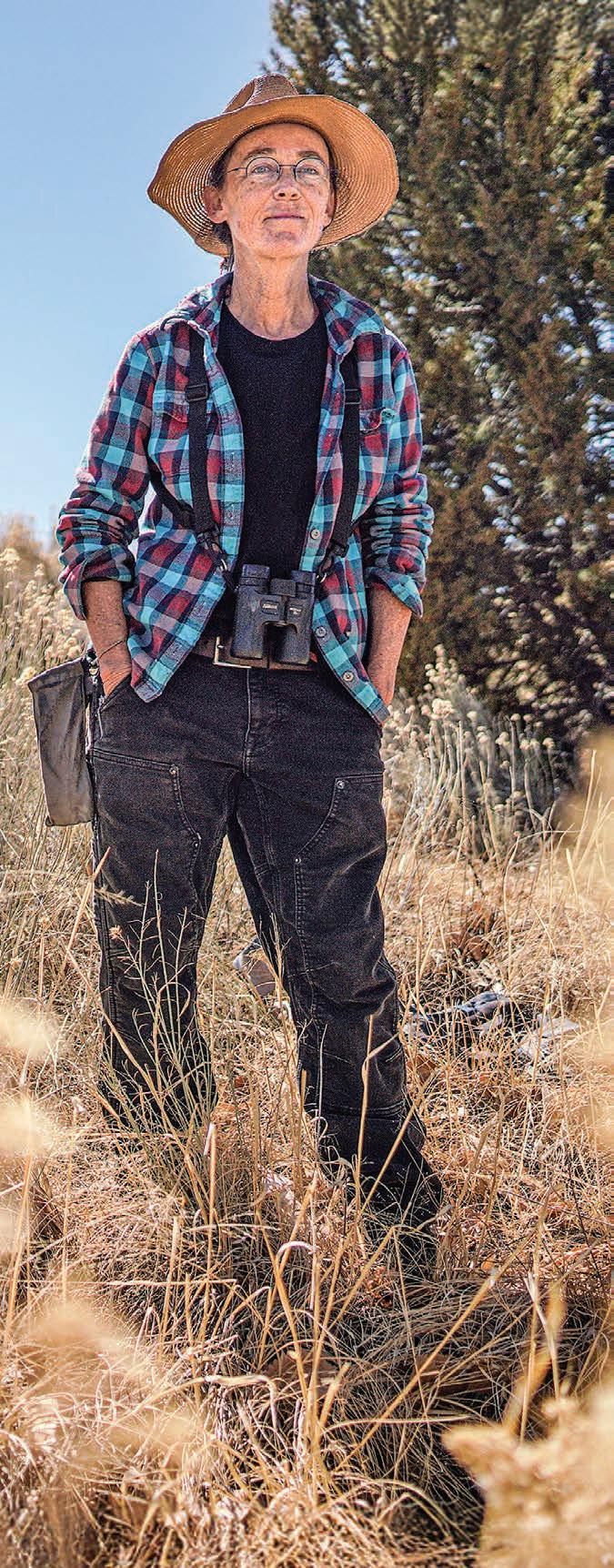
Ann Hunkins has been volunteering at the preserve since the 1990s.

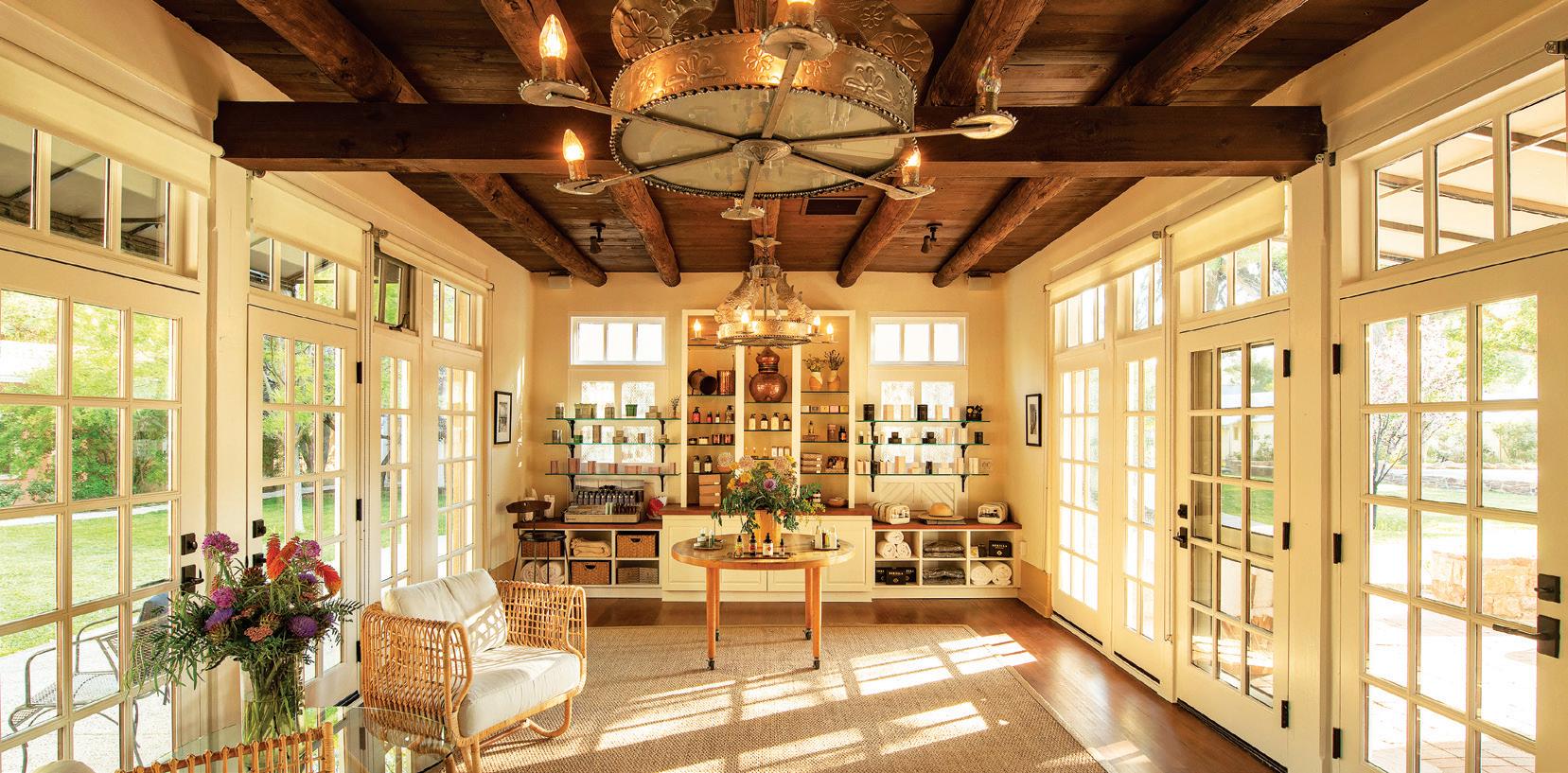
Albuquerque historic inn and organic farm earns global lodging award.
Down a cottonwood-lined allée in Los Ranchos de Albuquerque, Los Poblanos Historic Inn & Organic Farm has quietly become one of the top resorts in the state — with two Michelin Guide keys to prove it — even as it remains far from the typical stay.
The Michelin Guide, most known for its restaurant rankings, revealed the newest additions to its list of honored hotels throughout the United States in September 2024 — only the second time it has done so.
Los Poblanos learned about the ranking along with the public, says marketing manager Sarah Sheesley. The guide sends a mystery guest to review accommodations (just as it does with restaurants), so the hotel was unaware it was being reviewed; nor did it know the results would be so glowing until the announcement. “I think what sets us apart is the uniqueness of the space,” Sheesley says. “We’re a working farm — not actually a luxury resort. [The twokey status] is a lot to live up to. We’re just going to keep doing what we do.”
According to Michelin’s website, it ranks lodgings according to five categories: architecture and interior design, quality and consistency of service, overall personality and character, value for the price, and a significant contribution to the guest experience in a particular setting. Los Poblanos was the only hotel in the state to earn two keys out of a potential three. The only other New Mexico hotel to make the list was Santa Fe’s Rosewood Inn of the Anasazi, with one key (see sidebar).
Originally inhabited by Ancestral Puebloan people in the 14th century, the farm draws its name from later settlers from Puebla, Mexico (citizens of which are called Poblanos). The farming land continued to flourish under the ownership of U.S. congressional representative Albert Simms and Ruth Hanna McCormick Simms, whose experimental farms and dairy were captured in the lens of famed WPA photographer Laura Gilpin. In 1932 McCormick Simms commissioned the renovation and creation of several of the property’s notable landmarks, including the John Gaw Meem–designed La Quinta Cultural Center and Rose Greely planned gardens. Since 1976, several generations of the Rembe family have stewarded the property.
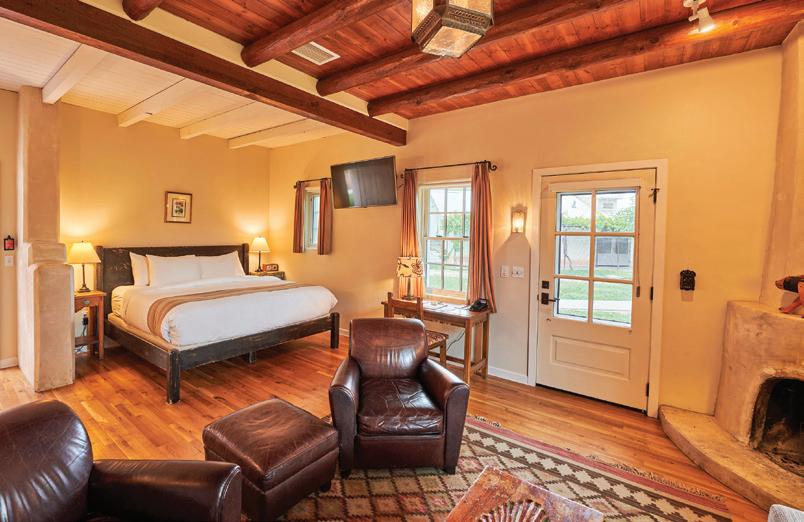
The original six-room bed-and-breakfast has grown into a 45-room inn. Three room types dot the property: the Meem Rooms, which take their inspiration from that iconic architect’s era; the Farm Rooms, which incorporate architectural details inspired by the 1930s dairy buildings; and the Field Rooms, which overlook the farm’s lavender fields.
Beyond the Field Rooms, the Foreman’s House o ers a guest house experience for longer-term stays. The 1930s structure was renovated and reopened in fall 2024. The well-appointed space includes a full kitchen, a living room, and two guest rooms, which are outfitted with a king bed and two queens, respectively. The secluded, walled courtyard, which includes a grain weigh station that has stood the test of time, is as attractive a gathering space as the interior. Though minimally decorated, the space exudes character, from its punched-tin chandelier and shiplap ceiling to the concrete medallion tiles and soaking tub.
The Foreman’s House is part of a broader e ort to make the property an oasis where guests can contently enjoy themselves for days at a time, Sheesley says. Lodgers can slip into the saltwater pool during the summer, get a full workout in the just-refreshed fitness center, and sip an oldfashioned at the guests-only library bar.
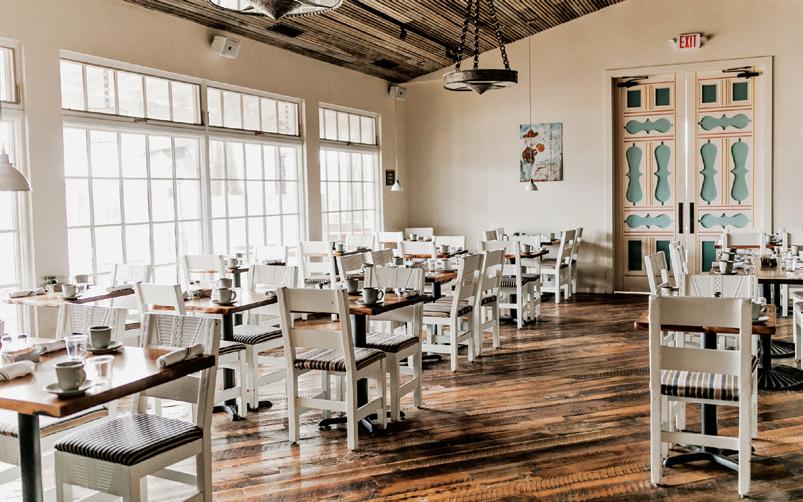
People who don’t book a room can still tap into the Los Poblanos experience. Since 2022, Christopher Bethoney, a longtime sous chef, has helmed the property’s notable restaurant, Campo, which is housed in reimagined dairy buildings. Via a greater focus on local grain and whole-animal butchery, Bethoney has enhanced the eatery’s long devotion to Rio Grande Valley cuisine. The menu highlights regionally significant dishes and ingredients, many of which are grown on the farm, from tender greenhouse sprouts to shoots in the fields. His skills are once again on display at the chef’s table, a dining experience the pandemic sidelined for several years.
The James Beard Awards named Campo a finalist for Outstanding Wine and Beverages Program in early 2025, recognizing the list curated by wine director Dylan Storment and the property’s cocktail program, which
includes drinks mixed with its own lavender gin — one of the products available in the Farm Shop. La Quinta Cultural Center also o ers a decadent afternoon tea.
Open since 2021, Hacienda Spa incorporates the inn’s distilled-on-site lavender body products into its treatments. O ering a field-to-spa experience, seasonal massages incorporate a botanical poultice and sometimes honey, all farm ingredients. Tucked in a stand of trees, a dozen-person yurt welcomes guests and the public for yoga classes, sound baths, and meditation practice.
Reflecting on the growing list of amenities at Los Poblanos and its serene ambiance, Sheesley observes, “It’s a place where [guests] can do everything or do nothing.”
— AMB
4803 Rio Grande Blvd. N.W. I Los Ranchos de Albuquerque 505-985-5000 I lospoblanos.com
Perfectly positioned for summer market-going on the Plaza, Rosewood Inn of the Anasazi offers a luxury experience with local influences. The hotel channels inspiration from the region’s Indigenous and Spanish cultures and the city’s ongoing identity as an arts destination. It offers 58 well-appointed guest rooms and numerous amenities, including in-room massages and a fleet of bicycles to pedal around town. The Anasazi Restaurant, The Patio, and the Anasazi Bar and Lounge offer locals the opportunity to tap into the global brand’s experience without booking a room. Each serves dishes featuring regional flavors — often with local ingredients.
113 Washington Ave. I 505-988-3030 rosewoodhotels.com/en/inn-of-the-anasazi-santa-fe
• Hydrafacial™ ~ the most requested medical facial
• Microneedling ~ best treatment for overall skin resurfacing
• Botox & Dermal Filler ~ to create a liquid face lift
• Morpheus8 ~ cutting edge skin tightening
• BroadBandLight ~ treatment for pigmentation spots
• CoolSculpting Elite ~ body sculpting at its best
• PRP ~ your own blood naturally rejuvenates face & scalp


BY JENNIFER LEVIN PHOTOGRAPHY BY TIRA


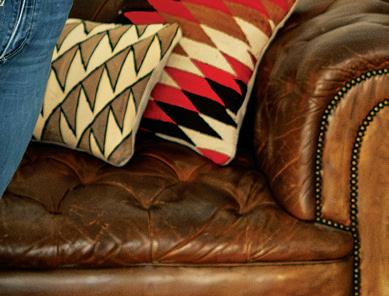




owntown has been Santa Fe’s central economic and cultural hub since the 1600s. Much of the city’s storied history has played out on the Plaza. It’s been a site of colonial settlement, Indigenous revolution, religious and political ceremony, and community celebration. It’s also the site of several of the city’s most iconic landmarks and notable museums.
The Palace of the Governors (105 W. Palace Ave.), which traces its history to 1610 and is part of the New Mexico History Museum (113 Lincoln Ave.), anchors the Plaza’s north side. Native American artists sell jewelry, pottery, and textiles under its portal. Across the street, the New Mexico Museum of Art (107 W. Palace Ave.) nods to the city’s creative past and present, and a few blocks west the George O’Kee e Museum (217 Johnson St.) hangs the work of the modernist artist who has become synonymous with the American Southwest. Marked by its twin Romanesque revival bell towers, the Cathedral Basilica of Saint Francis of Assisi (131 Cathedral Place) is a short walk east of the Plaza and faces the IAIA Museum of Contemporary Native Arts (108 Cathedral Place), which o ers mind-expanding works from Indigenous artists.
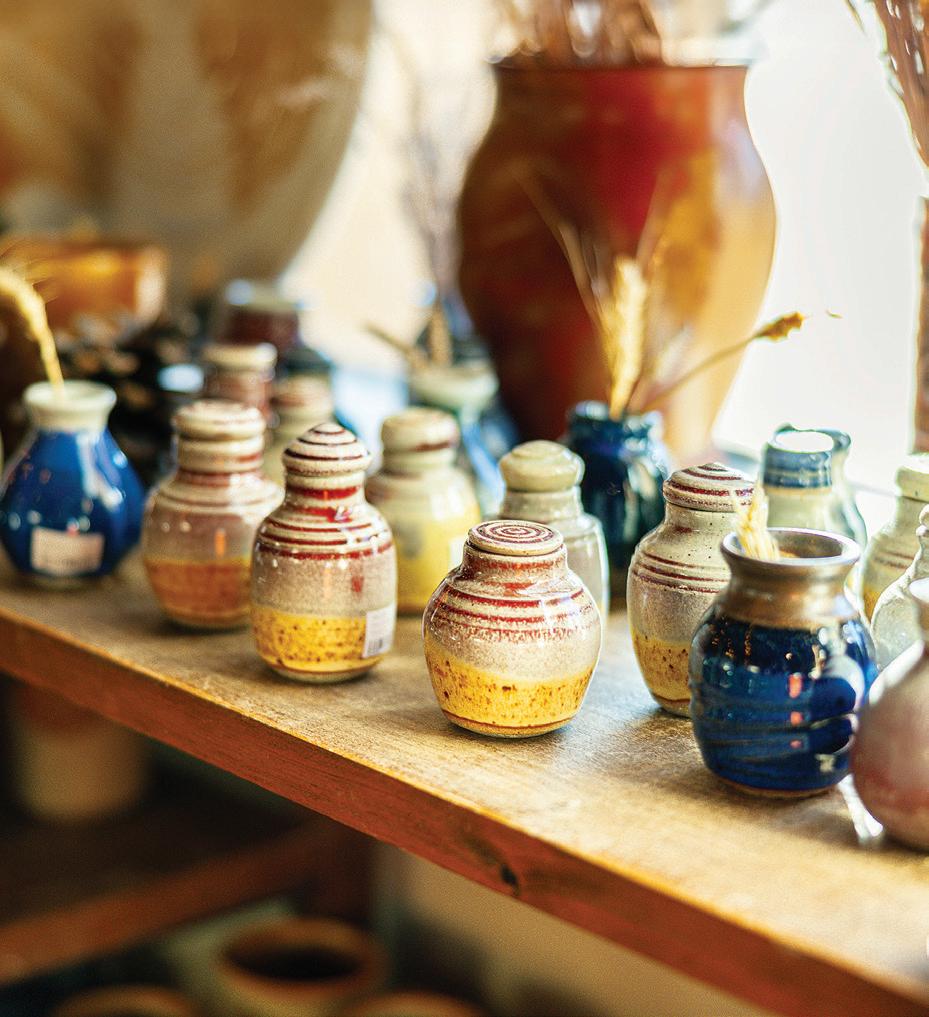
After taking in so much creativity, make some art of your own at Tumbleroot Pottery Pub (135 W. Palace Ave.). There, a $15 “clay experience” includes a small mound of quick-drying clay to mold and use of paints and sculpting tools. Plus, there’s a full bar. Angela Smith Kirkman opened the pottery pub two years ago with her husband, Jason Kirkman, as a hybrid of their two other businesses — Paseo Pottery (see Midtown) and Tumbleroot Brewery and Distillery. “We did this so we could see each other,” she jokes. Playing with clay is great for a date night or a girls’ night out, and no experience is required. If you don’t know what to make, just ask the bartender for an idea or participate in the monthly challenge. “It might be monster faces or musical instruments,” Kirkman explains. “Tag a photo on social media, and at the end of the month the bartenders vote on their favorite. The winner gets a free set of whiskey cups.”
The bar serves a light charcuterie menu and craft cocktails made with Tumbleroot spirits. “We gather the juniper berries for the gin every fall, and a lot of the botanicals are from our garden,” Kirkman says. “It’s all superlocal, super-seasonal.”
Other sips and bites are available close by. Apothecary Dining (133 W. San Francisco St.) pours non-alcoholic herbal infusions and elixirs, and Henry & The Fish (217 W. San Francisco St.) serves co ee, pastries, and hearty breakfast burritos. Additional respite is available at the Good Stu with Café Vinyl (401 W. San Francisco St.), which serves co ee and sells records, and at Collected Works (202 Galisteo St.), which pours espresso and o ers a full calendar of author readings.
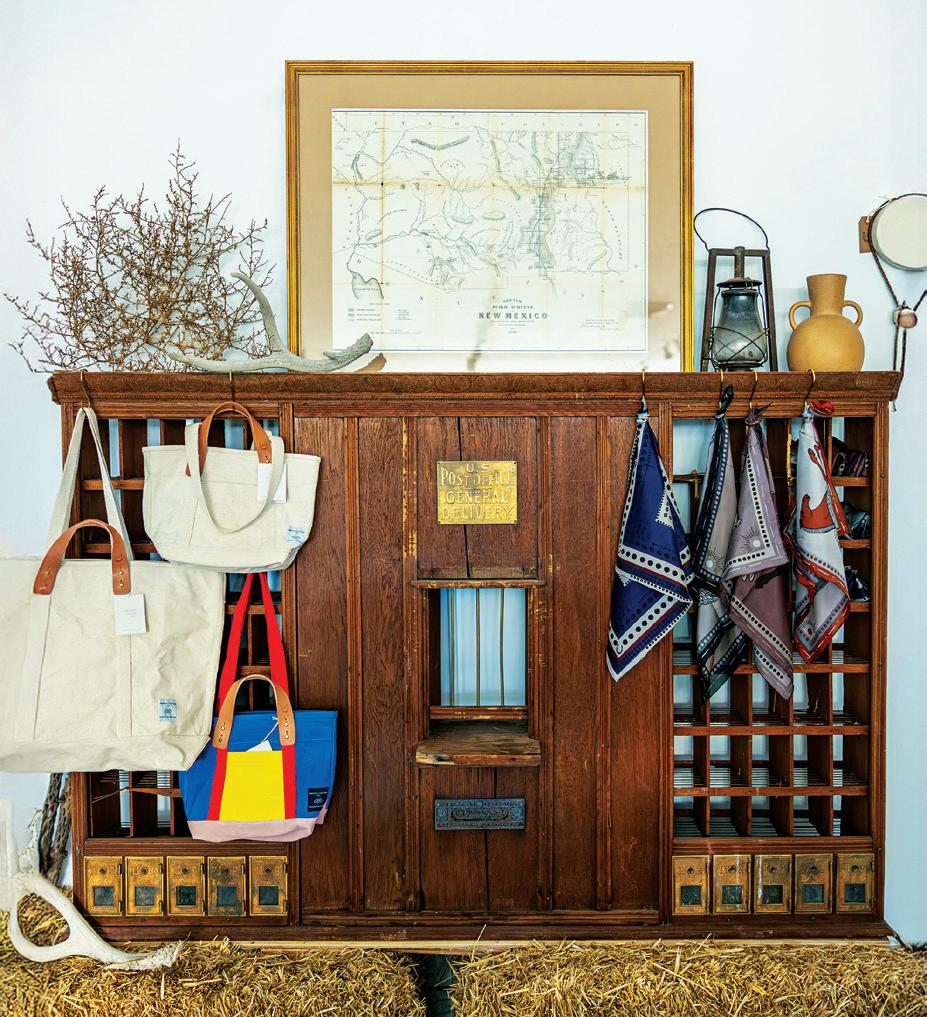
Around the shopping-abundant Plaza, where cornerstones like Malouf on the Plaza (61 Old Santa Fe Trail) are chock-a-block with Indigenousmade jewelry and art, High Noon General Store (213 Galisteo St.) is an airy, spacious shopping environment with a nostalgic feel. Emily Warner opened High Noon in 2023 after relocating to Santa Fe from the Bay Area during the COVID-19 pandemic. “I didn’t intend to move to the high desert, but after one day here, I could breathe in a whole new way,” she says.
She modeled High Noon on her great-grandmother’s general store in San Francisco, opened in 1914. “It’s a one-stop gift shop. You can come here and knock everything o your list,” she says. “I focus on New Mexico brands and makers, woman- and minority-owned. Everything’s curated. You can shop guilt-free knowing that I’ve researched the materials used, the packaging, and how far each item travels to get here.”
The stock is eclectic yet eminently useful. Need pet treats and the perfect silver necklace? High Noon has you covered. You’ll also find All Que Cute tie-dyed jeans from Santa Fe, Tea.o.graphy teas from Taos, Kakawa chocolate bars from the City Di erent chocolate house, upcycled textiles, excellent skin care products, children’s toys, and Warner’s exclusive housebranded line of Santa Fe Surf Co. streetwear. The limited-edition T-shirts, hoodies, and hats are emblazoned with classic New Mexico imagery, like cow skulls and chollas, and desert-specific slogans that feel like inside jokes — “Low tide, high vibe” and “Meet me in the arroyo.” When confused tourists ask where Santa Feans go to surf, Warner says, “I tell them it’s a state of mind.”
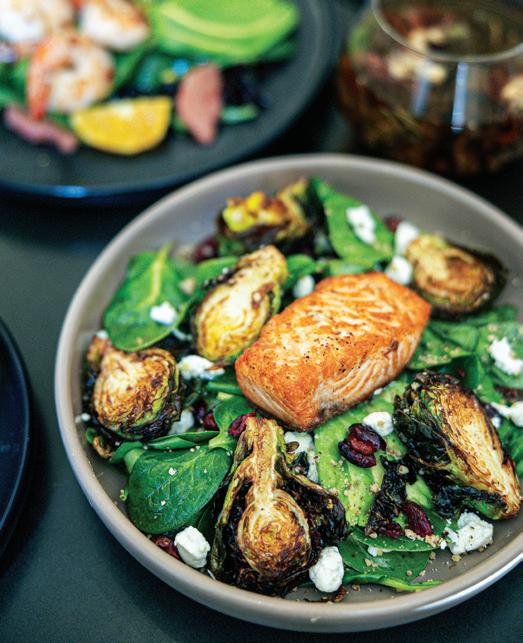
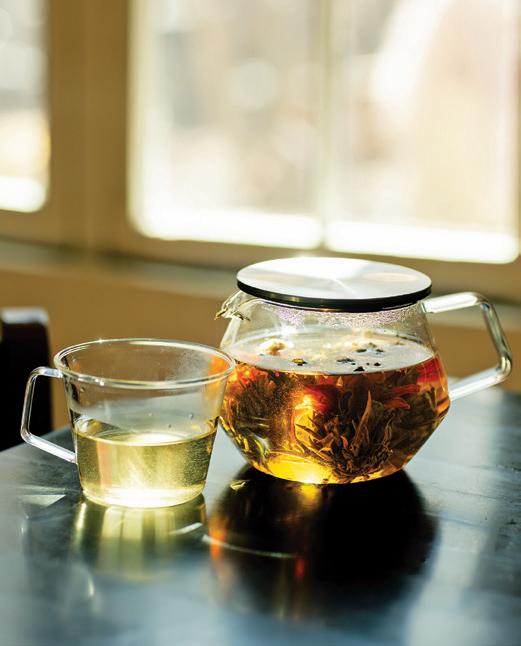
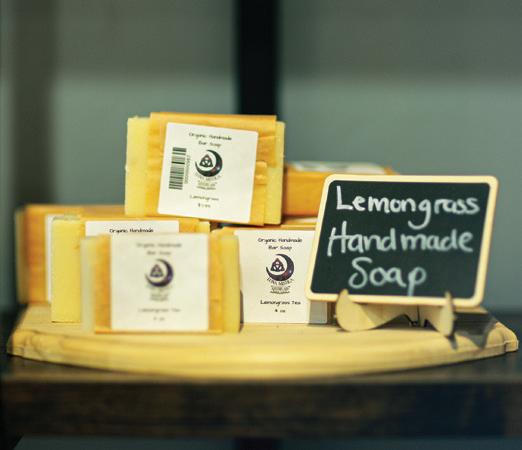
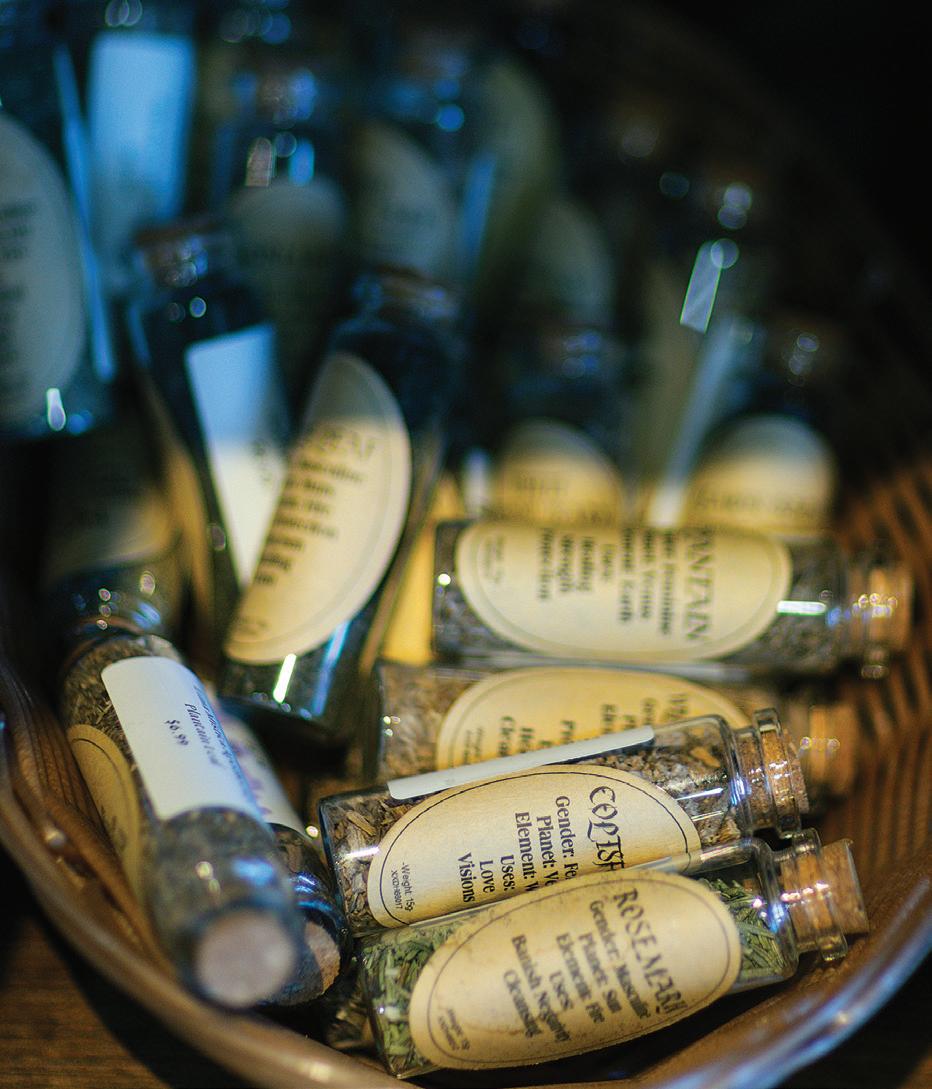
rural farming neighborhood that transformed into an art colony in the final years of the 19th century, Canyon Road is a scenic half mile set between the Santa Fe River and Acequia Madre, a 400-year-old irrigation ditch dug by Spanish farmers. By the 1980s, Canyon Road’s reputation as one of the world’s most lucrative art markets was sealed. Today, more than 80 galleries lining the rambling road represent artists from all over the world, working in every genre. You can spend days exploring this plethora of visual expression alone — but Canyon Road also o ers some of Santa Fe’s most intriguing shopping and dining experiences.
Landmark restaurants Geronimo (724 Canyon Road) and The Compound (653 Canyon Road) o er indulgent, fine-dining menus in refined settings. Outfit yourself for dinner with knitwear from Homefrocks (550 Canyon Road), chic women’s wear from Karina on Canyon (656 Canyon Road), or designer clothing from Creative Design (731 Canyon Road). Vintage on Canyon (821 Canyon Road, Suite 3) has a funky collection of upcycled streetwear and home goods — and shares a parking lot with the venerable Santa Fe Teahouse and Bistro (821 Canyon Road, Suite 3), which has a zealous local following with its robust assortment of loose-leaf teas alongside a breakfast and lunch menu.
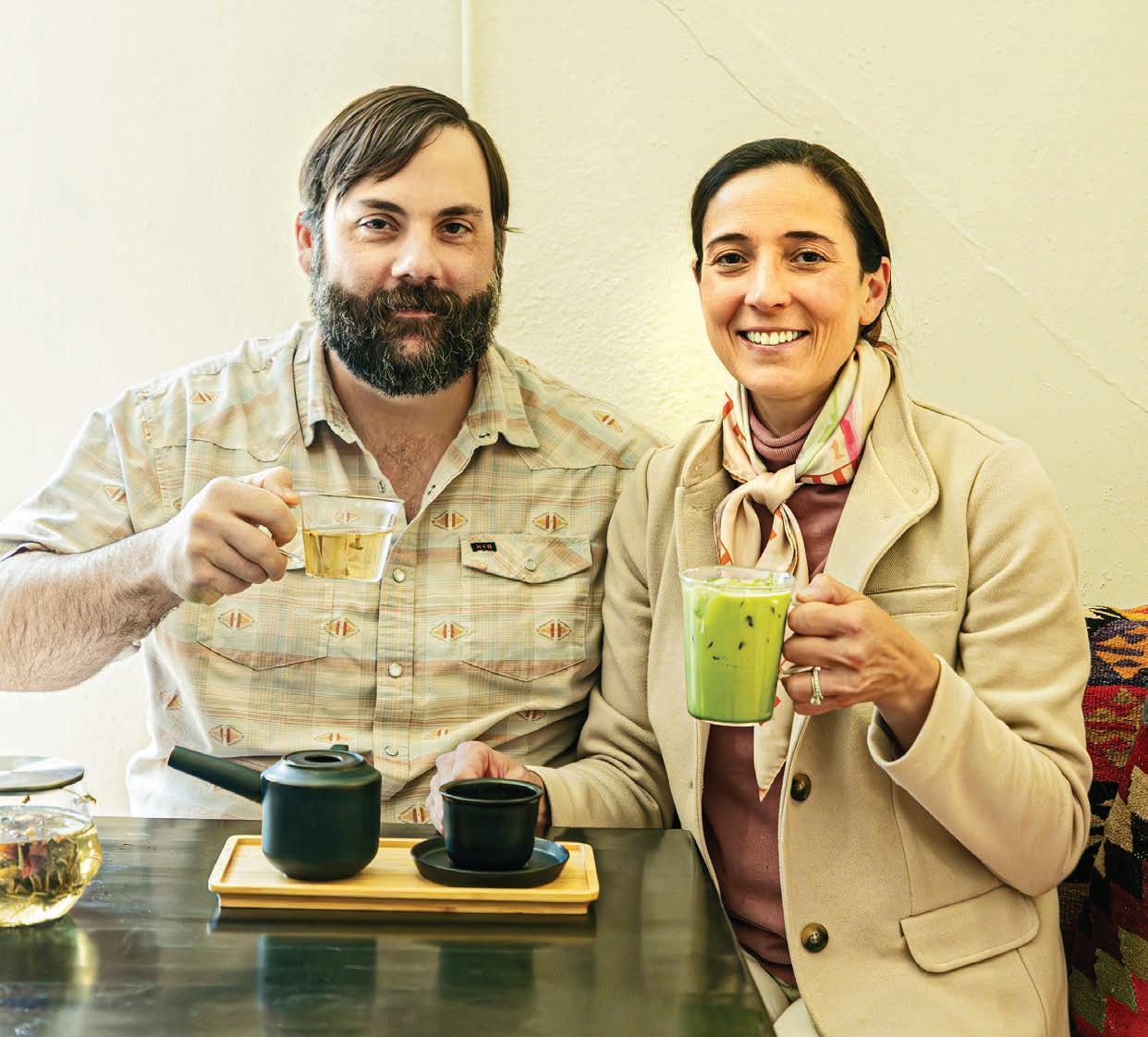
First opened in 2003, in a century-old adobe home, the Teahouse nearly closed in August 2024 after the death of its most recent owner. Brittani and Cole Campbell were on one of their regular visits from Amarillo, Texas, when they stumbled into what was to be its final weekend of operation — and decided to buy it. “We’re so proud to be a part of the life of this place. Now we’re listening to the community and trying to re-create all the things everyone loved,” Brittani says.
Among more than 100 teas are Hairy Crab, a rare, floral green oolong; Camel’s Breath Pu Erh, with aromas of the forest floor and mushrooms;
flavored favorites like chocolate mint and starfruit mango papaya; and many other greens, blacks, oolongs, and herbals, as well as a tempting assortment of espresso drinks, house-made chai, matcha, wine, and beer. “I’ve come to love sitting with a pot of tea in the afternoons and just taking time to think,” Brittani says. Her current favorite is Freak of Nature, an oxidized oolong known for buttery, shortbread notes.
As for the food, “We’re trying to keep it simple and fresh: quiche Florentine, bruschetta, a brie and apple sandwich. A roasted carrot and beet salad with excellent house-made dressing.” She says that in the future, they will host high tea and other special events, as well as dinner service.
Across the street, Thai on Canyon (802 Canyon Road) serves a range of authentic dishes, with vegetarian options and a heat index to suit both visitors and spice-loving Santa Feans. Next door, El Farol (808 Canyon Road) is Santa Fe’s oldest bar. Operating for more than a century, it o ers a popular flamenco dinner show.
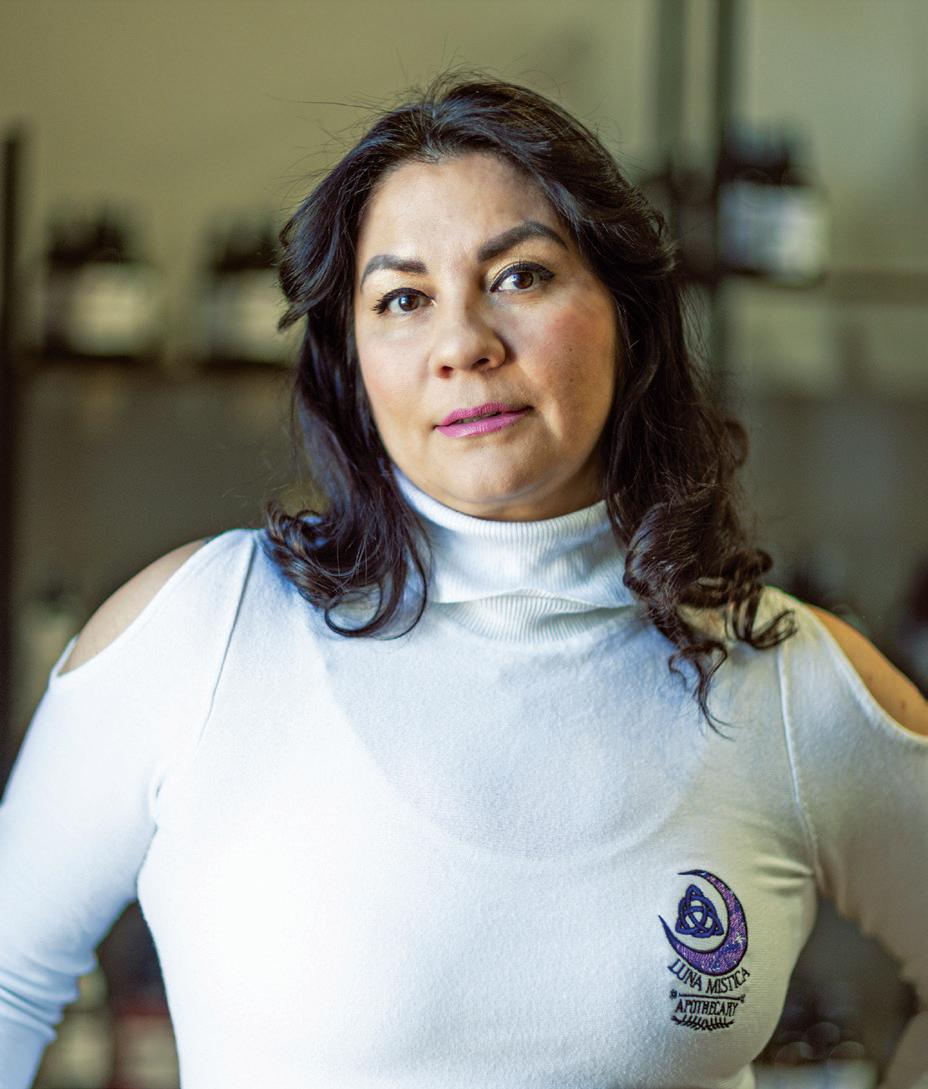
Luna Mistica Apothecary (822 Canyon Road) feels like it’s been around for centuries, steeped in smoky copal and protected by hundreds of crystals. But actually, Zema Vargas opened the shop in 2023 after her family’s small online business became too big for their house. “I’ve been doing this for 23 years,” Vargas says. “I always dreamed of opening a storefront like this. I’m an herbalist, a reiki master, and a universal minister. Everything we have is completely natural, made from herbs.”
Vargas’s family makes about half of the store’s stock, including smudge sticks, lotions, salves, aromatherapy sprays, medicinal teas, potions and powders associated with protection, and other items related to spiritual traditions that have long been part of Santa Fe’s culture, such as curanderismo and Santeria. There’s also leather, wood, and beaded jewelry handmade by her husband and son; baskets of semiprecious stones; candles; a dozen shelves of cone, stick, and resin incense; books on past lives and yoga; and a dizzying array of tarot cards and other divination decks.
Although the store is just three small rooms, “People spend hours here,” Vargas says. “It’s not very big, but you can get lost.” All the more reason to linger on Canyon Road.
he Atchison, Topeka and Santa Fe Railway brought trains to Santa Fe in 1880, ushering in a new flock of tourists, artists, and curiosity seekers, who changed the face of the small, traditional community.
Over the decades, the area around the 1909 Santa Fe Depot became an industrial hub of coal warehouses and auto repair shops. However, after revitalization in the aughts, the Railyard has become a bustling shopping and gallery district. Major attractions include a Saturday farmers market in the pavilion and the beautifully xeriscaped Railyard Park, as well as internationally acclaimed contemporary art destinations SITE Santa Fe (1606 Paseo de Peralta) and the New Mexico Museum of Art Vladem Contemporary (404 Montezuma St.), an extension of the museum headquartered o the Plaza.
Numerous great restaurants bookend Guadalupe Street, including the legendary Tomasita’s (500 S. Guadalupe St.), where servers deliver honeybutter with the sopapillas and flights featuring three flavors of frozen margaritas. One of Santa Fe’s top chefs, Dakota Weiss (coincidentally, she competed on the Bravo culinary TV show of that name), is a driving force behind the Capital Coal Neighborhood Eatery (326 S. Guadalupe St.), where you’ll find hot chicken, Korean BBQ, and more under one roof. Tucked away on the side streets are a few don’t-miss gems housed in historic homes, including Zacatlan (317 Aztec St.), which serves an excellent Mexican/New Mexican brunch, and Andiamo! (322 Garfield St.), an Italian joint feeding Santa Fe since 1995.
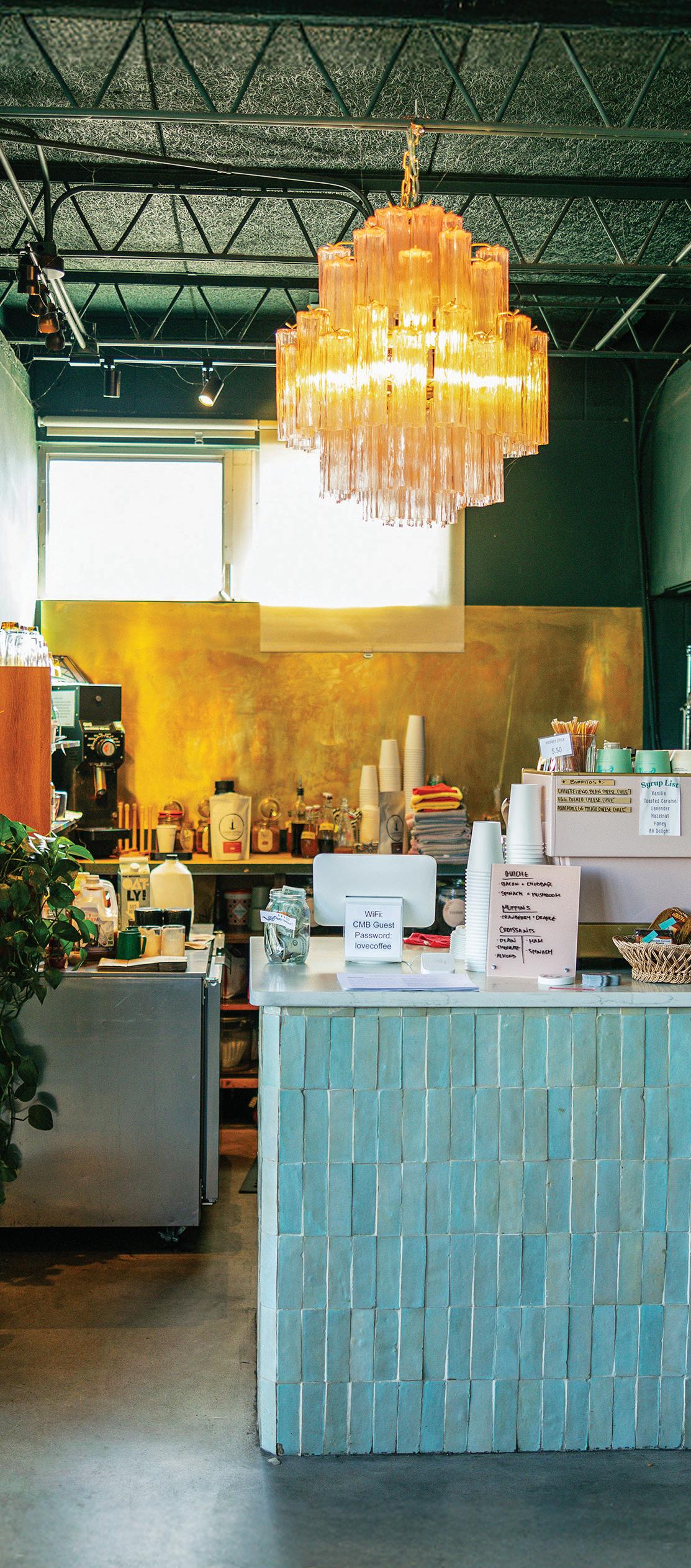
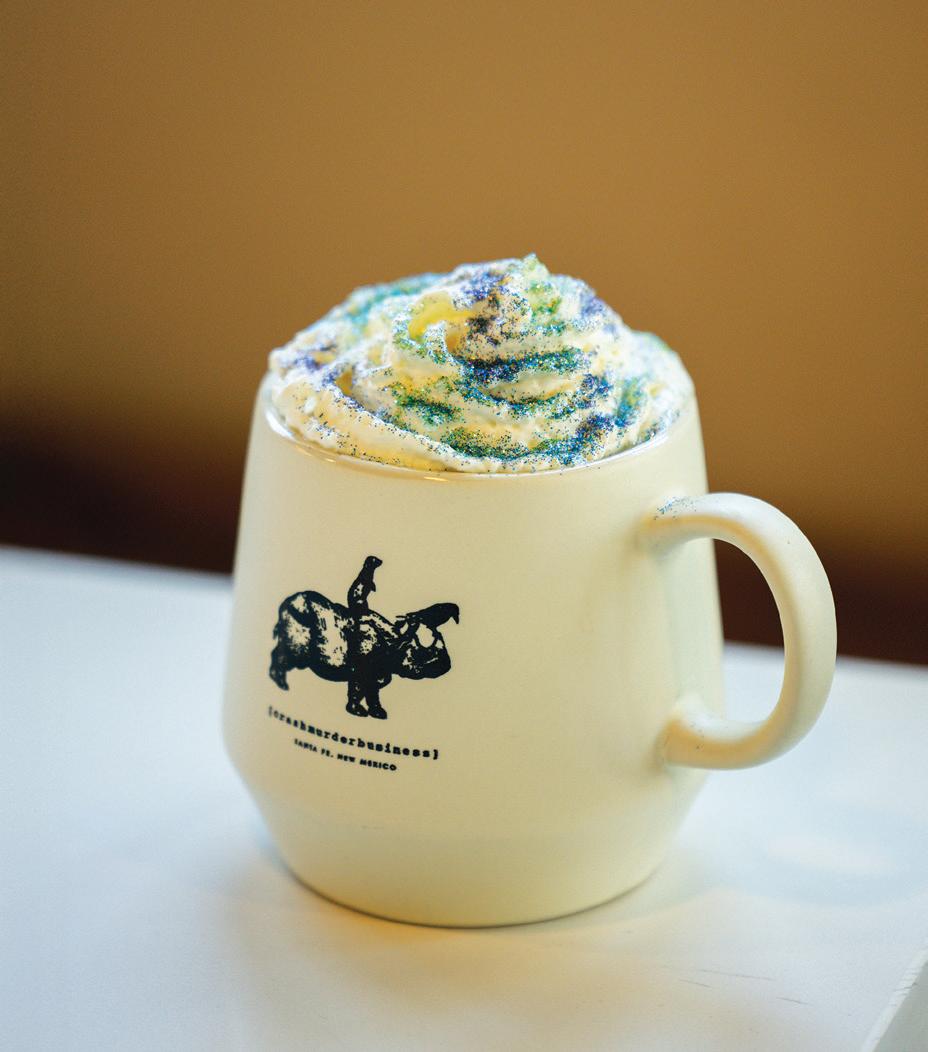
In this culinary neighborhood, even co ee gets chefy — and a bit whimsical — at CrashMurderBusiness (312 Montezuma Ave.). The unforgettable name, a mashup of collective nouns for rhinos, crows, and ferrets, might initially sound violent, but the place is charming in its innocence. The drinks follow a similar naming pattern: A Murmuration of Starlings contains espresso, milk, rosemary, thyme, vanilla, and cardamom. A Loveliness of Ladybugs has matcha with milk and rose syrup.
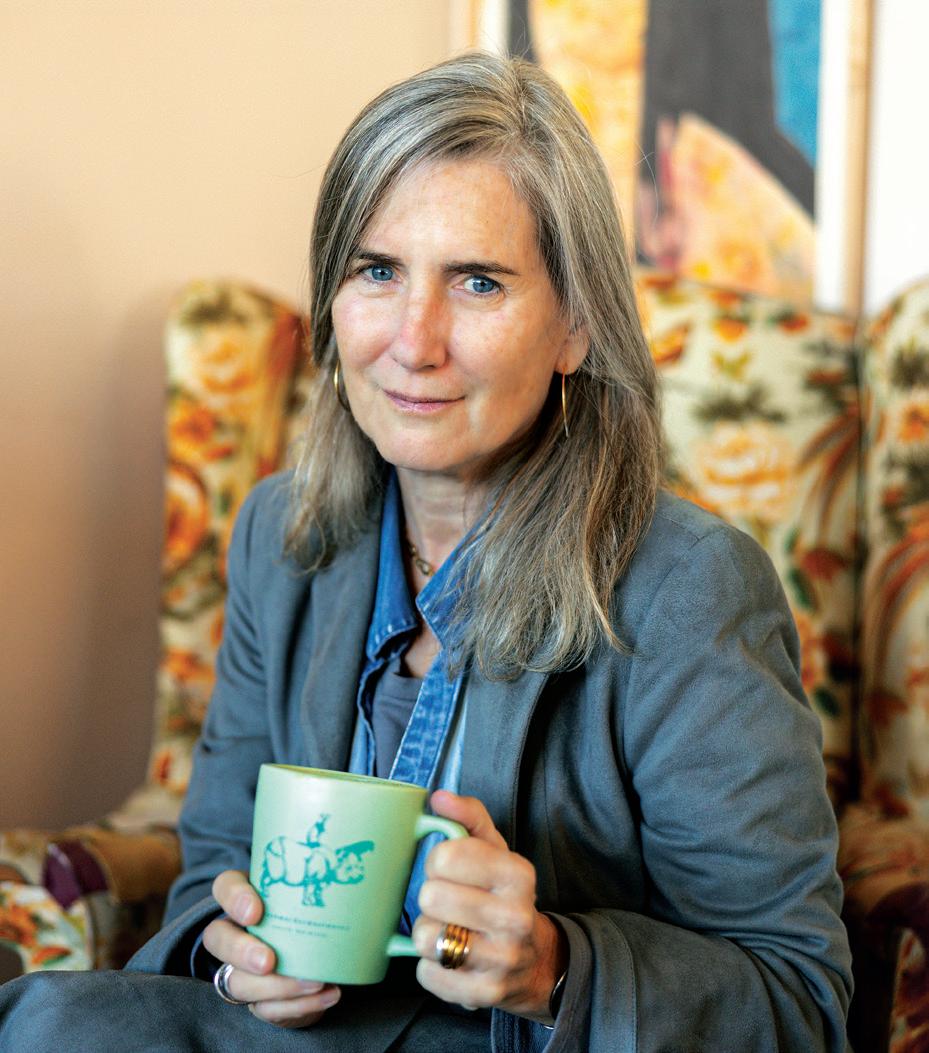
“We’re sort of the Alice in Wonderland of co eeshops,” says Elizabeth Marks, who bought the three-year-old business in August 2024. In what she calls a serendipitous moment, she was vacationing in Santa Fe when she met Ranier, the single-monikered creator of CMB’s unusual co ee- and tea-based beverages, who was looking to sell.
The long, skinny space with a shabby chic vibe shares the building with several artist studios and small merchants, including it’s-all-in-the-name Chocolate + Cashmere. “I’ve gotten involved with a very special place,” says Marks, a former New York advertising professional. “I see us becoming a community hub, a place to have poetry readings, pop-up markets, and other collaborations with local businesses.”
For locally made treats, La Lecheria (500 Market St., Suite 10) scoops craft ice cream, while Crepas-Oh! (500 Market St., Suite 11) sizzles decadent dulce de leche and savory roasted poblano crepes. Cafecito (922 Shoofly St., Unit 101) has built a following for its empanadas, while Counter Culture café (930 Baca St.), in the western end of the Railyard District (which extends to Baca Street and Cerrillos Road), is a go-to for hearty breakfasts.
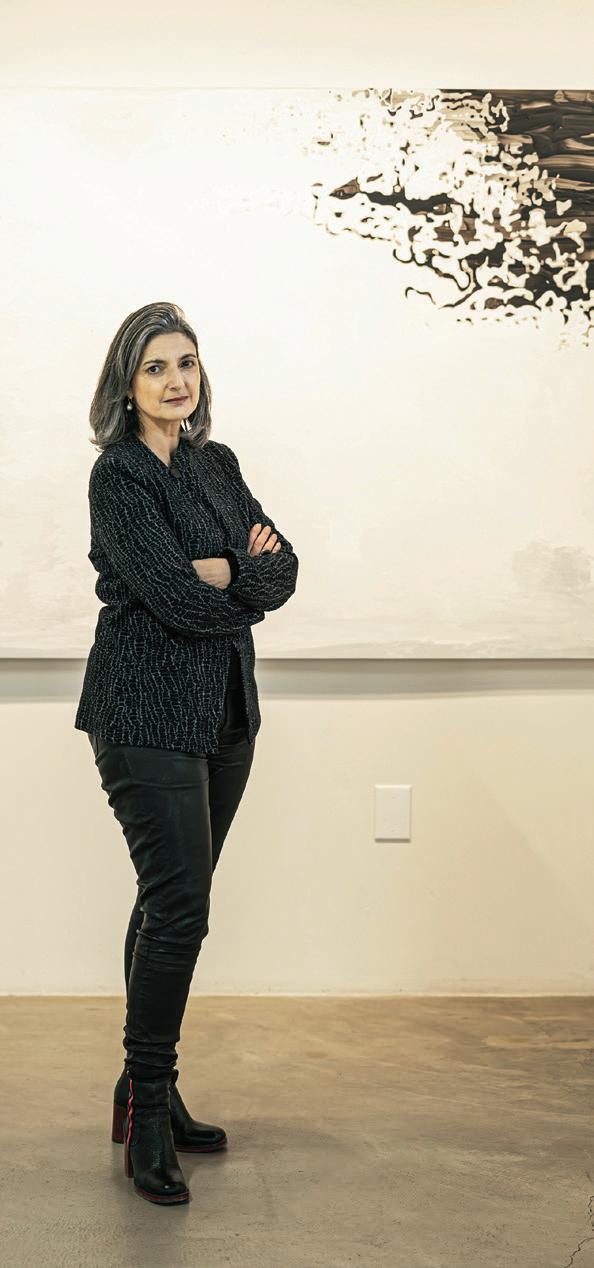
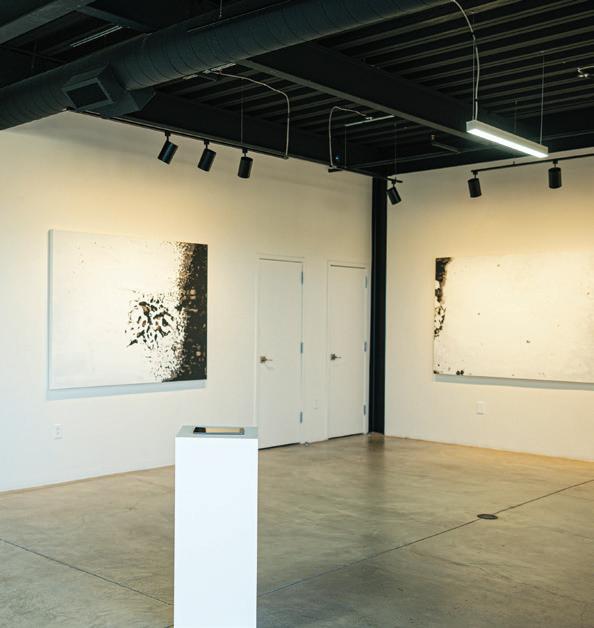
In artsy Santa Fe, creativity is always close by. Container (1226 Flagman Way), a gallery/museum hybrid, mounts touring exhibitions, and the items are available for purchase. In a “territorial revival meets industrial” building, Shoofly Pie (924 Shoofly St.) houses DNCA Architects, the firm that designed Vladem Contemporary, and Pie Projects, a contemporary art gallery directed by Alina Borsa. Pie Projects opened with casual exhibitions during the COVID-19 pandemic and soon represented such Santa Fe–based luminaries as painters Sam Scott and Jerry West, and photographer Gay Block.
“People say it feels like the old days in the galleries, where you’d come and talk about the art and meet the artist and others who are interested in the work,” Borsa says. She hosts receptions and artist talks, but anyone is welcome during gallery hours. There are no price tags next to the works and no sales pressure, because, says Borsa, “There should be a place, during di cult times like now, where you can go and be treated with kindness, inclusion, a sense of sharing ideas.”




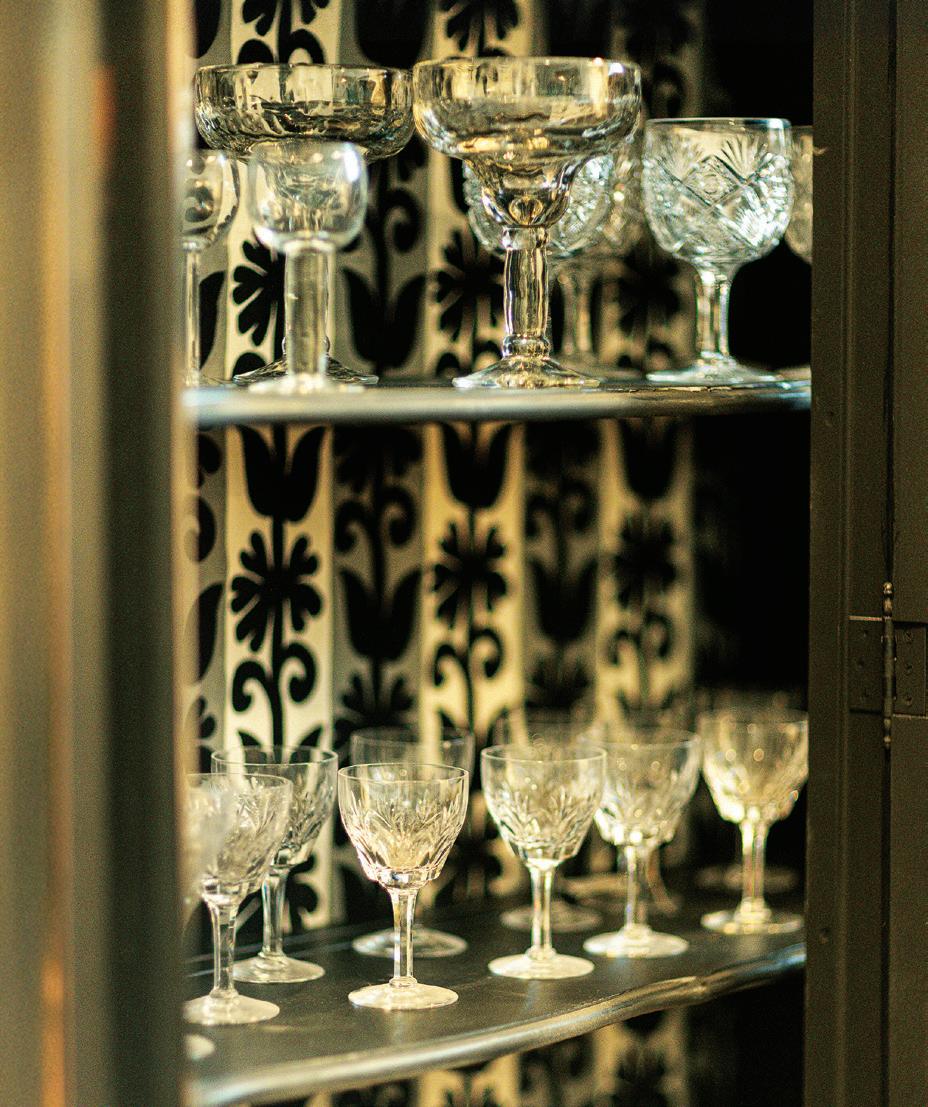
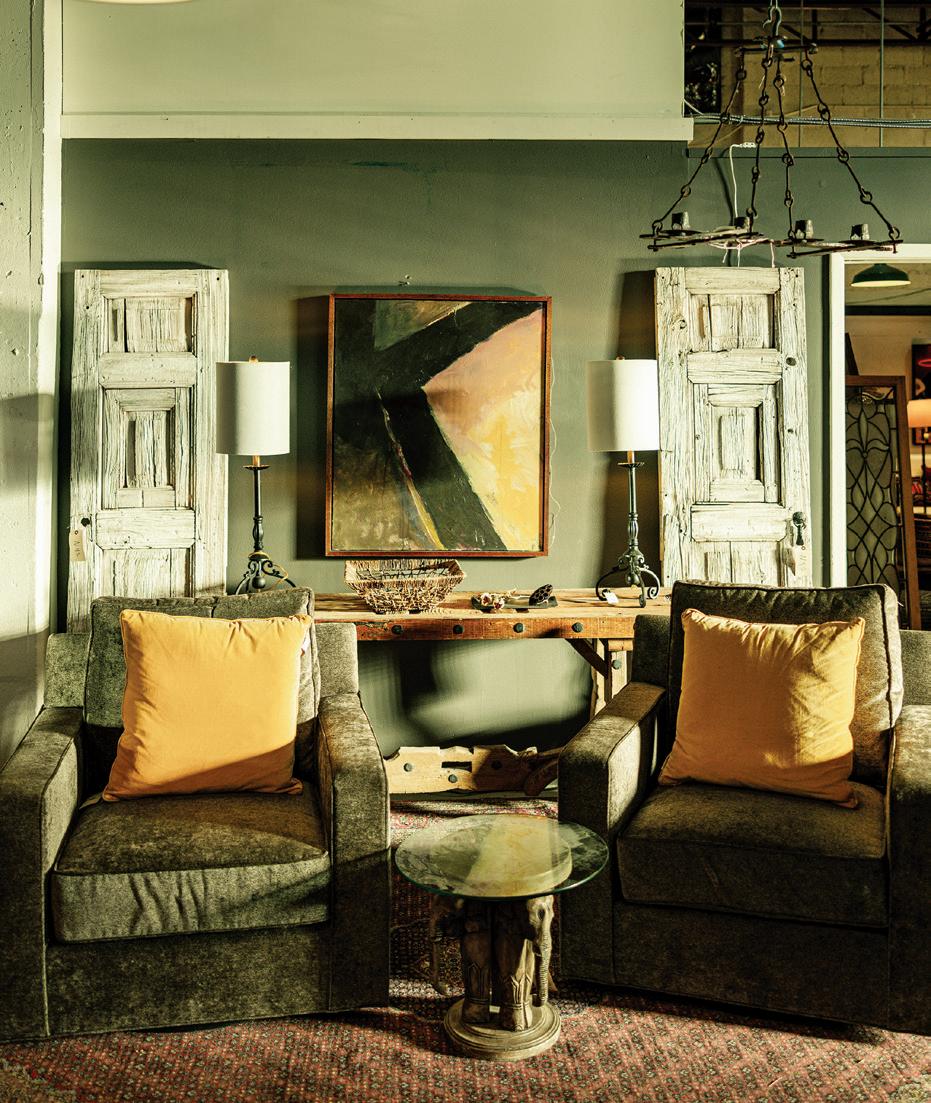
n the 1960s, Midtown was the edge of Santa Fe, where Cerrillos Road trailed into dirt. Today, Midtown is a somewhat undefined swath between the Railyard and the Southside. This mixed-use area contains all the go-to spots for daily living: grocery stores, car dealerships, and restaurants, as well as alternative music venues.
There’s also a serious concentration of resale stores, where savvy shoppers can tap into curated collections in search of new homes. “We have about 6,000 consigners, and we get multiple shipments a day,” says Shawn Vallecillo, owner of Congeries Consignment (1368 Cerrillos Road), where you’re as likely to find an antique velvet settee as you are a Knoll chair or a full suit of armor. “If you want it, buy it today, because it won’t be here tomorrow,” she says.
Vallecillo says customers regularly get lost in the 22,000 square feet of designer-staged rooms and a few storage-like spaces stu ed with new arrivals in the former White Swan building, which was the state’s only commercial laundry in the mid-1900s. The Southwest folk art room is in the old break room, with dishes and pottery arranged on the original banco, where employees sat to eat lunch.
Congeries carries a huge range of goods, and price points vary. Shoppers include serious collectors, movie industry set dressers and costumers, and people looking for unique or just a ordable furniture. “We try to have something for everyone,” Vallecillo says, gesturing to a Noguchi co ee table and a Restoration Hardware couch (priced for half of what it would cost new).
You could spend a whole day getting lost inside Congeries — and then several more exploring other Midtown consignment stores, including Stephen’s A Consignment Gallery (2701 Cerrillos Road) and The Consignment Warehouse (1728 Camino Carlos Rey).
For a di erent variety of rambling rooms full of curiosities, Meow Wolf’s House of Eternal Return (1352 Rufina Circle) is an immersive, multisensory art carnival that doubles as a top music venue. It’s one of many in Midtown, where tunes flow from including Ghost (2889 Trades West Road) and Tumbleroot Brewery and Distillery (2791 Agua Fria St.).
If grooving works up an appetite in Midtown, you can feast on homestyle African fare at Jambo Café (2010 Cerrillos Road) or eat at The Pantry restaurant (1820 Cerrillos Road), a local staple since 1948.
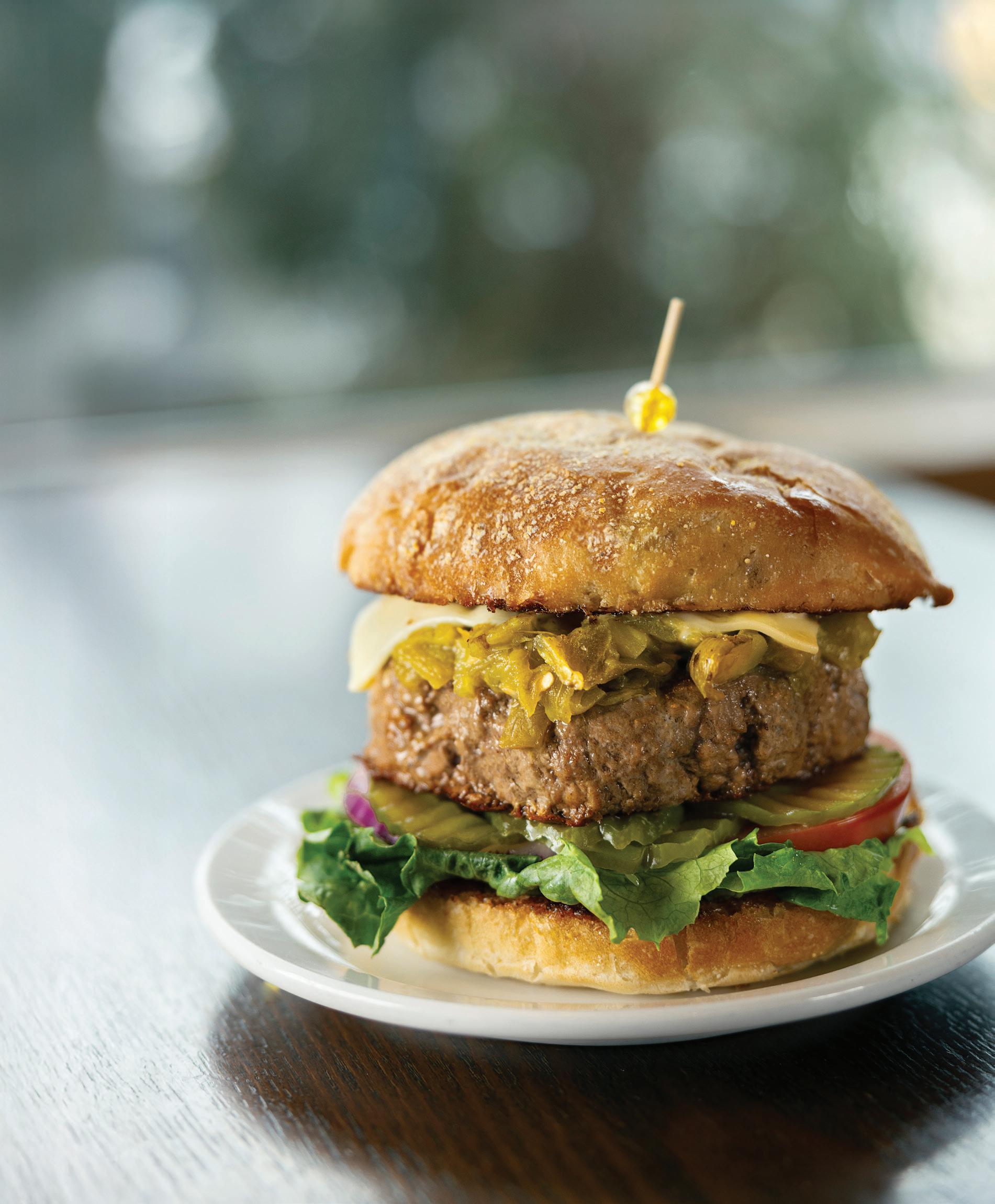
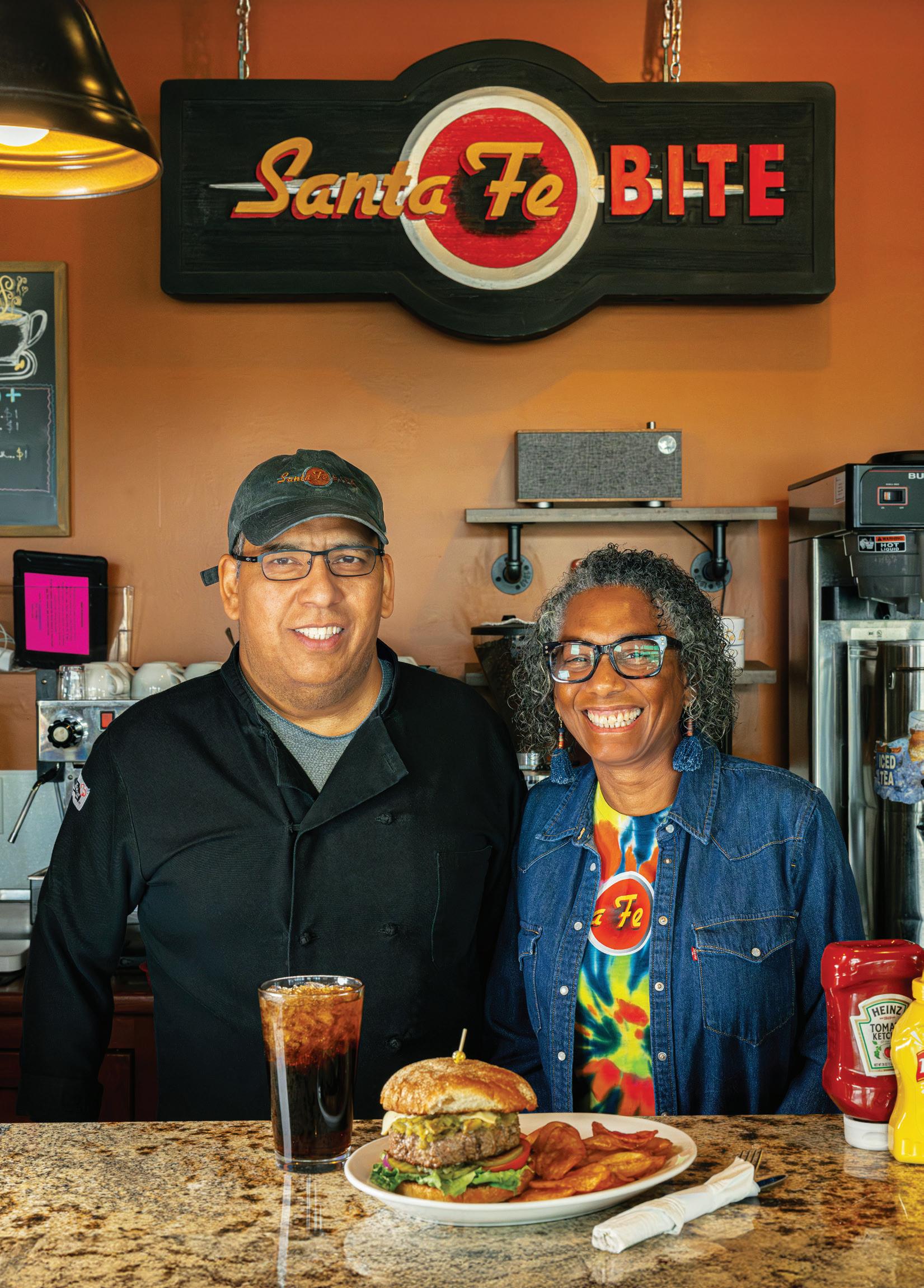
Midtown also happens to be home to what is arguably Santa Fe’s most beloved green chile cheeseburger. Santa Fe Bite (1616 St. Michael’s Dr.) originally opened in 1953 as Bobcat Bite on Old Las Vegas Highway. George M. Motz included the original tiny diner in his influential Hamburger America: One Man’s Cross-Country Odyssey to Find the Best Burgers in the Nation (2008). Today, the restaurant dining room has space for 150, and you can order the famous 80/20 chuck/sirloin grind through Goldbelly from anywhere in the United States.
“As far as I can tell, most of the people we’re shipping to are locals who moved away,” says Angela Mason. The former server bought the Bite in 2019 with chef Armando Rivas, following in the footsteps of former owner Bonnie Eckre, who was a server for 20 years before she and her husband, John Eckre, bought the business from the Panzer family in 2000.
“We’ve survived because the sta has always loved it enough to keep it going,” says Mason, who believes the secret to the burger is making sure the chile doesn’t overpower the taste of the beef. “We use a house blend of hot and mild Hatch chile to make the perfect medium. Some people say they want the chile hotter, but the goal isn’t to burn the roof of your mouth o — it’s to serve you a burger that you want to eat for the next 40 years.” And one you keep coming back for.
Jennifer Levin is a freelance communications professional and an arts and culture writer in Santa Fe.


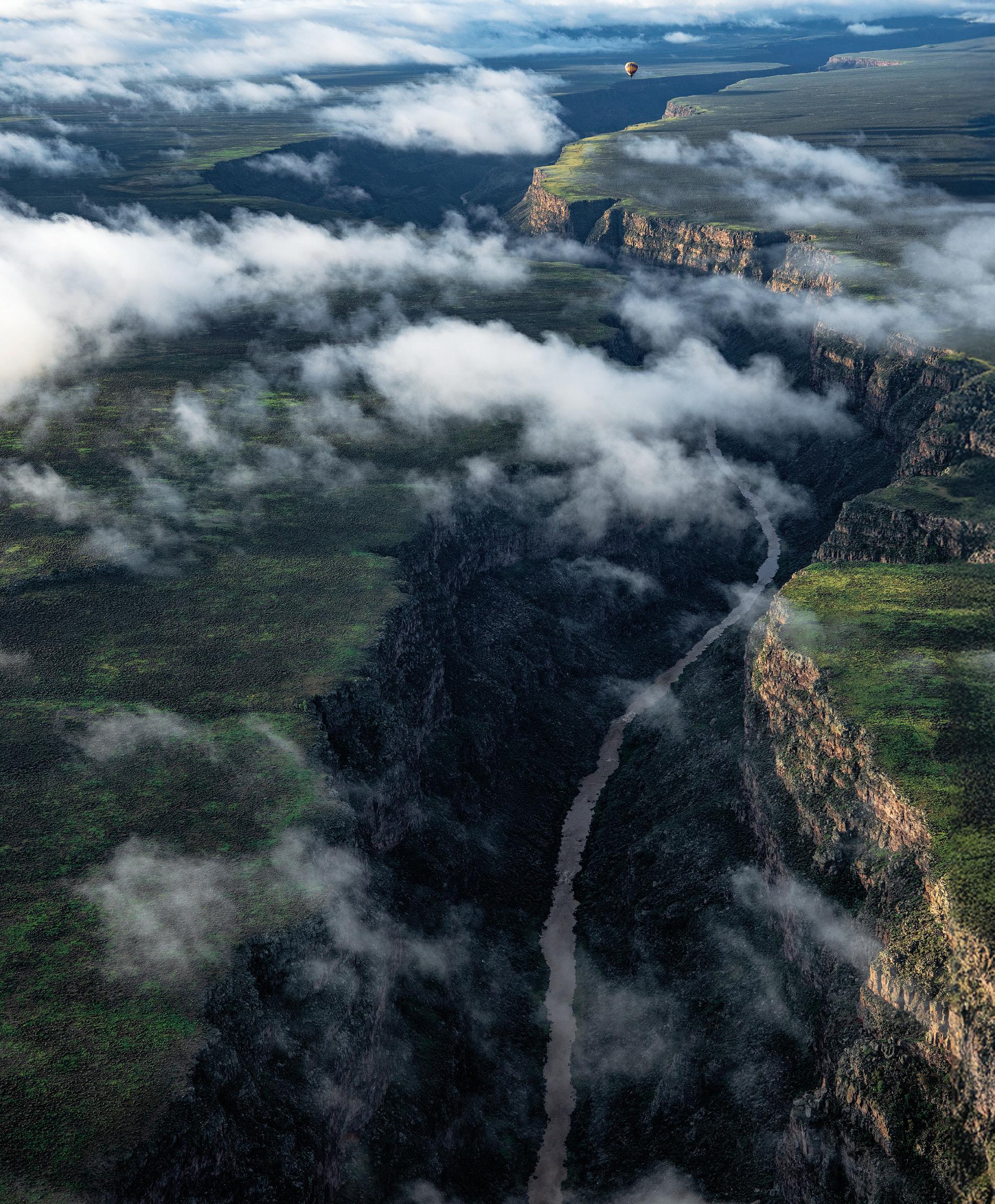
In New Mexico, water is life. The Rio Grande is the mightiest waterway in the state — and the third longest in the United States — flowing from its Colorado headwaters, through the narrow canyon of the Rio Grande Gorge near Taos, and to the metropolis of Albuquerque before becoming part of the international border with Mexico. It feeds us — irrigating farm fields and sustaining wild ecosystems amid the state’s high desert environment. It also feeds our local culture, inspiring not only photographers and poets but also outdoorspeople. Here, six New Mexicans reflect on their connections to the Rio Grande in their lives and work.
AS TOLD TO ASHLEY M. BIGGERS
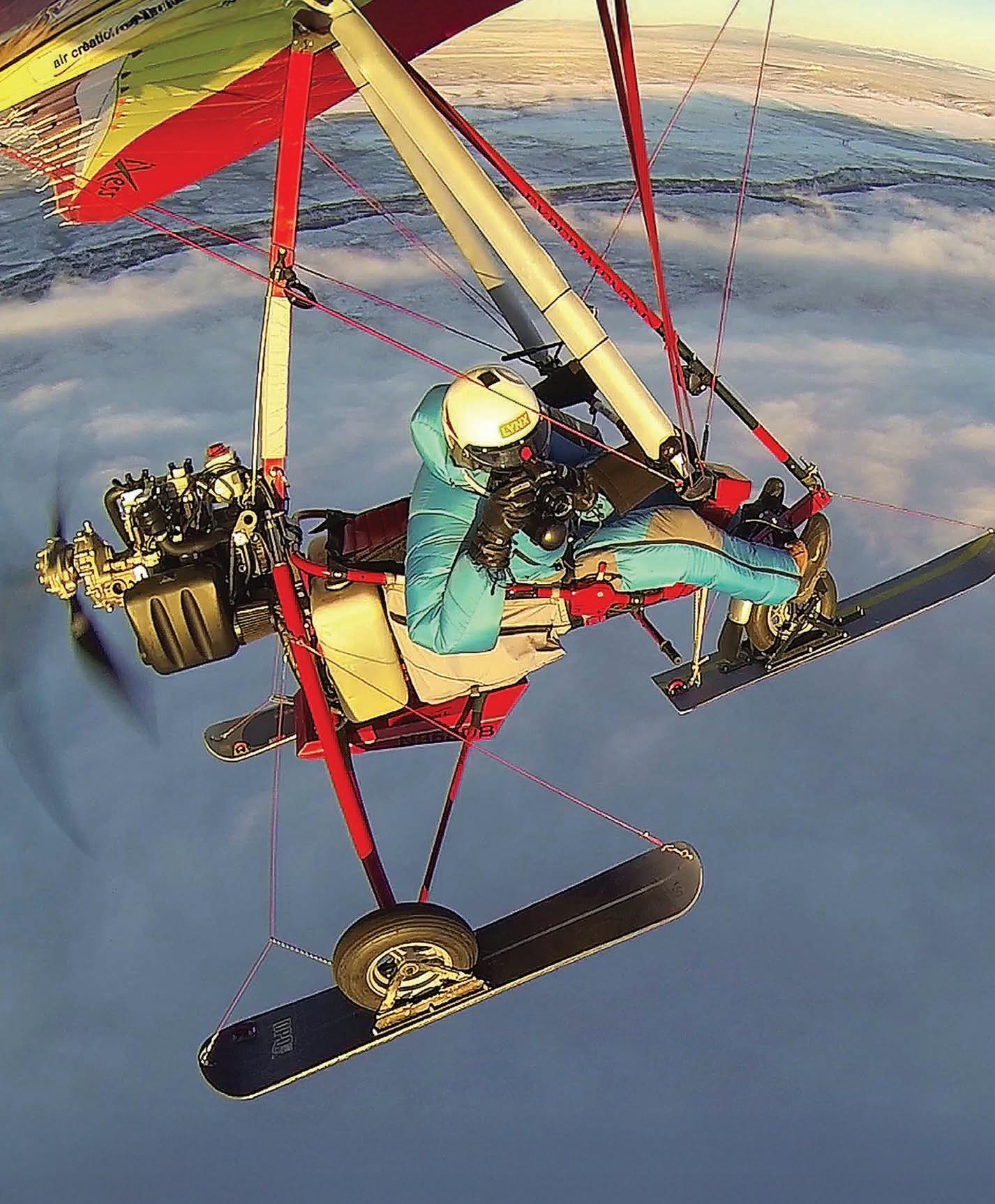

Based in Taos, Chris Dahl-Bredine captures aerial views of the Rio Grande from his seat in his ultralight aircraft. See his fine art photography and learn more about his aerial photography workshops at shotfromabove.com.
The Rio Grande has been a huge part of my life for a long time. I grew up in Southern New Mexico [in Silver City]; the Rio Grande flows down there. I’ve been here in Taos since the late ’80s. I was a rafting guy. I’ve seen kind of an intimate view of the river from all di erent angles — floating it and flying above it.
In 1999 I was in Taos Ski Valley skiing Kachina Peak after a big snow. I was exploring this zone above a cli area, and the next thing I know a little avalanche broke above me and just swept me o this huge cli . There was nothing I could do. I was still standing in the avalanche, and this river of snow coming down the mountain was above my armpit. When my skis hit the rocks at the edge of the cli and I saw where I was going, the last thing I remember thinking is, “This is it. I’m done.”
I slowly started coming to at the bottom of the cli . I was buried up to the top to my neck, and I was in and out of consciousness. I think I left my body for a while. Slowly I started to remember what happened. I was so happy that I was alive. I fractured my T1 vertebra and broke my wrist, but it led me to a whole series of decisions that changed the course of my life.
I had always wanted to fly something open, like a hang glider. And that’s when I found these trikes, which are basically powered hang gliders. I decided it was time to go follow that dream.
It was a dream come true, to be able to, all of a sudden, see all these incredible places that I knew from the ground. It was so exciting to basically go wherever you want to, as long as you have fuel and good weather. I just wanted to share what I was seeing with everyone, just because I was so in love with the landscape from above. I started bringing a camera. When you see [the Rio Grande] from up above , you see how the current is a ected by a turn in the river, or you see how it’s a ected by huge boulders.
Being on the river really puts you in a meditative state. That feeling of floating, being carried by the river, is magical. At the same time, you have to stay present, because there are things coming up that you have to avoid and moves you have to make to navigate through the features of the river.
I hope [my photographs] help people connect to the incredible interconnected landscape that we have here , the way the water supports our life here in New Mexico, especially in the desert. I just hope it moves people to a place of awe, appreciation, and gratitude for this place. That it gives people a sense of reverence and helps them step out of their busy minds.


Albuquerque-based writer, poet, artist, and creative coach Michelle Otero has always felt a close connection to the Rio Grande. During her time as Albuquerque poet laureate (2018–2020) the Deming native hosted monthly bosque walks for the public. Her time along the river inspired “Bosque: Poems” (University of New Mexico Press, 2021), a collection written during her poet laureateship. Learn more, including the latest about her forthcoming memoir, at michelle-otero.com.
Growing up in a desert, you’re aware of any body of water that’s nearby. The river I grew up next to was the Mimbres, which is a tributary of the Rio Grande. It was often dry. If we got a big rainstorm, it would be like, “Let’s drive to the river to see if there’s water in it.”
When I first saw the Rio Grande, it was on visits to El Paso or Ciudad Juárez. I always felt sad for the Rio Grande, seeing it in these concrete barriers.
I first lived in Albuquerque in my 20s. At first [the Rio Grande] was just a place to walk, to go jogging. When I came back in 2006, I was more conscious of its ecological significance. I thought about the beauty of a place that has a perfect memory and really holds all the history of a particular place in it.
When it came time to be poet laureate of Albuquerque, the project that made the most sense was to get people into the bosque. Part of what feeds me creatively, as a human being and as a writer and poet, is being in community with other creative people. I wanted to create a platform for other poets in the community, to be able to celebrate the work of somebody I appreciated, and have them share some of their favorite spots along the river.

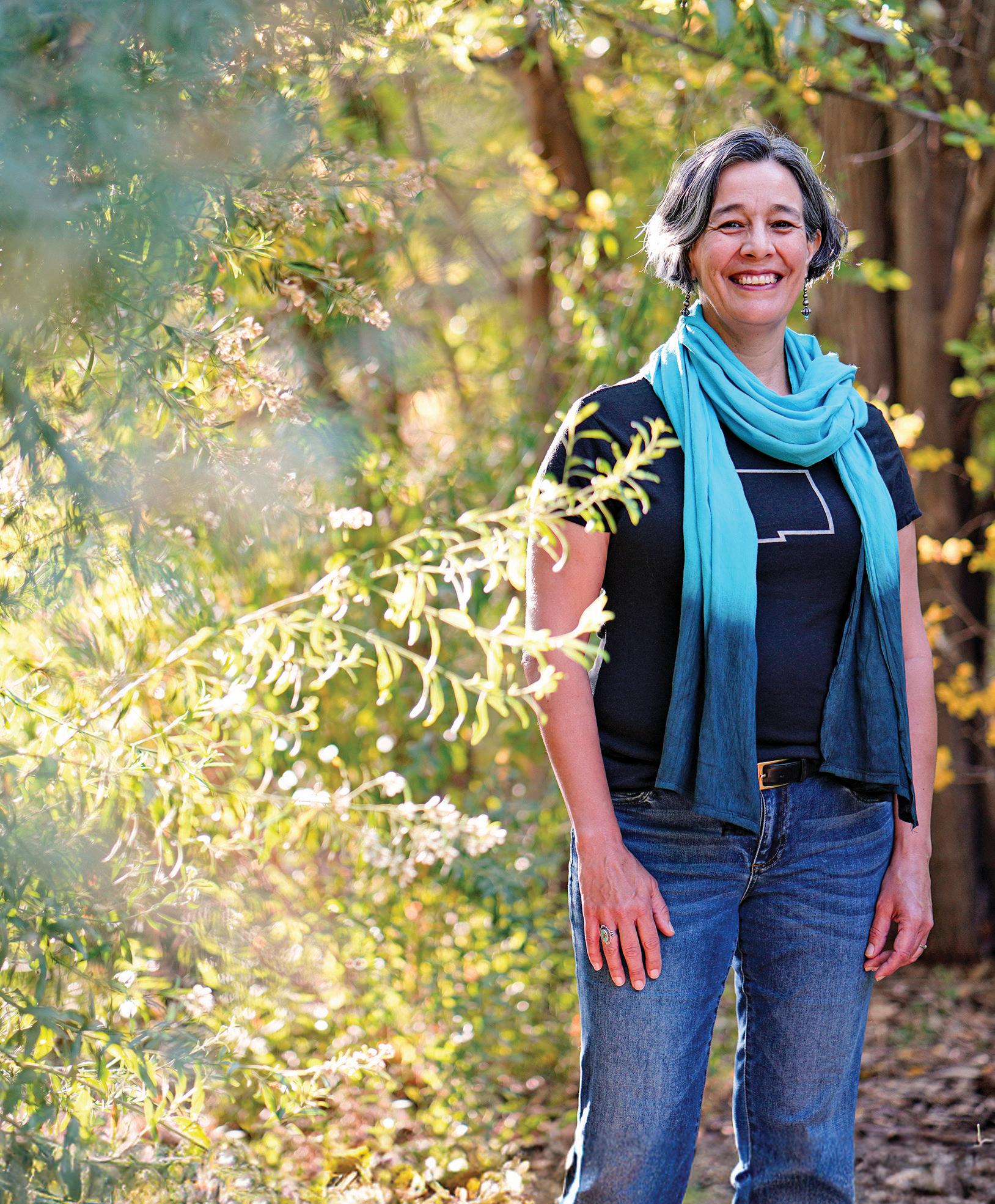
In the bosque, content is abundant. If I’m feeling blocked or dry even, I can go, sit quietly, and just listen. It re-engages me with my senses. I can always tune back into my sense of sound, the feel of the air on my skin. Even if I show up with a blank page, I can leave with a page full of just incredible things that I’ve seen or things that I’ve heard.
It’s a really tangible way to see what’s happening with the climate. I don’t know if I would write a treatise on climate change, but I can put in a poem that it’s 60 degrees in February. That the river shouldn’t look like a patchwork of missing puzzle pieces but sometimes it does. I can express things in poems that the river has given me that wouldn’t be as compelling in an essay.

My relationship with and my love [for the Rio Grande] deepened in the pandemic, because it was a place to be around people without fear of getting COVID. I think the beautiful thing that rivers do is really hold and kind of carry away a lot of emotion. My worry [during the pandemic] wasn’t really serving my family, and I felt like I could give it to the river. That’s really in alignment with traditional Mexican medicine or pre-Columbian medicines. After you get a cleansing, depending on the herbs, or if they use an egg, you bury it or you release it to the river. It felt like she’s carrying a lot for us.
I think it’s medicine for who I am as a person and as a human.



River guides through and through, the Gontrams have navigated waterways across the West. They’re now behind the oars of New Mexico River Adventures. They bought the company’s forerunner and rebranded it in 2010. Although they specialize in rafting the Rios Grande and Chama, they also o er float trips and stand-up paddleboarding. Now a full-service outfitter, the company also organizes climbing trips, ballooning, and other adventures from its newly opened headquarters in Rinconada. Book a trip at newmexicoriveradventures.com.
Wendy: I think one of the exciting things about running a river, and specifically the Rio Grande, because there aren’t traditional dams upstream, is the ever-changing nature of it. That was really exciting to me. It was a new challenge all the time.
Matt: I look at rivers as the veins, the lifeblood of our landscape. To be able to visit a part of the country or a part of the wilderness by river is completely unique and incredibly special. There’s no way you can see certain parts of the world without being on a raft moving downstream. You can hike into a certain destination and hike out, but to have that continuity through a canyon is an experience. With every bend there’s a new surprise. There’s this deep connection you feel right away. If you’ve been lucky enough to grasp it, you hold onto it. We’ve made it our life and our living. Wendy: I think experiences like [rafting] are becoming even more important. There’s so much division in the world right now. It’s important for everyone to come together and have to operate as a team, to be discon-

nected from technology, whether it’s for a three-hour trip or one of our multiday trips, and to just remember that we can connect, work together, and put maybe what feel like really big di erences aside.
Matt: When it comes to river conservation, there’s no other way to really express how you feel about it than having people experience it themselves. I think that we river runners have turned out a lot of conservationists over the years.
Wendy: We just aren’t getting the consistency that there once was [with weather and river conditions]. Predictions are harder. The Farmer’s Almanac isn’t maybe quite as much of a bible as it once was because of all the changes in the climate.
Matt: We were river guides living in a van for years. We came here specifically to settle down because [the place] spoke to us. This is where we met, and this is where we’ve always been drawn and tried to come back to. And this opportunity with New Mexico River Adventures was an amazing opportunity for us. It has shaped our lives in every way.


Wendy: There’s no shortage of river analogies relating to life. And I do relate to so many of those. You know, sharp rocks being dropped into the river and over time the edges softening. Approaching life in di cult situations the same way that we approach a di cult rapid. Our gratitude is endless for the Rio Grande. It’s not just selfish. It’s what it provides for our community, for the state. But it’s everything to us. It’s what feeds our child. It’s what makes us happy. It provides challenges every day and inspires growth.
Matt: You’ve heard the rafting guides say it, so here it is: All forward.

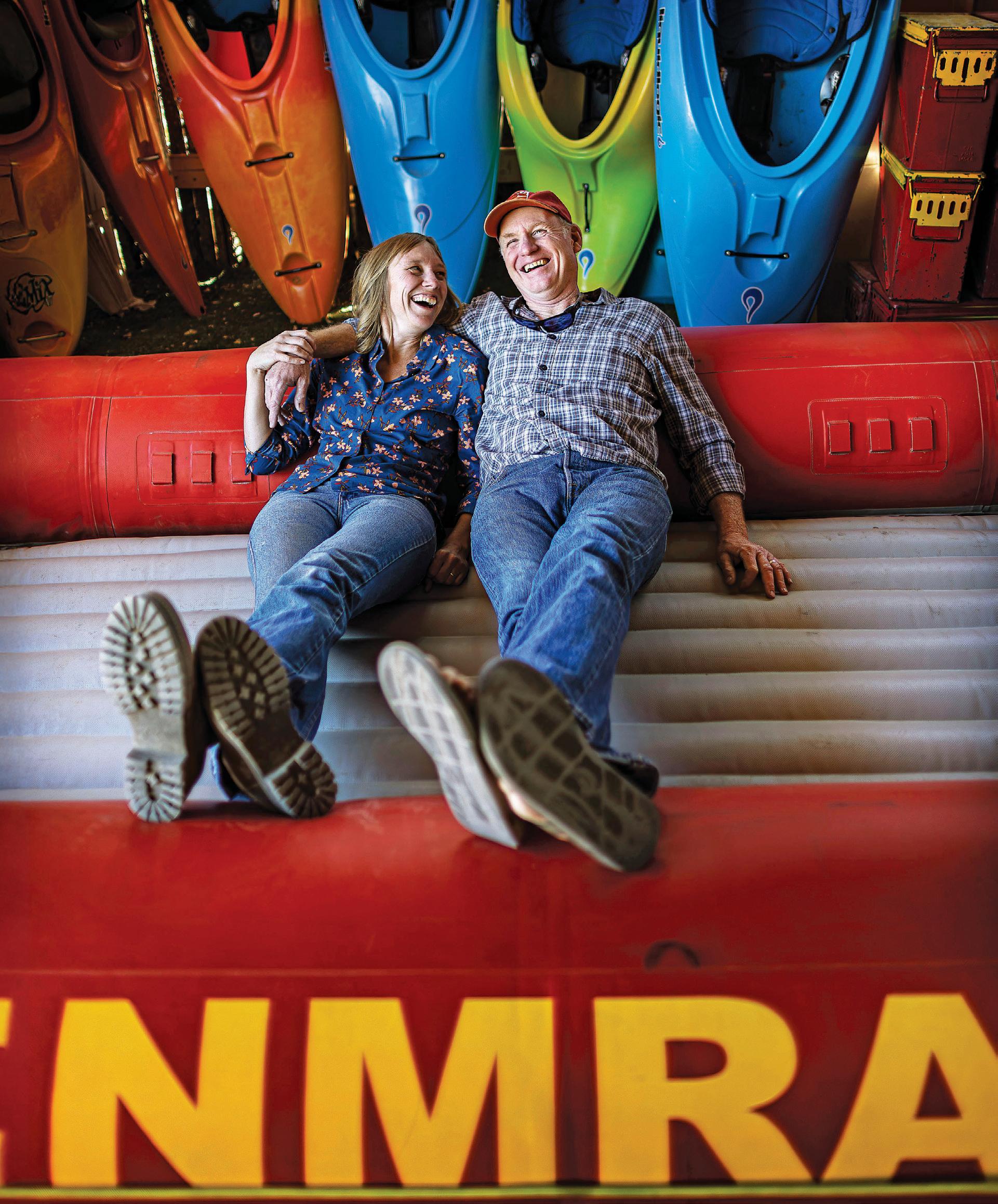

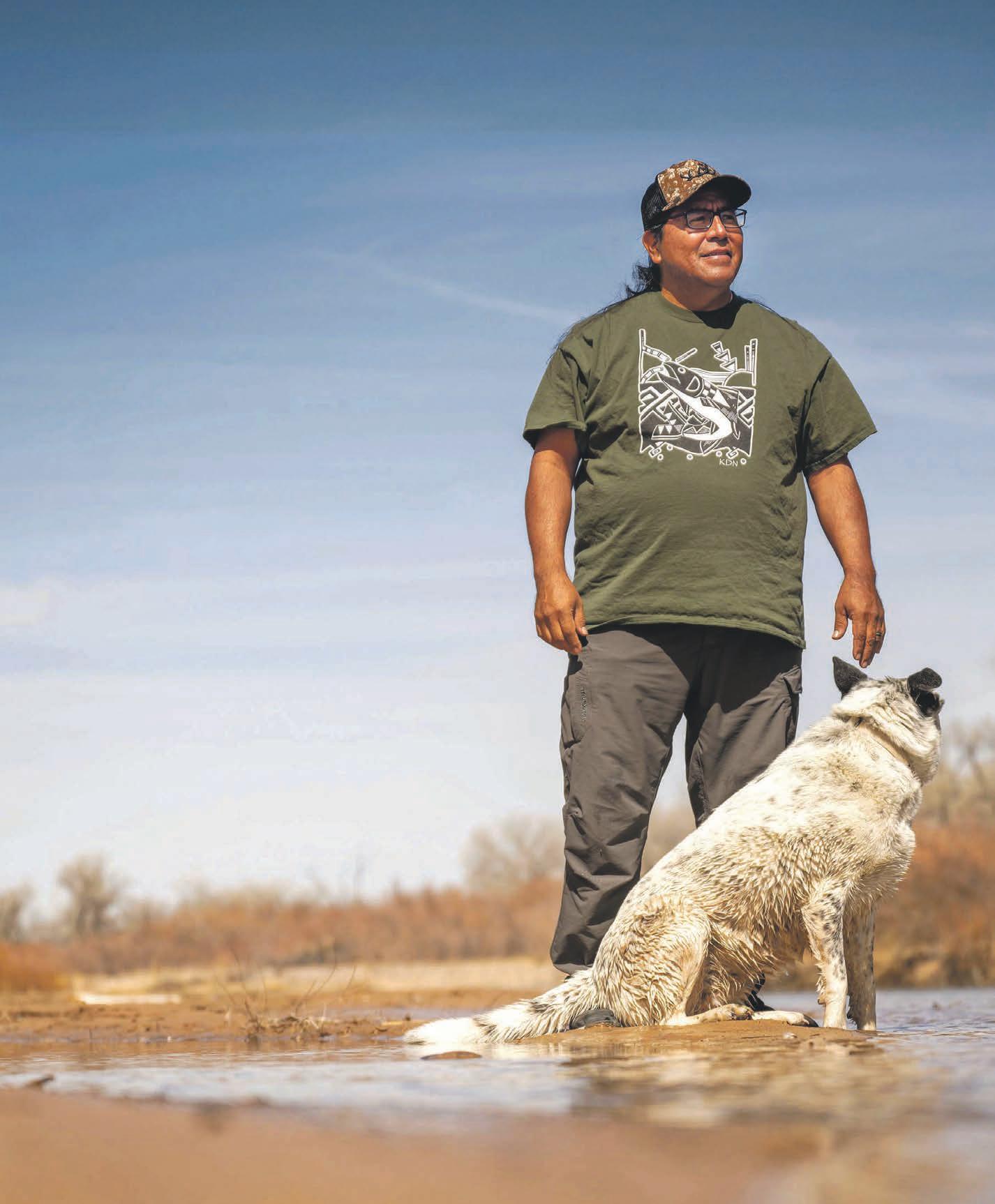

Jon Naranjo followed his father’s footsteps into tending the land for his family and the people of his native Santa Clara Pueblo. He irrigates a couple 2-acre plots with Rio Grande water. In his day job, he serves as the free, prior, and informed consent manager for the National Wildlife Federation’s Rocky Mountain Regional Center to enhance the organization’s tribal and Indigenous partnerships.
The Rio Grande has played a tremendous part in where our current pueblo is situated. We moved from Puye [now the Puye Cli Dwellings, a national historic landmark], which was at a higher elevation. A lot of the planting at that time, in the 1300s, was considered dry farming. An extended drought season forced our ancestors to move down in the valley, which is known as Española Valley, between the Jemez Mountains and the Sangre de Cristo Mountains. The Rio Grande was able to provide the necessary water.
There’s not as many farmers as there were back then.
We have been stewards of the land from time immemorial, working in conjunction and connection with Mother Earth and the Rio Grande, which we refer to as Posoge in our Tewa language.
I remember playing in the irrigation ditch as my father would tend to the garden. I [remember] visuals of him working with the soil and planting the seed. I remember him asking me to sing to [the seeds, the water, the earth].

My love for farming provides our staple foods, which is the Three Sisters: corn, sweet or for flour; beans, di erent varieties like lima beans, pinto beans, black beans, and tepary beans; squash, like summer squash, winter squash, and pumpkins. Some other fruits and vegetables from the Spanish, by way of Mexico, were brought in, including various types of chile, which I also grow.
The crops are primarily shared with family and with some of our cultural and traditional dance ceremonies.
The water isn’t just used for our crops. It’s used for our livestock, to help our ecosystems, and during our ceremonial practices.
My concern is, if we don’t engage our youth now, then we’re setting them up for failure or disappointment. They should have a fair try at life, and they need to have these values — the teachings of traditional ecological knowledge and intergenerational knowledge transfer — to survive moving forward, because we don’t know what the future has in store.
I am engaging with our grandchildren and teaching them how to nurture the plants from germination to harvest. It’s exciting to see their willingness to engage and be part of it.
We watch and observe the growth patterns and [talk about] why some aren’t growing, why some are drying up, or why some are thriving.

In our traditional beliefs, a lot of things have a life, have a spirit. The trees, the rocks, the native grasses, the earth, even our animals. We extend that to our plants as well. They are recognized as our children. So it’s just like caring for our children. At each stage of their life, they require a certain type of nurturing.
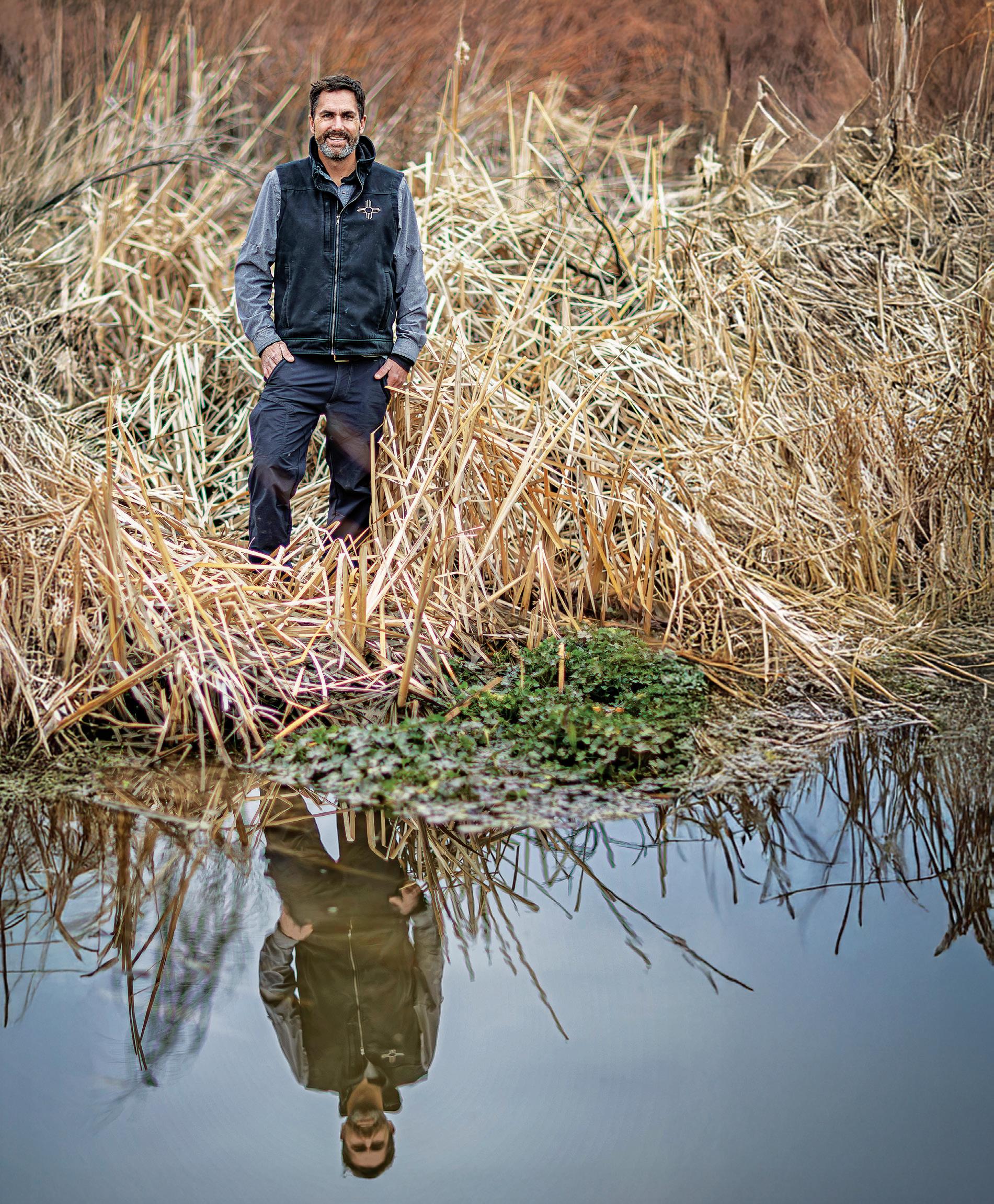

TODD LOPEZ , NONPROFIT EXECUTIVE DIRECTOR
Since 2003 Todd Lopez has been practicing as a natural resource, water rights, and environmental attorney. He has more than two decades of experience in nonprofit management and is currently at the helm of Rio Grande Return, which uses a minimally invasive approach in riverscape restoration, post-fire restoration, and urban habitat restoration. The organization’s diverse projects have included willow and cottonwood planting along the Santa Fe River, regrading slopes at the Conservation Homestead in the Galisteo Basin Preserve, and construction of beaver dam analogs along San Antonio Creek within the Valles Caldera National Preserve. Learn more about Rio Grande Return’s work at riograndereturn.org.
I call myself very fortunate to have landed where I did a few years ago with [Rio Grande Return]. I helped a friend form the nonprofit Rio Grande Return back in 2007, never knowing that one day I’d be running it and having the benefit of working with people like Reid [Whittlesey, restoration director] and a whole massive community of folks.
We use low-tech, process-based approaches that I now believe to be one of the most impactful, e ective, and hopeful solutions for us in terms of drought mitigation, wildfire mitigation, and just resiliency generally. A lot of this revolves around beaver complexes and what we generally refer to as nature-based solutions that are not heavily engineered. They’re not reliant upon heavy equipment; they don’t require vast sums of money. They can be done with hand crews on the ground, and huge areas of our watershed can be treated in a short period of time.
With Hermit’s Peak, you have a devastating wildfire that’s eradicated any vegetative cover in a huge area. When we have subsequent precipitation events, there’s no vegetative cover to hold that water on the slopes, much less in the channels. And so it flashes through those systems, creating devastating flooding and damage to infrastructure. That’s an example in the systems that we’re working in.
We physically go in with crews to put material back. We literally haul material from the slopes to bring woody material back into the system, to place it in the stream system in various strategic and science-based ways, to slow the water down, to pool the water, and to create di erent types of habitats. And we plant hundreds, thousands of native willows and cottonwoods and other species along those riparian areas.


We started a project along San Antonio Creek, which is a popular creek in the Jemez Mountains and travels through the Valles Caldera, maybe six years ago. We’ve had multiple retreatments, multiple revegetation activities. It’s a concerted e ort with a large group of stakeholders, with multiple and varied resources. Once we get through the funding that we currently have available, it’ll be a 10-year project. That’s what these systems require. We need to see that type of sustained, longterm investment because it’s not something you can do in a season. You can see the di erence in the areas that we have restored because they’re vibrant, green. The areas that haven’t been treated look totally di erent. There’s no vegetation. They’re dry; they’re brown. The river is very channelized. And you’re only going be able to visually identify a couple di erent species of plants, whereas you would have to start crawling on your knees and hands in our spaces, because there’s so many di erent species that are growing and being attracted to that space. We’ve seen [native species] return to areas that people didn’t think they existed in anymore.








































We’re here to help keep you healthy and happy all summer long with a range of care. Our services include 24/7 ER, urgent care, primary and specialty care, family medicine skin care, outpatient rehabilitation, lab, radiology and more. Call (505) SantaFe (726-8233) for an appointment or visit phs.org/santafe.



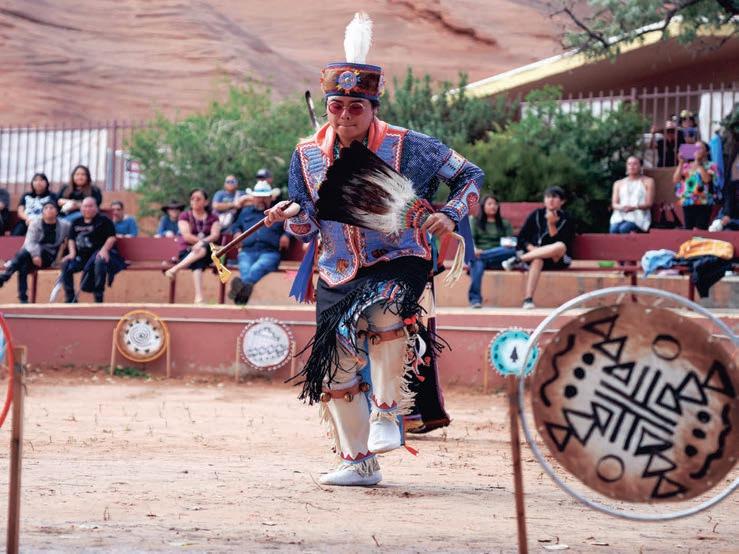
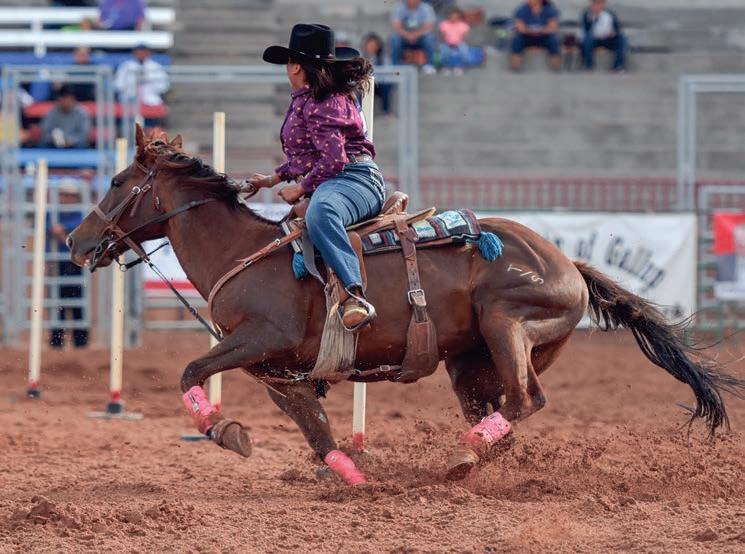
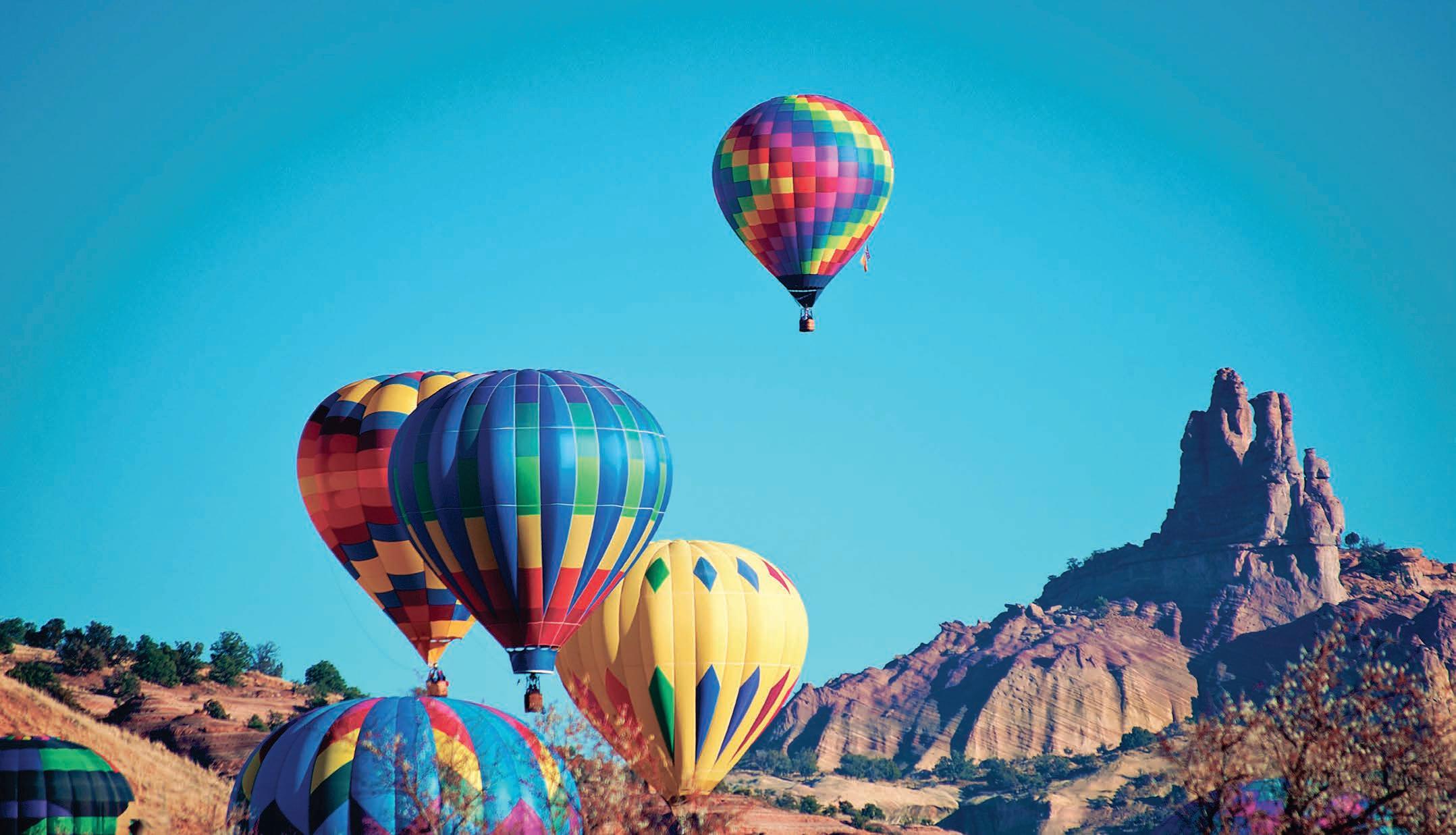
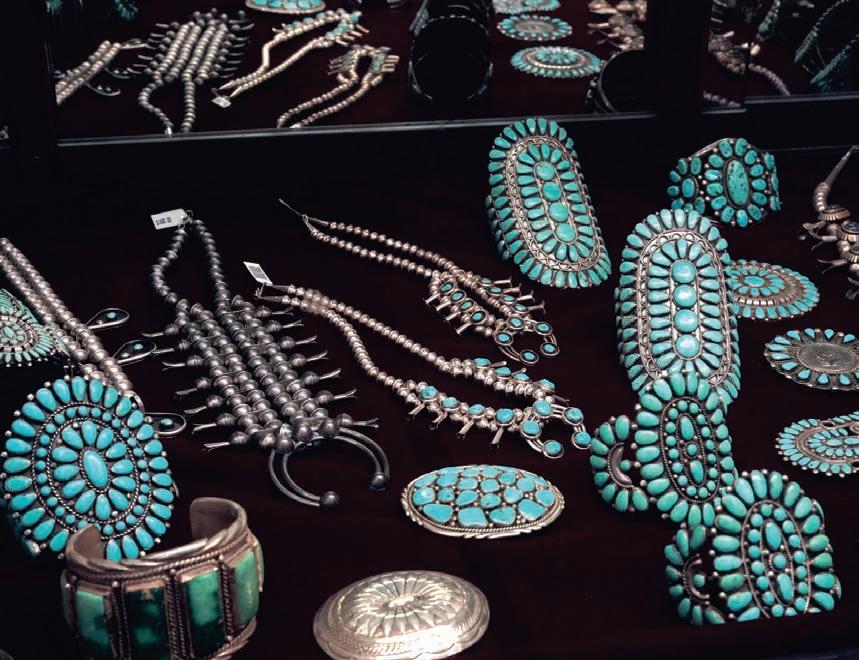
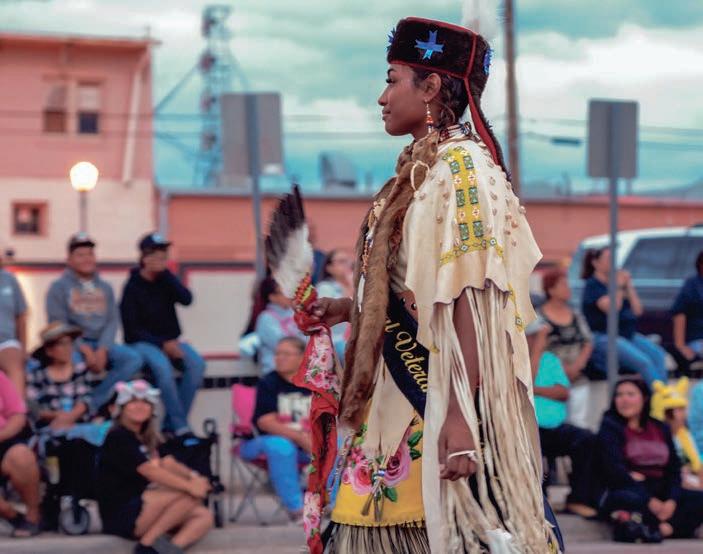
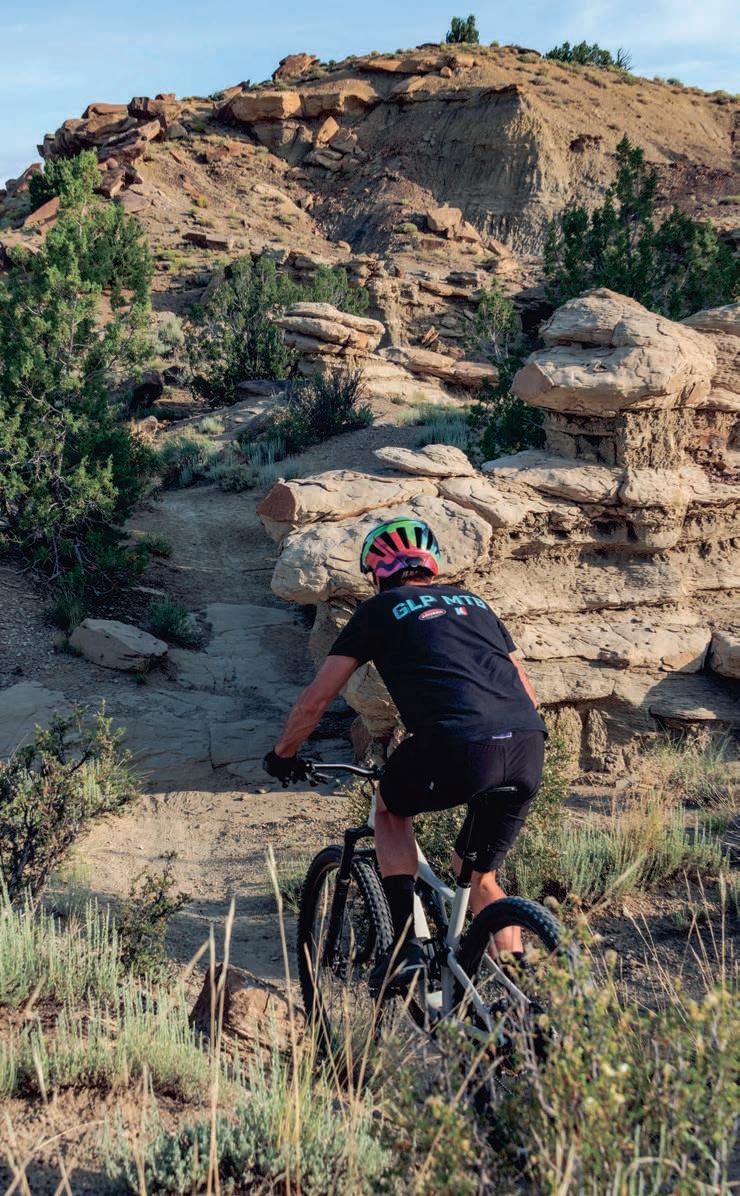
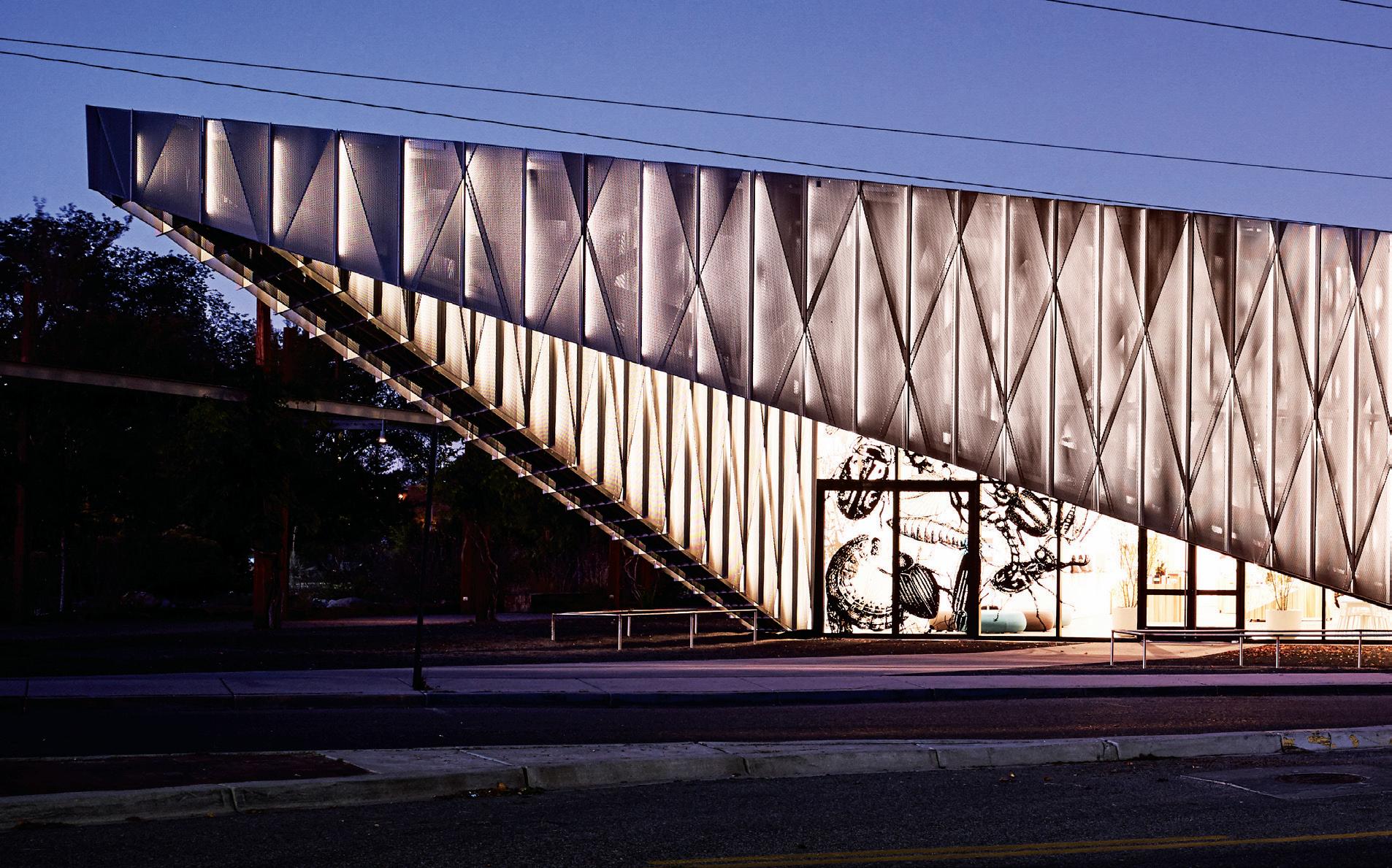
SITE Santa Fe celebrates its 30th anniversary with an international exhibition that fêtes New Mexico.
BY ADELE OLIVEIRA I PORTRAITS BY STEVEN ST. JOHN
AS CROSSROADS GO , the land now called New Mexico is one of the oldest. Fossilized footprints at White Sands National Park indicate the presence of people in the area for at least 23,000 years: in an excavated trench, layers of sediment dating back to the last ice age reveal grass seeds, plus giant sloth and dire wolf prints mingling with human ones, evidence of motion and exchange, life etched into the geologic record.
The state’s millennia of habitation and the magnetic power of its shifting landscapes are the germination point for SITE Santa Fe’s 12th International, Once Within a Time (June 27 through January 13, 2026), opening to coincide with the organization’s 30th anniversary. Founded in 1995, SITE is a non-collecting contemporary arts institution and was one of the first organizations to have a biennial, which took on the name “International” this year. The event is core to SITE’s identity. The success and energy of its regularly held, multi-perspective,
global contemporary exhibitions galvanized year-round programming and helped create the institution visitors know today. The International provides a platform for artists and curators to create work they would not otherwise be able to and an opportunity for creators from around the world to respond to the unique geography, history, and cultures of New Mexico. Although the International and SITE are decidedly global, both pay special attention to artists living and working in New Mexico. The organization also partners frequently with other local groups. For example, Santa Fe Public Schools students are creating audio guides and podcasts for the International.
Once Within a Time takes its title from longtime Santa Fean Godfrey Reggio’s 2022 experimental film of the same name, which he made with handcrafted, fantastical miniature sets during the COVID-19 lockdowns in his City Di erent home studio. Inspired by the film’s
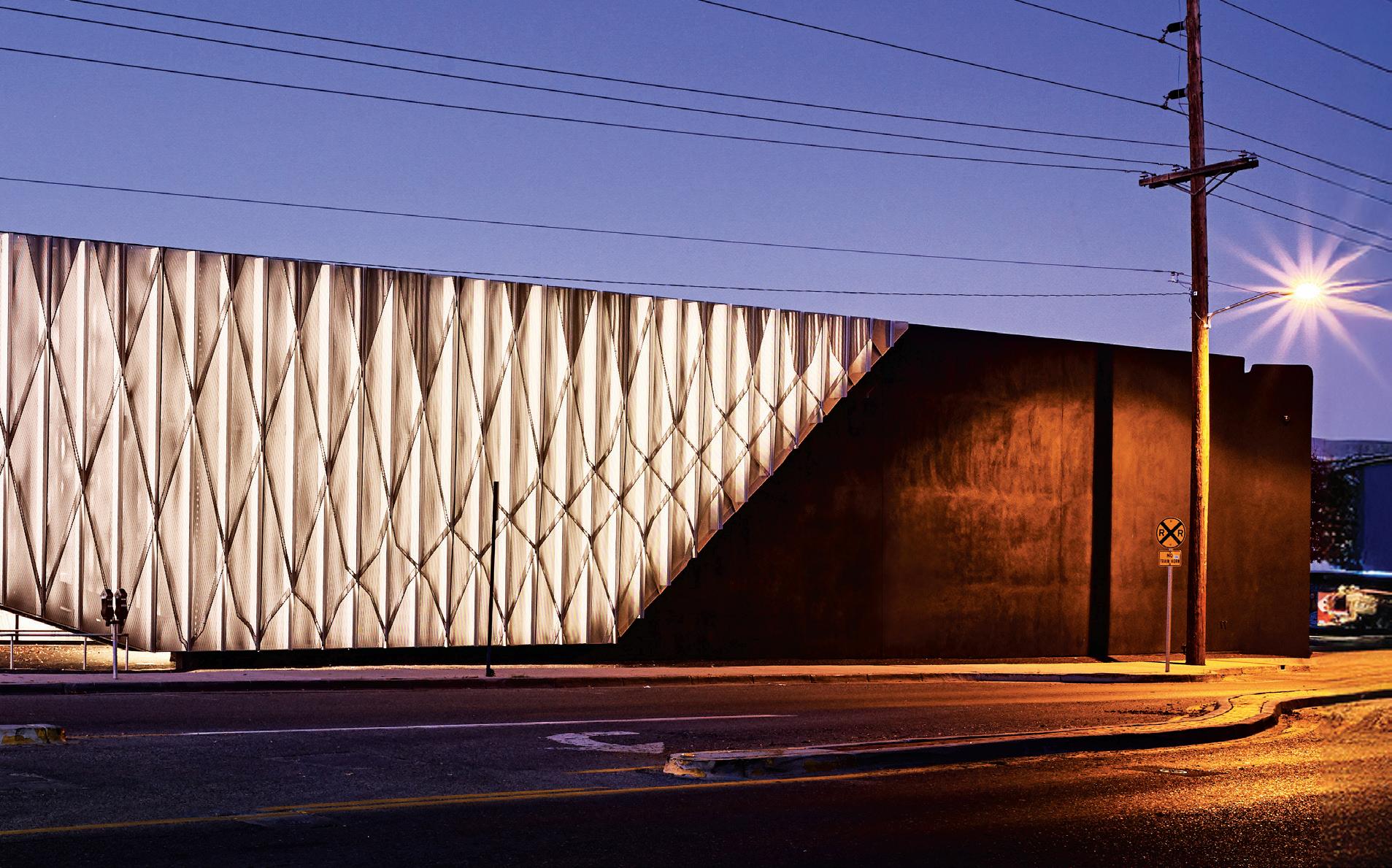
circular narratives, the International focuses on storytelling and New Mexico’s folk and literary history. It encompasses work from about 70 artists and writers, who enter dialogues with 20 figures of interest, either historical or mythical.
Although the event previously involved venues outside SITE, for the first time the exhibition is fanning out across the city, commissioning site-specific projects at about a dozen local spots, from landmarks like the New Mexico Museum of Art, the Wheelwright Museum of the American Indian, and the Palace of the Governors to a vacant storefront. The expansion of locations aims to draw in viewers who might not otherwise visit SITE but who may interact with an installation at a cannabis dispensary or Shidoni, the defunct foundry in Tesuque, both of which host International exhibits.
While the artists featured come from around the United States and abroad, many are from New Mexico, centering creations that emerge from a region vast in scope yet endlessly specific in detail and expression. Three New Mexico–based artists in the International are concerned, broadly, in borderlands: loci of activity or conflict both real and imagined that elude easy characterization and are indelible from collective consciousness.
“I started with the idea of doing an exhibition about one person that was connected to Santa Fe, and I

couldn’t choose just one,” says Once Within a Time ’s New York–based curator, Cecilia Alemani. “There were too many fascinating figures, so I decided to ground the exhibition in the lived experiences of characters. I tried to reverse the process, starting from storytelling.” The characters explored are both world famous and hyperlocal, real (Doña Tules) and fictional (the Fire Spirit that burns Zozobra). Alemani is interested in examining the apocryphal idea of the West as a blank cultural canvas.
One of the more familiar, and notorious, regional characters depicted is La Llorona, in a multimedia opera 10 years in the making called Malinxe, written by Albuquerquebased sound artist
Autumn Chacon (Diné/ Chicana), with music by Laura Ortman (White Mountain Apache).
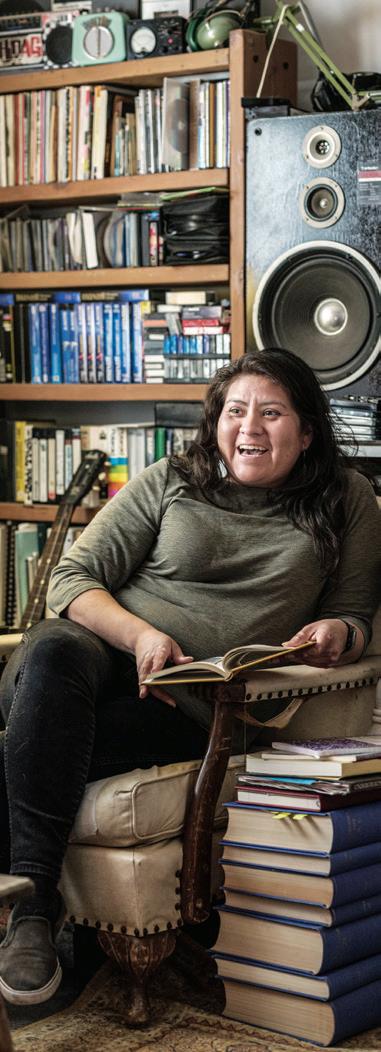
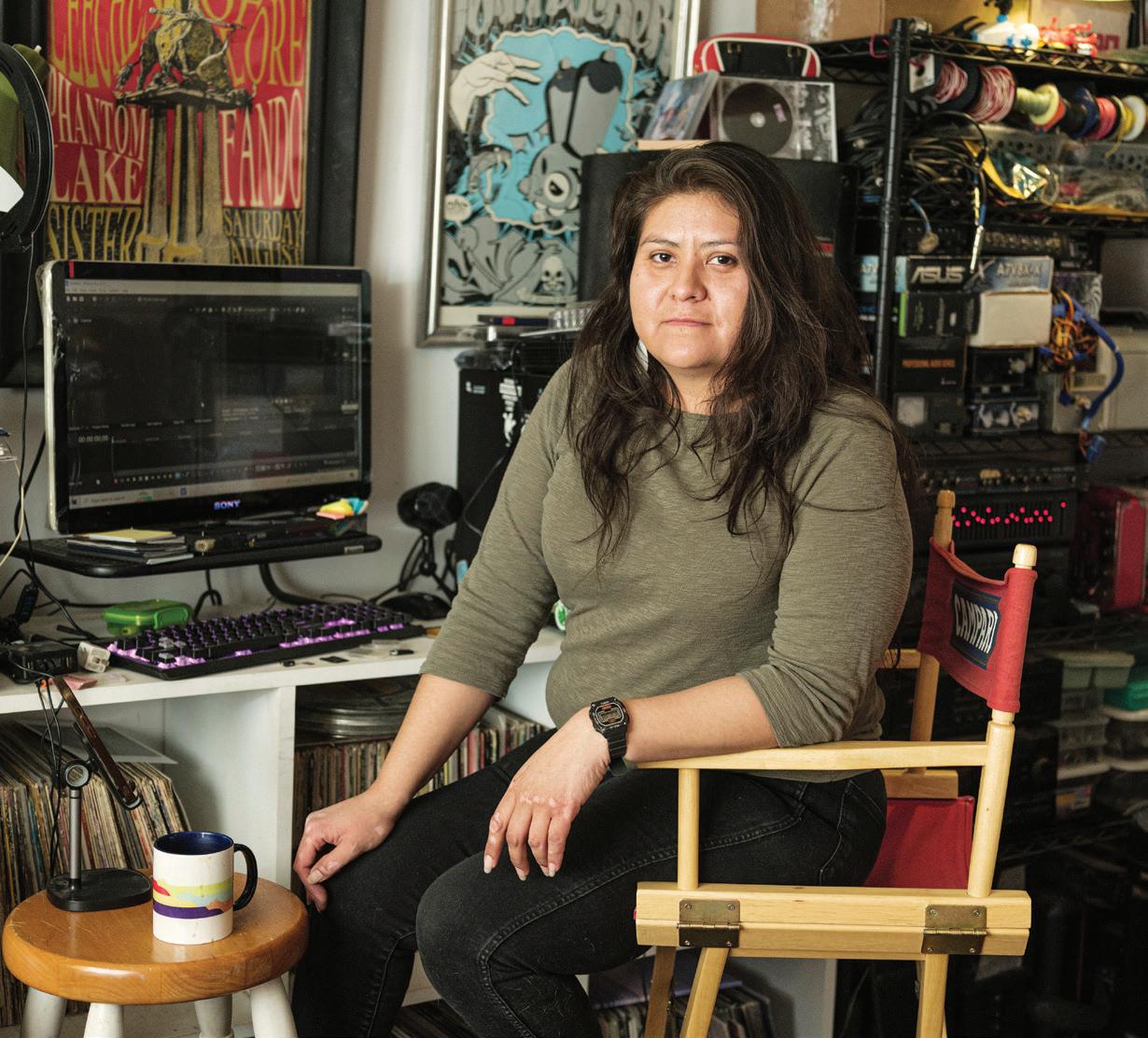
“New Mexico has an incredible amount of creative thinkers both from New Mexico . . . and artists that came from elsewhere,” she explains. “Historically, New Mexico is seen as a place where people want to go. [Artists like] Bruce Nauman or Harmony Hammond went to New Mexico, but to me there is something quite interesting in the fact that they recognized the creative e ervescence that was already there — they weren’t just going to a remote place.”
One of the more familiar, and notorious, regional characters depicted is La Llorona, in a multimedia opera 10 years in the making called Malinxe, written by Albuquerque-based sound artist Autumn Chacon (Diné/Chicana), with music by Laura Ortman (White Mountain Apache). Malinxe is about a woman who is captured by La Llorona and taken to her underwater world. “Eventually she’s given the opportunity to escape La Llorona’s realm, and the piece concludes with whether she decides to or not,” Chacon says. Malinxe is performed on two evenings at dusk in August in Diablo Canyon, just outside Santa Fe between Las Campanas and the Rio Grande.
As the youngest of three artist siblings (her older brother and sister are Pulitzer Prize–winning composer Raven Chacon and acclaimed painter Nani Chacon),
Chacon was always drawn to collaboration and to writing roles for artists she admires, as she did for Marisa Demarco, who plays Malinxe and is also a journalist in Albuquerque. Je rey Gibson (Choctaw/Cherokee), an artist based in Brooklyn and last year’s U.S. representative at the Venice Biennale, portrays La Llorona — Chacon interprets the character as beyond gender. The opera is written and directed by Indigenous women, and Chacon says the cast is a spectrum of people of mixed and displaced lineage, queer identity, and people of color. The opera is a departure for Chacon, whose typical work centers around broadcast interference and considers the contradictions and injustices inherent in the structures that own and control the dissemination of information and thought. “Communication should be a very sacred thing,” Chacon says. “What aggravates me is people’s willingness to conform to how communication is already formatted and allowing that to format the rest of our lives. In terms of use or a service agreement, you click as soon as you download a new app or social media platform, and right o the bat people have already assigned how they’re going to use communication.”
Although Chacon has been involved in panels dealing with FCC legislation, she says a lot of those conversations happen “behind closed doors” and aren’t the best
way to reach her community anyway. “I would rather demonstrate the di erence,” she says. “A lot of my art illegally challenges the regulation of the [Federal] Communications Commission under the idea of free speech. But the infrastructure spans the entire United States: public land, Indian land, BLM land, municipal land, yet it’s only allowed to be accessed by certain corporations or a population that has bought into it. [They] get data harvesting, yet the people themselves don’t have access to those communication lines en masse.”
Sculptor and installation artist Daisy Quezada Ureña’s work engages with injustice along the line that divides Mexico and the United States. Quezada Ureña, who’s Mexican American, was raised across the Southwest and has lived for almost a decade in Santa Fe, where she teaches and serves as associate academic dean at the Institute for American Indian Arts. She works with materials associated with labor, such as concrete, steel, ceramics, and dirt. In a piece titled Se Vende, from 2019, a porcelain jacket embedded in a large block of concrete sits under a floodlight in a darkened room. Bags heavy with earth from the border sits beside the jacket —
a juxtaposition she uses to demonstrate how U.S. government policy dehumanizes migrants.
Another work from the same period, Arbol de Violencia, references the sexual assault of migrant women, using porcelain casts of lacy white underwear, which are then hung from tree branches in the Sonoran Desert, as they are sometimes found in real life. The work — and the contrast between the subject matter and material — is arresting. The e ect is almost physical, indicting a viewer’s gaze.
At press time, Quezada Ureña was still at work on a site-specific installation for a Palace of the Governors gallery. The commissioned installation, which will be on display throughout the International, will feature porcelain and, potentially, artifacts from the New Mexico History Museum and the Museum of Indian Arts and Culture. For the installation, she also excavated dirt from the site for the Georgia O’Kee e Museum expansion downtown this spring. “I’m having a conversation about the history of New Mexico,” she observes.
Diego Medina (Piro/Manso/Tiwa), who contributes seven narrative landscape paintings to the International, is based in Taos and hails from the oldest neighborhood in Las Cruces. He lived for about 10 years in Santa Fe, where he taught at the School for Advanced Research.
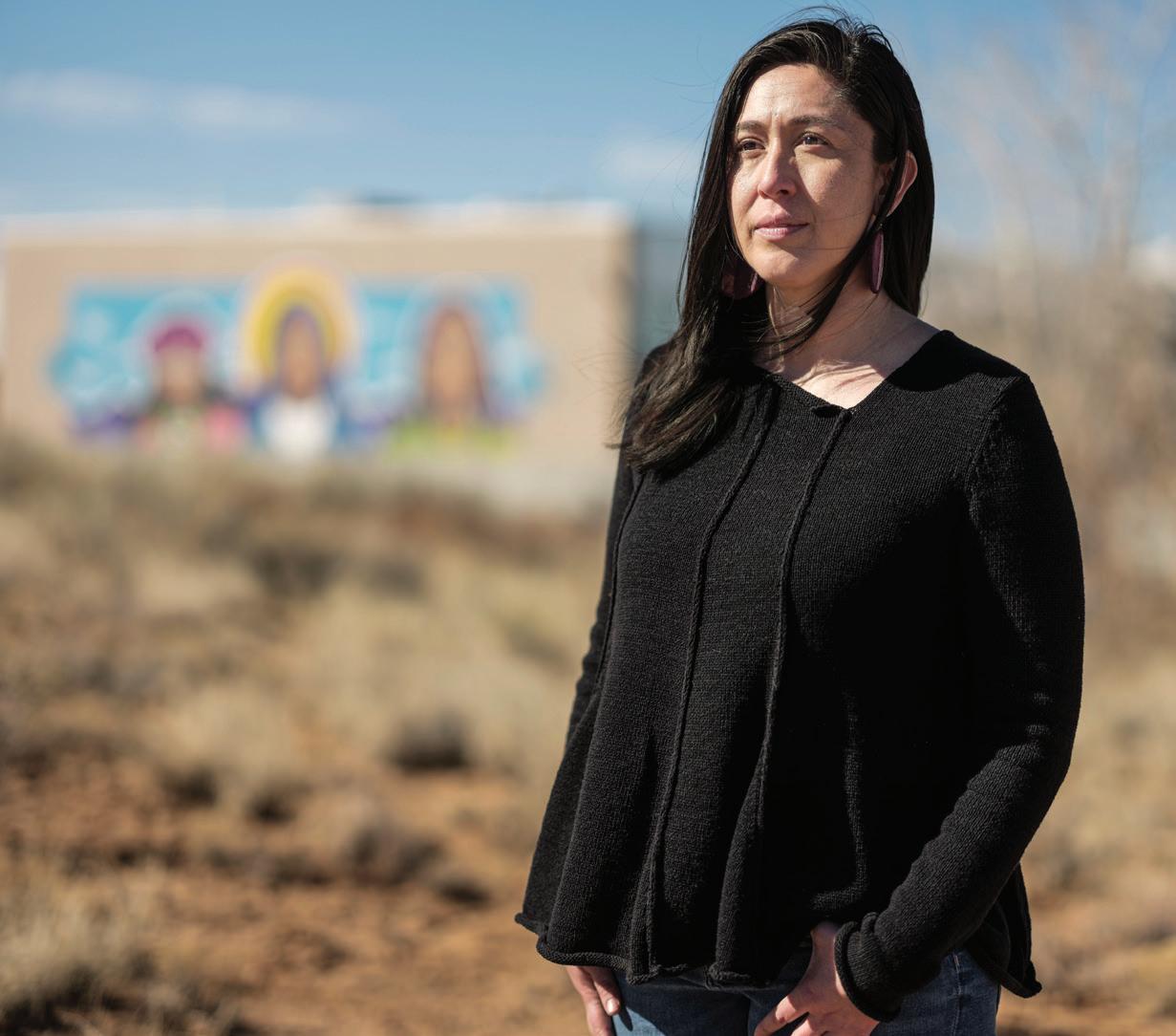
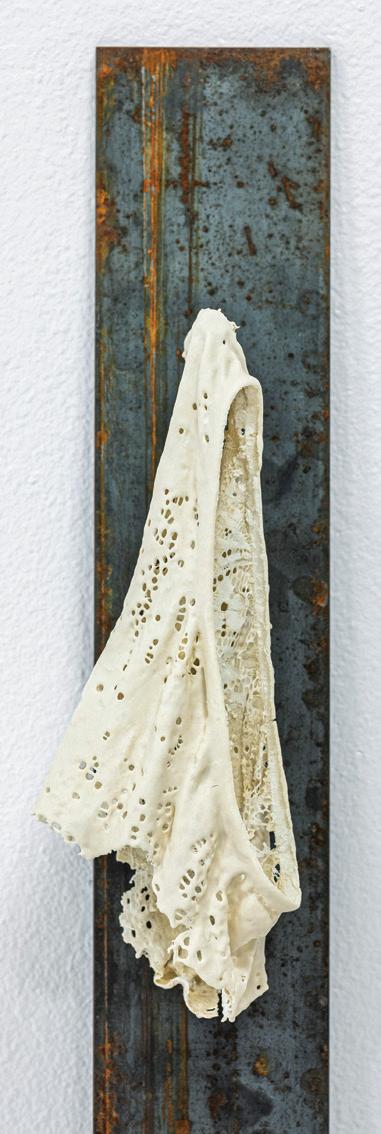
Sculptor and installation artist Daisy Quezada Ureña’s work engages with injustice along the line that divides Mexico and the United States. She works with materials associated with labor, such as concrete, steel, ceramics, and dirt.
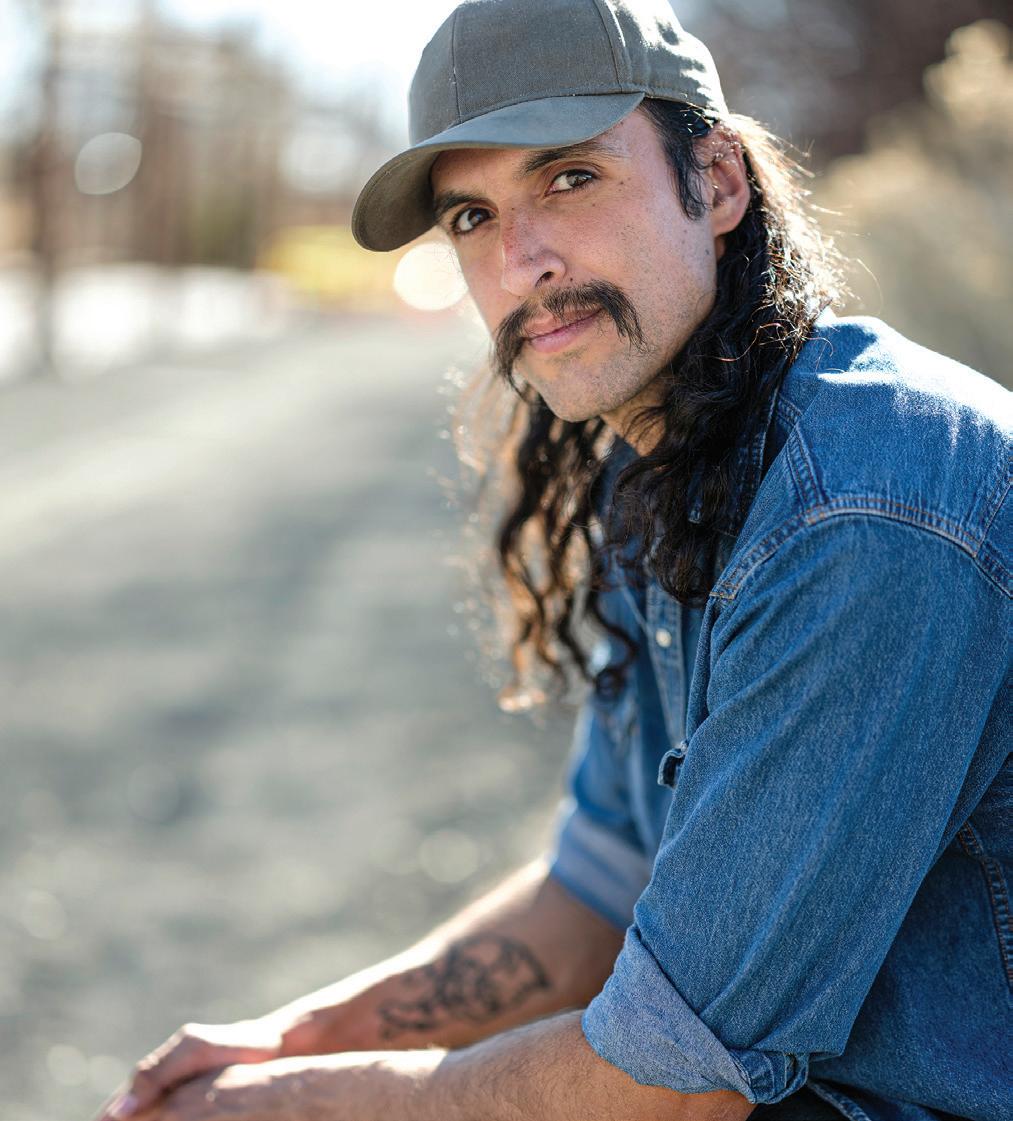
Medina describes his work as “an invitation toward the mystical experience for anyone” and paints places at once familiar and surreal: dark backdrops of mesas or mountains at twilight are overlaid with traditional Pueblo iconography, like ladders and celestial bodies.
but they’re di erent than New Mexico because they don’t have the same type of cultural legacy.”
Still, it can be di cult to attract new audiences to art spaces, which can be intimidating.
As Chacon puts it, “Museum culture isn’t accessible or welcoming.” With this in mind, Alemani hopes to broaden the International’s appeal by “adding a layer of literature.” She says this takes the form of commissioned essays and other creative pieces by local writers plus “a lot of poetry,” including work by N. Scott Momaday, who lived in Santa Fe before his 2024 death. As a non–New Mexican, Alemani relied partially on others, such as scholar Estevan Rael-Galvez, a former New Mexico state historian, to understand situational nuance. She says her perspective as an outsider is valuable in that it recontextualizes what locals may take for granted.
“I hope that someone who maybe hasn’t been at the Palace of the Governors since they were a kid with school goes and discovers something new,” she says.
“We can see very familiar spaces with a di erent gaze through the eyes of the artists.”
Adele Oliveira grew up in Santa Fe and lives there with her family.
SITE Santa Fe’s 12th International: Once Within a Time
SELECT UPCOMING EVENTS
FRIDAY, JUNE 27
2–6 p.m.: SITE Santa Fe members’ first look
6 p.m.–midnight: Exhibition opens to the public
10 p.m.: SITE at NITE, Devendra Banhart DJ set in the Marlene Nathan Meyerson Auditorium
SATURDAY, JUNE 28
2 p.m.: Curator Cecilia Alemani in conversation with participating artists
JUNE 30–JULY 3
Medina describes his work as “an invitation toward the mystical experience for anyone” and paints places at once familiar and surreal: dark backdrops of mesas or mountains at twilight are overlaid with traditional Pueblo iconography, like ladders and celestial bodies.
For Once Within a Time, Medina created a series called Via Crucis (Way of the Cross), which refers both to the Stations of the Cross in Christianity and Medina’s way home to Las Cruces, roughly following the flow of the Rio Grande. The paintings are on view at SITE throughout the exhibition. They “depict seven sites related to contentious histories but that also have relevance for telling an eco-theological perspective,” he says. The sites include Elephant Butte Dam, built in 1911 and “one of the most ecologically devastating episodes in New Mexico history”; the Manhattan Project's Trinity test site, where the first nuclear detonation occurred; and the White Sands fossilized footprints, which Medina visited as a tribal representative. His practice is built upon long-standing interconnectedness and interdependence, seen as ultimate strengths.
“New Mexico has a healthy position in the art world because it’s supported by sturdy infrastructure in so many art forms: traditional, experimental, avantgarde,” Medina explains. “All sorts of art movements have found their footing here in New Mexico, and they collaborate to support one another. Places like New York or Los Angeles have really thriving art scenes,
Public program events in partnership with the International Biennial Association (dates and times to be announced)
FRIDAY, JULY 18
30th anniversary gala, featuring a performance by Laurie Anderson
SATURDAY, JULY 19
2 p.m.: Curator Cecilia Alemani in conversation with a previous biennial curator
4 p.m.: Participating artist performance at SITE Santa Fe
FRIDAY, AUGUST 15, AND SUNDAY, AUGUST 17
Dusk: Autumn Chacon’s Malinxe performed by Laura Ortman, Marisa Demarco, and Jeffrey Gibson at Diablo Canyon
SATURDAY, AUGUST 16
2–5 p.m.: Book launch for Jeffrey Gibson’s the space in which to place me
For more information on the 12th International and other upcoming events, call 505-989-1199 or visit sitesantafe.org. View the exhibition at 1606 Paseo de Peralta.
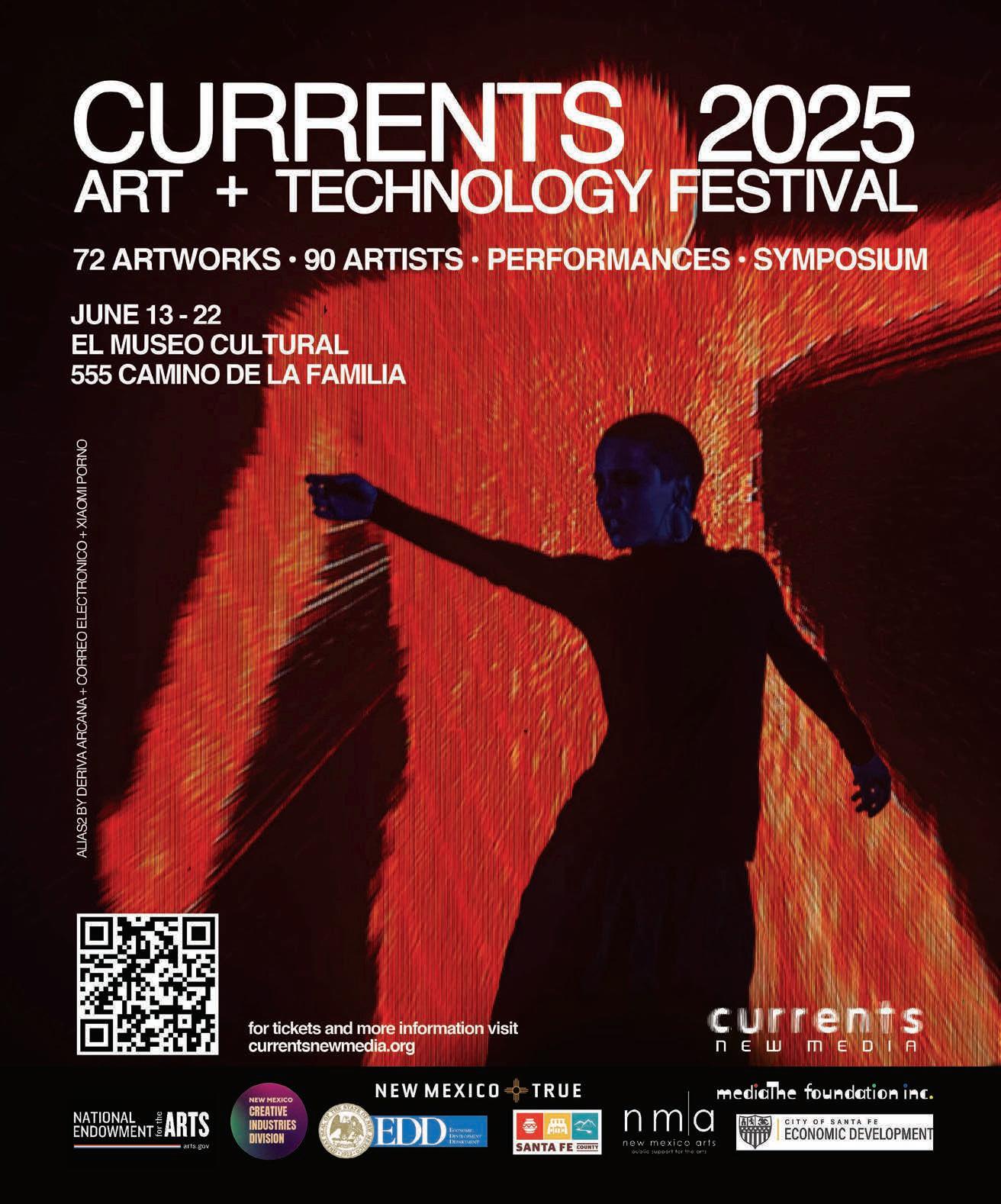
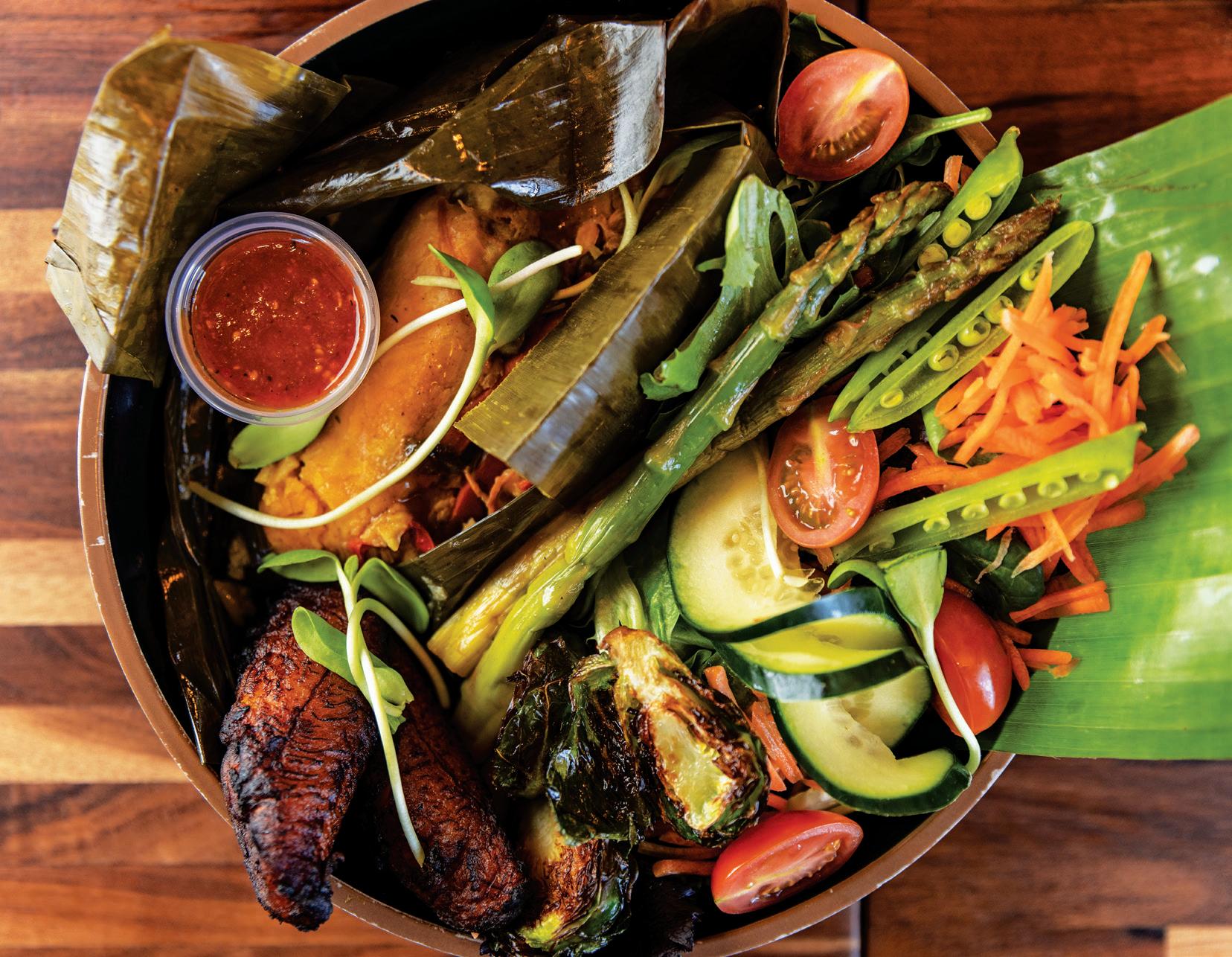
BY LANEE LEE PHOTOGRAPHY BY GABRIELLA MARKS
Sparsely populated New Mexico has an outsized presence in the national culinary scene. Not only does it soar with the bold, rich flavors of its distinct regional cuisine, the Land of Enchantment, and in particular Santa Fe, also dazzles diners with fine dining and comfort fare that display global influences and world-class technique. Among the five chefs featured here, three have earned James Beard Award nominations — and one has done so twice — one has brought culinary chops honed in a Michelin-starred kitchen to the City Different, and one is redefining the culinary offerings in her hilltop community and beyond.
CHEF ANNAMARIA BREZNA owner / chef
Dolina might be the only Slovak restaurant in Santa Fe — maybe even in all of New Mexico — but thanks to Annamaria Brezna, it feels like it’s always belonged here. Since 2017 she’s been serving Eastern European classics with a modern American twist, even earning a James Beard semifinalist nod for Best Chef: Southwest in 2024. From flavorful chicken paprikash to her famous Orechovnik French toast, every bite tells a story of her journey.
What originally brought you to New Mexico? I was traveling around the U.S., learning English, and kinda fell in love with Santa Fe. It’s been home for 22 years.
How did you get into the restaurant industry? I’ve worked in restaurants my whole life. I’m not a professionally trained chef, but I’ve always loved to cook — especially baking. My job at Geronimo was incredible for learning front-of-house discipline and the craft of hospitality.
How did Dolina come to be? I opened Café Fina with my then husband in 2012. When we split, I left the restaurant and took a three-year break from the industry, learning new skills, hoping to do something else. But it just didn’t work — baking was my thing. I love nourishing people; I knew I had to pursue this. So when this space opened, I started Dolina — [with] a menu filled with all the things I love from my childhood and blending the two cultures.
What’s a dish that’s especially meaningful to you?
Kapustnica — our Christmas soup. It’s the first course of our Christmas dinner, made with sauerkraut, potatoes, sausage, Hungarian paprika, and mushrooms, served with a chunk of sourdough. It’s so satisfying on a cold day. Also, I love our chicken schnitzel with potato salad — as our guests do. Although it’s fried, it’s a surprisingly refreshing dish.
What has been the reaction from the community when they experience your Eastern European cuisine? The best reaction is when people try our Slovak dishes and pastries and learn to love them as I do. These are flavors I grew up with and that hold memories for me. But knowing other people find love for them too is very beautiful.
What’s next for you? I recently purchased land in Ojo Caliente and started a farm. The expansion feels natural for what I like: being challenged and learning new things. I’m testing the waters, planting Slovakian plums, keeping bees, and learning about soil health. Being in nature is such a great counterbalance to the energy of running a restaurant. Eventually, I do hope this farm provides Dolina with fresh ingredients, but like I always say — no expectations!
DOLINA
402 N. Guadalupe St. I 505-982-9394 dolinasantafe.com
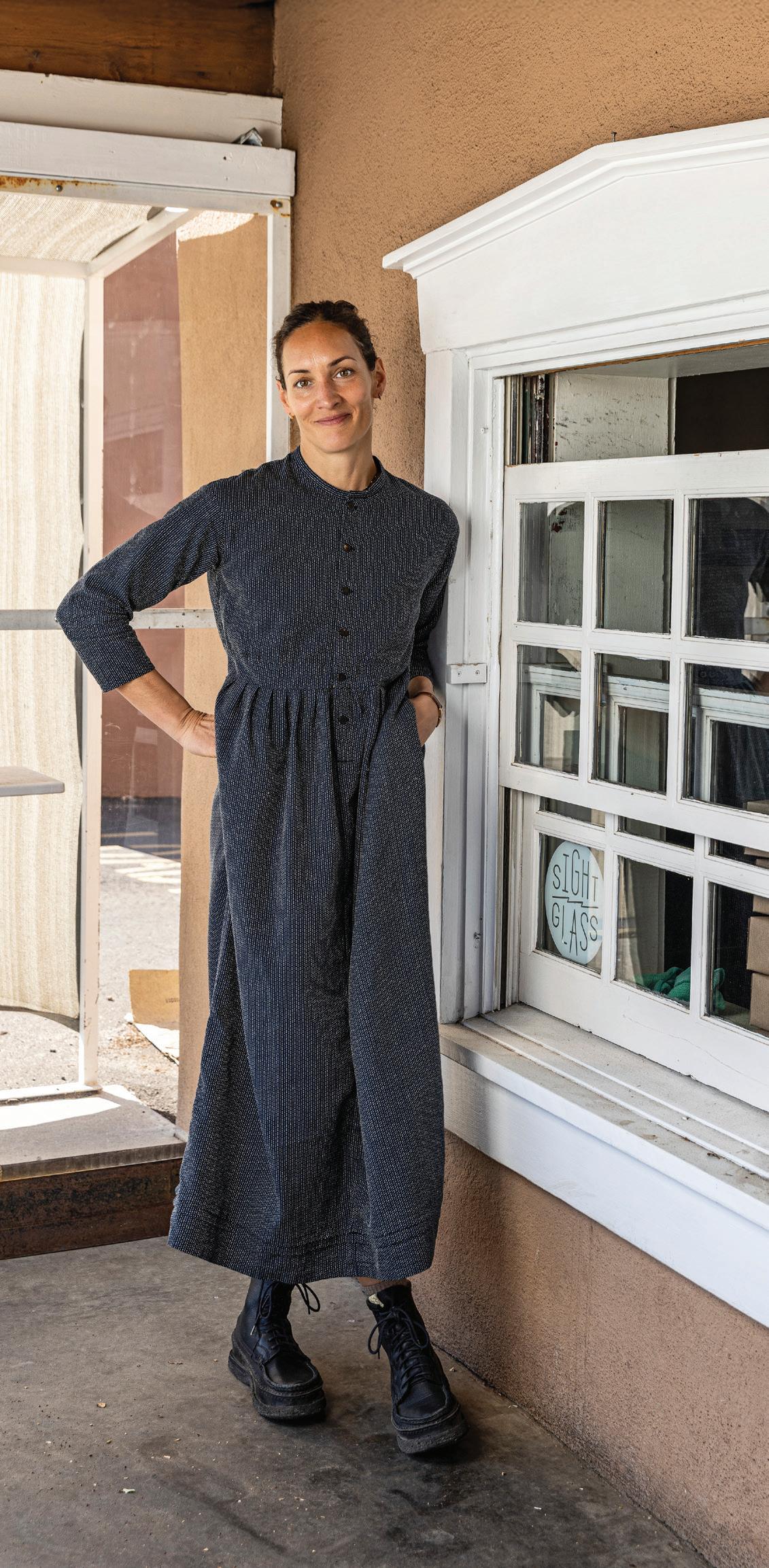
If you’re looking for a chef who’s got serious skills but zero ego, meet Dale Kester. His journey started in Taos as a teenager, working under the renowned chef Joseph Wrede. He then took on the pressure cooker that is the New York City restaurant scene. He climbed the ladder at the two-Michelin-starred Restaurant Daniel, chef Daniel Boulud’s world-class eatery, where he spent three years as junior sous chef. He says the chef de cuisine basically tried to fire him every day. Instead, Kester leveled up fast.
He’s been back in New Mexico since 2019 and is the executive chef at the upscale Santacafé, where he puts his own thoughtful, technique-driven spin on Santa Fe’s dining scene. Expect dishes that may seem simple at first glance, but once you take a bite, you’ll know— this guy gets it
What dish on your Santacafé menu best captures your culinary philosophy and why? As silly as it sounds, I’d have to say my Bolognese. It’s not the flashiest dish on the menu, but it takes 14 hours to get just right. It’s a dish that’s all about time and focus — if you rush it, you can taste the di erence immediately. You have to feel the sauce. Cooking requires that kind of attention. It may seem simple to the guest, but without that focus, it can all fall flat.
What brought you to New Mexico? What makes you stay? Born in Houston, I moved to Farmington with my family when I was 8. I left New Mexico six years ago to go to New York, and honestly I was terrible at first. I worked at [Restaurant] Daniel — it scared the hell out of me — but I thrived in that environment. I started as a tournant [a chef who fills in where needed] in the Michelin-starred kitchen and worked my way up through all the stations. I call that experience my “master’s degree in cooking.”
After three years, I was ready to come home. I love this state and everything it’s done for me. The Santa Fe food scene has an incredible energy — it’s only a matter of time before we’re recognized like we were back in the ’90s, when chefs like Mark Miller [founder of Coyote Café] put us on the map.
How did working with Joseph Wrede shape your career? Believe it or not, I wanted to be an aerospace engineer when I was a kid. But at 14, after working at Joseph’s Table in Taos, I realized I wanted to cook. I worked for him in four di erent restaurants; he was my mentor for years. One day he looked at me and said, “Hey, I’m no longer your mentor — we’re colleagues now.” That was huge.
SANTACAFÉ
231 Washington Ave. I 505-984-1788 santacafe.com
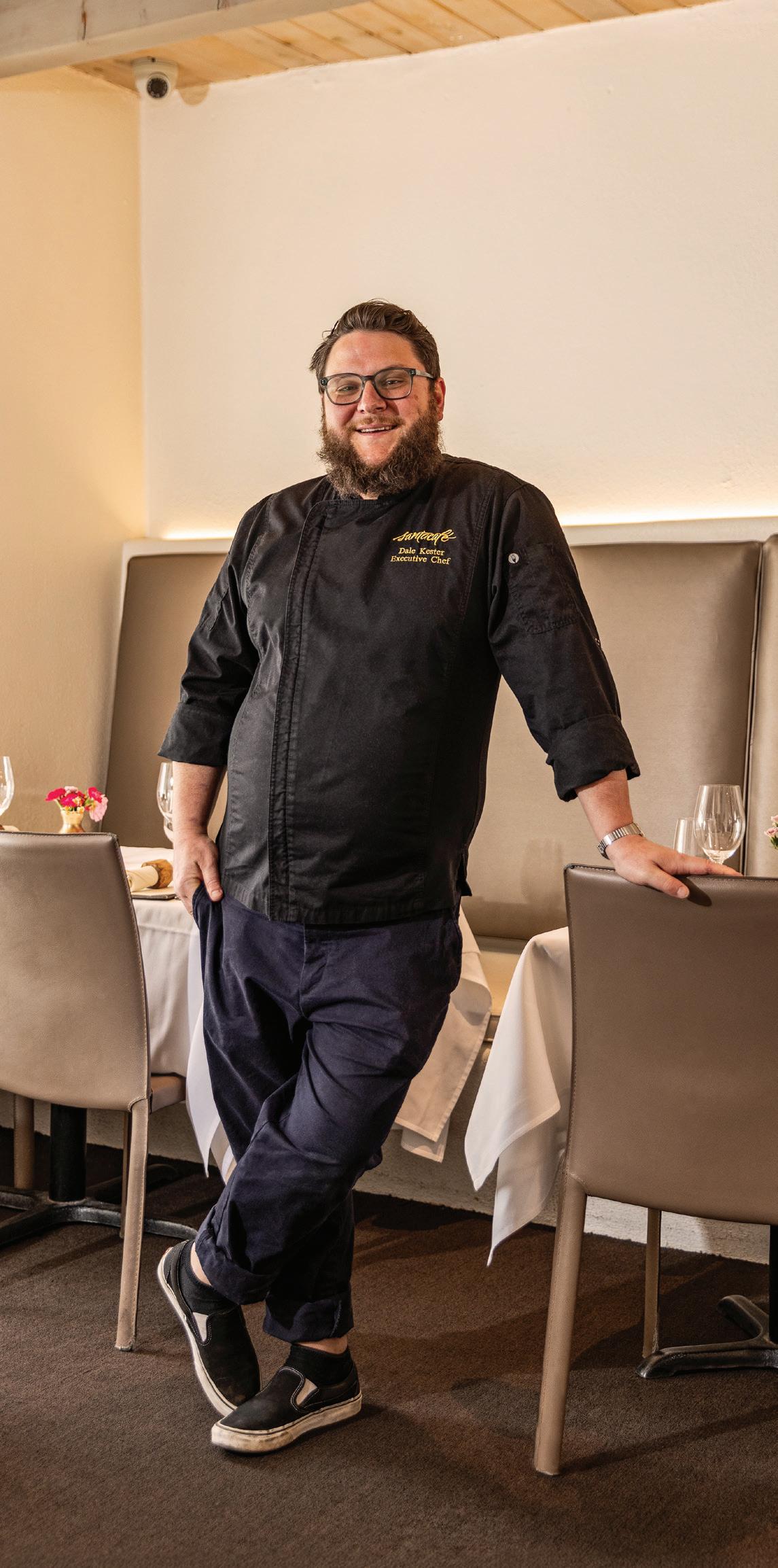
owner / chef
Faster than you can say bon appétit , Laura Crucet has catapulted Los Alamos onto the state’s culinary map — almost single-handedly. In under a decade, she’s opened not one but three standout cafés: the neighborhood Pig + Fig, the dessert-centric Sugar & Cream, and her latest, an upscale dining venture, Beef & Leaf, which she debuted in July 2024. A Le Cordon Bleu Paris graduate, she’s redefining the local food scene with her signature blend of southern comfort, French technique, and bold New Mexican flavors. What brought you to Los Alamos and what makes you stay? In 2009 I moved to Los Alamos with my then husband, who took a postdoc here. The outdoor lifestyle here is incredible. I can golf, hike, or ski almost year-round. It’s so great here; I hope no one finds out about it!
Why the penchant for rhyming restaurant names? I plagiarized my children shamelessly! My son, who was about 8 or 9 years old, made himself a sandwich with pork loin and fig jam. He called it a “pig and fig sandwich,” and I loved the idea so much that it stuck. My youngest child — who was in fifth grade at the time — had to create a diorama of a restaurant for a school project and named it Beef & Leaf.
What dish on your Beef & Leaf menu best captures your culinary philosophy and why? Growing up in the South and working in pretty “old school traditional” kitchens, like Brennan’s Restaurant in Houston, I’ve always believed in honest food — made from scratch — that looks nice but isn’t fussy. When I lived in Paris, I realized the French food philosophy was similar. The buttermilk fried chicken really embodies this. Soaked in buttermilk and coated in a gluten-free flour dredge, the chicken is served with stone-ground grits and a colorful, hot honey sauce. It’s a comfort dish that we’ve dressed up!
I hear your monthly wine dinners at Pig + Fig have a cult following? Okay, I’ll brag for a moment. Remember, we live in the middle of nowhere and — somehow — incredible winemakers show up! One of my favorite experiences was a winemaker dinner with Shauna Rosenblum of Ridge Vineyards. I was starstruck; she is such a hero of mine. Also remember, the town is bunch of scientists. No one has “normal” hobbies here. Like we have this super-serious wine group, led by Tom Hill for the last 45 years, that now meets at my restaurant every Wednesday.
PIG + FIG
11 Sherwood Blvd., White Rock I 505-672-2742 pigandfigcafe.com
SUGAR & CREAM
1789 Central Ave., Suite 1, Los Alamos 505-551-8011 I sugarandcreamcafe.com
BEEF & LEAF
3801 Arkansas Ave., Suite G, Los Alamos 505-500-8087 I beefandleafcafe.com
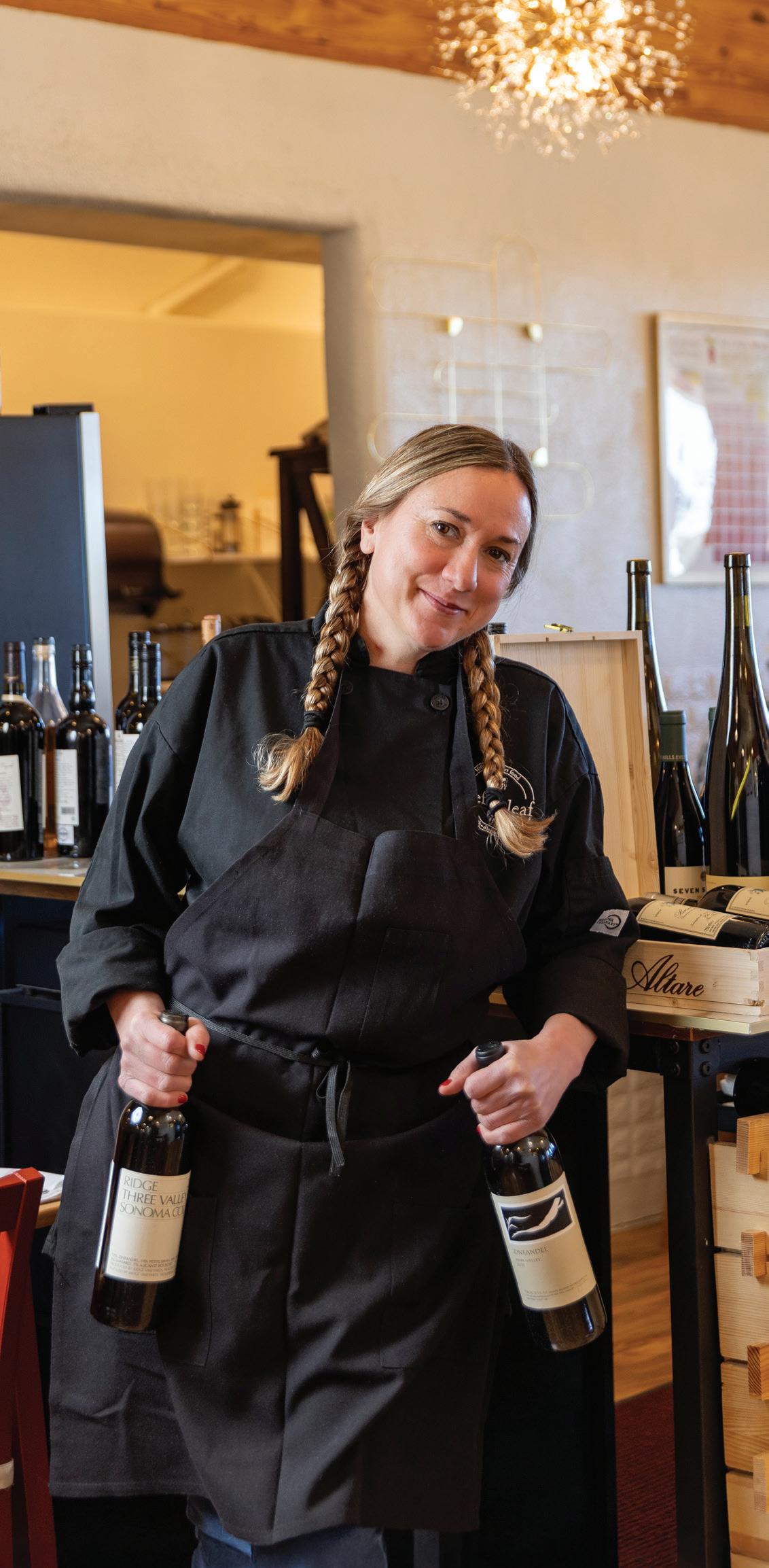
owner / chef
Playing it safe isn’t really his thing. Since arriving in New Mexico in 1995 with a culinary degree, $20,000, and a vision, Joseph Wrede (pronounced “Reed”) has been redefining New Mexican cuisine. A twotime James Beard semifinalist for Best Chef: Southwest, most recently this year, and the winner of many other awards, such as being named one of Food & Wine’s 10 best new chefs in 2000, Wrede continues to make waves.
Now in Santa Fe after years of success in Taos with his restaurant Joseph’s Table, Wrede continues merging fine dining with accessibility at his New American restaurant Joseph’s Culinary Pub.
What brought you to New Mexico? After graduating culinary school, I was looking for somewhere affordable to start a restaurant. Taos felt right — raw beauty, an artistic community, and a place where I could build something special.
How do you approach New Mexico’s regional cuisine? New Mexico cuisine has helped me get rid of traditions that dull the flavor. Like, the red chile is the “flour” — you don’t need a rue like you would with southern cooking. You don’t have to apologize for putting spice here. I love how it’s such an important part of the New Mexico psyche.
What does “culinary art” mean to you? Everything. From the plate itself, signing the plate, how it’s styled out. Our plates are made by Logan Wannamaker, a Taos ceramicist. . . . I don’t want to be like your favorite restaurant in Chicago. I want it to taste good and feel good, something familiar but a bit di erent. It’s also about meeting people where they are. We’re serving people intelligent enough to come to the restaurant; we’re going to meet you at an intelligent level.
Which dish on your menu captures your style? We take the classic chile relleno and use an egg white meringue instead of batter, turning it into something like a French omelet with a relleno inside. The duck Pad Thai is another example, responding to the trend with culinary intelligence — mixing French and Chinese flavors for a di erent take on a traditional dish.
What does the James Beard Award semifinalist announcement mean to you? I had a nomination 20 years ago. So it’s really cool to get this again. We have a wonderful team; it’s a wonderful feeling for me, 30 years into the game.
What’s next for you? I’ve got some real talent in my brigade and want to empower them. I’m trying to figure out how to open a bakery with our pastry chef, Rafael, and exploring a Mexican restaurant. It’s so exciting to dream and build — that’s the goal.
JOSEPH’S CULINARY PUB
428 Agua Fria St. I 505-982-1272 josephsculinarypub.com
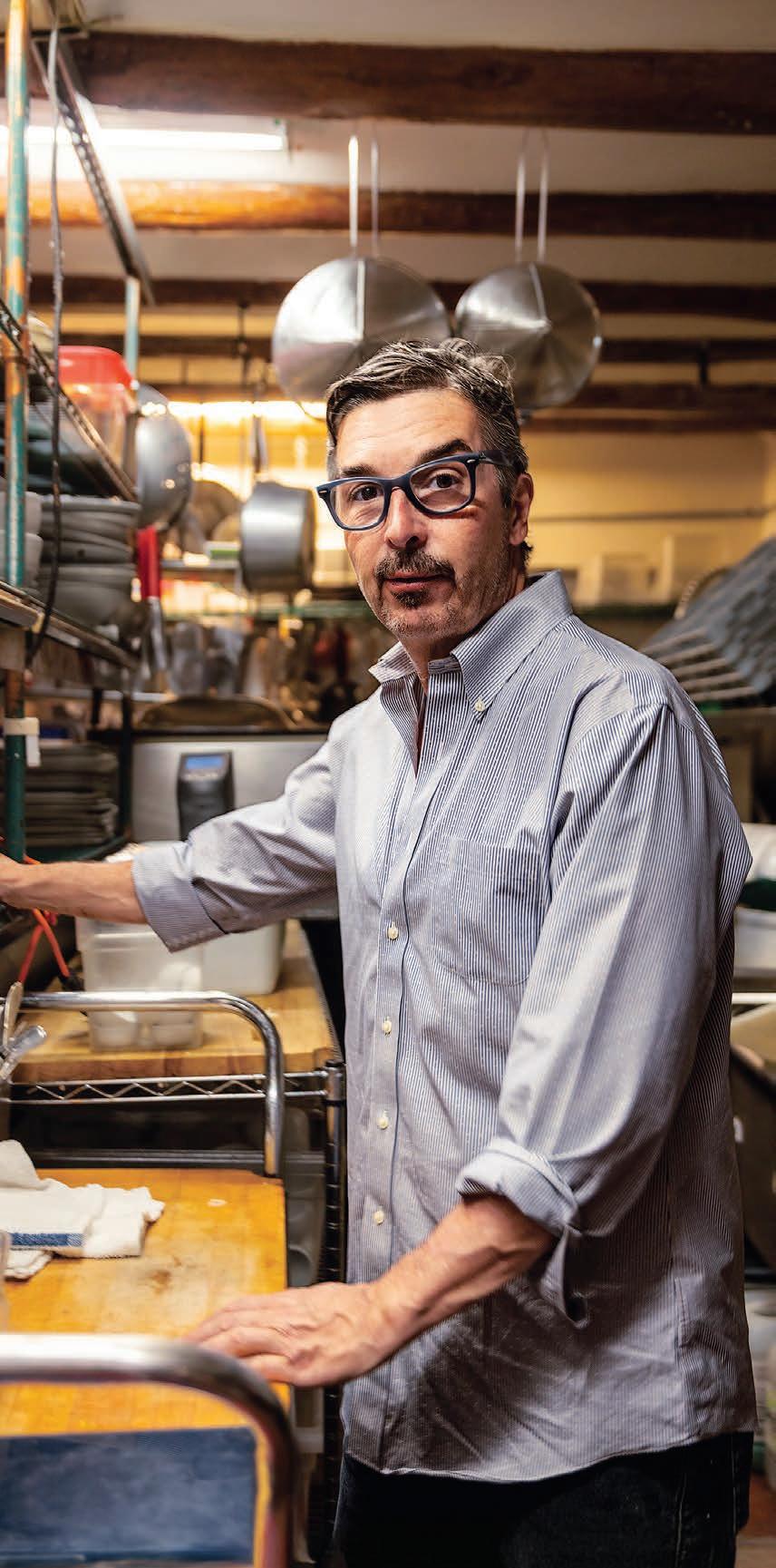
owner / chef
From her roots in San José, Costa Rica, to the heart of Albuquerque, Kattia Rojas is bringing the flavors of her homeland to the Land of Enchantment. At her tiny, 500-square-foot restaurant set in El Vado Motel’s retrofitted food court and named after the Spanish phrase “enjoy your meal,” she serves soulful, homestyle Costa Rican dishes, such as maduros (fried sweet plantains), yucca fries, and crispy chicharrones — all crafted from cherished family recipes. Now, with a 2025 James Beard Best Chef: Southwest semifinalist nod, she’s proving that pura vida is alive and well in Albuquerque.
What brought you to New Mexico, and why did you stay? I originally came to the U.S. to learn English. I met my husband in New Jersey, and a job brought us to Colorado, where I started cooking and baking. I eventually moved to Albuquerque.
After graduating from culinary school in 2015, we started selling a few things at local markets, like tamales and agua frescas. We sold out every weekend, and our following grew so much that we knew we had to open a permanent space. In 2018 Buen Provecho was born. That’s why we stayed — we found our home here. What dish on your menu best captures your culinary philosophy? My whole menu is a collection of my favorite dishes from growing up in Costa Rica. But the casados are what I’d pick. We have five versions, even a vegan one. Our most popular dish is arroz con pollo, made using my grandma’s recipe but with a twist — we cook it with Ponderosa IPA beer [from the Albuquerque craft brewery] instead of chicken broth.
Your desserts are stunning! What’s your favorite? My favorite is tres leches, and I make different versions — dulce de leche, coconut, and rum. Some people come just for Costa Rican co ee and cake, and I love that.
Tell me about your James Beard moment — what was going through your mind? Oh my God! I was in shock. I started crying. As an immigrant, I feel so proud, and this recognition is for my team and my family too. I never planned to open a restaurant. I just started cooking to feed my own cravings for Costa Rican food. But I follow opportunities. This one is crazy wonderful
What’s next for Buen Provecho? We’re hoping to open Buen Provecho Bocas, a concept focused just on appetizers in a brewery. I also dream of a co ee shop just for pastries. But the “everything fresh” quality has to be there — it has to be something special, like our space at El Vado.
BUEN PROVECHO
2500 Central Ave. S.W., Suite 3, Albuquerque 505-550-9668 I buenprovechoabq.com
Lanee Lee is a podcast producer and freelance travel and food writer. Her words have appeared in hundreds of publications, including “Wine Enthusiast,” “Travel + Leisure,” and Fodor’s Travel.
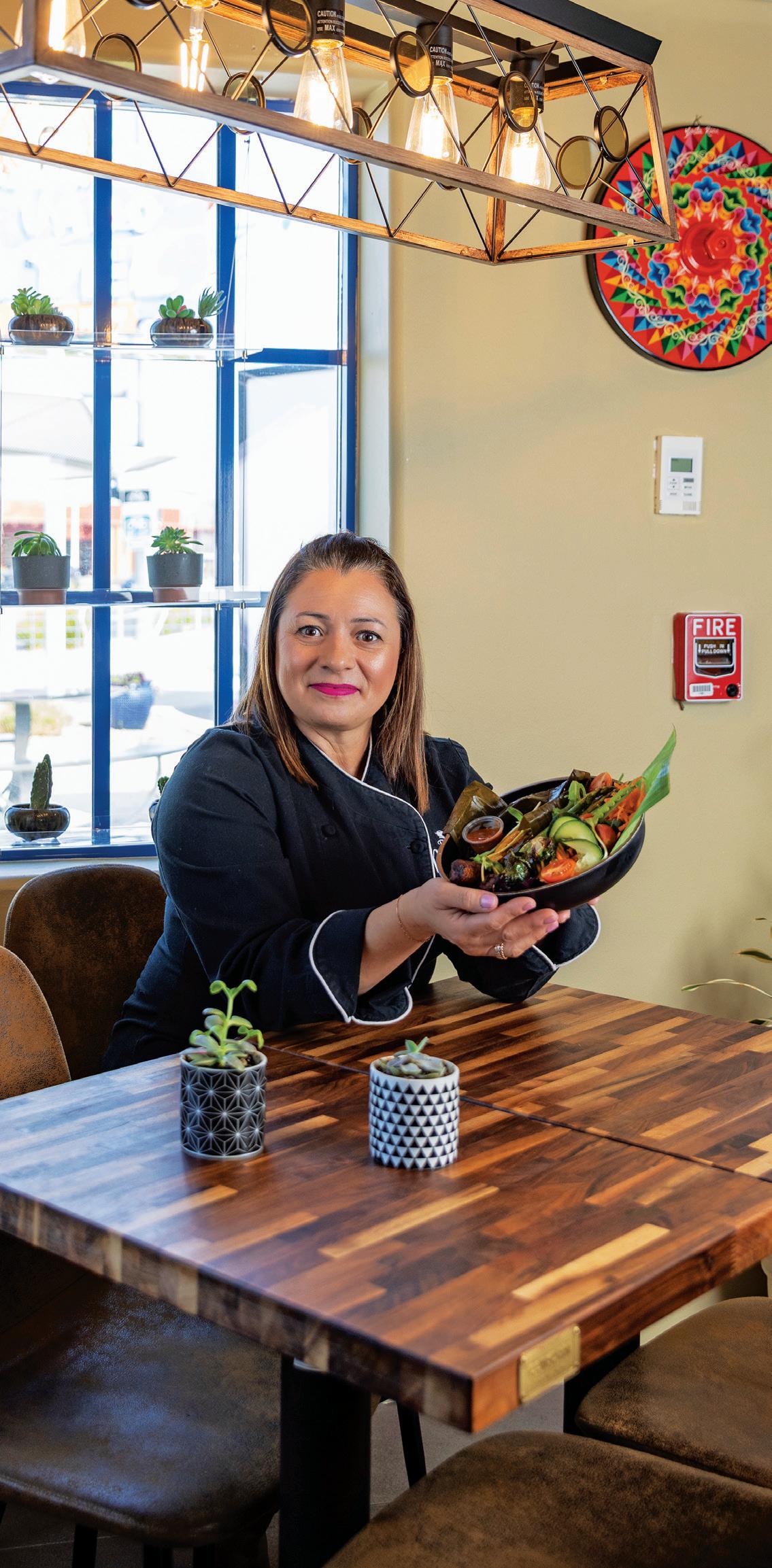

















BY GABRIELLA MARKS
Awell-kept secret can be a delightful thing — yet some of that delight lies in the sharing of that secret. The Kitchen at Plants of the Southwest feels like one of those well-kept secrets — one that deserves to be a little less kept and a lot more shared.
Plants of the Southwest provides a uniquely Santa Fean nursery experience. Winding down the dirt road from the Agua Fria entrance, visitors are transported from a busy commuter road to a seemingly rural ravine landscaped in harmony with the surroundings and featuring native dryland plants, from seeds to trees.
Nestled in the back corner is a dreamy stand-alone building: The Kitchen. This is where Olive Tyrrell makes her magical one-meal dining experience.
The intimate building was designed to be a restaurant and was formerly a teahouse. In 2009 Tyrrell launched The Kitchen and was given nearly full rein from Gail Haggard, Plants of the Southwest owner. Haggard asked only that the menu be all vegetarian, and Tyrrell was glad to oblige given the restaurant’s nursery location.
A self-taught chef whose Saturday mornings were animated by the madcap antics of Julia Child and Jacque Pépin rather than Bugs Bunny and ScoobyDoo, she cut her culinary teeth in restaurants in San Francisco. After working “normal restaurants,” she knew what she wanted to create and, equally important, what she wanted to avoid.
Her one-meal philosophy is as simple and profound as it sounds: only one meal is on the menu on any given day. This means she can serve what is currently and locally available. In doing so, she avoids the food waste that is endemic in restaurants with large menus, requiring many perishable ingredients.
“I would describe my food as farm-to-table rustic grandma-ish. Playful and experimental,” Tyrrell says.
The menu changes daily. “It’s an old-fashioned approach to eating out,” she muses, “like an old European idea of lunch, where you walk into a village in Italy or France, and it’s sort of like a mom-and-pop place [that says], ‘This is what we are eating today.’”
Lunch — the only meal she serves — consists of a family-style salad followed by an entrée and a delightful dessert. Diners do have a choice of drinks, usually including an herbal concoction harvested from plants growing just outside in the nursery. To reserve a spot for the once-daily seating at 12 or 12:30, Tyrrell encourages interested guests to text her directly. Walk-ins are welcomed if time and space allow.
The Kitchen at Plants of the Southwest nursery offers a distinctly seasonal dining experience.
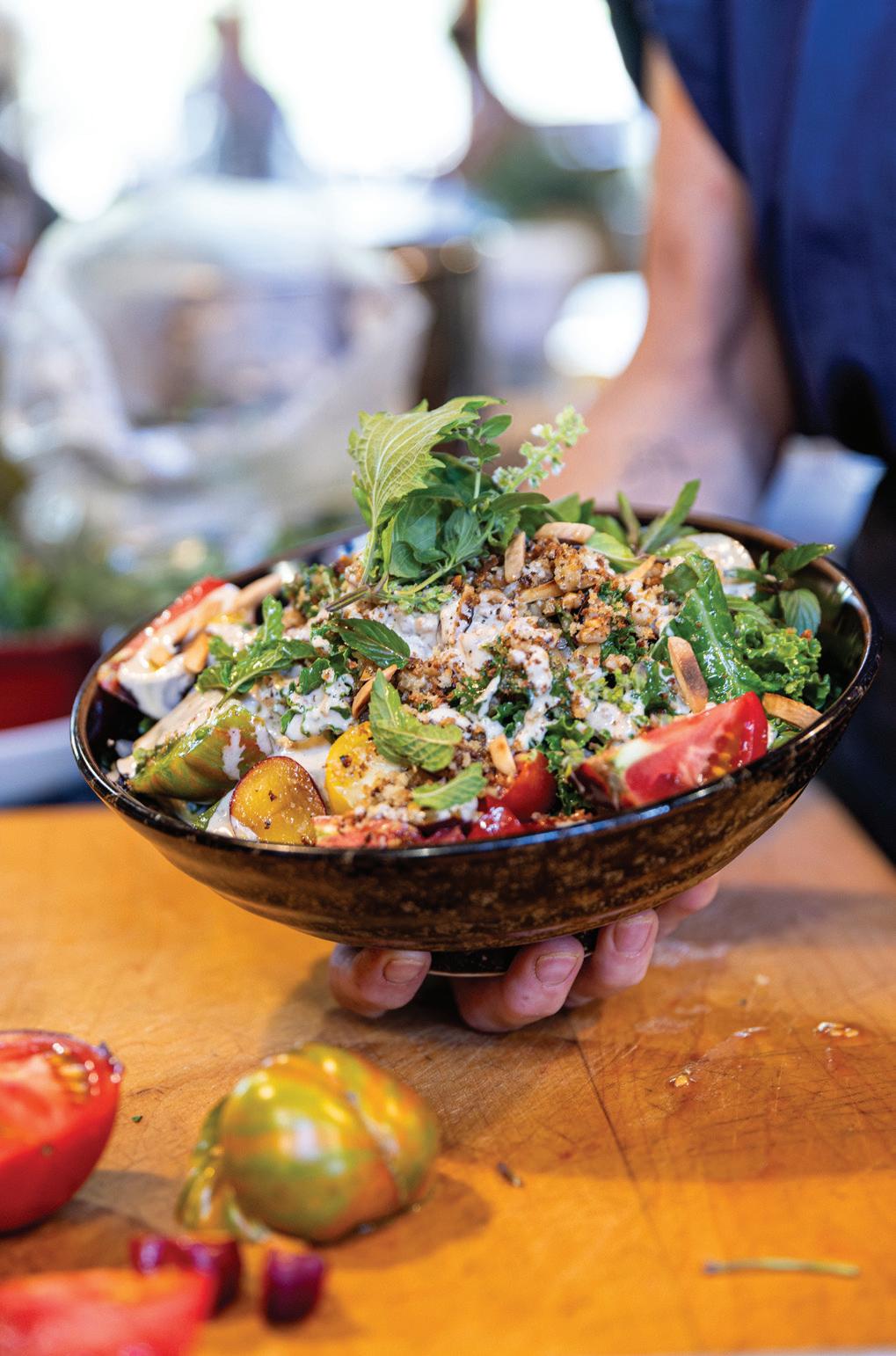
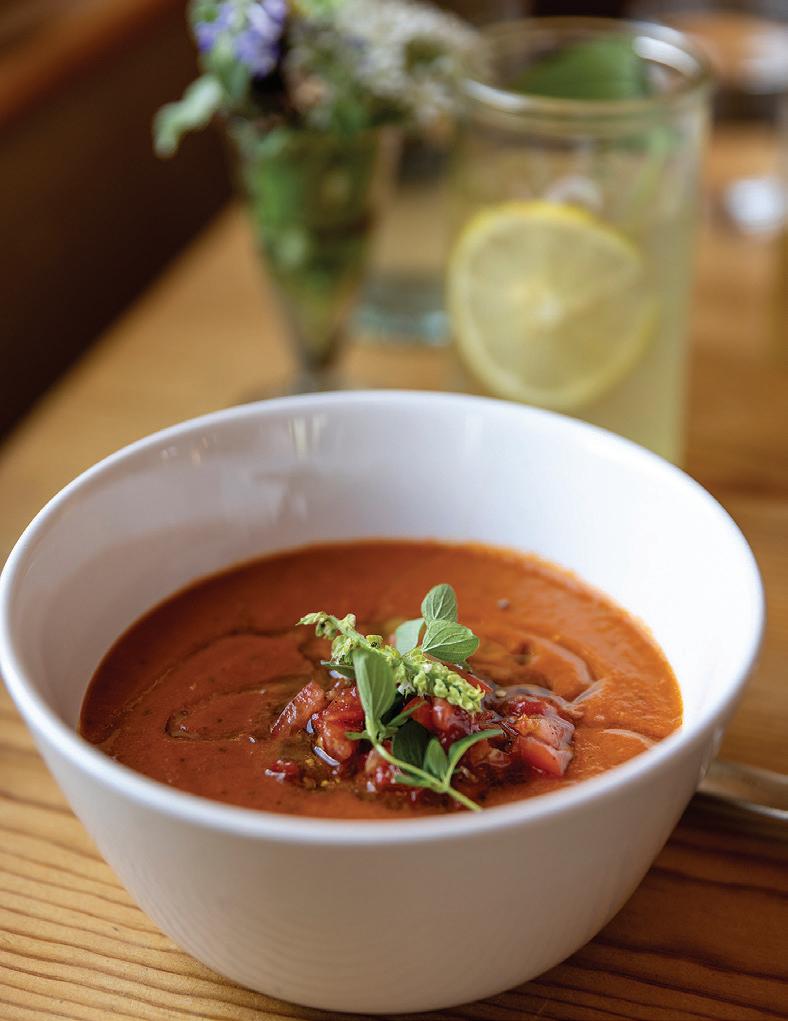
“Through the summer, we’ll have cucumbers, jalapeños, carrots, garlic, the beginning of all the gorgeous tomatoes, summer squash, beautiful salad greens. Then comes harvest with eggplant, potatoes, tomatoes, winter squashes, melons, and loads of chiles.” —Olive Tyrrell
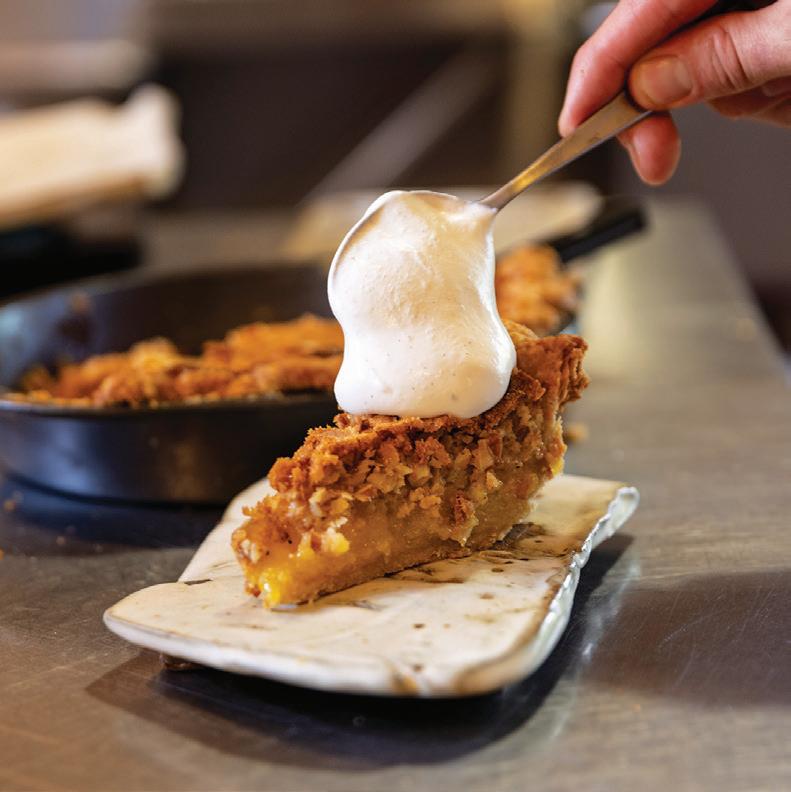
Meals transition with the seasons. “In springtime, I will utilize whatever the farms have: garlic scapes, dark leafy greens, radishes, green beans, Japanese turnips, rhubarb, etc. Through the summer, we’ll have cucumbers, jalapeños, carrots, garlic, the beginning of all the gorgeous tomatoes, summer squash, beautiful salad greens. Then comes harvest with eggplant, potatoes, tomatoes, winter squashes, melons, and loads of chiles,” she says.
A lunch at The Kitchen on a summer afternoon is a slice of serenity, a delicious little escape from the world and its machinations. Guests of The Kitchen have their senses infused upon entry. Can the aromatic smell of sizzling herbs be considered a siren call? The dining area is comprised of only eight tables and a large community table. The human touch is everywhere, from the hand-hewn plates thrown by Tyrrell and potter friends to the salt shakers adorning the tables.
The restaurant’s name is apropos. The Kitchen is nearly half kitchen. The rustic, wooden architecture feels pleasantly pastoral and quietly professional. Only tables covered with artful flower arrangements and ingredients separate the dining area from the cooking space.
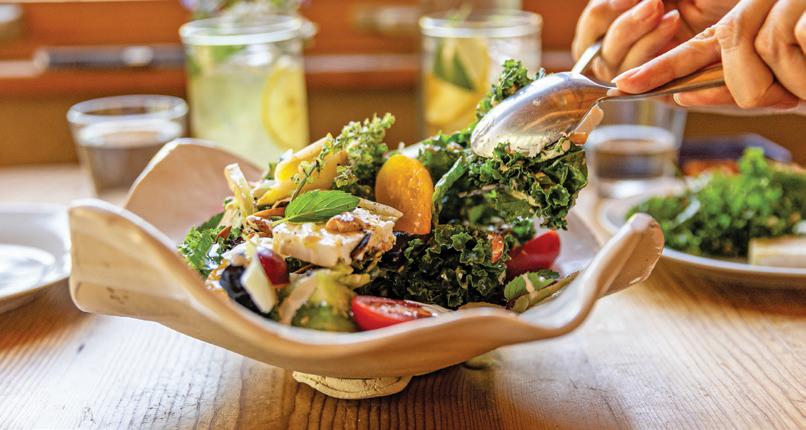
Tyrrell says it has taken time to create this environment. She has observed how loyal patrons gradually begin making annual pilgrimages for birthdays and anniversaries, and how friends regularly connect for lunches.
For the hungry, the allure of a single set menu can also be a psychological reprieve from the volume of decisions that many navigate daily, from the routes they drive to the emails waiting in their inboxes. Press pause. Be hungry. Know that the meal will be seasonal, fresh, bountiful, and flavorful.
Santa Fe native Nina Ladegaard looks forward to the charm of the reveal: “I love not knowing what’s on the menu until I get there but knowing that it will be high quality; made almost entirely of local, seasonal ingredients; and cooked with intention. I don’t need to make any choices. I just show up and she takes care of me — like going to a friend’s house for lunch, and the friend is an amazing cook!”
Diners like Ladegaard are drawn to the integrity of Tyrrell’s meals. As founder and director of Squash Blossom Local Food and co-owner of Ground Stone Farm, Ladegaard is herself deeply rooted in the local food system. She says, “In a time when green washing is rampant, the term farm to table means less and less. I know which restaurants source local and to what
Lunch may bring (clockwise this page)
degree. Every week that she’s open, I deliver local produce to Olive. The Kitchen at Plants of the Southwest is as legit as it comes.”
Tyrrell also gets fresh farm fare from La Capilla Hops Farm in La Cienega and herbs, vegetables, and even pears and apples from the fertile grounds of Plants of the Southwest.
Now in her 16th year with The Kitchen, Tyrrell has found she lives life di erently because of this work. She observes the signs as nature shares them. “Every year I wait for the blossoms to come, and I know I’ll be opening soon. And when the leaves are turning orange, it’s time to be quiet. It’s a lovely balance.”
The Kitchen is open seasonally, from March to October, Wednesday through Saturday. “When the farmers start to harvest is when we open, and when they are closing up, we do too,” Tyrell says. The ephemeral nature of The Kitchen makes it as precious as its meal — and all the more reason to take time to savor the season this summer.
The Kitchen is located at Plants of the Southwest, 3095 Agua Fria St. Text or call ahead (505-913-1911) to make a reservation or discover the daily menu.
Gabriella Marks is a photographer — and occasional writer — dedicated to capturing the vibrant spirit and cultural richness of the people and places around her. In addition to creating compelling visual stories, she supports her professional community as board chair of the American Society of Media Professionals (ASMP), advocating for and empowering photographers nationwide.
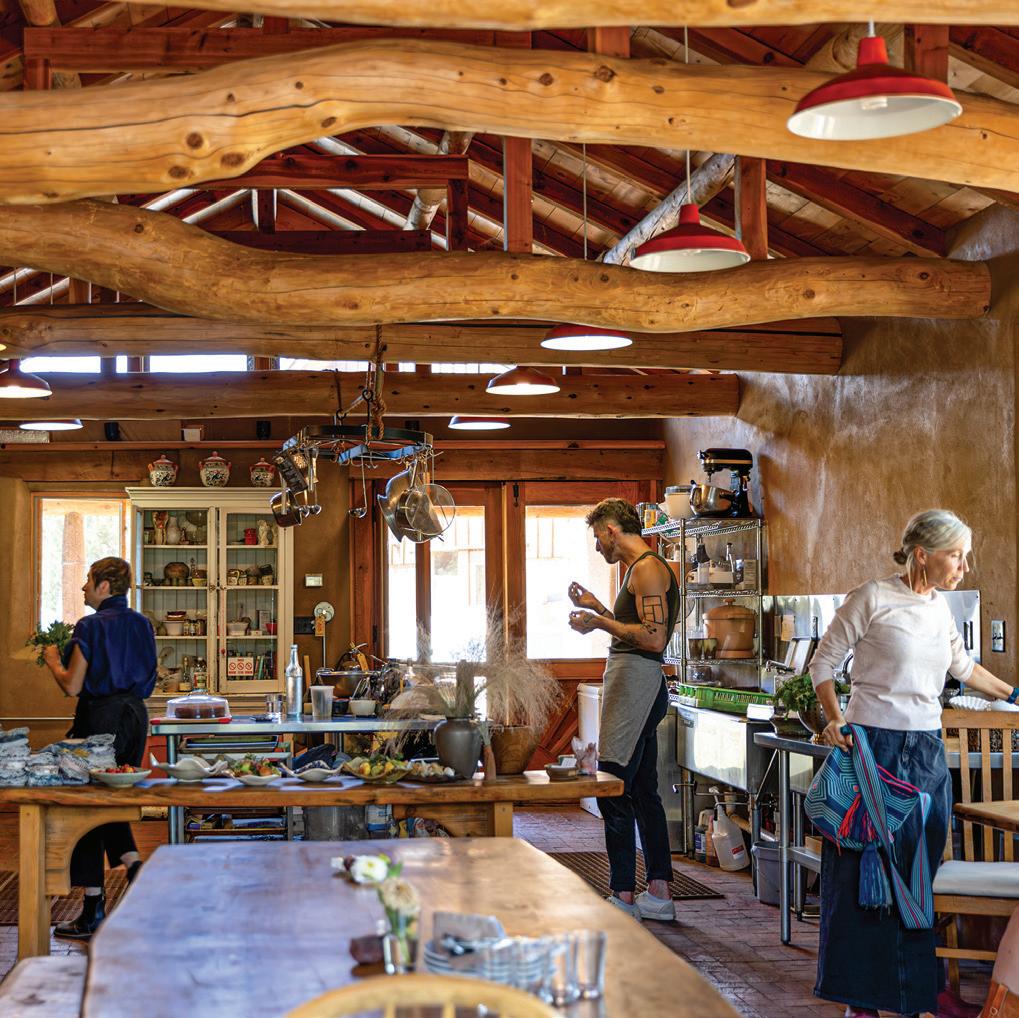




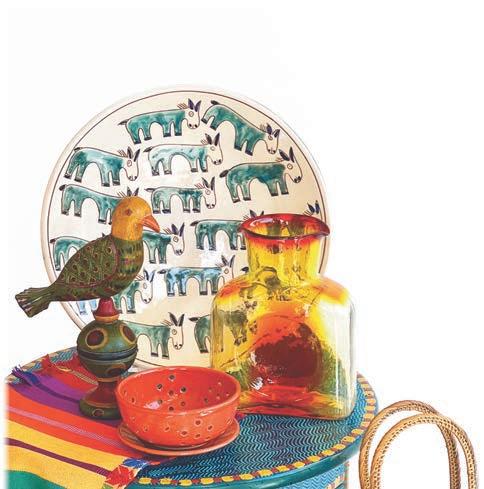




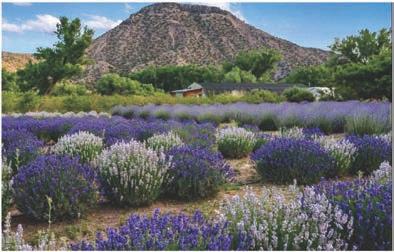



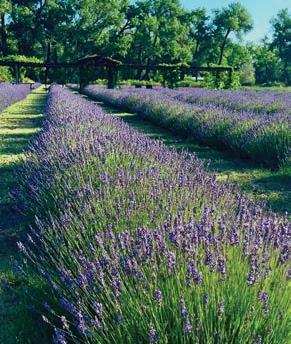

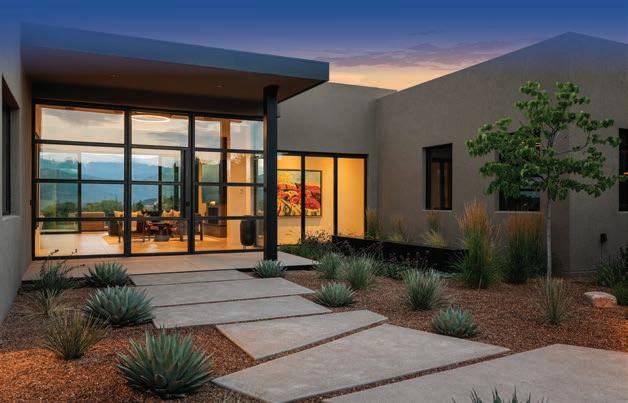





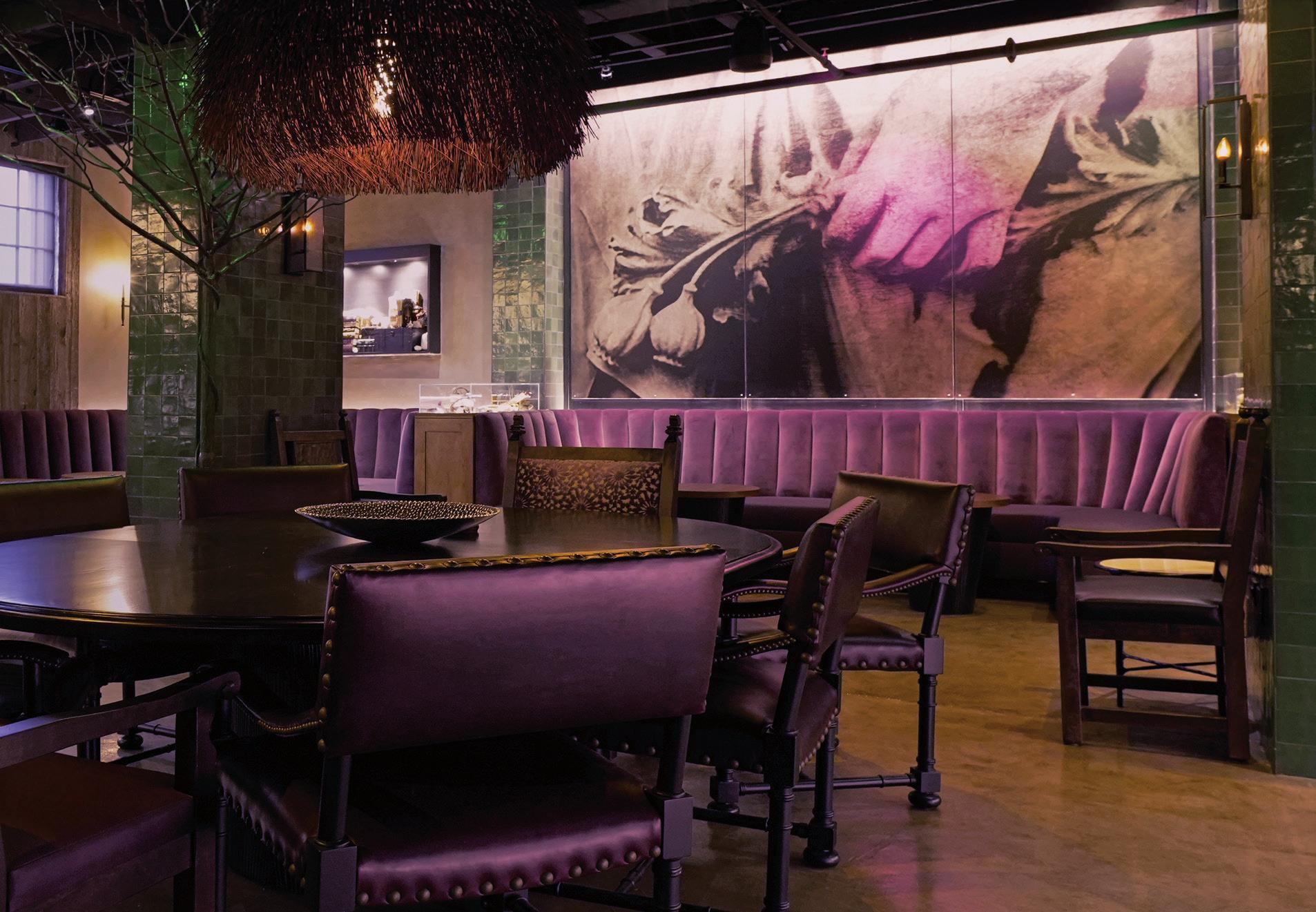
Arrival of Milk of the Poppy shakes up the Railyard’s cocktail scene.
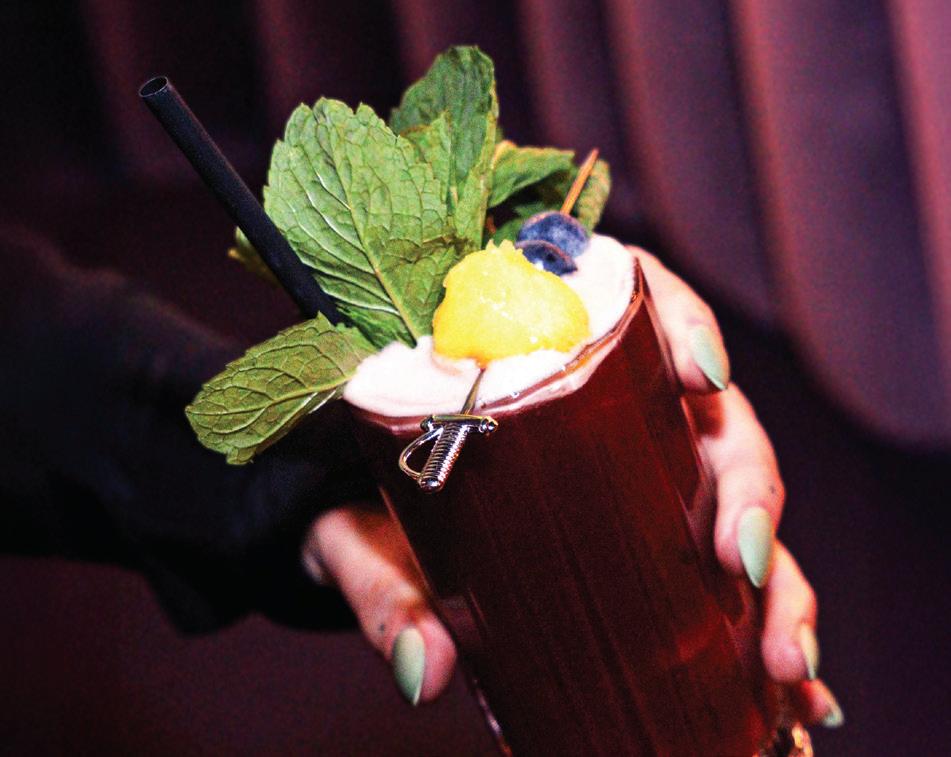
IBY ELI ELLISON
n March, a new bar got medieval on the Santa Fe Railyard District’s already buzzing craft cocktail scene. The long-anticipated Milk of the Poppy is the latest addition to Game of Thrones creator George R.R. Martin’s entertainment hub at the north end of the Railyard. The bar resides in the same 1910 adobe building as the author’s Beastly Books bookstore and Jean Cocteau Cinema, which he opened in 2019 and purchased in 2013, respectively.
Game of Thrones fans will recognize Milk of the Poppy as a powerful liquid painkiller and anesthetic used throughout the mythical Seven Kingdoms. But in the Santa Fe Railyard realm, Milk of the Poppy is what Al LaFleur, Martin’s Highgarden Entertainment creative director, describes as a “medieval apothecary meets cocktail bar with a modern twist.”
Eschewing flashy signage, the heavy wood front doors are subtly marked by a small, illuminated plaque bearing the bar’s poppy logo. “We hope when people come here it feels like an escape, as if you’re stumbling across a cozy, welcoming tavern,” LaFleur says. But don’t expect a rustic, English-style pub.
The dimly lit barroom is a Middle Ages–chic a air, rimmed with purple velvet banquettes and a group-size booth veiled by chainmail curtains. At the room’s center, square columns and spindly iron sculptures of trees frame a regal wooden round table that would look at home in an Arthurian castle. The elegant eight-stool bar is backed by shelves glowing with colorful bottles of spirits and botanicals.

your local nationally-acclaimed theater




O’Farrell and Kirkpatricks’



Directed by Anna M. Hogan
July 10 - August 2, 2025
When a local soothsayer foretells the future of theatre in the 1590s, brothers Nick and Nigel set out to write the world’s very first musical
June 5 - July 27, 2025
A Summer Festival Series of eight pieces presented by the Santa Fe Playhouse, dedicated to celebrating innovative, daring performances across dance, music, and theater.


JOIN US FOR THE REST OF THE SEASON

Kate Hamill’s
WORLD PREMIERE PLAY
Dillon Christopher Chitto’s
Pueblo Revolt
Aug 14 - 31, 2025
COMEDY
The Melodrama
Sept 18 - 28, 2025

BUY YOUR TICKETS TODAY
- Nov 9, 2025
MUSICAL WHODUNNIT
Rupert Holmes’s
The Mystery of Edwin Drood
Dec 4 – Jan 4, 2026
8 tickets for the p ric e of 7! Flexible seating on a flexible schedule
EMAIL boxoffice@santafeplayhouse.org
CALL 505-988-4262
VISIT santafeplayhouse.org
SANTA FE PLAYHOUSE
142 East De Vargas Street, Santa Fe, NM 87501
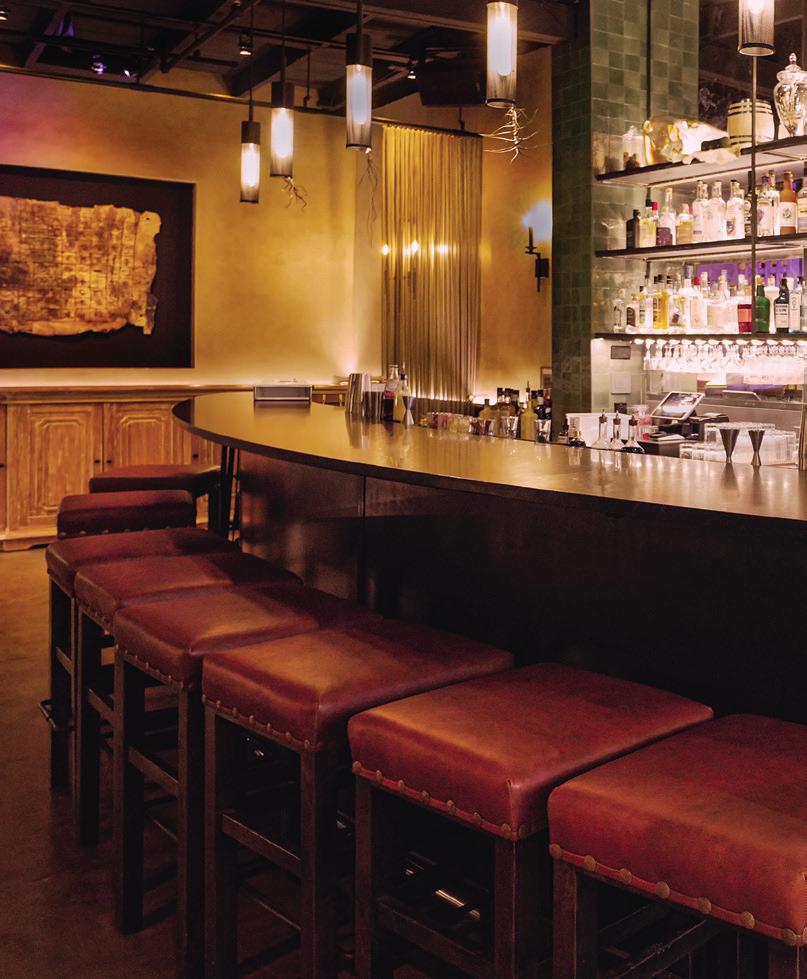
Beverage director Sokhang Pan (formerly of Santa Fe’s Radish & Rye) curates an ever-changing drink menu that sources seasonal ingredients. The superb Seasonal Milk Punch is a sweet potion made with Peruvian brandy, raspberry liqueur, Calpico (a milky Japanese soft drink), coconut cream, and matcha. In future seasons, the recipe may evolve. For example, for summer, the matcha may be swapped out for a tropical fruit such as guava or passionfruit. For teetotalers, the mocktail menu touts specialties like Apricots in Bloom — an earthy blend of apricot shrub, herbs, champagne vinegar, and Moroccan spices.
Milk of the Poppy may be the neighborhood’s newest addition, but it’s not the only beacon for quality cocktails. A short walk down the railroad tracks, Nuckolls Brewing Co. may be best known for its craft beer, but it’s also a cocktail destination in its own right. It occupies a restored 1920s building that formerly housed Nuckolls Packing Co. The railroad once delivered beef to the doorstep of this meatpacking operation, where the speakeasy-style Low Bar sits now. Despite the hipster “speakeasy” connotation, the homey barroom feels and looks like a neighborhood watering hole, down to the antique copper-top bar recovered from Santa Fe’s landmark La Fonda Hotel.
Bar manager Jess Damm relocated from Chicago to Santa Fe on a whim five years ago. “Why not? The weather’s nice, and I’ve always wanted to live near mountains,” she says. Her restaurant background and clever drink recipes helped her land a gig at which she closely collaborates with fellow bartenders Hugo Serrano and Amanda Lawrence to dream up seasonal cocktail menus.
“I’ll taste a spirit that seems interesting and then try to make a cocktail out of it myself. Or we’ll all discuss random ideas, like how to mix hibiscus and cinnamon into a drink,” Damm says. Her seasonal concoctions have included the Katydid. Colored bright green like the drink’s namesake grasshopper, the potent, silky mix of red chile–infused mescal and crèmes de cacao, menthe, and coconut comes served in a chilled glass chalice.
Across the railroad tracks, just beyond the Railyard’s water tower, As Above So Below distillery and cocktail lounge is the brainchild and passion of co-owner and master distiller Caley Shoemaker. After serving
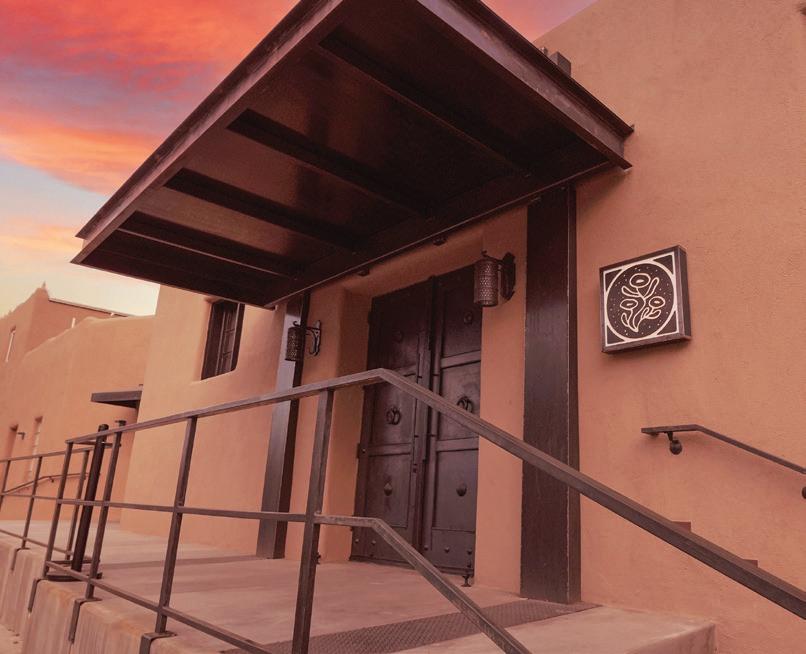
as head distiller at Northern California’s Hangar 1 Distillery — where Shoemaker used water collected from actual San Francisco fog in her vodka — she moved to Santa Fe and opened the distillery in 2021 with her husband, Je Gust.
In a bright, airy space bedecked with potted plants and vintage lounge furniture, the wood-topped main bar is backed by floor-to-ceiling windows o ering a view into the distilling facility. (Guided tours are available.) Seats at the bar’s front windows look out across the railroad tracks to the twice-weekly Santa Fe Farmers Market, where Shoemaker draws ingredients and inspiration for a cocktail menu that changes seasonally — in spring, think spiked cantaloupe agua fresca.
The bar’s signature drink is a luxurious gin and tonic. Shoemaker says the distillery’s Sigil gin is its flagship spirit. “We’re trying to bottle the flavor of New Mexico with this gin. Though we’re using 14 di erent botanicals, we really focus on juniper, sage, and piñon, which is wild-harvested in Taos,” she says. “Our tonic is scratch-made in-house and showcases the gin in a straightforward, refreshing cocktail.”
Bottles of the house gin, vodka, whiskey, absinthe, and more are available from the bar’s bottle shop. Most weekends, live bands or DJs fill the music bill. On any given afternoon, it’s not uncommon to see tourists bellying up to the bar alongside local firefighters grabbing after-work libations. As Shoemaker puts it, “We want locals to get a taste of home in our drinks and for visitors to feel like they had a real Santa Fe experience when they come to the Railyard.”
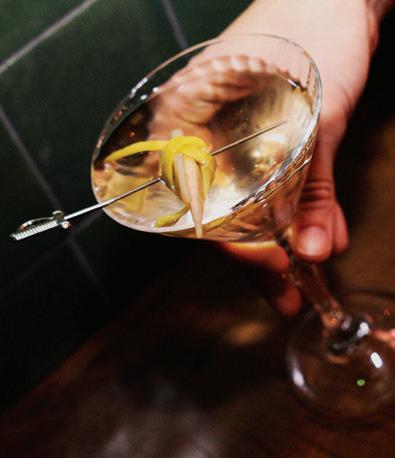

MILK OF THE POPPY 418 Montezuma Ave. 505-466-5528 milkofthepoppybar.com
LOW BAR (NUCKOLLS BREWING CO.) 1611 Alcaldesa St. nuckollsbrewing.com
AS ABOVE SO BELOW 545 Camino de la Familia 505-916-8596 aasbdistillery.com
Milk of the Poppy's TBD (yes, that's the name) cocktail features pear eau de vie, Moscatel pisco, Haitian rum, yuzu, and Corsican blanc.

by Rev. Talitha Ar nold
O Dios, El Señor, Great Spirit, El Shaddai, Adonai, Creator God, creating still. By whatever name we know you, hear our prayers this day.
We thank you for the courage and the Santa Fe, the Holy Faith, of those who founded this city 400 years ago. And we thank you, too, for the native peoples who prayed in this land for centuries before and for all who have come in the centuries since. For all, be they native or newcomer, whose prayers continue to bless this city, we thank you this day. With our prayers of thanks, hear too our prayers for guidance and wisdom. Help us to lear n from this good land and the beauty of creation all around us. In this land of endless sky, teach us the boundlessness of your beauty and love. In this land of little rain, teach us to share and to bless what you have given us. In this land of brilliant sunrise and golden sunset, teach us to use each day to bless the lives of others. In this land of many cultures and colors, give us your infinite imagination and teach us to respect and value all your children. O God, our help in ages past, be our hope and the hope of this City of Santa Fe in all the years to come.
Help us all to build on the foundation of faith, hope, and love that others have laid here, so that all your people in this city might do justice, love mercy and walk humbly with You, now and always. Amen.








AUGUST


SEPTEMBER









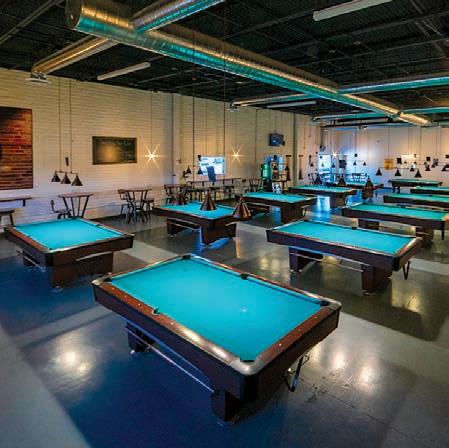


BY IRIS FITZPATRICK
Santa Fe’s hundreds of fine art galleries run the gamut from classical western to cuttingedge contemporary. Sure, abundant galleries bolster the city’s reputation as an art lover’s paradise, but all that choice can feel somewhat overwhelming: Where should you start? These nine galleries at Canyon Road, the Plaza, the Railyard Arts District, and beyond showcase diverse artistic expressions. Whether you’re looking for a showstopping piece of jewelry or a painting that captures the New Mexico light just right, the City Different has you covered.
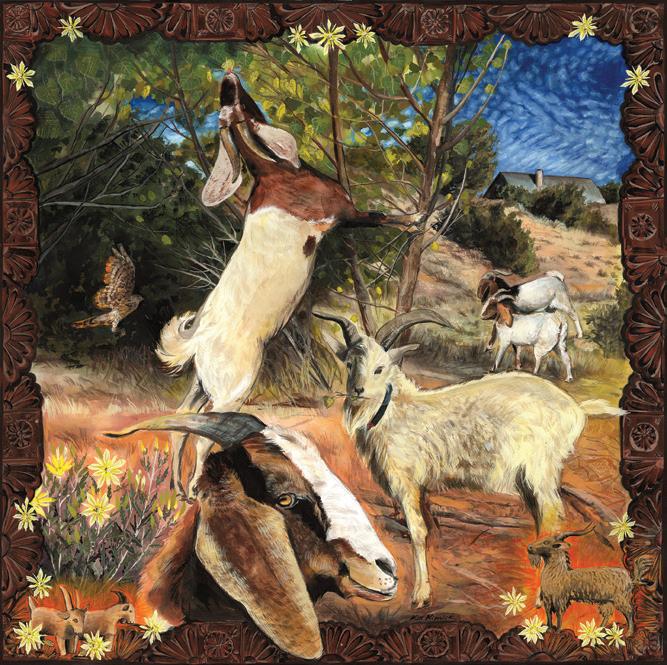
129 W. Palace Ave. I 505- 916-1341 I hechoamano.org
You’ll find charming contemporary folk art gallery Hecho a Mano (the name means “handmade” in Spanish) just a few steps from the Plaza on Lincoln Avenue. The gallery just celebrated its six-year anniversary, but owner Frank Rose stays laser-focused on showcasing top-tier artists who work in a range of creative disciplines. “I look for art that feels like it was pulled out of another dimension and translated into an earth-bound reality,” Rose says, “and I look for color, care, passion, love, and evidence of the maker in the art.” Running through June 2, Kat Kinnick: Momeno Vivere captures the Santa Fe artist’s lively animal narratives. July 4 through 28, Hecho a Mano hosts the group show Everybody’s Bolos, for which the 30 participating artists were asked to reimagine the classic bolo tie. Look for work by local artist Jerome Nakagawa, whose precisely designed, stone-and-silver bolos are but one interpretation of this quintessentially western accessory.
1127 Siler Park Lane I 505-424-8449 I prescottstudio.com
It’s hard to miss the Prescott Gallery and Sculpture Garden on Siler Road. The blue lizards, towering yellow giraffes, and winged pink pigs of the gallery, founded by sculptor Fredrick Prescott in 2010, brightened up Midtown for years before the Siler Road area had its own arts district. The metal animals in Prescott's ever-changing menagerie move and sway in the wind and sometimes seem ready to gallop, fly, and hop right off the adobe-walled grounds. There aren’t many outdoor sculpture gardens on the southerly side of town, so enjoy the novelty of a summer stroll under shady green trees along bench-strewn paths. Whatever you do, don’t be afraid to touch the artwork. “This is a fun place for the whole family,” says longtime Prescott Gallery sales manager June Keys. “The sculptures are designed to move, and we actually encourage people to play with them.” Road-trippers tired from days in the car will appreciate the tranquil, walkable grounds, which are also dog-friendly.
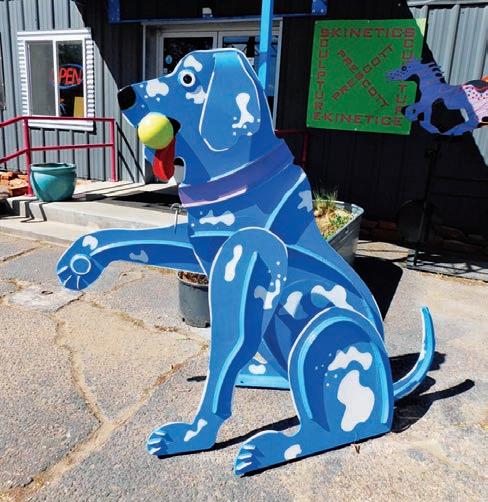
1601 Paseo De Peralta I 505-984-1387 I taimodern.com
Among Santa Fe’s many marvelous contemporary art galleries, TAI Modern, located on the corner of Paseo de Peralta and Guadalupe Street in the Railyard, stands alone. Since its inception in 2006, the gallery’s devotion to showcasing Japanese bamboo art has made it a global destination for those seeking this intricate, sensual art form. Among the 35 or so Japanese artists on TAI’s roster is Nakamura Tomonori, whose painstakingly woven, abstracted rattan-and-bamboo forms adorn the gallery June 27 through July 19. From July 25 through August 23, the gallery displays the pieces of lacquer artist Sasai Fumie, whose amorphous, often playful, shiny sculptural pieces employ a technique dating back to prehistoric times in Japan.
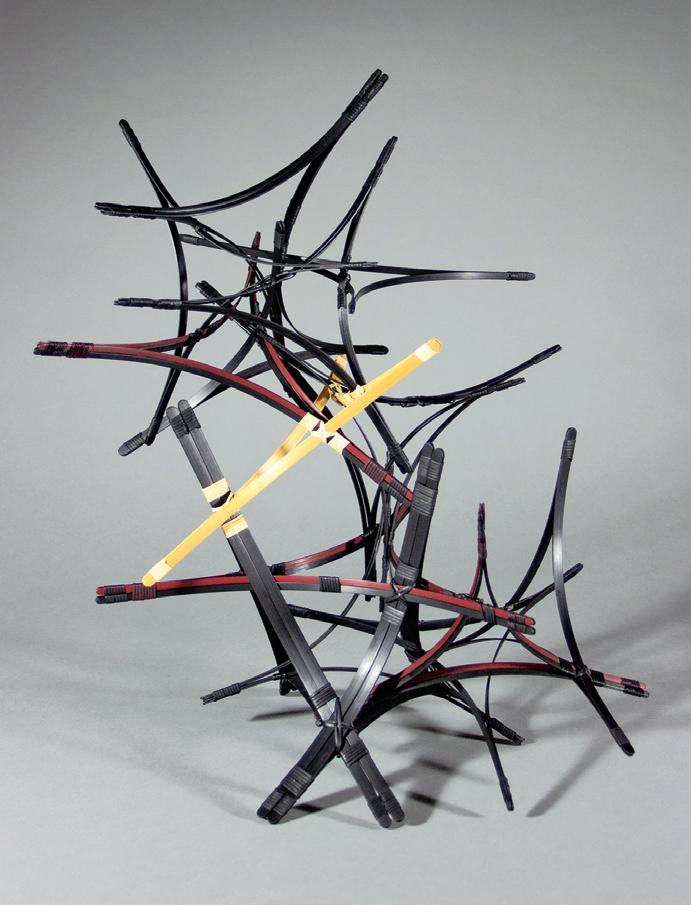
2351 Fox Road, Suite 700 I 505-257-8417 I 5pointgallery.com
You’ll find the uber-contemporary 5. Gallery (or Five Point) in an unassuming industrial business park off Rufina Street, behind Home Depot. Five Point’s founder, Max Baseman, says he likes this out-of-the-way location, which takes visitors off the beaten Santa Fe gallery path and deposits them into a minimalistic space filled with genre-defying artwork from emerging local artists. “The outside world disappears when you’re here,” says Taos-born Baseman, who encourages art enthusiasts to pop into Five Point regardless of how much they think they know about modern art. “Not understanding a piece of art can be a good thing,” Baseman says. “You might change your mind; you might not. But either way, there’s a
space for something interesting there.” Five Point presents new paintings by experimental abstractionist Michael Diaz from May 17 to June 28, and abstracted watercolors by Nick Terry grace the gallery walls from July 5 through August 16.
223-A Canyon Road I 505-316-3923 I sunanddust.gallery
Canyon Road’s Sun and Dust is a chic, modern exhibition space, filled with heirloom-quality jewelry and other wearable art that blurs the lines between adornment and sculpture. The gallery is also keen on promoting 2D artists who blend exquisite craftsmanship with experimental techniques. Local painter Jake Trujillo’s latest images of mimosa-colored sunsets and aubergine mountains, on view at the gallery beginning June 6, are painted on copper panels, a choice, gallerist Emily Spykman says, that speaks to the region’s history of copper mining. Beginning July 18, the gallery presents work by Lori Swartz, who paints with pigment made with coal sourced from around her Madrid, New Mexico, home.
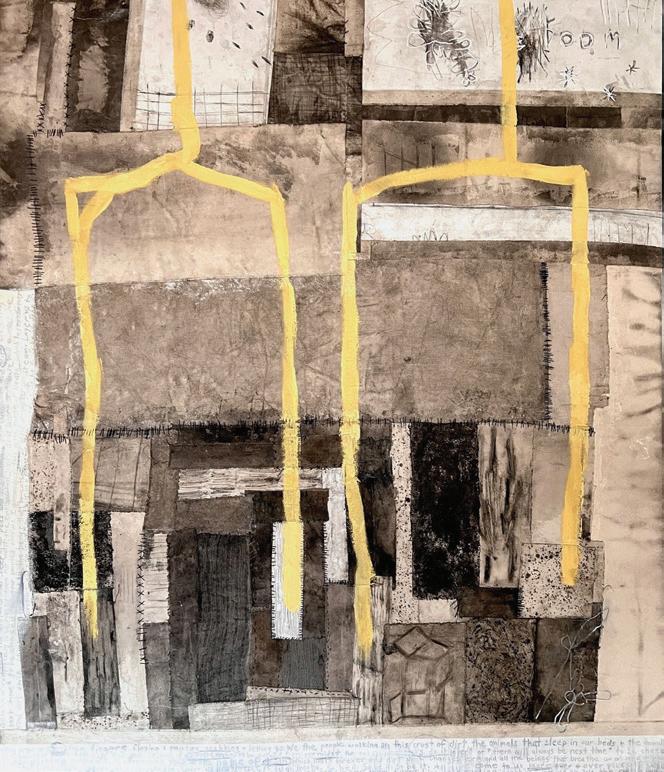
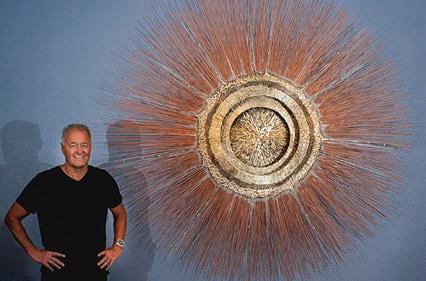
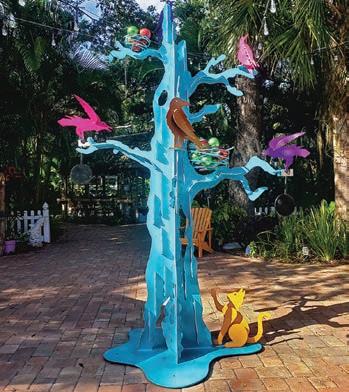
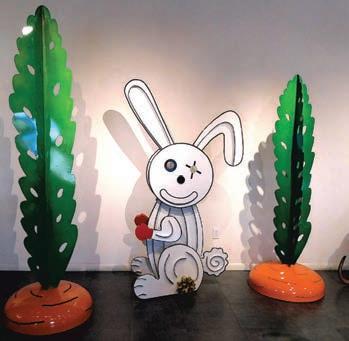
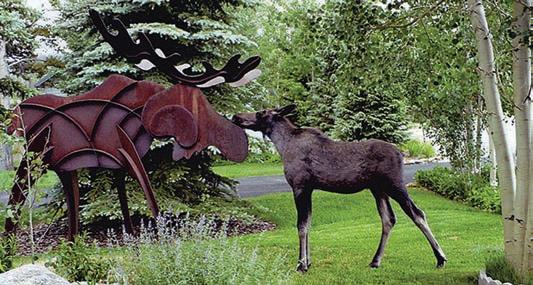
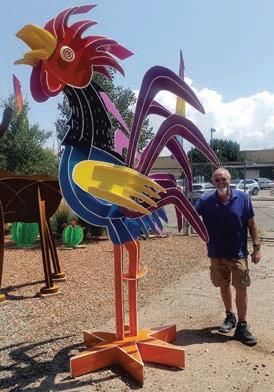
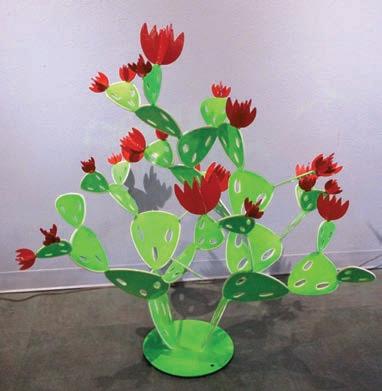
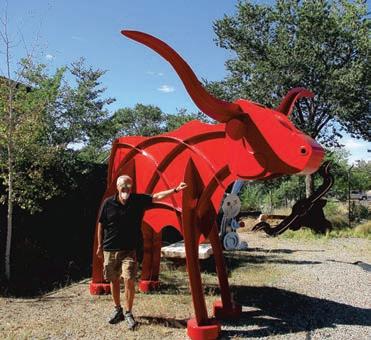
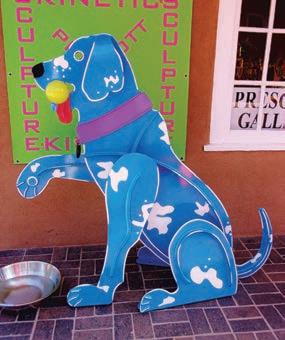
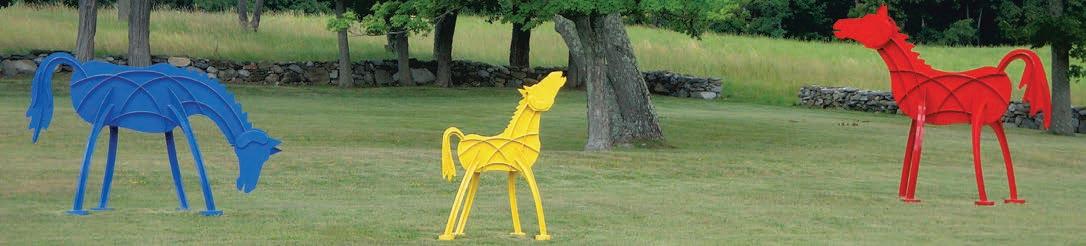
SilerArtsDistrict
SilerArtsDistrict
1127SilerParkLane,Sant aFeNM87507 |( 505)424-8449
FollowusonInstagramandFacebook prescottstudio@gmail.com| www.prescottstudio.com
1127SilerParkLane,Sant aFeNM87507 |( 505)424-8449
Followuson In stagramandFacebook

• Santa Fe Specialist
• Accredited Buyer Representative
• Seller Representative Specialist
• Seniors Real Estate Specialist
• Real Estate Negotiation Expert
Now more than ever, who you work with matters. Call me for your complimentary and thorough consultation.
Adrienne DeGuere
Expert local broker 505.310.8053 SharingSantaFe.com

CHECK OUT OUR ONLINE WEB STORE www.santafequilting.com
In store shopping
OPEN 5 DAYS A WEEK

Fabric, reads, Books, Patterns, Notions, Cotton, Flannel, Silk, Linen, Rayon Batiks, Asian, Southwest fabrics. Quilt Kits, Southwest Fleece, Felted Wool for hand project
616 1/2 Canyon Road I smokethemoon.com
smoke the moon opened on Canyon Road just four years ago, but the cool, ultra-modern contemporary gallery has already become an integral part of the young and creative Santa Fe scene. Though lots of smoke the moon’s neighboring galleries skew traditional, there’s plenty of interest in leading-edge work, says director Alison Nitkiewicz. “Our gallery program is particularly focused on exhibiting work from emerging artists. We’re drawn to those who push the boundaries of painting and sculpture.” This summer, don’t miss smoke the moon’s annual 500 Below Affordable Art Market, which takes place Saturday, July 5, and Sunday, July 6, and includes works priced at $500 and under. The show features artists who frequently exhibit at the gallery, such as Cory Feder. “We get a lot of folks coming in and telling us how excited they are to see such refreshing work on Canyon Road,” Nitkiewicz says, “and that makes us feel like we are doing something right.”
OPEN 6 DAYS A WEEK Mon-Wed: 10am-5pm • Fri-Sat: 10am-5pm urs. 10am-2pm Closed Sundays
Mon–Wed: 10am-5pm • Fri–Sat: 10am-5pm Closed ursdays and Sundays
Owners: Mar y McCusker and Allen Winchester
Helpful Sta . Classes. ( Zoom and in person)
Fabric, reads, Books, Patterns, Notions, Cotton, Flannel, Silk, Linen, Rayon Batiks, Asian, Southwest fabrics, Quilt Kits, Southwest Fleece, Felted Wool for hand projects, Helpful Sta , Classes Available

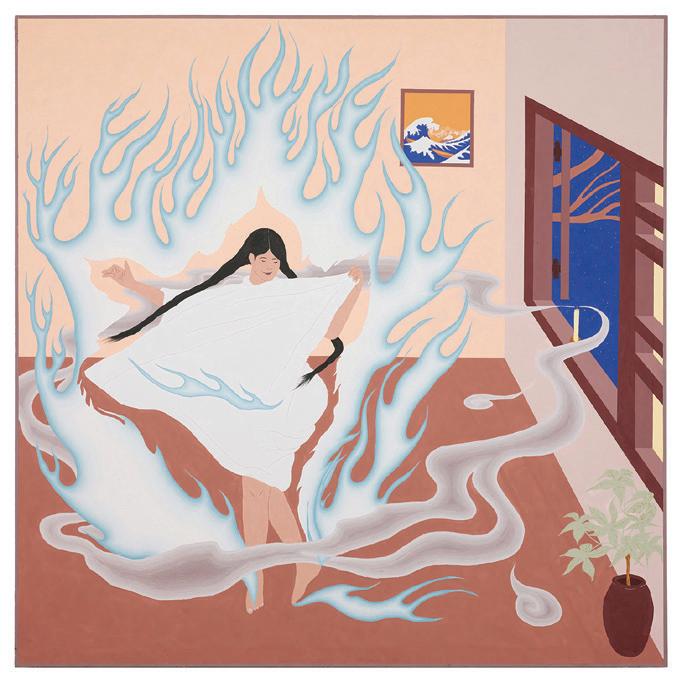
Winterowd Fine Art
701 Canyon Road I 505-992-8878 I fineartsantafe.com
Kay Contemporary Art
600 Canyon Road I 505-365-3992 I kaycontemporary art.com
More than 20 years ago, Karla Winterowd opened her eponymous gallery, Winterowd Fine Art, on Canyon Road. As the years passed, Winterowd yearned to expand upon her gallery’s contemporary focus. She opened Kay Contemporary Art, a quarter mile up the road from Winterowd, in 2019. “I want both galleries to feel like extensions of an artist studio, where visitors gain insight into the creative process,” Winterowd says. Both mount notable shows this season. May 16 through 29, Kay Contemporary unveils new work by well-known sculptor Kevin Box, whose sculptural practice is oftentimes inspired by folded paper and origami forms. (See page 27 for more on Box’s work.)
Later this summer, Sarah Bienvenu unveils new works in The Nature of Color, running June 20 through July 3 at Winterowd Fine Art. “There are many unique places in New Mexico. Like its weather, you can drive or hike through it and watch it change every fifteen minutes. It is an old
land with many surprises,” Bienvenu observes. “When you really want to know a place, you go there and paint it over and over again. As it changes, you change as well. Each time you revisit it, there is both newness and familiarity. What I try to do is to see and paint what the land, sky, and all of nature are showing me at the moment.” Meet the artist at an opening reception on Friday, June 20, 5–7 p.m.
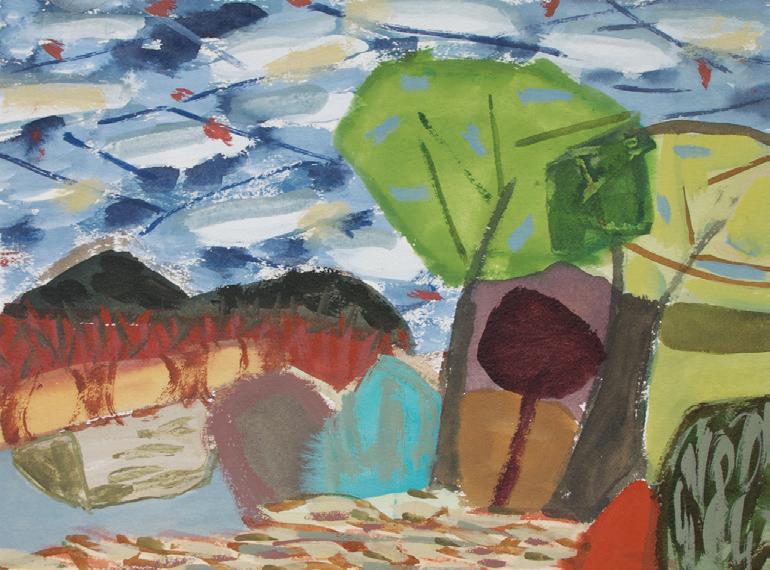
550 S. Guadalupe St. I 505-995-9902 I evokecontemporary.com
Evoke Contemporary, a long-beloved Railyard Arts District gallery, is, well, evocative. The elegant, refined space, which has specialized in figurative painting and sculpture since its 2009 inception, is a great place to check out top-of-the-line, thought-provoking contemporary art in an unpretentious setting. This summer’s programming includes a May 30–June 21 show of new paintings by Jeremy Miranda, whose lush environments blur the lines between interior and exterior worlds. From June 27 through July 19, Evoke presents new paintings by Michael Scott, whose sublime, sometimes mysterious landscapes are marvelous to behold. Pro tip: Head to the Railyard on the last Friday of the month, when many galleries in this cool neighborhood host art openings, oftentimes with the exhibiting artist present.
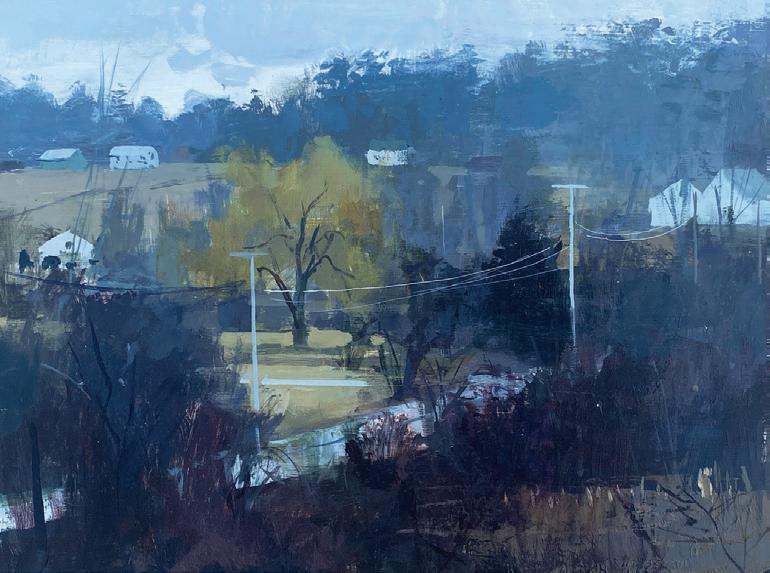

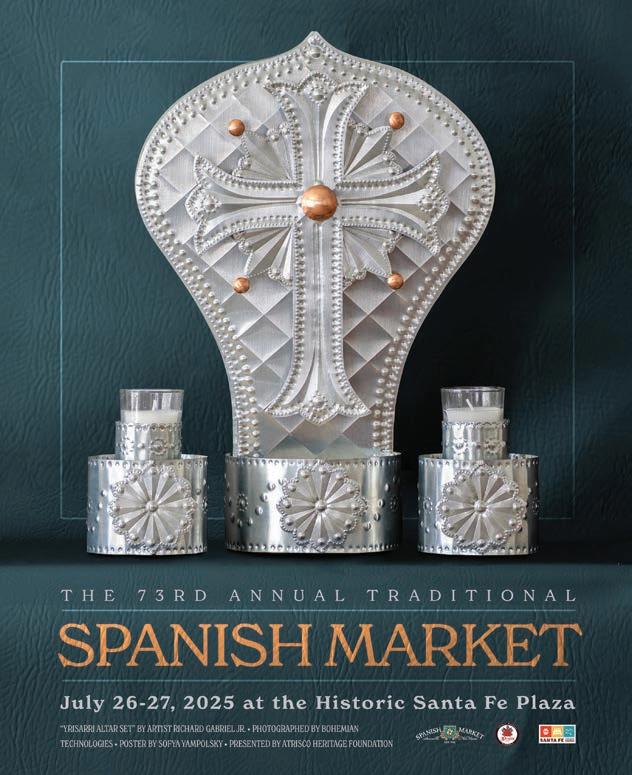
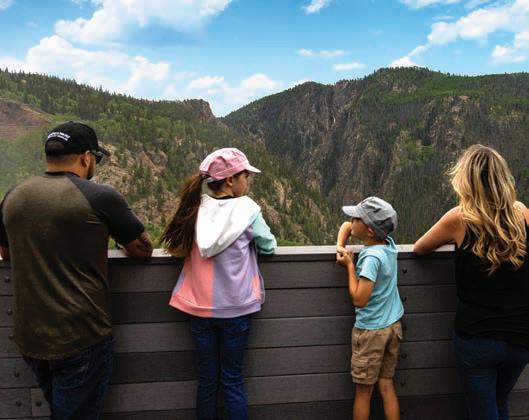
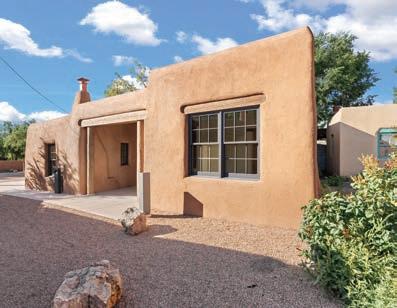

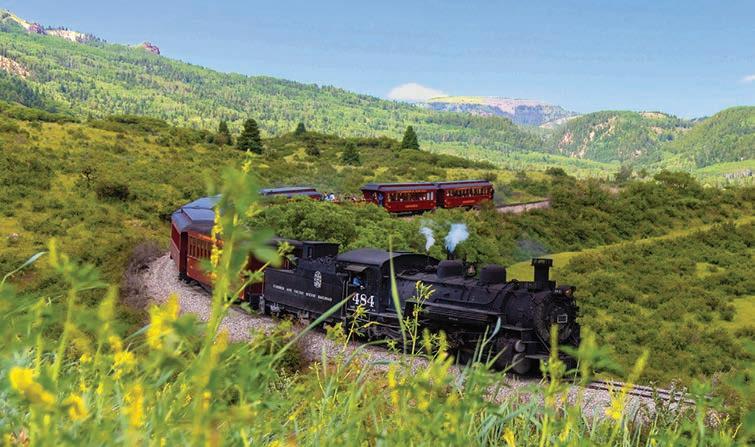
Climb aboard the historic Cumbres & Toltec Scenic Railroad which operates in the scenic landscapes of southern Colorado and northern New Mexico. Journey back in time experiencing the Old West as it was in 1880, as you venture over the highest mountain pass reached by rail, cross gorges and trestles, blast through tunnels, and chug across alpine meadows and high deserts. Depart from Antonito, Colorado or Chama, New Mexico for a ride of a lifetime!


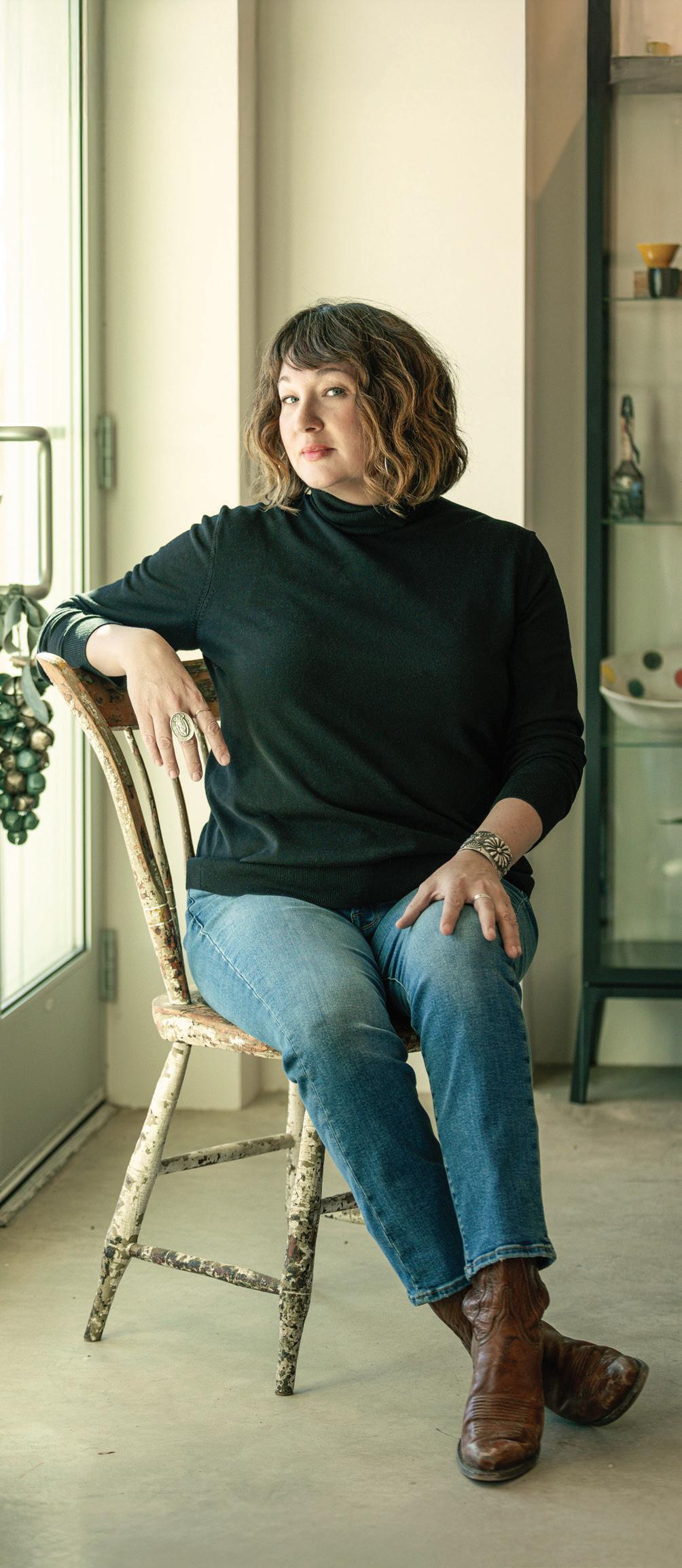
Muses Santa Fe offers art workshops where participants can follow their inspirations.
BY IRIS FITZPATRICK PHOTOGRAPHY BY TIRA HOWARD
According to poet Mary Oliver, “The most regretful people on earth are those who felt the call to creative work, who felt their own creative power restive and uprising, and gave to it neither power nor time.” What happens when budding creative types give expressive impulses power and time? That’s the question Stacy Nixon, founder and director of Muses Santa Fe, hopes to answer.
At Muses, art lovers of all skill levels come together in workshops taught by expert instructors. Some students — lots of them — are complete beginners. Some travel from out of town to learn from instructors they admire. Other attendees, says Nixon, are experienced in one medium and curious to try something new.
As an artist herself, Nixon understands how crucial it is to carve out enough time to get immersed in creative pursuits. The challenges of being a productive artist intensify, she says, when one becomes a parent. “When you give yourself the rarity of uninterrupted time, what you’re really doing is giving yourself the freedom to fail,” Nixon says. In failing, artists can learn, grow, and fine-tune their artistic energies.
Nixon experienced this gift of creative time several years ago when she applied for an artist residency with the Virginia Center for the Creative Arts (VCCC) in 2019. “When I got the fellowship at VCCC, I almost couldn’t believe it,” Nixon says. “I didn’t think it could be real — that I would be able to make art and not have to worry about anything else.” The experience was transformative for Nixon, and in a way she sees Muses as a means of paying it forward.
Muses’ o erings (around nine multiday workshops and 20 single-day classes are scheduled for 2025) include painting, sculpture, creative journaling, Japanese sashiko stitching, silversmithing, book-binding, fermentation, and more. Recognized masters in their fields teach the workshops. For instance, a rug-tufting workshop, which includes an inspiration-gathering trip to Meow Wolf, is taught by Tim Eads, who literally wrote the book on rug-tufting with his 2024 publication Tuft the World
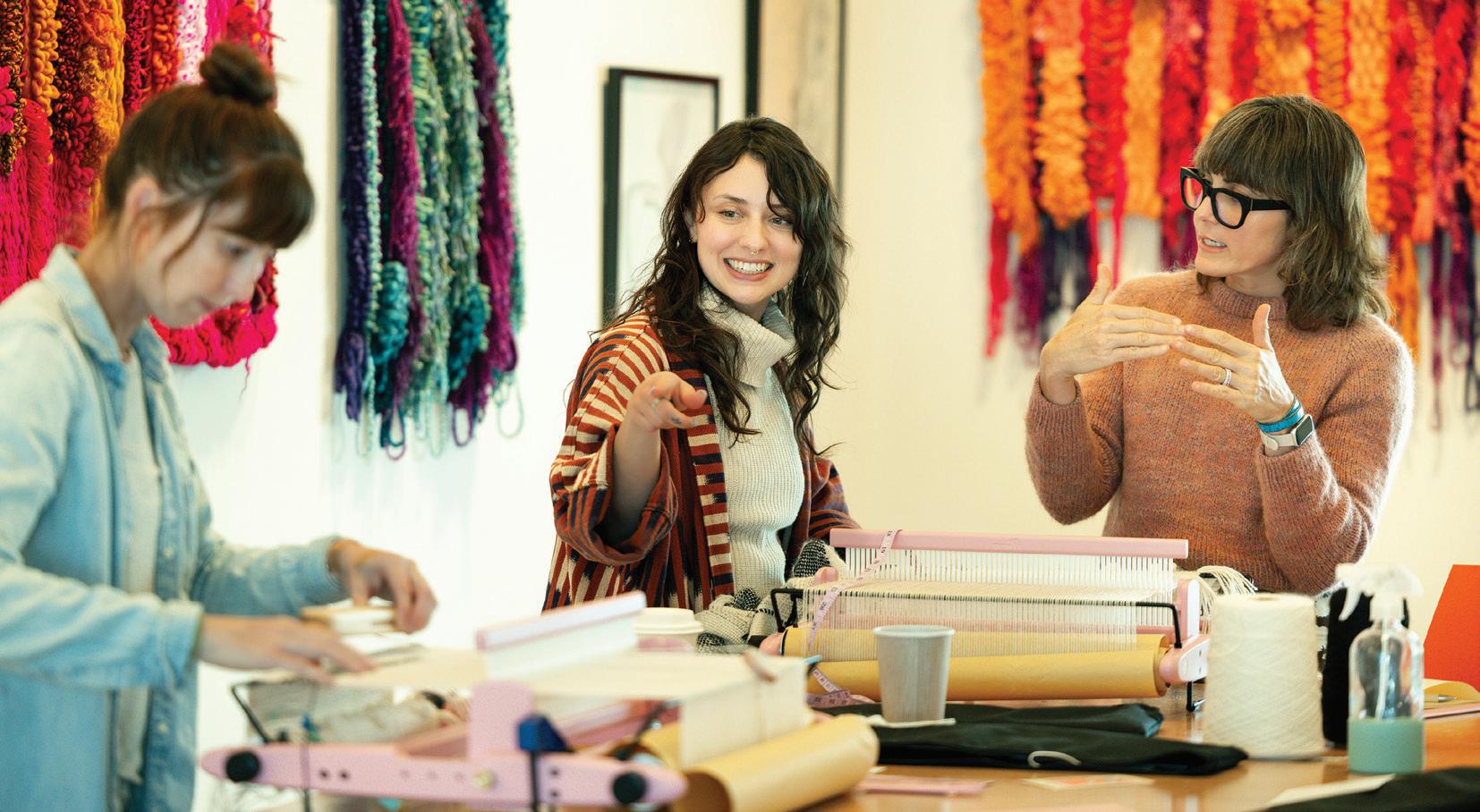
Muses’ offerings (around nine multiday workshops and 20 single-day classes are scheduled for 2025) include painting, sculpture, creative journaling, Japanese sashiko stitching, silversmithing, bookbinding, fermentation, and more.
Muses instructor Geo rey Gorman says the workshops’ magic is manifold. “One of the biggest problems we face as artists is that we tend to be isolated and in our own heads a lot of the time,” Gorman says, “which makes it important to connect with like-minded people.” Gorman, who has taught at Santa Fe Community College and the Institute of American Indian Arts, presents a totemic sculpture workshop at Muses in July. “Muses o ers a clean, wide-open, nice workspace,” Gorman says, “and Stacy really lets us spread out and make a mess.”
Top-tier instruction aside, Nixon says Muses’ success also comes from fostering real connection, the kind unlocked by swapping ideas, sharing stories, and figuring out how to make something awesome. “As artists, we always hear, ‘What are you working on?’ and ‘What’s been selling?’” Nixon says. “We’re told to treat art-making as a career, to force ourselves to do it every day, but creativity doesn’t always work like that. I want to suggest that the value is not in the finished item at all but in connection.”
Nixon moved to New Mexico around a decade ago and had been keen on getting artists together for years before opening Muses in a quiet Santa Fe industrial park near Meow Wolf in October 2023. Located about 15 minutes from the Plaza, Muses feels like a departure from the artsier — and more peopled — parts of town. In addition to putting on creative workshops, Muses hosts locally driven gallery exhibitions. Upstairs is her
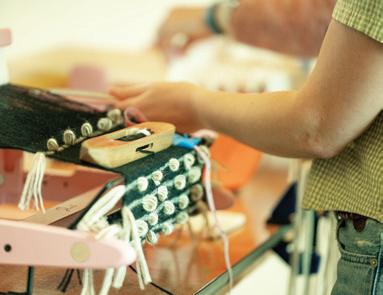
painting studio. “The summer is great here,” Nixon says. “Our building has these big glass garage doors, and when we roll them up there’s a really great insideout vibe.”
Workshops usually include around six students and occasionally up to 12, with participants ranging in age from their 20s to their 80s. These diverse groups have time to swap stories and learn together, spread out around a massive crafting table, heads bent over their work, hands moving with purpose. There’s no pressure to perform, no judgment — just a communal space to experiment and discover.
In a world that demands productivity, e ciency, and results, taking the time to learn a skill, purely for self-enrichment, is uncommon. It has the potential to remind participants that joy is not in a rush. It o ers the kind of freedom that grown-ups don’t usually get: permission to make a mess, permission to stop watching the clock, permission to have fun.
Frida Kahlo once said that she didn’t need to look around for some striking source of creative inspiration. She was eager to stoke and kindle her own flame.
“I am my own muse,” Kahlo said. “I am the subject I know best, the subject I want to know better.” Slipping into uninterrupted creative mode at Muses Santa Fe encourages participants to discover and befriend their own personal muses.
1189 Parkway Drive, Suite G2; 505-521-9358; musessantafe.com

New Mexicans voice their love for the state’s culture and people loudly (and even if we’re complaining, we’re the only ones allowed to do it). Even visitors get swept up in the enjoyment of all things local. These items help you wear your New Mexico and Santa Fe pride on your sleeve — and just about everywhere else. — AMB
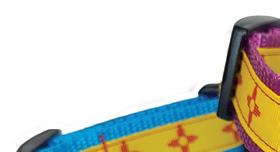
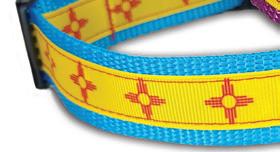
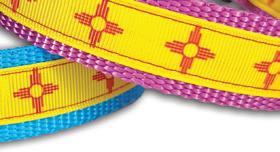

Even your four-legged family member can boast local pride with these Zia ribbon collars from Albuquerque-based Little Paw Design. Artist Melissa Galloway created the brand in 2014 when she couldn’t find cute leashes and collars for her pets. Collars are available in sizes small to extra large ($14.49–$20.49).
etsy.com/shop/LittlePawDesign
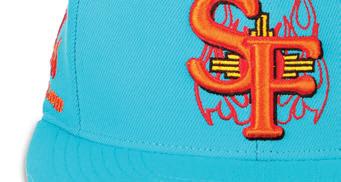

Whether at game time or throughout the year, root for the home team with this Santa Fe Fuego turquoise flex-fit game hat ($25), featuring the team’s logo. According to local lore, it’s the most popular hat in the entire Pecos League. santafefuego.com
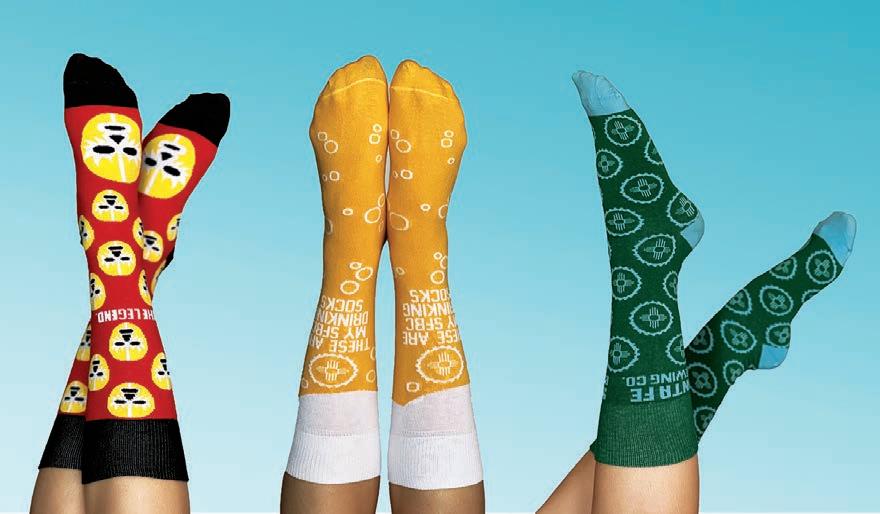
Santa Fe Brewing’s colorful “foot koozies” ($15) are comfy accessories for listening to live music while sipping light bodied NMX Standard at the brewery’s City Different headquarters or wearing around town. Add a pop to any outfit with (from left) the Pepe Loco luchadore socks, “These Are My SFBC Drinking Socks,” or a pair featuring the brewery’s logo. 35 Fire Place santafebrewing.com
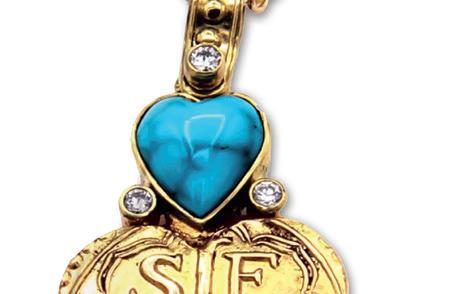
Drawing inspiration from Spanish colonial heritage and Santa Fe’s centuries of history, Douglas Magnus’s Double Heart pendant ($10,670) makes a bold, glittering statement. Found exclusively at Sorrel Sky Gallery, it is made of 18k gold, McNulty turquoise, and diamonds. The chain, also from Sorrel Sky, is sold separately. 125 W. Palace Ave. I sorrelsky.com

This print ($35) from California-based artist Killer Acid (aka Rob Corradetti), in collaboration with Santa Fe–based artists from the Meow Wolf collective, celebrates iconic imagery from the state’s history. Aliens, chile ristras, balloons, Zozobra, and more are commemorated as memorable icons of the Land of Enchantment on this 12 x 16 inch, five-color screen print on kraft cover stock, available at the House of Eternal Return gift shop and online.
1352 Rufina Circle I shop.meowwolf.com

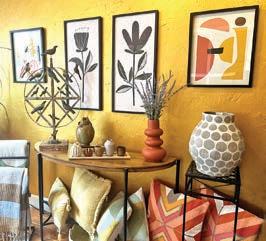
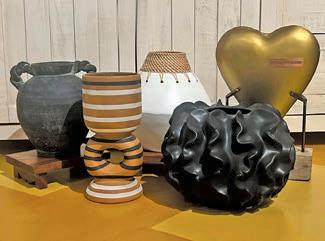
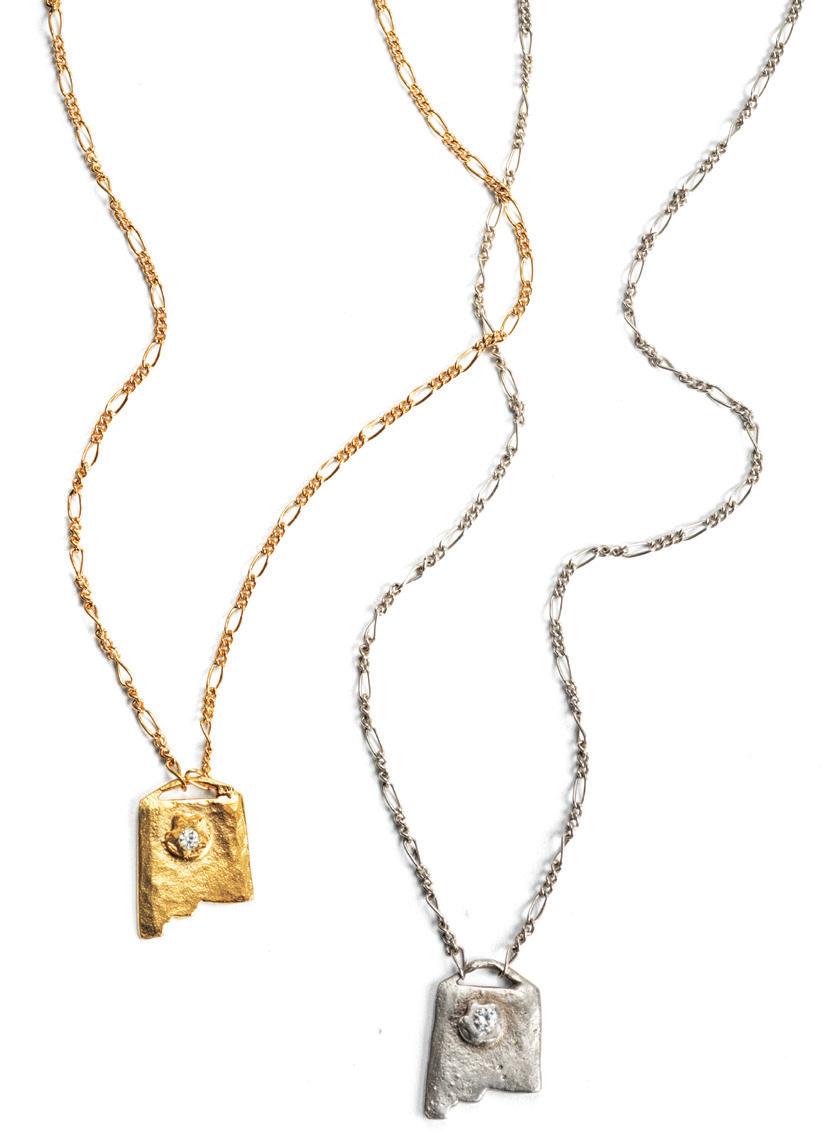
Carry your pride near to your heart with Santa Fe metalsmith Cynthia Jones’s Hometown necklace. Available in sterling, oxidized silver, and 14k vermeil gold ($230–$275), in 18 and 16 inch lengths, the New Mexico pendant is set with a 2 mm diamond representing Santa Fe.
312 Montezuma Ave., Studio D I cynthiajonesjewelry.com
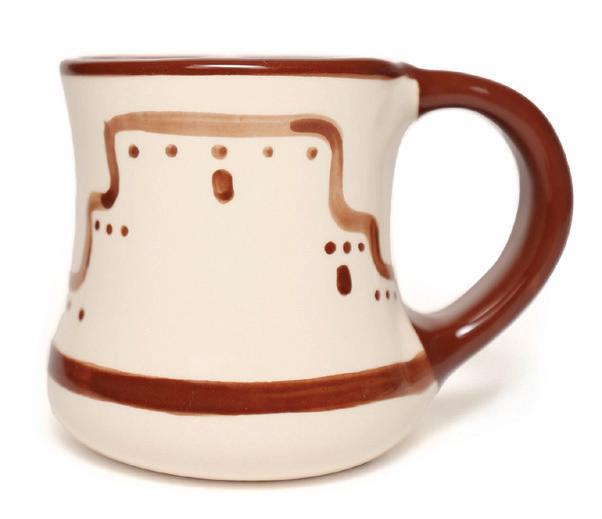
This mug is retro in all the best ways. It’s based on the mugs La Plazuela restaurant used for years and sold in one of La Fonda’s shops. Although the original maker shuttered, Kelly Jo Designs in Albuquerque thoughtfully re-created the mugs ($35) that nod to Pueblo-style architecture.
100 E. San Francisco St. I lafondasantafe.com
These earrings incorporate the Zia symbol, which is used on the state flag, and the official gemstone of New Mexico, turquoise. The handmade set ($85) is made from sterling silver and natural turquoise and evokes classic southwestern style with a modern twist. The Albuquerque-based brand received permission from Zia Pueblo to use the Zia symbol for its jewelry. 8106 Menaul Blvd. N.E., Albuquerque I tskies.com
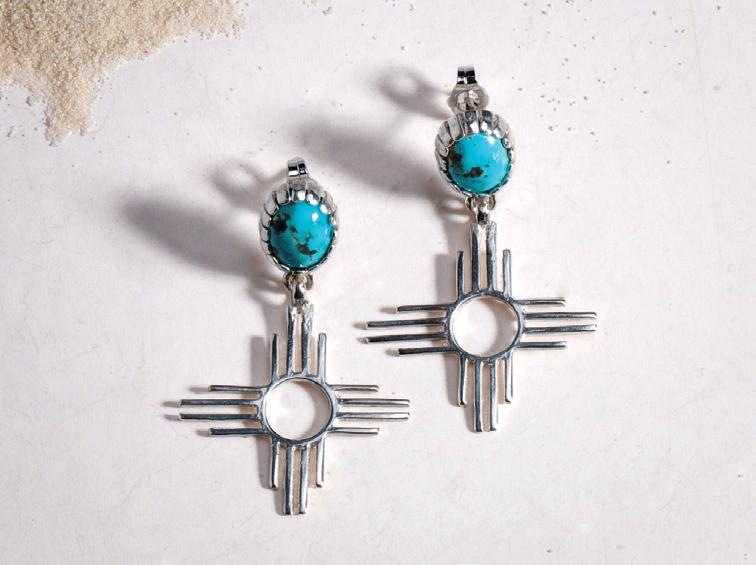
Local pride runs deep at this just-off-the-Plaza shop, particularly in this Warhol meets New Mexico take on the iconic soup can design. The green chile print comes in two sizes ($165 and $225) and is ready to hang. It’s purposefully off register to play up the screen-printed look.
121 W. San Francisco St. I blackdiamondcurio.com
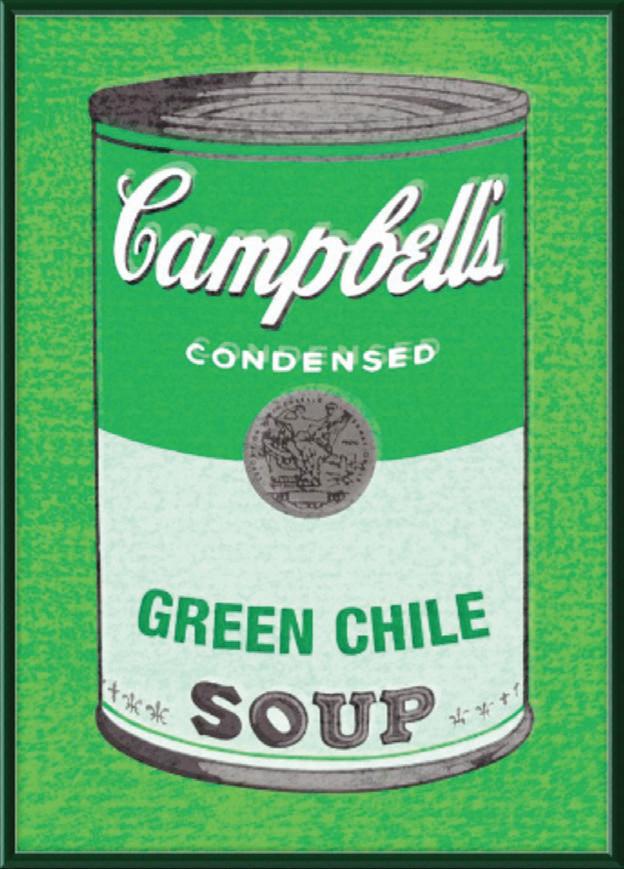
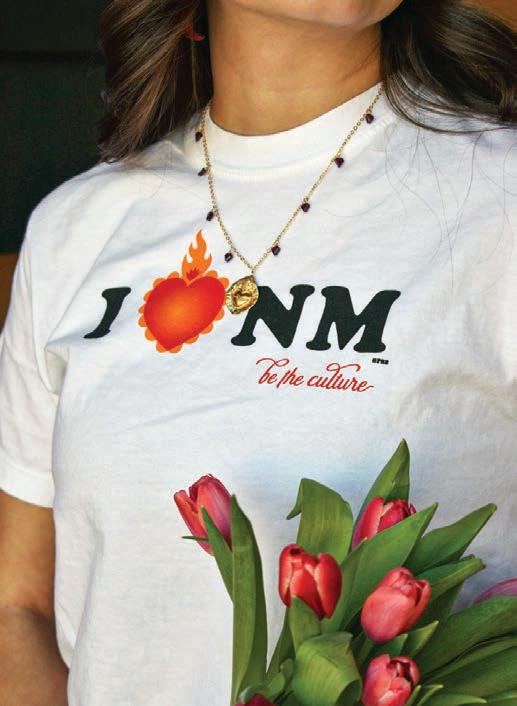
This Railyard shop specializes in New Mexico T-shirts, gifts, and goods. This pre-laundered, 100 percent combed, ring-spun cotton tee ($33) gives a local spin to Milton Glaser’s “I Love NY” logo. The sacred heart signifies a boundless and passionate love, which makes it a perfect symbol to show your love for the state.
500 Market St., Suite 108 I fs2supplyco.com
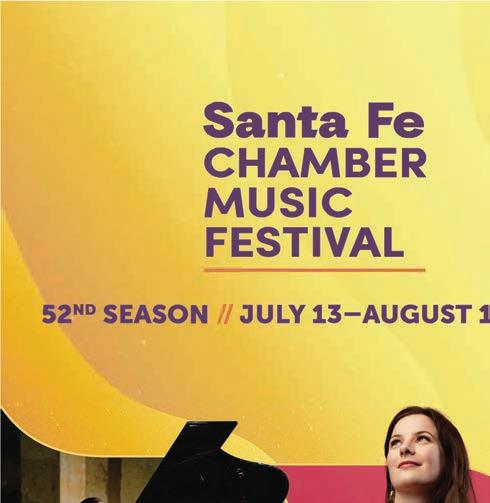








TUXBERRY AND WHIT


Add a touch of southwestern charm to your water bottle, laptop, or notebook with this hand-illustrated New Mexico license plate sticker from Rio Rancho–based Tuxberry and Whit. Featuring a vibrant yellow design with bold lettering, this sticker ($4) takes New Mexico pride with you wherever you travel. 7805 Enchanted Hills Blvd. N.E., Rio Rancho tuxberryandwhit.com


Stunning Cabins in the Heart of the Jemez Mountains Call Misty Stacy | (575)829-3758
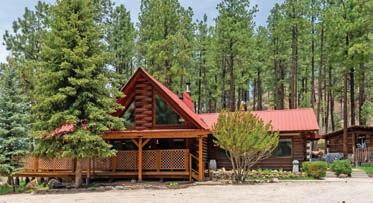
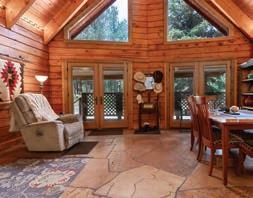
This incredible property in the Jemez Mountains with Custom Cabin and TWO bonus cabins has everything on your MUST HAVE List! Situated on 3.08 acres encompassing two lots, the main house has 1868 sq feet of lovely living space with flagstone floors, natural log walls, knotty-pine ceilings and a wall of windows that showcase the breathtaking views of the Jemez Mountains. The two additional cabins provide potential business opportunities, studio workspaces or a family retreat.
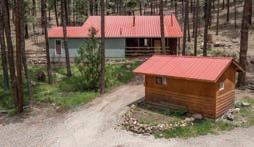
The property borders Santa Fe National Forest, where you can enjoy the Hot Springs, Valles Caldera, Bandelier, Hiking, Skiing and Mountain Biking. Only 45 minutes to Los Alamos, 1.5 hours to Albuquerque and 1.25 hours to Santa Fe. $915,000.00

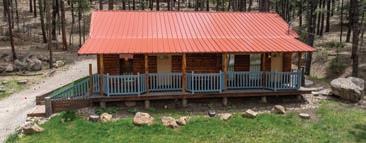




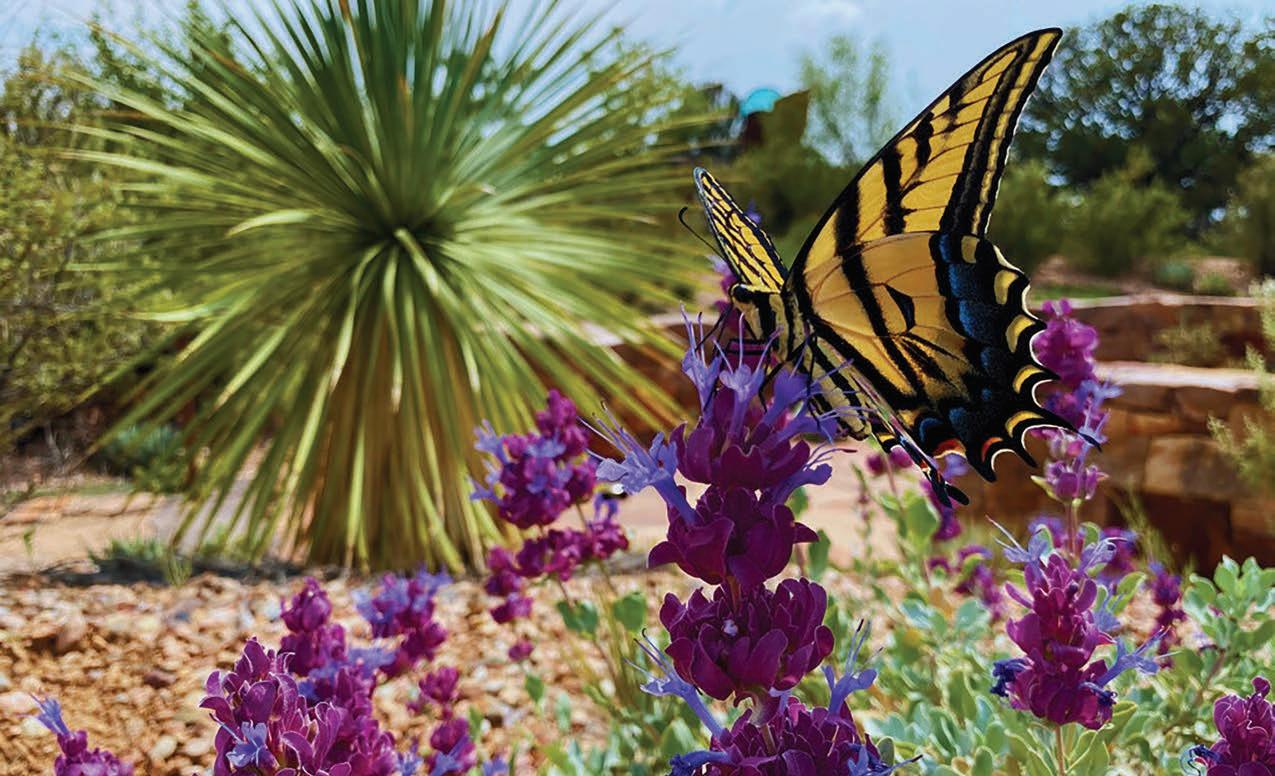

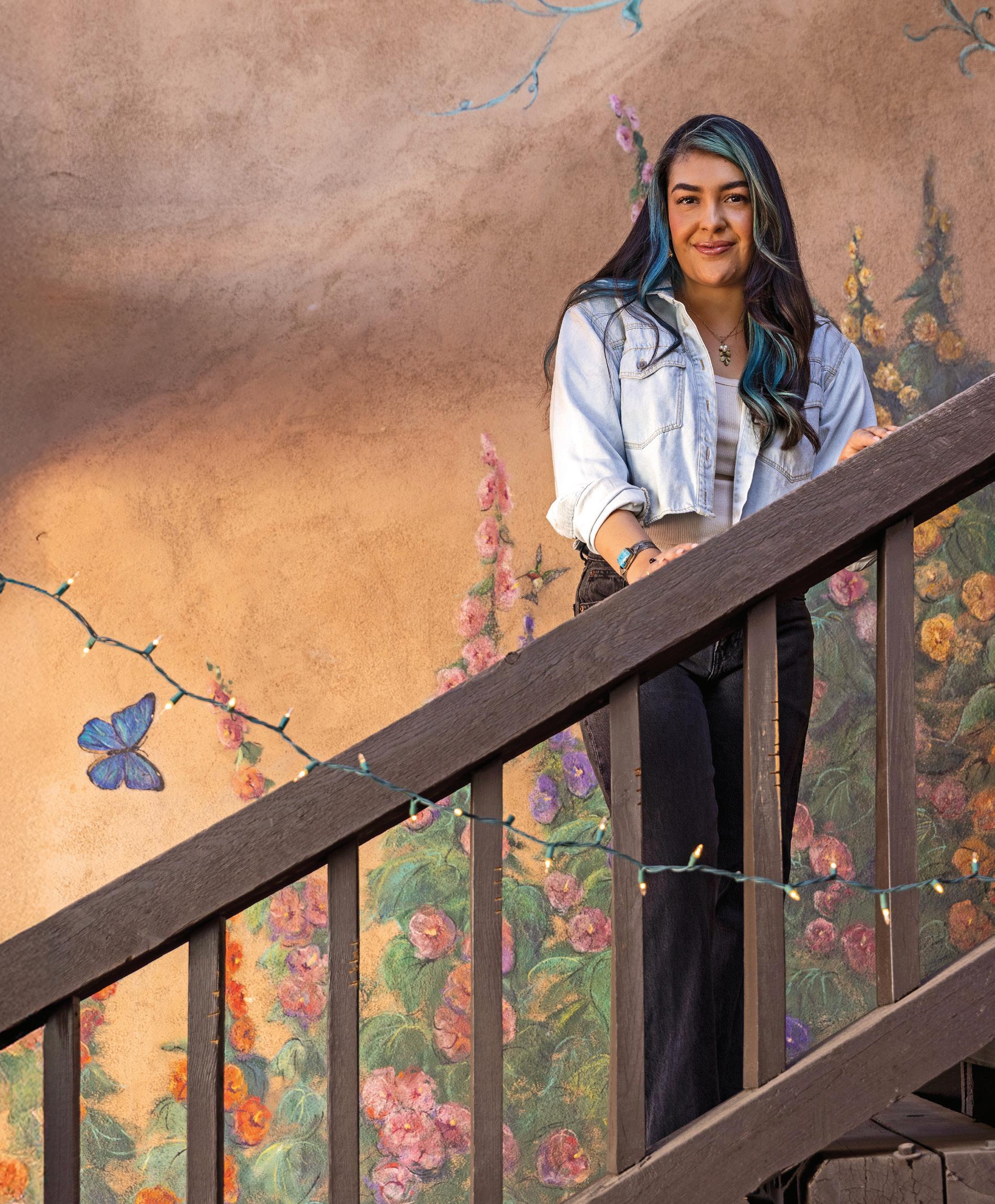



These artisans fashion their own paths — along with bags, balms, and more.
BY KELLY KOEPKE I PHOTOGRAPHY BY GABRIELLA MARKS
New Mexico is a land of artists and artisans, people who use their minds, hands, and creativity to make things. These artisans exemplify the vision and care that make the Land of Enchantment a haven for creatives.

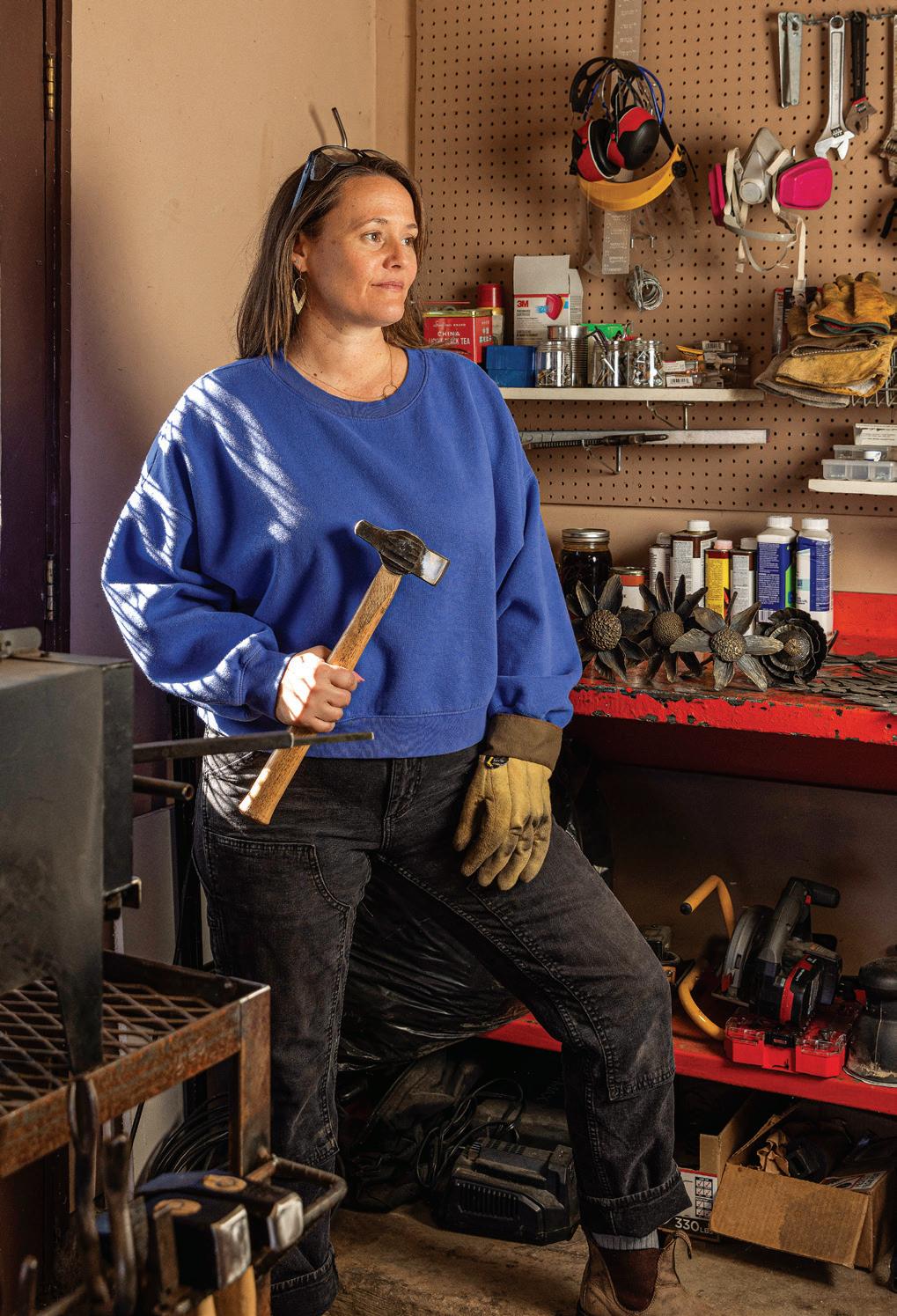
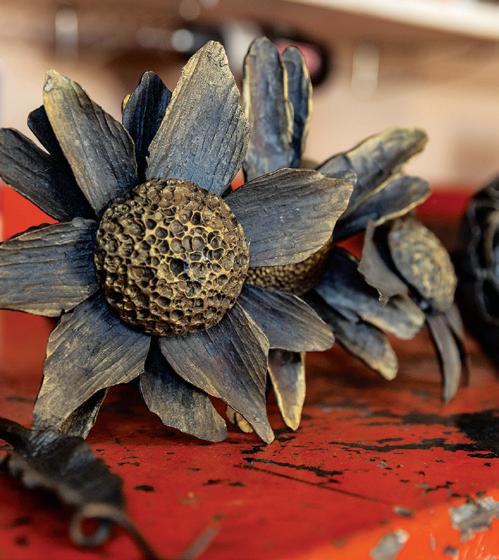
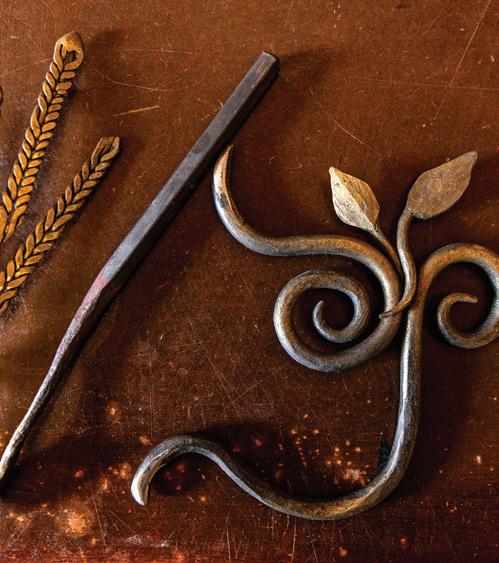
Sabrina Farrell wants everyone to know that one doesn’t need to be physically muscular (read: a man) to be a blacksmith. In fact, Farrell takes weekly lessons from another female blacksmith, Amy Westphal, who helps the paper and metal artist hone her skills forging iron and steel into sculptural art and practical items like fireplace tools, scoops, and spoons.
The private lessons help her better understand how metal flows when heated, a process she enjoys for its transformative, healing, and therapeutic e ects. “Forging is empowering because it requires being grounded in your body and aware of your senses. You must have really strong focus and intention to know where to concentrate your force in the direction you want the metal to go,” she says. “Seeing the red-hot metal is also exciting because steel is so strong and hard, but when it comes out of the forge, it behaves exactly like clay. To have this hard, unyielding medium heated to the point where it is super-malleable is magic.”
The Vermont native studied at Massachusetts College of Art and Design before earning her BFA from Northern Vermont University. She moved to Santa Fe in 2018 with her now ex-husband and three sons when he relocated the family for a job. She’s studying for a graduate degree in art therapy at Southwestern College and hopes to combine this discipline with blacksmithing as a counselor.
Farrell took her first blacksmithing class at Make Santa Fe before finding Westphal, who helped her set up her garage workshop. Often with pop music setting the rhythm, Farrell forms her metal pieces in this space. Sun & Dust gallery shows her artwork and sells her paper and metal earrings. She creates these light, colorful items by pulling sheets of wet, handmade paper around gold-filled wires. At the end of 2024, Farrell started creating individual stalks of wheat, an o shoot of a flower and plant art series that includes sunflowers, ferns, cattails, and calla lilies. “I was just really obsessed with forging plant forms, and wheat looked fun and challenging. It’s actually simpler than it looks! I use it as a symbol of abundance, and it also reminds me of the hayfields I grew up walking through to get to my grandmother’s farm,” she adds.
This year, she’s concentrating on blacksmithing, and she splits her time between practical pieces and art sculptures. Eventually she’d like to move to larger objects, like gates. “I spent all of 2024 in smaller formats for flowers. I’m still obsessed with those but have a vision of scaling them all over a gate. Being able to combine other forged forms into a functional piece is appealing,” she says.
Find Sabrina Farrell’s metal and paper art on Instagram @sabrina_farrell, at Sun & Dust in Santa Fe, and online at sabrinafarrell.com.
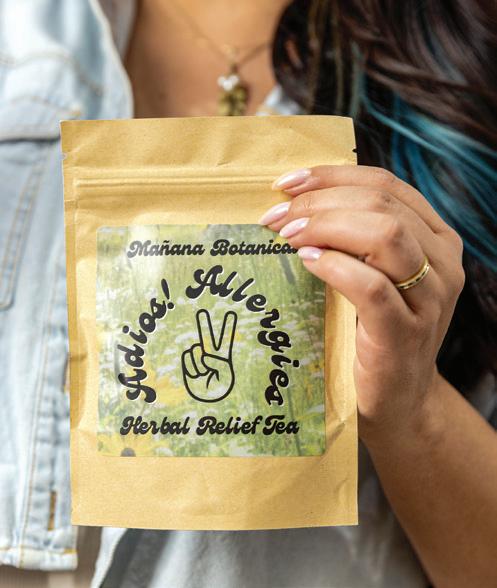
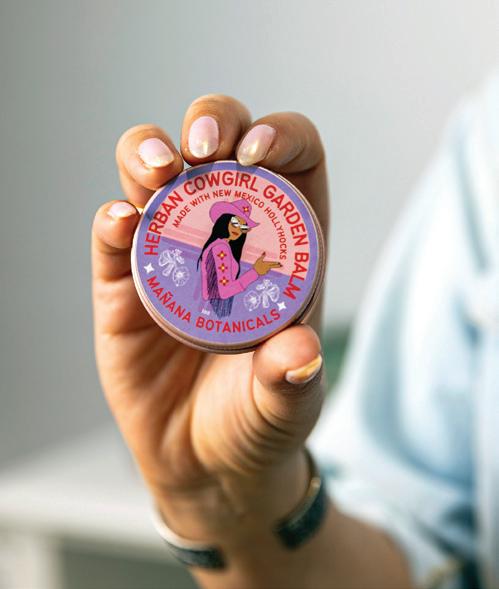
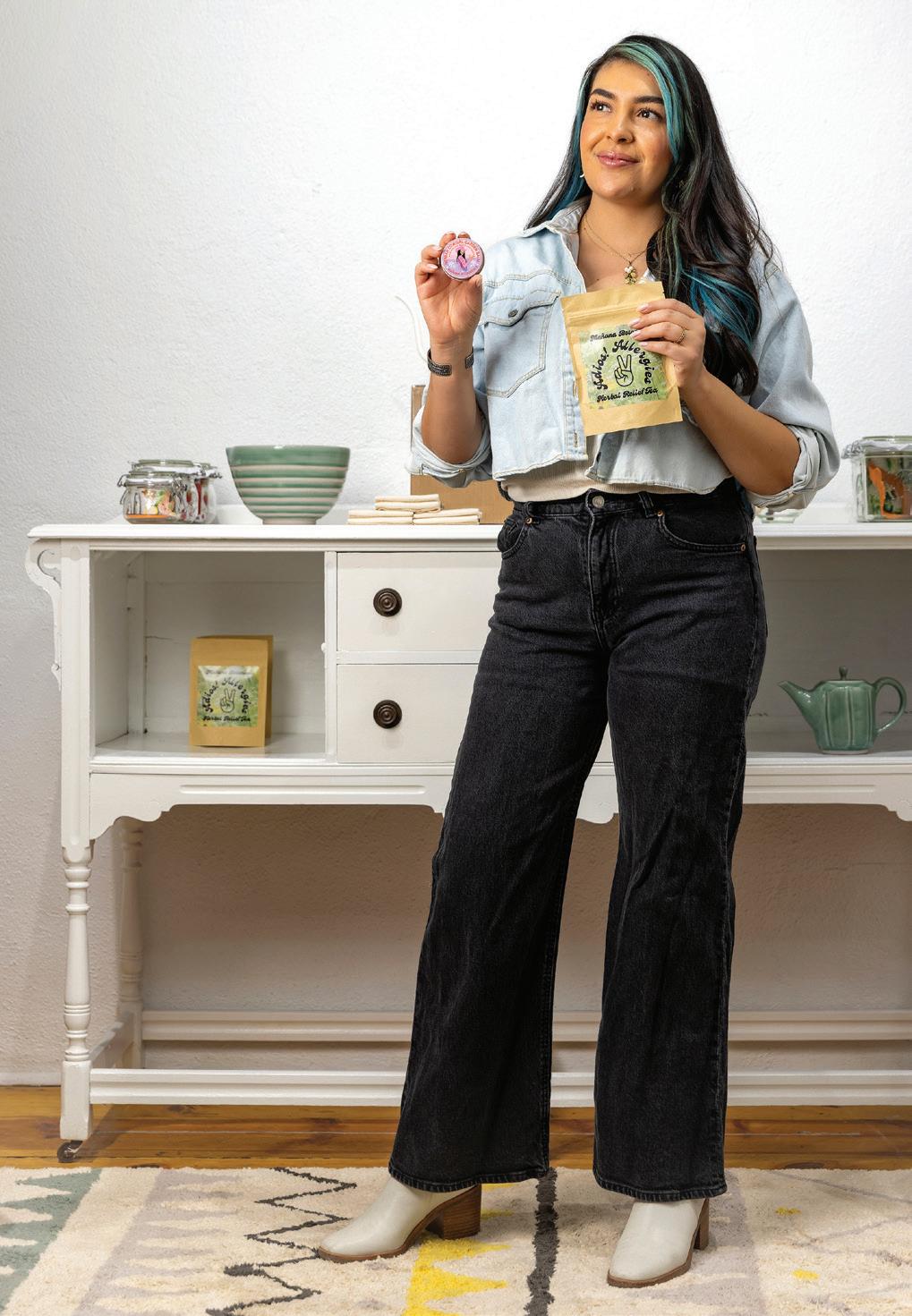
Sometimes the old ways work best. Sarah Yocum, founder of Mañana Botanicals, uses her grandma’s recipes — with a modern twist — to create her line of wildcrafted skin salves and balms, loose teas, and heirloom hollyhock seeds. She gathers botanicals for most of her products from the natural environments of Northern New Mexico and the Rio Grande Valley rather than cultivating them in a garden or greenhouse.
Yocum learned about traditional Spanish remedies from her grandparents while spending time with them in their large Old Town Albuquerque garden. When the pandemic hit in 2020, she realized how formative that time with her family had been. “I had gone into the corporate beauty world on the East Coast, but no one was getting facials [during the pandemic]. I started dabbling in herbalism and asked my family to mail me the New Mexico plants I was familiar with, like yerba buena [spearmint] and piñon,” she says.
Studying the medicinal properties of the flora she grew up with convinced Yocum to move back to her Duke City hometown to develop modern remedios (remedies) using traditional recipes. “I saw a hole in the market and thought about the fact that we have such a di erent plant ecosystem in New Mexico. I felt more connected to New Mexico culture than anywhere else and wanted to pay homage to it. I launched the brand in 2021 with just one product,” she says of her first o ering, Desert Face Elixir. The hydrating, antiseptic, antifungal, and antibacterial oil is made with palo santo, prickly pear cactus seed oil, olive oil, and a piñon resin extract called trementina. Many older people tell Yocum they haven’t seen trementina for years, but they remember it as a traditional remedy.
Yocum develops each product from a nostalgic place, paired with her contemporary knowledge of the skin care and beauty world, extensive research using remedio books from the 1940s and ’50s, and wildcrafting on the East Coast and in New Mexico. She tweaks timehonored therapies for modern times, relying heavily on her intuition, which she says was passed down innately from her curandera (healer) great-grandmother.
“Young, modern people don’t know about these ingredients that have been in use for hundreds of years. I’m using them in the same way but presenting them di erently to preserve the plant knowledge of yesterday for tomorrow,” Yocum says. “It’s a connection to a part of the culture that has disappeared. My entire brand is about holding true to culture and traditions.”
Find Mañana Botanicals online at mananabotanicals.com, on Instagram @mananabotanicals, in Albuquerque at the shops Flyby Provisions and New Nuevo, and frequently at Santa Fe artisan markets.
Sarah Yocum holds two of Mañana Botanicals’ signature products, Herban Cowgirl garden balm and Adios! Allergies herbal relief tea.
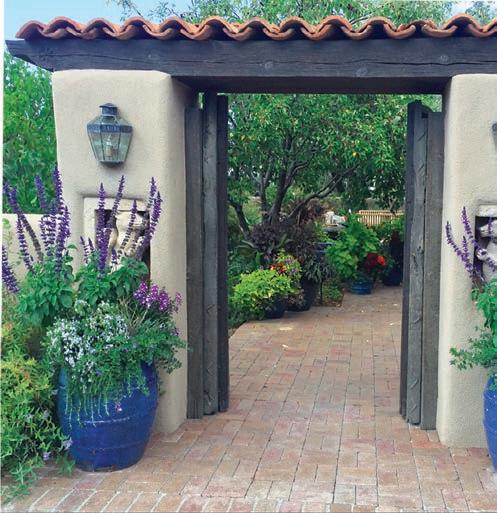



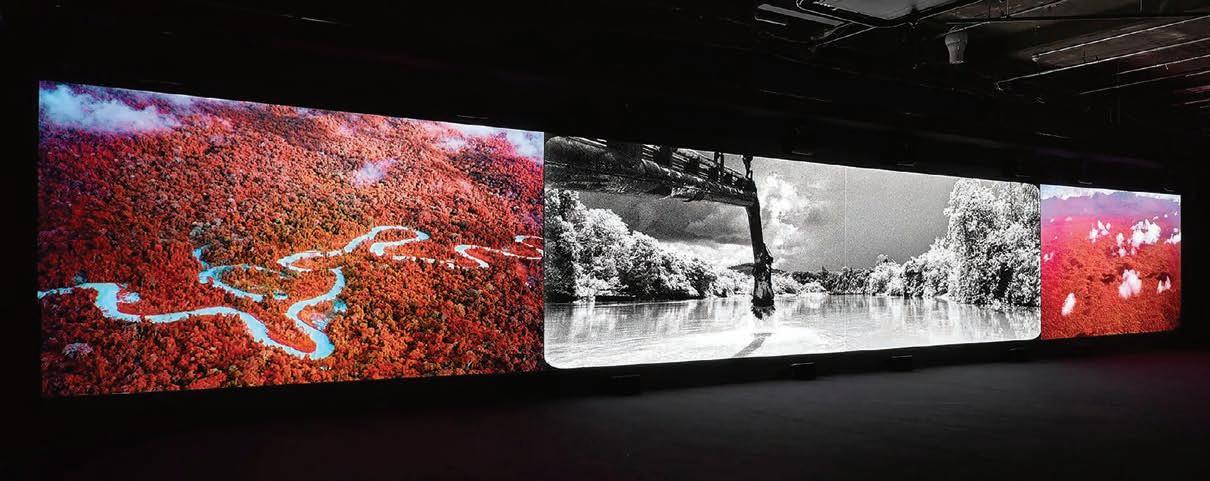
June
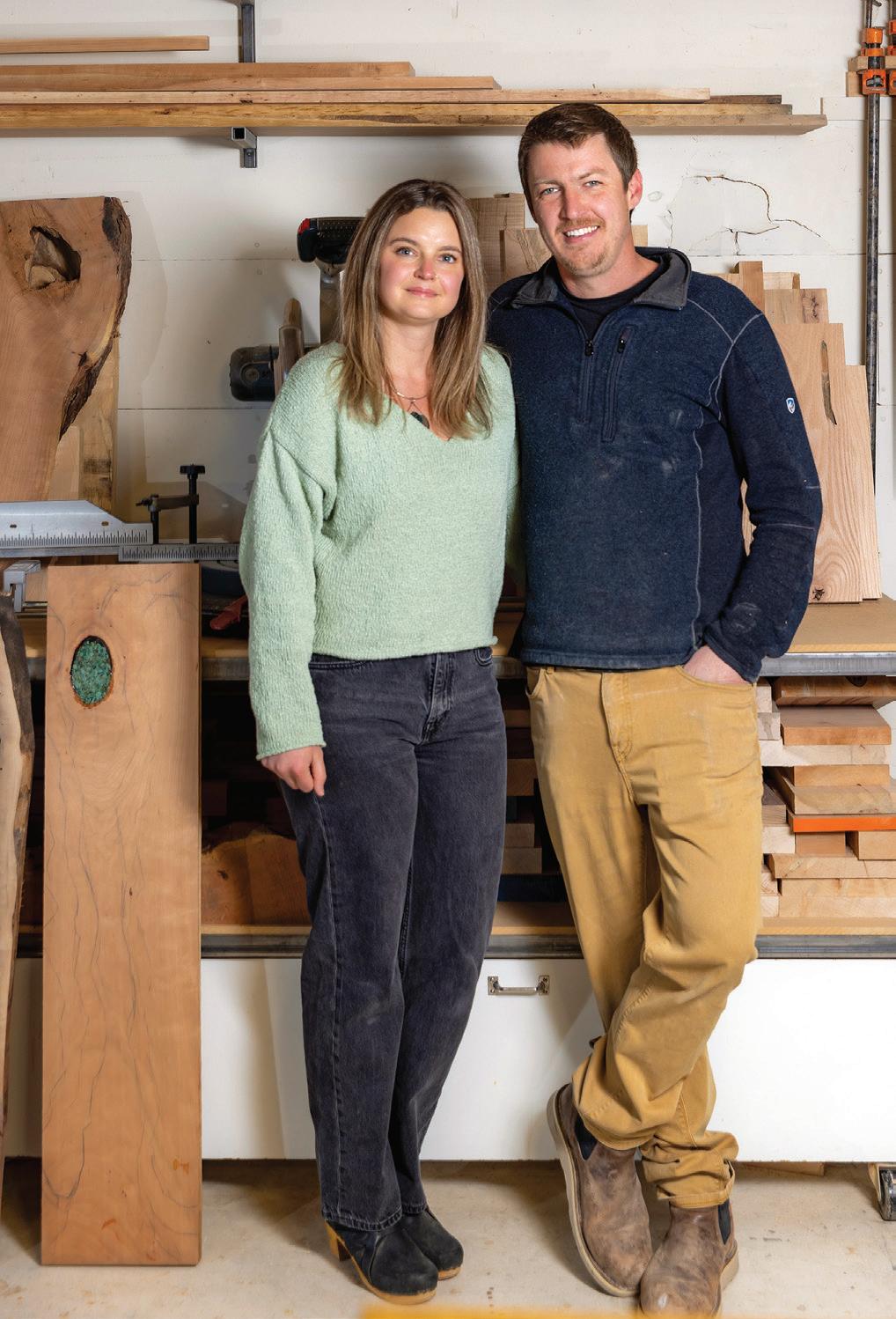
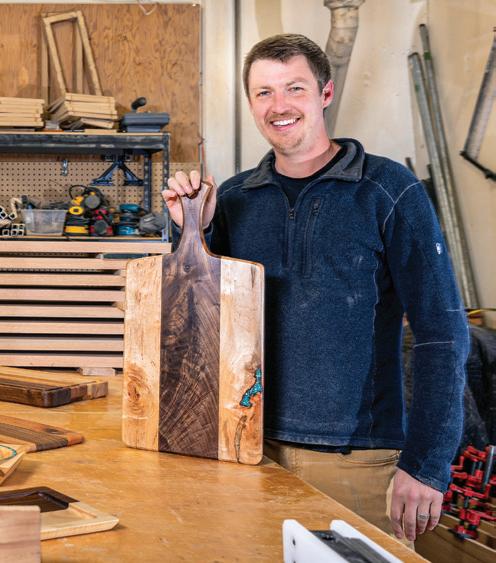
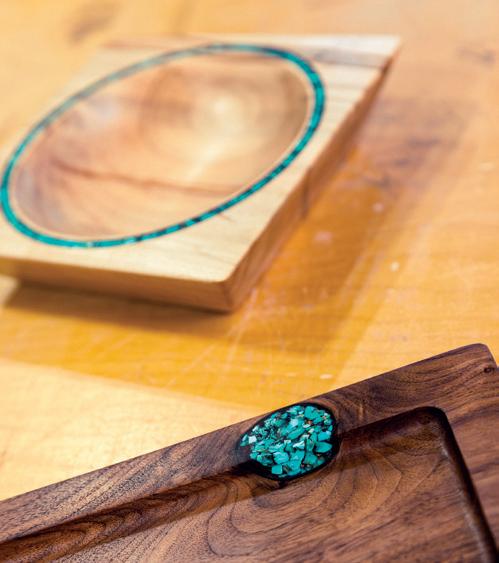
Taylor and Jenny Dale, a husband-and-wife woodworking team crafting modern, Southwest-inspired metal and wood furniture and home goods, share Santa Fe roots and influences from their travels. Both graduated from Santa Fe High School in the first decade of the 2000s but were just friends at that time. After graduating, Taylor went on to study industrial design — everything from electronics to shoes to furniture — at Arizona State University, and Jenny moved to Portland, Oregon, for her own educational pursuits. They started dating in the summer after Jenny’s graduation and have been together since.
The couple spent the next five years hopping between Santa Fe, Albuquerque, and Portland, exploring their respective crafts, before moving to San Francisco so that Taylor could apprentice with a mid-century modern furniture maker. He taught Jenny what he was learning in the evenings. They started their business under the name Mod Tribe Design in a shared maker space, using their free time to create their own pieces. But Santa Fe brought them back with the siren’s call of an a ordable workshop in the form of Taylor’s parents’ backyard shed.
Once back in the City Di erent, they began participating in weekend artist markets at the Railyard, o ering a mixture of furniture, sculptural art pieces, and homewares such as cutting boards, bowls, and trays. They rebranded as Tetra Design Works in 2022 to reflect their shared vision. “Our designs come from nature and are geometric, so we wanted to go with a geometric name,” Jenny says. “Also tetra means “four,” which represents our four primary materials — metal, wood, turquoise, and resin.”
Taylor calls their use of turquoise inlay the Southwest version of Japanese kintsugi, the practice of using precious metal to repair broken pottery. In their case, they add the state’s signature gemstone to natural knots, holes, and imperfections in wood. Their bestselling small items range from $30 ornaments to $450 serving bowls and cutting boards. Furniture starts at $400 for a simple side table and rises to $10,000 for a commissioned hardwood dining table.
The pair create everything together, including designing, selecting boards at the lumberyard, finishing pieces, and marketing. “I do the welding. Jenny and I both do woodwork. Together we do the turquoise inlay in both the furniture and homewares,” Taylor says of their stock, which they sell at Santa Fe markets from March through December.
“A lot of furniture makers just want to re-create pieces,” says Taylor. “All our designs are original and more risky to make — this is solid furniture that is made to last.”
Jenny adds, “We like working for ourselves and having the creative freedom to make what we want, when we want.”
Find Tetra Design Works at the Santa Fe Artisan Market and Railyard Artisan Market, at tetradesignworks.com, and on Instagram @tetradesignworks.
Jenny and Taylor Dale of Tetra Design Works add turquoise inlay to their home decor and accessories.
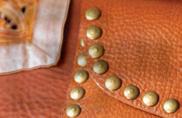
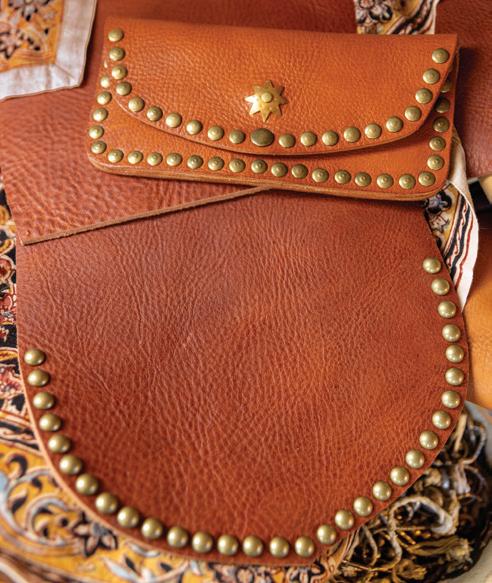
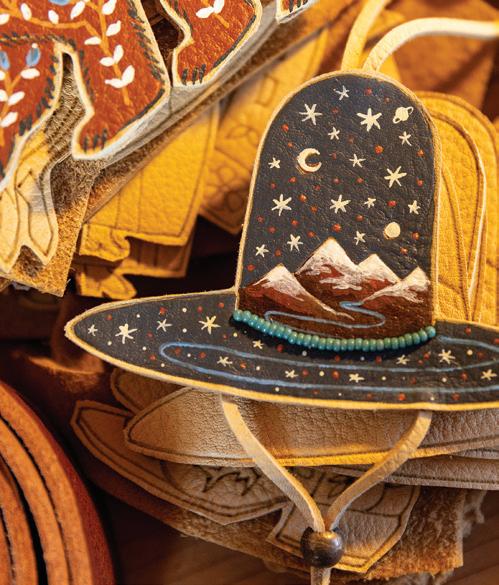
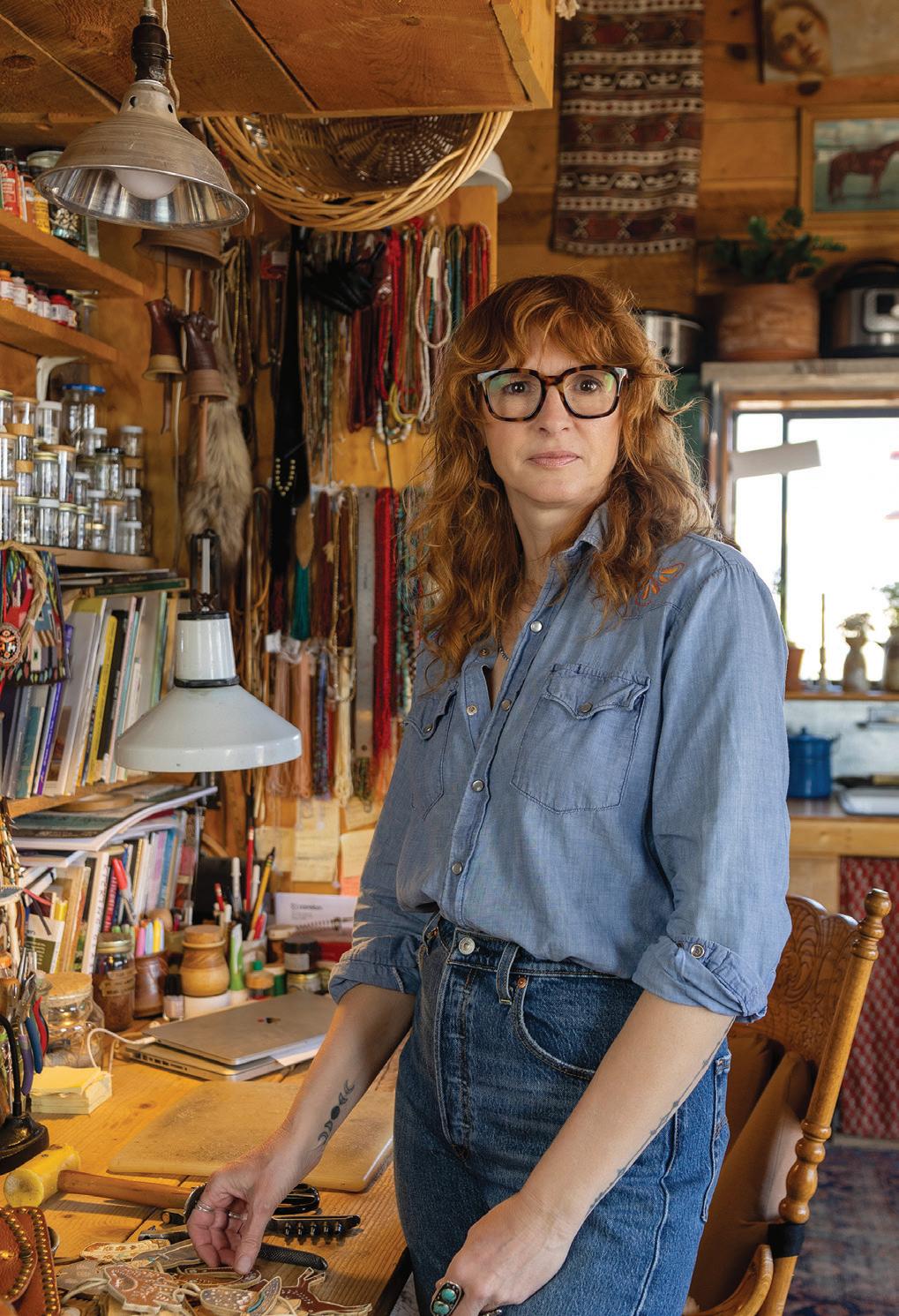
Sessann Orne grew up in Southern California, immersed in the 1960s and ’70s bohemian and rock and roll history of the Venice and Laurel Canyon neighborhoods. In 2009 she traded her 13-year career as a visual merchandising manager, trend forecaster, and stylist for a new o -the-grid lifestyle in New Mexico. Since 2012, she’s crafted leather goods and jewelry from her Questa home. Orne draws inspiration for each unique, madeto-order bag or necklace from the natural world around her homestead, the Northern New Mexico counterculture movement, and Scandinavian folk art.
“I had a friend who had moved to Taos’s Earthship community. When I visited, I fell in love with the area. At the time I was traveling constantly, which was not great for my nervous system,” she says. “In Taos I felt like I could breathe. So I quit my job and moved.”
Before she o cially created Three Arrows Leather, Orne’s only plan was to buy some leather and a few tools and teach herself how to make bags — primarily because she wanted one for herself. This work reflected her fascination with the counterculture movement and its back-to-basics ethos.
Building the business slowly, teaching herself new techniques, improving over time, and posting on Instagram have resulted in today’s month-long backlog of orders. She’s found an audience that covets her handcut, stitched, burned, or painted bags, wallets, and pouches, many adorned with beads, stones, bones, and gems. She also sells a line of beaded and stone jewelry. During the 2024 holiday season, Orne began o ering painted deerskin ornaments with southwestern motifs, such as cowboy hats, horses, and even a Georgia O’Kee e figure dressed in her signature black dress. She continues to add new styles each season.
Her biggest challenge? “I feel guilty making people wait. I’ve had some customers question the wait time, but when I explain the process and that it’s just me doing the work, they are okay. Each piece takes time, and there’s no outsourcing. Everything is made in my tiny cabin by me, a workaholic Capricorn,” she says. Orders come from all over the world, and prices range from under $100 for ornaments to several hundred dollars for large decorated bags.
Orne feels like she hit the trifecta for an artisan: she’s able to exercise her creative muscles, earn a living, and work from her 400-square-foot home. For her, that’s a dream come true. “When I go to bed at night, all these new ideas keep flooding my brain, so I keep making stu . Making something new is the highlight of my day,” she says.
Find Three Arrows Leather online at threearrowsleather.com and on Instagram @threearrowsleather.
Kelly Koepke is a Santa Fe–based writer who loves knowing how things work and talking with the people who make them.







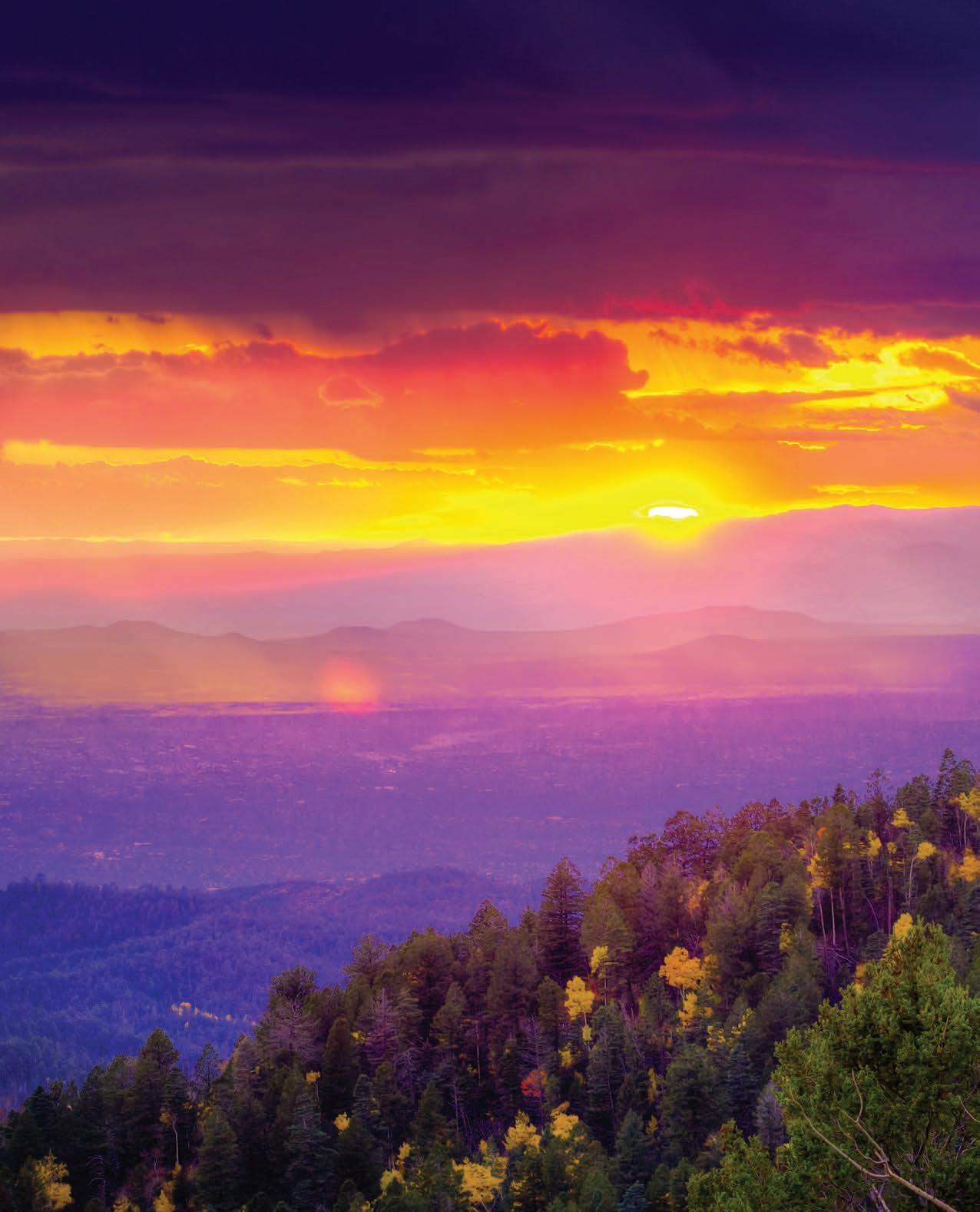







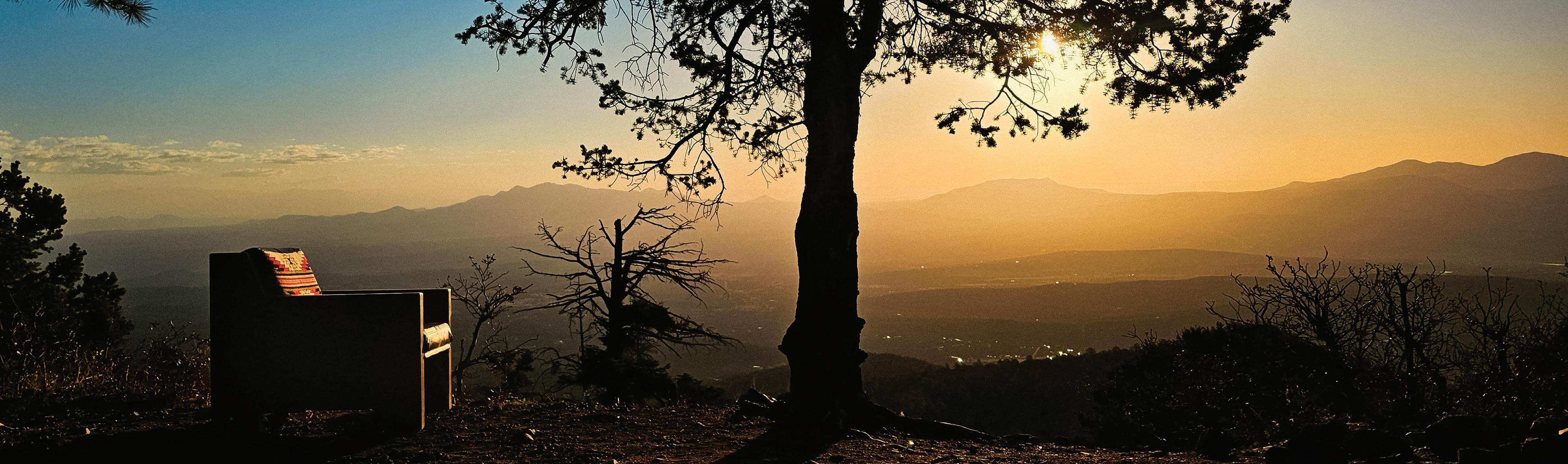











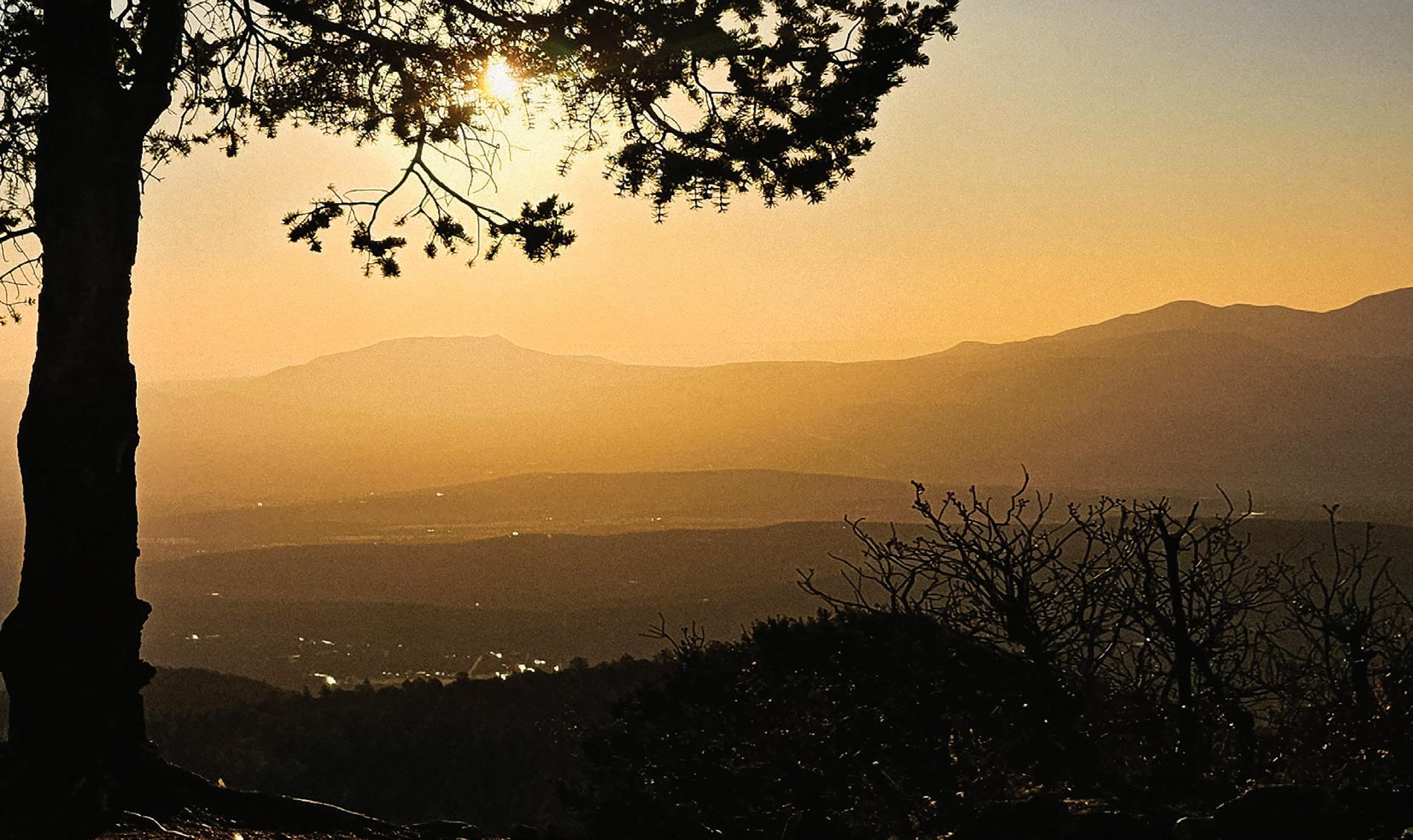








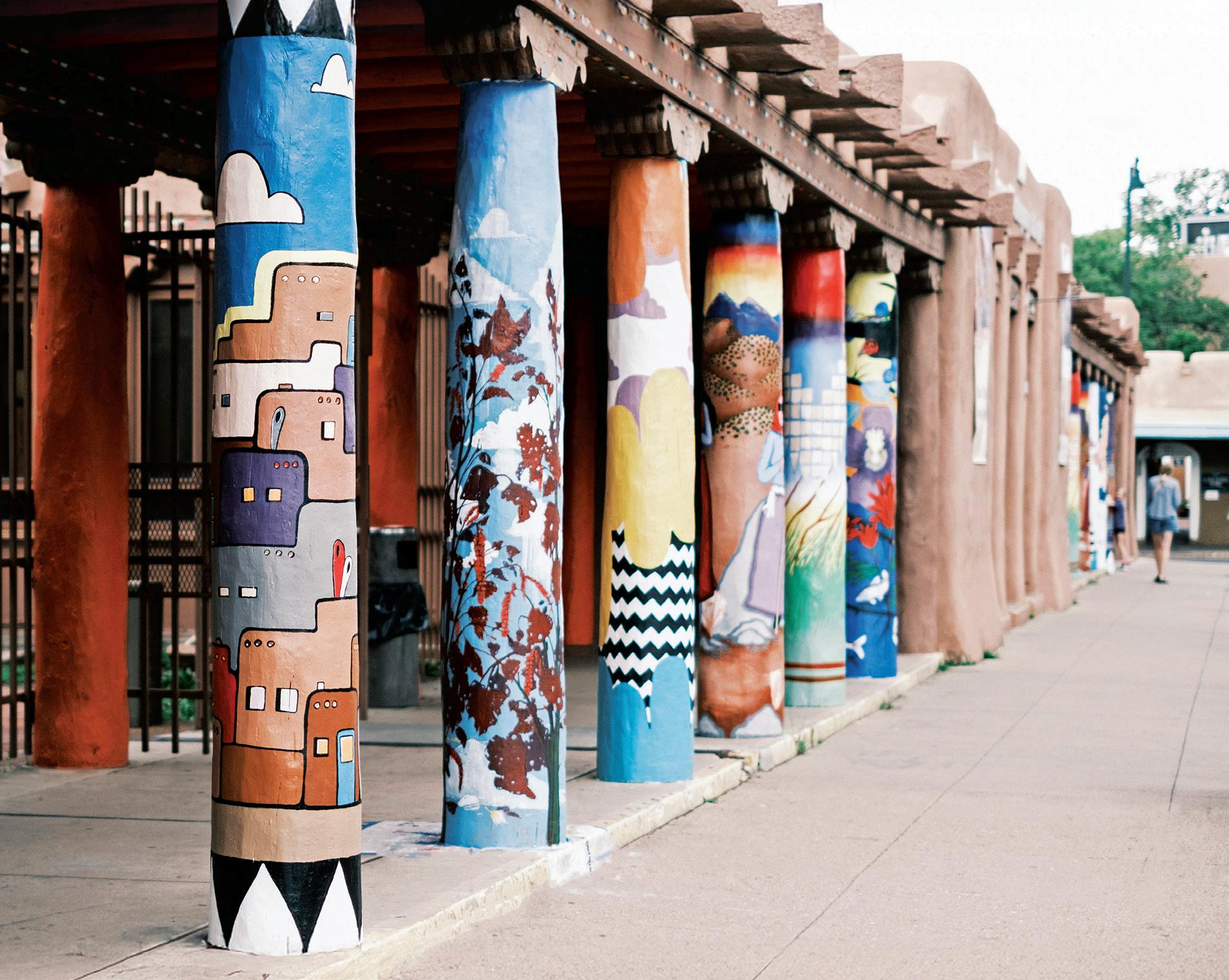
PBy Jason
Public art at the Museum of Contemporary Native Arts represents the works inside the museum — and today’s Indigenous artists.
ortal columns are ubiquitous in Santa Fe and in particular around the Plaza. But few are as colorful and eye-catching as those outside the Institute of American Indian Arts’ Museum of Contemporary Native Arts. Six artists — and IAIA alumni — refreshed the columns in August 2024. Responding to the theme “Land and Identity,” the artists included Brian Taa ee (Taos Pueblo, class of 2023), Haley Greenfeather English (Turtle Mountain Chippewa and Red Lake Nation, class of 2018), Topaz Jones McCoy (Shoshone Bannock, class of 2011), Eliza NaranjoMorse (Tewa-Kha’p’o Owingeh and Santa Clara Pueblo, exchange student 2001–2002), Heidi Brandow (Diné and Kanaka Maoli, class of 2013), and Robyn Tsinnajinnie (Diné, class of 2020).
Now based in Santa Fe, Tsinnajinnie grew up on the Navajo Reservation near Crownpoint, New Mexico. On her column, the artist painted the landscape of her homeland and images of women, the latter of which are signatures of her work. As an Indigenous artist, she wanted to reflect on “going out into the world, tackling di erent things, and the feeling that you can always go home and stand on your land. You can always go home and feel better. That’s a comforting thing for Native people,” she says.
Tsinnajinnie paints her female subjects in Crayola colors — such as pink, blue, and green — that strike at a universality outside of human flesh tones.
“I don’t want people to pass judgement on them because they’re a certain color. I’m not just painting Native women, Black women, or white women,” she says. Throughout her work, Tsinnajinnie depicts the women in stereotypical places, such as the home, in empowering ways.
The artist, whose work has been exhibited in Switzerland and France, found it encouraging to be among other artists painting the columns at MoCNA. Tsinnajinnie says they had to navigate technical challenges to paint the columns and were frequently interrupted by good-natured passersby who were curious about their work. “These paintings are an extension of myself. It’s comforting to have them standing in front of the museum. It was rewarding to be part of [the project],” she says. (She’s on Instagram @corndogrobn.)
The work hints at what’s inside the museum, where contemporary creations from IAIA’s alumni and beyond redefine traditional conceptions of Indigenous art. This set of column murals remains up through December 30, 2028. — AMB
Museum of Contemporary Native Art I 108 Cathedral Place 505-428-5912 I iaia.edu/mocna