SAN FRANCISCO MARIN MEDICINE
JOURNAL OF THE SAN FRANCISCO MARIN MEDICAL SOCIETY

Special Section: Safety for All
Special Section: Safety for All
Whether you're licensed or unlicensed, in medical, mental, behavioral, dental, allied, or public health, San Francisco City & County invites you to be part of something truly meaningful — the Disaster Healthcare Volunteer (DHV) program.
In times of crisis, your skills can make a life-saving difference. By joining DHV, managed by the San Francisco Department of Public Health, you’ll be part of a trusted network of professionals ready to support our community — and neighboring counties — during public health emergencies. Serve within your scope, skills, and comfort level. Be pre-identified and credentialed before emergencies strike. Help protect and support your community when it matters most.
Time Commitment?
Minimal. Just 4 communications drills per year. Plus, activation only during declared public health emergencies.
We welcome all medical specialties — over 45 types of licenses are supported in the DHV system. Whether you're a nurse, therapist, dentist, EMT, or public health professional, we need you.
Ready to make a difference? Visit sf.gov/join-san-francisco-dhv to learn more and sign up. Questions? Reach out to your local DHV Administrator: DeJanelle.Bovell@sfdph.org
April/May/June 2026
Volume 99, Number 2
Editor Michael Schrader, MD, PhD
Managing Editor Steve Heilig, MPH
Production Maureen Erwin
SFMMS OFFICERS
President Sarita Satpathy, MD, MPH
President-Elect Melanie Thompson, DO
Secretary Edward Alfrey, MD
Treasurer Ian McLachlan, MD
Immediate Past President Jason Nau, MD
SFMMS STAFF
Executive Director
Conrad Amenta
Associate Executive Director, Public Health and Education
Steve Heilig, MPH
Director of Operations and Governance
Ian Knox
Director of Engagement
Molly Baldridge, MPH
Senior Director, Advocacy and Policy
Adam Francis, CAE
2026 SFMMS BOARD OF DIRECTORS
Edward Alfrey, MD, Secretary
Melinda Aquino, MD
Julie Bokser, MD
Kristina Casadei, MD
Clifford Chew, MD
Esme Cullen, MD
Anthony DiGiorgio. MD
Manal Elkarra, MD
Tracey Hessel, MD
Cynthia Lin, MD
Ian McLachlan, MD, Treasurer
Jason Nau, MD, Immediate Past-President
David Pating, MD
Dawn Rosenberg, MD
Sarita Satpathy, MD, MPH, President
Michael Schrader, MD, Editor
Yalda Shahram, MD
Neeru Singh, MD
Ranna Tabrizi, MD
Melanie Thompson, DO, President-Elect
Christina Wang, MD
Kristin Wong, MD
Helen Yu, MD
For questions regarding journal, including possible submissions, contact Steve Heilig: Heilig@sfmms.org
Sarita Satpathy, MD, MPH
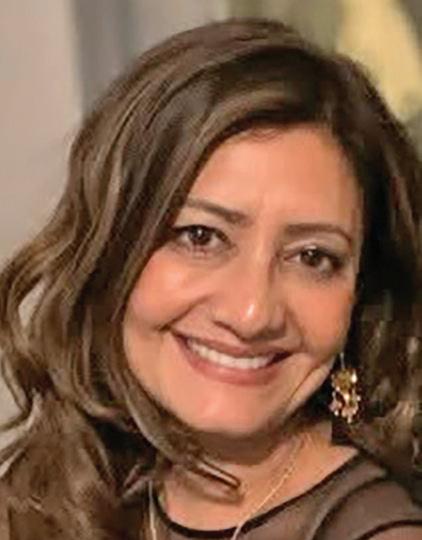
As I reflect on the past several months, I find myself thinking less about the number of events we have held and more about what makes our society so special. Our events vary in size and purpose. Some are educational, others celebratory. But the real value is not in the venue or the turnout; it is in the connections we make and the relationships we build.
As physician leaders, we have both an opportunity and a responsibility. We are not simply attendees. We are ambassadors for our profession, our patients, and our communities. Every conversation, invitation, introduction, and act of encouragement strengthens our society. These moments may seem small, but together they build trust, foster collaboration, and deepen the fabric of our medical community.
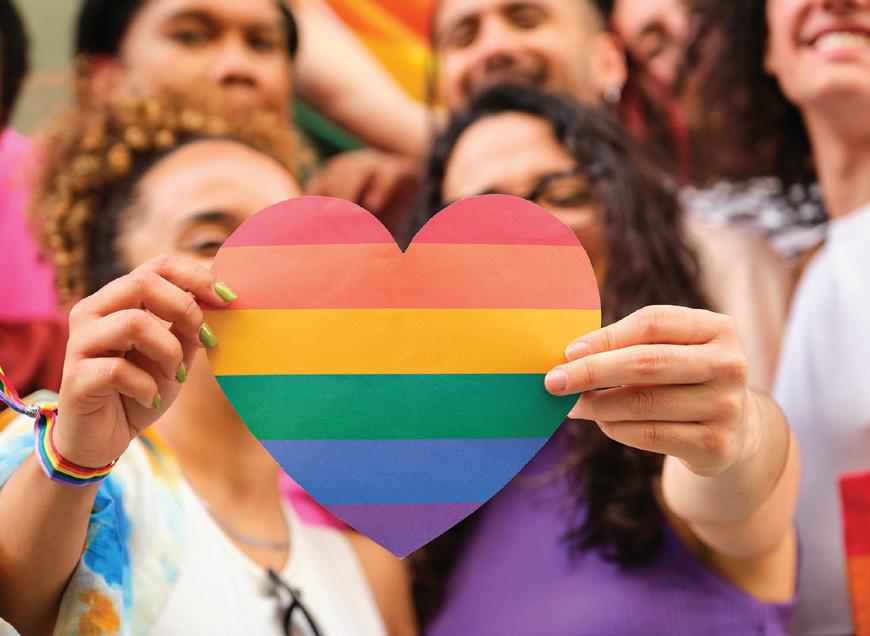
pate in Pride celebrations alongside community leaders, advocates, and organizations dedicated to supporting the LGBTQ+ community. Our presence at Pride is more than participation in a celebration—it is a reflection of our commitment to ensuring that all individuals feel seen, welcomed, and valued within healthcare and beyond. Another highlight was the UCSF student mixer, where fmedical students gathered with physician leaders from our society. The energy in the room was infectious. The students were curious, enthusiastic, and eager to connect. Many expressed interest in becoming more involved with the SFMMS. Our presence matters because it helps shape the next generation of physician leaders.
One recent example was the Bay Area Council networking event aboard the historic Klamath ship at Pier 9. It brought together business, civic, and community leaders working to address pressing challenges such as housing, economic development, and public policy. What stood out most was the optimism in the room and the shared commitment to finding solutions. I was honored to represent the SFMMS among these leaders and to bring the physician perspective to conversations that extend far beyond healthcare. It was a powerful reminder that physicians have an important voice not only in medicine, but also in the policies and partnerships that influence the health and wellbeing of our communities.
I also had the privilege of attending the Planned Parenthood Gala, where I met community leaders and board members who share our commitment to improving health outcomes and advocating for patients. Events like these remind us that our role in the community extends well beyond hospitals, clinics, and medical offices. When we engage with organizations that share our mission, we amplify our collective impact.
As we look ahead to the many events that make San Francisco such a vibrant and inclusive community, I am especially excited about our participation in Pride Month activities. This week, we were honored to be invited by HRC Fertility to partici-
The Women in Medicine event featuring Dr. Mona Orady was another memorable success. Beautifully organized by Molly Baldridge and Dr. Laura Allen, it brought together physicians for an afternoon of inspiration, mentorship, and meaningful conversation. The enthusiasm afterward was palpable, and participants left energized and eager for future opportunities to connect. That is exactly the kind of experience that turns attendees into engaged members and future leaders.
Our commitment to community engagement extends throughout the region. President-Elect Dr. Ian McLachlan and other physician leaders recently participated in events supporting the Rafiki Coalition for Health and Wellness, an organization championed by former SFMMS and CMA President Dr. Shannon Udovic-Constant. These partnerships remind us that improving community health requires collaboration, listening, and a willingness to work alongside organizations that understand the needs of the populations they serve.
Over the past several months, I have also had the opportunity to engage with organizations dedicated to preventing gun violence, including Brady United and the Giffords Law Center. Gun violence continues to affect communities across our nation and remains the leading cause of death among children and adolescents in the United States. As physicians, we witness the
continued on page 24
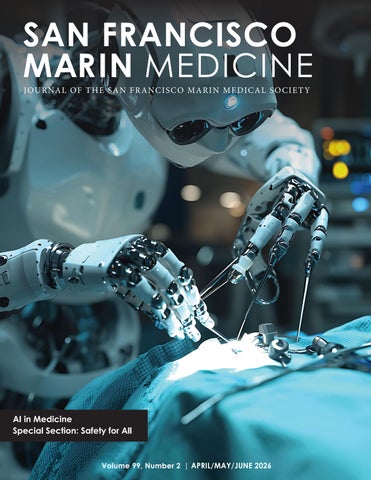
Artificial intelligence (AI) is changing the world and medicine faster than we can comprehend. As with previous technological revolutions the promise of increased production is tempered by the threat of workers becoming obsolete.
Dr. Robert Wachter, Chair of Medicine at UCSF, has written a book, A Giant Leap , that offers a practicing physician’s perspective on the possible repercussions of AI on the practice of medicine. We have interviewed him and reviewed his book in this issue.
Pope Leo XIV has written an encyclical, Magnifica humanitas , warning about the human and environmental costs of AI. He specifically denounced the harvesting of health data. He has asked that AI be governed by humane ideals rather than capitalism.
Pope Leo calls out the "extraction” of health data and demographic information. He calls them the "...new ‘rare earths’ of power: vital data which, once aggregated and analyzed, can be used to train predictive models, guide investment strategies, anticipate crises and, above all, determine who and what is deemed to matter.” And further, "Those who control the health data of entire peoples...possess a structural leverage over the future....". He says, " This requires restoring to individuals not only the data that describes them, but also the ability to decide how it is used, by whom and for whose benefit."
This time we may not have a choice. AI targeted toward medicine is backed by a huge amount of capital. It will be incorporated into our EHRs without our permission or acceptance.
Is AI better than we are? It performs better on tests, may or may not write better notes, and expresses empathy better. I am skeptical about the empathy claim: empathy is a human emotion. Either AI is sentient or empathy is no more than words generated by a computer construct. Artificial solace and fake emotions. There are many unknowns as we move forward. Will reliance on tools decrease our cognitive abilities? I found a slide rule in a desk drawer recently and couldn’t remember how to perform simple calculations.
We have a brave new world where nascent and untested technologies are being foisted on us and our patients by aggressive capitalism. Who is responsible for wrong or delayed diagnoses? Will minimally trained technicians oversee brain surgery performed by a robot?
And there are potential negative externalities. AI requires huge servers that require large amounts of electricity. Will we destroy our planet to save our patients’ lives? What happens when the technology is hacked and ransomed?
Artificial intelligence (AI) can be a large language model (LLM) or a learning ontology model (LOM). The LLMs parse the preceding words and extrapolate the next word. The LOMs purport to replicate human reasoning.
LLMs reason inductively, taking specific examples and reaching a general conclusion. They are not as good at deduction or reasoning from a general principle to a specific.
There are multiple problems with AI. The reasoning is not transparent and may not be explainable. It hallucinates and may be subject to misinformation and disinformation in its database. It is subject to bias from the data from which it draws heuristics.
The medical profession has often been conservative in adopting new technology. This is not always a bad thing. Electronic health records took decades to be adopted. Even with this delay they have been problematic in many ways with poor interoperability, loss of patient privacy, and increased physician workload.
Finally, is the art of medicine nothing but a cold calculus of weighing alternative treatments and offering canned empathetic language? Dr. Wachter is optimistic. He thinks we will always need doctors. Pope Leo emphasizes human values and urges restraint and caution.
Let's do what we can to understand AI, recognize its limitations, and harness it as best we can. Let's call for regulation and transparency. Let's call for algorithms that are free of bias.
AI will change us whether we like it or not.
Dr. Schrader, an internist at UCSF Health, is former Chair of the SFMMS delegation to the CMA and a past-president of the SFMMS.
Conrad Amenta, SFMMS Executive Director
For physicians in San Francisco and Marin, immigrant patients are not an abstraction. They are the farmworkers who populate the agricultural edges of Marin County, the service industry workers who keep San Francisco running, the families who have lived in the Mission or the Canal District for a generation. Many of them depend on Medi-Cal. And as of October 1, 2026, a significant number of them will lose it.
H.R. 1, signed into law on July 4, 2025, delivered what the California Health Care Foundation has called the largest single reduction in Medicaid funding in the program's sixty-year history. Among its most consequential provisions for Bay Area physicians: a narrowed definition of who qualifies as an eligible immigrant under federal Medicaid law. Populations that were previously covered, including refugees, asylees, victims of human trafficking, and survivors of domestic violence lawfully present in the United States, will lose full-scope Medi-Cal eligibility this fall. They will retain access only to emergency MediCal services, losing coverage for preventive care, primary care, specialty care, and the full range of nonemergency services that make ongoing health management possible.
The clinical implications are serious. Patients with managed chronic conditions such as diabetes, hypertension, HIV, and behavioral health diagnoses, will face interruptions in care that emergency room visits can rarely address. Preventive services that catch disease early will go unprovided. The patients who lose coverage will not disappear from the healthcare system. They will reappear later, sicker, in settings that are far more expensive.
For physicians, this creates an immediate set of practical challenges. Existing patient relationships will be disrupted. Care plans that depend on continuity, such as medication management, specialist referrals, and regular monitoring, will fracture at the point when coverage lapses. Physicians will need to know which of their patients are affected, what coverage alternatives remain available, and what community resources exist to bridge gaps in care. That is a significant informational burden to absorb alongside everything else that already competes for a physician's attention.
This is where SFMMS and its partners can play a meaningful role. The Society, working in concert with the California Medical Association and local county health departments, is positioned to help members understand which patient populations are affected by the October cutoff, how to connect patients with remaining coverage options, including state-funded alternatives California may preserve, and how to navigate the documentation and billing complexities that will inevitably follow.
San Francisco and Marin are communities with deep commitments to health equity. The physicians who practice here chose these communities, in part, because of that commitment. H.R. 1 will test it. The coming months will require physicians not only to deliver care under difficult new constraints, but to advocate at the county level, at the state level, and through organizations like SFMMS for the patients who can no longer advocate for themselves through the coverage system.
Adam Francis, SFMMS Senior Director, Advocacy and Policy
Each year in May, hundreds of bills face the gauntlet of the Senate and Assembly Appropriations Committees’ Suspense File. The bills on this File are ones that would cost the state money, and the Committees have a special hearing to determine these bills’ fate. In a mix of high stakes political and fiscal decisions, many bills are held back, essentially eliminating their prospects of becoming law.
SFMMS’s priority legislation came out relatively unscathed, with only three supported bills no longer moving forward in the legislative process:
• AB 1942 (Bauer Kahan) would have required Class 2 (throttle assist up to 20 mph) e-bikes and Class 3 (pedalassist up to 28 mph) e-bikes to be registered with the Department of Motor Vehicles and to display a special license plate to ensure proof of ownership.
• AB 2431 (Patel) would have prohibited a health plan/ insurer from downcoding a claim based solely on information reported on the claim form, and would have required a health plan’s downcode determination to include a documented review of the relevant clinical information supporting the billed service.
• AB 2457 (Connolly) would have streamlined the provider credentialing process to cover Medi-Cal managed care plans.
SFMMS prioritizes bills authored by the legislators that represent our two counties and would make a positive change in health care policy. This year, SFMMS is supporting eight such bills that are still alive in the legislative process:
• AB 1556 (Haney) – This bill will allow the State to fund recovery-based housing while still operating under Housing First principles.
• AB 1629 (Haney) – Because of limited in-network dental care options, many patients are forced to seek care from outof-network providers. This bill will require insurers to ensure that payments go directly to the dentist, so patients aren't burdened with large upfront costs.
• AB 1753 (Stefani) – This bill will strengthen firearm surrender requirements, improve coordination between courts and law enforcement when someone is illegally armed in violation of a protective order, register more protective orders in law enforcement and background check databases, and ensure that dangerous misdemeanors are included in background checks.
• AB 1974 (Stefani) – This bill authorizes a law enforcement agency to create a voluntary firearm storage program that allows transfer of firearms for temporary safekeeping.
• AB 2208 (Stefani) – This bill is a response to the barriers to care created by the federal law HR 1. This bill preserves the ability of Medi-Cal enrollees to apply for up to three months of retroactive Medi-Cal coverage; implements nominal cost-sharing for vulnerable Medi-Cal populations; and makes a number of changes to improve the usability of the State's Medi-Cal application.
• AB 2540 (Stefani) – This bill will require student health centers on community colleges, UCs, and California State Universities to offer, provide information on, and promote awareness of abortion by medication techniques.
• SB 895 (Wiener) – This bill will authorize up to $23 billion in General Obligation Bonds to fund research grants, loans and facilities in medical, agricultural, and environmental research. Additionally, this bill creates the California Foundation for Science and Health Research within the Government Operations Agency. This program will support medical research for cancer, Alzheimer's, Parkinson's, heart disease, diabetes, mental health, addiction, and pandemic response.
SFMMS is also supporting three CMA-sponsored bills:
• AB 408 (Berman) – This bill allows the Medical Board to establish a Physician Health and Wellness Program that utilizes what experts have found to be the most effective approach to helping physicians with substance use disorders and other conditions so they can receive treatment and continue practicing safely.
• AB 2346 (Wilson) – This bill modernizes California’s e-bike regulations to protect children and others sharing the road, and allow the state to effectively support safer e-bike use by requiring that e-bikes be equipped with speedometers and integrated lights; setting a state speed limit of 15 mph for riders aged 15 and under; and mandating that e-bike manufacturers and retailers provide consumers with a summary of e-bike laws.
• SB 1146 (Gonzalez) – This bill will require a disclosure on any advertisement that includes a digital replica or synthetic performer depicted as a health care provider to promote the sale of a health-related consumer product or service.
Other SFMMS-supported bills that continue to move toward the Governor’s Desk include:
• AB 2164 (Bauer Kahan) – This bill will expand California's shield law for legally protected reproductive and gender affirming care to cover out-of-state legal actions by prohibiting extradition orders for those seeking and providing that care in California.
• AB 2244 (Gabriel) – This bill will require the Department of Public Health to create a state certification program for products that are not ultraprocessed food.
• AB 2624 (Bonta) – This bill will establish a new address confidentiality program within the Secretary of State's Safe at Home program for designated immigration support services providers, employees, volunteers, or recipients who fear for their safety because of their affiliation with a designated immigration support services facility.
• SB 936 (Blakespear) – This bill will create four new infractions related to the sale or distribution of nitrous oxide, including making it unlawful to sell, furnish, offer, distribute, or give away a nitrous oxide container that is capable of holding more than eight grams of nitrous oxide or a nitrous oxide container from which an individual may directly inhale nitrous oxide.
To learn more about state and local legislation, and how you can be involved, please consider joining the SFMMS Advocacy and Policy Committee: https://tinyurl.com/SFMMS-APC.
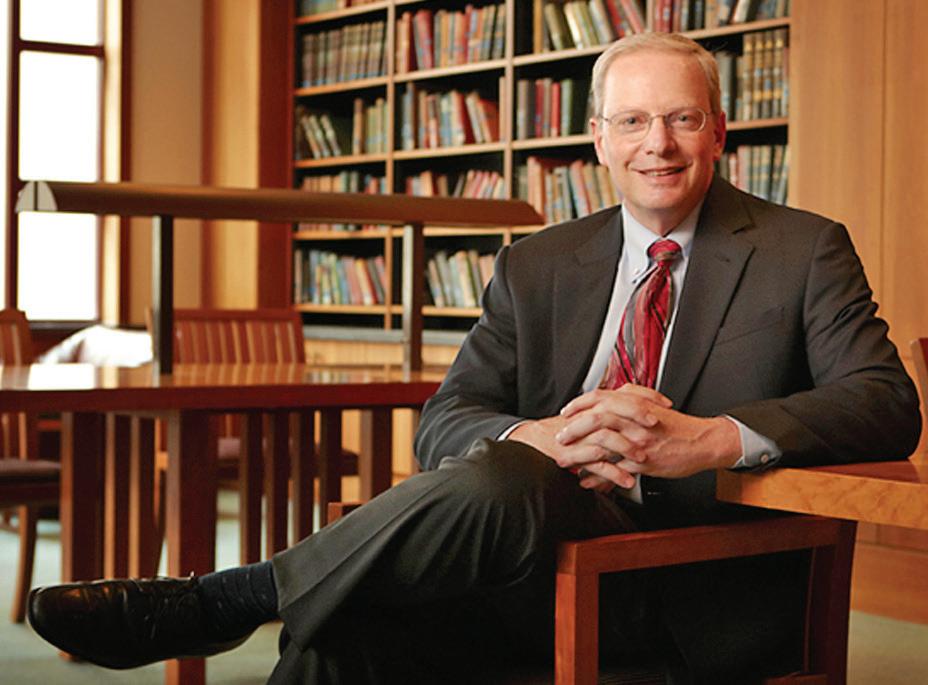
Robert Wachter, MD is Professor and Chair of the Department of Medicine at UCSF. Author of 300 articles and six books, he coined the term “hospitalist.” He is past-president of the Society of Hospital Medicine, past-chair of the American Board of Internal Medicine, and an elected member of the National Academy of Medicine. His 2015 book, The Digital Doctor, was a New York Times bestseller. His new book, A Giant Leap: How AI is Transforming Healthcare and What That Means for Our Future, was published by Portfolio/ Penguin in 2026. This interview was conducted by SFMMS Editor Michael Schrader, MD, PhD.
You are an influential leader in medicine. What drew you to a leadership role?
I was a political science major in college, and I worried about going into medicine because I wondered how I would combine that with being a doctor. Over time, while I enjoyed being a clinician, I found myself gravitating to positions where I thought I could influence the system.
I worried about it because I always thought I was a little bit too goofy to be a leader, and never thought I had the gravitas that I associated with leaders.
But it turns out that people prize authenticity, and it's worked out. I've had a series of wonderful leadership roles, pretty much all at UCSF, as well as a few national roles, that have given me a chance to help fantastic people do their jobs better, and hopefully help patients too.
You are the author of several seminal books about medical policy, HIV politics, medical errors, EHRs, and now AI. How is writing books giving you a voice and influence?
I've written about six books, including a couple of textbooks and four trade (lay-oriented) books. As for the trade books, I write one when I just find an issue so compelling that I want to spend a couple of years trying to learn about it. And I generally have the sense that if I can understand it, then maybe I can articulate what's going on in a way that people find useful.
I'm a generalist, and I've gotten over my impostor syndrome of always knowing that there are people smarter about almost every issue than I am. But I’ve come to understand that those of us who are generalists have something very useful to contribute: knowing a lot about the big picture and how all the pieces fit together, and being comfortable talking to domain experts so that we can get smarter.
What I found with my last three books, is that a book positions you as a thought leader in a field. It's a calling card and it's a way for people to know the way I think and my personality. I
think it comes out in a book. And if it's an important issue, as AI is, a book positions you a little bit ahead of the pack as someone who might be a go-to person for wisdom on an issue that people are trying to understand. For example, since A Giant Leap was published in February, I've done about 30 podcasts and I've given about 15 keynote speeches. And, as valuable as academic publishing can be, I don't think very much of that would have happened if my only calling card was articles in JAMA.
I highly recommend your book, and thank you for writing it. I think it's readable, entertaining, informative, and timely. And I appreciate the way it draws on your experience as a physician. What drove you to write a book about this subject?
Well, it was hard not to. I'd written a book ten years ago on healthcare’s journey going from paper to digital. It's called The Digital Doctor . It was a book mostly born of disappointment about how bumpy the road was to digital nirvana, and how high our expectations were that the electronic health record was going to be the answer. The EHR made certain things better, but it made a number of things worse. For that book, I interviewed about a hundred diverse experts, from EHR vendors to Boeing cockpit engineers. I learned a lot and it positioned me as a thought leader in medicine-meets-digital.
So when I tried generative AI—in the form of ChatGPT— for the first time on November 30, 2022, it was obvious to me that this was going to be an immensely important issue for health care. It was logical to consider writing another book on AI-meets-healthcare. I hesitated—worried that the field was
moving so quickly that anything I wrote would be out of date by the time it was published. My editor said something that turned out to be quite wise and helpful. She said, if it's out of date when it comes out, then you've written the wrong book.
And what that did was essentially force me to try to ask fundamental questions about what is changing when you have a technology that now is really smart and getting better fast, entering a high stakes field like medicine, with powerful incumbents, where a bad error can kill somebody, where it's not just about the technical part of what we do, but also the emotional and deeply human parts of what we do. What does that all mean? What does it mean to the system? What does it mean to doctors, to nurses?
In those six months since I put my pen down, there's been some new stuff, and that's why I started a Substack to cover new developments. But I don't think anything has fundamentally changed what I said in the book.
Despite their initial promise, electronic health records have contributed to increased physician workload and job dissatisfaction or burnout. Can AI really solve this problem?
I think it can help a lot. One of the things I've come to recognize is that, what the EHR did was enable several things that were harmful to clinical practice. When you and I were charting on pieces of paper, nobody could make us do anything: maybe the billing department would say, Do you know if you use this term, rather than that term, or check this box, we would have gotten paid better? But they couldn't make you do anything. And the EHR suddenly became a vehicle to require documentation to enhance billing and quality scores. Very little of that had anything to do with the practice of medicine or the welfare of patients.
On top of documentation burden, the charts grew in length. A study last year came out that said one in five patients has a medical record longer than Moby Dick, which is 600 pages. And that was also enabled by EHRs, because they made it easy just to dump more information into our notes.
About 7,000 new medical articles are published every day. AI can help by summarizing the literature and maybe suggest a diagnosis we hadn't thought of, or a new therapy. There will be speed bumps along the way. But I think the robust adoption rate for AI scribes, chart summarization, or Open Evidence—a tool that is being used a million times each day and didn't exist three years ago—demonstrates that these tools are filling important needs and doing it in a way that most physicians are finding to be helpful.
When you ask physicians about their EHR, most have mostly pretty bad things to say. These AI tools are easier to use. They are not cheap, but they're relatively affordable. There's not a whole lot of training necessary. If you don't like a tool, it's easy to stop using it and to try a different one. So there are a lot of things that make the transition easier than with EHRs.
Patients are also adopting these tools rapidly. There I think it's a little dicey, given the extent that they're using those tools as doctor substitutes. And that while they may overall be beneficial, there is also going to be some harm because it's difficult for patients to know exactly what prompts to put in, and how to interpret the answers the way a trained professional would.
As one example, there are millions of people using AI for mental health assistance today, and you might say, that's a little scary. Should they all see a psychiatrist or psychologist? In a perfect world, maybe. But try to find a psychiatrist or psychologist in San Francisco. And if you do, try to find one for less than 400 bucks an hour. So these patients are using a tool that's 20 bucks a month, and finding it beneficial. Even if it's not perfect, it may be better than the alternative—which in many cases is nothing. But I think one of the tricky parts is taking what a doctor does and dissecting it into different tasks. Personally, and I may be wrong about this, but I don't really care if I have a person with whoever(or whatever) is refilling my Lipitor. It feels pretty transactional. Somebody or something needs to know whether I'm having muscle pains and tolerating the medicine well. And if the answer is that everything is fine, I'm perfectly happy having AI refill my prescription. On the other hand, if I have a new diagnosis of kidney failure or diabetes or cancer, I'd prefer having a doctor tell me that than AI.
Ten years from now, I think we'll be thinking about AI like that, where it's sort of obvious that getting your travel medicines or your vaccines, or even treating your blood pressure can be done by AI if it's good enough. If it has guardrails and has a triage protocol that says, “this is a patient that actually needs to see a doctor this afternoon.”
Do you think there will be a decline in physician's clinical reasoning skills if they become more reliant on AI?
That’s a natural thing that we've got to try hard to mitigate in medical education. We have a very strong obligation to try to prevent what is not so much "de-skilling," but rather "never skilling." Meaning that if learners become reliant on the tools to get the diagnosis, they're never going to learn to be effective clinical reasoners. To use these tools effectively, I think you need to know which questions you need to ask the patient. You need to know that when a patient tells you they are short of breath, you need to ask whether they have a swollen leg. And if you don't know anything about clinical medicine, you wouldn't know to ask that.
So we're thinking about whether we may need to shield our trainees from these tools for some period of time until we allow them to use them. It's probably unethical to never give them access to the tools if the tools make them better. But it's risky to turn on the tools on day one, because they will get overly dependent.
Of course, it’s important that we take a hard look at what we ask trainees to memorize and be sure that’s still a valuable use of their time. For example, do they really need to memorize 20 facts about every anti-epileptic drug? Probably not. But diagnostic reasoning strikes me as being a foundational skill for physicians, and I do think we have to worry that doctors may get dependent on AI and become de-skilled. There are going to be ways to help prevent it.
Some of that may be in the tools' programming. For example, the AI can be programmed to express its level of confidence—if it says, “I’m not as confident of this diagnosis,” then the trainee or clinician should be prompted to think harder. For trainees, the tools might be programmed to not suggest a diagnosis before the
continued on page 10
trainee offers his or her own thoughts. It's not just de-skilling, I'm worried about complacency. If your AI scribe got your note right 20 times in a row, most humans are not going to be very careful reading number 21. So we’ve got to be thoughtful about this.
What kind of AI regulation should physicians advocate for?
I think the area most in need of regulation is patient-facing AI, where the patients really have no idea whether the bot has given them the right answer or a bad answer. In one recent study, the researchers created a patient script that said: “You have the worst headache of your life.” Any doctor would say, “I’m worried about a subarachnoid hemorrhage, go to the ED.” They then gave the script to a patient and said, interact with GPT. And the patient put into GPT: “I've got a really bad headache.” And GPT said, “Oh, that's too bad. You should stay home, rest, and turn out the lights.” In other words, it gave precisely the wrong answer, because patients have no way of knowing that the “worst headache of your life” is a very big deal.
And then we have the mental healthcare chatbots, and awful situations in which the AI basically endorsed that the patient should go hurt themself. That’s an area where there needs to be some sort of good housekeeping seal that says the tool is right often enough and not wrong too often to be safe for patient use. I wrote a piece in JAMA with Zeke Emanuel, that argues that we should regulate diagnostic AI similar to the way we regulate physicians. In other words, it should undergo a version of board certification. If it's going to be making decisions in the ED, it should be able to pass an emergency medicine board exam, hopefully under conditions that come close to replicating the real world. My guess is it will do pretty well. But frankly, I'm not that worried about the need to regulate AI in a healthcare organization like mine (UCSF). We already have plenty of guardrails. We're worried about our reputation. The clinicians took the Hippocratic Oath. We are worried about malpractice. And so we're not going to implement an AI tool that's not good. We're going to vet it carefully.
Obviously, when a potentially risky tool is embedded in a device, that needs to be regulated, probably by the FDA. A tool that's making a diagnosis on a mammogram or is embedded in a pacemaker or defibrillator, needs strong regulation because a doctor will not know whether the tool is giving the right or the wrong answer. While this is a little harder than what the FDA typically does, because the tools change so quickly, in many ways, it's analogous to the regulation of drugs and devices.
And then there's part of AI that is decision support or diagnostic assistance for doctors where the risk of overregulation is
pretty high. The field of AI is moving so quickly and the existing guardrails are strong enough that I don’t think regulation is needed—assuming that there is a human clinician making the final decision. After all, we didn’t think of regulating textbooks or Up to Date.
A San Francisco AI company named Doctronic was recently given permission by the state of Utah for a pilot AI program to refill medications. They chose a list of meds that are pretty safe. They built several guardrails, such as screening for side effects. If the patients were having any problems, the AI prompted them to see a doctor. Utah regulators said, Let's try this and study it and see how it does. But the Utah Medical Board said, No, we think this is a bad idea. (At this writing, the program is continuing and early results are promising.)
I don't think that fighting this is the right call by physicians. I understand that they worry about it being a slippery slope: the next thing you know, the AI is practicing medicine. But I think something like refills for relatively safe medications are a place where we should experiment, testing what the AI might be able to do by itself, assuming there are reasonable guardrails built into the program.
I think physicians will find the final line of your book reassuring. Your book builds to this conclusion. Could you just recapitulate why you're optimistic about AI?
So spoiler alert: The final line of the book is that patients, particularly ones with acute and complex chronic problems, will need a doctor. My optimism is partly because these tools are really good, and partly because the healthcare system really needs AI. There will still be roles for doctors. Even if you make doctors more efficient, even if you take certain things off our plates, whether it's documentation burden or managing certain straightforward illnesses, like hypertension or hyperlipidemia, you still have more than enough work for virtually every doctor and every nurse.
And I think they'll be happier doing the work, because I think they'll be practicing closer to the top of their license. They will be using their cognitive skills. They'll have some cognitive aids, but they'll be doing complex medicine, as opposed to documentation, or writing prior authorizations, or sifting through a 700page chart.
Where will we land 20 years from now?
I don't think anybody can tell, but over the next five or ten years the net effect will be good for patients and good for doctors, which is why I landed in a pretty optimistic place.
Can’t get an appointment with your primary for three months?
Should you go to AI’s ChatGPT or Claude to solve your healthcare problems?
Will the new Generative AI replace your doctor?
In this interesting book, you will learn about what has succeeded in AI healthcare, what has failed, and what might happen next. A Giant Leap, subtitled How AI is Transforming Healthcare and What That Means for our Future , is authored by Robert Wachter, MD, chair of the department of medicine at the University of California, San Francisco. An experienced author, he is also the Holly Smith Distinguished Professor in Science and Medicine. His book involves more than a hundred interviews with those involved in this fast-moving field.
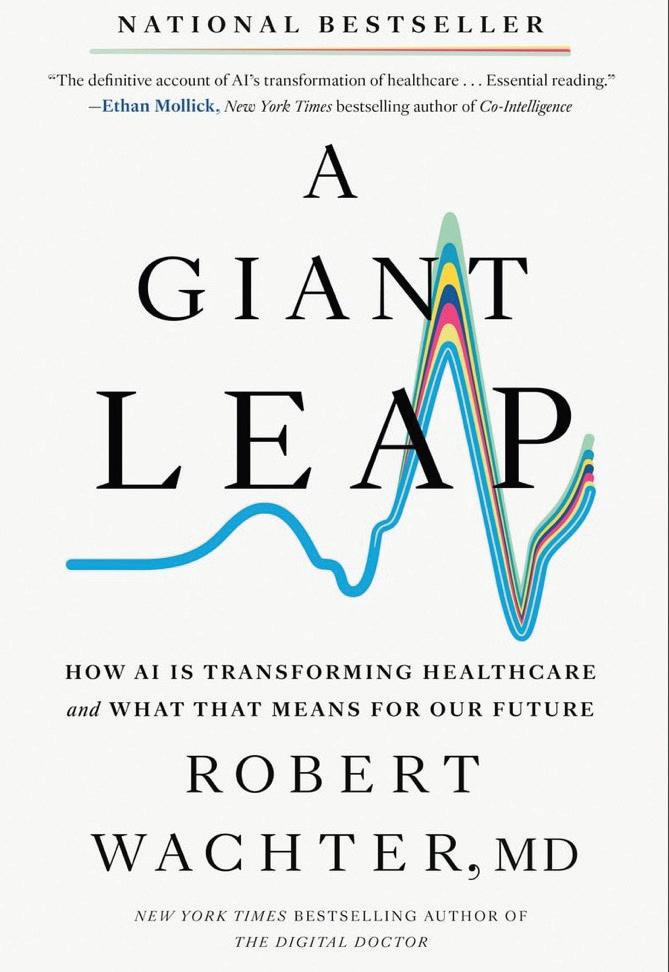
Dr. Wachter is confident that the new generative AI will represent a giant leap, transforming healthcare. He foresees AI as ushering in something of a golden age of healthcare. “Our ability to diagnose and treat disease is accelerating,” he writes.
He ascribes this book as his effort to answer the question of whether the benefits of AI healthcare will outweigh the harm.
To date, AI in healthcare has been primarily about providers and systems. Dr. Wachter sees that with the new generative AI, “We have entered an era in which patients have access to more of their own healthcare data, and far more powerful tools— enabled by AI—to manage their own healthcare affairs.”
He anticipates that AI patient use will be harder than for doctors. Patients may not know the questions to ask and may not understand some of the information that AI provides.
He asks the reader to view discussions in the book through the twin lenses of trust and trustworthiness and believes that whether AI ultimately transforms healthcare will hinge on whether people trust it. But as “we begin trusting AI to make diagnosis or treatment recommendations, we’d better be darn sure that the machine isn’t bullshitting us.”
Although many of our earliest fears about healthcare— hallucinations, its tendency to make things up, the need for careful prompting, biases, and inscrutability are fading, Dr. Wachter believes a darker shadow looms. “Misinformation is like an aggressive cancer, spreading quickly and resisting our efforts to contain it.” This is what worries him most about today’s AI.
Will doctors lose their jobs? Pointing out that well-functioning primary care in this country is in crisis, Dr. Wachter sees the most profound long-term effect of AI may be on patient
access to AI. He sees AI as replacing specific tasks, however, rather than doctors.
Within a few years, he expects patient portals to seamlessly facilitate appointments, provide clear information about medical conditions and test results, handle prescription refills, and simplify health system navigation—"in short, to deliver the kind of experience we’ve come to expect from consumer-friendly industries.”
Patients who opt for self-care will have tools to diagnose common ailments and receive guidance—sometimes avoiding unnecessary doctors’ visits.
Although most of the attention regarding patient-facing AI relates to do-it-yourself diagnosis, Dr. Wachter sees the real action will be around patient engagement and behavioral change. He believes AI will transform data into meaningful insights and actionable recommendations that promote better health.
“Doctor in the loop.” Patients presumably will trust medical advice more if a doctor has the final say. Even as AI gets better, it will be a long time before anyone trusts AI to make a diagnosis without a “doctor in the loop.” He is convinced that there will always be a need for a human guide: someone with not only deep medical knowledge and refined clinical judgment but also with emotional intelligence.
AI is predicted to change our world rapidly and radically for better or worse. With things moving this quickly, Dr. Wachter predicts that “we have much to learn about the consequences of patients using AI to tools to manage their own health and healthcare.” Although he remains convinced “that Ai’s potential benefits in healthcare far outweigh its risks, we need to approach its implementation with both optimism and vigilance.”
He writes, “Even if things work out reasonably well in healthcare, and I believe they will, there’s plenty to worry about when it comes to AI in the rest of our lives.”
This is a very readable book. Dr Wachter is an entertaining writer, and you won’t be weighed down by lots of AI babble. He even includes jokes, like the one about the dog and the pilot. (You need to read the book.) You will be better prepared for what is to come in AI patient care.
You may not want to cancel your doctor’s appointment. At least not yet.
Elinor Schrader is a retired health care journalist and publisher, as well as SFMMS Editor Dr. Schrader’s mother.
On National Doctor's Day, SFMMS shared this invitation to pause from Dr. Jessie Mahoney, SFMMS Membership Engagement Committee Member and Physician Wellness Advocate. We thought it was worth sharing again.
Today [and every day] is a great moment to pause and reflect on what medicine, and we, as the people practicing medicine in 2026, need.
We are often taught that professionalism means fitting in. Putting on the white coat. Looking like everyone else. Toning down the colorful, tender, human, and unique parts of ourselves. What medicine actually needs more of is precisely those parts. Medicine needs our most authentic selves and our unique gifts. It needs our humanity, our wisdom, our kindness, our lived experience, our humor, our courage, our steadiness, and our love. The parts of us that cannot be standardized are not incidental. They are essential. They remind us why we came to medicine in the first place. They help patients feel seen. They help physicians feel less alone. They are a big part of what medicine itself most needs right now.
Recently, at the American Medical Women’s Association conference, a physician wearing sparkly, iridescent mermaid earrings approached me. I commented on how delightful they were. She told me that people often say she should not wear them at work, but that she does anyway because her patients love them.
We never fully know what part of us might be the very thing that helps someone else feel at ease. The very thing that creates connection, that brings a little humanity, hope, or healing into a hard day. What have you been hiding, or not letting show? This is not about being louder for the sake of being noticed. It is not about pretending that the challenges in medicine are simple. It is about presence, heart, and bringing more of our actual selves to our work.
At the AMWA conference, I gave a short talk titled "What Would Love Do?" Leading from the Heart in Medicine. It was a shorter and more tailored version of my TEDx talk. In it, I shared a story about thinking harder, solving faster, gathering more data, managing every moving piece, and trying to control the outcome in difficult situations. When I finally slowed down, put my hands on my heart, and got quiet enough to listen, I realized I had been using the wrong lens and asking the wrong questions. In healthcare in 2026, we often use the wrong lens and ask the wrong questions. I am not suggesting we replace rigor, discernment, or wisdom. I am suggesting we choose humanism, kindness, love, and care as our primary lens. This gives us access to a different kind of clarity, one that fear and fitting in cannot offer.
Healthcare is full of intelligence, skill, and effort. Yet connection, compassion, caring, health, sustainability, and deep healing continue to elude us. It is not simply a lack of expertise or effort getting in the way.
Imagine if physicians and healthcare leaders approached challenges and decisions through a more loving, caring, and kind lens. Imagine if professionalism prioritized humanity. Imagine if authenticity were not seen as indulgent, but as part of what makes medicine more functional, more caring, more sustainable, and more whole.
Dr. Jessie Mahoney's invitation to you for National Doctor's Day — and every day: Pause.
Put your hands on your heart. Take a breath.
And ask yourself: What gifts are yours to bring?
What have you been hiding, or not letting show? What would love do — for you, for the others involved, and for the greater world?
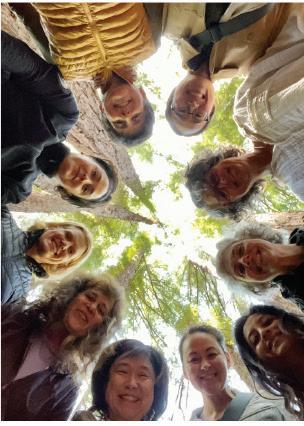
I hope you take a moment today to pause, reflect, and reconnect with what is most true in you. We hope you will join us for an upcoming physician event and utilize the resources we have for you!
Attend an Upcoming SFMMS Event!
Ready to rest, reconnect, and heal in community? Join your colleagues at an upcoming event, by scanning the QR code with your smartphone.
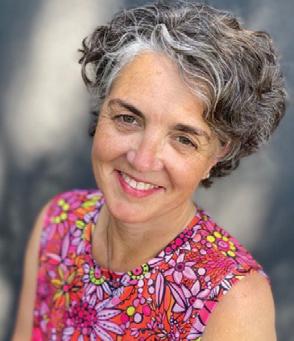
Jessie Mahoney is a pediatrician, a certified life coach for physicians, and a yoga instructor. She is the Chair of the SFMMS Physician Wellness Task Force. She practiced pediatrics and was a Physician Wellness leader at Kaiser Permanente for 17 years. She is the founder of Pause and Presence Coaching where she supports and empowers her physician colleagues using mindfulness tools and mindset coaching.
Wellness continued on page 14
Are you looking to connect with your colleagues?
Register for the Connect in Nature Retreat at Green Gulch Farm and Zen Center, July 30-Aug 2nd. Co-led by Dr. Jessie Mahoney and Dr. Ni-Cheng Liang, this retreat is designed as a calm, restorative reset. It blends guided mindfulness practices, mindful yoga, forest bathing in the redwoods, mind-body medicine, mindful communication and eating, and small-group mindset coaching. Open to partners, spouses, and friends, offering up to 12 units of AMA PRA Category 1 CME. To learn more and register, scan the QR code.
Are you looking for additional wellness resources?
The SFMMS Wellness page, curated by your SFMMS colleagues, includes upcoming and past wellness events, resources, and more. Learn more by visiting the SFMMS Wellness page at www.sfmms.org/get-help/physicianwellness
Recommended Watching/Listening: AI for Women Physicians: How to Build Custom AI Tools That Actually Save You Time
In this live session, Dr. Jessie Mahoney is joined by her son Slade to teach women physicians how to actually use AI — a beginner's guide from a coach and her son. This session covers: What AI is actually good at (and what it's not), how to talk to AI so it understands what you want, privacy considerations for physicians, and more. To listen or watch, scan the QR code with your smartphone.
Other Recommended Listening: Healing Medicine Podcast with Dr. Jessie Mahoney and Dr. Ni-Cheng Liang
To listen, scan the QR codes with your smartphone or visit https://www.jessiemahoneymd.com/healing-medicine-podcast
AI for Skeptics: A Grounded Conversation for Physicians
What if your hesitation around AI is not a problem, but a reflection of how much you care? Have you noticed how thoughtful, conscientious people imagine the worst-case scenario when something new arrives? Could it be that some of the fear around AI is less about the tool itself and more about our stories about it? And what if you do not need to love it to change your relationship with AI?
From Empty Nest to Connection: An Orthopedic Surgeon's Retreat Story
When we've been carrying a lot for a long time, "fine" can start to feel like the only option. In this conversation, Jessie is joined by Dr. Jennifer Swaringen, an orthopedic surgeon and yoga teacher. She has already been to Jessie's Nicasio Creek Farm retreat twice: once with a friend, and once on her own during an empty-nest transition.
Biohacking Curiosity for Physicians: What Shuts It Down and What Brings It Back
If someone asked what you want right now, would you know? Not what is expected. Not what comes next on the list. What you actually want. For many of us, curiosity has been crowded out by pressure, productivity, and the conditioned belief that we should already know the answer. In this episode, we explore what curiosity actually needs, what gets in its way, and how to start creating the conditions for more of it.
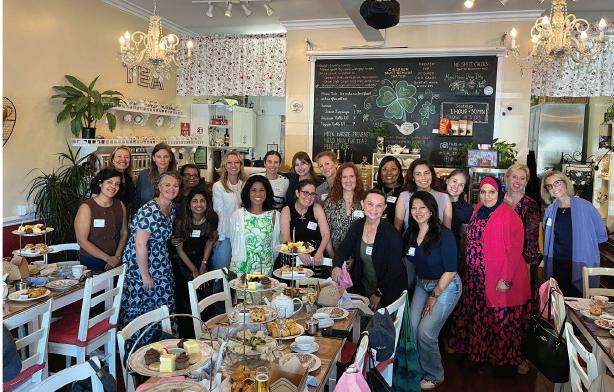
This Spring, SFMMS gathered our members for five different events, bringing together diverse groups of physicians while focusing on a variety of topics and themes. To learn more about our upcoming events and offerings, visit our SFMMS events page at https://www.sfmms.org/events.
SFMMS Celebrated National Women Physicians Day at the Annual SFMMS Women in Medicine Mixer
Each year, we gather a group of our physician members who identify as women for a meal, connection, and community building. This year, we celebrated National Women Physicians Day and heard from Dr. Kathleen Jordon of Midi Health, who discussed and answered questions about the“New Rules of Menopause” at SIP Tea Room in San Francisco.
SFMMS at the Marin Country Farmer’s Market
In October, SFMMS with support and coordination of Dr. Laura Allen, SFMMS MEC Member, gathered a group of SFMMS members and their family/friends to visit the Marin Country Farmer’s Market. The group enjoyed coffee and a tour of the vendors at the farmer’s market. Stay tuned for more events like this, as the Marin Country Mart has offered to host SFMMS again with more in-depth events, such as cooking classes!
SFMMS Financial Planning Mixer
“Such a great discussion about financial strategies specifically for physicians. It was great to share ideas with colleagues!” – SFMMS Member
In April, SFMMS, with the support and coordination of Dr. Brian Grady, SFMMS Past President and MEC Member, gathered a small group of our members for our second financial health mixer and dinner. The goal of this gathering was to continue the discussion of financial health and the needs of our physician members, and to share resources on estate planning. Every member who registered for this event received a free copy of a curated list of financial-planning books from White Coat Investors and Dr. Grady.
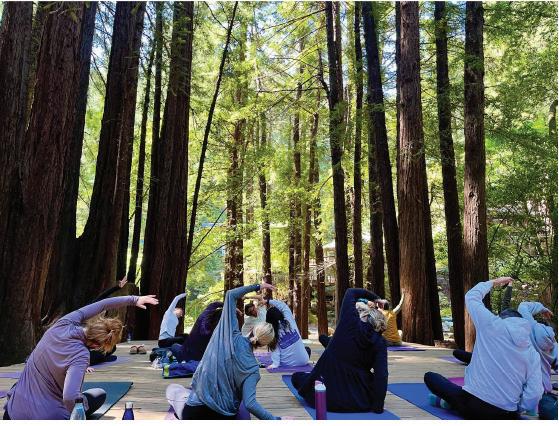
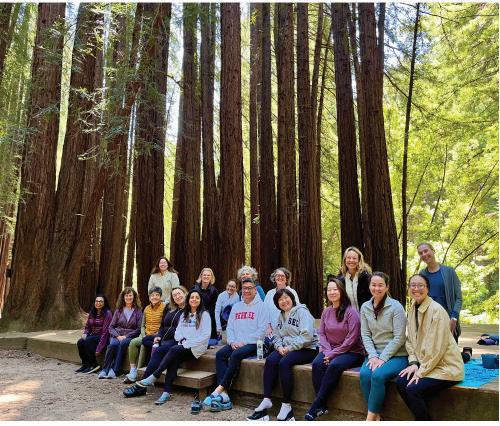
Mother’s Day Mindful Yoga for Healers in Mill Valley
SFMMS hosted our third annual Mindful Yoga for Healers on Mother's Day, Sunday, May 10th, to honor women and physicians with yoga and community building at the Old Mill Park Amphitheatre in Mill Valley. A 60 minute mindful yoga session was led by Dr. Jessie Mahoney, followed by socializing and community building.
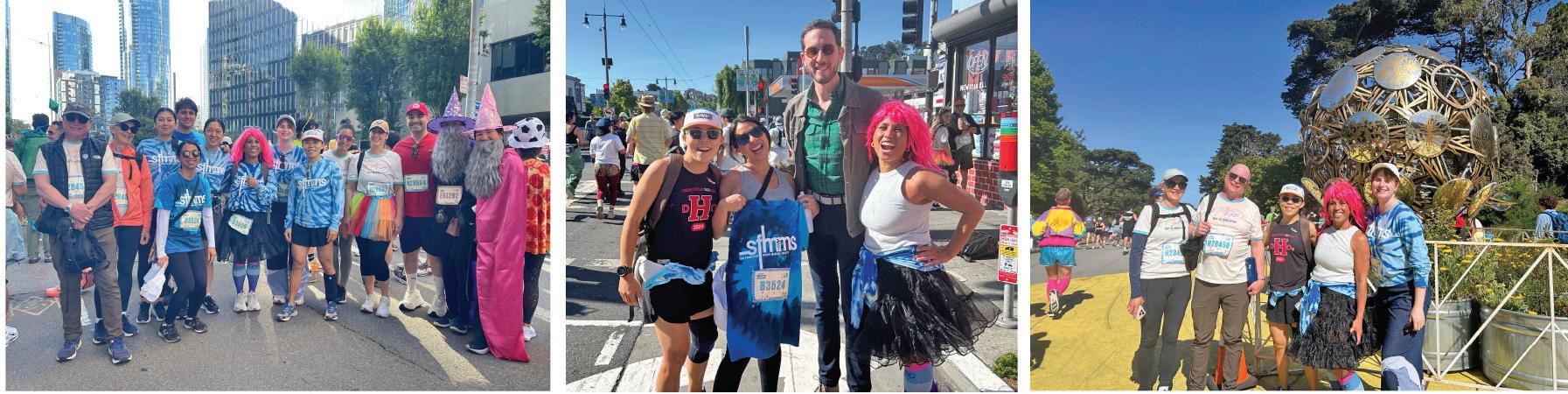
SFMMS at Bay to Breakers 2026
On May 17th, SFMMS participated in the first annual SFMMS at Bay to Breakers!
SFMMS Book Club
SFMMS hosted a Book Club, reading a selection of two books from the "How to Talk" series: "How to Talk So Kids Will Listen & Listen So Kids Will Talk" and "How to Talk So Little Kids Will Listen" by Adele Faber and Elaine Mazlish on May 20th. This SFMMS book club was designed for both physicians who work with minors and for physician parents to enjoy dinner together and discuss the books.
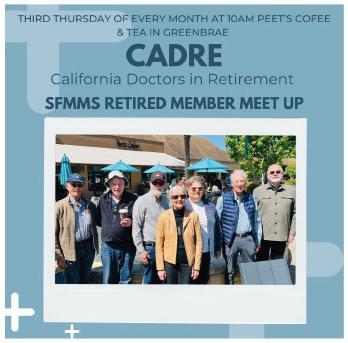
California Doctors in Retirement (CADRE) Gathers Monthly in Greenbrae
"The monthly CADRE meeting is always fun. This gathering is for special people who have had unique lives. As retired SF and Marin physicians, we can best understand each other.”
Join your fellow retired physician colleagues for CADRE (California Doctors in Retirement) for casual conversation, connection, & free coffee, monthly (3rd Thursday of the month) at Peet's Coffee in Greenbrae.
At 1:41 a.m. this April 2nd, many of us were awakened by an earthquake measuring 4.6 on the Richter scale in San Francisco. Fortunately a shaker of this magnitude did little damage to our city’s infrastructure. Imagine for a moment if this event happens—as is predicted to be the case—at a much higher level, causing damage to our single hospital capable of providing high level trauma care.
If in this disaster you have some type of severe injury—perhaps a fall with a head injury, a partial structure collapse or a post event assault. These happen regularly in our community. You call 911 and the Emergency Medical Service professionals provide excellent stabilizing care and decide you need a trauma center. But San Francisco General is unavailable—overwhelmed, damaged, suffering a critical resource deficit. Instead of going to a local backup trauma center, you are transported more than an hour to an out of town facility, suffering increased risk of death during your transport and difficulty being discharged home after your treatment.
On February 9, 1971 the 6.5 Magnitude San Fernando earthquake in Southern California destroyed the Olive View Medical Center in Sylmar killing over 60 people and leaving the north San Fernando Valley without a safety net hospital until it was reopened in 1987, 16 years later. In 2005, Charity Hospital, the single high level trauma center for New Orleans, was flooded during hurricane Katrina and had to evacuate all of its patients. It was not until 2015 that its trauma care function was replaced by a new hospital. This likely contributed to the 246 trauma related deaths in Louisiana reportedly due to the storm. In 2017 the Las Vegas Route 91 Harvest Festival shooting occurred, where 60 were killed and over 400 were injured, many of them with severe injuries only a trauma center can handle effectively. While the hospitals in Las Vegas did magnificent work to care for these victims, they struggled to meet the specialized expertise the injured needed.
These selected examples illustrate health systems depending on single facilities that encountered predictable disasters and experienced preventable deaths and long-term disability due to a lack of adequate backup trauma care. San Francisco has a Level I Trauma Center which is the highest level of capability, certified every three years by the American College of Surgeons and by the State of California. Our Trauma Center is staffed by a team of award-winning physicians, nurses, medical and support personnel to provide total “wrap-around” care to the most severely injured patients without regard to residency status or ability to pay. While San Francisco General Hospital prepares for
John Brown, MD
surge care on a regular basis, there will be a limit to the number of patients it can provide trauma care.
What is missing from this very fortunate picture is a backup. San Francisco is distinct among the top 25 U.S. �ities to have a single trauma facility. The next closest trauma centers to us are in Palo Alto (35 miles away over crowded highways), Oakland (17 miles away over the Bay Bridge) and Greenbrae (20 miles away over the Golden Gate Bridge). Since we have no medical helicopter access at SFGH, these facilities will be over an hour away by ground transportation, IF the roads and bridges are open to EMS vehicles. This places injured patients outside of the “golden hour,” a time period between injury and trauma care in which the most severely injured must receive trauma care in order to survive.
There are achievable solutions to this catastrophe waiting to happen. During my time as the Medical Director of the San Francisco EMS Agency, we evaluated this vulnerability and identified resources to help the City find the best solution and implement it. These solutions range from having one of our other community hospitals become a regular trauma site as a Level II or III center, and/or having one of our pediatric hospitals become a pediatric trauma center with adult backup capability, to being able to rapidly deploy a “pop-up” trauma capability at one of these hospitals or the VA. What stopped this process has been the lack of resources available due to our austere City budget.
This is literally a disaster waiting to happen. We remain at risk for this preventable cause of death and disability and we need to solve the problem. We may not know when the next earthquake, or mass shooting, or large scale vehicle crash will occur but it will happen. We owe it to our community to be better prepared. It’s essential that we start now, determine the best path forward, and execute it before a single San Franciscan suffers from any such event. As the City that knows how, we must act now.
Dr. Brown is an Emergency Medicine and EMS Physician living in San Francisco and is the retired Department of Public Health EMS Agency Medical Director.
By John Maa, MD
The popularity of electric bikes rose dramatically during the past decade, particularly among teenagers and younger adults. Unfortunately, this surge has brought tragedy as well. Surgeons around the world have witnessed a serious pattern of e-bike injuries and deaths from the higher speeds that reduce the reaction time needed to avoid crashes.

In New York City, bicycle deaths reached a 24-year high of 30 in 2023; 23 of those who died were riding e-bikes. Compared to pedal bicycles, e-bike accidents are more likely to injure and kill pedestrians. Head trauma from e-bike accidents has increased 49-fold nationally from 2017 to 2022, and e-bike incidents in California between 2018 and 2023 increased more than 18-fold.
In Marin County, a study in 2024 revealed that nearly 1 in 8 e-bike trauma patients brought to the emergency room by ambulance died from their injuries. Overall, the death rate for e-bike accidents was 37 times higher than that for crashes with pedal bicycles. Media reports of youths killed in e-bike crashes are becoming all too frequent, leading to heartbroken parents, physicians and elected officials calling for action.
In response to this growing crisis, the American College of Surgeons, the American Association of Neurological Surgeons and the American Academy of Orthopedic Surgeons issued safety statements on e-bike helmet use and injury prevention this year. Many of the problems stem from the laws: E-bikes are regulated differently (as bicycles, mopeds, motorcycles or motorized vehicles) around the world, and in the U.S., laws conflict on age limits for use, maximum speed, helmet requirements and motor wattage. While the conflicting regulations often feel like a labyrinth of contradictions, there are several steps we can take to reduce injuries.
Recent bills in Congress focus on battery safety and incentive programs to increase e-bike adoption. The focus on battery safety is well-founded: the heavier lithium-ion battery on an e-bike can cause the loss of control, particularly during sudden downhill acceleration. In the U.S., motors are limited to 750 watts, while several nations have limits from 200 to 500 watts. Lithium-ion batteries are also a fire hazard and caused 267 fires in New York City in 2023, injuring 150 and killing 18. In 2022, San Francisco set a record with 58 fires related to rechargeable batteries.
Few regulations focus on two other key safety factors: age and speed. In the Netherlands, e-bike riders must be 15 years old, and e-bikes are limited to 15 mph. Similar age restrictions are in place across Europe. In the U.S., the picture is less clear.
The manufacturing and first sale of an e-bike is regulated by the federal government, but the operation of e-bikes is con-
trolled by states, where there is a need for action. About 25 states set a minimum age for faster Class 3 e-bike use at 16. Around 10 states have stronger laws (minimum age of 16 across all classes, or defining e-bikes as motorized vehicles, thus requiring licensure, registration and insurance), while 12 have weaker laws (allowing Class 3 use without age restrictions and permitting motors over 750 watts), with the remainder in flux.
In Hawaii, registered e-bike owners must be 18, with a minimum age of 15 to operate one. In 2024, New Hampshire, New Jersey and New York considered requiring e-bike registration, while Florida and New York considered licensure as required in Alaska.
Municipalities have jurisdiction over the operation of e-bikes on their roads and can strengthen enforcement and impound unlawful vehicles. Some localities have formed special committees and task forces can study safety concerns, and coordinate educational programs with schools to address the lack of training requirements for purchasers.
In 2023, Incline Village, Nev., and the Port of San Diego banned e-bikes where pedestrians are present. The San Diego County cities of Encinitas and Carlsbad declared e-bike states of emergency after deadly crashes. Lawmakers in Marin and San Diego counties passed minimum age requirements for e-bike use. New York City recently followed the Netherlands in reducing all e-bike speed limits to 15 mph. San Mateo Supervisor Jackie Speier is introducing legislation to strengthen rider and pedestrian safety.
Ultimately, regulating e-bikes as motorized vehicles and standardizing U.S. laws might be the strongest next steps. The California Highway Patrol limits mopeds to 30 mph, just 2 mph faster than Class 3 e-bikes. Using the term “e-moped” might provide greater clarity about the risks of these vehicles.
One thing is clear: Increasing e-bike safety and preventing unnecessary deaths will take efforts at the national, state and local levels. We must act now to save lives and prevent future tragedies.
John Maa is a general surgeon and past-President of the SFMMS. An earlier version of this article appeared as an op-Ed in the San Francisco Chronicle.
The most unsettling thing about traffic injury in San Francisco emergency departments is not its severity. It is its regularity. The same mechanism that produces traumatic brain injury, pelvic fractures, and months of rehabilitation arrives often enough to have become part of the rhythm of an emergency department shift. We treat these traumas with the same protocols, the same team, the same measured competence we bring to everything else. Then we do it again.
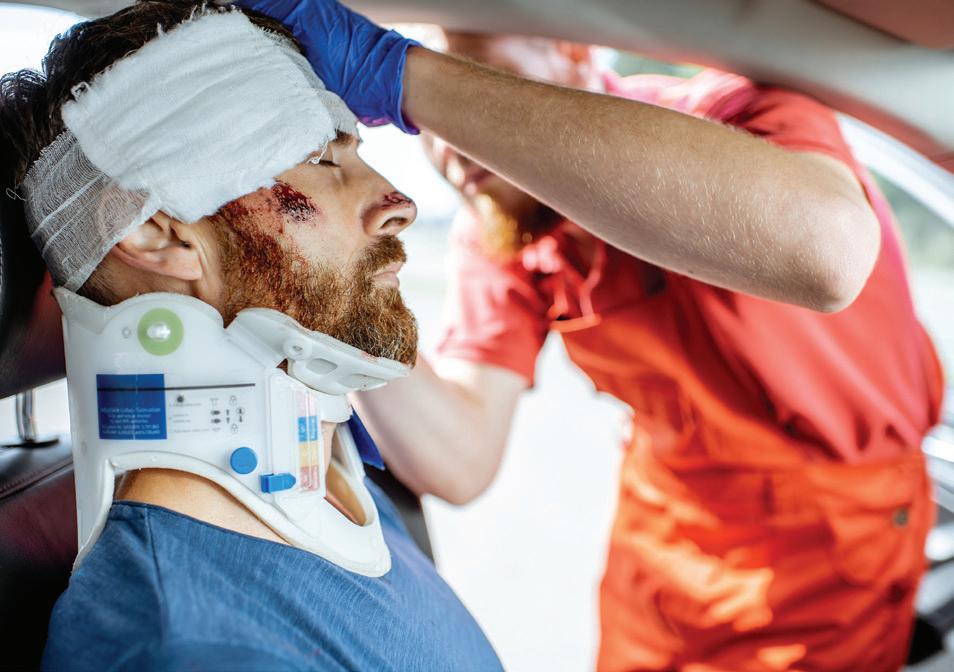
Across the city’s emergency departments, someone is evaluated for a traffic-related injury roughly every ninety minutes,1 a volume that rivals stroke and heart attack combined; conditions for which we have built elaborate clinical architectures. For traffic injury, the architecture stops at the door. There is nothing to build inside the hospital that addresses what happened outside it.
At Zuckerberg San Francisco General, the only Level 1 trauma center in the city, traffic crashes account for roughly half of all the injuries treated there.2 Linked hospital and police data suggest approximately 5,000 traffic-related injuries are treated across San Francisco’s emergency departments each year, a figure that likely understates true volume, since police reports miss nearly four in ten severe injuries found in hospital records.3 Between 535 and 577 people are hospitalized with critical traffic-related injuries annually.4 In 2024, 43 people died on SF city streets, the highest single-year toll since 2005.5
The comparison that matters clinically is not the death count. Stroke kills far more San Franciscans. It is what happens to the patients who survive. A stroke survivor and a crash survivor can occupy the same ward, require the same therapists, and face the same years of recovery. Both conditions produce traumatic brain injury, lasting disability, and rehabilitation measured in months and years. We understand this about stroke. We have built primary stroke center certification, door-to-needle protocols, and career-long clinical habits around it precisely because we recognize what that burden means to our patients and community. Traffic injury produces the same downstream picture at comparable volume.
Here is what should be uncomfortable: for stroke, we own the prevention pathway. We know that prevention is essential
and can reduce morbidity and mortality. Correspondingly, countless dollars and hours have gone into understanding the key elements of prevention. Blood pressure control. Anticoagulation. Statins. Lifestyle counseling. When a hypertensive patient leaves the emergency department, we are handing them back to a clinical ecosystem that can actually modify their risk. The encounter is the beginning of a longer relationship aimed at preventing the next one. We have built systems, registries, and habits around this. However, despite the devastating impact and outcomes from traffic-related injuries, there is nothing clinical we can build to prevent them.
What every severe crash admission actually costs is harder to see from inside the trauma bay. A crash patient takes up an operating room for an afternoon, an ICU bed for a week, a ward stay measured for many weeks, and a rehabilitation course measured in months. California’s median emergency department length of stay is already three hours.6 More than a quarter of admitted patients nationally board for four hours or more before reaching an inpatient bed.7 Every preventable admission is a direct pressure on the next chest pain patient in room 4, the next psychiatric hold in the hallway, the next sepsis patient trying to get through triage. The downstream effect is invisible to the policy conversation. It is not invisible to us.
For traffic injuries, the prevention pathway is the city. Protected intersections. Reduced speed limits. Automated enforcement. Street geometry. Daylighting at crosswalks. The evidence base is equally strong, arguably more so for population-level impact, but none of those levers are in our hands as clinicians. We do not see patients where they cross Fell Street at rush hour, where a parked delivery truck blocks the sightline at an intersection they have crossed every morning for years. By the time we see them, the thing that was going to hurt them already has. The same asymmetry holds across Marin: higher-speed arterials, a cycling culture sharing roads not built for it. Different geography, identical logic.
Medicine has built strong institutional reflexes around conditions where the evidence was clear and the solution required someone outside the clinical system to act: lead exposure, tobacco, seat belts. Traffic injury belongs in that category. The
mechanism is environmental, the prevention is environmental, and the clinical system is too far downstream from the cause.
SFMMS was an early Vision Zero signatory, which mattered. The physics are unambiguous: at 20 mph, a struck pedestrian has approximately a 90 percent chance of survival; above 40 mph, the majority sustain life-threatening injuries.8 Changing that arithmetic is not a clinical act. It is a civic one, and there is now proof it works.
We have spent decades learning to respond in minutes. We have not yet learned to show up at the right meeting. The speed cameras are working: dangerous speeding at camera locations has dropped 80 percent,9 and San Francisco traffic deaths fell 42 percent in the year of full deployment, the largest single-year decline since Vision Zero was adopted.5 The evidence no longer needs making. What needs building now is the habit of translating what we see into what the city does. That is not a distraction from medicine. For emergency physicians in San Francisco, it is the practice.
Drs. Acker, Panda and Rose are all with the Department of Emergency Medicine, Stanford University.
A letter was sent to Mayor Lurie on this topic from 60 medical professionals, including some members of San Francisco Bay Area Families for Safe Streets: https://walksf.org/families-forsafe-streets/
1 San Francisco TISS linked data (~5,000 traffic-related ED visits per year ÷ 365 days ≈ one evaluation every 1.75 hours). San Francisco Department of Public Health, Transportation-related Injury Surveillance System (TISS). visionzerosf.org
2 Zuckerberg San Francisco General Hospital Foundation. Level 1 Trauma Center: Case for Support. 2023. sfghf.org. https://sfist. com/2016/11/03/traffic_collisions_account_for_half/
3 Friedman LS, et al. What is counted counts: An innovative linkage of police, hospital, and spatial data for transportation injury prevention. Safety Science. 2023;157:105943. PMC9735245.
4 Vision Zero SF / SFDPH Transportation Injury Surveillance System. Annual severe injury counts 2022–2024. visionzerosf.org. [Confirm precise figure with SFDPH or HCAI discharge data before publication.]
5 SFMTA. Vision Zero Traffic Fatalities: 2024 End of Year Report. July 2025. sfmta.com. SFMTA. Press Release: San Francisco Traffic Fatalities Drop by Nearly Half in 2025. January 2026. (2024: 43 deaths; 2025: 25 deaths, −42%.)
6 California Health Care Foundation. California Emergency Departments Almanac, 2025 Edition. chcf.org. (Median ED LOS statewide: 3 hours, 2023 data.)
7 Admon AJ, et al. Prolonged Emergency Department Boarding Times Affect More Than 25% of Admitted Patients. Health Affairs. 2024. (Study of 46 million emergency visits at 1,500 US hospitals through September 2024.)
8 AAA Foundation for Traffic Safety. Impact Speed and a Pedestrian’s Risk of Severe Injury or Death. aaafoundation.org. (At 20 mph: ~10% fatality risk; at 40 mph: ~45% fatality risk, 79% sustain AIS 4+ injuries.)
9 SFMTA / Mayor Lurie’s Office. Automated Speed Enforcement Program: One-Year Results. March 2026. sfmta.com. (80% reduction in dangerous speeding at 33 camera locations; 40,000 fewer instances of speeding >10 mph over limit per day.)
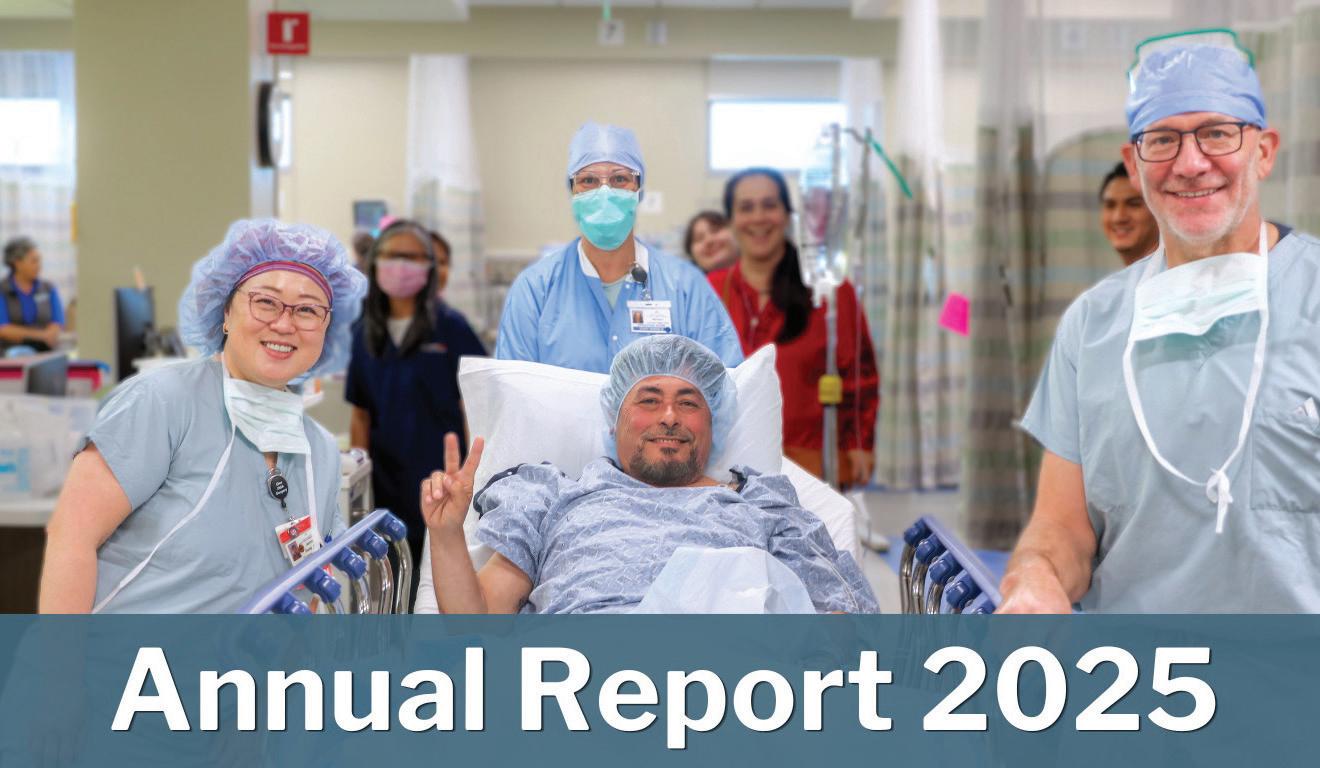
We just released our 2025 Annual Report and want you to be among the first to see it: 1,529 donated services, over $20 million in charity care, and 1,130 grateful patients receiving care throughout Northern California and the Central Valley, made possible by our generous community of medical volunteers, partners, and donors.
Read our report and view our audited financials.
After a 16% increase in services last year, the need is increasing still further in 2026 – up over 40% in the past two years.
Looking ahead, there is so much to be done to care for people who are losing access to health insurance. Immigrants and those born in this country deserve to be treated with dignity, and our volunteers and multilingual care coordinators are dedicated to restoring health and hope for people in need.
Help us respond to the increasing need.
4 Start a recurring gift to invest in the well-being of our community now and in the future
4 Make a one-time gift
4 Donate stock, mutual funds, or through your IRA or donor-advised fund
4 Invite a friend to support Operation Access
4 Include us in your estate plans
• Refer patients who earn up to 400% of the federal poverty level ($5,320 per month for an individual, $11,000 per month for a family of four) for free specialty care.
• Get involved as a medical volunteer to donate outpatient specialty procedures through our network of partner hospitals and surgery centers. Visit operationaccess.org or email jason@operationaccess.org 4
1 2 3 5
1 2 3 5
Send referral via fax (415-733-0019), email (referrals@operationaccess org), or direct address (operationaccess@operationaccess sacvalleymedshare org) through your Electronic Health Record along with a patient demographics page Include specific procedure requested and referral coordinator information Attach relevant chart notes including the medical need for the procedure Include radiology reports, lab results, or other necessary items indicated on the referral guidelines.
Send referral via fax (415-733-0019), email (referrals@operationaccess.org), or direct address (operationaccess@operationaccess.sacvalleymedshare.org) through your Electronic Health Record along with a patient demographics page. Include specific procedure requested and referral coordinator information. Attach relevant chart notes including the medical need for the procedure Include radiology reports, lab results, or other necessary items indicated on the referral guidelines
We contact the patient to screen for eligibility by phone. Patients are generally contacted within 10 days of referral receipt. An appointment will not be scheduled during this call
We contact the patient to screen for eligibility by phone Patients are generally contacted within 10 days of referral receipt An appointment will not be scheduled during this call We send a text to eligible patients to explain the program and outline the process The referring clinic is notified of the eligibility status of all referrals in the semi-monthly Referral Status Notification, requesting action on incomplete and unreachable referrals.
We send a text to eligible patients to explain the program and outline the process. The referring clinic is notified of the eligibility status of all referrals in the semi-monthly Referral Status Notification, requesting action on incomplete and unreachable referrals
*Eligibility: In need of outpatient procedure but not ongoing care; Uninsured or have Medi-Cal Share of Cost and not covered by full scope Medi-Cal, Medicare, or Workers Comp; Earn up to 400% of FPL
*Eligibility: In need of outpatient procedure but not ongoing care; Uninsured or have Medi-Cal Share of Cost and not covered by full scope Medi-Cal, Medicare, or Workers Comp; Earn up to 400% of FPL
4
Eligible patients are scheduled with a participating specialist. The average wait from referral to appointment is 2-3 months.
Eligible patients are scheduled with a participating specialist The average wait from referral to appointment is 2-3 months
When a specialist is available, an Operation Access case manager contacts the patient to confirm the appointment
When a specialist is available, an Operation Access case manager contacts the patient to confirm the appointment. We try to coordinate care close to where the patient resides, but patients may need to travel to a specialist in another county We notify clinics when cases are completed and provide information about the outcomes, where the patient was served, and how to obtain the medical records
We try to coordinate care close to where the patient resides, but patients may need to travel to a specialist in another county.
We notify clinics when cases are completed and provide information about the outcomes, where the patient was served, and how to obtain the medical records.
We believe health care is a human right Everyone is welcome regardless of their legal status We will not share your information with anyone outside our program
We believe health care is a human right. Everyone is welcome regardless of their legal status. We will not share your information with anyone outside our program
Questions? Call us at (415) 733-0052 or visit www.operationaccess.org.
Shieva Khayam-Bashi MD
Something remarkable is happening in medical education. Students arrive eager to master the science and craft of medicine, yet equally determined not to lose something harder to name: their sense of the whole person sitting across from them. These students give me hope. In a time when medicine can feel increasingly impersonal, they are insisting on something different. They carry an instinct that no curriculum fully teaches: that a patient is never simply a diagnosis. Every person who comes to us carries a life shaped by history, culture, loss, joy, and meaning, and they want to be seen in that fullness. The medical humanities offer a language and a practice for honoring exactly that.
Each year at UCSF, students can enroll in a two-week Medical Humanities elective, knowing it will ask something different of them than a clinical rotation. It asks them to read, reflect, and look honestly at their own inner lives as emerging physicians. Mary Oliver says it best in her poem "Instructions for Living a Life: Pay attention. Be astonished. Tell about it." Students are
Despite my generous use of the phrase “Kafkaesque” to describe any slight inconvenience that befalls me, I hadn’t actually read Kafka until this weekend’s backpacking trip. At 7pm, the first drops of foreboding rain shepherded us back into our tents, where I read the first line of The Metamorphosis: “When Gregor Samsa woke up one morning from unsettling dreams, he found himself changed into a monstrous vermin.”
While not quite as dramatic as Gregor’s transformation, I, too, have noticed myself changing. Somehow, it feels as if I’ve woken up and transformed into this “medical student” version of myself. I wear the embroidered Patagonia, I take the littleknown hospital shortcuts, I study in the library’s secret 5th-floor rooms—but the bigger picture lies somewhere I can’t quite see. Who am I becoming, exactly? Where is this all headed?
The answer has felt like an ever-moving target. Six months ago, we had barely opened our eyes before entering the arena of medical school, equipped only with information panels and upperclassmen advice. Then came the transformation itself. Our days were soon packed with 8-4pm lectures, specialty panel sessions, and the slow conceptualization of the art of medicine. Amidst our first musculoskeletal block, my friend Therese remarked on our shifting identities as medical students. “I think I have to accept that it’s never going to let up,” she said. “ This is the new pace of the rest of my life.”
I didn’t know how to grapple with this—I felt unprepared with feeling unprepared. But recently, I discovered a wellspring of advice in shadowing Palliative Medicine. In Dr. Adjepong’s patient visits, I caught a glimpse of something universal—a chance to “think out loud” about the process of transformation.
learning to do all three, and to carry that attentiveness into every room they enter.
The students whose work appears in this issue each speak from their own place in the journey, touching on what it means to be present, to be changed, and to be becoming the physicians they are growing into. Their work reminds us that good medicine and deep humanity are not at odds. They belong together. We are grateful to these students for their honesty and curiosity, and for reminding us that the wholeness we try to see in our patients begins with the wholeness we tend in ourselves. It is something we can choose to practice every day, at every bedside.
Shieva Khayam-Bashi, MD is Clinical Professor, UCSF Department of Family and Community Medicine and Sustaining Member, UCSF Academy of Medical Educators.
Together, we saw patients with neurodegenerative diseases whose progressions were, at best, somewhat foreseeable. Plotting the course of the disease was a different matter altogether— and this misalignment between the patient and their disease, I saw, filled almost everyone we met with a level of distress far beyond physical, somewhere closer to existential.
We spent the first 40 minutes with Ray, a man with fluctuating Parkinson’s symptoms—jaw pain, decreased muscle control. Ray was struggling with these physical changes and the resulting decline in his work productivity. He was set, begrudingly, to retire this June—losing a decades-long identity.
“At the risk of sounding like a whiner,” Ray said, “I lack grace in accepting this.”
“I don’t know if the goal is acceptance, per se,” Dr. Adjepong said. “The outcome shifts. It’s not about the work anymore, but it becomes about your persistence, your attention to detail in remembering small things about your coworkers, qualities that you can apply in different ways at work. The outcome is the process itself.”
There was a simple truth I recognized in his advice—what he called “anticipatory guidance” to help us wade through murky waters and scaffold our understanding of what we can expect, and what we can’t.
We later spoke with Jack, another Parkinson’s patient who was struggling with the dissonance between his expectation of the disease and its reality on his body. He talked slower, he walked slower. Parkinson’s was unbecoming to him.
“I will repeat myself a lot when I say this,” Dr. Adjepong said, “but two things can be true at the same time.”
I rolled this thought around in my head like a marble. Jack had Parkinson’s, each day waking up to a body he couldn’t quite
recognize. And simultaneously, he was still himself. He was a blues-lover, a vinyl collector, a fan of Miles Davis and B.B. King. And like the blues, Jack remarked that his disease was an “improvisational” process. He takes the music as it comes, and he rolls with it, adapts to it.
“Things do transform, and then you have to transform again and again.”
It’s true, we’re always changing. When I was 18, I had written a college essay on the Greek philosopher Heraclitus’s idea of change: no man ever steps in the same river twice. This sentiment evaded me then, despite my attempts at understanding what Heraclitus meant. I was busy looking for the river, searching with futility for concrete words to describe an ever-shifting form.
Now at 24, I still find myself looking for the river—some distinct landmark to plant my “medical student” flag. But maybe, like the words Dr. Adjepong offered, the point is not the river at all. Maybe it’s knowing that the river has transformed underneath your feet and stepping into it anyway.
Lina Lew, is MS1 at UCSF.
Aristotle described the heart as the center of vitality. Galen believed the heart is the "hearthstone and source of the innate heat by which the animal is governed." You put your heart into something. You love with all your heart. But what does it mean to have a lot of heart?
Recently, I rotated on a Cardiac Surgery elective during my core clerkship year. After much insistence, I convinced the fellow to send me on a transplant procurement run. For an entire week, I stalked the OR board hoping a heart transplant would appear. Finally, Monday evening after a long day of Zoom didactics, a gleaming red bar with a time and location appeared on our virtual OR board. It's happening.
The donor OR was a frenzy of different colored scrubs and overlapping voices. On the operating table lay an epicenter of silence. A young man lay with ribs protruding and an iatrogenic chest rise as the only sign of life. As surgeons chattered, layer by layer was exposed from sternum to pelvis until the man was no longer. In his place lay a doll just like the one from my fourthgrade science class, glistening colorful organs placed like plastic puzzle pieces awaiting removal.
The attending beckoned me closer as it came time to cannulate the heart. He grabbed my sterily armored hand and placed it beneath the pumping heart. "What do you think?"
In that moment, the cacophony of the operating room — the shouting scrub nurse, the droning vitals, the scrambling perfusionists — all froze. The walls closed in and the spotlight shone on just my hand beneath a beating heart. I could feel the soul itself pulsate on my palm. Badum, badum, badum. In that gleam of an evening OR among strangers, my calling became clear: to dedicate the rest of my life to protecting the sanctity of this organ and to serve patients in that special way.
The rest of the evening was an exhilarating blur. As soon as the heart was removed, we placed it in a cooler and drove back to the hospital. After the procurement team dropped me off, I wheeled the heart into the OR and scrubbed into the recipient surgery as well. As the recipient's boggy heart was snipped little by little off his aorta, the surgeon asked me to remove it from the thorax. The old heart felt heavy yet empty in my hands. It glub glubbed into the specimen container. The recipient, just like the donor, remained with an empty cavity between the retracted pericardium, aorta leading nowhere. The new glistening heart was placed in, and the fellow gingerly weaved a patchwork of Prolene to welcome it into its new home.
A month later, I returned to this hospital for an interventional cardiology elective. To my surprise, I saw a familiar name on our case list scheduled for a standard post-transplant biopsy. In the cath lab, Swan Ganz catheter in my hands, I measured the right heart pressures of the very same heart I had seen procured and rehomed, the very heart that had solidified my calling. As soon
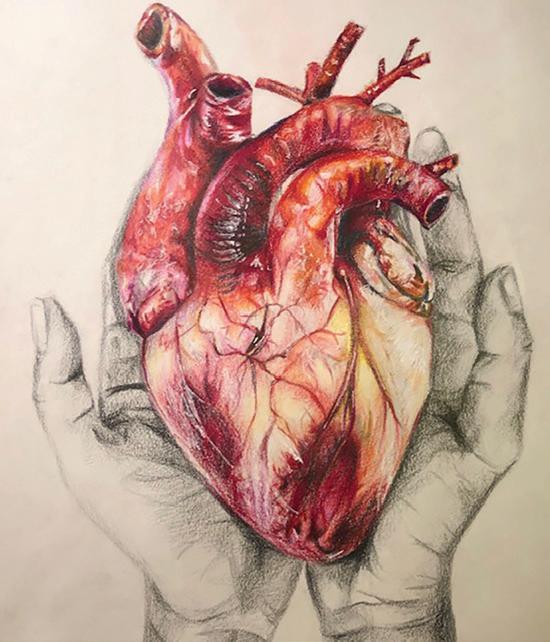
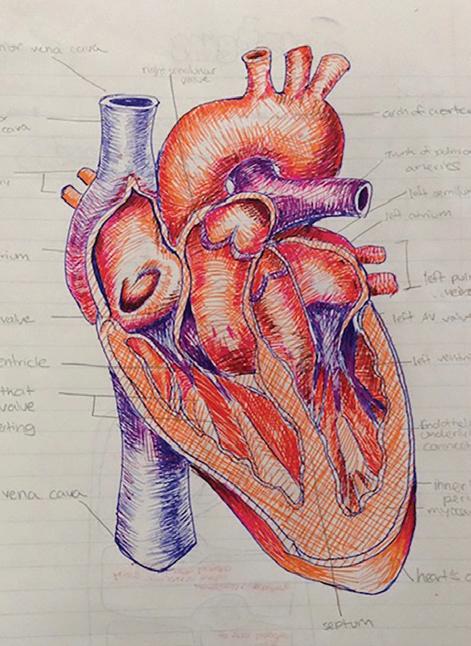
continued on page 24
as the procedure finished, the patient sat up, smiled, and walked over to his waiting wheelchair. He had appointments across the street and places to be.
I've been searching for direction all my life. "What does it mean to do something with all my heart?" I would ask myself when I felt lost.
A young girl is said to have written a note to cardiovascular titan Dr. Michael DeBakey, asking, "Does a plastic heart have love in it?" DeBakey replied, “Yes...The love in a plastic heart comes from the many people who love other people and don’t want them to die. So these people work all day and often all night to build a heart that will make people live longer. If you think of how much love there would be in hundreds of hearts, then that is how much love there is in a plastic heart!”
Regardless of whether this exchange really took place, this is what I know: the heart really does exist, you just need to find the one that is your own. I've been searching for mine for 25 years, discovering biopsy-sized pieces little by little. But when you don’t expect it, the heart reveals itself and shows you your path to serving and loving others.
Jeanna Shaw is a UCSF medical student and graduate of Harvard University, and an artist as featured here. She has dreamed of becoming a doctor since she was three years old.
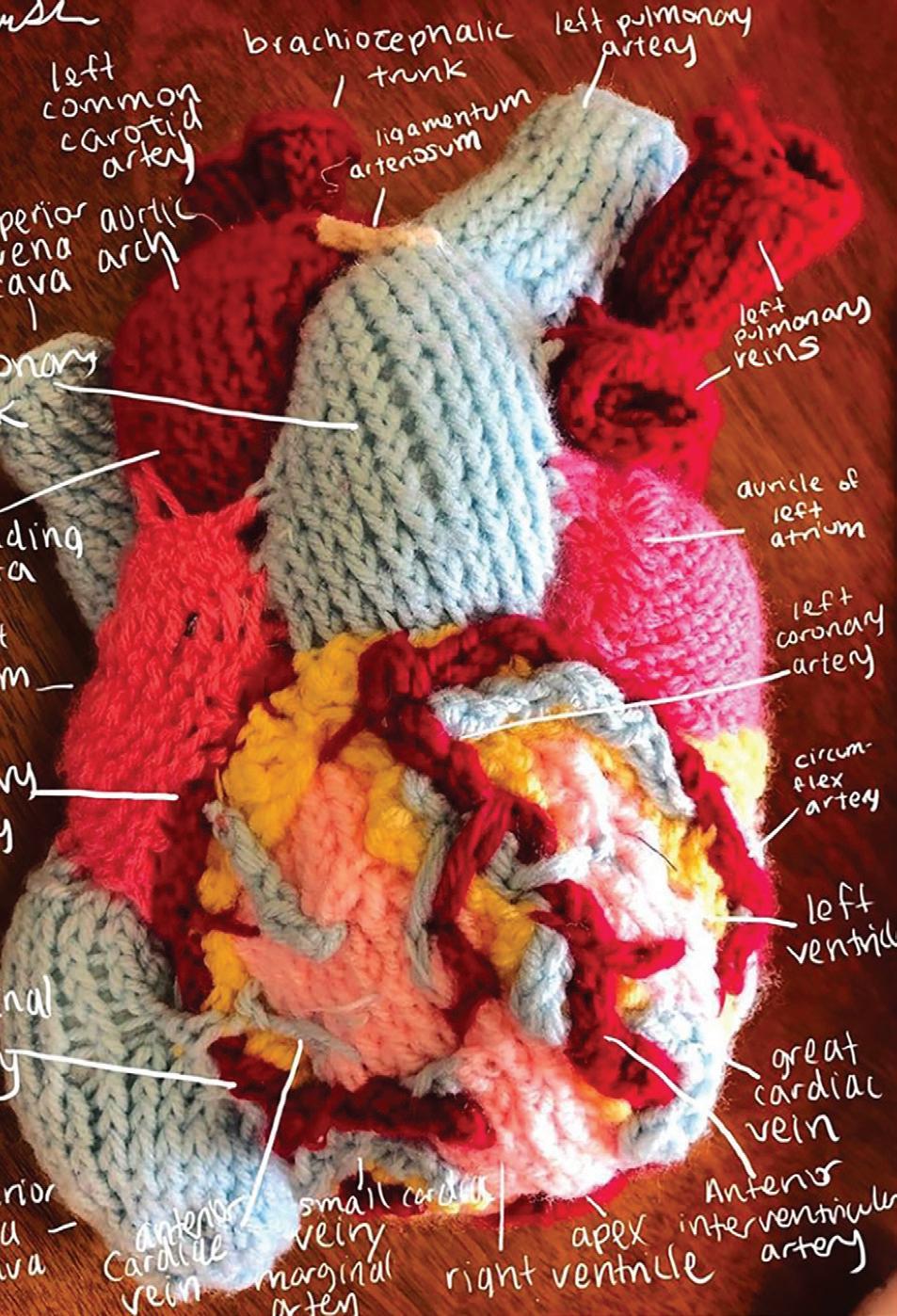
continued from page 3
consequences firsthand, which makes our voices especially important in efforts to educate, advocate, and promote solutions that protect public health.
We were also proud to support gubernatorial candidate Xavier Becerra at a recent Chinatown event hosted by AAPI physicians and community leaders. The gathering demonstrated the power of diverse groups coming together around shared values of health equity, access to care, and public service.
As we move forward, I am more optimistic than ever about the future of the San Francisco Marin Medical Society. We continue to advocate for patients, physicians, and communities. We continue to build relationships, create opportunities for engagement, and develop future leaders. Most importantly, we continue to show that when physicians come together with purpose and passion, we can make a meaningful difference.
The events themselves may fade from memory, but the connections we create endure. Those relationships are the foundation of our society, and they will continue to drive our impact for years to come.
Sarita Satpathy, MD, MPH, CPE is an internal medicine physician whose career has been rooted in hospital-based care across the continuum—from acute and post-acute settings to long-term and hospice care. She began her career as a hospitalist at Alta Bates in Berkeley and Summit Medical Center in Oakland and held leadership roles with Cogent Healthcare and with Sound Physicians. She has served on the Board of the Saint Francis Hospital Foundation for over a decade and on the San Francisco Marin Medical Society Board for several years prior to her election as President. She earned her undergraduate degree in Biological Psychology from the University of Texas at Austin, her Master of Public Health from San José State University, and her medical degree from St. George’s University in Grenada.