

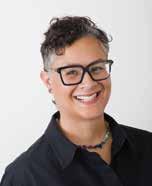
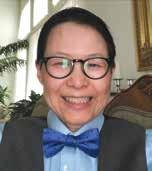
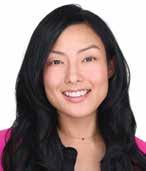
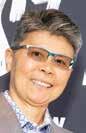



Alice Y. Hom
Audrey Koh, M.D.
Priti Narayanan
Rajasvini Bhansali Cj Jiang
Miki Adachi
Michelle Zhang
Ruth McFarlane
Michelle Meow
Lynn T. Sugihara
Jane Kim
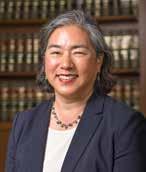
Hon. Donna Ryu
Manisha Israni-Jiang, M.D.
Mel Y. Chen
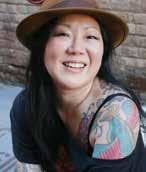
Margaret Cho
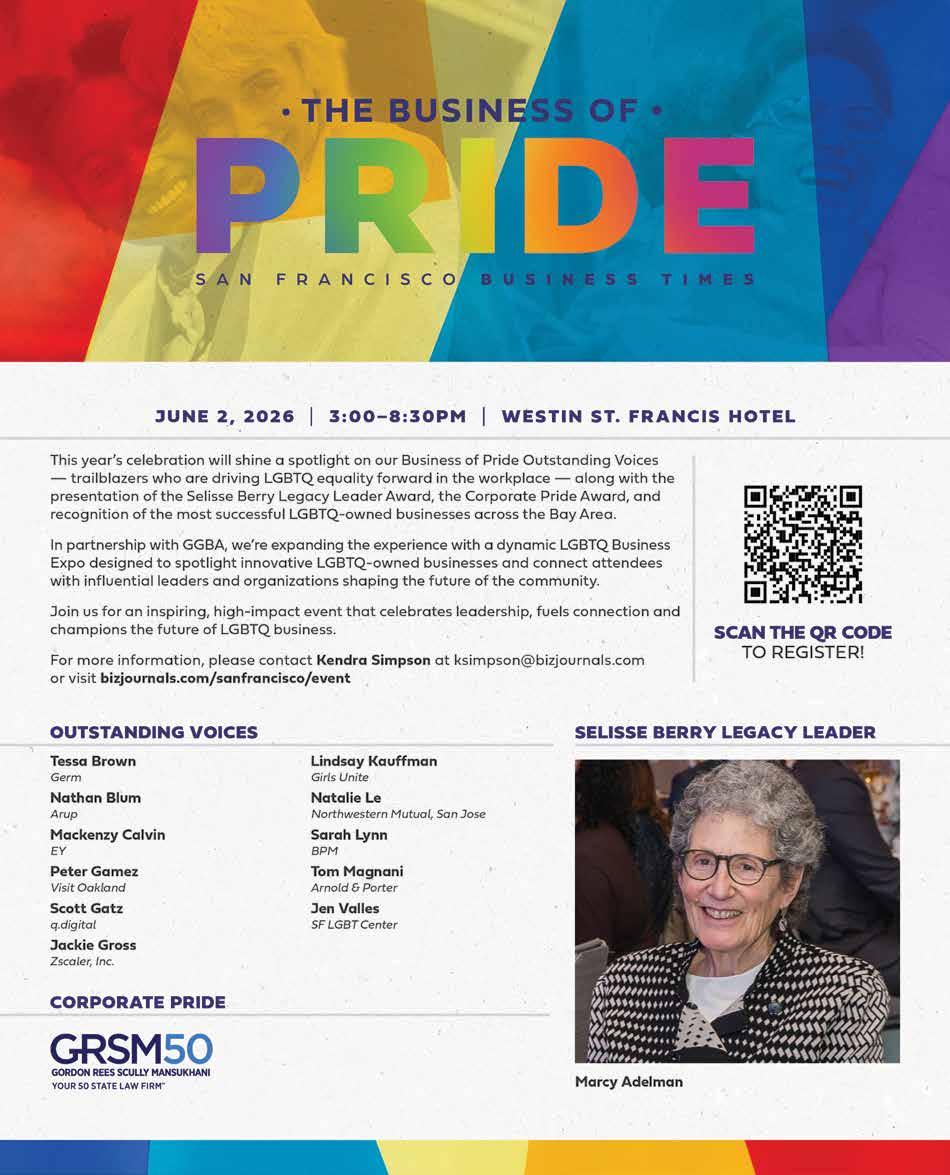
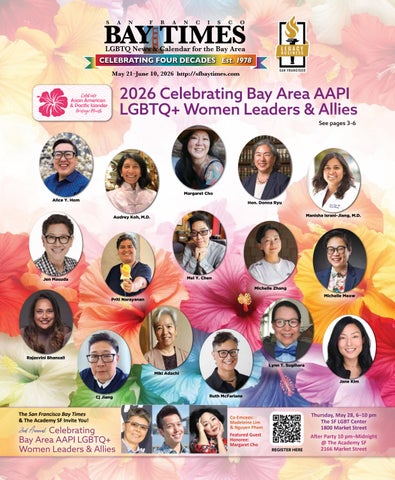

The San Francisco Bay Times on May 28, 2026, 6–10 pm, will present the second annual Celebrating Bay Area AAPI
LGBTQ+ Women Leaders & Allies at the SF LGBT Center, where 16 of the region’s most accomplished individuals will be honored during Asian American and Pacific Islander (AAPI) Heritage Month.
This year’s honorees are: Miki Adachi, Rajasvini Bhansali, Mel Y. Chen, Margaret Cho, Alice Y. Hom, Manisha Israni-Jiang, M.D., Cj Jiang, Jane Kim, Audrey Koh, M.D., Jen Masuda, Ruth McFarlane, Michelle Meow, Priti Narayanan, Hon. Donna M. Ryu, Lynn. T. Sugihara, and Michelle Zhang. We encourage you to read their biographies in this issue, and, if possible, to attend the event to show your appreciation for these leaders whose work continues to benefit, not only the LGBTQ+ community, but also other communities in the Bay Area and beyond. Reservations are at: https://bit.ly/4nFkf5I
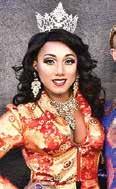
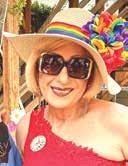
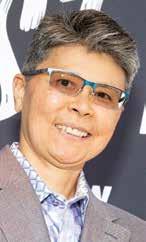
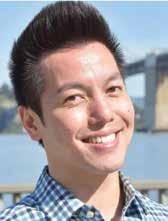
Returning as Co-Emcees will be Madeleine Lim, the Founder of the Queer Women of Color Media Arts Project; and Nguyen Pham, who is the President of the Mensa Foundation and Director of Sponsorships at SF Pride. ABC7 Lead News Anchor Dan Ashley; Shiyama Clunie, Senior Public Affairs Director of Kaiser Permanente; and San Francisco Bay Times Co-Publishers Betty Sullivan and Jennifer Viegas will provide the welcome.
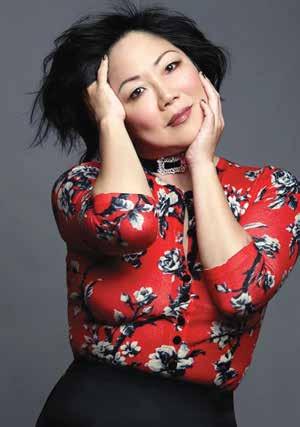
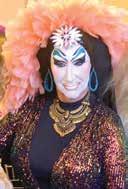
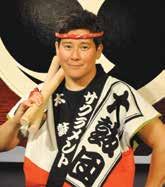
Special guest honoree Margaret Cho will be introduced by a trio of drag stars: Khmera Rouge, Donna Sachet, and Sister Roma. Internationally-recognized Taiko Master Tiffany Tamaribuchi will be performing, and the party after the ceremony will be led by DJ China G presented by Olivia Travel. Food will be thanks, in part, to the San Francisco AIDS Foundation 50 Plus Network and provided by Tay Ho Oakland Restaurant & Bar. La Méditerranée Noe is also helping cater the event, and there will be a variety of beverages available.
There will additionally be an After Party from 10 pm–midnight at The Academy SF (2166 Market Street), which is a co-sponsor of the event. All ticketholders to the main event at the SF LGBT Center will have free entry to The Academy SF for the After Party.
The Bay Times thanks Vincent Crisostomo, Crystal Jang, Madeleine Lim, Nguyen Pham, and Amy Sueyoshi for their help and guidance. Thanks also go to SF LGBT Center Executive Director Jennifer Valles and her team and to the event sponsors.
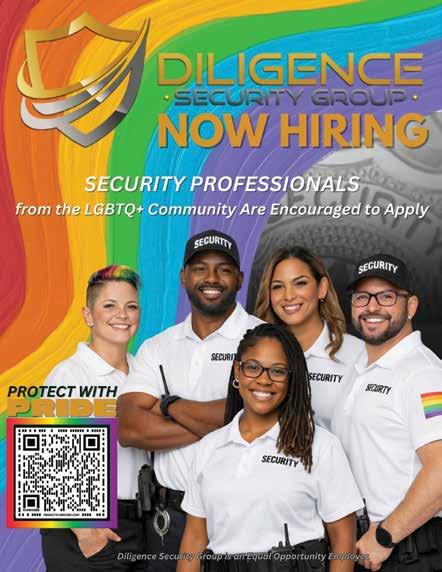
The presenting sponsor is Kaiser Permanente. Supporting sponsors include the San Francisco Community Health Center; Crystal Jang & Sydney Yeong; Greene Law Firm, P.C., Trust, Probate, and Veteran Law; Horizons Foundation; The Sparks Family; Dr. Marcy Adelman; Diligent Security; Olivia Travel; San Francisco Pride; La Méditerranée Noe; San Francisco AIDS Foundation 50 Plus Network; 1800 Tequila; and V. Sattui.
The event is a benefit for the Queer Women of Color Media Arts Project, which will be holding the 22nd annual QWOCFF Film Festival June 12–14. There will also be an Online Encore and Satellite Screening. For more information: https://bit.ly/4dgSYCV
The event is also a benefit for the Use The News foundation, which is the fiscal sponsor of the Bay Times
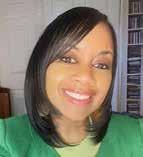
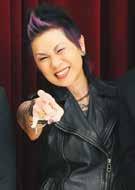
Program and Celebration @ the SF LGBT Center 1800 Market Street 6–10 pm
After Party @ The Academy SF 2166 Market Street 10 pm–midnight
The San Francisco Bay Times held the inaugural Celebrating Bay Area AAPI LGBTQ+ Women Leaders & Allies at Catch in the Castro in May 2025. These accomplished individuals were honored:
Marion Abdullah
Lenore Chinn
Cecilia Chung
Jasmine Gee
Adell Hanson-Kahn
Crystal Jang
Hoi Leung
Dion Lim
Koko Lin
Madeleine Lim
Elizabeth Seja Min
Rev. Trinity Ordoña
Gisele Pohan
Canyon Sam
Lia Shigemura
Amy Sueyoshi
TT Takemoto
Tiffany Tamaribuchi
Hediana Utarti
Sammie Wills
Alice Wu
Helen Zia
These are the 16 honorees of the 2026 Celebrating Bay Area AAPI LGBTQ+ Women Leaders & Allies, which will be presented by the San Francisco Bay Times at the SF LGBT Center on May 28, 2026.
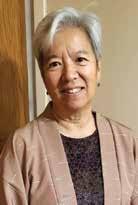
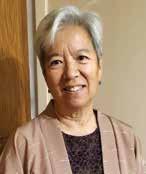
Miki Adachi
“I am the granddaughter of Japanese immigrants, who started and ran a very successful florist and nursery in El Cerrito. During World War II, my father and most of his family lived in the Topaz relocation camp in Utah. The first and second Japanese generations worked so hard and never really retired. That allowed my generation to go to college, get a good job, and even buy a house.
I entered Cal Berkeley in 1970 as a physical education major, played 4 years of intercollegiate basketball and softball, all really before Title IX. I taught PE for a few years, but ended up in Silicon Valley as a materials and logistics supervisor. I eventually retired from Dell Technologies in 2021.
The highlight of coaching the Tom Girls softball team was winning the Women’s Class C Championship in 1989! We also played in the ASA Nationals in Mississippi.
My greatest achievement, though, is my son Michael, who is a flight attendant for Alaska Airlines and is a gentleman who enjoys life and makes me proud.”
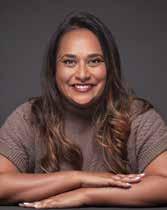
Rajasvini Bhansali
Rajasvini “Vini” Bhansali is the Executive Director of Solidaire Network and Solidaire Action. She is a passionate advocate for participatory grassroots-led power building and a lifelong student of social movements. In a wide-ranging career devoted to racial, economic, and climate justice, she has previously led an international public foundation that funds grassroots organizing in Asia, Africa, and Latin America; grown a national youth development social enterprise; managed a public telecommunications infrastructure fund addressing the digital divide in the Southern United States; and worked as a community organizer, researcher, planner, policy analyst, and strategy consultant.
Born and raised in India, Bhansali earned a Master’s in Public Affairs with a focus on addressing the Rural Digital Divide from the LBJ School of Public Affairs at the University of Texas at Austin and a Bachelor’s in both Astrophysics and Interdisciplinary Studies in Humanities &
Social Sciences from UC Berkeley. Bhansali also spent several years working in rural Kenya with community leaders, an experience she credits as having inspired her to work to transform philanthropy and international development to be accountable to communities. She co-authored Leading with Joy: Practices for Uncertain Times, and is a published poet, essayist, popular educator, yoga instructor, and leadership coach. When not engaged with community organizations, Bhansali can be found nesting with her family, taking long naps in the garden, or plotting the next dance party with friends.
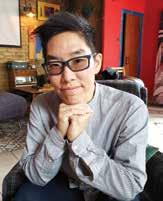
Mel Y. Chen
Mel Y. Chen (they/ them/ta+) is the Richard and Rhoda Goldman Professor of Gender & Women’s Studies at the University of California, Berkeley, where they support imaginative combinations of scholarship, art, and activism, and have the privilege of working with unstoppable, visionary students. Chen is also a member of the Board of Directors of the Queer Women of Color Media Arts Project (QWOCMAP), which since 2001 has informed their approach to arts activism and community building.
Chen is a recognized scholar of queer, trans, Asian American and disability studies, and is the author of two books: Animacies: Biopolitics, Racial Mattering, and Queer Affect (2012), and Intoxicated: Race, Disability, and Chemical Intimacies of Empire (2023). Their newest project, begun in a residency at the Banff Centre for Arts and Creativity, reaches for wider audiences and contains drawings, music, and essays that explore connections between the environment, migration, transgender and animal being, race, and music/sound.
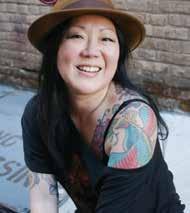
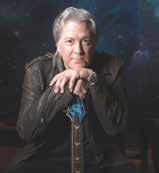
Margaret Cho
Comedian, actor, musician, advocate, entrepreneur, and artist are just a few of the adjectives that describe Margaret Cho—a jack of all trades and master of many. Born and raised in San Francisco,
Cho started her career at age 14. After winning a comedy contest to open for Jerry Seinfeld in the 1990s, she moved to Los Angeles, hit the college circuit, and became the most booked act in the market. She performed over 300 concerts within two years. Arsenio Hall introduced her to late night audiences, Bob Hope put her on a primetime special, and, seemingly overnight, Margaret Cho became a household name. She has since gone on to television, film, Broadway, and music acclaim. Recently, she released a new single and video with former Go Go’s performer Jane Wiedlin, with the video showcasing an array of comedy and drag superstars. She was nominated for an Emmy and has received additional honors including from Lambda Legal, GLAAD, and other LGBTQ+ organizations. April 30, 2008, was declared Margaret Cho Day in San Francisco. Currently she is on the Choligarchy tour, performing for audiences in sold-out venues across the U.S.
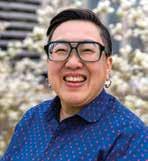
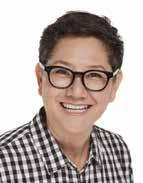
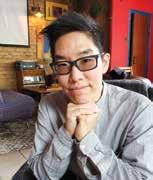
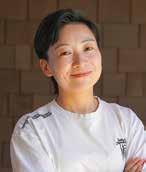
Alice Y. Hom
Alice Y. Hom (she/they) is a community builder invested in bridging diverse and overlapping communities for social change. She is the Executive Director of CHANGE Philanthropy and serves on the board of the American LGBTQ+ Museum and on the Advisory Council for the Conscious Style Guide. She is a Co-Founder of Beyond Two Cents: LGBTQ AAPI Giving Circle. Her previous board service includes: Borealis Philanthropy, California Humanities, Los Angeles City Commission on the Status of Women, Astraea Lesbian Foundation for Justice, Visual Communications, Great Leap, and APAIT Health Center.
She holds a Ph.D. in History from Claremont Graduate University, an M.A. in Asian American Studies from UCLA, and a B.A. from Yale University. Hom is a Co-Editor of two anthologies: Q & A: Voices from Queer Asian North America and Q & A: Queer in Asian America and has published articles in various journals and anthologies.
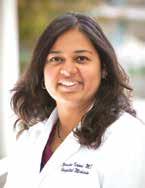
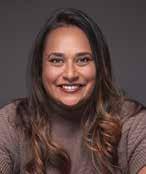
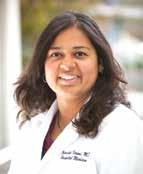
Manisha Israni-Jiang, M.D.
Dr. Manisha Israni-Jiang is a dual boarded hospitalist and Health Sciences
Clinical Professor at UCSF, where she serves as Director of Hospital Capacity and Throughput for the Benioff Children’s Hospitals.
For over 15 years, she has
(continued on page 5)
(continued from page 4)
cared for hospitalized patients of all ages, and, during the pandemic, she led UCSF’s Respiratory Screening Clinic to ensure safe access to care for pediatric and adult cancer patients. Her work bridges pediatrics and internal medicine, focusing on care transitions, operational equity, and compassionate, patient-centered systems. A proud immigrant, lesbian, and mother, she leads with inclusion, presence, and purpose across every facet of care and leadership.
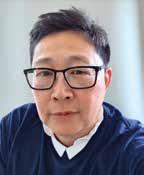
Cj Jiang
Cj Jiang is a Lieutenant with the San Francisco Fire Department and a longtime advocate for LGBTQ+ communities. She previously served as Co-Coordinator of the Asian Pacific Islander Queer Women and Transgender Coalition (APIQWTC), where she helped build community and amplify underrepresented voices. She was actively involved in the fight for marriage equality, earning recognition from the Gay Asian Pacific Alliance, including receiving their Community Award. Her greatest achievement is being a parent to her two children.
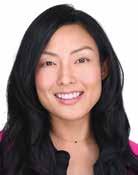
Jane Kim
Jane Kim is a civil rights attorney, consumer advocate, and candidate for California Insurance Commissioner. Prior to her candidacy, Kim served as the California Director of the Working Families Party and California Political Director for Bernie Sanders. She served four years on the San Francisco Board of Education, where she led the charge to bring LGBTQ+ studies and gender-neutral bathrooms to public schools.
Over two terms representing District 6 on the San Francisco Board of Supervisors, Kim led initiatives to make City College tuition free and expand affordable childcare, raised the minimum wage, and negotiated record levels of affordable housing. Kim wrote and passed the laws to create the Transgender District and Leather and LGBTQ Cultural District, helped create San Francisco’s first LGBTQ+ homeless shelter, renamed streets after LGBTQ+ pioneers, and worked with community to protect the Eagle, the Lonestar, the Stud, and Oasis.
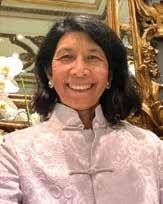
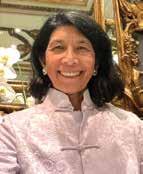
Audrey Koh, M.D.
Audrey Koh is an obstetriciangynecologist and health and civil rights activist. In her 40+ years of practice, she guided scores of LGBT people to produce pregnancies and deliver their infants. She has been named among America’s Top Doctors annually since 2003.
As an Associate Clinical Professor, she has helped train UCSF medical students and residents, including on reproductive rights and culturally sensitive treatment of people of all sexual behaviors and gender identities. She has published widely in the medical literature including on: gynecologic care for lesbians; and demonstrating the psychological and social well-being of offspring conceived in lesbian-parent families (followed since infancy to adulthood), thereby debunking the conservative position that only heterosexuals are qualified as parents. She has served on the boards of Lyon-Martin Women’s Health Services, Gay & Lesbian Medical Association, and as Co-Chair of the Boards of the National Center for Lesbian Rights (now the National Center for LGBTQ Rights) and Horizons Foundation.
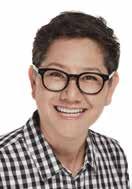
Jen Masuda
Jen Masuda has dedicated 15 years to Yu-Ai Kai Japantown Community Senior Center and currently serves as Executive Director. She has helped strengthen the organization’s marketing, programming, policy development, and operations, contributing to increased participation, improved efficiency, and revenue growth. As someone new to the LGBTQ+ community, Masuda is committed to fostering inclusive spaces that promote connection, understanding, and belonging. Before joining Yu-Ai Kai, Masuda co-founded Rain or Shine Communications, a content-driven web company later acquired by Formation Media, where she served as Sales Director. Earlier in her career, she held roles as Associate Publisher and Group Sales Manager at Source Interlink Media in Anaheim, California, along with various sales and marketing positions in the mobile electronics and automotive enthusiast industries. Her professional experiences have taken her across New England, Southern California, and Japan.
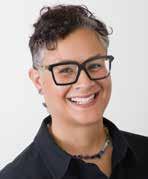
Ruth McFarlane is deeply committed to feminist movements, collective power building, and lifting up BIPOC and queer communities. Her leadership and fundraising prowess has supported growth at multiple organizations working on intersectional social justice. An attorney and social worker, McFarlane practiced at a
firm in New York City before moving to the Bay Area. McFarlane ran a Larkin Street program for HIV-positive youth in the Tenderloin before serving as the Director of Programs at the SF LGBT Community Center. At the Center, she produced the last Pink Party in the Castro for a crowd of over 70,000. She was part of the Bay Area team that launched The PRIDE Study, which was the first community-powered, longitudinal study of LGBTQ health in the United States. She also served as a Board Member and then as Director of Development and Community Outreach at the National Center for Lesbian Rights (now the National Center for LGBTQ Rights). She is currently Deputy CEO of the Ms. Foundation for Women.
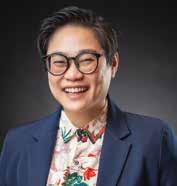
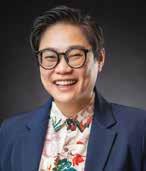
Michelle Meow
Michelle Meow is the host and producer of The Michelle Meow Show
The program’s tag line is: “Your A–Z, covering the LGBT, LMNOP, and everyone in between.” Her mission is constructing opportunities for people to listen in to deep conversations and to develop understanding and empathy. Her program can be heard through the Commonwealth Club World Affairs of CA, which at times is aired on KQED. In addition to her own program, Meow produces multiple other programs at the iconic Commonwealth Club World Affairs, where she is a Member of the Board of Governors. There she is dedicated to generating conversations around social justice with an intersectional lens.
She served as a Co-Host of the San Francisco Pride Parade broadcast from 2006–2018 and she has also served as the President of the Pride organization’s Board of Directors from 2014–2018. In 2020, she produced Global Pride with the Commonwealth Club World Affairs, YouTube, and InterPride, the first ever virtual global live event focused on the LGBTQIA+ community. From 2022–2025, she supported efforts in Asia to amplify LGBTQIA+ rights through activism and advocacy in Thailand, a country that has just passed marriage equality.
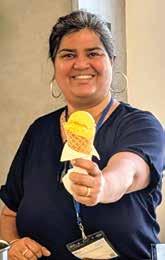
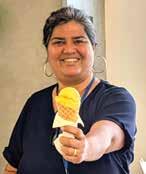
Priti Narayanan
Priti Narayanan is the co-founder of Koolfi Creamery, a Bay Area craft ice cream company with stores in San Leandro and San Francisco and pints carried in specialty stores across the region. Founded with her wife Mads in 2018, Koolfi is known for bold Indian-inspired flavors and a strong sense of community.
(continued on page 6)
(continued from page 5)
Both wives have been active in the queer rights movement for over two decades. Narayanan worked on political campaigns supporting marriage equality and served as Co-Chair of Trikone, a Bay Area South Asian LGBTQ organization. Koolfi proudly embraces queer visibility, including prominently displaying the owners’ wedding photo to introduce many Indian families visiting the stores to a joyful, positive example of queer love and family.
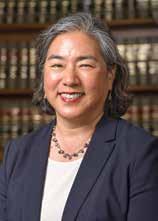
Hon. Donna Ryu
Donna Ryu is the second openly LGBTQ+ judge to serve on the federal judiciary, retiring as Chief Magistrate Judge for the U.S. District Court for the Northern District of California. Prior to that, she co-founded an all-women’s civil rights firm, then became a Clinical Law Professor, providing assistance to underserved communities and teaching students to give excellent legal representation.
She created a seminar on APAs and the Law, and enjoyed advising APA and LGBTQ+ student organizations. She litigated cases challenging systemic racial harassment against Black steel workers, protecting Latina farmworkers from sexual harassment, confronting the glass ceiling for women, and advocating for Asian
garment workers. While co-chairing the National Center for Lesbian Rights (now the National Center for LGBTQ Rights) board, she authored a brief on behalf of law school deans and professors in the Proposition 8 case in which she linked protection of LGBTQ+ rights to the California Supreme Court’s historic role in eliminating bias against minorities and women.
Lynn T. Sugihara
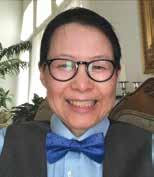
Lynn T. Sugihara is a Founding Board Member of Richmond Rainbow Pride and a member of the Richmond Task Force to End Gender-Based Violence. She is a former Volunteer for the Asian Women’s Shelter, Asian Pacific Islander Legal Outreach, and the
organization Asian Pacific Islander Queer Women & Transgender Community.
She is also a filmmaker and Board Member of the Queer Women of Color Media Arts Project. She retired as a Dental Hygienist following 41 years in that profession.
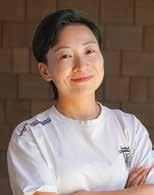
Michelle Zhang
Michelle Zhang is the Founder of the Society of Heart’s Delight (SHD), a Silicon Valley-based nonprofit advancing civic engagement and belonging within immigrant communities and beyond. A passionate LGBTQ+ advocate, Zhang curated Chinarelated content for Global Pride 2020 and has made LGBTQ+ visibility and equality central to her work. Since founding SHD in 2020, she has led initiatives that bridge cultural divides and elevate LGBTQ+ voices, partnering with leaders and organizations including State Senator Scott Wiener, Assemblymember Alex Lee, former Assemblymember Evan Low, the Bay Area Municipal Elections Committee, the LGBTQ+ Victory Institute, and Silicon Valley Pride.
Originally from Chengdu, China, Zhang moved to the Bay Area in 2017 and has since become a leading voice for LGBTQ+ inclusion, cross-cultural collaboration, and immigrant civic participation. Her work has been featured on NBC News, ABC7, and Voice of America.

Thank You to Our Sponsors!











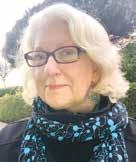
I was raised with the firm conviction that voting is every American’s duty and privilege. No matter what, if there’s an election, you vote, because every vote matters. And I still believe that wholeheartedly, even though I have lived through entirely too many elections when the choice of candidates seems to be between meh and meh-er. Even though the options on the ballot don’t always excite me, I know that it’s still important to exercise our right to a free and fair ballot.
Not that long ago, I was feeling pretty good about the midterm elections. It has become clear that our president’s agenda has become wildly unpopular, his popularity is at an alltime low, and his whole party is flailing in their ever more desperate attempts to cling to power. The odds of regaining control of
the House of Representatives were looking better each day. As long as we have access to free and fair elections, I told myself, the American people are going to rise to the occasion and vote for their democracy.
On April 29, of course, the odds of retaking the House changed dramatically, when the U.S. Supreme Court’s decision in Louisiana v. Callais gutted the Voting Rights Act. Since that day, one state after another has taken away the voices and votes of their citizens.
Within hours of the court’s decision, Louisiana’s governor declared a state of emergency that stopped the state’s congressional primary election—even though it was already underway, and over 45,000 ballots had already been cast—in order to redraw district maps to ensure that a Black candidate could never be elected in his state again. Other Southern states immediately jumped on board the gerrymander bandwagon, rearranging their electoral maps to ensure that no Black candidates —and certainly no Democrats—would ever again stand a chance of being elected in their states.
This is not the way elections are supposed to be. Elections have now become a country-wide street fight, with all rules thrown out the window. One party is gleefully turning their back on the Constitution, and the will of the people, to blatantly steal elections so they can rule this country in perpetuity. The South has effectively declared itself a one-party state, and they are thumbing their noses at the rest of the country while blithely
ignoring the rights of their own citizens. As I said, voting is both our duty, and our privilege, and that privilege has never been in so much danger as it is now. Bottom line: This election season is now-or-never time for our democracy. Those of us who do not live in the deep South may feel helpless, but there is still plenty we can do; it’s just that our jobs have gotten much harder. Don’t give up hope; that’s what they are counting on. Do your part in this battle, or it may be our last chance to do so.
Meanwhile, in California
Election Day is June 2. Make sure your vote is counted: Drop your ballot in a secure ballot box, vote at City Hall, or vote on Election Day at your local polling place. If you absolutely must vote by mail, don’t wait until the last minute to mail it. Take it to your post office to ensure it gets postmarked on time. This is no time to take chances on your vote not being counted.
The city of San Francisco is facing serious budget challenges. Difficult cuts will be made. The question is: Who will feel those cuts the most? The mayor’s proposed budget goes to the Board of Supervisors on June 1, so late May is when advocates for nonprofits and city services are doing everything they can to protect their funding.
Drastic budget cuts to HIV and LGBTQ+ services by the federal government have increased the urgency of protecting these

services at the state and local levels. Activists have been working hard at making their voices heard at City Hall and in Sacramento to protect local services from budget cuts that would pose existential threats to vital services. The HIV Action Network at the San Francisco AIDS Foundation has created a toolkit and calendar of events so you can help with this fight. Put these two dates on your calendar for budget advocacy at San Francisco City Hall: June 16 for LGBTQ+ and HIV Advocacy Day, and June 18 for People’s Budget Day of Action. Click the link at this site for more info, and to volunteer: https://tinyurl.com/HNtkit
Castro Community Benefit District is also facing the very real possibility of losing half a million dollars in funding that they normally receive annually, including grants to maintain Jane Warner Plaza for 40 hours per week, and funding for four visible fulltime community ambassadors who are trained in de-escalation and outreach. Losing that funding would have a negative impact on the quality of life in the Castro. (continued on page 18)
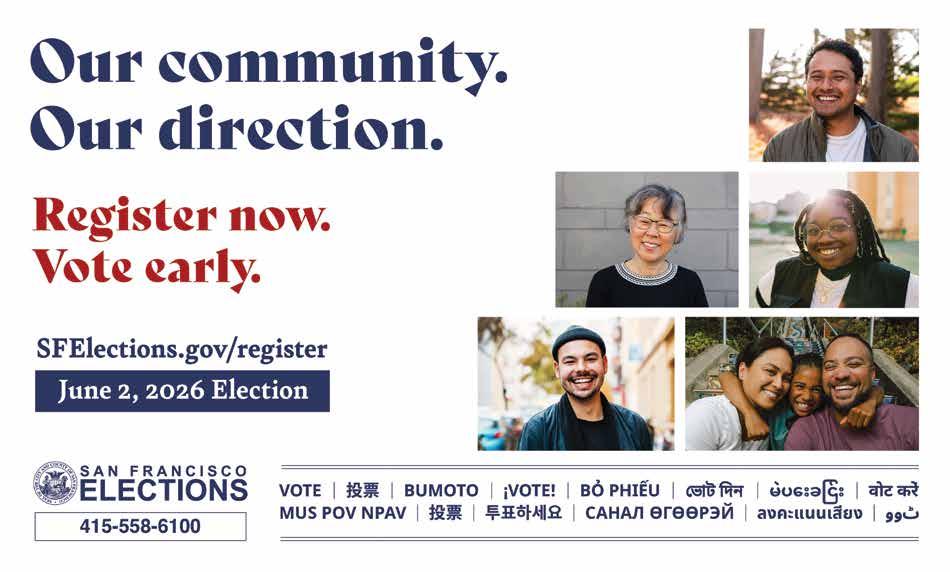
Elise and Otto Hampel were an unremarkable working-class couple living in Berlin in 1940. With little formal education, Elise was employed as a domestic, and Otto worked in a factory. Otto had fought for Germany in World War I, and Elise was now a patriotic member of the National Socialist Women’s League. But everything changed for them when they learned that Elise’s brother had been killed while serving in the German military during the Nazi invasion of France in November 1940.
The Hampels did not interpret Elise’s brother’s death as that of a loved one who had heroically made the ultimate sacrifice for the fatherland. Precisely the opposite, they viewed it a waste of a precious life that so disturbed them that they could no longer support Hitler and the Nazis, and compelled them to do something to try to undermine the regime. What they decided to do was disarmingly simple, but highly risky: write anti-Nazi postcards in block handwriting that could not be traced to their personal handwriting, and distribute those postcards one by one, leaving them on stairwells in buildings or dropping them in mailboxes. One note was left outside a dentist’s office, another outside an attorney’s office, and others in myriad residential and other buildings. For their own safety, they told absolutely no one what they were doing.
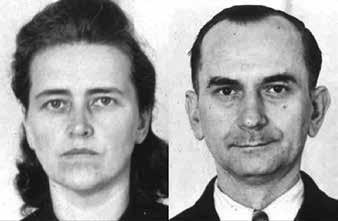
Gestapo in late 1942. The sheer volume of postcards that were turned in during those years had convinced the Nazi authorities that a significant resistance network was operating in Berlin. In fact, it was just Elise and Otto, who amazingly evaded capture for as long as they did.
Sadly, although we cannot know for sure how many people read the postcards and/or passed them along to others, the overwhelming majority of postcards appear to have been quickly turned over to the police, underscoring the pervasive fear that permeated German society during the Nazi reign of terror. As far as we know, no one upon seeing a card became inspired to start writing and disseminating their own, or engaging in other forms of resistance.
Elise and Otto were executed by guillotine on April 8, 1943. They took full ownership of their actions, expressing no regret. Elise explained in her signed confession that, even though her husband wrote all the cards because she herself could not print well and he distributed all of them as well, she shared in their culpability. Her motivation for their actions was intimately human and deeply personal: “My soul was devastated by the losses of the war, particularly of my brother.”

The Hampels’ postcards contained direct and straightforward messages to their fellow Berliners, urging them not to serve in the military, to stop donating to Nazi support organizations, to refuse to cooperate with the Nazi government, and to overthrow Hitler. The cards contained no strategic approach for how Berliners could carry out such dangerous missions; neither did the Hampels have one. The postcards merely offered simple inspirational slogans, such as, “German people wake up!”; “Hitler’s regime will bring us no peace!” “Free Press! Why suffer war and death for the Hitler plutocracy?”; and “Hitler’s war is the worker’s death!”
All in all, the Hampels distributed over 287 postcards throughout Berlin over a period of two years before they were caught by the

Primo Levi as “the greatest book ever written about German resistance to the Nazis.” There have been five screen adaptations of the story, including two award-winning feature length films and two television mini-series.
The sound of the Hampels’ resistance did not “die away unheard.” Today, it’s reached countless millions. Perhaps we find the Hampels’ actions so striking, not despite of, but because of how deceptively simple, apparently unsuccessful, and arguably naïve they were when viewed from the narrow perspective of wartime Germany. The Hampels’ undertaking had no chance of stopping the
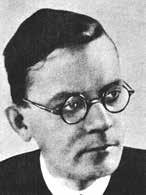
The German novelist Hans Fallada, in the November 1945 issue of the Soviet-sponsored magazine Reconstruction, recounted the Hampels’ story but appeared unimpressed by it. He characterized the Hampels as “two insignificant individuals,” who were, in fact, “faithful” Nazi supporters until Elise’s brother was killed. He described them as having no “particular skills,” poor spelling, and clumsy means of expressing themselves. Speculating that the few cards that were not turned over to the authorities were likely “read hastily and fearfully and destroyed immediately,” Fallada declared that “the sound of their protest died away unheard.”
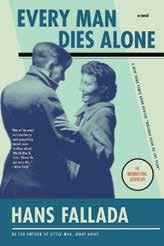
But Fallada quickly had a change of heart and did something that resulted in the exact opposite coming true. Less than a year later, he completed a fictionalized account of the Hampels’ story, maintaining its core, but adding and altering characters and plotlines to underscore what he considered important themes to the rebuilding of Germany. Fallada’s novel Every Man Dies Alone, published in German in 1947, but not published in English until 2009, was described by the renowned Holocaust survivor and writer
Nazi war machine, but they did it anyway because they genuinely considered it the right thing to do.
When the Hampels wrote and placed each one of the more than 287 postcards on a particular stair in an individual building, they had no idea what their impact would be. Very likely, they hoped against hope that their postcards would somehow spark a popular revolt that would overthrow the Nazis. They didn’t know that what they did would be recorded and recounted and would inspire yet-to-be-born generations in future seemingly hopeless struggles. As we face daunting challenges today, the Hampels are asking us what we consider the right thing to do from the depths of our beings and to do it—even if it may bear no fruit until after we’re gone.
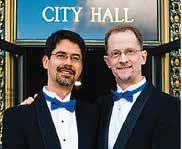
John Lewis and Stuart Gaffney, together for over three decades, were plaintiffs in the California case for equal marriage rights decided by the California Supreme Court in 2008. Their leadership in the grassroots organization Marriage Equality USA contributed to making same-sex marriage legal nationwide in 2015. Today, they continue to educate and advocate for marriage equality and LGBTIQ+ rights worldwide.

By Aaron Boot-Haury
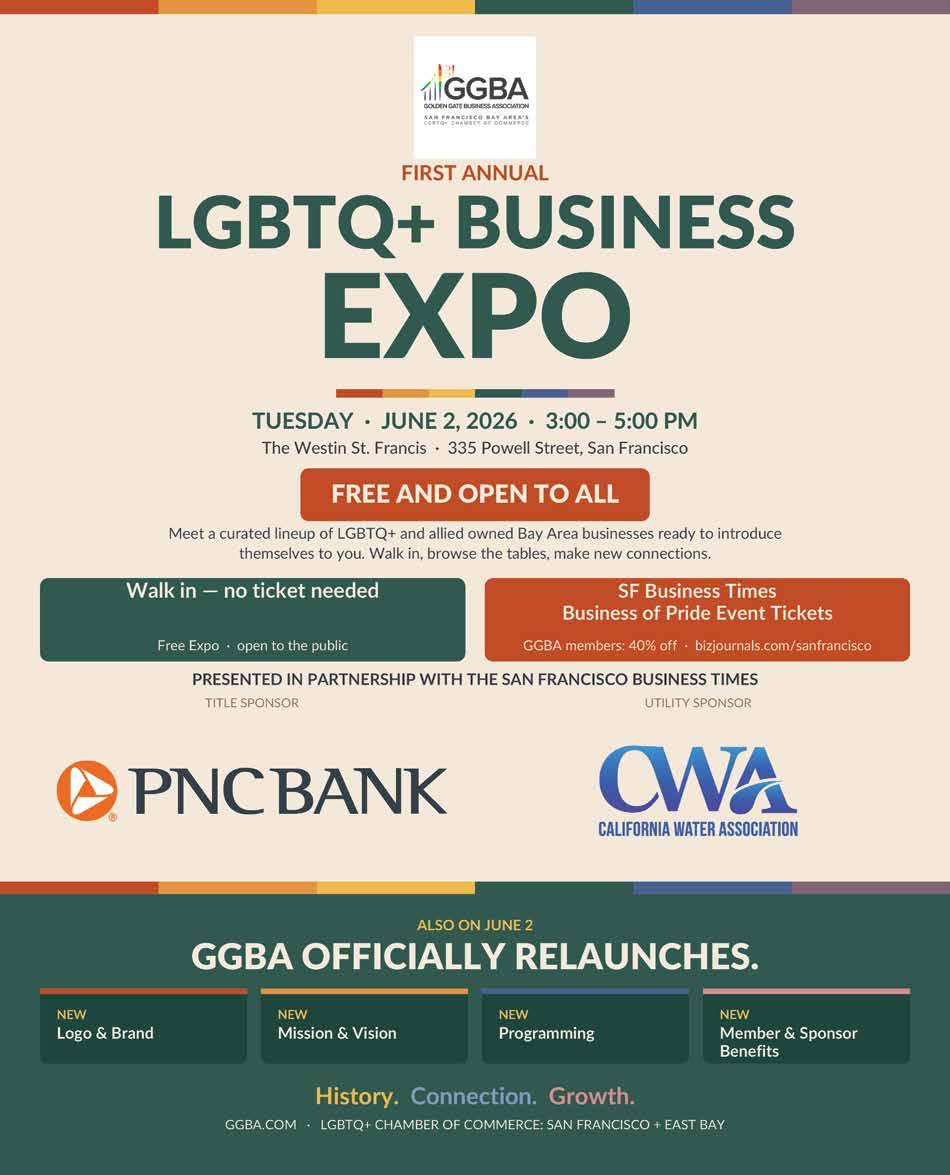
As I write this, we are putting the final touches on the new GGBA. After months of planning, listening, drafting, redrafting, and a healthy amount of late-night text messages, I can tell you with full confidence that what we will unveil on June 2 is something our community will be proud of.
I am ready. The board is ready. And I think you are going to love what you see.
This month, rather than walking through the Expo and Business of Pride logistics again (last month’s column covered those), I want to use this space to do something I have not done nearly enough of: thank the people whose fingerprints are on this relaunch. The Golden Gate Business Association did not arrive at this moment on its own. Several extraordinary people quietly carried us here, and it would not feel right to walk into June 2 without naming them.
First, my deepest thanks to GGBA board member Tali Bray, who very early in this process asked the questions I needed to be asked. What does the next iteration of GGBA need to be? How does that answer change depending on which stakeholder is
sitting across from you? And how should we be communicating with each of them? Tali’s experience in strategic communications and executive coaching pulled us out of motionfor-motion’s-sake and into something far more intentional. Without her steady push to slow down before speeding up, this project quite simply does not get off the ground.
To Robert Heuer, owner of Studio 1312 Consulting and a longstanding GGBA member, thank you. A professional copywriter by trade, Robert has donated hours of his time helping us refine our messaging across every audience and every page of our forthcoming website. Anyone who has ever tried to find the right words to capture a 50+ year old organization in transition will appreciate how generous a gift that is. If you need help finding your businesses voice—give him a call and you won’t be disappointed.
To Andrew Freeman, CEO of AF&co and Co-Founder of Carbonate, the marketing firm that designed our new logo and brand identity as a donation to the Association: thank you on behalf of every member, past and future. The work is stunning. The generosity behind it is rarer still. The Carbonate team gave us something we could not have afforded and absolutely
S. E. Owens & Company, with a nationwide reach and offices in Oakland, California, provides a wide range of services related to compliance and accounting. While their team is focused on excellence in these areas, they uniquely are also passionate about promoting social equity and have clients representing the fields of politics and animal rights, along with other businesses and nonprofits. They additionally donate a significant portion of their time and proceeds to LGBTQ+ organizations and other groups that align with their values. Here, Director Marissa Quaranta, who collaborated with Founder Stacy Owens on the responses, shares more about this community-minded firm.
GGBA: Please tell us more about S.E. Owens & Company.
Marissa Quaranta: S.E. Owens & Company is a compliance and accounting firm with team members and clients across the country serving the political, nonprofit, and business spheres. We help our clients stay compliant and organized with our responsive and dedicated team. While we are numbers focused and deliver excellent results, we are also heart-driven and passionate about assist-
deserved, and we are forever in their debt. And to my board colleague James Young, who spearheaded the visual execution of the entire rebrand: I have made this joke probably a dozen times over the past five months, but it bears repeating in print. James spent twenty-five years building and growing a customer experience and design firm, sold it, and walked into retirement at almost exactly the moment GGBA needed someone with his precise background. I cannot think of better timing for a man to discover a new hobby, and, on behalf of all of us, I am profoundly grateful that James’ new occupation is “GGBA’s most devoted and dedicated volunteer.”
There are many more people I owe thanks to: our full board, our Expo Title sponsor PNC Bank and our Expo Utility Sponsor California Water Association, our partners at the San Francisco Business Times, our committee chairs, our exhibitors, and the members who kept the lights on while we did this work. I will keep saying thank you in person and in writing for a long time after June 2.
Now, the ask.
If you are reading this as a current GGBA member, thank you for staying with us. We will see you at The Westin.
ing our clients so they can focus on what they do best.
GGBA: Why did Owens decide to create this namesake firm?
Marissa Quaranta: Stacy Owens decided to start S.E. Owens & Company so that she and her team could continue to make a difference in the communities she cares about, using her skills in accounting and compliance to help political campaigns and mission-driven businesses thrive.
GGBA: Who are some of your and Owens’ role models, and especially those who helped to influence the business?
Marissa Quaranta: We are inspired by our clients, and all their dedicated work, as well as our team members who help cocreate our firm and its culture. We also have great appreciation for all those who came before us in the various social justice spaces and causes.
GGBA: Why did you decide to join the GGBA, and how long have you been a member?
Marissa Quaranta: We decided to join the GGBA very recently. We are a wom-
If you are reading this and you have been a GGBA member at some point, even years ago, and life or circumstance pulled you away, this part is especially for you. June 2 is our big coming out: a new identity, a new direction, new programming, new benefits, and a renewed clarity on who we serve and how. The Business Expo is free and open to the public. No ticket required. No registration required.
Our entire board of directors will be on site, and I promise that you will not be able to miss us in the crowd (you’ll know when you know!). Walk in, find us, and say hello. We would love to reintroduce ourselves to all those whom GGBA is becoming. Even more than that, we would love to listen. Tell us what you need from the chamber. Tell us what we got right the first time, and what we should do differently. Your perspective is part of what gets us to the next chapter.
History. Connection. Growth. We have been carrying that promise quietly for the past few months. On June 2, we will get to live it out loud.
See you at The Westin.
Aaron Boot-Haury (he/him) is the President and CEO of the Golden Gate Business Association.

an-owned business. Our company is committed to promoting social equity. We donate a sizable portion of our time and proceeds to organizations that promote inclusive representation for women, trans* people, LGBTQIA people, as well as people of all races, ethnicities, and socio-economic backgrounds. Internally, we are committed to providing fair working conditions, flexibility, and a living wage to our team members. We strive to cultivate a respectful and collaborative working environment. We think that being a part of the GGBA will be a fantastic opportunity to widen our circle.
GGBA: How has being a member of
GGBA helped your business so far?
Marissa Quaranta: We look forward to seeing how becoming a member of the GGBA will enrich our business.
GGBA: What advice would you give to someone who is thinking of starting their own business?
Marissa Quaranta: Make sure that you are strongly rooted in your mission and your core strengths, that you have belief and passion in what you do, and trust in those you service.
https://www.seowenscompany.com/


Brandon Miller
There’s a version of my journey to parenthood that sounds very put-together: I flew to Missouri, met my baby twins, and flew home—beautiful, seamless, and the kind of thing you post on Instagram with a tasteful filter.
Here’s the real version: A flu outbreak grounded us, and we ended up cramming two newborns and my mother into a rented RV and driving from Missouri to San Francisco in the dead of January. It was not in my birthing plan, and I’m being generous when I call it chaotic.
At some point, I just let go. We stopped at the Grand Canyon, and I stood there with a baby in each arm, looking out at something so vast it made the chaos of the last 48 hours
disappear. These were the humans I’d been dreaming about, planning for, losing sleep over, and they were finally here, completely unbothered by the mess it took to get them home.
That’s surrogacy. You sign up for one experience and get a completely different one, and somehow the detours end up being the stories that stick with you forever. I’ve been through it once, I’m doing it again, and, if you’re considering it, I want to share what I wish someone had told me.
The sticker shock of surrogacy is real, and I’m not going to sugarcoat that. But what most people don’t realize is just how much range exists, and how your approach translates directly into cost.
Full-service boutique agencies will manage every piece of the experience for you: matching you with a surrogate, coordinating the legal work, booking your travel, and handling communication. You’re essentially hiring a concierge service. My first time, that’s the route we took, and it was worth every penny for the peace of mind. It was also, by a wide margin, the more expensive path.
This time around, my partner is running the whole operation, coordinating the donor, surrogate, attorneys, and logistics. It is more work, yes, but meaningfully less expensive.
(continued on page 15)
Medi-Cal Estate Recovery: Will Long-Term Care Take My Home After I’m Gone?
Jay Greene, Esq., CPA
In April, we covered how Medi-Cal’s reinstated 2026 asset limits and the 30-month lookback affect eligibility for long-term care. This month, we address the following: Once Medi-Cal pays for your care and you pass away, can the state come after your home?
If you are part of the Bay Area LGBTQ+ community—relying on a partner, chosen family, or caregiver—picture who you’d want in your home after you’re gone, and ask whether your documents make that pos-
sible. For many households, the honest answer requires a closer look.
Medi-Cal Can (and Can’t)
Under current California law, recovery is limited to nursing home care, home and community-based services, and related expenses paid after age 55—and only from your probate estate. Assets in a properly funded living trust, in joint tenancy, or transferred by a valid transfer-on-death deed generally bypass probate and are often outside the recovery base when structured correctly. There is no recovery while a surviving spouse or registered domestic partner is alive. A “homestead of modest value” may qualify for a hardship waiver, but, in the Bay Area, that threshold—50 percent or less of the county’s average home price—means virtually no San Francisco property qualifies. For households that are neither married nor registered, that gap in protection is significant.
LGBTQ+ Realities: Spouses, Partners, and Chosen Family
The law now recognizes marriage equality, but everyday LGBTQ+ life still includes long-term partners, ex-partners who remain family, and caregivers who function like
(continued on page 18)



This month, we reflect on what I call The Philanthropic Mindset. It is not philanthropy defined by wealth or recognition, but by presence, compassion, and everyday choices. It could be a conversation, a gesture, or a moment of unexpected grace. We often overlook the quiet acts that restore connection and renew hope, yet these moments remind us that caring for one another remains one of the most powerful expressions of our shared humanity.
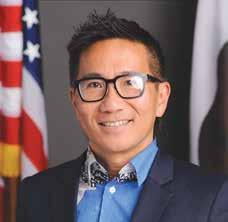
Lance Toma is the Chief Executive Officer of the San Francisco Community Health Center (formerly API Wellness Center). He is the Board Chair of NMAC (National Minority AIDS Council), and has served as Co-Chair of the San Francisco HIV/AIDS Providers Network. He also co-chairs the
board of CenterLink. In 2020, Lance was appointed to the California Commission on Asian American and Pacific Islander Affairs.
Tom LeNoble: What first opened your eyes to the issue your organization works on?
Lance Toma: The communities we are serving and ensuring that we’re providing the best care and services to them. We are continually advocating and lifting up their stories, needs, and priorities.
I was a social worker. When I was in Chicago, I volunteered with queer youth at the LGBT center there, and that was a huge awakening of what I wanted to do through service, advocacy, and policy.
Tom LeNoble: Was there a specific moment when you realized this work would become part of your life?
Lance Toma: From high school through college, there was always a drive in me to volunteer. I studied engineering, but my path kept pulling me back toward service. For graduate school, I returned to social work and made a commitment that this was going to be my career—to be of service to the community.
Tom LeNoble: Who modeled generosity for you when you were young?
Lance Toma: My grandparents on both my mother’s and father’s side. Their generosity, care, and love shaped me deeply. I’m from Hawaii, and my father’s parents dedi-

cated much of their lives to contributing to the Okinawan community. That was very present for me growing up.
Tom LeNoble: When you hear the word philanthropy, what does it mean to you personally?
Lance Toma: It means giving selflessly. It is giving back without conditions. I feel like it is a philosophy of caring for our society.
Tom LeNoble: What motivates you to keep showing up for this work?
Lance Toma: I’ve been working in the Tenderloin for over 26 years. I see and interact with the community we are serving every day. I have respect, love, and gratitude for our clients. While we’ve lost many, I’ve also seen joy and hope within our community, and it never fails to inspire me—every day. I’ve been connected to so many brilliant people in the community and beyond, including leaders and community members across the country who constantly inspire me.
Tom LeNoble: What is something about this work that most people misunderstand?
Lance Toma: This work can be emotionally draining and isolating. At the same time, this work is also about the relationships we build, foster, and nurture. It is inspirational. I’ve always believed that we cannot be isolated in this journey. It is about staying connected in the relationships we build and taking the time to nurture them.
Tom LeNoble: What gives you hope about the community you serve?
Lance Toma: I see resilience when I visit our Trans Thrive drop-in center. As difficult as conditions are for someone who is trans right now, with the violence and attempts to erase our trans community, there is still a space within the San Francisco Community Health Center that helps uplift the trans community.
by Rink
LeNoble: What have you learned about leadership through service?
Lance Toma: I have learned that leadership is about having a clear and bold vision. It’s about inspiring others toward that vision. It’s about courage and perseverance in the face of attacks that threaten justice, human rights, and democratic principles.
Leadership shows up in everyday moments, in interactions with community members, in conversations. It’s about being true to your word and doing what you say you are committed to doing.
It’s about how we engage in respectful conversations, how we build and nurture relationships that are genuine, mutually beneficial, and impactful, and how we work through the complicated challenges that arise in community and within our organizations.
Tom LeNoble: What would surprise people most about you outside of this work?
Lance Toma: After all these years, sometimes I feel
(continued on page 18)
The egg donor is usually where people’s jaws drop. Legally, you can’t sell human tissue, so it’s always framed as a “suggested donation,” but those suggestions can range from a few thousand dollars to well into six figures depending on the donor. It gets very clear very fast that money opens certain doors in this process.
Beyond the donor, you’re covering the surrogate’s compensation during the months she can’t work, specialized medical insurance just for the birth (a niche product with niche pricing, because of course), and legal fees to protect everyone involved.
Your surrogate will most likely live in another city, possibly another state, which means flights for ultrasounds and eventually the birth itself. None of these are optional, and all of them add up in ways that surprise people.
Then there’s the variability, which is the part that really catches families off guard. Some people are matched and pregnant within months. Others spend years working through failed embryo transfers, new donors, and second or third attempts. That’s why building real flexibility into the budget from the beginning matters so much.
Congratulations, It’s a Spreadsheet At Brio, we don’t just map out what the sur-
rogacy will cost. We map out what parenthood will cost, because the surrogacy is just the opening chapter.
One couple comes to mind who didn’t have the kind of income where this felt casual. We modeled everything: the surrogacy, schooling, the financial impact of one parent stepping back from work, childcare, college, and what would happen if they relocated to the suburbs.
When they saw it all laid out, their first reaction was exactly what you’d expect: “This is absurd. Why would anyone have kids?” And I get that. Staring at the spreadsheet, it does look absurd. But then they sat with it, looked at each other, and said, “This is what we want. We’ll figure it out.” So, we built a financial plan that turned into something real, with actual numbers and a timeline they could trust.
The Heart of the Whole Thing
I’ll be honest with you: nobody becomes a parent because the numbers make sense. Surrogacy just forces you to confront the cost a little earlier than most people do, which can feel overwhelming. But it can also be a gift, because it means you go into this with your eyes open and a plan in place.
At some point, you have to let the emotion lead. The sacrifices are also what make the whole thing mean something. The late
nights, budget conversations, and smelly RVs all become part of the story. And the moment you hold that baby for the first time, every dollar or detour disappears. The spreadsheet is our job. The dreaming is yours. To get started, book a complimentary Make It Happen meeting at https://bit.ly/4nBIkdi
This material presented by Brio Financial Group (“Brio”) is for informational purposes only and is not intended to serve as a substitute for personalized investment advice or as a recommendation or solicitation of any particular security, strategy, or investment product. Facts presented have been obtained from sources believed to be reliable, however, Brio cannot guarantee the accuracy or completeness of such information, and certain information presented here may have been condensed or summarized from its original source. This information may contain certain statements that may be deemed forward-looking statements. Please note that any such statements are not guarantees of any future performance, and actual results or developments may differ materially from those discussed. No investor should assume future performance will be profitable or equal the previous reflected performance. Any reference to an index is included for illustrative purposes only, as an
index is not a security in which an investment can be made. They are unmanaged vehicles that serve as market indicators and do not account for the deduction of management fees and/or transaction costs generally associated with investable products. The S&P 500 Total Return Index represents U.S. stock returns. This includes 500 leading companies in the U.S. and is widely regarded as the best single gauge of large-cap U.S. equities, where dividends are reinvested. The holdings and performance of Brio client accounts may vary widely from those of the presented indices. Brio does not provide legal or tax advice, and nothing contained in these materials should be taken as legal or tax advice. Advisory services are only offered to clients or prospective clients where Brio and its representatives are properly licensed or exempt from licensure. No advice may be rendered by Brio Financial Group unless a client service agreement is in place. For more information about our advisory services and fees, please refer to our ADV brochure found at https://adviserinfo.sec.gov/
Brandon Miller, CFP®, is a financial consultant at Brio Financial Group in San Francisco, specializing in helping LGBT individuals and families plan and achieve their financial goals. For more information: https://www.briofg.com/


Roland Schembari and Bill Hartman, Co-Founders
Randy Alfred, Founding News Editor, 1978 Kim Corsaro, Publisher 1981-2011
2261 Market Street, No. 309 SaN FraNciSco ca 94114
PhoNe: 415-601-2113
525 Bellevue aveNue oaklaNd ca 94610
e-Mail: editor@sfbaytimes.com www.sfbaytimes.com
The Bay Times was the first newspaper in California, and among the first in the world, to be jointly and equally produced by lesbians and gay men. We honor our history and the paper’s ability to build and strengthen unity in our community.
The Bay Times is proud to be the first and only LGBTQ newspaper in San Francisco to be named a Legacy Business, recognizing that it is a longstanding, community-serving business that is a valuable cultural asset to the city.
dr. Betty l. SullivaN/JeNNiFer l viegaS co-PuBliSherS & co-editorS
Beth greeNe, JohN SigNer, Michael delgado deSigN & ProductioN
kate lawS BuS NeSS MaNager kit keNNedy Poet-iN-reSideNce
J.h herreN techNology director
carla raMoS weB coordiNator
Mario ordoNez diStriButioN JuaN r davila voluNteer coordiNator
CONTRIBUTORS
WRITeRS
Rink, Sister Dana Van Iquity, Ann Rostow, Patrick Carney, Leslie Sbrocco, Kate Kendell, Gary M. Kramer, Joanie Juster, Robert Holgate, Eduardo Morales, Dennis McMillan, Tim Seelig, Rafael Mandelman, Jewelle Gomez, Rebecca Kaplan, Bill Lipsky, Liam Mayclem, Beth Schnitzer, Rowena Brown, Andrew Freeman, Kippy Marks, Ian Fullmer, Catherine Stefani, Donna Sachet, Gary Virginia, Derek Barnes, Marcy Adelman, Jan Wahl, Stuart Gaffney & John Lewis, Brandon Miller, Jamie Leno Zimron, Howard Steiermann, Fernando Camino, Honey Mahogany, David Landis
PhOTOgRaPheRS
Rink, Paul Margolis, Bill Wilson, Jerome Parmer, Michael Kirschner, Sandy Morris, Abby Zimberg, Joanie Juster
aDVeRTISINg
Display Advertising Standard Rate Cards http://sfbaytimes.com/ or 415-601-2113
Custom ad sizes are available. Ads are reviewed by the publishers. National Advertising: Contact Bay Times / San Francisco. Represented by Rivendell Media: 908-232-2021
Circulation is verified by an independent agency. Reprints by permission only.
CaLeNDaR
Submit events for consideration by e-mail to: calendar@sfbaytimes.com
© 2026 Sullivan Communications, Inc


Former Senator Barney Frank, who died of congestive heart failure on May 19, 2026, gave an interview to The New York Times shortly before his passing in which he decried the Democratic Party for insisting on a suicidal political correctness. Unlike the fight for trans rights, Frank said the gay rights movement started with attainable goals like ending state bans on sodomy, while carefully leaving same-sex marriage for last. He also said the goals of the gay rights movement have been achieved, and reminded readers of his pragmatic fight to keep transgendered men and women out of the text of the ridiculous “Employment Discrimination Act.”
Ridiculous is my personal interpretation of that mindless attempt to legislate a limited niche of gay job protections that would never have passed the Congress of two decades ago and would have done next to nothing if it had. Yes, keeping trans people out of the bill made the Employment Nondiscrimination Act more palatable, just as removing anchovies from a kale and mud blender shake might make the drink go down easier. Meanwhile, it served as a talking point for the Human Rights Campaign’s fundraising efforts for years. Don’t get me started on this!
Frank, who was a courageous gay rights hero, employed the irritating habit of looking back over the years and reimagining the gay movement as a linear, consensus-driven plan through an orderly check list of strategic civil rights goals. In fact, the fight for gay rights was holistic, driven, among other things, by changes in society after AIDS, the increasing visibility of regular gay and lesbian people throughout culture, and, above all, by a comprehensive set of legal goals. If there were coordinated leaders in the effort, those weren’t the politicians but the lawyers—and same-sex marriage was a major focus for decades.
Furthermore, unlike the complicated fights for transgender rights, which involve completely separate issues like military service, health care, sports, bathrooms, ID cards, and so forth, the gay rights movement was based on the idea that gays and lesbians were normal people, with jobs and families—your neighbors, if you will. It was a comparatively straightforward fight against discrimination.
To Frank, the issue of transgender athletes was comparable to the issue of same-sex marriage and should be relegated to the final stages of the trans rights movement, because, by implication, it’s the hardest thing. But first, if we must be ranking, many people might put military service, prison conditions, or youth health care ahead of sports. And second, as I just implied, these are fundamentally unconnected subjects with their own internal conflicts. Should kids get puberty blockers? When? Who decides? What are the medical implications? Should transgirls play sports? At what age? At what level? Should transgender men and women participate in the military? Why not? Is there any reason qualified transgender Americans should not be able to serve their country? Much of these issues involve plain old discrimination, just as with gay rights. But
By Ann Rostow
many have their own entanglements that can’t be untied without thought and effort. Finally, I’m reminded of a conversation I had with my mother in 2004. She was a distinguished professor of American history and presidential politics. One morning she was basically berating me and my community for allowing the subject of same-sex marriage to undermine John Kerry’s effort to win the election. But, (as I said to her at the time), since when is my community to blame for making same-sex marriage an election issue? We’d been working towards marriage equality for a long time, and, because we’d made progress, the Republicans latched onto marriage as a source of money and easy sound bites. Did she think some powerful cabal of gay leaders just thought of marriage equality recently and decided to take a noisy political stand? Did Barney Frank really think the Democratic Party decided to put transgender rights at the top of their agenda?
As I said, it’s irritating. And I won that particular argument.
As Maine Goes
Barney Frank went on to accuse Democrats of going over the top, not just on transgender rights, but on a number of progressive causes. Why demand Medicare for all, he asked, when lowering the Medicare age from 65 to 60 would be easier and of great help? Yes, his simplistic comments on gay and trans rights annoyed me, but he was not the first one to correctly point out that Democrats moved too far to the left for the electorate, allowing Republicans to characterize them as socialist dreamers unfit to govern. But it wasn’t just our progressive views that hurt us in elections. It was our inability to sidestep Republican talking points; it was our fearful Democratic candidates worried about saying the wrong thing; it was our lack of clear-cut policies aimed at the average voter. It’s possible to advocate for universal healthcare and also call for the Medicare age to go down to 60 (under a plan that contains financing and logistics for success). Likewise, we don’t need to step away from transgender rights in order to focus on the top priorities for a party platform. Americans are beaten down by the cost of living, housing, education, health, and childcare. These five areas alone should take up most of a presidential campaign, with foreign policy along with them. That doesn’t mean abandoning transgender rights. It means putting them in perspective for a statewide or national audience. It means telling the American people that trans bashing, along with any attack on civil rights, does absolutely nothing to improve your daily life.
Above all, we need authentic candidates with the courage to speak plainly. Frank went out of his way to name Graham Platner, our presumed candidate for Senate in Maine, as a kind of rogue actor on the political stage. Like Talarico in Texas and Pete Buttigieg, Platner doesn’t hesitate to cut through focus group-tested soundbites and talk directly to the voters. I don’t care if he had a Nazi-adjacent tattoo back when he was in combat. But what I really like is his ability to move the discussion past that 30-second “gotcha”
without beating around the bush, and continue on. It’s significant, as well, that Platner was beating Governor Janet King by 20 or 30 points before the King dropped out of the primary race the other day. King is pushing 80, and, despite her name recognition and popularity, the Maine polls indicate that Boomers have had their day.
Relentless Attacks on Trans Kids
I’d like to move to a journalistic amuse bouche, or rather (since we’re mid-column) a trou Normande, the little shot of Calvados in the middle of a long lunch in Deauville. But we must force ourselves to consider the Department of Justice’s recent efforts to subpoena hospitals for the full medical records of minor transgender patients. These ongoing attempts to punish medical groups, violate privacy, and abort ongoing treatments have been blocked by seven different judges, according to Chris Geidner’s LawDork report.
Now, the DOJ has abandoned these administrative subpoenas and is getting grand juries from a conservative district court district out of North Texas to issue subpoenas to hospitals around the country, which are then rubber stamped by Judge Reed O’Connor with little chance for rebuttal. The Kafkaesque litigation that we are now seeing is beyond even Geidner’s ability to explain to me, a critique not of Geidner, but of yours truly.
You may remember that I gushed in the last issue about the permanent injunction issued against Robert Kennedy’s anti-trans “Declaration,” which had been used by the Department of Health and Human Services as a basis to threaten funding for hospitals that offered gender health services to minors. But, as we’ve seen under Trump, when one avenue is blocked, the administration detours to another route towards the goal, in this instance, of denying any kind of transgender health treatment for minors.
You may also remember that the High Court ruled Tennessee had the right to ban health care for transgender kids last year. But that ruling just allowed red states to pursue their anti-trans policies. It did not mandate an end to such health care in blue states (like New York and Rhode Island, which are among the DOJ targets). Recently, a state court in Kansas struck down a new antitrans health care law, based on the state constitution’s protection of parental rights. After all, the fight for transgender kids—whether they can take puberty blockers or whether teens can get hormones—involves parents as well as kids. These are parents who are trying to do their best for their children who are not just “questioning” their gender as many might, but who are truly struggling as puberty approaches or takes hold.
And here’s the interesting aspect of this in my view: last year, the Supreme Court deliberately declined to review whether or not Tennessee’s law violated parental rights. Instead, their opinion in June of last year was based solely on Equal Protection, ruling that the gay kids were not being treated differently than cisgender kids, who were allowed to use hormones and the like for, well, cisgender problems. John Roberts, (if I
recall correctly without resorting to tedious research), also said the discrimination in the Tennessee statute was based on age not gender—so, hey! You can get puberty blockers when you’re 18; just have a little patience. In Kansas, the litigation is in the state court and based on the state constitution, so the Tennessee precedent does not apply. But, even if it reached the federal courts, the Tennessee precedent would still not apply because, while parental rights were indeed appealed to the High Court, the Court chose not to examine them. Parental rights are embedded in the Constitution as part of the Due Process Clause, the same right to privacy and autonomy that gave us Roe v Wade and all our gay rights victories under Justice Kennedy. When you’re dealing with minor kids, as we are here, surely the constitutional rights of parents must be taken into account. I don’t know the Kansas Constitution from jack cheese but most state constitutions draw their authority and logic from the federal version, so I assume the same is true in my adopted state.
Go Jayhawks. My Kansan wife thinks they will rule college basketball next season, although she is frequently optimistic on this matter. Kansas was 17th last time I checked, while my team (Texas) was 11th. Just sayin’. En Fin
Among the stories I’ve left to the end, I’ve got another anti-GLBT episode in Russia, the death of openly gay former NBA player Jason Collins (who sounds like a really nice guy and died of a brain tumor), and an episode involving Rand Paul’s son, William, who got drunk in a D.C. bar and told a GOP member of Congress that he hates Jews and gays.
“Last night, I had too much to drink and said some things that don’t represent who I really am. I’m sorry and today I am seeking help for my drinking problem,” he posted later.
But my favorite story concerns an animated movie now playing at the Cannes Film Festival that involves a virus, “Heterosis,” that turns gay men straight. In the movie, Jim Queen, Jim Parfait is an influencer who loses his followers when he contracts the illness. His one friend sticks by him, and, according to The Hollywood Reporter, “the odd couple must go on a wild ride in the French capital and its Marais district, the beating heart of the city’s queer scene, in the hunt for a rumored cure to not only heal Jim, but also save the LGBTQIA+ community from extinction.” Woah, Nelly!
I’ve been remiss on my gay male show watching these days. As I mentioned in a previous column, I watched an episode of Heated Rivalry, but wasn’t in the mood for it, even though it seemed good. Then, on the advice of my dear friend JR, I watched a couple episodes of Half Man. Again, it seemed like a really good show, but I can’t take that level of violence late at night. Maybe I’ll try the next four episodes first thing in the morning over coffee and a shot of Calvados, which I’ve been yearning for ever since I started the third section of this column.
arostow@aol.com
Make your voice heard here: https://tinyurl.com/CCBDaid
And, as for the federal budget cuts, keep the pressure on your members of Congress. They need to hear how this administration’s draconian budget cuts are affecting you, your family, and your community. Join activists, healthcare workers, and national and community-based organizations for Seven Days in June, a national week of action set for June 1–7, when elected officials at the local, state, and national levels will be focusing attention on how over $1 trillion in health funding cuts, as well as policy and regulatory changes, will have devastating effects across the country. In San Francisco, join the candlelight vigil on Friday, June 5, which is not only the 45th anniversary of the announcement of the first AIDS diagnosis, but also HIV Long-Term Survivors Awareness Day. Details here: https://tinyurl.com/7Days26
Save the Dates
Pride Month is right around the corner, but first there is Harvey Milk’s 96th birthday on May 22, with at least two big events to honor his legacy of community organizing, building coalitions among San Franciscans of all kinds, and being a beacon of hope and empowerment to the LGBTQ+ community.
Open to all: Celebrate Harvey on Castro Street at 6 pm on May 22 with a gathering organized by the Castro Community Benefit District, the Friends of Harvey Milk Plaza, Castro LGBTQ Cultural District, and the Castro Merchants Association. The event will begin in front of Queer Arts Featured (575 Castro Street, previously Harvey Milk’s camera shop) with music and speakers. Then pick up some signs and proceed with the San Francisco Pride Band to Jane Warner Plaza at Castro and Market.
That same night, the Harvey Milk LGBTQ Democratic Club will celebrate half a century of political organizing and joyfully stirring up good trouble. Their 50th Anniversary Gayla, Unstoppable, will be quite
a celebration. Congratulations on a long and consequential history of good work. More dates to save:
June 5 - Seven Days in June candlelight vigil, and HIV Long-Term Survivors Awareness Day https://tinyurl.com/7Days26
June 6 - Pink Triangle installation on Twin Peaks. Have you signed up to volunteer yet? https://tinyurl.com/PinkTr
June 6 - Cliff’s Variety is celebrating its 90th year with an Anniversary Extravaganza! Celebrate the store that is the heartbeat of the Castro with a full day of entertainment hosted by Kylie Minono, featuring music, arts and crafts, drag performances, drag story hour, and a Cliff’s Man Contest hosted by Sister Roma. Of course, there will be a raffle, benefiting Harvey Milk Civil Rights Academy and the Castro Country Club. Don’t miss this!
June 10 - We Were Here, David Weissman’s epic documentary about the early days of AIDS, and how San Francisco rose up to respond to the crisis. A free 15th anniversary screening will be held at the SF Public Library; info here: https://tinyurl.com/WWH15
June 12 - The San Francisco Giants are pulling out all the stops for Pride Night on 6/12, as the Giants celebrate “love, inclusion, and the belief that baseball is for everyone.” There will be post-game fireworks and music, and partial proceeds from each Special Event Ticket will benefit local LGBTQIA+ organizations. https://tinyurl.com/SFGP26
June 14 - 6th Annual People’s March and Rally, starting at Polk & Washington Streets in San Francisco at 11 am. More details soon.
So much more is coming in June. In the meantime, vote!
Joanie Juster is a long-time community volunteer, activist, and ally.
like my life is an open book with my friends and colleagues. What I might share is that my husband often tells me he gets to see the real Gemini that I am, and that I actually have more than two sides to my personality.
I do my best to be kind, compassionate, and empathetic in my daily interactions with everyone. However, when I’m home with Erik, I can be less than compassionate. He manages those unfiltered parts of my personality. He absorbs a great deal from me and for me, and it’s one of the reasons I love him so much.
Tom LeNoble: If you had an unexpected free day in San Francisco, where would you go?
Lance Toma: Those days are becoming rarer and rarer. I have a niece in the East Bay who just turned five, and I would hope she might be available to spend some time with her Uncle Lance on my day off. My husband and I also have a son who just turned 33, and spending time with him is something I prioritize.
I also enjoy binging whatever series I’m currently watching as a form of escape. And I love running in McLaren Park on the Philosopher’s Trail, which is a
GREENE (continued from pg 12)
relatives. The state’s recovery rules, however, follow paper—marriage certificates, domestic partnership registrations, signed estate documents—not social reality.
A surviving spouse or registered domestic partner gets specific protections; a long-term partner who is neither may not. A close friend or chosen family member is invisible to the system unless named in your documents. Pull out your beneficiary forms, your deed, and your powers of attorney, and check whether the names match whom you’d actually lean on in a crisis.
California’s AB 2016 created simplified procedures and higher thresholds for certain estates—helpful for court costs and delays. But a simplified process is still probate, and assets that pass through probate remain within Medi-Cal’s recovery target.
For LGBTQ+ households, relying on AB 2016 instead of a funded trust or non-probate transfer can leave a home exposed in ways the family never intended. Bay Area nursing care can run $14,000 or more per month; a multi-year stay creates a substantial recovery claim. A funded trust or updated deed can move a home outside that recovery base entirely. The simplified court process cannot.
Who is on your title and beneficiary forms? If a partner or chosen family member is your real support system, confirm they are named in your documents—not a distant relative who would inherit by default. This gap is common in LGBTQ+ households and straightforward to fix.
Will your home avoid probate today? And have you asked your attorney directly about estate recovery—specifically how it affects your partner or chosen family? Many clients assume the planner covered it; many planners assume the client isn’t concerned. Asking the question directly closes that gap.
The decisions that protect against estate recovery are almost always made years before care is needed. A trust funded today, a deed updated this quarter, a domestic partnership registered before illness change the picture: These are the moments when real protection is built. Once serious illness or cognitive decline removes legal capacity, no attorney can restructure a plan on your behalf.
A focused review of your documents against the 2026 Medi-Cal rules can confirm what is working and flag what needs attention—while change is still possible.
Contact Greene Law Firm, P.C., today. Call 415-905-0215 or email info@greenelawfirm.com for a free initial assessment.
Statements in Compliance With California Rules of Professional Conduct
The materials in this article are for educational purposes only and are not legal advice. Consult an estate planning attorney for personalized guidance.
Attorney Jay Patrick Greene, Esq., CPA, founded Greene Law Firm, P.C., which is licensed in California, Alabama, and Florida. He has over 15 years of experience concerning wills, trusts, probate, elder law, and asset protection. For more information, visit: https://assetprotectionbayarea.com
very special place to me.
Tom LeNoble: If someone reading this wants to begin developing a philanthropic mindset, what is the first small step they could take?
Lance Toma: Have self-awareness. Know what is motivating you. Be in the mindset of generosity and giving and allow it to grow and expand. I feel like there is momentum that can be generated from that place. It’s not just about money. It’s about resources in so many forms, and how they build upon one another. Come from a place of true caring, and I think the possibilities are endless.
Tom LeNoble is an international speaker, confidential advisor, and resilience strategist who works with leaders navigating meaningful inflection points in life and leadership. He has held senior leadership roles at MCI, Walmart.com, Palm, and Facebook, and high growth startups. He is the author of the award-winning memoir “My Life in Business Suits, Hospital Gowns, and High Heels.” Through speaking, coaching, and writing, he explores resilience, leadership, and the choices that shape how we show up for others and for the communities we serve.

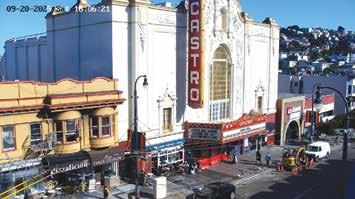
Presented by the San Francisco Bay Times in partnership with Cliff ’s Variety, Orphan Andy’s, and SoulCycle
24/7 livestreaming views of The Castro Theatre, along with other landmarks.

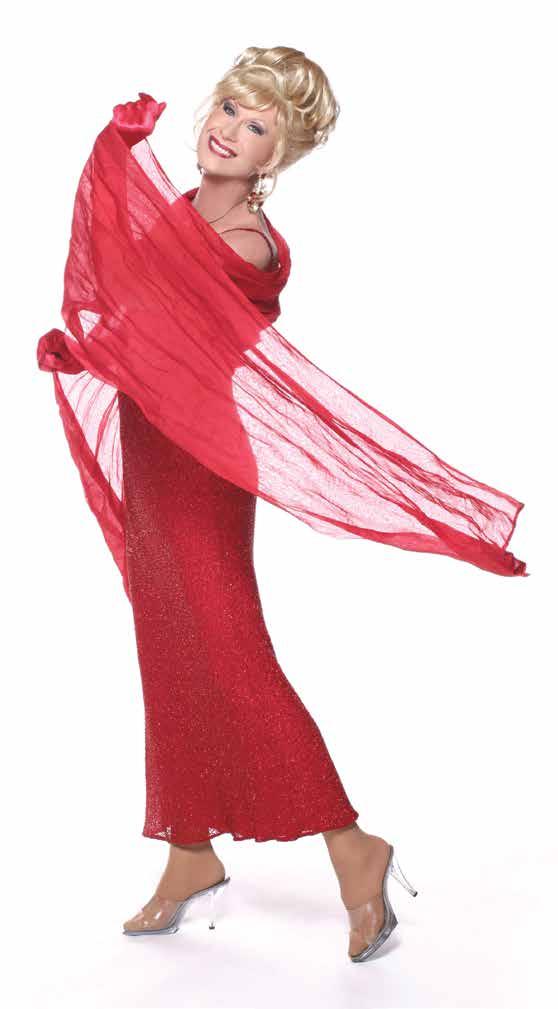
BBy Donna Sachet
elieve it or not, the Castro is showing significant signs of recovery and renewal! Last Tuesday, Frameline Film Festival reopened the long-abandoned Hamburger Mary’s location on Castro Street as a ticketing and information station for filmgoers. Among those we ran into were Bevan Dufty, Sister Roma, Suzanne Ford, and Nguyen Pham. The place looked amazingly pristine, even after such a long closure. Director of Partnerships and Development Matthew Ramsey got things going and then Executive Director Allegra Madsen shared some of the excitement in the upcoming season. Drop by this new outpost soon and pick up a calendar of the June 17–27 Frameline Film Festival, the oldest and largest international LGBTQ+ film festival in the world, returning to the Castro Theatre for its 50th Anniversary. You are sure to find something that appeals to you!
We were honored to attend an exclusive fundraiser for SF Pride in a Pacific Heights event room with sweeping views of the city, including both bridges.
“’Ain’t it good to know ... you’ve got a friend.”
King
Friday, May 22
Harvey Milk Gayla
Harvey Milk LGBTQ Democratic Club
Celebrating 5 Decades of Activism
Awards to Mayor Barbara Lee, Martha Wash & more
SF Design Center Galleria
Robert Holgate and Marcy Adelman hosted and honored Roger Doughty after decades of leadership at Horizons Foundation. The attendees represented a tremendous cross-section of our generous community, including Dan Bernal, Ed Eishen, George Ridgely, Suzanne Ford, Tom LeNoble, Antonio Contreras, and Joel Goodrich. After a brief update on the progress of SF Pride towards this year’s rapidly approaching celebration, guests were asked to reach deep and make a meaningful contribution to this nonprofit organization that brings so much to our city. Contrary to the beliefs of many, SF Pride does not just happen every June; it depends on our active engagement and financial support.
Jason Brock and Dee Spencer returned to Martuni’s last Saturday night, performing songs from the iconic 1971 album Tapestry by Carole King. The combination of this gorgeous, memorable album performed by two of our favorite musicians was impossible for us to resist! So, we grabbed Gary Virginia and headed to the best piano bar in town. The room was packed. Jason sang beautifully, and Dee performed with a wonderful sensibility to Carol’s music. We all left humming songs and remembering our first exposure to these gorgeous melodies.
101 Henry Adams Street
6–11 pm $220 & up
https://bit.ly/3RMCoSW
Thursday, May 28
Second Annual Celebration of Bay Area AAPI LGBTQ+
Women Leaders & Allies Bay Times-presented celebration, Dan Ashley of ABC7 TV, Emcees
Madeleine Lim & Nguyen Pham
Special guest Margaret Cho Taiko Master
Tiffany Tamaribuchi
DJ China G
SF LGBT Community Center
1800 Market Street
6–10 pm
After Party at The Academy SF 10 pm–midnight $15 https://bit.ly/4fdNiev
Tuesday, June 2
The Business of Pride Annual Celebration & Awards Ceremony
Selisse Berry Legacy Leader presented to Dr. Marcy Adelman
Westin St. Francis Hotel
335 Powell Street
6–8:30 pm $250 & up
https://bit.ly/4dVuXAD
Saturday, June 6
Broadway concert held on Sunday, May 17, at The Grand Theater. A highlight of the evening was the revealing of the Pride Band’s new logo.
SF Pride Band’s tenth annual Spotlight on Broadway last Sunday showcased new Artistic Director Matthew Fell, the band previously known as the Lesbian/ Gay Freedom Band, and vocalists Leanne Borghesi (a great local talent and always a delight), Jae Truesdell, and this humble singing columnist. The newly remodeled Grand Theater on Mission Street provided a spacious and lovely setting with premium table seating up front and rows of chairs further back. The audience was encouraged to sing along with their favorite Broadway hits from Wicked, La Cage, West Side Story, Cabaret, Les Miserables, and more as the vocalists performed features as well as provided comic direction. Additional funds were raised with a silent auction and live auction of the opportunity to conduct the band for a single performance, won remarkably by a band member. Watch out, Matthew! What a great night it was performing with our very own Pride Band and helping them with their biggest fundraiser of the year.
Donna Sachet is a celebrated performer, fundraiser, activist, and philanthropist who has dedicated over two decades to the LGBTQ Community in San Francisco. Contact her at empsachet@gmail.com
Synchronicity: Gypsy Love’s Release Party
World premiere hosted by Donna Sachet & Suzan Revah
Kippy Marks & Go-Go Emerson
The Café, 2369 Market Street
6–9 pm $5 & up www.eventbrite.com
Saturday, June 6
Heels for Hope Maitri fundraiser
Hosted by Ginger Minj with Fou Fou Ma & Johnny Stein Marines’ Memorial Theatre
609 Sutter Street $80 & up www.maitrisf.org
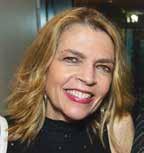
There are sports moments when you realize you are witnessing something much bigger than a game.
Mother’s Day in San Francisco felt exactly like that as I arrived early at Chase Center for the Golden State Valkyries home opener with my sister. Hours before tipoff, the energy outside the arena was electric. Fans filled Thrive City dressed in lavender and violet,
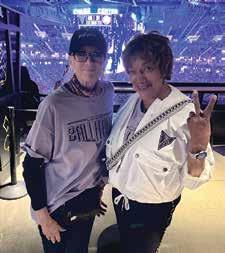
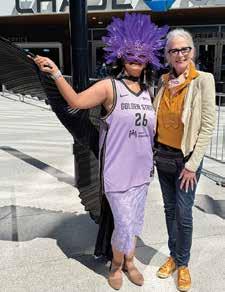
lining up for activations and Mother’s Day photo opportunities celebrating women’s sports fans of every generation.
My sister and I joined the excitement, buying Valkyries gear, while soaking in a historic Bay Area sports moment.
Another friend joined us traveling from Burlingame specifically for her first Valkyries game. By the end of the afternoon, both she and my sister were completely hooked.
The atmosphere inside the arena was unforgettable. The crowd noise was deafening, the energy relentless, and the sense of community unmistakable. Bay Area
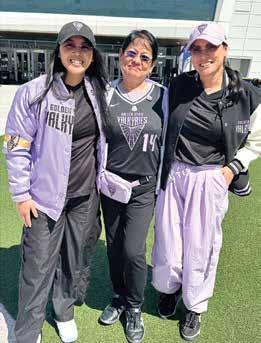
Olympic star Eileen Gu energized the crowd by pounding the Valkyries drum before tipoff.
The Valkyries delivered an impressive home-opening victory led by standout performances from Gabby Williams and Janelle Salaün. The crowd stayed engaged until the final buzzer, roaring through standing ovations.
What stayed with me most, however, was the incredible diversity in the stands and the overwhelming feeling of visibility and belonging throughout the afternoon.
Watching women’s basketball command this level of passion and excitement felt genuinely emotional. I found myself wishing my mom could see how far the women’s game has come.
In many ways, that feeling will stay with me as I head back to New Jersey soon to help present a scholarship in my mother Bette “S” Schnitzer’s honor at Union Catholic High School to a deserving student pursuing a future in sports, whether through athletics, coaching, or sports business.
From women’s basketball to global soccer, the Bay Area is experiencing an extraordinary moment in sports culture, community, and connection.
The Bay Area and the World Cup Countdown
That same feeling of anticipation is now building across the Bay Area as the countdown to the 2026 FIFA World Cup intensifies.
I am incredibly excited that the United States will co-host the World Cup alongside Canada and Mexico, with matches taking place across 11 U.S. venues, including Levi’s Stadium, SoFi Stadium in Los Angeles, and Seattle. Other host cities include Atlanta,
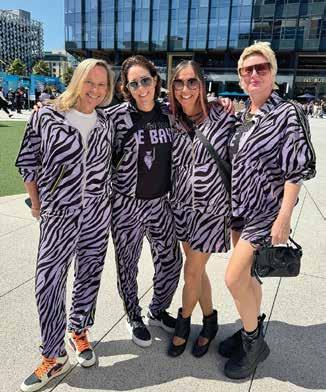
Boston, Dallas, Houston, Kansas City, Miami, Philadelphia, and New York/New Jersey, where the final will be played.
The New York/New Jersey connection feels personal to me. Back in 1994, I attended the opening World Cup match between Ireland and Italy at Giants Stadium with my mom. I will never forget the singing, chanting, cheering, and pure electricity inside that stadium. It remains one of the most unforgettable sporting experiences of my life.
Now, more than three decades later, it is incredibly moving to see the Bay Area preparing to welcome the world. What excites me most is that this tournament will extend far beyond the stadiums. Whether fans have tickets or not, there will be watch parties, fan zones, festivals, and community celebrations stretching from Santa Cruz and
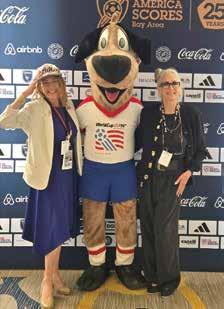
San Jose to San Francisco, Oakland, Walnut Creek, Alameda, and beyond.
I’m excited to attend the Pride House Fan Zone at The Crossing at East Cut on June 19 for the USA vs. Australia match, hosted by Pride House San Francisco and Street Soccer USA. Another Pride House fan zone at Yerba Buena Lane will take place June 25 during the USA-Türkiye match. The Bay Area’s commitment to inclusion, diversity, and community celebration feels perfectly aligned with the spirit of global soccer.
There is also a chance the U.S. team could play in Santa Clara on July 1 if it wins its group—something many fans, myself included, are hoping to see happen.
That possibility felt especially meaningful after attending the America SCORES World Cup Legacy Gala. During the evening, I spoke with former 1994 U.S. National Team stars Cobi Jones and Alexi Lalas, who shared that they will be covering the World Cup matches in Los Angeles and would travel to Santa Clara should the U.S. advance.
Reconnecting with former colleagues from the 1994 World Cup Organizing Committee in Los Angeles, seeing members of the legendary 1994 team reunite, and hearing from Brandi Chastain made for a deeply emotional evening. Equally moving were the young America SCORES participants who shared poetry and stories in front of more than 650 attendees, a powerful reminder of how the World Cup legacy continues to inspire lives far beyond the pitch.
The evening celebrated the 25th anniversary of America SCORES, which grew from the momentum surrounding the 1994 World
(continued on page 21)
(continued from page 20)
Cup. The grassroots San Francisco Bay Host Committee helped establish a $1 million endowment that continues supporting free soccer, poetry, and service-learning programs for thousands of children throughout the Bay Area. Today, America SCORES has expanded across the United States and Canada, continuing to transform lives through sport and self-expression.
The evening brought back a flood of memories including digging out my original 1994 World Cup pins and cap for the occasion.
Thirty-two years later, the emotion, connection, and magic of that tournament still feel very real, and now the Bay Area is preparing to create an entirely new generation of World Cup memories.
While global sports stories continue to unfold, some of the most meaningful moments remain deeply personal.
At times, I felt like I was running the Boston
Marathon right alongside my niece, Lexi Westley, as our family enthusiastically cheered her through her first Boston Marathon. Some of us drove from New Jersey to Boston together, carefully planning our marathon-day strategy so we could catch Lexi at both Mile 5 and again near Mile 25. Thanks to some quick train maneuvering across the city, we made it just in time for the final stretch.
The energy throughout Boston was extraordinary. One of the city’s great traditions is the annual morning Boston Red Sox game on Marathon Monday, allowing fans in Fenway Park to pour into the streets afterward to cheer on runners approaching the finish line.
Our family came fully prepared with pink pom-poms, signs, and plenty of team spirit as we watched thousands of athletes push themselves through one of the world’s most iconic races. Seeing para-athletes, wheelchair competitors, and exhausted runners helping one another through the final miles was especially moving and a powerful reminder of the resilience and humanity that sports can bring out in people. Along the course and aboard packed trains, we met people from around the world, all connected by the shared experience of marathon day. Most importantly, Lexi exceeded her goal with a personal-best finish time of 2 hours, 55 minutes, quite an accomplishment!
Now, with June approaching, I’m looking forward to more unforgettable sports moments ahead, including Pride Night with the Golden State Valkyries and the kickoff of the 2026 FIFA World Cup festivities here in the Bay Area.
The summer ahead promises pride, passion, connection, and the kind of global sports energy that reminds us why these moments matter. Signing off from the Bay, where passion meets the play.
Beth Schnitzer is the Co-Founder and President of Spritz and is the former President of WISE (Women in Sports and Events).

The National Center for LGBTQ Rights (NCLR) on May 16, 2026, held the annual Champions for Justice gala. This year the event took place at The Conservatory at One Sansome.
The honorees included Paola Ramos (Voice and Visibility Award), Captain Gordon Herrero (Courage Award), the Golden State Valkyries (Vanguard Award), Layshia Clarendon (Voice and Visibility Award), and Jazz Jennings (Courage Award).
The emcee for the event was comedian and writer Irene Tu. NCLR Executive Director Imani Rupert-Gordon spoke, sharing the organizations recent achievements and challenges, while also outlining future plans. Entertainment was provided by Earth Circus Productions and DJ LadyRyan.
https://www.nclrights.org/
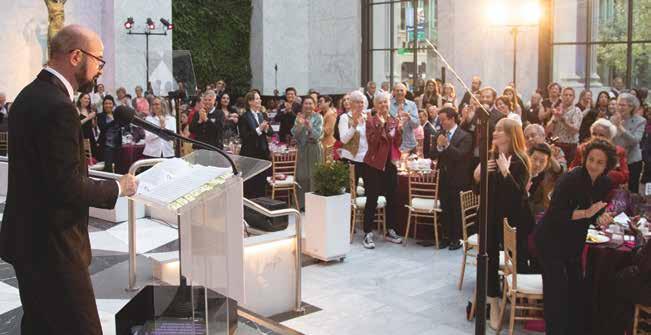
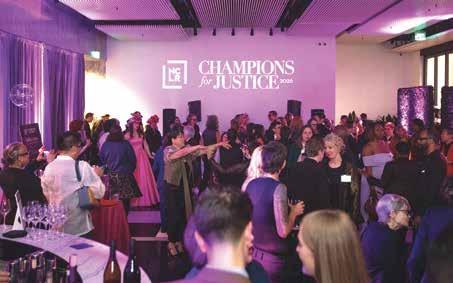
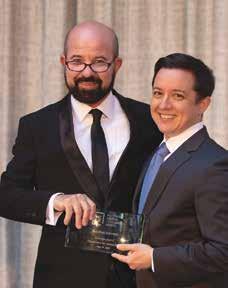
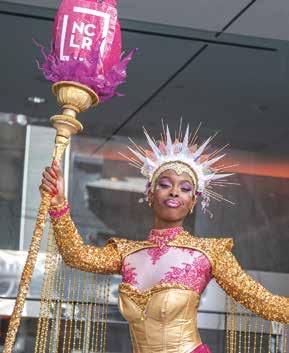
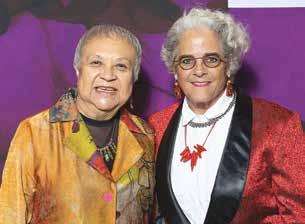
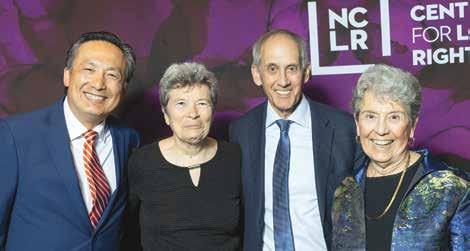
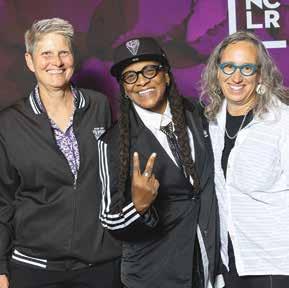
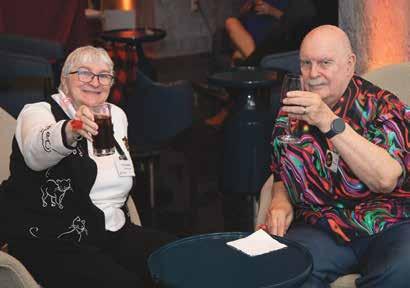
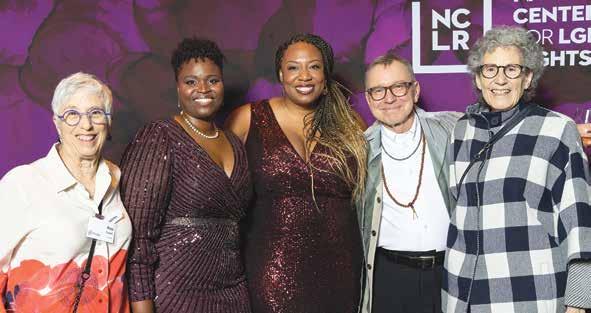
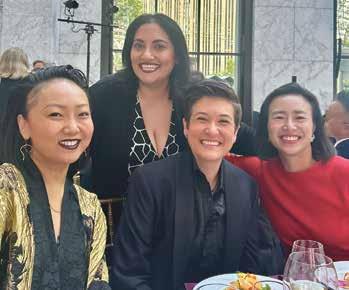
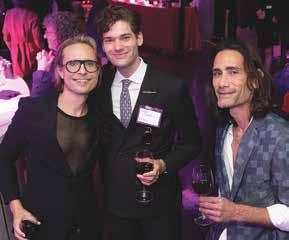
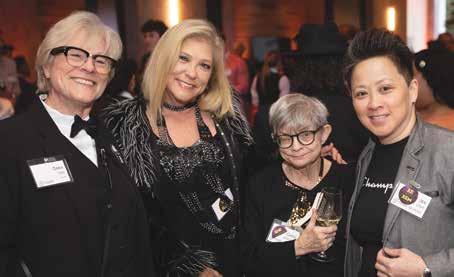
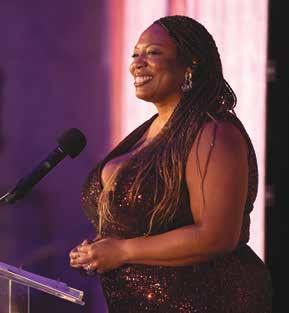
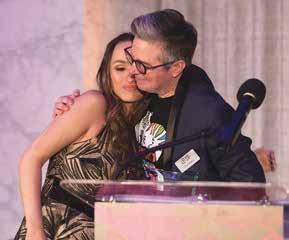
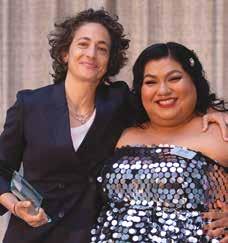
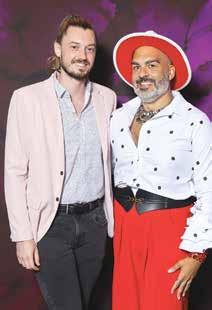
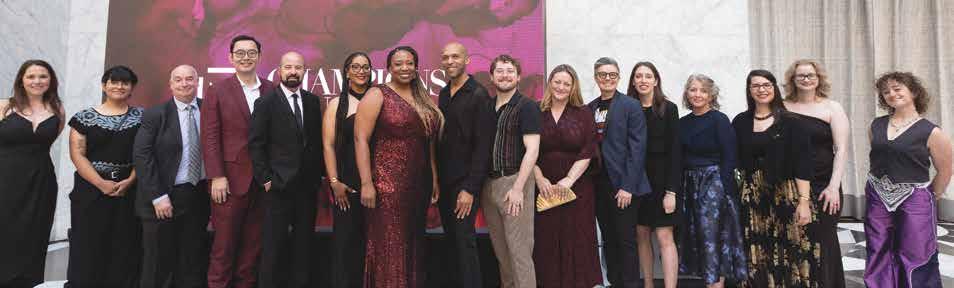
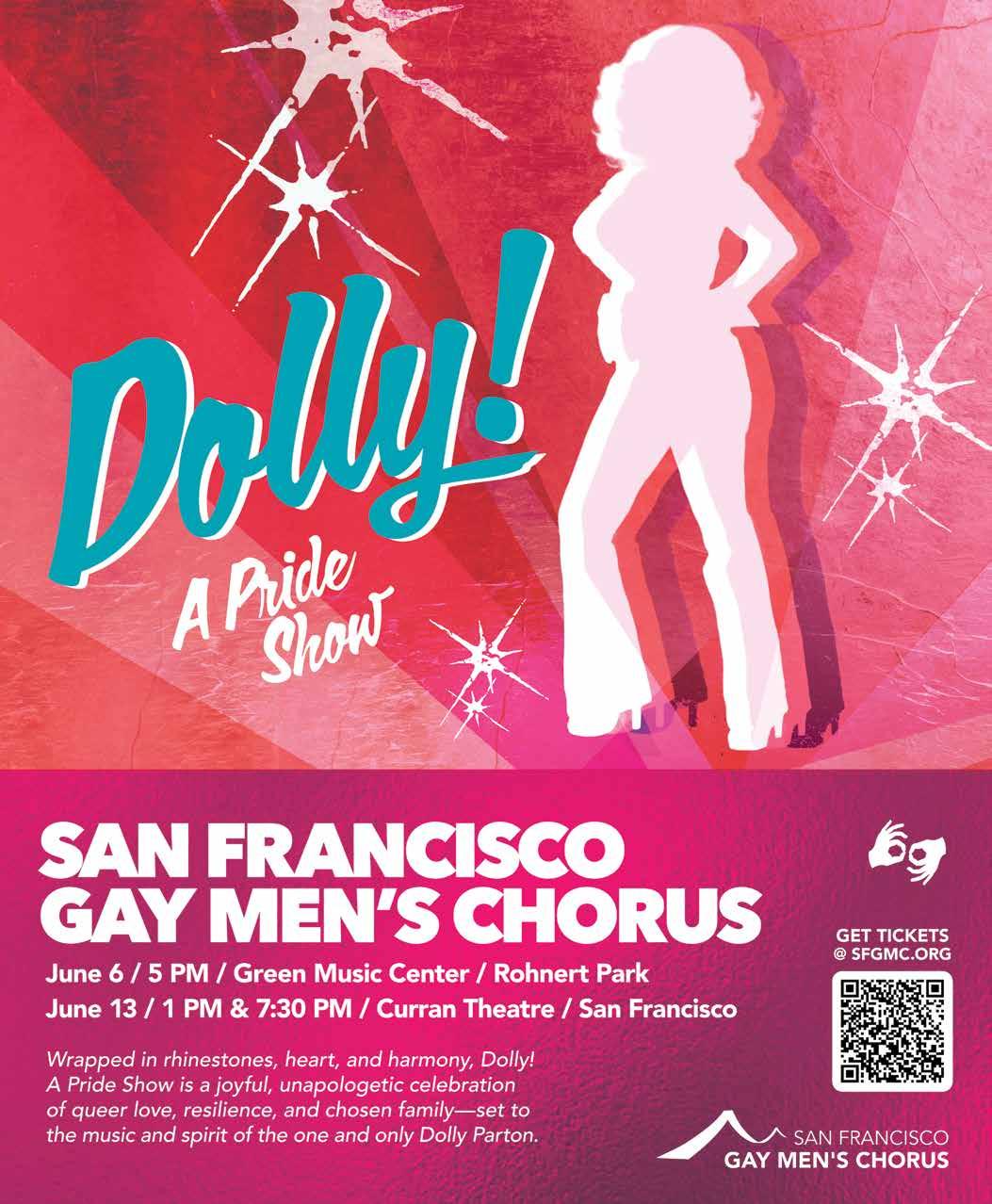
In February, journalist Max Blue declared, “Nobody’s coming to save SF arts; the scene must save itself.” Critics, artists, and cultural workers have been echoing this sentiment for years, and their cries for help have reached a boiling point.
Beloved educational spaces and cultural institutions like the San Francisco Art Institute, California College of the Arts, and the Mission Cultural Center for Latino Arts have shuttered under financial pressure; and other community-centered arts organizations face rampant defunding with limited support from the city.
Artists have been forced out of San Francisco, and that has accelerated exponentially in the past few years. Artists are leaving this longtime hub of experimentation and creative nourishment because they can’t sustain their practices and livelihoods here any longer. Mayor Daniel Lurie is preparing to submit a full proposed city budget on June 1—where many anticipate further cuts to the arts & culture sector as well as to health, housing, and more.
What lies ahead for San Francisco’s eclectic, radical art spheres remains murky; but organizations like the Queer Women of Color Media Arts Project (QUOCMAP) are not waiting passively for things to change. They are charting their own resilient and resistant paths forward.
Since 2000, the San Francisco-based nonprofit has carved out its own liberatory imprint, pressing into the city a transformative, inclusive film space where LBTQIA+ people of color create and have their stories amplified.
By Kristie Song
they receive and illuminate. Guided by revolutionary learning, collective power, and abolition feminism, the organization will kick off their 22nd Annual International Queer Women of Color Film Festival on June 12, with programming that will bite back, without surrender, to institutional neglect.
The festival will kick off with Queer Black Joy Like Fire, a screening of four dynamic films that will celebrate queer and trans Black imagination, play, and self-interrogation. In one, a musician and community organizer builds banjos from scratch to reconnect with the landbased practices of their ancestors. In another, three friends race through the streets of San Francisco—a blur of cheetah print and bright orange hair—as they plan a heist of the city’s most expensive luxury brands.

QWOCMAP has led free filmmaking workshops and fellowships that provide accessible resources for queer and trans people of all skill levels, and continues to host an international film festival that platforms revolutionary, defiant, and joyful narratives of queer and trans Indigenous folks, Black people, Muslims, disabled community members, and other LBTQIA+ people of color from around the world. The festival is also ranked in the top 3 most accessible film festivals in the world, and, of those, is one of two that offers audio descriptions for every film screened.
A Film Festival That Resists Its Community’s Erasure
In a cultural moment where government rhetoric threatens to flatten and extinguish queer histories and storytelling, QWOCMAP refuses to silence or make digestible the stories
Rebellion courses through these films; each work is a brilliant flash of passionate, bold storytelling that refuses to contort itself to the status quo. Like one of the festival’s other screenings, Break S--t, QWOCMAP understands, under contentious city leadership and divestment from the arts, that artists have to lean on their community to patch up, break apart, and reshape the faulty systems that lie beneath their feet.
It’s no easy feat. Last year, QWOCMAP, through no fault of their own, was among 38 BIPOC-led organizations that had their grant funding rescinded by the city. The organization lost $500,000.
City’s Responses Are Only a Temporary Patch in a Long-Term Rebuilding
The City’s Grants for the Arts has offered two, onetime supplemental grants meant to support organizations who have experienced a significant loss of funding. While they may be helpful, they’re simply not enough, says Kebo Drew, QWOC -
MAP’s Managing Director.
Drew says, “These new, small grants are welcome for arts & culture organizations that are suffering under the austerity budget slashing by the city, as well as the right-wing resource grabs & funding cuts, which harm vulnerable communities in particular and on purpose— especially the transgender & queer people of color communities that we serve.”
“What is ironic is that so many of our arts & culture organizations are also led by artists and cultural workers from the very vulnerable communities that we serve, who also need
(continued on page 32)
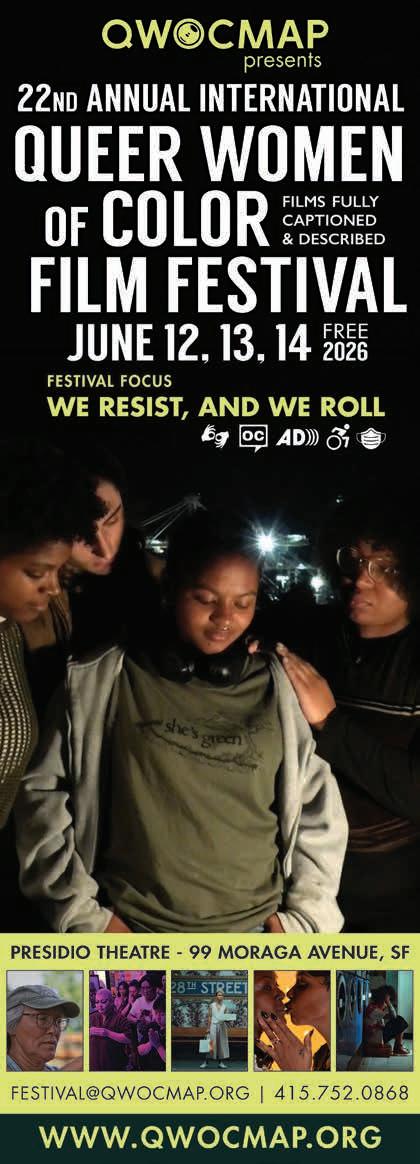

Gary M. Kramer
The up-and-coming actor John Brodsky delivers an impressive performance in the gay romantic thriller Shadows of Willow Cabin, available May 26 for streaming on AppleTV, Amazon, Google, Rakuten, and Hoopla. The film has Devon (Brodsky) meeting Albert (Bryan Bellomo) for a romantic getaway at Albert’s family’s cabin. While things start out well, with wine, talk, dancing, and some hot tub time, by day three some weird events start happening and Devon and Albert become trapped in the house without power, food, and water. Brodsky gets to show his versatile skills in Shadows of Willow Cabin, which leans into horror tropes in its second half, especially after Devon has an unsettling shower. The actor also gets to flirt, cry, perform Shakespearean text, and more as Devon works through some trauma. Brodsky has been a valuable supporting player in B-movies including Black Site Delta, but he is also showcased well in various short films, such as Day 39, and as the lead in the gay romance Some Kind of Paradise. The openly gay actor’s short,
Something Still, which he wrote, is now making the festival rounds.
Brodsky spoke with me about his films for the San Francisco Bay Times
Gary M. Kramer: You keep an air of mystery about Devon. How did you calibrate your performance in the film? He starts out upbeat and flirty, but eventually he shifts to despair as things get scarier.
John Brodsky: I actually attribute that a lot to the way in which we shot it. Joe [Fria, the director] was focused on shooting in order as much as possible. We had two weeks before principal photography, so I didn’t have much time to think about character. I think that worked well because Devon and Albert are just starting to get to know one another as Bryan and I were as actors. It felt very symbiotic in that way. I think what I really relied upon was my instincts. I allowed for the imaginary circumstances to just happen when they did.
Gary M. Kramer: How did you identify with Devon, who can be quite mercurial?
John Brodsky: Growing up, I was always so sensitive to opinions of other people, and how I was perceived. I think I learned from an early age how to have a thicker skin or learn how to be more forthcoming. I’m definitely more of a lover, not a fighter, and these types of roles where the character has to go back and forth between the more sensual to the more straightforward and direct come from having to survive. As I’ve gotten older and more mature, I just fight for something that I believe in, even when it might be hard. I want to be liked, and I want to like other people, and ultimately share love and
(continued on page 27)
from page 26)
all that. And, so, I think that’s kind of what resonated for me the most with Devon, is how he ultimately just wants to love and take care of people and things, and, when he is confronted with things, he just kind of calls it out, and does not let people kind of walk all over him. That definitely resonated with me a lot, too.
Gary M. Kramer: The film addresses issues of mental health and shame specifically, as well as sins of the father trauma that is passed down to the characters. There is considerable talk about sex and sin. What observations do you have about the dark themes in this film?
John Brodsky: I grew up Catholic, and went to Catholic school, and church, and there was a lot of emphasis on morals, and abiding by a way in which one should live their life. But human beings are messy. We go through traumatic experiences, whether they’re big traumas or little traumas, and people get hurt by one another—even under the best circumstances. I think that, a lot of times, people have the best intentions, but intention doesn’t necessarily change impact. Because of that, people can suffer and have experiences that shape them. I went through some major shifts in my life and learned how to sort of navigate that according to what I believed. I tried really hard to not let other people’s ideas affect the way in which I thought my life needed to be lived. I think that’s something that Devon, and particularly Albert, really struggle with. Devon has tried very hard to be himself in an environment that hasn’t really allowed for him to do that, and he has to act above his baseline in order just to be accepted. He wants to help Albert and not necessarily try to fix him, but, in a sense, save him. I can relate to that to a degree, too.
Gary M. Kramer: How would you fare without power, food, and water as Devon and Albert must at one point in the film? Are you a survivalist?
John Brodsky: I think I would initially have a panic attack. I don’t have the best survival skills. But I think, once I kind of settle into the reality of the situation, I would be more accepting of it, and try to be more problem-solving.
Gary M. Kramer: It is interesting that your work often focuses on grief and loss and transformation. What makes those themes so interesting to play?
John Brodsky: I’ve always understood that things don’t last, and life is precious, as trite as that can sound. The work that I naturally gravitate towards feeds something in me that I want to be able to articulate and mirror back to others—grief, existentialism, and loss. Because, in this life, nothing stays the same. We’re constantly changing and evolving, and, whether we’ll be forced to evolve and change, or whether it happens naturally, it has to occur for us to move on in this existence. I think that that’s a beautiful thing, as hard as it is. These are the things that I look for in my art, and what I want to talk about and express,
Gary M. Kramer: Speaking of your art, you wrote a short, Something Still, which is now starting its run on the festival circuit. Can you talk about that and creating your own work to showcase your talents as an actor/writer?
John Brodsky: In my early 20s I found a partner and was exploring the different sides of gay life in New York City—and all the joys and horrors that can come with it. A lot of it was stemming from an understanding that things might not have been great in my relationship and my partner and I kind of pushed things under the rug. I started writing from the perspective of what it would be like if we broke up. It was very therapeutic. It just gave me a whole new point of view of what I was going through, but also what he was going through, or what I imagined him going through, based on my relationship to him. I got to see a perspective that I wouldn’t have really gotten to see if I hadn’t had the time and the patience to just sit with it.
© 2026 Gary M. Kramer
Gary M. Kramer is the author of “Independent Queer Cinema: Reviews and Interviews,” and the co-editor of “Directory of World Cinema: Argentina.” He teaches Short Attention Span Cinema at the Bryn Mawr Film Institute and is the moderator for Cinema Salon, a weekly film discussion group. Follow him on IG @garyemkramer
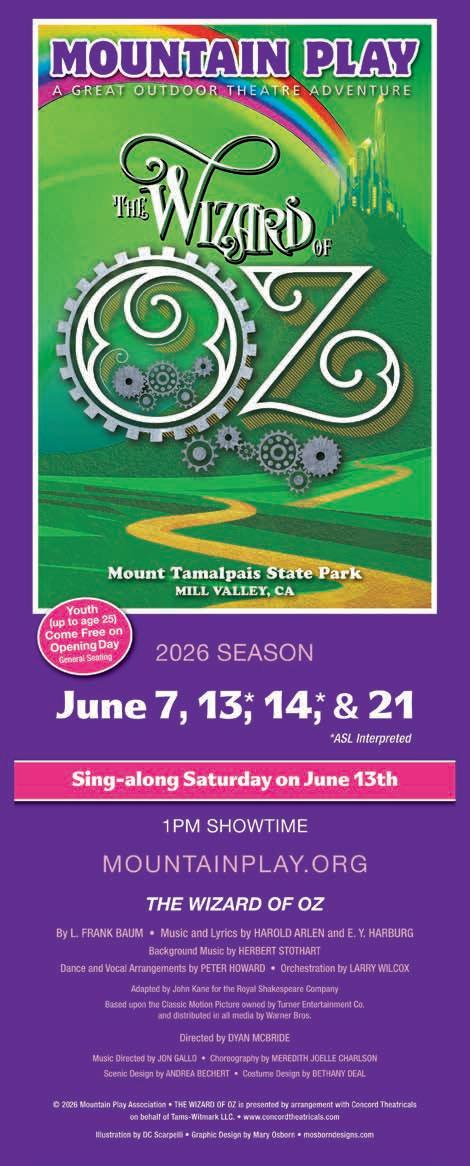
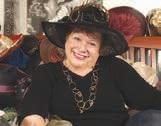
Jan Wahl
My conversations continue with friend and fellow film lover Adam Kent, this time with a focus on screenwriting.
Adam Kent: I know you got on my case for not seeing Wag the Dog. I can’t believe how relevant it is to today!
Jan Wahl: Living in terrible Trump times, it is almost a relief when a playwright is this prescient. The brilliant screenwriter David Mamet (Glengarry Glen Ross, Speed-the-Plow) wrote Wag the Dog Two weeks prior to re-election, the U.S.
president lands in the middle of a sex scandal. To quell the situation, a presidential advisor, played by Robert De Niro, decides distraction is the best course.
A major Hollywood producer, played by Dustin Hoffman, helps him fabricate a war. Sound familiar?
Adam Kent: What gets me is how the film depicts the joining together of the political world and the Hollywood world.
Jan Wahl: It reminds me of the lyric in The Producers : “All you need to know is everything in showbiz.”
Adam Kent: The writing—how does someone come up with this stuff?
Jan Wahl: It’s just genius! Like his 2000 comedy State and Main, David Mamet is bitterly funny and treats the audience as if
we are very smart. I hope everyone sees Wag the Dog ; you’ll be blown away.
Adam Kent: Talking about genius, I also took your recommendation and watched Some Like It Hot ! You tell me that Billy Wilder is not gay, but I think he is tipping his hat to the gay community with the final line, “Nobody’s perfect.”
Jan Wahl: Yes, you’re talking about when an exasperated Jack Lemmon pulls off his wig and says, “Damn it, I’m a man!” and Joe E. Brown, playing Osgood Fielding, III, says, “Well, nobody’s perfect!” You know, there’s a great book by Charlotte Chandler titled Nobody’s Perfect about the making of the film.
Adam Kent: I know you love Elizabeth Taylor’s line: “Without gays and lesbians, there would be no Hollywood.”
Jan Wahl: Yes, but it all starts with the “word.” Both Mamet and Wilder are straight boys, but they write from the heart. There are so many wonderful LGBTQ screenwriters. Here are just a few faves: Phyllis Nagy, she wrote Carol (2015), based on a romance novel by Patricia Highsmith; it’s a beautiful look at two women falling in love. One of my favorite and funniest interviews ever was with Paul Rudnick for the movies In & Out and Addams Family Values. James Ivory made us all feel romantic in Call Me by Your Name (2017), and Dustin Lance Black gave us a hero in Milk (2008). The list goes on, as does the word!
Jan Wahl: In my favorite comedy, My Favorite Year, Peter O’Toole says, “Dying is easy; comedy is hard.” Two film comedy classics My Favorite Year (1982) and In & Out (1997) remind us that good comedy writing combines strong character
(continued on page 30)
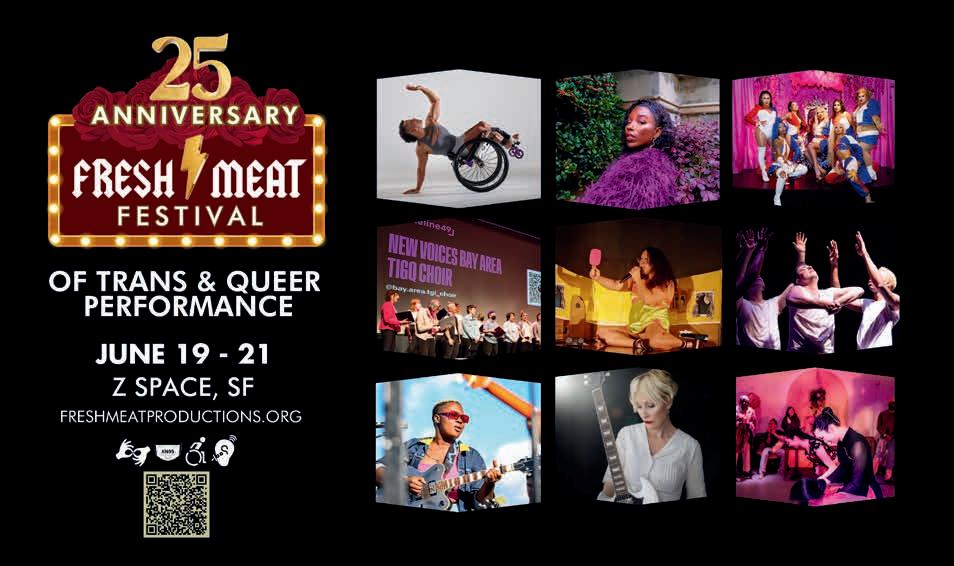
(continued from page 28)
development with techniques designed to surprise the audience. Writer-director Billy Wilder once told me, “Great comedy reveals a deeper truth.” We establish expectations and then subvert them, often placing relatable characters in absurd situations.
I recently sat down with you and watched these two brilliant comedies. Watching with you, my cinema colleague, is special because you had never seen these— though I have many times.
So, Adam, as I told you, My Favorite Year is my favorite comedy. What did you think
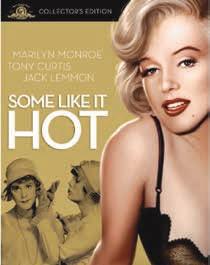
about the writing by Norman Steinberg and Dennis Palumbo?
Adam Kent: This film is easy to get into because it’s so smartly written and funny. It shows the tragedy of a movie star who makes us believe he is a hero when he doesn’t believe it himself. The writers give us a glimpse into the world of TV production, stardom, and happiness while depicting the common theme of shallowness that permeates the showbiz world.
Jan Wahl: I actually feel sorry for folks who have not seen My Favorite Year because it is a classic. Peter O’Toole plays a character who is part John Barrymore and part Errol Flynn: an alcoholic movie star booked on a huge TV network comedy show. It is the job of a lowly writer to keep the star sober and responsible.
Adam Kent: I found it to be a joyful ode to the early days of television. It’s true to the period of the 1950s, and that helped me get into the visual comedy of the time. I loved how the writers use “opaque
truths” and stark ironies to bring us into the story. “I’m not an actor; I’m a movie star!” O’Toole exclaims when he realizes he’s going to be on live television with an in-studio audience. It’s ironic that you can have everything and still be haunted the way his character is; that Billy Wilder “deeper truth” is definitely there.
Jan Wahl: Casting is so important and is perfect in this film. O’Toole completely captures the alcoholic movie star that we love and resent at the same time. He should have won the Oscar for Best Actor, but this was the year Gandhi came out— and how are you going to go up against that? I hope people will see this film or revisit it.
Adam Kent: I agree, Jan, a must-see. I love how O’Toole shows how he can recapture his humanity in spite of his stardom.
Jan Wahl: One of my favorite comedy writers is Paul Rudnick ( Addams Family Values, 1993; Jeffrey, 1995). In & Out is
John of John (fiction - hardcover) by Douglas Stuart
From Douglas Stuart, the Booker Prize-winning author of Shuggie Bain and Young Mungo, comes a vivid, powerful novel set in an isolated Hebridean island off the coast of Scotland. As Cal, a young gay artist, adjusts to life back in his conservative hometown, his father contends with devastating secrets of his own. John of John is a moving literary portrait of a father’s expectations clashing against a son’s desires.
The Things We Never Say (fiction - hardcover) by Elizabeth Strout
In The Things We Never Say, Pulitzer Prize-winning author Elizabeth Strout crafts a stunning portrait of loneliness, family, friendship, and the search for truth. The novel follows high school teacher Artie Dam, beloved by his students but quietly struggling with feelings of isolation. Then, a chance incident sparks a powerful realization, and what follows is a thoughtful exploration of what it means to be seen, understood, and human.

a romantic comedy about a Midwestern teacher questioning his sexuality. When someone else decides to “out” him on international television, his life changes in ways he could never imagine. Again, the casting really matters; Kevin Kline, Tom Selleck, Debbie Reynolds, and Bob Newhart are just a few of the actors who make this film perfect. It is Paul Rudnick’s writing that provides that kernel of truth Wilder talked about.
Adam Kent: The writing is exceptional and the story is funny, but I disagree on the casting. I love Tom Selleck and Kevin Kline, but, as straight men, they don’t convince me as gay characters—at least not to the degree that Terence Stamp did in The Adventures of Priscilla, Queen of the Desert
Jan Wahl: Yet I heard you laughing like crazy at In & Out
Adam Kent: Yes, the writing is relatable and human.
Jan Wahl: It’s good to remember that some movies are just “joke movies,” like The Naked Gun and Airplane!, but I believe story beats jokes every time!
Jan Wahl is a Hollywood historian and film critic on various broadcast outlets. She has two Emmys and many awards for her longtime work on behalf of film buffs and the LGBTQ community. Learn more at www.janwahl.com

The Land and Its People (essays - hardcover) by David Sedaris
Legendary humorist David Sedaris returns with The Land and Its People, a new essay collection full of the acerbic humor and subtle tenderness his readers have come to know and love. The essays in this collection explore everything from aging, to duolingo robots; from a horse named Tequila to a pair of well-made cotton underpants, all written with Sedaris’ trademark wit, playfulness, and poignancy.
Upcoming Events
Wednesday, May 27 @ 6 pm (non-ticketedCorte Madera store) Caro Clare Burke, author of Yesteryear
Yesteryear tells the story of a trad-life influencer who suddenly wakes up in the year 1855. The novel is now a GMA book club pick and a number one New York Times bestseller. Author Caro Claire Burke joins us to discuss her buzzy debut novel (without spoiling the twist that has everyone talking).
Wednesday, June 3 @ 7 pm (ticketed - Calvary Presbyterian) Billy Eichner, author of Billy on Billy: An Audio Memoir
Actor, comedian, and writer Billy Eichner reflects on his life, career, and viral sensation Billy on the Street, in this hilarious and moving memoir, Billy on Billy, which is available exclusively on audio. Eichner will be in conversation with Tony Bravo, and attendants will receive a signed poster and QR code to redeem the audiobook.
Thursday, June 9 @ 6 pm (ticketed - Corte Madera store) David Sedaris, author of The Land and Its People
David Sedaris will join us in our Corte Madera store on June 9 to discuss his new essay collection, The Land and Its People, offering a rare and special opportunity readers won’t want to miss!
https://www.bookpassage.com
By Sister Dana Van Iquity
Sister Dana sez, “MEMORIAL DAY is May 25—a federal holiday and time set aside yearly to honor the men and women who died while selflessly serving in the U.S. military. And let’s not forget those who recently gave their lives for Trump’s senseless War in Iran!”
If we want peace in Iran, Trump & his Secretary of War have to STOP ATTACKING Iran during a supposed ceasefire. Alan Ayer is a former senior U.S. diplomat and distinguished diplomatic fellow at the Middle East Institute—as well as a senior member of President Obama Administration’s negotiation team for the 2015 Iran Nuclear Deal (which Trump blew up). Ayer diplomatically noted, “Both sides are interested in flexing, and both sides are still very extremely anemic. Neither side is really interested in serious sustaining negotiations yet.” Sister Dana sez, “And now Trump is considering attacking CUBA! Frightening!”
Sister Dana sez, “Is Trump’s choice for War in Iran now getting daily re-titled by the Dictator-in-Chief as ‘a journey,’ ‘a squirmish,’ or ‘a miniwar?’ Make up your mind, Donnie, because hundreds have needlessly died in whatever YOU wanna call the terrible thing!”
Terrifying Trump is planning to send ICE agents to 40 different states. And, to soften the threat, he is thinking of renaming them “NICE,” as if that would change most of us Americans’ opinions of these dreadful, disrespectful doomsday police.
Sister Dana sez, “Suspicious, malicious, litigious FBI Director Kash Patel has been ordering his staff to take polygraph tests—thus discouraging any of his FBI from “FIBbing” to the media or for whistleblowing!”
Former CDC Director for Emerging Diseases Dr. Dan Jernigan has explained that the Hantavirus is contacted “by people who hang out with rodents (all kinds of rats and mice) from their feces and urine.” He assures, “Even though it’s bad and can be lethal, it’s not that easy to get ; it’s actually pretty hard for it to get from one person to another; and it’s important to recognize that this isn’t a pandemic, and the risk to the American public is extremely low.”
Architectural historian and author Stathis G. Yeros presented Queering Urbanism:
Insurgent Spaces in the Fight for Justice, a fascinating book—complete with many photos and drawings—that rethinks cities through the spatial histories of LGBTQ communities, on May 8, 2026, at the GLBT Historical Society Museum. During our Q&A with Yeros, among others, we addressed three topics: “Why and how do LGBTQ people claim specific spaces as queer?” “How do these queer spaces refer to political and civil rights?” and, “How does claiming rights to urban queer spaces create new ways to understand citizenship in the context of Western democracies?” The book examines the evolution of the Women’s Building in San Francisco, the impact of gentrification on LGBTQ communities of color and low-income residents, and ongoing struggles to preserve queer spaces as sites of radical possibility rather than mere nostalgia. How have trans women of color, sex workers, queer youth, and other underrepresented groups created community in hostile urban environments? What can we learn from these histories of resistance as cities continue to change? This amazing book, complete with 25 color images, is available at the GLBT Historical Society Museum, 4127 18th Street and at https://bit.ly/4dk1cKz
President Trump said the quiet part out loud on May 12: “I don’t think about Americans’ financial situation. I don’t think about anybody.” Astonishing! And if Democrats fail to show this clip over and over and over again before the midterms— they deserve to lose. Sister Dana sez, “Trump only thinks about Trump. If we win Congress, we can save democracy and dump Trump!”
Hypocrite Veep Vance & Trump are now coming to eliminate our healthcare, just because California is a blue state with their chosen enemy of our Governor Gavin Newsom . How can these awful autocrats be so cruel?
Sister Dana sez, “Meanwhile T-rump was cozying up to fellow dictator Xi in China. If we lose Taiwan to communist China—it’s all over for the democracy of Taiwan! Democracy?? Byeee!!”
We really enjoyed the San Francisco Pride Band for their Spotlight on Broadway, a fundraiser concert and show tunes extravaganza on May 17 at the refurbished Grand Theater at 2665 Mission Street. This was the 10th anniversary of “Spotlight,” featuring music from a number of hit Broadway shows—from the classics to the more recent. We were delighted to hear the AbFab music of ABBA from the hit Mamma Mia , along with selections from West Side Story, Cabaret, and many more. The evening was hosted by multi-talented, veteran Spotlight vocalists Leanne Borghesi and Donna Sachet and included Oakland-based, guest singer Jae Truesdell
The SF Pride Band was conducted by Matthew Fell , who joined the Band earlier in January 2026 as the Artistic Director of the Concert Band program. This was Fell’s first Spotlight concert, so he was probably just
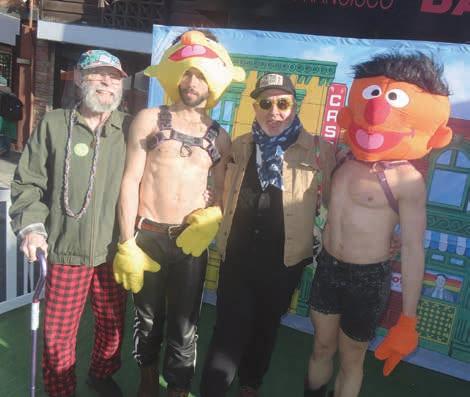
as excited as we were to hear these marvelous, memorable musical hits. Leanne and Donna opened the show oh so appropriately dueting with “Wilkommen” from Cabaret. Then they switched the tone to “Loathing” from Wicked, followed by melancholy and “I Dreamed a Dream” from Les Miserables. Jae gave us some faboo ABBA. We queer-proudly sang along to “I Am What I Am” from La Cage aux Folles, and eventually
closed the show with Hairspray’s “You Can’t Stop the Beat!” and we didn’t want to! And speaking of Broadway, June 7 is “The TONY Awards” to be broadcast on CBS-TV.
San Francisco AIDS Foundation (SFAF) is excited to announce Cycle to Zero —a new 3-day fundraising event, May
(continued on page 34)

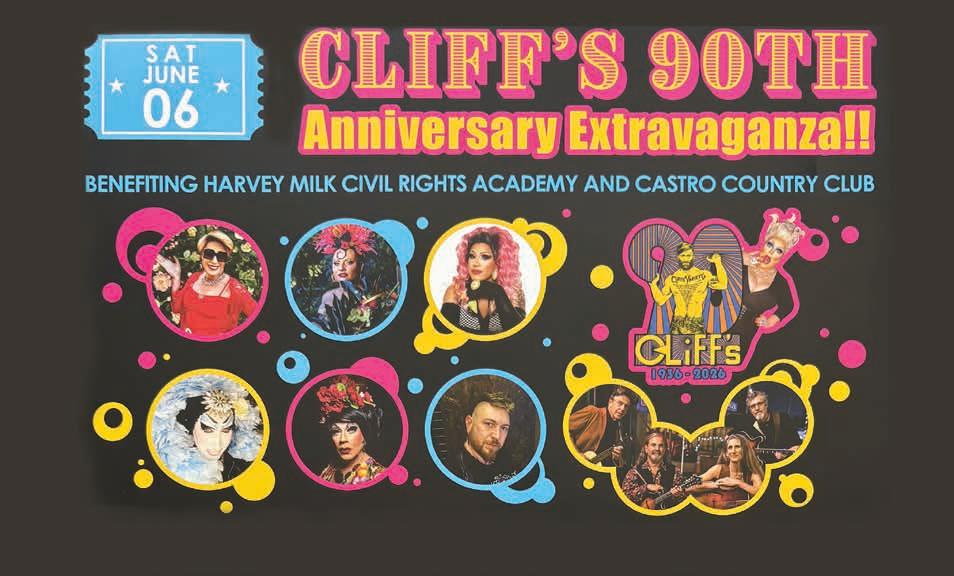
housing, health services, education, public transportation, and more to survive, much less actually thrive. We also know that our communities pay taxes into a system that does not benefit us, rather people and corporations that already have abundant resources,” adds Drew.”
“These grants are a necessary stop gap to hold our communities together, but not nearly enough to meet the needs of our communities,” Drew continues. “We hope that this is a sign that vulnerable communities are being heard and that there are more positive changes, an end to budget cuts coming, and to large corporations and rich people paying their fair share. We see who is being impacted most negatively by these budget cuts and policies, which are a form of violence that induces premature death of vulnerable communities. It helps our organizations to survive and anchor communities, but it does not change the impact. This is especially true for QWOCMAP as our organizational wellbeing is directly impacted by the wellbeing of the communities we serve. When our community suffers, so does our organization. And when our organization suffers, our community loses an important anchor and resources.”
As San Francisco artists continue to create, curate, and connect under uncertain conditions and developments, small and independent organizations and coalitions are the underdogs charting new ways to exist and
survive. Underground radio, experimental microcinemas, avant-garde archives, community libraries—these saplings sprout in difficult terrain.
QWOCMAP is a sapling within this rich, interconnected system; its willingness to dream has upheld its existence for over 25 years, and will continue to plant fertile abundance for many more to come. The arts are especially important to marginalized communities, who are often having to shape new frameworks for survival, renewal, and expression when oppressive forces are readily forcing them out.
“For us, it’s crucial that we continue to uplift voices of resistance during these extreme cuts to federal, state, and city funding for arts & culture,” says Drew. “It is economic censorship, especially for artists from marginalized communities. QWOCMAP platforms filmmakers and builds our archive of 515+ films in the face of deliberate erasure of the lives and dreams of LBTQIA+ people of color.”
The 22nd annual International Queer Women of Color Film Festival will run June 12–14 at the Presidio Theatre, 99 Moraga Avenue, San Francisco. All events will be free and accessible. For the full schedule, including satellite screenings and a virtual encore, and accessibility information, visit https://qwocmap.org/festival/
Kristie Song is a reporter for the “Los Angeles Blade” and a multimedia journalist who has covered arts and culture for KQED and other media outlets.
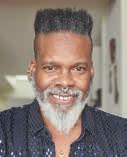
Kippy Marks
Gypsy Love is what happens when intention becomes melody. Her voice doesn’t just fill a room—it softens it, warms it, and invites every person inside to breathe a little easier. She sings with the kind of presence that turns strangers into community, and community into family. In every performance, she practices the PMLE truth that love is not a feeling but a discipline, a choice made again and again with courage and compassion.
What sets Gypsy Love apart is her devotion to emotional stewardship. She treats music as a sacred offering, shaping each note with the tenderness of someone who understands how deeply people need to feel seen. Her artistry is a bridge—connecting cultures, identities, and generations through stories that shimmer with vulnerability and joy. Whether she is lifting spirits onstage or offering quiet encouragement offstage, she leads with a heart trained by empathy.
Gypsy Love reminds us that practicing love is not always gentle; sometimes it is bold, vibrant, and defiantly joyful. She embodies the PMLE belief that love grows stronger when shared, louder when sung, and more powerful when practiced with intention. By highlighting her as the 16th individual profiled in this column, we celebrate a woman whose voice heals, whose presence uplifts, and whose artistry makes love easier for all of us to practice.
Kippy Marks: How long have you been involved with the practicing of PMLE values in your work?
Gypsy Love: Love has always been my compass, but it wasn’t until 2008 that I fully
aligned my career with that calling. After more than a decade in tech sales, I left the corporate world and founded Gypsy Love Productions—a space devoted to inspiring love and unity through astrology, music, and movement. It felt like coming home.
Kippy Marks: Who or what motivated you to become the community activist you are today?
Gypsy Love: For years, I thrived as a tech executive—hitting goals, winning awards, doing all the “right” things—but inside I felt disconnected, creatively stifled, and hungry for community. Everything shifted around 2007 when I joined the House of Garza, a San Francisco–based LGBTQ+ arts nonprofit founded by the late, beloved community leader Mama Garza (José Carlos Ascencio).
As a performer, I’ve always been drawn to uplifting, high-energy music that brings people together in the name of love. In the House of Garza, I met brilliant artists who were using their gifts to uplift the community and support causes like disaster relief and AIDS research.
That experience opened my heart. I realized I could use my own talents—as a seasoned astrologer, artist, and dancer—to spark connection, healing, and joy. So, I started Gypsy Love Productions in 2008 with a mission to inspire love and unity with astrology, music, and movement. My goal is to give back, build community, and help people reconnect with their creativity and inner peace.
Kippy Marks: How old were you when you made that decision?
Gypsy Love: I was right around 30—perfectly aligned with my Saturn return, of course!
Kippy Marks: What advice would you give to others on how to practice love on the daily?
Gypsy Love: Keep a beginner’s mind. Every person you meet—even someone you’ve known forever—is a universe unto themselves. When you look into someone’s eyes, try to see them as if you’re discovering
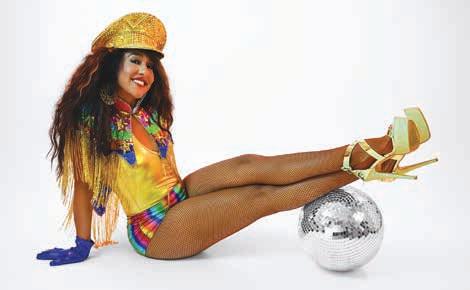
their vibration for the very first time. Remember that we’re all reflections of each other. There’s a bit of me in you, and a bit of you in me. And, the more you practice seeing people that way, the easier it becomes to lead with love. Practice makes love easy!
Kippy Marks: If you were granted two universal wishes, what would you wish for?
Gypsy Love: I actually wrote a song about this called “Wish”! But if I had to choose just two, they would be:
- for the world to release all the fear that divides us; - that love becomes our guiding force, because love is always the answer.
Kippy Marks: Please share any current practices that our readers may find useful, and update us on what you are doing now.
Gypsy Love: One of the most powerful gifts you can give yourself is understanding your astrology chart. It’s your personal
blueprint—a lifelong guide to your strengths, lessons, and purpose. And, just as important: move your body. Dance, stretch, laugh, or just breathe deeply. Any movement is a doorway to joy.
And, speaking of movement, my new dance single “Synchronicity” drops soon! I specialize in creating upbeat, heart-thumping anthems designed to lift spirits and move bodies. “Synchronicity” is no exception. It
(continued on page 34)
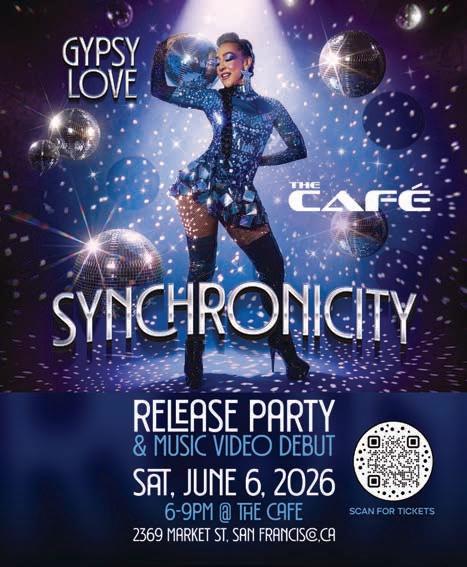

A Gentle Lap-Loving Puppy and a Sweet, Young Fastidious Bunny Who Is Litter Box Trained
Ocean is gentle, and endlessly soothing to be around. This sweet 5-month-old, 33-pound puppy arrived like a quiet tide, easing into his foster home and quickly finding his rhythm alongside two big dogs. Ocean moves through the world softly, following you from room to room like a steady current. When the day winds down, he’s happiest curled in your lap, content just to be close. He’s already sleeping soundly through the night in his crate and making great progress with potty training. Ocean is still learning about the world and looks to his people for guidance. That could be with you!
Whimbrel is a sweet young bun who is looking forward to sharing her love with her family at her forever home. Ever the attention queen, she loves pets and is inquisitive and keen with a mischievous streak, which is bolstered by her athleticism. She has been known to hop up onto ottomans and onto your lap with little hesitation, even climbing boxes and luggage to triumphantly perch on a desk. She is a very clean bunny who is litter box trained (even with droppings!) and loves hay, pellets, fresh veggies, and enrichment toys. You will be hard pressed to find a sweeter companion!


The OAS adoption process focuses on matching you with a pet who is a good fit for you and your family. Come by during open adoption hours Thursdays 12–7 pm and Fridays/Saturdays/Sundays 12–3 pm to adopt your new best friend, or to learn more about the OAS adoption process. Please see the OAS website to learn more about how you can help by adopting, fostering, volunteering, and donating: www.oaklandanimalservices.org
Regent Empress
Queen Cougar
“Barack Obama, to offer my thanks for the respect he showed for all of us so often during his time in office”
Jibz Cameron
“Screamin’ Jay Hawkins”
SISTER DANA (continued from pg 31)
29–31, benefiting the programs and services of SFAF that build on the three-decade legacy of AIDS/LifeCycle. Cyclists will head north through Marin County, among the beautiful Redwood forests, and will end the day in Guerneville—a famous LGBTQ village along the Russian River. They will camp both nights at Camp Russian River and Johnson’s Beach, a 15-minute walk apart. And, despite two campsites, Cycle to Zero will facilitate a cohesive community experience across both sites. Much more info is at https://cycletozero/
The Harvey Milk Club is 50 years old, so they’re putting on the biggest, queerest Gayla in their history. The impact of the Milk Club is undeniable, and they’re just getting started. NAACP Board Chair Leon Russell will be the keynote speaker and awardee. Special guests who will also receive awards include Oakland Mayor Barbara Lee, singer Martha Wash (“It’s Raining Men”), Golden State Valkyries,
MARKS (continued from pg 33)
celebrates how deeply we’re all connected— to each other and to the universe. “Synchronicity” features 11 club-ready mixes by Billboard chart-toppers Leo Frappier, Dirty Disco, Paul Goodyear (SanFranDisko), and Tweaka Turner. It’s guaranteed to get you moving!
To welcome “Synchronicity” into the world, we’re throwing a big community celebration on Saturday, June 6, 2026, from 6–9 pm at The Café (2369 Market Street, San Francisco), hosted by the First Lady of the Castro Donna Sachet and dance-party dynamo Suzan Revah—with community icon Gary Virginia emceeing the night.
You’ll get to enjoy the “Synchronicity” music video World Premiere and my debut live performance. DJ Sergio Fedasz will bring the feelgood vibes, along with go-gos, flagging, drink specials, tasty refreshments, giveaways, live-action photography by
Ashle Blow
“Michelle Obama!”
California Nurses Association, San Francisco Labor Council, and the Chinese Progressive Association. Let’s celebrate their victories and plans for the next 50 years at the San Francisco Design Center Galleria, 101 Henry Adams Street—reception 6 pm, dinner and awards 7:30 pm, and concert 9 pm. https://www.milkclub.org/
But, before partying at the Milk Club, let’s all join our community to celebrate Harvey Milk Day on May 22 with the theme of “Support Trans Health”! We will meet at 575 Castro Street (the Queer AF store in Harvey’s old camera store) at 6 pm. We can pick up a placard and walk (a whole block) with the SF Pride Band up to Jane Warner Plaza (Castro and Market Streets) for some inspirational speeches and music! Sister Dana sez, “Happy HARVEY MILK DAY, everyone! Harvey was an incredible LGBTQ and civil rights activist whom we will never forget!”
Dvpix.net, and a special appearance by San Francisco’s King of Strings Kippy Marks— you! I’d love for everyone who feels called to join us and be part of the magic!
Tickets & info: https://bit.ly/4dQ91Yt
More about my work: https://gypsyloveproductions.com/
Dubbed San Francisco’s “King of Strings”, Kippy Marks is a spirited solo entertainer whose shows are permeated with an infectious joy. His distinctive sound arises from his heart, through his 1822 violin consort, Izabella. Marks› rare talent, broad smile, and radiant warmth will brighten any event to create lasting impact. He is also Grand Duke XL of The Grand Ducal Council of San Francisco. He is the first ever elected African-American Grand Duke.
Brontez Purnell
“Rachel Dolozha”
by Rink
Nathan A’guiar
“Gregory Parker and Samara Joy, because music is part of my spirit and who I am. I’d like to meet them and understand their lives and how they became the artists they are today.”
David Landis
Portland, Oregon —a short aerial jaunt from our City by the Bay—conjures up so many portrayals. The hit TV show Portlandia captured the town’s quirky and eccentric essence, but its beauty is reflected in its namesake, “City of Roses.” Add to that its recent emergence as a capital for gourmands. In fact, WalletHub in 2025 named Portland the second-best foodie city in the country (Miami came in first; San Francisco was third).
So, it was about time that the Gay Gourmet got his stomach (and self) up there to see (and eat) for himself. The impetus was an auction item that my husband and I won at a recent benefit for ODC , San Francisco’s modern dance company, theatre, and school. It turns out that School Director and Associate Choreographer Kimi Okada’s daughter, Maya Erickson , is the acclaimed Executive Pastry Chef at the James Beard award-winning modern Thai restaurant Langbaan. She curated an entire weekend start to finish and fit for a foodie. Plus, I got to see two dear longstanding friends who have moved from San Francisco up there: Larry and Teresa. How could my husband Sean and I resist?
“It’s been such a thrill to be a part of the Portland dining world,” explained Erickson, “and to see how it has truly blossomed in the decade that I’ve been here. There is such a wonderful diversity of cuisines, a culture of eating, and a true city-wide love for the joy sharing a meal brings. San Francisco was where I learned to love food and to cook, and Portland has been such a natural city to evolve into.”
One of the common threads throughout the dining experience in Portland that I noticed is that: a) the restaurants are much more casual than San Francisco (so, dining out doesn’t feel pretentious, even if it’s fine dining); and b) the restaurants are smaller and more intimate, which makes for a more service-oriented evening. All of these are a bonus! Another interesting note about the restaurant scene there: Bars in the city with a full on-premises liquor license must serve food. According to Oregon Liquor and Cannabis Commission (OLCC) regulations, these establishments “are required to offer at least five different, substantial food items (meals) during required hours.”

That contributes to an atmosphere that is more creative gastronomically, since there is increased competition.
So, our adventure began! First off, we stayed at the charming downtown boutique Hotel Lucia. The rooms are beautifully appointed, and our suite—at an affordable price—included a living room with a dining area and, not one, but two bathrooms! The hotel is in walking distance to many restaurants and attractions, so it’s a great location. Our first stop upon arrival helped us get the lay of the land. A short walk away from our hotel is the newish Ritz-Carlton Portland, where the sky bar at Bellpine beckoned. We landed in Portland on a beautiful sunny day, so the lounge, set on the 20th floor of the hotel, had a clear and stunning view of Mount Hood. Service is friendly (if a bit slower than San Francisco), and the drinks pack a punch. We’ll have to return to sample the intriguing Mexican-inspired Pacific Northwest menu created by Executive Chef Pedro Almeida
That night, Maya had hand-picked one of her favorite restaurants, Kachka. It’s a Jewish Eastern European inspired eatery with something that now has become a Gay Gourmet favorite: horseradish-infused vodka! Kachka makes their own (and sells it!); adding the tang and spice of horseradish to the buzz-worthy vodka makes for a winning combination. Among other favorites on this menu: caviar bites with smetana butter, challah, and white sturgeon caviar (a steal during happy hour for $35); chicken liver pashtet (pâté), with an unlikely but delicious accompaniment of prune butter (as good as my mother made, but she never made prune butter!); vereniki dumplings (we ordered the variation with farmer’s cheese, chive, and scallions, yum); beet salad with beet green and golden raisin jam, jonjoli (pickled flower buds), and shaved sulguni (traditional Georgian) cheese; sweet and sour cabbage rolls with beef, lamb, and pork; and assorted smoked fish.
Now, onto the main event: Laangbaan might be Portland’s premiere restaurant, having secured a James Beard Award for outstanding restaurant in 2024. According to the owners, “Langbaan is an intimate 24-seat restaurant located inside Phuket Cafe. The name Langbaan comes from the Thai word for the area in a Thai home where the kitchen and dining room are

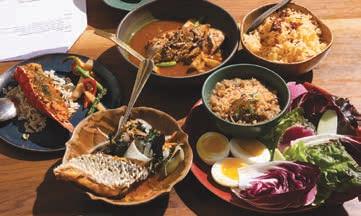
located, the area where meals are both prepared and lovingly eaten with family and friends. At Langbaan, inspired by the warm and convivial atmosphere of Thai kitchens, we transform classic Thai food into a refined multi-course tasting menu using the bounty of Pacific Northwest ingredients.”
But here’s the news: As first reported in The Oregonian, “Langbaan will return to the Eastside with its first standalone space this year, restaurateur Earl Ninsom said. Ninsom hopes to have Langbaan open in its new home—the former Bar Casa Vale —by October, just in time to celebrate the restaurant’s 12th anniversary with a dinner series featuring visiting chefs from around the world.”
As you enter the restaurant, Langbaan feels like a welcoming neighborhood spot, rather than a fine dining destination. Warm wood tones adorn the walls, and a radiating green hue backlights the bar, which creates a perfect glow throughout. What’s better than having an executive chef be your guide for the evening at such an acclaimed establishment? Maya, who was overseeing the entire kitchen that night, literally took us by the hand and delivered a meal that hit the stratosphere.
(continued on page 37)
(continued from page 36)
Langbaan delights in innovating traditional Thai dishes into something you’ve never tasted before. Take, for instance, an appetizer dish of Miang Som (normally consisting of shrimp, peanuts, coconut, and a sweet savory dressing wrapped in betel leaves), an offering that usually is distinctive for its pomelo. Langbaan incorporates Valencia orange instead, which offers an element of sweetness that is the perfect start to a meal. Or how about their version of Gaeng Kua Prik? The original is a dry curry made with pork ribs or minced meat, but this eatery uses pork coppa, heart of palm, and green beans. Other standouts included Jor Pak Guard and Jin-Som (pork, yu choy, and Northern Thai herb broth), as well as Gaeng Gra-Dang (a trout and steelhead terrine adorned with broccolini and fennel).
Creative cocktails add to the atmosphere, and I opted for the Charm Garden, a blend of Tanqueray Rangpur gin, Pisco, aromatic Thai garden syrup (lemongrass, ginger, Thai basil), and banana liqueur. Being purists, my husband and Larry opted for traditional sparkling wine and vodka libations. Wine pairings are also available, and include both local and European choices.
Service is friendly and hits the spot with detailed knowledge of the menu and its ingredients, as well as coordinating numerous dishes (and timing them appropriately) throughout the evening.
Saving the best for last, Maya’s talents as a pastry chef shine magnificently. A pandan mochi with jasmine ice cream and kiwi was the first of two outstanding offerings; and a lighter-thanair taro cake with raspberry, lychee, and coconut completed the meal—transporting us to some undisclosed tropical isle before we landed back in Portland.
Here are two other places of note for a cocktail: Buvons (which means, “Let’s drink!”) champagne bar in Southeast, which has sparkling wine offerings I’ve never seen before; and Café Nell in Southwest, a charming, intimate bar/restaurant where clearly the bartender knows everybody’s name.
So, head to Portland! Great food, welcoming folks, and a host of attractions will make for an enticing adventure not far from us for a fun-filled weekend getaway.
Bits and Bites
Asia Live at Westfield Valley Fair is scheduled to open in June in Santa Clara. Drawing inspiration from San Francisco’s China Live, Asia Live (founded by George Chen and Cindy Wong-Chen) expands its focus in a sprawling 15,000-square-foot enclave to encompass the broader regions of Asia, offering guests an exploration of diverse culinary experiences.
I recently had the pleasure of dining back at Michelin-starred 7 Adams, where Los Angeles-based chef Max Boonthanakit of Michelin-starred Camphor fame held court with resident chef David Fisher in the kitchen. All I can say is, “Wow!” The combination of French, Southeast Asian, and California influences tantalized our palates and made us want to visit both restaurants more.
Hotel Lucia: https://w w w.hotellucia com/ Ritz-Carlton Portland: https://tinyurl.com/yc3dbjdr Kachka: https://www.kachkapdx.com/ Langbaan: https://www.langbaanportland.com/ Buvons: https://www.buvonspdx.com/ Café Nell: https://www.cafenell.com/ Portland Art Museum: https://portlandartmuseum.org/

Another must-see on your whirlwind weekend is the newly-renovated Portland Art Museum , where there is an excellent David Hockney show well worth your time. And, if time allows, here are a couple of other places to visit: the famous Japanese Garden , a 12.5acre respite in the hills above Portland, as well as the Lan Su Chinese Garden right in the heart of downtown. Both are authentic landscape representations of different cultures that provide unique and easy-to-visit outdoor expeditions.
Portland Japanese Garden: https://tinyurl.com/27jbpr48 Lan Su Chinese Garden: https://lansugarden.org/ Asia Live: https://asialivesv.com/ 7 Adams: https://www.7adamsrestaurant.com/ Camphor: https://www.camphor.la/ ODC: https://odc.dance/ David Landis, aka “The Gay Gourmet,” is a foodie, a freelance writer, and a retired PR maven. You can email him at davidlandissf@gmail.com Or visit him online at: https://gaygourmetsf.com/
When I started writing about wine more than two decades ago, one of my first memories of Napa was a visit to Duckhorn Vineyards. I remember being star struck when I walked through their Estate House tasting room door. I pinched myself, tempered my wide grin, and soaked in the atmosphere of this bucolic place.
Recently, that wide-eyed sense of excitement I felt on my first visit struck again. I was lucky enough to attend the 50th anniversary celebration for this Napa Valley icon. We sampled old vintages alongside current ones, and sat on the porch enchanted by vineyard views and a menu that paired perfectly with the wines. The night wrapped up toasting to their history ... and future.
Duckhorn Vineyards was founded in 1976 when Dan and Margaret Duckhorn became part of an emerging local wine scene that would bring worldwide atten-
tion to Napa Valley. Dan was intensely focused on advancing modern viticulture with the goal to craft world-class wines. Margaret complemented her husband by channeling her energies into building the brand’s focus on hospitality and community leadership. With only four winemakers in five decades, the winemaking team has been directed since 2014 by Executive Winemaker Renée Ary, whose guidance has led to a rich roster of the industry’s highest accolades.

If you are already a Duckhorn fan or want to celebrate history-making wines in style, I recommend both of their 50th anniversary bottlings. https://www.duckhorn.com
2025 Duckhorn Vineyards “50th Anniversary” Sauvignon Blanc, North Coast, California $32
As leaders in crafting pure California versions of French grape varieties, Duckhorn has been making signature sauvignon blanc since 1982. This unique bottling blends racy sauvignon blanc with a kiss of silky sémillon for a supple white overflowing with citrus-laden freshness. Enjoy poolside or tableside.


2023 Duckhorn Vineyards “50th Anniversary” Merlot, Napa Valley, California $58
Merlot is synonymous with Duckhorn. Inspired by a visit to Bordeaux, France, where merlot shines, Dan Duckhorn made the winery’s first vintage in 1978. It often plays second fiddle to its blending partner, cabernet sauvignon, but Duckhorn’s commitment to showcasing the red variety was key in elevating merlot domestically. Today, Duckhorn’s merlots rank among the best in the world (or THE BEST according to famed wine publications). This version seamlessly blends in dashes of cabernet sauvignon, cabernet franc, and malbec. Intense dark fruit notes with hints of cacao and spice are wrapped in a lush texture—it’s like drinking cashmere.
Author, speaker, wine consultant, and television host Leslie Sbrocco is known for her entertaining approach to wine and food. She has won multiple Emmy Awards for her work on PBS, which includes hosting the series “Check, Please! Bay Area,” which is now in its 21st season; “Check, Please! You Gotta Try This!” and the national series “100 Days, Drinks, Dishes & Destinations.” www.LeslieSbrocco.com
Dozens of producers and makers of exceptional cheeses, olive oils, charcuterie, chocolates, spices, wines, sake, and cocktails were represented at the Third Annual Rockridge Market Hall Indie Food Fest in Oakland on May 9, 2026. The well-attended event also included two featured authors: David Lebovitz, visiting from Paris, who signed copies of his newly revised Ready for Dessert and The Great Book of Chocolate; and Ashy Loupy, co-author of The Diaspora Spice Co. Cookbook , who was also offering delicious spice blends.
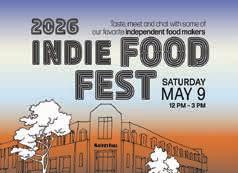
Held just before Mother’s Day, the event additionally included special items from each of the shops at Market Hall: Billingsgate Seafood (which has another location in Noe Valley), Marin Sun Farms Butcher, Market Hall Bakery, Market Hall Foods, Market Hall Produce, Paul Marcus Wines, The Pasta Shop, and Wild Flower and Fern. Market Hall is now gearing up for special menus and products for Memorial Day, Father’s Day, Pride, and picnic-ready favorites for the 4th of July.
https://rockridgemarkethall.com/