LGBTQ News & Calendar for the Bay Area

CELEBRATING SIX DECADES Est 1978
LGBTQ News & Calendar for the Bay Area
CELEBRATING SIX DECADES Est 1978
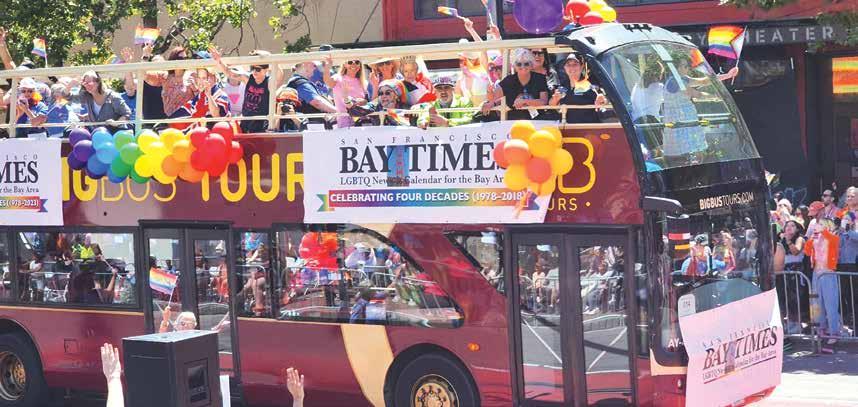
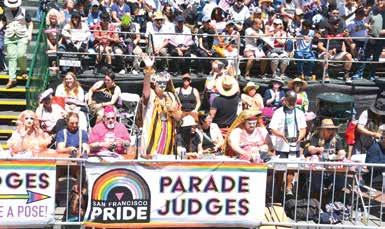
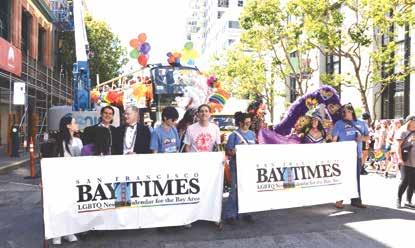
Sincere appreciation to Andrew Smith, Nicole Ritthaler, and the entire team of drivers and customer service representatives! The San Francisco Bay Times’ year-round partnership with Big Bus Tours means so much to us and is truly indicative of the company’s commitment to the LGBTQ community.
Please consider enjoying their tours of San Francisco and the Bay Area any time you have guests coming from out of town or if you want to see the sites of our fabulous city while celebrating any occasion. www.bigbustours.com


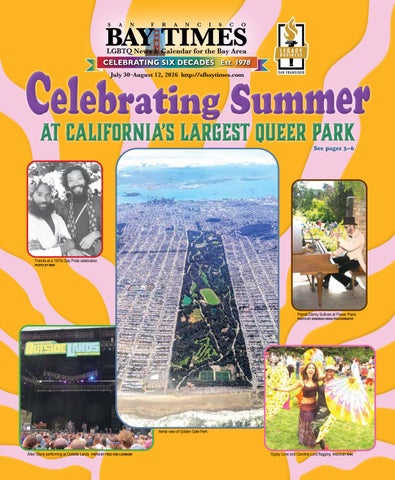
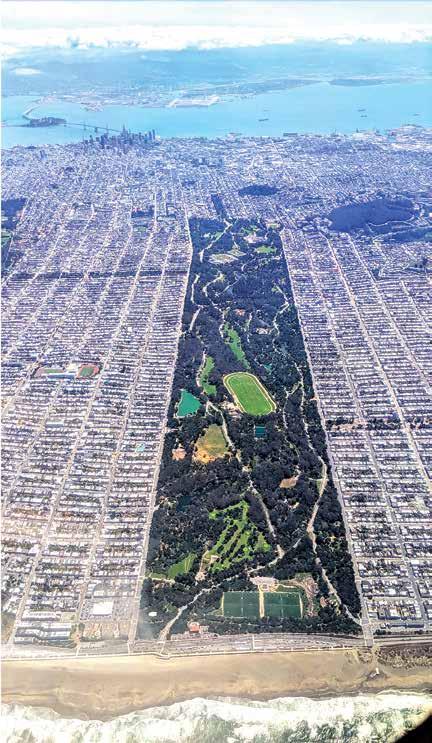
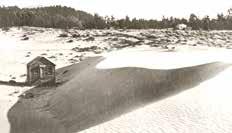
When nineteenth-century critics dismissed San Francisco’s ambitious park plan as a foolish attempt to grow greenery on barren ocean dunes, few could have predicted the triumph that would rise from the sand. Today, Golden Gate Park stands as an engineering and ecological miracle, spanning over 1,017 acres—a massive emerald corridor stretching three miles long from the heart of the city straight to the crashing waves of the Pacific Ocean.
Larger than New York’s Central Park, this sprawling urban haven defies simple categorization. Where else can visitors wander beneath towering eucalyptus groves, spot a resident herd of American bison grazing in an open meadow, step into a glass Victorian conservatory, and explore world-class art and science museums, all within a single afternoon? More than just green space, Golden Gate Park is the soul of San Francisco, offering a seemingly endless, living tapestry where culture, history, and wild coastal nature intertwine.
It is also the queerest park of its size in California. While Mission Dolores Park, with its “Gay Beach” sunny southwest slope, is widely viewed as the gayest park of San Francisco, and Buena Vista Park holds the number two spot, Golden Gate Park has its own significant gay cred and is nearly 20 times larger than both of these smaller parks combined. Rounding out our list from a statewide perspective are Elysian Park and Griffith Park in Los Angeles, Russian River/ Armstrong Redwoods in Guerneville, Plummer Park in West Hollywood, Will Rogers State Beach/”Ginger Rogers Beach” in Pacific Palisades, and West Street Beach in Laguna Beach. All are culturally significant or popular within California’s LGBTQ+ community and with queer visitors from outside the state.
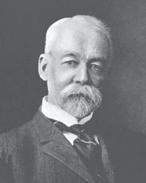
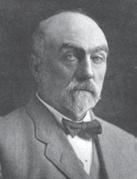
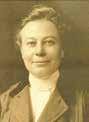
The primary initial visionaries of Golden Gate Park, engineer William Hammond Hall and horticulturalist John McLaren, were in the same bohemian creative and cultural circles as power park duo Kate Sessions (the “Mother of Balboa Park”) and Alice Eastwood, who built the botanical collection at the California Academy of Sciences. Sessions once wrote to Eastwood, with whom she was close to for decades: “Our friendship developed through flowers ... our children, which I am growing and you are naming.”
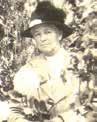
Renowned architect and engineer Julia Morgan, who also never married yet championed same-sex cou-
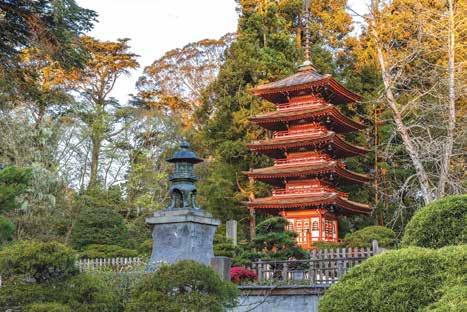

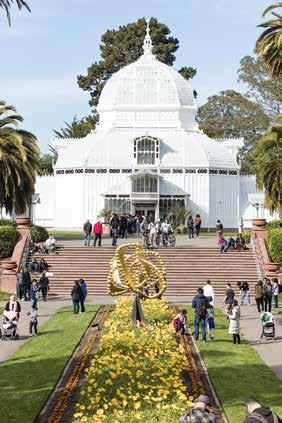
Conservatory of Flowers
Couple Nurtures Iconic Urban Landscapes
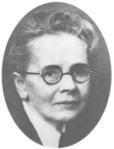
ples, was additionally in that elite group, and was so interested in the creation of Golden Gate Park that she designed a Museum of Medieval Art that was meant to house the historic stones of a 12th century Spanish monastery. Newspaper tycoon William Randolph Hearst had purchased the dismantled monastery, Santa María de Óvila, but World War II halted the museum project and then a series of fires obliterated much of the stones’ identifying markings. Fragments of these historic stones are scattered in parts of today’s Golden Gate Park! Visitors can look for them in the Botanical Garden’s Liberty Terrace Garden (carved arch stones and blocks displaying their original medieval mason marks) and in the Succulent and Fragrance Gardens, where they are integrated into the pathways and garden beds. They also help form the low circular arrangements known as the “Druid Circles” within the historic oak grove of Monarch Bear Grove located near Nancy Pelosi Drive.
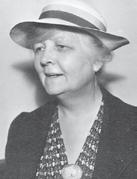
Isabella “Bella” Worn was yet another powerful horticulturist in this circle who never
married. Worn frequently collaborated with Morgan. She is more remembered for her decades-long work at the majestic Filoli Historic House & Garden, but her influence was much broader as she was a defining figure in early-to-mid 20th century California design.
As Sessions indicated, many of these individuals never had children but dedicated their lives to creating buildings, gardens, and other spaces for all to enjoy over countless generations. Morgan’s burial site is near that of former San Francisco Bay Times columnist Elaine Viegas at another extraordinary property, park-like Mountain View Cemetery in Oakland designed by Central Park’s landscape architect Frederick Law Olmsted; Morgan’s stone there is simple and barely noticeable. Hall has a similar simple burial at Cypress Lawn Memorial Park in Colma, California, where McLaren is also buried. It is thought-provoking to consider their legacies, forged more in their immeasurable, lasting work for the public rather than focusing on themselves.
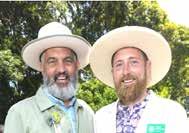
Joe Rothleutner and his husband Jim Salyards are two of Northern California’s most influential leaders of garden management and design. Rothleutner plays a vital role in nurturing the Bay Area’s iconic urban landscapes as the Garden Director for the Gardens of Golden Gate Park—which encompasses the San Francisco Botanical Garden, the Conservatory of Flowers, and the Japanese Tea Garden. With a rich background in urban forestry and public horticulture, Rothleutner oversees the stewardship and conservation of thousands of rare plant species while championing civic partnerships that expand green spaces across San Francisco. By focusing on plant health, sustainable facilities management, and seamless public accessibility, his leadership ensures that these world-class botanical collections remain vibrant, welcoming sanctuaries for over a million visitors each year. Down the peninsula in Woodside, Salyards has dedicated decades to transforming how historical and public spaces approach modern gardening at the renowned Filoli estate. Serving as Associate Director of Horticultural Initiatives, Salyards has spearheaded climate resiliency efforts,
(continued on page 5)
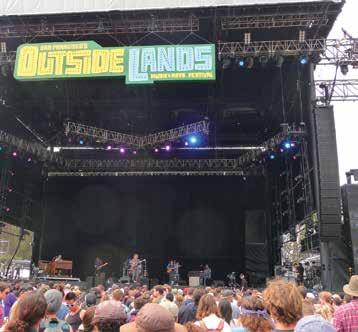
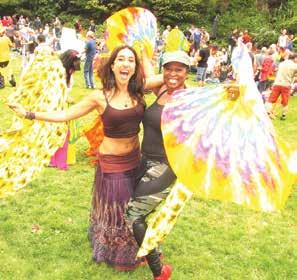
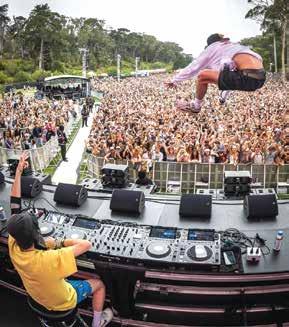
Golden Gate Park is set to transform into a vibrant celebration of music and queer culture for Outside Lands 2026. Scheduled for August 7–9, the annual three-day festival will continue its tradition of honoring the Bay Area’s LGBTQ+ heritage by showcasing a diverse slate of queer performers across genres, from pop trailblazers and soulful R&B crooners to boundary-pushing indie artists and iconic local community institutions.
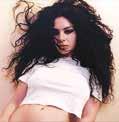
Leading the charge on the main stages will be major pop and dance powerhouses who have become staples in queer club culture. Headliner Charli xcx will arrive in San Francisco riding the massive momentum of her genre-defining era, bringing high-energy pop anthems and her long-standing dedication to the LGBTQ+ community. Joining the pop spectacle will be Tinashe, whose sleek choreography and inclusive anthems always draw enthusiastic crowds, and JADE (Jade Thirlwall), who will be delivering her solo pop prowess to the festival grounds.

while vocal powerhouses like Durand Bernarr and Destin Conrad will add soulful, genre-blurring R&B to the weekend roster.
Beyond mainstream pop, the festival’s lineup spotlights deeply intimate and groundbreaking queer artistry across indie rock and R&B. Gothic-folk sensation Ethel Cain—celebrated as the first openly transgender musician to land a top 10 album on the Billboard charts— promises to deliver one of the weekend’s most transcendent, mythic sets. Indie rock singer-songwriter Lucy Dacus (of boygenius fame) will bring her emotionally candid storytelling,

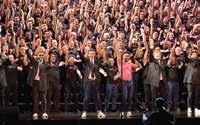
Rooting the weekend firmly in San Francisco’s local queer history, Outside Lands 2026 will feature an anticipated appearance by the San Francisco Gay Men’s Chorus on August 9. Festivalgoers will also be able to immerse themselves in Dolores’, the festival’s dedicated open-air dance venue. Paying homage to San Francisco’s DIY nightlife and activism, Dolores’ will offer a non-stop sanctuary of drag performances, burlesque, and high-voltage DJ sets from queer and trans artists all weekend long.


This year’s festival will also include a Night Shows series from August 6–9. The series will consist of intimate, late-night sets that are scheduled across multiple San Francisco venues. Modest Mouse, for example, will be per-
While major events like Outside Lands and Flower Piano are well known and fill parts of Golden Gate Park with visitors, there are many other incredible events taking place at the park this summer. Here are just a few highlights:
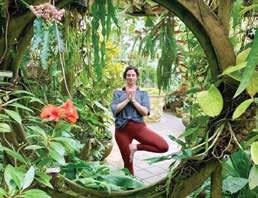
August 11 - After Hours Yoga will take place in the amazing Conservatory of Flowers, which is the oldest building in Golden Gate Park and the oldest municipal wooden conservatory in North America. The combination of meditative yoga and the conservatory’s peaceful, lush tropical West Gallery seems meant to be.
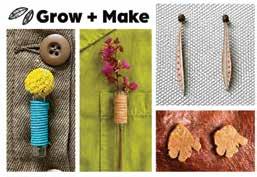
August 15 - Grow + Make: Everything Is Jewelry! will happen in the San Francisco County Fair Building’s Recreation Room. As the iconic song goes, “If you are going to San Francisco, be sure to wear some flowers in your hair.” Learn to do so with style in this creative, hands-on session that will show you how to incorporate natural elements (not just flowers!) into brooches, earrings, necklaces, and more.
August 16 - Forest Bathing at San
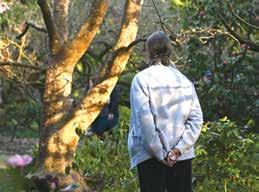
Francisco Botanical Garden, inspired by the Japanese tradition of shinrin-yoku, will be a mindful, slow-paced journey throughout the garden. It will invite participants to engage all senses connecting deeply with the sights, sounds, and textures of the forest, guided by prompts to pause and notice the intricate details of leaves, the soothing rhythm of bird songs, and the earthy scent of the soil lowering stress levels, reducing blood pressure, and enhancing overall well-being.
Music Throughout the Summer - The

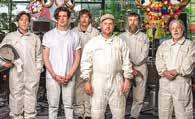
forming to a sold-out audience at The Castro Theatre on August 6 with guest band the Sun Atoms.
As of this writing, Outside Lands has sold out, but there is a wait list and resell ticket vendors are doing a brisk business.
https://sfoutsidelands.com/
Golden Gate Park Band, which has presented free concerts in Golden Gate Park since 1882, will be performing throughout the summer at the Golden Gate Bandshell, which is the oldest structure in Golden Gate Park’s Music Concourse.
September 13 - San Francisco Opera’s annual free Opera in the Park will take place this year just over a week before summer 2026 ends (on September 22). It is a beautiful way to cap off the season.
For More Information
Gardens of Golden Gate Park Events Calendar: https://gggp.org/events-calendar/ Golden Gate Bandshell Concerts: https://bit.ly/4pNaBPu
Opera in the Park: https://www.sfopera.com/operainthepark/
(continued from page 3)
transitioning traditional display beds toward sustainable, water-wise plantings, organic soil management, and reduced pesticide usage. Beyond Filoli, his active advocacy for regional public gardens—including supporting historic botanical sites across the Bay Area—helps educate both home gardeners and professional horticulturists on how to maintain beautiful, eco-friendly landscapes suited to California’s evolving climate.
Thanks to the efforts of Rothleutner and his colleagues, along with other staff and volunteers, Golden Gate Park remains San Francisco’s ultimate green space. The park has also played a pivotal role in LGBTQ+ history, serving as a sanctuary for radical visibility, athletic milestone events, and early community organizing. Here are just five of the many significant historic LGBTQ+ events that took place within the park:
1.Summer of Love (1967)
The Summer of Love was a 1967 social phenomenon in San Francisco’s
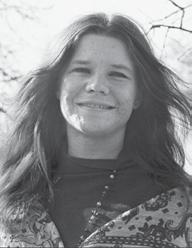
Haight-Ashbury district that spilled into nearby Golden Gate Park where 100,000 young people converged to promote peace, alternative lifestyles, and free love. It connected to the LGBTQ community by fostering an emphasis on personal authenticity and sexual liberation that paved the way for modern gay liberation.
2.The Inaugural “Gay-In” Picnic (1970)
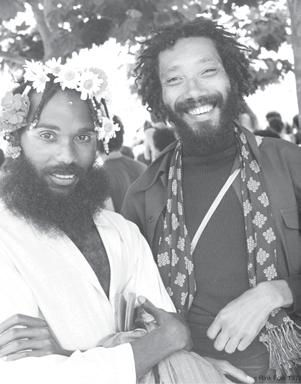
On June 28, 1970—the day after a small group marched down Polk Street to mark the oneyear anniversary of the Stonewall Riots— roughly 200 people gathered for a “Gay-In” picnic in Speedway Meadows (now Hellman Hollow). This informal picnic and political gathering directly inaugurated what would eventually evolve into San Francisco Pride.
3.Early Gay Freedom Day Rallies (1970s)
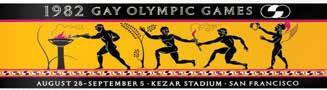
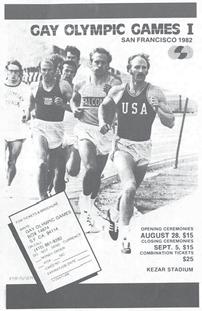
4.The First Gay Games at Kezar Stadium (1982)
In August 1982, Kezar Stadium, located on the southeastern edge of Golden Gate Park, hosted the inaugural Gay Games. Founded by Olympic decathlete Tom Waddell, the international sports and cultural event brought together over 1,350 LGBTQ+ athletes from 10 countries competing across 17 sports, establishing a global tradition promoting inclusion in athletics.
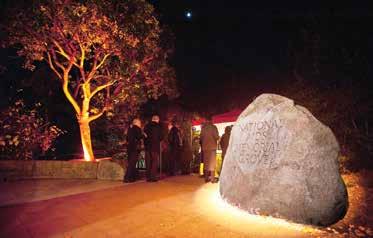
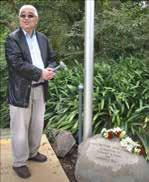
of names are carved into granite. Rather than a static monument of bronze or marble, it remains a dynamic, living landscape maintained through decades of community care and monthly volunteer workdays. Bay Times columnist Joanie Juster is one of the longtime volunteers.
5.Counterculture & Queer Liberation Crossroads (1960s)
During the 1960s counterculture movement, Golden Gate Park’s Polo Field and meadows hosted massive gatherings like the 1967 Human Be-In. The park provided open public space where gay liberation activists, beat poets, and “hair fairies” (early gender-nonconforming and trans activists) could socialize and organize openly at a time when police raids frequently targeted indoor queer gathering places across the city.
National AIDS Memorial Grove
Nestled in the lush de Laveaga Dell in the eastern end of Golden Gate Park lies the National AIDS Memorial Grove, a serene
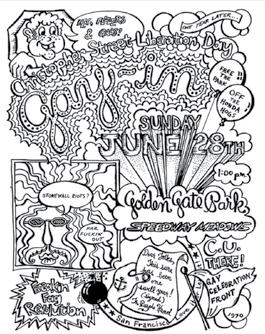
Throughout the early-to-mid 1970s, before San Francisco Pride outgrew park capacity and moved its primary festivals to Civic Center, Golden Gate Park’s open fields, including Marx Meadow and Speedway Meadow, served as the main destination for post-parade rallies, performances, and activist speeches during Gay Freedom Day celebrations.
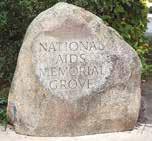
ten-acre sanctuary created as a living memorial to all those affected by the HIV/ AIDS pandemic. Conceived in 1988 at the peak of the crisis, when San Francisco’s LGBTQ+ community was facing unfathomable loss, a small, dedicated group sought to transform a neglected, overgrown ravine into a sacred public space for healing, grief, and remembrance.
Officially breaking ground in 1991 and designated as a national memorial by Congress in 1996, the grove features peaceful stone pathways, towering redwoods, fern valleys, and engraved stone portals where thousands
The creation of the grove was driven by the resilience and vision of local LGBTQ+ community leaders, landscape architects, and allies who channeled their collective grief into radical civic action. Early gay visionaries and advocates— such as landscape designer Stephen Marcus, who worked tirelessly on the project while battling AIDS himself, alongside community leaders like James Hormel and David Linger—collaborated with local environmental planners to design a space rooted in restoration and hope.
Saturday, October 27, 2018, friends and
Golden Gate Park aligns with queer ecology in several deep, structural ways. The park: -has reclaimed and transformed “unnatural” space; -deconstructs the “designed” purpose of urban parks; -showcases biological fluidity and non-normative flora and fauna; -is simultaneously synthetic and wild, engineered and organic; -and evidences that nature and human culture are fluid and constantly evolving.
A near-constant of the park, however, is its generally fresh and clean air. Onshore winds push maritime air straight across the western edge of the city, helping prevent heavy pollutant buildup in the park, while thousands of mature trees and open plant life aid in filtering localized urban impurities inside the park boundaries.
Queer artists, gardeners, and activists, joined by grieving loved ones and allies, volunteered hundreds of thousands of hours clearing brush, planting trees, and building stone terraces. By physically reclaiming the land, these individuals built, not only a sanctuary of solace for a devastated community, but also an enduring piece of national historic infrastructure that ensures the lives lost to AIDS will never be forgotten.
Queer Ecology Realized
Queer ecology—an interdisciplinary field that examines the intersections of nature, sexuality, gender, and environmental justice—challenges the traditional, rigid binaries of what is considered “natural” versus “unnatural.” Rather than viewing nature as an orderly, heterosexual backdrop designed strictly for human utility, queer ecology embraces fluidity, adaptation, non-normative relationships, and human-nature interdependence.
Whether you are counting the days to a summer vacation in faraway places or are planning to spend the months here in the Bay Area, block off time to spend in San Francisco’s own Golden Gate Park. Summer is a prime blooming season across the park’s gardens, visitors can escape much of the heat in the site’s microclimate, and some of the city’s largest and best music festivals and concert series take place in the park. And here’s one more thing to keep in mind: There is no public record of President Donald Trump ever having visited Golden Gate Park.
https://bit.ly/4pJxMdw
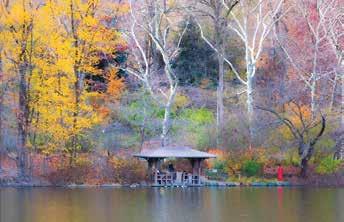
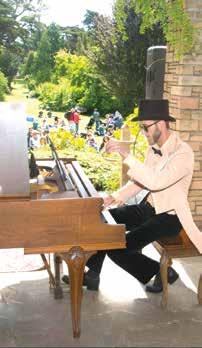
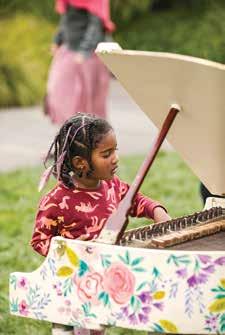
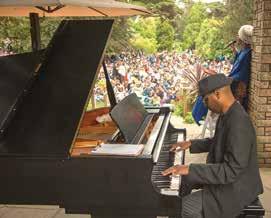
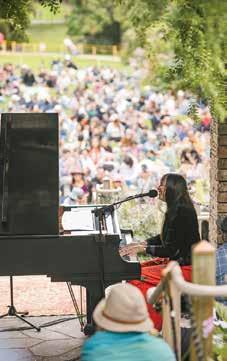
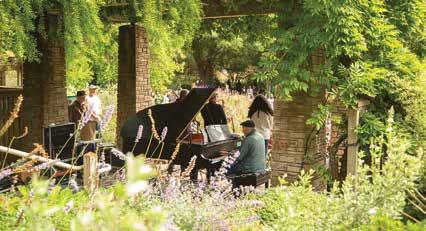
Every September, Golden Gate Park undergoes a quiet, magical transformation. Over 55 acres of winding paths, redwood groves, and rare flora in the San Francisco Botanical Garden become an open-air concert hall. Flower Piano 2026, running from September 10 through September 20, will mark another chapter in one of the Bay Area’s most cherished autumn traditions.
For eleven days, a dozen grand pianos—hidden tucked away near the Garden of Fragrance, the Ancient Plant Garden, and sprawling lawns—will invite visitors to stop, listen, or sit down and play.
The Vision Behind the Magic Flower Piano was co-created by Sunset Piano founders Mauro ffortissimo and Dean Mermell in collaboration with the Gardens of Golden Gate Park. What started as a guerrilla art intervention, dragging abandoned pianos out onto the bluffs of the San Mateo coast, has grown into a premier cultural event.
The ethos remains remarkably democratic: half open-access interactive jam session, half world-class music festival. Scheduled performances will feature over 100 Bay Area artists spanning classical, jazz, salsa, pop, and experimental genres, but, between sets, any member of the public can sit down at a grand piano and share a song.
What to Expect at Flower Piano 2026
Whether you want to hunt down all 12 pianos or pick a sunny spot on the grass with a picnic blanket, the 2026 festival will be bringing back signature highlights alongside new programming:
- Diverse Headliners: Expect daily per-
formances scattered across different garden zones. Highlights will include La Gente SF, Sixth Station Trio, Tango No. 9, the San Francisco Ballet School, and the Kev Choice Chamber Ensemble mixing hip-hop, jazz, and classical strings.
- The Flower Piano Lounge: Located in the Celebration Garden, this upgraded space will feature dedicated seating, specialty food, local craft cocktails, and exclusive intimate evening performances.
- Open Play Time: Between curated sets, every piano will be open to whoever wants to play, from toddlers trying their first key to
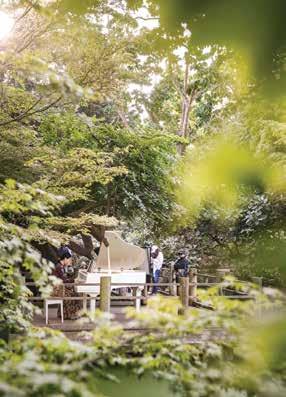
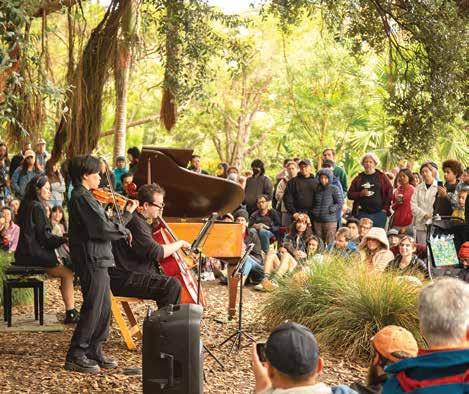
professional pianists spontaneously stepping up to deliver jaw-dropping recitals.
Flower Piano 2026
San Francisco Botanical Garden in Golden Gate Park
Admission: Free for San Francisco residents (with ID); Included with standard Garden Admission for non-residents. Optional Lounge Passes sold separately.
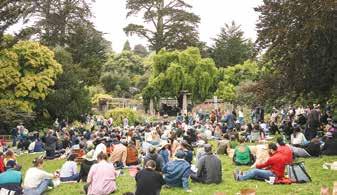
Best Time to Visit: Weekday mornings offer the calmest, most intimate open-play opportunities; weekends pack energetic crowds and back-toback featured ensemble shows.
Pro Tip: Dress in layers, bring a blanket, and grab a garden map at the entrance; it will double as a treasure map leading you to all 12 hidden piano stages.
https://bit.ly/4yEz6Cj


Brandon Miller
Two days before I closed on my new house, the bank called to say the loan wouldn’t fund until we had a working toilet. My contractor tapped into my Kentucky redneck roots, jerry-rigged a fix, sent the bank a video of it flushing, and we closed on schedule. I still don’t fully trust that toilet.
That kind of surprise comes standard with buying a house, no matter who is on the deed with you. What shouldn’t be a surprise is what happens to your equity afterward, and that’s where I often see people run into trouble when they’re buying with someone they’re not married to: a partner, a friend, or a whole crew of friends going in on a property together. More of my clients are structur-
ing purchases this way than ever. And it works, as long as you know your options going in.
Do You Need to be Married to Buy a House Together?
Short answer: no. Real estate is one of the most flexible purchases you can make, and it was never built around a marriage certificate. Couples who found each other later in life, friends splitting a mortgage instead of rent, entire friend groups planning to grow old together, all of it works, no rings required.
The catch is that marriage comes with legal defaults built in, like who inherits what and who’s protected if things end. Skip the marriage, and none of that shows up automatically. So, we help you build it yourself, before you close.
For two people, the setup usually comes down to one of two structures. Tenants in common lets you split ownership however it fits, say 70/30 based on who put in more cash, and each person’s share is theirs to leave to whomever they choose. Skip that step and your share could end up with your mother or a sibling instead of the person you bought the house with.
Joint tenancy with right of survivorship
(continued on page 15)
You and the People You Love?
Jay Greene, Esq., CPA
Long-term care is expensive. Most families don’t plan for it until they need it. By then, it’s often too late to protect your savings.
Medi-Cal can help cover the cost of longterm care. But California brought back strict rules in 2026. If you don’t understand them now, you could lose money you meant to leave behind.
California brought back asset limits for longterm care. As of 2026, the limit is $130,000 for an individual. It’s $195,000 for a couple. If you own more than that in countable assets, you may not qualify for help.
California also brought back a lookback period. This started February 1, 2026. It checks any money or property you gave away before applying. Right now, the state only looks back to February 2026. That window grows by one month, every month. It won’t reach the full 30 months until July 2028. Gifts or transfers from 2024 or 2025 don’t count yet.
This means timing matters. A transfer that was safe last year may not be safe today. A good plan today may not work in a year. This is exactly why your plan needs regular review, not a one-time fix.
Long-term care planning isn’t just about money. It’s about who takes care of you, and who speaks for you, when you can’t speak for yourself.
For LGBTQ+ households, this part matters even more. If your household looks different from a traditional family, the state doesn’t automatically know that. You have to show it. That means documents from your partner or caregiver, shared bills, and proof that you live and function as a family, even without a marriage certificate.
A power of attorney and a health care directive matter here too. They let your chosen
(continued on page 18)


By Aaron Boot-Haury
Hello again, San Francisco.
Last month, I wrote that, once Pride wrapped up, we were going to roll up our sleeves and get back to work.
Well, we meant it. Pride was wonderful (thank you to everyone who came out, said hello, and helped us show off the new GGBA look around the city), and now the real building has begun. This is my favorite part of the year, when the relaunch is behind us and our calendar starts filling up with the reason this chamber has existed for more than fifty years: bringing people together and turning connections into real business. So, let me tell you where to find us this August.
Our signature networking program, Monthly Make Contact, returns Tuesday, August 11, from 6 to 8 pm at Northwestern Mutual, 555 Mission Street. It’s exactly what you’d hope for from a GGBA room: an educational spotlight, some structured networking, and plenty of time to simply mingle, all of it welcoming and low-pressure. There will be snacks, and a wine tasting from La
Crema, our official wine sponsor. Come as you are and bring a friend.
The following Sunday, August 16, we will cross the bay for Oakland Pride. GGBA will march in the parade (stepping off at 10:30 am) and exhibit at our booth through the festival until 6 pm, as we keep expanding our reach into the East Bay. Join our parade contingent or lend a hand at the booth. It’s a joyful day, and it matters that we show up for it.
Then, on Tuesday, August 25, I’ll lead the next session of our Business Education Series, “What Are NGLCC’s LGBTBE and Allied Business Certifications, and Why Do They Matter?” It’s a hybrid event, in person and virtual, free and open to all, with light refreshments. I’ll walk through the LGBT Business Enterprise certification and the new Allied Business certification (currently in pilot): what they require, how the process works, and how they can help grow your business.
Here’s the part I most want you to hear. This session is only the beginning of that series, and what we teach next is genuinely up to you. In the coming days, keep an eye on
your inbox for a short survey from the GGBA. It is quick (I promise, we designed it that way), and it asks a simple question: What would actually help your business grow? Your answers will shape the workshops we host, the topics we cover, and the connections we prioritize. Whether you joined us decades ago or last week, your voice belongs in this. So, watch your email, and, when that survey lands, take a few minutes to tell us what you need. We are listening.
And now the ask I’m most excited about. We are growing our Board of Directors, and applications are open right now. If you have ever thought about helping shape the future of the original LGBTQ+ Chamber of Commerce in the United States, this is your invitation. We are looking for people who love this community and this city, who bring their own perspective and expertise to the table, and who want to leave something better than they found it. This year, in particular, we are especially eager to hear from people with experience in legal matters, in fundraising and development, and in event planning, three areas where the right board members will help us grow. That said, you
VeraScore is a financial technology platform designed to modernize credit evaluation by replacing traditional credit scores with a holistic “Financial Health Score” (FHS). Powered by artificial intelligence, the platform analyzes a consumer’s complete real-time financial footprint—including cash flow, asset trends, and spending history—to provide a far more transparent and predictive measure of creditworthiness. By giving individuals full ownership of their data and granting lenders deeper risk insights, VeraScore bridges the gap between financial institutions and traditionally underserved borrowers who are often overlooked by legacy scoring models. Here, Geff Woodward shares more about VeraScore.

and debt management, we give people a fairer way to access affordable financial services while helping lenders make more informed decisions. Our mission is to create a financial system that works for everyone. We believe financial opportunity shouldn’t depend on outdated measures that overlook millions of responsible people. Everything we build is guided by integrity, inclusion, transparency, and the belief that doing well as a business should also mean doing good for consumers, communities, and the economy.
do not need a fancy title or a boardroom résumé. You need heart, follow-through, and a willingness to build alongside a group of people who genuinely care. If that sounds like you, or like someone you know, reach out to us at nominations@ggba.com and we will tell you everything you need to know. Don’t wait: Our nominations window closes soon, and I would hate for you to miss it.
At the GGBA, we remain deeply committed to fostering innovation, collaboration, and economic empowerment within our community. A survey is a small thing and a board seat is a bigger one, but both are the same act at heart: making your voice heard, and helping win something good for all of us. So, come to an event. Tell us what you need. Consider joining our board. History, connection, and growth still belong in the same sentence, and I cannot wait to see what we write next.
With Prideful Hope, Aaron Boot-Haury
Aaron Boot-Haury is the President and CEO of the Golden Gate Business Association.
GGBA: Please tell us more about VeraScore, including its mission.
Geff Woodward: VeraScore is an AI-enabled financial health platform that helps consumers demonstrate their true financial health beyond a traditional credit score. By analyzing real-world financial behaviors such as cash flow, income stability, savings,
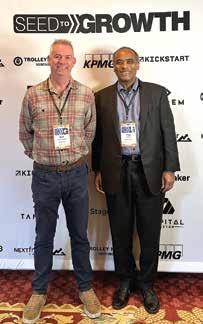
GGBA: What inspired you to create VeraScore, and when did you start the business?
Geff Woodward: The seeds of VeraScore were planted in 2007 when I launched my first company. Like many entrepreneurs, I self-funded the business using credit cards. At the time, I was approved for multiple credit lines totaling well over $100,000 without anyone verifying my income or ability to repay. When I couldn’t secure additional funding, the business failed and I ultimately had to declare bankruptcy.
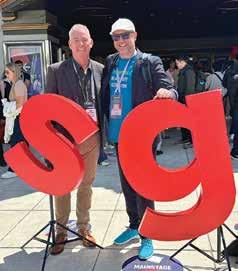
That experience changed how I thought about credit forever. I realized the system wasn’t measuring what actually predicts financial health. It was measuring something else, and it wasn’t protecting consumers or lenders. I spent the next thirteen years thinking about what a better system could look like. By 2020, advances in AI, open banking, and financial technology finally made it possible to build the platform I’d envisioned.
I didn’t create VeraScore to build a better credit score. I created it to build a better financial system. Most fintech companies focus on helping one side of the equation. We want to
(continued on page 15)
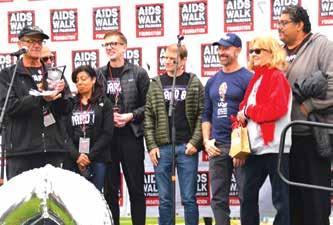
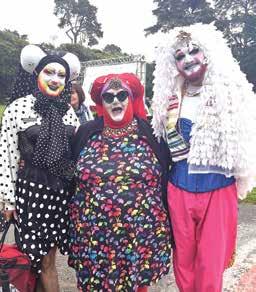
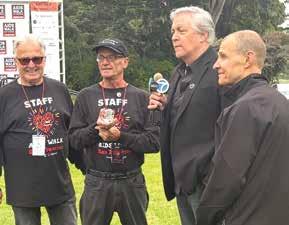
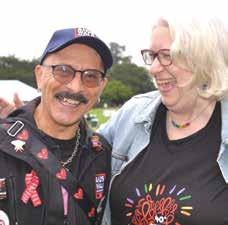
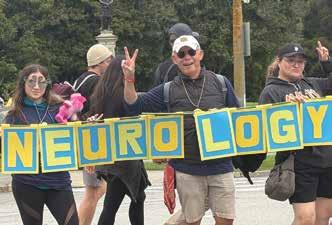
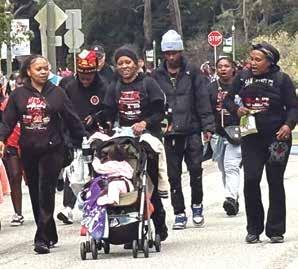
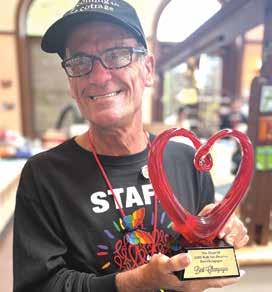
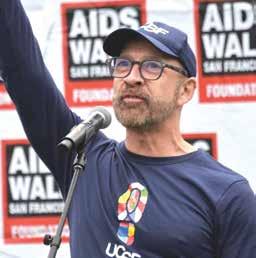
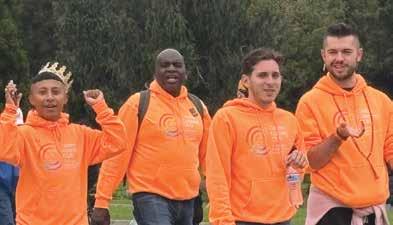
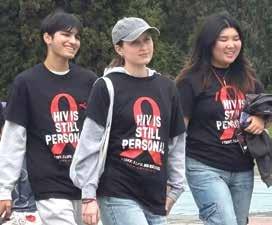
AIDS Walk San Francisco 2026, held on July 19 in Golden Gate Park, marked 40 years of community action in the fight against HIV/AIDS, continuing its legacy as one of Northern California’s largest and most visible fundraising events. Building on decades of grassroots momentum that has raised more than $100 million overall for Bay Area organizations, the annual event this year has raised over $815,000 so far.
The funds directly benefit crucial community service providers across the region, such as Project Open Hand, PRC, Ward 86 at Zuckerberg San Francisco General Hospital, and the National AIDS Memorial—to support essential healthcare, housing assistance, specialized care for long-term HIV survivors, and honoring those who have passed from HIV/AIDS-related causes.
The event’s enduring success rests on the dedication of longtime champions like volunteer leader Joanie Juster, who is also a San Francisco Bay Times columnist, and opening ceremony emcee Dan Ashley. Juster has been deeply involved with the event since 1988, and consistently ranks among its top individual fundraisers year after year. This year, she has raised at least $12,516!
Complementing her grassroots leadership, ABC7 News anchor Dan Ashley has served as the walk’s official emcee for over three decades, bringing vital media coverage and uplifting enthusiasm to the stage each year to unite the community behind a shared mission.
https://sf.aidswalk.net/
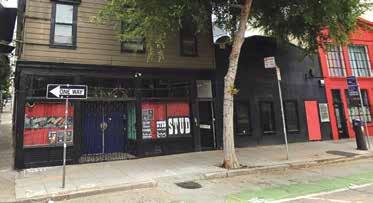
For San Francisco’s iconic worker-owned queer venue, The Stud, social media is far more than a digital bulletin board; it serves as a primary lifeline for ticketing, artist promotion, and community outreach. With over 32,000 followers, the venue’s Instagram presence plays a crucial role in mobilizing patrons and coordinating major events. That essential connection, however, was abruptly severed on the eve of Dore Alley 2026 weekend, one of the venue’s most vital financial periods of the year.
The sudden disruption occurred when Meta suspended The Stud’s account following what venue leaders described as coordinated harassment. Bad actors had targeted months-old archive posts advertising past nightlife events, filing what were likely false moderation reports that alleged “human trafficking.” Despite the venue filing an immediate appeal, automated moderation systems shut the profile down, leaving co-owners and staff without their primary marketing channel right before the annual leather and kink festival weekend.
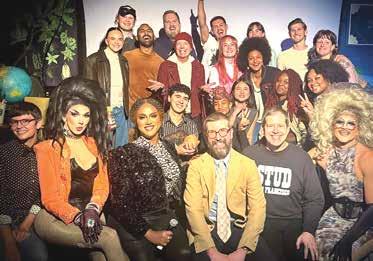
The abrupt takedown sparked a swift wave of community outrage across San Francisco and beyond. Co-owner, transgender community leader, and former Bay Times columnist Honey Mahogany posted a viral appeal calling on Meta to correct the error, while community members flooded social media with demands for the page’s restoration. Local and state leaders quickly added political pressure; California State Senator Scott Wiener and San Francisco District 6 Supervisor Matt Dorsey publicly condemned the ban, calling out targeted harassment campaigns against LGBTQ+ establishments. Faced with mounting public outcry and official scrutiny, Meta reversed the suspension on July 25, fully restoring the account along with its entire follower base. While venue co-owner and general manager Rachel Ryan expressed relief over the prompt fix, the incident highlighted how vulnerable LGBTQ+ small businesses remain to bad-faith reporting tactics on automated social platforms. For The Stud, the rapid reversal demonstrated both the strength of San Francisco’s queer community and the ongoing need for platforms to better safeguard marginalized spaces online.
https://www.studsf.com/

Marking a decade of integrated care and LGBTQ+ empowerment in the heart of the Castro, Strut celebrated its 10-year anniversary on June 21, 2026, with a community Tea Dance hosted by Honey Mahogany and Nikki Jizz. San Francisco Bay Times columnist Sister Dana Van Iquity and lead photographer Rink were among those who attended.
Since opening its doors at 470 Castro Street in 2016 under the stewardship of the San Francisco AIDS Foundation, the health and wellness center has evolved into an indispensable refuge and social hub. The anniversary event paid tribute to a tradition of queer gathering while celebrating Strut’s milestone impact—from delivering crucial sexual health services, harm reduction support, and gender-affirming care to hosting vibrant art shows and social programming that foster connection across generations.
Over the past ten years, Strut has redefined community-centered healthcare in San Francisco by serving tens of thousands of clients and pioneering accessible prevention models, including broad rollout of PrEP, innovative Doxy PEP regimens, and the recent launch of
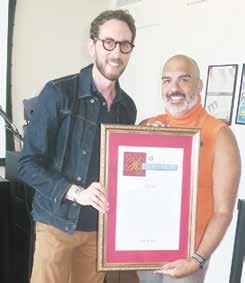
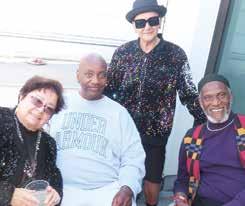
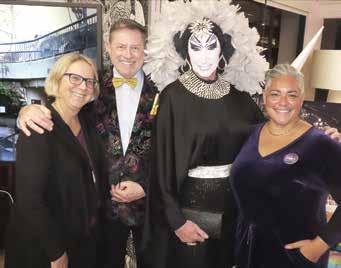
Each month, The Philanthropic Mindset explores how we contribute to the lives of others. Philanthropy is not defined by wealth or recognition. It is found in a conversation, an act of kindness, or a moment of encouragement. These simple expressions of care strengthen communities, restore hope, and remind us of our shared humanity.
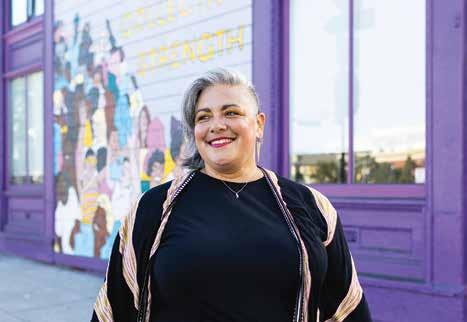
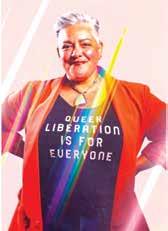
Jennifer Valles is the Executive Director of the San Francisco LGBT Center and a dedicated LGBTQ+ community leader with more than two decades of advancing anti-violence, environmental justice, and queer liberation. Drawing on her experience as a community organizer, she leads with an intersectional vision that strengthens the center as both a trusted local resource and a national leader in LGBTQ+ liberation. Previously, as Deputy Director, she transformed the center’s core programs to better meet the evolving needs of LGBTQ+ communities.
Tom LeNoble: Before you became an executive director, what shaped your sense of caring for others?
Jennifer Valles: My mother shaped me in many ways, but really my entire family and community did. My aunt helped raise me because my mom worked two jobs while my dad worked full time. We were always there for each other.
I also watched my mom, who is white, advocate fiercely for my brother and me. Seeing someone use her privilege so consistently on behalf of her two brown children was incredibly formative.
I’ve always had a strong sense of justice. Even as a child, I felt drawn toward people who didn’t belong. In high school, I talked about joining the Peace Corps, and my aunt, who was openly living with HIV, said something that changed my perspective: “That’s great, but why leave when there’s so much work to do at home?” I’ve carried those words with me ever since.
Tom LeNoble: When you hear the word philanthropy, what does that word mean to you personally?
Jennifer Valles: It has changed over time. Today, I often find myself frustrated that we rely on individual generosity to solve societal problems. We live in a country with enormous wealth and resources. Access to basic rights, protection, and opportunity shouldn’t depend on whether someone chooses to redistribute their wealth.
At the same time, philanthropy connects me with people who genuinely want to help.
As someone once told me, “You’re offering people an opportunity to contribute.”
That idea has stayed with me. Philanthropy becomes a conversation about what each of us has to offer and how we bring those resources together to accomplish something meaningful. We do that work today while continuing to imagine a future where we no longer have to rely on philanthropy to meet basic human needs.
Tom LeNoble: What keeps your optimism alive when the work you do becomes difficult?
Jennifer Valles: Throughout my nonprofit career, we’ve often said we’re working to put ourselves out of a job. We don’t want these services to be necessary forever.
homelessness, violence, or discrimination are simply the way the world works.
I’ve watched people survive unimaginable hardship because of their resilience. I’ve also seen how that same resilience can lead us to tolerate suffering that should never be accepted.
While that long-term goal can feel overwhelming, it’s the day-to-day moments that keep me going. When someone tells you a conversation saved their life, that’s enough to remind you why the work matters. I’m also fortunate to be surrounded by people who’ve been doing this work for decades. They remind me how far we’ve come.
Tom LeNoble: What has the work you’re doing today taught you about humanity?
Jennifer Valles: Humanity is incredibly resilient, and that’s both our greatest strength and one of our greatest challenges. We’re adaptable enough to survive extraordinary circumstances, but sometimes we become so accustomed to injustice that we accept things that should never be normal. We begin believing
Tom LeNoble: What is unique about doing the work you’re doing in San Francisco?
Jennifer Valles: I was born and raised in Chicago, so people often ask: Why San Francisco? For me, San Francisco has always been a place where movements begin. It has helped lead the LGBTQ+ community forward and inspired change far beyond the city itself. As someone committed to advancing LGBTQ+ equality, this is where I want to be.
I also believe we’re living through a time that calls for radical empathy, radical love, and radical acceptance.
What feels different here is the sense of connection. Even in difficult moments, there’s an understanding that joy belongs alongside the work. That combination of activism, compassion, and community continues to make San Francisco extraordinary.
Tom LeNoble: What have you learned about leadership through the service work you do?
Jennifer Valles: Leadership is about people, not position. It’s about the goal you’re trying to achieve together, not being the person in charge.
Leadership means coordinating, supporting, uplifting, resourcing, listening, and learning. It’s about bringing out the best in the people around you so that together you accomplish something greater than any one person could alone.
Tom LeNoble: What do you hope people will remember about your leadership after you’re long gone?
Jennifer Valles: I hope they look back on this moment and say that, when things became difficult, the center, and everyone doing this work, truly showed up. I hope they remember that organizations came together, collaborated, and created something bigger than themselves.
We’re living through a period that will become an important part of history. I hope our contribution is remembered as helping create a meaningful shift toward a more compassionate and just future.
Tom LeNoble: If philanthropy was a verb instead of a noun, what would it look like?
Jennifer Valles: Love. Giving, at its best, comes from a place of love. Maybe not only for the people receiving it, but for what we could become together.
Tom LeNoble: What do you wish every San Franciscan understood about the people your organization serves?
Jennifer Valles: That we’re simply trying to live our lives. We aren’t asking for anything extraordinary. We want the opportunity to be ourselves without sacrificing our basic rights, our safety, or our dignity. We want to live without fear and build lives where we can thrive.
Tom LeNoble: What keeps you grounded when everything around you feels uncertain?
Jennifer Valles: My people. Connection is what grounds me. No matter what’s happening in the world, the constant is the people I love and the relationships we’ve built. If everything else falls away, we still have one another.
Tom LeNoble: If resources were unlimited for a year, what’s the first thing you would solve?
Jennifer Valles: On a practical level, I’d pay off our building and expand our campus so we could serve more people and provide sanctuary for more organizations. But, thinking bigger, I’d invest in building selfsustaining communities where people have (continued on page 18)

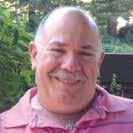
Dr. Bill Lipsky
(Editor’s Note: The following is part three of Bill Lipsky’s timeline of LGBTQ+ history starting with the 19th century. The first part ran in the June 11, 2026, issue of the San Francisco Bay Times.)
By the early 1970s, San Francisco’s reputation as “the homosexual capital of the world” was secure. Alfred Kinsey’s famed Institute for Sex Research agreed. “San Francisco is generally considered the best city in the United States for homosexuals,” it reported in its study, Homosexualities (1978) Partly that was due to its “tradition of tolerance,” but also to its size and geography, which made it “more conducive to a tightly knit homosexual community.”
The decade brought unimaginable, but long overdue, change. Not only would San Franciscans be instrumental in repealing the sections of the California Penal Code, some dating to 1850, which had made same-sex intimacy between two consenting adults a felony, but they would also elect the country’s first openly gay candidate for public office. Living openly and proudly, the women and men of the city’s LGBT communities would create LGBT bands, businesses, sports leagues, and other social, cultural, and educational institutions.
1973
San Francisco’s gay softball league, the first in the country, began when eight local bars each agreed to sponsor a team.
Harvey Milk and Scott Smith, his lover, opened Castro Camera at 575 Castro Street, which became an unofficial city hall for gays in the neighborhood and the headquarters for Milk’s three campaigns for public office. The American Psychiatric Association removed homosexuality from its list of mental disorders, describing it instead as a “sexual orientation disturbance.”
Despite its liberal reputation, San Francisco had the highest arrest rate for homosexual acts of any city in the country.
Responding to increasing violence against LGBTs, Pentecostal Evangelist Reverend Ray Broshears founded the Lavender Panthers, described by Time magazine as “a “stiff-wristed team of gay vigilantes” who frequently carried sawed-off pool cues, shotguns, chains, and bats when patrolling the streets of the Castro and the Tenderloin in a
worn-out VW bus, prepared to interfere with anyone seen hassling or harming gay women and men.
1974
Harvey Milk organized the first Castro Street Fair.
Lavender U, described as “the first gay university in the world,” began offering courses in jogging, massage, counseling, dance, photography, and sign language, among many others.
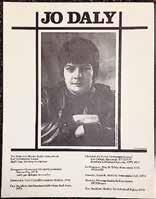
Jo Daly became the city’s— and possibly the nation’s— first full-time paid liaison to its lesbian and gay communities.
Cynthia Slater and Larry Olsen founded the Society of Janus, the oldest BDSM education and support group in San Francisco and the second oldest in the United States.
1975
The world’s first LGBT film festival, the Gay Film Festival of Super-8 Films, projected films onto a bedsheet pinned to a board at San Francisco’s Gay Community Center on Grove Street.
Hal Fischer’s Gay Semiotics classified the denizens of the Castro and the Haight-Ashbury by their clothes into groups that included “street fashion basic gay,” also known as Castro Clone, “jock,” “hippie,” and “leather,” among others.
Doris Fish became the first drag queen to ride in the Gay Freedom Day Parade on an elephant (“Tagu,” rented from Marine World).
For the first time, Time magazine featured an openly gay man, Leonard Matlovich, on its cover with the headline, “I am a homosexual: The gay drive for acceptance.”
Because dance clubs had changed the face of the lesbian and gay popular culture, The Advocate named 1975 the “Year of the Disco.”
1976
The Dykes on Bikes® rode in the San Francisco Gay Freedom Day March for the first time.
Following repeal of California’s anti-sodomy laws, San Francisco’s LGBTQ+ individuals entered a Golden Age, showing what a people could do when left alone to build vibrant, successful communities.
Handing out safety whistles to all who would accept them, the Butterfly Brigade began paroling the Castro to protect members of the community threatened with harassment and violence.
Maggi Rubenstein, often described as the “godmother of sex education,” and Harriet Leve founded the San Francisco Bisexual Center.
1977
Harvey Milk became the city’s first openly gay candidate elected to public office.
Shouting epithets of “Faggot, Faggot,” four gay bashers assaulted, beat, and fatally stabbed Robert Hillsborough, a 33-year-old city gardener who cared for the greenery at a playground near City Hall.
Vandals taped clusters of cherry bombs to the windows of Castro Camera, Mainline Books, Without Reservation, Everett’s of San Francisco, and the Midnight Sun, blowing out plate glass and causing other damage.
Founded by Lanny Baugniet and Allan Estes, who died because of AIDS at age 29, Theatre Rhinoceros, the world’s first LGBT theater company, presented Lanford Wilson’s The Madness of Lady Bright as its opening production.
Word Is Out, “the first feature length documentary about lesbian and gay identity” made by LGBT filmmakers, premiered at The Castro Theatre.
Considered to be the world’s first gay circuit party, Night Flight ‘77 took over all three floors of the Gay Community Center for its New Year’s Eve disco celebration.
1978
Four years after infamously streaking at The Academy Awards, Robert Opel opened his groundbreaking South Of Market Fey-Way Studios, where he exhibited erotic works by LGBT artists, including Tom of Finland, Chuck Arnett, and Camille O’Grady, the “Leather Queen of Folsom.”
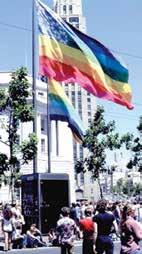
Designed by Gilbert Baker, the rainbow flag debuted at the Gay Freedom Day Parade.
Jon Reed Sims founded both the San Francisco Gay Freedom Day Marching Band and Twirling Corps and the San Francisco Gay Men’s Chorus.
“Mayor of Folsom Street,” opened Mr. S Leather.
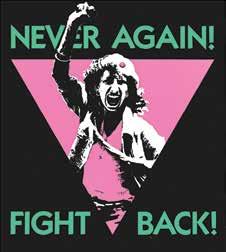
Featuring an image of local actor and drag persona Silvano Nova, the “Never Again! Fight Back!” poster became a vivid statement of the No on 6 campaign to defeat a California ballot measure to ban lesbians, gays, and supporters of LGBT rights from teaching in the state’s public schools.
The San Francisco Bay Times was launched as the first LGBTQ+ paper founded jointly by gay men and women.
Sylvester released his second solo album, which included his first two disco classics, “You Make Me Feel (Mighty Real)” and “Dance (Disco Heat).”
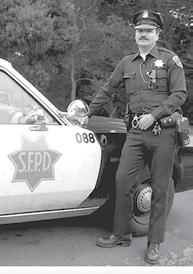
San Francisco became the first city in the United States to actively recruit gay police officers.
The first installment of Armistead Maupin’s Tales of the City appeared in the San Francisco Chronicle.
Alan Selby, the future
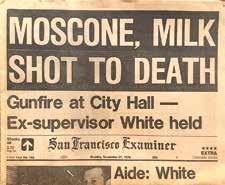
Former San Francisco City Supervisor Dan White assassinated Supervisor Harvey Milk and Mayor George Moscone.
1979
After Dan White’s conviction for manslaughter, thousands of protesters who, like most people, believed he was guilty of premeditated murder, rioted at City Hall, shattering the building’s front doors and lighting fire to nearby patrol cars. Police retaliated by smashing up the Elephant Walk at 18th and Castro streets.
The Lyon-Martin Community Health Services began providing healthcare to lesbians.
The Four Founders of the Sisters of Perpetual Indulgence—Reverend Mother, Grand Mother Vish-Knew, and Sisters Missionary Position and Hysterectoria, who designed the order’s first habits— convened their friends, chose their name, and composed their mission statement: to promulgate universal joy and expiate stigmatic guilt.
Bill Lipsky, Ph.D., author of “LGBTQ+ Trailblazers of San Francisco” (2023) and “Gay and Lesbian San Francisco” (2006), is a member of the Rainbow Honor Walk board of directors.
MILLER (continued from pg 8)
works differently. You and your co-owner hold equal shares, and, if one of you dies, the other automatically inherits the whole property, no probate, no drama over who gets what. It tends to suit people who treat their finances as one shared account rather than two separate piles.
Neither option is right or wrong on its own. What matters more is the agreement behind it, drafted before you need it, the same way a prenup gets written during the good years. It should spell out what happens if someone wants out, how growth in value gets divided, and who’s allowed to sell to whom. My job is to help you think through what belongs in it, then bring in an attorney to draft it.
The Power of The Golden Girls Option
This is my favorite version of this conversation. More clients are buying property with three or four friends instead of a partner, aiming to grow older in a community they already trust instead of alone in a house nobody visits.
The math on this is better than people expect: one house cleaner instead of four, one caregiver split four ways instead of an expense nobody could justify solo. The one question everybody eventually asks is: What hap-
pens when someone in the group passes away?
We solve that inside the same agreement, usually with life insurance on each owner so the group can buy out a deceased member’s share in cash. Heirs get paid, and the house stays put.
None of this matters if buying was the wrong move to begin with. I push clients to rent in a new neighborhood for a week before they commit, and to hold off unless they’re confident they’ll stay put for three to five years, since transaction costs often take that long to recoup.
Whatever your dream house and dream life look like (a partner who talked you into the fixer-upper, a crew of friends you want growing old next door, a family built entirely on your own terms), my team and I care about making sure the paperwork is there to support it.
If you’re working through your own version of this, unmarried, unconventional, or somewhere in between, we would love to help you build the plan around it.
Book a complimentary Make It Happen meeting to learn more: https://www.briofg.com/contact
This material presented by Brio
Financial Group (“Brio”) is for informational purposes only and is not intended to serve as a substitute for personalized investment advice or as a recommendation or solicitation of any particular security, strategy, or investment product. Facts presented have been obtained from sources believed to be reliable, however, Brio cannot guarantee the accuracy or completeness of such information, and certain information presented here may have been condensed or summarized from its original source. Brio does not provide legal or tax advice, and nothing contained in these materials should be taken as legal or tax advice. Advisory services are only offered to clients or prospective clients where Brio and its representatives are properly licensed or exempt from licensure. No advice may be rendered by Brio Financial Group unless a client service agreement is in place.
For more information about our advisory services and fees, please refer to our ADV brochure found at https://adviserinfo.sec.gov/
Brandon Miller, CFP®, is a financial consultant at Brio Financial Group in San Francisco, specializing in helping LGBT individuals and families plan and achieve their financial goals. For more information: https://www.briofg.com/
GGBA (continued from pg 9)
help consumers gain fairer access to credit, enable lenders to make better decisions, strengthen communities, and, ultimately, create a healthier economy. I believe business should create value for everyone it touches.
GGBA: Who are some of your role models, and especially those who helped influence VeraScore?
Geff Woodward: I’ve never had one particular business hero. I’ve always been more inspired by principles than personalities.
The value that’s guided me throughout my career is integrity—doing the right thing, especially when no one is watching.
I’ve always believed that, if you see a problem that affects millions of people and you have the ability to solve it, you have a responsibility to try. That belief has shaped VeraScore from day one and continues to guide every decision we make.
GGBA: Why did you decide to join the GGBA?
Geff Woodward: We joined the GGBA because we believe economic opportunity should be available to everyone, regardless of sexual orientation, gender identity, or background. Supporting entrepreneurs and helping people succeed align perfectly with VeraScore’s mission of expanding access to fair financial opportunities.
James Young, one of our earliest investors and now a GGBA board member, introduced us to the organization. We immediately recognized a shared commitment to inclusion, collaboration, and creating opportunities for communities that have too often been overlooked. We’re excited to build lasting partnerships and contribute to that mission.
To me, being an ally isn’t about words or labels. It’s about creating opportunities. It’s about opening doors for people who haven’t always had the same access, judging people by their character rather than their identity, and using whatever success you’ve achieved to help others succeed. That’s how I try to lead VeraScore, and it’s why joining GGBA felt like such a natural fit.
https://www.myverascore.com/


Roland Schembari and Bill Hartman, Co-Founders
Randy Alfred, Founding News Editor, 1978 Kim Corsaro, Publisher 1981-2011
2261 Market Street, No. 309
SaN FraNciSco ca 94114
PhoNe: 415-601-2113
eMail: editor@sfbaytimes.com www.sfbaytimes.com
The Bay Times was the first newspaper in California, and among the first in the world, to be jointly and equally produced by lesbians and gay men. We honor our history and the paper’s ability to build and strengthen unity in our community.
The Bay Times is proud to be the first and only LGBTQ newspaper in San Francisco to be named a Legacy Business, recognizing that it is a longstanding, community-serving business that is a valuable cultural asset to the city.
Dr. Betty l. SullivaN/JeNNiFer l viegaS co-PuBliSherS & co-eDitorS
Beth greeNe, JohN SigNer, Michael DelgaDo DeSigN & ProDuctioN
kate lawS BuS NeSS MaNager kit keNNeDy Poet-iN-reSiDeNce
J.h herreN techNology Director
carla raMoS weB coorDiNator
Mario orDoNez DiStriButioN
JuaN r. Davila voluNteer coorD Nator
WRITeRS
Rink, Sister Dana Van Iquity, Ann Rostow, Patrick Carney, Leslie Sbrocco, Kate Kendell, Gary M. Kramer, Joanie Juster, Robert Holgate, Eduardo Morales, Dennis McMillan, Tim Seelig, Rafael Mandelman, Jewelle Gomez, Rebecca Kaplan, Bill Lipsky, Beth Schnitzer, Rowena Brown, Kippy Marks, Ian Fullmer, Donna Sachet, Gary Virginia, Derek Barnes, Marcy Adelman, Jan Wahl, Stuart Gaffney & John Lewis, Brandon Miller, Howard Steiermann, Fernando Camino, Honey Mahogany, David Landis
PhOTOgRaPheRS
Rink, Paul Margolis, Bill Wilson, Jerome Parmer, Michael Kirschner, Sandy Morris, Abby Zimberg, Joanie Juster, Ken Lew
aDVeRTISINg
Display Advertising Standard Rate Cards http://sfbaytimes.com/ or 415-601-2113
Custom ad sizes are available. Ads are reviewed by the publishers.
National Advertising: Contact Bay Times / San Francisco. Represented by Rivendell Media: 908-232-2021
Circulation is verified by an independent agency. Reprints by permission only.
© 2026 Sullivan Communications, Inc



By Ann Rostow
I was going to lead off with some analysis of a High Court case coming up next year that will decide whether a Catholic school may take part in Colorado’s Universal Preschool program while they discriminate against LGBT kids and their parents. But then I went through some headlines from The Advocate and found a montage of right-wing pundits slamming Joe Biden for getting an ice cream cone while, by implication, totally ignoring the responsibilities of the presidency. There must have been a dozen clips of really outraged talking heads pointing out that no one gets ice cream in December, that Biden must be senile, that he clearly has too much time on his hands and, as mentioned, that he couldn’t care less about the problems facing the United States. It was Obama’s tan suit all over again.
But then I saw some Trump clips, including one about Venezuela where he seemed to forget the word “earthquake.” He rambled about the, uh, horrible thing that happened there with the moving of the earth, and tried a few other simplistic efforts before finally saying something like, “I guess they call it an earthquake,” as if introducing an arcane scientific term. No one covered this! Well, maybe someone did, but we’ve seen months and months of dementia on full display and Republican commentators avoid the subject. The man cannot produce more than a limited handful of words at any given time, yet no one from the conservative media gives a flying fig.
As for the reason I wound up on the ice cream videos, it’s because I clicked on a piece about JD Vance on The Joe Rogan Experience, where JD accused Biden of eating ice cream cones in a suggestive manner. Vance went on to comment about how he never wants to be seen eating a corn dog in public. Even Joe couldn’t follow these bizarre impressions, saying he sees nothing strange about eating corn dogs or bananas or other items that Vance seems to find excessively provocative.
This brings me to my final thought. I have an ongoing difference of opinion with my wife, who longs for the end of the Trump era, the sooner the better. I, on the other hand, want Trump to finish his full term. Two more years of this shambolic government, run by a man with the mental capacity of a basset hound, should leave us in good shape to win the presidency in 2028, and it should also spell the end of Vance’s nearterm relevance. From what I gather, Vance is worse than Trump in a number of respects. He’s a conspiracy theorist, a Christian nationalist (or close to it), and a human ball of ambition. He has a smarmy manner, and, if he’s given a one or two-year head start on the presidency, who knows what would happen in 2028?
Gender Bending, Hegseth Style
Now we can move to Colorado. Or not! I’m moving on to testosterone. A week or so ago, I happened to read a fairly long article about the nuances of testosterone, which is most useful in fathering children, but harmful to fertility if taken in excess. Interestingly, men who become fathers have lower testosterone,
as it is (I think I recall) something of a barrier to child rearing itself. Also, Navy SEALS and other elite soldiers have lower testosterone as their bodies react to intense physical effort, pain, and stress.
I’m not sure, because, if I now google “testosterone,” that article is gone—supplanted by the many other reports of Pete Hegseth’s comic book plan to check older men in uniform for low T.
Readers, where do we start? The absurdity of the most anti-transgender administration in history suggesting we fool around with sex hormones? The juxtaposition of the two young Latina servicewomen who were just killed in the Iran war with Hegseth’s disdain for women and people of color? The lookmaxxing trend, which Hegseth seems to echo and that has its roots in the incel community? (I think one of those guys just died of something. Will check!) The homoeroticism of the whole Hegseth performance as Secretary of Defense? The impracticality of testing roughly 500,000 men with a single blood draw that, by itself, won’t deliver a clear medical result?
According to Hegseth and company, no one will be required to boost their testosterone, but treatment will be available to any man who tests on the low side. Testosterone declines naturally as you reach 30, but I assume some of the guys won’t be happy unless their T hits the bell on the top of the pole.
Okay, the lookmaxxer was Connor Murphy, 32, an influencer with 2.7 million followers on YouTube and Instagram. He died in Thailand on July 7, 2026, after acting erratically, jumping into a lake, swimming for a few minutes, becoming exhausted, and drowning. He had two unused syringes and some pills in his bag, according to People. Oh, and his rented villa was covered in black and yellow paint, which his girlfriend said appeared overnight. It’s sad. Murphy looked like Pete Hegseth’s dream soldier and I’ll bet the man’s T was as high as he seemed to be when he went all Jackson Pollock on the walls of someone else’s property.
Before we bid adieu to this subject, The Advocate recently reported that Judge Ana Reyes, who is running one of two transgender military cases, formally asked the Defense Department to explain the double standard they seem to have demonstrated with their new High T program. It’s worth reading all six points that Judge Reyes now wants briefed by Hegseth:
“(1) medical guidelines associated with routine screening for testosterone deficiency in the general population and in individuals with symptoms and signs of testosterone deficiency;
(2) medical guidelines for monitoring the administration of TRT;
(3) the similarities and differences in administering TRT, both medically and logistically, for trans men compared to other service members, including cis individuals;
(4) the medical costs associated with screening for testosterone deficiency and providing TRT to service members who do not identify as trans;
(5) the Department’s basis for treating trans men and other service members differently between this new policy and the Military Ban; and
(6) any other information or clarification the parties wish to present on this topic.”
I love this judge.
Getting back to the Supreme Court, I was one of those people who thought Sam Alito might resign after this term ended at the end of June, allowing Trump and the current Senate to replace him with a youthful version of himself. Veteran Court watcher Nina Totenberg accidentally announced his resignation in a mistaken post that suggested she too expected him to take advantage of the timing. Alito is 76, so the rumors made sense, and actually Clarence Thomas is 78, so he seems in a good position to resign as well. We all saw what happened as Ginsburg decided to roll the dice on terminal cancer when Obama was in office, and almost made it to the Biden years. Emphasis on almost.
Yet it seems as if both these men are reluctant to disrobe. Some might say that it doesn’t matter, since they would both be replaced by conservatives. But it’s hard to imagine two worse justices. Whoever comes next will almost certainly be an improvement, although you never know what horror might appear when Trump and company scrape the bottoms of the barrels. At least next year, a chastened Senate would possibly hold the president to some account. We can still pray for an actual Democratic majority, which would change the picture even more.
I mentioned that next year we’ll see yet another religious freedom case out of Colorado, where the state’s civil rights law has taken a licking from this Court multiple times. As usual, there’s a gay angle, with the Archdiocese of Denver claiming that its 34 preschools are being denied access to Colorado’s Universal Preschool program. Why? Well, it’s because Colorado requires participating schools to abide by the state’s laws against discrimination, which include sexual orientation.
The case also involves Employment Division v Smith, Justice Scalia’s 1990 opinion that said you cannot claim religious discrimination under a neutral law of general applicability. Indeed, the U.S. Court of Appeals for the Tenth Circuit relied on this precedent in ruling for Colorado’s right to impose civil rights conditions on its program participants.
The Diocese asked the Court to consider three questions in its petition. The Court accepted questions one and two (which I’m not getting into for now), but significantly rejected question three, which asked whether Employment Division v Smith should be overruled. It’s significant because conservatives are not shy about their disdain for Employment Division v Smith, which they accuse of using vague terms and making life tough for religious actors. In a 2021 case, Fulton v City of Philadelphia, the Court nearly overruled Employment Division v Smith, but were stopped short by Justice Barrett, who pointed out that there was no replacement in law for its
usefulness. In that case, Catholic Charities wanted to offer foster care services but refused to consider GLBT foster parents, and so were denied access under city law. The Court ruled for Catholic Charities, but based their decision on the idea that discriminatory exceptions had been made for other groups, ergo Philadelphia could not block the Catholics. If I recall correctly, the other exemptions were completely different, like matching foster kids with parents of their race or something sensible that had nothing to do with prejudice.
That’s enough of that. I’ll be interested in the outcome here, but I have no illusions. The majority will find an “exception” that allowed some school somewhere to do something wholly unrelated and that will open the door for another Catholic victory.
Pot Pourri
What else is new, you might ask? There’s a gay male thriller on Prime called In the Grey that got lousy reviews. Why mention it? Because I read an article that said it was much better than the reviews. Do we have time to watch things that may or may not be better than their bad press? We each have to decide for ourselves.
Much is being made of rapist Andrew Tate’s effeminate attire during his recent arrest. Tate wore a purple blouse, black capri pants, and flat black shoes that drew all sorts of titters and jitters from the manosphere he supposedly represents. I didn’t read the full list of his horrible behaviors. Thank the lord Trump didn’t prevent him and his nasty brother from being extradited to the U.K. to face charges.
I guess there’s a gay Republican Florida representative, Fabian Basabe, who finds himself owing nearly half a million bucks in damages to two former staffers who sued him for sexual harassment. This ham hock decided to defend himself in civil court and will pay a price for that hubris. Why do some people have such a low esteem for lawyers that they think they’d do a better job? This guy didn’t go to law school. He was a reality TV personality, for God’s sake, which brings me to another question: Why do people think politics should be handled by “non politicians?” It’s hard, tedious work, if done right, and experience and relationships are critical.
And, speaking of politicians, I see here that Hunter Biden joined the podcast I’ve Had It and railed against closeted gay men who use homophobia to cover their internal anxieties. He name checked Mike Johnson for having a Grindr account, which is unfortunately unproven. But then he described Johnson’s “accountability partnership” with his son, who was a teenager in 2023 when Johnson confessed the two of them monitored each other’s porn consumption using software called “Covenant Eye.”
I mean think about it. Vance and his creepy sexual imagination, Johnson having to rein himself back from porn addiction and enlisting his young son as a spotter? What’s wrong with these paradigms of Christian
(continued on page 18)
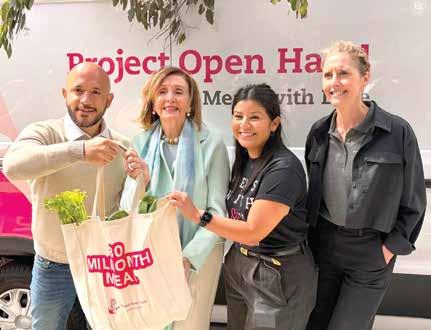
Project Open Hand (POH) marked its 30 millionth meal on July 27, 2026, by having it delivered by Speaker Emerita Nancy Pelosi. The recipient was Nicholas, a POH client who is living with HIV. In addition to Speaker Emerita Pelosi, speakers at a ceremony as part of the observance included Ana Ayala and Katie Jackson of POH, as well as Nicholas.
“Project Open Hand has been a beacon of hope and healing for San Franciscans living with HIV/AIDS and other serious illnesses for more than four decades,” said Speaker Emerita Pelosi. “I have been honored to stand with this extraordinary organization throughout my career and to champion federal investments, including the Ryan White HIV/AIDS Program, that help sustain its lifesaving mission. As we celebrate the remarkable milestone of 30 million meals served, we honor the volunteers, caregivers, donors, and staff whose unwavering commitment has transformed compassion into action and strengthened our community, one meal at a time.”
Ayala, the Vice President of Programs at POH, said, “Thirty million meals represent so much more than food. It represents thirty million moments of nourishment, care, and connection for people facing serious health challenges throughout our community. For more than 40 years, Project Open Hand has shown that food can be medicine, and this milestone reflects the health, dignity, and support we have provided to Bay Area residents.”
Founded in 1985 by Ruth Brinker at the height of the AIDS crisis, POH provides nutritious meals and groceries to individuals living with HIV/AIDS, older adults, and those living with chronic illnesses. The organization now serves more than 2,500 meals daily and remains a national leader in the Food Is Medicine movement. While the orga-
GREENE (continued from pg 8)
partner or family member act for you if you can’t act for yourself. Without them, decisions about your care could go to someone you didn’t choose.
Why Doing This Alone Is Risky
Many people try to protect their assets with an online trust kit. It feels like the safe, cheap choice. Often, it isn’t.
A trust that’s signed, but never funded, does nothing. Your home and accounts have to be legally moved into it. If that step is skipped, your assets still count against you. Your application can be denied for exactly the mistake you thought you’d avoided.
Outdated templates cause the same problem. A kit from a year or two ago has no way of knowing about the new lookback rules. It may treat an old transfer the wrong way. That one mistake can delay your care, or cost you coverage completely.
How far back does the state look at my money? Right now, only to February 2026. That window grows every month. It reaches the full 30 months by July 2028.
How long does an application take? Most applications take 30 to 45 days. Cases with a disability review can take up to 90 days.
ROSTOW (continued from pg 17) masculinity?
Lastly, did you read about the coffee shop in Spokane that posted a sign outside reading “Trans women are retarded men.” What the hell? The 2nd Base Espresso took it down, and posted “Calm Your Tits,” while
nization’s mission has evolved over the years to serve additional critical illnesses, Project Open Hand continues its unwavering commitment to the nutritional needs of those living with HIV/AIDS. https://www.openhand.org/
The rules are changing every month. What protects your family today may not protect them next year. Waiting isn’t a neutral choice. It’s a risk.
The process starts with a real conversation about your goals, your family, and your assets. From there, your attorney checks your plan against the current rules, not last year’s rules. Then documents are drafted, reviewed, and properly put in place.
Acting now keeps control in your hands, while you still have the ability to choose. Waiting could mean someone else makes that choice for you.
Contact Greene Law Firm, P.C. today. Call 415-9050215 or email info@greenelawfirm.com for a free initial assessment.
Statements in Compliance With California Rules of Professional Conduct
The materials in this article are for educational purposes only and are not legal advice. Consult an estate planning or elder law attorney for personalized guidance.
Attorney Jay Patrick Greene, Esq., CPA, founded Greene Law Firm, P.C. He is licensed to practice law in California, Alabama, and Florida and has over 15 years of experience with wills, trusts, probate, elder law, and asset protection. For more information, visit: https://assetprotectionbayarea.com
spouting off about the First Amendment as if a Constitutional ban on government interference with speech prevents a business from public criticism. The offensive comment doesn’t even make sense! arostow@aol.com
LENOBLE (continued from pg 12)
the resources to thrive on their own by creating the conditions where everyone has the opportunity, not just to survive, but to flourish.
Tom LeNoble: What gives you confidence that the next generation will carry the work forward?
Jennifer Valles: I’ve been fortunate to spend time with so many young people through the center, my friends, and my family.
People often criticize younger generations, but I see something different. They care deeply about one another and about the future. They’re growing up in a world facing enormous challenges, yet they’re moving toward greater acceptance, inclusion, and compassion. That gives me hope.
Tom LeNoble: What would surprise people most about you outside of the work you do?
Jennifer Valles: I’m actually an introvert. I love quiet time. I love visiting my partner in Colorado, spending time in the mountains with the dogs, hiking, being surrounded by nature, and simply unplugging. Those quiet moments restore me.
Tom LeNoble: If you suddenly had a day off in San Francisco, where would you go?
Jennifer Valles: Straight to the ocean. Living here, it’s easy to get caught up in routines and forget that one of the most beautiful coastlines in the world is just minutes away. Growing up near the Great Lakes, I’ve always needed to be close to water. I’d spend the day at the ocean, slowing down and remembering why this place is so special.
Tom LeNoble is an international speaker, confidential advisor, and resilience strategist who works with leaders navigating meaningful inflection points in life and leadership. He has held senior leadership roles at MCI, Walmart.com, Palm, and Facebook, and high growth startups. He is the author of the award-winning memoir “My Life in Business Suits, Hospital Gowns, and High Heels.” Through speaking, coaching, and writing, he explores resilience, leadership, and the choices that shape how we show up for others and for the communities we serve.

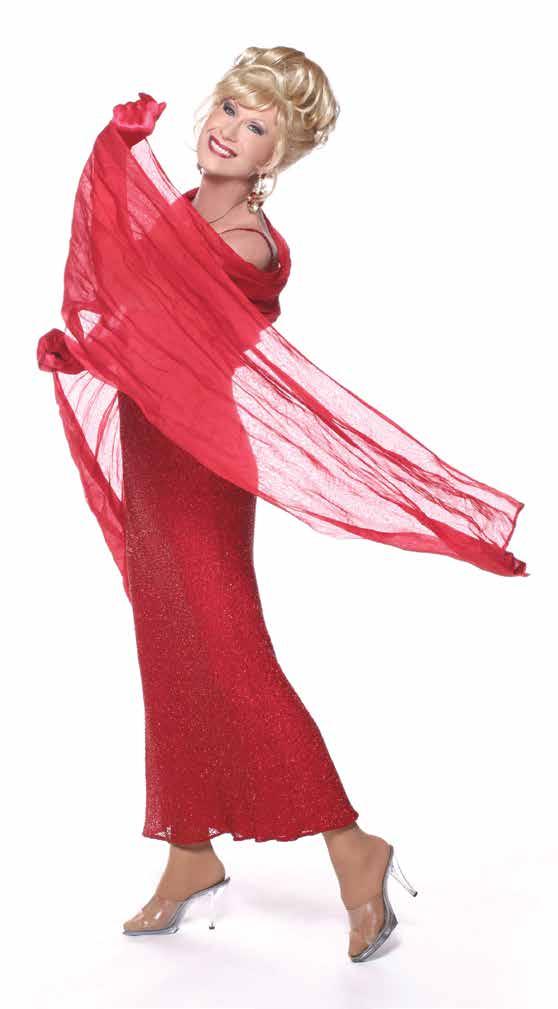
ABy Donna Sachet
fter a few days of recovery from a very busy Pride season, it didn’t take long to get swept up in exciting new events, starting early Friday morning on July 17, 2026, with The Resilience of Hope: Community Thoughts and Innovations in HIV Care at the Commonwealth Club. It is hard to believe that the scourge of HIV and AIDS has haunted us for over 40 years, but this event tried to put the past into perspective, to get a clear picture of where we are now, and to focus on a hopeful future. This was a joint project of PRC, the San Francisco AIDS Foundation, National AIDS Memorial, and the San Francisco Community Health Center. The leaders of each of those organizations had featured roles. After light refreshments in the lobby, Michelle Meow of the Commonwealth Club convened the event, introducing Dr. Deborah Hawkes of PRC, John Cunningham of the AIDS Memorial, Dr. Tyler TerMeer of the AIDS Foundation, and Lance Toma of the Community Health Center. Each gave opening remarks, many of them in appreciation for the day’s special guest, Speaker Emerita Nancy Pelosi.
Larkin Callaghan of Gilead, one of the event’s main sponsors, then introduced a panel to talk about the progress we’ve made in facing this pandemic. Pelosi, Cecilia Chung, Mike Shriver, and Dr. Paul Volberding shared personal stories of the early days of AIDS and how they became so involved. Never forget that, when Pelosi first went to Congress as a newly elected Representative, she boldly stated that “now we must take leadership, of course, in the crisis of AIDS.” Each speaker touched on memories very familiar to the audience, which responded with applause and tears.
Dr. Hawkes then introduced three artistic vignettes, each reflecting a different time span in this ongoing struggle, starting with musical instrumentalists, then a duo of dancers, and, finally, the recitation of an original poem. As Pelosi commented on stage, sometimes the arts can more effectively express our emotions than words and provide a rich visualization.
Joan Hicks and Elizabeth Woods of the Elizabeth Taylor AIDS Foundation, another main sponsor of the event, introduced a second panel, concentrating on the accomplishments thus far and where we are going from here. Dr. TerMeer, Aya Banaja, Dr. Eric Goodsby, and Dr. Tatyana Moaton addressed the negative impact of the current national leadership, but outlined innovations and coordinations that support a hopeful future. It is worth noting that Pelosi repeatedly emphasized that the transgender portion of our community cannot be left out of our ongoing fight. Our opposition is obsessed with bathrooms and gender-specific sports without concern for the individual lives involved.
A beautifully-produced film followed Pelosi’s tremendous involvement for decades supporting the fight against this pandemic, even when so many remained on the sidelines. The many photos and videos represented the diverse events and organizations she has supported, and demonstrated her deep connection to all of us here in San Francisco. With all the praise heaped on her, Pelosi remained humble and repeatedly credited the many individuals who joined her in this fight, mentioning names in the room, as well as some no longer with us, and really brought the message home with personal stories and memories.
The leaders of the four sponsoring organizations then announced an inaugural award to be presented by each of them annually and named after Pelosi. They unveiled a captivating large original work by artist Serge Gay featuring Pelosi in a blue pantsuit walking into the sunset and surrounded by San Francisco symbols. If she had not yet been overtaken by emotion, that did it. Nancy Pelosi will go down in history for her vital role in American politics, but especially her warm association with our community and all of San Francisco, and it was a joy to see her recognized and praised by so many. She closed the program with a short prepared speech, filled with gratitude, humility, and hope, as the San Francisco Youth Chorus sang several appropriate songs.
That same evening took us to the Grand Reopening of Oasis. Talk about a contrast! We joined CoCo Butter and Khmera Rouge on the 11th Street sidewalk for the official ribbon-cutting with a crowd of excited supporters cheering and all the color and excitement of a Hollywood opening. D’Arcy Drollinger beamed with pride as Honey Mahogany, Sister Roma, Juanita MORE!, and Drag Laureate Per Sia congratulated the Oasis team and thanked the Stevens Family for the generous gift that saved this city treasure. The Stevens Family was represented by Mary Stevens and her son Sky, who spoke of looking forward to “making the world a place with fewer lies, less violence, more color, and more love.” Once inside, the place felt very familiar, but with a complete refresh,
“You can never be overdressed or overeducated.”
Oscar Wilde
Saturday, August 1
Emperor’s Night Out
Juanita MORE! & Glamamore host
Emperor John Brett in drag Imperial Council annual event Powerhouse, 1347 Folsom Street 10 pm Free! www.imperialcouncilsf.org
Sunday, August 2
Help Is on the Way XXXII: Broadway & Beyond Richmond/Ermet Aid Foundation’s annual gala Davis Gaines, David Burnham, Nita Whitaker, Paula West Leanne Borghesi, Stephanie Block Cast members from Beauty & the Beast Benefits Project Open Hand & REAF Marines’ Memorial Theater, 609 Sutter $39 & up www.reaf.org
including sparkling details, new mural artwork, and dramatic fabric touches, as a dazzling show started on the main stage with acts introduced by D’Arcy and Michael Phillis We caught up with so many smiling friends, there to witness the miracle of Oasis’s reopening, including ABC7’s Drew Tuma, Tyler Jones, Rick Ross, Holotta Tymes & Robert Carstensen, Erin-Kate Whitcomb & Michele Rutherford, Stephen Satyricon, and many others. We can’t wait to see what’s next at Oasis as it continues to provide a home for queer arts in the city and with a new, stable business model. Congratulations to D’Arcy and her team!
Donna Sachet is a celebrated performer, fundraiser, activist, and philanthropist who has dedicated over two decades to the LGBTQ Community in San Francisco. Contact her at empsachet@gmail.com
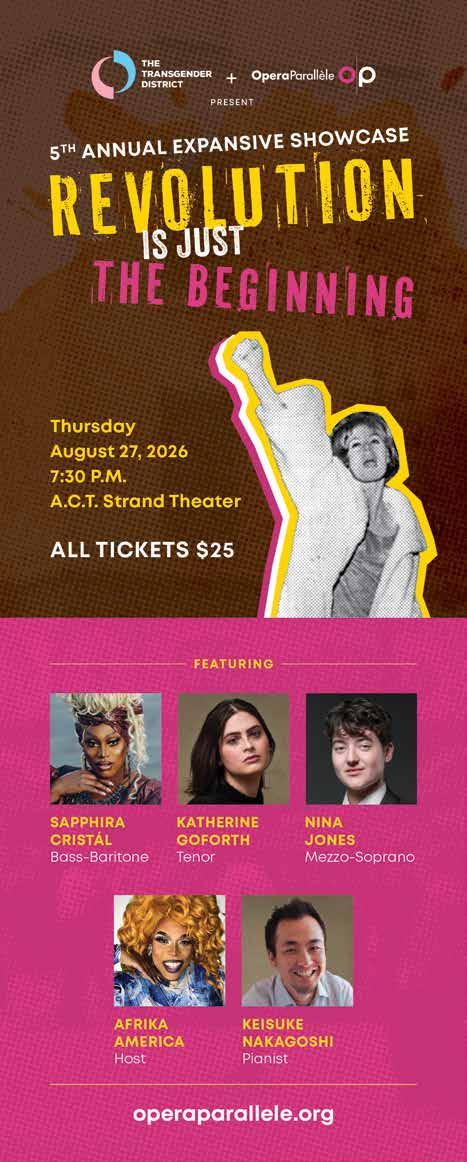
Queer Arts Featured (QAF) at 575 Castro Street through August 2026 is presenting Huitzilin the Hummingbird, a Two-Spirit & Indigiqueer Installation. The exhibit, co-curated by Ruth Villaseñor and Rosie Mazza, includes works by Sen Mendez, Vick Montaño, Landa Lakes, and Tanya Wischerath.
On the evening of July 17, 2026, a Sounds & Stories event attended by San Francisco Bay Times lead photographer Rink included BAAITS drummers and a performance by Lakes. A Chickasaw activist, Lakes with Villaseñor co-founded the well-known BAAITS Two-Spirit Powwow, the first explicitly Two-Spirit powwow of its kind. Lakes in 2004 also founded the Brush Arbor Gurlz, the first all-Native American drag troupe.
A standout piece at QAF is a large papermâché hummingbird sculpture. Delicate yet commanding, its wings appear poised mid-flutter, catching the gallery lights in rich, radiant hues. Surrounding the central figure are the works by the TwoSpirit and Indigiqueer creators, weaving a visual tapestry of resilience, sovereignty, and joy. The tactile craftsmanship of the papier-mâché bird gives the installation an intimate, living presence, as though the room
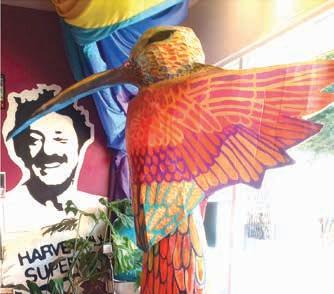
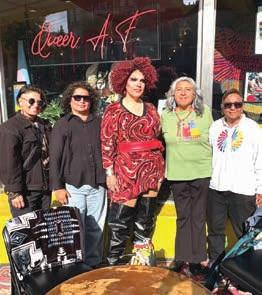

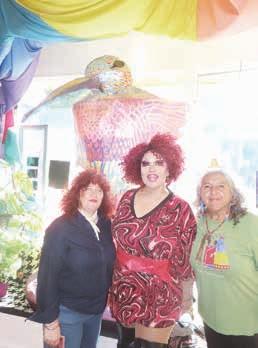

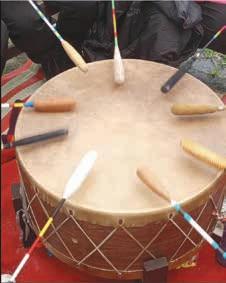
itself might catch flight on the rhythm of an unseen drum beat.
In Nahuatl—spoken by nearly 2 million people in central Mexico and the historical language of the Aztec Empire—the hummingbird is known as huitzilin. The colorful birds are viewed as sacred messengers, healers, and gentle reminders that the boundary between our living world and our ancestors is far thinner than it appears.
Within the context of the exhibit, the hummingbird serves as a bridge between centuries of Indigenous gender-expansive traditions and the modern queer movement. It honors the specific, sovereign names and roles carried forward by nations like the Ohlone, Pomo, Zapotec, and Yaqui long before European terminology attempted to categorize them. Standing before the sculpture, visitors may feel the weight of stories that survived erasure, held with reverence by the hands that shaped every layer of paper and paint.
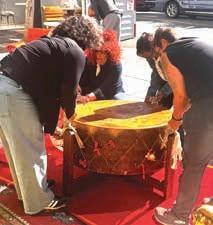

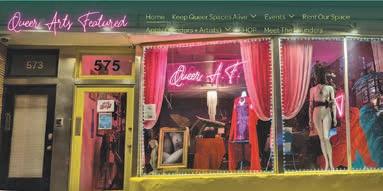
A rare opportunity presented by Queer Arts Featured is the ability to rent the gallery and gathering space, allowing guests to enjoy this installation in an intimate setting along with other works. To enquire about renting the space, which was where Harvey Milk once ran Castro Camera and centered his activism, and for more information, go to: https://www.queerartsfeatured.com/
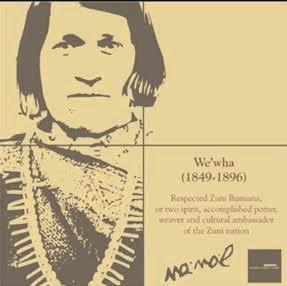
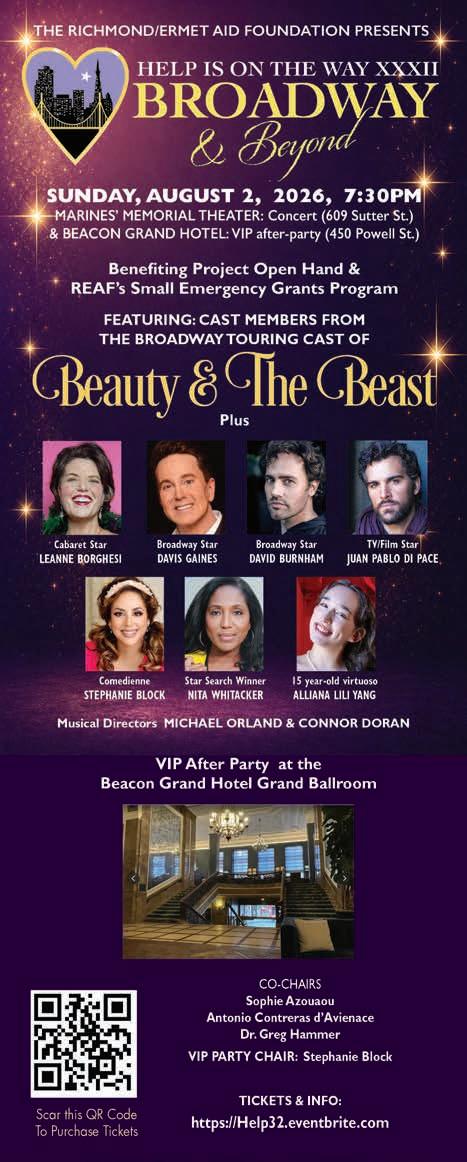
Gary M. Kramer
In out gay writer/director Gregg Araki’s amusing new comedy, I Want Your Sex, twentysomething Elliot (Cooper Hoffman) gets a job working for the controversial artist Erika Tracy (Olivia Wilde). Erika soon gets intimate with her employee in ways that are unprofessional—much to Elliot’s delight. That is until a crime occurs, and Elliot must recount his inappropriate relationship to two cops (Margaret Cho and Johnny Knoxville) investigating the case. To reveal more would spoil the devious pleasures of I Want Your Sex, which will open on July 31, 2026, in the Bay Area.
In a recent interview, Araki told me what he could about making his provocative new film.
Gary M. Kramer: Your film satirizes the art world, the #MeToo movement, and Gen Z snowflakes. How did you conceive of the characters and the situations they create or find themselves in?
Gregg Araki: Originally, the script the film is based on was written in 2012–2013, and it was a very different story about a female intern and a male boss. It kept evolving. Around 2016–2017 and the #MeToo movement, I didn’t want to depict a woman being dragged around by her hair— particularly as America is taking this dark turn. I didn’t want to kink-shame anybody, but I wasn’t comfortable putting that image out there. So, I changed it to a male sub and a female dom. That made the characters much more interesting to me.
The Erika Tracy character is powerful, super-complicated, and morally questionable at times, but she is passionate and creative. It really energized the dynamic of the film. The last few passes [of the script] were when
the article came out about Gen Z not caring about sex anymore, which the characters discuss in the film. My reaction to it is very much Erika’s; she is my mouthpiece. Sex is so important to life and your growth as a person. I found out from friends, whose kids are Gen Z, that their kids don’t date or have sex. From there, it was getting Elliot to speak for his generation. That conversation, and the two generations and their different views on sex, became the major theme of the movie.
Gary M. Kramer: What observations do you have about the power dynamics at play, and how they speak to themes of identity and control?
Gregg Araki: You get that from Elliot’s relationship with his girlfriend Minerva (Charli xcx). She’s terrible. He likes it. He has that aspect of his personality in general as part of his psyche. Erika senses that. She is his literal fantasy come true—a beautiful, sexy superhero. She’s the woman of his wildest dreams. The actors both do such a fantastic job. They got their characters and where they are coming from.
Gary M. Kramer: I Want Your Sex is very sex positive. What was your intent with all the sex?
Gregg Araki: I relate strongly to Erika Tracy’s character. I don’t venture into the morally dark areas she ventures into— like [having sex with] her employees— but I really believe in what she feels about art, sex, and sexuality. Her comments in the first interviews with Elliot are things I
(continued on page 36)
Jan Wahl
Lloyd Bridges is trying to stop a crash in the 1980 movie Airplane! His life flashes before his eyes as he deadpans, “Looks like I picked the wrong week to quit sniffing glue.” It’s the kind of movie line that all of us can relate to, okay, not all of us, but me.
Some movie lines just stay with us.
When “Bad Girl” Rita Hayworth describes herself in Gilda (1946), she lets us know: “If I was a ranch, I would be the Bar Nothing.” Yet another tough gal, Jan Sterling, in Ace in the Hole (1951), had a zinger befitting her character. When Kirk Douglas says to her, “What’s the matter with you? Don’t you ever go to
church?” She replies, “Nah. Kneeling bags my nylons!”
I’m totally aware it’s the writers who carve these gems of our language, but the actors breathe life into them. Comedy is so often made better by these zingers. For example, in the marvelous The Man Who Came to Dinner (1941), Jimmy Durante says to nurse Mary Wickes: “Meet me upstairs in five minutes and don’t forget the rye bread.” By itself, it may not be funny, but when said by Durante, I guarantee you’ll laugh!
Song lyrics are a great place to put in unforgettable lines. In Blazing Saddles (1974), Lili Von Schtup (Madeline Kahn) sings: “I’ve been with thousands of men, again and again, they sing the same tune. They keep coming and going, and going and coming, and always too soon, right girls?”
The late great Rob Reiner had his mother, Estelle Reiner, utter one of the best and most memorable lines of When Harry Met Sally (1989), which he directed. Watching Meg Ryan fake an orgasm in a deli, Estelle as an onlooker says, “I’ll have what she’s having!”
Often a catchy putdown finds its way into movies. In Dames (1934), secretary Joan Blondell kicks out a pushy woman by saying, “Get out of here, Duchess. As long as there’s a sidewalk, you’ll have a job!” Mae West made a career of lines like this: “Is
that a pistol in your pocket, or are you just glad to see me?” and, “I used to be Snow White, but I drifted.”
It may seem as if the older stars in movies are easier to quote, but, when dialogue was more important than action, it gave us more to choose from. Take two movie romances that make it easier to be seductive: Casablanca (1942) with its “Here’s looking at you, kid,” and Bette Davis in Now, Voyager (1942): “Let’s not ask for the moon; we have the stars.”
A Tender Age (fictionhardcover) by Chang-Rae Lee
This spellbinding novel explores the immigrant experience and the promise of the American dream through the eyes of a young boy named Jeon-Gi. The summer he turns eleven, Jeon-Gi becomes embroiled in a staggering series of events reverberating far beyond himself and his family, capturing the story of a young person on the precipice of adult knowledge, looking at his own culpability and looking away. This modern coming-of-age novel sets Jeon-Gi as an unforgettable literary character in line with the likes of Huckleberry Finn and Holden Caufield.
Automatic Noodle (fictionpaperback) by Annalee Newitz
This cozy near-future novella about a crew of leftover robots opening their very own noodle shop, from acclaimed sci-fi author Annalee Newitz, generated a lot of buzz when it was first released. Now out in paperback, this is the perfect chance to pick it up for a re-read, or to discover it for the first time. To make it even better, the story is set in a futuristic San Francisco that still feels like home.
Nobody does character descriptions like classic Hollywood. In Singin’ in the Rain (1952), Cosmo Brown sums up Lina LaMont: “Can’t act, can’t dance, can’t sing ... a triple threat.” Carole Lombard was once asked about Clark Gable in bed: “They call him the King of Hollywood, but one inch less and he would be the Queen of Hollywood.” It didn’t make the movie cut, but you get the idea. Far more poignant is Tootsie’s (1982) Dustin Hoffman confessing to Jessica Lange, “I was better with (continued on page 36)

It Will Come Back to You (fiction - hardcover) by Sigrid Nunez
It Will Come Back to You is the first ever collection of short stories from one of contemporary fiction’s most distinctive voices. Revered for a warm, unadorned style, Nunez’s books are “as sophisticated as they are straightforward” (New York Times Magazine). Here, Nunez selects thirteen of her best stories from the decades-long sweep of her career, tracing the origins of her style and her remarkable artistic range. Moving from the momentous to the mundane, Nunez maintains her expert balance between gravity and levity while probing the philosophical questions that illuminate her work.
Friday, August 7–Sunday, August 9
(ticketed - Corte Madera store) Book Passage Travel Writers and Photographers Conference
The Book Passage Travel Writers & Photographers Conference, now in its 34th year, has an extraordinary reputation among publishers, editors, and writers. Alumni have published books, articles, and photos—many as the direct result of lessons learned and contacts made at the conference. This year, participants will learn what editors look for in a query letter, how to hone their elevator pitch, the art of combining writing and photography in their travels, tips on making a living as a freelancer, and
the pitfalls of AI. They’ll have the opportunity to learn about the world of guidebook writing, launching a podcast, the art of visual storytelling, and so much more.
Sunday, August 9 @ 5 pm
(ticketed - Ferry Building store) Matt Chapman of the San Francisco Giants Meet & Greet
This Photo Op and Meet & Greet event with San Francisco Giants third baseman Matt Chapman will be held at our San Francisco Ferry Building store on Sunday, August 9 at 5 pm. Attendees will receive Chapman’s summer book pick: The 50th Anniversary Edition of The Inner Game of Tennis, and are also welcome to bring one flat item (up to 8 x 11 inches), such as a photo or a baseball card, to be signed.
Monday, August 17 @ 6 pm
(ticketed - Corte Madera) Téa Obreht, author of Sunrise: A Novel, with Parini Shroff
From Téa Obreht, the New York Times bestselling author of The Tiger’s Wife, Sunrise is an explosive story spanning three lives and one hundred years in a ghost town where secrets refuse to stay buried. The book has already been named a “Most Anticipated Book of the Year” by Esquire, Literary Hub, and Today. Téa will be joined in conversation by Parini Shroff, the bestselling author of The Bandit Queens, and, most recently, Some People.
https://www.bookpassage.com
Kippy Marks
San Francisco’s LGBTQIA+ communities have always been shaped by artists, organizers, and cultural workers who understand that creativity is not just an aesthetic practice but a form of care. Among these stewards, Robert Melton stands out as a curator of connection, someone who has spent decades weaving together people, stories, and spaces that keep our queer lineage alive. His work is not only seen on gallery walls and in public events, but it is also felt in the emotional architecture of the communities he serves. It is my honor to highlight him in this column, Practice Makes Love Easy (PMLE).
PMLE is a philosophy that honors those who shape community through presence and purpose. Robert doesn’t simply embody PMLE; he animates it through every exhibition he curates, every event he organizes, and every relationship he nurtures across San Francisco’s cultural landscape.
As a curator who centers community first, Robert begins his work with people. He is a curator and Arts Forum Co-Chair at The Commonwealth Club World Affairs, where he also serves as an Event Planner. He has created platforms where artists from diverse backgrounds can share their stories, challenge norms, and build community through creativity. His leadership ensures that emerging voices—especially LGBTQIA+, BIPOC, and marginalized artists—are included and uplifted.
where community gathers, not just to view art, but to feel connected through it.
Whether he is curating a Pride-centered installation or organizing a neighborhood art walk, Robert creates moments that honor the vibrancy and resilience of LGBTQIA+ life. His leather and nightlife contributions further demonstrate his understanding that queer culture thrives in many forms—from galleries to dance floors, from museums to street festivals. He curates spaces where people feel safe, celebrated, and connected.
Today, he continues shaping legacy through his leadership roles: Chair for the Arts for AIDS annual fundraiser, Co-Chair for the San Francisco Symphony Ellen Magnin Newman Award Advisory Board, and member of the San Francisco State University Global Museum. These positions place him at the intersection of art, philanthropy,
extension of his belief that community care and creative expression are inseparable.
Robert Melton is the 18th individual to be highlighted in this column. He is the pulse beneath much of our community’s progress, the keeper of moments, the guardian of legacy, and the heart that inspires others to step forward. He is not simply deserving of recognition; he is the embodiment of PMLE itself.
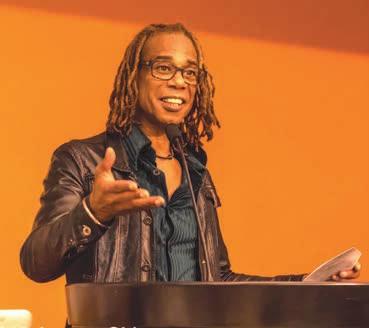
Robert’s curatorial and event work has produced moments that resonate far beyond the walls of any gallery. His exhibitions and public programs have appeared in some of San Francisco’s most beloved cultural venues, including at the San Francisco Fine Arts Museums, San Francisco State University, San Francisco Main Public Library, SOMArts, San Francisco LGBT Pride Art Pavilion, Fillmore Artwalk, San Francisco Sunday Streets, 111 Minna Gallery, and the Dada Bar/Art Gallery. These spaces have become stages for queer joy, remembrance, resistance, and celebration—moments
education, and cultural preservation. Through them, Robert ensures that the next generation inherits a richer, more inclusive artistic landscape, one that reflects the full spectrum of queer identity and experience. His intergenerational bridgebuilding is essential to PMLE. He understands that legacy is not a static archive; it is a living continuum shaped by those who carry it forward.
His leadership in the Arts for AIDS Annual Fundraiser reflects his commitment to HIV/AIDS advocacy. Through this work, Robert honors those we’ve lost, supports those still fighting, and reminds us that art has always been a vital part of queer resilience. His HIV/AIDS advocacy is an
Kippy Marks: How old were you when you made that decision?
Robert Melton: I was in my early teens when the idea occurred to be a community activist. I dreamt of a world of peace, harmony, and love and beyond. I took boots on the ground with the hopes of changing the world through the arts.
Kippy Marks: How long have you been involved with the practicing of PMLE values in your work?
Robert Melton: My work has always involved the values of Practice Makes Love Easy. Whatever project I take on, I strive to make it fulfilling, nourishing, and giving to myself and those
Kippy Marks: What advice would you give to others on how to practice love on the daily?
Robert Melton: My advice to others to practice love starts with oneself. Accept all your flaws and greatness. It all balances out like yin and yang. You will feel more balanced, centered, and radiant, and people around you will notice your glowing energy you have to offer to the world.
Kippy Marks: If you were granted two universal wishes, what would you wish for?
Robert Melton: My two universal wishes are to be a philanthropist to help fund artists’ projects and provide living and work space for struggling artists. Secondly, to have the opportunity to be a world traveler learning and experiencing world cultures.
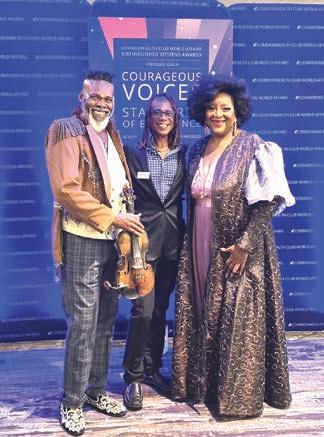
around me. My projects are about connecting with others on a deeper level that brings out the beauty in humanity.
Kippy Marks: Who or what motivated you to become the community activist you are today?
Robert Melton: My inspiration to become a community activist stems from family, friends and artists. I see so much creativity that all artists have to share with the world and change the world for the better. This strongly urges me to be part of this journey to do my part.
Kippy Marks: Please share any current practices that our readers may find useful, and update us on what you are doing now.
Robert Melton: What comes to mind are meditation and yoga; these practices provide clarity and aid in tapping into one’s creative energy. I’m currently preparing for Downtown First Thursday on September 3, 2026, South of Market: The Return of Neon City: Art/Music in a Different Light at 111 Minna Gallery from 5–10 pm.
Listen to The Commonwealth Club World Affairs podcast “San Francisco Culture: Lost, Found, or Reimagined,” hosted by Robert and recorded on July 16, 2026, at https://bit.ly/4h0qOP0
Dubbed San Francisco’s “King of Strings”, Kippy Marks is a spirited solo entertainer whose shows are permeated with an infectious joy. His distinctive sound arises from his heart, through his 1822 violin consort, Izabella. Marks’ rare talent, broad smile, and radiant warmth will brighten any event to create lasting impact. He is also Grand Duke XL of The Grand Ducal Council of San Francisco. He is the first ever elected African-American Grand Duke.
Stuart Gaffney and John Lewis
In 1928, the famous Brazilian modernist writer and artist Oswald de Andrade observed: “Before the Portuguese discovered Brazil, Brazil had discovered happiness.” Today, Andrade’s statement is contested and controversial in terms of social, racial, political, and economic realities. It still, however, reflects a sense of joy and optimism that pervades much of Brazilian society and culture.
In a week in São Paulo, the megalopolis that hosts the largest annual LGBTQ+ pride parade in the world, we found ourselves immersed in a city with many very welcoming residents who embraced freedom and equality for LGBTQ+ people. Here are some images of queer life and art from museums, murals, and the streets of the city.
John Lewis and Stuart Gaffney, together for over three decades, were plaintiffs in the California case for equal marriage rights decided by the California Supreme Court in 2008. Their leadership in the grassroots organization Marriage Equality USA contributed to making same-sex marriage legal nationwide in 2015. Today, they continue to educate and advocate for marriage equality and LGBTIQ+ rights worldwide.
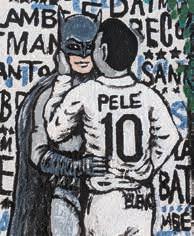
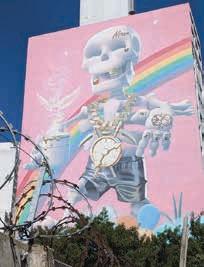
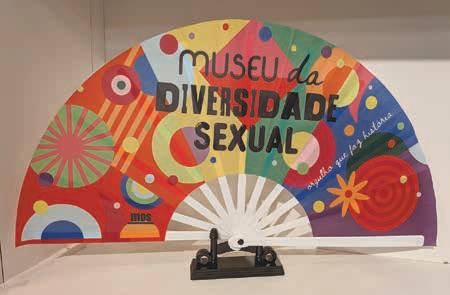
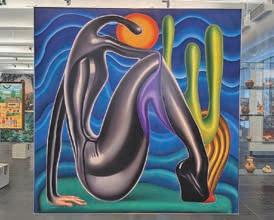
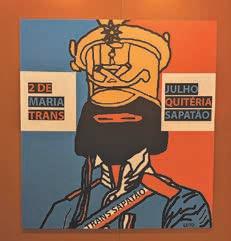
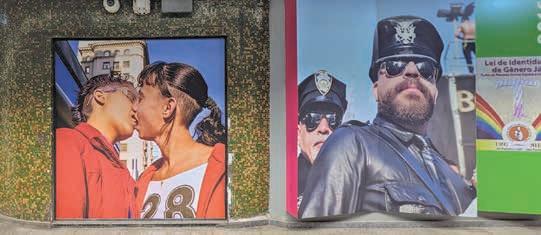
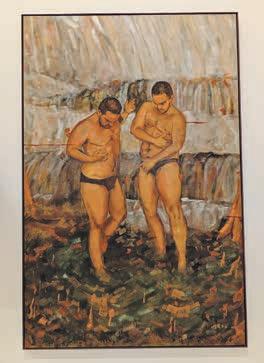
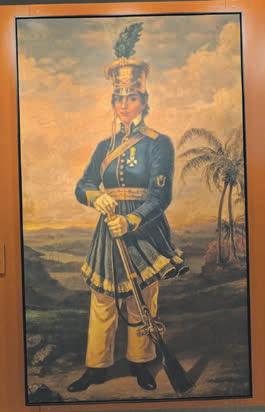
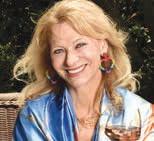
Driving north along Napa Valley’s Highway 29, you pass a plethora of imposing wineries with lengthy, winding driveways and majestic buildings situated in picture-perfect vineyards. Then you see it ... a sprawling lawn dotted with smiling visitors at picnic tables, children running around laughing, and dogs frolicking in the grass. In the background is a beautiful old stone building surrounded by vines. You think to yourself, this spot looks fun. Turns out, you’re right. This joyous place is V. Sattui Winery.
After a decades-long career visiting wineries around the globe, I rarely wax poetic and it takes something very special to inspire such rhapsodizing. My recent visit to V. Sattui in Napa Valley has me doing just that. I hadn’t
been to the property in nearly 20 years. It’s a staple in Napa Valley, but I was always chasing the latest rising-star winery. I finally decided it was time to revisit this historic destination on its 50th anniversary landmark.
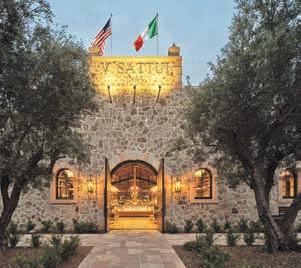
Their story began in San Francisco where Italian immigrant, Vittorio Sattui, opened a small winery in 1885. Prohibition shut their doors but not their dreams. In 1975, Vittorio’s great-grandson, Dario Sattui, brought the family business back to life in Napa Valley with the goal of sharing the Italian lifestyle connecting wine, food, family, and friends. Stepping into their bustling, recently renovated market, Mercato del Gusto, is a feast
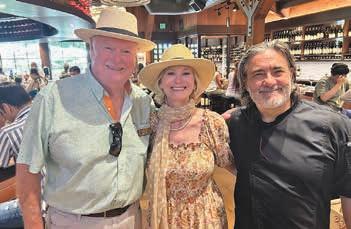
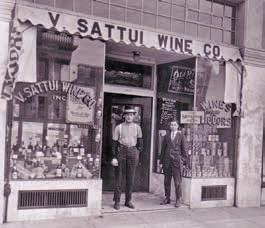
for the senses. It’s sleek and modern, but you still feel like you’re in the old winery building. It smells delicious due to the numerous bar and food areas serving an extensive menu of sandwiches, cheeses, desserts, and more. At one tasting bar I spoke with a group of women celebrating birthdays, at another was a couple toasting their weekend away. The atmosphere was electric.
It was there I met Tom Davies, the passionate, long-time President and Managing Partner of the winery. His love of V. Sattui comes shining through in his wide grin. “It’s not a job, it’s my life,” he has said. Along with Director of Winemaking, Jason Moravec, and Michelin-star Executive Estate Chef, Stefano Masanti, I was treated to an al fresco afternoon on the patio sampling award-winning wines, noshing on custom charcuterie platters, and even ending with house-crafted chocolates and gelato.
To shine a light on V. Sattui’s commitment to accessibility for all wine lovers, they have started offering a free three-wine tasting flight every Tuesday, Wednesday, and Thursday. In the current hyper-priced Napa Valley, this is a savvy move. Not only has it increased their business on typically slow tasting days, but it has also endeared itself even more to V. Sattui’s fans old and new.
Because V. Sattui Winery was founded on the concept of sharing wine in the context of everyday life, the way to buy their wares is by visiting. As Tom Davies said to me, “Being direct it’s about the experience. In the old days, our tastings were held on a redwood board spread over two wine barrels. From the beginning, we wanted to make small lots of delicious wine and sell it directly to consumers.”
V. Sattui’s roster of wine offerings is vast and includes recognized wines such as cabernet sauvignon, pinot noir, zinfandel, sauvignon blanc, and chardonnay, but they also produce limited bottlings of unique wines. Their lineup includes reds such as grenache, malbec, and petite sirah, along with whites ranging from albariño to sémillon, a variety of rieslings, and even sparkling and sweet wines. There’s always something new to discover.
If you want to try the V. Sattui wines, you can buy them online ( https://www.vsattui.com/ ), but I recommend visiting and getting the full experience. Bring an empty stomach and an appetite for palate-pleasing adventure with you!
Here are two standout bottlings from my recent visit:
2022 V. Sattui Cabernet Franc, Alexander Valley, Sonoma County $80
As a fan of cabernet franc, I’m constantly on the lookout for new bottles of the classic variety. A centuries-old vine from the Bordeaux region of France, it’s one of the parents of the famed red grape, cabernet sauvignon (white grape sauvignon blanc being the other). V. Sattui’s expression showcases sultry aromas of dark fruits, tea leaves, and rose petals. Once you sip it, the earthy, savory notes are layered with a lush yet lovely texture. It is a beauty to drink now or to cellar for up to a decade.
(continued on page 36)

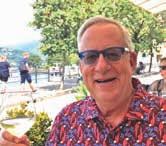
David Landis
Hasn’t everyone thought of travelling the world, and especially in luxury— even better, at sea?
Lately, the luxury market for oceanic cruises is booming. Brands like The Ritz-Carlton and the Four Seasons have their own specialty luxury lines.
And then there’s The World Residences at Sea , which truly is in a class all its own.
The World describes itself as “the planet’s largest private residential yacht,” but it’s not a typical cruise ship. The vessel has 165 owner studio- to 3-bedroom apartments (plus a multi-bedroom penthouse), but there are 200 or fewer residents on the boat at any time. Owners not only own the ship, but also get to decide where in the world it will cruise.
Luxury, of course, doesn’t come cheap. The World requires approximately $10 million in assets (and two references) to be considered for ownership. Apartments are priced around $3 million up to $15 million; HOA dues begin around $200k per year and are up to $1 million per year. But what you get for that outlay is beyond every lavish expectation. Even better, you become part of The World’s own community, which one staffer described aptly as a “nomadic tribe.”
The Gay Gourmet was lucky enough recently to tour—and dine—aboard
The World when it was anchored in San Francisco. It’s a wow!
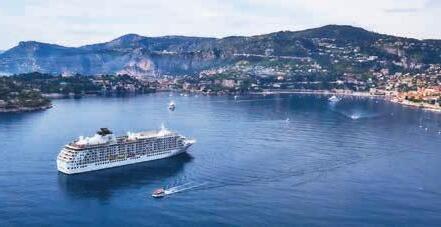
The affable Residential Director Eddie Wong lives on the boat, and was my well-informed personal guide. He took me from bow to stern and port to starboard, pointing out the many first-class attributes aboard The World.
When you enter, you feel like you’re at a 5-star hotel, with soaring ceilings and a community room that hosts performances often geared to the locale that The World is visiting. While in San Francisco, members of the San Francisco Gay Men’s Chorus performed and apparently were a big hit!
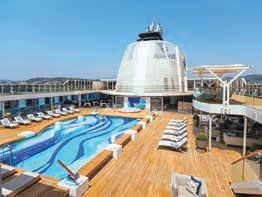
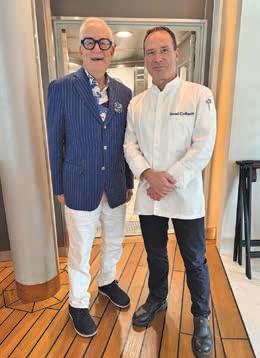
You want to feel pampered? You’ve come to the right place. With 300 staff, that ratio of service personnel to guests is 1.5. You never feel like anyone is hovering, but, whatever you need, they’re always there to help.
The residences range from 290-squarefoot studios to 3,242-square-foot, multi-bedroom apartments. All are beautifully appointed, with renovated kitchens and baths, ample storage, expansive living spaces, and outdoor decks to boot.
The World boasts 6 restaurants (4 fine dining and 2 casual), two swimming pools (one indoor, one outdoor), a golf simulator, a full-service spa featuring a plethora of wellness experts, an intimate bar/ lounge, a library, a sports bar, informative lectures at the yacht’s own theatre, a grocery store with fresh produce and local products, and more. Plus, The World tailors bespoke service to each individual’s taste.
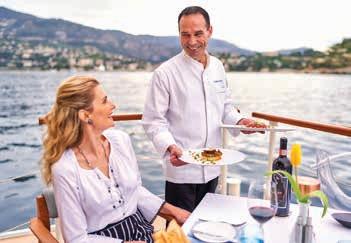
While onboard, I met several residents and that
included some LGBTQ+ folks. All were incredibly welcoming and warm. That made me understand how hospitable the community is that thrives there. You could feel the sense of belonging that the residents share.

Of course, the Gay Gourmet wanted to know about dining options. The Executive Chef aboard The World is Lionel Catherin. He oversees the culinary operations across the ship’s multiple venues, including the fine dining Art Deco restaurant Portraits (which includes a staggering more than 15,000 bottles in its wine cellar), and the contemporary steakhouse Marina Other dining options include casual dining at Fredy’s Deli & Cafe, East (Pan Asian), and the pool grill. We opted to dine at the Tides, which is a Mediterranean-style restaurant with both indoor and outdoor dining. My lunch companion was an amiable resident who has lived on The World for a couple of years. She explained to me that everything is homemade, a feat when you’re out at sea. That includes the baked goods—a breadbasket and breadsticks worthy of Tartine status—which started our meal. Our lunch was a perfect grilled shrimp salad with a tahini dressing that didn’t overpower the seafood, along with a clean and crisp glass of chablis. When I asked for Louie dressing to accompany my salad, the response was, “Of course!”
My lunch pal also explained that she loves to cook onboard for her family, and any ingredient she needs is delivered to her
within about a day. I’m not even sure how that’s possible, but that’s The World for you!
In short, and in the words of my favorite Broadway composer Stephen Sondheim, Take Me to The World.
Bits and Bites
Thanks to my colleague Ashley Hamik, I recently revisited one of my favorite steakhouses here in the city, Mastro’s. I first visited this restaurant at their Beverly Hills outpost, where we dined next to basketball icon Kareem Abdul-Jabbar (and his Mom!). It’s a mainstay for me: Even though it’s part of a chain, it feels individual and service is tailored to a luxe level of expectation.
Located on Geary Street in Union Square, Mastro’s is a great pre- or post-theatre offering. It’s a fashionable place where people actually still dress up to dine out, and creates an eclectic and electric scene. Executive Chef Brendy Monsada oversees the sprawling multilevel operation with culinary finesse. One of my favorite pluses is that Mastro’s does martinis correctly. They are shaken at the table, with a heavy pour, and the remaining cocktail is left in its shaker for a welcome second pour! We sampled the Summer of Luxury
(continued on page 31)
(continued from page 30)
menu (available through September 24), which included a theatre-worthy dry ice presentation of a superb shrimp cocktail; assorted breads with homemade black truffle and lemon calabrese butters; a yummy 6-ounce petit filet, cooked to a divine medium rare (why is it that steakhouses sometimes haven’t perfect this art?); one of the best creamed spinaches in town; and the signature warm butter cake, which melts in your mouth (but is probably suitable for a family of four to share!). Everything was delicious, and served with expertise and flair. An added bonus? Mastro’s offers live entertainment every night. In short, put Mastro’s at the top of your steakhouse list, especially when visiting the Square and its environs.
Good news! Castro mainstay Orphan Andy’s has a new owner. As reported in the previous issue of the San Francisco Bay Times, his name is Michael Goodrich, and he is the General Manager of Bun Mee. He will keep the restaurant’s “good vibes,” along with its time-tested and popular diner format. The American café will continue to serve from morning until the wee hours. Especially with the reopening of The Castro Theatre, our neighborhood needs more late-night eateries. And, who doesn’t crave Orphan Andy’s stuffed French toast at any time of the day or night?
Speaking of which, I recently wandered into Parasol at Café Flore, the newish restaurant and bar at the former Café Flore space. Yours truly had the pleasure there of sharing a late-night drink with Oasis owner and former drag laureate D’Arcy Drollinger. The space is bright and airy, boasting a modern design inside, and a gorgeous people-watching patio outside. It’s a buzzy place, where you can “see and be seen.” Even better, they serve until midnight on weekends.
COOKIE . The best cookies in the Castro will have their own dedicated space at the pier, expanding the enterprise’s storefront locations to four. As part of the retail entertainment complex’s strategy, PIER 39 is “showcasing locally-owned businesses and creating experiences that reflect the unique character of San Francisco.” Scott Gentner, President and CEO, comments that “our goal (at PIER 39) is to attract high-quality offerings that capture the quintessential San Francisco experience. For locals and tourists looking for a sweet treat, we couldn’t think of a better combination of fun, flavor, and vibe.” HOT COOKIE co-owner and Chief Cookie Provocateur Ryan Jones explains, “As San Francisco’s premier tourist destination, PIER 39 presents an ideal opportunity to bring HOT COOKIE’s unique flavor to a much broader audience.” And, by the way, who doesn’t love their freshly-baked oatmeal raisin cookies anytime of the day or night? Needless to say, PIER 39 isn’t just for tourists anymore.
The World Residences at Sea: https://aboardtheworld.com/ Mastro’s: https://tinyurl.com/mry7drsu Orphan Andy’s: https://orphanandys.site/ Parasol at Café Flore: https://www.parasolsf.com/ Hot Cookie: https://hotcookie.com/
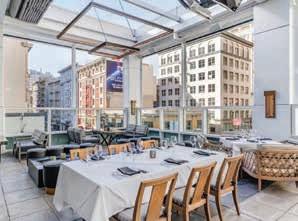
PIER 39: https://www.pier39.com/ Oasis: https://www.sfoasis.com/
PIER 39 is getting a bit of the Castro later this year with the upcoming opening of LGBTQ+-owned HOT
David Landis, aka “The Gay Gourmet,” is a foodie, a freelance writer, and a retired PR maven. You can email him at davidlandissf@gmail.com Or visit him online at: https://gaygourmetsf.com/
By
Sister Dana sez, “I’m so thrilled that the DORE (UP YOUR ALLEY) FAIR came to San Francisco’s SoMa on July 26! It was truly leatherrific!!!”
The GLBT Historical Society Museum hosted an evening reception on July 9 that was part mixer, part openmic, “THE PLACES WE GATHERED:
A Lesbian Story Tellin’, Show & Tellin’, Open Mic Night.” The gathering had invited community members to share memories, stories, art, and love of Bay Area lesbian community spaces, nightlife, and businesses—both here and now sadly gone.
I visited MAG Gallery, 3931 18th Street on July 10 for “Gentleness,” wood carvings and prints by Alexandra Cicorschi who said they were inspired by getting over the awful suicide of her mother. I told her I had a friend who every night prays God will
take him in his sleep. Not exactly suicidal, but bordering on it. Through August 2.
https://www.mag-galleries.com/
Lorenzo Salgado Araujo, a father and Mexican national in the U.S for almost 35 years, and close to obtaining legal status, was shot and killed on July 7 by Houston ICE agents during an ordinary traffic stop. Contrary to ICE (who were not wearing body cameras), three migrants in the car—who were immediately taken into ICE detention—said they witnessed this awful incident, and the victim did NOT ram his vehicle into officers. The Houston District Attorney stated, “I have the utmost hope that the Department of Homeland Security and the Inspector General, who are conducting this investigation, will share evidence with us.” He added, “Regardless, we will go to the ends of the earth to collect all the evidence so that we can eventually let the public know what happened.” It is comforting to know that Texas Congresswoman Sylvia Garcia is doing everything possible in her power to ensure there is an independent investigation. Sister Dana sez, “ICE is NOT nice, and is actually a murderer. Eight deaths so far that remain unaccountable! Melt the ICE now!”
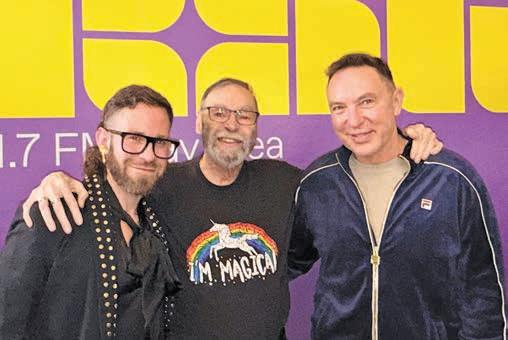
26. Black, Latinx, and immigrants bore the brunt. One in five ICE arrests are Latinos on the streets with NO criminal past or removable order. In fact, the last two murders were “mistargeted arrests” who were on their way to become legalized. Back in October, more than 170 U.S. citizens had been held by immigration agents. Sister Dana sez, “Hey Donnie prezzie baby, your wife is an immigrant. Stop your flunkies trying to make your quota of MASS DEPORTATIONS!”
Act. Sister Dana sez, “SAVE? More like SLAVE America Act! Saved by the bell? Nope. Saved by the Congress!”
The latest statistics show that ICE made 400,000 arrests in 14 months as of May
But once again Heil Donald has lifted the Department of Homeland Security, which had put a “pause” on ICE immigrant-snatching traffic stops. Dear Leader (not!) stated, “We CANNOT give up one of ICE’s most important Crime Fighting tools, THE TRAFFIC STOP!” Sister Dana sez, “Yeah, listen to this criminal president with umpteen felony charges, because he is the most important ‘crime fighter.’ Lock him up!”
The old Palm Beach Airport has now been renamed in yet another in his series of narcissistic vanity projects: President Donald J. Trump International Airport. This is because the Trump-supporting, gay-hating Florida Governor Ron DeSantis has ordered this disgusting name change. And, on July 9, Secretary (he might be gay but not proudly queer) Bessent unveiled the tiny French Broad River Bridge in Tennessee renaming it (you guessed it, and I refuse to capitalize it) president donald j trump bridge. Sister Dana sez, “Aren’t we supposed to rename most architecture after DEAD presidents? Shouldn’t we wait until after THIS one is DEAD?!”
On July 11, democracy-defiling Donnie fired the last of our three remaining members of the Election Assistance Commission to further the threat of midterm election fraud (of which, in the last election, judges only found a mere .0001% of fraud. At midnight, the bipartisan Housing Bill automatically became a law without Trump’s signature or veto. This idiot could have featured a big, beautiful signing ceremony, but instead he threw a big tantrum over Congress refusing to pass his racist, misogynist, anti-election SAVE America
Senator Jon Ossoff (D-Georgia) summed up best the lying Presidential Address on July 16, correctly predicting the day before, “The world’s most famous sore loser will deliver a primetime sour grapes address to pursue his six year old grievances.” At Trump’s actual Address to the Nation, most of his blathering was how he really won 2020 because of “fraudulent election policies”—setting up the perfect preview scaring midterm voters that should be aware of “the cheating.” Radical rightwing Fox News did not even mention the speech. Sister Dana sez, “NunTheLess, Trump DID lose the 2020 Election by 7 million votes, which were proved NOT FRAUD by more than 60 judicial court cases!”
On July 17, one day after the Presidential Address, Homeland Security threatened any election officials with jail sentences if they don’t follow their “election directives.”
On July 16, I had the joy of visiting the huge art gallery, American Messenger at 1583 Folsom in SoMa, where a dear friend Thomasina DeMaio aka Sister Donatella Dontaska has her magnificent oils and sculptures on display all year long. Says studio owner Charles Linder, “She’s not only a damn fine painter—she’s a cultural ringleader and a lifelong arbiter of learning and experimentation within her own practice.” On view is a mini career retrospective by one of the most important and legendary painters working in the city today. A graduate of SF Art Institute, Thomasina has worked as an artist and educator in San Francisco for decades, becoming a cherished cultural institution in her own right with her advocacy project, “Art Saves Lives.” Check out her radiant Harvey Milk portrait! Also exhibiting his gorgeous, giant paintings is my friend Jerry Frost , whom I have happily covered in my columns for decades. Go see these masterpieces! I went to their opening that featured the trio of Bean’s Hot Five singing jazzy blues on guitars and heart-thumping bass, and also the fun and fabulous
(continued on page 38)
When the spotlight of the sports world turned toward Doha for the 2022 FIFA World Cup, Dr. Nasser “Nas” Mohamed took an unprecedented step that forever altered the narrative surrounding the tournament. As a practicing physician at Osra Medical based in San Francisco, Dr. Nas publicly came out in May 2022, becoming the first Qatari citizen to live openly as a gay man. Knowing that samesex relations remained criminalized in his homeland and that coming forward meant permanent exile and estrangement from his family, he utilized the global magnitude of the World Cup to demand visibility and human rights for LGBTQ+ individuals living across the Gulf region.
During the 2022 tournament, while official FIFA policies and local restrictions silenced overt symbols of inclusion, Dr. Nas ensured the lived realities of queer Qataris were not swept under the carpet. He founded the Alwan Foundation and used his platforms to publish daily testimonies from LGBTQ+ individuals inside Qatar—amplifying voices forced to exist in fear behind closed doors while international stadium lights dazzled spectators. Through these poignant personal accounts, Dr. Nas redirected the media focus from mere political posturing toward the urgent, human necessity of protection, dignity, and acceptance.
By the time the tournament arrived in North America for the 2026 FIFA World Cup, Dr. Nas’s advocacy expanded into a broader celebration of identity, love, and cultural reclamation. Launching his global “Love Is the Goal” campaign, he appeared at World Cup events wearing a traditional Qatari bisht customized with vibrant rainbow piping down the sleeves and the words “love” and “freedom” written in Arabic. The garment was a striking statement—reclaiming traditional Middle Eastern heritage alongside his identity as a proudly queer Arab man, demonstrating that belonging to one’s culture and living authentically need not be mutually exclusive. During at least one match, he was joined by State Senator and now congressional seat candidate Scott Wiener.
“When the world gathers, every human belongs,” Dr. Nas reflected after the 2026 World Cup. “We belong just as we are. Seeing the State of Qatar, that I filed for asylum from in 2015, being in San Francisco on Pride Month was a tough moment emotionally. We decided to make this moment about our own souls and humanity and to show up as we are.”
He added that Pride House International helped to share his campaign with the World Cup’s 16 host cities, and continued, “I am so happy and proud of San Francisco for shining bright. Pride House San Francisco delivered exceptional programming with the leadership of the Spikes and the SF LGBT Center. San Francisco Pride also spotlighted our activation.”
His presence throughout consecutive World Cups highlights how sports can serve as a catalyst for profound societal transformation. His journey—from seeking political asylum in the United States to standing on the global stage as a beacon for the marginalized—reminds the athletic community that true progress requires more than fleeting gestures. By using the World Cup as his platform, Dr. Nas continues to champion a world where no child has to choose between their family, their culture, and their fundamental right to exist.
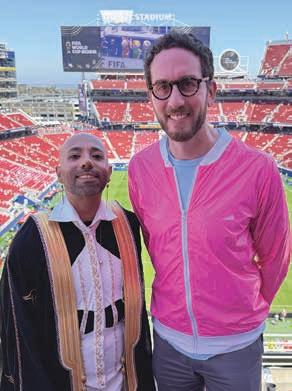
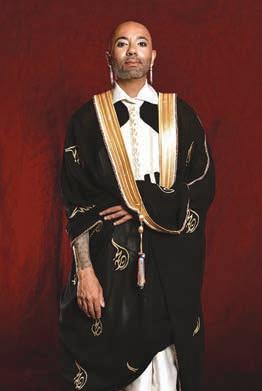
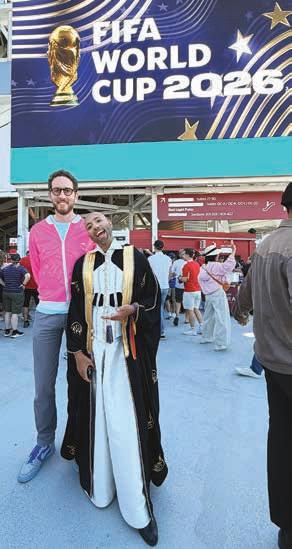
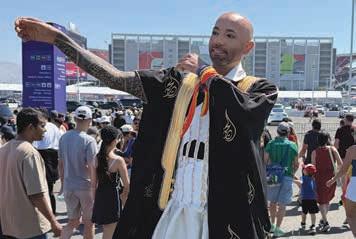
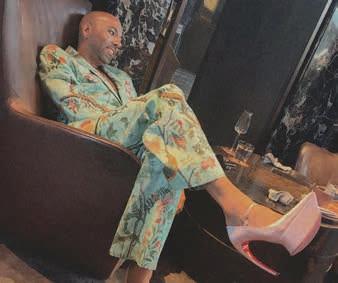
As one unforgettable summer sports chapter came to a close, another was already beginning. From experiencing FIFA with my nephew in a full-circle moment to the excitement surrounding LA28 and the continued rise of women’s professional sports, the momentum hasn’t slowed.
While the FIFA World Cup unfolded throughout June and July, my evenings quickly settled into a familiar routine. I’d catch scores throughout the day, then spend the night watching as many matches as possible as the world’s best national teams competed on soccer’s biggest stage.
What struck me most wasn’t only the action on the pitch, but the spirit surrounding the tournament. Fans proudly wore their countries’ colors, gathered at watch parties, and celebrated together. My brother Steven, who owns a restaurant in Provincetown, Massachusetts, sent me photos and videos of packed crowds cheering on their favorite teams. He even reported that they ran out of beer—just like Boston! It was a reminder
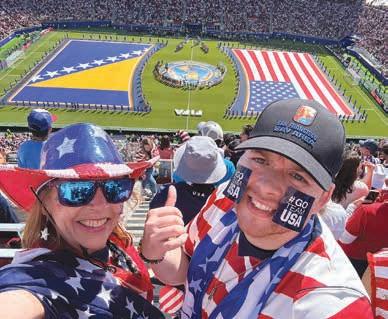
the World Cup isn’t simply watched; it’s experienced.
The tournament captivated millions across the country, culminating in Spain’s dramatic extra-time victory over Argentina. According to Front Office Sports, the final averaged 66.4 million viewers across Fox and Telemundo—the largest U.S. television audience ever for a soccer match and the biggest television audience since Super Bowl LX.
Even friends who don’t typically follow sports were drawn in and captivated. One of my favorite stories was Norway. At venue after venue, fans joined the team’s signature rowing celebration, while superstar striker Erling Haaland became a fan favorite far beyond his own country. Social media overflowed with Haaland songs, memes, and videos. One sentiment appeared again and again: “Norway may not have won the World Cup, but they won the world’s hearts.”
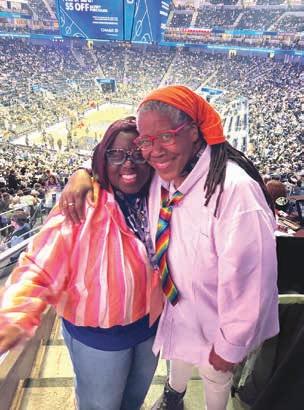
I couldn’t agree more. They brought joy, personality, and a sense of fun that seemed to make the whole world smile, including me.
For six remarkable weeks, people across cultures and continents came together to cheer, celebrate, and connect. Beyond the goals were stories of resilience, sportsmanship, and passionate fans. The tournament offered that rare “one world” feeling and once again demonstrated the extraordinary ability of sports to unite us.
A Full-Circle FIFA Moment
When Team USA won its group and advanced to the knockout round, I couldn’t
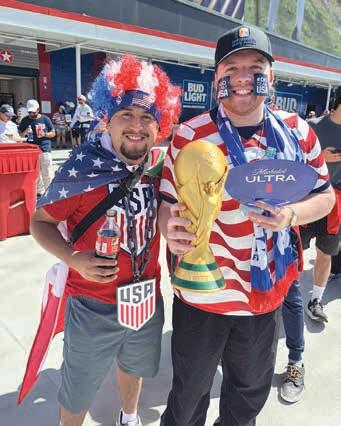
have been more thrilled. Months earlier, I had purchased tickets at a fundraising event, long before anyone knew which teams would play in the match. Friends suggested that I sell them once their value became clear. My answer was immediate: Absolutely not.
I knew it would become one of those unforgettable sporting moments, and I wanted to share it with someone very special. My nephew Justin flew from New York City to experience it with me. The atmosphere inside San Francisco Bay Area Stadium was electric. Thousands of fans dressed in red, white, and blue and celebrated every save, goal, and chant of “U-S-A!”
For me, the experience carried even deeper meaning. Thirty-two years ago, I worked on the 1994 FIFA World Cup in Los Angeles. I attended Team USA’s historic victory over Colombia at the Rose Bowl and later watched the United States face Brazil at Stanford Stadium.
To return more than three decades later and watch Team USA advance with Justin by my side was both emotional and deeply rewarding. Sports connect generations and create lifelong memories that become much bigger than the final score. From the Rose Bowl and Stanford Stadium in 1994 to San Francisco Bay Area Stadium in 2026, my World Cup journey came full circle.
As Spain lifted the trophy and confetti rained down, the sports calendar was already turning the page.
With the World Cup complete, excitement is already building for another unforgettable international sports experience: the Los Angeles 2028 Olympic and Paralympic Games.
Volunteer applications officially opened July 14, giving people the chance to welcome the world to Southern California. Over the years, many friends have been Olympic volunteers who describe the experience as one of the most rewarding of their lives—creating lifelong friendships while contributing to an event they will never forget.
Spectators should also mark their calendars. The next round of ticket notifications is expected August 6–7, followed by the second ticket purchase window from August 10–20. With Los Angeles only a short trip away, LA28 gives Bay Area fans another opportunity to become part of Olympic history.
The Golden State Valkyries continued creating history of their own when they hosted their second annual Pride Night against the Atlanta Dream—and what an amazing celebration it was.
Thrive City came alive with drag performances, DJs, community organizations, fan giveaways and activities: from caricature artists and bracelet making to glitter, hair braiding, and more. Inside Chase Center, DJ LadyRyan and DJ Dyop delivered an electrifying halftime performance, while 18,064 fans received Pride-themed Valkyries drawstring bags.
I also spent time at the Golden State Shop with Ashlie Grilz, Director of Partnerships for Peau de Loup, the queer-owned Vancouver company behind the Valkyries Pride collection. Founded in 2012, Peau de Loup designs and manufactures gender-free
(continued on page 35)
(continued from page 34)
clothing to help people feel comfortable and confident in what they wear.
The collection incorporates the Valkyries’ signature violet and the full color spectrum, with pieces designed to be worn, not only to games, but also in everyday life. I especially loved the custom bandana featuring San Francisco landmarks. Many pieces have already sold out—another sign that fans are embracing clothing that allows them to feel seen and represented.
The momentum behind women’s sports continues across the Bay Area with two exciting identity announcements.
The Women’s Professional Baseball League (WPBL) officially unveiled the San Francisco Firebells as the name of the region’s newest baseball franchise. Inspired by San Francisco trailblazer Lillie Hitchcock Coit—better known as “Firebelle”— the name celebrates one of the city’s earliest female volunteer firefighters, whose fearless spirit challenged conventions long before women’s professional sports were a reality.
I love that every Women’s Professional Baseball League team is named after a pioneering woman, honoring those who helped break barriers both on and off the field.
As Commissioner Justine Siegal noted,
these names represent the grit, audacity, and excellence today’s athletes will bring to the game.
The Firebells will open their inaugural season on August 2, 2026, against the Boston Hunters in Springfield, Illinois.
Women’s volleyball is also making its mark. League One Volleyball (LOVB) announced that the Bay Area franchise will be known as the San Francisco Signal, a name selected after thousands of fan submissions. Team President/ Co-Founder Stephanie Martin said the name reflects the Bay Area’s optimism, ambition, and momentum, symbolizing how a single spark grows stronger as a community embraces it.
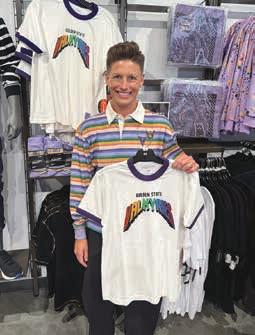
Between the Valkyries, Firebells, and Signal, it’s exciting to watch the Bay Area continue establishing itself as one of the country’s premier markets for women’s professional sports. The momentum is real—and it’s only getting stronger.
Another World Cup Awaits
The global soccer story is far from over.
From June 24 through July 25, 2027, Brazil will host the first FIFA Women’s World Cup
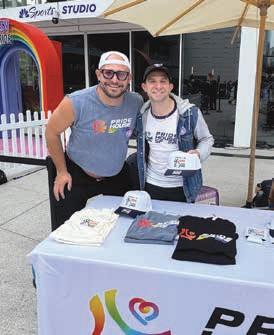
ever staged in South America. Thirty-two teams will compete, with defending champion Spain and the four-time champion U.S. Women’s National Team expected to be among the leading contenders.
For the first time, every match will stream exclusively on Netflix in the United States and Canada in English and Spanish—a landmark agreement that could bring women’s soccer to an even broader audience.
And, next month, I’ll turn my attention to another global sport gaining momentum in the Bay Area: Major League Cricket.
Signing off from the Bay, where passion meets the play.
Beth Schnitzer is the Co-Founder and President of Spritz and the former President of WISE (Women in Sports and Events).

you as a man pretending to be a woman than I ever was as a man.”
Alcohol and drugs often make for good comedy writing. In 1962, television’s ultimate playboy Jackie Gleason quipped, “Drinking removes warts and pimples. Not from me. But from those I look at.” Humphrey Bogart, trying to make a Time magazine interviewer understand him, said, “There’s only one trouble with the world. We’re all one drink behind.”
Words are the best way stars can describe their view of Hollywood. Ethel Barrymore told a reporter, “The people are unreal here, the flowers are unreal, they don’t smell; the fruit is unreal, it doesn’t taste
of anything. The whole place is a glaring, gaudy, nightmarish set built up in the desert.” Warren Beatty still believes Hollywood is a place where you can make an entire career out of baloney, and Marlon Brando called it “a cultural boneyard.” But the most famous description ever comes from Oscar Levant: “Strip the phony tinsel off Hollywood, and you’ll find the real tinsel underneath.”
Jan Wahl is a Hollywood historian and film critic on various broadcast outlets. She has two Emmys and many awards for her longtime work on behalf of film buffs and the LGBTQ community.
Frank Green Ceramic ‘Rainbow’ Reusable Bottle
Stay hydrated with this chrome ceramic reusable bottle in eye-catching rainbow colors. Frank Green products are designed in Melbourne, Australia, out of sustainable materials. $52.99
Picnic Time Blankets
Large and comfortable, these outdoor blankets are generous in size, durable, compact, and easy to carry. A convenient zippered storage pocket can safely hold your phone, keys, wallet, or other small essentials. These are crafted by the family-owned, Californiabased Picnic Time. $32.99
Keep up with Cliff’s Variety news at Facebook ( https://bit.ly/4qh1Xbb ) & IG @hilario_sf
“I would support Art Spark Trust so we can sustain artists living and working in our beautiful city!”
KRAMER (continued from pg 22)
have said in interviews. I imbued a lot of my worldview and how I feel about sex and sex positivity and the importance of sex in my life. That is all coming from a very personal place.
Gary M. Kramer I Want Your Sex is one of your more heterosexual films. Could this film have worked equally well had it been a gay relationship at the center?
Gregg Araki: It could have. It would have been a bit different. I love the inversion of the sex roles. I love that Erika is a strong, powerful woman. I’ve been so heavily influenced by feminism all my life. It could work with two men, but, for me personally as a filmmaker, that is not as interesting and especially in this culture and political climate. The patriarchy is real and has always been a problem. It was getting a tiny bit better for a little bit and the pendulum has swung the opposite way. Women are being attacked, assaulted, and erased. It is terrifying to me that patriarchal toxic male violence is out there. I am happy to have a film with a character like Erika Tracy out in the world right now. She is in control of her image and her femininity.
Gary M. Kramer: You play with reality in the narrative with animated moments, surrealism, and scenes of fantasy. Can you describe your visual approach to the material?
pg 28)
2025 V. Sattui Chenin Blanc, Los Carneros, Napa Valley $38
Looking for a perfect white to quench your thirst regardless of season? This one is it. Chenin blanc is a grape known in France’s Loire Valley but also in a few pockets in California where it’s grown. V. Sattui’s vineyard in the cool Los Carneros growing area, straddling Napa and Sonoma, gives the vines plenty of time to ripen while maintaining acidity and freshness. Crisp and juicy with hints of citrus and orange blossom, it is alluring to smell and lip-smack-
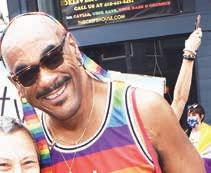
“I would be happy, and pay off bills, take care of family, and support friends in need. I’d help friends find houses, and support organizations that helped me live in SF.”
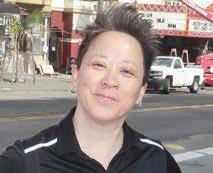
“I would love to live in a penthouse, and help upgrade my mother’s house.”
Gregg Araki: I really wanted the movies to be up and pop and a funhouse of animation because it is set in the art world. Elliot talks about imagination and how he is always in another world; that gave us license to take the movie into another level visually. With all my movies, particularly The Doom Generation and Nowhere, I have been interested in expressionism and these kind of stylized sets and heightened reality. As a filmmaker, I’m not super-interested in naturalism, realism, or gritty documentary handheld mumblecore.
Gary M. Kramer: Taking a cue from a question in the film, what can you say about trying to make meaningful work?
Gregg Araki: I was Elliot when I was 20 years old. I just wanted to be an artist. The fact that I’ve been around for as long as I have, and made all the films I have, and been creative is beyond everything I’ve ever dreamed of. I am so grateful for that.
© 2026 Gary M. Kramer
Gary M. Kramer is the author of “Independent Queer Cinema: Reviews and Interviews,” and the co-editor of “Directory of World Cinema: Argentina.” He teaches Short Attention Span Cinema at the Bryn Mawr Film Institute and is the moderator for Cinema Salon, a weekly film discussion group. Follow him on IG @garyemkramer
ingly good to drink. Pair it alongside grilled fish, roast chicken, or spicy curry.
Author, speaker, wine consultant, and television host Leslie Sbrocco is known for her entertaining approach to wine and food. She has won multiple Emmy Awards for her work on PBS, which includes hosting the series “Check, Please! Bay Area,” which is now in its 21st season; “Check, Please! You Gotta Try This!” and the national series “100 Days, Drinks, Dishes & Destinations.” www.LeslieSbrocco.com
compiled by Rink
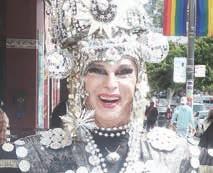
On July 5, 2026, Noe Street exploded into a brilliant spectrum of color and sound for the Castro Art Mart’s sensational summer edition: Queens, Cream & Chaos. Stretching between Market and Beaver, the block once again transformed into an open-air mart where local LGBTQ+ artisans and allies displayed everything from hand-poured candles to vivid pop-art prints. The “cream” and “queens” of the day came via an Imperial Cream Pie Contest and Drag Show with Puck Duo, Nikita Vega, and Blue Bailey.
A live DJ set allowed the queens and the “chaos” to take total control, turning the main stage into a vibrant runway. By the time the sun began to dip over the Castro, the event had once again proven why this monthly ritual remains a cornerstone of community, art, and unapologetic self-expression.
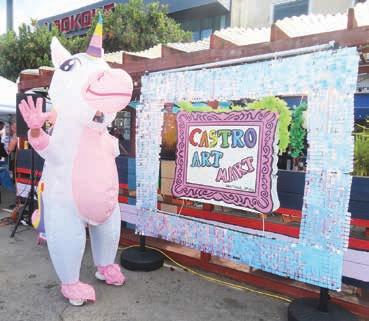
The next two Castro Art Marts will take place on August 2 and October 4. https://artyhood.org/events/
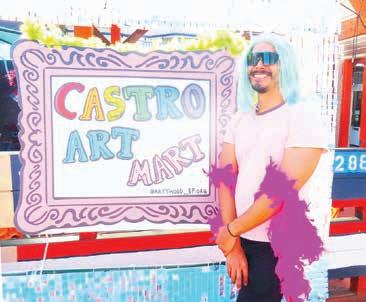
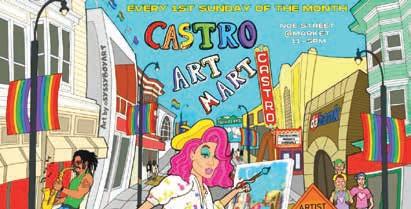
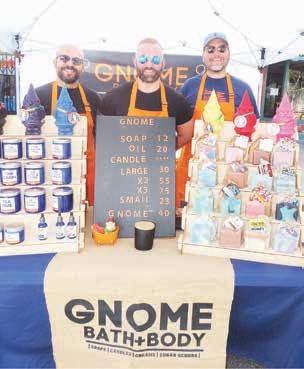
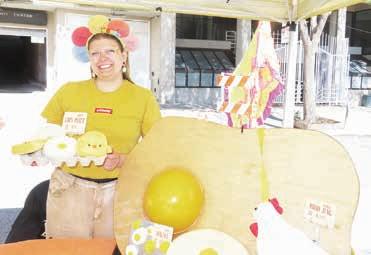
SISTER DANA (continued from pg 32)
Kitten on the Keys with lovely, if not somewhat naughty, songs.
I attended the first of many new monthly queer activist groups on July 18 at Queer Arts Featured (QAF at 575 Castro Street), “LOW HANGING ACTION,” where their motto is “Queer Joy, Strategic Action, Good Trouble,” as well as “Action Is Hotter with Friends.” We discussed past activist groups and present ones—with the addition of awesome drag performance! https://www.queerartsfeatured.com
Trump has spent the last five weeks fixating on what he calls “resurgent communism.”
And yet some of this president’s own policies can be seen as communist: government
ownership of private companies; price-fixing instead of allowing free market capitalism to run its course, and calling Vice President Harris a communist during their presidential campaign. At a recent press conference, Donnie the Commie joked, “I would be the greatest communist.” Yes, you are already, and you deserve a gold medal for that. His heroes are full-tilt communist leaders: Lenin, Marx, Mao, Stalin, Fidel Castro, Pol Pot, Xi, Yun, Putin, and more. Back in the 1950s, Senator Joseph McCarthy had his terrible, career-canceling Red Scare regarding alleged communism in America. Sister Dana sez, “Trump is bringing back the Red Scare, and I am so SCARED that it makes me see RED!”