



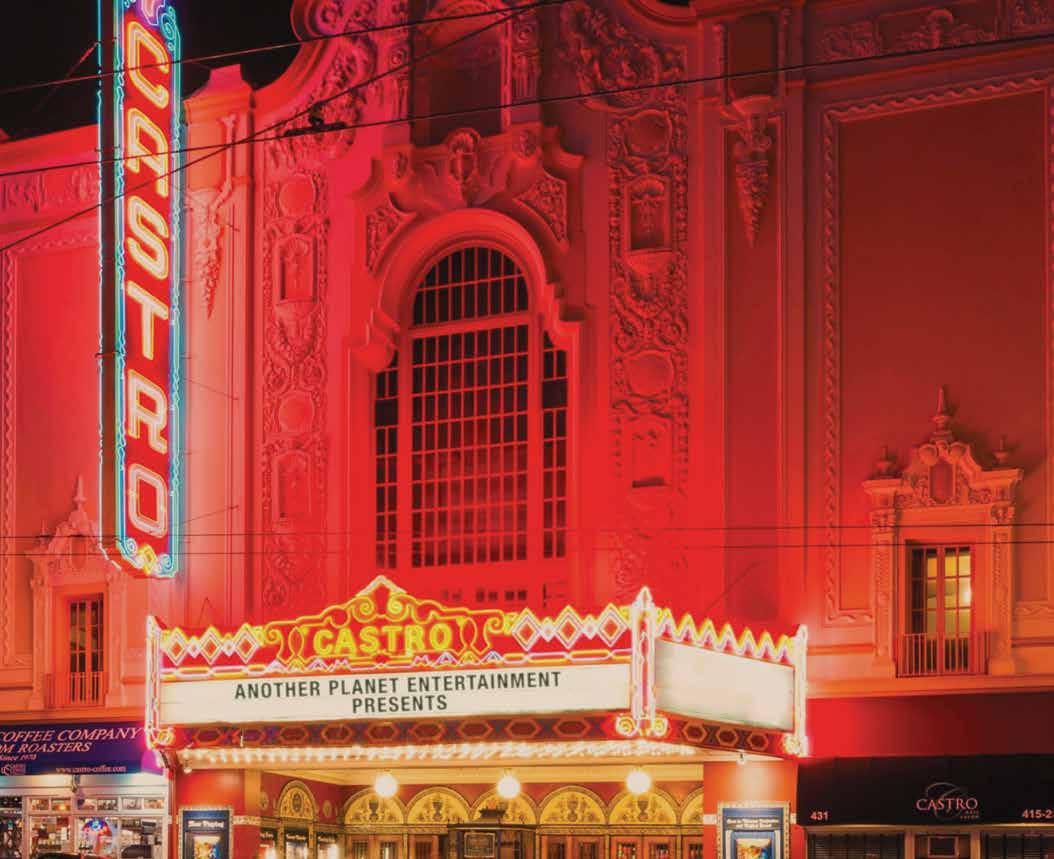






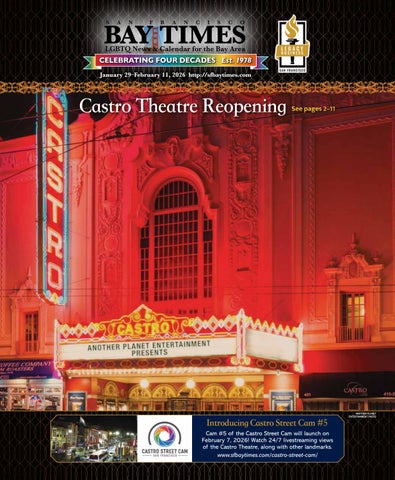
After two years of renovation and restoration work, The Castro Theatre is scheduled to hold a “Community Opening” on February 6, 2026, with a fundraiser for the Castro Community Benefit District.

The long-awaited opening will begin a new chapter for the storied theater that is an architectural landmark in the Castro District. It has been an epicenter for LGBTQ+ activism and queer cinema, served as a safe space during the HIV/ AIDS crisis, was the location of prominent memorials for LGBTQ figures such as Gilbert Baker and Heklina, and has been central to the Frameline Film Festival, signature concerts of the San Francisco Gay Men’s Chorus, and was the site of premieres for noted queer movies like Milk (2008).
The theater closed for the extensive work on February 4, 2024, with a singalong screening of the 1982 musical Victor/ Victoria being the final event before the two-year closure. Just before this happened, Mary Conde, the Senior Vice President for Another Planet Entertainment (APE) that took over management and programming of the theater in January 2022, said: “In addition to restoring the magnificence of Timothy Pflueger’s original design, The Castro Theatre will now be more ADA accessible in the audience, onstage, and backstage to all. Additionally, a state-of-the art heating and air conditioning system will be installed, providing comfort and healthful ventilation. Finally, improved concessions, an expanded lobby, the restoration of the original proscenium arch and new, comfortable and flexible seating will make the Castro a venue that respects its heritage while embracing new, and ever more diverse audiences.”
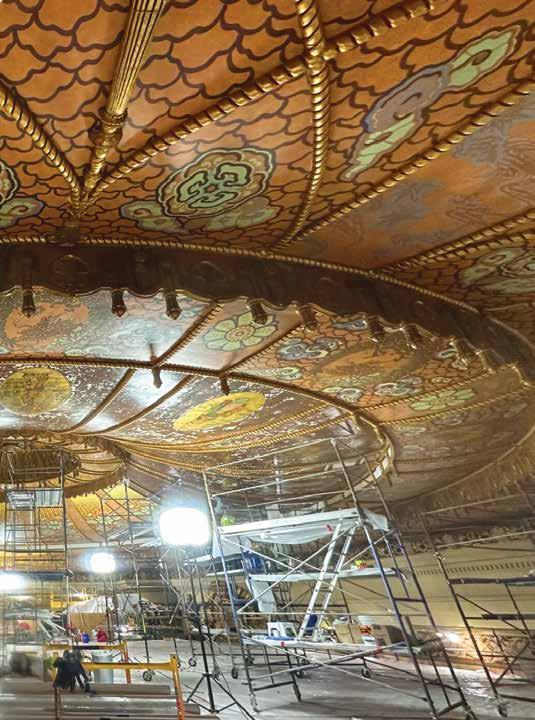
Jeff Greene, the Executive Chairman and Founder of EverGreene Architectural Arts that oversaw the preservation work, added, “One of the defining features of the Castro is the tent-like painted ceiling which has been obscured from view for decades. This element will be conserved and restored along with the unique sgraffito murals on the side walls [that] bring the whole back into harmony with Pflueger’s original vision.”
While the San Francisco Bay Times and other media outlets were permitted to view the work over a year ago during hardhat tours, the media has, to our knowledge, not been permitted entry this
year so far. Several videos released by APE over the months, however, indicate that all of the goals have been achieved— with even some surprises along the way. See the videos at: https://bit.ly/4a1d4hD
From $15 Million to Over $41 Million
The first discrepancy from the original plan was the cost. At first the estimate was widely reported as being $15 million for a one-year, 15-month renovation.
As time went on, the project significantly grew in both scope and budget. By late 2025, the cost had nearly tripled to an estimated $41 million. APE, which has a reported annual revenue exceeding $100 million and is one of the largest independent concert promotion companies in the U.S., is footing the steep bill.
A better surprise was the discovery during the renovation of a formerly hidden ornate gold-painted proscenium arch. Prior to the 1950s, the arch was used to frame the stage. Demo crews found it after removing an old movie screen that had covered up the back of the theater’s stage. (Sections of the screen, along with floorboards from the theater, were donated to Queer Arts Featured, which has been facilitating incorporation of these historic elements into various artworks. See the feature in this issue of the San Francisco Bay Times for more information.)
Shortly after the arch was discovered, Conde told the Engineering News-Record, “It solidifies the intention of the design that this building is meant to have curved edges—there aren’t a lot of right angles. We kept those curves intact. And [the proscenium] really makes the whole design much more cohesive.”
Interior Decorative Elements
Revealed
For nearly seven decades, guests at the Castro Theatre were permitted to smoke. For better and worse, the debris from that smoke and other soot accumulated on the signature “tent-like” leatherette ceiling with medallions and intricate sgraffito murals. Throughout the theater, gilded cherubs, organ grilles resembling European palaces, and detailed plasterwork were also covered in the dark matter. There was a major fire at the theater in 1937, which also could have contributed to some of the dirt and sooty debris.






Greene, during the work, said that his team had to balance maintaining “authenticity with legibility.” Conde indicated that, at least to some extent, the soot had a preservation effect. As she said, some of the plasterwork was “preserved in nicotine.” Crews were able to remove this, and, when needed, reapplied paint and gold foil.
The Nasser family was the original owners of the theater, and, through Bay Properties Inc., still owns The Castro Theatre. We will share more about the Nassers in a minute. The other family-owned business tied to the theater is Richmond-based Phoenix Day, a lighting and metalwork company established in 1850. They pivoted to electric lighting in 1879 when San Francisco established its first central generating station.
Film Festival.
1984: The Castro Theatre hosted the premiere of The Times of Harvey Milk
2008: The theater’s facade and neon were restored for the filming of Gus Van Sant’s Milk
2017: The theater was the site of a memorial service for Gilbert Baker (June 2, 1951–March 31, 2017), creator of the rainbow flag. (Baker’s last major interview was with Pink Triangle project leader Patrick Carney for the San Francisco Bay Times.)
Phoenix Day originally crafted The Castro Theatre’s steel chandelier in 1937 to replace a previous fixture that had burned in the fire. Remarkably, the company is still in business after all of these decades and helped restore and reinstall the chandelier. The current owner of Phoenix Day is Tony Brenta and his wife Joan. Tony is the grandson of the original owner.
The theater’s reopening in 2026 will mark the beginning of a new era for The Castro. Here are just some of the key moments in the theater’s past:
1910: The Nasser brothers opened the original 600-seat Castro Theatre at 479 Castro Street. Three brothers—William, Elias, and George—had immigrated with their father Abraham and other family to San Francisco from Lebanon. They first operated a grocery store and nickelodeon near 18th and Collingwood streets.
1922: The Nasser family commissioned renowned architect Timothy Pflueger to oversee the building of the Castro Theatre at its present location, 429 Castro Street. It opened on June 22, 1922, with the film Across the Continent. (The Nasser family theater empire also used to include the Alhambra Theatre on Polk Street, the New Mission Theater, the Liberty Theater, the Royal Theater, and more. The Castro was always considered to be the “crown jewel.”)
1937: A fire prompted a remodel by Pflueger, who added the now iconic neon sign, marquee, and Art Deco chandelier from Phoenix Day.
1976: The Castro Theatre was designated as San Francisco Landmark #100.
1970s–1980s: The theater became a premier repertory house and epicenter for LGBTQ+ film, hosting the Frameline
2022: The Castro Theatre celebrated its 100th anniversary. Just before this time, Conde, searching for a 1400-seat venue in the city for concerts and other events, explored a partnership with the Nasser family that had been struggling to keep the theatre open, especially after the COVID pandemic. At the beginning of 2022, the partnership was solidified and it was announced that APE would spearhead a major restoration.
2023: Heated community debates took place regarding the removal of the orchestra seating. The building’s landmark status called for “fixed theatrical seating” to be at the theater. The San Francisco Board of Supervisors voted 6–4 in June of 2023, though, to amend the landmark designation to allow for replacing the old seats with motorized, retractable seating for multi-purpose use. Also in 2023, a massive public memorial took place in May to remember popular drag queen Heklina (June 17, 1967–April 3, 2023). The memorial happened both inside the theater and along Castro Street. Video of the memorial within the theater is at https://bit.ly/3M4O2pW
2024–2026: The theater is closed for renovation and restoration work. On June 19, 2024, its restored neon blade and marquee were officially relit during a Juneteenth block party. The unveiling also coincided with the opening night of the Frameline48 Film Festival.
February 6, 2026: The Castro Theatre is scheduled to hold the “Community Opening.”
February 10, 2026: Sam Smith is scheduled to begin the first night of a 20-night series of concerts at the Castro Theatre called To Be Free: San Francisco Residency
The San Francisco Bay Times is proud to be the media sponsor for the February 6 Community Opening benefiting the Castro Community Benefit District. We hope to see you there and at other events at this prominent theatre that remains vital to the financial, cultural, and historic life of the Castro and is recognized both nationally and internationally for its continued LGBTQ+ significance.
https://thecastro.com/


The February 6, 2026, reopening of the Castro Theatre will mark the 20th anniversary of the Castro Community Benefit District (Castro CBD) with a showing of the 1994 film The Adventures of Priscilla, Queen of the Desert Billed as “a little bit of a show, a little bit of a party,” the evening will be co-emceed by Sister Roma and Dirty Carol and is scheduled to include the San Francisco Pride Band, Donna Sachet, D’Arcy Drollinger, Bebe Sweetbriar, Mercedez Mundro, Manny Yekutiel, and others.

The fundraiser for the Castro CBD will mark the first time that the theater has opened its doors to the public since 2024. The film will be shown via a richly-colored 35 mm version that will capture its nostalgia and that is difficult to replicate digitally. This now classic LGBTQ+ movie first premiered at The Castro Theatre on Friday, April 13, 1994, with director Stephan Elliot present for the world premiere screening. Its wide release saw the film become a surprise global success, receiving predominantly positive reviews and establishing itself as one of the first major-studio movies to bring queer themes to a mainstream audience. The incredible and unforgettable costumes in the film also garnered an Academy Award for Best Costume Design. The film’s enduring legacy has inspired countless drag performers worldwide and
led to a stage musical adaptation. A sequel, Priscilla, Queen of the Desert 2, is currently in production.
Filming for the sequel included scenes with the late Terrence Stamp reprising his role as Bernadette shortly before his passing. The film’s cinematic legacy lives on, and its influence on LGBTQ+ entertainment can be seen to this day in television shows like RuPaul’s Drag Race and HBO’s We’re Here, as well as the popular musical Kinky Boots
Guests coming to the February 6 fundraiser are encouraged to come dressed to impress for a fabulous drag costume contest, with prizes “awarded to those who serve the best looks and embody the spirit of Priscilla.”
Recognizing the need to strengthen and sustain the Castro neighborhood, local community leaders and property owners formed the Castro CBD as an all-volunteer group during the 2005/2006 fiscal year. It has since evolved into an influential, established non-profit run by an appointed Executive Director and an elected Board of Directors consisting of residents, community activists, business representatives, and property owners. Andera Aiello has been the ED since 2009, and before that worked as a grant writer for the organization.
Patrick Sahagun of the Castro Street
Chevron recently retired from the board, making Aiello the longest-serving individual at the non-profit.
Funds raised through a special property tax assessment in the Castro/Upper Market area are used to finance a wide variety of services including daily sidewalk cleaning and graffiti removal, a streetscape improvement plan, a business attraction campaign, enhanced safety services, support of community festivals and special events, and beautification of the district.

Donations are always needed, however, to strengthen the many services that the Castro CBD provides. They have real impact. For the period between July 1, 2024–June 30, 2025, their teams:
Kept the streets clean & safe.
- Collected 227,375 pounds of trash;
- Removed 7,746 instances of graffiti;
- Disposed of 1,010 needles and 11,692 hazardous items.
Provided compassionate outreach.
- Deployed 4 Community Ambassadors on the streets 7 days/week 12 hours/day;
- Administered Narcan 13 times, preventing fatal overdoses;
- Secured $415,000 in renewed city grants to sustain outreach services.
Strengthened community pride & connection.
- Painted the LGBTQ+ Intersex Progress
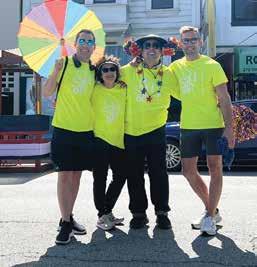
- Coordinated waste management for the Castro Street Fair;
- Supported the Harvey Milk Plaza redesign, set to break ground later this year;
- Coordinated landscaping on 16th Street;
- Hosted the Castro Car Wash raising over $5,000 while bringing joy to the streets.
Helped promote economic vitality.
- Worked with merchants to support local businesses and reduce vacancies;
- Delivered beautification and activation projects throughout the district.
This was all just in a single year! There will therefore be much to celebrate on February 6 for the Castro CBD 20th anniversary and the Castro Theatre Community Opening. You can also make a direct donation to support the organization at https://castrocbd.org/donate/

The Castro Street Cam system began in 2017 as a community education service, making it possible for viewers anywhere in the world to see the vibrant Castro neighborhood and know that it is here to visit and enjoy. The existing four cameras provide views of Castro Street with its rainbow flags and rainbow crosswalks, Jane Warner Plaza, and Harvey Milk Plaza. On February 7, 2026, Cam #5 will be added to the system, providing views of The Castro Theatre. The launch of Cam #5 coincides with the Community Opening Weekend of the theatre following its two-year closure for restoration and renovation.
The San Francisco Bay Times owns and operates the Castro Street Cam with the support of community partners such as Cliff’s Variety, Orphan Andy’s, and SoulCycle. Terry Asten Bennett, the General Manager of Cliff’s, said about the Castro Street Cam: “It is an amazing way for people all over the world to take a peek at the Castro anytime, day or night. How many times have we all

wished we could be here when something happens? The heart of the Castro is where our community comes together to protest, to celebrate, to rejoice, and to cry. Now the Castro is just a click away.”
The Castro Street Cam has brought the Castro neighborhood to the world in the way that comparable systems highlight New York’s Times Square, New Orleans’ Bourbon Street, Rome’s Trevi Fountain, and other noted locations across the globe.
Castro Pub Crawl to Celebrate Cam #5’s Launch
To celebrate the launch of Cam #5, there
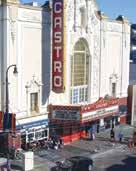
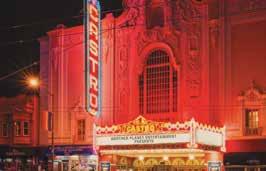
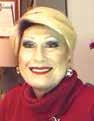
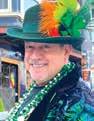
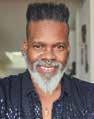
will be a pub crawl in the Castro on February 7 from 4–7 pm, just ahead of D’Arcy’s Drag + Disco at The Castro Theatre during the community opening weekend. The pub crawl will be led by drag legend and Bay Times columnist Donna Sachet and former San Francisco Pride president and Mr. SF Leather Gary Virginia, who is also the President and Founder of Krewe de Kinque. Providing music along the way will be the “King of Strings” and Bay Times columnist Kippy Marks. Stops will include Lookout, Rikki’s, Twin Peaks Tavern, 440 Castro, and a photo op in front of The Castro Theatre. RSVP for the pub crawl at publisher@sfbaytimes.com or by phoning 415-601-2113
To view the Castro Street Cam at any time, visit: https://sfbaytimes.com/castro-street-cam/


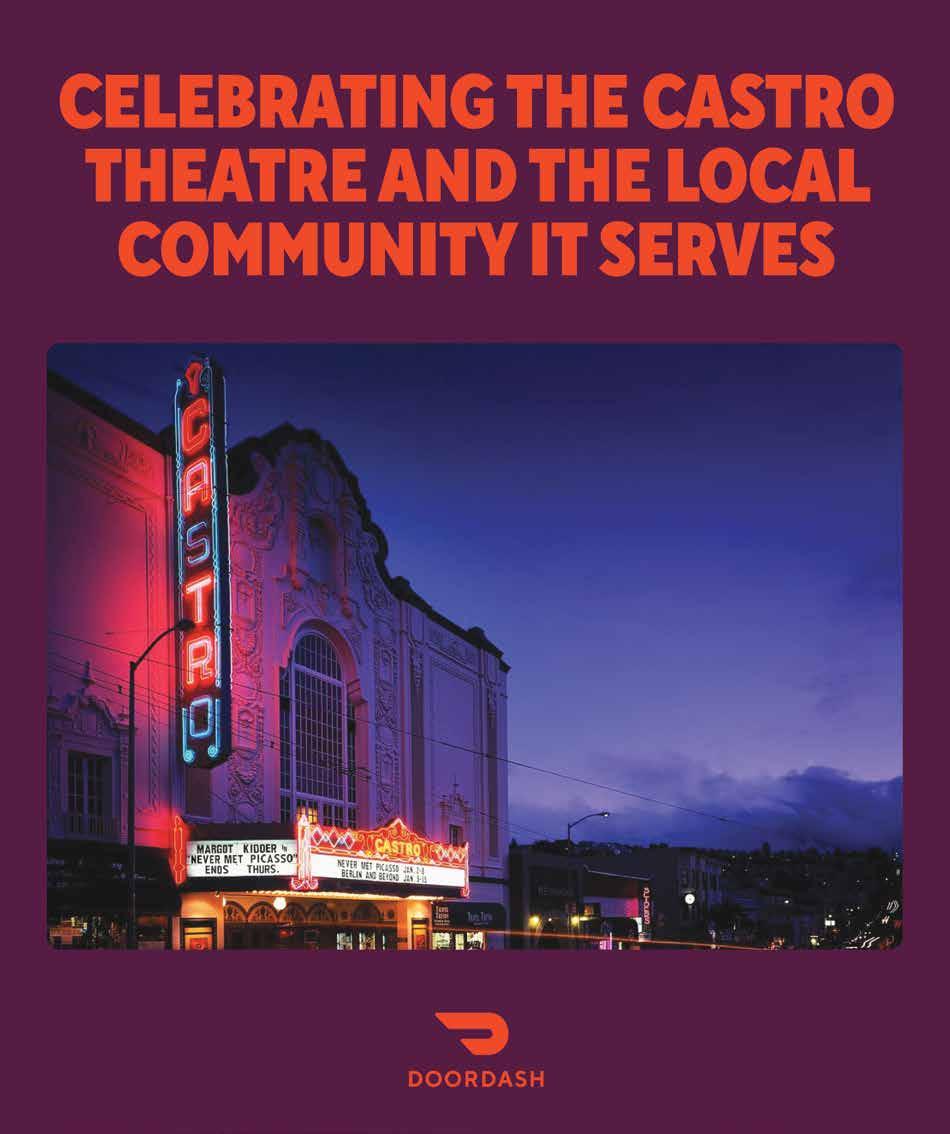
Thank You to Supporters of The Castro Theatre - A Community Opening


Thank You to Supporters of The Castro Theatre - A Community Opening





Thank You to Supporters of The Castro Theatre - A Community Opening

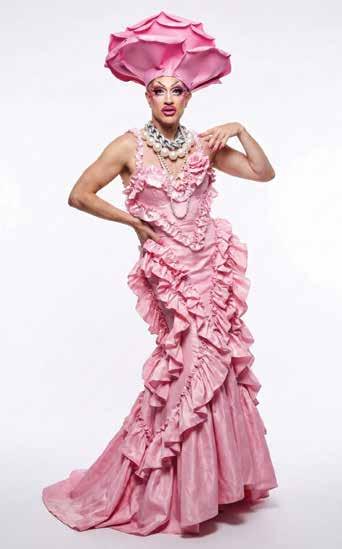
These are just some of the Broadway femmes fatales made even more fatal by chanteuse-par-excellence Dirty Carol, who is honored to sponsor The Castro Theatre Community Opening on February 6, 2026!
Come hear her warble your favorite Broadway chansons “d’amour” at Martuni’s, Saturday, February 21, and Sunday, February 22, at 7 pm, or invite her over to your place for a Gala Singalong!

Follow her on IG @thedirtycarol


Tickets








Thank You to Supporters of The Castro Theatre - A Community Opening




Thank You to Supporters of The Castro Theatre - A Community Opening


Thank You to Supporters of The Castro Theatre - A Community Opening







Brandon Miller
The credit card companies just sent you an annual spending recap. You looked at the total and felt ... something. Guilt? Anxiety?
A vague sense that you should be doing better with money even though you can’t articulate what “better” would actually look like?
Here’s what we see constantly: successful people with solid finances who are absolutely convinced they’re on the verge of disaster. You’re making great money and objectively doing well. And yet, you wake up at 3 am wondering if you’re really “okay,” unable to shake the feeling that you’re somehow screwing this up.
If this sounds familiar, you’re not alone. You might just have something called “money dysmorphia.”
The term borrows from body dysmorphia, a psychological condition where someone’s perception of their appearance doesn’t match reality. With money dysmorphia, it’s the same concept. The numbers say one thing, but your brain insists on telling you a completely different story.
That can show up in a number of (very annoying and frustrating) ways:
- You’re working yourself into the ground to hit some arbitrary number that you’ve decided you “need.”
- You feel guilty about every purchase, even when the math says you’re totally fine.
- You can’t shake the feeling that disaster is always one moment away.
Most people we see struggling with money dysmorphia are doing everything “right” by saving consistently, investing well, and spending reasonably. The problem is their anxiety doesn’t match their reality, and that can be exhausting.
When clients walk through our door, there’s usually one question underneath everything else: “Do I have enough?”
(continued on page 18)
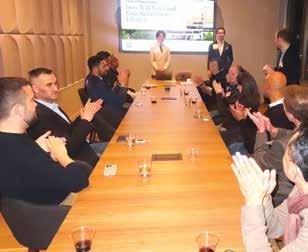
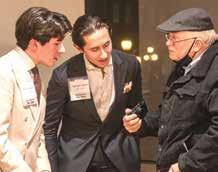
New York Life representatives Sean Goodwin and Samuel Latham hosted the Golden Gate Business Association’s (GGBA) Make Contact for January on Tuesday the 13th at the firm’s offices at 425 Market Street in San Francisco. Juan Torres of the GGBA facilitated tastings from wine sponsor La Crema. As the organization shared, “It was a fantastic evening of learning, making new connections, and sharing how we can support each other in reaching our business goals in the new year.”
The next Make Contact will take place on Tuesday, February 10, from 6–8 pm at the Queer Arts Center in Oakland (3411 Lakeshore Avenue). As for all events in the series, it is free for GGBA members and $10 for guests. Light bites will be provided, along with another wine tasting from La Crema. The Queer Arts Center is a QTPOC-led organization supporting LGBTQ+ artists, healers, and creatives through arts programming, wellness services, and community advocacy. For more information and to register for the event: https://bit.ly/4k4AxTM


By Aaron Boot-Haury
2026 is off to a fantastic start at the Golden Gate Business Association, and I could not be more excited about the momentum we are seeing across our community.
We kicked off the year with a very successful January Make Contact event, welcoming more than 15 first-time attendees and debuting a refreshed format that included a short educational session and a structured networking activity, in addition to our traditional mix-and-mingle. The response was incredibly positive, and it was wonderful to see so many new faces building connections with long-time members. A heartfelt thank-you to New York Life for hosting us in their beautiful new event space and for being such strong partners to the LGBTQ+ business community.
Looking ahead, we are thrilled to bring our
February Make Contact to the Queer Arts Center in Oakland, where we will celebrate Black History Month and highlight several LGBTQ+ organizations in Oakland that intentionally uplift and honor the many intersecting identities held within our community. As the GGBA continues to expand its East Bay presence, we are excited to deepen relationships with local partners and create more opportunities for connection, visibility, and collaboration throughout the region.
February will also mark the debut of our new Business Education Series, launching on February 25. These programs are designed to provide practical tools, expert insights, and real-world strategies to help our members grow and protect their businesses.
Education has long been a core part of our mission, and we are excited to offer even more ways for members to learn from one another and from trusted community part-
ners. If you think our members would benefit from your professional expertise in one of these sessions, we’d love to hear from you!
Behind the scenes, there is also a great deal of exciting work underway. We have completed a refreshed mission and vision for the GGBA and have begun working with a design firm to update our visual identity. Soon, we will also be launching work on a brand-new website. Along with these updates, members can look forward to a new membership directory format, additional tools and resources, and increased opportunities to showcase their businesses and events. There is a lot to be excited about, and we look forward to sharing more in the months ahead.
This month, I also want to take a moment to express my sincere gratitude to our Board of Directors. Over the past 18 months, we have been actively re-envisioning the future of the GGBA, and that work has only been possible
because of the dedication and passion of this team. For those who may not be aware, the GGBA Board currently also serves as the organization’s volunteer staff, in addition to running their own businesses or working in demanding professional roles. We are grateful to now be at a point in our journey where we can once again begin to contract out some of our operational needs. The commitment of this group has been nothing short of extraordinary, and I am deeply thankful for the leadership, creativity, and energy they bring to this organization.
Together, we are building an even stronger, more connected, and more visible LGBTQ+ business community across the Bay Area. Thank you for being part of this journey, and I look forward to seeing many of you at our upcoming events.
Aaron Boot-Haury (he/him) is the President and CEO of the Golden Gate Business Association.
Golden Gate Business Association
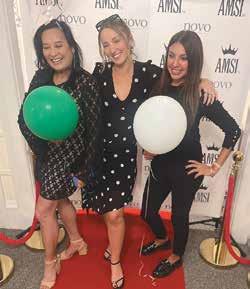
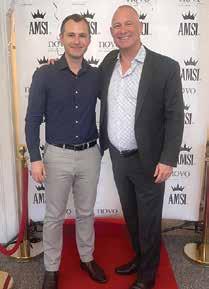
past president Robb Fleischer is the CFO and COO of American Marketing Systems Inc. (AMSI) Real Estate Services, which is a San Francisco-based full-service real estate brokerage and property management firm. Founded in 1970, it has offices, not only in San Francisco, but also in San Diego. Fleischer is a long-time broker at AMSI and here shares more about the firm and his work.
GGBA: Please tell us more about AMSI.


Robb Fleischer: AMSI Real Estate Services is a full-service real estate firm providing residential and commercial brokerage, residential and commercial leasing, destination services, and corporate midterm temporary housing. For more than 55 years, AMSI has focused on helping individuals, families, and businesses navigate housing and real estate transitions with care, transparency, and respect. At the core of our work is a simple belief in treating people fairly and doing the right thing. We try to stay flexible as markets change, while remaining grounded in values that have
guided us from the beginning.
GGBA: What led to the founding of the business?
Robb Fleischer: The business was created out of a combination of survival, practicality, and necessity.
In the late 1960s and early 1970s, many young people were coming to San Francisco looking for freedom, often without jobs or a clear path forward. Co-founder Michael Kocina and others created the Apollonian Academy, an accredited trade school focused on practical skills such as carpentry, painting, housecleaning, and landscaping. The apprenticeship model helped people learn a trade and find work at a time when the cost of living in San Francisco was already difficult. Over time, AMSI evolved with a clearer focus on housing and the role it plays in providing stability and opportunity for people as the city and the market continued to change.
GGBA: Who are some of your role models, and especially those who helped to influence your work?
Robb Fleischer: My role models have been people who lead by example and take responsibility for the people around them. Many were not looking for recognition, but they showed up consistently, acted with integrity, and stayed steady through change. Those influences shaped how AMSI grew and how decisions continue to be made.
(continued on page 22)



Jay Greene, Esq., CPA
As of January 1, 2026, California has reinstated the asset test for most long-term care Medi-Cal programs, which help cover nursing home and intensive in-home care. For Bay Area residents—including seniors, couples, and chosen families—this means home equity and savings may affect eligibility sooner than before, prompting concern and proactive planning.
Applicants are generally limited to:
- $130,000 in countable assets (individual); - $195,000 for a married couple, plus
$65,000 per additional household member. Exemptions often include your primary residence (under Medi-Cal guidelines), one vehicle, certain retirement accounts, personal belongings, and select burial plans. In the high-cost Bay Area, where many homes exceed $1 million, these thresholds can challenge even middle-class households.
Bay Area seniors—especially in LGBTQ+ communities—often rely on partners, chosen family, or close friends rather than adult children, due to unique life experiences like lifetime wage gaps or past discrimination. This can heighten dependence on Medi-Cal for care while increasing vulnerability if assets push them over limits.
Many feel anxious about losing housing stability, autonomy, or preferred care options. Professionals (financial planners, CPAs, social workers, and healthcare providers) recognize the urgency, frequently urging clients with Bay Area property to act now to avoid surprises during renewals or applications.
Casual transfers (e.g., gifting a home) can now trigger penalties under the reinstated
(continued on page 18)

A lovely baby girl was born in small-town West Virginia about 15 years ago. We don’t know her personally, but her name is Becky, and she was a very lucky little girl, surrounded by the deep and unconditional love of her parents and the support of her two older brothers and grandparents. Described as “bright and kind,” Becky was and is an excellent student, who especially loves math and science. Both Becky and her mom Heather recall that, growing up, Becky loved “girly” things. Among other things, she delighted in playing with her mom’s clothes and liked pink.
By the time of third grade, Becky had become a devoted fan of the local youth football league, attending all the games and learning all the cheer routines led by the
all-girl cheerleading squad. The next year, Becky made the cheer team herself. According to Heather, she “glowed” when she received her own cheerleader’s outfit, many a “girly” girl’s dream come true.
Heather also reported that Becky’s becoming a member of the cheerleading team also “dramatically increased” her “confidence and happiness” and gave her a “sense of belonging and camaraderie” for which countless youth as well as adults yearn. The experience also “taught her the importance of responsibility, trust, and team building,” a key aspect of maturing. Becky was particularly “proud to have served as part of the base for her cheer team’s pyramids” because it showed her “that her teammates trusted and relied on her in order to complete their routine.”
Becky also really loved and continues to love running and team sports—which we assert can also be a “girly” girl thing to do. Indeed, Becky’s mom Heather ran competitively and as part of a team. Becky’s fondness for running could be yet another way she emulated her mom, with whom she shares a very deep connection and to whom she can turn for anything. Growing up, Becky accompanied Heather on her runs through parks and saw her mom’s running medals on the walls at home.
When Becky became a sixth grader and entered middle school, she joined the fall cross-county team, which allowed any girl

who participated in all the summer practice sessions to become part of the team. That was lucky for Becky, because unfortunately it seems that Becky lacks the running abilities of her mom. In competitive races, Becky “finished consistently near the back of the pack,” coming in “51st out of 66 in one competition and 123rd out of 150 in another.”
Nevertheless, Becky declared that the season was “awesome.” She explained, “I felt supported by my coaches and the other girls on the team. I made so many new friends and loved competing with and supporting my teammates. We learned about teamwork, having a positive attitude, and how to have fun while being competitive.”
In the spring, Becky tried out for the track and field running team, but her coach said

that she was too slow to make the team. Undeterred, she once again joined the cross-country team the next fall as a seventh grader. But things went from bad to worse with Becky by eighth grade finishing 67th out of 68 in the one meet in which she competed. Despite all of this, Heather reported that, throughout it all, she had “never seen [Becky] happier” than when she “pick[ed] her up from practices and [took] her to meets.”
When Becky didn’t make the track and field running team as a seventh grader, her coach encouraged her to try field events, and she enthusiastically took up shot put and discus. But Becky showed no innate skill at these sports as well, placing 36th out of 45 in shot put at one meet, 15th out of
(continued on page 18)



Roland Schembari and Bill Hartman, Co-Founders
Randy Alfred, Founding News Editor, 1978 Kim Corsaro, Publisher 1981-2011
2261 Market Street, No. 309 SaN FraNciSco ca 94114
PhoNe: 415-601-2113
525 Bellevue aveNue oaklaNd ca 94610
e-Mail: editor@sfbaytimes.com www.sfbaytimes.com
The Bay Times was the first newspaper in California, and among the first in the world, to be jointly and equally produced by lesbians and gay men. We honor our history and the paper’s ability to build and strengthen unity in our community.
The Bay Times is proud to be the first and only LGBTQ newspaper in San Francisco to be named a Legacy Business, recognizing that it is a longstanding, community-serving business that is a valuable cultural asset to the city.
dr. Betty l. SullivaN/JeNNiFer l viegaS co-PuBliSherS & co-editorS
Beth greeNe, JohN SigNer, Michael delgado deSigN & ProductioN
kate lawS BuS NeSS MaNager
Blake dilloN caleNdar editor kit keNNedy Poet-iN-reSideNce
J.h herreN techNology director
carla raMoS weB coordiNator
Mario ordoNez diStriButioN
JuaN r davila voluNteer coordiNator
CONTRIBUTORS WRITeRS
Rink, Sister Dana Van Iquity, Ann Rostow, Patrick Carney, Leslie Sbrocco, Kate Kendell, Gary M. Kramer, Joanie Juster, Robert Holgate, Eduardo Morales, Dennis McMillan, Tim Seelig, John Chen, Rafael Mandelman, Jewelle Gomez, Phil Ting, Rebecca Kaplan, Philip Ruth, Bill Lipsky, Elisa Quinzi, Liam Mayclem, Beth Schnitzer, Rowena Brown, Andrew Freeman, Kippy Marks, Ian Fullmer, Catherine Stefani, Donna Sachet, Gary Virginia, Derek Barnes, Marcy Adelman, Jan Wahl, Stuart Gaffney & John Lewis, Brandon Miller, Jamie Leno Zimron, Howard Steiermann, Fernando Camino, Honey Mahogany, David Landis
PhOTOgRaPheRS
Rink, Paul Margolis, Bill Wilson, Jerome Parmer, Michael Kirschner, Sandy Morris, Karina Patel, Abby Zimberg, Joanie Juster, Debra Reabock
aDVeRTISINg
Display Advertising Standard Rate Cards http://sfbaytimes.com/ or 415-601-2113
Custom ad sizes are available. Ads are reviewed by the publishers.
National Advertising: Contact Bay Times / San Francisco. Represented by Rivendell Media: 908-232-2021
Circulation is verified by an independent agency. Reprints by permission only.
CaLeNDaR
Submit events for consideration by e-mail to: calendar@sfbaytimes.com
© 2026 Sullivan Communications, Inc


Photos by Rink
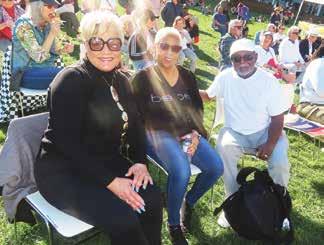
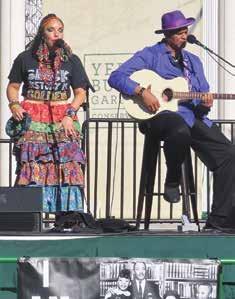
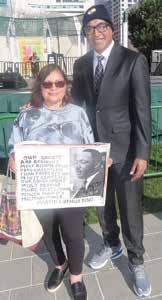
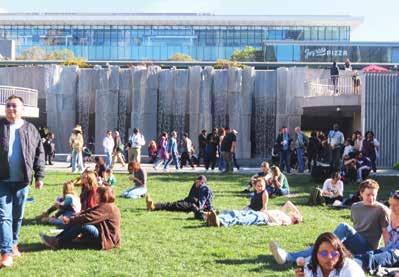
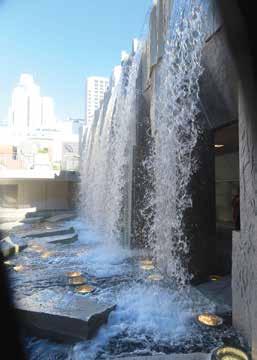
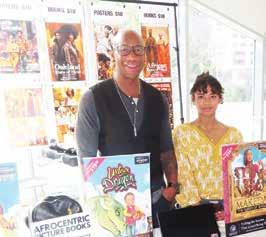
The San Francisco Interfaith Council hosted a rally and celebration of Rev. Dr. Martin Luther King, Jr., Day on Monday, January 19, 2026, at Yerba Buena Gardens.

Prior to the rally, participants gathered at the Caltrain Depot and proceeded in a march, commemorating Dr. King’s march in 1965 from Selma to Montgomery, Alabama.
The large crowd gathered at Yerba Buena Gardens cheered for speakers, including civic, community, and interfaith leaders, and numerous musicians who performed. The event was part of the culmination of a weeklong observance from January 13–19, which is led by the Northern California Dr. Martin Luther King, Jr., Community Foundation: https://norcalmlkfoundation.org/


By Ann Rostow
While preparing to write this column, I reviewed a collection of GLBT news items and stories, and I was particularly struck by a piece about the circulation of fake videos showing top athletes refusing to wear ribbons and generally expressing disdain for progressive viewpoints.
“Did your favorite sports star ‘shock fans’ or ‘shake’ the league by ‘publicly’ or ‘flatly’ refusing to wear an LGBT Rainbow Armband because it would turn the game ‘into a political circus?’” asks Alan Duke at Yahoo Sports. “The claim,” he continues, “was made about at least 95 football, soccer, basketball, baseball, and hockey players in posts published on dozens of fake Facebook fan pages aimed at American and European audiences, but produced from Vietnam.” Duke lists a hundred or so stars, from Carlos Alcaraz to Baker Mayfield, who have been targeted by so-called Viet Spam.
Chargers wide receiver Ladd McConkey is fake-quoted as saying: “I don’t care if the whole world calls me controversial. Forcing players to wear an LGBT armband turns football into a political circus. I play for the Chargers, for my team, and for the game— not for any movement.”
I’m particularly disturbed by fake videos these days due to a speech by Bill Clinton that Mel and I watched the day after Trump’s military strike on Caracas. It was about 15 or 20 minutes long, and, in it, Clinton discussed America’s history in Central America, the Constitutional requirements for military intervention, and the layered expertise that a president relies on from his or her national security advisors and staff. He drew on his experience in Bosnia and the care in which the U.S. employed force when he was in charge.
It was a pretty good speech, and I was particularly impressed that he delivered it so promptly, at a time when the cable news programs had barely grasped the situation. It looked as if he was in a lecture hall, so I guessed he had scheduled a previous speaking date and had reimagined his remarks on the fly.
Mel and I searched all over for the actual speech and the details of this lecture, which had popped up on a feed somewhere, somehow, the way they do these days. But it simply didn’t exist. The speech had referred directly to the removal of Maduro by our armed forces, so it wasn’t a dateline mix-up. And yet, my Google AI summary tells me to this this day: “Based on search results for January 2026, there are no records of a speech by former President Bill Clinton addressing the capture of Venezuelan President Nicolás Maduro by the Trump administration.”
Where did this presentation come from, and why? It had no controversial content. And it was absolutely convincing. There was no tell-tale lag or glitch or whatever one imagines one might see on a fake video. We’re all familiar with Bill Clinton. It was him!
I’m seeing fake stuff everywhere now. I watched Coco Gauff beat Karolina Muchová in the Australian Open in a great three-
set fourth round match. The two embraced at the net, and subsequently Muchová walked off to applause, waving at the crowd while Gauff clapped along. A little later I read a cray cray report about Muchová having a fit and throwing her racket at Coco as she stomped off the court. Say what?
Most commentators had seen the match and debunked the story, but where did it come from and why? Why do I encounter promos for new detective shows that don’t exist? I understand that nefarious groups would use fake news and videos to shape opinion, but why fabricate lectures and TV shows and confrontations on court? This week I saw that Gauff was caught on camera smashing her racket in a hallway after losing a quarterfinal match. I didn’t believe it until I followed up and I guess she did. But normally I wouldn’t feel obliged to verify such news. And here’s why it really does disturb me. Like everyone, I’ve relied on the videos we’ve seen to illustrate beyond a doubt that the ICE agents who shot and killed Renée Goode and Alex Pretti were guilty of murder. But how easy it would be to redo such scenes to produce the opposite impression. Luckily, we had dozens of views in Minneapolis. But what about meetings behind closed doors? What about taped interviews? What about images of child sexual abuse created out of whole cloth? How are we to trust our eyes in the coming years? We can’t.
Wither the Pierian Spring?
On a related subject, I’ve never been a fan of AI-written news, but it seems to be sliding downhill into the rising tide of its own slop. It can be incoherent, pointless, lacking context, banal, and often inaccurate, and I’m starting to wonder whether AI programs are getting their raw material from other AI-generated content.
I just tried to read a story with the promising headline: “Man Admits to Drowning Wife in Hot Tub.” It was from the Thames Valley, and, even though it wasn’t a GLBT item, I thought we might take a little sidetrack if the details were intriguing enough. Brits behaving badly and all that.
But there were no details. Just weird mush. “The couple spent the evening away from home and came back expecting to relax,” wrote the bot, “but the night ended in tragedy.” I haven’t delved into the story, but murdering your wife isn’t “tragic”; it’s “cruel,” “heartless,” “violent,” “psychotic.” Is news writing, my lifelong métier, dying out at the hands of computerized compost? Because, as far as I can tell, nobody’s learning to write by themselves anymore, so what vast storehouse of thoughtful prose will AI programs rely on for their own consumption in the decades to come?
And did you read about the guys in China who are in trouble for photoshopping two male pandas getting it on in a Chengdu zoo? I’ve gone on too long on this subject, so I’ll leave the details for you to research. Oh, and Chengdu is considered the gay capital of China, and nicknamed “Gaydu” by the community. Let’s go!
(continued on page 22)

MILLER (continued from pg 12)
And my favorite response: “Enough what?”
The people we work with are often working 60-hour weeks, postponing trips, and saying no to things they’d genuinely love to do, all because they can’t shake the feeling that they need to keep grinding, saving, and working. The reality is that they don’t need more money; they need more time.
We see this frequently. One client recently took a new role with a big pay cut, but far better long-term equity, healthier leadership, and a work environment that wouldn’t burn them out. On paper, it was a smart move. The quality-of-life upgrade was huge, and the numbers fully supported it.
Still, the anxiety hit hard: What if something goes wrong? Are we making a mistake? Meanwhile, their finances are completely fine. They could both stop working in five years if they wanted to.
That gap between emotional fear and financial truth is where people can lose years of their lives. Our job is to pull up the projections, walk through what’s actually true, and replace vague anxiety with clarity. Once that happens, the question changes from, “Can we survive this?” to, “Wait ... we could get our time back sooner than we thought?”
That’s the shift that matters because money is a tool, but time is the point.
Money anxiety thrives when everything feels blurry. When every dollar has ten possible jobs, your brain never gets to rest. That’s why we slow things down, look at the numbers together, and get specific: Here’s where you actually are. Here’s what’s possible. Here’s what changes if you choose option A instead of option B. And then you get to decide your next move consciously, clearly, and based on reality instead of anxiety.
One way we help create that clarity is with a cash-flow setup we call the “Allowance Method.” It’s not perfect for everyone, but for people who struggle with money dysmorphia, overthinking, or constant second-guessing, it can be transformative. Here’s how we set it up: We route your paycheck so it doesn’t go straight into checking. Instead, it first lands in a separate account we manage on your behalf. This is your “tomorrow money,” where savings, investing, and future goals live. Then, once a month, we move a set amount into your checking account (your “today money”). We monitor the flow, adjust the amounts as your life changes, and keep the system running in the background without you ever touching it. And as we work together, we adjust the amounts and the process to fit how you actually live and think about money.
This separation does something subtle but powerful. It removes the need to constantly zoom out and ask, “Is this okay? Am I being irresponsible? Should I save this instead?” Your job is simple: live your life within the today money. The long-term plan is already being handled.
The system also quietly captures progress. Raises, bonuses, payroll changes—extra money flows to tomorrow money by default. If you want to spend more, you can. But it’s a conscious choice, not lifestyle creep sneaking in through the side door. Saving happens automatically, without relying on willpower or perfect behavior.
What this really solves isn’t just cash flow; it’s mental load. You’re no longer making dozens of micro-decisions that feed anxiety. You’re not feeling guilty about spending money that was already accounted for. And over time, money stops being the thing you optimize every day, and time takes its place.
The Allowance Method is just one approach we use to remove mental load. Depending on what’s driving your anxiety and how you think about money, we have other systems and processes we can explore together.
The new year loves to stir things up with a fresh wave of “New Year, New Budget” advice. But if you’re already doing the “right” things and still feel anxious, the answer probably isn’t another spreadsheet or a stricter set of rules. It’s fixing the mismatch between what’s actually true and the story your brain keeps replaying at 2 am. Money anxiety happens when you don’t have clarity you trust, and the cost is usually time. Once the numbers are clear, you can start deciding how much time you want to spend working, waiting, or enjoying what you’ve already built.
This material presented by Brio Financial Group (“Brio”) is for informational purposes only and is not intended to serve as a substitute for personalized investment advice or as a recommendation or solicitation of any particular security, strategy, or investment product. Facts presented have been obtained from sources believed to be reliable, however, Brio cannot guarantee the accuracy or completeness of such information, and certain information presented here may have been condensed or summarized from its original source. Brio does not provide legal or tax advice, and nothing contained in these materials should be taken as legal or tax advice. Advisory services are only offered to clients or prospective clients where Brio and its representatives are properly licensed or exempt from licensure. No advice may be rendered by Brio Financial Group unless a client service agreement is in place. Brandon Miller, CFP®, is a financial consultant at Brio Financial Group in San Francisco, specializing in helping LGBT individuals and families plan and achieve their financial goals. For more information: https://www.briofg.com/
(continued from pg 14)
look-back period (phasing up to 30 months for transfers after January 1, 2026). Gifts below fair market value delay eligibility, calculated against the state’s average private-pay nursing home rate.
Strategic, smaller timed gifts (“stacking”) may shorten penalties under California’s concurrent rules—but only with expert guidance. DIY approaches often lead to longer delays or ineligibility. Proper planning protects generosity while aligning with current rules.
Advance action still works:
Irrevocable Medi-Cal/asset protection trustsWhen correctly set up, these remove assets from countable totals, minimize estate recovery after death, and help ensure a spouse, partner, or loved one retains the home and savings.
Valid spenddowns - Turn excess assets into exempt ones by paying debts, adding home accessibility features, replacing vehicles, prepaying funerals, or addressing medical needs.
Private nursing home costs often surpass $15,000/month. Proactive steps preserve more for loved ones and communities.
If 55+ with a home or savings, schedule a Medi-Cal-focused review soon.
(continued from pg 15)
25 and 35th out of 53 in discus at two other meets. However, Becky worked hard, and, in spring of eighth grade, she placed third in the state for middle school discus and sixth in the state in middle school shot put. She continued to place well, although not at the very top, in ninth grade.
Regardless of how good an athlete Becky is, she says “she feels ‘free and fully myself’ when she ‘is out on the field,’” and “breathing in the fresh air and feeling proud when [she] work[s] hard.”
You might wonder why we’ve devoted an entire column just to describing Becky. We wish we could say it’s simply because we wanted to share the story of a bright and engaged girl, whose life stands as testament to a child’s potential when surrounded by loving and supportive family and friends. Becky’s capacity “to have fun while being competitive” is an invaluable character trait, that even the fiercest competitors at any age in any endeavor would be wise to cultivate and embody. Becky’s experiences further demonstrate some of the many benefits that Title IX has provided girls by availing them of the opportunity to participate fully in athletics in an educational setting.
But unfortunately, there’s another reason we wrote this piece: Becky, her mom, and the rest of her family and friends have been forced to engage in a years-long legal struggle for her right to be “free and fully” herself and participate in school sports. The sole reason is that Becky was born with male genitalia, assigned the sex marker “male” at birth, and lives in West Virginia, one of many states that have enacted sweeping prohibitions on transgender girls participating in girls’ school sports. West Virginia’s ban prohibits any trans girl from participating in any girls’ sport, including
Talk with your partner, close friends, or chosen family about decision-making and protection priorities.
Professionals can guide clients owning Bay Area property or who are worried about care costs to explore 2026 impacts—adding real value and peace of mind.
These planning steps and others may uphold dignity, stability, and choice for all family structures.
A focused consultation clarifies your options under the 2026 rules. Contact Greene Law Firm, P.C. today for a free initial assessment: Call 415-905-0215 or email info@greenelawfirm.com
Statements in Compliance With California Rules of Professional Conduct
This article is for educational purposes only and does not constitute legal advice. Please consult a qualified estate planning attorney for personalized guidance.
Attorney Jay Patrick Greene, Esq., CPA, founded Greene Law Firm, P.C., which is licensed in California, Alabama, and Florida. He has over 15 years of experience in wills, trusts, probate, elder law, and asset protection. For more information, visit https://www.assetprotectionbayarea.com/
intramural and non-competitive sports, from middle school through college, regardless of the individual characteristics of the girl or the particular circumstances of the sporting event.
Becky’s case is now before the U.S. Supreme Court, which held oral argument earlier in January. Whether Becky will be able to continue to participate in school track and field, which she dearly loves, rests in the Justices’ hands.
We know that, based on the law and the facts, Becky should win her case. In Part 2, we’ll explain why. Particularly important is the fact that Becky has no physiological advantages over other girls in sports, because Becky has taken medications to prevent her from undergoing any aspect of typical male puberty and enable her instead to experience typical female hormonal puberty. But we’ll also discuss the reasons some legal observers believe the Court’s conservative super-majority may still wrongly rule against her, as well as against another trans student athlete whose case was heard by the Supreme Court the same day as Becky’s.
Stay tuned for Part 2, and, in the meantime, let’s continue to cheer on Becky and other trans athletes both on the field and at the Supreme Court.
(All quotations come from court filings that can be found at https://bit.ly/3O1Lklw )
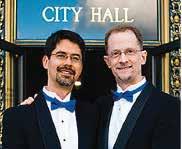
John Lewis and Stuart Gaffney, together for over three decades, were plaintiffs in the California case for equal marriage rights decided by the California Supreme Court in 2008. Their leadership in the grassroots organization Marriage Equality USA contributed to making same-sex marriage legal nationwide in 2015. Today, they continue to educate and advocate for marriage equality and LGBTIQ+ rights worldwide.


IBy Donna Sachet
f you haven’t yet checked out QBar on Castro Street, do so as soon as possible. With creative decor, great audio and lighting, and friendly staff, it is a new must-see stop on any bar tour. Most recently, we joined CoCo Butter for Crown Jewels, hosted by Mr. David and Juanita MORE! and benefiting LYRIC Center for LGBTQQ+ Youth. Several of the Monarchs of the Imperial Court were in attendance, including Emperors John Weber, J.P. Soto, and Terrill Grimes Munro, and Empresses Alexis Miranda, Mercedez Munro, Cameron Stiehl-Munro, and Linda Summers. It was fun to see a rich mix of people in a relaxed setting without a show or long speeches, just getting together for a good cause and supporting a new neighborhood business.
What a delightful surprise was the evening of music with accomplished composer Andrew Lippa and friends at the Chan National Queer Arts Center last Saturday night! We weren’t sure what to expect, but in the convivial company of Michael Chua we joined several hundred fans of Andrew, Broadway, and music in general for a rollicking evening of gay-infused music. Widely known for his Broadway hits The Addams Family, Big Fish,
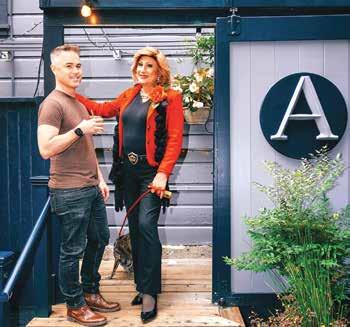
You’re a Good Man, Charlie Brown, and The Wild Party, as well as his choral work I Am Harvey Milk, commissioned by the SF Gay Men’s Chorus, Andrew Lippa shared a panoply of music he is composing for future works, revealing an extraordinary well of creativity. His guest stars included the captivating Britney Coleman, Andrew’s partner Tom Regouski who played several wind instruments, and the SF Gay Men’s Chorus under the lively direction of Jake Stensberg. All in all, it was a very personal glimpse into the life of a very talented man.
And we ended our weekend performing at Sunday’s a Drag at the Starlite atop the Beacon Grand Hotel in Union Square with Hera Wynn, Bionka Simone, and Mercedez Munro. This recently reopened and refurbished club is quite a hit and this new evening version of the former Sunday’s a Drag show is growing in popularity. The drinks are fabulous, the decor is marvelous, and the show is lively! Check it out, once a month, with a rotating cast of talent.
As you will see from the adjacent calendar of events, the iconic Castro Theatre is about to once again throw open its doors. After extensive laborious work and tremendous financial investment, Another Planet Entertainment will welcome the community back to this hallowed space for films, concerts, variety shows, and more. We’ll be all over the place, anxious to see all the improved amenities, restoration of historic elements, and increased versatility of this venue. It took many months of negotiation, construction, coordination, and more, but the wait is finally over. Join us in welcoming back the Castro Theatre!
Donna Sachet is a celebrated performer, fundraiser, activist, and philanthropist who has dedicated over two decades to the LGBTQ Community in San Francisco. Contact her at empsachet@gmail.com
“With the long-awaited reopening of The Castro Theatre, get ready for the renaissance of the Castro neighborhood!” Donna Sachet
Thursday, February 5
My Life in Business Suits, Hospital Gowns and High Heels
Donna Sachet interviews author Tom LeNoble Manny’s, 3092 16th Street 6 pm Free! www.eventbrite.com
Friday, February 6
Castro Theatre Community Opening The Adventures of Priscilla, Queen of the Desert Preceded by Drag Extravaganza
Benefits Castro Community Benefit District
Castro Theatre, 429 Castro Street 7 pm doors open
8 pm stage show & film www.ticketweb.com
Saturday, February 7
Castro Street Cam Pub Crawl
Join Donna Sachet, Gary Virginia, & Kippy Marks
Celebrating the launch of Cam #5 of the Castro Street Cam Starts at Lookout, 3600 16th Street 4–7 pm Free!
Saturday, February 7
D’Arcy’s Drag + Disco
Hosted by D’Arcy Drollinger Castro Theatre, 429 Castro Street 8–11 pm $40 www.ticketweb.com
Tuesday, February 10
Sam Smith concert
Another Planet Entertainment presents beginning of residency Castro Theatre 429 Castro Street 7 pm $150 & up www.ticketmaster.com
Beth’s Bay Area Sports Beat
To explore where the sport of figure skating is headed as the Winter Olympics approach, I spoke with Joel Goodrich, whose background as a competitive skater offers an insider’s perspective on the quad revolution, Olympic pressure, judging transparency, and why figure skating continues to captivate on the world’s biggest stage.
Beth Schnitzer: Before diving into the broader Olympic conversation, I’d love to start with your own skating background. Can you share your personal journey in the sport?
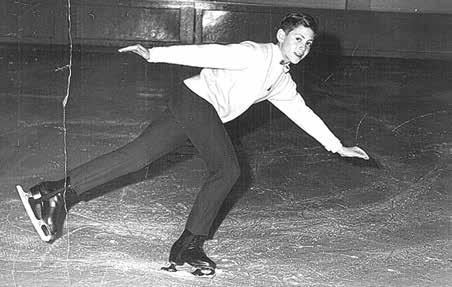
Joel Goodrich: My mother used to go skating every Sunday; she even had a skating outfit and her own skates. Then my dad and brother and I started to join her when I was about 7 years old. I guess I must have shown some aptitude because, pretty soon, I was skating after school then training before school. I loved the feeling of gliding across the ice, then the jumping and spinning all felt so natural and beautiful.
My family was living in the Oakland Hills, so I was training at Berkeley Iceland, which wound up being home to several Olympians and their coaches, so it was a great place to start off. I remember my first competition in the U.S. was at the legendary Sutro Skating Rink in San Francisco right above the iconic Sutro Baths—what an experience!
My family then moved to Paris where I was training with the French National Skating Team. The World Champion at the time, Alain Calmat, was French, so it was truly inspiring to be skating in that environment, Every summer we went to Chamonix in the Alps to train at high altitudes, and one winter we went to Megeve for a competition—it was such a magical environment.
We moved back to the U.S. when I was 13 and I competed at the national level during my high school years. Then came my freshman year at UC Berkeley, when I was hopefully going to compete at the senior level and try out for the Olympics. However, I was majoring in biomedical science (fortunately my brother became a doctor, so my mom was happy!) and had two jobs: playing piano 3 nights a week at Cafe Romano, and working at the front desk at the Inter-
national House. This is a beautiful Julia Morgan-designed building for U.S. and international students where I was living. I realized I couldn’t have 2 jobs, major in bio-medical science, and try out for the Olympics, so I decided to quit skating and become a doctor or scientist. I never thought I would wind up back in skating, but a little thing called fate had something else in store for me.
Three years went by while I focused on my studies and my jobs. During that time, I was not on the ice a single time even though I had been on the ice pretty much every day while growing up. I remember dreaming I was going through my skating routine every night during those 3 years. Then came the second quarter during my senior year and I was applying to medical schools. I came down with what I thought was stomach flu. I ignored it as I was in the middle of final exams, but it turned out my appendix had burst and I had to go to the hospital and drop out that quarter. I thought to myself, I will just go back to school next quarter and re-apply, but it turned out quite differently.
The day after I got out of the hospital, I had an overwhelming urge to get back on the ice, I felt like I was missing part of myself. I was 20 years old at the time and it was like I had never stepped off the ice, I could still do some of the triple jumps—it felt exhilarating. Then, in one of those little twists of fate that totally changes the course of your entire life, I heard that Ice Follies was having tryouts that very afternoon in San Francisco. So, I thought to myself, “I’ll hop on BART and try out just for fun.” Well, I wound up getting a spot in the show and everything changed. I then decided I would join the show, then go back to school once I got back to Berkeley—well, it didn’t quite turn out that way.
The show I was in was going to Taiwan, so it was a fascinating experience both in terms of the performances as well as the culture. After 9 months of amazing adventures, I wound up back in Berkeley, but was immediately offered a coaching opportunity and never went back to school. I loved coaching, working with the kids and helping them succeed, not just in skating, but in their lives; it was one of the most rewarding experiences in my life. Not only did I help inspire them but also it inspired me in my journey ahead.
Four years later, the next chapter in my life opened up and I moved on. But many, many years later, a very wise friend of mine who knew the story said, “Sometimes an unexpected detour in life brings you to the place you’re meant to be.” And that’s exactly what happened.
Beth Schnitzer: What makes the Winter Olympics and figure skating, in particular, such a powerful global spectacle?
Joel Goodrich: Because it is such a beautiful sport in addition to its extraordinary
athleticism, it is one that has universal appeal to many different cultures around the world. And the combination with music makes it even more compelling.
Beth Schnitzer: Figure skating continues to evolve—technically, artistically, and culturally. How have you seen the sport change over the past decade, especially in terms of athletic difficulty, scoring expectations, and the balance between artistry and technical precision?
Joel Goodrich: Over the past decade, figure skating has undergone a profound recalibration. Technically, the sport has become unmistakably more athletic: quads in the men’s field are now table stakes, women have pushed into triple axels and quads, and base value has become a strategic currency rather than a differentiator. The scoring system has reinforced this shift, rewarding measurable difficulty, execution, and risk management with increasing precision, while leaving less margin for purely reputational skating.
At the same time, artistry has not disappeared—it has been redefined. Programs today demand efficiency of movement, musical interpretation that complements technical layouts, and choreography designed to maximize transitions and component scores. The most successful skaters are not choosing between art and athleticism; they are integrating them seamlessly. Culturally, the sport feels faster, younger, and more global, shaped by social media visibility and a broader range of influences. The challenge—and opportunity—moving forward is ensuring that innovation and difficulty continue to elevate, rather than eclipse, the emotional resonance that defines great skating.
Beth Schnitzer: American skater Ilia Malinin, the “Quad God,” is widely favored for Olympic gold. From a technical standpoint, how has Malinin redefined what’s possible in
men’s figure skating, and how is his approach influencing both judging expectations and the next generation of skaters?
Joel Goodrich: Ilia Malinin has fundamentally recalibrated the technical ceiling in men’s figure skating. By routinely landing four, five, or even six quads in a single program—including the quad axel—he has transformed what was once extraordinary into a strategic baseline. Technically, his skating is built on exceptional rotational speed, air position efficiency, and repeatability, allowing him to manage extreme difficulty with a level of consistency rarely seen at this scale.
From a judging standpoint, Malinin has shifted expectations around risk versus reward. His success has reinforced the idea that programs anchored in maximal base value, when paired with solid execution, can create near-insurmountable scoring advantages. As a result, judges now evaluate technical ambition within a new context: not simply whether a quad is attempted, but how many, how difficult, and how reliably.
For the next generation, Malinin represents a seismic shift. Young skaters are training earlier for ultra-C (challenging) elements, designing programs around quad density, and viewing technical mastery as the primary pathway to global competitiveness.
The sport has entered a new technical era, and Malinin is its defining catalyst.
Beth Schnitzer: Few stages bring pressure like the Olympics. In figure skating, where performance and precision intersect, how do athletes manage the mental and emotional weight of Olympic competition?
Joel Goodrich: It all comes down to skating from the heart. Being totally immersed in the artistic, as well as technical aspects of a performance, transports the champion skater into another world where the sole focus is to share the beauty of the sport with the audience. At the Olympic level, the difference between a medal and heartbreak for a skater is not just technical ability; it is the capacity to remain emotionally centered when the stakes feel absolute.
Beth Schnitzer: How do you assess the current state of judging transparency and trust in the sport, particularly in an Olympic setting where scrutiny is amplified? Do you think AI might play a role in judging at some point?
Joel Goodrich: Judging remains one of figure skating’s most scrutinized aspects, especially at the Olympic level where every call is magnified. The current system is more transparent than in the past, with published protocols, element reviews, and clearer criteria for execution and components. That said, subjectivity has not been eliminated— particularly in program components, where interpretation and reputation can still influence outcomes, fairly or not.
Trust in judging ultimately depends on consistency. When similar performances are rewarded similarly across events, confidence increases; when standards appear to shift, skepticism follows. The Olympic spotlight intensifies this dynamic, turning marginal differences into lasting narratives.
AI could eventually play a complementary role, particularly in objectively measuring jump takeoffs, rotations, edge usage, and under-rotation calls. However, it is unlikely
to replace human judgment in areas like musical interpretation or performance quality. The most credible future model is a hybrid one: technology enhancing precision and consistency, with humans retaining authority over artistry and nuance.
Beth Schnitzer: Will you be going to Milano Cortina 2026?
Joel Goodrich: I will not be going to Milano Cortina this year, but will be watching. I don’t miss skating per se as the subsequent chapters in my life have been extraordinarily filling, but I am grateful for the foundation it laid for me to succeed— not just in business, but in living life in a purposeful and fulfilling way.
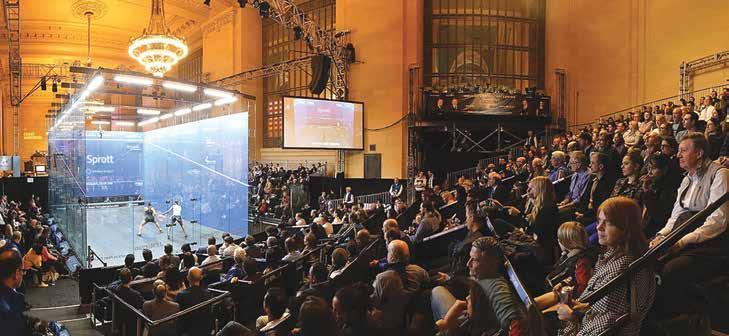
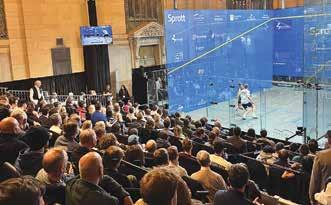
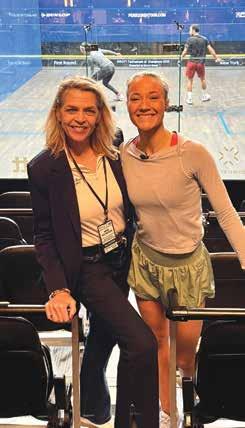
Being in New York for the Tournament of Champions Squash Championship offers a front-row seat to where global sport is headed. With Spritz on site managing social media, media partnerships, and more, alongside elite athletes on one of the sport’s most iconic stages, it’s a reminder that the Olympic journey is already underway, one match at a time, with many players here poised to represent their countries at LA28.
Signing off from the Bay—where passion meets the play.
https://milanocortina2026.olympics.com https://la28.org https://tocsquash.com https://spritzsf.com/
Beth Schnitzer, the former President of WISE (Women in Sports and Events), is the Co-Founder and President of Spritz: https://spritzsf.com/

GGBA: Why did you decide to join the GGBA, and how long have you been a member?
Robb Fleischer: AMSI has been amember of the GGBA since 1978. We were drawn to the GGBA because it brought together people with shared life experiences, a strong sense of community, and mutual respect. It felt like, and still is, a place where relationships are built naturally and where business and personal values were closely aligned.
GGBA: How has being a member of GGBA helped you and AMSI?
Robb Fleischer: Our relationship with the GGBA goes back decades. Many of the connections we made early on are still active today and have grown into long-standing client relationships and friendships. I have also had the privilege of serving in a leadership role within the GGBA, which strengthened those relationships even further. I am proud of the bonds we have built and look forward to continuing to support the organization and its leadership. The GGBA has been an important constant in our professional life, and I remain deeply appreciative of the relationships, leadership, and sense of community it continues to foster.
GGBA: Do you go to the GGBA monthly Make Contact networking events? Have they benefited you and AMSI, and would you recommend them to others?
Robb Fleischer: Absolutely. While tech-
nology plays a big role in business today, there is still nothing that replaces genuine human interaction. The Make Contact events allow people to connect in a relaxed and welcoming setting, and there is nothing better than networking and having fun at the same time. They have been valuable for building real relationships, and I would recommend them to others.
GGBA: What other advice would you give to someone who is thinking of starting their own business?
Robb Fleischer: Change is constant, and it helps to accept that early on. Focus on what you can influence and do not get stuck on what you cannot control. Over the years, AMSI has lived through wars, economic downturns, public health crises, natural disasters, and major social change. None of it was easy, but each period required adjustment and perspective. Staying grounded in your values and being willing to adapt matters more than any single plan.
GGBA: Is there anything else that you would like to share?
Robb Fleischer: In 2025, AMSI celebrated its 55th anniversary. That milestone reflects years of change, challenge, and steady work. While our services have evolved, the purpose has remained the same. It has always been about people, relationships, and showing up with honesty and care. That approach continues to guide us as we look ahead.
https://www.amsires.com/

Palmetto Perv
Here’s what looked like a classic case of a smug, far-right, antigay politician exposed as a hypocrite for our communal disdain. I got tired of these jokers at some point and stopped salivating over the details. A lot of my “hypocrisy stories” involved homophobic people who were secretly gay—maybe even hiding it from themselves. There was humanity underneath those scenarios, even as we loved the gotcha satisfaction, and, at some point, I had enough of luxuriating in the embarrassment these poor jerks were experiencing. (Oh, you know I still liked it.)
But this guy? I don’t know how I missed him over the previous months, but South Carolina State Senator Robert John “RJ” May was accused of keeping and/or exchanging over 200 computer files of sex acts with toddlers and young children in 2024 under the screen name “joebidennnn69.” Honored in 2023 as legislator of the year by the South Carolina chapter of “Moms for Liberty,” the lawmaker was cochair of the state Freedom Caucus in 2024 until his grotesque alter-ego emerged into view.
Earlier this month, Mr. May, now 39, pled guilty and was sentenced to over 17 years in federal prison. I won’t even repeat the various anti-gay remarks this guy made during his time as scion of the SoCar Moms for Liberty. The comparison isn’t even worth it because I’ve read the nauseating fine print in the press release from the South Carolina U.S. Attorney’s Office and I’ll tell you: This guy isn’t a hypocrite; he’s a monster.
Monkey Business
Here’s a tedious article in The Washington Post titled: “The Evolutionary Upside of SameSex Sex Among Primates,” by veteran reporter Mark Johnson. This is not the first time we’ve taken a serious gander at the science behind our personal predilections. Indeed, the idea that there’s a physical, genetic, scientific explanation for being gay or lesbian has long been something of a holy grail to our community. How can you fault someone for being left-handed, for having grey eyes, for male-pattern baldness? You get the idea.
Now, a study published in the journal Nature Ecology & Evolution seems to have provided us with yet another set of vague theories about how gay sex might or might not contribute to, what? The coherence of the social structure? Who knows?
One of the study authors suggested young monkeys might use same-sex sex to practice
for future mating. Really? Another tells us that one aim of the study was to show “how widespread” same-sex relations are in nature. We subsequently learn that “samesex sexual behavior has been found in 261 mammal species, about 4 percent of the total.”
“Feeding, fighting, looking after your offspring, reproductive sex, and same-sex sexual behavior is a repertoire of behavior that makes these complex societies function,” said one of our boffins. It might just be me, but I’m not impressed with generalities that offer no new insight whatsoever. Hey, I love being a gay woman, but my sexual orientation is not right up there with “feeding, reproductive sex, and self-protection” on the list of things that make a complex society function. You can’t just drop “sexual orientation” into the mix and call it fundamental to success in some primate world—although it certainly does put the “fun” into how societies function.
An outside scientist then came along to praise the efforts of our original friends, who have long names that I haven’t included due to a combination of laziness and irritation:
“The idea is that mating behavior is costly in terms of time and energy, and then if you’re directing that behavior towards same-sex mates, you don’t have the potential for offspring. But the fact that that time and energy can go to building really strong alliances with same-sex individuals—that might allow you to compete better for food or even to defend a group of different-sex mates that you can then mate with,” observed our new commentator.
Um, maybe, maybe not, right? Our lead author now plans to investigate macaques and see how they might benefit from gay sex later in life. “That’s a big thing,” he said, “because it would definitely be a complete reversal of this Darwinian paradox to show that the more same-sex you do, the more babies you may have in the end.”
Where did the grant money come from for this project? Or perhaps the better question is: Where did it go? I have an image of several scientists in white coats living it up with a bunch of bonobos and a few bottles of bourbon.
“Our report is due next week!” one of them suddenly realizes.
“Just get ChatGPT to write it!” says another, while swinging upside down on a hanging rope ladder. arostow@aol.com
Toasting the Launch of Castro Cam #5 SATURDAY, FEBRUARY 7, 4–7pm San Francisco Bay Times invites you!
CASTRO STREET CAM Pub Crawl
Starting Point: Lookout, 3600 16th Street, @ Market & Noe Additional Stops: Rikki’s, Twin Peaks Tavern, 440 Castro, and under the marquee at the historic Castro Theatre
publisher@sfbaytimes.com or text 415-601-2113
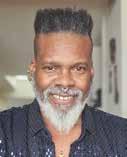
Sir Kippy Marks
There are stories that shimmer because they are polished. Then there are stories that shine because they were once broken. Jacob Anthony Rose’s new memoir belongs to the latter—an offering carved from silence, glitter, and the long echo of a voice learning to trust itself again. That’s why I believe he is a true embodiment of Practice Makes Love Easy (PMLE), and I am proud to celebrate Rose as the 12th individual spotlighted in this column.
Rose grew up learning that silence was safer than truth. In his memoir, he describes a childhood where shrinking was a survival tactic, where dreams were loud, but his voice was not. For many of us, that kind of silence becomes a second skin. But his story reminds us that silence is not destiny; it is a starting point.
His discovery of drag became the first great act of PMLE in his life. Drag is not just performance; it is reclamation. It is the practice of stepping into a version of yourself that feels too bold, too bright, too honest for the world that raised you. Onstage, Rose found a language for the parts of himself that had been waiting for permission to breathe. For twenty years, he practiced joy, practiced presence, practiced being seen.
His memoir is not just a book; it is a companion for anyone learning to love themselves in real time. It is a reminder that survival is not the end of the story. Survival is the doorway. What comes next is the practice.
Kippy Marks: How long have you been involved with the practicing of PMLE values in your work?
Jacob Anthony Rose: I didn’t always have language for “Practice Makes Love

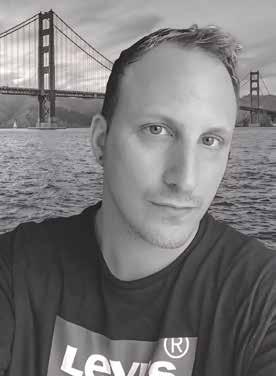
friend, listening with compassion when someone is hurting, choosing empathy over judgment, and allowing people to be exactly who they are. Practice love the way you practice breathing, again and again, even when it feels hard.
Kippy Marks: If you were granted two universal wishes, what would you wish for?
Jacob Anthony Rose: My first wish would be for every child to grow up feeling safe, loved, and believed. No one should have to survive their childhood. My second wish would be for collective compassion, that we learn to truly see one another, across differences, with curiosity instead of fear. I believe the world changes when we remember our shared humanity.
Then the world went quiet. The pandemic stripped away the applause, the lights, the community. And in that stillness, the old wounds returned—not as ghosts, but as invitations. Rose writes about this period with a vulnerability that feels like a hand extended to anyone who has ever felt undone by their own reflection. Healing, he shows us, is not a single moment. It is a practice, a daily choice, and a kind of love. PMLE teaches that love becomes easier when we practice it, especially when we practice it with ourselves. Rose embodies this truth. His memoir is filled with moments where he chooses compassion over self-judgment, connection over isolation, and honesty over performance. He doesn’t pretend the journey is linear. He doesn’t pretend it’s pretty. But he shows up for it, again and again, and that is the essence of PMLE.
Rose’s story reminds us that the most radical act of love is returning to yourself after years of running. It is choosing to speak after a lifetime of silence. It is allowing your own voice to echo loud enough that others feel brave enough to raise theirs.
Easy,” but I’ve been living those values for most of my adult life. For over twenty years, through my work as a drag performer, recording artist, and now as a memoirist, my intention has always been to lead with compassion, authenticity, and care for others. Whether I’m performing as Sheena Rose, telling my story through music, or sharing my life in my memoir, I’ve tried to create spaces where people feel seen, safe, and a little less alone. PMLE feels like a beautiful way to name what I’ve been practicing all along: choosing love, even when it isn’t easy.
Kippy Marks: Who or what motivated you to become the community activist you are today?
Jacob Anthony Rose: My life motivated me. I grew up in an environment filled with trauma, abuse, and silence, and for a long time I believed I had to carry everything alone. Finding drag, finding my queer community, and finding chosen family in San Francisco changed my life. The love and support I received from fellow performers, artists, and elders in the community taught me that healing happens in connection. I became an activist simply by surviving, by refusing to disappear, and by deciding to be visible and vulnerable so others wouldn’t feel as isolated as I once did.
Kippy Marks: How old were you when you made that decision?
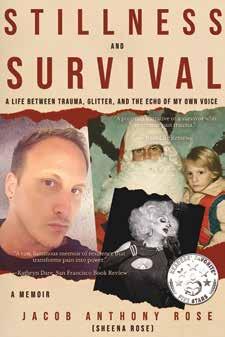
Jacob Anthony Rose: I was in my late twenties when I really made that choice, when I stepped into drag and started telling my story publicly. But in truth, the deeper decision came later, in my forties, when I entered therapy, stopped relying on alcohol to manage my anxiety in social settings, and committed to healing. That’s when I realized my life itself could be an act of activism. I decided I didn’t just want to survive anymore. I wanted to live, to love, and to help others feel less broken and alone.
Kippy Marks: What advice would you give to others on how to practice love on the daily?
Jacob Anthony Rose: Start with yourself. Be gentle with your own heart. Speak kindly to yourself. Rest when you’re tired. Forgive yourself when you fall short. Love doesn’t have to be loud or performative. It can be quiet, steady, and consistent. It’s in the small moments: checking in on a
Kippy Marks: Please share any current practices that our readers may find useful, and update us on what you are doing now.
Jacob Anthony Rose: Right now, my daily practices are simple but sacred: therapy, journaling, gratitude, medication, staying sober, and choosing rest without guilt. I check in with myself emotionally every day instead of pushing through pain the way I used to. I make space for creativity even when I feel afraid. I tell the truth, to myself and to others, as gently as I can.
Professionally, I recently released my debut memoir, Stillness and Survival: A Life Between Trauma, Glitter, and the Echo of My Own Voice It’s my story of surviving childhood abuse, finding drag, building a chosen family, and learning how to heal. I’m continuing to perform, currently recording the digital audio book, and do author events, all while working a day job that keeps me grounded. My life now is quieter, steadier, and fuller, and I’m proud of that.
I also recently held my debut author event at Books Inc. Opera Plaza here in San Francisco, which was a deeply meaningful milestone for me. Signed copies of the trade paperback are available there and at other independent bookstores throughout the Bay Area, as well as nationwide through distributor IngramSpark and online ( https://bookshop.org/ ). The ebook edition is available on Amazon and exclusively through Kindle Unlimited.
Dubbed San Francisco’s “King of Strings,” Kippy Marks is a spirited entertainer whose shows are permeated with an infectious joy. His distinctive sound arises from his heart, through his 1822 violin consort, Izabella. Marks’ rare talent, broad smile, and radiant warmth will brighten any event and create a lasting impact. He is also Grand Duke XL of The Grand Ducal Council of San Francisco. He is the first ever elected African-American Grand Duke.
By Devlin Shand
Queer Arts Featured will soon proudly display BEACONS , new paintings and the first ever solo exhibition by prolific San Francisco-based artist Nathaniel J. Bice. The exhibit will be on view from February 6–March 29, 2026. The public opening and artist’s reception will be on February 6 from 5–9 pm, in conjunction with the Castro Art Walk and the Community Opening of The Castro Theatre.
Having begun his career in theater, Bice came to San Francisco as a fellow at the American Conservatory Theater, and still assists production designer Nina Ball with set designs around the Bay Area. He shifted his focus to fine art in 2020, and his work has been shown in galleries and shops around the Bay Area, including STUDIO Gallery, änalog Gallery, Queer Arts Featured, Fleet Wood, The Drawing Room, Sanchez Art Center, and Gearbox Gallery.
He also channels his scenic paint experience into murals for local businesses, including Tala Wine, Sour Cherry Comics, Mersea, and House of Tadu.
Well known for painting en plein air (outdoors, from direct observation) small scale works around San Francisco, Bice is diving into large studio paintings for his new series.
BEACONS Honors the Signage of Queer
Inspired by the same love of the city that is evident in his smaller works, Bice’s exciting new direction for BEACONS honors the places that light up the streets and offer warmth, culture, and community. The works feature the signage, especially neon, of iconic queer spaces such as The Castro Theatre, Oasis, Orphan Andy’s, Martuni’s, Twin Peaks Tavern, Hot Cookie, and more. His subject matter is an opportunity for Bice to explore high contrast, strong saturation, and extreme perspectives. The handmade nature of neon signs makes them, not just examples of typography and design, but also of craftsmanship. The rich glow of neon gas suffuses its surroundings, creating a unique lightscape and evoking the memories of the spaces they illuminate.
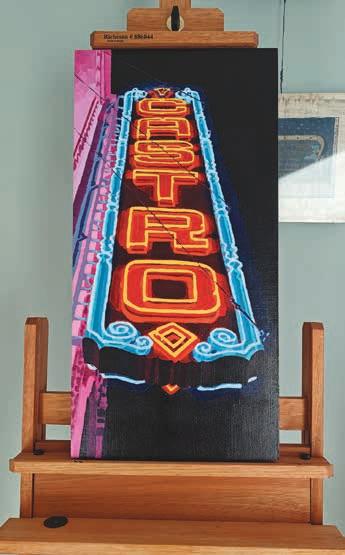
Just in time for the reopening of The Castro Theater, BEACONS also grapples with mixed feelings around the restoration/renovation of the theater and Another Planet Entertainment’s management and neighborhood engagement. It is magical to see the sign glowing brightly and the interior details restored, but the loss of some historic features and the ongoing concern about the potential displacement of two local businesses cast some shadow on the celebration. The opening of the new exhibit will honor the
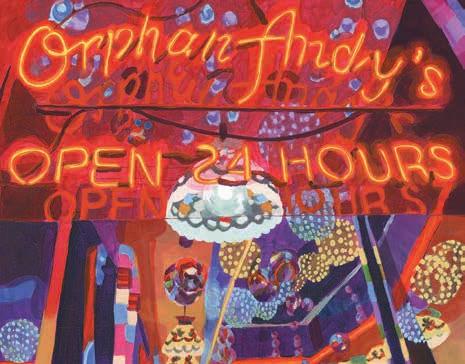
legacy of both Castro Coffee and Castro Nail Salon.
Recently, I spoke with Bice for the San Francisco Bay Times about BEACONS
Devlin Shand: How did you get started as a painter?
Nathaniel J. Bice: I started off in theater, specifically in the scenic paint, prop, and design world, so I was doing a lot of urban sketching. I saw that as research for scenic design, and then I started taking that work seriously for its own sake and went to painting rather than sketching, the key difference being I started painting opaque instead of doing drawings and then coloring them with watercolors.
Devlin Shand: That makes sense. It is very in line with what this show
is, because what I know of your work is that it is very much streetscape-based. Seeing this collection of work that is centered around neon, which is so theatrical, feels like an homage to your theater background. What inspired you to go for this particular subject matter and to go bigger? These are the biggest pieces we’ve ever seen from you.
Nathaniel J. Bice: From the painting perspective, it’s definitely in line with an exploration of light. I’ve been mostly painting daytime scenes, in person, en plein air, in the city, and exploring sunlight, but then this completely different nocturnal world became very interesting to me. I’m also interested in design and lettering, and I think neon is so beautiful.
(continued on page 25)
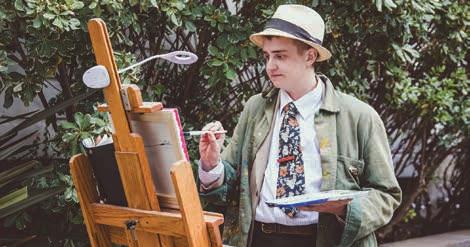
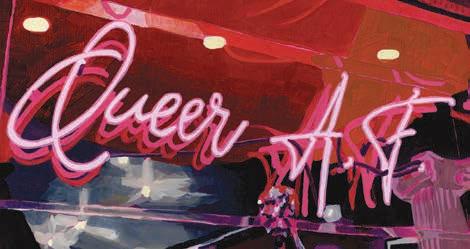
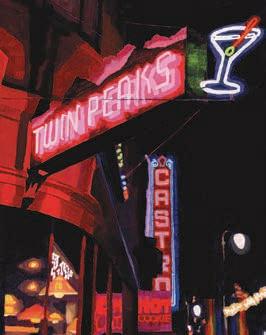
(continued from page 24)
Devlin Shand: What do you love about neon?
Nathaniel J. Bice: Neon signs are really unique because they are handcrafted. The tubes have to be bent by hand by extremely skilled craftspeople. It’s a long and difficult skill to learn, so every neon sign you see in the city is a handmade, beautiful work of craftsmanship. And, for the older ones, people would also spend a lot of time hand-designing the letters because nobody was able to just use existing typefaces. They would make them for that specific sign all the way from the ground up.
Devlin Shand: Why do you think that this old technology, neon, still captivates those of us in this tech-obsessed period?
Nathaniel J. Bice: Physically speaking, the glow of neon is a beautiful and unique thing. It’s the ignoble gases trapped in a tube and then you run the electricity through them and they just glow. And the gas never gets used up. It uses significantly less electricity than an incandescent light bulb, and it’s so, so bright. If you have a clear line of sight, you can see a neon sign from miles away. The colors that you can get are both more saturated and brighter than anything else. And it’s just stunning. It cannot possibly ever compare to LEDs.
Devlin Shand: Your painting of The Castro Theatre blade is made on a piece of the old film projection screen from the theater, and it’s hung with some of the original oldgrowth pine floorboards from 1922 from the house of the theater. What’s your reflection on using those materials, and what it means to try and honor history amidst big changes?
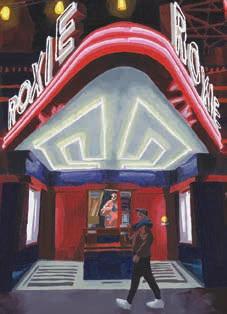
I think we react viscerally to the quality of light in our environment. We’re still staring at LED screens all day, so, even at night, a different quality of light is captivating to us. No matter how much time we all exist in the digital world and spend on the computer, we still have physical bodies and exist in space and should think about that more.
Devlin Shand: You’ve done so many beautiful pieces of the Castro Theatre before, and now also for this show.
Nathaniel J. Bice: A big part of that is the renovation and the reopening of the theater, and its deep history with San Francisco and with the gay and queer community in the city. Many of us know that the movie theater opened in 1922, but it was in the 1970s that the gay hub of San Francisco moved from Polk Street to the Castro because of the Market Street Railway. People could take the F line all the way to the end and that’s where they’d end up. And then there is this beautiful movie palace at the end, and they just started coming here, seeing movies, going to bars, making their own place and community in this existing neighborhood. The Twin Peaks Tavern in 1972 opened up their windows and made it so that people could see who is sitting inside, and people weren’t ashamed to be seen inside a gay bar. Gay bars started getting these beautiful neon signs, advertising where they are instead of being in unmarked storefronts with long, dark hallways.
Nathaniel J. Bice: I think getting to use these materials is a perfect metaphor for honoring, learning about, and respecting the queer history of the physical place, while finding ways to integrate that into our current lives and bring it forward to continue creating new queer history. It can be easy to get buried in nostalgia and forget that we have queer people who are living now, who are making amazing work—new shows and drag and artwork—in the city. And to use the screen is particularly exciting to me because I just think about the thousands and thousands of people in my community who sat in the theater and stared at this actual surface with different things being projected onto it, like everybody’s favorite campy gay culture films. Everyone was looking right at it, and now I’m putting the image of the Castro blade sign on there for people to keep looking at.
Devlin Shand: Tell me about some of your other favorite neon signs in the Bay Area.
Nathaniel J. Bice: Obviously, the Castro Theatre is at the top [of my list]. I also
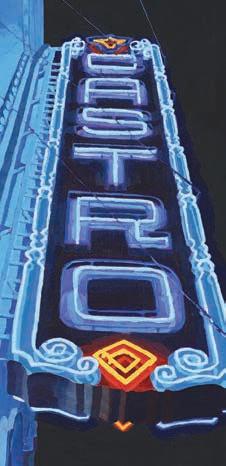
love the Aunt Charlie’s neon that’s inside the bar. The whole bar is lit up by it. It says Aunt Charlie’s in this beautiful, cursive script, and the neon actually runs all the way around the room so you get a ring light effect in pink neon. I adore the Twin Peaks sign, and I love the Martuni’s one: acid green with the red music note in the martini glass.
Devlin Shand: What inspired you to paint images of the signs instead of photographing them?
Nathaniel J. Bice: Photography is an art form and a skill that I admire, but I also believe that the human eyeball can do things that no camera can. And so for me to observe something and then do my best to record those observations by hand in a very difficult way is just going to do something more than photography can do. The color and brightness of a neon sign cannot be captured by photography or by paint, but I can have such fine control over saturation and value in paintings of neon signs that I can do more with my skill set to capture that as best I can.
BEACONS
February 6–March 29, 2026
Queer Arts Featured 575 Castro Street
https://www.queerartsfeatured.com/
Devlin Shand is the Co-Founder and Owner of Queer Arts Featured. He is a multidisciplinary artist and community builder who believes in creating vibrant barrier-free spaces for Queer Creatives struggling to survive in the Bay Area.
https://www.devlinshand.com/
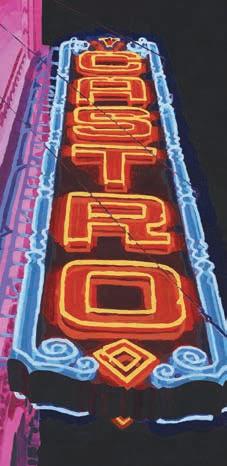
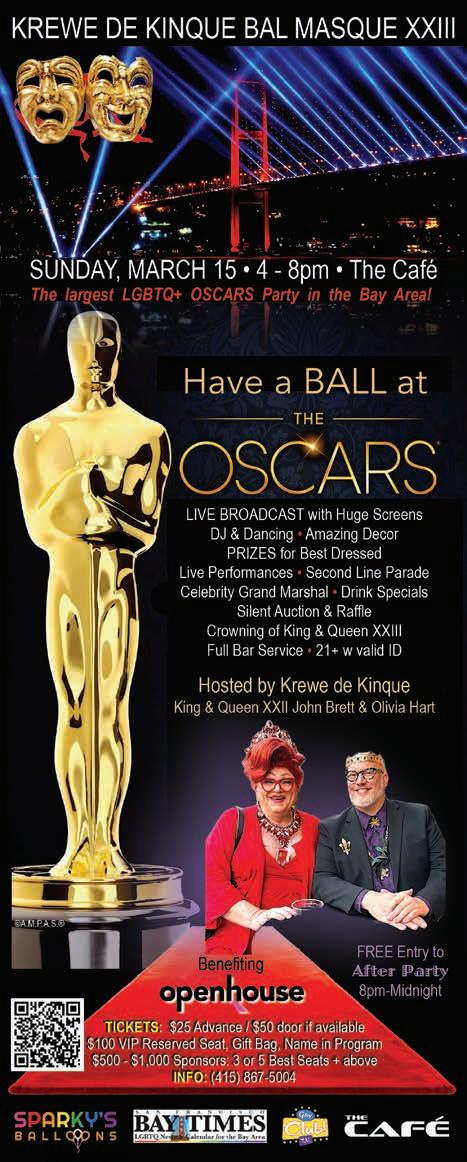

Gary M. Kramer
The Mostly British Film Festival, screening February 5–12 at the Vogue Theater in San Francisco, offers a cornucopia of films from the U.K., Ireland. Australia, India, South Africa, and New Zealand.
The festival provides a chance to see a few films prior to their upcoming theatrical release, including Emerald Fennell’s Wuthering Heights, starring Margot Robbie as Catherine and heartthrob Jacob Elordi as Heathcliff, and My Father’s Shadow, the U.K.’s official Oscar submission for Best International Feature.
Two classic films with queer talent will screen at the festival. The1964 Oscar-winning Tom Jones (February 7 at 4:45 pm), directed by bisexual filmmaker Tony Richardson, features Albert Finney in a fabulous performance as the lusty, titular scoundrel. Among the film’s highlights is its famous eating scene. The 1982 Oscar-winner Chariots of Fire (February 9 at 4:30 pm), costars Ben Cross and the late gay actor Ian Charleston as Harold Abrahams and Eric Liddell respectively, who represented Great Britian as runners in the 1924 Olympics. Queer icon John Gielgud appears in a supporting role.

Among the newer films screening at the Mostly British Film Festival is the feel-good Irish comedy Four Mothers (February 8 at 3:15 pm) , which has harried gay YA novelist Edvard (James McArdle) caring for his ailing widowed mother, Alma (Fionnula Flanagan), who has been debilitated after a stroke. Although speechless, Alma can still manage to make demands of and chastise her adult son using a computer. When Edvard is asked to participate in a book tour in the states, he struggles with getting care for Alma. Making matters worse, his friends all head off to a Pride event, leaving their mothers in Edvard’s care. Four Mothers is a bit farcical as Edvard tries to manage everyone’s needs but his own. He is given some assistance from his ex, Raf (Gaetan Garcia), a nurse, but what Edvard really needs is a backbone because he is taken advantage of too easily. Cue him denying the ladies a trip to Galway to see a medium—then getting on a bus to take them. The humor is gentle, and the emotions are sincere in this crowd-pleaser. The festival also offers audiences a chance to see The History of Sound (February 6 at 7:30 pm) on the big screen. This delicate romance has Lionel (Paul Mescal) and David (Josh O’Connor) meeting in 1917, when Lionel—who has the gift of being able to “see music”—attends a conservatory in Boston on a scholarship. Bonding over folk songs, the young men begin a tender romance that continues when they
(continued on page 36)
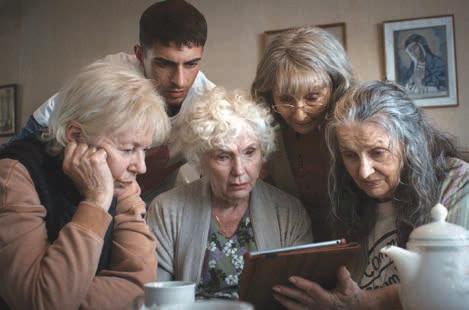


Jan Wahl
Valentine’s Day is such a drag, and for me not in a good way. I used to be desperate for presents and attention. Now I just want to settle in with a feelgood romance (which leaves out the great Brokeback Mountain).
So many LGBTQ+ movies and TV shows seem to be sad, yet there is also joy involved in romance. The first queer flick that always comes to mind for me is one I have written about before. The Celluloid Closet needs viewing a few times. In one hour and 47 minutes, narrator Lily Tomlin, screenwriter Armistead Maupin, director Rob Epstein, and producer Jeffrey Friedman bring us the media’s screen depictions of queer Hollywood. Based on the 1981 book by Vito Russo, this is a fascinating classic film.
I recently watched a documentary that is not exactly feelgood but is still well worth seeing: The Fabulous Allan Carr (on Prime Video). It details the life of extravagant producer Carr, a man who chased his dreams and often made them happen. We get all the details about his producing Grease, Can’t Stop the Music, La Cage aux Folles, and the 1989 Academy Awards show.

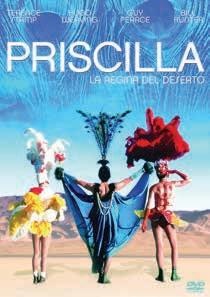
It is a real look at showbiz, but also at a remarkable man.
Our Castro Theatre is reopening with one of my favorite films. The Adventures of Priscilla, Queen of the Desert will be fabulous on the big screen once again. Two drag queens and a transsexual (should have won Terence Stamp an Oscar!) take their act on the road in outback Australia. Written and directed by Stephen Elliott, this remarkable film won the Oscar for Costume Design and a Bafta Award for hair and makeup. But it is more than the surface. It has tremendous heart. Do not miss a chance to see it at the newly renovated Castro.
Some people thought To Wong Foo, Thanks for Everything! Julie Newmar was a rip off of Priscilla, but I would disagree. It stands on its own as a wild comedy with thoughtful characters and slapstick moments. The unexpected cast is perfect: Patrick Swayze, Wesley Snipes, and John Leguizamo. Their road trip is in small town America. Both emotionally moving and upbeat, it is that rarity: a feelgood film.
2004 brought us Saving Face, a family dramedy about a lesbian trying to come out to her traditional widowed mother and her grandparents. The love affair between the two women at the center is nurturing and unusually happy. Set in multicultural New York City, Alice Wu’s film is endearing and enduring.
So, start with these, my dear readers. And stay happy during Valentine’s Day!
Jan Wahl is a Hollywood historian and film critic on various broadcast outlets. She has two Emmys and many awards for her longtime work on behalf of film buffs and the LGBTQ community. Learn more at www.janwahl.com

A Box Full of Darkness (fictionhardcover) by Simone St. James
Author Simone St. James brings another chilling thriller with her latest work, A Box Full Of Darkness. The Esmie children have been haunted by the loss of their brother 20 years ago during a game of hide-and-seek. Finally, through running from their past, the siblings return to their childhood home and are met by the ghost of a young boy.

Just Watch Me (fiction - hardcover) by Lior Torenberg
Just Watch Me is Lior Torenberg’s debut novel. Taking place over the course of seven days, this novel follows Dell as she livestreams her life in hopes of raising money to keep her sister on life support. Darkly funny and tragic, the novel tracks Dell on a downward spiral you won’t be able to look away from.


The Flower Bearers (non-fiction - hardcover) by Rachel Eliza Griffiths
Acclaimed poet and novelist Rachel Eliza Griffiths tells of two traumatic experiences in the course of one year that altered her in unimaginable ways. Griffiths married her now husband, Salman Rushdie, on the same day her dearest friend suddenly passed away. Processing her grief and navigating newlywed life, she experiences tragedy again when her husband is attacked.
Saturday, January 31 @ 1:30 pm (non-ticketed - Corte Madera store) Ying Chang Compestine, author of Buddha Jumps Over the Wall and Other Curiously Named Dishes
At this double feature event, Ying Chang Compestine will teach a workshop at 10:30 am guiding participants on how to turn their memories into engaging books. Her workshop will be

followed by an author event featuring her cookbook, Buddha Jumps Over the Wall and Other Curiously Named Dishes.
Monday, February 2 @ 7 pm (ticketed - Calvary Presbyterian Church) George Saunders, author of Vigil Book Passage in partnership with Calvary Presbyterian Church in San Francisco will be welcoming award-winning author George Saunders as he celebrates the release of his new novel, Vigil. Saunders will be joined in conversation with Vendela Vida.
Thursday, February 5 @ 5:30 pm (non-ticketed - Ferry Building store) Liz Tran, author of AQ: A New King of Intelligence for a World That’s Always Changing AQ or the agility quotient is the type of intelligence for handling change and disruption. Liz Tran’s new book provides insight into the constantly changing workforce, guides you through uncertainty, and provides the tools to succeed.
https://www.bookpassage.com


Cocktails With Dina by Dina Novarr
For many years, Dry January has represented a short break for folks to reset their lives and abstain from alcohol after the holidays. But, as the month comes to a close, it helps to remember that, for many, this is a lifetime commitment, not a one-month hiatus. Samantha Zatkoff-Batton is one such person. She stands behind the bar at the Berkeley Country Club with the confidence of someone who knows exactly what belongs in a French 75, and knows why she’ll never drink one again.
At 33, she’s the Food and Beverage Manager at one of California’s most prestigious country clubs. She is also a trans woman who came out at 30, a for-
better myself,” she said. “He helped me see who I was, even when I struggled to see it.” With that support, she achieved sobriety and found work, first as a bar cook, then as a server at the Berkeley Country Club, quickly moving into a bartender position, and two months later being promoted to Food and Beverage Manager on her 1-year anniversary at the club.
It was there that Samantha ascended into her true self. As she said before taking her first job at the country club, “no more boymoding” and instead living a life fulfilled by “talking to new and interesting people each day, [and] helping them in a small but meaningful
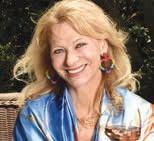
Grenache is one of my favorite red grapes. Traditionally hailing from the southern Rhone Valley of France, it’s planted in select spots globally. California is making some delectable versions like the one from Sonoma’s Anaba Wines. A single vineyard bottling only in its second year of production, the powerfully spicy red is also packed with juicy, racy fruit aromas and flavors wrapped in a sultry texture.
If you’re in the Sonoma area, make sure to stop by Anaba, too. The family-owned property, named for the nearby cooling ocean breezes, has a casual vibe that marries a sense of fun and playfulness with seriously delicious wines. Founded by John Sweazey—a businessman turned vintner—the winery was a long-time dream of his from days traveling the wine world. He wanted to capture and share the sense of family and camaraderie that comes from a true passion for wine culture.
2023 Alma Rosa Sta. Rita Hills, Santa Barbara County, California $50 https://www.almarosawinery.com
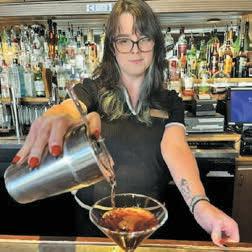

mer Marine, and sober. She’s building a beverage program that authentically celebrates beverages: alcoholic, low alcoholic, and non-alcoholic.
Since entering the beverage industry in 2024, Samatha has risen faster than anyone I know. There is something inspiring about watching someone grow into a role that feels like a natural fit. Despite that, her path wasn’t linear. After leaving the Marines, she struggled with unemployment and depression, using alcohol to cope. It was during this time adrift that she decided to transition. She told me for the San Francisco Bay Times : “Even on that first day, I knew it was the right decision. But I still relied on alcohol to deal with stress.”
way.” It was her dream job and it was terrifying. But now she’s using that position to make sure no one feels like an afterthought.
Romance and renewal are on the menu now and through February. It’s a time to recharge and get moving on shaping a successful 2026. But that doesn’t mean you can’t slow down and enjoy an evening sip after a long day, or crack open a bottle with a loved one and celebrate the moment. These unique California reds offer an opportunity to relax and toast to finding joy in the new year.
2022 Centennial Mountain Nerello Mascalese, Sonoma County, California $59 https://cmvineyard.com
Most red wine lovers are aware of and indulge in classic wines made from pinot noir. This stylish bottling is born on hillside vineyards in the cool, coastal climate of Sta. Rita Hills in southern California’s area of Santa Barbara.
Meeting her partner Dean Cooper in February 2024 changed everything. “He helped me gain the confidence to be my authentic self and pushed me to
One of her signature cocktails is “The First Squeeze,” built around Abstinence Spirits and Pathfinder. Abstinence Spirits is a non-alcoholic line founded by Ranwei Chiang. The cocktail showcases the botanical complexity quality non-alcoholic spirits can achieve. The name carries multiple meanings: the first juice pressed from fruit, the first embrace of a new way of being, and the first step toward authenticity. And what is serendipitous is that Samantha found her path through abstinence, and, in doing so, raised the bar on how she shows up. Her drink is the type of non-alcoholic option that makes you feel excited, not apologetic. It is a choice just as sophisticated as ordering a martini or a vintage Bordeaux.
(continued on page 36)
Looking for a wine that is surprising and rare? Seek out the smalllot, Italian-style wines from the acclaimed team behind Rhys Vineyards. Though they have been crafting stylish nebbiolo from their Centennial Mountain vineyard since 2013, they later planted the first vines from Sicilian varieties in California. These include crisp carricante (a white grape) and alluring Nerello Mascalese, the red shining star of Sicily’s volcanic Mount Etna area. The team wanted to showcase how expressive these grape varieties could be from their high-altitude vineyard in northern Sonoma.
If you’re a pinot noir lover, you will find an exquisite alternative in the Centennial Mountain Nerello Mascalese. The hue is sheer purple, indicating a wine of refinement and vibrancy. The nose is intense with red berry and wild herbal aromas, while the mouthfeel is silky with a hint of taut tannins on the finish. Expand your wine horizons with this beautiful wine.
2022 Anaba Grenache, Flora Marie Vineyard, Russian River Valley, California $54 https://www.anabawines.com/



Their homage to the distinctive powers of nature that include wind, fog, and sunshine that define the Sta. Rita Hills growing area is the 2023 bottling. Deep ruby in color with an aromatic bouquet of floral notes, bright red fruits, and a kiss of peppery, earthy complexity, their signature pinot noir is deliciously silky on the palate with a touch of tannins, making it ideal to pair with a variety of foods.
Wine icon Richard Sanford (of Sanford & Benedict fame) planted the first pinot noir vineyards in the area in 1971. He’s the founder of Alma Rosa, but the wine is now crafted by Samra Morris. She’s a rising star winemaker from Bosnia. The whole team is focused on sustainable practices and honoring this beautiful place as expressed in the bottle.
Author, speaker, wine consultant, and television host Leslie Sbrocco is known for her entertaining approach to wine and food. She has won multiple Emmy Awards for her work on PBS, which includes hosting the series “Check, Please! Bay Area,” which is now in its 21st season; “Check, Please! You Gotta Try This!” and the nationally aired series “100 Days, Drinks, Dishes & Destinations.” www.LeslieSbrocco.com
David Landis
As my loyal readers know, I’m generally a very positive guy—especially when it comes to restaurants. Unlike some critics, I generally try to find what I like about the dining experience, and share it with my readers. That said, there are some situations that just irk the youknow-what out of me. So, I’m embracing my inner grinch and sharing several of them, along with places here in the Bay Area that actually solve the issue brilliantly.
Pet Peeve #1: Trying to get a cocktail in this town when you sit down to dinner
Pretty much everywhere in San Francisco, when you sit down, you’re asked what kind of water you want. OK, but I prefer the waiters in New York who, when you sit down, ask you if you’d like a drink. Yes, some people don’t imbibe with alcohol, but most of us want something other than water to drink. And the waiter’s tip goes up accordingly. I’ve waited up to 30 minutes to get a drink, in some of the “best” places in town. So, why do restaurants do this (please, readers, let me know)?
Does It
When you are seated at Hillstone, they don’t just ask you what kind of water you want. They ask if you’d like something to drink. My shaken gin martini arrives within a minute. Another plus? When you’re halfway through your giant pour martini, they arrive with yet another chilled glass to finish off your cocktail. Bravo! A second place that does it right is Florio, but that could be because I’m a regular there. When I walk in the door, bartenders Peter and Craig are already mixing my drink, and it’s ready before I sit down. Now, that’s good service! (Hint: become a regular in at least one neighborhood place near you, and you’ll find you are rewarded with great service.)
Pet Peeve #2: No salt and pepper shakers on the table
I like to intone the famous words of the fictitious Miranda Priestly (from The Devil Wears Prada), when describing this circumstance. “I just don’t understand ... ,” she would say, and I would add, “why restaurants don’t have their salt and pepper shakers on the table anymore.” Is it because the chef thinks their dish is perfect and requires no seasoning? Or is it because it costs too much money to keep clean shakers out on tables with grubby hands? Inquiring minds want to know. (Again, readers, please enlighten me!)
Who Does It Right: Balboa Café (hopefully after solving their recent rat infestation)
You’ll always find a salt and pepper shaker on your table from the moment you sit down. And, if you sit at the bar, they’ll deliver a salt and pepper shaker
right after you get your cocktail, when you order your food. While you’re there, don’t forget to order their famous and delectable chicken paillard (available only on Wednesdays), and their infamous espresso martinis (the best and most potent in town).
Pet Peeve #3: Servers clearing dishes on the table before all parties have finished their meal
I admit it. I may be the slowest eater on the planet. I take that back: my brother John is still finishing his salmon dinner from 2024. But, as one of the slowest eaters (which I’m always told is “healthier”), others consistently finish before me. Waiters who haven’t been trained properly actually think it’s good service to clean the plates of diners who finish before other diners. But, here, I’m intoning former San Francisco Chronicle restaurant critic Michael Bauer, who would rail against such practices, and sometimes penalize a restaurant’s rating because of it. When a waiter clears the plates of other party members, it makes the slow eater feel guilty and/or pressure to finish the meal quickly. Dining should be an enjoyable, unwinding experience, not a rat race.
Who Does It Right: Starbelly (and Super Server Brooke)
I just had lunch at this Castro mainstay and was impressed with server Brooke who intentionally did not clear the place of my dining companion until I finished my meal. We had a conversation about it and she agrees: dining should be relaxing, and guests should take all the time they need to eat the way they want to.
Pet Peeve #4: Restaurants that are so loud you have to scream at your neighbor
This seems to be a common restaurant design mistake, in my humble opinion. I know that restaurants want to create a “buzzy” experience, but many of San Francisco’s restaurants are now so loud you have to yell at the person next to you to carry on a conversation. I’m glad, then, to see that the San Francisco Chronicle has reinstated its loudness barometer for reviews, so guests can take this into consideration when choosing a restaurant. Again, dining should be a restful experience, and one in which you can catch up with your dining pals without shouting.
Who Does It Right: The Rotunda at Neiman Marcus and L’Ardoise Bistro in the Castro
The Rotunda at Neiman Marcus is a throwback to another era of elegance. Yes, you’ll be quaffing and noshing with the ladies who lunch, but that’s half the fun. You’ll be dining under the historic stainedglass dome, with views of Union Square at the perimeter. Insider’s tip: Go for lunch, ask for a window seat, and splurge with their oysters, caviar, and champagne. You’ll be making your mark with the society set, so dress the part. Another place that’s romantic and quiet is the French bistro L’Ardoise in the Castro. Traditional French fare dominates the menu. My
(continued on page 33)
(continued from page 32)
favorite is to sit at the bar and watch the hot chef turn out amazing dishes, one after another. And, yes, you’ll be able to hear your date talk about how great you look, how they really want to get you home after the meal, and how they want to continue the romantic evening in the bedroom.
Pet Peeve #5: Kids who don’t behave at restaurants
I remember that my parents, John and LaVerne Shirley, would take us kids to some lovely restaurants growing up. But they were clear about one thing: you act up, and you’re leaving the restaurant—to not only be banished in the car, but you won’t be going out to fancy restaurants in the future. That lesson stayed with all 3 of us kids. So, I’m amazed at the parents these days who let their kids run around like maniacs.
Who Does It Right: My husband, Sean Dowdall
We were having lunch at Perry’s when a group of kids was so rambunctious that they actually ran into my husband’s chair and almost knocked him over. In the words of Bewitched’s Endora, “He had had it.” He calmly got up and told the two moms behind us that Perry’s is not McDonald’s. He said that, if they wanted their kids to run around, they could go to the Presidio to let off steam. Mission accomplished!
Bits and Bites
Big news: there’s a new restaurant moving into the former Café Flore/Fisch & Flore space in the Castro, hopefully by Pride month. According to the San Francisco Standard, Parasol at Flore is set to take over the prominent location. Restaurateur Jacob Paronyan helms the project and his vitae includes stints at the esteemed Boulevard, as well as owning the well-regarded Roaming Goat . It’ll be a more casual dining experience, with counter service during the day and table service at night. We have high hopes!
Every year, I look forward to the Mostly British Film Festival, run by my pal Ruthe Stein. Often, I’m out of town, but I love examining the roster of films for,

quelle surprise, something that highlights food and drink. So, here’s what Ruthe has to say about the upcoming Tom Jones feature, which screens February 7 at the Vogue Theatre:
“Can soup, dark bread, lobster claws, and mugs of beer be sexy? You bet they can. Just take a look at the famous (infamous?) eating scene in the great 1963 movie Tom Jones. Albert Finney as Tom and Joyce Redman as Jenny seduce each other over a meal of chicken thighs, lobster, and, of course, oysters on the half shell, all the while glaring at each other with that old come-hither stare, meaning there’s more where this came from. As the food courses arrive and disappear, Tom and Jenny get into a rhythm and eat faster and faster—you get the idea. They end with two juicy, lip-smacking pears, and then they slow down with a luscious after-dinner drink; for the modern audience, think cigarette. The whole time, you hear them smacking their lips and sucking their food. The eating scene is a gustatory orgy, which foreshadows the real thing that you never actually see in the movie. After all that mouth play, what’s the need?”
Hillstone: https://bit.ly/49Z4MqH Florio: https://floriosf.com/ Balboa Café: https://www.balboacafesf.com/ Starbelly: https://www.starbellysf.com/
The Rotunda at Neiman Marcus: https://tinyurl.com/37398z3b
L’Ardoise Bistro: https://lardoisesf.com/ Perry’s on Union Street: https://www.perryssf.com/ Mostly British Film Festival at the Vogue: https://mostlybritish.org/
David Landis, aka “The Gay Gourmet,” is a foodie, a freelance writer, and a retired PR maven. You can email him at: davidlandissf@gmail.com Or visit him online at: www.gaygourmetsf.com

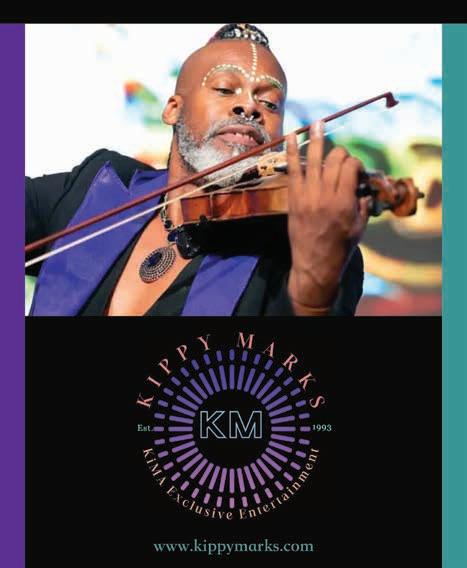
By Sandy Morris
Sandy Morris has been making art for the last 60 years. She says, “My pen, ink, and pencil drawings usually start with no preconceived idea—just drawing a straight or curved line or two. From there, my imagination takes over. I build upon the piece. My works range from the whimsical to the political, to emotions, and everything in between.”

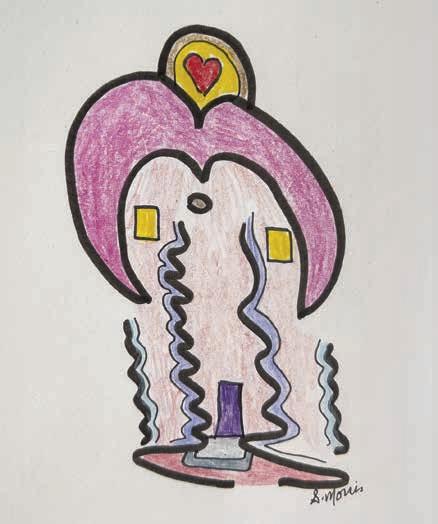

compiled by Rink
Sister Dana sez, “The Milan Olympics open on February 6, and closing ceremonies are February 22. Since Canada has already defined SAMESEX PAIRS of ice dancers to be any two skaters regardless of sex, let’s hope other federations do the same!”
Fabulosa Books held a fascinating poetry reading by four writers—Tim Xonnelly, Maw Shein Win, Colleen Shoshana McKee, and Glenn Ingersoll —on January 13. Tim told us he was reflecting upon entering his seventh decade and explained the title of his book, The Invasion of Pantomime, as “an increasingly repressive and violent culture in works replete with dream imagery and queer pride.” Hopefully Fabulosa Books will have copies (there were none available for purchase) by the time this column is published. One of my fave lines from his “But I Need You” chapter is: “Does the world really need that one more song to say I can love you but I can’t stay?”
Transgender activists, including Santana Tapia , presented a proposal on January 21 to the San Francisco Historic Preservation Commission to designate the former Compton’s Cafeteria location in the Tenderloin as a historic site to be preserved intact— including the apartments above where trans people live.
While everyone I know celebrated MARTIN LUTHER KING, JR., DAY on January 19, the total complete opposite of such brave, bold, progressive action has been from the Repugnican MADministration making concerted efforts to erase MLK, Jr., from America by attempts to not acknowledge MLK’s holiday, Juneteenth, and African American history regarding MLK’s vitally important teachings. Meanwhile, ICE terrorists keep cruelly capturing and physically assaulting MLK’s people.
So, is everyone rushing to see the Melania rated-PG pic in theatres opening nationwide on January 29? The First Lady of Fascism? For that, I’ll take a hard pass, thank you!
The CBS/Recording Academy will present the 2026 GRAMMY Awards ceremony on February 1, hosted by comedian Trevor Noah with broadcast on NBC for the final year there. Sister Dana sez, “Between you and me, I’m really hoping it’s as queer as it can be, or even queerer than ‘The Golden Globes’ was!”
In Minnesota and other blue states, thousands of ICE enforcers, National Guard, and other federal agents—all wearing masks over their eyes, like common criminals—have been breaking windows, knocking down doors, and physically attacking and dragging people away. All this abuse by THEM while claiming that THEY claim it’s the community that won’t leave them alone. Trump and his agents keep calling this community of legal protesters “domestic terrorists.” All these attacks are because Dictator Donald and hateful white nationalist Stephen Miller need to meet a minimum quota of 3,000 “illegal immigrants”—as promised to and cheered on by Trump campaign supporters viciously yelling, “MASS DEPORTATIONS!”
Sister Dana sez, “These masked FEDS are the domestic terrorists, causing unnecessary fear and terror among the peaceful protesters! ICE out! And stop sending more federal terrorists to our cities! Whatever happened to States’ Rights anyway?!”
Reminder: Homeland Security announced that a federal agent shot a Venezuelan immigrant who was resisting arrest on January 14. The shooting came just a week after an ICE agent fatally shot Renée Good, an innocent mother and out lesbian (whom the Trump administration is widely denigrating) in that very city, and the unjust DOJ has the nerve to investigate her widowed wife). There were already 2,000 federal agents there—with 1,500 more on the way. Also, in Minneapolis, an Oglala Sioux Tribe reports that ICE is holding four Native American tribal members. Sister Dana sez, “Christopher Columbus! That’s absurd if not utterly detestable!” And fascist Trump has been threatening to (wrongly) invoke the Insurrection Act (not properly used since 1992) to allow for even more feds invading Minnesota!
Sister Dana sez, “It truly warms my heart (usually ICE-illy freezing these days) that, on January 22, a group of ten local residents in Davos, Switzerland, climbed a mountain to stick 450 burning torches into the snow to dramatically spell out: ‘NO KINGS’!”
And more disgusting Minnesota news: The Department of (In)Justice is launching subpoenas for Minnesota Governor Tim Walz and Minnesota Mayor Jacob Frey —as well as two state prosecutors, State Attorney General Keith Ellison and Hennepin County Attorney Mary Moriarty, as part of an unnecessary investigation into their “impending law enforcement.”
On January 24, the feds shot ten rounds of guns and killed another person (an innocent ICU nurse at the VA Hospital (having been already wrongly pinned to the ground by seven agents). Note that ICE funding runs out on January 30, so Congress MUST refuse to fund it! And, on January 23, officially “No Ice Day” nationally, more than 20,000 Minneapolis residents protested, as did hundreds at SF City Hall. But next stop for ICE is Maine. Whaaat?!
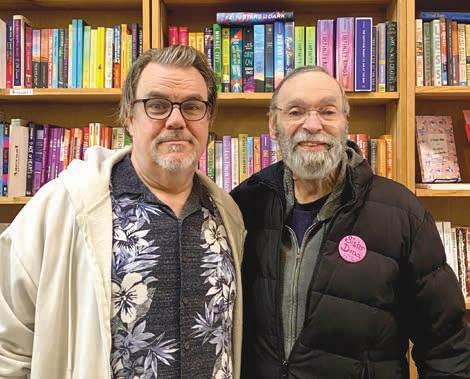
On February 5, 6–8 pm, join the GLBT HISTORICAL SOCIETY MUSEUM at 4127 18th Street for In Their Own Words: Trans People of Color Speak from the Video Archives, an evening of rare archival footage spotlighting Black, Latinx, Asian, and Pacific Islander trans and gender-nonconforming people speaking about their lives, identities, and activism. This special program will feature excerpts from Screaming Queens: The
Riot at Compton’s Cafeteria (including extended interviews with trailblazing figures featured in the film), highlights from genderqueer disco queen Sylvester’s Fabulous 40th Birthday Celebration, and candid clips capturing everyday trans and gender-nonconforming life in the SF Bay Area. Tix at https://www.glbthistory.org/
The CASTRO THEATRE will be back in February—having closed in February 2024.
(continued on page 36)

Upcoming events are designed to honor Castro Theatre’s historic role as an LGBTQ cultural hub. On February 6, the Castro Community Benefit District will host drag performances, a costume contest, dance party, and a 35-millimeter screening of the 1994 musical The Adventures of Priscilla, Queen of the Desert. And as the theater officially reopens, on February 10, there will be a 20-night residency by musician Sam Smith
The Richmond/Ermet Aid Foundation ( REAF ) will present IF THIS IS LOVE: A Musical Celebration of the Month of Love on February 23, 7:30 pm at the Marines’ Memorial Theatre, 609 Sutter Street. The live cabaret cast members from the National Broadway Tour of THE NOTEBOOK will be featured with special guest singers Jason Brock and Leanne Borghesi, and ABC-TV news anchor Dan Ashley. This will be ideal if you happen to screw up on Valentine’s Day!
In Santa Ana, a federal judge has thrown out the U.S. Department of Injustice lawsuit that tried to pry loose California’s full, unredacted voter file, keeping sensitive data for roughly 23 million registered voters con-
fidential. U.S. District Judge David O. Carter found that the feds’ demand put the privacy of millions at risk and was unprecedented in scope. The ruling is the first major courtroom setback for the administration’s nationwide push to force states to hand over detailed voter records, which was yet another autocratic attempt to rig the midterm elections.
Sister Dana sez, “Trump wants to take over Greenland (our NATO partner). In other words, he wants to make Greenland OrangeLand! Ridiculous!”
Poetry writers M.J. “Joe” Arcangelini, Scott Bird, Trebor Healey, and Arthur Tress were featured at Fabulosa Books at another of their amazing poetry readings on January 22, and I told Joe his works on urinary troubles and democracy were spot on!
Sister Dana sez, “Has anybody else noticed that, during almost every press conference, autocrat Trump narcissistically uses the word ‘I’ as opposed to past polite presidents who have usually spoken correctly as ‘we’ for America?!”
Centinelle Twilly Scarves
There’s something undeniably charming about using a ribbon to adorn your outfit; it’s a simple yet transformative accessory that elevates an everyday style. Designed in California and made of silk, these double-sided scarves have infinite possibilities. $60

Vornado Lucerna Alchemy Ultrasonic Humidifiers
Are you and your houseplants drying out now that your heat is on for the winter? Flu season got you sniffling miserably? Use an ultrasonic humidifier to keep your skin, your sinuses, and your plants happy. The Lucerna Alchemy comes in halfgallon and gallon sizes and includes an independently operated light for three levels of cozy illumination. $79 and $89
Keep up with Cliff’s Variety news at Facebook ( https://bit.ly/4qh1Xbb ) & IG @hilario_sf
embark on a song collecting trip together in Maine.
Out gay director Oliver Hermanus’ film is full of aching restraint, which is why it is so moving. Mescal gives an incredibly internal performance; as Lionel stares at David, viewers can see him falling in love. David, too, admires Lionel, a man whose passion for music matches his. While the men are affectionate, they also must contend with uncertain futures. David is sent off to war, and Lionel must return to his family’s farm in Kentucky. Over the course of several years, Lionel and David navigate their lives, love, and loss. Hermanus films The History of Sound as a slow burn that builds quietly to an emotional conclusion.
Four films without queer content are worth seeking out at the fest.
Inside ( February 12 at 4:30 pm), is a rocksolid Australian drama about Mel Blight (Vincent Miller), a young man relocated to an adult prison. In this dangerous environment, Mel encounters two very different men—Mark (Cosmo Jarvis), his cellmate who committed an unspeakable crime, and Warren Murfett (Guy Pearce) who may be using Mel for his own gain. Inside is a tough but engrossing film, and Jarvis gives a blistering performance.
The Mostly British Film Festival also provides a chance to catch two strong directorial debuts by actors from last year. Urchin (February 10 at 5 pm), helmed by Har-
Samantha choosing Abstinence Blood Orange Aperitif reveals something profound about sobriety and queer identity. Three years ago, right after Ranwei launched Abstinence Spirits, her partner Delta came out and began transitioning. They’ve been married for 13 years, and Delta’s journey coincided with building a business centered on helping people find themselves through moderation and sobriety.
“Through Abstinence Spirits, I realized what a wonderful space the NA world is for people, and especially queer people [like Delta],” Ranwei said. “We love hearing people’s stories and bringing great tasting alternatives to support their moderation or abstinence goals in their journey to find themselves.” That phrase “find themselves” echoes through both Samantha’s and Delta’s stories of coming out, getting sober. Both require being honest about who you are. Both require support and spaces where you can exist authentically.
Samantha came out at 30 and became sober that same year. Delta’s transition happened as her partner, Ranwei, created a business supporting transformation. Both understand that the journey to authenticity often requires letting go of alcohol, of pretending, or both. There is something powerful about the NA space for queer folks, Samantha and I reflected. When people spend years hiding who you are, drinking to cope, and then you come out, people should not have to trade one form of hid-
ris Dickinson, has Mike (Frank Dillane), a young homeless addict trying to improve his life but struggling in the process. Don’t Let’s Go to the Dogs Tonight ( February 10 at 7:30 pm), directed by Embeth Davidtz, is a stunning adaptation of Alexandre Fuller’s memoir set in Rhodesia during the 1970s. This tactile film is told from the point of view of Bobo (Lexi Venter), an 8-year-old girl whose parents (Davidtz and Rob van Vuuren) are grappling with oncoming political change.
Lastly, Christy (February 8 at 5:15 pm) is an enjoyable—and enjoyably foulmouthed—character study about the teenage Christy (Danny Power), who is forced to move in with his older brother Shane (Diarmuid Noyes) after a foster situation falls through. Christy slowly makes friends and finds purpose giving haircuts, but he is also tempted by the criminal ways of his cousins.
For tickets, a complete schedule, and additional information, visit https://mostlybritish.org/
© 2026 Gary M. Kramer
Gary M. Kramer is the author of “Independent Queer Cinema: Reviews and Interviews,” and the co-editor of “Directory of World Cinema: Argentina.” He teaches Short Attention Span Cinema at the Bryn Mawr Film Institute and is the moderator for Cinema Salon, a weekly film discussion group. Follow him on IG @garyemkramer
ing for another. You want to show up fully. That includes being honest about sobriety, exactly what Samantha embodies.
The Berkeley Country Club might seem like an unlikely place for “sober curious” trends and queer visibility, but Samantha’s work proves that quality non-alcoholic options transcend demographics. Members in recovery, pregnant members, and those on medication all deserve the same hospitality. And, increasingly, the most innovative thinking comes from people who understand exclusion intimately. Real hospitality isn’t about what you serve. It’s about making everyone welcome at the table, especially when their glass honors exactly who they are and who they’re becoming.
The First Squeeze
1.5 oz Pathfinder
1.5 oz Abstinence Blood Orange Aperitif 1.5 oz tonic soda
Pour ingredients into a cocktail shaker with ice and shake vigorously. Strain into a chilled martini glass. Cut a 2-inch strip of orange peel using a paring knife or vegetable peeler. Rub the peel around the rim of the glass to add scent to every sip.
San Francisco-based Dina Novarr enjoys sharing her passion for fine wines, spirits, non-alcoholic craft beverages, and more with others.

Anne Dorman & Annette Tracy
Robert Holgate
Terrence Chan and Edward Sell
Nancy Milliken, MD
A. Sparks
Betty L. Sullivan
Bill Pung & Dennis Ziebell
Bob Hermann & Dan Joraanstad
Carol Holcomb
Deb Kinney
Dee Mosbacher, MD, PhD & Nanette Gartrell,MD
Jay Greene
Jeannine Nicholson
Jennifer L. Viegas
Jimmy Consos
Kate Kendell
Marcy Adelman, PhD
Mina Habil
Nancy Geenan
Susan Berston
Susan Sunderland
Tom LeNoble
Cheryl Traverse
Crystal Jang
Dan Ashley
Debra Walker
Diane Sabin & Jewelle Gomez
Ed Eishen
Gary McCoy
Jan Marks & Cindy Humphreys
Jerry Bercera
Ken Henderson & Joe Seiler
Louise Fischer
Mark Leno
Michelle Jester
Nanette Miller
Nas Mohamed, MD
Paul Saccone
Ralph Hibbs
Rebecca Prozan & Julia Adams
Adriana Ayala
Abby Zimberg & Helene Wenzel
Adrienne Miller
Allegra Brandy
Amy Meyers
Amey Shaw
Amy Sueyoshi
Anders Tyslan
Andrew Freeman
Ann Rostow
Anna McGrath & Margaret Ryan
Anne Kronenberg
Autumn Nazarian
B.C. Cliver
Barbara Daitch
Beth Greene
Beth Schnitzer
Brad Colby
Blake Griffin
Bob Witeck
Brent Hensley
Brendalynn Goodall
Brian Kent
Bridget Bertrand
Cameron Stiehl
Carol Barrow
Carla Befera
Carol Steinkamp
Catherine Brannigan
Cathy Blackstone
Christie James
Christina Allen
Christopher Meza
Christopher Verdugo
Clifford Edwards
Danielle Siragusa
David Perry
Dawn Dzurilla
Devlin Shand
Derek Barnes
Diane Richards
Donna Sachet
Douglas Brewster
Elizabeth Herren
Elizabeth Lanyon
Elizabeth Seja Min
Elizabeth Tucker
Ellen Haller, MD &
Joanne Engle, MD
Eric Sutter
Erika Petrysyn
Fran Herman & Audry deLucia
Frances Stevens & Jen Rainin
Fernando Camino
Frank Woo
Gary Mendelson
Gary Virginia
Gayle Roberts
Geoff Callon
George Ridgely
Gisele Pohan
Hassan Zee
Helen Russell &
Brooke McDonald
Helen Zia & Lia Shigemura
Honey Mahogany
Howard Steiermann
Jacob Stensberg
Jade Martner
Jaqi Thompson
James Young
Jamie Zimron
Jan Wahl in honor of Joan Teller
Jane Sara Higgins
Jason Brock
Jeanne Rizzo
Jennifer Kroot
Jerry Palmer
Joanne Kipness
John Lazar
John Newmeyer, PhD
Josef Aukee
Joseph Shirley
Joe Kelso

Joseph Sangiradi
Joy Baucom
Joyce Baker
Joyce Newstat &
Susan Lowenstein
Juan R. Davila
Judith Grayboyes
Karen Bardsley
Kate O'Hanlon, MD, & Léonie Walker
Kathleen Brown
Kathleen Kennedy
Kelly McCown &
Barbara Fitterer
Ken Prag
Kim Powell
Kippy Marks
Kirk Reeves
Kristen Perry & Sandy Stier
Kristine Larsen
Kurt Bransford-Young
LaTonya Lawson
Lawrence Shine
Laura Martel
Laura Overmann
Lenore Chinn
Leslie Katz
Leslie Sbrocco
Liam Mayclem
Lisa Williams
Linda Phillips, PhD
Linda Schomaker
Lori Casseells
Lorraine Banister
Madeleine Bronstone
Madeleine Lim
Margie Adam, PhD
Marion Abdullah
Mark Rhoades
Mary Huss
Mandy Carter
Mark Veneges
Mary Conde
Mary Huss
Matt Hendry
Michael Kirschner
Michael Tate
Michael Tod Edgerton
Minna Tao
Michael Fung
Michael Nguyen
Miranda Manning
Misha Cohen
Nadirah Shakoor
Nancy M. Conway & Mischelle Mandel
Nandini Novarr
Nguyen Pham
Olga Talamante
Pat Miller
Patrick Carney & Hossein Carney, PhD
Patty Robertson, MD
Sophia Andary
Susan Ashton
Pau Crego
Paul Cain
Peter Gallotta
Randy Alfred
Rick Lenat
Robin Lowey
Roma Guy
Sally Ann Nichols
Sandra Morris
Sandra Stier
Scott Wiener
Shelly Breen
Sue Rosser, PhD
Susan J. Bethanis, PhD
Susan Irwin
Sandra Linton
Selisse Berry
Steve Gallagher
Stuart Gaffney & John Lewis
Suzanne Ford
Taniesha Broadfoot
Tali Bray
Tisha & Tina Floratos-Silano
Tracy Zollinger
Terry Asten Bennett
Tim Seelig, PhD
Tina Aguirre
Tom Berry

Tom Temprano
Vivien Gay
Warren Alderson & Steve Scheitlin
Wesley Sebren
William Lipsky, PhD
William F. Wilson •••••••••••
Bayard Rustin Foundation
Big Bus Tours
Callaway & Wolf ellaprint
Golden State Warriors
Grubstake
Horizons Foundation
Jay Greene Law Firm
Kaiser Permanente
Masto Foundation
National Center for LGBT Rights
Olivia Travel
Procopio
San Francisco AIDS Foundation
San Francisco Community Health Center
San Francisco Federal Credit Union
San Francisco Giants
San Francisco LGBT Center
San Francisco Pride
Soul of Pride
Sparky’s Balloons
The Academy SF
The Transgender District
Trinchero Family Estates
UCSF National Center of
Excellence in Women’s Health

LGBTQ News & Calendar for the Bay Area
CELEBRATING FOUR DECADES Est. 1978
The San Francisco Bay Times is the first and only LGBTQ+ media outlet in San Francisco to be named an official Legacy Business, recognizing that it is a long-standing community-serving business that is a valuable cultural asset to the city.
Thank you to all of our friends and supporters who are invaluable as they helped keep the work of the San Francisco Bay Times team happening in 2025. We appreciate you!



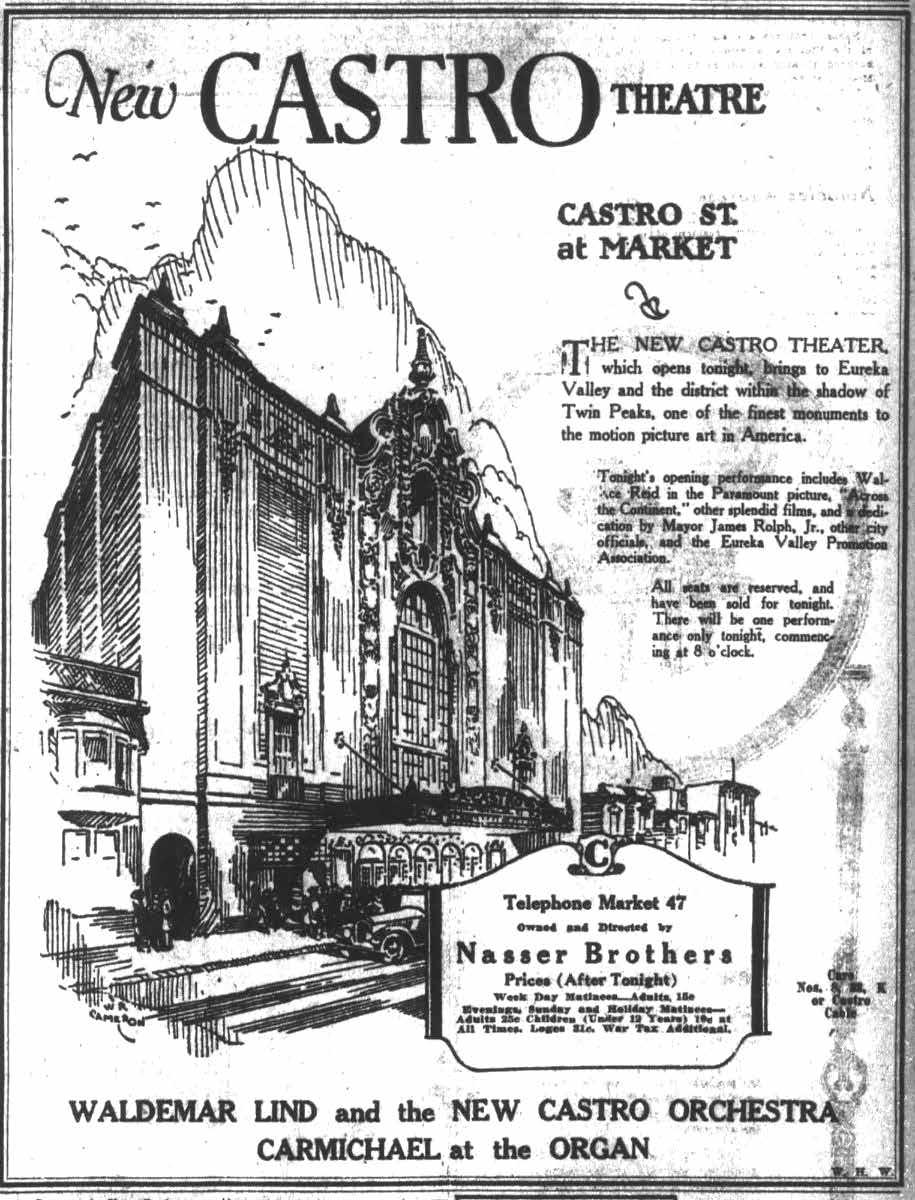
This advertisement for The Castro
was published in the San Francisco Chronicle on June 22, 1922, the day that the