





By
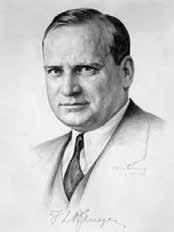
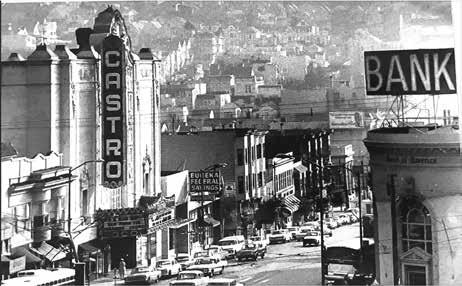
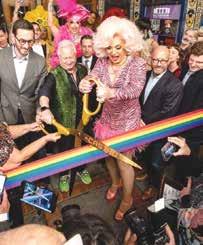
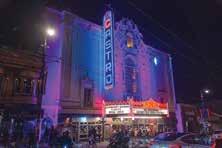
The year was 1922, and, on June 22, the Nasser family, having run a successful theatrical venue at the current location of the popular Cliff’s Variety store, unveiled a sparkling new Castro Theatre, designed by 28-year-old Timothy Pflueger. Mayor James Rolph, Jr., and representatives of the Eureka Valley Promotion Association were on hand to cut the ceremonial ribbon before the sold-out 8 pm performance began.
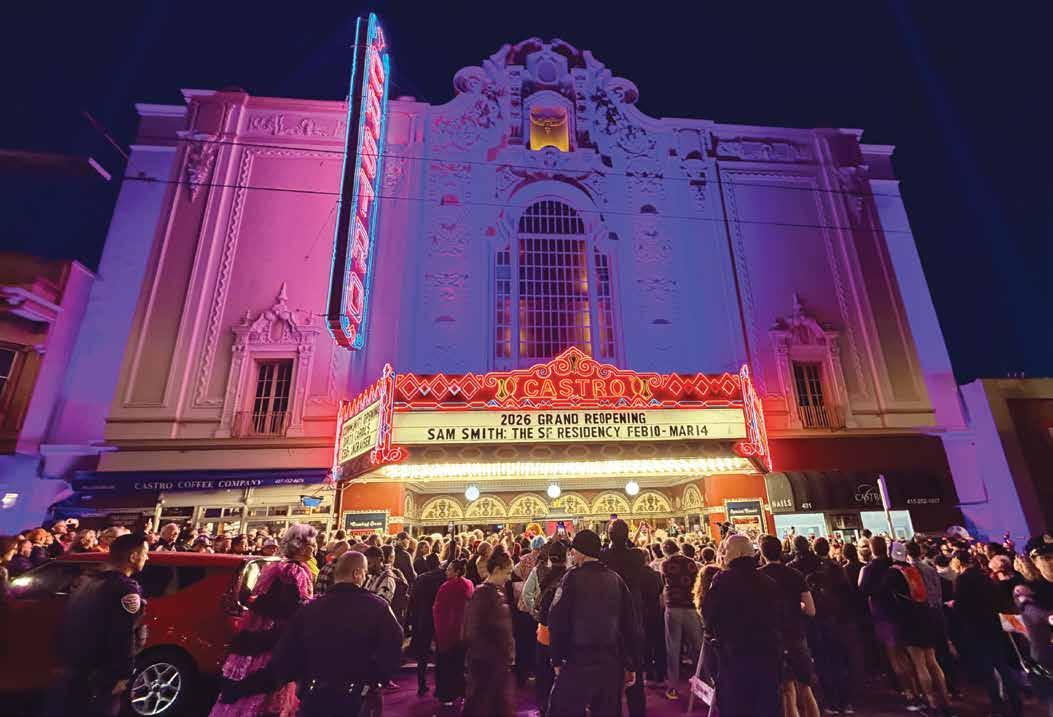
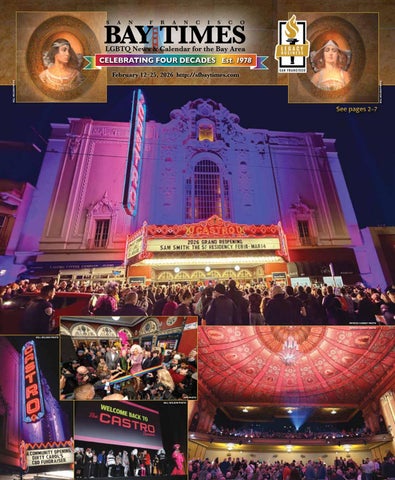
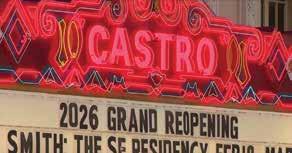
Flash forward and the year is 2026, and, on February 6, after decades of dwindling business and punishing wear and tear, months of lengthy and sometimes contentious public debate, followed by two years of painstaking historic revival, modern updating, and artistic refurbishing, Another Planet Entertainment welcomed hundreds of film afficionados, supporters of the live arts, and engaged neighbors to the new and improved Castro Theatre.
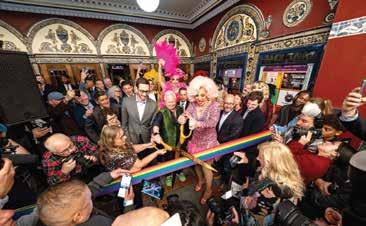
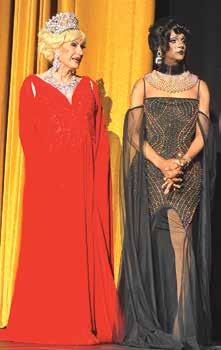
Mayor Daniel Lurie, surrounded by other elected officials and dignitaries, not to mention a gaggle of Drag Queens, was on hand
to help cut the rainbow-hued ribbon before opening the doors to the anxiously waiting crowd. If ever there was a Who’s Who Night in the Castro, it was that night, overflowing with city officials, nonprofit directors, creative artistic leaders, and movers and shakers of all stripes.
The original building was erected at the unbelievable cost of $300,00, but Another Planet Entertainment far exceeded their original budget for this update. Originally

estimated to cost $15 million, the upgrade of The Castro Theatre ended up exceeding $41 million. Sources ascribe the additional costs to unexpected damage suffered over the years, an unwavering commitment to restoration of artistic elements to their original condition, and overruns on technical equipment, including PG&E-required connections. As neighbors are well aware, Castro Street was being dug up as late as a week before the reopening to meet PG&E power requirements, and much of that work had to be done by hand with shovels to protect old pipes and subterranean infrastructure.
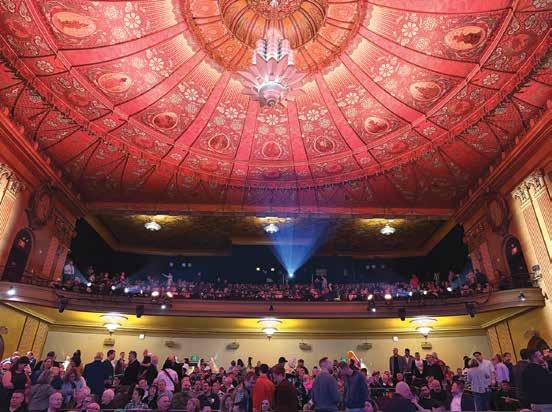
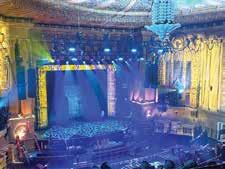
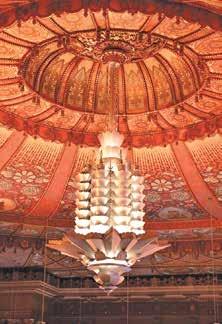
The aesthetic results are extraordinary. The domed ceiling, once clouded by years of grime, including residue from when smoking was allowed within, now glows with intimate painted decorations suggestive of faraway exotic places and extensive gold-leafing. The striking chandelier is not original, since it was delicate parchment and had been destroyed by one of the miraculously rare fires in the building. It was replaced by an Art Deco metallic lighting fixture, which was then cleaned, restored, and fully illuminated.

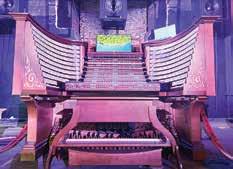
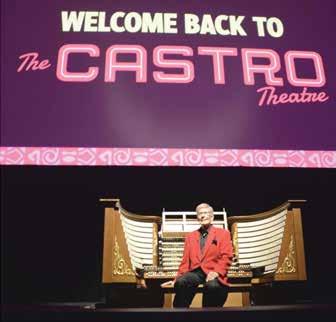
The side walls were originally covered with murals with the appearance of tapestries in a wet plaster technique called “sgraffito” and had to be carefully cleaned and lovingly restored. On stage, the original proscenium had long been hidden behind the screen installed for motion pictures, but it now shines brightly in gold with a leaf pattern winding to the ceiling. And, although not complete for opening weekend, the world’s largest digital pipe organ will soon rise from below the stage to be skillfully played once again by David Hegarty before key events.
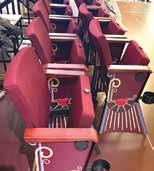
One of the most contentious disagreements involved in this remodel was that of the patron seats. Those in the balcony remain, protected as
historic, but are certainly showing their wear and tear. On the main floor, however, all seats are now versatile, as is the floor itself, which can be leveled and opened for standing room when appropriate. When used for a film viewing, these seats provide improved sightlines and greater creature comforts and allow for more accommodating seating for disabled patrons. The public will get to experience the alternative main floor plan when mechanical devices establish flat gathering spaces for concerts and other similar events, most immediately during the multi-week engagement of Sam Smith. Only then will we enjoy the full benefit of this expensive, but versatile, improvement.
Most significantly, the reopening of the Castro Theatre represents the beginning of a new chapter for the Castro neighborhood. If opening weekend is any indication, foot traffic is already dramatically increasing. Imagine bars and restaurants packed with patrons, retail stores teeming with browsers, hair salon and nail boutique seats filled, and the list goes on and on. Imagine vacant storefronts springing to life, offering new reasons to wander through the neighborhood at all times of the day.
Could the long vacant Pottery Barn location actually become a live music cabaret? Could the corner of 18th and Castro once again see all four corners occupied and those rainbow crosswalks delightfully in use? Could the magical former Café Flore corner once again explode with activity, waking up that entire area?
The landmark that is the Castro Theatre is bound to influence street traffic up and down Market and Castro streets for blocks as films and other entertainment draw crowds from around the city. Imagine the optimism that has begun to emerge in San Francisco taking hold in our Castro neighborhood and confirming it as the international mecca for the LGBTQ+ community into the next generation. Ladies and gentlemen, the Grande Dame has returned!
Donna Sachet, known as “The First Lady of the Castro” after that moniker was bestowed on her by statesman Mark Leno, is a celebrated performer, fundraiser, activist, and philanthropist who has dedicated over two decades to the LGBTQ community in San Francisco. Contact her at empsachet@gmail.com
The Castro Theatre reopened on February 6, 2026, with an opening ceremony that featured David Perry of David Perry & Associates, Beach Blanket Babylon star Ruby Day singing “San Francisco,” President of the SF Board of Supervisors Rafael Mandelman, State Senator Scott Wiener, Mayor Daniel Lurie, Another Planet Entertainment CEO Gregg Perloff, Another Planet Entertainment Senior Vice President Mary Conde, and drag artist D’Arcy Drollinger. Additional iconic drag artists, such as San Francisco Bay Times columnist Donna Sachet and Bebe Sweetbriar, were also present. After Conde and Perloff received honors, Conde—who oversaw the renovation and restoration of the theater—cut the rainbow ribbon with Mayor Lurie, Drollinger, Senator Wiener, and Perloff. The San Francisco Pride Band then played “Dance the Night” before the doors of the theater were opened.
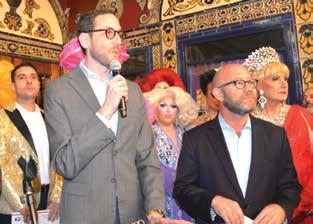
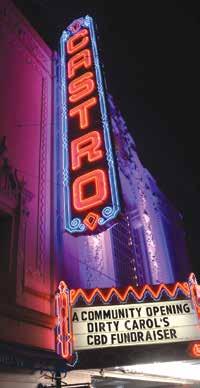
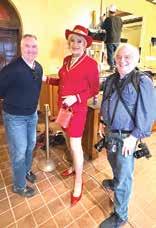
The first event of the newly renovated and restored Castro Theatre was a fundraiser for the 20th Anniversary of the Castro Community Benefit District (CBD). Castro CBD Executive Director Andrea Aiello and President Paul Miller presided over a VIP Reception on the night of The Castro Theatre’s reopening. Attending the reception, held on the second floor of the theater, were local media luminaries, popular artists including several drag performers, small business owners from all across the city, nonprofit leaders, and numerous others.
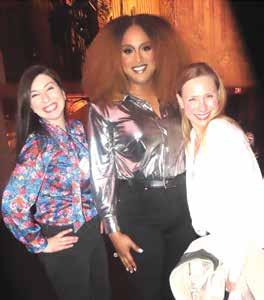
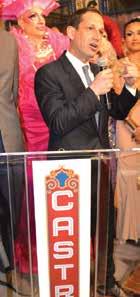
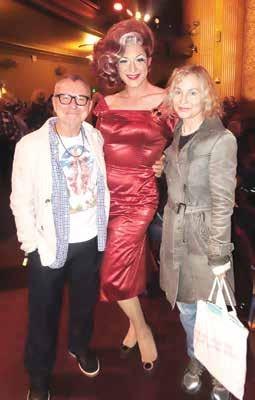
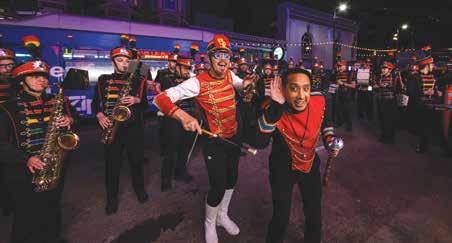
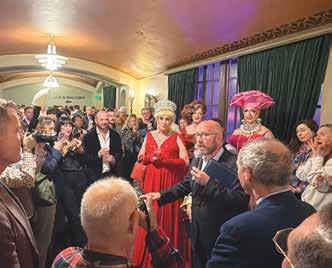
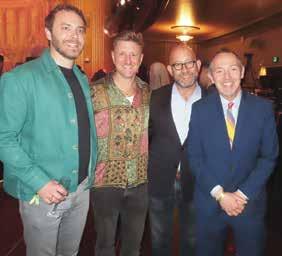

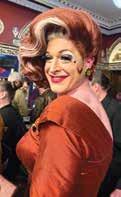

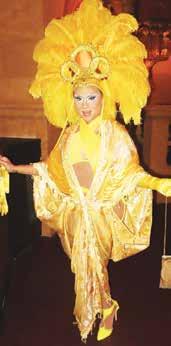
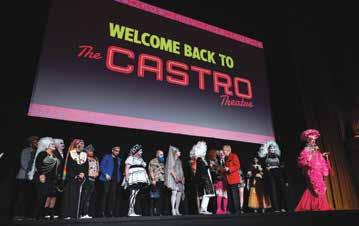
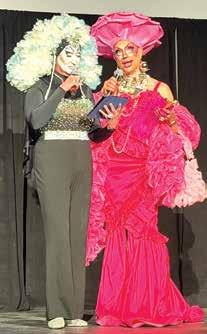
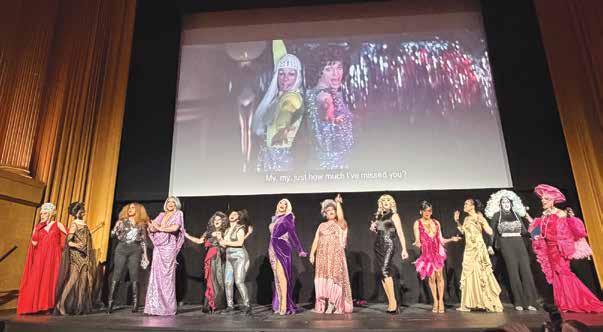
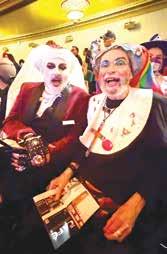
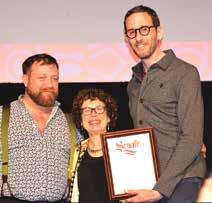
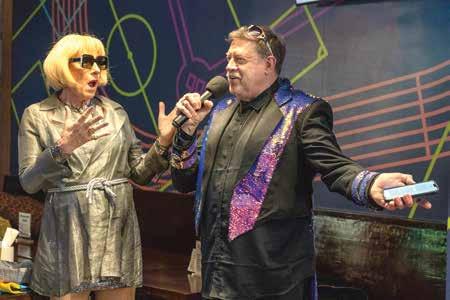
Hosted by drag entertainers Dirty Carol and Sister Roma, the reopening program—media sponsored by the San Francisco Bay Times—was a benefit for the Castro Community Benefit District (CBD) during its 20th Anniversary year. Executive Director Andrea Aiello and President Paul Miller (who is also a Co-Owner of The Academy SF) received a commendation from State Senator Scott Wiener. The program featured a gathering of members of the Sisters of Perpetual Indulgence, who sainted longtime Castro Theatre organist David Hegarty. An unprecedent gathering of drag queens and kings next took the stage for a special number set to “Mamma Mia” to celebrate a screening of The Adventures of Priscilla, Queen of the Desert that followed. Outside, searchlights beamed across the sky and the colorfully-lit front of the theater. View highlights, along with The Castro Theatre Ribbon-Cutting Ceremony, at: https://bit.ly/3OyOa1D
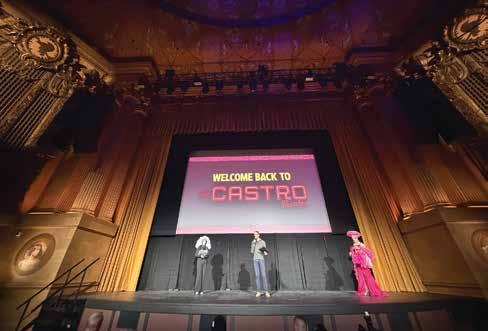
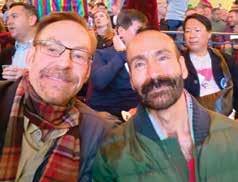
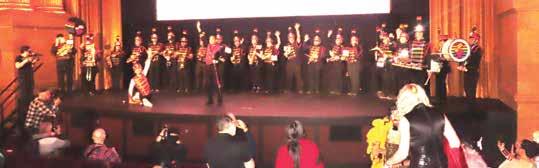
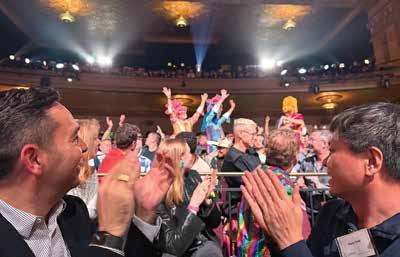
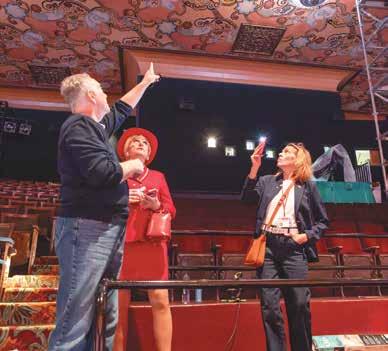
Ahead of The Castro Theatre reopening, members of the San Francisco Bay Times team—Beth Schnitzer, Donna Sachet, and photographer Michael Kirschner—were given a tour of the theater by David Perry of David Perry & Associates. Schnitzer filmed much of the informative tour ( view it at https://bit.ly/4qvBNRt ) and Kirschner took many images of the theater as workers prepared for the reopening. In addition to this photo spread, view the slideshow at: https://bit.ly/45XYGFK






Photos by Michael Kirschner
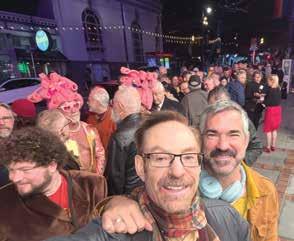
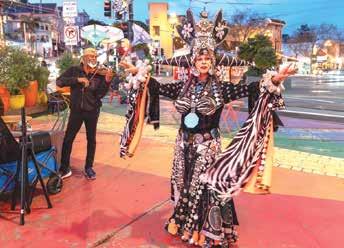
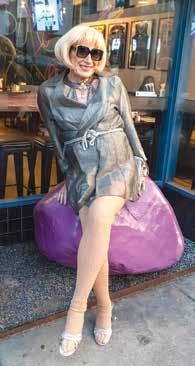
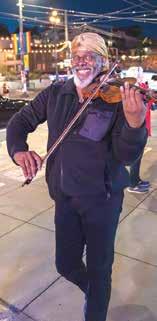
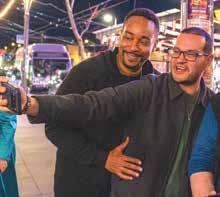
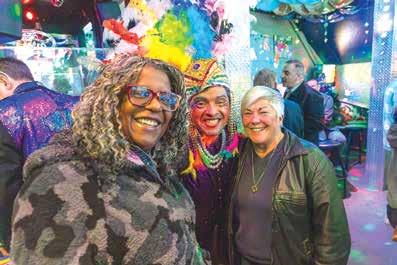
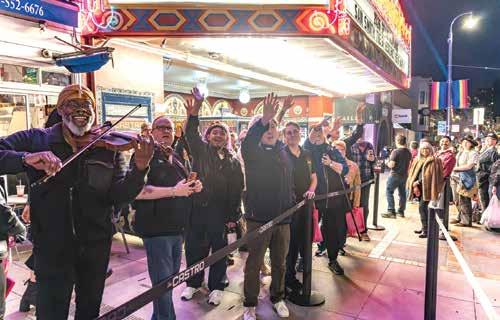
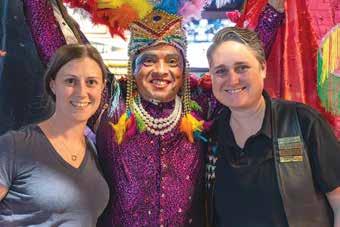
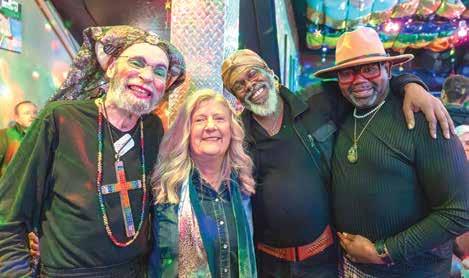
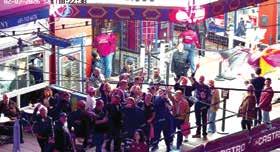
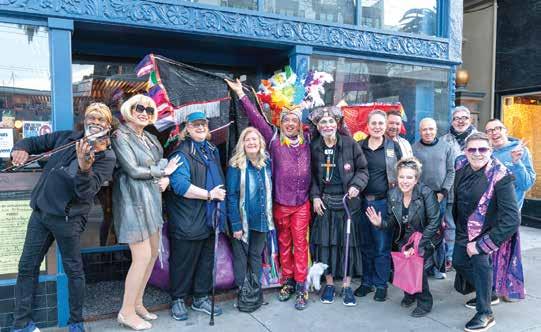
To celebrate the launch of a new camera for the Castro Street Cam—Cam #5 highlighting the newly reopened Castro Theatre— the first ever Castro Street Cam Pub Crawl was held on February 7, 2026, during the theater’s Community Opening weekend. Co-led by “The First Lady of the Castro” and San Francisco Bay Times columnist Donna Sachet and Krewe de Kinque founder and former SF Pride president Gary Virginia, the event drew dozens of participants and featured music by “The King of Strings,” Kippy Marks, who is also a Bay Times columnist.
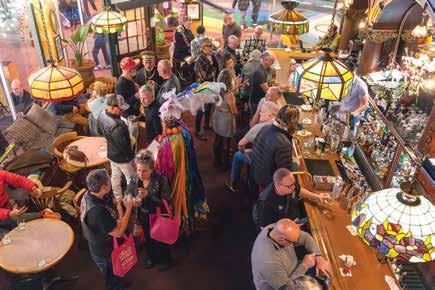
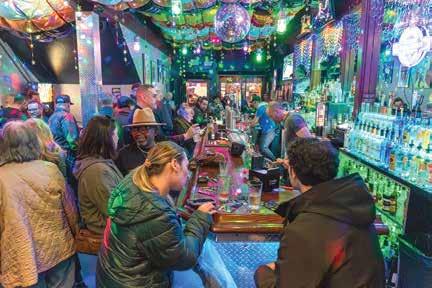
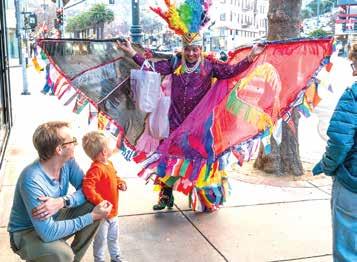
The event began at Lookout before the group, including Bay Times co-publishers Betty Sullivan and Jennifer Viegas and radiantly attired volunteer coordinator Juan Davila, made their way to Rikki’s. There, all of the guests were treated to a round of drinks by Dina Novarr, whose column brings tales of cocktails and selected venues in every issue of the Bay Times
Buoyed by Kippy’s music, the group next traveled to Twin Peaks Tavern, where locals and tourists alike joined in on the fun and toasting. At Jane Warner Plaza, Davila leapt onto a concrete planter and performed for happy onlookers who were also enjoying the music.
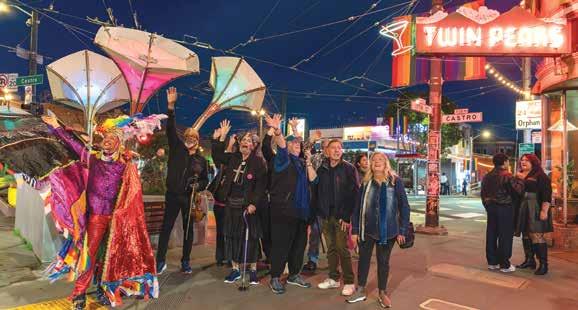
Next, the group stopped in front of The Castro Theatre to wave for viewers watching the Cam #5 livestream. Tourists from Germany at a nearby table waved too! The group acknowledged and thanked John Herren, the Bay Times webmaster and technology director, who was operating Cam #5 from his remote location.
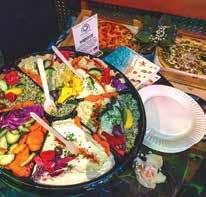
Stopping traffic on Castro Street, the group made their way to their final stop at 440 Castro, where trays of menu favorites from La Méditeranée and pizzas contributed by Marcello’s were enjoyed with much appreciation. Traversing the pub crawl’s route to multiple locations guaranteed that spirits were high and appetites were raging.
Thanks to all who supported the Bay Times and the new Castro Street Cam #5 project through their participation. You can check out Cam #5 and the other Cams of the 24/7 livestreaming Castro Street Cam at https://sfbaytimes.com/castro-street-cam/





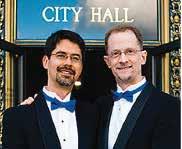
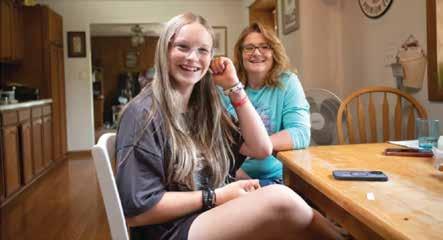
Today, we continue our discussion of two lawsuits the U.S. Supreme Court will decide this year involving the right and freedom of transgender girls and women to play in school sports. Becky PepperJackson, a 15-year-old West Virginia girl whose story we told in Part 1, brought one of the cases. Becky is a transgender girl with absolutely no sex-based physiological advantages over other girls in sports, because Becky has taken medications for years to prevent her from undergoing any aspect of typical male puberty and that have enabled her instead to experience typical female hormonal puberty.
Lindsay Hecox, who brought the other case, is a 25-year-old Idaho transgender woman college student whose gender dys-
phoria is being treated with both testosterone suppression and estrogen such that “her circulating testosterone levels are typical of cisgender women.” A 2023 study commissioned by the Olympic Committee found that trans women like Lindsay, who underwent endogenous male puberty and are now on testosterone suppression and estrogen, may actually be at a disadvantage in key areas because, as Lindsay’s attorney explained at oral argument, they may have “a larger frame but not ... the muscle and the testosterone to drive it.”
Becky, who brought her case when she was just 11 years old, simply wishes to continue playing on her school track and field team in shot put and discus as she has been able to do for the last four years, thanks to lower court interventions. Lindsay, who brought her case when she was a 20-yearold first year college student, had run track and cross-country in high school and wanted to try out for her college’s NCAA cross-country and track team. A lower court order enabled her to do so.
Lindsay, however, was too slow to make either team and participated in women’s club soccer and running instead. Subsequently, Lindsay attested in a sworn court declaration that she will no longer participate in school athletics so she can “focus on graduating without the extraordinary pressures of this litigation and related public scrutiny.” That declaration alone should

mean that the Court should dismiss her case as “moot” without ruling either way on it. Nevertheless, the Court heard oral argument in her case last month.
Both Lindsay and Becky have been forced to endure their legal ordeals because the two states they live in, Idaho and West Virginia respectively, are among the 27 states, all with Republican-controlled legislatures, which have enacted categorical bans on transgender girls in school sports.
Lindsay’s home state of Idaho was the first
state in the country to enact such a ban when it did so in 2020. It prohibits all “transgender women and girls from women’s and girls’ sports at all grade levels and in all circumstances.” The law extends “from primary school through college, and at every level of competition, from intramural to elite teams.”
The next year, Becky’s home state of West Virginia passed a similar categorical ban, also applying “even in intramural or non-competitive sports.” Its statutory language ensures that trans girls “could never
(continued on page 18)


By Maritza Martinez
As queer people navigate a world that increasingly feels less safe than it did just a few years ago, I’ve also seen truly meaningful progress made for the LBTQ community in Northern California over the last two years. I’ve seen justice system-impacted youth build their feelings of safety, belonging, and confidence after participating in queer and trans-affirming programming. I’ve seen translatinas share their personal experiences through storytelling to encourage their peers to engage in the community rather than hide in fear. I’ve seen LGBTQ elders come out of isolation and connect with each other through peer support and tailored case management. I’ve seen a lot more urgent needs actually met thanks to a crucial partnership between Horizons Foundation, the California LGBTQ Health Equity Initiative, and our local grantee partners. This is what can happen when you move beyond good intentions and leverage systems that truly work for people.


I am proud to have been part of Horizons’ critical role in resourcing close to two million dollars over two years to nonprofits working to deliver critical gender-affirming care to LBTQ people. Horizons served as the prime contractor, and I acted as a bridge between the state and grassroots care providers. The trust that both the state of California and our grantee partners placed in us helped streamline public funding for community-based care, allowing organizations to focus on what they do best: sustaining our community.
Throughout the life of the contract, my role extended beyond contract management to providing support, like technical assistance, frequent check-ins, and opportunities for learning and collaboration. When state requirements didn’t align with on-theground realities, we helped partners problem-solve so programs could continue without compromising care or safety. This behind-the-scenes work doesn’t often get attention, but it is a critical way that community foundations can ensure services continue.
And it works! Our partner organizations— Young Women’s Freedom Center, Lyon-Martin Community Health Services,


Gender Health Center, El/La Para TransLatinas, Pacific Center for Human Growth, and San Francisco Community Health Center—expanded services, reduced wait times for crisis counseling, and reached people who are too often left behind.
One example that stands out is Lyon-Martin’s Body Sovereignty Program, a trauma-informed outpatient program for LGBTQ individuals struggling with food and body image. From training their full staff to challenge eating-disorder myths to explicitly centering health behaviors rather than weight, the program intentionally addresses the intersecting impacts of body dysmorphia, fatphobia, gender dysphoria, and racism that affect many in our LGBTQ community. Each time I checked in with Lyon-Martin staff, I was met with valuable insight into their work and a deep, genuine connection to the community.
As the contract comes to an end, I am focused on what made this partnership successful and what is at risk if the infrastructure that supported it is not sustained. The need is clear for durable structures that ensure resources reach communities in ways that are flexible and responsive to our rapidly changing realities, especially as resources directed toward LGBTQ communities continue to shrink. Horizons has demonstrated what this can look like. We helped position and strengthen community-based organizations to access limited government funding opportunities when they were available.
I encourage my peers in philanthropy, and community foundations in particular, to continue bridging the gap between local organizations and government investments both by sustaining supportive infrastructure and by ensuring organizations are ready to compete for and manage public funds as opportunities arise. This is what community foundations do best—and our communities are all the better for it.
Maritza Martinez is the Horizons Foundation LBTQ Initiative Manager. https://www.horizonsfoundation.org/

Photos by Patrick Carney
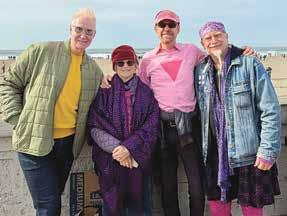
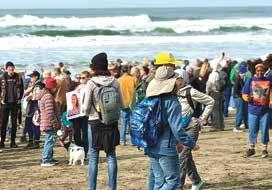
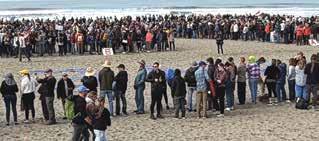
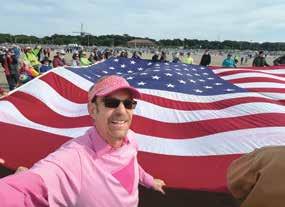
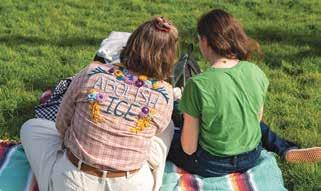
Pink Triangle project founder Patrick Carney, his husband Dr. Hossein Carney, Sister Roma, and many other LGBTQ+ community members were among the estimated 3000 protestors who helped form a human banner at Ocean Beach on January 31, 2026, to protest U.S. Immigration and Customs Enforcement (ICE). This was in response to aggressive tactics nationwide by ICE agents that led to fatal shootings in Minneapolis and other tragedies.
Indivisible SF organized the activation that spelled out: “We Have Eyes No More Lies” above “Abolish ICE.” This was at least the fifth human banner at Ocean Beach since “Impeach + Remove” was formed there during the No Kings protest on April 19, 2025. https://indivisiblesf.org/



By David Perry
I love history. As a boy in 1976, I sat in front of the TV with a cassette player recording Walter Cronkite’s Bicentennial Minutes. I had been anticipating a joyous celebration of our country’s Semiquincentennial on July 4, 2026.
As is made more embarrassingly clear with every tweet, however, the current president—legally elected in truth—is not up to nor interested in the unity, dignity, and gravitas this moment deserves. Therefore, I have decided to focus on another important anniversary: not the start of our fight for freedom, but rather its aspirational one for true equal justice under law.
In 2027, the United States will reach a quiet but profound milestone: 240 years since the signing of the U.S. Constitution, the document that reshaped the nation’s future and laid the foundation for American democracy as we know it. That noble dream put to parchment has been having a rough go lately. Perhaps it’s time for a little historical review.
The creation of the Constitution was not a single moment, but a deliberate process that unfolded over several critical years:
May–September 1787: Delegates convened at the Constitutional Convention in Philadelphia, originally tasked with revising the Articles of Confederation.
September 17, 1787: The U.S. Constitution was signed, establishing a new framework for federal government based on separation of powers, checks and balances, and popular sovereignty.
June 21, 1788: Ratification was achieved when New Hampshire became the ninth state to approve the Constitution, meeting the threshold required for it to take effect.
March 4, 1789: The Constitution officially went into force, marking the beginning of the federal government under its new structure.
December 15, 1791: The Bill of Rights (the first ten amendments) was ratified, safe-
guarding fundamental liberties such as freedom of speech, religion, and due process.
Alongside the Constitution emerged a brandnew institution: the presidency.
April 30, 1789: In New York City, George Washington was inaugurated as the first President of the United States.
1789–1797: Washington served two terms, establishing enduring precedents: the Cabinet, civilian control of the military, judicial independence, and the peaceful transfer of power.
While the nation rightly commemorates 2026 as the 250th anniversary of the Declaration of Independence, 2027 marks something equally vital, if not more so: 240 years since Americans committed to governing themselves under the rule of law rather than the tyranny of individuals.
The Constitution’s endurance is not accidental. It survives, if not at the moment thrives,
because it balances stability with adaptability. It’s a framework strong enough to have guided us for 239 years, and, if we recommit to it, will be able to outlast the current president and his consciously cruel regime.
The United States of America was birthed during the Age of Enlightenment, albeit an “Enlightenment” that confined millions of humans to chains and servitude. We didn’t always “get it right.” But, as we approach the anniversary of our often-stilted attempts at a more perfect union, let us concentrate on fulfilling—and expanding—the inalienable rights of our Constitution. That—especially if this year’s midterms give us hope for such a fulfillment—will be worth bunting and fireworks galore.
David Eugene Perry is an award-winning author and longtime communications strategist. Originally from the Commonwealth of Virginia, he cherishes his state’s motto and flag: Sic Semper Tyrannis/This Always to Tyranny, with a despot and his fallen crown under the feet of the Roman Goddess of Virtue.

Thousands of students, workers, and activists gathered at San Francisco’s Dolores Park on Friday, January 30, 2026, for a massive “ICE Out” protest, marching to City Hall in solidarity with nationwide actions. The rally protested federal immigration surges, following similar demonstrations in Minneapolis. The related No Kings Coalition is planning for their next mass mobilization on March 28, including a flagship event in the Twin Cities and sister rallies to be held in cities throughout the Bay Area and across the nation.

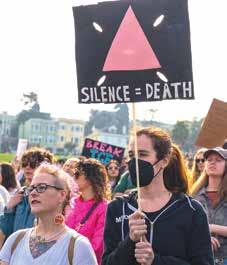
Photos by Michael Kirschner









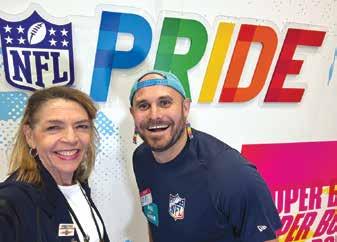
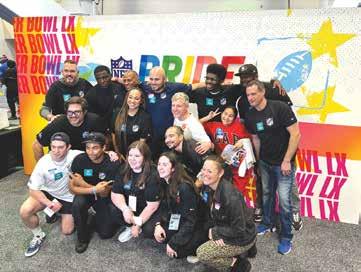
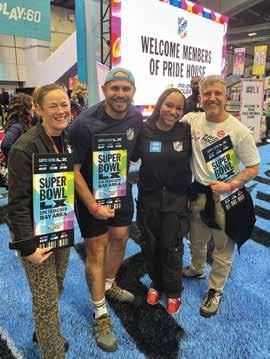
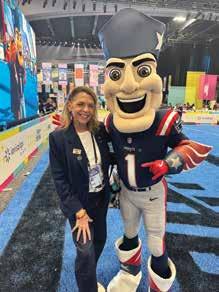
San Francisco Bay Times sports columnist Beth Schnitzer and members of her team from SpritzSF attended multiple events during Super Bowl LX week in the Bay Area, including the Pride House at the massive Super Bowl Experience at the Moscone Center and the fifth annual A Night of Pride With GLAAD that the organization presents each year with the NFL.
The Super Bowl Experience is the ultimate NFL fan zone with star players taking time for meet and greets, displays of Super Bowl rings and trophies, interactive competitions, and much more. This year, Pride House SF held a Youth Pride Flag Football Clinic and other opportunities for fans of all ages. The effort is part of Pride House International, which works to have a presence at large-scale international sporting events ( https://www.pridehouseinternational.org/ ).
A Night of Pride With GLAAD, on February 6, 2026, was hosted by the NFL Network’s Kimmi Chex and featured performances by Young Miko, Durand Bernarr, Ruby Ibarra, and DJ Lady Ryan, who is the official DJ of the Golden State Valkyries. Guests included television personality Ariana Madix, New York Jets defensive tackle Khalen Saunders, Matthew Berry of NBC Sports, former NFL player R.K. Russell, NFL
Brand Ambassador Ryan Mitchell, NFL Chief Marketing Officer Tim Ellis, GLAAD President and CEO Sarah Kate Ellis, and others ( https://glaad.org/ ).


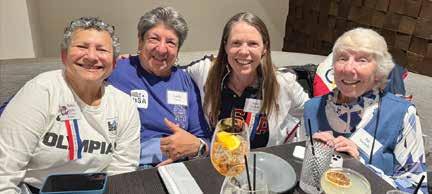
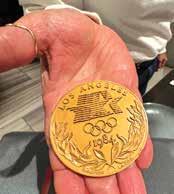
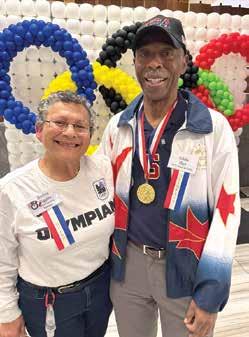
Two dozen Olympians from Northern California and San Francisco Bay Times sports columnist Beth Schnitzer were among those who attended the NBC Milan Cortina Olympics Opening Ceremony Watch Party in San Ramon on February 6, 2026. There, Schnitzer met up with figure skating great Kristi Yamaguchi, 1984 fencing champion (and an out member of the LGBTQ+ community) Barbra Higgins, 1972 track & field star Eddie Hart, 1960 swimming champ Anne Warner Cribbs, and many other former Olympians. In 2022, Higgins was a good sport to “compete,” all for fun, at a Divas & Drinks event presented by the Bay Times at The Academy SF.
Milan Cortina 2026 will continue through February 22. GLAAD has an LGBTQ Athlete Tracker and Resources at https://bit.ly/4kCjY1S



By Selisse Berry
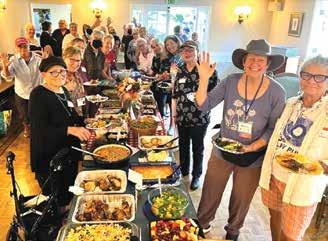
I remember countless conversations in my 40s with other lesbians about jointly buying a large complex with a pool where we could all retire together. Of course, the price tag in the Bay Area was a bit daunting. And, as I look around the group of women gathered for a lesbian potluck at this over 55 community, Rossmoor, I’m reminded of those conversations and realize that this group has created this dream of community organically.
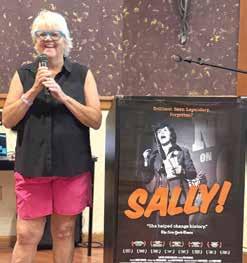
Since couples and singles buy their own places, no one has to be embroiled in the “Who left the cup in the sink?” conversation. Currently, 200 lesbians are part of the Lesbian Social Club at this Year-Round Summer Camp, Rossmoor, which is just 30 minutes east of San Francisco.
While most of us confess that we’d never picture ourselves living in a “place like this,” the one thing that nearly all people “of a certain age” are looking for is community. And what better place than someplace with 3 swimming pools, tennis and pickle ball courts, and 200 clubs to join from painting to bocce to travel and hiking? And did I mention the 200 lesbians in the Lesbian Club? The same number enjoy the communities in the Gay Men’s Club and the LBGTQA Alliance, all with programs and films and book groups.

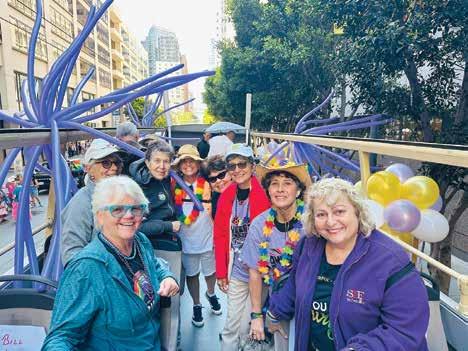
Many surveys of older LGBTQ people reflect the realities of going back into the closet when looking for housing later in life because of real or perceived discrimination. The Rossmoor community in Walnut Creek is home to 9000 people, complete with golf courses, pools, and an onsite restaurant. And queer people are able to continue living out and proud with its Lesbian Club, Gay Men’s Club, and the LGBTQA Alliance. As a result, Rossmoor was recently featured in Islands Magazine ( https://bit.ly/4ktRUh9 ) as one of the hottest retirement villages for LGBTQ+ folks here.
Selisse Berry was the Founder and CEO of Out & Equal Workplace Advocates. She is now a Strategic Advisor at the organization LesbianGlobal ( https://www.lesbianglobal.org/ ) and serves as a consultant and nonprofit leader who continues to drive change through advocacy and mentorship.

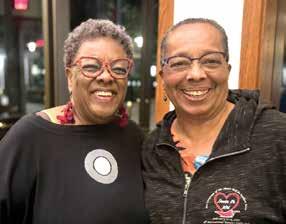

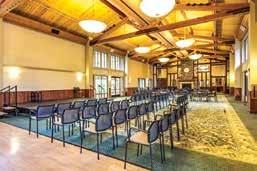

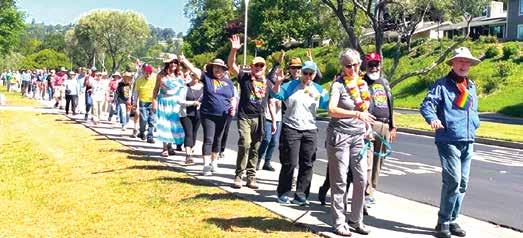







February is Black History Month, with this month selected for the commemoration because it coincides with the birthdays of Frederick Douglass (February 14) and Abraham Lincoln (February 12), who were both pivotal leaders in the fight for the emancipation of enslaved people. Initiated as “Negro History Week” in 1926 by Dr. Carter G. Woodson, aka the “Father of Black History,” it was expanded to a full month in 1976.
Here are just some of the Black History Month events in the Bay Area:
February 4: Kickoff at San Francisco City Hall
February 18: Community Reimagined: Celebrating Black Excellence at the Bayview Opera House
February 20: SF Museum of Modern Art Free Day in honor of Black History Month
February 22: Black Joy Parade in Oakland
February 26: Honoring LGBTQ+ Black Women Leaders & Allies at The White Horse Inn
February 25: Black History Month Closing Ceremony at San Francisco City Hall
Through March 27: Art of the African Diaspora at the Oakland Public Library Rockridge Branch
Through March 31: Black Panther Party 60th Anniversary exhibit at the Oakland Public Library 81st Avenue Branch
Visit Oakland has an extensive listing of Black History Month events in that vibrant East Bay city. For more information: https://bit.ly/45XTG3V


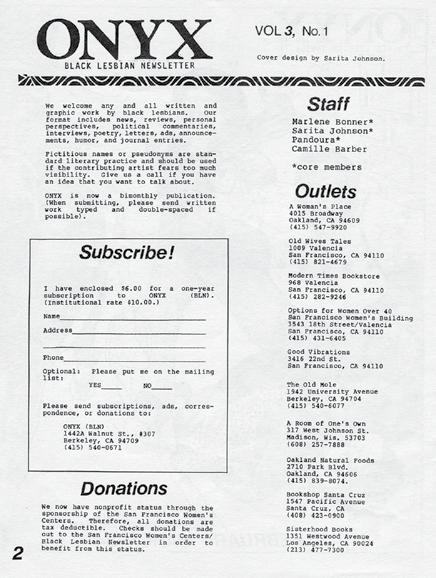
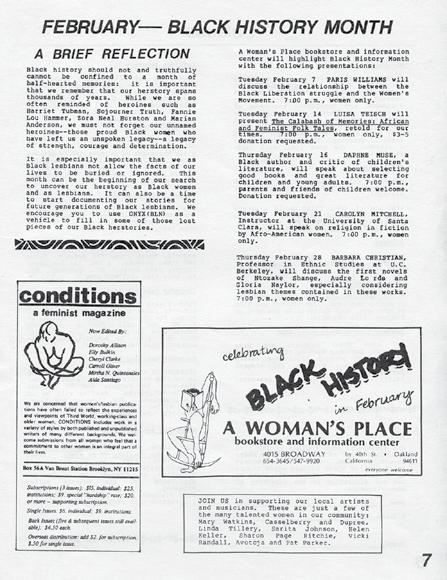
This Black History Month, the GLBT Historical Society is highlighting a remarkable piece of Bay Area LGBTQ+ history from our Periodicals Collection, Onyx: Black Lesbian Newsletter. Originally launched in 1982 as Black Lesbian Newsletter (later retitled Onyx), this San Francisco and Berkeley-based publication offered Black lesbian writers, artists, and organizers a vital space to speak for themselves at a time when their voices were often excluded from both mainstream media and predominantly white LGBTQ+ spaces. Published through 1984, the newsletter blended culture, politics, and community-building.

Pages from Onyx: Black Lesbian Newsletter February–March, 1984
The issue displayed here, February–March 1984 (Vol. 3, No. 1), reflects the breadth and urgency of this work. It includes poetry, political reflections, book reviews, a community calendar, and classified listings alongside staff notes and calls for subscriptions and donations.
Standout pieces include “Journal Entry: Reminders” by Lucille Hunt (1984) and “Lesbianism Is a Reality” by Tania Abdulahad (1983), as well as a brief essay marking February as Black History Month.
This issue of Onyx is available as part of the GLBT Historical Society’s digital collections, thanks to digitization funding from the California State Library.
To explore this, and other Onyx issues—along with other collections— visit https://bit.ly/4akZ9mH
View this entire issue by following the QR code.




San
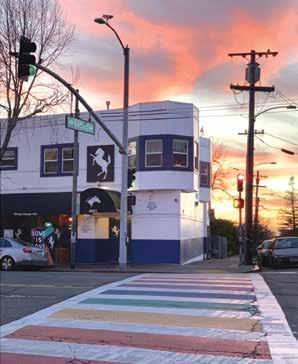
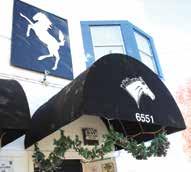

A Black History Month Event at a queer woman-owned business that is the nation’s oldest continuously operating gay bar!
Thursday, February 26, 6–10 pm @ The White Horse Inn 6551 Telegraph Ave. Oakland
The San Francisco Bay Times annual Black History Month celebration of LGBTQ+ Black women leaders and allies will return for 2026 and in a new venue: Oakland’s historic White Horse Inn!

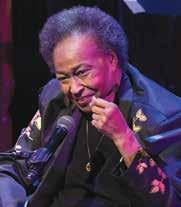
Join co-emcees Imani Rupert-Gordon, Executive Director of the National Center for LGBTQ Rights, and Joe Hawkins, the Co-Founder and CEO of The Oakland LGBTQ+ Center, as we honor some of the Bay Area’s most accomplished leaders representing numerous fields and generations. Returning as welcoming hosts will be Judy Young, the Executive Director of the UCSF National Center of Excellence for Women’s Health, and San Francisco Bay Times publishers Betty Sullivan and Jennifer Viegas. One of the special honorees will be legendary performer Linda Tillery.

Sponsors include (partial list):









Roland Schembari and Bill Hartman, Co-Founders
Randy Alfred, Founding News Editor, 1978 Kim Corsaro, Publisher 1981-2011
2261 Market Street, No. 309 SaN FraNciSco ca 94114
PhoNe: 415-601-2113
525 Bellevue aveNue oaklaNd ca 94610
e-Mail: editor@sfbaytimes.com www.sfbaytimes.com
The Bay Times was the first newspaper in California, and among the first in the world, to be jointly and equally produced by lesbians and gay men. We honor our history and the paper’s ability to build and strengthen unity in our community.
The Bay Times is proud to be the first and only LGBTQ newspaper in San Francisco to be named a Legacy Business, recognizing that it is a longstanding, community-serving business that is a valuable cultural asset to the city.
dr. Betty l. SullivaN/JeNNiFer l viegaS co-PuBliSherS & co-editorS
Beth greeNe, JohN SigNer, Michael delgado deSigN & ProductioN
kate lawS BuS NeSS MaNager
Blake dilloN caleNdar editor kit keNNedy Poet-iN-reSideNce
J.h herreN techNology director
carla raMoS weB coordiNator
Mario ordoNez diStriButioN
JuaN r davila voluNteer coordiNator
CONTRIBUTORS WRITeRS
Rink, Sister Dana Van Iquity, Ann Rostow, Patrick Carney, Leslie Sbrocco, Kate Kendell, Gary M. Kramer, Joanie Juster, Robert Holgate, Eduardo Morales, Dennis McMillan, Tim Seelig, John Chen, Rafael Mandelman, Jewelle Gomez, Phil Ting, Rebecca Kaplan, Philip Ruth, Bill Lipsky, Elisa Quinzi, Liam Mayclem, Beth Schnitzer, Rowena Brown, Andrew Freeman, Kippy Marks, Ian Fullmer, Catherine Stefani, Donna Sachet, Gary Virginia, Derek Barnes, Marcy Adelman, Jan Wahl, Stuart Gaffney & John Lewis, Brandon Miller, Jamie Leno Zimron, Howard Steiermann, Fernando Camino, Honey Mahogany, David Landis
PhOTOgRaPheRS
Rink, Paul Margolis, Bill Wilson, Jerome Parmer, Michael Kirschner, Sandy Morris, Karina Patel, Abby Zimberg, Joanie Juster, Debra Reabock
aDVeRTISINg
Display Advertising Standard Rate Cards http://sfbaytimes.com/ or 415-601-2113
Custom ad sizes are available. Ads are reviewed by the publishers.
National Advertising: Contact Bay Times / San Francisco. Represented by Rivendell Media: 908-232-2021
Circulation is verified by an independent agency. Reprints by permission only.
CaLeNDaR
Submit events for consideration by e-mail to: calendar@sfbaytimes.com
© 2026 Sullivan Communications, Inc



From Two Wheels
As we prepare to roll into this year’s San Francisco LGBTQ+ Pride Parade, San Francisco Dykes on Bikes® (DOBTM) is doing so with a powerful mission in sight: our 50th Anniversary. What began as a bold act of visibility has grown into an international movement, and this year’s Pride ride will be both a celebration of how far we’ve come and a signal of where we’re headed next. That global reach will be on full display at Pride. Riders from Dykes on Bikes chapters across the world are making the journey to San Francisco to ride with us. We are thrilled to welcome riders traveling from as far away as Australia to join their fellow dykes from across the United States and beyond. Their presence is a testament to the enduring impact of our movement and the shared values that continue to connect us across borders.
Following the Pride Parade, our celebration will continue with a weeklong retreat in Northern California. This gathering will give us the rare opportunity to slow down together, on the road and off, and reflect on our history, our victories, and the responsibility we carry as stewards of this movement. Just as importantly, we’ll look ahead and ask big questions about what the next 50 years of Dykes on Bikes should be, as an international force for visibility, advocacy, and community.
Closer to home, we have exciting events coming up this spring. On Sunday, March 22, from 3–7 pm, we’ll be hosting a fundraiser at the iconic White Horse in Oakland. The afternoon will include fun games, good company, and an open invitation. Everyone is welcome to join us in supporting our work and celebrating our community.
Our spring ride calendar is also starting to take shape. We have a ride planned for February 21, 2026, with
By Kate Brown, Ph.D.
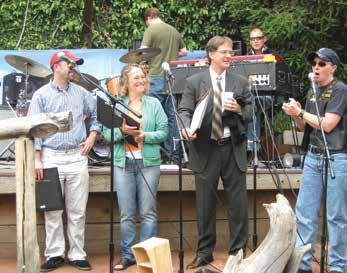
and Greg Gilcrest, then of Townsend and Townsend and Crew LLP; at a fundraiser for Dykes on Bikes at the SF Eagle bar in
more details to be announced soon. Be sure to follow us on social media and keep an eye on our “events and rides” page ( https://www.dykesonbikes.org/ ) for the latest updates as the season fills out.
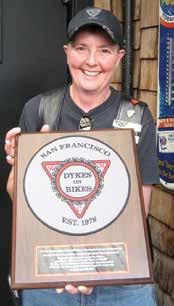
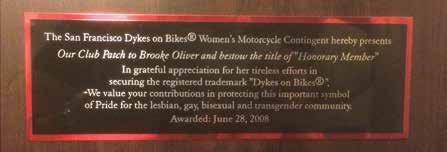
Finally, we are incredibly proud to share a well-deserved congratulations to Dykes on Bikes attorney Brooke Oliver, Senior Counsel with Procopio, Cory, Hargreaves & Savith LLP. Brooke has been recognized as a top global trademark attorney, named to the World Trademark Review 1000 list for 2026.
Brooke is widely known for her critical work supporting artists, nonprofits, and social justice movements. As General Counsel for Dykes on Bikes, she argued our trademark case before the United States Supreme Court twice! The culmination of two trips to the Supreme Court over the course of thirteen years was the landmark, unanimous Supreme Court decision in 2017 (Matal vs Tam), which struck down as unconstitutional the provision of the Lanham Act under which the U.S. Patent Office could determine what speech was “disparaging” or “offensive,” and is widely considered one of the most important freedom of expression cases for the LGBTQ+ community.
Congratulations to Brooke Oliver on this monumental career achievement and on this extraordinary recognition by her peers throughout the industry. Her work has left an indelible mark, not only on Dykes on Bikes, but also on an incredible list of organizations that fight for social justice and LGBTQ+ equality.
Kate Brown, Ph.D., is the President of San Francisco Dykes on Bikes® Women’s Motorcycle Contingent. https://www.dykesonbikes.org/
By Ann Rostow
On February 4, the American Society of Plastic Surgeons issued a position paper, recommending that transgender minors delay surgical procedures until adulthood. One day later, the American Medical Association followed suit. “In the absence of clear evidence,” they said in a statement, “the A.M.A. agrees with A.S.P.S. that surgical interventions in minors should be generally deferred to adulthood.”
Hmmm. On the one hand, we all sort of agree with this. Hormones and puberty blockers are reversible. Surgery is not. Like many transgender issues, the complexities make it hard for us as allies to fight the black-and-white rhetoric that pervades rightwing politics, not to mention the mix of ignorance and indifference we see from many others.
Here are the facts, according to a link to a JAMA (Journal of the American Medical Association) paper I found in The New York Times Surgery for transgender youth is primarily breast removal for transgender boys. Of the 3,600 gender surgeries performed on kids aged 12–18 in the five years between 2016 and 2020, some 3,215 were chest operations. It makes sense. Breasts appear well before the age of 19, and, although you might strap down small ones, a transgender boy with 36Ds faces years of pure hell. It’s understandable that your transgender son would want to be rid of them years before he turns 19.
But these are kids. And they are kids who have lived through a period of rapid change when it comes to the place of gender and sexual orientation in society. How do you tell the difference between a preteen transboy who is suffering greatly, and a cisgender girl who is trying on a new persona, being a tomboy, or simply worrying about growing up? Are you going to let your busty 13-yearold girl chop off her breasts because she now says she’s transgender? Probably not! But what about the kid who has wanted to be a boy and wear boys clothes from the age of four of five? Has he convinced you by now?
In terms of surgery, we’re talking about teenagers, not prepubescent kids. But, honestly, I’m still not sure what I think, although I can see why it might be called for. I’m certain, however, that hormone treatment and puberty blockers should be available, and I’m even more certain that all care for transgender youth should be made on a case-bycase basis and well-regulated as a medical practice. It’s noteworthy that both the Plastic Surgeons and the AMA presented their policies as advisory, not as mandates for doctors. Still, it doesn’t help our cause to see two major medical associations retreat to caution in such a public way. It will certainly be used against us as we fight for these complicated young lives in the future. About half the states now outlaw hormone treatments, thanks to the Supreme Court’s anti-trans ruling last year.
Meanwhile, a few days before the medical groups made their announcements, a 22-year-old woman who has detransitioned
won a two-million-dollar jury verdict in her malpractice suit against the team that approved her top surgery six years ago.
According to The New York Times article, it sounds as if the surgery was organized without a comprehensive evaluation. Adam Deutsch, the lawyer who represented Fox Varian in her complaint against her psychologist and her plastic surgeon, said the suit was not meant to call gender surgery into question, but involved malpractice, pure and simple. “This was never a debate over the legitimacy of gender-affirming care,” said Deutsch. “It was about whether medical professionals met the standards that covered their own profession.”
Dr. Loren Schecter, President-Elect of the World Professional Association for Transgender Health (WPATH), testified on behalf of Varian. In a statement, WPATH said the case was “a medical malpractice case, not a referendum on gender-affirming care.”
According to the Times, Varian’s psychologist had no experience with transgender care, misdiagnosed Varian’s status as “body dysmorphia,” pressured Varian’s mother to allow surgery, and failed to check with a counseling service. Indeed, Varian had told a counselor she wasn’t sure about transitioning, even as she insisted on surgery rather than hormone treatment. She was fifteen at the time.
I am skipping the Olympics to write to you this morning, but I can’t help but notice all the GLBT athletes. I hadn’t realized that the skier who won a gold medal in downhill racing, Breezy Johnson, came out as bisexual a couple of years ago. Also, I just learned that her parents legally changed her name from Breanna to Breezy while she was still in high school because they wanted (or she wanted) her legal name to match her nickname. Really? What’s wrong with having a regular name and just using your nickname at will? Why make the cumbersome effort to jump through bureaucratic hoops in order to cement a nickname into officialdom?
There was also our top skater, 26-year-old Amber Glenn, who announced she was bisexual and pansexual when she was nineteen, and who has used her platform to shine a light on queer issues. At a press conference with the gold-medal American skating team, Glenn told reporters that the GLBT community has had a hard time under the Trump administration.
“It isn’t the first time that we’ve had to come together as a community and try and fight for our human rights. And now, especially, it’s not just affecting the queer community, but many other communities. I think that we are able to support each other in a way that we didn’t have to before, and, because of that, it’s made us a lot stronger.”
After her comments, Glenn received what she called a “scary amount” of online hate messages and threats and decided to lie low for a bit. “I will be limiting my time on social media for my own well-being for now,” she wrote on Instagram. “But, I will never stop
(continued on page 18)


(continued from pg 17)
using my voice for what I believe in. Xoxo, Amber.”
I am sure there are dozens of other GLBT athletes at the winter games, but I’m struck by the hostility that seems to run deeper than my memories of the late 20th century disdain for our tribe. Back then, being gay or lesbian was shameful, subjected to ridicule, and thought of as an unnatural peccadillo or a sick perversion. Today, from some quarters, being anything but straight and narrow is grounds for vitriol and even violence. In Germany the other day, a gay activist and soccer referee proposed marriage to his boyfriend during a game, and drew a rousing cheer from the crowd of 50,000. According to the website Out, Pascal Kaiser had already been receiving threats online, where his home address had been posted. But, after the proposal, he was beaten by three men at night while smoking in his garden. He is now under police protection. Penisgate at the Olympics
In unrelated sports news, just to lighten our mood after the disturbing anecdotes we just considered, I am sure you read about the ski jumpers who have injected something into their penises in order to improve their performances.
When I first encountered these headlines, (thanks to my cousin, ever alert to the most titillating news bits), I thought their lengthened appendages might give them more flight time. On second thought, this seemed unlikely. Plus, I would have noticed someone flying through the air with an erection. I know I’m a lesbian, but I’m nonetheless impressed by the football players who put their family jewels on display through their see-through white uniforms. Is it deliberate? And why aren’t they worried about injury? It looks as if the whole basket is just floating free these days. What happened to jock straps and cups?
Where were we? Ah, ski jumpers. It turns out that jumping attire is highly regulated because just a few extra centimeters of material can make a difference in the air. The suit, in turn, is based on a 3D scan of the jumper, from the tip of the penis upwards. Some jumpers, it is rumored, have expanded their outfits through the use of a cosmetic filler called hyaluronic acid. One doctor, Eric Chung, told The Guardian that an incorrect dose or a bad injection technique “would cause penile pain, poor cosmesis [disfigurement], deformity, infection, inflammation, sensory change, and sexual dysfunction.” Sometimes, he continued, “infection can spread to cause gangrene (tissue necrosis) and loss of the penis.” Woah, Nellie!
I’m not sure why this procedure, which has not been used by any actual named Olympic jumpers that I know of, has exploded on the media, and I don’t feel like crawling through reports to find out. But I guess someone has tried it, and, if the rest of the world press corps is anything like me, the very idea is worth rehashing.
The situation for GLBT people in Russia has gone from bad, to worse, to surreal. Back in 2012, I remember writing about a “Don’t Say Gay” law in St. Petersburg, where local leaders ordained that saying anything positive about homosexuality would become a criminal act. I presented this as a bizarre outlier, but a couple of years later, the regulation spread to Moscow and eventually became a national policy. In 2023, the Russian Supreme Court ruled that the international LGBTQ movement was an extremist organization, subject to strict penalties, raids, arrests, penalties, fines, what
have you. Basically, anything goes if you mention homosexuality in a positive or neutral way. Recently, according to Novaya Gazeta Europe, Russian scientific journal Batrachospermum was ordered to redo a newly translated book about animal sexuality. The book includes descriptions of same-sex behavior, the unusual reproductive habits of hermaphrodite snails and worms, and other anomalies. It also refers to odd genitalia, such as pedipalps, aedeagi, and hectocotyli, used for sperm transfer by various insects and octopuses.
These topics were enough to draw official notice, and the book is accused of violating the rules against discussing nontraditional sex and anatomy. Any description of homosexual behavior that does not contain disgust or criticism is considered “propaganda of nontraditional relationships” and is against the law.
This is a book about non-human animals!
From the same website, I also read about a 22-year-old man who was given a fine for posting a clip of a Queen video, in which the members of the band were crossdressing. David Geyondyan was convicted last year and recently lost his appeal. He was also accused of posting other improper photos, including one of two men kissing, images that “positively evaluate non-traditional sexual relationships as natural” and “distort the understanding of relations between men and women, undermining family values.”
Florida Men
Once, as I implied earlier, I would have dismissed those aforementioned Russia stories as crazy antics out of an antigay dictatorship. A few minutes ago, I was searching for the date of that St. Petersburg law, so I typed in “St. Petersburg, don’t say gay law.” I had to amend my search to add “Russia,” because the first search gave me nothing but news about St. Petersburg, Florida, where protesters condemned the 2022 “Parental Rights in Education” law, part of Ron DeSantis’ effort to turn Florida into the place where “woke goes to die.” Today, four years later, an undercurrent of intolerance has flooded Florida and other low parts of our country. Even as it retreats, which I think it eventually will as Americans start to notice the warped flooring, it will take time and effort to restore our society.
Meanwhile, in Orlando, organizers appeared to cancel the annual Gay Days celebration, a multiday Pride festival that has been held at Disney World for years and years. In a post to “Gay Days Family” last week, the Gay Days leaders wrote: “It is with very heavy hearts that we share Gay Days 2026 will not take place this year. This was an incredibly difficult decision and one that was only made after every possible option was explored.”
In an email to The Washington Blade, the news seemed to be reversed. “At this time,” wrote Josh Duke, Co-Owner of Gay Days, “I’d like to clarify that Gay Days Orlando has not been canceled. We are currently finalizing details regarding our plans for 2026 and will be making an official announcement later this week.”
The mystery continues as we go to press, but let’s be clear. What happens in Russia doesn’t necessarily stay in Russia. Yet, as red state America continues to make our lives harder and more fearful, we continue to persevere. As Amber Glenn reminded us, what doesn’t kill us makes us stronger.
arostow@aol.com
,
GAFFNEY/LEWIS (continued from pg 8)
participate in girls’ sports at any age or level of competition.”
Significantly, for many years before these laws were passed, Idaho, West Virginia, and many other states allowed transgender girls and women to participate in school athletics without incident. Idaho law permitted such participation if the student “had completed one year of hormone therapy suppressing testosterone under the care of a physician.” Idaho applied a similar NCAA rule to collegiate sports. Prior to West Virginia enacting its ban, the West Virginia Secondary Schools Athletic Commission (WVSSAC) permitted trans athletes to participate in school teams in accordance with their gender identity if their school agreed to it. If another school challenged the student’s eligibility, WVSSAC would decide whether the particular student’s “participation threatened ‘competitive equity or the safety of teammates or opposing players.’”
Manufactured political hysteria about trans people, not any real threat to girls’ and women’s sports, occasioned the 27 categorical bans to be enacted. When Idaho passed its ban, it had absolutely “no history of transgender women and girls participating in competitive student athletics.”
Similarly, when West Virginia passed its exclusion, the state “had no known instance of any transgender person playing school sports.”
The state education department had received no complaints about such matters, and its counsel derided the legislation as “much ado about nothing.” The governor upon signing the bill admitted that there were only perhaps 12 trans students in the entire state. To date, Becky is the only known trans student athlete in the state.
The 27 Republican-controlled states with bans, along with approximately the same number that prohibit trans youth from receiving medically necessary gender-affirming care, were part of unprecedented legislative efforts in the early 2020s to attempt to exploit societal prejudice and undermine the rights and well-being of trans people in many aspects of their lives for raw political gain. In 2024 alone, a staggering 691 bills targeting trans people were introduced in state legislatures and Congress, with legislators calling trans people “‘mutants,’ ‘demons,’ and ‘imps.’” The same year, the Trump presidential campaign took up the mantle by spending millions on ads ridiculing trans people, vilifying a minority group like never before in a modern presidential politics. The first day he returned to office, Trump issued a sweeping executive order attacking the rights, freedom, and dignity of transgender Americans.
As part of the briefing and oral argument in these cases, Hecox’s counsel reminded the Supreme Court that 20th century immigration laws were applied to deny transgender people from entry into the U.S., asserting they were “mentally ... defective” and of “psychopathic inferiority.” Federal law defined people with “psychopathic personality” to encompass “sexual perversion,” including “transvestism.”
Shockingly, the U.S. Supreme Court upheld the federal law in 1967 as applying to “homosexuals and other sex perverts,” which would include trans people, in rejecting a gay man’s challenge to the law. It’s a decision that echoes the specter of judicial ignorance epitomized by Dred Scott.
Even more chillingly, 20th century eugenic sterilization laws applying to “sex perverts” were frequently understood to allow sterilization of trans people. By the 1930s, over 30 states had passed such laws. Hecox’s brief points out that “Idaho’s law applied broadly to all ‘moral degenerates and sexual perverts.’”
These 30 state laws passed in another era of anti-queer hysteria, coupled with the U.S. Supreme Court’s upholding immigration bans on “sex perverts,” should stand as a sobering cautionary tale as the Court deliberates on Becky and Lindsay’s cases today.
Trans people deserve equality and dignity under law. We will continue to discuss the legal issues at stake in these two cases in Part 3.
(All quotations come from briefing and oral argument at the U.S. Supreme Court.)
John Lewis and Stuart Gaffney, together for over three decades, were plaintiffs in the California case for equal marriage rights decided by the California Supreme Court in 2008. Their leadership in the grassroots organization Marriage Equality USA contributed to making same-sex marriage legal nationwide in 2015. Today, they continue to educate and advocate for marriage equality and LGBTIQ+ rights worldwide.

TBy Donna Sachet
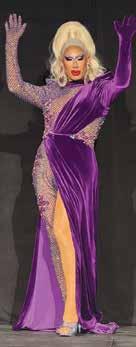
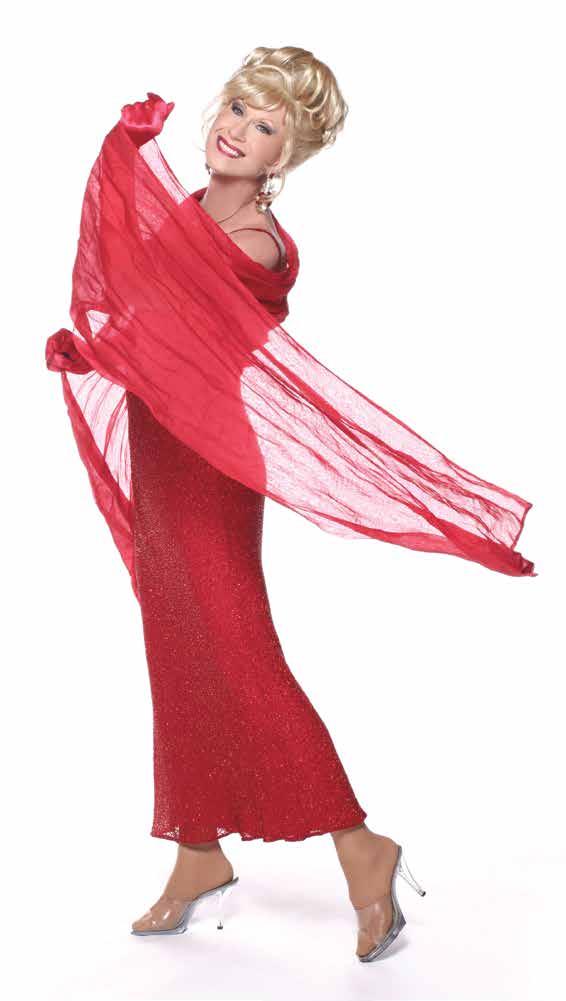
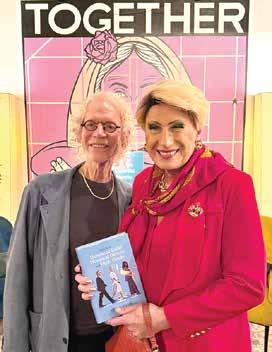
he long-awaited reopening weekend of The Castro Theatre lived up to all expectations! On Friday, February 6, 2026, Mayor Daniel Lurie, State Senator Scott Wiener, City Board of Supervisors President Rafael Mandelman, and other city officials and key figures from Another Planet Entertainment gathered for the ceremonial ribbon-cutting in front of the theatre jammed by hundreds of witnesses to history as this next chapter of The Castro Theatre and the Castro Community began. We were fortunate to be asked by Paul Miller of The Academy SF to be among the many Drag Queens, including Mx GAPA KiKi Krunch, Bebe Sweetbriar, Mahlae Balenciaga, Juicy Liu, Mercedez Munro, and Katya Smirnoff Skyy, lined up behind Mayor Lurie for that ceremony and later assembled on stage for an epic group Drag number. The concession area immediately inside was a full bar and a VIP bar served drinks and hors d’oeuvres upstairs, where we met for the first time Dirty Carol, sponsor of the Community Opening and a whirlwind of energy. (Don’t miss her engagements at Martuni’s on February 21 and 22 at 7 pm.)
The faces of those entering The Castro Theatre said it all! Eyes bulged, smiles beamed, and hearts pounded as the results of two years of loving restoration were unveiled. The domed ceiling with elaborate painting and decorative trim centered by a dazzling Art Deco chandelier, beautifully detailed tapestry-styled wall art amazingly restored, a huge golden proscenium arch hidden from view for decades ... all this awaits inside.
The hotly debated seating alterations will probably continue to be controversial until you sit in a spacious theatre seat with clear stage views or attend a packed concert and stand mere feet from the starring performer. But something about the familiarity of the space and its rich restoration blurs any objections, unifying the community in welcoming back this legendary venue.
Donna
author Tom
author
“God save us Nelly Queens!”
Wednesday, February 18
In Town Show & Awards Reigning Monarchs recognize local support Beaux, 2344 Market Street 6 pm Free! www.sfimperialcouncil.org
Thursday, February 19
Anniversary Monarchs’ Reception
Hosted by Emperor John Carrillo & Empress Misty Blue
The HA-RA Club, 875 Geary Street 6:30 pm Free! www.sfimperialcouncil.org
Friday, February 20
Out of Town Show
Performances by Imperial talents across the continent Hyatt Regency Downtown, 50 Third Street 5 pm $25 www.sfimperialcouncil.org
Saturday, February 21
My Life in Business Suits, Hospital Gowns, and High Heels, at Manny’s on Thursday, February 5. https://www.tomlenoble.com
The Sisters of Perpetual Indulgence were in dramatic attendance with the ever-witty Sister Roma co-emceeing the on-stage action, including a wildly popular “sainting” of the resident organist of The Castro Theatre for over 45 years David Hegarty. He’ll soon be playing a brand-new instrument: the largest digital pipe organ in the world, which will once again rise from below the stage to begin many film and other events.
Preceding the Saturday night wild D’Arcy Drollinger & Disco party at the Castro Theatre was the first-ever Castro Street Cam Pub Crawl, organized by the San Francisco Bay Times’ Betty Sullivan and Jennifer Viegas and that we hosted with well-known party organizer Gary Virginia with music provided by violinist Kippy Marks. A festive crowd, starting at around 20 and growing to over 40, popped into Lookout, Rikki’s, Twin Peaks Tavern, and 440 Castro with a quick stop in front of The Castro Theatre to wave up to the street camera above SoulCycle that joins Cliff’s Variety and Orphan Andy’s in sponsoring this eye on the neighborhood. Every bar was welcoming (with a hosted round of drinks at Rikki’s, thanks to columnist Nandini Novarr), and every participant enjoyed a rollicking good time, including Andrea Aiello, Michelle Jester, Ralph Hibbs, Susan Berston, Sister Dana van Iquity, Kate Brown, Ryan MacCarrigan, and many others.
Not to be overshadowed by a landmark with 100 years of history, the 60-year-old Imperial Court of San Francisco invites one and all to Imperial Coronation: The Power of
(continued
Imperial Coronation 61: Diaspora, The Power of Cultural Excellence Step-down & Crowning of new Monarchs Hyatt Regency Downtown, 50 Third Street 6 pm $70 www.sfimperialcouncil.org
Sunday, February 22
Annual Pilgrimage to Colma Visitation to graves of Emperor Joshua Norton & José Sarria
Hosted by Donna Sachet Buses leave Hyatt Regency Downtown at 8 am Free! www.sfimperialcouncil.org
Sunday, February 22
Victory Brunch
Official changing of the guard Hyatt Regency Downtown 50 Third Street 11 am $33.85 www.sfimperialcouncil.org
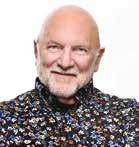
Dr. Tim Seelig
I’ve been thinking a lot about trust recently. It’s complicated.
We trust every moment of every day. We trust the sun will come up (even in Portland). We trust the world will continue to spin (even if somewhat out of control). We trust things are going to get better (we must). We trust the chair we are sitting in and the keyboard we are typing on.
Trust begins to get complicated with comments like, “Trust me. The check’s in the mail.” I don’t have time to explain to the young ones what a check is. From the moment we stood up for the first time and asked, “Do I look fat in these diapers?” someone was fudging on the whole truth. So, how can we trust them about a new pair of jeans as an adult?
Trust gets deeply complicated with what is happening with our country. There is a broad and deep insecurity when things we thought were carved in stone turn out to be made of sand, easily brushed away on a whim.
Our complicated relationship with trust took a dangerous turn with “alternate facts.” Trusting anyone on any platform is now a slippery slope. AI has added a layer of mistrust. In 2020, Pete Buttigieg wrote a book titled Trust: America’s Best Chance. Six
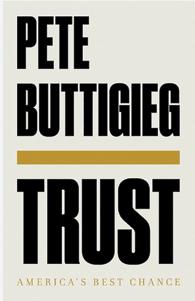

years later, he is still a leader we trust and he remains a hero of the queer community. We need to listen to him on the topic of trust.
As promised, no more politics. I’m going to share my journey with trust from my own life’s concepts, experiences, and people.
The concept of trust was simple growing up in the 1950s. In the ‘50s, we put our trust in one thing: God. He (there was no confusion about his gender) had his codified in the public sphere. “Under God” was added to the Pledge of Allegiance in 1954. “In God We Trust” was added to paper currency in 1957. When Gallup began asking about religion in the early ‘50s, nine of 10 Americans identified as Christian. It felt normal growing up with that kind of certainty— until it didn’t.
After God, I was taught to put my trust in the following order:
1. Jesus (That was confusing. Is it God or Jesus? Someone needs to pick.)
2. Preacher
3. Parents
4. Sunday School Teacher
5. Police or elected officials (My Grandfather was a U.S. Congressman after all.)
6. Adults
7. The Bible
The Bible includes hymns and songs such as “Trust and Obey.” Sing along if you’d like:
“What He says we will do, where He sends, we will go. Never fear, only trust and obey.”
Trust was black and white. (Truer words were never spoken.) I was an overachiever, so I wanted to be the absolute best truster and obeyer of all. I put my trust in the Lord at the age of six and left it right there – for about three decades. I did learn early on not to trust anything my big brother did or said!

I learned to trust flying in airplanes in 1964 at 13. Back then, one dressed up in a sports coat and a tie to fly. Only the front few rows were non-smoking. You could smoke a brisket in there! I flew Trans Texas Airways from Dallas to Austin. It was lovingly referred to as Tree Top Airways. To this day, every time I take off in a plane, I make my peace just in case. Then I jumped out of a plane. That took as much trust as I have ever had in anything. Trust in the parachute. Trust in my hot tandem jumper.
Since you rarely see the pilot when flying, you are basically trusting a self-driving plane. I moved from San Fran cisco before the Waymo creatures took over the city. Recently, on a trip to Atlanta, our friend loaned us his self-driving car. Atlanta has terrible traffic, BTW. He set the selfdrive function to “Mad Max.” We quickly switched it to “Scared S----less.” The experience was completely unsettling, and our trust didn’t improve much along the way. Trusting people is a whole book, not an article, and, the most difficult. Looking back, I feel I did a fairly good job of discerning whom to trust. Some showed their spots early on. Others took longer to turn from stone to sand. The longer it took, the more it hurt, and the less likely I was to trust again.

needed to be spoken, promised, or pledged. It just was. I now have that trust with my son. It is one of the greatest blessings of my life. It was rough getting there, which made the arrival even more precious. There are people I trust completely—my husband and a close circle of friends—including, of course, my ex-husband and now my best friend.
If you know me, at the top of my whom to trust list are dogs. I’ve written many articles about canine companions. You can do a search at the San Francisco Bay Times website ( https://sfbaytimes.com/ ) for: Tim Seelig dogs!
After dogs, the first person on the list was my daughter. Our trust in each other was total. She also shared my trust in dogs. Dog was our copilot. For her 41 years, our trust was without condition—or filters! It never

Life is a constant exercise in trust. You decide whether it’s a 3-question multiple-choice exam or an SAT-worthy exam. Regardless, my hope is that a few have passed the test in your life. There is huge risk in giving someone a passing grade and your trust. The rewards are mighty. At the end of the day, the best decider [sic] is your gut. Listen, feel, and observe how they treat others (dogs, cats, and service providers). As you open your heart and life to someone new, you’ll know. It doesn’t have to be complicated. Trust your gut. Your gut’s probably your real best friend!
Dr. Tim Seelig is the Conductor Laureate of the San Francisco Gay Men’s Chorus. http://www.timseelig.com/

By Sandy Morris
Sandy Morris has been making art for the last 60 years. She says, “My pen, ink, and pencil drawings usually start with no preconceived idea—just drawing a straight or curved line or two. From there, my imagination takes over. I build upon the piece. My works range from the whimsical to the political, to emotions, and everything in between.”

DONNA SACHET (continued from pg 19)
Cultural Excellence. Saturday, February 21, starting at 5 pm at the Hyatt Regency SOMA, 50 Third Street. Reigning Emperor Ashlé Blow and Reigning Empress Afrika America have enjoyed a spectacular year, both here and out among the over 70 courts across Canada, the United States, and Mexico, and attendance promises to be record-breaking. You’ll be breathless with amazement at the entertainment, costumes, jewelry, regalia, and history that this annual event brings. At the conclusion of the night, the new Emperor and Empress of San Francisco will be crowned with all the pageantry for which the Imperial Court is known.
As you’ll see from the latest calendar, many related events occur leading up to and immediately after Imperial Coronation, some with somber significance, many with campy references. Pick and choose, but don’t miss out on these many opportunities to see royalty in action in San Francisco! As Absolute Empress XXX of San Francisco, we look forward to seeing you all week, dressed in your finest and giving homage to Our Beloved Founder Empress I José Sarria.
Donna Sachet is a celebrated performer, fundraiser, activist, and philanthropist who has dedicated over two decades to the LGBTQ Community in San Francisco. Contact her at empsachet@gmail.com
Protect your tea from over-brewing with the PerfecTemp Cordless Electric Kettle and its six preset temperatures optimized for every variety of tea.
$199.99


Electric Fireplace Heater with 3D Flame
It’s still winter! Cozy up in front of the fire! Unlike a real fire, this one can also give you romantic accent lighting without the heat. Only 17 inches tall, this petite heater will also fit into an old bricked-in Edwardian fireplace. Available in black, red, blue and yellow for $199.99
Keep up with Cliff’s Variety news at Facebook ( https://bit.ly/4qh1Xbb ) & IG @hilario_sf

Dr. Bill Lipsky
The biblical princess Salome is possibly the most notorious dancer in history. Her “Dance of the Seven Veils” has mesmerized us for the last 2000 years, but never was her wickedness more entrancing than during the divinely decadent years around the turn of the 20th century. Beginning with Oscar Wilde’s symbolist play about her in 1892, banned in England because the law forbade biblical figures being portrayed on stage, Salomania became an authentic cultural phenomenon that swept across theater, music, art, merchandising, fashion, and film for the next 30 years.
Except for Salome herself, however, no one brought more attention to her infamous performance than Maud Allan. Born Ulla Maude Durrant in Toronto, Canada, on August 27, 1873, she and her family moved to San Francisco soon after, and she grew up here. The children attended Lincoln High School before Maude transferred to Cogswell Technical School in the Mission and brother Theo went off to a private boarding academy, then enrolled at Cooper Medical College on Sacramento Street, which became part of Stanford University’s School of Medicine in 1908.
A talented youngster, Maude also took piano lessons from Eugene Bonelli, founder
and director of the San Francisco Grand Academy of Music at Franklin Street and Golden Gate Avenue. The maestro was so impressed with her that he recommended she go to Europe to complete her musical studies. She did not consider a career as a dancer until she met famed pianist and composer Ferruccio Busoni at the Meister-Schule in Weimar, who persuaded her to pursue a career where “her body was her instrument.”
Maude was in Europe less than three months when news reached her that her brother Theo had been arrested as “The Demon of the Belfry” for the murder of two women at San Francisco’s Emmanuel Baptist Church, then on Bartlett Street between 22nd and 23rd streets, where he was assistant superintendent of the Sunday School. Coverage in the press was so sensational, so widespread that the court interviewed more than 3,600 potential jurors before 12 could be chosen for his trial.
Found guilty on November 1, 1895, and sentenced to death, Theo was hanged for murder at San Quentin on January 7, 1898. “I bear no animosity toward those who have persecuted me,” he said in his last statement, “not even the press of San Francisco, which hounded me to the grave.” Many now believed the church building was a haunted, evil place and wanted it gone, but it was not torn down until 1915. Today the site lies under City College’s Mission Center.
Maude was convinced of her brother’s innocence, but, at his insistence, remained in Europe. To distance herself professionally from his tragedy, however, she called herself Maud Allan when she first performed as a dancer in Vienna on November 24, 1903, presenting what she would later call her “musically impressionistic mood settings” for Mendelssohn’s Spring Song, Chopin’s Funeral March, and Rubinstein’s Valse Caprice. Critics were not impressed, describing her as someone who did not contribute much to the modern dance movement, but audiences adored her.

remembered work in Vienna late in 1906. For the next two years, she toured Europe, always to rapturous jubilation. Audiences were simply overwhelmed by the sexual energy of her performance. Whether they were also delighted, outraged, shocked, or repulsed by her erotic costume and the realistic wax head of John the Baptist, Salome’s victim, which she used as a prop in a “decidedly gruesome” way, she triumphed wherever she appeared.
She conquered London in 1908. What began as a twoweek engagement became a cultural phenomenon that lasted for 18 months. She presented her Salome some 250 times, including at matinees and special performances. The August 8, 1908, issue of The Sun (Baltimore) included: “[T]his young woman was the sensation of Paris ... and remains the wonder of London.” Gertrude Hoffman, one of the many, many rivals she inspired to follow her in the role, publicly stated that she was “the greatest of all ‘Salomes.’”
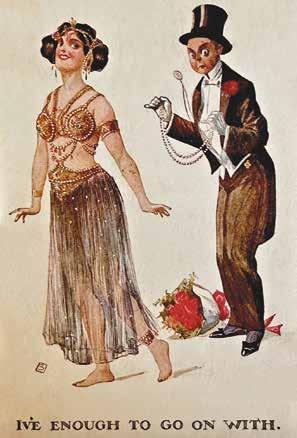
The newspaper disapproved of Salomania, however. “Seldom has a fad, and especially so questionable a one, spread with such amazing rapidity,” it editorialized. “Actresses and singers, as well as dancers, who made their living in other kinds of work have found out that if they want to stay in the game successfully, they must learn how to do the ‘Salome’ act.” Even so, it admitted, the great opera stars “Melba, Tettrazina, [and] every other musical and dramatic sensation are nothing compared to the present vogue of Miss Allan in this dance.”
an Academy Award in 1941 for her role in The Grapes of Wrath and won our hearts as the Bird Woman in 1964’s Mary Poppins. Allan toured North America for two years, then departed for London in 1918, where she was to appear in two private performances of Oscar Wilde’s Salome, translated into English by Alfred Douglas. Soon she was involved in one of the most sensational trials of her time, after suing Noel Pemberton-Billing, an extremist Member of Parliament, for publishing an article accusing her of being “a member of a ‘cult’ of women who loved women” and of having an intimate relationship with Margot Asquith, wife of the former Prime Minister.
Allan premiered The Vision of Salome, her most successful, famous, and best
Allan and her imitators simply made the guardians of other people’s morality nervous. As Adam Alston wrote, many warned that “the proliferation of scantily clad Salomes would pollute the contained, corseted bodies of respectable women and corrupt the minds of men.” Others harrumphed that “the vulgar dance would encourage the spread of immoral thoughts and behavior among immigrants, urban youth, and those vulnerable to cheap amusement.” Still others were concerned that their example might lead a to a loss of male authority, suffrage, and result in the “emancipation of women.”
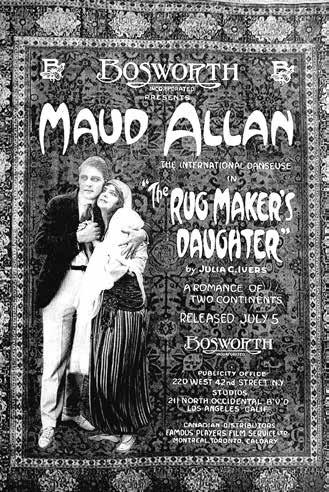
At the height of her fame, Allan returned to the United States in 1915. She visited her parents in Los Angeles, where they had moved after her brother’s ordeal. That summer she made her only motion picture, The Rug Maker’s Daughter, which featured excerpts from three of her dances. Billed as “The International Danseuse,” she co-starred with Forrest Stanley and Jane Darwell, who won
Whatever the truth of their relationship, Margot Asquith paid for Allan’s apartment overlooking tony Regent’s Park from 1910 until 1928. Verna Aldrich, once Allan’s secretary and then her lover, made the payment for the next ten years. A bitter dispute finally ended their involvement, but Allan continued to live there until the Germans bombed the building during World War II. She eventually returned to Los Angeles, where she died on October 7, 1956, all but forgotten by the world she had so startled. Salomania, like all enthusiasms, eventually faded, although Salome herself continued to fascinate the public. Norma Desmond, entranced by her story, wrote a screenplay about her in Sunset Boulevard, Billy Wilder’s 1950 film, and she appeared on screen two years later, portrayed by Rita Hayworth. A few years after that she was seen once again, at least in San Francisco, when José Sarria and The Black Cat Opera & Ballet Association rethought her most famous performance for a Sunday afternoon drag parody, presenting the “Dance of the Seven Trick Towels.”
Bill Lipsky, Ph.D., author of “LGBTQ+ Trailblazers of San Francisco” (2023) and “Gay and Lesbian San Francisco” (2006), is a member of the Rainbow Honor Walk board of directors.
“The hip airplane is an amazing way to engage our SMUR muscles (Small Motor Unit Recruitment; help to stabilize joints during movement), improve balance, enhance mind-muscle awareness, and warm up for a big leg day!
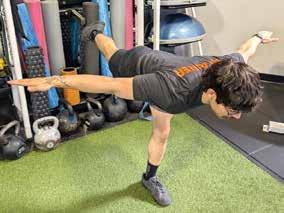
Start by hinging the hips on one leg and lifting the back leg to create a 90-degree angle. Then work on externally and internally rotating the hips. If needed, you can use a pole to support yourself as you get more used to the movement. Motion is lotion; stay moving, stay healthy!”

Troy Macfarland at FITNESS SF shares monthly tips that he has learned from colleagues, fellow professional trainers, and more. For additional information: https://fitnesssf.com/


LGBTQ News & Calendar for the Bay Area
CELEBRATING FOUR DECADES Est. 1978

Thank you to all of our friends and supporters who are invaluable as they help keep the work of the San Francisco Bay Times team going. We appreciate you!


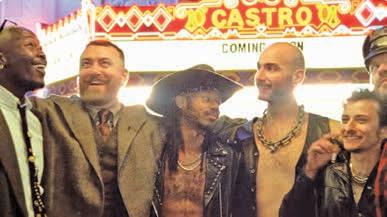
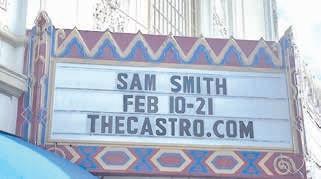
Five-time Grammy winner Sam Smith began their 24-night To Be Free: San Francisco Residency on February 10, 2026, at The Castro, performing for the appreciative and enthusiastic soldout audience that night and again on February 11. Smith previously had a “New York City” 24-show residency at the Warsaw in Brooklyn, and, like that series, is presenting intimate, stripped-down arrangements for the 1400-maximum capacity The Castro versus their bold and expansive arena tours.
Many who attended the opening night performance said that it was the best concert they had ever seen. Songs included an incredibly soulful “Lay Me Down,” a sexy version of “Unholy” with Smith wearing a full-length gown, and one of our team’s favorites: a jubilant take on Erasure’s “A Little Respect” with Smith wearing leather shorts, leather boots, a frilly shirt, and a trench coat on the rainy night in San Francisco that contrasted with The Castro’s warm and welcoming vibe.
Smith said, “I love San Francisco and The Castro especially has been so central to the queer community here over the years. These shows will also celebrate the official reopening, so it’s truly an honor to become part of this iconic venue’s history.”
Smith’s residency marks the start of concerts at The Castro following the venue’s reopening on February 6. Regarding this and other changes, Another Planet Entertainment CEO and Co-Founder Gregg Perloff said, “Our goal is to activate and reenergize the building with equity, inclusion, and community at the forefront. We look forward to contributing to the vibrancy and economic health of the Castro while honoring its legacy as an LGBTQ+ landmark and cultural anchor.”
Smith evidences all of that and more, and especially with their song “To Be Free,” which explores how vulnerability can unlock bravery and freedom. It includes moving vocals by The TwoCity Chorus
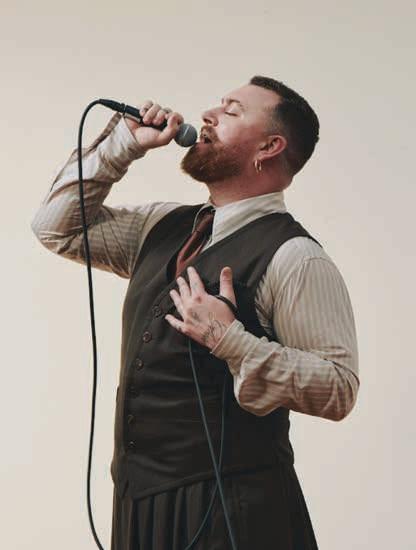

and has a joyous (LA)HORDE-directed music video that was filmed at the Warsaw. Watch it here: https://bit.ly/3O5vyWW
Smith is one of the most celebrated musical artists to emerge in recent history. In addition to earning the multiple Grammys, he holds two Guinness World Records: one for the most consecutive weeks in the U.K. Top 10 Album Chart (with their 2014 debut In the Lonely Hour), and one for having the first James Bond theme to reach number one on the U.K. charts (the Oscar and Golden Globe-winning “Writing’s on the Wall”).
Smith has amassed over 40 million equivalent album sales, 300 million single sales, and over 56 billion career streams across their catalog of critically acclaimed albums: In the Lonely Hour, The Thrill of It All, Love Goes, and Gloria, which Rolling Stone praised as “their deepest album yet” and includes the global smash “Unholy” featuring Kim Petras. The track spent three weeks at number one on the Billboard Hot 100 and four weeks at number one on the U.K. Official Singles Chart, making it their eighth to top the tally. In June 2025, Smith released the stunning live album BBC Proms at the Royal Albert Hall In May 2024, Smith confirmed that their partner is fashion designer Christian Cowan. The couple have attended prominent events together, such as Cowan’s fashion shows and the Met Gala. As for where they might go in San Francisco, Smith has indicated that he has shopped at Knobs in the Castro. During previous visits to the Bay Area, Smith enjoyed relaxing stops at 1951 Coffee in Berkeley. The couple like to support local small businesses, and we hope they enjoy the extended stay here in the Bay Area.
The initial 12-show run at The Castro sold out in just 3 hours, and the added shows sold out within hours too. Resale tickets are going for hundreds and even thousands of dollars, depending on the night and the type of ticket (General Admission, Loge, or Balcony). If you have one or more of these coveted tickets, you are probably very popular with your friends now! If the rest of the residency is as incredible as the initial two first shows, then the tickets will be more than well worth it. Priceless might even be a better description, given the added significance of this important time in The Castro’s history.


Film
Gary M. Kramer
Out gay Brazilian actor Lucas Drummond casts a spell in the hypnotic, erotic film Only Good Things, available on VOD February 17. The actor plays Antônio, a farmer and cheesemaker, who takes in Marcelo (Liev Carlos), a stranger who had a motorcycle accident, and they share a tender, loving romance. Their story, set in 1984, forms the first half of the drama, which picks up decades later with an older Antônio (Fernando Libonati) dealing with the sudden disappearance of his husband, Marcelo. In a recent interview, Drummond, who has worked extensively in film, television, and theatre, spoke with me for the San Francisco Bay Times about playing Antônio and making Only Good Things.
Gary M. Kramer: Your film first played San Francisco at Frameline last summer. What do you recall about that experience?
Lucas Drummond: I attended the screening at Frameline. It was my first time in San Francisco. I was thrilled by the city and the atmosphere. The Castro is the place. It was a fantastic experience. I always wanted to visit San Francisco during Frameline, and I was so happy to do that with such an important project in my career.
Gary M. Kramer: We see you/Antônio living on a ranch milking cows and making cheese. The other Antônio (Fernando Libonati) is urban,
and lives in a luxury apartment. Can you talk about your skills with ranching and cheesemaking, or are you more aligned with the urban Antônio?
Lucas Drummond: It was a very hard process for me. I am a very urban guy. I have lived in the city my whole life. I do not have any relationship to the country whatsoever. I started preparing for Antônio almost a month and a half before we started shooting. Our preparation was divided into two parts. The first half was trying to understand these characters and build a relationship between Antônio and Marcelo and my relationship with the other actors. The second half was approximately ten days in the farm where we shot the first half of the film, doing this cowboy routine where we had to wake up at 5:30 am, milk the cows, and make the cheese and rehearse shooting and riding horses. It was a lot to learn, but it was very exciting. This is what I like about acting—trying to portray someone completely different from myself. The rhythm in the country is very, very slow. We try to portray that in Antônio. He walks very slowly. He has his own timing and tempo. He does things in a specific way. I am very anxious and dynamic. I would probably stand a month in the countryside, but, for a film, it was awesome.
Gary M. Kramer: Did you and Fernando Libonati discuss Antônio’s character, and what traits you would give each other because you’re a younger version of him?
Lucas Drummond: We had two different and separate processes. The first time we approached the script we did a reading together and discussed a lot about the character—our impressions, but not what we were planning on putting into the character. The shooting process was separate. We shot my half of the film in three weeks, and, during the last three days of shooting, Fernando arrived on set, so he had the opportunity to see what we were doing and pick up what he thought was interesting for “his” Antônio in the second part. We didn’t
(continued on page 38)
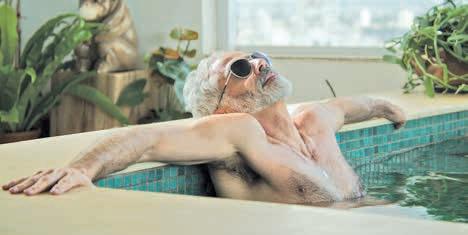

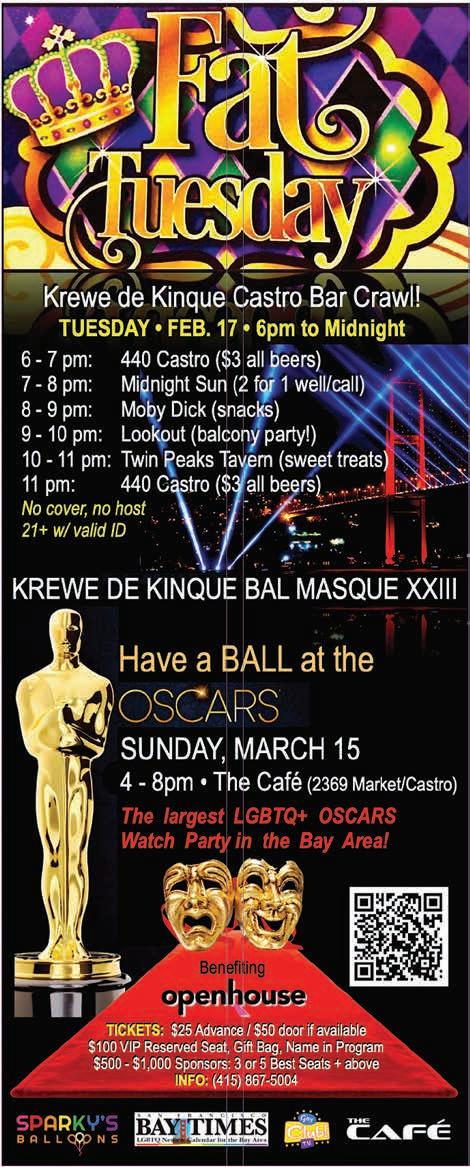
Jan Wahl
I realized recently that, while I’ve spent my career telling stories, nobody ever interviews me. To remedy that, I sat down with my good friend and colleague, Adam Kent, to get down to the nitty-gritty.
On Origins and Hollywood Icons
Adam Kent: When did you realize that you wanted to focus professionally on movies?
Jan Wahl: I grew up in the middle of the film industry in West Los Angeles. I would go to the doctor and there would be Natalie Wood in the waiting room, or Norma Shearer leaving the office after a facelift. Buddy Ebsen and Gene Barry lived on either side of us. Ricky Nelson would be at Hamburger Hamlet, Danny Kaye at Madame Wu’s, and Roz Russell at Scandia.
Jan Wahl: Too many! Some were amazing—like Bette Midler, Paul Newman, Quentin Crisp, and Mel Brooks—while others were real jerks. On the State of Modern Cinema
Adam Kent: How do you see Hollywood and the industry evolving? What is it that you dislike about modern films?
Jan Wahl: For an optimistic person, this is a pessimistic answer. I’m afraid movie theaters will be a thing of the past. Movies will be directed at kids and teens, and we will have to fight very hard for smart, fun, powerful films.
I don’t like multi-narratives that don’t have a throughline to the plot. I also dislike fast editing and the refusal to let a scene breathe.
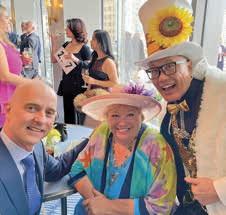
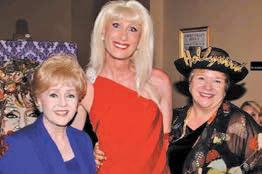
Adam Kent: So, how did the movies of 2025 stack up?
But the real reason was that my parents loved classic Hollywood. We would sit as a family and watch the classics. It resonated with me because I wanted to be strong like Bette Davis, sensual like Errol Flynn, and dance like Fred Astaire, at least in my dreams.
On the Art of the Interview
Adam Kent: How many actors and industry professionals did you interview?
Jan Wahl: I hated almost everything I saw last year, but I would recommend one: Song Sung Blue
On Community and Activism
Adam Kent: You have been a longtime champion of the LGBTQ community. Where does that passion come from?
Jan Wahl: My mother used to drop me off at Larry Edmunds Bookshop while she ran errands. I would hang out with character actors, writers, and (continued on page 38)



Café Beaujolais
(cookbook - hardcover) by Julian Lopez
Chef Julian Lopez shares over 80 recipes in this new cookbook highlighting the Mendocino restaurant by the same name, Café Beaujolais. It is full of farm-to-table seasonal recipes from Lopez, along with classics from the previous chef, stories from the Brickery (the restaurant’s bakery and now pizzeria), and tales from the farmers who make everything possible. This is a great edition to any cookbook lovers’ collection.

It’s Not Her
(fiction - hardcover) by Mary Kubica
A master of suspense, Mary Kubica is back with a gripping thriller about a family vacation gone wrong. A quiet lake resort is descended upon by police when a couple is found murdered with their son sleeping upstairs and young daughter missing. It’s Not Her is a twisty, fast-paced suspenseful novel that will have you flipping pages late into the night.


Family Drama (fictionhardcover) by Rebecca Fallon
Rebecca Fallon’s debut novel Family Drama is part love story, part coming of age, and part family saga. This novel follows the story of Susan and her two-paneled life. She is a mother of twins married to a professor on the East Coast and is a well-
loved soap opera star in Los Angeles. This is guaranteed to be a hot book club pick this spring.
Sunday, February 22 @ 2 pm (non-ticketedFerry Building store) Chris Haft, author of A Giant Among Giants: The Baseball Life of Willie McCovey
A Giant Among Giants is the first biography of Willie McCovey. McCovey was a member of the San Francisco Giants for nineteen seasons. Haft will be joined in conversation with Allison McCovey, the daughter of Willie McCovey and a former classmate of San Francisco Bay Times co-publisher Jennifer Viegas.

Sunday, February 22 @ 7 pm (ticketed - Dominican University) Jon Meacham, author of American Struggle
In partnership with Dominican University, Book Passage is thrilled to host Pulitzer prize-winning biographer, Jon Meacham. His newest work focuses on America from 1619 to the present, highlighting the successes of the nation and its downfalls.
Thursday, February 26 @ 5:30 pm (non-ticketed - Ferry Building Store)
The Savage Waves of Spring, a crime anthology presentation
The Savage Waves of Spring is the fourth installment of Kelp Journal’s beach noir series. Contributors to the collection, Gary Phillips, Nik Xandir Wolf, Joe Clifford, C.W. Blackwell, and Curtis Ippolito, will be presenting at Book Passage.
https://www.bookpassage.com
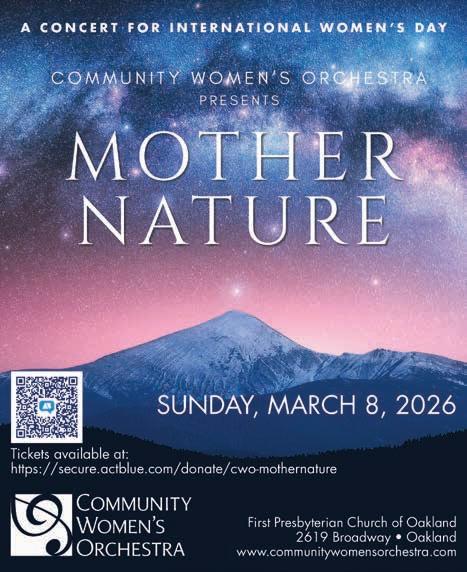
I’ve been a cat lesbian all of my life, until several years ago when our last sweetie left us. We made it through the pandemic without succumbing to the puppy impulse, but my spouse thought she’d like to work with a therapy dog in hospitals with young patients. There’s a rigorous training, but it seemed just the thing for a retired health care provider.
So, two years ago we adopted what we thought would be a medium-sized dog, but she’s currently sixty pounds and as strong as a dray horse. A standard poodle, she’s affectionate, smart, and I’m pretty sure she speaks three languages: English, French, and ASL.
The difference between having a cat and having a dog companion is significant.
Felines are kind of private beings; most urban cats don’t go outside or interact with cats not of their household and are fairly content to entertain themselves.
Dogs, being pack animals, require company. So, our dog gets to play with her “cousins,” the dogs of my sister-in-law who lives nearby. And, since my spouse and I are in our seventies not our twenties, she also goes to the Dog Social Club Collective ( https://dogsocialclub.com/ ) a couple times a week. It’s an Oakland nonprofit that provides hours of outdoor play and walks with Elijah who handles a large pack of dogs who are learning their “Ps and Qs” with the expertise of an Iditarod musher. And yes, of course, our puppy is the best, most beautiful dog ... yadda, yadda, yadda.
I didn’t come to this appreciation easily. Growing up, I watched Southern sheriffs on the TV news use huge German shepherds to brutalize Civil Rights activists—adults and children. When I was about thirty, a large rescue Doberman broke free from his human and lunged at me, leaving scratches, bruises, and skittishness, but no major

Here are two of the many pets now available for adoption at Oakland Animal Services (OAS): Quinoa is good for your health! And no, we’re not talking about the highly nutritious grain; we’re talking about your new best friend! Quinoa is a friendly and energetic rabbit who will sit on any lap available to her. She is the ultimate emotional support rabbit, curious and always wanting attention. She’ll be waiting right at the door for you when you come home, ready to give you as much love as you can handle after a long day.
Bix is just under a year old with tons of joyful puppy energy and a big personality to match. He’s 47 pounds and still learning his manners, but his heart is absolutely in the right place. He loves to run when off leash and engages enthusiastically in playful chase with other dogs at doggie playgroup.


The OAS adoption process focuses on matching you with a pet who is a good fit for you and your family. Come by during open adoption hours Thursdays 12–7 pm and Fridays/ Saturdays/Sundays 12–3 pm to adopt your new best friend, or to learn more about the OAS adoption process. Please see the OAS website to learn more about how you can help by adopting, fostering, volunteering, and donating: www.oaklandanimalservices.org
physical damage. Another time a perverse guy let his Rottweiler jump against a chain link fence to intimidate me. Odd the things that men think are impressive.
Despite this history, I’ve come to feel such a connection to our (huge) puppy that I understand the depth of care it takes to serve a dog companion well. Along with that, I appreciate the world of humans she’s opened up for me.
I’ve discovered that most dog people are interested in each other and their dogs.
Folks stop on the street to talk to others walking their dogs. It doesn’t matter what breed of dog, and, just as importantly, it is irrelevant who the dog’s companion is at the other end of the leash. The other day, a young woman in a tailored suit pulled up to the Social Club to collect her pup. On her face was the scowl of someone who knows she should be on a business call and knows her boss knows she’s not there. But when a dog—not even her own—bounded out toward her, all the tension evaporated.
I stopped trying to list the innumerable varieties of folks I’ve seen chatting to each other on the street and in parks about their dogs and (happily) it’s a MAGA nightmare. I don’t imagine they’re discussing immigration or taxes or queerness. But they could be if they gave each other a chance to be heard. They also made sure their voices and temperatures didn’t increase enough to irritate their dogs. I know that, if we can love all different kinds of animals, we could love all different kinds of people.
Jewelle Gomez is a lesbian/feminist activist, novelist, poet, and playwright. She’s written for “The Advocate,” “Ms. Magazine,” “Black Scholar,” “The San Francisco Chronicle,” “The New York Times,” and “The Village Voice.” Follow her on Bluesky, Facebook, and IG @vampyrevamp
Wiggles, a Shepherd Mix, Loves Parks and His Adoption Fee Has Been Sponsored!
Wiggles arrived in San Francisco with a suitcase full of bravery and a Fresno County return address. He is a Shepherd mix, sweet as can be, and is still deciding what to make of this big, busy world. New sounds make him pause. New people earn a careful look. But give him a calm hello and a little time, and you will see the moment his curiosity wins.
In the right setting, Wiggles lights up. The park is his favorite classroom. With doggie friends around, he goes from “I am observing” to “I am sprinting” in record time, especially if there is a game of chase involved. A confident, pro-social dog in the home would be his perfect guide, the kind of buddy who could show him that the vacuum is not a monster and that couches are, in fact, for relaxing.


Wiggles is currently in a foster home, growing his confidence one good day at a time. You can sign up to meet him through our Virtual Adoption Program, and his adoption fee has been generously sponsored.
The San Francisco SPCA is located at 250 Florida Street. Visit Tuesday through Thursday from 1 pm to 7 pm, Friday and Saturday from 11 am to 7 pm, and Sunday from 11 am to 6 pm.
https://www.sfspca.org/

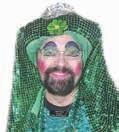
By Sister Dana Van Iquity
Sister Dana sez, “Happy VALENTINE’S DAY, February 14, to everybuddy! I hope you all receive lots of candy, hearts, and flowers—but if that doesn’t come through, buy some for yourself! You deserve it!”
Isn’t it a bloody shame that our fascist federal government has no love for us democratic citizens—even on Valentine’s Day?
Let us remember the inspirational words that the late, great Veterans Administration Hospital ICU nurse Alex Pretti viciously assassinated by no less than seven I.C.E. agents—said over the deceased body of one of his patients: “Today we remember that freedom is not free. We have to work at it. Nurture it. Protect it and even sacrifice for it. May we never forget and always remember our brothers and sisters who have served, so that we may enjoy the gift
of freedom.” But Alex did not get to enjoy that gift, as 10 rounds of guns took the life of that decent unarmed man who tried to save a woman being pushed to the ground by ICE.
We might want to recall the words of our Constitution: “Governments derive their just powers from the consent of the governed. Whenever any form of government becomes destructive of these ends, it is the Right of the People to alter or to abolish it.”
Fabulosa Books held another fabulous Q&A on January 28 for Brian Schaefer’s brilliant novel, TOWN AND COUNTRY, with a live interview by the adorable Reggie Aqui. Earlier, person-to-person with Brian, we discovered we both grew up in small neighboring California towns—he in Pasadena and me in Glendale. And this book cleverly reflects small town attitudes versus Big City politics—centering around a congressional race and life-changing secrets unearthed by the candidates, their families, and a small clique of gay second-homeowners. All this is inspired by Brian’s husband and their two homes—one in NYC and the other in smalltown Hudson Valley. Fascinating! DarnOld Trump and Stephen Nazi Miller are completely ignoring States’ Rights by
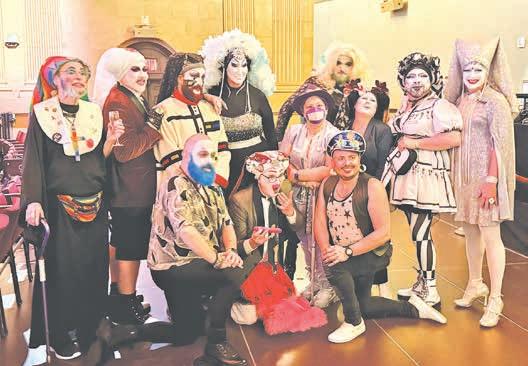
bringing ICE murderers to our sanctuary cities. The Tenth Amendment to the Constitution clearly states: “The powers not delegated to the United States by the Constitution, nor prohibited by it to the States, are reserved to the States respectively, or to the people.”
At the U.S. Conference of Mayors in Washington, D.C., Minneapolis Mayor Jacob Frey warned, “This is an invasion of our democracy. People’s Constitutional rights have been trampled. Thousands of federal agents have descended on a city that has 600 police officers.” He continued, “If we do not speak up and step up, it will be YOUR city that is next!”
In his weekly newsletter, California Attorney General Rob Bonta wrote, “No one is above the law. Following the tragic deaths of Renée Good and Alex Pretti, I have reminded California law enforcement of their authority to investigate potential violations of state law by federal officers and agents. Cooperation between federal, state, and local law enforcement should be the norm, but if the federal government opts out, as we’re seeing in Minnesota, California DOJ stands ready to move forward without them.”
PresiDense Trump continues to ignorantly fight over his 2020 election loss, investigating “voter fraud” in Fulton County (where he “just needed to find 11,000 votes” that year) and succeeding, according to its Board of Commissioners Chair Robb Pitts, in the FBI confiscating over 700 boxes of what used to be safely stored election materials. Sister Dana sez, “Get OVER it, dumb Donald, you already won and are wreaking havoc on us democracy-loving citizens!”
And yet Trump’s next attack is at Minnesota elections being rigged in 2020 and needing investigation. Ye Gods! Also, WTF is Tulsi Gabbard, Director of National Intelligence, doing in Fulton County dealing with 2020 ballots anyway?!
Bruce Springsteen has dropped a new anti-ICE protest song, “Streets of
Minneapolis,” echoing his famous 1993 AIDS protest song, “Streets of Philadelphia.” This new one slams “King Trump’s private army” and shows his utter disgust of “State terror.” Sister Dana sez, “Way to go, Brrruuuce! You continue to be my musical hero!”
The 68th Annual Grammy Awards were so gay, because the following were either LGBTQ or extremely gay-friendly: Doechii, Queen Latifah, Chappell Roan, Teyana Taylor, Sabrina Carpenter, Charli XCX, Lola Young, Billie Eilish, Tyler the Creator, Bad Bunny, Lady Gaga, Cher (receiving Lifetime Achievement Award and presenting Best Record for “Luther”), and Harry Styles (presenting Album of Year to Bad Bunny’s DeBÍ TiRAR MáS FOToS Queeriffic!
We were really disgusted that Trump sent ICE agents “with no patrolling or enforcement involvement” to the MILAN OLYMPICS from opening ceremonies on February 6, and all the way to closing on February 22. In response, lawmakers and the head of the Olympics tried to demand denial of Trump’s “thugs” entry to Italy, with no success. Sister Dana sez, “Thanks, tyrant Trump! Way to purposely spoil the fun of a usually fantastic International Winter Sports Season. Hey ICE, may you just slip and fall on the ice in Italy!”
We were angry that Trump tore down the East Wing of the White House to build a gazillion dollar ballroom; but now we are even more furious at his new vanity project with his plan to build a 250-foot high Golden Arch near the Arlington Cemetery. Sister Dana sez, “I bet he’ll copy the famous Paris monument, Arc de Triomphe, and name it ‘The Arch of Trump Triumph’!”
The SFLGBT Center held their newest gallery opening on January 29 featuring artist Michael Staley and conversation between Staley and their Director of Cultural Programs, Timothy Hampton. Staley told us, “My artistic practice is founded on
(continued on page

Gordon Edgar
This is a February column, so you’d think I would be recommending fancy heart-shaped cheese for your little trysts. Every December I get preorder sheets offering “Valentine’s Day Specials.” Often, they are the same cheeses we can buy every day of the year, contorted into shapes that are supposed to look like hearts, but don’t really. And, even if they did, one cut from a knife means that, for the rest of your nibbles, you are eating a broken heart. That is tempting fate, my friends. Instead, I have three cheeses to recommend, two great deals, and one super-amazing cheese we only get once a year.
First, we finally got our wheels of Gruyere Alpage As you are probably tired of reading about, we haven’t carried most cheeses from Switzerland since the 40% tariffs kicked in, making them
unaffordable. We made an exception for the Gruyere Alpage because, even though it is super expensive, it is such an amazing cheese. Unfortunately, it missed the shipping window in mid-November, so we had to wait until now to get it. It’s worth the wait.
“Alpage” means that an Alpine cheese is made with summer milk at the highest possible elevations. Traditionally, Alpine cows move up and down the mountain over the course of the year and cheesemakers live and make cheese in small shacks and domiciles that they can only access for a couple months all year.
This elevation gives the best milk because, when the thaw comes to the mountains, the variety of flowers and grasses are the most numerous and interesting. Since milk is basically flowers and grass mediated through the medium of mammal, milk just doesn’t

taste like this any other time of year. Our Gruyere Alpage is nutty, oniony, floral, and grassy, and you should treat yourself to at least one piece if you love cheese.


Next up is the Navarro Mexican Manchego. For years, retailers have sold Mexican-style cheeses, but rarely were they made in Mexico. Personally, I haven’t seen actual Mexican cheese in the Bay Area for at least twenty years. However, all that changed last year when Quesos Navarro in Jalisco started exporting to the U.S. All their cheeses are great and—while we love our local producers—their product line is unlike what we can get here.
Probably the star (so far; a cotija is coming soon) of their aged cheese selection is their Mexican Manchego. Traditional Spanish manchego is made only in wheels from sheep cheese in part of La Mancha. Mexican manchego has been made since the 1500s and is usually made in blocks from cow milk.

It’s not as complex a cheese as the Spanish counterpart, but it is melty, rich, and super easy to eat.
And, right now it’s on sale for $4.49/14 oz while supplies last, so it’s a great time to check it out.
Sadly, the last cheese is here because Central Coast Creamery is calling it quits. Reggie Jones and his daughters have been making great cheese in San Luis Obispo for years, have won numerous awards, and developed
a great reputation for dependably awesome cheeses.
Years ago, I brought a wheel of his goat cheddar to a meeting of Wisconsin cheddar makers, many of whom had never tried a goat cheddar. Coming from California, I was proud to represent the goats, and even the crustiest cow-supremacist, goat-hater had to admit it was good. We have proudly carried it since the first batch and are sad to see it go. We just bought the last 11 wheels, so come down and get some Central Coast Creamery Goat Cheddar at $19.99/lb. until it runs out.
All of these selections for this month are high-quality and interesting, which is what you should be looking for on Valentine’s Day and during February—not just fancy looks. Gordon Edgar loves cheese and worker co-ops and has been combining these infatuations as the cheese buyer for Rainbow Grocery Cooperative since 1994. He serves on the American Cheese Society Judging and Competition Committee and is a member of the Guilde Internationale des Fromagers. Edgar has written two books on cheese—”Cheesemonger” (2010) and “Cheddar” (2015)—and lives in San Francisco with his adorable white mini schnauzer named Fillmore Grumble. He writes about grief, and sometimes cheese, at https://bit.ly/42IwYf0
Cocktails With Dina by Dina Novarr
Stand on the corner of Market and Castro on a Tuesday evening at 6:45 pm and watch the sidewalk traffic compress. It’s subtle at first, like a density shift, bodies moving with purpose rather than drift. By 7 pm, the wave has passed, and the street exhales. The restaurants that couldn’t seat you fifteen minutes ago suddenly have tables. The MUNI drivers know this rhythm. Something is creating a Doppler effect in the Castro, and it’s keeping the neighborhood abuzz.
The Doppler effect, for those whose high school physics has faded to a gentle hum, describes the change in wave frequency based on relative motion between source and observer. An ambulance siren pitches higher as it approaches you (compression), and lower as it recedes (expansion). It’s not that the siren itself changes; it’s that motion creates the shift. Without relative movement, there is no Doppler effect—just a static tone that nobody registers because it never changes.

A neighborhood can pulse the same way, but, unlike sound waves, human traffic patterns require something worth moving towards. The ecosystem responds and you begin to understand. Catch Bistro started serving dinner at 5 pm instead of 5:30 pm with people waiting in line. Marcello’s Pizza was getting pizzas ready at 11 pm on weeknights, expecting their first big wave of the night at 11:15 pm, a crowd that materialized like a tornado of sequins and glitter. Bars have been recalibrating their happy hours, not based on industry convention, but when bodies actually appear and when they disperse. They may now set aside 10:30–12:30 am for nightcap specials to reel in the groups who want a moment to break down the performance they just saw.
There was no consultant who advised these adjustments. The neighborhood simply started conducting electricity again, and the circuit completed itself.
What we hope from this circuit is to see new restaurants, cafés, and bars opening in
a cluster pattern that may make no demographic sense on paper. The Castro isn’t gentrifying in the traditional tech-money way, and it’s not a destination dining neighborhood like Hayes Valley or the Mission. Yet new concepts will be launched, all betting on the same mysterious current.
MUNI capitalized on this with added frequency to lines without the need for formal ridership studies, but instead planning against the schedule of the new heartbeat. Drivers just noticed they were passing full stops, and the next schedule adjustment reflected reality. Seeing infrastructure responding organically when something fundamental shifts is tangible growth. It is not what San Francisco is used to, which is an endless bureaucratic process after experts build a thesis through the accumulation of evidence, only after transportation frustration has garnered criticism and hit the San Francisco influencer scene. The evidence was this: people were moving towards something at predictable intervals,

then moving away in a dispersal pattern that fed the neighborhood’s circulatory system. Dinner reservations at 7 pm became impossible to secure but 9:15 pm was wide open. This was not because restaurants were empty early (they were slammed), but because the first wave had purpose and
(continued on page 38)
David Landis
In just over 4 years, the marvelous restaurant Hilda and Jesse in North Beach has become something of both a foodie and queer destination. Who knew that a café devoted mostly to breakfast (but also serving dinner) could earn a coveted Michelin star? Better yet, this fine eatery embraces a queer sensibility that exudes fun and friendliness, with some of the finest food in town. Yours truly had the pleasure of speaking with Chef/Co-Owner Ollie K.C. Liedags and Co-Owner Rachel Sillcocks to learn more.
David Landis: How did your backgrounds lead you to Hilda and Jesse, and how did you decide to create the restaurant?
Chef Ollie: Rachel and I met about 12 years ago at Range (now closed), where Rachel was the chef and I was sous chef.
far as the name is concerned, Hilda was my grandmother, and Jesse was Rachel’s grandfather. They both lived with us and were very impactful to both of our lives.
Rachel Sillcocks: We’d go to farmers’ markets, then come back, and make food because we were hungry. We thought, what if we could make something delicious with dinner-quality ingredients, but in a daytime format? That was definitely something San Francisco was missing.
David Landis: From the breakfast idea, how did it grow into breakfast and dinner?
Rachel Sillcocks: We opened at the end of 2021, just before Omicron (Covid, Part 2). Originally, we planned far more daytime services to create better balance for ourselves and our staff. But when Omicron hit and people weren’t going back to the office, we had to pivot from mostly brunch to 3 dinners and 2 brunches to survive.
David Landis: It’s such a fun and colorful experience. Can you talk about that design choice?

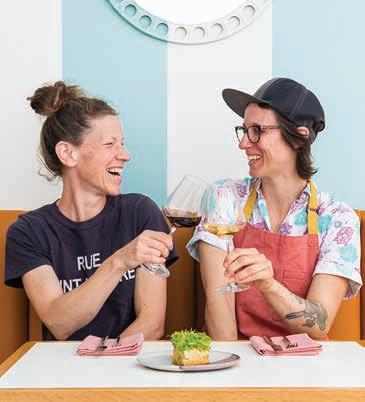
Chef Ollie: Queer is fine. I’m trans, and my pronouns are they, he—I’m still figuring that stuff out.
Rachel Sillcocks: My pronouns are: she, her.

Rachel Sillcocks: I’m a vegetable person. One of the things Ollie does so well is the way they treat vegetables. One of my favorites is our charred baby cabbage with carrot dill dip, brown butter, toasted pecans, and grated cabrillo cheese. Caramelized cabbage is one of the most delicious things in the world. It’s cooked with the same level of skill and intention as a steak.
Chef Ollie: A classic that’s been on since the beginning is the avocado “toast”—toast in quotations. It shows my cooking style of taking something predictable and turning it upside down. It’s still nostalgic, but interesting. With horseradish, sour cream, and onion dip, sweet potato tempura, dill, and togarashi—it’s not your average avocado toast. I have fun turning the ordinary into extraordinary.
Chef Ollie: When we opened, a lot of restaurants had that very masculine vibe—concrete, wood, and not much color. We thought, why not change it up? I really wanted to work with Noz Nozawa, our designer. I loved how maximalist her design was. I’m pretty quirky and colorful, so it was cool to create a space that feels warm and inviting with that
The space catches people off guard, and lets their defenses down. When you walk in, you feel joy and levity. We wanted people to feel comfortable eating serious food without having to act a cer-
David Landis: Do you both prefer the term queer to describe
David Landis: I love that you have a lot of queer people on your staff. Here you are in North Beach, not the Castro, and it’s unexpected and very welcoming.
Rachel Sillcocks: We got really lucky with the people who have wanted to come and work with us. We have a lot of queer people who work here, and a lot of people who aren’t queer. It’s just become this space that’s fun to work in, and it allows people to be who they are, which is really important.
Chef Ollie: It allows us all to learn from each other, and to work with people from different backgrounds and cultures.
David Landis: Do you have a favorite item on the menu? And I do want you to talk about your “gayest pancakes ever.”

Rachel Sillcocks: (Regarding “the gayest pancakes ever”:) We’ve had this sandwich board since our pop-up days. A couple people who worked for us put it together right around Pride and named our pancakes “the gayest pancakes ever.” The pancakes started as a side dish for a Labor Day barbecue. Ollie isn’t a huge fan of pancakes, because they’re too sweet. So, they added savory components and grilled blueberries with buttermilk. People loved them, and they’ve become a signature item.
Chef Ollie: When I first did them, Rachel was like, you know these are going to be a thing, right? You can’t ever take these off the menu. Definitely, she was right about that.
David Landis: Can you explain the difference between your two functions at the restaurant?
Chef Ollie: I’m the Chef, Co-Owner. I come up with the menus, and deal with the kitchen portion of the restaurant.
Rachel Sillcocks: I’m the other Co-Owner, and I do front of house and operations.
David Landis: Is there such a thing as queer food or a queer sensibility to food?
Chef Ollie: Definitely. We often use the term “queering” at Hilda and Jesse. As a queer person, I think more about colors,
(continued on page 35)
thinking outside the box, not taking myself too seriously, and having fun with the food. Being queer amplifies that spirit. Queer is a great definition for this restaurant in many ways.
David Landis: How did you pick North Beach for your location?
Rachel Sillcocks: Ollie found the space on Craigslist during the pandemic. What drew us was the space itself— the light, the windows, the size—not the neighborhood. It wasn’t a conscious choice to put a queer restaurant in North Beach. But we’ve become North Beach’s queer restaurant. The neighborhood has embraced us. It’s been a good evolution.
David Landis: You’re one of a few Michelin-starred restaurants that serve brunch in San Francisco. What was it like when you first got the call that you’d received this Michelin Award?
Chef Ollie: As a chef, we all want recognition for our hard work. Being a business owner changes that. Most of my career I hoped to receive a Michelin star, but it’s different when you own the business. It helped us in so many ways. We were very surprised. It was incredible, especially for our staff. We’ve been through a lot. We come as ourselves every day, not trying to be anybody else. It feels even more special because we got it being who we are.
Chef Ollie: Sometimes it takes having street cred for people to see what you’re doing. In the queer community especially, people are excited about the award. The ceremony was wild. We thought we were just invited as a courtesy. Then they announced a service award and Rachel went on stage. Then they said, wouldn’t it be cool if we learned Chef Ollie also received a Michelin star? We got both awards in one night. We were shocked.
Rachel Sillcocks: The award is truly a testament to our team. We’d been through a lot together and were working really hard because we believed in what we were doing. The Michelin validation enabled us to continue and feed more people. It was such a gift to everybody who was fighting for us. We built it, but we couldn’t do it without them.
David Landis: Congratulations. You should be very proud. I have a curveball question. I’m not really a sports fan, but this is a sports fan question. Do you follow the Golden State Valkyries, and have you been to Rikki’s in the Castro to watch a game?
Chef Ollie: We actually went as a restaurant to see a Valkyries game. It was one of the playoff games. Caitlin Clark was supposed to play, but then couldn’t— but that was a really cool experience. And absolutely, we’re fans. I don’t think either of us are, like, huge sports fans at the moment, but ... you know, hell yeah, women’s basketball is hot. As a former basketball player myself, you know, it’s definitely popular.
David Landis: You’re a former basketball player?
Chef Ollie: Yeah, I was on track to play in college, but then I started cooking, and that was another lifetime ago. I think what’s happening with the Valkyries and women’s basketball right now is pretty awesome, so ... hopefully we’ll get to go again as a group. But no, I haven’t been to Rikki’s yet, either, but we’d like to go.
David Landis: It’s a very special place because it’s very welcoming, and there aren’t a lot of places for queer women and trans people to gather.
Well, this has been really fun. Is there anything on the horizon that you might want to talk about?
Chef Ollie: We’re working on something. Stay tuned!
Hilda and Jesse: https://www.hildaandjessesf.com/
Note to my loyal readers: This will be my last column for a while. I will be out for yet another shoulder surgery, but I will be back with taste buds tingling later this spring.
David Landis, aka “The Gay Gourmet,” is a foodie, a freelance writer, and a retired PR maven. You can email him at: davidlandissf@gmail.com Or visit him online at: www.gaygourmetsf.com
This February, brighten someone’s day (or your own) with beautiful, fresh cut flowers from the farmers’ market. Also abundant this month at your local farmers’ market are kale, spinach, and chard that are packed with nutrients. Mix them into a salad or stew for a hearty meal.
This month we’ve developed a delicious spanakopita recipe based on one of our market managers’ mom’s recipe! This spanakopita is a tasty celebration of seasonal greens and Mediterranean tradition. Originating in Greece, spanakopita is a classic savory pie made to showcase tender leafy vegetables, fresh herbs, and a variety of cheeses layered with phyllo. Historically, spanakopita was a tasty way
to use abundant greens, garden herbs, and preserved cheeses, all baked into a dish that could feed many.
This dish, built around fresh market veggies, is perfect as an appetizer or serving as a centerpiece for a meal.
Stella Singer is a recent UC Berkeley graduate who writes and designs for the Pacific Coast Farmers’ Market Association. With a background in environmental journalism and science, she brings a keen interest in food systems and sustainability to her work.



Farmers’
Ingredients
3 tablespoons extra-virgin olive oil
1 cup yellow onion, finely chopped
5 scallions, trimmed and finely chopped
Salt and pepper, to taste
2 pounds baby spinach
3 large eggs
1-1/4 cups feta cheese, crumbled
1-1/2 cups mozzarella cheese, shredded
1 cup dry rice
1/2 cup Parmesan cheese, grated
1/2 cup fresh parsley, chopped
4 tablespoons fresh dill, chopped
1 stick unsalted butter, melted 8 sheets frozen phyllo dough, thawed
Method
Preheat oven to 325 degrees Fahrenheit. Lightly grease a 9-by-13-inch baking dish with butter and sprinkle breadcrumbs on the bottom.
Par-cook the rice for about 5 minutes; drain and set aside.
In a large pot or skillet, heat the olive oil and melted butter over medium heat. Add the onion and scallions, season with salt and pepper, and cook for about 5 minutes, until softened.
Turn off heat. Add the spinach in batches and let sit until just wilted.
Place spinach in a large mixing bowl and let cool slightly. Add the rice, eggs, feta, mozzarella, Parmesan, parsley, and dill to the bowl. Mix until well combined. Layer 3–4 sheets of phyllo dough in the prepared baking dish, brushing each layer with butter. Spread a layer of the spinach mixture on top. Add 2 more sheets of phyllo, brush with butter, and repeat layering with filling until used.
Top with 2–4 sheets of phyllo dough, brush with butter, lightly sprinkle with water, and score into portions. Bake for 50–60 minutes, until golden brown and set. Let cool slightly before serving.

COCKTAILS WITH DINA (continued from pg 33)
timeline. They arrived compressed, occupied space with intensity, then expanded back out into bars, late-night cafés, and the street itself.
Before this pattern emerged, the Castro had all the infrastructure of life without the animating force. The restaurants existed; the bars poured drinks; MUNI ran its routes. But it was motion without a true pulse, like people passing through rather than moving toward. A neighborhood can survive this way for a while, the way a body can survive on life support, but it’s not vitality; it’s maintenance.
You can measure the absence by what businesses didn’t open during those years. Investors are unsentimental; they read energy the way sharks read electrical fields. When a neighborhood loses its pulse, capital moves elsewhere. Some restaurant spaces sat vacant for eighteen months, then two years. It was not because they were in the wrong neighborhood, but just the wrong moment in the cardiac cycle.
What changed wasn’t demographic or economic. The Castro didn’t suddenly get richer or younger or more fashionable. What changed was the return of a heartbeat strong enough to create motion: The Castro Theatre.
The theater, dark for too long, renovated and reimagined, finally reopened its doors and became the wave source the neighborhood needed—not as a building or a business, but as a reason to move with purpose. Showtimes create compression. People arrive with intention, with tickets, and with plans that include before and after. They move towards the theatre at 6:45 pm for a 7:30 pm show. They disperse outward at 9:30 pm, still energized, still in motion, feeding the bars and late-night spots that stayed open betting on exactly this pattern.
The Doppler effect requires two things: a wave source and relative motion. The theatre provides the pulse. The neighborhood infrastructure—the restaurants that opened early, the bars that adjusted their hours, the cafés that baked that second batch— provides the medium through which the wave propagates. Neither works without the other.
(continued from pg 28)
designers—many of them gay. My parents were also very forward-thinking and had gay friends; I was very lucky.
But nothing is quite like our LGBTQ community here in the Bay Area. Having good friends like Donna Sachet, Sister Roma, and so many others has been a blessing in my life. I like what Elizabeth Taylor said: “Without gays and lesbians, there would be no Hollywood.”
Recommendations and Final Thoughts
Adam Kent: Which directors would you suggest people study and enjoy?
Jan Wahl: Even Mel Brooks’ worst films were better than some of the crap I see
Without the heartbeat, you have aimless motion and people passing through without purpose. Without the motion, you have an empty room with a pulse, like a theater with no one moving toward it. Together, however, the source and the system respond to it, and you have compression and expansion, blueshift and redshift, the living rhythm of a neighborhood that remembers how to breathe.
Stand on that corner again at 6:45 pm and you’re not just watching people walk. You’re watching the Doppler effect in action, the proof that motion around a heartbeat is what keeps the system alive. The Castro isn’t being preserved or revived through nostalgia or policy. It’s being resurrected through physics.
The theatre opened. The neighborhood moved toward it. And the frequency shifted back to life.
The Doppler
A cocktail that compresses, expands, and shifts in real time—just like The Castro Theatre at curtain call
Ingredients
1½ oz Redwood Empire Emerald Giant
Rye Whiskey
¾ oz blood orange juice
½ oz Amaro Montenegro
A dash of honey syrup (1:1 honey + warm water)
2 dashes Peychaud’s bitters
Optional: ½ oz dry vermouth if you want a longer arc
Method
Shake hard with ice and strain into a chilled coupe.
Finish
Express an orange peel over the glass, then drop it in.
Optional garnish: a single Luxardo cherry at rest on the bottom ... to make the wave
San Francisco-based Dina Novarr enjoys sharing her passion for fine wines, spirits, non-alcoholic craft beverages, and more with others.
KRAMER (continued from pg 26)
properly discuss, “I’m going to do this, so you should do same in the second half.” He saw how I was portraying Antônio and chose what he thought was interesting in his performance. The Antônios each have very different personalities, but I can see a lot of similarities, especially with the costumes.
Gary M. Kramer: Your performance is very internal. It does not include much dialogue. You communicate so much of your emotions though your eyes and body language. Can you talk about this kind of performance?
Lucas Drummond: The first time I read the script, I understood immediately that it was almost like a silent film. This was also very hard at the beginning, but I felt it was a process I had to dive into myself and try to understand how to portray these emotions with only my eyes and my body language. It was a great experience because of that.
Gary M. Kramer: The scene between Antônio and his father is very interesting. There are messages about masculinity and homosexuality here. What backstory did you give your character and his relationship with his father to make that scene so powerful?
Lucas Drummond: Antônio is feeling lonely for his whole life without having anyone to support him. He deals with everything himself. He had no one to teach him what love is. When I look at Antônio, I feel like Marcelo is maybe the first person in his life to teach him what love is. The kind of love Marcelo is searching for may not be what Antônio is searching for. Maybe Antônio is not ready to give all that love to Marcelo. Maybe that is why, in the second half, they are in a ruined relationship.
Gary M. Kramer: Yes, Antônio’s father withheld love from him.
Lucas Drummond: That was what I tried to create with the father, which is different from my backstory as an actor. Both my parents were very supportive of my sexuality. I had to create this backstory to understand what this character was going through. I tried to create this loneliness. [Young] Antônio has done everything by himself.
Gary M. Kramer: This is arguably your first leading role in a feature film. What are your thoughts about your career and the opportunities you get as well as the ones you create?
Lucas Drummond: I learned at a very young age not to wait for the opportunities to come. I understood that, if I didn’t make my own opportunities, it would take a long time for me to get cast in a role. I started producing my own work because I felt I had a lot of stories to tell. I wanted to contribute to queer art in the theater, on film and television, and I felt I could do something. I’m proud of what I’ve achieved, and I have a lot of projects coming up that I was either invited to do or I am producing. I believe if you produce your own work and tell stories you believe in, you will show the best of your work, and this will make people develop their desire to work with you. This has been happening in my career.
© 2026 Gary M. Kramer
Gary M. Kramer is the author of “Independent Queer Cinema: Reviews and Interviews,” and the co-editor of “Directory of World Cinema: Argentina.” He teaches Short Attention Span Cinema at the Bryn Mawr Film Institute and is the moderator for Cinema Salon, a weekly film discussion group. Follow him on IG @garyemkramer
today! But I would also include Frank Capra, Billy Wilder, Alfred Hitchcock, Rob Epstein/Jeffrey Friedman, and George Cukor. Check them out, then we’ll talk!
Adam Kent: To pay homage to the “Stephen Colbert Questionnaire”: What’s your favorite sandwich?
Jan Wahl: A fresh BLT.
Jan Wahl is a Hollywood historian and film critic on various broadcast outlets. She has two Emmys and many awards for her longtime work on behalf of film buffs and the LGBTQ community. Learn more at www.janwahl.com
the principle of transformation: taking the mundane and making it magnificent. I discover and collect ordinary objects from everyday life and, through a process of meticulous adornment, recycle them into unique, bejeweled works of art.” He works primarily with small, complex materials using a diverse range of elements, including Swarovski crystals, beads, and baubles of various materials. Visit his exhibit on the first floor of the Center, 1800 Market Street, to enjoy viewing animal skulls, women’s high-heeled shoes, framed pieces, and so many varied beautifully bejeweled bits!
Let the good times roll on Fat Tuesday, MARDI GRAS on February 17 with Krewe de Kinque charitable social club!
Join us for our annual Castro Bar Crawl from 6 pm to midnight at five festive bars. Don your masks, beads, costumes & umbrellas as we spread good cheer and enjoy libations & snacks along the way.
KdK Queen VII Sister Dana sez in Cajun French: ‘Laissez les bons temps rouler!’” RSVP at https://bit.ly/4bNacHU
Sister Dana sez and whinnies, “Happy Lunar New Year, beginning on February 17. It’s The Year of the FIRE HORSE!”
On behalf of TMIM Emperor Ashlé Blow & Empress Afrika Amerika , with The Board of Directors of the Imperial Council of San Francisco, One and All are invited to San Francisco Imperial Coronation 61, “Diaspora, The Power of Cultural Excellence” on February 21 at Hyatt Regency, 50 3rd Street. Doors at 5 pm, and Coronation starts promptly at 6 pm. Tickets at https://bit.ly/4kw0eNp
The fights for racial justice and LGBTQ justice have always been intertwined. From the earliest days of our movement, Black icons like Bayard Rustin and Marsha P. Johnson helped build the foundation for today’s leaders—people like Imani Rupert-Gordon , President of the National Center for LGBTQ Rights, and Kelly Robinson , President of the Human Rights Campaign.
BLACK HISTORY MONTH proudly celebrates its 100th anniversary now—despite racist Trump and his hateful, hurtful antiDEI attacks. Sister Dana sez, “As the great civil rights activist Angela Davis said at the Eugene Carlton College graduation ceremony, ‘EVERY MONTH is Black History Month!’”