

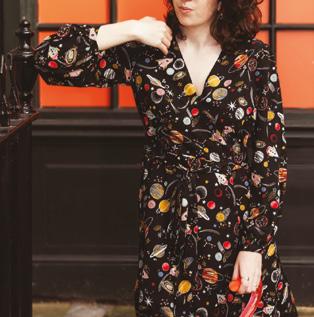
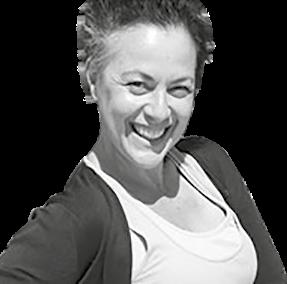
Credit: Deb Burrows
What does the concept of ‘pride’ mean to you? Better still, what does ‘disability pride’ mean to you, and what does that look like, how does it show up?
I have been disabled for the entirety of my existence - yet embracing disability pride only began in my early twenties. Autism was known about, sure - yet never spoken about positively, only for performance standards. ‘Autism is a superpower’ is impossible to live up to; it denies support for a palatable non-reality. It also denies a person agency and their autonomy in adulthood, it turns out. Shame is a very powerful emotion.
If you’re going to need a mobility aid, you may as well make it colourfulmaybe even sparkly.
Long Covid and the implications came with a whole new load of ableism. Surely I should just be able to ‘snap back’, and return to work as if nothing had happened? Or, my favourite: awww, you’re just anxious! You don’t need a cane to walk with! (Complete with people hiding it from me, as if to suddenly mean everything was okay.) I was shamed
at every turn, especially because of my age and issues around walking. Despite the interventions, I am still sick. And it means having to invoke a rarer kindness to myself, still.
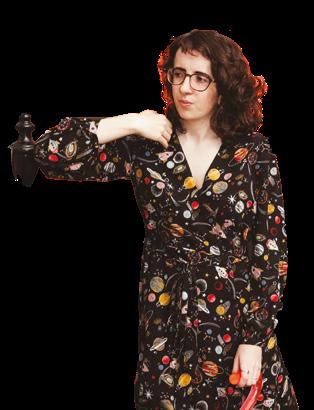
If you’re going to need a mobility aid, you may as well make it colourful - maybe even sparkly. For me, it was a declaration of intent, one that kept me safe within my body and enabled greater independence. The ‘funky brain stuff’ may mean I never go running again, something that still remains emotionally painful - but it also meant once again being able to move around independently. I could manage networking events, such as for work, albeit with a designated chair. Courts opened their doors for research purposes for my next book, seemingly. My pain significantly reduced, as did the functional seizures - using a cane is maintenance, it keeps me safe. But the bright colour, the light-up function? Every time I woke up, ready for the day, it would make me smile.
Better still if it matched my work backpack, or even my outfit! Here was my new self, disabled and accepting in this new form. There is something to be said, for feeling such a power, in being able to take pride in yourself like that.
This is a feeling that I want every single disabled person to have access to. The world’s largest minority group is also the one that is growing the quickest, thanks to the legacy of Covid 19 far across the world. Yet we are only just starting to see ourselves reflected in the media that we consume, as well as at the tables of power that decide our collective fates. July is Disability Pride Month; this year, I wish for you all to be able to step into the light, a life lived without shame.
Take care of each other, Lydia x


www.derwen.ac.uk 01691 661234
Whittington Road, Gobowen, SY11 3JA

We are Derwen College, a specialist day and residential college for young adults with special educational needs and disabilities (SEND).
We have a variety of pathways and programmes, to meet student needs in preparation for adulthood, including:


Retail and Enterprise
Work and Independence
Horticulture


Performing Arts
Hospitality and Food
Learning for Life (pre-vocational)
Nurture (PMLD and CLD)
Visit an Open Day!
Find all our upcoming Open Days on our website. Book early as spaces fill up fast!




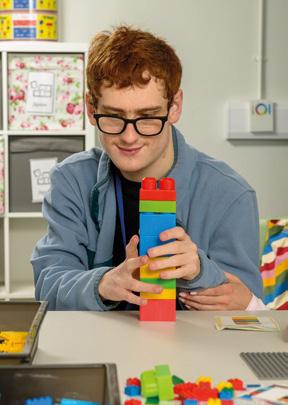

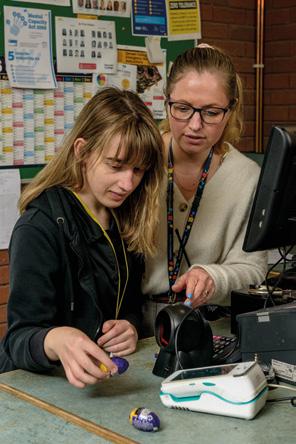



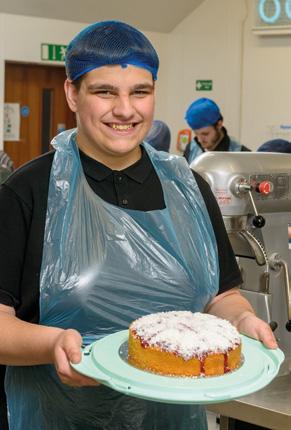


Contact our Admissions Team on 01691 661234 or email: admissions@derwen.ac.uk

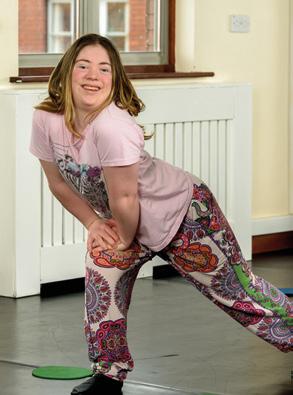
02 Editor’s Letter
A letter from editor Lydia Wilkins to welcome you to our disability pride issue
09 Newsbeat
All new and upcoming disability media you need to know about
13 Term Explainer: What Is Disability Pride?
July is Disability Pride Month, but just what is disability pride?
14 How To Make Your Wedding Neuroinclusive by Hester Grainger
Wedding celebrant Hester Grainger on how to make your wedding inclusive
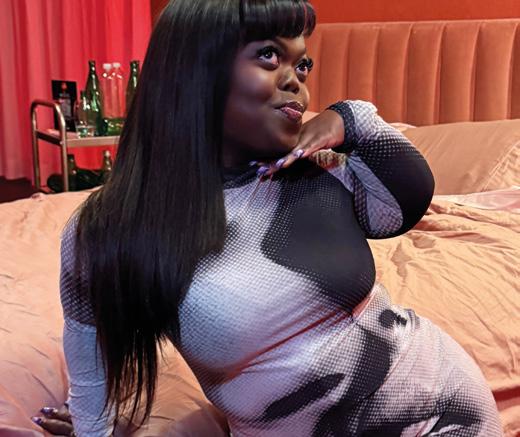
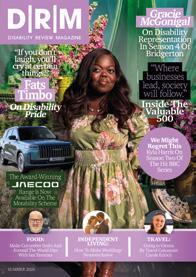
18 “If you don’t laugh, you’ll cry at certain things.”
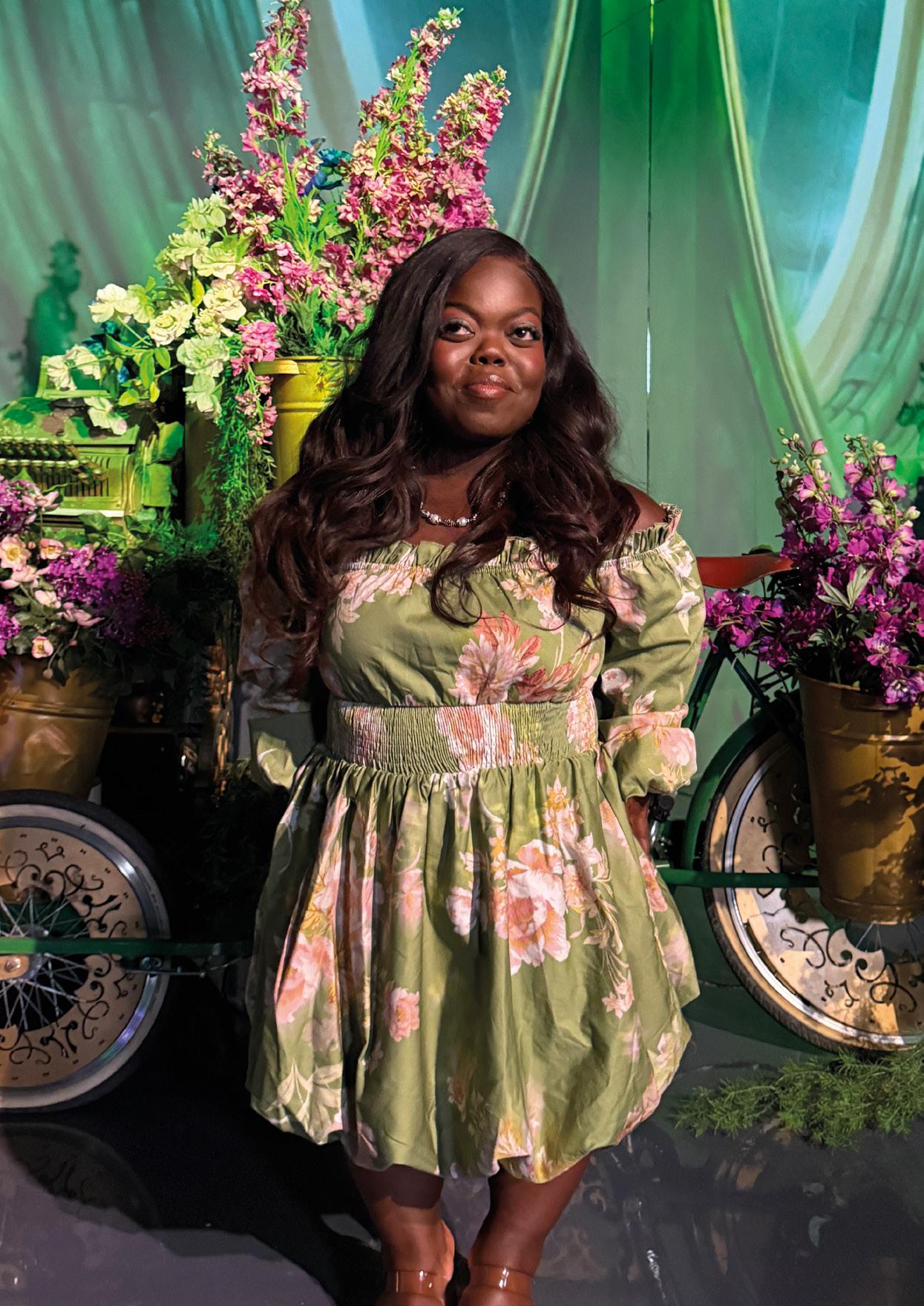
What does it mean to turn to humour as a form of disability pride? Cover star Fats Timbo offers us a masterclass
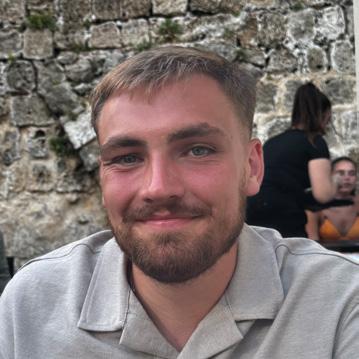
26 My Disability Living Essentials
Natalie-Amber on the items she cannot live without
30 Pride Is Permission by Dr Amo Raju
Columnist Dr Amo Raju on why taking pride in disability is a necessity
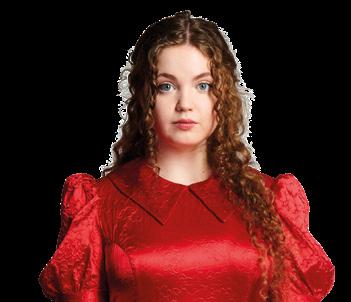
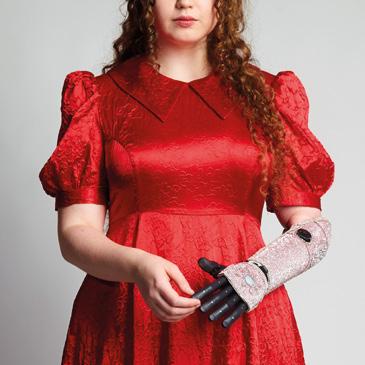
32 “Where businesses lead, society will follow.” Inside The Valuable 500
36 Aerodynamic Accessibility
Carole Edrich finds out if air travel can be accessible & environmentally friendly

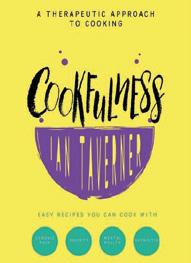
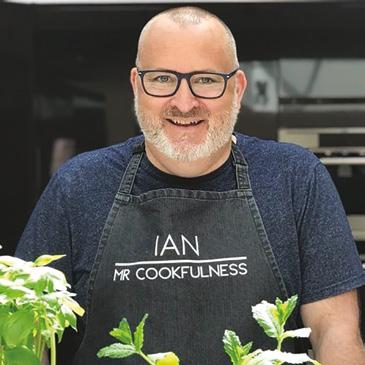
66 Cucumber Sushi With Around The World Dips by Ian Taverner
Mr Cookfulness is back with an all-new colourful recipe
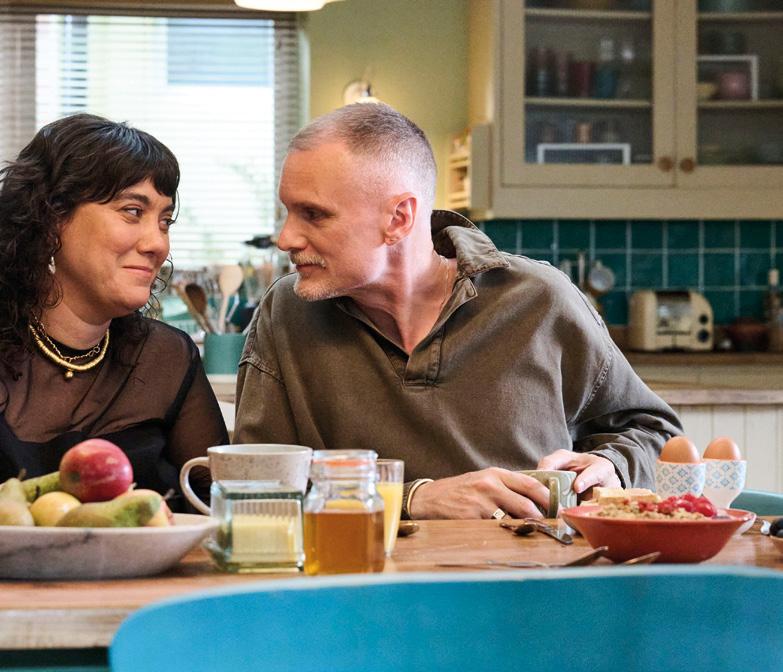
Executive Editor: Lee Gatland
Art Director: Richard Hejsak
Managing Editor: Lydia Wilkins lydia@sevenstarmedia.co.uk
Sales Team: 01959 543 650 sales@sevenstarmedia.co.uk
Published by SEVEN STAR MEDIA LTD
184 Main Road, Biggin Hill, Westerham, Kent Tel: 01959 543659 disabilityreviewmagazine.co.uk
Disclaimer: Disability Review Magazine (DRM) is published three times per annum by Seven Star Media Ltd. No part of DRM may be reproduced, stored in a retrieval system or transmitted to any form without permission. Views expressed in the magazine are not necessarily those of Seven Star Media Ltd, and are included to provide advice only. No content is a substitute for professional medical advice. During printing, images may be subject to a 15% variation. © Copyright of content belongs to individual contributors with the magazine copyright belonging to Seven Star Media. All rights reserved. Please either keep this magazine for future reference, pass it on for somebody else to read, or recycle it.






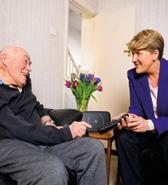
The Coming Of Age
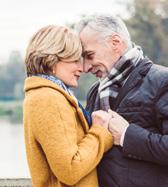
Ageing and the care crisis is not talked about enough; the Wellcome Collection is currently running a free exhibition that asks how society can adapt, enabling better ageing. Visit wellcomecollection.org for more information.
We Might Regret This, Series 2
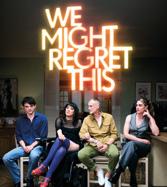
The landmark series in back! Kyla Harris talks to Disability Review Magazine about the making of season two of We Might Regret This, now available to stream on BBC iPlayer.
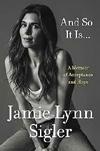
And So It Is… A Memoir Of Acceptance & Hope
Known for her role in The Sopranos, Jamie Lynn Sigler has released a new book. The book covers a range of subjects - including an experience of an eating disorder, a diagnosis of MS, and more.
Don’t Put Off The Switch, BT
The Put Off the Switch campaign urges customers to access support as the UK transitions to safer, digital landlines by January 2027. Visit bt.com/ connected-together for more information.
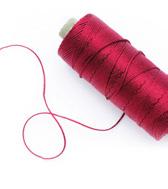
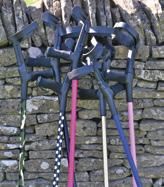
Cool Crutches Spring Collection
Since our last issue, Cool Crutches has released their new crutch collection! Whether you’re after zebra crutches if you have EDS, or a fierce rainbow leopard print, visit their website for more information. coolcrutches.com
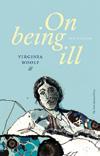
On Being Ill
A contemporary reissue of the groundbreaking Virgina Woolf essay, with accompanying contributions on the subject of illness and disability from modern day individuals, has been released by The New Menard Press.
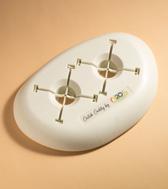
NeoWalk Crutch Caddy
How to store your mobility aids?
Introducing the NeoWalk Crutch Caddy! This stand can store up to two walking sticks, and is also made to glow in the dark for ease of location. Visit tinyurl. com/3352dz7v for more information.
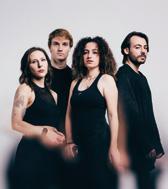
What If Better Never Comes?
In our last issue metal band Mallavora spoke to Disability Review Magazine about their upcoming album. What If Better Never Comes?, a mediation on what it means to live with a disability, is out now and available to stream on all platforms.
A Thread That Binds Us
Mental health is especially prevalent as an issue in the disabled community; A Thread That Binds Us are two tapestrybased works of art that explore parental beliefs around mental health in families.
See for free at the Science Gallery, just outside London Bridge station.
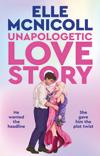
Unapologetic Love Story
Elle McNicoll’s debut adult romance novel is finally out in the world! In our last issue we interviewed her about writing a novel including disability representation & romance; this book is not to be missed.
DAYS
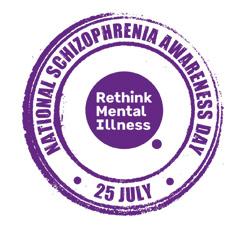
National Schizophrenia Awareness Day
July 25th marks National Schizophrenia Awareness Day, with the aim to shift public perception in recognition of full lives.
ADHD Awareness Month
October is ADHD Awareness Month. ADHD is a form of neurodivergence, which is recognised as part of the neurodiversity movement. Further on in this issue, former cover star Hester Grainger writes for us on the subject of neuroinclusion.
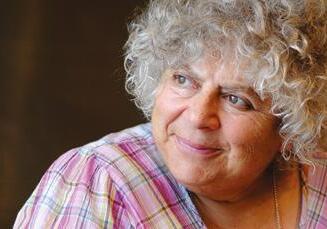
Miriam’s Full English, Live
From September until early December this year, Miriam Margolyes will be back on the road as part of a live tour.
With locations including Oxford and Manchester, tickets are available from Fane.co.uk.
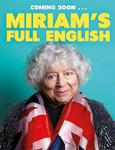
Miriam’s Full English: A Grand Tour Of All Our Best Bits
Due for release in early September, former Disability Review Magazine cover star Miriam Margolyes is back! Training her documentary-maker eye on the UK, Margolyes is back better than ever.
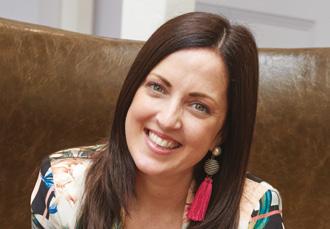
ADHD, Unfiltered
Former Disability Review Magazine
cover star Hester Grainger is going back on the road! She toured the UK on the subject last year, and will be doing the same again this autumn. Follow her on Instagram for further announcements: instagram.com/hestersvibe/
London Fashion Week
London Fashion Week looks set to be more disability-inclusive than ever before. Come back in December to find out more in our next issue!
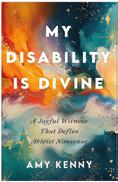
My Disability Is Divine
How can we reconcile disability and faith? A book that is joyful in the intersection of faith and disability, the next book by Amy Kenny will land in September.
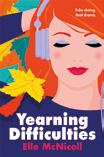
Yearning Difficulties
Award-winning author Elle McNicoll will be releasing another book. Slated for release in early October, Yearning Difficulties is a young adult fiction book, for readers twelve and up, in the romance genre.
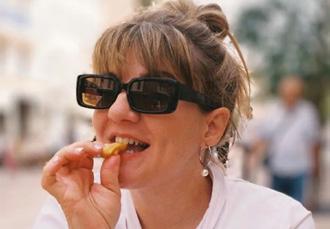
Being Heumann
Actress Ruth Madeley, known for appearances in When Barbara Met Alan & Years & Years, is set to portray disability icon Judy Heumann in Being Heumann. The release date is yet to be confirmed.
Nearly 1 in 3 Disabled people in the UK live in poverty, facing substantial additional living costs.
Personal Independence Payment can make a real difference to life with a disability or long-term health condition. The free Turn2us PIP Helper shows you whether you could get it, and guides you through claiming it, step by step.
Life costs more when you are Disabled. Yet every year disability benefits go unclaimed by many thousands of Disabled people, while thousands more are awarded lower rates than they should be. Not because they are not entitled to help, but because the system designed to support them can be exhausting and scary to navigate. We do not think that is acceptable. So while we campaign to fix the system, we are also helping people get what they are entitled to right now.
Nobody should face financial insecurity alone. Start your journey to claim using the Turn2us PIP Helper and join us in demanding a system that works.
Personal Independence Payment (PIP) is money for people aged between 16 and pension age who find daily tasks, or getting out and about, harder because of a long-term health condition or disability. You can get PIP whether you are working or not. A PIP award can also unlock other support, from benefit top-ups to travel schemes.
The Turn2us PIP Helper is a free, confidential online tool co-created with people who have been through the PIP process themselves, alongside health and disability charities. It is independent from the Department for Work and Pensions, and your information stays private and is not shared with anyone else. With the PIP Helper you can:
• Check what PIP award you are likely to get
• Walk through the PIP application process step by step
• Get personalised tips on how to fill out your application form
• Sign up to receive reminders and use checklists to track your progress
• Find extra help you can get based on your PIP award
It also includes support for your wellbeing along the way, because listing the things you struggle with takes a toll. You do not need to give your name, you can save your answers and return later, and the tool works on desktop and mobile through your web browser.
PIP should help Disabled people with the extra costs of disability, as it was designed to do. Turn2us are challenging proposed cuts to health and disability benefits and pushing for a social security system that treats people with dignity, not as statistics. Insights from the people who use our tools shape our campaigns.

















a disability-specific term in each issue to find out more.
Whether you care for someone or are disabled yourself, it’s fair to say that the world of disability comes with a whole other kind of language. Sometimes specialised and person-specific, along with myth-making and misunderstanding, it can be a lot to get your head around at the best of times. In each issue of Disability Review Magazine, the team decipher one term by way of deconstruction. July is Disability Pride Month - and this issue is themed around the concept of disability pride - which brings us on to an all-important, crucial question:
A disability diagnosis is typically routed in a medical setting, and is therefore understood under the medical model of disability. This suggests that the body is the problem for not being the typical ‘standard’, and that it is in need of a cure or a correction, in order to be acceptable to the mainstream. Contrast this with the social model of disability; this suggests that society is the problem, in that barriers and inaccessibility remain in place. The body is not the problem, the barriers to the access are. Each approach comes with an impact, and a whole host of feelings. The
point of the social model is that this is also to encourage pride - in that to be disabled is not the problem, the inaccessibility of society is. Taking pride means finding your community/tribe, implementing adaptations/mobility aids as needed, advocating for yourself, and just being at peace with yourself. In this issue, you will find our team of writers, and their thoughts on what disability pride means to them, too.
Whether you care for someone or are disabled yourself, it’s fair to say that the world of disability comes with a whole other kind of language.
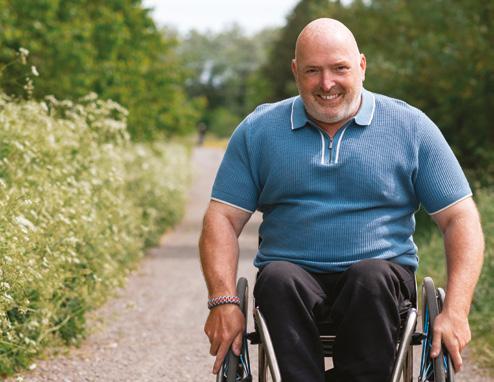
Disability Pride (capitals intended!) looks different for each and every person. After all, would it not be boring if we were all the same? This could look like purchasing your first mobility aid, and customising it with accessories, crystals, beads - just for a bit of colour in a world of grey and beige! (Side note: businesses such as NeoWalk offer you the option of light up and colour changing canes.) It could be contributing time and resource as a volunteer, the mentorship of a young, disabled person. It’s a point of view that asserts that disability is not the problem, the lack of access in society is - because we are a part of an ever-growing community. There is nothing about us, without us.
The month of July is the annual celebration of Disability Pride Month. Marked with the Disability Pride Flag, it is in part a commemoration and celebration - of the disabled people who have died due to ableism, as well as celebrating what it means to be a part of the world’s largest minority group.
By Hester Grainger
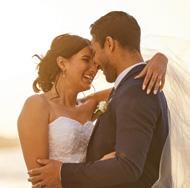
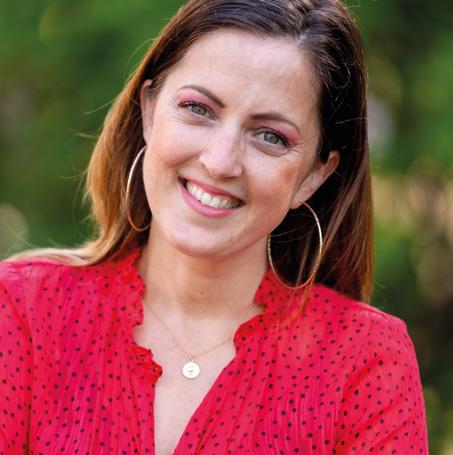
Having decided to train as a wedding celebrant, Hester Grainger investigates how to make a wedding neuroinclusive.
Ilove love. I always have done. The idea of two people meeting, falling in love, and wanting to be with that person forever just brings me out in goosebumps. It made perfect sense for me to train and become a certified wedding celebrant. That way I can see real love in front of my eyes, and from a selfish perspective, I get to be a part of the biggest day of a couple’s life. Having been to a lot of weddings, not all of them are disability-inclusive. Neurodivergent or not, weddings often involve a lot of masking. Love doesn’t look one way, and that’s something weddings should reflect. If you are getting married and one or both of you are neurodivergent, the toll on your big day can be a lot. With around 20% of the population being neurodivergent (that is a conservative figure, and it’s estimated to be higher), about 1 in 5 of the guests attending will be. By making your wedding inclusive for all, it will ensure everyone has a fantastic day.
There can be a pressure to fit in. To follow traditions that don’t quite feel right.
There can be a pressure to fit in. To follow traditions that don’t quite feel right. To use language that doesn’t reflect you. To shape your day around expectations that were never designed with you in mind. Whether it’s deciding who stands where, what you’re called, what you wear, or how your ceremony is structured, so much of it is built on assumptions. But your wedding doesn’t have to follow a script that was written for someone else. Because at its core, pride is about authenticity. About removing the mask. About being able to say ‘this is who I am, and this is who I love’. And that’s exactly what an inclusive wedding should feel like.


When I got married 18 years ago to my husband Kelly, neither of us knew we were neurodivergent. Kelly was diagnosed as autistic and with ADHD in his forties. I was diagnosed with ADHD in my forties, too.
Looking back, it all makes sense. Kelly was understandably incredibly anxious on the day, not about getting married to me (or at least I hope not!) but about being the centre of attention, having to make a speech (will it be funny enough, appropriate, will it land well), and having to make small talk. Often an autistic person’s kryptonite.
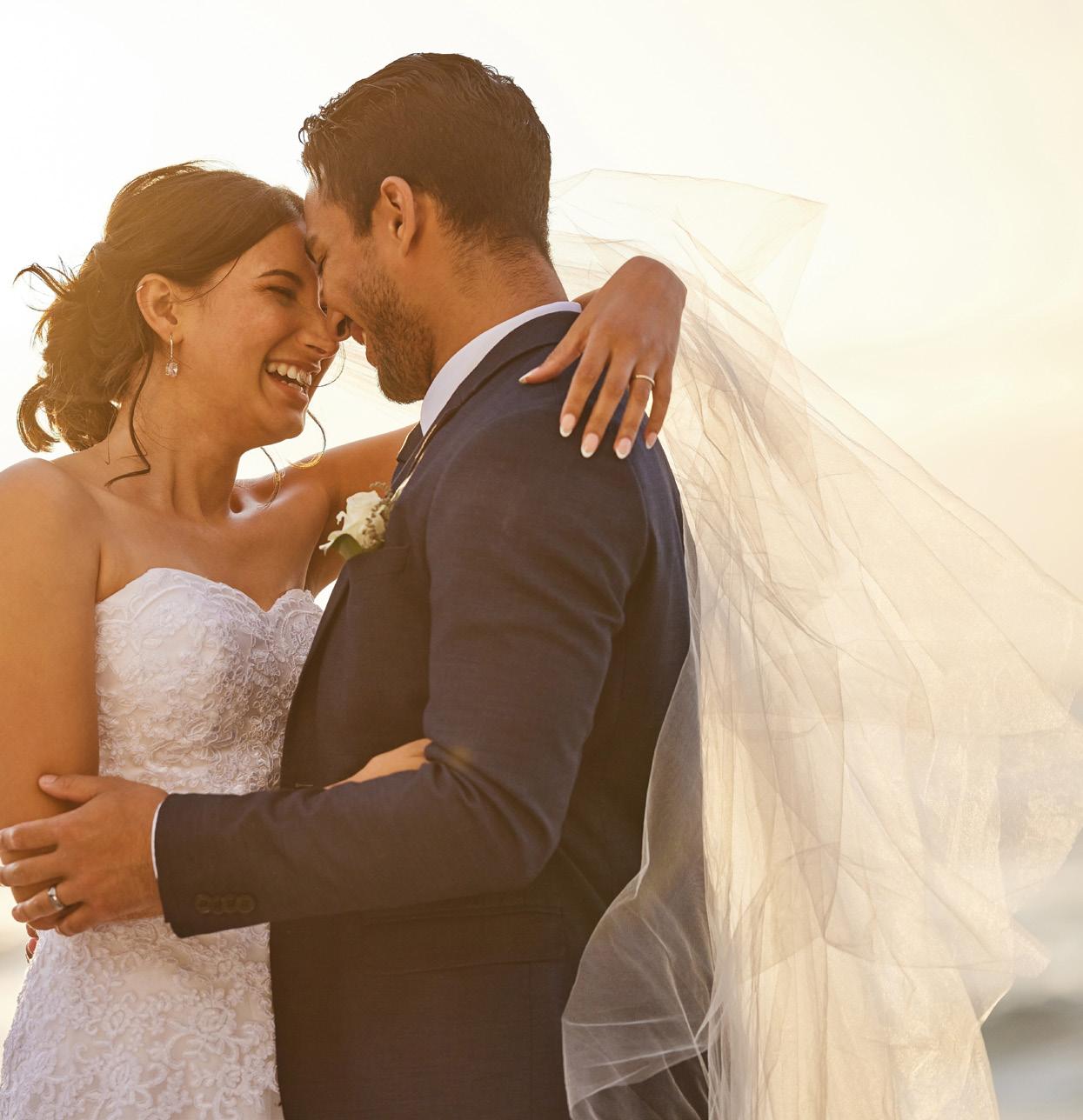
Having been to a lot of weddings, not all of them are disability-inclusive. Neurodivergent or not, weddings often involve a lot of masking.
It didn’t help that we had a wedding registrar that we had never met until 20 minutes before the ceremony. She seemed pleasant enough, but kept calling me Kelly, and Kelly Hester. We’ve had this throughout our time together, but I didn’t expect it on our wedding day. I had to hold my breath throughout the ceremony with the worry that she would get our names in a muddle. That’s why I wanted to train as a celebrant and why I launched Hester Loves Love. My role isn’t about making weddings accessible for neurodivergent people. It’s about creating a space where everyone feels seen, respected, and celebrated. I wanted to actually get to know the couple! How they met, their story. Their journey. Having chats and catch-ups before the big day. Not just meeting someone for the first time as they stand at the altar. To actually understand them. Find out what they love. What gives them the ick and everything in between. And get their names right!
Celebrants are one of the most powerful ways to make your wedding truly inclusive. Whether that’s adapting the structure of the ceremony, removing unnecessary traditions, using the right language, or simply taking the time to genuinely understand you, your wedding should feel like yours in every possible way.
From start to finish, everything is personalised to the couple. The in-jokes that only your closest people will recognise. The details that reflect what matters to you. The things you love and the passions that shape who you are.
Let people know what to expect. When you are autistic/ADHD or AuDHD, uncertainty can be stressful. Simply by sharing clear information before the day can really help guests feel more relaxed. A wedding website is a great way to keep guests updated. You can show images of the venue, share the rough schedule for the day, and how long the ceremony might be. What the menu will be and roughly when food will be served. Let guests know that they can bring their safe foods – you don’t want it to turn into a picnic, but having a son with ARFID (Avoidant Restrictive Food Intake Disorder), I do have to take his safe foods everywhere, otherwise he just won’t eat.
Knowing what’s coming next and how long things will take removes a lot of unnecessary anxiety. When it comes to the speeches, rather than sharing “speeches at 4pm”, let people know “speeches at 4pm (approx. 20 mins, light-hearted, no audience participation)”. It just removes any anxiety.
Which takes me on to removing “forced participation” moments. So many weddings include: “Let’s get everyone up!” Or surprise sing-alongs or games. Give people permission to opt out without being noticed. Get the celebrant to explain that people can join in as much or as little as they like.
Weddings often come with a lot of expectations. But let people come as they are. Some people love dancing all night, whilst others are happier chatting quietly or heading home earlier. Whatever people choose, it isn’t a reflection on you or your wedding day. Remember, talking and meeting new people can very quickly drain people’s social battery, so don’t be offended if a few people head off earlier than you expect.
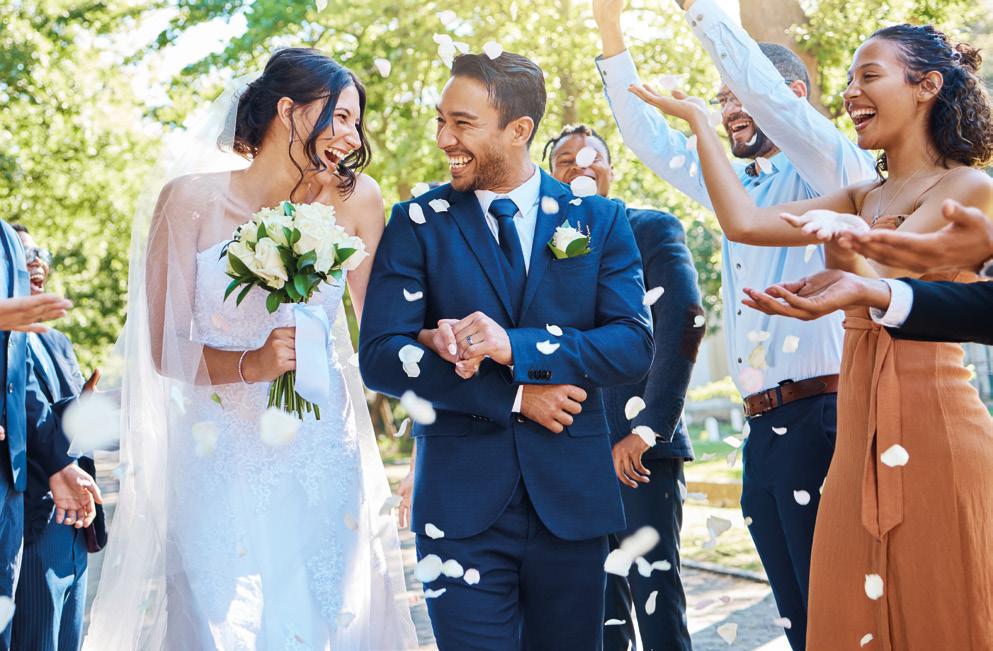
Just by adding some of these simple changes, guests will be able to join in at their own pace, without pressure, and they’re far more likely to relax and enjoy the day.
“Ifyoudon’t crylaugh,you’ll things.”atcertain
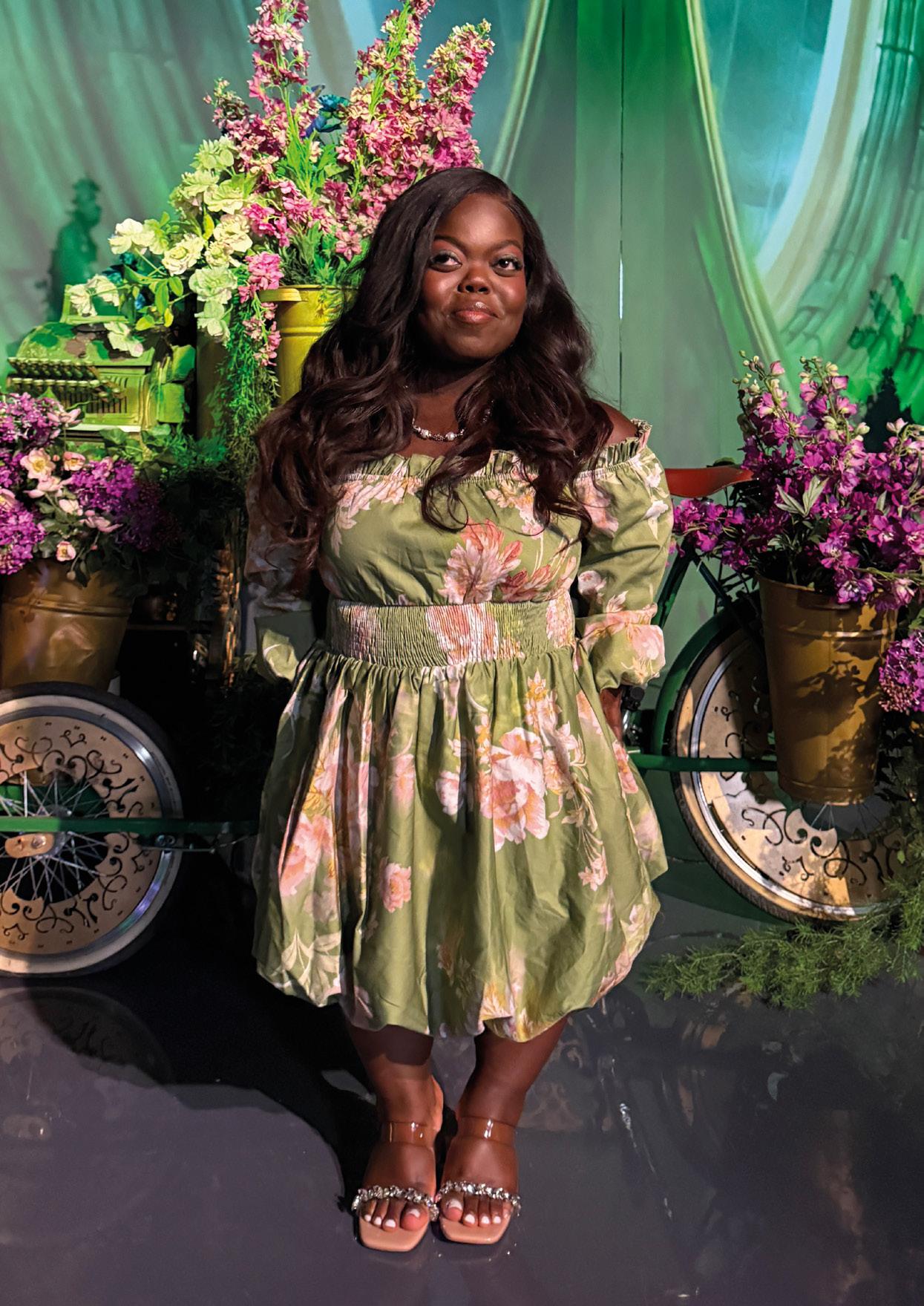
What does it mean to turn to humour as a form of disability pride? Fatima ‘Fats’ Timbo is a noted author, comedian, and content creator. With over three million TikTok followers, Disability Review Magazine sat down with her to discuss all things disability pride. As told to editor Lydia Wilkins.
Q Thank you very much for agreeing to this interview.
You’re something of a multihyphenate. Prior to recording, you’ve literally just been talking about a new content series and filming the day before this interview. You’re also a comedian, content creator, and a disability advocate. What was it that prompted your initial love of comedy?
ATo be honest, what initially, um, initiated that was my dad being hilarious, and my family’s sense of humour as well. We don’t take much seriously,
and we laugh at a lot of things. So naturally, we just have a lot of jokes. And when I would talk to my friends or, you know, when I’d do presentations at school, I’d just make people laugh somehow, and I’m like, “Oh, I guess I’m funny.”
And on TikTok, when it first started, a lot of people were showing their funny side, and I had already been on Instagram for about three, four years, but I didn’t really show my funny side. I was scared that, you know, I might get rejected or people might not think I’m funny. So when I started showing my funny side on TikTok, that’s when I think it really blew up. So yeah, that, that’s … I guess that’s how I became a comedian.
And to be honest, it took me a long time to even have disability pride.
And then I met somebody, uh, from, uh, Screen, Screen Nation. Yeah, Screen Nation, and he basically said, “I think you’re funny, and I think you could do stand-up.” And I thought, “Oh my God, I don’t think I’m that funny. I don’t know if I’ve got that much confidence.” And that’s how my stand-up career started. You know, I basically wrote some jokes and wrote some stories that have happened to me, and set up my own comedy show so that I can give opportunities to other comedy content creators
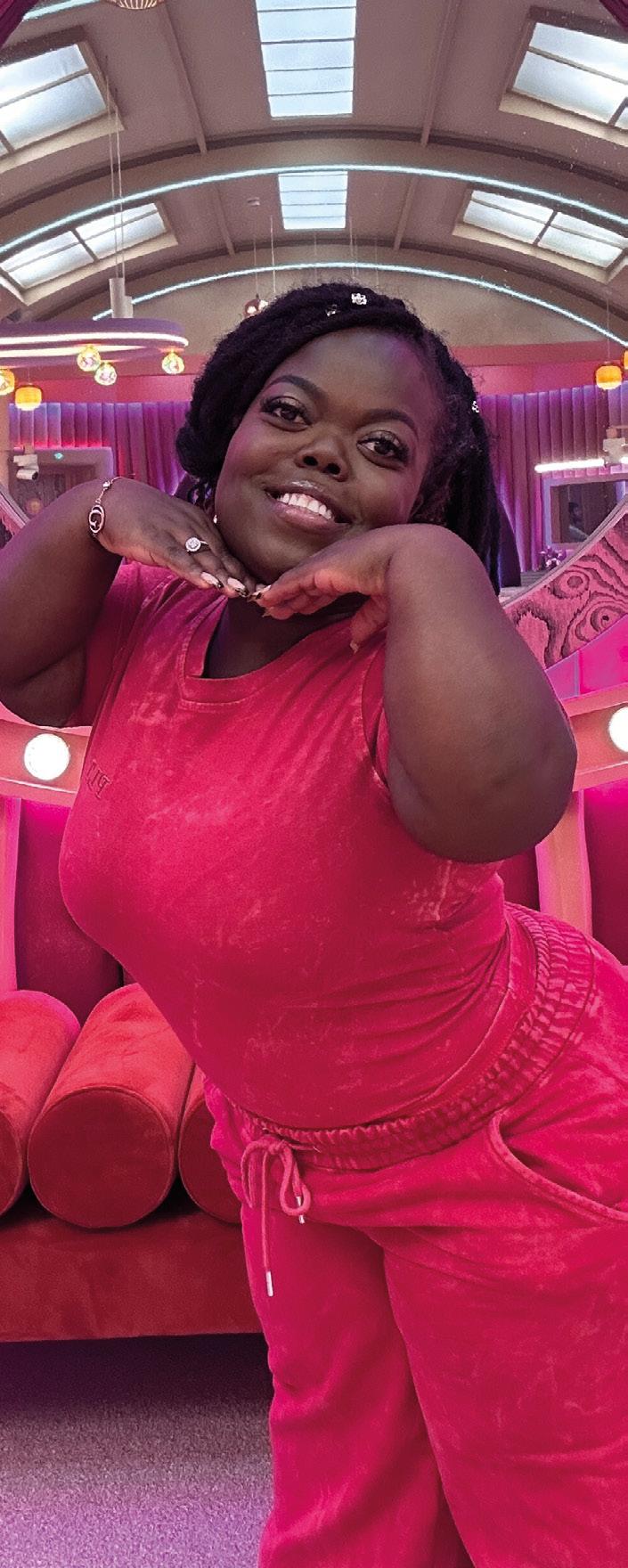
So for me, I think it coincides with each other, being main, being a main character and being fearless.
Q I love the fact that you said that ‘we’re not serious’, and also sort of the self-deprecating [characteristic] of ‘what if I’m not funny enough’ at the same time.
AYeah.
Q Your book is also called Main Character Energy, which we’ll come to in a second. But it’s just really interesting, the contrast between the two.
A I appreciate that. I feel like comedy is all, like, different layers of things because life is not always one level. Sometimes life can be really serious, but if you see it in a funny way or if you don’t take it too seriously sometimes, then, you know, you can laugh. ‘Cause to be honest, if you don’t laugh, you’ll cry at certain things.
Q And there’s the quote for the title of this piece: “If you don’t laugh, you’ll cry at certain things.”
Was your ability to make people laugh perhaps a pushback against ableism?
AOh, yes, 100%, because I think for me, growing up with ... growing up and having ableism attached on to me every single day practically in terms of society, the way, uh, society is built, they could say something is disability-friendly, but it was built by somebody that is able-bodied, so certain things wouldn’t be thought out about. You know, people making comments and people, um, making comments about my height and the way I look, is ableism. So I find using comedy to make fun out of those that don’t see disability as people that aren’t capable in a way, um, is really helpful because a lot of people don’t want to be preached at. They want to laugh with you or maybe, you know, they ... it’s a way for people to see your perspective in a lighthearted way.
So when I do funny videos with Meryl, where we take the mick out of my husband in a way, I think a lot of people understand maybe how we feel in that moment if somebody is being patronising towards us, or if somebody’s being overly cautious of what they say around us. You know, there’s so many different scenarios, and it’s so funny to demonstrate it in a 30-second video.
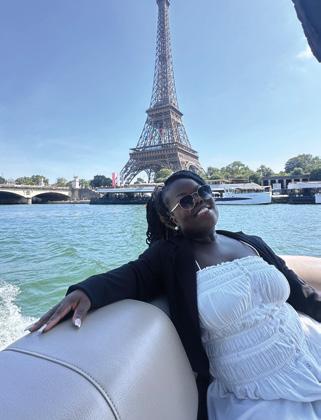
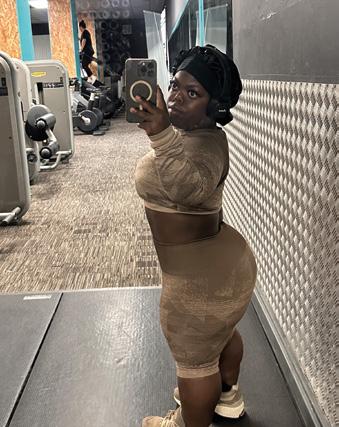
If you don’t laugh, you’ll cry at certain things.
Q Fair play.
A Yeah.
Q For people who may not know, would you mind telling us about your disability and what your access needs are?
A So my condition is called Achondroplasia. It’s a type of dwarfism. There’s about 100 different types. Don’t quote me, but maybe quote me …! But 70 ... but achondroplasia is 75% of all dwarfism that people have. So the access needs that I need is having a step stool, is using hand controls in my car. Some people use, some people use pedal extensions [when driving]. Um, also a lower sink. Basically, I just need things to be closer to me so that I can reach it, you know, and the world isn’t built for that sometimes. So certain things I might need help on. I might ask my husband or my siblings to help me reach it. But I found ways of going around it, so I’ve got a picker when I’m going shopping now.
Q Love it. Absolutely love it
AYeah, so it helps with my independence so much. So, so much. It’s obviously certain things that I can’t reach on the top shelf, so, um, yeah, I just ask a stranger. So that, that skill has helped me be more social, to be honest, ‘cause I have to talk to people if I want to get a chicken gyoza or something, you know?
Q And do you mind me asking, what would your preferred terminology be around your disability?
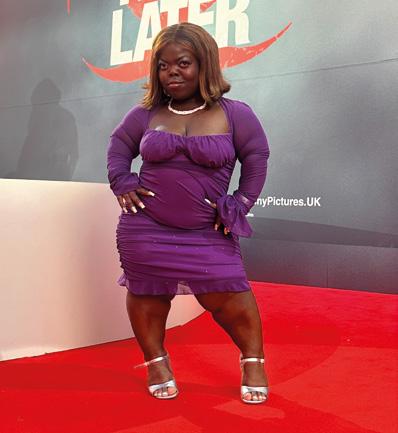
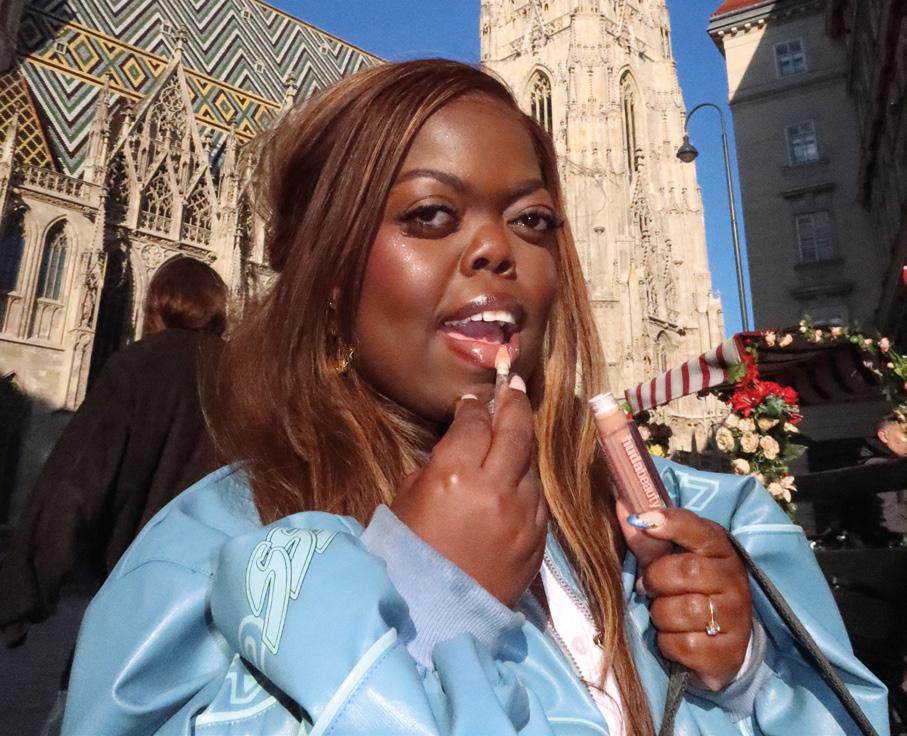
A My preferred terminology is Little Person. The thing is, I think Little Person humanises me because the term dwarf kind of makes me feel like a mythical creature. You know, you hear it in, uh, fantasy movies and things like that, and it just makes me feel like I’m not, I’m not that. I’m just little, and I’m a person. So it’s one of those ones. But I guess it depends on the person that you’re talking to, because they might prefer the medical term, or they might prefer Little Person. So it depends.
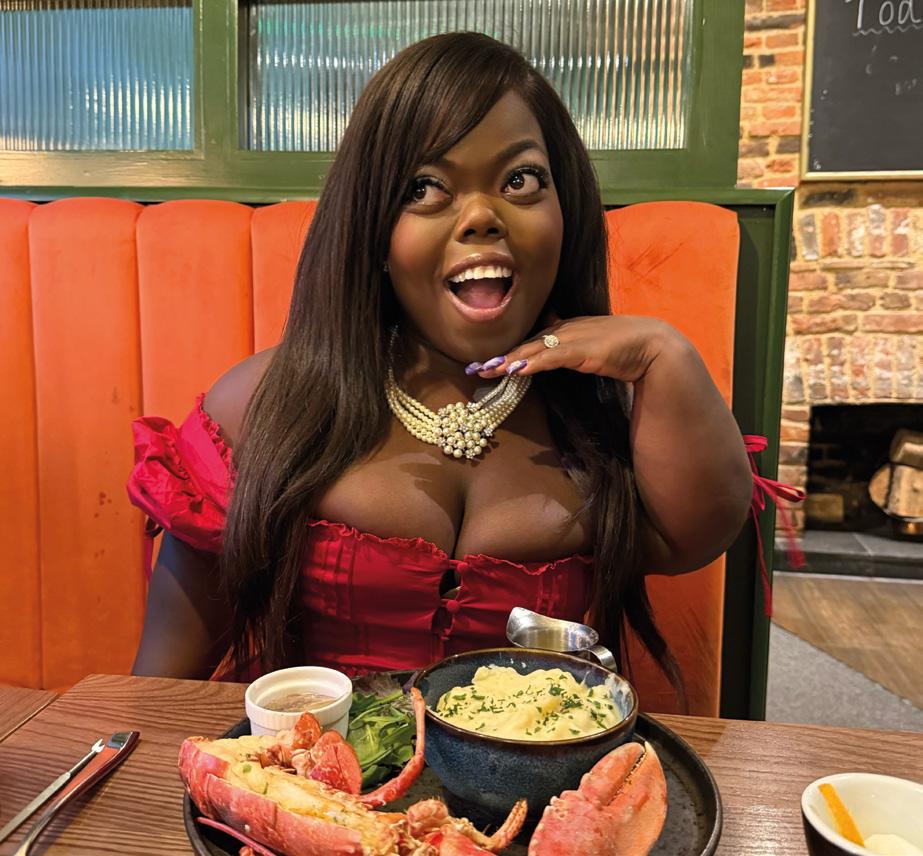
I think a lot of non-disabled people find it hard to stand out from the crowd, and when they do, they feel insecure about it.
Q That’s why I thought I should ask the question, just because it strikes me sometimes journalists are very disrespectful to disabled people in not asking the question.
A Yeah.
Q Going on to your book, Main Character Energy, in the introduction, you define kind of a sense of fearlessness. Where does that come from? And in respect of main character energy, that is very often, it’s an
internet term, and people often associate it with being the director of your own story.
AThat’s the intention of it. Yeah. So for me, I think it coincides with each other, being main, being a main character and being fearless. I have had to be fearless with no choice, you know, in life. Sometimes I was scared to go outside to face judgment, to face, uh, people ridiculing me. It was like going to the unknown every single time because it’s like wearing a funny costume. You just get the attention all the time, and you get different reactions. So I guess that’s where my fearlessness stemmed from, having to be resilient just being me.
So I had to bring that into so many different aspects of my life, especially, like, social media, because a lot of people are terrified of being on social media because [of] their fear of what people might think of them or horrible comments. But because I’ve had it my whole life, it’s like a pinch of salt, really. It’s not… It’s nothing for me.
So, um, I guess even being a main character, a lot of people might see that as, like, a selfish term. Like, they don’t, [they think] that it’s just them, and the world is revolving around them. No, it’s about having self-care, having that self-love, loving yourself, and sometimes just saying, “Do you know what? I’m gonna put myself first,” you know? Because a lot of people forget about themselves, you can be the main character in your own story if you, if you put your needs first or if you put your, um, emotions first, you know?
Q Particularly for disabled women, maybe, as well.
AYes.
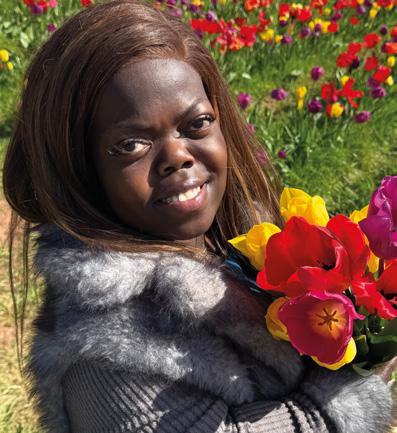
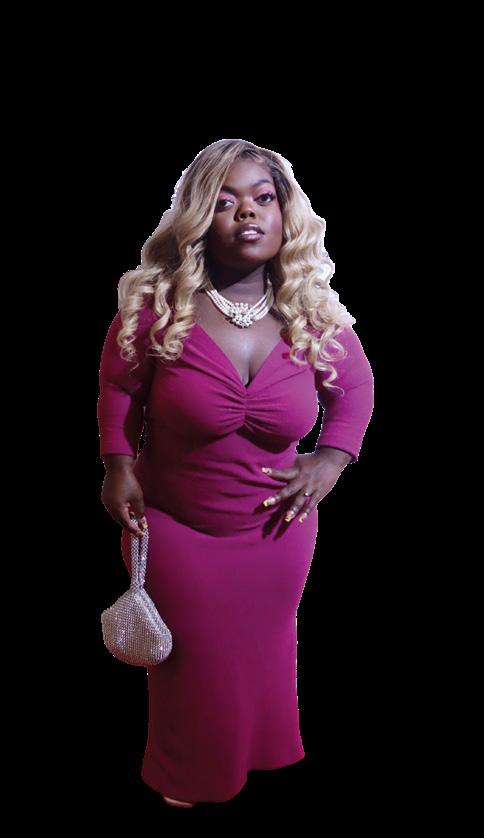
We don’t take much seriously, and we laugh at a lot of things. So naturally, we just have a lot of jokes.
Q Is your main character energy a form of disability pride?
AOh, 100%. 100%. I have had to do that, to have pride in myself, you know, um, and disability pride in general. And to be honest, it took me a long time to even have disability pride. You know, to seeing how my disability is something that is what made me me, and what is making a lot of people feel represented on social media. Though that, pride that I feel when I show that I have Achondroplasia is so different to how I used to feel about it literally 15 years ago or 20 years ago. So, um, now I feel like I can talk about my medical issue or, like, ‘cause I have medical conditions on top of that. Um, I can talk about how I’ve adapted, you know, [with] my condition. I can talk about how it’s helped my resilience. And being able to talk about all these things is
helping other people, especially on social media. So yeah, I think it’s so important to talk more about disability pride because a lot of people, they shame disability. They shame [us when talking about an experience], “Oh my God, if I was like that,” or, “If I was.. If I had a disability or something happened to me and I had to be disabled, I don’t know what I’d do.” So and then I think to myself, “Well, you’ll just live. You’ll just live a different way.” Yeah. That’s all it is.
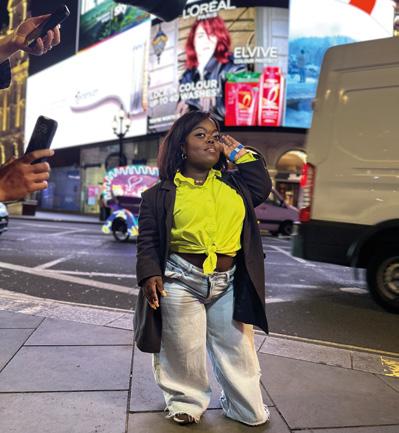
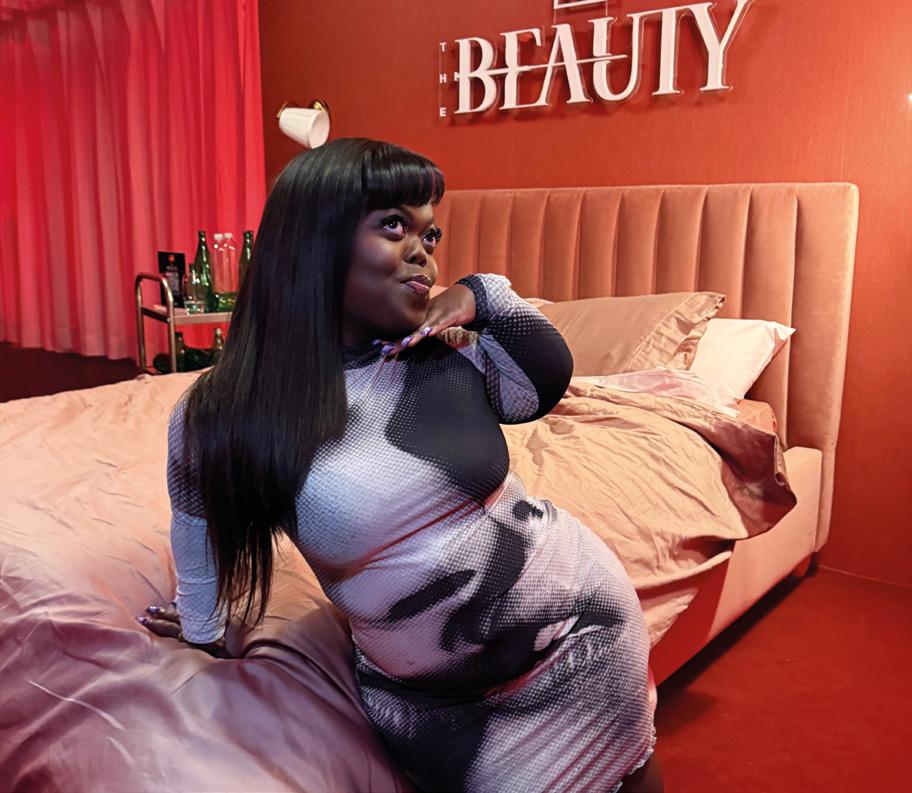
Q Your book is also divided into commandments.
A Yes.
Q What would your one commandment be for the non-disabled?
A
Um, I would say ….. Again, I think love you because I think a lot of non-disabled people, [they] find it hard to stand out from the crowd, and when they do, they feel insecure about it. But with disabled people, they have no choice to stand out.
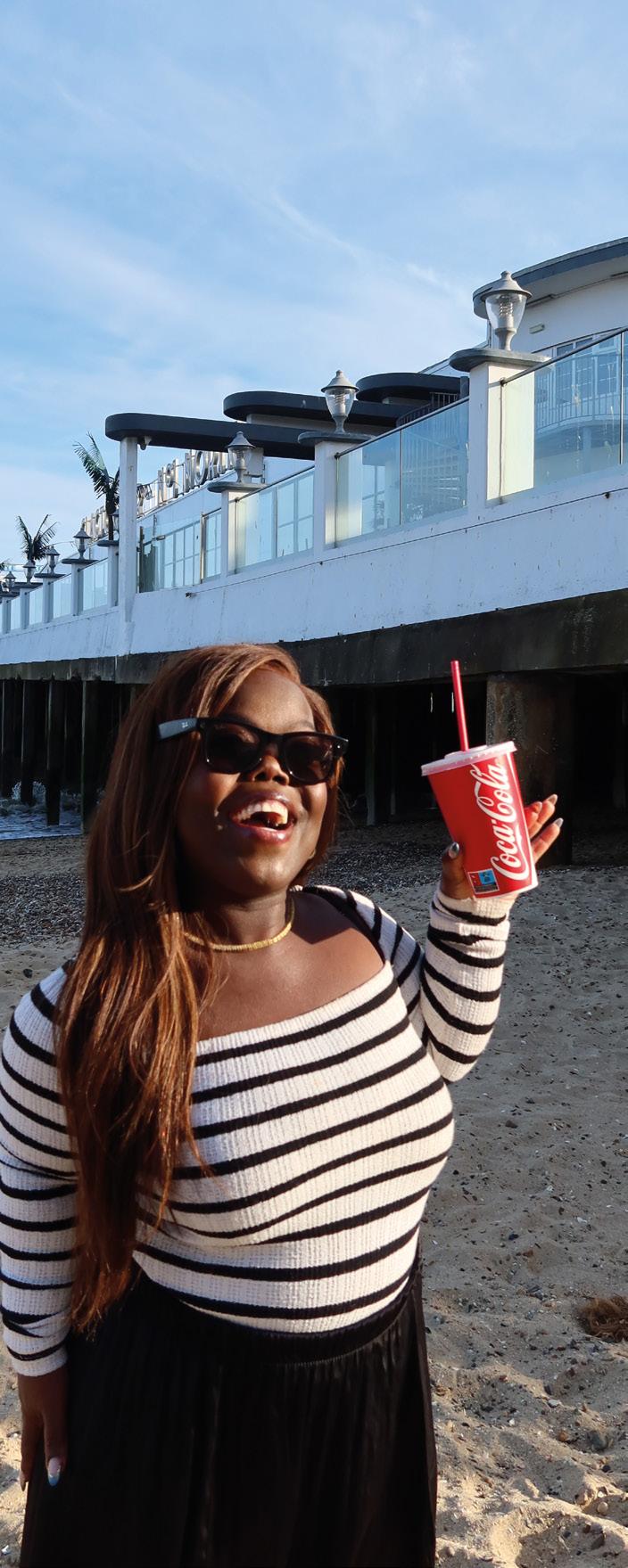
You have to have that resilience to go against society and sometimes the environmental barriers that come your way.
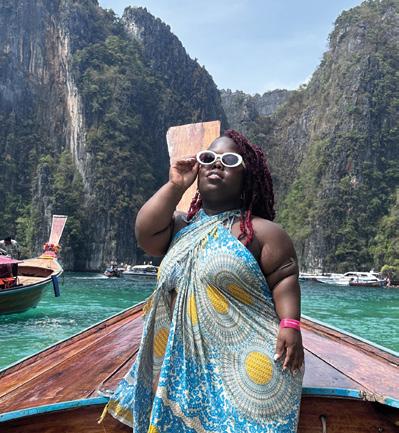
It’s something that we’ve - I feel like it’s easier to love, in my experience, it’s easier to love yourself when you’re fighting against people ridiculing you, because you have to have that resilience to go against people. You have to have that resilience to go against society and sometimes the environmental barriers that come your way. But with non-disabled people, they don’t have to face that as much. So it’s like, what am I fighting against? Or I’ve had so many friends that are like, “Oh, you know, I don’t know how you can find so much confidence in yourself. Sometimes I don’t know what’s special about me,” or, you know. That’s what I would say. I hope that makes sense.
Q That does make sense. It’s very wise as well.
As a last question, what’s next for you? You’ve accomplished so much, from TV shows to content creation. What’s next?
A
What’s next? I think more presenting, more TV, more… just we’ll see what happens, I think. We’ll see what, where my path leads me to. ‘Cause right now I feel like we’re seeing where the wind takes me. So I might do another stand-up show. Who knows? That might come up.
Q Netflix special?
A
Oh, I would absolutely love that. That would be sensational. So, you know, who knows? I might work with Netflix. Um, but we’ll see what happens. I just want to… ‘Cause I’ve got married recently, and I feel like I’ve, last year I accomplished so many goals, and this year it’s like, what next? What am I doing now? What’s going on? We’ll see.
Main Character Energy by Fats Timbo is out now.
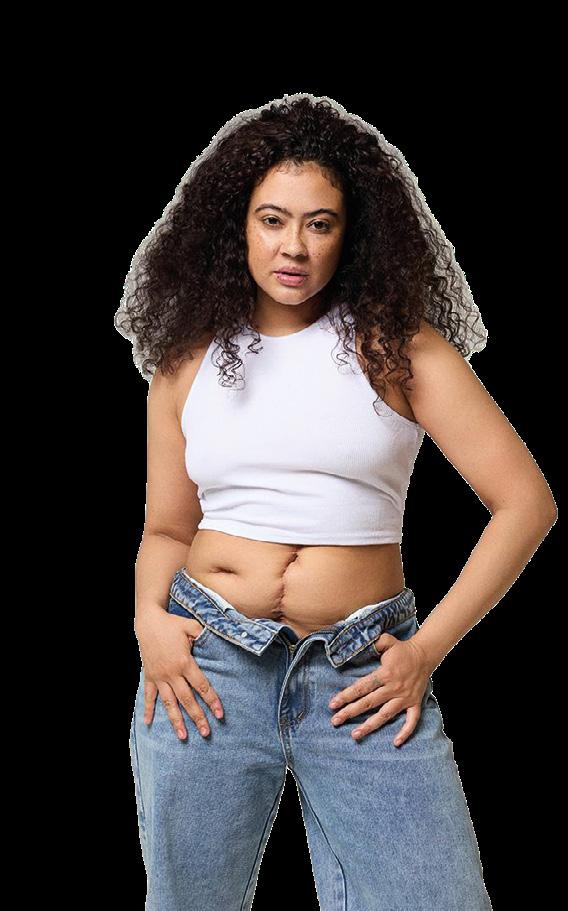
In each issue of Disability Review Magazine, a disabled person lets us in on their disability living essentials that they use daily to manage their condition. Personal Trainer Natalie-Amber tells us about life with a hidden disability.
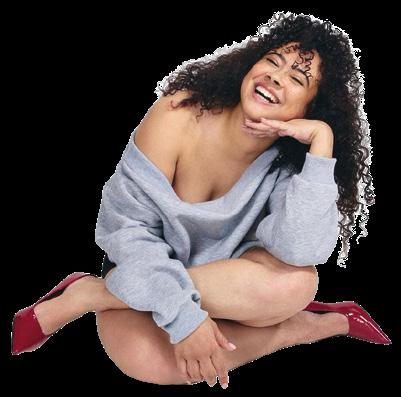
Ihave a hidden disability, so I have Crohns Disease. That is an inflammatory bowel disease that affects your whole digestive tract from the mouth all the way down to the anus. I have had two emergency surgeries, I had a stoma bag, and I have now had the stoma bag reversed. And I had 35 cm of my small bowel removed, so life has obviously changed a lot for me. I don’t have much left of my small bowel left at all.
“I have to carry some certain things
in my bag. One of the things I carry in my bag is my Crohns & Colitis UK ‘can’t wait’ card, which is essential. It is so crucial for me because if I’m out in public, and I need to go to the toilet, which half the time I’m lucky to even make it to the toilet, I need that card! Because if there’s no public toilets available, or anything near, an accessible toilet or anything like that, I need this card.
“Also a Radar key, because you never know when you might need it! Especially always the way, [I] always need to go to the toilet more so when I get to (random) Liverpool Street in London. So, that Radar key is perfect because their toilets, you do Radar key.
“I also have extra pairs of underwear, usually two, I’m an overthinker and I get paranoid! I always thought having two pairs is better than one. That’s always in my bag, especially because of, as I said, being prone to accidents.
“I also have noise cancelling headphones, because of my diagnosed ADHD. I am obviously being tested for Autism as well, but I just ‘can’t’ with a lot of noise, and I can’t think, I
can’t focus. They’ve been a lifesaver! It took me ages to find the right pair, I don’t leave without them. Especially in London! If I’m in London, oh my gosh it makes such a difference! It is absolutely amazing. I’m really grateful for those, and obviously because they’re in the shade pink. Because I am a pink girl, so everything has to be pink! [Laughs.]
“On top of that, I also have Sudo Cream. Sudo Cream is a must, because as I said.. always going to the toilet, I’m prone to fissures a lot as well, which sadly I think that’s for life. It’s tears if you go to the toilet quite a lot, so I have Sudo Cream on hand all the time!”
For more information, please visit natalieamber.co.uk.
I’m really grateful for those, and obviously because they’re in the shade pink. Because I am a pink



For many, finding the right sensory support can feel like a process of trial and error. What brings comfort, focus or reassurance to one person may do very little for another.
Sensory needs are deeply individual. Every person experiences the world differently, responds to their environment differently and finds comfort in different ways. We believe support should reflect that individuality, and it’s a belief is rooted in personal experience.

Following an ADHD diagnosis in adulthood and while raising neurodivergent children, our family quickly discovered that finding sensory resources that genuinely met individual needs was often easier said than done.



















That experience continues to shape our approach today and our commitment to helping others find support that works for them.


























£3.49










































We’ve opened our first ever store in our local seaside town, Margate, open from Wednesday to Sunday.


Inside you will find tactile tools, fidgets, calming aids and sensory toys designed to support focus, regulation and wellbeing. More importantly, you will find a welcoming space where people can explore without pressure.








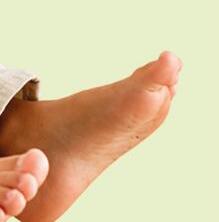





The shop isn’t large, but it is full of items that have been chosen with love and care.



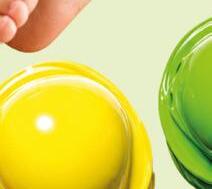






Everything you see has passed the real life test in our own home. If a product did not genuinely help with calming, regulating, focusing or sensory comfort, it simply did not make the shelf.
All products are UKCA tested and sourced through trusted suppliers.











































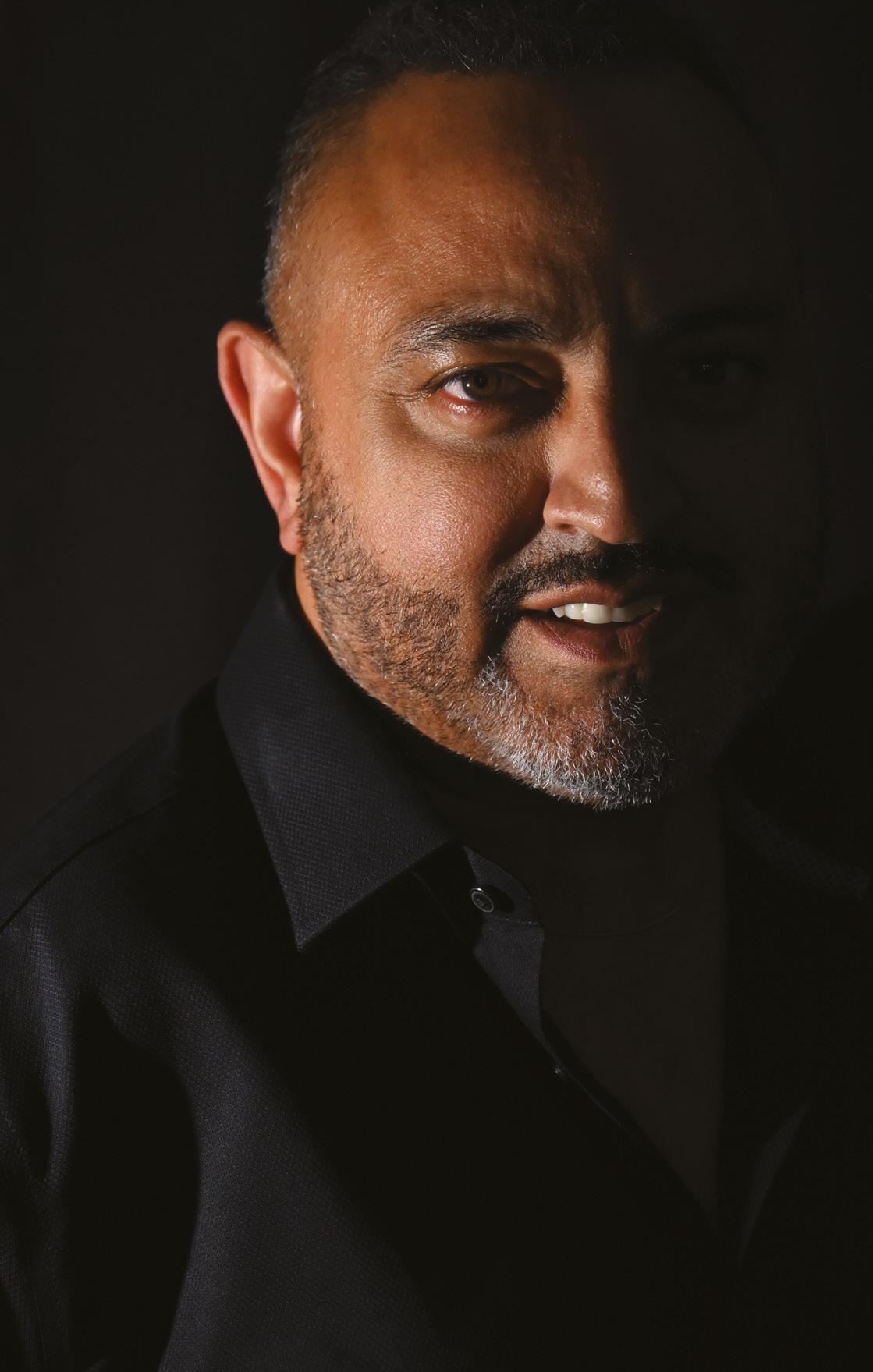
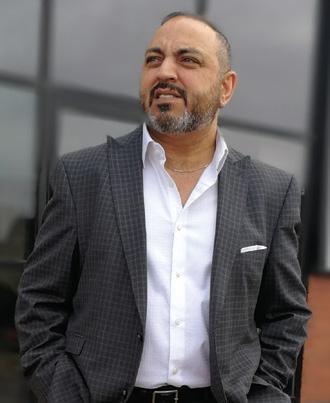
Pride Is Permission (Yes, You Heard Me Right!)
What happens when you decide to take pride in disability? Columnist Dr Amo Raju weighs in.
15%
of the world is disabled. When July rolls around, we suddenly remember it’s Disability Pride Month. For a brief moment stop, raise an eyebrow, and ask about our invisibility the remaining eleven months of the year.
“Disability?” “Pride?” “What, are we celebrating falling over occasionally?” Quite possibly!
Pride isn’t about being smug, it’s a permission.
Society spends most of its time treating disability like some tragic flaw in your user manual, something to hide or fix. Disability pride flips the script. It says, with all the subtlety of a toddler in a sweet shop: “I exist. I am fine. And you can like it or lump it.” Pride isn’t about being smug, it’s a permission. A permission to stop apologising for being you, in all your imperfect, brilliant and occasionally grumpy glory.
Credit: Dr Amo
be heard.”
For older readers, who, like me, have knees that creak like a haunted house, this matters even more. Aging often brings changes in mobility, hearing, and vision. Taking pride is taking ownership of health, showing that these shifts in our bodies are not failures. They’re simply new ways of being. Pride reminds us that life doesn’t stop being valuable, funny, or meaningful just because your body or mind has added some quirks which can entertain the grandkids!
Disability Pride also teaches patience and empathy, even with the world at large. When you’ve experienced a life of subtle exclusions, microaggressions, and barriers, you develop a sharp eye for fairness and an even sharper wit for the absurdity of some social rules. There may be purple flags, maybe even a parade, and most likely a few inspirational posts online. But the real point? Owning your story, connecting with people who understand, and occasionally smirking at a world that thought it could define you.
Let’s be honest. Living with disability, or even just navigating life as your body or mind changes with age, is exhausting. Doors as heavy as a gorilla, streets with steps galore, forms written in a secret code that only bureaucrats understand, life just throws these tests at you every day. That’s where the community comes in. Disabled people often bump into the same nonsense, and having a group to share eye-rolls, advice, and coping hacks is like discovering a secret menu at your favourite café. You’re not alone. You’re not broken. You’re part of a club that actually gets it.
And the community isn’t just about venting. It’s about recognition, achievement, and mutual encouragement. Disability Pride Month highlights people who are making waves. Artists, activists, scientists, writers, teachers, and neighbours, people who refuse to let society define what they can do. It’s a polite, slightly sarcastic way of saying: “Your existence matters. Your contribution matters. Your story deserves to
Life with a disability isn’t tragic. It’s life with sharper edges, more honesty, and a community that actually gets it.
Life with a disability isn’t tragic. It’s life with sharper edges, more honesty, and a community that actually gets it. July gives you permission. Permission to be proud, to be stubbornly yourself, to celebrate resilience, and perhaps giggle, knowing that the remaining 85% of the world will eventually have to join our club!
iDr Amo Raju is the author of ‘Walk Like A Man’, now available on Amazon.
AUTHOR: Dr. Amo Raju
TWITTER: @AmoSinghRaju
INSTAGRAM: @amorajuofficial
TIKTOK: @amorajuofficial
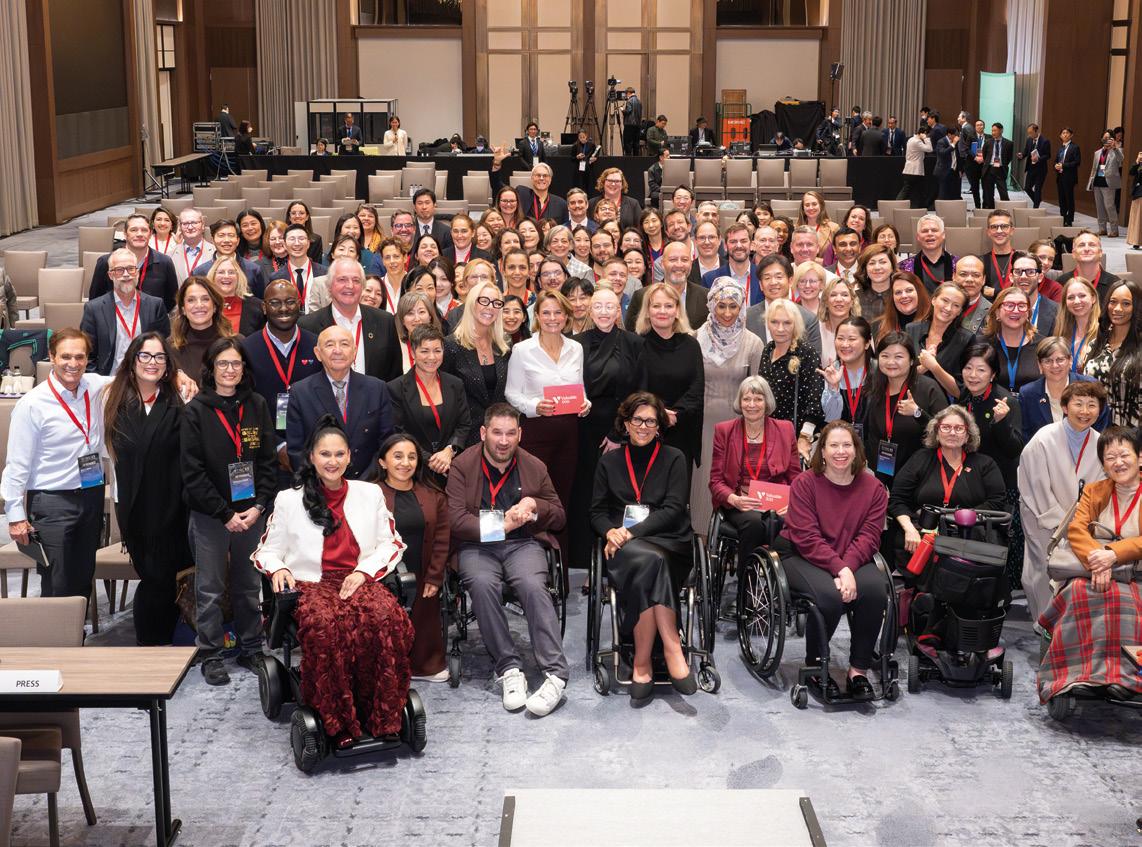
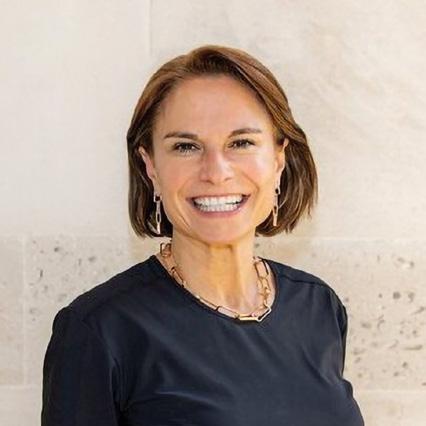
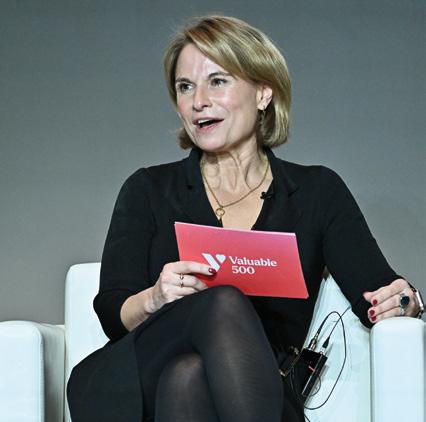
With a background in advertising and marketing, Katy Talikowska is the CEO of The Valuable 500, a global partnership with the aim of ending disability exclusion. What can businesses do to assist in changing barriers to inclusion? Hear her story.
My personal belief, and also the belief of The Valuable 500, is that where businesses lead, society will follow, and I have a deep belief that business has the power to create systemic change. I believe that big business can, in the space of one budget decision, one boardroom conversation, do what it can sometimes take governments or other stakeholders genuinely years or decades to do. So I feel business has the power, and business has the responsibility to create and drive that systemic change.
So my role is to work with the rest of the organisation at The Valuable 500 to effectively mobilise the world’s largest companies. We now work with five hundred and twenty-seven of the world’s largest companies to end disability exclusion at scale.
Reporting alone isn’t the end of the problem. Reporting alone isn’t the solution.
Synchronised Collective Action is the way that we talk about working with our companies. So we’re really
When CEOs and boards take responsibility, and they take that ownership, that’s when we will start to seesustainedmeaningful change.
proud of all three of those words. I suppose, in simple terms, it is about radical effective collaboration. We believe that the power is in the many. We operate in over 64 countries, and represent 47 different sectors. And our companies have a combined, market cap of 23 trillion US dollars. So we believe that if we can mobilise our companies to move in the same direction, I think that’s where the synchronicity comes. Moving together to address the same problem areas at the same time, then that’s when we’re going to start to see systemic change. Because all the companies that we work with, in and of their own right, they are making progress when it comes to disability inclusion. Even the best, most sophisticated, of our companies are humble enough to understand that it’s not ‘job done’, but they are making progress. They are being very intentional. But our role as The
Valuable 500 is to harness that individual action and make it really count.
I think my start point would be the new UK government reporting (the disability pay gap) legislation is really important, and it is a really important first step (on holding businesses accountable.) The legislation is absolutely the right way to go, but of course, it is only the first step, and accountability comes from what businesses do with that data. Reporting alone isn’t the end of the problem. Reporting alone isn’t the solution. You can’t manage what you don’t measure, and you can’t improve what you don’t measure. So to have that baseline piece of data from which you can build and grow is absolutely critical.
I think what’s really important is companies understanding that they need to go beyond compliance, beyond this reporting first step, and then embed disability inclusion into their reporting frameworks, so including annual reports, ECG disclosures, investor dialogues, etc. So that means, and this is what we advocate for at The Valuable 500, that means setting really clear KPIs, key
performance indicators, tracking progress consistently, and being really transparent with stakeholders and employers. And I think critically, that accountability that we were talking about, requires leadership ownership. When CEOs and boards take responsibility, and they take that ownership, that’s when we will start to see meaningful sustained change. So yes, get the data. I think the UK change in law is really necessary.
We have within our 500 companies our iconic partners, who form a tighter, let’s say, sort of working or steering group, who collaborate with us to help shape our strategy and help shape our agenda. They are also the companies that sustain us financially. We’re a UK registered charity, so they invest in our work, both financially and through their time and resource. Now, one of our brilliant, brilliant iconic partners are Kearney. They are a global management consultancy organisation, and a brilliant partner to us, and passionate about disability inclusion and accessibility. And from talking to our other iconics, we realised that a lot of companies, [it] wasn’t that they didn’t want to authentically represent people with disabilities in their marketing collateral, in their products and services, but they perhaps didn’t know where to start.
There was a fear of getting it wrong, and they also needed some structure and some framework around it, which was absolutely very, very fair and very legitimate.
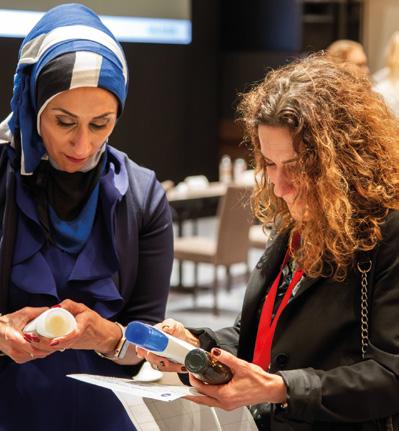
So in conjunction with Kearney, we came up with this idea of effectively a maturity model and maturity model assessment for a company, irrespective of size, irrespective of their industry and what they did, to be able to get a, let’s call it a sort of a robust school report of the state of inclusive representation within their organisation. So Kearney, free of charge, we worked with them. We launched that at Cannes Lions, the advertising festival in Cannes in the south of France in June of last year. And we give this tool, the Authentic Representation Tool, currently free
of charge, to all companies. In the spirit of inclusion, they don’t even need to be part of The Valuable 500. It’s a 67-question survey, and it’s private to the company, but it allows an organisation to, as I say, get this school report of the state of inclusive representation across their go-tomarket mix within the organisation. And what’s really special about it, and to the best of our knowledge, unique in the marketplace, is not only does it give you a state of the nation school report to say you’re doing well in this area, you’re, you’ve room for improvement in that one, and you haven’t even started in that area. It gives you meaningful steps, resources, case studies, tools, access to individuals and companies who can help you improve. So it doesn’t
just give you that snapshot of how you’re doing, it gives you the means to improve.
In the spirit of inclusion, they don’t even need to be part of The Valuable 500.
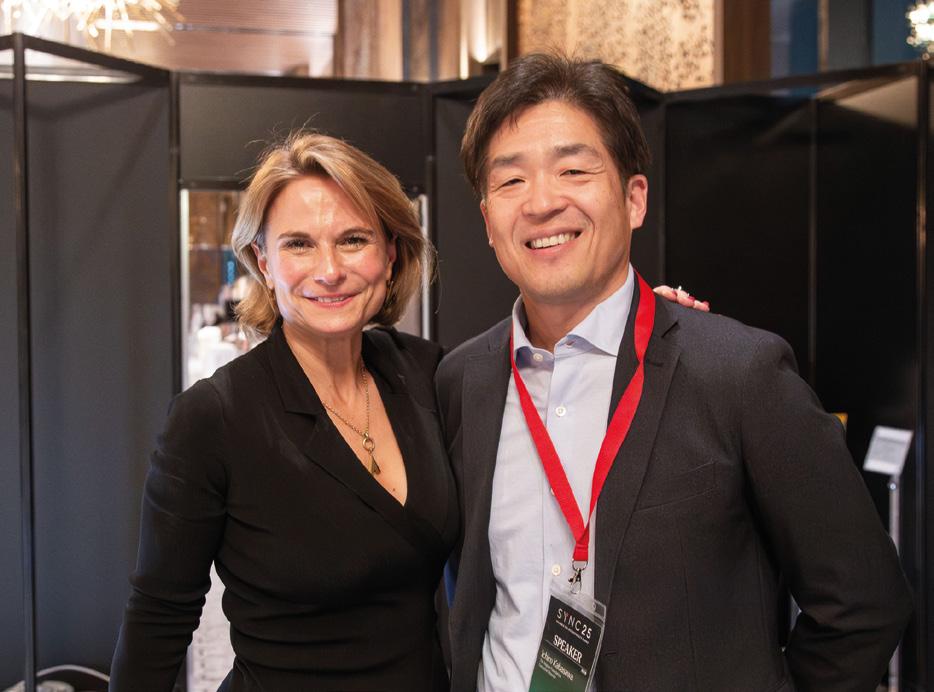
On International Day of Persons With Disability last year, so on the 3rd of December and the 4th of December, we launched our inaugural Accountability Summit. It was the first time we’d run a big conference. We called it SYNC with a Y, so it was SYNC25 because we ran it in 2025. SYNC referencing back to our Synchronised Collective Actions, the way we work with our companies. SYNC, for us, the way we communicated it, we spoke about SYNC25 marking the start of a decade of action and accountability, and we will be running a SYNC Accountability Summit every two years over the next decade. So the next one, the venue, the country is still to be determined, but again, on International Day of Persons with Disability 2027, we’ll be running SYNC27. To find out more

I think what’s really important is companies understanding that they need to go beyond compliance, beyond this reporting first step.
When I was very much younger, adventurous, and up for any kind of extreme sport or experience, provided I got paid to write about it, my mother would repeatedly tell me that one day I would dig myself a hole that I couldn’t dig myself out of. It has never happened. At least, not so far…
It’s a beautiful day. Bright sun. Not too hot. I’ve driven for hours to get to Blackbushe Airport. There’s no apparent M.E. today, so life is good. I find the place with no problem and am introduced to my teacher, Cliff Hawkins. He volunteers as a
flying instructor for Aerobility, the charity that teaches disabled people to fly. We chat about what to expect and the vast range of disabilities Aerobility caters for. Our Pipistrel (the only certified electric plane) has a 45-minute flight time with an extra 15 minute contingency.
It has never happened. At least, not so far…
We go airside. I get in, then get out again. There’s no point waiting in the sun, and a flat-tired plane needs towing from the runway. My ADHD-excitement stops buoying me. I start thinking about what I’m
doing. Back in, and belted up with a 4-way belt like you put on a child’s car seat, only adult-sized. I don’t feel too adult. The glider look of the plane suddenly hits me. What am I doing? I’m too old to be risking my life for an article. I have been, since chemo.
I remember what Cliff said in our introductory chat: “Like riding a motorbike, it depends on what you do. If you take risks and ride fast, it’s a dangerous thing. If you look after what you’re doing and are sensible, it’s safe.” I ask for a minimal lesson. Just learn about the instruments, get the feel of the plane, find the magic of it. I take notes.
Cliff built Formula One gearboxes for 35 years, has been a pilot since 1999, and now donates his time to Aerobility. Being electric, the Pipistrel is way quieter than a prop plane (look at me using the lingo already), and I clock what he meant by saying the sound is “soothing, relaxing” (that’s not silent). With few moving parts, the plane just needs annual maintenance, and my 45-minute flight took about £1.50’s worth of electricity. So it’s cheaper to run and better for the environment.
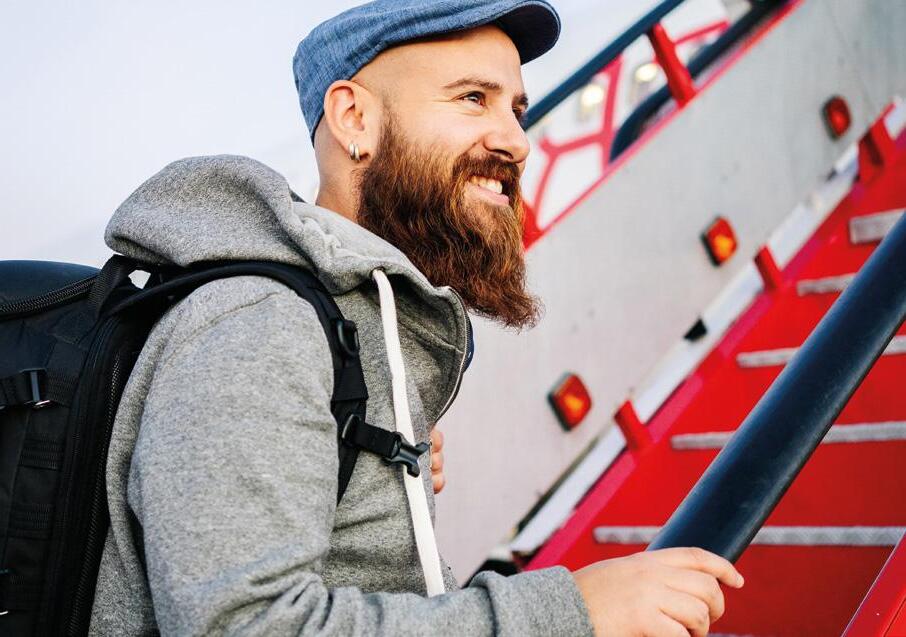
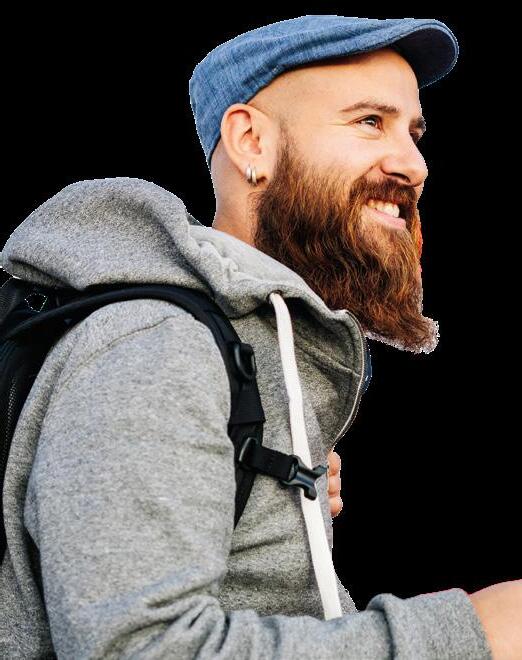
My nerves are forgotten, and I’m floating. Well, flying… We see a film set, Reading University, pass two no-fly zones, Reading City itself, in its spread-out dark-coloured glory. And everywhere below are the greens of the fields and the trees,
and lakes, and long grey roads, like the models I tried to make as a child.
My nerves are forgotten, and I’m floating. Well, flying…
Just like Adam Twidell, 4AIR’s Future of Flight lead, puts it: accessibility, flight, and sustainability in the same small sentence. 4AIR’s loan of this Pipistrel to Aerobility has removed my barriers and those of many others. My disability doesn’t figure with them, and I won’t be burning the planet. I’m coming back.
For more information, please visit aerobility. com, 4AIR.aero
Founded in 1993, Aerobility is a UK charity that makes flight possible for anyone, with any disability. It supports nearly 1,000 disabled people a year and has introduced over 10,000 to flight. It runs on the three pillars of flying, education, and advocacy, and provides adapted aircraft, flight simulators, classroom sessions, and funded programmes. Its 2026 Chair, Neil Tucker, embodies the mission. After losing a leg and the use of an arm, he trained through Aerobility and has since flown everything from light aircraft to ex-military jets. The charity received the King’s Award for Voluntary Service in November 2025.
Aviation sustainability company 4AIR’s twelve-month sponsorship has placed the world’s only certified electric aircraft with Aerobility, creating a global first for electric disability flight training.
I don’t feel too adult. The glider look of the plane suddenly hits me. What am I doing?
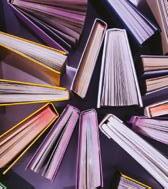
This year marks the National Year Of Reading, a UK-wide campaign to encourage us all to pick up a book. What books should you be reading for disability-led representation? Disability Review Magazine investigates.
Reading is an important life skill, yet it is something that is generally considered to be in decline when it comes to books. According to the National Literacy Trust, the enjoyment of reading by children, as well as engaging on a daily basis, is at its lowest level in two decades. When it comes to teenagers, ‘irrelevance’ is a significant factor, in that autonomy shapes the likelihood of picking up a book or another form of media. Imposition of reading, by contrast, is likely to have the opposite impact.
Here at Disability Review Magazine, we advocate that representation of disability in reading material is crucial, as well as a vital necessity in the twentyfirst century. It is something that will impact the lives of every single one of us in the end, so we may at least know what it means to live as a disabled person! For that reason, in support of the National Year Of Reading, we have curated a list of books we believe that everyone should read. All of these books are available from all good bookshops.
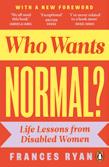
Out now in paperback, Who Wants Normal? was released to critical acclaim last year, and we also interviewed the author in this very magazine. A memoir-manifesto, Who Wants Normal? is something of a love letter to disabled womanhood. Covering multiple topics, including dating and education, fifty other people are also quoted in this book, including the likes of Ruth Madeley and Sophie Morgan.
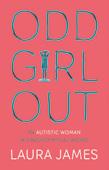
What is it like to be diagnosed as an Autistic person in mid-life? Better still, what is it like to be diagnosed as an Autistic woman, given the diagnostic gap between genders? Laura James is a journalist who was diagnosed as Autistic in her forties; this is an examination of the before and after of adapting to a life with a different neurology.
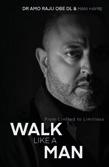
Our very own Dr Amo Raju has co-written a bookand we think that everyone should read his story! A multi-award winner in the DEI space, we have previously documented his efforts when it comes to fundraising on our Newsbeat page. If you are interested in mental health or disability, this is the book you need to read right now.
Known for her acerbically funny roles in comedies such as Dead To Me on Netflix and Bad Moms, Christina Applegate was the centre of a media spotlight following her diagnosis of MS. She has now written a memoir, You With The Sad Eyes, which charts
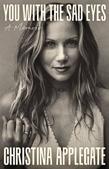
her life on and off the screen. Rather than following the format of ‘inspiration porn’ when it comes to disability, this is a nuanced reality that so many of us come to face. Plus a few dark-humoured jokes, too.
If you interestedare in mental health or disability, this is the book you need to read right now.
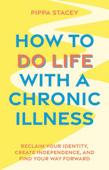
Last year saw a significant breakthrough when it comes to the world of chronic illness, as well as the origins of ME. However, while ‘debates’ continue, people are still having to deal with a diagnosis and its impact. What gives? Pippa Stacey has written How To Do Life With A Chronic Illness, a book dedicated to this exact subject - and the followup is a diary of prompts and other activities to develop your own personalised strategies.
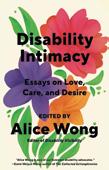
Disability and desire are often seen as two very controversial subjects - something we have explored further in the arts section of this issue, too. Alice Wong, who passed away recently, edited several books from a multiplicity of contributors. Disability Intimacy
explores this concept from a community basis, such as when it comes to caregiving, the relationship to pets and what they can teach us about ourseleves, and the *obvious*, too.
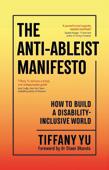
Ableism, at its core, is the discrimination against a disabled person because of their disability - and it is also possible for a disabled person to be ableist against another, too. Tiffany Yu has written a very important guide on how to practice anti-ableism, with the input of other disabled people, too. Adapted from her viral TikTok series of the same name, this is an important contribution to disability literature.
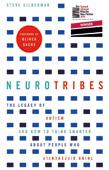
Right now, the UK is undergoing a lot of so-called debate about the prevalence of neurodivergence in society at large, often informed by fear or misguided beliefs. Neurotribes is something of a definitive history written by an expert; while it can be academic in tone, it is an important book that can cut through so much ‘noise’ of ableism we all see.
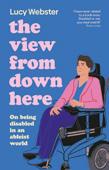
What happens when ableism and sexism collide?
Lucy Webster has written a memoir about her life as an answer to this exact question. A wheelchair-user all her life, Webster works as a freelance journalist and has previously worked at places such as the BBC. The book sets out the impact of being locked out from society, such as when it comes to not being able to get into a club (no stepfree entrance), presumptions around motherhood, and so much more.
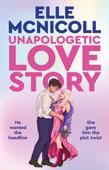
In our last issue, we interviewed author Elle McNicoll, who is known for the children’s book A Kind Of Spark. In April she released her debut adult novel in the romance genre; titled Unapologetic Love Story, the novel examines what an inter-abled relationship can look like, as well as the many assumptions that are made around Autism and dating. A powerful antidote to ableism so often seen in this sector, it is a revelation of a read.
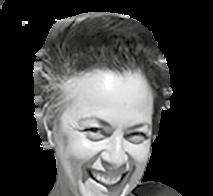
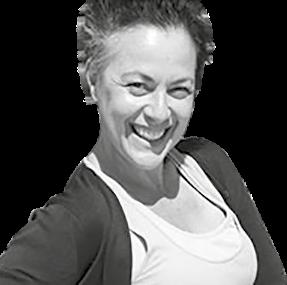
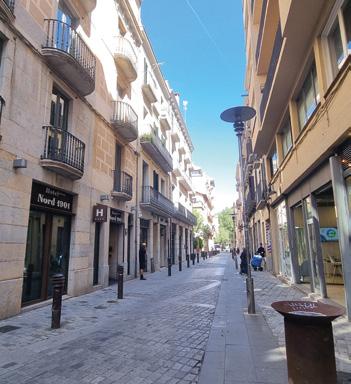
In a flow state on assignment while travelling, columnist Carole Edrich takes us to Girona.
Ihave an on-assignment flow state (a kind of extended hyperfocus) that is somewhere between excitement at the unknown, mindfulness as I take it all in, and heart-swelling enjoyment.
On a recent trip to Girona and the Costa Brava, it struck me that my inner ADHDirector makes me good at these adventures. I never panic, and overwhelm is rare because I feel it coming and can work to prevent it. That’s just as well because when it comes, I simply
shut down.
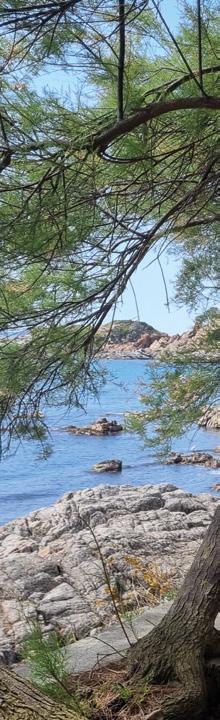
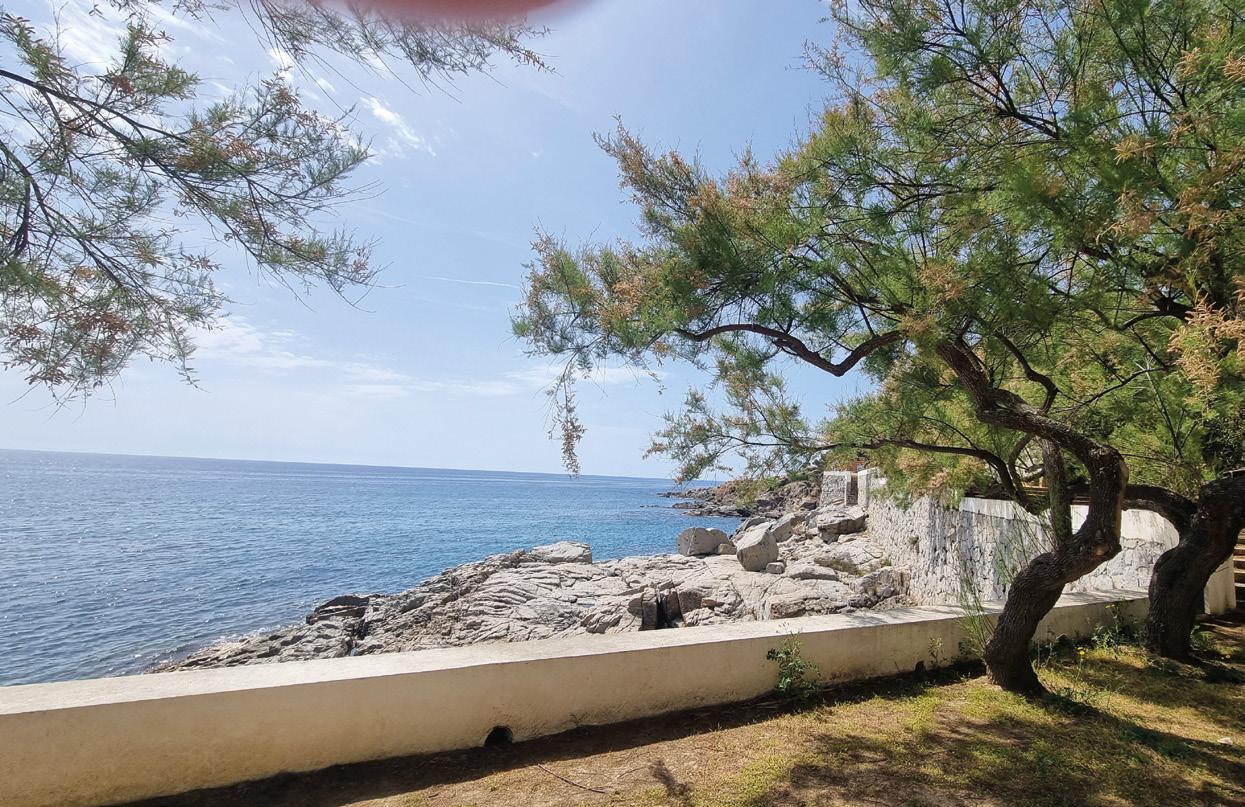
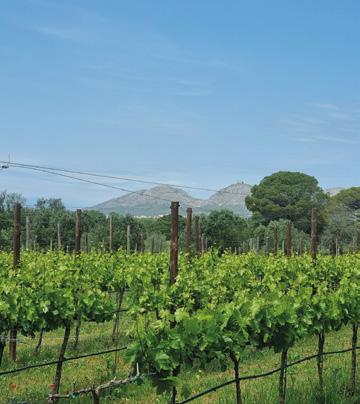
Driving solo inland through small valleys of vines, olive groves, rice plains and walled villages perched picturesquely on hilltops, I want to stop and make notes, and wait and see what happens when ochre sandstone buildings catch the afternoon light. At the wheel in the drier, more granular area of Empordà, I want to pause, properly appreciate, and photograph the patchwork of vines in geometric rows, the cypress trees standing sentinel by old farmhouses, paler limestone-walled hill villages, and scrubby holm oaks. Depending on the time of day and weather, the play of cloud and sun on the distant Pyrenees
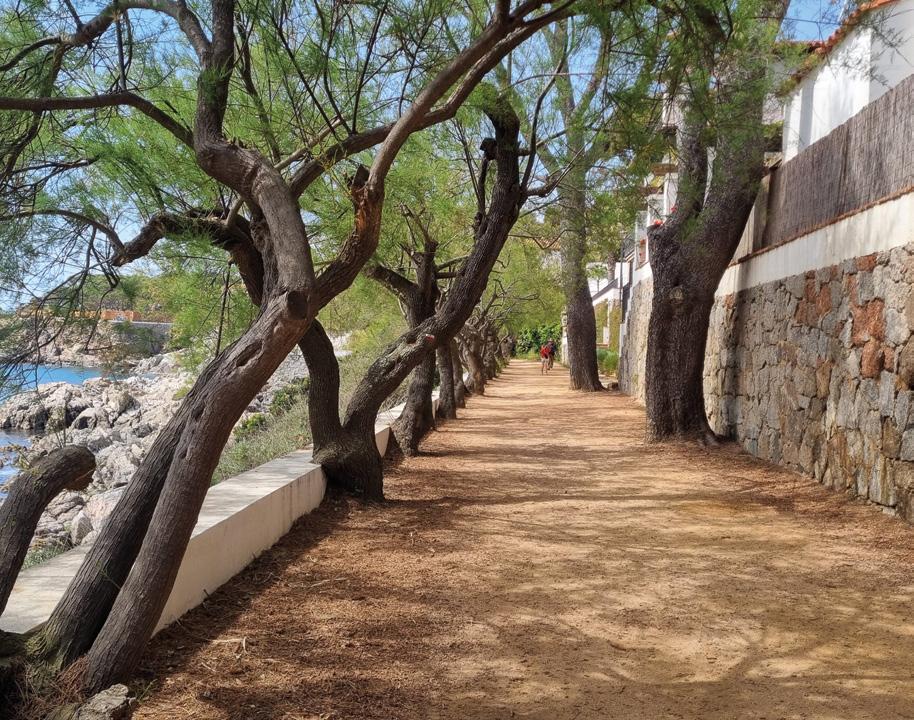
On a recent trip to Girona and the Costa Brava, it struck me that my inner ADHDirector makes me good at these adventures.
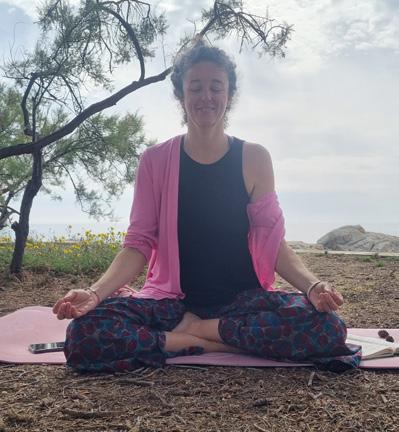
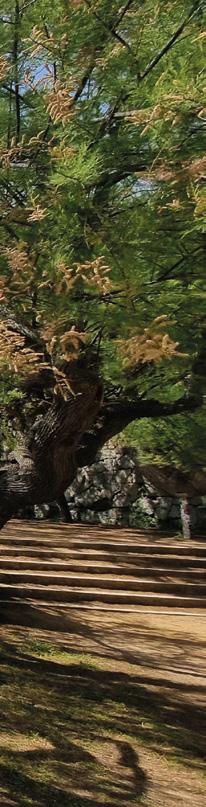
enthusiasms and knowledge. Then an hour of one-to-one mindfulness with Carlota de Prada under the dappled shade of tamarisk trees, between beautiful traditional-stone walls and aquamarine shores.
I’m here to shove as much as possible into the four days around the feast of Sant Jordi.
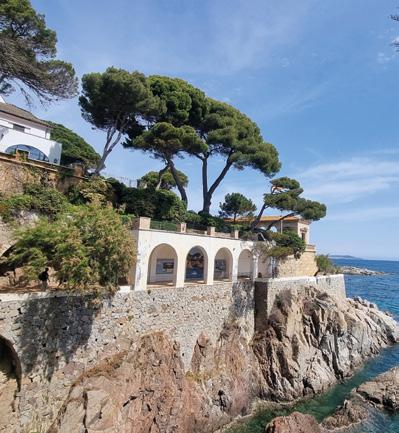
creates more shades of blue or purple than I could ever imagine, but I have no time to watch.
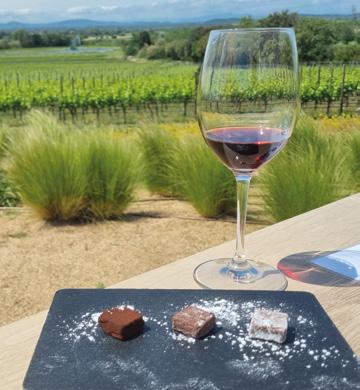
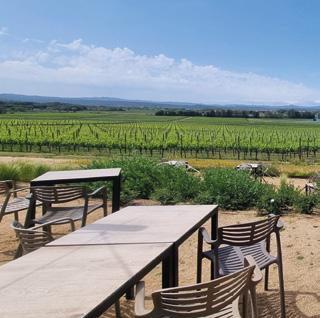
I’m here to shove as much as possible into the four days around the feast of Sant Jordi. The Catalan nation is proud of its Saint’s Day, which they’ve twinned with UNESCO’s World Book and Copyright Day. It’s a working day, when people exchange books and roses, attend cultural events, and just chill. Having a lot to fit in is normal with last-minute press trips, and I love it.
One evening in Girona where –despite satnav – I give up trying to find the hotel and park in the right place by coincidence. On a walk between s’Agaró and Platja d’Aro, along the broad, low-stepped coastal promenade with Roser Serra, who shares her
The drive to a wine tasting session at Celler Brugarol in nearby Palamos. I leave on time. Use the satnav. Follow signs. Go round in circles. But where the map says Celler Brugarol should be is a dead-end road. I’m so late it feels pointless, so park the car somewhere that might be a car park, get out, breathe deeply in, and discover I’m in Finca Bell-lloc with its beautiful Jaume Plensa sculpture. As Douglas Adams wrote: “I may not have gone where I intended to go, but I think I have ended up where I needed to be”.
There’s another trip where the satnav takes me the back way. Miles along a sandy, muddy road, through a gate into a field with a rugged track and gaps that are not so much potholes as places where great lumps of road have caved in or disappeared. In the end, I leave the car and walk to the winery. It’s worth the challenge. This is the new Mas Geli winery. So new they’re still fixing up the building (a marvellous glassfronted affair). They hold festivals in the vineyards. Live concerts with dinners created by local producers, and my tasting of three excellent wines is served with a stunning spread of locally sourced snacks. There’s just time for a quick walk to the lake, where the co-owner holds yoga-plus-wine-tasting events, and it’s time to find the next place on the list.
On the way to my last hotel in Girona, parking has turned into a perplexing series of surprising, smallscale horrors, probably because it’s Sant Jordi’s day. Sudden this includes scary sharp turns into steep downhill ramps with walls that look closer than they are. I’m in that flow state. Exhilaration is high. Excruciatingly aware of the traffic queue behind me
Excruciatingly aware of the traffic queue behind me and the audience of friendly locals not hiding their hilarity in the slightest.
and the audience of friendly locals not hiding their hilarity in the slightest.
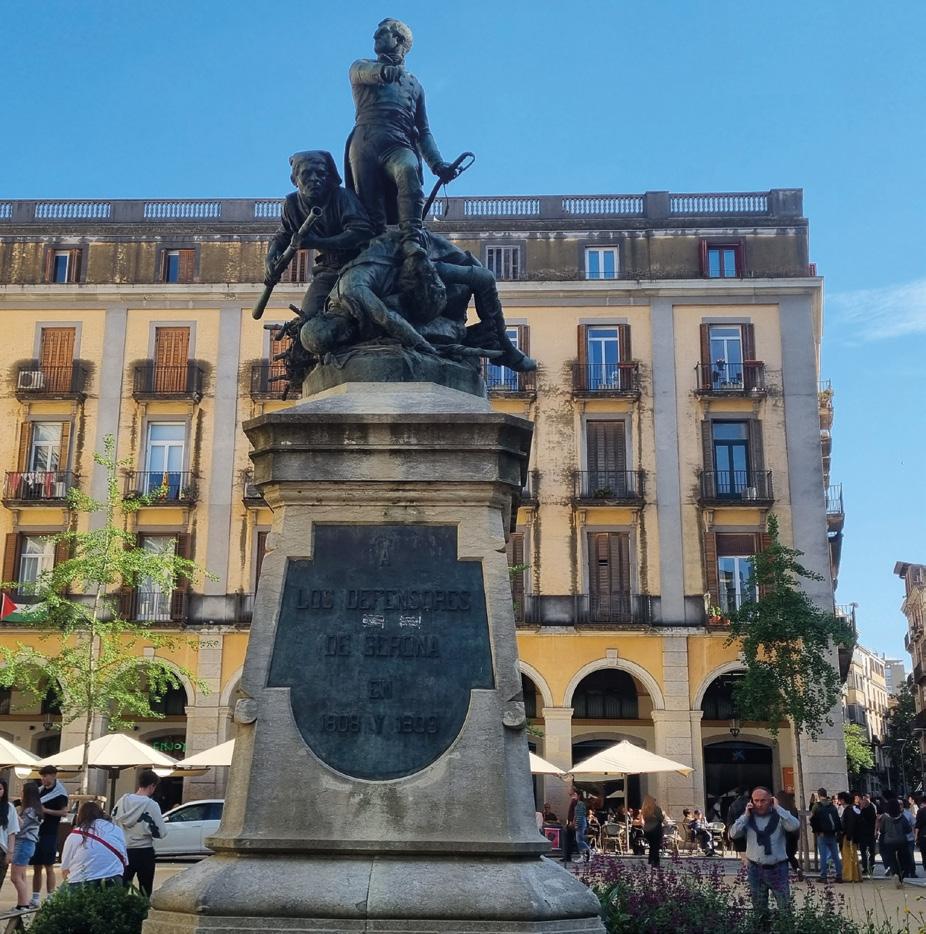
Of course I manage. I have a drink at Plaça de la Independència (Independence Square). It’s a porticoed square with cafés, terraces, and a central monument. Then on to Plaça dels Mercaders (Merchant’s Square) where balconies become the stage and
famous Catalan poetry is performed in dialogue with songs. Then I follow the crowds for a while, enjoying the atmosphere and the crowded, cobbled but mostly accessible streets before retreating to my hotel for an excellent meal and finally to my room.
On the last day, after a relaxing breakfast and solo photo-wander, I meet Isabel Godoy again. We walk the city walls (easy seating along the route and some limited wheelchair accessibility) for the view of both old and new Girona, and finish with tea at the wonderful Casa Heras. The flow state holds. I don’t shut down. I’m already wondering what would happen if my next visit really did have ‘a su aire’ as they say here in Girona. Space for thinking, for being, for meeting more people and doing things properly. Therein lies the nub.
CostaBrava.org for general information. I stayed at hotelcarlemanygirona.com and hotelciutatdegirona. com in Girona, and hotelbarcarola.es in s’Agaró. They all have wheelchair accessible rooms. Brugarol. com and masgelipals.cat are the wineries.
A conversation with a friendly bag-scanning officer at Stansted Airport makes me realise something I should always have known. By wearing the sunflower lanyard and not saying a thing I’ve been making life unnecessarily hard. There are quicker or easier ways to get through passport and luggage control if you ask. Similarly, SIXT Girona Airport are happy to shuttle people who ask to their hire car. I need to get over myself and ask.
No need to ask in Durham, where another visit went swimmingly. I’ll cover it in a future column.





By Lydia Wilkins
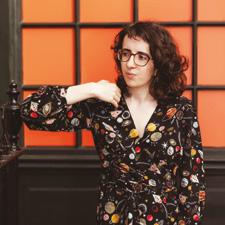
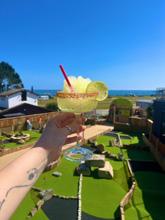
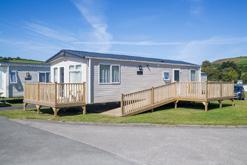
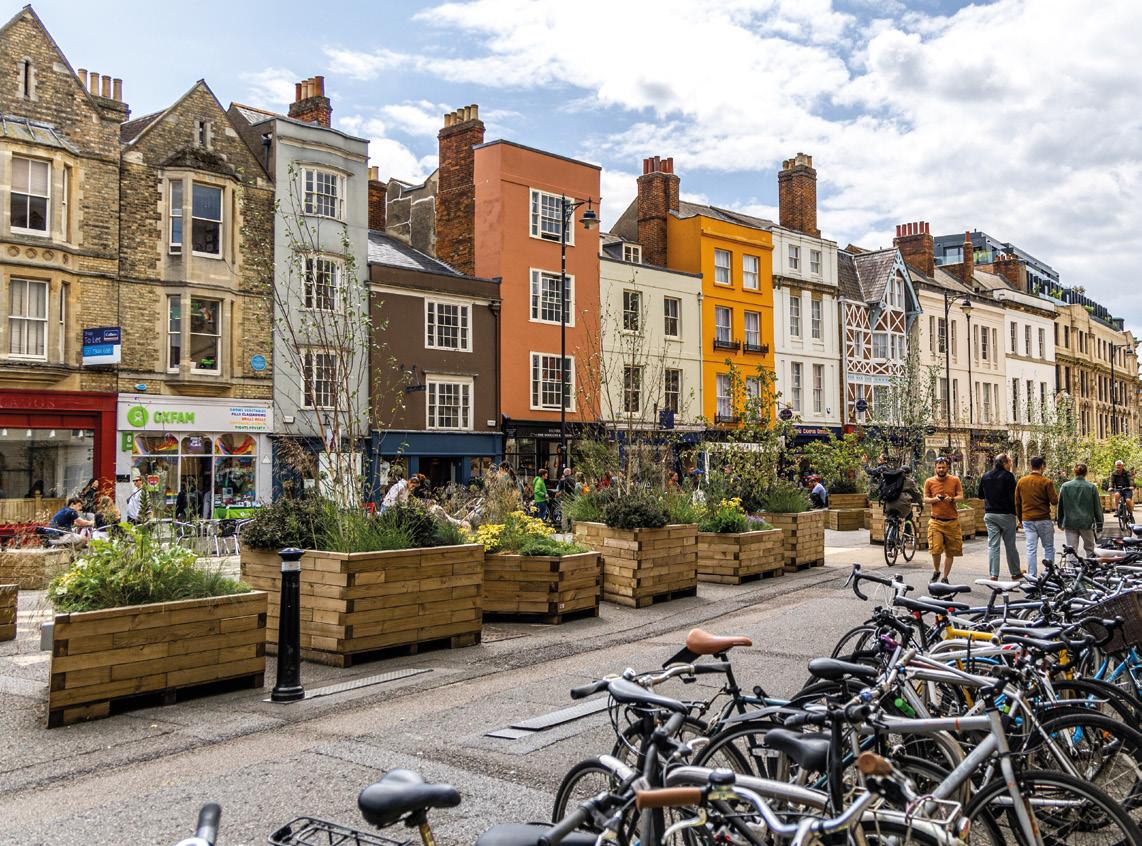
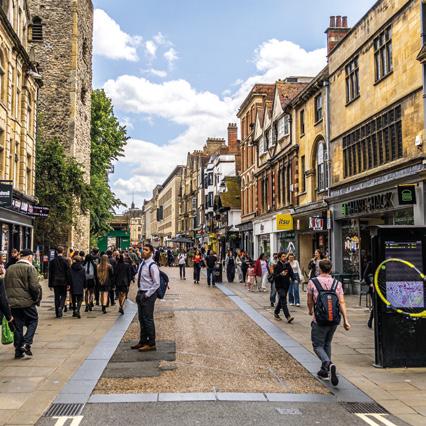
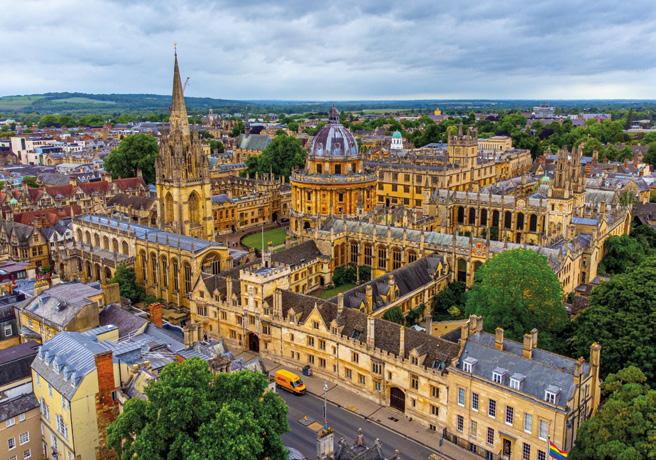
With Oxford as a city on her travel bucket list, editor Lydia Wilkins went in search of an accessible getaway.
Avisit to Oxford has been on my travel bucket list for a very long time; I have multiple disabilities, including an Autism diagnosis, as well as a litany of issues due to the legacy of Long Covid. I walk with a cane, as well as dealing with pain throughout my body thanks to a brain issue; travel, although it sounds contrary to its remit, has provided me with significant time to adapt, as well as to make peace with a body that has changed. Travel has to be adaptedand has always been, owing to the fact that I am Autistic. Assistance is needed, regardless.
As an Autistic individual, my special interest has been the world of His Dark Materials. A revival from childhood, this special interest has followed me for a while - and when the final book of the second trilogy arrived last year, I was as happy as could be, reading compulsively on Christmas Day. It was time to see the world of Lyra and Jordan college, the port of refuge that had kept me sane as I became sick. But how was the accessibility? Would this be easy to navigate?
Assistance is needed, regardless.
I had assistance in managing the bus into the city centre, which
It’s a love story, and I am still the girl who sobbed at a love across the world’s.
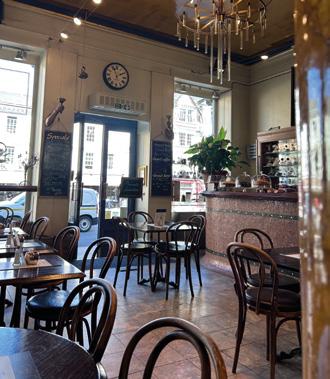
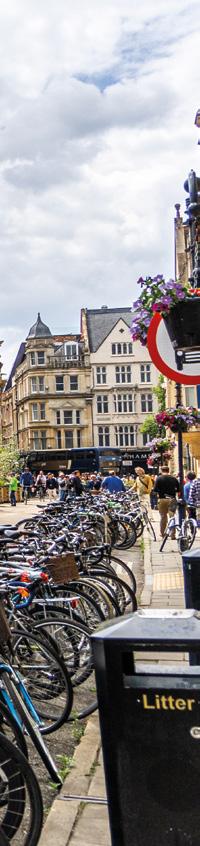
has to be wheelchair accessible by law; cobble stones were not great, and some shop entrances seemed to have never heard of a ramp, let alone disabled equating with independence. (Just ring a bell by the help you *obviously* have, despite a disabled person… being quite able to go out into the world.) I also needed significant recovery time, which was great with accessible seating virtually everywhere - even among the flowers.
Here
are my top three accessible recommendations for anyone looking to get away this summer. Oxford should be top of your list:
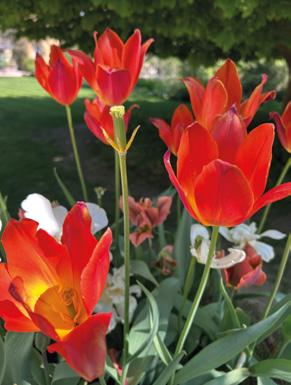
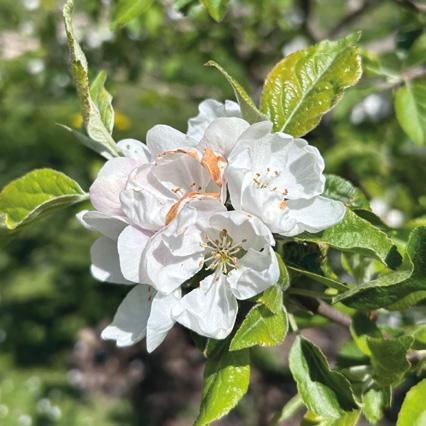
If anyone has read the final book in the His Dark Materials trilogy, you will know that the Oxford Botanic Gardens hold a particular special resonance. It sounds silly - but I wanted to take in the world, and sit at the designated bench from the book. It’s a love story, and I am still the girl who sobbed at
a love across the world’s.
Compared to a lot of green spaces, I was pleasantly surprised at the accessibility of this venue; I have had to leave spaces at times, simply because there is nowhere to stop and rest, which has caused pain. Or, truth be told, the sensory overwhelm of noise has caused meltdowns; there were flat pathways, open doors, and an easy atmosphere. My body almost instantly relaxed! The Literary Garden could do more - you will need strong wheels to look around - but that was the only real ‘qualm’ I could find. I learned so much about the literary heritage of the city, the history of plants and medicines - even the poison specialism of Agatha Christie - and I got to sit in the bench from the book! My heart sang at that, along with the quiet hum of the River Cherwell. This was so peaceful, and just completely gorgeous.
My heart sang at that, along with the quiet hum of the River Cherwell. This was so peaceful, and just completely gorgeous.
Green spaces must be protected, and they must be accessible; this is a masterclass in achieving exactly that. And entry for disabled persons is immensely cheap - for myself and a person assisting me, it was the grand total of £1!
“Hey - that shop *is* you!” Within about five minutes of arriving in Oxford, Pens Plus was pointed out to me. I am definitely a ‘stationery person’ - and always seemingly collecting stickers on my travels. I have also started to collect a niche fountain pen recently, as it has allowed me to write without pain in my hands, or further issues; it’s a niche shop definitely, but I dare anyone to not feel creatively inspired, especially since we are in the city that gave us Agatha Christie, Oscar Wilde and Philip Pullman!
The space between aisles and displays was perfectly accessible to wheelchair users; I also liked the lack of music in the shop, as this is something I significantly struggle with. (It’s an Autism thing - and a brain condition separately has worsened this issue.) Prices were reasonable, and I left with some wonderful souvenirs - including His Dark Materials-themed ink for my fountain pens!
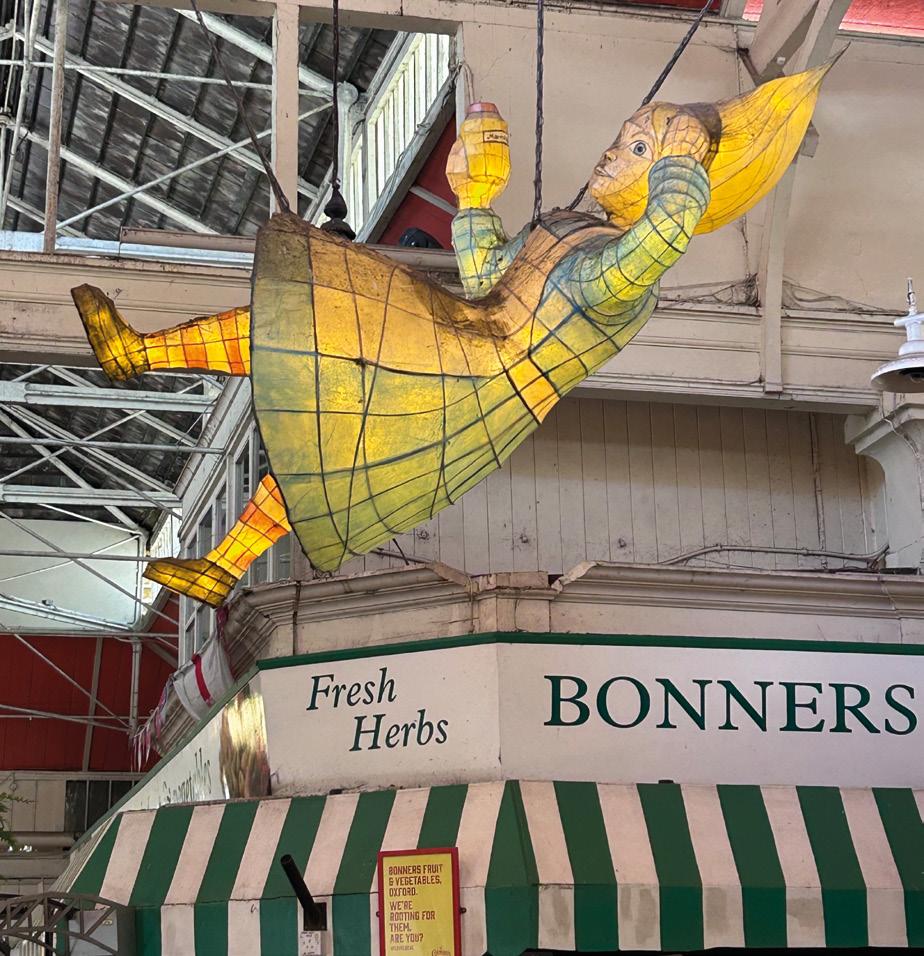
Are you in need of a sweet snack, a souvenir of your trip, or perhaps both? The Covered Market is not to be missed - this is a paradise for anyone on the hunt for a trinket, the best
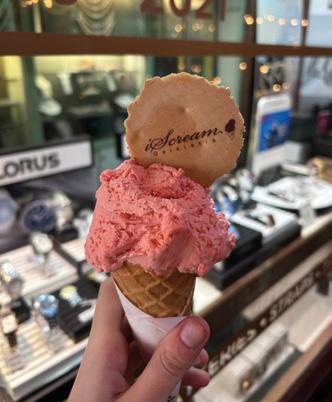
ice-cream, or even postcards to try out any aspirational literary efforts. Above each and every customer there are character lanterns from the world of Alice In Wonderland; they’re enormous, and also worth the trip to see just them! The space is wide, rarely a step in sight, clear signage, delicious food - what more could you possibly want? This is also where I located the best strawberry ice-cream I have ever tasted.
The space is wide, rarely a step in sight, clear delicioussignage, foodwhat more could youwant?possibly
1. Wear comfy shoes. There is a lot of walking and navigating involved, often on long roads - you will need comfy shoes as a basic starting point.
2. Make sure to take a water bottle with you, and plan in places to stop and sit along the way.
3. Have a plan of your route and each landmark to visit.
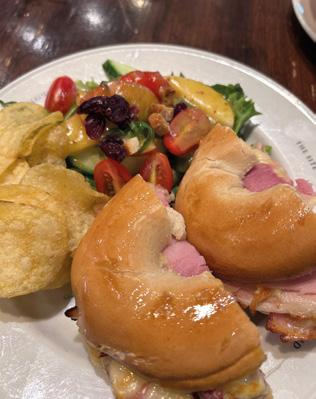
Why did it take me so long to come to such a beautiful place? I felt like I was home, as well as immediately welcomed; so many people also assisted me, which made such a change from my hometown in Sussex. There was just so much to see and do - including mainstream shops such as Ryman, M&S and a large Waterstones that had a great vinyl stash on hand. Everyone should visit!




Season 4 of Bridgerton won critical acclaim for its portrayal of disability. Editor Lydia Wilkins spoke to actress Gracie McGonigal about her experience on the show.
Q Tell us everything about Bridgerton. How did you get to be on the series?
AOh my goodness. Um, it was kind of a wild and whacky process. But essentially, I was doing this musical called The Little Big Things in London’s West End. It was a fabulous show, all disabledled, actually, which was really cool. It was a really cool show for any disabled people that saw that. That was quite a big deal for us within the community at the time. And essentially, the casting team from Bridgerton came to see it. Uh, and I was like, “Well, I’m a huge fan of the show. Um, please let me know if organically any roles come up that you might wanna consider me for.” You know, ‘cause it would just be lovely to just get an audition, get in the room, you know.
essentially, about a year later, they asked me in for this character, this main character [of Hazel]. And I had no idea”. I kind of thought it would be like a one scene kinda thing. Um, and then when I got it, I kind of realised the, the scale of the operation, which was to be in kind of all of the ep - almost all of the episodes. Uh, which is just so cool and also so great, to be included on such a large scale, I guess.
Everyone is like a community, and it’s very diverse and inclusive both on camera and off camera.
“Kind of zero expectation of actually getting the job. Um, because, you know, also I hadn’t seen any… there aren’t any major disabled roles [on the show], or at least there weren’t any at this point. I was like, well, you know, try my luck and see. And
AQWhat was it like?
Yeah, it was crazy. It’s amazing. It’s... Like, the show is awesome, and everything that anybody says about the show is true, which is that it is really classy and you get treated really - like, lovely. You get treated really, really nicely. Everyone is like a community, and it’s very diverse and inclusive both on camera and off camera. Which is also just so nice
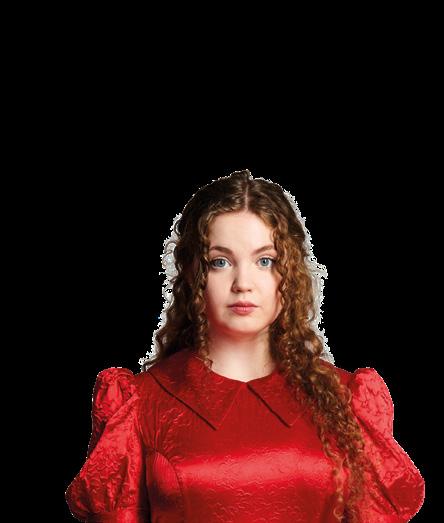
Credit: Satori Cascoe
‘cause sometimes it’s like, as a disabled person, I’m in rooms, and I feel like I am actually just representing my whole community.
AQAs a ‘token’?
Yeah, like, with tokenism and stuff like that and, and I worry sometimes that I’m being cast maybe in a tokenistic way. That’s often my, um - my little self-doubt brain is like, “Oh, like, hopefully I do in fact deserve to be here.” But with something like Bridgerton, it really is super diverse, and I was so well looked after. And my disability was always a conversation as well, which is nice, which is whenever I wanted it to be, but also not a conversation when it was irrelevant, which I just think is so sensitive and good because to create good work, we have to acknowledge the things that actors bring into the room, and how people’s preexisting disabilities, um, race, like, protected characteristics might affect and influence the roles we play.
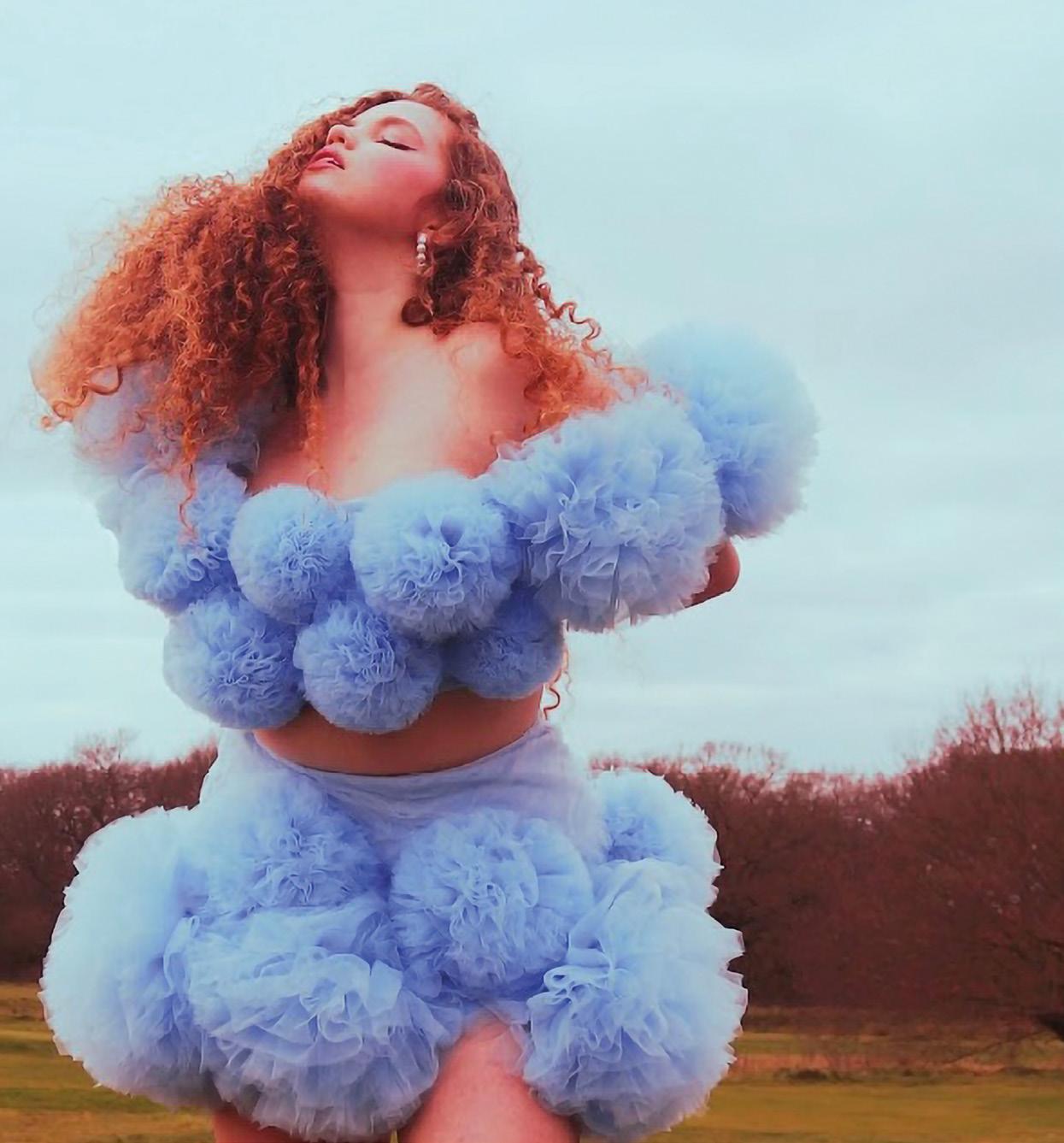
It’s... Like, the show is awesome, and everything that anybody says about the show is true, which is that it is really classy and you get treated reallylike, lovely.
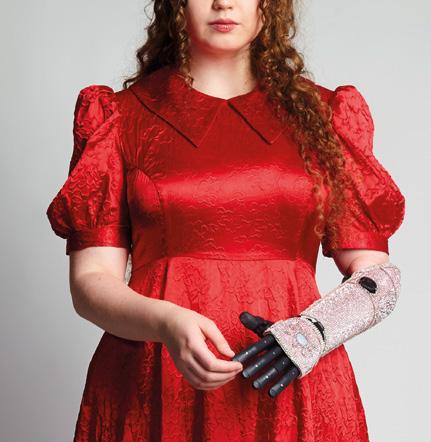
Even if we don’t mention it on camera, it might help create more three-dimensional worlds when we acknowledge and have these important chats about things like - for me, disability on camera and how something like, um, how someone like Hazel [her Bridgerton character] might come to be a person with a limb difference, even if it’s something that isn’t mentioned within the show.
QIncidental disability,
it’s a
very rare
thing. Do you mind us asking what your access needs are and how they were adapted for on set?
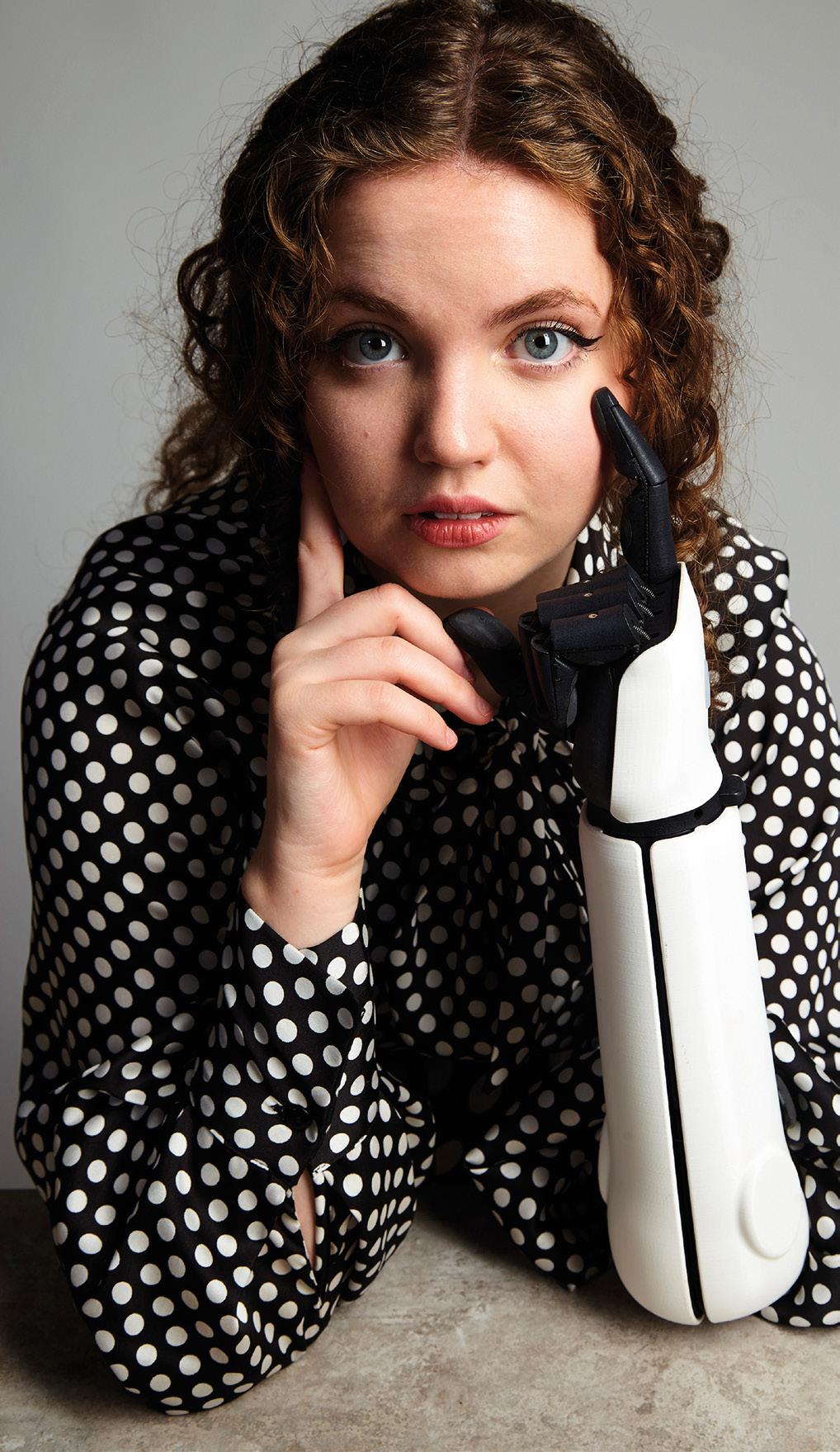
ASo we had an access coordinator the whole time, which is fab, who checked in with me all the time. Being someone with a congenital limb difference, I’m very used to adapting. So actually, it’s possible that I wouldn’t call for help in all the times that maybe someone else in my position would, you know, people have different adaptations and needs.
One of the major ones was with costumes, making sure that all my costumes were fitted to me, being two different sleeve lengths or going
for, like, a shorter cap sleeve, and keeping those conversations open because obviously... it’s a longsleeved look [and it] is the main costume, and it’s like, well, that doesn’t have to be the case for you if you don’t like, if you don’t want that to be the case.
So we had an access coordinator the whole time, which is fab, who checked in with me all the time.
And having those open conversations specifically with [the] costume [department] as well about whether I’d like to have the illusion of a pushed-up sleeve, or maybe to look like that she’s just done that, and she’s taken a dress that’s already not made for her and made it feel built for her. Or she’s maybe taken it to the tailors, and she’s had two different length sleeves made, and that’s an important choice for her, which I do in one of the scenes later on at the end, when she’s
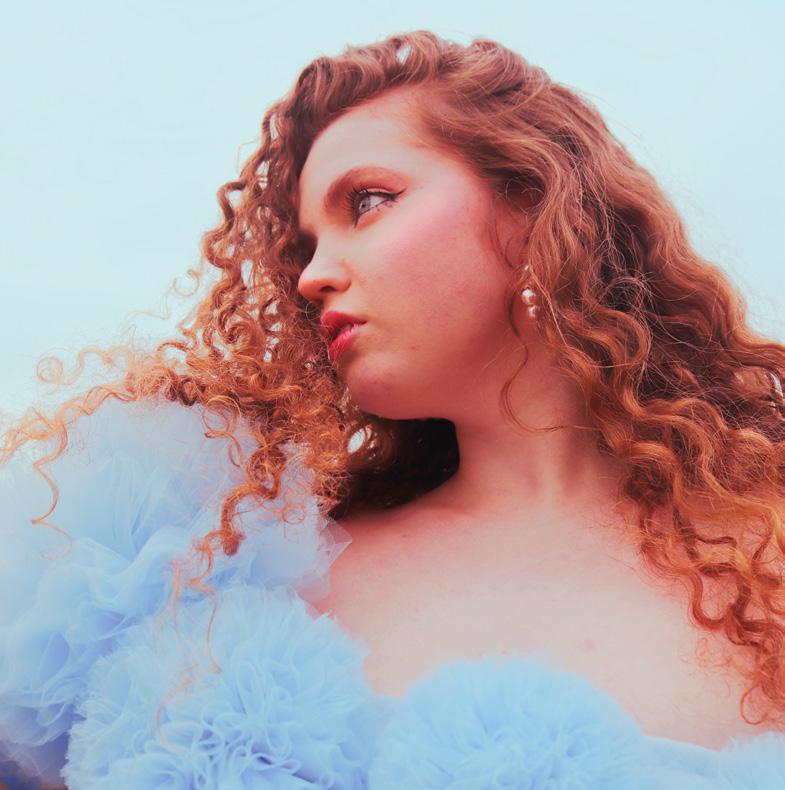
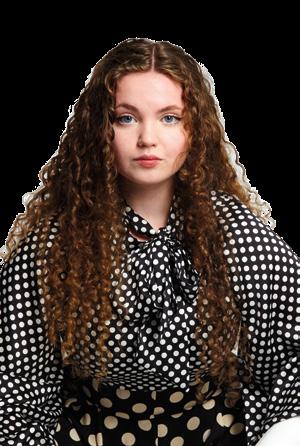
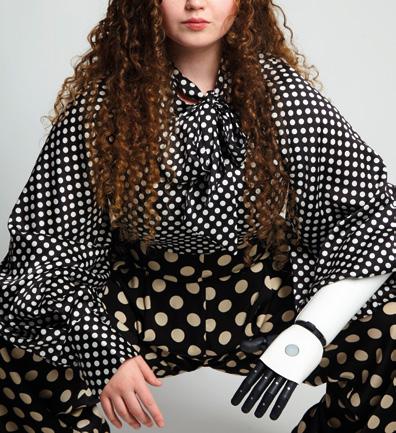
wearing her posh outfit. I wanted it to be that she had a very specifically ,like, tailored outfit for her, ‘cause it was her pride and joy, wearing a lovely dress at the end of the show.
QLove the distinction between posh outfit versus the servant characteristics.
AAnd the things like that, you know, talking about disability helps influence and aiding that [inclusion]. There’s, there’s never any ... It’s always more important to talk about these things because it means that the overall effect becomes much more polished and thought through.
And the other things kind of included were just small things like making sure I wasn’t being asked to carry things that were too extreme and large in scenes, and making sure that I’m doing the kind of jobs that I would do. I probably, if I was a maid in a house, I probably would make beds with my friends instead of just on my own, ‘cause I know that in my personal life, putting a bedspread on a bed is one of my most difficult one-handed tasks! It’s so tiring and so inaccessible. And it’s essentially just thinking about these things and thinking about what would be the best kind of task that we’d get Gracie to do/ Hazel to do, because I know from my times that I’ve worked in, um, like hospitality, I’m the quickest at
polishing the glasses because my arm is kind of glasses-shaped.
Q [Laughs and smiles.] Sorry, that was not what I was expecting you to say!
AGenuinely, ‘cause I can, like... I’m, like, [the] glass washer extraordinaire! I’m so quick at it, but I’m probably not the person that you’d ask to carry 40 wine glasses up a set of stairs, and that’s cool. But essentially, we have our… as all disabled people do, we have our strengths and weaknesses, and it’s important to have those conversations, especially before putting them on camera. And that was always dealt with really wonderfully.
Q As a last question, what was it like in terms of the reaction to... Just because it’s so notable, the fourth series had a lot of disabled people suddenly watching Bridgerton for the first time and being like, “Oh my God, there’s someone who looks like me.”
AYeah. I mean, that is unbelievable. The fact that I could, even in a small way, open that door for people to enjoy, even as a viewer, to feel that they can connect with a programme as large as Bridgerton if they feel that they couldn’t before, that is just incredible. So many people have reached out to me. Genuinely, my DMs have been flooded with lovely messages and pictures of people watching the show or maybe who have limb different children who have, like, cannot believe what they’re seeing. You know, it must feel like, uh, [what it felt like to be] me when I was watching, um, Cerrie, the presenter... What’s her surname? I’m forgetting her surname. Do you remember her? I don’t know.
Q Was she on, like, CBeebies?
A I wanna say CBeebies. Cerrie... Yeah, Cerrie Burnell.
Credit: Geoff Waring
Um, it must have felt like when I was, you know, six years old watching Cerrie Burnell on CBeebies - is it CBeebies? Um, and being like, “What do you mean I can be on the TV?” Like, I remember that being such a huge, like, “Oh my gosh” [moment].
Essentially, we have our… as all disabled people do, we have our strengths and weaknaesses, and it’s important to have those conversations.
And, you know, I was too young to sort of know about any backlash or problems. And for me, I know that she went through a lot at that time period, but the overall goal for me was achieved, which is that I was able to see myself in that public lens. If I can be that for someone else, that’s all I want essentially.
Bridgerton season 4 is out now on Netflix.
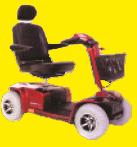
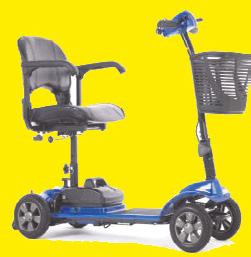
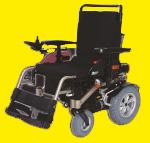
Sale of daily living aids, mobility aids, mobility scooters and powerchairs, vehicle adaptations, riser recliners, incontinence items, stairlifts and wheelchairs
We do all of the Stage 2 conversions for the Motability Wheelchair Accessible Vehicles (WAV’s)
Battery checks and fitting
Installing vehicle adaptations including, Steering wheel aids, Hand controls, Twin Flip left foot accelerators, Right hand brake and accelerators, 40Kg, 80Kg, 120Kg Boot hoists, Transfer plates, Docking systems and pedal extensions
Scooter and powerchair servicing and repairs
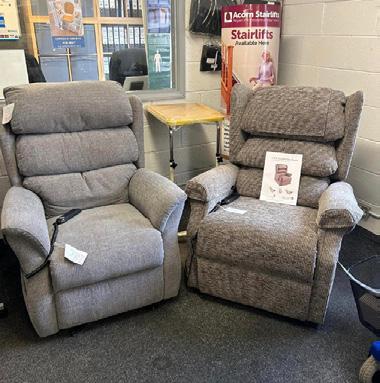
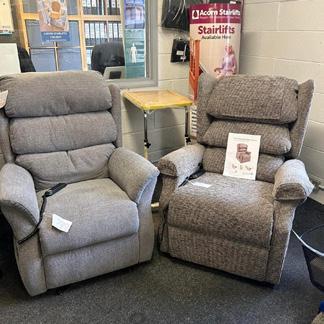
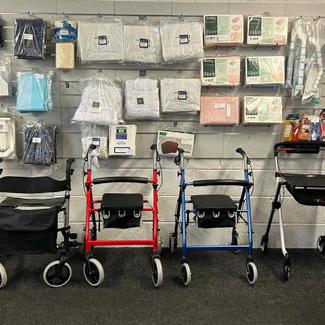
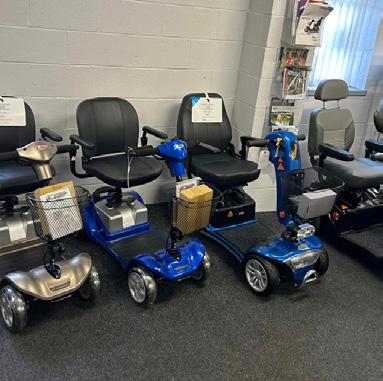
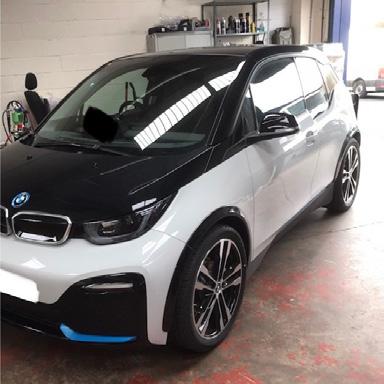
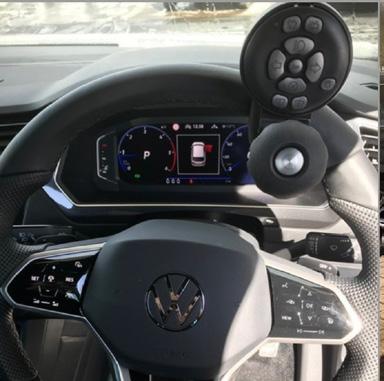
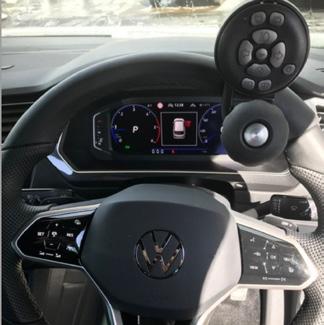
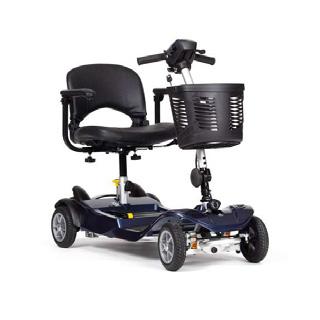
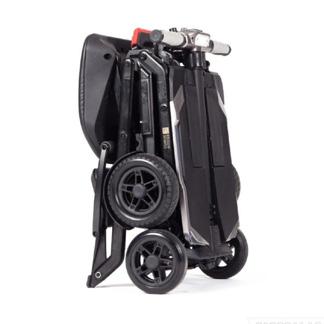
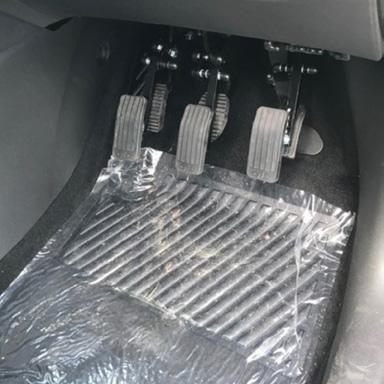
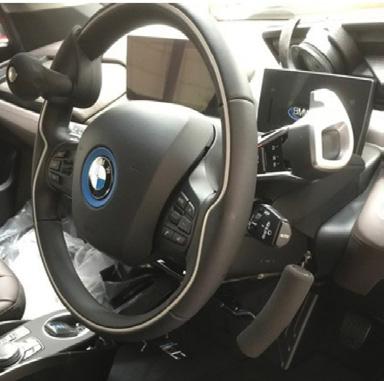
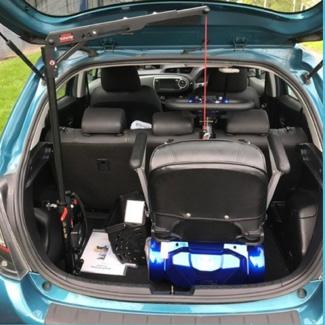
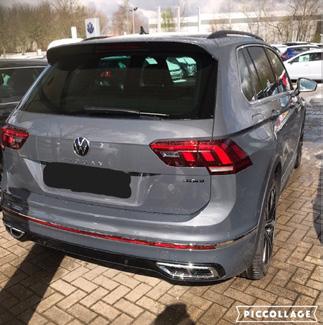
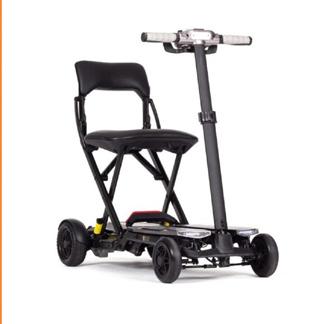
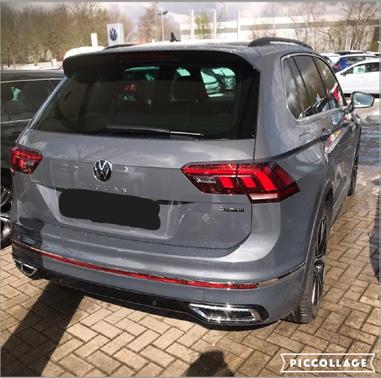
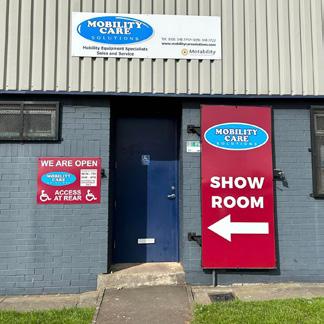
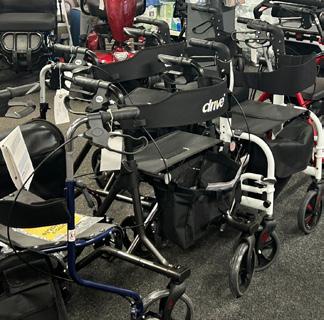
Sale of daily living aids, mobility aids, mobility scooters and powerchairs, vehicle adaptations, riser recliners, incontinence items, stairlifts and wheelchairs.
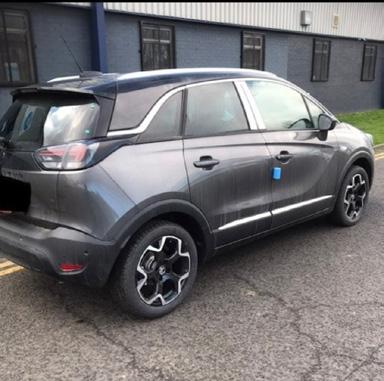
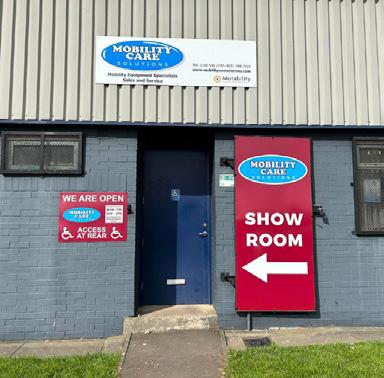
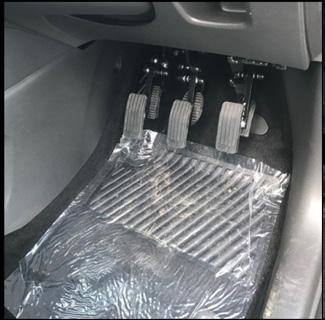
Installing vehicle adaptations including, Steering wheel aids, Hand controls, Twin Flip left foot accelerators, Right hand brake and accelerators, 40Kg, 80Kg, 120Kg Boot hoists, Transfer
I think that there are a lot of [parliamentary] acts every now and then that come up and review, um, this predicament.
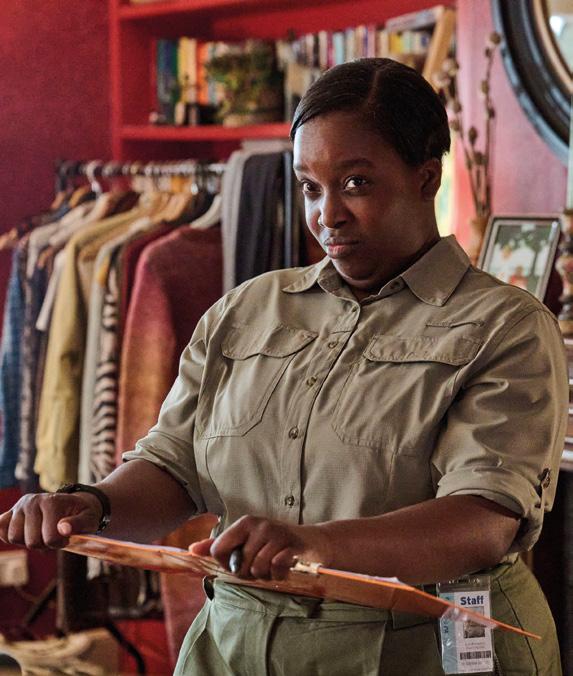
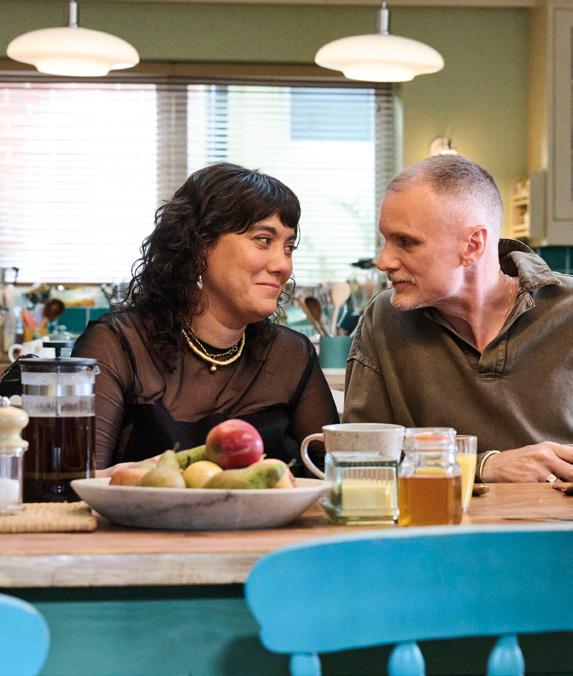


Returning with season two to the BBC earlier this year, Kyla Harris co-wrote the comedy/drama We Might Regret This. A best friend becomes a 24/7 care assistant for Freya, Harris’ character - and chaos ensues. DRM talked to her to find out more. As told to editor Lydia Wilkins.
Q Congratulations on the second series of We Might Regret This. How did you come to the concept of the series, and why?
A
Um, thank you. I create - cocreated the series with my best friend and writing partner, Lee Getty. She was my, um, personal care assistant on and off for kind of ten, near[ly ten] years when, um, we were in our wild days, let’s say. And we got into so many situations where it felt like they would be relatable, but we’d kind of done it differently out of necessity because of me being disabled. And, and it just... we just thought people need to know about this kind of intimacy and this dynamic and relationship, so, um, you know, because we’d never really seen that on screen before. So we decided to do it.
disabled people within marriage is not even on the table, do you think? What would you like non-disabled people to know and to understand about this?
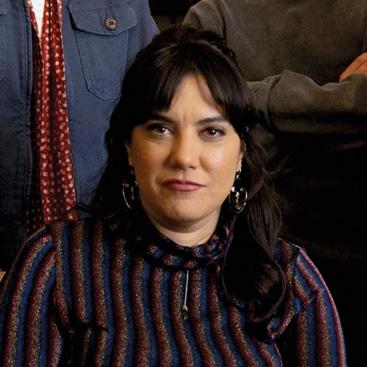
AQ And here we are, however many years later. I’m not gonna guess at that.
Why is it that marriage inequality is not yet talked about, and the equality for
Well, I mean, the short answer of why people don’t know about why we have the disabled marriage penalty is because of ableism. That’s the short answer. It’s also the long answer. But, um, but I, I think that for - you know, historically, disabled people haven’t been seen as kind of viable partners. We’ve kind of been grouped as ‘undesirable’ people. Um, and so I don’t think that it was even a consideration when laws were being made about marriage. And, if it was considered, the idea was that your partner would financially, physically, and emotionally support you. And therefore, you would, uh, you know, the government thinks that you’d share costs, which is just so completely outdated. And I think that I mainly want people to, non-disabled people to know, that this [issue] exists, and that we don’t have marriage equality because of that, and I want them to join in the fight to change that
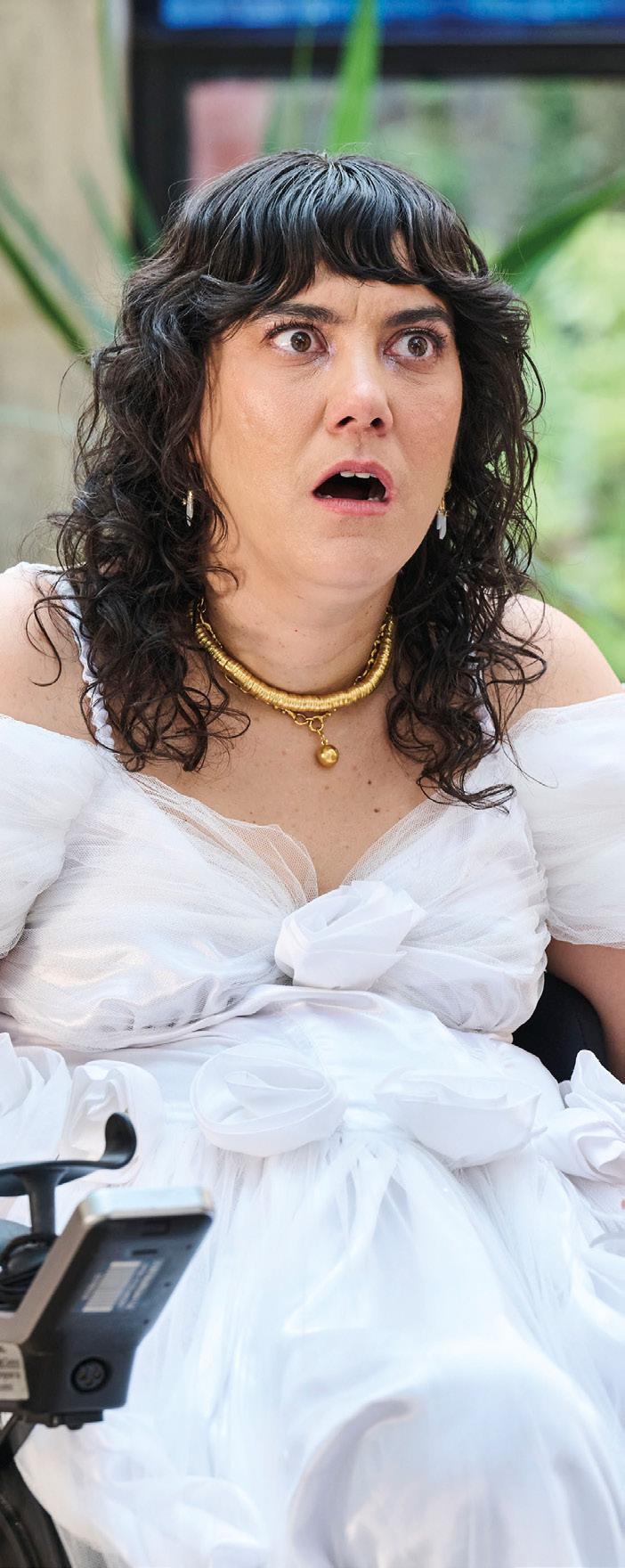
What’s obvious to us is shocking to them.
Q How can non-disabled people join that fight to change the inequality, do you think?
A
Well, I think that there are a lot of [parliamentary] acts every now and then that come up and review, um, this predicament. To put it in nice, in nice terms. In nice words
Q I like the fact [that] you’re being really polite about this. [Both laugh.]
A Yeah, yeah, exactly. And I think that it needs to, I mean, there are so many things that we need to fight for as disabled people in terms of our rights, but I feel like marriage equality should, should always be on the table as one of them.
Q Do you mind me asking, is it.. I’m not sure if this is disinformation, but I also read when researching that you and your partner have not married for this particular reason. Is that correct?
A
Um, it’s part of the reason. Yeah, it’s part of the reason why we don’t live together, and we don’t... and we’re not married, yeah.
Q
So it’s quite literally life imitating art in that sense. The sort of, it’s not just… whenever mentioning the series to non-disabled people [in the run up to this interview], immediately the reaction was kind of like, “Well, that can’t exist,” until they had seen it. Which is just really interesting, the sort of, the thing of like, what’s obvious to us is somehow not obvious to them. It’s very-
A What’s obvious to us is shocking to them.
Q That’s a very good way [of describing the problem]… Some of the episodes are, shall we say politely, something of a comment on bridal culture and how bridal culture has potentially gotten out of hand,
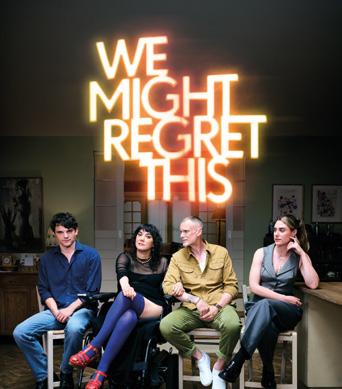
I was being supported by these women, it just felt, it felt like time had kind of suspended and, and it was pretty amazing.
and the lack of accessibility to disabled people to be a part of bridal culture. Was that intentional?
A I mean, I think we used the idea of a wedding as somewhat of a milestone that a lot of people move towards or want in their life, and we wanted to show how it’s completely different for someone who’s disabled. Um, so I think it was, it could have been any avenue that Freya was pursuing, um, but it, it, because it was about marriage this season, uh, it led to more commentary on the inaccessibility and, and really, you know, the inaccessibility in terms of prejudice, um, in, in bridal culture.
Q Well, just as an example, where’s the adaptive fashion for disabled brides? How can disabled women, and men if we, for the sake, because we’re [Kyla and editor Lydia] based in Brighton, how can we find adapted bridal dresses if no one’s making them?
AYeah, exactly.
Q Or even just to get into the bridal shop, like, usually, you have a step at the entrance.
AYeah, that’s exactly it! I know. There are so many, there are so many bridal shops in Brighton that are inaccessible or in other places that I’ve seen.
Q So much fun (!)
Was there anything that you wish to particularly say about bridal culture in that sense? One of the particularly quite hilarious sketches was around influencer culture and the live stream where Freya has a quite epic meltdown, although well deserved.
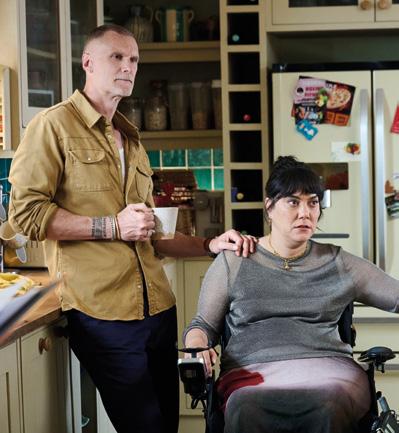
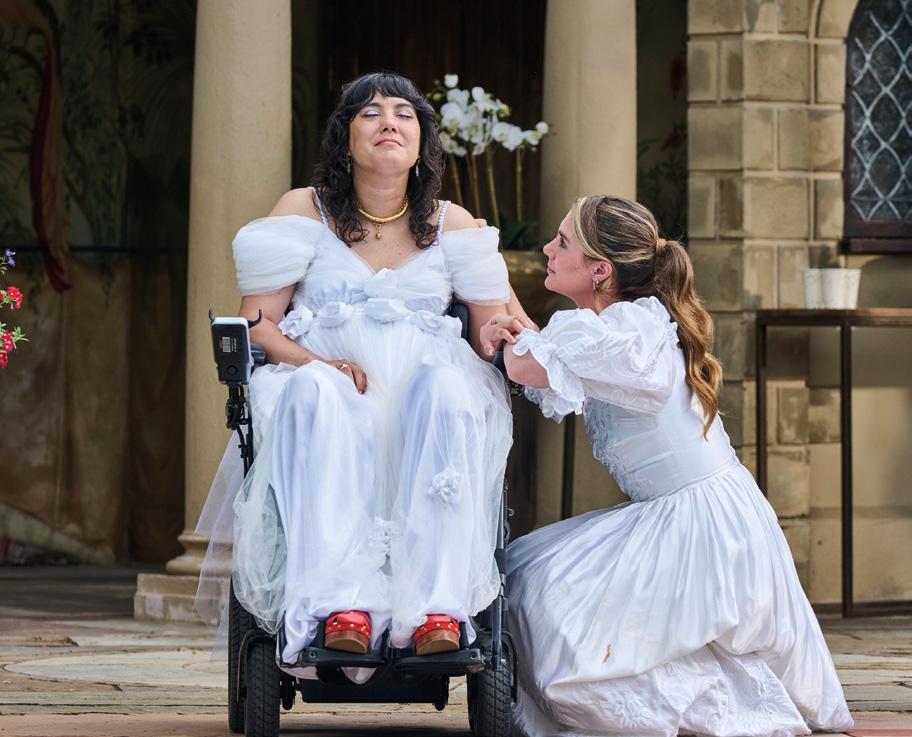
A[Laughs.] Um, so I suppose in that moment it was less about bridal culture, and it was more the idea of everyone’s kind of expectations, um, of Freya’s life should be, and her claim - and her reclaiming that. And I think that moment was really about her trying to kind of own her own story, and I think that’s something that really interested, um, Lee and I about, I suppose commenting on social media and the influencer era, is this idea that historically disabled people weren’t, you know, we’ve, we’ve not been given many platforms to tell our stories.
But because of social media, we can, like, represent ourselves, and we can become influencers, and we can become writers and, and have careers [as a result].
I mean, if this is your thing, obviously, and you have, if you have the patience for social media. Um, and, and the, you know, but largely it is a democratic platform in some senses, to be able to publish your ideas and thoughts. And because we haven’t had that platform historically, uh, I think it was more commenting on the idea of who controls that narrative, who uses that narrative, and the kind of grey area between it being a good thing and an awful thing.
Q I love the caveat of the grey area between [of] can it be a good thing or can it be a bad thing? At the time we’re talking, this is the week that Meta has been fined for many things. And teenagers and social media bans seem to be coming in left, right, and centre.
AMm… [Nods in acknowledgment.]
Q You’ve just spoken about how this series, some of it was informed by past experiences that you and your co-writing
partner had. Are we allowed to ask what was real and what was perhaps embellished? (See also series one with the peein-the-face scene.) That’s always been the one [scene] that sticks out the most.
AI mean, that was a, that was almost a direct pee in the face! That has not happened. But there has been pee on some of my PAs and family members. But I would say the, the whole series is inspired by my friendship with Lee and that unique, um, I suppose, situation of having [her as] a PA. And, and really, at the core [of the series], it’s kind of, there’s more emotional truth to these scenarios rather than things that have actually happened, because nothing in the ser[ies] - in both seasons - have actually happened to me.
But because of social media we can, like, represent ourselves, and we can become influencers, and we can become writers and, and have careers [as a result].
Q I just had to ask the question because when I was telling people, “Oh, I’m interviewing Kyla Harris,” the first question that everybody had was, was that did that actually happen, that particular -
AWhich particular scene? The peeing scene? [Laughs]
Q [Nods while trying not to laugh.] So I just had to ask this. For the second series, did you have any particular favourite scenes? And if you did, why?
A I loved the final scene of the season. Um, the pool scene. I love, I, I love that. I think we’d kind of created this almost subversive fairytale in this weird house over, you know, several days, um, where all of us, including, like, the disabled extras and the, the um, and the kind of like quote unquote ‘diverse’, um, people that were there as part of the hen do, and it just became quite magical. And, and it felt like when we were in the water, and I was being supported by these women, it just felt, it felt like time had kind of suspended and, and it was pretty amazing.
Q And a final question: am I allowed to ask anything about, there’s a third series I’m told? Can you tell us anything about what’s happening with that?
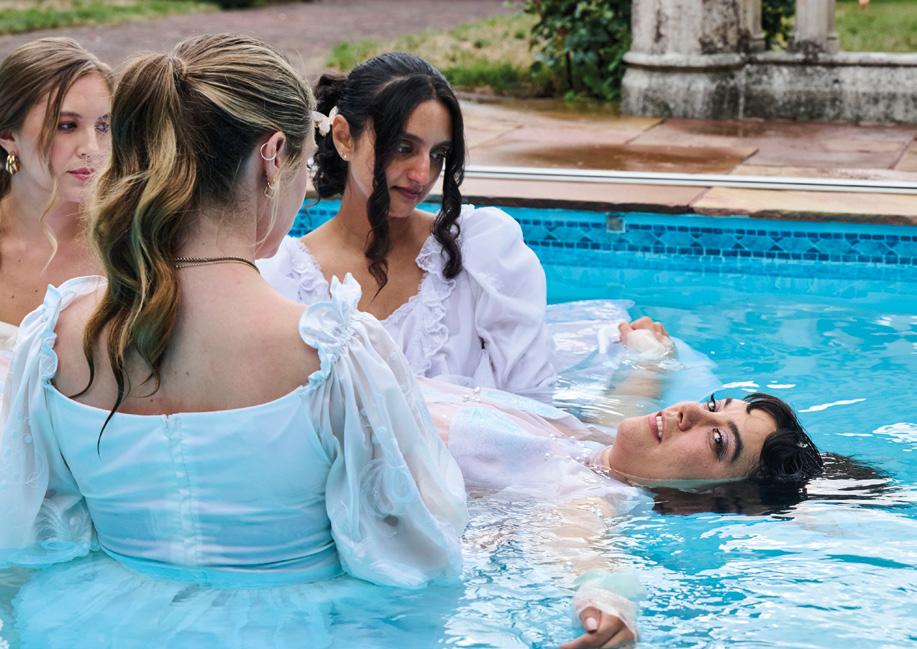
A Um, we’ve been commissioned for a third season, but, um, we don’t have any details on that yet.
Q Because you haven’t written it, or that’s telling me to stop asking questions?
A
That’s as far as I can say. We Might Regret This Season two is available to watch on iPlayer now.
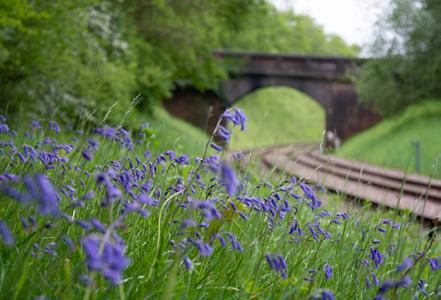
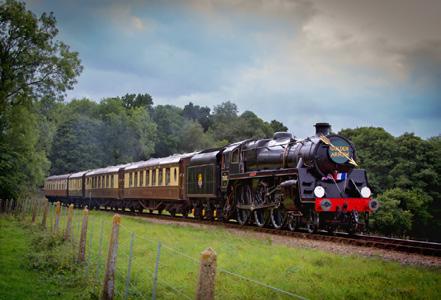

The Railway has four stations along its eleven-mile route, all of which are easily accessible to wheelchair users and mobility impaired persons.
At all stations, ramps are available which connect between select trains and the platform. For standard design of wheelchair and mobility scooter.
Why not dine in luxury with our accessible access on selected Golden Arrow. Through our specially adapted Pullman coach, Car 54, which has been designed to accommodate standard design wheelchair users.
Please note that , due to the historic design of some of our dining stock including narrow doors and gangways.
Registered Carers travel for free when accompanying any registered disabled passenger during normal service running days. A charge will apply for Special Events. Carers can now purchase a ticket online when purchasing a full price adult or child ticket .

*Visitor entry. T&Cs apply
Assistance Dogs (and those in training) travel free on our trains.
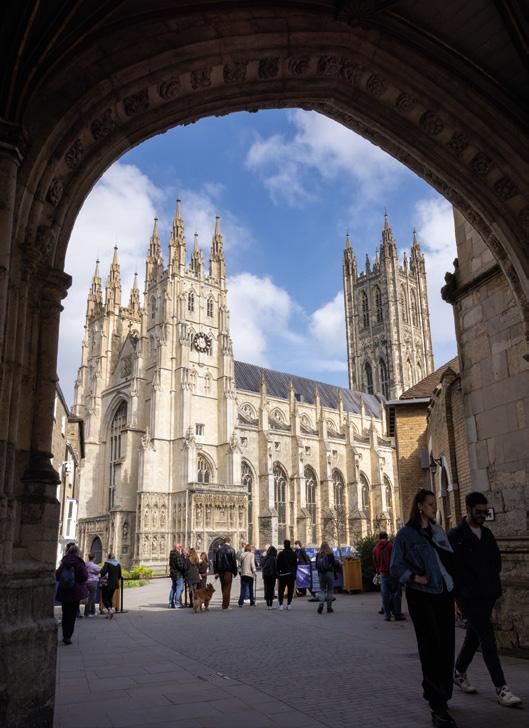

“TREAT
THEY WERE THE GREATEST
Alexander Thomas is a photographer who is challenging the portrayal of disability and sports with a new photographic series. Disability Review Magazine talked to him to find out more about what needs to change in the sporting world.
QCan you tell us how did you begin with your photography series? What was the impetus?
AI’m a disabled person myself. I grew up with an eye condition which has eventually led me to losing a high percentage of vision in one of my eyes. I’ll be permanently blind in one eye - I keep being told in the next five to ten years. You know, those things are never concrete, but... So I grew up with that disability, and then, about six years ago, I also developed Epilepsy, and it was at that point that I started to... I’d always kind of shied away from my disability being part of my work. And that was never, like, a conscious decision, it was just it - my work never used to be about things which affected me. I was making commercial work. And I love sport, I love athletes, I love people who are really
It’s partly my duty to try and tell those stories for people, and to get them these little moments as much as I can.
pushing themselves to make and produce amazing things. And I think the thing which I took on was that I kind of feel like I’m doing no service at all to the other disabled photographers out there if I’m not doing what I can to highlight other disabled people playing sport.
Because we have seen, like, we’ve seen an uprise, and we see these cycles, don’t we? Where, like, the Paralympics will happen, and there’s a lot of attention around it. And then that kind of goes away. And then the next one happens, and then it kind of goes away. And, like, in those in-between moments, there’s all these amazing para-athletes, there’s all these amazing people, and they’re not getting the attention they deserve. They’re not getting the stories written about them. They’re not getting the features in

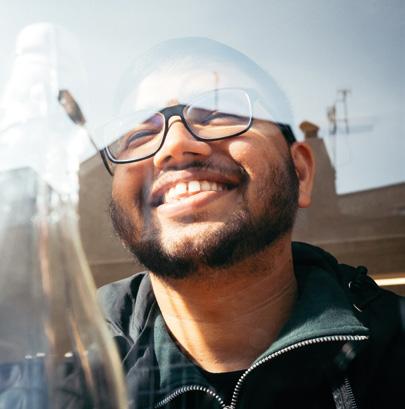
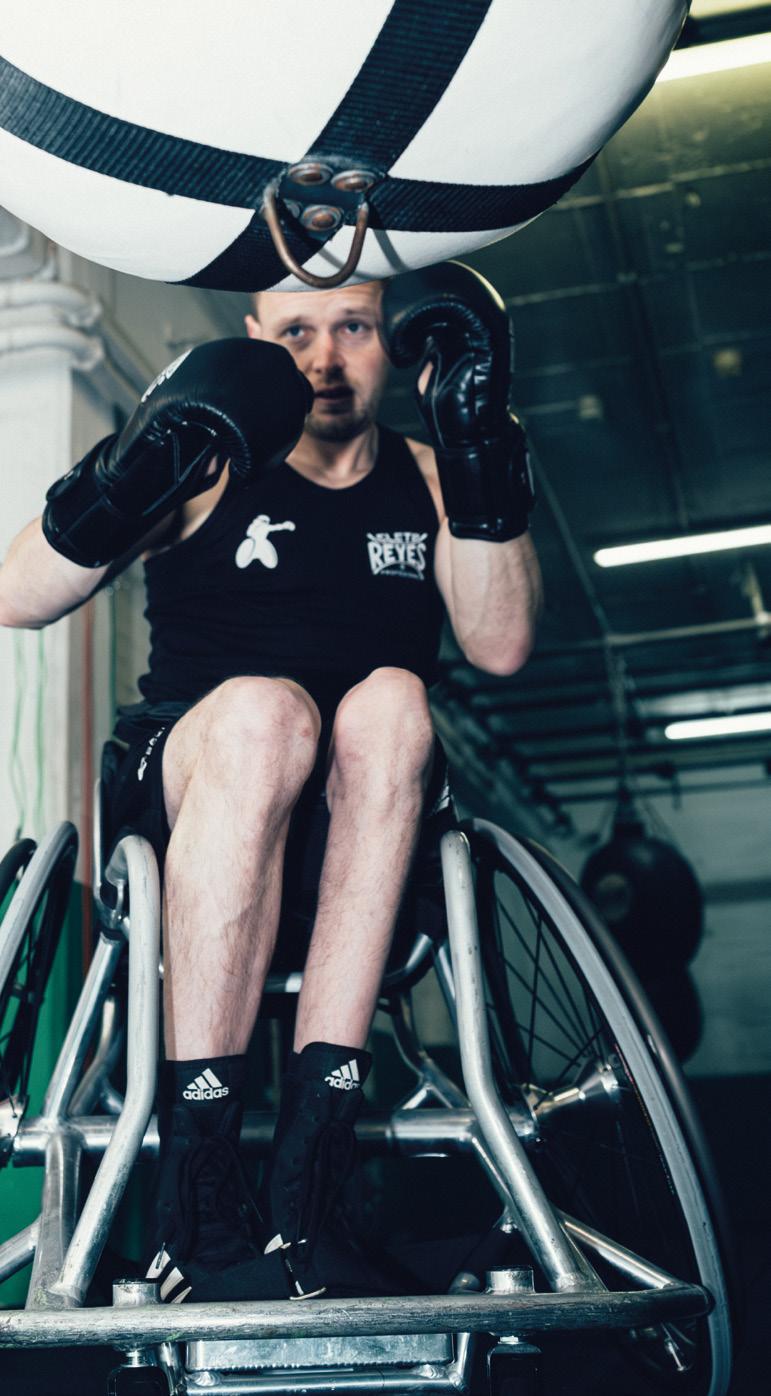
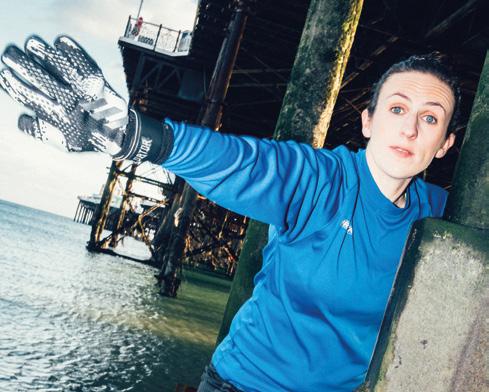
series, did you have any values that informed your work, such as on the topic of inspiration porn?
And things are better, but we shouldn’t stop just because they’re better. We shouldn’t be putting up with that.
magazines. And things are better, but we shouldn’t stop just because they’re better. We shouldn’t be putting up with that.
And so as my work has changed from commercial to telling human stories, it’s like, well, I’m in this position where I can relate to other disabled people, so I kind of feel like - it’s partly my duty to try and tell those stories for people, and to get them these little moments as much as I can.
QYou’ve also kind of touched upon in your answer around the portrayal of disability within sport. When it came to setting up the
AYeah, I hate that. It’s so ugly. It’s so, so ugly when I see it because, um, it’s, you know, it’s like... I mean, there’s so so much to say about that, but it’s like the... I wouldn’t say I have any values in terms of trying to push past the obvious, as in, like, you know, these people deserve the spotlight as much as anybody else does. But I understand that in order to grasp a story for people to kind of be interested, the disability side of it is part of it. You know, let’s not ignore that. But it’s almost like the story is this disabled person did this, and then their sporting achievement is secondary. And that’s... You know, for me, I’m always just trying to get to the core of when I meet other sports, when I meet athletes and things, I’m trying to talk to them about, like, what, what got them started. Not, not, “Oh, well done, you’re disabled.
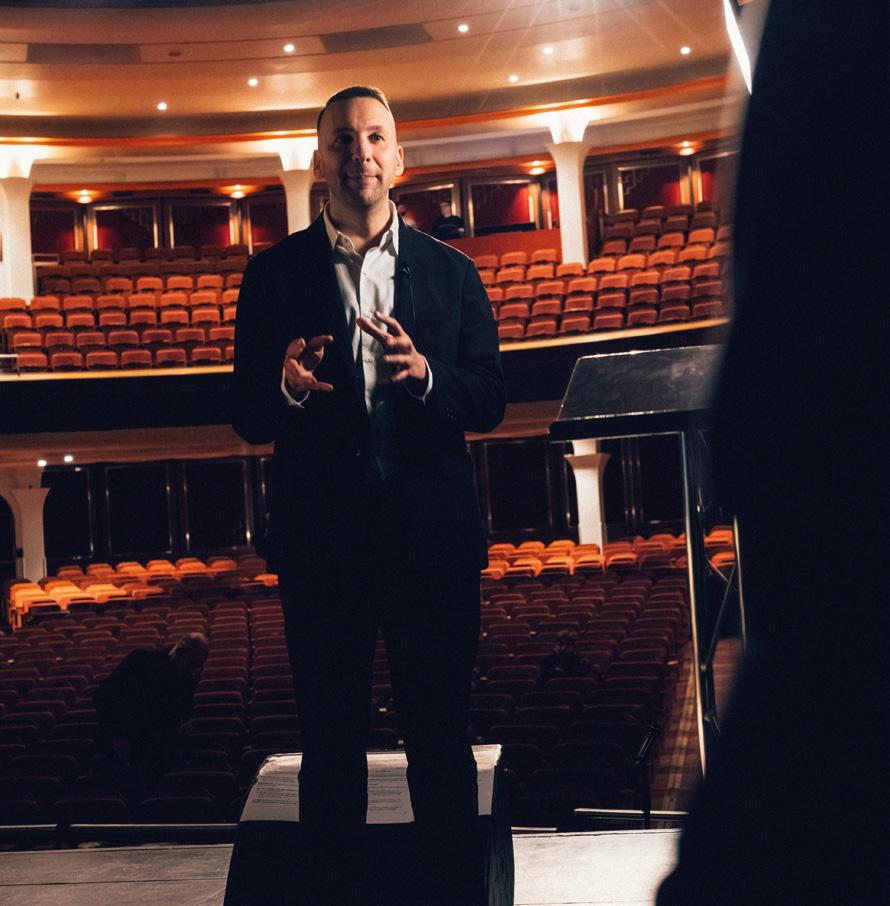
Um, aren’t you a hero for doing this?” It’s like, well, why... It’s like, “What got you interested in sport? What makes you wanna play… what makes you wanna do this?” And so on.
Um, and I don’t know... The thing is I don’t know if I weren’t disabled, I don’t know if I could ask that question with such confidence because maybe the disabled person would be like, “Oh, you’re just trying to the hero side of it, aren’t you?” Do you see what I mean? And so to me, in the nicest way possible, I’m almost trying to ignore their disability at the same time as not, you know, totally disrespecting that’s part of their identity. I like it that other way around for me as well because unfortunately I know very well when editors or someone who wants to commission me for a piece of work, I, I kind... You pick up on knowing that I’m kind of ticking a box for them. I totally understand that, shamefully. I’ve been brought into certain jobs [as a photographer]
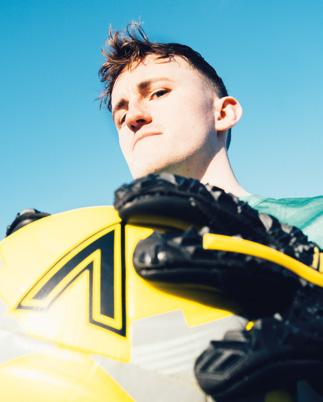
QFor non-disabled photographers who come across a disabled subject, what would be your advice?
AThere’s a line that I always use, and it is, um, treat that person as you would if they were the greatest sporting star in the world. Their disability is not important.
And I love sport, I love athletes, I love people who are really pushing themselves to make and produce amazing things.
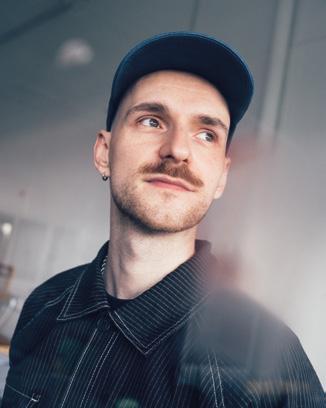
where I kind of, I’m thinking, “Oh, right, yeah, I’m the only disabled person here.” I kind of see what’s going on. Um, so I think the only value is I’m just trying to be as authentic as I can with them, and just try to get to the core of, like, you’re a human being. Tell me your, tell me your story. I’m interested in that.
Like, in terms of you’re meeting a human being and they’ve got a story, that’s the core of what you’re trying to get across. So to me, it doesn’t matter if I’m meeting... I met Maisie O’Shea, who is um, she’s a Deaf England football player, and to me, I think in the hour and a half I had with her, we didn’t talk about disability once. We met for the shoot, and we spoke about football, and we spoke about life, but we didn’t talk about my disability or hers, and it was just, I would - I treated her like I would any other football person.
To find out more about the work of Alexander Thomas, please visit: alexanderthomas photographer.com

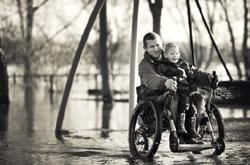
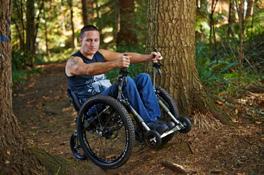
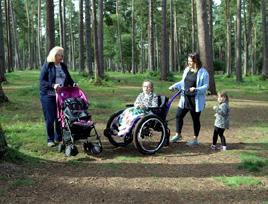
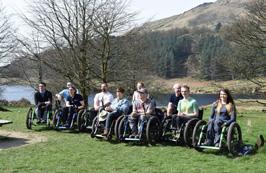
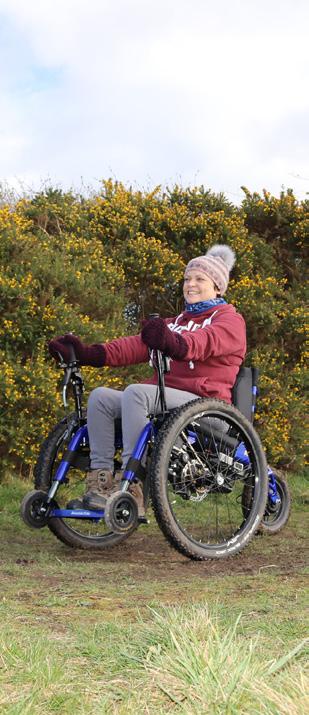
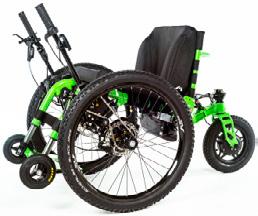
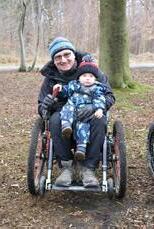


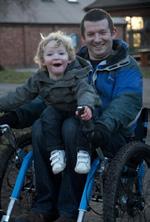
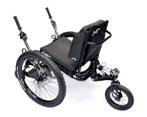
How can the world of football be more accessible to the neurodivergent community? With the help of the BT Group, Liam Watts was dispatched to see England vs Uruguay at Wembley Stadium.
Neurodiversity has been in the news a lot lately - but the accommodations that can be made for conditions such as ADHD and Dyslexia are rarely discussed, let alone considered. In the world of sporting events, accessibility
about his love of football, and his experience of the England vs Uruguay game:
I was probably introduced to football at the age of nine, a few of my mates played it, and I was getting bored of rugby, so I switched over to football with my pals.
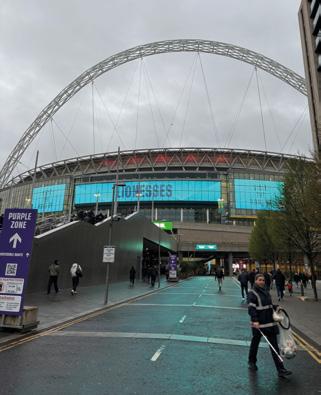
I’d say they were quite accommodating [for my ADHD and Dyslexia at the game.] I did have a a friend with me to help me with my access needs [such as when it came to reading], they [BT Group] had someone there waiting on you who was very helpful. If I needed help reading a menu or anything like that, they were more than happy to have helped [me].
I was probably introduced to football at the age of nine, a few of my mates played it, and I was getting bored of rugby, so I switched over to football with my pals.

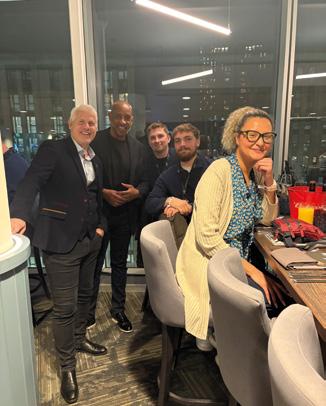
In the world of sporting events, accessibility is more than just access for wheelchair users to have a space for their chair.
1
Consider your signage. Could any potential signage be made clearer, simpler? What about the background this is printed on?
2
Have a quiet area. For Autistic individuals, sensory overwhelm creates the risk of a meltdown; consider setting up a quiet area in the venue that does not require advanced booking.
3
Have an email for accessible tickets when it comes to booking. Not every Neurodivergent individual can manage phone calls; this is creating accessibility for all to take part in the game.
4
Normalise disability aids beyond a wheelchair and walking stick. Some Neurodivergent individuals need to use ear defenders and stims; consider normalising a range of disability aids.
5
Allow time for leaving early.
Other than getting to meet a few exfootballers and the food and beers, just the experience [of the game was a highlight]. I’ve never been in the FA Lounge before, so that was quite cool and interesting, to get to experience that for the first time. I’ve been to a good handful of stadiums. That was my first time at Wembley, but I’ve been to the Stanford Bridge. I’ve been to the Emirates, London Stadium, so I’ve been to the Amex, a got a few amount of stadiums, and I would say Wembley was definitely ‘up there’.
By Ian Taverner
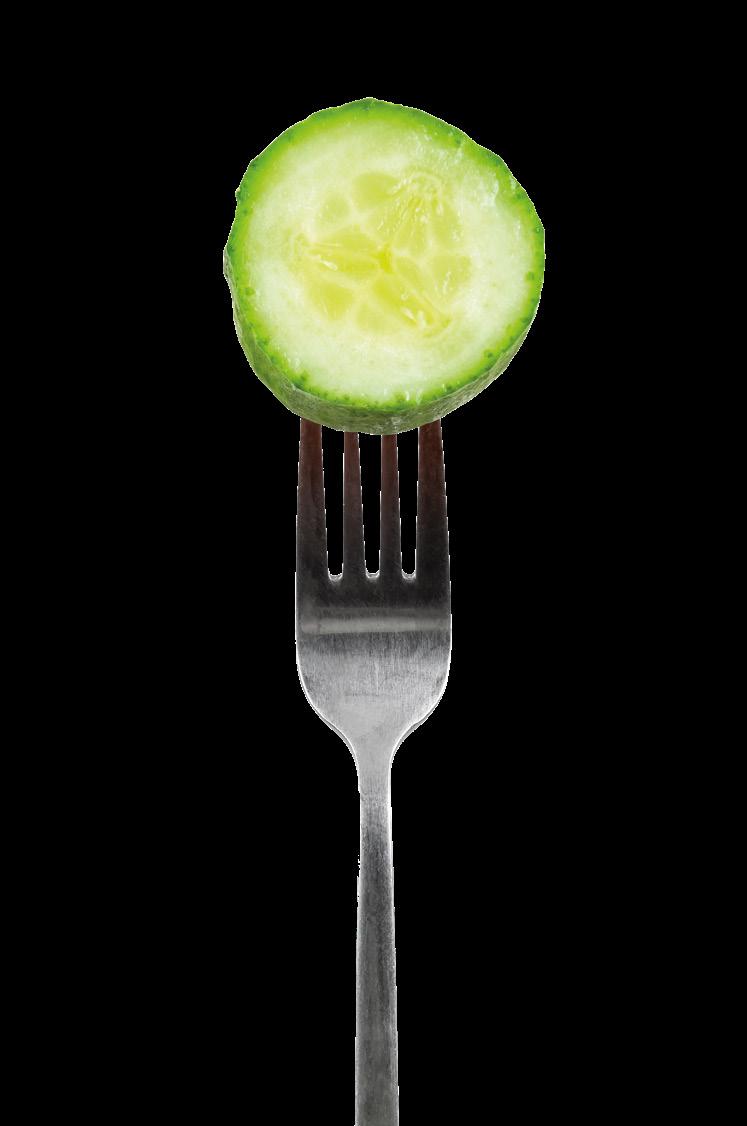
Wand no long-term training required, I have turned sushi on its head with this recipe! Even better, Cucumber Sushi is really easy to make, it is flexible to adapt for a range of dietary needs, and it is also good for the wallet. With a theme of Disability Pride this issue, my inspiration obviously comes from the rainbow colours created inside the sushi, but it is really about celebrating something different, something beautiful in its own right. This is a perfect party dish or canapés for the summer (as delicious bites of health), mixing the cultures of Japan, Italy, Mexico, Korea, and Greece into a new classic! It’s a real celebration of mixed everything!
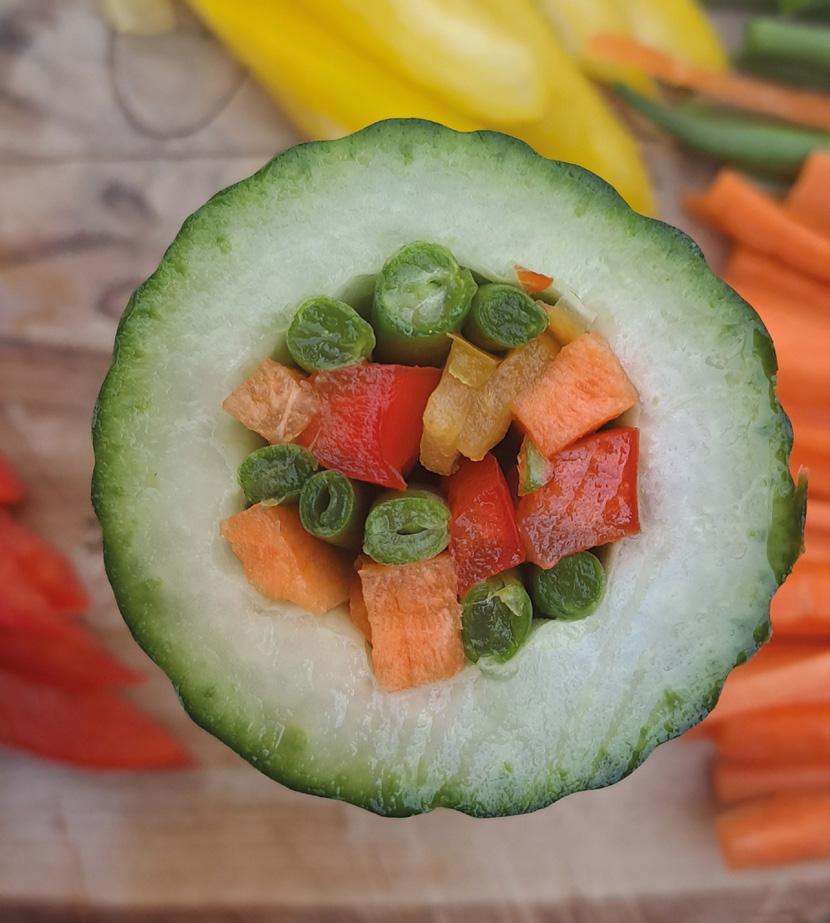
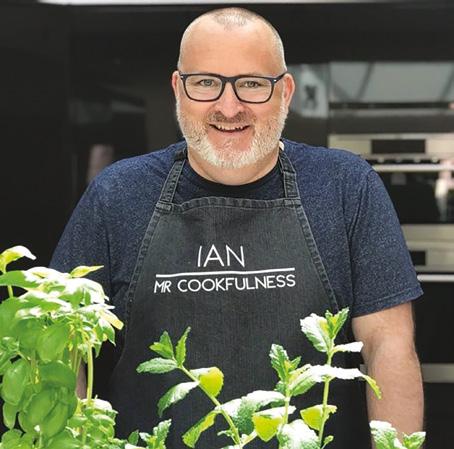
With no rice, no fish,
and no long-term training required, I have turned sushi on its head with this recipe!
My message is to never be afraid to try something new, something different. Break free from fixed thoughts on flavour combinations and try combining different food cultures. Celebrate raw vegetables being delicious, healthy, as well as beautiful. (Celebrate the colour of this life! This recipe has a medium difficulty rating.)
Serves: Lots of people! | Cooking time: 0 minutes | Preparation time: 30 minutes | Total duration: 45 minutes
Knives – one for chopping and slicing, and one for carving out the cucumber | Chopping board | Teaspoons x 3 | 1 Tablespoon | Serving plate or a platter | Fork | Zester | Juicer | Small serving bowls for the dips (as many as you would like to try!)
1 cucumber | 8 green runner beans |
1 or 2 large carrots | 1 red pepper |
1 yellow pepper | 1 small jar of kimchi
1 Trim any sharp ends off of the beans. Line a bean up next to the cucumber and cut the cucumber into lengths that are the same as the beans.
2 Turn the cucumber pieces on to their ends, standing up, and carefully hollow out the middle of the watery centre, using a thin knife and/ or spoon until you are left with cucumber tubes for the sushi.
3 Cut the carrot into similar lengths, and then chop each into matchsticktype thickness in lengths. Slice the
10 tablespoons of mayonnaise | 1 teaspoon of chipotle paste | 1 teaspoon of garlic paste | Half a teaspoon of italian mixed herbs | 5 tablespoons of plain greek yoghurt | Half a lemon – the juice & zest | Thumb-sized piece of feta cheese | 2 mint leaves, ripped into little pieces
1 Add 5 tablespoons of mayonnaise to a serving bowl.
Add 1 teaspoon of chipotle paste and mix well to combine to create your dip.
Add 5 tablespoons of mayonnaise to your next serving bowl. Add the garlic paste and italian mixed herbs. Mix well to combine in order to create your dip.
Add the greek yoghurt to your serving bowl.
Crumble in the feta cheese and mix well with your fork, leaving behind no large lumps in your yoghurt. Add the lemon juice and zest, as well as the mint leaves. Combine well to create your Greek-Inspired dip.
Take your time with the hollowing out of the cucumber. A long and thin knife is ideal for this job, but using a skewer to push down around the outside of the watery part of the cucumber (in a circle) can make it much easier to remove, too. I find that adding the softer vegetables first - especially the peppers - helps when making this recipe, as it makes it easier to cram in the rest of the harder vegetables, particularly when the space gets ‘tighter’. Pack it all in! If you think you have enough stuffed in, add in
more! Always try the first round you have cut to see if anything drops out; if it does, it will for the rest in that batch, too. Just turn the cucumber back on its end, top with the sliced piece, and add more filling. Do not wrap the Cucumber Sushi in cling film in your fridge; this will cause it to release more juice, and so many delicious things will fall out!
Try different fillings of vegetables, but remember to keep the colours as wide as you can. Change the colour patterns inside so they look different per section; this will add a stylish feature when serving at a garden party this summer. You could also try adding some chicken or fish inside if you want to. I would add that as the centre element in the cucumber before the kimchi goes in. If you do not like kimchi, then just leave that out and make sure you have lots of dips to add instead. In the spirit of this dish, go mad with your flavour combinations! If you like it, try it!
iIan Taverner, A.K.A Mr Cookfulness, is available for bespoke cooking shows, demonstrations, workshops, talks, and courses. To inquire:
WEB: cookfulness.co.uk
EMAIL: cookfulness@gmail.com
TWITTER: @cookfulness
YOUTUBE: @cookfulness
The Cookfulness Cookbook is available in hard copy & e-book on Amazon | BookshopUK | Waterstones