BEFORE THE SHOOTING STARTS

Aurora police reform monitor urges mental health system scrutiny to deter police shootings






Aurora police reform monitor urges mental health system scrutiny to deter police shootings
The Sentinel not only cares deeply about bringing our readers accurate and critical news, we insist all of the crucial stories we provide are available for everyone — for free.
Like you, we know how critical accurate and dependable information and facts are in making the best decisions about, well, everything that matters. Factual, credible reporting is crucial to a sound democracy, a solid community and a satisfying life.
So there’s no paywall at SentinelColorado.com. Our print editions are free on stands across the region, and our daily email E-ditions are free just for signing up, to anyone. But we need your help to carry out this essential mission.
The cost of producing top-notch journalism is steep. We need readers like you to become partners and help us. Even if it’s a little, it means a lot.
Join our mission by providing even a few dollars a month, or more if you’re able. Whether you can or can’t give right now, go SentinelColorado.com to subscribe to our free daily email E-ditions. Click on the red bar on the top of the home page to contribute now.
The Sentinel is owned and operated by the non-profit, 501(C)(3) community-led group Aurora Sentinel Community Media. That means your donation may be tax deductible.
Donate one time or as an evergreen-sustaining member. Just choose “One Time or Monthly” and fill out our fast, easy and secure form.
Thank you for your generosity and support for local Sentinel reporting.








It takes little imagination or insight to understand how outrageous it would be for voters to have to elect candidates or approve ballot questions not once, but twice, just to “make sure” that voters were sure about their decisions. It would be even more odious if the requirement to elect any candidate or approve any ballot question required 75% of voters to approve a candidate or question at the second election.
Given that, it’s easy to understand why thousands of workers and their supporters across the state are vexed by a problem that plagues only Colorado. The dilemma stems from Colorado requiring unionization elections to be repeated before they become official, and the second time, they must meet a 75% approval threshold.
Before you muster your feelings about unions, or consider how good or bad the twice-vote scheme is — good for anti-union business or anti-union workers — consider how critical and strong unionization rights have been in the United States for far more than a century.
During the late 1800s, industrialization brought workers mercilessly long hours, low wages and dangerous working conditions. Children were forced to work as long as 14 hours a day. Early labor organizations, including the American Federation of Labor, pushed for better treatment but faced regular resistance from employers and government officials, siding with wealthy business owners. Major labor conflicts, such as the Haymarket crisis in 1886, the Homestead Strike of 1892 and the Pullman Strike of 1894, highlighted tensions between industry leaders and workers, many of whom died from their jobs.
A landmark turning point came in 1935 with the National Labor Relations Act, also known as the Wagner Act. The law guaranteed most private-sector workers the right to form unions, engage in collective bargaining and participate in concerted activities for mutual aid and protection.
The right to unionize has long been recognized as nearly constitutional — except in Colorado.
Rich with mines, Colorado has long shunned the national trends and now is the only state that still allows rules that are nothing but union-busting relics.
In conservative, “right-to-work” states like Texas, one vote resulting in a simple majority of worker approval, 50% plus one person, creates a union. And like in Colorado and other “right to work” states, no employee can be forced to join or pay union dues.
For the past two years, state lawmakers have voted convincingly to repeal the shoddy requirement. This year, lawmakers backed House Bill 1005 to level the playing field, and both times, Gov. Jared Polis has vetoed the repeal. His most recent repeal was Friday.
Polis said he wanted business and labor unions to come to some sort of agreement on the issue.
Why would anti-union, pro-business factions give up the nation’s only nearly guaranteed union-prevention law or agree to diminish it when they have an iron-clad way to preserve it?
They would not.
And until the legislature can muster the votes to override another veto, or the next governor sees how this bill is nothing more than righting a grievous and anti-democratic wrong, anti-labor factions will win.
The average unionized laborer’s salary is about $40,000 a year in metro Denver, far below the average salary of $75,000 of all employees, according to state labor reports. Union and non-union workers are subject to the same market forces that set all wages across the state.
HB 1005 didn’t curry favor with unions or attempt to give pro-union forces an unfair advantage. It simply worked to bring this one-sided, unjustified and undemocratic swindle to an end.
If the fair-labor bars are only as high as the ones in Texas, Wyoming, North Dakota and every other state, and Colorado can’t meet the bar, something’s very wrong and needs to be made right. Follow@EditorDavePerryonBlueSky,Threads,Mastodon,





BY JASON GONZALES,
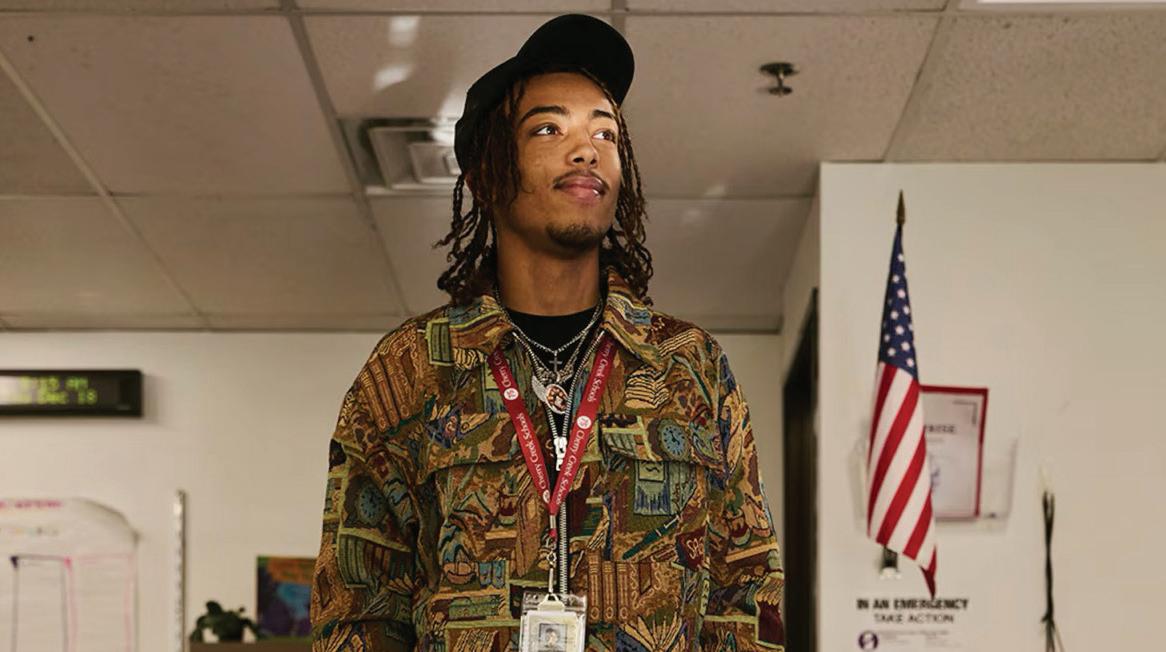
Treyvon Greenwood thought he would go into the trades after graduation. A senior at Aurora’s Smoky Hill High School, he was interested in becoming a heating, ventilation, and air conditioning technician.
His trajectory changed when his English teacher heard Greenwood talk about his passion for tutoring other students. The teacher told his school counselor, who suggested Greenwood try a teaching apprenticeship instead.
At first he was reluctant, but Greenwood has grown to love splitting his time between his classes at Smoky Hill High and apprenticing in a fifth grade classroom at nearby Sunrise Elementary School. The 18-year-old works much like a student teacher would and earns more than $18 an hour.
“I help them with their writing, and I just feel like they trust me,” Greenwood said of the fifth graders. “I think they know that if ‘I’m struggling with something, I can come straight to Mr. Trey.’”
Greenwood’s experience is what state and business leaders had in mind when they launched the CareerWise Colorado youth apprenticeship program in 2016. But it’s also rare: Only 1,200 students statewide have taken part in CareerWise programs, according to its founder, who had envisioned 20,000 students participating in its first decade.
There are myriad reasons why: Some businesses have found they’re not well-equipped to work with teenagers and left the program. School officials across the state say they’ve struggled to convince families of the value of apprenticeships, which require students to commit to two to three years of balancing school and work. Apprenticeships also compete for students with an increasing variety of other educational options, from college preparation to internships to less time-intensive career education programs.
Noel Ginsburg, a Colorado businessperson who founded CareerWise, described his original goals for program participation as “well-intentioned and ill-informed.”
Ten years in, CareerWise offers an important case study in the challenges of offering robust on-the-job training for high school students, an idea that has widespread bipartisan support and increasing investment from the public and private sectors but can be difficult to execute on a large scale.
Youth apprenticeships viewed as an idea that could create its “own natural momentum”
Backed by $9.5 million from JP Morgan Chase and Bloomberg Philanthropies,Ginsburg envisioned students being trained in such fields as healthcare, banking, finance, and the trades. Juniors and seniors would earn their high school diploma and job training, plus valuable industry certifications or time spent working toward a two-year college degree. A post-graduation year would be spent getting more work
The organization also takes credit for about 2,000 more apprentices who have participated in programs originally started by or inspired by CareerWise. Even including those students, that means CareerWise fell short by about 16,800 apprentices.
experience and could include college enrollment. CareerWise would help build a trained workforce in Colorado while offering some students a cheaper alternative to a two- or fouryear degree. Others, like Greenwood, might spark an interest in a different-than-expected career path that still requires a college degree.
The idea for CareerWise came from Switzerland. There, youth apprenticeships are embedded in the culture. About two out of every three young people participate, and businesses line up to recruit those students into nearly 250 different occupations.
Ginsburg visited Switzerland in 2015 to see this model in action. At the time, he headed Intertech Plastics, a Denver-based plastics manufacturer he founded, and he was struggling to hire skilled mid-level workers.
Ginsburg was so impressed with what he saw that he led a delegation of 50 Colorado business and civic leaders, including then-Gov. John Hickenlooper, to Switzerland the following year. The globe-trot laid the groundwork for the creation of CareerWise.
Youth apprenticeships weren’t new in the United States; Wisconsin’s pioneering program was established in 1991. But by the end of the trip, Hickenlooper said he was convinced that Colorado could take the lead, mainly because of Ginsburg’s dedication and vision.
“If we do this properly, in three years there should be as deep a foundation and rooting of this that it will have its own natural momentum,” Hickenlooper said in a video documenting the trip.
Ginsburg didn’t want CareerWise Colora-
do, the nonprofit he eventually created, to run the programs. Instead he wanted to connect schools and employers with the know-how to prop up two- to three-year apprenticeship programs and ensure they received crucial but difficult-to-earn federal recognition for program quality.
Students in four school districts — Denver Public Schools, Cherry Creek School District, Jeffco Public Schools, and Mesa County Valley School District 51 — began apprenticing in 2017.
Today, only three of the four districts are still involved with CareerWise, and their success rate varies. District 51 continues to offer youth apprenticeship programs through a partnership with its local chamber but without CareerWise’s support in the last two years. About 65 apprentices have completed Jeffco’s program. Denver has had 272 students complete apprenticeships but is reworking its agreement with CareerWise.
Cherry Creek offers some of the most robust CareerWise options, including in information technology, advanced manufacturing, hospitality, and teaching.
But getting students interested in apprenticeships is hard, even for a district as successful as Cherry Creek, school counselors said.
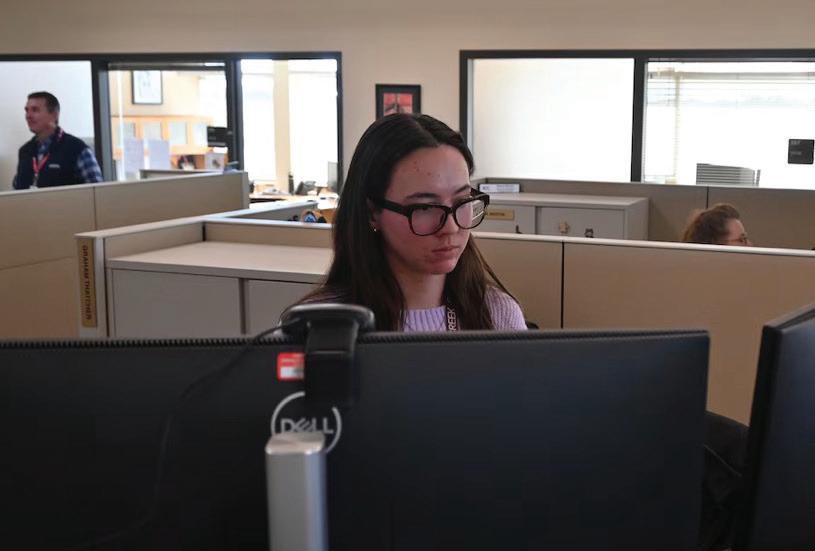
“I do think that parents sometimes have reservations, just because they’ve grown up in this: They should go to college,” said Cady Hobbs, a counseling coordinator at Grandview High School.
Some apprenticeships can lead to college, as it has for Greenwood, who plans to attend
Metropolitan State University of Denver and participate in a program for Black educators. But that type of path might not be as easily understood by parents.
Meanwhile, districts like Denver and Cherry Creek offer so many career-related opportunities, from career exploration classes to summer internships, that it creates competition with their own apprenticeship programs.
“This landscape is a lot broader than I think anyone may have realized in 2016 or 2017,” said Theress Pidick, the Denver district’s youth career development director.
Another big hurdle to growing apprenticeships has been the revolving door of businesses that are willing and able to host and train a high schooler.
Ginsburg said in an April roundtable event that getting and keeping businesses engaged has been one of the hardest challenges for CareerWise.
“What we don’t have are the companies that see this as not just an imperative to do the right thing for their community but how important this is to their bottom line,” he said.
CareerWise launched with about 45 employers. By the second year, about 25 returned. The number of employers has ebbed and flowed over the years, with 29 actively working with apprentices. The reasons why they’ve stopped participating vary.
Some, like Mikron Denver, now run their own programs, separate from CareerWise.
Eagle County Paramedic Services tried CareerWise for a year before realizing students needed to have certain certifications that could be only earned when they turned 18. Insurance also wouldn’t cover student ambulance drivers.
“I think we really did go into it with the best intentions, but there’s no way to know everything it’s going to take,” said Katie Coakley, the organization’s marketing and communications specialist.
John Halloran, a regional manager with construction business RA Nelson, said his Eagle County company loved having an apprentice. The student worked full time over the summer, but once the school year got underway it became difficult to balance schoolwork with the constantly evolving schedules of construction.
“The hours and the pace didn’t really align,” Halloran said. “But I’d
prentices ages 18-24. The first cohort of five started last year to learn skills to become mid-level Computer Numerical Control, or CNC, operators.
They will graduate able to troubleshoot complex issues, fix the machine when necessary, and program it, which will help them earn higher pay.
Andrew Sutliff, a 19-year-old CoorsTek apprentice who graduated from Cherry Creek’s school district last year, said he’s learning a lot in a short time.
“It feels like they’re cramming a lot that some people who have been here for four years don’t even begin to learn,” he said.
Even if he doesn’t get hired by
CoorsTek full time, Sutliff said it’s a good opportunity to make himself more valuable to other companies.
CareerWise has also shifted from trying to grow a big program in Colorado to sprouting a host of smaller programs in other states. Ginsburg has helped prop up apprenticeship programs in New York and Elkhart County, Indiana. And more locations are likely.
With a $12.5 million federal grant, CareerWise launched the Future Ready Apprenticeship Center in 2025. The center provides $200,000 grants to connect other states with the lessons learned here and elsewhere, including program design, policy expertise, and funding.
In addition to government grants, CareerWise itself is receiving more philanthropic support than ever, including $7 million from MacKenzie Scott’s YieldGiving foundation in 2023.
Even if he didn’t meet his original participation goals, Ginsburg still believes in the potential of widespread apprenticeship offerings for youth in Colorado. He believes the next decade won’t be just about tough lessons but opportunities to grow youth apprenticeships.
However, his expectations about how fast the program can grow have changed.
“We have a long way to go,” he said.
love to try it again and see if we can make it work.”
Vinz Koller, vice president of the Center for Apprenticeship and WorkBased Learning at Jobs for the Future, a nonprofit focused on expanding economic opportunities, agrees not enough businesses see the importance, unlike in Switzerland.
“The chicken and egg challenge we have is until you have enough opportunities, it’s going to be very hard for the youth and for parents to feel like this is an option,” Koller said.
Some places have made it work. In Eagle County, which has participated since 2017, the dedication of a single employee — a former teacher who coordinates business participation through the local chamber of commerce — has made a difference. CareerWise Eagle County and the school district have shortened its program from three years to two so students aren’t choosing between college and an apprenticeship.
Warren Barker, a manager of supply chain logistics at Vail Health Hospital, said he believes his company’s participation in CareerWise represents an investment in Eagle County. Vail Health has employed 27 apprentices to date, though not every student ends up staying.
“The best thing I get to do in my job, by far, is seeing the caliber of students who go through the program,” he said. “And then being able to help get them focused into whatever is next for them, be it with Vail Health, hopefully, or anything else that they want to do.”
CareerWise has changed its apprenticeship programs
In response to the challenges it’s experienced — and in a bid to meet the current demand for more workforce training programs — CareerWise has pivoted.
Instead of focusing just on 16- to 18-year-olds, CareerWise has started pre-apprenticeships that help younger students prepare for an apprenticeship. And it’s also helping grow post-high school apprenticeships for young adults up to age 24, similar to the Switzerland program, Ginsburg said.
One example is its partnership with CoorsTek, a manufacturing company in Golden that makes ceramic parts used in computers, tanks and armor, and wind turbines, among others. With the help of CareerWise and a $4.58 million state grant, the company is using its CoorsTek Academy, an in-house training program launched in 2021 as a regional training hub, to teach ap-













Tune in Tuesday, June 16, from 8–10 a.m. for our annual State of the County address, streamed live on our Facebook page. We’ll dive into some exciting new initiatives, celebrate the work our teams and partners have done over the past year, and look ahead to what’s next.


Fermentation: Making Kombucha June 10, 6–8 p.m.
Learn how to make your own kombucha in this hands-on workshop. Participants will explore the basics of kombucha brewing, its health benefits, and safe fermentation practices. Register at bit.ly/CSU_Kombucha




Aurora Rep. Jason Crow leads new congressional caucus to fight corruption
Aurora Democratic Rep. Jason Crow is leading a new congressional caucus with the goal of ending corruption and the influence of outside money in politics.
Crow also brought back two previously introduced bills that intend to increase transparency around political action committee donations and other so-called dark money spending in elections.
He will co-chair the End Corruption Caucus alongside U.S. Rep. Alexandria Ocasio-Cortez, a New York Democrat, and U.S. Rep. Mike Levin, a California Democrat. Inaugural members include the three co-chairs, U.S. Rep. Wesley Bell, a Missouri Democrat, and U.S. Rep. Chris Pappas, a New Hampshire Democrat, though membership is expected to grow.
Crow said American democracy is “buckling under the influence of billionaire donors and special interests.”
“Corruption is why costs are so high, why the government feels unresponsive, and why the system seems to only benefit the wealthy and well-connected,” Crow said in a statement. “We must take on corruption to lower prices, restore trust, and help working families.”
Crow previously co-chaired an earlier version of the End Corruption Caucus.
In a letter to other members of the U.S. House of Representatives, the cochairs said the caucus has five legislative priorities: removing the influence of dark money, corporate PACs and special interests; enforcing accountability in all branches of government through transparent, regular reporting; preventing former elected officials and government employees from becoming lobbyists; reducing the power of kleptocrats and prohibiting foreign election interference; and stopping the weaponization of the government.
The letter calls out how President Donald Trump has consistently used the presidency for his own personal profit. As of March, Forbes estimated Trump’s net worth to be about $6.5 billion, compared
to the $2.3 billion he was worth before he was elected president in 2024. Trump has also weaponized his presidency, the letter says, including by stalling government investigations of his allies, changing tax benefits for universities and defunding public media.
The caucus will meet quarterly with good governance organizations and highlight anti-corruption initiatives from its members, though it will not formally endorse specific pieces of legislation.
Crow and caucus leaders introduced a resolution asking Congress to denounce corruption “in all its forms” and to oppose policies that benefit special interests and “corrupt politicians.” The resolution says only 17% of adults in the U.S. trust that the federal government will “do the right thing.”
The Stopping Hidden Interests and Non-Disclosure in Elections Act would require political action committees to disclose high dollar donations they receive within 20 days of an election. The goal is to prevent the creation of super PACs that form close to an election so they don’t have to publicly disclose their donors until after an election occurs — known as a “pop-up” super PAC.
Crow and co-sponsor U.S. Rep. Chris Deluzio, a Pennsylvania Democrat, introduced the same legislation in 2024, but it has not moved forward in the Republican-controlled House.
Crow also signed onto the DISCLOSE Act, led by Pappas, which would require that super PACs disclose donors who contribute more than $10,000, among other provisions to increase spending transparency. Many versions of that measure have been introduced in both the U.S. House and Senate since the U.S. Supreme Court’s 2010 Citizens United decision, which allowed unlimited independent spending in elections by corporations and other organizations.
Crow has also backed measures that would ban any stock ownership for members of Congress, limit foreign interference in elections, and close loopholes around political donations through socalled social welfare organizations.
— Lindsey Toomer, Colorado Newsline



Casa de Paz aids immigrants in distress released from Aurora ICE detention center
Sitting on a couch in a one-story house near the immigration detention center in Aurora on a recent rainy weekday, J.R.V. began to retether himself to the life he was ripped from nearly five months ago.
At his feet, tan work boots were in a plastic bag with his name written in Sharpie. He had last worn them on a Saturday morning in December when a sheriff’s deputy arrested him as he was driving to a construction site in Florida. They were a reminder of how quickly life changed.
J.R.V., 40, spent about three days at the county jail followed by 12 at Alligator Alcatraz, the infamous, new immigrant detention center in the Florida Everglades, where he said detainees suffered in freezing conditions. From there, U.S. Immigration and Customs Enforcement took him on a four-day odyssey by airplane to detention centers in Texas and Arizona with a stop in Louisiana — chained at the hands, feet and the waist with little access to a bathroom — before he arrived in Aurora.
He never saw his driver’s license, passport or work permit again.
After 127 days there, during which he got little sleep and struggled to stay connected to his family, a guard inside the Aurora detention facility, operated by the private prison company GEO Group, awoke him saying, “You’re going home.”
At about 11:30 a.m. on April 29, he walked outside at the busy intersection of Peoria Street and East 30th Avenue, in front of a vehicle emissions testing site. All the guards gave him were the belongings he had on him that day five months before, when he was driving to work.
At the nearby house, the home base of Casa de Paz, a nonprofit organization that helps detained immigrants and their families, J.R.V. charged his phone so he could call his wife in South Florida and tell her he was out. He’d have to wait to talk to his children, 12 and 9, both U.S. citizens, until they were home from school, he said. Then, he called his lawyer to tell
her the news.
Without the help of Casa de Paz, he doesn’t know what he would have done.
J.R.V., who did not want his full name used because he fears retaliation from immigration officials, is one of hundreds of people released from ICE detention each year that Casa de Paz helps with basic necessities.
The organization started in 2012, offering a one-bedroom apartment where people from out of town could stay while they were visiting their loved ones at ICE’s detention center in Aurora, said executive director Andrea Loya. Since then, Loya said the organization, which received nonprofit status in 2016, has helped more than 20,000 people from over 82 countries.
As national immigration policy has evolved, so has Casa de Paz’s mission. As needs changed, the group began helping families set up commissary accounts for their detained loved ones and giving detainees funds to make phone calls inside the facility.
In 2023, the group helped about 4,400 people released from the detention center amid a huge influx of immigrant arrivals to Colorado. In 2024, they helped about 2,000, and last year, they helped about 600 people as the Trump administration released far fewer detainees.
A Colorado Sun review of detention data obtained from ICE and published by the University of California, Berkeley, School of Law’s Deportation Data Project shows that the number of people released from the Aurora immigration detention facility has plummeted while the number transferred to other detention centers has increased since President Donald Trump’s inauguration in January 2025.
Meanwhile, ICE arrests in Colorado have skyrocketed. Federal immigration agents arrested three times more people in Colorado per day on average last year compared with 2024, according to the data.
So far this year, Loya said Casa de Paz has helped about 440 people, on track to be more than last year, but still far fewer people than they helped just three years ago. As the Aurora detention facility has turned into a one-way turnstile, Casa de Paz has found new ways to support the families of those detained.
paid for by the person traveling. For families visiting loved ones inside, volunteers offer snacks and toys for kids to play with while they wait, a new service since they started seeing more Colorado residents being detained last year.
The work is just one example of how Coloradans are helping people cope with the ramifications of Trump’s immigration crackdown.
The emotional and psychological toll of being imprisoned away from family members wears on people, said Loya.
“One of the most alarming things for us is how sick individuals are when they are released and the difference from the human they were when they entered detention,” she said.
J.R.V. lifted a paper plate of Little Caesars pizza to his mouth, food provided by Casa de Paz coordinators as they researched bus routes to help get him home. With no ID, he had no way to fly, and so a $400, three-day Greyhound ride with stops in St. Louis, Nashville and Atlanta was his best bet, they said. One of them downloaded the Greyhound app onto his phone and printed the itinerary for him.
The way home would be expensive and protracted, but after nearly five months behind bars, he was looking forward to it.
When J.R.V. first arrived at the GEO immigration detention center in Aurora, he said he signed a voluntary deportation agreement, hoping to end his traumatic detention experience as soon as possible. He had agreed to abandon his asylum case and go to Guatemala, a place he has not lived in about 20 years, where his family would meet him. He arrived in the U.S. in 2007 and had applied for asylum in 2022.
The treatment by immigration and police officers so far had been overwhelming.
“They don’t treat you with dignity, with respect, they treat you as if you are another animal, and we aren’t,” he said in Spanish.


























Last year Casa de Paz began receiving calls from loved ones with questions about the immigration process and detention, and so they added resources to the center’s website that includes links to family preparedness and know-yourrights packets.
An immigration judge encouraged J.R.V. to fight his detention, and now he’s glad he did, he said. He filed a habeas corpus petition in federal court in Denver in March — the last legal remedy available to someone who is incarcerated to challenge their detention — and won. Immigrants filed more habeas cases in the first 13 months of the second Trump administration than in the past three administrations combined, including Trump’s first, according to federal court data reviewed by ProPublica.

















The majority of the organization’s funding comes from individual donors, according to Loya. At times it has been difficult for Casa de Paz to get local grants because many of the people they help are not residents of Colorado, although that has changed over the last year. Loya said the organization saw an uptick in donations after President Donald Trump’s election wins in 2016 and 2024.
J.R.V. doesn’t know why ICE incarcerated him so far from his family, but it made the experience much harder to bear.
“It’s a strategy to punish people and encourage them to leave, saying there’s nothing good for them here,” he said in Spanish. “It’s to make you psychologically suffer, so that people say they don’t want to come back to this country.”






Last year, most people released from the detention center that sought help from Casa de Paz were from Mexico, followed by India, Egypt, Turkey and Venezuela.
Each day, program coordinators sit in a white van parked on the street behind the Aurora detention facility, waiting for people walking out. Most look like J.R.V.: confused, carrying plastic bags filled with their belongings.
At the nearby nonprofit center, coordinators offer water, a warm meal, snacks, a backpack and suitcase, a phone charger, and a change of clothes. They pay for transportation within Colorado and help book long distance travel
According to the Colorado Sun’s review of ICE data obtained by the Deportation Data Project, ICE appears to be transferring more people between detention centers. The percentage of detainees that ICE transferred to another detention facility from the Aurora detention center jumped to 73% in 2025 from 23% in 2024, according to the data.
A spokesperson for ICE declined to be named or answer questions about the agency’s transfer policy or protocols. He referred questions to the “Detention Management Standards” page on ICE’s website, which says “ICE also takes other factors into consideration — including when an alien has a serious medical condition, is the primary caregiver of minor ›› See METRO, 7
children, or other humanitarian considerations.” The standards do not say how ICE determines where someone is detained.
As J.R.V. recounted his experience, a Casa de Paz coordinator came into the house with another man who took a seat on the couch.
J.R., 35, had spent just one night at the ICE detention center in Aurora in an apparent error, he said. The Sun is not using J.R.’s full name because he fears retaliation from immigration officials.
As he laced up his blue tennis shoes with the laces guards had confiscated when he was detained, he told the coordinators he had received a call the day before from someone with ICE’s Intensive Supervision Appearance Program, an alternative to detention program that tracks people with ankle monitors, saying he needed to come to their office near Cherry Creek Reservoir to have his monitor checked because it wasn’t working correctly.
ICE uses a private company called BI Incorporated, a subsidiary of GEO Group, to monitor about 185,000 immigrants with ankle monitors and virtual check-ins while their immigration cases play out.
ICE had put the ankle monitor on J.R. about 20 days earlier when he and his wife and 10-year-old son, all from Colombia, lost their asylum case at an immigration hearing. The family appealed, he said.
When he showed up to the office on Yosemite Street, he said ICE officers put him in handcuffs and had him face the wall so he couldn’t see anything. They told him he had a deportation order; he insisted he had appealed. He was supposed to pick up his son from school that
day, and the officers didn’t let him call his wife to tell her he wouldn’t be able to do the pickup, he said. They took him out a back door and drove him to the detention facility in Aurora.
ICE took his ID and work permit, he said. He’s worried about holding on to his job as an overnight stocker at Walmart without the documents.
“They were so rude, so inhumane,” he said in Spanish, recounting the last 24 hours that had upended his life. Casa de Paz coordinators intercepted him as he was leaving the detention center, offering him a warm lunch and a way to get home.
J.R. ate a slice of pizza and the Casa de Paz coordinators ordered him an Uber ride to his house in Aurora.
Loya, the Casa de Paz executive director, took notes about J.R.’s experience so she could relay the information to the Colorado Rapid Response Network, an organization that confirms and reports on ICE arrest activity throughout the state.
“Hopefully this information will help prevent this from happening to someone else,” she said.
J.R.V. spent most of his time in detention reading the Bible, he said. Compared to Alligator Alcatraz, the medical care at the Aurora detention center was OK. The food, not so much. Often the staff would serve the rice and beans undercooked. Sometimes, the food made people sick, he said.
For the first 20 days, he slept in a windowless room with one other person. Then, he was transferred to a room with 60 people in bunk beds. Often, he couldn’t fall asleep until about 3 a.m. because people would be coughing, snoring or playing cards. The staff served breakfast at 5:30 a.m., cutting short any rest he got.
Some of the people detained there

were so old, well into their 70s, that they could barely walk, he said.
The experience made him value his health and his family, things he said he took for granted before.
“Someone who has been through this experience realizes how important family is,” he said. “First I’m going to hug my family and then I’m going to continue with my life, keep working.”
— Taylor Dolven, The Colorado Sun
An Arapahoe County grand jury will decide whether an Aurora police officer acted legally when he shot a Black man during a traffic altercation last summer.
“Following completion of the (Critical Incident Response Team) investigation and this office’s review, the case was May 29 referred to the 18th Judicial District Grand Jury for further investigation,”
Arapahoe County prosecutors said in a statement. The grand jury “will review evidence, conduct any additional investigation it deems appropriate, and ultimately determine whether probable cause exists for the filing of formal criminal charges.”
The traffic-stop-turned-car-crash and subsequent shooting of Belt-Stubblefield happened Aug. 30 near East Sixth Avenue and Billings Street as numerous cars rolled past and witnesses inside and outside of cars watched events unfold, police said after the shooting.
The shooting has since been under investigation by the 18th Judicial District’s Critical Incident Response Team, which
is composed of investigators from partnering law enforcement agencies within Arapahoe County, including the Arapahoe County Sheriff’s Office, local police departments and criminal investigators from the District Attorney’s Office, according to the district attorney’s office.
It has been the source of regular rebukes of the Aurora police from the family members of the Belt-Stubblefield and their supporters.
“We demand the truth, and we will allow that truth to be the reason that to be the reason that Rajon’s legacy, and every other name we call behind a hashtag, is lifted, and it’s the reason why we say no more,” MiDian Shofner, a local activist who consistently demands Aurora police reform and discipline for Black men killed by officers, said at an event with Belt-Stubblefield’s family days after the shooting.
Aurora police are currently under a consent decree imposed by the state Attorney General Phil Weiser, after a 2022 investigation determined the department has for years exhibited “patterns and practices” of using excessive force against the public, especially people of color.
The officer body cam video reveals a relatively brief and aggressive encounter. From the time the officer pulls behind Belt-Stubblefield, until the officer fires the first shot, less than three minutes elapse.
Videos released last year confirmed not only how Aurora police previously said the incident played out, but the videos also pose questions raised by the family and attorneys.
In a narrated video, Agent Matthew Longshore, public information officer for Aurora, stated that the officer attempted to pull Belt-Stufflefield over for speeding.
“An officer assigned to the traffic section was conducting speed enforce-
ment along East Sixth Avenue as part of a Labor Day DUI operation,” Longshore said. “The officer was parked near Toledo Street when he observed a vehicle speeding.”
The officer pulls out onto East Sixth Avenue and attempts to initiate a traffic stop by turning on his lights and siren, Longshore said, which is also what is shown in the body-worn footage.
In the body camera footage, what appears to be Belt-Stubblefield’s car can be seen driving faster than the cars behind it, but when the officer pulls out, the camera does not have a view over the dashboard.
In the body-worn camera footage, the officer clicks something twice on his chest and reads out what sounds like a license plate number, but he does not call in any additional information to dispatch.
Longshore said the suspect’s vehicle does not immediately pull over after the officer activated his squad car lights and sirens, also seen in the officer body-cam video.
Previously, Chamberlain said the ensuing car crash did not come after a pursuit, but about 1 minute 20 seconds elapses from the time the officer pulls out to stop Belt-Stubblefield and when the officer drives up on the crashed car.
The video shows the officer speeding up and turning on full lights and sirens some time before arriving at the I-225 underpass.
In separate dash-camera footage provided to the police department by a civilian, Belt-Subblefield can be seen swerving and crashing into a vehicle, then hopping over the median in his vehicle and hitting a second oncoming vehicle.
The body camera footage shows the officer driving fast down East Sixth Av›› See METRO, 8






enue until he arrives at the Sinclair gas station, near Billings Street, where Belt-Stubblefield is sitting in his car in the oncoming traffic lane after he crashed.
The officer gets out of his vehicle and immediately approaches Belt-Stubblefield with his gun drawn and tells him to “stay in your car,” and “don’t move,” while Belt-Stubblefield’s car is smoking. The officer then radio’s dispatch to report the crash and its location.
As he’s still pointing the gun at Belt-Subblefield, the officer tells him to “give me your hands, show me your hands, get your hands up, dude.” Belt-Stubblefield’s music is loudly playing in the car, and he opens his door as the officer is yelling commands.
Belt-Stubblefield gets out of the car and tells the officer, saying, “‘Don’t shoot me,” in what sounds like an almost casual or familiar way.
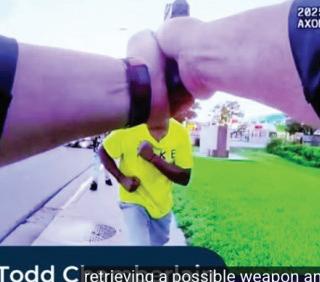
After Belt-Stubblefield gets out of the car, he starts walking away from the officer toward the side of the road, as the officer orders him to put his hands up again. Belt-Stubblefield continues walking toward a grassy area, as shown in several camera footage angles, and he then throws a gun into the grass.
The officer grabs the man’s shirt and pulls him to the ground, trying to put him into a handcuffing position. There is some commotion that is difficult to distinguish, and then the camera footage shows Belt-Stubblefield getting up, standing over the officer, and then Belt-Stubblefield starts to walk away.
The officer gets up, points his gun at Belt-Stubblefield and yells, “Get on the ground, get away from that mother f****** gun.” He pushed Belt-Stubblefield and said, “Get on the ground now.”
Belt-Stubblefield looks back at his son, who was following him in a separate car and had walked to the scene, and he tells his son, “Get that shit,” while walking toward the officer. Belt-Subblefield says it about nine more times, while the officer says, “I’ll shoot you.”
Meanwhile, his son, behind him, says, “Dad, chill, no. Dad,” and then says, “Officer, chill.” Belt-Stubblefield turns again to say, “Get that shit,” as the officer punches him on the side of the head. Belt-Stubblefield gets into a fighting stance, as Chamberlain previously described, and he says, “Are you ready for this?” While his son kept saying, “Dad, no!”
He asked the officer three more times if he was ready for it, and he sounds as if he is slurring his words. The officer told hom twice more to get on the ground, and the last time, he repeats it while backing up onto the street. He then shoots Belt-Stubblefield twice in the chest. As Belt-Stubblefield stops, he stoots one more time at his head, and Belt-Stubblefield drops to the ground.
The officer stood pointing his gun at Belt-Stubblefield’s body as he called in to dispatch and says, “Shots fired.”
He stands there for a while as Belt-Stubblefield’s son moves around yelling in shock. As he begins to move the unconscious body of Belt-Stubblefield, a woman who looks like she might have a hospital badge clipped to her shirt offers a tourniquet to the officer as he stands over Belt-Stubblefield with his gun still drawn and pointed at him, but the officer refuses.
It takes two minutes for other officers to arrive at the scene and start performing life-saving measures on Belt-Stubblefield. The woman, who offered her help, is seen handing the officers the tourniquet and then attempting chest compressions on Belt-Stubblefield.
Most of the remaining footage reveals the trauma that many of the witnesses experienced during the unfolding of the scene.
District attorney officials did not release a schedule for when the grand jury would hear evidence about the shooting. — Sentinel Staff
Police on May 29 released body camera footage of an April 9 fatal shooting of 23-year-old Amare Garlington, who was experiencing a mental health crisis and stabbed a responding officer and a police dog.
The Aurora Police Department posted an eight-minute video with audio recordings of the 911 call and police communications, video of the police’s initial response and body camera footage of the shooting from two officers. The video is narrated by Sgt. Matthew Longshore and is edited, including blurring Garlington’s face for privacy.
Around 3:15 p.m. on April 9, officers were called to an apartment complex in the 14000 block of East Stanford Circle after receiving a report that Garlington was threatening to harm himself with a knife, according to police. Police were also told that Garlington could be attempting suicide by cop, where a suicidal person is intentionally trying to get police to kill them.
Police, the department’s Crisis Response Team and mental health clinicians arrived on scene around 3:30 p.m. and spoke with Garlington for about 20 minutes, attempting to de-escalate the situation, some of which is seen in the released body camera footage.
The video shows police and clinicians asking, first over the phone and then through Garlington’s window, that he put the knife down and come outside, telling him that he’s not in trouble and that they want to help him and keep anyone from getting hurt.
See the video at SentinelColorado. com
Additional body camera videos show a group of officers, including Officer Mark Moore and his police dog, Cyrus, standing a few units down from Garlington’s apartment moments before he comes outside. Garlington runs from his apartment with a knife in hand begins to run away from him. Moore releases Cyrus, who runs at Garlington. Garlington stabs the dog, which runs back toward the officers, and then Garlington runs back toward Moore.
As Garlington approaches Moore, the sound of the less-lethal launcher can be heard at least twice on the video. Garlington then stabs Moore and Moore shoots Garlington multiple times, at the same time another officer tases Garlington. Both Moore and Garlington fall to the ground and the videos end.
Longshore says in the video that after Garlington was handcuffed, the officer who had deployed the taser “unintentionally” tased Garlington a second time as he was attempting to remove the device.
A timeline released by police says three minutes elapsed between the end of the conversations between Garlington and the Critical Incident Response Team and the stabbing and shooting.
The 18th Judicial District Critical Incident Response Team is leading the investigation into the shooting and the Aurora police is conducting a parallel administrative review.
Police said both Moore and Garlington received medical care on scene and were transported to the hospital, where Garlington died. Moore needed multiple surgeries and is still recovering. The dog also received surgery and is expected to make a full recovery.
As part of the police department’s reform efforts under a 2021 state-imposed
consent decree, de-escalation training has been an area of focus. The consent decree stems from a state attorney general investigation that revealed “patterns and practices” of officers using excessive force, especially against people of color. Since 2021, Aurora’s contracted police monitor, IntegrAssure, has found that the police and fire departments have made significant reforms to reduce use of force incidents.
Following the shooting, IntegrAssure released a special report that calls for more investment in mental health services to prevent incidents from escalating to police response.
Garlington’s family members told 9News that they’ve repeatedly tried to get him help for his mental health — he was diagnosed with bipolar disorder at 19 — and that he attempted suicide by cop in 2022.
Garlington’s mother, Michelle Garcia, described him as kind, loving, smart and quiet.
Garcia said Garlington had tried to seek help at a mental health facility the day before the shooting but was turned away. She told 9News that she doesn’t understand how her son didn’t qualify for a mental health hold.
Garcia said she hopes the officer recovers and that mental health supports are expanded so people can access the treatment they need.
“People lose their lives, officers are injured. You know, the poor canine, it’s just, it’s not fair for anybody. There’s so many victims just because our system will not help people. It needs to change,” Garcia said. “Something has got to change.”
— McKenna Harford, Sentinel Staff Writer
The family of Kilyn Lewis, a Black man who was shot and killed by Aurora police during his arrest in 2024, has filed a second lawsuit against the city, alleging systemic failures in policies and training led to Lewis’ death.
The lawsuit, filed in federal court, seeks to hold the city accountable for supporting and defending Aurora police officer Michael Dieck, who shot 37-yearold Lewis. It argues that the city’s policies and training allowed Dieck to violate Lewis’ constitutional rights and the city’s failure to discipline Dieck constitutes its approval of his unconstitutional actions.
“The city’s customs and practices caused APD officers, including Officer Dieck, to utilize inappropriate tactics and use unreasonable force against Mr. Lewis and to believe that the tactics used against Mr. Lewis and the use of deadly force against him would be tolerated, approved, or deemed within policy by the city,” the lawsuit states.
It calls the city “deliberately indifferent to the known and obvious consequences of its failure to adequately train, supervise, and discipline APD officers.”
In addition to the federal lawsuit, the Lewis family is also suing Dieck individually in Arapahoe County District Court. While Aurora was initially listed on the county lawsuit, the city has been removed from that case and a trial has been set for March 2027.
While the county lawsuit focuses on Dieck’s conduct, the federal lawsuit is directed at what it alleges as the systemic problems with the police department’s use-of-force policies and training, said Lisi Owen, an attorney for the Lewis family. Owen said the lawsuit was prompted because the city disregarded its obligation to condemn Dieck’s actions.
“Instead, what the city of Aurora has done is have his back, they’re defending
(Dieck) both legally and politically,” Owen said. “That is the City of Aurora saying this type of conduct is what we expect of our officers and is perfectly acceptable to us. And that is not acceptable to the Lewis family.”
In an initial statement, city spokesperson Joe Rubino said Aurora had not been served with the lawsuit and cannot comment on pending litigation.
A follow up statement on Tuesday from City Attorney Pete Schulte said he was limiting his comments on the case to protect against prejudicing a court.
“Unlike the Plaintiff’s attorneys in this case, I will not make statements about the case that have the potential to wrongly influence the jury pool,” Schulte said. “The true facts will come out in a courtroom in the trial of this case.”
A previous statement from the city, released when the county court case was filed, reiterated that investigations have cleared Dieck of wrongdoing and said the city attorney’s office “will strongly defend the actions of the officer and the Aurora Police Department.”
The newest lawsuit claims city officials have ignored systemic issues that were identified by the 2021 state-imposed consent decree, which mandated police reform of use-of-force policies after finding a pattern of excessive force, particularly against people of color. The consent decree was put in place after the 2019 death of Elijah McClain and is still active through 2027.
Owen said the Lewis family’s lawsuit seeks unspecified monetary damages, as well as potential policy and training reforms.
“Aurora has already been ordered to stop killing unarmed Black men, and they can’t seem to get it together, and so one of the things that we’ll be seeking to discover in the lawsuit is why can they not get it together,” Owen said. “Once we know that, we can craft a hopefully more meaningful remedy.”
Lewis was shot May 23, 2024 after he raised his hands above his head, holding his cell phone in one hand, during an attempted arrest by an Aurora SWAT unit in connection with a separate Denver shooting. Dieck, who shot Lewis as he raised his arms, later said during an investigation that he thought the phone was a firearm.
The federal lawsuit says Dieck shot Lewis in the torso less than 10 seconds after exiting his police vehicle, without issuing any warning that he would shoot if Lewis did not comply with police orders. Officers also gave Lewis overlapping orders and Dieck did not use readily available less-lethal options, such as a 40mm launcher, according to the lawsuit.
After the shooting, the former Arapahoe County district attorney and a grand jury declined to seek criminal charges against Dieck, saying his actions were not outside the law. An internal investigation also determined Dieck broke no APD policies during the arrest and shooting, and Aurora Police Chief Todd Chamberlain said he would not pursue discipline in the case. Dieck was removed from the SWAT team.
As part of the consent decree, the city’s contracted police monitor investigated the Lewis shooting and questioned the utilization of the Aurora SWAT team to execute a Denver warrant and the decision not to use less-lethal tactics. However, the monitor agreed with the findings from the police department and judicial district that Dieck acted reasonably.
The lawsuit argues that the results of the city’s internal investigations and its ongoing defense of Dieck “constitutes an admission that APD policy or custom permitted deadly force in circumstances in which the Fourth Amendment forbids it.”
Though Dieck was not found to have
violated any policies, the police department changed its SWAT procedures after the fatal shooting to include “a more rigorous approval process” for warrants, a new risk-assessment matrix and training enhancements. The lawsuit alleges that the changes prove that the policies were “inadequate” at the time of the shooting.
“The Lewis shooting is precisely the kind of predictable constitutional injury that adequate policies, training, supervision, discipline, and force-review systems are supposed to prevent,” reads the lawsuit.
No court dates have been scheduled yet for the lawsuit.
— McKenna Harford, Sentinel Staff Writer
A 40-year-old man was arrested in Aurora May 27 in connection with fatal shooting the day before at a central Aurora apartment complex, police said.
Lewis Davis Jr., 40, was arrested by police and SWAT unit members near Billings Street and East Colfax Avenue, without incident, police said.
Police were called to the apartment complex in the 14100 block of East Colorado Drive at about 1:30 a.m. after reports of a shooting there.
“When officers arrived, they found multiple shell casings near the entryway and located the 48-year-old male victim lying outside between two apartments with multiple gunshot wounds,” Aurora police spokesperson Gabby Easterwood said in a statement. “He was pronounced dead at the scene.”
Police said investigators obtained security video from a nearby home showing Davis leaving and reentering an apartment in the complex “multiple times” before shots were fired.
“Shortly before 1:20 a.m., Davis was captured (on video) exiting the apartment ahead of the victim before firing multiple shots, striking the victim,” Easterwood said. “He then fled the scene on foot.”
Davis faces charges of first-degree murder in the case, sent to Arapaho County.
Davis is not listed on Arapahoe County jail records, nor his is bond status.
Police said anyone with information can call Metro Denver Crime Stoppers at 720-913-7867. Tipsters can remain anonymous and still be eligible for a reward of up to $2,000, police said.
— Sentinel Staff
leaves driver dead, passenger injured in Aurora
Police say a man driving a stolen motorcycle collided with a car near midnight May 30, killing the driver and seriously injuring a passenger on the bike.
Investigators said the bike was headed west on East Iliff Avenue at 11:49 p.m. when it collided with an eastbound Honda CR-V turning onto South Idalia Street.
“The adult male motorcycle driver and the adult female motorcycle passenger were both transported to area hospitals,” Aurora police spokesperson Katie Fischer said in a statement. “The male driver was later pronounced deceased, and the female passenger remains in stable condition.”
Police said the driver of the Honda fled the scene, and the car was located a “short distance away unoccupied.”
Neither the motorcycle driver nor his passenger were identified.
No other details were provided.
— Sentinel Staff

Greater moments will be ahead for members of the Regis Jesuit baseball team, but it would be hard to tell them that May 30.
Coach Matt Darr’s Raiders completed a rollercoaster journey to a Class 5A state championship that had been long awaited and were awash in the emotion that came following a gritty 5-3 win over Arvada West at All-Star Park.
Twice denied the title — and again stretched to a second game on the final day — the feeling of the right result was incredibly cathartic for Regis Jesuit.
and allowed two hits in five innings, but Regis Jesuit fell to Cherry Creek 5-2. He was unable to play in the final last season (an 8-1 loss to the same Bruins) when he suffered an elbow injury on the opening weekend of the tournament.
Alpert — a Vanderbilt signee — worked his way back from injury and was a key contributor on the mound, in the field and at the plate to help the Raiders finally earn their desired prize.
“It’s the best feeling I’ve ever experienced, partially because of the last two years watching another team do it, so I’m happy we were able to get it done,” Alpert said. “I wouldn’t
“I could never imagine this feeling I have right now, it’s amazing,” senior shortstop Chase Massey said. “After losing the last two backto-back, we knew we had the team to do it.
BY COURTNEY OAKES Sports Editor
Those two hurt more than anything I’ve ever felt, so to get one is truly amazing. We knew we had the team to do it.”
Certain members of the team (namely Massey and fellow senior Hudson Alpert) were definitely more longsuffering than others in terms of the wait for a championship, which was the fourth all-time in Regis Jesuit program history and its first since 2019.
In four years on the varsity team, Alpert made it to the double-elimination Championship Series every time and each one of those teams made it to at least the semifinals.
After they lost to Cherokee Trail 1-0 in an elimination game in 2023, the Raiders made the final day of the tournament each time. Alpert pitched the final game of the 2024 tournament
change a single path or step I took in the recovery process. I was just happy to help our team as best as I can.”
Massey, meanwhile, played in all five of the championship games over the last three seasons and went a combined 4-for-12 while playing a key role at shortstop. In the midst of the celebration chaos after the final out, the Boston College signee made sure he found Alpert so the two could share the feeling.
“I ran over to Hudson because it’s been two years that we’ve gone through losses, so it definitely was a special moment for me and him,” Massey said. “But just seeing all the boys with tears of joy in their eyes was truly amazing. Words are hard to describe it.”
Darr knew the championship-winning feeling having guided Denver Christian to a 2A title before he arrived at Regis Jesuit, where he also piloted the 2019 squad to victory. He felt especially good that his players — especially Alpert and Massey — got to experience it.

“The hugs were a little longer for Chase and Huddy because they’ve been through all the finals,” Darr said. “Huddy’s been through so much and we’ve spent a lot of time together. There’s been a lot of work and a lost of disappointment with some questions of what is it going to take to get over the hump. It’s big for all the seniors, but for those two, it’s a little bit more special.”
Other seniors were absolutely crucial to the championship run.
On the first weekend, first baseman Deion Cesario-Scott homered in wins over No. 6 Mountain Vista (3-2) and No. 7 Legend (8-3), while catcher Jack Manthey had a back-breaking three-run double in a 14-8 win over top-seeded Arvada West in the championship semifinals to put the Raiders in prime position to win the tournament. On the final day, it was outfielder Carter Rathbun who delivered a three-run double that gave Regis Jesuit the margin it needed to eventually win the game.
“I remember talking with all my senior buddies back in freshman year when we were coming into Regis about how we were going to win a state championship our senior year and we did it,” Manthey said. “It feels unreal. The boys put in so many hours and all the hard work paid off. I’m stunned right now.”
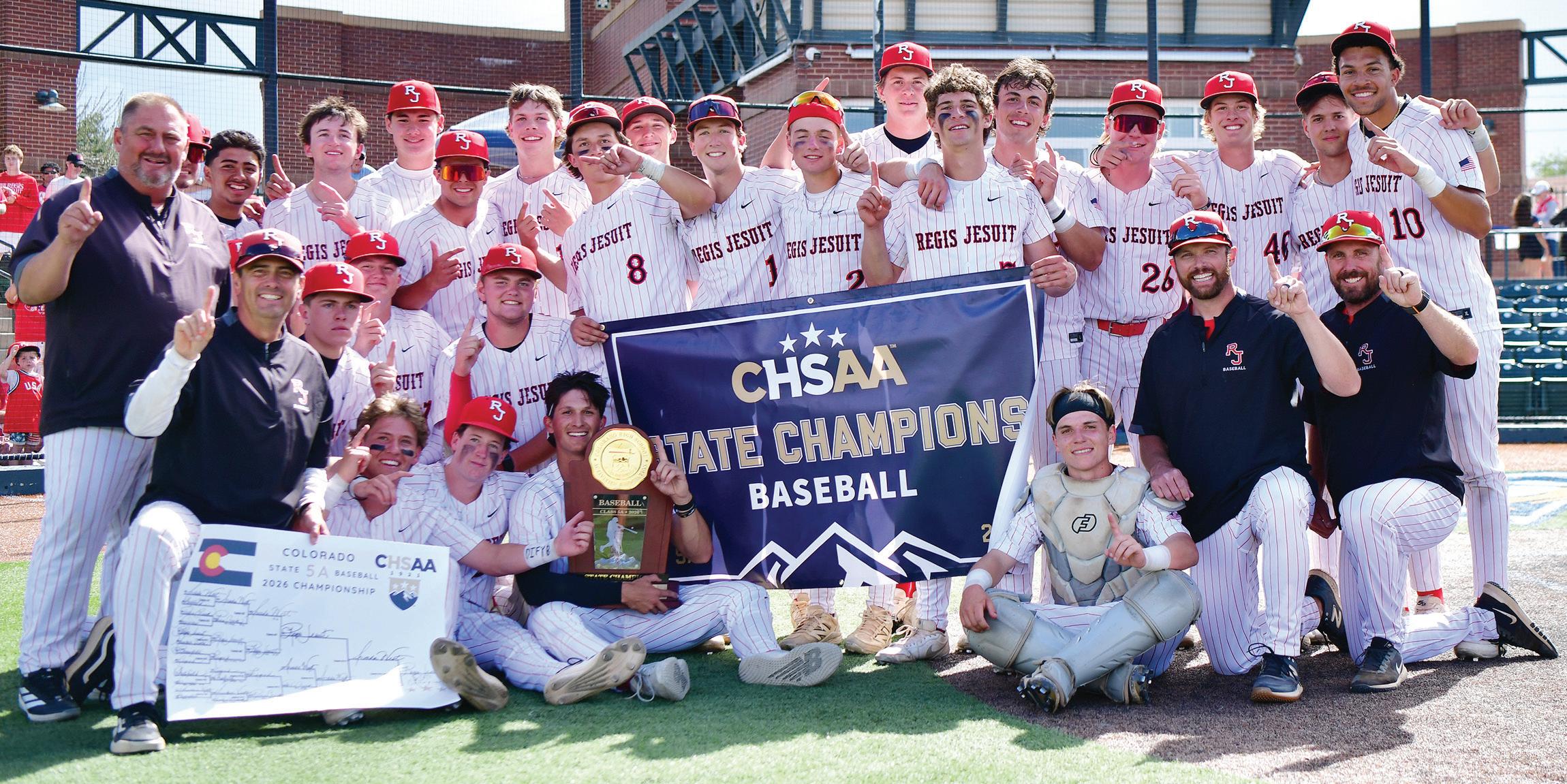
The specter of a Cherry Creek team that had twice denied Regis Jesuit its title and always seemed to find a way in the postseason didn’t loom over the tournament this time, as upset Legend prevented the Bruins for making it into the eight-team tournament.
Arvada West, however, loomed as the potential championship spoiler this time.
The Wildcats wanted a championship in the worst way as they hadn’t appeared in a state championship game since 1995 and hadn’t won one since 1994. They were undefeated against Colorado teams before the loss to Regis Jesuit in the semifinals May 23.
The talented pitching tandem of senior Brayden Reiner and junior Cooper Vais made sure Arvada West would have a fighting chance. Reiner pitched a complete game in the championship semifinals — a 2-1 walkoff win over fourth-seeded Pine Creek May 29 — and Vais (a Texas recruit) followed that up with a stellar performance in the first championship game against Regis Jesuit.
Vais struck out 10 and allowed two runs, while he was able to shut down the Raiders’ rally in the seventh inning for a 3-2 win that forced a second championship game. While that put the Wildcats in position, it meant their bullpen would have to shoulder the load with title at stake.
Senior Cole Eisenreich got the call to start and retired Regis Jesuit senior Jacob Olson and Massey to open the bottom of the first inning. Cesario-Scott singled to start what turned out to be a crucial rally.
Alpert (playing second base after he threw all six innings in the first game) drew a walk, which was followed by an RBI single from senior Eli Shappee, while a walk to junior Brady Wright loaded the bases for Rathbun. With a compact, left-handed swing, Rathbun drilled an Eisenreich offering into the gap in right center field to bring home Alpert, Shappee and Wright before he came in to score himself on a passed ball for a 5-0 lead.
“That first inning was so big, coming off that really tough loss in the first game,” Manthey said. “We had to jump on them early and

that unreal hit by Carter cleared the bases and got us started. We weren’t too productive after that...but that inning right there was the reason we won the game.”
For Rathbun — a University of San Francisco signee — it was the high point of an outstanding postseason at the plate. In five Championship Series games, he finished 7-for-14 (with a double and a triple among the hits), drove in three runs and scored four times. He and Manthey (3-for-12 with 4 RBI) made the bottom part of the Regis Jesuit order difficult to handle.
The offensive explosion provided an immediate lift to junior right-handed pitcher Mikey Kroll, who rolled with it.
“An inning like that demoralizes them a little bit right away and makes it easier to pitch,” Kroll said. “It takes a lot of the stress off. If you’re up just one and you give one up, you’re tired, and if you give up another, you’re down. But with five, it’s a pretty big cushion.”
Kroll tossed four scoreless innings and was warming up to pitch the top of the fifth inning when the game was suspended due to lightning in the area. He would not be able to come back after
the delay (which lasted 1 hour and 20 minutes), but ended up as the winning pitcher thanks for the performance of fellow junior Cade Filleman.
Kroll (who was 2-0 and did not allow a run in 6 2/3 innings in the Championship Series) said he knew Filleman was a “dog” and the lead would be safe.
The Wildcats benefited from the delay and came out desperate in the top of the fifth inning, as they scored three runs. But the unflappable Filleman retired Arvada West in order in the sixth and then with two runners on in the seventh a fly ball that was snared by a galloping Shappee.
“It was a tough start, but I knew we were going to get through it,” said Filleman, who earned a win and a save in the postseason. “We have a bunch of dudes on the team, so I just let them make the plays. ...On the last ball, I was thinking ‘please catch it, I just want to throw my glove in the air and celebrate with my boys.’”
That’s precisely what happened, as players and coaches came pouring out of the dugout, bullpen and from every position on the field.
Darr is pleased with the bar that has been established, as Regis Jesuit is the only team

in 5A to make the Championship Series for the last five seasons.
“Making it to the final eight is not easy, but it’s almost like its become expected,” Darr said. “I don’t think these guys realize how hard it really is. If we don’t throw out a guy at the plate against Chap (at regionals), we might not be here. The year before, we beat Vista 3-2 in regionals, so it’s nip and tuck. But the culture is strong.”
The Raiders graduate a significant portion of their offense along with a pitching staple in Alpert, but expect to return both pitchers from the championship game in Kroll and Filleman, the championship semifinal starter in Ryan Neumann plus a bullpen that includes Ezra Christ, Finn Judge and Wright.
That combined with the knowledge of what it takes to navigate the ups and downs of the Championship Series means next season’s team will not lower its expectations.
“We’re definitely going to chase it again next year,” Kroll said.
Note: All-time Regis Jesuit now owns the most state titles among Aurora area prep baseball programs with four, though the 1988 crown came before the school moved from west Denver to its current Aurora campus. Cherokee Trail has two all-time titles (the last in 2016), as does Aurora Central (the last in 1969), while Smoky Hill (2001), Overland (1990) and Hinkley (1979) also
won crowns.

‘STILL IN SOUND’ AT THE CLYFFORD STILL MUSEUM ASKS JUST THAT
BY EMMA VANDENEINDE, KUNC News
The experience of the new “Still In Sound” exhibit at the Clyfford Still Museum in Denver begins long before you step up the concrete stairs and lay eyes on one of Still’s masterpieces. It starts with your ears, as auditory interpretations of visual works echo off the walls around the building.
Take Still’s PH-1161 painting from 1960. It may just look like blue and black jagged lines on a cream background. But to Denver artist Kalyn Heffernan, it sounds like rhythmic beats, hisses and static, and bites of Clyfford Still himself, opining about the art museum business and complaining about art critics.
“It was cool to hear his not so humble opinions in his voice, and it’s something I can resonate with, in maybe a different medium, like a diss track,” Heffernan said in a recorded interview with the museum. “He’s on tape with a lot of diss tracks.”
Heffernan was one of five artists asked to come up with an auditory response to Still’s works. They even got access to the museum’s voice recordings and audio archives. Ben Coleman, co-curator of the exhibit alongside Bailey Placzek, said Heffernan’s interpretation took cues from the visible aging of the painting.
“She’s using a lot of interesting surface noise from the tapes that Clyfford Still had used,” Coleman said. “You hear a lot of kind of like hiss and rumble from the actual material
of the media.”
Each work plays one by one on a cycle, with speakers directly above the work. There were no limits on length or the type of sounds that could be used, so artists went in a variety of directions. Some leaned into Still’s characteristics – adding early New Orleans jazz from his record collection or mixing in the roar of a Jaguar sports car, which Still collected.
“We just wanted to really emphasize that we wanted an authentic response, an interpretation that was uniquely theirs,” Coleman said. “A big part of the drive, I think, in interpreting Still’s work, and something that he insisted on, is that everyone’s interpretation is correct. There’s no one correct interpretation.”
PH-273 by Clyfford Still is an oil on canvas painting from 1962. To Ben Coleman, the co-curator of the Still In Sound exhibit, the pink paint looks like a “bubblegum bison,” but he wants visitors to share their own interpretations, since that would be what Still would have wanted.
Coleman expressed this point while looking at one of his favorite paintings in the exhibit, PH-273. This one doesn’t have an artistic interpretation — it was added by Placzek to complement the exhibit. There is a giant pink shape taking up half of the canvas.
“I dubbed that the bubblegum bison,” Coleman said. “Sometimes works for me are just lines, especially some of the minimal work that
I really, really love, and it’s more about, like, ‘Well, do you like those lines?’ It doesn’t have to be anything more than that, necessarily.”
It’s the first time a sound-forward exhibit has been done at this scale at the museum before – and that’s intentional. Coleman said he wants to go against the norms of how traditional museums conduct themselves.
It’s a mostly cream painting with some large white splotches in three sections taking up the left side of the painting. There’s a little yellow line in the top right corner.
“We still have a big hangover from the history of institutions like museums of ‘shushing,’” Coleman said. “I think a big part of this show is kind of trying to flip that on its head and give people permission to make noise.”
There are a few areas where visitors can express themselves. In one room is what Coleman affectionately calls the “Boom Boom” –a piano loaded with sound effects recorded around the museum by small children. Next to the piano are paper and markers to create a visual response that would be displayed by the museum.
In another room, there’s an array of instruments: a Kalimba Mbira Array (a finger-plucking piano), a bodhrán (an Irish drum), and a handpan steel drum. When played, it activates color and brushstrokes on a screen. It was primarily designed by Denver artist Phil Stearns after viewing Still’s oil pastel works on paper.
“For me, there was a lot of like motion and things evoking kind of like weather patterns, turbulence, so those kind of went into the way that I generated the visuals that are being projected,” Stearns said.
Three kids — two boys and one girl — hover over instruments and play them. They’re looking at a screen in front of them filled with yellow, blue and white jagged lines. Behind the kids is a slightly older man crouching down, explaining to the kids what is happening. There’s text on the wall that asks visitors, “What happens when you tap different areas of the drums? How can you change the colors on the screen?”
Stearns watched as both the young and the old approached the instruments. He tried to pick instruments that weren’t intimidating and invited curiosity. He hopes that visitors use more than just one sense when interacting with this exhibit.
“When you bring in other senses and make them concrete experiences in relation to what would otherwise be a purely visual experience, you really kind of open things up in a new way,” Stearns said.
StillInSoundrunsthroughFeb.14,2027. Tickets can be purchased on the museum’s website,oryoucanexperiencetheexhibiton yourowntimethroughtheirdigitalguideon BloombergConnects.

BY MCKENNA HARFORD,
Areport from the city’s contracted public safety monitor is calling for improvements to mental health services to prevent deadly confrontations between police and people in crisis.
Within the past year, Aurora police have had three officer-involved shootings while responding to mental health crises, including an April 9 incident that ended with an officer fatally shooting a man as he stabbed the officer. In a special report released Wednesday evaluating the incidents, the city’s monitor, Jeffrey Schlanger of IntegrAssure, says improvements are needed to the mental healthcare system to help prevent these situations.
The report says that the main lesson of recent events is that “even a city that has made real progress must continue strengthening the behavioral health treatment and crisis-response continuum so that fewer people reach the point at which a police-centered response becomes the last available option.”
According to the report, Aurora police and fire departments have made progress in reforming their response to mental health crises, but improvements are needed on the healthcare side as well.
“When a city is serious about reducing harm to its minimum, improving outcomes, and strengthening public trust, then continuous improvement must extend across the broader system in which paramedics, EMTs, clinicians, hospitals, dispatchers, behavioral health providers, police officers, and families operate,” the report says.
It urges the city to assess its mental health services, identify operational gaps and improve coordination between providers and public safety responders, as well as invest in “prevention, repeat-crisis intervention, family navigation, data-driven accountability and continuity of care.”
The report doesn’t evaluate the public safety response in the three incidents, but focuses on the possible prevention of similar situations through investment in mental healthcare. It questions whether “the public system surrounding behavioral health intervention is sufficiently robust to reduce the likelihood that such crises culminate in sudden close-range
violence.”
In a statement, Tod Cavey, director of marketing for Aurora Mental Health and Recovery, said the organization has worked to expand mental health care, including by opening the Potomac Pavilion, but acknowledged the “need for continued investment in mental health services and crisis care.”
“Mental health crises are complex, and expanding access to care is an important part of preventing situations from escalating,” the statement said. “AMHR is a part of a larger healthcare network in Aurora for behavioral health emergencies, and we remain committed to working alongside first responders, healthcare providers, and community partners to improve access to care and strengthen crisis response throughout our community.”
A report from the National Alliance on Mental Illness found that people in mental health crises are more likely to experience use-of-force in interactions with law enforcement.
Between 2015-2020, a quarter of all fatal police shootings involved someone with a mental illness, according to NAMI. On top of crisis intervention training, the organization says police departments should embrace a culture shift.
“Creating a culture that focuses on reducing use of force, whether established by leadership or through official agency policy, can have a significant impact on day-to-day operations of law enforcement,” reads NAMI’s website.
In the April 9 shooting, 23-year-old Amare Garlington was killed after he stabbed Officer Mark Moore and a canine officer. Police and mental health clinicians had responded to Garlington’s apartment and tried to communicate with him for around 20 minutes before he exited his apartment with a knife. Police also used less-lethal force, including a 40mm launcher, to attempt to stop Garlington.
Investigations into the shooting are ongoing, and the Critical Incident Response Team, led by the 18th Judicial District, will determine whether Moore violated any law during the encounter and the shooting.
After the shooting, Garlington’s family told 9News that he had been turned away from a mental health facility just a week before the in-

cident. Michelle Garcia, Garlington’s mother, said he struggled to get the help he needed and was turned away too many times.
“People lose their lives, officers are injured. You know, the poor canine, it’s just, it’s not fair for anybody. There’s so many victims just because our system will not help people. It needs to change,” Garcia told 9News. “Something has got to change.”
The report also describes two 2025 fatal shootings.
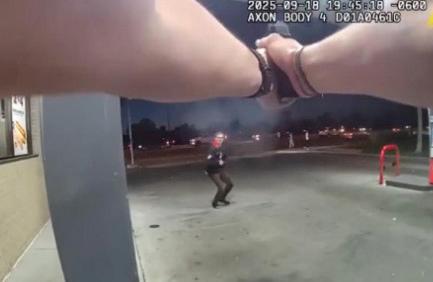
In one case, Aurora officers responded Sept. 18, 2025, to a Conoco gas station on South Havana Street after 17-year-old Blaze Balle-Mason called 911 and reportedly threatened to open fire inside the business and shoot responding officers. Officers used cover and deployed a 40mm less-lethal launcher before fatally shooting Balle-Mason, according to police video and reporting at the time.
Investigators later determined Balle-Mason was unarmed. Police experts outside Aurora described the encounter as what they said is a known phenomenon called “suicide by cop.”
Some of those experts questioned whether Aurora police handled the call correctly from the time dispatchers were called.
The third case involved 32-year-old Rashaud Johnson, who was shot and killed May 12, 2025, near Denver International Airport after officers responded to reports of a barefoot man behaving erratically for hours at the airport-parking facility and at one point began touching parked vehicles.
According to police reports, Officer Brandon Mills initially tried to determine what was wrong before a struggle broke out. After separating and waiting for backup, Mills fatally shot Johnson when he advanced again, police said. Johnson was unarmed, barefoot and appeared to be in mental distress, the report states.
Rather than focusing on officers’ decisions or police strategy, the report argues that Aurora should examine what happened long before police were called to the scenes.
Schlanger recommends analyzing whether the individuals involved had previous contacts
with hospitals, mental health providers, clinicians, emergency responders or family members seeking help. He also urges officials to determine whether intervention opportunities were missed because of fragmented systems, unclear legal standards, lack of follow-up care or barriers to treatment.
“One of the lessons of modern police reform is that not every public safety problem can be solved within the Police Department itself,” Schlanger said in the report.
Aurora has spent years attempting to improve responses to behavioral health crises, particularly after the 2019 death of Elijah McClain drew national scrutiny to the city’s police and fire departments.
McClain died, unarmed, at the hands of police and firefighters after being contacted while walking home at night from a convenience store after buying soft drinks. That death and others led to a state-led investigation into the department. Attorney General Phil Weiser concluded that Aurora police had long exhibited “patterns and practices” of using excessive force on members of the public, especially people of color.
The new report credits Aurora for building programs that addressed and identified staffing, training and procedural shortfalls.
Among them are the Aurora Mobile Response Team, which pairs clinicians with paramedics or emergency medical technicians for lower-risk behavioral health calls, and Crisis Response Teams, which pair specially trained officers with clinicians for higher-risk incidents.
The city also works with Aurora Mental Health and Recovery, which operates a 24-hour crisis walkin clinic and stabilization unit.
Still, the report argues that existing services may not be sufficient or sufficiently coordinated.
A major concern identified in the document is the lack of a single systemwide authority overseeing Aurora’s behavioral health response network. The report says agencies may function effectively on their own while failing to operate cohesively across repeated crises and multiple points of contact.
“Without structured coordination and system-level review, opportunities for earlier intervention, risk identification, and continuity of care may be missed,” the report states.
While Aurora uniquely has a singular agency addressing mental health issues, a large collection of mostly independent mental health clinics and programs are spread across the state.
Recommendations in the report include creating Behavioral Health Incident Reviews modeled after police-force review boards but focused on system-wide analyses rather than determining whether force was justified.
Under the proposal, multidisciplinary teams would examine incidents involving serious injury, death or escalating behavioral health crises to identify gaps in communication, dispatch decisions, intervention efforts and follow-up care.
The report also calls for local and state audits of emergency mental health hold procedures, clearer police dispatch protocols and expanded data collection tracking crisis-related calls, subsequent referrals and outcomes.
The report repeatedly frames behavioral health services as being linked to public safety.
“When the larger behavioral health system is too fragmented, too episodic, or too difficult to navigate under stress, police officers are increasingly called upon to manage crises that have already advanced to a point of acute danger,” the report states.
Schlanger insists that city lawmakers now act quickly.
“Three young individuals are dead. A police officer was gravely injured. A police canine was seriously hurt,” the report states. “Aurora cannot change what happened on each of those fateful days. But it can potentially learn from them.”

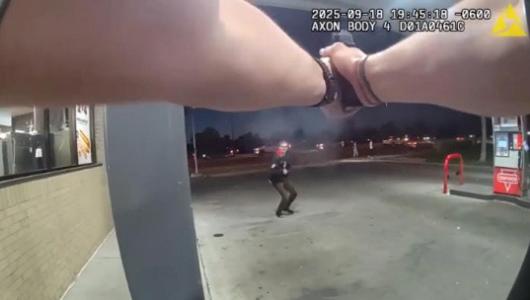
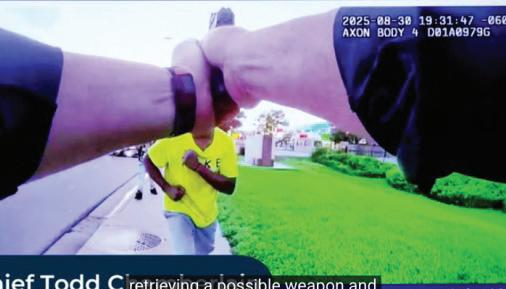

folk, gospel and American roots music, the production is co-produced with the acclaimed disability-affirmative Phamaly Theatre Company.
IF YOU GO:
Date: Opens June 5 with weekend night and matinee curtains through June 28
Native American dancers, drummers, artists and cultural presenters gather for Aurora’s Prairie Thunder Powwow, a community celebration featuring traditional song, dance, craft vendors and food. Grand Entry ceremonies highlight the event, which is designed to honor Indigenous cultures and traditions while welcoming the broader community.
IF YOU GO:
Date: 11 a.m.–6 p.m. June 7
Place: Plains Conservation Center, 21901 E. Hampden Ave.
Tickets: Free
Information:
www.auroragov.org/things_to_do or 303-326-8380
“Aurora
The city’s annual community art exhibition highlights work by Aurora residents in a wide variety of media, including painting, photography, sculpture and mixed media. The exhibit offers a snapshot of the city’s creative talent and diverse artistic voices.
IF YOU GO:
Date: Through June 2026
Place: Aurora History Museum, 15051 E. Alameda Parkway.
Tickets: Free admission
Information:
www.auroragov.org/things_to_do or 303-739-6660
“Ain’t
This acclaimed musical revue traces the evolution of the blues from Africa to the American South and beyond through a dynamic collection of songs and stories. Featuring music made famous by legendary blues artists, the production celebrates the genre’s enduring emotional power and influence on American music history.
IF YOU GO:
Date: Through June 21. Friday and Saturday curtains at 7:30 p.m., Sunday curtains at 2:30 p.m.
Place: Vintage Theatre, 1468 Dayton St.
Tickets: $20-$39
Information: www.vintagetheatre.org or call 303-856-7830
“Violet” at Aurora Fox Arts Center
Tony Award-nominated musical “Violet” follows a young woman traveling by bus across the American South in the 1960s in search of healing and acceptance. Along the way, she encounters unexpected friendships and confronts difficult truths about identity, beauty and belonging. Featuring a score by Jeanine Tesori that blends
Place: Aurora Fox Arts Center, 9900 E. Colfax Ave.
Tickets: $17–$45
Information: aurorafoxartscenter.org or call 03-739-1970
“Live Music at The Local Drive” at Stanley Marketplace
This ongoing live music series transforms the Stanley Marketplace hangar into a vibrant performance space featuring local and regional musicians. The programming spans genres—from indie and folk to jazz and rock—creating an eclectic soundtrack for Aurora’s creative community.
IF YOU GO:
Date: Fridays and Saturdays after 5 p.m.
Place: Stanley Marketplace, 2501 Dallas St.
Tickets: Free admission
Information: stanleymarketplace.com or 720-941-7070
“The Deluge” exhibition at Museum of Contemporary Art Denver
Artist Bethany Collins examines American history, language and identity in this multimedia exhibition that combines sculpture, sound, text and installation. Collins is known for transforming historical documents and cultural symbols into artworks that explore how stories about the nation are constructed and remembered. The exhibition includes pieces created from materials connected to historic monuments as well as works that reinterpret literature and music through erasure, repetition and sound. By reshaping familiar texts and symbols, the exhibition invites visitors to consider how narratives about race, justice and national identity continue to evolve over time.
IF YOU GO:
Date: Through July 5,
Place: Museum of Contemporary Art Denver, 1485 Delgany St.
Tickets: $8–$14; free for members
Information: mcadenver.org or call 303-298-7554
“World’s Largest Dinosaurs” at Denver Museum of Nature and Science
This traveling exhibition explores how the largest land animals in Earth’s history lived and functioned. Rather than focusing solely on fossil bones, the exhibit examines the biology of giant sauropods, which are dinosaurs whose massive bodies required unique adaptations for breathing, circulation and movement. Through interactive displays, models and scientific re search, visitors can learn how scien tists study both fossils and modern animals to understand how these enor mous creatures survived and thrived millions of years ago. The exhibition also explores the evolutionary advan tages and challenges of extreme size, offering a deeper look at how the scale of these animals shaped their behavior and ecosystems.
IF YOU GO:
Date: Through Sept. 7
Place: Denver Museum of Nature and Science, 2001 Colorado Blvd.
Tickets: $6-$9
Information: dmns.org or call 303-370-6000
“Harry Potter and the Cursed Child” at the Buell Theatre
The award-winning theatrical phenomenon continues the story of Harry Potter as a father while his son, Albus, forms an unlikely friendship that unleashes a dangerous adventure through time. Spectacular stagecraft, illusion and visual effects drive this Broadway production.
IF YOU GO:
Date: Through June 21
Place: Temple Hoyne Buell Theatre, 1350 Curtis St.
Tickets: $58-$211
Details: www.denvercenter.org or 303-893-4100
Shakespeare Company at Garner Galleria Theatre
No script, no rehearsal and no safety net: performers create a completely original Shakespearean comedy based on a title suggested by the audience. Every performance is different, blending Elizabethan language with spontaneous comedy.
IF YOU GO:
Date: Through July 26
Place: Garner Galleria Theatre, Denver Performing Arts Complex
Tickets: $57
Information: www.denvercenter.org or 303-893-4100
“Still in Sound” at the Clyfford Still Museum
This exhibition and sound-based experience invites visitors to encounter the abstract paintings of Clyfford Still through an immersive audio dimension, encouraging deeper reflection on color, scale and emotion within the museum’s galleries.
IF YOU GO:
Date: Through Feb. 14, 2027
Place: Clyfford Still Museum,
1250 Bannock St.
Tickets: Free-$18
Information: clyffordstillmuseum.org or 720-354-4880
Trey Anastasio with the Colorado Symphony at Red Rocks Amphitheatre
The Phish guitarist joins the Colorado Symphony for a performance that blends orchestral arrangements with improvisational rock, creating one of the summer’s most anticipated crossover concerts.
IF YOU GO:
Date: June 7, 2026
Place: Red Rocks Amphitheatre
Tickets: $103-$159
Information: www.redrocksonline.com or 720-865-2494
Aurora Dance Arts
Presents “Dance Me a Story”
Students from Aurora Dance Arts bring literature and imagination to life through ballet, jazz, contemporary
dance and musical storytelling in the organization’s annual recital performances.
IF YOU GO:
Date: June 4–June 7
Place: Parker Arts, Culture and Events Center, 20000 Pikes Peak Ave.
Tickets: $20
Information: parkerarts.org/ or 303-326-8300
“Charles Sandison: Chamber” at the Denver Art Museum
Commissioned by the museum, this immersive digital installation surrounds visitors with shifting projections and abstract visual environments that blur the boundaries between technology, language and art.
IF YOU GO:
Date: Through Aug. 10
Place: Denver Art Museum, 100 W. 14th Ave. Parkway
Tickets: Included with museum admission
Information: www.denverartmuseum.org or 720-865-5000
• Great Burgers
• GreatBurgers
• GreatBurgers
• Great Philly Cheesesteaks
• GreatCheesesteaks
• GreatCheesesteaks
• 20 TV’s
• 20 TV’s
• 20 TVs
• Open St age
EveryThursday
• Open St age EveryThursday
• Watch All NFL & MLB Games
• Saturdays:11:30AM-3PM
8PM | MARGARITA BROS Beach Music JUNE 6
8PM | STEVE PIERCE Acoustic JUNE 12
8PM | ETHYL & THE
• Saturdays:11:30AM-3PM FreeDomesticBeeror
FreeDomesticBeeror
Americana JUNE 13
• Open Stage JUNE 5
8PM I
Soda With SandwichOrder
Soda With SandwichOrder
Give us a call for entertainment questions
8PM | GALEN CRADER Irish Music LIVE MUSIC EVERY FRIDAY AND SATURDAY


It takes little imagination or insight to understand how outrageous it would be for voters to have to elect candidates or approve ballot questions not once, but twice, just to “make sure” that voters were sure about their decisions.
It would be even more odious if the requirement to elect any candidate or approve any ballot question required 75% of voters to approve a candidate or question at the second election.
Given that, it’s easy to understand why thousands of workers and their supporters across the state are vexed by a problem that plagues only Colorado. The dilemma stems from Colorado requiring unionization elections to be repeated before they become official, and the second time, they must meet a 75% approval threshold.
Before you muster your feelings about unions, or consider how good or bad the twice-vote scheme is — good for anti-union business or anti-union workers — consider how critical and strong unionization rights have been in the United States for far more than a century.
During the late 1800s, industrialization brought workers mercilessly long hours, low wages and dangerous working conditions. Children were forced to work as long as 14 hours a day. Early labor organizations, including the American Federation of Labor, pushed for better treatment but faced regular resistance from employers and government officials, siding with wealthy business owners. Major labor conflicts, such as the Haymarket crisis in 1886, the Homestead Strike of 1892 and the Pullman Strike of 1894, highlighted tensions between industry leaders and workers, many of whom died from their jobs.
A landmark turning point came in 1935 with the National Labor Relations Act, also known as the Wagner Act. The law guaranteed most private-sector workers the right to form unions, engage in collective bargaining and participate in concerted activities for mutual aid and protection.
The right to unionize has long been recognized as nearly constitutional — except in Colorado.
Rich with mines, Colorado has long shunned the national trends and now is the only state that still allows rules that are nothing but union-busting relics.
In conservative, “right-to-work” states like Texas, one vote resulting in a simple majority of worker approval, 50% plus one person, creates a union. And like in Colorado and other “right to work” states, no employee can be forced to join or pay union dues.
For the past two years, state lawmakers have voted convincingly to repeal the shoddy requirement. This year, lawmakers backed House Bill 1005 to level the playing field, and both times, Gov. Jared Polis has vetoed the repeal. His most recent repeal was Friday.
Polis said he wanted business and labor unions to come to some sort of agreement on the issue.
Why would anti-union, pro-business factions give up the nation’s only nearly guaranteed union-prevention law or agree to diminish it when they have an iron-clad way to preserve it?
They would not.
And until the legislature can muster the votes to override another veto, or the next governor sees how this bill is nothing more than righting a grievous and anti-democratic wrong, anti-labor factions will win.
The average unionized laborer’s salary is about $40,000 a year in metro Denver, far below the average salary of $75,000 of all employees, according to state labor reports. Union and non-union workers are subject to the same market forces that set all wages across the state.
HB 1005 didn’t curry favor with unions or attempt to give pro-union forces an unfair advantage. It simply worked to bring this one-sided, unjustified and undemocratic swindle to an end.

There’s a sucker born every minute. There’s no other good way to explain the fact that, at least as of a few weeks ago, Victor Marx was the leading fundraiser among Republican candidates for Colorado governor.
The question now is whether members of the Republican Party of Colorado will erect a circus tent or work to build a big tent for a viable future in statewide politics.
Barbara Kirkmeyer knew she was just too, well, normal to pin her political plans on the GOP’s caucus and convention system, which these days increasingly caters to MAGA cultists and fringe religious zealots, neither of which are remotely in touch with mainstream Colorado voters. So she did what any sane Republican would do and petitioned her way onto the primary ballot for governor.
The “roughly 2,200 delegates” at the convention (per the Sun) mostly split their votes between Rep. Scott Bottoms and political neophyte Victor Marx, both of whom will join Kirkmeyer on the primary ballot. And, thanks to judicial rulings, unaffiliated voters will be able to cast votes in the Republican race unless they opt to fill the Democratic ballot instead.
As election conspiracy monger and felon Tina Peters enjoys her newfound relative freedom, thanks to the mercy of Democratic Governor Jared Polis, we should reflect on the April 11 CPR report on the GOP convention: “When all the votes were counted, organizers discovered they had more votes than credentialed delegates, due to an error in the credentialing system.” Oopsie. What’s a little voter error among friends?
election.
To be sure, Clark did his homework. For example, in response to Marx’s claim that “our team rescued 43 children from the grips of evil predators,” Clark followed up about this “Operation Northern Lights in Florida.” Clark said, “So the U.S. Marshals named 25 partner agencies, including two rescue ministries, that were involved in that operation. They said nothing about you and your ministry.” This is just a taste of what’s to come. I’ll add a minor example. I was immediately skeptical of Marx just based on his claim to hold the world record in disarming someone. As anyone with any firearms training knows, only an idiot would hold a pistol on someone within arm’s reach. So, yes, Marx appears to be well-practiced at disarming untrained idiots. I’ll give him that one!
Rebuilding the house
You can’t burn the house to the ground and rebuild it in a day. Barbara Kirkmeyer is a very respectable candidate to lead Republicans into the midterm elections (although I’m still mad that she did not stand up for homeschoolers toward the end of session). But she would have struggled mightily in a good year, and this is anything but a good year for Republicans. But she can help Republicans rebuild for future success.

If the fair-labor bars are only as high as the ones in Texas, Wyoming, North Dakota and every other state, and Colorado can’t meet the bar, something’s very wrong and needs to be made right.

We are thus reminded that the tax-funded party primary system is a travesty of a mockery of a sham (to quote a Woody Allen line) in which a tiny group of partisan party insiders selects candidates for the entire state in which most voters are unaffiliated.
What we need instead are party-free primaries in which government sets the same ballot-access rules for all comers and sets sensible voting rules to winnow the field from multiple candidates to two. I prefer approval voting for this process, by which voters vote for (approve of) as many of the candidates as they want, and the top two move on to the general.
Journalists have not yet fully investigated Marx
Lots of people now have watched Kyle Clark’s devastating interview with Victor Marx for 9News. You can watch the short version or the long version or read the accounts of Ross Kaminsky, Mandy Connell, or Hemant Mehta.
Here’s the thing that some people seem not to have realized: Journalists have yet to do an in-depth investigation into Marx’s past and his many, let’s just say, questionable claims.
To a large degree Clark asked questions along these lines: “Your critics say you’re totally full of shit. Are you?” And then Marx would say no. It’s a masterful interview, but it only scratches the surface of what a full-scale investigation will reveal if Republicans are suicidal enough to advance Marx to the general
Republicans already took an important step in the right direction by electing software engineer Craig Steiner over Joe Oltmann as party chair. To review, Oltmann referred to Colorado’s Jewish political leaders as a “Synagogue of Satan Jews,” spoke “jokingly” of hanging his political opponents, and called for a mass “hanging party” in the context of the Tina Peters case. I don’t know anything about Steiner, but he could not possibly be less sane than Oltmann.
In summarizing a column by Krista Kafer, the Denver Post says, “Victor Marx and Scott Bottoms bring the dumpster fire to the Republican primary.” I’m not sure that’s fair to dumpster fires. Anyway, sure, Bottoms has made unsubstantiated allegations about a pedophile ring operating out of the Capitol, but at least as a legislator he has some idea of how government works. Marx “the Exorcist” is both crazy and clueless.
Polis, whatever you think of him (I’m a fan overall), slowed the expansion of the Democrats’ tax-and-regulate schemes. The next Democratic governor will play cheerleader instead.
Colorado desperately needs a real opposition party to stand up for the taxpayer, the business owner, and the person basically looking to be left the hell alone.
Will Republican Party members continue to run their circus of the macabre, or will they step up and build a viable big-tent political party?






NOTICE TO CREDITORS BY PUBLICATION
PURSUANT TO §15-12-801, C.R.S. Case No. 2026PR30510
Estate of Michael Terry Hayden aka Michael T. Hayden, Deceased.
All persons having claims against the above-named estate are required to present them to the Personal Representative or to the Arapahoe County District Court on or before September 28, 2026, or the claims may be forever barred.
Marco D. Chayet
Jennifer R. Oviatt
Personal Representative 18th Judicial District Public Administrator’s Office P.O. Box 460749, Denver, CO 80246
Phone: 303-355-8520
First Publication: May 28, 2026
Final Publication: June 11, 2026 Sentinel
NOTICE TO CREDITORS BY PUBLICATION
PURSUANT TO §15-12-801, C.R.S. Case No. 2026PR261
Estate of Angelique Dawn Layne aka Angelique D. Layne aka Angelique Layne aka Angelique Dillon, Deceased.
All persons having claims against the above named estate are required to present them to the personal representative or to the District Court of Arapahoe County, Colorado, on or before September 28, 2026, or the claims may be forever barred. Alex Jordan Layne, Personal Representative c/o Ellen M. Mueller, Esq. The Hughes Law Firm, PC 3801 E. Florida Ave., Suite 610 Denver, CO 80210
First Publication: May 28, 2026
Final Publication: June 11, 2026 Sentinel
PUBLIC NOTICE OF PETITION FOR CHANGE OF NAME OF AN ADULT ARAPAHOE COUNTY COURT, COLORADO Case No. 2026C100431
PUBLIC NOTICE is given on May 8, 2026, that a Petition was filed for a Change of Name of an Adult has been filed with the Arapa-hoe County Court.
The Petition en-tered that the name of Audrey Carter be changed to Audrey Beverly Collins. /s/ Clerk of Court/ Deputy Clerk