AURORA’S PRIMARY COLORS












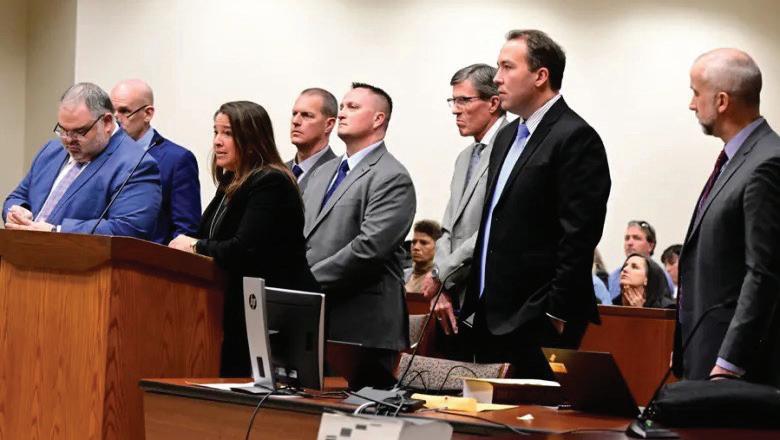

The facts surrounding the death of Elijah McClain at the hands of Aurora police and paramedics in 2019 have never changed. Despite that, a state court of appeals decision last week upended two of the fact-based, hard-fought court battles to hold some of the cops and paramedics accountable for McClain’s death.

DAVE PERRY Editor
McClain, a 23-year-old Black man, was doing nothing wrong when he was accosted by police. He was unarmed and walking home in northwest Aurora on a summer night with only a bag of soft drinks.
The professional massage therapist was treated like a criminal, petrified because Aurora police were escalating and acting toward him in a terrifying, aggressive way that Black men in the country deeply fear.
He was wrongly attacked by police and strangled, nearly to death. A rogue cop with a police dog threatened to have the dog maul him as he was being molested by police. When paramedics arrived, they took not just cues but orders from police, injecting McClain with a lethal overdose of ketamine. They did it because police and medics then believed in a now-debunked episode of “excited delirium,” where people crazed with drugs, fear or the will of God assume superhuman strengths and do crazy crap.
Paramedics Jeremy Cooper and Peter Cichuniec never treated McClain with the same level of care we’ve all seen on a hundred medical shows or experienced in emergencies ourselves. That included monitoring his pulse and other vitals before injecting him with the Ketamine, making an accurate body mass assessment of the slight 140-pound McClain, or pausing to consider that he could be at risk by injecting him with a sedative depressant just after being choked into unconsciousness. All of these and hundreds of other sordid, horrifying details of what police and para-
medics did to McClain that night aren’t subjective recollections or hearsay. We all saw the video tapes from officer body cameras and other recordings as McClain was first harassed, then tortured and then ruthlessly killed.
This was not an instance of policing nor emergency medicine. It was cruel, reckless and negligent homicide, just like the jury decided in 2023.
On Thursday, an appeals-court panel ordered Cooper and Chichuniec to stand trial again for the charges against them, saying that the jury was improperly instructed on what to consider during their deliberations as to what the “standard of care” should have been used by Aurora paramedics during their encounter with McClain and police.
While this may sound confusing, it’s not. The paramedics were charged not just with some kind of medical malpractice violation, but with being so “negligent” in their duties as paramedics that the death they caused was criminal in nature. This is the kind of conviction someone gets when they blow through a red light at 80 mph and takes out a pedestrian just trying to get across the street.
For weeks, state prosecutors made it clear to jurors that the two paramedics never made their own assessment of McClain when they arrived; they took the corrupt word of police, who’d attacked McClain, and compliantly dosed him with a deadly quantity of a powerful sedative.
The “standard of care” question arose from the jury as to how to gauge how paramedics should have behaved, which they’d just listened about for weeks during testimony.
The legal code around criminal negligence charges says that the threshold is what a “reasonable person” would do.
Yes, it’s pretty subjective. But a reasonable person wouldn’t blow through a red light at 80 mph, and it’s pretty easy for a jury to understand that and decide for a conviction.
Likewise, a “reasonable person” wouldn’t
arrive on the scene of police chaos and let them tell you how to treat a patient, as a paramedic.
While the high-court panel may have a valid technical point as to whether the trial judge in the case belabored the definition enough to suit the jury, a “reasonable person” and adjudicator in the matter would be able to see that the jury was afforded every scrap of evidence and testimony both for and against convictions against Cooper and Chichuniec.
The jury unanimously found for the prosecution.
Tragically, for McClain’s mother and family, and for the endless Black people in Aurora and far beyond, this is just another instance of justice denied.
“How many more times can we systemically fumble the life of another human being and not really look at the inequities inside of those systems?” said Candice Bailey, an Aurora activist who stood with Elijah’s mother, Sheneen McClain, through endless court hearings and protests, trying to leverage the truth into accountability.
“This decision forces the family and community to once again revisit one of the most painful chapters in Aurora’s history,” members of the regional and Aurora NAACP said in a statement. “To subject the family to this agony on the idea that a jury barraged with medical evidence didn’t understand the issue seems inconsistent with the jury’s findings and the appellate rules, while also being cruel to the family.”
Seems inconsistent?
The consistency here is a system of justice that provably continues to have different outcomes for white people than it produces for people of color.
Follow @EditorDavePerry on BlueSky, Threads, Mastodon, Twitter and Facebook or reach him at 303-750-7555 or dperry@SentinelColorado.com
news@sentinelcolorado.com letters@sentinelcolorado.com events@sentinelcolorado.com sports@sentinelcolorado.com Advertising advertising@sentinelcolorado.com Circulation subscribe@sentinelcolorado.com Obituaries obits@sentinelcolorado.com






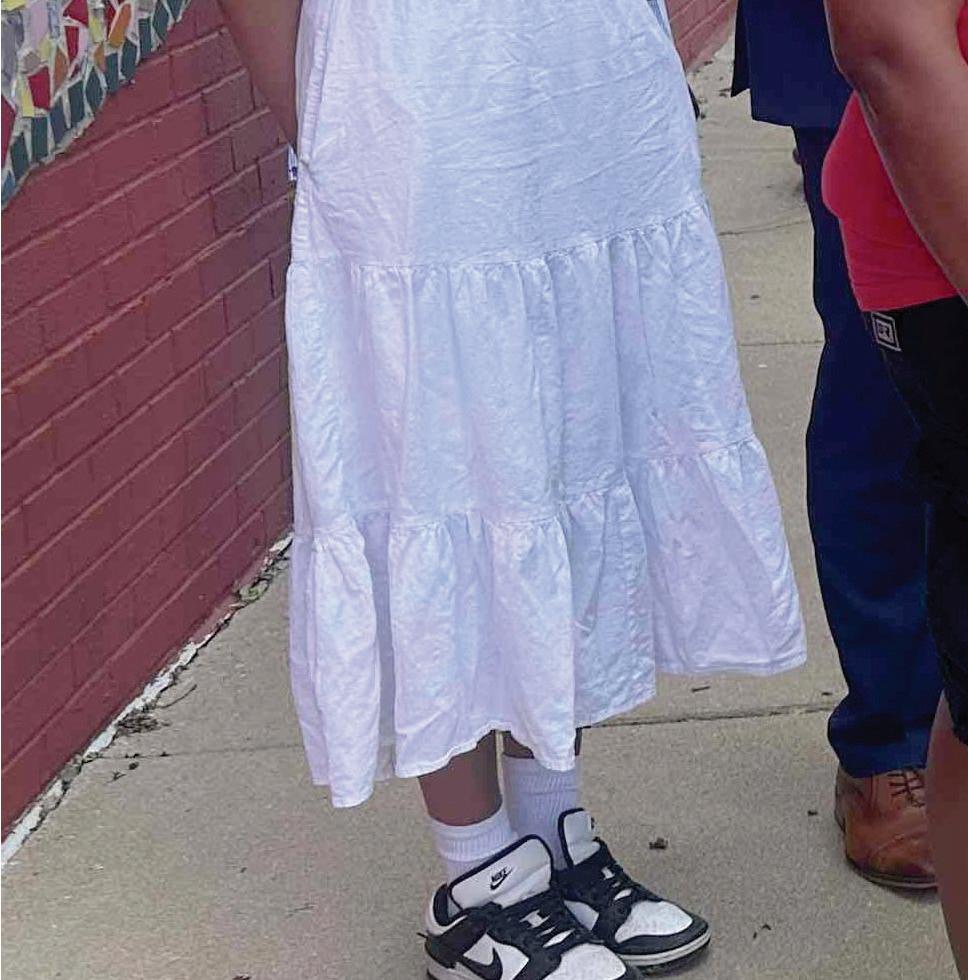
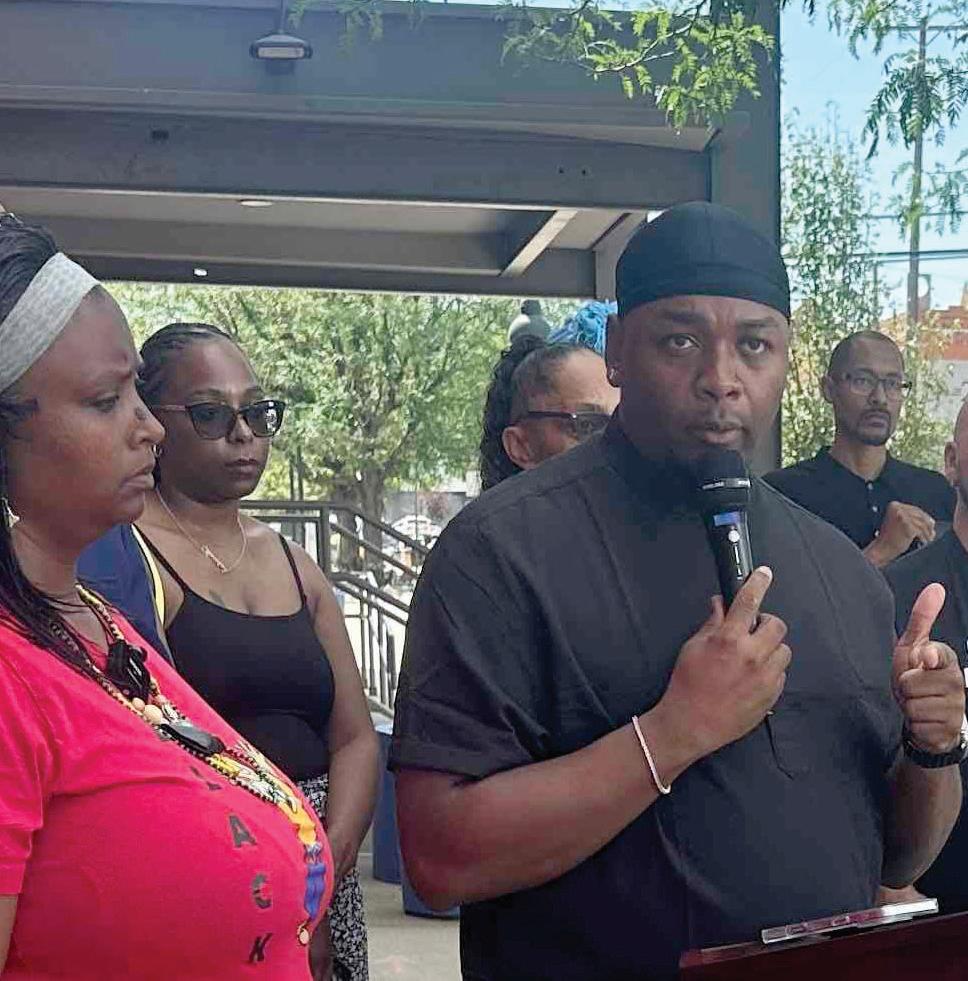

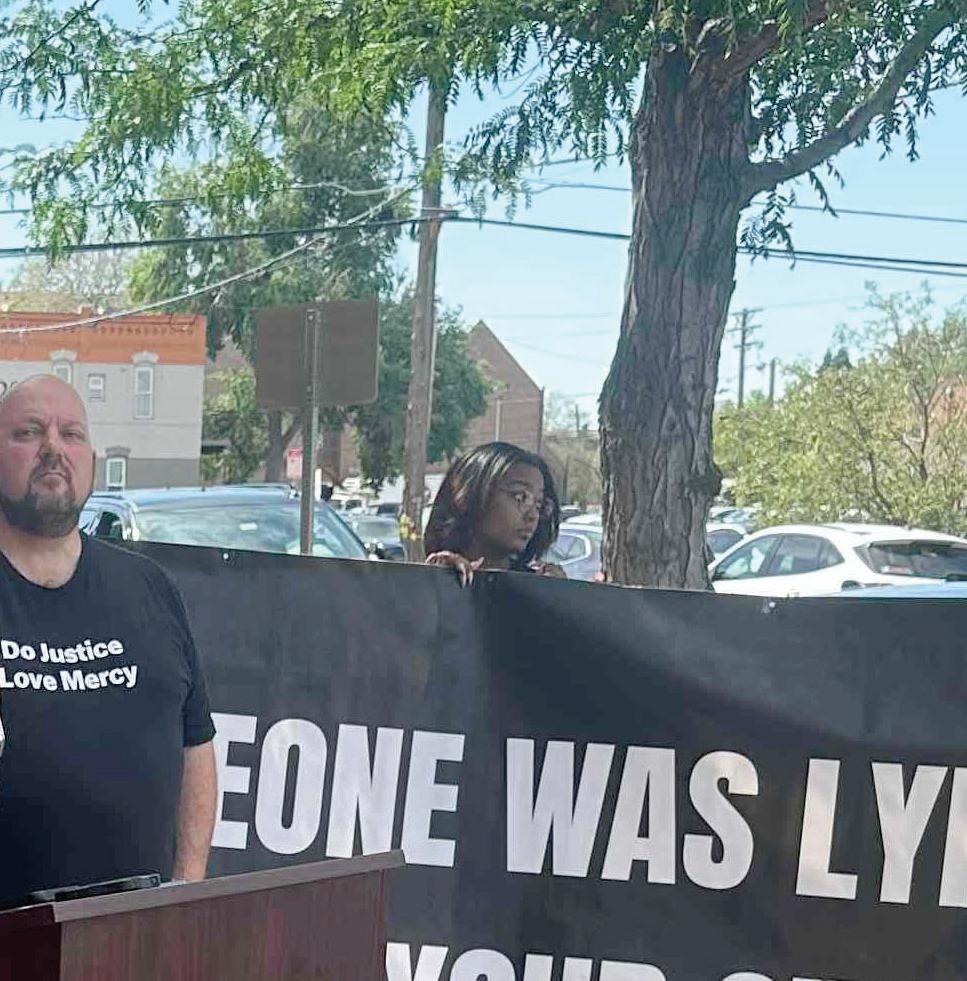
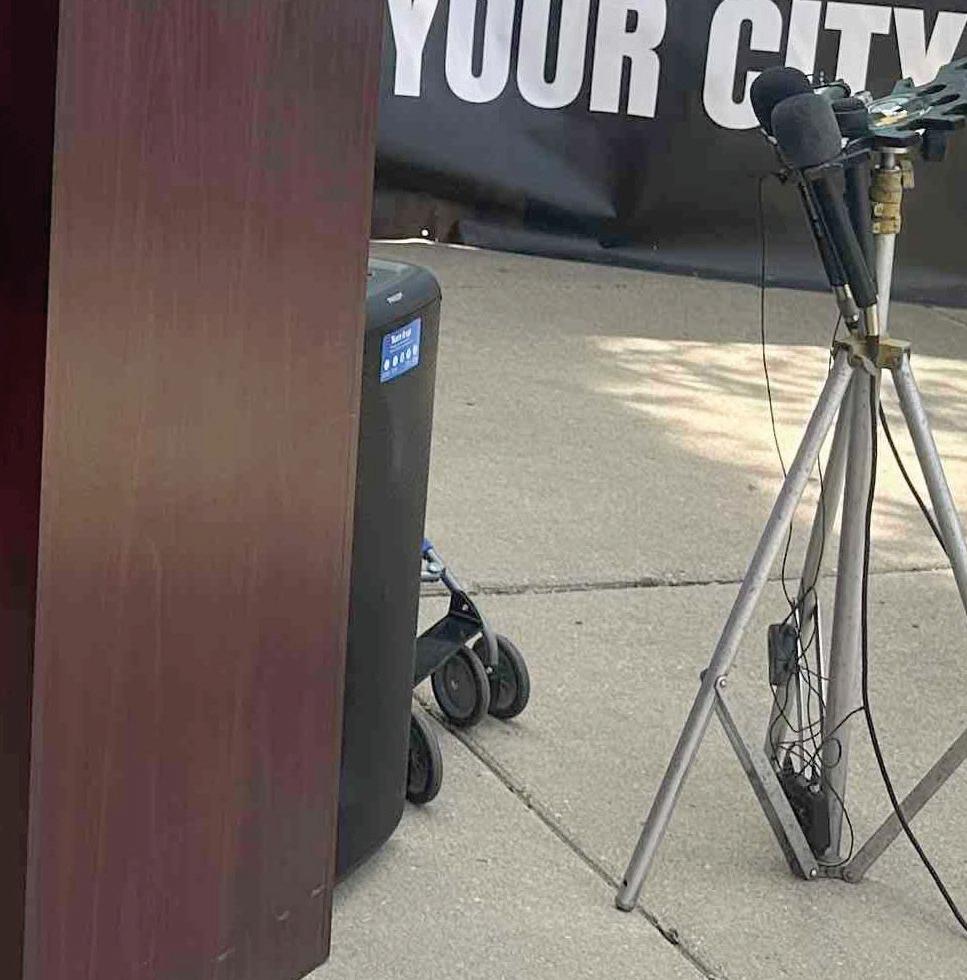
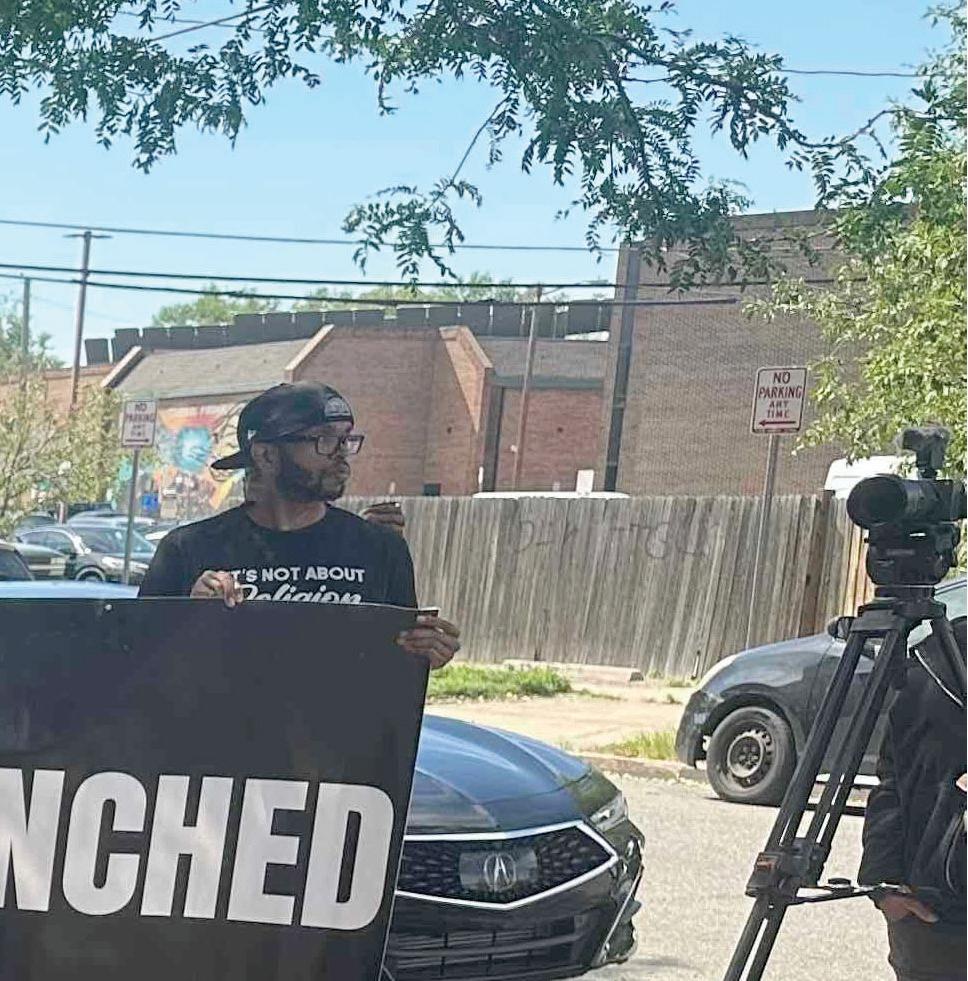
“THE INTERPRETATION THAT WE HAVE AS A COMMUNITY IS THAT THE COURTS WILL USE ANYTHING THEY CAN TO ENSURE THAT THE SYSTEM DOES NOT AFFORD ACCOUNTABILITY WHEN THERE IS A BLACK LIFE INVOLVED.”
BY MCKENNA HARFORD, Sentinel Staff Writer
Metro Black community leaders have called on the Aurora City Council to reaffirm the convictions of two paramedics who were granted new trials in the death of Elijah McClain.
The Colorado Court of Appeals on Thursday overturned the convictions of Jeremy Cooper and Peter Cichuniec, who had been convicted of negligent homicide after injecting McClain with ketamine during a police encounter in 2019.
The court agreed with defense lawyers that court procedures in 2024 improperly influenced the jury, warranting a new trial for both paramedics.
Cichuniec also was convicted of second-degree assault for giving a drug without consent or a legitimate medical purpose. That conviction was not overturned by the appeals court.
On Friday, community leaders who stood with the McClain family during the trials called the appeals court rulings an injustice, saying the appellate court “moved the goalposts” and is wrong to overturn the convictions.
“The interpretation that we have as a community is that the courts will use anything they can to ensure that the system does not afford accountability when there is a Black life involved,” Midian Shofner, founder of the Epitome of Black Excellence and Part-
nership, said.
In response to the court rulings, Shofner and others said elected officials, from the Colorado attorney general to statewide representatives and the Aurora City Council, should condemn the court’s decision and reaffirm the original convictions.
Auon’tai Anderson, a local activist, pointed to the city of Aurora’s $15 million settlement with the McClain family, where the city acknowledged McClain’s wrongful death at the hands of Aurora police and medics.
“So now we look forward to an emergency resolution passed by council, affirming that what happened to Elijah should have never happened, that you support the original convictions and that we will never allow history to be rewritten about Elijah McClain,” Anderson said.
Shofner also called on Attorney General Phil Weiser to retry the case and defend the convictions. The group requested other elected officials release statements supporting the convictions.
Shofner added that the group hadn’t yet spoken with elected officials, instead publicly announcing their request first so that officials “understand that this is a collective call to action.” Shofner and Anderson said protests are not off the table if elected officials do not respond.
“We have the resources and intentionality to ensure that if we don’t feel like they hear
us in this press conference, we know how to reach (them),” Shofner said. “These requests are reasonable, they’re thoughtful and they should be catalytic because our systems have not done enough.”
Elected officials who attended the press conference included Denver Councilmember Shontel Lewis, Aurora Councilmember Rob Andrews and Colorado Rep. Jamie Jackson, a Democrat who represents part of Aurora.
Following the statements, Andrews said he would consider supporting a resolution like the one Anderson called for, but said it would depend on the language. He added that he would want to work with fellow council members and the city attorney on drafting any resolution in response to the appeals court.
In a statement released June 4, Weiser said he plans to appeal the court’s decision to overturn Cooper’s and Cichuniec’s convictions.
“A jury convicted two paramedics for the death of Elijah McClain, an innocent Black man who did nothing wrong that tragic night seven years ago,” Weiser said. “Bringing these cases to trial was the right thing to do for justice, for Elijah McClain, and for healing in the Aurora community. The attorney general’s office is committed to defending these convictions through the appeals process. Justice demands it.”
Five people were initially indicted in Mc-
Clain’s death after Gov. Jared Polis appointed Weiser as special prosecutor to investigate the incident.
On the night of McClain’s death in 2019, he was walking down the street in Aurora when police responding to a suspicious person report forcibly restrained him and put him in a neck hold. Cooper and Cichuniec then injected McClain with ketamine and he suffered a cardiac arrest and later died.
Former officers Jason Rosenblatt and Nathan Woodyard were acquitted of all charges. Former officer Randy Roedema was convicted of criminally negligent homicide and third-degree assault and sentenced to 14 months in prison, though he was eligible for work release. Roedema has appealed his conviction as well.
McClain’s death prompted the Aurora Fire Department to prohibit the use of ketamine. State officials have since told paramedics statewide to stop using excited delirium as a basis for administering ketamine and medical officials have determined that excited delirium is not a valid diagnosis.
Shofner ended the press conference with an apology to Sheneen McClain, Elijah’s mother, for her suffering.
“I am so sorry that I had to disrupt your peace to tell you your son’s name was invoked because they overturned convictions in his murder,” she said, tearing up.
The Trump administration’s Department of Education announced today it will investigate Cherry Creek schools district, alleging the district permits or sponsors a “wide range of racially discriminatory programming, according to a U.S. Department of Education Office for Civil Rights announcement.
School district officials rejected the claims.
“We strongly disagree with the characterization of District programming,” school district spokesperson Ashley Verville said in a statement. “The District has not yet received a copy of the complaint. Without the complaint, we are not in a position to respond further.”
It’s unclear from a press release issued June 8 by the Trump education department when the allegations occurred. A source to the Sentinel said it appeared the filing is linked to complaints filed in February and June of last year, which could not be confirmed.
“OCR is investigating allegations that the District sponsors clubs that exclude students based on race,” Department of Education officials said in their press release. “Reports further allege that the district requires teachers to consider race when assigning classes and to provide differing levels of academic support based on race. Additionally, complaints claim that the District promotes a teacher training program that restricts participation based on race.”
Department of Education officials did not immediately respond to a request for details.
Federal education civil rights officials, however, also said they are investigating the school district’s “Voices of Color Committee.” The school district says the committee is composed “of parents, Cherry Creek Schools teachers and administrators, and community members,” according to the district website. “Our goal is to foster an inclusive and safe environment to support the success of students of color.”
The committee, which meets monthly, promotes educational success among students of color by supporting them in a variety of ways, including “building relationships between schools and family communities” and “providing parents and guardians of students of color voice and direct access to the administration.”
The state department of education and local school districts track student success by race and other demographics and have stated goals to improve standardized test scores and graduation rates for students of color.
The school district’s newest school board member, Keith Frazier, appointed to his school board seat last week, has been involved with the Voices of Color committee.
School officials say no one is excluded from the Voices of Color group.
“Anyone of any race is welcome to participate in the committee,” said school district Chief Communications Officer Abbe Smith.
Trump OCR officials said that the panel and other programs preclude some parents and students because of their race, without explaining what students might be excluded from.
“Complaints further allege that the District promoted a training program for educators entitled “Transformational Equity Experience: To Be Seen.
To Belong. To Be Whole,” which teaches that the United States was founded on “white supremacy” and categorizes individuals as “oppressors” and “oppressed” based only on their skin color, not their individual decisions and actions.
The Trump administration and some local far-right organizations have long protested teaching about the history of slavery in public schools, especially that people of color still suffer from racial discrimination.
“These allegations of racially discriminatory conduct in this District seem to permeate almost every aspect of the school community, affecting students, teachers, and parents alike,”
Assistant Secretary for Civil Rights
Kimberly Richey said in a statement.
“Federal law prohibits racial discrimination, which means that race cannot be a factor in how the school educates its students or trains its teachers. Despite this, the District seems to be basing decisions about how to support students, teachers and parents solely on race. The Trump Administration will fully investigate these allegations and enforce federal education law to the fullest extent.”
— Sentinel Staff
It has been more than a month since the Colorado Energy and Carbon Management Commission greenlighted a controversial fracking operation less than a mile from the Aurora reservoir, but community advocates opposed to the project believe that they haven’t exhausted their options to halt it.
The State Sunlight-Long wellpad, on the Lowry Ranch property at the southeast edge of Aurora, was approved in a 3-2 vote by the state commission in April. SM Energy, formerly Civitas, is behind the project.
For the past two years, there has been ongoing opposition to Lowry Ranch oil and gas development projects, including the Sunlight-Long well pad, stemming from community concerns over environmental and health impacts to nearby neighborhoods.
Now, community advocates say that a recent change in configuration of the wellpad warrants a more thorough and public review. Save the Aurora Reservoir ,or STAR, a neighborhood collective formed in opposition to the project, says the change to the plan warrants a re-examination by the Arapahoe County Commission.
Andrew Pinkowitz, a member of STAR and an Arapahoe County resident, told Sentinel Colorado that the group is circulating a petition to persuade the commission to hold a public hearing on the change.
“The Lowry (Comprehensive Area Plan) was passed by administrative approval by a single, unelected county official without any public hearing,” Pinkowitz says. “Despite what (SM Energy and the county) have said, there is a blatant lack of transparency, which has been troubling.”
Pinkowitz said he first became engaged with the community advocacy group because of his young son.
“I’m so fired about this because I’m fighting for my son’s future,” Pinkowitz says. “He’s a voracious reader, and we are currently loving The Lorax. I am seeing so many parallels between this book and what is happening now in Aurora. I am fighting for my son’s ability to drink clean water and breathe clean air. SM Energy is fighting to line their pockets as much as possible.”
Members of STAR announced the petition drive at a press conference last week, saying they aim to collect 3,000 signatures to demonstrate “considerable community interest.”
There is no formal process for the petition drive, and it would have no legally binding requirements for the county commission, but STAR hopes it will get the attention of county officials.
“From my perspective, the commission and the regulatory board have so far just rubber-stamped these types of oil and gas proposals with no real consideration for the impact on people’s lives,” Pinkowitz remarks. “Their primary objective has been to maximize the stakeholders, like SM Energy and other developers, rather than the health and well-being of Arapahoe
›› See METRO, 6
• GreatBurgers
• GreatBurgers
• GreatCheesesteaks
• GreatCheesesteaks
• 20 TV’s
• 20 TV’s
• Open St age EveryThursday
• Open St age EveryThursday
• Saturdays:11:30AM-3PM
• Saturdays:11:30AM-3PM
FreeDomesticBeeror
FreeDomesticBeeror
Give us a call for entertainment questions
Soda With SandwichOrder
Soda With SandwichOrder

Every three years, Arapahoe County does a deep dive to understand residents’ needs. The County is hosting focus groups to help us unlock that information. Interested?
Visit bit.ly/CR_FocusGroups




Elections Facility Tours
Learn all about the Arapahoe County elections process and see for yourself how we preserve election integrity and ballot security! Sign up for one of four tours that give voters an inside look at every step of the mail ballot process. Visit bit.ly/ACElectionTour

Common Weeds in Your Garden: June 13 from 10–11 a.m. Weeds don't stand a chance! Learn to identify and tackle the most common garden weeds at the Cheyenne-Arapaho Park Community Garden. This is a free event. Register at bit.ly/CAP_Weeds

Community Garden Kids Club: June 14, 10–11 a.m.
Join Arapahoe County Master Gardeners at Cheyenne-Arapaho Park as they introduce kids to the fascinating world of pollinators and beneficial insects working hard to keep our gardens healthy. Register at bit.ly/CSU_KidsClub
County offices closed
In observance of the State’s Juneteenth holiday, all Arapahoe County offices will be closed Friday, June 19
County residents.”
Pinkowitz also alleged that the community group’s voice has been suppressed at recent county commission meetings. The Board of County Commissioners has limited the number of people from a group who can comment at the meetings, a move that STAR believes is a direct result of their activism.
A spokesperson for the county claims that the commission has always
limited the amount of time people are given at board meetings, but officials did not address the restrictions placed on the number of people speaking.
The county did limit the number of speakers at an April meeting for public comment. According to Arapahoe County, it does not “generally hold a public hearing on Oil and Gas applications submitted for administrative approval unless elevated to a Use by Special Review by the Director of Public Works and Development…”
As to changes in the Sunlight-Long development, they were approved by an administrative official in the Office of Public Works and Development after the county set forth its guidelines for oil and gas regulations, county officials said.
Jill McGranahan, a spokesperson for Arapahoe County, told the Sentinel that the county had already publicly reviewed the application under its oil and gas regulations.
“Arapahoe County understands

that deep concerns remain with some residents about the County’s approval of the Sunlight/Long project,” McGranahan says, adding that the county takes those concerns seriously and “appreciates the time community members have invested in this issue over several years.”
McGrahanan said the independent review process by the Energy and Carbon Management Commission in April approved the plan and that the application approved by the state included “information responsive to state requirements that were separate from county requirements and therefore does not require the County to reopen its prior decision.”
McGrahanan did acknowledge that the county could revisit the proposal, but she did not point to specific criteria that would prompt a reevaluation.
“Based on presently available information, the county will not be reopening the matter,” McGranahan said. “ To the extent minor modifications for the approved application may be required by the Land Development Code in the future, the County will continue to faithfully enforce its criteria to ensure the health, welfare, and safety of our residents.
The county says it will continue to monitor and conduct oversight and enforcement of safety and environmental regulations. Additionally, the county encourages residents to stay up-todate on information through its Oil and Gas Inspection Program page that is available online.
In their most recent June hearing, the ECMC approved another oil and gas development plan that is part of the Lowry Ranch proposal. The management commission has approved each plan that is part of the Lowry Ranch project thus far.
STAR has posted their petition on their website. Aiming for around 3,000
signatures, community advocacy group members say they hope it will demonstrate considerable and persistent public interest.
— Owen Swallow, For the Sentinel
Aurora shooting leaves 25-year-old man dead after argument in an alley
An argument among a group of people early Sunday at an alley in northwest Aurora turned deadly when one person shot an unidentified man in the group and then left, police said.
Officers were called to the alley between the 1400 blocks of Dallas and Clinton streets at about 4:30 a.m. after reports of a shooting in the area.
“When officers arrived at the scene, they located a 25-year-old man with a gunshot wound,” police spokesperson Joe Moylan said in a statement. “Officers performed life-saving actions on the man until medical responders arrived at the scene. The man was rushed to a local hospital, where he later died from his injuries.”
The man’s identity will be released later by coroner officials.
Investigators said a “group of people” were in the alley when an argument broke out, Moylan said.
“After the shooting, the suspect ran from the scene,” he said. “The exact circumstances leading up to the shooting and possible relationships among those involved remains under investigation by the Major Crime Homicide Unit.”
No other details were released.
Police said anyone with information can call Metro Denver Crime Stoppers at 720-913-7867. Tipsters can remain anonymous and still be eligible for a reward of up to $2,000, police said.
—Sentinel Staff

BY SENTINEL STAFF
Aurora’s signature multicultural celebration will return June 13, bringing expanded offerings of international food, music, dance and cultural traditions to the city’s Municipal Center Great Lawn.
Now in its 13th year, Aurora Fest is a free, family-friendly event that highlights the diversity of one of Colorado’s most multicultural communities. Organizers say the festival showcases the sights, sounds and flavors of cultures from around the world while celebrating the people and communities that call Aurora home.
This year, 68 countries will be represented with cultural and food exhibits, performances and more.
“Aurora Fest encapsulates the spirit of our community,” Mayor Mike Coffman said in a statement. “From the delicious food to the colorful international marketplace to the wonderful performances, I hope everyone will join me in experiencing ‘The World in a City’.”
The event runs from 3 p.m. to 9:30 p.m. Saturday, June 13, at the Aurora Municipal Center Great Lawn, 15151 E. Alameda Parkway.
Aurora officials said that about one in five Aurora residents is foreign-born and more than 160 languages are spoken in Aurora schools.
Festival attractions include 29 food trucks and food booths serving international cuisine, more than 60 vendors, a Parade of Nations, an international fashion show, art displays, children’s activities and access to community resources related to health, documentation services and food assistance.
“The festival’s international marketplace will feature 46 craft and merchandise vendors showcasing goods ranging from handmade Brazilian jewelry and accessories to authentic African clothing,” city spokesperson Joe Rubino said in a statement.
This year’s festival will also feature a tribute to Tejano music star Selena Quintanilla-Perez. Aurora resident Mayra Alejandra and her band will perform Selena’s music following an all-ages Selena look-alike contest with multiple age categories.
Selena remains one of the most influential figures in Latin music more than three decades after her death.

Often referred to as the “Queen of Tejano Music,” Selena helped bring the traditionally regional Texas-Mexican genre to a mainstream audience in the late 1980s and early 1990s. Her blend of Tejano, pop, cumbia and contemporary Latin sounds attracted fans across cultural and language boundaries, making her one of the most recognizable Latino entertainers of her generation.
Known simply as Selena, the singer-songwriter broke barriers for women in Latin music. She opened the floodgates for a new generation of contemporary artists of Latin descent who would go on to enjoy huge popularity with mainstream American audiences.
Selena was born in Texas in 1971. She died in 1995 at 23 after being shot by the president of her fan club.
Her music still resonates. Selena had sold more than 80 million units worldwide, making her the best-selling female artist in Latin music history.
Selena was the youngest child of a mother of Cherokee ancestry and a father who is Mexican-American.
Her influence can be seen in the careers of numerous contemporary Latin artists, and annual tributes, festivals and commemorations continue to draw large crowds. More than 30 years after her death, Selena remains a cultural icon whose music and legacy continue to resonate throughout the United States and Latin America.
The evening will end with a drone show by Brightflight Drone Shows. Organizers said the performance is part of the America 250–Colorado 150 commemoration marking the 250th anniversary of the founding of the United States and the 150th anniversary of Colorado statehood.
Festival-goers will also be able to visit the Aurora Central Library and Aurora History Museum, both of which will be open during the event. The museum is offering free guided tours of “Mosaic of Cultures: Aurora’s Filipino Community,” an exhibit directly from some of the local Filipino community members who contributed to its creation. Live translation into any language will be available.
Organizers said more than two dozen performances representing cultures from five continents will be featured across two stages.
Aurora Stage Schedule
• 3 p.m.-3:05 p.m. — National Anthem
• 3:05 p.m.-3:30 p.m. — Parade of Nations
• 3:35 p.m.-3:55 p.m. — Dances from the Islands of Polynesia (Kalama)
• 4 p.m.-4:35 p.m. — International Fashion Show
• 4:40 p.m.-5 p.m. — LACI Studio Colombia
• 5:05 p.m.-5:25 p.m. — Hora Romanesca
• 5:30 p.m.-5:50 p.m. — Ballet Folklorico Patria Mexicana
• 5:55 p.m.-6:15 p.m. — PASCO Dance Troupe
• 6:20 p.m.-6:25 p.m. — Desi Caliente
• 6:30 p.m.-6:50 p.m. — DM Talent Academy by Venezuela Renaciente
• 6:55 p.m.-7:15 p.m. — Postoley Dance Ensemble
• 7:20 p.m.-7:40 p.m. — Peru Qwasa
• 7:45 p.m.-8:30 p.m. — Setup and sound check
• 8:30 p.m.-9:15 p.m. — Tribute to Selena by Mayra Alejandra and her Latin Band
• 9:30 p.m. — Drone show celebrating America’s 250th and Colorado’s 150th anniversary
UCHealth Stage Schedule
• 3:30 p.m.-3:50 p.m. — Denver Shaolin Kung Fu and Yang Taichi
• 3:55 p.m.-4:15 p.m. — Basma Dance
• 4:20 p.m.-4:40 p.m. — NippLife
• 4:45 p.m.-5:05 p.m. — School of Breaking
• 5:10 p.m.-5:30 p.m. — Delnaz Iranian Dance Ensemble
• 5:35 p.m.-5:55 p.m. — Academia de Ballet Folklórico Nezahualcoyotl
• 6:00 p.m.-6:20 p.m. — Aurora Dance Arts
• 6:25 p.m.-6:45 p.m. — The Arts and Culture of Indonesia
• 6:50 p.m.-7:10 p.m. — KonnectPop
• 7:15 p.m.-7:35 p.m. — Colorado Ethiopian Community
• 7:40 p.m.-7:50 p.m. — Origenes Dance Collective
• 8:15 p.m.-8:30 p.m. — Selena Look-alike Contest
• 9:30 p.m. — Drone show celebrating America’s 250th and Colorado’s 150th anniversary
Festival Rules
Organizers said the following items and activities are prohibited:
• Outside alcohol
• Glass bottles
• Illegal substances
• Open carry of firearms
• Unlawful devices
• Dogs
• Unauthorized sound amplification devices
• All bags are subject to inspection.
Details, including maps, parking information and accessible shuttle details are available at AuroraGlobalFest.org.
The Associated Press contributed to this report.
“Ain’t Nothing But the Blues”
This acclaimed musical revue traces the evolution of the blues from Africa to the American South and beyond through a dynamic collection of songs and stories. Featuring music made famous by legendary blues artists, the production celebrates the genre’s enduring emotional power and influence on American music history.
IF YOU GO:
Date: Through June 21. Friday and Saturday curtains at 7:30 p.m., Sunday curtains at 2:30 p.m.
Place: Vintage Theatre, 1468 Dayton St.
Tickets: $20-$39
Information: www.vintagetheatre. org or call 303-856-7830
“Violet” at Aurora Fox Arts Center
Tony Award-nominated musical “Violet” follows a young woman traveling by bus across the American South in the 1960s in search of healing and acceptance. Along the way, she encounters unexpected friendships and confronts difficult truths about identity, beauty and belonging. Featuring a score by Jeanine Tesori that blends folk, gospel and American roots music, the production is co-produced with the acclaimed disability-affirmative Phamaly Theatre Company.
IF YOU GO:
Date: Weekend night and matinee curtains through June 28
Place: Aurora Fox Arts Center, 9900 E. Colfax Ave.
Tickets: $17–$45
Information: aurorafoxartscenter.org or call 03739-1970
One of Colorado’s longest-running Juneteenth traditions, the parade celebrates Black history, freedom and community. Marchers, community groups, musicians and cultural organizations travel through the Five Points neighborhood to kick off the day’s festivities.
IF YOU GO:
Date: June 20, 11 a.m.–noon
Place: 26th Street from Williams Street to Welton Street, Denver
When the parade ends, the fun is just beginning. Next up: the 15th Annual Juneteenth
The centerpiece of Denver’s Juneteenth celebration transforms Five Points into a daylong cultural festival featuring live music, visual arts, food vendors, community organizations and family activities. The 2026 event features Grammy-nominated R&B artist SiR as headliner.
IF YOU GO:
Date: June 20, noon–8 p.m.
Place: 2700 Welton St., Denver
Cost: Free Information: www.juneteenthmusicfestival.com
But wait. There’s more — the next day. Following the street festival, multiple venues along Welton Street host live music, dancing and community celebrations extending the Juneteenth weekend into Sunday with the Juneteenth Hop.
IF YOU GO:
Date: June 21, 2 p.m.–midnight
Place: Multiple venues along Welton Street, Denver
Cost: Varies by venue
Information: www.juneteenthmusicfestival.com
The 2026 Summer Concert Series opens with singer-songwriter John Craigie and indie-folk favorites Blind Pilot performing in the UMB Amphitheater amid the gardens’ summer blooms.


IF YOU GO:
Date: June 23
Place: Denver Botanic Gardens, 1007 York St.
Tickets: $101, $96 for members
Advance purchase required only through the Botanic Gardens website.
Information: www.botanicgardens.org or 720-865-3500



























































Right: Cherokee Trail junior Marisa Vialpando shot rounds of 85 on both days of the Class 5A state tournament to earn a spot on the 2026 Aurora Sentinel All-Aurora Girls Golf Team.
Middle left: Cherokee Trail junior Brinnon Cook earned a spot on the All-Aurora Girls Golf Team for a second straight season with a 28th place finish.
Middle right: Regis Jesuit senior Natalie Furgason posted a career-best finish of 15th place at the 5A state tournament to make the All-Aurora team.
Below: Regis Jesuit junior Emily Gott, left, had the best final round at the 5A state tournament of any Aurora area golfer to finish in a tie for 21st place and make the All-Aurora team.
PHOTOS BY COURTNEY OAKES/AURORA SENTINEL

The 2026 spring prep sports season concluded with the end of the Class 5A Baseball Championship Series, which brings about a time to take a look back at the top Aurora area performers in a double-digit number of prep sports.
Here’s an in-depth look at some of the best and brightest from the spring season as assembled by Sentinel Sports Editor Courtney Oakes with more to follow in coming weeks:
cal players by a significant amount. She had three birdies and shot a plus-8 80 in the opening round despite the conditions and followed that with an 84 that might have been even better if not for a bogey and double bogey on her last two holes. In the regular season, Furgason earned All-Continental League honorable mention accoloades, while her best finish was third at the Lone Tree Invitational, when she shot 78.
Rounding out the Raiders’ All-Aurora contingent are junior Emily Gott and sophomore Claire Pariset.
BY COURTNEY OAKES Sports Editor
The first girls golf season without a regional tournament to qualify for state competition had an effect, as Vista PEAK Prep standout Sophia Capua did not play enough tournaments to advance to the postseason with the new formula.
Thirteen Aurora area girls golfers, however, did play enough and at a level throughout the season to qualify them for the Class 5A state tournament and five of them — three from Regis Jesuit and two from Cherokee Trail — earned spots on the 2026 AuroraSentinelAll-Aurora Girls Golf Team, which is determined by state results.
Alum Kathleen Sieg took over the Regis Jesuit program as head coach and helped the Raiders move up from 11th place at last season’s state tournament to fifth, which put them in front of the other two Aurora area team qualifiers (Cherokee Trail and Grandview).
All players had to navigate brutal conditions (rain, wind and cold) on the first of two days at Thorncreek G.C. and Regis Jesuit senior Natalie Furgason actually played better despite the adversity. In her third career appearance at the state tournament, Furgason (who was 54th as a sophomore and 36th as a junior) tied for 15th to lead lo-
Gott achieved All-Continental League second team honors and qualified for a second straight trip to the state tournament, where she made a massive climb from a 63rd-place results in 2025. Gott was the best Aurora area player in the state field in the second round, as she made three birdies — including two of the last five holes — for an 82 that helped her finish in a tie for 21st. Her two-day total was 166, which put her two strokes behind Furgason. Pariset did not play in the state tournament as a freshman, but played well in her debut as she carded a second round 83 to go with a 91, which brought her into a tie for 32nd place. Pariset’s best score of the year came at a Continental League tournament played at Aurora Hills G.C., where she carded a 73 to finish sixth and went on to achieve honorable mention all-league status.
Cherokee Trail’s duo of juniors Brinnon Cook and Marisa Vialpando round out the All-Aurora teams as they helped coach Justin Jajczyk’s Cougars finish 11th. For Cook, it is a second consecutive appearance on the All-Aurora team and it came after a regular season in which she finished in fourth place in the Centennial League standings, but just three points out of a three-way for first. Cook’s best tournament of the season came in league play at Springhill G.C. with a plus-2 73, which tied her for medalist honors. At the state tournament for the third time in her career, Cook






finished in a tie for 28th place, which was one spot behind her career best state finish of 27th as a sophomore. Cook placed 65th as a freshman at the state tournament.
Vialpando played her best golf at the end, as she finished two spots in front of Cook to lead Cherokee Trail at the state tournament. During the regular season, Vialpando placed 15th in the Centennial League standings and her best finish (second) came at a three-team tournament with Eaglecrest and Grandview Murphy Creek G.C. At the state tournament, Vialpando shot 85 in both rounds, which both included a birdie, as she tied for 26th place.
The girls tennis season stayed the domain of Regis Jesuit, which earned all three singles and all four doubles teams on the 2026 Aurora Sentinel All-Aurora Girls Tennis Team, as determined by Class 5A state tournament performance.
Coach Jenn Armstrong’s Raiders made it to the quarterfinals of the 5A team state tournament and then saw their entire contingent make it through to the individual state tournament.
The singles contingent of sophomore Madaline Dickey (No. 1), plus seniors Otylia Martino Wojciechowski (No. 2) and Helen Adams (No. 3) were the lone local singles players to participate at the individual state tournament. Vista PEAK Prep No. 1 singles player Francesca Johnson qualified for state, but pulled out of the tournament.
For more on these All-Aurora teams, visit sentinelcolorado.com/ preps
Playing in the top spot in the lineup for Regis Jesuit for a second straight season, Dickey posted a 17-5 record and had the distinction of earning Regis Jesuit’s only win in the 5A team quarterfinals when she defeated Emerson Bonner of eventual state champion Ralston Valley. She won the Region 8 title to get into state, where she won her opening round match before she was defeated by Bonner, who went on to place third. Wojciechowski (who was 9-11 on the season) won the Region 8 championship and earned a fourth trip to the state tournament, where she fell in an opening round match. Adams moved up from doubles and finished 15-5 in the No. 3 position after a 1-1 showing at state, which ended with a quarterfinal loss to eventual third-place finisher Ainsley Cunningham of Rocky Mountain.

The No. 1 doubles of junior Abigail Puschaver and freshman Samantha Garcia Lucero secured the only place for Regis Jesuit as the duo came in fourth to finish an 18-5 season. The Raiders’ only losses of the regular season came to powerhouse Ralston Valley as well as the Cherry Creek duo that also made the state championship match, while at state they lost to the Mustangs in the semifinals before a three-set defeat at the hands of Valor Christian’s Sofia Yaron and Ella Bohling. It was the second career top-four place for Puschaver. Sophomore Rachel Osborn and freshman Alegra Warnaars earned the No. 2 doubles spot and had a solid season despite a first-round state tournament exit to the powerhouse Ralston Valley duo of Julia Campbell and Olivia Hendrickson. Osborn and Warnaars finished as the Region 8 runners-up and were 11-7 on the season together. The No. 3 doubles position featured junior Brooke Griggy and freshman Samantha Groen, who each made their varsity debuts, and produced a 12-8 record plus a state tournament appearance. Griggy and Groen entered state as the Region 8 runner-up after a three-set loss and then dropped their state first round match in three lengthy sets to Rock Canyon’s Sydney Stanton and Raleigh Salazar. The Regis Jesuit No. 4 doubles team also featured two varsity newcomers in junior Cailyn Vu and freshman Lucita Lewis, who posted a victory in their state debut before a three-set loss to the Denver South team of Harper Peterson and Kari Hresko that went on to place third. Vu and Lewis finished 13-7 overall.
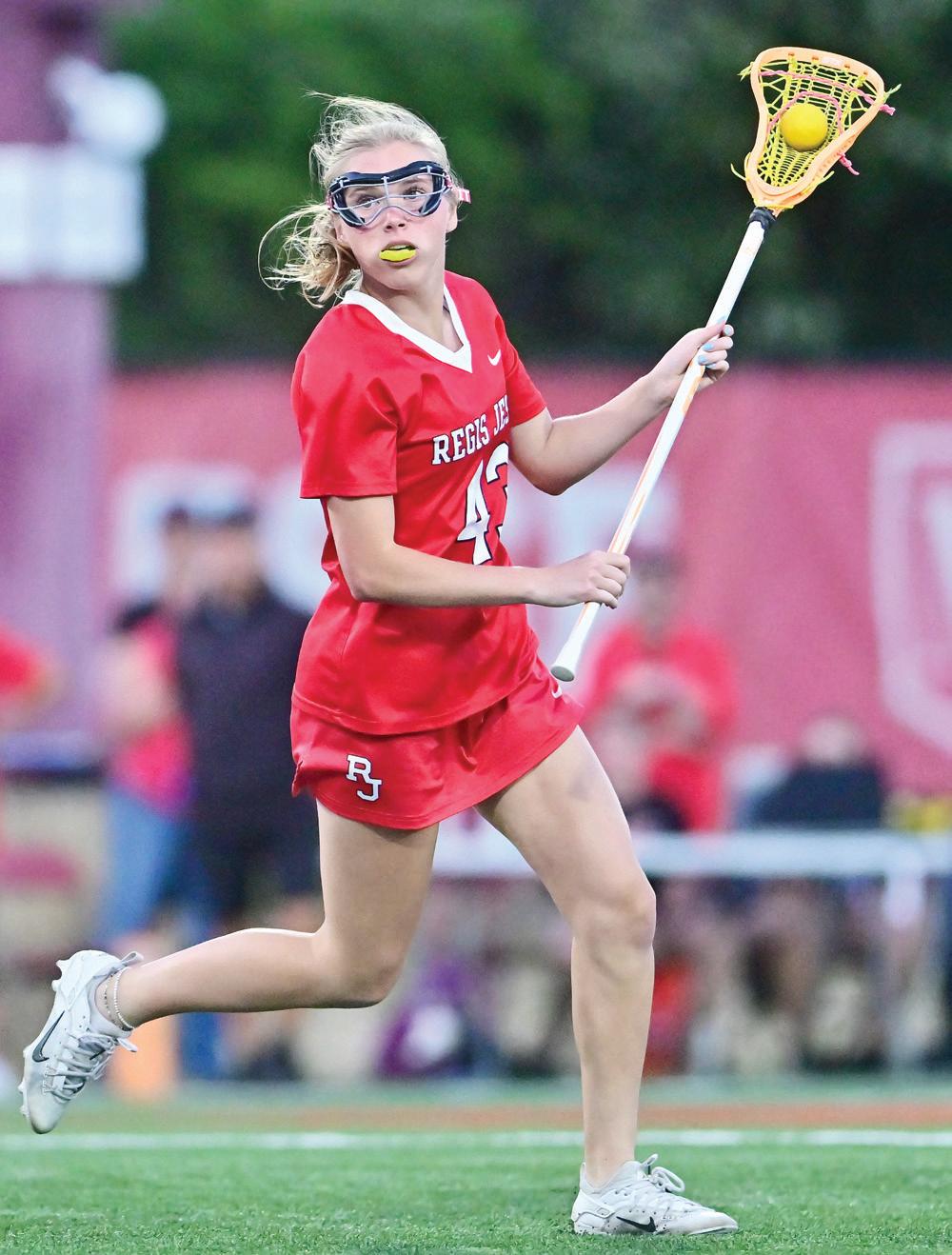
The Regis Jesuit girls lacrosse team came up short of claiming the ultimate prize — the Class 5A state championship — for the first time, but was absolutely loaded with title-caliber talent. Thus, the majority of the 2026 Aurora Sentinel All-Aurora Girls Lacrosse Team — which is selected by the Sentinel in conjunction with balloting of local coaches — came from coach Crysti Foote’s elite Raiders group that lost to Valor Christian 126 in the 5A state title game at Peter Barton Stadium.

While the vast majority of Regis Jesuit’s talented core is underclassmen, two seniors packed the biggest punch for an offense that accounted for nearly 300 goals (tops in the state) in 19 games. Leading the way was midfielder Delaney Sitzmann, a Vassar-bound attacker who racked up a team-high 67 points on 32 goals and 35 assists, which gave her 197 points for four varsity seasons. Sitzmann received 5A All-State second team accolades from the Colorado High School Activities Association, while the All-State first team included Amina Pope, who acculumated just four fewer points with 63 on 31 goals and 32 assists. The San Diego State signee had a point in every game Regis Jesuit played.
The other CHSAA All-State first teamer for the Raiders came in the back in senior Lainey Phillips, who provided an experienced backbone to a stingy unit in front of senior goalie Rayn Parker. Phillips and junior Olivia Filippini combined for 72 groundballs and got things moving back through the midfield to players such as junior Natalie Chilton, the team’s goal-scoring leader with a whopping 49 (which helped her on the way to 60 points). Joining Chilton in the All-Aurora midfield in sophomore Addison Kindy, who contributed 55 points via 36 goals and 19 assists, while 43 groundballs were also major factor.
Versatile Grandview junior Brynn Goodwin racked up 36 goals (fourth most among local players) and scooped up 43 groundballs, which earned her second team All-5A East League honors as well as an All-Aurora spot. Eaglecrest has All-Aurora performers up top in junior Grace Gentert (area-best 51 goals) on attack and in the back in sophomore Leah Park, who directed the Raptors defense, which yielded the second fewest goals among area teams.
Primary Election Day is Tuesday, June. 30, but registered voters in the state are already receiving ballots. Colorado began statewide voting by mail in 2013.
We know voters and potential voters will have questions about how voter registration works, how mail-in ballots work, how ballots are counted and more. The Colorado News Collaborative and its members, including Sentinel Colorado, want to answer those questions.
• Arapahoe County voter information visit: www.arapahoevotes.com or call 303-795-4511
• Adams County voter information visit: www.adamsvotes.com or call 720-523-6500
• Denver voter information visit: www.denvergov.org/ or call 720-913-8683
• Douglas County voter information visit: www.douglas.co.us/elections or call 303-660-7444
How do I know if I’m registered to vote?
GoVoteColorado.com has a range of information on registration, including the ability to register to vote if you have a Colorado driver’s license or ID card.
What if I’ve moved?
This link also will allow you to change your address: www.sos.state. co.us/voter/pages/pub/olvr/findVoterReg.xhtml
How long do I have to register?
Voters may register online or in person up to June 22 and still receive their ballot by mail. But any qualified voter can register and vote in person at vote centers through 7 p.m. on Primary Election Day, June 30.
What signature is used to validate the one on my returned ballot envelope? My signature has changed over time
The most recent signature on a state transaction is used as a reference — typically a recent driver’s license or the signature on the last ballot you returned. All past signatures are available digitally for election judges to review. If election judges question your signature, you’ll get a notice from your clerk within three days (two if it occurs on Election Day) and you’ll have eight days to verify the signature is yours.
Do I have to request a ballot from my county clerk or the Secretary of State?
Not if you’re an active registered voter. County clerks automatically will begin mailing ballots to active registered voters on June 8. Again, a voter is considered active if they’ve voted in the most recent general elections or updated their address or other registration information.
How do I know if my ballot was received?
Voters statewide may sign up to track your ballot online. You’ll get notifications via email, text message or phone (you may choose) when your ballot is mailed, and when it has been received and accepted. A dozen Colorado counties already offered ballot tracking, so if you’re already signed up, there’s no need to do it again.
How do I return my ballot?
Ballots must arrive at a vote center or county clerk’s office by 7 p.m. June 30. You may mail your ballot back if

there’s enough time for it to arrive. Remember: postmarks don’t count, according to the Secretary of State. The ballot has to be in the physical possession of elections officials on Election Day — not sitting in a blue box somewhere in the metroplex.
You may also deliver it to drop boxes at your county clerk’s office or other locations in your county. About 75% of Colorado voters return their mail ballots to drop boxes, according to the Secretary of State’s office.
What if I don’t get my ballot?
Check GoVoteColorado.com to see if your ballot has been mailed. If it has been mailed and you haven’t received it, contact your county clerk’s office and ask. Not every county will send ballots out the first day possible. But they need to hear from you if you don’t receive yours.
Are drop boxes safe from tampering?
Yes, according to the Secretary of State’s Office. They are under 24-hour video surveillance and are emptied every day by a team of bipartisan election judges. The sturdy, metal boxes are bolted to the ground.
If I send my ballot back by mail, will it get there?
The Secretary of State recommends delivering ballots in person in the final eight days before the election. If you mail them before that, they should arrive in time.
I don’t want to vote by mail. I want to vote in person.
Colorado will open hundreds of voting centers and drop boxes the last week of October. You may vote there in person starting then through 7 p.m. General Election Day with some limited weekend hours.
How can I be sure my vote is counted on Election Day?
Sign up to track your ballot. If it doesn’t arrive within a few days of being mailed, contact your county clerk. Return your ballot to a drop box or through the mail, and the ballot tracking system will let you know when your ballot is accepted. That means your vote will be counted.
Fewer Americans say democracy is central to country’s identity, poll finds
As the U.S. prepares for an extravagant celebration of its founding principles, fewer Americans see their country as exceptional, a new poll finds.
The survey from The Associated Press-NORC Center for Public Affairs Research highlights many Americans’ feeling of unease over the future of its representative government — particularly among young people. It presents a jarring contrast as communities around the country commemorate the nation’s 250th anniversary.
Only about one-quarter of Americans say the U.S. stands above all other countries in the world, the new poll found, while 44% say it’s one of the greatest countries in the world, along with some others. About 3 in 10 say there are better countries than the U.S., an increase from 19% in an AP-NORC poll conducted in June 2016.
Americans remain divided about whether diversity is an essential feature of the U.S.’s identity, and agreement about other aspects of the country’s underlying character appears to be eroding, the survey found. Americans are less likely to see a democratically elected government as “extremely” or “very” important to the United States’ identity as a nation than they were just a few years ago. About two-thirds of U.S. adults now say a democratically elected government is highly important to the U.S.’s identity as a nation, down from 80% in 2021.
“It’s not that the democracy part is not working,” said Derricka Wall, 24, of Chickasaw, Alabama. “It’s the people that are actually being put in office that is the problem.”
Wall believes politicians have damaged America’s governing system, which was designed to ensure representation and guard against government misuse.
America, she said, “is not what it used to be. I feel like our founding fathers would be kind of disap-
if you work hard, you’ll get ahead — once held true but does not anymore. About one-third say it “still holds true” while 15% say it never held true.
Jack Hermanson, a 27-year-old software developer in Denver, said his belief in the American Dream changed when he saw his engineer husband struggle to find a job. “That really shattered my impression that if you work hard, you get what you deserve,” Hermanson said.
Only 22% of Americans under 30 say the American Dream still holds true, compared with 46% of Americans ages 60 and older.
Angela Toombs, 31, works at a senior living facility in Atlanta where her clients talk about how easy it was to buy a house while working their first regular jobs in their 20s and are incredulous about the obstacles facing Toombs’ generation. Toombs recently gave up her own apartment to rent a room in order to save money.
pointed with how it is now.”
Rising belief that democracy is not essential to American identity
Young adults are much less likely than older Americans to believe the U.S. is special, compared with other nations, the poll found.
About 4 in 10, 44%, of U.S. adults under 30 say there are other countries better than the U.S., compared with 22% of U.S. adults ages 60 and older.
Fewer, too, see democracy as a key element of the U.S.’s identity. Only about half of Americans under 30 believe this, compared with 81% of those 60 and older.
Wall said the people who established the government with coequal branches thought they were erecting safeguards to keep any one person or group from attaining too much power. But she believes they didn’t foresee how easily those guardrails would crumble if the people in the system stopped enforcing them.
“I feel like they would actually roll out of their graves,” she said. “I feel they would be very disappointed in us.”
The belief that politics isn’t working for everyday people extends beyond the youngest generations. Kent Stage, 62 and a retired senior enlisted man in the Army, is a registered Republican in Indiana. He does not think the current political system addresses the country’s problems. He’d like to see term limits on politicians and more working-class people serving.
“I’ll trust the ambulance-chasing lawyer and a shady used car salesman before I trust the politician,” he said.
Stage, who is also a former Marine, believes public servants make self-serving choices for their families “while mine and yours still got to hit the old grindstone.”
Many feel it’s harder to get ahead in the US
The survey also finds widespread cynicism about America as the land of opportunity. About half of U.S. adults, 51%, say the American Dream — the idea that
Skepticism about the American Dream is more widespread among Democrats and independents, compared with Republicans. Most Republicans, 57%, say the American Dream still holds true, compared with about one-quarter of independents and 17% of Democrats.
Republicans are also much likelier than Democrats to see the U.S. as exceptional. About half of Republicans say the U.S. stands above all other countries in the world, compared with only 7% of Democrats.
Quintin Sharpe, 28, lives in a resort town on Lake Geneva in Wisconsin. A financial planner who is Republican, he said the American Dream remains accessible and he is proud of the country. “It’s been a great experiment.”
“The opportunity is there for those who want to work for it,” he said. Sharpe believes the country is “a meritocracy, and the best ideas, the best work ethic, those with the best succeed regardless of race, skin color, any of those factors.” He and his wife will celebrate the country’s 250th anniversary watching the fireworks over the lake.
Divides on whether diversity is essential to US
Just over half of U.S. adults — 56% — say a shared American culture and set of values are “extremely” or “very” important to the country’s identity, down from 65% in 2017. Younger Americans are less likely than older ones to say a singular set of values is important to U.S. identity.
But Americans remain sharply divided on the centrality of welcoming diverse perspectives: About half of adults, 51%, say the ability of people to come from other places in the world to escape violence or find economic opportunities is “extremely” or “very” important to American identity, while 55% say this about the mixing of cultures and values from around the world.
Only about 4 in 10 Republicans see the mixing of cultures and values from around the world as central to the country’s identity, compared with 76% of Democrats.
— GARY FIELDS, LINLEY SANDERS and NICHOLAS RICCARDI Associated Press
By McKenna Harford, Sentinel Staff Writer
Democratic primary voters in House District 41, which covers a portion of central Aurora, will decide between incumbent Rep. Jamie Jackson and challenger Anne Keke this June.
Jackson is a Denver native who moved to Aurora in 2010. She is the founder and CEO of Premier Senior Support and she was appointed to represent House District 41 in 2025 through a vacancy committee.
Keke, an immigrant from Cote d’Ivoire, has lived in Aurora since 2001 and is an instructor of career readiness for Colorado Early Colleges with a background in criminal justice. She currently serves on the Aurora Public Schools Board of Education.
At a Democratic candidate forum in May, Jackson and Keke made the case to voters why they should be the district’s next representative and spoke about their policy priorities.
Jackson argued that the biggest distinction between her and Keke is legislative experience. She said she has a proven record and is already working to serve the district.
“HD41 needs to move forward with someone who has already delivered results and been effective in the legislature because things are too crazy right now and there’s so many things we’re dealing with that we don’t need to lose momentum,” Jackson said.
Keke responded that her work serving the community in various positions over the last 10 years speaks for itself.
“I’m running because House District 41 needs a leader who is bold and cares about the voices of the community at large,” Keke said.
The race has attracted funding from some political action committees, according to the Colorado Sun. Fighting for a Better Colorado, which has received $75,000 from the One Main Street super PAC, sent mailers supporting Keke’s campaign to unseat Jackson. Meanwhile, Colorado Labor Action, a PAC funded by unions, has spent roughly $11,000 opposing Keke.
A bill passed this year will prevent Keke from keeping her seat on the school board if she is elected as a state representative. Jackson claimed Keke would be “abandoning” the school district if elected, but Keke said her fellow board members would continue “the fight that I started.”
Keke pointed to the fact that Jackson was appointed to the position, saying she wants voters to have a chance to pick a representative.
“The people in House District 41 have the right to decide who should be their representative and I’m giving them options and alternatives, and I’m unapologetic about that,” she said.
Keke called out Jackson for her experience working for the GEO Group, which owns private prisons and immigration detention centers. Jackson worked in re-entry services for GEO from 2014 to 2021. Jackson said her time there gave her perspective on the importance of offering resources to people who were incarcerated. She added that she had no involvement or knowledge of the conditions in
detention centers.
“When I did find out about what was happening in the detention centers, … it did not align with my values and I did end up leaving as a result of that even though I was proud of the work I was doing helping people,” Jackson said.
Both Jackson and Keke spoke about supporting rehabilitation services for criminal offenders, though Keke said the legislature can occasionally be too soft on crime, pointing to her personal experience with having her house burglarized twice by the same person. Keke said she would work on legislation in collaboration with law enforcement to ensure that the “crime fits the punishment.”
Jackson said she is a big supporter of re-entry services and believes in focusing on restorative justice. She noted the importance of violence prevention, youth programs and diversion.
“We want people to be held accountable for victimizing our community and when they have been accountable, we want to make sure they have the tools and resources to be successful so they don’t resort back to a life of crime and victimizing someone again,” Jackson said.
When it comes to budget cuts, Keke said the two areas she would like to protect from any cuts are education and healthcare. She said if cuts are needed they should come out of other programs, including funding for prisons.
Jackson said the Taxpayer’s Bill of Rights has tied the hands of legislators during budget conversations by limiting how the state can raise revenue. She stopped short of advocating for repealing TABOR, but suggested reforms are necessary to make sure the state can keep funding healthcare.
On immigration, Jackson said she is proud to have supported legislation that established protections for immigrant communities and a proposal to allow people to sue federal agencies that violate their civil rights. While that bill, SB26-05, passed the legislature, Gov. Jared Polis vetoed it.
One bill that did not pass in the 2026 legislative session that Jackson said she would like to see made into law would prohibit immigration officials from wearing masks.
“If you’re going to be out here terrorizing people, you shouldn’t be able to conceal your identity,” Jackson said.
Keke didn’t identify a specific policy she would support to protect immigrants, but said it’s important to include people with lived experience in the conversation to make sure bills are crafted in an effective way.
“As an immigrant, thank you for being my friend and my ally, but bring me to the table,” Keke said. “When I am elected, I will make sure that every voice is at the table.”
For the general election, Keke said she might support Jackson if Jackson asks for her support. She added that if she supports Jackson, she will also hold her accountable.
“It depends on whether she wants me to sit at the same table as her and if she’s willing to hear my opinion,” she said.
Jackson responded that she is accountable to the community and has already delivered results. She said she would support Keke in the general election and “try to give her some pointers and information about things I have learned.”
Anne Keke, an immigrant from Cote d’Ivoire and single mom, has lived in Aurora since 2001. Keke, who has her PhD, is an instructor of career readiness for Colorado Early Colleges and has a background in criminal justice, including working for the 18th Judicial District Attorney’s Office and the Arapahoe County Juvenile Probation Department. Keke current-
ly serves on the Aurora Public Schools board, which she was elected to in 2021. Keke has also held roles with the Colorado Association of School Boards, the Aurora Charter Review Committee and the TriState NAACP Education Committee. She serves on the Aurora Police Department Citizen Oversight Committee, the 1241 School Accountability Task Force and in various roles with the Arapahoe County Democratic Party.
The priorities Keke lists on her website include economic mobility, affordable housing, healthcare access, protecting reproductive healthcare and protecting immigrants’ rights.
Whoever is elected as the Democratic candidate for District 41 will not face a Republican challenger in November.
Jamie Jackson is a Denver native and single mom who moved to Aurora in 2010. Jackson is the incumbent for House District 41, which she was first appointed to in 2025 through a vacancy committee. Jackson is also the founder and CEO of Premier Senior Support, which provides education and services for older adults around technology and fraud. Previously, she worked for the Denver Sheriff’s Office, The Naloxone Project and Colorado Children’s Campaign.
Jackson serves as criminal justice chair for the Aurora NAACP and previously served as vice president of Colorado Black Women for Political Action. She was also appointed to the Arapahoe County Justice Coordinating Committee and its Racial Equity Subcommittee.
Some of Jackson’s policy priorities include mental health and substance use treatment, affordability, protections for elders and criminal and juvenile justice reform. During her time in office so far, Jackson has passed legislation to expand healthcare access and substance use treatment, as well as remove court costs for juveniles.
Whoever is elected as the Democratic candidate for District 41 will not face a Republican challenger in November.
Jamie Jackson Q&A — jamieforcolorado@gmail. com
Q: After astonishing property value increases over the past four years, voters and the Legislature have moved to change property tax laws in an effort to reduce property taxes for residents. Did everyone get it right?
A: The Legislature made important progress in providing property tax relief while protecting funding for schools, fire districts, libraries, and other local services. While no solution is perfect, I believe we struck a reasonable balance between helping homeowners and preserving the services our communities rely on. Going forward, I would like to see additional targeted relief for seniors, veterans, people with disabilities, and working families who are increasingly struggling to remain in their homes. We must also address the underlying affordability challenges by increasing housing supply and expanding housing options across Colorado.
Q: State lawmakers have in the past two sessions passed a handful of measures addressing the problem of affordable housing. City officials, including those in Aurora, have balked, saying some of the measures usurp local control, especially over zoning and development issues. Do you agree that’s the case?
A: Local governments should have a strong voice in planning decisions, but Colorado’s housing shortage is a state-

wide challenge that requires statewide solutions. Too many working families, seniors, teachers, healthcare workers, and first responders cannot afford to live in the communities they serve. I support a balanced approach that respects local input while ensuring communities contribute to solving our housing crisis. Housing affordability impacts our economy, workforce, transportation system, and quality of life. As a member of the House Transportation, Housing, and Local Government Committee, I’ve worked extensively on housing policy and understand both the importance of local voices and the need for statewide solutions to a statewide challenge.
Q: There have been a number of efforts to limit local law enforcement’s cooperation with federal immigration agencies and restrict immigration enforcement. What regulations would you support for immigration enforcement operations, or should local police work more closely with ICE?
A: House District 41 is one of the most diverse districts in Colorado and home to families from all over the world. Many of my constituents came here seeking safety, opportunity, and a better future for their children. Today, too many immigrant families are living in fear as they are unfairly targeted, detained, and/or separated from their loved ones. I do not believe local law enforcement should be diverted from their responsibility of protecting public safety to serve as federal immigration agents. When immigrant communities fear interactions with police, crimes go unreported and entire communities become less safe. This session, I supported legislation to strengthen protections for immigrants, safeguard personal information, protect workers from the unlawful seizure of identification documents, improve oversight of detention facilities, and ensure that Colorado families are treated with dignity and respect. As Criminal Justice Chair for the Aurora NAACP, I’ve worked closely with community members on issues of trust, accountability, and public safety. We have to recognize the humanity of people who are working hard, raising families, contributing to our communities, and pursuing the same opportunities that generations of Americans have sought.
Q: Has the state struck a good balance between addressing justice for crime victims and promoting “restorative justice” in an effort to rehabilitate rather than house crime perpetrators and reduce the cost of state prisons?
A: Public safety, victim support, accountability, and rehabilitation can all coexist. Crime victims deserve justice and meaningful support, but we also have a responsibility to prevent future victimization. Throughout my career, I have worked directly with individuals returning from incarceration, families impacted by crime, behavioral health providers, and law enforcement. I created Colorado’s
first jail-based voter education and voter registration program. I later managed reentry programs that helped people successfully transition back into their communities. Today, I serve as Criminal Justice Chair for the Aurora NAACP and Chair of the Interim Committee on the Treatment of Persons with Behavioral Health Disorders in the Criminal and Juvenile Justice Systems. My legislative work reflects that experience. This year, I passed legislation to improve reentry planning and access to identification before release from prison, as well as legislation to improve outcomes for youth involved in the justice system. We must invest in public education, behavioral health services, youth programs, and evidence-based reentry programs. Reducing recidivism is one of the most effective ways to prevent future victimization and make our communities safer.
Q: What is the biggest difference between you and your opponent, and why is it important to voters in this primary election?
A: This race comes down to trust, commitment, and proven results. My commitment to serving this community did not begin in the legislature. For years, I’ve worked alongside Aurora families, seniors, students, community groups, and people impacted by the criminal justice system to expand opportunity. As a State Representative, I’ve continued that work by passing legislation to expand healthcare access, protect immigrant communities, improve reentry outcomes, support older adults, defend civil rights, and create more opportunities for working families. My record reflects a simple belief: government should put people before corporate interests and special interests. I respect anyone who chooses to serve their community. However, voters should know that my opponent was reelected to the Aurora Public Schools Board of Education in November 2025 and announced her campaign for House District 41 the same night she was sworn in for another four-year term. Public service is a commitment and responsibility to the people who elected you. Unlike my opponent, I’ve demonstrated the ability to navigate the legislature, build coalitions, pass legislation, and deliver results for Aurora families. At a time when Colorado is facing attacks on civil rights, immigrant communities, healthcare access, public education, and democratic institutions, we need leadership ready on day one. While outside groups and special interests have tried to influence this race, my focus remains where it has always been: delivering results for the people of Aurora. There’s too much at stake to lose momentum. I believe experience, accountability, and a proven record of delivering results matter.
By McKenna Harford, Sentinel Staff Writer
In the Democratic primary in House District 42, which includes the Del Mar Park area, voters will decide between Rep. Mandy Lindsay and challenger Sarah Woodson.
Lindsay was first appointed to represent House District 42 in 2022 through a vacancy committee. Lindsay has a background as a community organizer and legislative aide, as well as working in healthcare.
Woodson, who grew up in the district, is a community activist and founder of The Color of Cannabis, an organization focused on education, advocacy and policy initiatives related to social equity and small-business access. Woodson also owns a mobile cannabis lounge in Denver, the Cannabis Experience.
At a Democratic candidate forum in May, Lindsay and Woodson made the case to voters why they should be the district’s next representative and spoke about their policy priorities.
Last month, a House Ethics Committee found that Lindsay likely violated ethical guidelines by mismanaging Democratic House caucus funds. The committee hasn’t determined if Lindsay, the caucus co-chair, is guilty and didn’t find any criminal behavior. As part of the process, Lindsay told Colorado Newsline that she intends to request a formal hearing to defend herself, which would include evidence and witnesses.
The ethics complaint alleges that Lindsay improperly reimbursed herself from the caucus bank account and used that money for personal expenses. While the Colorado Democratic Party conducted an audit last year and found that the caucus’ bank account was properly reconciled, it also suggested new bookkeeping policies.
Lindsay pushed back on claims that she had poor financial practices and didn’t keep receipts or track spending. She said receipts were documented and added that past caucus chairs and other co-chairs have operated similarly and haven’t presented financials on a monthly basis.
“Everything is actually documented,” Lindsay said. “The opportunity that’s come out of this is the opportunity to create those guidelines for our own caucus so that we are protecting our funds, but also protecting the people in this role so we’re not in jeopardy legally or ethically.”
Woodson said that as a business owner, she finds Lindsay’s bookkeeping practices to be suspect.
“I believe that she did misuse funds and I believe that she was grossly negligent,” Woodson said. “Recordkeeping is, to me, the basics if you’re going to be legislating for people.”
In addition to calling out Lindsay’s money habits, Woodson said she is running for the position because she feels Lindsay has ignored the needs of her constituents.
“The reason why I’m running for this seat is because our house district has been neglected — the current representative does not show up in the community,” Woodson said, adding that she has the experience needed to do a good job as the district representative.
In response, Lindsay said she has spent her time in the Capitol passing more than 60 bills benefitting her district,
including many focused on housing policy, like renter’s protections. She said she wants to return to the statehouse to continue addressing affordability.
“I want to be re-elected to continue the work that I’ve built a foundation doing for the last few years,” she said.
On housing policy, Lindsay said she supports more policies helping renters transition into homeownership. She added that housing affordability is a priority for her because of her personal experience as a renter.
“Part of my concern on that front is how people are qualifying for mortgages, especially when they’re paying more in rent than you would likely be able to qualify for a mortgage, so you get stuck in this cycle,” she said.
Woodson said one of the main housing policy changes she would support is a reform of the state’s construction defects law, which has limited the construction of condos in the metro area. She said that while the intentions of the law may have been good, the effect has been detrimental to housing options.
“I’ve already been told by legislators that this is a difficult one to tackle, but I don’t want to be there to do fun things, I want to be there to do tough things that will directly impact HD42 and the whole state of Colorado,” Woodson said.
Both Lindsay and Woodson said the Taxpayer’s Bill of Rights has been detrimental to the state’s ability to pay for services like healthcare and education and both said they would support a repeal.
“It is the root cause of so many of our financial struggles and we could do so much more for the people of Colorado if we did not have TABOR,” Lindsay said. “It makes really great ideas die because we cannot fund them.”
Woodson said one of her top priorities would be to expand police officer training on mental health and increase mental health evaluations for police officers. She added that she wants to help bring a state mental health facility to the district.
“We have to have police officers that are mentally healthy and mentally sound,” Woodson said.
Woodson also emphasized her goal to reduce poverty by supporting businesses and schools, promoting healthy police and expanding pathways to homeownership.
Lindsay highlighted her work and plans to continue lowering the cost of living, whether by reducing the costs of prescribed medications or supporting seniors’ homestead property tax exemption.
“Aurora traditionally is one of the most affordable places to move to, so that’s what I want to continue fighting for here for many people like myself,” she said.
Whoever is elected as the Democratic candidate will not face a Republican challenger in November, but Lindsay and Woodson were split on whether they would endorse their opponent in the general election.
Woodson said she wouldn’t endorse Lindsay if she wins the primary, calling her unqualified.
“She’s been here for four years and she has not done anything specifically to really impact the overall impact of HD42,” she said.
Lindsay said she would support Woodson in the general election because she wants the district to be successful and benefit from state policies.
“Whoever is elected for any seat that represents the area I live, I will be supporting them and encouraging them and getting votes out for them because, obviously, we don’t want Republicans in these seats,” Lindsay said.

Meet Sarah Woodsonwww.woodsonforcolorado. com/
Q: After astonishing property value increases over the past four years, voters and the Legislature have moved to change property tax laws in an effort to reduce property taxes for residents. Did everyone get it right?
A: I think the Legislature and voters were right to recognize that rapidly increasing property values were creating real financial pressure for homeowners. However, it’s clear that many residents are still frustrated and uncertain about what their property tax bill will look like from year to year. What I would like to see is a more predictable and transparent system. Families should be able to plan for their expenses, and that becomes difficult when property tax bills can change significantly in a short period of time. I believe we should explore a formula that provides greater stability and allows homeowners to better anticipate future property tax obligations, whether through incremental adjustments or a multi-year framework that provides more certainty. This is especially important in House District 42, where many residents are retirees, seniors living on fixed incomes, individuals receiving Social Security, and people with disabilities. For these households, predictability matters just as much as affordability. They need to know what to expect so they can budget and remain in their homes. I’ve heard similar concerns from residents and local officials, including county assessors.
Q: State lawmakers have in the past two sessions passed a handful of measures addressing the problem of affordable housing. City officials, including those in Aurora, have balked, saying some of the measures usurp local control, especially over zoning and development issues. Do you agree that’s the case?
A: This is a nuanced issue because I understand both sides of the debate. My background in cannabis policy taught me the importance of local control. Every community has unique needs, infrastructure challenges, and priorities, and local elected officials are often in the best position to understand what works for their residents. In general, I believe communities should have a meaningful voice in decisions that affect their neighborhoods. At the same time, Colorado is facing a housing affordability crisis, and we cannot ignore the need to create more housing opportunities. Rather than broadly overriding local control, I would prefer to focus on addressing the factors that drive up housing costs. That includes streamlining permitting processes, reducing unnecessary delays, examining development fees, and continuing to reform construction defect laws that have contributed to the decline in condominium construction across Colorado. Condos have historical-
ly been one of the most affordable paths to homeownership, and we should work to make that option available again. For me, the answer is balance. The state has a role in addressing housing affordability, but local governments should remain important partners in that process. Collaboration will produce better outcomes than one-size-fits-all mandates.
Q: There have been a number of efforts to limit local law enforcement’s cooperation with federal immigration agencies and restrict immigration enforcement. What regulations would you support for immigration enforcement operations, or should local police work more closely with ICE?
A: As the child of an immigrant, this issue is deeply personal to me. I believe we can have secure borders, enforce our laws, and still treat people with dignity and respect. It’s important to remember that ICE has existed under both Republican and Democratic administrations for more than 20 years. ICE operated under President Obama and Biden, and during that time we also saw programs like DACA created to protect young people who were brought to this country as children. My concern is how this administration has chosen to use ICE. I do not believe local law enforcement should be enforcing federal immigration law or assisting ICE with routine immigration arrests. I support stronger communication between federal agencies and state and local leaders regarding major enforcement operations so communities can prepare and respond appropriately. I do not support expanding ICE detention facilities. I do not support having local police, police federal agents. That creates conflict between agencies and that is exactly the kind of chaos that makes government less effective. Donald Trump thrives in that chaos. While Americans are distracted by conflict and division, policies continue to move forward that make the wealthy and well-connected even wealthier and more connected.
Q: Has the state struck a good balance between addressing justice for crime victims and promoting “restorative justice” in an effort to rehabilitate rather than house crime perpetrators and reduce the cost of state prisons?
A: I believe both accountability and rehabilitation are important, and the challenge is finding the right balance between the two. For some offenses, particularly nonviolent crimes, restorative justice programs can be effective at reducing recidivism, helping offenders take responsibility for their actions, and allowing victims to have a voice in the process. When done correctly, these programs can help people successfully reenter society and reduce the long-term costs associated with incarceration. However, I do not believe restorative justice should come at the expense of crime victims. Victims deserve to be heard, protected, and treated with dignity throughout the criminal
justice process. Public safety must remain the top priority, especially in cases involving violent crime, repeat offenders, or individuals who pose an ongoing threat to the community. I do not think there is a one-size-fits-all answer. Some cases call for rehabilitation and alternatives to incarceration, while others require significant consequences and incarceration to protect the public. Ultimately, I support a balanced approach that prioritizes victims, protects public safety, and creates opportunities for rehabilitation when appropriate. The goal should be reducing future crime, supporting victims, and helping people who can be successfully rehabilitated become productive members of society.
Q: Between Medicaid cuts and a limited insurance exchange program, many Coloradans are experiencing rising healthcare costs. Is there anything the state can do to lower the cost of healthcare both for people with and without commercial health insurance?
A: Healthcare affordability is one of the biggest challenges. While many of the factors driving healthcare costs are outside the control of state government, there are steps we can take to help reduce costs over time. One area I believe deserves greater investment is preventative care and mental health services. When people can access treatment early, we can often prevent more serious and expensive health issues down the road. Early intervention is not only better for patients, but it is often far less costly than emergency room visits, hospitalization, incarceration, or crisis response services. I support expanding telehealth services in rural and underserved communities. This can increase access to care, reduce travel costs and time away from work, and help connect patients with specialists and mental health providers. That said, I believe we should be honest about the limits of state government. Healthcare costs are driven by many factors, including federal policy, insurance markets, and pharmaceutical pricing. While Colorado cannot solve every aspect of healthcare affordability on its own, we can make smart investments that improve access to care, reduce long-term costs, and help people receive treatment before a small problem becomes a major crisis.
Q: What is the biggest difference between you and your opponent, and why is it important to voters in this primary election?
A: The difference between my opponent and me is experience, community roots, and a proven track record of delivering results. I was raised in Aurora and have been working in policy and advocacy since 2019. Before running for office, I spent years working with legislators, local governments, state agencies, and community organizations to advance policy solutions and secure resources for the communities I serve. My opponent was appointed to the seat in 2020, and I believe her record reflects a much narrower focus that has not fully addressed the diverse needs of House District 42. I currently serve as Vice Chair of the Aurora Business Advisory Board and as a member of CDOT’s Drunk and Impaired Driving Task Force. Through my work, I have helped secure more than $4 million to support entrepreneurs and small businesses and have worked on initiatives that improve public safety and economic opportunity. I bring policy experience, community involvement, and a proven record of delivering results. Most importantly, I have spent years showing up, listening, and working to improve the lives of the people in Colorado.
By McKenna Harford, Sentinel Staff Writer
The two Democratic Arapahoe County commissioners representing Districts 2 and 4, Jessica Campbell and Leslie Summey, face primary challenges this June from Angela Garland and Maya Wheeler, respectively.
Campbell, the incumbent District 2 commissioner elected in 2023, has a background as an attorney and is the founder of a Democratic consulting firm.
Garland is the development director for the nonprofit Scouting Colorado and has served on the Cherry Creek School District Board of Education since 2020.
Summey, the incumbent District 4 commissioner elected in 2022, is a U.S. Navy veteran and former small business owner.
Wheeler is the founder of the Wezesha Dada Center, which provides education and career resources, and has a background in healthcare.
Whoever is elected as the Democratic candidate for commissioner District 2 will face Republican challenger Carl Schuldies in November, while the Democratic candidate for commissioner District 4 will face Republican challenger Sunny Banka.
At a Democratic candidate forum in May, all four commissioner candidates made the case to voters why they should be the district’s next representative and spoke about their policy priorities.
One area of contention focused on the county’s oil and gas regulations. Campbell and Summey touted the restrictions they helped put in place as some of the strongest in the state, but said the county is limited by state law.
“Unfortunately, we don’t make the decision as to whether or not companies can engage,” Summey said. “I’m looking at some things that would allow us to separate land and mineral rights, so that we can move some things differently.”
Campbell added that she is working at the state level to expand the ways counties can restrict oil and gas projects.
“We need to work with our legislators to give us broader decision making ability for cumulative impact and other discretion,” she said.
Both Garland and Wheeler criticized the incumbents for not doing more to engage concerned residents and communicate what can and has been done, as well as what can’t be done, to regulate oil and gas.
“The community is not happy and they’re not saying Arapahoe County is doing a good job, they’re saying they’re not listening and they don’t care about them,” Wheeler said.
Campbell and Summey pushed back on that, saying they work extensively with the Save the Aurora Reservoir community group to craft regulations and educate the community.
“A lot of the success we’ve had in our first term has been because we work hand-in-hand with the community to solve problems,” Campbell said.
The theme of better communications and marketing of services came back up when the candidates discussed senior services.
Wheeler said the county needs to do a better job informing residents about the services that exist, includ-
ing the Community Resource Department’s initiatives supporting seniors and the accessory dwelling unit program. She added that more housing options, like shared housing programs, which pairs seniors needing assistance with renters needing housing.
In response, the incumbent commissioners pointed to the county’s recent investments in services, which they were able to expand because of the 2024 voter-approved ballot measure to exempt the county from revenue caps imposed by the Taxpayers Bill of Rights, known as de-Brucing.
Summey and Campbell were supporters of the de-Brucing measure and continuously mentioned the ways it has improved county services, such as by allowing the county to put $1 million into the Aid to Agencies program, which funds local nonprofits.
“Because we de-Bruced, we are not furloughing or laying off employees like everybody else has,” Campbell said. “It is not the end-all be-all, you are correct, but it has saved this county and allowed us to continue to provide services.”
Summey also highlighted county policies she supported that help seniors be able to age in place, such as allowing construction of accessory dwelling units.
Garland said that while accessory dwelling units can be part of the solution for aging seniors, she also wants to see more options and consideration for them in the development process.
With both commissioner districts having a Republican challenger in the general election, candidates were split on whether they would endorse each other.
Summey said she would not support Wheeler in November, while Wheeler said she would support Summey as a fellow Democrat, but she emphasized that she is running because “people don’t feel heard or seen.”
Campbell said her endorsement would depend on whether Garland asked for it. Garland said she would consider it, saying “it would be a conversation.”
Ultimately, Campbell said she is running for re-election to continue her work so far.
“I have proven that I’m a problem solver and a devoted person to every single community member,” Campbell said.
Garland said she is working toward an Arapahoe County “for all ages and all stages” with goals of tackling affordability issues and supporting education.
“A lot of my work at the school district translates to the community because we’re dealing with families, mental health services and all sorts of things across our students,” Garland said.
Wheeler said she is running because she feels not enough has been done to address affordability and make people feel heard.
“I believe people are looking for accessible leadership, practical solutions, responsible planning and leaders who will listen and stay connected to the community,” Wheeler said.
Summey said she is dedicated to listening to her community and working to improve it.
“Every day I’m working for every last one of my constituents,” Summey said. “I often hear, ‘Thank you for returning my call, politicians usually don’t,’ but that’s my job.”


Meet Angela Garlandwww.garlandforco.com
Q: Aurora is aging along with the rest of the state and the nation, with the median age of Adams, Arapahoe and Douglas county residents climbing from 35.7 years to 37.1 years between 2012 and 2022, according to the U.S. Census Bureau. What more could the county do or what could it do better to serve older residents?
A: Our seniors are a treasure. Growing up, my family’s elders helped raise me, and that shaped how I see our responsibility to one another. One of our most important obligations is ensuring older residents can age with dignity, independence, and access to the services they need. As Arapahoe County grows older, we must keep adapting our programs to meet their changing needs. First, I will strengthen transportation options for seniors who no longer drive. Reliable, affordable transportation is essential for reaching medical appointments, grocery stores, and social activities. Expanding mobility services and transit partnerships reduces isolation and improves quality of life. Second, I will invest in affordable, accessible housing and work with other governing bodies to help elder homeowners age in the paid-off homes and communities they love. Third, I will improve access to health and behavioral health services through stronger outreach, connecting seniors to county programs for caregiving, nutrition, financial assistance, and mental health support that many don’t know exist. Finally, I will foster social connection
Q: How should the county support the 18th Judicial District in the event that the city of Aurora ends criminal prosecution at the municipal level?
A: As an Arapahoe County Commissioner, my priority would be maintaining public safety, due process, and efficient court operations if Aurora were to end criminal prosecution at the municipal level. Such a change could significantly increase the caseload for the 18th Judicial District, the District Attorney’s Office, public defenders, and county justice services. It could also affect access and raise equity concerns. I would begin immediately by working closely with Aurora, the state judiciary, law enforcement, and the District Attorney to assess the projected impact on case volume, staffing, courtroom capacity, and detention services, then build a solution that serves Aurora residents. Any transition must be carefully planned to avoid delays that undermine public confidence in the justice system. If additional resources are needed, I will advocate for state funding and explore cost-sharing agreements with Aurora, since municipal decisions should not become an unfunded mandate for county taxpayers. At the same time, we should expand diversion programs, behavioral health services, and restorative justice initiatives for eligible offenders. These approaches reduce recidivism and let courts focus on serious offenses. The goal is a smooth transition that protects safety while keeping the system accessible and fiscally responsible.
across generations through senior centers, volunteer opportunities, and community programs that combat loneliness. By prioritizing these efforts, I will make Arapahoe County a place where residents thrive at every stage of life.
Q: What is the most important difference between you and your opponent in the primary, and how does it illustrate that you’re the better candidate?
A: The most important difference is that I’m a hands-on problem-solver with a track record of actually making systems work for people, not just naming priorities and hoping they get solved. My whole career has been about rolling up my sleeves and delivering under real constraints. As a Cherry Creek School Board Director and nonprofit manager, I forged internet access solutions so students could keep learning during the pandemic, secured healthcare protections for teachers by getting them recognized as frontline workers, and brought schools, businesses, and community leaders together to serve families across the county. That’s not theory. Those are problems I found, dug into, and solved. That’s the contrast voters should weigh. County government isn’t about speeches, it’s about making daily life work better: attainable housing, safer neighborhoods, reliable transportation, and disciplined budgeting in one of Colorado’s fastest-growing counties. I’ve spent years stretching limited resources and being accountable for the results at the ballot box. I lead with integrity, listen first, and focus on outcomes over politics, and that’s exactly the kind of practical, hands-on leadership Arapahoe County needs as it grows.
Q: Has the county done enough to ensure that residents affected by oil and gas projects near and beyond the Aurora Reservoir have had their concerns addressed as fracking and drilling projects move ahead?
A: No, I do not believe Arapahoe County has done enough to ensure that residents affected by oil and gas development near the Aurora Reservoir feel their concerns have been heard and addressed. The county has participated in the regulatory process and worked with state agencies and operators, but too many residents remain frustrated about communication, transparency, and their ability to meaningfully influence decisions affecting their communities. Many key decisions about oil and gas development are governed by state law and regulated by state agencies. That does not relieve county government of its responsibility to advocate for residents and provide clear, timely information about proposed projects, their potential impacts, and opportunities for public input. As Commissioner, I would support a more proactive, inclusive approach: holding additional public meetings, strengthening notification requirements, creating a centralized online portal for project information, and providing regular updates on drilling activity, environmental monitoring, and enforcement. Residents should not have to dig through multiple agencies and technical documents to understand what is happening in their neighborhoods. I will work more closely with state regulators, local governments, business stakeholders, and community organizations to ensure concerns about air quality, water, traffic, noise, and public health are fully considered throughout permitting. Even when the county cannot stop a project, it can be a stronger advocate
and a fair mediator among stakeholders. My goal is to build trust through transparency, communication, and accountability. Residents deserve to know their voices matter and their concerns are taken seriously.
Q: Outside of law enforcement, should the county take a more active role in youth violence prevention? If so, how?
A: Yes. While law enforcement plays an important role in public safety, youth violence prevention must begin long before a young person enters the justice system. Arapahoe County should take a more active role in creating opportunities that help young people stay connected, engaged, and invested in their futures. Having served several years on the Cherry Creek School District Board of Directors, I have seen firsthand how a strong education, paired with quality extracurricular and after-school programs, helps young people make positive choices. When students are engaged in academics, arts, athletics, and clubs, they build the skills, relationships, and confidence to succeed. The county can support prevention by expanding partnerships with schools, libraries, parks, nonprofits, and local businesses. We should create more opportunities for youth to connect with older adults through mentoring and community service, intergenerational relationships that build belonging and responsibility. We should also keep investing in quality parks, trails, and open spaces for sports and recreation. Library programs, summer jobs, internships, and career exploration with county businesses can help youth envision a positive future. The best violence prevention strategy is creating pathways to opportunity, connection, and purpose for every young person long before a
Q: Aurora is aging along with the rest of the state and the nation, with the median age of Adams, Arapahoe and Douglas county residents climbing from 35.7 years to 37.1 years between 2012 and 2022, according to the U.S. Census Bureau. What more could the county do or what could it do better to serve older residents?
Supporting our aging population is a priority for the County. From targeting housing projects for Seniors, to our Senior Services program in Community Resources, to Human Services’ elder abuse services, our Public Health department working on elder health, and our Aid to Agencies fund, which lists “older adults” as a priority population - we are targeting support to our older populations.
We need to continue to lean in on housing options for our older population. Property tax increases impact those on a fixed income most dramatically. We do have the stock for our seniors to downsize into something more affordable. I’m proud of the work I’ve done in my first term toward that end and hope to have another term to keep moving that work forward. In a second term, I want to improve access to public and micro transit. While we’ve been increasing density, which allows for more walkability for our seniors - it doesn’t solve access and transportation issues for everyone. Third - our senior services program does not have the resources to meet the needs of our seniors. I am actively working with our Director of Community Resources on
solutions and will continue that work in a second term.
Q: What is the most important difference between you and your opponent in the primary, and how does it illustrate that you’re the better candidate?
Our records.
We both sit on Boards. We are but one vote. But one person can bring their board along if they have the will. The boards we sit on are responsible for outcomes, for budget sustainability, and for staff/leadership oversight.
In the three and a half years at the County, I have led on securing a $125 million commitment to improving our roads and bridges, establishing the strictest oil and gas regulations in the state, creating a permanent affordable housing fund, creating a permanent eviction prevention program with wrap-around services. creating our first countywide strategic plan and the alignment of our budget with that plan. These efforts are producing results. One example: unhoused homelessness is down 35% in Arapahoe with no families sleeping on the street.
My opponent has been on the Cherry Creek School Board for six years, including serving as its President from 2023-2025. One need only google “What’s going on with Cherry Creek School District” to see the litany of issues from fairly dramatic HR issues, a huge budget shortfall amidst questionable spending and flawed financial processes, to the firing of 159 staff that have occurred during my opponent’s time on the Board.
Q: How should the county support the 18th Judicial District in the event that the city of Aurora ends criminal prosecution at the municipal level?
I will be surprised if this happens as wholesale as it was initially stated if at all. As I recall, this was an agenda item for a working session but it’s been removed, and I believe it has not been placed back on an agenda.
Aurora does have a choice though. They can either rework their criminal code and examine sentencing for misdemeanors or push the cases to the County.
If they choose option B, it would be hugely detrimental. The County and JD18 have already been absorbing Aurora’s domestic violence cases after Aurora made the decision to stop prosecuting DV. The County’s budget would struggle to absorb the increase of misdemeanor cases.
I hope Aurora chooses option A.
DA Padden has been proactive in having conversations with city council members. And should Aurora choose to push cases to us - just as we did in 2024-2025 when we were absorbing the DV cases, the BOCC will be active in conversations. My hope would be that we have an intergovernmental agreement about a transition for cases and ideally - some years of financial support from the City for FTE to absorb those cases until the County budget can absorb them.
Q: Has the county done enough to ensure that residents affected by oil and gas projects near and beyond the Aurora Reservoir have had their concerns addressed as fracking and drilling projects move ahead?
First, I want to recognize the incred-
ible pain and anguish these oil and gas operations are creating for our community. I have sat and cried with residents on more than one occasion and share their grief.
Second, I’m proud to have worked hand-in-hand with community to draft and pass the strictest oil and gas regulations in the state. We have the farthest setbacks, 24/7 air and water quality monitoring requirements, an in-house inspections program, county financial assurances stricter than the state, and increased penalties for violations. We have done what we can within the authority given to us from the state.
Third, I would like more of these applications to go to a hearing before the Board. This is something our residents have consistently asked for. Generally, we could do a better job communicating as well. That is something we work with staff on regularly and I will continue to work on.
Ultimately - counties need more authority from the state legislature to deny applications. Should the state grant us more discretion based on impacts to the environment, cumulative impact, and community input as we have with most land use decisions - we would be able to make different decisions.
Q: Outside of law enforcement, should the county take a more active role in youth violence prevention? If so, how?
I’m proud to say the County is already engaged in this work though it may not always seem obvious. We understand the core drivers of youth violence through understanding social determinants of health. Key drivers are: a lack of economic stability, a ›› See COMMISIONERS, 18

By Owen Swallow, For the Sentinel
Colorado’s two Democratic candidates for governor, Sen. Michael Bennet and Attorney General Phil Weiser, traded barbs and underscored how they aligned on many policies during their second formal debate leading up to the June 30 Democratic primary election.
The hour-long debate, sponsored by 9News, The Denver Gazette, and Colorado Politics, came two days after the GOP gubernatorial debate held by the same group at the University of Denver.
Controversy started ahead of the debate when Bennet’s campaign launched a website alleging Weiser had engaged in “pay-to-play” schemes as attorney general. The website accuses Weiser of accepting large donations from lobbyists and corporate interests, including those with which his office was in active litigation, such as Comcast and TurboTax. In addition, the Bennet team criticized Weiser for attending an event with other state attorneys general, which was partially funded by companies they were suing or investigating.
A spokesperson for Weiser disputed the claims, saying that the website resurrects old, previously disproven partisan claims. Weiser argued that the three-term senator is deflecting from criticism that he has been too soft on the Trump administration as a member of the Senate.
For their part, the Weiser campaign launched its own set of websites detailing what it sees as misleading or false statements Bennet has made about Weiser’s record as Attorney General. In recent months, Bennet’s campaign
ran attack ads against Weiser, claiming that Weiser failed to join key lawsuits against the Trump administration on a wide range of issues that include the environment, immigration, elections, and LGBTQ+ rights. However, Weiser filed his own set of lawsuits or joined other state attorneys general on those very topics.
Also shadowing the debate was recent polling news showing that Weiser, once the underdog in the race with little name recognition has closed in on Bennet. Polling from Onsight shows that Weiser would receive 30% of the vote today and Bennet would receive 36%, showing a vast improvement for the Weiser campaign. The vast majority of potential voters in the primary race are undecided, the poll shows.
Over the course of the debate, both candidates were asked about their policy goals, housing, immigration, and their relationship with the Trump administration.
Although the campaign digs were touched on, Weiser emphasized his record of legal victories against the federal government while at the helm of Colorado’s justice department and Bennet returned to affordability.
Bennet and Weiser were first asked about their view on the declining popularity of the Democratic Party in the state. Polling indicates the Democratic Party is growing increasingly unpopular among Coloradans, even as they reject statewide GOP candidates.
Bennet said he found the Democratic losses to Trump in national levels discouraging, adding that he recognizes that voters have grown impatient with both major parties.
“People are really impatient with the parties,” Bennet said. “In fact, peo-
ple my kids’ age hate the parties and don’t believe that they’re standing for them, and I think the Democratic Party and the Republican Party both have a lot of work to do.”
Bennet added that he believes that Colorado is still a purple state at its core, “and it needs a governor who’s going to govern the entire state, Republican or Democratic or unaffiliated.”
Weiser argued that the view many Coloradans have is that “the Democratic Party doesn’t show up, listen, and fight” for rural and working-class communities in particular; Weiser said he would remain committed to representing these communities as governor. Weiser pointed to his work holding town halls across the state on fighting the opioid crisis, visiting all 64 of Colorado’s counties, and his effort over the past two years to block the King Soopers-Safeway merger.
“If people know that you care about them, that you’re fighting for them, they can support you. If they think you don’t care and you don’t show up, they can’t,” Weiser said, also noting his endorsement from Eagle County Commissioner Matt Scherr.
For voters across political parties, affordability remains a top issue in the state. With higher rents, property taxes, and homeowners’ insurance rates, Coloradans are increasingly finding it difficult to make ends meet.
Bennet argued that Colorado needed new leadership focused on affordability, calling the rising home prices and rents “unacceptable” and compared current housing costs to those in the 1990s when he and his wife bought a starter home in the state.
“When I used to be superintendent
of schools, I had faculty meetings every day in schools like the one we’re in today, and I never met a teacher who didn’t live in Colorado or who didn’t live in Denver,” he said, remarking that for many the American dream was slipping away. “And now you can’t live in Denver if you’re a teacher, and if you live on the Western Slope… the only way a teacher can afford to live there is if they win the housing lottery that their school district is running. So until we address this issue of people working hard and not being able to have the American dream for their kids, I think we’re going to continue to see the rise of Trumpism in America, and that’s what we have to fight.”
If elected governor, Weiser said he would focus on creating incentives for the types of homes residents need to afford to live in their communities.
“If you build a mega mansion or a starter home, the permitting is the same. The time to get the permits is the same. We need to change that,” Weiser said. “We need to make sure we’re incentivizing town-homes, more density, condominiums, and we need to make sure we have down payment assistance, so those teachers and those firefighters, nurses can afford to buy those homes.”
Weiser also pointed to his record of bringing people together to work on these solutions between the legislature and local governments.
Weiser’s Use of Lawsuits
Weiser has filed 65 lawsuits against the Trump administration and that has been one of his primary tools as Colorado’s attorney general, but he would have to shift his focus if elected governor. During the debate, Weiser said that his job went beyond filing lawsuits and that would continue to listen to and work with people in the
community.
“When I took on the opioid crisis, I did take on big pharma, companies like Purdue Pharma, Johnson and Johnson, and more, and I brought back $900 million to Colorado,” Weiser said. “But I didn’t say my job is done. I worked with people like Raquel Garcia, Raquel is an advocate in peer support, and I listened.”
Weiser said he worked with Garcia, a social worker and peer counselor in the Colorado Springs area, to build more peer counseling for those in recovery across the state of leading by listening.
“I’ve shown leadership by listening and by getting things done,” Weiser concluded.
Both Bennet and Weiser took swipes at each other’s response to the Trump administration, which has put Colorado in the crosshairs. Only seven other Senate Democrats voted to confirm more of Trump’s cabinet picks than Bennet, including controversial picks like U.S. Secretary of Agriculture Brook Rollins, U.S. Secretary of Interior Doug Burgrum, U.S. Secretary of Energy Chris Wright.
Bennet defended his votes for these cabinet members, arguing that “you have to work with people you profoundly disagree with.”
“The easiest vote in America is to vote against one of Donald Trump’s nominees, but when it’s the right thing to do for Colorado, when it’s the right thing to have the resources we need and the attention we need, I’ve done that,” Bennet said, arguing that he’s
›› See GOVERNOR, 17

worked across the aisle to bring resources to Colorado to fight wildfires across the state.
In particular, Weiser criticized Bennet’s support for Trump’s cabinet nominees and that the senator should apologize for voting to confirm figures like U.S. Secretary of Agriculture Brooke Rollins who has sought to roll back SNAP benefits in Colorado.
“I believe that when someone is breaking the law and harming you, as Brooke Rollins has done a number of times, you don’t say I still support you,” Weiser said. “You say shame on you. I’m sorry I voted for you because you’re hurting us.”
Weiser added that when Rollins tried to roll back SNAP benefits from roughly 600,000 Coloradans, his department sued and won twice.
Bennet went after Weiser, arguing that the attorney general hadn’t joined enough lawsuits against the Trump administration, filing them only as he sought the governor’s office. He criticized Weiser for not being a part of a lawsuit during Trump’s first term over the administration’s policy of family separation at the southern border.
“If this is a question of toughness or willingness to stand up against the Trump administration, I think [Weiser] failed that test when refused, unlike the other Democrats who did, to ride to the rescue of the children that were being marooned from their parents on the southern border of the United States,” Bennet said.
Further, Bennet alleged that Weiser joined 65 lawsuits against the Trump administration during his second term as a political stunt, which Weiser has denied.
“He’s making a charge,” Weiser retorted. “It’s a serious charge, calling me an opportunist, bringing lawsuits for political reasons, not to protect the people of Colorado. When I sue, every time I take it seriously and I ask two questions. Is the law being broken? And are Coloradans being harmed?”
Weiser’s campaign pointed out that Weiser had sued the Trump administration in its first term on immigration issues. Weiser did sue the first Trump administration over the attempt to add a citizenship question to the 2020 census and to defend the Deferred Action for Childhood Arrivals (DACA) Program.
Both Weiser and Bennet oppose President Trump’s effort of mass deportation of immigrants.
Weiser sued a Mesa County sheriff’s deputy for helping ICE detain a college student in violation of state
law. Although he could not rely on the same tactic as governor, Weiser said he would instead rely on tools that already exist, like the public health inspection authority, to ensure ICE detention facilities operate safely and that civil rights aren’t being infringed.
“In Colorado, we believe in treating immigrants under the law fairly and sensibly,” Weiser said. “I will stand for that principle as your next governor.”
Weiser also said he wanted to ensure law enforcement held to Colorado law regarding cooperation with ICE: “I want the community to know that when you call 911, you’re not jeopardizing your family’s safety. I also know that we don’t have enough law enforcement. We need our law enforcement doing law enforcement and this administration can’t bully us. If law enforcement violates the law, it’s my job to hold them to account.”
For his part, Bennet made a recent campaign promise to block ICE from opening new detention facilities in Colorado and advocated for expanding the local governments to deny permit requests for ICE detention centers.
Bennet referred to the issue as a “test.”
“It is a test of whether you’re willing to fight this fight, and whether you’re tough enough to fight this fight,” Bennet said. “I am not going to allow Donald Trump to send masked agents into Colorado or to allow him to have federal agents knocking on doors without warrants, and I’m certainly not going to allow him to separate kids at the border.”
Bennet additionally pointed to his willingness to stand up for immigrants when he was superintendent of Denver Public Schools and his work in 2013 advocating for students to have access to in-state tuition in the Senate.
Reflecting on Jared Polis’s
The candidates were in lockstep when it came to evaluating Gov. Jared Polis’ tenure.
Both Bennet and Weiser agreed that the best thing Polis accomplished in office was implementing Colorado’s universal pre-kindergarten program.
Similarly, both argued the governor’s vetoes of bills regulating social media companies were ultimately bad for the state. Polis recently vetoed a bill that would have required social media companies to comply with search warrants within 24 hours.
Furthermore, both Bennet and Weiser were sharply critical of Polis’ decision to pardon Tina Peters, the former county clerk convicted of conspiracy to commit criminal imperson-

ation and attempting to influence a public servant in an attempt to propel election conspiracy theories.
Labor Rights
Labor unions have been fighting to change Colorado’s Labor Peace Act, which makes it harder to collect union dues from all employees and collectively bargain. Polis twice vetoed a bill that would have abolished a required second vote for union security negotiation.
Weiser said he was committed to standing by unions and getting rid of the Labor Peace Act.
“I’m committed to getting rid of the antiquated Labor Peace Act, substituting it,” Weiser said, adding the bill may change in the legislature, but that it was going to “be the right thing for Colorado”.
Bennet, however, argued that there needed to be compromise between la-
bor unions and business groups.
“My compromise would be to keep that second vote, but reduce the difficulty of being able to pass that second vote,” Bennet said. “I don’t think it’s helped very much that the governor has said that he would veto the bill in advance.”
Bennet said he believed Polis’ public stance on the bill had taken leverage away from negotiations.
Polis rapid fire vetoes
Polis has vetoed 12 bills so far this year, a recorder for the term-limited governor. Debate moderates asked each candidate where they stood on several bills the governor shot down.
On a bill that would have allowed people to sue federal officers in state court if their civil rights were violated during immigration enforcement operations, both candidates said they would have signed it.
Both candidates said they would have signed a bill requiring major social media platforms to comply with law enforcement warrants within 24 hours.
On a bill that would have banned landlords from using algorithmic software to set rent prices, which consumer advocates argue allows for landlords to drive up rent prices, both candidates said they would have signed it. Weiser added he had an ongoing lawsuit on the same issue.
More on Bennet’s attack ads Bennet has launched a series of attack ads against Phil Weiser, including those on his website, attacking Weiser as “pay-to-play” Phil. The accusations originated from the Public Trust Institute, a dark-money nonprofit that has ties to a conservative advocacy group
›› See GOVERNOR, 19

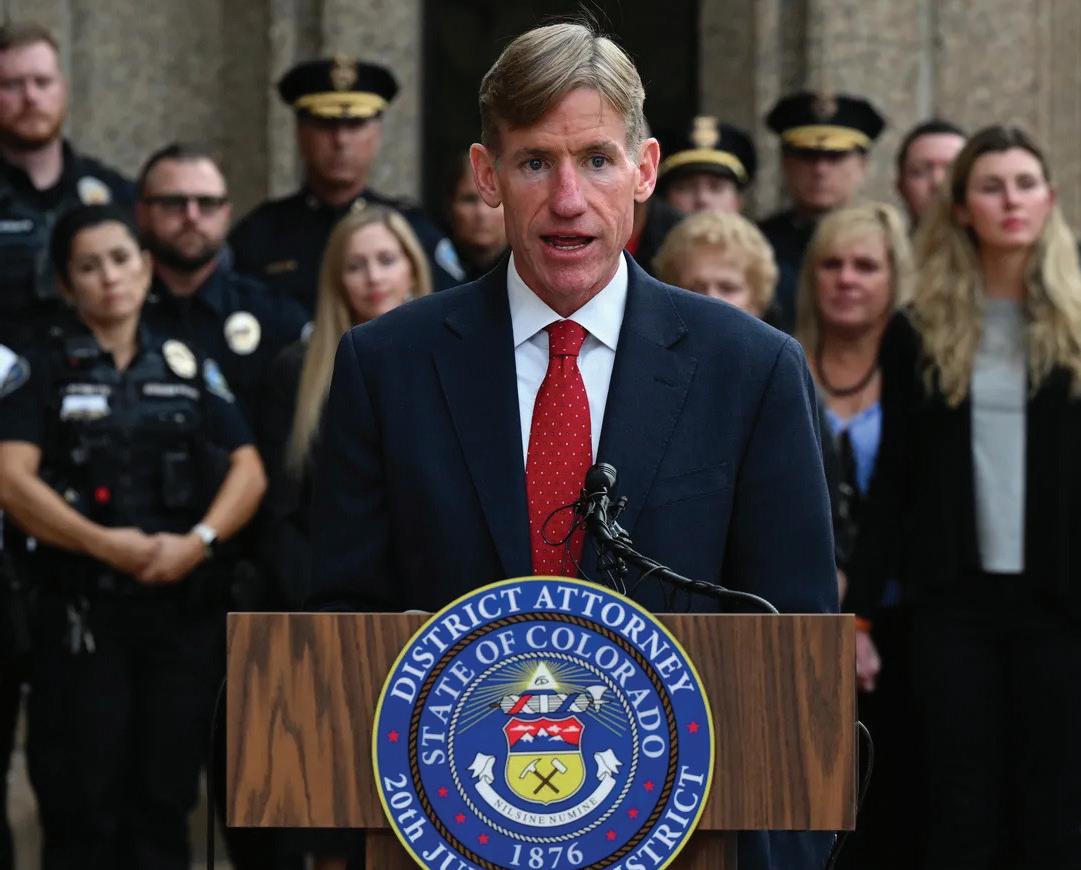


built environment and community that does not offer respite from exposure to & a normalization of community violence, structural racism, community trauma, and a lack of access to mental health resources. (Access to education is also relevant - education is the one thing counties don’t do.)
Almost every outward-facing department in Arapahoe County has something to do with this issue. And if you look at our strategic plan - you will see in our focus areas - we are working on the above issues. Our focus areas are: Safe and Healthy Communities, Economic Resilience and Stability, Sustainable Growth and Infrastructure, Workforce and Community Prosperity. Our plan instructs our departments’ priorities and direction. We are targeting resources to our youth in our housing programs, our aid to agencies program, our workforce development programs, public health, and as always - human services.
That said - I am always open to suggestions. And we could do better with partnerships and collaboration with our schools and non-profits.
Meet Maya Wheelerwww.maya4arapahoe.com
Q: Aurora is aging along with the rest of the state and the nation, with the median age of Adams, Arapahoe and Douglas county residents climbing from 35.7 years to 37.1 years between 2012 and 2022, according to the U.S. Census Bureau. What more could the county do or what could it do better to serve older residents?
A: Arapahoe County already provides valuable services for older adults, including transportation, chore assistance, caregiver support, benefits navigation, and protective services. As our population ages, we should continue strengthening these programs while exploring additional ways to help older adults remain independent and safely age in place. One opportunity worth exploring is voluntary home-sharing and intergenerational housing programs. Many older adults are house rich but cash poor. They may own a home but struggle with rising costs,
home maintenance, transportation, and social isolation. While accessory dwelling units (ADUs) can help some homeowners, they are often expensive to build and can be difficult to navigate due to permitting and financing requirements. Home-sharing programs may provide a lower-cost alternative by matching older adults with compatible tenants, caregivers, students, or workers who can provide companionship and assistance with tasks such as snow removal, lawn care, transportation, and household chores. By building on existing services and exploring innovative aging-in-place solutions, Arapahoe County can help older adults remain independent, connected to their communities, and in their homes for as long as possible.
Q: What is the most important difference between you and your opponent in the primary, and how does it illustrate that you’re the better candidate?
A: The most important difference in this race is that I have spent my career working directly with the people county government serves. While many elected officials build their experience within government, I have spent more than 15 years working alongside families, seniors, youth, small businesses, and community organizations to solve problems and connect people with resources. As a Child Welfare Specialist and founder of the Wezesha Dada Center (WDC), I have built my career around listening to people, understanding their challenges, and helping them navigate complex systems. I also hold master’s degrees in Business Administration, Health Administration, and Information Management, giving me the practical and professional experience needed to address county issues. Recent county survey results found that many residents are unsure about the county’s direction, have limited familiarity with county services, and that trust in county government is lower among District 4 residents than in other parts of the county. I believe those findings show residents want a county government that is more accessible, responsive, and connected to the community. That experience makes me the better candidate be-
cause I bring the qualifications and community-based perspective needed to rebuild trust, improve communication, and ensure residents feel heard, represented, and respected.
Q: How should the county support the 18th Judicial District in the event that the city of Aurora ends criminal prosecution at the municipal level?
A: If Aurora ends criminal prosecution at the municipal level, the county should work closely with the 18th Judicial District to ensure it has the staffing, courtroom capacity, victim services, and other resources needed to handle any increase in cases effectively. The county has already experienced the impact of Aurora transferring domestic violence prosecutions to the district court system. That experience showed the importance of planning ahead and ensuring the courts have the resources necessary to avoid delays and maintain public confidence in the justice system. My priority would be protecting public safety, supporting victims, ensuring due process, and being a responsible steward of taxpayer dollars. Any transition should be carefully planned, data-driven, and coordinated among the courts, the District Attorney’s Office, law enforcement, Aurora, and county leaders. Residents deserve a justice system that is fair, efficient, and responsive, regardless of which level of government is handling a case.
Q: Has the county done enough to ensure that residents affected by oil and gas projects near and beyond the Aurora Reservoir have had their concerns addressed as fracking and drilling projects move ahead?
A: Arapahoe County has adopted significant regulations and mitigation measures related to oil and gas development. However, I do not believe all residents affected by projects near and beyond the Aurora Reservoir feel their concerns have been adequately addressed. Many residents continue to raise concerns about air quality, water quality, noise, bright lighting from drilling operations, traffic, public health, and overall quality of life. The fact that these concerns continue to be raised suggests more engagement, transpar-

ency, and communication are needed. I recognize that the county has limited authority over oil and gas permitting, as much of that authority rests with the state. However, the county still has a responsibility to advocate for residents, address surface impacts, and ensure community concerns are heard and considered throughout the process. As County Commissioner, I would support science-based decision-making, strong oversight, and ongoing community engagement to help protect public health, water resources, and quality of life.
Q: Outside of law enforcement, should the county take a more active role in youth violence prevention? If so, how?
A: Yes. While law enforcement plays an important role in public safety, youth violence prevention requires addressing the root causes of violence before it occurs. The county should take a more active role by investing in prevention, family support, mentorship, behavioral health services, and pathways to education and employment. I support existing diversion, restorative justice, and behavioral health efforts and believe we should continue expanding them. My perspective comes from working with families, youth, and communities through mentoring, public health, community programs, and service as a CASA. I have seen how trauma, isolation, and lack of opportunity can contribute to conflict and violence. We should help young people build resiliency, confidence, communication, and conflict-resolution skills while strengthening positive community connections. We should also support parents and caregivers through behavioral health services and early intervention resources. I would support partnerships with schools, nonprofits, labor unions, apprenticeship programs, employers, and community organizations to expand mentorship, workforce training, career exploration, summer jobs, and behavioral health services. Through WDC’s youth programs, I have seen how helping young people feel heard, valued, connected, and capable of succeeding can change lives. If we want safer communities, we must invest in youth and families before a crisis occurs.
Q: Aurora is aging along with the rest of the state and the nation, with the median age of Adams, Arapahoe and Douglas county residents climbing from 35.7 years to 37.1 years between 2012 and 2022, according to the U.S. Census Bureau. What more could the county do or what could it do better to serve older residents?
A: Fortunately, the aging of the area isn’t a surprise to the county. Our elected offices and administrative staff heard from the State Demographer recently about this trend, and what we need to know in Arapahoe to serve our residents effectively. Arapahoe County has been proactive in addressing the fact that our area is aging. For example, our Community Resources department houses services for our seniors from light housekeeping to transportation, to weatherization, to job training and reskilling under one umbrella. Seniors can visit one building, not several. Or they can call one number to get connected to resources, instead of having to call many different numbers. We are constantly looking at our systems through the lens of those who access services.
Q: What is the most important difference between you and your op-
ponent in the primary, and how does it illustrate that you’re the better candidate?
A: The most important difference between me and my opponent is I know this job, and I’m effective. I’ve had a successful first term, so much so I’ve been entrusted by my fellow commissioners to serve as Chair for the past two years. I campaigned in 2022 on removing the revenue cap of TABOR for Arapahoe County. In 2024 we went to the ballot. Voters approved 1A to “de-bruce” the county with 71% of the vote--an example of “promises made--promises kept.” In my first two years, I spearheaded a first of its kind county parking ordinance. I am serious about doing the work for every resident of our District 4 family and all of Arapahoe County every day in a way that my constituents know I’m honest, effective, and strategic--all in service to them.
Q: How should the county support the 18th Judicial District in the event that the city of Aurora ends criminal prosecution at the municipal level?
A: Because of 1A the county was able to ensure we could address caseload increases and some right-sizing. We’ve been able to increase the budget of the 18th Judicial District by over 30%. We need to learn more because this conversation is happening throughout the state, given the state’s constitution. We need to look at what those impacts may be and determine what the appropriate resources are.
Q: Has the county done enough to ensure that residents affected by oil and gas projects near and beyond the Aurora Reservoir have had their concerns addressed as fracking and drilling projects move ahead?
A: The county cares about the health and welfare of our residents. The process of creating the strongest oil and gas regulations in the state took the county two years to do and included multiple public meetings both in the daytime and special evening meetings. There have been countless phone conversations and in-person conversations. Because of this stakeholder engagement and thousands of comments received over time, Arapahoe County has some of the furthest setbacks in Colorado, we have a new inspection program, and we continue to stand with our residents as we navigate a system with clear parameters around what the county can and cannot do.
Q: Outside of law enforcement, should the county take a more active role in youth violence prevention? If so, how?
A: Arapahoe County is taking an active role in youth violence prevention. I serve as the chair of the subcommittee of the Arapahoe County Justice Coordinating Committee that focuses on racial equity in the criminal justice system. Arapahoe County hosted a peer exchange focused on Justice Coordinating Committees. I’ve attended peer exchanges on justice and also on opioids. I have been focused on networking with cities and counties that have seen a marked decrease in youth violence and connecting those jurisdictions with folks here to work on the root causes and begin to change them. I’d like to implement the H.O.P.E. framework (Tufts University) throughout the county. Children need a particular set of positive experiences in their communities to grown into healthy resilient adults. If we can apply the framework throughout the county, we could create a shift in families that could help break generational cycles.
Q: After astonishing property value increases over the past four years, voters and the Legislature have moved to change property tax laws in an effort to reduce property taxes for residents
A: The sharp increase in property values over the past several years created real challenges for homeowners, seniors on fixed incomes, and working families already struggling with rising costs. I am glad that voters and the Legislature took action to provide relief because doing nothing was not an option. That said, we have not solved the problem and need to do more. We need a balanced approach that provides meaningful property tax relief while ensuring schools, fire districts, local governments, and other essential services have the stable funding they need. Going forward, I would like to see continued efforts to make Colorado’s property tax system more predictable, transparent, and fair. We should protect vulnerable homeowners from being priced out of their communities, especially seniors through the homestead exemption, and address the underlying drivers of rising housing costs. That includes reducing unnecessary regulatory barriers, lowering construction costs, and encouraging more attainable housing while maintaining strong safety and quality standards.
Q: State lawmakers have in the past two sessions passed a handful of measures addressing the problem of affordable housing. City officials, including those in Aurora, have balked, saying some of the measures usurp local control, especially over zoning and development issues. Do you agree that’s the case? If so, is the end result so important that it outweighs the loss for local communities?
A: I believe increasing housing affordability and availability is important enough to justify some state involvement, but that involvement should be carefully tailored. We should expand housing opportunities without unnecessarily undermining the ability of local communities to shape their own future. The best solutions will come from collaboration between state and local leaders, not from either side acting alone. I understand why the legislature felt compelled to act. Colorado’s housing affordability crisis has become a statewide challenge. When teachers, school employees, first responders, and working families cannot afford to live in the communities they serve, the consequences extend far beyond city boundaries. Local control absolutely matters. Local elected officials are closest to their communities and often have the best understanding of infrastructure, transportation, schools, and neighborhood concerns. At the same time, local policies can contribute to broader housing shortages that affect all Coloradans. I believe the state should set expectations and reduce barriers to housing while giving communities meaningful flexibility in how they meet those goals.
Q: There have been a number of efforts to limit local law enforcement’s cooperation with federal immigration agencies and restrict immigration enforcement. What regulations would you support for immigration enforcement operations, or should local police work more closely with ICE?
A: Immigration enforcement is primarily a federal responsibility, but local law enforcement also has a duty to keep communities safe and maintain public trust. I support cooperation between local law enforcement and federal agencies when serious criminal activity or legiti-
mate public safety threats are involved, including violent crime, human trafficking, and drug trafficking. At the same time, I do not believe local police should be expected to serve as federal immigration agents. When residents fear that any interaction with police could lead to immigration consequences, they may be less likely to report crimes, cooperate with investigations, or seek help when they need it. As outlined in my immigration priority, I support policies that strengthen public safety, uphold the rule of law, and treat people with dignity and fairness. Local law enforcement’s primary mission should remain protecting the communities they serve, while federal agencies carry out federal immigration responsibilities. The best approach is appropriate information-sharing and coordination when public safety is at stake, while ensuring local police can build trust with residents and focus their resources on preventing and solving crime.
Q: Has the state struck a good balance between addressing justice for crime victims and promoting “restorative justice” in an effort to rehabilitate rather than house crime perpetrators and reduce the cost of state prisons?
A: As someone with a Doctorate in Criminal Justice who teaches in the field, I believe Colorado should pursue both accountability and rehabilitation. These goals are not mutually exclusive, and a balanced justice system is more effective than one focused solely on punishment or rehabilitation. My experience has shown that evidence-based approaches can improve public safety while reducing recidivism. Restorative justice can be a valuable tool, particularly for juvenile, first-time, and nonviolent offenders when victims choose to participate. When implemented properly, it requires offenders to take responsibility, understand the harm they caused, and make meaningful efforts to repair it. At the same time, victims must remain at the center of the process. They deserve to be heard, protected, and treated with dignity. Serious violent crimes and repeat offenses require accountability measures that prioritize public safety and justice for victims. Colorado should continue evaluating restorative justice programs based on measurable outcomes. The goal should be a system that holds people accountable, supports victims, and creates opportunities for rehabilitation when appropriate.
Q: What is the biggest difference between you and your opponent, and why is it important to voters in this primary election?
A: The biggest difference between me and my opponent is the combination of lived experience, professional expertise, and proven leadership I would bring to the Colorado House. I am an immigrant, a mother, an educator, a criminal justice scholar, and an elected member of the Aurora Public Schools Board of Education. These experiences have shaped my understanding of the challenges Colorado families face, from education and housing to healthcare, public safety, and economic opportunity. What sets me apart is that I have governed and delivered results in a complex community. On the APS Board, I have worked through difficult challenges, balanced competing priorities, and made decisions affecting thousands of students, families, and educators. I focus on outcomes over ideology and believe in collaboration to solve problems. With a doctorate in criminal justice and a career in education and public service, I bring an evidence-based approach to policymaking. My focus is practical solutions, accountability, and improving opportunities and quality of life for the people I serve.
that backed Weiser’s Republican opponent in 2022.
Bennet defended the attack saying that “not only did he not sue Donald Trump with respect to kids at the border, he took a pass on some of the most important environmental lawsuits that were bought in this nation…”
Weiser responded by saying that Bennet’s accusations were “politics at its cynical worst.”
“I am saddened by these desperate, baseless claims,” Weiser said. “This was a right-wing dark-money attack on me. It was debunked, and after it was out there, Sen. Bennet was campaigning with me, praising me to be attorney general. And now he is basically trying to recycle those discredited attacks.”
Weiser again pointed to his record of suing to break up major corpora-
tions like Live Nation, stop the Kroger/ Albertsons merger, and going after exploitative tech companies.
Weiser criticized Bennet for accepting large financial donations from out-of-state interests.
Weiser further said committed to “change Citizens United here in Colorado and get corporate dark-money out of politics.”
Bennet has the backing of a super PAC called Rocky Mountain Way which has given him a substantial funding advantage; it has collected over $8 million in donations from wealthy donors, including $2.6 million from Michael Bloomberg, a billionaire and former mayor of New York City. Other major donors to Rocky Mountain Way include: Uber, Conscience Bay Research of New York, the Colorado League of Charter Schools, and
a variety of developers. The race to June 30
Although the primary race has become more combative, the two candidates continue to present similar policies as to what they would pursue as the state’s chief executive.
Both Weiser and Bennet promised to expand access to affordable housing and starter homes, block the Trump administration’s mass deportation agenda, and protect Colorado’s water rights heading into what is shaping up to be one of the driest years on record. You can watch the full debate on 9News.
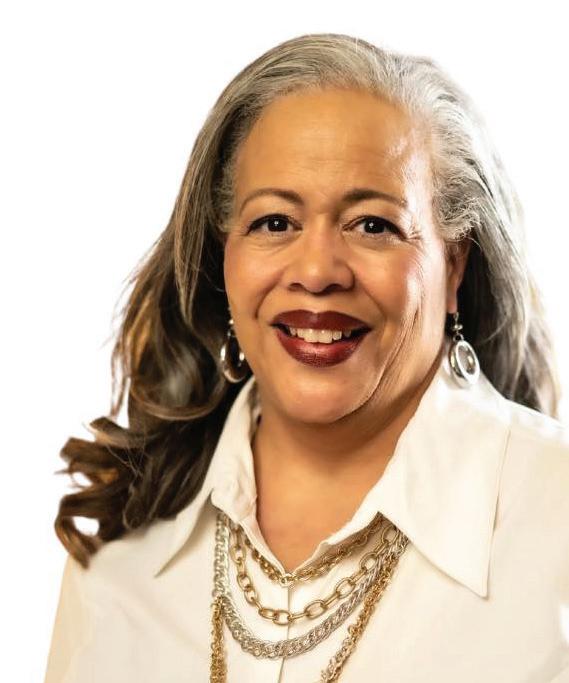



PUBLIC NOTICE CITY OF AURORA, COLORADO FIRST PUBLIC COMMENT
PERIOD AND PUBLIC HEARING
PRE-DRAFT 2026 ANNUAL ACTION PLAN
The City of Aurora, as a participating jurisdiction and recipient of funds from the U.S. Department of Housing and Urban Development (HUD), shall provide residents, public agencies, and other interested stakeholders with reasonable access to records regarding any use of or any assistance provided with these funds during the prior fiscal year (January 1 – December 31). In addition, before submitting its annual action plan on housing and community development activities, the City shall provide residents, public agencies, and other interested stakeholders with an opportunity to comment on the plan before submission to HUD.
The City of Aurora is receiving the following Fiscal Year 2026 allocations for the identified programs:
Community Development Block Grant (CDBG)
$2,851,339.00 HOME Investment Partnerships Program (HOME) $1,080,687.75
Emergency Solutions Grants (ESG)
$237,484.00
The City of Aurora is executing projects that produce outcomes that provide an impact to the community’s needs as outlined in the 2025-2029 Five-Year Consolidated Plan. Funding will be prioritized for the benefit of primarily the low-to-moderate income population within the City of Aurora.
A pre-draft copy of the 2026 Annual Action Plan can be reviewed at the Aurora Municipal Center at 15151 E. Alameda Pkwy, Aurora, CO 80012, as well as the website listed below. The Aurora Municipal Center facility is accessible and can accommodate persons with disabilities.
Public Comment Period: June 9, 2026, to July 9, 2026
Public Hearing: A public hearing for the PRE-DRAFT 2026 ANNUAL ACTION PLAN will be held on Tuesday, June 9, 2026, at 6:00 PM during the Citizen’s Advisory Committee on Housing and Community Development. The hearing will be held at the Aurora Municipal Center at 15151 E. Alameda Parkway, Aurora, Colorado 80012 in the Aurora Room of the Aurora Municipal Center. The Aurora Municipal Center facility is accessible and can accommodate persons with disabilities. Residents, public agencies, and other interested stakeholders are encouraged to attend and provide their comments on the PREDRAFT 2026 ANNUAL ACTION PLAN.
Please contact the Community Development Division if you require language translation services or other special accommodations. For hearing or speech-impaired residents, please call 7-1-1 for the Colorado Relay Number. Residents, public agencies,’ and other interested stakeholders’ inquiries and comments may be directed to: City of Aurora, Community Development Division 15151 E. Alameda Ave, Suite 4500, Aurora, CO 80012 Bianca Lopez, Acting Manager of Community Development 303.739.7918 or 720.425.5483, blopez@ auroragov.org
For more information on the Community Development Division and to review the PRE-DRAFT 2026 ANNUAL ACTION PLAN online, please visit the City’s website: https://www.auroragov.org/residents/ community_development/reports__stats_ and_documents/
Accessibility: The City of Aurora does not discriminate on the basis of disability in the admission to, access to, or operations of programs, services, or activities, including the public participation process. The City makes reasonable accommodations for disabilities that interfere with full access to any program, service, or activity, including the public participation process.
Publication: June 11, 2026 Sentinel
ARAPAHOE COUNTY COURT, COLORADO NOTICE OF HEARING Case No. 26JA30005
Regarding the Petition of Eric Larsen for the Stepparent Adoption of a Child: Kennedy Jade Sarchet Larsen (DOB: 04/20/2020).
To: Emery Steven Cannon
You are hereby notified that the abovenamed Petitioner filed a Petition seeking to adopt the child named above in Arapahoe County Court, Case No. 26JA30005.
An Affidavit of Abandonment was filed alleging that you have abandoned the child for a period of 1 year or more and/or have failed without cause to provide reasonable support for the child for 1 year or more.
You are notified that said Petition is set for an Adoption hearing on July 23, 2026 at 1:30 p.m. at the Arapahoe County Court located at 7325 S. Potomac Street, Centennial, Colorado 80112 in Division 22.
You are notified that if you fail to appear for said hearing, the Court may terminate your parental rights and grant the adoption as sought by the Petitioner.
First Publication: May 28, 2026 Final Publication: June 25, 2026 Sentinel


DISTRICT COURT, ARAPAHOE COUNTY, COLORADO ORDER OF INTESTACY, DETERMINATION OF HEIRS AND FORMAL APPOINTMENT OF PERSONAL REPRESENTATIVE Case No. 2026PR30422
In the Matter of the Estate of: Dolores Anderson Meader, also known as Dolores A. Meader, also known as Dolores Meader, Deceased.
Upon consideration of the Petition for Adjudication of Intestacy and Formal Appointment of Personal Representative filed by Susan M. Meader on April 20, 2026.
THE COURT FINDS, DETERMINES, AND ORDERS:
1. The petitioner is an interested person and has filed a complete and verified petition.
2. The decedent died on February 14, 2026 (date) and 120 hours have elapsed since the decedent’s death.
3. The decedent was domiciled or resided in the City of Centennial County of Arapahoe, State of Colorado.
4. Venue is proper in this county.
5. The petition was filed within the time period permitted by law.
6. Any required notices have been given or waived.
7. The decedent did not leave a will.
The prior informal finding as to testacy is set aside.
Name: Susan M. Meader
Relationship: Daughter
Share/Percentage of Estate: 50%
Name: Daniel S. Meader
Relationship: Son
Share/Percentage of Estate: 50%
9. The following person is qualified to serve and is appointed or confirmed as personal representative: Name: Susan M. Meader The Nominee is 21 years of age or older.
Street Address: 2222 West Ridge Road City: Littleton State:CO Zip Code:80120
Mailing Address, if different: City: State: Zip Code: Primary Phone: 303-902-7255 Alternate Phone: Email Address: smmeader@live.com
The prior informal appointment of (name) is set aside and the Letters are revoked.
10. The personal representative will serve without bond. with bond in the amount of $ . in unsupervised administration. in supervised administration as described in an attachment to this order.
11. Letters of Administration will be issued or previously issued letters are confirmed.
Date: May 29, 2026
First Publication: June 11, 2026
/s/ Judge
Final Publication: June 25, 2026 Sentinel INVITATION TO BID
Electronic (PDF) Sealed Competitive Proposals will be received by East Cherry Creek Valley Water & Sanitation District (ECCV) for the 2026 Well Decommissioning Project until 9:00 a.m. local time on July 10, 2026. A mandatory pre-proposal meeting will begin at the WD-5 project site (5452 E Easter Ave, Centennial, CO 80122), at 10:00 am on June 29, 2026, and will continue to the other two project sites.
The purpose of this project is to decommission three well sites: WD-4, WD-5, and WCD-1. The scope of work varies slightly for each project site, but is generally as follows: decommissioning of the three (3) wells, demolition of the WD-4 and WCD1 pump station buildings, installation of a hydrant at WD-5 and WCD-1, paving at WD-4, and site restoration.
Contract Documents may be obtained electronically starting on June 11, 2026, at www.eccv.org under the Resources and Information menu by clicking on Request for Bids. The user will then enter the bid number 10230153 into the search field and click the search button to find the project. Download the digital documents for $22. Contact QuestCDN Customer Support at 952-233-1632 or info@questcdn.com for assistance in membership registration, downloading digital project information and vBid online bid submittal questions. Project bid documents must be downloaded from QuestCDN which will add your company to the Planholder List and allow access to vBid online bidding for the submittal of your bid (which is required for this project). Bidders will be charged a fee of $42 to submit a bid electronically. For this project, bids will only be received and accepted via the online electronic bid service through QuestCDN.com.
The Bidder to whom a contract is awarded will be required to furnish “Performance and Maintenance” and “Labor and Material Payment” bonds to the District. The “Performance and Maintenance” and “Labor and Material Payment” bonds shall be furnished in the amount of 100 percent of the contract, in conformity with the requirements of the Contract Documents.
The District reserves the right to reject any and all proposals, or to accept that proposal or combination of proposals, if any, which in its sole and absolute judgment, will under all circumstances best serve the District’s interest. No proposal will be accepted from any firm, person, or corporation that is a defaulter as to surety or otherwise, or is deemed incompetent, irresponsible, or unreliable by the District Board of Directors.
No proposals will be considered that are received after the time indicated above, and any proposals so received after the scheduled closing time shall remain unopened.
East Cherry Creek Valley Water & Sanitation District
First Publication: June 11, 2026
Final Publication: June 18, 2026 Sentinel
NOTICE AS TO
PROPOSED AMENDMENT OF 2025 BUDGET
MURPHY CREEK METROPOLITAN DISTRICT NOS. 1 AND 5
ARAPAHOE COUNTY, COLORADO
NOTICE IS HEREBY GIVEN, pursuant to Sections 29-1-109, C.R.S., that the necessity may arise for the amendment of the 2025 budget of the Murphy Creek Metropolitan District Nos. 1 and 5 (the “Districts”). Copies of the proposed 2025 amended budget (if appropriate) are on file in the office of the Districts’ Accountant, Simmons & Wheeler, P.C., 304 Inverness Way South, Suite 590, Englewood, Colorado 80112, where same is available for public inspection. Such proposed 2025 amended budget will be considered at a regular meeting to be held on Tuesday, June 23, 2026 at 11:00 a.m. via Zoom videoconference. Any interested elector within the Districts may, at any time prior to the final adoption of the 2025 amended budget, inspect the 2025 amended budget and file or register any objections thereto.
Join Zoom Meeting https://us02web.zoom.us/ j/86752878191?pwd=aPuAqURiQcRtIhPl9tid9cO4zwbHKz.1
Meeting ID: 867 5287 8191 Passcode: 471413
MURPHY CREEK
METROPOLITAN DISTRICT NOS. 1 AND 5 /s/ MaryAnn M. McGeady McGEADY BECHER CORTESE WIL-
LIAMS P.C.
Attorneys for the Districts
Publication: June 11 2026 Sentinel
NOTICE OF FINAL SETTLEMENT
NOTICE IS HEREBY GIVEN pursuant to § 38-26-107, C.R.S., that on June 25, 2026 final settlement with Powell Restoration will be made by East Cherry Creek Valley Water & Sanitation District for the NBPS Overflow Channel Correction subject to satisfactory final inspection and acceptance of said facilities by the District. Any person, co-partnership, association of persons, company or corporation that has furnished labor, materials, team hire, sustenance, provisions, provender, or other supplies used or consumed by such contractor or his or her subcontractor in or about the performance of the work contracted to be done or that supplies, laborers, rental machinery, tools, or equipment to the extent used in the prosecution of the work whose claim therefore has not been paid by the contractor or subcontractor, at any time up to and including the time of final settlement for the work contracted to be done, may file a verified statement of the amount due and unpaid on such claim with East Cherry Creek Valley Water & Sanitation District, c/o, Mr. Dave Kaunisto, District Manager, 6201 S. Gun Club Road, Aurora, Colorado 80016. Failure to file such verified statement or claim prior to final settlement will release the District and its employees and agents from any and all liability for such claim and for making final payment to said contractor.
East Cherry Creek Valley Water & Sanitation District
First Publication: June 4, 2026
Final Publication: June 11, 2026
Sentinel
NOTICE OF PUBLIC HEARING ON THE APPROPRIATION OF MONEYS TO AND THE EXPENDITURE OF MONEYS FROM THE GENERAL FUND OF THE SABLE ALTURA FIRE PROTECTION DISTRICT FOR FISCAL YEAR 2025
PLEASE TAKE NOTICE that a proposed supplemental budget concerning the appropriation of moneys to and the expenditure of moneys from the General Fund of the Sable Altura Fire Protection District for fiscal year 2025 has been submitted to the Board of Directors (“2025 Supplemental Budget”). A copy of the proposed 2025 Supplemental Budget has been filed at the District’s Administrative Offices at 26900 E Colfax Ave #52, Aurora, CO 80018, where the 2025 Supplemental Budget is available for public inspection.
Adoption of the proposed 2025 Supplemental Budget will be considered at a public hearing held at 7:00 p.m. at the June 24, 2026 meeting of the District Board. The meeting will be held electronically. Final information regarding attendance and public comment procedures will be included on the District’s meeting notice and agenda and posted on the District’s website at www.sablealturafire.org at least 24 hours in advance of the public meeting. The public hearing may be continued to a subsequent meeting(s).
Any interested electors of the Sable Altura Fire Protection District may inspect the
proposed 2025 Supplemental Budget and file or register any objections thereto at any time prior to final adoption of the 2025 Supplemental Budget.
ORDER OF THE BOARD OF DIRECTORS OF THE SABLE ALTURA FIRE PROTECTION DISTRICT
By: Hope Williams, Secretary
Publication: June 11, 2026
Sentinel
NOTICE OF PUBLIC SALE
Notice is hereby given that PODS Enterprises, LLC, located at 21110 E 31st Circle, Aurora, CO 80011, will sell the contents of certain containers at auction to the highest bidder to satisfy owner’s lien. Auction will be held online at www.StorageTreasures. com starting on July 2, 2026 and ending on July 9, 2026. Contents to be sold may include general household goods, electronics, office & business equipment, furniture, clothing and other miscellaneous personal property.
First Publication: June 11, 2026
Final Publication: June 18, 2026 Sentinel
NOTICE TO CREDITORS BY PUBLICATION
PURSUANT TO § 15-12-801, C.R.S. Case No. 2026PR223
Estate of Dora Marie Wilson, Deceased.
All persons having claims against the above-named estate are required to present them to the Personal Representative or to the District Court of Arapahoe County, Colorado, on or before August 30, or the claims may be forever barred. Janet Weaver
Personal Representative 14919 E. Harvard Ave. Aurora, CO 80014
First Publication: June 11, 2026
Final Publication: June 18, 2026 Sentinel
NOTICE TO CREDITORS DISTRICT COURT, ADAMS COUNTY, COLORADO NOTICE TO CREDITORS BY PUBLICATION
PURSUANT TO §15-12-801, C.R.S. Case No. 2026PR30118
In the Matter of the Estate of Jeffrey Scott Turnbow, Deceased. All persons having claims against the above-mentioned estate are required to present them to the Personal Representatives or the District Court of Adams County, Colorado, on or before or June 19, 2026, the claims may be forever barred.
Personal Representative for Jeffrey Scott Turnbow, Deceased: Anne K. McMichael, #41744
Coombe Curry Rich & Jarvis 2000 S. Colorado Boulevard Tower II, Suite 1050 Denver, CO 80222 (303) 572-4200 mcmichael@ccrjlaw.com
First Publication: June 4, 2026
Final Publication: June 18, 2026
Sentinel
NOTICE TO CREDITORS BY PUBLICATION
PURSUANT TO §15-12-801, C.R.S. Case No. 2026PR030082 Estate of Renia Renne Hungerford aka Renia R. Hungerford aka Renia Hungerford, Deceased.
All persons having claims against the above-named estate are required to present them to the Personal Representative or to the District Court of Adams County, Colorado, on or before October 16, 2026, or the claims may be forever barred. Anna L. Burr, Esq. 2851 S. Parker Road, Ste. 230 Aurora, CO 80014
First Publication: June 11, 2026
Final Publication: June 25, 2026 Sentinel
NOTICE TO CREDITORS BY PUBLICATION
PURSUANT TO §15-12-801, C.R.S. Case No. 2026PR108
Estate of WINIFRED FAY ROBERTS, Deceased.
All persons having claims against the above-named estate are required to present them to the Personal Representative, or to the District Court of Adams County, Colorado, on or before September 28th 2026, or the claims may be forever barred. Sheila M. Johnsen
Personal Representative 15161 E. 116th drive, Brighton CO 80603
First Publication: June 4, 2026
Final Publication: June 18, 2026
Sentinel
NOTICE TO CREDITORS BY PUBLICATION
PURSUANT TO §15-12-801, C.R.S. Case No. 2026PR261
Estate of Janet Louise Sausker, Deceased.
All persons having claims against the above-named estate are required to present them to the Personal Representative or to the District Court of Arapahoe County, Colorado, on or before October 30, 2026, or the claims may be forever barred. Kevin Sausker
Personal Representative 7581 S. Ulster Pl. Centennial, CO 80112
First Publication: May 28, 2026
Final Publication: June 11, 2026
Sentinel
NOTICE TO CREDITORS BY PUBLICATION
PURSUANT TO §15-12-801, C.R.S. Case No. 2026PR299
Estate of Bret Douglas Dumler, Deceased.
All persons having claims against the above-named estate are required to present them to the Personal Representative or to the District Court of Arapahoe County, Colorado, on or before September 29, 2026, or the claims may be forever barred. Marian Lee
Personal Representative 600 17th St. Ste. 2800-S Denver, CO 80202
First Publication: May 28, 2026
Final Publication: June 11, 2026
Sentinel
NOTICE TO CREDITORS BY PUBLICATION
PURSUANT TO §15-12-801, C.R.S. Case No. 2026PR30302
Estate of Richard Eugene Williams aka Richard E. Williams aka Richard Williams, Deceased.
All persons having claims against the above-named estate are required to present them to the Personal Representative or to the Arapahoe County District Court on or before October 4, 2026 or the claims may be forever barred. Rayceena Willy, Personal Representative c/o CHAYET & DANZO, LLC 650 S. Cherry St., #710 Denver, CO 80246
Phone: 303-355-8500
First Publication: June 4, 2026
Final Publication: June 18, 2026 Sentinel
NOTICE TO CREDITORS BY PUBLICATION
PURSUANT TO §15-12-801, C.R.S. Case No. 2026PR30458
Estate of Cynthia Anne Backhaus, Deceased.
All persons having claims against the above-named estate are required to present them to the Personal Representative or to the District Court of Arapahoe County, Colorado, on or before October 12, 2026, or the claims may be forever barred. Richard Arthur Bowland c/o Opfer|Campbell|Beck, P.C. 19751 E. Mainstreet, Ste. 215 Parker, CO 80138 First Publication: June 11, 2026 Final Publication: June 25, 2026 Sentinel
NOTICE TO CREDITORS BY PUBLICATION
PURSUANT TO §15-12-801, C.R.S. Case No.
or the claims may be forever barred. Marco D. Chayet
Jennifer R. Oviatt
Personal Representative 18th Judicial District Public Administrator’s Office P.O. Box 460749, Denver, CO 80246 Phone: 303-355-8520
First Publication: May 28, 2026
COURT, COLORADO Case No. 2026C100476
PUBLIC NOTICE is given on May 22, 2026, that a Petition was filed for a Change of Name of an Adult has been filed with the Arapa-hoe County Court.
The Petition en-tered that the name of Cheryl Lyn
The Trump administration’s latest “civil rights” investigation into the Cherry Creek School District should be greeted with all the credibility and skepticism as the president’s previous forays into white supremacy and xenophobia couched as “ending racism.”
The U.S. Department of Education announced this week that it is investigating the Aurora school district over allegations that it sponsors “racially discriminatory programs,” excludes students based on race, and promotes equity training for educators.
Cherry Creek officials flatly reject those claims, and federal officials have yet to provide any evidence publicly supporting the allegations.
This is hardly the first time the Trump administration has launched headline-grabbing investigations against schools and colleges that promote diversity, equity and inclusion, which are proven to benefit everyone.
School districts that have worked to improve outcomes for students of color, create healthy environments for LGBTQ+ students, or address long-standing achievement gaps have found themselves targeted by a federal government determined to redefine equity efforts as discrimination.
Cherry Creek is only the latest example.
It’s part of a much broader Trump administration effort to root out policies that support students of color and LGBTQ+ students. Similar investigations have targeted school districts in Democratic strongholds in cities across the country, including New York City, Los Angeles and Chicago.
The school district’s Voices of Color Committee, now under scrutiny, has a straightforward mission. District information about the group says it was created to help students of color succeed by building relationships between families and schools and ensuring that parents have direct access to district leaders.
School officials say anyone can participate regardless of race.
Yet federal officials are portraying this and other similar programs as evidence of racial exclusion.
The officials behind this and the people who support this propaganda are a large part of the reason diversity and equity programs and policies are needed.
The pattern of Trump’s “investigations” should concern every Colorado parent and taxpayer. Programs designed to foster inclusion, improve educational outcomes for historically marginalized students, or create safe learning environments for LGBTQ+ youth are routinely recast as violations of civil rights law, a corruption of both the letter of the law and its intended mission.
The allegations arrive first. The evidence arrives later, if it arrives at all.
That is why Cherry Creek officials are right to push back. District leaders have not even received the complaint underlying the latest “investigation.”
In typical Trump administration fashion, federal officials have already issued inflammatory public statements suggesting that racial discrimination “permeates” the district.
Colorado schools track academic achievement, graduation rates and other indicators by race because disparities are real. Educators do not examine those gaps because they want to divide students. They do so because responsible public institutions measure problems they hope to solve.
The very nature of public education is to provide access and opportunity equally to everyone who lives here. Everyone.
Equity programs exist to help communities move closer to parity, ensuring that race, ethnicity, income or identity do not predetermine educational outcomes.
Colorado leaders should not just shake their heads at this stunt.
Cherry Creek officials, local school boards, state education leaders and elected officials must stand together and vigorously defend programs that help all students succeed. All of them.
The Colorado Department of Education should demand evidence, insist on fairness and refuse to abandon initiatives that have been shown to improve engagement, opportunity and achievement.
The real threat to Colorado schools is not a committee designed to help students of color thrive. It is a corrupt federal campaign that treats inclusion as a crime and equity as something to be feared.
Students deserve accurate curricula based on facts and reality, no matter how unpleasant they are. Slavery in the United States happened. Racism happened. Lynchings happened. Using propaganda and bending the law to promote a political agenda are machinations that countries like North Korea and Iran execute. It’s wrong on endless levels. Cherry Creek and Colorado students need leaders willing to fight for them, and for all of us in what has become a time of great peril under the Trump regime.


MIKE ROSEN, GUEST COLUMNIST
Don’t count on ‘moderates’ to bridge the political divide over these waters
The word “moderate” is a fashionable term these days as the remedy to the nation’s sharply divided politics, but it’s highly overrated and largely inaccurate. A stark example is Democrat Abigail Spanberger who was elected governor of Virginia in 2025 as a self-declared moderate. Spanberger promised not to redistrict the state if elected, having branded gerrymandering as “detrimental to our democracy” as a member of Congres in 2019. Yet in her first year in office, she signed a bill that would gerrymander Virginia, giving Democrats a 10-1 advantage in the U.S. House, from 6-5. (Her voting record in Congress was anything but moderate with a 100% rating form the ACLU and 3% from the American Conservative Union.)
President John F. Kennedy was a moderate Democrat in 1961 when southern Democrats were conservative. Even Bill Clinton was a moderate Democrat president compared to the party’s liberals in Congress during his presidency. The few truly moderate Democrats that still survive in Congress these days are overwhelmed and cancelled by the legion of radical left-wingers that have taken over the party.
One measure of that is the size and influence of the Democrats’ Progressive Caucus in the House, numbering 100 left-wing zealots like Ilhan Omar, Rashida Tlaib, AOC, Pramila Jayapal, Maxine Waters and even Bernie Sanders (the lone Senator). It’s total membership accounts for 47% of the 212 Democrat members of the House. By contrast, the Republican Freedom Caucus has only 40 members, accounting for just 18% of the 219 Republican members in the House. They can stir the pot and block some measures but don’t dominate the party. True, the Freedom Caucus has a handful of strident right wingers like former members Marjorie Taylor Greene and Matt Gaetz, but most are mainstream conservatives like Jim Jordan and former member Ron De Sanitis.
In Colorado, radical Progressive Democrats dominate Denver’s city council and the state legislature. Although unaffiliated voters outnumber registered Democrats and Republicans combined, most are not really ”independents” or moderates. If a close election turns on swing voters, most of Colorado’s unaffiliated don’t vote for Republicans; about two-thirds of them routinely vote for Democrats.
Precisely where the political center resides is subjective. But using the JFK and Bill Clinton examples cited above, Democrats have obviously moved much farther to a radical leftist extreme than Republicans
have on the right since the JFK and Clinton presidencies. Socialism, now the Democrats’ preferred economic model for our country, wasn’t even respectable for the American mainstream back then. And it still isn’t to anyone who understands political economics, Marxism, and world history.
The word “moderate” is a multifaceted one, a term that modifies degrees of something tangible. As an adjective, you can be a moderate conservative rather than a staunch one. As an adverb, you can eat moderately rather than gorging yourself. As a noun, a moderator is a neutral party standing between two advocates in a debate. That’s fine in a debate but as a human being with the gift of reason, as C.S. Lewis observed, “You can’t be a good egg all your life. Sooner or later, you have to hatch or rot.” When a politician calls himself a moderate, it has no meaning in the realm of ideas. Moderation isn’t a personal philosophy or ideology. It’s not a belief, it’s a style. Moderates don’t innovate. They’re political brokers, attaching themselves to other people’s ideas.
It’s good to know a politician’s stance on particular issues, but I care more about his values and basic beliefs. Circumstances, details, and issues change. When they do, he’ll make decisions on the basis of his convictions. If he has none, he’ll act on other factors like opinion polls, getting reelected, or loyalty to special interests. How would a simply moderate politician resolve Iran’s goal of “death to America?”
Split the difference and settle for the death of just half of America?”
Edmond Burke told his constituents in Bristol, England, that on matters of great importance he’d act on his beliefs, not on their dictates. If they disapprove of his beliefs, they should vote him out. As a member of Parliament, he stood as their representative not their delegate, who’s a puppet on a string. It’s a vital distinction and the difference between a statesman and a politician.
Donald Trump certainly isn’t moderate and defies any simple analysis of right or left. He’s a unicorn. I doubt he has a consistent ideology. He’s committed, instinctive, transactional, impulsive, and meteoric. But he has an agenda that I largely agree with and it’s far better than that of the Democrats.
LongtimeKOAradiotalkhostandcolumnistfor theDenverPostandRockyMountainNewsMikeRosennowwritesforCompleteColorado.









The Air Force and the Air Force Civil Engineer Center announce the availability of the Record of Decision for Environmental Restoration Site, Site 1 (FT001) Fire Training Area #2 located at Buckley Space Force Base ([SFB] formerly Buckley Air Force Base), Colorado. The Selected Remedy was chosen in accordance with the Comprehensive Environmental Response, Compensation, and Liability Act (CERCLA, 42 USC §§ 9601-9675), as amended by the Superfund Amendments and Reauthorization Act of 1986 (SARA, Public Law 99-499) and, as applicable, the National Oil and Hazardous Substances Pollution Contingency Plan (NCP 40 CFR Part 300).
Site 1 is a former fire training area that had a burn pit approximately 50 feet in diameter. Remedial alternatives for Site 1 were developed and evaluated in the Final Site 1 Feasibility Study and the Final Feasibility Study Addendum, Site 1. Based on the results of the Feasibility Studies, the Air Force selected in situ treatment (treatment in place) of trichloroethylene (TCE) contaminated groundwater with Long-Term Monitoring of groundwater and Land Use Controls (LUCs). The groundwater treatment was designed to treat TCE with in situ chemical oxidation. The in-place treatment component of the remedy has been implemented as part of the 2016 Treatability Study for Site 1. Long-term monitoring via annual groundwater sampling) and LUCs will protect human receptors from unacceptable risks that might arise from exposure to the contaminant until the cleanup level is met. It is important to note that the ISCO component of the remedy has been implemented as part of the 2016 Treatability Study for Site 1.
The Department of the Air Force is the lead agency for cleanup for Site 1. The U.S. Environmental Protection Agency defers to the Colorado Department of Public Health and Environment (CDPHE) for regulatory oversight of the environmental restoration activities at Buckley SFB.
The Site 1 Record of Decision was approved by CDPHE on December 30, 2019. In 2023, it was discovered that the Air Force Administrative Record contained an unsigned version of the document. Although both parties agreed the Record of Decision had been properly reviewed and finalized, neither the Air Force or CDPHE could locate a fully signed version to upload. To resolve this, the Air Force and CDPHE signed a Memorandum for Record in March and April 2025, respectively. This Memorandum for Record documents that the Air Force will continue implementing the selected remedy until Site 1 achieves unlimited use/unrestricted exposure.
The public was given the opportunity to comment on the Air Force’s Proposed Plan during a 30-day public comment period starting on 28 December 2018. No comments were received during the public comment period.
The Site 1 ROD and other documents related to Site 1 and other Environmental Restoration Documents can be found in the Air Force Administrative Record located at: https://ar.cce.af.mil; ------ Select Buckley AFB, CO
Please direct any questions to:
Scott Wilson, Restoration Program Manager scott.wilson.7@us.af.mil
Or via mail
660 S. Aspen St (Stop 86) Buckley SFB, Co 80011


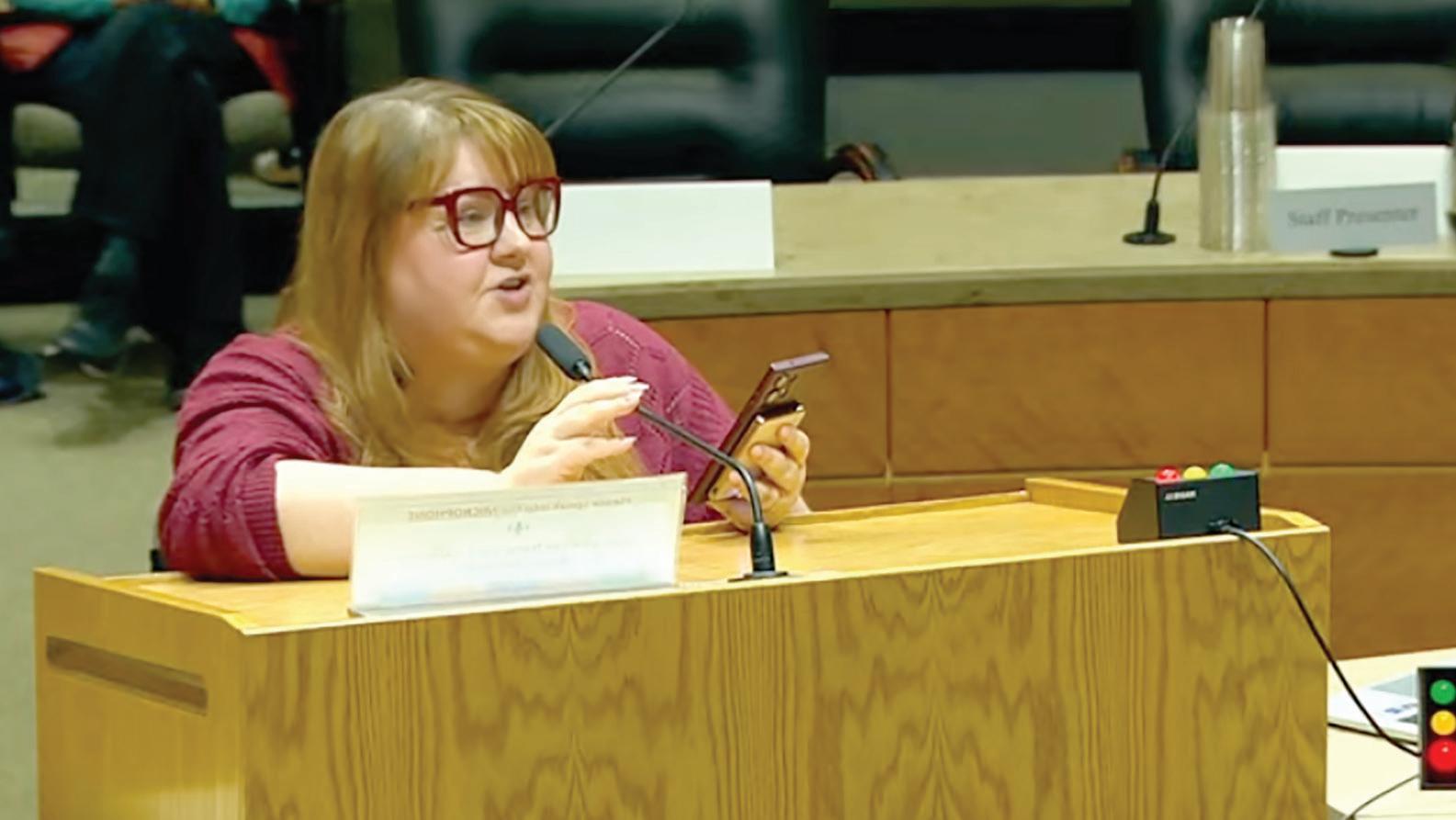
The Sentinel not only cares deeply about bringing our readers accurate and critical news, we insist all of the crucial stories we provide are available for everyone — for free.
Like you, we know how critical accurate and dependable information and facts are in making the best decisions about, well, everything that matters. Factual, credible reporting is crucial to a sound democracy, a solid community and a satisfying life.
So there’s no paywall at SentinelColorado.com. Our print editions are free on stands across the region, and our daily email E-ditions are free just for signing up, to anyone. But we need your help to carry out this essential mission.
The cost of producing top-notch journalism is steep. We need readers like you to become partners and help us. Even if it’s a little, it means a lot.
Join our mission by providing even a few dollars a month, or more if you’re able. Whether you can or can’t give right now, go SentinelColorado.com to subscribe to our free daily email E-ditions. Click on the red bar on the top of the home page to contribute now.
The Sentinel is owned and operated by the non-profit, 501(C)(3) community-led group Aurora Sentinel Community Media. That means your donation may be tax deductible.
Donate one time or as an evergreen-sustaining member. Just choose “One Time or Monthly” and fill out our fast, easy and secure form.
Thank you for your generosity and support for local Sentinel reporting.