This undated image provided by Hims shows some of the company’s products. Online startups including Hims and Roman are banking on a mix of convenience, viral marketing and glossy packaging to turn generic prescription drugs and other pharmacy staples into a profitable new business model. AP Photo
Online Rx sites helpful but also raise concerns
How do you get men excited about decades-old pills for hair loss, erectile dysfunction and other potentially embarrassing health conditions?
Online startups including Hims and Roman are banking on a mix of convenience, viral marketing and glossy packaging to turn generic prescription drugs and other pharmacy staples into a profitable new business model. But some in the medical establishment are raising concerns about their marketing and the quality of care they provide.
“There are both opportunities to improve access to care, but also risks to patients, and I think regulators are having to address that,” said Lisa Robin, an executive with the Federation of State Medical Boards, which represents the organizations that license and discipline physicians.
The group has been advising U.S. physicians to carefully consider “their professional and ethical duties” before signing up to work for the companies.
Hims and Roman each said in separate statements that their doctors are required to deliver the same standard of care on their platforms as they do in person.
Like other on-demand services, Hims and Roman promise consumers quick, convenient access to what they want. That means customers essentially self-diagnose, selecting the medication of their choice and — pending approval by a doctor — receive the prescription by mail or through a local pharmacy. In place of a traditional exam, patients answer a battery of questions about their symptoms, medical history, allergies and other details.
Similar companies specialize in contraceptives, sleep medications and pills for anxiety. Backing the trend are millions in venture dollars from investors searching for the next Warby Parker or Dollar Shave Club — blockbuster online brands that have upended the markets for eyeglasses and razors by cutting out traditional retailers.
Dr. Adriane Fugh-Berman, who studies pharmaceutical marketing, worries the companies are minimizing the role of health professionals in carefully diagnosing and treating patients.
“These are lifestyle drugs, and they have potentially serious adverse effects, and this seems like too casual a way
to be obtaining them,” said Fugh-Berman, a professor at Georgetown University.
Potential side effects of Viagra include dizziness, blurred vision, muscle pain and sudden hearing loss. The female libido drug Addyi, which is also available through the websites, can cause fainting when combined with alcohol.
In some cases, the websites promote prescription drugs for unapproved uses, such as blood pressure drugs to reduce anxiety.
Hims’ website touts blood pressure-reducing beta blockers as a way to ease “performance anxiety during your big event — like a big presentation at work or interview.”
While that kind of “off-label” prescribing is common for many physicians, drugmakers are barred from advertising such uses because they have not been federally approved. The online startups, echoing Uber and other Silicon Valley startups, say they are technology companies and are therefore not subject to those rules.
The FDA didn’t comment on the websites but said in a statement that off-label drug use “should be a conversation between the consumer and the health care provider.”
Prescription drugs sold by Hims and Roman — both founded in 2017 — are available at most pharmacies nationwide. And retail giants like Walmart and CVS Health also offer medical consultations through apps and websites. So what’s new here?
Hims’ 30-year-old founder, Andrew Dudum, says his company is revamping the process “so people can have an amazing experience” and get “extremely beautiful products.”
Hims — which also sells shampoo, vitamins and other consumer items — puts its products in discrete, minimalist packaging stamped with the company name. Its female-focused site, Hers, similarly offers custom-wrapped medications for low-sex drive alongside hair and skin products.
Customers are invited to “Shop Sex” or “Shop Hair,” alongside Instagram-ready photos of young models and messages like: “we’re here to help reduce the stress and guesswork out of your sexy time.”
Roman CEO Zachariah Reitano, 28, says his company offers customers a chance “to talk about these things that
can be highly stigmatized.”
But real-time communication between doctor and patient doesn’t always happen.
Telemedicine laws vary by state, and in many cases physicians can write prescriptions after simply reviewing a patient’s stored responses to online questionnaires. Sometimes doctors will need to seek extra details via text messages or a phone call. Roman’s website gives an example of a typical transaction in which the patient spends 20 minutes providing information and the physician spends two minutes reviewing it.
That’s about the same length as a traditional U.S. office visit, according to data published two years ago. And Roman and Hims say their model is more convenient, discrete and often cheaper than the traditional office visit.
But customers looking for savings might be disappointed. Hims, Roman and most of their counterparts don’t take insurance, and instead charge a cash fee.
Most of the drugs they sell can be found for less using prescription discount apps like GoodRx, which identifies the best prices at local pharmacies and applies coupons.
For instance, Hims sells the generic form of the hair loss drug Propecia at $28.50 for a month’s supply, versus $11 at many national chains like Walmart or CVS.
Hims said in a statemejpoernt it offers “enormous value” and convenience by eliminating trips to the doctor, pharmacy visits and insurance copay fees.
A spokesman for Roman declined to comment on its prices.
As consumers increasingly migrate to the web for health services, experts say telemedicine will become more common. But even proponents of the technology stress the importance of maintaining conventional standards of care.
Many large hospitals and insurers offer online consultations, while also giving physicians access to patients’ full medical records.
The new websites “are really moving backward to a more fragmented version of care,” said Feldman, a medical technology specialist at New York University’s Winthrop hospital in New York.
— The Associated Press
Telehealth rises as medium increases in validity
Jay Berger started by asking Patience Breckenridge how she was feeling. Breckenridge had had a rough night. The seizures continued, as they typically do.
After hearing about a few more episodes Breckenridge had, Berger suggested she get a gate for the top of the stairs, in case Breckenridge were to fall. She then asked Breckenridge if she had set up Alexa, the virtual assistant developed by Amazon, which she had.
They then discussed different exercises they had gone over in the past. Berger asked the patient about her arm mobility — asking her to lift her arm — and stability, prompting her to stand up without holding on to anything.
After about a 30-minute session, they said their goodbyes and logged off their computers.
Berger, a physical therapist, certified dementia specialist and owner of Rehab Smarter, conducted the entire session online.
Rehab Smarter is a local telehealth business that provides comprehensive rehabilitation services to patients over the internet.
“This has been a saving grace for me,” Breckenridge said. “It’s not because I don’t want to go to the doctor’s office. It’s because I can’t get to them. If I could, I would be there.”
The Brunswick resident turned to telehealth services due to her decreased mobility. She is, for the most part, homebound due to having multiple seizures a day.
While she has online sessions with doctors, they still recommend that she come into the office at times to run certain tests and other functions that physicians are not yet capable of completing online.
She works with Berger through online sessions about twice a week. Working with her is “completely the same” as if she were sitting with Berger face to-face.
“Just because you’re stuck at home doesn’t mean that you can’t get the help that you need,” she said. “People just need to find the help that they need, and sometimes it’s on the internet.”
Berger started Rehab Smarter about 18 months ago. She conducts sessions with her patients through an online portal where she can email with them directly, upload videos and add notes for their benefit.
Everything is Health Insurance Portability and Accountability Act, or HIPAA, compliant.
She typically doesn’t do a face-to-face assessment with the patient, but she has gone in-home to see the setup and suggested any modifications to help the patient with mobility. She may also do an initial assessment and meet with the caregiver, if there is one, and ask what the patient’s goals are.
“Most of what clinicians do is educate and teach the client how to take care of themselves,” she said.
She demonstrates different exercises with her patients online and, with her expertise, can detect muscle strength and functionality by just observing them perform simple tasks.
“You can test cognition over the internet, you can test sensation,” she said. “You can’t listen to the heart without special equipment, but that exists.”
Her average client has COPD, heart failure, diabetes, kidney disease, arthritis, high blood pressure and other conditions, all at once. They turn to telehealth because it’s difficult for them to get out of the home and go to a doctor’s office, although they sometimes do so.
“It’s not really home care,” she said. “It’s not really outpatient. It’s a platform for clients that either have maxed out their benefits through traditional means or have prevention and wellness issues that will not be covered. It’s another opportunity for people.”
Telehealth can be beneficial to the healthcare provider as well.
When Berger provides home care through a company she works for, she can see up to six clients a day and then has hours of paperwork to complete, for insurance purposes. Through virtual care, she can see up to 12 patients with minimal paperwork.
›› See TELEHEALTH, B11
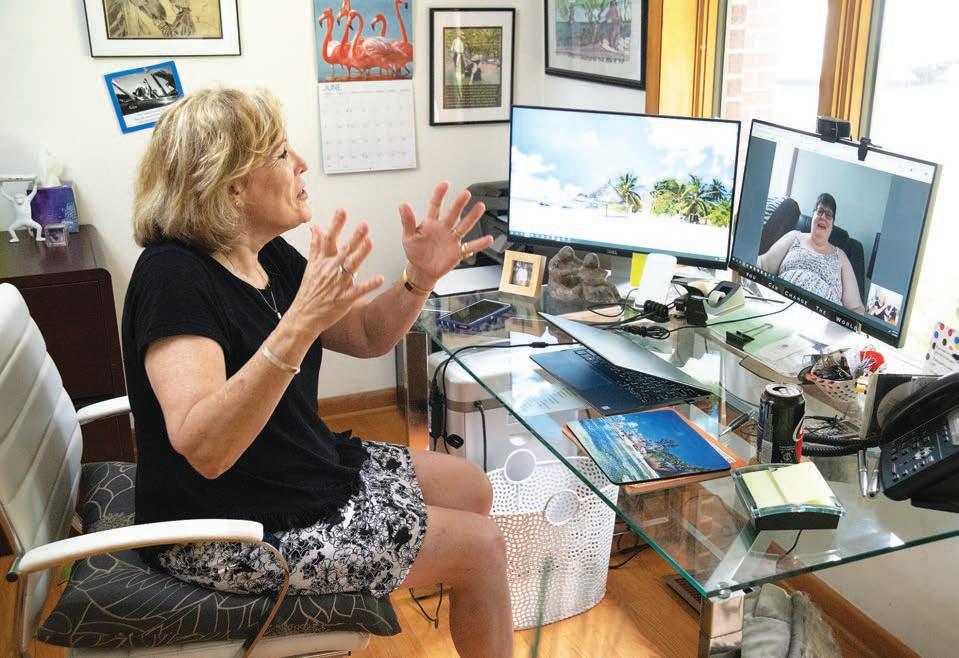
In this June 7, 2019 photo, physical therapist Jay Berger, left, works with her patient Patience Breckenridge, on monitor, remotely from her home via computer in Federick, Md. Berger, a physical therapist, certified dementia specialist is the owner of Rehab Smarter, a local telehealth business that provides comprehensive rehabilitation services to patients over the internet. AP Photo
In this March 15, 2019 photo, Brian Jetter poses for a portrait in La Jolla, Calif. In 2018 at 40, he was suddenly battling pneumonia and sepsis, and a slew of tests had failed to find the cause. But a high-tech genetic test was used to search his blood for bits of non-human genetic material from viruses, fungi and the like. It detected unusual bacteria that probably got into the Connecticut man’s lungs when he choked and accidentally inhaled bits of a burger weeks earlier. AP Photo
New gene tests can quickly reveal source of infections
Brian Jetter was on life support, a healthy 40-yearold suddenly battling pneumonia and sepsis, and a slew of tests had failed to find the cause.
Mystery illnesses like this kill thousands of people each year when germs can’t be identified fast enough to reveal the right treatment. Now genetic tests are helping to solve these cases.
One finally was used to search Jetter’s blood for bits of non-human genetic material from viruses, fungi and the like. It detected unusual bacteria that probably got into the Connecticut man’s lungs when he choked and accidentally inhaled bits of a burger weeks earlier.
With the right medicine, he recovered and went home to his 5-year-old son.
“I realized how fragile life is,” Jetter said. “No matter how healthy you are, the smallest microbe can destroy you.”
Doctors routinely use genetic tests to spot inherited diseases and guide cancer treatment. But using them to detect infectious diseases is so new that few doctors and even fewer patients know they’re available. A study of one test is published in Thursday’s New England Journal of Medicine.
They are modernizing a field long overdue for an overhaul.
To identify bacteria, labs still rely on century-old techniques from Louis Pasteur — putting a few drops of blood or other sample in a lab dish and waiting days or sometimes weeks to see what germs grow. To test for a virus, a doctor usually has to guess what the patient is sick with. Testing for a fungus or some other things can take a long time.
Several companies and university labs now offer gene-
based tests on blood or spinal fluid. Once fragments of foreign DNA or other genetic material are found, their code is analyzed, or sequenced, to identify bacteria, viruses, fungi and parasites causing sepsis, meningitis, encephalitis and other deadly illnesses.
“The key advantage of sequencing is it can look for everything at once” rather than doing separate tests for each virus or other microbe that’s suspected, said Dr. Charles Chiu, a microbiologist at the University of California, San Francisco.
He led the New England Journal study that tried a spinal fluid test on 204 children and adults with meningitis or encephalitis, dangerous illnesses that aren’t always caused by an infection.
The gene test wasn’t perfect. It missed some cases, but also found others that standard tests missed.
In all, 58 infections were diagnosed. The gene test matched standard lab findings in 19 cases, it found 13 more that standard testing missed, and missed 26 that the standard tests eventually found.
Doctors say the gene-based tests could be a fast, non-invasive first step for serious or unusual cases.
“For infectious disease, you need to know the answer today,” because a patient’s risk of dying goes up the longer the cause isn’t found, said Dr. Asim Ahmed, medical director at Karius Inc.
The Redwood City, California, company sells a blood test developed by Stanford University scientists that searches for 1,200 bacteria, fungi, viruses and parasites at once and gives a result within two days. The test ›› See TESTING, B11
AGING WORKFORCE
Businesses get innovative as more baby boomers retire
Communities are scrambling to recruit and retain workers as baby boomers reach retirement age.
Digi-Key, an electronic component distributor in Thief River Falls, Minnesota is among the companies testing out innovative strategies to attract workers at all stages of their lives, Minnesota Public Radio News reported.
Digi-Key plans to add 1,000 new jobs over the next 10 years. The expansion plans come during a decade when Pennington County’s over-65 population is estimated to rise from about 18% to 27%.
Nearly 32% of Digi-Key’s workers are age 50 or older, positioning many to hit retirement age in the next 10 years.
“The battle for workers, so to speak, is pretty tight,” said Shane Zutz, Digi-Key’s vice president of human resources. “And so I think with companies that are forward-thinking and want to be transformational are really looking at how do they differentiate themselves and how do they create environments that people want to be a part of.”
Seniors more likely to work longer in metro areas
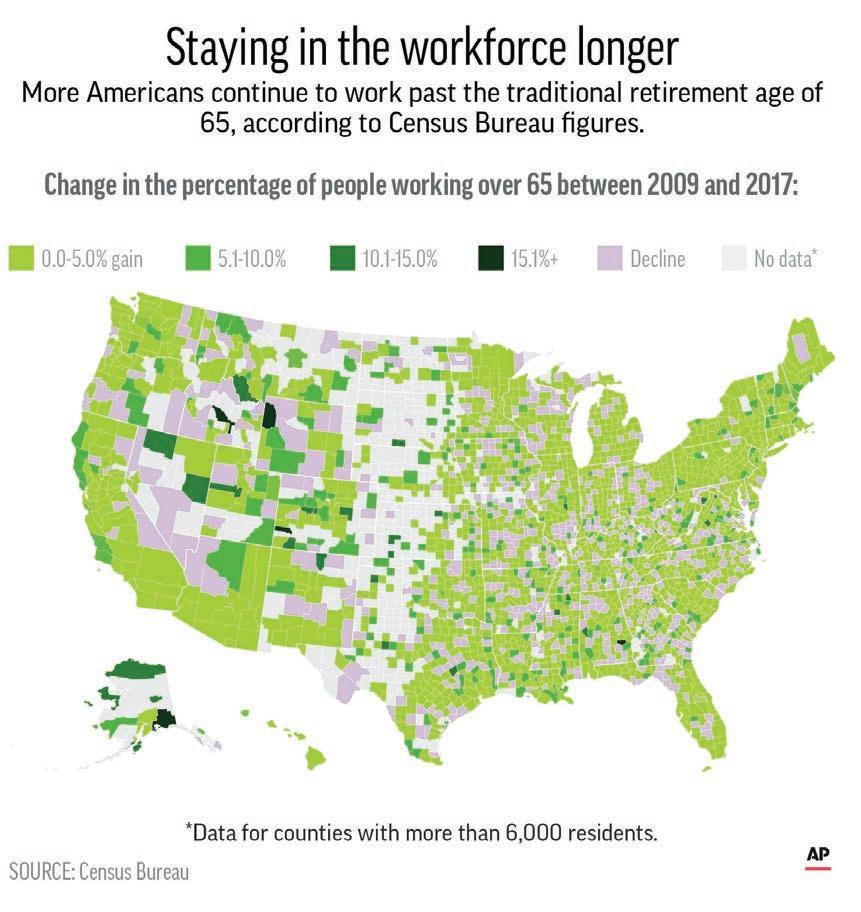
Seniors in major metropolitan areas, especially in the Northeast and around Washington, D.C., are more likely to continue working past age 65 than those in other areas around the country, according to an analysis of Census data by The Associated Press-NORC Center for Public Affairs Research.
“Those are the areas where all of the jobs are, really,” says Anqi Chen, assistant director for savings research at Boston College’s Center for Retirement Research. “The coastal areas recovered well from the recession, while other areas have not.”
But it’s also the types of jobs in those areas — government, finance, law and academia — that keep seniors working longer, analysts say.
Despite whatever misnomers might exist, there is a great demand out there for mature workers.”
MARY BRANAGAN Director of Program and Partner Affairs at Associates for Training and Development
es qualifying unemployed state residents at least 55 years of age with paid internships that can help them update their skills and remain in the workplace longer. She says her company’s offices in Washington and Windham counties are among its largest statewide.
In other areas of the country, Colorado has six of the top 50 counties both in terms of senior labor force participation in 2017 and participation growth between 2009 and 2017.
efit most from targeted skills training investments and other initiatives that would spur seniors off the sidelines.
“It’s good for GDP growth overall and it’s generally just good for the health of the overall economy,” says Andrew Chamberlain, chief economist at employment hub Glassdoor, referring to senior participation in the workforce.
Digi-Key pitches higher starting salaries than most businesses in the region, as well as health insurance at a low price. But the distributor also offers flexible schedules, training, an onsite medical office and buses from Crookston and Grand Forks, North Dakota.
Zutz said the company is focused on changing its time-off policy.
“As people move on in their career, they want that flexibility,” Zutz said. “Whether they have kids going to college that they want to visit more, they want to travel more, they have grandkids that they want to help, or they have an ailing parent that they need to take care of, so we have to continue to find ways to provide flexibility.”
Karen Konickson, a talent acquisition official, said Digi-Key has also been hiring many workers who want to start second careers later in life.
“We have a lot of people that have retired. They were not ready to retire, it was not for them,” she said. “They’ll come to Digi-Key and find a place. They stay with us a long time.”
Older workers can be a boon to regional economies, increasing tax revenues, stimulating growth with more consumer spending and providing additional talent and expertise at a time of low unemployment, says Paul Irving, chairman of the Milken Institute Center for the Future of Aging.
Among counties with at least 6,000 residents, about 12% have at least 21% of their seniors working or actively looking for jobs, according to an analysis of the Census’ 2017 American Community Survey report. Of that group, nearly 25% are located within the Northeast or in Maryland or Virginia. And nearly 15% are within 70 miles of New York, Boston, Philadelphia or Washington, D.C.
“I consider myself to be a very fortunate person to still do what I loved at 27 at 74,” says Steve Burghardt, a professor of social work at the City University of New York. “I feel advantaged being in New York, where you’re exposed to sights and sounds and differences that are always exposing me to new ways to understand myself and to learn from other people.”
Two Washington suburbs, Falls Church, Virginia, and Alexandria, Virginia, are among the nation’s leaders in terms of senior labor force participation, with rates of nearly 37% and nearly 30%, respectively. This area is also home to one of the fastest growing senior labor forces in the country — three of the 11 counties that saw senior participation rates climb the fastest between 2009 and 2017 are located within 70 miles of Washington.
But large, populous counties don’t have a monopoly on senior participation in the labor force. Vermont, one of the least populous states, holds two counties that rank among the top 100 (Windham and Washington counties) and eight among the top 329 in terms of senior participation.
“Despite whatever misnomers might exist, there is a great demand out there for mature workers,” says Mary Branagan, director of program and partner affairs at Associates for Training and Development, a workforce training and development outfit headquartered in Vermont.
Branagan helps oversee the state’s Senior Community Service Employment program, which match-
And rural counties heavy in agricultural employment, especially in Kansas, Nebraska and Iowa, boast a considerable senior labor participation rate. Though the jobs are often labor intensive, agricultural professions maintain some of the highest median ages in the country, according to Bureau of Labor Statistics data.
That’s due in part to much of U.S. agriculture being concentrated in family farms, the Department of Agriculture says.
People can continue living and working on these operations well into their “retirement” years by scaling things down and renting land to other farmers.
At the other end of the spectrum, senior labor force participation in 2017 was less than 12% in nearly 14% of counties with at least 6,000 residents. Kentucky, Michigan, Georgia, Alabama, Florida and West Virginia collectively accounted for more than 50% of those bottom-ranking counties in terms of senior labor participation.
Senior participation contracted in more than 24% of counties between 2009 and 2017. Nearly 33% of those counties are located in Georgia, Texas, Missouri, Kentucky or North Carolina.
Experts say it’s these lower-ranking counties that are missing out on the potential benefits of a stronger senior labor force. These areas also stand to ben-
Chen notes manufacturing-heavy areas within the Rust Belt and in states including Alabama and Georgia are among those with the lowest senior labor participation. Manufacturing payrolls have plummeted over recent decades amid automation and globalization challenges. Labor-intensive jobs that are prominent in those areas often preclude folks from working later into life, and the types of white collar jobs that are more prevalent in larger cities are in shorter supply.
“It’s partly just how grim the job prospects are in a lot of micropolitan, or small city and rural, areas,” says Gary Burtless, a senior fellow at the Brookings Institution. “A lot of them are one-industry towns. And if that industry has been hit hard, that’s going to be a problem for younger workers and older workers.”
Burtless notes elderly labor force participation tends to be higher in urban areas where older workers are better educated, better compensated and less reliant on labor-intensive blue collar industries.
“The thinking as to why highly educated people tend to work longer is that they may enjoy better health. They may enjoy better working conditions,” says Jen Schramm, a strategic policy adviser for the AARP Public Policy Institute.
“They are likely to be paid more, so that’s more of an incentive to keep working.”
— The Associated Press
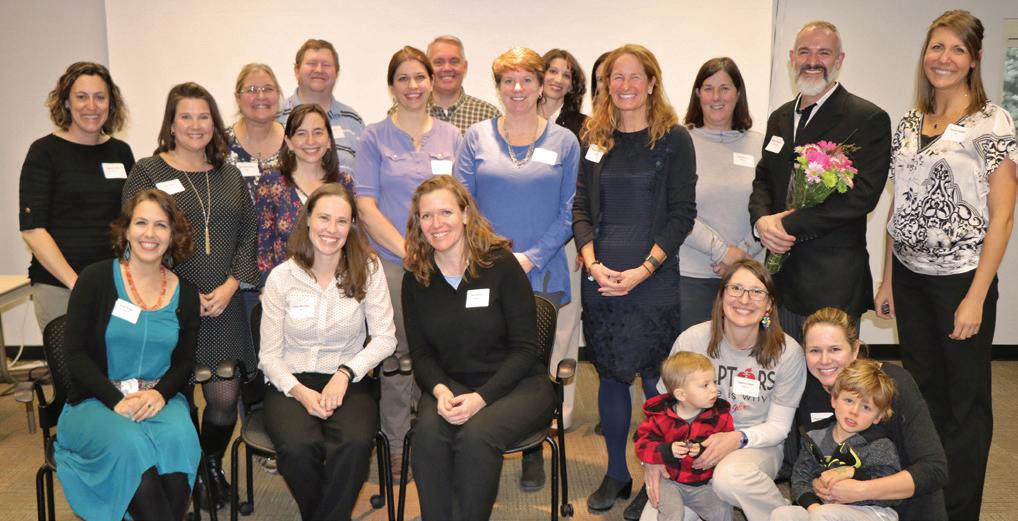
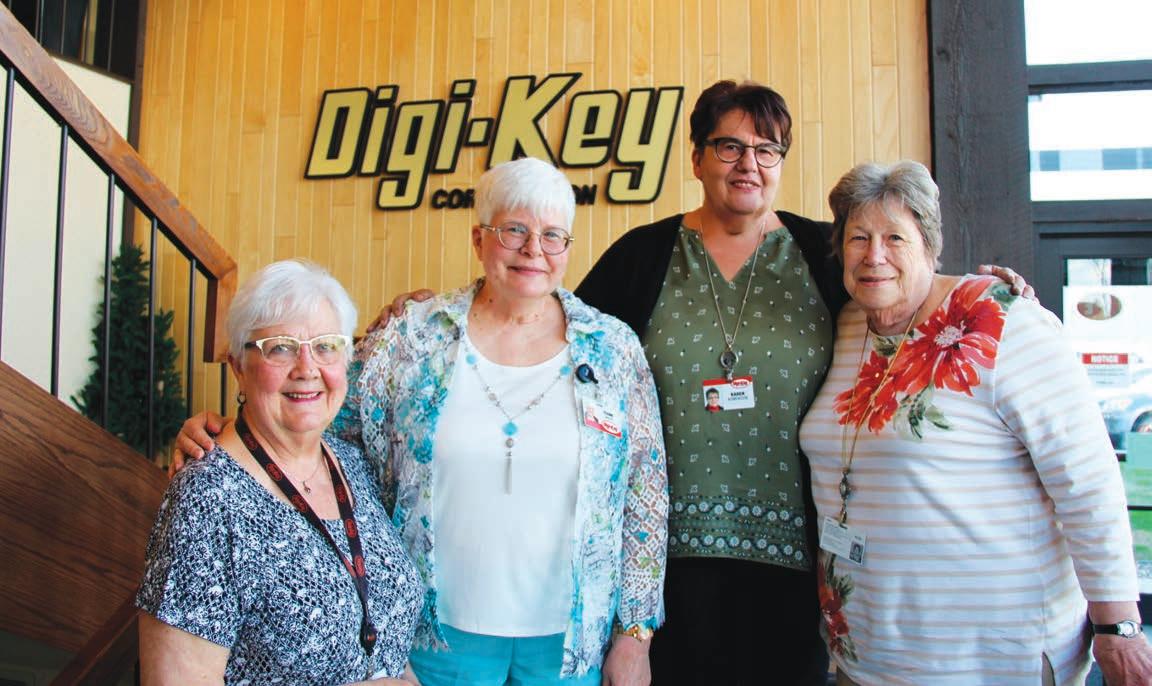
Above: In this Tuesday, May 14, 2019 photo, from left, Evadell Tangquist, Leann Zander, Karen Konickson and Alice Wassink pose on a stairway at the Digi-Key headquarters in Thief River Falls, Minn.
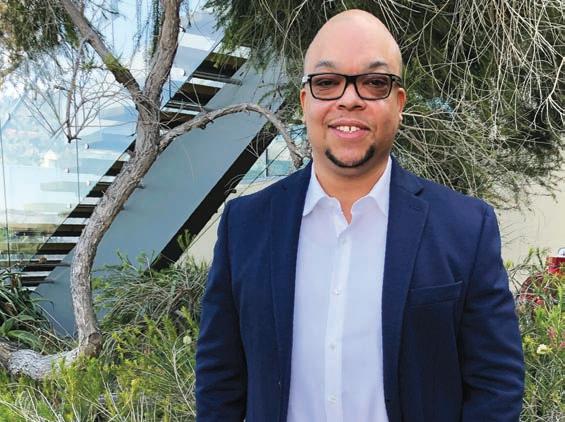
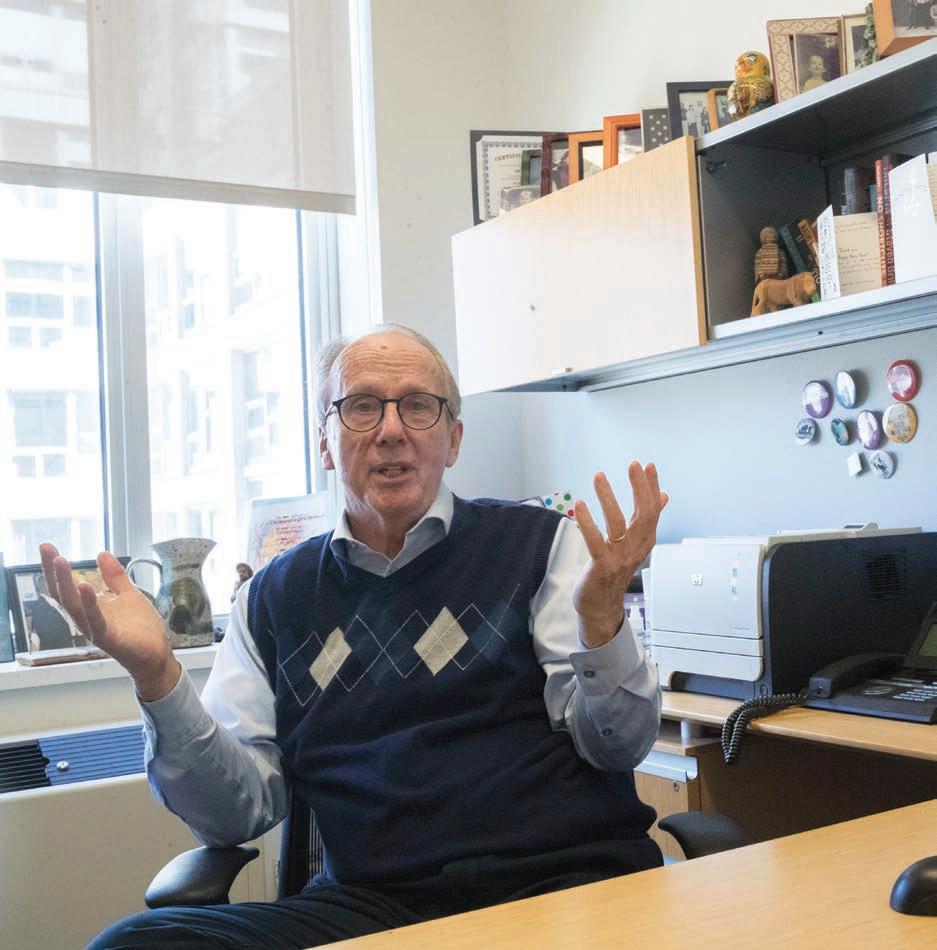
Left: In this Tuesday, April 16, 2019, photo Steve Burghardt, a professor of social work at the City University of New York, gestures as he speaks
Northeastern cities and around Washington, D.C., are more likely to continue working past 65 than those in other areas around the country, according to an
Right: County-level data of the percentage change in workers age 65 and older in the workforce between 2009 and 2017. AP Photos
Marijuana health claims continue to lure patients
Marijuana has been shown to help ease pain and a few other health problems, yet two-thirds of U.S. states have decided pot should be legal to treat many other conditions with little scientific backing.
At least 1.4 million Americans are using marijuana for their health, according to an Associated Press analysis of states that track medical marijuana patients.
The number of medical marijuana cardholders more than tripled in the last five years as more states jumped on the bandwagon. The analysis is based on data from 26 states and the District of Columbia. The total climbs to 2.6 million patients if California, Washington and Maine are included, the AP estimates.
States that expanded the use of medical pot for common ailments such as severe pain, post-traumatic stress disorder and anxiety saw a boost in enrollment, the AP found.
The U.S. government, meanwhile, both considers marijuana an illegal drug and a therapeutic herb worth more study.
A look at the health claims and research on medical marijuana:
THE EVIDENCE
Besides chronic pain, there’s strong evidence marijuana or its ingredients can ease nausea and vomiting from chemotherapy and help with symptoms of multiple sclerosis.
Several European countries have approved Sativex, a mouth spray containing THC and CBD, for multiple sclerosis symptoms. Last year, U.S. regulators approved Epidiolex, made from CBD, to treat two rare seizure disorders. THC causes marijuana’s mind-altering effect; CBD doesn’t get people high.
British drugmaker GW Pharmaceuticals is seeking U.S. approval for Sativex. Other companies are pursuing Food and Drug Administration backing for products based on marijuana ingredients.
Arizona-based Insys Therapeutics, which filed for bankruptcy protection Monday as it faced fallout over its mar-
keting of an addictive opioid painkiller, is developing CBD drugs for two types of childhood epilepsy and a rare genetic disorder. Pennsylvania-based Zynerba Pharmaceuticals is working on a CBD skin patch for autism and fragile X syndrome, a genetic condition.
Prescription drugs already on the market use synthetic THC to treat weight loss, nausea and vomiting in patients with AIDS or cancer. And researchers continue to study whether marijuana helps with PTSD, back pain and other problems.
OPIOID ALTERNATIVE?
New York, New Jersey, Pennsylvania and New Mexico allow medical marijuana for opioid addiction despite little evidence it works.
But marijuana may be helpful in reducing use of opioid painkillers. The National Center for Complementary and Integrative Health, better known for its research on herbs and yoga, has set aside $3 million for studies to determine which of marijuana’s 400-plus chemicals help with pain.
THC was excluded however.
Its mood-altering effects and potential for addiction and abuse make it less useful for pain, said Dr. David Shurtleff, the agency’s deputy director. And THC has been studied more than the lesser-known compounds.
CURE FOR CANCER?
Despite online claims, there’s only weak evidence that marijuana’s ingredients might one day be used to treat cancer. Most studies have been in animals or in the lab. Results have been mixed.
In one study, nine patients with an aggressive form of brain cancer had THC injected into their tumors; any effect on their survival was unclear.
Another study found worrying evidence that marijuana might interfere with some cancer drugs, making them less effective.
RESEARCHING AN OUTLAW MEDICINE
The U.S. government grows marijuana for research at a farm in Mississippi and generally bans grant-funded studies of real-world products.
But a mobile lab inside a white Dodge van allows University of Colorado Boulder researchers to study the potent strains of marijuana many patients consume without running afoul of the law.
Study participants use marijuana in their homes, coming to the van for blood draws and other tests before and after using, said Cinnamon Bidwell who has federal grants to study marijuana’s effects on lower back pain and anxiety.
With increased demand for research pot, the Drug Enforcement Administration created an application process for growers, but has not acted on more than two dozen applications.
Such challenges are common for scientists studying an outlaw medicine, said Dr. Igor Grant, who directs the oldest marijuana research center in the U.S. at the University of California, San Diego.
TRACKING PATIENTS
Minnesota medical marijuana patients must regularly fill out surveys about their symptoms and side effects. That allows researchers to study how people with cancer react to marijuana.
In one study, a third of cancer patients made only one purchase and didn’t come back during a four-month period. They may have died, or decided marijuana was too expensive or didn’t work. Of the rest, most reported improvements in vomiting, pain, disturbed sleep, anxiety and depression with few side effects.
Marijuana can ease many symptoms “all at one time,” but more study is needed, said study co-author Dr. Dylan Zylla of the health care system HealthPartners. He has no financial ties to cannabis companies.
Zylla is studying whether cancer patients can decrease their prescription opioid use while using marijuana.
— The Associated Press
Wounded veterans treated to Sitka adventure
Often overlooked in conflicts that occur thousands of miles away on continents most people see just on social media, are the military veterans who return to their non-service lives with traumas both visible and unseen.
A local fishing charter business, working with a veteran support organization called Freedom Alliance, has been reaching out to these veterans over the past several years, giving them a taste of all that Alaska has to offer.
“It’s something that can’t be measured by the size of fish caught,” said Vonnie Grun of Vonnie’s Charters at Halibut Point Lodge. “To see their smiles ... well, it isn’t about us, it’s about saying thank you to them.”
On May 25, 14 military veterans arrived in Sitka, greeted by ocean waters rolling up beside the airport runway, a volcano painted in cloudless sky, and a palette of colors dashed about the surrounding mountains.
in Afghanistan.
He likes to hunt back home, to just get out in the mountains.
“I would love to bag a few fish, see the wildlife, whatever. This is my first time in Alaska,” he said. “This is it. I’m excited. I’m kind of a blank canvas. I don’t know what to expect.”
Quinn Jensen, from Utah, served two tours in Afghanistan. On one he left a portion of his body and now walks with a prosthetic. He’s nearly six feet tall, but his smile is larger, his eyes bright with curiosity, his handshake one a lifelong friend gives to another.
“Just being here, I don’t know, I have never been to Alaska before,” Jensen said. “It’s kind of cool to see it all in person. For sure it would be nice to catch a fish, all kinds of fish hopefully. See a whale ....”
In a wheelchair, Marcus Fischer is aided by his fishing partner, his wife Brandi.
The wounded warriors were different in appearance, but they shared experiences and desires - they served the country, they have left some part of themselves far from home, and they want to feel that they’re not forgotten.
“Wow,” John Avak said, looking around. “This is amazing. That was an incredible flight.”
Avak was born and raised in Connecticut, lived the past 20 years in Las Vegas, and now resides in Seattle with his three kids and two step-kids.
“They’re all under 14 years old,” he said. “Now that’s a tough tour of duty.”
One son is currently recovering from brain cancer, just another trial for Avak, a 12-year Marine who served three tours in Iraq.
He said he was looking forward to whatever he might find on this trip to the coast of Southeast Alaska.
“Anything,” he said. “I’m happy if I catch a flounder or a rockfish. Of course I would love a salmon or a silver. Anything that has gills, something I can tell my son about when
I get home.”
When it was noted that the sunny weather was similar to that of foreign lands where he proudly sacrificed his time, he laughed.
“Yes, but better personalities here,” he said. “I can promise you that.”
Rory Atridge served in the Army, deployed to Bosnia and Iraq and “all over the place.”
He’s hoping to catch a king salmon.
“And some halibut,” he said. “Maybe some beers with some like-minded individuals.”
Like most of the others, this is his first trip to Sitka, but he’s been to Deadhorse, Juneau and Admiralty Island doing some work for the mining industry.
“I hope to meet some new friends,” he said. “Build some relationships, tell dirty jokes, all those kind of things that the average person won’t understand.”
Cody Butcher, from Idaho, served in the Army with tours
Many of the wounded warriors have brought friends or significant others with them.
“Fish,” Fischer said. “Fish a lot, I hope. But my wife has more luck.”
After his two tours of duty in Iraq and injuries, their marriage might seem to be in the latter part of the “for better or worse” vow. But their love is evident as she kisses the top of his head and rolls him out into the Alaska sunlight.
Five years ago Ryan Behm took the natural progression from being a military medic to taking care of the veterans he accompanies on Freedom Alliance sojourns.
“For me it’s mostly about getting the vets not only connected with one another, not only showing them that we appreciate what they did, but to get them outside of a comfort zone as a learning and growing experience,” he said. “To get them to see that they can do something that maybe they think they couldn’t. But it’s also about getting guys together who have been through different, or similar, experiences and having guys that have been through certain things mentor other guys.” — The Associated Press
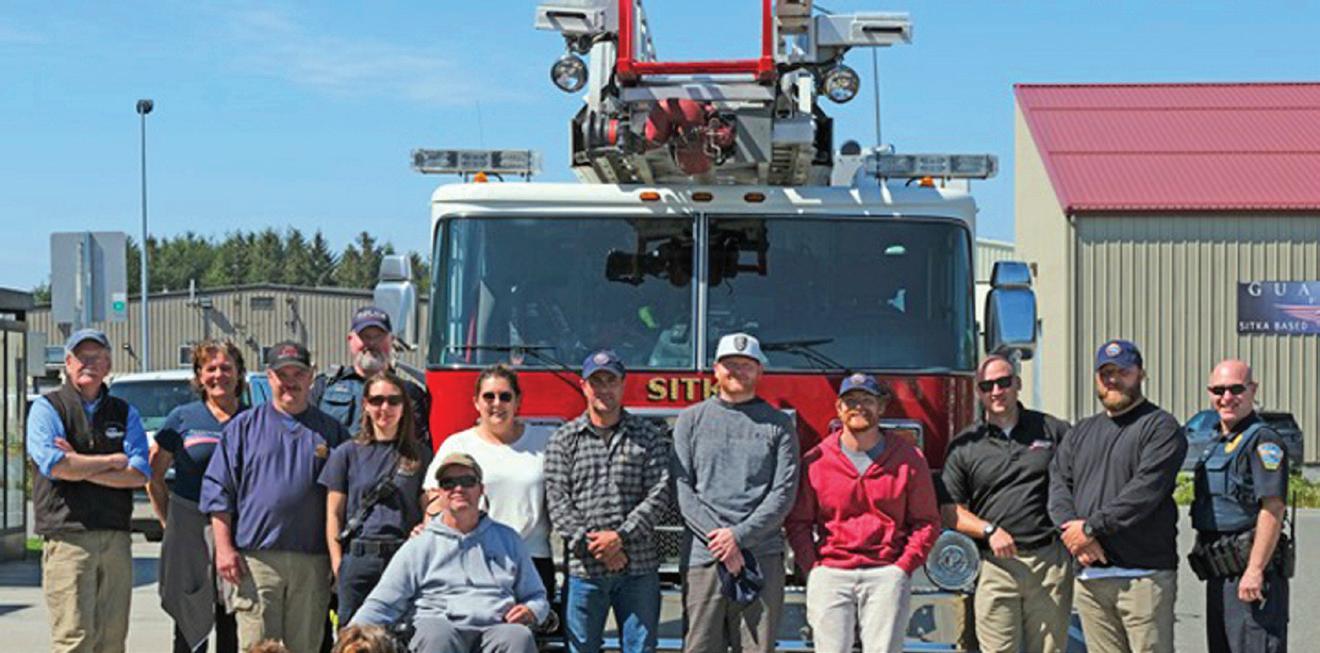
In this Saturday, May 25, 2019 photo, military veterans from Freedom Alliance are greeted at the Sitka, Alaska, airport by local fire and police personnel as they start a week of adventure at Vonnie’s Charters and Halibut Point Lodge. Often overlooked in conflicts that occur thousands of miles away on continents most people see just on social media, are the military veterans who return to their non-service lives with traumas both visible and unseen. AP Photo
showed high agreement with standard lab testing in a study in the journal Nature Microbiology.
“The biggest issue is the cost” — around $2,000 for the Karius test, said Ali Torkamani, a San Diego scientist who directs a genetics conference that featured these tests in March. More competition may lower the price and lead to wider use, he said.
Karius has its own lab for its test. Other companies offer software and tools that hospitals can use to develop their own genebased tests.
One of them, Arc Bio, based in California and Massachusetts, offers virus testing from blood and gives an answer in less than two days.
IDbyDNA, based in San Francisco, uses a Utah lab that works with 3,000 U.S. hospitals. It gives an answer in about 48 hours once a sample arrives, said its chief medical officer, Dr. Robert Schlaberg, a University of Utah pathologist.
So far, hospitals are using these tests for the worst cases — long, unexplained illnesses or very vulnerable patients such as children and people with cancer or weak immune systems.
Dr. Asha Shah tried one for
›› TELEHEALTH, from B4
Her telehealth service is not covered under insurance, which cuts out a lot of the paperwork. A session can range from $80 to $200.
With telehealth, a patient is not limited to one doctor. If Berger finds that a patient needs care in an area in which she’s not an expert, she can consult with a doctor across the country to get the patient the care they need.
“So you can now get care by anybody who’s appropriate, wherever you are, at least to a point that you could not have gotten before,” she said.
But even with the internet playing such a vital role in the future of medicine, there are still many limitations to telehealth.
“You can’t touch a patient,” Berger said. “If you have an abdominal problem and your physician is palpitating your stomach to feel for tension and different things, you can’t do that (over the internet). Blood tests and physical surgeries also can’t be done, at this point in time at least.”
Frederick Memorial Hospital is also making headway in telehealth services. The Chronic Care Management Program gives patients tablets, blood pressure monitors, a pulse oximeter and a scale to detect their vitals in the comfort of their own home. They consult with a nurse on the team once a week by phone. By the end of the summer, they plan to have video conferencing, according to Lisa Hogan, a nurse at FMH and the team lead for both the Chronic Care Management and telemonitoring programs.
the first time last year, when Jetter was rapidly getting worse at Stamford Hospital in Connecticut.
“He had multiple blood tests, chest X-ray, CAT scan, you name it,” she said. “I thought, this doesn’t make sense, why aren’t we getting any answers?”
The Karius test revealed unusual oral bacteria in his lungs, suggesting he’d inhaled some while choking on the burger.
An even more unusual story emerged when Dr. Amir Khan, an infectious disease specialist at Carle Foundation Hospital in Urbana, Illinois, ordered a Karius test for 47-year-old Ryan Springer, who doctors first suspected of having cancer.
“Breathing made my lungs feel like they were on fire,” said Springer, a radio station program director in Champaign, Illinois.
He turned out to have tularemia, sometimes called “rabbit fever,” which can come from inhaling bacteria from infected rodents or running over their droppings with a lawn mower. With the right treatment, he recovered.
“This is the future of medicine,” Khan said. When patients are very sick, “every minute and hour counts.”
— The Associated Press
The program took off in 2017 and started with 30 monitors for in-home patients. Today it has 203 in the community. Up to 200 more monitors will be added in 2020. There is already a waiting list to be a part of the program.
This past winter, the hospital also launched a separate Virtual Visit Program through Monocacy Health Partners, the hospital’s own physician group.
The program is for employees and primary care patients of MHP, according to Alex Nason, director of IT innovation at FMH.
Through a series of questions, primary care providers can assess ailments such as upper respiratory infections, flu, cold, rash and pink eye.
Although physicians can make diagnoses and write prescriptions after conducting a telehealth session, about 20 percent of the time the provider decides that they would like to see the patient in person.
Through these efforts, FMH saw an 84 percent reduction in readmission rates and a 56 percent reduction in emergency room visits in 2018, according to Hogan.
“Telehealth as technology has become easier to use, less expensive and more accepted. And the clinical validation is there as more and more parts of health care are embracing it,” Nason said. “I think as the technology advances, the research continues to accrue validation and the economics of healthcare continue to evolve, we’re seeing more and more movement, acceptance and options of telehealth because the stars are starting to align.”