


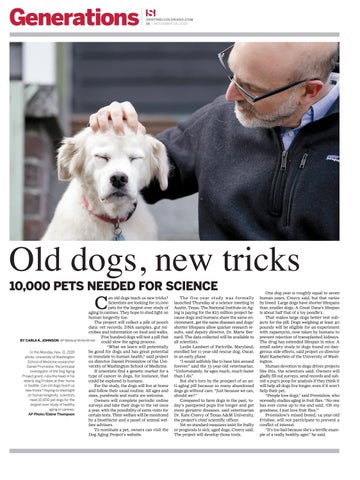
Can old dogs teach us new tricks?
Scientists are looking for 10,000 pets for the largest-ever study of aging in canines. They hope to shed light on human longevity too.
The project will collect a pile of pooch data: vet records, DNA samples, gut microbes and information on food and walks.
BY CARLA K. JOHNSON AP Medical WriterWriter
Five hundred dogs will test a pill that could slow the aging process.
“What we learn will potentially be good for dogs and has great potential to translate to human health,” said project co-director Daniel Promislow of the University of Washington School of Medicine.
If scientists find a genetic marker for a type of cancer in dogs, for instance, that could be explored in humans.
For the study, the dogs will live at home and follow their usual routine. All ages and sizes, purebreds and mutts are welcome.
Owners will complete periodic online surveys and take their dogs to the vet once a year, with the possibility of extra visits for certain tests. Their welfare will be monitored by a bioethicist and a panel of animal welfare advisers.
To nominate a pet, owners can visit the Dog Aging Project’s website.
The five-year study was formally launched Thursday at a science meeting in Austin, Texas. The National Institute on Aging is paying for the $23 million project because dogs and humans share the same environment, get the same diseases and dogs’ shorter lifespans allow quicker research results, said deputy director, Dr. Marie Bernard. The data collected will be available to all scientists.
Leslie Lambert of Parkville, Maryland, enrolled her 11-year-old rescue dog, Oscar, in an early phase.
“I would selfishly like to have him around forever,” said the 33-year-old veterinarian. “Unfortunately, he ages much, much faster than I do.”
But she’s torn by the prospect of an anti-aging pill because so many abandoned dogs go without care. “Just because we can, should we?”
Compared to farm dogs in the past, today’s pampered pups live longer and get more geriatric diseases, said veterinarian Dr. Kate Creevy of Texas A&M University, the project’s chief scientific officer.
Yet no standard measures exist for frailty or prognosis in sick, aged dogs, Creevy said. The project will develop those tools.

One dog year is roughly equal to seven human years, Creevy said, but that varies by breed. Large dogs have shorter lifespans than smaller dogs. A Great Dane’s lifespan is about half that of a toy poodle’s.
That makes large dogs better test subjects for the pill. Dogs weighing at least 40 pounds will be eligible for an experiment with rapamycin, now taken by humans to prevent rejection of transplanted kidneys. The drug has extended lifespan in mice. A small safety study in dogs found no dangerous side effects, said project co-director Matt Kaeberlein of the University of Washington.
Human devotion to dogs drives projects like this, the scientists said. Owners will gladly fill out surveys, send records and submit a pup’s poop for analysis if they think it will help all dogs live longer, even if it won’t help their pet.
“People love dogs,” said Promislow, who normally studies aging in fruit flies. “No one has ever come up to me and said, ‘Oh my goodness, I just love fruit flies.’”
Promislow’s mixed breed, 14-year-old Frisbee, will not participate to prevent a conflict of interest.
“It’s too bad because she’s a terrific example of a really healthy ager,” he said.


FBY MELISSA RAYWORTH Associated Press
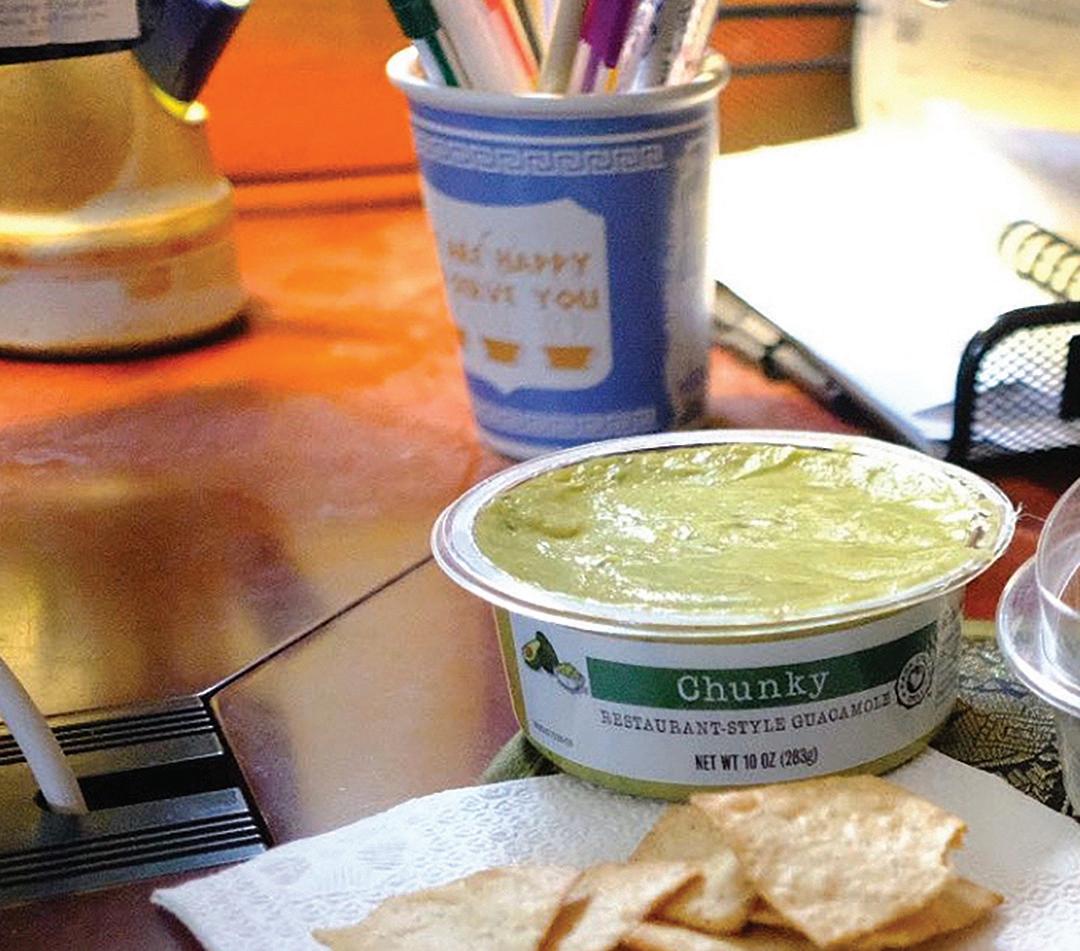
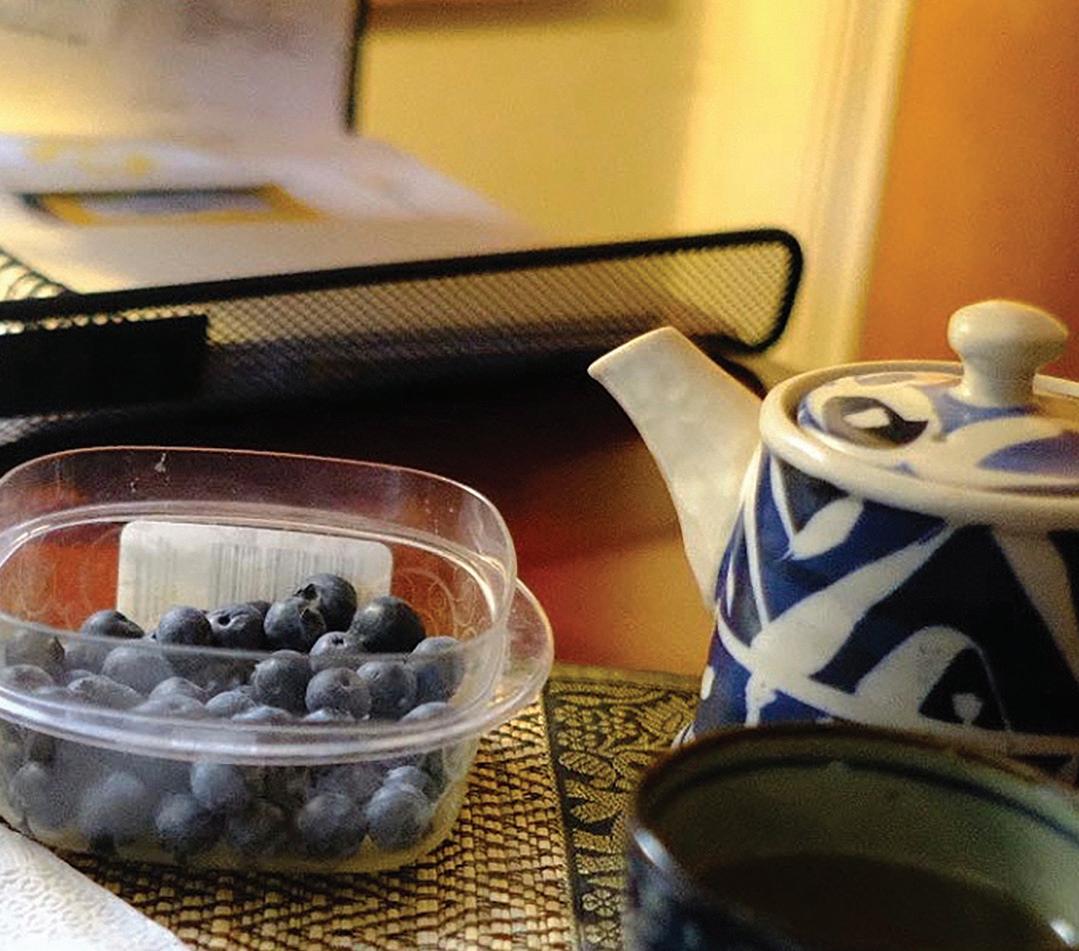
This Jan. 17, 2020 image shows a display of guacamole and chips and blueberries in Allison Park, Pa. To eat healthier in the new year, try making small and measurable changes, like bringing a healthy and appealing snack to work.
Ted Anthony/Associated Press
or many of us, January is all about giving things up: Maybe we’re going to stop eating meat and embrace a plant-based diet. Or we’re ready to kick excess sugar to the curb after a holiday season awash in sweets. Or we’re committed to avoiding fast food.
Starting the year with noble goals for eating well is a modern rite of passage. But it’s just as common to ditch those grand plans within a few weeks.
This year, how can we do it right? If we’re pledging to make better food choices, which strategies can help us stick with them?
The consensus among experts is clear: It’s tempting to begin with dramatic gestures, but the key to lasting change is setting goals that are small enough we won’t scrap them by Valentine’s Day.
Manageable, measurable goals can create long-term change, says Leila Azarbad, associate professor of psychology at North Central College in Naperville, Illinois. When people set lofty goals, they can get
discouraged after a couple weeks.
“Our self-efficacy, that belief in our own ability, tanks,’’ she says. ``And that’s a huge predictor: If you don’t feel confident in your ability to make the change, you’re going to discontinue trying.”
Picture this, says Dana White, a sports dietitian and clinical associate professor at Quinnipiac University: You want to lose 20 pounds and you know that every afternoon you visit the office vending machine for a snack to boost your energy. So, begin packing a healthy afternoon snack — not something punitive, but something healthier that you’ll enjoy — and have that instead of a vending machine candy bar.
It’s a measurable, specific change that won’t be unpleasant. And if it eliminates 200 calories, that shift will make a difference over the coming weeks and months. Once that new behavior is in place, you can add another small but meaningful change.
The same thinking works if you’re eliminating animal products: Rather than going cold turkey (cold tofu?), begin by replacing one dinner per week with a vegetarian meal. Plan it for a night when you won’t be rushed and can make an appeal-
ing recipe, or budget for going out once a week to a vegetarian restaurant.
Then track that change for three weeks, says Anna Baker, assistant professor of psychology at Bucknell University, who researches the connection between behavioral factors such as self-management and health outcomes.
“You hear that it takes 21 days to create habit. There’s debate about whether it’s 21 exactly, but you need a certain amount of time of continuing to do something before it becomes a habit,” Baker says. “Once you do kind of get used to that change and you’re doing it regularly, then you can add in another thing.”
If you make that one good shift for three weeks, congratulate yourself. Then maintain that behavior and add another small change, like drinking more water.
It’s tempting to try making a half-dozen changes all at once, White says. But by focusing on individual, small, unhealthy behaviors and “really identifying what the triggers are that lead to those behaviors,” she says, people “can have a tremendous amount of success without torturing themselves.”
›› See PROMISES, 16
If your goal is to lose 20 pounds, for example, it really will take four or five months — and it should, says Alex Montoye, assistant professor of clinical exercise physiology at Alma College in Alma, Michigan.
Losing a pound a week is “really the maximum sustainable weight loss,” Montoye says. Much as it surprises people, “2 pounds a week is pretty extreme.”
So aim to lose 5 pounds over the next six weeks through small behavioral shifts, and measure your behavior along the way. Apps and fitness trackers can help, as can a notebook where you list what you’ve eaten.
Researchers have found “that we are notoriously bad at estimating how many calories we’re taking in,” Azerbad says. “We tend to underestimate what we’re eating, because we forget. When we’re cooking, we taste the pasta sauce a few times and those are calories. Or we walk past our colleague’s desk and they had a jar of M&M’s and we took a few, but those add up. That can be the difference between you losing a pound a week and you not.”
Accept that mistakes are a normal part of building a new habit. If you know an event is coming up where you’ll want to divert from your eating goals, accept that you may slip a bit then.
Aim for “consistency, not perfection,” says Baker. “You have to plan in advance that you’re going to screw up. We’re not perfect.”
Lastly, “tell everybody you know that you’re doing this because social support is huge,” Azerbad says.
“If you’re going out to eat and they know you’re trying to change your diet, they can help choose a restaurant that will accommodate you,” she says.
And the need to save face may keep you on track.
“Once you put it out there on social media and you tell everybody that ‘I’m going to do this. I’m going to lose 10 pounds by spring break,’’’ you feel that people are watching, Azerbad says. “We don’t want other people to see us fail.”
Ted Anthony/Associated Press































BY CINDY LANGE-KUBICK Lincoln Journal Star
She started as a hat check girl.
It was 1965, and, after eight years of marriage and three kids, Dee Tonniges was a divorced woman with mouths to feed.
She gathered coats and squared away porkpie hats and, at the end of her shift, she kept a few folded bills to pay the babysitter before the boss pocketed the rest.
A few months later, a waitress quit.
owners in a revamped building.
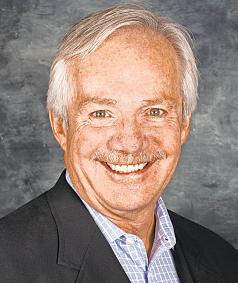
She’s a hostess. Greeter. Mentor. Celebrity.
“She just made coming to dinner special,” says Janice Jillson, a diner who became a friend. “She’s just joyful.”
Joyful after more than 50 years on her feet.
•

And the young mother thought: I’d like to do that, instead. And she did.
She spent 25 years at the Legion Club serving T-bones to Bob Devaney and a host of Lincoln’s veterans and businessmen.
She spent 15 more at Spike and Ollie’s at 54th and O streets. “Oh, I loved it,” the 86-year-old told the Lincoln Journal Star.
When that restaurant closed, she headed over to Howard’s Pantry on 48th and Van Dorn and Howard hired her.
She’s still there three nights a week, but it’s The Eatery now, new
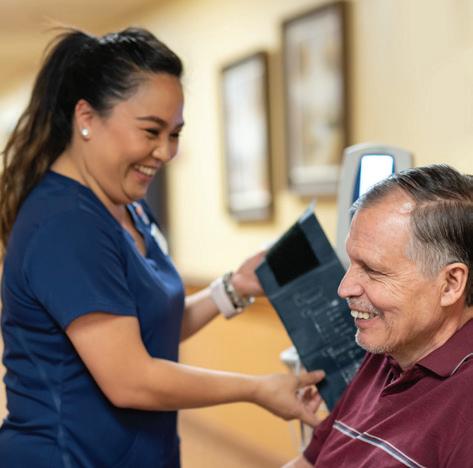
She has neuropathy — her feet going numb at crazy times — a side effect of chemo for colon cancer. Thursday, Dee is sitting at an Eatery table before the start of her shift.
Janice is here — “for moral support.” Dee wasn’t crazy about the idea of a story. I’m ordinary, she said. Boring.
Janice knew different.
So do Doug and Michelle Daize, who have owned the restaurant for more than seven years.
When they bought Howard’s, they offered jobs to staff, Dee included.
“She had regular customers who came to see her,” Michelle says. “A few of them boycotted the restaurant because they thought we fired her.”
Never.
“She has a job here as long as she wants one,” Doug says.
“She’s almost like an ambassador,” Michelle says. “She’s like royalty.”
Dee’s hearing isn’t so great, so she doesn’t catch every compliment.
But the restaurant life?
It suits Dee just fine.
“I had office jobs before. But it was just the same old people every day. I wanted some adventure.”
She found it.

The early years at the Legion Club kept her hopping. She knew what her regulars liked and how they liked it cooked. She remembered what they drank, too, and brought the glasses around before they had their menus open.
Bands played on the weekend, and, on Saturday nights, the place would fill with Cornhuskers — fans, players, coaches.
Bob and Phyllis Devaney were regulars.
“I used to go over and tell him jokes,” she says. “He wanted them, because he made a lot of speeches.”
Dee had a personality perfect for waitressing.
Outgoing, easygoing, smart, funny.
“She was always a hard worker,” said Lancia Wight, Dee’s middle child. “And she had three kids to raise.”
Dee would make supper and feed Lancia and her brothers and head off to work, where she made 75 cents an hour, plus tips.
“She’d get home about 10
o’clock or so, and then she had to take the sitter home,” the daughter said.
Then she’d start all over again. Wednesday was her one and only day off.
“I worked at the Legion Club, too,” Lancia said. “I would see her work, and I would think ‘Holy crap.’”
It’s been 15 years since her mom was diagnosed with cancer.
“She calls it the year of hell, but she only missed one day of work.”
Chemo in the morning. Nap. Off to the restaurant.
By that time, Dee didn’t have to work. Her kids were raised. She was a grandmother and saved for retirement. She’d put her sons through college, doted on her grandkids, stayed busy with her church and tending her yard.
“She’s not working for the money,” Lancia says. “She’s working to get out of the house.”
She drives across town every Thursday, Friday and Saturday.
“It’s been amazing being able to work with DeLoris over the years,” says general manager Lonnie Jorgensen. “She’s a great part of our team. She’s just a blessing.”
And Janice picks her up every Tuesday, and they head out for lunch. Often, Dee brings a list of current events for the pair to discuss. She tells funny stories.
“I want to be Dee when I’m 86,” the friend says.
“Dee’s on the go,” Kurtis Bomar says. “She can’t wait to go to work, and she’s eager to meet the world.”
Kurtis and his business partner, Conrad Quijas, own the Stem Gallery, and they are fans of The Eatery and of Dee.
“We just admire her spunk and her drive,” he said. “And her sense of humor is endless. My advice to her is to keep on going, girl.”
Dee is listening.
She doesn’t have any plans to retire.
“What’s funny is she doesn’t think she’s old,” her daughter says. “She thinks her kids are old.”
Back at the house where she raised those three kids, we look through old photo albums. Dee over the years, changing hairstyles and uniforms and restaurants.
She has old menus. Lobster tail $3.50. Filet mignon $2.75.
An old pay stub from 1970: $25.
The tips got her through, she says, all of those dollar bills and quarters tucked into an old cloth purse she hid in the closet.
And the people she met — and keeps meeting — standing inside another Lincoln restaurant, her lipstick on just so, and so happy to see you.
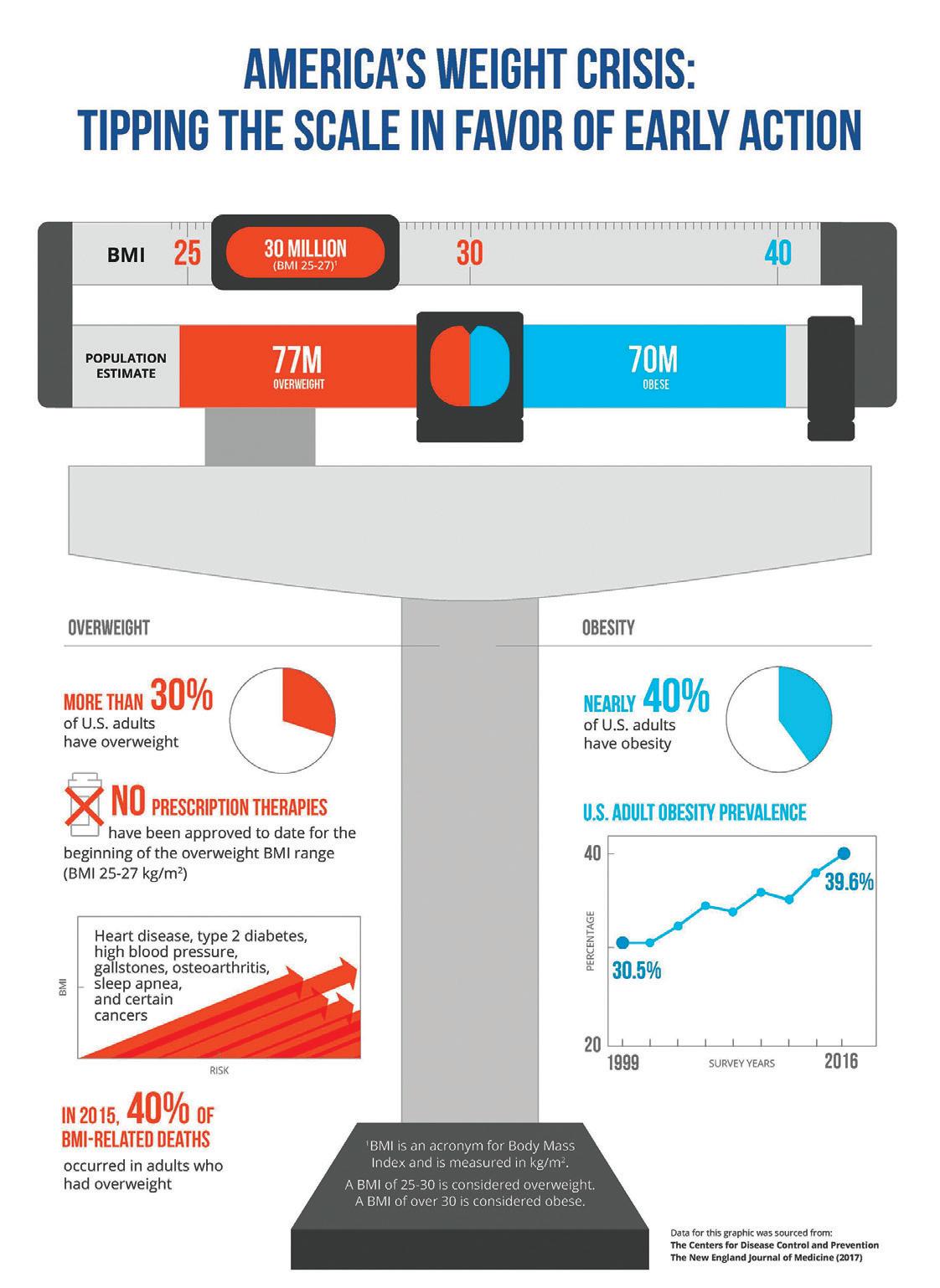
The brains of middle-age adults may be aging prematurely if they have obesity or other factors linked to cardiovascular disease, new research has found.
Almost one-quarter of adults have metabolic syndrome, a set of factors that in combination amplify a person’s risk of heart disease, diabetes, stroke and other illnesses. In the new research, participants were considered metabolically unhealthy if they had two or more such factors: high blood pressure; high blood sugar; high blood triglyceride levels; or low levels of HDL, the “good” cholesterol – or if they took medicine for diabetes, high blood pressure or cholesterol.
Researchers used magnetic resonance imaging and tests of thinking skills to evaluate more than 2,100 women and men ages 37 to 55. Compared with the healthiest participants, those who were metabolically unhealthy, obese or both showed evidence of brain decline.
“This has public health implications, since poor metabolic health is also associated with poor brain health,” said lead researcher Dr. Rebecca Angoff, clinical fellow in medicine at Harvard Medical School’s Beth Israel Deaconess Medical Center in Boston. “This is further ammunition for health care workers to convince patients to change their lifestyles and to work on early prevention with their patients.”
The preliminary study was presented this week at the American Heart Association’s Scientific Sessions in Philadelphia.
Participants were part of the Framingham Heart Study, a decades-long investigation of cardiovascular disease risk. None had diabetes or neurological conditions such as stroke or dementia.
Among people who were metabolically unhealthy, MRIs revealed lower total cerebral brain volume – in essence, a smaller brain – than was measured in metabolically healthy people.
Lower cerebral brain volume is a sign of injury throughout the brain that leads to the loss of neurons and supporting cells, Angoff said. “Aging, decreased blood flow and diseases like Alzheimer’s can lead to a smaller brain.”
Participants who were both metabolically unhealthy and obese showed the most signs of subtle injury to the brain’s white matter –tissue that provides crucial connections throughout the brain. These injuries, which have been linked to early Alzheimer’s disease, result from blood vessel abnormalities and may be due to risk factors such as high blood pressure and diabetes, Angoff said.
On the cognitive tests, obesity
was linked to poorer scores. Specifically, those who were obese but metabolically healthy performed worse on a combination of six tests of thinking skills, and on individual tests that measured verbal memory and abstract reasoning. Participants who were obese and metabolically unhealthy scored lower for abstract reasoning and on a test measuring visual details and spatial memory.
Differences in MRI and cognitive test results may reflect early, subtle signs of an aging brain, the researchers said. “This subclinical brain aging may precede clinically visible decline, but it’s unclear if these findings affect daily functioning,” Angoff said.
Nearly 4 in 10 Americans are considered obese, based on having a body mass index of at least 30. That translates to a weight of 175 pounds for a 5-foot-4 woman or 200 pounds for a 5-foot-9 man.
Although BMI is commonly used to gauge obesity and health risk, researcher Judith Wylie-Rosett, who was not involved in the new study, said she’d be interested in focusing on people’s waist-to-height ratio or waistline measurement as a health indicator. That’s because regardless of a person’s weight, a bigger belly can be a sign of fat buildup around abdominal organs, which could affect the liver or be associated with other metabolic abnormalities.
Evidence is growing that heart health goes hand in hand with brain health, said Wylie-Rosett, professor and division head of health behavior research and implementation science at Albert Einstein College of Medicine in New York City. So, “lifestyle and medical interventions that reduce cardiovascular risk may also reduce the risk of dementia,” she said.
Specifically, a diet high in fruits

and vegetables, whole grains, fish and unsaturated fats has been found to promote brain health, she said. And studies in people 50 and older show regular, moderately intense physical activity can improve brain function.
Preserving brain health is increasingly urgent as the massive baby-boom generation grows old and faces greater risk of mental decline. “With the aging of the U.S. population,” Wylie-Rosett said, “could a campaign to promote healthy eating and physical activity reduce projection for memory loss for the ‘boomer’ generation?”