SEMCORP TECHNICAL WHITEPAPER SERIES
SEMCORP
PROCESS & VACUUM SYSTEMS PVT LTD
https://semcogroups.com
ISO 9001:2015
ISO 45001:2018
ASME SECTION VIII
TEMA STANDARDS
ENGINEERING SPECIFICATION & TECHNICAL WHITEPAPER
ATFD vs. Spray Dryer for Industrial Salt Recovery in ZLD Plants Mechanical Thin-Film Agitation vs. High-Pressure Atomization for Concentrated Saline Slurries DOCUMENT ID SEMCORP-WP-2026-05
DISCIPLINE Solids Recovery & Industrial Drying
AUTHOR SEMCORP Technical Cell
CLASSIFICATION Public Whitepaper
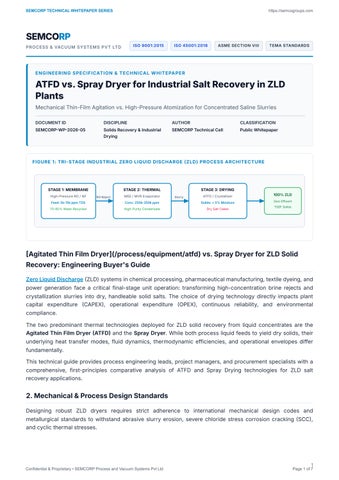
FIGURE 1: TRI-STAGE INDUSTRIAL ZERO LIQUID DISCHARGE (ZLD) PROCESS ARCHITECTURE
STAGE 1: MEMBRANE
STAGE 2: THERMAL
High-Pressure RO / NF
MEE / MVR Evaporator
RO Reject
STAGE 3: DRYING Slurry
ATFD / Crystallizer
Feed: 5k-15k ppm TDS
Conc: 250k-350k ppm
Solids: < 5% Moisture
70-80% Water Recycled
High-Purity Condensate
Dry Salt Cakes
100% ZLD Zero Effluent TSDF Solids
[Agitated Thin Film Dryer](/process/equipment/atfd) vs. Spray Dryer for ZLD Solid Recovery: Engineering Buyer's Guide Zero Liquid Discharge (ZLD) systems in chemical processing, pharmaceutical manufacturing, textile dyeing, and power generation face a critical final-stage unit operation: transforming high-concentration brine rejects and crystallization slurries into dry, handleable solid salts. The choice of drying technology directly impacts plant capital expenditure (CAPEX), operational expenditure (OPEX), continuous reliability, and environmental compliance. The two predominant thermal technologies deployed for ZLD solid recovery from liquid concentrates are the Agitated Thin Film Dryer (ATFD) and the Spray Dryer. While both process liquid feeds to yield dry solids, their underlying heat transfer modes, fluid dynamics, thermodynamic efficiencies, and operational envelopes differ fundamentally. This technical guide provides process engineering leads, project managers, and procurement specialists with a comprehensive, first-principles comparative analysis of ATFD and Spray Drying technologies for ZLD salt recovery applications.
2. Mechanical & Process Design Standards Designing robust ZLD dryers requires strict adherence to international mechanical design codes and metallurgical standards to withstand abrasive slurry erosion, severe chloride stress corrosion cracking (SCC), and cyclic thermal stresses.
Confidential & Proprietary • SEMCORP Process and Vacuum Systems Pvt Ltd
1
Page 1 of 7