
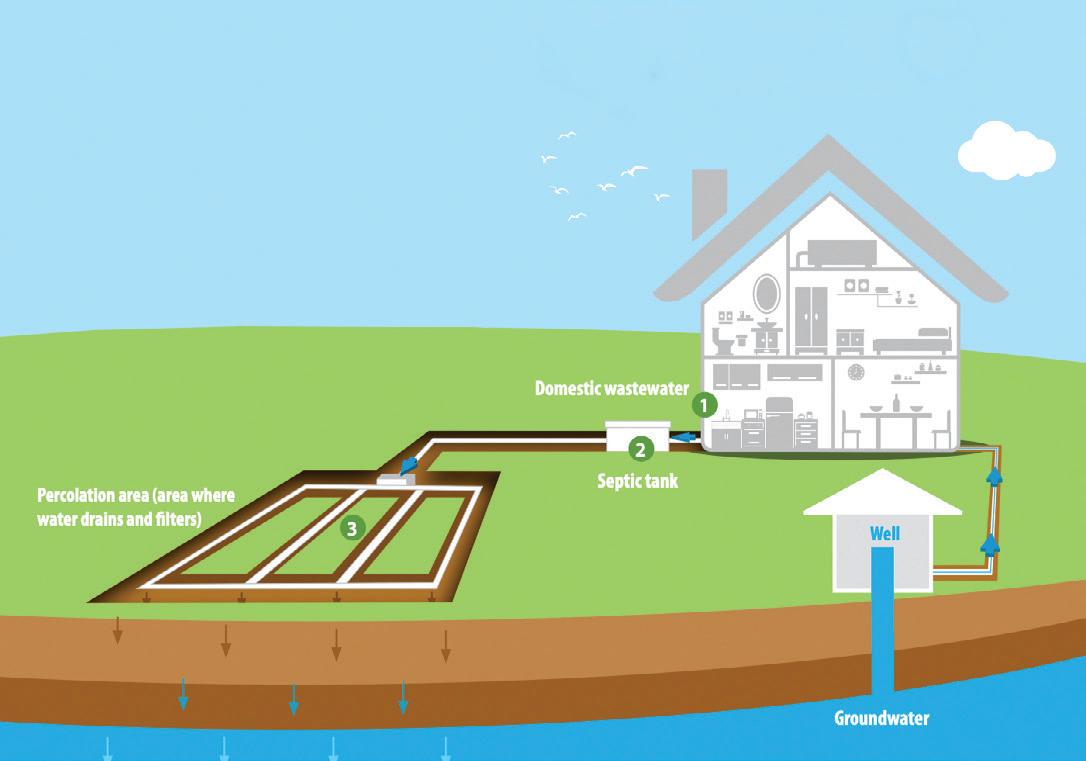
Domestic sewage effluent can also be referred to as wastewater, soil water or foul water. The effluent discharged from a domestic sewage system is simply wastewater from sewage which has been treated to reduce or eliminate pollutants.
Before treatment, the sewage contains water, suspended solids, matter dissolved in the water and bacteria and other microorganisms living in the water; and is composed of greywater (i.e. water from showers, baths, wash basins, kitchen sinks, dishwashers and washing machines) and the dirty water from toilets.
According to NI Water, each of us generates on average 135 to 180 litres of sewage a day with over 99.9 per cent being liquid and less than 0.1 per cent solid.
Although precise figures are lacking, there is clear evidence that there is a great deal of environmental damage being caused by septic tanks in Northern Ireland, particularly in key waterways like Lough Erne and Lough Neagh.
In Ireland, domestic wastewater has put significant pressure on the Galway Bay South East catchment and in Co Donegal one-off housing has been linked to pollution in the
Gweedore subcatchment. Likewise in Co Monaghan septic tanks have put pressure on the Avaghon lake and stream, and in Co Cork the Charleville stream is also partially affected by septic tanks. On the CavanLeitrim border the MacNean Loughs are also affected by septic tanks alongside other polluters.
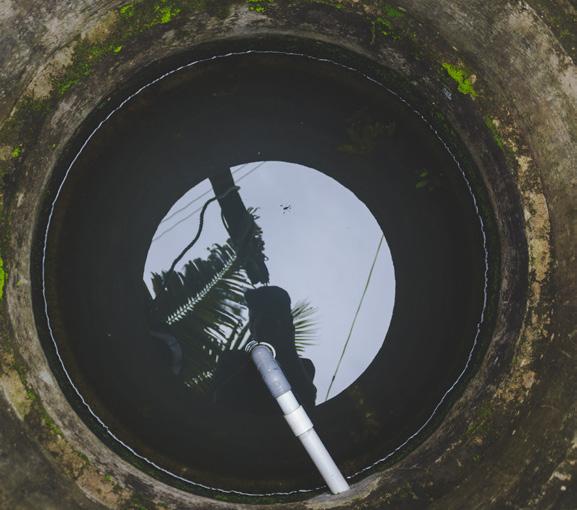
One of the most overlooked issues in Ireland is private well contamination. According to the Environmental Protection Agency (EPA) about 165,000 homes have both a septic tank and a well. This poses a risk of contamination.
It is obviously vitally important that, wherever the opportunity arises to install a new sewage system or to upgrade an existing one, we must endeavour to eliminate pollutants from being discharged to waterways
and prevent contamination of underground water sources such as wells, springs or aquifers.
When building a house on a greenfield site, you will be given the option to connect to the local authority sewage network where available, by applying to Uisce Éireann (Irish Water). The standard connection cost is €3,929.
In rural areas where mains connection isn’t possible, you will be required to have an onsite wastewater system
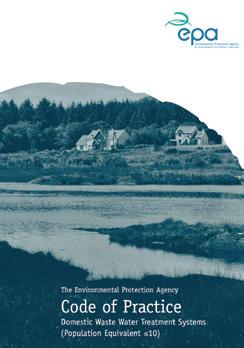
The EPA’s Code of Practice 2021 (Domestic Wastewater Treatment Systems Population Equivalent ≤10) is the reference document to determine what on-site systems are allowed on rural sites. If your site is unsuitable for on-site wastewater treatment (the
site drains too slowly or too quickly) and there is no mains connection, you will not get planning permission to build on it.
Sites with poor drainage do have more options than they used to, but very poor ground conditions will lead to a refusal of planning permission. That’s
Wherever the opportunity arises to install a new sewage system or to upgrade an existing one, we must endeavour to eliminate pollutants from being discharged to waterways and prevent contamination of underground water sources such as wells, springs or aquifers.

Leslie O’Donnell Architectural technologist and structural engineer
because consents to discharge are very seldomly awarded; meaning even if the system you want to use discharges clean water, you will not be allowed to discharge it to the ground or to a nearby water stream or river.
When applying for planning permission, you will be asked to submit a Site Characterisation report to explain what system you intend to install and how it complies with the EPA’s Code of Practice. The report is done by a site assessor who will carry out a percolation test on site and will suggest
what specific product to use to comply. Site assessors are independent but are likely to recommend specific products they are familiar with.
This report will form part of your grant of planning permission; you will have to go with whatever specific type system was suggested in that report so make sure you have a conversation with your site assessor to check which system is the most cost effective for your particular site conditions. You can shop around and work with your site assessor to come to the best solution for your site
before filing the report.
Changes to the type of system once the report has been filed and approved by your local authority require resubmittal of planning. To check the systems, you are looking at comply with building regulations, specifically SR66 (S.R. 66:2015), check the PIA website, pia-gmbh.com/en/ references-irish-certificates. SR66 is the official standard all systems in Ireland need to comply with and it is a mandatory requirement under Technical Guidance
In Ireland, all domestic waste water treatment systems, including septic tanks, must be registered at protectourwater.ie; the fee is €50. If you do not register your system and are convicted, you could be fined up to €5,000.

Document H (TGD H) for new systems installed from January 2017.
The standards are EN 12566 Part 1 - Prefabricated septic tanks or EN12566 Part 3 – Wastewater Treatment plants up to 50PE.
When purchasing a site, you may have assumed that, because you have seen the planning permission, all permissions have been obtained and you are ready to build as soon as the detailed building control plan approval for the construction works has been obtained. This is not necessarily so.
The planning authority will have considered whether or not discharge consent is likely to be given and if a consent application is unlikely to be successful then planning permission would be refused. It is therefore relatively common in NI to gain planning approval for a site, with the stipulation that “development shall not be occupied / commenced until the foul water drainage works onsite and off-site have been submitted to and approved by the relevant authority and constructed by the developer in line with the approved design” or words to that effect.
Incidentally, a similar clause may also apply to works relating to surface water, which will be discharged to a separate system, i.e. one which is not connected with a sewer.
This means that either you or the vendor will need to obtain approval for the proposed foul drainage works. Note that if approval is issued in the name of another applicant, such as that of the vendor or original owner, you will need to get it amended to
your name.
The Northern Ireland Environment Agency (NIEA) will firstly check whether you can connect to a mains sewer if available within 30 metres and if so, you will usually just require permission to connect to it.
Be advised that a situation exists whereby many sewage treatment works serving settlements such as towns, villages and hamlets have reached capacity and it will not be possible to make new connections to these sewer networks until their treatment works have been upgraded. Projects of this sort require significant funding and whilst some areas have recently been allocated funds, many are still waiting, so you definitely need to check the situation for your locality.
If you cannot connect to the public wastewater network, the preferred choice would be for discharge to a sub-surface irrigation or other filtration system from an approved treatment plant. If the first two options aren’t feasible, they will consider discharge to a suitable waterway from an approved treatment plant.
If we look at the case of a site which cannot be connected to a mains sewer, consent will be required for the discharge of domestic effluent. This will include most, if not all, rural sites. It may also include a site for a single dwelling in a settlement which has no potential connection to a mains sewer, where it may be possible to gain approval for a standalone system if site conditions permit.
The planners and other consultees during the planning process will not necessarily have considered practical
issues in detail, such as soil or water conditions for discharge purposes or precise details of the sewage system which will be required, or how the drainage can be achieved. Consultee input on effluent discharge at this stage is usually in the form of general advice, which does not constitute approval.
If an ecological survey was required during the planning application process, it might have proposed certain measures for the protection of flora or fauna and for the avoidance of pollution, etc., so ensure that any proposed effluent discharge system and associated siteworks comply with the ecological report. This leaves you to establish whether consent to discharge effluent may feasibly be obtained. In other words, how might a proposed wastewater system work for this particular site, what will it be likely to cost and do you have the necessary entitlement to cross public roads or other land, etc.? If you are experienced in similar building projects, you may choose to lodge the application yourself, however most people will use their designer or engineer to do this for them.

Similar to planning permission, a consent to discharge domestic effluent does not confer any legal rights of access, control or ownership for a property. It is up to you (through your designer and solicitor) to check all legal rights pertaining to the site and its services.
For example, an effluent discharge system might require permission from another landowner to discharge into or through his/her land or to a waterway on their land, along with permission to access the services if future maintenance works should be required.
Likewise, a drainage route might have to cross under a public road, in which case you will need permission from the roads authority to carry out the work.
You also need to ensure that the actual system, when installed, matches the positions shown on the drawings submitted with the consent application and that everything (including easements, wayleaves or access arrangements, etc.) is included on the deed map or land registry map for your site.
Your on-site wastewater treatment system is likley to be designed for a population equivalent (p.e.) of less than 10. To calculate the exact p.e. of your system, a general rule of thumb is to take the number of bedrooms in the property and then add two, so if there are five bedrooms it be designed as a 7p.e. system.
You or your designer or an engineer can look at the site and survey it in order to assess which type of system might work best for you and for the environment.
As previously mentioned, the preferred option, if no connection to a mains sewer can be made, is to seek consent for discharge to a sub-surface irrigation system. This uses the underground soil to filter and de-contaminate effluent before it reaches any natural water.
Percolation tests and a range of other site-specific criteria are assessed for the suitability of the proposed discharge system.
A useful starting point for assessing soil condition is to look first at low-lying points in the site to check for signs of seasonal waterlogging or ponding of surface water. Then look at the vegetation. An area of the site which is good at growing water-loving species of vegetation may not be the best location for an underground irrigation system. Such species may include rushes, reeds, marsh marigold, lesser celandine, yellow iris, meadowsweet, bog mosses, hazel, alder, downy birch or willow, etc.
Soils containing large amounts of peat or clay, or thin layers of topsoil over rock or clay strata, will not usually be suitable for filtration purposes.

The soil drainage characteristics in and around a sub-surface irrigation system therefore needs to be neither too dense nor too porous. It needs to contain the wastewater long enough to filter it properly.
If it is too dense (e.g. peat or clay) it will hold the wastewater too long and the ground will eventually become saturated, leading to a potentially serious health risk.
Conversely, if it has very good drainage potential, such as very sandy or gravelly soil, it will likewise not be suitable due to the potential for effluent to readily escape to natural waterways or water sources.
The key test of suitable soil
conditions for a sub-surface irrigation system is known as the percolation test. It involves digging a few small holes and timing the rate at which a given depth of water flows out of each one, over a number of times. These flow rates will determine not only whether your soil will be suitable, but will also direct your designer in calculating the requisite dimensions for the drainage plan.
Your designer will also need to take levels and measurements to check the falls and directions for drainage pipes and the positions of the various parts of the drainage system, including the tank, manholes and inspection chambers, etc.
If your site has unsuitable soil drainage qualities, but which can be linked to a waterway which flows well, all year round and which can accept a new discharge connection that will not pose any environmental issues, you may find that the most efficient option is for discharge to the waterway. Some waterways may have been piped and covered, so if it is intended to connect to such a system, you will need to provide evidence for its suitability, the final discharge location and the location where sampling can be carried out.
Where consent is sought for discharge to a waterway, in addition to the requirement
for higher quality treatment of the effluent, the approving body will also check for other information, such as other effluent discharges already approved along the waterway concerned and whether it can accept any more, or whether the presence of protected species or habitats may require special consideration, etc. You are not required to conduct any site tests in order to apply for such a system.
The test holes should be relatively easy to dig using hand tools. If you need an excavator, then maybe the soil is unsuitable. Soil porosity can vary across a site and the percolation test should be carried out at the intended location of the proposed system.
Avoid carrying out the test in extreme weather conditions such as drought, frost and heavy rain; and leave the test holes covered over after testing so that they may be inspected if required.
Firstly, find out from your designer where the holes should be located, then dig them to the dimensions as given below. You will need at least 108 litres of water per hole to carry out one pre-soak plus three timed tests on each hole.
Excavate at least two holes (preferably three), each 300mm square with a depth at least 300mm below the proposed invert level (i.e. the bottom) of the infiltration pipe (see diagram on the right) and space them evenly along the proposed line of the subsurface irrigation system. Fill each hole with water to a depth of at least 300mm and allow this to seep away completely. If the water drains rapidly (within 10 minutes) the
hole should be refilled up to a maximum of 10 times. If the water continues to drain away rapidly or if the water has not soaked away within 6 hours, the area is not suitable.
Record the start and finish times for the water in each hole to drop from a depth of 75 per cent full, down to 25 per cent full (i.e. 225mm from bottom, down by 150mm, to 75mm from bottom). Repeat the tests so that each hole has been tested three times. You should now have a list of six start and finish times (if testing two holes) or nine start and finish times (if testing three holes).
Your designer can then take those times to calculate the percolation value (Vp), the drainage field floor area and the required length, width and depth of the irrigation trenches. The Northern Ireland Environment Agency will only consent to the use of a subsurface irrigation system when the Vp value falls within their parameters.
Do not attempt to tweak the figures if you find that the test results do not give a workable Vp value. To do so will result in you installing a system that will give no end of bother in the future together with the
Leslie O’Donnell Architectural technologist and structural engineer
associated costs that a failing system will require to put right. If your Vp values do not look good, seek professional advice from a designer or engineer who can design a system that works for your site. The local Water Quality Unit of the Environmental Health Service (EHS) will also give sound advice to steer you in the right direction. In all my years in the construction industry, I have never seen a site in Northern Ireland where a workable solution for an effluent treatment system could not be found.
The Environmental Protection Agency’s current Code of Practice treats the percolation test as part of a wider site suitability assessment, not a standalone exercise, so trial holes, soil depth, bedrock, groundwater and drainage conditions all have to be reviewed alongside the test itself.
In practice, the job is normally carried out by a suitably qualified site assessor; typically an engineer, environmental consultant or other experienced wastewater specialist familiar with the
EPA methodology and local authority requirements.
Some councils may have preferred formats or ask for specific competence, so it’s wise to check with your county council before appointing anyone. The EPA is clear that the assessment and percolation test must be completed by a suitably qualified person.
As in NI, the assessor inspects the site and digs trial pits to examine subsoil, groundwater indicators and rock levels.
Then the actual percolation holes are prepared and tested, usually in triplicate, to measure how long water takes to drop through the soil. Depending on the site, this may involve a subsurface test (formerly the T-test) and, on more constrained or raised-system sites, a surface test (formerly the P-test).
Those results are then used to decide whether a conventional percolation area will work, or whether you’ll need a secondary treatment unit, raised polishing filter or another engineered solution. If the site fails entirely, and there’s no mains connection, planning permission can be refused.
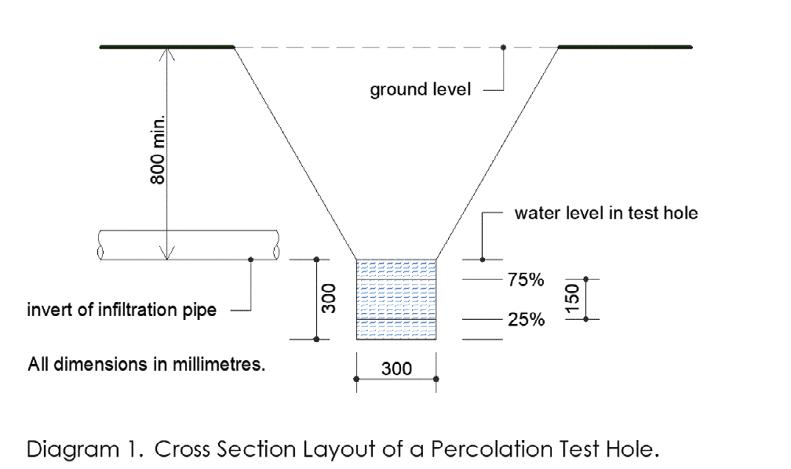
Cross section layout of a percolation test hole
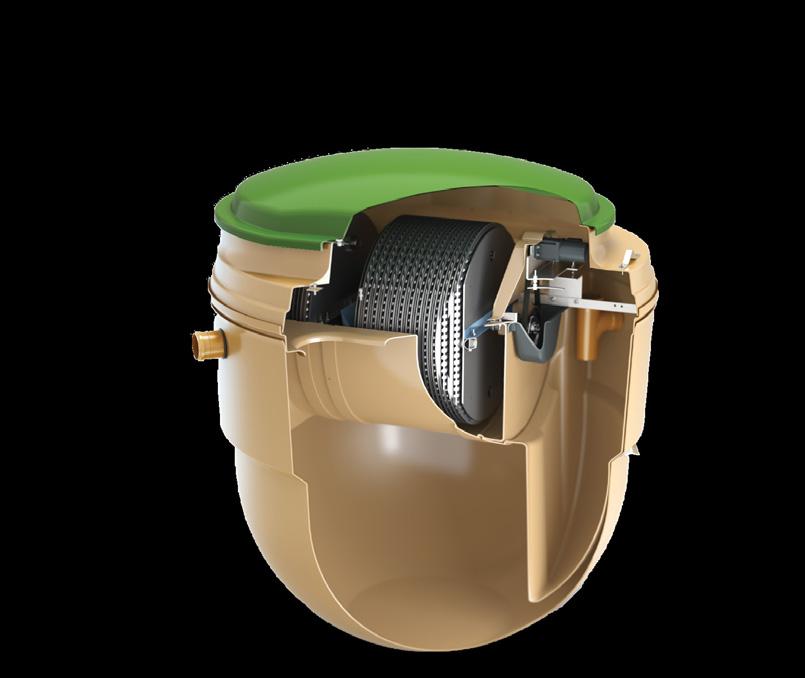
For over 50 Years, the Kingspan Klargester BioDisc® has set the standard for reliable and efficient domestic and commercial sewage treatment solutions, transforming how we handle wastewater.
AFFORDABLE RUNNING COSTS


Leslie O’Donnell Architectural technologist and structural engineer
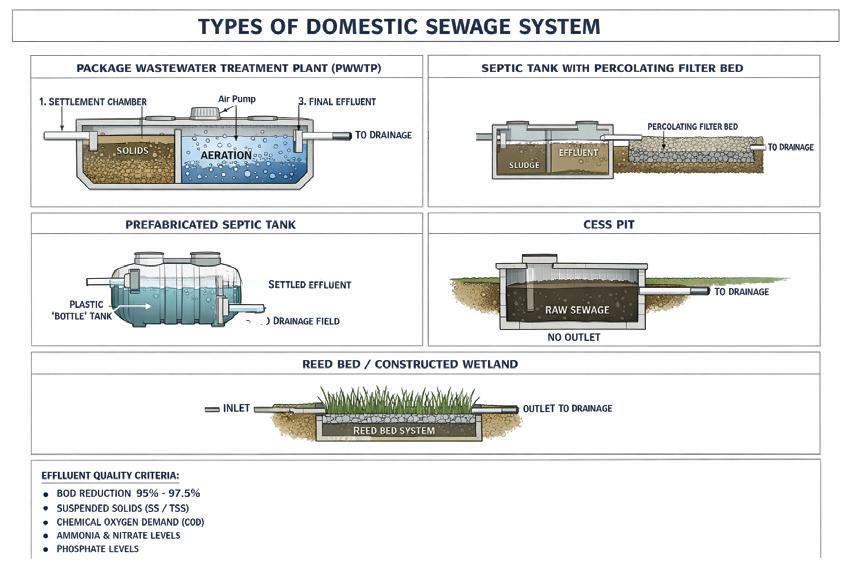
Here’s an overview of the types of domestic sewage systems available today.
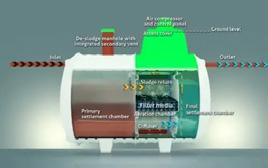
Generally, the stages of treating domestic sewage will involve settlement to begin with, where solids are separated out from the liquid. This is followed by secondary treatment, in which biological processes get to work to break down the organic matter. A final process will use a filtration system, or in some cases, UV treatment to disinfect the water before it is discharged.
The quality of effluent is chiefly based on the degree of reduction of biological oxygen demand (BOD). In Northern Ireland, discharge to a waterway will usually require effluent quality of 97.5 per cent BOD reduction or greater and discharge to a sub-surface irrigation system will usually require effluent quality of 95 per cent BOD reduction or greater.
Other quality performance criteria includes the levels of suspended solids (SS) or total suspended solids (TSS), chemical oxygen demand (CoD), ammonia, phosphate and nitrate remaining in the treated effluent.
In Ireland, the system must comply to SR66 and the Environmental Protection Agency (EPA) Code of Practice for Domestic Waste Water Treatment Systems - Population Equivalent of less than 10 (published in 2021).
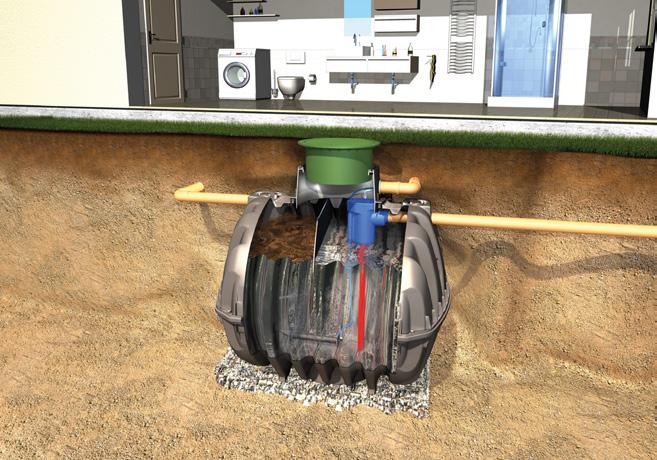
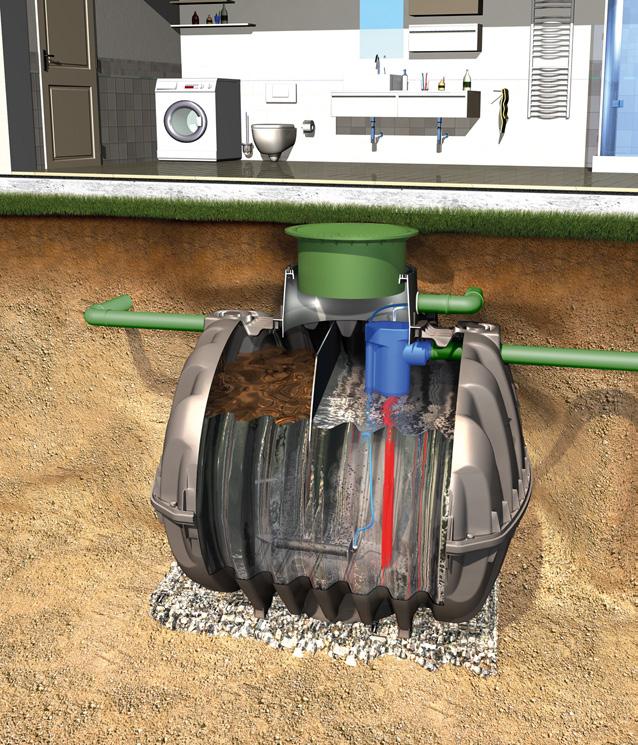
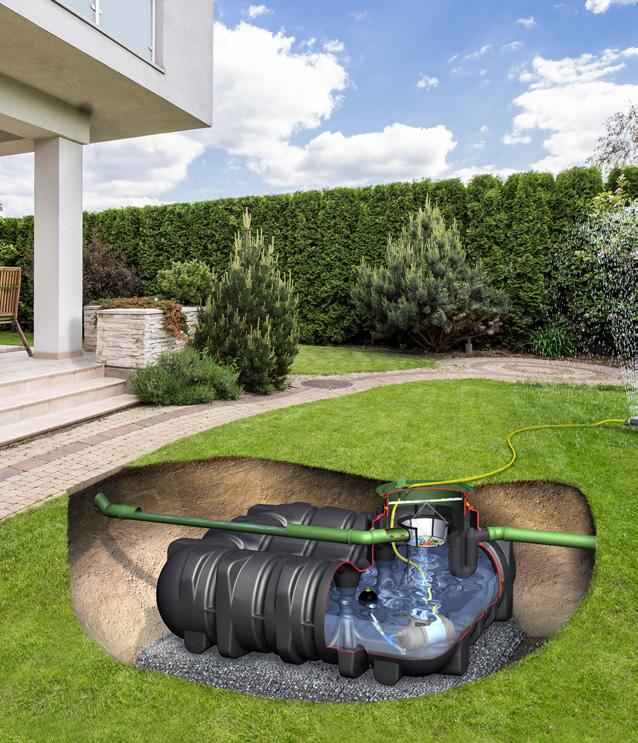
Package wastewater treatment plants (PWWTPs) are nowadays the most commonly used solution for treating effluent before it is discharged. These systems
introduce air into the effluent during the secondary stage, using electrical air pumps or motors to drive a mechanical system, circulating air through the sewage, which promotes the growth of aerobic bacteria to break down the sewage, producing a higher quality effluent.
The older standard block-built septic tanks with percolating filter beds performed a similar function as a PWWTP but without the added aeration function and do not produce as high a quality of effluent. They would not meet the requirements for discharge to a waterway nowadays. The percolating filter bed (usually filled with gravel) needs to be properly maintained.
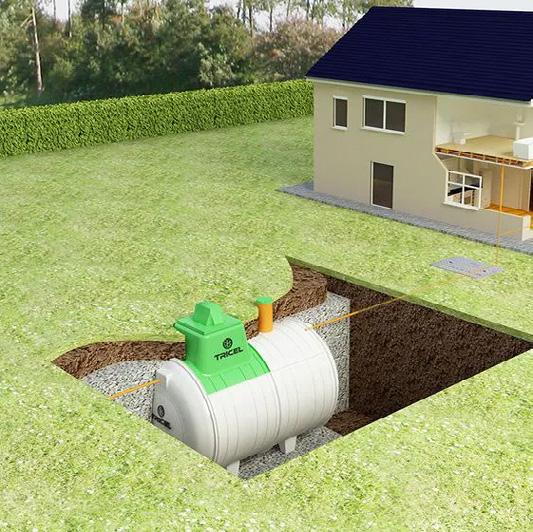
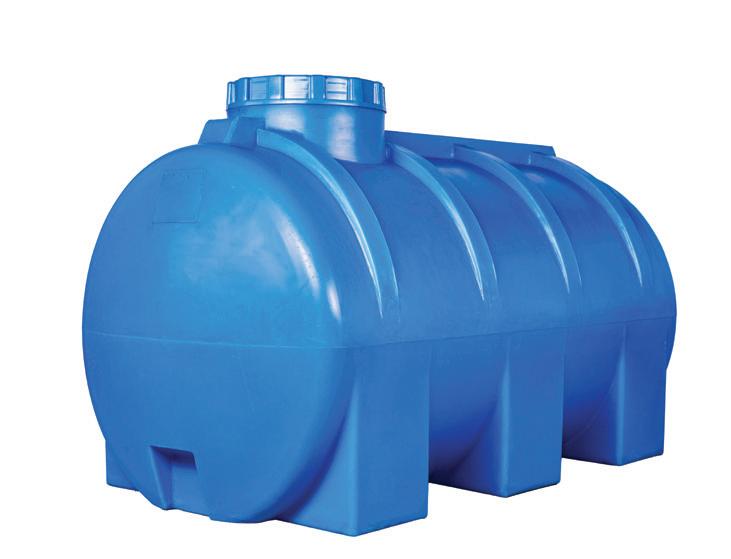
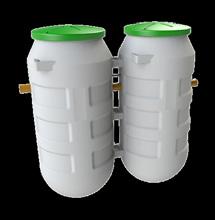
Prefabricated septic tank systems are usually constructed from plastic, glass reinforced plastic (GRP) or concrete. They were intended to be connected to a sub-surface irrigation or other filtration system and not directly to a waterway. Many are still found serving rural dwellings today in the form of the widespread ‘bottle’ tank and similar systems.
Cess pits are less often encountered nowadays, but they still exist on some older properties. As they do not process the sewage in any way, they must not be permitted to leak or overflow, so must be regularly emptied (at a cost) by the local council or a licenced waste disposal specialist.
Other designed systems may incorporate the use of reed beds, constructed wetland systems, soakaway mounds and other methods that further improve the quality of effluent before final discharge. Other options include tertiary treatment, e.g. drip systems.
Note that the word ‘soakaway’ should not be used to describe a sub-surface irrigation system for effluent discharge. A soakaway is usually what you would use to receive surface water running off roofs and other hard surfaces. The two perform different jobs and should neither be physically linked in any way nor should one be confused with the other.
A curated selection of the wastewater treatment products available on the Irish market today.
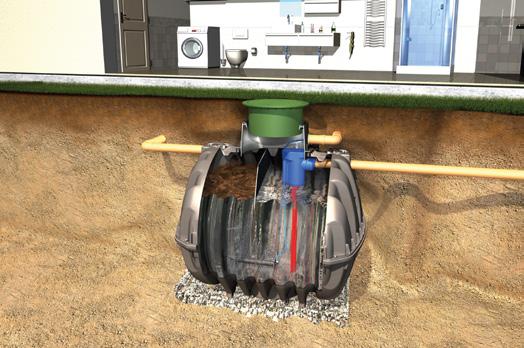
The GRAF One2Clean is a high-efficiency packaged wastewater treatment plant featuring a three-step purification process that results in low sludge and very low operational costs (approx. 46 kWh/person/year). Designed for one to 18-person capacities (residential to small commercial), with a 15-year warranty on the tank shell.
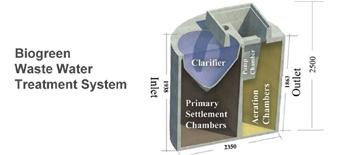
The Biogreen Wastewater Treatment System is a high-performance, precast concrete unit designed for domestic sewage treatment. The system provides a bespoke solution tailored to meet specific site requirements and environmental standards.

The Kingspan Klargester BioDisc is a reliable, high-performing wastewater treatment system trusted worldwide. It delivers quiet, odourfree operation, low running costs and a 7-year warranty, backed by over 50 years of proven performance.
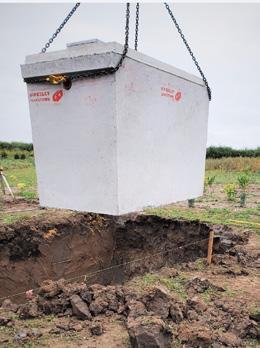
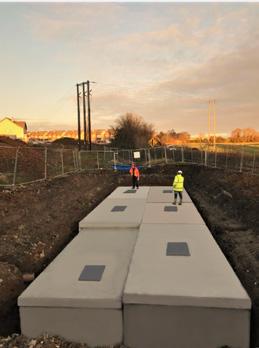
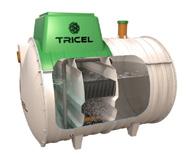
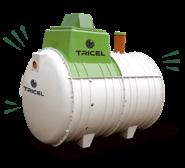
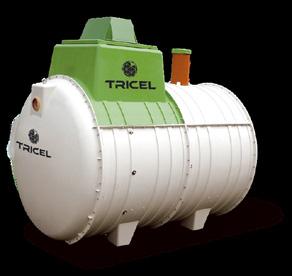
Tricel Novo – and Tricel Vitae in Northern Ireland – is an ideal wastewater treatment solution for one-off dwellings. Other options include the Tricel Vento septic tanks for sites with good drainage and space, and the Tricel TERO and Sandcel systems for enhanced or tertiary treatment where higher performance is required.
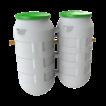

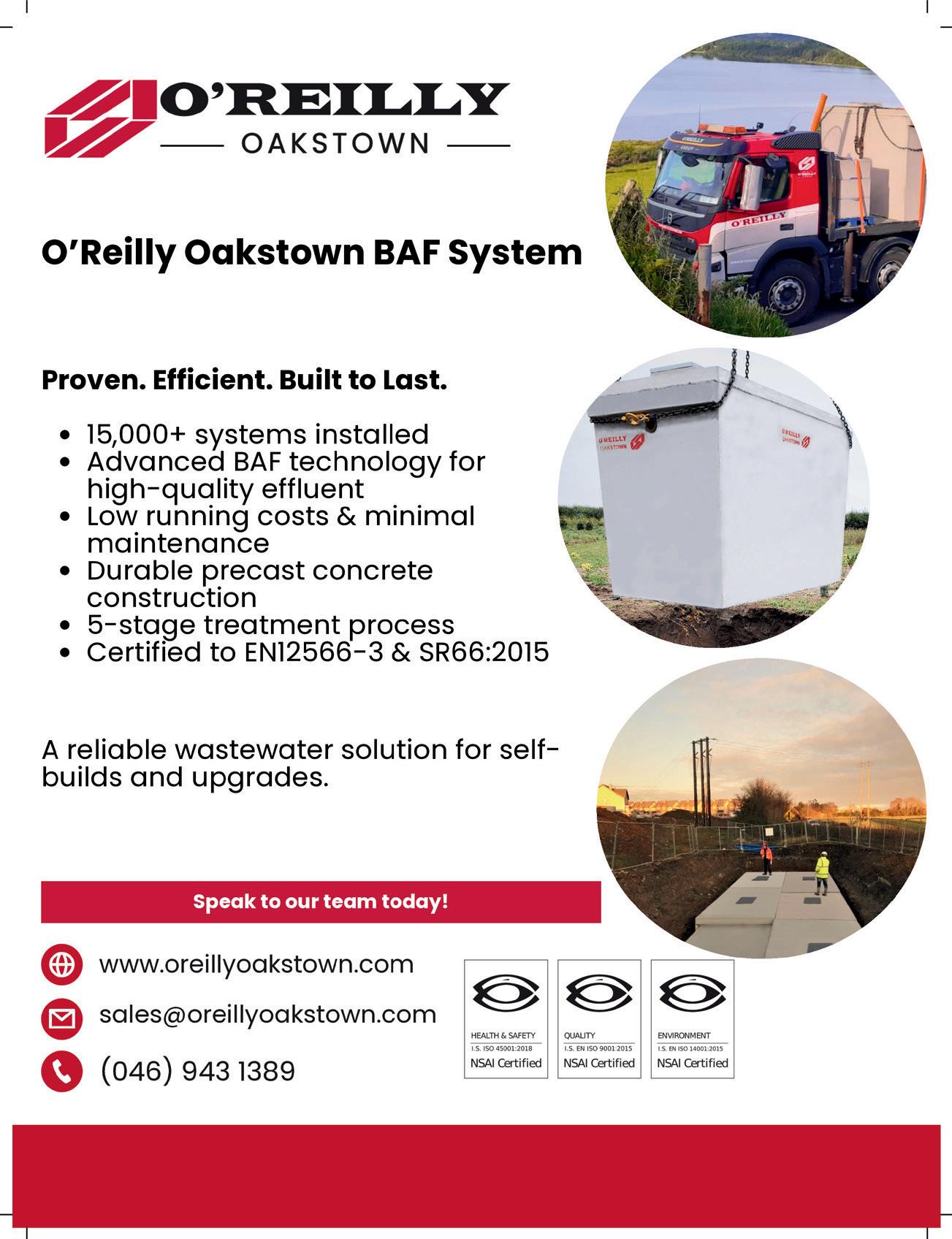
The BAF (Biological Aerated Filtration) Wastewater Treatment System is a proven, reliable solution designed to deliver exceptional effluent quality with low running costs. With over 15,000 BAF units installed, it provides homeowners with a durable, low-maintenance system backed by more than 50 years of manufacturing expertise.
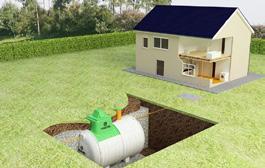
Viltra’s IWOX Premium is a 3-stage, two-tank system, CE certified for BOD removal of 97.5 per cent, small footprint for installation, energy efficient air compressor, and compliance with strict UK/Ireland environmental standards (DAERA, SEPA, EA). With only one mechanical part (80kw air compressor), the system is inexpensive to maintain with no moving internal parts.
Leslie O’Donnell Architectural technologist and structural engineer
In an older sewer system, it is rare that the complete system fails at once. The main things which usually go wrong are the septic tank itself, the sub-surface irrigation system or other elements such as manholes, inspection chambers and gullies.
Septic tanks may become damaged due to changing ground conditions or the gradual breakdown due to ageing and chemical processes acting on the materials with which they were constructed. It is usually less costly to replace a septic tank which requires extensive repair, rather than repair it.
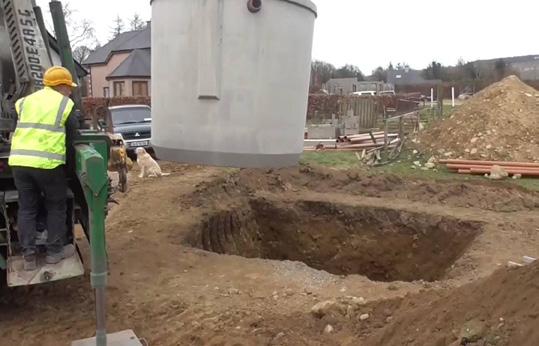
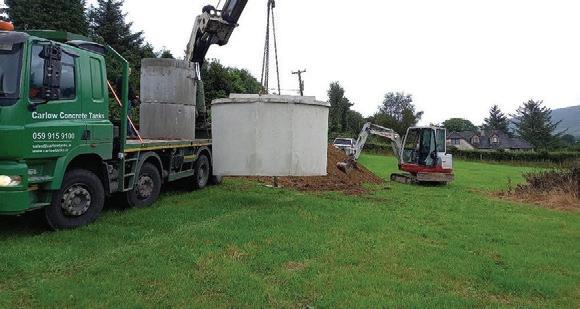
As discussed previously, the usual viable replacement in most cases will be a PWWTP. If space is limited,
this may involve emptying the old system, digging it out and correctly disposing of the debris. If space is available nearby for the replacement system, the old one can be emptied of sewage and filled with a suitable inert fill material and the drains and other access fittings re-routed as required.
If a sub-surface irrigation system fails, it will usually be due to factors such as soil compaction, saturation of the soil, an incorrectly installed system, use of the wrong type of drainage pipes, silting up of the pipework or tree root damage.
Replacing a failed subsurface irrigation system will be easiest if an alternative area can be used, as long as the soil
conditions are suitable. If no alternative area is available, a solution might involve the provision of a soakaway mound or similar alternative, but before carrying out any work, consult with the local Water Quality Unit (Northern Ireland) or the Rural Water Section in your local authority (Ireland) and act on their advice.
In Northern Ireland, for any sewage system failure which occurs at the existing tank or downstream of it, a new consent to discharge domestic effluent will be required to replace it. The processes and application fees for this are essentially the same as applying for a new consent.

They’re hard to come by but worth investigating if your wastewater system needs an upgrade.
If your septic tank or domestic wastewater treatment system needs repair, upgrade or replacement, know that the Domestic Waste Water Treatment Systems Grant Scheme is available in Ireland.
Administered by local authorities, it can provide up to 85 per cent of eligible costs, to a maximum of €12,000, for approved remediation works.
In most cases, eligibility arises where a problem has been identified following a local authority inspection under the National Inspection Plan, and the homeowner has received formal notice that remedial works are required.
Separate grant routes may also apply in certain Prioritised Areas for Action or High Status Objective Catchment Areas, where local authorities issue eligibility letters in advance.
Note that you cannot request that your house be inspected, which makes the grant difficult to get if you are not in a high-risk area.
To qualify, the house must also be permanently occupied, at least seven years old, and not have received a similar grant within the previous seven years. Routine maintenance, servicing and desludging are not covered.
All approved works must comply with the EPA Code of Practice 2021. Contact the Rural Water Section of your local authority for more information.
The documents you need at the end and who signs off on the lot.
Given the fact that an installer is essentially certifying their own work, you might wish to ensure that you see and understand what has been done before things are covered over.
In Northern Ireland, Building Control will check the installation against the approved drawings and the building regulations, but they do not check rights or legal issues for you. Your appointed certifier who issues certificates for your mortgage lenders will also be unlikely to do so.
Checks should include that:
• You have a copy of the correct certification for the installed system (e.g. the PWWTP). This should include certification to the latest version of BS EN 12566-3 and should state the tested BOD, CoD and TSS figures. The entire installation should comply with the effluent discharge consent documentation.
• The installer has provided you with a commissioning certificate for the PWWTP.
• The trenches have been excavated to the correct dimensions.
• All pipework is certified for use in a sewage system and trench fill materials plus all manholes and inspection chambers have been provided to the exact specifications shown on the approved building control drawings and to the latest version of BS 6297 (Code of practice for the design and installation of drainage fields for
use in wastewater treatment).
• The electricity installation is working and suitably protected and issued with a NICEIC registered electrician’s certificate.
In Ireland the local authority’s building control section may inspect the works for general compliance with the building regulations and the documentation lodged on the Building Control Management System (BCMS). Although it is possible, it’s not very common for building control to inspect sites that do not require a fire certificate.
You may also get an inspection from the Health & Safety Authority to check the health and safety regulations have been followed, including having appointed a PSDS (project supervisor design stage) and PSCS (project supervisor construction stage) and have health and safety files for both stages, check hsa.ie for the full details.
Even if there is no inspection, responsibility for compliance remains with the owner. The entire installation should comply with the site-specific design and the EPA Code of Practice. The EPA’s current 2021 Code of Practice for Domestic Waste Water Treatment Systems (Population Equivalent ≤10) applies to site assessments and installations commenced on or after 7 June 2021.
Where your project is being carried out under the full

More about signing off on your project

BCAR process, your Assigned Certifier may gather ancillary certificates and inspect stages of the works, but they will not necessarily verify every drainage detail unless it forms part of their inspection plan. If you have opted out of statutory certification, there is no Assigned Certifier but you will still have a building professional sign off on the build – oftentimes this role is carried out by your engineer. The mortgage provider will require each stage to be signed off on and you will also need a completion certificate at the end of the build, which is needed to sell on the property. If you’ve taken a warranty out, they will send their own certifier to inspect the various stages.
In Ireland here’s the documentation you can expect to get:
• A copy of the correct certification for the installed system (e.g. the packaged wastewater treatment plant / PWWTP). The unit should be suitable for domestic use in Ireland and should have valid performance certification to I.S. EN 125663 (or the current applicable harmonised product standard), together with CE marking and preferably NSAI Agrément (or equivalent recognised third-party certification where applicable). The certification should clearly state the tested performance values, including BOD, COD and TSS, and the installed unit should match the design assumptions and any conditions attached to the planning permission or discharge requirements.
• A commissioning certificate for the wastewater treatment plant. This should confirm that the unit has been installed in accordance with the manufacturer’s instructions, correctly set up, tested,
powered, and left fully operational. It should also confirm the model, serial number, date of commissioning, and any maintenance requirements or service intervals. Where applicable, you should also receive the manufacturer’s O&M manual and service logbook.
• A copy of the site characterisation / percolation assessment and design prepared in accordance with the EPA Code of Practice, and the installed system should correspond exactly with that design in terms of treatment type, location, invert levels, discharge route and polishing component. If the design was for a polishing filter, soil polishing filter, raised polishing filter, mound, or packaged pumping arrangement, that exact arrangement should be what has been built.
• The electricity installation is working, safely protected and properly certified.
Any electrical supply to the treatment plant, pump chamber, blower, alarm panel or control kiosk should be fully operational, correctly isolated, RCDprotected where required, and installed in Ireland by a Registered Electrical Contractor (REC) who will issue a Safe Electric Completion Certificate.
During the installation checks will be done on the pipework to ensure compliance, including:
The polishing filter / percolation area / tertiary treatment area has been excavated and constructed to the correct dimensions and levels. This includes trench widths, trench depths, trench spacing, distribution arrangements, aggregate type and depth, pipe gradients, geotextiles (where specified), and finished cover levels.
All pipework, fittings, chambers and backfill materials are suitable for foul drainage use and have been installed exactly as designed.
All pipework is suitable for use in a sewage system, correctly bedded and protected, with watertight joints and proper access for inspection and maintenance.
Distribution boxes, pump chambers, manholes, sampling chambers, inspection chambers and venting arrangements are installed to the exact specification shown on the approved drawings.
The falls, invert levels and separation distances from wells, boundaries, buildings, watercourses and groundwater protection features are checked against the approved design and planning conditions.
Leslie O’Donnell Architectural technologist and structural engineer
Any sewage system requires regular maintenance, so find out what yours requires and implement a programme which includes checking and servicing it.
Responsible ownership is as much about not wanting to pollute as a legal requirement. The installers will generally give you a price for this work.
A typical programme might include an initial six-month service, followed by another six months later and annual services thereafter. Do keep a record of all maintenance work.
The schedule could cover:
• De-sludging (although note that Northern Ireland ratepayers not connected to mains sewer are entitled to one free desludge per year).
• Sampling and testing the quality of effluent being discharged.
• Checking bacteria health.
• Checking the functioning of the aeration system.
• Checking and replacing, if necessary, the mechanical components.
• Testing the alarm system if fitted.
Your household will play a very important part in keeping maintenance costs down, by ensuring that nothing enters the system that might damage it or cause it to malfunction.
Avoid fitting a waste disposal unit as PWWTPs are designed primarily to process liquid waste, so too much solid waste can overwhelm the treatment system and can also contribute to methane production (considered one of the worst greenhouse gases).
You should use biodegradable or low phosphate
washing and cleaning products, only use as much as you need and spread washing and cleaning activities evenly throughout the week.
With any system, a key process is the biological breakdown stage, where the naturally occurring bacteria need a friendly environment to survive and do their work.
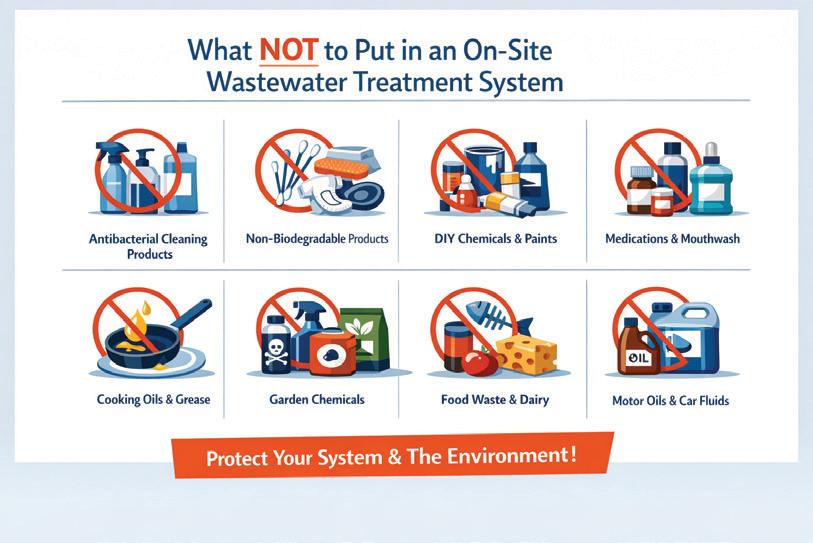
That environment is entirely created by whatever you put down the drains, so too many harsh chemicals can harm or kill the friendly bacteria, resulting in a system which will fail to work properly and which will take a long time to recover.
An online search for something like “ecofriendly products for domestic cleaning” will give you any number of alternatives to the usual chemical products. Your family and guests, including children and visitors should also be made aware of what not to put down your sinks, drains or toilets.
Contact with sewage can cause Leptospirosis and septic tank gases can be lethal, so
protect yourself and your family by ensuring that all covers and lids or other access points to the sewage system are kept secure and in good condition.
If in doubt about a possible malfunction, stop using water immediately and get professional help for any repair or maintenance work.
Things to watch out for include:
• Prevent hot tubs, swimming pools or surface water from entering and overloading the sewage system.
• The area over a sub-surface irrigation system should not be compacted by vehicles or other equipment and should not be used as a storage area for stockpiling construction or gardening materials.
• Tree roots can invade and damage pipes and tanks, so avoid planting trees too close to a PWWTP or a sub-surface irrigation area.
• Routinely check for signs of a malfunctioning system. Sewage backing up may be identified by gurgling pipes or gully traps, slow-draining fixtures and strong odours around manholes or the tank area. Any of these will require immediate attention.
• Pooling water, especially discoloured water, or unusually abundant grass over the subsurface irrigation area may indicate a system failure. Any signs of pollution in nearby ponds or watercourses will require urgent action.




HITTING ALL 4 REGIONS OF IRELAND WITH THE ULTIMATE HOME BUILDING & RENOVATING EVENT!

ULSTER
7&8 NOVEMBER 2026 EIKON EXHIBITION CENTRE, LISBURN
CONNACHT TIME & VENUE TBC LEINSTER
6&7 FEBRUARY 2027 NATIONAL SHOW CENTRE, DUBLIN MUNSTER
9&10 JANUARY 2027
UL SPORTS ARENA, LIMERICK