


The Grant Aerona R290 GET AHEAD WITH THE
- Designed for the UK & Irish Climate - Innovative Technology
- Exceptional Performance
- Ultra-Low Noise Levels
- Outputs from 4kW – 16kW


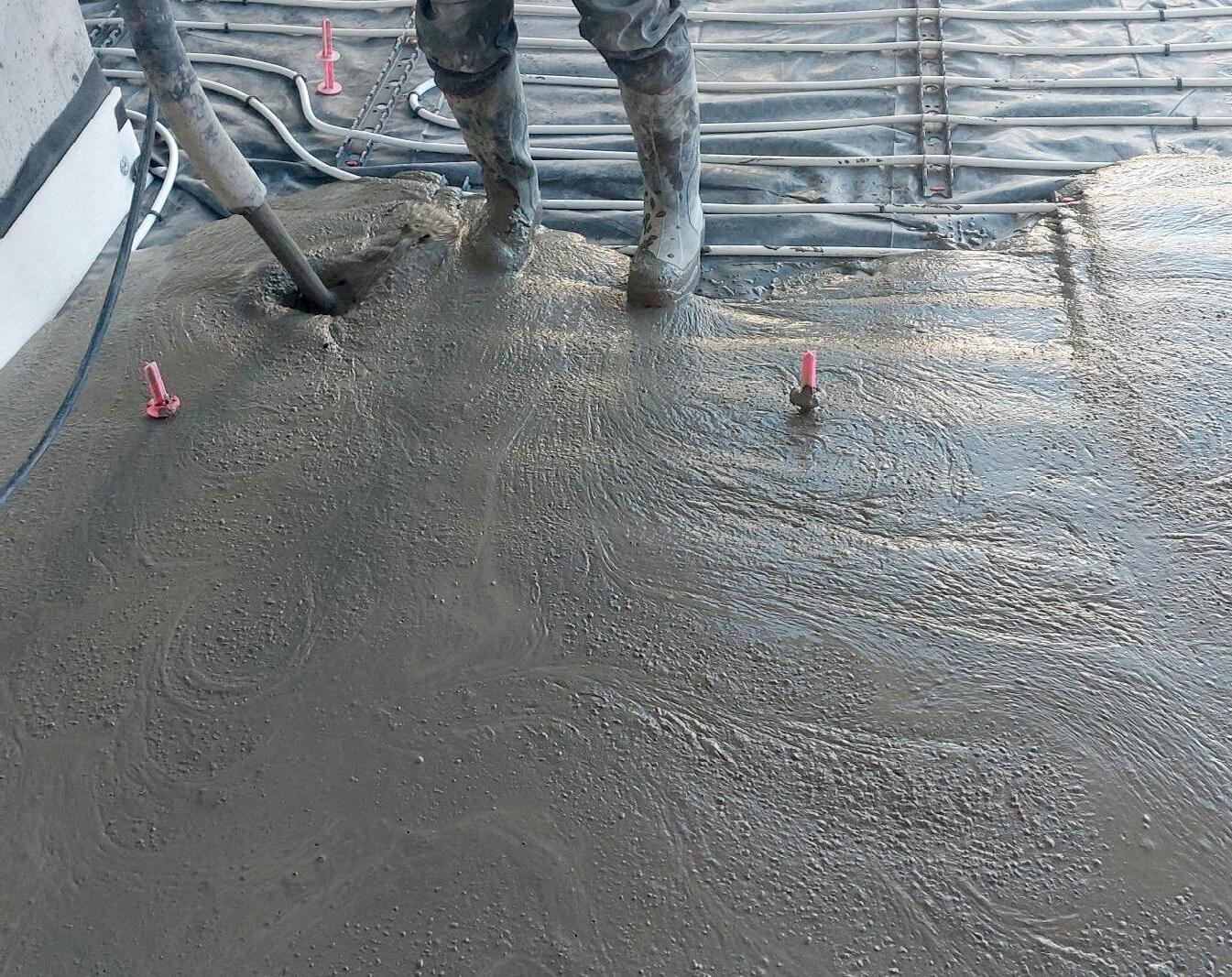
Roadstone FlowPlus is the next generation self-levelling cementitious screed developed in conjunction with the ARDEX Group.
Roadstone FlowPlus is the next generation self-levelling cementitious screed developed in conjunction with the ARDEX Group.
• Provides a quick, smooth and level surface with minimal leveling
• Ease and speed of installation
• Provides a quick, smooth and level surface with minimal leveling
• Suitable for all domestic and commercial applications
• Ease and speed of installation
• Suitable for all domestic and commercial applications

“In ROI by 2030 all new builds will have to install solar panels...”
This issue we’re focusing on the most popular type of solar panel: photovoltaics (PV). It’s a booming sector that’s relegated solar thermal panels (that generate hot water) to the status of poor relation.
Even though efficiencies are still relatively low, PV panels will yield immediate savings on your electricity bills. That’s a very tangible reason to invest in the technology, as is the fact that the investment cost has fallen over the years.
Still, it’s a big chunk of change to be forking out and, sadly, we still very much live in a ‘buyer beware’ world. So check credentials and how long the companies you shortlist have been operating. The full guide, including three in-depth projects, starts page 85.
If you’re still not convinced, in ROI by 2030 all new builds will have to install solar panels; for now you’ll need to make provisions for them. Turn to page 82 for more details about that, and about changes to the Building Energy Rating (BER) scale.
The good news is, the (somewhat useless) report you currently get with your BER

is being replaced by a more informative ‘energy passport’. Watch this space.
While immediate savings are attractive – including seeing your BER jump up by only adding PV panels (page 94) –it's important to get the basics right before you invest in a piece of tech.
You may not be able to directly quantify the savings, but investing in the fabric of your home remains the most important thing you can do.
That includes insulation and airtightness but also moisture management. Humidity is a fact of life – something to manage, not fight. We’ve an overview of how to go about it on page 80 and a real-life example of getting rid of damp in a centuries-old stone cottage on page 44.
Happy reading!

Astrid Madsen - Editor astrid.madsen@selfbuild.ie

Photovoltaic (PV) panels are the latest piece of tech to take over our homes; what are they, how much do they cost and how much can you save by installing them?

If you have a question, want to share some insights, or simply let us know how you’re getting on with your project, we’d love to hear from you for our Letters page. Email us at letters@selfbuild.ie 74
24 The creative home
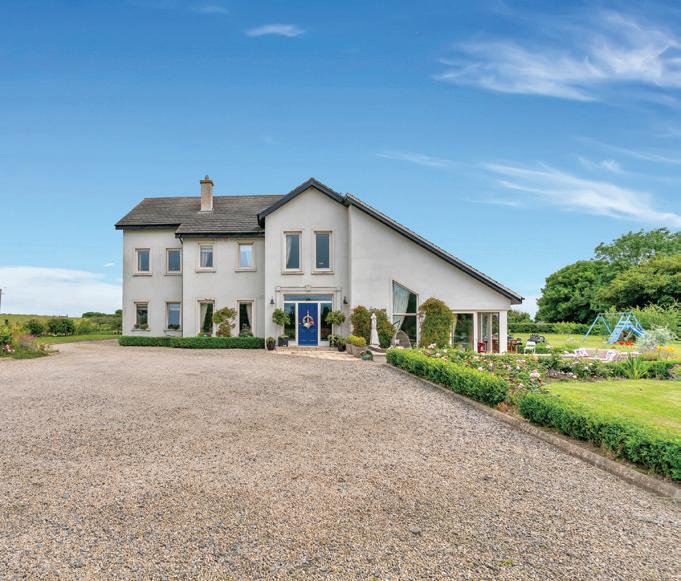
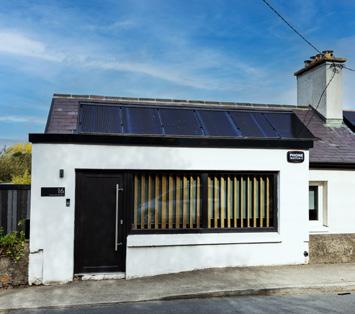
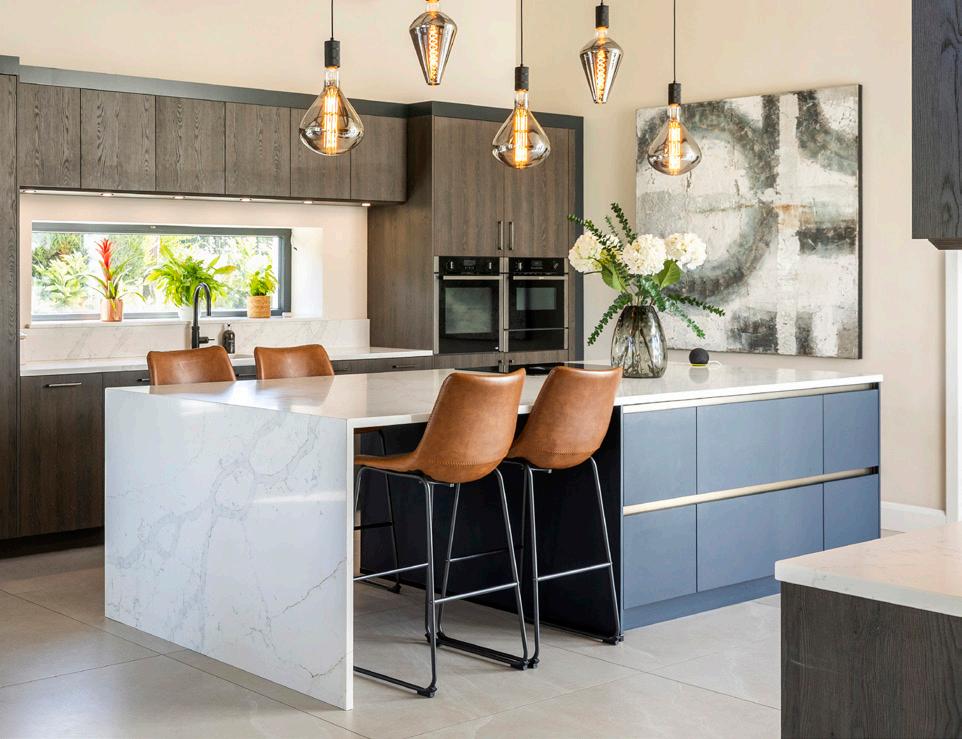
A Georgian-meets-modern family home in Co Laois that’s all about style, comfort and entertaining friends and family.
34 A modern cottage with a country heart
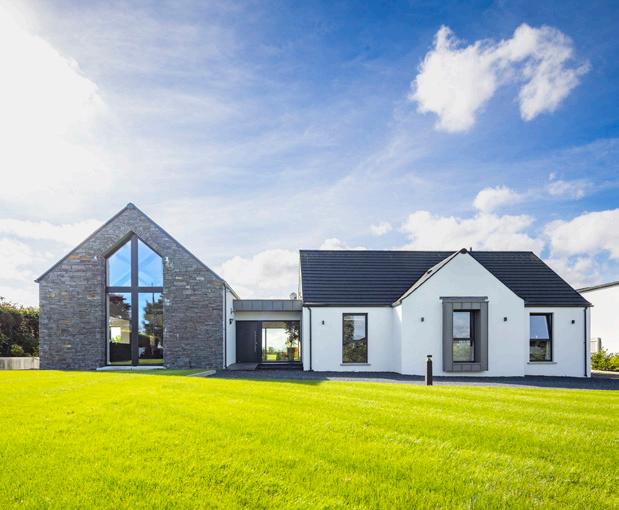
After years of urban living, this new home in Co Down offers the best of both worlds, a mix of modern amenities and country style ease.
44 The house that breathed again
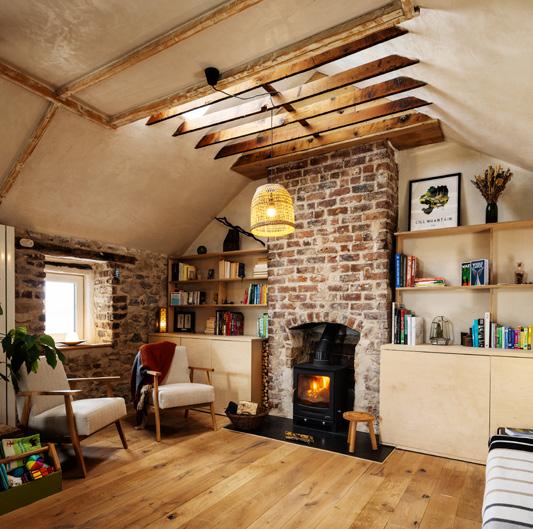
How a 175-year-old stone house in Co Wicklow was turned into a light-filled, breathable home with the help of natural materials. And it costs next to nothing to run.
62 The architect’s home
This Co Down new build’s architect was the client; he recounts the ups, downs and lessons learned from designing and delivering his own selfbuild.
70 Garden with level changes in Co Tipperary
This urban garden design in Co Tipperary required site levelling at the back and clever planting to suit all seasons.
74 Letters
Smart ways to tackle smart homes, window installs, dry eaves and more.
77 Current Costs
A member of our Facebook Group shares how much they expect to spend to finish their build.
78 Extensions: Myth busters
From flat roofs to north facing extensions.
80 The moisture problem we keep ignoring
High humidity levels in our homes lead to all sorts of problems; it’s time to tackle the issue head on.
82 Net zero by 2030
Changes are afoot in ROI, from having to install solar panels on your new build to major energy rating improvements.
All articles equally cover the 32 counties; when we refer to the Republic of Ireland the abbreviation is ROI. For Northern Ireland it’s NI.
54 A natural fit
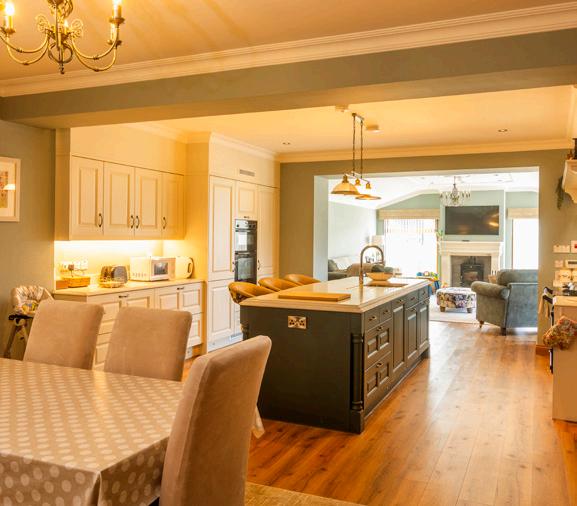
A light-filled kitchen extension that blends in and meets the needs of a couple nearing retirement in Co Tyrone.
76 Driveway costs
How much and what’s the most cost effective option?
Story


87 Overview
Photovoltaic (PV) panels generate electricity from the sun; find out what the system components are and how much they cost in Ireland today.
91 Pros and cons of PV panels
Things to know before you install the hottest piece of tech in your home.
94 How PV panels affect your energy rating
Ways to jump the energy rating scale with the addition of solar panels.
96 Six-year payback in Co Fermanagh
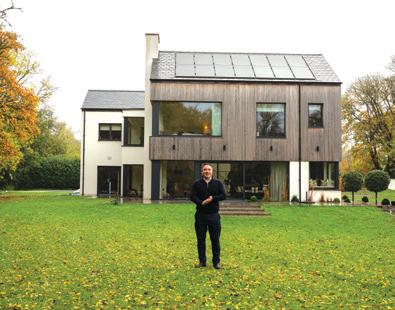
A contemporary new build with a keen eye on both build costs and running costs.
102 PV integrated with heat pump in Co Meath
This new build has the heat pump and PV panels working hand in hand.
107 PV with EV charger in Co Antrim
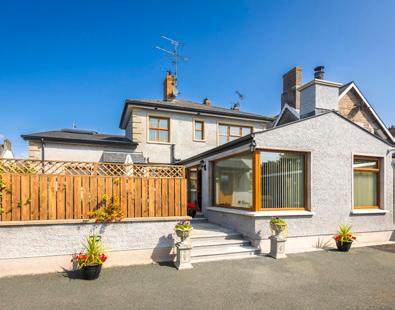
This retrofit project had the PV battery installed in an upstairs plant room.
112 Lowdown on PV grants in ROI
How much can you get and what’s the process of applying?
CONTACT
info@selfbuild.ie
EDITOR
Astrid Madsen astrid.madsen@selfbuild.ie
DEPUTY EDITOR
Heather Campbell heather.campbell@selfbuild.ie
DESIGN
Myles McCann myles.mccann@selfbuild.ie
Shannon Quinn shannon.quinn@selfbuild.ie
Megan Buckley megan.buckley@selfbuild.ie
MARKETING
Calum Lennon calum.lennon@selfbuild.ie
Rebecca Ferris rebecca.ferris@selfbuild.ie
Erin Mason erin.mason@selfbuild.ie
Rachel Caughers rachel.caughers@selfbuild.ie
SUBSCRIPTIONS
Becca Haslett becca.haslett@selfbuild.ie
ADVERTISING SALES
Ben Murphy ben.murphy@selfbuild.ie
Emma Phillips emma.phillips@selfbuild.ie
Joanna McConvey joanna.mcconvey@selfbuild.ie
Lisa Killen lisa.killen@selfbuild.ie
Maria Toland maria.toland@selfbuild.ie
Nicola Delacour-Dunne nicola.delacour@selfbuild.ie
ACCOUNTS
Karen McLeigh karen.mcleigh@selfbuild.ie
Leanne Rodgers leanne.rodgers@selfbuild.ie
SALES DIRECTOR
Mark Duffin mark.duffin@selfbuild.ie
MANAGING DIRECTOR
Brian Corry brian.corry@selfbuild.ie
CHAIRMAN
Clive Corry clive.corry@selfbuild.ie
DISTRIBUTION
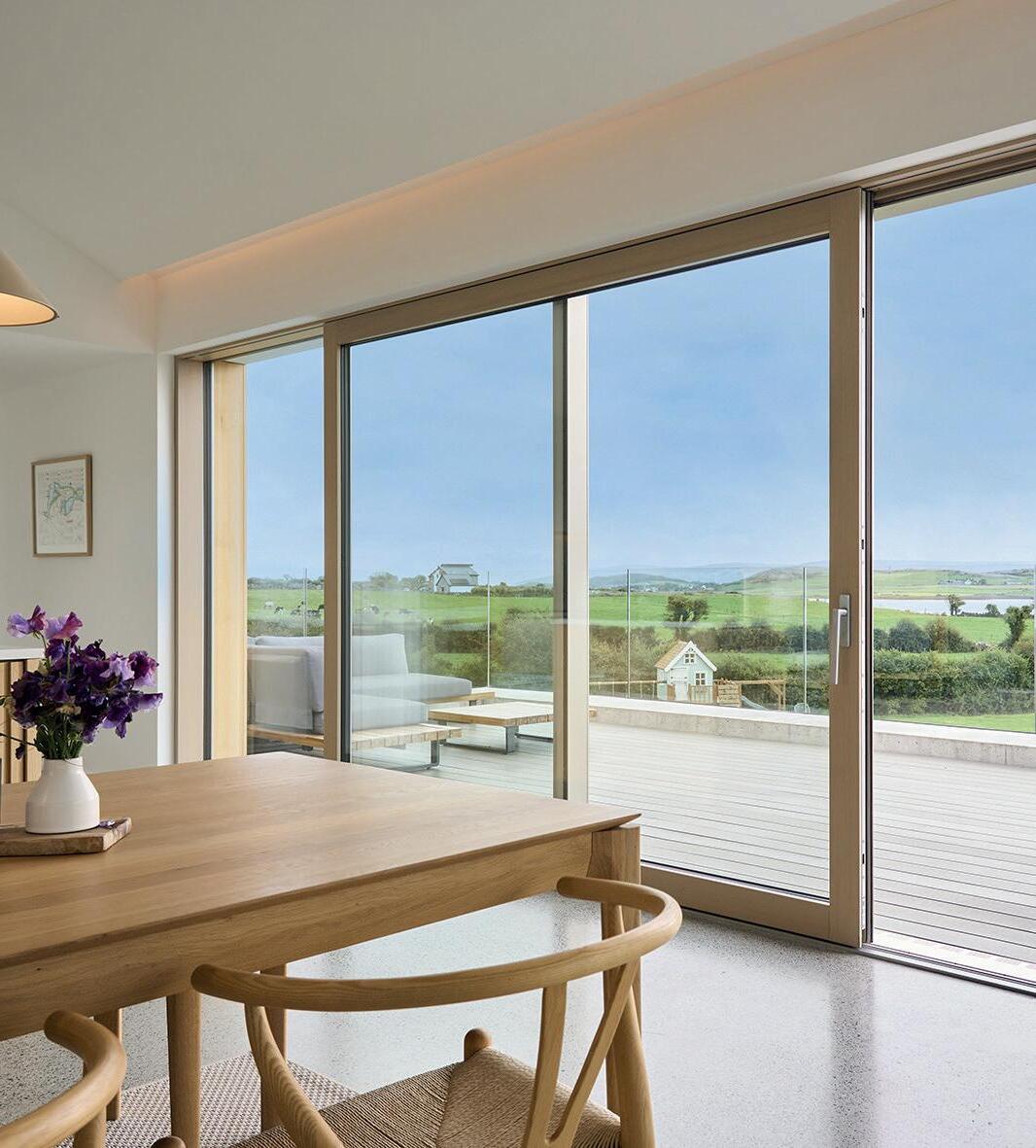
Delivering windows and doors that are crafted to last generations.
Redefining quality and luxury for almost a century. Our windows and doors are not just built to last, but crafted to inspire.
For more information visit nordan.ie
NorDan’s Timber/Alu-Clad Windows combine the classic warmth and beauty of timber on the inside with a tough weather-resistant aluminium cladding on the outside.
Merging timeless elegance and enduring strength, NorDan’s Timber/Alu-Clad Doors are perfect for those seeking stylish yet practical modern living solutions.
The ideal solution for modern homes and commercial properties, offering a huge range of design possibilities, enhanced energy efficiency, and premium performance.
The perfect solution for the contemporary needs of residential and commercial properties that highlight energy efficiency, low maintenance, and versatile design options.
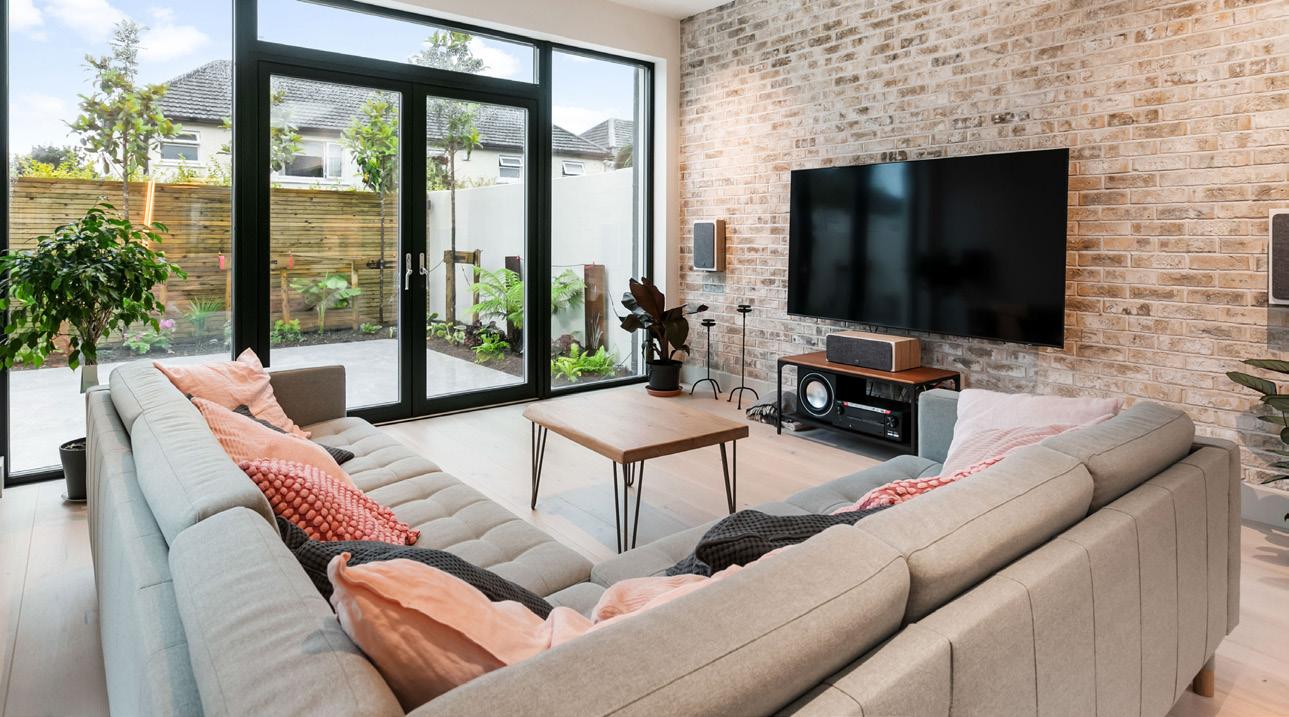
NorDan’s Entrance Doors have been designed with durability and energy efficiency at the core. With contemporary and traditional designs available, there is a perfect match available for your perfect welcome home.


Hugh Wallace, the architect whose infectious enthusiasm for design turned countless renovation tales into national inspiration, has died at the age of 68.
Hugh Wallace passed away suddenly at his home in December 2025, leaving a profound legacy across both architecture and the selfbuild community.
Born and trained in Dublin, Hugh Wallace co-founded Douglas Wallace Architects, a practice that spans residential, commercial, and adaptive reuse projects.
His deep belief in thoughtful, resourceful
“His deep belief in thoughtful, resourceful design resonated with self-builders”
design resonated with self-builders seeking authenticity and quality in their homes.
Wallace was in fact a regular contributor to Selfbuild Extend & Renovate Live events, speaking candidly about his house renovation project on stage alongside One Stop Shop provider Electric Ireland Superhomes.
To a generation of viewers, he was best known as a judge on RTÉ’s Home of the Year and presenter of The Great House Revival and My Bungalow Bliss, bringing architectural insight to everyday projects

and celebrating clever solutions that elevate both function and spirit.
Beyond the screen, Wallace spoke openly about his dyslexia and personal challenges, encouraging others to pursue their creative ambitions with courage and curiosity. He is survived by his husband Martin Corbett and is sadly missed.
The Construction Industry Register Ireland (CIRI) is being established as a statutory register for all providers of building works and associated trades. While registration is not yet open the trade body in charge of operating the register, the Construction Industry Federation, has confirmed that applications will begin in early 2026 through a phased approach.
The first divisions will cover providers of residential dwellings, including triplexes, duplexes, housing developments of 10 or more units, and all apartment providers. Applicants will have 12 months after their division opens to complete registration.
Once live, the register will be publicly available online, allowing homeowners and self-builders to check whether a builder or tradesperson is registered and compliant with professional standards.
House buyers paid €3,800/sqm in 2025
The typical price per square metre of a threebedroom semi-detached house in ROI in the final quarter of 2025 was €3,795, according to insights from the latest daft.ie House Price Report Q4 2025.
In the final quarter, the average list price nationwide for a three-bedroom semidetached house was €423,000. Across the country, December 2025 list prices were on average 41 per cent above their pre-Covid levels and just 10 per cent below their Celtic Tiger peak.
The typical property transacted in the fourth quarter of 2025 also sold for 6.6 per cent more than its initial listed price.
Housing market participants surveyed by daft.ie expect prices nationally to increase by 3.8 per cent during 2026 and by slightly more in Dublin.
Make the greener choice for your home, upgrade your existing central heating with an eco-friendly, low noise Midea Heat Pump. Air source heat pumps are the low-carbon future of home heating which integrates heating and domestic hot water into one system.
The future of heating, renewable energy is the greener, cleaner way to heat your home. Midea’s air source heat pumps are the costeffective way to lower your energy bills and switch to a low-carbon way of heating your home. Make yourself at home and start saving with Midea Heat Pumps.

OUR MIDEA MONOBLOC HEAT PUMP COMES WITH A MARKET LEADING 10 YEAR WARRANTY.

Pantone reveals its Colour of the Year 2026 with a pure white for bright, calm and flexible interiors.
Pantone, the colour standard company, has announced its 2026 Colour of the Year and this time it’s all about keeping things simple.
The chosen shade, Cloud Dancer, is a pure, clean white with no hidden undertones. In other words: a straight-up, honest white – the kind many self-builders and home improvers reach for when they want a fresh start or a calm base to build from.
After a few years of warmer, busier colour trends, Cloud Dancer is a return to basics.

Instead of trying to blend in quietly, it sets the tone for the whole room, acting like a blank canvas. It helps brighten spaces, makes layouts feel clearer and lets you focus on what really matters in your home – whether that’s a favourite piece of furniture, the view out the window, or simply a feeling of calm.
Here are some ideas from interiors experts at Bobbi Beck Wallpapers on ways to use Cloud Dancer in your home.
Because it’s such a true white, Cloud Dancer naturally highlights features like panelling, coving, door frames and any
nice detailing you’ve put into your build or renovation.
Think of it like a mini gallery wall. If you have artwork, family photos or a great piece of furniture, this colour helps them stand out without competing for attention.
It’s also great for small or darker rooms. Hallways, small bedrooms and utility rooms often need extra brightness. Cloud Dancer reflects light evenly, helping these spaces feel cleaner and a bit more open.
To keep the space from feeling too stark, pair it with fabrics like linen, boucle or brushed cotton. These add warmth without adding visual clutter.

As the colour is a shade of white, it’s easy to mix with any colour. If you like changing up cushions, throws or accessories, Cloud Dancer is a handy base. It won’t fight with other colours, so you can swap things around without repainting.
Whether you use Cloud Dancer throughout your build or just in a few key rooms, its strength is that it keeps things simple.
Despite high house prices, one-off starts are down in ROI, due to the axeing of key supports.
One-off housing commencements fell sharply in 2025, with 3,771 single-dwelling starts, down 40 per cent compared with 6,328 in 2024. The Department of Housing, Local Government and Heritage said the spike in 2024 was caused by initiatives such as the development levy waiver and the Úisce Éireann waiver which led to projects being fast-tracked towards commencement.
The ROI government has a goal of delivering 300,000 new homes by 2030. Between 2021 and the end of 2025, there were more than 176,206 new homes commenced in total.
This contrast shows how well self-build activity responded to the 2024 incentives. That year saw deadline-driven surges as homeowners rushed to start before changes to development levies and rebates. April and December 2024 alone made up 40 percent of all one-off homes started that year, which boosted the annual totals.
In contrast, 2025 saw a steadier pattern for self-builds. Monthly starts ranged from 140 in January to 417 in July, with most months between 300 and 400 homes.
For the first time, the ROI Department of Housing has published not just how many homes are started but also how they are being built.
Since mid-2025, commencement notices have stated whether new homes plan to use Modern Methods of Construction (MMC). MMC refers to off-site and system-based building methods that help speed up delivery and make costs more predictable.
The data shows that MMC is now common in scheme housing. Nearly seven out of 10 scheme homes started between July and December used these methods. However, the situation is different for selfbuilders. Only 10 percent of single one-off homes started in the second half of 2025 used MMC. This means most self-builders still use traditional block-built methods. In scheme housing, timber frame is the main MMC choice, making up over 60 percent of these builds.
The ROI government confirms new guidelines will support one-off housing.
The ROI government has confirmed a new National Planning Statement on Rural Housing will be published in 2026, after years of dragging its feet, to change onerous planning rules that are preventing people from building in rural areas.
During Commencement Matters in the Seanad in November, Senator Dee Ryan urged the ROI government to relax and modernise guidelines that she said are preventing many local people from building homes on their own land – despite the ongoing housing crisis.
The current rural housing planning guidelines date from 2005 and, according to the senator, were written for “a completely different era”.
“In their current form they are overly rigid and no longer serve rural communities or the State in the midst of a national housing crisis,” she told the Seanad. “Nothing should be off the table when it comes to increasing housing supply.”
“If we are serious about increasing housing supply, we also have to be serious about creating opportunities for people who want to put down roots in rural areas,” she said, arguing that her proposals “serve one simple objective, namely to make it possible for more people who want to live in rural Ireland to build their own family homes”.
Senator Ryan highlighted County Limerick, where she’s met young couples struggling to get planning permission even when building on family land.
Minister of State at the Department of Housing, Local
Government and Heritage John Cummings said: “I absolutely will ensure that we continue to support the development of rural one-off housing, as is happening around the country at present, but we must strike a balance.”
He said that under the National Planning Framework, National Planning Objective (NPO) 24 continues to support the sustainable development of rural areas.
He said that in urban areas (“within the commuter catchments of cities, towns and centres of employment”) rural housing would be facilitated “on the basis of demonstrable economic or social need” while in rural areas where there are low or declining population levels “rural housing may be facilitated on the basis of siting and design”.
Responding on behalf of the Department of Housing, Minister of State John Cummins confirmed that new national guidance is on the way.
Under the Government’s latest housing plan, Delivering Homes, Building Communities 2025–2030, a National Planning Statement on Rural Housing is scheduled to be published in the latter half of 2026.
This will replace the existing 2005 guidelines and aims to bring greater clarity and consistency to how rural housing applications are assessed nationwide.
This commitment to publish a national planning statement in respect of rural housing in
the latter half of 2026 is done “to provide clarity and consistency” not only across development plans but also around planning application outcomes, said Cummins.
“The national planning statement will replace the current rural housing planning guidelines which date from 2005 and will continue to enable development plans to provide for housing in rural areas,” he said.
“This will be balanced with the need to manage development in certain areas, including areas around cities and larger towns and environmentally sensitive areas.”
“I am from Waterford city and I do not believe that I should be able to go out into mid-County Waterford or west Waterford, buy a greenfield plot of land and build a brand new house,” he said.
“Of course I can go there and take a vacant or derelict property and turn it into my home. Of course there are areas of the country where, by virtue of somebody being born within a certain delineated line, that they are not able to go outside of it, particularly in smaller settlements.”
“These are all the things that are being discussed with my officials at the moment. I want to strike the balance in supporting towns and villages in rural areas while at the same time enabling rural oneoff housing, where appropriate, in settings across the country.”
A major barrier to building in the countryside is the strict interpretation of ribbon development policies which currently limit development in some areas to four houses per 250 metres of road frontage.
Local Limerick councillors have proposed increasing the limit to six houses per 250 metres.
“It is true to say that ribbon development is treated differently in development plans across the country,” said Cummins. “In the new NPO, we need to see that clarity and consistency of approach, whether it is Donegal, Waterford, Limerick or Dublin.”
Senator Ryan says she would also scrap the local area criterion for proposals in respect of new home developments within 1 km of a town or village.
“The local area criterion was introduced to prevent speculative development,” she said.
“20 years on, however, our patterns of living, working and shopping have changed dramatically. More people work from home, online shopping means fewer car trips and many rural businesses are struggling with footfall, so edgeof-settlement areas within 1 km of towns and villages are ideal for rural housing.”
“In these locations, if applicants satisfy all other planning criteria, there is no meaningful purpose to having a local area criterion as well.”
Senator Ryan also argued the ‘housing need’ requirement, which states that if you already own a house you don’t need to build one, should be abolished.
“If someone satisfies all other criteria, what difference does it make if you have another home? A new house is being built. Are we not in the game of housing supply? It is great if another home comes onto the rental market. Is that not a good thing?”
“We should allow landowners who meet the local area criterion to transfer their building options. People who satisfy the local area criterion and have a site should be able to transfer that building option to another person who has the means and wishes to make use of it.”
Kildare farmer not allowed to build one-off home as court upholds new County Development Plan’s tightened planning rules.
AKildare farmer has lost her latest attempt to build a modest farmhouse on her own land due to a change in rules.
The High Court upheld An Coimisiún Pleanála’s (ACP) decision to refuse planning permission based on a County Development Plan (CDP) that hadn’t been published at the time of submitting the application.
The new CPD, valid from 2023 to 2029, tightened council rules on one-off rural housing.
As reported on agriland.ie, Eithne (Eithna) Herbert had previously secured permission for a home in 2001, but later had to sell the property because of separate legal proceedings.
Eithne Herbert has since been trying to get permission for a new home on another part of her family land at Lowtown, Robertstown, Naas, where she runs her farm and where her children are rooted in the local community.
In his written judgment, High Court judge Justice Nolan stated that Eithne Herbert has spent the past three years trying to secure permission for a new home, facing multiple refusals, notwithstanding a successful High Court judicial review in 2023.
Eithne Herbert first applied for permission in April 2022, but Kildare County Council refused, followed by a refusal from what was then An Bord Pleanála (ABP) in February 2023.
She successfully challenged that ABP decision in the High Court later that year, and the case was sent back to the appeals board for a fresh assessment in April 2024. However, by then Kildare County Council’s County Development Plan (CDP) had changed.
A new policy requires applicants to prove that they have not previously owned or received planning permission for a one-off rural dwelling anywhere in Co Kildare.

Because she had permission granted in 2001, even though she no longer owns that home, she automatically “fell foul” of the updated rule.
The High Court judge described her position as “most unfortunate”, stating: “Due to no fault of hers, she fell foul of the new objective since she had already been granted permission.”
“While she argues that this approach is unduly rigid and fails to consider the unique and involuntary nature of her circumstances, in truth ACP did consider them,” he added.
He said that the inspector in his report specifically acknowledged her rationale for a new dwelling as being her matrimonial break-up but noted that “the exceptional circumstances” as afforded under the old County Development Plan no longer applied under the provisions of the new plan.
A farmhouse in Co Cork won retention, highlighting just how difficult it can be for rural families to build on their own land.
For many rural families, building a home on their own farmland has become a complex and costly challenge. The case of Ger O’Sullivan, a farmer from Walshestown, Ovens, Co Cork, as reported in The Herald, illustrates the struggles faced by those navigating Ireland’s planning system.
Mr O’Sullivan bought a 19-acre farm in 2016, which included a derelict cottage and outbuildings. He initially planned to renovate the 65 sqm cottage and add a small extension, but due to its deteriorating condition, he replaced it with a modern 110 sqm bungalow to provide accessibility for his elderly parents. He admitted he did not seek planning permission at the time “due to the uncertainty with Covid.”
Neighbours and conservation groups objected to the development. Bill O’Regan, a nearby farmer, warned that granting retention could set a precedent in a highvalue landscape. An Taisce, the national charity for environmental conservation, also submitted observations.
Ultimately, An Coimisiún Pleanála granted retention permission, with conditions including the planting of trees and hedgerows and a financial contribution to the local planning authority. Mr O’Sullivan’s brothers had similarly received retention approvals for other works on their family farmland, highlighting recurring tensions between local residents and developers.
The O’Sullivan case reflects broader concerns about rural housing policy. Fine Gael TD Willie Aird, speaking from Laois, has warned that current rules - such as the “five-in-a-row” restriction limiting consecutive houses along a road - force young farmers to leave their communities.
“For generations, families in rural Ireland have lived, farmed and contributed to local communities,” Aird said. “Yet current planning rules are making it harder for them to remain at home.” He called for a consistent national approach, streamlined processes for family applicants and a review of outdated restrictions on ribbon development.
At national level, the Taoiseach has acknowledged the difficulties faced by rural self-builders. Speaking at a Fianna Fáil think-in in Cork last September, Micheál Martin confirmed that a long-awaited review of planning guidelines is underway, with the aim of making it easier for people to build homes on their own farmland.
The ROI government’s new housing strategy promises to supply more serviced sites to self-builders but no waiver on contributions.
The ROI government’s Delivering Homes, Building Communities 2025–2030 plan sets out how Ireland aims to deliver 300,000 new homes by the end of the decade.
It builds on the previous Housing for All strategy with promises of more affordable housing, stronger communities and greater reuse of existing homes.
Despite a push for more serviced sites, self-builders shouldn’t expect to get another waiver instated on expensive development contribution levies.
The Ready to Build Scheme, which offers serviced sites in towns and villages at belowmarket prices, will be expanded to support more self-builders and small-scale homebuilders.
To date, the Ready to Build Scheme has under-delivered for self-builders as local authorities struggled to find suitable land for one-off homes.
Under this new plan, local authorities will be able to deliver mixed developments combining affordable purchase, social, and self-build homes on serviced land.
To address high construction costs, the plan includes a commitment to “bring forward measures to improve the infrastructure-financing model”, including a review of development contribution arrangements. However, this falls far short of reinstating the temporary
development levy and Uisce Éireann connection fee waivers that were credited with boosting self-build activity in 2024.
Those waivers, which suspended Section 48 local authority levies and water connection charges, saved individual self-builders thousands of euros and spurred a surge in home commencements. But once they expired in April 2025, the number of one-off house starts collapsed.
Figures from the Department of Housing show a 60 per cent fall in commencements between January and May 2025 compared with the same period the previous year, marking the lowest figures in a decade.
Despite a petition with over 2,800 signatures calling for the waiver’s return, the Department confirmed to Selfbuild that the measure “was always intended to be time-bound.”
The Government’s vague pledge to “review” development contributions offers little immediate hope for relief.
The plan’s push for modern methods of construction (MMC) – including modular and offsite
building – comes with financial backing for manufacturers through the Ireland Strategic Investment Fund. The move is designed to cut build times and costs across the housing sector, and could, in time, make these technologies more affordable for self-builders too.
Self-builders will benefit indirectly from record levels of planned infrastructure investment: €12.2 billion is allocated for water services upgrades through Uisce Éireann, and €3.5 billion in equity funding for the national electricity grid will support new housing connections.
The Help to Buy scheme will continue to support first-time buyers building their own homes, offering an income tax refund of up to €30,000 (or 10 per cent of the build cost) toward the deposit.
The First Home Scheme, which provides shared equity support of up to 30 per cent of a property’s value, had already been extended to self-builders
in September 2023, and as announced in June 2024 it now also covers buyers renovating derelict or long-term vacant homes. As of May of this year, 26 self-builders had availed of the shared equity scheme.
The Vacant Property Refurbishment Grant remains a cornerstone of the plan, aiming to bring 20,000 vacant and derelict properties back into use.
Grants of up to €50,000 (plus a €20,000 top-up for derelict homes) are still available and a new tier of up to €140,000 will apply for conversions of ‘over the shop’ spaces in towns and cities. Homeowners can also apply for an Expert Advice Grant of up to €5,000 to help plan their projects.
The Repair and Lease Scheme continues, offering interest-free loans of up to €80,000 per unit for owners who refurbish properties for lease to local authorities or approved housing bodies.
The Living City Initiative, which provides tax relief for refurbishing homes in some historic urban areas, remains in place.
Labour shortages and new levies push up rebuild costs in 2025 as homeowners are urged to check insurance cover.
House rebuilding costs have risen by an average of 7 per cent across ROI between 2024 and 2025, according to the latest House Rebuilding Guide from the Society of Chartered Surveyors Ireland (SCSI).
That’s slightly higher than the 6 per cent rise recorded last year, though well below the 12 per cent spike seen in 2023.
The guide, published annually since 1989, helps homeowners estimate
minimum rebuild costs for insurance purposes, including demolition and site clearance.
SCSI Vice President Tomás Kelly, a chartered quantity surveyor, said the latest figures reflect ongoing pressure on labour costs and availability rather than materials alone.
Two new government charges – the Landfill Levy (introduced September 2024) and the Recovery Levy (January
2025) – have also added costs to demolition and construction works.
Rebuild cost increases vary significantly around the country:
- Cork: +3 per cent
- Dublin: +5 per cent
- Galway & Limerick: +7 per cent
- Waterford & North East: +8 per cent
- North West: +9 per cent
While Dublin remains the most expensive region to rebuild in, the North West recorded the largest annual rise. Rebuild costs for a fourbedroom detached house (119sqm) stood at €3,498/sqm in Dublin and €3,099/sqm in Cork. The lowest per sqm cost was in the North West region at €2,877 per sqm for the same typology. Kelly said regional variation reflects local demand for trades and contractors.
Complaints range from surprise costs to unfinished work, says the Competition and Consumer Protection Commission (CCPC).
The CCPC says complaints about home improvement services have surged, making them the second biggest driver of consumer calls in early 2025.
The Consumer Helpline Report for the first half of 2025 found that almost 1,250 people contacted the CCPC’s national helpline about problems with builders, plumbers, electricians and home improvement traders.
In response, the regulator has issued an open letter to the industry and written directly to almost 3,000 traders across Ireland, reminding them of their obligations under the Consumer Rights Act 2022.
The letter offers guidance on how service providers can comply with the law – from providing clear pricing and start dates to fixing work that falls
short of expectations.
Patrick Kenny, Member of the Commission, said complaints from the sector remain consistently high and can be financially devastating for homeowners.
“Consumers in Ireland and across Europe have important rights when it comes to service contracts, and it’s vital they know them,” he said. “But equally important is that traders understand their responsibilities. There is an onus on traders to follow all relevant legislation – failure to do so can result in enforcement action by the CCPC.”
The CCPC said many complaints relate to poor workmanship, unfinished projects, delays and traders refusing to put things right.
‘Devastated’
In one case, a homeowner
hired a plumber whose work caused leaks in both the roof and bathroom, leaving the bath unusable. Despite repeated follow-ups, the trader refused to engage or fix the problems.
Another homeowner said a verbal agreement with a sole trader for a bathroom renovation said it would take five days, but was still unfinished after three months, with a leaking shower and unsafe radiator. The trader promised to return several times but never did.
Pricing disputes are also a recurring issue. One consumer reported that an electrician quoted between €800 and €1,500 to wire a kitchen but later charged €2,500, leaving exposed wires and holes in the walls. When questioned, the trader stopped responding.
In another case, a homeowner paid €1,000
upfront to a landscaping company for a €2,500 garden renovation. After just two hours of work, the trader failed to return, leaving the garden half-finished and the consumer “devastated”.
The CCPC’s guidance reminds traders that they must provide clear pre-contract information, including total price (or how it will be calculated) and deliver services that match what was agreed and meet reasonable standards. If a job falls short, you are entitled to remedies such as having the issue fixed, a price reduction or a refund.
Under the Consumer Protection Act 2007, traders are also prohibited from giving misleading information, withholding key details, or pressuring consumers.
One-off houses and home improvements drive more than half of planning applications but NI’s ‘postcode lottery’ risks stalling delivery, says the CIH.
Those building new and home improving represent the majority of planning applications in NI, but the Chartered Institute of Housing (CIH) says the ‘postcode lottery’ system risks stalling housing delivery.
The CIH has warned that falling application numbers combined with slower decision-making are creating a “perfect storm” for the region’s housing supply.
The statement is based on new figures from the Department for Infrastructure (DfI) showing that overall planning activity in NI dipped again over the summer.
But while the total number of applications has fallen slightly, by 2 per cent, one-off builds and home improvement projects still make up the largest share of planning requests.
Applications are taking longer to process, with most local applications now taking around 19 weeks on average.
New figures show new and replacement singlehomes took about 24 weeks to be decided while extensions and alterations were typically decided within 18 weeks.
While these timeframes are longer than official targets, they are broadly similar to last year.
“A 19.4-week average for local applications is still nearly five weeks over the statutory target, and the continued decline in applications is a worrying indicator of wavering confidence,” commented Justin Cartwright, National Director for CIH Northern Ireland.
“Every week of delay in the planning process is a week that a potential home remains unbuilt. We cannot afford to let the system become a permanent bottleneck, which is why we are calling on local councils to standardise best practices across the board.”
“We must eliminate the regional ‘postcode lotteries’ in planning speeds and ensure that residential applications are prioritised with the urgency the housing crisis demands.”
“By aligning resources and sharing the

success models of top-performing councils, we can transform the planning system into an engine for growth that finally delivers the homes our communities need.”
“As we move into 2026, we anticipate an uptake in Local Development Plan activity across several councils. These plans are the essential blueprints for our communities, and their progression is vital to moving Northern Ireland toward a plan-led system.”
Of the 2,360 planning applications received during the quarter, 593 were for new or replacement single homes, meaning about 25 per cent of all applications.
This was down on both the previous quarter and the same time last year. Most of the decline came from rural countryside areas, which is where most applications come from.
At the halfway point of the year, applications for new and replacement
single homes are slightly behind last year, suggesting some homeowners may be delaying or rethinking their building plans.
A total of 665 applications were submitted for home improvement works during the quarter. That’s more than a quarter of all planning applications, and higher than the same period last year.
When new/replacement single-home applications and extensions/alterations are combined, they total 1,258 applications, meaning more than half (53 per cent) of all planning submissions during the quarter were household-led.
Urban areas continue to see the most extension and alteration projects, but a significant number of homeowners in rural towns and the countryside are also investing in upgrading or expanding their homes.










Brooks Drogheda is the builder’s merchant’s 10th branch in Ireland, bringing its range of products and expert services to Co Louth.
The grand opening brought together hundreds of visitors, from families and GAA fans to DIY enthusiasts.
Louth GAA stars Sam Mulroy and Ger Brennan, as well as Ciaran Downey from Newtown Blues Drogheda were in attendance – as was the Leinster Cup, giving fans a unique opportunity for photos and meet-and-greets with their sporting heroes.
The builder’s merchant caters to professionals and homeowners alike, offering everything from an in-store paint mixing service (for both Colourtrend and Dulux) alongside showrooms for bathrooms, doors and floors.

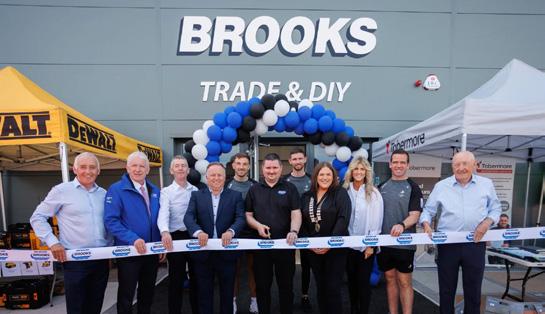
Plus your usual tools and materials as well as the trusty heating and plumbing counter. Brooks also offers a delivery service in Bluebell and surrounding areas, ensuring everything you need arrives on time.
brooksonline.ie
Leading uPVC window manufacturer Camden has recently launched a new flush window model, a perfect fit for a contemporary aesthetic.
The Camden Flush Window is designed with ease of installation, performance and style in mind. Its flush, clean look delivers the sleek, modern aesthetic many homeowners are looking for, while its slim profile maximises natural light.

The flush windows are quick and simple to fit, made from 80 per cent recycled materials, and come in a wide range of foiled finishes to match any home style. Energy efficient, it also offers a low-maintenance finish.
The Camden Group is a leading manufacturer of uPVC windows and doors across the Ireland and the UK.
camdengroup.co.uk
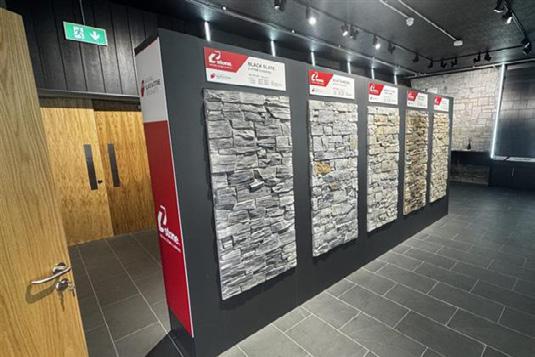
Lagan Building Solutions (LBS) has just opened a new 25,000sqft showroom and depot in Kildare.
This latest location joins LBS’s established showroom in Lisburn, giving self-builders direct access to its extensive range of premium building products.
The Kildare showroom features standout displays of natural roofing slates, stone cladding, paving, and architectural products, offering hands-on inspiration and expert guidance.
lbsproducts.com
Roscommon-based Mark Lohan Kitchens has received national recognition once again with three major titles at the Irish All-Ireland Kitchen Awards 2025.
The awards ceremony, held in November 2025 at the Titanic Experience in Belfast, takes place every three years to celebrate excellence among designers, manufacturers, and retailers from across Ireland.
Mark Lohan Kitchens bagged the awards for Retailer of the Year, Classic Kitchen Design Under €35k and Best Use of Digital Marketing. It was also shortlisted in two additional design categories.
Founded over 23 years ago, Mark Lohan Kitchens has grown from a small local workshop into one of Ireland’s most respected names in bespoke kitchen design and manufacturing.
It operates from two expansive manufacturing plants on the outskirts of Roscommon town and showcases its work in state-of-theart showrooms in both Roscommon town and Galway city.
mlk.ie
BuildWright has joined the ranks of a select few volumetric building systems to have NSAI Agrément Certification. In fact, BuildWright is the only certified volumetric system that features a concrete building fabric.
With expertise in concrete going back over 70 years, the Wright Group in Co Monaghan introduced the innovative BuildWright Modular Concrete Building System in 2018.
Since then BuildWright has enjoyed working with home builders all across Ireland to manage their build and deliver their dream home.
Achieving this certification has been a major company milestone as it independently verifies the quality, performance, and compliance of the BuildWright system to rigorous Irish and European standards.
For homeowners and partners it means proven structural integrity and durability, confidence in regulatory compliance and faster approvals and smoother project delivery.
BuildWright’s commitment to raising the bar for modern construction is in delivering sustainable, high-performance concrete buildings that are built to last.
buildwright.ie

Leading Italian kitchen company Cucine Lube has been in business for the past 55 years, with 600 showrooms in Italy and an all- Ireland showroom in Limerick for the past four years.
As part of its expansion plans, it’s focusing on self-build homeowners who have the practical experience of planning and designing and who may wish to become kitchen designers.
If this is you, Cucine Lube is offering you a Special Discount on its premium range of Italian kitchens.

After your kitchen is complete you may decide that it is a showpiece for potential customers. Alternatively you may use the Limerick showroom as your own.
You will receive the training to take charge of the design process or rely entirely on Cucine Lube’s in-house team to design your clients’ kitchens.
Self-build partners earn commissions for every new kitchen or bedroom client they refer.
To learn more, visit cucinelube.ie, download the app: GruppoLube or call John Browne on 00 353 87 2631349.

It could save your life, says the HSENI’s latest health campaign. For
Artificial stone worktops are popular because they look great, are hard-wearing, and affordable. But working with them can put your health – and your life – at serious risk if you don’t take the right precautions.
When you cut, grind, or polish these worktops, you release Respirable Crystalline Silica (RCS) dust. This dust is so fine that you can’t see it, but it gets deep into your lungs and causes permanent damage.
Artificial stone can contain up to 95 per cent silica, which means the risk is much higher than with natural stone like granite or marble (although similar precautions need to be taken when working with high silica natural stones).
Breathing in this dust can lead to severe, chronic and life limiting conditions, such as:
• Silicosis – scarring of the lungs that makes breathing harder
• Lung cancer
• Chronic Obstructive Pulmonary Disease (COPD)
• Asthma
These illnesses don’t happen overnight – they build up over time. Often you will not notice the changes but once the damage is done, it cannot be reversed.
Silicosis and other lung diseases
can:
• Stop you from working
• Leave you short of breath for life.
• Lead to early death
This is not just about following rules – it’s about protecting yourself, your family, and your future.

Under COSHH Regulations, employers must protect workers from harmful substances like silica dust. That means:
• Doing proper risk assessments
• Using the right controls
• Providing training and supervision
• Carrying out health surveillance if there’s still a risk
If you’re self-employed, these duties apply to you too.
The risks associated with RCS are a core part of the HSENI Workplace Health Campaign. This initiative is aimed at tackling the most significant causes of work-related illness in Northern Ireland prioritising the following three key areas of workplace ill health:
1. Occupational Lung Diseases, including RCS exposure
2. Occupational Cancers
3. Work-related Mental Wellbeing and Musculoskeletal Disorders
The focus on Respirable Crystalline Silica highlights the severity of the threat within the construction, extractive and manufacturing sectors.
As part of HSENI’s wider Workplace Health Campaign, Manufacturing Inspectors are currently out visiting memorial masons and stone workers, including those cutting and fitting kitchen and bathroom worktops. They will check that risk assessments are in place and, where necessary, a program of health surveillance is in place. This should be overseen by a trained, competent Occupational Health Provider.
HSENI’s mission is clear: to ensure that the health of workers is protected through proactive controls, comprehensive training, and effective health surveillance.
Every workplace has health risks but workplace ill-health is preventable.
Your responsibility is clear –protect yourself and your team – it’s the law, and it could save your life.
For more visit
•hseni.gov.uk/articles/ manufacturing-industry-silica-dust
•hseni.gov.uk/topics/occupationallung-disease
•hseni.gov.uk/topics/workplacehealth
•hse.gov.uk/coshh/essentials/ direct-advice/stonemasons.htm
Implement effective controls

Follow these steps every time you work with stone:
In the workshop
• Use water suppression and good ventilation when cutting
• Use slow-moving, thinner reciprocating saws where possible
• Do as much cutting and polishing in a properly equipped workshop rather than on-site
• Never dry brush dust off surfaces – it just puts more dust in the air
On site
• Keep cutting to a minimum and work in a well-ventilated, restricted area
• Use on-tool extraction with a shroud and M-class vacuum
• Wear FFP3-rated masks (must be face-fit tested and cleanshaven)
• Never dry brush
Health Surveillance
If there’s still a risk when controls are in place, health surveillance is a must.
Ask the following:
• Is there a disease linked to the substance?
• Can we detect the disease and reduce harm?
• Do workplace conditions make it likely that the disease will appear?
Checks should be done by a qualified Occupational Health Provider. They may include lung function tests and chest X-rays. This allows early detection of serious conditions, it’s not just required by law – it saves lives.
Here’s a roundup of our latest two events, Selfbuild Extend & Renovate Live Ulster and Munster.
Selfbuild Extend & Renovate Live Ulster and Munster were actionpacked with thousands of self-builders and home improvers visiting the hundreds of suppliers showcasing the very best of home design and building in Ireland today.
Here’s what went on.
Ulster
With 145 exhibitors showcasing the latest tech and design in the world of house building and home improving, the Ulster event was hosted for the first time at The Eikon Exhibition Centre.
Located in Lisburn, The Eikon is a 10,000sqm purpose-built events venue with 4,000 parking spaces. It’s the perfect place to start a new chapter for Selfbuild Extend & Renovate Live Ulster, after a decade of hosting the event at the Titanic Exhibition Centre.
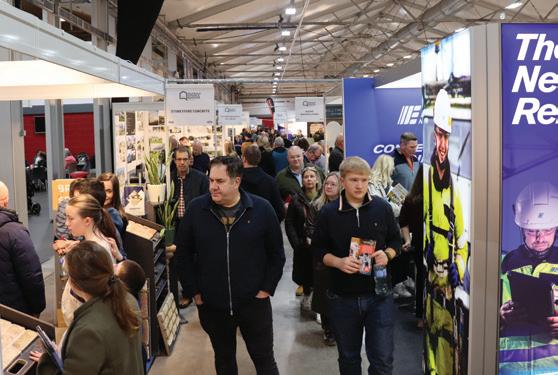
Inside we heard from cost experts at the AIB Build Cost Theatre, covering everything from how to budget for your build to how much elements like your windows will set you back. PV panels featured prominently, reflecting the broader trend of NI having adopted the technology in both new builds and renovations.
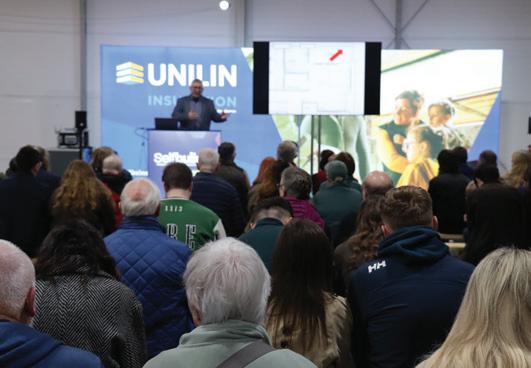
If you’ve missed either of those events, don’t worry. We run four shows every year, one in every province.
More details and free tickets on live.selfbuild.ie.

We’ve shaken things up at our Munster event, with a new format for our theatre talks. John Corless was on hand to compere the advice talks at the Selfbuild+ Theatre and Keith Kelliher was at the AIB Build Cost Theatre to chat through the common elements self-builders forget about budgeting for.
The event took place at the University of Limerick Sports Arena, with over 100 exhibitors and thousands of visitors each day.
The Sustainable Energy Authority of Ireland was on hand to chat about what home energy grants are available alongside experts in all things home building and home improving, from kitchens and bathrooms to ventilation and heat pumps.