Handcrafted in the 19th century and carefully preserved, the chapel reflects both enduring faith and remarkable craftsmanship. THROUGH STORM AND TIME
Handcrafted in the 19th century and carefully preserved, the chapel reflects both enduring faith and remarkable craftsmanship. THROUGH STORM AND TIME
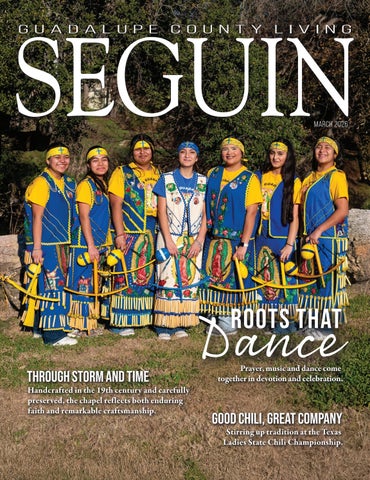
Prayer, music and dance come together in devotion and celebration.
Stirring up tradition at the Texas Ladies State Chili Championship.

























10 ROOTS THAT DANCE
Prayer, music and dance come together in devotion and celebration.
16 THROUGH STORM AND TIME
Handcrafted in the 19th century and carefully preserved, the chapel reflects both enduring faith and remarkable craftsmanship.
24 GOOD CHILI, GREAT COMPANY
Stirring up tradition at the Texas Ladies State Chili Championship.
30 BUILT INTO HISTORY
The bricks that carry Seguin’s name.
36 FACES OF SEGUIN
Submitted photos from our readers
38 SAVE THE DATE
See what events are coming up
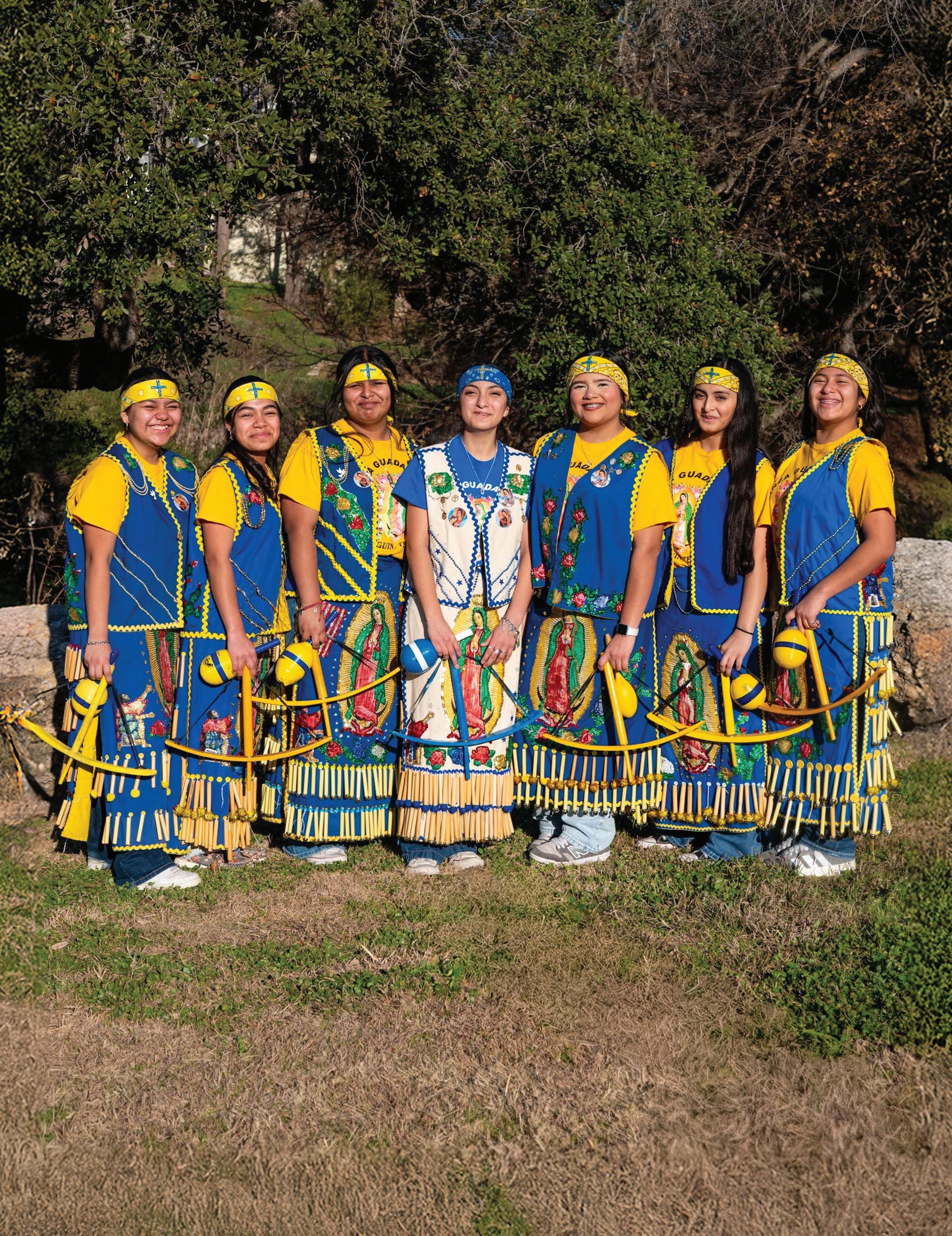
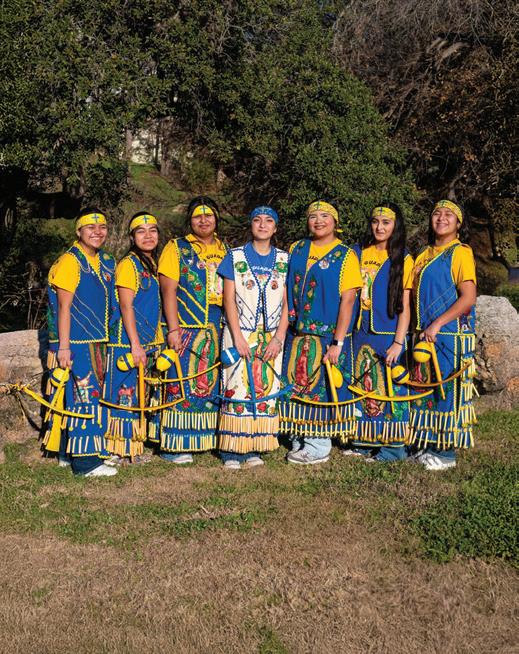
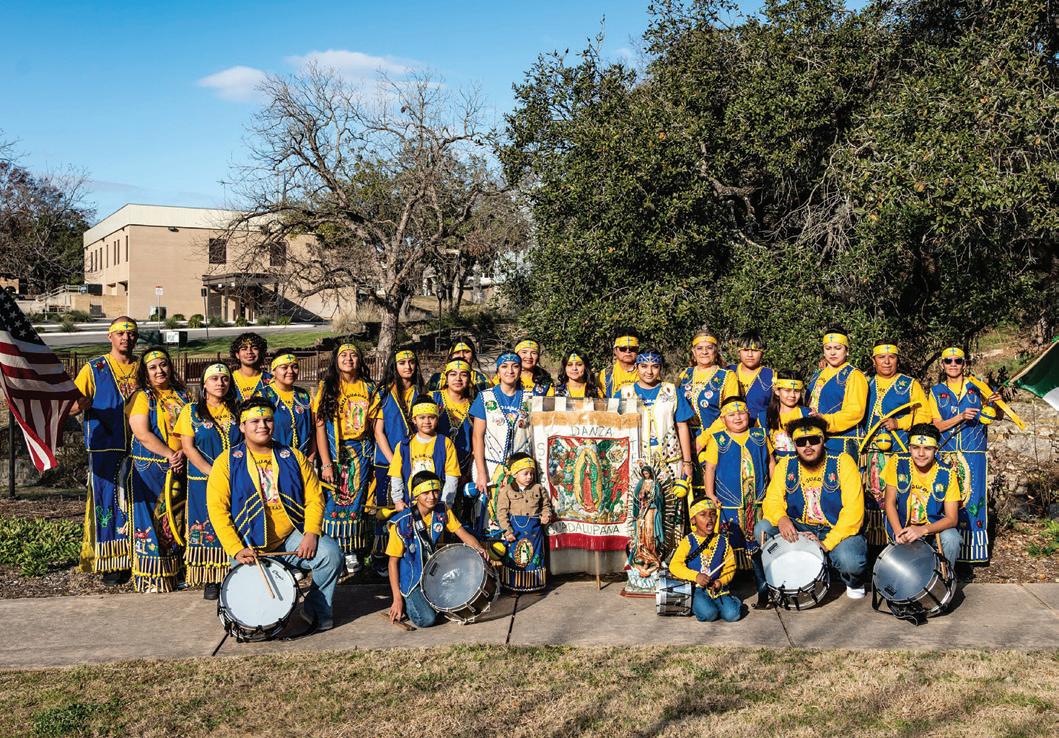
Danza Guadalupana is part of a long-standing Mexican Catholic tradition that blends Indigenous dance practices with religious devotion.








Vol. 12, No. 10
SEGUIN MAGAZINE IS PUBLISHED TWELVE TIMES A YEAR BY THE SEGUIN GAZETTE.
PUBLISHER
Elizabeth Engelhardt
MAGAZINE EDITOR / CREATIVE DIRECTOR
Desiree Gerland
CONTRIBUTORS
Victoria Gaytan
Alex Lowe
Bianca Rawlings
Sydney Seidel
ADVERTISING
Gay Lynn Olsovsky
Delilah Reyes
Laela Reyes
TO ADVERTISE IN SEGUIN MAGAZINE CALL 830-463-0766
HAVE STORY IDEAS? LET US KNOW! seguinmagazine@seguingazette.com
here’s something special about living in a place where history isn’t tucked away in museums or textbooks. A place where it’s right there around you, in the buildings downtown, in the traditions families have kept alive for generations and in the stories people share about how things used to be.
What I love about Seguin is that it still carries its stories out in the open. Behind every historic building or long-standing tradition are families, neighbors, congregations and community members who kept showing up, rebuilding when needed and passing things down so the next generation could enjoy them, too. That kind of legacy doesn’t show up on spreadsheets or profit reports, but it’s what makes a town feel like home instead of just a stop along the highway.
Putting this issue together gave me a chance to appreciate just how much of Seguin’s past is still part of our everyday lives. You can walk past bricks stamped with the town’s name, pass churches and homes that have stood for over a century or catch a community event that’s been bringing people together longer than most of us have been around. Sometimes, we forget how rare that is.
And maybe that’s because it’s easy to get caught up in conversations about growth, new buildings, new businesses, bigger numbers and faster development. Growth matters, of course. Communities need it. But growth that forgets what was here before or treats history and culture as obstacles instead of assets risks turning a place into just another place.
Seguin continues to change, and that’s part of what keeps it alive. But it’s worth remembering that progress isn’t just about what we build next — it’s also about what we choose to keep.

Desiree Gerland Magazine Editor
desiree.gerland@seguingazette.com





























STORY BY BIANCA RAWLINGS
PHOTOS BY VICTORIA GAYTAN
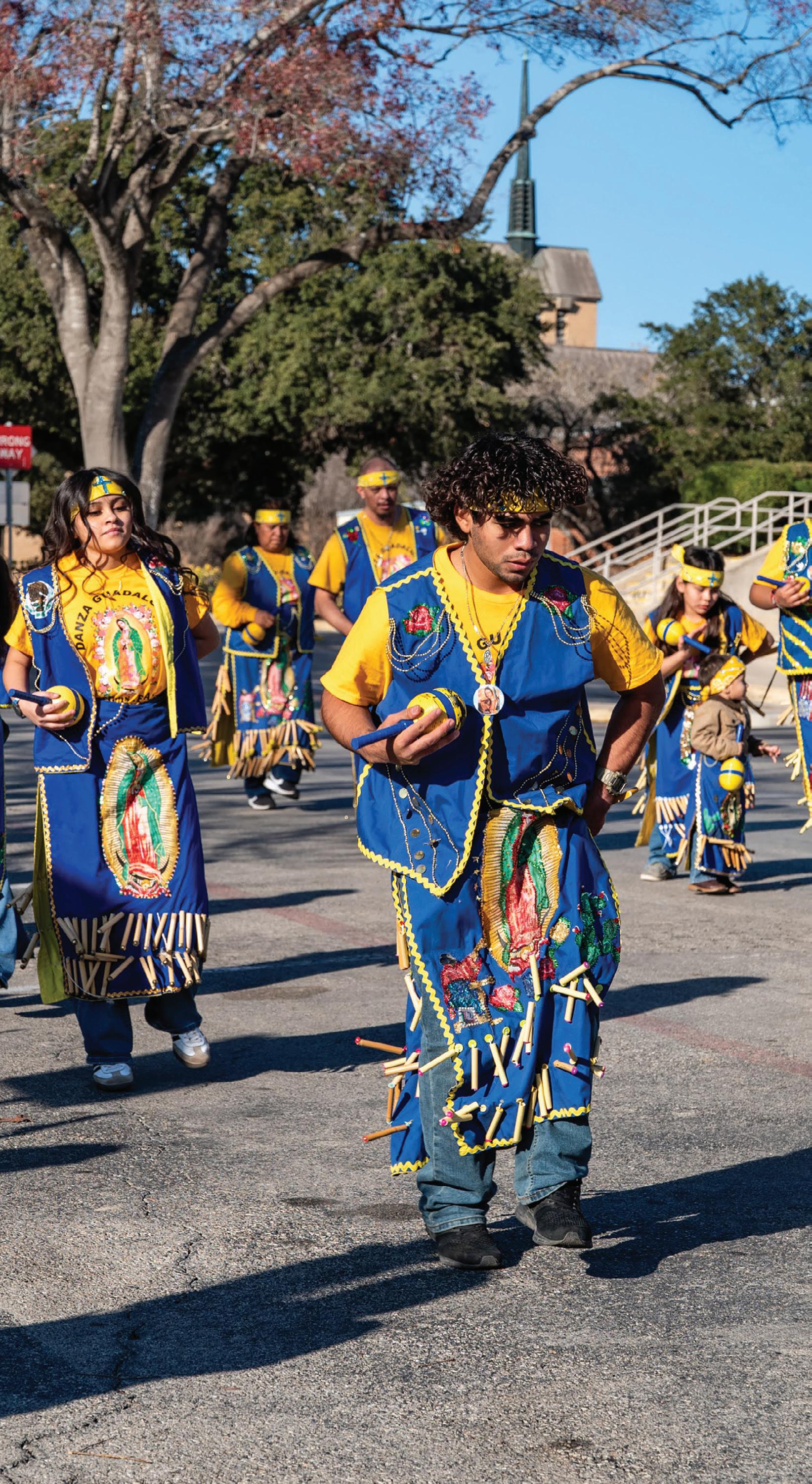
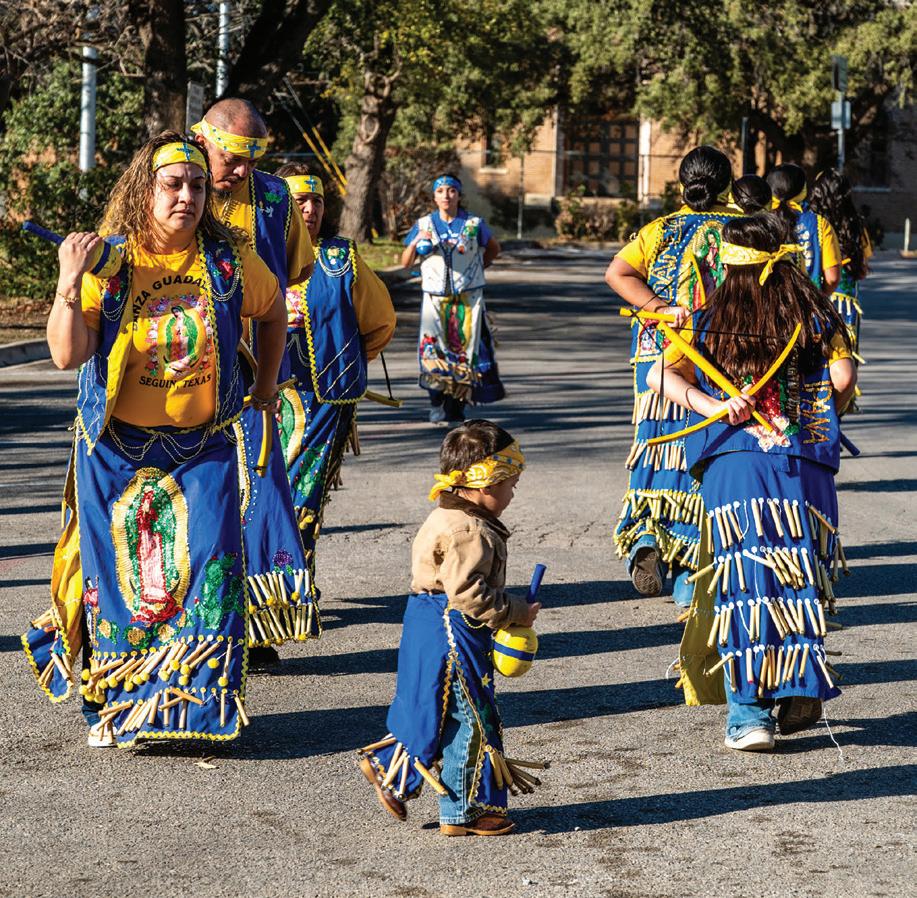
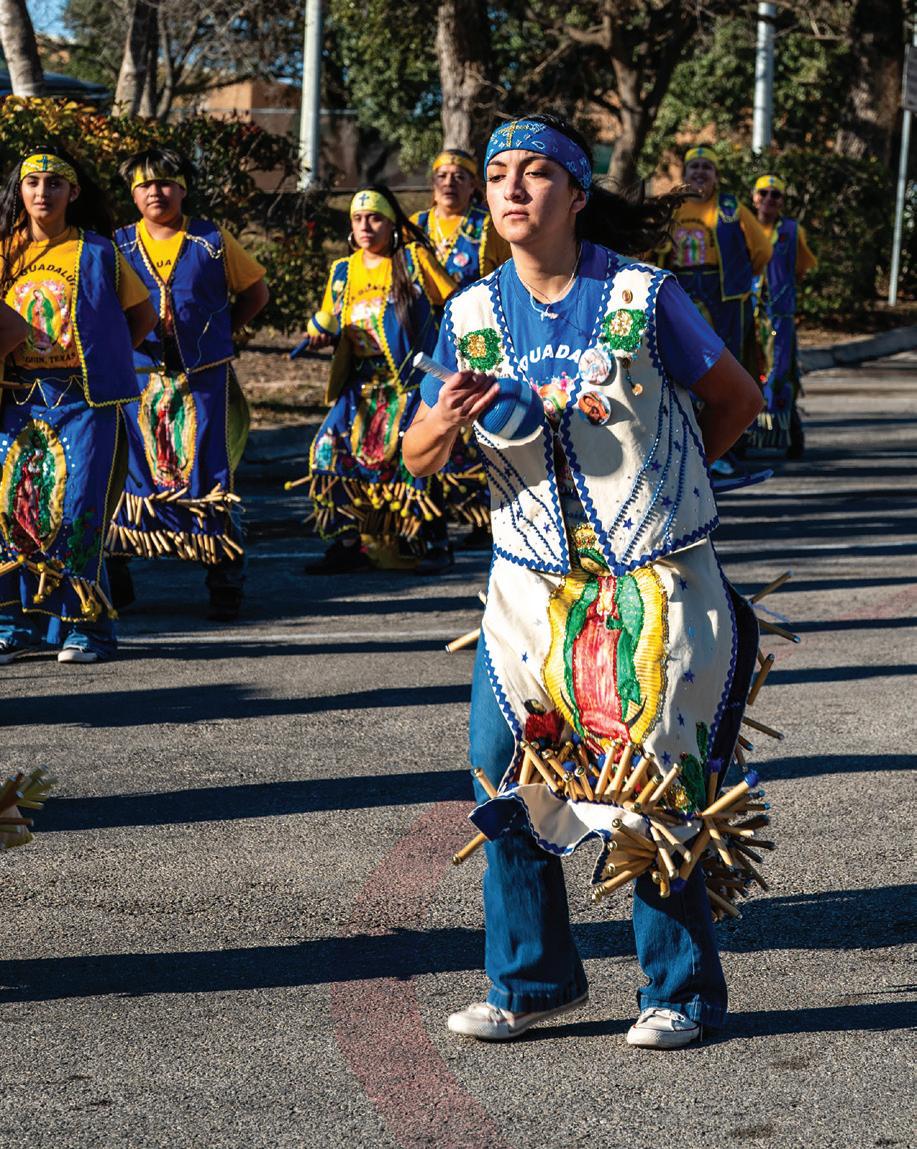
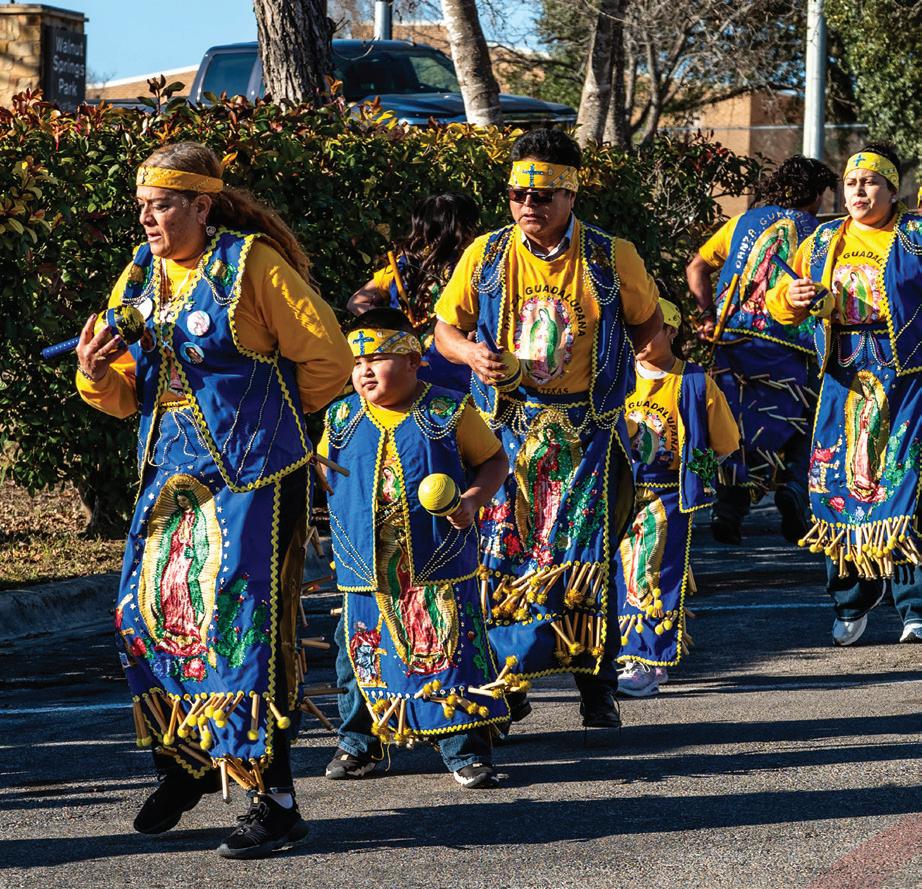
For nearly 25 years, Danza Guadalupana has been a familiar presence at homes, churches and community celebrations across Seguin and the surrounding area. Founded in 2002 by local residents Flora Fiscal and Teresa Menchaca, the group was created as a devotional dance in honor of Our Lady of Guadalupe and has since grown into a multigenerational tradition rooted in faith, family and cultural heritage.
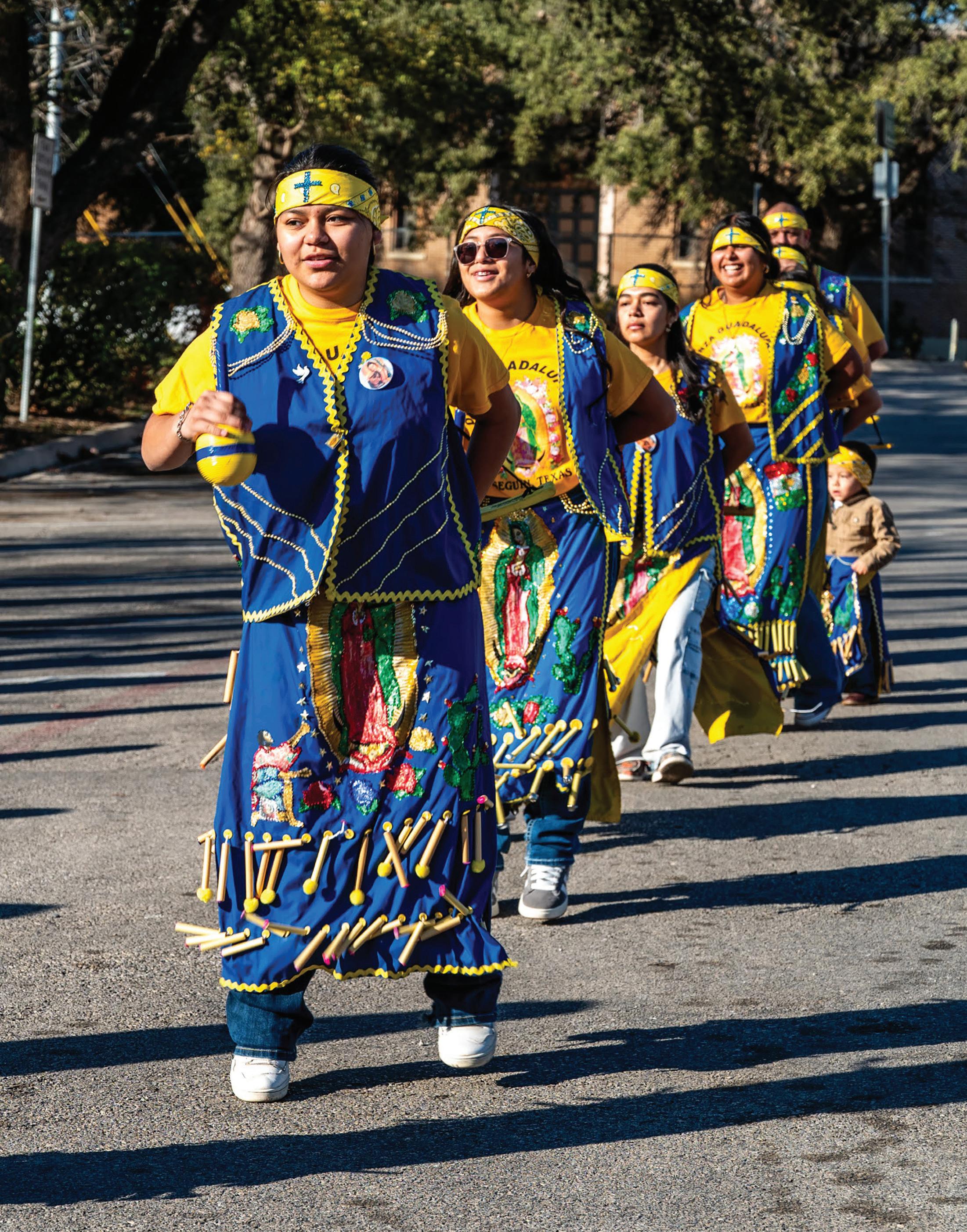
Danza Guadalupana is part of a long-standing Mexican Catholic tradition that blends Indigenous dance practices with religious devotion. In Seguin, the group is best known for traveling to family homes and churches to pray the rosary and dance in honor of the Virgin of Guadalupe, particularly during the busy season from October through December leading up to her feast day in mid-December.
“We dance in honor of Our Lady of Guadalupe,” said Susana Rodriguez, whose mother, Menchaca, helped found the Danza. “It’s part of our faith, part of our culture and part of our roots.”
Fiscal and Menchaca began the Danza in gratitude after praying for Fiscal’s very sick niece, who recovered miraculously. Inspired by the recovery, they set out to honor Our Lady of Guadalupe with Danza, researching traditional steps, costumes and drumming, and even performing themselves.
Rodriguez said that Fiscal and Menchaca were friends when they started the Danza, but over the years their bond deepened, becoming more like sisters, and the Danza itself became like a family. Menchaca’s children — Susana Rodriguez, Jessica, Roxana, and Oscar — joined as dancers, while her husband Arturo Menchaca, helped coordinate
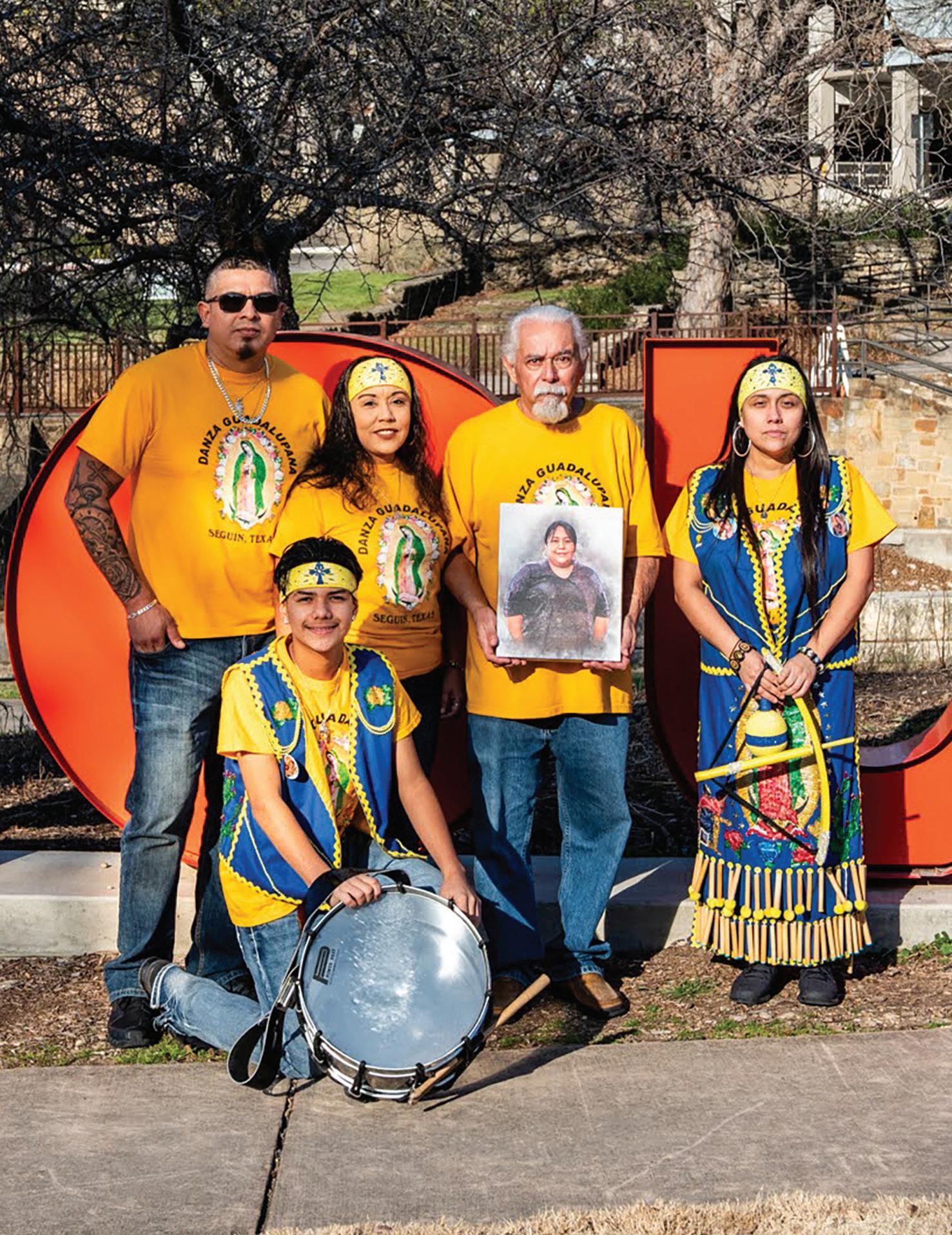
the group. Fiscal’s children — Francisco, Fabian and Flora — also danced and supported their mother in any way needed to keep the Danza running.
What began as a personal act of faith grew into a tradition that blends cultural heritage with devotion, a legacy that continues today.
Over the years, Danza Guadalupana has grown into a large, extended family. Members range in age from young children to adults in their 60s, with many families participating together. The group regularly travels throughout South and Central Texas, including Luling, Gonzales, San Antonio, Austin, Uvalde and beyond, often hosting multiple rosaries and Danzas in a single day during peak season.
“We don’t turn anybody away,” Rodriguez said. “If someone wants us to come pray with them, we do our best to be there.”
For much of its history, Teresa handled the organizational work behind the Danza. She coordinated schedules, organized fundraising, arranged travel and served as a steady presence for the group. When Teresa passed away unexpectedly last July, Rodriguez said many wondered whether the Danza would be able to continue.
“At first, everyone was kind of lost,” she said. “My mom did everything. Her work and impact was even more than we could have imagined. She did so much.”
During rosaries held after Teresa’s passing, members honored her memory by leaving an empty chair with her photograph and a rose. As the family grieved, responsibilities within the Danza shifted. Rodriguez, who had primarily participated as a dancer, began coordinating events, while her husband started leading rosaries when families requested.
In the months that followed, Rodriguez embraced her leadership role alongside her father Arturo, her siblings, her husband Alex Rodriguez and other longtime members of the Danza. Rodriguez said while the transition was beyond difficult, every member of the group remained committed to continuing the work that had been built over
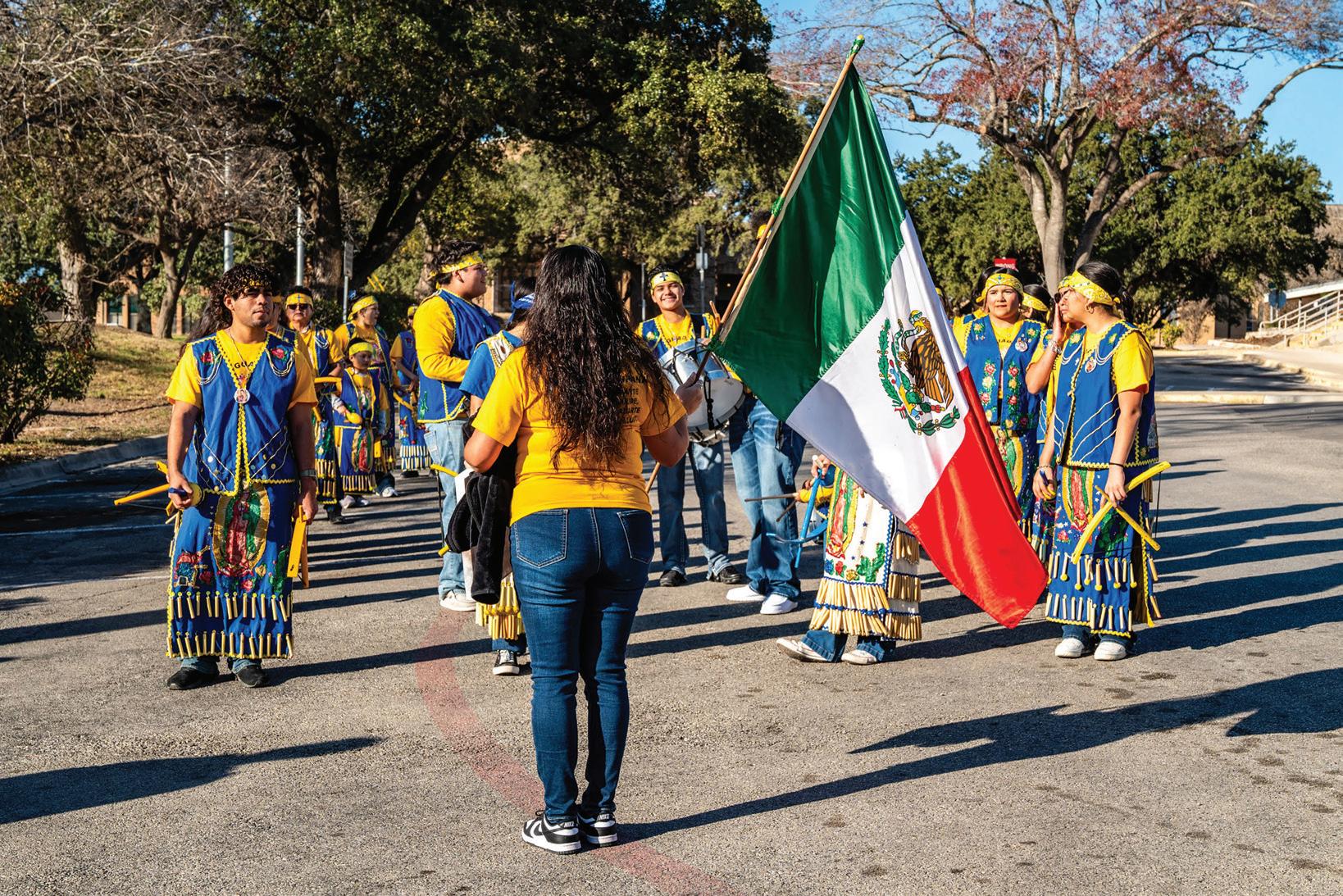

more than two decades.
“We felt like we had to keep going,” Susana said. “Not just for my mother, but for the community and everyone who depends on the Danza.”
And while much has changed, one thing has not: The group’s contact number remains the same one it has used for years, still ringing directly to Susana’s mother’s phone — a quiet reminder of the woman who helped build the Danza and whose presence continues to guide it.
Today, Danza Guadalupana continues to operate much as it always has, as a grassroots effort of faith supported by donations from the families it serves. Requests to host Danzas now outnumber the available dates, a sign of the group’s continued impact in the community, Susana said.
“There are more families than we can fit in the season,” she said. “We have a waitlist and when we are able to add availability or when, in rare cases, we have a cancellation, the next family is absolutely thrilled to get a spot.”
The Danza remains deeply family-centered. Susana’s children are now active participants, including her teenage son, who serves as one of the group’s drummers. Many members who danced as children have returned years later with families of their own, she said.
As Danza Guadalupana approaches its 25th anniversary, plans are already beginning to take shape. Teresa previously organized milestone celebrations herself, and continuing that tradition carries special meaning for her family and the broader Danza community, Susana said.
“My mom always said that even if only four dancers showed up, we were going to dance,” she said. “No matter what, the Danza was going to continue.”
In Seguin, Danza Guadalupana stands as a reminder of how faith, culture and community are sustained not solely through institutions, but through families willing to carry traditions forward — one rosary, one dance and one generation at a time.








IN THE
AND CAREFULLY PRESERVED, THE CHAPEL REFLECTS BOTH ENDURING FAITH AND REMARKABLE CRAFTSMANSHIP.
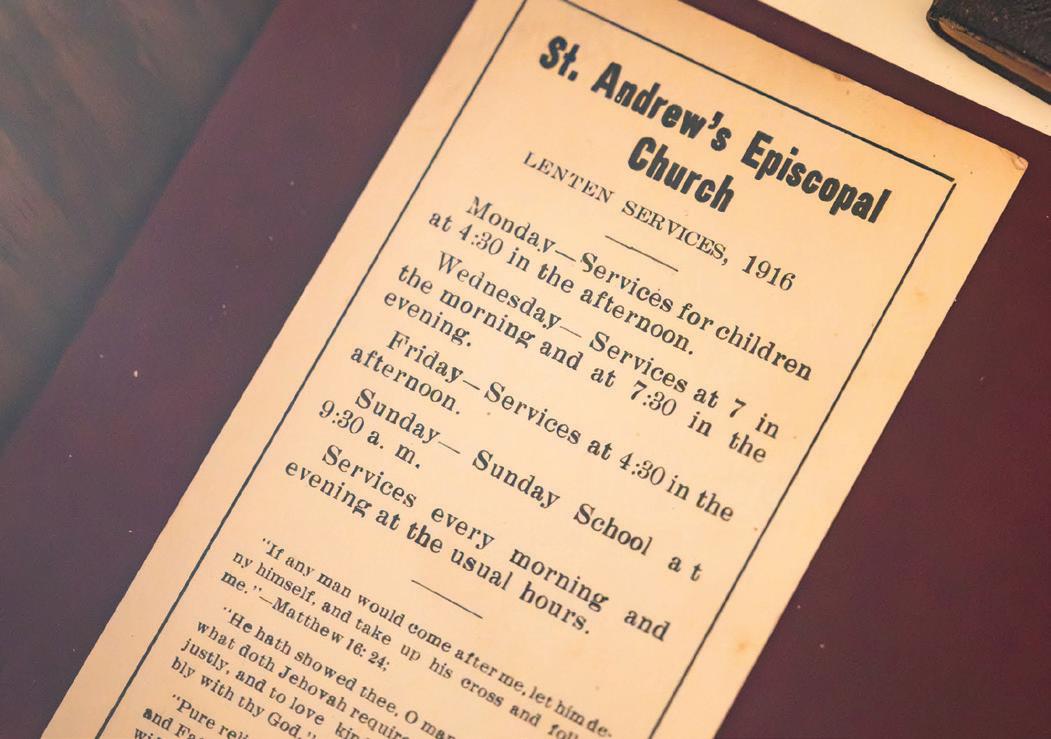
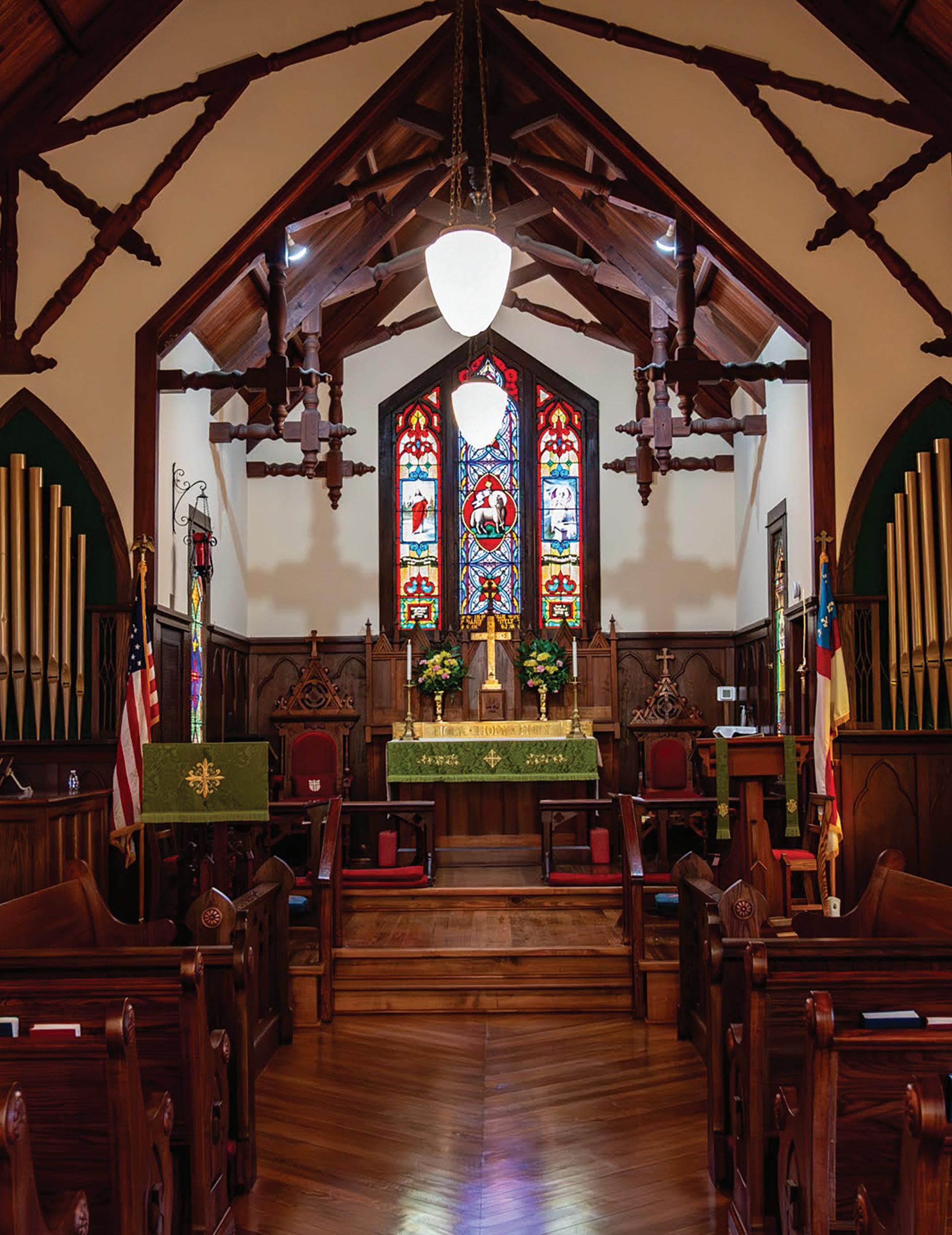
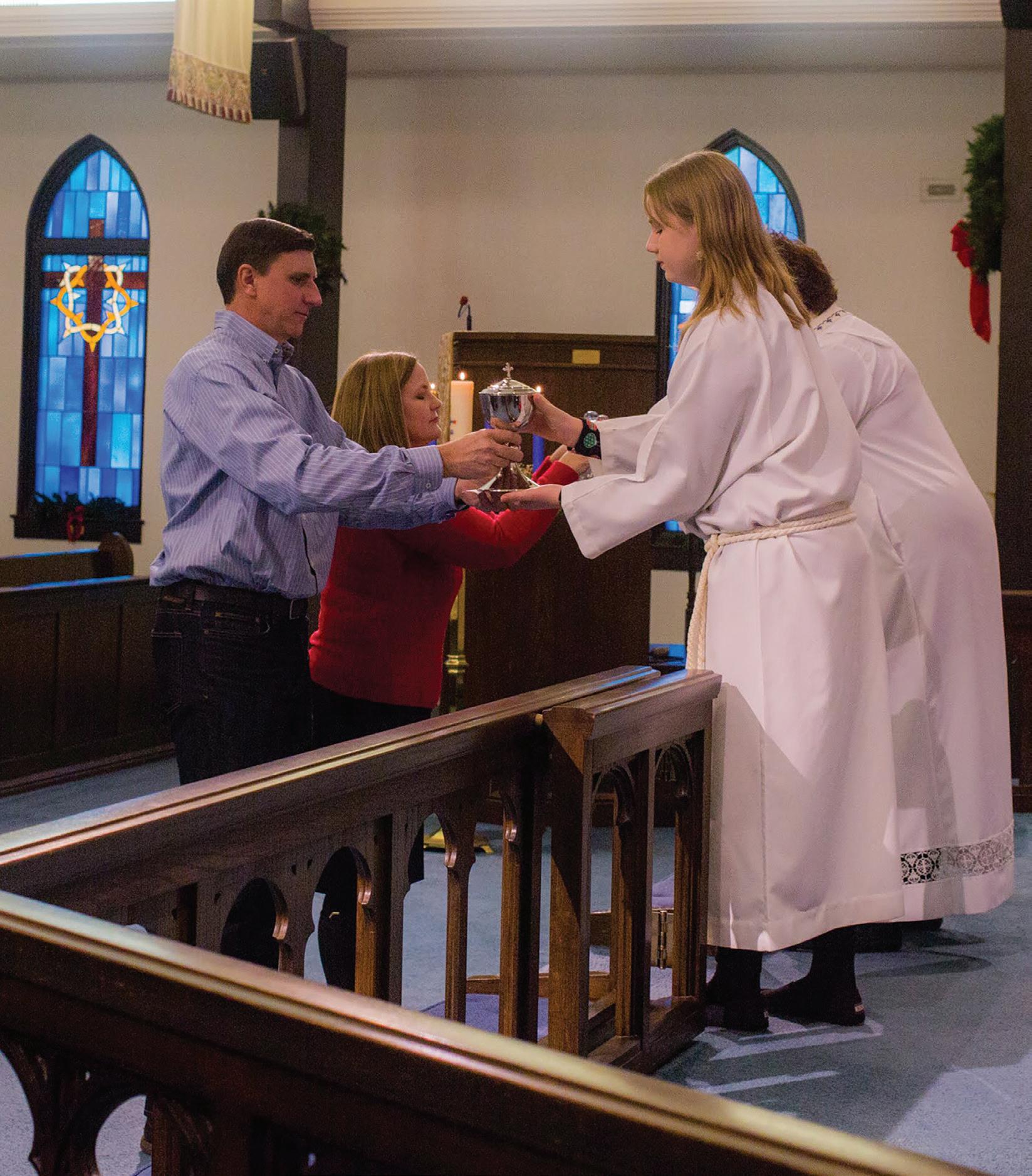
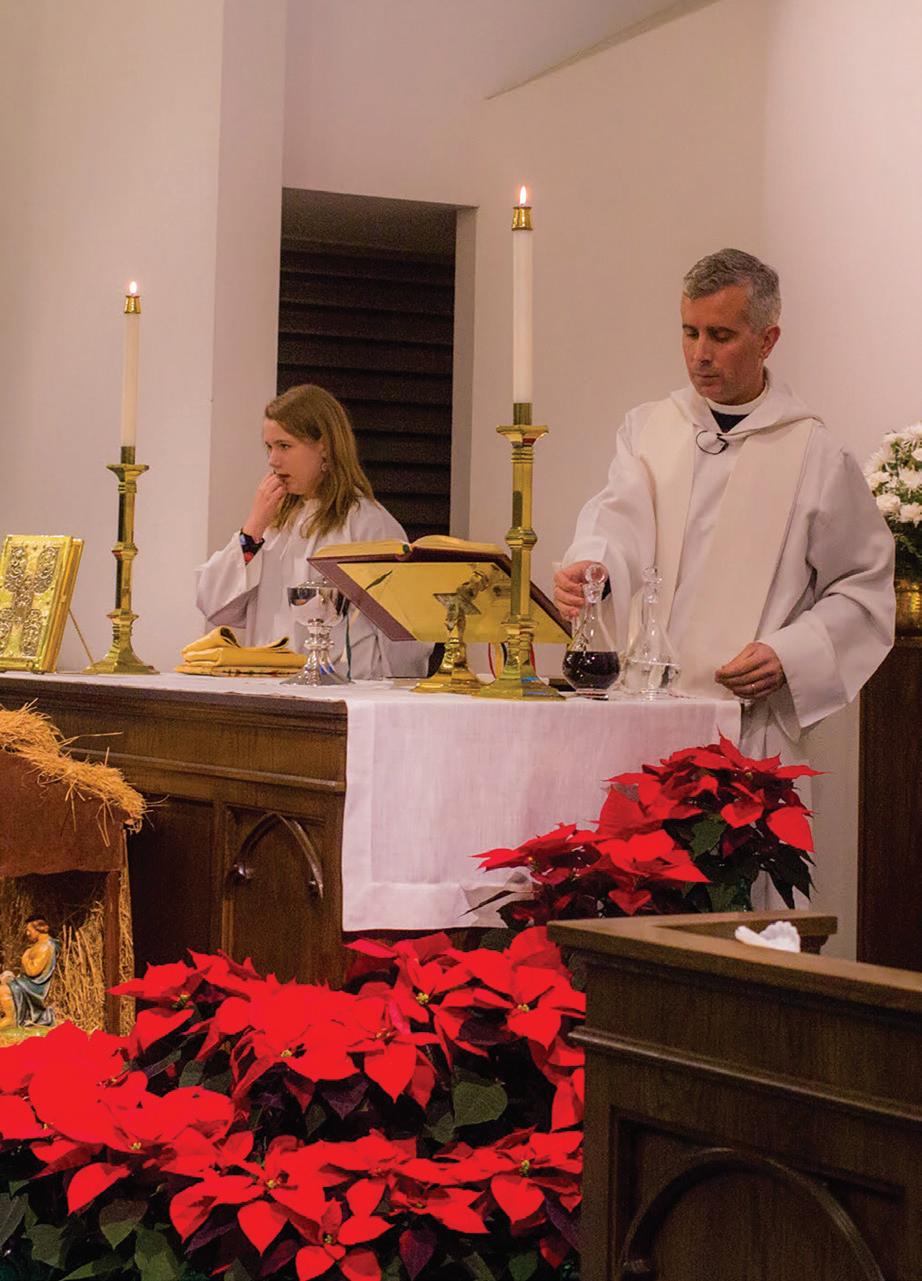
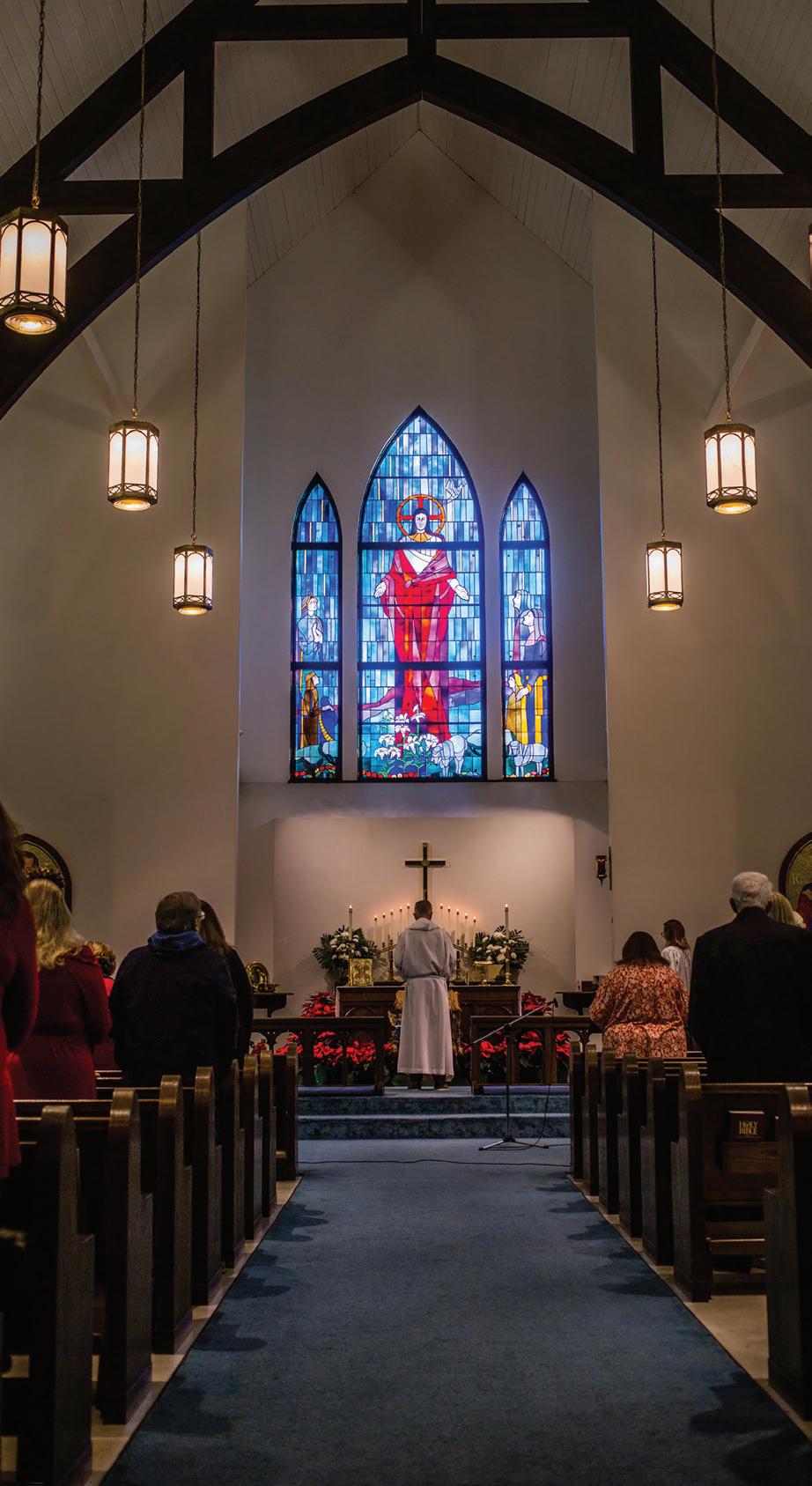
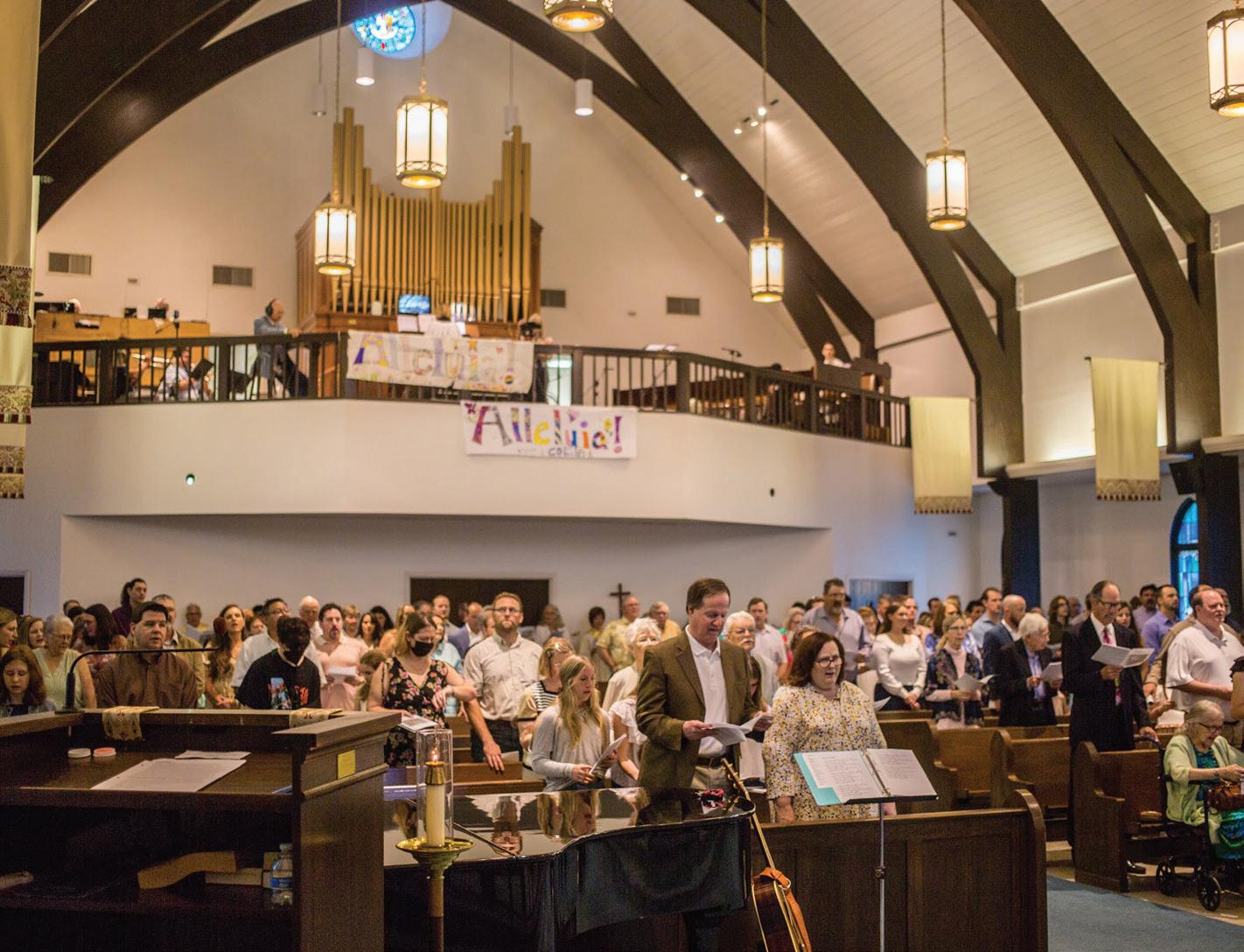
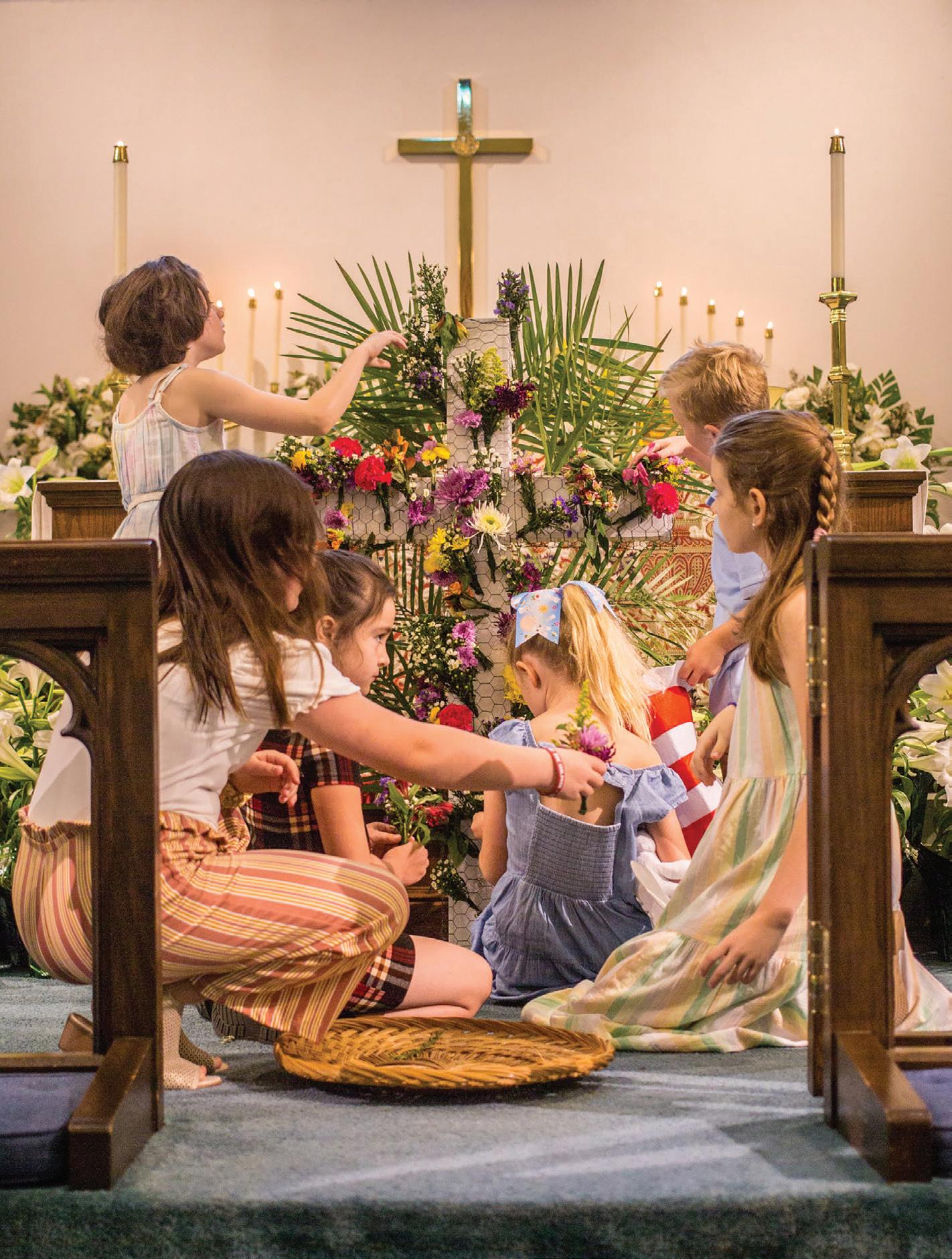
The St. Andrew’s Episcopal Church in Seguin has stood on the same ground for nearly a century and a half, its original chapel quietly anchoring generations of worship, family milestones and community life. Built in 1876, the structure now known as the Chapel remains a rare architectural survivor, preserved not only through careful renovation but also through the lived experiences of those who gathered there over time.
Few know that history as intimately
as Dorothy Bauer and her husband Syd Bauer. Syd will turn 97 next month and has been part of the church since the day he was born. Dorothy joined the congregation as a teenager after moving to Seguin and has been a member for nearly 80 years.
“He has been part of this church since the day he was born,” she said. “So he may not be the oldest member, but he is certainly the one with the longest connection to it.”
Their personal histories are inseparable from the church itself. Syd

was baptized, confirmed and married Dorothy there, and their children were baptized and confirmed in the Chapel.
“For us, it has always been a family place. The Chapel is a special, moving space but also so welcoming and familiar,” Dorothy said. “So many of our memories are tied to that building.”
The Episcopal presence in Seguin began in the early 1850s, when Texas was still considered too large to function as a traditional diocese, Dorothy said. Instead, it was organized as a missionary district and priests traveled widely to serve scattered congregations. Around 1853, one such missionary arrived in Seguin and found seven Episcopalians interested in forming a church.
“He was said to have preached to anyone, drawing a large crowd upon his arrival,” Dorothy said.
“People came who were not Episcopalian, there were only seven of them at the time, it was a grassroots beginning,” she said.
The mission was originally named the Church of the Redeemer, but later received a new name because another Texas church already used it, Dorothy said. The congregation became St. Andrew’s Episcopal Church and began meeting in an upstairs room on Court Street known as Conference Hall.
She said the Civil War and the hardship that followed interrupted plans for a permanent building. Construction finally moved forward in the 1870s, when the congregation purchased three lots for $300. The church was completed in 1876.
John White, an architect who worked on the Texas Capitol, along with John Ireland, a former governor of Texas and a member of the parish, designed the new building, Dorothy said.
“It really is a structure of excellent proportions and great design,” Syd said. “The hammer beam trusses were handturned and that kind of craftsmanship is unusual in this part of the country.”
The Chapel endured more than the passage of time. An 1886 storm destroyed its bell tower. A later storm damaged stained-glass windows above
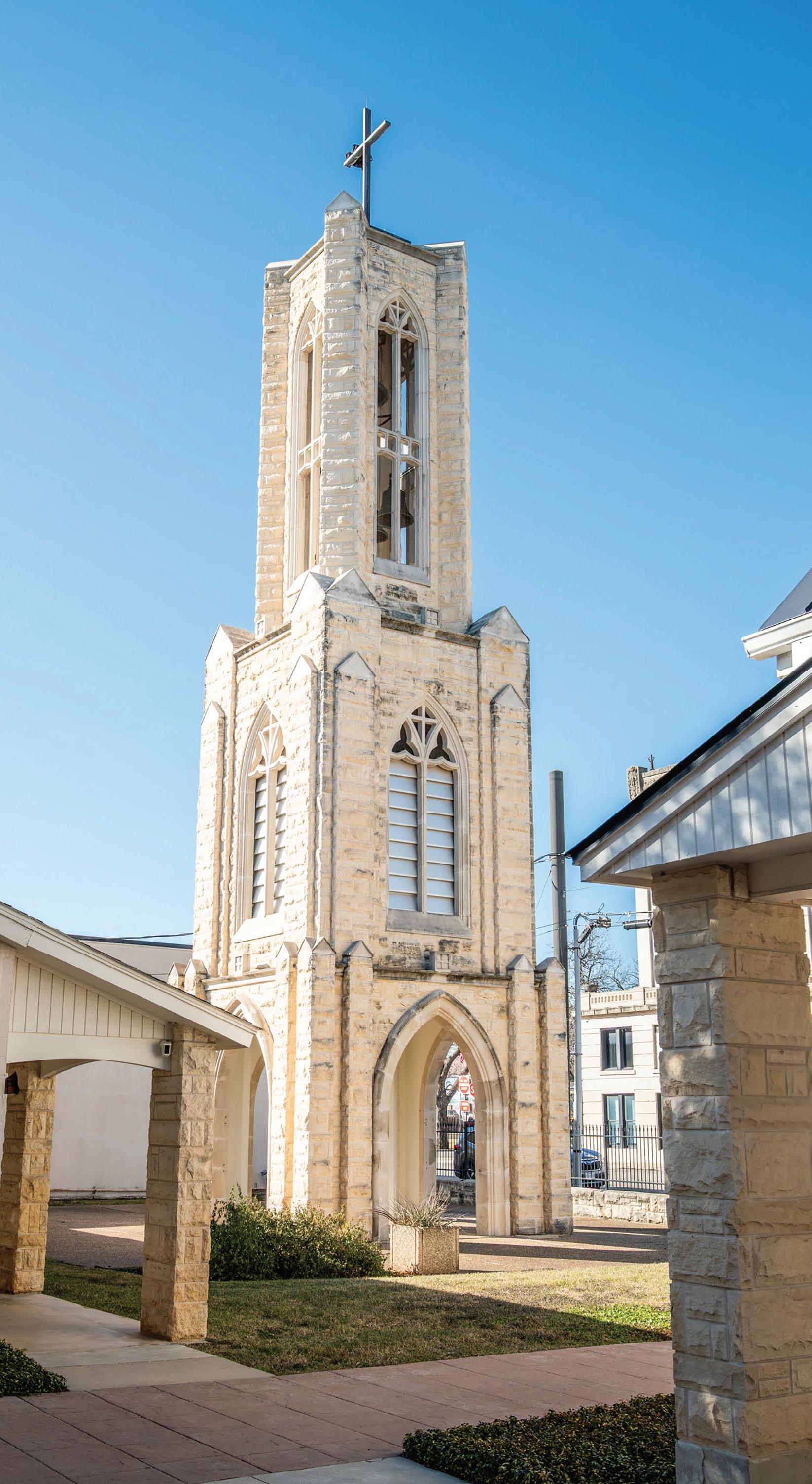

the altar and tore off the roof. Each time, the congregation rebuilt.
“There have been repairs and renovations over the years,” Dorothy said. “But the remarkable thing is that the building still stands almost exactly as it did when it was completed in 1876.”
The Bauers said that as the congregation grew, the interior was adjusted to accommodate more worshippers. Pews were reconfigured to maximize seating. Later, a parishioner left a substantial gift to the church specifically for restoring the Chapel.
“The Chapel was completely renovated and brought back to its original appearance as much as possible,” Dorothy said. “Of course, we added heating and air conditioning because that was necessary.”
Modern systems replaced a far more labor-intensive solution, she said. Originally, a wood stove heated the Chapel.
“One of the ministers’ wives always came early because the stove would be cold,” Dorothy said. “She wrapped each piece of coal in newspaper so when people fed the fire, their hands would not be blackened.”
Among the most distinctive features of the Chapel are its stainedglass windows, many of which carry deeply personal stories. One window near the back of the church honors Kate Jones, a devoted member who never married and lived for years among different households in Seguin.
“Everyone loved Miss Kate,” Dorothy said. “She taught Sunday school and did just about everything that needed to be done.”
When Jones became seriously ill, the congregation chose to dedicate the window while she was still alive.
“They brought her into the church on a pallet and placed her in front of the window so she could hear the dedication,” Dorothy said. “That was very special because usually those windows are dedicated after someone has passed.”
Another stained-glass window above the altar puzzled parishioners for many years. It was more recently discovered to be dedicated to Daniel Stively.
“For a long time, nobody knew who










he was or why the window was there,” Dorothy said.
Church records eventually revealed that Stively moved to Seguin in the late 1850s and died young after leaving town during the Civil War. He had no known relatives remaining in Seguin and his name faded from local memory.
“What we were left with was a beautiful window and a mystery,” Dorothy said.
Someone later discovered that Stively’s three brothers, all Episcopal clergy not from Seguin, placed the window, Dorothy said.
“And that mystery and discovery of the past became part of the church’s history, too,” she said.
Some of the Chapel’s remaining windows were originally ordered through mail-order catalogs many decades ago.
“They were fairly common and not very expensive at the time,” Dorothy said. “But now, like so many things from the past, they are extremely rare.”
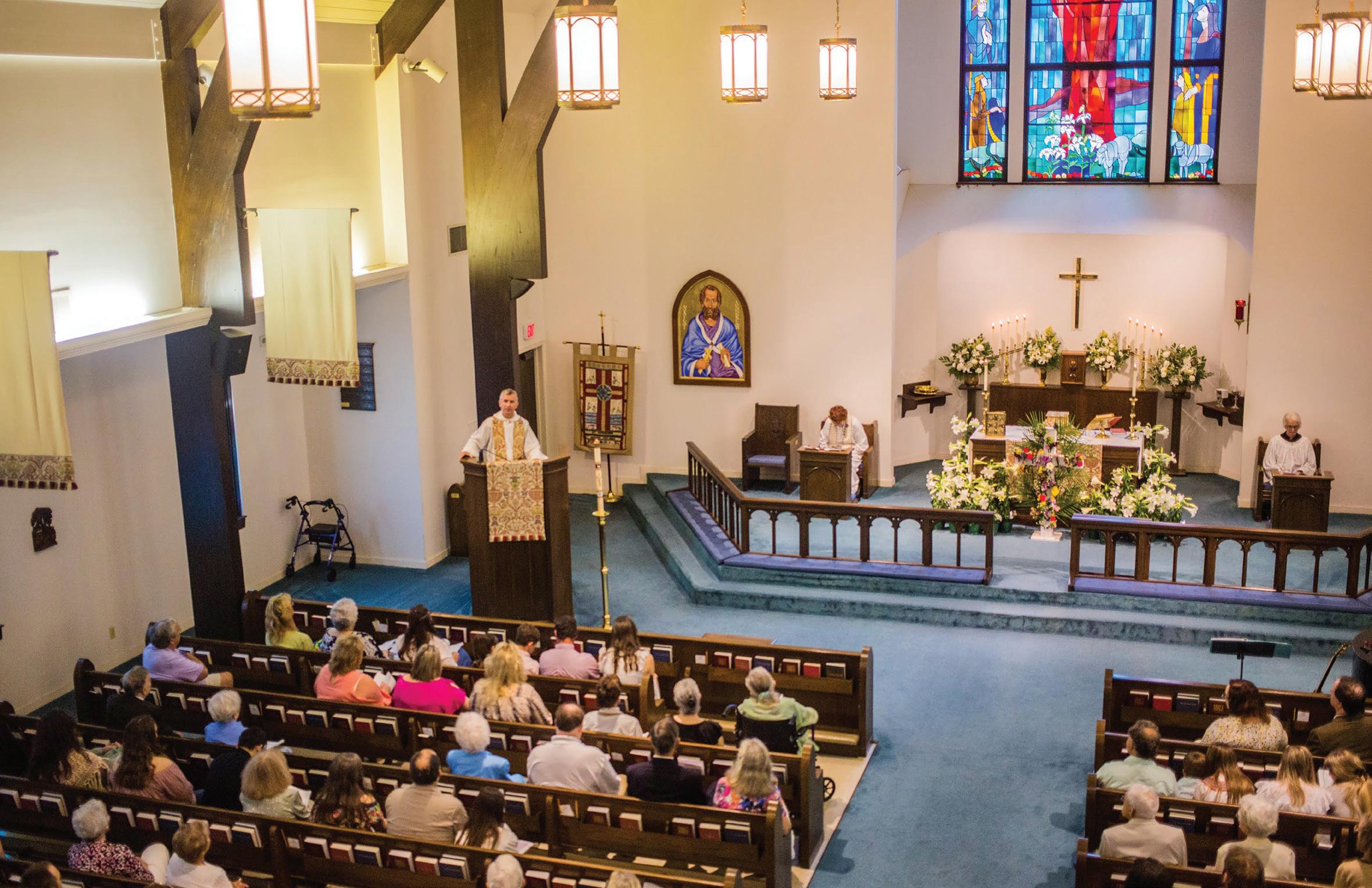
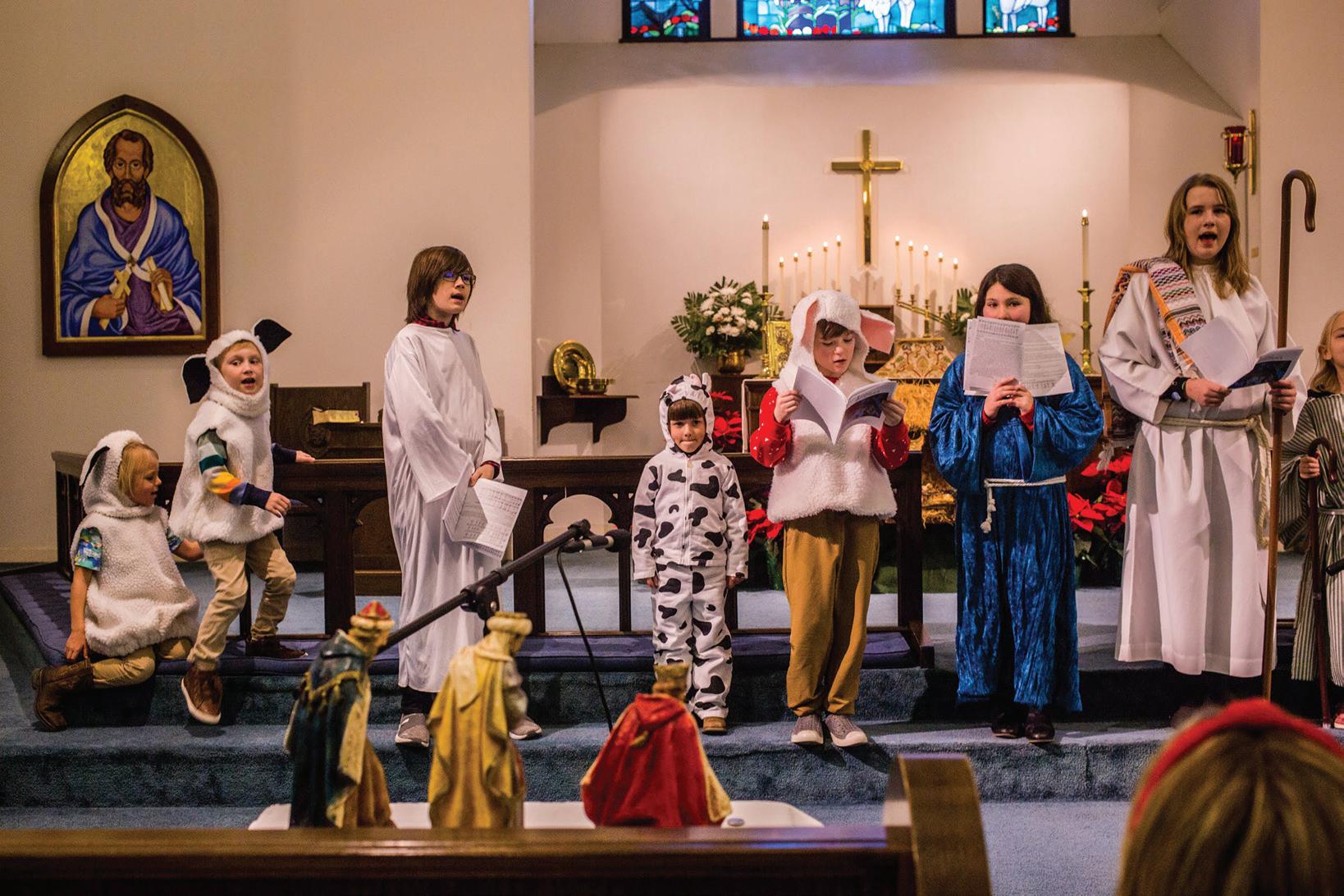
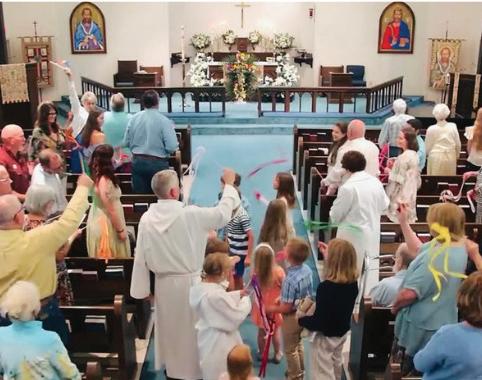
In 1986, the congregation built a larger, more modern church on the same property to serve the parish. Most services now take place there, while the Chapel continues to host an early Sunday service, along with smaller weddings and funerals.
“The newer church is more modern and functional,” Syd said. “But it does not have the same feeling and presence as the Chapel. They do not build churches like that anymore. They don’t build much of anything like that anymore.
“It is something special.”
Additional buildings and a garden space, support parish life and continue to receive renovations as needs arise. The Bauers said that a combination of volunteers, church leaders and staff handle much of the upkeep.
“There is always something that needs attention,” Dorothy said. “That is simply part of caring for a place like this.”
For the Bauers, the Chapel remains the heart of the church.
“It holds the history of our church,” she said. “And for us, it holds our lives.”













STORY BY SYDNEY SEIDEL
PHOTOS BY SEGUIN GAZETTE STAFF AND COURTESY OF DIANA KLADE
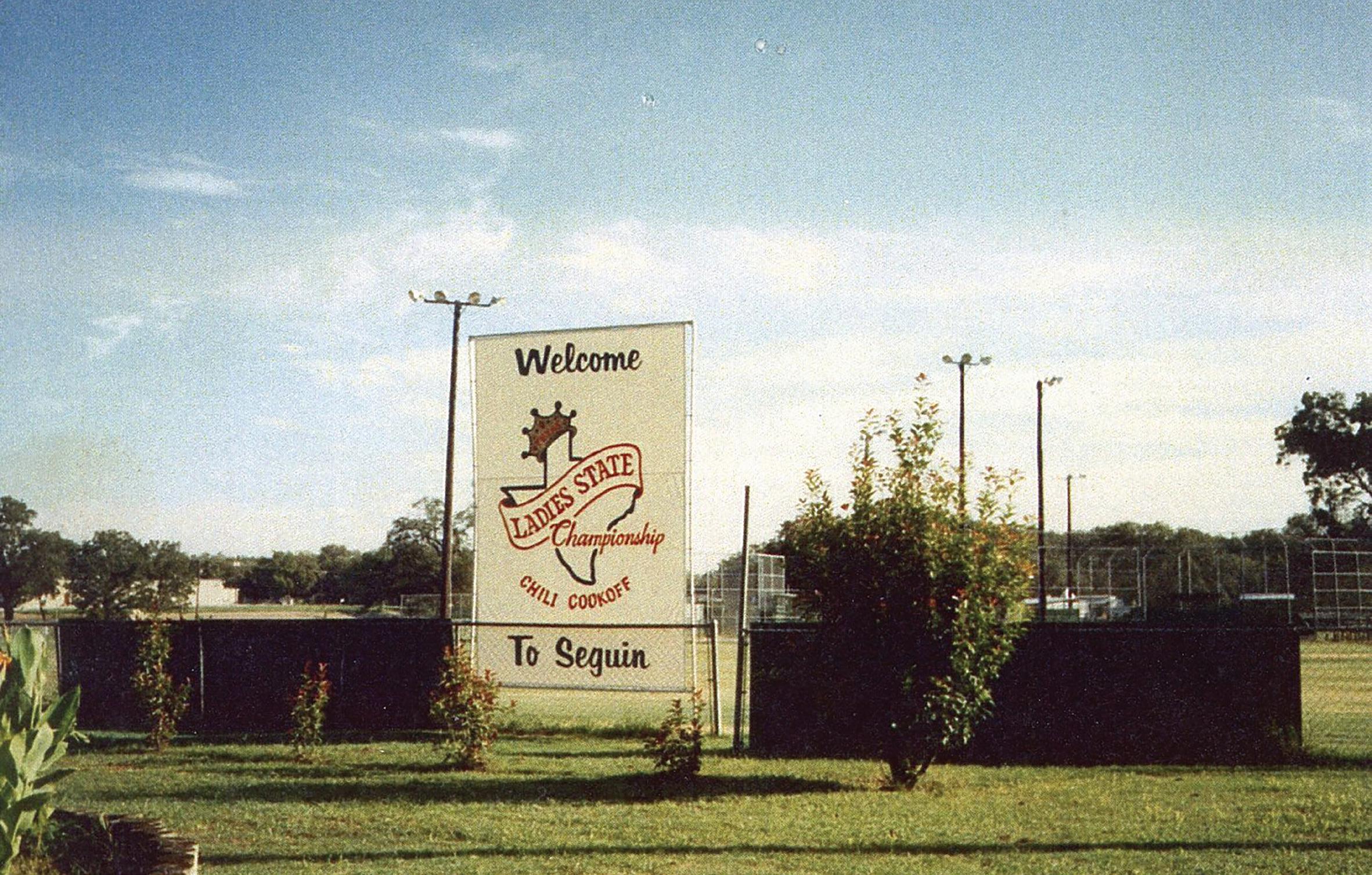
The Texas Ladies State Chili Championship is more than an annual cook-off where women from across Texas compete for the title of best chili; it is a celebration of community, tradition and the women behind the pots.
The championship was born out of exclusion. At a time when many chili cook-offs limited competition to men, women were expected to attend only as supporters of their husbands and sons. When a group of women came together and realized they had their own ideas and recipes, they decided to create a
competition of their own.
After nearly two decades in Luckenbach, the weekend-long championship found a permanent home at Max Starcke Park in 1991. Sanctioned by the Chili Appreciation Society International (CASI), the event has remained there ever since, drawing anywhere from 100 to 200 contestants each year.
Contestants begin rolling in Thursday with RVs, campers and other portable setups, giving them a chance to settle in, meet fellow competitors and reconnect with friends they may only see once a year. Friday kicks off with the

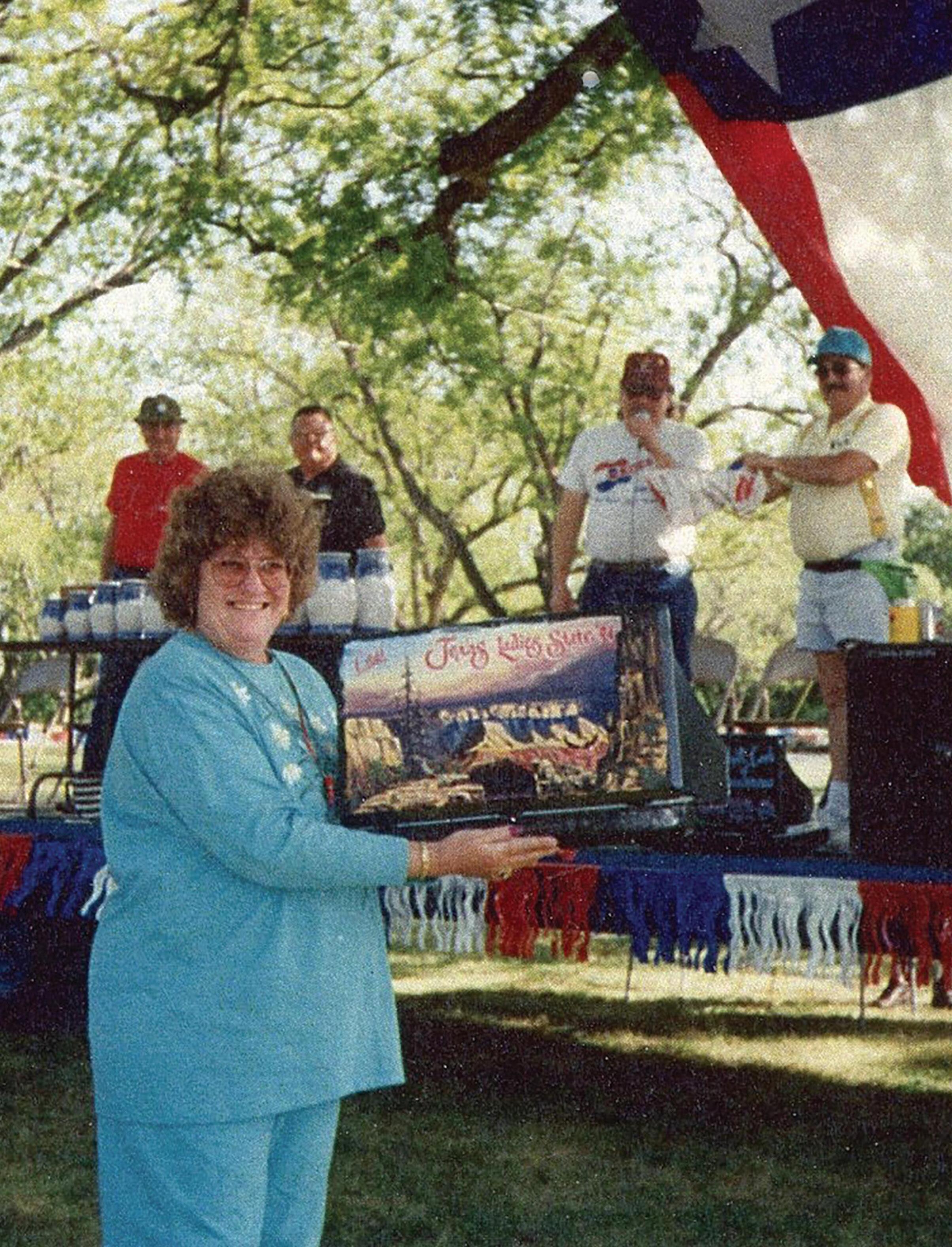
open cook-off, where men and women compete alongside a junior portion of the competition — a part of the weekend that one long-time chili cook says she and her husband take seriously, often turning it into a friendly showdown between the two of them.
“My husband cooks a pot and I cook a pot, and after all these years, we’ve both had the chance to experiment and try new things in our recipes,” said Nell Causey, who has competed since 1981, a year after her husband started.
On Saturday, the main event begins: the Ladies Cook-off. Some contestants return year after year, while newcomers, ranging from first-time competitors to daughters and granddaughters of past cooks, join in. There are no entry requirements, but top finishers qualify for the Terlingua International Chili Championship.
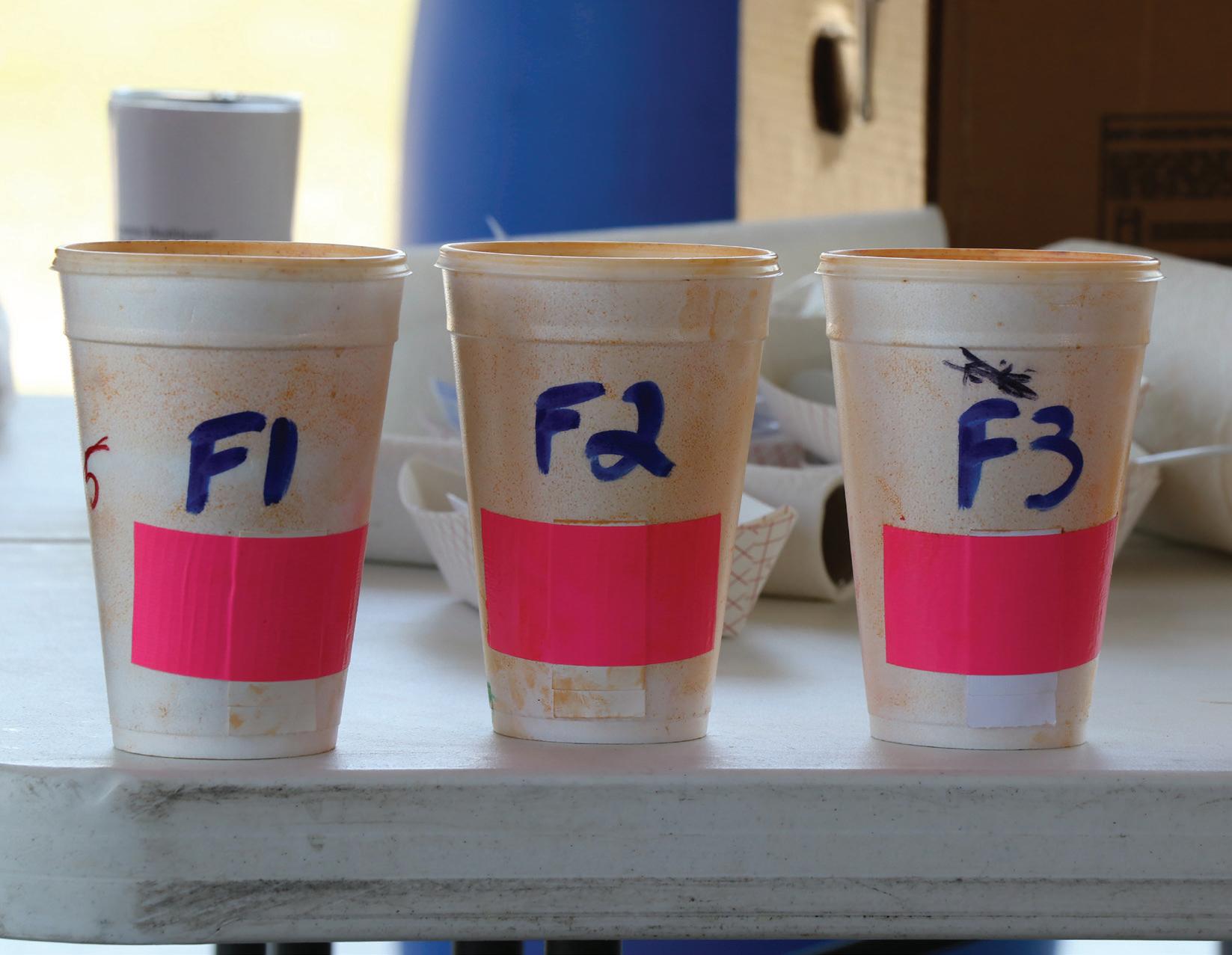
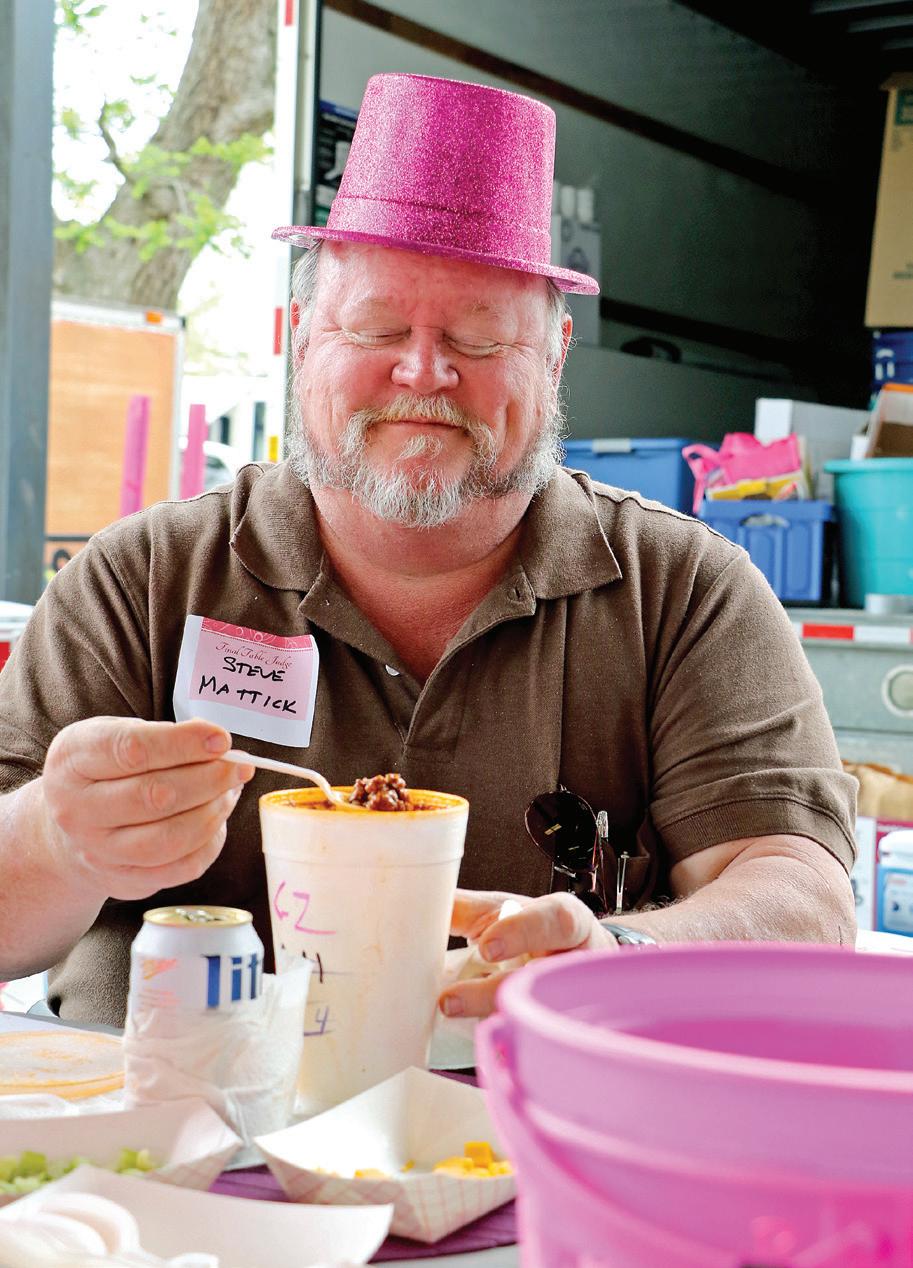
A panel of judges evaluate the chili, considering five key aspects: color, aroma, consistency, taste and aftertaste. Each chili is scored on a scale from one to 10, with the top entries advancing to the finals table, which is typically judged by people not connected to the contestants. In recent years, the chamber has recruited city officials, community members and longtime supporters to serve as final-round judges.
Judges are only allowed to comment on whether the chili is still “stove hot.” Once they have tasted it and passed it along, they cannot sample it again.
During this time, music and games provide entertainment for family members and friends while they wait at the park. The ladies of the organization chose Max Starcke Park after deciding to leave Luckenbach, drawn to the park mainly because of the concentration and size of the pecan trees. At first, the area was nothing but trees, with a Texas flag they hung between the two largest during the weekend.
Today, despite storms and floods over the years, the park has running water, bathrooms and a pavilion named in honor of Patricia K. Irvine-King, one of the key people behind the decision to move the contest to Seguin because of
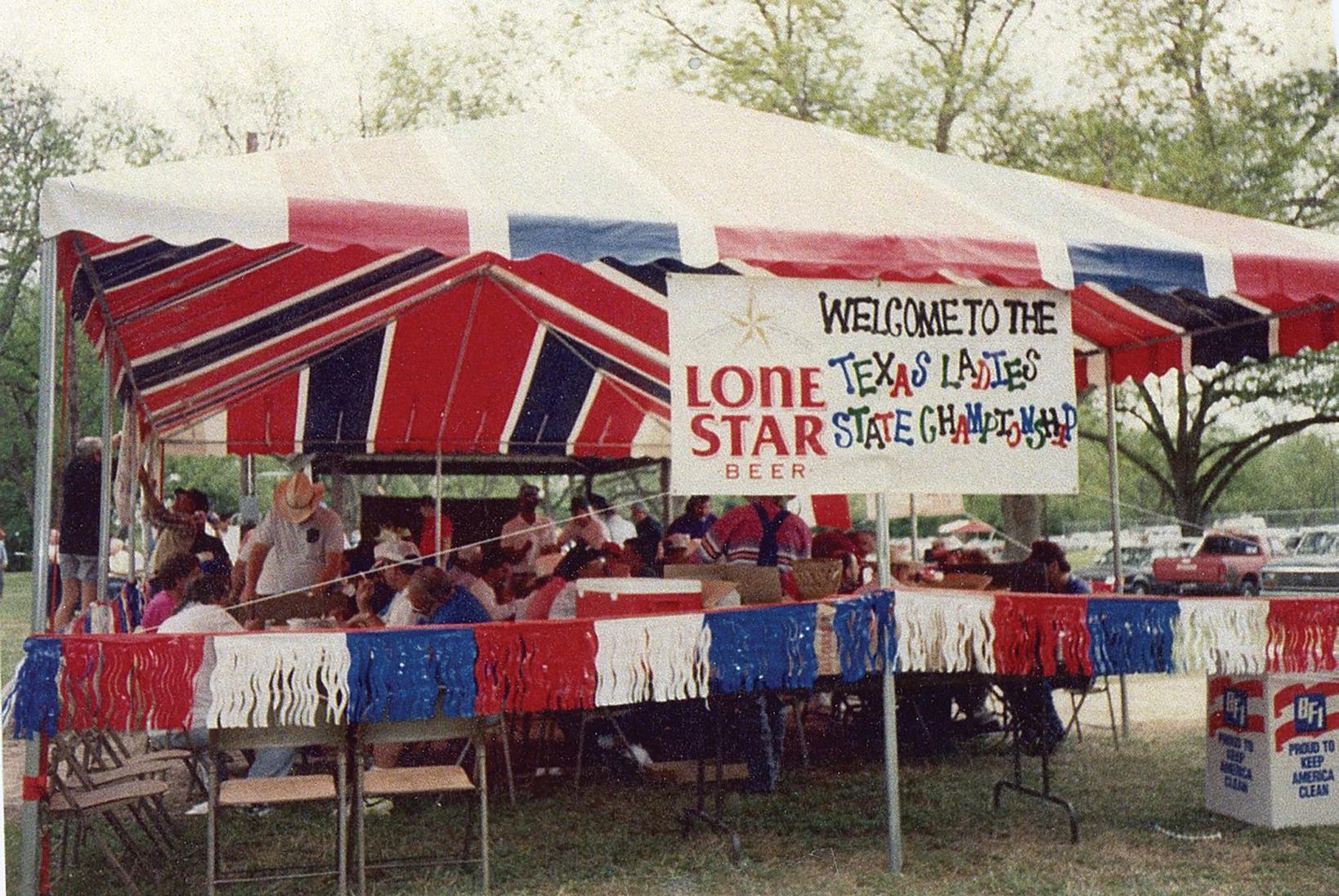
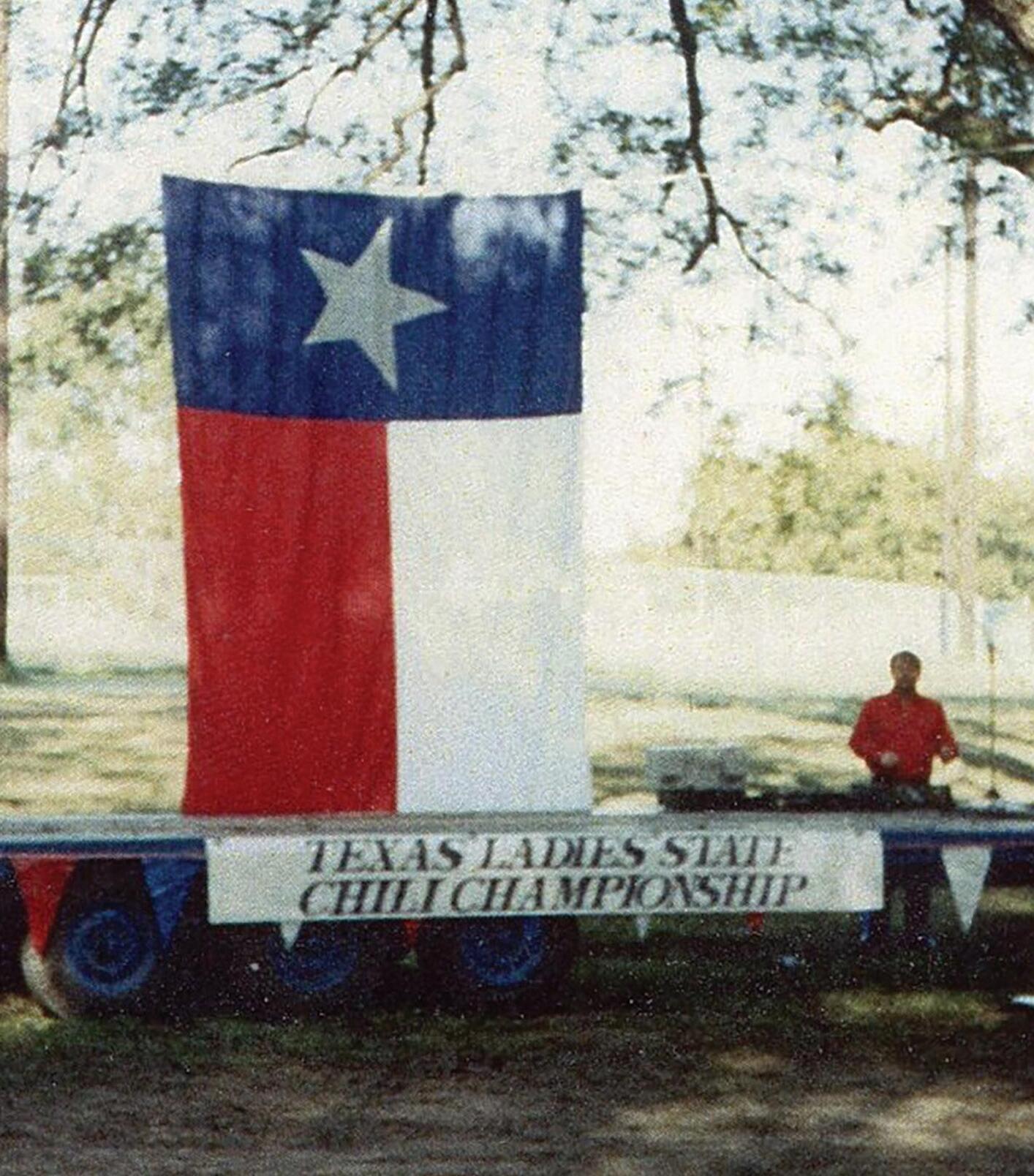
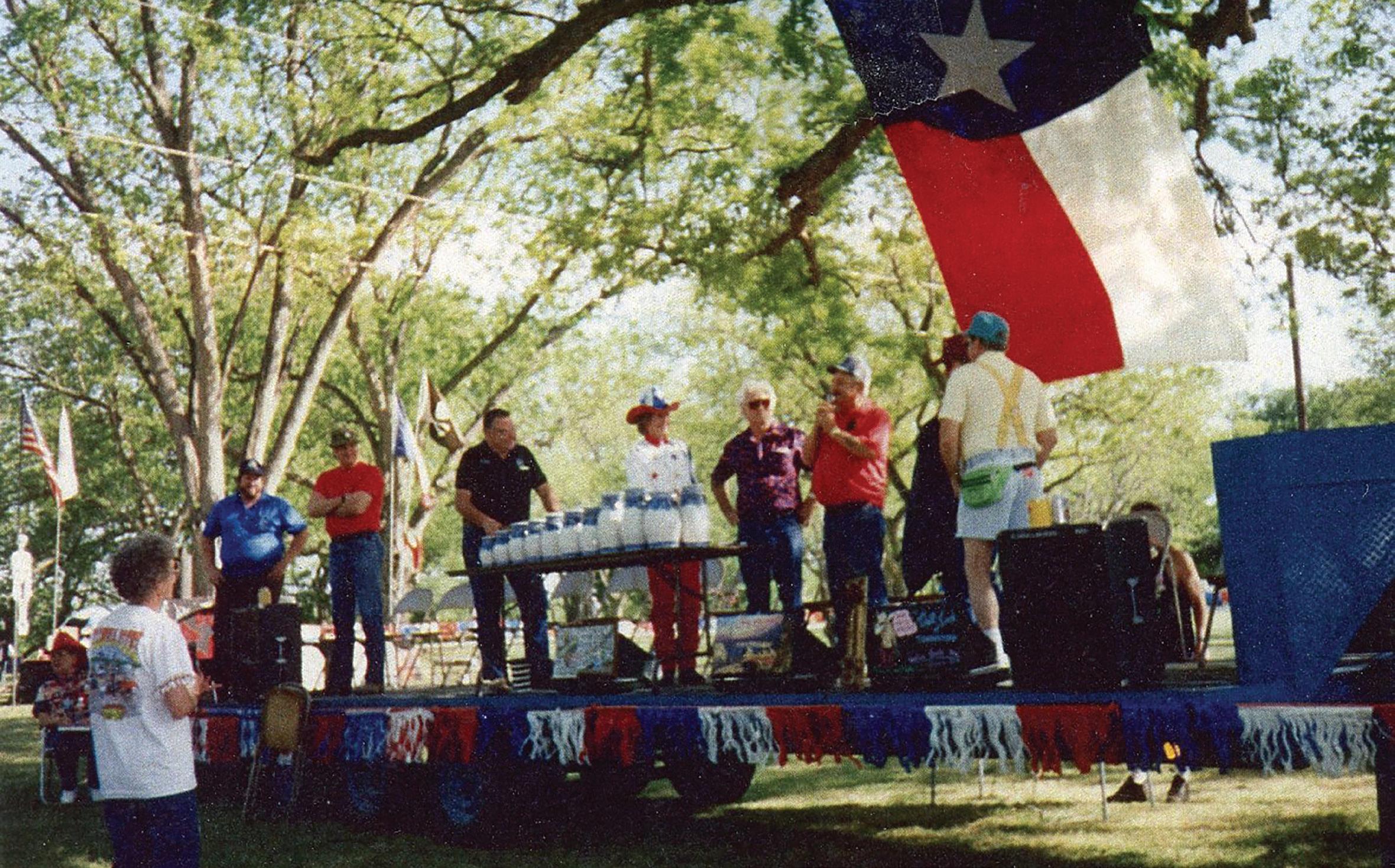
her appreciation of the area.
“We all fell in love with the trees here,” Causey said. “The shade and space just felt perfect for what we wanted.”
Another tradition the women have developed is making good luck tokens for each other, a way of putting their own stamp on the competition compared to the men’s contests. Even with the competitive spirit, these small gestures show how they create a more personal side to the event.
From trinkets to merchandise tied to that year’s theme, the tokens celebrate camaraderie and friendship. They highlight how supporting one another is just as much a part of the weekend as competing for the best chili.
Diana Klade, who has cooked, judged and now serves as the regional referee for the cook off, says it’s moments like these that keep her and many others coming back year after year. Klade, the 2008 champion, also sees it as a great place for anyone to learn about chili, whether you are a cook or a judge.
“It’s the friendliest environment there is,” she said. “I like to joke that barbecue cooks don’t give out their secrets, but chili cooks do. We will mentor anybody willing to come out and spend time with us. We are just happy to have you around.”
The community also benefits from hosting the competition in Seguin. On Friday each year, groups often head out to visit local restaurants and shops, many of which have come to look forward to the weekend and even donate drinks and snacks to the event.
Additionally, the money raised supports several local organizations, including the Children’s Advocacy Center, cancer societies, women’s shelters and even Max Starcke Park.
Causey and Klade both encourage Seguin and surrounding residents to come out and support the cook-off, especially by signing up to become judges. This year, the event kicks off Thursday, April 16 and runs through the weekend with plenty of chili, fun and community spirit for everyone to enjoy.














STORY AND PHOTOS BY ALEX LOWE
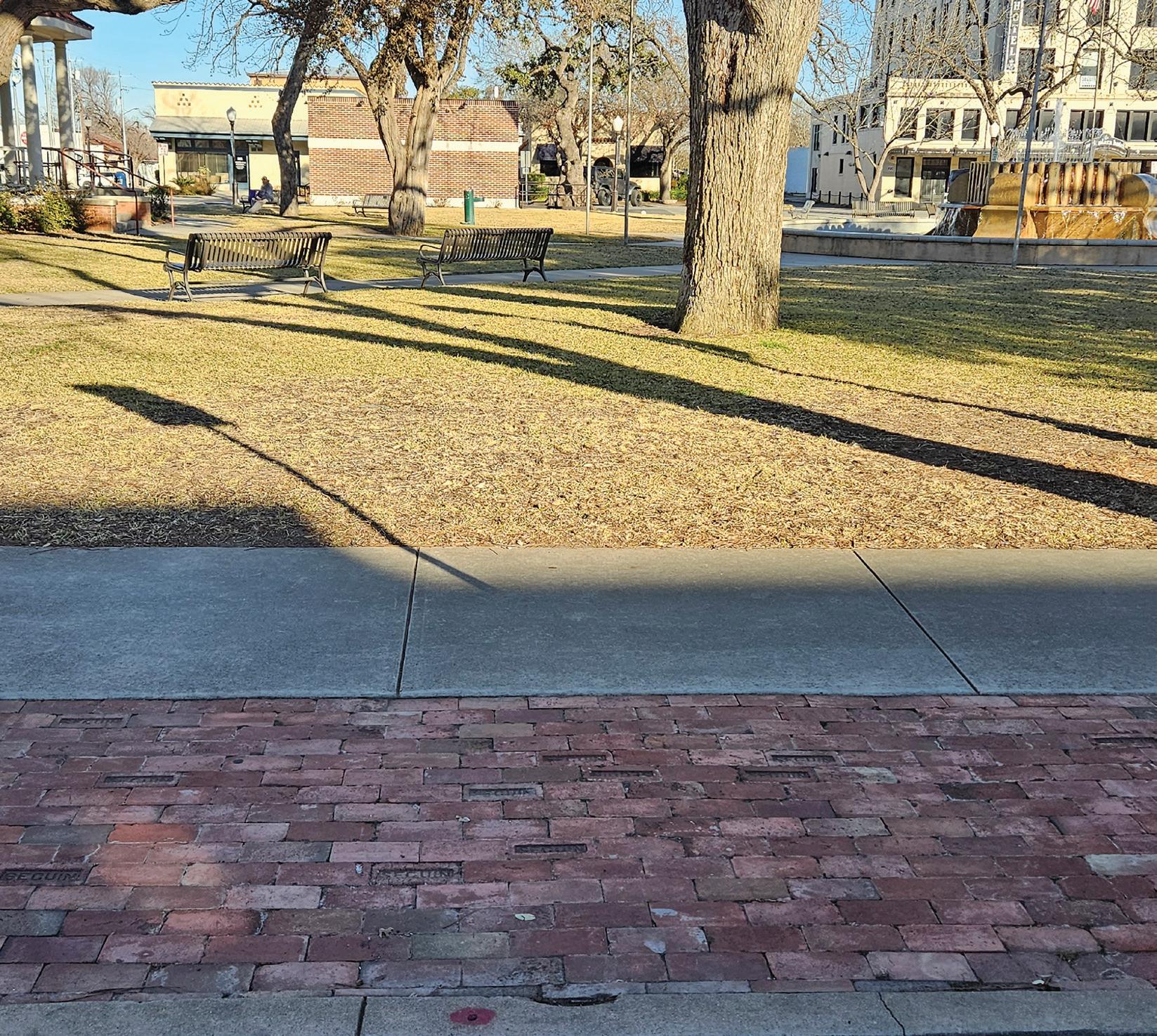
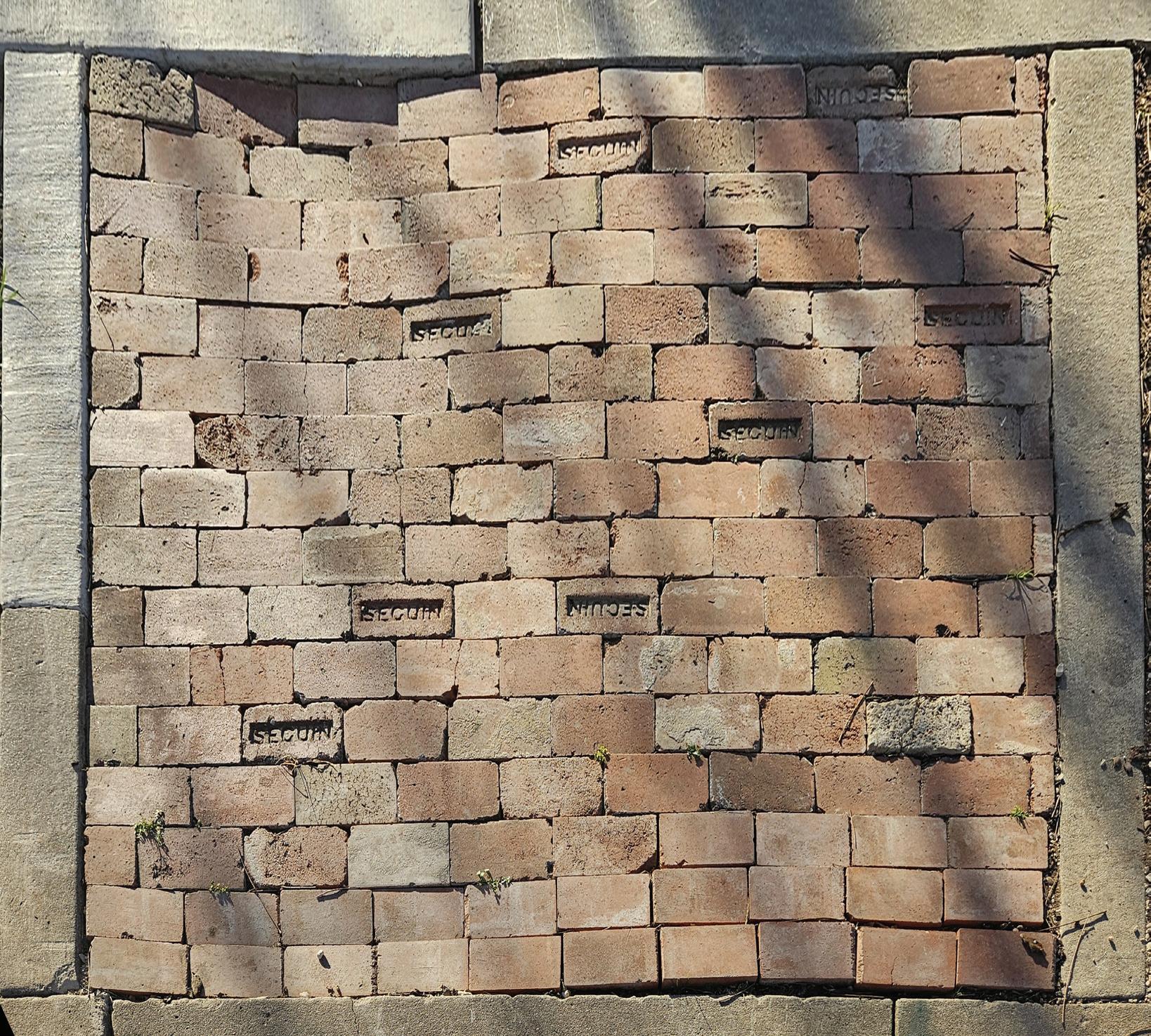
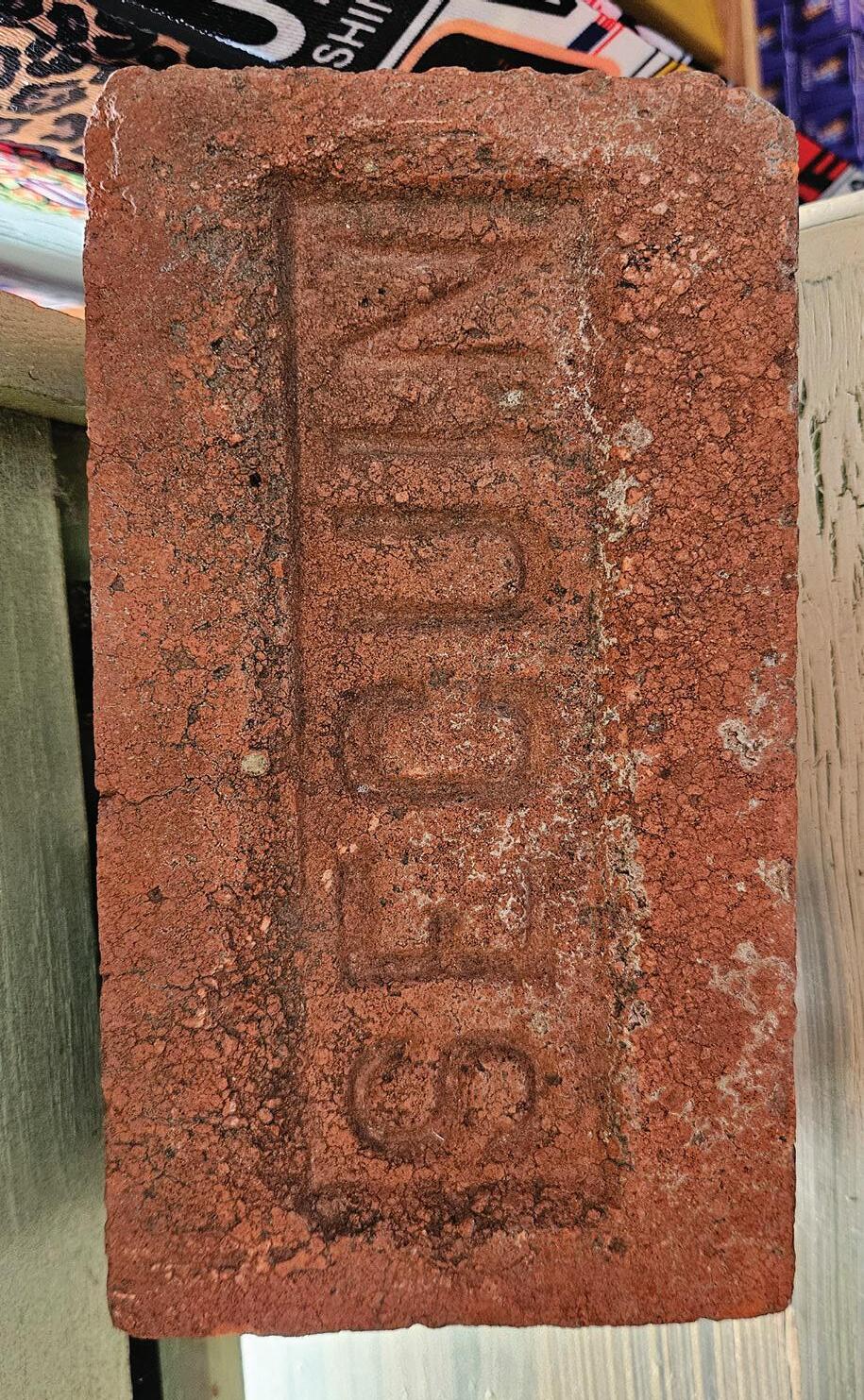
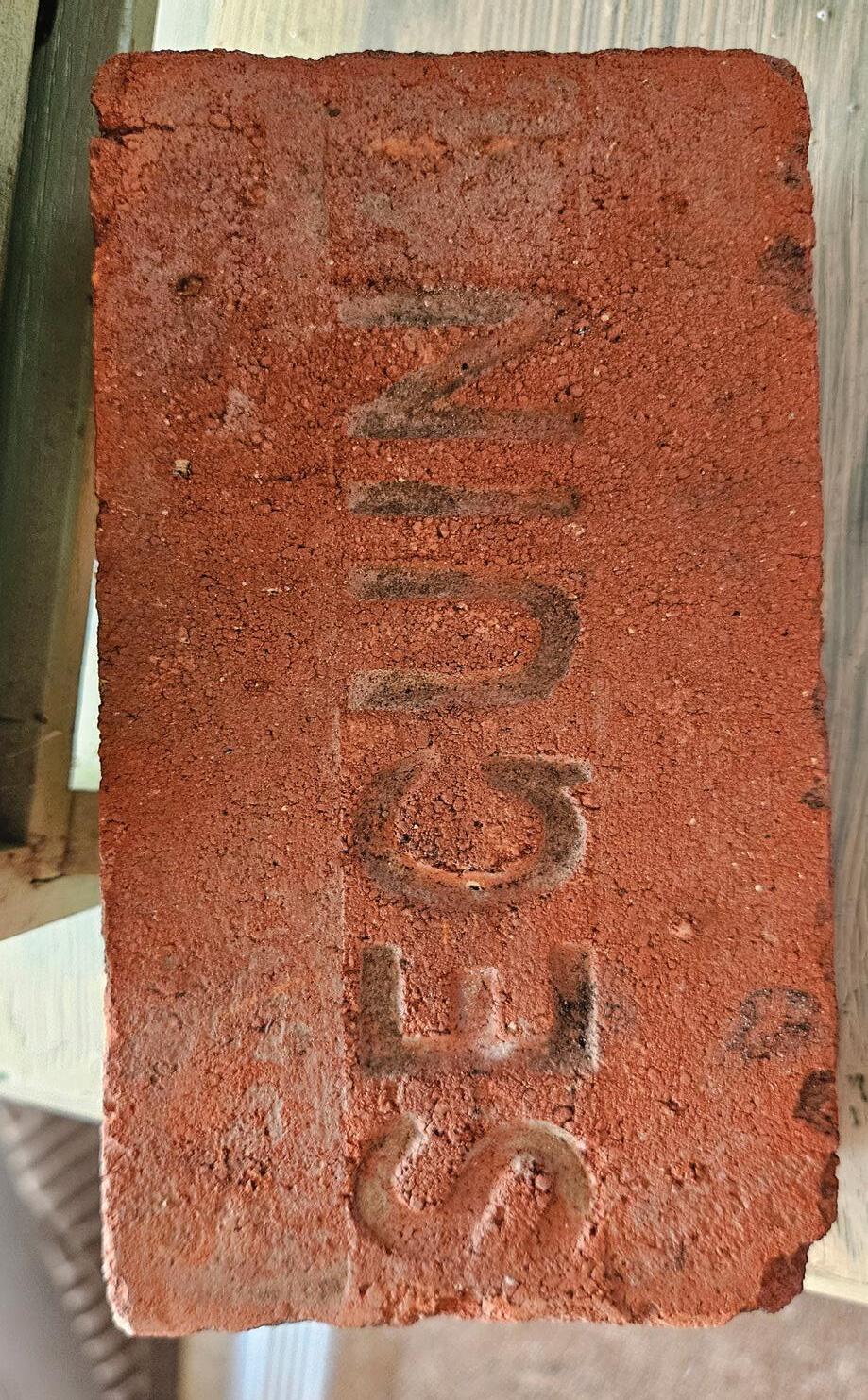
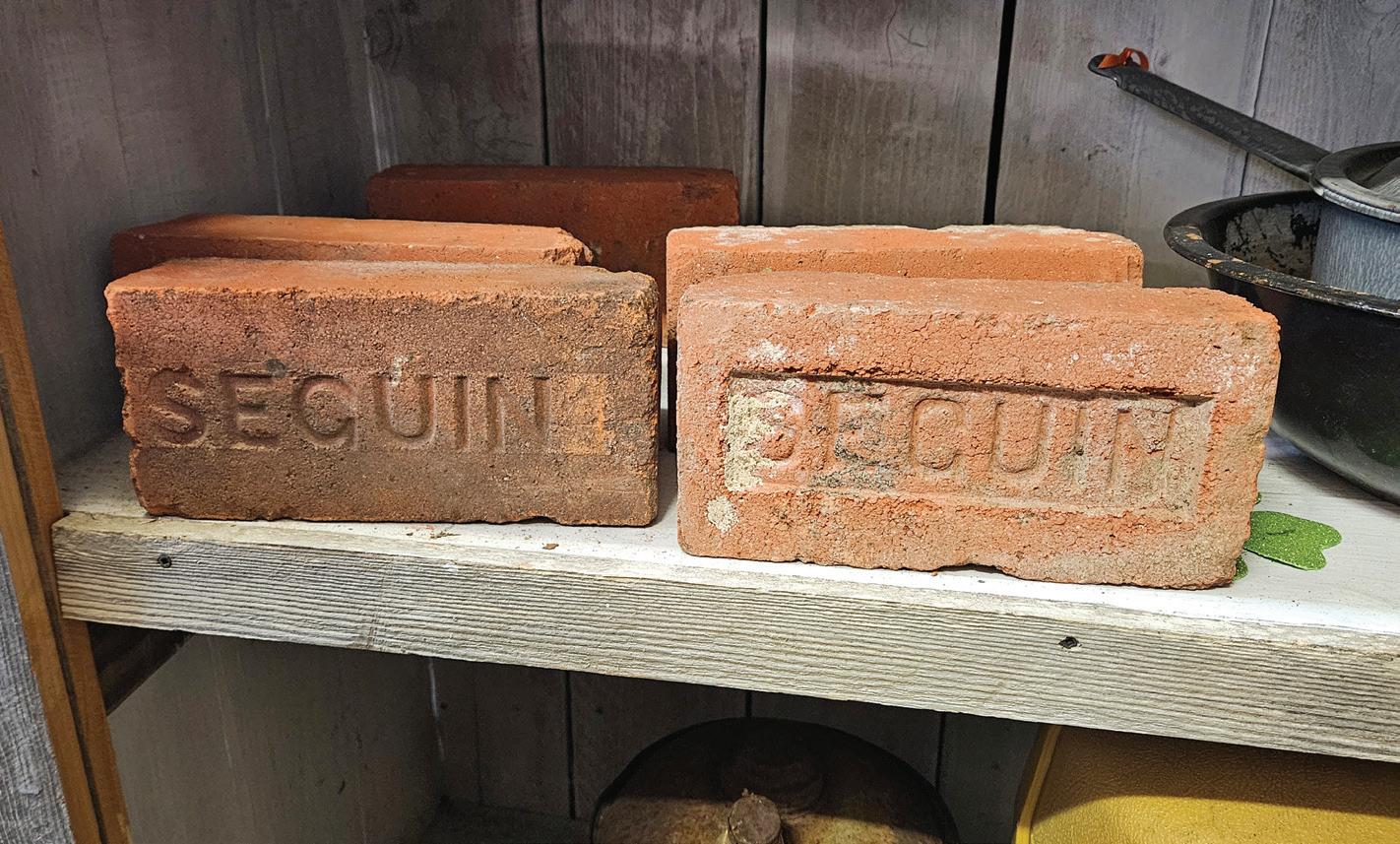
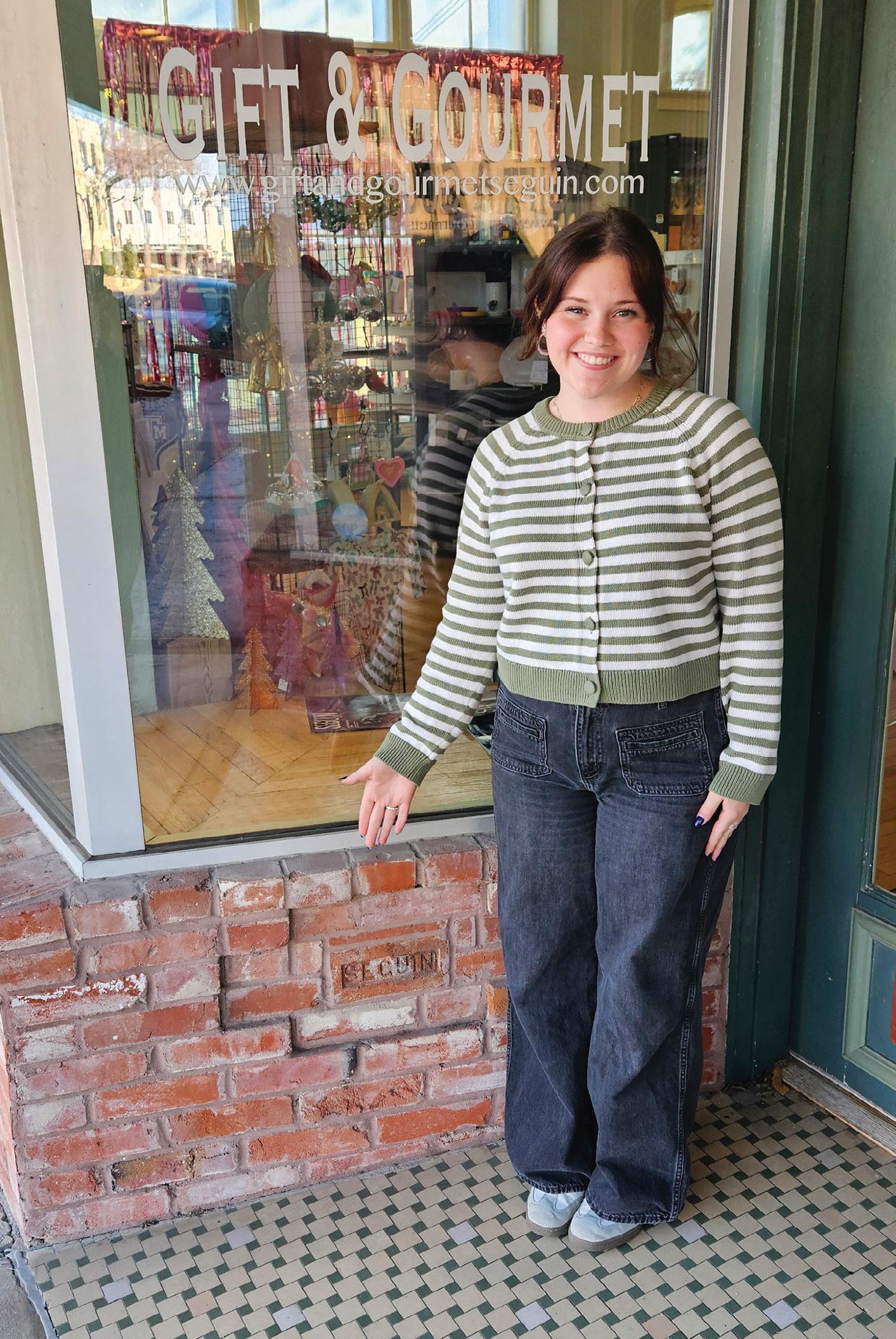
Those bricks. We’ve all seen them scattered throughout several of the older storefronts, buildings, sidewalks and businesses in downtown Seguin. They stand out from the rest as they are boldly stamped with the word SEGUIN on them. For folks well versed in the town’s rich history, the story of the Seguin bricks is well known. For others, the sporadically placed antique bricks embossed with the town name may seem like little more than an odd attempt to promote the town to tourists and passersby. But there is a story behind these bricks.
There was a time in the mid 1800s when Seguin was referred to as “the Mother of Concrete Cities.” Seguin resident Dr. John E. Park is credited with the building technique that used concrete made from local materials. Seguin had nearly a hundred buildings made of limecrete, including the courthouse, schools, churches and homes. Today, approximately 20 of these old buildings survive including, perhaps most famous of all,
the Sebastopol House.
In 1857, Frederick Law Olmstead, who went on to design New York’s Central Park, was so impressed with the beauty of the concrete buildings of Seguin that in letters he wrote, he referred to the city as “the prettiest town in Texas.” The use of concrete declined with the arrival of the railroad in 1876. The railroad brought cheaper wood and tools that could be used in the production of bricks. By World War I, brick buildings were replacing most of Seguin’s wooden structures.
Erin Ghedi, author, historian and owner of the Magnolia Hotel explains:
“By the late 19th century, Seguin was rapidly evolving. While the town had earned national recognition for its mid-1800s limecrete buildings, growth brought new demands. Fires, popula tion increases and commercial expan sion pushed builders toward fired brick — durable, fire-resistant and well suited for modern construction. Seguin had a crucial advantage; it had abundant

local clay deposits lying just beneath the surface.”
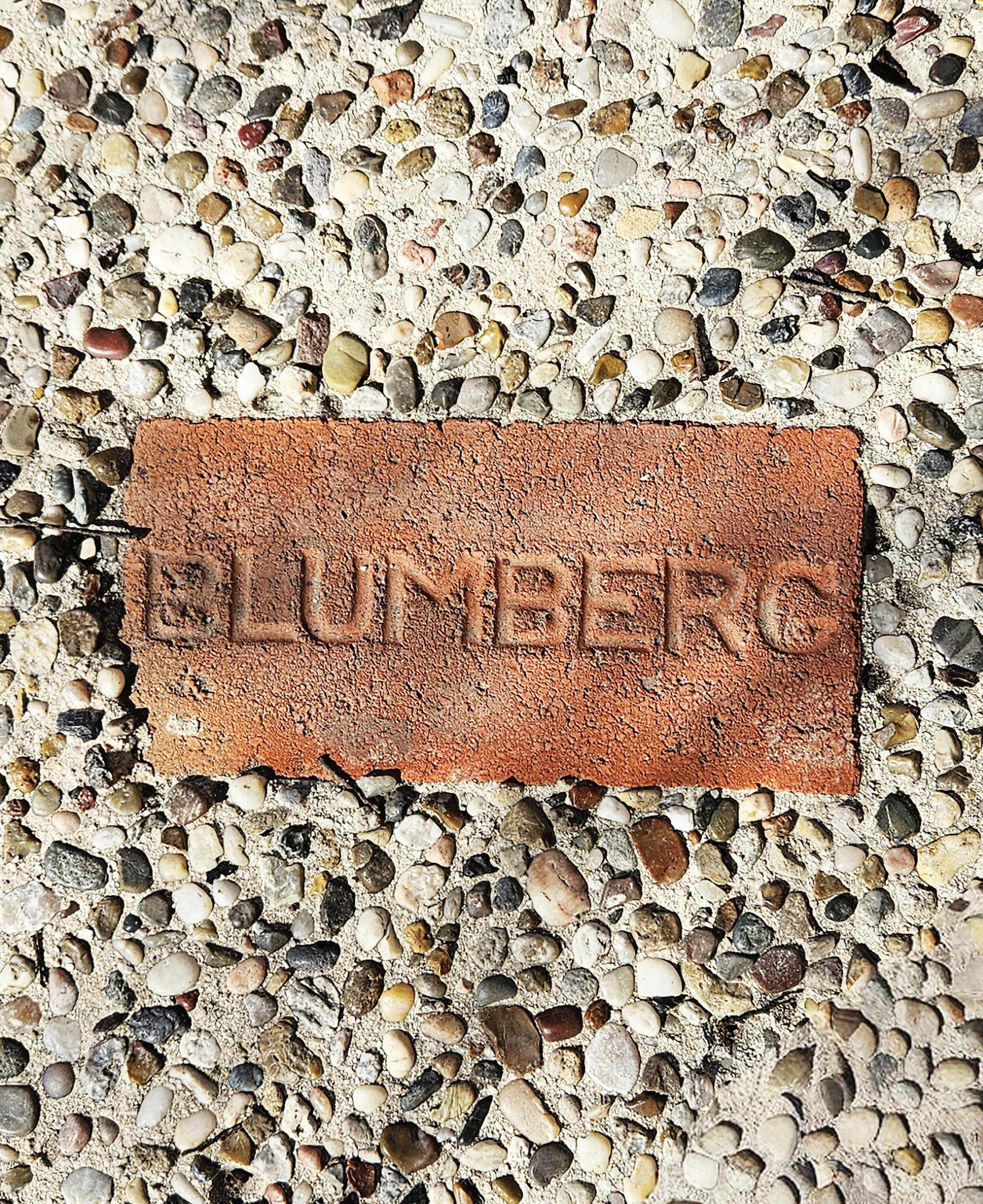
In the late 1890s, innovative businessman Carl Blumberg established the Seguin Brick Company, producing bricks made directly from Guadalupe County clay. The company stamped its bricks with the town’s name, “SEGUIN.” A lesser-known fact is that for the first year of production, the company originally stamped the bricks with the name Blumberg instead of SEGUIN.
“These bricks stamped with the name Blumberg are very, very, very rare and extremely hard to find,” said Bridgette Zertuche, owner of The Funky Monkey antique shop, which sells SEGUIN-stamped bricks. “We are trying to find some. After that first year, Blumberg decided that since he was only using Seguin clay, he should label it with the word SEGUIN.”
Sleuths can find a few of the rare Blumberg bricks in the sidewalk in front of 200 N. River St. But good luck trying to find them on the market.
According to Ghedi, there were several reasons why the Seguin Brick Company stamped the bricks with the word SEGUIN.
“It served both as branding and civic pride,” she said. “These were not anonymous building blocks; they were deliberately marked as products of Seguin soil and Seguin industry.”
The Seguin Brick Company became known as one of the largest brick and tile plants in the United States. It shipped products throughout South and Central Texas, carried by expanding rail lines that connected Seguin to San Antonio.
“The scale of production required more than kilns and clay pits,” Ghedi said. “Period newspaper articles document major investments in modern industrial machinery, including large electric shovels that allowed for faster excavation and higher output. The brick works were so substantial that a dedicated power plant was constructed to serve the operation, tying Seguin’s brick industry into a broader regional push toward electrification and industrial growth. Skilled managers and engineers,


many trained in northern manufacturing centers, oversaw operations, bringing advanced techniques to Central Texas.”
Production was centered near McQueeney, where rich clay deposits supported large-scale manufacturing. The McQueeney plant became synonymous with Seguin’s brick industry. Eventually, the operation was absorbed into Acme Brick, one of the most prominent brick companies in the country.
“A newspaper article published in 1991 commemorating Acme Brick’s 100th anniversary specifically acknowledged the Seguin-area plant as part of its historic production network, confirming that Seguin clay and craftsmanship played a role in shaping buildings across the region and the nation,” said Ghedi, author of Mysteries of The Magnolia Hotel.
The Seguin bricks became a part of Seguin’s identity. Seguin Brick and Tile Company was recognized as a cornerstone of the local economy. Bricks made today do not come exclusively from the clay pits of Seguin. While some of the remaining SEGUIN bricks are easy to find, others are harder to spot. Take the case of the old Aumont Hotel at 301 N. Austin St. By glancing at the façade of what is now the 1916 Bar & Bistro, one might not realize that it is constructed using SEGUIN bricks.
“This building was constructed in 1916 so it was right in that period where the SEGUIN bricks were in use,” 1916 Bar & Bistro employee Vanessa Lamar said. “They are not visible because the bricks are laid flat with the word SEGUIN covered up by each brick that goes on top. But we have one on display in the restaurant.”
Today, the bricks are prized by preservationists, historians, and collectors.
“The town, especially the downtown area, is dotted with reminders of the local history,” said Susie Sulaica, office manager at the Seguin Heritage Museum. “There was a time when Seguin was well known for its bricks and you can still find the links to that era in the storefronts and facades, even the sidewalks around town. Just keep your eyes open.”












We’re looking for writers of all skill levels who are interested in digging into the stories of local folks doing what they do best — smallbusiness owners, community artists, passionate volunteers, and everyday people making a real difference.
If you want to write the history of the neighborhoods, the faces, and the hidden talents that make our area special, we want you on our team. Send a brief introduction and writing sample to seguinmagazine@seguingazette.com

Location: 820 Veterans St.
WOMEN'S BUILD: SEVENTH – 8 AM - 12 PM
What better way to celebrate International Women’s Day than to come build alongside other women for a family to achieve the dream of homeownership. Be a part of this uplifting and empowering movement to raise awareness and inspire future generations. Sponsorships open now! Contact programs@habitatgv.org or call (830) 433-5325 for more information.
TOAST TO TEXAS: SEVENTH – 11 AM - 3 PM
Celebrate Texas Independence Day in downtown Seguin with the annual Toast to Texas. Enjoy food trucks, kids activities and educational displays about Seguin and Texas history. At 1:30 p.m., a ceremony will begin that will showcase the reverence and importance of the signing of the Texas Declaration of Independence. Hosted by the city of Seguin and the Seguin chapter of the Daughters of the Republic of Texas.
Location: Central Park, 201 S. Austin St.
41ST ANNUAL NOCHE DE GALA: EL REGRESO A LA TRADICIÓN: SEVENTH – 7 - 9:30 PM
Teatro De Artes De Juan Seguin cordially invites you to celebrate a proudly revived original Noche De Gala tradition. All seating is reserved, with a $25 ticket donation per seat. Seating is limited and online tickets are expected to sell quickly. Tickets may be purchased at: thetexas.ludus.com/200513754 .
All proceeds directly support Teatro’s educational and cultural programming.
Location: Stephen & Mary Birch Texas Theatre, 425 N. Austin St.
THIRD THURSDAY IN DOWNTOWN SEGUIN: NINETEENTH – 10 AM - 8 PM
Enjoy food, music and shopping. We’re all open until 8 p.m. and offering great deals and fun. Find shop and restaurant specials galore throughout downtown. Location: Central Park, 201 S. Austin St. HAM IT UP BINGO AT THE SILVER CENTER: TWENTY FIRST – 5:30 PM
Bingo night brings the fun with cards available for $5 each or five for $20, and winners walk away with tasty prizes like fresh pies and savory hams. It’s a great way to enjoy a little friendly competition and good company with something delicious on the line.
Location: The Silver Center, 510 E. Court St.
KITE DAY: TWENTY EIGHTH – 10 AM - 1:30 PM
Get ready to fill the sky with color at the fifth Annual Community Kite Festival at Manuel C. Castilla Park! Sponsored by Seguin ISD and Seguin Parks & Recreation, this high-flying community favorite brings families together for a day of outdoor fun, laughter and soaring kites. Bring your crew, enjoy the fresh air, grab a free kite while supplies last and then watch it dance across the Seguin sky.
Location: Manuel C. Castilla Park, 2402 N. Guadalupe