Better landscaping starts with understanding what the land is already telling you.
SPEAK
FOR THE SOIL
From muddy trenches to national competition, local 4-H students are learning to read the land from the ground up.
THE WORK IS IN THE TREES
Restoration at Seguin Park West is built on small, repeated acts of care.
IN THIS ISSUE
APRIL 2026
FEATURES
10 THE WORK IS IN THE TREES
Restoration at Seguin Park West is built on small, repeated acts of care.
18 IF YOU LISTEN, IT WILL GROW
Better landscaping starts with understanding what the land is already telling you.
26 SPEAK FOR THE SOIL
From muddy trenches to national competition, local 4-H students are learning to read the land from the ground up.
CULINARY CREATIONS
32 YOU BUTTER BELIEVE IT
Patience pays off. In this case, it spreads.
AROUND TOWN
36 FACES OF SEGUIN
Submitted photos from our readers.
38 SAVE THE DATE
See what events are coming up.
ON THE COVER
Golden barrel cacti are slow-growing, drought-tolerant plants that thrive in full sun with well-draining soil. They can reach up to 3 feet tall and are available locally at Maldonado Nursery.
Photo Courtesy of Maldonado Nursery
Vol. 12, No. 11
SEGUIN MAGAZINE IS PUBLISHED TWELVE TIMES A YEAR BY THE SEGUIN GAZETTE.
PUBLISHER
Elizabeth Engelhardt
MAGAZINE EDITOR / CREATIVE DIRECTOR
Desiree Gerland
CONTRIBUTORS
Felicia Frazar
Alex Lowe
Bianca Rawlings
Danny Story
ADVERTISING
Gay Lynn Olsovsky
Delilah Reyes
Laela Reyes
TO ADVERTISE IN SEGUIN MAGAZINE CALL 830-463-0766
HAVE STORY IDEAS? LET US KNOW! seguinmagazine@seguingazette.com
I’ve always had a thing for trees. The way they stretch and hold their ground. The way they feel both quiet and powerful at the same time. The way they keep growing whether anyone is paying attention or not.
It's the kind of work that doesn’t get noticed right away. The kind that happens slowly. Repeatedly. Quietly. The kind where you don’t always see the results at the end of the day, but you trust that something is changing anyway. This month’s issue is full of that kind of work.
There's people out in the trees at Park West, clearing what doesn’t belong and making room for what does, knowing full well they may never sit in the shade of what they’re planting. You’ll find people paying attention to the land, learning what it needs instead of trying to force it into something it’s not. And then, in the middle of all that, there’s something as simple as making butter in a jar.
Which, strangely, feels right. Because it’s the same idea, just smaller. You don’t rush it. You don’t force it. You just keep going and eventually something changes. It's the thread running through all of this.
Not everything that matters grows quickly. Not everything worth keeping can be replaced. Take care of what’s here. Do the work. Give it time.
It’s not complicated, but it isn’t easy either. The trees will keep growing either way. The question is whether we’re paying attention.
Desiree Gerland Magazine Editor
desiree.gerland@seguingazette.com
Stock Photo
2026 CHARITY GOLF TOURNAMENT AND Gala Fundraiser
June 4, 2026
Starcke Park Golf Course
7AM Check-In & Lite Breakfast
Driving Range & Putting Green Open
8AM Shotgun Start for 36 Teams
12PM Lunch & Awards
Hole-in-One Contest
Win a new truck from Seguin Chevrolet!
Golf Team (4 person) $600
Gala Ticket $65
VIP Gala Table (seats 8) $750
*Sponsorships Available GOLF TOURNAMENT GALA
6-8PM Seguin Coliseum
Gala Ticket includes Beef Tenderloin dinner & drinks
www.seguinrotary.org
Live Music from the Dirty River Jazz Band 5:00 PM Games, Card Raffles, Golden Ticket Raffle, $20,000 Raffle and more!
Opening week of the new golf course!
THE WORK IS IN The Trees
RESTORATION AT SEGUIN PARK WEST IS BUILT ON SMALL, REPEATED ACTS OF CARE.
Warren Buffett once said, “Someone sits in the shade today because someone else planted a tree a long time ago.”
STORY BY ALEX LOWE
PHOTOS COURTESY OF NANCY MASTERSON
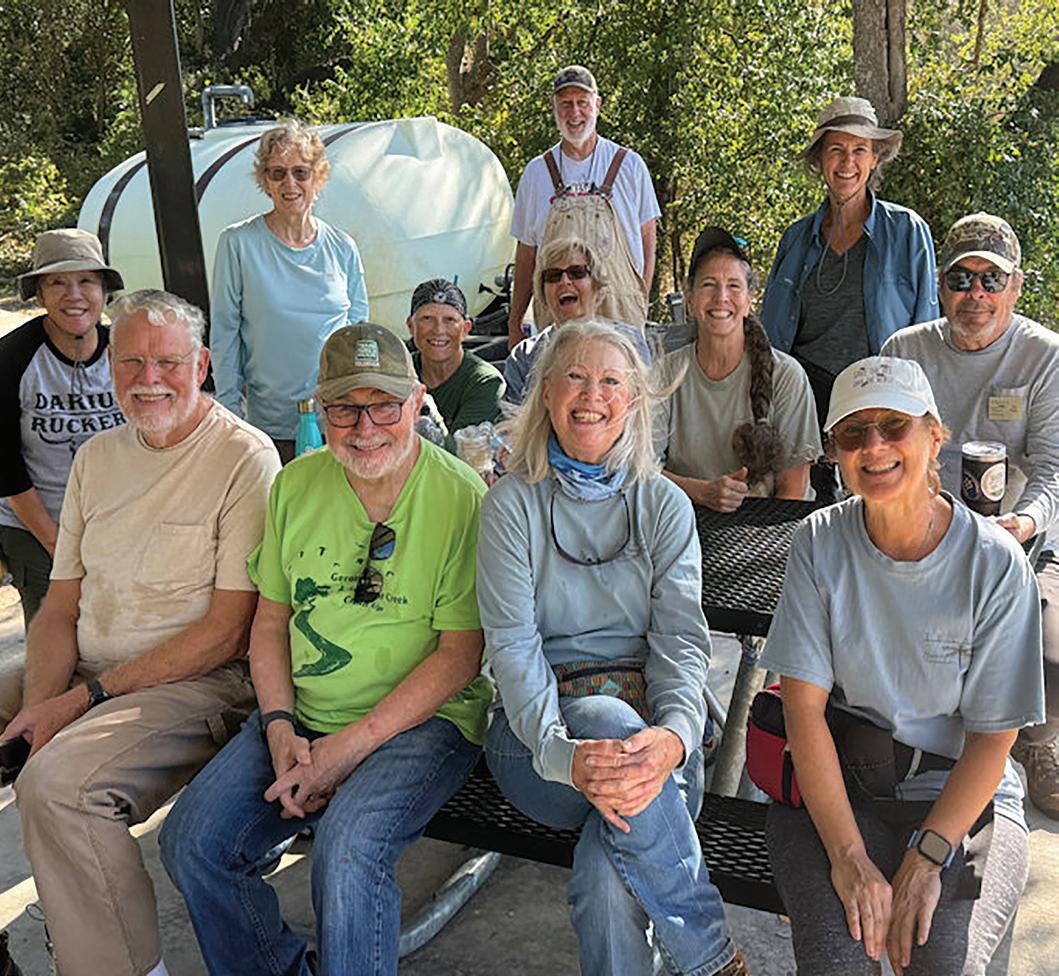
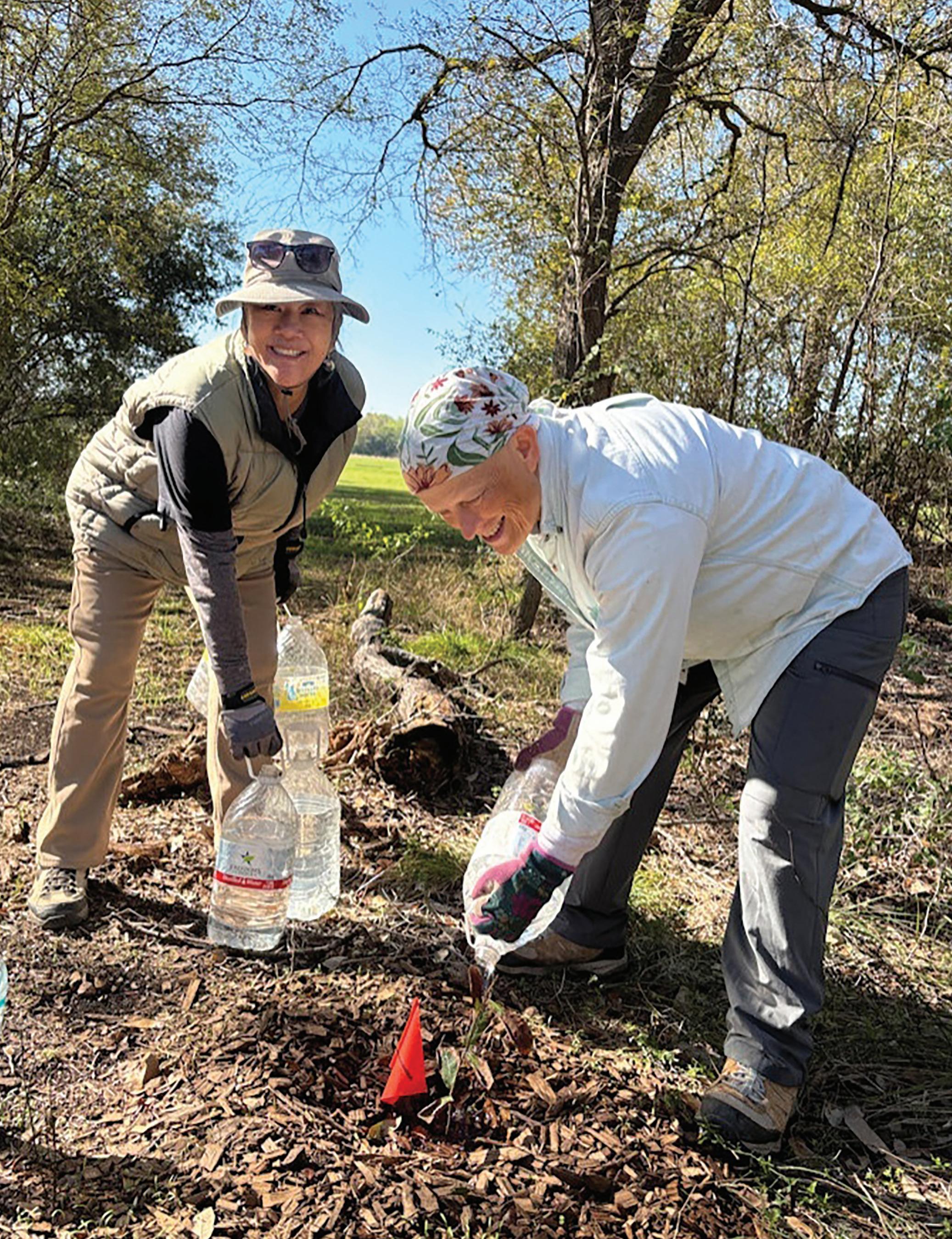
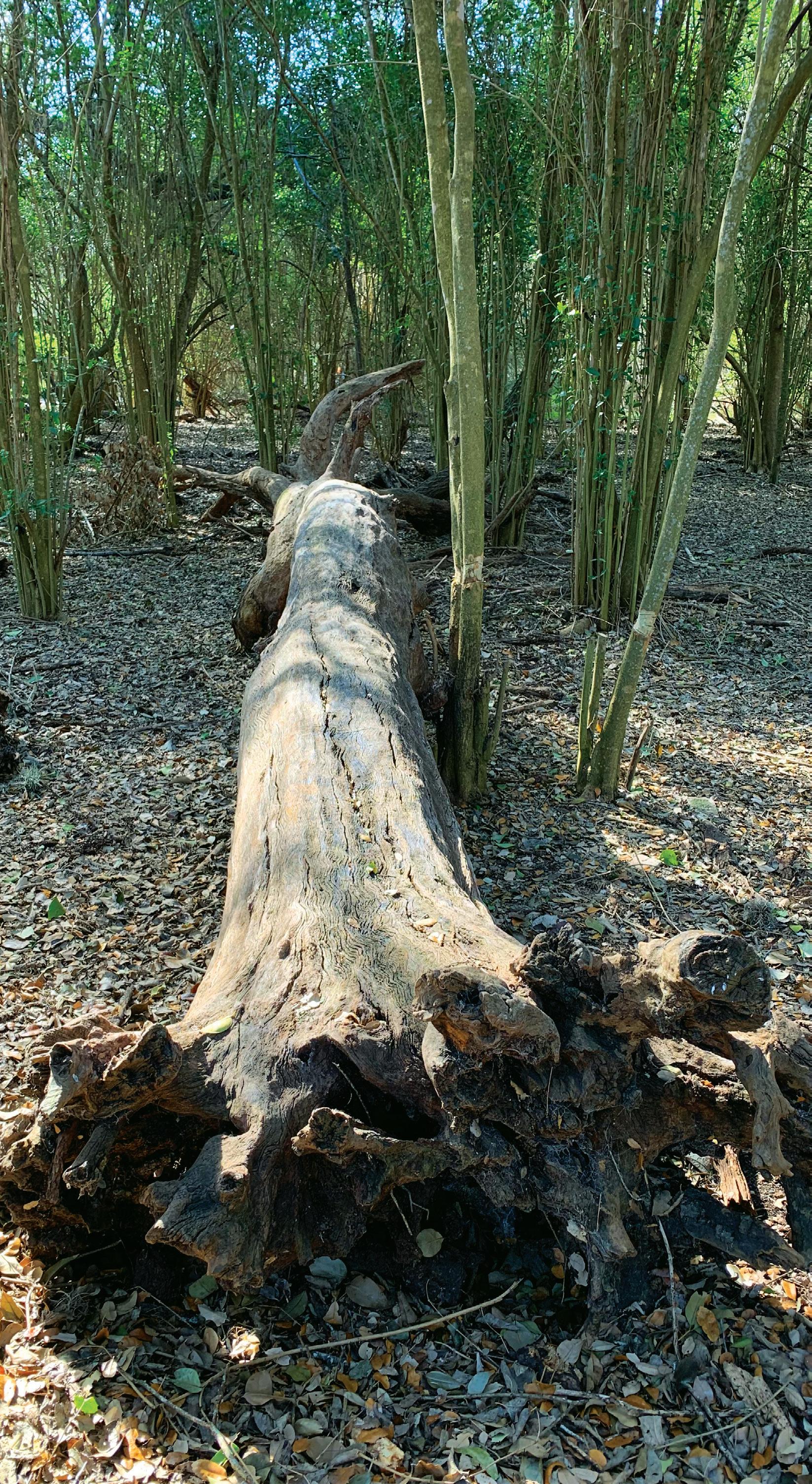
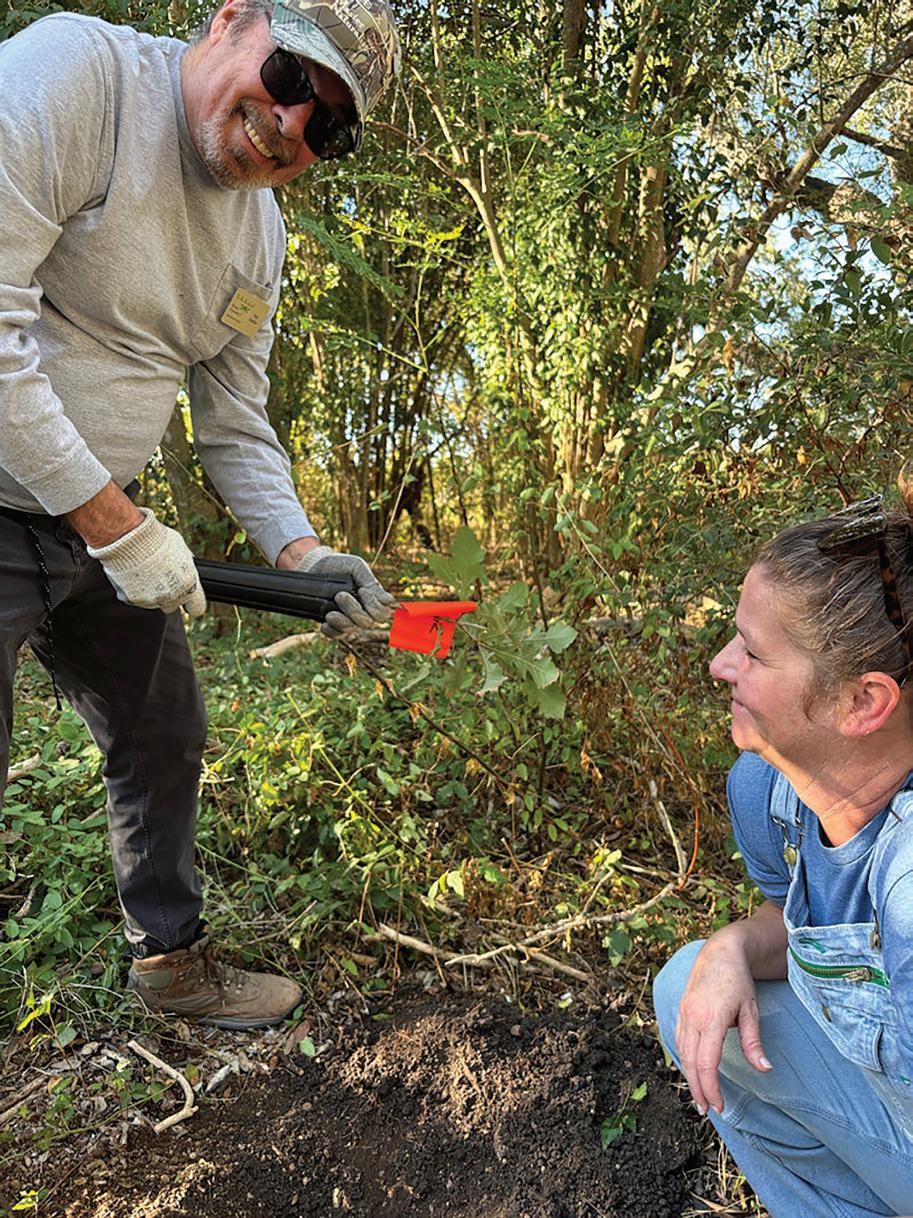
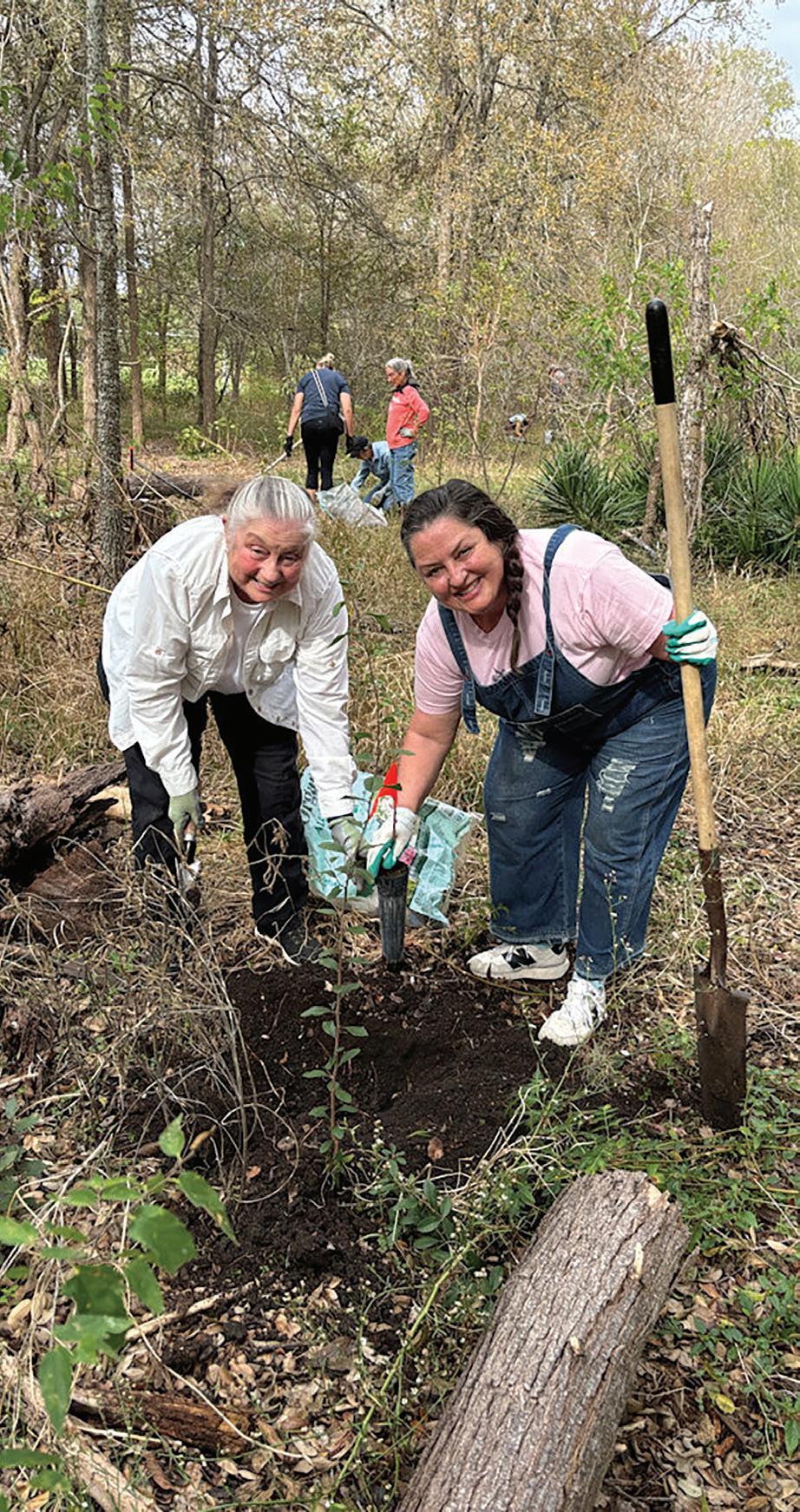
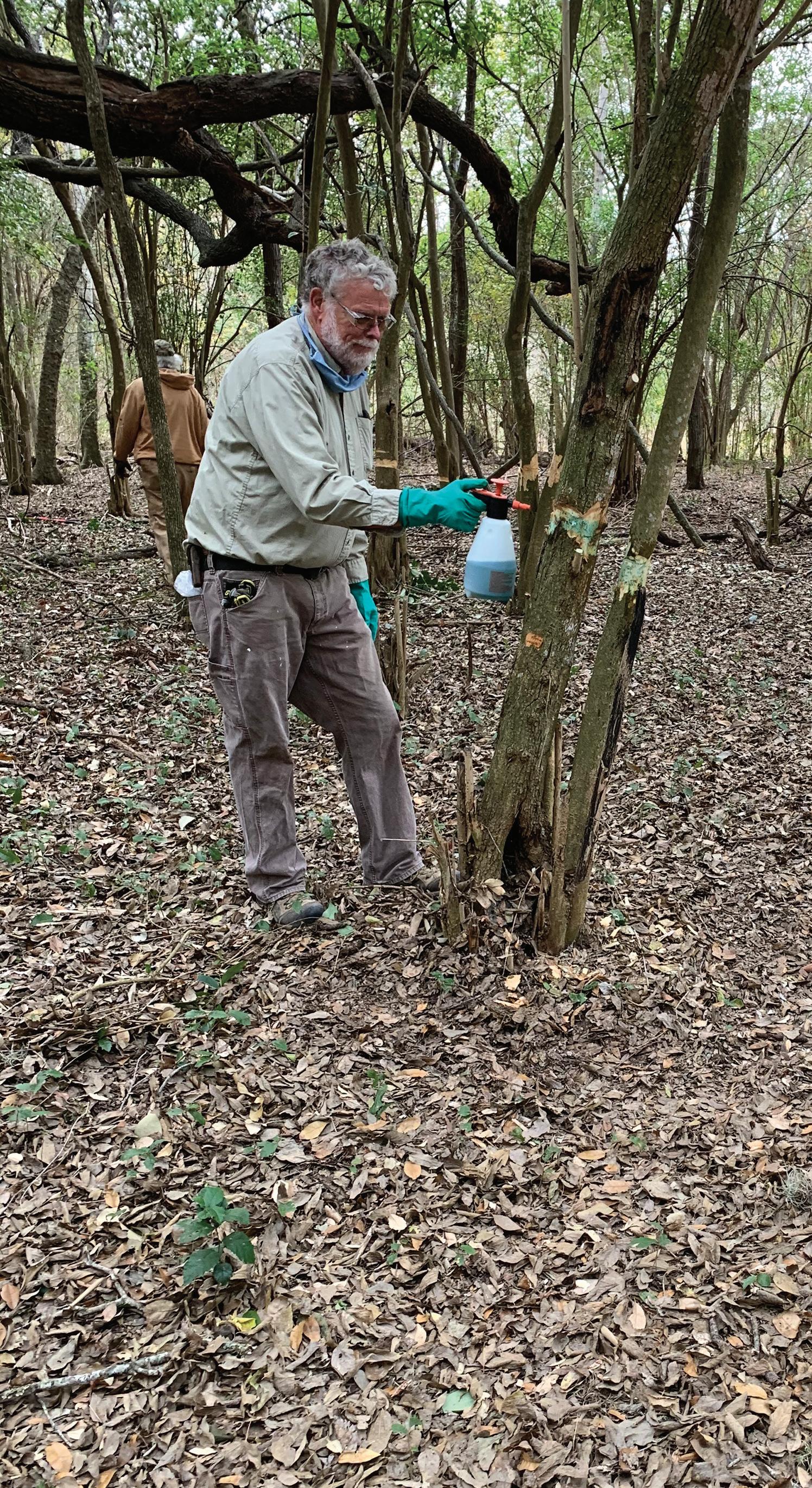
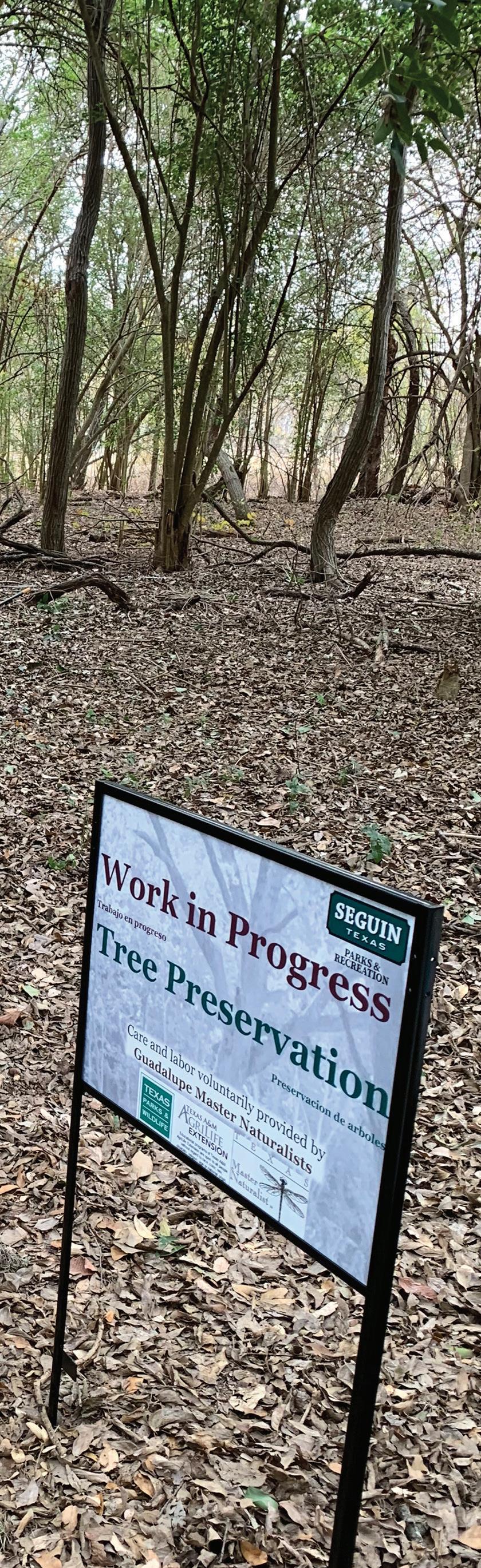
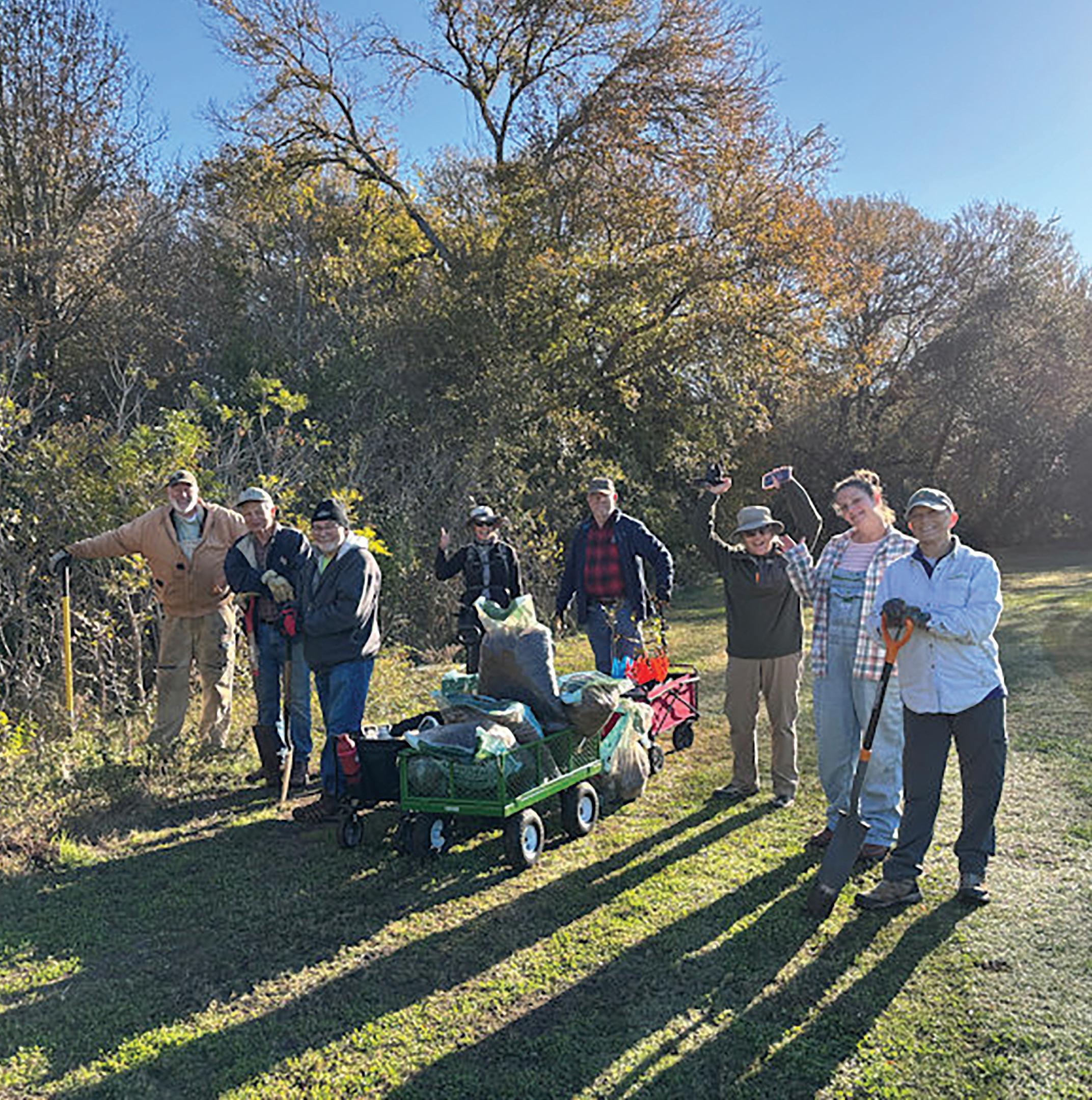
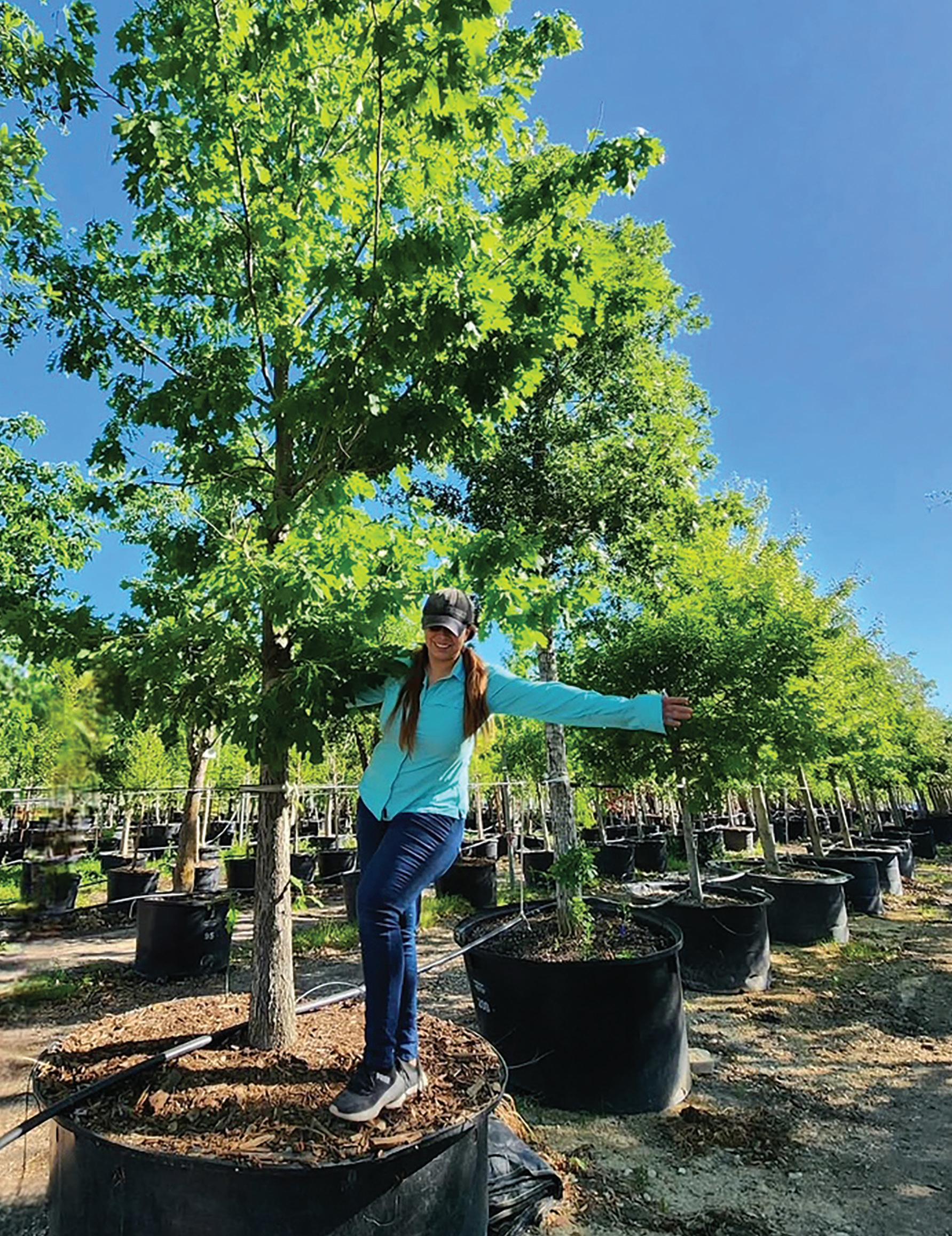
Master Naturalists are exemplifying the quote with their work underway at Seguin Park West. Each Thursday, you are likely to find a crew of devoted and committed volunteers working in the forest section of the 40-plus-acre park. Their goal has been to clear invasive species and replace them with trees native to Texas. It is a labor of love and an example of dedication to future generations.
“So, we started clearing a small section of exotic plants in 2014,” said Nancy Masterson, co-chair of the Resource Management Committee of the Texas Master Naturalists Guadalupe Chapter. “Monta Zengerle began this project and I inherited it from him. Now, John Barrington and I are the co-chairs. We work in the forest every Thursday morning. Today, we had 19 volunteers, which was amazing. It is the biggest number we’ve ever had. I can remember back when there were four of us and if you got 10 out there, it was a big deal. So, we are delighted with the interest and willingness of people to participate. We are willing to train anyone who wants to help.”
The Texas Master Naturalist Program is coordinated jointly by Texas A&M AgriLife Extension Service and the Texas Parks and Wildlife Department. The Texas Master Naturalist Program’s mission is to develop a corps of well-informed volunteers to provide education, outreach and service dedicated to the beneficial management of natural resources and natural areas within their communities for the state of Texas.
A Seguin resident, Masterson became a Master Naturalist with the first class in 2014.
“Master Gardeners focus on everything inside the garden fence. Master Naturalists focus on everything outside the garden fence,” Masterson said.
Those wishing to join Master Naturalists undergo extensive training and meet robust service requirements.
“We require 40 hours of volunteer work from all volunteers every year
plus eight hours of advanced training to maintain their Master Naturalist status,” Masterson said. “We have ecologists. We have sky watchers. We have stream team testers. We do everything outdoors. We have people who star gaze. Others who measure the rainfall. Others test the water in the streams. Others lead nature walks. We take a very broad view.”
The restoration of the forest at Seguin Park West was not a hard sell. Sponsored by Texas A&M Agri Life Extension, and Texas Parks and Wildlife, the effort has been notable for the full cooperation between the Master Naturalists and local government.
“We didn’t even have to lobby for it,” Masterson said. “Seguin Parks and Recreation, led by Jack Jones, they have given us everything we have asked for. We just finished planting 125 little seedlings in the parts of the forest we’ve cleared. You have to water them. We are on a schedule to water them three times a week for the first month (and) two times a week in the second month. Once a week is the third month. Our volunteers haul water from a city water truck that they park within the confines of the park. So, the city does that, too. They do debris pick up for us. They provide water for us. They gave us a lock-and-key storeroom.”
Need for the restoration effort has its roots in Seguin’s rapid expansion. Masterson said.
“It is about a 40-acre park. About half of it is soccer fields and playscapes and built-in park amenities,” she said. “But the other half is a forest. Even before the city of Seguin purchased the old farmland, we were invited to walk it, and it was just one big monoculture of invasive plants.”
From about the 1940s when many new homeowners and new houses being built dotted the area, the landscape industry responded by selling plants that were evergreen, bug free and easy to care for, Masterson said. The plants spread far and took over natural areas of Texas, Masterson said.
So, that monoculture was plants
from other continents. They were Asian, some Mediterranean, some African, some South American,” she said. “No North American insect can even digest the invasive plants. They have no natural enemies. Nothing eats them. Every leaf is perfect and they just take over and they spread like wildfire. We took a look at that and saw that there were some old oaks and cedars and other needed trees in the middle of all this.”
As a result, over time, the 125 seedlings will grow into a community of
bur oaks, Monterey oaks, pecans, black walnuts, Eve’s necklace and redbud. Several large shade trees that line the central sidewalk are Monterey oaks, pecans, cedar elms and anaqua. Many communities and organizations rely on citizen volunteers to implement youth education programs; to operate parks, nature centers and natural areas; and to provide leadership in local natural resource conservation efforts. In fact, a short supply of dedicated and well-informed volunteers is often cited as a limiting factor for community-based
conservation efforts. That is not an issue in Seguin.
“We have over a hundred Master Naturalists in Guadalupe County,” Masterson said.
New Braunfels resident and Master Naturalist President Craig Bruska described other restoration projects in the works at Seguin Park West.
“The other thing we are working on is the Seguin Outdoor Learning Center.” he said. “We are coming up with a plan to also put up some educational stations there.”
IF YOU LISTEN, IT WILL Grow
BETTER LANDSCAPING STARTS WITH UNDERSTANDING WHAT THE LAND IS ALREADY TELLING YOU.
STORY BY BIANCA RAWLINGS
PHOTOS COURTESY OF JUAN AND BERTHA MALDONADO
On 25 acres in Seguin, nearly 40 years of family knowledge is growing in plain sight.
Maldonado’s Landscaping was founded in 1986 by Juan and Bertha Maldonado, who moved their family from Kerrville to Seguin to start a new chapter. What began as a small nursery with a modest metal building and a few blocks of trees has remained on the same piece of land ever since. Today, Juan and Bertha still help with the business alongside their children and their children’s spouses: Karen and Carlos Garza, Mark Maldonado, and George and Jessica Maldonado.
For George Maldonado, the nursery has been part of his life from the beginning.
“I’ve been involved ever since I was about 10 or 11,” he said. “Helping customers, loading plants, just growing in knowledge over time.”
After high school, he stepped more fully into the business and now helps lead daily operations.
That lifetime of hands-on experience shapes how he talks about landscaping in Guadalupe County.
According to Maldonado, Seguin is far more ecologically diverse than many people realize. Within just a few miles,
the soil and growing conditions can shift dramatically.
“Around the river and lake areas, certain trees and plants thrive in moisture,” Maldonado said. “Travel a few miles south of town and the soil can turn sandy, almost like beach sand, where plants depend on deep taproots to search for water. In other parts of Seguin, homeowners contend with heavy clay, often described locally as gumbo dirt.”
Many Guadalupe County residents may not realize just how diverse the area their homes sit on is.
“It’s not just a matter of throwing something in the ground and praying for it,” he said. “You really have to dial in.”
That means asking questions about water sources, sun exposure, soil type, wildlife pressure and even pets. According to Maldonado, whether a property uses well water or city water matters. Whether planting in full sun or full shade matters. Whether deer frequent the area matters. All of it factors into what will succeed long term.
“Over the years, our family has developed a kind of hive mind, a shared understanding, about the environment,” he said. “Decades of installations and customer feedback have helped us understand what works well in specific pockets of the county and what does not.”
That knowledge becomes especially important as new subdivisions and commercial developments continue to expand across former farmland and open space.
According to Maldonado, homeowners have increasingly asked for native plants, particularly in the past 10 to 15 years.
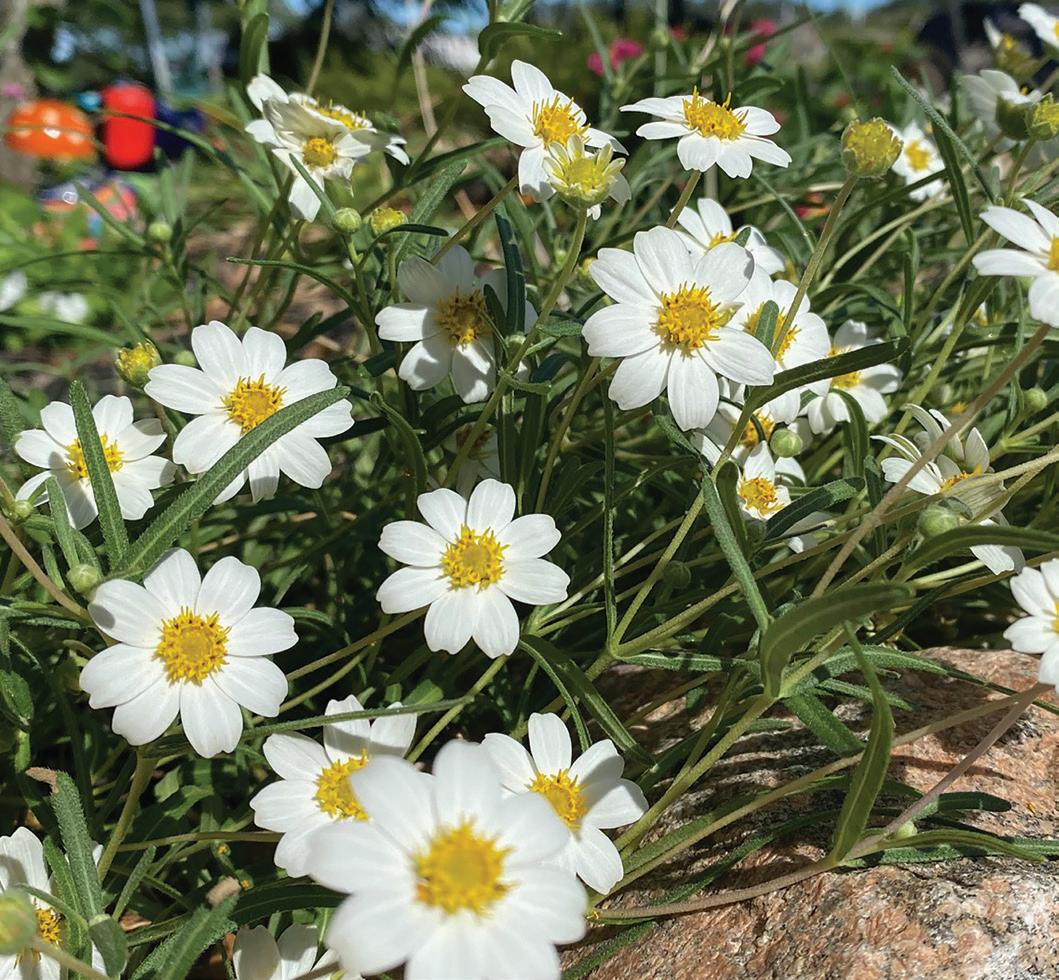
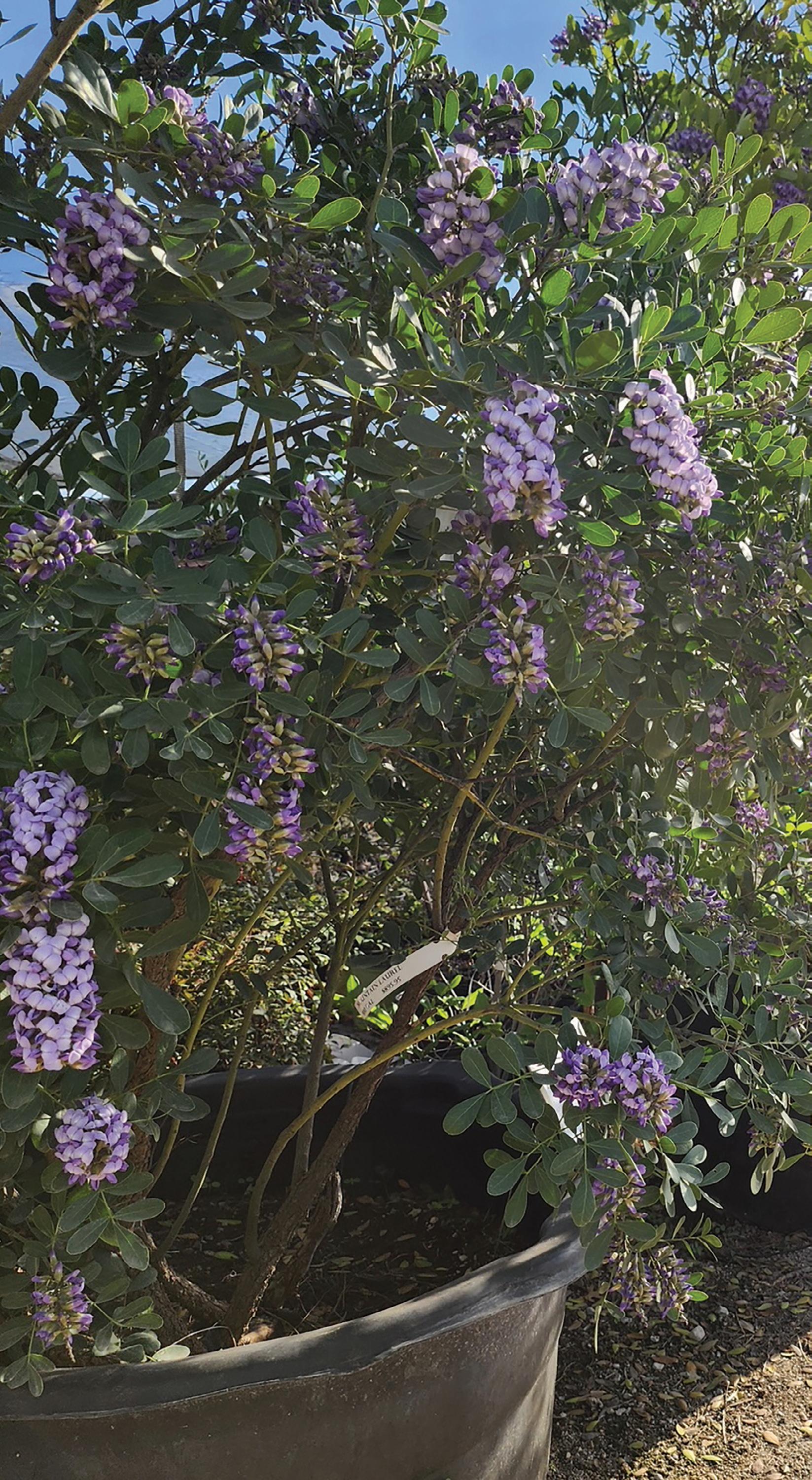
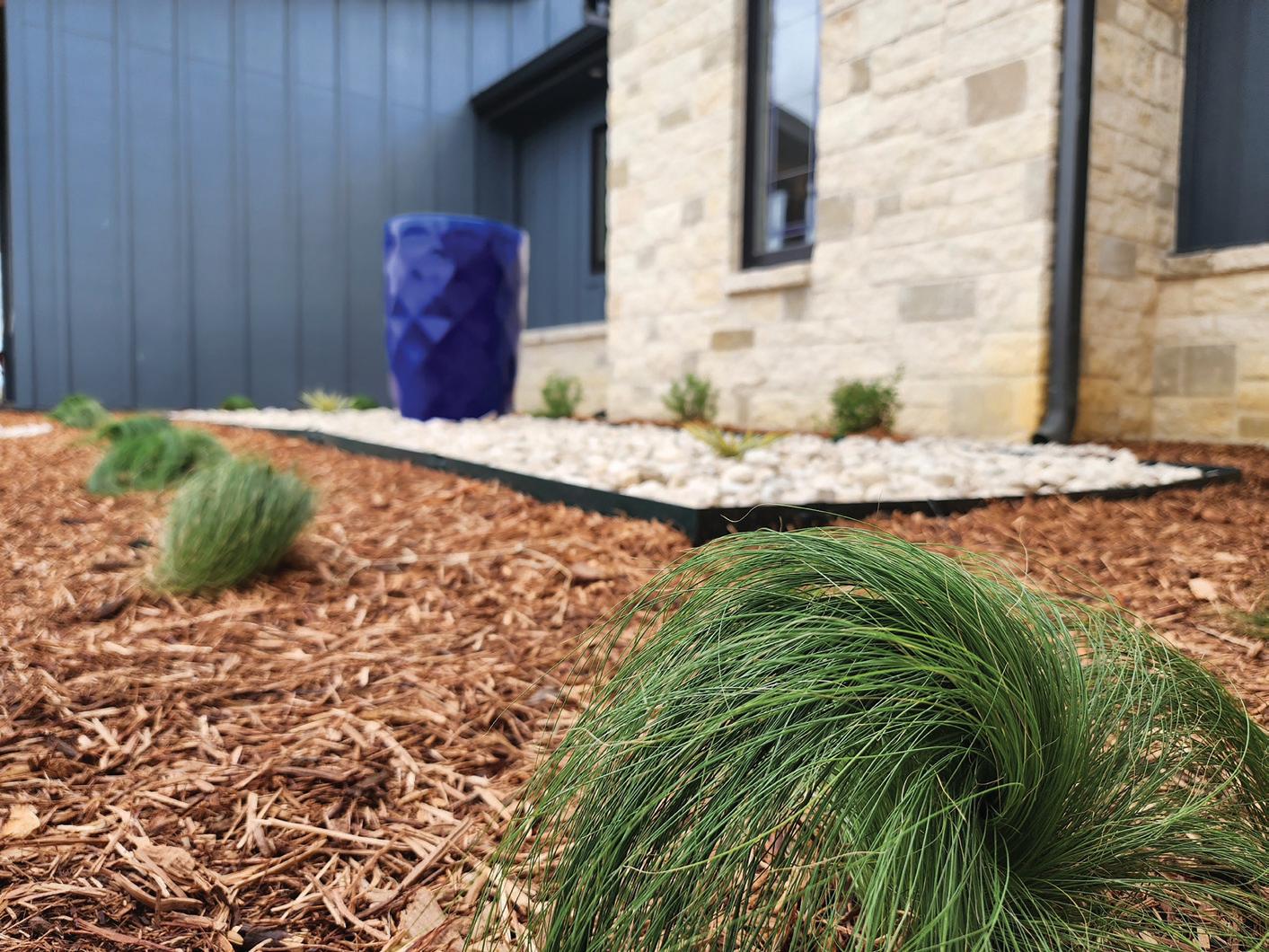
“In our area, there is a robust list of native plants that both work well and are beautiful,” he said.
Choosing native plants is not only about appearance. According to Maldonado, it is about restoring ecological balance and using resources wisely.
“Traditional turf grass and many ornamental plants require frequent irrigation and ongoing fertilization,” he said. “Native groundcovers and shrubs,
once established, often need significantly less water.”
That is a fact homeowners will rejoice in when they see their water bills while also sleeping easy knowing they are helping the local ecosystem.
“Instead of watering every day, a homeowner might water once a week or even less, depending on the season,” Maldonado said. “Many native plants also bloom, providing nectar and pollen for bees and butterflies and berries or shelter for birds and beneficial insects.”
“These organisms need native plants in order to survive,” he added. “It might look like just a green space from the outside, but there’s so much more happening when you use plants that belong here.”
He noted that customers sometimes ask for plants they have seen in other parts of the country, such as cherry blossom trees admired up north. According to Maldonado, those species are not suited for South Texas heat and soil conditions. However, native alternatives can offer equally striking blooms while supporting local wildlife and requiring less maintenance.
“It’s about reestablishing what was here before,” he said.
A shift toward native landscaping is not limited to individual homeowners. According to Maldonado, the city of Seguin has, for roughly the past 15 years, increasingly required certain approved native trees and plants in commercial and residential developments. He described the change as a welcome one that encourages more thoughtful planting choices.
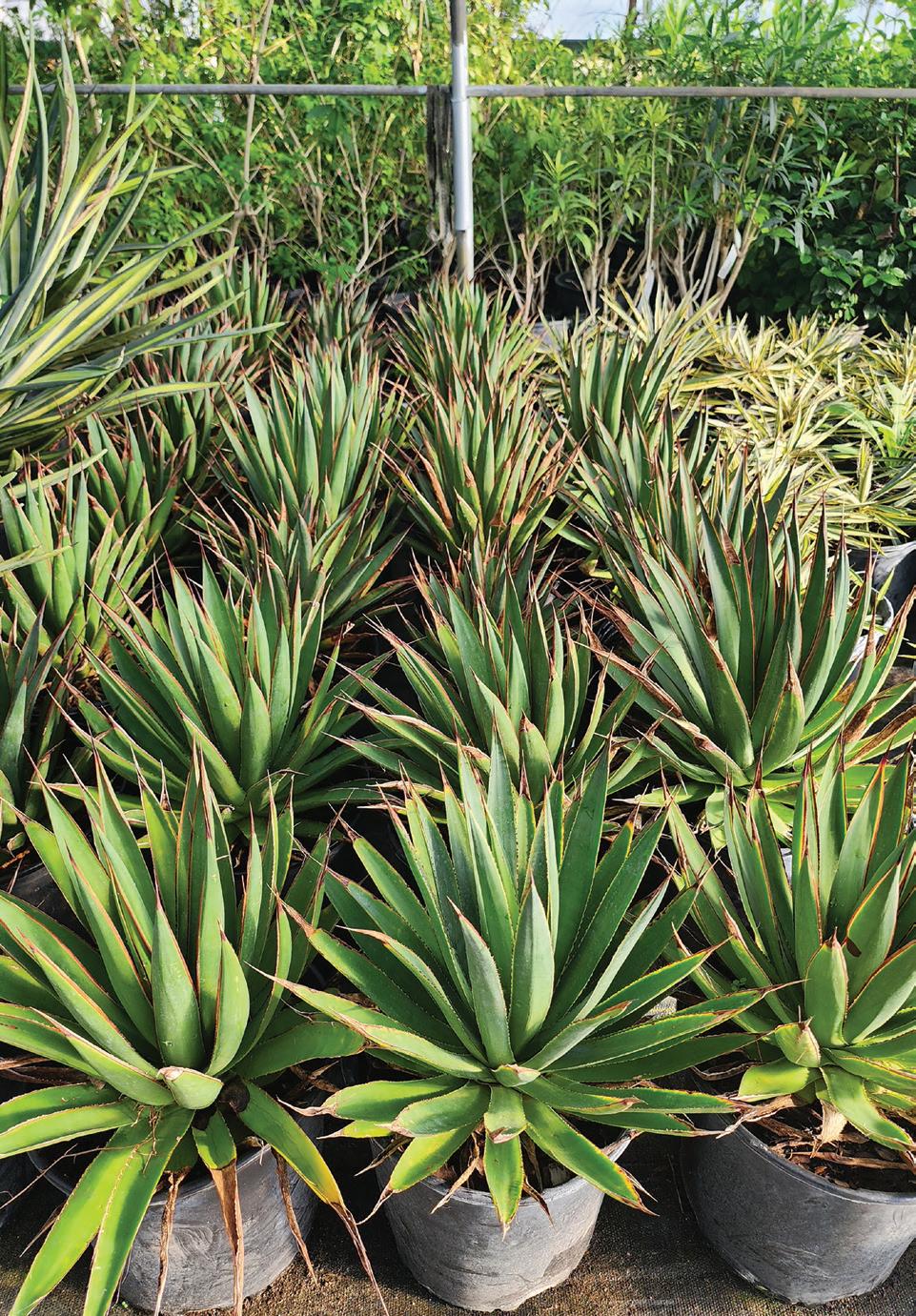
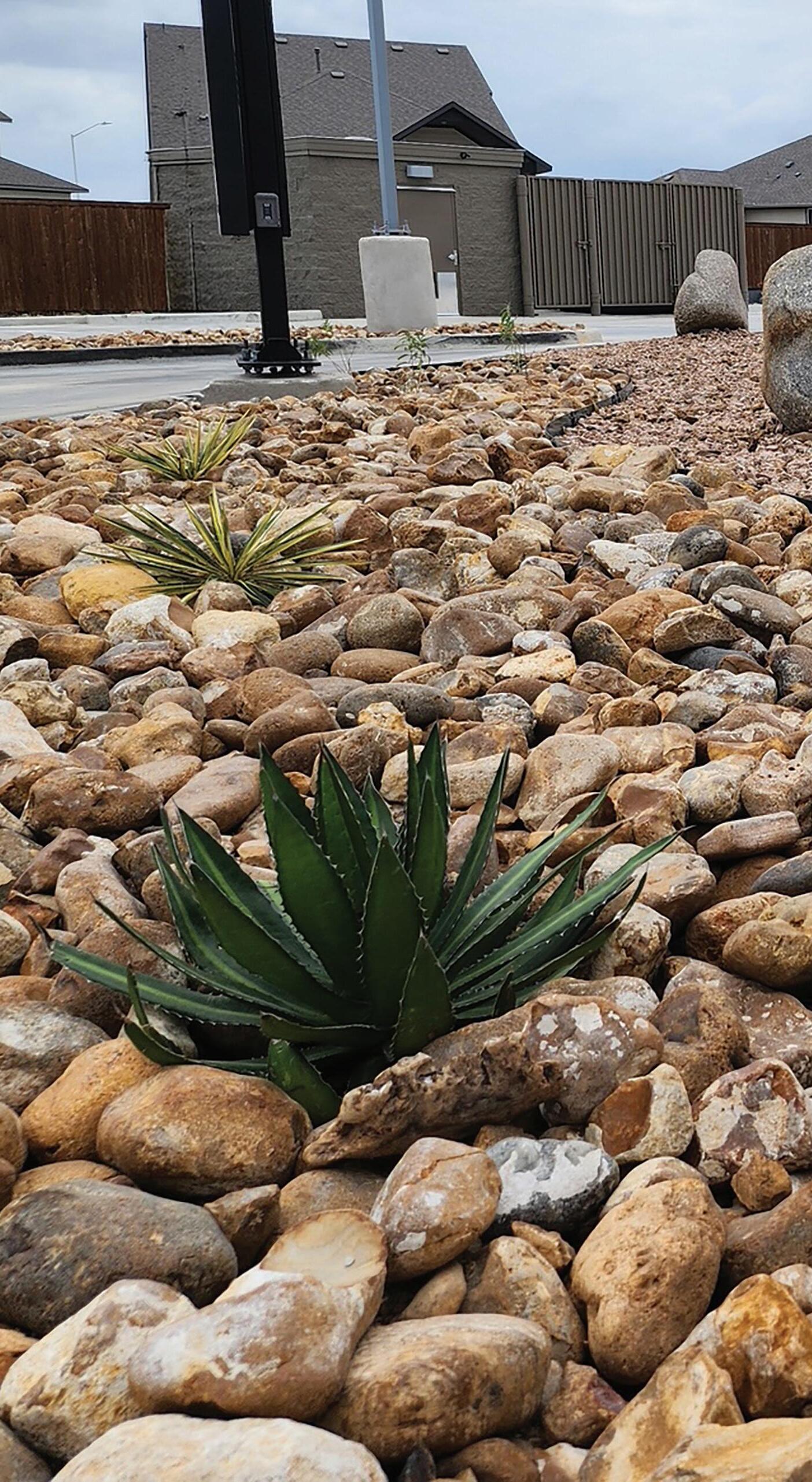
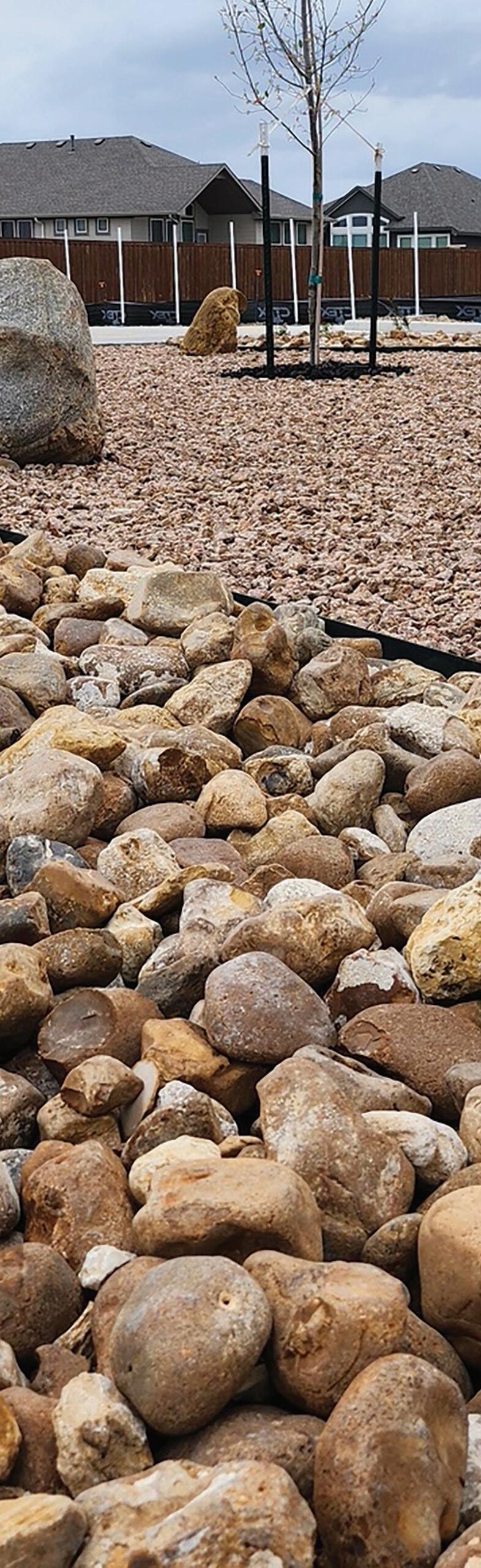
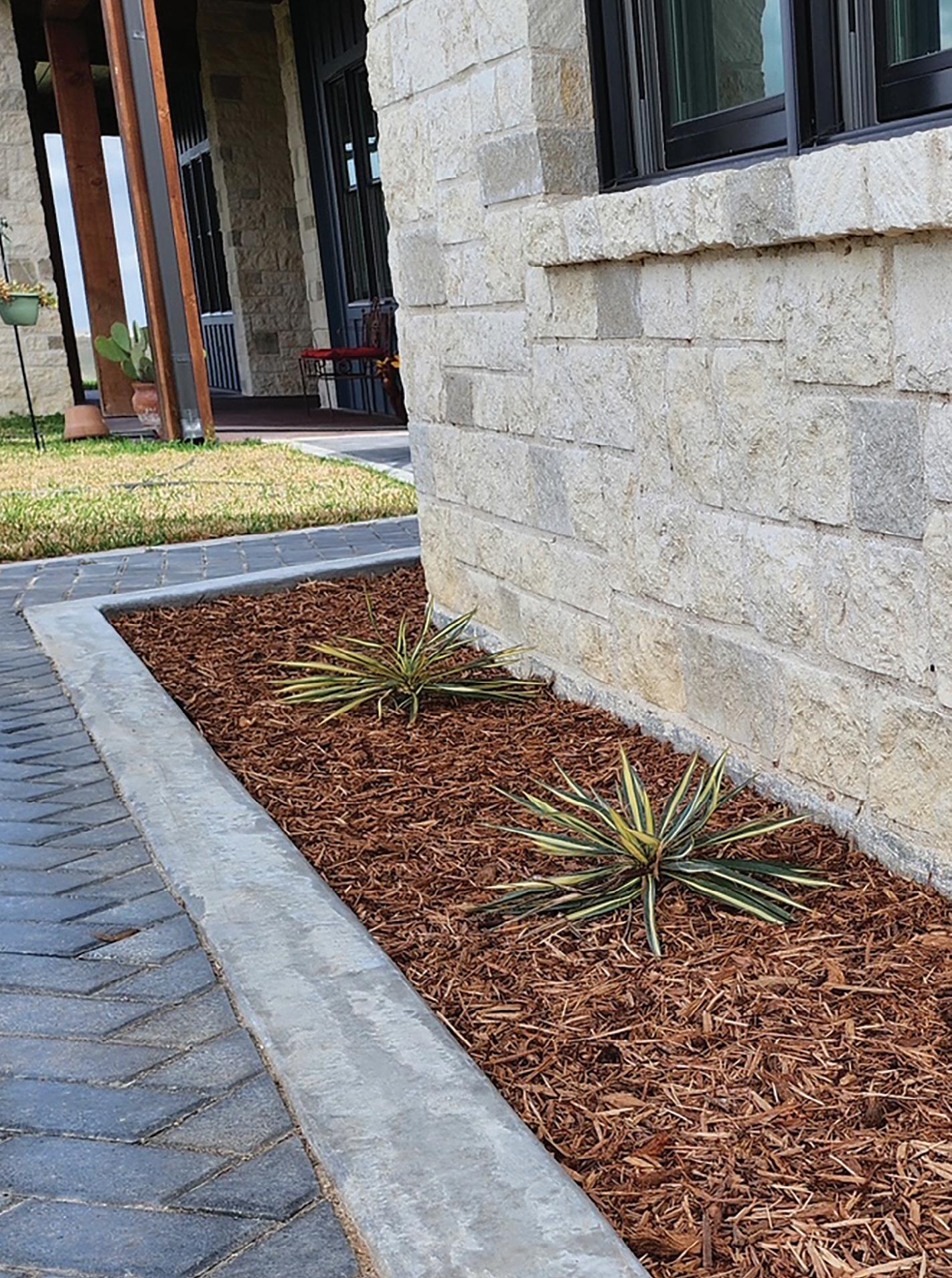
Another approach gaining traction locally is xeriscaping, a style of landscaping focused on water efficiency. According to Maldonado, xeriscaping prioritizes drought-tolerant plants, rock features and drip irrigation systems rather than large expanses of water-intensive turf.
“Instead of using broad sprinkler heads that spray water across sidewalks and streets, drip irrigation delivers water directly to the roots beneath rock or mulch. Agaves, yuccas and other hardy species replace tropical plants that
require heavy watering,” he said. “It’s focused on being efficient — efficient with water, efficient with time.”
According to Maldonado, xeriscaping reduces not only water waste but also maintenance. Homeowners spend less time mowing, trimming and fertilizing. Plants are selected specifically because they are adapted to the climate rather than constantly fighting against it.
At the same time, landscaping is rarely one size fits all. A backyard with a swimming pool and children playing nearby may not be suited for spiky desert plants. In those cases, according to Maldonado, careful plant selection can still create a lush, inviting space while incorporating native species and water-wise design.
“Even small additions can support wildlife,” he said. “A recirculating rock fountain, for example, can provide a water source for birds and pollinators while also serving as a visual feature … these elements become more important as development reduces natural habitats.”
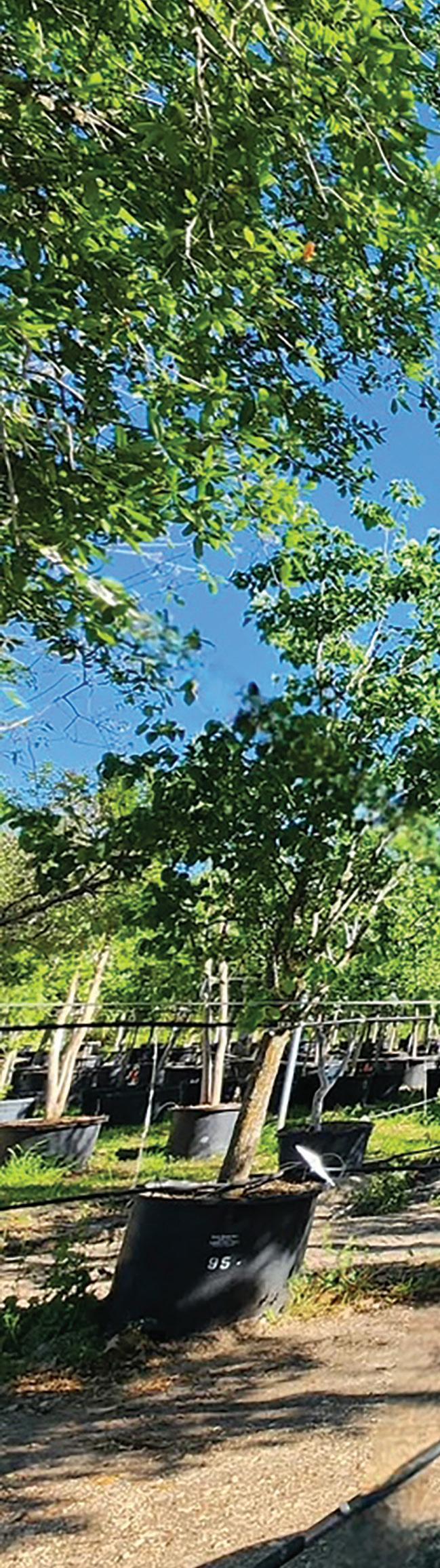
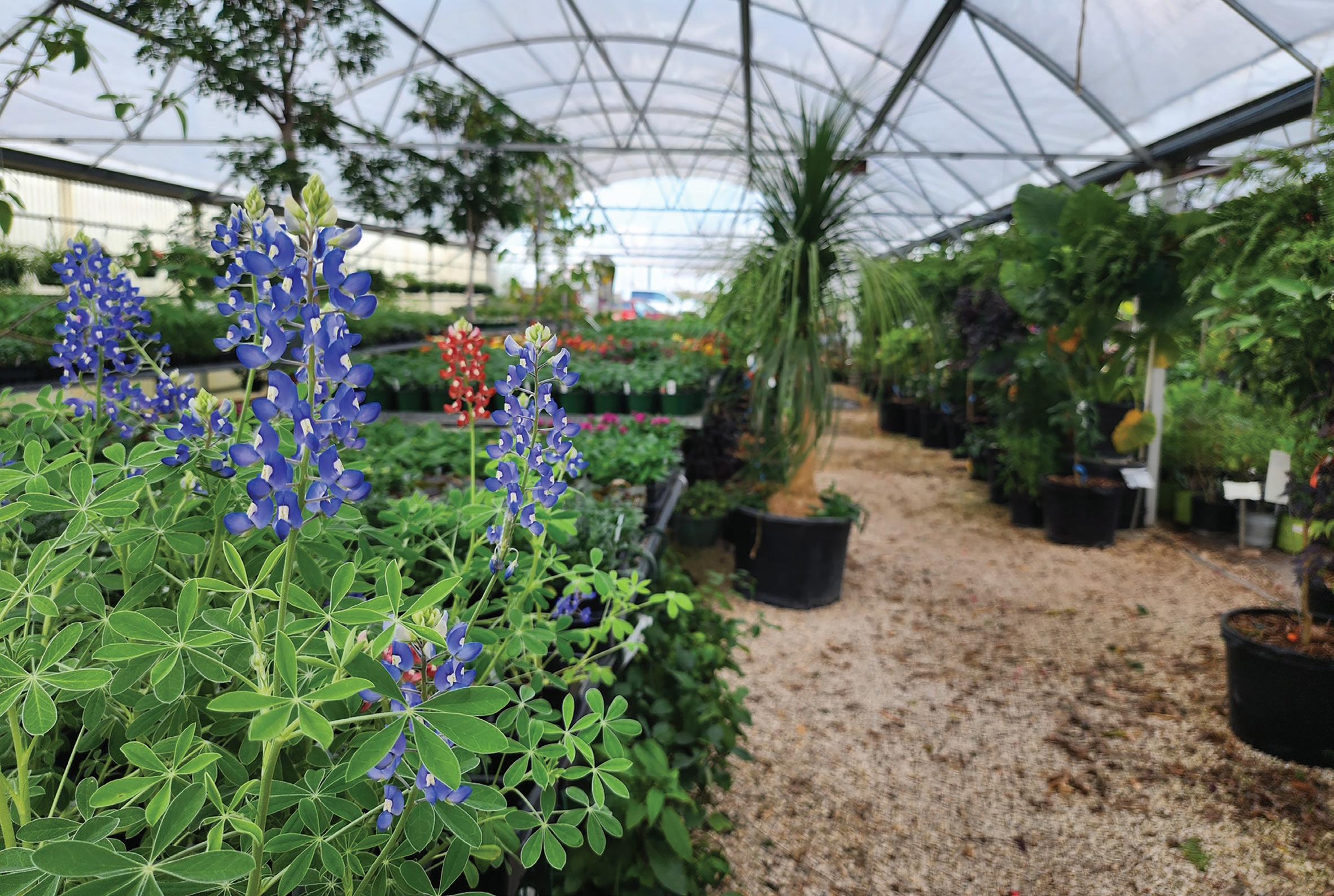
At the nursery itself, water conservation is built into daily operations. According to Maldonado, the 25-acre property relies on a large, on-site pond rather than city or county water to irrigate trees and plants. Rain fills the pond and the supply sustains the nursery throughout the year.
He added that greenhouse and shade house areas are designed with drainage systems that direct excess water back into the pond.
“It all drains back,” he said. “That’s how we water everything here. Nothing is wasted.”
For Maldonado, climate-friendly landscaping is not a trend. It is a continuation of decades of observing the land and responding to it.
“There’s always a plus side to using native plants,” he said. “There is water conservation, wildlife support and long-term sustainability. In a county where soil, water and sun conditions can change within a few miles, working with the environment rather than against it, is what allows landscapes to thrive long after they are planted.”
FRIDAY NIGHT Dances
Speak FOR THE SOIL
FROM MUDDY TRENCHES TO NATIONAL COMPETITION, LOCAL 4-H STUDENTS ARE LEARNING TO READ THE LAND FROM THE GROUND UP.
ASTORY BY FELICIA FRAZAR PHOTOS COURTESY OF LORI THOMAS
rea 4-Hers dug into a new contest and sifted through new possibilities, all while they grew their knowledge base in the agricultural world.
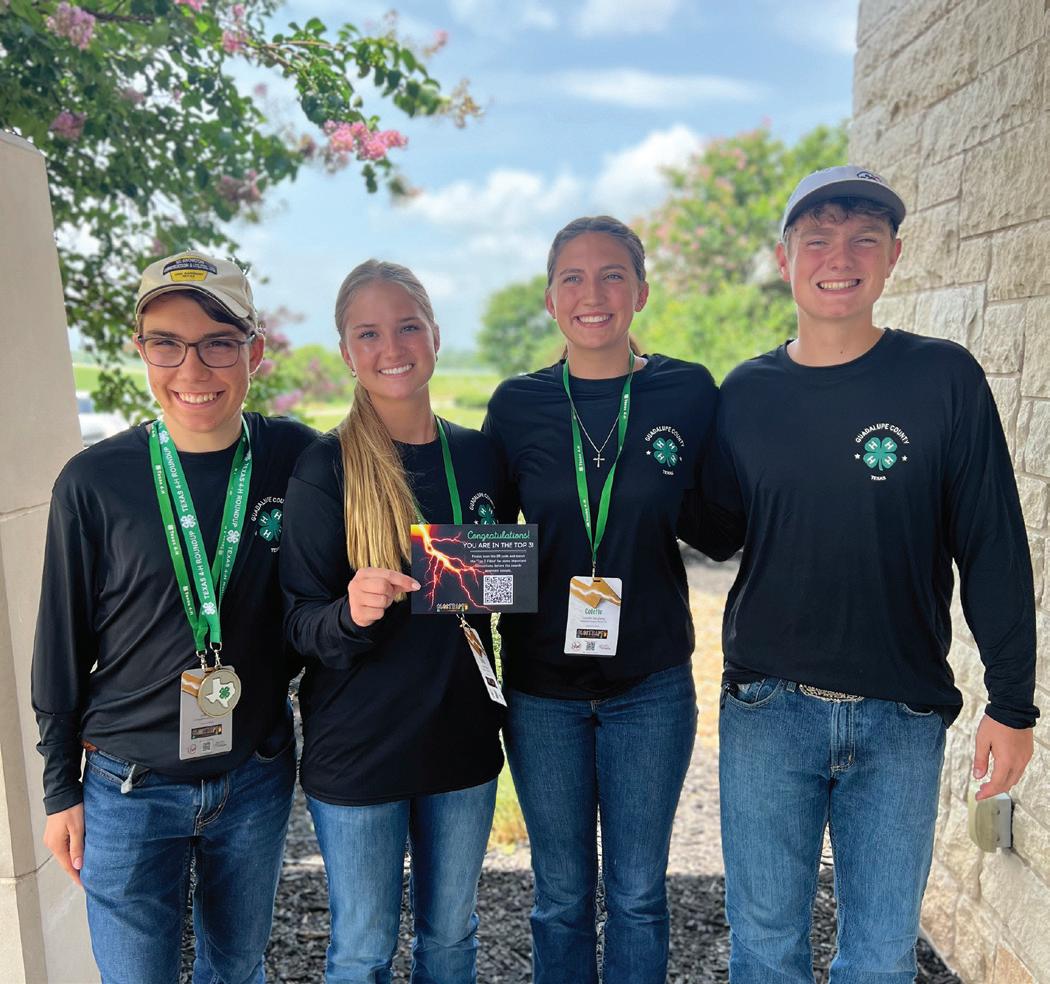
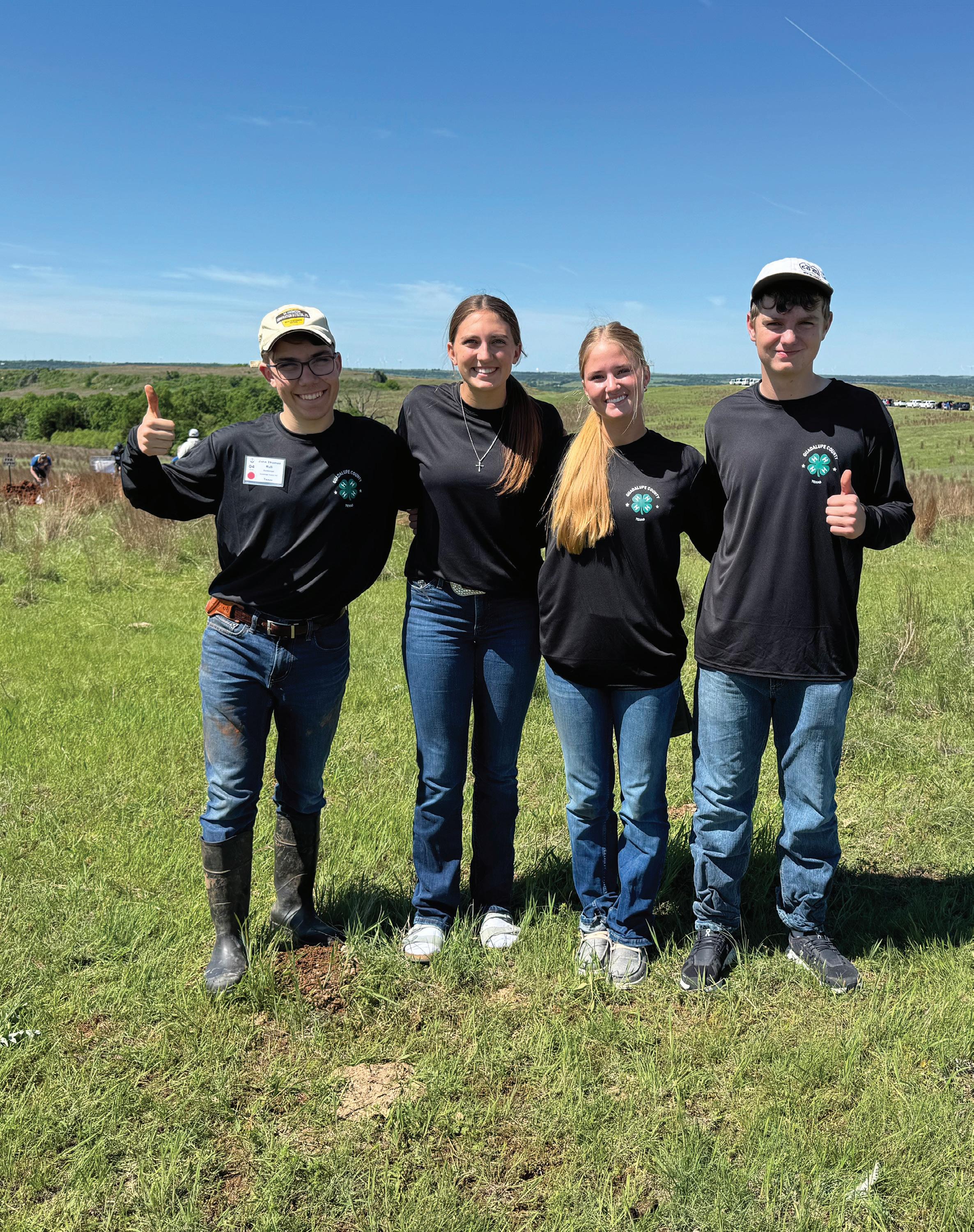
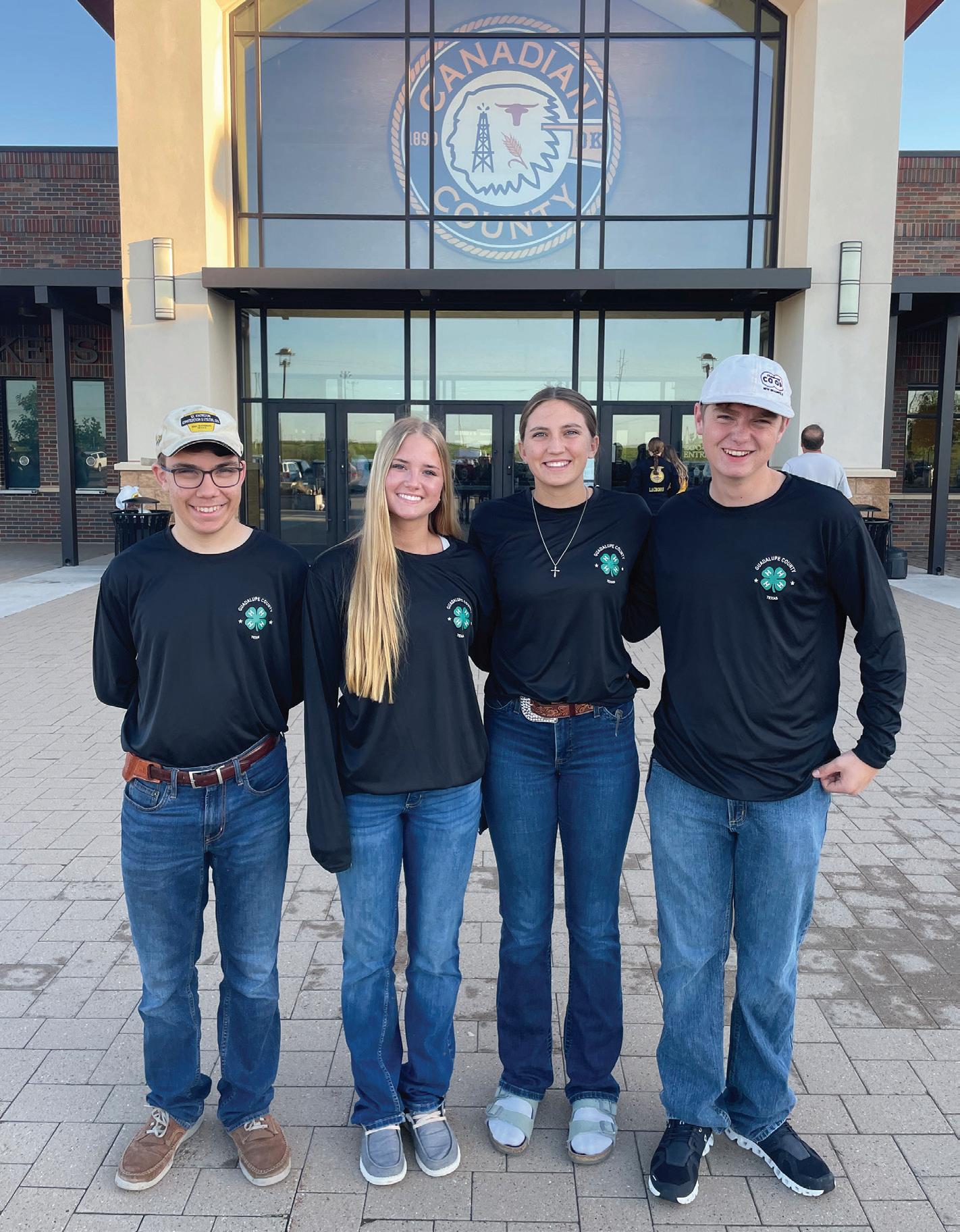
In 2025, for the first time — in at least Guadalupe County’s recorded history — the county’s 4-H sponsored a Soil Judging team that showed up and showed out, earning a trip to the national contest despite the adversity along the way. Now with a full year under its belt, the program is starting to expand, with more teams that include students that range in age from third to eighth grades.
Soil is the basis for all things agriculture, and in life, Thomas said.
“It determines our food supply, it determines our water filtration, it determines livestock production,” she said.
Thomas’ daughter, Tessa Thomas, a junior at Samuel Clemens High School, explained how the contest worked, from taking soil samples to determining its best uses.
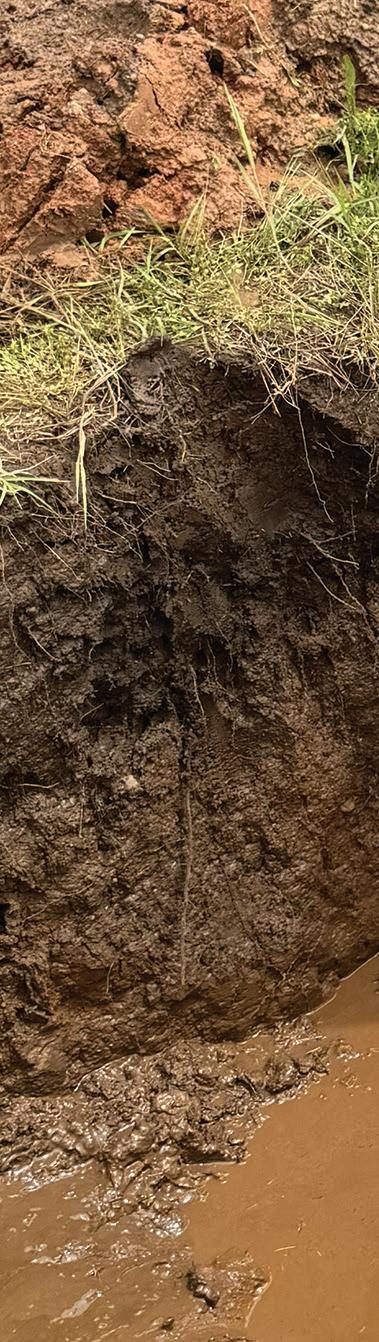
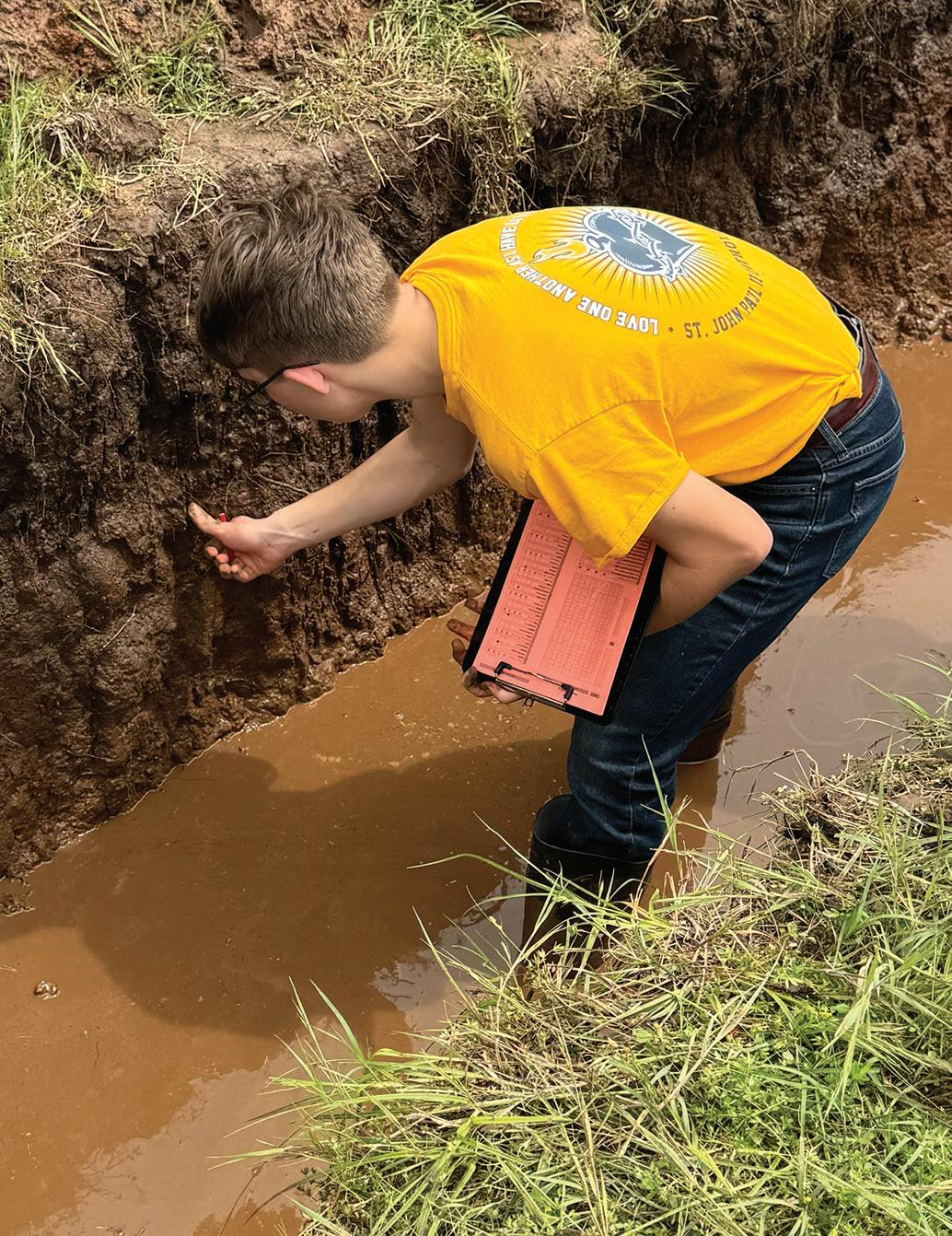
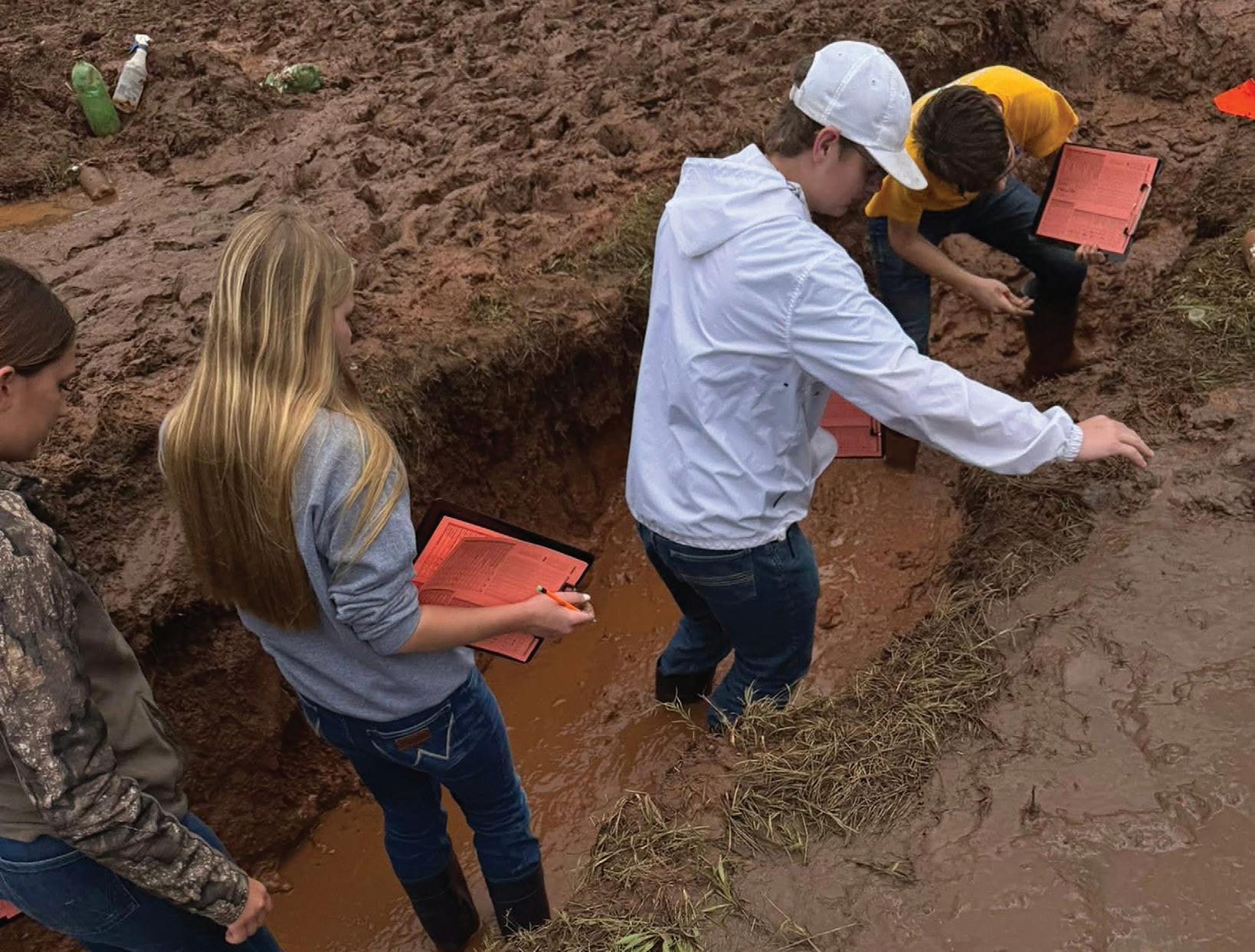
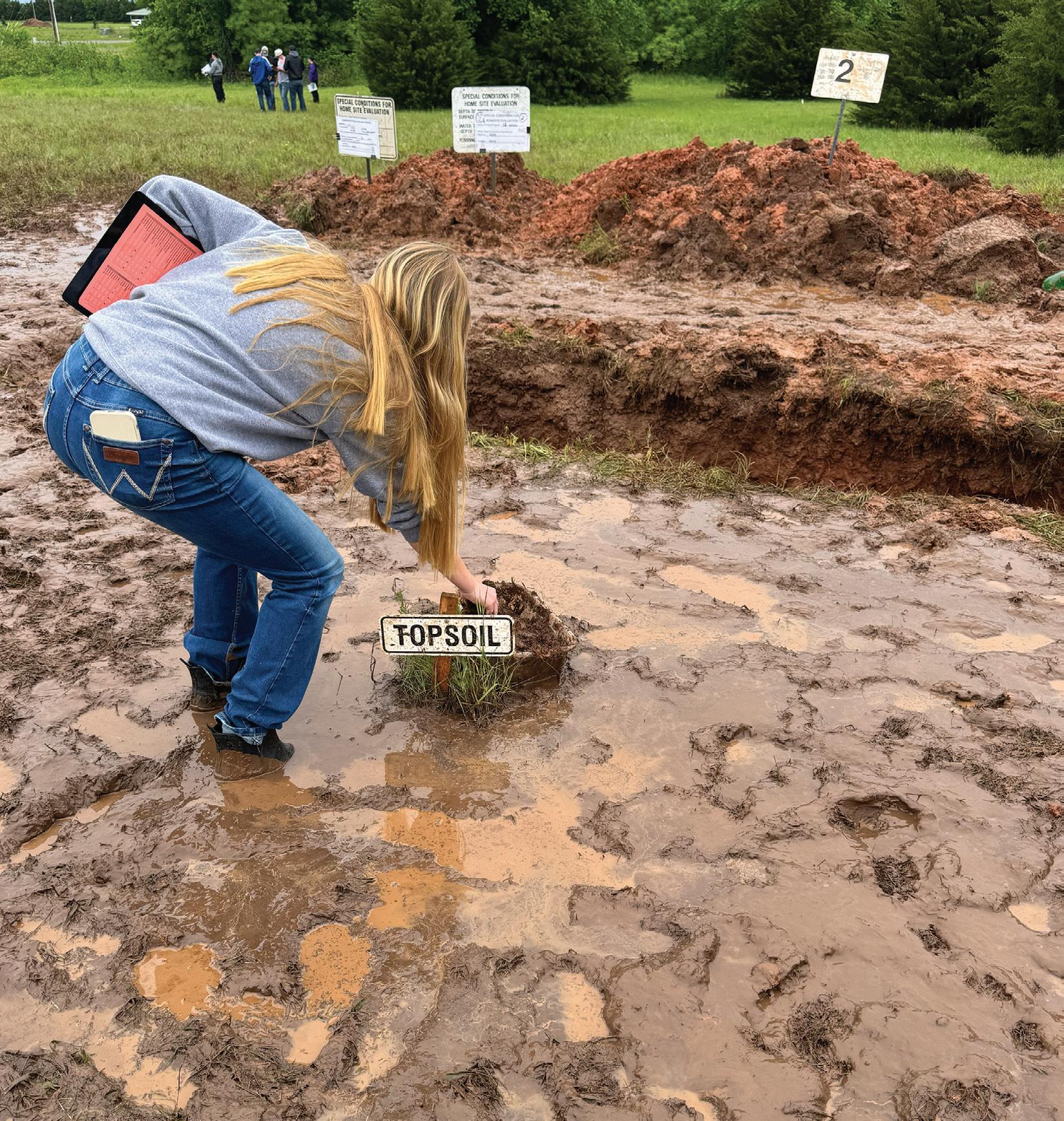
“Soil judging is basically, we grade the quality of the soil and how it would be suitable for cultivation, what the soil is made of and the components of it,” she said. “The people who run the competitions dig out a trench for us to
go into, and we get to look at how the topsoil and the subsoil. We get a little piece of the top soil and subsoil, and we have some spray bottles with us, and we spray water on it and try to determine, based on how it feels, what is inside the soil, and that helps determine what it is suitable for.”
Those determinations include whether the land is suitable for grazing, growing crops, or other uses, Tessa said. It also helps farmers and ranchers plan how to use the land beyond the initial assessment, creating a land management system, Texas AgriLife Extension Service - Guadalupe County 4-H Youth Development Agent Matt Miranda.
“It is important because lack of knowledge of how soil works and how it repairs itself is what caused the Dust Bowl in the 1920s,” he said. “People did not know how to plan properly; they didn’t understand overgrazing. Learning what makes a good, healthy soil, and if you have a bunch of livestock to move them that way, the soil can recover, and the plants can recover on it. That is important for agriculture, it is also important for land management, water management and range and plant management.”
The team of four local students wanted to try something new and cultivated more than just a little bit of soil knowledge and a couple of wins, Thomas said.
“The coolest thing for me was seeing them as they learned the process, especially as Tessa said, it was all their first year,” she said. “They went into it not really knowing what they were doing, and I got to watch them come together as a team.”
During a workshop at the state meet, the team of Tessa Thomas, John Thomas Ruli (senior at St. John Paul II Catholic High School), Colette Forsberg (junior at Samuel Clemens High School), and Aiden Engelhardt (senior at New Braunfels High School) visited with a group from the Texas A&M Soil department, which a door to a lot of new possibilities, and getting
the students insight into other fields of study they may not have considered prior, Lori said.
“I think two of the kids on the team out of the four are actually considering a career in soil sciences because of what they learned through that,” she said. “Which is not something any of them planned, Tessa included. And now, she’s considering landscape architecture and turf management. I think the kids had no idea. As far as career opportunities that are productive, they realize that this might be something that could be not just profitable for them, but also meaningful and much needed.
It’s definitely not an oversaturated field.”
While learning about the soil wasn’t a walk in the park, the contests really put their skills to work as rain and soggy conditions made things more challenging, or as Miranda called them, “less than ideal situations.”
“The first time they went to the state contest, they had to judge soil out of buckets because it was pouring down rain in a thunderstorm,” Miranda said. “Then at the national contest last year, they had had like 10 inches of rain in El Reno, Oklahoma, so their practice pits were full of water. It was all muddy and messy, but they obviously know what they are doing because they made it to the national contest for the first time.”
Soil judging is unique in that it is not something most people think of when they hear 4-H competitions, Miranda said. And for a group of students to jump-start a new team from scratch, and do well, is nothing short of spectacular, Miranda said.
“Some of these contests, like soil judging, range evaluation, grass ID, they are important for agriculture, but overall important, because it is important to learn about the natural areas of Texas, what grows there, what is supposed to grow there, what is not supposed to grow there,” he said. “It was a little surprising when they said they wanted to have this contest, and it turns out they were pretty good at it.”
YOU Butter BELIEVE IT
PATIENCE PAYS OFF. IN THIS CASE, IT SPREADS.
Have you ever really thought about butter? It has a kind of mystique to it. It feels like something that should require a churn, a farmhouse and a century-old family recipe. But the truth is delightfully simpler: With nothing more than heavy cream, a pinch of salt and a mason jar, you can turn a single ingredient into something luxurious, golden and deeply satisfying.
Part of the appeal is the transformation itself. You hear it as much as you see it — the slosh of cream thickening into a soft thud, then suddenly pulling away from the sides of the jar as the butterfat separates. It’s kitchen alchemy you can hold in your hands. Making butter is great for those who want to be more self-sufficient, make compound butters or anyone who wants to do a fun experiment with the kids. So, have fun with it.
STORY AND PHOTOS BY DANNY STORY
- INGREDIENTS
-
1 cup heavy cream (cold or room temperature both work; room temperature speeds things up)
A clean mason jar with a tight-fitting lid (pint-size is ideal)
A pinch of salt (optional)
Ice water for rinsing
- INSTRUCTIONS -
1: Pour the heavy cream into the mason jar, filling it no more than 50%. This gives the cream room to move — agitation is the entire mechanism here. If you want salted butter, this is the time to add it.
2: Seal the jar tightly and shake. The process moves through distinct stages:
Stage 1: Whipped cream (2-4 minutes). The sloshing sound disappears as the cream thickens.
Stage 2: Over-whipped cream (4-6 minutes). The mixture becomes grainy.
Stage 3: Butter break (6-10 minutes). Suddenly, you’ll hear liquid again. This is the buttermilk separating. A solid mass will form inside the jar. This moment always feels like magic.
3: Open the jar and pour off the buttermilk. This can be used for pancakes, biscuits or baking. Add cold water to the jar, shake gently and pour off the cloudy water. Repeat until the water runs mostly clear. This step keeps the butter from spoiling quickly. At this point, you can add fresh herbs or spices to your butter to create a compound butter. My favorite things to add are garlic and thyme, or cinnamon and brown sugar.
4: Scoop the butter into a bowl, press out any remaining liquid and shape it however you like. It keeps for about a week in the fridge.
My favorite thing about homemade butter is it has a very slightly sweet flavor that adds so much depth to food. With this little bit of kitchen magic, you now have the base of just about anything in the kitchen. You’re ready to make special doughs or biscuits, baste steaks, make garlic bread or sauté veggies.
- APRIL -
2026 MOONLIGHT & ROSES: TENTH – 7 - 9 PM
Join Seguin Main Street for an unforgettable evening celebrating vibrant downtown community and the arts. Moonlight & Roses offers an enchanting atmosphere filled with live jazz by Choo-Cha Booch and the presentation of the 2025 Downtown Awards and Community Arts Awards. Enjoy complimentary desserts and drinks, and mingle with fellow guests to make lasting memories. Don’t forget to bring your favorite beverage, snacks, and a comfy lawn chair or blanket for seating. This portion of the night is free and open to the public.
Location: Memorial Rose Garden, 317 W. Court St.
THIRD THURSDAY IN DOWNTOWN SEGUIN: SIXTEENTH – 10 AM - 8 PM
Enjoy food, music and shopping. We’re all open until 8 p.m. and offering great deals and fun. Find shop and restaurant specials galore throughout downtown. Location: Central Park, 201 S. Austin St. CASI TEXAS LADIES STATE CHILI CHAMPIONSHIP COOK-OFF: EIGHTEENTH – 9 AM - 9 PM
A favorite annual tradition, this prestigious cook-off brings together top competitors, passionate chili fans, Junior Miss cooks, and plenty of enthusiastic supporters. Guests can explore a variety of vendor offerings while enjoying the lively energy that makes this event a longtime favorite.
Location: Max Starcke Park Pavilion, 650 River Drive West
WORLD TAI CHI/QI GONG DAY: TWENTY FIFTH – 10 AM
Around the globe during the 10 AM hour practitioners meet and focus their thoughts on peace, harmony, calmness to create a wave of positive energy that travels the world during this 24-hour period. The event is free and open to all those that practice, beginners and the highly skilled or those that wish to simply observe and participate in the closing energy circle. Please bring your own lawn chair if needed and your own bottle of water. The group will be lead by Dr. Barry A. Jackson, GRMC Physical Therapist and instructor of Tai Chi classes currently offered in Seguin at the Guadalupe Regional Wellness Center and the Seguin Public Library. A modification of the traditional Yang style Tai Chi will be used.
Location: Emanuel's Lutheran Church, 206 N. Travis St.
EARTH DAY: TWENTY FIFTH – 10 AM - 3 PM
Explore different exhibits on living green and making healthy choices to improve your health and your environment. Have fun building planters, learning about native plants, live entertainment from area schools and so much more. The Earth Day Festival is held in conjunction with the Seguin Main Street Program's April Trade Day. Shop over 80 vendors selling jewelry, home goods, candles, food, yard decor, and more.