Seesaw ELD: Enhancing Language Development for English Learners
Seesaw ELD: Enhancing Language Development for English Learners
Growth in English Learner Population & the ELD Curriculum Landscape
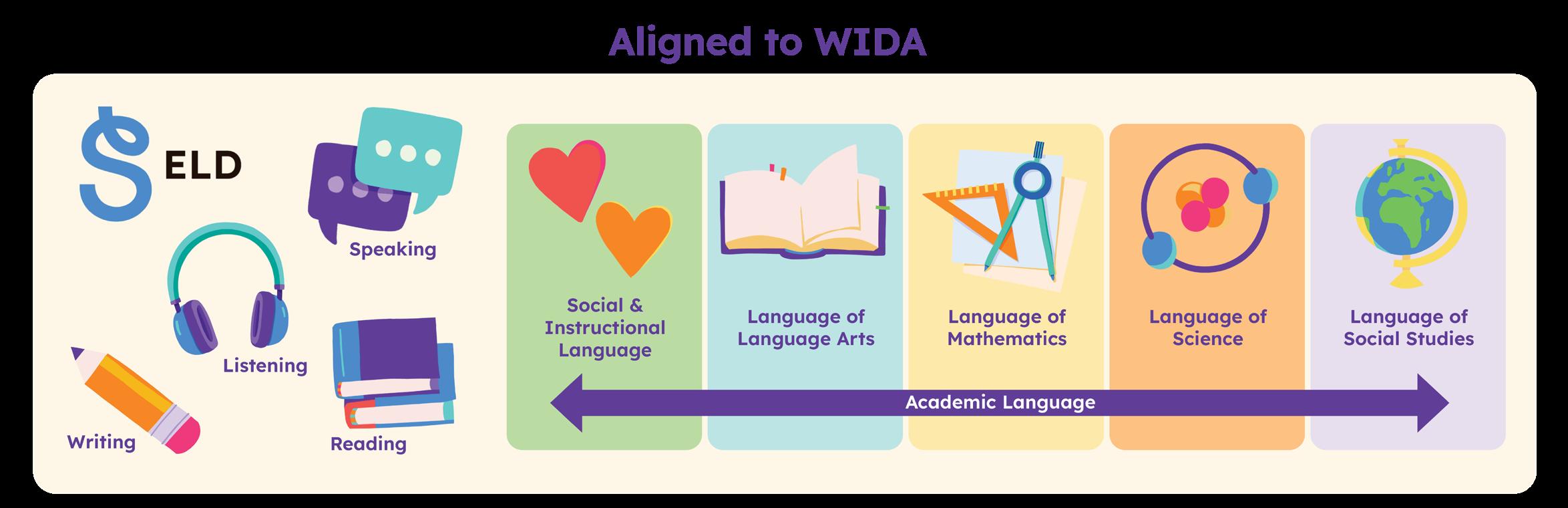
English learners are the fastest-growing demographic of students across the U.S., making English language development (ELD) a high-priority area for schools and districts across the United States and the globe. Currently, there are many models of English language instruction in practice. Some programs for ELD focus solely on English acquisition in isolation - learning English for the sake of learning English. However, recent research cited by WIDA shows that what is most important is for students to acquire language through content area knowledge - this helps English learners access gradelevel appropriate content in different subjects (science, social studies, math etc.) while simultaneously learning English.
According to a 2008 report by Education Northwest, the overarching characteristics of English learners (ELs) and English language development include:
• ELs move through different stages as they acquire English proficiency and, at all stages, need comprehensible input.
• Fluency in everyday conversation is insufficient to ensure access to academic texts and tasks.
• Instruction that helps them meet content standards is critical.
• ELs bring a rich background and cultural knowledge to school, but these may differ from the mainstream expectations in the area where they live.
• Assessments are most effective when they measure both language proficiency and content knowledge.
• The same approach to learning to read and write applies to ELs and non-ELs, but ELs need additional instructional support.
• Many literacy skills transfer across languages.
Seesaw ELD Curriculum Solution
Seesaw ELD Overview
Seesaw ELD is a supplemental program based on the latest research - teaching language through the content areas. The content serves the ELD models found throughout schools across the globe. Our research foundation and pedagogical approach follow the WIDA Framework, Sheltered Instruction Observation Protocol (SIOP) Model, and state content standards.
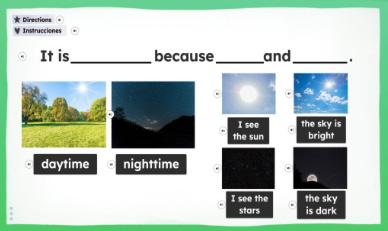
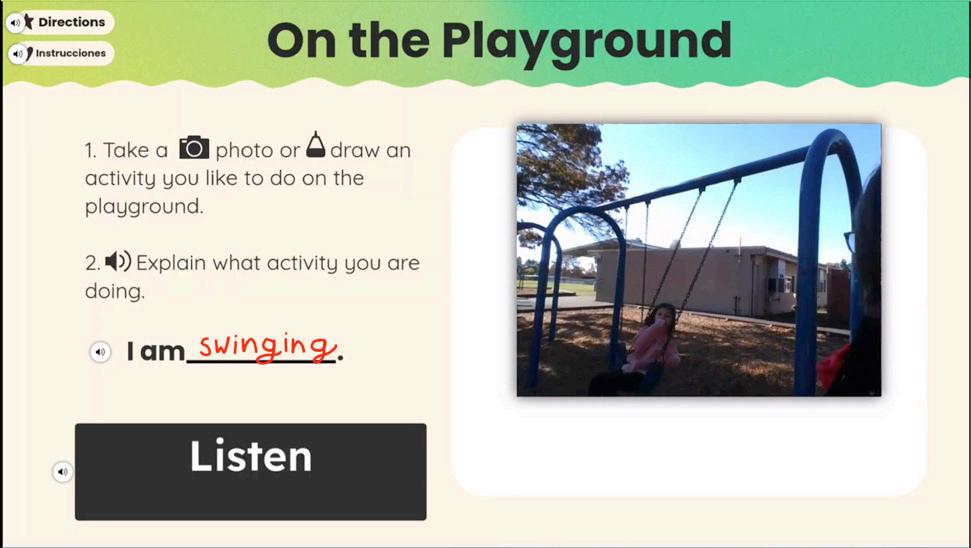
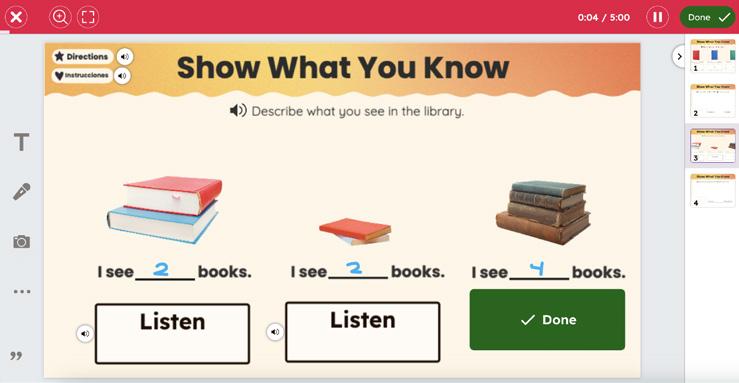
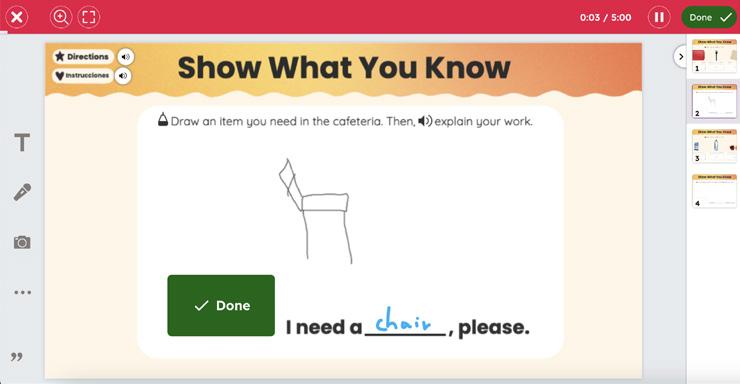
The lessons were developed alongside language and content area experts in math, English language arts (ELA), social studies, and science to help ELs meet gradelevel expectations. Lessons are broken down in a way that is easy for teachers to use based on the needs of the students – helping teachers scaffold and implement content – and provide a variety of ways to model, use, practice, and embody the language using our multimodal tools. Students have a safe space to practice English and get immediate feedback, all while honoring the experiences the child brings to the classroom.
Seesaw ELD – A Look Inside
The Seesaw ELD curriculum leverages the power of Seesaw’s Learning Experience Platform, including family messages translated into 100+ languages, multimodal tools and activities that address all 4 modalities of language – listening, speaking, reading and writing, student portfolios to track growth over time, and many opportunities to practice, reflect, and assess content knowledge and language acquisition.
Seesaw ELD focuses on learning language within the context of grade-level content and integrating the latest research. The curriculum honors students’ home language experiences by incorporating these into
classroom activities using our multimodal tools. Seesaw ELD emphasizes collaborative protocols to provide ample opportunities for student interaction and dialogue. Additionally, the program includes comprehensive resources to support effective implementation.
Bridging Language Barriers with Families
Seesaw’s communication tools are lauded by schools and districts for their ability to bridge language barriers between school and home, with the ability to share student work, give a window into the classroom, and automatically translate messages into over 100 languages.
““When I first started using Seesaw my 4th grade class spoke 7 different languages. Seesaw helps keep parents from all languages and cultures engaged in their child’s learning. It helps to break down the walls of the classroom and allows my parents to feel involved at school even if they are unable to attend in-class events during school hours.”
- Gabrielle Z., Teacher, California
Levels of Language Acquisition per Lesson
Seesaw ELD Pilot Study
Study Overview
Before the official launch of Seesaw ELD in July 2024, Seesaw conducted a pilot study across 5 United States elementary schools in California and Wisconsin. Students who participated in the study spoke Spanish, Tagalog, Hindi, or Punjabi as their primary languages at home. The study included teacher pre- and post-lesson surveys, an in-class observation, student pre- and post-assessments, and a teacher post-study interview.
Results
Teacher Surveys and Feedback
In their post-instruction survey, 100% of teachers said that they would recommend Seesaw ELD lessons to other teachers with English learners, the lessons were age appropriate for their students, and the lessons would work well for all K-5 EL students.
One study participant, an elementary ELL resource teacher in California, noted that her students “increased their confidence with speaking and their ability to selfcorrect their pronunciation” and that “after completing multiple lessons, my students were more willing to talk with their peers.”
Carmen Baisman, an ELL instructional assistant in California, particularly liked the ability for students to record themselves, noting that “One of my students is typically reluctant to speak in class, but they recorded multiple times during the ELD lessons.”
“It was very interactive, so the students could drag, move, record, listen to their voices and even take pictures of real life objects inside the classroom of things they were learning about. Students were able to apply what they were learning to their environment.” (Carmen Baisman, ELL Instructional Assistant, California)
In the lesson observations, the teachers were clearly engaged with the lessons. They modeled pronunciation and guided students through the Practice sections, encouraging them to say each vocabulary word and to use full sentences. Most of the teachers created additional materials to extend the activities and support their newcomer students.
“
“Students who weren’t saying many words in English are now saying some of the words. Those who were previously saying words are using those words in short sentences. I have also seen that their confidence in speaking English has grown in our small group.”
Student
Student engagement was demonstrated by high performance on the student work for each lesson. Based on the improvement in vocabulary from the pre- to postassessment, the ELD lessons were effective in teaching students common vocabulary words. Across all activities and formative assessments contained in the lessons, students’ average correct was 85.4%
During the classroom observations, the students were attentive and engaged in the activities. “The students really liked it…They were excited,” said Ms. Baisman. Marivic Allender, an Elementary ELD Teacher from California said that her students “loved the lessons, especially the matching, drawing, and photo activities.”
- Karly, Elementary Teacher, Madison, WI
Engagement and Improved Vocabulary Acquisition
“
“When we finished up with the activities as a large group, the next week, they remembered what they had learned and were able to help teach one of the students who was absent.”
- Karly, Elementary Teacher, Madison, WI
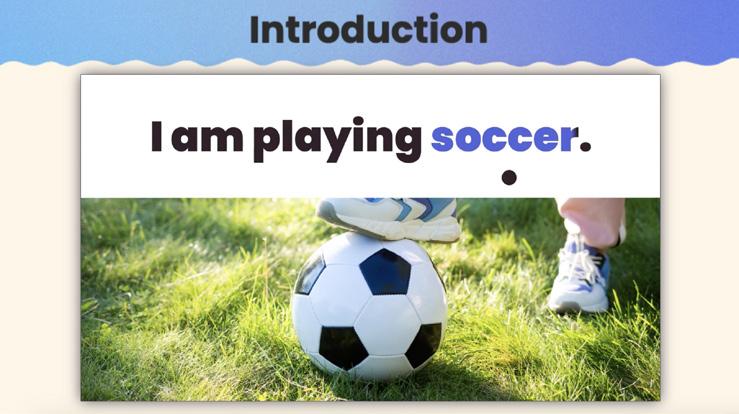
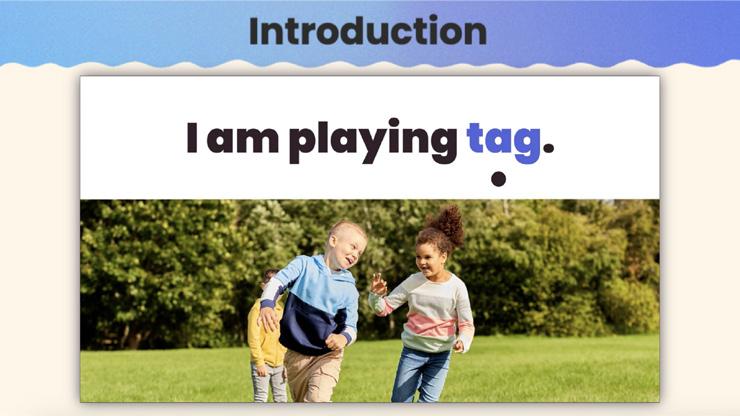
To understand the impact of each lesson on students’ vocabulary acquisition, an improvement score was calculated for each vocabulary word. Students who used the English vocabulary word in the post-assessment but not the pre-assessment were scored as improving for that item. The number of days between the pre- and postassessments varied from 1 to 7 days, with an average of 4.3 days. Over 50% of students demonstrated that they acquired new vocabulary after one lesson from the preto post-assessment for 13 of the 29 words included in the lessons.
Conclusion
The results of the pilot study on Seesaw ELD indicate that teachers and students liked the lessons and found them engaging. The teachers embraced the instructional design of the lessons and extended the activities to provide more practice on the vocabulary and sentence structures, and to introduce additional vocabulary.
The students’ engagement was demonstrated by their high performance on the student work for each lesson. Based on the improvement in vocabulary from the pre- to post-assessment, the ELD lessons in the pilot study were effective in teaching students common vocabulary words.
To learn more about Seesaw ELD, visit https://seesaw. com/english-language-development/
Acknowledgements
Language & Content Experts
Thank you to Dr. Kia McDaniel, Dr. Adria Klein, Dr. Ebony Shockley, Dr. Tamar Posner, Dr. Tahira DuPree Chase, Mary Starr, and Ed Lamprich for their consultation and contributions to the Seesaw ELD curriculum.
Pilot Study Research & Reporting
Thank you to Dr. Sherri Widen for planning and executing the pilot study summarized above.