For subscriptions and advertising enquires, or for further information on the magazine visit our website at: securitymiddleeastmagazine.com
As we open the first issue of Security Middle East for 2026, one word defines the year ahead: momentum. Across our industry, innovation continues to accelerate – connecting people, systems and ideas in ways that demand both agility and foresight.
This year, we’re bringing that very spirit to Riyadh for the Security Middle East Conference. With an exceptional line-up of keynote speakers and forward-thinking panel discussions, the event promises to be far more than a gathering of experts. It will be a space to engage with new perspectives, forge valuable connections and explore the strategies shaping the next era of security in the region. Due to the current tension in the Middle East we have had to push back the original planned date but are delighted to confirm the Security Middle East Conference is coming to Riyadh in November 2026. Find out more on page 12.
In this issue, we also shine a spotlight on the evolving landscape of hospitality security (page 32) through the expert lens of Leon Hendricks. The silent strength of great hospitality lies not in rigid processes,
but in purposeful, human centred discipline — an art that blends strategy, empathy and consistency. Before new techniques or tools, he argues, comes understanding: a clear map of the risk terrain that defines 2026 and beyond.
We also feature an exclusive cybersecurity op-ed penned by experts from FTI Consulting and the UAE Ministry of Energy & Infrastructure. Their insights reveal how the region’s cybersecurity focus is shifting — from the theft of data to the paralysis of operations. It’s a timely read for anyone involved in critical infrastructure protection and policy and you can read it on page 42.
Here’s to a year of connection, collaboration and continued excellence.
The latest regional and international security news
08 Market Monitor
A roundup of the latest security products and solutions
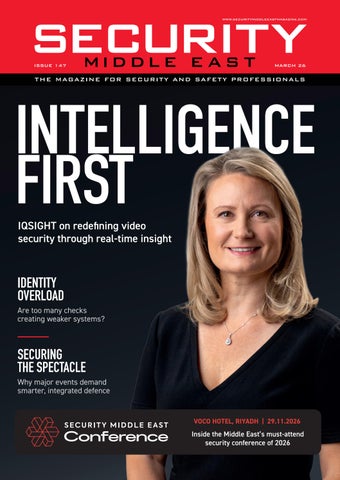
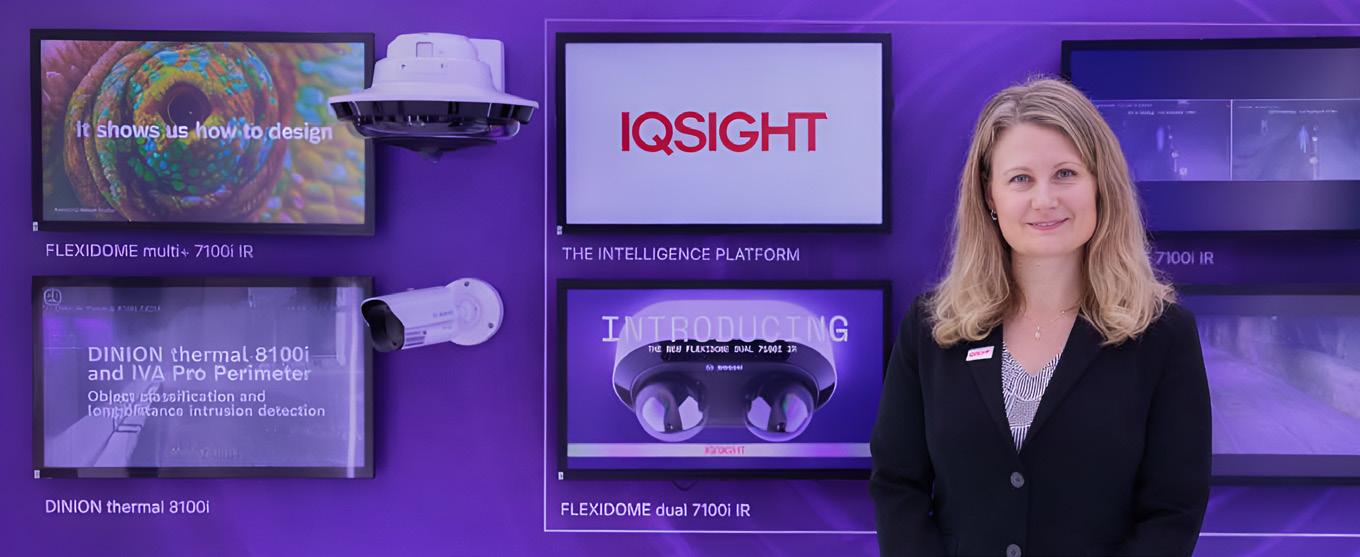
15 Cover story: IQSIGHT
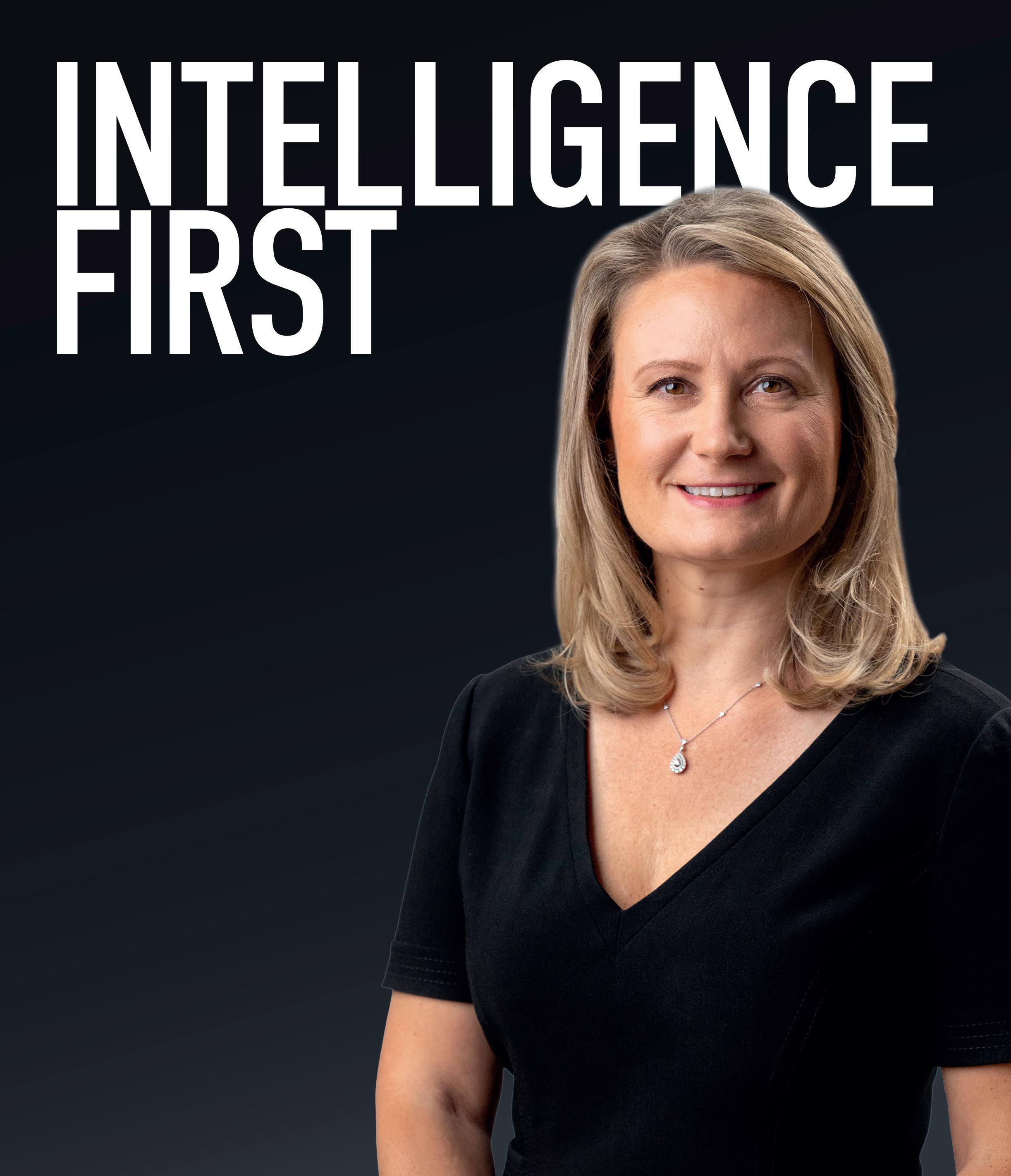
At Intersec Dubai, IQSIGHT showcased its evolution of Bosch Video Systems into an intelligence-first security platform focused on delivering real-time clarity, trusted performance and practical insight. Sabrina Stainburn, CEO, IQSIGHT explains more
FEATURES
12 Security Middle East Conference 2026
We’ve been busy working with our Advisory Board to determine the topics for our popular and lively panel discussions. New for 2026, control rooms and airport security will be joining our panel on digital transformation through the lens of Vision2030
16 The integrated security landscape
28 The evolving landscape of event security
Ian Keller, global Technology Strategist, takes a forward-looking approach on the convergence of systems, setting the stage for the year ahead
19 Synergy in action
Discover how the latest integration between fire and security systems creates smarter, safer buildings, by Mina Zakhary and Smitha Mathew, Cundall
22 When physical security becomes a cyber risk
As physical security systems become increasingly networked, Hassan Makki, Area Sales Director at Genetec, explains why IT teams must take an active role in securing them as part of a unified cybersecurity strategy
26 Defence procurement: Innovation and disruption in 2026
Major-General Mohammad Al-Smadi, Former Commander, Special Operations Aviation Brigade (Royal Jordanian Army), looks at how Western defence industries use digital engineering, AI-driven simulations and high-performance computing to reduce development timelines and respond faster to emerging threats
Middle East event security is shifting from traditional guarding to integrated, intelligence-led and technology-driven protection in response to rising geopolitical tensions, complex threats and ever-larger crowds. Michael Tutte, International SOS, explains more
32 The quiet advantage that defines resilient destinations
Leon Hendricks, Multi-Property Director of Security & Loss Prevention for a leading hotel brand, shares his thoughts on the golden standards, proven techniques and human-centred tools for tomorrow’s safe luxury
36 Identity fatigue
Dmitry Kachurin, Identity & Access Management Expert at UDV Technologies, explores how over-authentication is hurting security
40 Beyond compliance:
Resilience in the Middle East
The Middle East is a region driving global transformation, but according to John Robert, global security and risk executive and author of Going Beyond Boundaries, now is the time to move beyond mere compliance to a business enable
CYBERSECURITY
42 The shift from data theft to operational paralysis
David Dunn, Head of Cybersecurity, EMEA and APAC; Nebu Varghese, Senior Director, Cybersecurity, both FTI Consulting; and Vijay Velayutham, Principal Information Security Officer, UAE Ministry of Energy & Infrastructure, look at the cyber risks facing industrial assets in the GCC
INDUSTRY MONITOR
09 PSSA: From momentum to impact
Expanding professional reach through the Security & Safety Professionals Network (SSPN)
35 Interview: GIGA projects
Mohammad S Alries, Head of Corporate Security, New Murabba Development Company, spoke with Meshal Aljohani, CPP, PSP, PCI, Security Operations Specialist
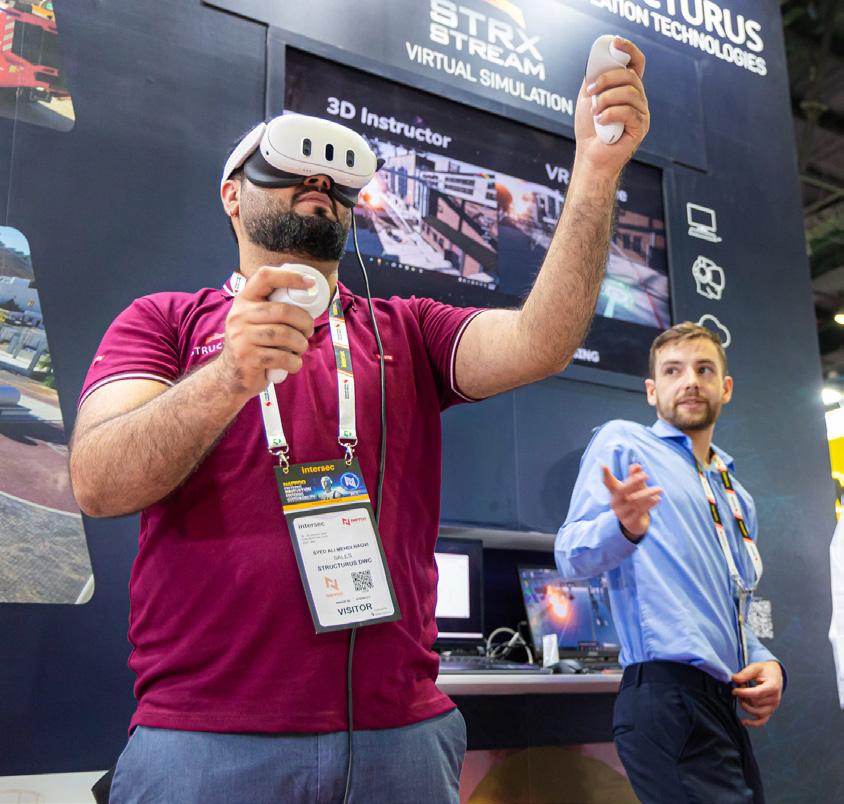
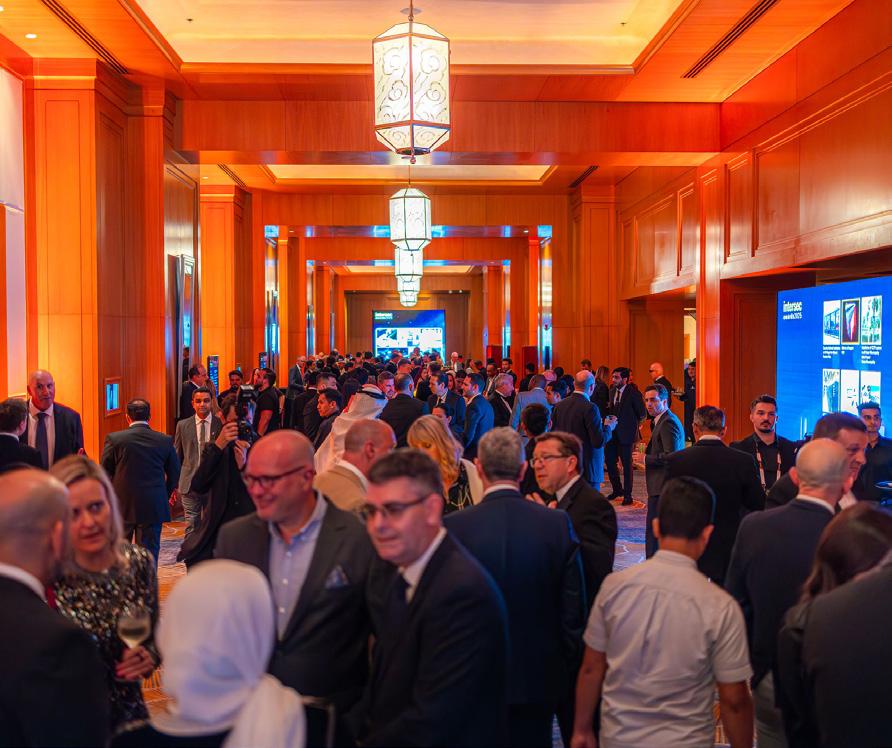
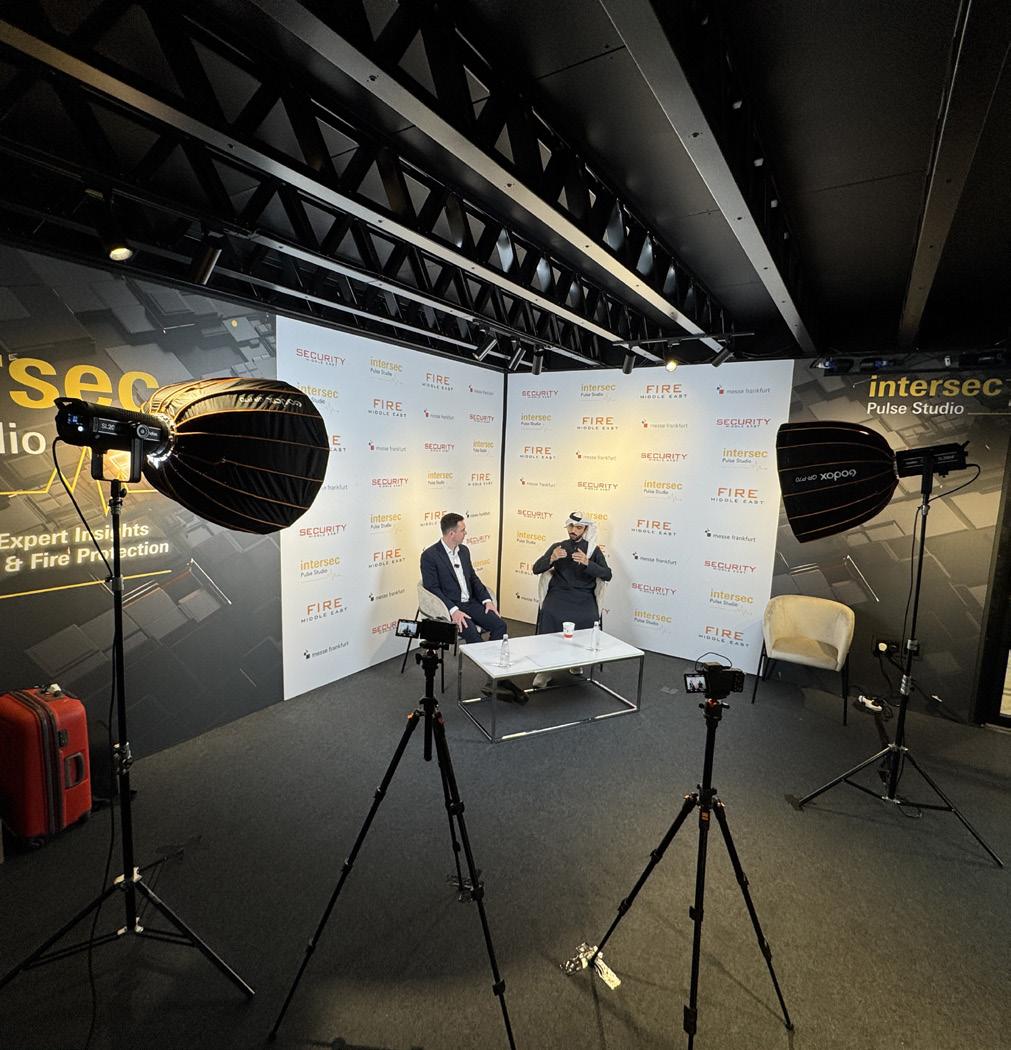
46 Intersec Dubai: Review
Held under the patronage of H.H. Sheikh Mansoor bin Mohammed bin
Rashid Al Maktoum, Chairman of the Dubai Ports and Borders Security Council, Intersec 2026 achieved record-breaking success and marked a defining step in the evolution of global safety, security and fire protection
50 Diary
Diary dates for forthcoming security exhibitions, conferences and events
PROMOTIONAL FEATURES
THIS ISSUE’S PARTNERS & CONTRIBUTORS
Leon Hendricks
Multi-Property Director of Security & Loss Prevention
Leon Hendricks is Multi-Property Director of Security & Loss Prevention for a leading hotel brand for a leading hotel brand and holds the prestigious ASIS “Triple Crown” (CPP®, PSP®, PCI®) along with the CFE designation.
John Robert
Global security and risk executive
John Robert is a global security and risk executive and the author of Going Beyond Boundaries.
Major-General Mohammad Al-Smadi
Former Commander, Special Operations Aviation Brigade (Royal Jordanian Army)
Major-General Mohammad Al-Smadi is a Former Commander, Special Operations Aviation Brigade (Royal Jordanian Army) and Former Military Attache to Kingdom of Bahrain.
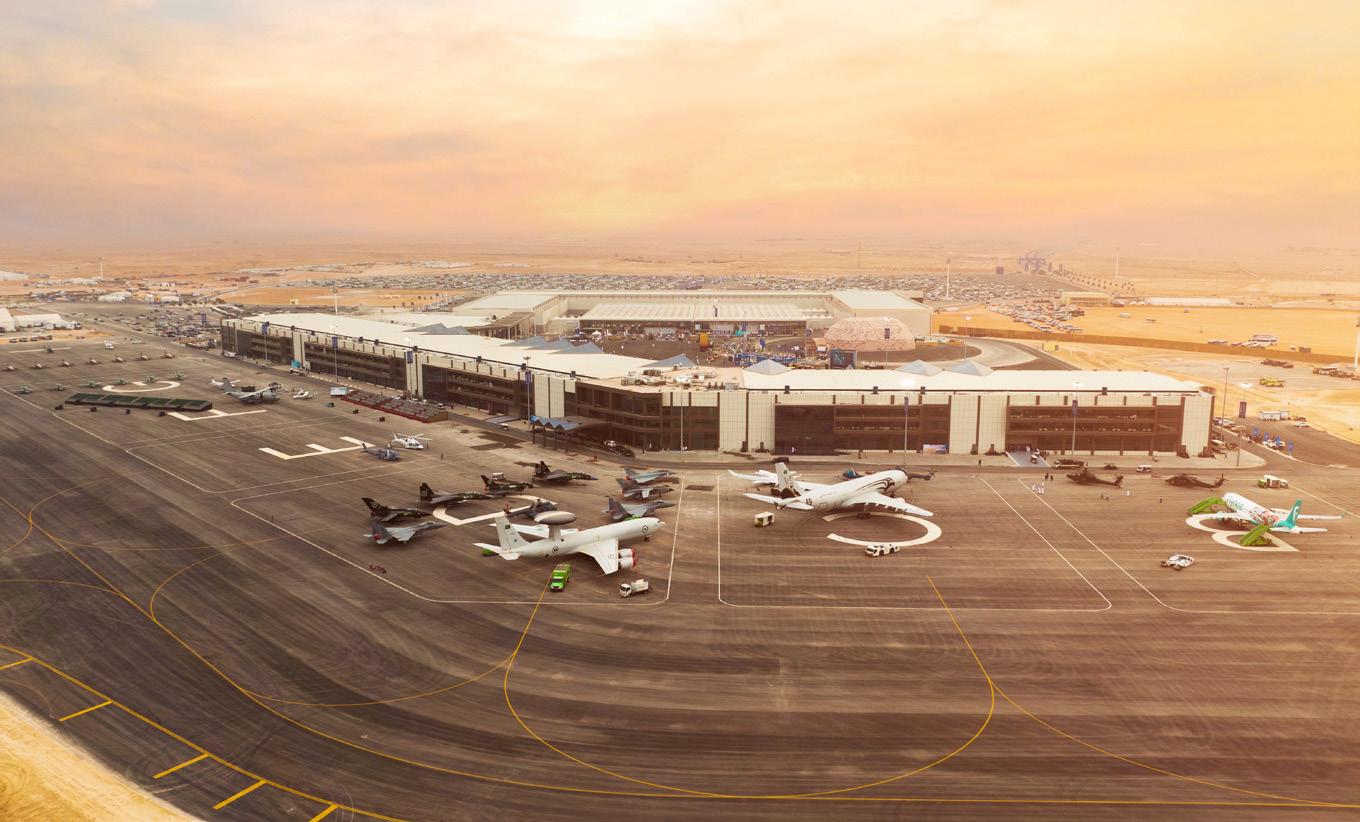
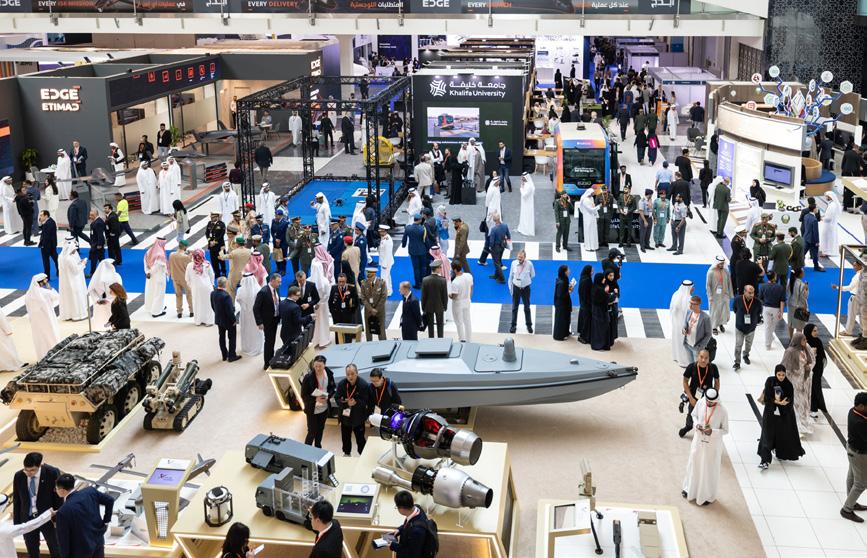
RIYADH HOSTS THE THIRD WORLD DEFENSE SHOW
Under the patronage of Custodian of the Two Holy Mosques King Salman bin Abdulaziz Al Saud, the General Authority for Military Industries (GAMI) organised the third edition of the World Defense Show (WDS) in Riyadh from February 8 to 12, bringing together official delegations, government entities and leading international companies specialising in the defence and security sectors.
GAMI Governor Ahmad Al-Ohali said the third edition reflects the Kingdom’s commitment to innovation, localisation and the development of an integrated defence ecosystem through platforms that unite government bodies with international partners.
He noted that the show will feature a comprehensive programme, including live air and land demonstrations, static displays and newly developed zones, enhancing opportunities for partnership and integration between Saudi government entities and major national and global defence companies.
The show also serves as a key driver of the Kingdom’s goal to localise more than 50 per cent of military spending in line with Vision 2030, while boosting operational readiness and reinforcing Saudi Arabia’s strategic independence in the defense sector.
Bahrain builds quantum-safe economy with SandboxAQ
Bahrain’s National Cyber Security Center has announced a major partnership with SandboxAQ, to create a cybersecurity modernisation framework across the Kingdom. The agreement covers deployment of SandboxAQ’s AQtive Guard platform, an AI-driven tool for managing encryption vulnerabilities, AI agents and non-human identities in more than 60 ministry environments.
The move addresses rising threats from quantum computing, including ‘harvest-now, decrypt-later’ attacks where encrypted data is stolen now for future decryption. Experts see cryptographically relevant quantum computers arriving as early as 2029, putting sensitive government data like classified communications, defence records and national identity systems at risk.
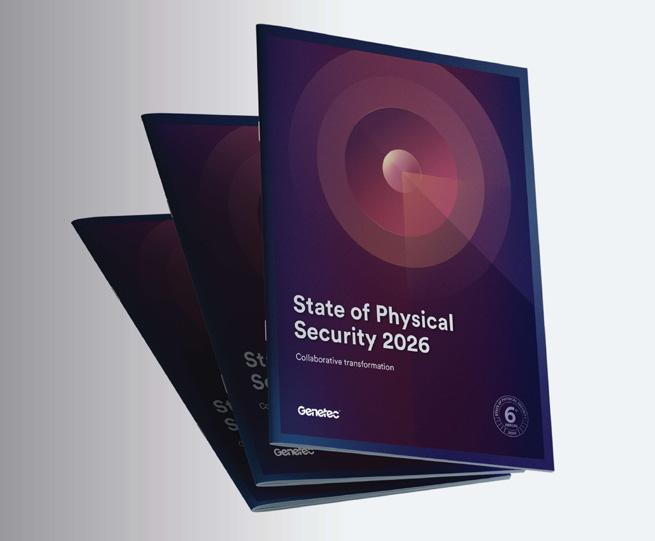
Genetec releases Saudi Arabia findings from the 2026 State of Physical Security Report
Genetec has revealed Saudi organisations are leading the EMEA region in cloud adoption and security investment.
Based on insights from more than 150 physical security professionals in Saudi Arabia, the findings show a market that is investing confidently in modern, connected security infrastructure, with strong momentum in cloud adoption and operational modernisation.
The report reveals that Saudi Arabia has the highest proportion of cloud-based physical security systems in the EMEA region, with 13 percent of respondents stating they use cloud security systems, compared to the EMEA average of seven percent.
Saudi Arabia also recorded the highest level of operating expenditure growth among EMEA markets surveyed.
Forty-three percent of respondents reported increased physical security budgets in 2025, nearly double the EMEA average of 24 percent. Among those reporting an increase, 92 percent said budgets grew by more than 10 per cent, and nearly two-thirds (64 percent) reporting growth of 11 to 25 percent, highlighting sustained investment in security as a strategic business function.
Unlike many markets across EMEA, outdated infrastructure is not seen as a major barrier in Saudi Arabia. Only 12 percent of respondents cited legacy security infrastructure as a top challenge, compared with 44 percent across EMEA overall, reflecting the Kingdom’s continued investment in new infrastructure, smart cities and large-scale development projects.
OPENTEXT OPENS REGIONAL HEADQUARTERS IN RIYADH
OpenText™ has announced the opening of its Middle East regional headquarters in Riyadh.
The opening was celebrated with the visit of Canada’s Minister of International Trade and Economic Development, Hon. Maninder Sidhu, and His Excellency Jean-Philippe Linteau, Canada’s Ambassador to Saudi Arabia.
“This is an important moment that reflects the growing strength of the relationship between Canada and Saudi Arabia,” said Minister Sidhu. “OpenText’s expansion in Riyadh underscores the trusted role Canadian innovation can play in supporting digital transformation in some of the world’s fastest-growing markets. I look forward to continued collaboration that strengthens commercial ties, drives trade and investment, and delivers long-term benefits for businesses and workers in both countries.”
The presence enables closer collaboration with government and private sector organisations as they move from AI experimentation to secure, enterprise-scale deployment.
SIRBAI debuts autonomous defence platform at UMEX 2026
SIRBAI has unveiled the Middle East’s first AI-powered autonomous drone swarm technology at UMEX 2026 in Abu Dhabi, marking its official entry into the defence technology sector.
The new platform enables multiple unmanned aerial systems to operate collaboratively with a high degree of autonomy in complex and contested environments, aiming to redefine modern battlefield operations. Developed by a team of over 40 specialists in AI, autonomy and robotics, SIRBAI’s software-first, fully in-house technology stack supports rapid capability development and high security assurance.
The system integrates mission planning, command and swarm execution into a single, operator-friendly platform, reducing workload while boosting mission effectiveness. Designed for GPS-denied and jammed environments, it supports a wide range of drones, from small tactical platforms to advanced UCAVs, and enables advanced mannedunmanned teaming for surveillance, protection and other defence missions.
IN BRIEF
UAE IMPLEMENTS NEW ENCRYPTION POLICY
The UAE Cybersecurity Council has announced the approval of its National Encryption Policy. This calls on government entities to develop clear and officially approved transition plans that keep citizens and businesses safe amid quantum computing advancements.
SAUDI ARABIA PARTNERS WITH ESTONIA TO FORTIFY DEFENCE
Estonia and Saudi Arabia have partnered to strengthen their defence, cybersecurity and artificial intelligence cooperation as both nations hope to advance cybersecurity capabilities.
BAHRAIN TALKS PAYMENT SECURITY
Bahrain, as chair of the 46th GCC session, hosted the GCC Central Bank Governors in Commitee in Manama to discuss boosting regional cooperation on payment systems, banking oversight, cybersecurity, and efforts to fight money-laundering and terrorism financing.
RIYADH’S GOVERNATA RAISES US$4M
Governata, a Riyadh-based startup positioned as Saudi Arabia’s first enterprise data management and governance platform, has raised US$4 million in seed funding from a consortium of regional and international venture capital firms and prominent angel investors. Governata’s platform is described as the Kingdom’s debut Arabic-first enterprise data governance solution, designed to align with the National Data Management Office (NDMO), National Data Index (NDI) and the Personal Data Protection Law (PDPL).
UAE ADOPTS CHILD SAFETY COUNCIL TO COMBAT ONLINE DANGERS
The UAE is preparing to introduce new protections for children online in stages, beginning with social media platforms before expanding to other digital services as rules and enforcement mechanisms take shape.
Axis unveils AI-powered multisensor camera built for extreme conditions
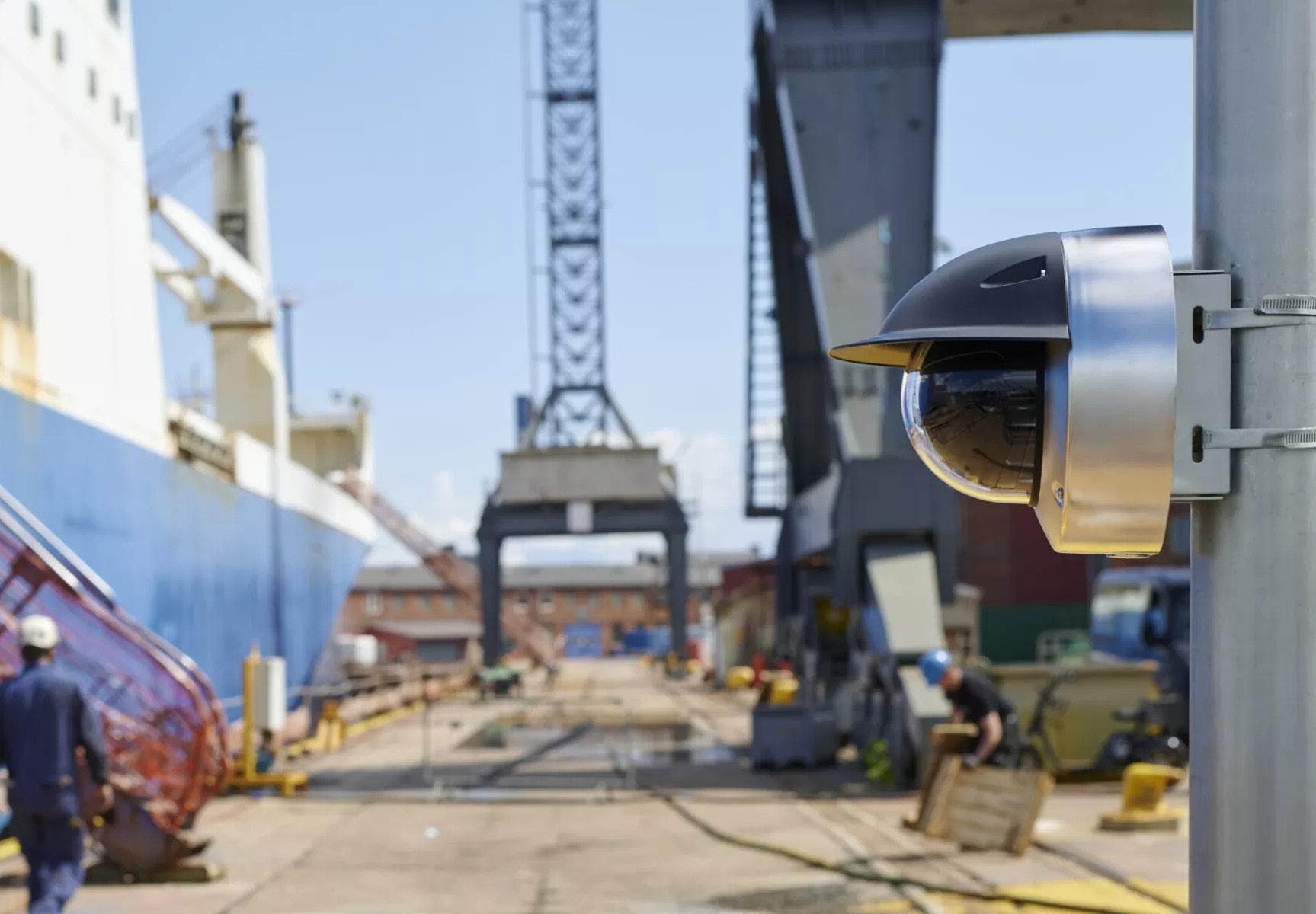
Axis Communications has launched the AXIS Q3839-SPVE Panoramic Camera, an 8K AI-powered multisensor device designed to deliver ultra-clear, 180° panoramic overviews even in the toughest environments.
Encased in an electropolished stainless steel housing (EN1.4404 / SS 316L), the camera is engineered to withstand corrosive and harsh conditions, with operating temperatures from -50°C to 55°C. This makes it ideally suited for marine, industrial and food processing settings, including harbours, ships and hygiene-sensitive facilities – plus, it is also backed by NSF/ANSI Standard 169 certification.
Delivering 29 MP resolution at 30 fps, the camera provides complete situational awareness with no blind spots. Its lossless zoom and horizon straightening features ensure balanced, high-quality visuals, while a deep learning processing unit (DLPU) enables advanced edge analytics such as AXIS Object Analytics for detecting, classifying and tracking people and vehicles.
Built on a dual Axis system-on-chip, the device integrates Axis Edge Vault cybersecurity protection, including FIPS 140-2 Level 2 certified key storage. It can also be paired with AXIS Radar Data Visualizer, further enhancing situational data and expanding analytics capabilities across large, complex sites.
HEXNODE INTRODUCES ITS HEXNODE XDR
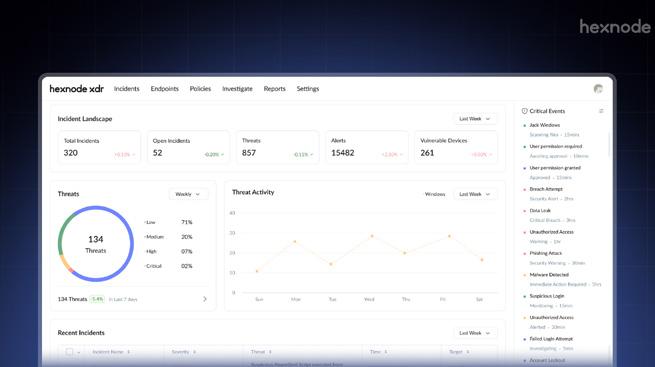
Hexnode has released Hexnode XDR, its extended detection and response platform, marking a significant step in its efforts to strengthen cyber resilience across organisations in the UAE.
“As digital adoption accelerates across the UAE, security teams are under pressure to respond faster and with better context,” said Tim Bell, VP of Sales, EMEA & APJ. “Hexnode XDR helps bring structure and context to endpoint security operations, allowing organisations to respond with greater clarity and confidence.”
Hexnode XDR reimagines the XDR experience with usability at its core. Its clean, structured dashboard unifies endpoints, alerts and vulnerabilities into a single view, simplifying how IT teams assess and respond to threats.
It integrates with Hexnode UEM, creating a single connected environment for endpoint management and security. This unified approach reduces tool sprawl and shortens response time.
Additionally, Hexnode XDR is engineered to evolve into a fully advanced XDR platform that adapts to growing enterprise security demands. hexnode.com/xdr
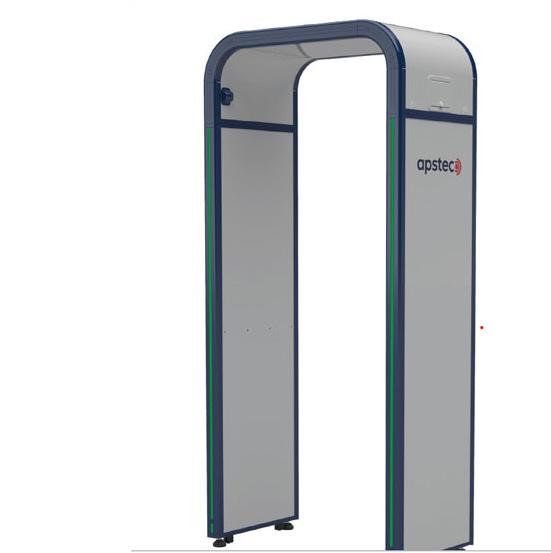
Apstec Merlin sets new benchmark for non-invasive screening
Apstec Systems has announced the launch of its new AI-driven discriminative metal detection system, Apstec Merlin, which debuted at Intersec Dubai 2026.
The new system establishes a fresh benchmark for non-invasive security screening, enabling the detection of metallic threats such as firearms and knives while accurately distinguishing them from everyday objects like mobile phones or keys.
Designed for high-throughput environments, Apstec Merlin allows individuals to pass through security without divesting personal items, improving both operational efficiency and visitor experience.
The technology has the capacity to screen 2,500 people per hour, supporting the seamless movement of high volumes of people. According to the company, one Merlin system can replace five traditional screening lanes.
FROM MOMENTUM TO IMPACT: SSPN’S DIRECTION FOR 2026
Expanding professional reach through the Security & Safety Professionals Network (SSPN)
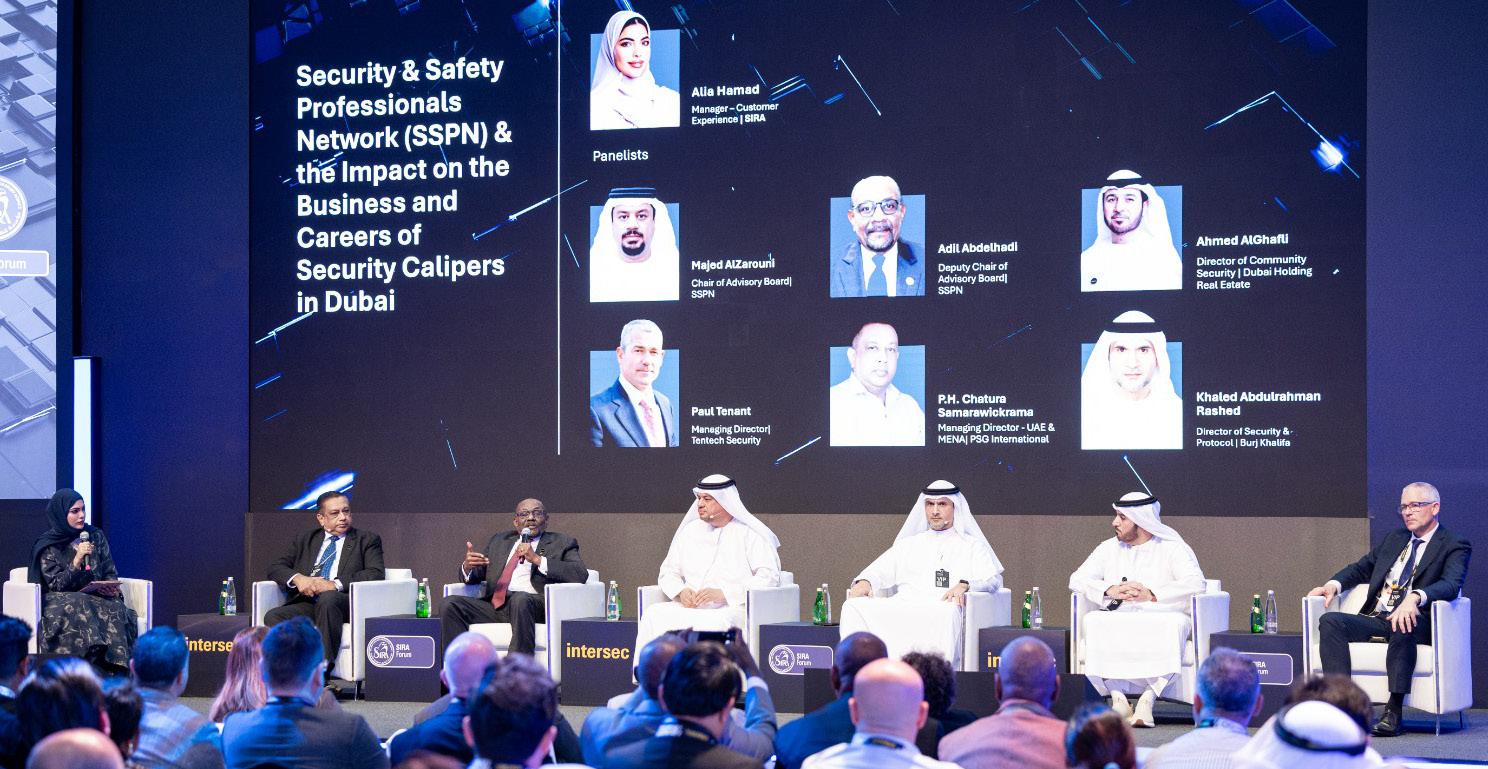
As the doors close on Intersec Dubai 2026, the Professional Security and Safety Alliance (PSSA) enter a new phase of action. The conversation is no longer centred on growth alone, but on delivery. The focus now is on providing a permanent home for professional excellence across the private security and safety sector. The most significant step forward this year is the expansion of the Security & Safety Professionals Network (SSPN). Supported by the Security Industry Regulatory Agency (SIRA), the network is designed to transform SSPN members into a highly connected, capable and professionally aligned community.
Guided by Majed Al Zarouni, Chairman of SSPN, and Dr Adil Abdel-Hadi, Deputy Chairman, the network serves as a bridge between regulators and practitioners on the front lines. During Intersec 2026, SSPN members demonstrated the value of structured professional networks in shaping industry dialogue, sharing operational knowledge and reinforcing standards. For the year ahead, the objective is clear: to ensure security and safety professionals across the region have defined career pathways that are recognised by regulators, employers and industry stakeholders alike.
One of the most important lessons carried into 2026 is that people must remain at the centre of every security operation. Innovation continues to advance rapidly, particularly in artificial intelligence, analytics and digital surveillance. However, technology remains a tool, not a solution in itself. It is professional judgement, leadership and accountability that ultimately safeguard communities and critical assets. SSPN is committed to ensuring that the skills and competencies of its members evolve at the same pace as the technologies they
deploy, empowering professionals rather than overwhelming them.
Education continues to be a cornerstone of this commitment.
SSPN’s ongoing partnership with the International Foundation for Protection Officers (IFPO) has already created meaningful opportunities for professional development through sponsored access to Certified Protection Officer and security management programmes. By reducing financial barriers to high-quality training, the Alliance supports the transition of security roles from short-term employment into respected, long-term careers. Certified professionals bring recognised standards of excellence back into their organisations, strengthening operational performance and public confidence.
Beyond education, SSPN is focused on the practical realities of security operations. Compliance on paper does not always translate into consistent performance on the ground. Bridging this gap remains a priority. Through targeted briefings, practical guidance
and shared resource toolkits, the Alliance works with stakeholders to support operational clarity and confidence. The objective is simple: organisations that are consistently prepared, aligned with regulatory expectations and audit-ready at all times.
Community remains the defining strength of SSPN. Security can often be a demanding and isolating profession, but within the network, professionals are supported, represented and connected. From field officers to senior managers, members are part of a professional community built on shared responsibility, accountability and pride in the role they perform.
As 2026 begins, the direction is firmly set. SSPN is moving from introduction to delivery. By prioritising people, partnerships and practical outcomes, the Alliance continues to contribute to a stronger, more professional and more accountable private security sector for the year ahead and beyond. pssa.global
•
•
•
•
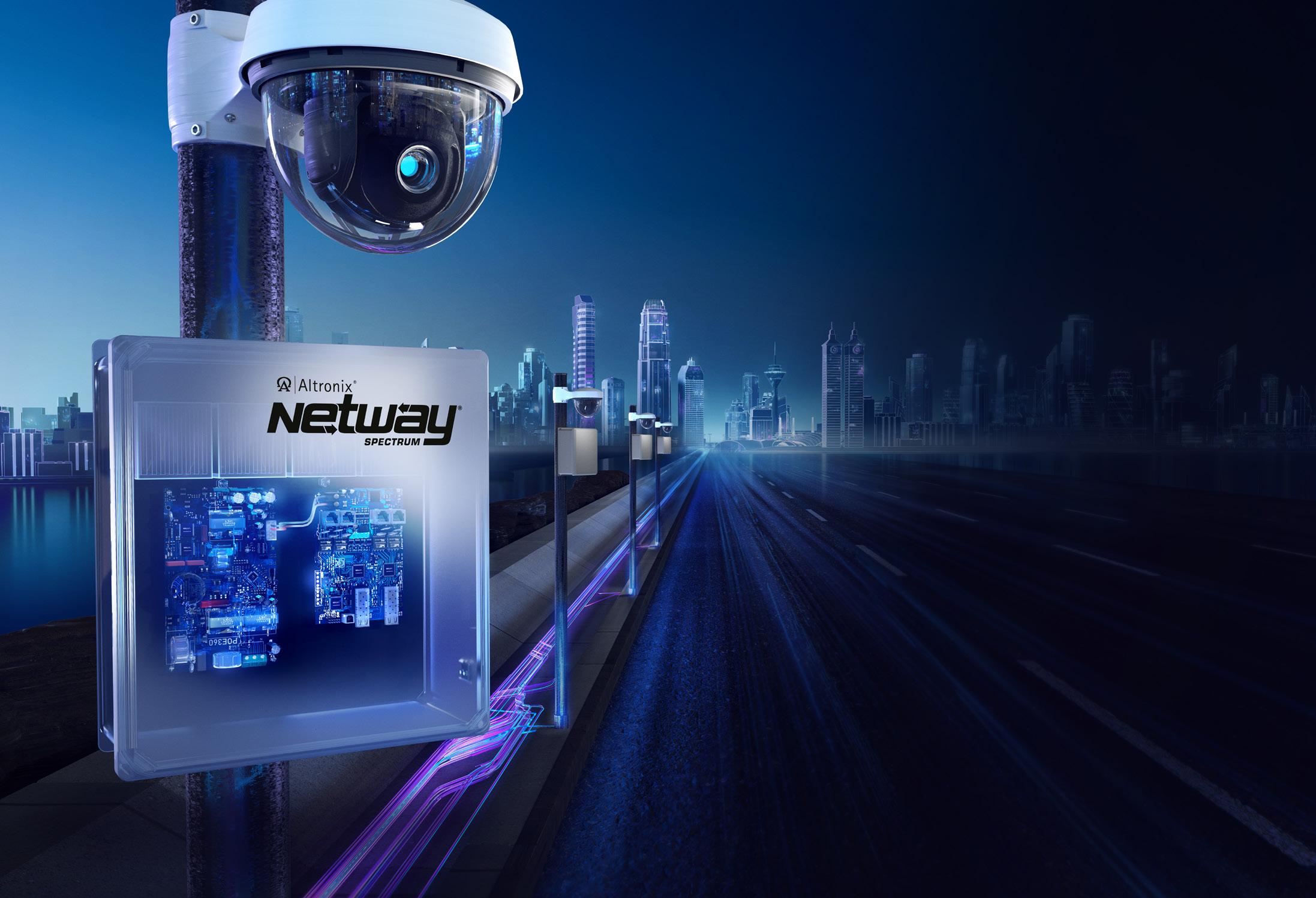
NETWAY SPECTRUM
Hardened PoE Switches & Fiber Media Converters
Deploy IP devices at remote locations with or without local power
Supports up to 90W per port
Rapid battery charging provides extended power backup
• 115/230VAC or 277VAC input
• Manage and reset devices remotely with LINQ™ Network Power Management
to streamlining school operations. ICT’s customisable solutions provide
access control, intrusion detection, mobile
and extensive integrations. Beyond security, ICT Protege helps you optimise operations so most resources can be spent on education. Secure your success with ICT.
altronix.com
THE FUTURE OF SECURITY UNLOCKED
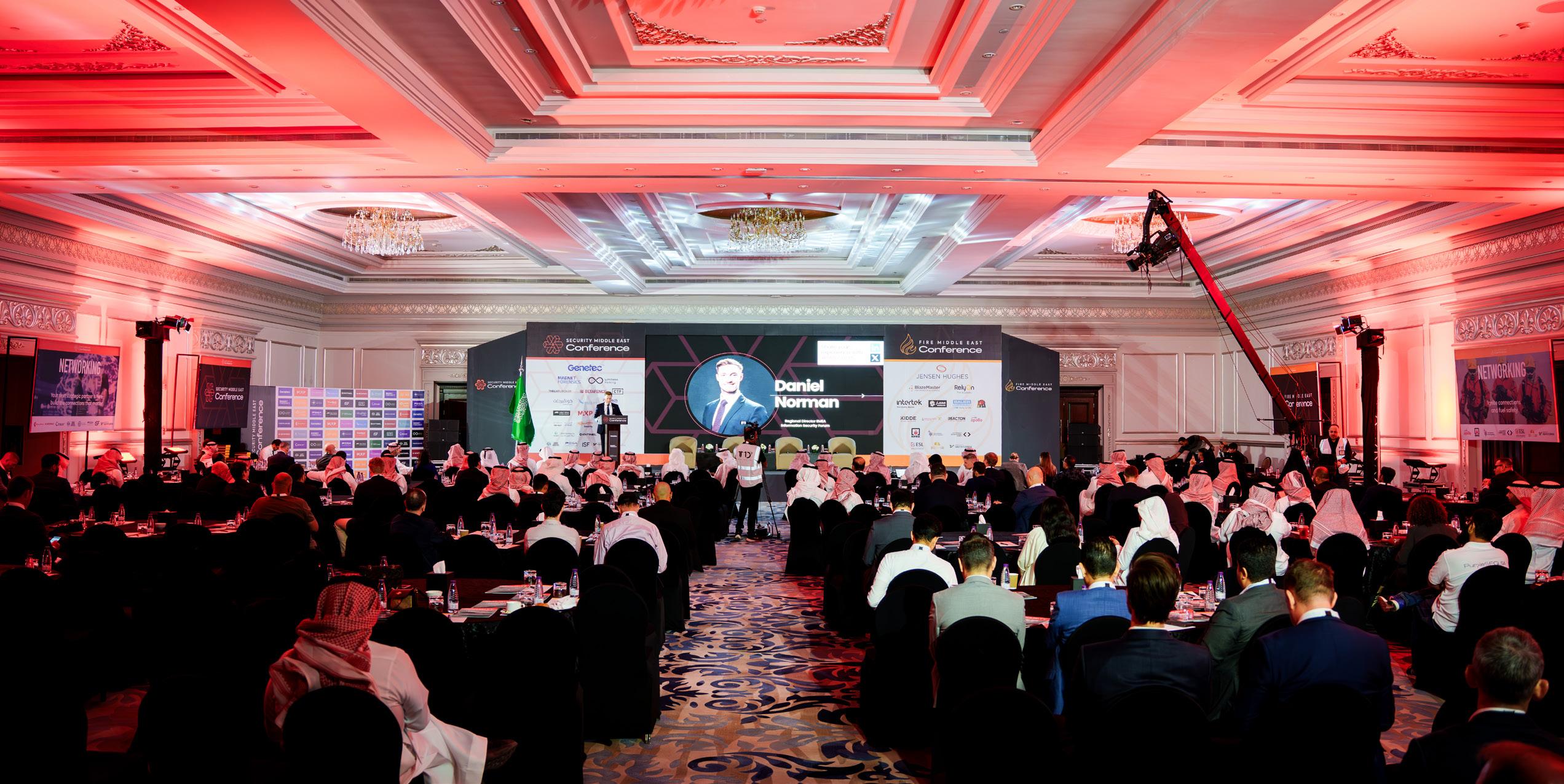
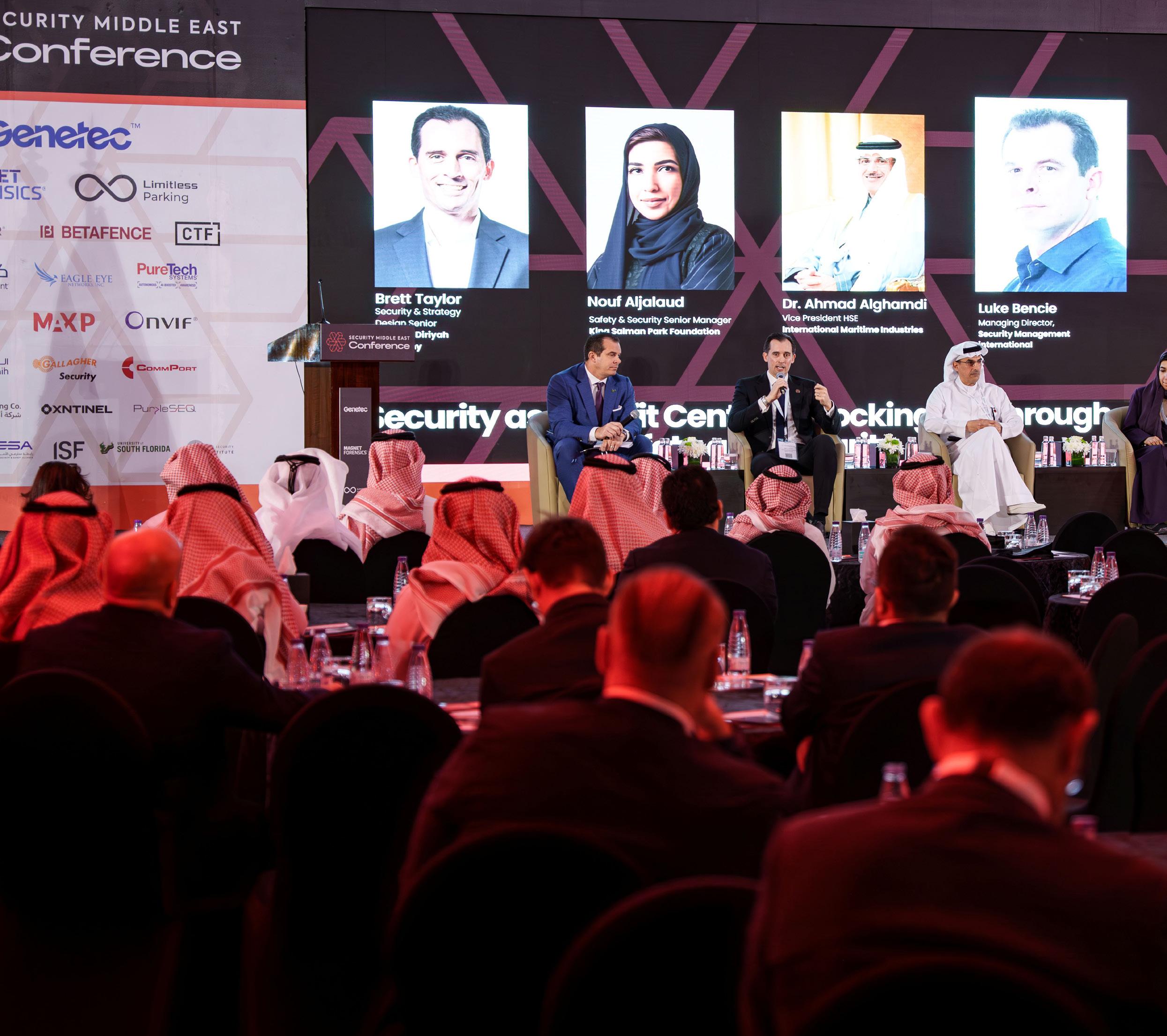
The upcoming Security Middle East Conference will be showcasing expert insights on airport security, control rooms and Vision 2030 with a range of discussion panels lined up
The Security Middle East Conference 2026 is not just another date in the industry calendar; it is shaping up to be the moment where the region’s most urgent security challenges are unpacked in a way that is directly relevant to the careers of today’s practitioners. As the boundaries between physical and cybersecurity continue to blur, and as AI, cloud and national digital transformation reshape the risk landscape, professionals can no longer afford to stand on the sidelines. This year’s panel discussions have been deliberately curated to reflect that reality: deeply technical where they need to be, rooted in real frontline experience, and focused on the skills and thinking that security leaders will need over the next three to five years.
Panel: The connected airport
The first panel, “From Physical to Cyber: The Connected Airport Attack Surface”, dives into one of the most visible and demanding security environments in the world: the modern Middle East airport. The region’s airports are global showcases for seamless passenger experience, rapid biometric adoption and architectural ambition. At the same time, they sit under some of the most complex and politically charged threat profiles, where geopolitical tensions and drone activity are not abstract talking points but daily operational concerns. This session will explore how airport security teams are having to rethink their strategies with regional incidents forcing a re-evaluation of resilience planning and crisis response.
Yet the story does not stop at the perimeter fence. Middle Eastern airports are leading the world in the deployment of biometric technologies at check in, immigration, security and boarding. Facial recognition, iris scanning and fingerprint systems now underpin the entire passenger journey. The panel will debate what it means to secure these systems when they are tied not just to access control, but to vast data lakes of personal information, travel histories and watchlists. At the same time, new threats are emerging in the form of synthetic identities and AI generated personas that can slip past traditional verification checks. Deepfakes and digitally doctored documentation are no longer theoretical; they are beginning to test the robustness
of existing processes. For anyone working in aviation security, critical infrastructure or identity and access management, this discussion will be invaluable in understanding how to defend both the physical gateway and the digital identity layer that sits behind it.
The panel will also address the growing interconnectivity of airport systems. Surveillance platforms, baggage screening, access control, building management and real time intelligence feeds are increasingly integrated rather than siloed. This brings huge operational benefits, but it also creates a much broader and more complex attack surface. The panel will examine how this convergence is changing team structures, investment priorities and relationships with technology vendors and integrators. And, importantly, it will not ignore the human cost. As threats multiply and complexity increases, burnout among security teams is becoming a real risk. For professionals attending the conference, this is an opportunity to hear how peers are coping with that pressure and to gather ideas that can be taken back to their own organisations to improve both resilience and staff wellbeing.
Panel: Control rooms
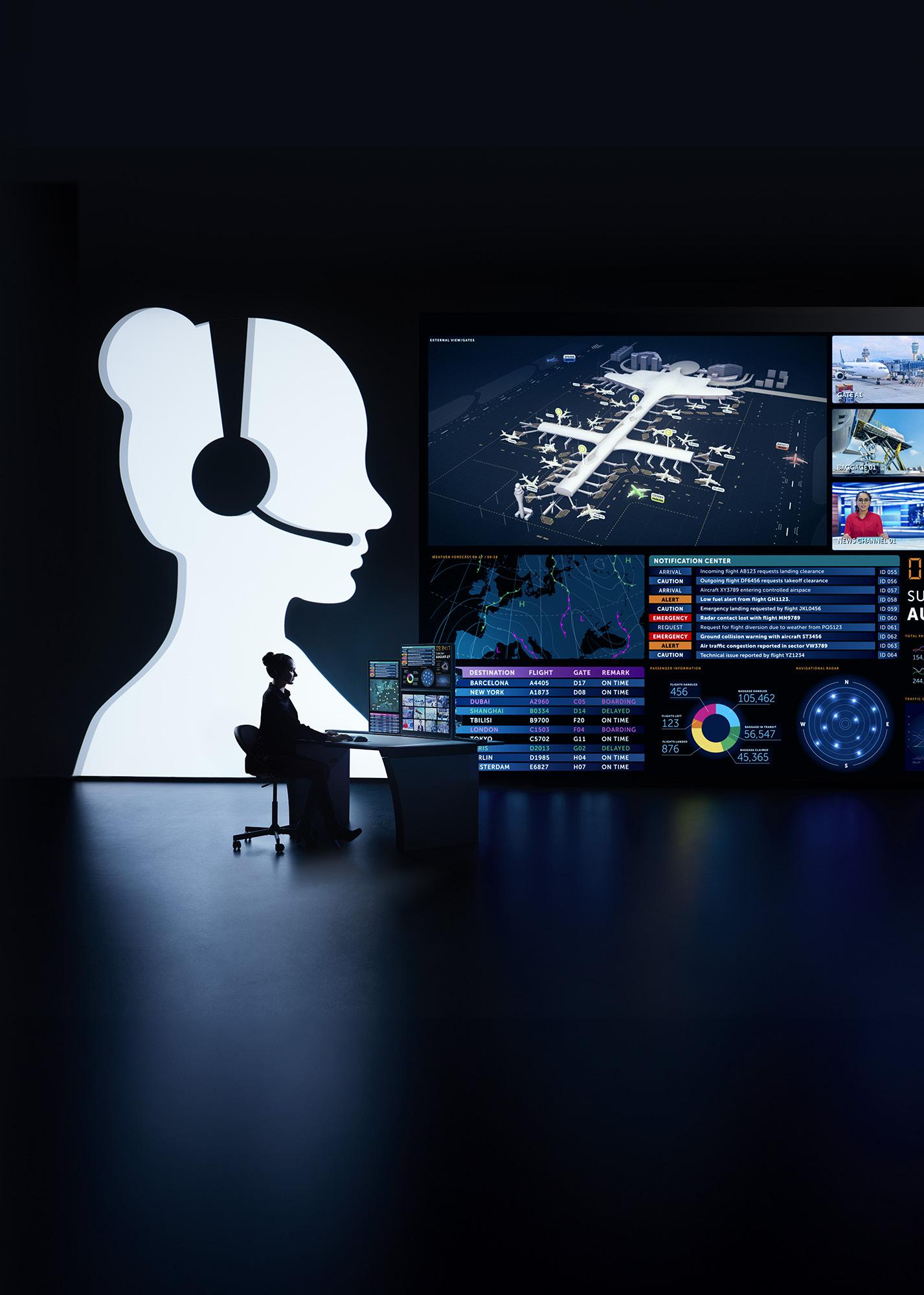
If airports are the physical manifestation of convergence, the second panel; “The Shift from Reactive Monitoring to Predictive Intelligence” focuses on the digital nerve centres of security: control rooms and SOCs. The conversation here will reflect a reality that many attendees are already living: dashboards
OUR SPONSORS
“This year’s panel discussions are deeply technical where they need to be, rooted in real frontline experience, and focused on the skills and thinking that security leaders will need over the next three to five years.”
filled with AI powered tools, predictive analytics, behavioural recognition and automated alerting. The days of purely reactive monitoring are over. Instead, the expectation is that security operations should anticipate threats, fuse data from multiple sources and respond at machine speed. This panel will explore what that actually looks like in practice in 2026, beyond the marketing slogans.
One of the most pressing questions is how to train operators to both trust and challenge AI driven recommendations. As more decision support tools are embedded into surveillance and incident management platforms, operators must avoid blind trust while also not being paralysed by scepticism. The panel will share training approaches, playbook design and governance structures that keep human judgement at the centre of the process while still gaining full
value from automation. It will also tackle the emerging risk of ‘shadow AI’: unsanctioned tools, scripts and models that analysts deploy on their own to cope with workload, but which introduce new blind spots, compliance issues and vulnerabilities.
Underlying this is a broader trend: the rapid migration towards cloud based control room and monitoring platforms. Driven by the need for scalability, remote access and integration with partners, many organisations are moving core systems off premises. This shift brings undeniable advantages, but it also opens new avenues for attackers, particularly in the gaps between systems. Misconfigured third party connections, weak identity governance for machine accounts, and overlooked APIs and service tokens can all be exploited. The panel will consider how to architect cloud enabled control rooms that remain cyber secure, and how to manage identity for both humans and machines in this new environment.
Panel: Vision 2030 and digital transformation
The third panel brings the focus firmly onto one of the region’s most transformative national journeys: “Securing Saudi Arabia’s Digital Acceleration: Zero Trust, Edge Defence, API Security and DDoS Resilience for Vision 2030.” As Saudi Arabia pushes ahead with smart cities, AI driven public services, e-government and diversified digital industries, its attack surface is expanding at extraordinary speed. This session will be essential for anyone
who works in or with the Kingdom, or who wants to understand how national scale digital strategies are redefining cybersecurity agendas.
The discussion will consider Vision 2030 not just as a development blueprint, but as a major driver for cybersecurity maturity. As services become more digital, expectations around resilience, privacy and trust inevitably rise. The panel will examine the evolving national cybersecurity framework, including the role of regulators, data localisation and sovereignty requirements, and the strategic push for in-Kingdom infrastructure and skills. For CISOs and technology leaders, this is a rare opportunity to hear directly how these policies are being interpreted in practice, and what that means for project planning and investment.
A core strand of the conversation will be the practicalities of implementing Zero Trust in organisations that combine legacy data centres, modern cloud workloads and OT systems. Rather than presenting Zero Trust as an abstract goal, the panel will delve into what a realistic roadmap looks like in the Saudi context: where to start, how to prioritise, and how to balance security objectives with aggressive digital timelines. API security will also be brought to the forefront, recognising that APIs now underpin citizen services, fintech innovation and smart infrastructure. Understanding how to discover, govern and protect those interfaces is rapidly becoming a critical competence for security professionals seeking to advance their careers in the Kingdom.
Come and join us
Across all three panels, a unifying theme emerges: the future of security in the Middle East will be defined by convergence, intelligence and human resilience.
From a career perspective, the value is clear. The topics being discussed are precisely the areas where the market is searching for credible expertise. Being in the room for these conversations allows delegates to sharpen their understanding, build the vocabulary they need for board level discussions, and identify the skills they must develop next.
For anyone serious about staying relevant, influential and employable in the evolving security landscape of the Middle East, the Security
MEET OUR ADVISORY PANEL
Central to developing our themes and topics for discussion is our Advisory Board, who we work closely with to identify the most pressing issues affecting the industry.
Tawfeeq Alsadoon, Group Head of Security, Red Sea Global
Meshal Aljohani, Security Group Supervisor, Aramco
Sami Althowaini, Safety & Security Executive Director, King Abdullah Petroleum Studies and Research Center
Luke Bencie, Managing Director, Security Management International
Daniel Norman, Middle East Regional Director, Information Security Forum (ISF)
Ali Al Nomais, Aviation Security Manager, The Helicopter Company
Middle East Conference 2026, is essential viewing.
Due to the ongoing conflict in the Middle East and to ensure the continued safety of everyone involved with the 2026
Turki Al Shalhoub, Security Strategy & Design Associate Director, Diriyah Company
Nadeem Iqbal, Middle East Regional Director, International Foundation for Protection Officers
Turki Al Malki, Security Facilities & Vigilance Manager, Riyadh Air
Rasheed Alzahrani, Safety and Security Director, King Salman Park Foundation
conferences we’ve made the difficult decision to push back the date. The Security Middle East Conference 2026 will now take place on November 29 at the Voco Hotel, Riyadh. Register at: securitymiddleeastconference.com.
Visual intelligence for a world that doesn’t stop
At Intersec Dubai, IQSIGHT showcased its evolution of Bosch Video Systems into an intelligence-first security platform focused on delivering real-time clarity, trusted performance and practical insight that empowers faster, more confident decisionmaking in complex environments. Sabrina Stainburn, CEO, IQSIGHT explains more
Walking the floor at Intersec Dubai, one thing was immediately clear — the pace of our industry is accelerating. Conversations were sharper. Expectations higher. Customers weren’t asking for more technology. They were asking for clarity. For systems that help them see what’s happening, understand it quickly, and act without hesitation.
Clarity is what IQSIGHT is built to deliver.
The demand for clarity
IQSIGHT represents the evolution of Bosch Video Systems, expanding what customers already trust with a stronger focus on intelligence and real-world outcomes. The foundation remains firmly in place. Our products continue to be engineered to Bosch quality standards. The same teams. The same supply chain. The same commitment to reliability and long-term performance. What’s evolving is how we apply intelligence to meet the realities customers face today.
In complex environments, continuity matters. Infrastructure doesn’t pause. Cities don’t slow down. Security teams make decisions every day that affect safety, operations and public confidence. They need technology that works consistently, not only in controlled conditions, but in the real world, under pressure.
This is where intelligence-first security comes in, turning video into real-time understanding rather than afterthe-fact review.
Evolving beyond surveillance
For us, intelligence isn’t about adding layers of complexity or chasing trends. It’s about delivering understanding. Helping systems recognise what matters in a scene. Reducing noise. Highlighting
patterns. Providing insight early enough to make a difference. When intelligence is applied with purpose, it becomes a practical tool rather than an abstract concept.
This shift from surveillance to understanding is already underway. Video is no longer just about recording events. It’s becoming a source of real-time insight that supports safer environments, smoother operations and better decisions across government, transportation, critical infrastructure and smart cities.
From insight to action
At IQSIGHT, we design intelligence to deliver the most value where it matters most: at the edge, in the cloud, within existing systems, and in close collaboration with trusted partners. This approach gives customers flexibility without compromise. Performance without unnecessary overhead. Confidence that intelligence will support operations rather than disrupt them.
Reliability remains non-negotiable, particularly in regions like the Middle East, where systems must perform in demanding conditions and at scale. Our cameras are built for accuracy, resilience and long-term use, delivering dependable imaging and analytics even in extreme
environments. Intelligence only matters if it can be trusted.
Building the next chapter of trusted performance
What I heard repeatedly at Intersec was a desire for progress without uncertainty. For innovation that builds on a solid foundation and maintains dependable performance. That stability, paired with momentum, is exactly what IQSIGHT represents.
We are expanding what customers value, opening the door to faster insight, smarter responses and more confident decisions. The goal is simple: to help organisations keep their world moving safely, efficiently and without interruption.
As we look ahead, our focus is clear. Continue delivering trusted performance. Apply intelligence where it makes a real difference. Remain a long-term partner customers can depend on as environments grow more complex and interconnected.
This is visual intelligence with purpose. Built on trusted engineering. Delivering clarity that helps people act with confidence — when every second matters.
Let’s move forward together.
iqsight.com
Ian Keller, a global Technology Strategist, takes a forward-looking approach on the convergence of systems, setting the stage for the year
The sensor hum is getting louder across offices, data centres and industrial sites in the Middle East. Cameras, badges, building controllers and network logs now sing the same song – if you listen. As threats accelerate in speed and sophistication, security can no longer be a patchwork of isolated tools. The organisations that stitch physical, cyber and operational defences into a coherent, responsive whole will gain a decisive advantage.
We have seen threats evolve in speed and sophistication, security can no longer be a collection of isolated tools and processes. Organisations are shifting toward integrated security architectures that unify physical, cyber and operational domains. This convergence is driven by digital transformation, expanded attack surfaces, regulatory pressures and an increasing demand for realtime intelligence. Looking ahead to the coming year, several trends and practical considerations will shape how enterprises, governments and critical infrastructure providers design and operate their security ecosystems. Central to this evolution is the deliberate integration of physical security into the digital landscape — and an understanding that physical and digital security are increasingly interdependent.
There are three forces that are accelerating this convergence. First, the proliferation of connected devices such as IoT sensors, industrial control systems (ICS), building automation and smart locks, these create complex interdependencies between cyber and physical systems. Second, attacks are becoming multi-vector, our adversaries blend social engineering, malware and physical infiltration in achieving their objectives. Third, business resilience and continuity require unified visibility
and coordinated responses across the physical and digital domains.
The immediate benefits of converged systems are that it reduces gaps and handoffs, enabling faster detection, richer context for decision-making and automated containment that limits the potential damage. Physical security data (video, badge events, environmental sensors) and cyber signals (network logs, endpoint telemetry) together form a fuller picture of risk, each amplifying the value of the other.
I asked myself what the Core Components of an Integrated Security Landscape are, and this is what I surmised:
Unified Sensing and Telemetry:
Converged security relies on a continuous stream of contextual data from cameras, access control, endpoint agents, network sensors, environmental monitors and application logs. Standardised telemetry pipelines and time-synchronised events are essential for correlating incidents across domains. For example, a tailgating event detected by building sensors correlated with anomalous VPN logins can indicate credential compromise or a coordinated insider threat.
Common Data Layer and Analytics:
A scalable data platform (often cloudnative) that normalises and stores various security data sources which enables advanced analytics, threat hunting and historical forensics. Machine learning models applied to combined physical and cyber datasets can surface cross-domain anomalies, such as motion in a server room concurrent with elevated network scanning activity, that would be invisible in siloed systems.
Identity-Centric Controls: Identity is the new perimeter. Integrated identity
and access management (IAM) spans human users, service accounts and devices. Physical access credentials should be tied to digital identities (and vice versa), enabling unified policies, for example when a user’s digital account is suspended, physical access can be revoked automatically and if a physical badge is reported lost, system access can be gated pending verification.
Orchestration and Automation: Security orchestration, automation and response (SOAR) capabilities tie detection to action across both physical and cyber domains. Therefore playbooks should automate tasks such as locking doors, revoking digital credentials, isolating endpoints or routing CCTV feeds to responders. Automation must be context-aware, for example, when distinguishing a scheduled maintenance window from an unauthorised breach attempt.
Converged Governance and Policy: Policies that treat cyber and physical assets holistically avoid conflicting rules and fragmented compliance efforts. Centralised governance simplifies policy distribution, audit trails and regulatory reporting. Taking into consideration that regulatory reporting is quickly becoming the norm, and the questions stemming from these reports are also driving forces behind the convergence, therefore policies should explicitly map physical controls (locks, guards, environmental protections) to digital controls (IAM, network segmentation) to ensure aligned risk mitigation.
Resilience and Redundancy: Integrated systems must be designed for failure. Segmentation, failover mechanisms and resilient communications ensure
“We have seen threats evolve in speed and sophistication, security can no longer be a collection of isolated tools and processes.”
critical functions remain operational during disruptions whether caused by cyberattacks, natural disasters or supply chain failures. Physical redundancies (manual lock overrides, on-site consoles) complemented by digital fallbacks (local logging, cached credentials) preserve operations when connectivity is lost.
How do you integrate physical security into the digital landscape?
The integration of physical security into the digital landscape is not merely data sharing it’s a redefinition of how organisations perceive and manage risk. The key aspects I considered part of this integration include:
Instrumentation and Convergence of Controls: Physical devices such as cameras, access panels, environmental sensors, and even physical locks are now networked and managed by software. This requires hardened device management, firmware integrity checks, and secure channels for telemetry. Conversely, digital systems can enforce physical outcomes: credential revocation can trigger door locks to deny entry in real time.
Shared Identity and Policy Enforcement: Consolidating identity systems enables single-source truth for who and what
can access facilities and systems, the core attribute in security. Converged IAM reduces the window between detection and containment as a compromised account’s digital session can be terminated while physical badges are disabled and security personnel alerted.
Cross-Domain Detection and Forensics: Joint telemetry enables richer detection rules and post-incident investigations. A camera feed that shows unauthorised presence while network logs show data exfiltration creates stronger evidentiary trails and speeds up the investigation phase associated with the incident. Time-synchronised event stores enable analysts to reconstruct multi-stage attacks spanning physical infiltration and cyber operations.
Operational Interdependencies:
OT environments illustrate deep interdependence for example, a compromised building management system can change ventilation or temperature, affecting equipment reliability; a physical breach of a control room can allow direct manipulation of ICS. Protecting these environments necessitates controls that consider both the physical path (access to consoles) and the digital path (remote command channels).
Human Factors and Insider Risk: Physical and digital insecurities often converge through people. Social engineering that gains physical access (e.g., posing as maintenance staff) can facilitate planting devices or obtaining credentials, similarly a digital compromise can be used to disable cameras or alter access logs to conceal physical actions. Integrated monitoring and behavioural analytics that combine physical movement patterns with digital activity profiles are more effective at identifying insider threats.
The integrated security landscape is no longer an aspirational concept but an operational necessity. The integration of physical security into the digital landscape makes defences stronger and more coherent: physical telemetry enriches digital detection, while digital controls enable real-time physical enforcement. Convergence enables faster detection, richer context and coordinated responses that limit adversaries’ ability to escalate attacks across domains.
The coming year will see edge intelligence, AI-driven defences and deeper operational-cyber collaboration rise to prominence, even as organisations wrestle with legacy constraints, data governance and privacy. Those that embrace a measured, risk-based approach — prioritising identity, telemetry quality, orchestration and cross-functional governance — will be best positioned to defend complex, interconnected environments and maintain business resilience in an increasingly adversarial world.
Synergy in action
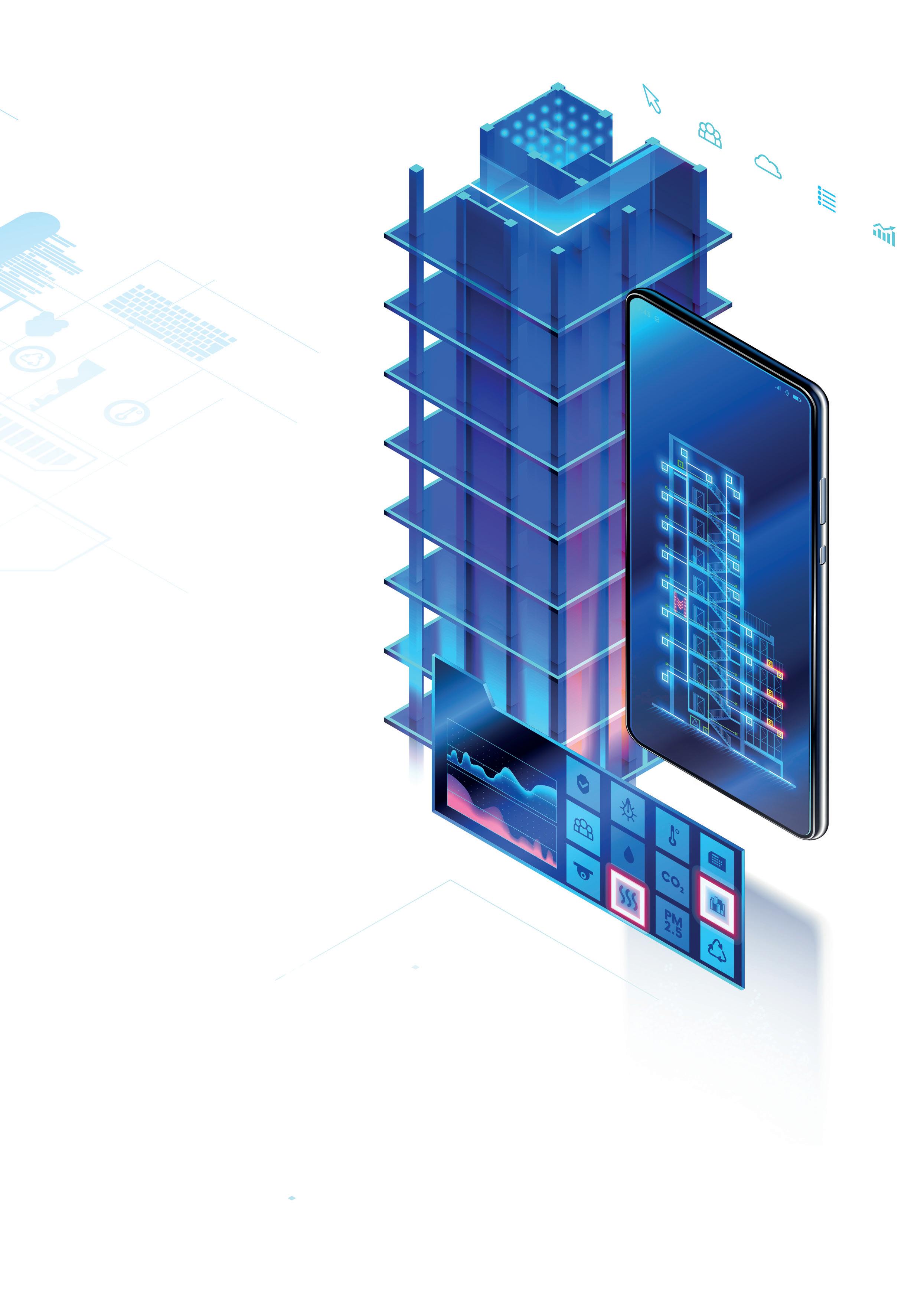
Fire & life safety and security systems are no longer standalone solutions; they are increasingly integrated to work seamlessly together in protecting people, property and business continuity. Sharing components, infrastructure and intelligence, these systems complement one another to deliver a unified safety ecosystem.
Discover how the latest integration between fire and security systems creates smarter, safer buildings, offering more control when every second counts, according to Mina Zakhary, Principal Fire Consultant and Smitha Mathew, ELV Lead Engineer at Cundall
This integration represents more than a technical upgrade — it is a transformative approach that redefines safety by making buildings adaptive and responsive to occupants’ needs. For example, a fire alarm sensor might trigger the life safety system while a connected security system manages evacuation routes and access control during emergencies.
By coordinating functions like door unlocking and smoke control activation, integrated systems enable faster, more efficient emergency responses. Such interoperability is vital for comprehensive risk management strategies in the Middle East’s rapidly evolving built environment, where the stakes for safety and operational resilience are higher than ever.
“The result is a new generation of proactive buildings: ones that learn, evolve and respond dynamically to emerging risks”
Why integrate fire safety with security?
This interconnected intelligence reduces human error, accelerates decision-making and enhances coordination between responders and building operators. It’s not just about safety it’s about operational resilience.
As the MENA region advances in its digital transformation journey, AI driven analytics, IoT sensors and cloud-based command platforms are becoming the new standard. Predictive maintenance, real-time occupancy mapping and adaptive evacuation algorithms are already reshaping how facilities from hospitals to high rises manage emergencies.
The result is a new generation of proactive buildings: ones that learn, evolve and respond dynamically to emerging risks.
1.
BETTER RESPONSE IN EMERGENCIES
In the event of an emergency, a fire or a break-in, connected systems can respond faster than in a manual case. For example, when a fire is detected, the fire alarm can signal the security system to release certain doors, providing faster access to emergency exits. Conversely, if a security breach is detected in a fire exit route, security personnel can promptly intervene to keep the exit open and safe for evacuation specially in airports and detention facilities.
2. SIMPLIFIED MONITORING AND CONTROL
When fire safety and security systems are combined into one platform, building managers and security staff can oversee and control everything from one place. This centralisation simplifies operations and ensures safety and security work smoothly together. If an alarm goes off, the system quickly shows where the fire is and highlights any security issues, like
blocked exits or unauthorised people in restricted zones. Video surveillance systems are essential for monitoring activity within and around a building. By integrating CCTV with fire safety systems, security personnel can monitor not only security events but also observe the progress of a fire or smoke spreading in real-time. This visual data can be used to direct fire response teams to the affected area more quickly, improving overall emergency response. Furthermore, video footage can be crucial for post-incident analysis and investigation.
3. SMOOTH AND SAFE EMERGENCY EVACUATION
As part of the fire strategy, access controlled door requirements should integrate in harmony with the security goals. This is essential in places like data centres, hospitals, institutional or correctional facilities where some areas must stay secured even during a fire. Proper integration makes sure fire safety doesn’t interfere with security, and security doesn’t block fire safety
4. AFFORDABLE AND COMPLETE SAFETY MANAGEMENT
The harmony between the fire safety and security systems has a great impact on the construction cost as well. Instead of maintaining separate systems, using integrated solutions lowers complexity and cuts operating costs. Additionally, having all systems work together smoothly reduces the chances of mistakes or breakdowns in either system
5. INTEGRATION WITH THE BUILDING AUTOMATION SYSTEMS (BAS)
Integrating fire strategies with BAS enhances the safety of modern buildings. While BAS controls lighting, HVAC and other utilities, it also plays a vital role during a fire and other emergency events,
for example it can automatically shut off HVAC to prevent smoke from spreading. It can also adjust lighting to guide people safely to evacuation routes. Additionally, BAS provides building managers with realtime information to help them make quick, informed decisions during emergencies.
The evolving dialogue between fire safety and security
Across the Middle East and North Africa, the built environment is entering a new era – one defined by connectivity, intelligence and resilience. The once clear divide between fire & life safety and security systems is rapidly dissolving, giving way to a future where both disciplines operate as a unified ecosystem serving a single purpose: protecting people, assets and continuity.
Traditionally, fire engineers and security consultants worked in parallel worlds. FLS focused on early detection, alarm activation, evacuation and suppression, while security targeted surveillance, access control and threat mitigation. Yet as cities grow smarter and buildings more digitally connected, these systems can no longer afford to work in isolation. The next generation of safe buildings will rely on seamless data flow and system collaboration between these two disciplines.
This convergence is not merely a technical alignment it’s a human-centric evolution. It redefines how occupants interact with their surroundings, ensuring that every person regardless of ability, background or circumstance can move through a space confidently, securely and intuitively.
Intelligence in integration: Monitoring, detection and notification systems
Future buildings won’t just react to problems they will predict and adapt to them.
When these systems communicate, they transform a building into a living organism — aware, responsive and capable of making informed decisions in real time.
A smoke detector triggers a fire alarm, and simultaneously, access-controlled doors unlock to guide evacuation routes.
CCTV cameras automatically pan towards affected zones, giving operators instant visual confirmation.
Voice evacuation and mass notification systems deliver multilingual instructions, tailored to the specific incident and zone.
Building Management Systems (BMS) unify fire, security and HVAC responses, ensuring clarity and control under pressure.
The
vision
ahead: From reactive protection to predictive resilience
The future of fire & life safety and security in the MENA region is predictive, autonomous and data driven. Buildings are evolving from static structures into intelligent ecosystems that continuously sense, analyse and adapt.
Imagine a building that detects an anomaly, cross-verifies it through thermal cameras and environmental sensors, and reroutes occupants via adaptive evacuation signage all before a human even raises an alarm. Picture an operations centre that uses AI to predict high-risk scenarios days in advance, optimising system readiness automatically.
This is no longer a futuristic fantasy; it is the direction of regional innovation. Many cities across the MENA region are investing heavily in smart infrastructure, AI-enabled monitoring and digital twin technology. These systems allow fire and security networks to merge into a single digital command structure – one capable of responding faster, smarter and with greater precision than ever before.
Ultimately, this convergence reflects a cultural and operational evolution: from protection to prevention, from isolation to integration, and from compliance to intelligence.
A new era of safe and smart living
The synergy between fire & life safety and security represents far more than a technical upgrade, it is a redefinition of safety itself. It’s about transforming buildings into environments that protect, empower and adapt to the people within them.
As the MENA region continues to set global benchmarks in innovation,
sustainability and smart urban design, its commitment to integrating FLS and security will define the next chapter of architectural and engineering excellence.
The future belongs to those who design beyond compliance; those who fuse safety, technology and human experience into one seamless vision of smart, inclusive and resilient living.
cundall.com
When physical security becomes a cyber risk
As physical security systems become increasingly networked, Hassan Makki, Area Sales Director at Genetec, explains why IT teams must take an active role in securing them as part of a unified cybersecurity strategy
For years, physical security systems operated in their own world, apart from IT. Video surveillance and access control systems ran on closed networks managed mostly by facilities and physical security teams.
Today, those same systems are interconnected, running on IP networks, right alongside business applications and data. In other words, they’re part of the IT landscape and the attack surface. Despite this shift, many organisations and their IT teams still consider physical security to be outside their scope of responsibility. That gap leaves blind spots in network visibility and cybersecurity.
Why the disconnect still exists
Physical security started as an operational function focused on protecting people and property, while IT focused on managing data and connectivity. As devices became digital, the systems converged, but in many organisations, the teams did not.
Many facilities and physical security teams still purchase and maintain cameras or access control systems independently, without looping in IT. They may not have the tools or expertise to handle firmware updates, certificate renewals or network segmentation. Meanwhile, IT teams may not know how
many connected devices are on their networks or what risks they pose.
When physical security becomes a cyber problem
Physical security devices might not look like computers, but they function like them. They have IP addresses, firmware and credentials that must be secured. If ignored, they can become easy entry points for attackers.
The most common weaknesses are the same ones IT professionals have fought for years: unchanged default passwords, outdated software, expired certificates and devices left unmonitored for months
or years. For example, once a bad actor compromises a single connected camera, they can move laterally through the network, potentially reaching unrelated, sensitive business systems.
The moment physical security runs on the same network as corporate IT without proper network segmentation, exposure increases dramatically.
The growing attack surface
Implementing video surveillance and access control systems delivers significant benefits, including centralised visibility and data-driven insights. But every new device also expands the attack surface. Each sensor and camera becomes another endpoint that needs to be monitored and protected. Without clear ownership or consistent oversight, vulnerabilities multiply quickly.
That’s why IT needs to take an active role in securing these systems.
Where to start: Fundamentals that make a difference
The good news is that securing physical security devices doesn’t require reinventing the wheel. Many of the same best practices IT already uses apply here, too.
1. Use different passwords: Often, integrators set the same password for every camera in a system to make setup and maintenance easier. The downside is that if that one password is leaked, every camera becomes vulnerable. Whenever possible, use different passwords and certificatebased or multifactor authentication.
2. Stay current on firmware and software: Firmware updates often include critical security patches. Schedule updates regularly rather than waiting for an incident to prompt them.
3. Encrypt device communications: Use encryption like HTTPS to secure data in transit. Unencrypted streams can be intercepted or manipulated, especially in systems that transmit sensitive video or access data.
4. Segment the network: Place physical security devices on their own virtual local area network (VLAN), separate from core business systems. That way, even if a camera or badge reader is compromised, the attacker can’t easily move to critical assets.
5. Schedule regular maintenance and audits: Firmware, certificates and access credentials should be reviewed
and updated on a defined schedule. Building these steps into IT workflows helps reduce vulnerabilities over time.
Building collaboration between IT and security teams
No one expects physical security teams to suddenly become cybersecurity experts, or for IT to learn the ins and outs of video surveillance or access control overnight. The goal is collaboration, which starts with shared visibility.
IT can help provide insight into which devices are connected, identify existing vulnerabilities, and track where data is flowing. In turn, physical security teams can provide context on which systems are mission-critical, when maintenance windows are available and what operational requirements need to be met. Some practical ways to strengthen this partnership:
Include IT and cybersecurity departments early in the procurement process: Cybersecurity teams can define operational needs, while IT sets cybersecurity standards. Create clear ownership for updates and credentials: IT can handle the technical side of patching and certificate renewals, while security teams focus on monitoring and operating the physical security system. Establish shared security policies: Even if physical security systems aren’t covered by ISO 27001, using the same best practices, such as strong authentication, encryption and regular audits, helps keep security consistent across the whole organisation.
When both groups are aligned, updates happen faster and risks are reduced.
Designing the network with security in mind
When managing physical security devices, it’s important to design systems that are
secure, efficient and resilient from the start. These systems come with unique demands that traditional IT infrastructure wasn’t always built to handle.
Bandwidth and latency: Video traffic is data-heavy and unpredictable. Network planning needs to account for how much bandwidth cameras consume, especially in large deployments.
Storage management: Choosing between on-premises, cloud or hybrid deployments depends on the organisation’s needs. For example, some companies may keep recent footage on local servers for quick access while archiving older video in the cloud for scalability. Cloud platforms can also simplify updates and reduce the need for on-site maintenance.
Redundancy: Security systems can’t go dark. Redundant links and failover paths ensure critical functions stay online even if a network segment fails. Privacy and compliance: Regulations, such as the EU’s GDPR, classify video as personally identifiable information (PII). This means footage must be stored securely and retained only as long as necessary. Organisations operating in multiple jurisdictions must also align storage policies with local privacy laws.
Looking ahead
The line between physical security and cybersecurity is becoming increasingly blurred. Cameras, sensors and access readers are now as connected as laptops and smartphones. These systems fall under the scope and expertise of both IT and physical security teams, whose collaboration can strengthen defences across the entire organisation, keeping people safe, operations running and risks contained. genetec.com
Enter a new dimension of control
KVM over IT: transforming content interaction
Barco CTRL is an all-in-one control room platform that lets operators access and interact with all their sources – web applications, VDI, cameras and encoder sources – on both video wall and desk, from a single keyboard and mouse. Unlike traditional KVM over IP solutions that access your IT network through a gateway, Barco CTRL lives natively inside it. That means direct integration with your identity provider, MFA support, full SNMP monitoring, and automatic audit logging – all without opening a single extra hole in your perimeter. Security by design. Built for critical operations.
Rethinking how control rooms connect to the world
The next evolution beyond KVM over IP is called “KVM over IT”: the native integration into the IT environment. For critical infrastructure control rooms, that distinction is the difference between a security posture and a security gap
Control room operators today work with an increasingly IT-centric mix of sources: web applications, virtual desktop infrastructure (VDI), cloud dashboards and identity systems built on multifactor authentication (MFA). Yet most of the platforms managing and visualising that content were designed in an era when operational technology (OT) and information technology (IT) lived in entirely separate worlds.
KVM over IP solved the physical constraints of the traditional control room. By routing keyboard, video and mouse signals across a network, it freed operators from proximity to hardware and enabled centralised source management. That was a genuine step forward. But routing AV signals across an IT network is not the same as being part of it – and the difference matters enormously for security.
The gateway problem
Traditional KVM over IP platforms access the IT network by opening a gateway to it – a managed opening in the perimeter that lets AV signals pass through. That opening is a structural vulnerability. Every gateway is a potential attack vector. In environments where a breach can cascade into physical consequences, that trade-off is increasingly difficult to justify.
Identity management compounds the issue. Operators authenticate through corporate identity providers, under MFA frameworks that govern access across the organisation. A platform that sits outside this ecosystem must either build a parallel authentication layer – adding administrative overhead and attack surface – or punch additional holes in the perimeter to let identity signals through. Regulations like NIS2 and the EU Cyber Resilience Act, which impose potential liability on executives for
uncomfortable.
Built to belong, not to bridge
KVM over IT starts from a different premise: the platform lives inside the IT network rather than accessing it from the outside. This is the philosophy behind Barco CTRL; an all-in-one control room software platform built on Security by Design principles. Because it is natively IT-integrated, it connects directly to corporate identity providers for authentication (including MFA). Web sources and VDI environments are first-class sources. Every device is visible via SNMP, and every user action generates structured audit logs that feed into existing security and compliance workflows. There are no gateways to
“The control room should not be the weak link in your security chain. It should be an extension of your IT security posture.”
open and no parallel identity systems to maintain.
The result is a platform that scales without compromising its security model. Adding encoders and decoders expands capacity; the same security policies, audit infrastructure and identity management apply from a single operator position to a multi-site global deployment. Security scales with the system, not against it.
KVM over IT is more than a product category. It is a shift in how the industry should think about control room infrastructure. The sources operators need, the identities they carry, the audit trails regulators demand and the threat landscape they face are all fundamentally IT in nature. A control room platform that treats IT integration as a feature to be added is already behind. One that is built on it from the start turns security and operability from competing priorities into mutually reinforcing ones.
For more information, visit barco.com/ctrl
cybersecurity failures, make both options
Defence procurement: Innovation and disruption in 2026
Major-General
Mohammad Al-Smadi, Former Commander, Special Operations Aviation Brigade (Royal Jordanian Army) and Former Military Attache to Kingdom of Bahrain, looks at how Western defence industries use digital engineering, AIdriven simulations and high-performance computing to reduce development timelines and respond faster to emerging threats
The defence sector is undergoing a period of transformation. Surging defence budgets and widespread technological innovation are reshaping the industry, although some producers are benefiting more than others. Budgets are growing along with the threats that necessitate them, and governments are demanding more, for less, faster. Given the sector’s reliance on government customers, the ability of producers to leverage emerging
technologies to cut timelines and costs will be vital for their future success, and a series of innovations in procurement are demonstrating this.
Let’s revisit the current sector conditions. 2025 was a year of disruption, particularly in defence and security. Increases in instability and conflict have continued to drive government investment around the globe, with defence budgets continuing to grow
rapidly, building on record growth of 7.4% in 2024, according to The Military Balance, 2025 (IISS).
These conditions look set to continue. The opening of 2026 has shown no return to international stability, with war looming in Iran once again, and no sign of any real let-up in Ukraine, Gaza or the South China Sea. This is particularly the case for governments in the Gulf, which face multiple crises in their neighbourhood,
including potential state-level conflicts. This means considering a broader range of threats and planning scenarios. Further, as the region looks to the future, governments working towards economic and security sustainability beyond oil will be mindful of the need to achieve their security objectives in a way that keeps costs down and develops their domestic industries where possible.
In these conditions, the defence sector continues to grow rapidly, with one estimate from Global Growth Insights seeing 4.9% growth in 2025. However, this has not been shared equally. While European firms such as Leonardo, Thales and BAE Systems have seen dramatic surges in their share prices, China’s defence industry shrank by 10%. There are a range of factors at play here, including the particularly significant growth in European defence budgets which arguably redressed a failure
to invest in previous years. However, Chinese industry’s failure to capitalise in these positive market conditions also suggests structural issues. Commentators suggest this is due to political issues, most notably purges of senior defence figures as a result of seemingly rampant corruption in the sector. On the other hand, western producers have been able to leverage budget increases to focus on innovation aiming to cut costs, shorten timelines and correct historic issues in defence procurement.
This focus on innovation promises not only to improve procurement outcomes for current projects, but also to revolutionise the underlying systems and processes themselves.
Several areas offer particular promise in 2026:
Digital engineering
While digital engineering (DE) has been around for many years, it underpins the coming wave of innovation in procurement. At its core, DE involves digitising the entire procurement process, ensuring there is a single version of the truth and giving all team members real-time access to it. In doing so it can eliminate missed opportunities, limit siloing and cut both costs and timelines. Beyond development, DE can support deployment itself, with its access to data facilitating equipment monitoring and maintenance. In the UK, the Ministry of Defence’s equipment branch DE&S is working to make DE central to their programmes. Chief among its use cases is testing, primarily through digital twins.
Digital twins & AI-driven simulations
Digital twins is an approach which leverages DE specifically in testing scenarios. Testing and refinement are a major expense in procurement, particularly for physical equipment. Digital twins tackle this issue by creating computerised replicas of prototypes and placing them in simulated scenarios. The cost benefits are obvious, as much of the early testing of equipment and components can be done digitally. These programmes can also run theoretically 24/7. Physical testing remains vital of course but can be limited to scenarios where it is truly necessary.
However, this approach is only as good as the models underpinning it. This is
where artificial intelligence comes in. The iterative approach of AI models allows for simulations to more accurately replicate test conditions for a range of mission profiles. Over time this will not only improve testing outcomes and therefore output quality but also increase the trust which defence leaders can put in this technology.
High performance computing (HPC)
To realise these benefits, a huge amount of computational power is required. Supercomputers can help, but they remain scarce and expensive. However, next generation machines operate in clusters, reducing the need for supercomputers by combining multiple smaller systems to achieve exponentially greater computational power. HPC platforms like this lay the foundations for the approaches detailed above. Governments are already integrating HPCs into defence systems, including the USA which recently invested in an HPC cloud giving troops on the ground direct access.
What
does
this mean for defence customers?
Where producers adopt these technologies early, they will be able to facilitate delivery that is cheaper and faster, while allowing for iterative improvement across programme lifecycles, and even supporting successor programmes through constant data collection and analysis. Off the battlefield, these developments offer greater transparency for customers, who can own more of the process, allowing their domestic capabilities to develop alongside. Less flexible approaches see customers receive only equipment or capability, but not knowledge and real partnership.
In summary, 2026 promises to be an exciting year in defence procurement. Where the industry adopts emerging technology early, and vitally, where customers are open to innovative, transparent and flexible ways of working, there are huge gains to be realised. If the benefits of integrating digital engineering, AI and HPC are realised, we may expect to see a more agile, efficient and effective process emerge, where both governments and producers can benefit.
Middle East event security is shifting from traditional guarding to integrated, intelligence-led and technologydriven protection in response to rising geopolitical tensions, complex threats and ever-larger crowds. Michael Tutte, Regional Security Manager, Middle East, International SOS, explains more
Over the past decades, the UAE and the wider Middle East have emerged as global hubs for major events. This includes international sports events, political summits, cultural festivals, concerts and large-scale exhibitions. The UAE, and the region, has positioned itself as a destination capable of hosting this kind of significant events with a global audience. The UAE event management market is increasing steadily and is projected to grow to US$27.1 billion by 2033 according to IMARC, with over 7,000 events annually in Dubai alone. At the same time, challenges around planning and delivering event security have changed drastically. Due to modern multi-layered
challenges, event security now needs to consider integrating new elements like intelligence, technology, preparedness, crisis management and a wider range of risks, including reputational risk considerations.
Beyond physical barriers
Event security used to be largely about physical protection. It focused on securing perimeters, controlling access points and ensuring a visible security presence to deter criminal activity or public disorder. Earlier editions of the Dubai Shopping Festival and smaller international exhibitions at the Dubai World Trade Centre in the late 1990s and early 2000s
relied primarily on static guard posts, manual bag checks and uniformed patrols at fixed entry points. This was the result of the threat landscape at that time on one side and the relatively contained nature of many events on the other side.
However, the UAE’s and the whole region’s nature of events expanded and became more complex. Large-scale events such as Formula 1 races, the Dubai Expo or other international conferences bring together hundreds of thousands of participants, high-profile executives, sponsors, representatives of politics, media or the economy, and many service providers. The Dubai Expo 2020 is an example for this form of required security
planning. The Expo took place across three themed districts, multiple entry gates, Dubai Metro extensions, parkand-ride hubs, hotels and temporary structures. It required multimodal crowd movement planning with real-time coordination between Dubai Police, event organisers, medical services and private security providers.
Events often take place in multiple venues for multiple days which extends responsibilities for the stakeholders. Event security nowadays requires a more integrated approach that avoids risks to be seen as isolated – disruptions to transport or supply chains or misinformation campaigns can quickly escalate into a broader crisis if not managed early.
Evolving threat landscape
The threat landscape has also changed considerably, bringing new challenges forward. Cybersecurity risks, e.g. attacks that target live broadcasting systems, ticketing platforms, the access control or other crucial infrastructure, can disrupt events heavily without any physical breach. Misinformation campaigns can amplify incidents and undermine public confidence, which may lead to
“The threat landscape has also changed considerably, bringing new challenges forward”
damage to the reputation of the hosts or sponsors. At the same time, conflict and diplomatic tensions, as well as political movements, can create indirect risks for high-profile events that require heightened security measures. For instance, high-level political events such as the World Government Summit in Dubai involve intelligence monitoring, security for visiting delegations and contingency planning linked to regional geopolitical developments. Health risks have also been highlighted significantly during the COVID-19 pandemic and reshaped expectations. Medical preparedness is a core element of event security planning and isn’t solely limited to emergency response anymore but public health monitoring and contingency planning. Events such as GITEX Global and Arab Health introduced on-site medical screening protocols, isolation rooms and direct coordination with Dubai Health Authority as part of standard event security planning.
Proactive stance
A crucial shift in event security can be seen in the move from reactive measures to a proactive predictive and preventive approach. Organisations can’t rely solely on visible deterrence and static plans but need to invest in situational awareness capabilities which allow them to anticipate issues and incidents before they escalate. This requires the use of real-time intelligence feeds, social media monitoring, crowd behaviour analysis and risk assessments that are updated once conditions change. For example, during major football tournaments and international concerts in the region, organisers use social media monitoring to identify issues such as emerging crowd frustration linked to transport delays or access bottlenecks to adjust crowd management measures. These measures don’t eliminate risks but enable organisations to react faster with more suitable responses while reducing the likelihood of the risks materialising and escalating. In a highly connected world,
the perception of how an incident is handled can be more important than the incident itself. An organisations’ demonstration of preparedness and Duty of Care responsibility increases trust among the audience and partners.
Today and tomorrow
While progress is made, the future challenges of event security in the UAE, and the Middle East, are evolving, too. The rapid growth of interconnectedness and emerging technologies are going to lead to continued growth of operational complexities. The increasing number of hybrid formats and digital platforms, as well as the growing number of contractors and providers, will require continuous improvement of structures and robust governance. In addition, advanced technologies and planning frameworks are only effective if the people operating them are well trained and empowered to make decisions. Unclear escalation authority and fragmented decisionmaking delaying timely intervention can create issues that can eventually lead to critical incidents if not managed or responded to properly.
The evolution of event security in the UAE, and the Middle East, reflects the changes in how risk is perceived and managed. Security isn’t a background function anymore that focuses only on protection but is integrated into other disciplines and connects intelligence, operations, preparedness, incident-, and crisis management. As the region continues to host events of increasing scale, organisations that invest in predictive capabilities and clear command structures are going to be the ones that succeed. The environment we live in is defined by rapid change and high expectations that require effective event security that goes beyond responding to threats but a holistic approach for integrated, resilient and adaptive event security.
internationalsos.com
The benefits of consolidating security and access control across businesses
Muhammad Rizwan, Business Development Manager - MENA at PACOM, explores why consolidating security and access control across sites and teams always pays off
Across the Middle East, business leaders are realising the importance of a robust and effective access control and security system. VIGIL CORE, part of the trusted PACOM brand, is a cutting-edge unified security management system combining access control with intrusion alarms, video verification and centralised alarm monitoring. With over 40 years of experience, PACOM has delivered scalable solutions in more than 60 countries, protecting sites globally with over 250,000 controllers installed.
A growing demand for centralised security
Increasing security concerns, rapid urbanisation, advances in AI and smart city technologies, and government investments are driving demand for centralised security management.
Particularly in financial services, where a breach could prove costly for reputation and monetary losses.
There’s an estimated US$1.3 billion allocated by businesses across the Middle East to invest in and modernise their security infrastructure. For leaders looking to improve their security systems this year, I recommend looking at three areas.
1. Integrations and centralisation
2. Intelligence
3. User experience
Integrations and centralisation
Integrations are critical in ensuring all security and access control devices and data can be viewed and operated in a single place. With its open API, VIGIL CORE enables extensive third-party integrations across security and building systems.
Combining every device and data input into a centrally controlled security and business management platform like VIGIL CORE will simplify monitoring and reporting. It works well for single sites, particularly multi-use spaces such as multiple occupancy office buildings
or combined office and residential buildings, and VIGIL CORE can also scale to multiple sites and even geographically dispersed locations such as franchises or large campus environments. VIGIL CORE provides visibility and coordinated control across security and selected building systems and can scale up and down as required.
The ability to integrate with different systems also helps with modernising legacy infrastructure over time. VIGIL CORE provides existing PACOM users with an opportunity to migrate to the solution quickly and easily via a sustainable upgrade path that can be implemented based on the client’s (or your) schedule. This makes it perfect for applications such as banking and finance, as well as other verticals such as logistics and warehousing, commercial, cell towers, critical infrastructure and multi-site retail locations.
Moreover, investing in a security and access control system, such as VIGIL CORE, helps organisations meet government Smart City initiatives. With over US$120 billion invested in future smart city projects, it’s wise to look for solutions that can integrate across many systems and produce valuable data insights on building usage, energy, occupancy and more. VIGIL CORE can act as an interface with the Internet of Things (IoT), helping organisations develop smart buildings and smart sites.
Intelligence
As VIGIL CORE combines access control and intrusion alarm, video verification, building management and centralised alarm monitoring all in one user-friendly
platform, its value extends far beyond traditional security. Bringing every source of video and sensor data together in a single place unlocks valuable business intelligence, operational insights and efficiencies, providing value to operations, marketing, sales and other areas. This transforms security from a cost centre into a strategic data asset.
For example, insights on building usage can help leaders plan staffing and maintenance schedules, with busier areas getting more cleaning, or increasing staffing levels during predicted busy periods. Promotions or high-value retail items can be placed along routes that are often used. Heating, ventilation and air conditioning systems can turn on automatically when someone passes through an access control system, and be switched off when they leave, ensuring energy isn’t wasted on empty buildings.
User experience
Ensuring a good user experience in a single, intuitive interface means team efficiency is improved as operators don’t need to toggle between different systems and windows. Almost an hour (59 minutes) every day is lost when employees switch between and search for information across different systems. That adds up to over 10.6 days lost, just to switching systems, across the year.
With everything consolidated within VIGIL CORE, operators can monitor a single system, controlling all devices through the one platform. Customisable dashboards make it simple for operators to set their screens to suit them, reflect floorplans or building layouts, and bring critical information and devices to the forefront.
Through its cloud-native architecture, VIGIL CORE enables secure remote management without the burden of complex local infrastructure.
If a cloud-based VIGIL CORE system is chosen, then operators can also view live and playback video from specific cameras, check the status of areas and doors, assign access and operator roles, assign credentials, export footage snapshots, and arm or disarm devices at any time, in any place, anywhere, from a simple mobile app. A PACOM VIGIL CORE Setup mobile app helps technicians with installation and troubleshooting. These apps are particularly useful for operators who may need to work remotely
or complete patrols on-site, as they can still access vital information and functions from smartphones and tablets.
Training is also cut down when a single system is used, as operators only have to learn the one platform. This improves onboarding time. Troubleshooting and maintenance is also streamlined.
Benefits for VARs and installers
For the VAR community VIGIL CORE provides a cost-effective and scalable way of deploying and managing security systems, with a potential for recurring revenue and greater customer loyalty when a cloud-based option is installed. Recurring monthly revenue from VIGIL CORE can be helpful for forecasting and growth (and for customers, it’s a set line item that they can budget for without an initial large investment).
The simplicity of the VIGIL CORE platform eliminates the need for a complex server infrastructure and specialised skills to install. It also makes maintenance, updating and training easier. These all lead to long-term cost savings and a faster return on investment for customers while enabling VARs to transition from project-based delivery to service-led partnerships. That’s why leading VARs in the Middle East are recommending PACOM and VIGIL Core to their customers.
On-prem, cloud or hybrid options
The VIGIL CORE Platform and its components are designed to work in a cloud, on-premises, or hybrid environment. Leaders can choose the option that best suits their installation
needs, budget, scalability, futureproofing and compliance requirements. VARs can offer the full breadth of deployment options, widening their available services and potential market.
Insight fit for the future
In a region investing billions into smarter and safer infrastructure, security cannot be managed in isolated systems. It must be centralised, intelligent and intuitive. By unifying access control, intrusion alarms, video verification, building management and alarm monitoring into a single scalable platform, VIGIL CORE from PACOM delivers exactly that: seamless integrations, actionable intelligence and a streamlined user experience.
For business leaders, this means more than protection. It delivers operational efficiency, data-driven decision-making and measurable support for Smart City initiatives. For VARs and installers, it creates scalable deployments, recurring revenue opportunities and stronger longterm customer relationships. With flexible cloud, on-premises or hybrid deployment options, organisations can modernise at a pace that aligns with their budget, compliance requirements and growth strategy.
Security is no longer just about controlling access. It is about unlocking insight, efficiency and competitive advantage. Those who centralise today will be the ones who lead tomorrow. Muhammad Rizwan can be reached at Muhammad.rizwan@pacom.com or +971 54 9964 064.
pacom.com
The quiet advantage that defines resilient destinations
Leon Hendricks, Multi-Property Director of Security & Loss Prevention for a leading hotel brand, shares his thoughts on the golden standards, proven techniques and human-centred tools for tomorrow’s safe luxury
Hospitality is a promise of comfort, care and confidence delivered without friction. Security is the quiet backbone of that promise: an invisible discipline that keeps experiences effortless and guests at ease. As hotels, resorts and mixed use destinations grow more connected and complex, leaders must cultivate competencies that are not perfunctory,
but purposeful, knowledgeable, unpretentious and grounded in the spirit behind the process. The stakes are simple: there are no shortcuts. Consistency is the differentiator. Strategy lived daily turns fragile operations into resilient excellence.
But strategy begins with understanding the terrain. Before we talk about
techniques and tools, we need to map the risk landscape that defines 2026.
The risk landscape without borders
Today’s risk profile stretches beyond traditional physical threats. It’s a continuum across wellbeing and privacy, cyber physical convergence,
AI governance, global compliance and climate resilience. Unfamiliar formats, third party dependencies and smart building systems add complexity; uncertainty amplifies exposure.
The mature response isn’t heavy handed, it’s anticipatory. Think practice, empathy and disciplined process. Backstage reliability: access hygiene, vendor assurance, structured briefings and disciplined case logging protects front stage grace. Online fraud can seed on property conflicts; supply chain delays morph into service gaps; data incidents escalate into reputational crises. When the back of house holds, the brand holds.
And holding the brand requires leadership not just in theory, but in structured playbooks that turn complexity into clarity.
Playbooks for leaders
CISO playbook: Trust by design
Digital keys, guest apps, loyalty platforms, IoT sensors and staff systems deliver convenience and introduce intricate attack surfaces. The 2026 gold standard is cyber physical alignment:
Zero trust identity & access: Role based, time bound privileges with clean joiner-mover-leaver processes. Network segmentation & monitoring: Smart rooms, BMS and POS isolated yet observable; tie IT alerts to physical events (e.g., repeated account lockouts + denied door access).
Privacy by design: Minimise collection, anonymise where feasible and enforce audit trails for all security data.
AI governance with a reality check: Use analytics responsibly; challenge bias; calibrate thresholds; keep humans in the loop especially for video analytics and biometrics.
CSO fieldcraft: Operations that breathe
The remit spans lobby to loading dock, spa to nightclub, conference hall to contractor compound. Integration is the differentiator:
Cross functional rhythm: Security embedded in pre opening, renovations, event planning and vendor selection early, not late. Threat led posture: Risk registers reflecting local crime trends, crowd dynamics and seasonality refreshed quarterly and linked to action.
Golden hour discipline: First hour playbooks for containment, evidence protection, notifications and guest communications rehearsed, not theoretical.
Vendor assurance: Training baselines, insurance thresholds, incident reporting and right to audit clauses checked, not assumed.
Leadership sets the tone, but execution brings it to life. That’s where actionable techniques come in.
Actionable insights: Techniques that deliver Consistency is the craft. Techniques turn competence into outcomes and outcomes into reputation:
Progressive Access Management: Define zones, public, semi public, controlled, restricted, critical. Apply role based permissions, temporary credentials for events and contractor onboarding/offboarding checklists.
Behavioural Detection & De-escalation: Train for pre incident indicators. Equip teams with practical language to offer choices, reduce friction and move interactions to quieter spaces.
Golden Hour Incident Management: Standardise first hour actions, secure the perimeter, preserve evidence, capture statements, notify stakeholders and log precise timestamps.
Layered Cyber Defense: Integrate network segmentation, vendor vetting and vulnerability assessments into physical protocols, bridging cyber and operational resilience.
AI Powered Threat Detection: Use real time anomaly detection in surveillance feeds to identify risks early, with strong governance and privacy safeguards.
Staff Training & Awareness: Regular drills, phishing simulations and scenario based exercises cultivate a security first culture that anticipates rather than reacts.
Tabletop & Live Drills: Quarterly tabletop exercises for executives; biannual drills with local responders, cover atypical scenarios like elevator entrapment, spa medical emergencies or cyber outages during VIP arrivals.
Contract Hygiene & Post Event Reviews: Make risk requirements explicit in agreements. Conduct spot checks and debriefs; convert lessons learned into updated SOPs.
Techniques are the hands-on craft, but tools amplify their impact.
Tools: Human centred technology
Powerful yet polite, present, respectful and always in service of guest dignity and staff performance:
Unified Identity & Access: Linked to HR systems for clean lifecycle management; digital keys with resilient fallbacks.
Video Management with Analytics: Intelligent search and occupancy analysis calibrated to reduce bias and false positives.
IoT Safety Sensors: Water leak, air quality, freezer temperature, lone worker alerts and integrated escalation paths.
Incident & Case Management
Platforms: Structured taxonomy, chain of custody and KPI dashboards for response times and drill performance.
Crowd Flow Tools: Anonymised heat mapping and surge alerts to optimise staffing and prevent bottlenecks.
Cyber Physical Monitoring: Coordinate SIEM/SOAR signals with VMS and access events; joint triage playbooks are a must.
Adopt with humility: test, calibrate and reality check vendor claims before deployment. And while tools shape the present, trends define the future.
Future lens: Trends defining 2026
Heightened Travel Risk & Climate
Resilience: Global instability and climate related disruptions are elevating travel risk. Properties are deploying real time travel risk intelligence and embedding continuity planning for power, water, communications and evacuations.
ESG ambition now meets operational reality.
Crowd & Event Security: Conferences, festivals and VIP movements demand anticipatory flow management, queue care and surge staffing. Anticipatory flow management and surge staffing become core competencies.
Supply Chain & Insider Threats: Reliance on third party vendors (food, logistics, technology) introduces vulnerabilities. Insider threats, from sabotage to data theft are pushing rigorous vendor vetting, continuous
monitoring and contractual security clauses.
Global Compliance Leadership: Harmonise local regulations, brand standards and international privacy principles.
Cybersecurity & Data Privacy: Ransomware, phishing and social engineering keep pressure high. Zero trust and cyber physical alignment are foundational.
With personalisation and loyalty as growth engines, guest data demands advanced encryption and privacy by design, no exceptions.
Smart Tech & Convergence: CCTV and access control are increasingly integrated with cybersecurity platforms to counter IoT threats targeting smart locks, HVAC and guest Wi Fi. AI driven analytics and biometrics rise, governance must match capability.
Crisis Preparedness & Workforce
Resilience: Immersive drills and mental health programmes reduce susceptibility to coercion or radicalisation.
But trends alone don’t guarantee success. They demand leaders who can interpret signals, translate complexity into clarity and lead with confidence. That’s where competencies become the true differentiator.
The competency framework: Skills that travel
Modern security leaders need a balanced blend of technical mastery and human centred craft:
Data Literacy & Tech Stewardship: Fluency in IoT security, AI surveillance and responsible data governance turning telemetry into decisions.
Strategic Thinking: Scenario planning, seasonal risk profiles and continuity strategies aligned with business objectives, strategy lived in operations.
Ethical Governance: Privacy compliance, responsible AI deployment and principled decision making duty of care and duty of loyalty in practice.
Cultural Sensitivity: Discreet, multilingual, empathetic communication. De-escalation over enforcement. Awareness of diverse guest profiles turns interactions into showcasing moments.
These aren’t abstract traits; they’re habits lived every shift, every engagement, every handover. Security culture thrives when technical prowess meets strategic clarity, ethical guardrails and human warmth. And that culture is the bridge to the ultimate differentiator: quiet excellence.
Quiet excellence wins
Hospitality brands don’t just avoid incidents, they earn confidence, shift by shift. In an era of converging risks and accelerating technology, stand out properties elevate security from a function to a culture, strategic, ethical and human. Embed golden standards, proven techniques, and human centred tools into everyday rhythms, and you don’t just prevent incidents; you earn trust.
Trust is the currency of hospitality felt in every seamless check in, every restful night, and every confident return.
ifpo.org
Industry Interview
Mohammad S Alries, Head of Corporate Security, New Murabba Development Company, spoke with Meshal Aljohani, CPP, PSP, PCI, Security Operations Specialist
Can you tell us about your journey and what interested you to work in this field?
My journey into security has always been rooted in a passion for people, systems and justice — rather than authority or enforcement. With a degree in Criminal Justice and a minor in Sociology from the University of Arizona, I became fascinated by how human behaviour and environments shape actions, and how well-designed systems can prevent harm before it occurs.
This led me to roles combatting white-collar crime in government sector, then advancing to the private sector as a specialist in background investigations, due diligence, corporate security and HSSE leadership. Today, my focus is on strategic risk governance and invisibility of security while increasing security. What drives me is the belief that effective security should be seamless and empowering to protect lives, enable progress and allow organisations and communities to thrive with confidence.
What makes the security demands of Saudi Arabia’s giga-projects fundamentally different from conventional mega-developments?
Saudi Arabia’s giga-projects are not conventional developments; they are entirely new ecosystems being created at unprecedented scale and speed. Unlike traditional mega-projects, which are often single-purpose or assetcentric, giga-projects combine cities, economies, tourism, technology and culture into integrated environments with global visibility.
Security in this context must be adaptive, intelligence-driven and futureproof, rather than static or perimeterfocused. Additionally, Saudi Arabia Vision 2030 is transforming the security concept with a new school of protection balancing trust and prevention rather
than suspected and reactive. Security is not just about first response; it plays a strategic role as a preventive tool, supply chain facilitator, crowd management partner, and even a contributor to visitor experience with all aspects directly linked to cost efficiency and operational resilience.
Why is early security integration critical in the master planning of giga-projects, and how can security leaders influence these decisions effectively?
Early safety and security integration is critical because foundational decisions are established and locked during the master planning stage. These decisions shape the entire ecosystem, and retrofitting security later is not only costly but can compromise functionality and aesthetics. Security leaders can influence this process by reframing security as a strategic enabler rather than a restrictive layer. This involves:
Embedding security into design intelligence: Translating risk assessments into practical design solutions that enhance resilience without sacrificing openness.
Aligning with project vision: Connecting security objectives to broader goals like sustainability, operational efficiency and user experience.
Engaging early with stakeholders: Building partnerships with planners, architects and technology teams to ensure security is integrated seamlessly into infrastructure and governance models.
How is AI reshaping threat anticipation, situational awareness and response across large-scale, smart developments? Artificial intelligence is fundamentally transforming safety and security from a reactive function into a predictive and
intelligence led discipline. AI enables the analysis of vast amounts of data from video analytics, access control, sensors and environmental systems to detect anomalies and emerging threats before they escalate. This creates continuous situational awareness and allows for faster, more coordinated, and more informed prediction and responses.
In large-scale smart developments, AI is essential for managing complexity at scale while maintaining operational efficiency and resilience. Today, AI is advancing towards behavioural analysis and predictive modelling, enabling proactive prevention and early intervention. In many ways, AI represents a modern evolution of the “broken windows” principle — addressing minor irregularities early to prevent major incidents and catastrophic failures in safety and security.
How can HARIS (Humanised Artificial Reasoning for Intelligent Security) balance AI automation with human judgment to build resilient, ethical security ecosystems?
HARIS is founded on the principle that true resilience comes from collaboration between advanced technology and human expertise. While AI delivers speed, scalability and pattern recognition, human judgment remains indispensable for context, ethics, empathy and accountability. HARIS is a non-profit initiative designed to ensure AI enhances decision-making rather than replaces it, embedding governance, transparency, and explainability into security systems. Its mission is to elevate the security profession by serving as a knowledgeenrichment and quality-assurance tool for professionals and organisations, ensuring compliance with national and international standards and regulations. The HARIS AI agent is now publicly accessible at www.harisagent.ai.
IDENTITY FATIGUE
Dmitry Kachurin, Identity & Access Management Expert at UDV Technologies, explores how over-authentication is hurting security
Enterprise security leaders are fighting an unexpected enemy – fatigue. Not cybercriminals, not outdated systems, but the exhaustion caused by too many security checks.
Every login, every token, every multifactor request was meant to make us safer. But in many companies across the GCC, these controls have created the opposite effect – users bypass policies, automate logins, or share credentials just to get through the day. And the outcome? More friction, less focus and ironically, more breaches.
The rise of “security fatigue”
Security fatigue is a psychological phenomenon where users become desensitised to alerts and authentication requests. In sectors like banking, energy and healthcare, where employees juggle multiple platforms daily, this fatigue is not theoretical – it’s measurable.
According to the IBM Security X-Force Threat Intelligence Index 2024, about a third of all cyber incidents began with stolen or compromised credentials –not because systems were weak but because people were overwhelmed. When every task requires a new code or device approval, humans start cutting corners. And in high-pressure industries like finance, where every second counts, professionals often resort to risky shortcuts such as credential reuse and keeping sessions permanently active.
GCC’s paradox: Strong rules, weak experience
GCC markets operate under one of the strictest security and data rules globally. Frameworks like NCA ECC (Saudi Arabia), UAE PDPL and CBUAE Information Security Regulations have made a strong authentication mandatory – and rightly so. But few organisations have balanced compliance with usability.
Actually it means that employees in the same organisation may need to
“Access management, when implemented correctly, saves money. It cuts support load, reduces license waste and shrinks audit and incident costs. In cybersecurity, this is one area where ROI isn’t up for debate.”
authenticate five to eight times a day across unconnected systems. Remote vendors use VPNs, contractors juggle temporary accounts and IT teams manually reset forgotten tokens. The security is strong on paper – but operationally fragile.
When MFA becomes a barrier, not a defence
Multi-factor authentication (MFA) remains essential, but it’s not a silver bullet. When implemented without the strategy, MFA can slow workflows and degrade trust in security teams.
Consider a regional bank that introduced MFA for every application, including internal dashboards. Within three months, service desk tickets for login issues rose by 40%, while shadow IT usage (unsanctioned tools) doubled. The intent was protection. The outcome is fragmentation.
The issue isn’t the tool itself but the lack of intelligent orchestration. Authentication should adapt to the context – device, location, behaviour – not apply the same friction to every action.
The human factor of identity
In boardrooms, “identity” often sounds like a technical domain – something handled by IT. In reality, it’s deeply human. Every authentication step is an
interaction between a person and the system of trust. When that relationship becomes frustrating, people pull away.
Forward-thinking companies in the region are already rethinking this. They are adopting a risk-based access and adaptive authentication where trust is continuous, not repetitive. If a user’s behaviour matches a known pattern, the system stays silent. If not, it challenges intelligently.
This balance between security and empathy is becoming a competitive differentiator – especially in customerfacing sectors like digital banking and government services.
From fatigue to trust
The future of cybersecurity in the GCC won’t be defined by a number of protection layers a company has, but by how frictionless and intelligent its identity strategy is. As large-scale transformation programmes expand under Vision 2030 and Smart Government initiatives, the winners will be those who realise: Trust is not built by forcing more checks – it’s built by making the right checks invisible.
Security fatigue is not a user problem. It’s a design problem. And solving it begins with one question: Are we protecting people – or are we exhausting them?
udvtech.com
The ghost in the machine: Why static hardware identity is a liability
For the modern operative, diplomat or ultra-high-net-worth individual, standard encryption is no longer enough. We have spent the last decade obsessed with software security — end-to-end encryption and zerotrust architectures. At Braniff Enterprises, we recognise that while these technologies safeguard the content of your communications, they fail to protect the most critical asset of all: Context.
Your adversaries — whether foreign intelligence services, advanced persistent threats (APTs) or corporate espionage rings — no longer need to break your encryption to neutralise your operations. They simply need to track your Pattern of Life (POL). And the beacon broadcasting that pattern is the one variable you thought you couldn’t change: your International Mobile Equipment Identity (IMEI).
The metadata trap
Every mobile device has a unique fingerprint. The IMEI is a 15-digit serial number hardcoded into the deviceʼs cellular modem. Traditional OPSEC (Operational Security) suggests that simply swapping SIM cards protects your identity.
This is a fatal misconception. When an operative inserts a new SIM into a phone with a static IMEI, the cellular network — and any hostile International Mobile Subscriber Identity (IMSI) catcher or ‘Stingray’ in the vicinity — instantly links the new number to the old, tracked device. You have not become a new person; you have simply attached a new alias to the same targeted hardware.
True anonymity requires the ability to sever the digital tether between the user and the hardware. This is where Braniffʼs proprietary randomised IMEI rotation shifts the paradigm from defense to stealth.
Our latest secure architecture introduces Braniff Hyper-Cycling™ Technology. This feature allows the device to generate a cryptographically valid, randomised IMEI upon every reboot or at user-defined critical intervals. By spoofing the hardware identifier at the baseband level, the device presents itself to the network as a completely new, factoryfresh unit every time it connects.
Strategic advantages for high-value assets
1. Countering Pattern of Life (POL) analysis
Intelligence agencies build targets based on repetition. They map where a device sleeps, where it works and who it meets. By rotating the IMEI, Braniff technology shatters the continuity of data. The network sees a thousand different devices passing through a location once, rather than one device returning a thousand times. The pattern dissolves into noise.
2. Defeating IMSI catchers
Hostile entities deploy IMSI catchers in sensitive zones (embassies, conflict zones, financial districts) to harvest identifiers. A static phone is a sitting duck. A Braniff device with IMEI rotation
is a ghost — appearing and disappearing from the RF spectrum before an actionable profile can be built.
3. The ‘Burner’ without the waste
Historically, deep cover required physical ‘burner’ phones that were used once and destroyed. This is logistically heavy and a security risk if discarded improperly. With Braniffʼs IMEI spoofing capability, a single enterprise-grade device becomes an infinite supply of virtual burner phones. One piece of hardware, unlimited digital identities.
The new standard of privacy
In the high-stakes world of intelligence and enterprise security, a static identity is a vulnerability you cannot afford. To remain static is to be targeted. To rotate is to survive. Braniff Enterprises doesn’t just protect your data. We protect your existence.
Secure
your operations
Static defence is obsolete. Contact Braniff Enterprises today for a confidential briefing and demonstration of our dynamic hardware identity solutions. Seeking qualified customers and distributors with existing government contracts. Contact us for a demo with our Subject Matter Experts at sme@braniffenterprisesllc.com
Use with Authority: The capabilities described herein, specifically IMEI modification/spoofing, are powerful tools designed for sovereign, military, intelligence and authorised enterprise applications.
Restricted Sales: Braniff Enterprises restricts the sale of devices featuring Hyper-Cycling™ Technology strictly to vetted and authorised purchasers, including government agencies, military organisations and qualified corporate entities.
Legal Compliance: The use of IMEI changing technology may be regulated or prohibited in certain jurisdictions for general consumer use. It is the sole responsibility of the purchasing organisation to ensure that the deployment and use of Braniff devices comply with all applicable local, national and international laws and regulations relevant to their area of operation. Braniff Enterprises assumes no liability for the misuse of this technology contrary to local law.
BEYOND COMPLIANCE: RESILIENCE IN THE MIDDLE EAST
The Middle East is a region driving global transformation, but according to John Robert, global security and risk executive and author of Going Beyond Boundaries, now is the time to move beyond mere security compliance to business enabler
The Middle East stands at a defining point in its development. Large scale urban projects, national transformation programmes, global capital inflows and premium tourism expansion continue at speed and scale. Few regions pursue this level of coordinated growth across infrastructure, technology and services simultaneously.
These initiatives reflect long-term national ambition rather than incremental improvement. Smart cities, logistics hubs, energy assets and luxury destinations now operate as complex ecosystems. Security expectations rise in parallel. Protection frameworks must uphold
continuity, confidence and reputation across environments that attract global attention and high-value stakeholders.
Across the region, many organisations are progressing in their security maturity. Compliance foundations remain in place. Audits pass. Regulatory requirements receive sustained attention. The next phase moves beyond compliance into structured capability building. Security functions increasingly shift from operational execution toward strategic contribution. Leadership teams now recognise security as a business enabler aligned with growth and continuity goals.
From foundations to strategic capability
Baseline security capability across the region shows real progress. Regulatory frameworks are working. Audit outcomes show consistency. Core standards receive ongoing investment. These provide a solid platform for next-stage advancement.
Organisations are now moving from minimum compliance toward strategic readiness. Reactive approaches give way to anticipatory models. Formerly siloed functions begin to integrate. The objective shifts from correction to elevation.
As cities, infrastructure and visitor experiences reach world-class levels,
“Progress at scale brings momentum and tension”
security frameworks must operate at global standards too. Achieving this alignment requires disciplined governance, sustained investment and coordinated leadership.
What 2026 demands
Several trends shape the next security horizon.
Scale demands sophistication. Megaprojects introduce layered risk profiles while providing resources to design advanced capability. Security planning now extends beyond site protection into intelligence-led operations, access control, supply chain assurance and crisis response across vast urban ecosystems.
Visibility raises expectations
Ultra HNI visitors and global executives bring experience from mature destinations. They expect discretion, reliability and foresight.
Organisations that meet these expectations strengthen reputation and competitive positioning.
Governance is maturing
Boards increasingly engage with enterprise risk. Investors reward organisations that demonstrate continuity planning. Regulators across the GCC are refining guidance on cybersecurity, critical infrastructure and operational resilience.
Strategic trade-offs and leadership discipline
Progress at scale brings momentum and tension. Fast timelines compress risk cycles. Complex systems deepen dependencies. High visibility raises stakes. Not every asset can be protected equally.
Speed must not eliminate governance. Integration must not create fragility. Visibility must be matched by preparedness. Resources must be
allocated proportionately rather than uniformly.
Organisations that recognise these tradeoffs make better decisions. They align ambition with readiness and move quickly without compromising control.
The architecture of resilience
Resilience at strategic scale depends on interlocking capabilities across three domains.
Strategic integration embeds security into capital planning, partnerships and procurement before risk exposure becomes fixed.
Operational execution depends on foresight as much as response. Intelligence tracks geopolitics, supply chains and local conditions. Integrated operations centres coordinate cyber, physical and operational technology security in real time.
Leadership and governance define risk appetite and accountability. Tested response plans and clear escalation thresholds separate mature organisations from reactive ones. Security is no longer only a technical concern. It is a leadership responsibility.
Seven actions for security leaders: Position security within enterprise risk, not just compliance.
Embed security early into planning and procurement decisions.
Build foresight through intelligence-led operations.
Formalise convergence across cyber and physical domains.
Practise continuity through realistic scenario testing.
Invest in people with clarity on skills and leadership pathways.
Engage boards through structured, strategic reporting.
From compliance to stewardship
The Middle East is not short on ambition. What matters now is whether organisations can match this ambition with the security leadership, architecture and foresight required for resilience at scale.
Security is no longer about passing audits. It is about ensuring performance through disruption. Organisations that act deliberately now will define regional benchmarks for 2026 and beyond.
The opportunity is clear. The question is one of pace, clarity and execution.
The shift from data theft to operational paralysis
David Dunn, Head of Cybersecurity, EMEA and APAC; Nebu Varghese, Senior Director, Cybersecurity, both FTI Consulting; and Vijay Velayutham, Principal Information Security Officer, UAE Ministry of Energy & Infrastructure, look at the cyber risks facing industrial assets in the GCC
Across the GCC’s industrial landscape, from energy and utilities to manufacturing, logistics and large-scale infrastructure, the nature of cyber risk has fundamentally changed. The conversation is no longer dominated by fears of data theft or information leakage, but by something far more consequential: the threat of operational paralysis. In recent years, cyber attacks have escalated from inconvenient to existential. Global incidents have shut down vehicle production lines, halted beverage manufacturing and disabled major transport systems. Threat intelligence now indicates that one in four industrial cyber attacks results in a full operational technology (OT) shutdown, an event that freezes operations, disrupts national services and places both economic stability and public safety at risk.
This shift is particularly relevant to the GCC, where governments and industries are moving faster than almost anywhere else in the world to build integrated, digitally enabled economies. From
advanced renewable energy grids and hyperscale data centres to smart logistics platforms and connected factories, the region is embracing digital transformation at an unprecedented pace. While this transformation unlocks enormous economic value, it also creates a level of interconnectivity, and therefore exposure, that did not exist even a decade ago.
Eyes wide open
The first challenge lies in what many cybersecurity practitioners describe as the “Great Industrial Blindspot”. Within most organisations, information technology (IT) systems are routinely tested and audited using wellestablished methodologies. Advanced penetration tests, red-team exercises and simulated incidents help organisations understand whether their defences can withstand modern threats. But this rigorous approach rarely extends to the OT environment and the systems that manage pressures, valves, factory equipment, grid distribution and industrial controls. These systems are often treated differently, largely because they are built on legacy platforms, rely on highly sensitive configurations, and cannot be taken offline without major operational consequences. As a result, OT testing is frequently limited to surfacelevel, paper-based assessments designed to avoid disruption. This approach no longer works, as it leaves a major visibility gap. Attackers have the ability to move freely between IT and OT, so siloed
penetration tests fail to reveal real kill chains or critical interdependencies.
While IT teams gain a deep understanding of real threats, OT teams often receive only a lightly annotated list of theoretical vulnerabilities. Attackers, however, have no such hesitation. They actively hunt for the weak points created by legacy software, unpatched systems and outdated operational processes. The gap between how IT and OT are tested, and how threats actually unfold, is now one of the most significant weaknesses in modern industrial cybersecurity.
To address this gap, organisations need end-to-end attack simulations that mirror how adversaries actually operate. These exercises can expose hidden OT dependencies on IT, such as authentication or scheduling systems, that have potential to halt operations instantly. Without proactive stress testing, these vulnerabilities could remain invisible until a real incident occurs.
Act quickly
The second challenge facing industrial assets when it comes to cybersecurity is the inability to quickly distinguish between a technical fault and a cyber attack in the early moments of disruption. Last year’s power outage that affected large parts of Spain and Portugal illustrates this problem. For days, organisations debated whether the disruption stemmed from a software fault, a systems glitch or a targeted attack. This period of uncertainty, described as the “Initial Ambiguity Crisis”, is exactly what threat actors rely on. In the critical first hours of an industrial disruption, organisations without integrated monitoring across IT and OT struggle to determine what is happening, let alone respond effectively. Crisis teams may
activate the wrong protocol, engineers may attempt to restart systems that are actively under attack and leadership may delay key decisions for fear of worsening the situation. In such a scenario, ambiguity becomes a vulnerability in itself. Attackers exploit this confusion to prolong downtime, increase operational disruption and complicate recovery efforts.
For GCC organisations, this challenge is amplified by the speed at which industrial assets are being modernised. The Gulf’s national vision strategies, such as the UAE Energy Strategy 2050, We the UAE 2031, Saudi Vision 2030 and Qatar National Vision 2030, are accelerating the deployment of interconnected OT, IT and Industrial Internet of Things (IIoT) systems across critical sectors. This includes renewable energy farms being linked to national grids, AI-powered data centres being built at hyperscale, factories connecting their machinery to the cloud to improve efficiency and competitiveness, and logistics and mobility systems becoming part of integrated smart city networks. While these advancements strengthen national capabilities, they also create a deeply interconnected attack surface unlike anything the region has managed before. Traditional industrial risks, which were once limited to oil and gas, utilities and core manufacturing, now extend to solar farms in the desert, remote hydrogen facilities, digital substations and highly automated production lines. The emergence of AI-driven hyperscale data centres adds further complexity, as these facilities rely on advanced cooling and specialised power systems managed with digital controls, often with third-party access. Every new connection strengthens operational capabilities, but simultaneously opens potential pathways for threat actors to exploit.
Identifying where to act
For many industrial companies, the current approach to cybersecurity remains overly focused on reducing the probability of an attack by attempting to fix every vulnerability. While this approach may
work for IT systems, it is often impractical and insufficient in OT environments. Organisations frequently receive long lists of vulnerabilities, but lack the context needed to understand which issues truly matter. As a result, cybersecurity teams may spread resources across low-impact fixes, leaving high-consequence pathways that could lead to operational shutdown to go unaddressed. Instead of focusing on all theoretical vulnerabilities, we believe that organisations must focus on identifying and securing the small number of attack paths that could realistically lead to catastrophic operational failure. This requires threat intelligence-led assessments that prioritise vulnerabilities based on real-world attacker behaviour, not theoretical models. By understanding how adversaries are targeting similar organisations, what techniques are being used and how attackers move between interconnected systems, cybersecurity leaders can direct resources to the most significant vulnerabilities.
Match action to priorities
Real resilience is developed by stresstesting the entire ecosystem – IT, OT, cloud, supply chain and crisis response –against realistic attacker scenarios. Many organisations conduct tabletop exercises, but these are often too theoretical to expose the operational, procedural and technical gaps that emerge during real incidents. What is needed is the industrial equivalent of a dress rehearsal — an integrated war game. Unlike standard red teams, this full-spectrum stress test safely simulates a live attack across the entire interdependent ecosystem. It hits the IT network, probes sensitive OT controls, tests supplier connections, and – crucially – triggers a real-time crisis
for the leadership team. These exercises force the business to confront the reality of an attack: how quickly are anomalies detected? Can engineers distinguish a cyber attack from a technical fault? Does the C-suite know how to make decisions when data is compromised? This is how organisations can build the ‘muscle memory’ required to act decisively. It shifts the posture from theoretically prepared to proven in practice and under pressure.
As the GCC continues its rapid industrial transformation, the region’s cyber priorities must evolve just as quickly. The threats facing industrial assets today are more interconnected, sophisticated and operationally disruptive than anything the region has faced before. Protecting critical infrastructure is no longer just a technical challenge; it’s a strategic imperative that demands leadership attention, cross-functional collaboration and sustained investment.
The organisations that recognise this shift and take action will be the ones best positioned to safeguard not only their own operations, but the broader economic ambitions of the GCC. Those that delay may find themselves navigating a threat landscape in which the cost of inaction grows exponentially with every new connection, asset and digital capability added to the industrial ecosystem. fticonsulting.com
The growth of the Security Middle East Conference has been driven by the huge appetite for learning, development and innovation being rolled out across the region’s security industry.
CUT THROUGH THE NOISE
Attending and sponsoring the conference gives you the opportunity to connect directly with the key decision makers in Saudi Arabia today. For the past three years, the Security Middle East Conference has been the
INTERSEC 2026 A MILESTONE MOMENT FOR GLOBAL SECURITY AND RESILIENCE
Held under the patronage of H.H.
Maktoum, Chairman of the Dubai Ports and Borders Security Council, Intersec 2026 achieved record-breaking success and marked a defining step in the evolution of global safety, security and fire protection
Dubai once again took centre stage in the global security conversation as Intersec 2026 drew industry leaders, innovators and policymakers from around the world. Over three dynamic days at the Dubai World Trade Centre, Intersec 2026 brought together 1,180 exhibitors from 56 countries, covering an impressive 65,000+ square metres of exhibition space.
The 2026 event delivered a resounding statement on Dubai’s leadership in shaping the future of safety, security, and fire protection. In addition, it not only broke records but also marked a pivotal evolution with the unveiling of the Intersec Global identity — a new international ecosystem uniting industry stakeholders, innovators and policymakers under one cohesive vision.
Attendees were treated to cuttingedge solutions across 10 international pavilions, covering everything from advanced surveillance and integrated safety systems to AI-driven cybersecurity and emergency response technology. The 2026 event also offered insight-rich sessions through 14 conferences and specialised features, providing critical insights on future-ready regulation, smart city resilience and cross-border safety intelligence and much more.
“Intersec has become one of the world’s leading platforms dedicated to security and safety, and the scale of international participation reflects the growing confidence in Dubai’s ability to host major global events that help shape the future of key sectors through an environment that supports innovation and knowledge exchange,” said H.H. Sheikh Mansoor during the opening ceremony. “The rapid evolution of security, safety and emergency response technologies requires constant integration between innovation, institutional readiness and practical application. Dubai is committed to reinforcing this approach by organising exhibitions that bring together global expertise, helping to strengthen community security and enhance the efficiency of safety systems in line with the highest international standards.”
The power of collaboration
Beyond the buzzing show floor, Intersec 2026 demonstrated how the convergence of policy, technology and partnerships
continues to redefine the resilience landscape. Strategic backing from the General Command of Dubai Civil Defence and SIRA (Security Industry Regulatory Agency) ensured the event aligned firmly with UAE national priorities — from infrastructure protection to digital transformation.
Among the highlights, an intelligenceled maritime security roundtable set the strategic direction for coordinated regional cooperation across the GCC, while a new Memorandum of Understanding with UXE positioned the company as Future Cities Partner, supporting the UAE’s ambitions toward safer, smarter urban environments.
These initiatives strengthened the UAE’s alignment between practical security frameworks and national strategies for infrastructure protection and digital transformation.
Sheikh Mansoor bin Mohammed bin Rashid Al
Celebrating excellence across the industry
The Intersec Awards returned with renewed prominence, shining a spotlight on industry achievements that are transforming communities across the region. Among this year’s honourees was Khalid Mubarak of Dubai Municipality, who received the H.H. Sheikh Mansoor bin Mohammed bin Rashid Al Maktoum Emirati Rising Star Award for his exceptional contribution to urban safety. The awards, now in their fifth edition, celebrated excellence across 17 categories during a gala dinner at the Conrad Dubai, with winners selected by an independent panel of 23 international judges.
In security-focused categories, Dubai Police received the Best Security Project –MEA award for its Lost Passport Certificate (Blockchain) initiative, which leverages blockchain to improve public service delivery, data integrity and cross-border security processes. Microavia won Best Perimeter Security Solution for its Dronein-a-Box Surveillance Solution, providing autonomous aerial monitoring for large or remote sites. Axis Communications secured Best Commercial Security Solution with the AXIS D4200-VE Network Strobe Speaker, combining visual and audio alerts for enhanced response in commercial settings.
Other notable security winners included SWS Inntech Sdn. Bhd. and ONES Technology, who shared Best Homeland Security Solution for Automated Armory Solutions and BioAffix Gate Vision Mobile, respectively, strengthening weapons management and biometric border security. Resemble AI took Best Cybersecurity Solution for Resemble Detect, a platform detecting
synthetic media amid AI-driven misinformation threats. Moataz Allami from Humain was named CISO of the Year for leadership in cybersecurity strategy and resilience.
WE ONE Security won Best Security Team, while WSP took Best HSE Team and Strategy in Consultancy for its advisory work in security and resilience planning. Albadr Jannah from Saudi Aramco was Industry Leader of the Year, and Jazyah Aldossary from the same company received the Women Trailblazers award.
Dishan Isaac, Show Director of Intersec at Messe Frankfurt Middle East, commented: “The 2026 winners demonstrate how technology, strategy and people come together to deliver realworld impact – from advancing life safety and critical infrastructure protection to strengthening cyber resilience and emergency response capabilities. What is particularly inspiring is the breadth of solutions and leadership on display, spanning early-stage innovation through to large-scale, enterprise-wide implementation.”
The unveiling of Intersec Global
Perhaps the most significant development of the 2026 edition was the launch of the new Intersec Global identity — a transformative step that extends Intersec’s influence far beyond Dubai.
Designed as an always-on ecosystem, Intersec Global will extend the Dubai platform’s reach through digital collaboration tools, global partnerships, and year-round engagement across key verticals including safety, cybersecurity, sustainability and future urban resilience.
This expanded framework strengthens Dubai’s position as the global anchor for security and resilience while amplifying collaboration across international markets.
Symbolising continuity and evolution, Intersec Global represents a truly unified community dedicated to advancing safety and sustainability worldwide.
A spokesperson from Messe Frankfurt Middle East commented: “Intersec 2026 has redefined what it means to connect and inspire an industry. With a 90% visitor satisfaction rate, the momentum behind Intersec Global has only just begun —
EVENT SNAPSHOT
1,180
exhibitors from 56 countries
65,000+
14 SQM of exhibition space
10 conferences and sector-focused features
90% international pavilions
visitor satisfaction rating
2026 was the foundation of a truly unified international platform.”
Looking to 2027 and beyond
With the success of the 2026 edition still resonating, preparations are already underway for Intersec 2027, which will return to the Dubai World Trade Centre from 11–13 January 2027. The next chapter promises even greater cross-industry collaboration, featuring enhanced global participation, new product launches and advanced demonstration zones.
For an industry that thrives on innovation and partnership, Intersec 2026 demonstrated that Dubai remains at the epicentre of progress — and with Intersec Global now driving the future, the momentum shows no sign of slowing.
Positioned as the “heartbeat” of the event, the Intersec Pulse Studio was designed to capture and broadcast the energy, ideas and expertise circulating across the exhibition. Across three days, it hosted a rapid-fire series of 10-minute interviews with senior figures from the fire and security sectors, each conversation curated to tackle a specific critical issue – from geopolitical risk and AI to identity, standards and the future of connected security. These interviews were conducted live at the show then amplified across Intersec and the magazines’ digital channels, ensuring the insights reached a global audience long after visitors left Dubai World Trade Centre.
The initiative was conceived as more than a content “add-on”. By placing an editorially led studio in the middle of the event, Intersec Global created a real-time think tank that both reflected and shaped the agenda. For exhibitors, partners and visitors, Intersec Pulse Studio became a focal point – a place where the industry’s most pressing talking points were distilled into sharp, accessible takeaways that could inform strategy and decisionmaking throughout 2026 and beyond.
THE HEARTBEAT OF INTERSEC 2026
Intersec Pulse Studio emerged as one of the standout innovations of Intersec 2026, acting as a live editorial engine at the heart of the show. Hosted and produced by Fire Middle East and Security Middle East magazines, the dedicated studio provided a powerful platform for expert commentary, trend analysis and forward-looking debate that extended far beyond the show floor.
A partnership powered by editorial authority
To deliver this, Intersec partnered with Security Middle East and Fire Middle East, recognised editorial leaders for the region’s security and fire industries. Under this collaboration, the magazines managed and conducted all Pulse Studio interviews, drawing on their extensive network of influencers, practitioners and innovators.
This ensured each session carried genuine editorial weight rather than being treated as a simple marketing broadcast.
At the centre of the studio was Ryan Bickerton, representing the magazines in his role as host and moderator.
Bickerton led tightly structured 10-minute conversations that cut quickly to the issues that matter most to end users: operational resilience, regulatory readiness, technology adoption and the human skills needed to keep pace with change. His questioning gave guests space to share practical experiences while also pushing them to offer clear, future-focused views on where the sector is heading.
“The initiative was conceived as more than a content ‘add-on’”
The content strategy was clear from the outset: each interview had to deliver exclusive tangible insights that viewers could take back to their organisations. That discipline ensured the Intersec Pulse Studio became a reliable source of concise, high-value intelligence rather than a series of informal chats.
Security Middle East conversations: from geopolitics to AI
For Security Middle East, the Pulse Studio agenda leaned heavily into the intersection of geopolitics, digital transformation and regional risk. One of the headline conversations featured John Cowling, District Security Manager for
Caterpillar in the Middle East and CIS, and chair of the ASIS Dubai Chapter.
In conversation with John Cowling Cowling began by anchoring today’s security landscape firmly in geopolitics. He stressed that events involving the US, Europe, Russia, Ukraine, China and parts of Africa all ripple into the Gulf, influencing everything from travel security to procurement and supply chains. For security leaders, he explained, the real challenge is not only managing these “side effects” day-to-day, but also understanding how they will shape operations over the longer term.
He then turns to technology, highlighting emerging threats and opportunities around drones and artificial intelligence. AI, he noted, is surrounded by uncertainty and conflicting expert views – particularly on its impact on jobs, its potential to transform industries, and the risks it introduces. Current concerns already centre on misinformation and image manipulation online, but Cowling described this as just “the tip of the iceberg”, especially when viewed alongside the way drones have transformed the nature of conflict in Ukraine and Russia. For the security sector, he frames this as a wake-up call: if today’s capabilities look like this, what new risks will we be facing in just two or three years’ time?
Asked how organisations can respond to these “unknown risks”, Cowling emphasises the basics done well: continuously reading, staying informed and filtering vast amounts of information. He warns that this is becoming a “lost art”, which makes trusted professional networks more important than ever. Here he draws on his role with ASIS, explaining how peer communities help security professionals sense-check emerging
issues, share concerns and develop solutions that work across multiple organisations rather than in isolation.
In conversation with Gustavo Gassmann
In another Pulse Studio session for Security Middle East, Gustavo Gassmann Vice President and Head of Emerging Markets at HID offered a concise yet forward-looking snapshot of how HID sees the future of access control in the Middle East.
The conversation covered technology trends, with a strong emphasis on biometrics – and facial recognition in particular. Gassmann explained that while biometrics have been a driver for many years, facial recognition has accelerated rapidly since the pandemic and is now “extremely valued” by customers. He frames HID’s strategy around bringing security and convenience closer together, especially in emerging markets, so that the individual “carrying their face” can enjoy frictionless access without compromising on protection.
Digital transformation and mobile access are another major theme. Gassmann described mobile as a “special subject” for HID, with the company having driven mobile technology for around a decade and now pushing capabilities further with wallet-based credentials. By enabling secure access via the same wallets people already use on their phones and watches for everyday payments, HID is extending the mobile ecosystem to make access “extremely
secure and extremely convenient” in one step – a strong fit with the Middle East’s appetite for digital-first experiences.
Partnerships underpin all of this. Gassmann is clear that HID operates entirely through partners rather than selling directly to end users. He stressed the importance of both long-term local partners and global players with a strong presence in the Middle East, and noted that HID aims to be “as local as possible” in how it operates. This local focus is reflected in a growing headcount in the region, which he sees as essential to supporting partners and sustaining the company’s success.
Building a forward-looking archive of insight
One of the defining strengths of the Intersec Pulse Studio is that its impact does not end when the show closes. Every interview is recorded and published across Intersec’s digital platforms as well as the Security Middle East and Fire Middle East websites, newsletters and social channels, building a growing archive of expert insight that can be revisited on demand throughout the year. This multiplies the value of attendance for both speakers and the wider community, turning a three-day event into an ongoing knowledge resource.
Looking ahead, the Pulse Studio will continue to release more from its roster of voices. Upcoming Security Middle East interviews with Geoff Warr of CTF, Leo Levit of ONVIF and Carsten Hoersch of ELATEC will broaden the conversation further. Together, these sessions will round out a comprehensive, multi-perspective view of where security is heading and how the Middle East can stay ahead of the curve.
As Intersec Global evolves into a truly year-round ecosystem, Intersec Pulse Studio – powered by Fire Middle East and Security Middle East – is set to remain its editorial heartbeat: a place where the industry comes not just to showcase technology, but to define the conversation around safety, security and resilience for the years to come.
Find the Intersec Pulse Studio recorded interviews at www.securitymiddleeastmag.com.
10–11 March STOCEXPO
Rotterdam Ahoy, Netherlands
stocexpo.com
11–13 March SECUREX KAZAKHSTAN
Almaty, Kazakhstan
securex.kz
5–9 May SAHA 2026 INTERNATIONAL DEFENCE & AEROSPACE EXHIBITION
Istanbul Expo Centre, Türkiye sahaexpo.com
16–18
22–23 April COMMERCIAL UAV FORUM RAI Amsterdam forumuav.com September
28–30 April MILIPOL ASIA PACIFIC
Marina Bay Sands Expo & Convention Centre, Singapore milipolasiapacific.com
28–30 April
THE SECURITY EVENT
NEC Birmingham, UK
thesecurityevent.co.uk
12 May
ENBANTEC CYBERSECURITY CONFERENCE & EXHIBITION
Istanbul, Türkiye
enbantec.com
6–8 October INTERSEC SAUDI ARABIA Riyadh, KSA
intersec-ksa.ae. messefrankfurt.com
19–20 October OFSEC Oman Convention & Exhibition Centre, Muscat, Oman ofsecevent.com
9–12 September SECUTECH Hanoi, Vietnam
secutechvietnam.tw. messefrankfurt.com November
29 November
SECURITY MIDDLE EAST CONFERENCE
Voco Hotel, Riyadh, KSA
securitymiddleeastconference. com
Please check the event websites for the most up-to-date details as dates can change all the time.
Era is the first series of compact outdoor stations with advanced access control functions, specifically designed for residential applications.
It can be expanded up to 4 users or in a version with numeric keypad and includes a proximity reader with MIFARE/NFC technology as standard.
It is a product entirely designed and manufactured in Italy.