NORTHWEST CENTER FOR INDIGENOUS LAW ANNUAL REPORT
JUNE 2026

JUNE 2026
Dzaanh nezoonh (good day),
The Northwest Center for Indigenous Law (Center) is thrilled to share our very first Community Report — a milestone that marks both reflection and renewal for our growing community at Seattle University School of Law. Over the past year and a half, we have engaged in a community-informed strategic planning process to shape the direction of the Center for the next several years. We took stock of our programs and partnerships, clarified our priorities, and aligned our resources to meet the evolving landscape of Indigenous law and policy.
With new leadership comes new perspective and vision. Our proudest moments this year include a record increase in the number of Indigenous applicants to the law school and graduating the first cohort of SU Law students receiving our new Indigenous Law Certificate! From co-hosting a junior legal scholar workshop with Berkeley Law in November 2024 to launching our first Tribal Practice Clinic in partnership with Skagit County Legal Aid this fall, it’s been nearly two years of meaningful momentum.
We continue to be guided and inspired by the people who walk alongside us — Tribal partners, community members, and supporters who believe in the power of law to support sovereignty, self-determination, and the overall health of our communities. In the pages ahead, you’ll find stories, projects, and partnerships that reflect not just our work, but the shared purpose which brings it to life. We remain inspired, are honored to be in service of our community, and believe in our vision of fostering Indigenous leadership through the Center’s programming.
We hope you enjoy our inaugural Community Report, which we will offer annually going forward. Baasee’ (thank you) to our donors, to those who have lent both their time and expertise and to those who have shared their financial resources. We thank you for supporting our students and our work.
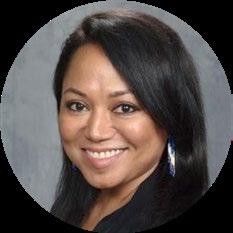
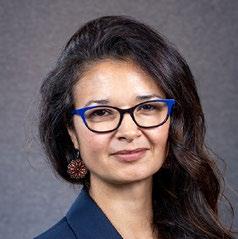
In Community, Nazune Menka, Faculty Director (Denaakke’/Lumbee) menka@seattleu.edu
Brooke Pinkham, Director (Nez Perce) pinkhamb@seattleu.edu
The Northwest Center for Indigenous Law at Seattle University School of Law is a resource for law students, alumni, faculty, Tribal Nations, and Indigenous communities of the Pacific Northwest. We provide an emphasis on Indigenous law through our curriculum, advocacy, programs, and events. In addition, we sponsor programs for students, work to recruit Tribal citizens to law school, support students on their path into Indigenous law, and aim to increase the number of attorneys practicing in these areas of law in the Northwest. Center leadership includes Faculty Director Professor Nazune Menka, Director Brooke Pinkham, and Legal Assistant Katie Price. Affiliated faculty and staff include Professor Pilar Escontrías, Professor and Judge Mark Pouley, Professor Kip Hustace, Professor Paula Enguídanos, and lead law librarian Stephanie Wilson.
A note on our decision to rename the Center for Indian Law & Policy to the Northwest Center for Indigenous Law
As you may recall from our outreach during the development of the strategic plan, we decided to rename the Center for Indian Law & Policy to the Northwest Center for Indigenous Law in 2025. We believe this new name better reflects the evolving scope of our mission and strengthens our connection with the broader Indigenous community. The term “Indigenous law” encompasses federal Indian law, Tribal law, international law, and more generally how law impacts Indigenous Peoples and Tribal nations. While we recognize that the term "Indian" has historical significance and remains a legal term of art, we are intentionally choosing more inclusive language that is respectful of Indigenous Peoples within the United States who do not identify as “Indian” such as many Alaska Natives and Pacific Islanders. Additionally, we seek to distinguish ourselves from other similarly situated law centers by focusing on serving Indigenous Peoples in the Pacific Northwest and Pacific Ocean regions, while also recognizing the importance of global Indigenous solidarity. The Center remains steadfast in our dedication to educating the legal community about the history, impact, and contemporary importance of Tribal Nations as polities, their inherent Tribal sovereignty, the federal government’s trust responsibility to Tribal Nations, and about Indigenous Peoples law, more generally.

Training current and aspiring lawyers in Indigenous law
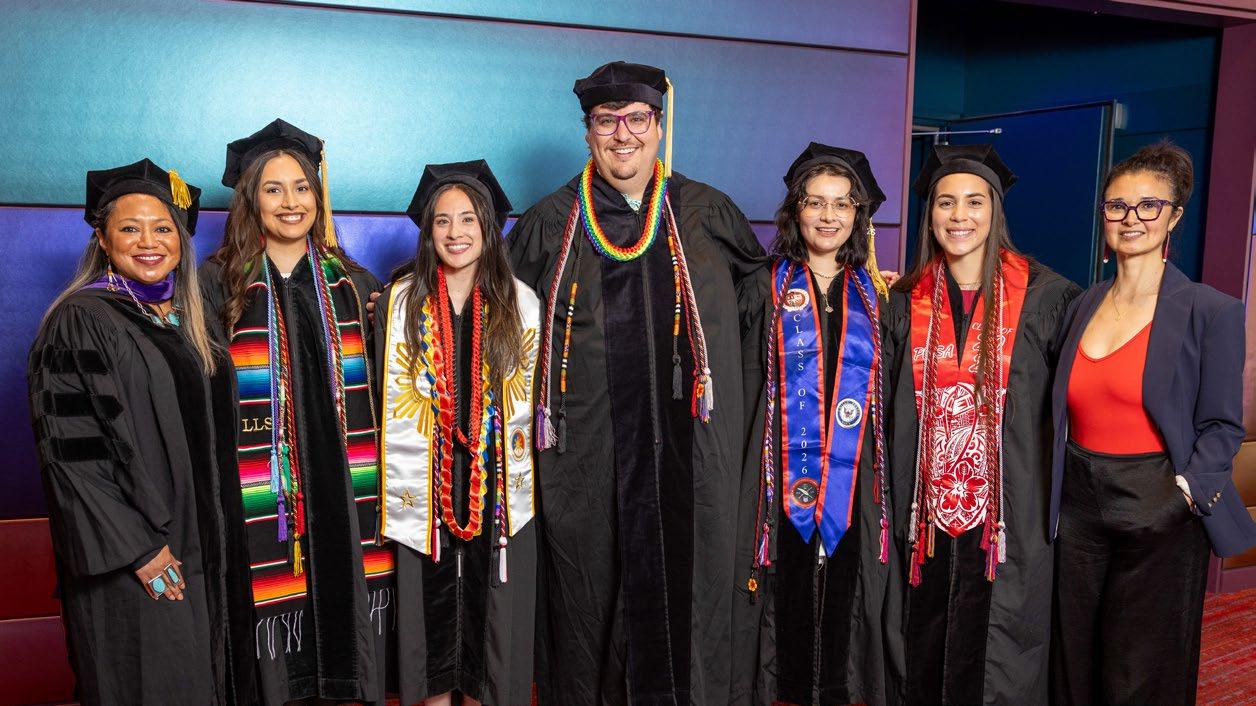
The Indigenous Law Certificate was established to reflect our commitment to preparing lawyers who are equipped to engage with, support, and advance Tribal legal systems. The certificate’s core requirements are Indigenous Peoples, Law, and the United States and Tribal Law and students are also required to commit to meaningful experiential learning opportunities, emphasizing practical skills, cultural competency, and ethical collaboration with Tribal nations. The certificate fosters a deeper understanding of sovereignty, jurisdiction, and the unique legal and policy issues facing Tribal nations today. Since its launch, the certificate has generated strong interest among both prospective and current students at Seattle U School of Law, underscoring the growing importance of this field in legal education. We invite you to learn more about the certificate and join us in celebrating the inaugural cohort of the five students who have earned this distinction.
The American Indian Law Journal (AILJ) is a student led law review publication and an academic collaboration among students, faculty, and practitioners. AILJ is designed to fill a critical gap in the amount of current scholarship available to those interested in the rapidly developing field of Indigenous Law. AILJ employs an innovative online format and was granted provisional status in 2011. Indigenous Law includes a wide range of legal issues, including tax, property, contracts, gaming, and environmental law.
In addition to providing students with a practical and marketable skill set, AILJ exemplifies the School of Law's commitment to social justice. Indigenous Peoples have been marginalized and persecuted throughout our
country's history, and unfortunately, these themes of prejudice and injustice persist today. These myriad social justice concerns include civil rights violations, protection of cultural resources, religious freedom, the loss of land and natural resources, and the regulation of environmental quality. Despite these numerous issues, there are only four dedicated Indigenous Law journals in North America. AILJ provides students with a unique opportunity to work one-on-one with distinguished Indian law practitioners and faculty members.
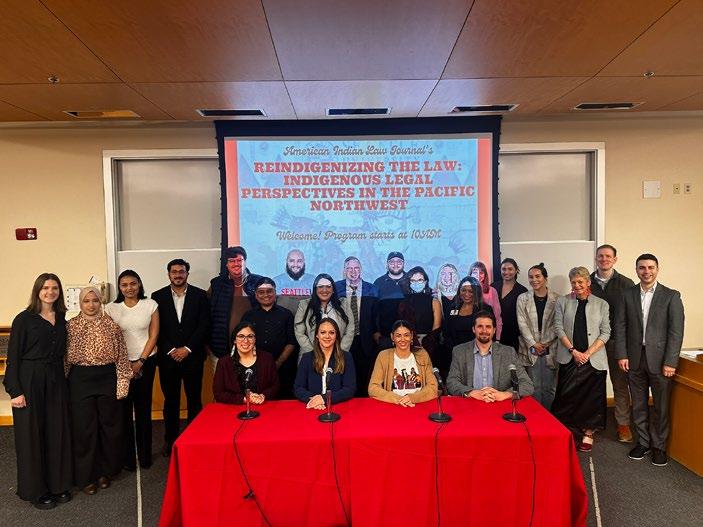
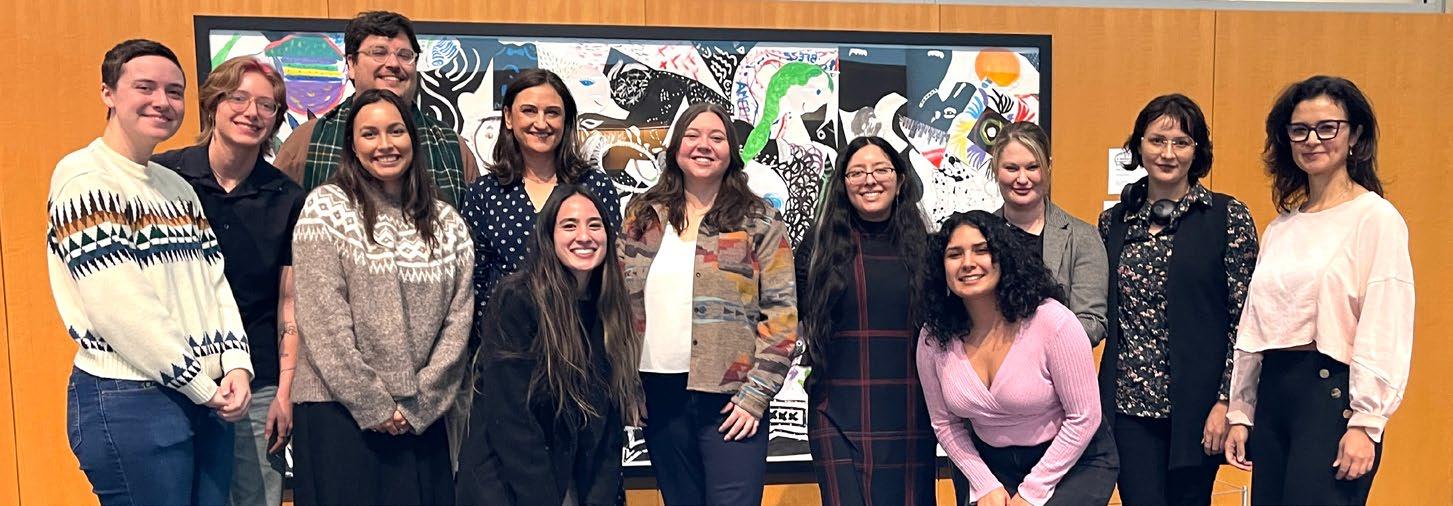
For the past two years, AILJ students have played a central role in envisioning, organizing, and leading Symposia devoted to a wide range of issues within Indigenous law. Their work has not only reflected the diversity and complexity of the field but has also created meaningful spaces for dialogue among scholars, practitioners, and community members. In 2025, students organized “ReIndigenizing the Law,” bringing attention to Indigenous legal perspectives in the PNW, and in 2026 they continued this effort with “Power & Solutions in the Indigenous Legal Community,” exploring native voting rights, enforcement of protection orders, and the federal trust responsibility. Building on this strong foundation, students are now looking ahead with the goal of sustaining and growing this momentum—cultivating greater interest, encouraging broader participation, and continuing to spotlight timely and impactful topics in Indigenous law.
Offered to an admitted Seattle University School of Law JD program student who is an enrolled member of a federally recognized tribe or a lineal descendant of an enrolled parent or grandparent. This scholarship recognizes the historical injustice toward Native people which has resulted in less opportunities for Native students to attend law school and practice law.
Hear more from our scholars:
SCHOLAR HIGHLIGHT
(Agdaagux)
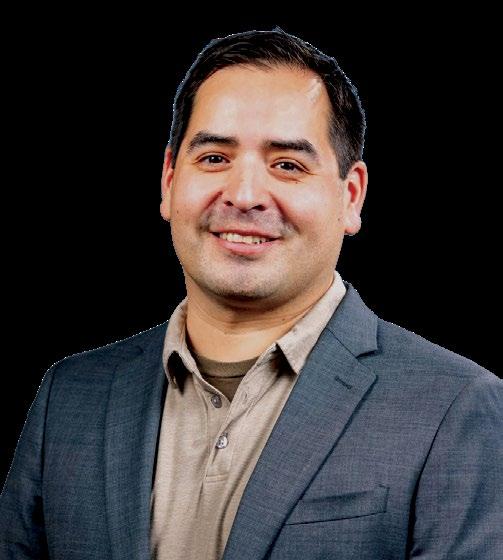
When searching for law school programs, it was important to me to find a school that would allow me to remain connected to my community in Alaska. I am an enrolled member of the Agdaagux Tribe and was born and raised in Alaska. Seattle University School of Law and the Northwest Center for Indigenous Law were exactly the kind of program I was looking for.
I applied and was fortunate to receive the Douglas Nash Native American Law Scholarship, which made the difference between attending law school and not. With the support of the Nash
“Alaska is short on attorneys, and even shorter on attorneys who get into Indian and tribal law.”
Scholarship, I entered the Flex JD program in 2023 with a fair amount of nervousness about how I might measure up in law school.
At Seattle U, and within the Flex JD program, I found a strong and supportive community that truly set me up for success. I was able to build meaningful connections between Seattle U and Alaska. During my time in the program, the Anchorage-Seattle U hybrid hub was launched, helping increase legal access for underserved communities.
I was also able to create an externship with the Aleut Corporation, an Alaska Native Corporation established under the Alaska Native Claims Settlement Act of 1971. That experience was a full-circle moment for me, being able to complete a legal externship in Alaska with a corporation where I am also a shareholder.
As I wrap up my final year at Seattle U, nearing the end feels bittersweet. I am excited to graduate and move into the next step of my legal career, but I will always value the community I found at Seattle University, including the Northwest Center for Indigenous Law and the Native American Law Student Association.
(Kiuxish)
I am deeply grateful for this opportunity, and I hope my story encourages Indigenous scholars to apply and join this amazing community.
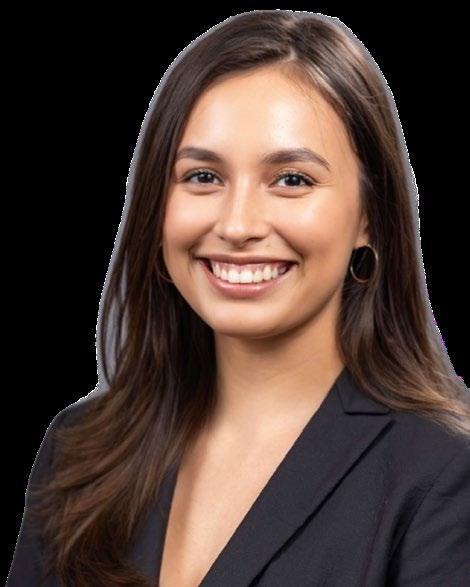
Terryanna Blodgett (Kiuxish) is an enrolled member of the Yakama Nation and a 1L Flex Student at Seattle University School of Law, and the 2025 recipient of the Douglas R. Nash Native American Scholarship. She grew up on the Yakama Nation Reservation, where she still resides with her husband and three sons.
Terryanna is a passionate advocate for tribal sovereignty, treaty rights, and Indigenous representation, with a goal of serving as a legal resource for Indian Country. She earned a Bachelor of Arts in Criminal Justice and Native American Studies from Gonzaga University, later adding a Master of Legal Studies from the University of Oklahoma College of Law and an
MBA from Gonzaga. Her professional experience in tribal business deepened her understanding of the legal and jurisdictional complexities facing Indigenous communities.
She believes Seattle U's Flex program and the Douglas R. Nash Scholarship are transformative for Indigenous students who must balance family, work, and community responsibilities. As she puts it, "Being able to attend law school while living on my reservation is monumental."
Currently, Terryanna serves as a First-Year Fellow at the Access to Justice Institute, and is the VP of the Native American Law Student Association, and will intern with the Tulalip Office of Civil Legal Aid in summer 2026.
As a part of the experiential learning component of the Certificate students have the option of taking Seattle U Law’s new Tribal Court Practice Clinic. In partnership with Skagit Legal Aid the Center was awarded a Washington Legal Foundation grant to establish the Tribal Court Practice Clinic in 2025. The Clinic enables students to provide civil legal services to clients with matters before the Swinomish and Makah Tribal Courts. Students gain direct experience practicing in Tribal court systems, addressing complex issues of Tribal law, and representing Tribal clients in a culturally grounded context.
Hands-on training through the Ronald A. Peterson Law Clinic and related externships
Seattle University School of Law offers a wide range of externships in Indian Law, Tribal law and Indigenous Externships. Externships give students an opportunity to earn credit while gaining real experiences. A few are listed below:
Alaska Native Justice Center – Tribal Child Welfare Anchorage AK
Alaska Native Justice Center – DV Survivor Service Anchorage AK
Northwest Justice Project – Native American Unit Seattle WA
Salt River Pima- Maricopa Indian Community Legal Services Scottsdale AZ
Skagit Legal Aid – Tribal Law, Mount Vernon, WA
Tulalip Office of Civil Legal Aid
CRIMINAL LAW AND DEPENDENCY
Tulalip Tribes Prosecuting Attorney’s Office
Lummi Nation
TRIBAL ADVOCACY
Native American Rights Fund Anchorage AK
TRIBAL COURTS
Northwest Intertribal Court System
Puyallup Tribal Court- Chief Judge Darwin Long Fox
Tulalip Tribal Court
Aleut Corporation Anchorage AK
Coastal Villages Region Fund Anchorage AK
Lummi Office of Tribal Counsel
Port Gamble S’Klallam Tribe Kingston WA
Squaxin Island Tribe Legal Department
Swinomish Indian Tribal Community
The Eyak Corporation, Anchorage, AK
Yurok, Office of the Tribal Attorney
Muckleshoot Indian Tribe Office of the Tribal Attorney
Office of Tribal Attorney – Suquamish Tribe
NATIVE HAWAIIAN
Ho’okele Title and Escrow
Research Assistant, Northwest Center for Indigenous Law
“I had the opportunity to extern at the Tulalip Tribal Court this past Spring semester, and I had an invaluable experience. Each judge is incredibly kind and knowledgeable, and I learn something new every week. Additionally, the opportunity to engage with the Wellness Courts, including their recently established Domestic Violence Intervention Court, has been insightful and especially impactful for me.”
The Native American Law Students Association (NALSA) at Seattle University School of Law is a student organization dedicated to fostering a deeper understanding of Indigenous law while building a vibrant and supportive community within the law school. NALSA works to advance the academic study of Tribal law, encouraging members to engage in rigorous research and legal practice while supporting one another’s scholarly growth. The organization also serves as a bridge between Native American students and their peers, cultivating meaningful cross-cultural connections and promoting a law school environment rooted in strong ethical standards, cultural awareness, and civic responsibility.
Beyond the classroom, NALSA members gain valuable hands-on experience through participation in the National Native American Law Student Association Moot Court and Writing Competition, sharpening their advocacy and research skills in a competitive setting. Members also have the opportunity to attend the annual Federal Indian Bar Conference in Phoenix, Arizona, where they can network with practitioners, scholars, and tribal leaders at the forefront of Indigenous law — connecting classroom learning to real-world impact.
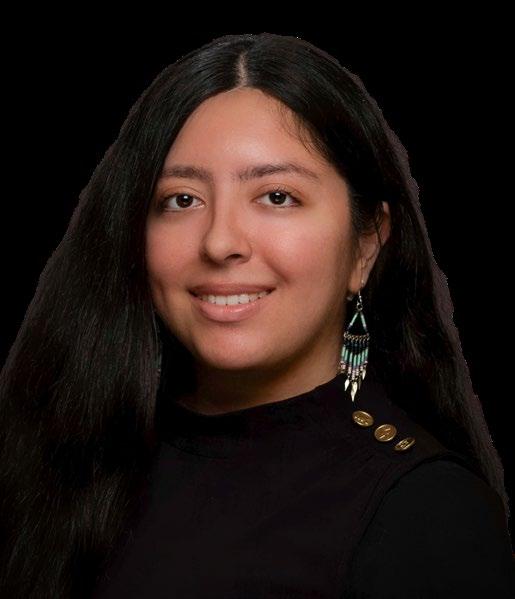
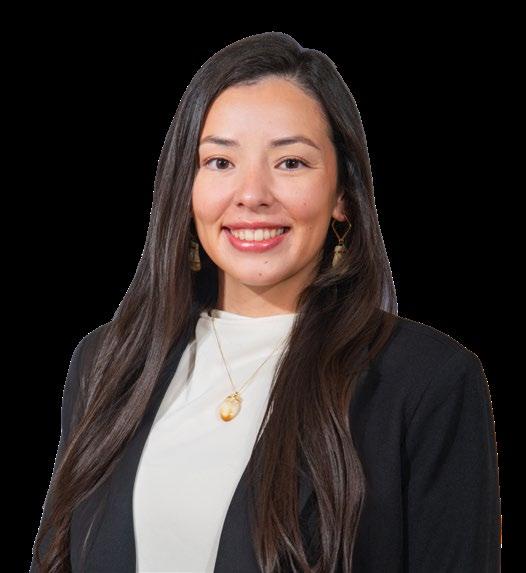
Nohely Diaz is a May 2026 graduate of Seattle University School of Law. She is Tepehuán and Muisca, Indigenous peoples from Mexico and Colombia, respectively. Before law school, she worked as a policy lead addressing child labor.
Nohely has contributed to initiatives supporting Native communities through census outreach efforts in Sacramento, California. In 2023, Nohely presented at the Society for Public Health Education Annual Conference to address gaps in the healthcare
(Tepehuán/Muisca,)
system affecting Native communities and to outline targeted actions to reduce health disparities. Nohely’s dedication to supporting Indigenous communities led her to serve as the President of the Native American Law Students Association (NALSA) and the Managing Editor of the American Indian Law Journal (AILJ) during her final year of law school, ensuring that Native students and interests are advocated for.
While in law school, she externed with the U.S.
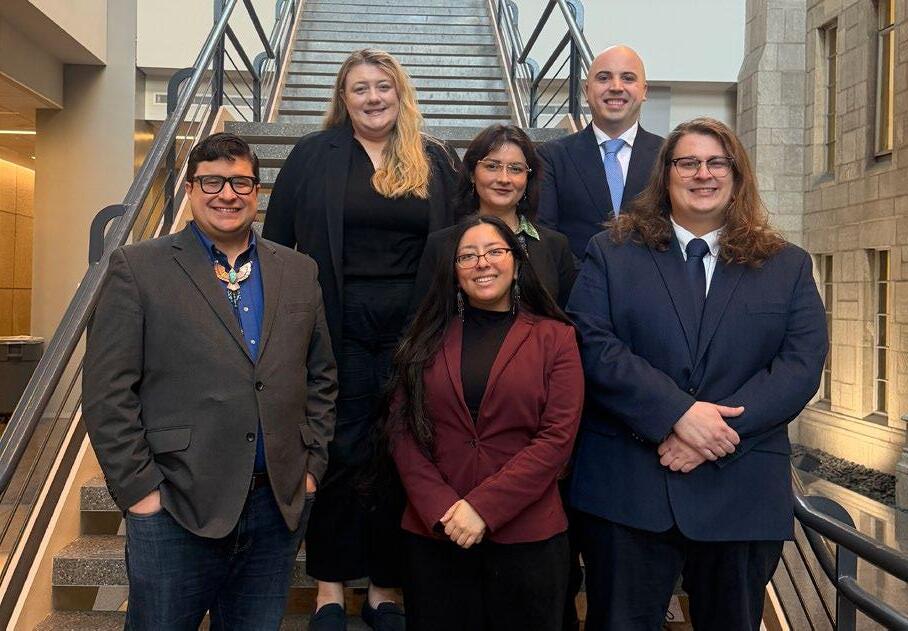
I am so incredibly proud of our team. We are one of the smallest affinity organizations on campus, yet this past year, the strides we have taken to better serve our Native students and to build upon our mission, which is not just bringing attention to Indian Law but making a tangible impact in this space.
Department of Labor’s Division of Mine Safety and Health and with Legal Aid at Work’s Work and Family Program. She was a Rule 9 intern with the Washington State Attorney General’s Office Labor & Industries Division and a Student Advocate through the law school’s Workers’ Rights Clinic.
Nohely is dedicated to continuing to work in the public interest sector and will begin an Equal Justice Works Fellowship at the Sexual Violence Law Center in fall 2026.
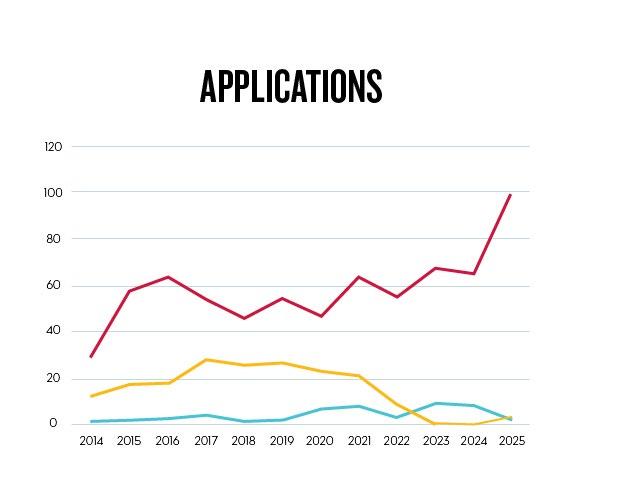
NCIL works closely with the Seattle U Law Admissions team to develop targeted Indigenous student recruitment strategies. This includes outreach planning, reviewing applicant pipelines, refining admissions criteria, and identifying barriers that uniquely affect Indigenous applicants. NCIL collaborated with Will Bassett, Associate Director of Admissions, whose graduate research focused on Native law student recruitment and retention. His findings are being integrated into future recruitment planning and student support structures.
NCIL and Admissions have developed a PLSIbased conditional admission pathway, modeled on successful programs at peer law schools. The School aims to extend conditional offers of admission to Native students who attend the Pre-Law Summer Institute (PLSI), contingent on satisfactory academic performance and a positive program recommendation. This is intended as one of several approaches to increasing Native enrollment at Seattle U Law.
A coordinated process has been established to increase the likelihood that admitted Native students choose to enroll. This includes personalized welcome letters introducing students to NCIL and available resources, as well as informational webinar sessions for prospective Native students, including current undergraduates and recent graduates. The latest webinar was held on May 2026 in collaboration with Alaska Pacific University (APU). Additionally, APU partnered with the Seattle U Law in 2024 to provide a dual JD/ MBA degree that allows for better legal education access in Alaska.
American Indian/Alaskan Native
Native Hawaiian/Other Pacific Islander
Other Indigenous
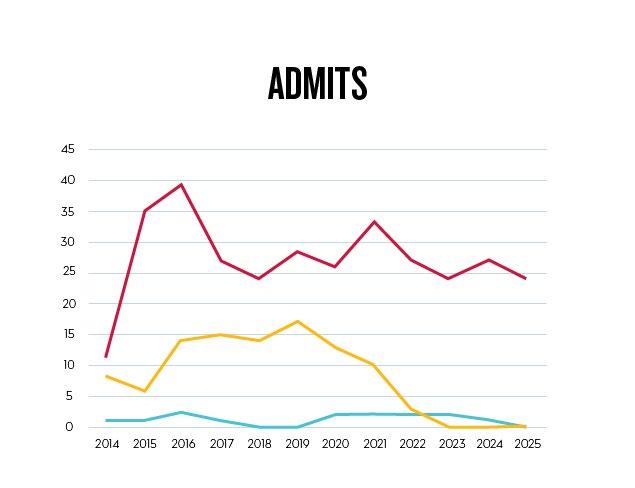
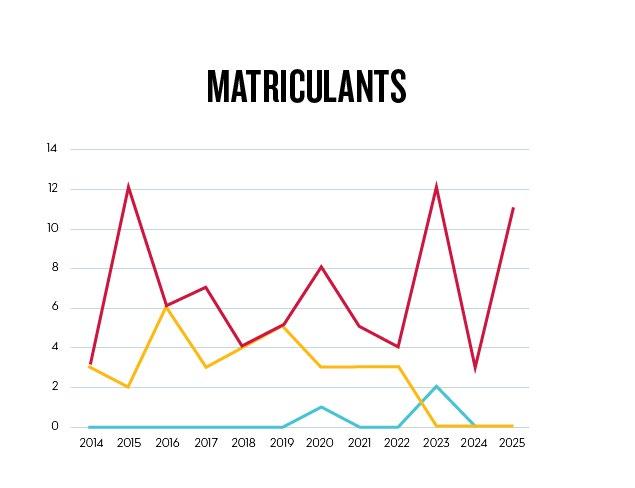
NCIL staff and faculty conduct individualized outreach — including one-on-one meetings, advising on scholarships, and guidance on the Indigenous Law Certificate — to prospective students. Tabling and recruitment events have included:
• Muckleshoot Tribal College
• Tulalip Tribal High School
• Muckleshoot High School
• National Congress of American Indians College Fair
NCIL is actively engaged in pathway development through Seattle U Law's partnerships with the Hybrid Hub at Heritage University (located within




the Yakama Nation community) and the Hybrid Hub in Anchorage, Alaska, with funding secured for the next five years. NCIL Director Brooke Pinkham, who grew up in Wapato, WA, brings personal connection to the Yakama Nation community. Professor Menka with lifelong ties to Anchorage, strengthens NCIL's efforts to increase Alaska Native student participation and access.
NCIL was invited to observe Arizona State University's Pathways to Law Program, a wellestablished initiative with over a decade of success in increasing Native student law school enrollment nationwide. NCIL is actively working to position Seattle U Law as a future host institution for this rotating program.

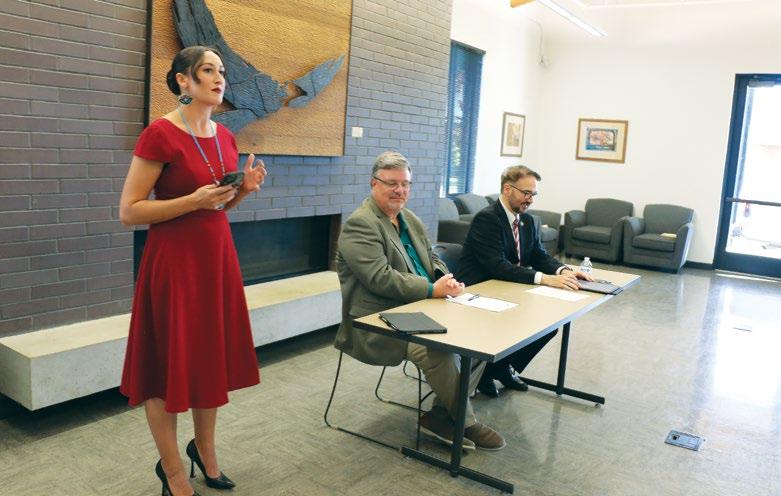



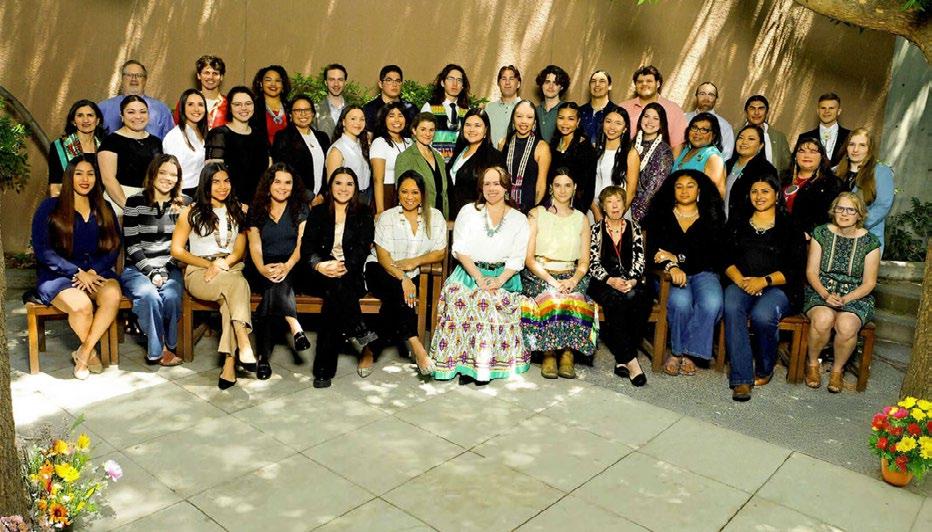
Professor Menka taught at PLSI, a free eightweek program administered by the American Indian Law Center (AILC) that prepares American Indian and Alaska Native students for law school through intensive coursework in legal research, writing, and analysis. Now in its 58th year, the program draws students representing Tribes from across the country and is considered one of the most respected Native pre-law programs in the nation. Professor Menka's participation carries particular personal significance — her father attended the second-ever PLSI cohort in 1972, making her involvement as faculty a full-circle moment spanning generations. She is set to return as instructor in summer 2026. Her involvement strengthens Seattle U Law's visibility within the Native legal community and directly supports NCIL's broader pathways and admissions goals, including the PLSI-based conditional admission pathway.
Director Pinkham is also a PLSI graduate (’04). The NCIL is now working with admissions to bring in a conditionally admitted student who successfully completes the PLSI Program.
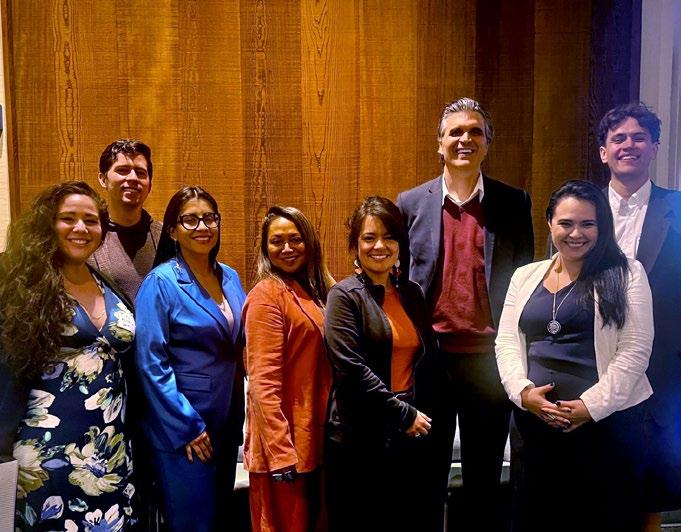
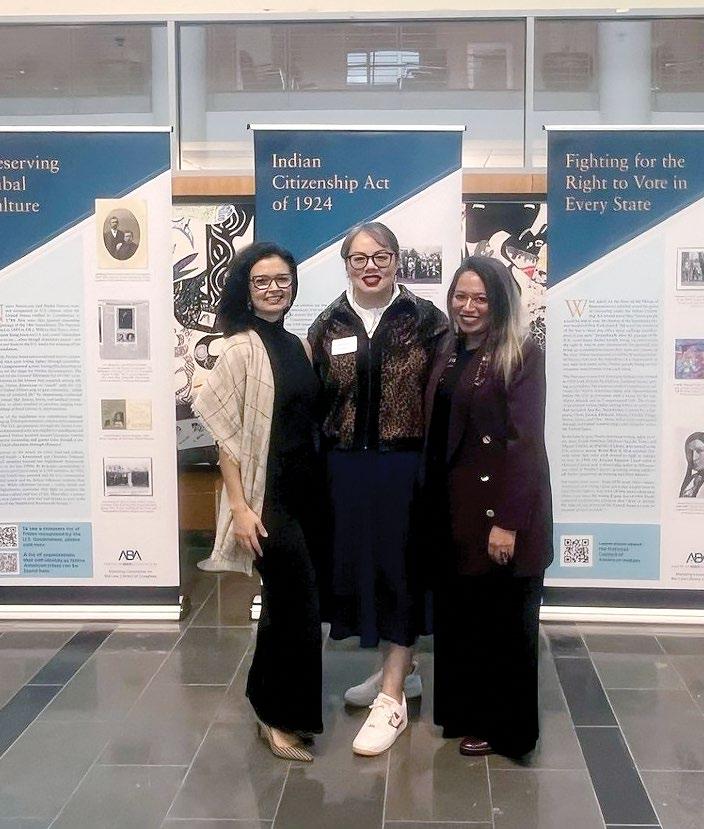
Held at the Goldberg Memorial Room at UC Berkeley School of Law, this interdisciplinary workshop brought together junior and senior scholars working across constitutional law, election law, immigration law, federal Indian law, and Tribal law. The event marked significant legal anniversaries — the 60th anniversary of the Civil Rights Act of 1964, and the centennial of both the Immigration Act of 1924 and the Indian Citizenship Act. Scholars presented papers on panels alongside 2–3 peer junior scholars and a senior commentator. The workshop was co-sponsored by Seattle University's Northwest Center for Indigenous Law and Berkeley's Center for Indigenous Law & Justice, and was available to attend both in person and online.
(Photo above, pictured left to right) Pilar Escontrias (Asst. Professor of Law Seattle University School of Law), James T. Campbell (UCLA Fellow) Evelyn Rangel-Medina (Assoc. Professor of Law at Temple), Nazune Menka, Lauren Van Schilfgaarde (Asst. Professor of Law UCLA), Seth Davis (Professor Law at UC Berkeley), Elizabeth Reese (Asst. Prof. of Law Stanford), J.V. Langkilde (EarthJustice).
Nazune Menka
Faculty Director, Northwest Center for Indigenous Law & Assistant Professor of Law
PUBLICATIONS
Ú The Corpus Juris of (Alaska Native) Inherent Tribal Sovereignty, 42 Alaska L. Rev. 1, 1–42 (2026).
Ú The Reparative Return of Treatymaking? Native Nations, Legal Norms, & the U.S., 30 Tex. J. C.L.C.R. 2, 213–69 (2025).
Ú The LandBack Movement: Native Nations and the Reclamation of Ancestral Lands, 39 Am. Bar Ass'n Nat. Res. & Env't 3 (Mar. 7, 2025).
Ú Financial Self-Determination for Native Nations Assuming Federal Programming, The Regulatory Review, The Supreme Court's 2023–2024 Regulatory Term (July 25, 2024) (online essay).
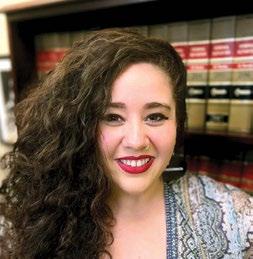
Margarita Hernández Escontrías
Assistant Professor of Law (Affiliated Faculty)
PUBLICATIONS
Ú Legal Ethics as Confederate Memorial. Forthcoming in Geo. J. Legal Ethics.
Ú Law's Penal-Professional World Order, 94 Fordham L. Rev. 1321 (2026).
Ú Latinxs Reshaping Law & Policy in the U.S. South, 31 So. Cal. Rev. of L. and Soc. Just. 1 (2022) (co-authored with Luz Herrera).
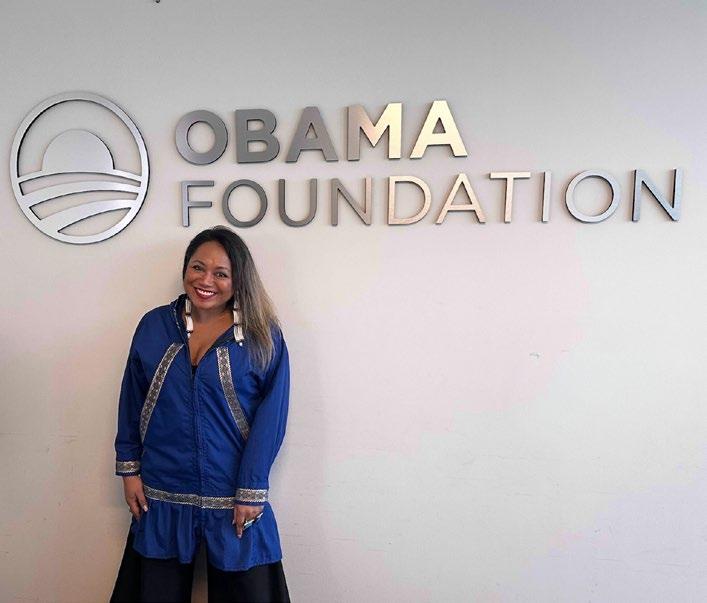
Nazune Menka: 2024-25 Obama USA Leader
Professor Nazune Menka was selected as one of 205 participants in the 20242025 Obama Foundation Leaders program, and one of just 100 chosen for the Leaders USA cohort. The program, inspired by the leadership values of President and Mrs. Obama, draws on the Foundation's Hope to Action curriculum to support emerging changemakers in engaging diverse perspectives, building collective power, and making tangible progress toward a more just world, with a particular focus on strengthening democratic culture. Over six months, participants convene weekly for interactive virtual sessions focused on civic engagement, leadership development, and coalition building across public, private, and nonprofit sectors. They also engage with thought leaders and experienced mentors from across the Foundation's global network. Professor Menka's selection recognizes her long commitment to advancing Indigenous self-determination, sovereignty, and justice.
(Nazune Menka)
How WA Tribes are bracing for Trump’s ICE crackdown
Alexandra Yoon-Hicks, Seattle Times (Feb. 26, 2026)
Tribal Nations: Land & Law, Guest Lecturer
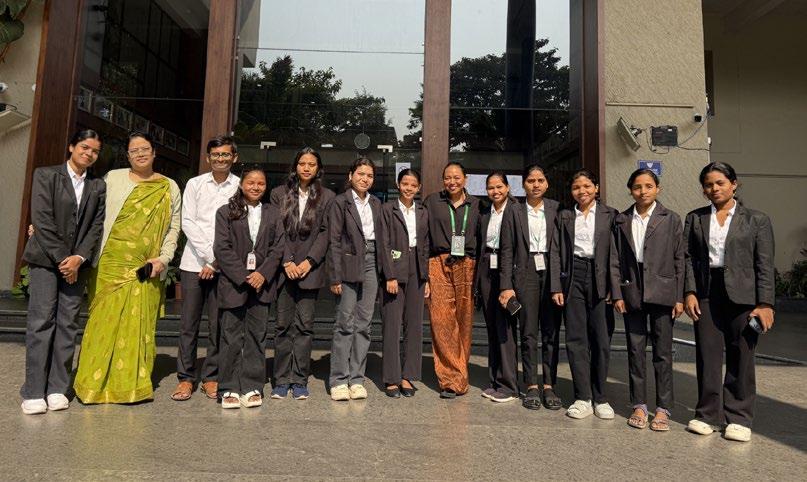
Kalinga Institute of Industrial Technology’s India Trek with Seattle University, Bhubaneswar, India (Dec. 2025)
The Rule of Law, Lawyers, and Indigenous Rights
AALS, Webinar Panel Presenter (Oct. 2025)

Trump administration attempts to use 19th century Native American case to overturn birthright citizenship
Dave Miller, Oregon Public Broadcasting: Think Out Loud (April 7, 2025) (Podcast guest)
Indigenous Rights in 2025: Global Indigeneity and Author Panel Presenter
University of Texas, Texas Journal on Civil Rights Civil Liberties Symposium (March, 2025)
Unpacking Legal Narratives in Natural History Lecture Series, Mitigating Colonialism: Indigenous Peoples, Legal Pluralism, & Restitution
Berlin Museum of Natural History, Center for Humanities of Nature, Heritage and Justice, Presenter (Jan. 2025)
Reclaiming Indigenous Land, Language & Law
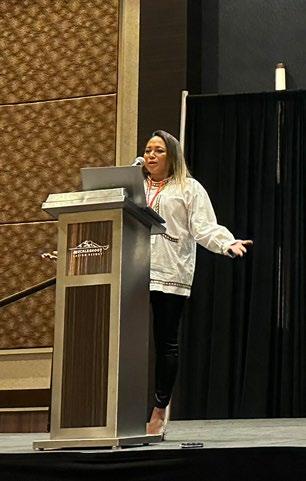
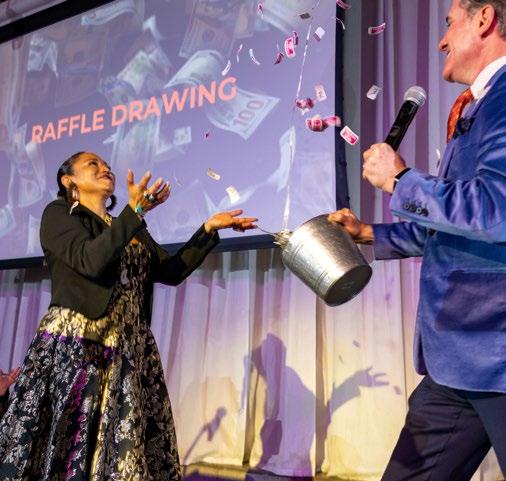
Native Action Network, Women’s Leadership Forum Keynote, Auburn, WA (Oct. 2024)
April, 2025
“Liberation (Through or From) the Law” — Seattle U Racial Equity Summit Futures Lab
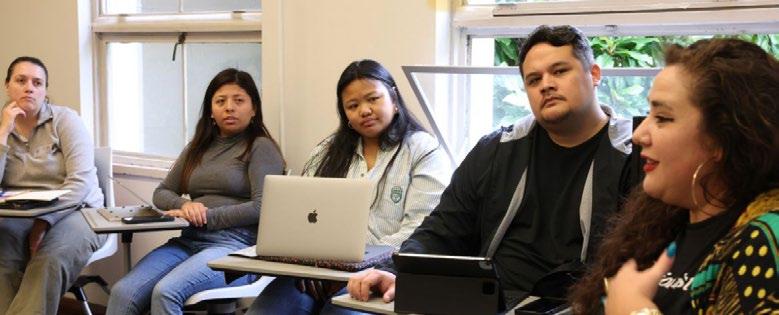
The presentation by Professors Nazune Menka and Pilar Escontrías examined whether the legal system can act as a vehicle for Indigenous and social justice, or if it inherently reinforces colonial and systemic inequities. This Futures Lab was part of the biennial summit held on the Seattle University campus, which centered on the theme of Imagining Inclusive Democracy.
June 11, 2025
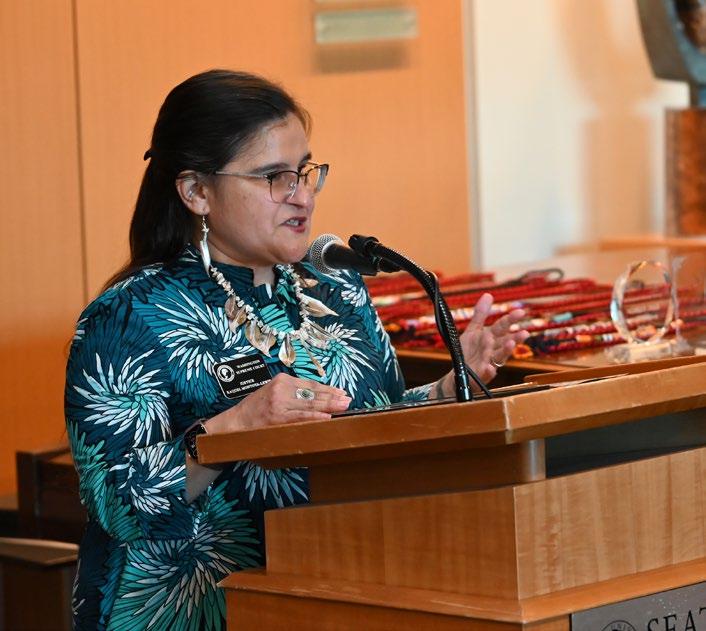
“TÁCELSẀ SIÁM: A Call to Justice for Indigenous Peoples” — Washington State Supreme Court Symposium
Featured presentation at the Minority and Justice Commission symposium at the Temple of Justice in Olympia. The presentation addressed Tribal sovereignty, self-determination, and the State’s ongoing challenges in fully recognizing Indigenous humanity. TÁCELSẀ SIÁM is a Salish term meaning “to welcome a respected person.” This was the first time the Washington State Supreme Court devoted a full day to Native rights. Brooke Pinkham presented alongside an SU Law alum who serves as lead prosecutor for the Puyallup Tribe and is a Snoqualmie Tribal member.
September, 2025
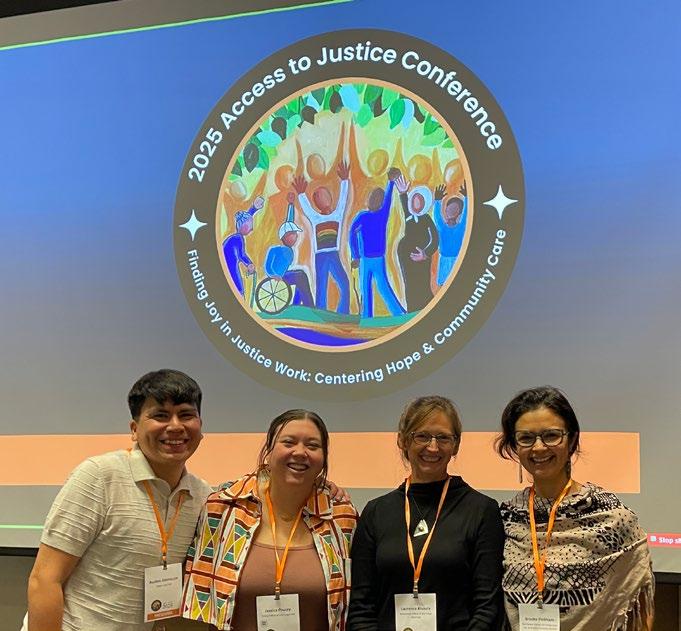
Access to Justice Conference Panel & Planning — Washington Alliance for Equal Justice / WA Equal Justice Initiative
Director Brooke Pinkham played a significant role in two access to justice events in September 2025. On September 18–19, she organized and hosted a panel alongside SU Law alumni and Skagit Legal Aid colleagues at the Washington Alliance for Equal Justice annual conference, highlighting NCIL's work cultivating student pathways into Indigenous law through the Tribal Court Practice Clinic. That same month, Director Pinkham served on the ad hoc planning committee for the WA Equal Justice Initiative's Access to Justice Conference in Yakima, advising an SU Law student (now alum) on centering Indigenous law and perspectives in the programming. Her guidance helped shape a two-day conference that centered Native communities and Native legal rights across the region.
November 11, 2025
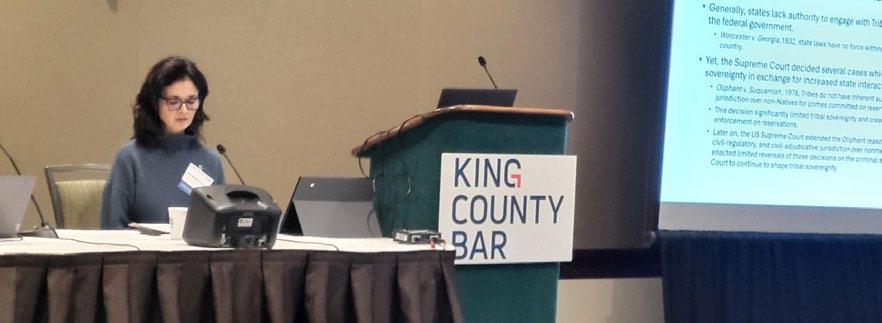
Impacts of the Current Administration on Indigenous Law — King County Bar Association Bench Bar Conference
Brooke provided an instructive discussion on current federal impacts on Indigenous law, continuing a tradition (since 2023) of including a Tribal courts session at this annual conference. Co-presenters included Washington Attorney General Nick Brown and Chief Justice Debra Stephens.
January 23, 2026
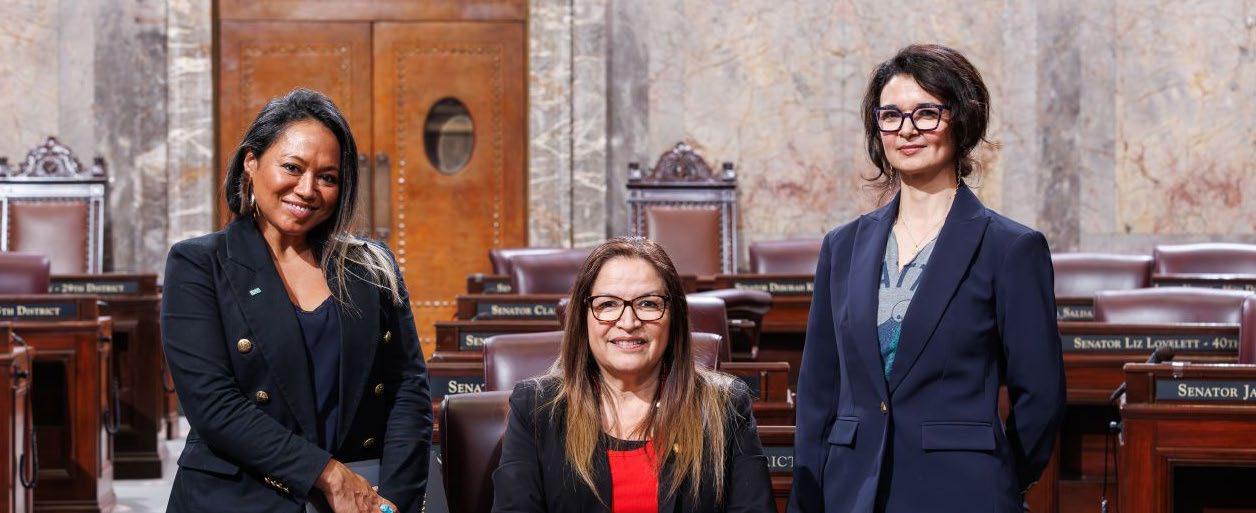
Brooke and Nazune presented at the Washington Legislative Building at the invitation of Senator Claudia Kauffman (47th Legislative District, Nez Perce). The presentation covered foundational principles of Tribal sovereignty. Several Senators expressed interest in drawing on NCIL's expertise for ongoing matters affecting Tribal sovereignty.
Brooke has contributed subject-matter expertise across multiple law courses, covering: estate planning (Professor Pouley's course); Indigenous water and fishing rights (Professor O'Neil's course); domestic violence in Indian Country (Professor Bowen's course); and the Indian Child Welfare Act, including its legal framework, policy objectives, and real-world application.
Brooke provides annual training for public defenders representing Native clients, focusing on cultural competency, the disproportionate representation of Indigenous people in the criminal justice system, and practical strategies for culturally responsive legal advocacy.
The Northwest Center for Indigenous Law stands at a pivotal moment. Directors Nazune Menka and Brooke Pinkham continue to lead this work at full capacity, representing Indigenous communities, mentoring the next generation of Indigenous lawyers, and elevating Seattle University School of Law's national reputation in Indigenous law. Across the country, the need for skilled, culturally grounded Indigenous legal advocates has never been more urgent — and the Pacific Northwest, home to one of the most vibrant and complex Indigenous legal landscapes in the nation, is uniquely positioned to help meet that need.
From treaty rights and Tribal sovereignty to environmental justice and self-determination, the legal questions shaping Indigenous futures require lawyers who are not only technically excellent but deeply connected to the communities they serve. The demand for NCIL's expertise, partnerships, and programming continues to grow, and the opportunity to expand access to legal education for Native students, strengthen community connections, and build a national network of Indigenous legal leaders is right in front of us. This work is made visible through programs like the Tribal Court Practice Clinic, the American Indian Law Journal, NALSA, and the Tulalip Tribal Court Clerkship — each one a testament to what sustained, culturally grounded legal education can achieve.
We humbly invite you to consider supporting NCIL as we continue this work. The opportunities the NCIL fosters — from pathway programs and conditional admissions to clerkships, externships, and national competitions — form a connected ecosystem that moves Native students from aspiration to practice, not just here in the Pacific Northwest but across Tribal communities nationwide. By investing in the Center, you are joining Tribal Nations, alumni, and community partners who recognize that NCIL is not simply educating lawyers — it is building a generation of Indigenous legal leaders and expanding access to justice for communities that have long deserved a stronger voice in the law. Every contribution, regardless of size, helps sustain the relationships, programs, and people that make NCIL a trusted and vital presence from the Pacific Northwest to Washington D.C. and beyond. We invite you to be part of this effort and to support the future of Indigenous legal education by making a donation to NCIL today.


901