



miss these stories on seattleschild.com

miss these stories on seattleschild.com
Chukundi Salisbury’s ‘Lil Bigfella’ offers a way to discuss
by JILLIAN O’CONNOR / photo by JOSHUA HUSTON
Chukundi Salisbury wasn’t dreaming of becoming a comic book publisher. In fact, the former candidate for state repre-
sentative was really just struck by a story he felt needed to be told.
“I didn’t really do this to be the next Marvel Comics or something,” he says.
He published a comic because he saw a need that wasn’t being filled, in particular for Black boys in South Seattle who are about middle-school age.
More specifically, he saw a need a few years ago after he overheard a few interesting kid conversations from his own son and
his friends on a trip to Camp Orkila, part of the African American Males Weekend set up by Salisbury’s nonprofit 100 Black Parents.
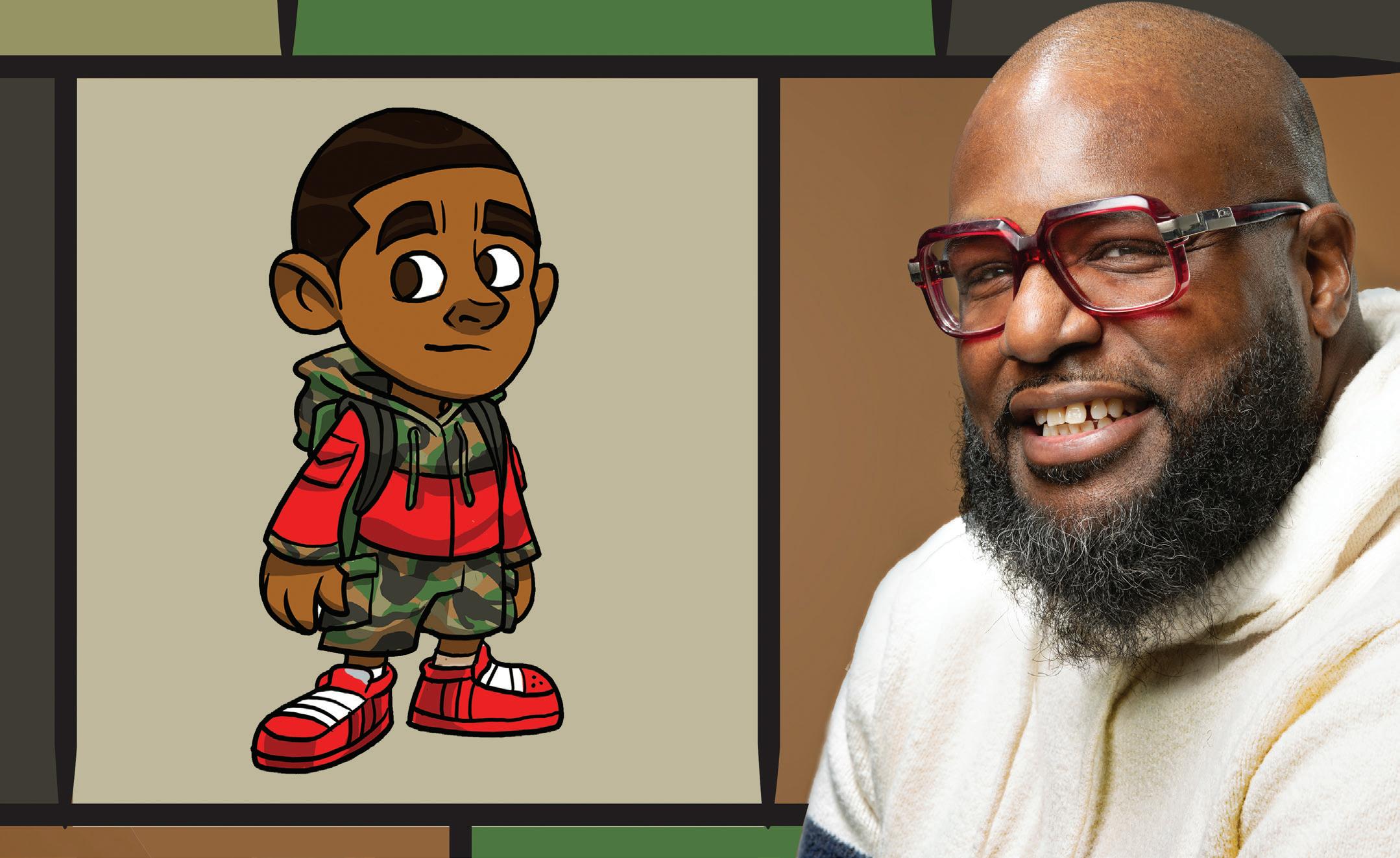
Along with following his son’s strong interest in creating comics, that’s how Salisbury landed on the idea for publishing “The Adventures of Lil Bigfella,” the first in a planned series of comic books that are now being sold online at lilbigfella.square.site, along with posters and stickers. (Meanwhile, Salisbury
March/April 2021 // Issue 486
“Seattle is my town. I know this city inside and out… or so I thought until I had kids.”
Seattle’s Child is your guide to getting to know your city all over again. Finding things to do, places to eat, and how to get around — it’s a whole new ballgame with kids in tow. We’re interested in how parents make homes in a space-challenged urban environment, how families create community, and what parents are really talking about. Seattle’s Child reflects real Washington families and their broad range of parenting experiences.
ANN BERGMAN Publisher, Founder abergman@seattleschild.com
BOO BILLSTEIN Art Director boo@seattleschild.com
JILLIAN O’CONNOR Managing Editor jill@seattleschild.com
JULIE HANSON Website Editor jhanson@seattleschild.com
MIKE MAHONEY Copy Editor
JOSHUA HUSTON Photographer
JEFF LEE, MD Columnist
FIONA COHEN
HALLIE GOLDEN
DANIELLE HAYDEN
RENE HOLDERMAN
JASMIN THANKACHEN
ASTRID VINJE Contributors
JASMIN THANKACHEN Admin Coordinator/Project Manager
ADVERTISING
KIM LOVE Ad Production Manager klove@seattleschild.com
JULANN HILL Senior Account Manager julann@seattleschild.com 206-724-2453
Seattle’sChild
Seattle’s Child has provided useful information to parents since 1979. In addition to our magazine, look for our special themed publications — FamilyPages, School and SummerTime — distributed free throughout the Puget Sound area. Seattle’s Child is published every other month
ONLINE seattleschild.com
Facebook facebook.com/seattleschild
Twitter @SeaChildMag Instagram @seattleschildmag
MAIL c/o Postal Plus 1211 E. Denny Way, Seattle, WA 98112
VOICE 206-441-0191
TO ADVERTISE advertise@seattleschild.com
MAGAZINE DISTRIBUTION distribution@seattleschild.com
STORY IDEAS editor@seattleschild.com
CALENDAR SUBMISSIONS calendar@seattleschild.com
Deadline is first of the month, one month prior to publication. Include date, time, cost, appropriate ages, address, contact information and description.
is working on having them distributed in bookstores and classrooms, too, along with a curriculum and reader’s guides.)
Salisbury sees the story in the comic as a key tool in getting inside the heads of kids who are middle-school age — and really exploring some important and complex issues in a way that’s relatable.
“I already knew that representation matters,” he says. “And I see a real niche, and I see an opportunity for us to be able to tell some of these classic kind of comingof-age stories and be able to address some of these issues and concerns that are across our community. But from a perspective of a young Black male — through interactions with police, interactions with your friends, interactions with adults.”
Salisbury notes that all of the comic’s characters are Black, along with one Latino character, the police officer. “A lot of African Americans and people of color, they love the book because it’s like, ‘Hey, we need more books with kids in it that look like my kid.’”
Salisbury notes that he is also hearing a lot of positive feedback from white parents who are happy to have a book with all BIPOC characters for their kids, too.
The debut comic is the tale of Lil Bigfella, a child in South Seattle who plays with his friends on a co-ed basketball team, the Beacon Hill Tigers.
As they’re celebrating that their team will be playing in the championship game, something truly disturbing happens: A cop in pursuit of a burglary suspect slams and pins the coach (one of the kid’s dads) to the ground and holds him there, at gunpoint, later releasing him with only a mild apology — “I apologize
for the inconvenience” — after realizing the dad was not the suspect.
The kids are clearly frightened and traumatized by what just happened, and also have a lot of emotional processing to do after the horrifying incident. One of the kids on the team has a dad, the cocoach, who is also a cop, which complicates the dilemma for the kids.
Salisbury created the comic book, with the help of local author Jeffrey L. Cheatham II and a team of illustrators, as a way to start discussions and help children to process issues of race and racist police brutality.
He jokes that he’s “like a Stan Lee” on the project, since he conceived the storyline and laid it all out. “I’m just using this as a means to an end, a tool to be able to talk to kids,” says Salisbury. “I really feel like when we start talking about the school-to-prison pipeline... and other things, I know from my work in the community that we have to get to kids earlier…
“Everybody’s always talking about resources to make sure kids aren’t likely to reoffend. How about resources so we don’t get kids to offend in the first place?
“I just want that conversation to be a better conversation, so this is just part of my piece on it,” says Salisbury.
In 2020, Salisbury was the candidate for state representative in the 37th District. He has also worked as a DJ and for Def Jam and spent 20 years as a trails coordinator for the Seattle Parks Department.
He knows this city, and comics, well.
“I grew up collecting comics,” he says. “I used to go to Golden Age, every time I got some money, down in Pike Place Market. I collected Conans and my brother collected X-Men and Teen Titans and we would go. There wasn’t really a Comic-Con back when I was a kid, but we most certainly collected comics, so I am a fan of the medium.
“But I guess I’m more of a fan of using the medium as a way to influence.”
Parents have questions and we have answers from a local pediatrician
by DR. SUSANNA BLOCK of KAISER PERMANENTE
Let’s be honest, February and the COVID-19 pandemic feel like they are going on forever. Happily, community members are beginning to be vaccinated and there is a light at the end of the tunnel.
Families have been a foundation of strength throughout the pandemic, and in my role as a pediatrician, I get to see up close all of the different forms a family can take. Family structures in the U.S. have grown more diverse every year, and I would like to take this time to celebrate family diversity.

Here are some numbers that tell us about what U.S. families look like in 2021:
• About half of all families with kids under 18 live with two biological parents.
• The next most common family structure is the single-parent family, which makes up approximately 25% of all households.
• Roughly 140,000 children are adopted each year, and around 6 children out of every 1,000 live in foster care.
• Grandparent families, where children live with one or both grandparents, make up two and a half million families.
• 290,000 children live in same-sexparent families. The 2020 U.S. Census was the first to give respondents the chance to indicate that they are part of a same-sex couple, either married or unmarried, and I expect the results will give us even more information to guide how we recognize families.
No matter the family structure, as long it is filled with love and support for one another, it will be successful and thrive.
Thank you, families, for providing support, love and stability during these tough pandemic times.
Peanut butter
Can giving my infant peanut butter help them avoid peanut allergies?
This is a great question because the scientific community is always learning new things about how our bodies work and updating their recommendations. Prior to 2015, doctors recommended that parents delay the introduction of peanuts. This was thought to reduce the chance of the infant developing allergic conditions like eczema.
A landmark study in 2015 changed this thinking and demonstrated that the early introduction of peanuts was a good thing because it decreased the chance of developing peanut allergies for high-risk babies (infants with severe eczema or egg allergy). As a result of this study, guidelines have changed.
• First foods: Try purées that are low allergy risk. This includes puréed bananas, prunes and cereal. Try new foods one at a time and wait a few days between introducing new foods. Monitor for any signs of allergic reaction.
• Next steps: If your baby has done well with initial foods, it is fine to start introducing more allergenic foods. This can include eggs, soy, wheat, peanut butter and fish. It is important that all of these are puréed and have an appropriate texture. Whole cow’s milk is recommended after one year, but processed milk such as yogurt can be given earlier.
CONTINUED ON NEXT PAGE >















Infants who have severe persistent eczema or known allergic reactions to food are considered high risk. Talk to your medical provider about the right time to introduce peanut-containing foods. This is often done in a supervised setting, such as the physician’s office, and may include allergy evaluation and testing.
Infants with mild to moderate eczema are also at risk of developing peanut allergy. Introducing peanut-containing products, starting around 6 months, can be helpful to prevent the peanut allergy from developing. Talk with your medical provider to discuss when to start this.
Infants with no eczema or food allergies may start with products containing peanuts if they have been able to tolerate a few simple purées.
How to best introduce peanuts
Make sure to avoid anything that is a choking hazard, such as whole peanuts. It is reasonable to give a small amount of peanut butter thinned out in cereal or yogurt. Another option to try is peanut butter purees that dissolve in breast milk or formula.
I have noticed e-scooters all over the place. Is this something my children can use?
Yes, e-scooters are certainly popping up all over Seattle. For those of you not familiar with them, an e-scooter is a shared electric scooter you can unlock with an app. It can travel up to 15 mph.
Unfortunately, as e-scooters have increased in number, so have related visits to urgent-care clinics. Cuts, fractures and head injuries are common. One of the main concerns is that while most children wear helmets while biking, they often do not wear helmets when using an e-scooter. This is because e-scooters are frequently used on a whim and helmets are not provided.
Severe injuries to the face and head from motorized scooters have tripled in the past decade and 30% occur with children between the ages of 6 and 12.
I recommend that children under the age of 16 do not ride e-scooters in order to avoid injury.
Sponsored by


by JEFF LEE, MD
But one feisty hen fought her way into our hearts (sort of)
Della had a long, memorable, complicated life. By the end, she’d outlived all of her peers, and she was getting lonely. But in her youth, she was a force to be reckoned with — always willing to speak her mind, and if necessary, put others in their place. She was a survivor.
One night, she simply died in her sleep. When we found her, we grieved not only her death, but the end of an era that it represented. She was never one for displays of affection or sentimentality, so we lay her to rest as we thought she would have wanted: in a plastic bag in the garbage bin.
Della was the last survivor from our third and final flock of chickens. By then, my older kids had grown up and moved away, and I had long grown tired of feeding and watering them and mucking out their coop. Secretly, I’d been looking forward to her joining her flockmates in poultry paradise, but when she finally passed, I was unexpectedly moved.
A few weeks later, one fine autumn morning I went out to the coop with a hammer and crowbar and dismantled it, thinking all the while about the three generations of our feathered friends who had called it their home. I remembered Buffy,
the buff Orpington, who was as close to a golden retriever as a chicken could ever be, and Evita the Ameraucana with her outlandish, turquoise-blue eggs. I remembered the cross-beaked chick whom we hand-fed grain mush on our pinky fingers, but weren’t able to keep alive. And then there was Nicky the gender-fluid Australorp, whose frequent attempts at morning crowing sounded like a small dog choking on a bone.
Della was a pure white Delaware — handsome enough, but not fancy like the Barred Rock or the Silver Laced Wyandotte who had shared the coop with her. She was an average layer who was somewhere in the unassuming middle of the pecking order. Then one day, a neighborhood beagle broke into the run and took a huge chunk out of her leg. I was sure she was done for, but at the kids’ urging, I made a show of trying to save her. We separated her from the flock and kept her in a cardboard box on the enclosed porch, where she wouldn’t have to compete for food. In truth, though, she didn’t want to eat. She barely moved. A couple of days later, I pulled apart her blood-caked feathers to look at the wound and it was crawling with maggots. I told the kids to prepare for the worst.
Della, however, had other plans.




Summer programs at Gage Academy of Art o er unique opportunities for creative expression, skill-building, portfolio development and most importantly, FUN!
Join KIDSTAGE for 100% live, interactive theatre classes. Whether in-person* or virtual, our participants have been loving every minute!
Kindergarten – Age 20

• Saturdays April 17 – May 22
• Wednesdays April 14 – June 9

“Wow, wow, wow! I loved seeing the kids in action. The energy and enthusiasm from the teachers is amazing!”


—Suzanne C., KIDSTAGE Parent



Soon she started eating again. The maggots cleaned out the dead tissue as thoroughly as any surgeon would, and her wound healed up nicely. Eventually, she was flapping and limping around the box with amazing vigor, intent on escape. It was time to reunite her with the flock.


* Check our website for our re-opening criteria.



It’s tricky business reintroducing a hen into a coop, especially one with a bum leg. The pecking order can be fiercely and mercilessly enforced, and any weakness is quickly exploited. When I put Della back into the run with her sisters, I held my breath and waited for the onslaught. To my surprise, no one bothered her. As a matter of fact, within a few days, she had clearly established herself at the top of the pecking order. She’d limp over to the feeder with a strange lunging, hopping gait, and the others gave her a wide berth. I imagined her clucking at them under her breath.
“Go ahead — try me. I rumbled with a freaking beagle. You think I’m afraid of you?”
When we first got chickens, it was mostly for the eggs. Truthfully, there’s not that much to recommend them as pets. They poop all over everything, they smell up the yard, and they destroy your vegetable garden. The only one I would ever describe as affectionate was Buffy, and that’s grading her on a very forgiving curve. Still, when you see a creature like Della grow up from a little fluff ball in your hand, to a gangly teenaged pullet, to a full-grown, egg-laying, beagle-battling hen, you can’t help but get attached.
The day I lifted Della’s body out of the coop, I was surprised how light she was. Under all those feathers, she was smaller than your average roasting chicken. But back in the day, she punched above her weight, and then some.
That was a chicken with heart — and I don’t mean just giblets.
ABOUT OUR COLUMNIST
Jeff Lee still loves chickens, especially roasted with garlic and rosemary, in Seattle.
„ Subscribe
Right under your nose!
Good, clean fun (in the dirt!)
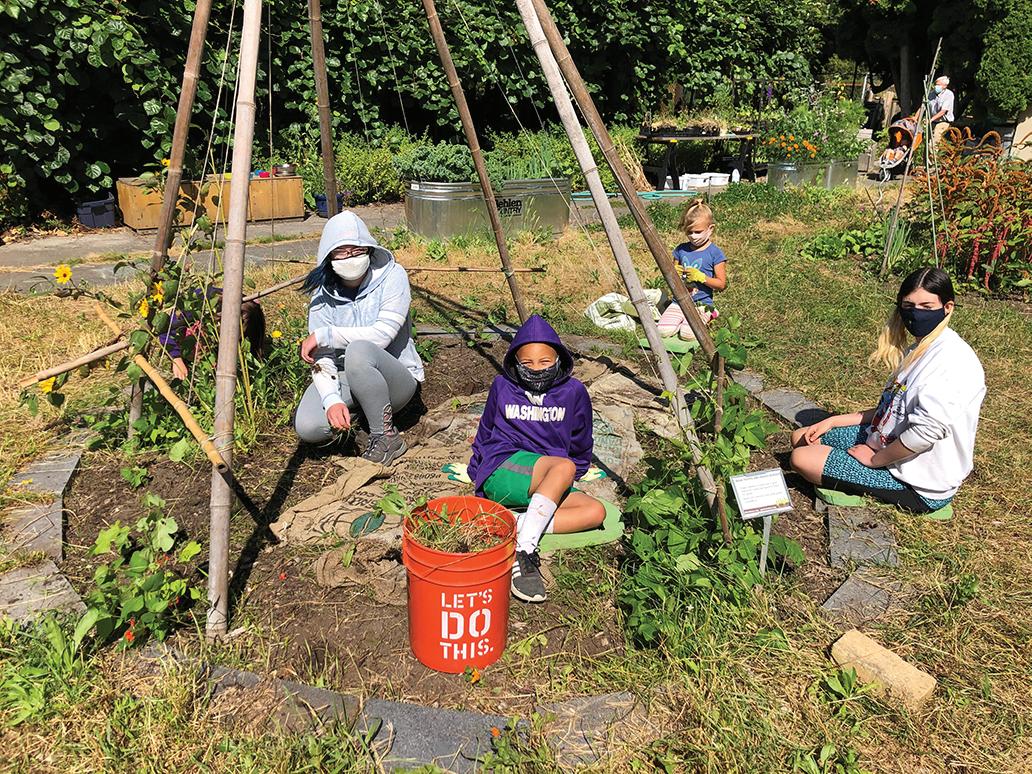
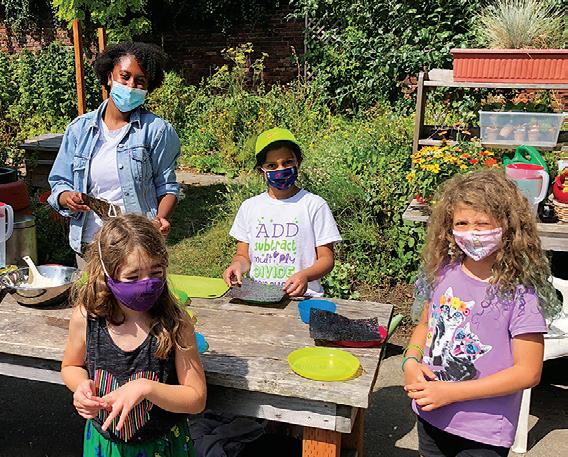
Does your kid need more time playing in the dirt? Tilth Alliance is offering after-school programs and school-break day camps in person, masked, at two locations: Rainier Beach Urban Farm and Wetlands and Wallingford’s Good Shepherd Center. Topics include soil invertebrates, garden art and how to plan and plant a vegetable garden. tilthalliance.org — Fiona Cohen

Eight stunning spots that are just right for pleasant springtime strolls with kids
Botanical gardens are places where art works with nature, and people sculpt the landscape to please the senses and spark the imagination. In a year when most schoolchildren routinely spend hours
staring at computer screens for remote learning, we need this kind of refuge for the mind and body more than ever.
Here are eight great botanical gardens to visit with kids of all ages in the Seattle area.
Washington Park Arboretum 2300 Arboretum Drive E. 230 acres / Free
The most impressive spring show is along the three-quarter-mile Azalea Way, which wows through March and April with daffodil beds, flowering cherries and dogwoods. The azaleas bloom in time for Mother’s Day. q botanicgardens.uw.edu/ washington-park-arboretum CONTINUED ON NEXT PAGE >
5
It’s the perfect time to start your own garden! Whether you want to grow vegetables, flowers or both, here are some ways to share the gardening experience with your child.
Choose your space
Do container gardening, get a plot of land in a community garden or just start digging up your own backyard. Prep your area. Get little hands dirty and dig away!
Find your seeds and starts
Plant bunches of strawberry starts or peas, carrot, arugula, cucumber or tomato seeds. Search for varieties that can be picked through late spring and summer.
Pop ’em in Kids can help by planting seeds in your garden, or they can gently loosen the roots of small veggie starts, then place them in a pot.
Cover ’em up
Cover roots and seeds with soil. Water away!
1 2 3 4 5
Sunshine, water and learning
Teach your child about pollination and the importance of the sun and water. Plant flowers that are attractive to bees and other pollinators and watch your garden grow!
Don’t have a green thumb? Succulents are kid-friendly plants that easily grow and seed themselves in containers and garden beds.
– Jasmin Thankachen
Seattle Japanese Garden
1075 Lake Washington Blvd. E.
3.5 acres / $8 adults, $4 youth 6 to 17. Free for age 5 and under This beautifully tended garden opens in March with flowering cherries, and continues through the spring with other blooms, including an arbor dripping with wisteria. The footbridges and koi pond entertain kids and parents too. Great place for family photos. q seattlejapanesegarden.org
Kubota Garden
9817 55th Ave. S. 20 acres / Free
It’s not as closely groomed as the Seattle Japanese Garden. In a way, that’s a good thing. With its meandering paths, ponds, bridges and colorful rhododendrons, Kubota Garden is a perfect place to let your kids run and play.
q kubotagarden.org
Seattle Chinese Garden
6000 16th Ave. SW 4.5 acres / Free
The prime time to visit? May and June, when the

garden’s huge collection of peonies is in bloom. q seattlechinesegarden.org
Highline SeaTac
Botanical Garden
13735 24th Ave. S., SeaTac 10.5 acres / Free
The must-see here is the Seike Japanese Garden. Don’t miss the interpretive sign outlining the story behind the garden and the Japanese-American family who built it. The garden itself has a twisty path with stepping stones and tiny bridges that are sure to delight small kids. q highlinegarden.org
Bellevue
Botanical Garden
12001 Main St., Bellevue 53 acres / Free
Even on a wet Thursday, you can find families waiting




their turn for a walk on “The Ravine Experience,” a 150-foot suspension bridge crossing a fern-lined forest gully. Another highlight: the sculpture collection. q bellevuebotanical.org
Kruckeberg
Botanic Garden
20312 15th Ave. NW, Shoreline 4 acres / Free
This haven for native plants has a portion set aside for kids to play in the shade of tall Douglas firs. There’s a climber made of the roots of a redwood, and look out for buckets of shells, cones and other materials for kids to use to make fairy houses.
q kruckeberg.org
Bloedel Reserve
7571 NE Dolphin Drive, Bainbridge Island 150 acres / $17 adults, $10 ages 13 to 18, $6 ages 5 to 12, 4 and under free
In a year when trailheads are often alarmingly overcrowded, Bloedel Reserve remains tranquil, offering timed entry and clean bathrooms. An easy 2-mile walk leads through woods, wetlands, a daffodilcovered meadow and a Japanese garden that feels like something from a Studio Ghibli movie. q bloedelreserve.org

Need a day trip that will knock your socks off? Deception Pass State Park is just about 90 minutes north of Seattle, and with nearly 4,000 acres of forest, lakes and saltwater shoreline, there’s fun for every kid. Pro tip: Maybe skip going the whole way over that stunning, iconic bridge with very little ones, who can instead delight in trying to spot a Sasquatch elsewhere in the park.
— Julie Hanson
Di erentiated learning experiences that foster
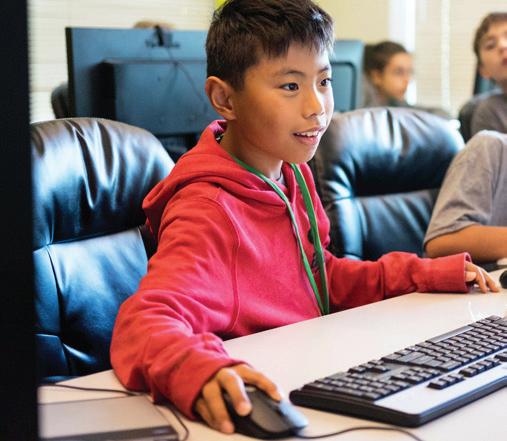
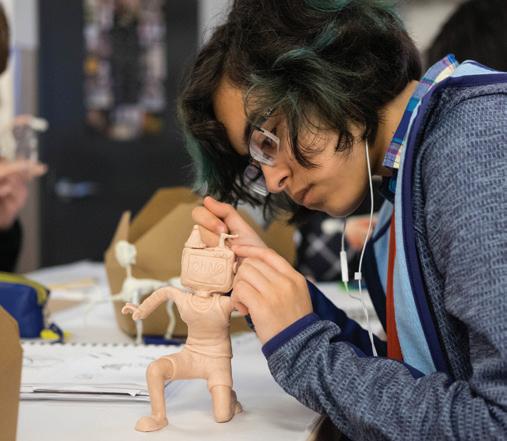
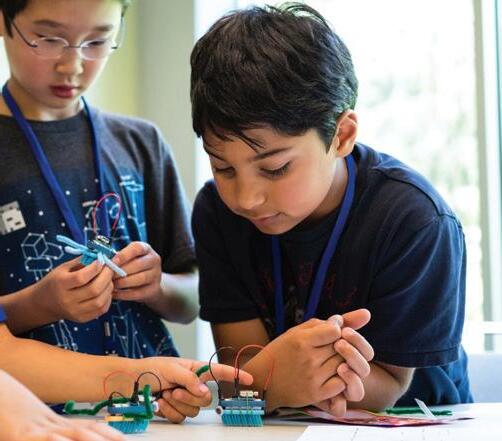
DigiPen Academy’s Summer Programs offer students aged 7-18 the opportunity to discover where their skills are today and go wherever their imaginations can take them! Through collaborative, hands-on projects, we make it fun to learn the fundamentals of video game programming, art and animation, game design, engineering, and music and sound design. For summer, we’re offering small class sizes and live-online instruction. Our fantastic teachers will ensure your student’s engagement, success and fun!


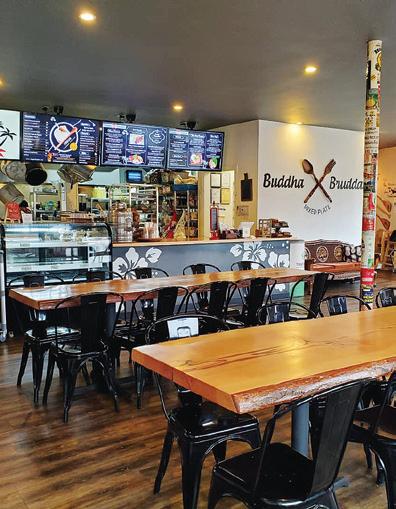
Buddha Bruddah Mixed Plate, a food truck creating delicious Asian fusion and Hawaiian mixed plates, has long made its way around town with a menu of Thai staples like red curry and phad thai and Hawaiian treats like kalua pork and huli huli chicken. There’s also been a permanent restaurant in Rainier Valley since 2018 — and you can order online for delivery or pickup. 2201 Rainier Ave. S., Seattle, buddhabruddah.com


tents have sprung up around town?)


New in town

by JULIE HANSON & JILLIAN O’CONNOR / photos by JOSHUA HUSTON
Even at this time of year, every so often we get a glorious day that just calls out for a family walk. Or like good Northwesterners, we bundle up and walk even on
the days that aren’t so glorious. Let’s explore the lovely concept of a walk followed by a stop for sustenance at a place with kid-friendly outdoor dining. (Have you seen how many dining
Here we highlight a few of our favorite spots to stretch your legs, see some sights and then enjoy a treat (and maybe a beer too).
Be sure to wear masks and avoid crowds, and if tent and patio dining are not within your family’s comfort zone, maybe pack snacks that you can enjoy in a nearby park or in your car.
Locally owned Black Coffee Northwest uplifts the community, giving families a safe space to meet new people and make new friends. Built on the ideals of social justice and activism, Black Coffee Northwest is not only a coffee shop, but a place that encourages creativity, empowerment and leadership. Be sure to visit Pop Up Saturdays, hosted by the cafe to give Blackowned businesses a way to showcase their talents and products. Stop in for the coffee too! Try the Melanin Mocha, a dark chocolate mocha with a twist, or The Karen, a white chocolate mocha.
– Jasmin Thankachen 16743 Aurora Ave. N., Shoreline; blackcoffeenw.com
Downtown Seattle: Lots of people seem to be staying away from the city. Go see what’s going on!
Parking and crowds probably won’t be the usual hassle. At Pike Place Market, Old Stove Brewing is a sweet spot for sitting. The Seattle waterfront is always a fun walk, and Ivar’s Fish Bar is open for takeout.
Discovery Park is an expansive, varied gem. The former military installation has history, wildlife, miles of trails – and beach access! You could spend days or weeks here. Dirty Couch Brewing is a fun spot to sit and relax afterward (outdoor seating is a bit limited).
Alki, West Seattle: With nice, wide sidewalks (and beaches!), families can keep a safe distance despite this being a very popular spot. There are many food and drink options; just a few that come to mind: Pegasus Pizza, Spud Fish & Chips and Cactus, and there’s plenty of coffee to be found. (Don’t forget: the West Seattle Bridge is closed, so put that GPS to use.)
Burien: If you’re an urban-hiking type, start anywhere on Southwest 152nd Street and explore the streets of Burien. Also nearby: Seahurst Park (on the beach, with
plenty of room to roam), Eagle Landing Park (forested with a trail to the beach). Eats and drinks: Elliott Bay Brewhouse, Logan Brewing Co. (accepts reservations for heated outdoor tables), Pit Stop Taproom & Pub. Two more popular restaurants with takeout but no inside seating: Burien Fish House and Bok a Bok fried chicken.
Des Moines Marina: Kids will love seeing the boats and wildlife in this working marina or playing in the adjacent Des Moines Beach Park (note: it’s paid parking for both marina and park), which also connects to the Des Moines Creek Trail. Rest up afterward at Quarterdeck, a converted shipping container where drinks, snacks and some heartier fare are served (and it’s kid- and dog-friendly). Enjoy deckside views of the boats, the water and Vashon Island, or be cozy in the tent out back. At the marina’s south end, Anthony’s HomePort has pitched a tent on its second-floor balcony.
Kent: The outdoor shopping complex Kent Station has done a great job putting up heated but ventilated tents outside its restaurants, offering lots of choices for kid-friendly outdoor dining. Stroll through the neighborhood or nearby downtown Kent, or go a bit farther afield where you can find access points to the Interurban or Green River trails. Also not far from Kent Station: Airways Brewing Bistro & Beer Garden, with covered outdoor seating.
Downtown: Old Stove Brewing, 1901 Western Ave., oldstove.com; Ivar’s Fish Bar, 1001 Alaskan Way, ivars.com
Magnolia: Dirty Couch Brewing, 2715 W. Fort St., dirtycouchbrewing.com
West Seattle: Pegasus Pizza, 2768 Alki Ave. SW, pegasuspizza.com; Spud Fish & Chips, 2666 Alki Ave. SW, alkispud.com; Cactus, 2820 Alki Ave. SW, cactusrestaurants.com
Burien: Elliott Bay Brewhouse & Pub, 255 SW 152nd St., elliottbaybrewing.com; Logan Brewing Co., 510 SW 151st St., logan.beer; Pit Stop Taproom & Pub, 216 SW 153rd St., pitstoptaproom. com; Burien Fish House, 133 SW 153rd St., theburienfishhouse.com; Bok a Bok, 131 SW 153rd St., bokabokchicken.com
Des Moines: Quarterdeck, 22307 Dock Ave. S.,
Renton: Gene Coulon Memorial Beach Park is a great place to walk along Lake Washington. (In fact, the public docks let you feel as if you’re walking in or on Lake Washington!) Ivar’s and Kidd Valley are open for takeout, and there are places to eat right outside or elsewhere in the park.

quarterdeckdm.com; Anthony’s HomePort, 421 S. 227th St., anthonys.com
Kent: Kent Station, 417 Ramsay Way #4532, kentstation.com; Airways Brewing Bistro & Beer Garden, 320 W. Harrison St., airwaysbrewing.com
Renton: Ivar’s Seafood Bar, 1201 Lake Washington Blvd., ivars.com; Kidd Valley, 1201 Lake Washington Blvd. N., kiddvalley.com
Beacon Hill: Perihelion, 2800 16th Ave. S., perihelion.beer
Northeast Seattle: Ravenna Brewing, 5408 26th Ave. NE, ravennabrewing.com; Krua Thai Family Kitchen, 2515 NE 55th St., kruaseattle.com
Green Lake: Bongos Cafe, 6501 Aurora Ave. N., bongosseattle.com
Ballard: Stoup Brewing, 1108 NW 52nd St., stoupbrewing.com
Kenmore: 192 Brewing Co., 7324 NE 175th St., Suite F, (also 1405 S. 2nd St., Mount Vernon); 192brewing.com
Beacon Hill: If you’re in the neighborhood for a stroll, Perihelion is good for kids and dogs, with covered outdoor seating, heaters and fire pits. It’s serving up blue cheese truffle burgers, blackened salmon sandwiches and pot pies, among other options, as well as creative beers. (How about a pink guava basil saison or a Martian red IPA?)
Northeast Seattle: Walking in the ravine in Ravenna Park? Ravenna Brewing is a good stop. It’s an outdoor, covered (but not enveloped) area where you can take along your baby and your dog and even older kids, who can get food from the featured truck of the day. You can also order from Krua Thai, just across the side street, or the nearby Kidd Valley. The truck lineup includes Kiss my Grits, Paraiso Filipino Fusion and Oskar’s Pizza. Adult perks: Hazy IPAs and ciders.
Green Lake: After walking (or rolling) around Green Lake, you can grab a meal at Bongos Cafe, a casual, quirky stand in the sand. This outdoor Caribbean food stand with patio dining is a favorite for parents with (and without) kids. Standouts include all the spicy sandwiches, Cuban black beans and jerk chicken. Kids’ meals available too.










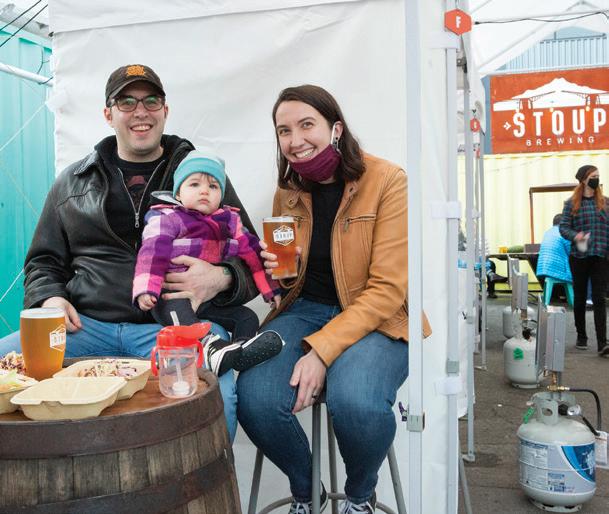
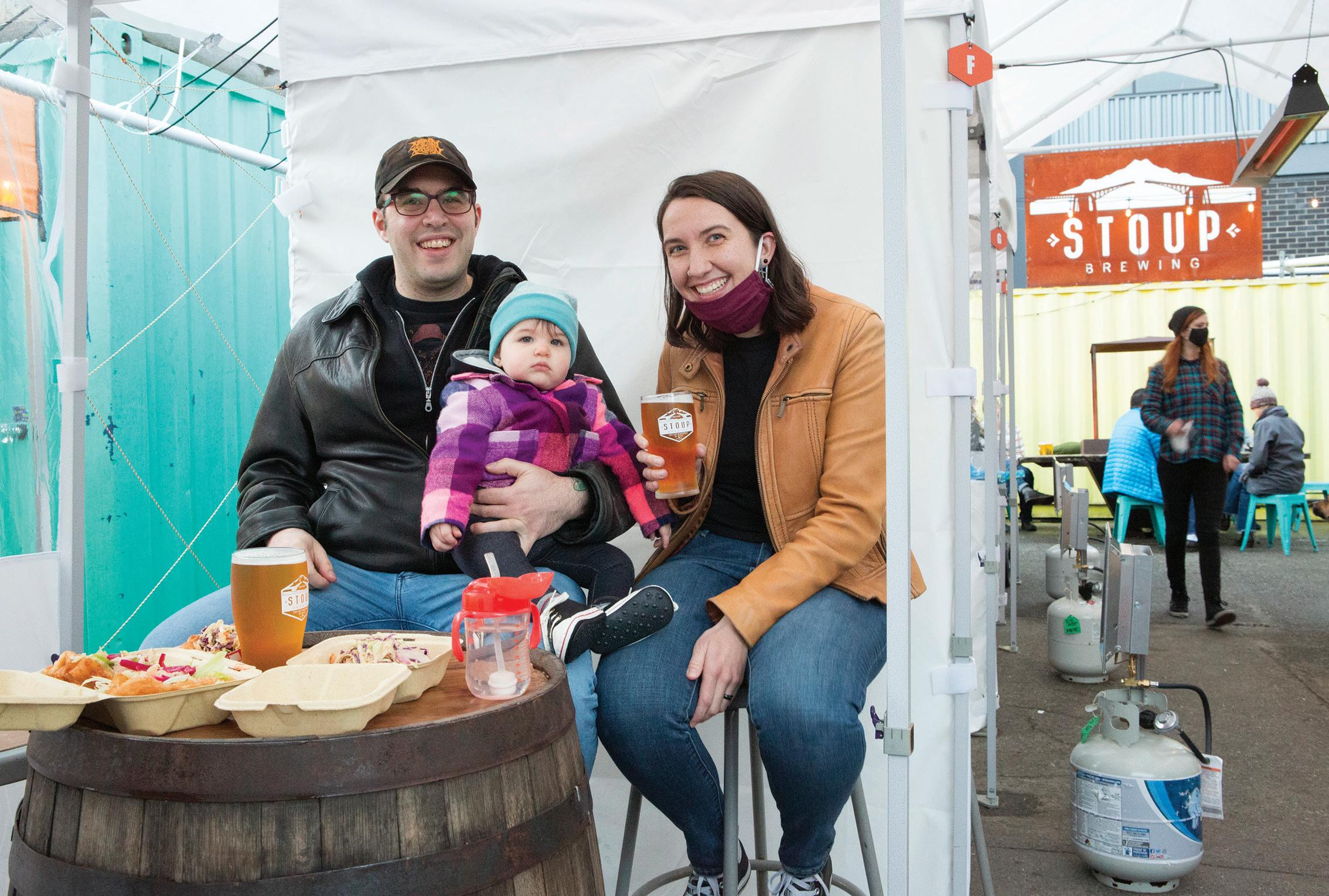
Ballard: If you’re wandering or biking in Ballard, take a break at family-friendly Stoup Brewing. The big patio, always a great place to visit on a sunny day to grab a beer with a baby and a dog, is now covered and ready for COVID-era visitors. Featured trucks: Tat’s Truck (Philly cheesesteaks!), Kathmandu Momocha (Nepali momos!) and Off the Rez (Native American frybread!).

Kenmore and Mount Vernon: 192 Brewing Co.: You can bike right up to this large outdoor dining spot and brewery that’s just off the Burke-Gilman Trail in Kenmore. It’s got a kids’ menu with a cheeseburger, a quesadilla and more, and a grown-up menu with bratwurst, a barbecue pork sandwich, nachos and other classic brewpub grub (cider, too). And if you’re near Mount Vernon, check out the second beer garden location there.
Where do you love to shop for pet supplies?

Bailey’s food is bought at Health Mutt in Roosevelt. We get points each time we purchase, and our 12th bag is free. The lady there is very nice and Bailey gets free treats!
A new bookstore encourages kids (and their grown-ups) to rediscover fiction
by
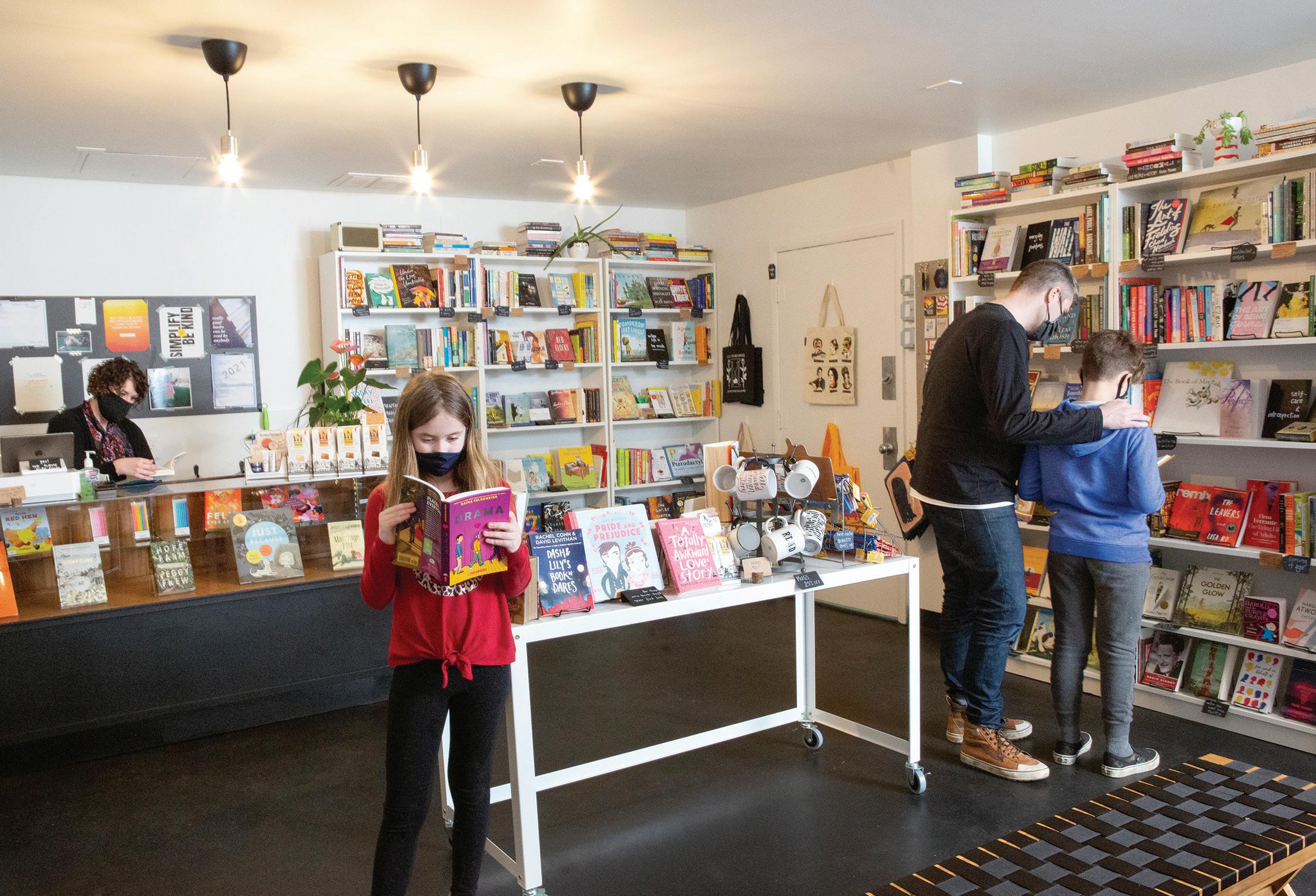
When Kari Ferguson decided to open a bookstore, she did so with some hesitation. After all, the pandemic has not been particularly kind to small businesses. Nevertheless, she opened
Oh Hello Again in December and is helping people in Seattle rethink how they shop for books. Although Ferguson has a great love of children’s books (she has a postgraduate certificate in children’s literature and founded
the now closed Dickens Children’s Books & Publishing Lab in Vancouver, Wash.), the cozy space she opened on Capitol Hill caters to all ages. It operates on the idea of people engaging in bibliotherapy, using reading (and fiction, in particular) to understand themselves better, to process and work through different issues or concerns that they are experiencing, in
New in town
Here are a few of the places that have closed during the pandemic, and a few new businesses that have sprung up or expanded.
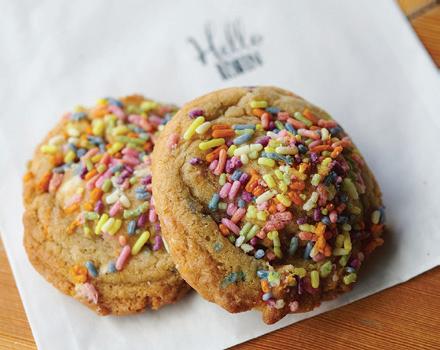
A big hello:
3 Hello Robin (sweets), University Village, opened location in 2020 (also on Capitol Hill)
3 Oh Hello Again, Capitol Hill, opened in 2020
3 Black Coffee Northwest, Shoreline, opened in fall 2020
3 Ada’s Technical Books, expanded into Fuel Coffee shops (Wallingford, Montlake and Capitol Hill)
3 Friendly Hmong Farms CSA (produce and flowers), opening in March to help farmers affected by COVID-19 situation, FriendlyHmongFarms @gmail.com
3 Rubinstein Bagels, South Lake Union, previously delivery only, opened storefront in late 2020
3 Hello Em Viet Coffee & Roastery, ChinatownInternational District, opened in 2021
3 Shake Shack, University Village, opened in 2020 (national chain)
A sad goodbye:
3 Retroactive Kids (toy store), Columbia City, closed in 2020
3 Kids Club Salon & Toys, University Village, closed in 2020
3 Momo boutique, Japantown-International District, closed fall 2020
3 Baby & Co., Belltown, closed summer in 2020
3 Can’t Blame the Youth, International District, closed in August 2020
3 Columbia Sportswear, downtown Seattle, closed in 2020

It’s so much more than a gift!

A portion of the proceeds from each birth certificate benefits the Children’s Trust Fund of Washington, administered by the Washington State Department of Children, Youth & Families Strengthening Families Program.
• This official birth certificate is personally signed by the Governor and State Registrar.





• Frameable keepsake.
• For each $45 purchase of an Heirloom Birth Certificate, $20 is tax deductible.

To find out more information on Children’s Trust and child abuse prevention in Washington State visit: www.dcyf.wa.gov/about/governmentcommunity/community-engagement or visit the Department of Health to order your own Heirloom Birth Certificate.
DCYF FS_0013 (09-19)


part by putting themselves in the place of the characters.

• Certificate is 8 1/2 x 11 and includes the name, date and place of birth, as well as the name and birthplace of the parent(s).







“It’s important, too, for kids who are just learning how to deal with their emotions and figure out life,” Ferguson says. To support this practice, she arranges books by subject matter, which means you’ll find plenty of children’s and young adult books next to reading material catering more to adults.
If the books share the same category, they share a shelf. This also helps customers, whether they have children or not, come across books they might not otherwise have been exposed to in a different place – and certainly not online. “It’s really a store to browse in, which I think bookstores need to be now to find things you weren’t [necessarily] looking for. It’s about the experience,” says Ferguson.
Though her husband helps behind the scenes with operating the website, Ferguson’s shop is essentially a one-woman show: She built and painted the space herself, orders all the books and is the sole employee. She conducts a lot of research before ordering and categorizing — reading blogs, review sites and more. The store is ever-evolving, as more books come in and categories sometimes shift based on customer interest and feedback. Oh Hello Again also carries other products like calendars, candles and tote bags. A bonus: it welcomes dogs. When asked about the bookstore’s name, Ferguson says, “I came up with the name based on the online store I started … I picked Oh Hello Again because when you see these classic or familiar books, it feels like you are meeting an old friend who you haven’t seen in a long time. It works for the new shop too, because we carry a lot of familiar titles, but with the lens of bibliotherapy, you are seeing them in a new light.”
Once the pandemic is under control, Oh Hello Again would like to do author readings and book signings, and perhaps children’s story time and a book club for patrons. In the meantime, customers can join a subscription service in which they receive two to four handpicked books per month based on a theme and preferred age range. This has also allowed people who live out of state, or who otherwise can’t visit the store in person, to be a part of the magic. Considering all we’re facing in the world, bibliotherapy is arguably needed now more than ever.
q Oh Hello Again, 324 15th Ave. E. #101; ohhelloagain.com
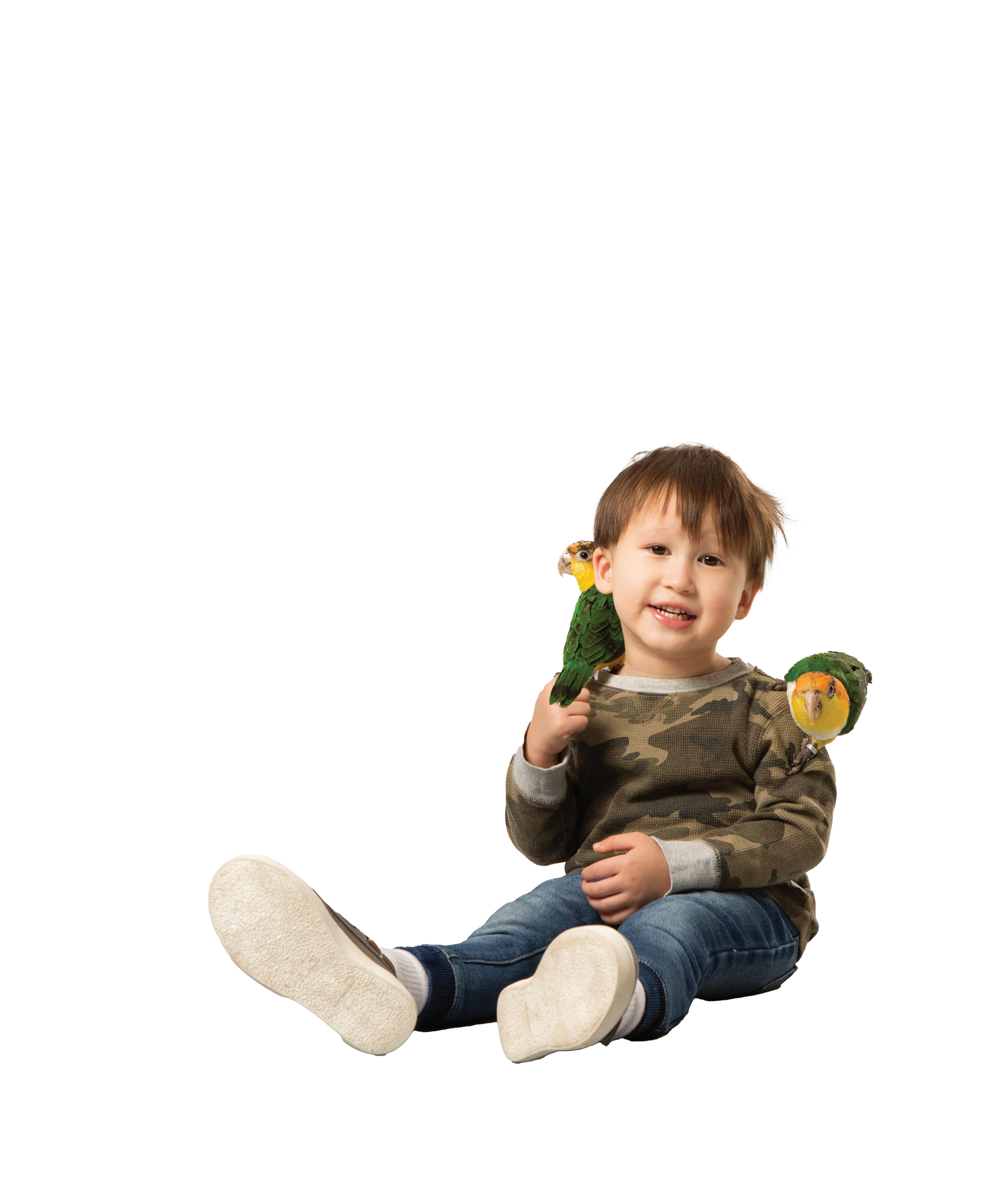
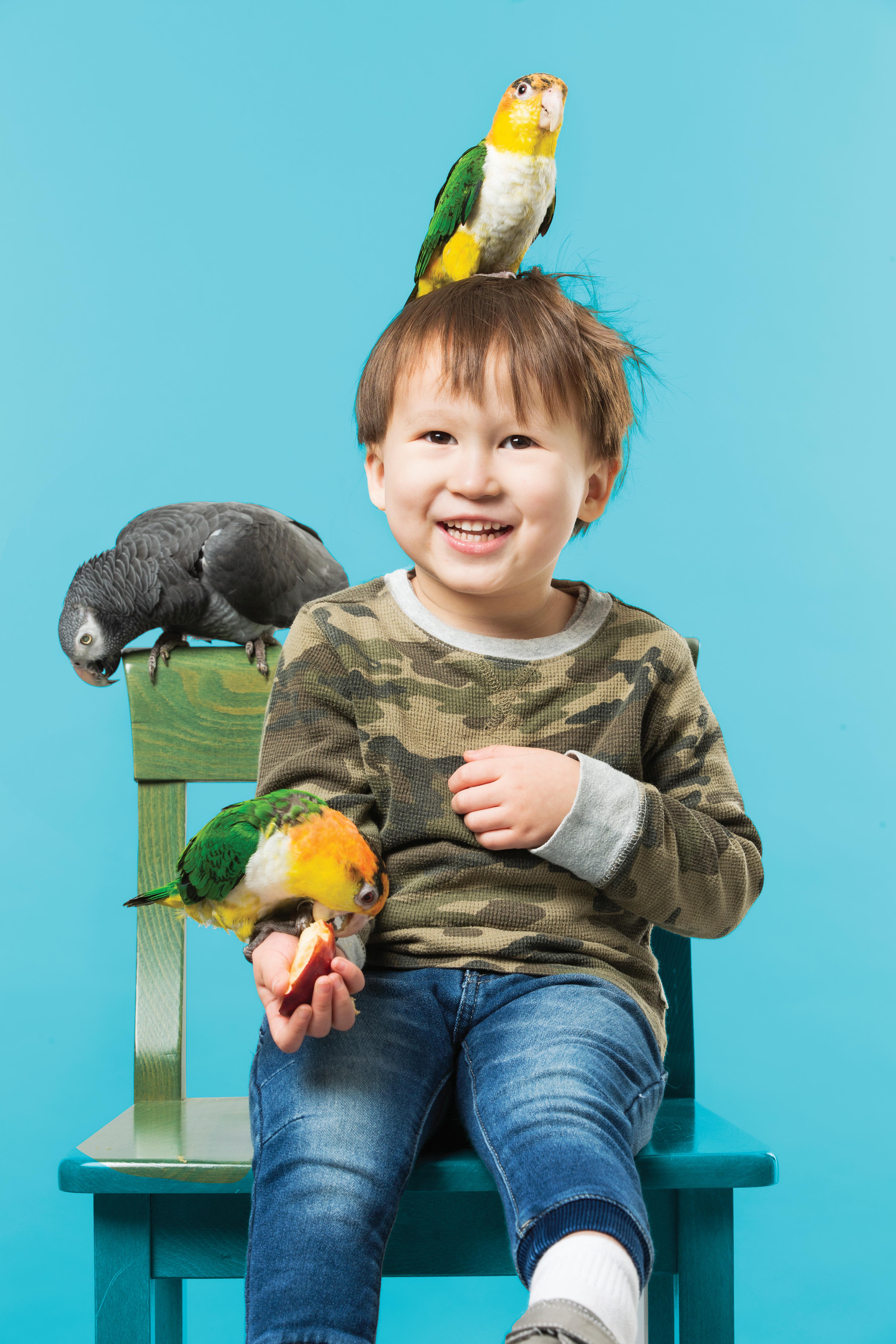
Caiques are known for their fun, clownish behavior, and they love human attention.
“Trombold and Lada are the only ones [we have] that we handraised, because I want something that I can handle myself,” says Idris. The caiques are gentle because they were hand-raised, says Idris. “They’ve been with us ever since they were babies.”
Because the birds spent their babyhood with the family, “they’re really close with Dimitri,” she says.
When she was a child, her family raised falcons, outside with gloves, and she has learned it’s important to know bird body language.
Unfortunately, a lot of people have had to give up pet birds during the coronavirus pandemic. Idris is a fan of a two-month waiting period for anyone committing to adopting the pets, to avoid impulsive bird-buying decisions. “People want birds for Christmas and now they’re rehoming them,” says Idris. “That’s the biggest problem right now.”
Some of the increased need for rescue this past year is also due to the steep cost of bird care, says Idris.
“A lot of people rehome their birds because they cannot keep them because of the upkeep of the money, from COVID actually, so usually they’ve had birds for a long time and they can’t keep them any more, because it’s too expensive,” she says.
Even though people are drawn to parrots big and small because of the potential of having a bird who talks, Idris warns that’s not a good or well-thought-out reason to get a parrot, especially since they don’t all speak, and because the talking species can have a tendency to be more aggressive.
“I would say don’t get a bird if you just want them to talk,” she says. “I would not get a bird that talks, because usually those birds are the ones that are problematic” for owners.

The parrots she does recom mend for families are conures, since they’re less apt to become attached to just one person than are other parrots.
“They’re family birds,” she says.
The caiques are fed a diet that’s “a lot of vegetables, grains, fruit, melons” and they’re now big enough that Dimtri doesn’t have to help hand-feed them.

But in a funny turn, Dimitri might have his eyes on a pet that’s not avian at all.
When asked what his favorite animal was, what was his enthusiastic reply?
“Hamster!”
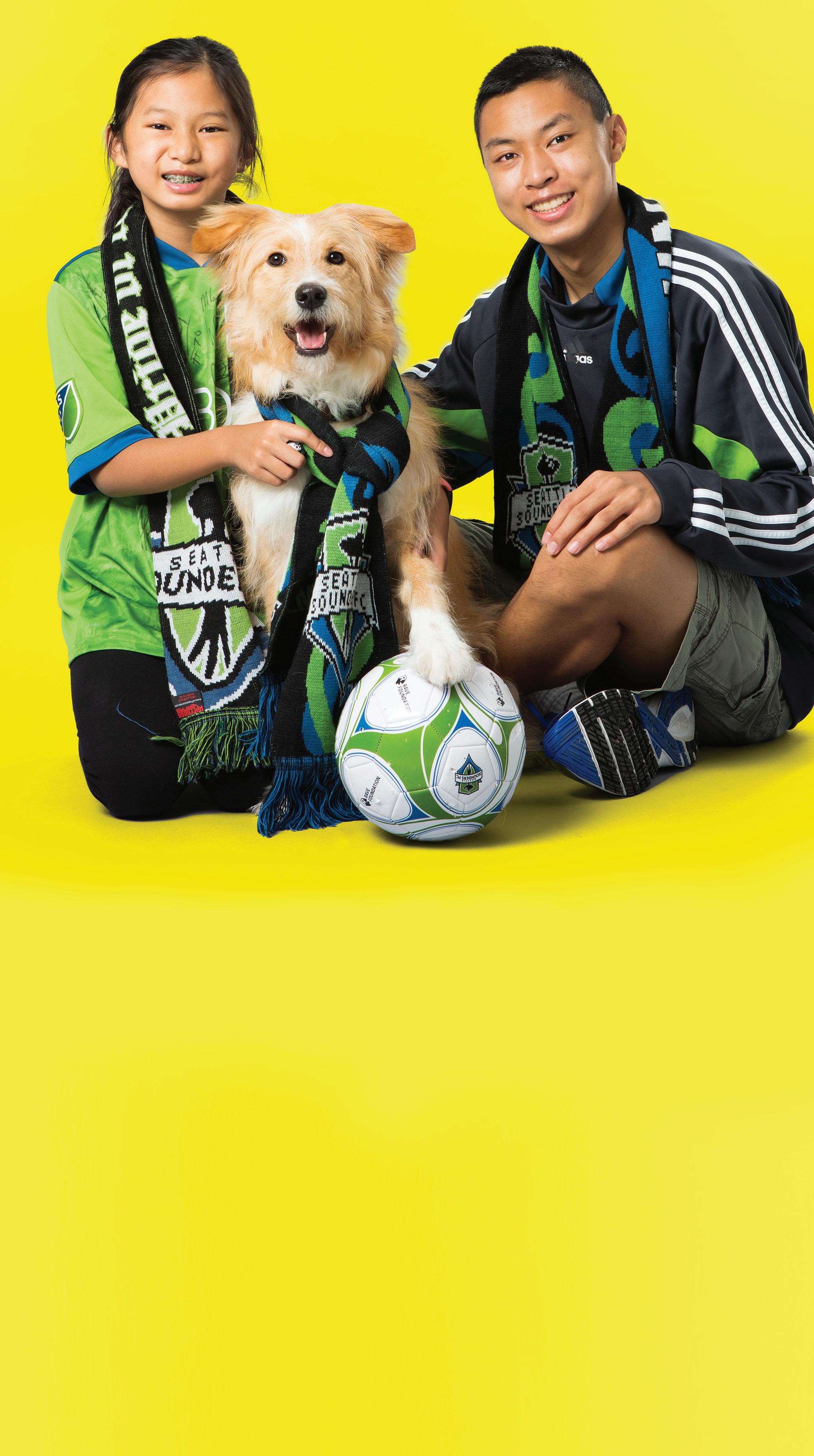
While 2020 was a challenging year for many, for one rescue dog it was a blessing in disguise. Teddy Bear, a mixed-breed poodle and Australian cattle dog from a puppy mill in Texas, never expected his life to change.
But that’s exactly what happened when he was adopted by the Basilio family.
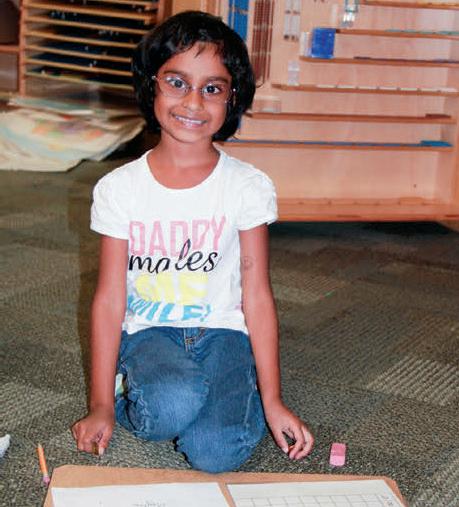
Nine-year-old Mia Basilio and her 14-year-old brother, Christian, had always wanted a dog. And their time during lockdown only made that
desire stronger.
“Since COVID was happening, and we were kind of bored, we decided to see what kinds of dogs were out there,” recalls Mia.
Determined to persuade their parents to get a dog, the duo created a PowerPoint presentation loaded with pictures of wide-eyed puppies. Mia and Christian hoped that the presentation would show their parents that owning a dog could help them learn responsibility.
Their plan worked. Soon the two siblings were scrolling through the pages of Dog Gone
Seattle (doggoneseattle.org), a local dog-rescue website, looking for their future pet.
That’s when they saw Teddy Bear. At only a few weeks old, he was a golden ball of fluff.
Mia and Christian instantly fell in love with him.
“He really stood out,” Mia remembers. “He was really cute, and we’d never seen a dog like him before.”
To ease into dog ownership, the Basilios decided to foster Teddy Bear before officially adopting him. They soon learned that bringing a
BY HALLIE GOLDEN
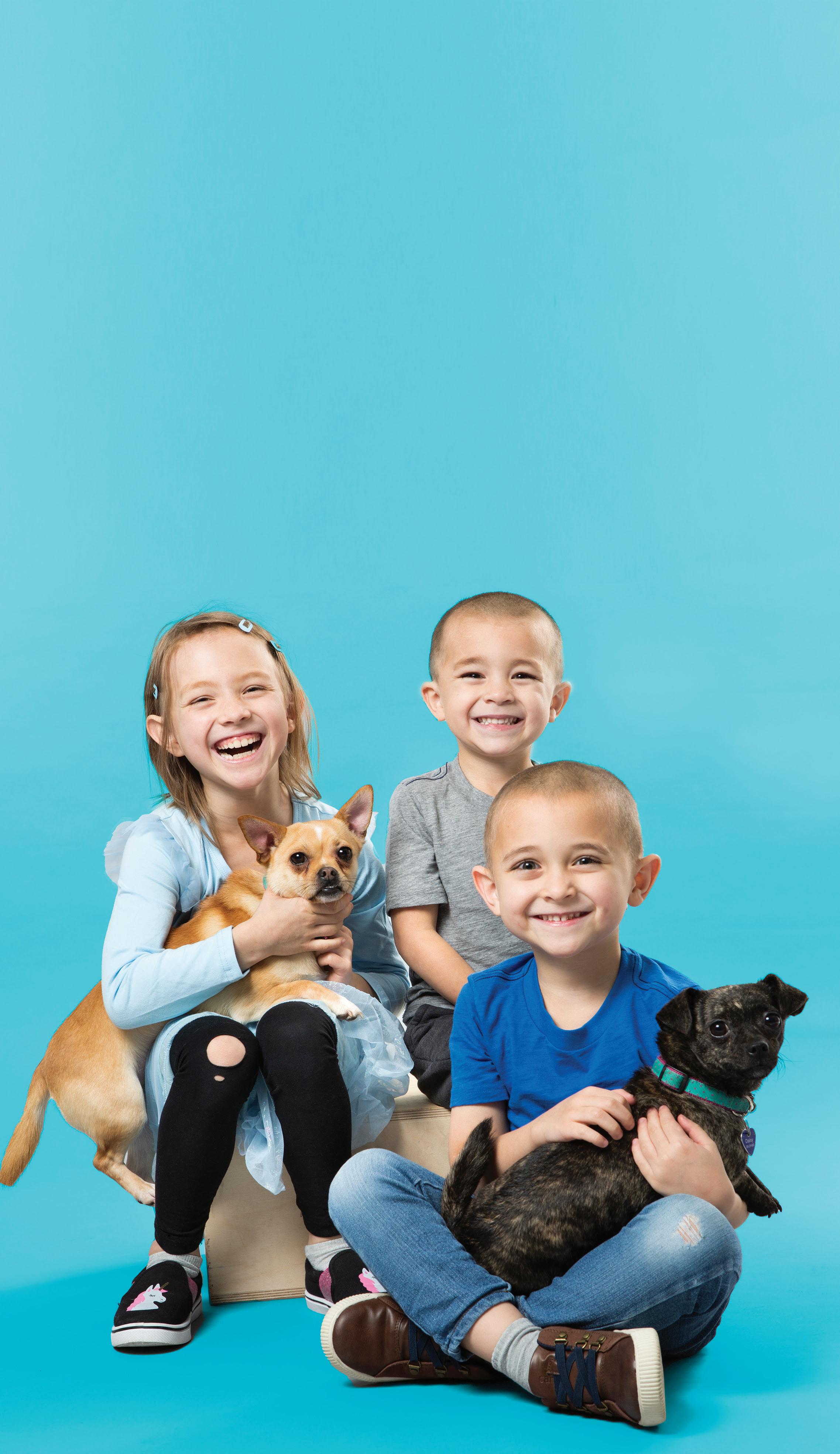
Emily Christie was washing dishes when she noticed her West Seattle house, normally buzzing with the sounds of four young children, had become just a little too quiet.
She looked around and realized she didn’t have eyes on her youngest, 23-monthold Lilyani, so she started to search.
She eventually found her inside the storage room, in a
position that in recent months had become all too familiar — cuddling with their one-anda-half-year-old dog, Daisy. In this case, they were scrunched together in a small plastic container on top of a collection of Rice Krispies Treats.
“I think they’re kind of like two peas in a pod. That’s what it seems like,” says Christie. “They seem to have some sort of connection.”
The family adopted Daisy, along with her sister, Rosie — both Chihuahua, pug and miniature pinscher mixes — back in October 2019.
Christie said her husband had long wanted to bring a dog into the family, but she wasn’t convinced it was a good
plan. Growing up, her experience with pets only extended as far as owning a goldfish, and now that she had children of her own, the furthest the couple had delved into the pet arena was having a pair of hermit crabs.
But then she heard that her sister-in-law’s dog was pregnant, so the family decided now was the time. Christie said they opted to adopt two dogs because she didn’t want them to be lonely.
It seems they couldn’t have made the decision at a better time.
Less than six months later, the COVID-19 pandemic had hit. As a result, the family has had to remain largely homebound, with Zia, 7, and Amon, 5, learning remotely since March.
CONTINUED ON PAGE 20 >
We are grateful to every family who took the time to email us their great photos of life with their furry, scaly and feathered friends!
We regret that we can’t use all of the stories and pictures we received.
We’d like to add two honorable mentions here. Thanks to everyone who participated. Please keep us up to date on your family’s animal adventures!
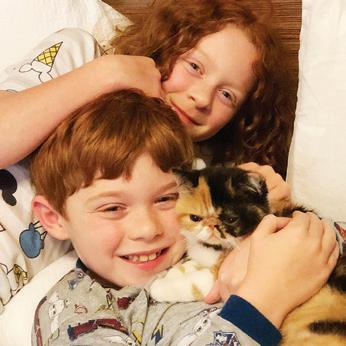
Cleo is a calico exotic shorthair who joined her family, including 8-year-old twins Tate and Lucy Naismith, in July on Mercer Island. She loves playing with a crumpled Post-it note, and is already a Seahawks fan.
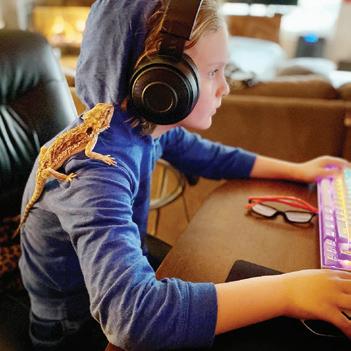
This house in northwest Seattle’s Broadview neighborhood is an exciting place for pets and people. Kids Indie and Miles Morse (pictured) have a lot to do other than online learning, since they have a dog (Gouda), a cat (Orangey), two chickens (Peep and Chippy) and one bearded dragon (Spike) on the premises.





by JILLIAN O’CONNOR
Walking the dog is big in a pandemic, and you’ve doubtless seen memes since last March quoting the dog asking the humans to just leave him alone: “I’ve been on 20 walks today!”
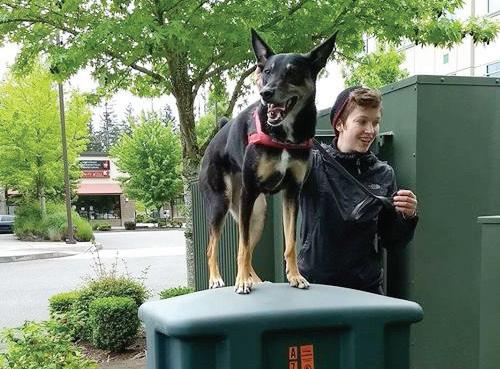
But dog trainers know there are ways you can have a good time with your pet and try something new too. Dog trainer Tegan Moore practices parkour with her dogs now that they’re at home together — a lot.
“For parkour, you don’t need anything except a harness that you can use to help support the dog as they’re doing obstacles, so if you have a dog and you have a harness, you can do parkour,” says Moore.

Outside, that can mean climbing over or under park benches, or even making a quick bounce off a wall. Inside, that can mean walking on a small bench, onto a chair, and then shimmying under a bench.
“Dog parkour is a way to use the everyday world to engage your dog in jumping, climbing, crawling, turning,
balancing, and thinking hard about what their bodies are doing. It’s not just jumping on and off things — it’s creating a shared game for you and your dog as a team, out of nothing but the environment around you,” says Moore’s website, temeritydogs.com.
Moore points out that doing agility training with dogs — something she recalls begging her mom to let her do as a kid — is a serious enterprise, with standards for equipment and techniques. On the other hand, parkour is fun and accessible and something that can easily be improvised at home.
“You can still create little obstacle courses, even if you’re on very strict lockdown,” says Moore. “This is kind of how we passed time during the first month of lockdown. We just did parkour in the house.
“It does involve jumping on furniture, but in my case that’s not a problem,” she says, laughing.
It’s also a great way to get younger family members involved.
“I’ve seen a lot of kids really
succeed in doing parkour with dogs,” says Moore.
As we spoke on a video call, she had her dog Reckless run a demo of some simple at-home parkour moves, such as squeezing under a broomstick over cones, onto a step stool and ultimately standing on a chair to await a treat.
“They need more stimulation and good ways to help them understand what is OK and what isn’t. Just having that good rapport with your dog, where they really trust you, that you know what’s going on and you know how to explain to them what you want,” says Moore, who explains that she rewards her dogs for trying or even just considering a move, and doesn’t push dogs to do anything that seems scary to them.
It’s also just fun, she notes. She recommends that pet owners looking for more parkour information visit the website of the International Dog Parkour Association, dogparkour.org. Sarah Owen, an instructor at Ahimsa Dog Training in Ballard (ahimsadogtraining.com) teaches a course on puppy tricks. (The school also has offered courses that teach agility with a casual approach.)
Tricks classes are an easy way to have dogs training at the facility but maintain distance from other dogs and their people, without having to share agility equipment or other surfaces. The course Owen teaches is not parkour or agility, as she notes, but it does offer an opportunity to bond with your dog and challenge their minds by doing moves like spins, crawling through tunnels, learning play bows and rolling over.
“I think the nicest thing about teaching tricks or agility is that it really focuses on building your relationship with your dog and improving your communication with your dog,” says Owen, “so rather than a focus on ‘You must do this thing because I told you to,’ it’s ‘Let’s do this fun thing together.’ ” Owen notes that a toddler’s play tunnel can double as a casual puppy or dog tunnel.
The tricks are a way for dogs to get valuable mental, as well as physical, exercise. Ahimsa even offers an opportunity for dogs to earn an American Kennel Club trick dog title. Most tricks don’t require special equipment and can be done casually at home by interested families. AKC’s trick checklists are available online, says Owen, at akc.org/sports/trick-dog. (There are instructional videos, too.) If your dog needs something to do these days, there’s no barrier to learning tricks on your own.
by JASMIN THANKACHEN
If you’re a pet owner, you probably already know about the common foods your canine or feline friend should avoid. Add to that a laundry list of plants they shouldn’t get their paws on.
The American Society for the Prevention of Cruelty to Animals (ASPCA) lists more than a thousand plants that are toxic to pets. Each one causes symptoms ranging from gastrointestinal upset to vomiting, organ damage and sometimes death, depending on the amount consumed. With many flowers and plants blooming now, it’s an important time to review the contents of your yard and plan your garden for pet-friendly foliage. It’s also a great time to take an inventory of any harmful plants that have made it
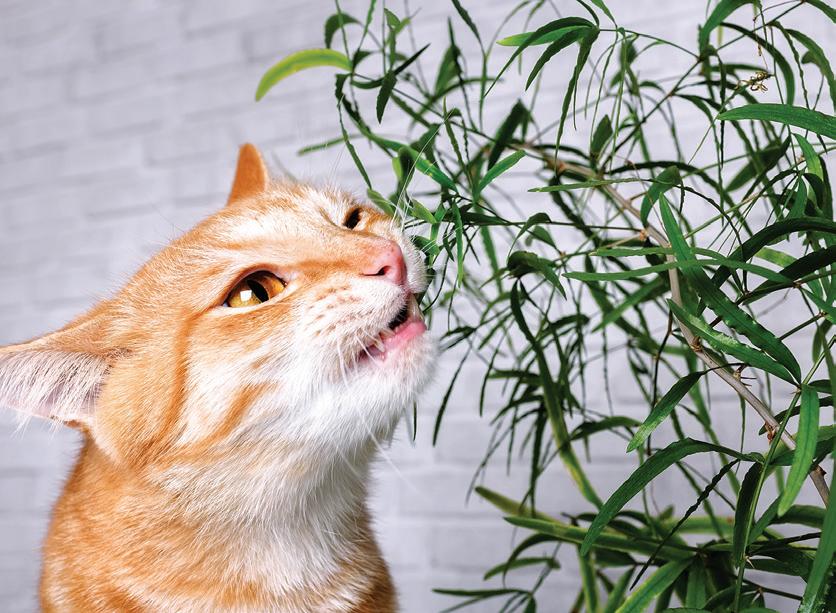
into your landscaping. Choose to replant them in sections of your yard that are out of your fur babies’ reach or make the decision to remove those plants.
Sarah Bean White, a Renton resident, was surprised to find Montaigne, her 2-year-old golden retriever, vomiting after he spent some time outside in the yard. White CONTINUED ON NEXT PAGE >

< Know your plants CONTINUED
had seen him chewing on her sago palm outside, but didn’t think much of it until she researched it online. “When I found out that it was [poisonous], I called the vet,” says White. “He told us to bring Montaigne in immediately. By the time we reached the vet he was lethargic, whimpering and still vomiting. The vet said he had a 50% chance of surviving.”
Montaigne was one of the lucky ones and went on to live a healthy life, but White says, “I think people make the mistake of thinking that it’s only puppies, but even adult dogs will get into this stuff. My advice for new pet owners is to familiarize themselves with all the poisonous things.”
And that doesn’t end at chocolate, garlic, grapes and raisins.
Some of the most common plant culprits in Pacific Northwest pet poisonings are native or easily grown flowers and plants like rhododendron, foxglove, milkweed, hostas, azaleas, ivy and lilies. If your pet eats one of those plants, it will likely result in an emergency visit to your
local veterinary hospital. Treatments include the use of activated charcoal to induce vomiting, IV treatments and antibiotics.
Many other common springtime bulbs and plants like daffodil, hyacinth, crocus, elderberry, lupine and morning glory are used in traditional landscapes around busi nesses and storefronts. When taking walks around the neighborhood, at parks or hiking on trails, it’s helpful to be aware of the greenery in the area. Take note if your pet is digging near gardens and redirect the pet to another location. Plants from bulbs are often highly poisonous, and the bulb is usually the plant’s most dangerous part.
Some very popular indoor plants can also be a danger to pets. Keep those plants out of reach. Train your pet to avoid digging up plants and taste-testing vegetation. If you suspect an animal has consumed a poison ous plant, contact your veterinarian immediately, or head to your local animal hospital for emergency care.
q For more information on toxic and non toxic plants, visit aspca.org




dog into a family isn’t always easy.
“It did take him a while to get used to our house,” admits Mia. “He kept going to the bathroom inside the house and it was hard to clean up all the time.”
Little by little, Teddy Bear learned the ins and outs of being a family dog in Seattle. Mia and Christian enjoyed training Teddy Bear and teaching him tricks. He even learned a useful trick to let his family know when he needs to relieve himself.
“He started ringing a bell when he needs to go outside,” says Mia proudly, “and now that’s what he does when he wants to go to the bathroom.”
These days, Teddy Bear, at 10 months old, is a full-fledged member of the Basilio family. And the months of love and affection from the Basilios have nurtured him into a secure and gentle dog.
Teddy Bear, who is still a puppy, loves taking walks around the neighborhood and visiting Nutty Squirrel Gelato for his favorite treat, a dog-friendly ice pop called a pupsicle. He also loves dressing up in costumes with Mia and Christian.
“He’s very smart,” Mia says, beaming. “He learned his tricks really quickly. And he’s very protective, but he’s also really gentle and nice. He loves people and other dogs.”
Like the rest of his family, Teddy Bear is a die-hard fan of the Seattle Sounders and wears his blues and greens with pride.
“He has his own Sounders ball,” says Mia, “and whenever we kick it around, he plays
Christie says the dogs have provided a nice, consistent outlet for the children.
“I was so happy that we got the dogs because it’s just an extra, you know, playmate for the kids when they’re tired of each other,” she says. “And dogs, as most people know, don’t offend you as much as maybe your sibling might. So it’s always a positive experience.”
Amon explains that he likes to give belly rubs to both dogs, while Pax, 4, says he enjoys playing fetch with them “because they like sticks.”
The dogs have very distinct personalities, according to Zia. While Rosie is “cuddly,” she says, Daisy is “playful, not much of a stay-inone-place dog unless it’s her crate.”











As the oldest, Zia helps take care of the dogs by letting them out in the morning, feeding them, and even bathing them and cutting their nails. When she goes upstairs for virtual second grade, she brings Rosie along, holding the little dog in her lap as she listens to her teacher.
Christie said the dog seems to make Zia feel more confident and secure, especially when she’s sharing during class.
“I think she feels kind of proud, too,” says Christie. “You can tell she has this pride that she has this thing that she’s taking care of. And it’s, like, sort of her thing. And she’s doing a good job.”
Asked how the dogs make her feel, Zia pauses for a half-second, then beams as she says a single word: “Happy!”
Unlock more from our magazine at seattleschild.com
Get us delivered to your inbox! Sign up for our eNewsletters
Find local resources for busy parents Visit our family-friendly directory of businesses
Don’t miss an issue! Subscribe and get Seattle’s Child mailed to your home
These ‘puppies with wings’ help family relax amid pandemic pressures
by HALLIE GOLDEN / photos by JOSHUA HUSTON
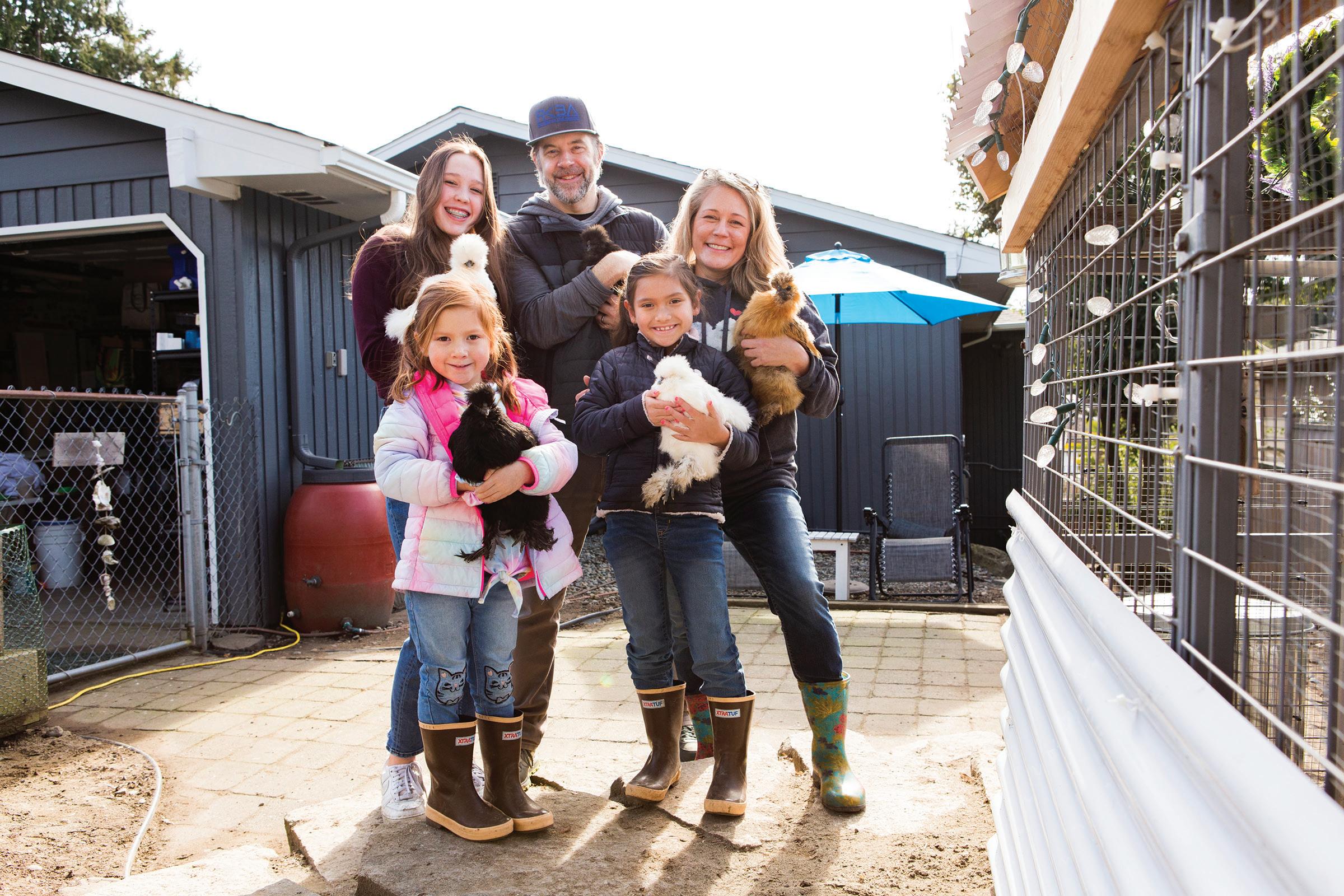
Two years ago, when Brenda Walden unexpectedly arrived at her family’s West Seattle home with four
tiny chicks in tow, her husband looked at her, surprised — then grabbed a scrap of paper. She had just been out on one of her regular trips to the feed store to pick up some supplies for the family’s horses, who live in a barn in Renton. But when she spotted the collection of spring chicks, Walden says, they were just too cute to leave.
So her husband jotted onto the paper, “These chicks are going to the barn,” adding
an underscore for her to sign and date. Then he rolled his eyes, saying “I know this isn’t going to hold.” It didn’t.
Today the couple, along with their children, ages 14, 16 and 18, have 13 chickens spread out between their home and the barn.
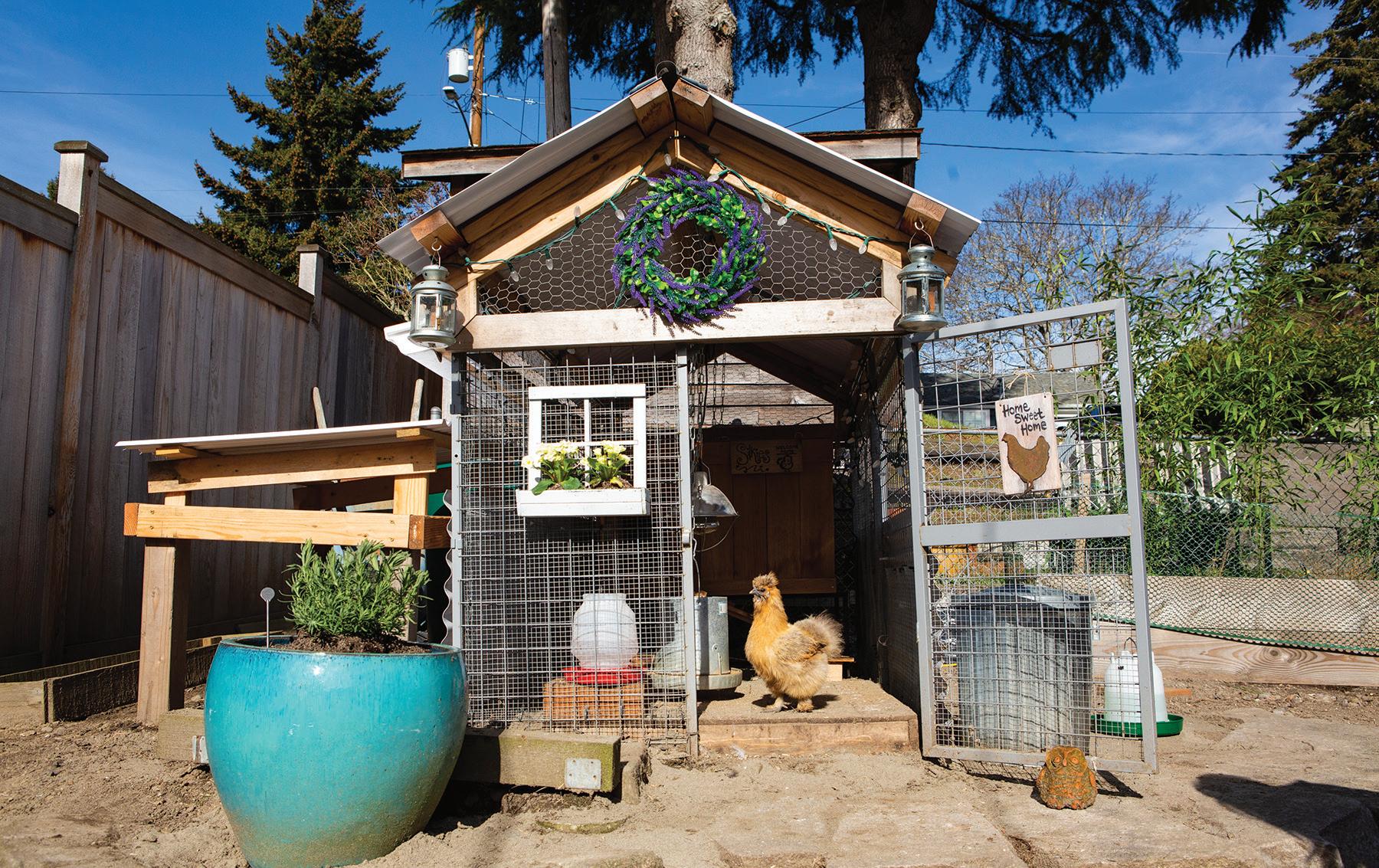
The birds living at their house full time are all Silkies and have names like Henny Penny,
Chipmunk and Venus. The Silkie is a breed believed to have originated in China that is about half the size of a standard chicken, can’t fly and has feathers that look a lot like fur. Walden, who likes to call them “puppies with wings,” says they feel as soft as silk.
Although the couple had to think fast initially when it came to housing for the pets (think a converted guinea-pig pen), they have since revamped a 4-by-8-foot dog pen, adding a roof to it, along with a wooden henhouse, feeder, water container and heat lamp. Walden also created signs to spruce up the space saying “Silkies Welcome Home” and “Home Sweet Home.”
Walden’s sister’s family became interested in chickens around the same time, so Walden gave them two Silkies. Her nieces, Pepper and Cricket Williams, 5 and 7 years old, have completely fallen in love with them.
“They carry them all around like dolls and they have a leash for them,” she says. “They dress them up.”
Each morning, Walden lets them out of their pen so they can wander around the yard. Then after she’s had some coffee and breakfast, she gives them her fruit scraps and
some extra veggies she buys just for them.
When Walden takes a break from her remote work, she says, she enjoys sitting outside with the Silkies.
“They love the attention, so they’ll come and they’ll hang out by my feet until I start picking each one up individually, and then I’ll throw them some snacks,” she says.
The chickens are extremely useful — producing at least four eggs a day during the spring and summer, naturally fertilizing
and weeding the yard and happily eating the family’s fruit and vegetable scraps. But Walden says she’s also found them to be helpful in more subtle ways. With the stresses of work and parenting mixed with daily life in the midst of a pandemic, she described them as being a nice escape.
“When you just hang out with them, they’re such simple animals, and they give you a sense of outlet,” she says. “There’s a sense of relaxation that they’ve created.”




































Looking for great read-alouds about pets that’ll make you feel warm and fuzzy inside? These next four titles are some of my favorites to recommend — to young listeners who love silly stories about pets, or for those looking for a reassuring story about a loved one who will always come back. – Rene Holderman, children’s book buyer, Third Place Books

Cone Cat by Sarah Howden; illustrated by Carmen Mok
Jeremy, a young cat, wakes up at the vet one morning with a cone around his neck, and he has no idea how it got there. When life with the cone presents all sorts of difficulties, he discovers the cone’s hidden uses. This is a silly romp about a cat who must suffer the indignities of a cone.
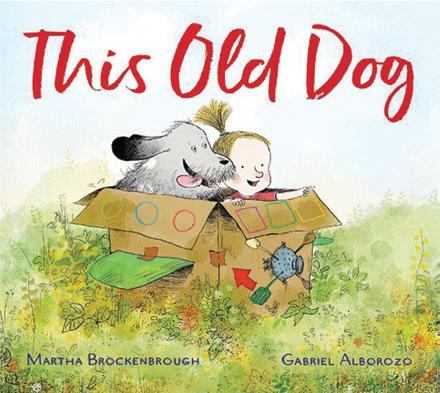
This Old Dog by Martha Brockenbrough; illustrated by Gabriel
Alborozo
This is a sweet story about a furry family member feeling out of step with the rest of his humans, especially since a girl was born. He’d prefer to linger over smells and sights on walks, and not be rushed. Could he be in perfect step with the family’s newest little walker?
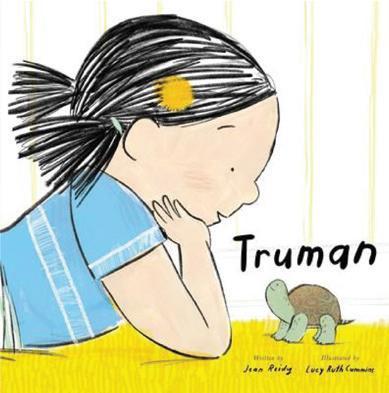
Truman by Jean Reidy; illustrated by Lucy Ruth Cummins
Truman, a small turtle, lives with his Sarah, and life is close to perfect. That is until one day, when Sarah gives Truman a kiss and tells him to be brave. Then she’s off, somewhere on the number 11 bus. Truman waits and waits, then decides he needs to go out on his own and find Sarah.
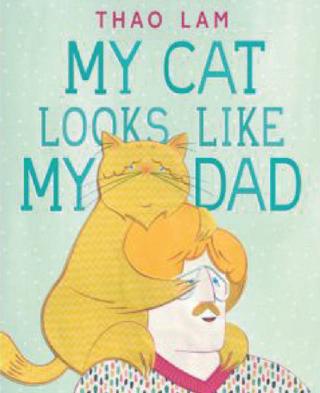
My Cat Looks Like My Dad by
Thao Lam
An illustrated story of similarities between the narrator’s dad and the family cat, using detailed paper collage techniques to convey them. Children will have a great time finding the things the dad and cat have in common. This book is quite a lot of fun!

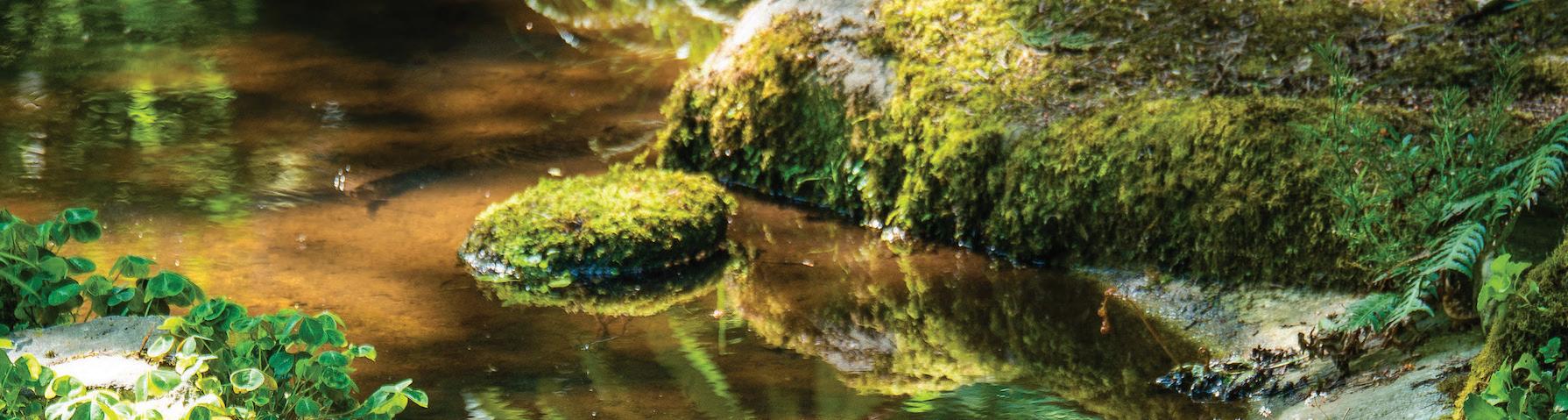





Deadlines, to-do lists, online school, meetings on Zoom. Stress and more stress. Where do you let it all go?
Bloedel Reserve on Bainbridge Island—150 acres of gardens, meadows, forests, water, wildlife, and walking trails designed for slowing down and breathing deep. Discover what a walk in the woods can do.