Advanced SEO and Content Authority Model

Page 1


ADVANCED SEO AND CONTENT AUTHORITY MODEL
INTRODUCTION

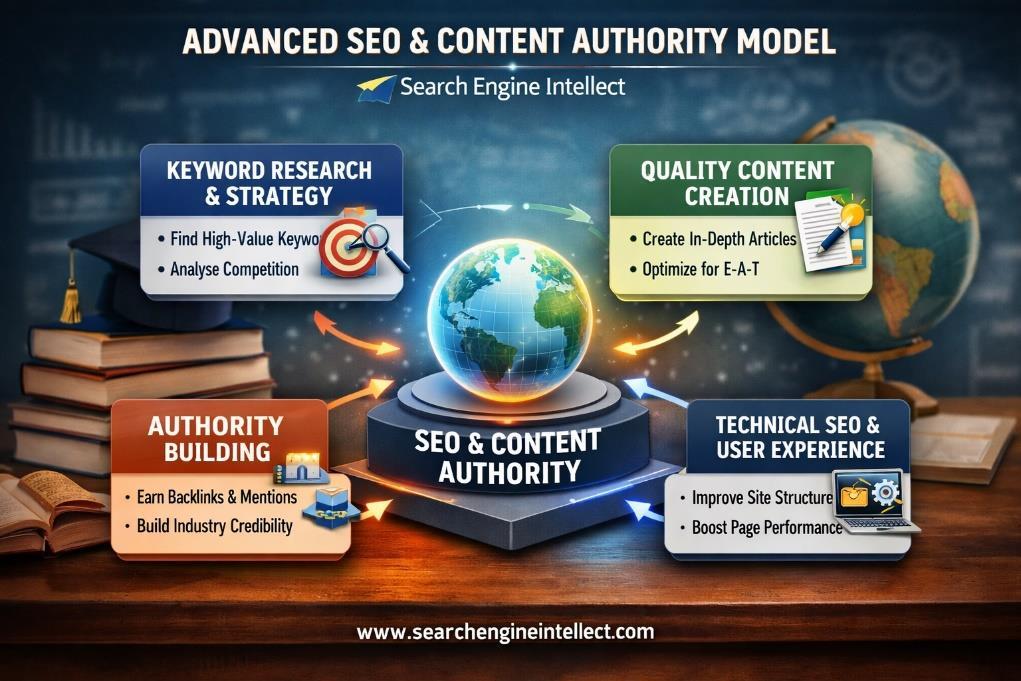
Search engines have evolved into intelligent systems that evaluate content quality, contextual relevance, and authority signals rather than simple optimization patterns. The Advanced SEO and Content Authority Model explains how modern websites and digital assets can achieve faster indexing, stronger visibility, and long term ranking stability through structured knowledge delivery. This model is designed for informational and educational content where trust, expertise, and clarity play a critical role in search performance. Instead of relying on promotional language or repetitive optimization, the framework focuses on how search engines interpret value and how users interact with high quality content.

UNDERSTANDING MODERN SEARCH ENGINE

BEHAVIOR

Modern search engines analyze content using semantic understanding and behavioral feedback. They evaluate how clearly a topic is explained, how well the content satisfies user intent, and whether the information demonstrates expertise. This shift has made advanced SEO less about mechanical actions and more about intellectual alignment with search systems. Content that is written with clarity and depth is indexed faster because algorithms can easily determine its relevance. Pages that communicate a strong topical focus are more likely to be positioned as reliable resources within their subject area.

CONTENT AUTHORITY AND TOPICAL DEPTH

Content authority is established when a document explains a topic comprehensively without unnecessary filler. Search engines assess authority by analyzing how thoroughly a subject is covered and whether the content maintains consistency throughout. Astrong content authority signal is created when information flows logically, concepts are explained in a structured manner, and the writing reflects understanding rather than surface level repetition. This model emphasizes depth over length, ensuring that every section adds value to the reader and strengthens the overall topical relevance of the document.

SEARCH INTENT ALIGNMENT AS A CORE DRIVER

Search intent alignment is one of the strongest ranking signals in modern SEO. When content directly answers what users are searching for, search engines detect higher satisfaction levels. The Advanced SEO and Content Authority Model integrates intent mapping before content creation. Each section is written to resolve a specific informational need, which reduces confusion and improves engagement. This approach enhances performance under a search engine optimization strategy that prioritizes usefulness over keyword density. Pages aligned with intent tend to retain rankings longer because they meet quality benchmarks consistently.

KEYWORD INTELLIGENCE AND SEMANTIC PLACEMENT

Keywords are treated as contextual indicators rather than ranking levers. This model avoids repetition and focuses on natural placement within meaningful sentences. Strategic usage ensures that keywords support understanding without interrupting readability. Over optimization weakens authority, whereas controlled usage strengthens clarity. By limiting keyword frequency, the model maintains professional tone and prevents dilution of meaning. This approach supports informational credibility while allowing search engines to recognize relevance signals accurately.

TECHNICAL STRUCTURE SUPPORTING

CONTENT QUALITY

Technical structure plays a supporting role in content performance. Even the most authoritative content can underperform if search engines struggle to access or interpret it. This framework emphasizes clean architecture, logical hierarchy, and efficient rendering. Proper structure improves crawl efficiency and indexing speed, allowing valuable content to surface quickly. Technical alignment ensures that informational resources built under a professional SEO training model maintain consistent accessibility across devices and platforms.

USER ENGAGEMENT AND BEHAVIORAL SIGNALS

Search engines monitor how users interact with content after it appears in results. Engagement indicators such as time spent, scroll depth, and navigation behavior help algorithms assess content quality. The Advanced SEO and Content Authority Model focuses on writing clarity and logical progression to encourage deeper interaction. When users find information easily and remain engaged, search engines interpret the content as valuable. This behavioral alignment strengthens trust signals and improves ranking resilience over time.

CONTENT REFINEMENT BASED ON DATA

SEO performance improves when content is refined using real interaction data. This model promotes continuous evaluation of how users respond to information. Instead of rewriting content frequently, targeted refinements are applied to improve clarity and depth. Data insights help identify gaps, allowing content to evolve without losing authority. This refinement cycle supports long term growth for assets developed under an advanced SEO learning framework without triggering instability from excessive changes.

CONTENT CONSISTENCY AND TRUST DEVELOPMENT

Trust is built through consistency. Search engines favor sources that maintain a stable voice, clear topical focus, and reliable information patterns. The Advanced SEO and Content Authority Model encourages uniformity in structure and tone across sections. This consistency helps algorithms classify content more accurately and improves perceived expertise. Over time, consistent delivery of quality information strengthens domain trust and enhances visibility across related search queries.

SCALABILITY OF THE MODEL

This model is scalable across different formats including PDFs, blogs, guides, and educational resources. Its structured approach ensures that each piece of content contributes to a broader authority footprint. Because it avoids aggressive optimization, the framework adapts well to algorithm changes. Informational assets created using this model remain relevant longer and continue attracting impressions without frequent overhauls.

A SUMMARY OF THE MODEL BASED ON POINTS

Focus on intent driven content creation for faster indexing

Emphasis on depth and clarity to build topical authority

Minimal and controlled keyword usage to preserve trust

Technical structure that supports crawl efficiency

Behavioral alignment through clear and engaging content flow

USE IN INFORMATIONAL PDF SUBMISSIONS

For PDF submissions, this model is especially effective because it aligns with how search engines evaluate long form documents. Clear headings, structured explanations, and professional tone improve indexability. Informational PDFs built on this framework are more likely to gain visibility because they resemble authoritative knowledge resources rather than marketing material. This increases acceptance across platforms and supports long term discoverability.

FUTURE READINESS OF THE FRAMEWORK

Search technology continues to evolve toward context awareness and AI assisted understanding. The Advanced SEO and Content Authority Model is designed to adapt to these changes by prioritizing meaning and relevance. As algorithms become more sophisticated, content built on genuine expertise will outperform optimized but shallow resources. This future ready approach ensures sustainable visibility even as ranking systems evolve.

CONCLUSION

The Advanced SEO and Content Authority Model represents a professional and intelligence driven approach to modern search optimization. It produces assets that index rapidly and retain ranking stability by fusing data-based refinement, technical clarity, intent alignment, and content depth. This framework is perfect for educational and informational content where credibility and long-term trust are more important than immediate performance improvements.

Turn static files into dynamic content formats.

Create a flipbook