ed
by sean kidd , jd candidate
This project explores areas of space law which may seem counterintuitive. The OST aims to govern states’ activities in the use of celestial bodies.1 Dictionaries define a celestial body as “an aggregation of matter in the universe (such as a planet, star, or nebula) that can be considered as a single unit.” By this definition, Earth is a celestial body.
Imagine if Earth was governed like the rest of space.
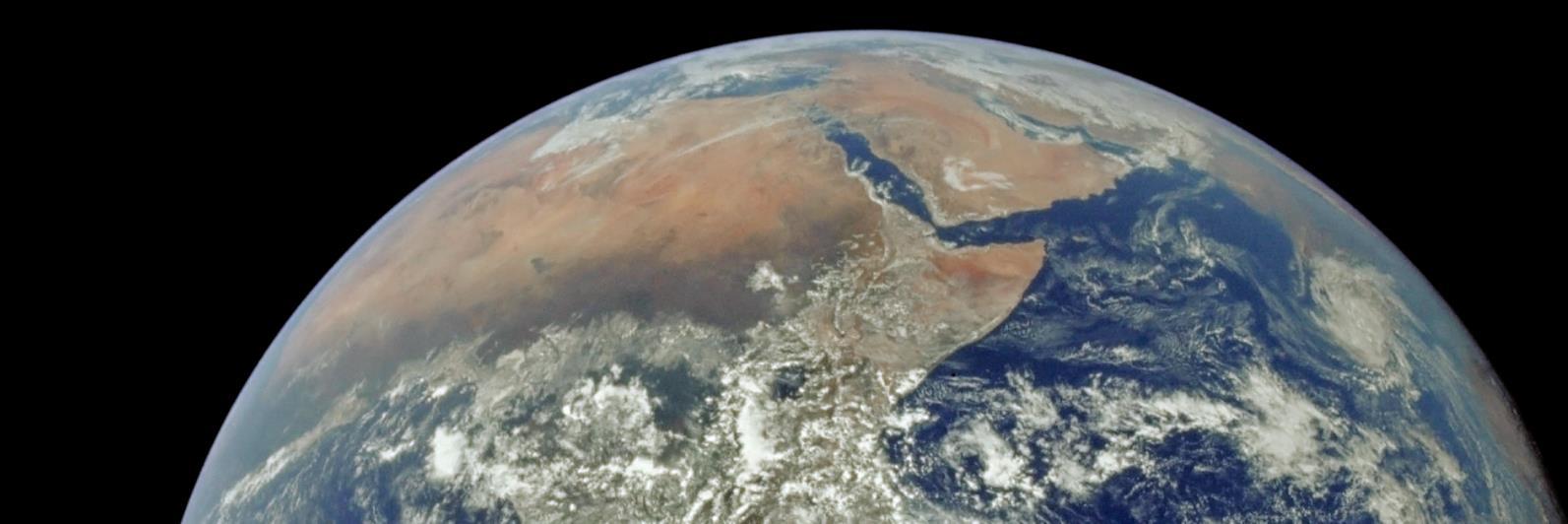
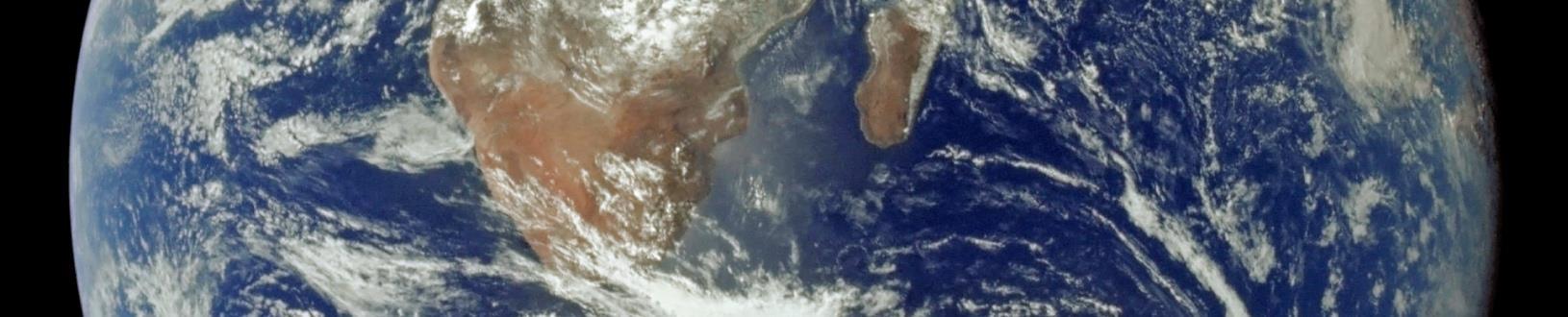

Marble (the less popular version, showing Africa) credit: NASA
Blue
int’l “law”
THEUNDERLYINGBODYOF“LAW”
Much of the text which governs states’ activities in space is nonbinding. In some cases, it’s unclear how many parties there are to a given treaty. Colonization, decolonization, and unclear state succession plans leaves several states in an ambiguous status. Other texts, like the Artemis Accords are merely political commitments, bearing no statutory or contractual force 2 This invites the question: what law actually governs?
These textbook titles (right) embody an American approach to understanding international law.
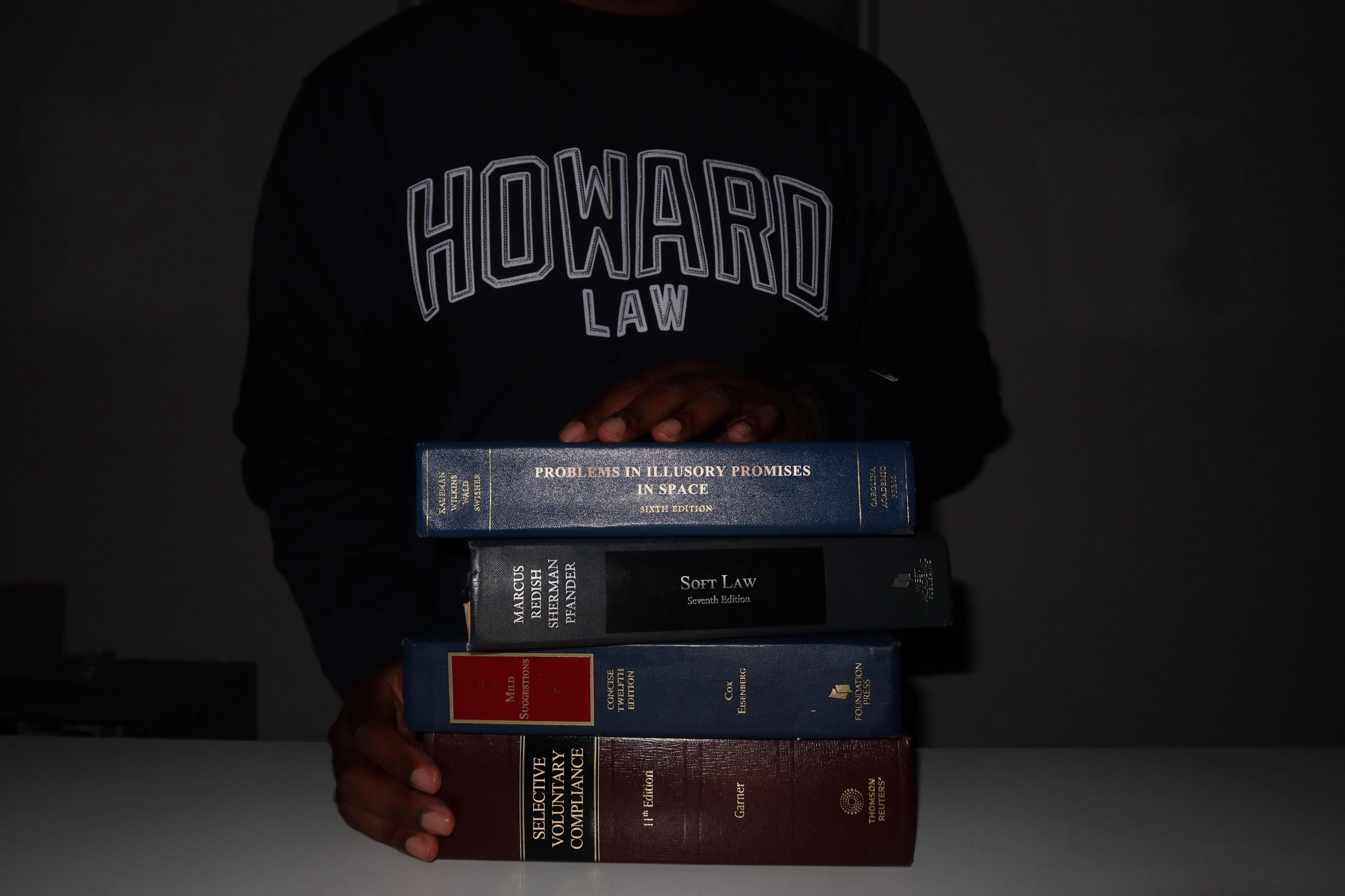
digitally altered flash photography by sean kidd
liability
Under the current framework, private actors create liability for their respective states by simply launching from within their borders.3 How would this system look on Earth?
The following images depict heads of state on trial for the actions of their private citizens, in the style of courtroom sketches.

MBS (top) and DJT (bottom) on trial for the actions of private citizens from within their respective borders.
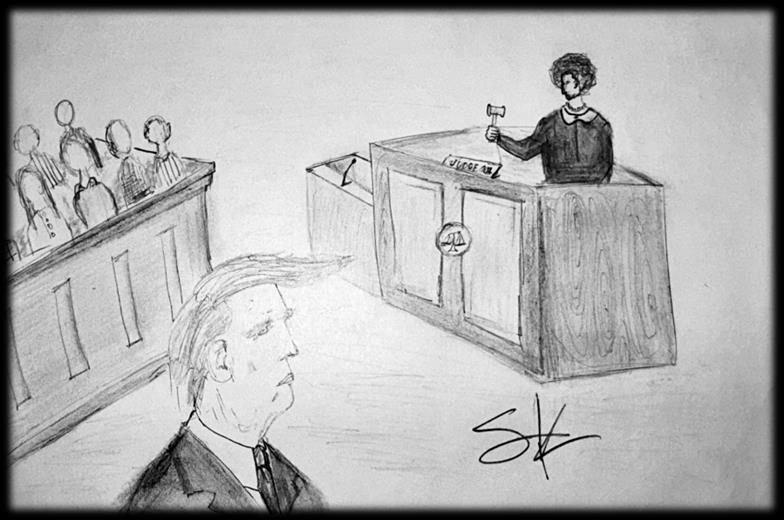
pencil sketches by sean kidd
nonappropriation
“Outer space, including the moon and other celestial bodies, is not subject to national appropriation by claim of sovereignty, by means of use or occupation, or by any other means.
Outer Space Treaty
Article II
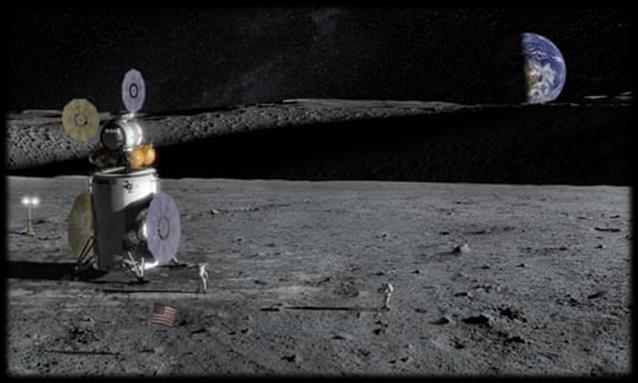
The image below is an artist’s depiction of a lunar safety zone, which is a means to occupy and exclude others from sections of the moon under the guise of interference prevention, pursuant to the Artemis Accords. 4 American astronauts are on the moon’s south pole. The American flag is planted. Earth is off in the distance, ironically with no visible flags or borders.



about the author
Sean Kidd is a third-year student at The Howard University School of Law. His area of interests include technology and intellectual property law. Prior to law school, Sean lived in, Japan for a year and a half while working as a liaison between the US Navy and its AsiaPacific allies and partners Sean and his fiancé reside in the District of Columbia