Lorna, Richard, Chris, Kristen, Adge, Ashley, Sarah and Amanda.
Our aim is to raise awareness of the public in the subject of seal conservation and welfare by campaigning and advancing education with an aim to protecting seals from disturbance, entanglement and other threats.
Welcome to the Spring/Summer 2024 issue of the SWO’s newsletter
A lot has happened since our last newsletter. Our aim is to work towards better protection for seals within the UK. As part of this, we liaise with other groups, organisations and the police. Read on to see what we’ve been up to in the past year:
What’s been happening – a round up 2023/2024
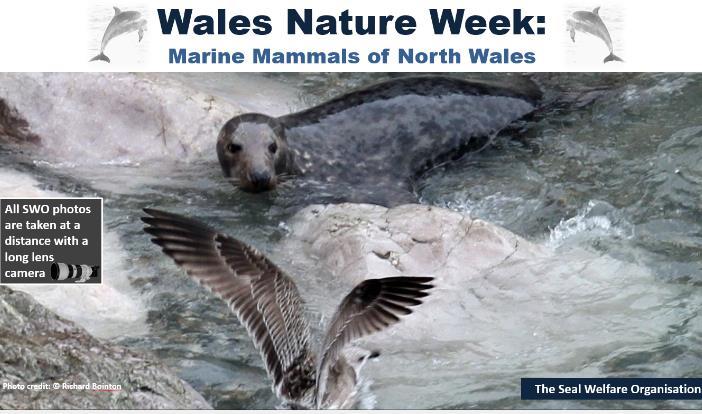
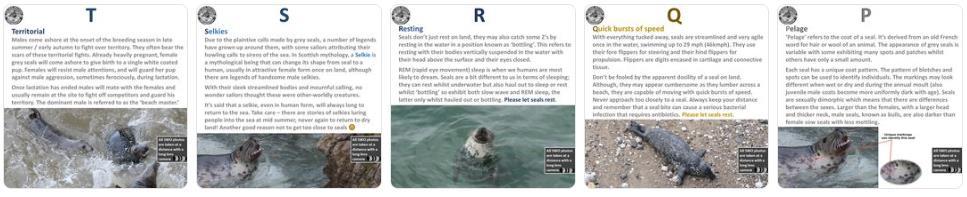
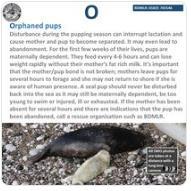
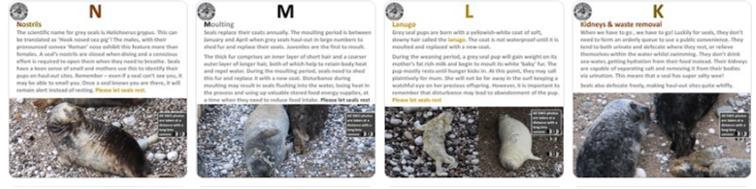
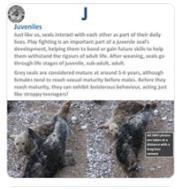
We’ve been busy over the past year, dealing with disturbance issues, liaising with the police and other organisations as well as participating in coastal days. We’ve also tried to highlight the need to let seals rest with a set of A-Z posts covering everything from threats to the sea to the effects of disturbance on seals. We’ve joined a local biodiversity network and engaged in Wales Nature Week by delivering an online talk on marine mammals of North Wales One of our trustees also featured on BBC News to highlight illegal gill netting and associated seal entanglement with discarded ghost gear. We’ve also participated in talks with Operation Seabird. Our group continue to monitor behaviours and distribution and liaise and share with other organisations with an aim to protect our precious pinnipeds.
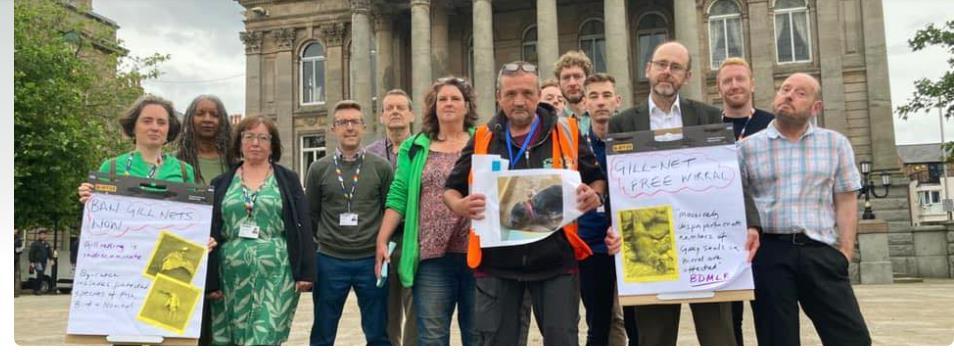
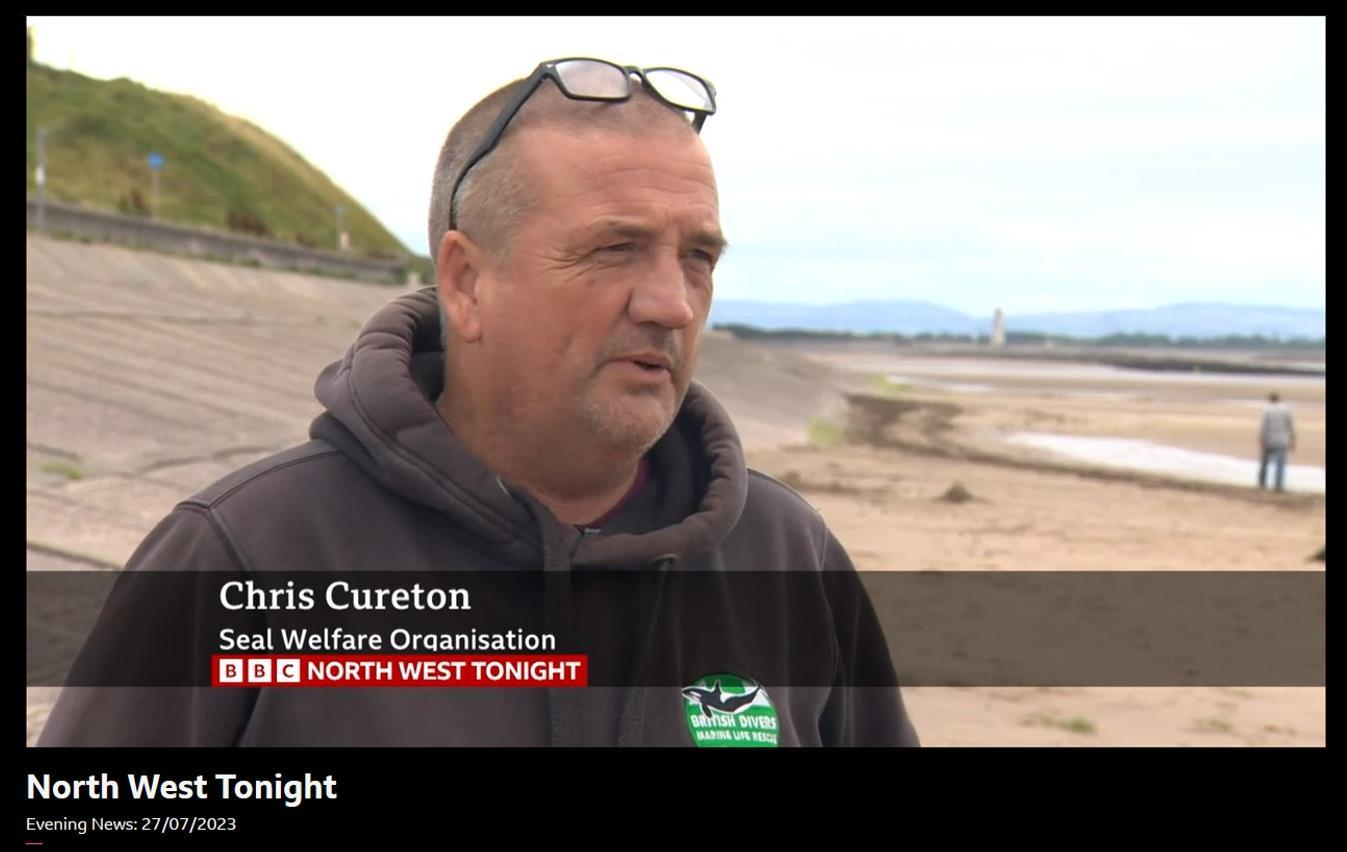
Highlighting illegal fishing and the issues with gill nets and ‘ghost gear’: In a local council meeting, Chris called for a ban of illegal gillnet fishing. He then talked with the BBC to help share the message widely to highlight the dangers to marine mammals.
Chris with members of Gill Net Free Wirral
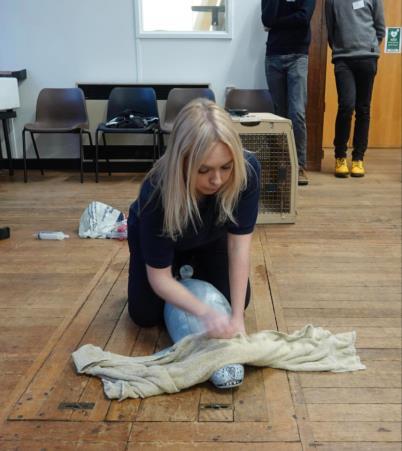
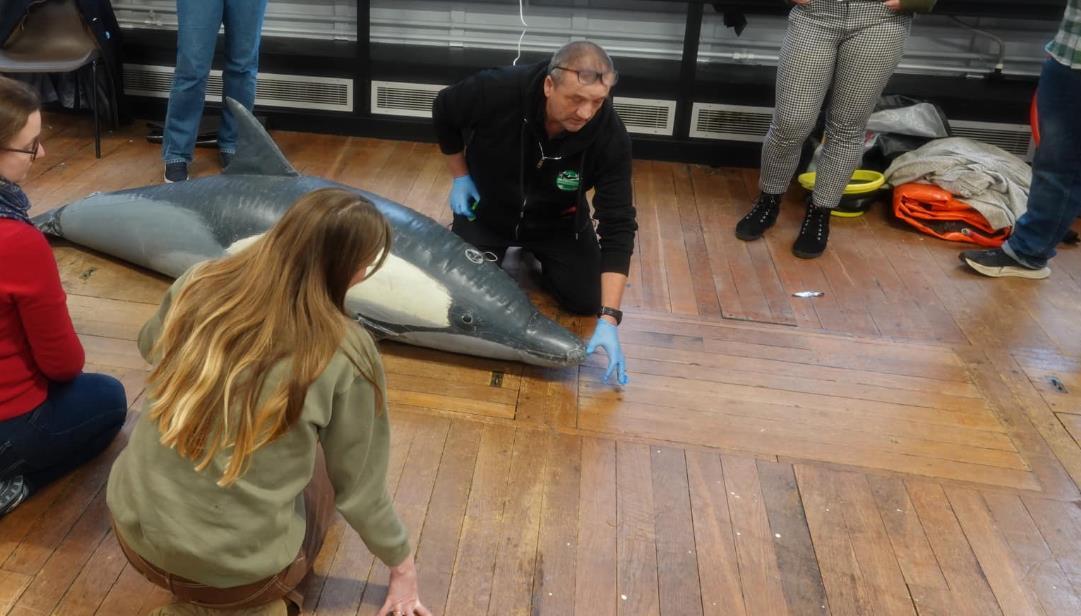
A number of our trustees are also BDMLR marine mammal medics. Chris and Sarah were invited to the society of marine mammalogy conference at Liverpool university On behalf of British Divers Marine Life Rescue, they both delivered a stranding workshop to delegates at the conference. This workshop covered seal rescue and cetacean rescue and the threats they face within the marine environment
Chris talking to BBC North West Tonight
Chris and Sarah demonstrating seal and cetacean rescue
Collaborations
The SWO has initiated and continues to maintain contacts with many other organisations such as local seal groups, site wardens and volunteers, wildlife trusts, BDMLR, RSPCA and wildlife crime police.
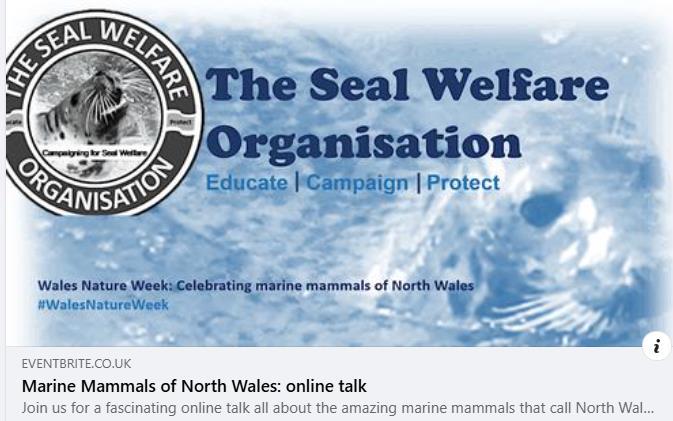
As part of our dedication towards collaboration with other organisations to promote nature conservation, we are a member of Bionet, the Nature Partnership for North East Wales. To celebrate Wales Nature Week trustee Lorna prepared and delivered an online talk which featured marine mammals in North wales. The talk also highlighted the threats that cetaceans and seals face, what can be done to protect them and how to get involved.
Proud to be in partnership:
*Bionet is the Nature Partnership for North East Wales. It covers the counties of Conwy, Denbighshire, Flintshire and Wrexham. Bionet’s purpose is to conserve, protect and enhance the biodiversity of North East Wales for current and future generations.
Online talk which highlighted seal disturbance and threats written and delivered by Lorna
Campaigns
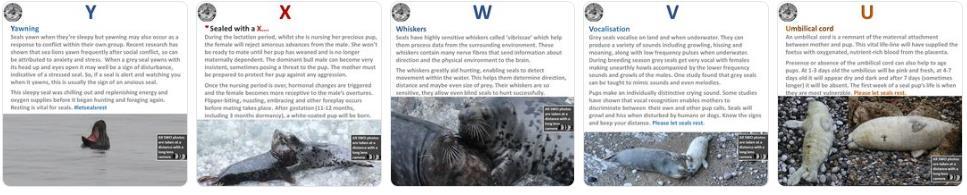
Our social media campaigns have encouraged responsible seal watching. Our A-Z educational posts have highlighted threats that the marine environment and seals face. Take a look at our article on page 16 to read more about these threats
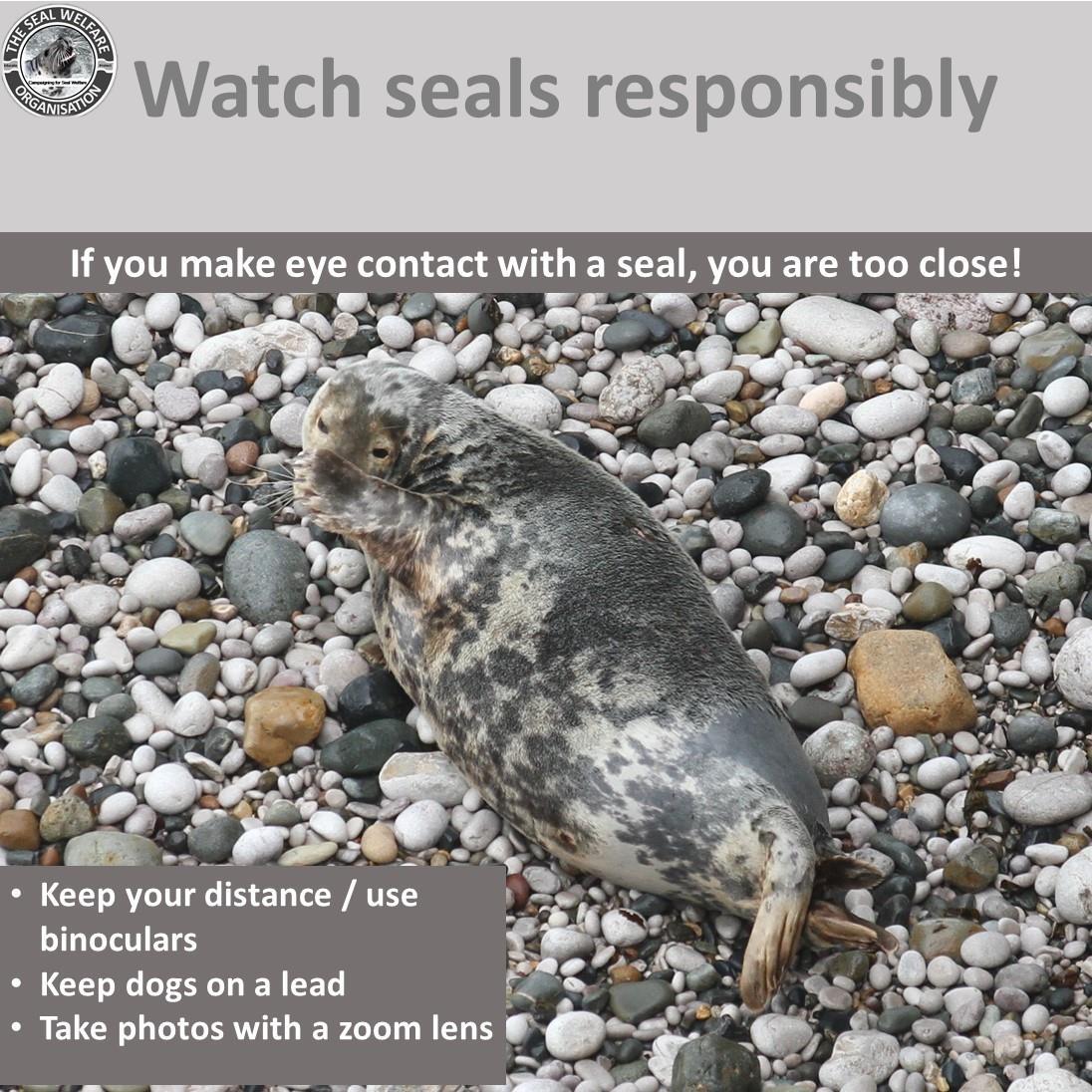
Our poster highlights the need to keep your distance when watching or photographing seals
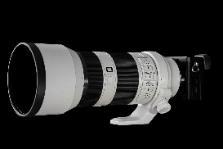
*All of our photographs are taken at a distance using a long lens camera
Highlighting safe seal watching Photo credit: R. Bointon
As easy as ABC……
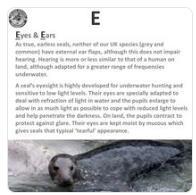
We recently featured A-Z posts covering subjects from Acidification to Zoonotic disease
As part of this social media campaign, we highlighted the need for seals to rest to digest food, conserve energy and replenish oxygen supplies. Seals spend approximately 70% of their time either feeding or travelling and use 30% of their time resting. Our message is:
Let seals rest
SWO Photography policy
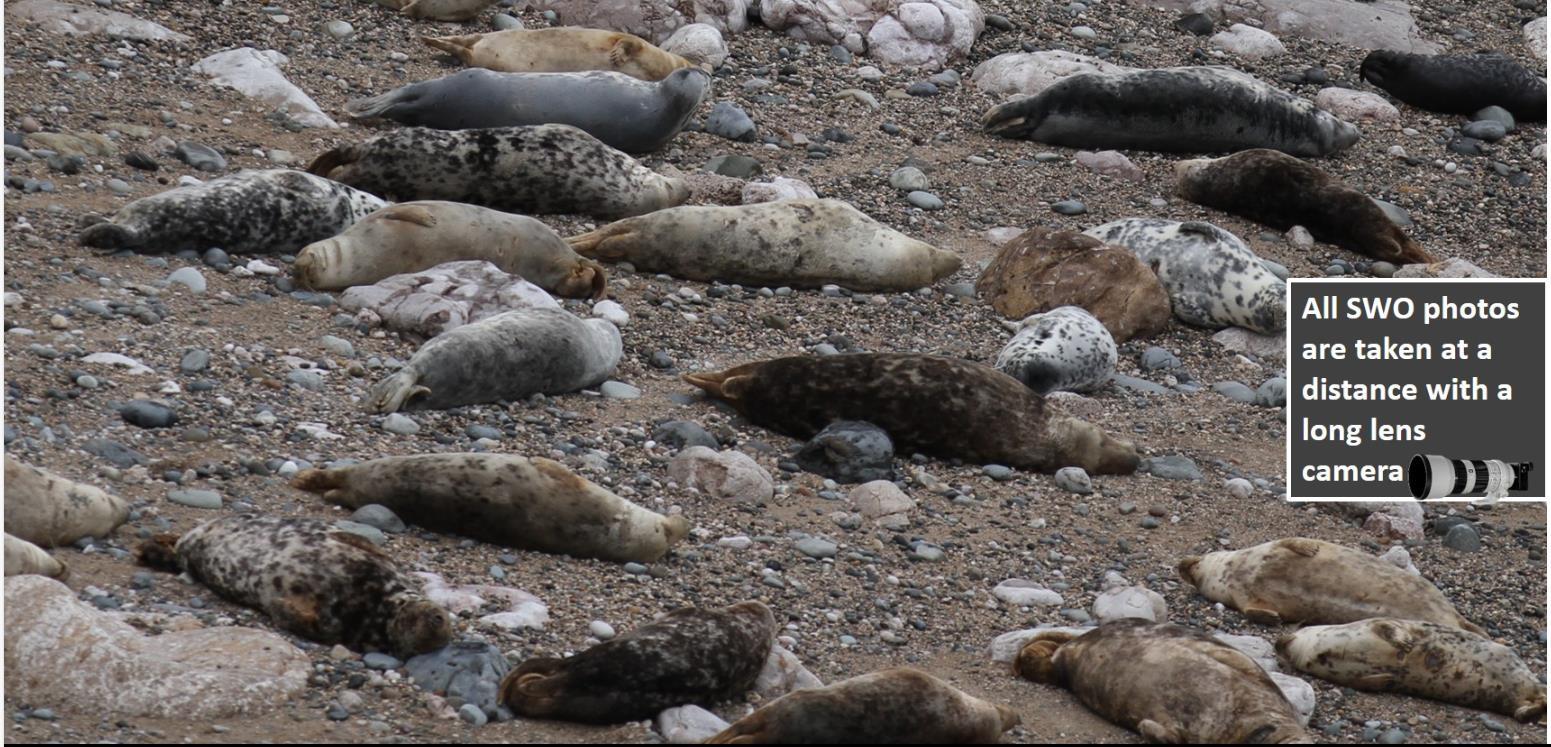
All footage follows our policy of using a long lens/zoom to take photographs at a distance so that seals are unaware of our presence. Seals shouldn’t be able to:
see you
hear you
smell you.
If a seal makes eye contact or becomes aware of your presence, please back off and give them space. The best photos are those showing a totally relaxed seal that is unaware of the photographer’s / watchers presence.
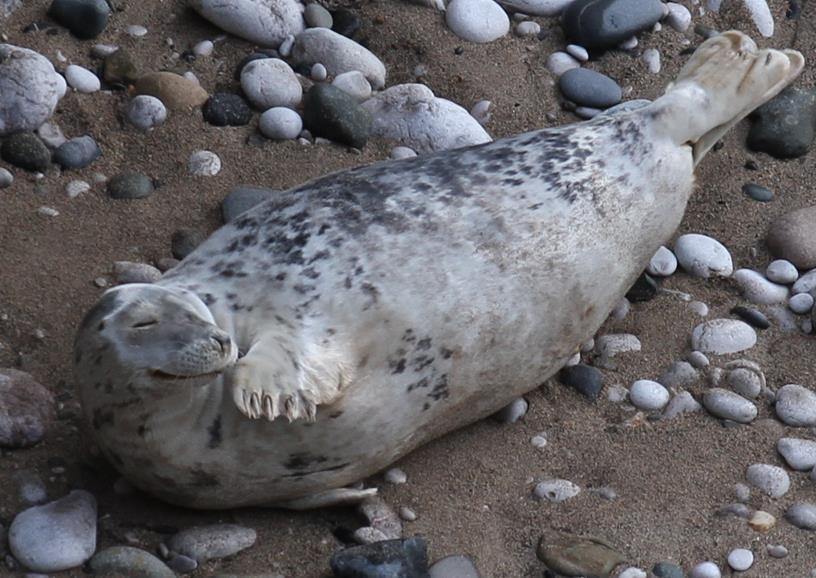
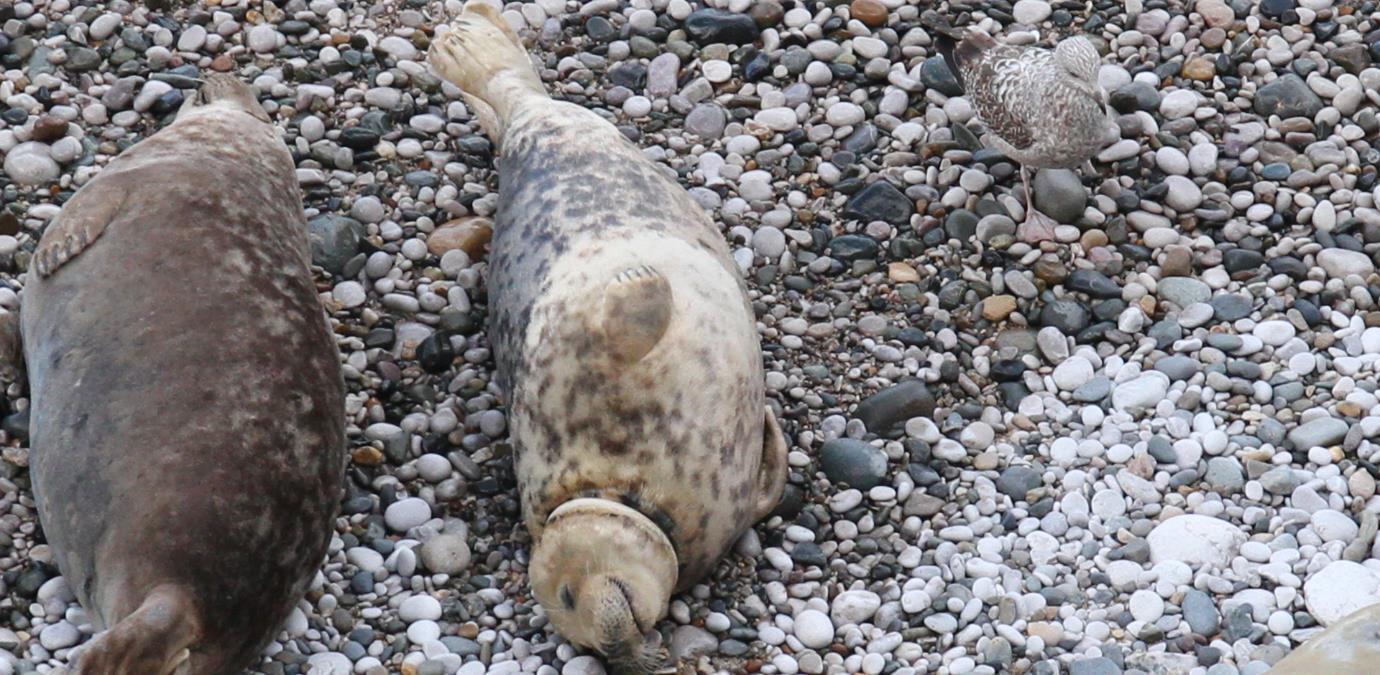
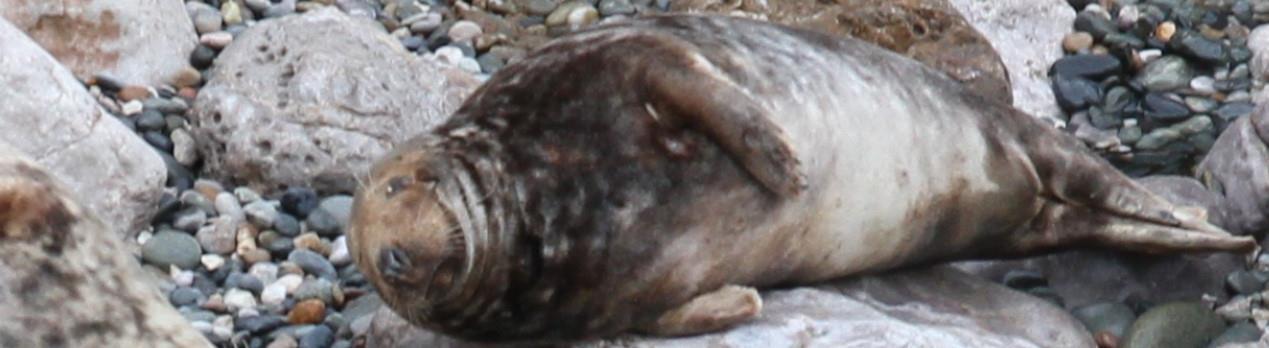
This photo was taken from a distance with a zoom lens and shows a relaxed seal that is unaware of the photographer’s presence. The photographer, Richard, was positioned so that he couldn’t be seen, heard or sensed in any way by the resting seal, following our policy to Let seals rest.
All SWO photos are taken at a distance with a long lens camera
Photo credit: R. Bointon
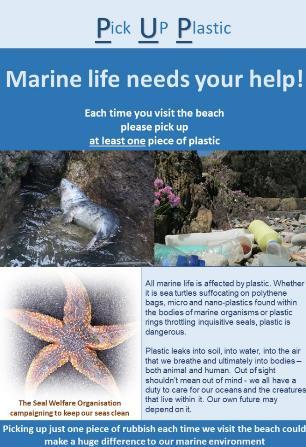
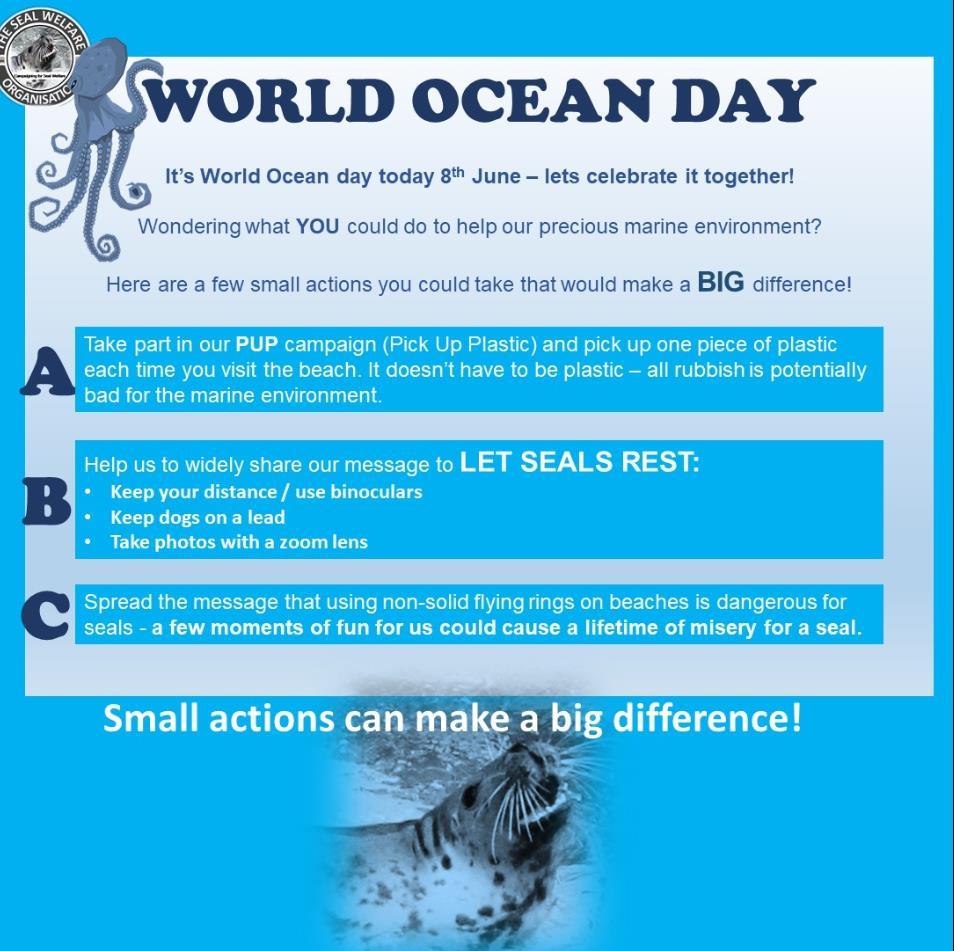
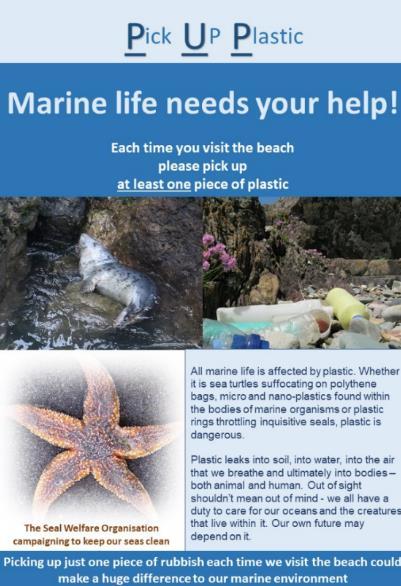
We continue to share our PUP (Pick Up Plastic) campaign which asks people to pick up just one piece of plastic each time they visit the beach. Small actions make a BIG difference. We engaged in World Ocean Day by widely sharing ways to easily get involved and make a difference. One of these was to share the message that flying rings can be dangerous to seals and lead to a life of suffocating misery.
Our main aim is to Let Seals Rest
Part of our campaign to widely spread the message that small actions make a BIG difference
BBC Springwatch
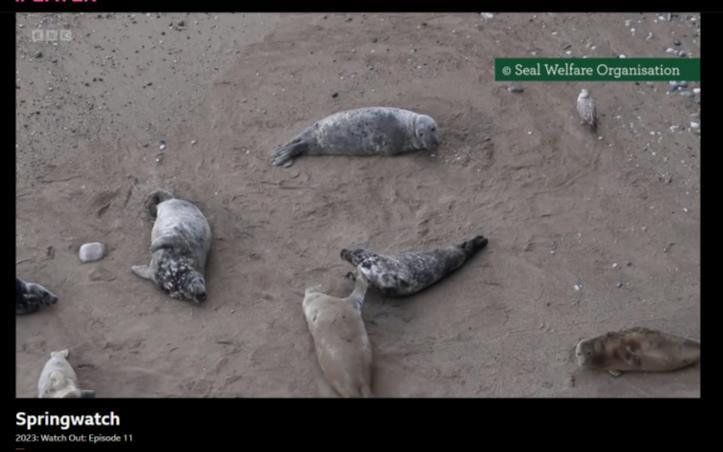
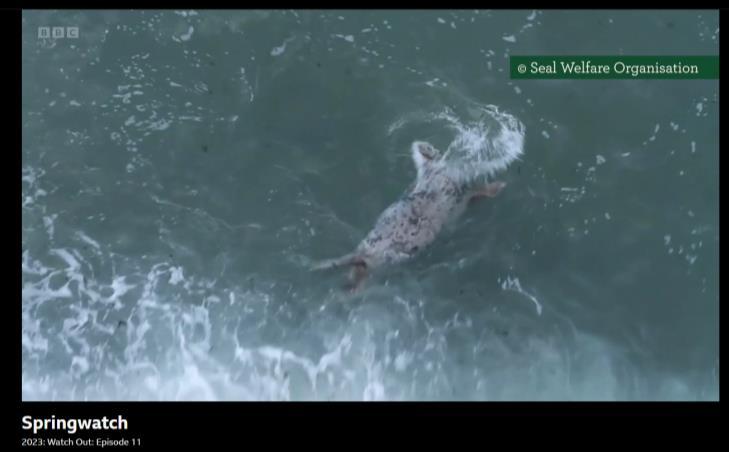
We were pleased to be featured again last May on the BBC Springwatch live Watch Out broadcast with Hannah Stitfall and Megan McCubbin. Our footage showed seal behaviour and highlighted how maternal instinct may result in an aggressive display towards a potential threat.
All of our footage highlighted behaviours and the effects of disturbance.
Footage appeared on BBC Springwatch
Footage showed interactions. Video credit: R. Bointon
Footage also showed behaviours. Video credit: R. Bointon
Life-cycles and behaviours
We aim to help others understand both life-cycles and behaviours of grey seals. We hope that the more that people understand, the more they will empathise and try to protect these vulnerable marine mammals. Trustee, Adge, wove an emotional tale of a fight for survival, including a rare observation of ‘allo-suckling’ when a mother adopted and fed an orphaned pup alongside her own pup.
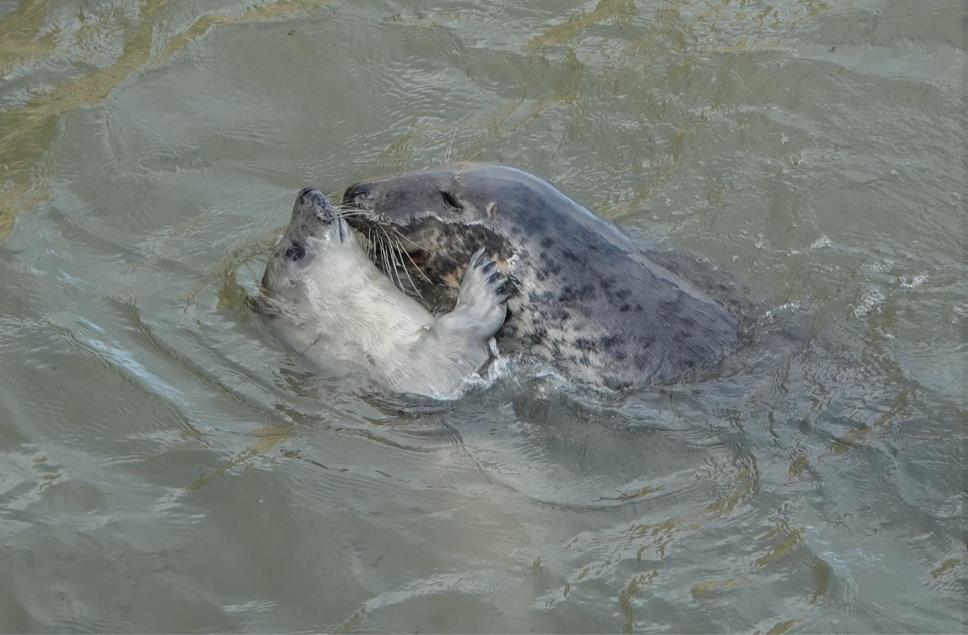
Our posts have highlighted seal behaviours, life cycle and key times of year when seals are at their most vulnerable. This includes pups taking their first swimming ‘lesson’, with mum.
A bridge of hearts. Photo credit: Adge Lane
Swimming lesson with mum. Photo credit: Adge Lane
All SWO photos are taken at a distance with a long lens camera
All SWO photos are taken at a distance with a long lens camera
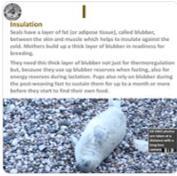
Seals are at their most vulnerable within both moulting and pupping seasons. During these periods, seals rely on their blubber to sustain them as they rest, moult, lactate or go through the post weaning fast period. Ashley’s posts highlighted the importance to seals of undisturbed rest during these periods.
the
Highlighting that newly weaned pups may haul-out in inappropriate and unsafe places. This weaner was lucky to have dedicated watchers looking over it. Photo credit: Ashley Perkins
Highlighting
moulting season. Photo credit: Ashley Perkins
All SWO photos are taken at a distance with a long lens camera
All SWO photos are taken at a distance with a long lens camera
Do we need to protect grey seals?
We have two UK seal species – the Atlantic grey seal and the common (or harbour) seal. The UK is home to large numbers of Atlantic grey seals – holding around 40% of the World's population.
Although in the UK grey seals outnumber common seals at a ratio of approximately 3:1, worldwide it’s a different story. Globally, grey seals are a rare species. So, although there has been an upward trend in grey seal pup production in parts of the UK and an increase in population abundance, they remain an important species that requires our protection.
Injury
Surveys that produce population counts don’t necessarily account for disturbance or injury. We frequently encounter both of these, usually from human sources. Seals deserve to rest and live out their natural lifecycles without interference.
As a stronghold for grey seal populations in the UK, we have a duty of care to ensure they can do just that.
Atlantic grey seals: globally rare species. Photo credit: R. Bointon
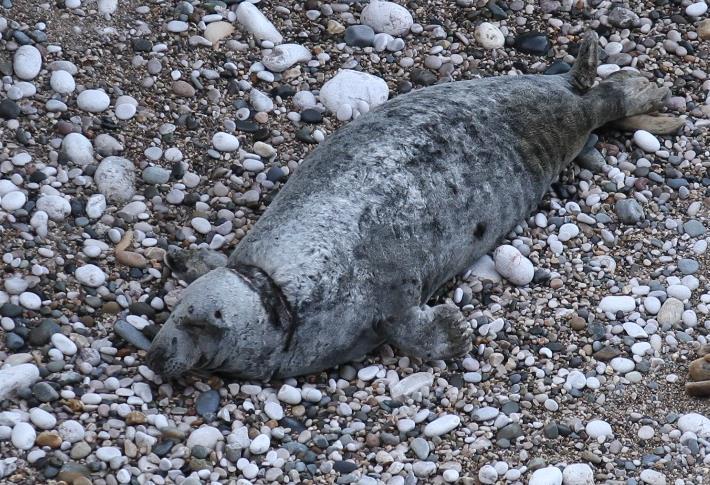
Monofilament fishing line remains a real threat to seals. Photo credit: R.
rings and other marine litter can lead to a life of suffocating misery. Photo credit: R.
Bointon
Flying
Bointon
Fade to grey…..
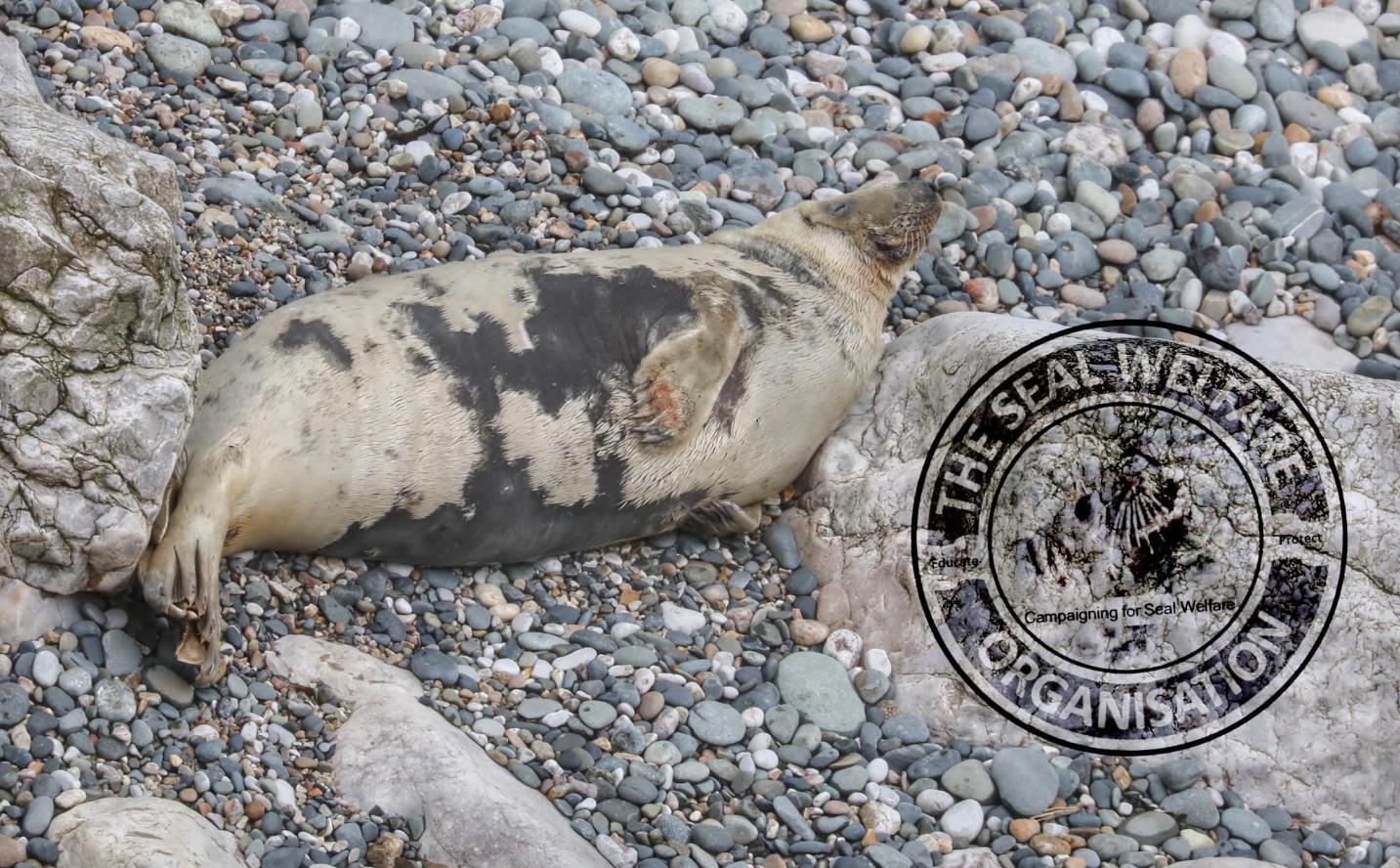
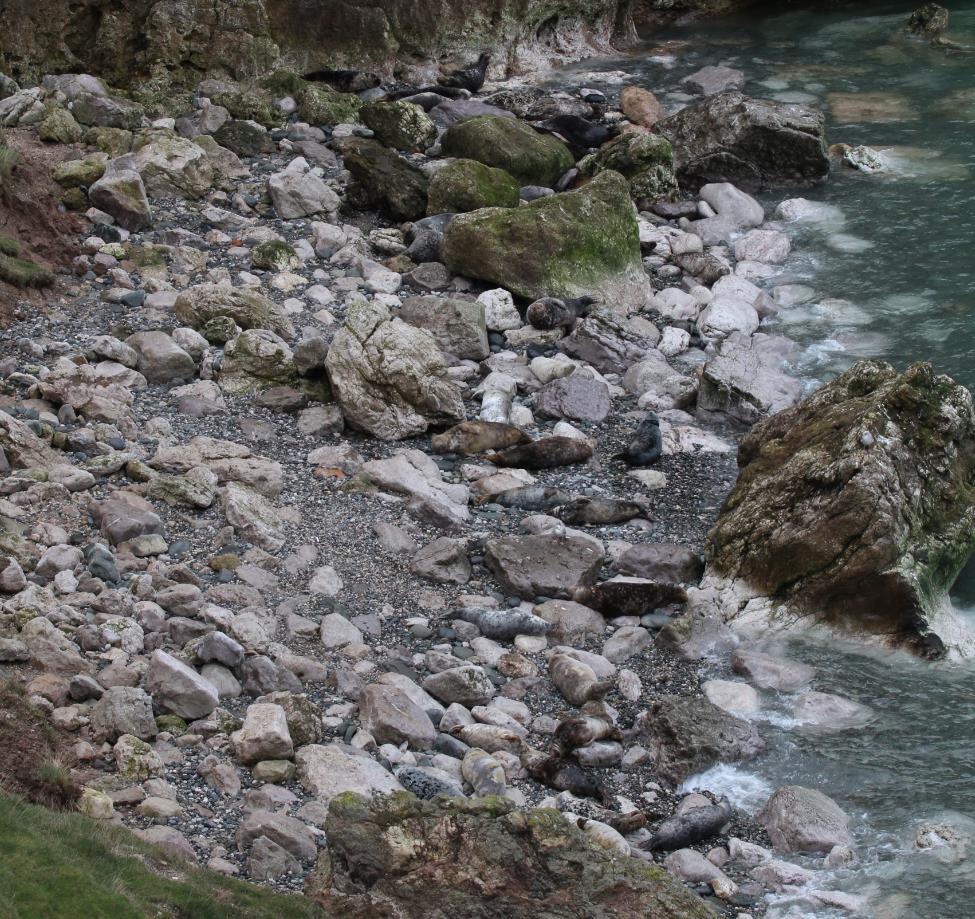
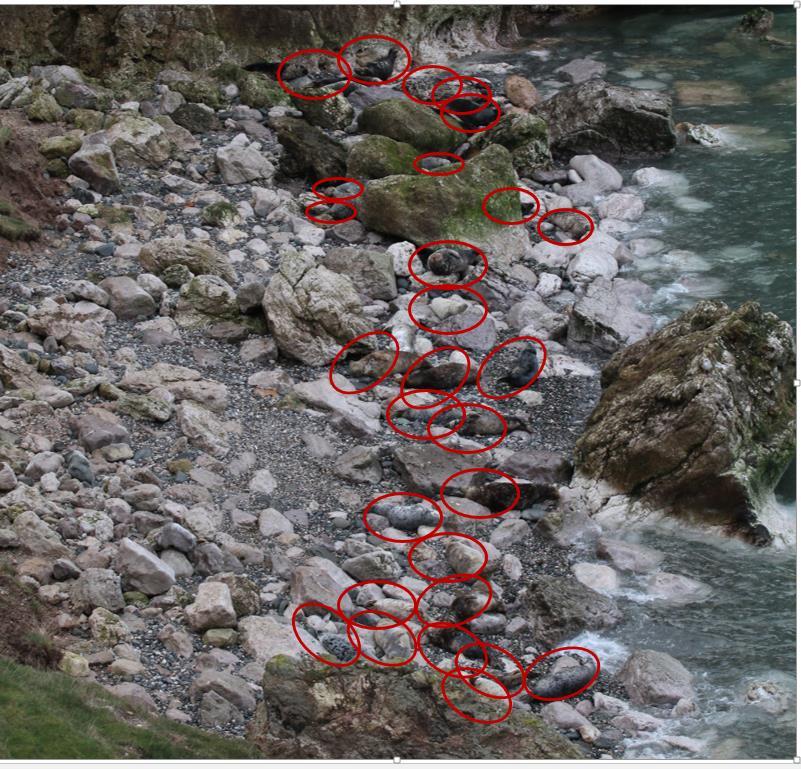
Seals are very good at masquerading as rocks. Please be careful around rocky shores and do not let your dog off the lead!
Spot the seal……
Photo credit: R. Bointon
It’s the little things that matter
From microscopic phytoplankton to apex predators
By Lorna Bointon, co-founder and trustee of the Seal Welfare Organisation
Blue spaces
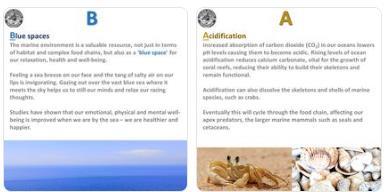
The marine environment is a valuable resource, not just in terms of habitat and complex food chains, vital for marine organisms and our larger apex predators, but also as a ‘blue space’ for our relaxation, health and well-being.
Research has shown that our well-being is improved when we are by the sea – we are healthier and happier. Of course, because of this, tourist hot-spots welcome thousands of holiday makers every year and this can adversely impact the marine environment, especially in terms of noise, traffic, disturbance, marine litter and damage to sensitive areas/habitats. Therefore, recreational activities need to be balanced against disturbance and damage to sensitive marine areas. To ensure this, it is important to promote sustainable tourism alongside supporting the natural marine habitat.
Every breath we take….
Our oceans are important for carbon capture, climate regulation and oxygen production, through photosynthesis of plants, phytoplankton and algae. Phytoplankton are tiny microscopic plant-like organisms.
The marine environment contains many plant species, called halophytes, which must be capable of withstanding saline conditions. Some of these plants help to stabilise saltmarshes and dunes, protect against coastal erosion and flooding. Some plants provide food and shelter for marine organisms and help in the fight against climate change.
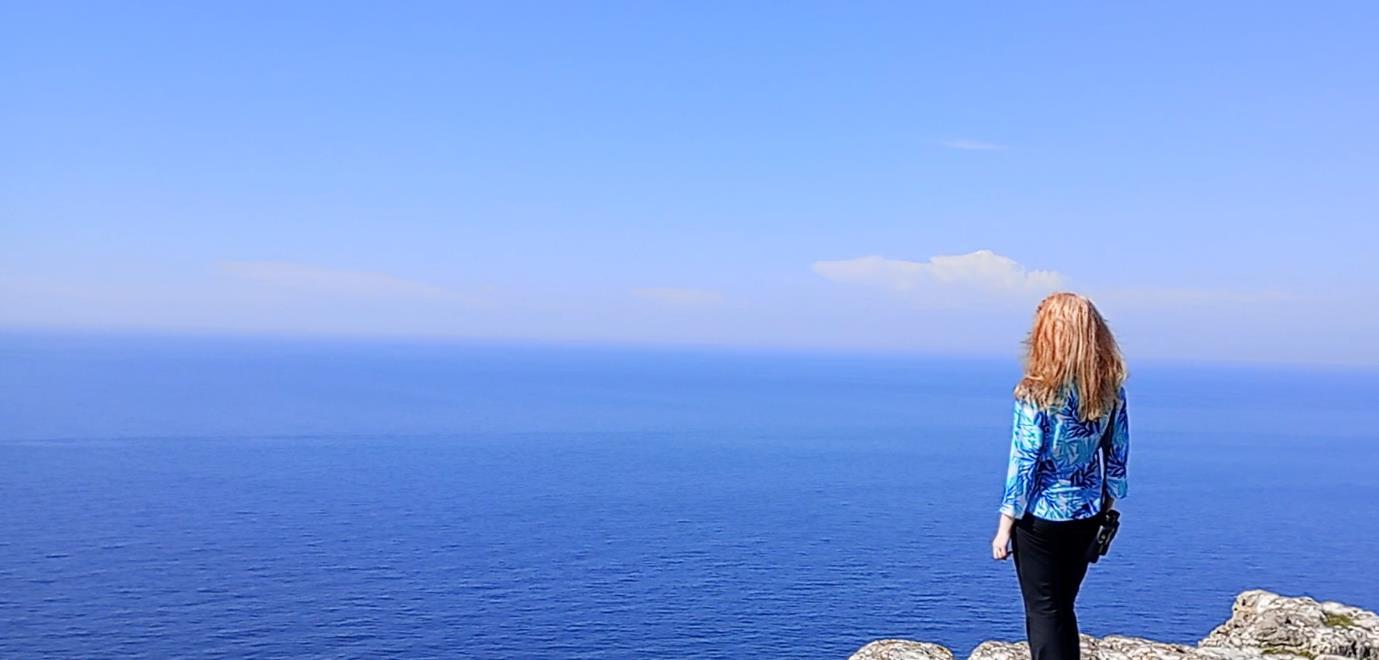
Blue spaces can improve our sense of well-being. Photo credit: R. Bointon
These plants glean energy from the sun via photosynthesis and, along with phytoplankton and algae, are known as ‘primary producers’ - the first link in the marine food chain.
This process of energy transfer will cycle through all consumers, from zooplankton to apex predators. Just like other ecosystems, the seaside environment is reliant on primary producers as the first stage in the food chain.
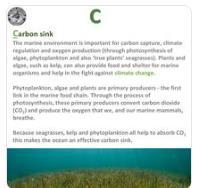
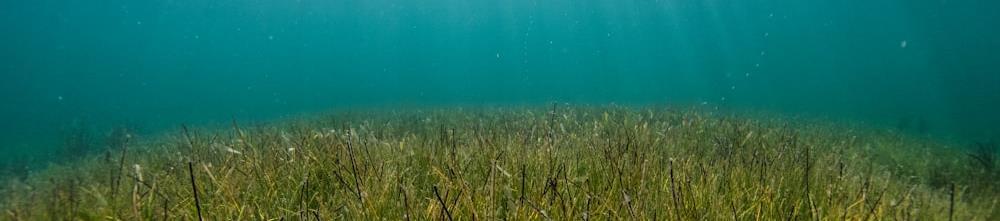
Through the process of photosynthesis, plants, algae and phytoplankton convert carbon dioxide (CO2) and produce around 50% of the oxygen that we, and marine mammals, such as seals and cetaceans, breathe. Seagrass meadows are known as the ‘lungs of the sea’. Because these true plants, along with algae and phytoplankton, help to absorb CO2, this makes the ocean an effective carbon sink.
Rock Pools - A Microcosm of the wider marine environment
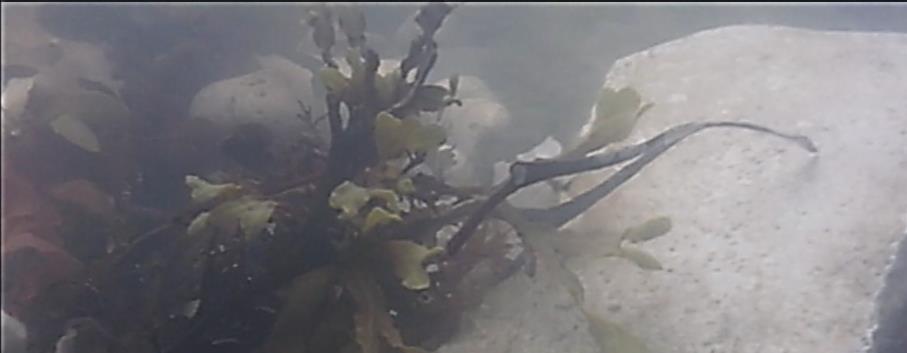
A rock pool can be a safe haven for some marine organisms and algae. Oxygen production via photosynthesis is provided by the seaweeds within the pool. Look closely and you’ll see bubbles of air escaping as gas exchange occurs through the photosynthesis process. A rock pool ecosystem is at the mercy of temperature and water availability; too shallow and the pool will become more saline, too deep and photosynthesis may be affected.
Similar to the processes within the deeper ocean, primary producers in the rock pool utilize energy from photosynthesis and this energy cycles through the food chain via primary and secondary consumers. The bladders on some of the seaweeds within the pool help it to float to the surface to gain energy from the sun and photosynthesise.
Although large fish may struggle in rock-pools due to lack of oxygen it is shelter to smaller fish, snails, crabs, worms, barnacles and anemones, along with vegetation such as seaweeds (which require shallower pools for photosynthesis).
The constant cycle of life-death-decay will sustain the rock-pool eco-system
It’s the little things that matter….
Whether terrestrial or marine, we all rely on plants for food and oxygen. Phytoplankton are primary producers, the first link in the food chain. An example of how the energy transfer process is cycled through the food chain is shown below:
• Phytoplankton - Primary producer – gains energy from the sun
• Large fish - Tertiary consumer – eats small fish
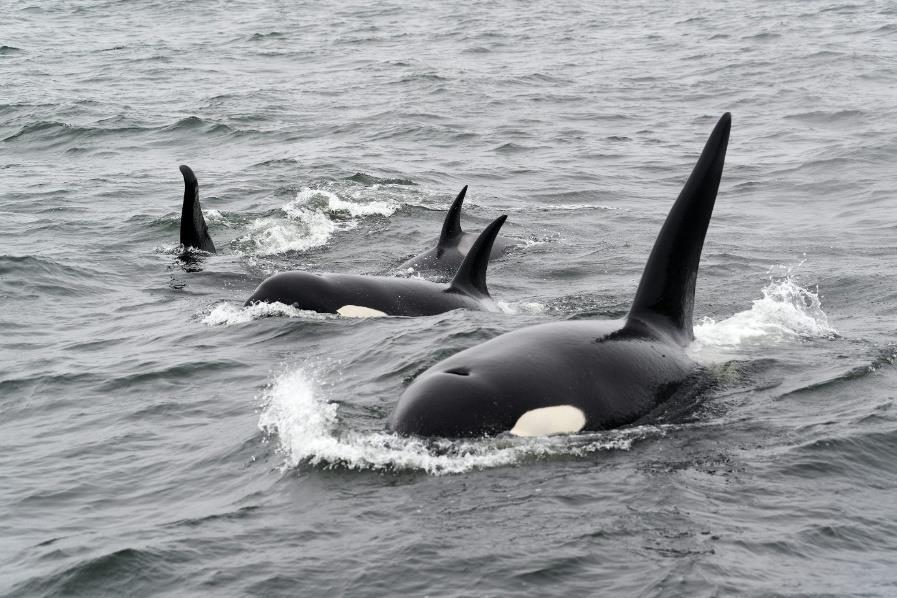
• Orca – Apex or quaternary predator - eat a variety of fish, squid, seabirds and seals (and even other cetaceans)
• baleen whales also eat zooplankton, such as krill
We can’t always see what’s happening below the surface but marine mammals are visible indicators of ocean health and can alert us to changes in the food chain. Keeping an eye on top level predators alerts us to changes in prey species or primary production As well as food and habitat loss, waste pollution, plastic and noise pollution all impact on marine life from minute phytoplankton up to large marine mammals.
In the case of one of our top predators, the Orca, whose food prey includes both harbour porpoise and seals, pollutants bio-accumulate as they get cycled through their prey species. Biomagnification occurs when pollutants become concentrated as they move up the food chain. These pollutants can then be transferred to suckling young via lactation A necropsy conducted on one female orca in the Scottish Hebrides who had become entangled in fishing ropes and died, showed that levels of PCBs (Polychlorinated Biphenyls, a by-product of the plastics industry), were among the highest ever recorded.
Orca or killer whale: Apex predators (Public domain image)
Healthy seas equals healthy seals
Plants rely on nutrients for growth but human input can unbalance natural cycles.
Human activity accounts for extra nutrients being pumped into the ocean from fertilisers, sewage outlets and other pollutants.
Overgrowth of algae can result in blooms which can become toxic, block sunlight and cause problems for other photosynthetic plants. Natural, bacterial decomposition of algal material depletes the water of oxygen, and these oxygen depleted waters are called ‘Dead Zones’.
Seals also face threats from a variety of sources such as overfishing and from plastic waste, pollution and entanglement with discarded fishing gear that can result in injury and death.
In the same way as orcas, seals are at risk from the threat of biomagnification as chemicals cycle through the food chain and accumulate in their bodies (affecting immune system, fertility and hormone regulation). These harmful chemicals can then be transferred during lactation from mother to pup
Seals rely on clean seas and undisturbed beaches on which to haul-out. Their life-cycle is intertwined with the wider marine cycle of life, death and decay. As part of their life-cycle, it is important that they have access to clean seas, a plentiful food supply and that they remain undisturbed and free from entanglement and persecution.
Breath of Life
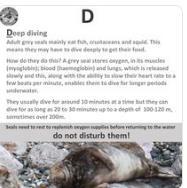
Marine mammals also need oxygen to breathe and, as such, rely on the photosynthesis of plants, algae and phytoplankton just as we do. Unlike a human diver who will fill their lungs before a dive, seals breathe out (exhale) before they dive. They store oxygen in their blood and muscles as well as their lungs which is released slowly and this, along with the ability to slow their heart rate to a few beats per minute, enables them to dive for long periods underwater.
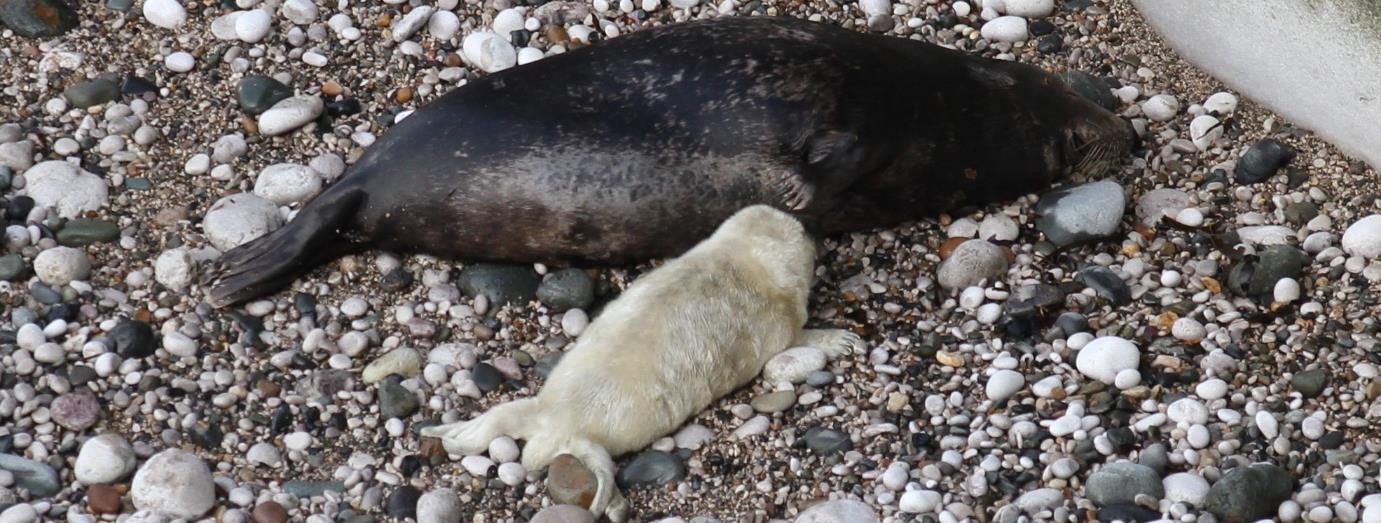
Lactating mother and pup. Photo credit: R Bointon
All SWO photos are taken at a distance with a long lens camera
They usually dive for around 10 minutes at a time but they can dive for as long as 20 to 30 minutes. Males tend to dive to greater depths than females. Seals need rest periods to recover after foraging, to replenish oxygen supplies and to digest their food.
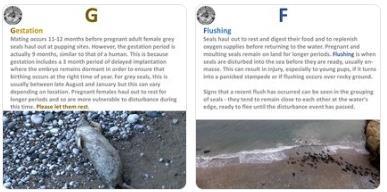
Seals need to rest to replenish oxygen supplies before returning to the water Do not disturb them!
Connections and Interaction
Photo credit: R. Bointon
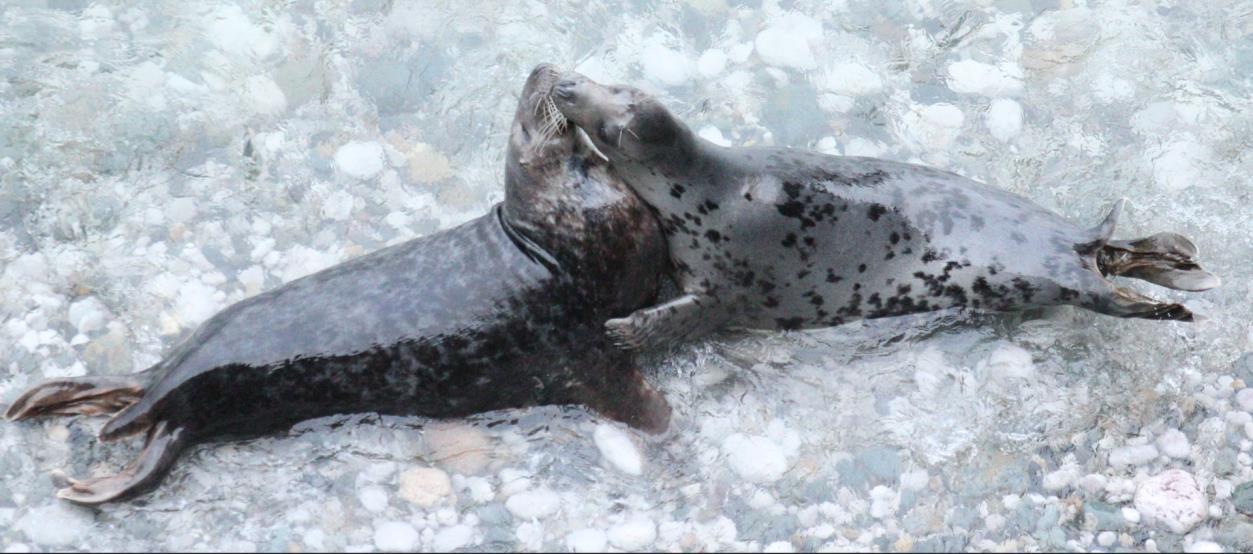
Seals interact with each other as part of their daily lives. They play, bicker, go through courtship, mating and birth and, along with spending long periods of time underwater swimming and diving for food, they also rest within the water in a vertical position known as bottling or haul-out to rest in favoured sites.
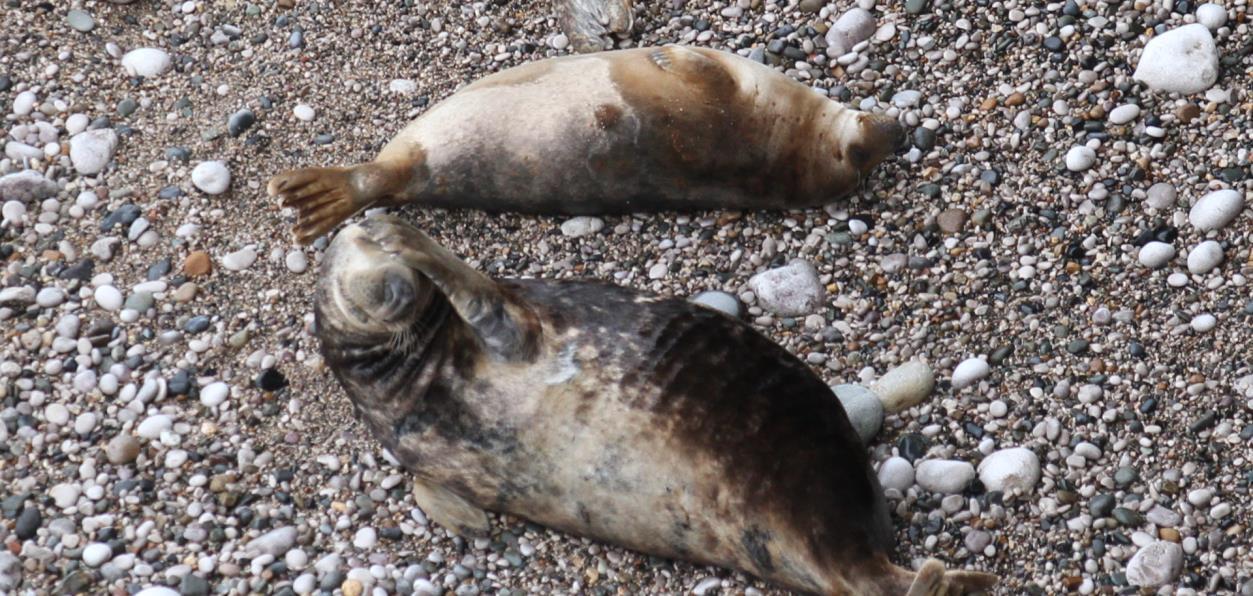
Seals spend approximately 70% of their time either foraging or travelling; the remaining 30% is spent resting, digesting their food and replenishing both energy and oxygen supplies. During this vital period, seals need to remain undisturbed – they should only return to the water when they are ready.
Haul-out sites may get noisy when seals interact with each other – they may vocalise with moans, howls, grunts and growls accompanied by flipper waving if another seal gets too close and threatens to oust them from their chosen spot on the beach. Play fighting is also an important part of a seal’s development, helping them to bond or gain future skills to help them withstand the rigours of adult life.
During the pupping season, males may attempt to mate with the female before she is ready. The female will reject his amorous advances until lactation has ended. She will show aggression if the male gets too close to a pup. The pup, meanwhile, does what pups do best and rests contentedly until hunger awakes it. Sometimes, the pup may get fidgety and itchy just before fully emerging from slumber. At this point, it will call plaintively for its mother. She will not be far away in the surf keeping a watchful eye on her precious offspring and ready to repel all invaders! Once lactation has ended, hormones will be triggered and she’ll be ready to mate. And so the cycle begins again….
All SWO photos are taken at a distance with a long lens camera
What can we do?
Although some marine mammals are showing increases in population, others have declined. Even those that are doing well are at risk from marine pollution, litter and changes to the food chain via acidification, pollution and desalination. We need our blue spaces for our wellbeing, for the oxygen we breathe (with the help of seagrass meadows and other photosynthesising plants, algae/phytoplankton) and for maintaining our climate. Climate change could adversely affect us through increased flood threat, altered distribution of marine species, influx of non-native invasive species and changes to the food chain.
Visiting the seaside is a quintessentially British past-time and our coastal towns and villages welcome hordes of holidaymakers each year. This helps to maintain coastal economies but must be balanced against the threats of disturbance and increased litter.
To safeguard our marine ecosystems and ensure their continuing resilience we must work together to help raise awareness of the threats faced by our seas. We continue to do this through:
Education – raising public awareness and liaising with other organisations
Sharing – sharing information, keeping people informed and working with others to find solutions
Monitoring, recording and reporting – to help build a picture of the state of our seas, and spot trends in distribution and population levels.
Photo credit: R. Bointon
All SWO photos are taken at a distance with a long lens camera
What can you do?
All marine life relies on clean seas. Out of sight shouldn’t mean out of mind. We all have a duty to keep our seas clean – our own future may depend on it.
There are litter picking groups and organised events that you can join. These keen volunteers do a great job of keeping our beaches clean of litter and debris. But, even as individuals, we can all help by doing little things like picking up one piece of litter each time we visit the beach.
Small actions can make a significant difference over time.
Please join our PUP campaign and pledge to Pick Up Plastic the next time you visit the seaside!
Keeping our seas clean is vital for the health of our marine life
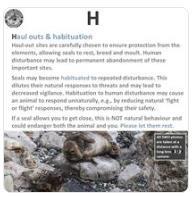
Non-disclosure of sensitive haul out sites: Our policy
The threat to seals from people and dogs is well documented and, as such, we do not make sensitive locations public.
Some sensitive sites get explicitly mentioned in newspapers and over social media. These sites have been subject to many disturbances and threats from people, dogs, fishing and leisure boaters.
Revealing the location of sensitive sites like this helps to increase occurrences of the very threats that we all campaign against.
For the sake of our seals, please do not share on public platforms posts containing information about haul out locations.
Thank you
Keep seals safe from disturbance. Photo credit: R Bointon
All SWO photos are taken at a distance with a long lens camera
e of conduct
Point, gesture/ make sudden movements
Dealing with sick or injured marine mammals
To report an injured or sick seal, please contact the following organisations:
FOR LIVE STRANDINGS
National: British Divers Marine Life Rescue 01825 765546
England & Wales: RSPCA 0300 1234999
Scotland: SSPCA 0131 3390111
Sometimes, we may encounter dead or injured seals or cetaceans which have stranded. In the case of dead cetaceans or seals, please record any sightings to UK Cetacean Strandings Investigation Programme (CSIP).
Due to the threat of zoonotic disease please do not touch dead or sick wild animals but instead report them to local and national authorities. Do not allow your dog to approach a dead seal.
FOR DEAD STRANDINGS
UK (all species): Cetacean Strandings Investigation Programme 0800 652 0333
Any pictures of Welsh strandings can also be sent to info@strandings.com
Wildlife Crime: If you witness a suspected wildlife crime in action call 999 immediately and ask for the police. For all other enquires call 101. For your own safety, do not approach suspects yourself or touch anything at the scene.
Education
Our aim is to help raise awareness of seal disturbance, entanglement and other threats. To do this, we actively approach members of the public and visitors at seal haul-out sites to give advice and information.
As part of this goal, our trustees either write or submit footage for BBC Springwatch blogs and Watch Out broadcasts with the aim of getting our message across to a wider audience.
Our annual newsletter also include educational pieces on factors that impact on seals and the marine environment.
Some of our trustees are also lecturers and trainers and have individually produced training materials, such as presentations and webinars on a variety of marine themes, including marine mammals. Our plans are to continue to build on this to create educational resources, suitable for a variety of levels and age groups.
Our Team
Our team comprises 8 passionate individuals from different walks of life, all with the same aim: seal welfare. We comprise marine conservation monitors, marine mammal medics and instructors, regional coordinators for marine conservation charities, marine biologists, writers, lecturers and assessors.
Achievements & other news
Well done to trustee Sarah Neill, also a lecturer at Kendal College, on getting her Foundation Degree in Marine Biology and Rehabilitation course approved for delivery this September. What an achievement!
SAVE THE DATE! 18th Sept 2024 WELL DONE!
Congratulations to trustee, Richard, on being elected a Fellow of the Royal Geographical Society and becoming a Wales Ambassador.
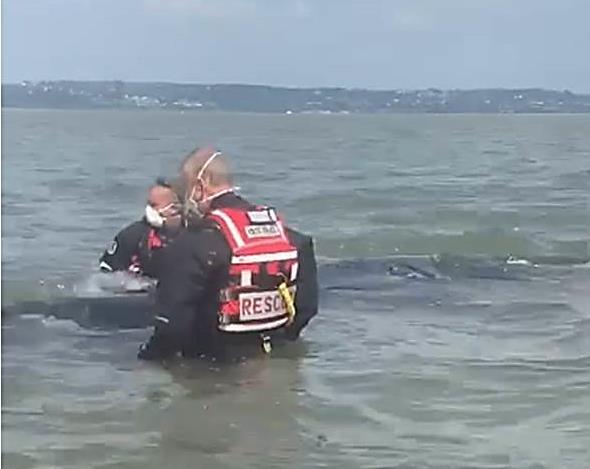
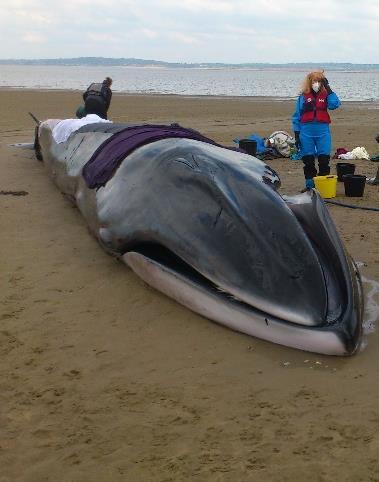
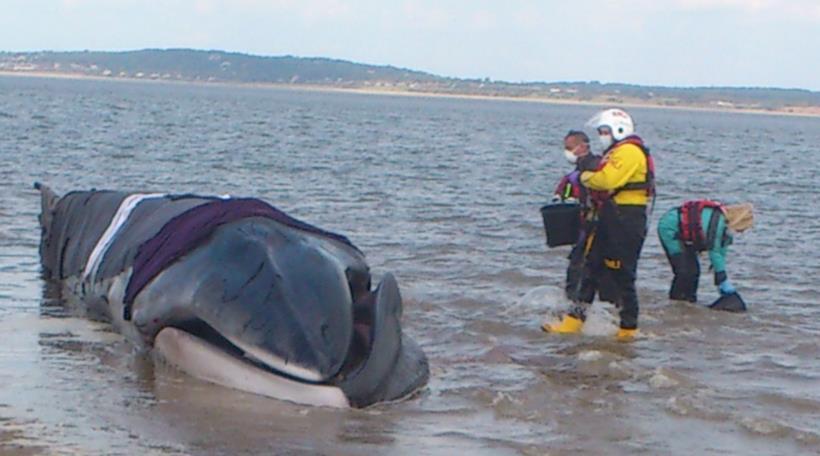
Six of our trustees are also BDMLR marine mammal medics and last October four of us featured on Saving Lives at Sea (Series 8, Episode 3, available on BBC iPlayer) as part of a rescue attempt of a juvenile fin whale in 2020. Local fishermen and the Flint RNLI crew were a great help to us, the latter also being a comforting source of safety.
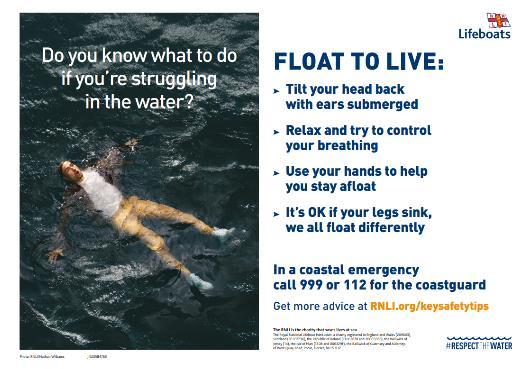
SWO trustee, Lorna, is also a RNLI Local Ambassador. As part of this role, Lorna shares water safety advice from the RNLI:
Always follow safety advice when by the coast or on the water. In a coastal emergency call 999 or 112 for the coastguard Get more advice at RNLI.org/keysafetytips
SWO trustees and BDMLR medics, Chris, Kristen, Richard, and Lorna with volunteers from Flint RNLI. Photo credits: Kristen Cureton & R. Bointon
Courses of interest & Activities/Events
Events
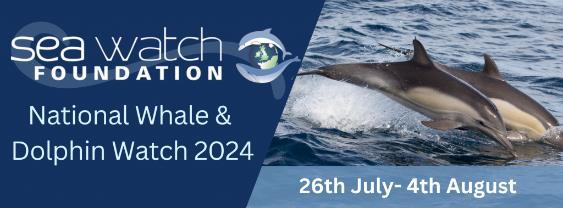
Join the National Whale and Dolphin Watch during 26th July - 4th August:
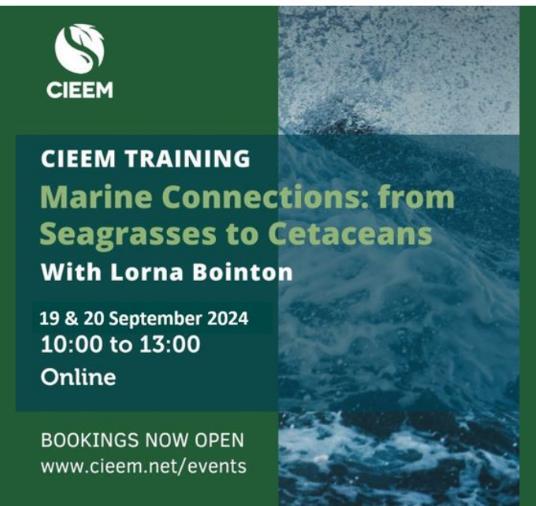
Book an online course - Marine Connections: from Seagrasses to Cetaceans, 19th & 20th September 2024: CIEEM : http://events.cieem.net/Events/
What’s Next?
We aim to educate the public about the dangers of disturbance and habituation.
We will continue to monitor population numbers at sites
We will record entanglement cases, highlight the physical dangers to seals, e.g. threats from plastic waste and entanglement with discarded fishing gear that can result in injury and death, injuries caused by boat collision and propellers and by-catch.
We will campaign for better protection and changes to legislation.
We aim to highlight other threats, such as overfishing of prey species, destruction of habitat and also marine pollution.
We will maintain a tag database and share sightings and data with other organisations.
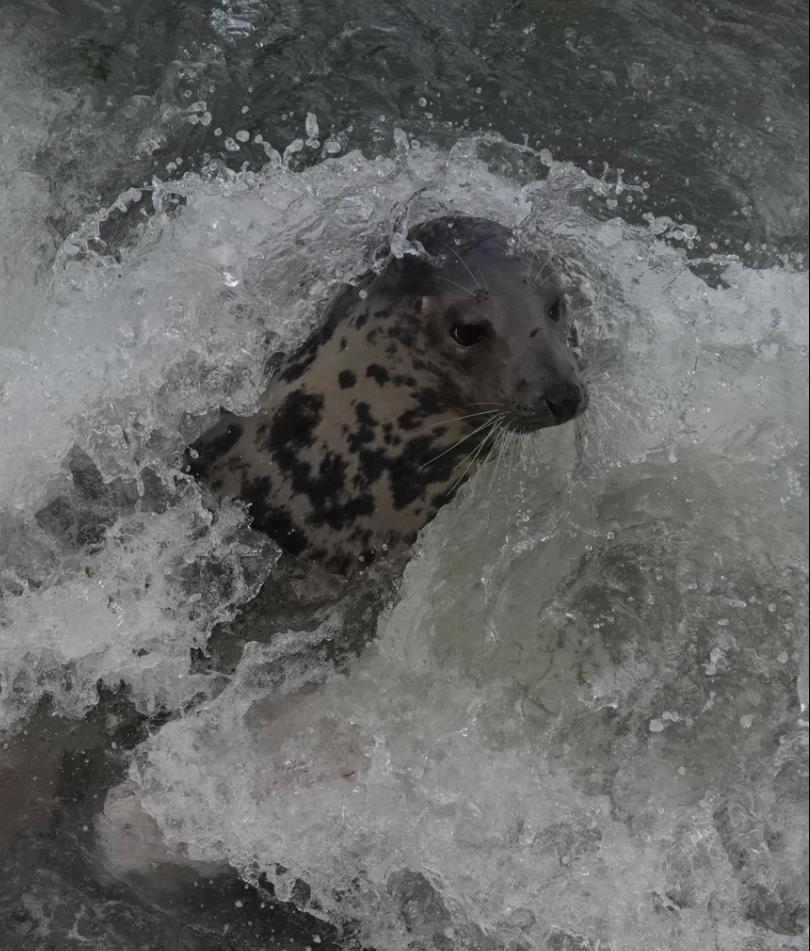
Happiness comes in waves. Photo credit: Chris Cureton
All SWO photos are taken at a distance with a long lens camera