Final Report
Executive Summary
Project Title: Developing a protocol to use remote sensing as a cost effective tool to monitor contamination of mangrove wetlands
Date: 30 April 2012
Project Number: R-21-1-06.
Principle Investigators
Johannes H. Schellekens, Ph.D. schellek@uprm.edu
Fernando Gilbes-Santaella, Ph.D. fernando.gilbes@upr.edu
Department of Geology
University of Puerto Rico at Mayagüez
Mayagüez, Puerto Rico 00681-9017
Dates covered: 22 May 2006 to 1 March 2008 and two extensions until April 2012
A. Executive Summary
Summary of Impacts and Contributions
1. Objectives: To apply the remote sensing techniques of mineral exploration to the monitoring of mangrove wetlands for the presence of metal contamination. Similar as in mineral exploration, a cost effective technique that does not require costly field studies, will make an excellent tool for government agencies in charge of monitoring the health of wetlands and the possible contamination of mangrove forests. The research involved:
a. The analyses of substrate and leaves in the top of the canopy of mangroves. The selection of a non-contaminated control area (e.g. Guanica, Punta Ballena, and compare the chemical results, the reflectance spectra of the leaves, the Normalized Difference Vegetation Index (NDVI), and the pH of the seawater, with other possible contaminated sites. For the latter the following sites were selected Joyuda Lagoon with possible Ni, Co contamination next to a Ni-Co laterite, Arecibo Lagoon in the watershed of the porphyry copper deposits and with various industrial sites, and Guayanilla Bay with reported mercury contamination.
b. Processing of AVIRIS and IKONOS images using differences in reflectance.
c. Geographic Information System (GIS) database for use by agencies in charge of pollution control.
Objectives #1 and #2 were fully developed after a large effort. The analyses of some of the heavy metals (e.g. As, Hg) needed chemicals that required an explosive license as ordered by Homeland Security. None of the PIs had this license and efforts to find such a person willing to help us were unsuccessful. Therefore, metals analyses were finally done at the private company Environmental Quality Laboratories, Inc. (EQ Lab). They performed all the requested chemical analyses during the second phase of the project in Guánica and Arecibo. A pilot project using AVIRIS imagery from near Punta Ballena did not provide the desired results, due to discrepancies between ground-truthing and the image data. Processing of IKONOS images was also challenging and differences in NDVI values were not clear between the non-contaminated and contaminated areas.
Objective 3 was partially completed but it will be done within the next 6 months A new server was acquired and ArcGIS Server v10 was installed. The GIS database is now getting ready to be published via this web service.
2. Advancement of the Field
The following discoveries were made and will help future work
a. Transport of metals from the substrate to the top leaves and the transport of metals within the tree is not the same for all metals.
b. Transport of metals into, and within the red mangrove (Rhizophora mangle) is good to excellent for Cu, Co, Pb, and Cr, whereas the transport of Ni is little and the transport for Cd is none existent. Black mangrove (Avicennia germinans) seems to concentrate Cu, Co, and Cd.
c. In summary red mangrove can be used to monitor for Cu, Co and possibly Pb and Cr, but not for Ni and Cd. Black mangrove can be used to monitor for Cu, Co and Cd.
d. Extremely conditions of metal contamination can be found in Puerto Rico, but its monitoring with remote sensing requires further studies.
e. Higher spatial resolution is needed in order to detect changes in NDVI produced by metal contamination.
3. Problems encountered
a. A major problem involved the chemical analyses, due to the requirement of having an explosive license to purchase the needed chemicals. We tried unsuccessfully to find a person who could do the purchasing for us, subsequently we explained the Purchasing Dept. we only needed little quantities and they promised to process the order, but no chemicals were ever purchased. We finally solved the problem by hiring a private company
b. Another problem was the capability of the server to publish the GIS databases. The machine was very slow and the software (ArcIMS) was having difficulties. After trying several possible solutions we decided to buy a new server and upgrade the G IS software, which we did recently. A Dell PowerEdge T410 was obtained and ArcGIS Server v10 was installed. However, purchasing and installation took long time and the expected task has not been finished. We, however, are committed to do it as soon as the data is organized and ready to be published in the web.
c. Hiring a good graduate student interested in conducting a thesis project in this topic was impossible. Several students showed interests, and some of them even preliminary participated in field work, but for multiple reasons did not stay working in the project.
4. Research Impacts
a. This project has obtained valuable data that can be applied in further research about the behavior of metals in the various mangroves, such as the transport of certain metals in either red or black mangroves and hence which mangroves can be used for the monitoring of certain metals and which not.
b. It also helped to better understand the potential application of remote sensing to monitor mangroves areas highly contaminated with metals.
c. It was proven that field reflectance measurements, hence NDVI, can be used for detecting metal contamination in mangrove trees, confirming our hypothesis.
5. Other important impacts or products
a. List of students supported and otherwise involved
Graduate Students employed:
Ms Marianela Mercado Burgos Aug 2007 – Dec 2008 nela.guayaba@gmail.com
Ms. Mercado was recruited as graduate student to work in the project. She was supported for one semester. After that she decided to change her research project.
Undergraduate students employed:
Mr. Augustine Rodríguez-Román. Aug 2006 - May 2007 ride_with_stylee@hotmail.com
Mr. Rodriguez had carried out two undergraduate research projects in preparation of the proposal: Rodríguez-Román, A. (2005 a b)
Mr. Rodriguez became the most experienced undergraduate student participating in all the steps of the sampling of soil and leaves, determining GPS locations, obtaining pH of water data, and analyzing soil and leaves. He co-authored an internal research report with Ms. Delíz: Delíz and Rodriguez (2007)
Ms. Belyneth Delíz-López. Aug 2006 - May 2007 belydel@hotmail.com
Ms. Delíz was recruited as undergraduate research assistant and participated in all the steps of the sampling of soil and leaves, determining GPS locations, obtaining pH of water data, and analyzing soil and leaves. She co-authored an internal research report with Mr. Rodríguez: Delíz and Rodriguez (2007)
Ms. Angela Perez Jan - May 2007 and Aug – Dec 2007 isabela117@gmail.com
Ms. Perez was recruited as an undergraduate research assistant and carried out sampling of leaves and soils and determined the reflectance of the leaves.
Other undergraduate students involved (without pay)
Ms. Almaris Martínez-Colón
Ms. Martinez participated as an undergraduate research student in the required course GEOL 4055. She compared the reflection of different levels of red mangrove leaves in Joyuda and Guanica. She produced an undergraduate research report: Martinez-Colon (2006).
Ms. Yomayra Román-Colón yomayra.roman@gmail.com
Ms. Roman participated as an undergraduate research student in the required class GEOL 4049. She compared reflectance spectra of mangroves in the Punta Ballena area with reflectance data obtained from AVIRIS images. She produced the undergraduate research report: Roman-Colon (2006)
Mr. Gabriel A. Mattei-Salicrup gabriel.mattei@upr.edu
Mr. Mattei enrolled in the course GEOL 4002 (Topics in Geology) as part of his personal interest to continue learning research skills. He participated in the second phase of the project, which was focused in comparing a non-contaminated site in Guánica with a highly contaminated site in Arecibo. Mr. Habib Bravo and Mr. Kevian Pérez also participated on this work as volunteers. They analyzed the reflectance measurements, NDVI, and metal composition Mr. Mattei produced the undergraduate research report: Mattei-Salicrup, 2011
Mr. Luis A. Palmer-Velázquez luis.palmer@upr.edu
Mr. Palmer participated as an undergraduate research student in the required class GEOL 4049. As part of his work the field reflectance and IKONOS measurements of Guánica and Arecibo sites were compared. Specific analyses of NDVI were also performed. He produced the undergraduate research report: Palmer-Velázquez, 2011
Graduate student research report
Mercado-Burgos and Viguilla, 2007
Undergraduate Research Reports (see full title in bibliography)
Delíz-López and Rodríguez -Román, 2006
Martínez-Colón, 2006
Rodríguez-Román, 2006
Román-Colón, 2006
Mattei-Salicrup, 2011
Palmer-Velázquez, 2011
6. Sources of matching funds
No matching funds were obtained. However, the Department of Geology provided transportation during the field work. Also the GERS Lab provided all field and laboratory equipment, including GPS, spectroradiometer, and computers with image processing software ENVI and ArcGIS.
7. New extra mural funds
No extra mural funds were obtained
8. Benefits:
No additional impacts or contributions beyond those described above
B. Final Report Narrative
Brief statement of the problem
Vegetation may take up the metals in their roots, stems, and leaves, and serve as sensors of contamination that integrate pollution over longer time periods, less dependent on daily or seasonal fluctuations. The characteristic that vegetation reacts to the geochemical conditions of the substrate has found a use in the remote sensing techniques applied to mineral exploration, where large areas can be efficiently surveyed without expensive field studies (Goetz et al., 1983). Labovitz et al. (1983) demonstrated that the metal content in the soil changed the leaf reflectance, especially in those parts of the spectrum used for chlorophyll content and water absorption, and that the variation in trace element content was associated with leaf reflectance. Schellekens et al. (2005) studied the application of remote sensing for metal content in the substrate in a diverse tropical forest.
The proposed study tries to apply the remote sensing techniques of mineral exploration to the monitoring of mangrove wetlands for the presence of metal contamination. Mangrove wetlands are especially well-suited for this technique, because the vegetation in mangrove wetlands is not very diverse, four species are known to occur in Puerto Rico, with the red mangrove (Rhizophora mangle), the white mangrove (Laguncularia racemosa), and the black mangrove (Avicennia germinans) as the most abundant. Similar as in mineral exploration, a cost effective technique that does not require costly field studies, will make an excellent tool for government agencies in charge of monitoring the health wetlands and the possible contamination of mangrove forests.
Methods used
In order to correlate the reflectance pattern with contamination or non-contamination of the substrate, chemical analyses for heavy metals were carried out for sediments in the root system and leaves in the top of the canopy. These high leaves are selected because these are observed by remote sensing techniques. However first the assumption that the metals are transported from the substrate to the highest leaves had to be tested. Therefore as a first experiment in addition the analyses of substrate and top leaves, leaves of the lowest braches and the intermediate branches were analyzed, both for metal content as well as reflectance. The analyses were carried out on an Atomic Absorption Spectrometer, following procedure described by Massol-Deya et al. (2005). The reflectance spectra of the leaves were determined in the field using the GER 1500 spectroradiometer. The pH and temperature of the seawater were determined using a Thermo Orion pH meter model 230A.
To obtain the desired results the following pilot project was carried out:
1. Comparison of known heavy metal contaminated mangroves with non-contaminated mangroves
a. Joyuda lagoon next to the nickel-cobalt laterite (Acevedo et al., 2000)
b. Guayanilla reported mercury contamination (Lopez and Teas, 1978; Stary and Lopez, 1979)
c. Arecibo lagoon in watershed with porph yry copper deposits (Bawiec, 2000)
d. Guanica and Punta Ballena, pristine environments next to the Guanica subtropical dry forest having no run-off. No metal contamination discovered by Massol-Deya et al., 2005)
2. Study of the transport of metals from the substrate to higher levels in the mangrove, and study of the transport of metal within the mangrove tree.
a. Red mangrove (Rhizophora mangle) in Guayanilla and Joyuda.
b. Black mangrove (Avicennia germinans) in Punta Ballena.
3. The use of AVIRIS images in Punta Ballena. Comparison of reflectance patterns in mangroves with reflectance patterns of pixels in the AVIRIS image.
4. Comparisons of reflectance measurements and NDVI collected in the field with the GER1500 spectroradiometer and by the spaceborne sensor IKONOS.
Results and findings
1. Site descriptions
a. The Joyuda lagoon is situated next to the nickel-cobalt laterite deposit bordering the lagoon on the landward side (Heydenreich and Reynolds, 1959; Cram, 1972). The laterite forms a high and water draining from the laterite end up in the lagoon. As a result Ni and Co are expected to occur in the lagonal sediments.
b. Guayanilla Bay is a known area of mercury contamination (Lopez and Teas, 1978). Guayanilla Bay is located in the Yauco River Valley surrounded by Ponce Limestone, mudstone from the Juana Diaz Formation and alluvial sediments. The Yauco River also brings additional sediments from Upper Cretaceous volcanic derived rocks. Along the Guayanilla Bay, many industries can be observed (Rodriguez, 2006) Stary and Lopez (1979) tried to establish a base-line for mercury concentrations in probably non-contaminated mangrove swamps, using leaves, wood, roots and propagules of mangroves to compare these to mercury levels in Guayanilla Bay. Mercury levels in Guayanilla Bay when compared to other locations expressed values 10 times higher than of other coastal areas such as the Joyuda Lagoon, Punta Ostiones, Guanica Bay, and the Phosphorescent Bay (Stary and Lopez, 1979).
c. Arecibo is located in the northern part of the island and has a substrate that is derived from limestone, and carbonate sediments. The mangroves in the Arecibo area thrive in an enclosed lagoon. In this site was the AAA Sewage Treatment Plant, the lagoon was near an urbanization, and the rice plantation D’Aqui was located near this vast wetland environment.
d. The Guanica and Punta Ballenas sites are located along the shore of the Guanica Subtropical Dry Forest. Substrate of these mangroves consists of limestone fragments derived from the on-land exposures of the limestone in the Guanica area and the carbonates produced by corals and other marine organisms. No surface drainage occurs from the land into the marine environment. In addition Massol-Deya et al. (2005) analyzed the sediments in the bay and did not encounter metal contamination.
Analyses for metal concentrations in the substrate and the leaves of different mangroves are given in Appendix 1 tables 1 to 5
Cu vs Ni in sediments
Figure 1 Cu vs Ni in sediments. Guanica is considered the control as a non-contaminated site. The results are found in the dashed lined box in the figure. Notice the high Ni content in sediments of Joyuda lagoon next to the Ni-Co laterite. Guayanilla has slightly higher Cu and Ni than the control.
Co vs Cu in sediments
Figure 2 Co vs Cu in sediments. Guanica is considered the control as a non-contaminated site. The results are found in the dashed lined box in the figure. Guayanilla and Joyuda show distinctly higher cobalt contents, whereas Arecibo is less contaminated
Figure 3 Pb vs Cu in sediments. Guanica is considered the control as a non-contaminated site. The results are found in the dashed lined box in the figure. The Pb concentration of the noncontaminated Guanica site is higher than possible contaminated sites. Two stations in Arecibo show distinct lead contamination.
2. Metal transport from substrate to top of canopy and within the tree. In order to assess the uptake of metals in the mangrove tree and its transport to the top leaves of the canopy, an enrichment ratio was defined where the metal content of the top leaves was divided by the metal content of the substrate. An example is given in figure 4 for a red mangrove from Guayanilla. In this case the enrichment ratio came out as 0.41 suggesting good transport from substrate to top leaves.
• Summary of top/substrate ratios for red mangrove (Rhizophora mangle)
Cu
• Guayanilla 0.4 observable transport
• Joyuda 1.2 metal concentration in tree
• Punta Ballena 0.2 observable
Figure 4. Example of enrichment ratio for red mangrove (Rhyzophora mangle) in Guayanilla.
– Ni
• Guayanilla 0.01 very little uptake
• Joyuda 0.02 very little uptake – Co
• Guayanilla 0.2 observable
In order to assess the transport within the tree an enrichment ratio was defined where the metal content of the top leaves where divided by the metal content of the lower leaves. An example is given for the same red mangrove in Guayanilla. Notice here that the ratio is >1, indicating that the tree concentrates Cu extracted from the soil.
Figure 5. Example of enrichment ratio within the tree for red mangrove (Rhyzophora mangle) in Guayanilla. Notice concentration of Cu in top leaves ratio>1
• Summary of top/bottom ratios for red mangrove (Rhizophora mangle)
Cu
–
– Ni
Guayanilla 1.3: good transport
Joyuda 1.4: good transport
Guayanilla 0.3: little transport
Joyuda 0.4: little transport
– Co Guayanilla 2.5: very good transport
– Cd Guayanilla 0: no transport
– Pb Guayanilla 0.9: good transport
– Cr Guayanilla 1.3: good transport
• Summary of top/substrate ratios for black mangrove (Avicennia germinans)
– Cu Pta Ballena 6.5: concentration
– Co Pta Ballena concentration – Cd Pta Ballena concentration
Co and Cd are below detection in the substrate but Co and Cd have an average of 7.6 ppm and 0.3 ppm respectively in the top leaves
In order to use mangrove as a monitor plant using remote sensing, the tree has to take up the metal from the substrate and transport it to the top of the canopy. On the basis of the present
data it is suggested that red mangrove (Rhizophora mangle) can be used to monitor for Cu, Co, and possibly Pb and Cr, but not for Ni and Cd. The black mangrove (Avicennia germinans) can be used to monitor for Cu, Co, and Cd.
3. Use of AVIRIS (Advanced Visible and InfraRed Imaging Spectrometer)
The AVIRIS has the capability to determine a reflectance spectrum for each pixel and to calculate the Normalized Difference Vegetation Index (NDVI) per pixel. In the Punta Ballena area a pilot project was carried out where the reflectance spectra was measured for mangrove trees using the GER-1500 spectroradiometer. The station was located using a GPS. NDVIs for the tree determined on the ground were compared to NDVIs determined by AVIRIS. Stations 1 to 6 were averaged, and the average NDVI compared to the NDVI determined by AVIRIS for this area. Similarly the average of station 7 and 9 was compared to the NDVI determined by AVIRIS for this area. In both cases the NDVI determined by AVIRIS was too high. This was due to the fact that single trees were smaller than 1 pixel and reflectance from other components of the pixel, like sand, was added to the reflectance of the mangrove
Comparison GER 1500 and AVIRIS
Figure 6 NDVI measured with the GER-1500 spectroradiometer shows a wide spread of reflectance data (top) The bottom graph shows the comparison of average NDVI of station 1-6 and station 7 to 9 (both blue) with their respective AVIRIS data (violet).
GER data Punta Ballena
4. Reflectance and NDVI from Guanica and Arecibo
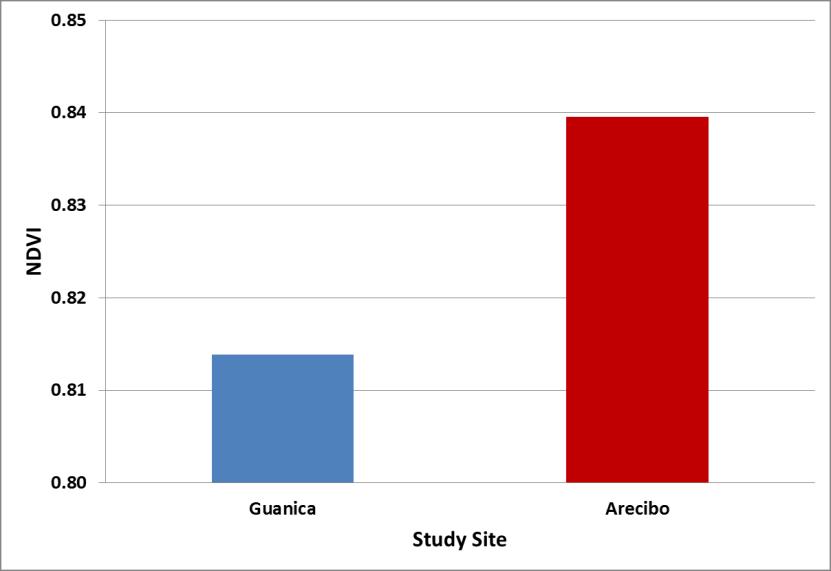
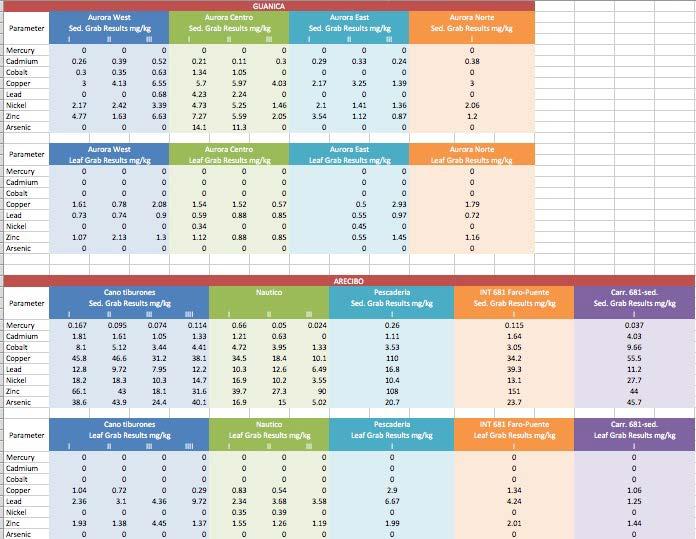
In this part of the research, substrate and leaf samples from red mangroves were collected and analyzed chemically and physically from two sites with different metals concentration. Chemical analysis showed a noticeable difference between a highly contaminated mangrove and a clean one. These differences and unusual metal composition in contaminated mangroves was analyzed in the reflectance measurements. The non-contaminated mangroves from Guanica showed higher reflectance than the highly-contaminated ones from Arecibo (Figure 7). Also, the red-shift was shown by the measurements in Arecibo. The NDVI was also slightly higher in Arecibo (Figure 8). The higher contamination by human waste deposits in Arecibo has clearly affected soil and leaf chemical composition in red mangroves. These components in the leaves produce changes in the reflectance signal, which affect the NDVI These results suggest that is possible to identify the differences in spectral signal by spaceborne sensors as originally proposed, saving geologists a lot of work and money.
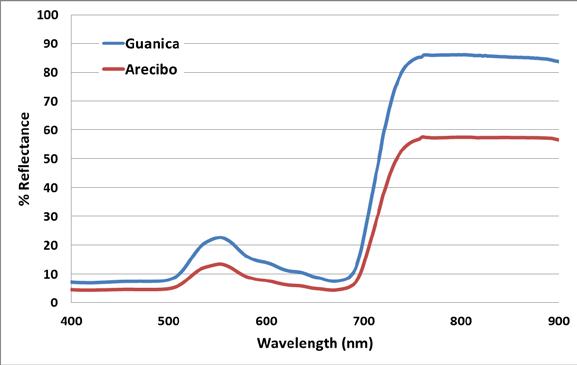
Figure 7 Remote sensing reflectance (Rrs) from a non-contaminated area in Guanica and a highly-contaminated area in Arecibo. The red-shift is indicated by the arrow.
Figure 8 Normalized Difference Vegetation Index (NDVI) from a non-contaminated area in Guanica and a highly-contaminated area in Arecibo.
5. Analysis of IKONOS imagery
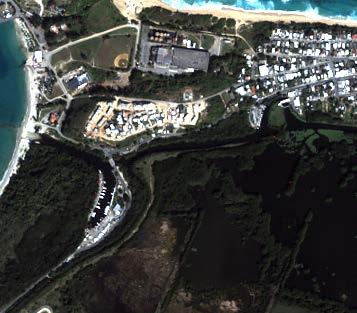
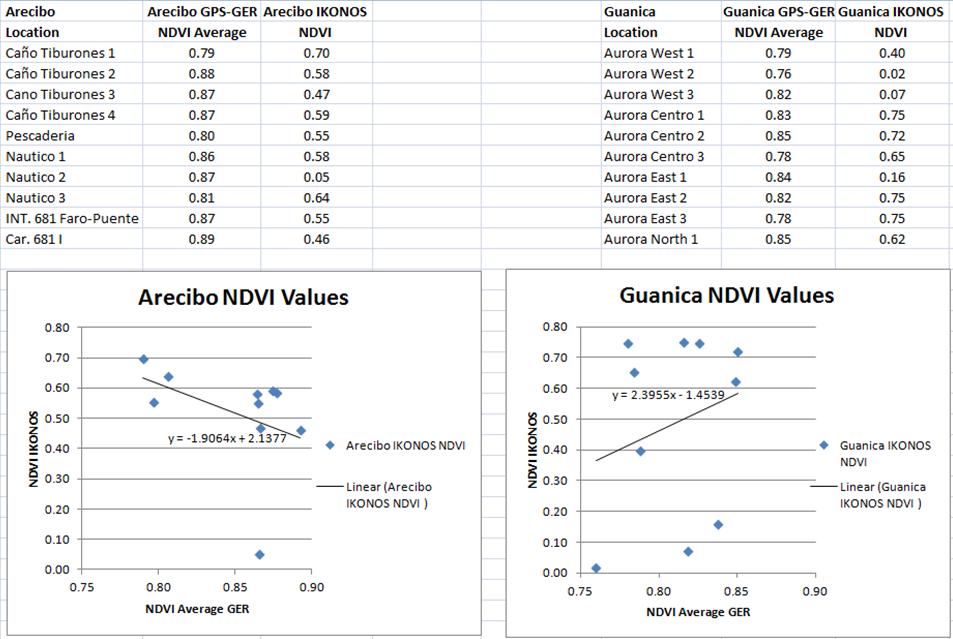
In this part of the study we processed imagery from IKONOS satellite and compare it with in situ measurements. The results indicate that IKONOS imagery does not compare very well with the field reflectance data. Possible causes for these discrepancies where errors due to atmospheric corrections and image resolution (~1 meter). Further analyses of the collected data and more research must be done in order to determine if we can use IKONOS images for detecting reflectance and NDVI changes between the two selected sites. Figures 9 and 10 show preliminary results related with this part of the project
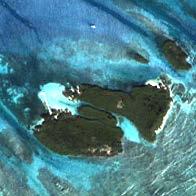
Figure 9 IKONOS images collected for Arecibo (left) during January 3, 2010 and for Cayo Aurora in Guanica (right) during December 12, 2010 Red dots indicate sampling stations.
Figure 10 Comparison of NDVI collected by the field spectroradiometer GER-1500 and the IKONOS sensor.
Objectives
accomplished or not accomplished
Chemical analyses of the substrate and leaves were to be carried out of As, Cd, Cr, Pb, Hg, Ni, Co. This objective was very difficult to meet. Not all elements could be analyzed all the time and the elements As and Hg required chemicals for which we needed a ‘explosive license’. Nor the PI or the Co-Pi had such a license and attempts to use a license in the Biology department failed. The Co-PI explained the purchasing department that only a small amount was needed for the analyses. The purchasing department agreed to buy the chemicals but never did. After a large effort we decided to hire a private company (EQ Lab) to perform the chemical analyses. The downside of this solution was the lack of students’ involvement in this methodology. See Appendix 1 for example of the analyses.
Chemical analyses and reflectance spectra from leaves in the top of the canopy. Chemical analyses of the leaves encountered the same problem as the analyses of the substrate. The reflectance spectra were determined from most of the leaves (bottom, middle, and top). However, problems with the GER-1500 spectroradiometer required to send it to the factory for servicing and calibration. No spectra could be measured during that time.
Compare the reflectance data for contaminated and non-contaminated sites. NDVIs were calculated for red, black, and white mangroves in contaminated and non-contaminated sites. But, no statistically valid difference between the two could be discerned.
Processing of satellite images using the differences in reflectance took long time to do and did not provided good results The pilot project using AVIRIS did not fulfill the proposed objective. IKONOS images also showed limitations. The main reason being that no robust chemical data existed for the various selected areas and we waited for the purchase of the images until we were certain in which area we could detect contamination.
Discussion of project impacts and products
Several students were directly supported and otherwise involved. They were:
Graduate Students employed:
Ms Marianela Mercado Burgos Aug 2007 - Dec2008 nela.guayaba@gmail.com
Ms. Mercado was recruited a graduate student to work in the project. She was supported as a graduate student for one semester. She co-authored a report in a Remote sensing class that redid a previous undergraduate research project without contributing new data. (Mercado-Burgos and Veguilla, 2007). After one semester she decided she wanted to change her research project.
Undergraduate students employed:
Mr. Augustine Rodríguez-Román. Aug 2006 - May 2007 ride_with_stylee@hotmail.com
Mr. Rodriguez had carried out two undergraduate research projects in preparation of the proposal:
Augustine Rodríguez-Román: Leaf reflectance of possibly heavy metal contaminated mangroves compared to non-contaminated mangroves: A possible tool to discern heavy metal contamination using remote sensing. [2005]
Augustine Rodríguez-Román: Geo-biological study of heavy metal contamination in coastal areas: Remote sensing techniques applied for mineral exploration [2005]
Mr. Rodriguez became the most experienced undergraduate student, taking samples of both soil and leaves, determining GPS location of sample sites, carrying out measurements of reflectance of leaves, and determining the pH of the water. Mr. Rodriguez also carried out the chemical analyses of the leaves and soil samples. Mr. Rodriguez was an undergraduate research assistant during a large time of the project. He co-authored an internal research report with Ms. Delíz: Delíz and Rodríguez (2007)
Ms. Belyneth Deliz-López Aug 2006 - May 2007 belydel@hotmail.com
Ms. Delíz was recruited as undergraduate research assistant and participated in the collection of samples of both soil and leaves, determining GPS location of sample sites, carrying out measurements of reflectance of leaves, and determining the pH of the water. Ms. Delíz also carried out the chemical analyses of the leaves and soil samples. Together with Mr. Rodriguez she co-authored an internal report: Delíz and Rodríguez (2007)
Ms. Angela Perez Jan - May 2007 and Aug – Dec 2007 isabela117@gmail.com
Ms. Perez was recruited as an undergraduate research assistant. She carried out sampling of leaves and soils and determined the reflectance of the leaves. Unfortunately during here participation in the project no chemical analyses were carried due to the problems purchasing chemicals, and the GER radiospectrometer had to be send away for servicing.
Other undergraduate students involved
Ms. Almaris Martínez-Colón
Ms. Martinez participated as an undergraduate research student in the required course GEOL 4055. She compared the reflection of different levels of red mangrove leaves in Joyuda and Guanica. She produced an undergraduate research report: Martinez-Colon, Almaris, (2006)
Ms. Yomayra Román-Colón yomayra.roman@gmail.com
Ms. Roman participated as an undergraduate research student in the required class GEOL 4049. She compared reflectance spectra of mangroves in the Punta Ballena area with reflectance data obtained from AVIRIS images. She produced the undergraduate research report: Román-Colón, Yomayra A. (2006) http://gers.uprm.edu/pdfs/topico_yomayra1.pdf
Mr. Gabriel A. Mattei-Salicrup gabriel.mattei@upr.edu
Mr. Mattei enrolled in the course GEOL 4002 (Topics in Geology) as part of his personal interest to continue learning research skills. He participated in the second phase of the project, which was focused in comparing a non-contaminated site in Guánica with a highly contaminated site in Arecibo. Mr. Habib Bravo and Mr. Kevian Pérez also participated on this work as volunteers. They analyzed the reflectance measurements, NDVI, and metal composition. Mr. Mattei produced the undergraduate research report: Mattei-Salicrup, 2011 http://gers.uprm.edu/pdfs/mattei_11.pdf
Mr. Luis A. Palmer-Velázquez luis.palmer@upr.edu
Mr. Palmer participated as an undergraduate research student in the required class GEOL 4049. As part of his work the field reflectance and IKONOS measurements of Guánica and Arecibo sites were compared. Specific analyses of NDVI were also performed. He produced the undergraduate research report: Palmer-Velázquez, 2011 http://gers.uprm.edu/pdfs/topico_palmer1.pdf
Graduate student Research Reports
Mercado Burgos, Marianela and Veguilla, Ricardo, 2007, Relación entre NDVI y contenido de metales en Rhizophora mangle en el suroeste de Puerto Rico: unpublished research paper in GEOL 6225 Advanced geological remote sensing. http://gers.uprm.edu/geol6225/pdfs/mercado_veguilla_2007.pdf
Undergraduate Research Reports
Deliz-López, Belyneth and Rodríguez -Román, Augustine, 2006, Monitoring metal contamination of mangroves using remote sensing techniques: Guayanilla: Internal Research report Dept. of Geology, UPRM
Martínez-Colón, Almaris, 2006, Distribution of metals and leave reflectance in red mangrove (Rhyzophora mangle). Comparison between Joyuda and Guanica mangrove areas: Unpublished Undergraduate Research report Dept. of Geology, UPRM
Rodríguez-Román. Augustine, 2006, Remote sensing techniques for mineral exploration used to monitor metal contamination of mangroves: The Guayanilla and Arecibo mangroves: Unpublished Undergraduate Research report Dept Geology UPRM, 25p.
Román-Colon, Yomayra A., 2006, The use of AVIRIS to monitor the contamination in mangrove wetlands, Unpublished report undergraduate research Dept Geology UPRM, 15p.
http://gers.uprm.edu/pdfs/topico_yomayra1.pdf
Mattei-Salicrup G., 2011 Using Remote Sensing techniques as a tool to monitor contamination of mangroove wetlands, Unpublished report undergraduate research Dept Geology UPRM, 13p. http://gers.uprm.edu/pdfs/mattei_11.pdf
Palmer-Velázquez L., 2011 Applying Remote Sensing Techniques to Detect Metal Contamination in Mangrove Wetlands: Cayo Aurora and Caño Tiburones, Unpublished report undergraduate research Dept Geology UPRM, 13p. http://gers.uprm.edu/pdfs/topico_palmer1.pdf
Presentations:
“Usando Percepción remota como una herramienta para monitorear contaminación de mangles” Sociedad Horticultura del Oeste, San German, PR, 1 October 2006.
“Developing a protocol to use remote sensing as a cost effective tool to monitor contamination of mangrove wetlands” 2nd Annual Symposium for Coastal and Marine Research, UPR Sea Grant College program Mayagüez, PR, 5 October 2006.
“Can we use remote sensing to monitor contamination in mangrove wetlands?” Sociedad Geologica Estudantil, UPRM, Mayagüez, PR, 1 March 2007
“Developing a protocol to use remote sensing as a cost effective tool to monitor contamination of mangrove wetlands: Initial results” XXVI Simposio del Departamento de Recursos Naturales y Ambientales 25 Oct. 2007
Abstracts published (students in bold)
Rodríguez-Román, Augustine and J.H. Schellekens, 2006, Leaf reflectance comparison between possibly heavy metal contaminated mangroves and non-contaminated mangroves: A possible tool to discern heavy metal contamination using remote sensing: Abstracts Sigma Xi student poster day Mayagüez, PR April 6, 2006
Schellekens, J.H., F. Gilbes-Santaella, A. Rodríguez-Román, Yomayra Román -Colon, 2006, Developing a protocol to use remote sensing as a cost effective tool to monitor contamination of mangrove wetlands: Abstracts of the 2nd Annual Symposium for Coastal and Marine Research, UPR Sea Grant College program October 5, 2006 Mayagüez, Puerto Rico, p. 9. Rodriguez, Augustine, Angela Perez, Belyneth Delíz, Yomayra Román, Almaris Martínez, J.H. Schellekens, F. Gilbes, 2007, Remote sensing techniques for mineral exploration used to monitor metal contamination of mangroves: Program and abstracts Sigma Xi XII Posterday, UPRM, Mayagüez, Puerto Rico 26 April 2006, p. 34
Schellekens, J.H., F. Gilbes, A. Rodríguez, B. Deliz, and Y. Roman, 2007, Exploring remote sensing as a cost effective tool to monitor contamination of mangrove wetlands, XXVI Simposio del Departamento de Recursos Naturales y Ambientales de Puerto Rico, San Juan, Puerto Rico, October 2007.
Unpublished reports:
Schellekens, J.H., Gilbes, G., Rodríguez, A., Deliz, B., and Martínez, A., 2007, Preliminary results of the mangrove reflectance and composition study, 11p.
Annual reports for Sea Grant are available at:
For 2009: http://gers.uprm.edu/pdfs/report_mangrove09.pdf
For 2008: http://gers.uprm.edu/pdfs/report_mangrove08.pdf
For 2007: http://gers.uprm.edu/pdfs/report_mangrove07.pdf
The project has obtained valuable data that can be applied in further research on the topic, such as the transport of certain metals in either red or black mangroves and hence which mangroves can be used for the monitoring of certain metals and which not. Unfortunately the research project was delayed by various factors, including the problems with purchasing chemicals, the loss of a graduate student, and the sabbatical leave of one of the PIs. In summary the following conclusions can be drawn from the research:
a. The substrate of mangroves does contain considerable amounts of metals
b. Not all metals are taken up by the mangroves: Cu, Co, Pb, Cr are taken up by red mangrove (Rhizophora mangle) but Ni and Cd are not. Cu, Co, and Cd are taken up and even concentrated by black mangrove (Avicennia germinans)
c. The reflectance spectra and NDVI of mangroves when measured on the ground yield a wide range of values. Averaging the field data seem to yield consistent results, valid differences could be observed between contaminated and non-contaminated mangrove forests.
d. AVIRIS images can be used, but ground truthing has to take into account the larger pixel size (~32m).
e. High resolution (~1 m) IKONOS images do not show differences in reflectance or NDVI between contaminated and non-contaminated mangrove areas.
Recommendations
1. Continue the processing and analysis of collected data in order to submit a paper for publication.
2. Sampling and analyses of black mangrove at other sites, to establish whether the black mangrove indeed concentrates certain heavy metals. It would make the black mangrove a candidate to be used to clean up contaminated coastal areas.
3. Select other contaminated and non-contaminated areas around Puerto Rico to repeat the work done in Arecibo and Guanica. That will help to validate the results of this project.
Bibliography
Acevedo, D., Rodriguez-Sierra, C.J., Reyes, D.R., and Jimenez, B.D., 2000, Heavy metals in sediments and water from San José and Joyuda Lagoons in Puerto Rico, in: J.A. Centeno et al. Editors, Metal Ions in Biology and Medicine, volume 6, p. 169-172.
Bawiec, W.J., 2000, Geology, geochemistry, geophysics, mineral occurrences and mineral resource assessment of the Commonwealth of Puerto Rico: U.S. Geological Survey Open File report 98-38, CD-ROM.
Cram, C.M., 1972, Estudio preliminar de geología económica del yacimiento niquelífero Barrio Guanajibo: Comisión de Minería, Depto. De Recursos Naturales de Puerto Rico.
Delíz, Belyneth and Rodriguez-Roman,. Augustine, 2006, Report on mangrove project
Guayanilla Aug-Dec 2006, CD
Deliz-López, Belyneth and Rodríguez -Román, Augustine, 2006, Monitoring metal contamination of mangroves using remote sensing techniques: Guayanilla: Internal Research report Dept. of Geology, UPRM
Goetz, A.F.H., Rock, B.N., and Rowan, L.C., 1983. Remote sensing for exploration: An Overview. Economic Geology,. 78, 573-590.
Heidenreich, WL and Reynolds, BM, 1959, Nickel-cobalt-iron deposits in Puerto Rico: U.S. Bureau of Mines Report Investigations 5532
Krushenshy, R.D., 2000, Geological map of Puerto Rico, in Walter J. Bawiec (compiler)
Geology, geochemistry, geophysics, mineral occurrences and mineral resource assessment of the Commonwealth of Puerto Rico: U.S. Geological Survey Open File report 98-38, CD-ROM.
Labovitz, M.L., Masuoka, E.J., Bell, R., Siegrist, A.W., and Nelson, R.F., 1983. The application of remote sensing to geobotanical exploration for metal sulfides – Results from the 1980 field season at Mineral, Virginia: Economic Geology, 78, 750-760.
Lopez, J.M. and Teas, H.J., 1978, Trace element cycling in magroves: Symposium on Physiology of Plants in Coastal Ecosystems with emphasis on trace metal cycling, Blacksburg VA.
Martínez-Colón, Almaris, 2006, Distribution of metals and leave reflectance in red mangrove (Rhyzophora mangle). Comparison between Joyuda and Guanica mangrove areas: Unpublished Undergraduate Research report Dept. of Geology, UPRM
Massol-Deyá, A. Perez, D., Berrios, M., and Diaz, E., 2005, Trace element analysis in forage samples from a US Navy bombing range (Vieques, Puerto Rico): International Journal of Environmental Research and Public Health. In press.
Mercado Burgos, Marianela and Veguilla, Ricardo, 2007, Relación entre NDVI y contenido de metales en Rhizophora mangle en el suroeste de Puerto Rico: unpublished research paper in GEOL 6225 Advanced geological remote sensing. http://gers.uprm.edu/geol6225/pdfs/mercado_veguilla_2007.pdf
Rodríguez-Román, Augustine, 2005a, Leaf reflectance of possibly heavy metal contaminated mangroves compared to non-contaminated mangroves: A possible tool to discern heavy metal contamination using remote sensing. Unpublished report undergraduate research Dept Geology UPRM,
Rodríguez-Román. Augustine, 2005b, Geo-biological study of heavy metal contamination in coastal areas: Remote sensing techniques applied for mineral exploration: Unpublished report undergraduate research Dept Geology UPRM, 15p
Rodríguez-Román. Augustine, 2006, Remote sensing techniques for mineral exploration used to monitor metal contamination of mangroves: The Guayanilla and Arecibo mangroves: Unpublished report undergraduate research Dept Geology UPRM, 25p.
Rodríguez-Román, Augustine and J.H. Schellekens, 2006, Leaf reflectance comparison between possibly heavy metal contaminated mangroves and non-contaminated mangroves: A possible tool to discern heavy metal contamination using remote sensing [Abstract]: Abstracts Sigma Xi student poster day Mayagüez, PR April 6, 2006
Rodríguez, Augustine, Angela Perez, Belyneth Delíz, Yomayra Román, Almaris Martínez, J.H. Schellekens, F. Gilbes, 2007, Remote sensing techniques for mineral exploration used to monitor metal contamination of mangroves [Abstract]: Program and abstracts Sigma Xi XII Posterday, UPRM, Mayagüez, Puerto Rico 26 April 2006, p. 34
Román-Colón, Yomayra A., 2006, The use of AVIRIS to monitor the contamination in mangrove wetlands, Unpublished report undergraduate research Dept Geology UPRM, 15p. http://gers.uprm.edu/pdfs/topico_yomayra1.pdf
Schellekens, J.H., F. Gilbes, A. Rodríguez, B. Deliz, and Y. Roman, 2007, Exploring remote sensing as a cost effective tool to monitor contamination of mangrove wetlands [Abstract], XXVI Simposio del Departamento de Recursos Naturales y Ambientales de Puerto Rico, October 2007, San Juan, Puerto Rico.
Schellekens, J.H., F. Gilbes-Santaella, A. Rodríguez-Román, Yomayra Román -Colon, 2006, Developing a protocol to use remote sensing as a cost effective tool to monitor contamination of mangrove wetlands [Abstract]: Abstracts of the 2nd Annual Symposium for Coastal and Marine Research, UPR Sea Grant College program October 5, 2006 Mayagüez, Puerto Rico, p. 9.
Schellekens, J.H., Gilbes, F., Rivera, G.D., Ysa, Y.C., Chardón, S. and Fong, Y., 2005: Reflectance spectra of tropical vegetation as a response to metal enrichment in the substrate of West-central Puerto Rico: Caribbean Journal of Earth Sciences.in press.
Stary, S.J. and Lopez, J.M., 1979, A study of the mercury concentrations of the red mangroves of the south and west coasts of Puerto Rico: Center for Energy and Environmental Research M-43
Appendix 1
Table 1 Guayanilla: Heavy metal concentrations Rhyzophora mangle Cu in ppm
Ni in ppm Site
Co in ppm
Cd in ppm
Pb in ppm
Cr in ppm
All results are the average of two analyses. When no reading was obtained the result is reported as non detected (nd)
Table 2 Joyuda: Heavy metal concentrations Rhyzophora mangle
in
Site
Table 3 Heavy metal concentrations in ppm for Rhyzophora mangle
Punta Ballena
Table 4 Heavy metal concentrations in ppm for Avicenna germinans
Table 5 Heavy metal concentrations in ppm for Laguncularia racemosa
Punta Ballena
Punta Ballena leaves
Table 6 Metal composition in sediment and leaf samples from Guanica and Arecibo.