Executive Summary
Project title: An interdisciplinary evaluation of the fishery for Cittarium pica
Date: April 24, 2015
Project Number: R-32-1-12
Investigators and affiliation:
Graham Forrester [PI]
Department of Natural Resources Science, University of Rhode Island
Carlos García-Quijano [Co-PI]
Department of Sociology and Anthropology, University of Rhode Island
Dates Covered: Start: 02/01/2012 End: 01/31/2015
Summary of Impacts and Contributions:
Objectives:
Objective 1. We isolated the impact of fishing on C. pica populations by correlating C. pica abundance and size-distributions to levels of access to fishers. C. pica populations subject to chronic harvesting have a much smaller fraction of adult-sized and legal-sized whelks than sites that are not regularly accessed by fishers. Effects on population density are less clear-cut, but appear to be affected by both wave exposure and harvesting.
Objective 2. We assessed the biological effectiveness of size-limits, catch limits and seasonal closures. Recruitment occurs year round, so seasonal closures should not affect reproduction. Despite rapid growth rates, a mark-recapture study showed that immature whelks dominate many populations so size-limits are not having the effect of protecting reproductive adults.
Objective 3. We assessed coastal harvesters’ and their community’s dependence on C. pica. Long-time fishers report declining catches, which has led to many moving away from the fishery. Currently, fishers are secretive about good collecting sites and most target C. pica sporadically to supplement their income. This supplementary income can be important for the livelihood resilience of these fishers, as C. pica is marketed as a luxury seafood item with relatively high monetary returns for effort. There is a complex, relatively informal network of distribution and sale of C. pica in coastal communities. Value derived from C. pica catches may go unnoticed by official income assessments.
Objective 4. We assessed the social effectiveness of alternate management strategies by understanding patterns of harvesting C. pica and the receptiveness of fishers to alternate management actions. Commercial C. pica fishers are knowledgeable about the fishery, fishing regulations, and generally concerned with the future of the fishery. Recreational/subsistence fishers, in contrast, are generally unaware of, and sometimes violate, regulations. There was some support among regular fishers for reserves, if there was community involvement in management.
Advancement of the Field:
Like many small-scale fisheries, the fishery for C. pica targets a sedentary coastal species, has been largely ignored by fisheries scientists, and is not amenable to traditional stock assessment as a way of understanding the effects of fishing. Our alternate ecological field approach, was successful at revealing a clear contemporary impact of fishing, and our archaeological analysis showed that impacts of fishing in Puerto Rico extend back hundreds of years, perhaps even before European settlement, whereas there was less evidence of a long-term impact on a small-
isolated island in the BVI. Our multidisciplinary ethnographic approach to understanding patterns of fishing corroborated the ecological evidence that the fishery has declined. Further, we learned that the C. pica fishery is diverse and multifaceted, and forms part of many Puerto Ricans’ livelihoods. Its harvest is important as a source of income and nutrition, as well as being culturally valued, and forms part of the suite of coastal resources that support coastal communities in the Caribbean.
Problems encountered:
Objective 1: Determining differences among sites in fishing pressure by intercepting fishers on the shore was not effective because of the sporadic intermittent nature of fishing effort, so as an alternative we created a multi-faceted index of fishing pressure.
Objective 2: Determining seasonality of reproduction by monthly sampling for gonad analysis was not possible, so as an alternative method we compiled data on juvenile recruitment.
Research Impacts:
C. pica is overfished at shoreline sites that are readily accessible to people.
Size-regulations, closed seasons and bag limits do not appear to be sustaining C. pica populations.
Recreational/itinerant fishers behave differently from regular fishers and might be more likely to engage in destructive fishing practices. Engaging regular fishers in C. pica management shows potential to help with conservation efforts.
Remnant populations persist at wave-exposed, remote, sites and these areas may be de facto reserves for C. pica.
Other important impacts or products:
Undergraduate students supported as research assistants
1. Allison Holevoet, Email: ajholevoet@my.uri.edu, Amount paid: match $5,000, Time period: 6/1-8/30/12, 20 hrs per week.
2. Sarah Merolla, Email: smerolla@my.uri.edu, Amount paid: match $5,000, Time period: 6/18/30/12, 20 hrs per week.
3. Dennis Conetta, Email: dconetta1@my.uri.edu, Amount paid: match $5,000, Time period: 6/1-8/30/13, 20 hrs per week
4. Alicia Siravo, Email: aliciasiravo@my.uri.edu, Amount paid: match $3,200, Time period: 6/18/30/13, 20 hrs per week
5. Nga Chan, Email: nlchan@alaska.edu, Amount paid: match $3,300, Time period: 7/1-8/30/13, 35 hrs per week.
6. Jessica Perreault, Email: jperreault@my.uri.edu, Amount paid: match $3,200, Time period: 6/1-8/30/14, 20 hrs per week.
7. David Gleason, Email: davidgleeson@my.uri.edu, Amount paid: match $5,000, Time period: 6/1-8/30/14, 20 hrs per week
8. Kristian Dzilenski, Email: kdzilenski@my.uri.edu, Amount paid: match $5,000, Time period: 6/1-8/30/14, 20 hrs per week
Graduate students supported as research assistants
1. Reuben J. A. Macfarlan, Email: j.a.macfarlan@gmail.com, Amount paid: Sea Grant $15,300, Time period: 9/1/12-5/30/13, 9 months, 20 hrs per week.
2. Elizabeth Mclean, Email: elmclean@my.uri.edu, Amount paid: Sea Grant $15,300, Time period: 9/1/12-5/30/13, 9 months, 20 hrs per week.
Dissertations (in progress)
Reuben J. A. Macfarlan, The ecology of, and fishery for Cittarium pica.
Elizabeth Mclean, Local Ecological Knowledge of Fishermen in Rhode Island and the Caribbean: State of their fisheries, changes and adaptations
Presentations
Macfarlan, R. J. A., Mclean, E. L., Forrester, G. E. and Garcia-Quijano, C. An Interdisciplinary Study of the Fishery and the Ecology of Cittarium pica in Puerto Rico. Graduate Student Conference, University of Rhode Island, Kingston, March, 2014.
Macfarlan, R. J. A. and Forrester, G. E. An evaluation of the effects of fishing on the population structure of Cittarium pica, the West Indian Top Shell, in the British Virgin Islands and Puerto Rico. International Marine Conservation Congress, Glasgow, Scotland, August, 2014.
Macfarlan, R. J. A., Mclean, E. L. and Forrester, G. E. Isolating the Effect of Artisanal Fishing on an Intertidal Gastropod in the Caribbean. 67th Annual Gulf and Caribbean Fisheries Institute, Barbados, November 2014.
Macfarlan, R. J. A., Mclean, E. L., Forrester, G. E. and Garcia-Quijano, C. An Ethnographic and Ecological Study of the Artisanal Fishery for Cittarium pica in Puerto Rico. 67th Annual Gulf and Caribbean Fisheries Institute, Barbados, November 2014.
Forrester, G. E, A small-scale fishery as a social-ecological system: people and intertidal snails in the Caribbean, University of Alaska, March 2015.
Forrester, G.E., Holevoet, A.J., Merolla, S., Macfarlan, R.J.A. Dislodgement force and shell morphology varies according to wave exposure in a tropical gastropod (Cittarium pica). Benthic Ecology Meeting, Quebec, March 2015.
Publications
Macfarlan, R. J. A., Mclean, E. L. and Forrester, G. E. Isolating the Effect of Artisanal Fishing on an Intertidal Gastropod in the Caribbean. Proceedings of the 67th Annual Gulf and Caribbean Fisheries Institute, Barbados. Awards
Garcia-Quijano, C. 2013. University of Rhode Island Early Career Faculty Research Excellence Award.
Sources of matching funds
University of Rhode Island, salary and fringe benefits for G. Forrester: $68,167 (in original proposal)
University of Rhode Island, undergraduate Coastal Fellowships: $6,400 (not in original proposal)
RI NSF EPSCoR, undergraduate Fellowships: $25,000 (not in original proposal)
U of Alaska MESAS Internship: $3,300 (not in original proposal)
New extramural grants
Falconwood Foundation, Long-term monitoring of marine populations in the British Virgin Islands, $8,000
Time and effort attributed to PIs and associates
Graham Forrester, Time period: 02/01/12-01/31/14, 18 months at 20% time (match) Benefits
We produced ‘The Marine Fact Sheet about burgao (C. pica), Submitted to the Sea Grant Publishing team for (Cristina Olan and Daniel Irizarri) for distribution to PR fishers. We convened a focus group for scientists and managers interested in Cittarium pica, during the 67th Annual Gulf and Caribbean Fisheries Institute, Barbados, November 2014.
Final Report Narrative
Statement of the problem
The nature and importance of small-scale fisheries
Most fisheries policy and management practices around the world have been developed for western industrial fisheries, but the need for effective management of small-scale fisheries is at least as important (Berkes et al. 2001; Pomeroy and Andrew 2011) Small-scale fisheries (Allison and Ellis 2001) constitute a major source of food and economic activity in the Caribbean (Salas et al. 2007) and throughout the coastal tropics (Bene 2003; Pomeroy and Andrew 2011) Small-scale fisheries are poorly documented, but global estimates suggest that up to 50 million small-scale fishers operate in developing countries, and as many as up to 250 million people have substantial reliance on these fisheries for food and income. Moreover, an additional 150 million people work in associated sectors, such as distributing catches, and boat construction and maintenance (Berkes et al. 2001; FAO 2004)
Although the realities differ among locations, making universal generalizations about the nature of small-scale (also called artisanal) fisheries difficult, small-scale fisheries can be said to differ in scope, structure and function from large-scale industrial fisheries (Berkes et al. 2001; Pomeroy and Andrew 2011). Many small-scale fisheries are coastal, and target relatively sedentary species (Defeo and Castilla 2005). Participants are typically heterogeneous, often comprising a mix of full-time commercial fishers as well as recreational and subsistence fishers whose activities supplement household incomes. Fishers are also usually distributed widely in small groups along the coastline, rather than clustered in a few ports (Orensanz et al. 2005), and their fishing activity may fluctuate seasonally. Adding to this complexity, there are also typically many species being harvested from several habitats using multiple fishing methods (Salas et al. 2007). These small-scale fisheries are often less wasteful, and are potentially more sustainable than industrialized commercial fisheries (Jacquet and Pauly 2008). They are, however often disadvantaged because they are typically more remote, and lack supporting infrastructure and political subsidy, when compared to industrial fisheries (Pauly 2006). Small-scale fishers thus have limited ability to influence the marketing and distribution of their catch (Ponte et al. 2007)
The challenge of managing small-scale fisheries
Whether applied to industrial or small-scale fisheries, the basic management tools for wildcaught fisheries have always been spatial or temporal restrictions on catch and effort, plus sometimes the selection of fishing gear and the species, size or gender of catches. Applying these tools in industrial fisheries is traditionally based on mathematical representation of stock and ecosystem trends in order to produce a bio-economic evaluation (Gulland 1977). For most small-scale fisheries, including those in the Caribbean, the resources needed to perform quantitative biological assessment of fisheries are limited (Salas et al. 2007) The human culture that surrounds harvesting, including the knowledge, motivation and preferences of fishers have been given less attention in the development and application of management (Johannes 2002) Anthropologists have described the social organization around fisheries (Ruddle 1996; Griffith et al. 2007), and theory for the use of common-pool resources suggests how to improve social organization (Becker and Ostrom 1995), but social science has not typically been integrated with biological knowledge (Pauly 2006).
In recent years, there has been a growing change in the philosophy of management to appreciate fisheries as linked social-ecological systems (Berkes et al. 1998). Based on the characteristics of
small-scale fisheries described above, several authors have argued that it is particularly valuable to apply this approach to small-scale fisheries (Allison and Ellis 2001; Berkes et al. 2001; Bene 2003; Castilla and Defeo 2005; Pauly 2006; Andrew et al. 2007; McClanahan et al. 2009).
Applying this theory: Cittarium pica as a case study
Our research represents a novel application of this interdisciplinary approach to an important Caribbean fishery. We diagnosed the status of the fished stock using fishers’ knowledge alongside a scientific assessment. As an alternative to a traditional bio-economic assessment of the state of the fishery, we interviewed fishers and other community members to understand the role of fisheries in livelihoods, strategies fishers use to adapt to changes in the ecosystem, and the role of the fishery in the larger economy. Lastly, we explored the social organization of fishing communities and their institutions for self-governance, in-order encourage participation in management.
We focused our research on a species that appears to be an important component of small-scale fisheries throughout the Caribbean, but has received little attention from scientists, Cittarium pica (Linnaeus 1758), a large conspicuous gastropod. C. pica is known by many local names, including: burgao, magpie shell, West Indian topsnail, caracoles, caracol de tapa, Santa Lucía, cigua, quigua, or whelk (Robertson 2003). C. pica can grow in excess of 130 mm in diameter (Bell 1992; Robertson 2003), and is a nocturnal grazer of algae in the intertidal and shallow subtidal zones of rocky shores (Robertson 2003). C. pica appear to have limited home ranges as adults, but are broadcast spawners whose larvae are planktonic for 3-5 days (Debrot 1990a; Bell 1992). They are collected from the shore primarily for food, but also as an ingredient for cosmetics, and their shells are used in jewelry. Their other predators include carnivorous snails, octopi, fish, and seabirds (Robertson 2003)
Effects of fishing on C. pica were not well-documented C. pica is reported to be harvested widely and intensively for sale and for personal consumption in all areas of the Caribbean (Randall 1964; Debrot 1990a; Bell 1992; Jimenez 2006; Osorno Arango et al. 2009) but the nature and amount of harvesting has been little studied. Like many species targeted by small-scale fisheries, the status of C. pica populations across the Caribbean and how they are affected by fishing is not well documented. There are published surveys of C. pica abundance and size-distributions from the Bahamas (Debrot 1990b), USVI (Randall 1964), Costa Rica (Schmidt et al. 2002), and Colombia (Osorno Arango and Diaz Merlanoz 2006; Rosique et al. 2008), plus unpublished surveys from USVI (Toller and Gordon 2005), Puerto Rico (Jimenez 2006), and BVI (Forrester unpubl.). The rarity or absence of larger individuals from many areas has long been interpreted as the effect of over-harvesting (Clench and Abbott 1943; Randall 1964; Robertson 2003; Osorno Arango and Diaz Merlanoz 2006; Rosique et al. 2008), as is the complete disappearance of C. pica from Bermuda and Florida (Walker 1994; Robertson 2003; Rhyne et al. 2009). Putative unharvested populations used as “benchmarks” for this interpretation come from surveys of C. pica in a remote, little-populated, area in the Bahamas (Debrot 1990a), and from surveys inside a Costa Rican reserve (Schmidt et al. 2002). It is, however, important to note that neither study provided direct evidence that “benchmark” sites were unfished and, more generally, there is little direct evidence linking actual harvesting rates to the status of C. pica populations. Direct evidence is critical to separate effects of fishing from natural variables like wave exposure and other anthropogenic impacts on the shoreline, such as coastal development and pollution (Strand et al. 2009).
What are the most effective management actions? Biological considerations
Setting appropriate size-limits, closed seasons, and catch limits depends partly on accurate knowledge of C. pica biology. Inspections of gonad development in USVI, the Bahamas and Colombia suggest that C. pica can mature beginning at roughly 32 mm (Randall 1964; Debrot 1990a; Osorno Arango et al. 2009). Based on limited mark-recapture data, C. pica grows ≈1-2.5 mm/month and so 32 mm C. pica are between 18-40 months old (Randall 1964; Debrot 1990a). These analyses seem to have been used to establish size-limits, but were performed before substantial improvements in models to estimate abundance and demographic rates from markrecapture data (Lebreton et al. 1992; Schwarz and Seber 1999; Schwarz and Arnason 2000; Schwarz 2001; Burnham and Anderson 2002; Link and Barker 2005; Cowen and Schwarz 2006) We used modern methods to us to check for potential biases in earlier estimates due to tag loss, tag visibility to predators, resighting error, and migration The seasonality of reproduction, which is essential to define closed seasons, is also uncertain. In the Bahamas, Colombia and St John, the abundance of juvenile C. pica on the shore peaked in January, suggesting a winter reproductive peak, but individuals held in the lab in the Bahamas spawned regularly from JuneOctober, (Randall 1964; Bell 1992; Rosique et al. 2008). We therefore obtained more accurate information on growth and mortality rates, plus reproductive seasonality to assess whether size & catch limits, and closed seasons are biologically appropriate. We also assessed whether these parameters varied among locations that varied in wave exposure, a key parameter influencing the demography of intertidal species.
What are the most effective management actions? Social considerations
Ensuring that C. pica is a productive resource for Caribbean residents also requires a better understanding of its role in the lives of the many people who depend on it as a source of food and income. Based on its presence in shell middens on several Caribbean islands, C. pica has been used for food at least 1500 years (Walker 1994; Scudder and Quitmyer 1998). Currently, however, we know very little about where, why, and when people are fishing for C. pica. Preliminary studies in Puerto Rico (Jimenez 2006, Garcia Quijano unpubl.), Columbia (Lozano and Estrada 2008; Rosique et al. 2008) and Costa Rica (Schmidt et al. 2002), provide an excellent starting point, and suggest that a careful study of fishers’ local ecological knowledge will be critical to ensure a sustainable fishery. In Puerto Rico and Colombia there is a mix of commercial and subsistence harvesting (Jimenez 2006; Rosique et al. 2008). In the north west of Colombia and in Costa Rica, women and children, mostly from poor households, collect C. pica on foot for household consumption. The intensity of collecting varies over time, as C. pica is used to supplement other sources of protein for these families (Lozano and Estrada 2008). In contrast commercial harvesting tends to be done by male snorkelers, who target large C. pica that are scarce and so fetch a high price (Rosique et al. 2008).
Because C. pica produce planktonic larvae and so can disperse among sites (Bell 1992; DiazFerguson et al. 2010), no-take reserves that protect shoreline habitats, or sites that are simply inaccessible to fishermen, might provide spatial refuges for C. pica. These refuge sites should then act as sources of larvae to replenish harvested sites. As a first step towards evaluating the efficacy of reserves as a management strategy we determined where people collect C. pica, how they choose sites, and what sort of sites, if any, are free of harvesting. For example, fishers in Colombia and Costa Rica reported that danger from breaking waves is a factor considered when selecting shores to fish, but we need to document patterns of fishing far more carefully. Cultural factors may also influence the timing of harvesting and the size of C. pica targeted, which will influence the effectiveness of closed seasons and size limits. For example, in the BVI and
Colombia there are hints that harvesting is most intense at the time of annual festivities (Rosique 2008; Forrester unpubl.), and that women collecting C. pica for food target smaller individuals than men collecting for sale.
Surveys of fishers’ knowledge can also serve to characterize historical knowledge of their fisheries and fishing practices, as well as how they have adapted throughout time to changes in their local environment (Garcia-Quijano 2007b). This local knowledge has sometimes been under-utilized by western scientists and managers in favor of western scientific knowledge, but we suggest it provides a complementary source of understanding for diffuse small-scale fisheries (Drew 2005).
Our overall objective was to conduct an integrated assessment of the fishery for C. pica in two culturally distinct Caribbean islands in order to evaluate alternate management actions for small-scale fisheries. Our specific objectives were as follows:
1. To isolate the impact of fishing on C. pica populations by correlating C. pica abundance and size-distributions to levels of harvesting reported by fishers across multiple sites.
2. To assess the biological effectiveness of size-limits, catch limits and seasonal closures by describing patterns of survival, growth, movement and recruitment of C. pica.
3. To assess coastal harvesters’ and their community’s dependence on C. pica and the degree to which they might be affected by resource degradation or restrictive management.
4. To assess the social effectiveness of alternate management strategies by understanding patterns of harvesting C. pica, the behavior of fisherman, their knowledge of the fishery, the value of the fishery to the well-being of the community and their receptiveness to alternate management actions.
Methods used
Study sites
We conducted a comparative analysis of sites in the British Virgin Islands (BVI) and Puerto Rico (PR). We chose these two locations because they differ in the cultural background of fishers, and in the existing management practices for C. pica. There was also some pre-existing data on populations of C. pica at both locations (Jimenez 2006; Forrester unpubl.).
Objective 1: isolate the impact of fishing on C. pica
We chose 32 sites in the British Virgin Islands (plus two sites in the USVI), and 19 sites in Puerto Rico for ecological surveys (Table 1). At each site, a transect tape was placed along the splash zone, and a combination of walking, wading and snorkeling was used to collect all C. pica across the breadth of the intertidal (Fig. 1). Following previously established methods, we measured all shell widths using calipers and then released the snails back to the intertidal (Debrot 1990a; Randall 1964b; Jimenez 2006) (Fig. 1) We chose sites that contained long stretches of continuous rocky intertidal habitat, that local experts suggested as appropriate to target C. pica for harvesting and that varied in wave-exposure from sheltered bays to exposed sea cliffs. Each site was then classified based on wave exposure: i) low, ii) medium or iii) high, and accessibility to fishers: i) easy, ii) moderate, iii) difficult (see Fig. 2 for classification of BVI sites). Local fisher and non-fisher input was critical in establishing levels of fishing pressure and exposure to sea conditions during the periods that we were not actively sampling in the region. Additionally we examined fetch length, the dominant wind direction and speed from a NOAA data buoy, and
local bathymetry, all of which contribute to the variations in relative exposure between sites. Ancillary field notes related to sea conditions, signs of fishing activity, and ease of access to a given site were recorded in situ.
Fig. 1. Sampling C. pica populations on foot and on snorkel, and measuring shell dimensions using calipers
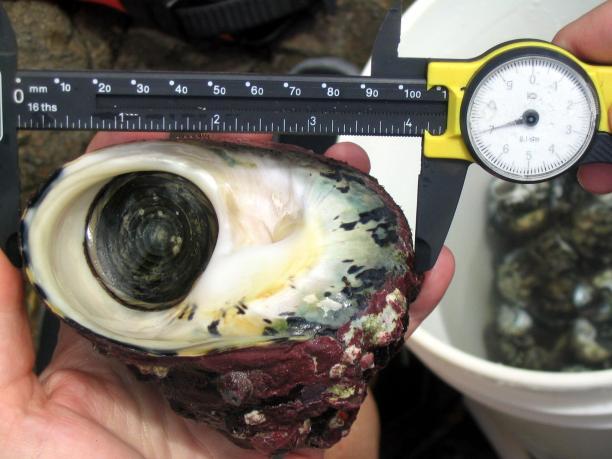
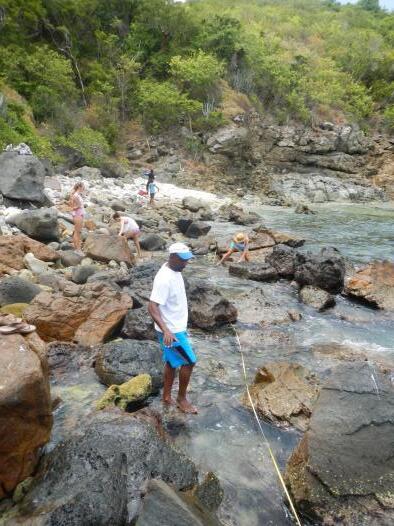
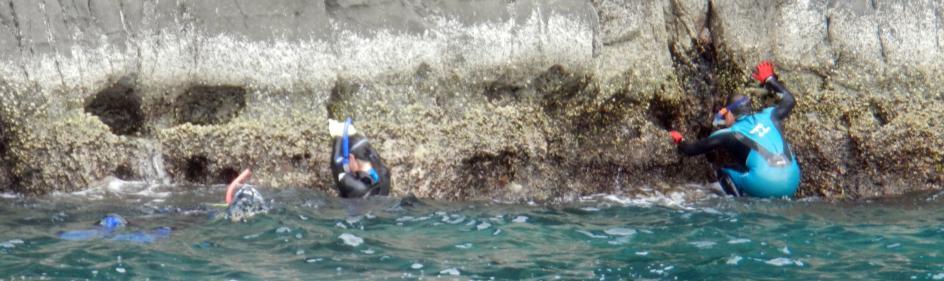
Fig 2. Classification of BVI sites. A total of 32 sites were sampled that spanned gradients in relative access by fishers and exposure to sea conditions. Numbers in the boxes indicate the number of sites in each category.
Table 1. Ecological study sites in PR and the VI
Caja de Muertos, Cayo
Caja de Muertos, Morillo
Faro de Cabo Rojo 17.934373° -67.187636° East of Guana Head 18.474029° -64.581226° Guanica 17.952812° -66.849456° Grand Ghut 18.477278° -64.559222°
Papayo Beach 17.972776° -67.027950° Grand Ghut Grotto 18.478929° -64.559612°
Pinons de Mer:1 18.489515° -66.676961° Harris Ghut -10m 18.472426° -64.573709°
Pinons de Mer:2 18.489697° -66.675395° Harris Ghut 18.472143° -64.573794°
Pt. Aguilla 17.952738° -67.214065° Harris Ghut-2 18.471748° -64.573612°
Punto Borunquin 18.484042° -67.166708° Josiahs Bay 18.446133° -64.592617°
Roosevelt Roads 18.211129° -65.598966° Little Bay 18. 451956° -64.63609°
San Juan Cabezas 18.386618° -65.617818° Little Lamshur Bay 18.316142° -64.725903°
Sardinera 18.492556° -66.794028° Long Point 18.486888° -64.583578°
The Jungle 17.946535° -66.976761° Long Pt-2 18.487111° -64.583354°
Monkey Point 18.463222° -64.570722°
Norman Island 18.312783° 64.611383°
North Beach East 18.479246° -64.571265°
North Beach East-2 18.479262° -64.571245°
North Beach West 18.481647° -64.575010°
Pelican Ghut 18.477861° -64.562333°
Round Rock, East End 18.399344° -64.457834°
Sandy Cay 18.435899° -64.707308°
Shark bay 18.450409° -64.644193°
Smugglers Cove 18.393389° -64.705370°
The Alcove 18.489602° -64.581442°
The Blinders 18.404471° -64.457218°
Trellis Bay Beef Island 18.449938° -64.527820°
White Bay Boat Dock 18.475679° -64.577674°
White Bay-2 18.475403° -64.577901°
Wind Swept Beach 18.356043° -64.766361°
Analysis to isolate the contemporary effect of fishing in the BVI
Sites were replicates in our analyses to test the effect of fishing and wave exposure. We used four metrics to measure fishing effects on the population size structure: mean shell width, maximum shell width, the fraction of individuals that were adults, and the fraction of individuals that were at or above harvestable size C. pica were considered adults if they were greater than 34 mm in shell width. This estimate was based on analysis of gonad structure performed in the USVI and represents the smallest sexually mature C. pica found in that study (Randall 1964).
Legally harvestable C. pica were those with a shell width of 63.5 mm or above, because 63.5 mm is the size limit in the British Virgin Islands. To assess effect of harvesting on population density, mean densities were calculated for all C. pica above 15 mm shell width, all adults, and all those above the size limit for harvesting.
If we had been able to locate sites that represented all 9 possible combinations of fishing access and wave exposure (Fig. 2), we would have tested their effects using a simple two-factor analysis of variance ANOVA. We were, however not able to sample a shoreline that was both “medium” exposure and “difficult” for fishers to access (Fig. 2). To separate the effects of fishing access, we thus made a series of contrasts using one-way ANOVAs in which we held exposure constant while comparing levels of accessibility to fishers. Likewise, to separate the effects of wave exposure, we made a series of contrasts using one-way ANOVAs in which we compared levels of exposure while holding fishing access constant.
Archaeological analysis to isolate the long-term effect of fishing on C. pica
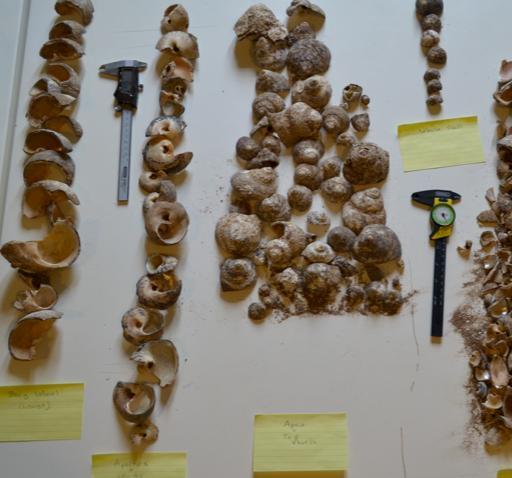
To test the hypothesis that fishing has had longer-term impacts on C. pica populations, we are collaborating with archaeologists in PR and the BVI. We tested the hypothesis that the size distribution of C. pica harvested by people has shifted over time to become increasingly dominated by smaller individuals. Burgao are common finds in food middens dating from the present day back at least 1500 years (Walker 1994; Scudder and Quitmyer 1998). We are collaborating with archaeologists who have completed excavations of food middens at our Guana Island site in the BVI (Mark Kostro, William & Mary) and at the Reserve Naturales Cabezas de San Juan, Fajardo PR (Osvaldo Garcia-Goyco, UPR Rio Piedras, Carlos Perez Merced and Alberto Mercado Vargas, Inst. de Cultura Puertoriquena). In both locations, good collections of burgao shell remains were available that have been dated using stratigraphic methods. We have so far measured shells and shell remains that comprise 420 distinct individuals from the BVI and 728 individuals from PR (Fig. 3).
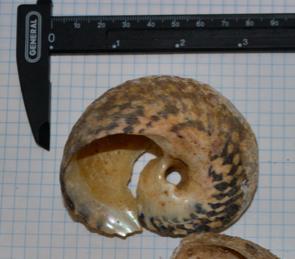
Fig. 3. Shell remains from one stratigraphic layer at the archaeological site in PR. Fragmented remains are grouped into categories based on the parts of the shell. Breaking of the shells with tools to extract the meat produces distinctive fragment types.


Objective 2: describing patterns of survival, growth, movement and recruitment of C. pica
We conducted a mark-recapture demographic study of C. pica that, because of the time-intensive nature of this work, was limited to three BVI sites, all of which were on a small isolated island (Guana Island) The mark-recapture study was done in order to estimate growth, mortality, and movement rates of C. pica. We used three sites that provide a contrast in fishing activity and in wave exposure:
(1) Long Point Wall: a steep wave-exposed shoreline that is hard for people to access
(2) North Bay: a semi-exposed shoreline that is hard for people to access
(3) White Bay: a protected shoreline that is moderately difficult for people to access
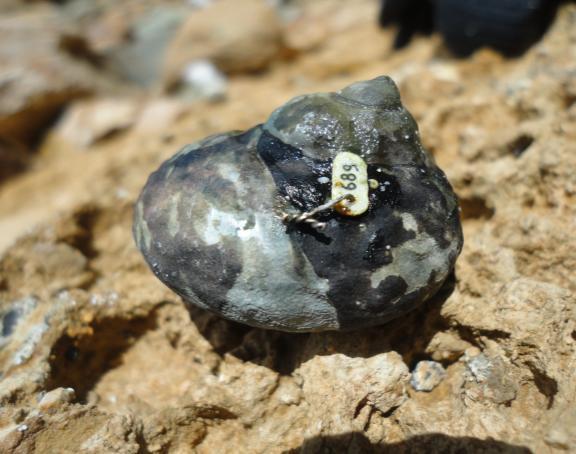
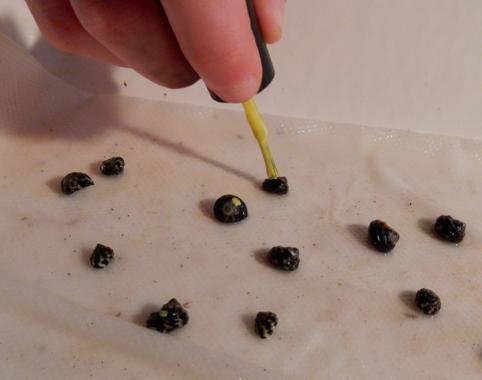
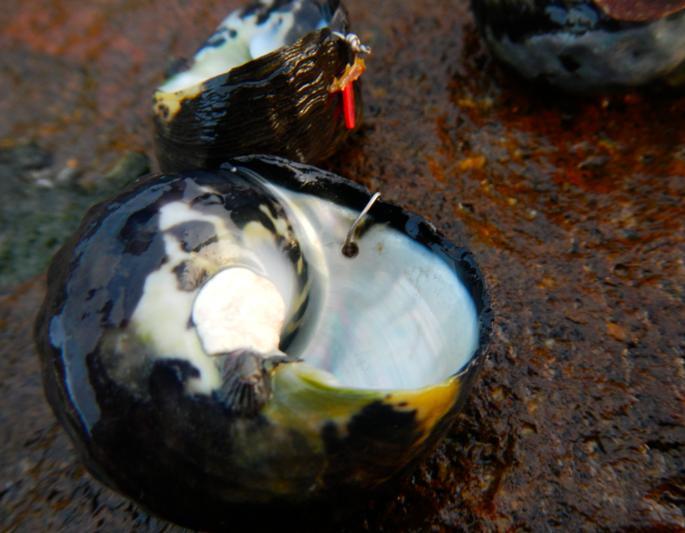
We tagged 1,547 C. pica in July 2012 using three types of tag. Larger C. pica were tagged with either a 3.5 mm oval numbered polyethylene tag attached to the shell, or a PIT tag epoxied into the shell columella, or both types of tag (Fig. 4). Small C. pica were, instead, marked using nail polish on the shell (Fig. 4). We revisited the sites to recapture C. pica on four occasions: October 2012, July 2013, October 2013, January 2014, and August 2014. On each occasion, the transects were searched thoroughly for both tagged and untagged C. pica, and all individuals found were measured and returned at their point of capture.
Fig. 4. The three methods use to tag C. pica for the mark-recapture study. Top left a numbered plastic tag. Top right, a PIT tag embedded in white epoxy and inserted into the columella. Bottom left, juvenile C. pica marked with nail polish.
Objectives 3 and 4: Assessing coastal harvesters’ and their community’s dependence on C. pica and the social effectiveness of alternate management strategies
Initial fisher surveys in Puerto Rico conducted by Jimenez (2006) served to assess localities where whelks were harvested throughout the Island, and identified preferred areas based on accessibility and safety from waves. We expanded on those surveys in Puerto Rico and studied the coastal communities’ engagement with whelk harvesting in PR, and to a lesser extent in the BVI.
During a first visit to PR in June 2012, we designed survey instruments and conducted initial pilot surveys to refine our methods. We used our experience, and the advice of our local colleagues, to design culturally appropriate questions for survey instruments that were likely to get honest responses. We then conducted initial pilot surveys at multiple sites in PR and at one site in the BVI (Carrot Bay, Tortola), to develop and refine the survey instruments. These initial interviews were conducted by intercept sampling at the ecological monitoring sites, within the communities nearby, and at local markets, restaurants and roadside stands where whelks are sold. In the communities around each site, we then used snowball sampling (Bernard 2002) to locate and interview whelk fishers. The face-to-face semi-structured surveys (Bernard 2002; de Leeuw et al. 2008), were also supplemented by less formal open-ended interviews with fishers, and also
with those who distribute and market C. pica. As a result of this effort, we developed three survey instruments to target different stakeholders: (1) Regular and sporadic commercial harvesters, (2) Recreational harvesters, (3) Restaurant owners and distributors (These surveys instruments are provided in Appendix 1)
In order better achieve our objectives, we decided to spend two weeks at each of three localities in PR that were identified via the June 2012 trip, rather than making shorter visits to a larger number of sites. From January-March 2013, we thus spent roughly two weeks at each of three locations: (1) the North Coast – Arecibo and Cueva del India, (2) the North East – Fajardo and Naguabo, and (3) the South/West Coast - Puerto Real and La Parguera. These three areas were chosen as sites because our initial surveys revealed reasonable numbers of whelk fishers, and because they also represented different oceanographic and social conditions. At these sites, we interviewed a total of 47 commercial fishers, 22 recreational fishers, and 8 restaurant owners. For the open-ended questions found in the survey, we coded participant’s answers into hierarchical coding trees (Thompson, 2005). To develop the codebook, two of us read the individual responses and when we were unable to code a response, a new category was created or a pre-existing one was modified. After a few rounds of doing this independently, we compared codebooks and discussed and modified the coding scheme so that agreement was reached.
Results and Findings
Objective 1: isolate the impact of fishing on C. pica
Short-term changes in abundance
We compared our surveys to previous surveys in the BVI and in PR, we found some evidence for short-term changes in C. pica populations. At seven sites on an isolated island in the BVI (Guana Island), which has less than 30 residents on its 754 acres, populations were lower in 2012 than in 2000 at 5 of 7 sites (Fig. 5). At ten PR sites that were sampled by DNER in 2003/4 and again by us on 2012, 7 out of 10 populations were lower in 2012 than in 2003/4 (Fig. 5). Although the PR sites span a much wider range of population densities and human visitation than the Guana Island sites, overall there was evidence of population decline at 12 out 17 sites (71%). The number of sites experiencing a decline is greater than that expected by chance (Binomial test, p = 0.047).
Long-term changes in abundance and size-structure
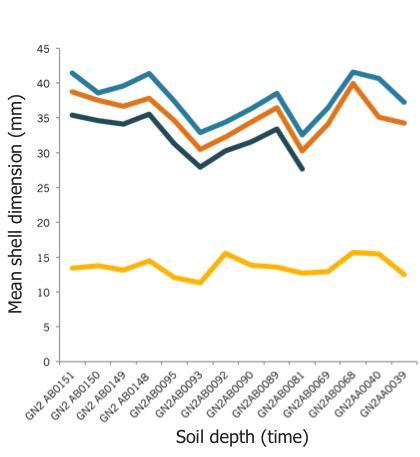
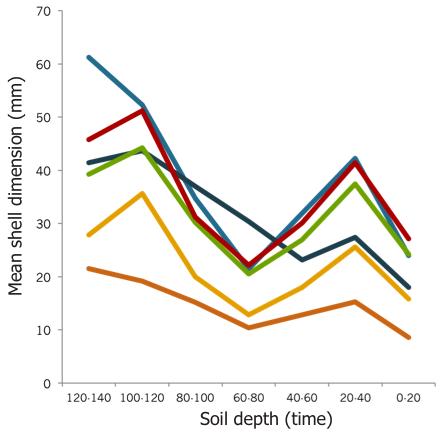
Measurements of shell and shell fragments from middens on Guana Island BVI were dated stratigraphically using pottery fragments and other human artefacts in the soil layers. Samples dated to roughly 1000AD, and there was no evidence of shift in the average size of C. pica harvested over time (Fig. 6). Because of its small size (754 acres), it is not clear if Guana Island was permanently occupied or just visited occasionally by Amerindians. European settlers occupied the island from roughly 1740-1850, but it was subsequently not permanently occupied until the mid 1930s. Since then it has supported a small population of hotel guests and staff (roughly 40 people). One possible reason for the lack of change in mean size of C. pica is that, as a consequence of consistently low human population densities, harvesting has occurred at a relatively low level. In contrast, there has been a substantial decline in the mean size of C. pica in the middens at Fajardo, PR (Fig. 6). Based on analyses of pottery shards and other human artefacts, these C. pica date to roughly 600AD, and the mean length of the earliest remains (63 mm) is far greater than typical present day remains found in PR. The shell remains from PR,
thus show the expected decline in size over time expected as a result of consistent harvesting pressure.
Fig. 5. Evidence for short-term declines in C. pica population densities at Guana Island BVI (upper plot) and in Puerto Rico (lower plot)
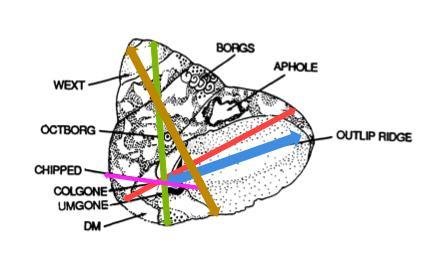
Fig. 6. Archaeological analyses of shell remains from middens reveal long-term changes in C. pica size-structure in Fajardo (PR), but not on Guana Island (BVI). Plotted are mean dimensions of intact shells (length, width, height), plus morphometric variables measured on shell fragments (aperture and umbilicus [um-an]).

Isolating the contemporary effect of fishing in the BVI
Because we were able to locate sites in the BVI that varied independently in wave exposure and access to fishers, were able to isolate their relative effects on C. pica populations. When wave exposure was held constant, both mean (F2,23 = 13.304, p < 0.001) and maximum (F2,23=4.577, p = 0.021) shell width generally increased with increasing difficulty of access to fishers (Fig 7). Similarly, at a given level of wave exposure, sites that were difficult for fishers to access contained a greater proportion of adult C. pica, (F 2,23=7.002, p = 0.004) and of legalsized (F 2,23=13.383, p < 0.001) C. pica than sites that were easy for fishers to visit (Fig 8). Overall, there was clear evidence for a shift in size-structure towards smaller C. pica on shores that were visited regularly by fishers, regardless of wave exposure.
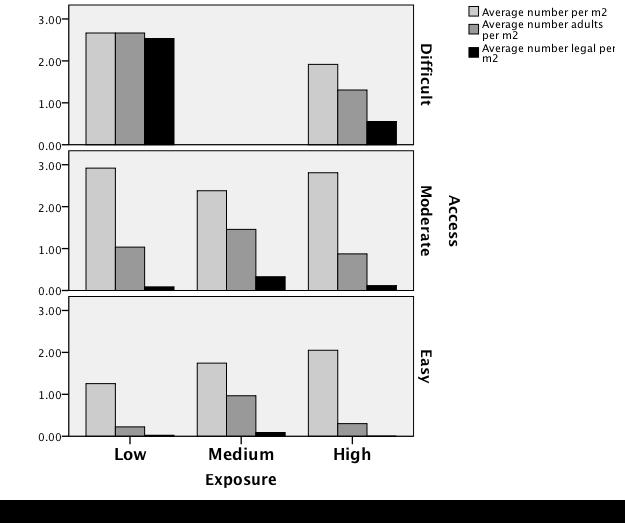
Unlike the simple effects on size structure, the effects of fishing access and wave exposure on C. pica population density were more complex because there were measurable effects of both factors. When C. pica of all sizes were considered, there were no significant effect of fishing access or wave exposure on population density (F2,23=0.750, p > 0.483) (Fig 9). In contrast, the density of adults was higher on shores that were difficult for fishers to access (F2,32=4.364, p=0.025) (Fig 9). However, when we considered only very large C. pica, those above the legal size for harvesting (63.5 mm), there was a significant interaction between fishing access and wave exposure on mean density (F3, 23=6.991, p = 0.002). This interaction arose because at sites that are easy for fishers to access, the density of legal-sized individuals was greater on waveexposed shores (Fig 9). At the same time, on sheltered shorelines, the density of legal-sized C. pica was much higher on shores that were hard for fishers to access than on readily accessible shores (Fig. 9)
Fig. 7. Mean and maximum body sizes (shell dimensions in mm) of C. pica on shorelines varying in wave exposure and accessibility to fishers.

Fig. 8. Population size-structure of C. pica on shorelines varying in wave exposure and accessibility to fishers. Plotted is the fraction of individuals that were (1) above the size at maturity [34 mm] and (2) above the legal size for harvesting [63.5 mm].
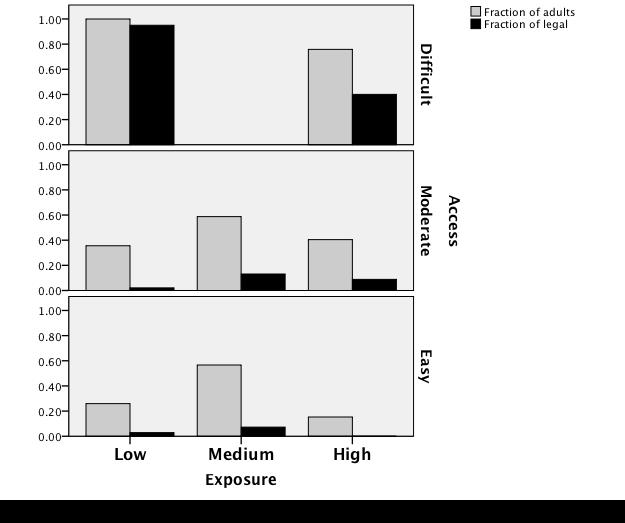
Fig. 9. Population density of C. pica on shorelines varying in wave exposure and accessibility to fishers. Plotted are densities of (1) all individuals, (2) individuals above the size at maturity [32 mm] and (3) individuals above the legal size for harvesting [62 mm].
Objective 2: patterns of survival, growth, movement and recruitment of C. pica
Seasonal patterns of recruitment
Because closed seasons were justified as a way of protecting C. pica during a seasonal reproductive period, we compiled data on the presence of juvenile C. pica in order to assess the times during the year when reproduction occurs. The smallest C. pica observed on the shoreline are 4-5 mm in shell width, suggesting that this is the size at which they recruit after their short planktonic phase. We thus classified C. pica smaller than 7 mm as new recruits, since it is likely that they arrived on the shore within a month of being censused. Although we cannot identify subtle seasonal changes in the intensity of reproduction, the simple fact that new recruits were observed every month indicates that reproduction occurs year round (Table 2).
Rates of growth, movement and survival
This objective is in progress. So far, we have organized the tagging and resighting record for each tagged C. pica in an encounter history, which catalogues whether it was resighted, its location when resighted, and body size (shell width in mm) on each of the sampling dates. We are currently developing models using mark-recapture software (Program MARK) to estimate growth, movement and survival rates and whether these vary among the three study sites.
Table 2. Monthly occurrence of newly recruited C. pica (< 7 mm shell width) at our sampling sites in the BVI, USVI, PR and at 9 additional sites in the Bahamas
Objectives 3 and 4: Assessing coastal harvesters’ and their community’s dependence on C. pica and the social effectiveness of alternate management strategies
Fishers tend to be experienced and share knowledge and time with family members
Most burgao fishers we interviewed had decades of experience with the fishery. The burgao fishers ranged from 20 to 73 years in age, and their average age was 52. Virtually all fishers were male; only one of the 47 respondents was female. Most had been involved in the fishery for 20-30 years; the average age at which they began harvesting burgao was 13 years old (range 8 to 35 years old).
Harvesting burgao is a highly social activity, as is the transfer of knowledge about collecting methods and good locations for fishing. For most, learning to harvest burgao was a family affair, with many fishers reporting that their parents fished for burgao (20 fishers). Most stated that knowledge about the fishery was passed to them primarily from their father (20 fishers). Others reported that they learned about the fishery from close relatives (uncles, cousins or brothers, 8 fishers), whereas several other respondents learned about fishing for burgao primarily from friends in the community (10 fishers). Many active burgao harvesters indicated that ongoing harvesting was a shared activity; the majority of respondents reported that they fished with family members (21 fishers). Most other respondents generally fished alone (15 fishers), though a minority made collecting trips with friends (3 fishers). Many respondents indicated that family members shared the tasks of preparing and cooking burgao, even if they were not involved in collecting.
A variety of methods are used to harvest C. pica and knowledge is important for success Fishers reported that walking or wading along the shore and snorkeling in shallow water were the two major ways to search for burgao, confirming that burgao are restricted to the low intertidal zone and shallow subtidal zone. A few fishers also mentioned using SCUBA to search in deeper water for whelks that were dislodged during these searches and fell into deeper water.
Although most fishers reported fishing on rocky shorelines, a few reported the presence of C. pica on mangrove roots and in seagrass beds. The use of these habitats by C. pica had not been previously reported in the scientific literature, but we were able to confirm the fishers’ observations after extensive searching.
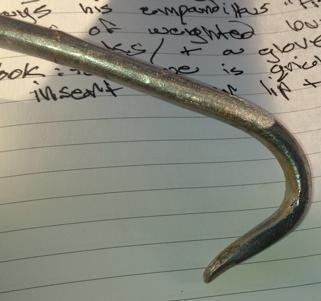
In addition to knowing productive sites, most fishers stated that knowledge and experience were important to successful harvesting. Successful collecting was considered to depend on knowledge of microhabitat use, plus a good search image and the ability to carefully explore under rocks, combined with the ability to approach quietly and prevent escapes (we confirmed ourselves that on steep shorelines C. pica often responded to our approach by detaching from the shore and falling into deeper water). Some fishers noted that collecting from exposed shorelines also depended on good snorkeling ability and the skillful use of “hooks” to pry burgao from the rocks (Fig. 10). Fishers used screwdrivers or custom made steel hooks to lever burgao from the rocks, because large burgao can attach themselves strongly to the shore once contacted, and so can be very difficult to remove thereafter. We developed a similar method independently when conducting our own ecological surveys, and also found this technique to be valuable when sampling exposed shorelines.
Fig. 10. The point of a custom made stainless steel hook, used by fishers to pry burgao from the shore while snorkeling
Fishing effort is widely dispersed in space and time
The majority of respondents reported having one or more favorite sites from which they collected burgao, though the majority were reluctant to tell use exactly where they fished. Most fishers (26 respondents) considered the choice of shoreline critical to the success of harvesting, which suggests that profitable sites are not easy to find.
The majority of respondents report a peak of burgao harvesting activity during the summer months (19 fishers), though fewer fishers viewed time of year as a critical factor in the success of harvesting (11 fishes), and there were others fishers who harvested mostly in winter, or mostly in spring, and yet others who fished year-round with no seasonal preference. Weather conditions clearly played a role in when fishers chose to harvest burgao, and several respondents mentioned a preference for calm weather, whereas others noted that fishing was best during extreme low
tides. Fishers were relatively evenly divided in stating a preference for harvesting during the night, when C. pica are actively foraging, or during the day when snorkeling is easier
Cultural factors also appear to influence the timing of harvesting and the size of C. pica targeted, which will influence the effectiveness of closed seasons. In the BVI, fishers report that harvesting is most intense in the period before the annual emancipation festival in early August, where many vendors sell C. pica. One key informant reported that the closed season in the BVI was shifted several years ago to coincide with the period immediately following the festival, with the intent to give the C. pica populations a respite from harvesting.
Harvesting C. pica is used mainly to provide a supplementary source of income
None of the burgao fishers we interviewed were full-time specialists. Instead, most burgao fishers harvest C. pica sporadically as a way of supplementing their income. A few individuals reported collecting burgao as often as 3 times per week, but the majority visit the shore to harvest burgao 1-4 times per month. Each collecting trip typically lasts 3-4 hours, but they can range from 1-8 hours. The majority of burgao collectors also engage in other forms of fishing to derive some of their income; targeting a variety of other species using multiple gear types. The most common approaches used were line fishing and SCUBA/free diving, though some also reported using gill nets and traps. In a broader context, most burgao harvesters also have, or have had, many other occupations that provide part of their livelihood. Respondents reported engaging in 39 different occupations that spanned multiple sectors, including construction, government, manufacturing, fisheries and maritime, agriculture and food. In summary, the supplementary income derived from harvesting burgao is typically part of a multi-pronged strategy and so burgao harvesting can be important for the livelihood resilience of these coastal residents. Several fishers reported leaving the fishery during economic upturns and re-entering the fishery during the down turns.
C. pica is marketed as a luxury seafood item with a relatively high monetary return for effort. Burgao are usually marketed either whole in the shell, in which case they are most commonly sold by the dozen, or they are first cleaned, in which case the meat is usually sold by the pound. Few fishers reported selling burgao to distributors or fish houses, instead they are almost always sold directly to the end consumer. Some burgao are sold to restaurants, or to individuals on the street, but the vast majority are sold to individual pre-arranged clients or to friends. Fishers thus set and negotiate sale prices themselves. For this reason, prices vary widely but are typically high ($8-20 per pound for cleaned meat, and roughly $1 per whelk in the shell). Burgao are widely available in restaurants and food stands, but because they are typically supplied by individual fishers, supply is sporadic and burgao dishes are often offered as “specials” or on demand items.
There is a complex, relatively informal network of distribution and use of C. pica in coastal communities.
The value of burgao as a resource goes far beyond its monetary value to harvesters. Many regular fishers (20 respondents) report deriving personal satisfaction from harvesting and view it as a valuable facet of their traditional culture. Only 2 respondents reported selling all of the burgao they harvested. The majority of harvesters (35 fishers) reported that they usually consume some of their catch themselves, and also give away some of the whelks they collect. Most give away burgao after it has been prepared and cooked, and they typically share with their family, friends and neighbors, or a combination of the two. Many respondents (18 fishers) viewed harvesting burgao as important to their community. Burgao was valued for multiple
reasons, including as a source of food that is nutritionally valuable, and a delicacy, in addition to being a source of income. This sharing of harvested burgao thus contributes to the nutritional resilience and social fabric of coastal communities.
Long-time fishers report declining catches, which has led to many moving away from the fishery. Consistent with our ecological surveys, the majority of regular fishers believed there has been a reduction in the abundance and typical size of burgao in the past 10 years (22 respondents), though the changes have not occurred equally among sites, and most viewed the current state of the fishery as worse than in the past. In contrast, casual recreational fishers tended to perceive no change in C. pica populations. Also consistent with our ecological analyses, several fishers (14 respondents) viewed an increase in the number of harvesters as a factor contributing the decline in the fishery. Importantly however, several fishers also viewed coastal pollution (22 respondents) and loss of shoreline habitat due to development (14 respondents) as contributing to the decline of C. pica. We are thus considering ways to assess the influence of these factors as part of our ecological analysis.
Regular C. pica fishers are knowledgeable about the fishery, fishing regulations, and generally concerned with the future of the fishery but casual harvesters are generally unaware of regulations.
Although regular burgao fishers sometimes knew of size limits and spatial closures (a few even perceived an increase in C. pica populations due to the closure on Mona Island), the majority of casual fishers were unaware of existing regulations. Despite this, there was often a positive response when fishers were asked what would be an effective way to manage burgao. Several fishers were supportive of size-limits (17 respondents), whereas others were receptive to either closed areas, seasonal closures, bag limits or restocking programs (8 respondents).
Objectives accomplished
Objectives:
Objective 1. We isolated the impact of fishing on C. pica populations by correlating C. pica abundance and size-distributions to levels of access to fishers. C. pica populations subject to chronic harvesting have a much smaller fraction of adult-sized and legal-sized whelks than sites that are not regularly accessed by fishers. Effects on population density are less clear-cut, but appear to be affected by both wave exposure and harvesting.
Objective 2. We assessed the biological effectiveness of size-limits, catch limits and seasonal closures. Recruitment occurs year round, so seasonal closures should not affect reproduction. Despite rapid growth rates, a mark-recapture study showed that immature whelks dominate many populations so size-limits are not having the effect of protecting reproductive adults.
Objective 3 We assessed coastal harvesters’ and their community’s dependence on C. pica Long-time fishers report declining catches, which has led to many moving away from the fishery. Currently, fishers are secretive about good collecting sites and most target C. pica sporadically to supplement their income. This supplementary income can be important for the livelihood resilience of these fishers, as C. pica is marketed as a luxury seafood item with relatively high monetary returns for effort. There is a complex, relatively informal network of distribution and sale of C. pica in coastal communities. Value derived from C. pica catches may go unnoticed by official income assessments.
Objective 4. We assessed the social effectiveness of alternate management strategies by understanding patterns of harvesting C. pica and the receptiveness of fishers to alternate
management actions. Commercial C. pica fishers are knowledgeable about the fishery, fishing regulations, and generally concerned with the future of the fishery. Recreational/subsistence fishers, in contrast, are generally unaware of, and sometimes violate regulations. There was some support among regular fishers for reserves, if there was community involvement in management.
Discussion of project impacts and products
The fishery for C. pica shows several typical features of a small-scale fishery
Our assessment revealed that, like many other small-scale fisheries that target sedentary coastal species, participants in the burgao fishery are a heterogeneous mix of commercial, recreational and subsistence fishers (Berkes et al. 2001; Pomeroy and Andrew 2011). The fishery is highly decentralized; fishers are widely distributed along the coastline, they operate independently or with close family members and their fishing activity fluctuates over time. As such, the burgao fishery would be almost impossible to manage using the traditional tools developed for industrialized fisheries Because burgao are marketed informally by individual fishers to a diffuse network of restaurants and individual clients, and a large proportion of the catch is either consumed directly or given to family and friends, centralized catch statistics or landings data would also be very difficult to collect and traditional stock assessment methods are unlikely to produce an accurate bio-economic evaluation of the fishery.
Our integrated social-ecological analysis provides clear evidence of a decline in the fishery
By combining approaches from ecology, archaeology and anthropology, we showed clearly for the first time that C. pica is overfished in the BVI and PR. The rarity or absence of larger individuals of C. pica from many areas of the Caribbean has long been interpreted as the effect of over-harvesting (Clench and Abbott 1943; Randall 1964; Robertson 2003; Osorno Arango and Diaz Merlanoz 2006; Rosique et al. 2008), as is the complete disappearance of C. pica from Bermuda and Florida (Walker 1994; Robertson 2003; Rhyne et al. 2009) Although we are cautious about extrapolating from our study area to other parts of the Caribbean, our results add support to the hypothesis that C. pica is overharvested in many parts of its range.
The burgao fishery is an important component of resource use in resilient coastal communities
Despite the fact that participation in the fishery appears to have waned, and fishers report diminished returns from fewer viable shoreline sites, harvesting C. pica still forms an important resource for coastal communities in PR. Coastal communities depend strongly on the smallscale harvesting, processing, and exchange of a suite of coastal resources. We learned that the C. pica fishery is diverse and multifaceted, and forms a component of many Puerto Ricans’ livelihoods. Its harvest is important as a source of income and nutrition, as well as being culturally valued Because burgao harvesting involves the sharing of knowledge among family and friends, and much of the catch is shared voluntarily, it helps maintain healthy social relationships within coastal communities. The value derived from C. pica catches thus goes beyond its direct role in generating income.
Recommendations
One potentially significant finding from our ecological surveys was that dense populations of large C. pica persist at a few wave-exposed, remote, sites in the BVI. Some serious burgao fishers are aware of these populations, and will occasionally visit them to fish, but doing so is difficult and dangerous and can only be attempted in calm weather. We hypothesize that these sites may thus be de facto reserves for C. pica. C. pica have limited home ranges as adults, but are broadcast spawners whose larvae are planktonic for 3-5 days (Debrot 1990a; Bell 1992) It is thus possible that these isolated “de facto reserve” sites could act as sources of planktonic
recruits that may replenish more accessible sites (Christie 2010). Further study of larval connectivity among sites that vary in fishing pressure would, therefore, be a useful next step to assess whether this mechanism contributes to population persistence and potential recovery. We convened a workshop at the 2014 GCFI meeting in Barbados to share ideas and information with those interested in managing C. pica Caribbean-wide. We suggest that some of our findings are encouraging for this group of practitioners, and hope to continue our dialogue. Firstly, it was clear many casual infrequent burgao fishers were simply unaware of existing regulations, which suggests that educational efforts may be an important part of any new management effort. Secondly, we found that regular more experienced burgao harvesters were generally quite well informed, were generally concerned about the state of the fishery, and so may be receptive to new management initiatives.
Bibliography
Aguilar-Perera, A., M. Scharer, and M. Valdes-Pizzini. 2006. Marine protected areas in Puerto Rico: Historical and current perspectives. Ocean & Coastal Management 49:961-975. Allison, E. H., and F. Ellis. 2001. The livelihoods approach and management of small-scale fisheries. Marine Policy 25:377-388.
Andrew, N. L., C. Bene, S. J. Hall, E. H. Allison, S. Heck, and B. D. Ratner. 2007. Diagnosis and management of small-scale fisheries in developing countries. Fish & Fisheries 8:227240.
Ardila, N., G. R. Navas, and J. G. Reyes. 2002. Libro rojo de invertebrados marinos de Colombia. INVEMAR. Ministerio de Medio Ambiente. La serie Libros rojos de especies amenazadas de Colombia, Bogota, Colombia.
Becker, C. D., and E. Ostrom. 1995. Human Ecology and Resource Sustainability: The Importance of Institutional Diversity. Annual Review of Ecology and Systematics 26:113-133.
Bell, E. C., and M. W. Denny. 1994. Quantifying wave exposure: a simple device for recording maximum velocity and results of its use at several field sites. Journal of Experimental Marine Biology and Ecology 181:9-29.
Bell, L. J. 1992. Reproduction and larval development of the West-Indian topshell, Cittarium pica (Trochidae), in the Bahamas. Bulletin of Marine Science 51:250-266.
Bene, C. 2003. When Fishery Rhymes with Poverty: A First Step Beyond the Old Paradigm on Poverty in Small-Scale Fisheries. World Development 31:949.
Berkes, F., C. Folke, and J. Colding. 1998. Linking social and ecological systems : management practices and social mechanisms for building resilience. Cambridge University Press, Cambridge, U.K.; New York, NY, USA.
Berkes, F., R. Mahon, and P. McConney. 2001. Managing small-scale fisheries: alternative directions and methods. International Development Research Centre.
Bernard, H. 2002. Research methods in anthropology qualitative and quantitative approaches, 3rd ed. Sage Publications,, Thousand Oaks, California.
Bullock, S. H., R. M. Turner, J. R. Hastings, M. Escoro-Rodriguez, Z. R. A. Lopez, and J. L. Rodriguez-Navarro. 2004. Variance of size-age curves: Bootstrapping with autocorrelation. Ecology 85:2114-2117.
Burnham, K. P., and D. R. Anderson. 2002. Model selection and inference - a practical information-theoretic approach. Springer-Verlag, New York, USA.
Castilla, J. C., and O. Defeo. 2005. Paradigm shifts needed for world fisheries. Science 309:1324-1325.
Clench, W. J., and R. T. Abbott. 1943. The genera Gaza and Livona in the western Atlantic. . Johnsonia: Monographs of the marine mollusks of the Western Atlantic 1:9.
Conover, D. O., and S. B. Munch. 2002. Sustaining fisheries yields over evolutionary time scales. Science 297:94-96.
Cowen, L., and C. J. Schwarz. 2006. The Jolly-Seber model with tag loss. Biometrics 62:699705.
de Leeuw, E., J. , D. Hox, and T. Dillman. 2008. International Handbook of Survey Methodology. Lawrence Erlbaum Associates, New York, New York.
Debrot, A. O. 1990a. Survival, growth and fecundity of the West-Indian topshell, Cittarium pica (Linnaeus), in various rocky intertidal habitats of the Exuma cays, Bahamas. Veliger 33:363-371.
Debrot, A. O. 1990b. Temporal Aspects of Population Dynamics and Dispersal Behavior of the West Indian Topshell, Cittarium Pica (L.), at Selected Sites in the Exuma Cays, Bahamas. Bulletin of Marine Science 47:431-447.
Defeo, O., and J. C. Castilla. 2005. More than one bag for the world fishery crisis and keys for co-management successes in selected artisanal Latin American shellfisheries. Reviews in Fish Biology and Fisheries 15:265-283.
Diaz-Ferguson, E., R. Haney, J. Wares, and B. Silliman. 2010. Population Genetics of a Trochid Gastropod Broadens Picture of Caribbean Sea Connectivity. Plos One 5:Article No.: e12675.
Drew, J. A. 2005. Use of traditional ecological knowledge in marine conservation. Conservation Biology 19:1286-1293.
Fabrizio, M. C., J. D. Nichols, J. E. Hines, B. L. Swanson, and S. T. Schram. 1999. Modeling data from double-tagging experiments to estimate heterogeneous rates of tag shedding in lake trout (Salvelinus namaycush). Canadian Journal of Fisheries and Aquatic Sciences 56:1409-1419.
FAO. 2004. The State of World Fisheries and Aquaculture. Food and Agriculture Organization of the United Nations, Rome.
Garcia-Quijano, C. 2007a. The state and small-scale fisheries in Puerto Rico. American Anthropologist 109:407-408.
Garcia-Quijano, C. G. 2007b. Fishers' knowledge of marine species assemblages: Bridging between scientific and local ecological knowledge in southeastern Puerto Rico. American Anthropologist 109:529-536.
Garcia-Quijano, C. G. 2009. Managing Complexity: Ecological Knowledge and Success in Puerto Rican Small-Scale Fisheries. Human Organization 68:1-17.
Gobierno de Puerto Rico. 2010. Reglamento de Pesca de Puerto Rico - 2010, 7649. Departamento de Recursos Naturales y Ambientales.
Griffith, D., and M. Valdes Pizzini. 2002. Fishers at Work, Workers at Sea: a Puerto Rican Journey Through Labor and Refuge. Temple University Press, Philadelphia, Pennsylvania.
Griffith, D., M. Valdes Pizzini, and C. García Quijano. 2007. Entangled Communities: Socioeconomic Profiles of Fishers, their Communities, and their Responses to Marine
Protective Measures in Puerto Rico. NOAATechnical Memorandum NMFS-SEFSC-556. Page 524.
Gulland, J. A. 1977. Fish population dynamics. Wiley, London, United Kingdom.
Jacquet, J., and D. Pauly. 2008. Funding Priorities: Big Barriers to Small-Scale Fisheries. Conservation Biology 22:832-835.
Jimenez, N. M. 2006. Caribbean/NMFS Cooperative SEAMAP Program Whelk and Finfish Assessment. . Page 75.
Johannes, R. E. 2002. The renaissance of community-based marine resource management in Oceania. Pages 317-340 in Annual Review of Ecology and Systematics. Volume 33, vol. Volume 33 (D. J. Futuyma, Ed.). Annual Reviews, 4139 El Camino Way, P. O. Box 10139, Palo Alto, CA, 94303-0139, USA.
Kendall, W. L., and R. Bjorkland. 2001. Using open robust design models to estimate temporary emigration from capture-recapture data. Biometrics 57:1113-1122.
Lebreton, J. D., K. P. Burnham, J. Clobert, and D. R. Anderson. 1992. Modeling survival and testing biological hypotheses using marked animals: A unified approach with case studies. Ecological Monographs 62:67-118.
Link, W. A., and R. J. Barker. 2005. Modeling association among demographic parameters in analysis of open population capture-recapture data. Biometrics 61:46-54.
Lozano, C. G., and R. A. Estrada. 2008. Seguridad alimentaria en hogares de Acandí, Darien Caribe colombiano: el aporte del caracol Cittarium pica "La cigua". Revista Chilena de Nutricion 35:460-470.
McClanahan, T., J. C. Castilla, and A. White. 2009. Healing small-scale fisheries by facilitating complex socio-ecological systems. Reviews in Fish Biology & Fisheries 19:33-47.
Orensanz, J. M., A. M. Parma, G. Jerez, N. Barahona, M. Montecinos, and I. Elias. 2005. What are the key elements for the sustainability of "S-fisheries"? Insights from South America. Bulletin of Marine Science 76:527-556.
Osorno Arango, A., and J. M. Diaz Merlanoz. 2006. Exploitation, uses and current status of the West Indian topshell Cittarium pica (Mollusca : Gastropoda, Trochidae) along the Colombian Caribbean coast. Boletin De Investigaciones Marinas Y Costeras 35:133-148.
Osorno Arango, A., D. L. Gil-Agudelo, and L. A. Gomez-Lemos. 2009. Plan de investigacion para la conservacion de Cittarium pica (Linnaeus, 1758). Page 71. INVEMAR special publications, number 16, Santa Marta, Colombia.
Pauly, D. 2006. Major trends in small-scale marine fisheries, with emphasis on developing countries, and some implications for the social sciences. Maritime Studies 4:7–22.
Pomeroy, R. S., and N. Andrew. 2011. Small-Scale Fisheries Management: Frameworks and Approaches for the Developing World. CABI.
Ponte, S., J. Raakjaer, and L. Campling. 2007. Swimming upstream: Market access for African fish exports in the context of WTO and EU negotiations and regulation. Development Policy Review 25:113-138.
Randall, H. A. 1964. A study of the growth and other aspects of the biology of the West Indian topshell, Cittarium pica (Linnaeus). Bull Mar Sci Gulf Caribbean 14:424-443.
Rhyne, A., R. Rotjan, A. Bruckner, and M. Tlusty. 2009. Crawling to Collapse: Ecologically Unsound Ornamental Invertebrate Fisheries. Plos One 4:Article No.: e8413.
Ricker, W. E. 1945. A method of estimating minimum size limits for obtaining maximum yield. Copeia 1945:89-94.
Robertson, R. 2003. The edible West Indian "whelk' Cittarium pica (Gastropoda : Trochidae): Natural history with new observations. Proceedings of the Academy of Natural Sciences of Philadelphia 153:27-47.
Rosique, J., B. Toro, J. G. Marín, N. Galeano, and T. Correa. 2008. Algunos lineamientos para la conservacion de Cittarium pica en la costa Caribe del Darien Colombiano. Boletín de Antropología, Universidad de Antioquia 22:314-334.
Ruddle, K. 1996. Traditional management of reef fishing. Pages 315–335 in Reef fisheries (N. V. C. Polunin, and C. M. Roberts, Eds.). Chapman and Hall, London. Saila, S. B. 1957. Size limits in largemouth bass black bass management. Transactions of the American Fisheries Society 87:22-239.
Salas, S., R. Chuenpagdee, J. C. Seijo, and A. Charles. 2007. Challenges in the assessment and management of small-scale fisheries in Latin America and the Caribbean. Fisheries Research 87:5-16.
Schmidt, S., M. Wolff, and J. A. Vargas. 2002. Population ecology and fishery of Cittarium pica (Gastropoda : Trochidae) on the Caribbean coast of Costa Rica. Revista De Biologia Tropical 50:1079-1090.
Schwarz, C. J. 2001. The Jolly-Seber model: More than just abundance. Journal of Agricultural Biological and Environmental Statistics 6:195-205.
Schwarz, C. J., and A. N. Arnason. 1996. A general methodology for the analysis of capturerecapture experiments in open populations. Biometrics 52:860-873.
Schwarz, C. J., and A. N. Arnason. 2000. Estimation of age-specific breeding probabilities from capture-recapture data. Biometrics 56:59-64.
Schwarz, C. J., and G. A. F. Seber. 1999. Estimating animal abundance: Review III. Statistical Science 14:427-456.
Scudder, S. J., and I. R. Quitmyer. 1998. Evaluation of evidence for pre-Columbian human occupation at Great Cave, Cayman Brac, Cayman Islands. Caribbean Journal of Science 34:41-49.
Strand, J., A. Jorgensen, and Z. Tairova. 2009. TBT pollution and effects in molluscs at US Virgin Islands, Caribbean Sea. Environment International 35:707-711.
Toller, W., and S. Gordon. 2005. A population survey of the West Indian topshell or whelk (Cittarium pica) in the U.S. Virgin Islands. . Page 55. SEAMAP-C Final report. .
Valdes-Pizzini, M., C. Kitner, and C. García-Quijano. 2005. The Predicament of the Cruzan Fisheries: A Rapid Assessment of the Socio-Economic Profiles of Fishing Communities in the Island of St. Croix, U.S. Virgin Islands. in NOAA series on Caribbean Fishing Communities.
Walker, S. E. 1994. Biological remanie - gastropod fossils used by the living terrestrial hermit crab, Coenobita clypeatus, on Bermuda. Palaios 9:403-412.
Woodward, R. T., and W. L. Griffin. 2003. Size and Bag Limits in Recreational Fisheries: Theoretical and Empirical Analysis. Marine Resource Economics 18:239–262.
Appendix 1: Survey instruments
Regular fishers’ survey
CONSENT FORM
The University of Rhode Island Department of Sociology and Anthropology
507 Chafee Building, Kingston RI
Project title: An interdisciplinary evaluation of the fishery for Cittarium pica
YOU MUST BE
AT LEAST 18 YEARS OLD
to be in this research project.
You are being invited to take part in the research project we have already described to you and which is described below. If you have any questions, please feel free to call Graham Forrester or Carlos Garcia-Quijano, the persons responsible for this study.
The objective of the proposed research is to investigate the fishery for whelk, in Puerto Rico and the British Virgin Islands. We are interested to know about the people who fish for whelk, their participation in this fishery, and the extent to which coastal households depend on whelk for money and/or food. Responses to the questions will be recorded during the interview and will not include your name.
If you decide to take part in this study, your participation will involve responding to several questions concerning your community, your use of and knowledge about whelk, and its importance for your social and economic daily life. We anticipate that answering these questions will require between three four hours. These can be conducted over one meeting or multiple meetings, depending on your preference.
The possible risks or discomforts of the study are minimal, and although there are no direct benefits of the study, your answers will help increase the knowledge regarding the management of whelk fisheries in the Caribbean.
Your participation in this study is anonymous. That means that your answers to all questions are private. No one else can know if you participated in this study and no one else can find out what your answers were. Scientific reports will be based on group data and will not identify you or any individual as being in this project. The names of the participants will be kept separate form the data; they will not appear on any of the data sheets or data summaries. If tape recordings are made, they will be kept indefinitely for purposes of further analysis and research, unless otherwise required by you. The tapes will be kept in the investigator's office in a locked file cabinet, and only the investigator will have access to them.
The decision to participate in this research project is up to you. You do not have to participate and you can refuse to answer any question. You can withdraw your consent at any time and have the results of the participation, to the extent that it can be identified as yours, returned to you, removed from the research records, or destroyed
Participation in this study is not expected to be harmful or injurious to you. However, if this study causes you any discomfort, you should call Graham Forrester at the University of Rhode Island at (401) 874-7054 or Carlos García-Quijano at (401) 874-4297.
If you have any more questions or concerns about this study, you may contact University of Rhode Island's Vice President for Research, 70 Lower College Road, Suite 2, URI, Kingston, RI, (401) 874-4328.
You are at least 18 years old. You have read or listened to a reading of the consent form and your questions have been answered to your satisfaction. Your responses to our questions imply your consent to participate in this study.
Thank you, Graham Forrester and Carlos García-Quijano
Location: ______________________
Part 1. Demographic Information
1. How old are you? _________ Gender:
2. At what age did you start to collect or harvest whelk? _________
3a Aside from collecting whelks what other coastal resources do you use? __ commercial fishing (line/long line/diving) __ fiddler crab __ mangrove crab __ Chesapeake or Atlantic blue crab __ scallop __ mussels __ octopus (artisanal) __ conch (artisanal)
__ Mangrove wood products or other coastal products (describe): __ Other (describe
3b Which is more important and why?
4. With who or whom did you learn to collect or harvest whelks?
Interviewer:
Date and time:
With: ________________________________ / _________________________ (indicate relationship) ____ / ________________________ (indicate relationship) ____ / ________________________ (indicate relationship)
5. Where do you reside?
6. Where do you fish?
7. Did your parents use to capture or harvest whelks? ___ Yes ___ No
8. How old were you when you learned to use and sell whelk for a living? ___________________
9. Please indicate if you gather/harvest [whelks] with: __ friends __ employees (you only know them from working together)
__ brother/sister (s)
Parent
son/daughter (s) __ alone (a)
other
10. Approximately, how frequently do you go collect [whelks]? ____ times (indicate by week or month)
11. Approximately, how long are you out-for per outing? _____ hours
12. What other jobs aside capturing [whelks], have you had throughout your life? I will ask you to re-call the order in which these took place. Later I will ask you more about them:
Works / Types Collected [whelks] at the same time In Tortola/Other Comments
12a. Now I would like to ask you about these other jobs/occupations. Could you mention THREE of these jobs and tell me, in your opinion, what have been some of the advantages and disadvantages of dedicating yourself to them?
Job Advantage Disadvantage
13. At this time, do you dedicate yourself exclusively to the collecting and selling of whelk? __Yes_ No
14. (IF THE RESPONSE WAS NO) Then could you tell me to what other job (s) do you dedicate yourself to?
15. Approximately what percentage of the yearly income of your family comes from the collection/ use/sale of [whelks]?
16a During what time of the year do you collect and sell whelks?
16b. Are these times the same each year or do they vary? Why?
17. How much do you sell the whelks for? (unit of measure and price)
18. To who do you sell it?
19a Who determines the price of what you sell?
19b. Are there any commercial uses for the shell of the whelk (jewelry/other)?
Part II. Now I am going to ask you a few questions about different activities that relate to the production of whelks.
20. Please indicate which members of your immediate family (that live with you) work in any activity related to the collection/selling of whelks:
they do?
21. Do you usually give away whelks or its products to family, neighbors or friends? ___ Yes ___ No (If the response is YES) What product and to whom do you give it?
22. Of the whelk that you capture: what percentage would you say you:
Sell _____%
Give away _____%
Barter for other foods or things of value_____%
Consume directly _____%
23. How important do you think the whelk is for the community? Why?
24a. Do you think that the capture and sell of whelk has a future? Yes ___ No
24b. Would you recommend capturing and harvesting whelks for a living to a young person whom you know and appreciate? ___ Yes ___ No ____ You are not sure ¿Why?
25. Why do you dedicate yourself to the collection and sale of whelks?
26a What does the whelk mean to you?
26b. Do you believe that eating whelks makes you stronger? _____ True ______False
27. [Snowball sampling]: Could you mention to me the names of other people in this area or other nearby areas or towns that you consider experts, or that know a lot about whelks?
28. How would your life be and that of your family if for some reason you would be impeded to participate in the collection and sale of whelks?
29. How would cutting access to whelks affect your community and other neighboring communities? How would the life of these communities change if there was no access to this resource?
Part III. – The local ecological knowledge of whelk fisherman.
30. In your opinion, what are the most important things that one needs to know in order to dedicate oneself to the successful collection of whelks? What is the most important knowledge?
31. In your opinion, what is the state of the fisheries where you fish at this present time?
32. How would you describe the habitat where you find the whelk?
33. Have you observed or noted any changes in the quality of the marine environment or on the coast in the specific areas where you work or have worked? What are these changes?
34. In your opinion, what have been the mayor changes observed on the whelk populations during the last 5-10 years?
Size
Abundance
Distribution
35. In your opinion, which are the factors that affect the most the quality or quantity of whelks that are available in the places where you fish/work? (Ifnecessarymentionsomealternatives: indiscriminantfishing,deforestation,contamination,lossofmangrovesorsugarcanefield, etc.).
36a What do you know about the reproductive stage (spawning) of the whelks? Have you noted any changes in the color of the tail of the whelk? Can you explain this?
36b. What would you like to know about the biology of the whelks?
37a Do you know if there are any closures for whelks?
37b. That you know of: are there any rules regarding the collection of whelks?
37c. In your opinion, what would be an effective way to manage and protect the whelks?
38. What is the principal predator of the whelks?
Parte 2 – Changes: Now I will ask you a few questions about the changes on the capture and collection of whelks in recent years.
39. How would you describe the state of the fisheries in the area were you fish?
40. Are there changes that you know of in relation to what generations from the past have mentioned? How was the fishing of whelks before?
41. What is, in your opinion, the worst problem that you or other people that collect and sell whelks have in this area?
42. What are some of the worst problems that the coastal zone has in this area?
43. Are you satisfied with how resources are managed by the local/national authorities? Why or why not?
44 How do the habitants of this locality secure their livelihood, and what allows them to adapt with the changes of these times?
THANK YOU VERY MUCH FOR YOUR HELP AND YOUR TIME!
Restaurant survey
ID #: Interviewer:
Place:
Interview for users of Coastal and Marine products for consumption: Restaurants, cafes, kiosks and selling posts
Date and Time:
Project title: An interdisciplinary evaluation of the fishery for Cittarium pica
YOU MUST BE AT LEAST 18 YEARS OLD to be in this research project.
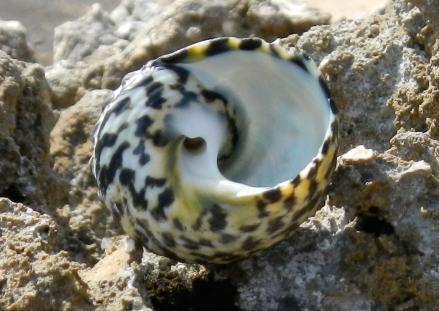
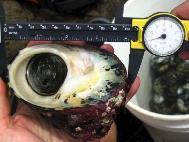
Questions
1. How old are you? _________
2. Name and address of food establishment:_____________________________________
3. What is your role in this establishment?__ Owner (s)__ Manager: Cook __ (a)__ Seller (a)__ Other (What?): ________________
4. How long have you been working on the sale of food from coastal and marine products?____ Years
5. Does this establishment sell marine coastal goods that are local (Percent of sales)? If local, where from: ____________ __________________. If not local, where from
6. How important to your business is the sale of coastal or marine products that are local? Why?
7. Which of the following marine and coastal products are sold in your establishment? __ Fish (whole). What kind of fish? (Examples: Snapper, grouper, arrayao, snapper, snapper, bream, etc.).
Dumplings or fritters of: In a dish: __ Fish (steaks or stew) __Octopus __ chapín __Lobster __ Fish (broth) __Conch __ Octopus __Whelk __Jueyes (Whole, boiled) __ Shark
__ Jueyes (Rice with crab) __ Other (what?) __ crabs __ Jueyes (Salmorejo) __ Conch __Other (what?):_________________________________________________________
8. Which of these coastal or marine products clients seek the most?
9. If you sell whelks, how frequent - _____ times (week/month) do clients order it? Is this seasonal? ____ Yes ____ No
10. Do clients order whelks more during a certain time of the year associated with festivities (Easter/Christmas/Other) or as a tradition?
11. [IF YOU SELL PRODUCTS or buy WHELKS] Who or whom you buy the whelk you sell? Are these people are local residents?
11a. What species is it?_________________ What are the sizes (chart)? _________
11b. Do you buy it with the shell or without?_______________
11c. Have you noticed any size changes in the last 5-10-20 years? And price changes?
12. Based on your knowledge of this coastal area: How important would you say is the harvest and sale of local coastal and marine products for people living in this area? Why? [VERY IMPORTANT QUESTION, take as much detail as possible]
13. Of the clients who order whelks in your facility, approximately what percentage are from: ___% This community (example: Under Patillas, etc.).
___% In this county but in other communities
___% In other municipalities in PR
___% Outside Puerto Rico
14. From which other municipalities in Puerto Rico your regular clients come from? __________
15. Of the clients who come from other municipalities in Puerto Rico or outside of Puerto Rico: Approximately what percentage that come to your facility are specifically looking for coastal or marine products harvested locally?______% What percentage asks for whelks _______%
16. What do the concepts ‘Wellbeing’ and ‘Quality of life’ mean to you?
17. What is the relationship that exists between wellbeing and quality of life for you and your community between the activities relates to the fishing and selling of marine and coastal resources?
THANK YOU FOR YOUR TIME AND COLLABORATION!
Recreational fishers’ survey
ID#: Interviewer:
Place: Time and Date:
The University of Rhode Island, Kingston, RI
Project title: An interdisciplinary evaluation of the fishery for Cittarium pica
You must have at least 18 years of age to participate in this study
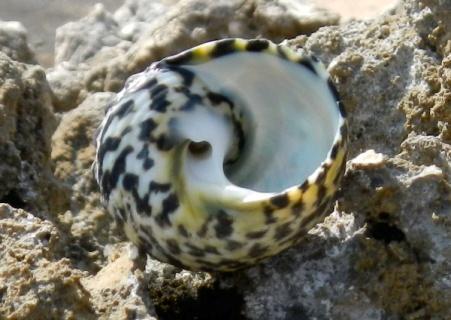
Questions
1. How old are you? _________ Gender: _________
2. Where do you reside? __________________
3. Do you ever eat or fish for whelks? Fish (yes/no) Eat (yes/no)
3a. Is this the species you call whelk? _______________________
4. If answer yes to fishing:
a) How many times a year?
b) How do you usually eat the whelk? (Salad, in brine, in rice, ‘empanadillas’, other?)
c) Roughly when (years ago) did you start fishing for whelks?
d) What size do you prefer to fish (show circular chart)?
e) ¿When you fish them, what size do you see most frequently? (show charts with sizes)
f) Do you ever come across small recruits? (show charts with sizes) □ Yes □No
g) During what time of the year do you see small recruits? (Circle the month/s when you see them) Jan. / Feb. / Mar. / Abr. /May / Jun. / Jul. / Aug. /Sept. / Oct. / Nov. / Dec.
h) Do you still fish them, or if not roughly when (years ago) did you stop fishing for whelks?
h) Where do you/did you generally fish? (fishing place, type of coastal habitat)
i) During what time of the year do/did you collect whelks?
j) What do you do with whelks you collect? (Please indicate all that apply)
□ consume □ give away □ exchange □ sell – to whom?
k) What quantity or volume of whelks, do you normally collect in one day? How many hours do you spend fishing?
5. If answer yes to eating whelks, but not fishing for them
a) How many times a year do you/did you eat them?
b) Roughly when (years ago) did you start eating whelks?
c) Do you still eat them, or if not roughly when (years ago) did you stop eating whelks?
d) Do you eat more whelk during ‘Cuaresma’ ‘Easter week’?
e) If you buy: Where do you/did you get the whelks you eat? From who did you buy it?
Did you give some to your family and/or friends? □ Yes □No
Do you obtain it though exchange? □ Yes □No
6. (If they collected whelks regularly) In your opinion, what have been the mayor changes observed on the whelk populations during the last 5-10 years?
Size (Use circular chart to estimate sizes in chart)
Abundance
Distribution (places where you found whelks)
7. What does the whelk mean to you?
a. Do you believe that eating whelk makes your stronger? □ Yes □No
b. Do you believe that eating is beneficial to your health? Yes No If the answer is YES: How is it beneficial to you?
THANK YOU VERY MUCH FOR YOUR HELP AND YOUR TIME!