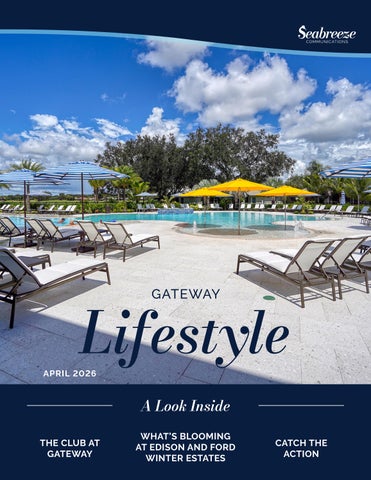
The Club At Gateway
Congratulations to the winners of the Little Green Jug Golf Event held on February 17th.


Congratulations to George Bronson for a Hole-in-One on February 1.


Travis Raque Director of Racquets at The Club at Gateway
THREE KEY THINGS EVERY BEGINNER SHOULD KNOW ABOUT TENNIS AND PICKLEBALL
If you’re new to racket sports, tennis and pickleball are two of the most fun and social games to get started with. While they have their differences, both sports offer great exercise, friendly competition, and a community of players at every skill level. Here are three key things every beginner should know:
1. Understanding the Basics
Before you hit the court, learn the fundamental rules and scoring systems. Tennis uses a unique point format (15, 30, 40, game) and typically requires more running, while pickleball features simplified scoring and is played to 11 points (win by 2). In pickleball, the serve is underhand, and players must respect the non-volley zone (or “kitchen”), which is a key rule for safe and fair play.
2. Choosing the Right Equipment
Having the right gear makes a big difference in your early experience. Tennis requires a properly sized racket and comfortable court shoes with good lateral support. For pickleball, you’ll need a paddle and a few plastic balls with holes, often called wiffle balls. Pickleball courts are smaller, so lightweight and maneuverable paddles help beginners get the hang of control and precision.


3. Start Slow and Focus on Technique
It’s tempting to go all out, but building good habits early is essential. Start by practicing basic strokes and footwork, and focus on consistency rather than power. In tennis, learning to rally at a comfortable speed will improve your confidence. In pickleball, mastering dinks and controlled serves will make games more enjoyable and competitive.
Whether you choose tennis, pickleball, or both, these beginnerfriendly tips will set you up for a positive experience.
Remember: patience, practice, and enjoying the game are the keys to long-term success on the court.
The Club at Gateway tennis and pickleball programs are a great place to start. Become a member today and start building new skills under the direction of USPTA Professional instructors. For more information on membership, call the club to find out how to join.


GATEWAY GIRLFRIENDS
AT THE CLUB AT GATEWAY

These ladies enjoyed a docent-led tour at the Berne Davis Botanical Gardens in Fort Myers. After lunch at Izzy’s downtown, the ladies visited the Sidney Byrne Davis Art Center, where competing floral arrangements were featured, with the art of Shah Hadjebi, a local Sanibel artist.

THANK YOU FOR YOUR SUPPORT – PARTNERS FOR BREAST
CANCER CARE
On behalf of everyone involved in this year’s Partners for Breast Cancer Care event, we would like to extend a sincere and heartfelt thank you to all of our members who contributed. Because of your generosity and support, we were able to raise over $11,000 for this incredible cause.
Your participation—through donations, event involvement, and overall support—truly demonstrates the strength and compassion of our club community. Events like this are a powerful reminder that our club is about much more than just golf; it is about people coming together to support those in need.
The funds raised will go directly toward helping individuals in our local community who are battling breast cancer, providing critical care and resources during what is often one of


the most challenging times in their lives. Knowing that our members have played a role in making that support possible is something we can all be proud of.


We are incredibly grateful to everyone who contributed and helped make this event such a success. Your generosity continues to make a meaningful difference, and it is another great example of what makes our membership so special.
Thank you again for helping us support such an important cause.


The Benefits of Full Body LED Light Therapy
Full body LED light therapy—also known as photobiomodulation or red light therapy— is a non-invasive treatment that uses specific wavelengths of light to support healing, reduce inflammation, and enhance overall wellness. Once limited to clinical settings, this technology is now widely available in wellness centers, gyms, and even at home. As research continues to grow, so does interest in the wide-ranging benefits of full body LED light therapy.
What Is Full Body LED Light Therapy?
LED (light-emitting diode) therapy uses low-level wavelengths of red and nearinfrared light to penetrate the skin and stimulate cellular activity. Unlike UV light, which can damage the skin, red and nearinfrared light are considered safe and do not cause burns when used appropriately.
Full body systems typically consist of large panels or light beds that allow users to expose most or all of their body at once, maximizing systemic effects rather than targeting a single area.
1. Enhanced Cellular Energy Production
One of the primary mechanisms behind LED light therapy is its effect on mitochondria—the “power plants” of our cells. Red and near-infrared light stimulate the production of adenosine triphosphate
(ATP), the molecule responsible for cellular energy. Higher ATP production supports faster cell repair, improved tissue regeneration, and enhanced overall cellular function.
This boost in cellular energy is the foundation for many of the therapy’s reported benefits.
2. Reduced Inflammation and Pain Relief
Inflammation is a key factor in many chronic conditions, including joint pain, muscle soreness, and autoimmune disorders. Full body LED light therapy has been shown to:
• Reduce inflammatory markers
• Improve circulation
• Accelerate recovery from injury
Athletes frequently use full body light therapy to reduce muscle soreness after intense workouts and to speed up recovery times. Individuals with arthritis or chronic pain conditions may also experience decreased stiffness and improved mobility.
3. Improved Skin Health
Red light therapy is widely known for its cosmetic benefits. By stimulating collagen and elastin production, it can help:

• Reduce fine lines and wrinkles
• Improve skin tone and texture
• Minimize acne and acne scarring
• Support wound healing
Full body exposure allows for comprehensive skin rejuvenation, making it popular in anti-aging and aesthetic wellness programs.


4. Faster Muscle Recovery and Performance Support
Because full body LED light therapy enhances circulation and ATP production, it supports muscle repair at a deeper level. Many professional athletes and fitness enthusiasts use it to:
• Shorten recovery time between workouts
• Reduce delayed onset muscle soreness (DOMS)
• Enhance endurance and performance

When muscles recover more efficiently, overall performance and training consistency can improve.
5. Enhanced Mood and Sleep Quality
Emerging research suggests that red and near-infrared light exposure may positively influence mood and sleep patterns. By reducing inflammation and supporting cellular health, light therapy may help regulate circadian rhythms and promote relaxation.
Some users report:
• Improved sleep quality
• Reduced stress levels
• Enhanced mental clarity
While more large-scale studies are needed, early findings are promising.
6. Support for Circulation and Healing
Full body LED light therapy promotes vasodilation—the widening of blood vessels—which enhances blood flow and oxygen delivery throughout the body. Improved circulation supports:
• Faster wound healing
• Reduced swelling
• Better nutrient delivery to tissues
This systemic effect is one of the advantages of full body treatment over smaller, localized devices.


Safety and Considerations
LED light therapy is generally considered safe when used as directed. It is non-invasive, painless, and does not require downtime. However, individuals with certain medical conditions, those taking light-sensitive medications, or those who are pregnant should consult a healthcare provider before beginning treatment.
Consistency is key. Most protocols recommend multiple sessions per week over several weeks to achieve noticeable results.
Where to Get Full Body LED Therapy in Southwest Florida
LED light therapy is offered in a few niche med spas and wellness centers around Southwest Florida, including select locations at Massage Envy. Prices can range anywhere from $30 - $85 per
treatment at most facilities, which can add up quickly when you are going twice per week; however, Massage Envy offers an unlimited use package for $100 per month, making this great service affordable to almost anyone. Massage Envy utilizes the Lightstim Full body LED bed, which is the only full body led bed cleared by the FDA for treatment of chronic pain and inflammation.
Conclusion
Full body LED light therapy offers a range of potential benefits—from enhanced cellular energy and reduced inflammation to improved skin health, faster muscle recovery, and better overall wellness. While ongoing research continues to explore its full capabilities, current evidence and user experiences suggest it is a promising, low-risk option for those seeking a non-invasive way to support whole-body health.
As with any wellness treatment, results may vary, but for many individuals, full body LED light therapy has become a valuable addition to their health and recovery routine.
This article is a paid advertisement. The content was provided by the sponsor and does not necessarily reflect the views of this community or Seabreeze Communications.
5K FOR A CAUSE
Our most recent 5K was more than just a race—it was a celebration of community, inclusion, and heart. Members, families, and friends laced up their sneakers, brought their energy, and showed up in a big way to support a cause that truly makes a difference. Thanks to the incredible turnout and generous spirit of everyone involved, we raised meaningful funds to benefit GiGi’s Playhouse Fort Myers—and the impact will reach far beyond race day.
GiGi’s Playhouse provides free, life-changing programs for children and individuals with Down syndrome, along with vital support for their families. From educational tutoring and speech therapy programs to fitness classes and social development opportunities, GiGi’s Playhouse empowers participants to build confidence, reach personal goals, and thrive at every stage of life. Just as importantly, it creates a welcoming


community where families can connect, find resources, and feel supported every step of the way.
Seeing our community come together—whether running, walking, volunteering, or cheering from the sidelines—was a powerful reminder that when we move together, we make a difference together. Thank you to everyone who participated and helped make this event such a meaningful success. We are proud to support GiGi’s Playhouse and look forward to continuing to run with purpose in the months ahead!
(And for all of you who think you can’t do a 5K, you totally can. It’s only 3.1 miles and it can be walked or run. We’ll see you at our next event!)


GATEWAY GIRLFRIENDS
Debby & Bob Stephano, Daphne Weber, & Judy
Kading enjoyed the views on a kayak sunset cruise as part of a Girlfriends event recently.


Gateway Women’s Club
DONNA MARCHETTI, JANICE EATON, FRAN YUNGHER, LAUREL BORGIA, AND LEYNA HOFFER
GINNIE PRITCHETT MC SPADDEN, NESTING BALD EAGLES AND THE GATEWAY WOMEN’S CLUB STEPHANIE MENA
Ms. Ginnie Pritchett McSpadden, co-founder of the SWFL Eagle Cam, shared its backstory at a recent Gateway Women’s Club meeting. “My siblings and I started watching Bald Eagles when Harriet first appeared on the Pritchett McSpadden property in the 1990s with her original mate, Ozzie. Since then, the Eagles have become the subject of a popular nation-wide live-streaming webcam showcasing the lives of the eagles, including raising young, fighting intruders, and rebuilding the nest after storms like Hurricane Ian.”
Eagle cameras are located on her grandfather’s property in North Ft. Myers. American Bald Eagles mate for life, but when Ozzie passed away in 2015, Harriet later bonded with M15. The nest they built and the Eaglets they raised had to be shared with the public. A live feed was established in 2012. Ms. Pritchett McSpadden and her sibling began to show the nesting Bald Eagles to the rest of the world.

Ms. Pritchett McSpadden obtained her Bachelor’s degree from the University of Central Florida in Orlando, FL. She launched her career at NASCAR, supporting the media

outreach for all three national racing series, planning sponsorship marketing events and media tours all while overseeing at-track media opportunities. Currently she serves as the Senior Account Supervisor at Norris Sports Group, a Naples based sports marketing company.
Beyond her corporate career, Ms. Pritchett McSpadden is the visionary behind the Southwest Florida Eagle Cam— a passion project
GINNIE PRITCHETT MCSPADDEN
GWC PRESIDENT CHARLOTTE STEWART & GINNIE PRITCHETT MCSPADDEN

that became a global phenomenon. She also authored two children’s books. “A Day with Harriet” and “Harriet’s Next Adventure” were inspired by the beloved Bald Eagle pair and their daily adventures— blending conservation, storytelling, and community engagement. Ms. Pritchett McSpadden believes the ever-evolving Eagle Cam should Entertain, Engage and Educate.
When she’s not producing national events or supporting clients, she’s fully in mom-mode,

spending time with her husband, and two young children. She finds joy in travel, golf, reading, fitness, and anything that gets her outdoors.
At the start, the Eagle Cam drew more than 55 million viewers. It was the beginning of a love story between the Eagles and us. The names made them household friends, almost pets. They are not. They are untamed birds of nature. To avoid repeating this, the names became less informal. Today, we have an Eaglet in the nest named E26. We can watch it grow under the guidance of parents F23 and M15.

Today, the Eagle cam has had more than 222 million views from nearly every nation in the world. Teachers worldwide use the camera’s footage in lessons about Bald Eagles and how America’s national bird lives.
The Pritchett family runs the Southwest Florida Eagle Cam Foundation. Donations are accepted to help defray the cost of keeping the live streams running strong and support wildlife conservation programs.
The Bald Eagle is the national bird and emblem of the United States, officially adopted in 1782. Eagles represent freedom, strength, courage, and independence. Ms. Pritchett McSpadden may be seen as their Floridan guardian. Log on to the live cameras 24/7 at https://dickpritchettrealeaste.com/
GALS ON THE GO JUDY HAMMOND
The GWC Gals on the GO hosted the annual Mini-Golf Outing at Castle Golf located on Gladiolus Dr. This miniature golf course has lavish landscaping of tropical plants, waterfalls, and has a medieval – theme, with mystical creatures like dragons and knights.
What a great day for golf! There were 5 teams for a total of 20 players. It was a little

THE GOLFER WITH THE HIGHEST SCORE WAS JEANINE BOYCE. SANDY SCHWARTZ PRESENTED HER WITH A BAG OF PRACTICE BALLS!
nippy when play started, but it turned out to be a gorgeous day for golf. Organizers for this entertaining time were Sandy Schwartz and Elsie Rivard.
After the fun day, the group enjoyed a fine meal and more laughter at Bahama Breeze, located at 14701 S. Tamiami Trail, Fort Myers.

HEATHER REYNOLDS, (GINNY’S GUEST), GINNY ATUSKEWICZ, COLLEEN COYER AND MARY DE SILVA HAD THE LOWEST TEAM SCORE!

SOME CRAZY ANTICS ON THE COURSE! – IN THE STOCK LOCK - ELISE RIVARD AND MARY ANDERSON IN TROUBLE

ELSIE RIVARD WATCHING SANDY SCHWARTZ PRESENT GWC PRESIDENT CHARLOTTE STEWART AWARD, WHO WAS THE BIG WINNER-SHE HAD 3 HOLE-IN-ONES, AND THE LOWEST SCORE OF 48.


BOBBI KINCAID, KATHY FABISIAK, JULIA RIZZI, AND SANTA BERTHELSEN KEEPING AN EYE ON THE DRAGON!

BOOK CLUB
BARBARA HANLIN
April’s Book Club will feature “How to Read a Book” by Monica Wood. The group will meet on Tuesday, April 14th at 7:00 pm in the home of Janet George with Becky Stover as our co-hostess. Claudia Polzer will lead our discussion. Please use the Gateway Women’s Club Directory to RSVP to Janet.


BRIDGE LAUREL BORGIA
Bridge 101 will meet on Tuesday, April 7th and Tuesday, April 21st at 9:45 a.m. at the Hampton Park Amenity Center. There is no fee; everyone is welcome who wants to learn or enjoys playing bridge. This is a low-key, fun-loving group!
According to Good Reads, “How to Read a Book”, is an unsparingly honest and profoundly hopeful story about letting go of guilt, seizing second chances, and the power of books to change our lives. With the heart, wit, grace, and depth of understanding that has characterized her work, Monica Wood illuminates the decisions that define a life and the kindnesses that make life worth living.
Direct any Book Club questions or concerns to Barb Hanlin who is also listed in the directory.

Membership in Gateway Women’s Club is open to any woman residing in a Gateway community neighborhood, whether a full-time or seasonal resident. Gateway Women’s Club is not affiliated with the Club at Gateway and applicants do not need to be a member of the Club to join Gateway Women’s Club. For more information or to obtain an application to join Gateway Women’s Club, please contact Donna Leonard-Vazquez, GWC Membership at Large. Her email is donnaleonard63@gmail.com
Contact: Susie Kravetz (her info is in the directory). Email or call her if you are attending so she can give your name to the gate.

SIT AND STITCH
KATHRYN FABISIAK
The next Sit and Stitch meeting will be hosted by Prudi Fournier on April 13th at 1:00 pm. Please contact Prudi if you plan to attend. Her information can be found in the GWC directory. Call or email her if you are attending, to get the code to access the gate. Also, the group includes many GWC members working on different projects. The members continue to work on projects for hospice and scarves for college-attending students who were in foster care. Any GWC member is welcome to join.
GWC SPECIAL EVENT:
THE BAILEY-MATTHEWS NATIONAL SHELL
MUSEUM & AQUARIUM
KATHY FLAHERTY
The Bailey-Matthews National Shell Museum & Aquarium is a natural history museum and aquarium, and the only museum in the United States devoted primarily to shells and mollusks. Its mission is to use exceptional collections, aquariums, programs, experiences, and science to be the nation’s leading museum in the conservation, preservation, interpretation, and celebration of shells, the mollusks that create them, and their ecosystems. It is located at 3675 Sanibel Captiva Rd. Sanibel, FL.


13 GWC members recently visited the museum and were greeted by their Docent Jessie Macaluso, who walked them through the facility, explaining the different fishes and shells. Inside the museum there is a large aquarium containing unique fish and crabs. The Docent also had the group participate at the ‘hands-on’ section, which enabled touching various water animals. Up the stairs, the members were able to admire displays of the various types of shells.

Members that attended were: Wanda Davies, Mary Mills, Mary Anderson, Nancy Lund, Jane Yale, Leslie Duncan, Gerry Varney, Cleta Alix, Julie Rizzi, Stephanie Mena, Mireya Rossi, Valerie Emerson, and Kathy Flaherty. All the members agreed it was a very enjoyable experience.

NANCY LUND STANDING WITH A BEAUTIFUL SHELL DISPLAY.
DOCENT JESSIE MACALUSO
MARY MILLS BY ONE OF THE FISH TANKS.

DINING OUT
SUSAN ROBERTS
The Gateway Women’s Club (GWC) proved once again that the best way to “catch” up is over a delicious fresh catch. For GWC’s most recent culinary journey, a lively group of 40 members, spouses, and friends headed to Bonefish Grill in Fort Myers for an evening dedicated to “The Sea in Season.”
From the moment the ladies arrived, the atmosphere was buzzing with the kind of energy only GWC can bring. Whether the diners were looking to dive into the deep blue or stay firmly


on land, the menu provided many choices.
No visit to Bonefish Grill is complete without its most iconic dish. The evening kicked


HELEN AND MICHAEL COTNER
GRACIE AND RON HRINDA
BOB AND DONNA THAYER
STEPHEN AND JOANN MONTALBANO
BOB AND CONNIE ROESSLER
JO AND TOM IWANSKI
MARYANN SCHMIDT AND ALEXIS ROOSA
KATHY FLAHERTY AND RUSSELL SCHMIDT
off with its famous Bang Bang Shrimp. The crispy, creamy appetizer with a slight kick set the perfect tone for the night, sparking conversation as quickly as it disappeared from the plates! The delicious appetizers coupled with the handcrafted cocktails set the perfect tone for the evening.
Following the appetizers, the evening transitioned into a celebration of Bonefish’s signature handcut, wood-grilled specialties. While many “reeled in” fresh seasonal seafood, others opted for savory land-based favorites, ensuring everyone at the table enjoyed a perfect dinner.
The GWC culinary outings, however, are about more than just checking out the local food scene; they are about fostering the connections that make our Gateway community so vibrant. The real “catch” of the day was the laughter and connection shared across the table. With 40 diners in attendance, the evening was a testament to the enduring bond of GWC’s members.


By the end of the night, every diner had truly tasted the rewards of great food and even better company. Whether you’re a foodie or just looking for a fun night out with friends, there’s always a seat at the table with Gateway Women’s Club.


MARK AND SUSAN ROBERTS KEN FREDA AND RON HRINDA
BRUCE AND GERRY VARNEY
BILL AND DEBBIE WOOD
DOMINICK AND DONNA MARCHETTI
LESLIE DUNCAN
SHARON AND MIKE MATTE

Whispers Of God…
MARK P. GONZALES, DMIN. NATIONAL DIRECTOR OF SOUL CARE
ABWE GLOBAL MISSION AGENCY
EASTER MEMORIES
When Lindy and I began raising our three sons back in the eighties, we did our best to create and keep significant holiday traditions and cherished memories in the Lord for them to pass along to their children.
Now that all three sons are married to three lovely young ladies who also love the Lord, our seven grandchildren are experiencing many of those life-grounding traditions as they celebrate the holidays. Since this is Easter month, I thought you might like a peek at some of those lovely activities to maybe add a few to your own. And as you will see, my wife is amazingly creative!
Palm Sunday Stuffies . Palm Sunday is the week before Easter Sunday that highlights the “Triumphal Entry” of Jesus Christ into Jerusalem. Our fun activity was to line up all their stuffies (cuddly stuffed animals) along both sides of our hallway, after choosing one to be Jesus to sit on the closest thing to a donkey we could find. Then we’d all use some palm fronds from the yard to wave as we told the “Hosanna” story from Scripture while moving “Jesus” down the hallway.

Good Friday Crosses . Just before sunset on Good Friday, we’d gather the family in the back yard to let each son help hammer three small crosses into the ground as we briefly told the story of Jesus dying on the cross for our sins, followed by sharing a prayer of thanksgiving and singing “Amazing Grace.” Our guys have said they remember this activity the most and now we get to do it with them, their wives, and the grandkids!
Good Friday Cross Cake . For our Good Friday meal, before or after the worship service at our church, Lindy served a German chocolate cake (looks a bit like wood) in the shape of the cross for dessert as we offered another prayer of thanksgiving!
Easter Egg Blessings. Whether on Saturday or Easter Sunday, our Easter eggs for the kids to find included the treasure of rolled up Scripture
passages inside the colored plastic eggs to bless them along with the treasure of candy or chocolate.
Easter Morning Flowers. On Easter morning we would put a small pot of flowers at the foot of the center cross in the backyard to commemorate how Jesus defeated death when He rose from the grave! A great visual as we would prepare to go to Easter services later that morning! And we still do this today.
Easter Crown Cake. After our Easter afternoon meal, Lindy had a plain white cake or cupcakes at a decoration station with all kinds of sprinkles and icing for the little ones to decorate as they saw fit to celebrate King Jesus and His completed work on the cross!
Let’s not miss the many opportunities we have to pass along our values to our children, my friends. Thousands of others are trying to shape them with their cacophony of values through social media, movies, music, videos,

schools, text books, streaming, gaming, clubs, teams, political activism and more. It’s a jungle out there. Don’t leave them to make their way alone. Stick by their side. Guide them from the heart. Pray with them each night. Love them and create some powerful memories now, to protect and empower them in the future. So this Easter, why not let the Lamb be more of a focal point than the bunnies. Just a thought.
Savoring the Lamb with you, Pastor Mark
&
Hear me every Sat., 8 a.m. on 91.5 FM

What’s Blooming At Edison And Ford Winter Estates
KAREN M. MAXWELL, INTERIM DIRECTOR OF HORTICULTURE
PANDANUS: FROM WORLD’S OLDEST PLANT FOSSIL TO YOUR KITCHEN
One of the largest plants growing at the Edison and Ford Winter Estates greets visitors along the main allée, just outside the Edisons’ home. Heavily damaged by Hurricane Ian, this unusual plant has made a full recovery, testament to its resilience to wind, water, and salt. This Pandanus looks somewhat like a palm on the top and a mangrove underneath the heavy canopy of drooping leaves.
Henry Nehrling, one-time advisor to Thomas Edison, noted in a letter written in 1929 that “the east side of the house was shaded by large overhanging rubber trees and masses of screw pines…” Even Mina Edison listed the Pandanus as a plant of interest for the garden tours that she offered in the 1930s.
Commonly known as screw pine, Pandanus species have grown on the property since at least 1910, likely purchased from the Reasoner Brothers Nursery of Sarasota in 1907 and it grew in the area that now hosts the Latania palms, near the Caretaker’s Cottage. It is noted in historical writings that the screw pine once grew along the west side of the Edison’s pool as well. Prior to the hurricanes, the large Pandanus had been carefully pruned and trimmed to show off its stilt roots, which give the plant stability in sandy or marshy environments and support the top-heavy trunks.
It has been allowed to simply grow and recover and soon will be ready for another beauty pruning.
The Pandanus genus claims one of the Earth’s oldest fossilized plants, discovered in Queensland, Australia— the species Pandanus estellae, dated to approximately 30 million years ago and is part of the evidence to support the ancient supercontinent theory known as Gondwana, which included South Asia, Africa, Antarctica, Australia, and India.
Consequently, we know that Pandanus is a tropical species native to Australia, the Malay Peninsula, Southeast Asia and across the tropical Pacific regions to include Hawaii. During the savage tsunami of 2006, Pandanus odoratissimus that grew in coastal regions saved many villages. Subsequent studies determined that the combination of the complexly rooted P. odoratissimus and Australian Pine Tree (Casuarina equisetifolia) provides an effective “green belt,” reducing the surge and energy of such deadly tsunamis in the Pacific regions.
The ecosystem offered by coastal Pandanus is matched by the genus’
versatility to provide materials for locally made rope, mats, baskets, roof thatch and as a healthy food source from some species. Estimates vary on the number of species in the genus – anywhere from 500 to 700, depending on the source document.
As a tropical plant, a few species can be successfully grown in Florida, though after the recent damaging cold spell, choose wisely. Pandanus baptisstii is a smooth-edged leaf variety that does not produce any fruit – avoiding the potential for a messy yard. P. veitchii is another non-fruiting variety for Florida growers, producing a 40-foot-tall plant with white stripes along the spiny leaf edges.
Most species of Pandanus do not grow quickly but almost all of them are dioecious – producing fragrant flowers on the male plant and fruit only on the female plant. Because the male plants flower annually and the female


SPECIES CURRENTLY GROWING AT THE ESTATES INCLUDE PANDANUS UTILIS – A NATIVE TO MADAGASCAR AND PANDANUS
MONOTHECA – THE GREAT SCREW PINE – AN UNBRANCHING PANDANUS THAT IS ENDANGERED IN ITS NATIVE THAILAND, AND PANDANUS DUBIUS OR KNOB FRUITED SCREW PINE. ALL ARE FOUND IN THE SOUTH RESEARCH GARDEN AT THE ESTATES.
only every other year, it is possible they don’t bloom at the same time to bring about the fruit.
The unusual fruit is of great interest, looking something like a huge pinecone, hence its common name (the screw referring to the whorled or circular growth pattern of its leaves around the trunk) or even a trimmed pineapple. In many species, but not all, the fruit is edible, though only when it turns bright orange or red. When the fruit bursts open, it produces several seeds called “keys.” These can be planted but allow up to a full year for the key to sprout. Pandanus sp. mature at eight to 10 years old and will reliably produce fruit for 50 years or

more, making it an important source of nutrition in some cultures (the fruits are mashed to create a “butter” for cooking and flavoring).
Species currently growing at the Estates include Pandanus utilis – a native to Madagascar and Pandanus monotheca –the Great Screw Pine – an unbranching pandanus that is endangered in its native Thailand, and Pandanus dubius or Knob Fruited Screw Pine. All are found in the South Research Garden at the Estates.
Not every garden is ready for the high moisture requirement of Pandanus nor scaled to accommodate its mature size; however, everyone in South Florida can grow a pot of Pandanus amaryllifolius or Fragrant Pandan. Of unknown origins, this small shrublike Pandanus offers many reputed health benefits and culinary inspiration.

ON PANDANUS BAPTISII VARIEGATA, THE LEAVES ARE VARIEGATED AND APPEAR STRIPED.
Indian cuisine employs the juice of boiled Pandan to flavor curries, jellies and desserts. It may also be used
as an organic food wrap, but the leaves are rarely eaten. Regularly harvesting the leaves will cause the plant to continue to produce the juvenile leaves, which are preferred. The flavored water imparts a coconut/almond flavor to rice and other recipes. This evergreen, clumping herb is best grown in a rich, well-draining soil. A complete fertilizer applied three times a year is all it should need in addition to keeping the plant moist but not waterlogged. When temperatures dip below 50 degrees, bring the potted pandanus indoors.
A leaf, rubbed on skin can be used as a natural insect repellant, especially against mosquitoes or soak the leaves in water and put in a spray bottle to apply wherever needed. Fragrant pandans is not a small herb, so give it a good-sized pot, at least 12 inches wide, where it can grow and produce pups or offshoots for you to share with friends. Let the offshoots grow to about five inches tall before removing them from the mother plant. None of the Pandanus genus is toxic to domestic pets.

LOOKING AT THE PANDANUS LEAF
ARRANGEMENT, ONE CAN SEE HOW THE COMMON NAME OF SCREW PINE CAME ABOUT.
To see Pandanus, take a Garden Tour of the Estates and ask the
tour guide to identify the plants. Garden Tours are offered at 10 a.m. on the second Wednesday of each month. On the tour, horticulturists take visitors around the more than 20 acres of botanical gardens and go behind the scenes and highlight the propagating nursery, crop gardens, and heritage and edible plants. Registration is required at EdisonFord.org.
Catch The Action
CAPT. BILL RUSSELL
APRIL ON THE WATER
April may be our top month fishing in the coastal waters of southwest Florida. As we transition into spring, our waters are warming, baitfish have moved in, and fish are hungry. The weather is stable for the month with light winds and mild sunny days, plus not much threat of daily thunderstorms. Also, until the summer rains begin, inshore waters are the clearest we see all year.
This month brings our largest sea trout of the year with many measuring over twenty inches, and some much larger. Trout prefer clear water and areas with sea grass. Their diet consists of crustaceans and fish. Hungry trout will pounce on shrimp and small baitfish, plus a wide variety of artificial baits.
Spanish mackerel are running large and often schooled up across our inshore waters, around gulf passes, and a short distance offshore. Bluefish, ladyfish, jack crevalle, and sharks often are mixed with mackerel. You get into this mix of fish and it’s a blast as all are fast drag screamers. Spanish mackerel are also very tasty when prepared and eaten fresh.
In gulf waters, king mackerel, often large, follow the Spanish mackerel. If you want to tug on something larger, toss a larger bait out for a big cobia, shark, or king mackerel when you get Spanish or other fish biting.
Anglers fishing deeper in gulf waters will find red grouper, mixed with a variety of snappers and other tasty fish. Live and cut bait fished in depths from seventy to one hundred twenty feet over hard live bottom and ledges will produce fish. April should bring many days with light winds to comfortably make the run into gulf waters. It’s possible to hook into blue water fish such as mahi, tuna, wahoo, and sailfish as well.
Sharks of all sizes are making their way into our waters. A lot of sharks showed up last month and more will continue. Tarpon fishing kicks off this month throughout southwest Florida. It’s possible to hook into a big silver king if you are fishing for them or not. They are just as likely to gulp down a live shrimp or small lure as anything. On calm days, look for schools of fish a short distance off the beach, early morning is the best time to toss a small live crab or Atlantic thread herring ahead of the school. Tarpon numbers will increase inshore, in the passes, and off the beaches as the month progresses.
After months of winter lows, we get high (spring) tides during the day. This is the time to target redfish under the bushes or mangrove shorelines as they use the higher water to get under the tree overhangs to root out their next meal. Redfish are a scent feeder, while live bait and

lures catch fish; many believe fishing cut shrimp, cut baitfish, and crabs is the best option. On the opposite end of the spectrum, the month will hold mornings with ultra-low tides, just the ticket for sight fishing reds over the shallow flats and around oyster bars. Hit the flats at first light for the best results.
Snook fishing heats up this month as the warmer water gets them active and hungry. Snook are ambush feeders; they like to sit stationary with their nose into the current. And they like structure. Fish shorelines, oyster bars, pilings, etc., with a good tide flow for best results. Snook aren’t like many other fish that allow you to pull them for structure. A snook once hooked will do its best to get to the safety of any type of structure and break off. And they are good at it, especially the bigger ones. Redfish and larger sea trout are often caught from many of the same locations as snook. Snook season is open through the end of April.
You can go a different direction fishing each day from inshore to offshore and not cover all
the possibilities. If there is one month that just doesn’t have enough days to take advantage of all the great fishing opportunities, April is it.
Stay up to date with fishing regulations by visiting the Florida Fish and Wildlife Commission at: www.
myfwc.com. Also, upload the Fish Rules app. It has current regulations with pictures to help identify fish. If you enable your GPS, the Fish Rules app updates regulations to your location each time you open the app. In my opinion, it is more accurate and up to date than FWC’s website.
For charter information, please contact us at Gulf Coast Guide Service and “Catch the Action” with Capt. Bill Russell, call or text (239) 410-8576, website: www.fishpineisland.com, email: gcl2fish@live.com.
Capt. Bill Russell is a native and lifelong resident of Pine Island who has spent his entire life fishing the waters surrounding Pine Island and Southwest Florida. For the past 30 years, Bill has been a professional fishing guide who takes pride in customizing each trip to ensure everyone on board has a great time and will return again. Come join us and “Catch the Action.”