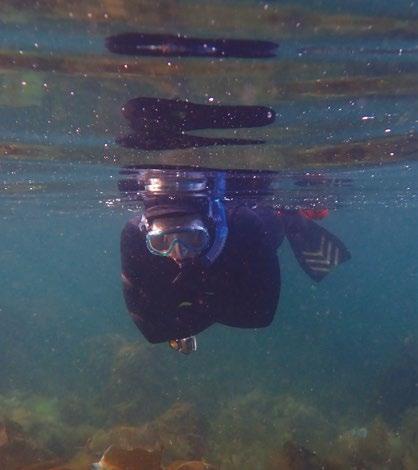
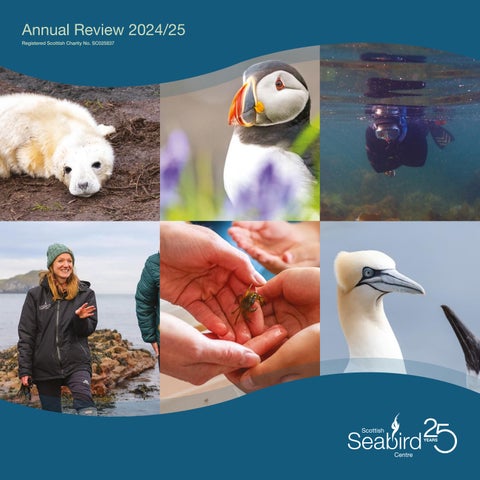
2024/25 saw resilience, innovation, and deep commitment to our marine environment from everyone in the Scottish Seabird Centre team. Guided by our four strategic pillars of Conservation, Education, Community, and Experience, the team has continued to inspire people to care for Scotland’s seas and deliver for Scotland’s seabirds, even in the face of significant challenges.
Our conservation work flourished, powered by the passion and energy of more than 1,200 volunteers who contributed to projects across the Firth of Forth. From seabird and seal surveys to citizen science, beach cleans, and seagrass and oyster restoration, their collective effort made a real difference.
Our education and outreach work also thrived, with over a hundred sessions provided for schools, wildlife clubs, and community learning activities reaching diverse audiences in the local community and further afield. New resources, live science shows, and our annual Marine Fest brought marine science to life for thousands of learners, and we also saw the continued success of our wellbeing partnerships, helping people connect with nature to improve mental health and quality of life.
However, this year was not without its tests. In February 2024, a serious flood in our Discovery Experience forced its closure for eight months. It was an unexpected and complex challenge that disrupted our visitor offer and required an extensive refit. Rising costs across energy, materials, and services compounded the strain. Yet, through all of this, the dedication, creativity, and teamwork shown by our staff and
volunteers were extraordinary. Their hard work ensured the Centre remained open throughout and the refurbished Experience has since reopened.
Despite the challenges, our visitor numbers reached 167,000, and our wildlife boat trips continued to inspire thousands to connect with the incredible wildlife of the Firth of Forth.
As we look ahead to a new Strategic Plan (2026–2031), we do so with optimism and purpose. The past year has reminded us that caring for our seas requires persistence, partnership, and passion — all qualities that define the Scottish Seabird Centre community. I would like to thank our staff, volunteers, members, funders, and partners for their unwavering support and belief in our mission. Together, we are creating a brighter, wilder future for Scotland’s seas.
Stuart Housden, Chair
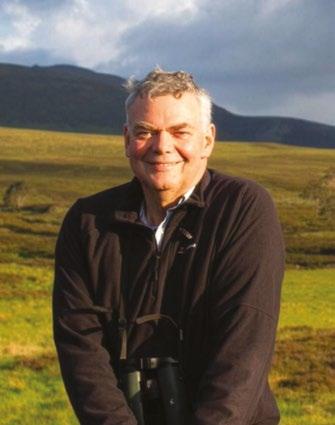
1,200 volunteers
At the heart of the Scottish Seabird Centre’s strategic plan (2020-25) - Inspiring people to care for our marine environment, are four pillars of conservation, education, community and experience which guide the charity’s activities. A new strategic plan for 20262031 is under development and will be produced this year. In 2024-25 the team continued to innovate and deliver a wider range of resources, projects, activities and events across the strategic pillars.
The Scottish Seabird Centre continued to make progress in developing its conservation portfolio in 2024. Our approach to conservation has community at its heart: we build community engagement into our conservation activity from the outset and seek to maximise volunteer involvement. Over 2024-25, more than 1,200 volunteers participated in our conservation projects.
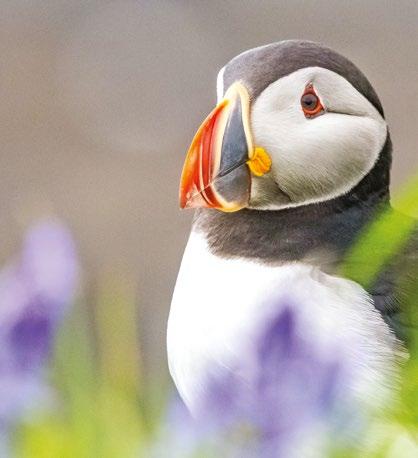
In partnership with the landowners, we continued to lead in the management of Craigleith, the Lamb, and Bass Rock, and supported the RSPB in the management of Fidra through our SOS Puffin project. We are grateful to the landowners for their collaboration and support in ensuring the good health of the seabird colonies on these islands, including Sir Hew Dalrymple and Uri Geller.
Keeping the islands that we manage free of invasive predators is essential in safeguarding the internationally important seabirds that breed there each year. We have been able to forge ahead with biosecurity monitoring to ensure we detect and respond rapidly to invasive non-native species. 12 biosecurity monitoring trips have taken place on Bass Rock, Craigleith, and the Lamb. Many of these visits were supported by volunteers.
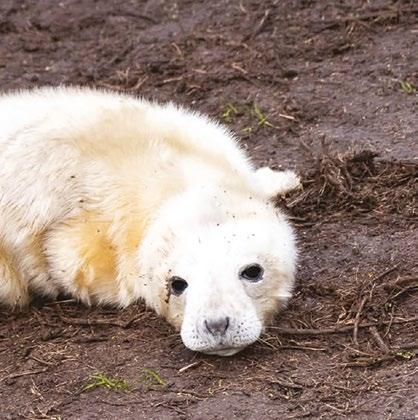
Our staff carry out a programme of annual seabird and seal surveys in the Firth of Forth, including monitoring northern gannets on the Bass Rock. In 2024/25, we completed 1 seal pup survey, 3 puffin burrow counts, and supported partners to carry out 4 seabird count trips to our local islands.
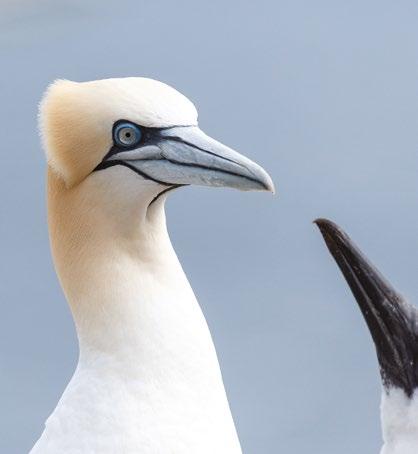
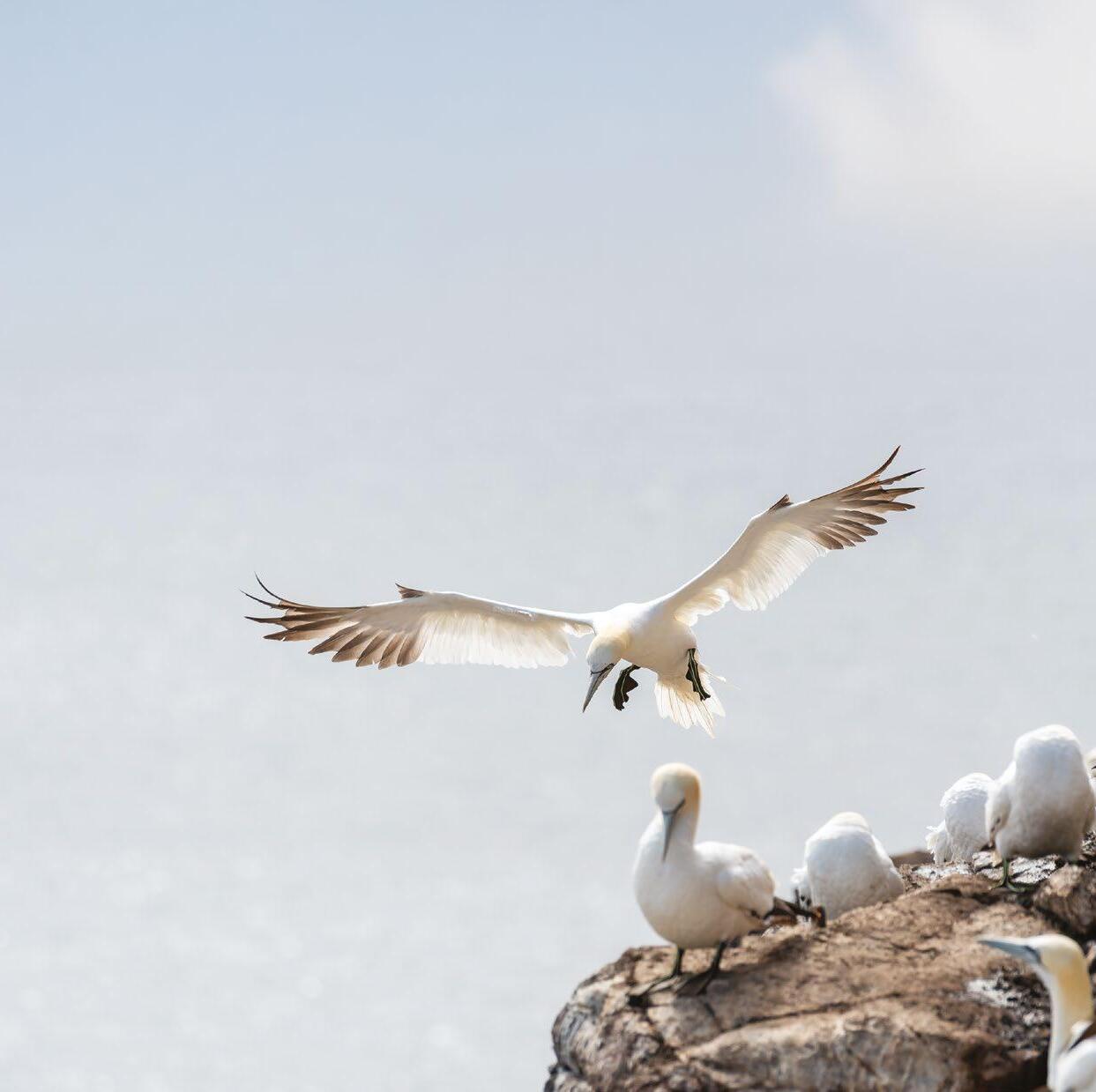
During the year, work continued to monitor Northern Gannet numbers on Bass Rock. A drone survey was carried out in 2023, following a serious outbreak of HPAI (Avian Flu) during 2022. Our team worked with partners to complete a manual count of these images, and the total Bass Rock population was estimated to be 51,844 Apparently Occupied Sites. A ‘site’ in the colony is an area occupied by a single bird or pair. Comparison of the 2023 count with the same count areas in 2014 indicated a decrease of 31%. We also facilitated 2 further drone surveys with research partners during 2024.
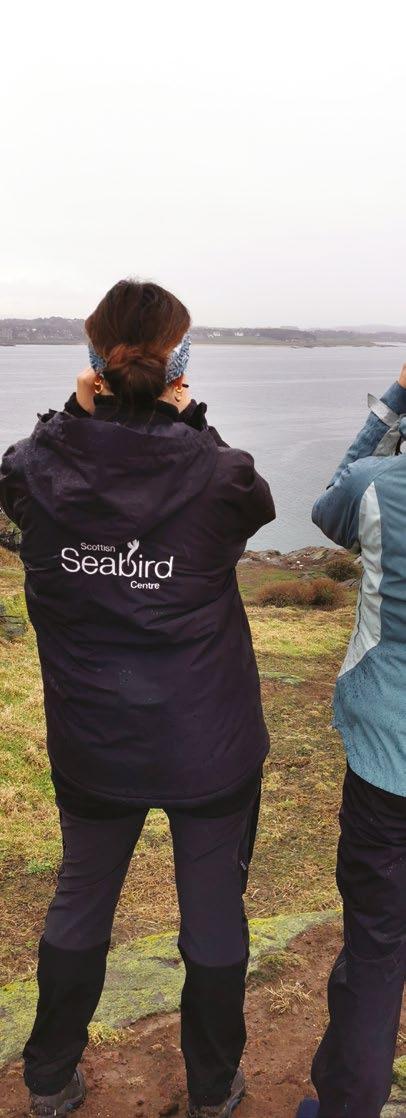
As part of a SMEEF funded project in partnership with SRUC we also carried out vegetation monitoring on Craigleith, a nettle control trial and we developed an SOS Puffin guidance document.
We developed our Citizen Science Hub to provide ecological training for volunteers, providing them with the confidence and skills to contribute data to a range of national schemes. In total, we delivered 12 practical Citizen Science sessions, engaging 98 people in marine data-collection activities including Nurdle Hunts, Big Seaweed Searches and litter surveys. This included our second annual Bioblitz event, which sees us working with partners to promote citizen science, inspire new audiences, and record as many species as possible over the course of a single day. As part of the event, we delivered 10 sessions with over 233 engagements and 157 species were recorded. With the help of volunteers, we also contributed 224 cetacean surveys to Whale and Dolphin Conservation’s Shorewatch project.
In 2024/25 we continued to encourage sustainable, nature-friendly offshore wind development, and engaged in discussions with a range of developers with this aim in mind. We supported the Scottish Government in developing a new Seabird Conservation Action Plan, and in December we hosted the Cabinet Secretary for the launch of a consultation on the draft plan. We developed a new, interactive space in
our centre to spotlight citizen science projects and promote accessible ways that people can take action for nature. With around 170,000 people visiting the Centre per year, this initiative allows us to engage more people with marine consultation updates, volunteering opportunities, and the accessible guidance and equipment needed to complete citizen science surveys and coastal clean-ups.
This ambitious partnership entered its 3rd year of delivery in 2024, with the Scottish Seabird Centre delivering 1,242 engagements with active restoration of seagrass and oysters around the Firth of Forth. The main highlight for the period was facilitating the seeding of a further 121,000 seagrass seeds with the help of over 100 volunteers and reaching the project target of restoring 30,000 native oysters. Alongside active restoration, the project also contributed to the wider education and community pillars, with three school workshops delivered as part of Orkney Science Festival and two community snorkelling sessions, showcasing the biodiversity of the marine environment. The project delivered a programme of citizen science and upskilling sessions for local groups and the community, with over 130 people trained in seagrass monitoring across 14 events. Looking ahead, the partnership has come together to develop a wholescape vision, working to incorporate the restoration of a wider range of species and habitats in the Firth of Forth.
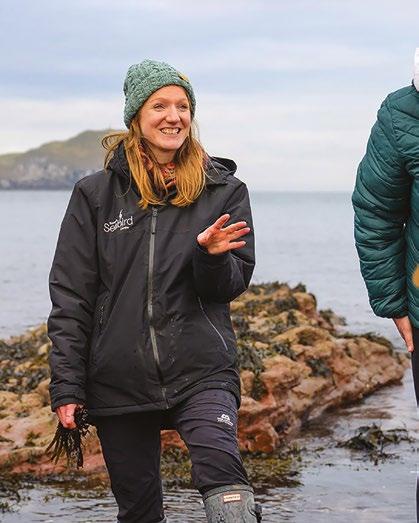
We worked in partnership with a range of organisations to address plastic pollution and clean up beaches in the Firth of Forth and further afield. We coordinated more than 60 group beach cleans throughout the year, supported by more than 400 volunteers. In addition, more than 800 people used our ‘beach clean hub’ to borrow equipment and carry out their own clean-ups along the local coastline, and in partnership with Scottish Coastal Cleanup we removed 3 tonnes of creels from Fidra.
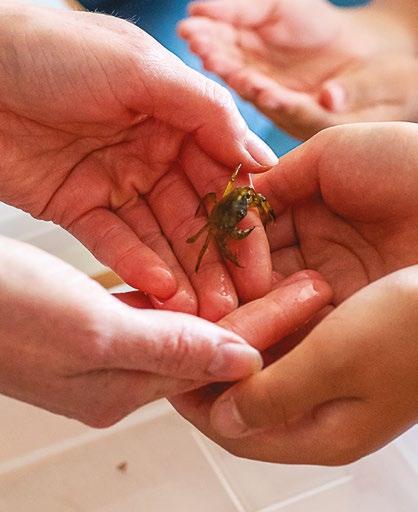
Over 2024/25 our education and outreach programme continued to evolve, with new partnerships formed, more diverse audiences reached, and new approaches introduced. Over the year we delivered: 99 school sessions (1236 engagements); 17 Wildlife Club sessions (241 engagements); 4 Holiday Clubs (337 engagements); and sessions delivered to a range of other groups including North Berwick Youth Project, Linknet, UpMo, Young carers, Bridges Project and Brownies.
Science festivals attended include those at Dundee, Edinburgh, Fisherrow and Orkney. We also held our own annual ‘Marine Fest’ with a series of events and activities delivered over five days.
Four new in-depth ‘Dive In’ learning packs were created on topics of: Migration, Seals, Cnidarians and Seabird Lifecycle. Many shorter-format learning resources have also been created, including species spotter
sheets, science videos and interactive quizzes, contributing to our range of digital and physical learning resources. Learning resources can be found here: https://www.seabird.org/resources or
scan the QR Code above.
Our ‘wellbeing in nature’ partnership with Changes (a local mental health charity) continued to flourish. We delivered a programme of 12 birdwatching walks for Changes, along with a further 7 wellbeing sessions. Many participants returned to multiple sessions and reported positive benefits to their wellbeing.
A new live science show was developed on the theme of aquaculture, adding to our suite of live shows. This had to be delivered at off-site locations due to the flood in February 2024 that put our theatre space out of use for 8 months. We were also able to run a number of bespoke sessions for visitors to our Discovery Experience with accessibility requirements, prior to the flood closure.
Over 4 tonnes of litter removed from beaches and the islands
27 nature and wellbeing sessions delivered
We continue to a see growth in the number of people who wish to connect with nature for positive well-being outcomes. Our team were delighted to continue the partnership with Changes, a mental health charity, to offer a range of wildlife walks and other marine related activity sessions, such as seaweed pressing. In total, 27 nature and wellbeing sessions were delivered (165 engagements). We also delivered 19 accessible learning sessions (85 engagements) during the year.
Our Marine Fest and Seabird Social events saw us deliver a mixed programme of activities such as music, arts and crafts, food and drink and topical conservation dialogues, including on inshore fisheries. We worked with a broad range of partners and groups, leading activities and sessions to make the marine environment a more inclusive and accessible place. Partners we collaborated with this year included Scotland Chinese Community Link, LINKnet, Can Do, Alzheimer’s Scotland, and various Day Centres.
Over 2024/25 we welcomed 167,000 visitors to the Scottish Seabird Centre, where our visitor experience team showcased Scotland’s marine environment and wildlife to members and visitors from local, UK and international destinations.
The Discovery Experience, which is a key element of our overall visitor experience, was closed from February until the end of October 2024 as a result of a flood. Flood damage was severe and most of the Experience had to be refitted during the closure. While insurance covered our costs, inevitably this led to major challenges. It affected the overall experience of visitors, limited opportunities for quality engagement, and the refit itself took up considerable staff time. The positive results overall for the year, and the high-quality refurbishment, are testament to the hard work by staff throughout the Charity during this period, the perseverance they showed, and the innovative approach they took to ensuring business continuity throughout this challenging period.
Our retail offer is developing well with more local, sustainable and marinethemed products, including a growing range of Scottish Seabird Centre bespoke products which appeal to visitors. The retail offer is available both in the Centre and online, and we regularly profile a supplier of the month.
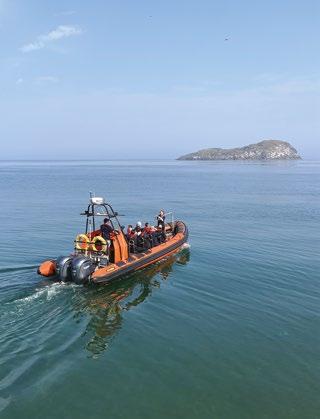
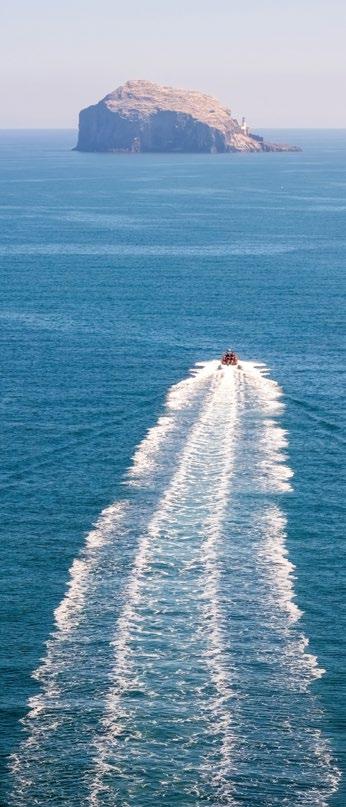
Our wildlife boat experiences around and landing on the islands in the Firth of Forth are a key way in which we inspire our visitors about the natural world, build understanding and pride of the local area, and encourage people to do more for nature. They continued to be very popular with 13,884 participants over the year, and 84% boat occupancy achieved. These trips are operated in partnership with private boat companies and are facilitated by expert wildlife guides.
167,000 visitors
13,884 passengers on our wildlife boat trip
The following financial information has been compiled using the full audited financial statements for the year ended 31 January 2025, a copy of which may be obtained on request from Scottish Seabird Centre, The Harbour, North Berwick. The purpose of this information is to provide a summary account of the activities of the group.
The trustees would like to thank all our volunteers, members and supporters, including individuals, charitable trusts and foundations, public bodies and corporate organisations who have supported our work.
In 2024/25, these included:
AEB Charitable Trust
Cirrus Logic International UK
Cruden Foundation
Foyle Foundation
Garfield Weston Foundation
Hamish and Doris Crichton Charitable Trust
HDH Wills 1965 Charitable Trust
Horace and Helen Gillman Trusts
Hugh Fraser Foundation
J & JR Wilson Trust
Marsh Charitable Trust
MEB Charitable Trust
Nancy Roberts
Charitable Trust
New to Nature (National Lottery Heritage Fund)
New to Nature Legacy Fund
North Berwick Trust
Restoration Forth
Sandra Charitable Trust
Sea-Changers Scottish Learning Fund
Scottish Marine Environmental Enhancement Fund
Swire Charitable Trust
The Inchcape Foundation
The National Lottery Awards for All
The National Lottery Community Fund –
Platinum Jubilee Grant
The National Lottery Heritage Fund
The Slater Foundation
The William Haddon Charitable Trust
William Grant Foundation and in memoriam and legacy donors.
With thanks also to the Scottish Seabird Centre Volunteer Group and other volunteers who have contributed their time and expertise to our work.
Trustees continue to ensure that the Charity is well governed and bring skills and expertise aligned with the strategic direction.
Trustees
The Trustees who served during the period from 1 February 2024 to 31 January 2025 were:
Stuart D Housden
OBE (Chair)
Chris Arnold
Stephen Breslin
Kim Kjaerside
Heather McFarlane
David Paterson
Neil Stoddart
Philip Taylor
Tessa Quinn
Steven Votier (resigned 16 August 2024)
Key Management
Susan Davies
Chief Executive Officer (resigned 16 January 2025)
Harry Huyton
Chief Executive Officer (from 6 January 2025)
Helen McDonald
Chief Operating Officer
Jess Thompson
Marketing and Communications Manager
Dora Roden
Project Manager
Florence Gygax
Partnership Development Manager (joined 17 June 2024)
Fiona Unsworth
HR and Business Support Officer
Frances Hill
Finance and Business Support Officer
Cover image credits. Clockwise from top:
© Jamie McDermaid
© Nicol Nicolson
© Lyle Boyle
© Jamie McDermaid
© Jamie McDermaid
© Helen Pugh