
Albert’s Fall Dining

Albert’s Fall Brewmaster Dinner
Featuring Societe Brewing Company Saturday, September 19, 2015
6 p.m. Reception with animal ambassadors in Treetops Banquet Room
6:45 p.m. Dinner at Albert’s $69 per person for members, $82 for nonmembers, plus tax and gratuity
Join us for a fun evening of unique brews and fantastic food as we celebrate the changing of the seasons. San Diego Zoo Executive Chef Chris Mirguet and Albert’s Chef Charles Boukas pair their culinary artistry with excellent craft beer selections from Societe Brewing Company.
Albert’s Late Harvest Winemaker Dinner
Featuring Gloria Ferrer Caves & Vineyards Saturday, October 17, 2015
6 p.m. Reception with appetizers and animal ambassadors in the Price Education Center
6:45 p.m. Dinner at Albert’s $89 per person for members, $102 for nonmembers, plus tax and gratuity
Enjoy the exceptional varietals from Gloria Ferrer Caves & Vineyards as we pair a decadent four-course meal prepared by San Diego Zoo Executive Chef Chris Mirguet and Albert’s Chef Charles Boukas with the selections.
Guests will be seated at tables of eight. Must be at least 21 years of age to attend. Menu substitutions are not available for this event. For reservations, please call 619-718-3000 or book online at zoo.sandiegozoo.org/dining-events
8 Inspiring a Love for Wildlife: Facets of Primate Conservation
The shy and elusive Guizhou snub-nosed monkey in China is getting much-needed conservation attention—and gaining new fans among local schoolchildren.
BY KARYL CARMIGNANI
12 A Habitat of Their Own: African Marsh Birds at the Safari Park
The Park’s African Marsh habitat gives some spectacular birds their own space to nest and thrive. BY
WENDY PERKINS
explore
16 A Constellation of Clouded Stars
The San Diego Zoo has been home to several beautiful and much-loved clouded leopard animal ambassadors during its history.
BY MAUREEN O. DURYEE
20 A Tribute to Speed
Remembering the Zoo’s oldest resident, Speed the Galápagos tortoise.
BY KAREN E. WORLEY
conservation
24 Still Walking with Giants: 2015 Conservation Medalists
Iain Douglas-Hamilton, Ph.D., and Michael Chase, Ph.D.
San Diego Zoo Global recognizes two conservation heroes who have championed the cause of elephants for decades. BY
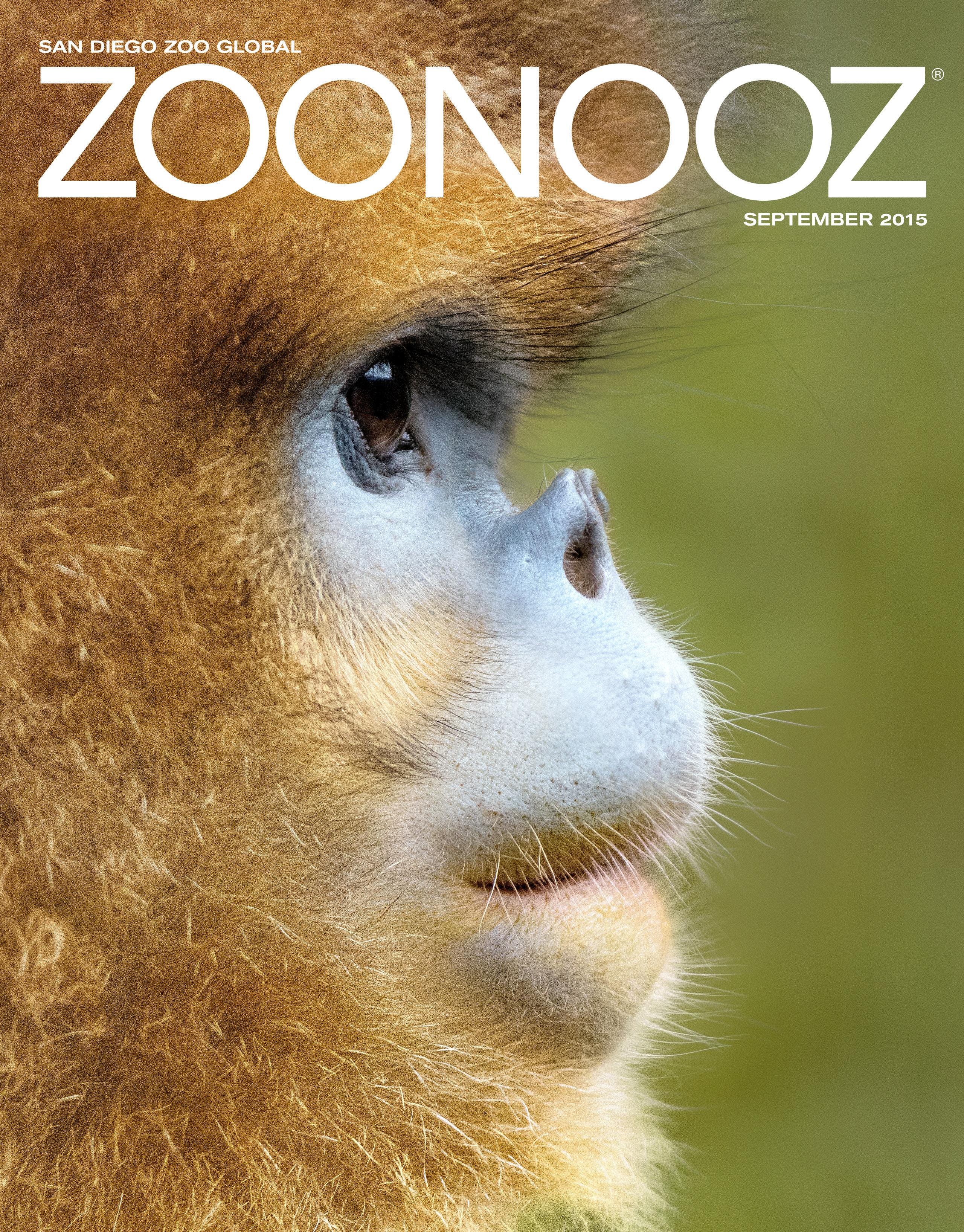
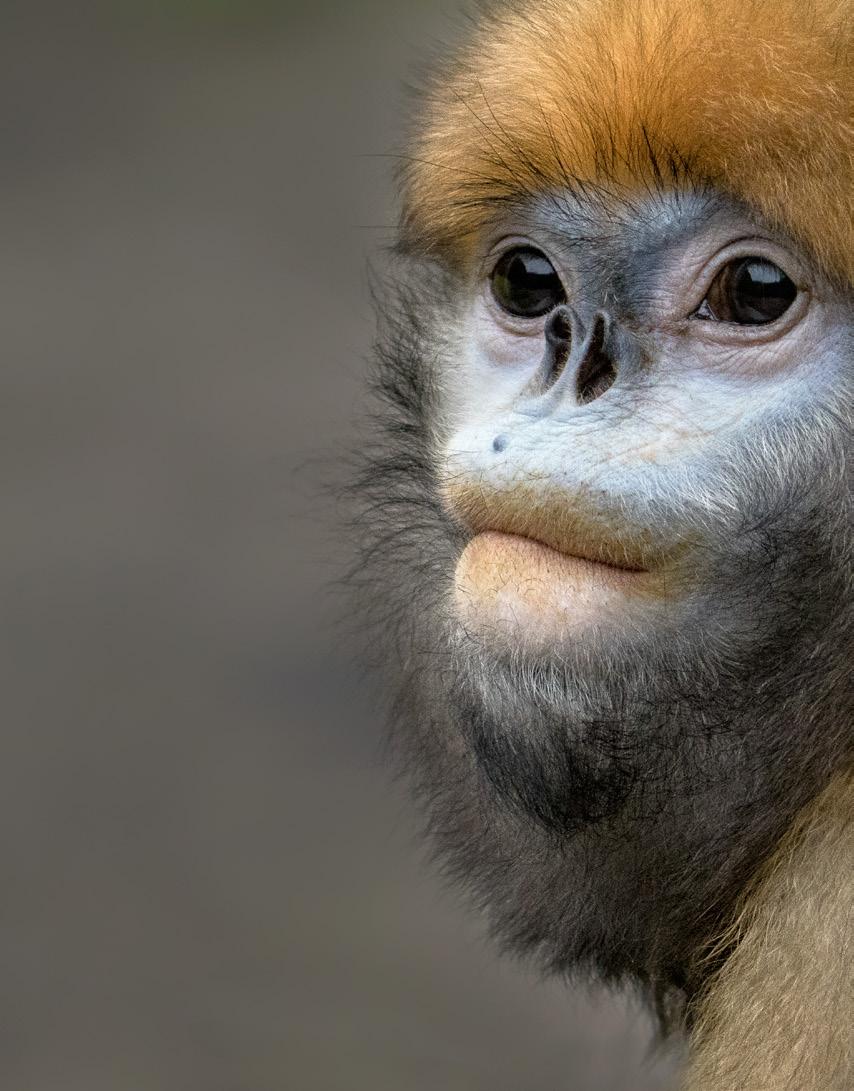
on the cover and this page: Guizhou snubnosed monkey
Rhinopithecus brelichi
Photos by Ken Bohn
SDZG Photographer
FREE! Download the ZOONOOZ App for your tablet at sandiegozoo.org/ zoonooz to see this month’s special photos and videos!
chairman’s note

AInspiring the Conservationists of Tomorrow
s summer draws to an end and kids head back to school, this is a perfect time to highlight San Diego Zoo Global’s mission to ignite a passion for nature through our enriching educational programs. At the Zoo, Safari Park, and Institute, we offer more than 135 programs that are designed to inspire and empower young people to become conservation stewards and lifelong learners. Kids are so passionate about animals—and our programs encourage that curiosity and enthusiasm through exploration and personal experiences. The connections often lead to a lifetime of caring about wildlife conservation.
Inspiring our youth to make a difference for wildlife through life-changing experiences is part of our educational mission, and, as our youth are our future, they will steward our planet forward and take the lead with our goal to end extinction. Therefore, it is particularly gratifying to witness lifelong learning in action—among some families we have had up to four generations who have participated in these programs.
The Zoo’s impact is demonstrable; some of our programs have run continuously for more than 60 years. In 2014, more than 350,000 students visited us or attended our programs, from Second-grade Field Trips to Zoo Summer Camp. Our exhibits at the Zoo and Park provide rich learning opportunities in which visitors can experience animal presentations, interpretive demonstrations, tours, safaris, sleepovers, shows, classes, and camps. Each year, more than 3,500 children in grades 1 through 12 take part in our Summer Camps, engaging in fun activities while they discover animals and conservation.
Providing access to the Zoo is a major priority for San Diego Zoo Global. During each school year, prearranged visits to the Zoo and Safari Park are free for San Diego County schools and discounted for schools outside of San Diego County. In October we offer Kids Free Month, which gives all school groups free entrance. For those that are not able to visit us, we can bring the Zoo to them. Our assembly and classroom programs feature animal ambassadors and make learning lively and fun. Each year, our educators present more than 400 of these programs.
Our videoconference studio in the Zoo’s Price Learning Center bridges distance for students who live out of the area. Our educators engage students with
interactive activities through distance learning. This two-way videoconferencing technology brings our “virtual zoo” to more than 5,000 students at schools around the world each year.
As we work to heal and protect animals and their natural habitats, animals have the power to help us heal, too. We bring the Zoo and Safari Park to audiences that cannot come to us: people in hospitals, healthcare centers, community centers, and retirement homes. San Diego Zoo Global’s Zoo Express and Animal Express programs are therapy outreach programs that bring our animal ambassadors and their keepers to people who are not able to venture out. These heartwarming visits awaken memories, help relieve stress, and bring family members of all ages together as they meet and learn about animals.
In 2014, thanks to the generosity of donor T. Denny Sanford, San Diego Zoo Global took this effort to a new level with the San Diego Zoo Kids Network, a closed-circuit television channel for children’s hospitals and Ronald McDonald Houses. This channel combines videos from the Zoo and Safari Park, keeper interviews, conservation fieldwork, and our live animal cams. The result is enjoyable stories that children and their families can watch in patient rooms and waiting areas. There is growing evidence that watching these stories helps sick children relax, sleep better, and heal more quickly. The pilot program began at Rady Children’s Hospital in San Diego, and as of July this year, we have expanded to 10 additional facilities with many more planned.
Whether our education programs take place on our grounds at the Zoo, Safari Park, and Institute, in schools, in the community, through distance learning, or in hospitals, the programs provide a dynamic way to reach a significant audience: kids, our conservation leaders of tomorrow. As my eight-year-old daughter Sophia always says, “We are a zoo family.” Let’s all be “zoo families” and ignite a passion for nature in our children, grandchildren, and all future generations to protect wildlife and wild places so extinction becomes a thing of the past.
SAN DIEGO ZOO GLOBAL
OFFICERS
Robert B. Horsman, Chairman
Sandra A. Brue, Vice Chairman
Judith A. Wheatley, Secretary
Steven G. Tappan, Treasurer
BOARD OF TRUSTEES
M. Javade Chaudhri
Berit N. Durler
Richard B. Gulley
Clifford W. Hague
Linda Lowenstine, D.V.M., Ph.D.
George A. Ramirez
Patricia L. Roscoe
TRUSTEES EMERITI
Frank C. Alexander
Kurt Benirschke, M.D.
Thompson Fetter
Bill L. Fox
Frederick A. Frye, M.D.
George L. Gildred
Yvonne W. Larsen
John M. Thornton
Albert Eugene Trepte
Betty Jo F. Williams
James Lauth, General Counsel
Douglas G. Myers, President/CEO
Charles L. Bieler, Executive Director Emeritus
THE FOUNDATION OF SAN DIEGO ZOO GLOBAL
OFFICERS
Murray H. Hutchison, Chair
Maryanne C. Pfister, Vice Chair
Susan N. McClellan, Secretary
Richard M. Hills, Treasurer
Mark A. Stuart, President
Robert B. Horsman, Ex officio
Douglas G. Myers, Ex officio
BOARD OF DIRECTORS
Christine L. Andrews
Joye D. Blount
Rick Bregman
Lisa S. Casey
Douglas Dawson
Berit N. Durler, Ex officio
U. Bertram Ellis, Jr.
Arthur E. Engel
Craig L. Grosvenor
Michael Hammes
Judith C. Harris
Michael E. Kassan
Susan B. Major
Michael D. McKinnon
Thomas Tull
Margie Warner Ed Wilson
Robert B. Horsman Chairman
Sunday, September 27, 2015
5:30 p.m. Hunte Nairobi Pavilion
Members: $69.95
Nonmembers: $82.95
Join us for a very special event to meet some of the Safari Park’s charismatic animal ambassadors. Several of our animal stars will be presented throughout the evening as you enjoy a delicious gourmet meal cooked up by our expert chefs Joshua Mireles and Abriann Ramirez just for the occasion. You won’t want to miss it— it’s going to be wild!
Oktoberfest Celebration
Sunday, October 18, 2015
5 p.m. Hunte Nairobi Pavilion
Members: adults, $44.95; children, $18.95
Nonmembers: adults, $57.95; children, $31.95
It’s time to strike up the band and celebrate fall with the Park’s annual Oktoberfest feast! Enjoy a bountiful buffet of traditional favorites and special dishes prepared by Safari Park chefs Joshua Mireles and Abriann Ramirez, accompanied by live music. One complimentary glass of beer comes with your meal, and other beers will be available for purchase. Put on your lederhosen and join the party!
Price does not include tax, gratuity, and parking. For reservations, call 619-718-3000 or book online at sdzsafaripark.org/dining.
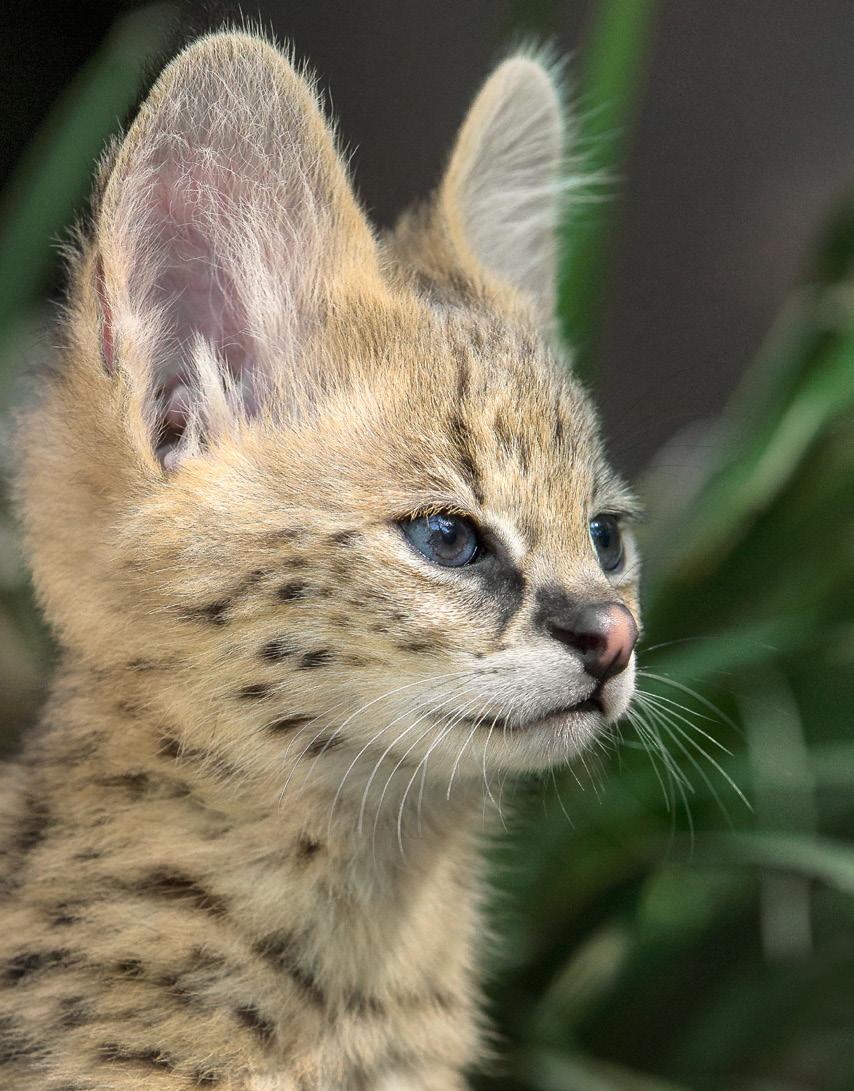
through the lens
Serval kitten Leptailurus serval
ZOONOOZ
® PUBLISHED SINCE 1926
SEPTEMBER 2015
VOL. LXXXVIII–NO. 09
MANAGING EDITOR
KAREN E. WORLEY
ASSOCIATE EDITOR
PEGGY SCOTT
STAFF WRITERS
WENDY PERKINS
KARYL CARMIGNANI
SAN DIEGO ZOO GLOBAL PHOTOGRAPHER
KEN BOHN
DIGITAL IMAGING TECHNICIAN
TAMMY SPRATT
DESIGN AND PRODUCTION
DAMIEN LASATER
KERRI ABRAMS
HEIDI SCHMID-ROMERO • LISA BISSI
JENNIFER MACEWEN
PREPRESS AND PRINTING QUAD GRAPHICS
The Zoological Society of San Diego was founded in October 1916 by Harry M. Wegeforth, M.D., as a private, nonprofit corporation that now does business as San Diego Zoo Global.
The printed, hard-copy version of ZOONOOZ (ISSN 00445282) is currently published bimonthly (Nos. 1, 3, 5, 7, 9, and 11 of each year’s volume; the even-numbered issues of each volume are available in digital format only). Publisher is San Diego Zoo Global, at 2920 Zoo Drive, San Diego, CA 92103, 619-231-1515. Periodicals postage paid at San Diego, California, USA, and at additional mailing offices.
POSTMASTER: Send address changes to Membership Department, P.O. Box 120271, San Diego, CA 92112.
Copyright® 2015 San Diego Zoo Global. All rights reserved. “ZOONOOZ” Reg. U.S. Pat. Office. All column and program titles are trademarks of San Diego Zoo Global. Annual Memberships: Dual $125, new; $110, renewal. Single $102, new; $90, renewal. Each membership includes unlimited entrance to the San Diego Zoo and the San Diego Zoo Safari Park.
Subscription to printed issues of ZOONOOZ $25 per year, $65 for 3 years. Foreign, including Canada and Mexico, $30 per year, $81 for 3 years. Contact Membership Department, P.O. Box 120271, San Diego, CA 92112.
As part of San Diego Zoo Global’s commitment to conservation, ZOONOOZ is printed on recycled paper that is 30% post-consumer waste, chlorine free, and is Forest Stewardship Council (FSC ) certified.
FSC® is not responsible for any calculations on saving resources by choosing this paper.
Fall at the Zoo and Safari Park
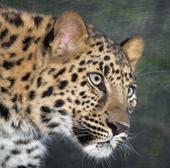
September means enjoying the last few days of summer, and then it’s time to take the leap into fall. At the Zoo and the Safari Park, it’s also time for beautiful days and leisurely strolls to visit your favorite animals. Enjoy watching the Asian leopards at the Zoo as they prowl the catwalks that traverse the visitor walkway high above your head. At the Safari Park, as our recent advertising campaign says, we have “Safaris Departing Daily,” with fun adventures for family and friends. September also brings our annual San Diego Zoo Food, Wine, and Brew Celebration presented by Cymer. San Diego’s great restaurants, wineries, and breweries will be at the Zoo to present delicious treats, and there will be entertainment, a fun auction, and, of course, lots of animals—and it all benefits the San Diego Zoo Global Wildlife Conservancy. Then October brings Kids Free presented by Mission Fed, when kids 11 and younger get into the Zoo and Park free all month long. Plus, we have a brand-new event for the Safari Park: RISE of the Jack O’Lanterns, a unique experience to see amazing and intricately carved jack o’lanterns glowing in the darkness. This event is only sold online through advance-sale tickets on their website, therise.org, but it is being included in select Roar & Snore Safaris in October, if you’d like to camp with us and see the jack o’lanterns, too!
Douglas G. Myers President/CEO
SEPTEMBER
7 Nighttime Zoo presented by Cymer ends—Zoo 4, 5, 19, 26 All Ages Roar & Snore Park
12 Adults-only Roar & Snore—Park 12, 26 KinderTots—Zoo
12, 18, 19, 25 KinderNights—Zoo
13 Orchid Odyssey—Zoo
18 Plant Day and Orchid Odyssey—Zoo
19 Albert’s Fall Brewmaster Dinner—Zoo
26 San Diego Zoo Food, Wine, and Brew Celebration presented by Cymer—Zoo
27 Dinner with Animal Ambassadors—Park
SAN DIEGO ZOO HOURS
September 1–7: 9 a.m. to 9 p.m.
September 8–25 and 27–30: 9 a.m. to 6 p.m.
September 26: 9 a.m. to 5 p.m.
October 1–31: 9 a.m. to 6 p.m.
SAN DIEGO ZOO SAFARI PARK HOURS
September 1–6: 9 a.m. to 6 p.m.
September 7–30: 9 a.m. to 5 p.m.
October 1–31: 9 a.m. to 5 p.m.
WEBSITE sandiegozoo.org
SAN DIEGO ZOO PHONE 619-231-1515
DIGITAL ZOONOOZ® issuu.com/sdzglobal
OCTOBER
1 Kids Free presented by Mission Fed begins—Zoo and Park
2, 9, 10, 11, All Ages Roar & Snore (includes RISE 16,17, 23, 24 of the Jack O’Lanterns event)—Park 10, 17, 24 KinderTots—Zoo
16 Plant Day and Orchid Odyssey—Zoo 16, 17, 23, 24 KinderNights—Zoo
17 Albert’s Late Harvest Winemaker Dinner—Zoo
18 Oktoberfest Dinner—Park
30 Creepy Camp All Ages Roar & Snore—Park
31 Creepy Camp Adults-only Roar & Snore—Park
31 Kids Free presented by Mission Fed ends—Zoo and Park
MEET THE ARTIST
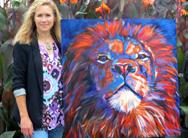
As a child, local San Diego artist Marna Schindler attended art classes at the San Diego Zoo. In 2014, Marna was awarded “Feature Artist’” at ArtWalk’s 30th anniversary celebration. Come meet Marna at the Zoo and see her work in the ZooStore gift shop on September 19, 2015, from 1 to 5 p.m.
you
said it

the
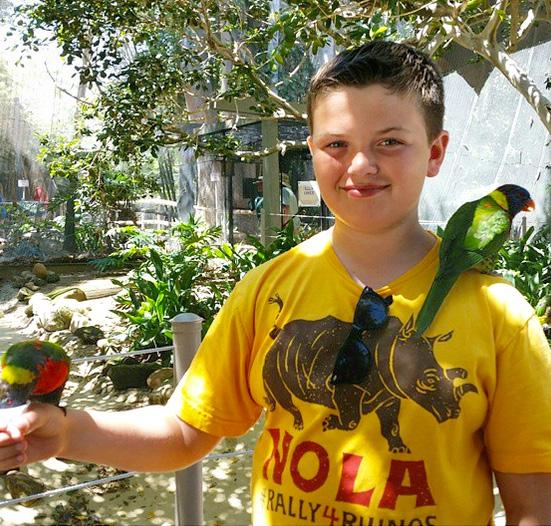
Feeding the lorikeets.
#LorikeetLanding #sdzsafaripark michellefryer

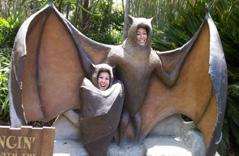
Made a trip to the @sdzsafaripark yesterday. I’m guessing it’s pretty safe to say we were batty with excitement. @thepappattack
Seeing a little baby gorilla is definitely humbling. Proud of @sandiegozoo and all they do for animal preservation. wesholtsclaw

A few years ago my husband decided to take me to the zoo for my birthday. Because we have an amazing local zoo, the Columbus Zoo and Aquarium, I thought that was where he was taking me. When he produced airline tickets to San Diego, you can imagine my surprise and delight! We spent an entire day enjoying your beautiful zoo. We were there before your new African exhibit was complete and did not have time to go to Escondido to explore your wildlife safari park. We will return again someday to see what’s new.
Pamela Denius Gillam
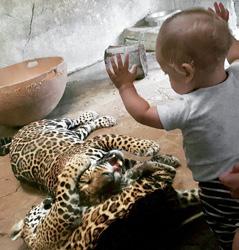
@sandiegozoo my little guy loving his first zoo experience thanks!! @cmefly440
such an amazing day
#GoatSelfie! Loving the @sandiegozoo so far! #SanDiegoZoo @susannmarie
Had
at the @sandiegozoo !!! #pandaloving #photobombed #zoolife #INEEDU @jruddy33
Seriously
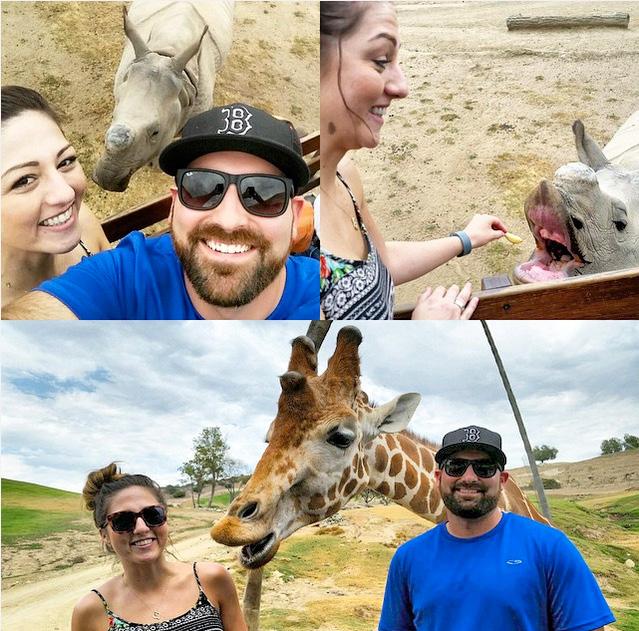
BEST experience today at the San Diego Safari Park!! We got to feed apples to South African rhinos and leaves to the most beautiful giraffe _amberleigh_
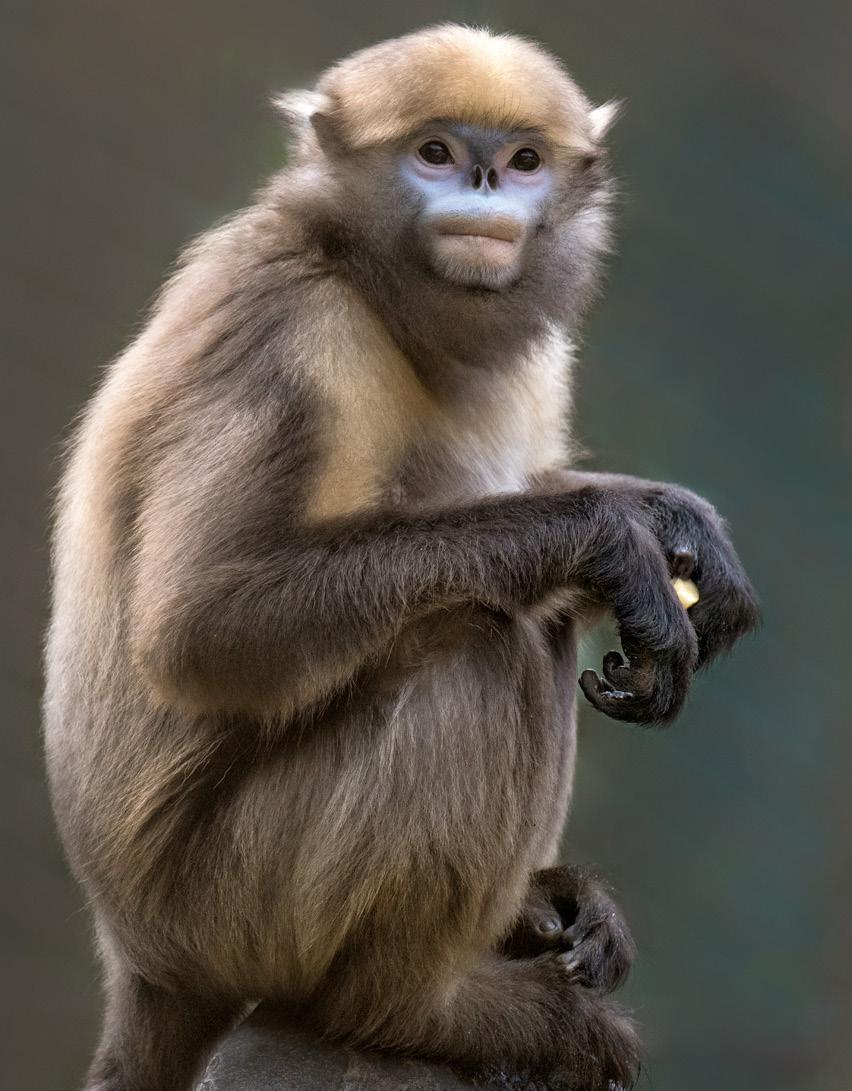
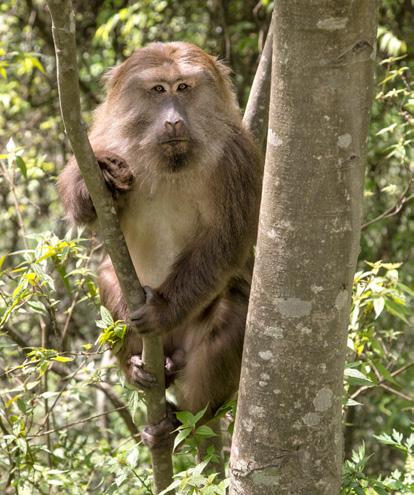
The Guizhou snub-nosed monkey is the most endangered snub-nosed species in China. There are only about 750 left.
InspirIng a Love for WildlIfe: Facets oF Primate conservation
By Karyl Carmignani STAFF WRITER
Photos by Ken Bohn SDZG PHOTOGRAPHER
“In the end we will conserve only what we love; we will love only what we understand; and we will understand only what we are taught.”
BABA DIOUM, 1968
Throughout the world, nonhuman primate species are threatened with extinction, largely due to the actions (and inaction) of humans. These threats include habitat loss and degradation, injury or death from hunters and poachers, and disturbance from human activities. For monkey species inhabiting China—the most populated country on Earth—survival of wild spaces and the primates that inhabit them is at a tipping point. The most endangered snub-nosed monkey species in China is the Guizhou snub-nosed monkey Rhinopithecus brelichi, a striking-looking creature weighing between 22 and 35 pounds that is partial to life in the trees. This leaf-eating monkey numbers about 750 individuals, all found in Fanjingshan National Nature Reserve, located in Guizhou province in southwestern China. Fortunately, this species has a creative, collaborative, and tireless ally in Chia Tan, Ph.D., senior scientist at the San Diego Zoo Institute for Conservation Research. The work of Chia and her colleagues at the reserve has illuminated the behaviors of this shy and elusive snub-nosed monkey while also broadening appreciation for the species among local people living near the reserve. “It’s their responsibility to pass on the love for wildlife and take care of the local species,” said Chia. “And we are working to inspire that love for wildlife!”
Fruition F or Seed Money
It began with an anonymous donor who heard about Chia’s primate work in China and wanted to support conservation education and outreach. The seed money helped get the Little Green Guards (LGG) program off the ground in 2011. This communitybased program teaches children about wildlife through books, school lessons, presentations, and field trips into the forest. Most importantly, it fosters love and empathy for animals. “It’s a long-term way to help preserve biodiversity,” explained Chia. “And it shows the kids we’re not just ‘boring scientists.’” There are no daycare centers in rural areas, so older kids often take their younger siblings with them to school. As a result, Little Green Guards can be as young as three years old, though the program is mostly geared toward primary schoolchildren. “Little Green Guards are children living in conservation priority areas that have an underdeveloped economy and education system,” said Chia. “The goal of the program is to build a strong and lasting love for animals in children, ultimately empowering them to become conservation stewards of the area’s natural heritage.”
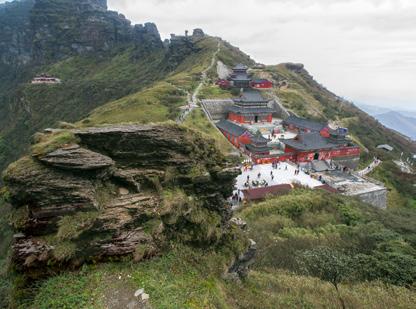
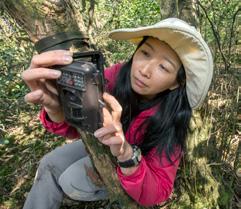
Above: Fanjingshan is a popular tourist destination and a holy place for Buddhists. The view from Golden Peak looks at famous landmarks in the nature reserve. Below: Dr. Chia Tan adjusts a camera trap in the forest.
public support to bring about positive actions toward species and habitat protection,” she said. Chia saw the need to “grow a green army and train them well,” so that they have the capacity to tackle the conservation challenges in their home countries. To do so, she created the Training in Primatology Series (TIPS), a professional development program to foster future conservation leaders from primate habitat countries, giving them the experience and credentials needed to pursue their research, academic, and career goals. While Chia hopes her army of protégés will specialize in primatology, she has also expanded the training to a broader, more practical conservation biology curriculum, so the students become “jacks-of-all-trades” for conservation. Since TIPS began in 2009, the annual workshops held throughout Asia have expanded in duration (up to 15 days long), number of attendees (84 to date), and number of countries participating (13). In 2015, the tuition-free workshop will be held in China and will focus on field research and scientific communication techniques. “With the practical knowledge and skills we provide them, our trainees will be more likely to succeed in their professional endeavors,” said Chia. That will help the monkeys and other wildlife survive in the long term.
Picture t hi S
As her international conservation efforts continue to expand across Asia and Africa, Chia understands that she must invest in local people who can engage in scientific research, conservation, education, and advocacy. “All successful conservation programs must garner
To help guide her education and outreach efforts, Chia gave an animal survey to schoolchildren a few years ago. The survey revealed that the rural kids in China did not have a sophisticated knowledge of animals and “didn’t know giant pandas came from their country.” They could name animals they saw in their daily life, like “little birds, cats, goats, and pigs,” but they were simply not aware of species beyond that. So Chia started collecting gently used children’s books with “lots of pictures and little text” to send back to the schools her Little Green Guards attend. “Books help!” she said, “And introducing children to
animals in the forests of their backyard is the first step to encouraging them to care about them.” She also found a way to reuse pictures from old donated ZOONOOZ magazines, teaching the children how to make beautiful collages and create stories about the animals. “Traditionally, Chinese people are not focused on the ‘love for the animal,’ but instead on its purpose as food or medicine or whatever,” said Chia. The Little Green Guards are changing that mindset. “This is a prerequisite to conservation.”
Sur Pri Ses in the Forest
Few technologies have helped reveal the secrets of wildlife more than strategically placed camera traps. The camera’s passive infrared sensor is triggered when something goes by, and a highly detailed image of the creature is taken, with the date, time, moon phase, and temperature noted. Long after even the most committed researcher is tucked into his or her sleeping bag, the camera traps continue to monitor the forest. Through direct observation (and arduous hikes up and down mountains), Chia and her colleagues were able to find the “arboreal highways” that the Guizhou snub-nosed monkeys use and place cam-
era traps accordingly. What they discovered rocked the primatological world!
Want more monkeys? Find additional photos in the digital ZOONOOZ.
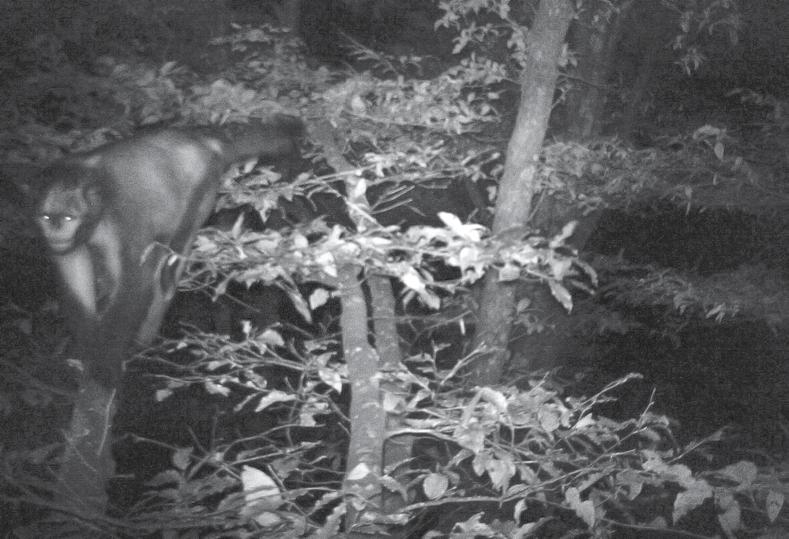
In addition to stunning “family portraits” of groups of monkeys foraging and bonding, the camera trap images revealed that the primates were active at night. Barring some prosimians and the owl monkey, primates tend to be active during the day and nestle in for the night at sunset. Monkeys captured on camera traps “monkeying around” in the middle of the night challenged established knowledge about primate activity patterns. Are we classifying them as diurnal because we are? Not any more! Another surprise was tracking the monkeys as they moved to higher elevations from early morning to afternoon, then moved back down the mountain to sleep. Chia and her colleagues think this daily activity pattern may reflect use of resources and safer sleeping sites. “Lower elevations have evergreen, broadleaf trees—ideal cover while sleeping,” she said. “Higher elevations have deciduous trees, which provide most of the monkeys’ nutrition.” So far, no one has validated or refuted their hypothesis.
Science Sel F ies
Sharing the camera trap images with the local children has opened their eyes to the wild and wonderful creatures that share their neighborhood. A children’s book about Fanjingshan called Xingda’s Wildlife Explorations, written by Chia and her collaborators, contains an array of camera trap photos and is a big hit with the youngsters— they are excited to see what lives in the forest. Chia and her colleagues recently took the Little Green Guards Conservation Club on a field trip into the reserve for lessons in biology and camera trap training. “Because personal experience can create deep impressions, it is important to include many field trip opportunities for Little Green Guards to fall in love with animals and nature,” said Chia. The children were shown how to properly install the batteries and the memory card, program the settings, and mount a camera trap on a tree. Once in place, “the kids practiced taking ‘selfies’ by triggering the sensor in front of the camera and saying ‘Qiezi!’ the Chinese version of ‘Cheese!’” Chia said with a chuckle. This experience can leave an indelible memory as the children grow up and take responsibility for caring for their local wildlife.
Finding Pheasant S
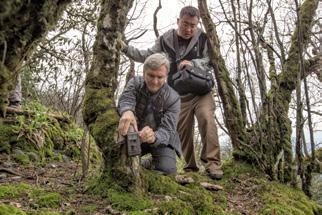
While the life of primates in Fanjingshan is riveting, other wildlife also deserves attention. As part of the US-Chinese researcher exchange program, Dave Rimlinger, San Diego Zoo’s curator of birds, joined Chia in China and put his avian expertise to work. Placing the camera traps lower on the trees captured some of the most elusive Chinese pheasants around. Dave was in his element! Locals shared
Above: A Tibetan macaque Macaca thibetana, another primate resident in Fanjingshan. Below: Dave Rimlinger, San Diego Zoo curator of birds, and a colleague install a camera trap low to the ground to record terrestrial species, including local birds.

their vast knowledge of the birds’ habits and behaviors. “It was great having another colleague from the Zoo traveling to China, showing such great interest in Chinese wildlife,” said Chia. Not only is Dave used to roughing it in the field, but “he is so knowledgeable about pheasants and other birds.” The work helped extend the species list of birds they found. “All this started with me studying monkeys, but to really conserve them and have a positive impact, we need to work with local people to care for all these animals,” said Chia. “I appreciate all the help from my colleagues to broaden the impact of our conservation and research work.” The repercussions of these collaborative efforts will surely echo in the forest for generations to come! n
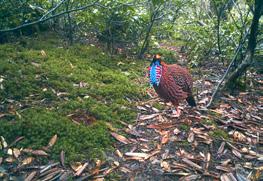
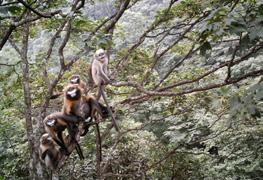
Above: Dr. Chia Tan shares information about local wildlife with schoolchildren. Right: Camera traps reveal the secrets of the forest: an eye-opening view of monkeys active at night; a rare Temminck’s tragopan; and a snub-nosed monkey family portrait.
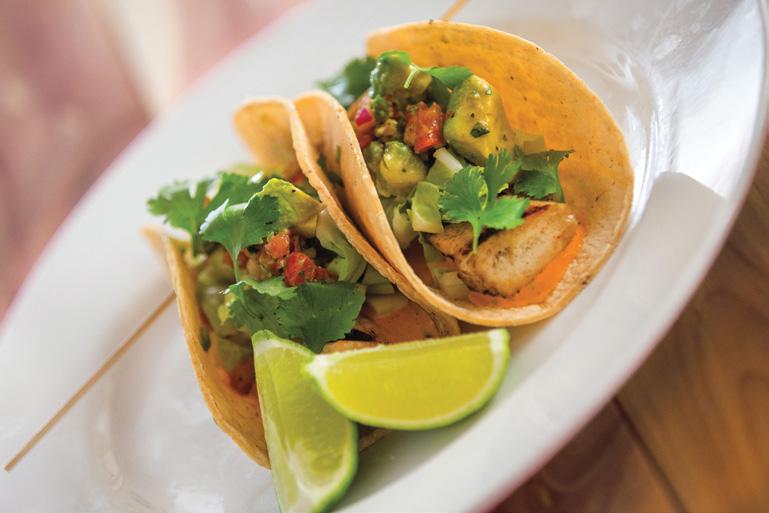
Tacos are a staple in any southern Californian’s diet. At Sammy’s, our Grilled Mahi-Mahi Tacos embrace flavors unique to the pacific coastline, highlighted with ingredients that are as fresh as it can get. Here’s to the tasty bounty of the open seas.


A HABITAT OF THEIR OWN AFRICAN MARSH BIRDS AT THE PARK
By Wendy Perkins STAFF WRITER
Photos by Ken Bohn
SDZG PHOTOGRAPHER
For more than 40 years, the vast habitats at the Safari Park have created just the right environment for many exotic animal species to breed successfully. Through the years, we’ve learned how to fine-tune their environment to help them succeed—even when that leads us to resize the habitat to fit their needs! Such was the case with some of our African bird species.
“Right-sizing” for the Right Reasons
Longtime Park visitors probably remember seeing a variety of birds, like Abyssinian ground hornbills, Rueppell’s vultures, and various storks in the South Africa and East Africa habitats. The birds did well there, even building nests and laying eggs. In fact, the ground hornbills produced the first chick in zoological history in the East Africa exhibit. But when your neighbors include hefty rhinos, Cape buffalo, and other large hoofed animals, raising a family becomes challenging.
Created in 2010, the African Marsh habitat allows guests to view birds and mammals on both sides of the Africa Tram pathway, an immersive experience similar to a real safari in Africa. Besides being a great place to raise a feathered family, the habitat works well for the keepers in caring for the birds. “The birds are fed in a catch pen instead of on exhibit,” explains Lauren Wright, senior keeper at the Park. “It’s great for two reasons: first, it keeps the native egrets from stealing the birds’ food; and second, it gives us a chance to get a good, close look at the birds’ body condition.” The catch-pen feeding arrangement also allows keepers to notice if an individual is not eating. And since the birds associate the catch pen with something positive, they enter readily—making it less stressful for an individual bird when it may need to be isolated for healthcare purposes.
Goliath Herons
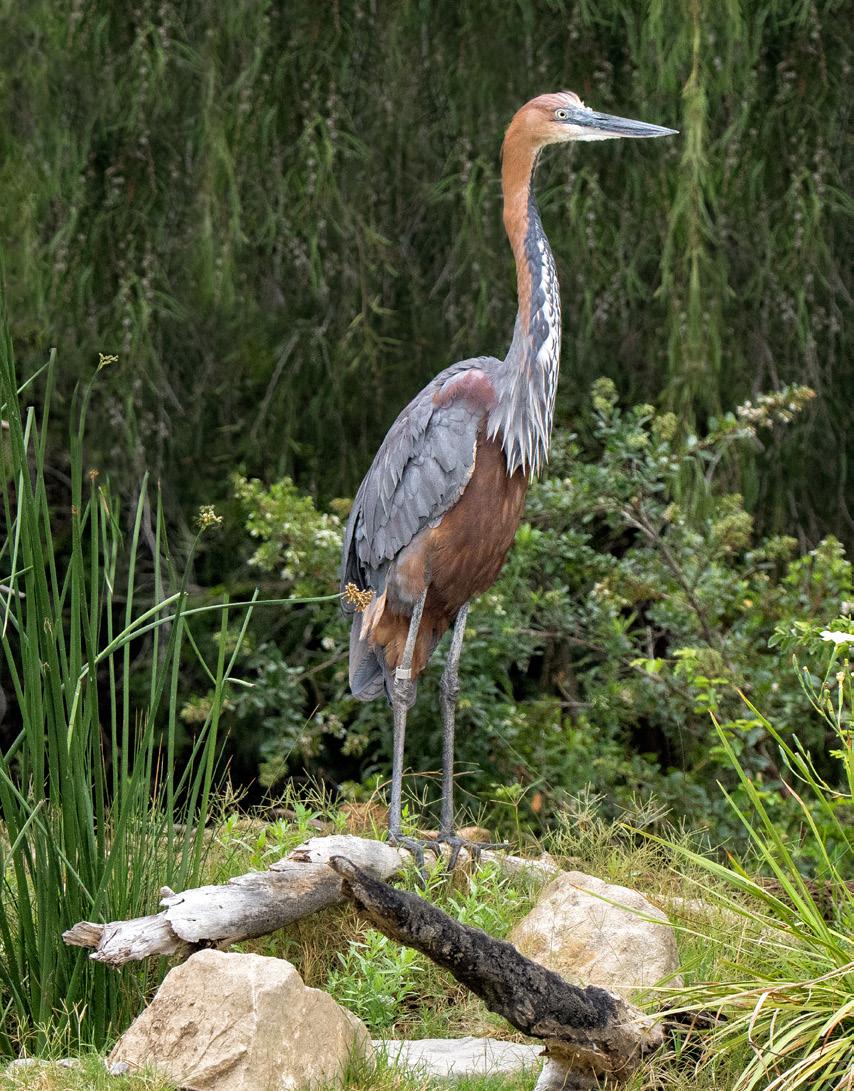
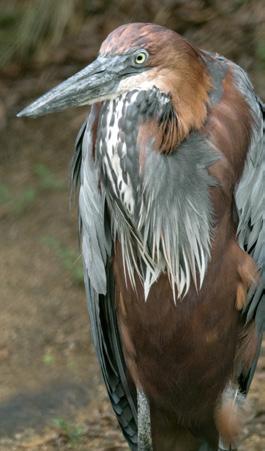
It might seem that a 47- to 60-inch-tall bird would be easy to spot. But the chestnut-andwhite coloring of a goliath heron helps these solitary and shy birds blend in with their surroundings. The herons in the African Marsh habitat are a bit easier to locate than their wild brethren—look for them at the pond. Many marsh birds have long legs, but because goliath herons are super-sized, their relatively longer lower limbs give them an advantage when it comes to foraging: they can wade into deeper water than other herons and access food the others cannot. In addition to the food they get from
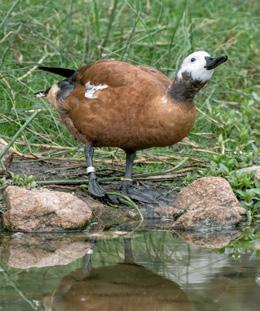
the goliath heron’s handsome coloring provides excellent camouflage; although other species in the habitat have preferred spots, the South African shelducks enjoy the entire area. Opposite page: A goliath heron stands about five feet tall.
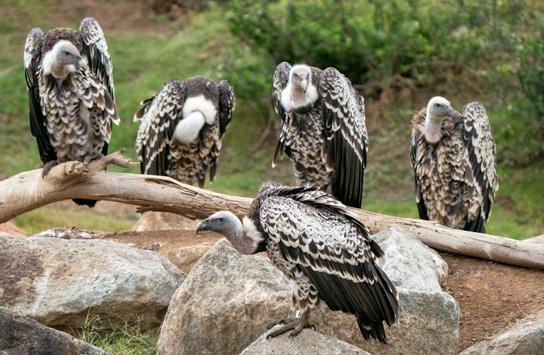
Clockwise from top: The Rueppell’s vultures’ favorite hangout is among the large boulders in the center of the habitat;
keepers, the goliath herons “keep it real” by catching local bullfrogs that take up residence in the pond. Goliath herons are very vocal, with a repertoire of squawks, croaks, gurgles, and growls. The pair at the Park is especially vocal when it’s time to eat. “When they see you in the truck, they start calling,” says Lauren. “It is impressively loud!”
South African Shelduck
Compared to a towering goliath heron, a South African shelduck is a petite bird. But what this species may lack in size it more than makes up for in spirit. “They’re the smallest, but they try to run the show,” says Lauren.
Indeed, the four female South African shelducks in the African Marsh exhibit are a force to be reckoned with—and not just by their habitat-mates. Lauren shares that as she was working in the back area of the exhibit one day, a shelduck cacophony filled the air. When she went to see what the commotion was all about, she found the shelducks and Egyptian geese in a circle, alarm-calling loudly. Surrounded by seven unhappy birds was the focus of their lambasting: a baby gopher snake! Happily, Lauren was able to rescue the harmless snake and move it out of the exhibit. The snake went on its way, ruffled feathers were smoothed, and all was right again.
Egyptian Goose
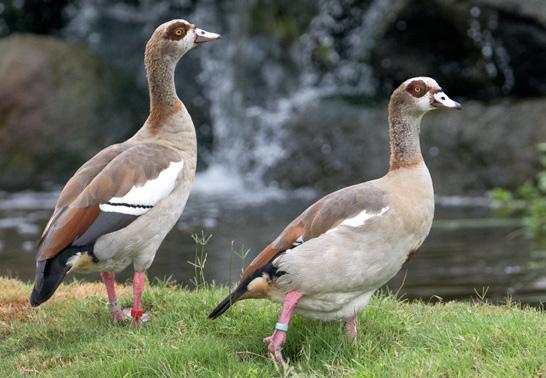
Softly colored and beautifully marked, these birds were considered sacred by the Ancient Egyptians. Although it looks like a goose and sounds a bit like a goose, this species is
actually considered a type of shelduck. The Egyptian geese in the African Marsh habitat roam the area freely and are easy to spot.
Western Rueppell’s Vulture
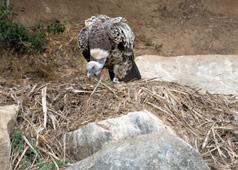
These huge vultures prefer arid spots in their native range, and in the African Marsh exhibit, that preference still holds. Our Rueppell’s vultures seem to gravitate toward the back of the habitat, and they especially prefer the rocks. The Rueppell’s vultures in this
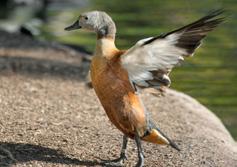
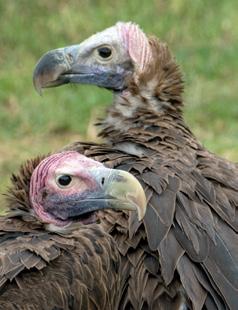
Left: A distinctive brown eye patch makes Egyptian geese easy to identify. Above: Fleshy folds of pink-red skin give the lappet-faced vulture its common name.
exhibit have nested and raised chicks for the past three years. It’s a long-term commitment: they incubate the eggs for about 56 days, then care for the chicks for about 4 to 5 months!
Rueppell’s vultures measure 33 to 41 inches long, weigh up to 20 pounds, and have an impressive wingspan of 7.5 to 8.5 feet. To keep the birds within the Park, keepers clip their wings on a regular basis—about every three months. Because the birds come into the catch pen to eat, keepers are able to keep an eye on how quickly their flight feathers are growing out and can trim them as needed, no matter what the calendar says.
Lappet-faced Vulture
The two lappet-faced vultures are an older pair; the female is about 40 years old while her mate is 32. They have been together for about 30 years, and although they have a strong bond, they’ve only laid one egg—which was fertile but failed to hatch. This species is easily identified by its bare pink head and fleshy folds of skin, called lappets, on each side of the neck. It is considered one of the most aggressive African birds, but our pair seems to get along well with their neighbors—which may be because they don’t have to compete with them for food. In their native habitat, they often scare smaller vultures off a carcass. On your next Park visit, be sure to take the Africa Tram tour to get a gander at the inhabitants of the “kingdom on the right.” n
For more photos of these birds of a feather, check out the digital ZOONOOZ.
Top: South African shelducks are small but spirited birds. Bottom: Western Rueppell’s vultures build a platform out of sticks, then line their nest with grasses.

By Maureen O. Duryee SENIOR ANIMAL TRAINER
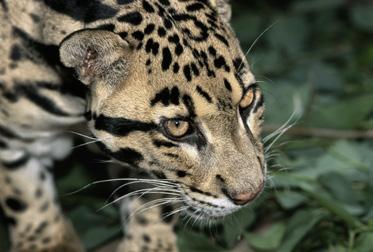
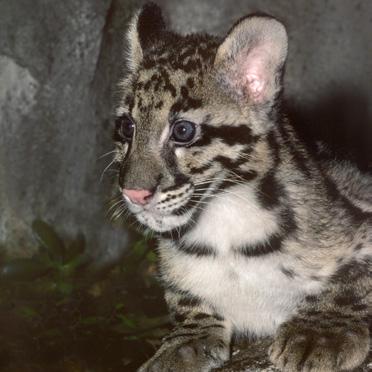
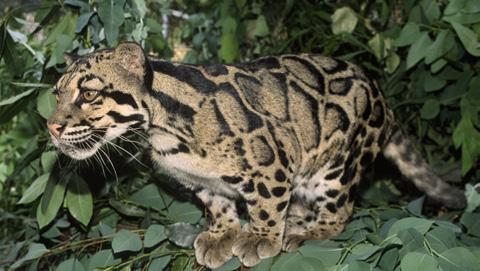
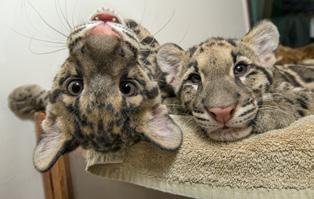
One doesn’t need to wait until dark to see some of San Diego’s brightest stars—a constellation of clouded leopard stars resides right here at the San Diego Zoo! Clouded leopards Neofelis nebulosa have been at the Zoo since the 1940s. Although it was customary to exhibit single cats at that time, those individuals would often hide away their day, rarely allowing the public to witness their unique beauty. More than 30 years later, the Zoo received the gift of a breeding pair of clouded leopards named Toui and Joy. The birth of their son, Toui-San, in 1979 marked the beginning of a highly acclaimed clouded leopard animal ambassador program that continues to this day.
Photos by Ken Bohn SDZG PHOTOGRAPHER
Rimau
asia
TOUI-SAN
PHOTO BY
PHOTO
PHOTO
Working with clouded leopard animal ambassadors as cubs can be a lot of fun. However, when they grow up, things can change. The once playful, rambunctious cub can become a cautious, watchful adult. The training approach we use is simple: expose the cubs to outside stimuli (just about everything!) at a time that coincides with their natural curiosity. During these early formative years, we learn each individual cat’s likes and dislikes. Training these shy leopards is much like spending time with good friends: together you share many adventures and, above all, lots of quality time. By the time the leopard has reached adulthood, the cat and the trainers have built a strong relationship that involves trust, confidence, reliability, and a certain amount of humor on both sides. This strong bond between adult clouded leopard and trainer allows both to be comfortable working in daily shows and other public relations events. The San Diego Zoo is the only zoo in the world to have adult clouded leopard animal ambassadors. To celebrate that, here is a short walk down clouded leopard memory lane.
Toui-San: A Star Is Born
The first generation of clouded leopard animal stars began in 1979, with the young male Toui-San. While Toui-San spent most of his time in the Children’s Zoo nursery, animal training supervisor Kathy Marmack began taking the sixmonth-old cub out for daily appearances at the Clark Theater show stage. Toui-San would also make unannounced visits to the curator’s office. Even the most academic personality couldn’t resist a rolypoly clouded leopard cub trying to gain traction on a pile of papers. The highlight of his career was when Joan Embery took him to The Tonight Show while Johnny Carson was the host.
Rimau, Dahan, and Asia: Three’s Company
In 1985, the San Diego Zoo received another gift: a trio this time, our second generation of clouded leopard animal am-
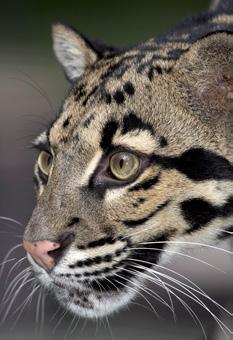
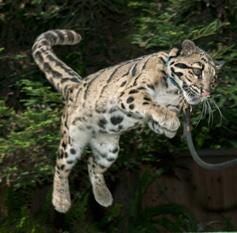
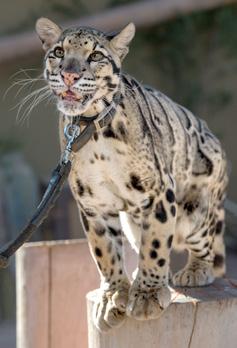
bassadors. Rimau, Dahan (both males), and Asia (a female) were all under the age of five months and not related to each other. The training staff began immediately introducing these young cubs to a variety of circumstances, taking them on every adventure Toui-San had enjoyed. Rimau amazed millions of visitors with his bond to Kathy by leaping across the stage at Wegeforth Bowl and landing gently on her shoulders. Dahan’s good looks came in handy when trying to court Asia. Asia’s uncharacteristically brave and confident nature brought her front and center before many different types of audiences. Asia charmed movie stars and rock stars, and on one occasion she even climbed onto the lap of Hugh Hefner, who found he couldn’t resist the San Diego Zoo’s world-class kitty cat! Together, these three cats produced three litters of cubs. Asia’s trainers would quip during the Animal Chit Chat Show that “Asia is a woman of the ’90s: she works, has two boyfriends, and raises the kids, all at the same time!”
Kya and Kilat: Sister Act
In 1998, the third generation of animal ambassadors came our way. Two of them, Kya and Kilat, arrived on permanent loan to us, and they happened to be the great granddaughters of Asia and Dahan. Kya enjoyed rolling in a fragrant bed of flowers, either on a walk or in front of an audience. Her sister, Kilat, who was a little more athletic, enjoyed climbing straight up one side of a tree and down the other on her walks or completing a long series of jumps for an audience. These two clouded leopard animal stars impressed Zoo guests during the Wild Ones show at Hunte Amphitheater and later, in 2009, at Urban Jungle for the Backstage Pass program.
Norman: The Sensitive Soul
Another member of our third generation of clouded stars was Norman, who joined the team in 2000. Norman started out growing up in Ohio, and his time there
KILAT
KYA
NORMAN
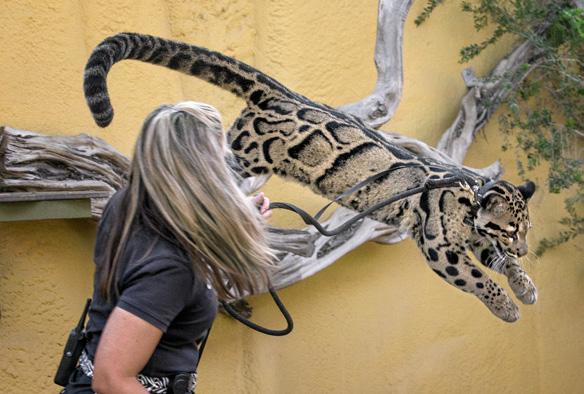
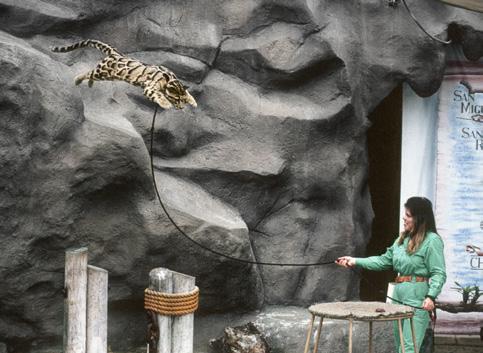
Above: Ganda demonstrates the clouded leopard leap. Below: Haui and Riki lounging; the author gives Norman room to jump.
included making television appearances with Jack Hanna. Yet he was still a very shy leopard. It wasn’t until he was paired with Jessie, our flamboyant and outgoing golden retriever, that we were able to bring out his bolder nature. Even then, it always felt like a gift when he made his daily appearance in the Wild Ones show at Hunte Amphitheater.
Haui-San: Extra Large
More magic began in 2012, when two male clouded leopards arrived from Nashville—our fourth generation of ambassadors. You might have met the two rowdy boys at the Children’s Zoo when they first arrived. We had the pleasure of working with Riki-San for a year; he is now part of a breeding program for this endangered species at Tanganyika Wildlife Park in Kansas. Haui-San remains one of the animal stars at our Zoo’s Backstage Pass, and he has grown up to be a very large cat. Most natural history data collected on clouded leopards calculates the weight for a male clouded leopard to range between 50 and 60 pounds; Haui-San tops the scales at 71 pounds! And all of that is muscle—well, mostly.
Ganda: Leaping Leopard
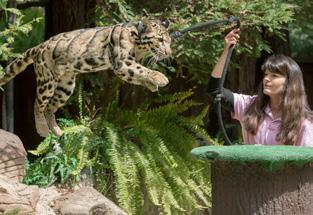
We celebrated our fourth generation of clouded leopard animal ambassadors in 2013 with the addition of a female named Ganda—sometimes known as “Gan-Zilla.” She earned this nickname because of her amazing ability to jump from an 8-foottall podium with all 4 paws and all 20 claws extended to land on her prey—a large toy orangutan. The
Palm Oil and Clouded Leopard Conservation
The largest threat to the clouded leopard’s future is deforestation, a situation just as critical for orangutans, sun bears, pygmy elephants, and rhinoceroses. The clouded leopard depends on forests, and its habitat is undergoing the world’s fastest regional deforestation rates: over 10 percent lost in the past 10 years. Palm oil plantations are the number-one cause of deforestation. Palm oil or palm kernel oil is an ingredient found in nearly half of all supermarket products, ranging from shampoo to chocolate. We can all help wildlife by being careful consumers. The goal isn’t to purchase products without this ingredient, but rather to purchase products made from a renewable source of palm oil. The Roundtable on Sustainable Palm Oil website (rspo.org) can provide information about how to find products that use sustainable palm oil.
trainer who happens to be at the other end of her leash at the time of that spectacular jump gives her the full extension—she will most certainly need it! Beyond her legendary leaps, Ganda has become quite famous due to an image taken by a regular visitor that is one of the most “liked” images on the San Diego Zoo’s Facebook page. The next time you want to wish upon a star, remember that you don’t need to wait until dark. Stop by the San Diego Zoo—we have two clouded stars out for you daily! n
GANDA
RIKI-SAN and HAUI-SAN
MAUREEN and norman
what’s in store

Visit our main stores at the Zoo and Safari Park to shop our wide selection of children’s books. These titles and many more are available.
Your purchases support the conservation projects and educational work of San Diego Zoo Global.
I A TRIBUTE TO SPEED
By Karen E. Worley MANAGING EDITOR
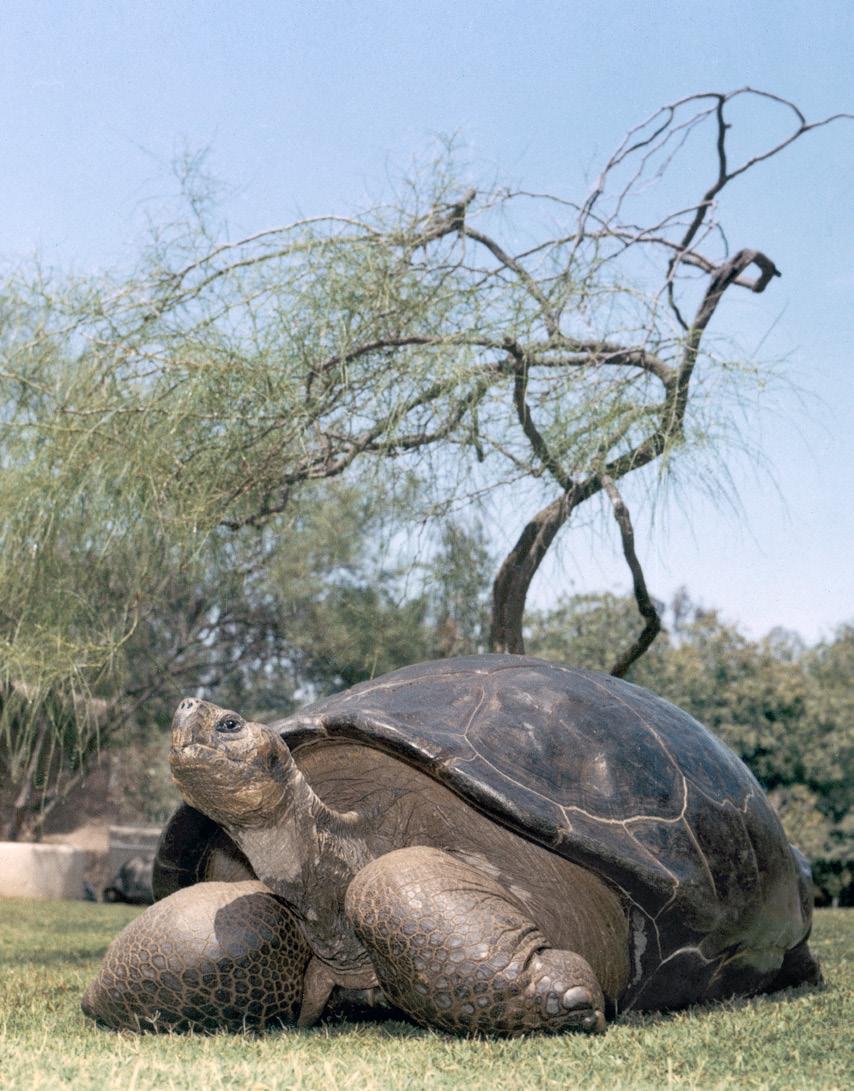
n June, the San Diego Zoo had to say farewell to a much-loved, iconic resident: Speed, the Galápagos tortoise, who had been a fixture at the Zoo for 82 years. Speed came to the Zoo in 1933, from an expedition to South America and the Galápagos Islands. The exhibition was part of an early collaborative effort to preserve this tortoise species, which was already threatened with extinction even then. He was a large adult when he arrived, weighing 475 pounds. “The Zoo staff didn’t have a way of knowing exactly how old he was when he arrived,” explained Jonathan Carlson, a reptile keeper at the Zoo. “But based on his size at the time, our best guess puts his hatching at about the time of Abraham Lincoln’s presidency.” The name he was given was facetious of course—being a giant tortoise, Speed was not speedy at all. He did, however, amble his way into San Diego Zoo history, living to be an estimated 150 years old!
After the Children’s Zoo opened in 1958, Speed lived there for many years, enchanting children and adults alike with his massive size and gentle nature. Speed continued to grow over the years; in fact, he liked his greens and veggies so much that at one point he weighed over 600 pounds. He had to go on a diet to reach a more tortoise-svelte 550 pounds. Like the rest of the herd, Speed was especially fond of foods that are red or orange, like tomatoes, watermelons, and pumpkins—in the wild, these colors indicate ripe fruit that the tortoises are attracted to.
Speed was a friendly fellow with those who took the time to get to know him. He loved having his neck stroked and lightly scratched by the keepers, and when they were in the exhibit working, he’d make his way over to say hello and see what they were up to. He was curious about anything new and made sure to give it a thorough inspection. The tortoises are given numbers for record-keeping purposes, and Speed wore the white (for male) number 5 on his shell, an indication of just how far back his history with the Zoo went. Since he was at the Zoo for so long, “Old Number 5” developed quite a fan club over the years, admired by staff and guests
alike. Many people made saying hello to him a regular part of their visits, and in some families, multiple generations got to know the Zoo’s famous centenarian.
As with humans, Speed’s advanced years brought geriatric conditions, including pronounced arthritis. Veterinarians and keepers worked together to care for him, using a variety of methods including medications, hydrotherapy, acupuncture, and physical therapy treatments. He was already a rather slow fellow, but in his later years he slowed down even more. “He got more sensitive to his surroundings,” said Jonathan. “If you walked by too quickly, he would pull into his shell.” Yet, when it came to the other tortoises in his herd, Speed maintained his dignified dominance to the end.
Speed saw the San Diego Zoo change and grow from its earliest days, and millions of people visited him over the course of his lengthy life. He impressed all who encountered him, the perfect ambassador to teach people about his species. And his legacy lives on: he was part of a breeding group that produced more than 90 offspring. He also lives on in the memories and photographs of so many people who fondly recall their experience of seeing this grand old tortoise. n
“ BASED ON HIS SIZE AT THE TIME, OUR BEST GUESS PUTS HIS HATCHING AT ABOUT THE TIME OF ABRAHAM LINCOLN’S PRESIDENCY.”
JONATHAN CARLSON, KEEPER
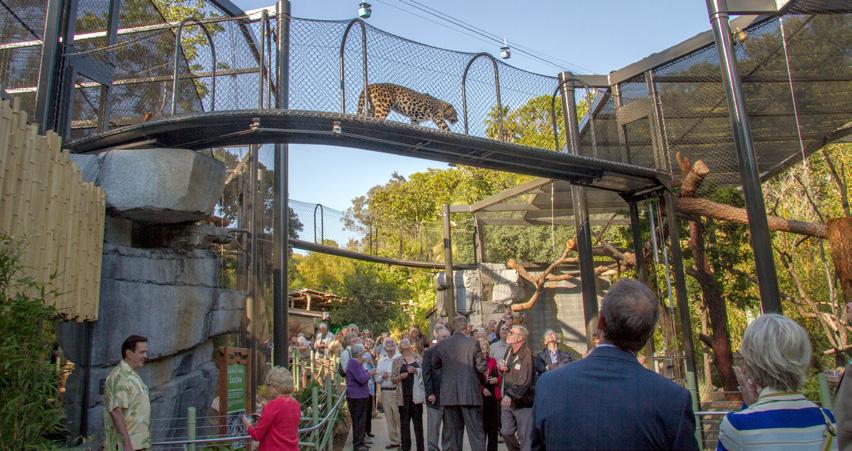
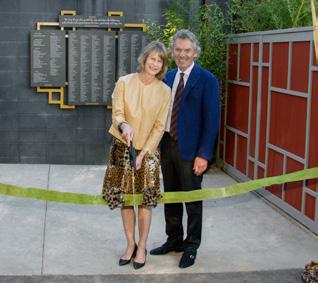
After the ribbon-cutting (opposite page, top), lead donors Maryanne and Irwin Pfister led the way into the Asian leopard habitat, followed by friends, keepers, curators, architects, other staff, and members of the board of trustees.
Where Leopards an d Donors Roam
By Mary Sekulovich SENIOR EDITOR, DEVELOPMENT DEPARTMENT
There is big cat excitement at the San Diego Zoo, as planning continues for the transformation of Dog & Cat Canyon into Conrad Prebys Africa Rocks. Building a spectacular exhibit complex naturally progresses in stages. Phase 1 came last year, when a great friend of the Zoo, an anonymous donor, made it possible for us to move mountain lions Koyama and Yakima to their wonderful new home near Skyfari West. When our Amur leopards and snow leopards needed new homes during Phase 2, their friends—some 1,600 donors—contributed more than $3 million to build the Asian leopard habitat that expanded The Barlin-Kahn Family Panda Trek. Made just for these big cats, the 16,500 square feet of multilevel living space includes rocks, slopes, trees, and two mesh walkways overhead— we call them catwalks—that connect four separate areas.
All this preparation paid off in June, when the big cats drew a crowd at three exhibit preview events for donors. Both Amur leopards were there, brothers Koshka and Primorye*, and one snow leopard, Anna, that was getting comfortable in
Georgeanne Irvine ASSOCIATE DIRECTOR, DEVELOPMENT DEPARTMENT
her new home before the other two snow leopards, Penny and Ramil, were introduced. Naturally, everyone’s eyes turned to the walkways 15 feet above the ground, hoping to catch a glimpse of one of the cats. No one was disappointed, since first one Amur and then the other crisscrossed the walkways that span up to 24 feet, traversed the logs, navigated the rocky slopes, and daintily picked up their beef bones.
Lead keeper Jacob Shanks, senior keeper Kelly Murphy, and senior keeper Todd Speis feel privileged to be part of the animal care team for these leopards. They appreciate all the ways the new habitat can encourage natural behaviors for the cats: climbing and foraging, crossing between exhibits to explore, and spotting other animals from high, rocky outcroppings. Introducing new scents and food treats at random times also adds enrichment to the leopards’ day. “The overhead passages are an exciting feature of this exhibit,” said Todd. “They allow the cats to get up high, which is a unique way for visitors to observe them, and that’s also a place that a leopard wants to
Photos by
be—up above, where it can see its whole territory.”
The attention to detail practiced by San Diego Zoo Global staff in building the best possible home for each species means a great deal to the exhibit’s lead donors, Maryanne and Irwin Pfister, as well as to major donors Catherine Stiefel and Keith Behner and Dan and Vi McKinney. As Maryanne said, “This is a wonderful example of how innovative the San Diego Zoo has become in creating new habitats that simulate natural environments for the benefit of the animals.” She also noted that “these enclosures were designed with a quality-of-life consideration for the leopards—a habitat created to provide opportunities for natural behaviors and movements.” Seeing the leopards interested and engaged in their new surroundings is just what they hoped to see, and why we thank our donors for their generosity.
When Leopards Are Too Beautiful
While these cat species are gorgeous and elegant, they are also disappearing quickly from their native range, because of habitat loss, poaching for their coats, and conflicts between the big cats and humans. Amur leopards are among the most critically endangered animals on Earth, with no more than 50 in the wild in southern Russia and northern China, plus about 300 living in zoos worldwide. Biologists estimate the wild snow leopard population at no more than 7,000 animals, scattered across rugged mountain ranges in 12 countries: from Afghanistan and Pakistan east to India, and from the Himalayas north into Kazakhstan, Russia, and Mongolia. The Zoo hopes to breed both leopard species to help increase the populations, so we’ve planned ahead: one of the four exhibit areas can become a nursery for a mother and her cubs, complete with a glass viewing area for visitors.
Of course, no one can predict when you might see one of the leopards strolling about its exhibit, although even on that opening day, they were relaxed and examined every corner of their new home. Even watching sleeping cats can be a treat: you might see the golden eyes open slowly and the incredibly long tail swing just a bit. It’s enough to bring you back for another glimpse of these beautiful cats. n
*Note from keeper Todd Speis: Sadly, Amur leopard Primorye was euthanized in early July after a brief illness caused by an aggressive and inoperable cancer. He will be missed, not just as an individual of an extremely rare species but also because he was a marvelous cat to work with.
You can help secure the future for wildlife!

Heritage Guild
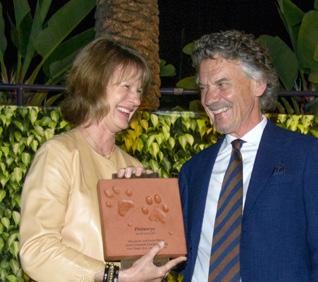
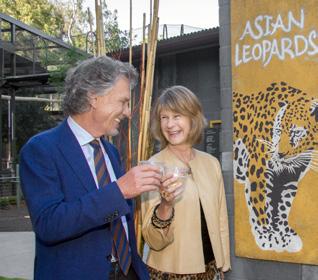
Celebrating the opening of the Asian Leopards exhibit came naturally to the Pfisters, who were delighted to see the big cats enjoying their new home.
E Still Walking with Giants
2015 CONSERVATION MEDALISTS:
IAIN DOUGLAS-HAMILTON, PH.D., AND MICHAEL CHASE, PH.D.
By Mary Sekulovich SENIOR EDITOR, DEVELOPMENT DEPARTMENT
lephants have larger-thanlife conservation issues, including habitat loss, human/elephant conflicts, and poaching. These are not new problems faced by today’s conservationists: the threat to African elephants from the illegal ivory trade was well under way in the 1970s, when Iain Douglas-Hamilton, Ph.D., began the groundbreaking behavior studies that he continues today with Save the Elephants. And now, 40 years later, Michael Chase, Ph.D., is fighting the same fight, from Botswana to Zimbabwe and beyond, through Elephants Without Borders. San Diego Zoo Global’s 2015 Conservation Medalists have spent much of their lives in Africa and know what it will take to win the fight to save Earth’s largest land mammal.
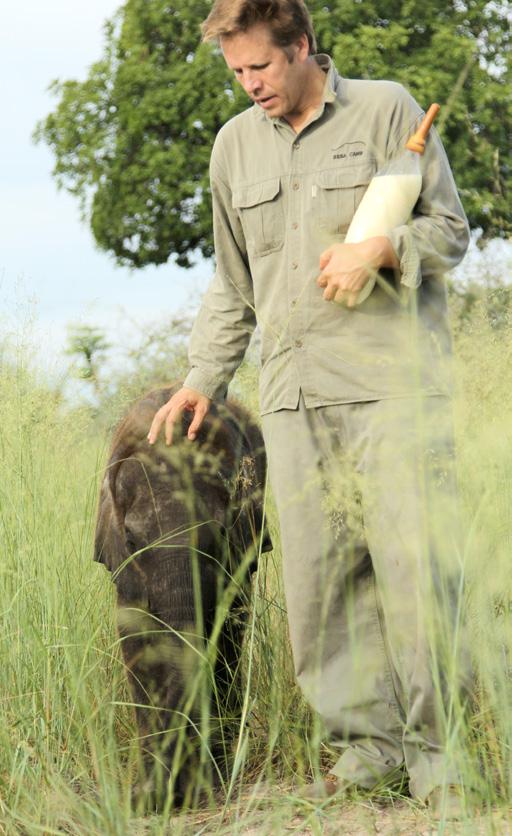
Elephant calf Naledi was orphaned at one month old. She pulled through her first few months with help from Dr. Chase and others at EWB’s Conservation Ecology Research Station.
PHOTO BY KATE BRADBURY, ELEPHANTS WITHOUT BORDERS
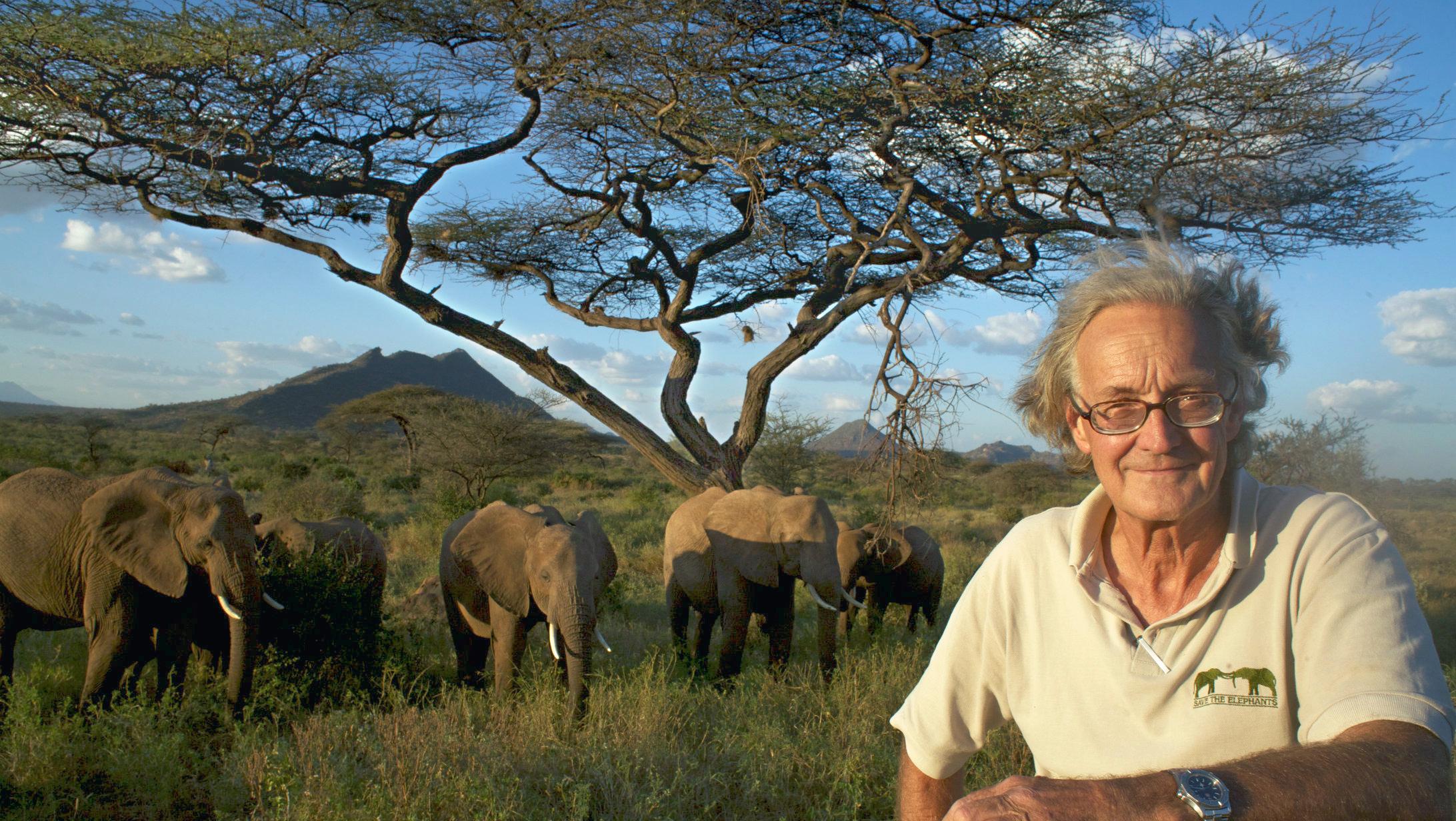
Lifetime Achievement Award
Iain
Douglas-Hamilton, Ph.D., Founder and CEO, Save the Elephants
For close to five decades, Dr. Iain Douglas-Hamilton has worked tirelessly to save African elephants. Beginning in the 1960s as a young college graduate, he led the way by establishing the first-ever detailed scientific study of elephant behavior in Tanzania. By introducing behavioral ecology to his project, elephant herd social structures, births, deaths, and migration routes were observed and recorded. This approach laid the foundation for today’s elephant conservation efforts. He also pioneered the use of GPS collars for tracking elephants, which is today’s standard monitoring technique.
In the 1970s, Douglas-Hamilton sounded the alarm about the ivory poaching crisis. His wide-reaching ivory trade study for the U.S. Fish and Wildlife Service in 1979 led to strict procedures for monitoring the ivory trade. His dramatic findings proved that Africa’s elephant population had plummeted by 50 percent in just 10 years, between 1979 and 1989. Ultimately, his research findings and persistent voice in raising the alarm led to the world ban on the ivory trade.
parks. Once again, Douglas-Hamilton found a solution: implementing a successful anti-poaching program that halted the decline in elephant populations.
Save the Elephants, a nonprofit founded by DouglasHamilton in northern Kenya in 1993, is dedicated to preserving elephant populations and their habitats while also promoting the species and educating the public about how tenuous life can be for elephants. Humans have depleted elephant herds over the past century—and now, only we can protect them from extinction.
Douglas-Hamilton continues to work on behalf of elephants as an advisor for conservation organizations and coordinator for elephant projects. Recently, he campaigned against efforts in Tanzania and Zambia to change the status of elephants from endangered to threatened, because these countries wanted to resume selling their ivory inventory. Clearly, Douglas-Hamilton’s life has been dedicated to saving elephants wherever they roam in Africa, whether through behavioral studies, working with governments and conservation agencies, or through community outreach programs.
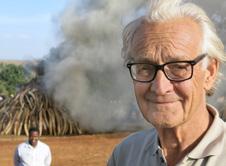
Because an idyllic scene with an elephant herd is often disrupted by poachers, Dr. DouglasHamilton hopes every country will uphold its ivory ban and burn its stockpiles.
Then in the early 1980s, his attention turned to Uganda, where elephants were close to extinction in national
It is heartening to learn that Douglas-Hamilton’s conservation efforts have not gone unnoticed worldwide. He has received the prestigious Indianapolis Prize for animal conservation, as well as honors from the Disney Wildlife Fund, the Royal Society, the Wildlife Documentary Film
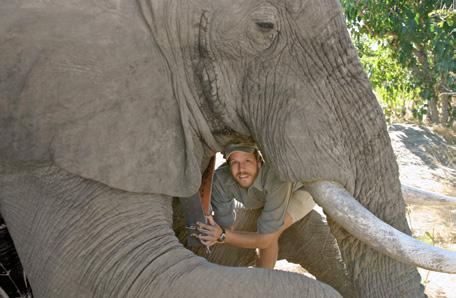
Festival of France, and many others. He was awarded the Order of the British Empire (1992) and has received numerous literary awards. No one has done more for elephant conservation for so long than Dr. Iain DouglasHamilton. Such lifetime dedication to save a species truly deserves San Diego Zoo Global’s 2015 Lifetime Achievement Award Conservation Medal.
Conservation-in-Action Award
Michael Chase, Ph.D., Founder, Elephants Without Borders
In the early 1970s, 1.3 million elephants roamed across Africa—but numbers have dropped to fewer than 500,000 today. This led San Diego Zoo Global to partner with Dr. Michael Chase, founder of Elephants Without Borders (EWB), from 2009 to 2014, when he was our Henderson Endowed Conservation Research Postdoctoral Fellow. He continues his work to save 220,000 elephants that live in southern Africa—comprising nearly half of the elephants left on the entire continent.
As one of the world’s top elephant ecologists, Chase has led the effort to conduct aerial surveys since 2001 that
provide the big picture, revealing where elephants travel. As Chase described it, “. . .we crisscross the skies over four African countries, cramped in a tiny single-engine plane, flying 100 meters above the ground. . . .” This conveys the dedication needed to conduct aerial surveys year after year. Through his fieldwork, Chase even discovered one of Africa’s longest elephant and zebra migration routes, leading the team to create safe wildlife corridors in collaboration with the Botswana government.
In 2011, Chase and the EWB team flew a survey over a 3-month period, spending 250 hours in the small plane and covering more than 25,000 miles—which is longer than the Earth’s circumference at the equator! In 2014, as the principal researcher of the Great Elephant Census, he expanded aerial surveys, leading and coordinating this massive initiative across 20 countries to provide precise estimates of elephant numbers.
Botswana, with its vast landscape, is home base for Chase, where his family has had a longstanding history for five generations. A childhood spent in the bush while accompanying his father on safaris sparked an early interest in and love of wildlife and wild places. That led to a college degree in conservation ecology, and then eight years with Conservation International in the Okavango Delta. This nurtured his keen interest in elephants, which led to studies of their behavior, ecology, and migration patterns.
Above:
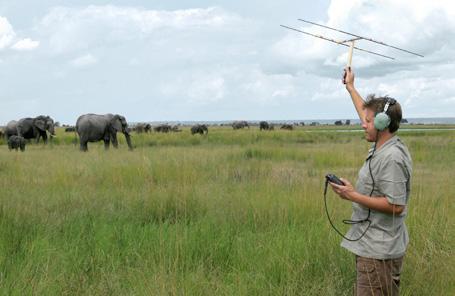
Dr. Chase spends most of his time in the field. EWB’s elephant monitoring program has been pivotal in ensuring conservation success in Botswana.
Below:
Dr. Chase secures a GPS tracking collar on the elephant named “Great Bull.”
Chase’s research began in 2001 on the banks of the Chobe River, where he first began to record extensive elephant movements, along with those of other mammal and bird species, across a huge transfrontier conservation area that includes parts of Botswana, Angola, Namibia, Zambia, and Zimbabwe. The study area varies each year, depending on the movements of elephants he has radio-collared, and covers 50,000 square miles. Chase also recognizes that elephants move across country borders, so it is essential to partner with governments that help protect elephants and also set up safe corridors, allowing the pachyderms to follow ancient migration routes to familiar waterholes. Botswana’s government acknowledges the success of such projects and believes that “the key to effective wildlife conservation and management is long-term, science-based research,” so Chase and his team were granted a research permit to study other large herbivores in the country.
Botswana’s Okavango Delta, where Chase continues his work from the Conservation Ecology Research Station, is a unique ecosystem with a thriving elephant population, as well as other spectacular wildlife that draws tourists and helps ecotourism thrive. The EWB team promotes the best conservation strategies, ensuring that Botswana’s treasured wildlife will survive. This makes Dr. Michael Chase a true wildlife conservation hero—one who exemplifies what it means to deserve San Diego Zoo Global’s 2015 Conservation-in-Action Award. n

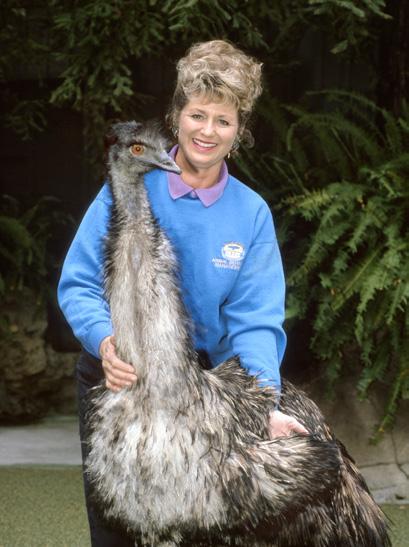
Daphne, Star of Zoo Grounds… and Hotel Elevators
Raised by trainers from a chick, Daphne was a stagestruck emu who became a TV personality and frequently photographed animal ambassador. Determining a young bird’s sex isn’t easy, and at first everyone thought this chick was a female—but as it turned out, Daphne was actually male! However, the name had already stuck, and being referred to as “she” made no difference to him.
Daphne’s trainers (including Kathy Marmack, seen here) took him for walks through the Zoo grounds, inviting surprised visitors to stand beside the six-foot-tall star for a picture. Patient Daphne stood stock still as excited families got into position and smiled with delight. Daphne is in more family photos than any other bird in Zoo history.
During his 34-year career, Daphne rubbed wings with many celebrities. A special crate was created to accommodate travels to Hollywood to appear on The Tonight Show, shows starring Dinah Shore and Merv Griffin, and local morning programs. One show’s producer arranged for Daphne and the bird’s entourage to spend the night before the show at the fancy Bonaventure Hotel in Los Angeles. The fine-feathered star rode the glass elevator to the room—sans crate—much to the astonishment and excitement of other hotel guests! n

SEPTEMBER–DECEMBER 2015 MEMBER SPECIALS
SEPTEMBER–DECEMBER 2015
$15 OFF ALL ANIMAL ADOPTIONS!
Visit our San Diego Zoo website to view giraffes, rhinos, polar bears, and many other animals—and give a gift of hope! Your adoption supports our worldwide conservation efforts. Digital adoptions start at $35; mailed adoptions— which include a plush animal— start at $100. Visit our website at sandiegozoo.org/adopt for a full list of our animal adoptions and check out our newest addition—giraffes!
Offer valid September 1–December 31, 2015.
To redeem online, enter Coupon Code ASZW0915 at checkout. No limit. Not valid at any on-grounds adoption booths.
SEPTEMBER 1–DECEMBER 25, 2015
$10 OFF PER PERSON ON A SUNRISE SURPRISE STROLL
Walk the grounds with experienced Zoo educators to discover updates on our animal collection and behind-the-scenes stories, all before the Zoo opens for the day!
Offer valid September 1–December 25, 2015.
(Except: Discount not available September 5–7 and November 27–28, 2015.)
Call 619-718-3000 and confirm space now. Offer valid only through advance phone reservations. Provide Promotion Code 225045 at time of reservation. Reservation is required and space is limited. Prices, hours, and schedules are subject to change without notice. Age restrictions apply. Zoo admission is not included. Not valid for prior reservations. Not valid in conjunction with any other offers, promotions, or discounts. Limit 4 per membership number. Other restrictions may apply.
SEPTEMBER 1–DECEMBER 25, 2015
$5 OFF PER PERSON ON A JUNGLE ROPES SAFARI
Climb, balance, and swing through the trees on the Safari Park’s Jungle Ropes Safari! Challenge yourself with this daring experience that offers three different courses.
Offer valid September 1–December 25, 2015.
(Except: Discount not available September 5–7 and November 27–28, 2015.)
Call 619-718-3000 and confirm space now. Offer valid only through advance phone reservations. Provide Promotion Code 225046 at time of reservation. Reservations are required and space is limited. Age and weight restrictions apply. Prices, hours, and schedules are subject to change without notice. Safari Park admission and parking are not included. Not valid for prior reservations. Not valid in conjunction with any other offers, promotion, or discounts. Limit 4 per membership number. Other restrictions may apply.
SEPTEMBER
1–DECEMBER 25, 2015
$10 OFF PER PERSON ON A CARAVAN SAFARI DELUXE
Travel in an open-air safari truck to field enclosures at the San Diego Zoo Safari Park. Get an up-close view of Asian and African birds and mammals, with an opportunity to feed giraffes!
Offer valid September 1–December 25, 2015.
(Except: Discount not available September 5–7 and November 27–28, 2015.)
Call 619-718-3000 and confirm space now. Offer valid only through advance phone reservations. Provide Promotion Code 225047 at time of reservation. Reservations are required and space is limited. Age restrictions apply. Prices, hours, and schedules are subject to change without notice. Safari Park admission and parking are not included. Not valid for prior reservations. Not valid in conjunction with any other offers, promotions or discounts. Limit 4 per membership number. Other restrictions may apply.
OCTOBER 2015
10% OFF
HOLIDAY ORNAMENTS
Includes our 2015 annual ornament!
Valid at main stores at the San Diego Zoo and Safari Park.
Offer valid October 1–31, 2015.
No limit while supplies last. Not valid with any other offer or discount. Show valid San Diego Zoo Global membership card at time of purchase.
NOVEMBER–DECEMBER 2015
HOLIDAY SAVINGS FOR MEMBERS
Members receive a 10% discount on any purchase!
Valid at all retail stores at the San Diego Zoo and San Diego Zoo Safari Park.
Offer valid November 1–December 31, 2015.
Excludes alcohol. No limit while supplies last. Not valid with any other offer or discount. Show valid San Diego Zoo Global membership card at time of purchase.
SEPTEMBER 26, 2015

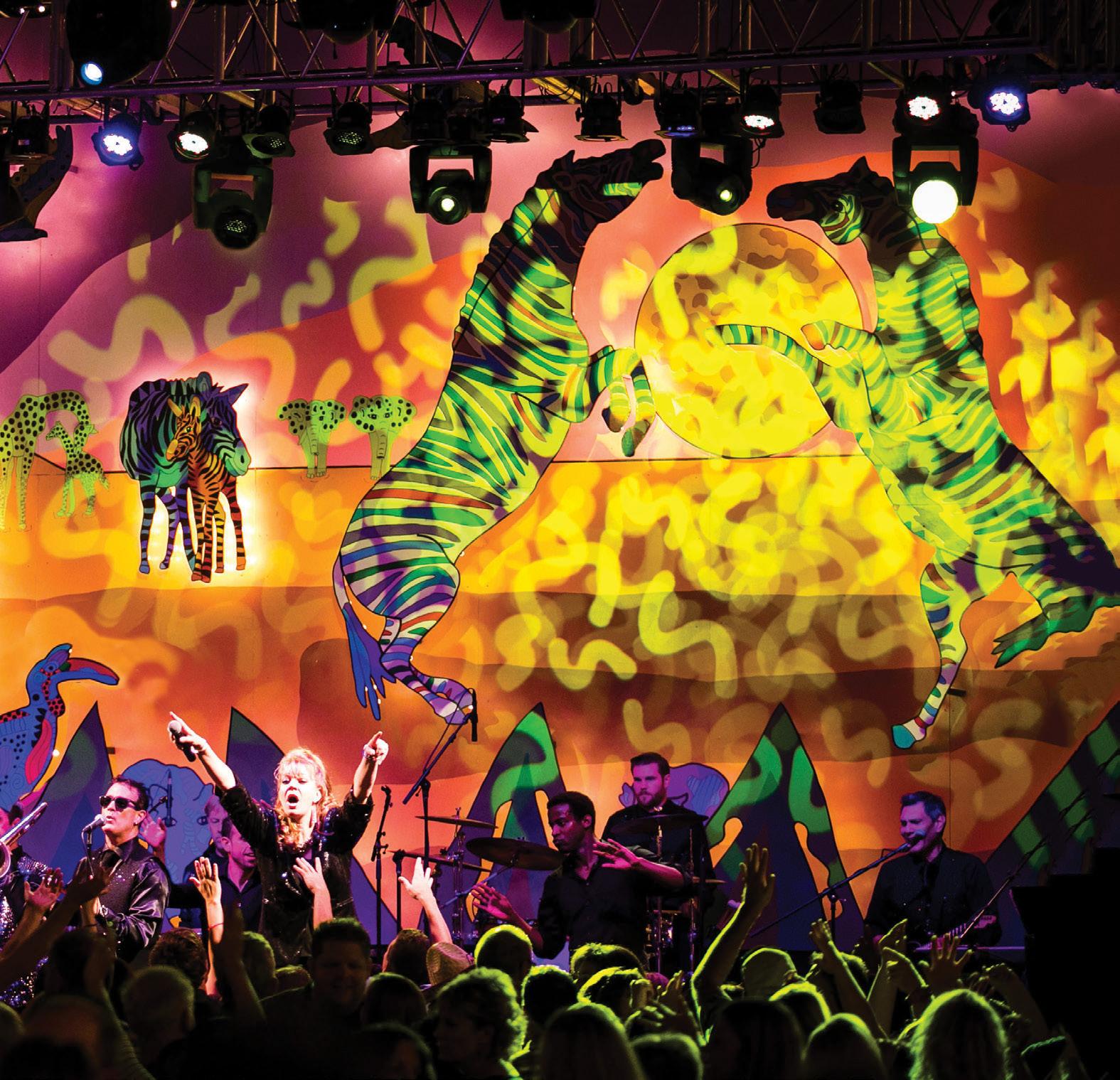

• Come early as a VIP and relax in our late-night VIP Lounge with a specialty cocktail!
• Taste the delicious flavors of more than 150 wineries, breweries, and restaurants.
• Enjoy live music from 8 different bands.
• Enter our Pick-Your-Prize Drawing and bid in our Silent Auction.
• Experience special animal encounters with Joan Embery and San Diego Zoo animal ambassadors.
• Adventure through the Glow Zone and soar high above the party aboard the Skyfari aerial tram! Proceeds benefit San Diego Zoo Global Wildlife Conservancy.