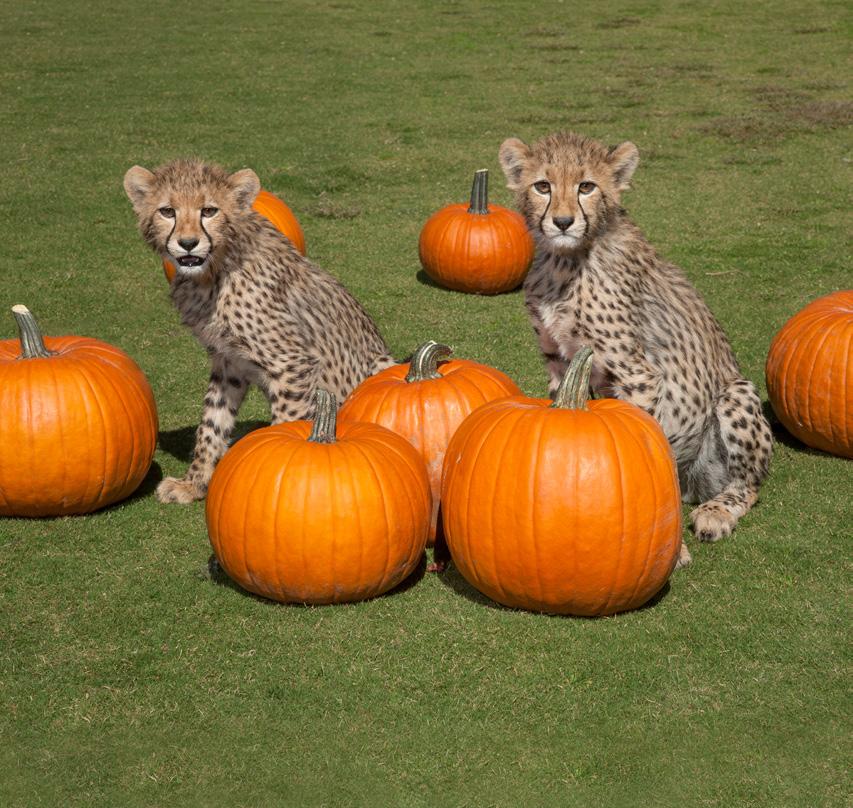


Join us for a wonderful evening of delicious food and a chance to meet some of our spectacular animal ambassadors—the ones admired for their skills at the top of the food chain! Discover more about them and savor a three-course gourmet dinner specially prepared by our Safari Park chefs.
Sunday, September 21, 2014
Hunte Nairobi Pavilion
Reception with no-host bar at 5:30 p.m. Dinner at 6 p.m.
Animal ambassador presentations throughout the evening.
$69.95 per person for members, $82.95 for nonmembers; tax, gratuity, and parking not included. Guests will be seated at tables of 8.
Get ready to celebrate fall—Bavarian style! Enjoy a variety of German beers and tasty German food specialties at our bountiful buffet, and clap along to rousing live music. Bring your family and friends for a night of good cheer, and raise a glass to autumn—Prost!
Sunday, October 19, 2014
Hunte Nairobi Pavilion
No-host bar and live music begin at 5:30 p.m. Dinner at 5:30 p.m.
Members: $45.95 per person for adults, $19.95 for children ages 3 through 11. Nonmembers: $58.95 for adults, $32.95 for children. One beer per adult is included in the dinner price. Tax, gratuity, and parking not included. Guests will be seated at tables of 8.
Please call 619-718-3000 for reservations. Visit sdzsafaripark.org/planyourtrip/dining for information and the complete menus.

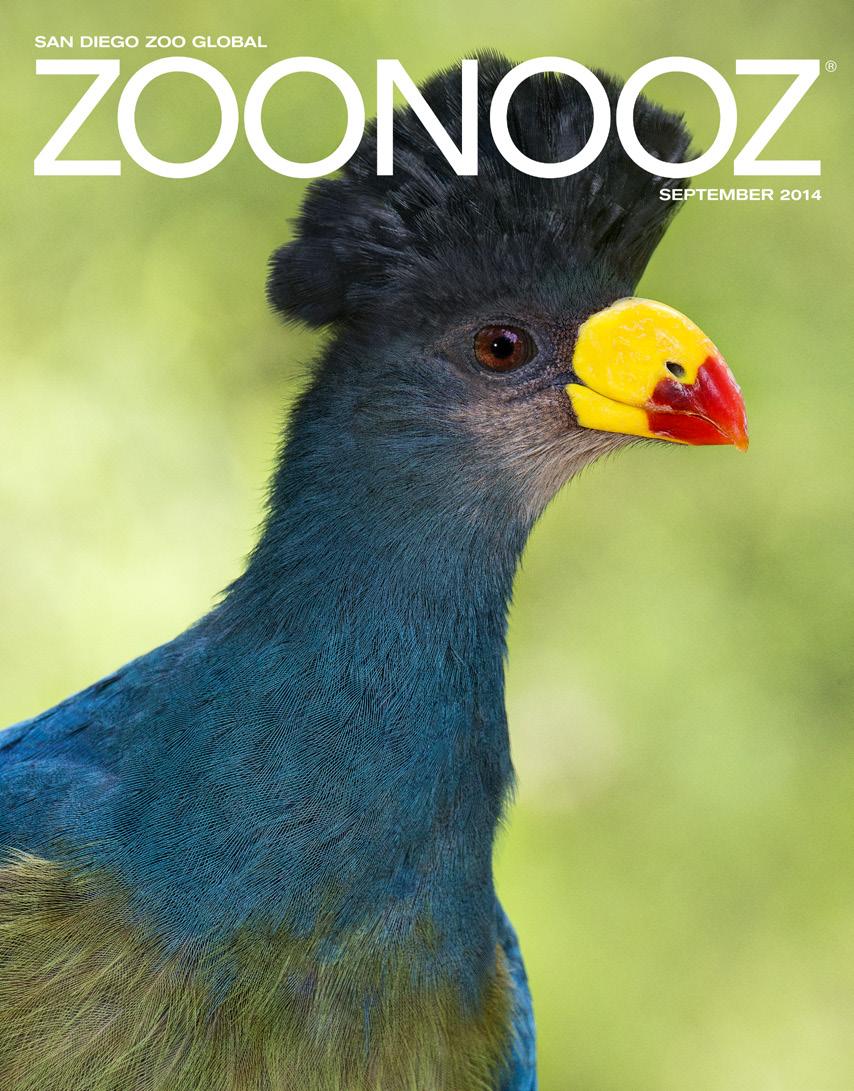
8 Turacos: See Their True Colors
Discover what these forest-dwelling birds have that others do not.
WENDY PERKINS
18 How to Hatch a Dragon
No damsels in distress here, just the heroic tale of unravelling the mystery of dragon-headed katydids.
CHANG
Friendship Claws: The Safari Park’s Newest Animal Ambassador Pair
These two young animal ambassadors in training are becoming quite the sensation!
A number of carefully curated plant collections add to the lush landscape of the San Diego Zoo.
16 Community-based Conservation of the Mexican Vaquita
An elusive porpoise in the Gulf of California garners much-needed help from the local community.
20 Charles Bieler: A Remarkable Director for Changing Times


e have one of our big events taking place this month: the San Diego Zoo Food & Wine Celebration presented by Cymer, on September 27 (note the change in date from what was originally published in the ZOONOOZ calendar). Longtime members may remember it as Celebration for the Critters, and it continues to be a wonderful party at the Zoo that helps us raise funds for new exhibits and projects. is year’s celebration will bene t the San Diego Zoo Global Wildlife Conservancy, which supports our conservation e orts locally and globally. ere will be more than 150 food and beverage vendors, several stages with live music, our Critter Casino, a silent auction with great items to bid on, and, of course, animal presentations, including one by Joan Embery. Visit sandiegozoo. org/zoo/celebration for all the details.
In bene ting our Wildlife Conservancy, this year’s Food & Wine Celebration will support projects to help many endangered species, all in keeping with our new vision to lead the ght against extinction. As you saw in the July issue of ZOONOOZ, our 2014 Reasons for Hope demonstrate what can be accomplished if we all pull together, especially with your support.
• Mountain yellow-legged frogs are recovering a er wild res, and Zoo-raised frogs are breeding in the wild.
• e population of giant pandas has increased, with 300 in zoos and breeding centers that can sustain genetic diversity for the species.
• Seeds from the endangered Tecate cypress have been preserved at our Seed Bank, a contingency against losing this species to wild res or disease in the future.
• Healthy populations of Tasmanian devils are being established to protect them from facial tumor disease.
• More than 50 California condors now join the population every year, and 12 to 15 chicks now hatch in the wild annually.
• Paci c pocket mice are reproducing, and the youngsters will eventually be released to their native Southern California habitat.
• More than 175 Anegada iguanas have been released on their island home, nearly doubling the population.
• Community groups have been established in Cameroon’s Ebo forest and are actively working to monitor and protect the rare Ebo gorillas.
• e critically endangered mangrove nch has bred for the rst time in managed care, and the chicks are being acclimated for release.
• e total population of alala has increased from 22 birds to 108, thanks to a breeding program at our Keauhou and Maui bird conservation centers. ese are only some of the conservation projects we are involved in around the globe. To discover more about our conservation work and what your support makes possible, I encourage you to visit our newly redesigned Wildlife Conservancy website at sandiegozooglobal.org. I also hope you’ll consider joining the cause as a Wildlife Hero. A er all, it’s you who can truly make a di erence for the animals. ank you!

Rick Gulley Chairman
OFFICERS
Richard B. Gulley, Chairman
William H. May, Vice Chairman
Sandra A. Brue, Secretary
Robert B. Horsman, Treasurer
BOARD OF TRUSTEES
M. Javade Chaudhri
Berit N. Durler
Clifford W. Hague
Nan C. Katona
Patricia L. Roscoe
Steven G. Tappan
Judith A. Wheatley
TRUSTEES EMERITI
Frank C. Alexander
Kurt Benirschke, M.D.
Thompson Fetter
Bill L. Fox
Frederick A. Frye, M.D.
George L. Gildred
Yvonne W. Larsen
John M. Thornton
Albert Eugene Trepte
Betty Jo F. Williams
James Lauth, General Counsel
Douglas G. Myers, President/CEO
Charles L. Bieler, Executive Director Emeritus
OFFICERS
Murray H. Hutchison, Chair
Maryanne C. Pfister, Vice Chair
Susan N. McClellan Secretary
Richard M. Hills, Treasurer
Mark A. Stuart, President
Richard B. Gulley, Ex officio
Douglas G. Myers, Ex officio
BOARD OF DIRECTORS
Christine L. Andrews
Joye D. Blount
Rick Bregman
Lisa S. Casey
Douglas Dawson
Berit N. Durler, Ex officio
U. Bertram Ellis, Jr.
Arthur E. Engel
Craig L. Grosvenor
Judith C. Harris
Michael E. Kassan
Susan B. Major
Michael D. McKinnon
George A. Ramirez
Thomas Tull
Margie Warner
Ed Wilson
FEATURING

Remember…
”Always Love Your Mother.”

SATURDAY, SEPTEMBER 13, 2014
6 p.m.: Reception with animal ambassadors in the Treetops Banquet Room
6:45 p.m.: Dinner in Albert’s Restaurant
Join Head Brewer Chris Baker and Chief Branding Officer
Kevin Hopkins from Mother Earth Brew Co. as they introduce handcrafted artisan ales, paired with a menu by San Diego Zoo Executive Chef Chris Mirguet and Albert’s Chef Charles Boukas.
$69 per person for members, plus tax and gratuity; $82 per person for nonmembers, plus tax and gratuity.
Guests will be seated at tables of eight. Must be at least 21 years of age to attend.
Make your reservations online today, or call 619-718-3000.
SATURDAY, OCTOBER 4, 2014
6 p.m.: Reception with animal ambassadors in the Treetops Banquet Room
Complimentary German-style appetizers and Oktoberfest beer will be served.
6:45 p.m.: Dinner in Albert’s Restaurant
Dine Munich-style and enjoy a four-course fall feast designed by San Diego Zoo Executive Chef Chris Mirguet and Albert’s Chef Charles Boukas, complemented by your choice of no-host beverages.
$49 per person for members, plus tax and gratuity; $62 per person for nonmembers, plus tax and gratuity.
Guests will be seated at tables of eight. Dinner will be served family style. Must be at least 21 years of age to attend. Make your reservations online today, or call 619-718-3000.

PUBLISHED SINCE 1926
SEPTEMBER 2014
VOL. LXXXVII NO. 9
MANAGING EDITOR
KAREN E. WORLEY
ASSOCIATE EDITORS
PEGGY SCOTT
DEBBIE ANDREEN
STAFF WRITERS
WENDY PERKINS
KARYL CARMIGNANI
SAN DIEGO ZOO GLOBAL
PHOTOGRAPHER
KEN BOHN
DIGITAL IMAGING TECHNICIAN
TAMMY SPRATT
DESIGN AND PRODUCTION
DAMIEN LASATER • CHRIS MARTIN
HEIDI SCHMID ROMERO • LISA BISSI
JENNIFER MACEWEN
PREPRESS AND PRINTING
BROWN PRINTING COMPANY
e Zoological Society of San Diego was founded in October 1916 by Harry M. Wegeforth, MD, as a private, nonprofit corporation that currently does business as San Diego Zoo Global.
e printed, hard-copy version of ZOONOOZ (ISSN 00445282) is currently published bimonthly (Nos. 1, 3, 5, 7, 9, and 11 of each year’s volume; the even-numbered issues of each volume are available in digital format only). Publisher is San Diego Zoo Global, at 2920 Zoo Drive, San Diego, CA 92103, 619-231-1515. Periodicals postage paid at San Diego, California, USA, and at additional mailing offices.
POSTMASTER: Send address changes to Membership Department, P.O. Box 120271, San Diego, CA 92112.
Copyright 2014 San Diego Zoo Global. All rights reserved. “ZOONOOZ” Reg. U.S. Pat. Office. All column and program titles are trademarks of San Diego Zoo Global.
Annual Memberships: Dual $119, new; $104, renewal. Single $98, new; $86, renewal. Each membership includes unlimited entrance to the San Diego Zoo and the San Diego Zoo Safari Park.
Subscription to printed issues of ZOONOOZ $25 per year, $65 for 3 years. Foreign, including Canada and Mexico, $30 per year, $81 for 3 years. Contact Membership Department, P.O. Box 120271, San Diego, CA 92112.
As part of San Diego Zoo Global’s commitment to conservation, ZOONOOZ is printed on recycled paper that is 30% post-consumer waste, chlorine free, and is Forest Stewardship Council (FSC ) certified.
FSC® is not responsible for any calculations on saving resources by choosing this paper.
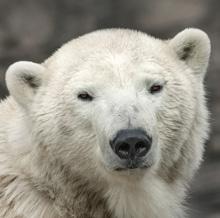
September means it’s time to savor the last few days of summer, and then it’s back to school as we head into fall. At the Zoo and the Safari Park, it also means it’s time for beautiful days and opportunities for leisurely strolls to visit your favorite animals, now that the bustle of summertime vacations is drawing to a close. Take your time enjoying the Conrad Prebys Polar Bear Plunge and the Harry and Grace Steele Elephant Odyssey at the Zoo, and try a new safari experience at the Safari Park. If you haven’t had a chance to see the Tull Family Tiger Trail yet, this would be a great time to discover it. September also brings our annual San Diego Zoo Food & Wine Celebration presented by Cymer, which takes place this year on Saturday, September 27, 2014 (note that the date has changed from what was originally published in the 2014 ZOONOOZ calendar). San Diego’s great restaurants, breweries, and wineries will be there to present delicious treats, and there will be entertainment, a fun auction, and, of course, lots of animals—and it all benefits the San Diego Zoo Global Wildlife Conservancy. en, come October, we’ll be leaping into Kids Free presented by Mission Fed, when kids 11 years old and younger get into the Zoo and Safari Park free all month long. We have lots to look forward to this fall!
Douglas G. Myers President/CEO
SAN DIEGO ZOO HOURS
September 1: 9 a.m. to 9 p.m.
September 2–26: 9 a.m. to 6 p.m.
September 27: 9 a.m. to 5 p.m.
September 28–30: 9 a.m. to 6 p.m.
October 1–31: 9 a.m. to 6 p.m. -
SAN DIEGO ZOO SAFARI PARK HOURS
September 1: 9 a.m. to 6 p.m.
September 2–30: 9 a.m. to 5 p.m.
October 1–31: 9 a.m. to 5 p.m.
WEBSITE sandiegozoo.org
SAN DIEGO ZOO PHONE 619-231-1515
ZOONOOZ® sandiegozoo.org/zoonooz
1 Nighttime Zoo ends, Zoo 6, 20, 27 Safari Sampler Roar & Snore, Park
7 Orchid Odyssey, Zoo
13 Albert’s Fall Brewmaster Dinner, Zoo
13 Critter Connections Roar & Snore (for adults), Park
19 Plant Day and Orchid Odyssey, Zoo 19, 20, 26, 27 KinderNights program, Zoo 20, 27 KinderTots program, Zoo
21 Prowl with the Predators Dinner, Park
27 San Diego Zoo Food & Wine Celebration presented by Cymer, Zoo
1 Kids Free presented by Mission Fed begins, Zoo and Park
4 Albert’s Oktoberfest Dinner, Zoo
11 Oktoberfest Roar & Snore, Park
17 Plant Day and Orchid Odyssey, Zoo 17, 18, 24, 25 KinderNights program, Zoo 18, 25 KinderTots program, Zoo
19 Oktoberfest Dinner, Park
25 Creepy Camp Roar & Snore (for families), Park
31 Creepy Camp Roar & Snore (for adults), Park
31 Kids Free presented by Mission Fed ends, Zoo and Park
said it

Best. Zoo. Ever. We had a terrific day! anks @RainbowSociety #gratitude
@LisaKadane
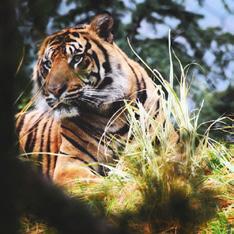

e Tull Family Tiger Trail is officially open to the public! e new exhibit is such an amazing addition to the Park. e enclosures are beautiful. It is easier access to other areas [like Condor Ridge] that typically have less foot traffic. Most importantly, these beautiful Sumatran tigers seem to really enjoy the comfort and expanse of their new homes! #tigertrail #tigerpower
@mckenzie_bell

Tiger Trail is amazing! I enjoyed the keeper talk at 11:45AM, and appreciated the tips from the wonderful volunteers on how to identify who’s who. Special kudos to Jolynn (I believe that was her name) for keeping the windows clean, in spite of the waves of kids (and adults) with grubby hands that kept coming through the exhibit.
Lil
Following @sandiegozoo on Instagram is one of my best life decisions thus far! #animalsarecool
@IAmJay_Walking
Very sunny today. [Gorilla] Imani is using a palm leaf to shade herself and her baby on the hammock. Very intelligent girl.
Florence Vivers
I am astounded at how beautiful the new Tiger Trail @sdzsafaripark is. Well done!
@zuz71
e #cheetahrun at @sdzsafaripark is one of the most incredible wildlife exhibits I’ve ever seen. Check it out at your next visit!
@BelleWoodsDC
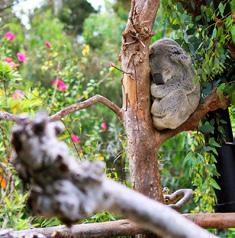
e Gonzales clan loved the koalas.
@sandiegozoo. @samandkit
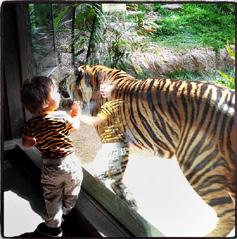
You can get UP CLOSE and personal with the tigers inside the Tiger Trail at the @sdzsafaripark. @desireeeaglin
I love this new [Tiger] cam! While I know it will not be easy spotting them in all of the brush and trees, I figure this is just part of the experience. ey hide for a purpose and we get to enjoy the game of finding them.
I have been wondering if we could get a big cat cam for a while and it really made my day to see this one so thank you San Diego Zoo [Safari Park] for putting it on! I look forward to the daily activities of the beautiful Tigers.
Swayze
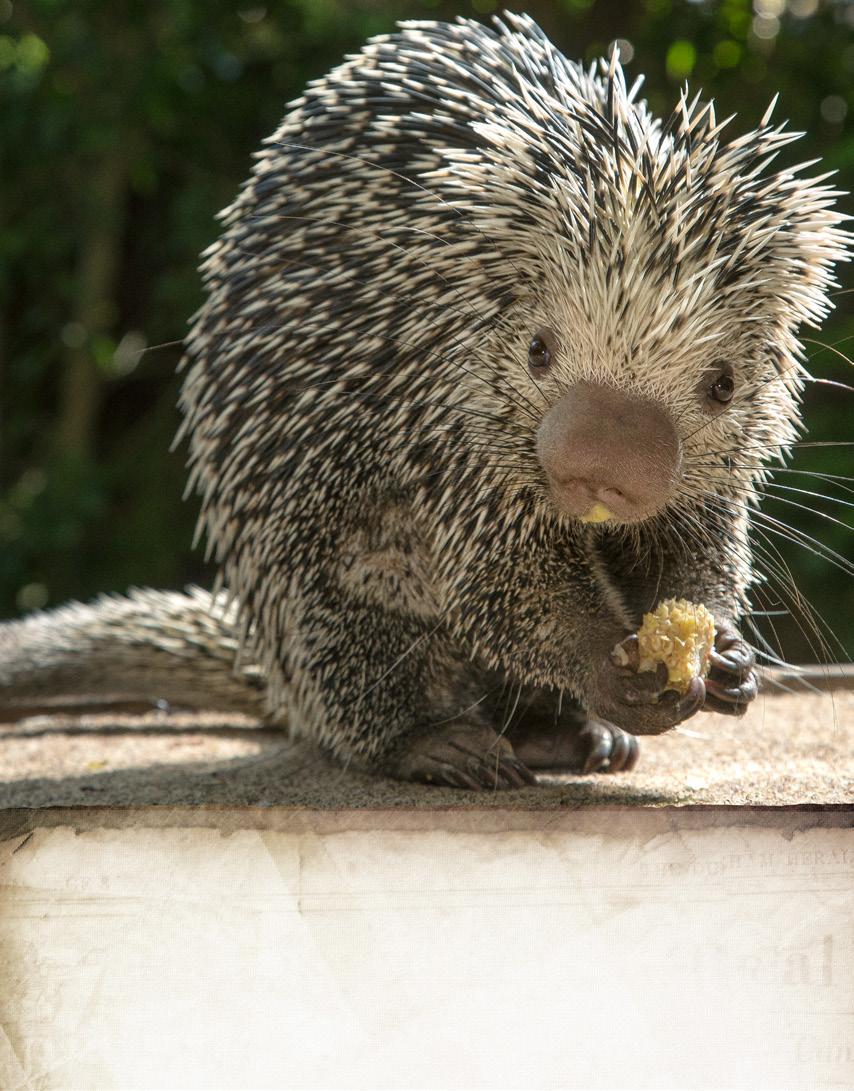
Have you ever wished you could take better animal and nature photos? If so, we can help! Our photography classes at the Zoo are designed to build your confidence and improve your photographic techniques as you learn from our experts. Classes are available for three levels: beginning, in September; intermediate, in October; and advanced, in November. Each two-part course is taught by our expert instructors, who have more than 25 years of experience in wildlife photography and great enthusiasm for sharing their knowledge. You’ll be photographing our amazing Zoo animals, and keepers will assist in getting some memorable images. Before you know it, you’ll be taking photos you never thought possible!
By Wendy Perkins STAFF WRITER
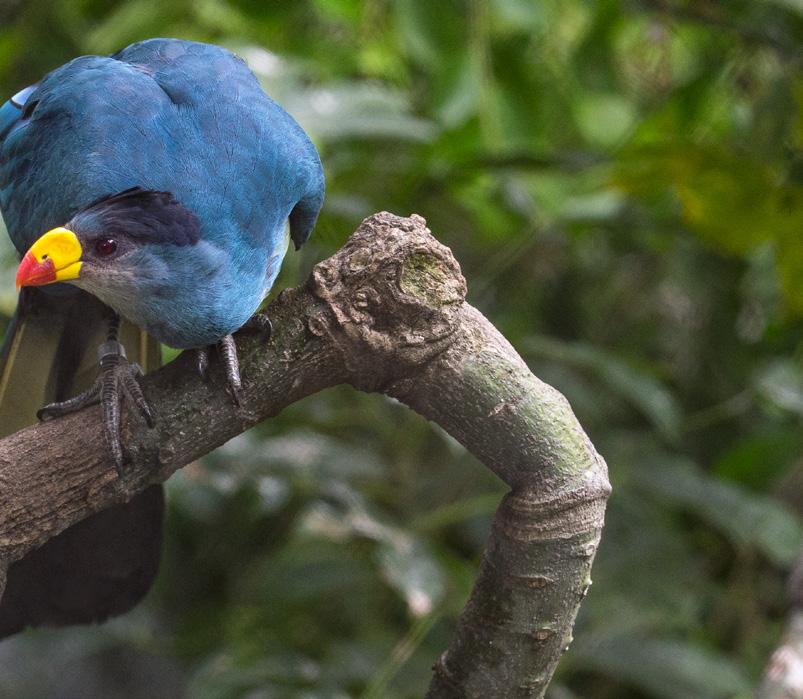
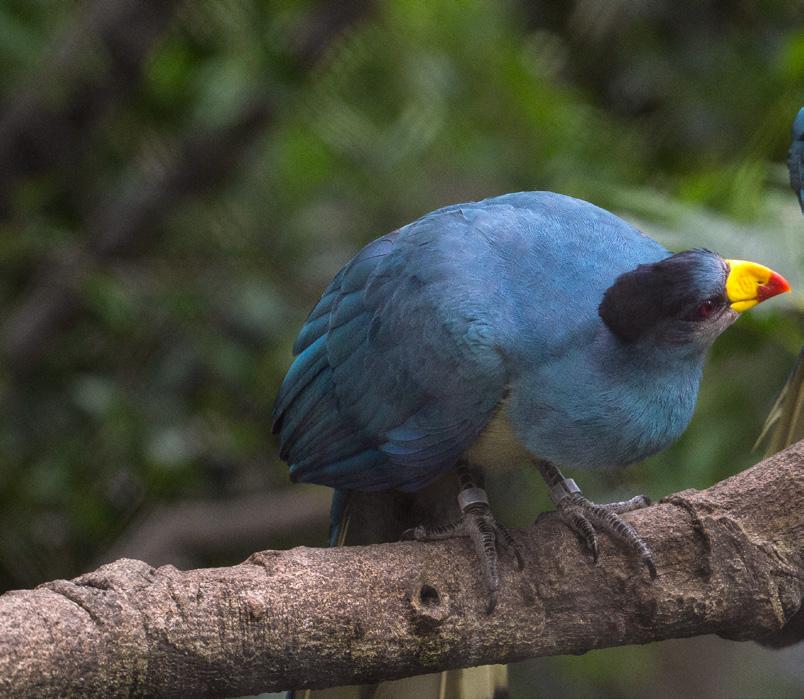
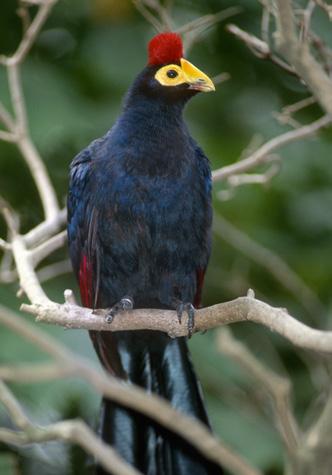
Turacos are remarkable birds; one of their toes can swivel forward or backward, and some of their feathers are colored by pigments found in no other creature in the Animal Kingdom.
ere are about 28 turaco species in the Family Musophagidae, all native to equatorial Africa. Seeing one of these handsome birds in its native forest or woodland habitat takes patience, persistence, and a pretty good set of binoculars. Turacos spend almost all their time in the tree canopy, where their blue, green, or gray hues (depending on the species) keep them camou aged as they forage for fruit, leaves, and ower buds. e blue and gray colors are the result of light refracting from structures within the feathers. In other birds, green and red are also the result of refraction or melanin—only in the turacos are red and green feathers due to actual pigments.
Turacin, which gives turacos red feathers, and turacoverdin, which creates green, are copper-based pigments found only in tu-
racos. e birds get these crucial ingredients from their food. Other birds may eat the same types of fruit, but they excrete the color-causing element while a turaco’s body concentrates it in speci c feathers. It can take up to a year for a turaco to take in enough pigments for its feathers to reach their full color. ere is an old, o en-repeated misconception that a turaco caught in heavy rain will lose its brightred coloring because the turacin is washed out of the plumage—but that simply doesn’t happen.
Watch a turaco at the San Diego Zoo or the Safari Park (see sidebar on next page) and notice how o en it uses its wings—or doesn’t. With short, rounded wings, turacos are poor iers but agile in the
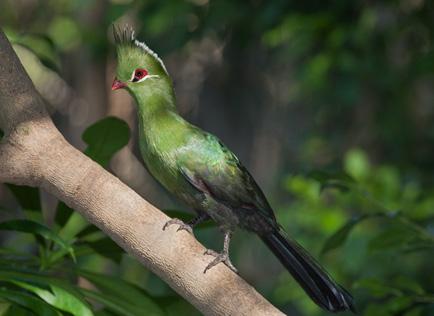
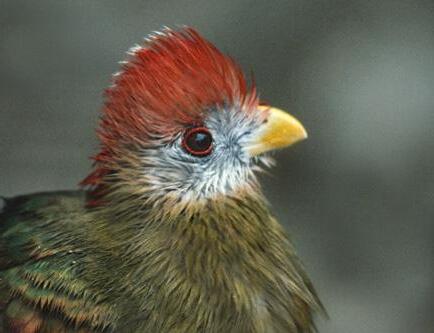
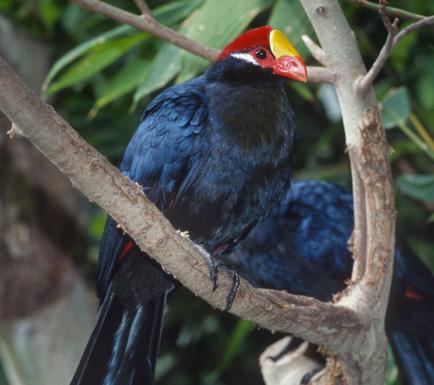
Look for these handsome birds on your next visit to the San Diego Zoo and the Safari Park.
Great blue turaco Corythaeola cristata: The largest type of turaco, measuring about 29 inches long, this species is also the most widespread.
At the Zoo: Scripps Aviary
At the Park: between Lorikeet Landing and Lemur Walk
Violet turaco Musophaga violacea: Although it has an eyecatching head, this is the only turaco species that doesn’t sport a feathered crest.
At the Zoo: Scripps Aviary
Livingstone’s turaco Tauraco livingstonii: An all-green body and helmet-shaped crest distinguish this species from the other turacos in our collection.
At the Park: Frequent Flyers bird show
Ross’s turaco Musophaga rossae: Measuring about 21 inches long, this species is the second-largest in the turaco group.
At the Park: Hidden Jungle
Red-crested turaco Tauraco erythrolophus: When excited, this bird may raise its crest to a height of two inches. This crimson-capped bird is the national bird of Angola, where most of the population is found.
At the Park: Hidden Jungle
trees. ey mostly run along tree branches, using their long tail to stay balanced, and hop between high and low branches. To move to a more distant tree, a turaco switches to “ ap- ap-glide” ying mode.
In addition to that long tail, the turaco has another unique adaptation afoot—literally! Like many birds, a turaco has four toes on each foot: three forward-facing and one rear-facing. e outermost front toe can be rotated to the rear to give the bird a more secure grip on a branch. is extra anchoring ability allows a turaco to access food in a variety of ways—even while hanging upside down!
When it comes to breeding, turacos are monogamous and dedicated parents. Courtship involves much calling and chasing, as well as bowing and wing-spreading by the male and, eventually, mutual feeding. Once the mates have found and accepted one
another, they begin making preparations for starting a family. Together, the pair builds a at nest of loosely arranged twigs. e female lays one to two spherical eggs that are grayish-white to bluish-green in color, depending on the species.
Although their parents provide food and protection for some months a er hatching, turaco chicks become quite active at about two to three weeks old. Even though they can’t y yet, the bold youngsters o en clamber out of the nest and exercise their legs as they explore surrounding branches. By the time a chick makes its rst ight at about four to ve weeks old, its leg muscles are strong, and it has learned to use its tail for balance—both just as important to a turaco as ying.
Young turacos may remain with their parents even a er they are able to feed themselves. ey act as helpers, bringing food to the nest for subsequent siblings. ey also aid in protecting the parents’ territory, consisting of a core area where the birds feed and roost and a peripheral area that seems to serve as a bu er zone. Of course, in addition to trying to keep others out of their own territory, the turacos also make attempts to surreptitiously slip in to feed in another group’s area. Between trying to raid other territories and protecting their own—all while gathering enough food—turacos are busy birds!

By Peggy Scott ASSOCIATE EDITOR
Photos by Ken Bohn SDZG PHOTOGRAPHER
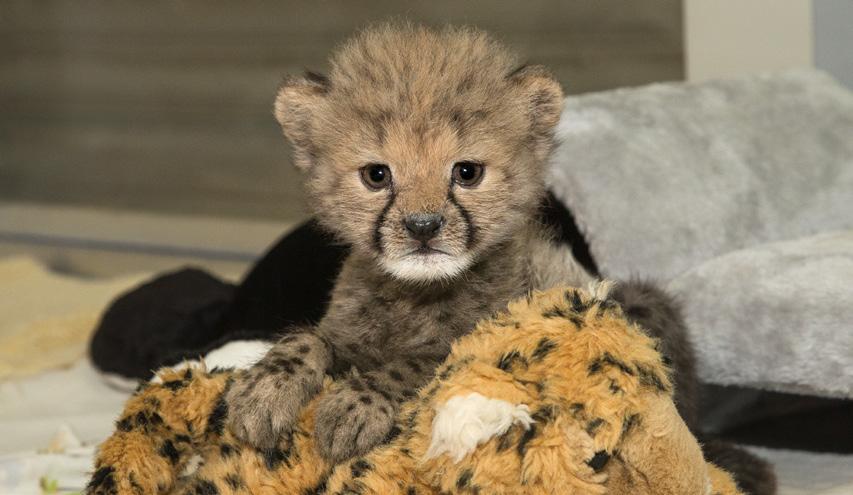
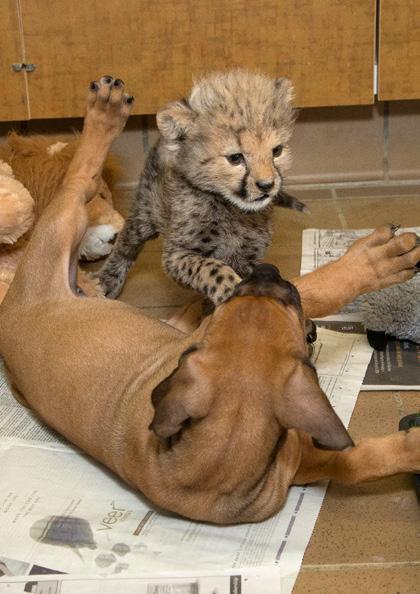
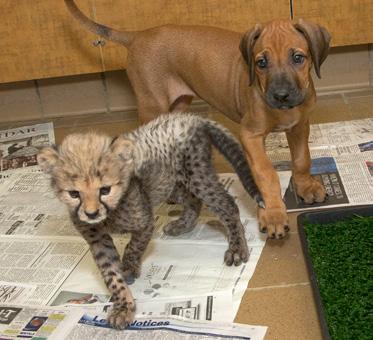
Raina can “spot” a friend a mile away, and when this Rhodesian ridgeback puppy met her new animal ambassador partner, a male cheetah cub named Ruuxa, it was love at rst (play) bite! Introduced when they were just weeks old, the 5-pound puppy and 2.2-pound cheetah bonded immediately, alternating between rousing—albeit slightly wobbly—romp sessions and naptime cuddle-fests. e precious pair’s relationship was o to a good and, just as important, early start, notes Susie Ekard, animal training manager at the Safari Park. “We put them together as soon as was safely possible,” Susie says. “Ruuxa was a singleton cub, and mother cheetahs usually reject singles, which was exactly the case this time. Singletons are hand raised, so we thought he would be a good ambassador candidate. And since singletons aren’t as socially adept, we wanted to pair him with a dog friend as young as we could.”
While the idea of pairing a cheetah with a dog may seem odd, both animals have innate characteristics that make the relationship work. “Cheetahs, by nature, are shy and wary cats,” Susie explains.

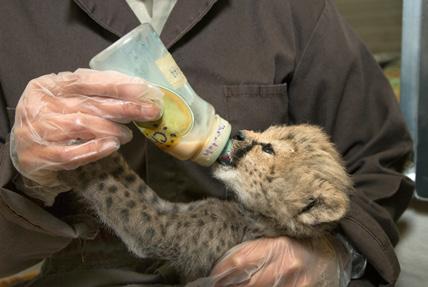
Opposite page: As a singleton cub, Ruuxa was being handraised, but he soon had a playmate and buddy, a Rhodesian ridgeback puppy named Raina.
Above, clockwise: No wonder Ruuxa took to Raina—who could resist that face? Because they were both young, Ruuxa and Raina’s play visits were supervised at first. Ruuxa has been growing by leaps and bounds on his cheetah cub formula and lots of TLC.
“And dogs, which have been domesticated for thousands of years, are more con dent and relaxed in most situations. If a cheetah sees his or her dog being calm, the cheetah can feel comfortable reacting the same way.”
In the early stages, the most important part of the cheetah/ dog pairing is the bonding. “We watch them carefully to make sure they’re ‘clicking,’” says Denise Carson, a senior keeper at the Park’s Animal Care Center, where Ruuxa and Raina rst lived together. “We see how their personalities develop and how they play together. en we start training a er that.”
While animal ambassador training can look like it’s all fun and games, Shannon notes that the methods are geared to encourage and nurture natural behaviors. e whole process has an important purpose: animal ambassadors at the Park and the Zoo are goodwill representatives for their wild brethren. “We want people to care about animals and their habitats,” she says. “And it’s so much more relatable when there is this beautiful animal in front of you to tell the story.”
Ruuxa and Raina will eventually take part in animal presentations at the Park, as well as make public appearances at special events and on TV. Connecting people with wildlife may seem like a big job for a little cat, but Ruuxa gets more than a little help from his friends when it comes to shouldering the responsibility. Raina, the ravishing Rhodesian ridgeback, always has his back! Even the pair’s names are strong indicators of their bond: Ruuxa means spirit, and the charismatic cub has plenty. And the meaning of Raina’s moniker? Guardian. And she’s already on duty!
Want to see video of Ruuxa and Raina playing? Of course you do! Download the digital version of ZOONOOZ and enjoy!
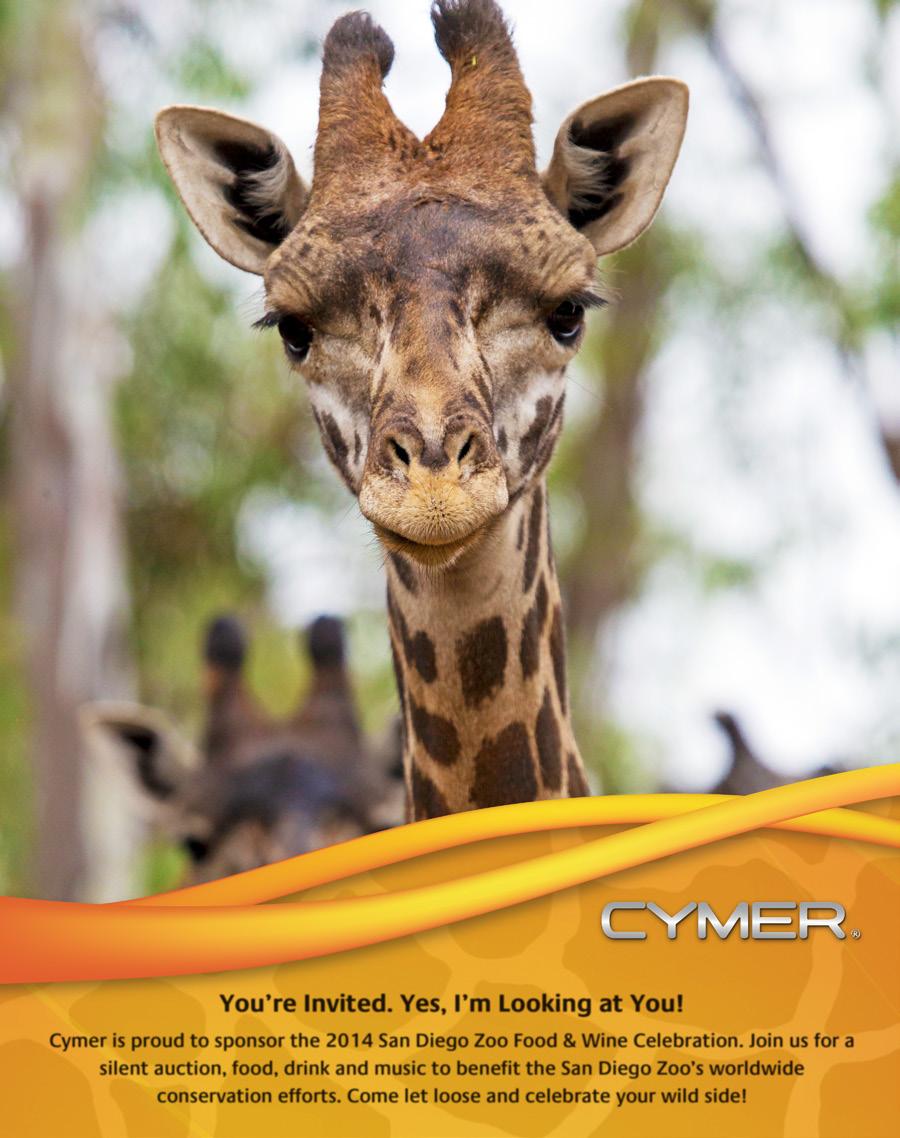





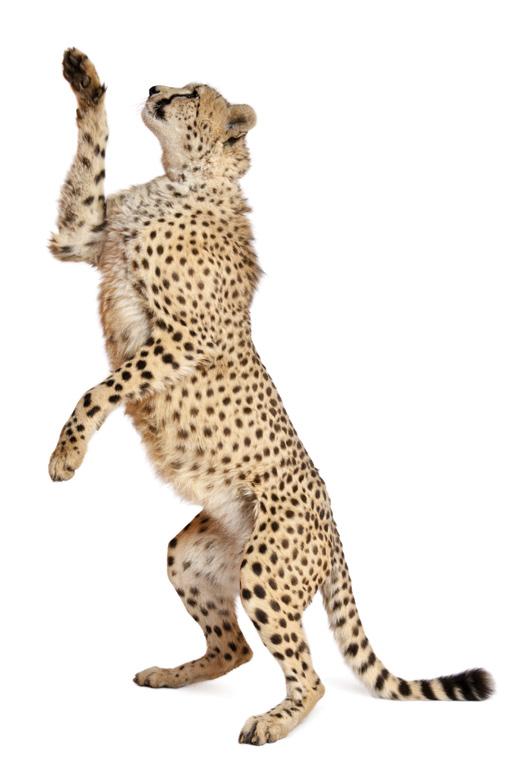
Looking for a little royal treatment?
Relax in Riviera magazine’s exclusive VIP lounges, where cocktails and creature comforts reign and the Zoo’s wild things come out to play.
Buy your tickets today. You don’t want to miss San Diego’s Tasting Event!
SATURDAY, SEPTEMBER 27, 2014
6 p.m. to midnight at the San Diego Zoo
General and Early Admission tickets also available.
Proceeds benefit San Diego Zoo Global Wildlife Conservancy.


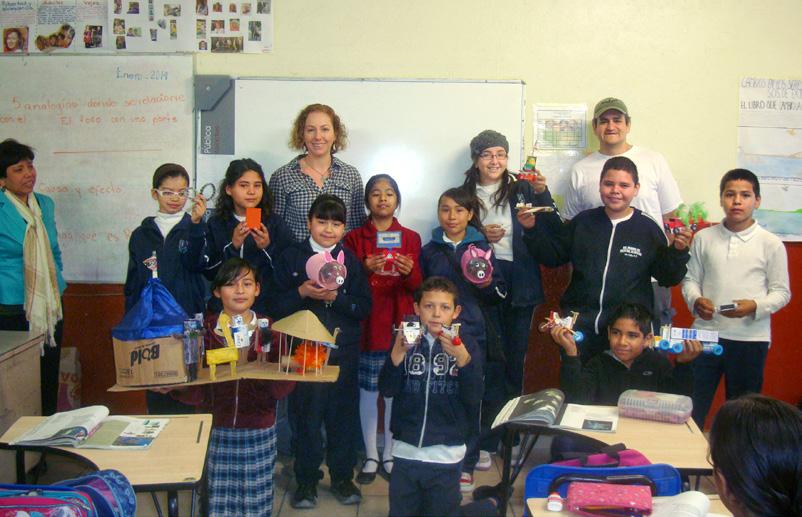
By Samantha Young
and James Danoff-Burg, Ph.D.
WE ARE IN THE MIDST of the sixth and greatest extinction event the planet has ever known, o en referred to as the Anthropocene. We, as a species, are causing the extinctions, yet we, as a species, have a great many skills and solutions that can slow the rate of extinctions. ere are still many reasons for hope and meeting the challenge.
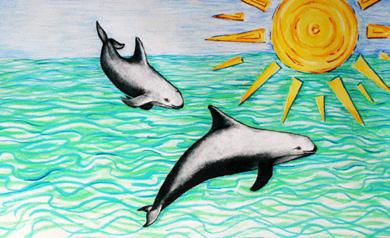
One species that is on the verge of extinction is the vaquita marina Phocoena sinus, or calf of the ocean, an elusive porpoise native to the northern Gulf of California, just southeast of San Diego. With fewer than 250 individuals remaining, it is one of the most endangered marine mammals in the world. As the smallestknown cetacean, the vaquita is also one of the cutest, with its beautiful “eyeliner” and stylish black “lipstick.” e vaquita is important in its ecosystem because
Would you like to help make a difference for wildlife? Join the San Diego Zoo Wildlife Conservancy and help save species!
a generalist, an apex predator surviving on smaller, more abundant marine creatures, keeping their populations in check and the ecosystem in balance.
Unfortunately for the vaquita, shrimp is an extremely popular commodity. Shrimp shing in this area traditionally relies upon many miles of gill nets hanging in long, deadly columns in the ocean that can entangle vaquitas and cause them to drown. Shrimp shing in the Gulf of California is a big business: over $10 million in gross sales annually. Most of the shrimp end up on plates in the United States, and shrimp shing is an important economic force in communities in the upper Gulf of California. However, if shrimp shing continues using the current techniques, we are likely to lose the vaquita.
How can people in Mexico who make their living from shing be motivated to support the conservation of a species that could be perceived as a threat to their livelihood? How can we help them be more willing to exchange their current gillnetting approach for an alternative that is less likely to harm vaquitas? We hope that by working
with children, we can engage the community indirectly. We are fortunate to be able to involve the local educational system in an innovative way that empowers children to generate possible conservation solutions.
We have found that teachers and their students are immensely creative in nding locally appropriate conservation solutions. O en these two groups are the motivators within the community as well-respected (teachers) or in uential (students) voices. Any parent knows the in uence their children can have if they are passionate about an issue! If communities can collectively identify the issues a ecting local biodiversity and how to address them, they are more likely to support the solutions they propose to solve conservation issues.
To this end, we are working with local Mexican education experts to create a curriculum entitled Del Mar a las Montañas (From the Sea to the Mountains) in San Felipe, Baja California, Mexico, for primary and middle school students. e curriculum’s broad scope includes the California condor, bighorn sheep, peninsular pronghorn, the gigantic native cardón cactus, and the vaquita. Teachers are being trained how to use an inquiry-based learning approach with their students to enable them to work creatively and more independently. Children will then encourage their family and friends to investigate a conservation problem, suggest a possible solution, and then present the idea to their own community.
e children rst learn about the amazing biodiversity found in the upper Baja Peninsula and the conservation threats that face the ve species featured in the curriculum. en, they interview family and friends who may be directly involved in the situation. is community discussion helps the children suggest locally appropriate conservation solutions.
e last step in this process will be a celebratory presentation of their work to the community during the Baja Biodiversity Festival this fall. Local cultural plays, dances, songs, paintings, murals, and other products will be the centerpiece of this festival. Best of all, because the children will have interviewed local community leaders, we expect that their family and friends will be more interested in working to conserve their national ecological and cultural heritage.
It is hoped that some of the children’s ideas will stimulate discussion among the community and instill optimism for the future conservation of the vaquita—and the rest of Baja’s biodiversity!
By Ester Chang SENIOR KEEPER, ENTOMOLOGY
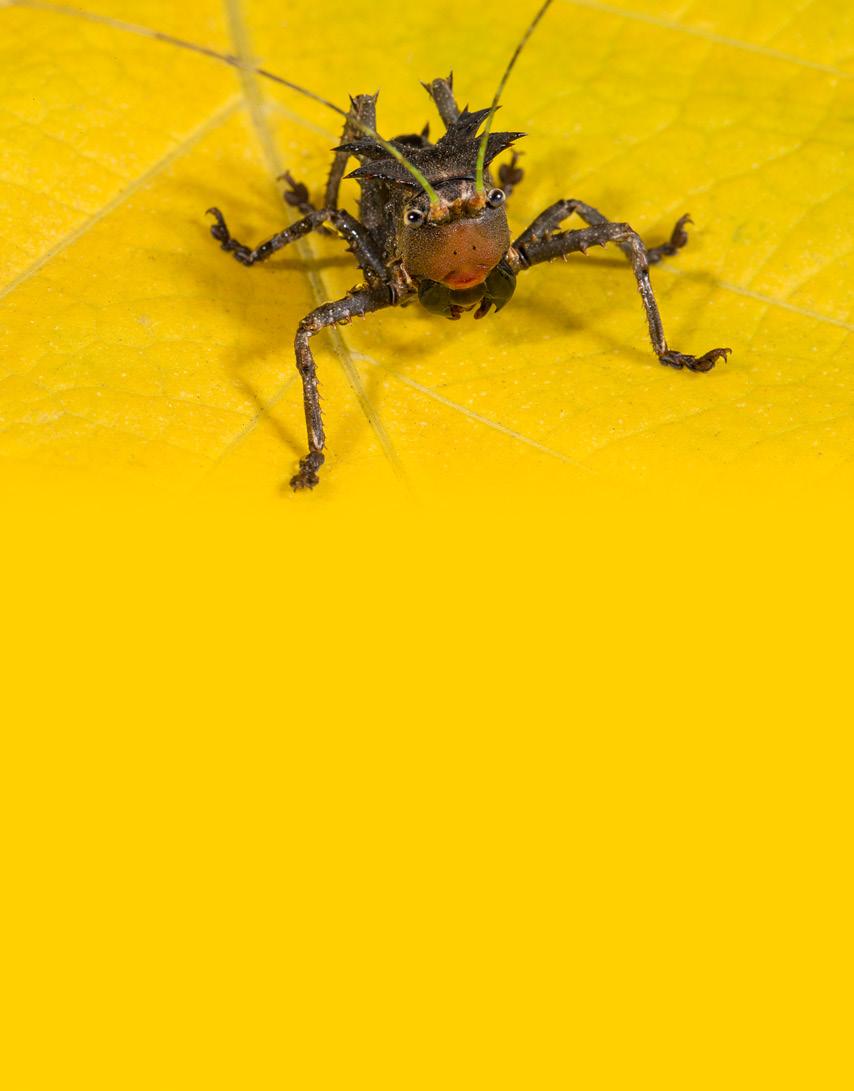
Have you heard? e San Diego Zoo has hatched dragons! I’m not talking about a Komodo dragon or any kind of lizard. I’m talking about an animal that can trace its lineage to before the time of the dinosaurs, is covered in tough armor and sharp spines, and feeds on the bodies of the dead. What kind of creature could I possibly be talking about? It’s the dragon-headed katydid Lesina intermedia from the rain forests of Malaysia.
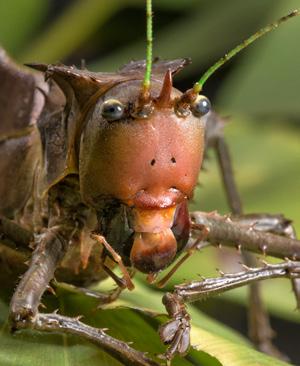
With its huge head and enormous mandibles, the dragon-headed katydid is a particularly impressive insect. ough it looks fearsome, it is a rather shy creature that spends most of the day hiding. If bothered, it will defend itself, but it is slow to bite. And no, it cannot breathe re.
Even as a hatchling, the fierce-looking dragon-headed katydid from Malaysia has the tough armor and impressive spines to live up to its name.
To see more about these amazing insects, download the digital September issue.
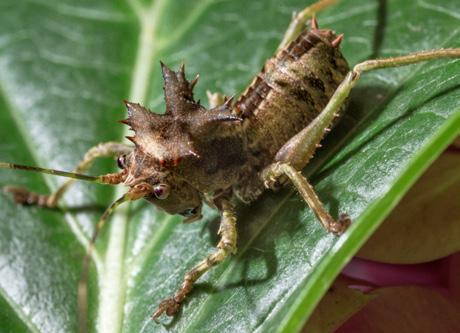
Very little is known about the natural history of the dragon-headed katydid. Caring for and encouraging reproduction in this species required some detective work and experimentation on our part.
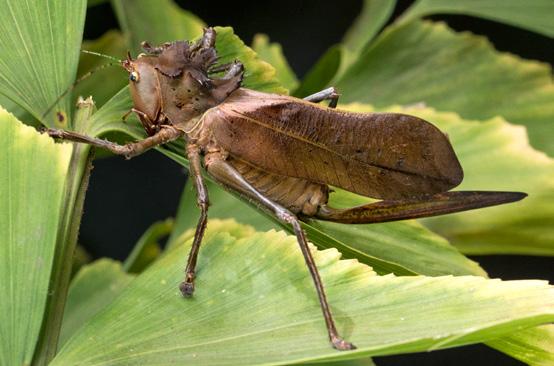
A female katydid, like many insects, has a structure called an ovipositor that she uses to deposit eggs in an appropriate place for them to develop. While the closely related grasshopper uses its ovipositor to lay eggs in soil, di erent katydid species use their specialized ovipositors to lay eggs in a myriad of materials. e dragonheaded katydid’s ovipositor is shaped like the blade of a sword, and it is paper thin and exceedingly strong. is was a hint to us that they might lay their eggs in crevices—but of what?
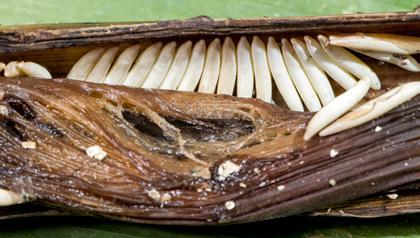
We found some anecdotal evidence that in the wild, this species lays eggs in palm trees. Eager to follow any lead, we o ered them pieces of split, rotten palm trunks as well as so wood and soil—all to no avail. Next, we added a bananna plant to the enclosure, and soon noticed strangely shaped holes chewed into the side of the stem. Upon further investigation, we discovered eggs! A female had chewed a hole in the stem, slid her ovipositor between the layers of plant tissue, and laid a series of creamy-white, elongated eggs all in a row.
Above left: The dragon-headed katydid’s strong, sharp mandibles can crush and tear food like seeds and other insects. Above right: This female dragon’s “tail” is its ovipositor, used to lay eggs in plant material.
Left: Keepers were unsure how to encourage these katydids to reproduce, but they discovered that the stem of a banana plant was just what one female katydid wanted, and she laid a neat row of elongated eggs inside it.
We placed the eggs in an incubator, and within several weeks, we had an abundance of adorable miniature “dragons.” It was an exciting development—not only is this a rst for us, but, as far as we know, no other US organization has successfully hatched or raised this species.
Since we had never raised these insects from hatch before, and because of the dearth of information about them, we knew little about what their nutritional needs would be as they grew. Challenge accepted! We threw a little bit of everything into their diet and carefully monitored the hatchlings for clues.
is katydid’s strong, sharp mandibles are the perfect tool for crushing and tearing things, but neither the adults nor hatchlings showed any interest in hunting. We supplied the hatchlings with various combinations of vegetables, fruits, grains, seeds, and even honey. We also o ered them peanut butter, bee pollen, chitin powder, sh food, and popcorn. A er trying so many food items, we found that what really made a di erence was animal protein—they readily devoured dead crickets! In the wild, they would most likely be omnivorous scavengers, eating whatever fruits, seeds, and dead insects they came across.
With the right food, our captive-raised katydids grew and thrived—and kept reproducing! We’ve been able to share some ospring with other institutions and currently have a healthy group of adults on display, all of which were raised here at the Zoo. We’re thrilled to have our own cadre of dragons and to be able to add to the collective knowledge about this enigmatic insect.

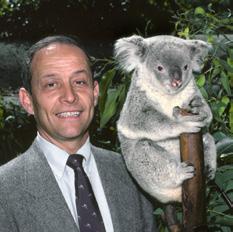
By Mary Sekulovich SENIOR EDITOR, DEVELOPMENT DEPARTMENT
by SDZG
Some might say it would be di cult to follow legendary San Diego Zoo directors such as Dr. Harry Wegeforth, Mrs. Belle Benchley, or Dr. Charles Schroeder. Yet Charles Bieler did it with grace, charm, and a light touch. He forged a strong friendship with Dr. Kurt Benirschke, and together they created CRES (the Center for Reproduction of Endangered Species) in 1975, the precursor to today’s San Diego Zoo Institute for Conservation Research. “Chuck” also saw the Safari Park through its initial 12 years of development, rst as its operations manager and later as the organization’s director.
It is no surprise that he made many lifelong friends for the Zoo and Park along the way.
It would be easy to forget that, just like “Dr. Harry” and Mrs. Benchley, Chuck was Zoo director during a challenging time. Dr. Harry did the impossible during World War I, creating a world-famous zoo in just a few years in what was then a small town on the West Coast. Belle Benchley led the Zoo during the crisis years of World War II and the Korean War. Chuck Bieler weathered double-digit ination in the 1970s and 1980s, two energy crises, struggles to make the edgling Safari Park successful, and challenges from animalrights advocates who waged a relentless campaign against zoos. It was a time of great change as the philosophy behind zoos was rede ned. Despite these challenges, Chuck was a director ahead of his time. In 1976, he said “our Zoo and Park truly have become centers of propagation, research and conservation, education, and family recreation in beautiful settings that involve us all in the world of Nature,” an idea that was later echoed in the organization’s vision.
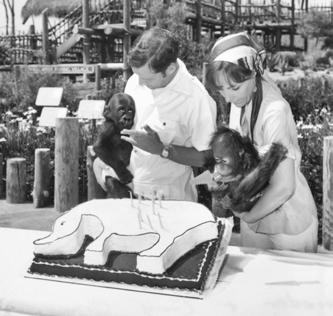
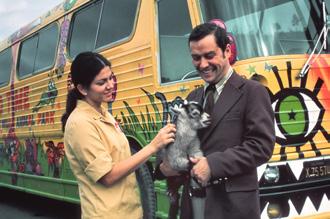
Top: A gorilla and orangutan helped Chuck celebrate the Park’s second anniversary in 1974. Below: Chuck helps launch a temporary bus service from the Zoo to the Park, offered when the energy crisis hit California in the 1970s.
When Chuck stepped down as executive director in 1985 and became executive director emeritus, he le an impressive legacy that contributed to stellar growth for the Zoo, Safari Park, and Institute for Conservation Research. en, in true Bieler fashion, he continued to support San Diego Zoo Global as an advisor to the Development Department, meeting with donors and helping raise gi s. He also continued his role as our liaison with other zoos to work on common goals of conservation, research, and education, before “somewhat retiring” in 2005 and staying on as an invaluable consultant. We are so fortunate that he still comes into the Development o ce every Wednesday, knows everyone’s name, and stops to chat. While there are character traits beyond de nition, you know when you have met a person of integrity who has a love and respect for the organization he leads, working tirelessly to advance its mission and vision. Chuck has been a mentor and friend to Doug Myers, current president and CEO of San Diego Zoo Global, and his
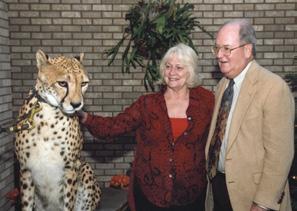
advice to Doug when he started as director in 1985 was to plan, listen, communicate, encourage independent thinking, and promote teamwork. During the 1970s, Chuck was also a supporter of Joan Embery, who was becoming known nationwide at the Zoo’s goodwill ambassador through her television appearances. With his characteristic good humor, he remembers his rst day on the job, as he was introduced to a big cat on a leash. When Chuck said he had never petted a lion, Joan reminded him that cats with stripes are tigers!
Charles Schroeder o en said that “this organization isn’t about one person, it’s about the organization.” While this is true, it is our directors, like Chuck Bieler, who have shaped our course, ensuring we o er the best animal care and world-class guest experiences. In a February 1985 ZOONOOZ article about Chuck, editor Marjorie Shaw wrote, “perhaps his greatest strengths lay in his regard for fellow employees. . .he always has a ready smile and is quick to give credit. In short, he has a talent for making everyone feel that he can be counted as a friend.”
When asked soon a er he retired why he thought San Diego Zoo Global was successful, Chuck replied, “I think the most important thing is community support—the love a air between San Diegans and this institution—their willingness to be a part of the Zoo, from the volunteer leadership they provided, the nancial support in dollars, the visits, and the employees.” Modest he may be, but Charles Bieler has contributed to San Diego Zoo Global’s world-famous reputation in so many ways. He was an early—and visionary—advocate for wildlife conservation, such as supporting the California condor recovery program and creating the Frozen Zoo®. His goodwill visit to China in 1979 paved the way for future animal loans, which led to a partnership to save giant pandas. As president of the American Association of Zoological Parks and Aquariums, along with a leadership role in the World Association of Zoos and Aquariums, he worked to create conservation management goals for endangered species. For more than four decades, Charles Bieler has been called a mentor, leader, and friend to the global zoo community. He overwhelmingly deserves our 2014 Conservation Advocate Medal.


By Seth Menser SENIOR HORTICULTURIST
Photos by Ken Bohn SDZG PHOTOGRAPHER
The San Diego Zoo is known for its large and diverse animal collection, of course! What people might not be aware of are the incredible plant collections that also grace the grounds of our Zoo.
The same Mediterranean climate that enriches the animals in our care also allows us to grow spectacular plants from all points on the globe. Some of the Zoo’s plant collections are accredited through the American Association of Museums and are maintained to the same standard as other accredited collections, such as art in a museum. Records are kept for each individual plant that detail location, source, propagation history, and other significant information. Our plant collections serve multiple purposes—the most obvious being to have a beautiful landscape at the Zoo. But the real drive is in the name of conservation. Much like the Animal Kingdom, the botanical world is also threatened in the wild, and our collections serve as a catalyst to educate, showcase, and raise awareness of plants in peril. Part of this process involves us doing work in situ, sometimes in other countries,
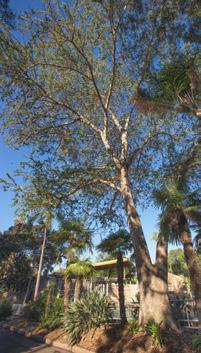
A group of trees found in warmer regions of the world, acacias are known for their yellow flowers in the winter. We grow several species to feed some of the animals here at the Zoo, including the giraffes and okapis. Most acacias are drought tolerant and thrive in our arid climate. Many acacia species in the wild have been logged extensively, leading to a decline in their native stands.
We have so many more beautiful botanical treasures to show you—download the digital ZOONOOZ to see them!
working side by side with various government agencies and institutions. Our horticulture collections and projects are just one spoke in a wheel of global conservation that San Diego Zoo Global continues to work on every day.
The San Diego Zoo is a world-class botanical garden that just happens to share its space with a world-class collection of rare and endangered animals. For nearly 100 years, the Zoo has developed into what it is today, and it’s hard to imagine what the Zoo would be like without the environment that our diverse botanical collection has created. By maintaining and curating our accredited collections, we can look forward to the next 100 years and continue the San Diego Zoo’s role of sharing wonderful plants alongside the animals and inspiring conservation for all wildlife.
Currently, the Zoo is home to eight accredited plant collections. Be sure to look for these botanical treasures on your next visit.

Technically, bamboo is a giant grass, and giant it is, with some species reaching over 100 feet in their native environment! The Zoo’s bamboo collection provides beauty as well as useful light construction material. Of course, the biggest benefit bamboo brings to the Zoo is an essential browse source for our pandas. We grow 114 species of bamboo, and 12 are used to feed the beloved black-andwhite pandas.

Cycads are a group of prehistoric plants that shared the Earth with dinosaurs. Although they have survived the test of time, they are now restricted to a much smaller natural range. Much like conifers, cycads reproduce through male and female cones. Our cycad collection is one of great significance due to the fact that most cycads are threatened in the wild.
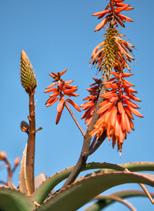
This wonderful group of succulents hails from Africa and the Arabian Peninsula. Most species bloom in winter, providing a splash of color when not much else is blooming in San Diego. Aloes are just about the perfect plants to grow here due to their ease of care, low water use, and durability. The most famous aloe, Aloe vera, has been familiar to humans for centuries; however, where it was first found in the wild remains unknown.

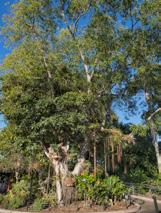
Fig trees, or ficus, provide shade, beauty, and lots of browse for many animals at the Zoo. They are a cornerstone species because of their importance in ecosystems around the world. They also share a fascinating relationship with fig wasps; neither fig trees nor fig wasps would exist without each other. The Zoo has done extensive field work on ficus trees across Australia, monitoring and documenting native stands while also reviewing threatened populations.
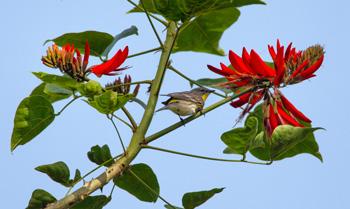
Commonly known as coral trees, erythrinas put on a spectacular display of flowers in late winter. Being a very nectarous flowering tree, they provide birds with energy and, in return, are pollinated by them. Over the years we have worked with other institutions to discover more about this group of trees that has not been studied much. This work has included the use of DNA barcoding to better identify distinct species.
A large and diverse group of trees found across the tropics and subtropics, palms are one of the most widely used plants in the world for food, shelter, material, and landscaping purposes. The climate in San Diego has allowed us to grow many species over the years, leading to a great collection of mature palm trees at the Zoo. A highlight of this collection is having a large number of Prichardia palms. These palms are the only native palm to the Hawaiian Islands and face considerable risks to their survival there.
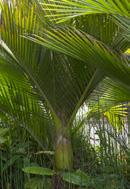
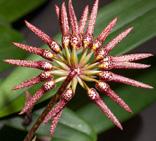
One of the largest groups of plants on Earth, orchids are also among the most famous. Their diversity, beauty, and unique life histories have long caused people to admire and showcase these plants. This interest has also spawned a considerable amount of conservation effort dedicated to this plant group. Orchids can be found growing throughout the world, from temperate bogs to branches on trees in tropical rain forests. Several species in our collection were rescued from areas in Papua New Guinea that were being destroyed by logging and oil exploration in the late 1980s.
MAY 5, 1936, TO MAY 23, 2014
By Karyl Carmignani STAFF WRITER
I’ve learned that people will forget what you said, people will forget what you did, but people will never forget how you made them feel. ~Maya Angelou
Fun-loving. Enthusiastic. Unbelievably kind. Great sense of humor. Straightforward honesty and integrity. Lived life to the fullest. Great guy to be around. Loved his family and his city. ose are just a few of the descriptors those close to Weldon Donaldson shared at his memorial service. Longtime colleague Harry Melkerson counted Weldon as “mentor, best friend, and second older brother.” He was thoughtful, compassionate, funny, cherished his friends, and threw great beach parties. ose in Weldon’s sphere were susceptible to his a able joie de vivre.
e much-loved philanthropist and retired television executive passed away last May, his wife of 57 years, Mary Barbara, and his son Glen by his side.
roughout his illustrious 29-year career in San Diego in the fast-paced media industry with KFMB-TV and KUSI-TV, and later executive director for the National City Mile of Cars, Weldon made it a point to contribute his time and talents to civic and sports organizations. His expertise in e ective marketing was of great bene t to a broad range of organizations, including San Diego Zoo Global, where he served as a trustee from 2003 to 2012 (he became a trustee emeritus in 2012) and collaborated on the marketing and investment committees.
He was instrumental in the launch of the San Diego Zoo Global brand. “Weldon was a tremendous asset to San Diego Zoo Global during his tenure,” said Doug Myers, our president and chief executive o cer. “He brought his wealth of community relationships to bear on his work with our organization, broadening our reach to a worldwide level.” Weldon had a special a nity for the Safari Park and was particularly impressed with Lemur Walk and the beautiful designs for Tiger Trail. One highlight of his tenure with us was the trustee trip in 2007, where board members explored other zoos around the country.
Weldon relished the social camaraderie and “seeing how other zoos operate helped to inform our decisions,” said Nan Katona, Weldon’s friend and fellow board member.
Growing up in El Paso, Texas, Weldon was quite keen on football—he was a “red coat” volunteer for 30 years with the San Diego Bowl Game Association and served as president of the Holiday Bowl in 1998. A devoted golfer—he spent many afternoons on the green—Weldon chaired the Downtown YMCA and Crime Stoppers golf tournaments. In his spare time he enjoyed handball and was a member of the San Diego Rowing Club. Weldon had a sharp interest in his backyard birds and kept the feeders lled and welcoming for avian visitors.
Weldon’s professional accomplishments were many, including a lifetime achievement award from the San Diego Advertising Club. “He was a talent in the industry,” said Harry. “Even in the di cult media business, he was honest, with the highest level of integrity, and always took care of his customers.” Perhaps his greatest achievement was raising his three children, Glen, Valerie, and John, and traveling the world (Europe and the Caribbean were favorite destinations) with his beloved wife. “He was a fun-loving person and loved his family,” said Mary Barbara. When he became a grandfather, he was over the moon, eagerly showing o photos of his three granddaughters.
Active in the marketing community, Weldon served on the board of directors for the Advertising Club of San Diego, the San Diego Advertising Emergency Relief Fund, the Television Bureau of Advertising, and the CBS Network Advisory Committee. He earned a bachelor of arts degree in economics from the University of Texas, El Paso, and served as a missile o cer in the U.S. Army.
But Weldon’s true legacy will be the levity and love he brought to all who knew him.




By Mary Sekulovich SENIOR EDITOR, DEVELOPMENT DEPARTMENT
by Ken Bohn
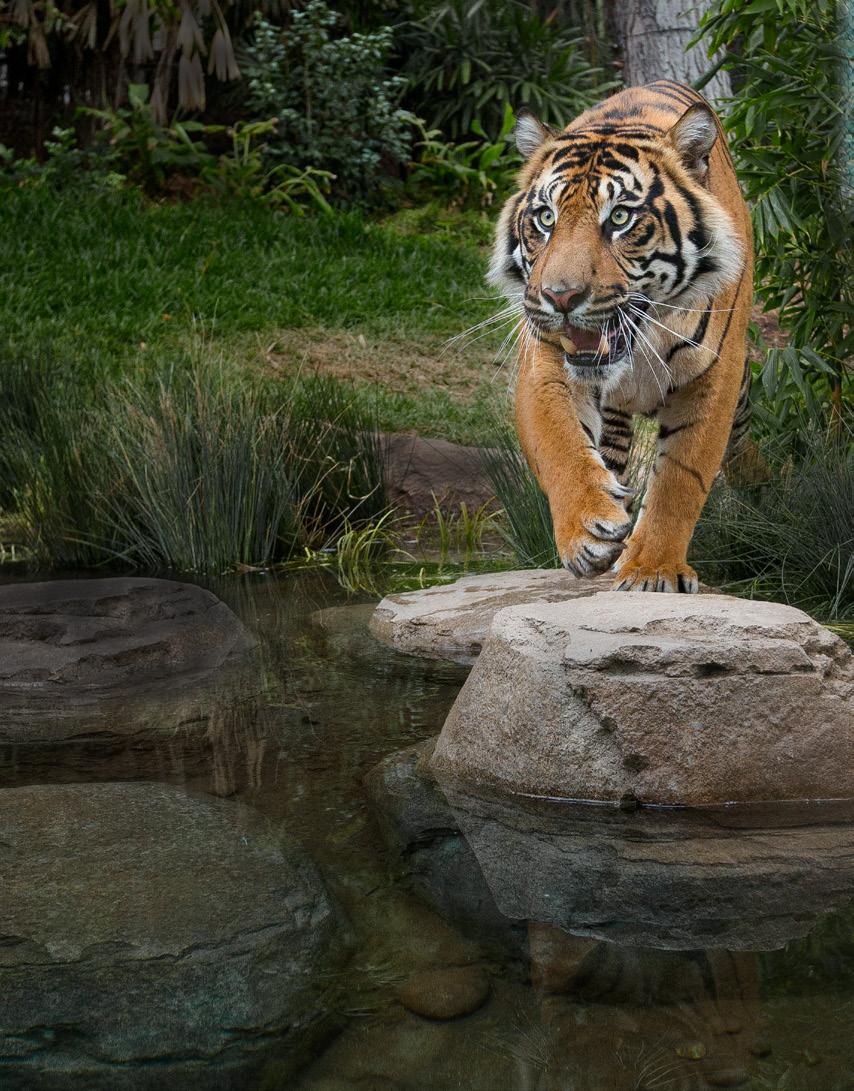
ust a few years ago, nding tigers at the Safari Park was no easy task—they were o en hidden in tall grasses or sleeping at the back of the exhibit. Asia’s most spectacular cat was o en nowhere to be seen. Fast forward to the opening of the elegant and multifaceted Tull Family Tiger Trail in May 2014, and the di erences in exhibit design are astounding. Now six gorgeous Sumatran tigers prowl through three lush, forested habitats where guests can readily spot them.
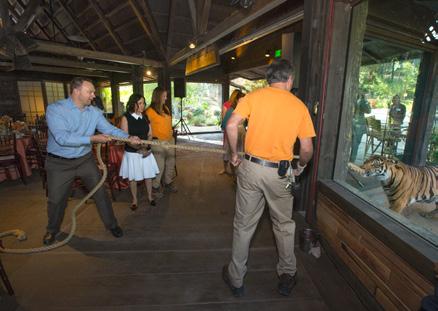
From the mystery of the entry portal, the Tiger Trail walkway builds excitement as you draw near to the mesmerizing big cats. Whether you look to the right or the le , you’ll usually encounter a tiger’s unwavering stare. ey are o en nose to nose with their admirers through the viewing windows and take turns defeating keepers and guests at a game of tug-of-war. A tiger might even saunter to the interactive wall and show o as a keeper gives cues to exhibit behaviors that help animal care sta ensure the big cat stays healthy.
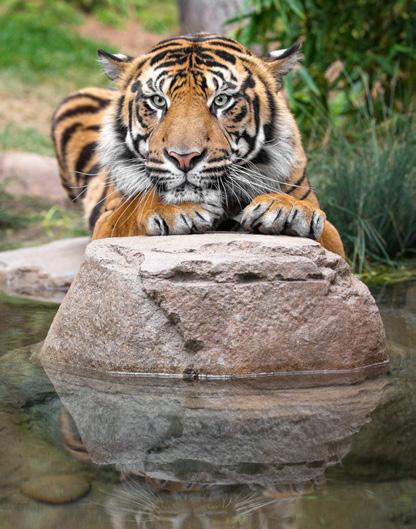
All six Sumatran tigers are perfectly at home in Tiger Trail, whether enjoying their pools or taking a catnap. A fun feature at the exhibit’s Sambutan Longhouse lets keepers and guests try their hand at a tug-of-war with one of the big cats. Here, Thomas Tull pulls against one of the male tigers while Alba Tull looks on. To no one’s surprise, the tiger always wins!
Keeping tigers entertained with enriching toys, sights, and scents, as well as giving them a balanced diet, helps them thrive.
Happily, the rave reviews for Tiger Trail just keep coming, although in the early planning stages we had our challenges in making the exhibit a reality. When we rst introduced the concept in 2008, the Great Recession began. Over the next few years, Tiger Trail’s architectural plans went through location changes and design revisions. Although many generous donors supported the exhibit, our fund-raising e orts stalled because of the recession.
Then, in 2012, a superhero couple—Thomas and Alba Tull— stepped forward with the largest single donation in the Safari Park’s history, and the rest is, well, history! Opening festivities at the $19.5 million tiger habitat on May 21, 2014, included a ribbon cutting by the Tulls, special viewing opportunities for donors, keeper talks, and tiger training demonstrations. anks to the Tulls’ extraordinary gi , as well as leadership gi s from the Warren Family Foundation and Audrey Geisel, plus the generosity, un agging support, and patience of 5,000 additional donors, the Tiger Trail opening wowed everyone. How do you describe coming face to face with a lithe tiger
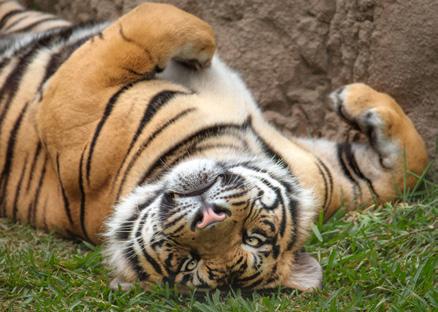
just inches away on the other side of glass windows, its golden eyes following your every move? ere were many enthusiastic comments, such as “Being nose to nose with the tigers is beyond words,” “I could have watched those tigers for hours and hours,” and “You did a great job for the people as well as the tigers!”
Tiger Trail has exceeded our wildest expectations. We sincerely appreciate the support and generosity from such a large number of friends who enabled us to create a splendid new home for our tigers and awe-inspiring experiences for our guests.
You

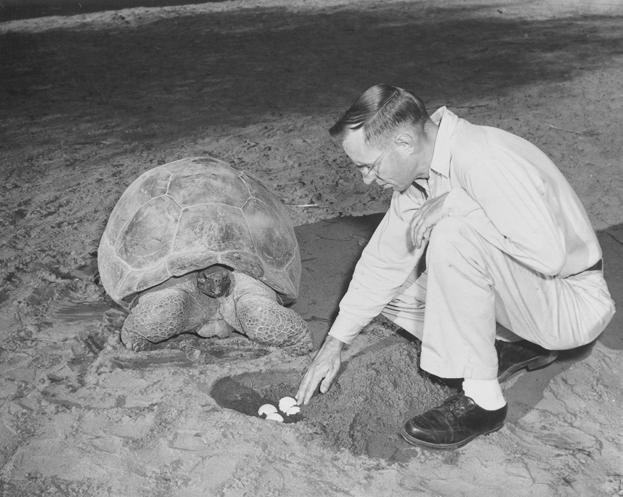

The popular giants had been living at the San Diego Zoo since their arrival from the Galápagos Islands in 1928. ey were part of New York Zoological Society (now Wildlife Conservation Society) e orts to establish breeding colonies at select zoos worldwide to save the species from extinction. Almost 30 years later, ours had not reproduced, and other zoos were not having much luck, either. What did we need to provide for our Galápagos tortoises to encourage breeding? Sand!
In the past, eggs laid in our tortoise yard’s hard-packed dirt never proved fertile. So, in late 1957, part of the dirt in the yard was replaced with river-bottom sand. Just two months later, six clutches of eggs, looking like white billiard balls, were laid in the middle of the sandy area. Pictured is one of the proud parents with Jerry Staedeli, principal reptile keeper. On October 21, 1958, our rst Galápagos tortoise eggs hatched. And more eggs hatched in 1961, 1962, and 1963. Success at last!
In 1964, the Association of Zoos and Aquariums presented its prestigious Edward H. Bean Award to the San Diego Zoo in recognition of our e orts and results. e annual award honors a “truly signi cant captive propagation e ort that clearly enhances the conservation of the species.”
Spend the night at the San Diego Zoo during this “creepy” overnight adventure! Call 619-718-3000 to confirm space.
Offer valid for October 18 and 25, 2014.
Space is limited. Age restrictions apply. San Diego Zoo admission not included. Not valid for prior reservations. Not valid in conjunction with any other offers or discounts. Offer valid only through advance phone reservations. Customer must provide membership number and promotion code 212698 at time of booking. Limit 4 per membership number. Other restrictions may apply.
Climb, balance, and swing through the trees on the Safari Park’s Jungle Ropes Safari! Call 619-718-3000 and confirm space now.
Offer valid September 1–December 25, 2014. (Exception: discount not available November 28 and 29, 2014).
Space is limited. Age and weight restrictions apply. Prices, hours, and schedules are subject to change without notice. Safari Park admission and parking not included. Not valid for prior reservations. Not valid in conjunction with any other offers or discounts. Offer valid through advance phone reservations only. Customer must provide membership number and promotion code 212450 at time of booking. Limit 4 per membership number. Other restrictions may apply.
Soar along a zip-line cable, gliding about 2/3 of a mile over field exhibits at the Safari Park. Call 619-718-3000 and confirm space now.
Offer valid September 1–December 25, 2014. (Exception: discount not available November 28 and 29, 2014).
Space is limited. Age and weight restrictions apply. Prices, hours, and schedules are subject to change without notice. Safari Park admission and parking not included. Not valid for prior reservations. Not valid in conjunction with any other offers or discounts. Offer valid through advance phone reservations only. Customer must provide membership number and promotion code 212098 at time of booking. Limit 4 per membership number. Other restrictions may apply.
Looking for a gift that goes beyond the ordinary? Adopt an animal and get your shopping done early with our special discount on any online adoption package.
Offer valid September 1–December 31, 2014.

Visit sandiegozoo.org/adopt for a full list of our animal adoptions. Orders must be placed by December 12 to ensure delivery by December 24 (US only). To redeem online, enter coupon code ASZW0914 at checkout. No limit. Not valid with other offers or at on-grounds adoption booths.
Albert’s Fall Brewmaster Dinner featuring Mother Earth Brew Co. will take place on Saturday, September 13, 2014, at the Zoo. Member price is only $69, not including tax and gratuity. For reservations, please call 619-718-3000 or visit sandiegozoo.org/zoo/alberts.
Offer valid for September 13, 2014.
Not valid with any other offer or discount.
Provide valid San Diego Zoo Global membership number at time of booking reservation.

Members receive a free bowl of soft-serve ice cream when they purchase an entrée and a beverage at any Zoo or Safari Park restaurant location. Valid for next purchase at any location where soft-serve ice cream is sold.
Offer valid October 1–31, 2014.
Not valid for soft-serve ice cream cones. Cannot be combined with any other offer or discount. Show valid San Diego Zoo Global membership card at time of purchase.
Members receive a 10% discount on all holiday ornaments in October, including our 2014 annual ornament celebrating the opening of Tiger Trail. Valid at Safari Outfitters and the Bazaar at the Safari Park, as well as the General Store and ZooStore at the Zoo.
Offer valid October 1–31, 2014.
No limit while supplies last. Not valid with any other offer or discount. Show valid San Diego Zoo Global membership card at time of purchase.

NOVEMBER–DECEMBER 2014
Members receive a 10% discount on any purchase. Valid at all stores at the San Diego Zoo and Safari Park!
Offer valid November 1–December 31, 2014.
No limit while supplies last. Not valid with any other offer or discount. Show valid San Diego Zoo Global membership card at time of purchase.
Your Member Coupons are inside!
October means fall has settled in and Halloween is almost here. It’s also that great time of year when kids enjoy free admission all month long to the San Diego Zoo and the San Diego Zoo Safari Park! During Kids Free presented by Mission Fed, children 11 years and younger can explore their wild side by meeting our wildlife, with no admission charge, from October 1 to 31, 2014.
And each weekend in October, there will be even more kid-focused fun: on Saturdays and Sundays, kids and their families can enjoy special animal presentations, activity booths, enrichment at many of the animal exhibits, and more!
Let your wild ones meet ours—come explore the great outdoors with us in October!