

Saturday, January 24, 2015
6 p.m. Reception with an animal presentation at the Zoo’s Price Education Center 6:45 p.m. Dinner to follow in Albert’s Restaurant
Raise a refreshing glass of beer and celebrate a new year at Albert’s Winter Brewmaster Dinner. San Diego Zoo Executive Chef Chris Mirguet and Albert’s Chef Charles Boukas pair their culinary genius with exciting new beer selections from Bagby Beer Company. Join us at Albert’s for an evening of fantastic food, stellar brews, and great company.
$69 per person for members, $82 per person for nonmembers, plus tax and gratuity. Menu substitutions are not available for this event. Seating is limited. Guests will be seated at tables of eight. Must be at least 21 years old to attend.


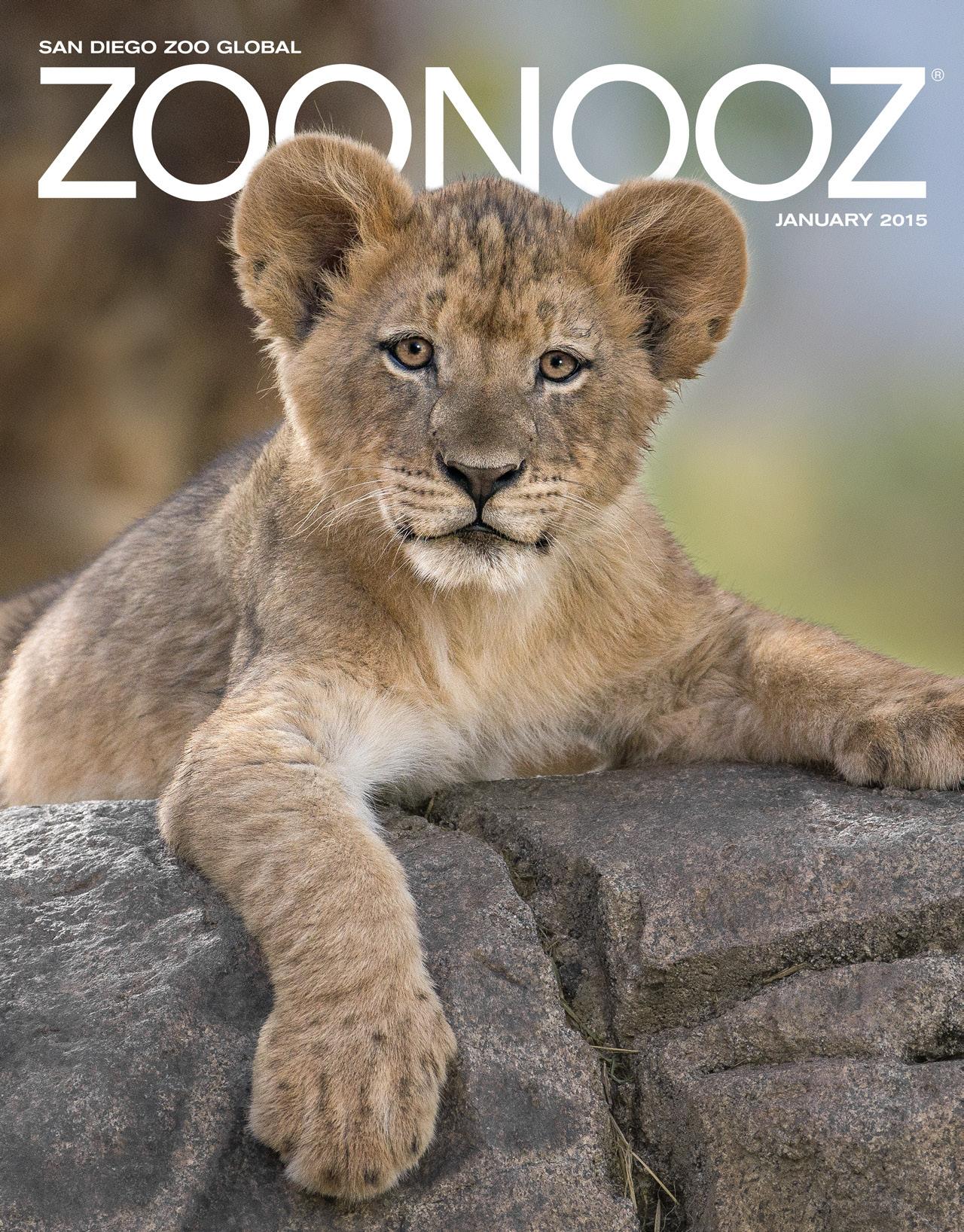
8 A Matter of Pride: The Park’s New Lion Cubs
Four rambunctious bundles of fur and energy are now pouncing, tumbling, and chasing at Lion Camp.
BY PEGGY SCOTT
12 Will Wake for Peanuts: Life as a Nocturnal Primate
Meet our quirky and fascinating aye-ayes at the Zoo.
BY KARYL CARMIGNANI
18 Meet Barkley: Our New “Celeb-Birdie!”
A handsome Aussie with brooding good looks is on the scene at the Zoo’s Australian Outback.
BY LISA TOWNSEND
20 The Light Side
Meet Luke, a waterbuck of a different color, and find out why he and our recently acquired white cobra took everyone by surprise.
BY WENDY PERKINS
14 Plant by Plant: Take a Self-guided Botanical Adventure
A bumper crop of new self-guided plant tours will help you discover the fantastic flora that fills the Zoo.
BY WENDY PERKINS
15 2015 Endangered Species Day Youth Art Contest
Calling young artists in grades 3 through 12 to show their colors in works depicting US endangered species. conservation
16 The Worth and Dearth of Fresh Water
San Diego Zoo Global is committed to conserving water with or without a drought. BY
KARYL CARMIGNANI
22 Life on the Roof of Africa: Our Quest to Study the Gelada Monkey
Studying gelada monkeys in the Ethiopian highlands led to some surprising discoveries.
BY PETER J. FASHING, PH.D., AND NGA NGUYEN, PH.D.
2 Chairman’s Note 4 Through the Lens 5 Save the Date 6 You Said It 24 What’s in Store
Support 28 From the Archives
FREE! Download the ZOONOOZ App for your tablet at sandiegozoo.org/zoonooz to see this month’s special photos and videos!

appy New Year to all our members, donors, volunteers, and sta f. You are the lifeblood of San Diego Zoo Global, and I am honored to work alongside you as I begin my tenure as the chairman of the board of trustees this month. Over the next few years, we will work together to advance the important mission and goals of this world-class organization, celebrate our landmark centennial anniversary, develop and execute strategic plans that will set the stage for the next 100 years of operations, expand and enhance visitor experiences—and lead the campaign to end extinction. For more than 40 years now, I have been associated with San Diego Zoo Global and witnessed signi fcant growth; I am continually inspired by the innovation and positive impact our organization has on research, sustainability, and wildlife around the world.
My commitment to and passion for the San Diego Zoo was sparked early in my career as a banker, when I had the opportunity to facilitate the funding of a new tour bus. As an anecdote, I had been talking to the director of development at the time about ways my bank could contribute, and he mentioned that the Zoo was in great need of a new bus. It didn’t take long to secure the funding—and the rest is history.
A fer this experience, I became an active volunteer for the Zoo. I worked with Rolf Benirschke when he was doing the Kicks for Critters fund-raising campaign; helped establish the Ocelots volunteer group; and worked on the Cats in Concert fund-raising event, the f rst of what would become the annual Rendezvous In Te Zoo (R·I·T·Z) gala. I also served as vice chair on the Foundation of San Diego Zoo Global board when it was formed 10 years ago. Most recently, I’ve been pleased to participate as treasurer on the San Diego Zoo Global board of trustees for the past three years while simultaneously chairing the f nance and investment committees.
For 2015, we have launched several renovation projects around the Zoo, which are critical to our milestone centennial celebration in 2016 and to improving visitor experiences and access to parking. Tese include construction improvements at Wegeforth Bowl, the bus tour area, and the pathway leading to and from Balboa Park. Additionally, the Zoo is building a multi-story parking area for our employees—a move that will open up many more spots for visitors in the main Zoo lot.
As we celebrate our past, it is important to plan for our future. Terefore, we will continue to develop new strategic plans for the Zoo, the Safari Park, and our groundbreaking conservation work—plans that will set the stage for San Diego Zoo Global’s next 100 years. Some of our key goals are to expand the Safari Park’s Asia and Americas experiences, fund our expanding conservation feldwork around the globe, and open the Conrad Prebys Africa Rocks at the Zoo in 2017, ultimately transforming one of the oldest parts of the Zoo.
As your chairman, I am committed to working with my fellow board members and the sta f to advance San Diego Zoo Global’s mission while carrying out its new vision to lead the fght to end extinction. Tese next few years will bring many wonderful changes for our organization— changes and milestones that I will share with you along the way.
OFFICERS
Robert B. Horsman, Chairman
Sandra A. Brue, Vice Chairman
Judith A. Wheatley, Secretary
Steven G. Tappan, Treasurer
BOARD OF TRUSTEES
M. Javade Chaudhri
Berit N. Durler
Richard B. Gulley
Clifford W. Hague
Linda Lowenstine, D.V.M., Ph.D.
Patricia L. Roscoe
TRUSTEES EMERITI
Frank C. Alexander
Kurt Benirschke, M.D.
Thompson Fetter
Bill L. Fox
Frederick A. Frye, M.D.
George L. Gildred
Yvonne W. Larsen
John M. Thornton
Albert Eugene Trepte
Betty Jo F. Williams
James Lauth, General Counsel
Douglas G. Myers, President/CEO
Charles L. Bieler, Executive Director Emeritus
THE FOUNDATION OF SAN DIEGO ZOO GLOBAL
OFFICERS
Murray H. Hutchison, Chair
Maryanne C. Pfister, Vice Chair
Susan N. McClellan Secretary
Richard M. Hills, Treasurer
Mark A. Stuart, President
Richard B. Gulley, Ex officio
Douglas G. Myers, Ex officio
BOARD OF DIRECTORS
Christine L. Andrews
Joye D. Blount
Rick Bregman
Lisa S. Casey
Douglas Dawson
Berit N. Durler, Ex officio
U. Bertram Ellis, Jr.
Arthur E. Engel
Craig L. Grosvenor
Judith C. Harris
Michael E. Kassan
Susan B. Major
Michael D. McKinnon
George A. Ramirez
Thomas Tull
Margie Warner
Ed Wilson
Robert B. Horsman Chairman

Albert’s Valentine’s Dinner
A Celebration of Love
Saturday, February 14, 2015
Seating begins at 5 p.m.
San Diego Zoo Executive Chef Chris Mirguet and Albert’s Chef Charles Boukas will be preparing an elegant dinner for you and the special someone in your life. $99 per couple for members, $125 per couple for nonmembers, plus tax and gratuity. Maximum party size is eight people. For reservations, call 619-557-3964.
A Safari Park Valentine’s Dinner
Two dates available: Friday, February 13, and Saturday, February 14, 2015.
Reception with animal ambassadors, hors d’oeuvres, and no-host full bar from 5:30 to 6 p.m.
Dinner seating at 6 p.m.
Enjoy a romantic dinner with your valentine at the Safari Park’s Hunte Nairobi Pavilion, specially prepared by our Chefs Joshua Mireles and Abriann Ramirez. And if you’d like to make a night of it, you can also reserve a Valentine’s Day Roar & Snore Safari and stay the night! We’ll take you to the campground after dinner for adventure around the campfire. For pricing and tent options, visit sdzsafaripark.org or call 619-718-3000.
Valentine’s Dinner is $99 per couple for members, $125 per couple for nonmembers, plus tax and gratuity. For reservations, book online at sdzsafaripark.org or call 619-718-3000.
PUBLISHED SINCE 1926
JANUARY 2015
VOL. LXXXVIII NO. 01
MANAGING EDITOR
KAREN E. WORLEY
ASSOCIATE EDITORS
PEGGY SCOTT
DEBBIE ANDREEN STAFF WRITERS
WENDY PERKINS
KARYL CARMIGNANI
SAN DIEGO ZOO GLOBAL PHOTOGRAPHER
KEN BOHN
DIGITAL IMAGING TECHNICIAN
TAMMY SPRATT
DESIGN AND PRODUCTION
DAMIEN LASATER • CHRIS MARTIN
HEIDI SCHMID ROMERO • LISA BISSI
JENNIFER MACEWEN
PREPRESS AND PRINTING QUAD GRAPHICS
Te Zoological Society of San Diego was founded in October 1916 by Harry M. Wegeforth, M.D., as a private, nonprofit corporation that now does business as San Diego Zoo Global. Te printed, hard-copy version of ZOONOOZ (ISSN 00445282) is currently published bimonthly (Nos. 1, 3, 5, 7, 9, and 11 of each year’s volume; the even-numbered issues of each volume are available in digital format only). Publisher is San Diego Zoo Global, at 2920 Zoo Drive, San Diego, CA 92103, 619-231-1515. Periodicals postage paid at San Diego, California, USA, and at additional mailing offices.
POSTMASTER: Send address changes to Membership Department, P.O. Box 120271, San Diego, CA 92112. Copyright 2015 San Diego Zoo Global. All rights reserved. “ZOONOOZ” Reg. U.S. Pat. Office. All column and program titles are trademarks of San Diego Zoo Global. Annual Memberships: Dual $119, new; $104, renewal. Single $98, new; $86, renewal. Each membership includes unlimited entrance to the San Diego Zoo and the San Diego Zoo Safari Park.
Subscription to printed issues of ZOONOOZ $25 per year, $65 for 3 years. Foreign, including Canada and Mexico, $30 per year, $81 for 3 years. Contact Membership Department, P.O. Box 120271, San Diego, CA 92112.
As part of San Diego Zoo Global’s commitment to conservation, ZOONOOZ is printed on recycled paper that is 30% post-consumer waste, chlorine free, and is Forest Stewardship Council (FSC ) certified.
FSC® is not responsible for any calculations on saving resources by choosing this paper.
I HOPE YOU HAD A MERRY HOLIDAY SEASON and that you had a chance to visit us for some holiday cheer, Zoo-style, during Jungle Bells presented by California Coast Credit Union. Jungle Bells will continue the revelry through January 4, so if you’d like to relax and have some fun after the hectic season, come join us!
We’re starting off 2015 with some exciting projects in the works. You’ll see many changes taking shape at the Zoo, and we hope you’ll “pardon our dust” as we undertake the construction to make them a reality. One of the first things you’ll see this month is the walkway we’ve created leading from Balboa Park to the Zoo, in celebration of Balboa Park’s centennial this year. Tis addition creates an inviting connection and a sense of arrival at the two locations and includes the two elephant topiaries that were at the Zoo entrance.
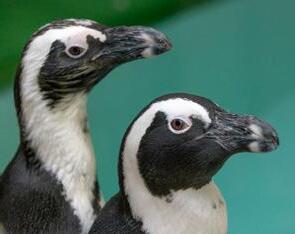
Also happening in January is the return of a popular animal that has not been at the Zoo for many years: penguins! One of the key exhibits in the Africa Rocks area that we are building will be a rocky beach for warm-weather African penguins (see pages 26 and 27). In anticipation, we’re starting off with two African penguin animal ambassadors, which for now will live in a Children’s Zoo exhibit renovated for them. Tey will also be making public appearances, so look for them during your next visit.
Bill May and Nan Katona have not only served as Board Members of San Diego Zoo Global, they have also given very generously to support the organization’s mission for over 10 years. Bill became the first member of Zoo 100, contributing $1 million dollars to the endowment for animal and plant conservation and Nan created an education endowment at the Institute to support Teacher Workshops in Conservation Science and other education programs. We also would like to express our appreciation to Dr. David Woodruff who helped us grow our scientific and conservation programs as a member of our board for 18 years.
Some changes are taking place in the Zoo’s Asian Passage as well, with a new exhibit for the spectacular southern ground hornbills and a new habitat for the beautiful and endangered Asian snow and Amur leopards. Tose new additions are due to open in May this year. Later this summer, we’ll also unveil the changes we’re making to Wegeforth Bowl and the bus tour loading area that will create new experiences for our guests, starting with fun and inspiring Zoo history and conservation success activities that will lead into our centennial year in 2016.
I’m excited about all of these new additions to the Zoo, and I think you’ll find they add a new dimension to your Zoo visits, just as the addition of Tiger Trail and changes to Nairobi Village have made the Safari Park an even more amazing experience. We have some bulldozing and building to do first, but I hope you’ll join me in delighting in each new unveiling this year!
SAN DIEGO ZOO HOURS
January 1–4: 9 a.m. to 8 p.m.
January 5–31: 9 a.m. to 5 p.m.
February 1–28: 9 a.m. to 5 p.m.
SAN DIEGO ZOO SAFARI PARK HOURS
January 1–4: 9 a.m. to 6 p.m.
January 5–31: 9 a.m. to 5 p.m.
February 1–13: 9 a.m. to 5 p.m.
February 14–16: 9 a.m. to 6 p.m.
February 17–28: 9 a.m. to 5 p.m.
WEBSITE sandiegozoo.org
SAN DIEGO ZOO PHONE 619-231-1515
DIGITAL ZOONOOZ® issuu.com/sdzglobal
Douglas G. Myers President/CEO
JANUARY
4 Jungle Bells presented by California Coast Credit Union ends—Zoo
16 Plant Day and Orchid Odyssey—Zoo 16, 17, 23, 24 KinderNights—Zoo 17, 24 KinderTots—Zoo
24 Albert’s Winter Brewmaster Dinner— Zoo
FEBRUARY 13, 14 Valentine’s Day Dinner—Park
14 Albert’s Valentine’s Dinner—Zoo
20 Plant Day and Orchid Odyssey—Zoo 20, 21, 27, 28 KinderNights—Zoo 21, 28 KinderTots—Zoo

…San Diego Zoo is by far one of the greatest zoos around. I am continually impressed by the care that these animals receive and by your mission to raise awareness to the plight of many different species. orangutansam



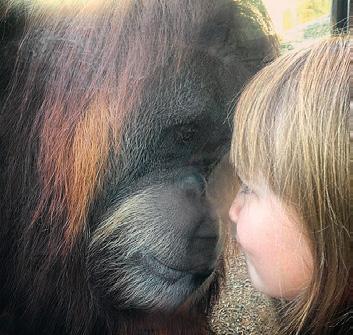
What a beautiful experience my daughter shared with one of your sweet orangutans yesterday. This precious girl took a liking to my daughter. She rolled right on over to her and sat there with their faces pressed to the glass like this for about 10 minutes straight. She would occasionally give her kisses, make big toothy smiles, and even licked the entire glass area where my daughter had her face. It was pretty much the most awesome thing in the history of ever. It completely made one little girl’s day and I know touched her heart forever. Tank you SD ZOO for creating magical memories like this that will stay in one little girl’s heart and help shape the person she wants to grow up to be. Her aspiration in life is to grow up and become a zookeeper...now with an emphasis in primates.
Erin McGinty Kelly
I teach in rural Kentucky. My first grade students have enjoyed watching the live animal cam. I have one six year old who has started writing little stories about monkeys climbing and drawing pictures of them. It is a result of watching the Ape Cam.
Karen LaVonis Miracle
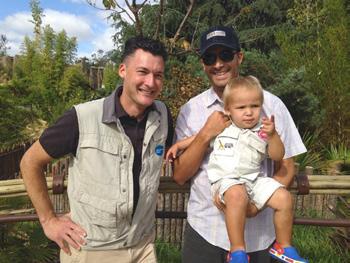
Yea buddy! @ZooKeeperRick & my own lil zookeeper on the #TigerTrail @sdzsafaripark @RaoulFOX5
Amazing exp! I went x3 around the Zoo! Loved feeding giraffes, close w/panda, hippo, elephant & lion! @CristyStJohn you said it
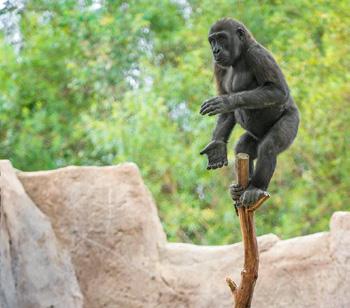
Te Entertainer...and not just any entertainer! Tis is my favorite gorilla, Monroe, doing what he does best: entertaining the crowd and trying to be the center of attention. Little Joanne, the newest member at the Safari Park, has been taking all the attention lately, and Monroe wanted to make sure we knew that he was the one to watch! He climbed to the top of the branch and started clapping, to the delight of everyone watching. Oh, how I adore this little guy! He captured my heart 3 years ago and he still has it now.
Laurie Rubin
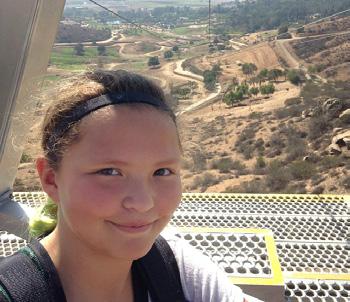

Another perfect day! #Ziplining 2/3 of a mile over animals was amazing! #sdzsafaripark #breathtaking #epic @funkyvicmedina
I have the Visayan Warty Pig swirly-do without even trying.
Todd Wayer
@sandiegozoo is easily the best zoo I’ve ever been to—especially as the #insidelooktour let us meet some of the animals. #happy @louise_otoole87
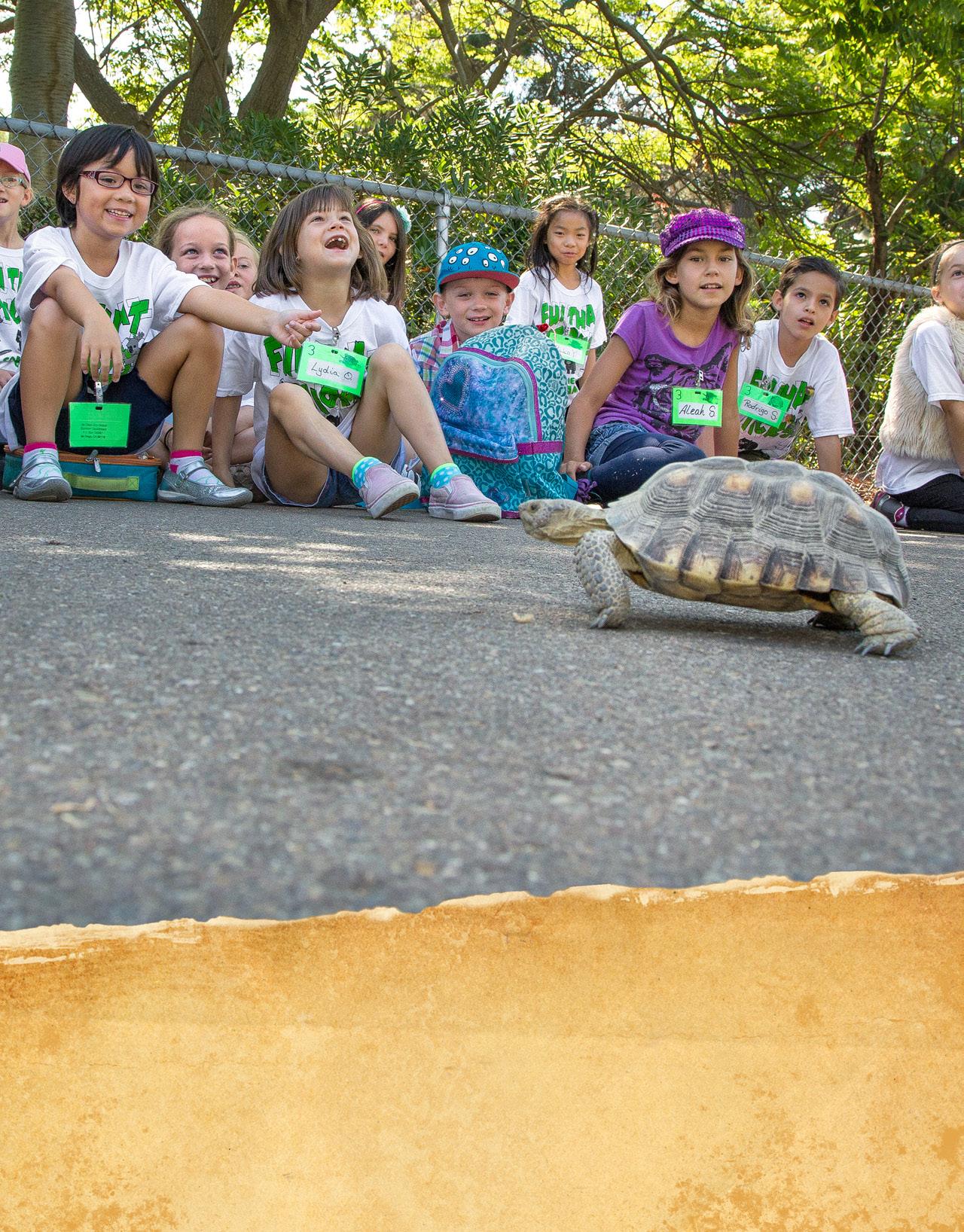
There may still be a chill in the air now, but summer will be here before you know it—and we have the perfect Summer Camp experiences at the Zoo and Safari Park for your children! There are options for every age from toddlers to teens, and all will have a grand time discovering wildlife, exploring outdoors, and jumping right into hands-on fun. It’s never too early to start thinking about summer in San Diego. Check out the options at sandiegozoo.org and sdzsafaripark.org to plan a summer adventure your children won’t forget!
By Peggy Scott ASSOCIATE EDITOR
Photos by Ken Bohn SDZG PHOTOGRAPHER
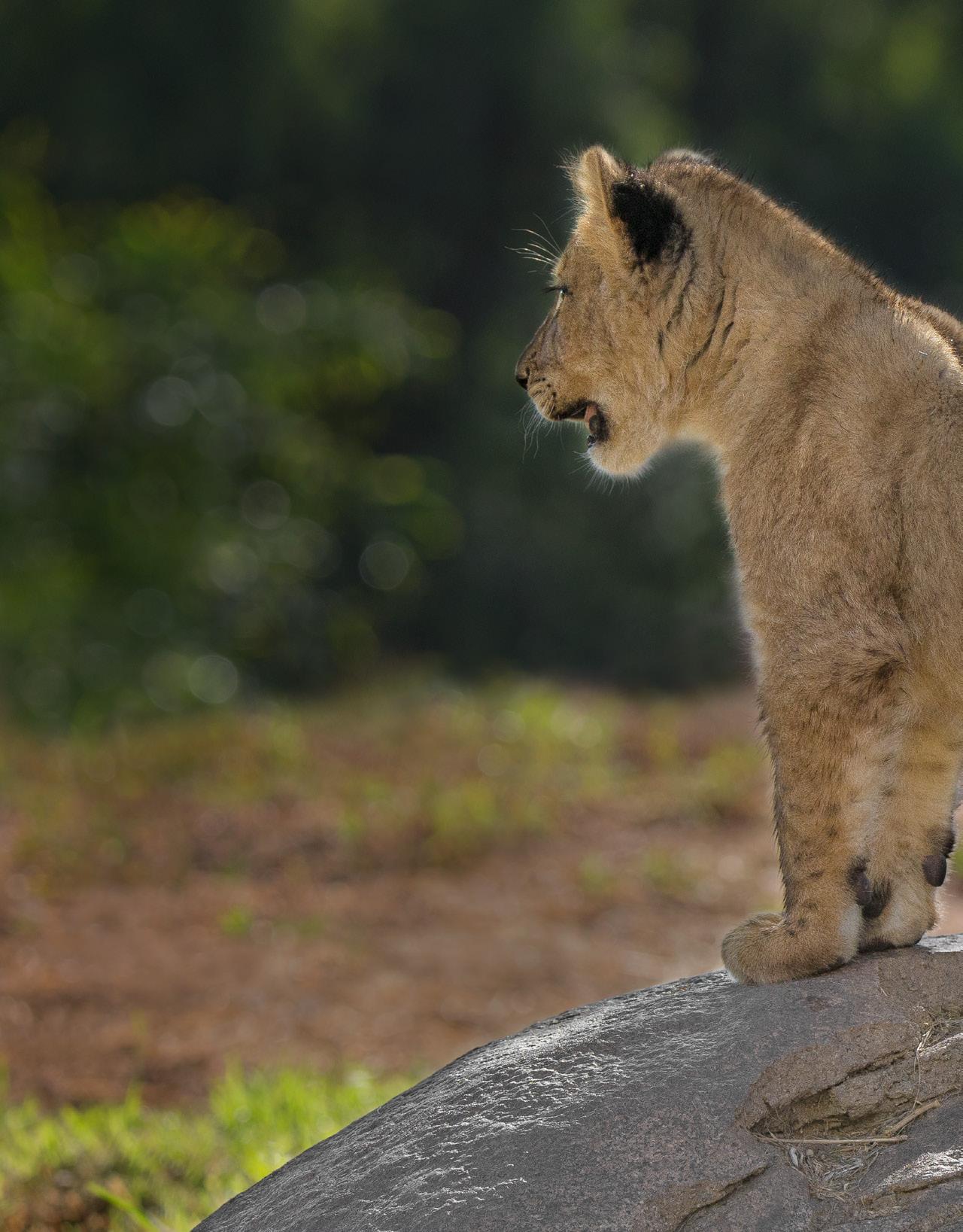
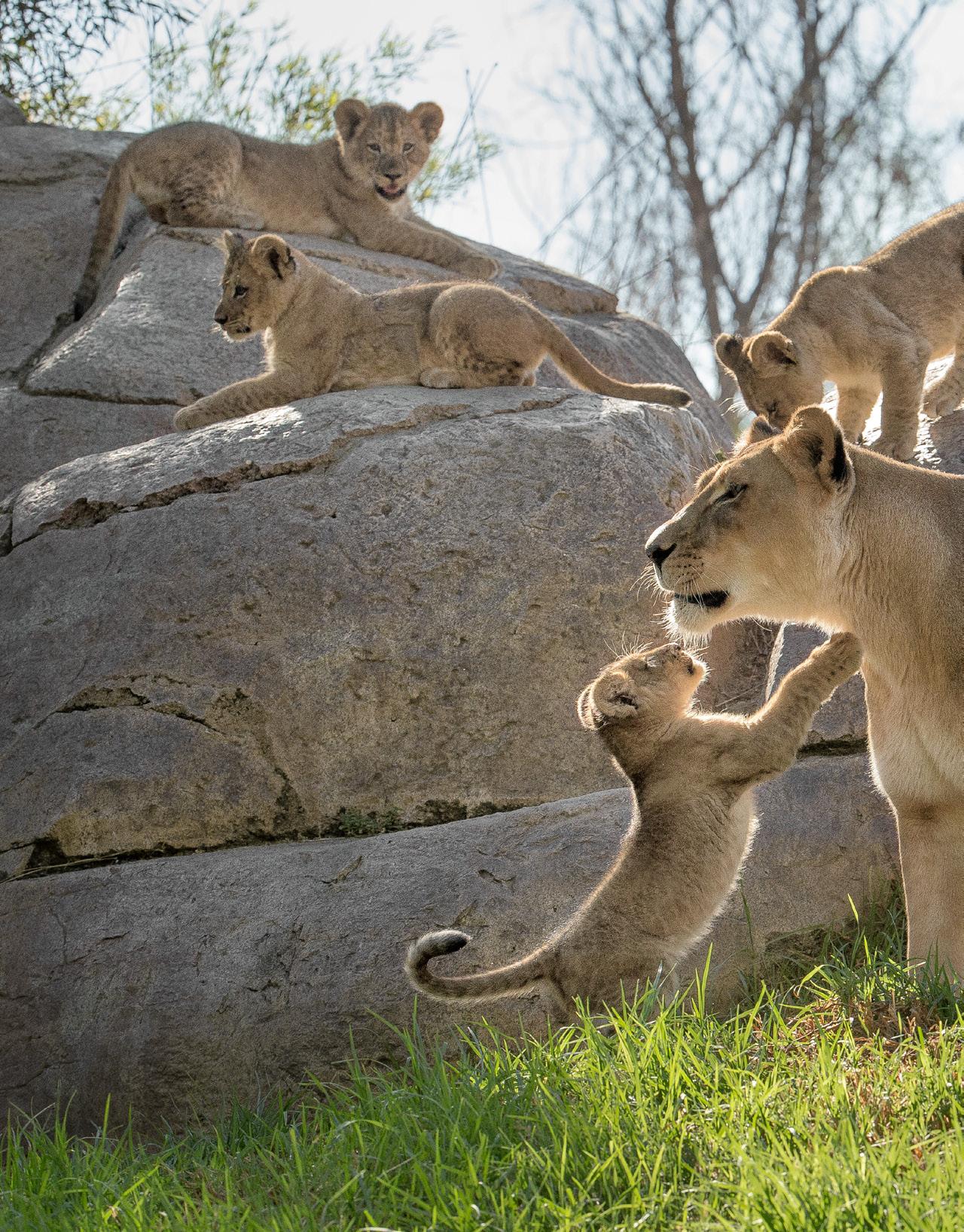
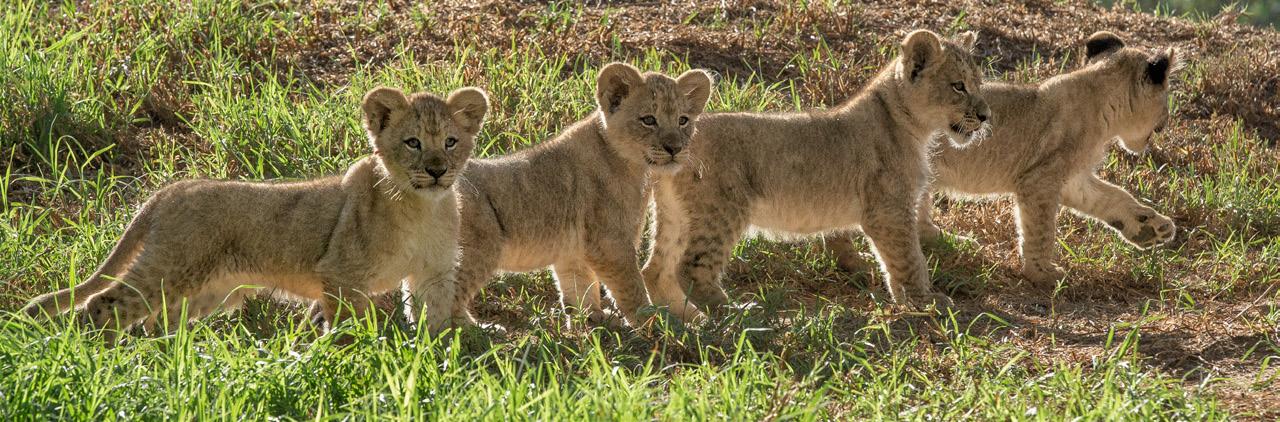
African lions Izu and Oshana have four new reasons to be proud. Ernest, Evelyn, Miss Ellen, and Marion, their latest litter of cubs, are now strutting their stu f at the Safari Park’s Lion Camp: Te Sylvia G. Straton Lion Savanna. Born on June 22, 2014, the sassy siblings are keeping their parents busy and Park visitors delighted. “ Tey are con fdent, adventurous cubs,” says Tony Franceschiello, a senior keeper at the Park. “ Tey are catching on to everything really quickly and making a lot of progress. Te family is living just like a lion pride should.”
As Tony explains, the successful integration of mother, cubs, and father is the goal with any lion litter. “Lions are the only social cats. Tey live in a pride,” he says. “Getting them out here together as a group replicates what would happen in the wild. Oshana would go of and have her cubs on her own, and when they’re old enough, she would bring them back to the pride and introduce them, and then everyone is together.”
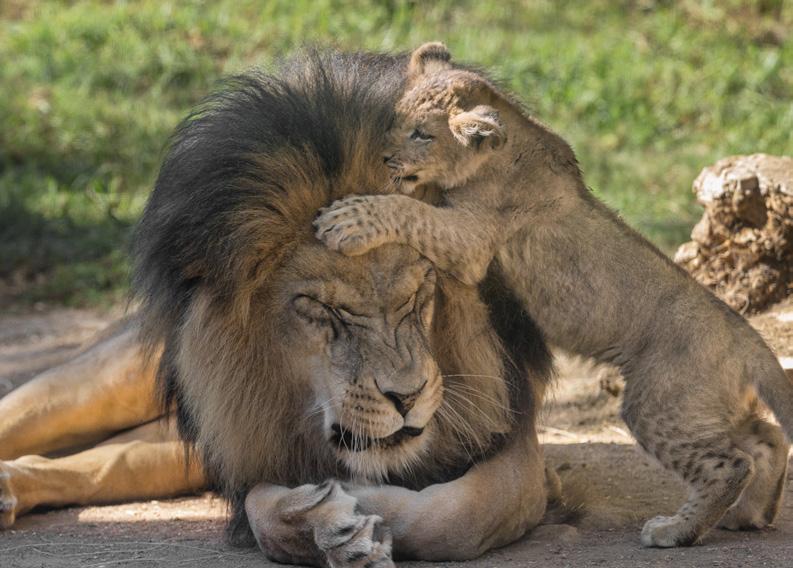
Pride building is, however, a process and doesn’t happen overnight. “Izu and the cubs got to see each other through a ‘howdy door’ that allowed Izu to smell and lick the cubs prior to the complete introduction,” Tony says. Te cubs were almost four months old when the family was allowed access to the exhibit area. Oshana and the cubs were let into the grassy habitat f rst, and then Izu joined them. He was the picture of paternal patience as the youngsters took turns pouncing and climbing on him and playing with his tail. “He’s always been a really good, interested dad and took it all in stride,” Tony says.
Te cubs are named in honor of longtime San Diego Zoo Global supporters Ernest and Evelyn Rady and Marion Wilson, and in memory of Miss Ellen Browning Scripps, the Zoo’s f rst benefactor. Keepers describe the feisty foursome as “active, vocal, and curious.” With four rambunctious bundles of fur to care for, keepers have various ways of telling the youngsters apart. “Each cub is identi fed by a shaved spot,” Tony explains. “Evelyn has a patch on her lef shoulder, and Miss Ellen’s is on the upper part of her lower back. Marion’s spot is on her lef hip.” And Ernest? “He’s easy—no marks at all.”
While the lion cubs may look quite a bit alike, each has a distinct personality. Ernest was the smallest of the cubs and, as Tony says, the scrappiest. “Ernest is really
smart and has taken to his training very well,” adds Amy Whidden-Winter, a senior keeper at the Park. “His voice is so loud and deep—he really sounds much bigger than he is.”
“He’s the loudest by far and the most tenacious, but he’s also the one that sticks closest to Mom,” Tony adds. “He was the f rst to go a f er the rib bones we o f ered them but the last to eat meat.” Speaking of eating, Evelyn, the lightest in color and largest of the girls, is a good little plate cleaner. “She always ate the most, and would even doze o f and nurse in her sleep!” Tony recalls.
Perhaps being well fed helped Evelyn’s personality grow. “She is very clever and of en teams up with her sister, Marion, to jump on Izu,” Amy says. “She expresses her opinion when she doesn’t understand what’s being asked of her by sitting very pretty and hissing very loudly.” Marion, on the other hand (or paw), prefers a more stealthy approach. “She is the
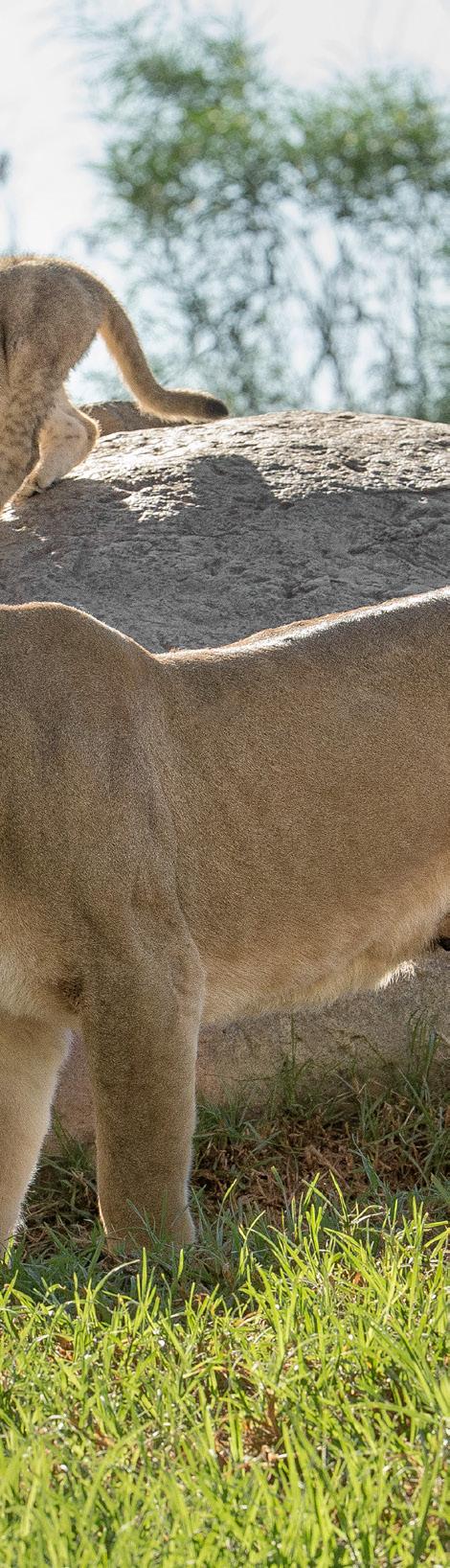
Above: The “four” the merrier! Ernest, Evelyn, Marion, and Miss Ellen are growing into confident young lions. Left: Izu is the picture of patience with his rambunctious offspring. Below: When Oshana says now, she means now.
quiet watcher with a big attack,” Amy says. “She will lie so still and look so sweet, and then, POW! She jumps on Mom’s back or Dad’s head. She sits very nicely through training but is not really interested in learning too much at this time.” Miss Ellen is in contrast with her sisters in more ways than one. T e smallest of the girls, Miss Ellen is darker in color with plenty of spots. She could also be called Miss Manners. According to Amy, she is smart and focused. She does very well with training and comes right over when called.
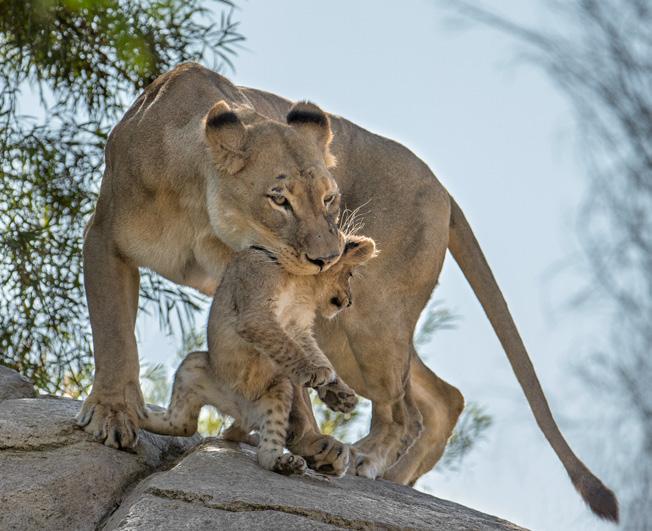
When it comes to learning the ropes about life at Lion Camp, these cubs got a headstart in comparison to previous litters. “We now have a habitat area called Cub Camp, which was funded by several donors, that bridges the time between being in the den and out in the main exhibit,” Tony explains. “ Te cubs can learn climbing and jumping skills they would need in the wild—and in Lion Camp.” Once it’s time for the cubs’ debut, they are already familiar with logs and rocks and other items they will encounter in the main area. It’s great for the cubs, although Mom and Dad may not agree. “Te adults were used to being able to climb up on the rocks for a break from the kids,” Tony says. “Now the little ones can follow them everywhere!”
Cub Camp also ofers an important bu fer zone for the di ferent groups at Lion Camp. Ken and Dixie, Oshana’s previous cubs, were hand raised by keepers at the Animal Care Center, and the now oneyear-old youngsters are their own group at Lion Camp. Because Ken and Dixie weren’t raised by Oshana, she and the other adult female, Mina, seem to regard the youngsters as a rival pride.
According to Tony, “ Te adult females are very concerned about Ken and Dixie’s presence, now that there are four new cubs around. Tank goodness for Cub Camp! T is way, everyone has their own comfortable, separate space, and the groups can take turns in the bigger exhibit area.”
Te time that cubs spend in Cub Camp also gives keepers the opportunity to begin husbandry training. “We teach them the basics. First rule: no paws! Take food nicely,” Tony explains. “ Te technique is standard operant conditioning: we reward them with a treat for being calm and cooperative and for responding to our requests to sit or lie down.” Te keepers treat them the same way they do the adults, because having manners is important . As Tony points out, “If you don’t want a certain behavior in an adult lion, don’t allow it in cubs.” Tony also notes that they’re catching on fast. “Once they associate us with food, we’re their new best friends.”
A trusting bond is very important in such a relationship, and the keepers don’t take it for granted. “I enjoy them so much and feel so very lucky to be a part of their lives at this stage,” Amy says. “ Tey’re growing and changing so quickly. Tey may be di ferent tomorrow!”
You can keep up with the pride’s progress at Lion Camp. Izu, Oshana, and the four cubs are usually on exhibit from about 9 a.m. to noon, and then Izu and Mina get their turn, followed by Ken and Dixie. “It’s always interesting,” Tony says. “Every day with lions is an adventure.” n
Want more cub cuteness? The digital version of the January ZOONOOZ includes additional photos and video!
Many thanks to all our sponsors, food and beverage partners, volunteers, auction donors, entertainers, and event guests who helped make the 2014 San Diego Zoo Food & Wine Celebration a success! With your help, we were able to raise awareness and muchneeded funds to support San Diego Zoo Global Wildlife Conservancy. On behalf of everyone at the Zoo, we thank you for your continued generosity and support!
PresentingSponsor
EventSponsors
Aurora World
Etching
Albert’s Restaurant in the San Diego Zoo
Allison Weisman’s Custom Confections
Bice Ristorante
Big Front Door
Blue Point Coastal Cuisine
Bluewater Boathouse
Bombay Exotic Cuisine
Casa De Bandini Casa De Pico
Casa Guadalajara
Casa Sol Y Mar Catering by
Rubin Cookies by Design
Diner
Diego
Dave & Buster’s
Torito
European Cake Gallery
Flavors of East Africa
Gossip Grill Greystone
Hacienda de Vega
Harrah’s Resort
Licks
InterAmerican Coffee, Inc.
Intoxicated Desserts
It’s A Piece A Cake
Jake’s Del Mar
Jimbo’s…Naturally!
Julian Pie Company
Kind Snacks
Luna Grill
Mimi’s Café
Muzita Abyssinian Bistro
Nicolosi’s
Italian Restaurant
Nobu San Diego
Nothing Bundt Cakes
The Oceanaire
Seafood Room
Olivos Del Mar
Osetra The Fishhouse
Osteria Panevino
Pizzeria Mozza, San Diego
The Prado at Balboa Park Pure Cupcakes
Rock Bottom Brewery
Rotisserie Affair Catering Royal India
Sadie
Sheraton


By Karyl Carmignani STAFF WRITER
by Ken Bohn
SDZG PHOTOGRAPHER
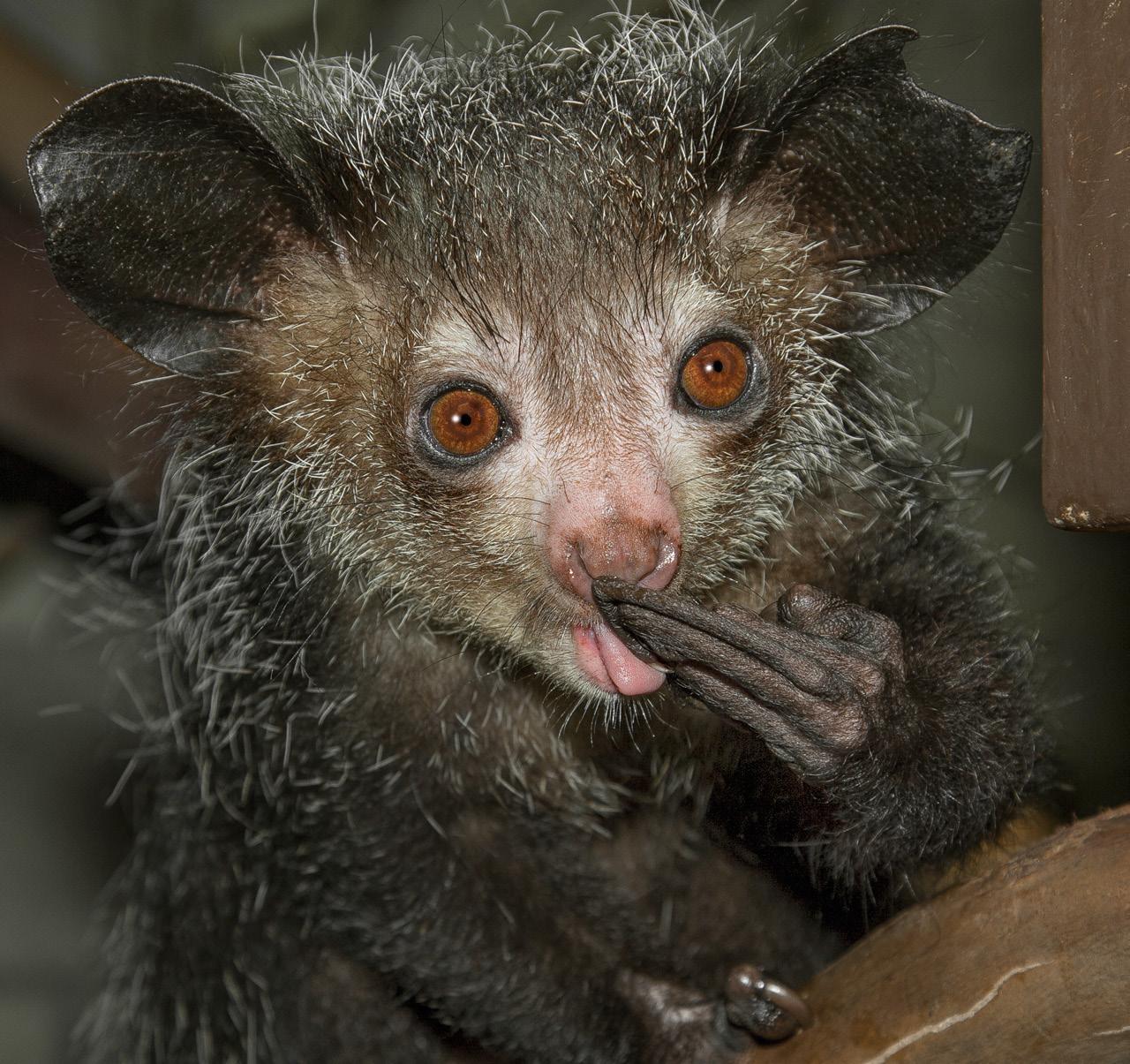
UNUSUAL DOESN’T BEGIN TO COVER IT! With a face somewhere between adorable and frightening, a steady, golden-eyed gaze, continuously growing rodent-like teeth, and long, pencil-like f ngers, the nocturnal aye-aye Daubentonia madagascariensis of Madagascar is as fascinating as it is mystifying. Nesting high in trees by day and scouring the forest for nuts, seeds, nectar, fungus, and insect larvae by night, the aye-aye was classi fed as a rodent until the mid-1800s, when it was f nally accepted into the wet-nosed, primitive primate grouping Strepsirrhini with lemurs of Madagascar, galagos and pottos from Africa, and lorises from India and southeast Asia. But the wily aye-aye, with its quirky habits and peculiar adaptations, remains in a family all its own.
Weighing fve to six pounds, with little size di ference between the sexes, the aye-aye (pronounced eye-eye) has a fu f y tail that is longer than its body and wraps cozily around
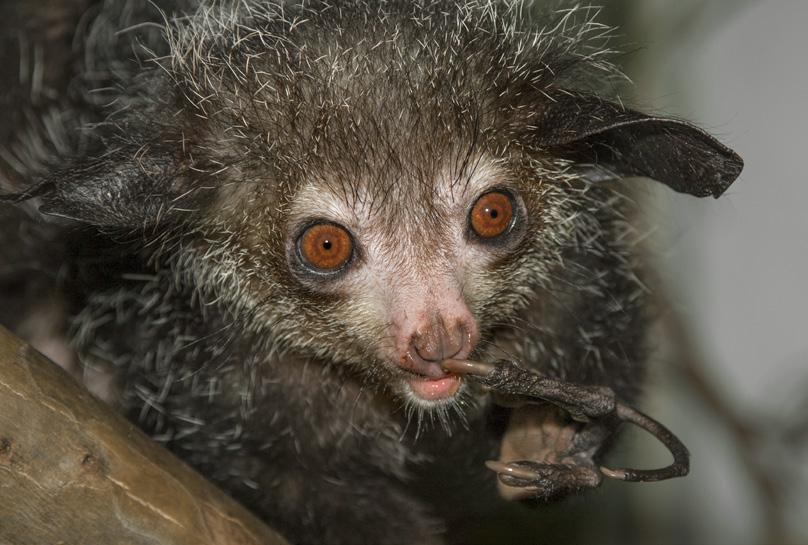
and veggies are provided with the skin still on, wrapped in paper, and secured in a box; otherwise, the animals won’t touch it. “ Tey like to work for their supper,” Joe said. One special treat is a tiny cup of honey, which the aye-aye swi f ly scoops into its mouth with that long middle f nger.
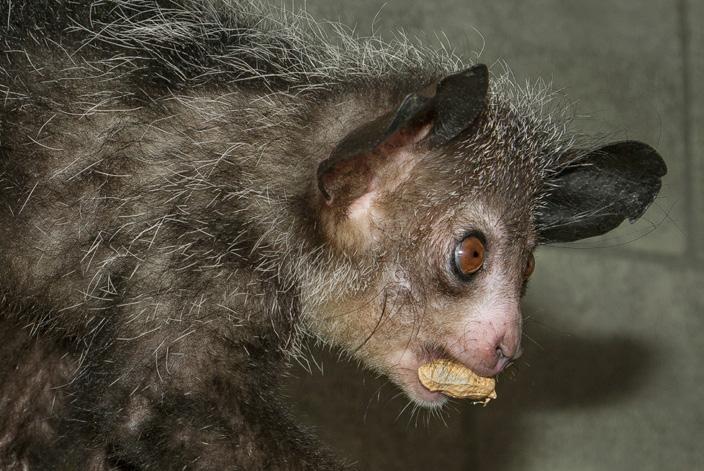
How do keepers know if their charges are doing well if the animals are sleeping when they arrive? To get a good visual, keepers crinkle a peanut in its shell to wake them up, and the drowsy animals stretch and stroll down the log for
the animal as it sleeps. It is dark colored with two layers of hair: coarse, black hair with white tips and shorter, sofer, of-white hair. Te most distinctive trait of this prosimian is a thin, elongated, and versatile middle f nger on each hand. This handy tool is used to tap on tree trunks to f nd grubs. When its keen ears detect a hollow, it uses its sharp teeth to rip into the wood, and that third digit to probe into crevices and holes in search of larvae and extract the goodies it f nds. T is method of f nding and extracting larval prey is called percussive foraging, and by practicing it, the aye-aye f lls the same niche as woodpeckers and squirrels in other parts of the world. Te specialized f nger is also used as a spoon, rapidly f icking the food from the source to its mouth at over three strokes per second. Large hands, compared to its body size, make tapping for prey while hanging on tree branches a bit safer. Te aye-aye has the largest brain among the prosimians. Yet despite these remarkable attributes, the aye-aye is ofen feared, persecuted, and hunted in its native land.
At the San Diego Zoo, an aye-aye named Styx and her future mate, Nirina, are getting acquainted. Tough holed up in their respective nest boxes by day, motion-detecting cameras reveal their nighttime activities: “hunting” for food. Te aye-aye diet is presented in ways that challenge the primates. “We place mealworms and wax worms inside pieces of wood, boxes, bamboo, and gourds so they can exhibit their natural foraging behaviors,” said keeper Joe Milo. Fruits
the treat. Te aye-ayes are bigger in person than they look in photos, and their f ngers look even longer. In addition to sleeping separately, each of the Zoo’s aye-ayes has its own take on creature comforts. “Styx has an elaborate nest she built with leaves, paper, branches, hay—anything she could get her hands on,” said Joe. “Nirina, in contrast, just has a few twigs of to the side and sleeps on the foor of his nest box.” Upon arrival last summer, Styx “grumble-growled” at her keepers, but now she’s settled in and is gentle as can be. Te pair will be housed together for breeding. “Everything these animals do is interesting,” remarked Joe. And we are fortunate to have them in our midst, day and night. n
For more images of the intriguing aye-aye, check out the digital version of the January issue of ZOONOOZ
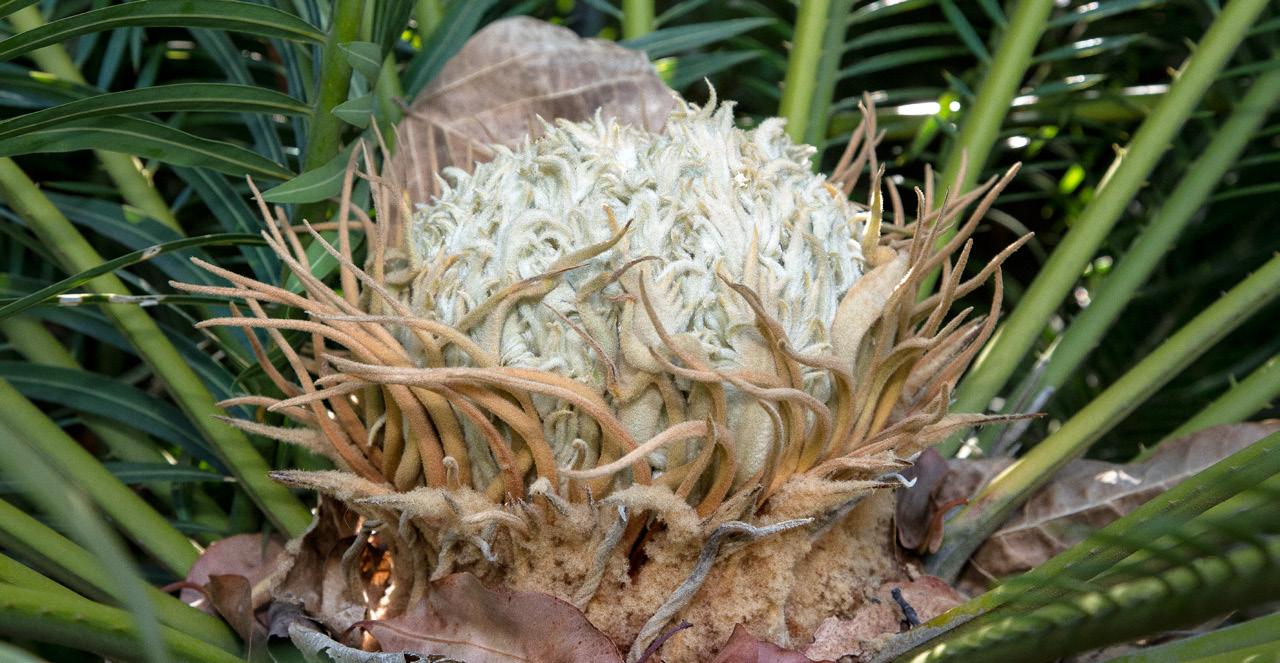
Some cycads, like this sago palm, are a familiar sight to many. The Zoo’s new plant brochures will open eyes to the astonishing diversity of cycads—and other plants—to eager explorers.
By Wendy Perkins STAFF WRITER
Leaf by leaf, fower by fower, more than 700,000 plants add to the lush beauty of the San Diego Zoo. But there’s more to these green wonders than just their looks. New self-guided plant tour brochures have “blossomed” and are now available to help guests discover and connect to our botanical treasures.
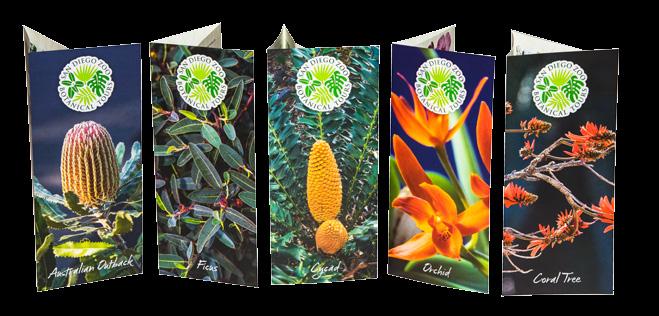
While this crop of pamphlets is new, the idea took root quite a while ago. For the last 20 years, the Zoo’s Horticulture Department has provided simple photocopied fyers that led guests to speci fc plants. Yet as time moved on, the information in some of them became dated, and the team had ideas for more tours. “We were thrilled to learn that a donor wanted to be part of supporting the botanical collection,” explained Mike Bostwick, the Zoo’s horticulture curator, now retired. “ Te funding made it possible to add more themes as well as make the brochures as beautiful as the plants!”
Te horticulture team worked with the Zoo’s design team to create compact guides to special aspects of our collection. To facilitate f nding the fora, numbers accompanying each entry in the pamphlet correspond to markers near the highlighted plant. Brief text
shares botanical points of interest, fun facts, and conservation concerns, and many of the tours end with a web link to a short video about the plant group.
Currently, there are one dozen tours from which to choose, from the parsley, sage, rosemary, and thyme of the Culinary Trail to the carnivorous plants of the Bog Garden, and from the fascinating fcus (fg trees) to ancient cycads and more. On your next visit to the Zoo, pick up one (or more!) of the guides from the information booth and delve into the “green scene.” You’ll discover a whole new side of the Zoo! n
We are grateful to the Daphne Seybolt Culpeper Memorial Foundation, whose generosity made the new plant tour brochures possible.
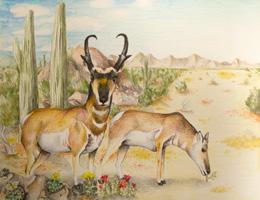
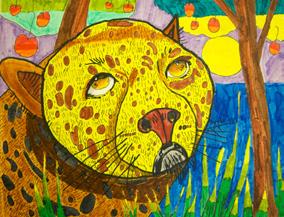
from kindergarten through high school to raise awareness about endangered species and have a great time doing it! Te 2015 Saving Endangered Species Youth Art Contest is an integral part of national Endangered Species Day, taking place on May 15, 2015. Te contest provides an opportunity for students to find out more about endangered species in the United States and express their knowledge and support through art—as well as win great prizes.
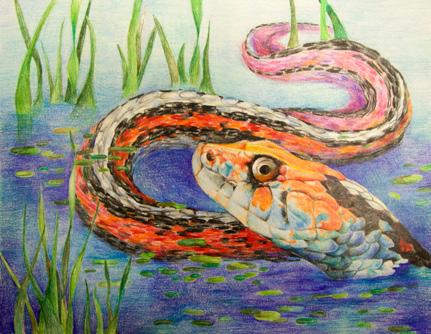
Artwork for the contest should depict species native to the United States that are currently threatened or endangered. Participants can choose mammals, birds, reptiles, amphibians, and fish; invertebrate animals like clams, snails, insects, and crustaceans; flowering plants; and non-flowering plants like conifers, ferns, and lichens. Alternatively, participants can choose a US species previously on the endangered species list that is now considered recovered. Participants are strongly encouraged to have their artwork tell a positive story of species recovery or efforts to help save a species. Judges also appreciate species depicted in their natural habitat.
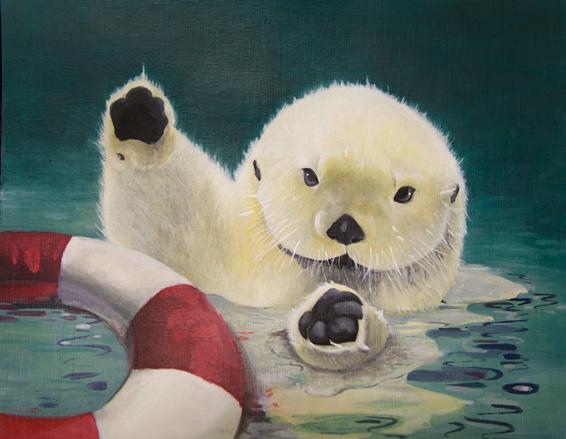


Winners will be chosen in four categories: kindergarten through grade 2; grades 3 through 5; grades 6 through 8; and grades 9 through 12. From these, a grand-prize winner will also be selected. Submissions must be the entrant’s original work and depict a recognizable threatened or endangered species. Photographs, computer-generated images, and traced images will not be judged. Acceptable media for submissions are: crayon, ink, acrylics, watercolor, colored pencil, scratchboard, or paper collage. Artwork in pastels, oil paint, chalk, plain black pencil, or charcoal cannot be accepted. Te entries will be judged on the basis of these criteria:
n Concept—How well the work relates to the contest’s Saving Endangered Species theme
n Composition—How well the elements of line and form work together
n Color—How color enhances the artwork
n Expression—How imaginatively the work conveys an idea or emotion.
To enter, participants must complete the online registration at endangeredspeciesday.org and then fill out the artwork identification form that will be sent by email. Send this identification form along with the artwork to: Endangered Species Day Art Contest, Ogden Museum of Southern Art, University of New Orleans, 925 Camp Street, New Orleans, LA 70130. Entries must be postmarked by March 1, 2015; late entries will not be judged. Each of the grade-category winners will receive a special plaque and $25 worth of art supplies. Second- and third-place finishers and semi-finalists will receive a special certificate. One grand-prize winner will receive a round-trip flight to Washington, D.C. for him/herself and one guardian to attend an award ceremony in May. Te grand-prize winner will also receive a special art lesson from a professional wildlife artist and $50 worth of art supplies. Visit endangeredspeciesday.org for complete contest rules and information and the link to online registration.
By Lisa Townsend
SENIOR EDUCATOR, SAN DIEGO ZOO
by Tammy Spratt
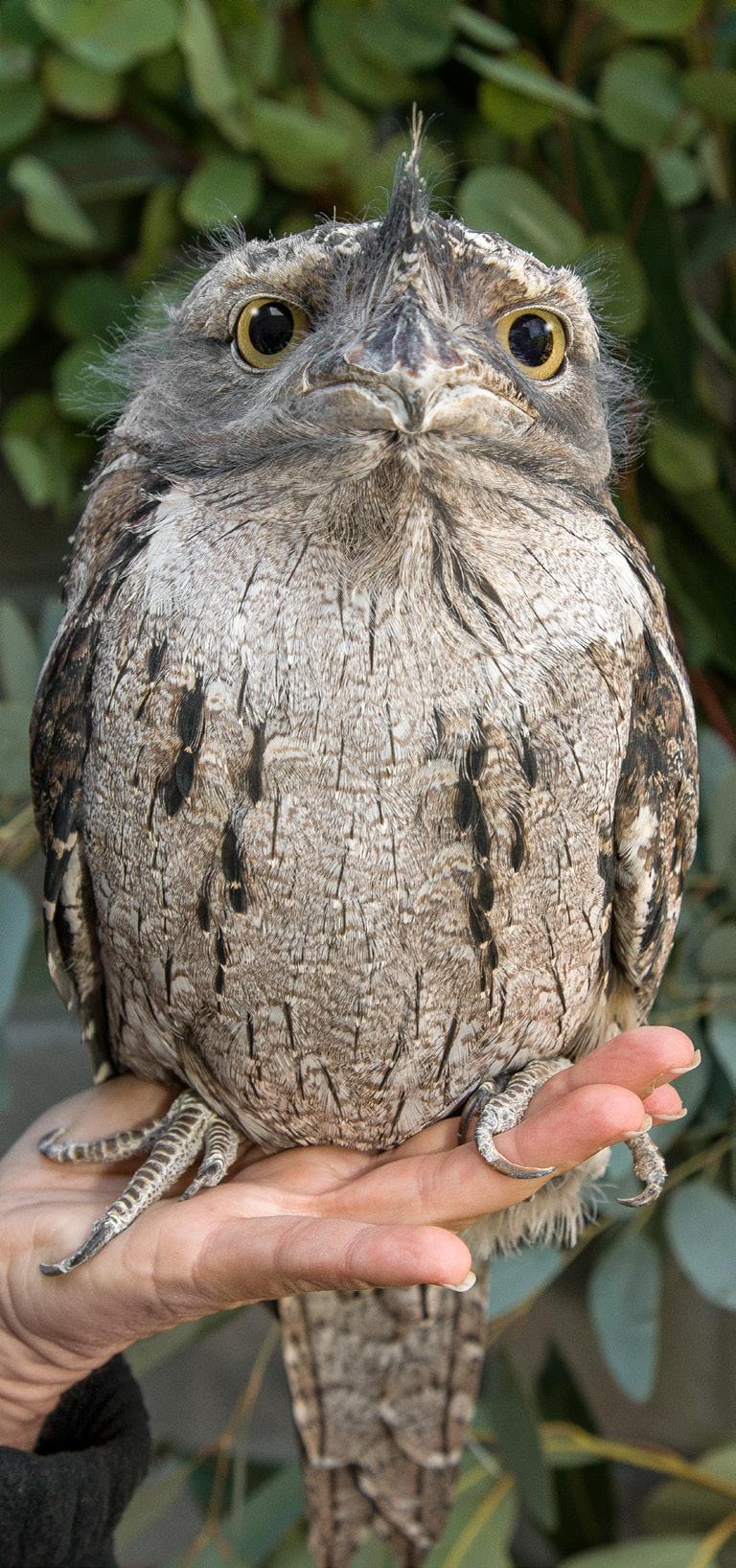
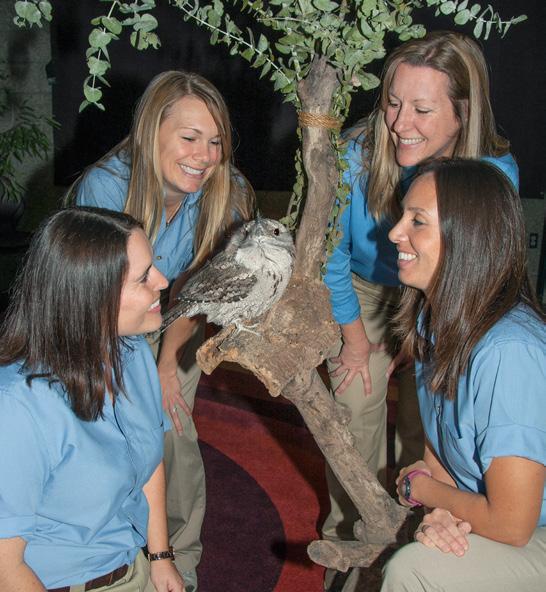
The San Diego Zoo’s Australian Outback has a fabulous new ambassador: Barkley, a tawny frogmouth. Tawny frogmouth? More like mottled heartthrob, and he’s got a burgeoning fan club. In spring 2014, that handsome face began making personal appearances in the Outback Classroom. Barkley was soon dropping by Inside Look tours and Exclusive VIP Experiences to meet and greet Zoo guests and pose for pictures. By summertime he had added three weekly engagements with our camp classes. He’s a natural!
Aussie Outback’s Leading Man
What is the key to casting an animal ambassador? Barkley is the total package: handsome, funny, and cool. You’ve got to be able to hold your own when part of an ensemble cast that includes big stars. Barkley’s appearance is unique—startling but weirdly beautiful. He happily perches for questions and photos. No autographs, though.
Barkley’s brooding good looks put him in league with other Aussies: Hugh Jackman, and Chris and Liam Hemsworth. Like his human counterparts, Barkley’s strong brow, deep-set eyes, and intense gaze convey a rugged, yet dreamy, masculinity. If he wants to be seen, Barkley gets noticed.
If he’d rather blend into the background, his outstanding camouflage keeps him hidden. His dappled plumage allows him to “be the bark.” While perched, he may assume an upright posture with head and beak pointed skyward and his eyes closed. T is pose and the stippled, cryptic feathers make a roosting frogmouth look just like a broken
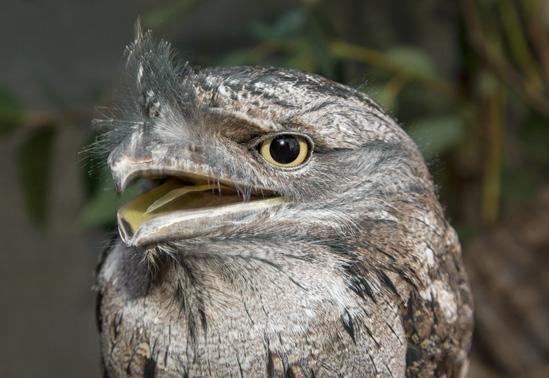
Not one for drama, Barkley prefers an unru fed lifestyle. During the day, tawny frogmouths perch on a tree branch, camou faged as part of the tree—the proverbial bump on a log. Tey are not the most active of birds. Te majority of their time, even when awake, is spent perching. T is is mostly due to their hunting strategy as sit-and-wait predators. Tawny frogmouths remain motionless while observing ground-dwelling insects and rodents. Suave and stealthy, the birds have fringed feathers that result in silent f ight, and when they see a bug or mouse, they glide down and pounce on it. Tey attack with their strong beak before returning to their perch, where the meal is swallowed whole. Large prey is ofen beaten against the perch prior to being eaten.
Barkley also has a curious, hidden side: the inside of his mouth is bright yellow! If a frogmouth feels threatened, it opens its beak, revealing the brilliant-yellow lining, and threatens with loud, clacking sounds. Profound unhappiness elicits an ear-piercing, blood-curdling scream. Transf xed as you stare into that gaping maw, you may notice that the tawny frogmouth’s tongue has a long, translucent, paper-like tip, the function of which is not known.
An equally bold and much less attractive defensive role is the “skunk of the sky.” Tese birds can wage an aerial bombardment, spraying an abundance of foamy fecal material over a wide area to ward of a threat. Repeat performances are seldom required.
Sometimes Barkley spends his nights just “cold chillin’.” Well, to be precise, he may appear frozen. Tawny frogmouths experience torpor on cold, winter nights, conserving energy when food may be scarce. Torpor is a state of lowered physiological activity characterized by a slowed metabolism and heart rate, and a lower body temperature. Tawny frogmouths are one of the largest birds known to use this strategy. However, living the “suite” life at the Zoo, Barkley’s perch is climate controlled.
Chicks Dig Him!
tree branch. Rictal bristles are the feathers found above his beak. Tey are believed to ofer protection for the tawny frogmouth’s eyes as it consumes wriggly prey. Te bristles may also provide tactile feedback, like the whiskers on a dog or cat (or on Zach Gali fanakis).
Don’t be too quick to typecast him as “the owl,” since he is not a raptor but a member of the Caprimulgiformes order of birds. Tawny frogmouths are ofen mistaken for owls, but they are more closely related to nightjars (think poorwill and whippoorwill birds). Like some celebs, Barkley’s “family name” has also been associated with scandal: the ugly reputation of goatsucker! Tat label derives from an ancient belief that the birds fitting about goats at dusk were taking milk from the goats’ udders. In reality, Caprimulgiformes prey on the insects kicked up or attracted by goats. Tere is now a PR campaign of sorts underway to replace the name goatsucker with nightjar.
Barkley has quite an entourage—his dedicated fock of handlers. His training consists of shaping and reinforcing behaviors that will make him comfortable on his trainer’s hand and in front of an audience. Tawny frogmouths are mostly solitary in the wild, but together, we have developed a positive working relationship. When we f rst approach his door we may hear him “crackling” to demonstrate mild annoyance. We’ve come to think of this as a combination of tacit complaints: “Where have you been?” and “Ugh, I’m sleeping.” Once perched on a hand, he begins a sof , deep, and low contact call… “oom, oom, oom.” Te “oom” is barely audible; it is more of a sof vibration, a feeling.
And Barkley sure does elicit feeling—usually love at f rst sight. He really “clicks” with Zoo guests. Whether it’s a reaction to his surprising visage, an appreciation for his cool demeanor, or a deep connection to his Australian homeland, Barkley’s got charisma. It just goes to prove: stars aren’t all made—they’re hatched! n
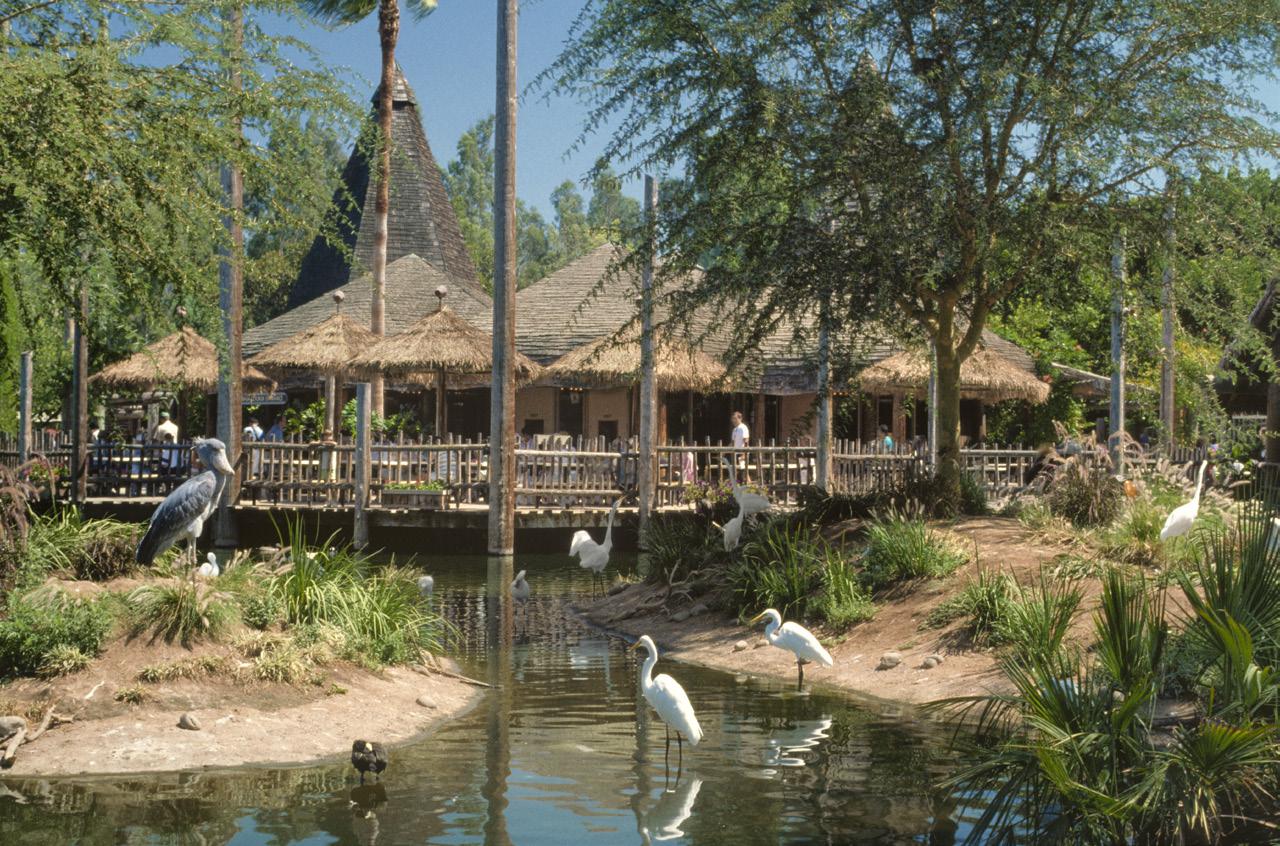
Water conservation is a top priority at the Zoo and the Safari Park. We use water purification methods, repair leaks quickly, store rainwater, and do whatever it takes to save this precious resource.

By Karyl Carmignani STAFF WRITER
To find out more about our water-wise ways, watch the video included in the digital version of the January issue of ZOONOOZ

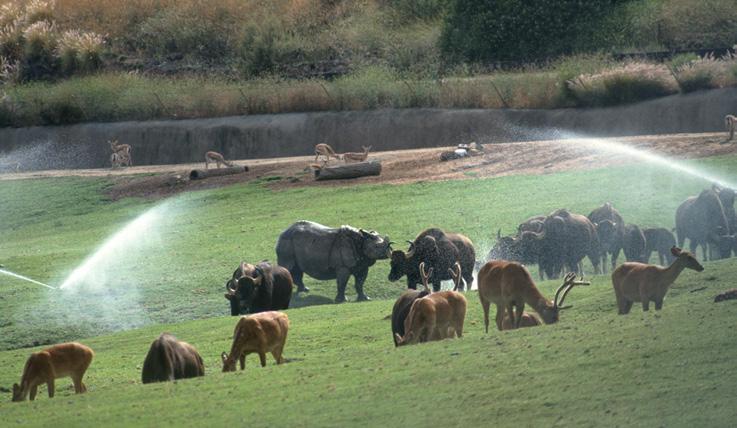

Keeping the field exhibits green (left) requires some water, but it is used judiciously, and much of it comes from a reservoir at the Safari
months.
While more than two-thirds of our blue planet is covered with water, much of that is salty ocean water. Only about 2.5 percent is freshwater, most of which is frozen solid in the icecaps of Antarctica and Greenland. Less than one percent of the world’s freshwater is available for human consumption! Tat f nite amount is tapped for irrigation needs as well as household, municipal, and industrial uses. California is reeling from extreme to exceptional drought conditions, with no relief in sight. San Diego is under a mandatory Level 2 Drought Alert as parched landscapes grapple with the worst water crisis in a generation. Lakes and reservoirs with telling “bathtub rings” several feet above current water levels illustrate meager rainfall and snowpack for three years running, combined with sizzling, record-breaking temperatures and 1.3 million thirsty residents. Tese chronic symptoms of drought point to a need for urgent measures to conserve water.
According to the San Diego County Water Authority, the San Diego region relies on three main water sources. Over half of our water arrives from the Rocky Mountains via the Colorado River over 1,000 miles away. About 20 percent of our water trickles of the melting Sierra Nevada snowpack in Northern California, fowing into the Sacramento-San Joaquin Delta, where it is pumped through the California State Water Project. Te rest comes from local supplies like surface water, groundwater, and recycling. As climate change impacts water sources and human populations continue to rise, creative solutions are needed to secure our place at the “watering hole.”
One such solution is a desalinization plant being built in Carlsbad, California, that could purify 50 million gallons of seawater each day. Another is San Diego’s Water Purifcation Demonstration Project (aka Toilet to Tap), which produces water more pure than tap water and meets all the state and federal drinking water standards. (Getting people past the “yuck factor” is another matter.) Te frst 15-milliongallon-per-day puri fcation facility should be in operation by 2023; water puri fcation technology could account for up to one-third of San Diego’s water supply in the future. Te Water Authority’s eforts have vastly improved the reliability of the region’s water supply and have become a national model for freshwater solutions.
To inspire people to conserve water and to gain a deeper under-
standing of where our water comes from, the San Diego County Water Authority launched the When in Drought campaign to ofer watersaving tips. Visit www.sdcwa.org/whenindrought to f nd the latest information about water conservation rebates, incentives, and restrictions in your area.
San Diego Zoo Global has long realized the value of water and the importance of conserving it. In the 1990s, the ever-arid Safari Park received funding from the San Diego County Water Authority to create a reservoir on Park property, which resulted in much less potable water being taken from the public water supply for irrigation. Today, much of the Park’s landscape is satis f ed by water from two wells and reclaimed water. Additionally, the horticulture sta f works diligently to repair irrigation leaks as soon as possible. Sta f also spent months creating a comprehensive map to locate the shut-o f valves to pipes using GIS (Geographic Information System) technology, avoiding water loss when a leak occurs. Preventing and repairing water leaks are top priorities at the Zoo and Safari Park.
Te Zoo invests a great deal in f ltering and disinfecting water in animal exhibits. “Pools would need to be drained and cleaned on a daily basis, depending on the animal involved, and the water would never be as safe as it is with the ozone disinfection,” explained Kevin Dempsey, water quality lead at the Zoo. “We have always tried to maximize our water-conservation eforts, so there is little we need to change in response to the drought.” For instance, the African river hippo pool has only been drained a couple of times in 20 years. “Without f ltration, this would be impossible,” he added. Te Terrace Lagoon, home to koi fsh, which are notoriously f nicky about their water quality, has a state-of-the-art f ltration system that uses ozone gas to remove impurities and recycles the clean water back into the 18,500-gallon pond. In addition, six large rain barrels on Zoo grounds can capture over 3,500 gallons of water—if and when it rains—that can then be used on the landscape during dry months. Water is a precious commodity that unites us. Using it wisely will beneft plants, animals, and ourselves. It is critical that we all do everything we can to conserve water during this dry spell, as every drop in the bucket counts. n
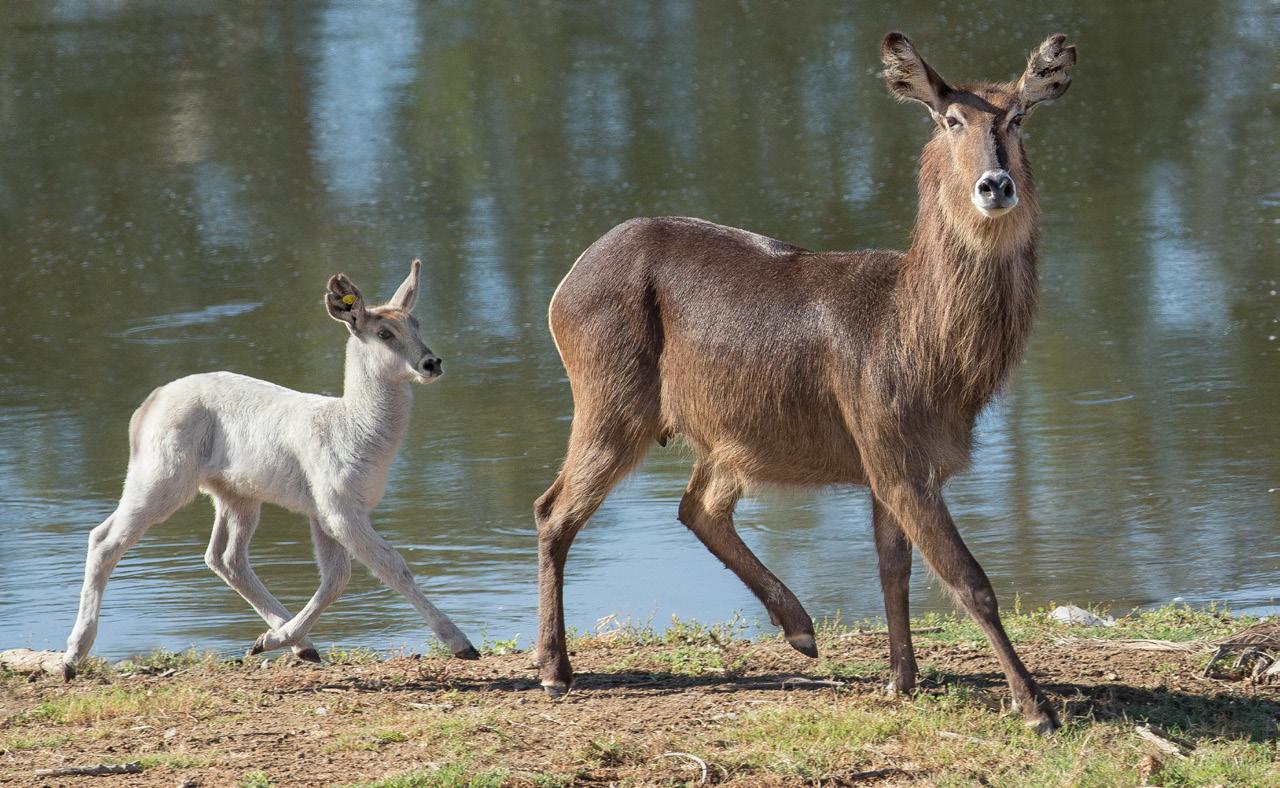
He looks a little different than most ellipsen waterbuck, but Luke is right in step when it comes to behavior. While the other animals in the African Plains habitat showed some curiosity at first, Luke is now just one of “the locals.”
LAST AUTUMN, WHEN MOST PEOPLE WERE FOCUSING ON THE RED, ORANGE, AND GOLD OF THE SEASON, STAFF AT THE SAN DIEGO ZOO AND THE SAFARI PARK WERE DAZZLED BY WHITE. NO, IT WASN’T A SHIPMENT OF SNOW FOR PANDAS OR POLAR BEARS. IT WAS DUE TO THE ARRIVAL OF TWO UNIQUE ANIMALS, ONE AT EACH LOCATION: A WHITE COBRA AT THE ZOO AND A WHITE ELLIPSEN WATERBUCK AT THE PARK. COLOR US SURPRISED!
By Wendy Perkins STAFF WRITER
Photos by
Ken Bohn SDZG PHOTOGRAPHER
A MATTER OF MELANIN
Te frst thought most people have when they see an unusually white creature is that it is an albino. But neither of the white animals that recently joined the Zoo and Park is albino. Rather, the two newcomers are leucistic (loo-KIS-tic). The difference is a matter of melanin, the pigment that gives skin, hair, and eyes their color. An albino animal has no melanin at all, resulting in a complete lack of pigment, making the animal white and pink, with what look like red eyes. Te eyes are actually no color at all—the hue comes from the red blood
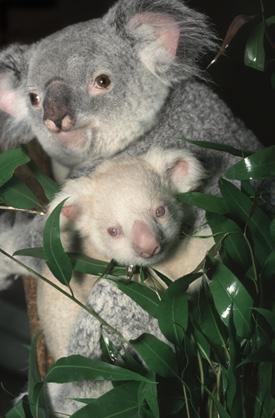
vessels, which is also what gives the skin its pink tint. A leucistic animal, on the other hand, still has some melanin, so it only has reduced pigmentation over some or all of its body. Leucistic animals have blue or fairly dark eyes, because they do indeed have pigment in them.
On the morning of September 6, 2014, keepers discovered something new under the sun. One of the female ellipsen waterbuck had given birth during the wee hours, and when they located the brunette new mother, they were stunned to see her tending to a white calf. In the Safari Park’s 40-plus-year history, more than 20,000 rare and endangered mammals have been born here—including 273 ellipsen waterbuck—but this was the f rst leucistic addition. Te keepers named him Luke.
Ellipsen waterbuck calves are “tuckers.” Although a calf can stand soon a fer birth, it spends most of the f rst few weeks of its life hidden—tucked into a dirt depression, a thicket of grass, or rocky
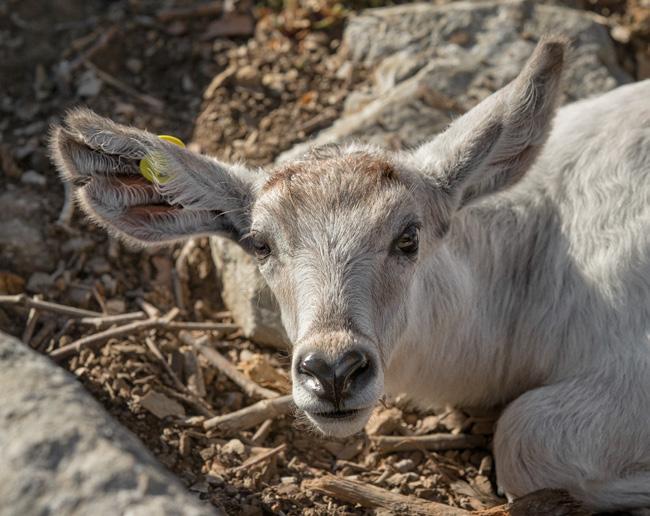
A snug spot between pale gray boulders was the perfect place for newborn Luke to spend the first couple of weeks of his life. Look between his ears and above his nose, and you’ll see that while most of his coat is white, he does have some brown coloring.
crevice. Luke’s mother had found him a special tucking place, one no other ellipsen female had used before—a spot among a cluster of pale boulders!
Her adaptability to her youngster’s unique coloring wasn’t the only indication that she was aware of his di ference. From the start, she seemed more attentive than most waterbuck mothers, even separating from the other waterbuck to spend more time with him. A fer a couple of weeks, however, she led him to the herd. Keepers noticed a greater-than-usual amount of curiosity and even caution among the other animals, but Luke’s mother stayed protectively by his side.
Eventually, the novelty seemed to wear of, and now Luke is just another member of the herd.
For a few days in September, citizens of Tousand Oaks, California, kept their eyes peeled for a rogue snake. Te description was simple but somewhat chilling: a white cobra. Believed to be someone’s escaped pet, the venomous reptile slipped of into the landscape. For-
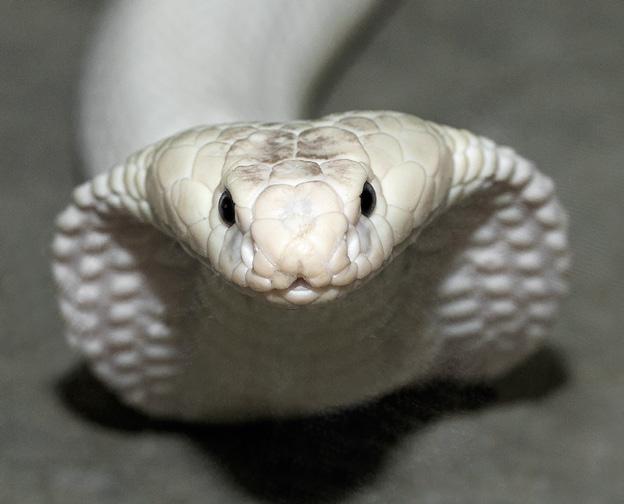
Leucistic animals typically have “normal” eye color. That’s because developing retina and iris cells are not usually affected by the genetic mutation that causes leucism.
tunately, the cobra was found within a few days and taken to the Los Angeles Zoo for identi fcation.
Te wanderer turned out to be a monocled cobra, native to southern Asia. Usually, this species is dark-gray to black with a characteristic single spot (the “monocle” in its name) on the back of the hood. T is leucistic individual, however, is so light in color that the monocle can barely be seen.
Te cobra was rescued, but the case wasn’t closed—a home was needed for the three-foot-long reptile. It was agreed that the cobra would come to the San Diego Zoo, where we are equipped to keep Asian cobras and also maintain a supply of the appropriate antivenom. Te four-foot-long female, believed to be about two years old, has now settled into her home in the Reptile House, where visitors can marvel at her unusual appearance.
Tese animals of a di ferent color remind us that nature is full of surprises. On your next visit to the Zoo, be sure to take a turn around the Reptile House for a close (but safe!) look at the snake that startled a city. And on your next Africa Tram tour at the Safari Park, be sure to keep an eye out for Luke—which shouldn’t be too di fcult, since he’ll be “outstanding in his feld”! n
By Peter J. Fashing, Ph.D., and Nga Nguyen, Ph.D., FOUNDERS, GUASSA GELADA RESEARCH PROJECT
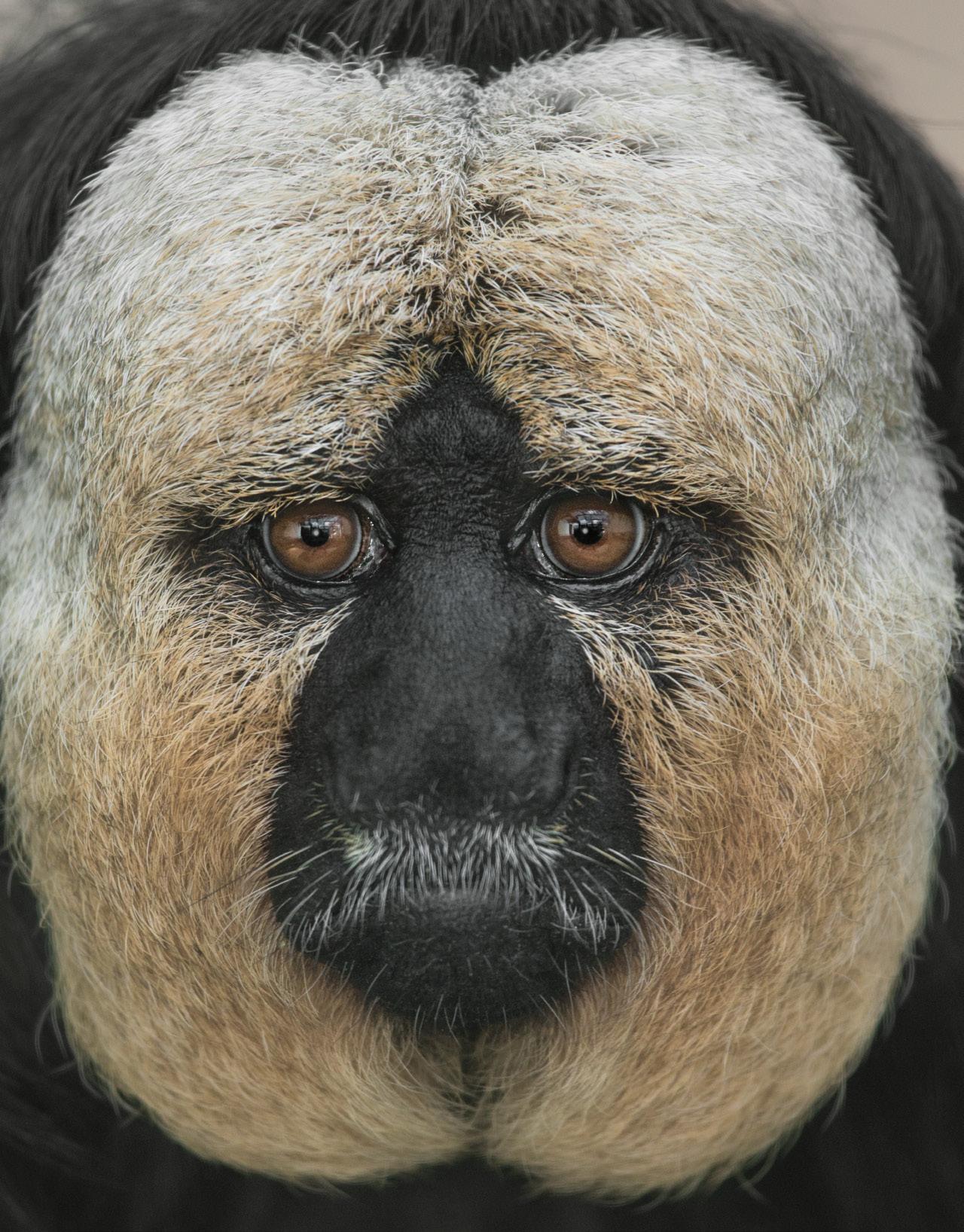
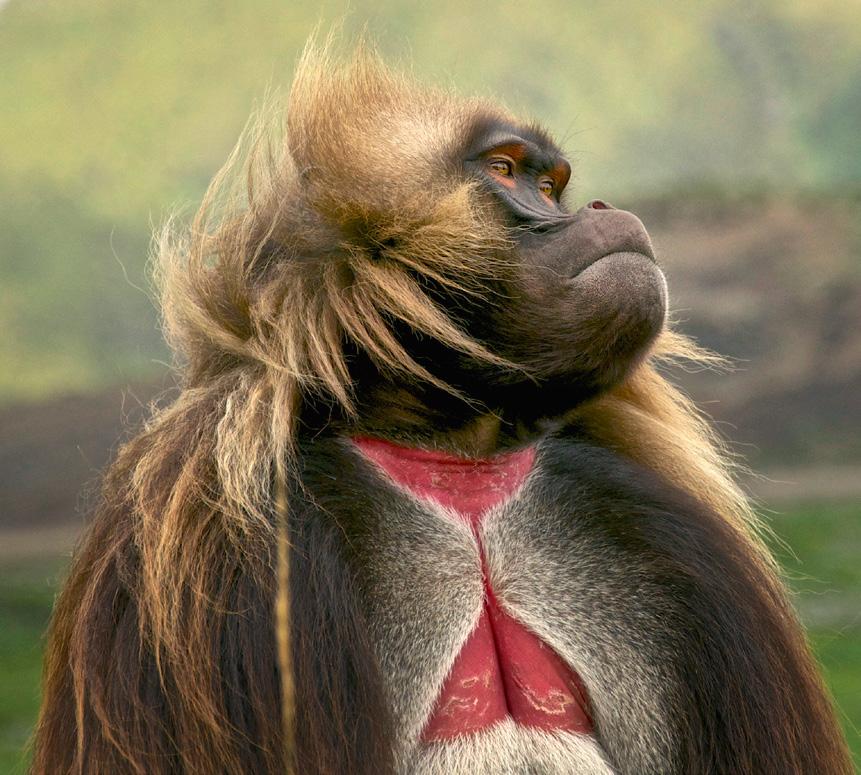
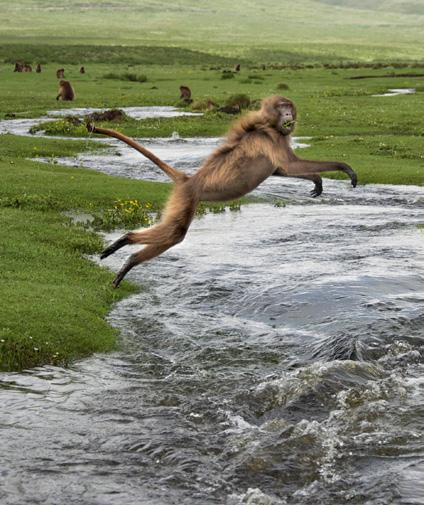
IT TAKES A TOUGH MONKEY to call the Ethiopian Highlands home. Lightning, hailstorms, and relentless winds during the day, freezing temperatures at night—gelada monkeys live a life of extremes. How extreme? Try spending the night clinging to the side of a cli f where one false move could mean a one-mile fall and certain death in the valley below. Try hanging out with several hundred other members of your species as you cross mountain meadows in search of grasses and herbs, which make up a diet more like that of a horse than that of a large-bodied primate.
Looking like characters out of a Dr. Seuss book (especially the males, with their spiky hair and long manes), geladas are undoubtedly one of the most unusual living primates. Yet they weren’t always so unusual. Tere were once six gelada species, including one that was the size of a gorilla, spread across much of Africa, India, and even southern Europe. But by several hundred thousand years ago, due to a combination of being hunted by humans, competition with common baboons, and habitat changes, only one species remained, the modern gelada Teropithecus gelada , con f ned to its mountain strongholds in the Ethiopian Highlands. Tese remote highlands have long ofered geladas and other animals—as well as some human societies—refuge from the less-favorable in fuences of the outside world.
Today, the range of these baboon-sized monkeys continues to shrink as humans have increasingly converted the grasslands into
settlements, farms, and livestock grazing areas to meet the needs of Ethiopia’s rapidly growing population. Less than three percent of the original vegetation atop the Ethiopian Highlands remains. Geladas must survive in increasingly marginal environments, where they are harassed and even killed by angry farmers whose crops are being raided by the desperate monkeys.
Despite their uniqueness among primates and the many threats they face, geladas have rarely been studied. In 2005, we traveled to Ethiopia to begin research on geladas at a site called Guassa, a pristine alpine grassland located a dizzying 11,500 feet above sea level. Guassa’s intactness is a credit to the local people, whose ancestors initiated a remarkable community conservation program 400 years ago. T is ancient, indigenous conservation initiative has ensured that an incredible assortment of plants and animals (including many that have disappeared from other highland areas in Ethiopia) continue to live at Guassa. Packs of hyenas “laugh” outside our tents at night, servals creep stealthily through tall grasses and shrubs hoping to capture young geladas, and one of the largest remaining populations of the critically endangered Ethiopian wolf continues to patrol Guassa in search of rodents.
We spent more than a year habituating and learning to identify the geladas. In January 2007, we began following the 220 gelada individuals in our main study band nearly every day to document their life stories. With the help of our local feld sta f, recent college graduates
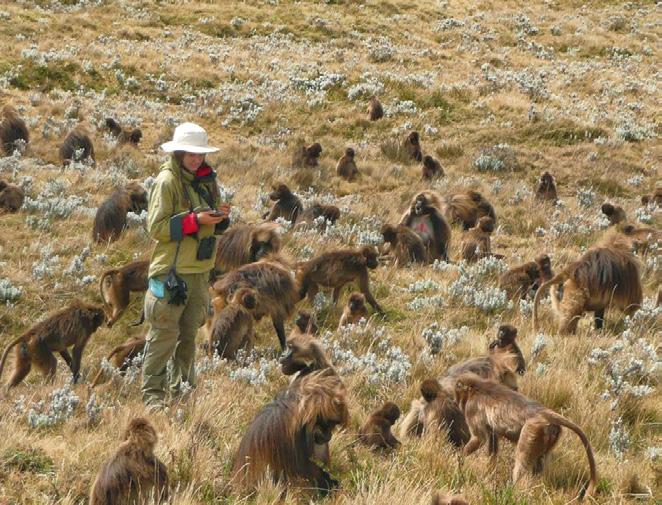
from around the world, and students at California State University, Fullerton, we have learned a great deal about how geladas make a living on the “roof of Africa.”
For example, we were stunned to learn that at Guassa, these grazing monkeys also consume at least 20 species of invertebrates, including snails, ants, and even desert locusts—a feast they gorged on during one memorable a fernoon, when the skies were darkened by millions of the fying insects. We also discovered that most gelada births are timed to the part of the year when the food supply is most plentiful, ensuring that the mothers can produce enough milk for their newborns and give them the best chance to survive in such an extreme environment.
Te geladas also proved to be unusually likely to give birth in proximity to human observers. We have now witnessed an unprecedented 12 births at Guassa, the most for any wild nonhuman primate. Apparently in childbirth, like in many other areas in life, experience matters. We found that experienced gelada mothers (compared to f rst-time moms) are more likely to guide their infants from the birth canal and catch them before they fall to the ground, ensuring that the little ones arrive safely into the world.
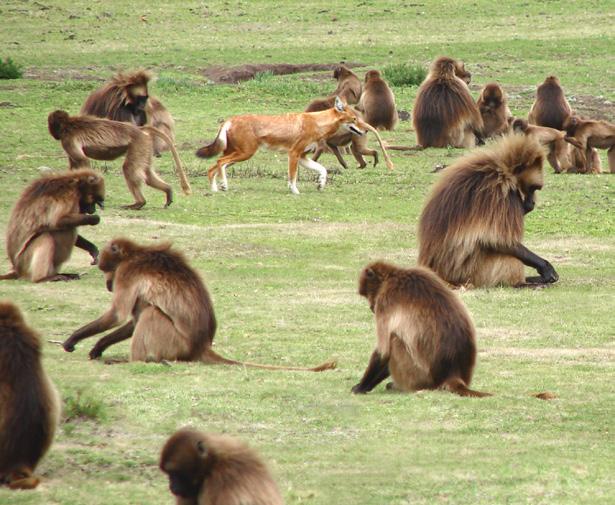
One of our most unexpected f ndings has been the peaceful coexistence between geladas and Ethiopian wolves at Guassa! When we began our work at Guassa, Zelealem Ashena f, Ph.D., an expert on Ethiopian wolf ecology and conservation, told us with a smile that we would f nd the Ethiopian wolves and geladas to be “great friends.” At the time we laughed, thinking he was teasing, but our subsequent research, led by Dartmouth College Ph.D. student Vivek Venkataraman, has found that the mostly vegetarian geladas and the carnivorous Ethiopian wolves do spend considerable time in proximity. Te wolves move freely among the geladas, which show few signs of fear. Instead of hunting geladas, the wolves focus on rodents and enjoy much higher foraging success when hunting rodents among geladas than when hunting for rodents by themselves.
On a less positive note, geladas, like animals everywhere, get sick and sometimes die from their illnesses. We were dismayed to discover that 30 percent of the adults in our study population are aff icted with parasitic swellings caused by a tapeworm. Tese tapeworms cause unsightly cysts on once-attractive animals and shorten the lives of sickened animals and those of their dependent ofspring. Because geladas are an intensely social species, these premature deaths have major impacts on the lives of the family and friends of the deceased.
Te more we learn about the geladas at Guassa, the more questions arise and the greater our desire to better understand these mysterious monkeys. We never thought when we started this project that we’d still be here nearly a decade later, observing the animals we’ve come to consider members of our own extended family. n
San Diego Zoo Global is proud to support this important project to learn more about this fascinating primate species.
Check out the digital edition of the January issue of ZOONOOZ for additional photos of the enigmatic gelada.
The collaborative efforts of all of us will make a difference in fighting against species extinction—and you are a vital part of that. To discover more conservation stories and find out how your support impacts the survival of species around the globe, visit the new San Diego Zoo Global Wildlife Conservancy website at endextinction.org. By joining the cause as a Hero for Wildlife, you will be helping to protect and save endangered animals, ensuring they continue to be part of our world for generations to come. Thank you!
By Georgeanne Irvine ASSOCIATE DIRECTOR OF COMMUNICATIONS/DEVELOPMENT
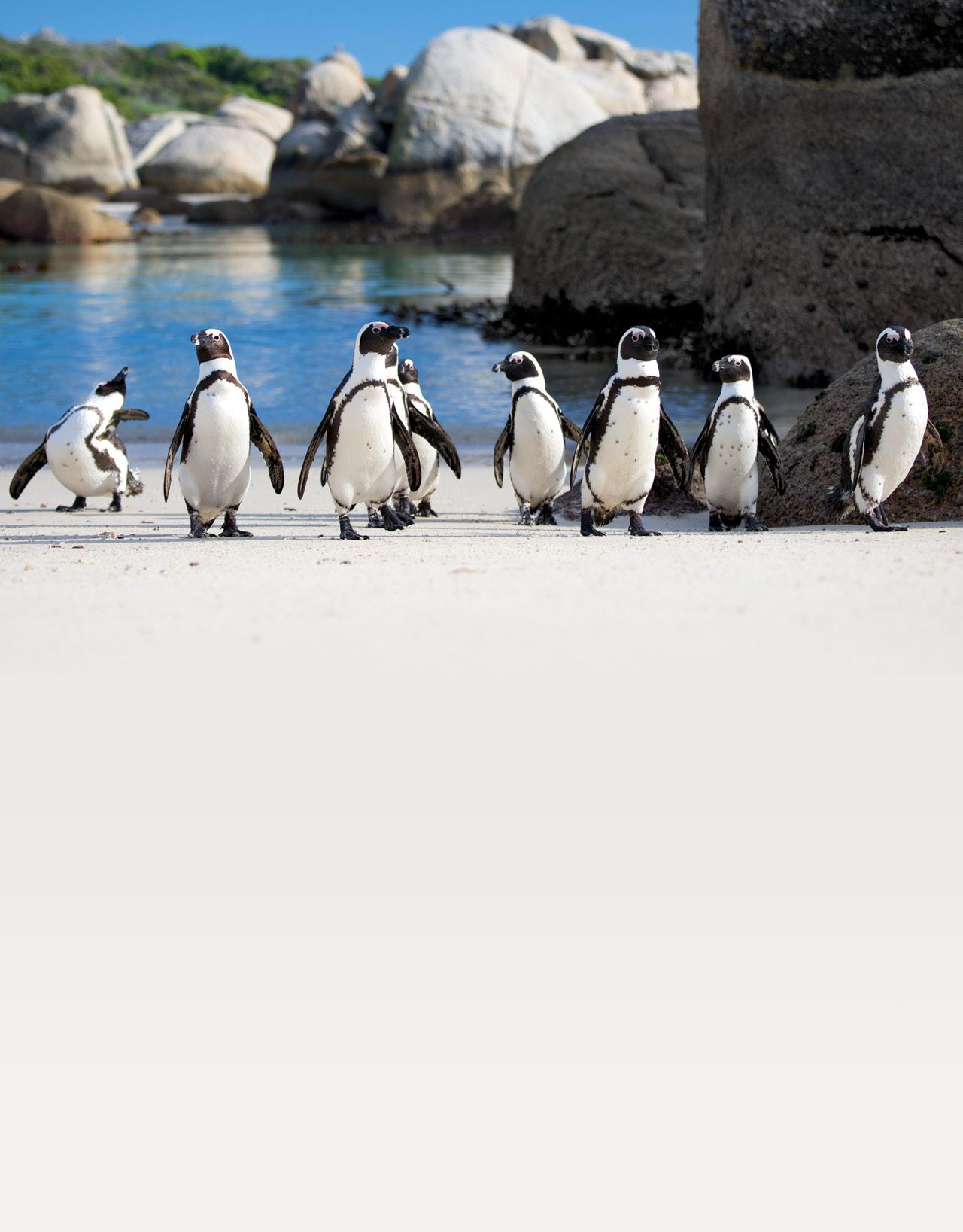
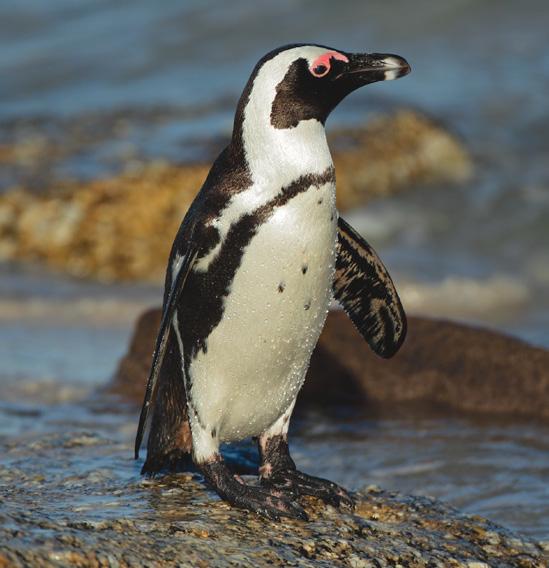
An early morning stroll along southern Africa’s seashore in the early 1900s was also a walk on the wild side of nature. Te beaches were home to more than a million African penguins Spheniscus demersus, one of the few penguin species that do not live in cold climates. Since then, the population has plummeted to such low numbers—around 40,000 birds living in fragmented colonies—that the species is now endangered.
Over the last century, these charismatic birds have faced many challenges that have compromised their existence. Te reasons for their dramatic decline are many, from human consumption of their eggs and depletion of their food source by the commercial fshing industry to habitat destruction, disturbance by humans, and oil spills. In the past 10 years alone, their population has dropped by 70 percent!
Te San Diego Zoo will soon join a consortium of zoos around the globe that are working together to save African penguins from extinction. With the opening of the new Penguin Beach habitat in 2017, the Zoo will be able to
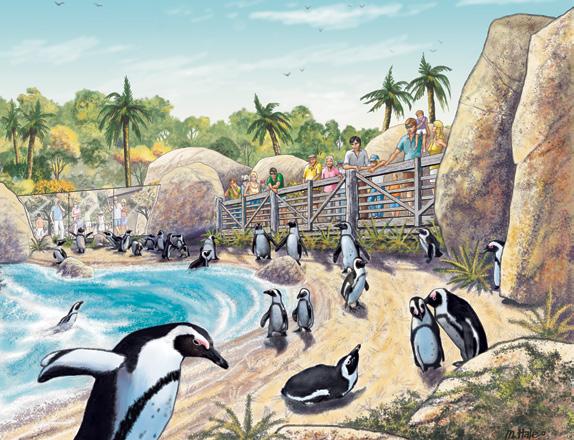
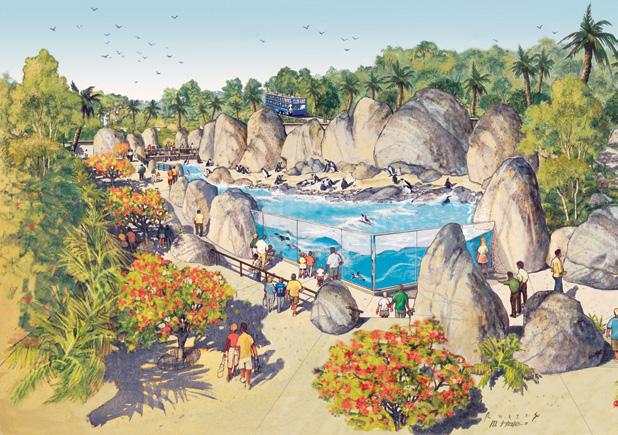
share the wondrous world of African penguins with our guests, as well as participate in an international species survival plan for these amazing aquatic birds. T rough a dynamic breeding program, our collective goal is to increase their numbers in zoos and aquariums, thus creating a sizable “assurance” population should their numbers in the wild continue to decline.
AN AFRICAN SEASHORE AT THE ZOO
Penguin Beach will be a spectacular seashore exhibit and breeding center located at the south end of Conrad Prebys Africa Rocks. A colony of up to 50 energetic African penguins will waddle, swim, preen, dive, nest, and raise chicks in a beachfront habitat. Te penguin colony’s new home will resemble southern Africa’s shoreline, with a sandy beach nestled among towering boulders. Gentle waves from a 60,000-gallon pool—up to 7 feet deep in places—will lap on the sand, giving it an essential ocean feature. Guests will delight in watching the underwater world of penguins through glass panels as the streamlined birds propel themselves through the water with their f ipper-like wings or as they “porpoise” along the surface.
BURROWS FOR BABIES
A nesting area for penguin pairs will be created among the boulders just behind the beach. T irty burrows— enough to enable the penguins to select a favorite spot to nest—will be embedded in the rocks. Te burrows will lead to nest boxes inside a camouflaged, 3,000-square-foot penguin care center adjacent to the exhibit. Keepers will have access to the burrows from the building so they can observe and check on the penguin families. Te center also features a large indoor pool, a veterinary care room, and kitchens for keepers to prepare food for the penguins and other birds in Africa Rocks.
PLEASE HELP: DO YOUR PART FOR PENGUINS!
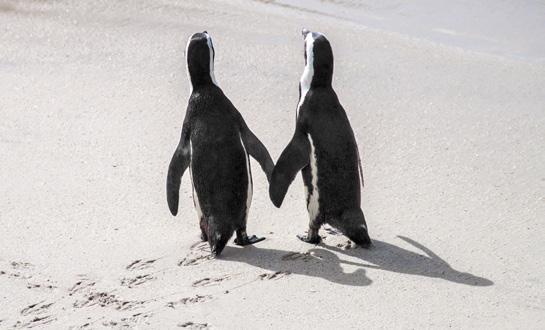
It has been more than 35 years since penguins last lived at the San Diego Zoo! Since then, 5 of the world’s 18 penguin species—including the African penguins that are coming to the Zoo—have become endangered. Now, your support is needed to help reverse the downward trend for Africa’s only penguin species by creating a sanctuary that will enable your Zoo to play a role in eforts to save them. With your gi f , the Zoo can embark on a conservation breeding program for African penguins while also creating an extraordinary opportunity for children and adults alike to experience the wonder of these black-and-white treasures of the bird world. n


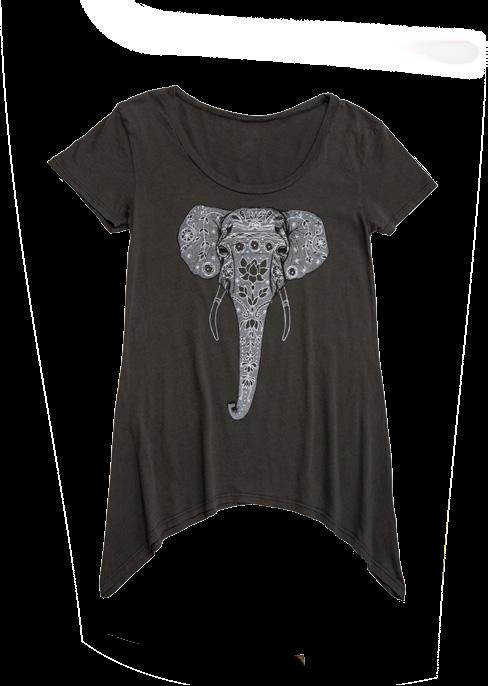

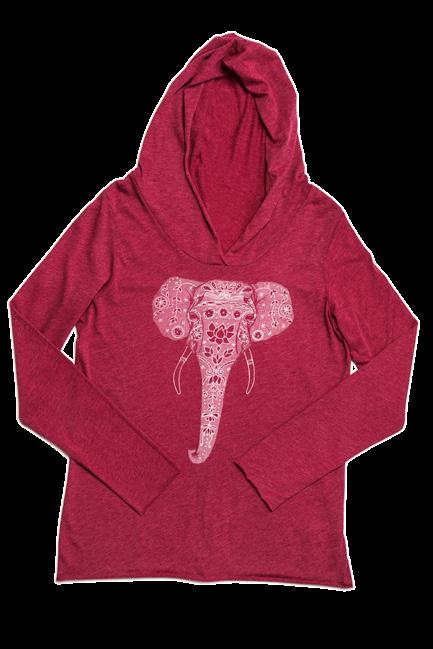
Looking good can be a good deed, too. When you want comfort that’s cute and conservation-friendly, you’re sure to remember these super-soft elephant tees, created from organic cotton and post-consumer recycled plastic. Add a handcrafted purse or tote from Cambodia and you’ll have style with substance in the bag! Fashioned from recycled cement sacks, these designs are made by Fair Trade producer groups that employ disadvantaged Cambodians.
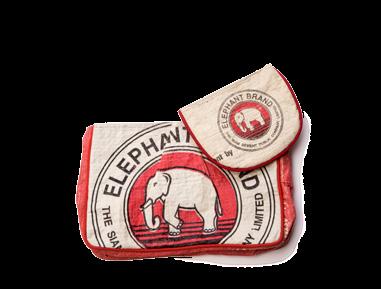
Visit our stores at the Zoo and Safari Park to purchase these featured items. Available in select stores. Limited quantities available.
JANUARY–APRIL 2015

Members, receive this koala plush when you register for I___ for Wildlife! It’s easy—pick an activity, register online, and share your challenge with everyone!
O ffer valid January 1–April 30, 2015.
Limit one koala plush per registrant, while supplies last. Visit endextinction.org/zoonooz or call 619-557-3914 for more information. No purchase necessary. Members must register online for I___for Wildlife to receive their koala plush and will receive the plush after registering.
JANUARY–FEBRUARY 2015
Surrender this coupon to the parking attendant to receive ONE-TIME FREE PARKING for one vehicle at the San Diego Zoo Safari Park. (Preferred parking not included.)
Offer valid January 1–February 28, 2015.
One coupon per membership. Original coupon only, no reproductions accepted. Not valid with any other offer or discount. Show valid San Diego Zoo Global membership card at time of purchase. Supporting ID may be required. Members of Diamond, Keeper’s, Curator’s, Director’s, President’s, and Circle Clubs receive free parking all year long as a part of their membership benefits.

JANUARY–FEBRUARY 2015
Purchase a carousel token for $4 at the Safari Park’s Conservation Carousel, show token and membership card to the carousel operator, and get upgraded to an all-day wristband for rides!
O ffer valid January 1–February 28, 2015.
Not valid with any other offer or discount. Show valid San Diego Zoo Global membership card at time of purchase. Supporting ID may be required.
JANUARY 6–FEBRUARY 28, 2015
SAVE $10 PER PERSON ON SAFARIS AT THE SAFARI PARK
Jungle Ropes Safari: Climb, balance, and swing through the trees like a monkey. (Promotion code 225041)
Flightline Safari: Soar from a ridgetop along a zip-line cable, gliding about 2/3 of a mile over field exhibits. (Promotion code 225042)
Cart Safari: Tour around African Plains or Asian Savanna from the comfort of a safari cart. (Promotion code 225043)
Offer valid January 6–February 28, 2015.
(Exception: Discount not available February 14–16, 2015.)
O ffer valid only through advance phone reservations. Coupon good for up to four people per safari. Age and other restrictions may apply. Space is limited and subject to availability. Please call Reservation Sales at 619-718-3000 to purchase and confirm space. Not valid in conjunction with any other offers or discounts. Not valid for prior reservations. Must provide membership number and promotion code listed above at time of reservation.
JANUARY 6–FEBRUARY 28, 2015
Discovery Cart Tour: A Zoo educator guide introduces you to incredible animals and plants from the comfort of an expedition cart. (Promotion code 225044)
Sunrise Surprise Strolls: Get the scoop on what’s new at the Zoo, all before the Zoo opens for the day. (Promotion code 225045)
O ffer valid January 6–February 28, 2015.
(Exception: Discount not available February 14–16, 2015.)
O ffer valid only through advance phone reservations. Coupon good for up to four people per tour. Age and other restrictions may apply. Space is limited and subject to availability. Please call Reservation Sales at 619-718-3000 to purchase and confirm space. Not valid in conjunction with any other offers or discounts. Not valid for prior reservations. Must provide membership number and promotion code listed above at time of reservation.
2015
Members continue to receive a 10% discount during the month of January on any purchase. Valid at all stores at the San Diego Zoo and Safari Park.
O ffer valid January 1–31, 2015.
No limit while supplies last. Not valid with any other offer or discount. Excludes alcohol. Show valid San Diego Zoo Global membership card at time of purchase.
Visit the San Diego Zoo Sandwich Co. during breakfast hours and purchase biscuits and gravy at the special price of $4.49, plus tax.
O
ffer valid January 1–31, 2015.
Not valid with any other offer or discount. Show valid San Diego Zoo Global membership card at time of purchase.
FEBRUARY 2015
Purchase an entrée and 32-ounce drink at any restaurant and receive a $1.50 discount.
O ffer valid February 1–28, 2015.
Not valid with any other offer or discount. Not valid with the purchase of alcoholic beverages. Show valid San Diego Zoo Global membership card at time of purchase.
MARCH 2015
Get the newest San Diego Zoo and Safari Park guidebooks for one price of $15! Valid at the main gift shops at the Zoo and Safari Park.
O ffer valid March 1–31, 2015.
Not valid with any other offer or discount. Show valid San Diego Zoo Global membership card at time of purchase.
2015
Here’s the perfect deal to enjoy on the scenic deck of the San Diego Zoo’s Treetops Café: two flatbread pizzas (choice of cheese or pepperoni), a Greek salad, four breadsticks, and four 20-ounce soft drinks for only $39.99!
O ffer valid March 1–31, 2015.
Not valid with any other offer or discount. Show valid San Diego Zoo Global membership card at time of purchase. O ffer valid only at Treetops Café.

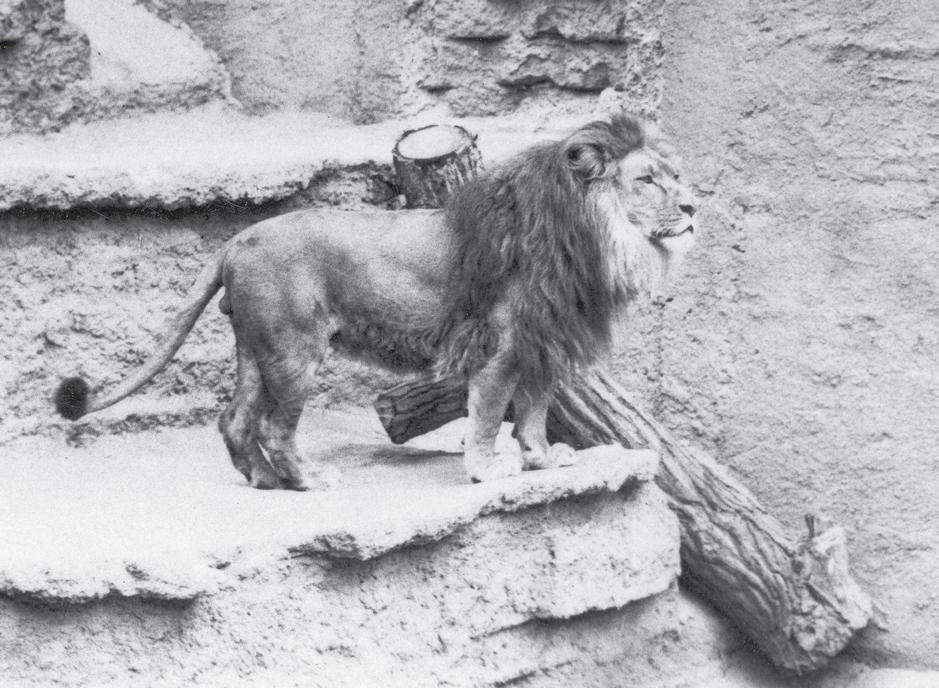
We’re not “lion” when we say the San Diego Zoo began with a roar! Tat roar came from Rex, a lion exhibited in a cage at the 1915–1916 Panama-California Exposition in Balboa Park. Rex’s vocals inspired our founder, Dr. Harry Wegeforth, to start a zoo. Rex and other animals from the Exposition were among our f rst acquisitions.
“Dr. Harry” yearned for more suitable, natural-looking lodging for the king of beasts. In 1923, the Zoo’s open-air lion grotto debuted, “without iron bars protecting the public,” according to a local newspaper. As there was no similar exhibit anywhere in the United States, Dr. Harry and Zoo sta f had to fgure out all the details, including how deep to make the moat. Tey hired a Hollywood stuntman to dangle lumps of meat on a rope to see just how high lions could jump!
Te exhibit was a success, for lions and guests alike. Prince (pictured above) was our “mane man” in those early days. He and his ever-growing family gave our fedgling zoo something to roar about! n
Travel with the San Diego Zoo’s WorldWild Tours™ to some of the wildest places on Earth in 2015. Our itineraries highlight the wildlife at each destination and include expert naturalists and a San Diego Zoo Global escort, plus a group of like-minded travelers. For brochures, visit sandiegozoo.org/travel or call Julia Altieri at 619-685-3205.

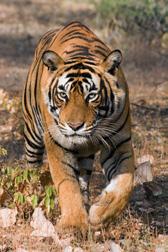
Wildlife Adventure to India February 12–26, 2015
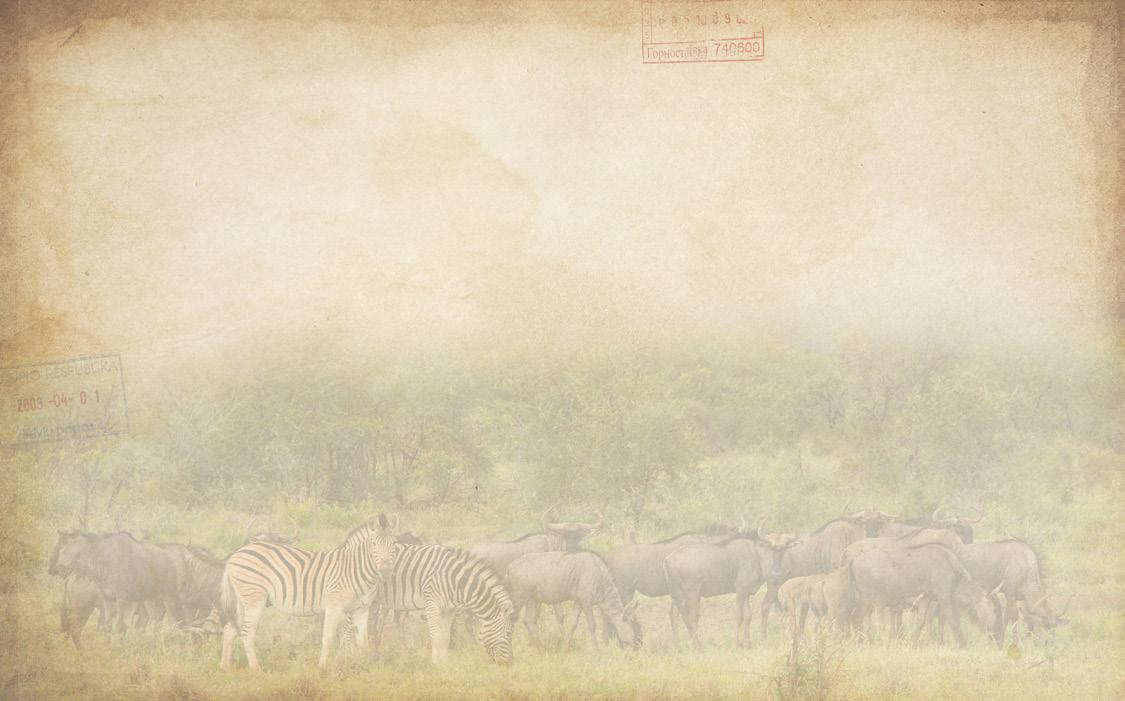

The Best of Botswana May 17–29, 2015
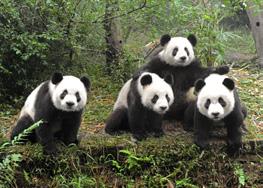
China and its Giant Pandas May 19–June 1, 2015

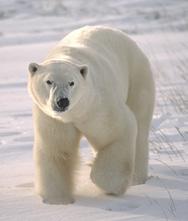
Polar Bear Adventure October 28–November 3, 2015


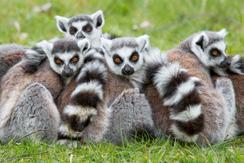
Madagascar: Land of Lemurs September 26–October 13, 2015
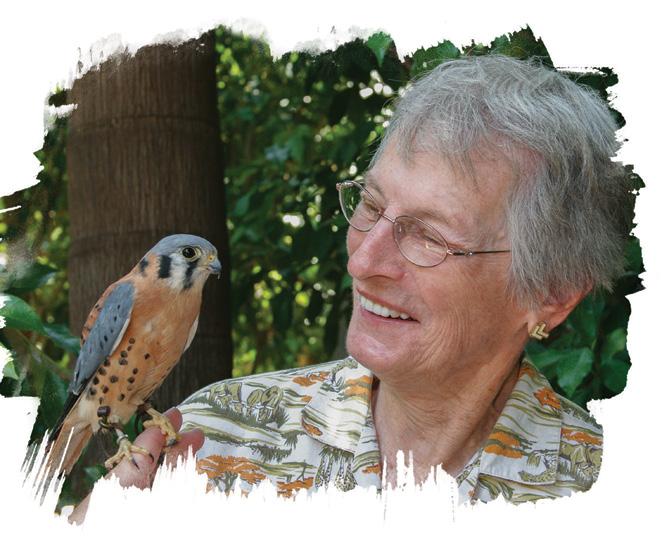
A charitable bequest is an easy way for you to make a diference for the San Diego Zoo and the animals in our care. Benefts of bequest giving include:
• It costs you nothing today.
• You can always make a change down the road.
• You can still beneft your heirs with specifc gifts.
• A bequest may produce estate tax savings.
• And, you can leave a lasting legacy!
To learn more about estate planning, please contact us at donations@sandiegozoo.org or 619-557-3947 for your FREE Wills Guide.
Contact the San Diego Zoo today! • zoolegacy.org • 619-557 -3947 • donations@sandiegozoo.org