ZOONOOZ
SAN DIEGO ZOO GLOBAL SEPTEMBER 2018
Gorilla Troops
Amur Leopard Cubs
Epiphyllum Trail
Birds of Walkabout

SAN DIEGO ZOO GLOBAL SEPTEMBER 2018
Gorilla Troops
Amur Leopard Cubs
Epiphyllum Trail
Birds of Walkabout
SATURDAY, OCTOBER 13, 2018
9 A.M. | KIJAMII OVERLOOK
Start your Safari Park day with a delicious champagne brunch, as you watch wildlife of the African Plains. You’ll enjoy breathtaking views from the scenic Watering Hole at Kijamii Overlook, along with tasty menu items and a variety of mimosas and champagne.
The cost is $54.99 per person, plus tax and parking. Nonmembers add Safari Park admission. FOR RESERVATIONS, CALL 619-718-3000 OR BOOK ONLINE.
SUNDAY, OCTOBER 21, 2018
7:30 A.M. | ZUEST STATION
Join us before the Safari Park opens for a bountiful buffet breakfast in the Zuest Station, a comfortable and shaded venue at the Park’s new Walkabout Australia exhibit. After breakfast, guests will have the unique opportunity to see how the kangaroos and wallabies start their day.
The cost is $49 per person, plus tax and parking. Nonmembers add Safari Park admission.


Join us as we celebrate International Vulture Awareness Days, September 1-3, 2018, at the Safari Park! Learn more about the birds we all can’t do without.
Not everyone loves a spider—but there are many reasons to respect these weavers and look to them in wonder. BY WENDY PERKINS AND AMY BLANDFORD
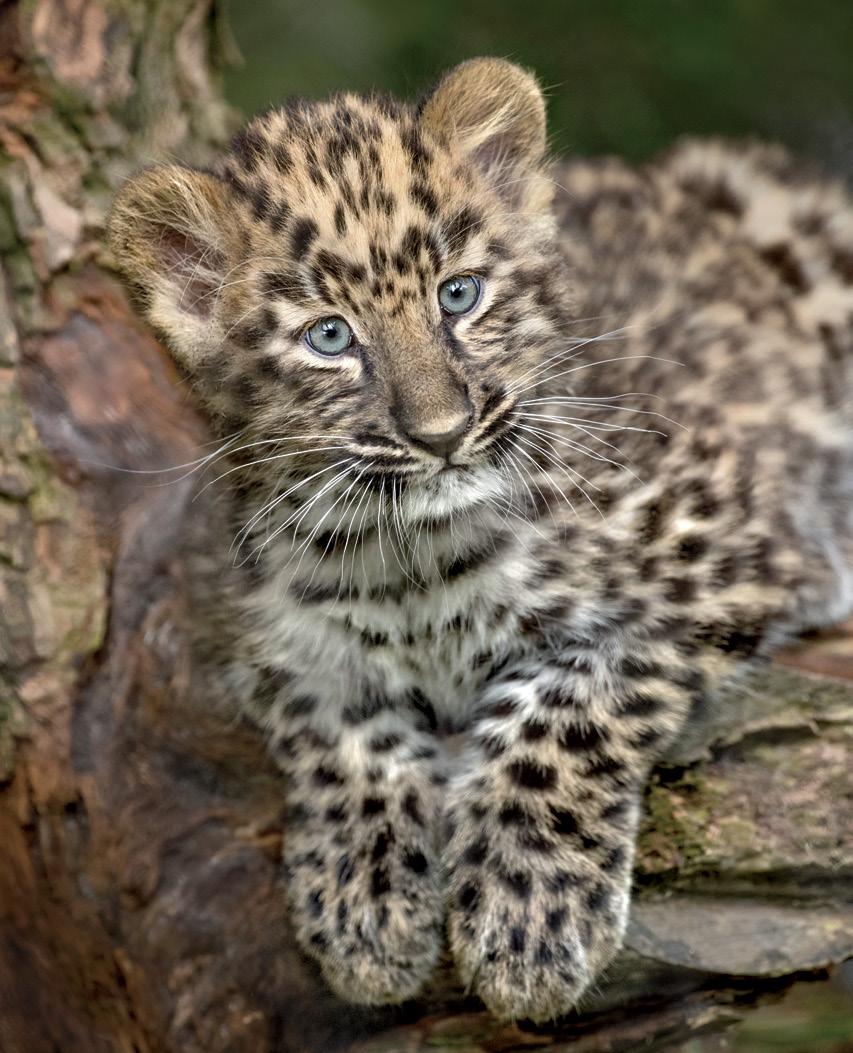
The birth of adorable leopard cubs is always a joy at the Zoo—but when they are critically endangered Amur leopard cubs, the excitement is off the charts. BY
PEGGY SCOTT
The Scoop on the Troops
Find out what the big, beautiful great apes have been up to at the Zoo! Enrichment challenges, training sessions, and social dynamics all come into play. BY
KARYL CARMIGNANI
A stroll from Walkabout Australia to Condor Ridge at the Safari Park shows off interesting forms and stunning blooms of epiphyllums. BY WENDY PERKINS 22 Winging It
It’s more than marsupials at Walkabout Australia! Meet some of the birds from the Land Down Under. BY PEGGY SCOTT
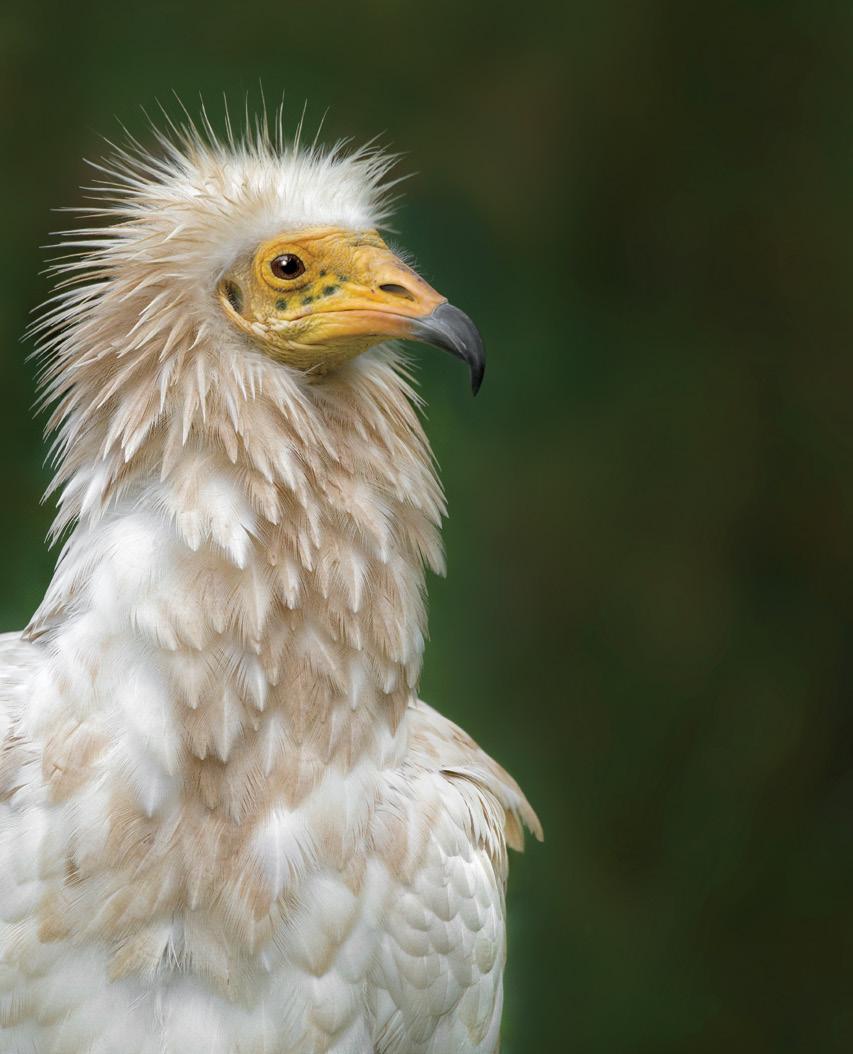
2 Nooz Notes 7 SDZ Kids Page 26 Support 28 In the Field 29 Member Specials ON THE COVER: Amur leopard Panthera pardus orientalis THIS PAGE: Egyptian vulture Neophron percnopterus PHOTOS BY: Ken Bohn, SDZG Photographer
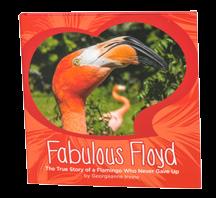
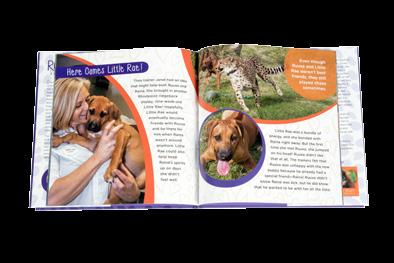
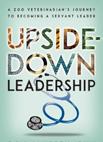
There are so many wonderful, compelling, and heartwarming stories about the animals, people, and conservation efforts of San Diego Zoo Global—and now we have our own book publishing department to tell them! San Diego Zoo Global Press is developing and publishing a variety of books that will be available in our gift shops and online at shopzoo.com. To launch this new endeavor, we're starting out with the first three books of the Hope and Inspiration children's book series, written by longtime San Diego Zoo Global employee Georgeanne Irvine, plus an inspirational book on leadership from San Diego Zoo Global's former director of veterinary services (retired), Don Janssen, DVM. We're looking forward to many more books to come!


Power Duo Pals Ruuxa and Raina started their friendship young, but it kept going strong through many challenges as they grew up.
When Don Janssen, DVM, took over directing the San Diego Zoo and Safari Park veterinary services, there were many challenges—and opportunities. Don's approach was to introduce a new perspective: servant leadership. In this book, he presents his journey managing in this style, with examples and great stories of the people and animals he worked with along the way. ($24.95, hardcover; $16.95, soft cover)


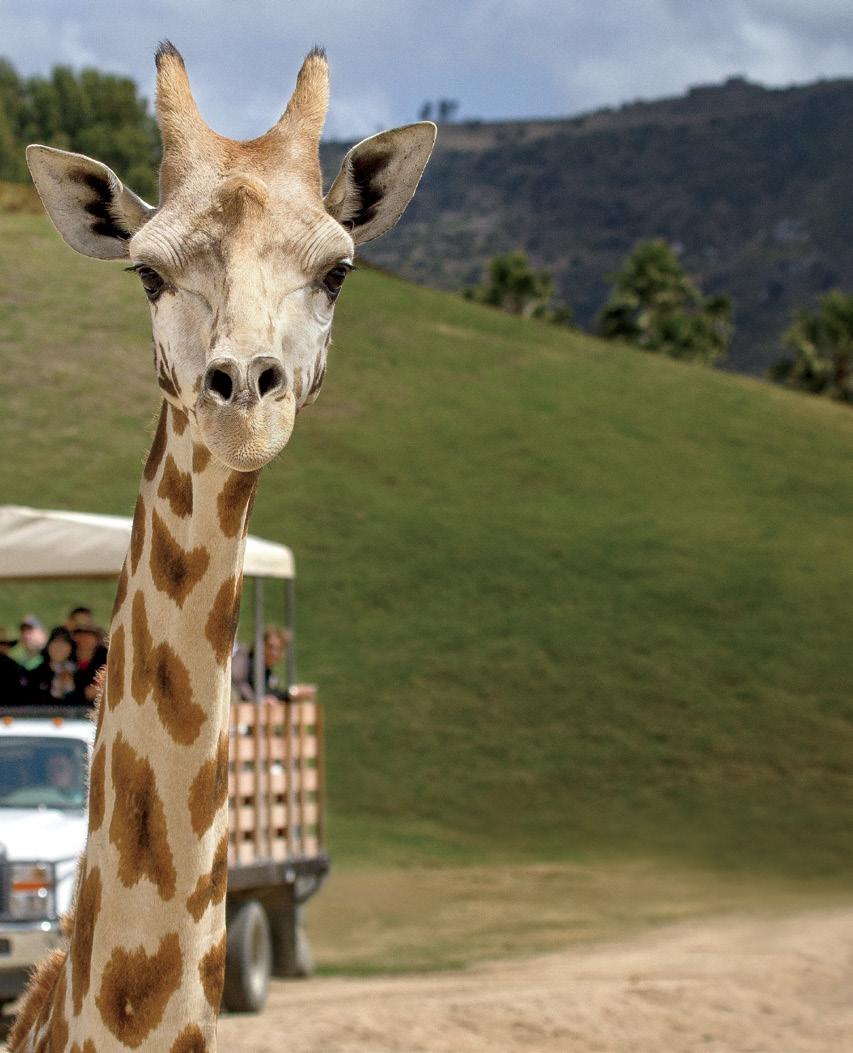









Travel in the back of a covered, open-air safari truck into our field enclosures, as our expert guides take you to the animals and provide fascinating and fun information about the latest goings-on. Get an up-close view of Asian and African birds and mammals, with an opportunity to feed giraffes! You haven’t lived until you’ve had a giraffe tongue reach out and take a leaf from your hand. Your safari awaits!



What’s happening at the Zoo and Park this month and next (Z) Zoo events (P) Park events
THROUGH SEPTEMBER 3
Nighttime Zoo
Summer fun activities and live entertainment at the Zoo. Hours are 9 a.m. to 9 p.m. through September 3. (Z)
SEPTEMBER 1
Breakfast with Tigers
Watch our tigers start their day—then start yours with a hearty buffet breakfast. Book online at sdzsafaripark. org/dining-events or call 619-718-3000. (P)
SEPTEMBER 1–3
International Vulture Awareness Days
Come to the Safari Park to help us celebrate these fascintating and sometimes misunderstood birds, with special talks and family activities. (P)
SEPTEMBER 8; OCTOBER 6
Kids’ Wild Night Out Kids in kindergarten through grade 5 can
enjoy a wild night out at the Zoo with Dr. Zoolittle and animal friends. Book online or call 619-718-3000. (Z)
SEPTEMBER 22
San Diego Zoo Food, Wine, and Brew Celebration
This fund-raiser for San Diego Zoo Global’s Wildlife Conservancy promises a wild evening of food and beverages from more than 160 vendors, live music, and exotic animals. General admission tickets: $125; VIP experience tickets: $225. For details, visit zoofoodandwine.com. (Z)
SEPTEMBER 30
Safari Park Brew Festival
Enjoy an Oktoberfestinspired buffet, music, and 12 beer tasters. Representatives from local craft breweries will speak about the beer selections, and animal greeters will provide insight into our
conservation programs. Make reservations at sdzsafaripark.org/ dining-events, or call 619-718-3000. (P)
OCTOBER 1-31
Kids Free presented by Mission Fed October is Kids Free Month at the Zoo and Safari Park, with free admission for children 11
PRESIDENT/CEO’S NOTE
DOUGLAS G. MYERS
and younger accompanied by an adult. For details, visit sandiegozoo.org and sdzsafaripark.org. (Z)(P)
OCTOBER 13
Champagne Brunch
Start your Safari Park day with a delicious champagne brunch while enjoying breathtaking views of the African
s we approach the fall equinox on September 22, there’s time to enjoy those last few weeks of summer with a visit to the kangaroos, wallabies, and cassowaries at the Safari Park’s Walkabout Australia, and a stroll through the Zoo’s Conrad Prebys Africa Rocks. I find that each time I go, I see something new—a different animal behavior, a view I hadn’t noticed, or details I missed previously—these are both truly dynamic experiences. As it happens, the equinox arrives on two important occasions for the Zoo: World Rhino Day, during which we will pay tribute in social media to the hopeful work taking place at our Nikita Kahn Rhino Rescue Center, and our evening Food, Wine, and Brew Celebration, which celebrates San Diego Zoo Global’s ongoing conservation efforts worldwide, treating guests to food and beverages from some of San Diego’s best restaurants, animal friends, and music and merriment. I hope you will join us for the fun. Happy autumn to all!

SEPTEMBER 8
Horticulture Dinner at Albert’s Restaurant
Join us in celebrating the Zoo’s world-class botanical collection during this special evening. A 6 p.m. reception gets things up and “growing,” followed by dinner at 7. Must be 21 or older to attend. Make reservations at zoo. sandiegozoo.org/ dining-events or call 619-718-3000. (Z)
Plains. For reservations, visit sdzsafaripark.org/ dining-events or call 619-718-3000. (P)
OCTOBER 26
Creepy Camp Roar & Snore Safari What a treat: a Halloween-themed Safari Park sleepover for the whole family! Call 619-718-3000. (P)
Let’s Talk

Follow @sandiegozoo & @sdzsafaripark. Share your #SanDiegoZoo & #SDZSafariPark memories on Twitter & Instagram.
Saturday, September 8, 2018 | 6 p.m.
Please join us in celebrating the Zoo’s world-class botanical collection during this special evening at Albert’s Restaurant. A 6 p.m. reception gets things up and “growing”; dinner follows at 7.
Cost is $82, plus tax and gratuity. Must be 21 or older to attend. Make reservations online, or call 619-718-3000.
AN EVENING WITH GREG
Saturday, October 20, 2018 | 6 p.m.
Call now to reserve your seat for this one-of-a-kind opportunity. The brews for this dinner will be presented by Greg Koch, co-founder and Executive Chairman of Stone Brewing. Each course is uniquely paired with innovative offerings created by Executive Chef Carissa Giacalone and Albert’s Chef Grant Toraason. Reception begins in the Treetops Banquet Room at 6 p.m.
ALSO AT THE ZOO: Breakfast at Penguins Saturday, October 27, 2018
Cost is $82, plus tax and gratuity. Must be 21 or older to attend. Make reservations online, or call 619-718-3000.

The number of vulture species; 14 of them are endangered or threatened.
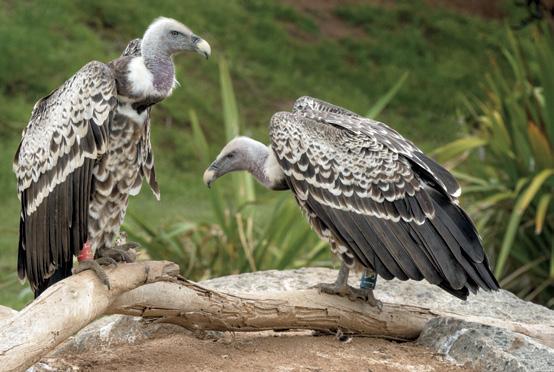
September 1, 2018 is International Vulture Awareness Day, and we’re celebrating at the Safari Park from September 1 to 3, with special displays and activities. Vultures are nature’s cleanup crew and a vital part of the environment: by consuming carcasses, vultures eliminate decomposing animal matter that can contaminate and threaten a healthy environment. Referred to as the “soap of the savanna,” vultures are amazing—and important!
2
How many pounds of food a vulture can eat in one sitting.
ZOONOOZ ® PUBLISHED SINCE 1926
SEPTEMBER 2018 | VOL. XCI NO. 05
MANAGING EDITOR
KAREN E. WORLEY
ASSOCIATE EDITOR
PEGGY SCOTT
STAFF WRITERS
WENDY PERKINS
KARYL CARMIGNANI
DONNA PARHAM
COPY EDITOR
ESTON ELLIS
DESIGNER
KERRI ABRAMS
SAN DIEGO ZOO GLOBAL
PHOTOGRAPHERS
KEN BOHN
TAMMY SPRATT
SR. PHOTO
IMAGING SPECIALIST
TAMMY SPRATT
DESIGN AND PRODUCTION
KAMBIZ MEHRAFSHANI
KIM TURNER
AMY BLANDFORD
LISA BISSI
JENNIFER MACEWEN
PREPRESS AND PRINTING
QUAD GRAPHICS
200
Miles that vultures may travel in one day looking for food.
70
Percent of animal carcasses that vultures consume and clean up.
The Zoological Society of San Diego was founded in October 1916 by Harry M. Wegeforth, M.D., as a private, nonprofit corporation that now does business as San Diego Zoo Global.
The printed ZOONOOZ® magazine (ISSN 0044-5282) is currently published bimonthly, in January, March, May, July, September, and November. Publisher is San Diego Zoo Global, at 2920 Zoo Drive, San Diego, CA 92103, 619-231-1515. Periodicals postage paid at San Diego, California, USA, and at additional mailing offices.
ADDRESS CHANGES: Please send to Membership Department, P.O. Box 120271, San Diego, CA 92112.
Copyright© 2018 San Diego Zoo Global. All rights reserved. “ZOONOOZ” Reg. U.S. Pat. Office. All column and program titles are trademarks of San Diego Zoo Global.
Annual Memberships: Two adults in same household
$166.50, new; $151.50, renewal. One adult $112, new; $102, renewal. Each membership includes unlimited entrance to the San Diego Zoo and the San Diego Zoo Safari Park.
Subscription to ZOONOOZ magazine: $25 per year, $65 for 3 years. Foreign, including Canada and Mexico, $30 per year, $81 for 3 years. Contact Membership Department, P.O. Box 120271, San Diego, CA 92112, for subscription information.
As part of San Diego Zoo Global’s commitment to conservation, ZOONOOZ is printed on recycled paper that is at least 10% post-consumer waste, chlorine free, and is Forest Stewardship Council ® (FSC®) certified.
SAN DIEGO ZOO GLOBAL
OFFICERS
Steven G. Tappan, Chairman
Javade Chaudhri, Vice Chairman
Linda Lowenstine, DVM, Ph.D., Secretary
Richard B. Gulley, Treasurer
BOARD OF TRUSTEES
Rolf Benirschke
Clifford W. Hague
Robert B. Horsman
Steven S. Simpson
Ryan Sullivan, Ph.D.
Judith A. Wheatley
TRUSTEES EMERITI
Frank C. Alexander
Kurt Benirschke, M.D. Berit N. Durler
Thompson Fetter
Bill L. Fox
Frederick A. Frye, M.D.
George L. Gildred
Yvonne W. Larsen
John M. Thornton
A. Eugene Trepte
Betty Jo F. Williams
James Lauth, General Counsel to the Board
4
Miles from which a vulture can spot a carcass.
SAN DIEGO ZOO HOURS
September 1–3: 9 a.m. to 9 p.m.
September 4–21: 9 a.m. to 6 p.m.
September 22: 9 a.m. to 5 p.m.
September 23–October 25: 9 a.m. to 6 p.m.
October 26–28: 9 a.m.to 8 p.m.
October 29–31: 9 a.m. to 6 p.m.
SAFARI PARK HOURS
September 1–2: 9 a.m. to 6 p.m.
September 3–October 31: 9 a.m. to 5 p.m.
WEBSITE sandiegozoo.org
PHONE 619-231-1515
ZOONOOZ® Online web publication zoonooz.sandiegozoo.org
FSC® is not responsible for any calculations on saving resources by choosing this paper.
Douglas G. Myers, President/CEO
Charles L. Bieler, Executive Director Emeritus
THE FOUNDATION OF SAN DIEGO ZOO GLOBAL OFFICERS
Richard M. Hills, Chair
Judith C. Harris, Vice Chair
Chris Eddy, Secretary
Susan N. McClellan, Treasurer
Mark A. Stuart, President
Amy B. Parrott, Vice President
Douglas G. Myers, Ex officio
Steven G. Tappan, Ex officio
BOARD OF DIRECTORS
Christine L. Andrews
Joye D. Blount
Rick Bregman
Sophie W. Bryan
Douglas Dawson
Berit N. Durler
U. Bertram Ellis, Jr.
Arthur E. Engel
Valerie A. Ewell, DVM JJ Fetter
Susan Guinn
Murray H. Hutchison
Nikita Kahn Ellison
Lynelle Lynch
Susan B. Major
Joshua A. Pack
Maryanne C. Pfister
Philip C. Seeger
Elizabeth W. Shoemaker
Carter Skeath
To find out about these and other animals, plus videos, crafts, stories, games, and more, visit kids.sandiegozoo.org.
Get those eagle eyes ready! There are 10 differences to be found in each of these pairs of images—can you spot them all? Visit kids.sandiegozoo.org/zoonooz to see if your peepers are playing tricks on you, or if you’ve got the most gifted gaze around.
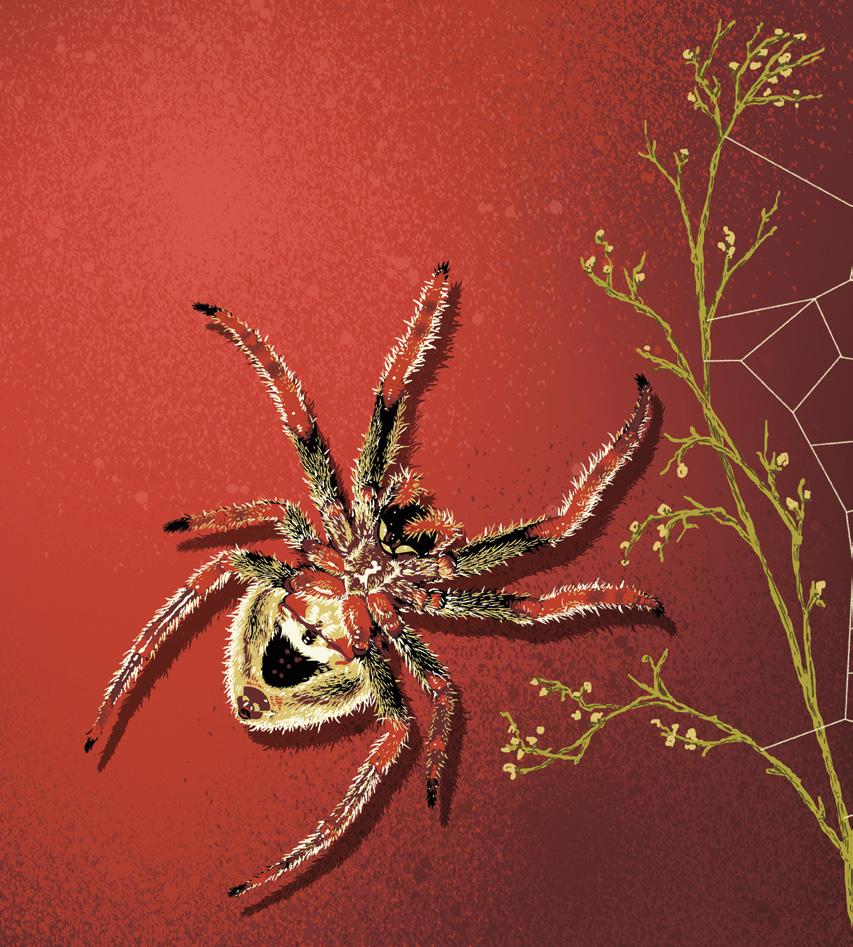
When she was frightened away, Little Miss Muffet missed out on getting to know an amazing animal: that spider that sat down beside her. Looming large in myths, legends, and a few “fear of” lists, spiders are wondrous animals. There are about 43,000 identified spider species—only around 200 produce venom harmful to humans. However, a single spider eats about 2,000 insects a year, so let’s hear it for our partners in pest control!
BY WENDY PERKINS STAFF WRITER ILLUSTRATIONS BY AMY BLANDFORD STAFF ILLUSTRATOR
CARPE DIEM
Male spiders are typically smaller than females—and tend to have a shorter life span.
PROSOMA
Fused head and thorax
CLAW
Spiders that spin webs usually have three claws at the end of each leg; hunting spiders have two.
SPINNERETS
Most spiders have six spinnerets, each with multiple “spigots” that release silk.
PEDIPALP
Although they look like small legs, these sensory organs are highly attuned to touch. Male spiders also use them to transfer sperm to females.
CHELICERA
These strong “jaws” hold prey while the spider’s fangs inject venom.
GOT SILK? All spiders make silk, but not all spiders spin webs.
Spiders range in size from tiny as a pinhead to as large as a dinner plate. Tarantulas are the largest type of spider.
An orb spider’s web is what most people consider the classic structure. The spider uses different types of silk for specific parts of the web. The inner spirals are coated with a sticky substance that delays an insect’s escape long enough for the spider to scramble out to deliver the deadly bite.
There are many variations in web design in the world of spiders. Here are examples of some main types.
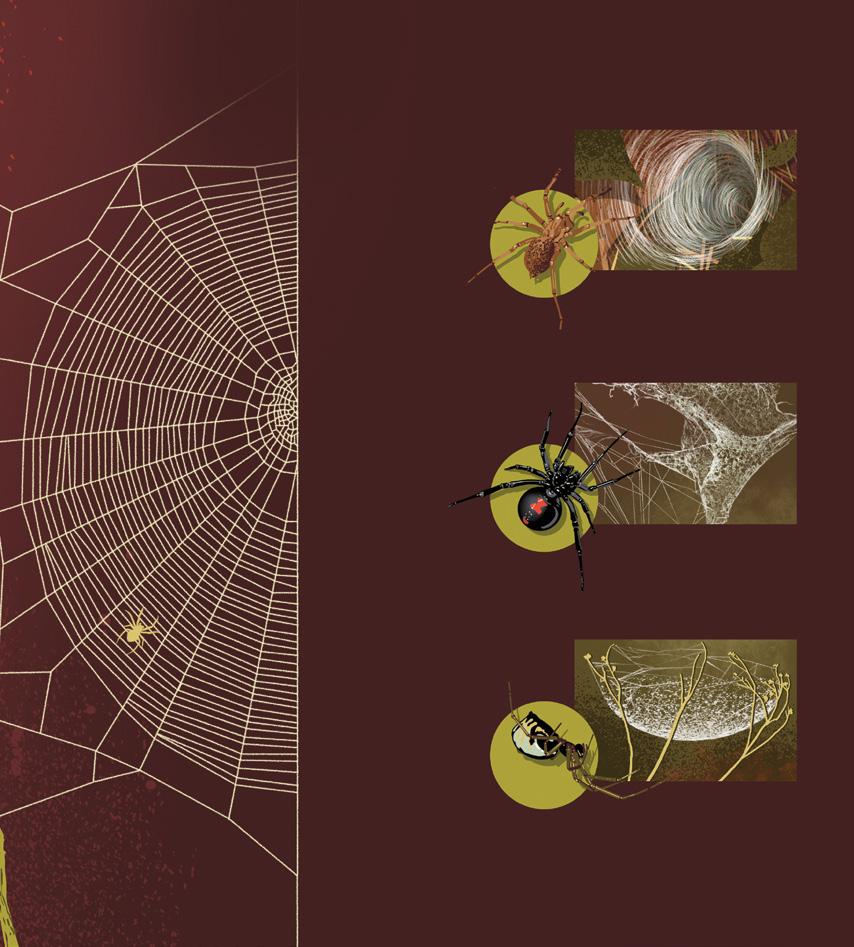
RADIAL Y-STRUCTURE
Supports the sticky spiral threads and helps absorb kinetic energy of prey.
RADIUS
Adds support to the web, and dissipates kinetic energy of trapped prey.
HUB
"Home base" as the spider awaits for prey to get caught.
STRENGTHENING ZONE
Threads here add support for the hub.
FREE ZONE
Just as the name implies, an insect landing here encounters no adhesive silk, and can still escape.
STICKY SPIRAL
This is the sticky spot! The adhesive silk used here delays the prey’s escape and adds elasticity, which helps prevent breakage.
FRAME
Made of some of the strongest (non-sticky) silk, it anchors the rest of the web.
Bowl and doily
FUNNEL WEB The spider shelters in the tunnel, waiting for the vibrations that signal an insect is walking on the flat portion of the web. Then the spider rushes out to grab its prey.
TANGLE OR COB WEB Created by the harmless cellar spider as well as the infamous black widow, they may not seem orderly to humans, but they do the job of trapping insects.
SHEET WEB
A spider hides below the flat sheet of silk anchored to leaves and branches. When an insect lands on the surface, the spider delivers a paralyzing bite from below.
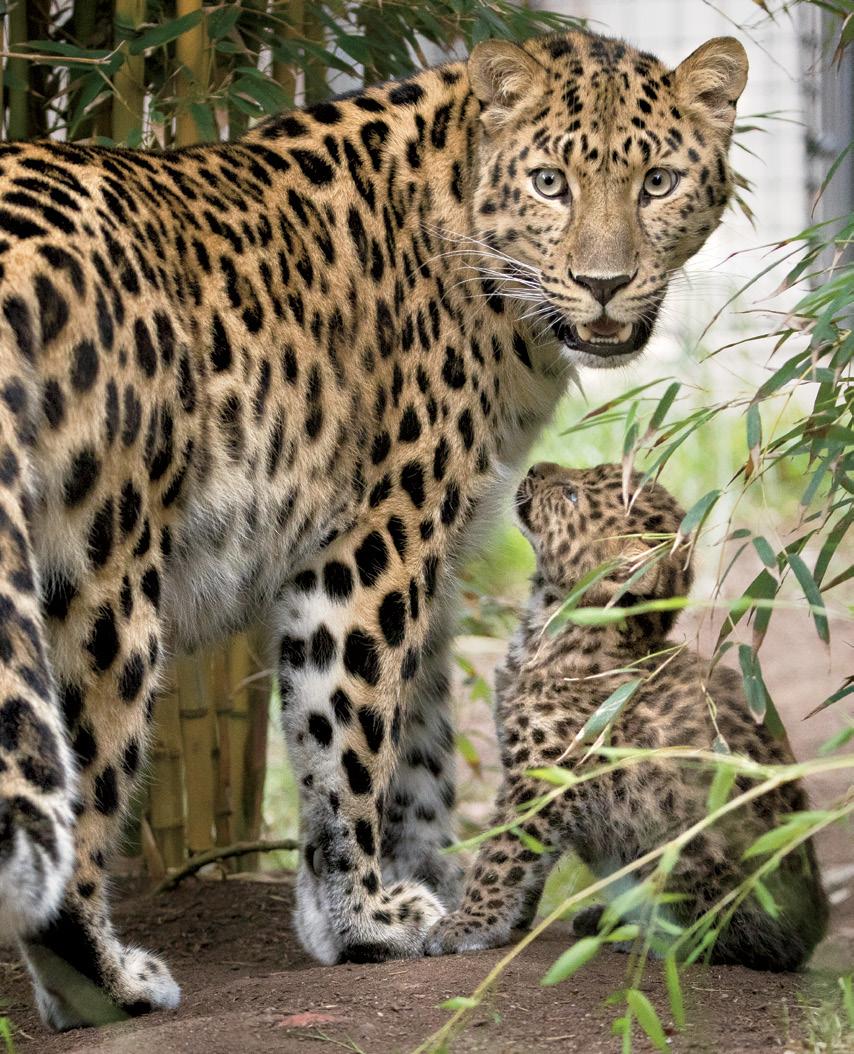
The somewhat downbeat story of the critically endangered Amur leopard Panthera pardus orientalis just took a slight upswing—two, in fact—with the arrival of a pair of adorable cubs on April 5, 2018, at the San Diego Zoo. An examination two months later revealed that both cubs are female and thriving. While the precious balls of fluff are certifiably cute (and the first birth of their species at the Zoo), the cubs, named Dorothy and Maryanne, also represent a bit of hope for their species, which could use a little good news. With fewer than 80 individuals left in the wild, Amur leopards are the rarest big cat species on the planet. Their numbers are dwindling, but with some effort, including a Global Species Management Program (GSMP), the tale of these enigmatic, charismatic felines could be starting a promising new chapter.
For the first few weeks of the cubs’ lives, Satka, their four-yearold mother, kept her bundles of joy—and their adoring public— in the dark. And that’s a good thing, according to the leopards’ main caretaker, senior keeper Todd Speis. “Their den is dark and quiet, much as it would be in the wild,” Todd explains. “We’re hands off. If we had to do a den check, we made sure to use a low-light flashlight. The more natural it is for the cubs, the better.” Todd is quick to add that the keepers still manage to keep an eye on their cats. “For the first few days, we placed a trail camera
Amur leopard cubs at the Zoo help highlight the fight to save the rarest big cat in the world
BY PEGGY SCOTT | ASSOCIATE EDITOR
PHOTOS BY KEN BOHN | SDZG PHOTOGRAPHER
in the exhibit to check out what was going on when we were not around,” he notes.
Satka, a first-time mother, proved she was more than up to the challenge. “She’s doing all the right things,” Todd says. “She’s got a protective attitude, and is very attentive.” As the cubs grew, Satka became more confident and began leaving the den for short “me time” breaks. Soon, the youngsters began exploring. “It’s up to them,” Todd says. “She’s trying to control them, but they’re completely mobile now, and they’re really curious little cats; hissy, but curious.”
Because male leopards do not participate in the raising of their offspring, the cubs’ father, fiveyear-old Oskar, lives in an exhibit down the path from the rest of the family. “He’s a mellow, handsome guy,” Todd says. “We knew they would have pretty ‘kids’.”
Between chasing each other through the underbrush, wrestling matches, and testing their claws out on the exhibit’s trees, the cubs are keeping themselves busy learning to be leopards. Todd adds that husbandry-related training is beginning, albeit gradually. “We trained them to be apart by separating Satka from the cubs for short periods of time, working up to when they would need their vaccinations,” Todd says. “As the cubs got older, we began to build a relationship with them. But the highest priority in the beginning is the relationship they have with each other and with their mother.”
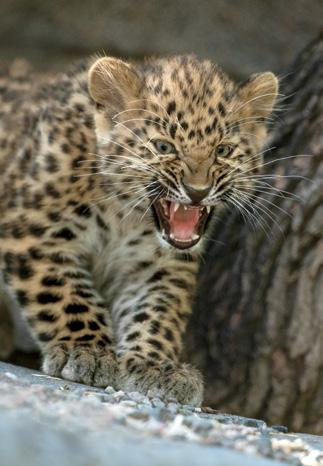
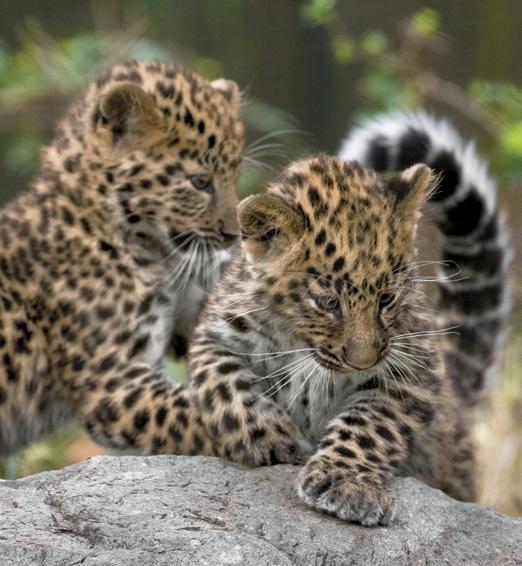
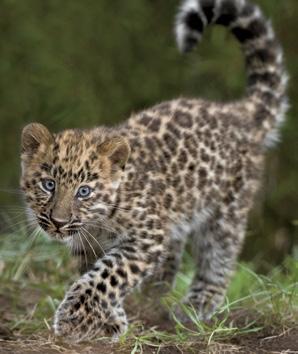
This page, clockwise from top left: The cubs’ feisty personalities emerged early; Dorothy and Maryanne must explore everything; the cubs are growing by leaps and bounds.
Opposite page: Sometimes, you just need your mom.
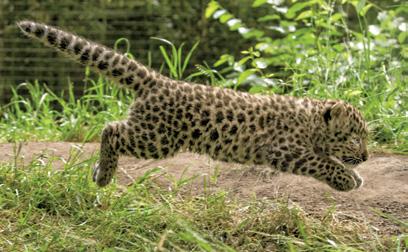
The Zoo currently is home to eight Amur leopards. The fact that this number represents about 10 percent of the total wild population of the species is a sobering reflection of the cats’ tenuous status. “There aren’t
many animals here at the Zoo that are rarer than the Amur leopard,” Todd says. “People don’t realize just how few of them there are.”
Native to the rocky mountain woodlands in the Primorye region of southeastern Russia and the
Jilin Province of northeast China, the Amur leopard is facing some daunting challenges. As with many species, habitat loss is a huge factor. “These leopards have a complicated lifestyle, because they need a large area in which to hunt and live,” Todd explains. “And they’re solitary, so there simply needs to be more places for the individual animals to go.” Also, one of the characteristics that makes Amur leopards so photogenic also makes them targets for poachers. “They are hunted for their thick, spotted coats,” Todd says.
Fortunately, these majestic cats aren’t fighting the battle against extinction alone. For the past seven years, animal care staff at more than 94 institutions around the world
have worked to gain management experience with this species, transporting cats from zoos in Europe to North America for approved breeding as part of the GSMP. More than 220 leopards in zoos and breeding centers are part of this conservation effort, with the ultimate goal being to increase native populations.
In conjunction with habitat preservation and restoration efforts, the breeding program in zoos is designed to support the sustainability of the Amur subspecies by building a baseline population, which will then produce offspring that could help bolster the dwindling population in the wild. After working with the big cats for almost a decade, Todd notes that the time for action is now. “These leopards are where the California condors were in the 1980s,” he says.
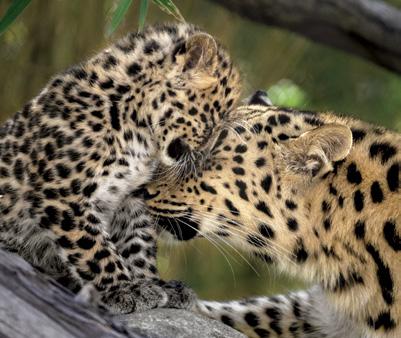
“It is critical that we act now.” But we have to make sure those cats have some place to call home, and that there is room for growth. Field projects protect the remaining animals in the wild, and the hope is that the population will slowly grow in numbers, specifically in the trans-
border region of Russia and China. Amur leopards may not be able to change their spots, but with some help, they might be able to get out of the tough spot they’re currently in. There are two little, spotted faces ready to be the poster-cubs of the conservation effort.
BY THE NUMBERS
10
The number of feet an Amur leopard can leap while carrying prey.
37
The Amur leopard’s top MPH.
2.75
The length, in inches, of an Amur leopard’s winter coat.






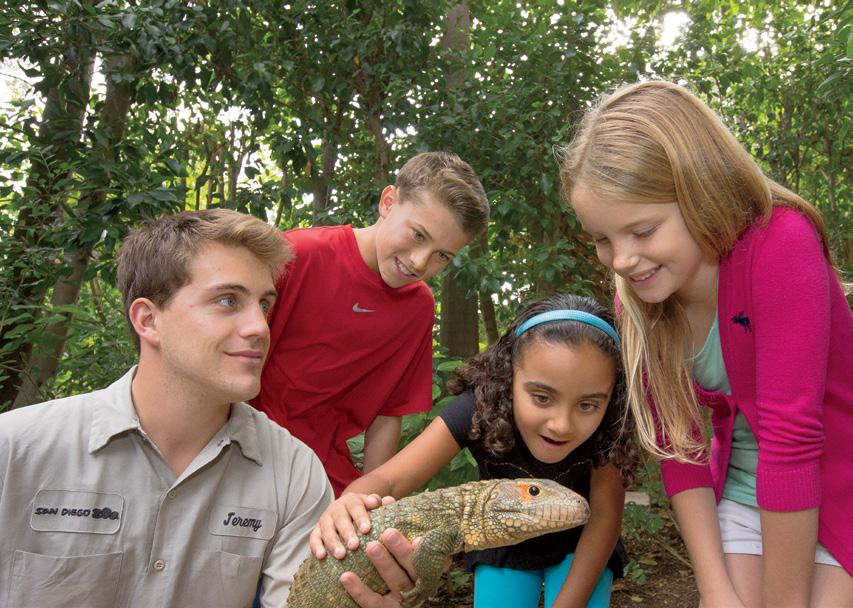
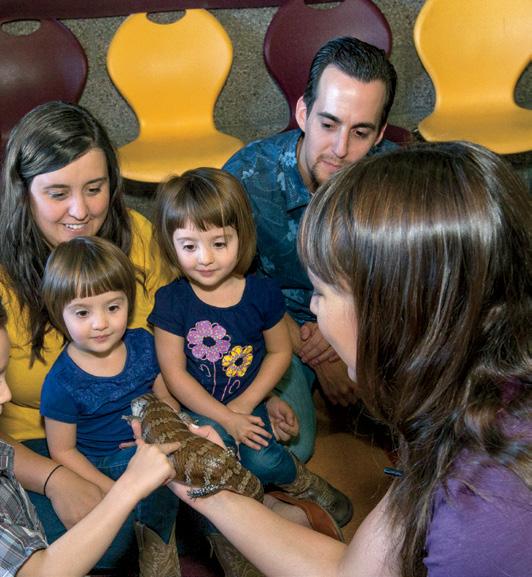
Children ages 3–5 and their favorite adult
Select Saturdays, 8:30–10 a.m. $15 per person for members; $18 plus admission for nonmembers. Book online or call 619-557-3962.
Trek through the Zoo with your favorite adult to visit some of our favorite animals before the Zoo opens. Once you observe and learn about the animal of the month, you may have the opportunity to do a fun craft, listen to an exciting story, or meet an animal ambassador.
G Is for Giraffe
October 6 and 20
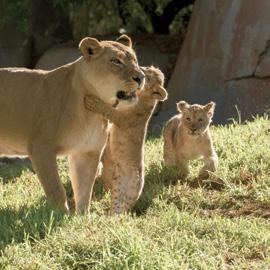
L Is for Lion
November 3 and 17
K Is for Koala December 1 and 15
B Is for Baboon January 5 and 19
E Is for Elephant February 2 and 16
P Is for Penguin March 2 and 16
Note: Animal viewing subject to change. Program runs rain or shine.
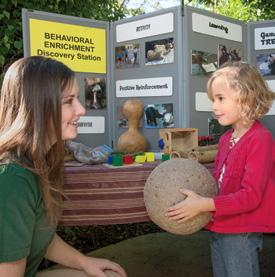
Grades K–5
Select Saturdays, 6–10 p.m.
September 8, October 6, November 3, December 8 and 15, January 5, February 2, March 2 and 30. $37 per child; book online or call 619-718-3000.
Kids! It’s the evening you’ve been waiting for! Join us at the Zoo for a wild night out with Dr. Zoolittle and animal friends. Hang with us for a few hours and we will meet some amazing animals, create Zoo crafts, play games, enjoy a snack, and much more. Sorry, no grown-ups allowed!
Teens ages 13–17
Ages 10 and younger, with adult chaperones.
$79 per person for adults and children ages 3 and older. Includes all-day Zoo admission, lunch, and birthday cake! Birthday child and children 2 and younger are free (with an accompanying paid adult).
Celebrate your child’s birthday with an Australian adventure in our Aussie Outback party room with
“Inspiring change for a better tomorrow” is the motto for Zoo Corps teens, who teach guests about topics like animal care,
passionate about wildlife conservation, public speaking, teaching, leadership, and teamwork. The winter/spring session runs January through May. Fee is $125.
Interested teens must attend an information meeting to receive an application, and there are two meeting dates to choose from: Thursday, November 1 at 7 p.m. or Saturday, November 3 at 9 a.m. Meetings will take place at the Dickinson Family Center for Lifelong Learning. No reservation required. Application will be due November 15.
If accepted, there is a mandatory training session Saturday, from 9 a.m. to 3 p.m.
For more information, email sbarnard@sandiegozoo.org.
Select Saturdays and Sundays September 1, 2, and 29; October 6, 7, and 27; November 3, 4, and 24; December 1, 2, and 29. $29 per person, plus admission for nonmembers. Book online or call 619-718-3000.
What will you see this month? Walk the grounds with experienced Zoo educators as they share the latest updates on our animal collection and the “inside secrets” of what’s going on, all before the Zoo opens for the day. Each month is different, and you won’t know what you’ll see and learn until you get here! This is a 90-minute walking tour to areas in natural hills and valleys.
Ages 16–adult
Book online or call 619-718-3000.
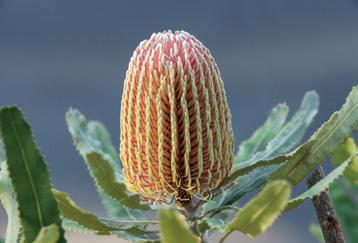
Photography Workshop
3–7 p.m. Saturdays, September 8 and 22. $299 for members, $349 for nonmembers.
Sharpen your photography skills with these amazing opportunities to see Safari Park wildlife in a whole new light, in this two-session class. On Day 1, jump on an exclusive Photo Safari truck to take advantage of the beautiful light illuminating the large field habitats of the Safari Park as the day fades into evening. Day 2 will allow photographers to stroll the Park as a group and photograph plants and animals in the beautiful light of a fall evening, with special after-hours access to an area not normally available on foot. Workshop participants will enjoy guidance and individual feedback sessions with professional photographers Jerry Roberts and Ted Walton as they offer their expertise on how to capture the best images of the unique flora and fauna of the Safari Park.
Photography Workshop
6:45–10:45 a.m. Saturdays, October 13 and 20; 6:15–10:15 a.m. Saturdays, November 3 and 10. $199 for members, $249 for nonmembers.
Whether you are a beginner or an advanced photographer, you’ll gain valuable insights to take better photos through these professionally taught, two-session classes in the amazing surroundings of the Safari Park. In each session, you will stroll as a group to a different area of the Park and photograph plants and animals in spectacular early morning light. You’ll also gain special access to an area not normally available on foot. Workshop participants will enjoy guidance and individual feedback sessions with professional photographers Jerry Roberts and Ted Walton as they offer their expertise on how to capture the best images of the unique flora and fauna of the Safari Park.
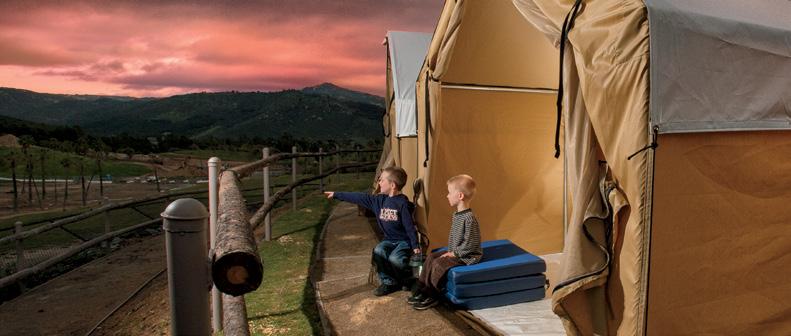
Spend the night at the Safari Park in our tents overlooking the elephant habitat and the African Plains! Sleepovers include walking tours, behind-the-scenes visits, an animal presentation, and a tram ride. Each Roar & Snore starts at 4:15 p.m. and concludes at 9:30 the next morning; and they include a tent and sleeping pad for the night.* For family programs, children 17 and younger must be accompanied by a paid adult. For reservations, and all the Roar & Snore options and pricing, call 619-718-3000; or visit sdzsafaripark.org.
*Vista tents include cots. Premium tents include a queen-size bed and cots.
Roar
All ages
September 1, 15, 29; October 6, 13; November 3, 10
Spend the night at the Safari Park with your family. Campers of all ages are invited to experience a sleepover that has something for everyone. Choose from a selection of walking tours to make your night relaxed or high energy.
Ages 21 and older
September 14; November 17
Discover the secret lives of animals through the kind of information we can only share with no children around! Special behind-the-scenes moments, evening hikes, and face-time with critters fierce and friendly add new meaning to the term “nightlife.”
Roar & Snore
Girl Scout troops
September 8, 22; October 5, 20; November 16 Girl Scouts will learn how easy it is to become a hero for wildlife in their daily lives during this activity-filled sleepover. At the end of their nightly activities, Girl Scouts will get the chance to participate in SWAPs with other troops.
School groups, in grades 3–12
September 27; October 11; November 8
Teachers, bring your students to the Safari Park for a super sleepover they will
never forget! Students will learn about plant and animal conservation; and this program is aligned to Common Core Literacy Standards and Next Generation Science Standards.
All ages
October 26
Enjoy haunted trails, make special Halloween treats for our animals, and meet creepy critters up close at a spooky sleepover. Don’t forget your costume!
Ages 21 and older
October 27
Meet remarkable animals and enjoy a variety of activities at this Halloween weekend sleepover designed for adults only.
Roar & Snore
All ages
November 24
Celebrate the holiday season with this festive sleepover on Thanksgiving weekend. Enjoy holiday crafts and games, make merry with our animal ambassadors, and take amazing photos for your holiday cards.
For private sleepovers at the Zoo or Safari Park, please call 619-718-3000.
Saturday, September 22, 2018 | 6:30 − 10:30 p.m. at the World-Famous San Diego Zoo
SMALL BITES, BIG OFFERINGS All included!
Sample from more than 160 of Southern California’s best food, wine, and beer vendors. Soar above it all on Skyfari®, light up the night at the glow party, and dance like a rock star at 7 live music stages throughout the Zoo.
YOUR
VIP and General Admission tickets are available at zoofoodandwine.com. This tasty night for wildlife benefits the San Diego Zoo Global Wildlife Conservancy.
BY KARYL CARMIGNANI | STAFF WRITER
n the cool of morning, as visitors stream into the Zoo, a family of gorillas explores the spacious exhibit for the day’s first tasty bounty. Breakfast-minded
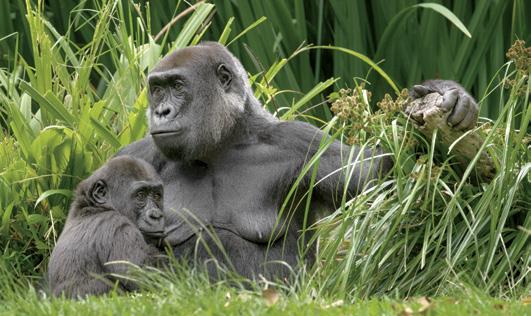
Paul Donn has a head of lettuce in each hand. His mate Jessica totes a swag of fresh browse as Denny—her sixth son—slides off her back and all but pirouettes his way over to his adoring public. Brushing 50 pounds now, the energetic 3.5-year-old is a sight to behold!
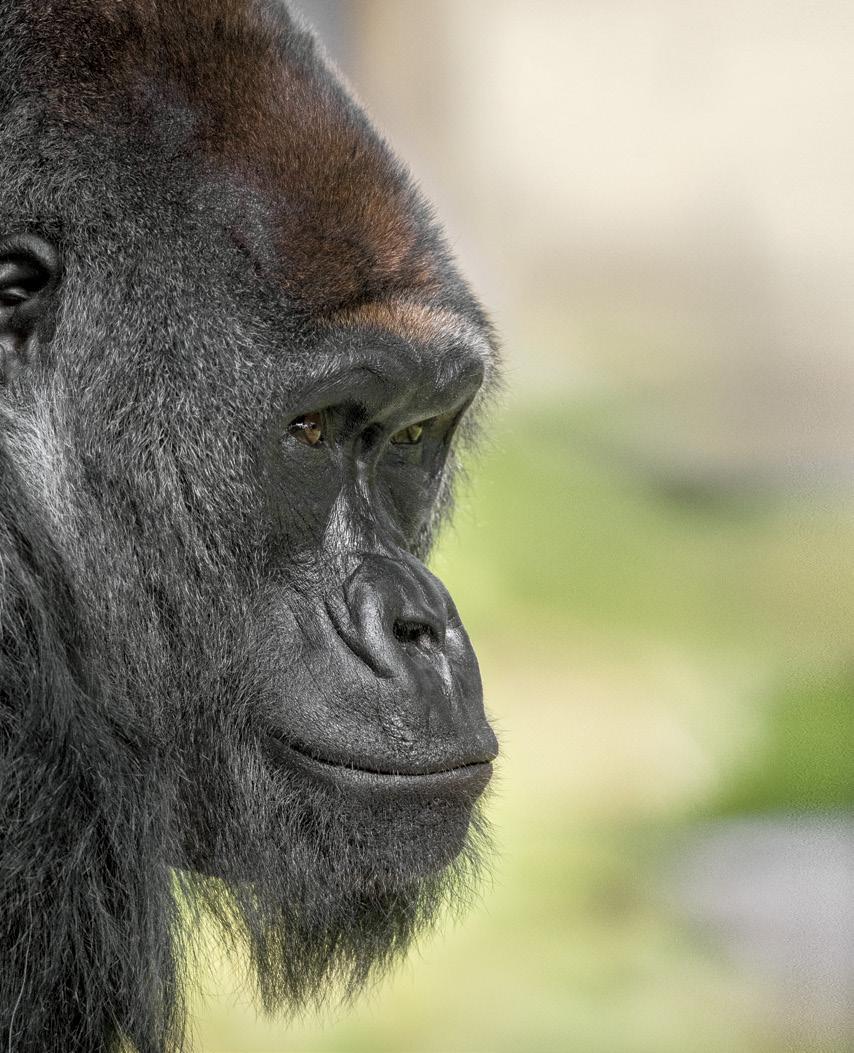
The San Diego Zoo is home to six western lowland gorillas that live in two naturalistic social groups. One is a family unit consisting of Jessica, Denny, and her handsome, 390-pound silverback, Paul Donn. Another female from the group, Ndjia, recently moved to the Los Angeles Zoo on a breeding loan. In the wild, males leave their natal group and often form loose bachelor coalitions, and at the Zoo that all-male consortium is made up of brothers Maka, Mandazzi, and Ekuba.
Like other great apes, each gorilla has its own distinct personality, intelligence, and social graces that serve its social group, and keepers go to great lengths to keep the animals engaged. “Zookeeping is different than in decades past,” said Nerissa Foland, senior keeper, San Diego Zoo. “Today, the goal is to challenge the animals mentally and physically, so they can live full, vibrant lives.” Training sessions, enrichment items, and social interactions are some of the ways the gorillas get to use their smarts and stay healthy.
All of the gorillas are trained in over 20 husbandry behaviors that help keepers monitor their health closely. Before heading outside, each one demonstrates several behaviors that allow keepers a good, close look at them. They get tasty rewards like fruit and nuts for their cooperation. Even rambunctious little Denny presents his limbs, teeth, and back for inspection. From dry skin and hangnails to dental issues and skin lesions, keepers keep a close eye on their charges, and the gorillas are willing partners.
Despite a vegetable-rich, high-fiber, low-fat diet, male gorillas in zoos
can be struck down in their prime— the leading cause of death in male gorillas is cardiovascular disease. While gorilla hearts are quite similar to human hearts, we get very different types of heart disease. Humans are susceptible to plaque buildup from “bad” cholesterol that clogs arteries and heart function. Gorillas, in contrast, develop a gradual thickening of the heart muscles called fibrosing cardiomyopathy, which blocks electrical impulses and weakens the heart’s ability to pump blood. But heart medication for humans and gorillas is the same—beta blockers and ACE
inhibitors, with the dosage adjusted to the animal’s size.
To preventatively manage heart disease, keepers patiently work with the gorillas using positive reinforcement, so the mighty apes will allow cardiac ultrasounds without anesthesia from a Zoo veterinarian. “They have to present and hold, and position, and even learn hand signals to move a few inches, so we could get the best images of the heart,” said Nerissa. Ever-enthusiastic Mandazzi is the star volunteer for the procedure, but the other three follow suit.
Since high blood pressure can be an indicator of heart disease, keepers are also training the gorillas to accept a blood pressure cuff and hold still while it inflates and deflates.
“It takes a huge amount of trust on both sides of the mesh to cut off their circulation for a moment to get a reading,” said Nerissa. A 35-pound “sleeve” is placed on the enclosure for the gorilla to reach through. It takes a human thigh-sized cuff to go on the ape’s forearm. Nerissa said that despite his brawn, Paul Donn barely tolerates any pressure, but Maka is
You can help save gorillas in Africa. Each cell phone contains the element tantalum, which is refined from coltan ore that is mined from gorilla habitat. It can be reused if the device is recycled responsibly. DID YOU KNOW?
fine with it. “He’s a rock star,” she added. Good thing, since he has a heart condition, so it’s important to keep an eye on him. The other “boys” have a way to go in their training.
Another type of training involves all of the gorillas: Emergency Recall. Should something dramatic and unexpected occur, like an earthquake or something falling into their exhibit, a special audio signal is given, and no matter what is happening, the gorillas must “storm the castle” and come inside. It’s a different kind of training, as the super high-value reward—fruit cocktail in syrup, which they love but otherwise never get—elicits an urgent response. “We want to make it more important to come inside than to be near the dangerous situation,” said Nerissa. “Now, even the bachelors fly toward the building when they hear the signal!”
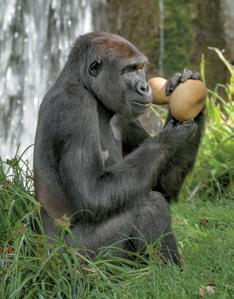
A creative cadre of “enrichment volunteers” helps keep things interesting for the gorillas by making fun items like painted gourds, boxes, and papiermâché; perfume-scented pine cones; bamboo cups for gelatin or peanut butter; frozen juice balls; grooved boards smeared with oatmeal or baby food; and palm husk baskets. They even take special orders for birthdays and holidays, so the gorillas can delight in and explore festive surprises. “It’s great because the keepers can ‘grab and go’ from the enrichment items,” said Nerissa. “We really appreciate our volunteers!”
In addition to tasty (if you’re a gorilla) fresh browse, the keepers do random “food scatters” with vegetables, raisins, or cereal throughout the day, so the gorillas can forage as they would in the wild. The apes also enjoy amenities in their bedrooms like nature DVDs, a bubble maker, and a sound machine. “If I came back as an animal, I’d want to be a gorilla at the San Diego Zoo,” said Nerissa, with a chuckle.
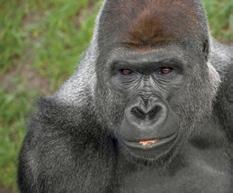
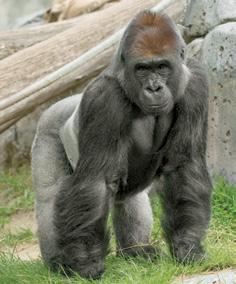
pressure readings.
After Ndjia left for the Los Angeles Zoo last May, it seemed that mellow, 16-yearold Mandazzi was “exhibiting behaviors as though looking for her,” said Nerissa. Though not part of his bachelor troop, Mandazzi had been showing interest in her from afar. It’s a big transition when someone leaves the group, but at 24 years old, it is important that Ndjia have the opportunity to breed and help her critically endangered species. Over time, the gorillas have accepted her absence. Twenty-three-year old Maka thinks he’s in charge of the bachelor troop, despite Mandazzi outweighing him by about 75 pounds. Apparently, Mandazzi would rather be mellow than boss! Interestingly, 12-year-old Ekuba actually directs things, said Nerissa. He has a clever understanding of his elders and by supporting the underdog, maintains a balance of power between the males. “Ekuba isn’t big enough to take over, but he runs the show from behind the scenes,” observed Nerissa. Western lowland gorillas Gorilla gorilla gorilla are part of the Association of Zoos and Aquariums’ Gorilla Species Survival Plan (SSP), and 51 accredited zoos managing lowland gorillas strive to ensure the genetic and demographic health of the population in managed care. Additionally, the SSP serves to advance the care of zoo gorillas, deepen scientific knowledge about this species, educate the public about critical issues surrounding their survival, and work with other organizations to protect and improve the lives of wild populations. San Diego Zoo Global is committed to conserving gorillas, and we are proud to be a part of the Great Ape Heart Project. Our staff’s commitment to training these great apes to participate in blood pressure readings and cardiac ultrasounds will reap far-reaching benefits to the cardiac health of gorillas for generations to come. San Diego Zoo visitors can discover the personalities, antics, and social bonds of gorillas firsthand, and appreciate the greatness of these great apes.
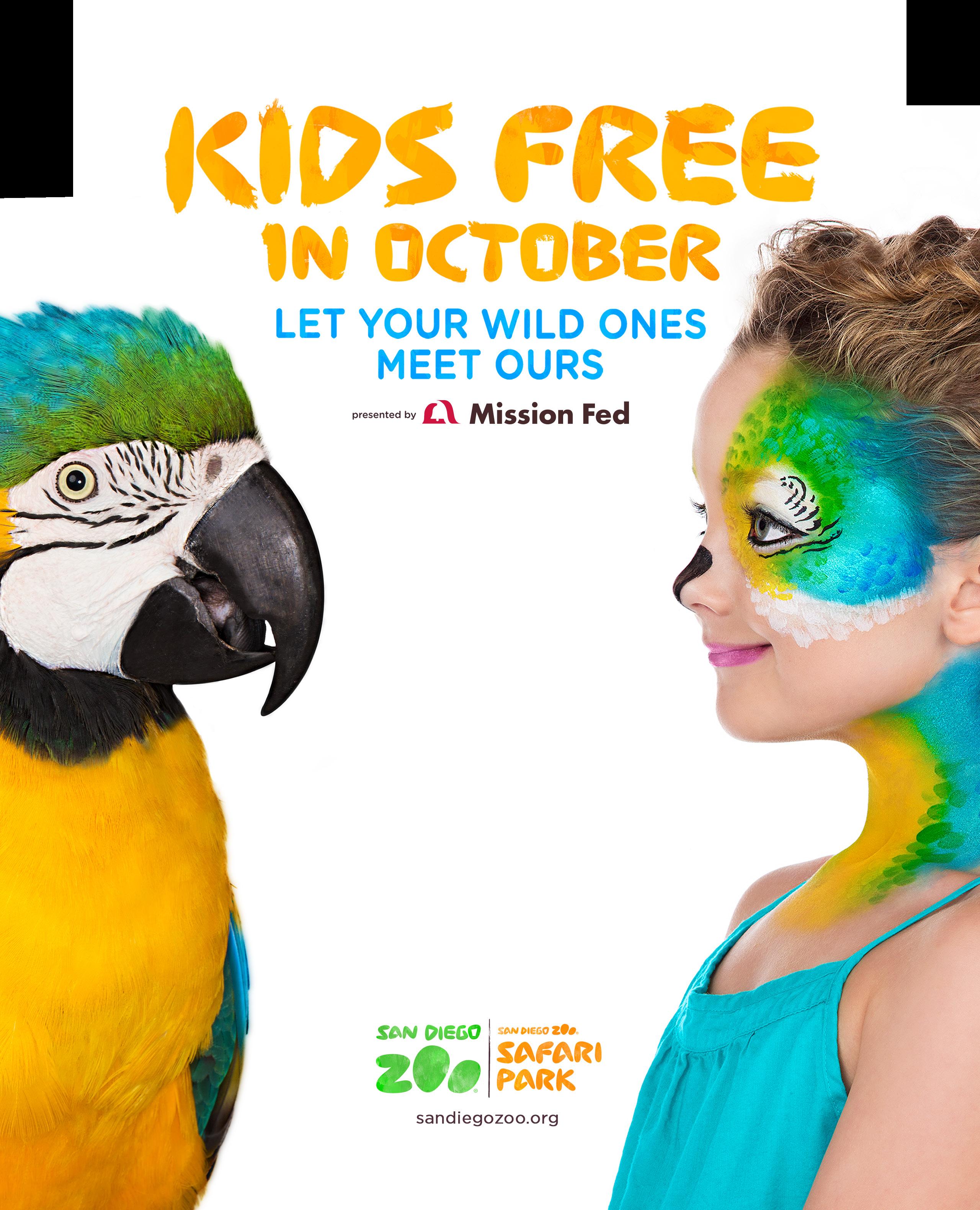
Calling all kids! October is Kids Free month at the San Diego Zoo and San Diego Zoo Safari Park, when children 11 years and younger receive free admission all month long (with an adult). Kids can connect with their wild side by meeting our wildlife, and discover the wonders of nature through play and exploration. On weekends, there will be even more kid-focused fun, with a variety of special activities.
BY WENDY PERKINS STAFF WRITER
PHOTOS BY TAMMY SPRATT SDZG PHOTOGRAPHER
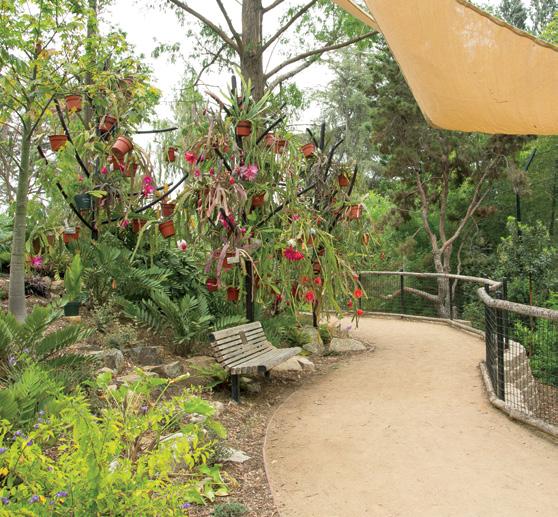
Slender fingers of sun reach through the branches of a tree, dappling a lush tangle of pendulous foliage. A thick mass of plants holds court on either side of a beckoning trail. Accepting the invitation, you follow the path leisurely, letting your senses feast on the sights, sounds, and scents. There’s an innovative new spot at the Safari Park; one that’s a delight anytime of year, and offers a bonus kaleidoscope of color in spring.
Many members have enjoyed visiting the Epiphyllum House each May to marvel at the stunning blossoms. Now, the Park’s horticulture team has created a more expansive experience. “The idea was to showcase our collection in an amazing spot that simulates how they inhabit their natural environment,” says John Horne, curator of horticulture at the Safari Park.
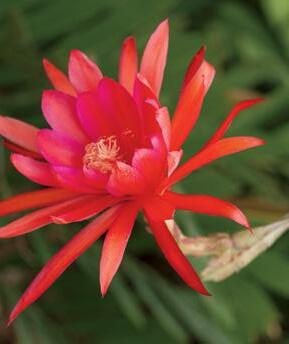
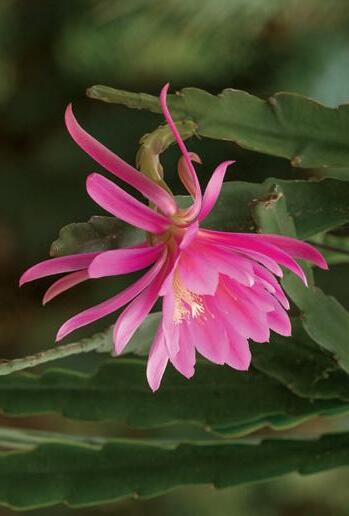
Epiphyllums are also called jungle cactus. Cactus in a jungle? “Epis” (as they are nicknamed) are indeed cactus. The long, flat growth that most people would call a leaf is actually the stem; this plant has no leaves! This design has fooled people for thousands of years. Even the early scientists that named the plant; “epiphyllum” comes from the , meaning “leaf.” It refers to the fact that a flower seems to spring directly from a leaf, which we now understand is not a leaf. Whew!
When it comes to habitat, epis again challenge preconceived notions. Cactus implies desert, in the minds of many. Well, here’s an exception to the rule. Native to rain forests in many parts of Mexico, Central and South America, and the Caribbean, epiphyllums take root, not on the ground, but in tree forks and rock crevices, where they thrive on semi-shade and moist air. When the idea sprouted to give guests a new way to view the Park’s epiphyllum collection, the species’ nature led the way.
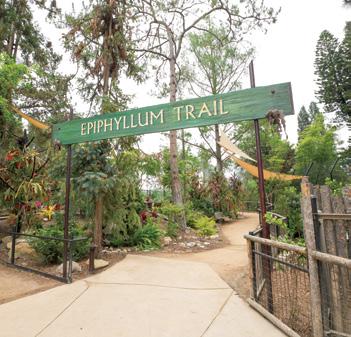
Located between Walkabout Australia and Condor Ridge, the Epiphyllum Trail
offers great air flow, as well as naturally filtered sun from the large trees that were already growing in the space. More than 600 epiphyllum plants were moved from the former location to one of the Park’s greenhouses, then moved to their new home last winter. “The epis would be getting a different amount of sunlight in their new location,” John explains. “We began moving them to the new spot in January, so they could acclimate as the days grew longer naturally.”
Outside of their native habitat, most epiphyllums are cultivated in suspended pots filled with a special medium. Being held aloft gives their stems room to grow, branch, and arch beautifully. On the Epiphyllum Trail, sturdy, multi-armed poles fitted with hooks let guests admire the plants in their natural form. And in the spring, the plant’s eye-catching blossoms are center stage.
Flowers of the queen of the night
Ephiphyllum oxypetalum bloom only for one night.
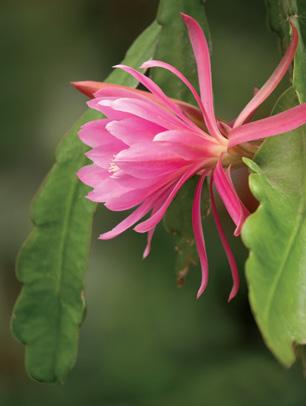
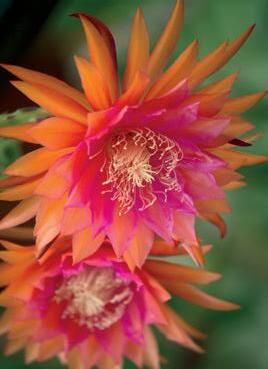
Epiphyllum enthusiasts have, over hundreds of years, crossbred epis to produce an astonishing array of jewel-toned flowers measuring more than 12 inches across. While it’s often the springtime flowers that attract attention, people who collect and raise epis appreciate them year round. In fact, the Park’s epiphyllum collection would be nothing without the time, energy, and care of the San Diego Epiphyllum Society volunteers who help care for the plants.
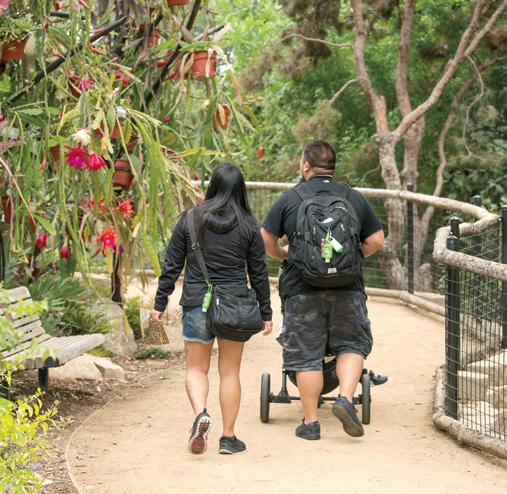
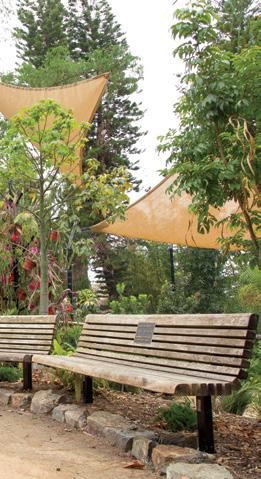
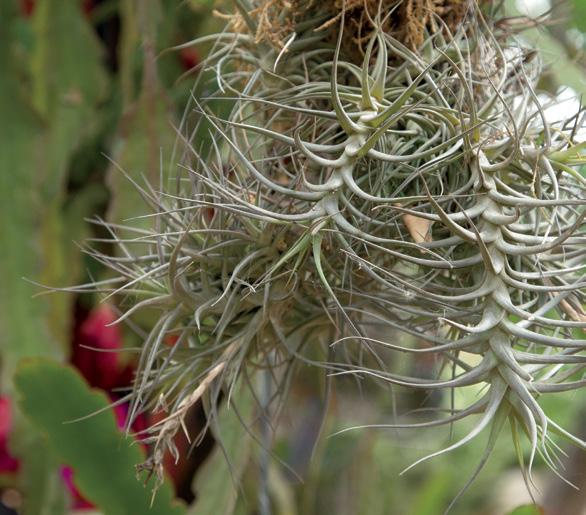
Joining the epis in this new habitat are plants that share the “high life.” Epiphyllums are one type of epiphyte—a plant that grows upon another, without harming its host. Tilandsias (“air plants”) and staghorn ferns are some of the other epiphytes to look for as you stroll the short, easy trail. Benches give you a chance to sit and savor the surroundings and appreciate the horticulture team’s vision.
It’s a place you’ll want to come back to—for the burst of blooms next spring, of course, but also to see how this garden grows. New types of epiphytes and unique ground-dwelling South American flora are seeds of dreams for filling this space with plants to catch the eye and spark the imagination of members and guests.
“We’re constantly evaluating and fine-tuning how we manage the plants,” said Robert Thurston, lead horticulturist. He’s among the first to acknowledge challenges in creating an amazing spot that simulates how these plants thrive in their native habitat. “We’re developing something that hasn’t been done before,” said Robert. “If it wasn’t difficult, everyone would be doing it.”
Add the Epiphyllum Trail to your next journey through the Safari Park, and make it a regular stop. It’s totally epic.
The beautiful birds of Walkabout Australia soar as stars in their own right
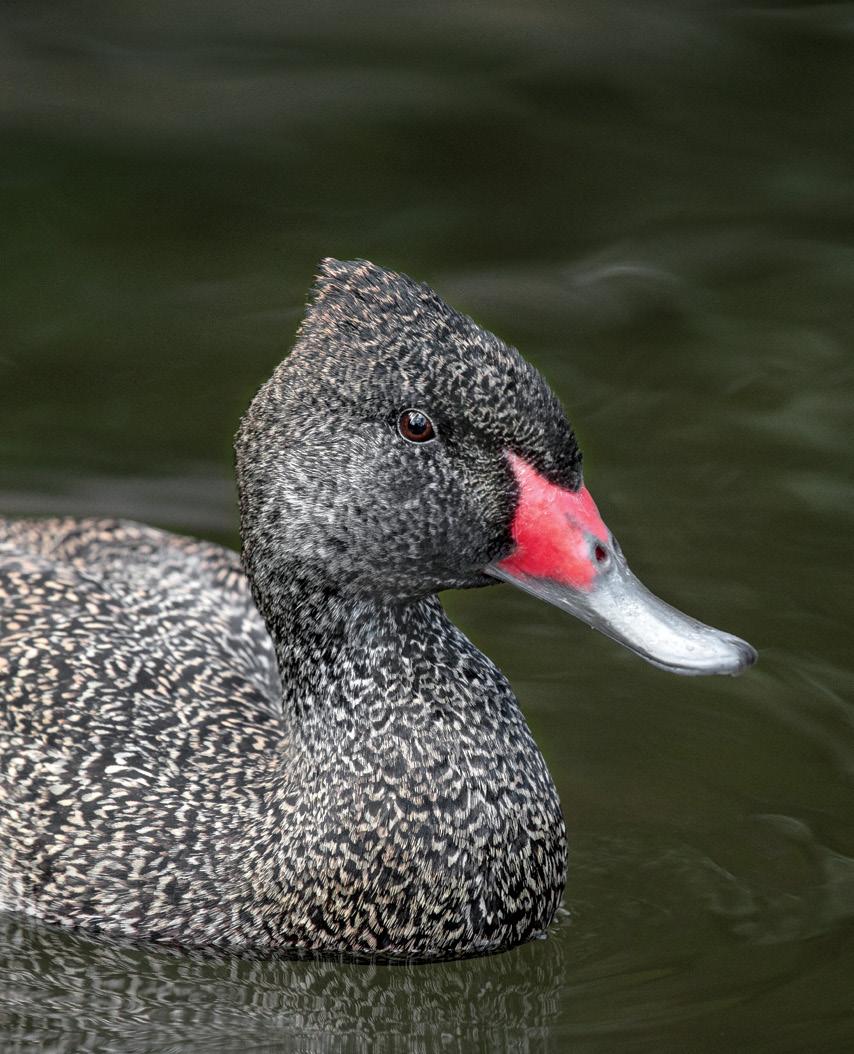
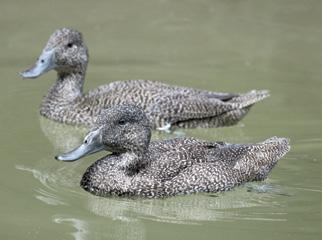
At Walkabout Australia, we had our first-ever hatching of freckled duck ducklings (right). The dominant male (this page) sports a crimson bill, unlike the females (far right).
BY PEGGY SCOTT | ASSOCIATE EDITOR PHOTOS BY KEN BOHN | SDZG PHOTOGRAPHER
When contemplating amazing animals from Down Under, it’s important to think outside the pouch. Because for all the cute and charismatic marsupials that call Australia home, there are some equally amazing avian wonders that are birds of a feather in the Land of
Oz. Without the birds, notes Andrew Stehly, associate curator of birds at the Safari Park, the Park’s new Walkabout Australia exhibit would be telling only half of the continent’s story. “As part of the ecological system, birds play important roles in their environment, such as seed dispersers,” he explains.
“And the birds at Walkabout Australia represent some of the various regions of Australia really well.”
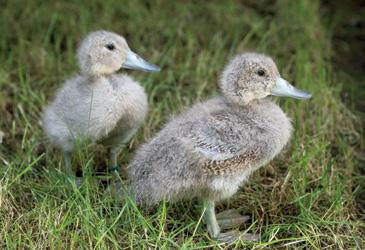
Not only does the opening of Walkabout Australia bring with it the debut of freckled ducks Stictonetta naevosa in the Park’s bird collection, it also marks our first hatching of that species. Even though it can be called by several names—the canvasback duck, oatmeal duck, speckled duck, and diamantina duck—this web-footed paddler can be identified by the freckles that mottle its plumage, as well as by its large head with a jaunty peak at the back, and a distinctive narrow and slightly upturned bill.
At the Safari Park, check for freckled ducks in or near the pond below Walkabout Australia’s Zuest Station. The leader of the foursome is easy to “spot”— you’ll see red. “Our dominant male has the crimson bill,” Andrew says. “The other male and the females don’t.”
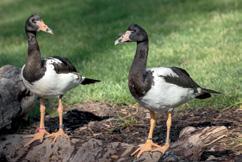
When trying to identify the magpie goose Anseranas semipalmata, first look up—the black head of a magpie goose is topped with a noticeable knob, and its face is covered with naked, red skin. Then, look down—unlike most waterfowl, magpie geese have only partially webbed feet, which is what semipalmata means. The last known species in the family Anseranatidae, magpie geese do not lose (molt) their flight feathers all at once, so they are never left flightless.
A flock of magpie geese lives in Walkabout Australia’s walk-through area, where they like to relax and forage near the pond. Andrew notes that visitors might hear them before they catch sight of the birds. “They make this really cool, distinctive honking noise,” he says, but is quick to add they are something to see,
too. “I love to see their black-and-white plumage against the background of the green grasses and trees. They stand out really well.”
Native Australians might refer to the radjah shelduck Radjah radjah as a Burdekin duck, named for the Burdekin River in Queensland. Some people substitute the word “sheldrake” for shelduck (both words mean “pied or dappled waterfowl”). But whatever you call it, this bird is a colorful character. You can identify it by its pale pink bill and feet; white and dark chestnut markings; and the distinctive white iris of its attention-getting eyes. In flight, it shows the green bands of its chestnutcolored wing tops. These web-footed
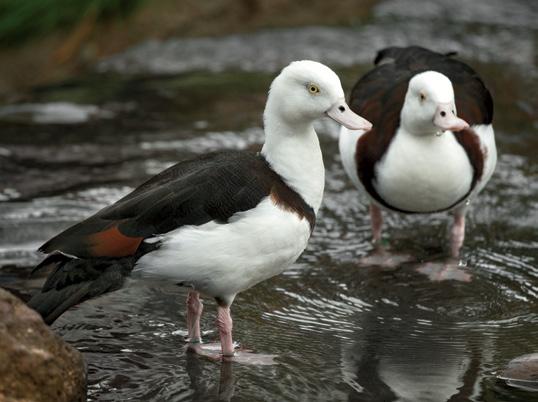
birds are strong swimmers that can make their way quickly across a body of water. And while they are skilled fliers, they do just as well on foot. Andrew says they are “great runners and always on the move and patrolling” the areas of Walkabout Australia that they share with the magpie geese.
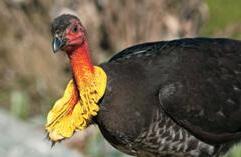
With his striking looks, it would seem the male Australian brush-turkey Alectura lathami would have no trouble attracting the ladies. But for this species, the guys really have to do their homework—or, more accurately, nest work. A male Australian brush turkey builds an egg mound by gathering earth, leaves, and other ground material together with his powerful legs and wide feet. A mound can be as big as 3 feet tall and 13 to 16 feet in diameter. That’s a pretty big home improvement project for a bird that only weighs about five pounds. Females choose males based at least partly on the quality of the mound, often visiting numerous mounds before selecting one. The male spends many hours each day building and maintaining his mound until it’s
just right—the right temperature, that is. “Because the eggs are incubated by temperature, the male uses his beak to test the mound,” Andrew explains. “If it’s not right, he will add or take away material until it’s right.” If a mound is particularly attractive, more than one female will lay her dozen or so eggs in the same mound! However, while the females might be suitably impressed, people who live in Australia are not
the brush turkeys are notorious for digging up gardens and making an unwelcome mess.
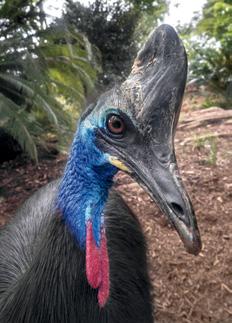
While all birds are descended from dinosaurs, the cassowary Casuarius casuarius seems even more reminiscent of the ancient reptiles than other bird species do. Large bodied with fierce claws, these flightless birds also have a casque, a helmet-like structure atop the head, which is thought to amplify the bird’s booming call. “You feel their call more than you hear it,” Andrew says of the southern or wattled cassowaries at the Park. “The males use it to warn other cassowaries away from their territory or to attract females.”
The cassowary habitat is one of Andrew’s favorite parts of Walkabout Australia. “Their exhibit is set up and planted well,” he says. “They move around, always on the lookout for intruders or fallen fruit. I love that it’s so natural—it takes a couple of minutes to find them, but when you do, it’s very rewarding.”
If you are 70½ or older and don’t need your IRA’s required minimum distribution (RMD) you can roll over part of it to help San Diego Zoo Global provide for the animals in our care and support our conservation efforts around the world.
$100,000 You can direct up to 70½ or older
• You pay income tax on your distribution
• You may not need or want the money
• Your tax dollars go to the government
• You are limited by the RMD rules

• You will pay no income tax on your gift
• You can help support San Diego Zoo Global
• Your gift can help build your charitable legacy
• You can use your IRA in the way you want
An IRA Charitable Rollover gift can benefit both you and the Zoo! Email us at donations@sandiegozoo.org or call 619-685-3222 today to request a sample letter to send to your IRA administrator that will allow you to make an IRA Charitable Rollover gift.
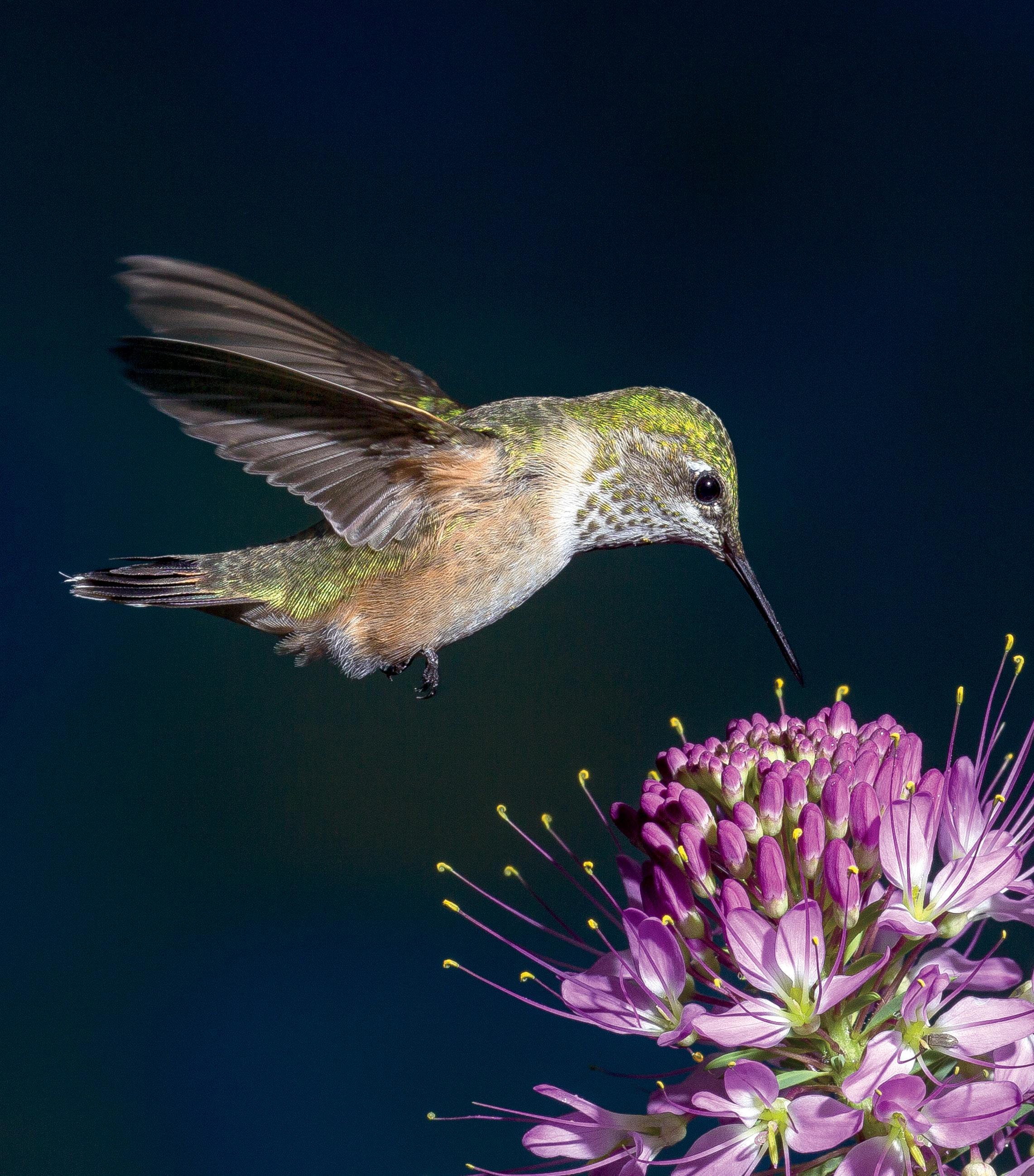
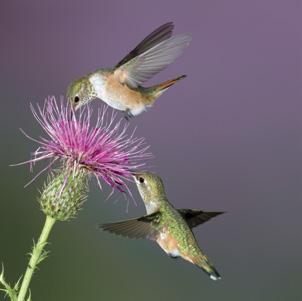
These little dynamos can fly up, down, sideways, backwards, and even upside down as they approach flowers to feed, try to impress mates, or defend territory.
BY MARY SEKULOVICH | SENIOR EDITOR, DEVELOPMENT DEPARTMENT
There have been hummingbirds—and millions of hummingbird fans—at the San Diego Zoo since their home debuted here in November 1964. As those first guests eagerly walked through the revolving doors and into a tropical rain forest of vibrant, shimmering birds whizzing by, they excitedly said, “Magical!” and “Spectacular!” and “Unbelievable!”
So, when the new William E. Cole Family Hummingbird Habitat opens near the Children’s Zoo next year, we will be listening for those excited voices once again. This time the little birds will be zooming around in a home twice the size of the former exhibit, with all the small touches that hummingbirds need to thrive.
Water elements are tops on their list, so several flowing streams and ponds will be included: hummingbirds love to bathe throughout the day, splashing in the spray. One pond will feature gigantic Victoria lily pads, some as wide as nine feet across.
Of course, the little dynamos will be eating nonstop to maintain their high metabolic rate, so plenty of nectar feeders will be added, as well as tropical plants; red, tubular flowers are favorites. With their long bill and specialized tongue for siphoning nectar, hummingbirds will be hovering near plants like fuchsias, and they will also scoop up any tasty insects nearby, for added protein.
and benches where guests can stroll or stop for a while, enjoying the small birds and trying to anticipate where they will zoom off to next.
Every day, the hummingbird habitat will offer new adventures and hummingbird drama: will they defend their territory or pause for a dip in a stream? Or maybe it will be the time of year when the tiny birds build their walnut-sized nest, tucking it in the living wall. When guests look in after a few weeks, the mothers will be busy feeding their teensy chicks, just hatched from eggs the size of jelly beans—unbelievably small!
Hummingbird appeal is universal—all of us love the tiny birds and their garden acrobatics! Now that we plan to build a new home for them, doubling the size of the former exhibit, we need your help. All the things that hummingbirds love will be included, like ponds, streams, and favorite flowers, so they can sip nectar all day long. Visitors will be welcomed with raised walkways and benches where they can sit a while and enjoy hummingbirds zipping by.
Watching these tiny birds with their shimmering feathers is mesmerizing as they fly up, down, sideways, and even upside down—it’s hard to keep up with them! That’s why the Zoo’s architects have included elevated walkways (all ADA-accessible)
If you love hummingbirds, we’re sure you will fall in love with their new home. We’re ready for the excitement when the new William E. Cole Family Hummingbird Habitat opens near the Children’s Zoo. Once again, it will be one of San Diego’s hidden gems, and that unmistakable hummingbird buzz will fill the air.
Your gift today will ensure that millions of Zoo visitors each year will enjoy being part of the fascinating world of hummingbirds. Every day will be a new adventure!
For more information, visit sandiegozoo.org/ hummingbirds or call us at 619-557-3947.
San Diego Zoo Global’s mission to end extinction takes place not just at the Zoo, Park, and Institute for Conservation Research, but also through field work in projects around the globe. Each issue, we share an update on one of these projects.
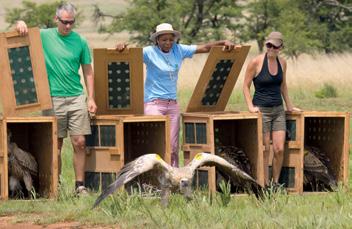
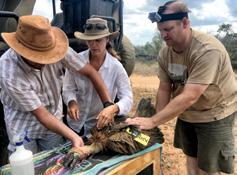
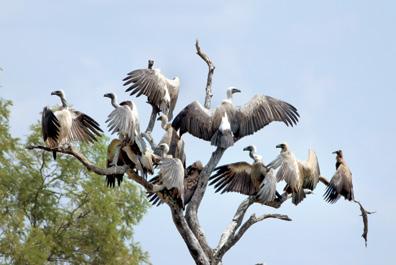
BY KARYL CARMIGNANI | STAFF WRITER
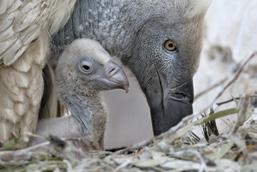
San Diego Zoo Global (SDZG), with partners and collaborators, has been working for decades to protect vultures from a gauntlet of threats—the world can be a dangerous place for avian scavengers reliant on “leftovers.” But the crucial role that the 23 vulture species play in ecosystem health worldwide cannot be overstated. Vultures aid their respective environments by cleaning up carcasses and actually removing pathogens from the landscape in ways no other animal can, which benefits wildlife and humans. However, African vulture populations have declined significantly in recent years due to poisoning, which occurs when carcasses are laced with pesticides or other toxins aimed at mammalian carnivores (or vultures); poachers attempting to prevent rangers from detecting their illegal activities; or direct persecution for vulture body parts in the wildlife trade. Lesser threats are electrocution and collisions with power lines and wind turbines.
To help combat the African vulture crisis, SDZG helped spearhead the Association for Zoos and Aquariums’ Saving Animals From Extinction (SAFE) program for vultures. We are collaborating with The Peregrine Fund and VulPro to help vultures in Kenya and South Africa. We are providing expertise—including two bird keepers from the Safari Park helping out at VulPro for a couple of weeks each year—equipment, education materials, and funding for vulture conservation. The Peregrine Fund's “Stop Poisoning Now!” campaign is training rangers, law enforcement, and community groups to identify and respond to poisoning incidents. This SAFE program benefits the Cape, hooded, lappet-faced, Ruppell’s, whitebacked, and white-headed vulture species. But all of the smart, social, sanitary birds that fill this unique ecological niche deserve our respect and conservation efforts.
2018
Valid October 1–31, 2018 10% OFF
Find a new story your kids will love!
Valid October 1–31, 2018
Valid at all stores at the San Diego Zoo and Safari Park. Member must provide valid membership card at time of purchase to receive discount. Coupon not required. For online purchases, enter promotion code MEMBER10 at checkout. Cannot be combined with any other offer, promotion, or discount. No limit while supplies last.
Receive a free popcorn refill at the Zoo when a souvenir popcorn bucket is purchased (excludes kettle corn).
Valid September 1–30, 2018
Member must provide valid membership card at time of purchase to receive discount. Supporting ID may be required. Not valid with any other offer, promotion, or discount. Coupon not required.
Bring home a new animal sipper from the Safari Park.
Discount available at any Safari Park restaurant location, on sippers filled with nonalcoholic beverages only. Members also receive free refills all day on date of purchase. Member must provide valid membership card at time of purchase to receive discount. Supporting ID may be required. Not valid with any other offer, promotion, or discount. Coupon not required.
OFF
Enjoy $1 off a cinematic adventure at the Zoo, with high-definition 4-D projection and thrilling sensory effects.
Valid November 1–30, 2018
Valid at both 4-D theaters at the San Diego Zoo. Member must provide valid membership card at time of purchase to receive discount. Supporting ID may be required. Not valid with any other offer, promotion, or discount. Coupon not required.
Check everyone off your holiday shopping list with a membership to the San Diego Zoo and Safari Park.
They’ll go wild, and your gift will give back, supporting the animals in our care and conservation efforts worldwide.