San Diego Zoo Wildlife Alliance Journal September 2022
October is Kids Free month at the San Diego Zoo and San Diego Zoo Safari Park, when youths 11 years and younger receive free admission all month long (with an adult). Youths can connect with their wild side by meeting wildlife, while discovering the wonders of nature through play and exploration. Come connect with nature in an all-new way at Wildlife Explorers Basecamp—now open at the San Diego Zoo! sdzwa.org/kidsfree
Journey Through Our Conservation Work This issue of the San Diego Zoo Wildlife Alliance Journal focuses on the Asian Rainforest hub. To learn more about our collaborative conservation programs around the world, including our wildlife care at the San Diego Zoo and San Diego Zoo Safari Park, visit sdzwa.org.
Cover Story
All the Eggs in One Basket
For milky storks, communal living is key. And San Diego Zoo Wildlife Alliance has just the place to protect this precious population.
Features
Balancing Act
In West Sumatra, competition for resources can make it tricky for tigers and people to coexist. SDZWA is teaming up with local entities to help keep the situation stable.
In Demand
When it comes to combating wildlife trafficking, the first step is to take a look at where the illegally traded wildlife will end up— and try to reshape consumers’ behavior.
Visualize It
Even the botanical world has its share of hunters. Along with the usual diet of sunlight, soil, carbon dioxide, and water, carnivorous plants like a little meat on the side. And they have amazing ways of attracting and trapping it!
On the Cover: Milky stork Mycteria cinerea. Photo by: Ken Bohn, SDZWA photographer.
Share your #SanDiegoZoo & #SDZSafariPark memories on Twitter & Instagram.
The Zoological Society of San Diego was founded in Octo ber 1916 by Harry M. Wegeforth, M.D., as a private, nonprofit corporation, which does business as San Diego Zoo Wildlife Alliance.
The printed San Diego Zoo Wildlife Alliance Journal (ISSN 2767-7680) (Vol. 2, No. 5) is published bimonthly, in January, March, May, July, September, and November. Publisher is San Diego Zoo Wildlife Alliance, located at 2920 Zoo Drive, San Diego, CA 92101-1646. Periodicals postage paid at San Diego, California, USA, and at additional mailing offices. POSTMASTER: Send address changes to San Diego Zoo Wildlife Alliance, P.O. Box 120271, San Diego, CA 92112-0271.
For information about becoming a member of San Diego Zoo Wildlife Alliance, please visit our website at ZooMember.org for a complete list of membership levels, offers, and benefits.
Subscriptions to San Diego Zoo Wildlife Alliance Journal are $25 per year, $65 for 3 years. Foreign, including Canada and Mexico, $30 per year, $81 for 3 years. Contact Membership Department for subscription information.
As part of San Diego Zoo Wildlife Alliance’s commitment to conservation, this magazine is printed on recycled paper that is at least 10% post-consumer waste, chlorine free, and is Forest Stewardship Council ® (FSC ®) certified. FSC ® is not responsible for any calculations on saving resources by choosing this paper.
Conservation Here and There: Asian Rainforest
With old growth canopies and lianas that spread from tree to tree, Asian rainforests are among the oldest on Earth, and are home to thousands of wildlife species. Once covering most of the continent, Asian rainforests are facing unprecedented challenges, and are rapidly changing. Together with partners from countries across Asia, we are creating innovative conservation solutions to preserve species that inhabit this complex ecosystem, while fostering coexistence with wildlife through education and outreach. In this issue, we explore several of these initiatives that are underway in our Asian Rainforest conservation hub.
Conservation starts with people, and it is ignited when we connect with wildlife. Through the support of allies like you, we are developing educational resources to inspire conservation of key species, including tigers in West Sumatra and hornbills in India. We look for ways to collaborate with local communities, support conservation, and bring cutting-edge technologies to the field. Using the expertise we gain in wildlife care here at our two “front doors”—the San Diego Zoo and San Diego Zoo Safari Park—we lead as first responders for wildlife with our signature skills, and add to the transformative power of conservation.
At times, conservation comes down to teamwork and our collective ability to meet the moment for wildlife. Last year, in a last-ditch effort to propagate one of the most endangered storks of the Asian Rainforest—milky storks—in protective, managed care, the Association of Zoos and Aquariums resolved to bring the entire North American population together in one place: the Safari Park’s Bird Breeding Center. Here, our wildlife care specialists and teams of scientists are diving into this conservation initiative headfirst. The birds’ expansive habitat at the Safari Park offers a climate-controlled environment with tall trees, grass, and natural ponds where crayfish live, providing optimum conditions for milky stork reproduction. Although we have a long way to go, we see glimmers of hope in the behaviors shown by the milky storks we’re caring for, and the hatchlings they’ve welcomed since their arrival.
We continue to celebrate the 50th anniversary of the Safari Park, and we hope you will join us to relive your favorite experiences and connections with wildlife. Walking through the lush bamboo forests at Tull Family Tiger Trail and catching the mesmerizing gaze of a Sumatran tiger, coming face-to-face with rhinos and giraffes on a safari experience, or roaming alongside kangaroos and wallabies through the grasslands and marshes of Walkabout Australia, you’re sure to experience inspiring and life-changing moments.
Now, join us on an adventure through the Asian Rainforest—in this issue of the Journal
Onward,
Paul A. Baribault President and Chief Executive Officer
BY THE NUMBERS
Asian Rainforest
The ancient forests of Southeast Asia are places where an abundance of wildlife can flourish. But illegal logging and non-sustainable agriculture have destroyed and degraded large swaths of forest, which means that wildlife like orangutans, sun bears, and an SDZWA key species—the Sumatran tiger—now live in fragmented populations. We are collaborating with local conservationists to protect the region’s unique wildlife.
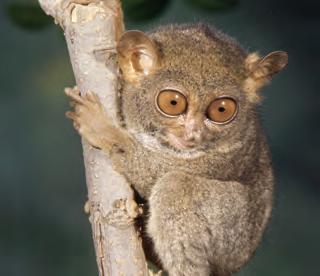
The tarsier, a tiny primate, can hear ultrasound frequencies up to 91 kilohertz—higher than any other terrestrial animal.
3,800
The estimated number of bird species living in the Asian rainforest.
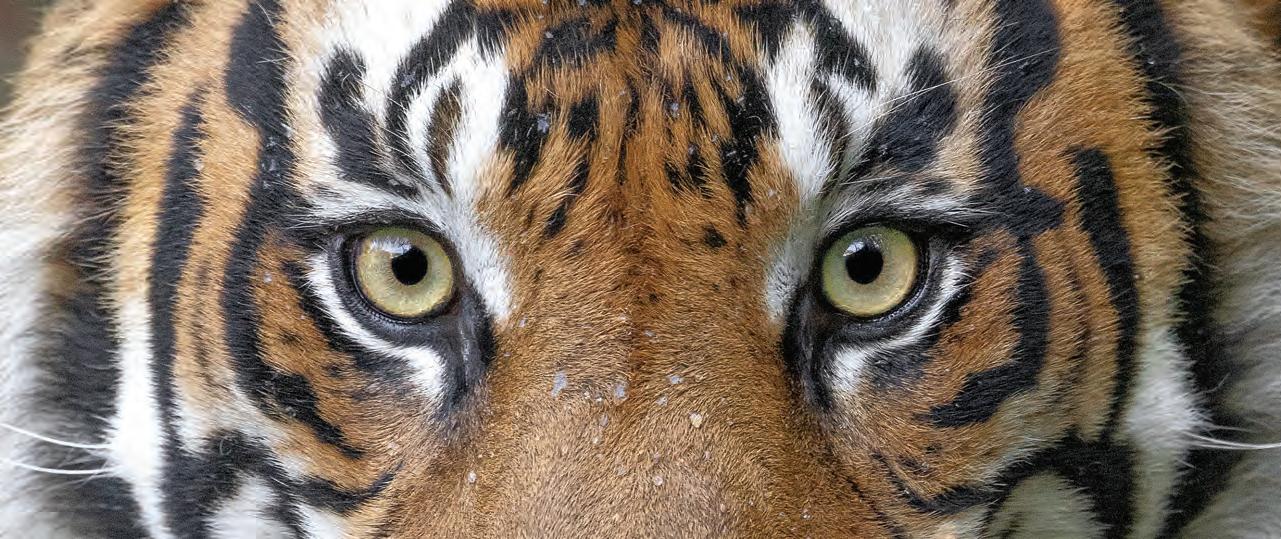
As of 2022, there are believed to be fewer than 400 Sumatran tigers left in the world, outside of managed care.
148
Strangler figs can grow to 148 feet (about half as tall as the Statue of Liberty!).
<400 up to
12,000
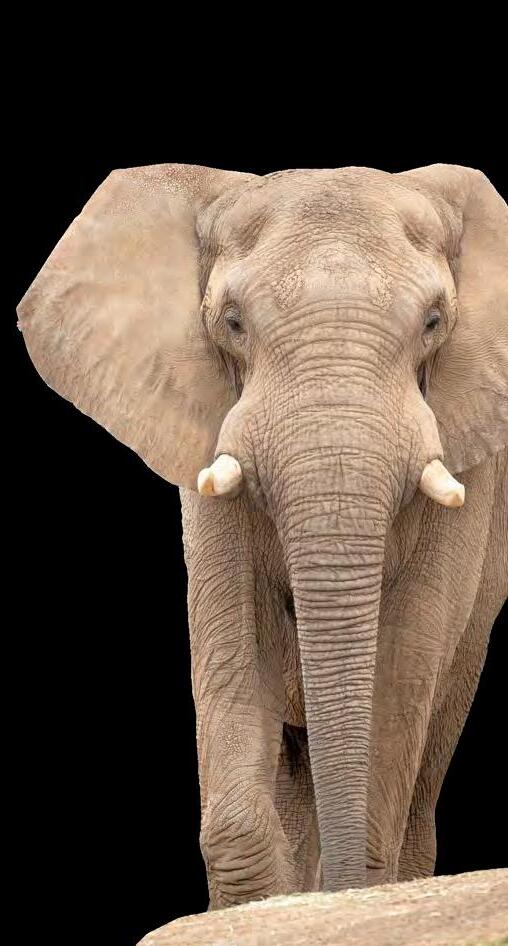
The weight, in pounds, that male Asian elephants can reach. They are the largest inhabitants of the Asian rainforest.
2022 Board of Trustees
OFFICERS
Javade Chaudhri, Chair
Steven S. Simpson, Vice Chair
Richard B. Gulley, Treasurer
Steven G. Tappan, Secretary
TRUSTEES
Rolf Benirschke
Kathleen Cain Carrithers
Clifford W. Hague
Robert B. Horsman
Gary E. Knell
Linda J. Lowenstine, DVM, Ph.D.
Judith A. Wheatley
‘Aulani Wilhelm
TRUSTEES EMERITI
Berit N. Durler
Thompson Fetter
George L. Gildred
Yvonne W. Larsen
John M. Thornton
A. Eugene Trepte
Betty Jo F. Williams
Executive Team
Paul A. Baribault
President and Chief Executive Officer
Shawn Dixon
Chief Operating Officer
David Franco
Chief Financial Officer
Erika Kohler
Executive Director, San Diego Zoo
Lisa Peterson
Executive Director, San Diego Zoo Safari Park
Nadine Lamberski, DVM, DACZM, DECZM (ZHM)
Chief Conservation and Wildlife Health Officer
Wendy Bulger
General Counsel
David Gillig
Chief Philanthropy Officer
Aida Rosa
Chief Human Resources Officer
David Miller
Chief Marketing Officer
San
Diego Zoo Wildlife Alliance (SDZWA) protects and restores nature in eight conservation hubs on six continents. Below are recent discoveries and progress from around the world.
Machine Learning Milestone
Using machine learning (ML), SDZWA’s Conservation Technology Lab has been working on methods for performing automatic species detection on photographs taken by SDZWA’s trail cameras around the globe. The ML process involves identifying where wildlife are in images; cropping around the wildlife; and identifying the cropped species. The output is a list of species that the ML system has detected. The images can then be manually checked by volunteers, using the citizen science platform Zooniverse, to confirm whether the ML correctly identified them. Recently, our team modified our Zooniverse process using this ML step to greatly improve efficiency, and the project hit a milestone when it took only 22 days for volunteers to classify 14,500 images; a comparable dataset in 2019 took almost 6 months.
Testing Tortoise Microsensors
SDZWA wildlife care and conservation science teams are working to see if we can learn more about desert tortoises
Gopherus agassizii with the aid of a novel microsensor. The teams are testing the sensor with tortoises under our care to determine if these devices can provide data that could be important for conservation, wildlife care, and welfare. The sensors (pictured), about the size of a large multivitamin, are temporarily attached and simultaneously record movements in three dimensions and external temperatures. This information could be important in documenting the thermal landscape that individuals perceive and select, as well as tortoise activity budgets, and how these change in response to disturbance or perceived threats.
‘Alalā Reintroduction Sites
The ‘alalā (Hawaiian crow) Corvus hawaiiensis is currently extinct in the wild, and SDZWA cares for the entire remaining breeding population (about 120 birds) at our two bird conservation centers in Hawai‘i. Our conservation scientists joined partners in Hawai‘i to select sites for reintroduction of ‘alalā to the forests. We helped rank potential sites by considering habitat quality (such as forest structure and availability of native plants for nesting and foraging), and the logistics involved in reintroducing and monitoring, among other factors. Through a series of virtual and in-person field trips, we applied this process to forest areas across Maui and Moloka‘i, and helped narrow site options. Moving forward, our partners will be leading an environmental impact assessment. Together, we aim to reintroduce the next group of ‘alalā in 2023 or 2024.
Lemur Reference Genomes
The genomes of eight lemur species were sequenced for assembly of new reference genomes. Lemurs are the most threatened group of mammals on Earth: 98 percent of lemur species are endangered. As part of Illumina’s iConserve initiative to advance the conservation of endangered species using genomics, SDZWA has partnered with the University of Antananarivo in Madagascar and the Universitat Pompeu Fabra in Spain to lead the most comprehensive genomics study ever done on lemurs. These genomes will provide insight into the genetic signa tures of endanger ment and will be foundational, publicly available tools for advancing knowledge of these under-studied primates.
Our popular October event is back, and bigger than ever! Join us on select Fridays, Saturdays, and Sundays in October to help us light up the night until 9 p.m.! Youths 11 and younger are free, and may come in costume.
There is fun for the whole family, with musical entertainment, dance parties, special performances, and more— plus Dr. Zoolittle, Zoo characters, and tempting food specials.
FRIDAYS–SUNDAYS IN OCTOBER* sandiegozoo.org
*except October 30
What is the coolest thing about your job?
Taking all the years of wildlife care and field program experience and translating that to helping build headstart programs for endangered species, and being able to help reintroduce wildlife—from sea turtles to crocodiles, to Fijian iguanas. Then, also helping be part of large redesign and construction projects here, including Elephant Odyssey, Reptile Walk, Komodo Kingdom, and now Wildlife Explorers Basecamp.
What book or film influenced you or made a strong impression?
The novel Never Cry Wolf by Farley Mowat, a Canadian author and environmentalist, made a huge impression on me as a child. I grew up in Canada, and although my interests have always been reptiles and amphibians, this true story about a field biologist championing species in the far north was very inspiring to me—and actually helped me decide early on that I had to be involved in conservation.
What is your favorite animal? Why?
MEET OUR TEAM
Q Q Q Q Q Q
I have so many favorites through the whole Animal Kingdom, but I can narrow it down to Fijian iguanas (pictured), slender-snouted crocodiles, Pacific giant salamanders, and lungfish. I adore unique species, and especially those that generally are the most misunderstood. I appreciate having opportunities to help share amazing facts and stories about these species, and hope to help others empathize with wildlife.
Kim Gray
As curator of herpetology and ichthyology for SDZWA, Kim Gray helps develop best practices for care, breeding plans, and habitat support for reptiles, amphibians, and fish.
What was a turning point or defining moment in a project or program you’ve worked on?
I have been able to help work on a number of headstart programs for reptiles and amphibians, where young animals are raised under managed care and subsequently reintroduced into their native habitats. These programs are critical for assuring some species get the help they need to persist in their native habitats. For me, the defining moment of each has been when all the various details and years of hard work come together, and we are able to reintroduce or translocate wildlife into the native habitat.
What has surprised you about working with SDZWA?
No two days are ever the same. One day, I can be in meetings related to combating wildlife trafficking, then helping state wildlife agencies brainstorm native reptile conservation measures for drought preparedness, and then completing permits to be able to transfer vipers to a zoo in the United Kingdom in support of a conservation breeding program. The next day, I might be on a 3 a.m. virtual conference call to talk about the progress of baby crocodiles with colleagues at a headstart facility in West Africa, before making a quick update to wildlife records for one of the Species Survival Plans I manage. Every day is an adventure!
What do you see as the future of wildlife conservation?
Partnerships. In my years of experience, the most successful wildlife conservation initiatives have been those done in collaboration, and we certainly have some amazing Alliance partners we have the privilege to work with.
Who or what inspires you?
I think nature itself inspires me the most. We see habitat loss from clear-cutting to massive-scale habitat damage from cyclones and fires—and yet, somehow, nature still persists. Sometimes it just needs a helping hand—for example, with headstart and assurance populations—but given enough time and support, it can bounce back and thrive.
PHOTO BY:
HOT TOPICS
Tending to Our Flocks:
Dr. Meg Sutherland-Smith, director of veterinary services for the San Diego Zoo, is at the forefront of safeguarding the health and well-being of the wildlife there. The latest strain of avian flu is a current challenge.
As stewards of the health of wildlife in our care, an important aspect of our jobs is maintaining vigilance against threats from foreign wildlife diseases. Highly pathogenic avian influenza (HPAI) is an example of a foreign disease that could have significant impacts to the wildlife in our care.
The last threat from HPAI in the United States was in 2014–2015, when over
50 million domestic poultry were culled due to the disease. This was the largest health emergency for the United States Department of Agriculture (USDA) to date. At that time, our organization had its biosecurity protocols and procedures ready for implementation. Fortunately, while SDZWA was prepared to respond, we were not significantly impacted.
Multiple strains of avian influenza exist, and they vary in terms of pathogenicity. Many strains are labeled
as low pathogenic avian influenza (LPAI) and circulate endemically. This adds to the challenge in identifying the highly pathogenic strains. The current HPAI strain, H5N1, has been circulating for a couple of years in Europe, Africa, and the Middle East, and was the predominant strain in 2021, impacting domestic poultry as well as wildlife.
Migratory birds play an important role in the spread of H5N1. Certain species of birds, especially waterfowl, are carriers of
Highly Pathogenic Avian Influenza and SDZWA
the virus and never develop the disease, whereas it is devastating to domestic poultry and other wild bird species.
Approximately 4,000 barnacled geese in England and 8,000 common cranes in Israel died due to H5N1 in December 2021. SDZWA’s wildlife health team had been closely monitoring the HPAI situation abroad, with the expectation that the virus would “cross the pond” in migratory waterfowl. It eventually did arrive in Newfoundland, Canada,
in December 2021. SDZWA has routine biosecurity measures in place at all times. Some of these measures include dedicated uniforms and footwear that do not leave the workplace for those team members who have contact with the wildlife in our care. When a foreign wildlife disease, HPAI in this case, is detected within our region, we enact
additional measures, including enhanced biosecurity protocols. In addition, we plan for scenarios where a positive bird (whether from outside or in our care) is found on site at either the Zoo or Safari Park. Being prepared for HPAI is not just a responsibility of the wildlife health team; it involves the whole organization. Multiple, if not most, departments are revisiting and refreshing their enhanced biosecurity protocols, to ensure we are prepared in the event HPAI reaches Southern California. In addition, we work closely with our federal and state regulatory partners at the USDA and the California Department of Food and Agriculture, as they are critical contributors to providing the best possible care and protection for the wildlife in our care.
Multiple strains of avian influenza exist, and they vary in terms of pathogenicity. Many strains are labeled as low pathogenic avian influenza (LPAI) and circulate endemically.
Avian influenza can also infect certain mammals, such as pigs, cats, dogs, foxes, martens, civets, and tigers. Consumption of dead birds infected with HPAI is the most common route of exposure in these species. In addition, HPAI is considered a zoonotic disease. So far, the current strain does not pose a significant risk to human health. Our wildlife health team is continuing to monitor the HPAI situation closely, and we remain ready to deploy pre-emptive protective biosecurity measures as the situation evolves.
Say “Aah” Dr. Meg Sutherland-Smith examines a flamingo during its annual health check-up.
TALL THE EGGS IN ONE BASKET
For milky storks, communal living is key. And we have just the place for that.
BY DONNA PARHAM, STAFF WRITER | PHOTOS BY KEN BOHN
he lush mangroves and flooded forests of Southeast Asia provide the perfect habitat for milky storks Mycteria cinerea. The storks nest and roost high off the ground in tall trees, and they forage in tidal areas, mudflats, estuaries, peat swamps, and river floodplains. But there’s a problem. Southeast Asia is rapidly losing— and has already lost—many of its mangroves, floodplains, peat swamps, and estuaries. With these birds rapidly disappearing in their native range, propagation in managed care may be key in saving this species.
“Just as we in North America have eliminated many of our wetlands, the mangroves that milky storks depend on are being converted for aquaculture, rice cultivation, and industry,” says Jenny Tibbott, a lead wildlife care specialist at the San Diego Zoo Safari Park. That development is squeezing out wilderness areas that are suitable habitat for the storks. The dilemma that these countries and the people who live in these areas face isn’t unique;
they are trying to earn a living while, at the same time, protecting their native habitats and wildlife. In some areas, poaching of adult birds, chicks, and eggs is exacerbating the problem. As a result, milky storks are among the most endangered storks in the world.
Last year, in a last-ditch effort to propagate milky storks in protective, managed care, the Association of Zoos and Aquariums (AZA) resolved to bring the entire population together in one place. When the Taxon Advisory Group (TAG) for storks and related birds was looking for the right location, Andrew Stehly, curator of birds at the San Diego Zoo Safari Park, was the first to raise his hand. “We have the expertise, facilities, and resources, along with great weather and a history of successfully propagating endangered birds,” he says. And he welcomed the challenge. “It’s exciting. The more rare the wildlife, the bigger the challenge—and I knew we were capable of saving this species.”
So, the most prized aviary at the Safari Park’s Bird Breeding Center became home to all the milky storks in North America. At 20,000 square feet and 30 feet high, with tall trees, grass, and
All Together Now
For milky storks, group living is ideal. The new colony at the Safari Park has resulted in courtship behavior and four fledged chicks— and counting!
DID YOU KNOW?
“It’s exciting. The more rare the wildlife, the bigger the challenge— and I knew we were capable of saving this species.”
—Andrew Stehly, curator of birds at the San Diego Zoo Safari Park
Storks Bringing Babies
Top: Milky stork chicks are covered with fluffy down and require both parents to care for them until they fledge (get their adult feathers).
Above left: Wildlife care specialists weigh a milky stork chick as they monitor its development. Above right: The milky stork habitat at the Safari Park’s Bird Breeding Center is a naturalistic re-creation of the birds’ native habitat in the wetlands of Southeast Asia.
Milky stork parents break live branches from trees to make their nests.
natural ponds that are home to crayfish, the space encourages the birds to use natural behaviors like foraging live food from the ponds, gathering nesting materials, social displays, mate selection, and pair bonding. Rain is a breeding stimulus, and elevated sprinklers in the habitat provide “rainfall” when our sunny climate doesn’t. “It’s a little ecosystem,” says Jenny. “The birds take cues from the weather, the food availability, and everything in their environment. The abundant resources in this environment signal to them that it’s OK to breed.”
Most importantly, the habitat allows the social birds to live together as they do in their native mangroves. “In birds that are colonial, communal living provides a sense of security, because there is a comfort level that’s provided by the larger group,” says Jenny, who notes that—a lot of times—increased security means increased breeding. There’s another benefit, too. “Communal breeding also triggers hormonal stimulation that affects the entire population,” she says.
Since their arrival, the storks have been exhibiting courtship and pair-bonding behavior, and nesting continually. The colony has fledged four chicks so far—adding four precious new members to this endangered population. Male and female parents share duties at the nest. “Both parents participate in chick rearing, all the way to the end,” says Jenny. While the pair bond is strong until a chick is fledged, it dissolves when the young birds leave the nest. “That’s a good thing, because our population is skewed female,” says Jenny. The hope is that as males change partners, breeding females get a little time off, as producing eggs is a nutrient- and energy-intensive undertaking. It may also help maintain genetic variability.
At some point in the future, says Andrew, “Once we get the flock’s numbers up, we’ll talk to population biologists and look at the genetics.” At that point, the team will determine if they need to manipulate how the birds pair up. But for now, “We just need to produce as many as we can,” he says. “It’s an aging population, so it’s a race against time—but we can’t push them too fast and compromise their health. We are encouraging breeding, but we also make sure that we are maintaining the good health of the flock.”
Andrew is proud of the work his team is doing on grounds to conserve the wildlife of our Asian Rainforest conservation hub. The naturalistic habitat we have provided these birds is purely for conservation. “Here, the birds can live and reproduce, undisturbed.” he says. “Although the area isn’t guest-facing, it’s a very important effort that SDZWA is leading.”
“I see us as preserving this species for the future,” says Jenny. “Milky storks don’t have the adaptations for surviving without mangroves, so they are a great example of wildlife that can go extinct if we don’t protect their habitat.” The goal for SDZWA is to create a stable population in managed care, as the wild population continues to decrease. Our own California condor is a good example of a species that was saved by propagation in managed care, and then reintroduced into their native range. There could be a need for similar reintroduction efforts for milky storks in the future. “We can provide a safe place for this species to reproduce and thrive while their native habitat is recovered and protected,” says Jenny.
Helping Hornbills in the Asian Rainforest
The milky stork is just one of the Asian rainforest birds we are helping to conserve. We are also partnering to protect the hornbills of Southeast Asia. Many of these remarkable birds are threatened, and some are critically endangered. We partner with two organizations that are working hard to bolster hornbill populations in their native range.
In Northeast India, we partner with the Hornbill Nest Adoption Program, a community-based conservation initiative. Local tribal villagers patrol and protect hornbill nesting trees in forests around villages on the fringe of the Pakke Tiger Reserve, and project funding pays their salaries. With our involvement, they have been able to increase their protection to cover 30 additional nests. Pakke is a haven for hornbills, home to four of nine local species: the great hornbill Buceros bicornis, wreathed hornbill Rhyticeros undulatus, oriental pied hornbill Anthracoceros albirostris, and rufous-necked hornbill Aceros nipalensis
In Malaysia, we partner with a local conservation organization called Gaia to fund artificial nest barrels for hornbills. With our help, the organization built, transported, and installed two of their nest barrels in Terengganu, Malaysia—an area that is frequented by great hornbills but had not previously had artificial nest options for the birds. SDZWA has a long history working with and protecting great hornbills, which are listed as Vulnerable, and are decreasing in their native habitats.
Safe Nests for Hornbills
Top right: A pair of great hornbills. Lower right: Artificial nest barrels installed high in trees give great hornbills more options for nesting and raising chicks.
PHOTO BY: (LOWER RIGHT) SDZWA
When it comes to measuring the effect people can have on wildlife, the numbers regarding Sumatran tigers Panthera tigris sumatrae are concerning. Consider the figures below.
10%
The population of Sumatran tigers living in their native habitat decreased by 10 percent in less than 10 years (from 2008 to 2017)—from 440 to 400 adult individuals.
25%
Agriculture contributed to an estimated loss of 25 percent of tropical forests in Sumatra between 2002 and 2019.
16,000
The Indonesian province of West Sumatra covers an area of 16,000 square miles (about 42,013 square kilometers) and supports more than 5.5 million people.
93
Between 2005 and 2019, at least 93 human-tiger incidents were reported from West Sumatra alone. In more than a quarter of these encounters, the tiger was killed.
PHOTO BY: KEN BOHN/SDZWA
Sharing Space with Tigers in West Sumatra
BALANCING ACT
BY HARIYO T. WIBISONO, PH.D.
While a large portion of the Sumatran tiger population lives within the protection of national parks, up to 70 percent of Sumatran tiger habitat lies outside this protected area network. This means that substantial numbers of Sumatran tigers may live in heavily isolated, non-protected, marginal habitats—leading to a high incidence of interaction with people.
Agriculture, in conjunction with large-scale plantations, is driving deforestation in the region; only 13 percent of West Sumatra contains primary forest, which supports 7 heavily isolated tiger habitats—more than half of them unprotected. The shrinking forests mean that tigers must share habitat with people, bringing challenges that include encounters with tigers and tiger poaching. Among tiger-range countries, Indonesia is the third-largest supplier of tiger parts in the international trade in wildlife.
The Indonesian province of West Sumatra is a good example of a place where tigers and people share habitat. Most forest-edge communities in the region are populated by subsistence farmers, who are largely dependent on their livestock (pigs, goats, cattle, and buffalo) and the harvest of their main cash crop for survival. In such situations, the risk of encounters between villagers and Sumatran tigers is very high—and in more than a quarter of these encounters, a tiger is killed. The severity of encounters in this region is magnified by high human and livestock densities.
Supporting Allies, Strengthening Commitments
Preventing further loss of forest cover is extremely challenging, and reforestation to provide more spaces for wide-ranging animals is unlikely in West Sumatra. However, we do have opportunities for tiger conservation efforts. Traditionally, the native Minang people (or Minangkabau) who make up the majority of West Sumatra’s population respect tigers, because they believe tigers have feelings and help guard villages from misfortune. One solution involves offering the Minang the opportunity to become the guardians of the tigers. Accordingly, San Diego Zoo Wildlife Alliance (SDZWA) supports West Sumatra’s Nature Conservancy Agency (BKSDA West Sumatra) in establishing a tiger-friendly group called Patroli Anak Nagari (PAGARI), made up of communities living adjacent to tiger habitats who are trained in conducting routine patrols, responding to human-tiger incidents in a timely manner, and working closely with local stakeholders and informal leaders to prevent harmful situations due to incidents. To date,
DID YOU KNOW?
The Sumatran tiger is the smallest and darkest tiger subspecies.
30 selected community members from 6 villages have become PAGARI members.
Led by BKSDA West Sumatra, our roles are to communicate the conservation value of the Sumatran tiger and other wildlife, to provide practical training on how to coexist with tigers, and to equip PAGARI groups with standard field equipment. We will continue to support BKSDA in its efforts to establish more PAGARI groups in other areas of West Sumatra where people live closely with tigers.
Investing in the Future
Sumatran college students represent the future of wildlife conservation in the area, and they will become the agents of change. In 2017, we established a formal collaboration with the Department of Biology at West Sumatra’s University of Andalas, to strengthen the functionality of its wildlife conservation program, providing students with practical training, internship programs, and thesis guidance. So far, we have advised 10 students, facilitated internships for 5 of them, and provided field datasets for a graduate student and 4 undergraduate students. Several of them have now chosen professional careers in various wildlife conservation programs, including my program—a collaborative effort of SDZWA and Save Indonesia’s Nature and Threatened Species, better known as SINTAS Indonesia, a nonprofit organization that focuses on the conservation of wildlife and habitats.
All our efforts and achievements in West Sumatra have been possible through our partnership with SINTAS Indonesia, the State University of Andalas, BKSDA West Sumatra, local informal leaders, and other relevant stakeholders. In this alliance, SDZWA serves
PHOTOS BY: BKSDA SUMATERA BARAT, SINTAS, SDZWA
Tigers and People
Opposite page, clockwise from bottom
as a leading institution in putting in place a science-based conservation approach. We have implemented advanced technologies related to large-carnivore monitoring, including GPS collars; a vast array of trail camera and detection surveys; thermal drones for monitoring translocated tigers; and spatial modeling for predicting principal prey distribution, recognizing human-tiger coexistence hot spots, and identifying potential release sites for rehabilitated tigers.
Promoting Harmony
For people in this region, coexisting with tigers is a long-term necessity, so promoting awareness of tiger conservation among the younger generation is essential for the survival of the Sumatran tiger in West Sumatra. To this end, we have produced a pocket book containing practical guidelines for coexisting with tigers, in both hard copy and digital versions. Written in the Minang language, the book Hiduik Badakekan jo Inyiak Balang (Living in Harmony with Tigers) was officially launched by the Deputy Governor of West Sumatra in January. To date, SDZWA has printed and distributed 100 hard copies, and the United Nations Development Program Sumatran Tiger Project has reprinted another 100 hard copies. Numerous digital copies of the pocket book have been downloaded. This book complements a 2021 governor’s handbill regarding Sumatran tiger conservation, and it enhances our other work in the region. Together, we are sharing a cohesive conservation message that can guide the communities of West Sumatra in their ongoing balancing act of sharing space with tigers.
Hariyo T. Wibisono, Ph.D., is director of SINTAS Indonesia, a key partner for SDZWA.
Living in Harmony
Learning to coexist alongside tigers is essential for the survival of Sumatran tigers in West Sumatra. This pocket book’s title translates to Living in Harmony with Tigers. The book complements and enhances our other work in the region.
left: An automatic trail camera captured this image of a Sumatran tiger. People from communities living adjacent to tiger habitats are trained in conducting routine patrols. Using equipment provided by SDZWA, PAGARI teams gather data in the field.
In Demand:
Reducing Wildlife Trafficking Through Changing Consumer Behavior
BY ELIZABETH DAVIS, PH.D.
People have complicated relationships with wildlife. These relationships are characterized by complex interactions, including how people utilize wildlife. Some utilization is esoteric—the enjoyment of observing a sun bear at the San Diego Zoo, for example. Other wildlife utilization is practical, as when people use physical wildlife products such as bones or blood as medicine, food, or to
meet other needs and wants. Every society utilizes wildlife practically. Consider, for example, the US consumption of salmon, venison, and lobster. What is undeniable is that some practical utilization of wildlife is placing global biodiversity, and global health, at extraordinary risk. At San Diego Zoo Wildlife Alliance (SDZWA), we are working to reduce unsustainable, illegal, and dangerous practical utilization of wildlife. We focus these efforts in our Asian Rainforest conservation hub, specifically
in mainland Southeast Asia. This area is a global biodiversity hotspot, and a hotspot for illegal and unsustainable wildlife trade.
Analyzing Motivations
What motivates people to use sun bear bile? What motivates people to use tiger bone glue? These are complex questions we cannot easily answer. People do many things without ever being able to fully articulate why they do them. As a species,
PHOTO BY: SDZWA
we have a collective inability to articulate the role our culture, family, and physical context play on our behavior. For decades, anthropologists and other social scientists have been grappling with this tricky issue of behavioral motivation. In my role at SDZWA, I use a diverse suite of tools from these disciplines—such as surveys, interviews, and observations—to investigate the specific motivations people have for consuming wildlife. By understanding these motivations, we can implement campaigns that leverage these motivations toward conservation-positive alternative behaviors. For example, SDZWA’s conservation research in Cambodia showed women may be motivated to take bear bile as medicine to address potential illness after giving birth. Now that we know these women’s motivations are to care for their health after a traumatic event for their bodies, we can suggest alternatives that may be more effective, such as going to the doctor or the pharmacy for
Understanding motivations
Top: Mainland Southeast Asia is a global biodiversity hotspot. It is also a hotspot for wildlife trafficking in products like bear bile (pictured).
Below: The aim of our collaborative work in Vietnam is to reduce the illegal trade in bear bile by reducing demand, in order to safeguard the future for all bears.
non-wildlife-based biomedical products. In addition, our research has shown that these women are motivated by the suggestions of their older female kin. We can encourage these older women to strengthen their influence over their younger female kin in alternative, conservation-positive ways—for example, by accompanying their younger kin to biomedical doctors.
Finding New Strategies
Shifting human behavior is undoubtedly challenging, but it has more potential for efficacy and impact than alternative strategies, such as funding more rangers in protected areas, or lobbying to strengthen existing laws. In fact, a plethora of evidence has shown that neither of these strategies have been effective in halting biodiversity decline
in Southeast Asia. Rugged, jungled landscapes prohibit easy surveillance by rangers, and poachers have easy access to the materials necessary for laying snare traps, making poaching easy to do across the region. It has been impossible for conservationists to address the insidious and persistent threat of poaching with ranger enforcement—it’s like trying to plug a bursting dam with a wine cork. The Nam Et-Phou Louey National
Park in northern Laos is one of the most well-enforced areas in Southeast Asia, and yet the last tigers in the entire country were recently poached there. Additionally, many countries across Southeast Asia already have strong legislation in place regarding the illegal consumption of wildlife; however, perpetrators are rarely if ever caught. While legislation can in some cases be important for encouraging a social norm against a
In Demand:
In spite of protections, the chital (spotted deer) Axis axis is poached for its meat, hide, and antlers. Success in conserving trafficked species of wildlife relies on reducing demand and changing consumer behavior.
practice, one need only look at the rampant illegal speeding on California highways to see clear evidence that legislation can sometimes have no effect on existing social norms.
Working Together for Change
Another important reason to focus on wildlife consumers is that it places people at the center of the conservation work we do. This is a core ethos of SDZWA. Our efforts to change behavior are fully founded on the insights, lived experiences, and needs of the people themselves. I have sat with women sewing in Cambodia as we chatted about the wildlife they used and the importance they placed upon it. In small, smoky mountain villages in Laos, I have heard from men who support their families with wildlife they hunt in the forest. In the cities of Vietnam, I have heard people tell me about the great importance their older kin place on animal bone glue for treating ailments. With our data derived from these lived experiences and needs, my colleagues and I here at SDZWA and within Southeast Asia can critically reflect on and design strategies that balance the needs of local communities with the global need for secured biodiversity and a reduction in dangerous human-wildlife interactions.
Tomorrow Starts Today
Currently, we are focusing our efforts on reducing unsustainable and illegal bear bile use in Vietnam. In 2020, we completed a countrywide survey of bear bile use, and found that in our primary study site in Vietnam, over 20 percent of people use bear bile for medicinal and social purposes. This represents a significant threat to beleaguered bear species in the country. In early March of this year, results of our survey guided us as we conducted a planning workshop with Vietnamese scientists, government officials, bear hunters, and wildlife traders. The aim of the workshop was to elicit community feedback and insights around a plan for a
bear bile demand reduction campaign. While challenges exist in that conservation-positive alternatives such as biomedicine are not highly trusted in Vietnam, our collective, community-focused workshop discussions have illuminated other viable strategies, grounded in Vietnamese heritage and kin networks, to reduce bear bile consumption. Later this year, we will implement a demand reduction campaign, and next year we will evaluate the campaign to see if it had an effect on reducing demand for bear bile. If it does, we can infer that lower demand for bear bile led to less hunting of bears to supply the demand, and we can additionally infer that Vietnamese bear populations can begin to stabilize and, ideally, increase. This planned outcome of our human-focused work shows that while our strategies may be focused on people, our ultimate outcome is always to ensure we live in a world where all life thrives.
Elizabeth Davis, Ph.D., is a postdoctoral associate in Community Engagement for SDZWA.
SAVING WILDLIFE:
The Remarkable Story of a Conservation Pioneer
Physician scientist. Wildlife conservationist. Visionary leader. Family man. The inimitable Dr. Kurt Benirschke (“Dr. B”) was a trailblazer—passionate about gathering and sharing knowledge to make the world a better place for both people and wildlife. Whether he was sneaking vital veterinary medicine through Checkpoint Charlie into East Germany or flying through a raging thunderstorm in a single-engine plane to pick up chromosome samples in Paraguay, Dr. B was dedicated to solving problems and exploring ideas that would transform both human and veterinary science.
Saving Wildlife: The Extraordinary Life and Legacy of Dr. Kurt Benirschke tells Dr. B’s inspiring and adventure-filled story. Written by his son Rolf Benirschke, former NFL All-Pro placekicker, the book describes how Dr. B’s insatiable curiosity took him from war-torn Germany to the United States to begin his extraordinary medical career. Intrigued by twins, the placenta, and the study of chromosomes, Dr. B secured a pathology residency at Harvard University and became the chief resident at Harvard’s second-largest teaching hospital. His curiosity about humans and
Visionary
Kurt Benirschke’s
PHOTOS BY: SDZWA
life while still working at UCSD. He joined the Zoo’s newly formed research committee and then founded the Zoo’s Center for Reproduction of Endangered Species in 1975, building a team of scientists that would have an enormous impact on critically endangered, threatened, and vulnerable species such as the Przewalski’s horse, California condor, giant panda, southern white rhino, Chacoan peccary, and many more. Dr. B also began collecting tissue and genetic DNA samples from rare and endangered animals. These early collections would become the foundation of the “Frozen Zoo®,” now part of San Diego Zoo Wildlife Alliance’s (SDZWA) Wildlife Biodiversity Bank.
Dr. Kurt Benirschke spent his life gaining—and generously sharing—knowledge. In doing so, he made a historic impact on modern medicine and conservation biology that continues to influence our world today. Yet, as Oliver Ryder, Ph.D., director of conservation genetics for SDZWA, says, “All of Dr. B’s scientific accomplishments don’t address the full measure of this remarkable man.” In his foreword to Saving Wildlife, Ollie Ryder explains: “It takes the insightful view of his offspring—in this case, his youngest son, Rolf—to bring the totality of this unique individual to light. Interwoven in the pages of Saving Wildlife are personal reflections that reveal an amazing life and the earned mutual respect, appreciation, and genuine love forged between a father and son.”
Saving Wildlife, published by San Diego Zoo Wildlife Alliance Press, can be purchased at ShopZoo.com and in gift shops at the Zoo and Safari Park.
wildlife next led him to Dartmouth College’s medical school in 1960, where he chaired the pathology department, and then finally to the University of California, San Diego (UCSD) in 1970 as a founding faculty member of the then-new medical school.
The close proximity to the San Diego Zoo allowed Dr. B to delve further into the world of endangered wild-
Precious cell lines: Top: Rolf Benirschke watches as his father stores living cell lines in a deep-freeze that has come to be known as the ”Frozen Zoo.®” A new book by Rolf shares details of Dr. Benirschke’s life and his work.
If Leaves Could Kill
Carnivorous predators of the plant kingdom
Virtually all plants on Earth generate energy via photosynthesis. Carnivorous plants are no exception—but rather than relying strictly on a feeding formula of sunlight, soil, carbon dioxide, and water, carnivorous plants augment their diet with a generous
Lobster-pot traps have inwardpointing bristles that force prey toward a digestive chamber.
A sticky trap is a glue-like substance that sticks prey in place.
Bladder traps suck in prey with a vacuum created by a difference in water pressure.
• Carnivory has evolved at least six different times across the plant kingdom. Despite being separated by millions of years and miles of geography, these independent evolutionary events ultimately led to the emergence of similar meat-eating traits and functions in distantly related plants—a process known as convergent evolution.
• Carnivory in plants was famously described by Charles Darwin in his 1875 book Insectivorous Plants, sparking widespread interest and scientific attention that continue to this day.
• Carnivorous plants typically grow in acidic, poor-quality soils, though some species are epiphytes (growing on the surface of trees). Eating meat provides these plants with critical nutrients, such as nitrogen, that they can’t access from the lownutrient soil.
• There are over 800 species of carnivorous plants; they are found on every continent except Antarctica.
A snap trap’s hinged leaves snap shut to trap prey.
A Closer Look: Pitcher Plants
Pitchers are modified leaves that secrete digestive fluid. Like a stomach, they break down food into liquified nutrients. Most pitchers trap insects, but some of the larger varieties also trap small lizards, frogs, or rodents. Pitcher plants range in size: the smallest pitchers are just an inch long, and the largest are a foot in diameter. The most diverse genus of pitcher plant Nepenthes, a group that includes approximately 140 species. Most Nepenthes are endemic to Southeast Asia, making the region a hotspot for carnivorous plant conservation.
LID
Like an awning, a lid prevents rainwater from diluting or overflowing a pitcher. It also produces nectar to attract prey. Certain species use nectar to entice visits from tree shrews—but shrews aren’t on the menu. In this symbiosis, the shrews enjoy the sugary nectar while fertilizing the pitcher with their nitrogen-rich droppings.
PERISTOME
A rounded lip, slick with condensation or nectar, causes prey to slip inside the pitcher. Some peristomes emit an ultraviolet glow to lure prey. It’s also possible that some peristomes produce a narcotic compound that induces drowsiness and makes unwitting prey tumble into the trap.
SLIPPERY ZONE
A pitcher’s inner surface is lined with a waxy coating that is both slippery and flaky. Once inside, prey are unable to gain a foothold to climb out.
DIGESTIVE ZONE
Pitchers produce a fluid cocktail of digestive enzymes. This fluid also contains a community of microorganisms that aid with digestion. Specialized channels and cells in the pitcher wall absorb the nutrients.
Pitfall traps detain prey in a chamber filled with digestive fluid.
PITCHER
An array of antimicrobial compounds produced by the pitcher prevent growth of harmful bacteria and fungi. This way, the fluid hosts only beneficial microorganisms.
Carnivorous plants may be deadly, but they are also highly vulnerable: up to 25 percent of species are threatened with extinction. Primary threats are habitat loss, illegal trade, and the effects of climate change.
September and October Hours
San Diego Zoo*
Monday–Thursday
9 a.m.–6 p.m.
Friday–Sunday 9 a.m.–9 p.m.
San Diego Zoo Safari Park*
September 9 a.m.–5 p.m.
October Monday–Friday 9 a.m.–6 p.m.
Saturday–Sunday 9 a.m.–7 p.m.
sdzwa.org
619-231-1515
*Exceptions apply. Programs and dates are subject to change—please check our website daily for the latest information and requirements for visiting.
(Z) = San Diego Zoo
(P) = Safari Park
September EVENTS
SAN DIEGO ZOO
FRIDAYS, SATURDAYS, AND SUNDAYS* IN OCTOBER HalGLOWeen
The San Diego Zoo’s light-up-the-night, Halloween extravaganza is back! So, stick around after the sun sets to enjoy some safe, family fun at this glittering and glimmering annual spectacular full of amazing entertainment and interactive festivities! Let’s get GLOWING! (Z)
*Except October 30.
SEPTEMBER 17
Food, Wine & Brew
Celebration
This annual fundraiser for San Diego Zoo Wildlife Alliance features gourmet cuisine, wines, and beers from San Diego’s finest eateries, brewers, and vintners; plus, live entertainment and upclose wildlife encounters. (Z)
OCTOBER 1–31
Kids Free
Throughout the entire month of October, youths ages 11 and younger receive free admission to the San Diego Zoo. Kids Free month gives youths the opportunity to visit the Zoo, including the all-new Wildlife Explorers Basecamp—now open! (Z)
SEPTEMBER 11 AND 16; OCTOBER 21
Plant Day and Orchid Odyssey
On these special days, guests can take a rare look inside the Zoo’s Orchid House from 10 a.m. to 2 p.m., learn about the Zoo’s botanical collection from Horticulture staff on the Botanical Bus Tour at 11 a.m., and check out the Carnivorous Plant Greenhouse from 11 a.m. to 1 p.m. On October 7, a Botanical Bus Tour will be available in Spanish at 11 a.m. (This date includes the Bus Tour only). (Z)
OFFERED DAILY
Wildlife Wonders
At the Zoo’s Wegeforth Bowl amphitheater, wildlife care specialists will introduce you to wildlife ambassadors representing San Diego Zoo Wildlife Alliance’s conservation work around the world in Wildlife Wonders, presented daily at 2 p.m. Learn about amazing wildlife—from the Amazon to right here in our own backyard in San Diego— and find out what everyone can do to help conserve wildlife and the world we all share. Presentations run 15 to 20 minutes. (Z)
OFFERED DAILY
Discovery Cart Tours
Sit back in the comfort of an expedition cart, and enjoy a 60-minute guided tour of the Zoo, led by one of our knowledgeable guides. Book online or call 619-718-3000. (Z)
& October
SAFARI PARK
WEEKENDS IN OCTOBER
Autumn Festival
The San Diego Zoo Safari Park celebrates the season of color during Autumn Festival with amazing wildlife, special entertainment and culinary comforts that create joyful memories and down-home family fun! (P)
SEPTEMBER 22
World Rhino Day
Find out how San Diego Zoo Wildlife Alliance is working with conservation partners across the globe to help the world’s five species of rhinos, and how innovative reproductive technologies at the Safari Park are helping to save the critically endangered northern white rhino. (P)
OCTOBER 1–31
Kids Free
October is Kids Free month at the Safari Park, and youths ages 11 and younger receive free admission all month long. Kids Free is designed to give youths an opportunity to visit the Safari Park, and learn about the Earth’s wildlife and the conservation efforts underway to save species around the world. (P)
OCTOBER 10
Indigenous Peoples’ Celebration
The San Pasqual Band of Mission Indians, part of the Kumeyaay Nation, is hosting the Indigenous Peoples’ Celebration at the Safari Park. This special event will include a blessing ceremony, an indigenous artisans exhibition, a 1.3-mile guided walk, conservation science presentations, and Kumeyaay storytelling, among other immersive cultural elements. (P)
OCTOBER, SELECTED DATES
Supreme Roar & Snore Safari
The Supreme Roar & Snore Safari— available on All Ages and Adults Only sleepovers—offers a whole new level of adventure at the Safari Park! You’ll soar into camp on the Flightline Safari zip line, take a Night Vision Safari to view wildlife through night vision binoculars, and later settle in for the evening in your own private tent. The next morning, enjoy reserved viewing of a special wildlife encounter, then take a Wildlife Safari through savanna habitats for an upclose view of wildlife. Call 619-718-3000. (P)
OFFERED DAILY
Cart Safaris
Sit back in the comfort of your own Safari cart, as you enjoy a 60-minute guided tour of the Safari Park’s spacious African or Asian savanna habitats, led by one of our knowledgeable guides. Book online or call 619-718-3000. (P)
Visit the San Diego Zoo Wildlife Explorers website to find out about these and other animals, plus videos, crafts, stories, games, and more! sdzwildlifeexplorers.org
Where’s Wildlife?
Whether they’re hiding in plain sight or adapted for blending in, many types of wildlife—plants and animals—use their appearance to survive. After all, it’s hard for predators to catch what they can’t see! In this scene, we’ve hidden seven species, highlighted in boxes below. Use your eagle eyes to find them—then see how many others you can spot. Ready, set, seek!
LAST LOOK
Reproductive successes add up to a brighter future for wildlife conservation. Here, 10-week-old Taj, a greater one-horned rhinoceros Rhinoceros unicornis calf, enjoys his first day in the Asian savanna habitat at the San Diego Zoo Safari Park. The Safari Park, celebrating its 50th anniversary this year, is no stranger to either greater one-horned rhinos or milestones. On March 18, 1978, Gainda, a healthy female calf—the Safari Park’s first for this species—was born. Photographed by Ken Bohn, SDZWA photographer.
San Diego Zoo Wildlife Alliance
P.O. Box 120551, San Diego, CA 92112
The World Needs Elephants, Elephants Need You.
At the heart of the San Diego Zoo Safari Park, the reimagined Denny Sanford Elephant Valley will be unlike anything you’ve ever experienced before. We need your support to build this brand-new home, a one-of-a-kind place—unlike anywhere else on Earth—where millions of visitors will make lifelong connections with these gentle giants.