Exploring the Wildlife of Amazonia + Our 2022 Calendar Issue
Journey Through Our Conservation Work This issue of the San Diego Zoo Wildlife Alliance Journal focuses on the Amazonia hub. To learn more about our collaborative conservation programs around the world, including our wildlife care at the San Diego Zoo and San Diego Zoo Safari Park, visit sdzwa.org.
the Living Mountain to the Living Jungle
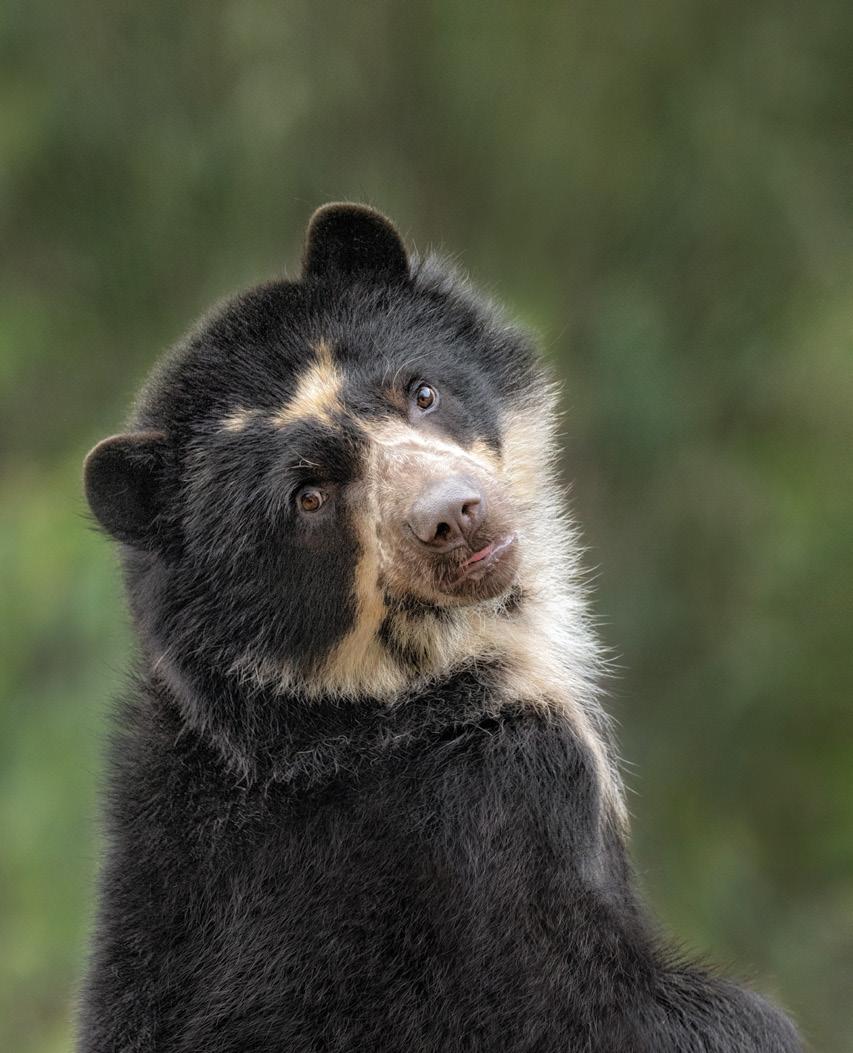
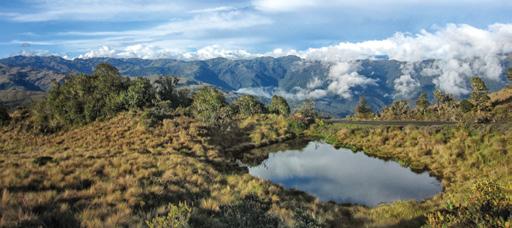
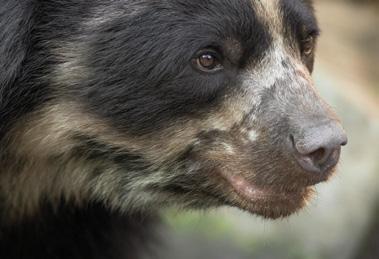
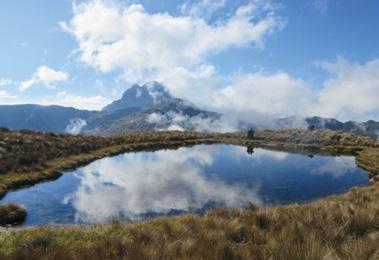
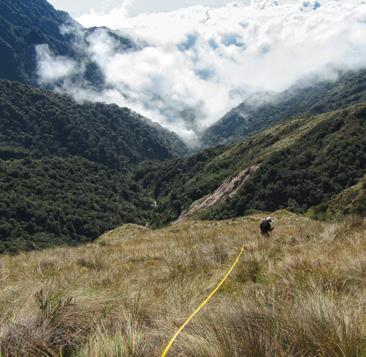
For Andean bear conservation efforts to work, scientists must study the varying landscape as well. Features
A Year—and Beyond— of Wonder and Wildlife
Amazing species from four unique ecosystems await in the Zoo’s upcoming Sanford Wildlife Explorers Basecamp, opening in February 2022. 16 2022 Calendar
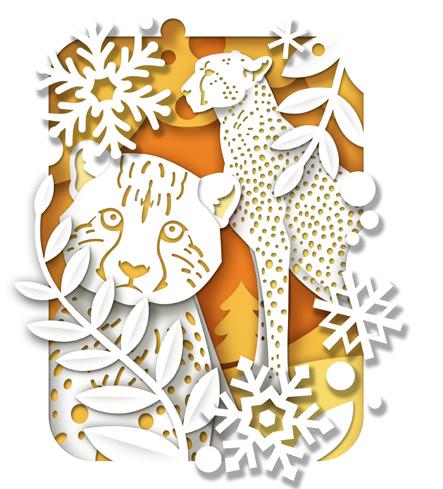
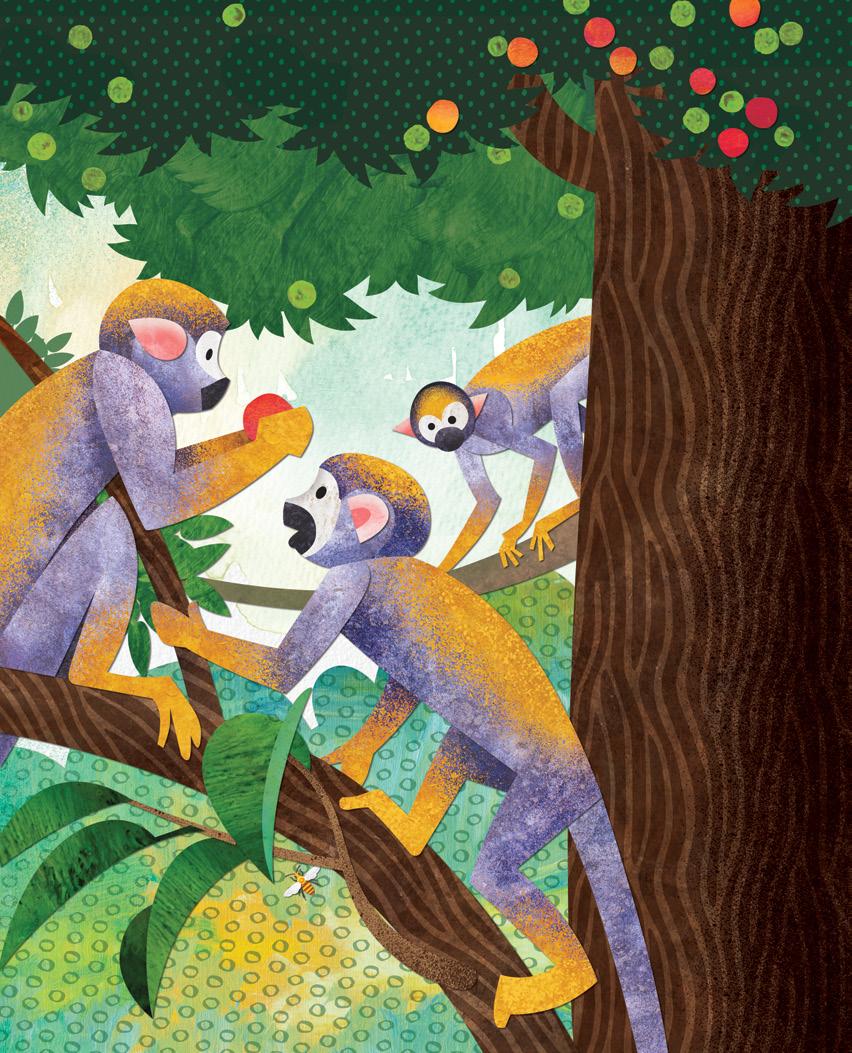
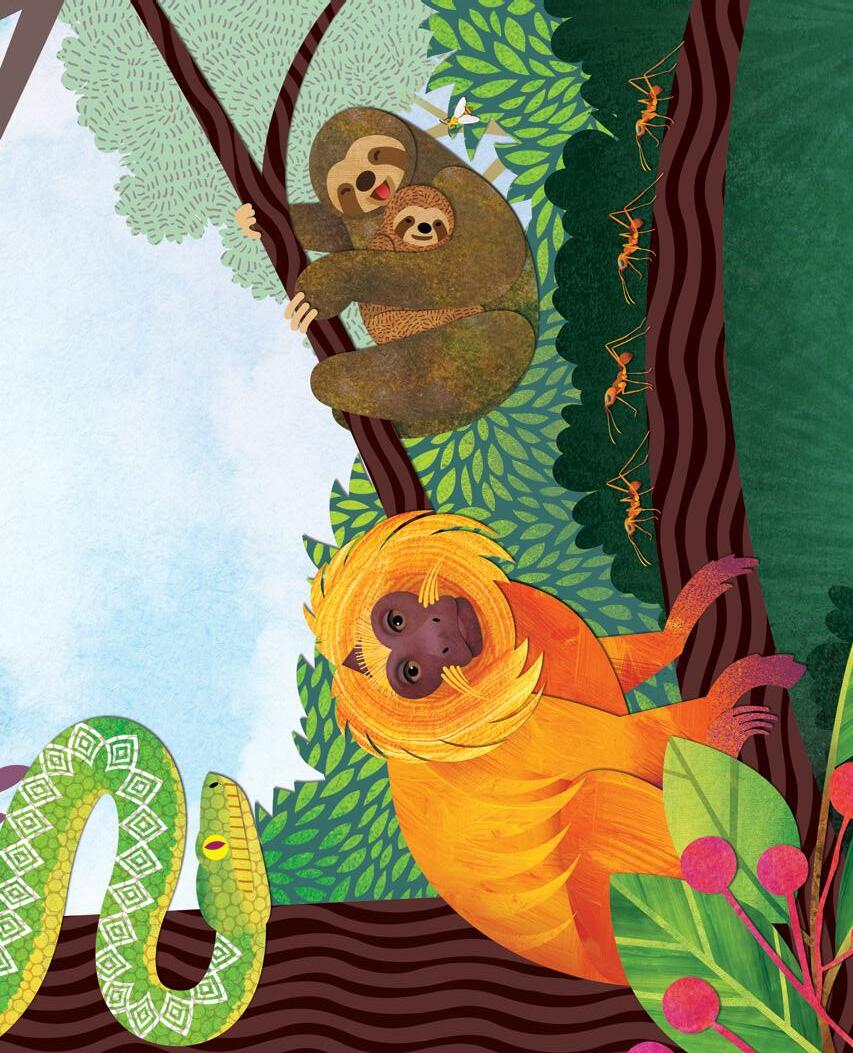
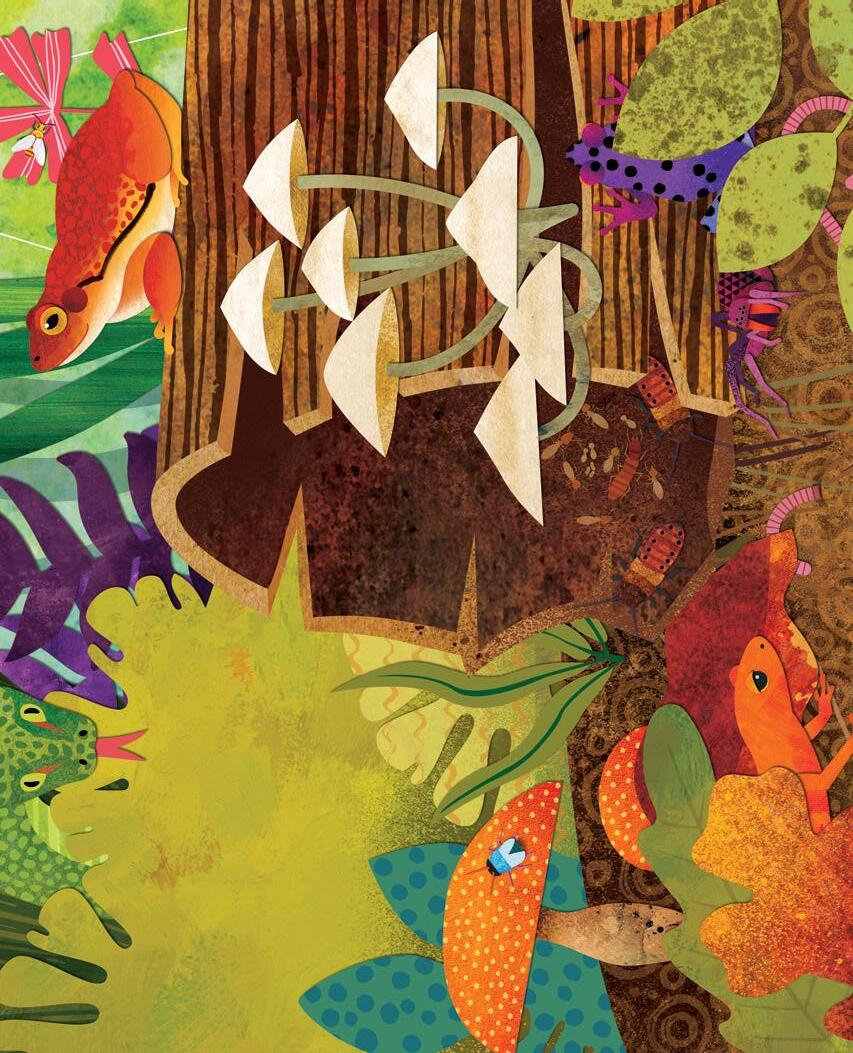
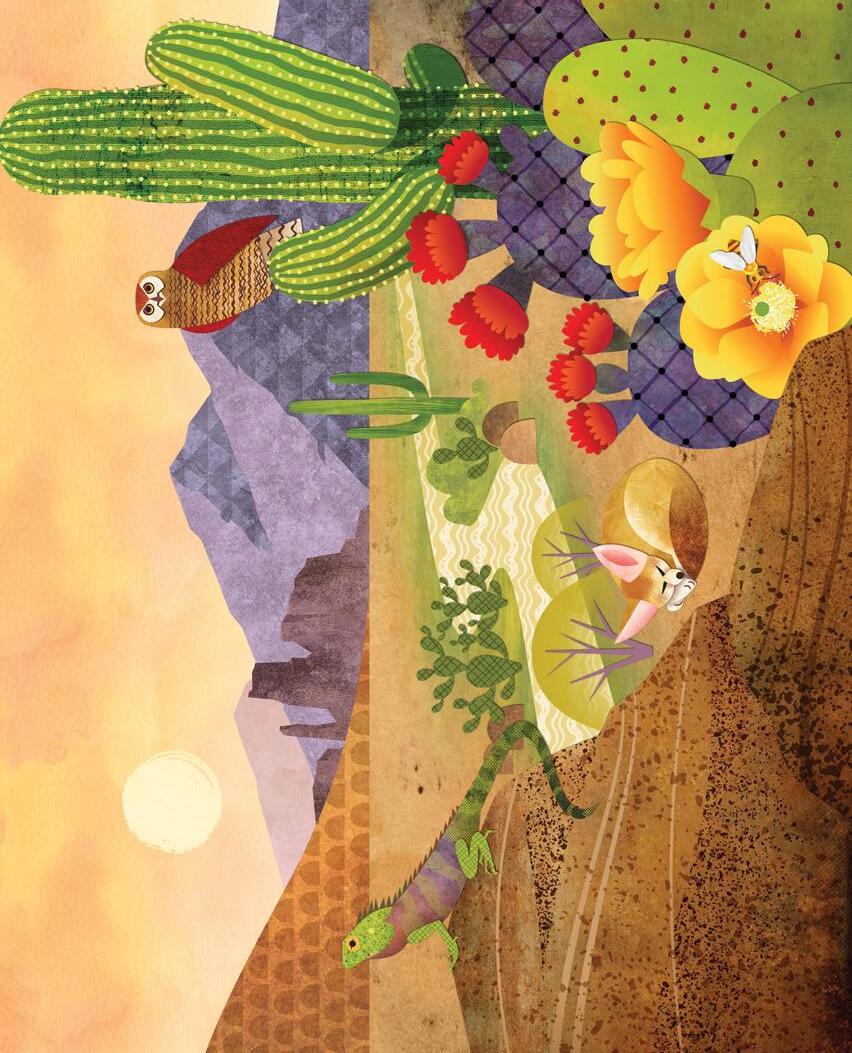
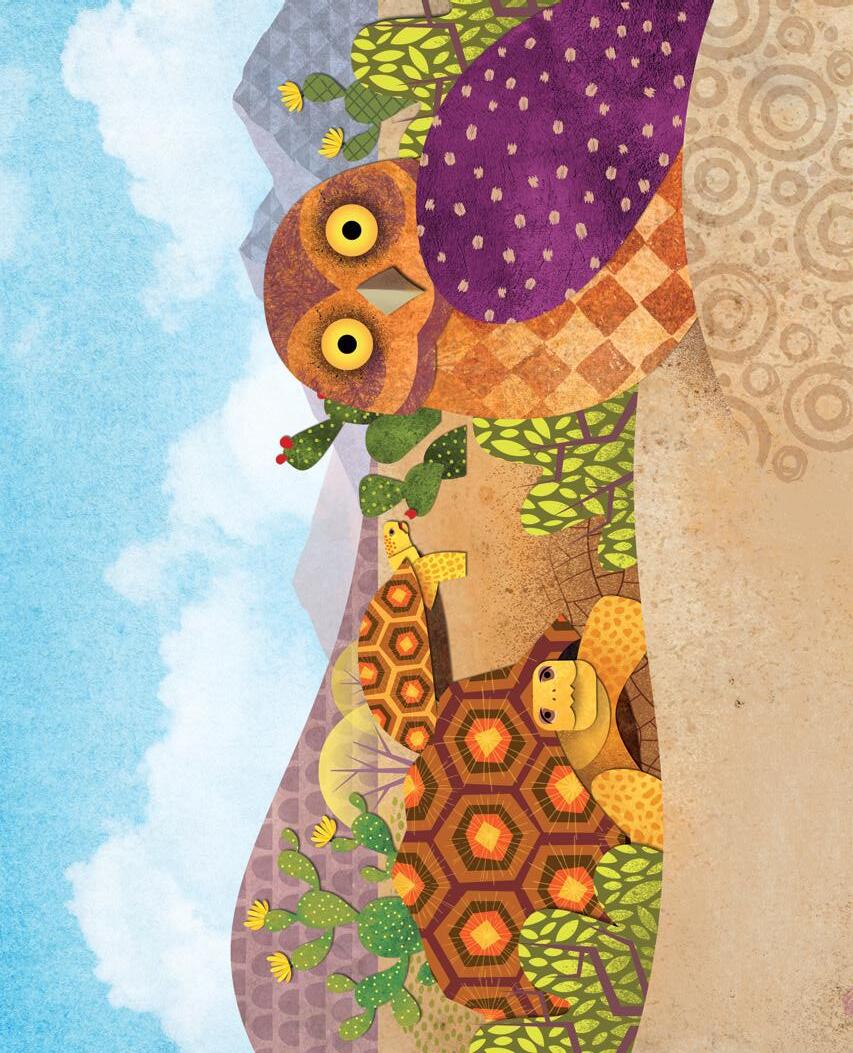
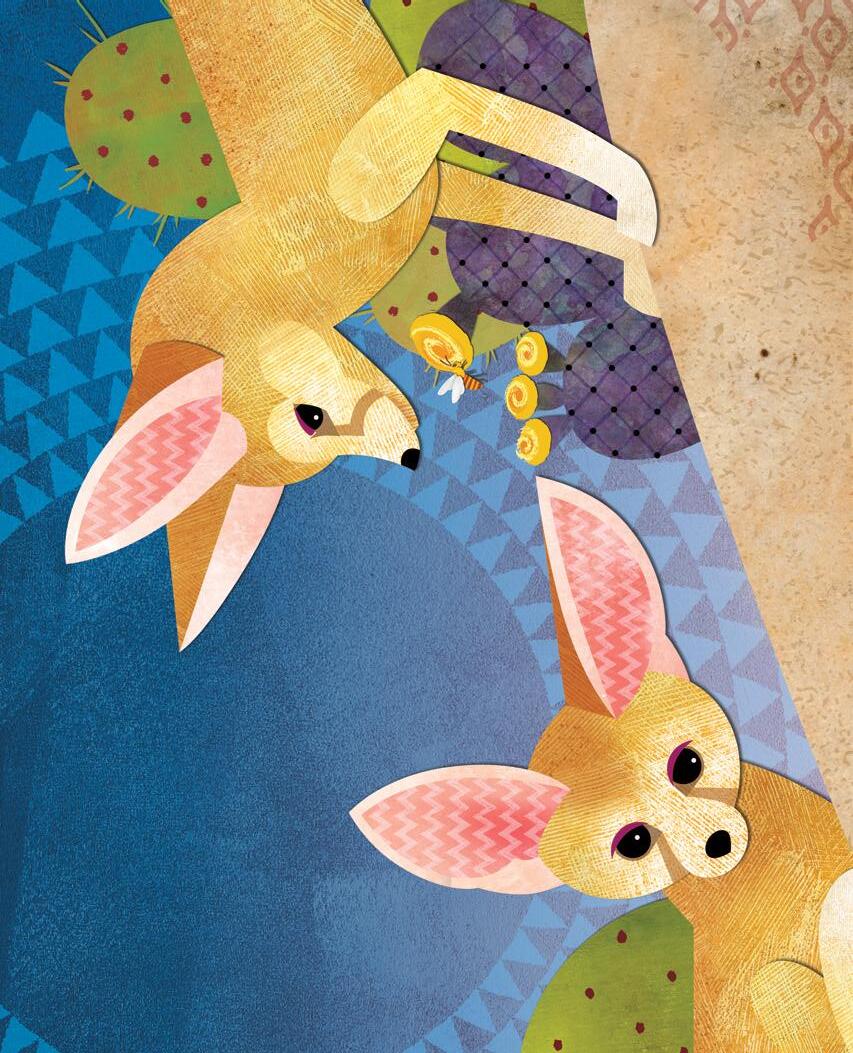
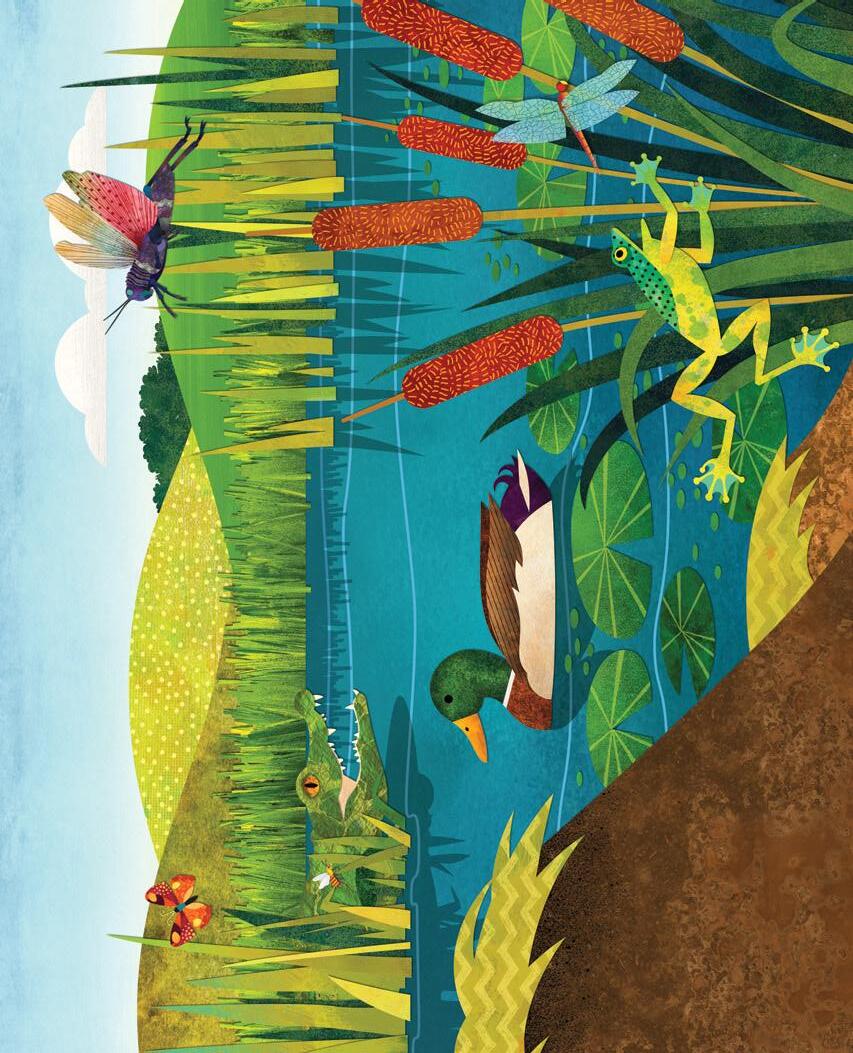
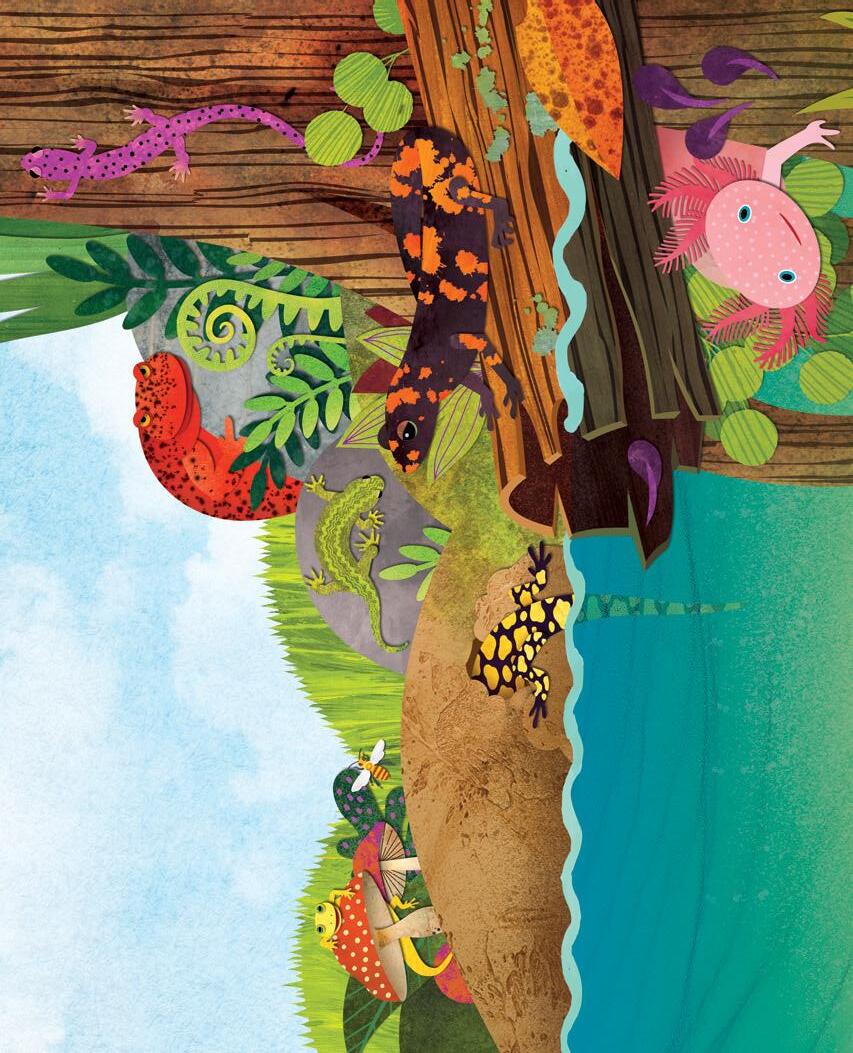
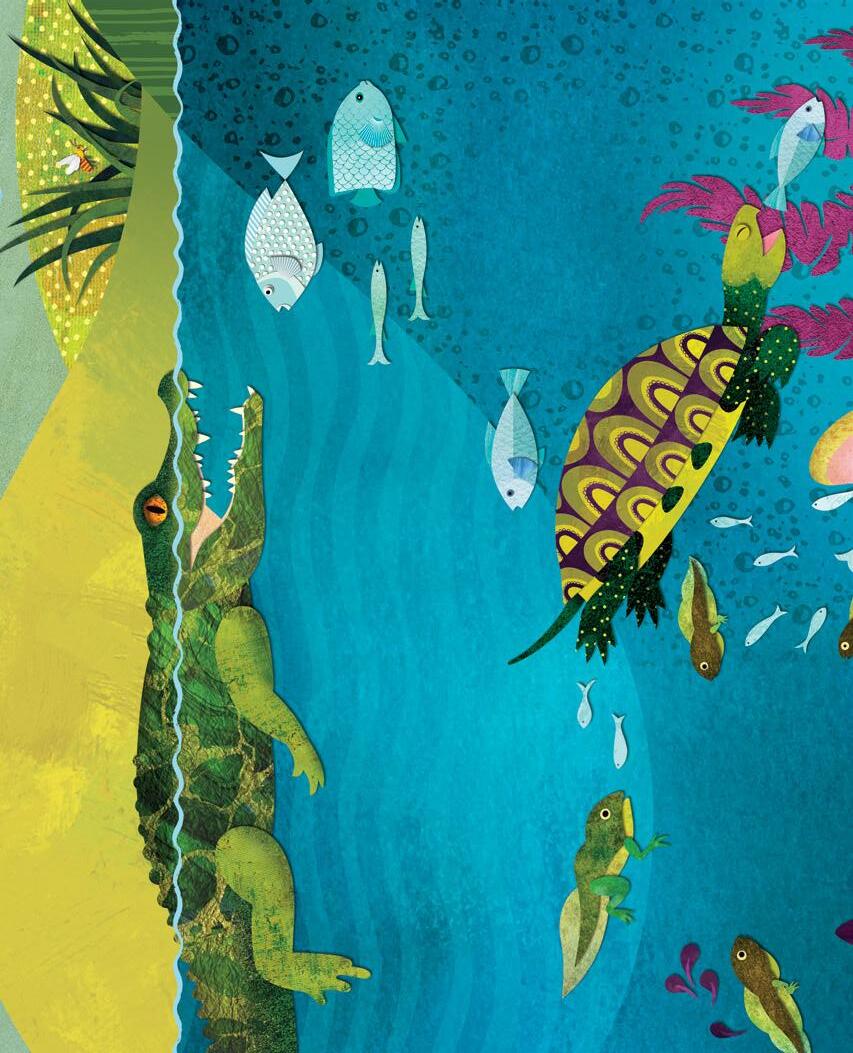
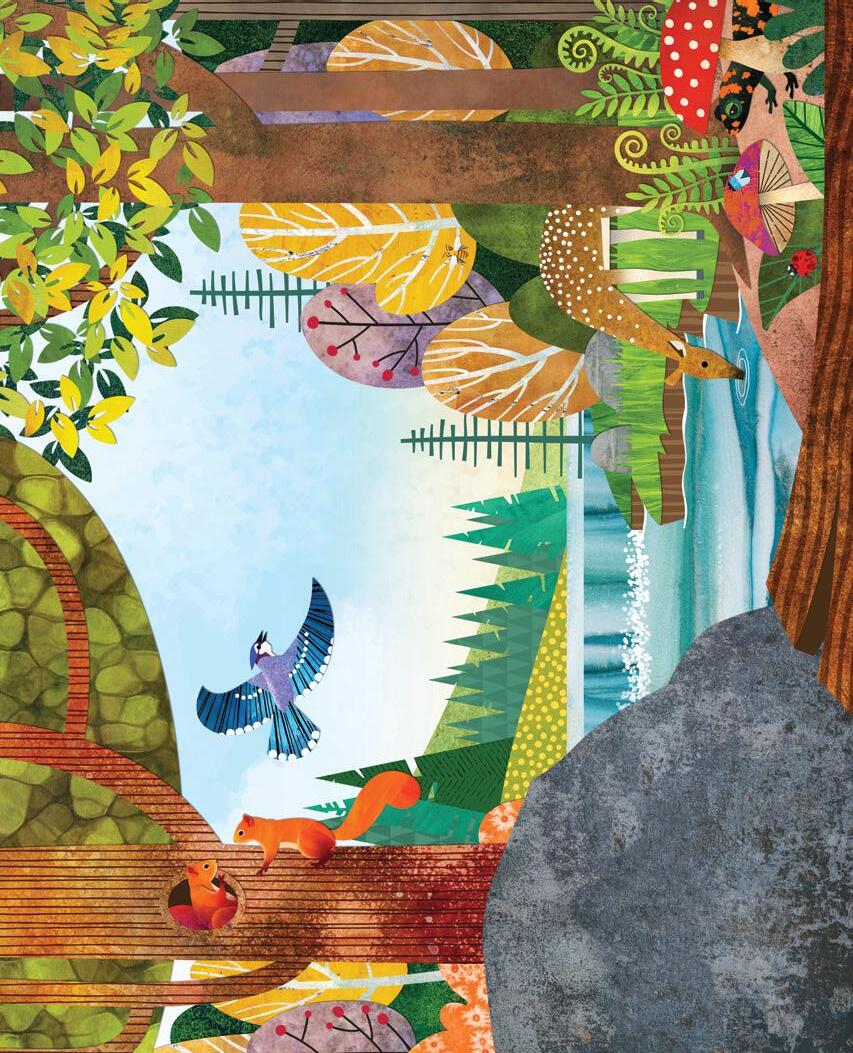
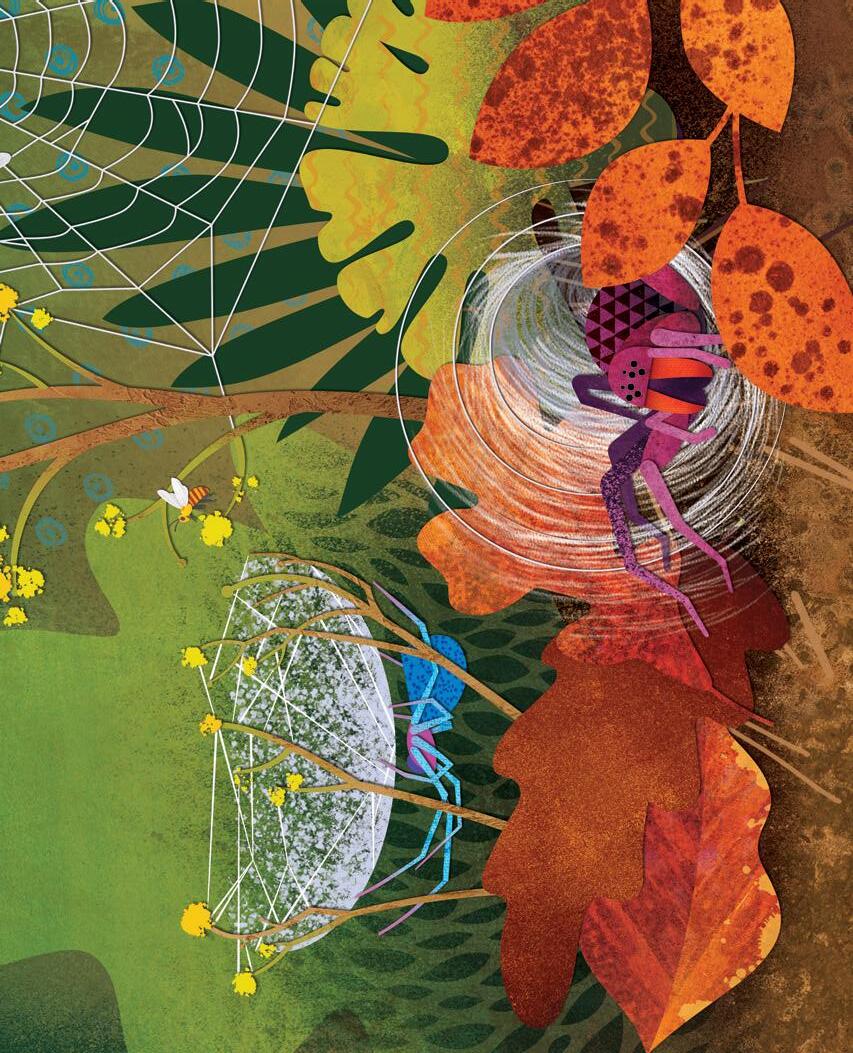
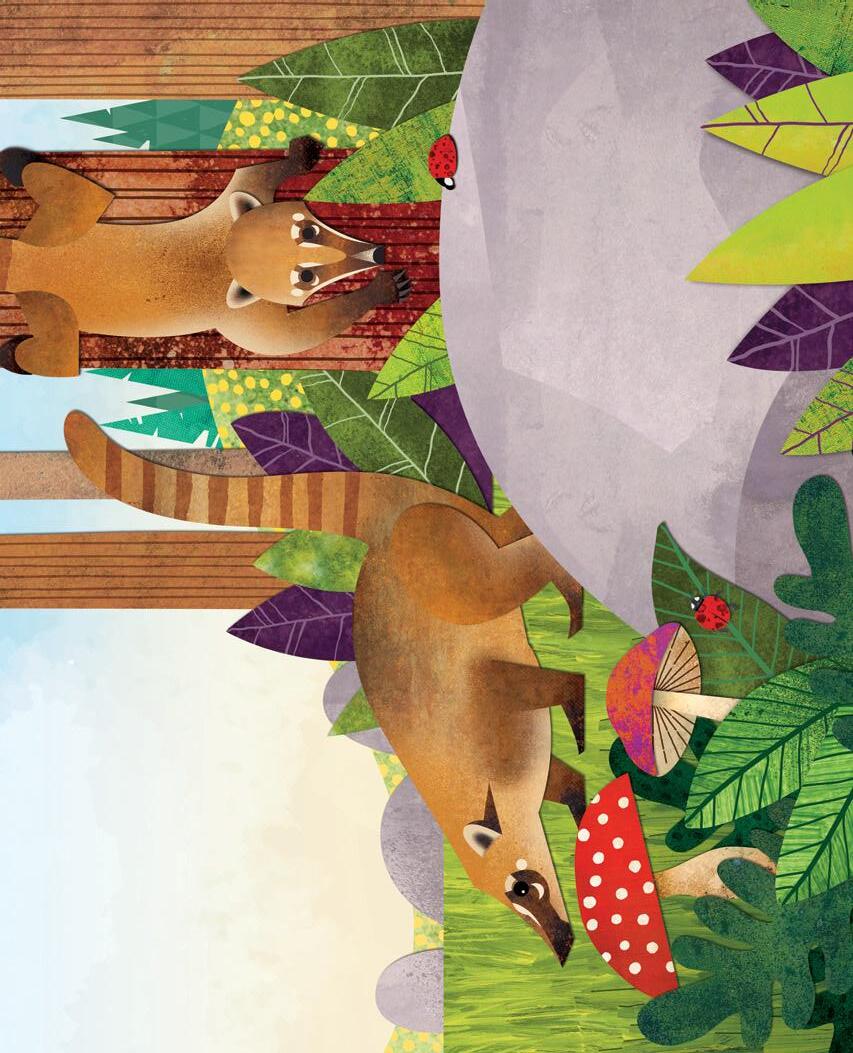
Meet stylized versions of some of the wildlife that will call the Wildlife Explorers Basecamp home.
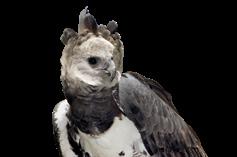
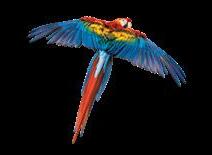
Explore the interconnected ecosystems that make the Amazon one of the most extraordinary—and vital— places in the world.
JOURNAL
MANAGING EDITOR Debra Erickson
SENIOR EDITOR Peggy Scott
STAFF WRITERS
Donna Parham
Abigail Karkenny
Elyan Shor, Ph.D.
Ebone Monet
COPY EDITOR Eston Ellis
DESIGNER Kerri Abrams
PHOTOGRAPHERS
Ken Bohn
Tammy Spratt
DESIGN AND PRODUCTION
Kim Turner
Lisa Bissi
Jennifer MacEwen
PREPRESS AND PRINTING Quad Graphics
Let's Stay Connected
Follow @sandiegozoo & @sdzsafaripark.
Share your #SanDiegoZoo & #SDZSafariPark memories on Twitter & Instagram.
The Zoological Society of San Diego was founded in Octo ber 1916 by Harry M. Wegeforth, M.D., as a private, nonprofit corporation, which does business as San Diego Zoo Wildlife Alliance.
The printed San Diego Zoo Wildlife Alliance Journal (ISSN 2767-7680) (Vol. 1, No. 5) is published bimonthly, in January, March, May, July, September, and November. Publisher is San Diego Zoo Wildlife Alliance, located at 2920 Zoo Drive, San Diego, CA 92101-1646. Periodicals postage paid at San Diego, California, USA, and at additional mailing offices. POSTMASTER: Send address changes to San Diego Zoo Wildlife Alliance, P.O. Box 120271, San Diego, CA 92112-0271.
For information about becoming a member of San Diego Zoo Wildlife Alliance, please visit our website at ZooMember.org for a complete list of membership levels, offers, and benefits.
Subscriptions to San Diego Zoo Wildlife Alliance Journa l are $25 per year, $65 for 3 years. Foreign, including Canada and Mexico, $30 per year, $81 for 3 years. Contact Membership Department for subscription information.
As part of San Diego Zoo Wildlife Alliance’s commitment to conservation, this magazine is printed on recycled paper that is at least 10% post-consumer waste, chlorine free, and is Forest Stewardship Council ® (FSC ®) certified. FSC ® is not responsible for any calculations on saving resources by choosing this paper.
Delving into Amazonia
It’s the most diverse ecosystem on our planet, often referred to as the “lungs of the Earth” for producing nearly one fifth of our oxygen and affecting weather patterns across the globe. Amazonia, a lush tropical rainforest in South America, is our focus in this month’s issue, and I’m excited to take you inside the innovative conservation work we lead in this region. This work is critically important because the health of the Amazon is linked to the health of our planet and our own human health.
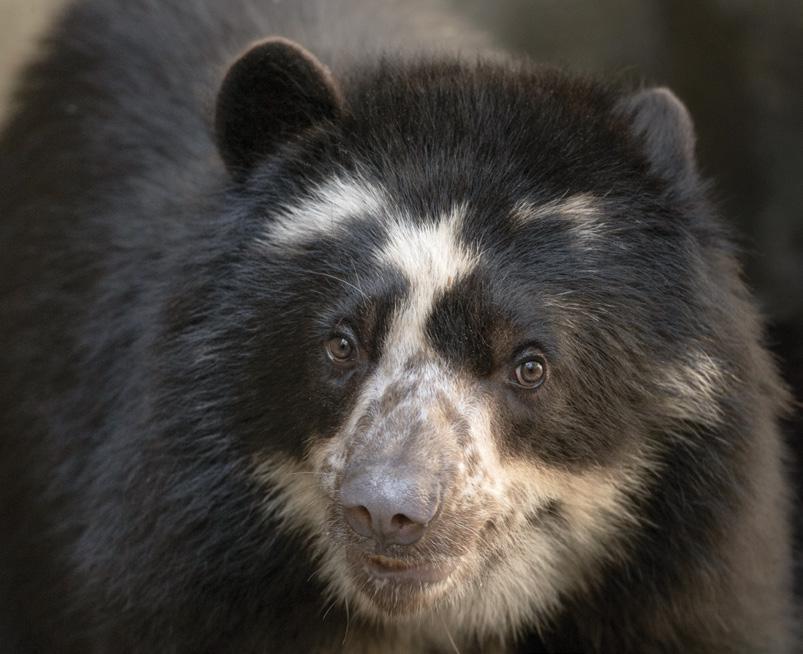
Population sustainability scientist Russ Van Horn, Ph.D., takes us from the living mountain to the living jungle, starting on page 10, with a look into our work with Andean bears. These bears are active year-round and trail cameras, along with field data collected with our partners, are helping us gather important knowledge and further research to support meaningful conservation efforts. We also delve into the use of genomics in the jungle on page 8.
Of course, this end-of-year issue also brings the highly anticipated 2022 calendar, a useful keepsake to keep our mission, to save wildlife and create a world where all life thrives, in your homes all year long. This year’s design is a whimsical, rich concept that reflects the look and feel of Wildlife Explorers Basecamp, opening in February 2022. This all-new experience is simply spectacular, and I’m deeply grateful to our donors, members, and supporters who have made it possible. Together, we’re nurturing a passion for nature as well as an empathy for wildlife in explorers of all ages. Thank you for your continued support.
Onward Together,
Paul A. Baribault President and Chief Executive Officer
Remarkable Amazonia
The Amazon rainforest region, home to San Diego Zoo Wildlife Alliance’s Amazonia conservation hub, is a biodiverse place that contains 10 percent of the identified species on the planet. To get an idea of just how unique this region is, consider these numbers:
2.5 million +
Insect species are believed to live in Amazonia.
Only 8,000 species have actually been classified.
New species of plants and animals have been discovered in Amazonia in just the past 22 years.
2,500+
40,000 +
Plant species exist in the Amazonia region. This includes 16,000 tree species.
2,000+
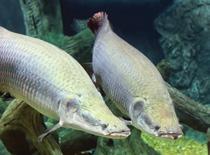
Fish species have been identified in Amazonia.
1,300 +
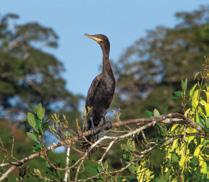
Bird species live in the Amazonia region.
2021 Board of Trustees
OFFICERS
Steven G. Tappan, Chairman
Javade Chaudhri, Vice Chairman
Linda Lowenstine, DVM, Ph.D., Secretary
Richard B. Gulley, Treasurer
TRUSTEES
Rolf Benirschke
Joye D. Blount
Kathleen Cain Carrithers
Clifford W. Hague
Robert B. Horsman
Steven S. Simpson
Judith A. Wheatley
TRUSTEES EMERITI
Berit N. Durler
Thompson Fetter
George L. Gildred
Yvonne W. Larsen
John M. Thornton
A. Eugene Trepte
Betty Jo F. Williams
Executive Team
Paul A. Baribault
President and Chief Executive Officer
Shawn Dixon
Chief Operating Officer
David Franco
Chief Financial Officer
Dwight Scott
Executive Director, San Diego Zoo
Lisa Peterson
Executive Director, San Diego Zoo Safari Park
Nadine Lamberski, DVM, DACZM, DECZM (ZHM)
Chief Conservation and Wildlife Health Officer
Wendy Bulger
General Counsel
David Gillig
Chief Philanthropy Officer
Aida Rosa
Chief Human Resources Officer
David Miller
Chief Marketing Officer
San Diego Zoo Wildlife Alliance (SDZWA) protects and restores nature in eight conservation hubs on six continents. Below are recent discoveries and progress from around the world.
CULTIVATING A NATIVE SCRUB OAK PROTOCOL
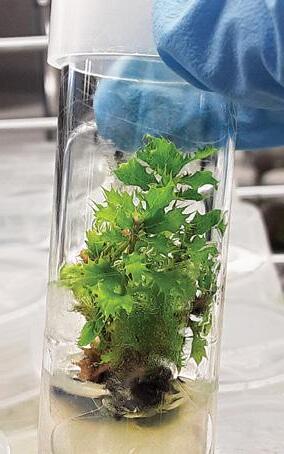
Nuttall’s scrub oak Quercus dumosa , a native California tree that plays important ecological roles, is endangered and increasingly threatened by urban expansion, climate change, and wildfires. To establish assurance populations of these trees, SDZWA scientist Joseph Ree, Ph.D., and our Plant Conservation team have developed a protocol for cultivating oak tissue in the laboratory. The protocol involves taking a small amount of stem tissue from a wild tree and placing it on a sterile mix of nutrients that the tree requires for growth. Growing oak tissue in these conditions removes the need for an intermediate greenhouse step, saving considerable time, effort, and resources. In a promising development, the protocol has so far proven suitable for cultivation of Nuttall’s scrub oak and two other local oak species.
BEAR BILE STUDY ENCOURAGING; STRATEGY STILL NEEDED
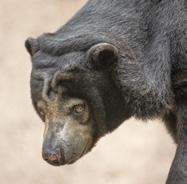
SDZWA scientist Elizabeth Davis, Ph.D., recently led the first ever country-wide study of bear bile use in Vietnam. Bear bile was once the most widely consumed wildlife product in Vietnam, but encouragingly, this study shows that a natural decline in bear bile use is occurring in most of the country. However, many bear farms are located in central Vietnam, and demand for bile remains high and unsustainable in this region—this indicates a need to develop strategies for targeted demand reduction, in order to continue our work to eliminate unsustainable wildlife consumption and combat wildlife trafficking in Vietnam.
MUSEOMICS PROJECT COLLABORATION
SDZWA is collaborating with SDZG–Peru and the Natural History Museum of the National University of San Marcos in Lima, Peru, on a project titled “Museomics: Building a Molecular Reference Library for the Peruvian Biological Megadiversity.” The project will create a DNA barcode library—a genetic reference used for species identification—for all Peruvian mammals and birds. The library will incorporate state-of-theart genetics tools and will be invaluable for future studies of biodiversity, systematics, and ecology.
VITAL WILDLIFE VACCINATIONS COMPLETED
Our Wildlife Health teams successfully administered vaccines for protection against SARS-CoV-2 to animals at the San Diego Zoo and Safari Park. Produced by veterinary pharmaceutical company Zoetis, the vaccine was formulated specifically for animals, and requires two doses for maximal efficacy. The teams vaccinated 237 animals: 127 primates, 83 felids, and 27 canids and other carnivores—these species were considered most susceptible to SARS-CoV-2. Our vaccination efforts are at the forefront of wildlife care and are a critical step in learning how to protect wildlife—both in our own community, and worldwide— from infection. Vaccinations are part of our multi-modal approach to protection, which also includes physical distancing, wearing PPE, and routine cleaning and disinfection.
PHOTO BY: JOSEPH REE, PH.D.
presented by
DECEMBER
10–23 AND 25–31, 2021; AND JANUARY 1–2, 2022
During this year’s Jungle Bells presented by California Coast Credit Union, Aurora returns, bringing with it a magical and spectacular experience with lights, projections, and music. Aurora takes place each evening during Jungle Bells (except December 24). Also enjoy traditonal lighting displays, musical performances and entertainment, visits with Santa (through December 25), tasty holiday treats, gift shopping, dining at Albert’s Restaurant until 8:30 p.m. (except December 24), and holiday photos. ‘Tis the season to celebrate—join us for holiday cheer!
QWhat is the coolest thing about your job?
The fact that it even exists! There can’t be many other illustrators who have the opportunity to work for a zoo full time. For someone who loves to draw and loves animals, it’s a dream come true. I get to play a small role in sparking educational and emotional connections between our guests and wildlife, which is something I find personally rewarding.
Q QWhat book or movie influenced you or made a strong impression?
My first introduction to art was the picture books I loved as a child. I’d spend hours copying the drawings and making up my own stories about the characters. In the artwork I’ve created for the new Sanford Wildlife Explorers Basecamp, opening in February 2022, I see traces of some old favorites: books illustrated by Eric Carle, Ezra Jack Keats, Mary Blair, Alice and Martin Provensen, and others.
What has surprised you about working with SDZWA?
I’d been a Zoo member since the ‘90s and thought I knew what the organization was all about. But I didn’t realize the extent of the contributions it makes to wildlife conservation until I started working here. Me: “Wow, people need to know this! [looks around
Amy Blandford
As SDZWA’s senior illustrator, her artwork appears in San Diego Zoo Wildlife Alliance Journal, on signs at the Zoo and Safari Park, on souvenirs, and anywhere else an image is needed to capture the beauty and uniqueness of wildlife.
sheepishly] …please tell me I’m not the only one who didn’t know this…” So it was exciting to be part of the team that unveiled San Diego Zoo Wildlife Alliance!
Q
What was a turning point or defining moment in a project or program you’ve worked on?
A year’s worth of talent
See some of Amy’s illustrations in our 2022 calendar, starting on page 16.
It’s been an awfully long “moment,” but it’s the COVID-19 pandemic. It’s been incredible, the way everyone on the design team, the writers, all the people I work alongside have pulled together behind the scenes, working harder than ever in an outstanding effort to make possible the SDZWA launch and the upcoming Wildlife Explorers Basecamp, and support two Zoo/Park closures and reopenings during the COVID-19 pandemic. I’m so blessed to work with such talented and dedicated people.
Q
What is your favorite animal? Why?
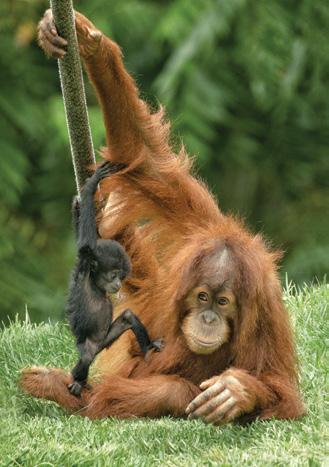
MONKEYS! Golden lion tamarins, capuchins, langurs. But my favorite individuals at the Zoo are two of the apes: Aisha the orangutan and Sela (pictured, left) the siamang. I’ve really enjoyed watching them grow up together; their antics crack me up. It always lifts my spirits to see members of different species bond with each other and become friends. It’s how I wish the whole world was.
EVERY WEEKEND STARTING NOVEMBER 26 THROUGH JANUARY 2, AND SELECT WEEKDAYS. SEE SDZWA.ORG FOR DETAILS.
See the Safari Park in a whole new light! Go on a holiday expedition of light and travel through places that glow and twinkle with holiday cheer.
Holiday tunes set the mood, and seasonal food treats tempt you throughout your journey. Join us for a joyful celebration of the season!
Genomics in the
Mrinalini Erkenswick
Watsa,
Ph.D., a population sustainability scientist for SDZWA, charts the course to “frugal science.”
Technological advances have expanded the repertoire of tools available to laboratory scientists, providing them with smarter, quicker, and more accurate ways to study the science of molecules. With this tide of innovation has come a significant increase in the complexity— and cost—of lab ware. Many devices come with warranties and maintenance packages that run into thousands of dollars a year in themselves. This has created what is often an insurmountable gap between those who can access laboratory technology and those for whom the price is simply too high. However, alongside such innovation there has also been a quieter, simpler movement: we call it “frugal science.”
Frugal science has produced a $1 paper microscope and 3D-printed centrifuges. Do-it-yourself biologists have invented $300 kits to make machines that can easily and affordably amplify genes of interest. This ever-growing movement has demonstrated that we can democratize laboratory science and open its doors to a much larger group of players. Nowhere has this been more impactful than in the field of conservation genomics, a field that applies the study of genes and chromosomes toward the preservation of wildlife and biodiversity.
Globally, many conservation programs for endangered species rarely assess biological samples (such as hair, feces, or tissue) due to the difficulties faced by scientists in trying to analyze them. However, these samples, often deposited by wildlife as they move through their habitat, contain veritable treasure troves of information. We can tell which species live in an ecosystem, who eats whom, if males outnumber females, and even the number of individuals in a particular region, all by using the DNA they naturally deposit into their environments. We can protect and conserve endangered species by making technology accessible to scientists and communities around the world. The frugal science movement makes all this possible.
In 2021, San Diego Zoo Wildlife Alliance and our partners are embarking on an effort to democratize and decentralize laboratories, beginning with the launch of the Wildlife Conservation Laboratory at Los Amigos Biological Station in the southeastern Peruvian Amazon. We are strategically investing in low-cost, high-quality technology (yes, you read that right!) and empowering scientists from the regions where we work to add this to their “conservation toolbox.” This move comes at a time when a global pandemic has further emphasized the importance of genomics, and the need for widespread laboratory science and training. Genomics gives us an unprecedented lens with which to view the world. And now, genomics is coming to the jungle!
You can help support conservation science. Visit sdzwa.org to learn more.
Jungle
We can protect and conserve endangered species by making technology accessible to scientists and communities around the world.
Genome Sequencing, In Brief
The genome is an organism’s complete set of genetic information, encoded by DNA. Genome sequencing is the process of decoding this information, allowing scientists to unravel and analyze an individual’s unique genetic makeup. The following is a quick guide to getting from sample to sequence:
Extraction
DNA from a biological sample is isolated and purified.
Amplification
The DNA fragments are “amplified,” or repeatedly copied, within a specialized machine. This process, called a polymerase chain reaction (PCR), produces up to millions of copies of specific sections of DNA, which makes genetic information easier to study.
Library Preparation
The products of a collection of PCRs are then pooled together, creating the “library.” This allows multiple genetic targets to be sequenced at once.
Library Sequencing
A sequencing machine reads the library, identifying and recording the composition of nucleotides—the genetic building blocks (A, T, C, G)—in every DNA fragment.
Analysis:
Powerful computer programs determine how to piece together the fragments of genetic information by comparing them against a specific organismal reference genome. Scientists utilize these genomic sequences to gain insight into factors such as identity, physiology, and health.
–Elyan Shor, Ph.D., and Mrinalini Erkenswick Watsa, Ph.D.
KEN BOHN/SDZWA
FROM THE LIVING MOUNTAIN TO THE LIVING JUNGLE
In the Andean bear program, we’re working in a dynamic and diverse landscape to answer basic questions with implications for conservation planning across the Andean bear’s range.
BY RUSS VAN HORN, PH.D.
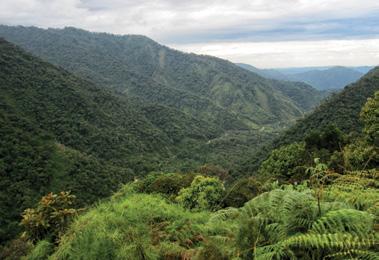
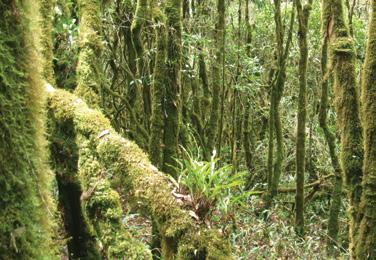
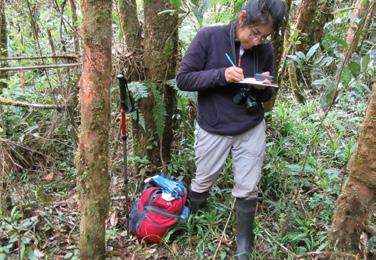
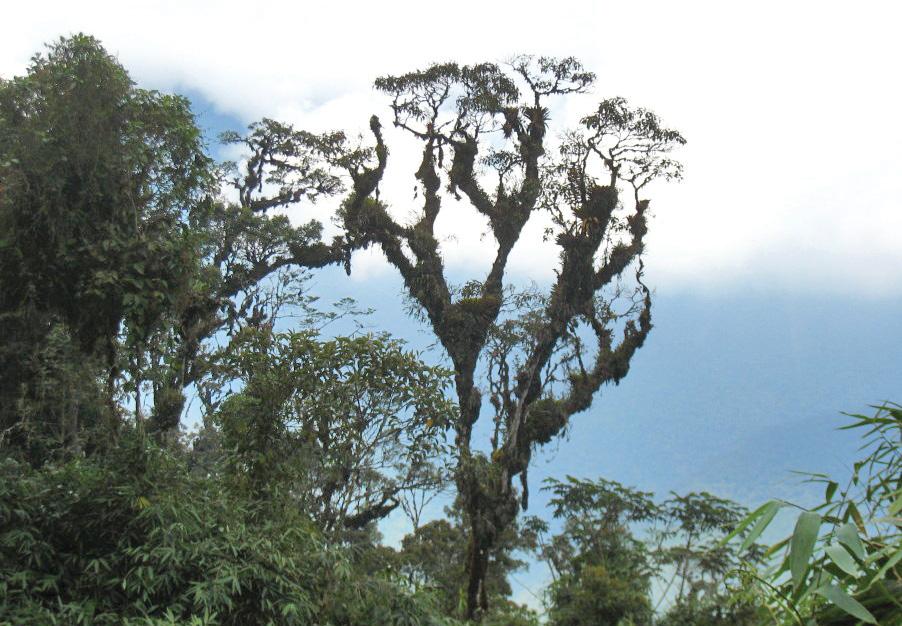
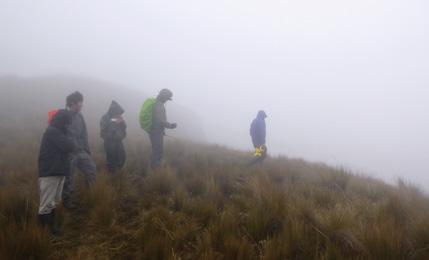
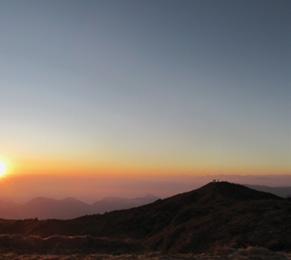
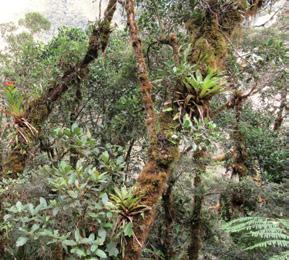
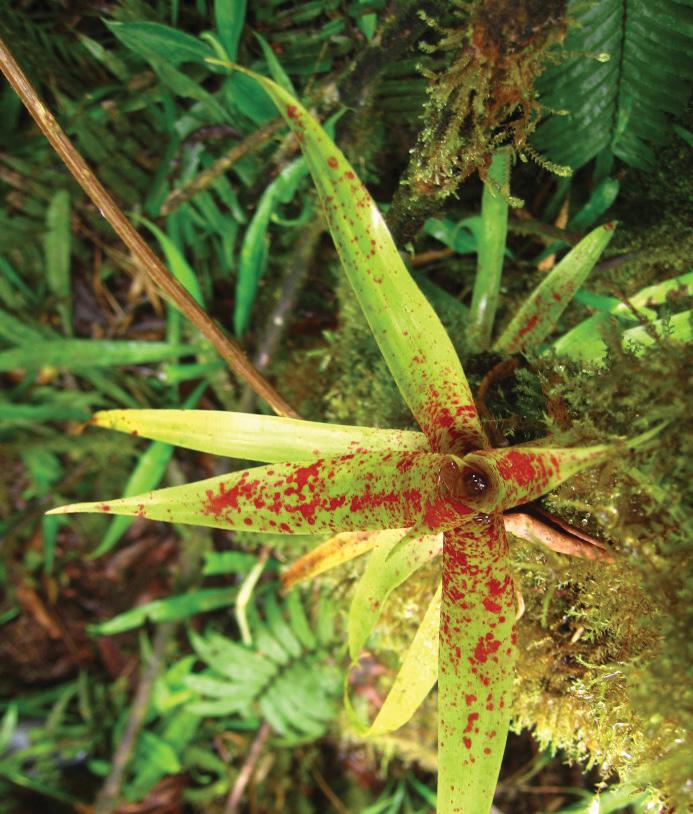
To stand at the overlook at Tres Cruces in Manu National Park, in the Andes of southeastern Peru, is an incredible and humbling experience. It can look and feel as though you are a very small and very disoriented human, standing on the edge of the world. If you are a scientist working toward the conservation of Andean bears, you stand at the edge between what we know and what we do not know. The forested slopes below you descend from the sacred Apu (living mountain) Cañajhuay through humid forests, down and up and down again, to the Amazon rainforest. If you follow the trail before you, you will walk in shadows between and below trees covered with moss, vines, spectacular orchids, and bromeliads, and next to towering tree ferns. If you watch carefully as you descend, you
will see that the forests vary across short distances, with changes in elevation and orientation. Within these forests live many species that are not well understood, including Andean bears.
As scientists, we are pretty certain that we know some things about Andean bears. These bears live across one-sixth of the north-south distance of the Earth, and across a range of more than 13,000 feet (4,000 meters) in elevation. They do not attack people, but they have been reported to eat more than 20 species of animals, and over 300 species of plants. Scientists know something else: despite these characteristics, which suggest the potential for the bear to survive alongside humans, these bears are vulnerable to extinction in the wild, and we don’t understand enough about the bears to effectively support their long-term conservation.
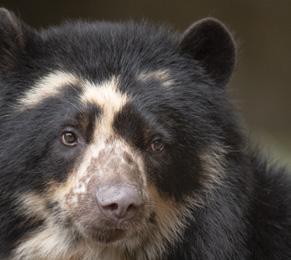
The Andean bear is one of the flagship species of national parks in the Andes.
Challenges and Questions
The continued existence of Andean bears is threatened by habitat loss, habitat fragmentation, increased mortality of bears after crops are raided and livestock are killed, and various effects of climate change. To respond to these threats, and to answer important conservation questions—such as where are the most important locations for the conservation of Andean bears, or which are the critical spaces to connect remaining patches of Andean bear habitat—we need to improve our understanding of the basic biology and ecology of the Andean bear. In science, the first step in understanding something is describing it, so that we can develop possible explanations and gather data to learn where our thinking was correct, and where it was not. Over the last five years, this is what we’ve been doing—asking, thinking, describing, and thinking again, about the significance of what we’ve observed in the landscape around Tres Cruces.
From Tres Cruces, with a light pack and no misadventures, you could walk downhill from the grassland and drop across dwarf alpine forest, cloud forest, upper and lower montane forests, to the Amazon rainforest in less than two days. The rainforest is not far away, but there are no Andean bears there. Through a network of trail cameras, we’ve regularly observed bears to only walk about halfway down these slopes; you could walk down the entire elevational range of the bear in a single day. We don’t detect bears lower down, where there appear to be more diverse foods, supporting many more species of birds and primates than live at higher elevations. Why do the bears not descend the slopes to compete for these foods, fish in the large rivers, or forage around illegal gold-mining camps? We do not know yet, but we are analyzing
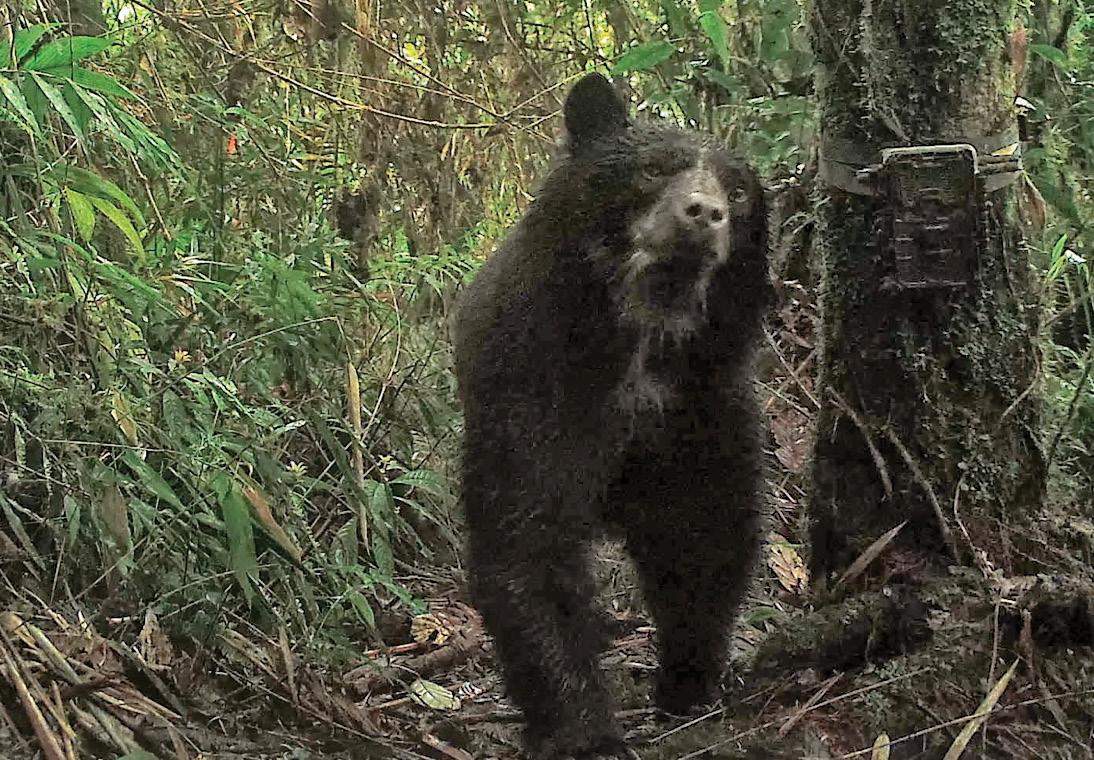
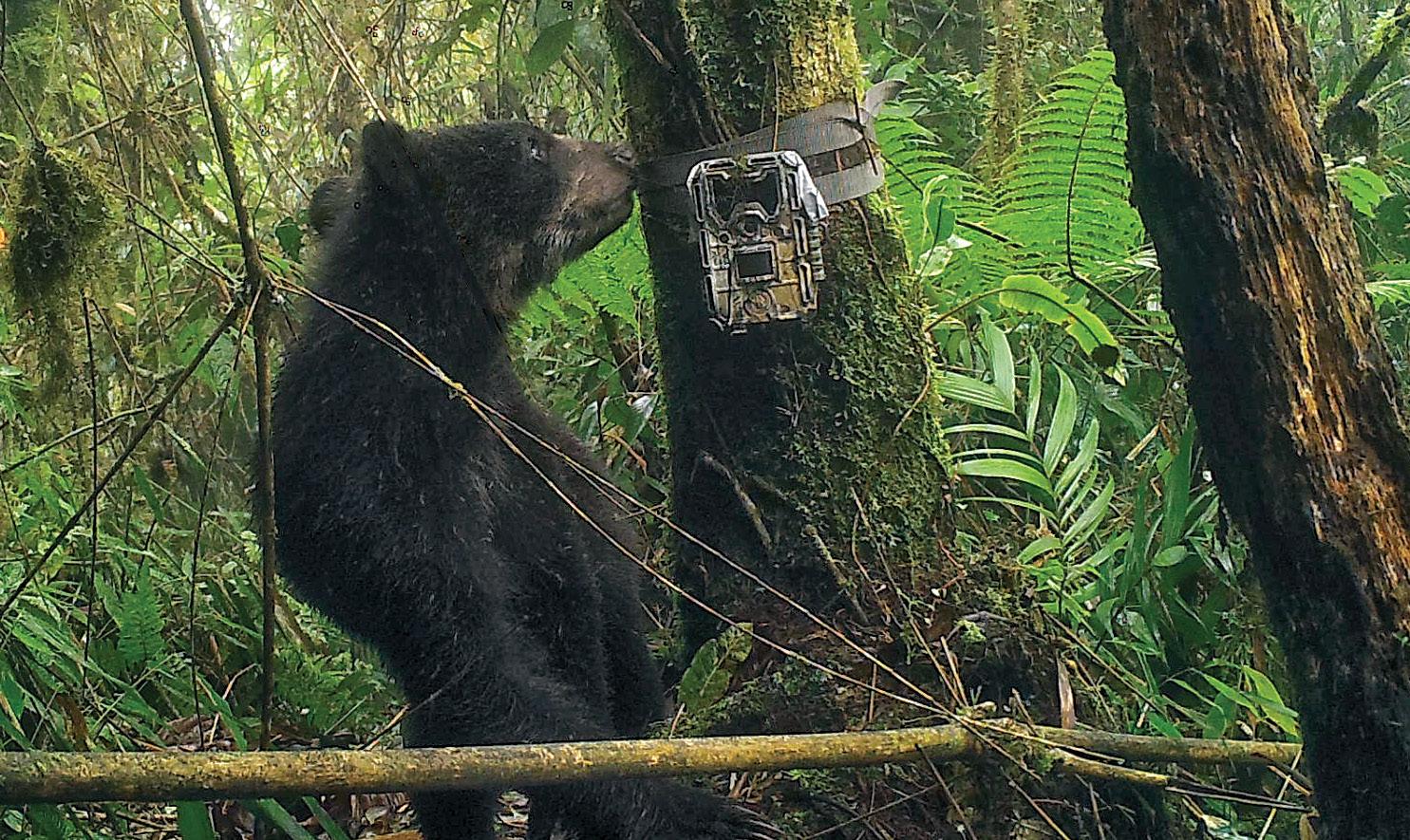
Because food is available yearround where they live, Andean bears are active year-round and do not spend months inactive in dens, as do American black bears or brown bears. Trail cameras, along with data collected by field projects, help scientists glean as much information as possible about these enigmatic, arboreal bears.
more than 150,000 images of wildlife, including more than 45 species of mammals, to see if patterns suggest that landscape features or negative interactions with other species may keep Andean bears from the lowlands. If Andean bears’ distribution is restricted by interactions with other species, and climate change results in those species moving up the slopes, as tree species are already moving up the slopes, then the bear’s range may shrink even though the slopes remain covered with forest.
Solutions, Tools
Conservationists throughout the Andean bear’s range are trying a variety of approaches to improve the long-term outlook for the bears to exist in a
human-impacted world. For example, ecotourism has been suggested as a way for local communities to benefit directly from conserving Andean bears and other large mammals. However, we do not know how the bears might react to ecotourism. Because well-managed tourism should not change the availability of food for bears, or directly change their mortality, it’s possible that tourists would have no impact on Andean bears. However, bears of other species are known to change their behaviors in response to human hikers, so perhaps ecotourism will affect Andean bears. To support effective planning for ecotourism, we’re analyzing data from trail cameras to see whether human
DID YOU KNOW?
A Species Survival Plan (SSP) is in place for this bear species, through the Association of Zoos and Aquariums (AZA). San Diego Zoo Wildlife Alliance is committed to Andean bear conservation in Amazonia.
presence alters the spatial and temporal patterns of how Andean bears use Andean forests.
Trail cameras are a valuable tool in our work, and the photos they collect of Andean wildlife are evidence of animals that we almost never see in person. Little by little, we’re building the tools, the knowledge, and the alliances that will help governmental agencies, private land managers, and local communities to more effectively plan their long-term coexistence with Andean bears and other wildlife from the living mountain to the living jungle.
Russ Van Horn, Ph.D., is a population sustainability scientist for SDZWA.
A Year— and Beyond— of Wonder and Wildlife
Make a date with some of your favorite species in four ecosystems.
We can’t wait to welcome you to Sanford Wildlife Explorers Basecamp when it opens at the San Diego Zoo in February 2022—our most significant expansion at the Zoo to date. In the meantime, we’re thrilled to share a sneak peek at the exclusive, one-of-akind artwork featured throughout the immersive experience as the theme of the San Diego Zoo Wildlife Alliance 2022 calendar. San Diego Zoo Wildlife Alliance Senior Illustrator Amy Blandford carefully crafted each colorful scene to demonstrate the diversity and interconnectedness of our planet. Each month, you’ll get a glimpse of the four unique ecosystems that await your adventures at Wildlife Explorers Basecamp: Rainforest, Desert Dunes, Marsh Meadows, and Wild Woods.
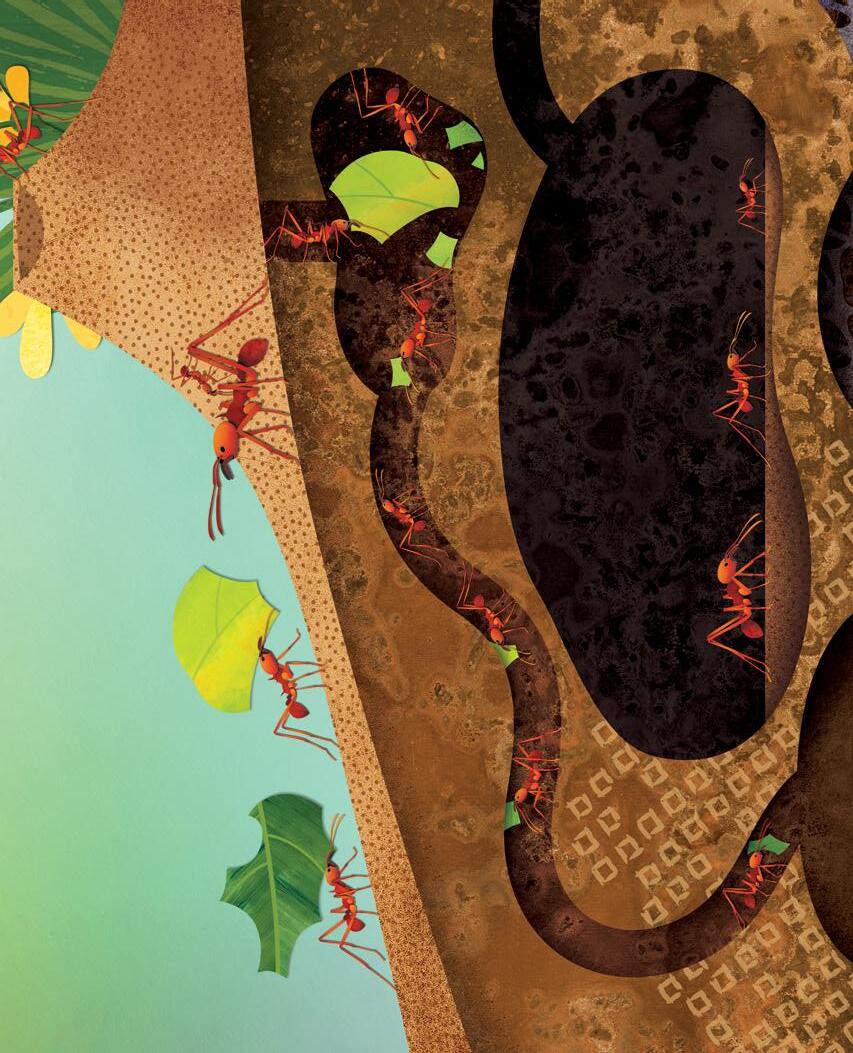
From treehouses and flyover insect migrations to trickling streams and arid deserts, Wildlife Explorers Basecamp will allow you to dive into the ecosystems and planet we all share. And from leafcutter ants and orb weaver spiders to
squirrel monkeys and sloths, opportunities to connect with plants and animals while unleashing your creativity will be around each and every corner.
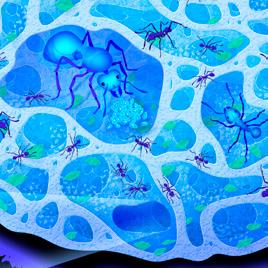
Come nose-to-nose (or beak, or snout…) with wildlife ambassadors. Crawl through naked mole-rat tunnels and visit a black light-illuminated ant colony. Team up to play conservation games on interactive screens, or use microscope stations to make your own discoveries. Guests can splash, slide, and jump side by side with wildlife, building empathy for plants and animals—and for children, boosting the physical, cognitive, social, and emotional aspects of their development.
Conservation starts with people. And inspiring wildlife allies to join us in creating a world where all life thrives is the driving force behind Wildlife Explorers Basecamp. In this place like no other, exploration will be endless—leaving guests of all ages engaged, inspired, and ready to take action with us as allies for wildlife.
We hope you enjoy this taste of Wildlife Explorers Basecamp with each month that passes. Even after 2022 comes and goes, know that Wildlife Explorers Basecamp will be waiting for you to make memories filled with wonder for all the years ahead.
“Bee” on the Lookout
A bee is hidden in every illustration throughout Wildlife Explorers Basecamp! Can you find them all in this calendar?
January
February
March
April
May
June
July
August
September
October
(Zoo)
HalGLOWeen (Zoo) Autumn Festival (Park)
(Zoo)
HalGLOWeen (Zoo)
December
Branching Out
The Amazon is a vertical mosaic of layered habitats, each packed with extraordinary wildlife. Many move up and down through the stories to find what they need for survival. This creates an interconnected ecosystem—one that impacts our entire planet, and one that San Diego Zoo Wildlife Alliance is working to protect.
Are we there yet?
By Abigail Karkenny | Illustration by Amy Blandford
EMERGENT LAYER
Bright, spacious, and unprotected from the elements
the top of the rainforest
Brazil nut tree
Heavy, baseballsized fruits sprout from this massive tree.
CANOPY LAYER
Crowded treetops that control light and moisture reaching the layers below
UNDERSTORY LAYER
Damp, tangled maze of trees, bushes, and vines that tolerate low light and high humidity
FOREST FLOOR
Dark (receiving less than 2 percent of light that the canopy does) and blanketed by decomposing matter
RIVER
The world’s second-longest river, stretching 3,977 miles long with thousands of winding tributaries
Heliconia
Only hummingbirds can reach the tucked-away nectar of these “lobster claws.”
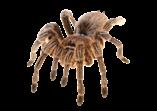
Goliath birdeating spider Insects, mice, frogs and more are on its menu— not just birds.
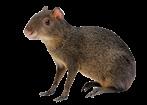
Agouti
Greater bulldog bat These bats prey on fish by using echolocation to detect water movement.
An oily substance on their coarse hair repels water like a raincoat.
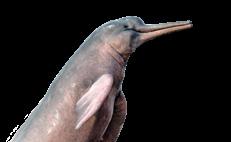
Amazon river dolphin Their shade of pink varies, depending on age and water clarity
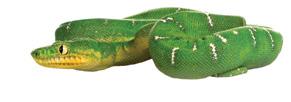
whopping 550-pound snakes can swallow large prey whole.
Bald uakari Bright red faces are thought to signal good
crush nuts and seeds.
It takes 10 minutes for rain to drip from the thick canopy to the forest floor.
Carbon sink: Absorbs and stores excess carbon from the atmosphere
One Forest, Many Roles
Biodiversity hotspot:
Among the most biologically rich and threatened regions on Earth
Water transport: Creates clouds that carry moisture around the planet
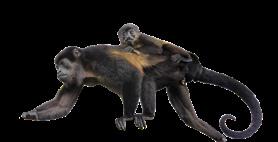
monkey Their long distance calls can
Home:
About 30 million people live in the Amazon
Be a Wildlife Ally: Choose Good Wood
San Diego Zoo Wildlife Alliance manages two Amazonian wildlife monitoring stations, one of which is located in a Forestry Stewardship Council (FSC) logging concession. FSC certification ensures that trees are responsibly harvested, protecting wildlife from rampant deforestation.
You can help by choosing items with the FSC logo. Look for it on wood and paper products, like furniture or paper towels (and your copy of the San Diego Zoo Wildlife Alliance Journal!).
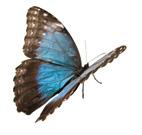
Blue morpho butterfly
With a wingspan of five to eight inches, these are among the world’s largest butterflies.
are some of the Amazon’s tallest, reaching about 230 feet and producing up to 4,000 fruits at a time.
Amazon water lily
Massive eightfoot leaves help these giants soak up the sun.
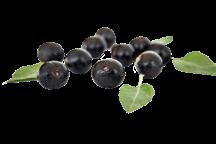
berries. People eat them, too—in the Amazon, and around the world.
Amber phantom
butterfly Translucent wings help them hide in dense, shaded habitat.
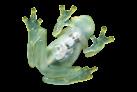
Glass frog
Transparent skin on their bellies allows their green top color to provide camouflage.
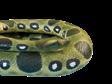
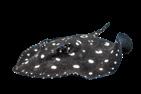
Whiteblotched river stingray
Polka dots provide camouflage for these fish in sun-spotted water.
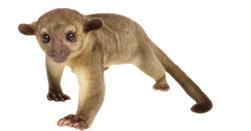
nocturnal carnivores use their prehensile tail to grip branches for balance and when reaching for food.
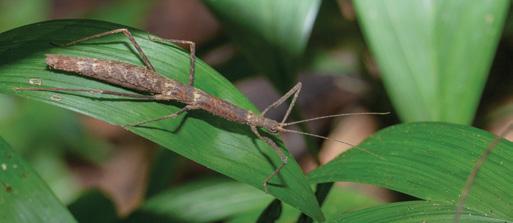
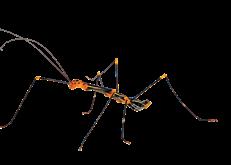
Peruvian firestick
While most stick insects have leaf-like camouflage, these use bright warning colors as a defense.
Yellow-spotted
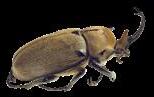
Elephant beetle
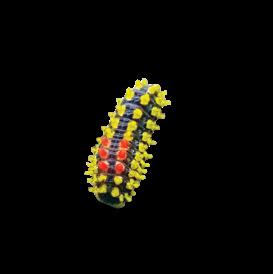
By eating waste, rotten wood, and carcasses, beetles clean up the rainforest and create fresh soil.
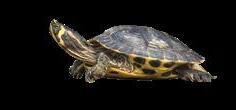
Amazon river turtle
Their main nesting sites are heavily protected to prevent poaching.
Howler
EVENTS
November
SAN DIEGO ZOO
November and December Hours
San Diego Zoo
9 a.m.–5 p.m.*
San Diego Zoo Safari Park
9 a.m.–5 p.m.*
sdzwa.org
619-231-1515
*Exceptions apply. Programs and dates are subject to change—please check our website daily for the latest information and requirements for visiting.
(Z) = San Diego Zoo
(P) = Safari Park
NOVEMBER 25 Thanksgiving Day
Buffet at the Zoo
Enjoy a sumptuous Thanksgiving buffet at the San Diego Zoo’s Treetops Room. Two seatings are available: 11:30 a.m.–1:30 p.m. or 3:30–5:30 p.m. Call 619-718-3000 or book online. (Z)
DECEMBER 10– 23, 25–31, 2021; AND JANUARY 1–2, 2022
Jungle Bells presented by California Coast Credit Union
Join us at the Zoo until 8 p.m. for holiday cheer with festive lights and decorations, the return of the spectacular Aurora show, special seasonal performances and entertainment, and a variety of treats. (Z)
OFFERED DAILY Discovery Cart Tours
Enjoy a 60-minute guided tour of the Zoo aboard a deluxe expedition cart, led by one of our knowledgeable guides. Book online or call 619-718-3000. (Z)
OFFERED SELECT DAYS Early Morning
Cheetah Experience
Meet our world-famous wildlife behavior specialists and get an up-close look at one of our cheetahs as they run and play! Call 619-7183000 or book online. (Z)
& December
NOVEMBER 25
Thanksgiving Buffet at the Park Savor a delicious Thanksgiving meal at the Safari Park’s Hunte Nairobi Pavilion. For more information, call 619-718-3000. (P)
EVERY WEEKEND STARTING NOVEMBER 26 THROUGH JANUARY 2, 2022, AND SELECT WEEKDAYS
Wild Holidays
Go on a holiday expedition of light and travel through places that glow and twinkle with holiday cheer. Fanciful characters, musical entertainment, storytelling and culinary treats round out your evening of holiday festivities. (P)
DECEMBER 12
Breakfast with Santa at the Park Santa Claus is coming— to the Safari Park! Gather your family at the Safari Park’s Hunte Nairobi Pavilion for a bountiful buffet breakfast with the jolly ol’ elf himself. Call 619-718-3000 for reservations. (P)
OFFERED SELECT DAYS IN NOVEMBER AND DECEMBER
Deluxe
Wildlife Safari
Spend even more time with your favorite wildlife!
SAFARI PARK
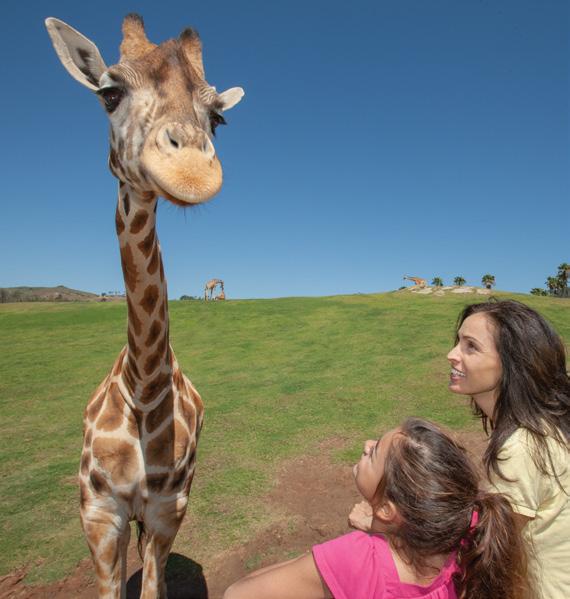
On this 90-minute safari, you’ll venture into habitats representing Africa and Asia for up-close views of giraffes,
rhinos, and many other species. Enjoy amazing photo opportunities while learning about how caring for wildlife here helps us to conserve them around the world. For ages six and up. Call 619-718-3000. (P)
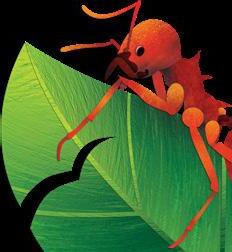
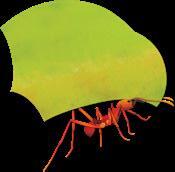
Amazing Ants
Leafcutter ants bite foliage into tiny pieces to carry back to their colony. Can you help these tiny workers find their way home?
The right bite The leafcutter ant’s jaws are so powerful, they are called “chainsaw mandibles” that can vibrate 1,000 times per second!
their tiny size, leafcutter ants are among the strongest animals on Earth—they can carry 50 times their own weight. That’s like you carrying a motorcycle!
LAST LOOK
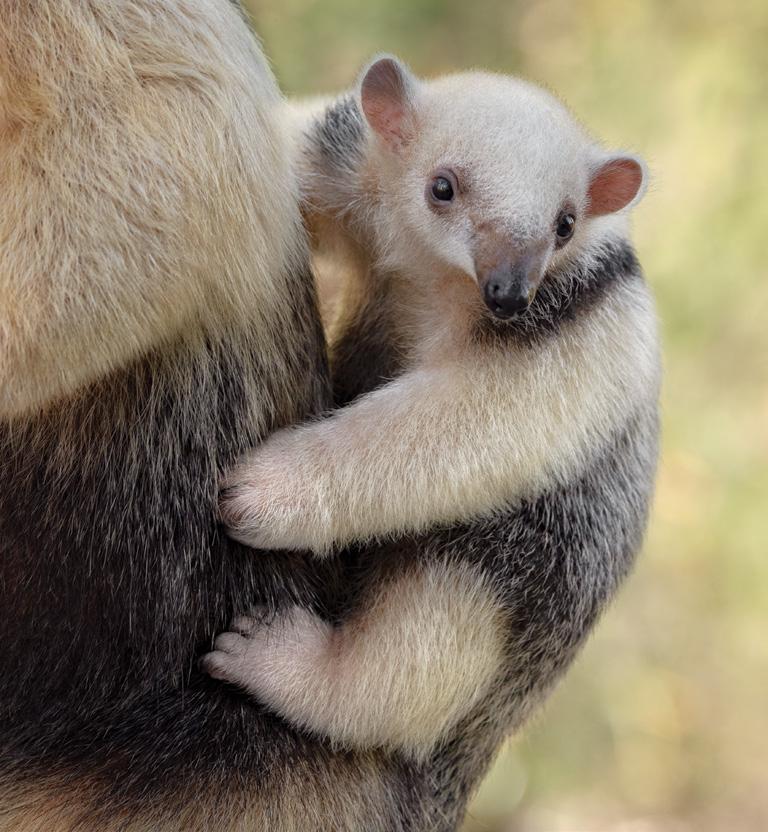
First-time mother Cora the southern tamandua (pronounced tuh MAN deh wah) gave birth last summer to a healthy male pup. The pair, along with Cora’s mate Fernando, live at the San Diego Zoo Safari Park and are wildlife ambassadors for their species. Tamanduas, native to Central and South America, are also called lesser anteaters. Photographed by Ken Bohn, SDZWA photographer.
San Diego Zoo Wildlife Alliance
P.O. Box 120551, San Diego, CA 92112
Wildlife Heroes Change the World
You can be a Wildlife Hero by making a monthly gift that helps protect vulnerable wildlife, care for countless animals and plants in San Diego and around the globe, and offer hope to the world’s most extraordinary wildlife relying on us to thrive— and survive—each and every day.
Your ongoing and continued support fuels critical conservation efforts worldwide, allowing us to leverage your monthly gift and maximize your impact to meet the most urgent needs of wildlife while creating sustainable conservation solutions for the future.
Your monthly gift will make a world of difference for wildlife.